
Stolen car? Check. Sizeable reward? Gotcha. What about an 8.4-litre V10 at redline, V8EATR plates, big sideways manoeuvres and airborne jumps through deserted city streets? Of course. This Dodge Viper farewell video is a smoky tribute that has them all.
Australia may be losing its whole manufacturing industry as well as its rear-wheel drive, V8 heritage in 2017, but after three generations spanning 25 years (excepting a brief hiatus from 2010 to 2013) the Yanks will also this year lose their most Yankee of all supercars.
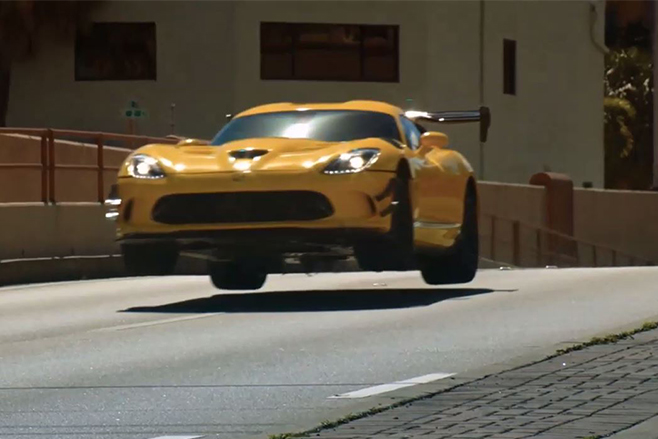
The plot of the video created by Penzoil is simple. A reward is up for grabs for someone to find a stolen yellow Viper SRT. A mysterious figure – Hollywood stunt driver Rhys Millen – finds it and cranks it over in a warehouse where villain is about to stash cash in its boot.
Filmed in Miami, the best bit is hearing the V10 wail through shipping yards and empty arterials while rarely, if ever, heading in a straight line. Or if it is, it isn’t on the ground.
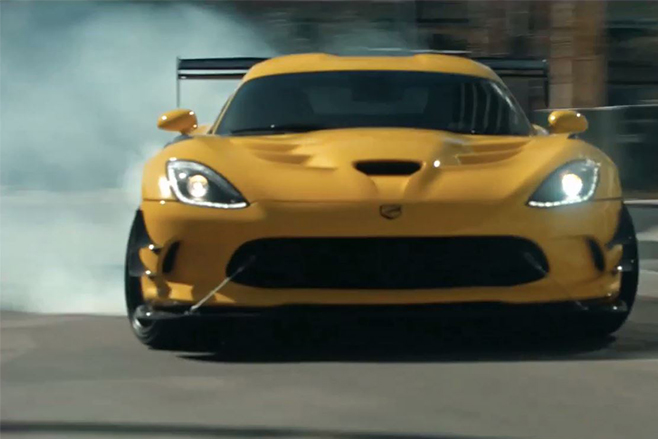
Dodge has built 30,000 Vipers in Detroit since 1992, the current generation of which was widely recognised as the most capable in a straight line and through corners.
Goodbye to Viper is also farewell to the torqueiest atmo sports car engine in the world, making 477kW/813Nm in its final spec. We reckon the video – which debuted at this week’s New York auto show as Dodge unveiled its V8-engined Challenger Hellcat – does it justice.
“Electrification is the future of mobility and the future of Honda”.
Those were the words of Steve Center, vice president of the Environmental Business Development Office for Honda North America, a man passionate about hybrids and fuel cells, two technologies he believes will define the Japanese brand in future.
| Australian drivers favour fuel efficiency over power
Honda revealed two new Clarity models – a plug-in hybrid and a pure electric car – to sell alongside the hydrogen fuel cell variant already on sale in America.
But for the time being, the Clarity’s future in Australia is hazy. After offering a number of hybrid models in recent years, Honda’s local arm has changed tack to focus on conventionally-powered cars. Right now the only Honda hybrid currently on sale – the NSX – is more expensive than most Porsches and is by far the most exclusive model in the Honda lineup.
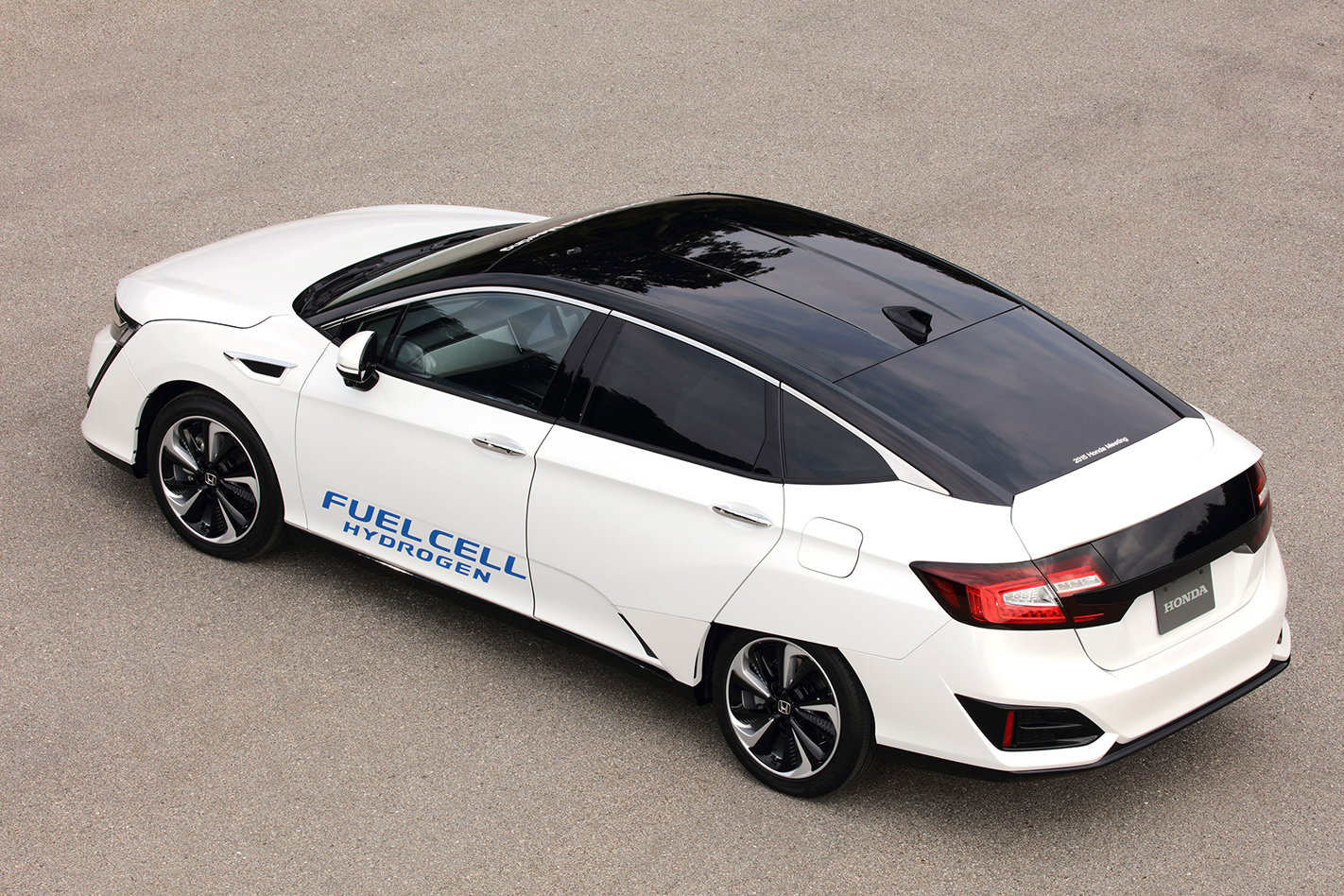
But in the ‘States, where green car incentives help drive uptake of electrified cars, the plan is to sell 75,000 Claritys annually and position Honda as the leader in green technology, moving towards a future where two-thirds of Hondas sold around the world rely on some form of electric propulsion.
“No auto maker knows more about customers and electrified vehicles than Honda,” said Center, boasting of a rich history that included the Insight hybrid of the late 1990s.
| Private EV and hybrid sales running out of puff
In the green race the Clarity competes with the Toyota Prius and upcoming Hyundai Ioniq, the latter available as a hybrid, plug-in hybrid and electric model. Nissan is also a key player in the pure EV field, with the Leaf still ranking as one of the highest-selling all-electric cars to date.
However, for now Honda is the only brand offering three green versions of the same car where one is the fuel cell model.
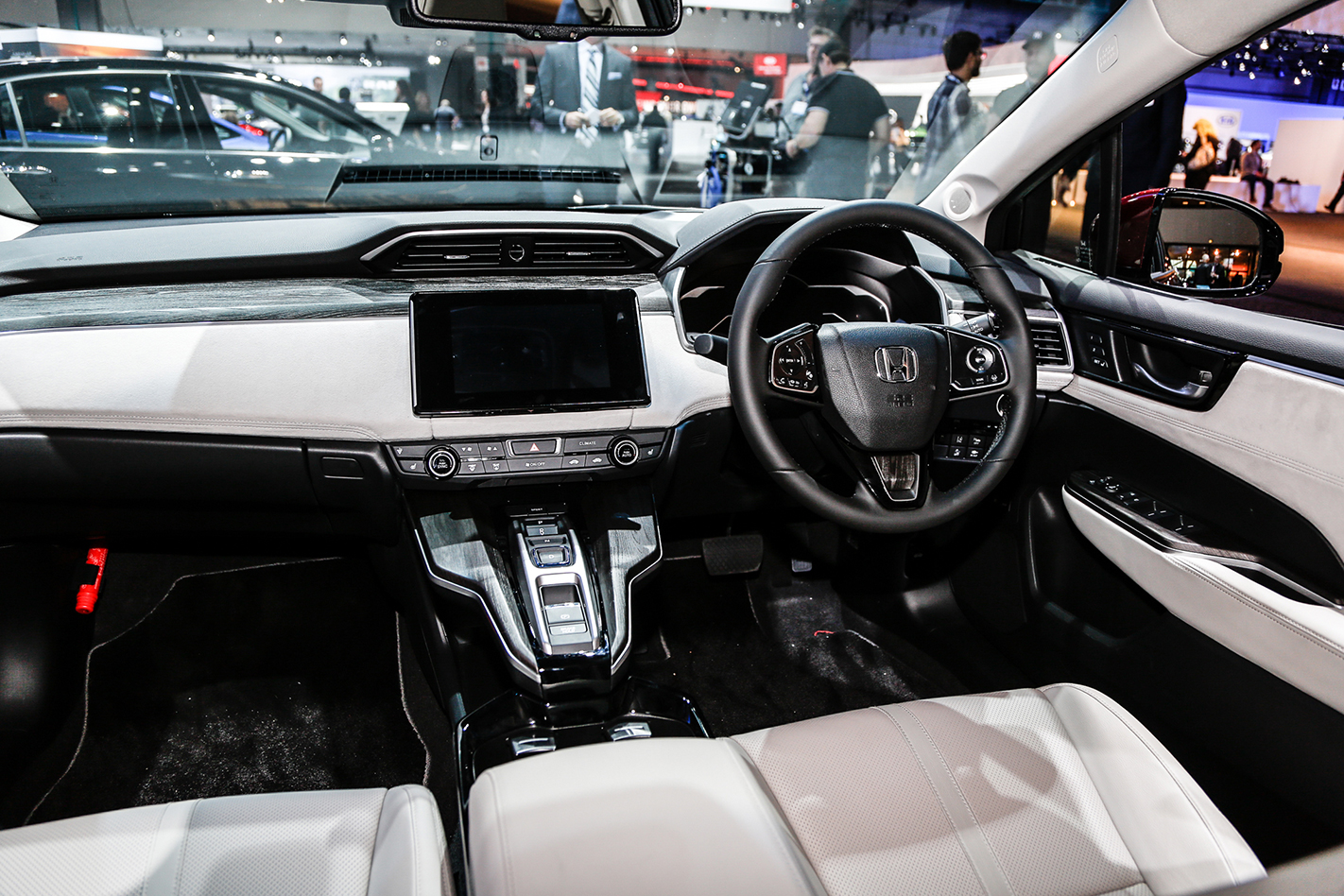
The Clarity fuel cell can drive more than 500km on a tank of hydrogen, while the electric model does about 120km per charge.
The plug-in hybrid covers about 60km on battery power before reverting to its petrol engine for propulsion.
For now, Honda Australia isn’t interested in the Clarity, pointing to what would likely be very low sales volumes.
| 2017 Toyota Corolla Hybrid long-term car review, part one
“Hybrid and EV sales are quite low in Australia,” a Honda Australia spokesman told WhichCar. “We don’t benefit from the government incentives [for green technologies] that exist in other markets.”
The company is keeping an open mind about bringing future hybrid models to its Australian showrooms, including the Clarity, but for now there are no firm plans to do so.
Infiniti is planning to clean up its future designs as previewed by the QX80 concept from the 2017 New York motor show.
Effectively a facelift to the Nissan Patrol-based SUV, the QX80 concept boasts doors and a side profile with far fewer lines and creases than any Infiniti before it.
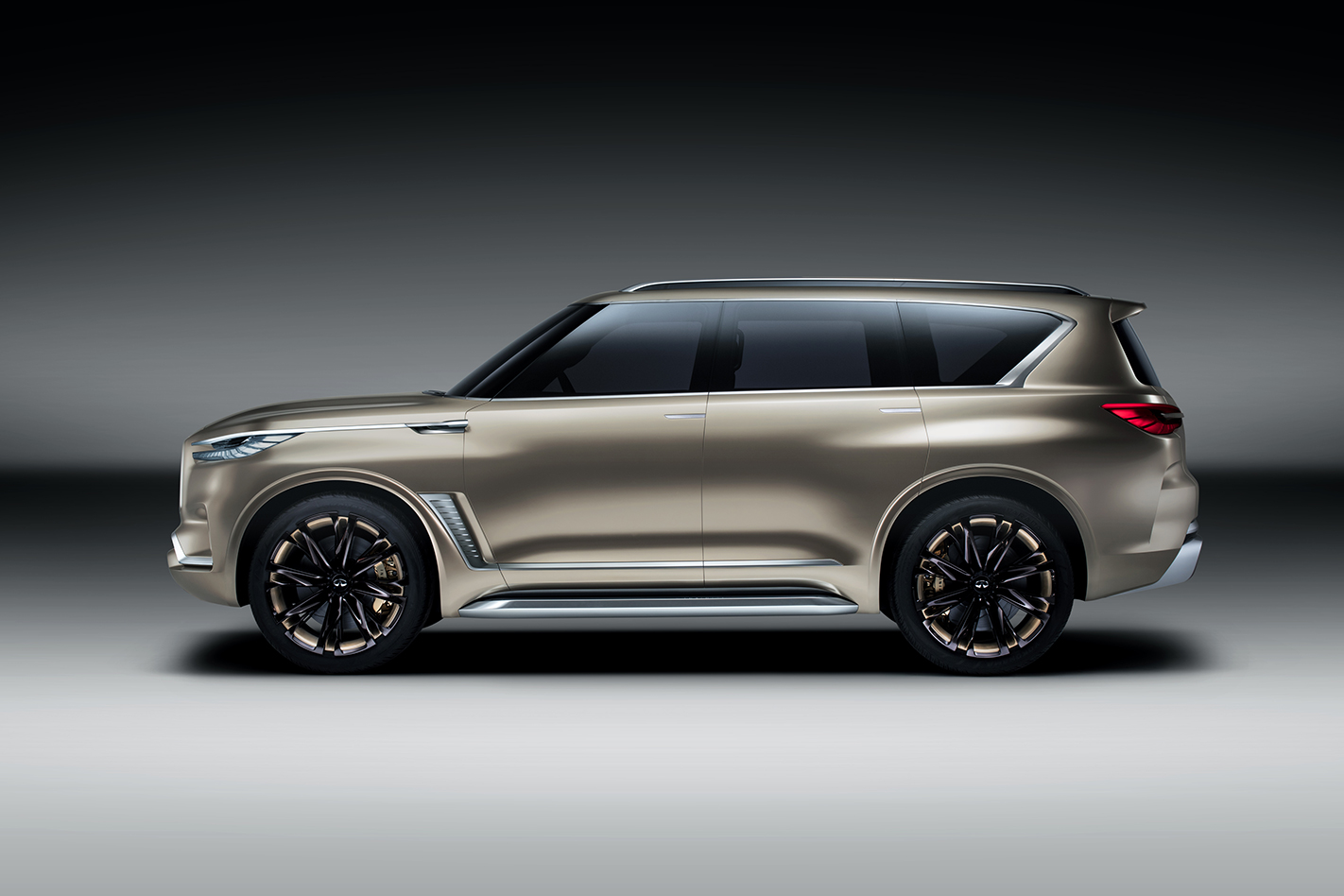
Speaking to Wheels at the New York motor show, Infiniti design chief Alfonso Albaisa said the idea was to evolve the design while ensuring it payed homage to current vehicles.
“Things that were thought were a must, it’s not exactly a must,” said Albaisa of the QX80’s cleaner lines.
He likened the previous QX80 to the bold looks of Michelangelo’s David and said designers instead used the themes of Rodin.
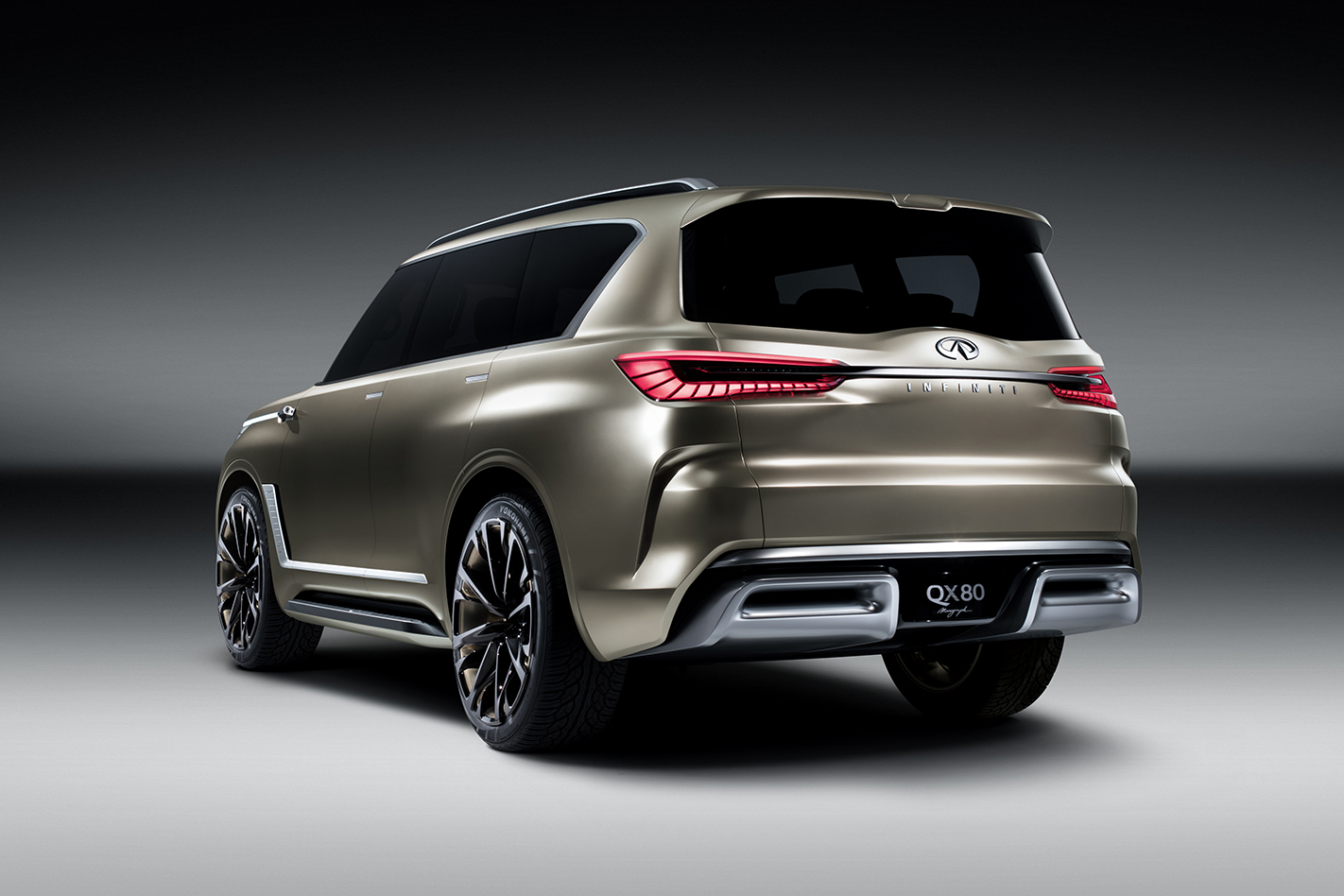
“[We said] Let’s do Rodin, the mass and the weight and all of that,” he said. “The sense of muscle, volume and all of this stuff.
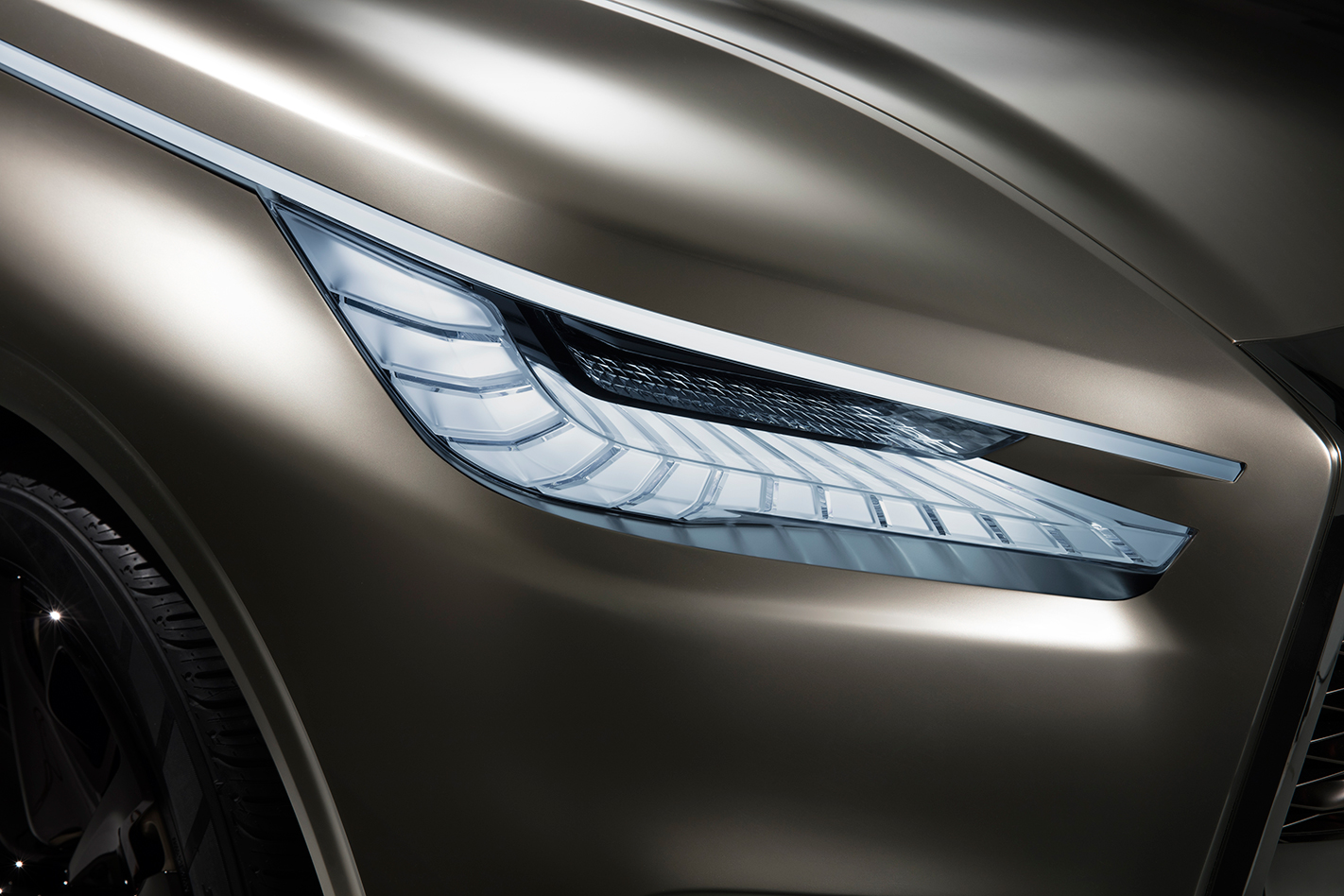
“When we started bringing elements from today’s grille and headlights … what we found is … we found if we keep the surface somewhat plain and have other elements we can achieve this Infiniti look.”
The QX80 concept also used hulking 24-inch wheels with innovative clip on black covers with a diameter of 25 inches, therefore partially covering the tyres.
The door handles were countersunk but unlikely to make it to production, although Albaisa is more hopeful of one day using the exterior rear vision cameras, once regulations allowed them to replace traditional ones.
Albaisa also pointed to the substantial aerodynamic efforts made on the QX80 concept.
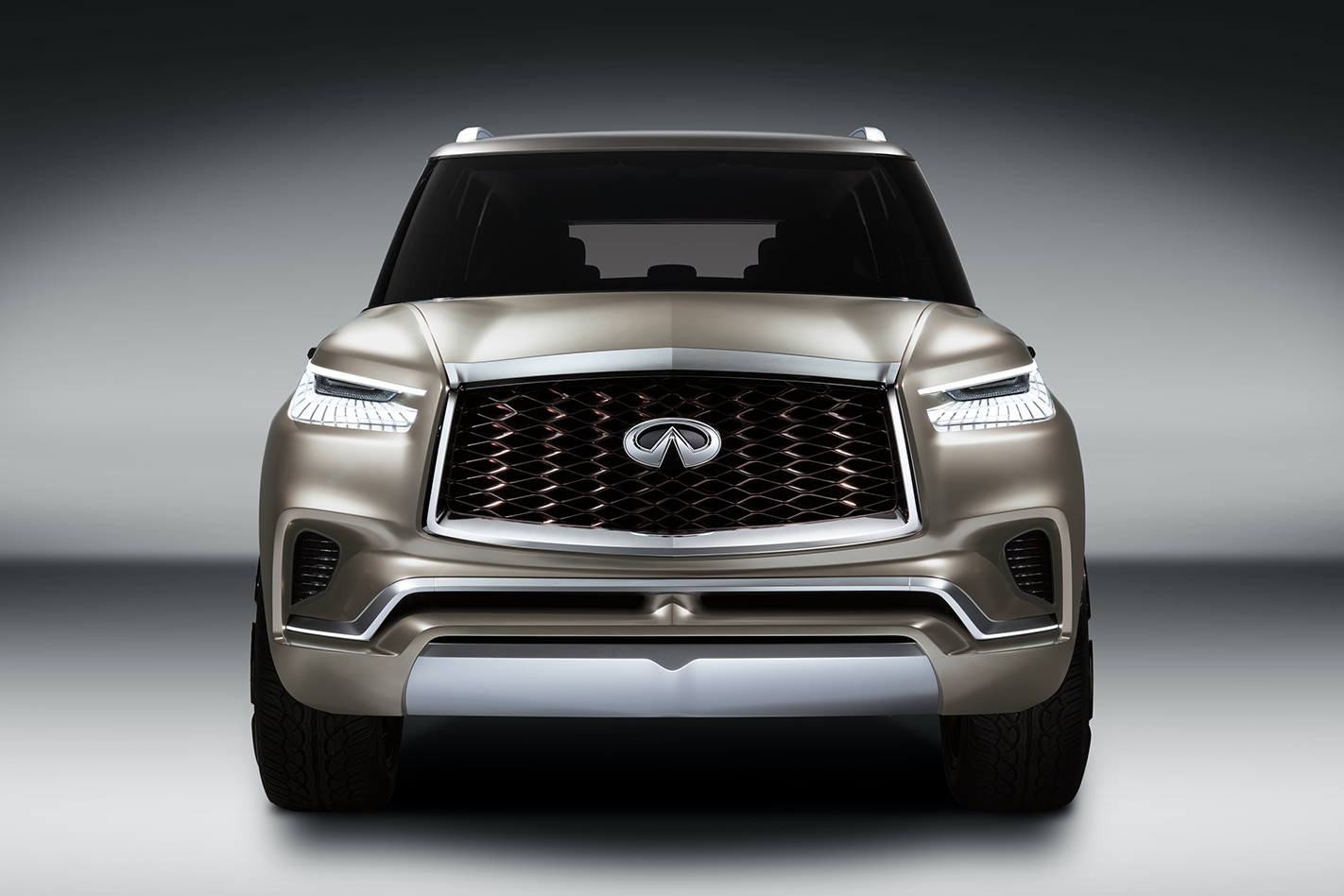
Vents in the front bumper, for example, flowed some air into the front wheel arches, while vents behind the wheel arches were used to cool the engine.
On the rear bumper, outer vents release air from the back wheel arches, reducing drag slightly.
McLaren-Honda has allowed Fernando Alonso to skip Formula One’s Monaco Grand Prix on May 20 to instead contest the Indy 500 in the US, after the Spaniard’s team finished a disappointing 14th in Melbourne and 16th in China as the openers to the 2017 season.
The move has reportedly been weeks in the making following discussions between Alonso, Honda, McLaren and Andretti Motorsport, the latter of which contests the Indy 500 with other drivers in conjunction with those F1-racing marques.
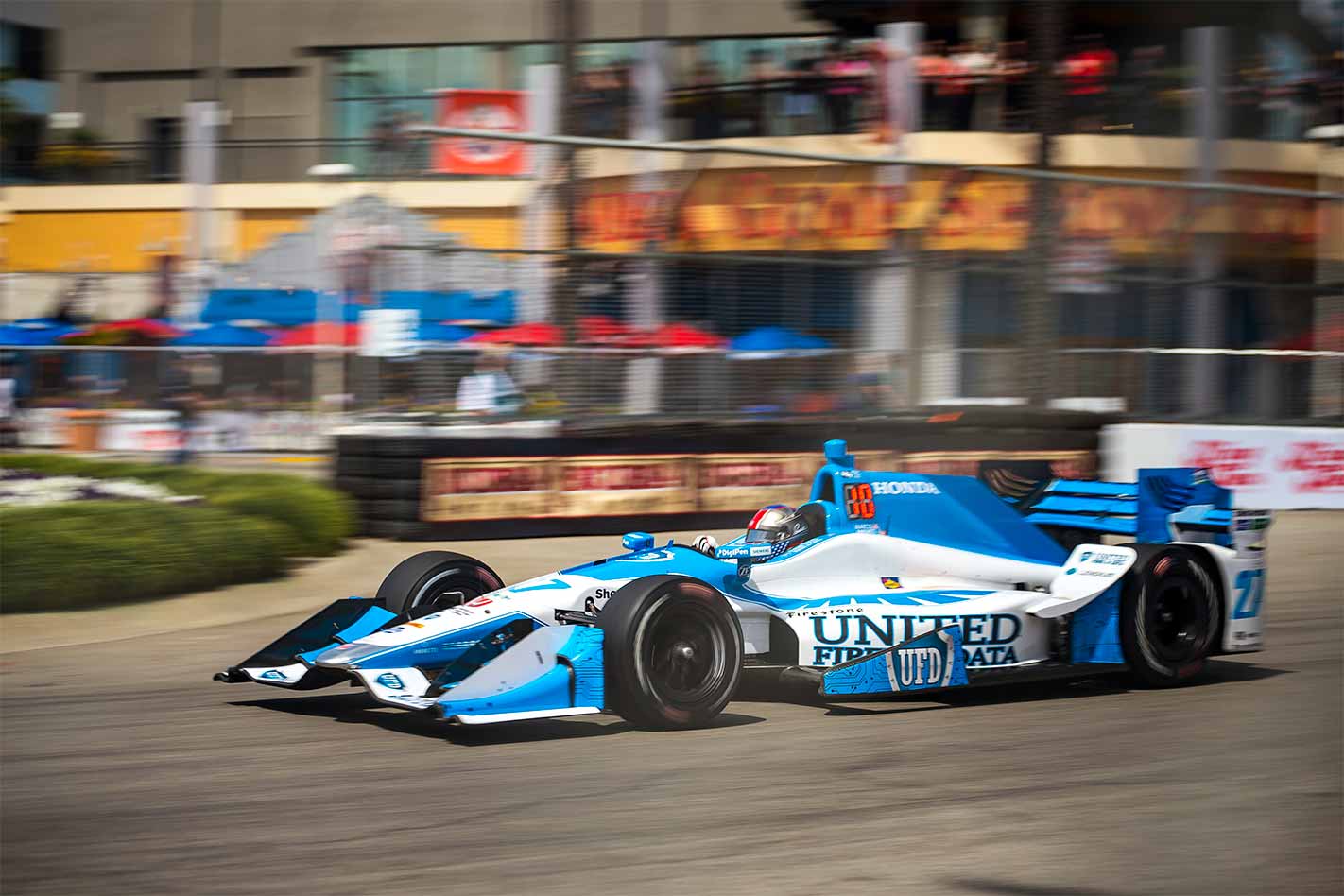
“It’s a dream come true, the Indy 500, what a race to enter in the USA and hopefully win it or try to win it,” Alonso said on Twitter. “I’m sad to be missing the Monaco GP, my favourite race of the year, but I’m sure whoever steps in the car will do a great job.”
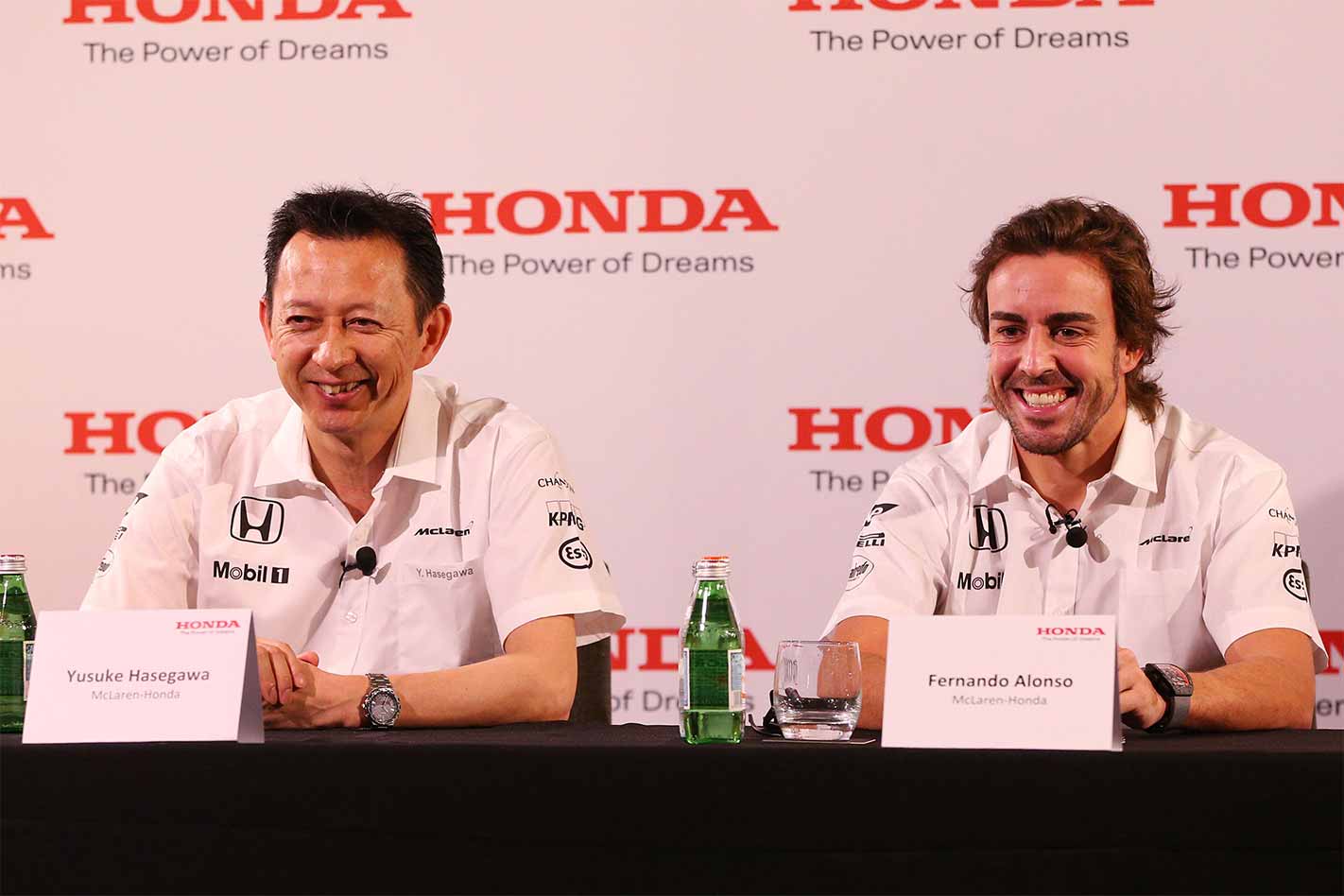
Grand Prix races in Bahrain, Russian and Spanish will round out the following three rounds of the 2017 Formula One season before Monaco, with Ferrari’s Sebastian Vettel and Mercedes’ Lewis Hamilton notching up a race win each so far.
MERCEDES-AMG boss Tobias Moers has quashed rumours the German brand is preparing a hardcore, track-focused version of its C63, to be called C63 R.
Plans for an even more extreme Black Series version of the C63 have also been put on ice, though Moers revealed the revered Black Series badging will soon appear on the rump of an AMG GT instead.
Speaking to Wheels at the New York motor show, Moers firmly dismissed media speculation that the R nomenclature – first applied to last year’s 430kW/700Nm AMG GT R – will be used on other models within the brand, saying “that’s just rumours, we have no plans for this. For now the R is just for GT.”
It was rumoured the C63 R would introduce a host of weight saving measures, as well as more power and torque from the brand’s hand-built 4.0-litre twin-turbo V8 that could push outputs beyond 400kW/750Nm. A move to four-wheel drive was mooted to harness the jump in grunt, but Moers says it’s unlikely AMG will make any changes to the C63 range until next year’s facelift.
Moers also poured cold water on plans for a C63 Black Series in this generation of C-Class.
“The [Black Series] would have been rear-wheel drive, but I don’t know…we’re so busy I just don’t know if that’s going to happen.”
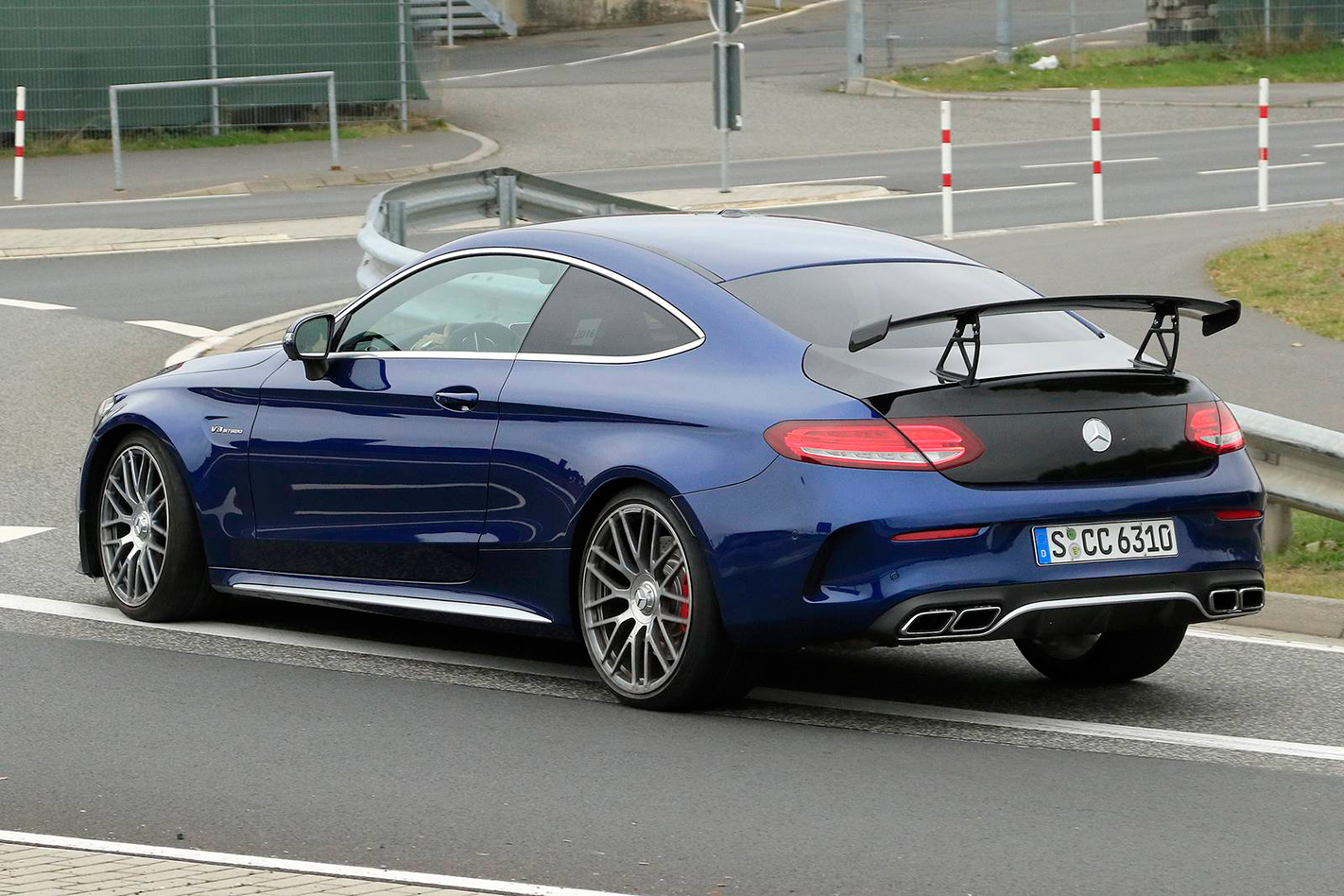
But while a range-topping performance halo seems unlikely, Moers hinted the face-lifted 2018 C63 range will ditch the current car’s 7-speed dual clutch for AMG’s smoother, 9-speed G-Tronic transmission.
“We’re going to see the facelift next year,” he said. “There is still room in the V8, and you know us quite well now, so there is always change for the better. [Like] increasing driveability, chassis dynamics, that’s still on topic for C-Class and C63.”
When quizzed about when we might see a return of a Black Series variant – the last was the SLS AMG Black Series way back in 2013 – Moers said AMG’s engineers are focussing on building a GT Black.
“You know, regarding a Black Series you have to be a little more unexpected than what we’ve done in the past, so when we do a Black Series out of the GT, we know the [430kW/700Nm] GT R is not at the limit regarding power output.
“The chassis of the GT R is capable of a little more power output, but we’re not going to put an E63 engine into a potential Black Series, that’s not going to happen because an E-Class 4.0-litre V8 is a torque engine. That’s my perspective, [GT is] perfect for a Black Series, so it will be a little unexpected.”
Unexpected could mean hybrid power, where an electrical subsystem will support the existing 4.0-litre V8, or electric turbocharging to eliminate lag with Moers revealing “I believe in the future of petrol engines in combination with electric powertrains. Combine that and I think that’s going to be the future of performance.”
AMG has revealed hybrid power is the key ingredient to delivering the next step in its performance car future, with lessons learnt from developing the company’s imminent Project One hypercar tipped to quickly filter into mainstream models.
Speaking to Wheels at the New York motor show, company boss Tobias Moers said that hybrid drivetrains and electric turbo technology will soon find their way into AMG showrooms.
“I believe in the future of petrol engines in combination with electric powertrains,” he said. “Countries are moving forward with carbon monoxide emissions [regulations], and in my opinion, the electrification of drivetrains is the future of performance. It’s the top issue. You have more efficient cars that can deliver a certain amount of pure electric driving, and you also have more power when you come to the racetrack.”
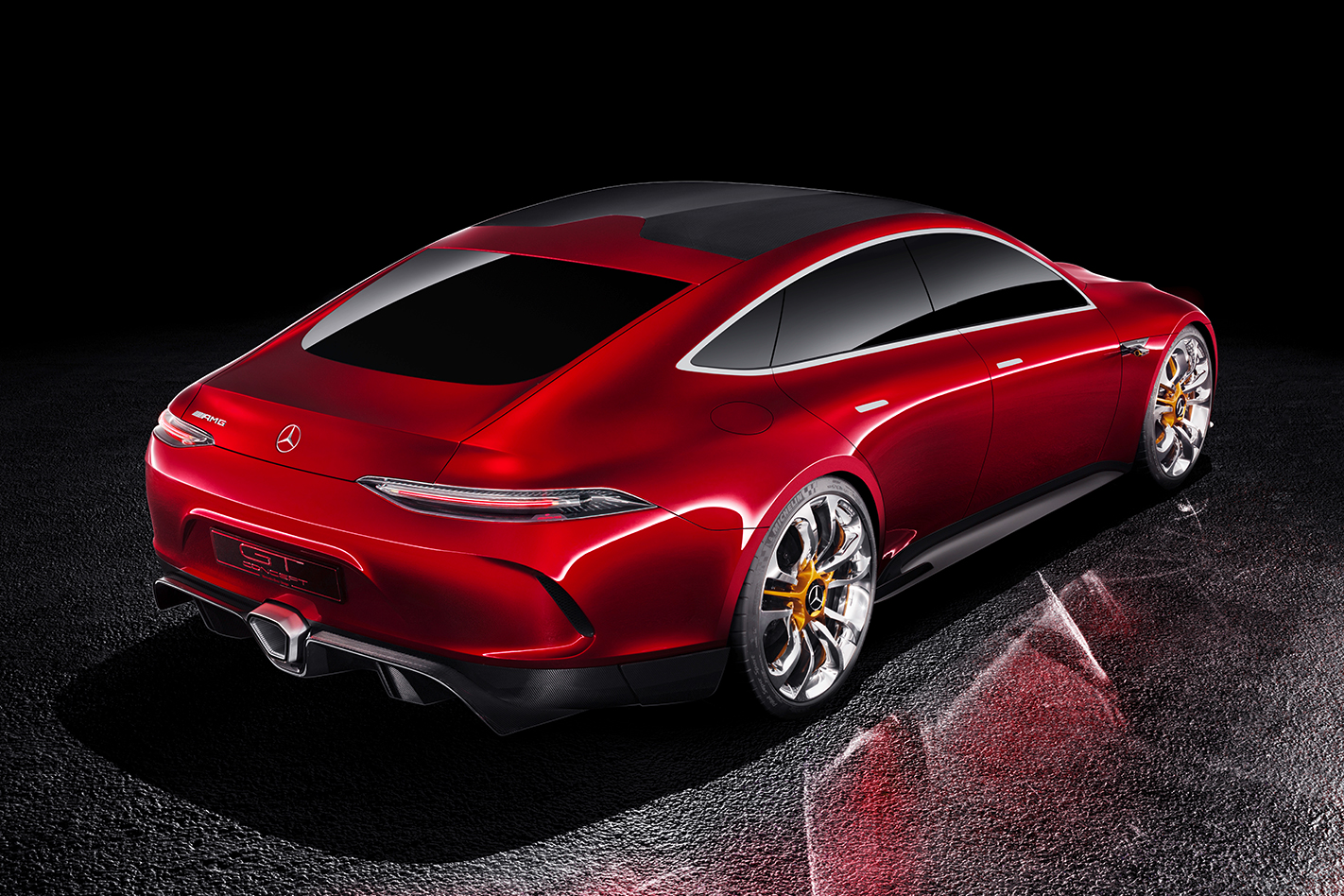
AMG has already made the first steps towards a hybrid-propelled future with the AMG GT 4 concept (pictured above), first shown at March’s Geneva motor show, which pairs the brand’s hand-built 4.0-litre twin-turbo V8 with an electric motor driving the rear wheels for an additional boost.
Electric turbos are also expected to play a key role in eliminating turbo lag and assisting with higher outputs on future models, with the company well advanced in developing an auxiliary compressor, known internally by the acronym eZV.
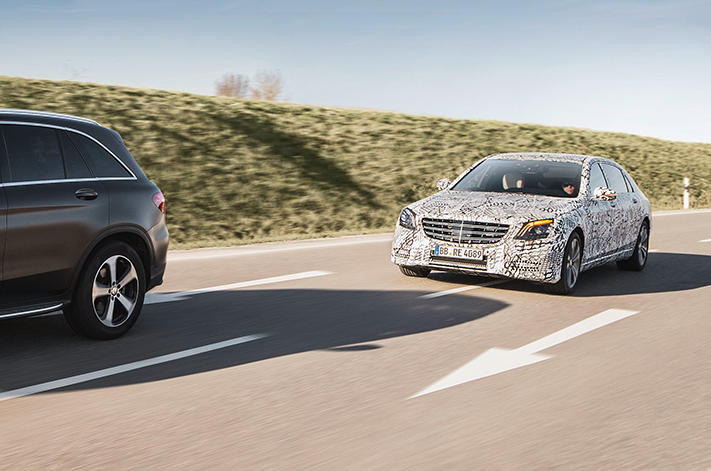
Electric turbocharging is tipped to appear on AMG’s all-new in-line six-cylinder petrol engine, which will debut on the face-lifted Mercedes-Benz S-Class in Shanghai next week.
“We are also focussed on having a performance battery, because then we have high amps coming out of the battery and then bringing it back to the battery by recuperation,” said Moers. “So [the hybrid system] is always on, that’s my idea of it.”
Moers added AMG is acting as a test bed for the wider Mercedes brand, as AMG’s smaller sales volume gives it greater flexibility to explore cutting-edge tech.
“We’re working together with other companies more than Mercedes does because they’re focussed on long range hybrids, we’re focused on smaller companies with some more innovative technologies, because it’s not a mass production for us, it’s still a low volume of cars,” he said. “We have a clear understanding of how we work with Mercedes in terms of hybridisation, we’re the spearhead regarding performance batteries.”
Moers added AMG’s highly anticipated Project One hypercar, which is tipped to debut at the Frankfurt motor show in November and will be powered by a 1.6-litre hybrid drivetrain lifted straight from Formula 1, will also provide valuable lessons that will trickle into other AMG products.
“I think so because Project One is a combination of everything, it’s electrified turbochargers, a split turbo with an electric motor, it’s an additional four-wheel-drive system so the front axle is pure electric. So everything is in there that’s going to give us an understanding of how future performance is going to work.”
KIA’S local engineering team is already hard at work tailoring the eagerly awaited Stinger high-po sedan’s suspension and steering for Australia’s unique roads, but the development work might, for the first time, include bespoke exhaust note tuning as well.
Like all Kia models, the most powerful and potent vehicle to date from the South Korean car maker will get a specific chassis tune for cars sold locally. But while a majority of its performance credentials are right for Aussie drivers, its bark might not resonate as well, says Kia.
Kia Motors Australia media and corporate communications manager Kevin Hepworth explained that the engineering team was confident the Singer’s performance would appeal to Australian tastes, but there were ongoing “discussions” regarding a possible exhaust tune specific for Australian cars.
“They’re actually quite happy with Stinger out of the box,” he said. “There were no major concerns.
“Is there a question mark? Probably the sound and that’s something you can tune.”
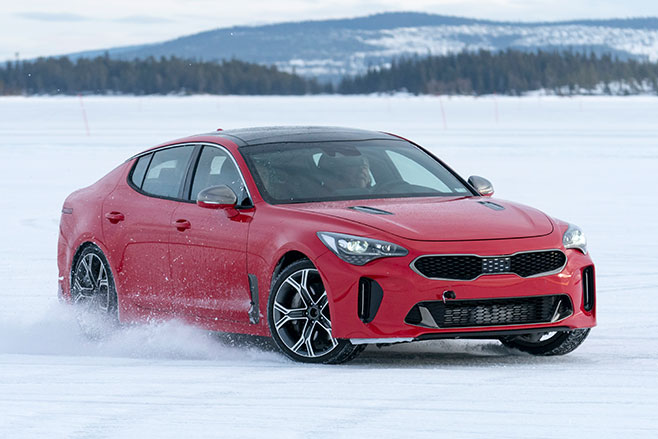
Kia’s local development team is led by technical consultant Graeme Gambold, and Hepworth said the vehicle dynamics expert has a free reign to fettle any part of the Stinger he sees fit.
“Gambold has permission to work on whatever he likes on this car.”
Under the direction of Hyundai Motor head of vehicle testing and high-performance development Albert Biermann, engineers and some of Kia’s local team evaluated other high-performance vehicles including BMW’s M4 and the C63 from Mercedes-AMG.
The result is a vehicle that exhibits predictable on-the-limit performance similar to BMW’s 2000 E46 M3, according to Hepworth.
“This car has a better compliance ride to it and that’s where Biermann actually benchmarked it,” he said.
“You almost have to tell it to shut up because it’s talking to you that much.”
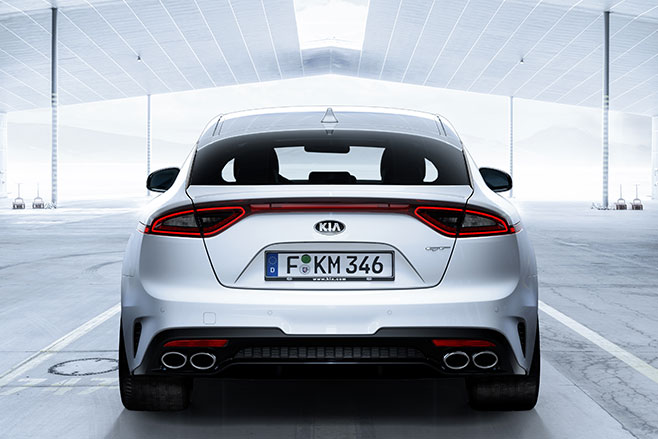
The Stinger has been drawing significant interest from Australians since the model’s global reveal at the Detroit motor show in January this year, and Kia Motors Australia chief operating officer Damien Meredith confirmed that the orders were already rolling in ahead of the car’s launch in September.
“We’ll either have two or three variants of the 2.0-litre and the 3.3 and we will be spot-on with our pricing and very competitive,” he said.
“The dealer network is holding more than 30 orders and we have a landing page on our website that gets on average 30 [customers] a day asking for more information. Every order is for the 3.3.”
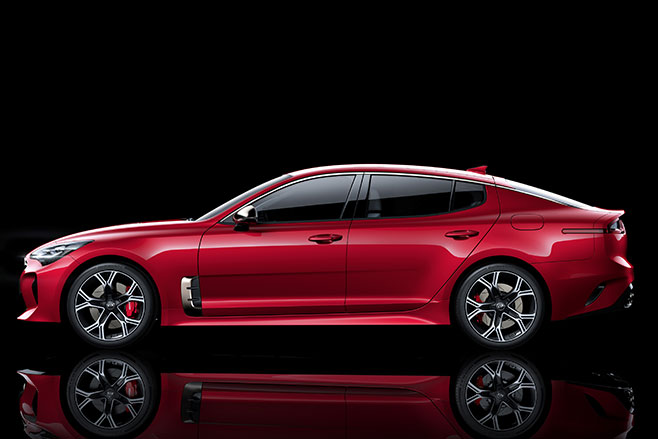
Meredith predicted that the majority of sales would be in favour of the 3.3-litre to the tune of 75 percent and that initial sales would increase to about 400 per month.
“We think in the initial stages between 200 and 300. That will be driven by inventory. In 2018 we would like to build it up to about 400 a month.”
When the model was unveiled in its native South Korea, the Stinger rolled out wearing new sub-brand badging to the surprise of the Australian Kia team, but Meredith confirmed that no such strategy would be applied to the model down under.
“Why would you take something that’s going to enhance your brand like nothing before and change the badge? There is no way known that we would even contemplate it”.
GOT a spare space in your garage you need to fill? Well, how about this 1991 Benetton Formula One race car, which was driven by not one, but two of the best drivers in history.
Behold, the Benetton B-191-02 F1 car. This very car was driven by both Michael Schumacher and Nelson Piquet in the 1991 Formula One World Championship.
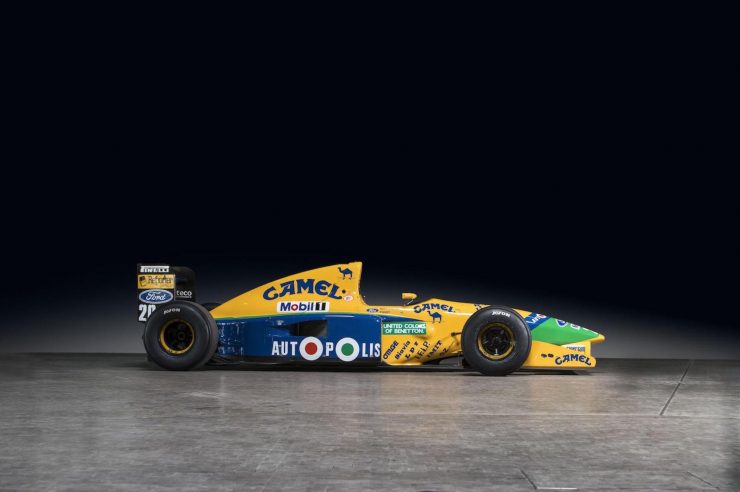
The iconic racer is going under the hammer at renowned auction house Bonhams, and is expected to fetch between $1.1 million and $1.3 million.
Okay, so it’s not exactly what people would call ‘affordable’, but it’d be more fun than a Sydney studio apartment. The car is in running order, too, with a 3.5-litre Cosworth V8 sitting under the rear cowl.
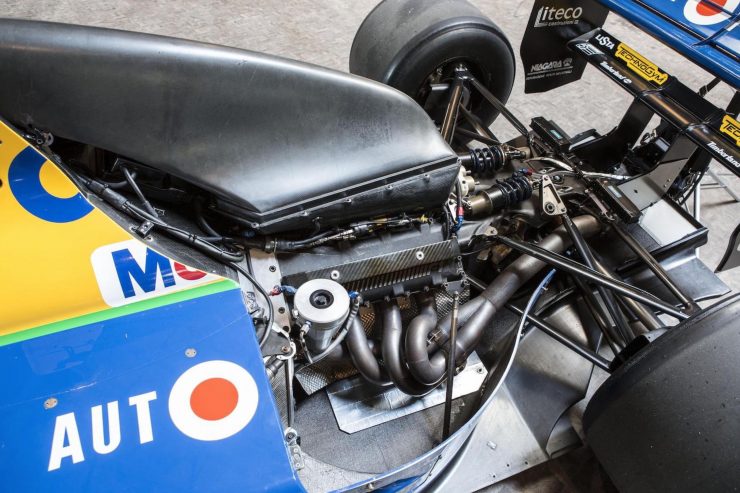
Nelson Piquet won the 1991 Canadian Grand Prix in the car, before it was driven by Michael Schumacher at the final two rounds of that season – Japan and Australia.
Unfortunately, the man who would go on to be the most successful driver in F1 history failed to finish both races in the Benetton. He would go on to win back-to-back titles with the team in ’94-’95.
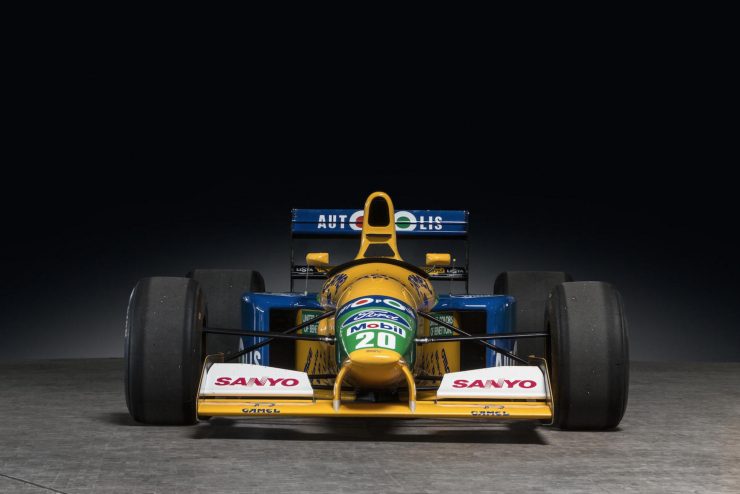
Although Schumacher didn’t win any races in this car, the fact he took part in a Grand Prix behind the wheel adds to its rich history…and value.
Following the end of the ’91 grand prix season the car was placed in a museum, before undergoing a rebuild by a team of specialists.
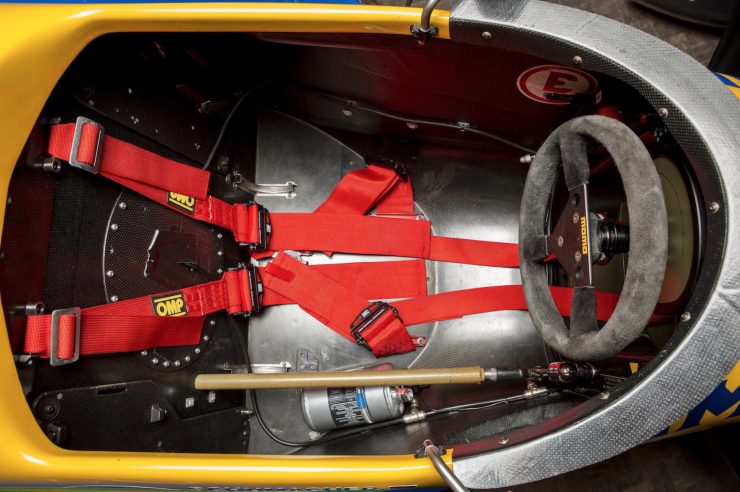
The B-191-02 is ready to roll, with the gearbox, engine, chassis, and safety equipment all being overhauled.
Thankfully, the restoration left the car largely in original specification, bar a few FIA-mandated safety features. Just in case the new owner decides he wants to show off at a local track day.
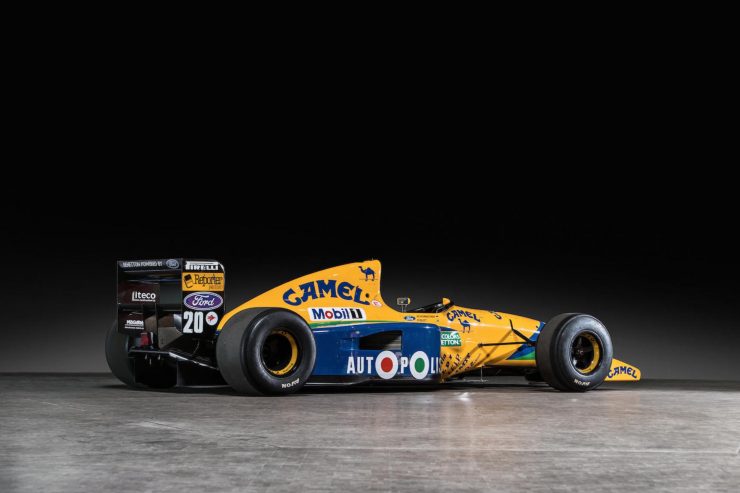
The ’91 F1 season was chock full of beautiful cars, including the Jordan 191 (which Schumacher made his grand prix debut in), and the McLaren MP4/6 (which won the championship at the hands of Ayrton Senna).
To celebrate the approaching 50-year anniversary of the Z, Nissan has revealed its 2018 370Z Heritage Edition ahead of its release for a preview at the New York Auto Show, alongside the 2017 Nissan GT-R Track Edition.
Available on the base model coupe, the Heritage pack will be seen on cars equipped with Nissan’s standard 3.7-litre V6, which will put 247kW through either a 6-speed manual or 7-speed auto.
The package has two colour options, ‘Chicane Yellow’ (pictured) which features black outside mirrors, gloss black graphics and yellow interior trim, or ‘Magnetic Black’ with silver graphics and the same yellow interior trim.
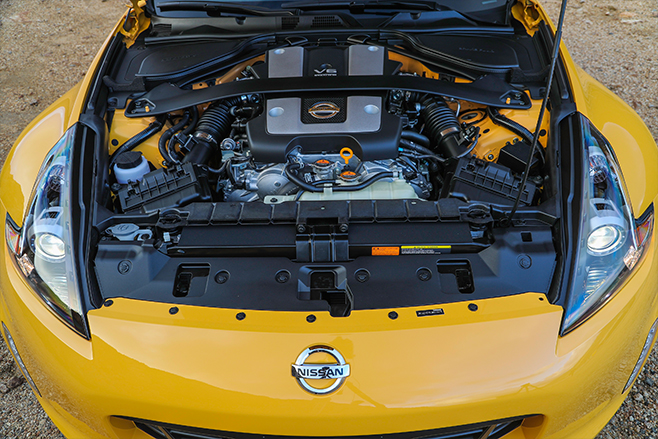
It’ll also introduce new features to the 370Z’s 2018 year model. New headlight and rear combination lights are on the cards, as is a new rear paint scheme, smoke chrome door handles and, most importantly, a new Exedy high-performance clutch for three-pedal cars.
2018 Z cars will still feature Nissan’s ‘Variable Valve Event and Lift Control’ (VVEL) and its rev matching system for downshifting.
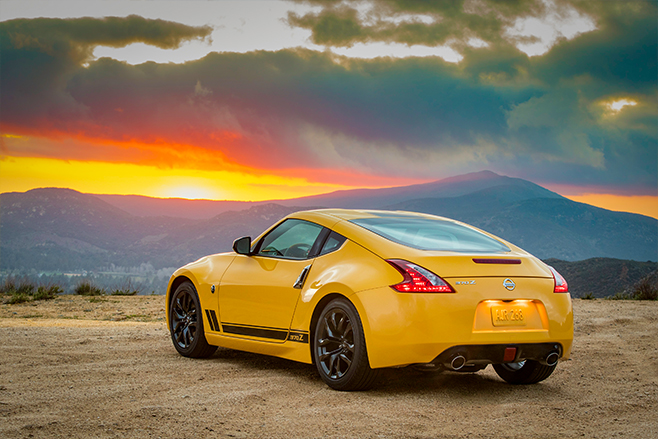
Nissan North America VP of product planning Michael Bunce says it follows Nissan’s tradition of offering customers trim packages from the showroom to encourage a sense of customisation.
“The new 2018 370Z Heritage Edition honours that tradition, blending it with the modern design and performance of the 2018 370Z. We’re pleased to be debuting the new Heritage Edition in New York, one of the top Z markets from the very beginning.”
The 2018 370Z goes on sale soon in the US, though Australia will likely have to wait until late 2017 or even 2018 to get its mitts on the new model Z.
It hasn’t even started selling cars in Australia but Hyundai’s luxury brand, Genesis, is already designing its cars with an autonomous future in mind.
According to the South Korean car maker’s vision of the future, drivers will be relegated to the back seat and cars will take on a new shape to account for the addition of some features and the elimination of others.
The GV80 concept revealed at the 2017 New York motor show features slimline quad-slit headlights, which are designed to perform the job of illuminating the road but not dominate the frontal design or provide the ‘eyes’ on the car’s face.
“We’re reducing the size because we are anticipating the fact that slowly cars won’t need ‘eyes’ any more,” says the man who created the GV80 concept, Genesis design boss Luc Donckerwolke.
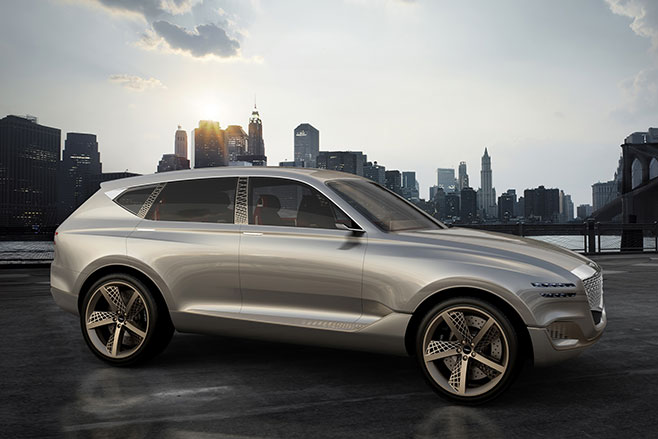
But while other car makers have made large headlights a design feature – and one that can define the frontal look of the car – Genesis wants to focus on other design elements, including the grille.
“That function will certainly disappear in the future because when you have autonomous cars you don’t need lights,” says Donckerwolke, pointing to the legendary Bugatti Royale Esders Roadster, a car from the 1930s with no headlights.
“One of the best cars in the history of car design, the Bugatti Royale from Esders, which didn’t have lights. This was one of the most fascinating designs.
“Not having the typical lights as eyes will not be a drawback.”
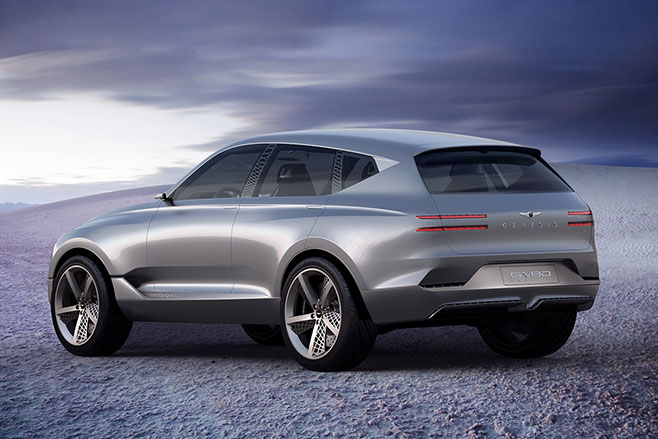
“Autonomous driving has its place … it just remains to be seen where and when we will include this,” said Fitzgerald.
“For me the priority right now is establishing this brand by showing cars that are desirable.”
Alongside Fitzgerald and the expanding Genesis team, Donckerwolke has spent a year defining the themes that will be rolled out on to many of the six future Genesis models planned; they include three sedans, a grand tourer coupe and two SUVs.
“When you are doing the next generation of product … your impulse is basically guided by the past,” says Donckerwolke of established luxury brands, suggesting Genesis has an advantage by starting from scratch.
“What we are doing here is creating the first step. Every step is we do is designing the legacy of the brand.”
However, the upcoming G70 four-door – a car planned to arrive here late in 2017 and compete against the BMW 3-Series, Mercedes-Benz C-Class and Audi A4, among others – will not pick up the new styling themes.
The design of that car was signed off prior to Donckerwolke joining the company, so will maintain much of the look revealed by the New York Concept unveiled in 2016.
The first car to adopt the new look will be the production version of the GV80, due in 2019.
