
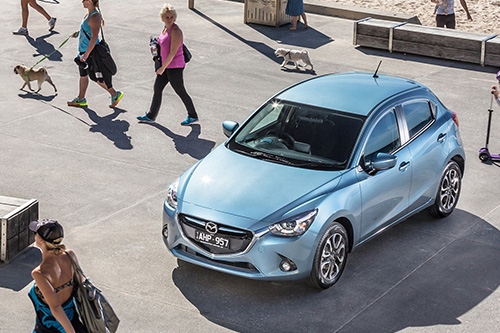
The Mazda 2 is consistently one of the bestselling cars in its segment, which includes compelling rivals such as the Volkswagen Polo. The little Japanese hatch or sedan proves that driving a city car doesn’t have to be boring, and has funky good looks to boot.
If you are looking to add one to your garage, here is everything you need to know about the price, standard features, pros and cons, and which version we would recommend.
Price and Features
Every Mazda 2 comes with cruise control, power windows and an AM/FM radio with a single-disc CD player and USB input. Audio controls on the steering wheel and hands-free Bluetooth phone and audio connectivity, push-button keyless start, and a tilt and reach adjustable steering column, along with rear parking sensors, and six airbags. An option available on all Mazda 2s for around $400 is Smart City Brake Support, a form of automatic emergency braking that operates at speeds below 30km/h. Every Mazda 2 carries a three-year, unlimited kilometre warranty.
Pricing starts from $14,990 for the entry-level Neo with a manual gearbox, $17,690 for the Maxx, and $20,690 for the top of the line Genki. Choosing an automatic gearbox adds $2000.
Pros and cons
The Mazda 2 looks good, feels nice inside, and is more fun to drive than most city cars. Its 1.5-litre engine is very easy on fuel and delivers plenty of power. Strong retained values and a 12-month service interval help make it a smart choice.
The list of cons for this car is rather short given Mazda added cruise control to the least costly models. Perhaps squinting at the tiny tachometer in less expensive models (upper spec grades have a different instrument design) could be annoying if you want to know what the engine is doing. The spare tyre is a space saver, and its 80km/h recommended top speed could bother you if you get a flat far from home. But for a car intended mainly for city use, it’s a defensible choice because it frees up some boot space.
The one to get
The Mazda 2 Maxx, in either hatch or sedan, is our pick of the line-up. Both bring desirable features such as alloy wheels, a reversing camera and a 7.0-inch touchscreen loaded with the Pandora, Stitcher and Aha internet radio apps. Its steering wheel and gear-lever handle are trimmed in leather. Wheels are made from aluminium alloy and look nicer than the plastic-trimmed steel wheels on the least costly model, the Mazda 2 Neo. However, the Neo is an appealing base model that represents very good value.
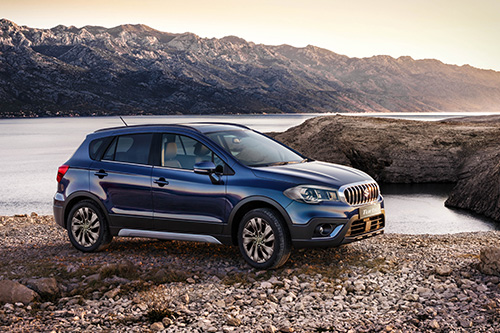
The Suzuki S-Cross is the Japanese carmakers entry into the crossover segment, offering car-buyers an option for those who don’t want something as small as the Swift, but more city-friendly than the Vitara. It’s recently facelifted nose have some polarized, while the ‘Boosterjet’ 1.4-litre turbo four-cylinder engine, which is the same as its older sibling the Vitara, offers a more enjoyable drive.
STRENGTHS
- Its punchy engine produces 103kW/220Nm, resulting in a sporty-like drive and an unexpected creamy smoothness. It’s got exceptional performance and that’s its best feature.
- It’s airy and spacious interior is one of the best designed of the Suzuki range, despite the plasticky feel in areas. Compared to some of its competitors, the S-Cross also offers a decent size boot – at 430 litres, it’s bigger than its small SUV sibling, the Vitara.
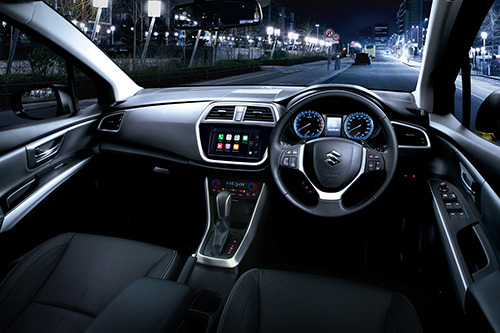
- The dash and steering wheel offer really easy and accessible controls. Although the infotainment system isn’t without faults and can be a little glitchy.
- Naturally, the S-Cross comes with Suzuki’s impressive reputation for reliability.
WEAKNESSES
- One of the downfalls of the S-Cross is its noise over rougher roads. Most of that comes from the cheap tyres, which makes the car less than what it is. We suspect a better set of tyres would eliminate one of the S-Cross’s biggest downfalls.
- Despite recently receiving a facelift to its nose, the S-Cross’s exterior design is polarizing. The rear remains completely unchanged and the front, while different to its predecessor, is a little bland.
- The S-Cross doesn’t come with an all-wheel drive option, which only gets a cross next to its name because it’s considered a small-SUV and SUVs should always have AWD as an option, at least.
- While the S-Cross comes with plenty of gear, and was awarded a five-star ANCAP rating, it doesn’t come with any additional active safety gear. That means no autonomous emergency braking, blind spot monitoring or even adaptive cruise control, even in our top-spec Turbo Prestige.
- The Suzuki S-Cross does have a firmer ride, which the suspension gives away over rougher road surfaces.
The Mazda CX-3, Holden Trax, Toyota CH-R or the Peugeot 2008.
Twenty years ago, there came one of those landmark machines that contorted the boundaries of road-going performance. Even more significantly, this car did not resort to quad turbochargers, all-wheel drive or all-wheel steering, but embodied jazz great Charles Mingus’ observation: “Making the simple complicated is commonplace. Making the complicated simple, awesomely simple, that’s creativity.”
Few have ever questioned the creativity of Gordon Murray. The South African designer kicked off an F1 career in 1969 under Ron Tauranac at Brabham, where he would pen the short-lived BT46B ‘fan car’ and Nelson Piquet’s 1981 and ’83 world championship winners.
A move to McLaren produced the MP4/4 which, with new Honda power and drivers Ayrton Senna and Alain Prost, dominated the ’88 title. In an airport lounge after that year’s Italian GP, Murray and a handful of McLaren top brass proposed that they build a supercar.
McLaren boss Ron Dennis recently told Wheels: “[The F1] was a bit of an experiment … could we make a sports car that would be deemed by the critics to be the best in the world. It was a sort-of money-no-object project.”
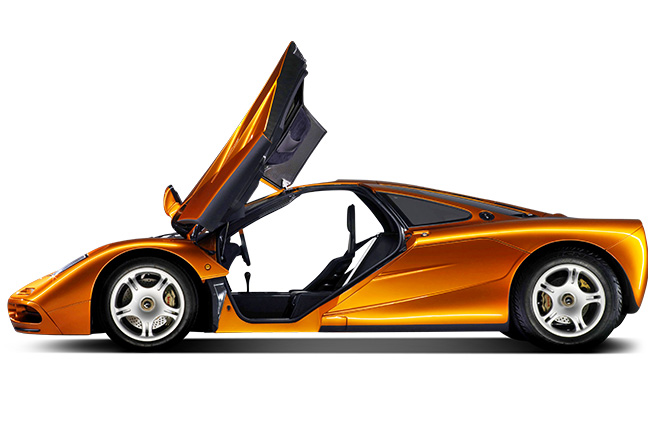
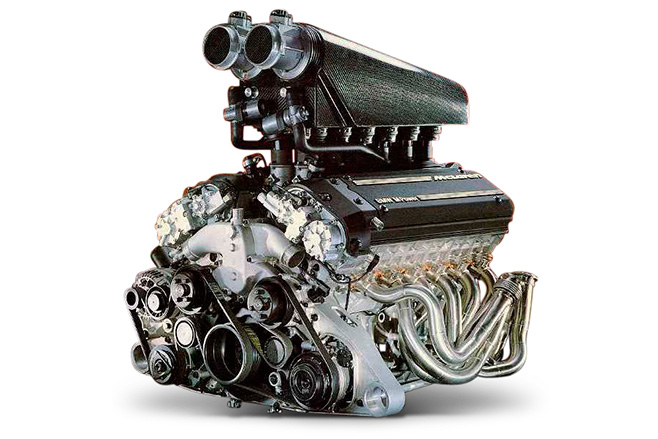
The F1 was developed in great secrecy. While McLaren was triumphing on the track with Honda’s turbo V6, Honda dismissed Murray’s urging for a bespoke, atmo 4.5-litre V12. Eventually BMW’s Paul Rosche designed a 6.1-litre V12 to Murray’s specifications.
The McLaren F1 would be compact, light and simple. In fact, the conflicting demands of airflow for a large engine in a compact car, of aerodynamic efficiency and downforce, and of Murray’s insistence on world-beating performance and real-world useability, stretched the F1 project to almost four years.
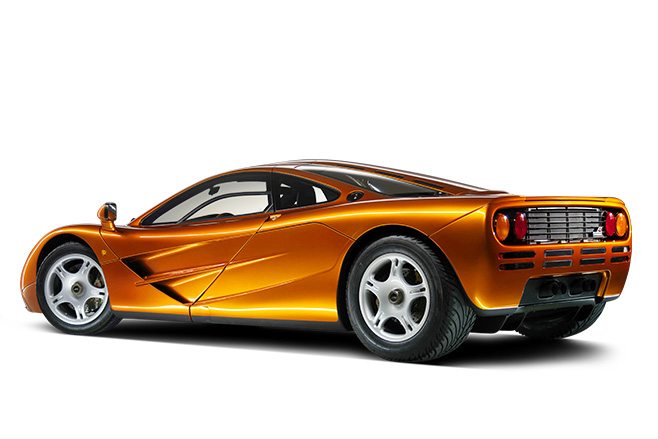
The F1 grabbed headlines when it was launched in May 1992, costing just over $1m ex-factory. Squint and you’ll recognise the proportions of a Formula 1 car and 42/58 front/rear weight split.
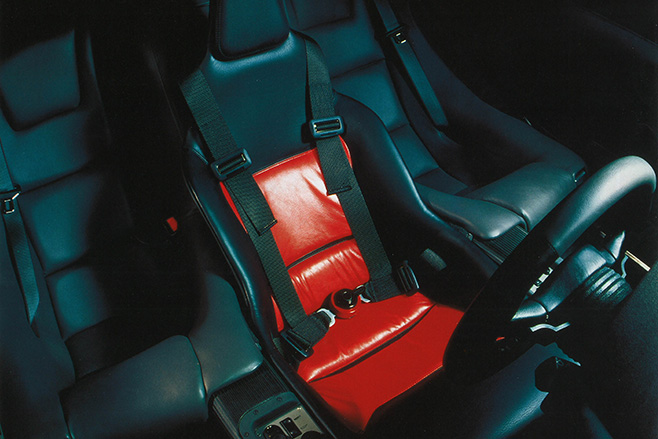
The relationship extended to the carbonfibre chassis – a production first – along with double-wishbone suspensions (with castor-maintaining ‘ground-plane shear’ geometry up front), ground-effects via rear diffuser and underbody auxiliary fans, a pop-up ‘air brake’ for stability, the uncompromising use of carbonfibre, titanium and even gold for weight or thermal efficiency, and the absence of power assistance for steering, brakes or clutch. The cockpit placed the driver centrally, racer-style, and allowed two passengers.
In every way, the F1 went beyond expectations, most famously with a record-breaking top speed of 372km/h – raised, five years later, to 386km/h.
McLaren’s original target of 300 cars, at US$1m apiece, ended up being just 106, comprising 64 standard road cars, eight limited-edition streeters, 28 GTR racers, and six prototypes.
There’s one more record that impresses Ron Dennis. Standard F1s today change hands for around US$5m. “We’re pretty sure that the F1 is the only car made in the last 30 years that has appreciated.”
Hard Parts
BMW Motorsport’s Paul Rosche, a pal from Brabham days, developed a 6.1-litre V12 monster to meet Murray’s targets of a 600mm-long atmo engine with 410kW.
Rosche delivered 461kW at 7400rpm and 651Nm at 5600rpm, helped by quad cams, 48 valves and VANOS variable inlet timing. Via a six-speed manual ‘box and rear-drive, 0-100km/h is done in 3.2sec and, no less impressively, a 0-160-0km/h go-to-whoa in a record 11.5sec.
Inside
An F1 signature is the central driving position, a Murray masterstroke that also allowed splayed seating either side.
Further concessions to practicality were the luggage ports on either side, aft of the vertically-opening doors. Maccas came with fitted and numbered luggage and, among other things, a numbered TAG-Heuer F1 watch and a Facom rolling tool cabinet.
5 FAST FACTS
- The only slow thing about the F1 was the build time: around three and a half months per car.
- The F1’s central driving position isn’t just a pain at toll gates: the owner’s manual has two pages of diagrams on getting in an out.
- Just one McLaren F1 came to Australia, imported by car-crazy corporate chief, Dean Wills. The pewter-grey car now resides in Melbourne.
- Never heard of the Ultima? McLaren used two of the Pommy kit cars, nicknamed Albert and Edward, as early development mules.
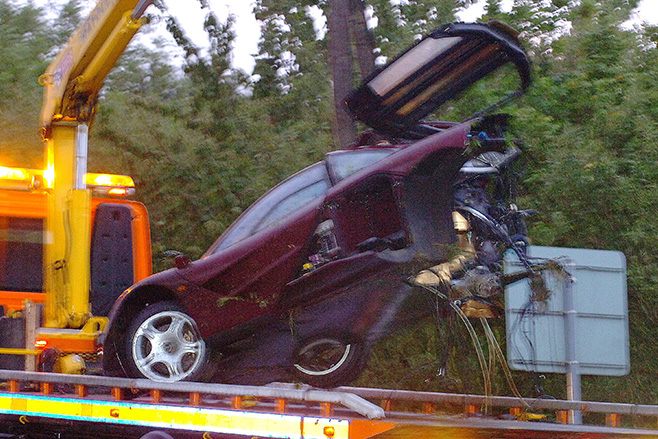
- Famous McLaren owners have included Jay Leno, Ralph Lauren, Eric Clapton and George Harrison. Comic Rowan Atkinson has crashed his, twice (below).
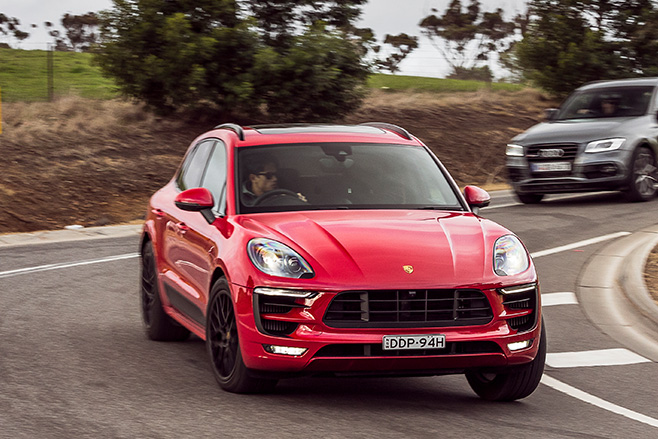
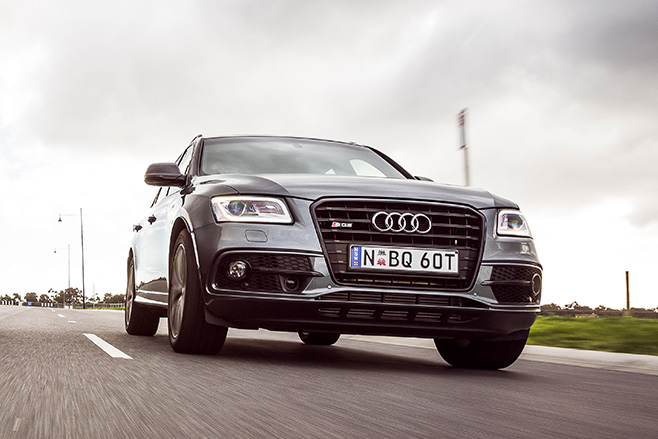
TIMES are telling when even Lamborghini’s developing a sports-utility vehicle. What was once a dirty word for sportscar manufacturers, the SUV has proven so popular many can’t survive without one.
So it’s no surprise the SUV dominated February sales in Australia. In fact, according to the Federal Chamber of Automotive Industries’ VFACTs figures, SUVs outsold passenger vehicles for the first time on a monthly basis.
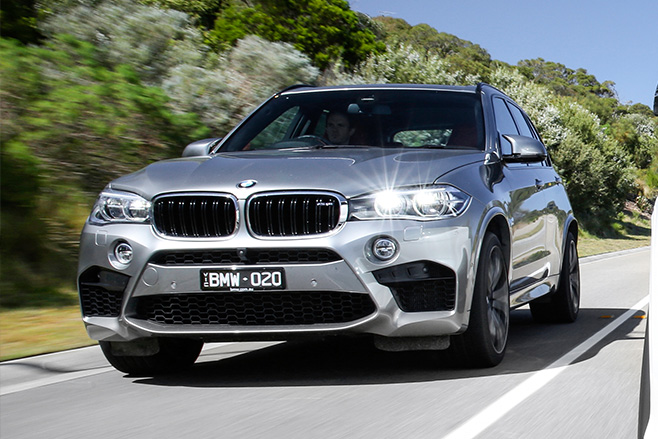
BMW boasts a similar story. The company sold 1134 SUVs, its X range proving 262 units more popular than its traditional hatch, sedan, coupe, and roadster line-up.
Maserati enjoyed identical success, the mid-size SUV Levante drumming up 66 sales compared to the Ghibli’s 15, the next-highest selling model.
Down Under it may be (ab)normal to find a Holden Commodore SS wearing bow-tie badging, but one US owner of its Chevrolet SS twin has gone all out the other way.
Tom Tolles purchased a 2014 SS with a 6.2-litre LS3 V8 engine and proceeded to turn it into a V8 Supercars replica complete with a near-identical livery to that of the 2016 Holden Racing Team (HRT) number 22 car driven by Garth Tander and James Courtney.
Branded with a Lion badge on its blacked-out grille and a prominent Mobil 1 sticker on its bonnet, but with some local touches such as American Gumball Rally stickers, the street-legal Supercars-alike Commodore would surely cause Yanks to drop an apple pie in surprise.
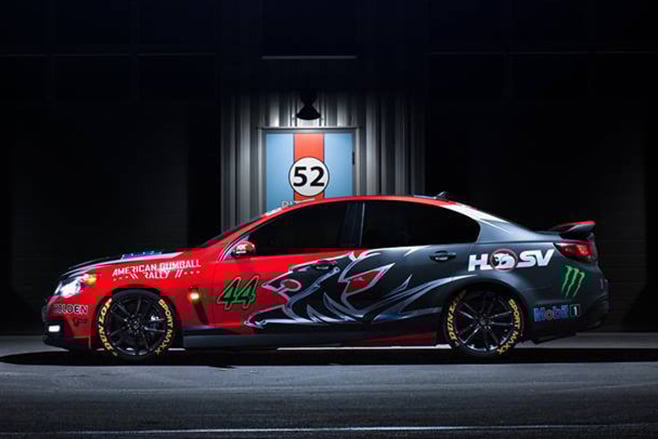
In a video walkaround posted on Facebook, Tolles spruiks that “it’s rear-wheel drive, LS3 powered and 850 horsepower” as he zooms in on ‘LS3 supercharged’ side decals. That would explain the 633kW – more than double our atmo 6.2-litre’s 304kW.
Starting up the black-on-red example reveals the owner has even found a ‘Holden MyLink’ startup sequence on the touchscreen, although this Chevy six-speed automatic production model obviously remains left-hand drive.
The exhaust is loud, gravelly, throaty, showing off the lumpy cam of every tweaked LS3.
Tolles has left the wheels standard except with Dunlop Sport Maxx painted vividly on the sides as per Tander/Courtney’s ride last year, but his pride and joy misses the fixed rear wing of an actual V8 Supercar.
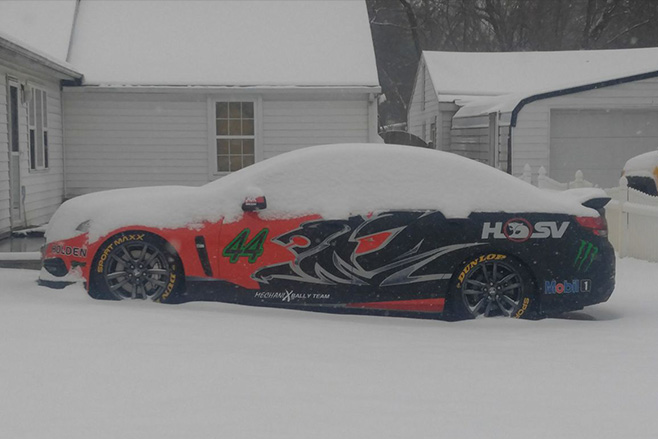
With silver wheels and red-hue tail-lights – instead of the black wheels and clear tail-lights we get locally – the Holden-badged Chevrolet SS could even trump our production models as the best looking example around.
For the past few years our answer to “which Audi S3 should I buy” has been “the VW Golf R”.
After all, the VW offers all the performance and sharper handling for a substantial price saving, however recent experience in a pair of 2017 Audi S3s suggests we may have been a little hasty in our assessment. It’s a terrible cliche to say it’s more than the sum of its parts, but that’s the thing about cliches, they’re often true.
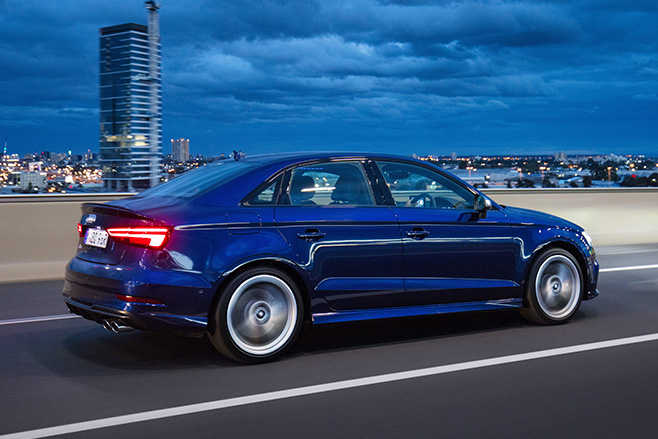
Equally, though, this cohesiveness makes it an extremely pleasant car to spend time with. Starting at $62,900, this is an expensive small car, but the superb materials and peerless build quality inside make it feel expensive, too.
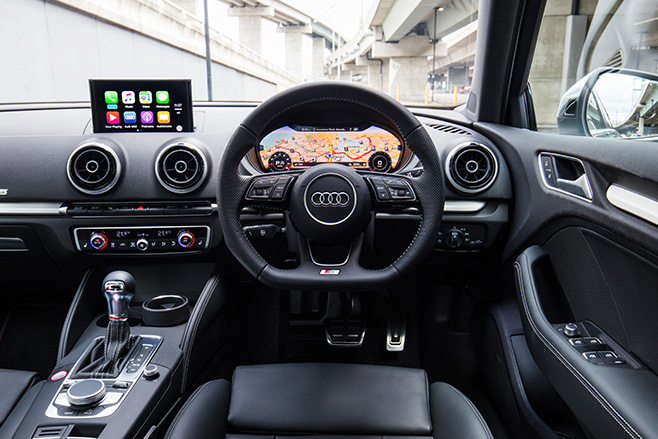
The vast majority of buyers will stick with the standard dual-clutch gearbox, which is fine, but the manual is particularly slick and a really good match to the punchy 2.0-litre turbo engine. The standard ride is pretty jiggly, so adaptive dampers are worth considering, however even with them the ride isn’t fantastic.
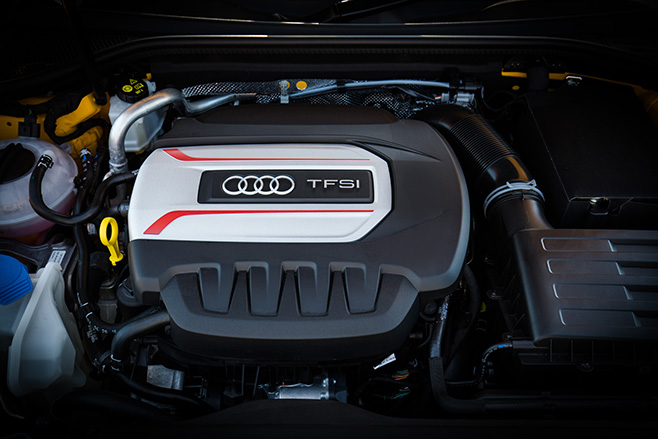
SPECS Engine: 2.0L I4 turbo Power: 213kW Torque: 380Nm Weight: 1465kg 0-100km/h: 4.8sec Price: $62,900
HYUNDAI is building up the hype around its highly anticipated i30 N hot hatch. It’s latest trick, a video of the brand’s first proper performance car being tested on a frozen lake, gives fans another brief look at – and listen to – the fiesty five-door that promises to be the fastest Hyundai yet.
The hatch’s throaty, barking exhaust note adds a distinctively sporty soundtrack to the video, which shows Belgian rally driver Thierry Neuville spinning and sliding the i30N all in the name of ‘testing’.
What do we know about the i30 N so far? It’s Hyundai’s challenger to established hot hatch royalty such as the Golf GTI and the Ford Focus ST, and newcomers including the Peugeot 308, and is designed to give Hyundai more credibility among driving enthusiasts.
Two versions of the car are expected – the ‘regular’ i30 N, and a second, more track-focussed variant – with power coming from a 2.0-litre turbocharged four-cylinder engine in two states of tune, expected to be 184kW and 202kW respectively.
Though we see Neuville driving a six-speed manual (with rev-matching) in the video, an eight-speed dual-clutch auto is tipped as a model update in 2019. Both transmissions will drive the front wheels only, and a corner-carving limited-slip differential will be standard.
“Even though it is still in development, it already feels quite near to a racing car,” says Neuville. “It gives the normal driver a good sensation. It’s very easy to handle”.
The i30 N looks at ease playing on the ice, pitching sideways and sending waves of soft, white snow into the air. Close-up glimpses show larger, N-branded brakes tucked behind 19-inch wheels, twin exhaust pipes, and hint at more aggressive styling hidden beneath the camouflage including prominent front air intakes and a more serious rear spoiler.
“The main target was to deliver driving fun. That’s what the ‘N’ stands for, symbolising a chicane,” says Alexander Eichler, the man responsible for Hyundai’s high-performance vehicle test program.
Hyundai poached former BMW M division top man Albert Biermann to head up its N Performance sub-brand. It is understood Biermann has been closely controlling i30 N development personally, though Hyundai’s tuning experts in Australia will offer technical feedback to the car’s final setup before it reaches production.
What we don’t see much of in the video is the interior, but it would be fair to expect sports front seats and steering wheel, premium materials, and a high level of standard equipment.
Testing of the i30 N hasn’t just been in the snow. At least one example has been spotted here in Australia, where the i30 is hugely important to Hyundai.
The i30 is the second best-selling passenger car Down Under, and Aussie sales make up more than a quarter of all i30s sold worldwide. This new N model could push that number up even more when it arrives around the end of this year.
The Subaru Impreza is back with an all-new body that fixes a lot of what was lacking with the old one.
TELL ME ABOUT THIS CAR
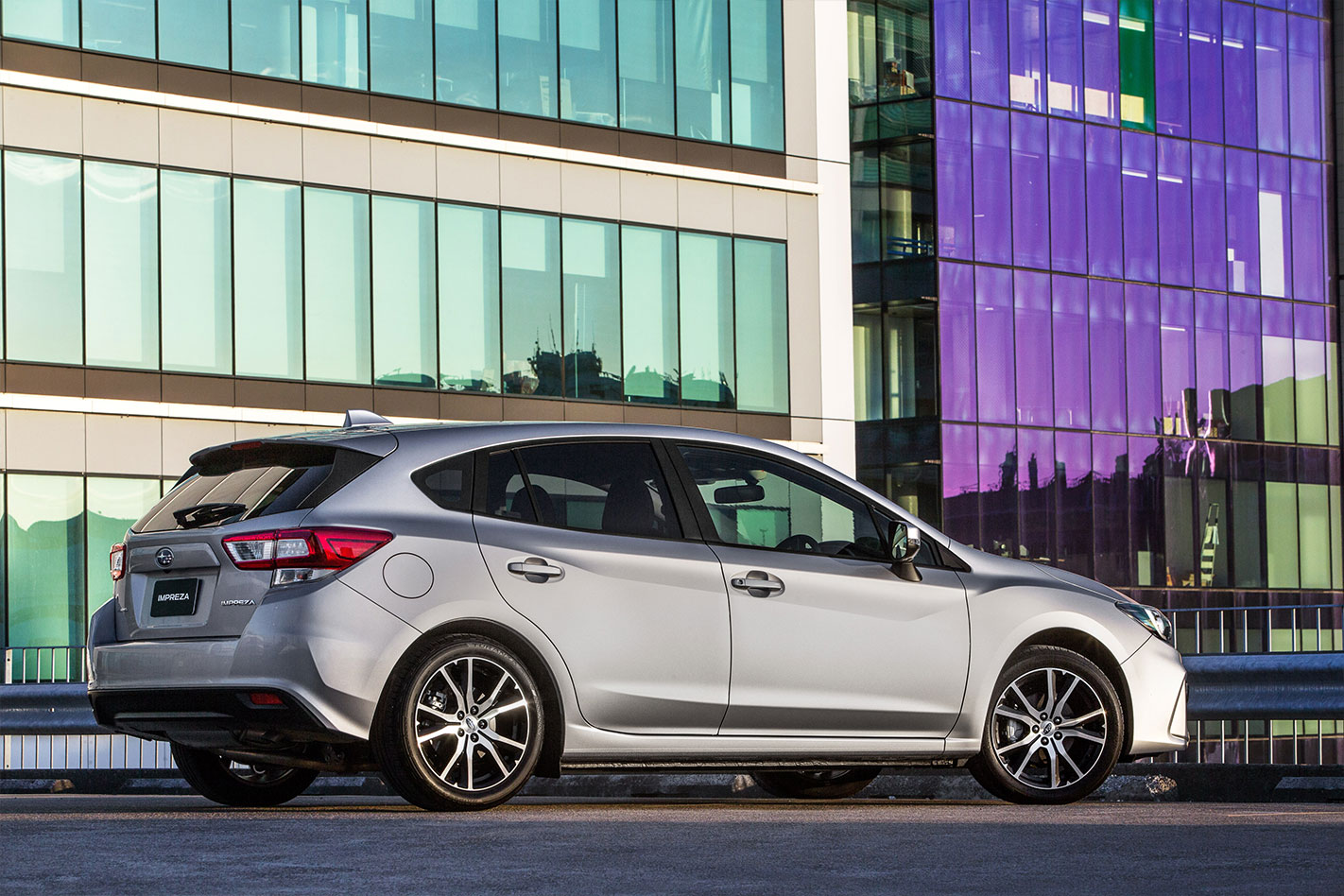
An all-new Subaru Impreza hatch arrived in Australia earlier this year after moving to the platform that will fit under every new model the Japanese carmaker launches over the next decade.
It’s a noticeable change for Subaru, with big differences inside and out that make it more appealing than the model it replaces.
It also comes as a sedan [https://www.whichcar.com.au/car-reviews/2017-subaru-impreza-2l-sedan-quick-review] for those who aren’t a fan of the slightly smaller boot space the liftback form offers.
We’re driving the $26,490 Subaru Impreza 2.0i Luxury here that, quite rarely for a test car, has no optional extras tacked on.

STRENGTHS
- The Impreza hatch’s exterior design is much better than the car it replaces. Okay, so from the rear you could possibly confuse it with a Toyota Corolla – the small car segment’s biggest seller ahead of the Mazda 3 – but otherwise the rest of it forms a sharp, fresh looking hatch that straddles the gender gap rather than leaning too much to one side of masculine or feminine.
- Inside is a whole new game. Imprezas of old were known for feeling a bit cheap and being too hard plastic-heavy, and this makeover goes a long way to changing that. Clever use of soft-touch surfaces, particularly across the dash and along some of the edges, gives a more premium feel, and matte finishes soften what once would have been hard, shiny (read cheap-looking) panels.
- The back seat is no longer punishing to sit in. The new Impreza has more distance between the front and rear wheels, and that has converted to even more interior space. Fitting in was never a problem for the front seats, so more rear legroom is welcome.
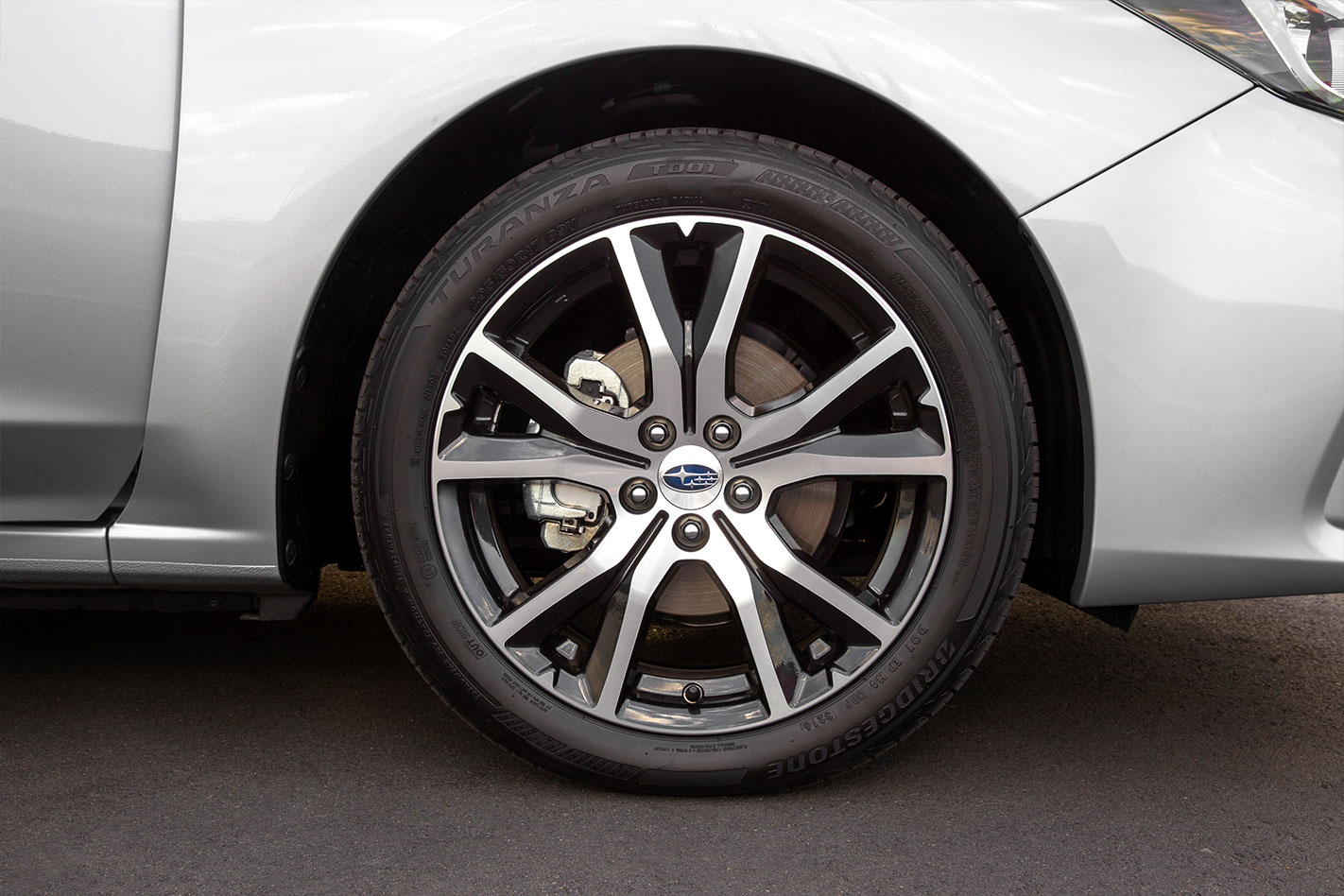
- It hangs on well when pushed. Subaru’s entire Impreza line-up is all-wheel drive, and the car hangs on tenaciously in corners, helped by the grip of its 17-inch Bridgestone Turanza tyres.
- It’s very quiet inside. There’s very good suppression of the small hatchback’s traditional nemesis – roar over the coarse-chip surfaces that make up most of Australia’s road networks – which in turn reduces fatigue.
- The Subaru Impreza made it through to the second round of the 2017 Wheels Car of the Year awards. Just to get consideration for the award is special.
WEAKNESSES
- The engine lacks low-down accelerating power and always sounds as though it struggles to get the Impreza moving. Happily, this wasn’t reflected in the quite reasonable fuel use figure on test that was close to its 6.6L/100km average.
- The continuously variable transmission is nowhere near as nice to use as a more traditional automatic. The CVT has variable gear ratios, so either sits the engine in its revvy, noisy power band, or its gutless fuel-sipping zone. The 2.0i Premium gets a pair of paddle shifters behind the wheel, but they may as well be connected to the gearbox via a pair of wet strings for all the good they do – a shame given that the Impreza is such a fun car to throw at a twisty road.
- The multimedia interface. It speaks in broken English, the touchscreen is difficult to use and distracting, and it integrates poorly with the multifunction steering wheel.
- The headlights. Subarus of yore have been known for their ability to light up an errant ’roo like it’s caught in a shooter’s spotlight, so it’s a bit disappointing to see the new Impreza’s halogen projectors struggling to pick out the way ahead.
- It beeps a lot. Eyesight’s active cruise control system will sound an audible alert every time a car moves in, our out, of range in the lane in front. If you’re changing lanes frequently, it beeps constantly. It will also beep three times whenever you stray near the edge of your lane. A rush-hour freeway commute can sound a bit like an ’80s arcade game.
- The interior is still not great. Ergonomics are poor with the high-mounted touchscreen, a USB slot is hidden at the back of a letterbox-slot storage cubby that’s unkind to man-hands, and faux chrome highlights glare angrily in bright sunlight. The front seats lack a bit of shoulder support, too. Slip behind the wheel of a Holden Astra and you’ll notice a big difference between the Astra’s slick Euro-chic and Impreza’s manga-mashup.
- The hatch’s 345-litre boot can’t compete with the sedan’s 460-litre cavity.
ANY RIVALS I SHOULD CONSIDER?
Another 2017 Wheels Car of the Year contender was the Holden Astra, which like the Impreza made the second cut. Likewise, Renault’s Megane made it as far as the first round of the competition – it lacks a bit of polish compared with the other two cars named here, but it still a respectable consideration. We also still like the Mazda 3, narrowly ranking as Australia’s third-best selling passenger car in 2016, which received a significant update in August last year to keep it alluring in the eyes of fussy buyers.
CAN Australia live with electric vehicles?
There are two schools of argument. Those who say yes point out that most Australians living the electric dream reside in densely populated urban centres where electric vehicles make sense, and rarely travel far from the comfort of a growing number of fast, public charging stations.
Those who say no rebut with the fact that Australia is a vast nation with thousands of kilometres of empty road unreachable by electric vehicles and therefore electron burners simply don’t make sense for our not-so-little continent.
I wanted an answer. To do this, I would put an EV to the test over two weeks. The pitch to our newly minted editor was for a base-model Tesla Model S, the car that most people are likely to think of when the words “electric” and “vehicle” are uttered together.
But Tesla didn’t have a Model S 60 on fleet, the entry-level five-door liftback with a single electric motor and a 60kWh battery giving an estimated range of 400km.
Instead, we were given the key to a P100D, the Californian electric carmaker’s hypercar-slaying flagship.
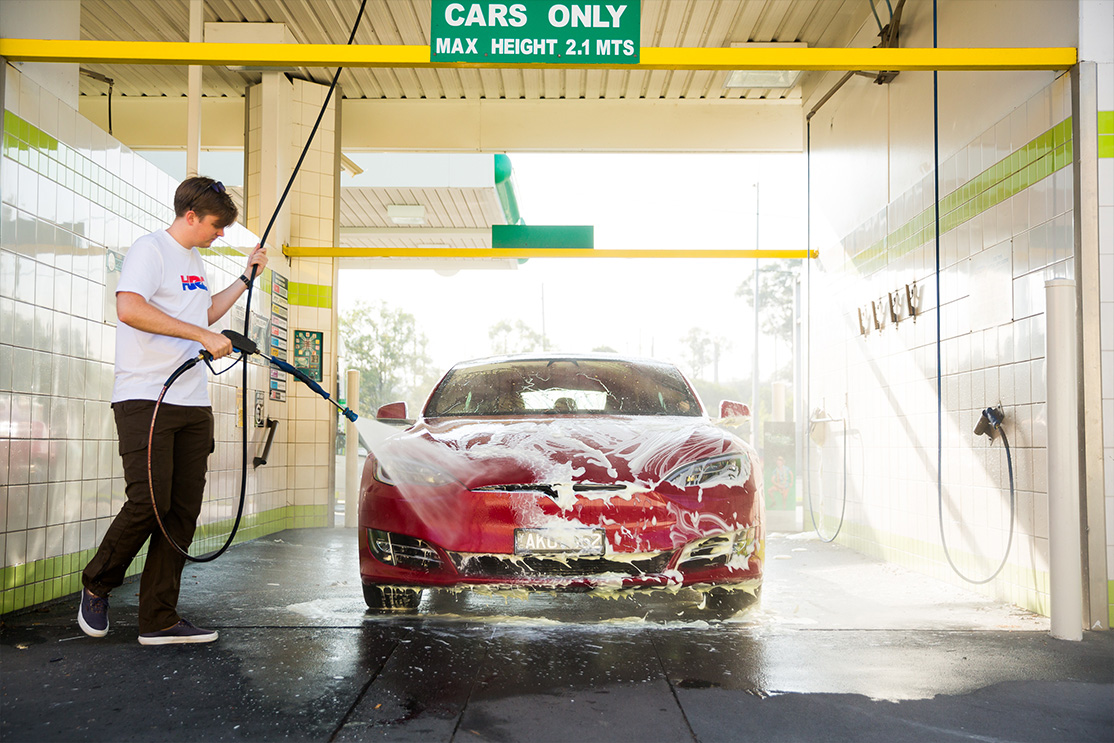
The keys would be mine for two weeks, with the only caveat a ban on officially speed-testing the car – we were instead invited to thrash a different P100D on a track another day.
I would use the Model S as I would any regular car. There would be no home charging, it would need to do back-road blasts and interstate roadtrips, and lug large loads as a scrupulous assessment of its performance.
In two weeks I racked up 2835 kilometres, and a clearer picture of the realities of EV ownership had started to emerge.
Over seven instalments published over the next two weeks, I’ll break down the different aspects of life with an EV that also happens to be the quickest car in Australia.
With each update, I’d love to hear the reaction from readers. Drop us a line at [email protected]. Do you think EVs can make sense in Australia? What is the future of automotive culture going to look like in 10 years’ time? How does the prospect of owning an electric car sound to you?
US PRESIDENT Donald Trump will reopen a sidelined US Government review of the emissions rules that effectively killed off one of Holden’s major export markets.
Speaking at the opening of the $US80 million ($A104 million) Detroit-based American Center for Mobility overnight, Trump said his government would reopen a mid-term review of vehicle emissions caps – the Corporate Average Fuel Economy standards – that were set by the previous Obama government.
The review will potentially overturn a final determination announced by the EPA in January that confirmed fuel economy standards for new cars and pick-up trucks for model years 2022 through 2025 and ruled out the need for the review.
The Environmental Protection Agency-regulated CAFE standards were established under the Obama-led administration, and were aimed at forcing carmakers to lift the fuel economy average across their vehicle fleets to 54.5mpg (4.3L/100km) by 2025. In contrast, Europe has set a target of about 4.1L/100km by 2021.
US carmakers have long argued that the strict CAFE standards do not reflect showroom reality, where buyers are switching off small fuel-sipping cars in preference for larger, more fuel-heavy vehicles, and it needed to be relaxed.
According to Trump, the CAFE standard was costing jobs in the US carmaking industry, and needed to be reviewed.
“I’m sure you’ve all heard the big news that we’re going to work on the CAFE standards, so you can make cars in America again,” Trump said. “There is no more beautiful sight than an American-made car.”
Trump also flagged an announcement his government would make next week, related to US carmaking, that would be “very, very big”.
“Everybody is saying, ‘what is it?’ Let’s keep them guessing back there,” he said. “The assault on the American auto industry, believe me, is over.”
Trump has been pressuring carmakers to pull manufacturing back into the US in an attempt to reclaim Detroit’s status as the world’s carmaking hub. About half the cars sold in the US are made there.
An EPA review into the CAFE standards said introducing the tighter fuel use cap would cost the carmaking industry about $US33 billion, but the economic benefits from the cap – namely the lower rates of fuel demand and the higher energy security – would reap almost $US100 billion in savings for the US economy.
The EPA welcomed the review. “These standards are costly for automakers and the American people,” the environmental watchdog’s administrator, Scott Pruitt, said.
“We will work with our partners at [the Department of Transport] to take a fresh look to determine if this approach is realistic. This thorough review will help ensure that this national program is good for consumers and good for the environment.”
The EPA has until April next year to decide if the CAFE standard should be relaxed.
Not everyone was happy, though. Consumers Union, the lobbying arm of US buyer’s watchdog Consumer Review, labelled the review as “a bad deal for consumers”.
“A decision to withdraw the standards is nonsensical, as it would merely funnel more money to oil companies at consumers’ expense and halt the progress that can be made in both savings for consumers and vehicle efficiency,” Consumers Union policy counsel Shannon Baker-Branstetter said.
“The standards already take the cost into account, and the record shows that they are a reasonable, cost-effective approach to improving fuel efficiency and lowering consumers’ expenses.”
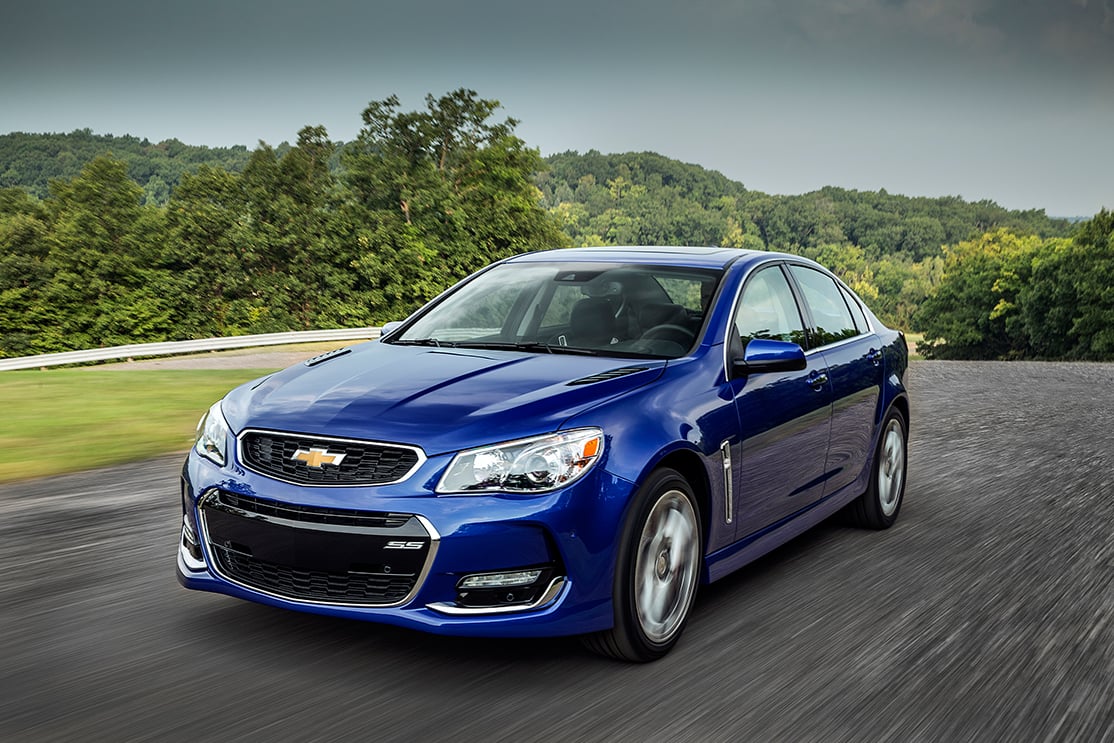
The tougher US emissions standards were one of the reasons Holden’s parent company, General Motors, showed little interest in reviving exports of the Australian-made Holden Commodore – rebadged as Pontiacs before the 2008 global financial crisis killed off the performance sub-brand, and as Chevrolets when low-level exports were kick-started in 2013.
Only about 9000 Chevrolet SS sedans have sold in the US over the last three years, although Holden announced late last year it would build an extra 1000 export cars to meet an expected uptick in demand for the V8-engined four-door.
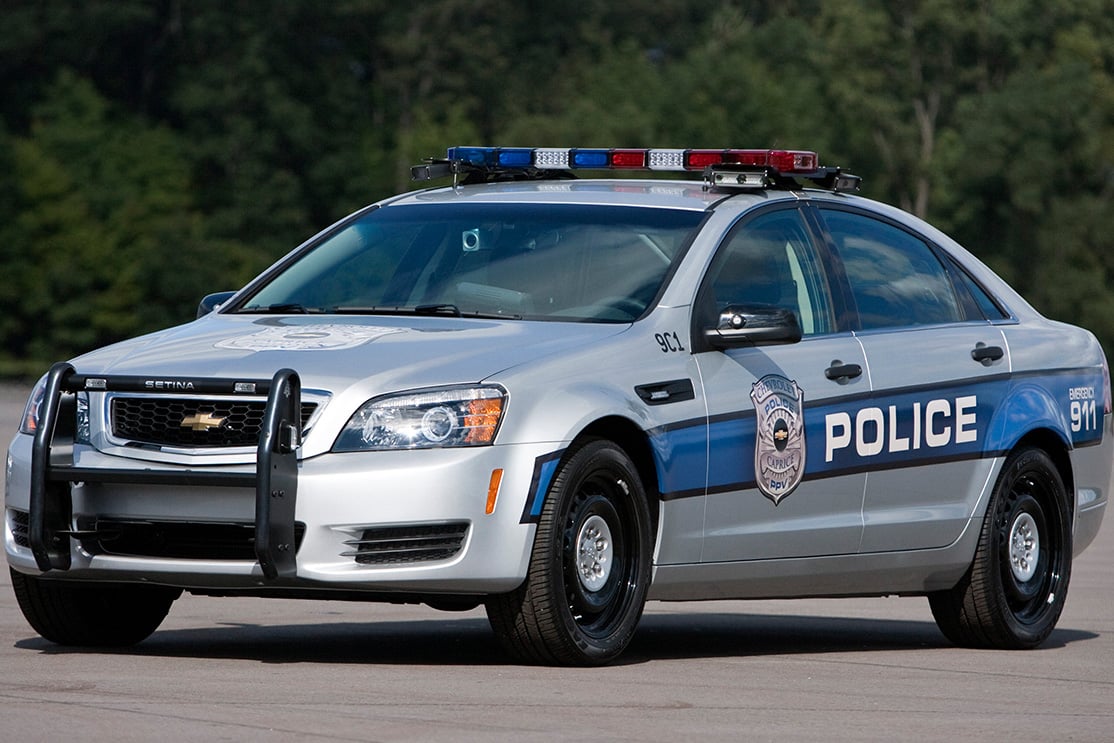
About another 15,000 Holden Caprice long-wheelbase sedans, rebadged as the Chevrolet Caprice, have also been sold to US police forces since 2011.
