
Porsche is on a new-product onslaught right now, isn’t it?
In the past few months we’ve had updates for the Panamera and Taycan plus an all-new, and all-electric, Porsche Macan to wrap our heads around.
And now we have a new 911. Well, an updated one at least.
Welcome, dear readers, to the 992.2 generation of the world’s greatest sportscar which, gasp, is now powered in-part by electricity in some models.
But while adding hybrid tech to the 911 is undoubtedly the biggest change for this new generation — dare we call it the most significant change in the 911’s 60-year history? — it’s not the only update afoot.
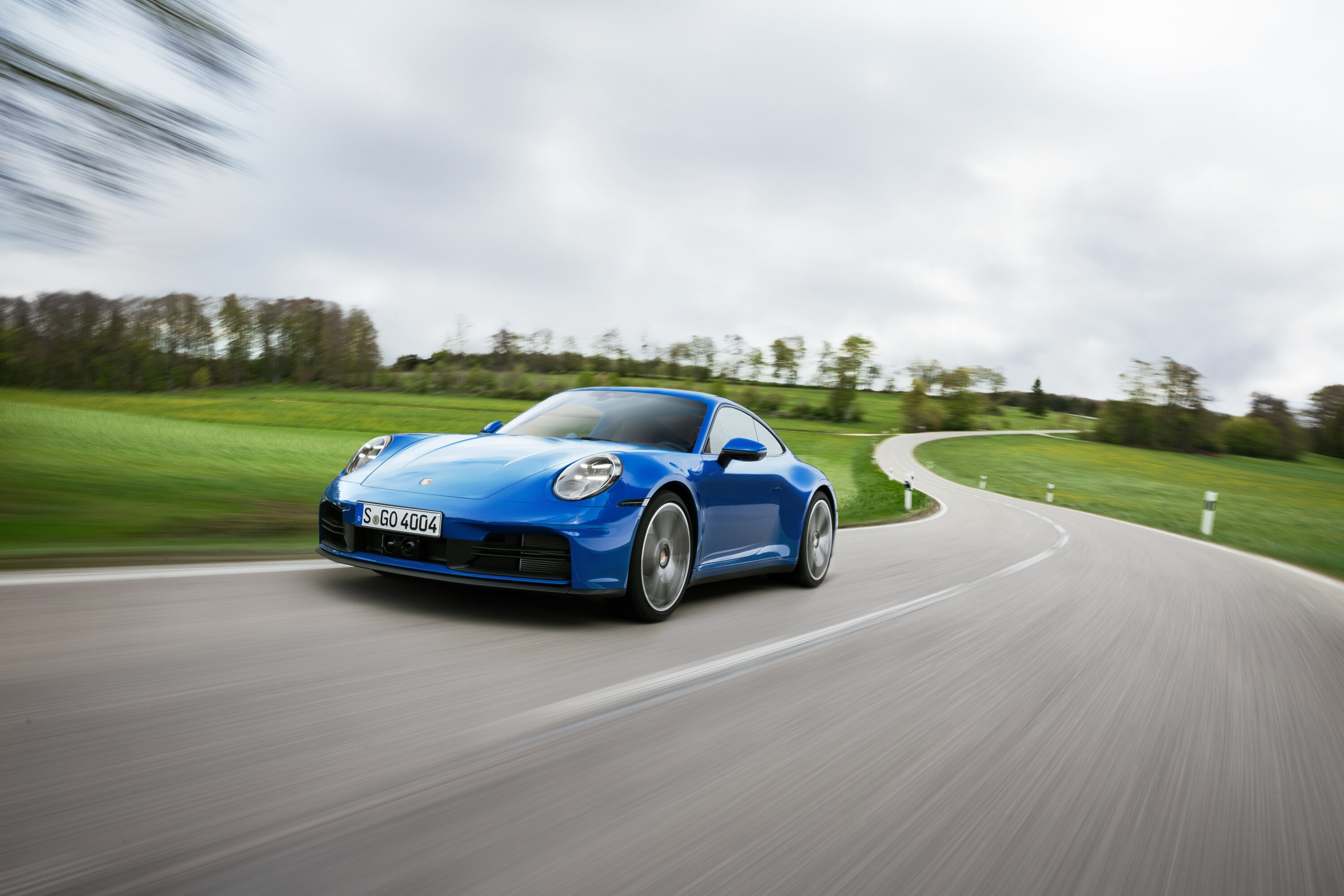
For now the hybrid tech, which Porsche calls T-Hybrid, is only available on flagship GTS versions, meaning the regular Carrera Coupe continues to be powered solely by good old dinosaur juice.
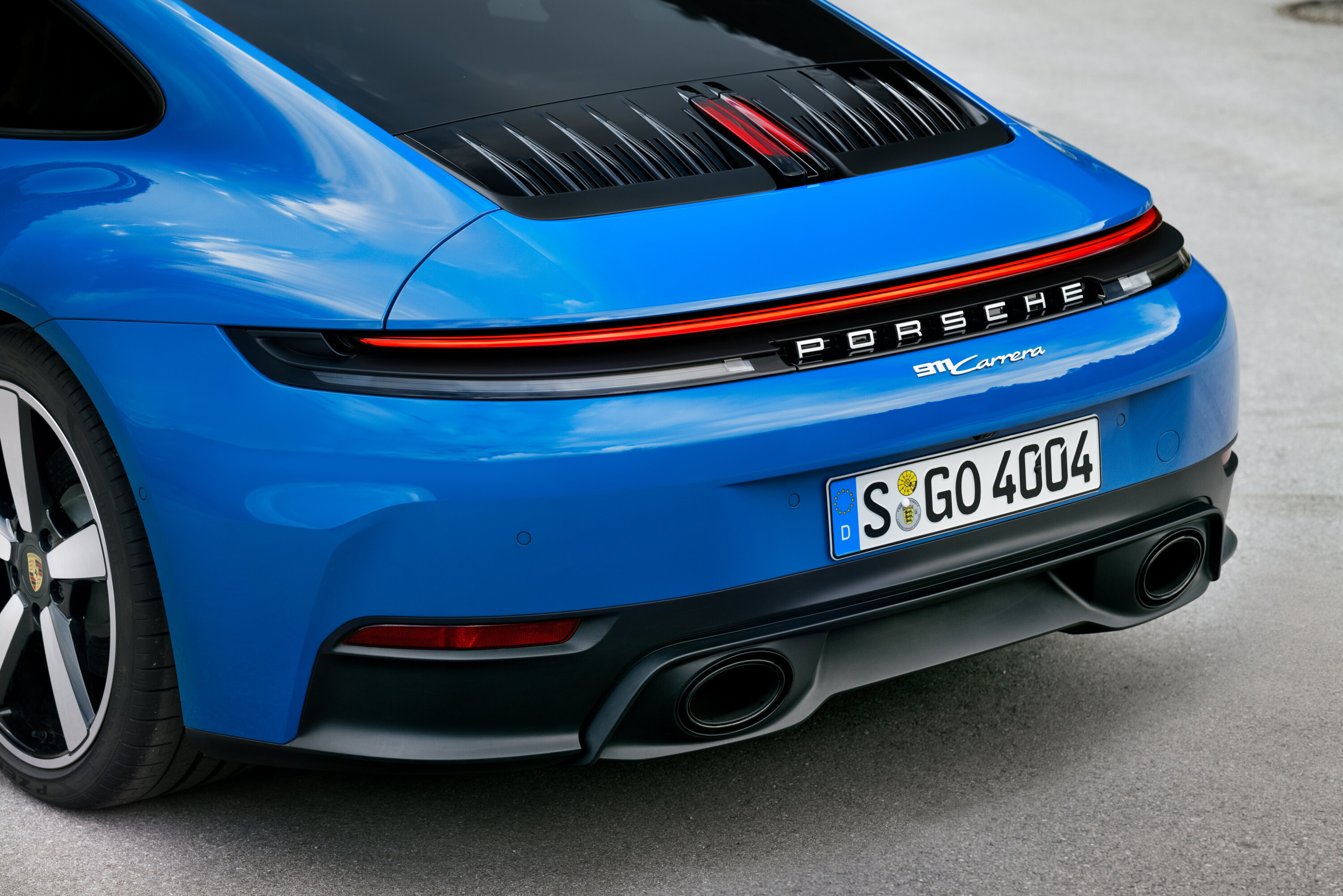
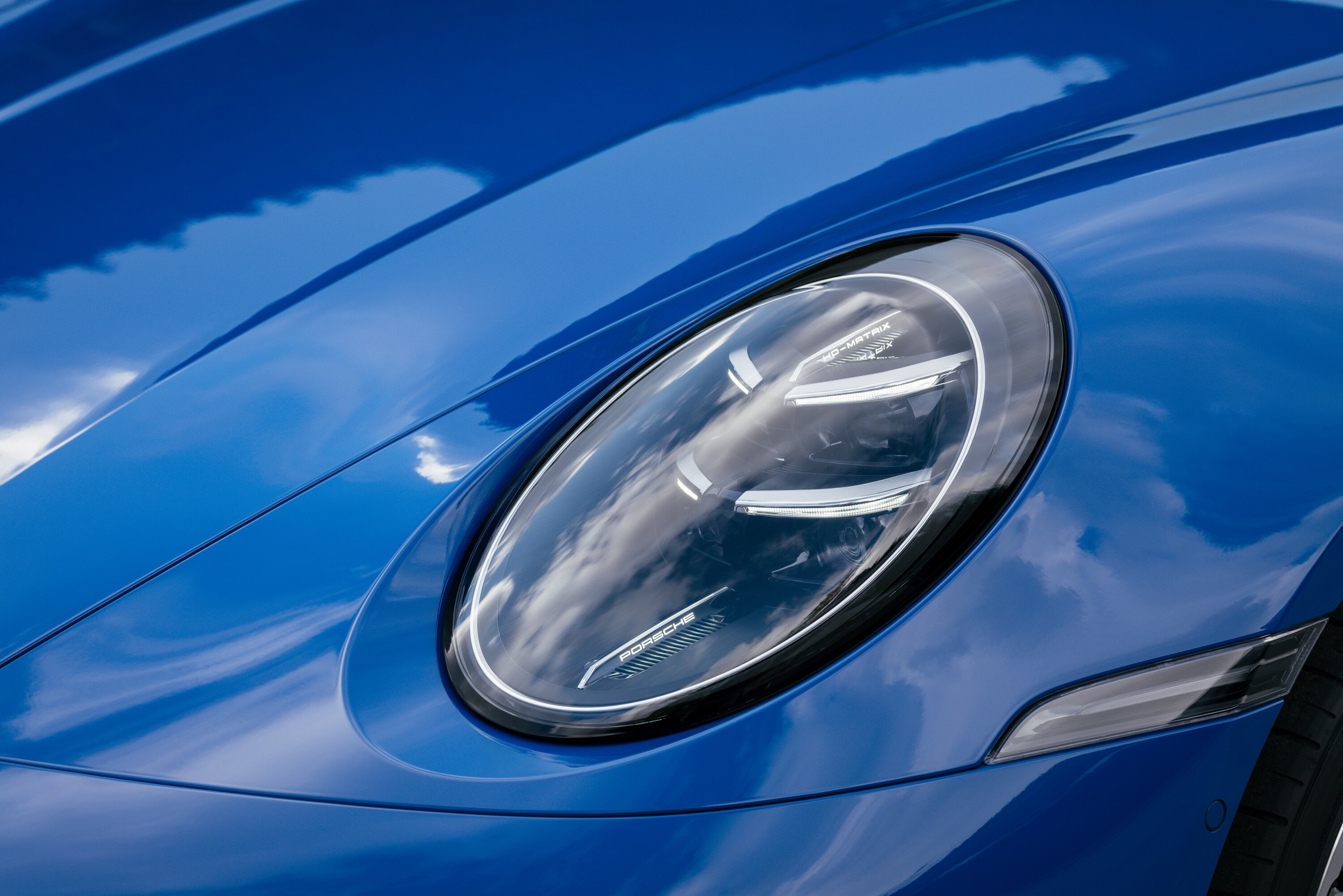
The Coupe’s 3.0-litre twin-turbo boxer has also been fettled to produce more power and torque, while Porsche has also tweaked the exterior design, improved the aerodynamics, overhauled the interior, expanded the connectivity and added a richer list of standard equipment.
A MORE POWERFUL ENGINE
Confusingly, Porsche’s own press information says the Coupe’s 3.0-litre twin-turbo boxer has been both “lightly modified” and “comprehensively revamped” for the 992.2. Changes include new turbochargers which have been nicked from the previous GTS and a new intercooler, this time taken from the previous Turbo models, which sits directly onto of the engine under the rear bonnet.
Total outputs have increased slightly to 290kW (+7kW) and 450Nm.
The power bump helps to cut the 0-100km/h sprint down to 4.1sec or 3.9 seconds if the Sport Chrono package is fitted. That’s a 0.1sec improvement over the old car.
MORE SCREENS, FEWER SEATS
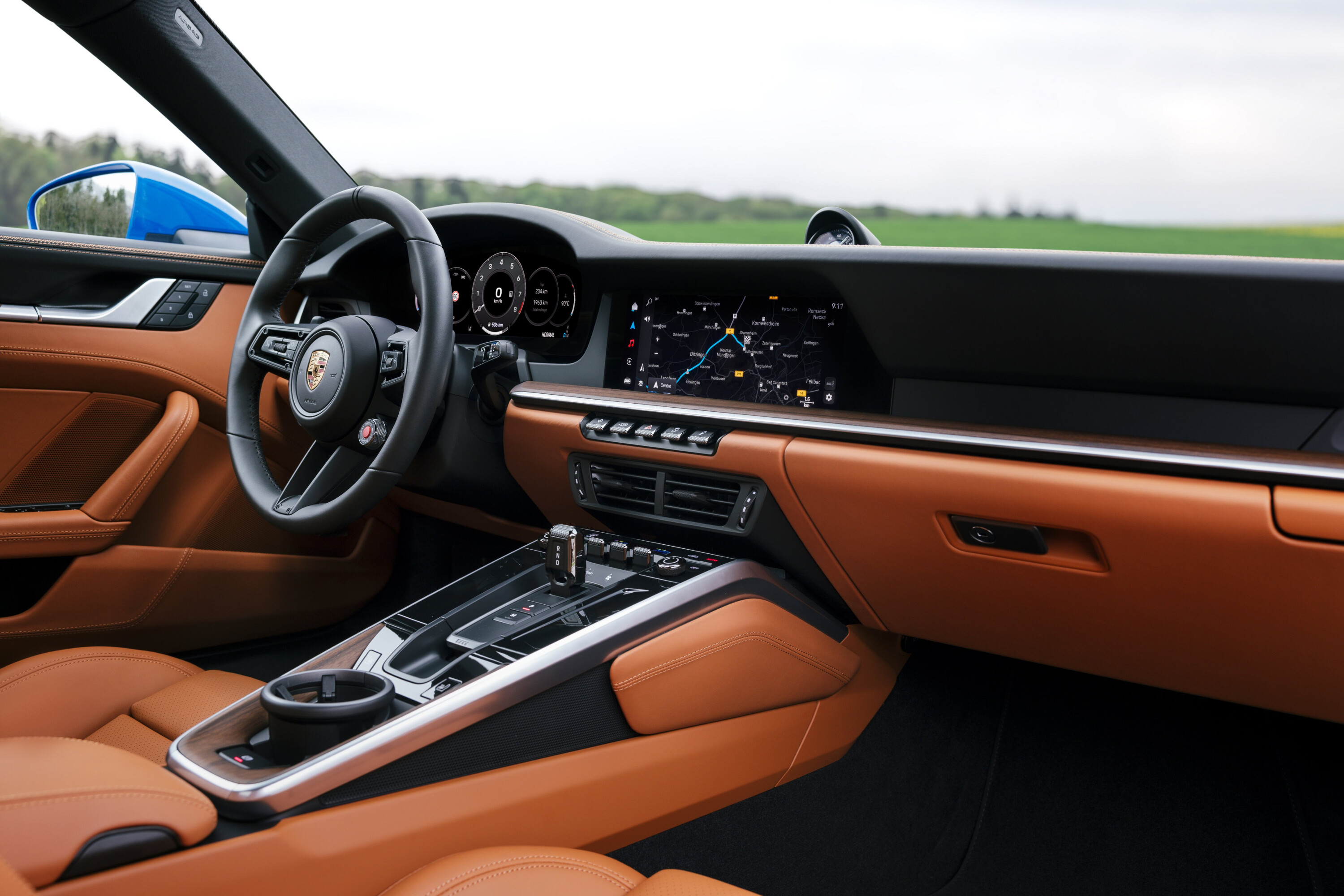
Inside the 992.2 ushers in two big changes: the inclusion of a starter button for the first time and the move to a fully digital instrument cluster. The new gauges are housed in a curved 12.6-inch display that Porsche says can be extensively customised. Seven different views are available, including a ‘Classic’ display that retains the 911’s traditional five-tube design with a central tachometer.
The centre console now houses a cooled compartment where you can charge your smartphone on a wireless charging pad.
The 10.9-inch centre touchscreen has new connectivity features and integrates more closely with Apple CarPlay functions like Siri voice assistance. Watching video streaming while parked is also available as an option, while apps like Spotify and Apple Music can be used natively through the system without a connected smartphone.
Another interesting change is to the seating layout. Internationally, the 992.2 Coupe will be offered as a two-seater as standard rather than the traditional four-seat configuration. In Australia the 2+2 layout will continue to be the default, however removing the rear seats is a no-cost option.
PRICE BUMPS AND AVAILABILITY
The 2025 Porsche 911 992.2 is available to order now with customer deliveries expected to commence in the first quarter of 2025. Prices have crept up across the board and the model range now kicks off at $280,500 for the Carrera Coupe with PDK.
- 911 Carrera Coupé starts at $280,500
- 911 Carrera Cabriolet starts at $303,800
- 911 Carrera GTS Coupé starts at $381,200
- 911 Carrera 4 GTS Coupé starts at $401,300
- 911 Carrera GTS Cabriolet starts at $417,400
- 911 Carrera 4 GTS Cabriolet starts at $437,900
- 911 Targa 4 GTS starts at $437,900
Australians gravitated to brands they trust amid public lockdowns and international travel restrictions during the coronavirus pandemic and delivered vehicles to people like Brisbane based nurse Barbara Lowe who snapped up her Diamond Red metallic MG HS at that time.
Barbara joined the MG family in 2020, and said she had tried out a variety of models before eventually being won over by the HS.
“I got my MG in the height of COVID-19. I was looking at a variety of different brands, but it was the MG that caught my eye, and from the moment we first drove the HS we absolutely loved it.”
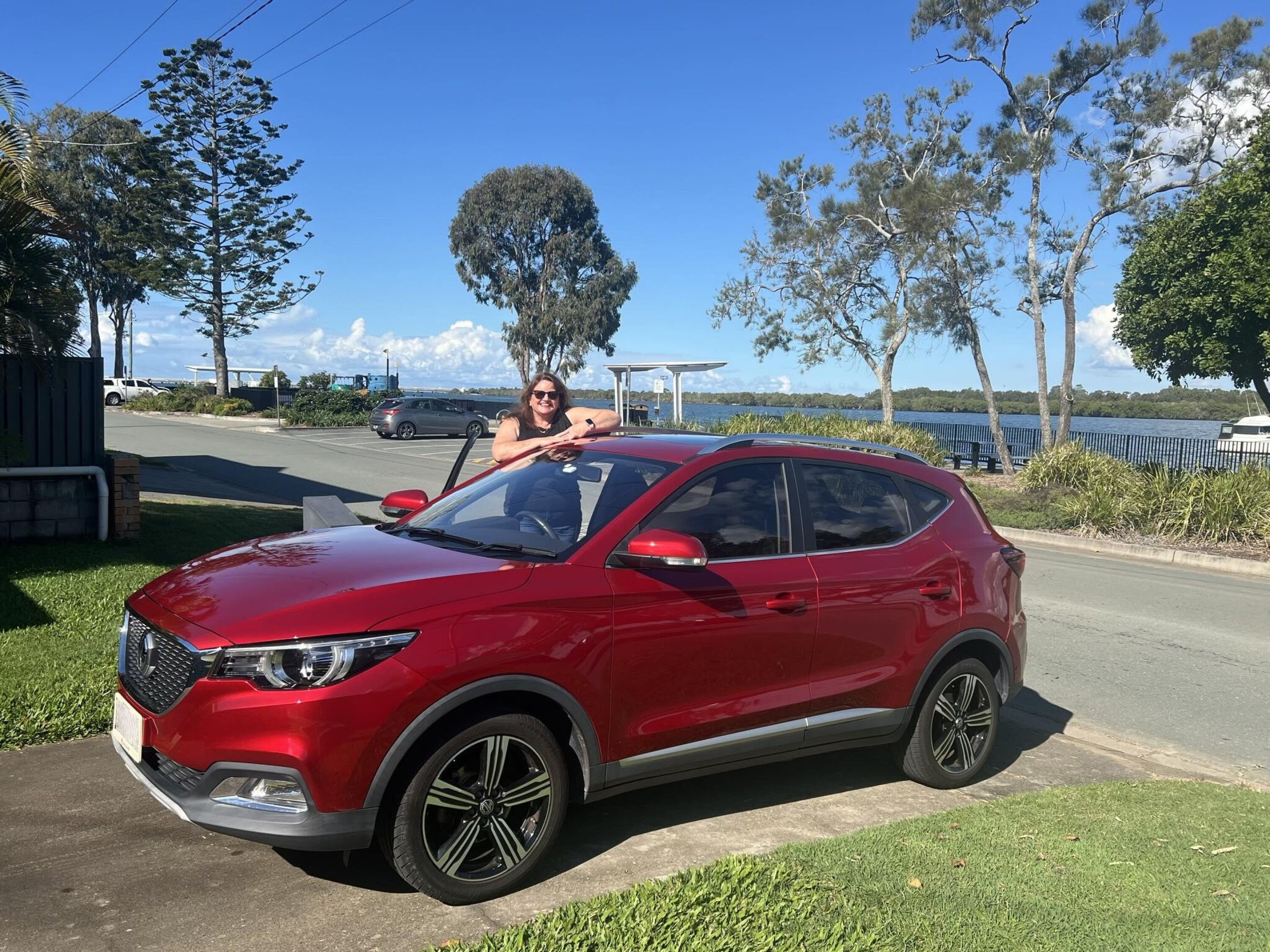
“The HS just had so many bells and whistles that the other cars didn’t have standard, so it was more bang for your buck. The seven years warranty was also a good sales pitch.”
When on the hunt for a new car, Barbara knew she wanted it to be a good size and well equipped to assist her in her day-to-day life as a nurse but also a great car for road-tripping and weekend escapes too.
“Since I am a nurse, my mother always said that I needed a reliable car. The MG HS was brand new and also packed a ton of safety features, so it ticked all my boxes,” she said.
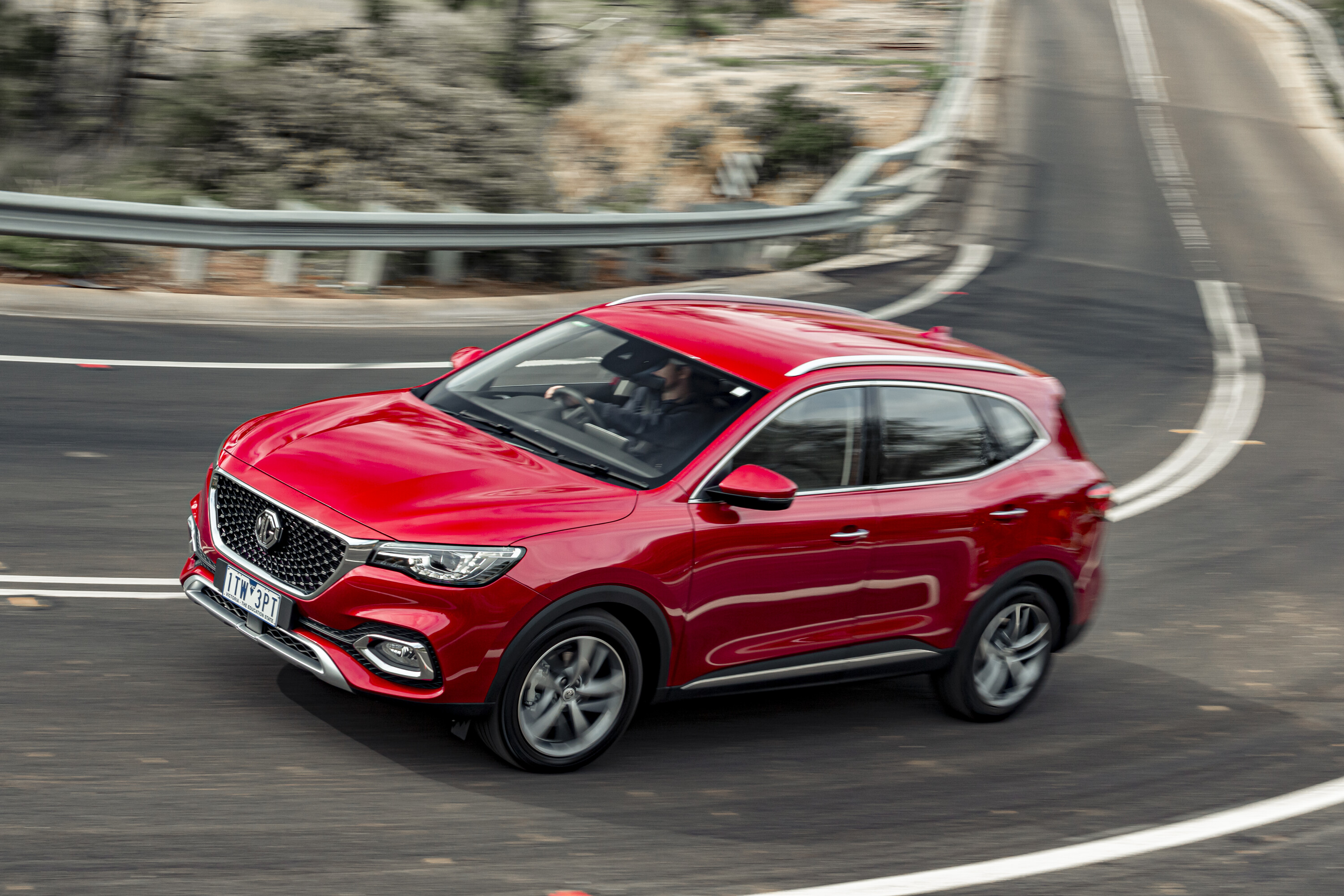
“I travel on the open highway to work each day, and it is always very smooth and very easy to drive.”
Barbara and her partner enjoy being able to hit the road and escape the hustle and bustle of city life when possible. The HS has proved to be more than a competent companion along the open Queensland country roads and a reliable workhorse enroute to the Hospital.
“My partner and I have been on several road trips with the car. Firstly we did Central Queensland, up to Emerald and Sapphire and worked our way back through Dalby,” she said.
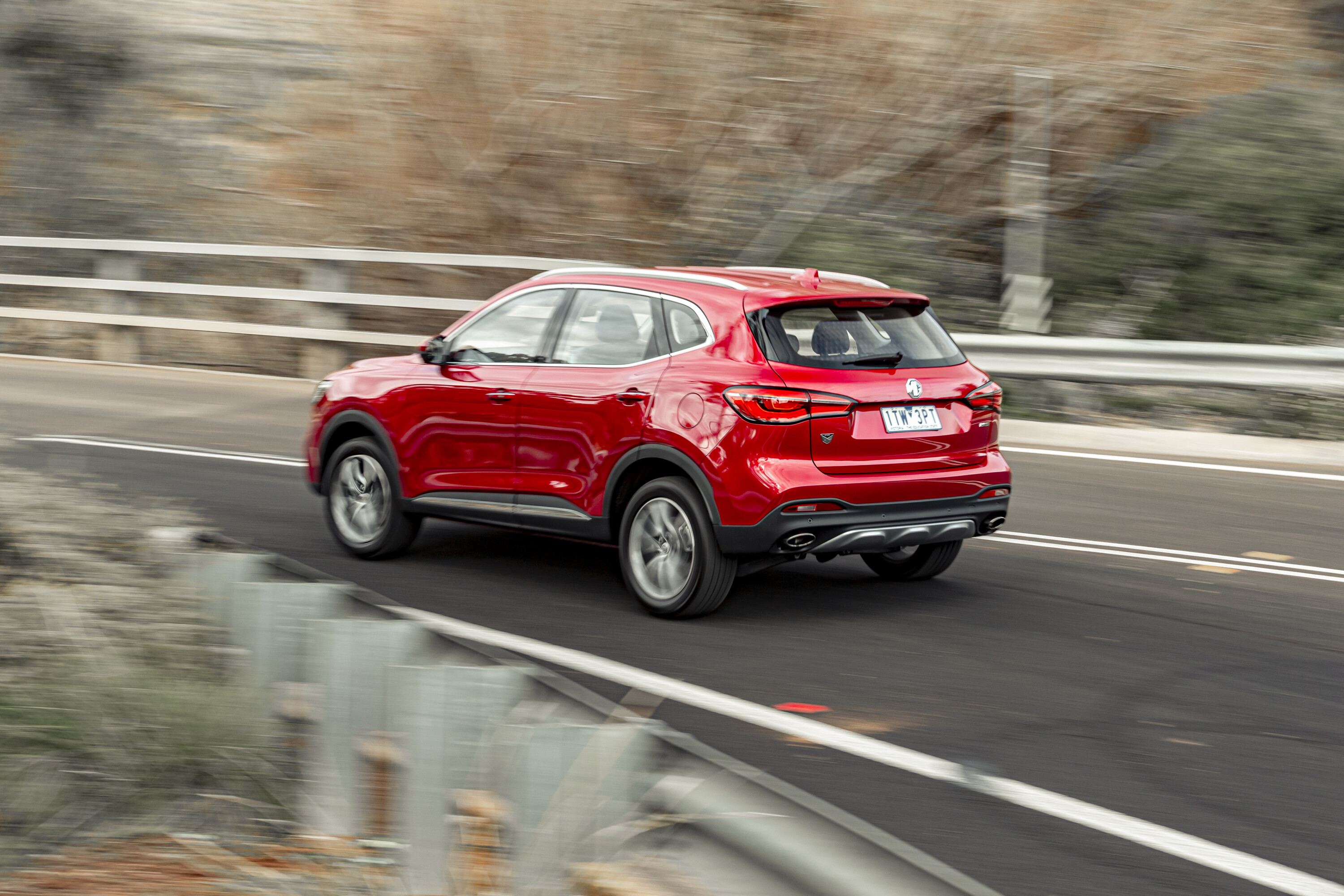
“The navigation for the trip was excellent. Another time I travelled from North Brisbane to the Gold Coast and back, and then the next day drove to Byron Bay on the same tank of petrol. I was absolutely amazed at how efficient the car is.”
This fuel efficiency that the MG HS packs is one of the most outstanding aspects to the car for Barbara, alongside many other features.
“My favourite feature of the MG HS is number one that it is very fuel efficient. It also has excellent handling and overall feels exceptionally smooth on the roads. The tyre pressure gauge is also something I didn’t have on my previous car which has really come in handy.”
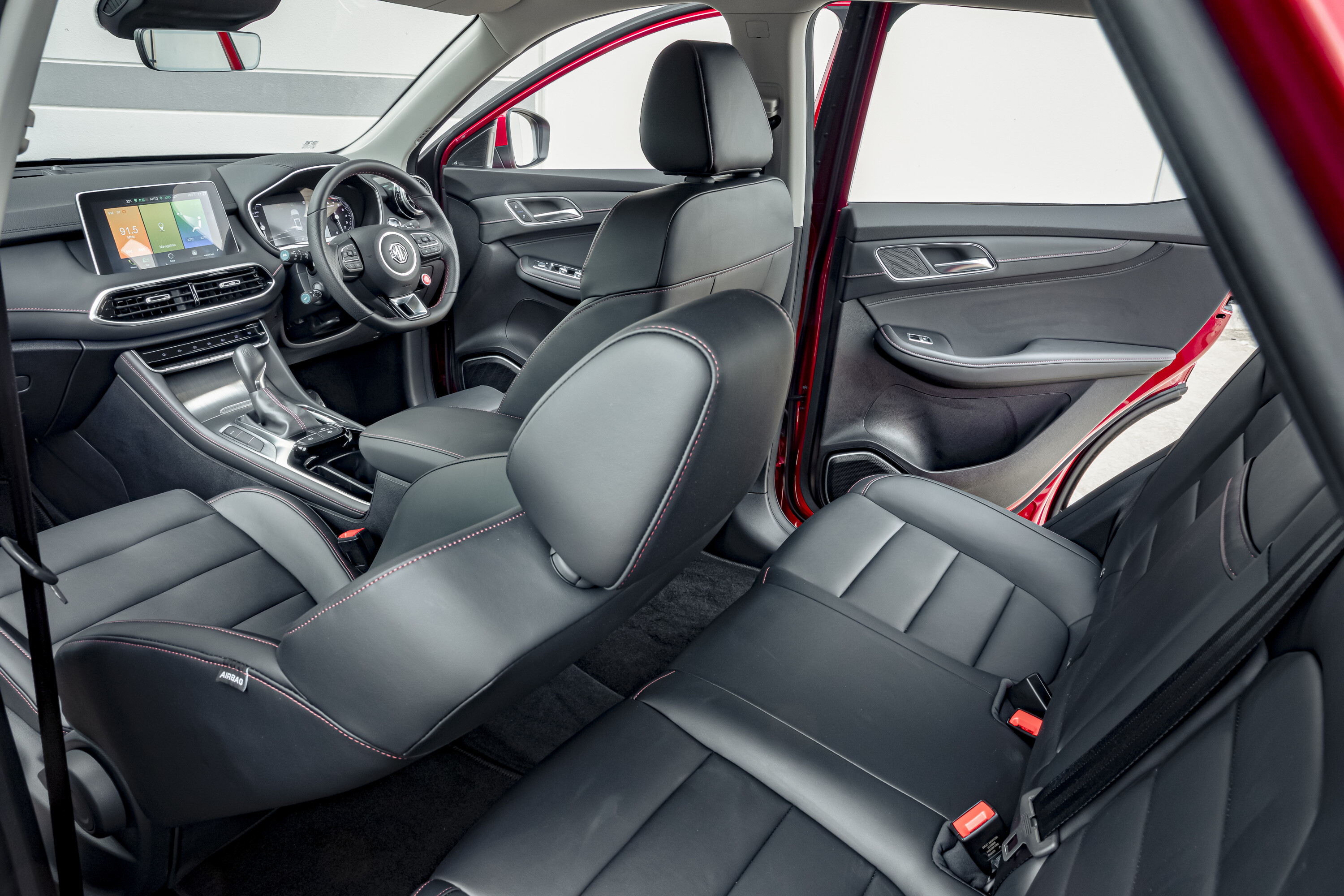
“I was surprised at how comfortable the car is, and the leather like seats make it look very smart. There are a few things I miss from my old car but now I can use Siri hands free when driving.”
“The reverse driving camera comes into use a lot as well and is especially helpful in the tight parking spaces of the hospital in which I work. The Apple CarPlay is great too, it’s fantastic to have an extension of my phone and all its apps.”
Barbara said without a doubt she would recommend an MG to her friends and family and would certainly purchase another in the future if she ever felt the need to add another vehicle into her family.
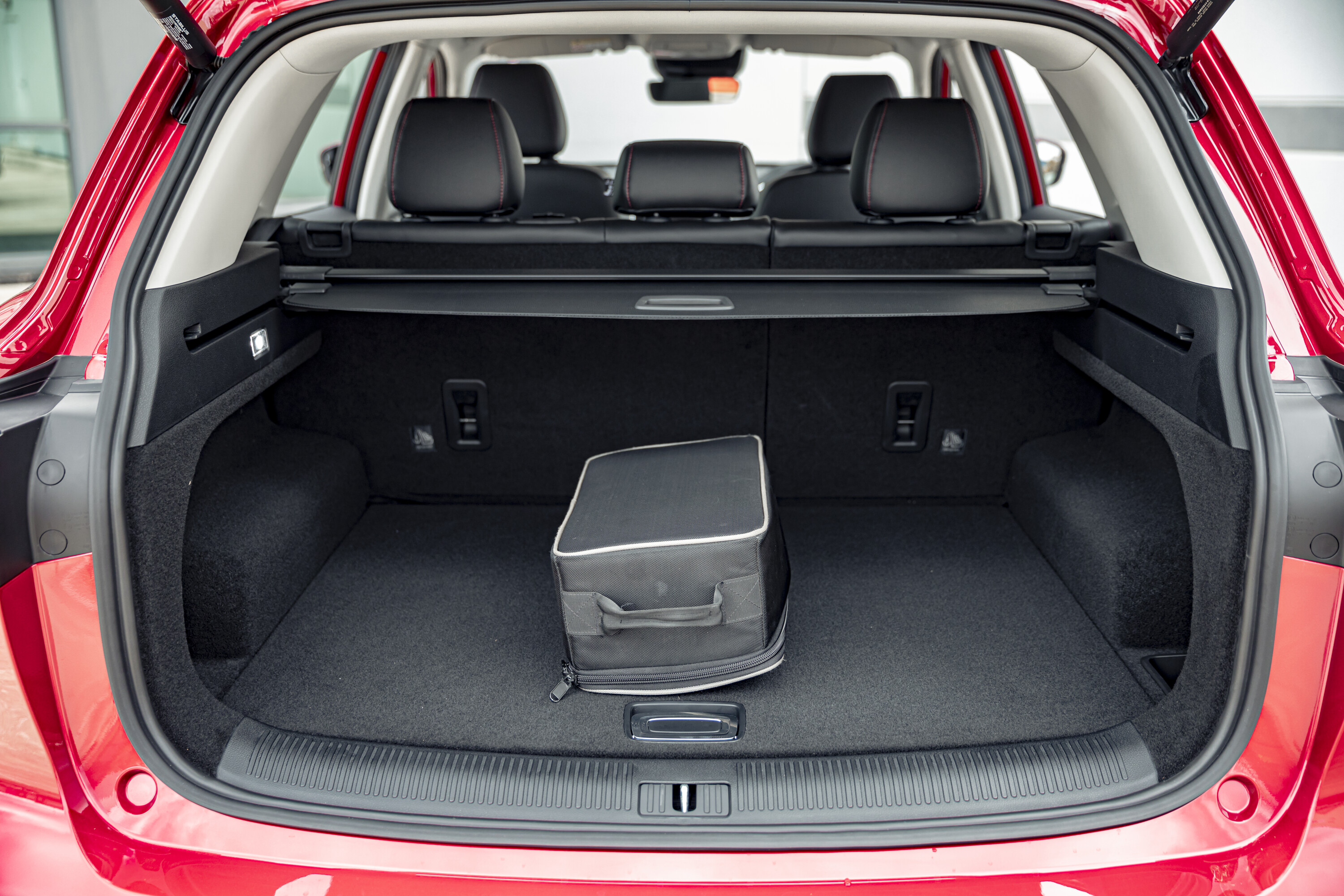
“I would certainly purchase another MG again, and I highly recommend the HS. I have had to use another MG HS before, and while it didn’t have all the features of mine, it was still great, and the fuel efficiency was just as top notch.”
“I am so happy with my HS, I know it doesn’t have the go of some other cars. However, I continue to be pleasantly surprised with just how good it is, plus I absolutely love the colour (Diamond Red Metallic).”
Visit your local MG Dealership today, and take the MG HS for a test drive. [↗️]
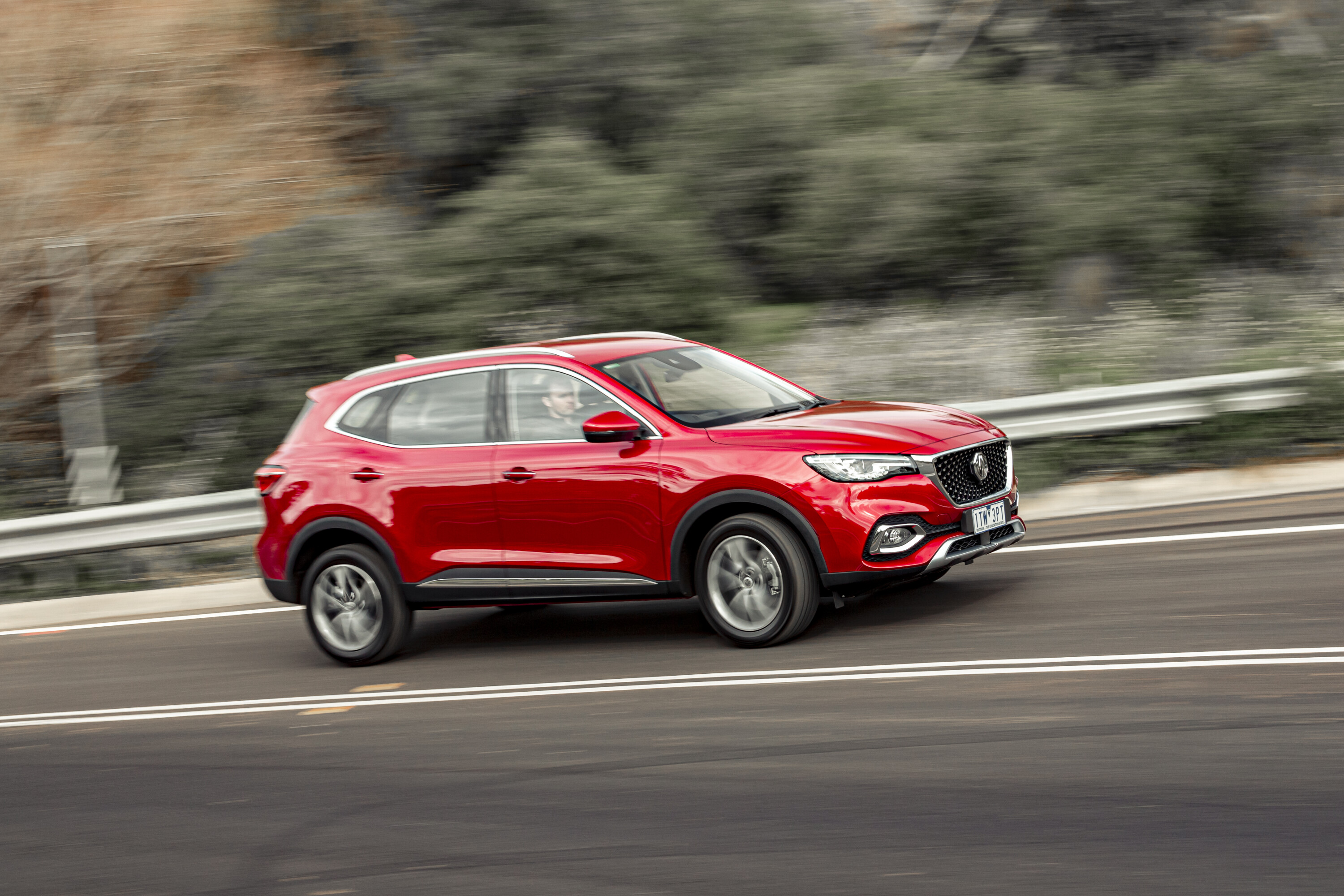
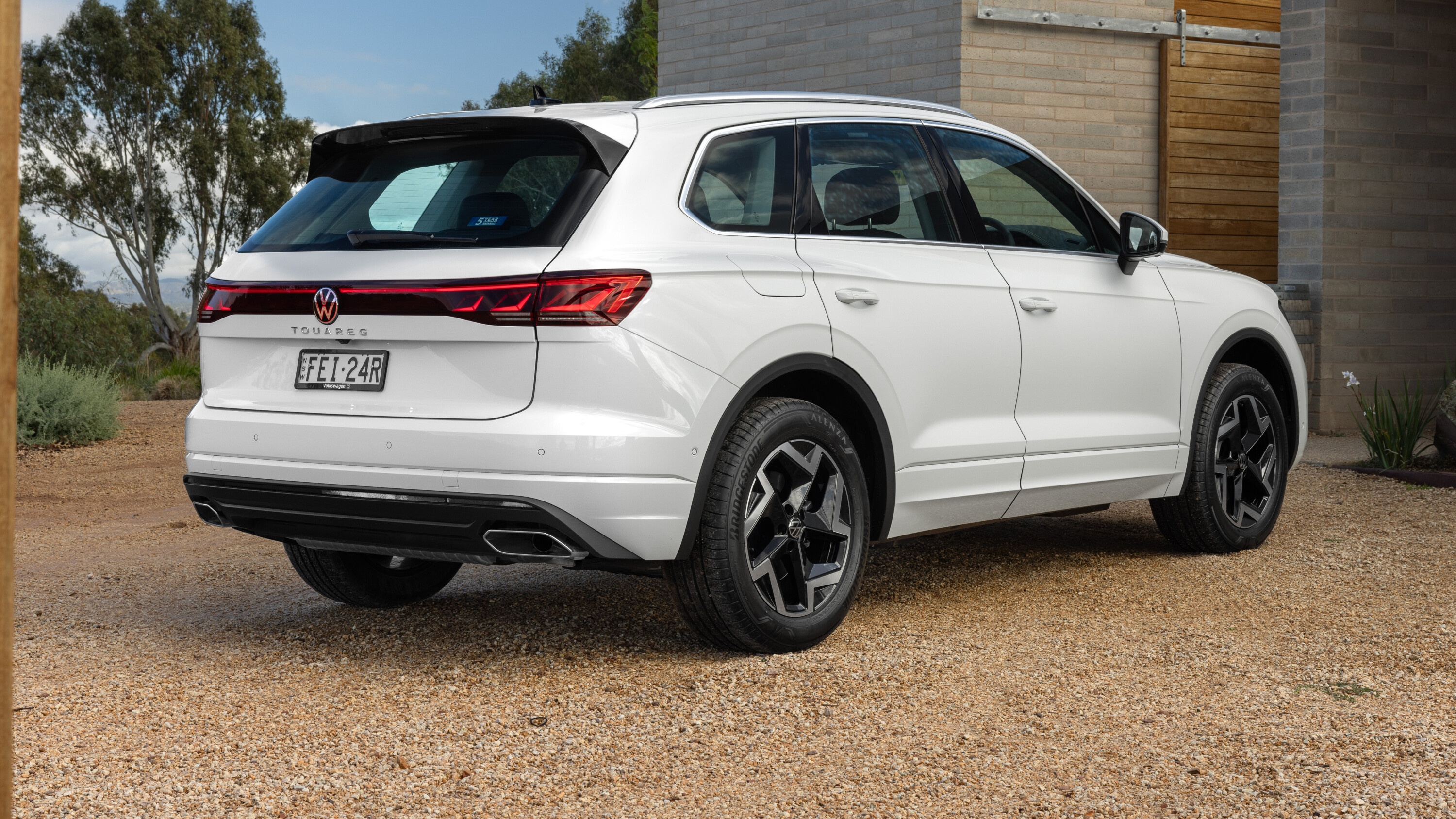
The Volkswagen Touareg has been revamped and repositioned, with the entry-level 170TDI model now offering a claimed $10,000 of extra spec for a lower price than the outgoing version.
It still comes with a V6 diesel engine, all-wheel drive and 3.5-tonne towing, but as with the previous take, it remains a five-seater, and that means some of its rivals may make better sense for family-car buyers.
Unless, of course, you are one of those people who bought a seven-seater only to realise that the third row could have just been a big boot…
JUMP AHEAD
- Pricing and features
- Comfort and convenience
- Powertrain
- Driving
- What are the best rivals?
- Should I put it on my shortlist?
- Specifications
Pricing and features
The updated Touareg 170TDI lists at $86,790 plus on-roads, nearly $2500 less than the last version, but with the aforementioned $10K spec bump that includes a heap of new items.
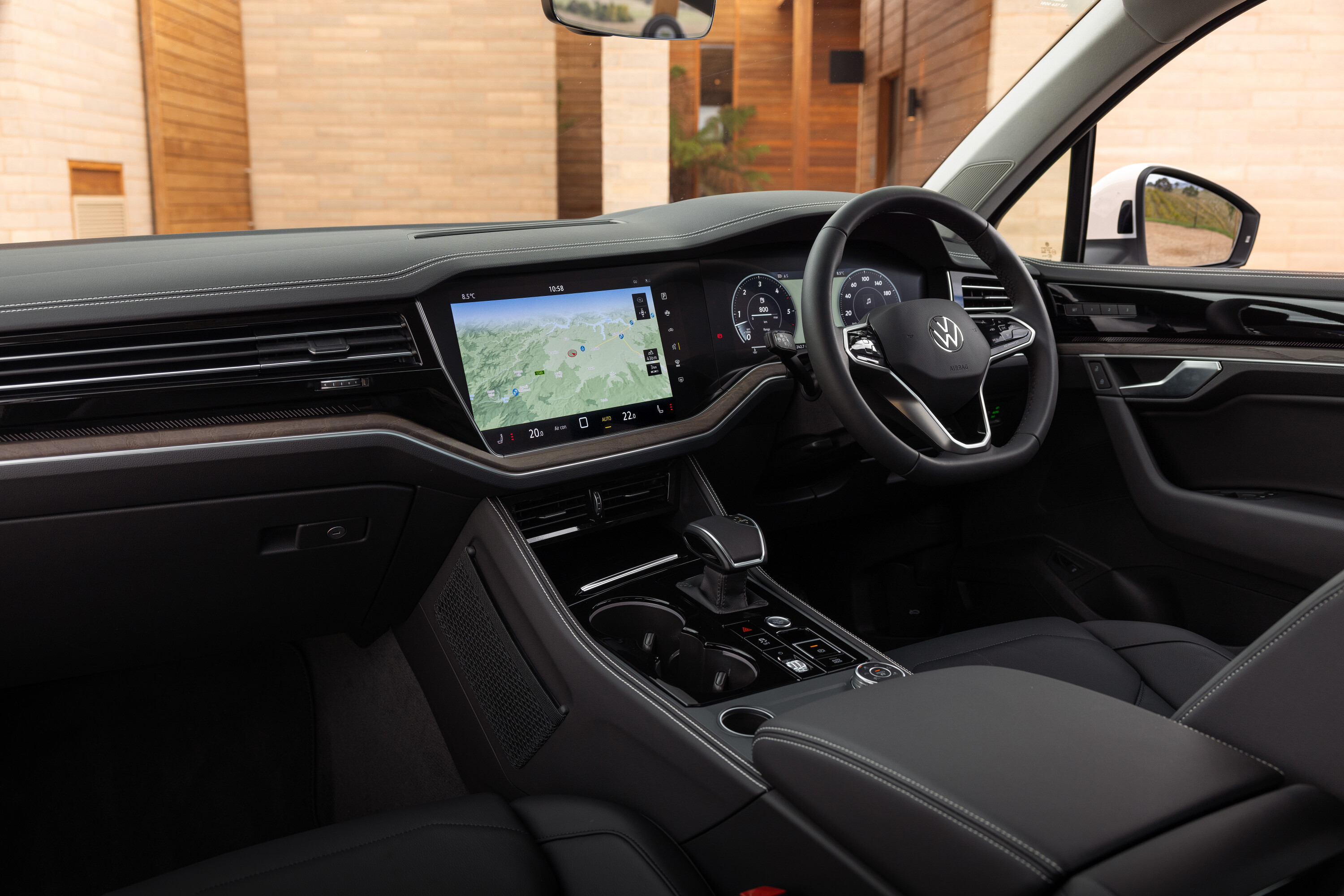
Highlights include LED matrix HD headlights with adaptive beam tech, 19-inch alloy wheels, a power tailgate, keyless entry and push-button start, leather interior trim, heated front seats with electric adjustment, a 12.0-inch digital driver info screen, and the 15.0-inch Innovision touchscreen – previously optional – is now standard, with wired and wireless Apple CarPlay and Android Auto, as well as sat nav, and it’s the display for the standard surround-view camera system.
Other standard safety tech includes front and rear parking sensors, semi-autonomous parking, dynamic road sign recognition, autonomous emergency braking with pedestrian and cyclist detection, lane-keeping, adaptive cruise control, traffic jam assist, blind-spot monitoring, front and rear cross-traffic alert with auto braking, and the brand has also added Manoeuvre Braking for obstacle and pedestrian protection while parking.
There are other V6 models above this one, both with the punchier 210kW/600Nm tune.
The 210TDI Elegance is $99,990 plus on-roads and adds larger 20-inch wheels, adaptive air suspension, different leather interior trim, and cooled front seats with massage function.
Up from there is the 210TDI R-Line at $109,990 plus on-roads, and it gains a specific R-Line exterior and interior design, 21-inch wheels, black leather interior trim, tinted rear glass, rear-wheel steering and electromechanical anti-roll stabilisation, a heated sports steering wheel, an alarm, and black headliner.
Comfort and convenience
The base grade feels like a luxury SUV inside, with an understated and somewhat minimalist vibe.
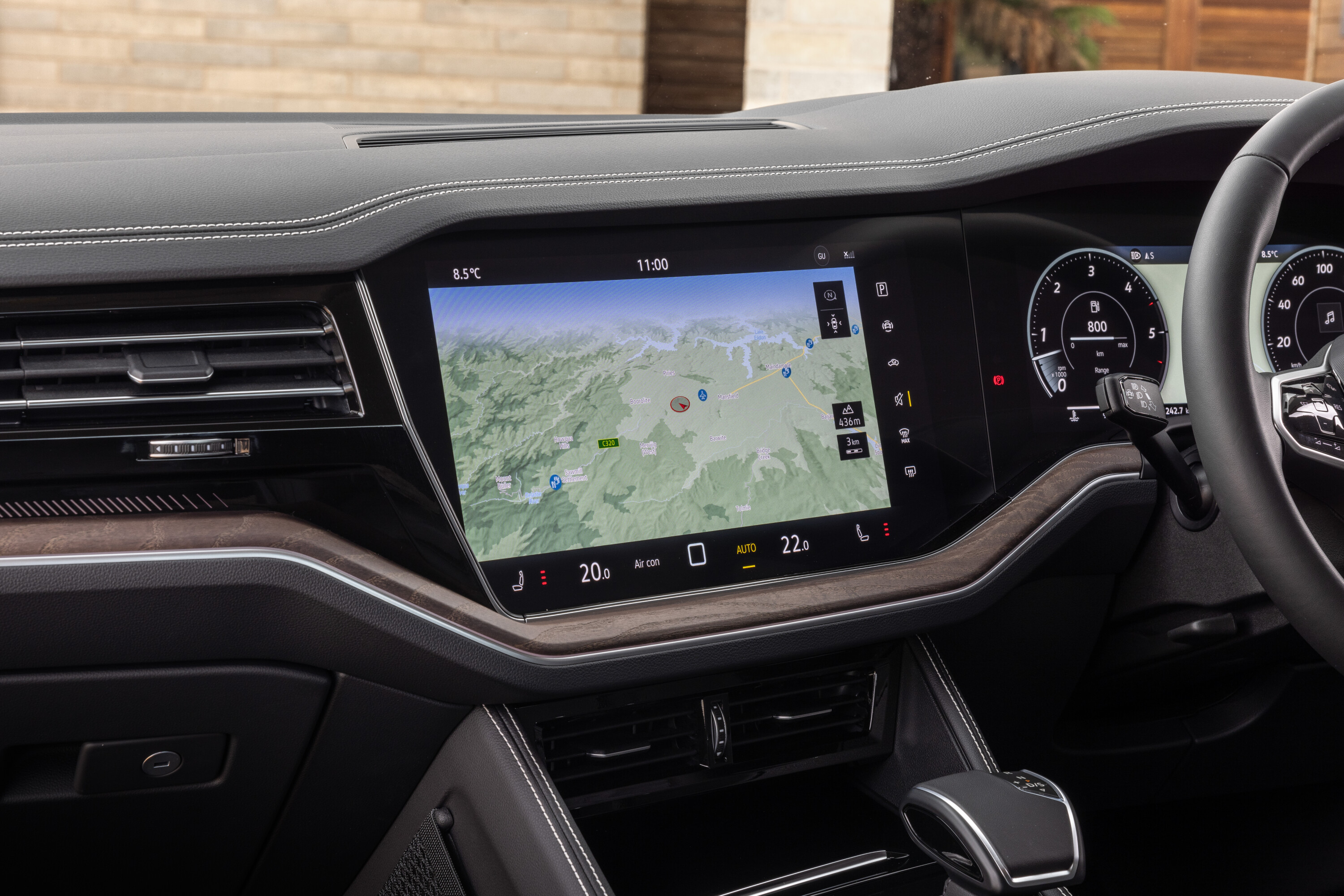
The big touchscreen media system certainly takes pride of place in the dash, but sadly there are no buttons to control elements on the screen. There’s a ‘bar’ at the bottom for climate control which takes some learning, and that’s a common theme with the infotainment software. At least the Apple CarPlay display now goes full screen.
While some may prefer a metallic finish across the dash, the “open cell fine grain ash” wood trim is a lovely touch, and it runs across the dash and onto the doors, where there’s also an ambient light strip to brighten things up.
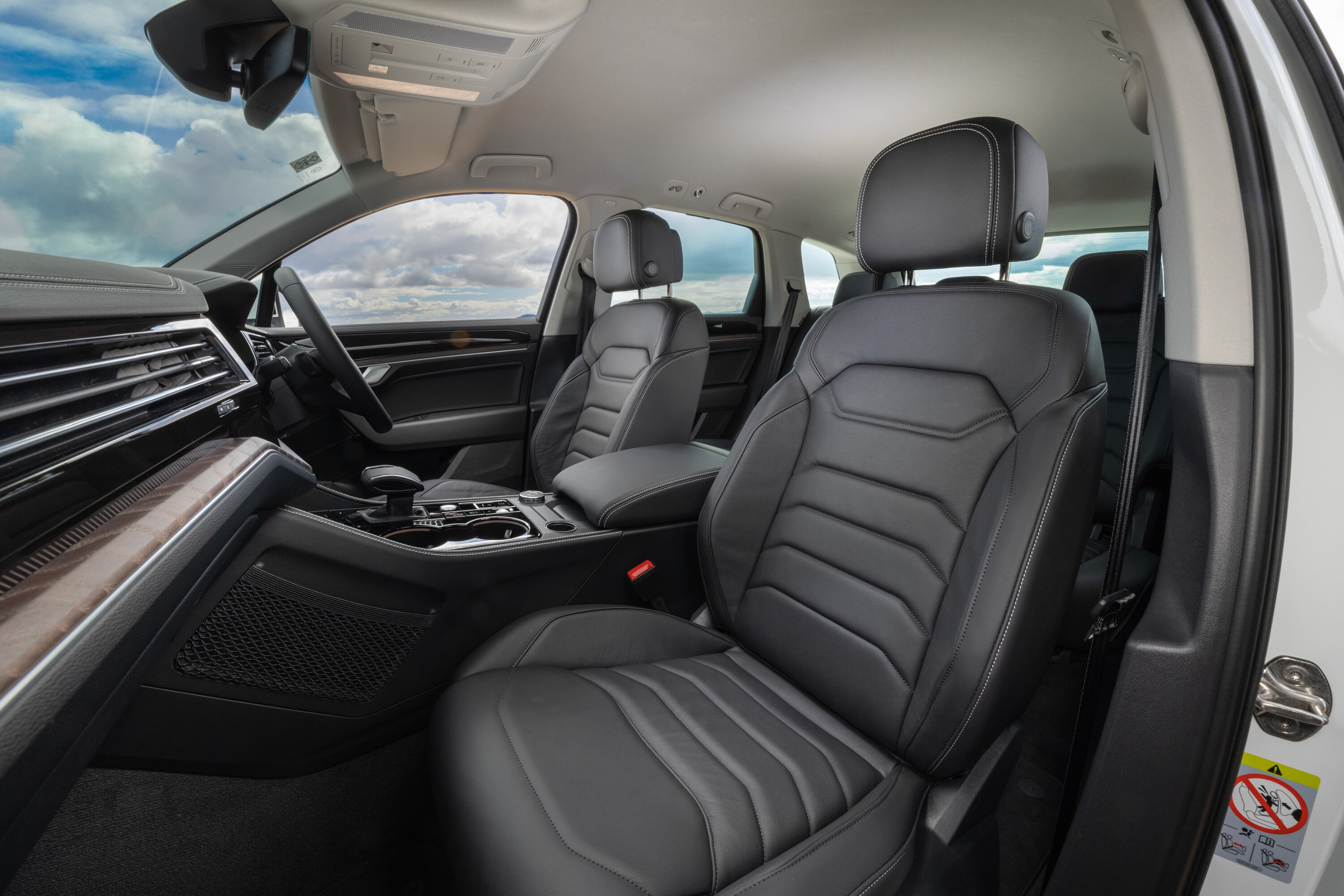
The leather-trimmed, heated and electrically adjustable front seats are super comfy for longer drives, and the back seat offers comfortable accommodation too.
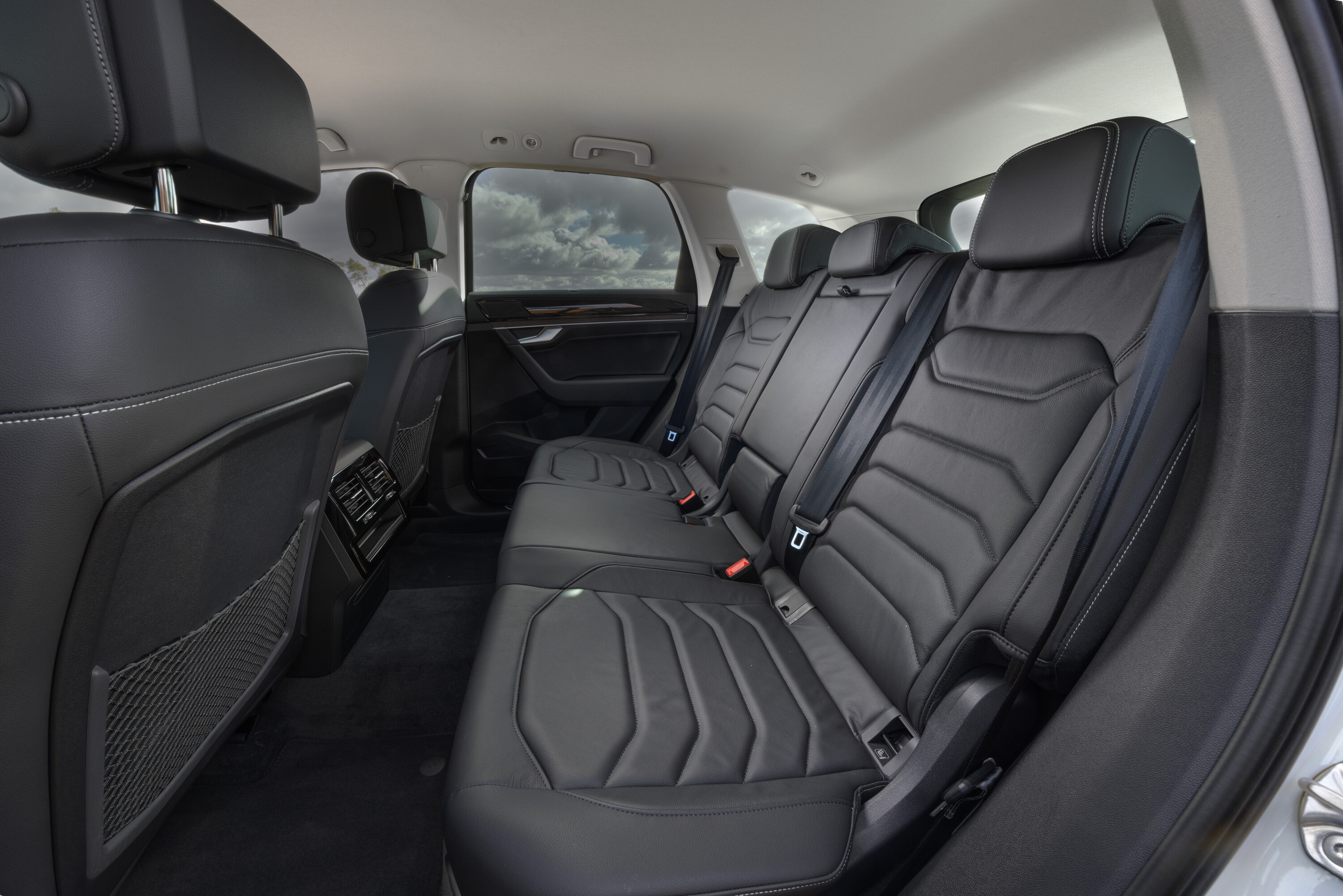
There’s ample room in the rear for a taller adult to sit with space to spare, but three with big feet might be an issue as there’s a transmission tunnel eating into foot space.
And while there are directional vents and USB-C ports in the back, the base car misses out on the handy B-pillar vents for better air circulation.
Powertrain
No changes to the powertrain compared with the preceding model, meaning the 3.0-litre turbo-diesel V6 carries on, and with 170kW and 500Nm, it’s quite a unit. There’s a standard eight-speed auto and 4Motion all-wheel drive.
Maximum towing capacity is 750kg for an unbraked trailer and 3500kg for a braked trailer, but the towing downball weight is capped at 280kg – so do your maths.
Driving
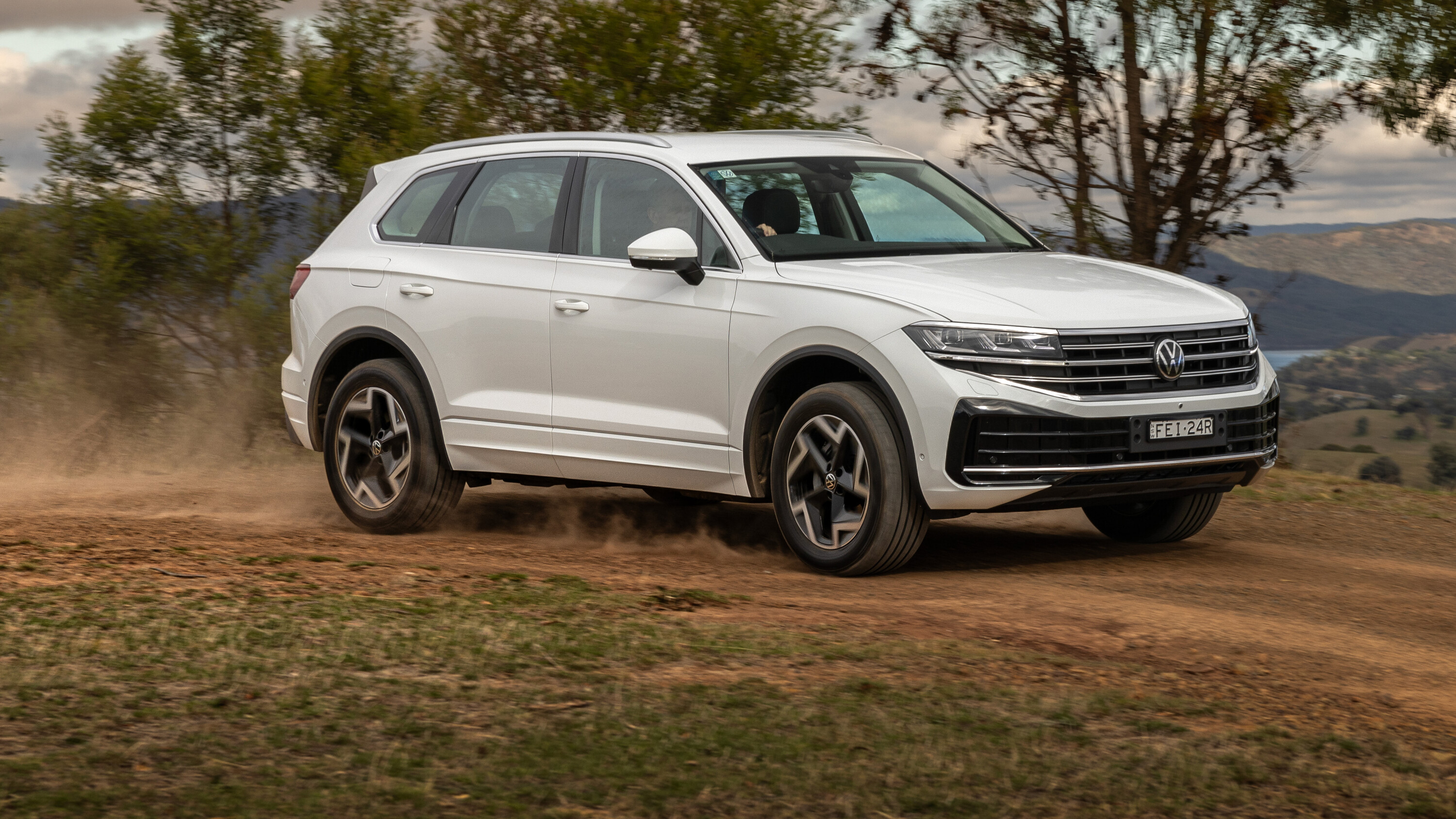
What a lovely thing to drive in the countryside.
That’s what I found myself thinking after a few hundred kays behind the wheel of the 170TDI at the launch, with a mix of roads a few hours out of Melbourne showcasing the breadth of capability of this diesel family SUV.
The V6 is one of the most refined I’ve driven, with a barely audible note to it, and hardly any rumble whatsoever.
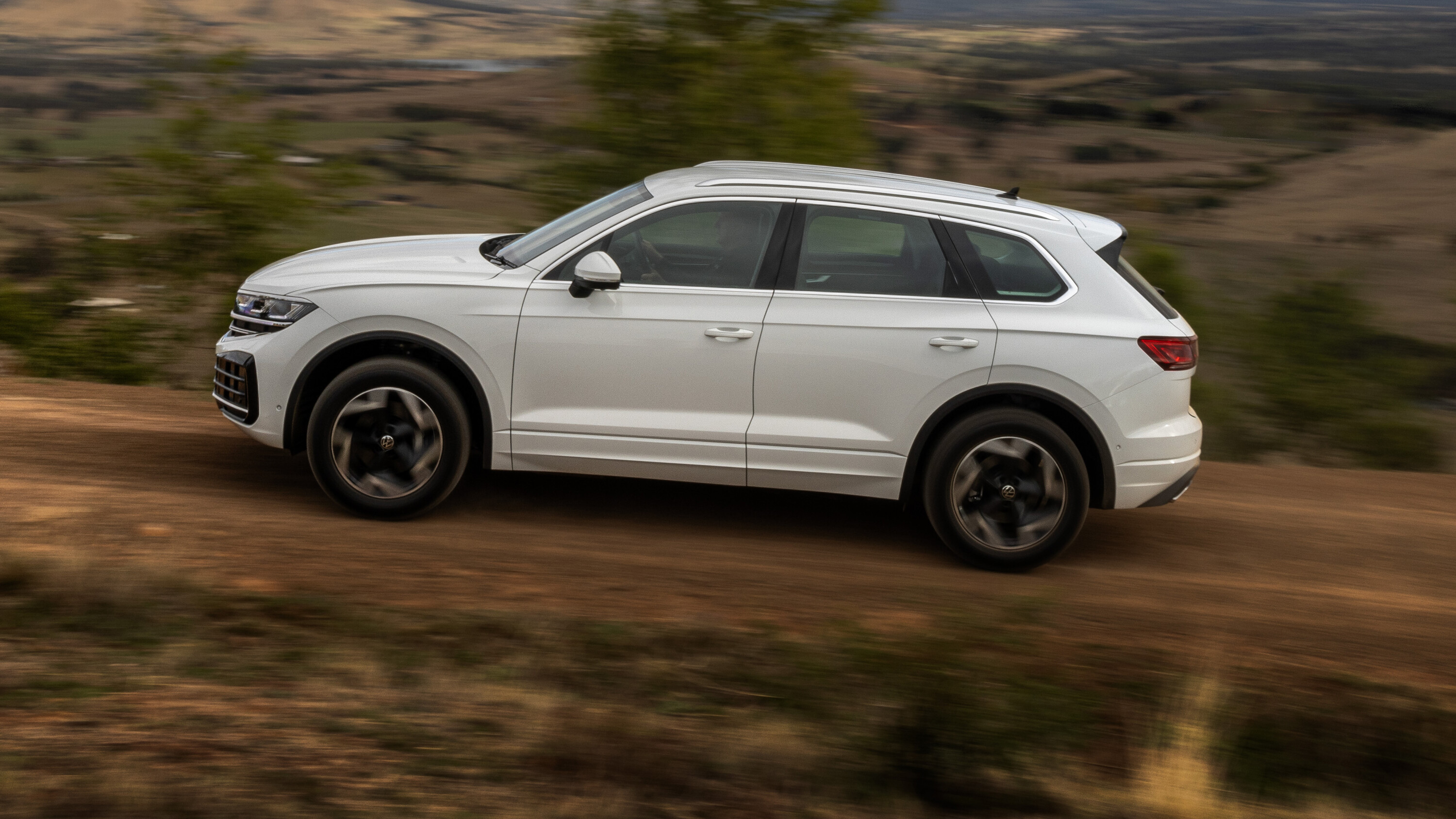
Yet it is urgent in its response, feels easily up to the task when touring or overtaking, and is also mostly very agreeable in stop-start situations, though I did have a couple of laggy moments at times, with the eight-speed auto seemingly getting caught out a little.
What is most enticing about it, though, is the way it handles itself on less-than-perfect bush roads, with a level of body control and predictability that makes it almost innate in its movements. It really shrinks around you.
The steering is accurate and well judged, and while the steel-sprung suspension can feel a little sharp in town, it soaks up the bumps at pace really nicely.
What are the best rivals?
Equivalent diesel V6 models from mainstream brands? Well, there’s the award-winning Ford Everest, which in Platinum 4WD spec is $81,115 and has seven seats, equivalent towing, and a dollop more power (184kW/600Nm).
A luxury-branded alternative with a six-pot diesel for this much…? You might need to buy used.
Otherwise, if five seats could suffice, there’s another VW that might do the trick – the Amarok!
Should I put it on my shortlist?
If you want a luxurious large SUV and don’t want to spend more than a hundred grand, you bet. It should be at the very top of your list.
| 2024 Volkswagen Touareg 170TDI specifications | |
|---|---|
| Powertrain | 3.0-litre turbo-diesel V6 |
| Max power | 170kW |
| Max torque | 500Nm |
| Drivetrain | 8-speed auto, AWD |
| Fuel consumption | 7.3 litres per 100km (official); 7.7 litres per 100km (on test) |
| Price (MSRP) | $86,490 |
Deliveries of the 2024 Mercedes-Benz E-Class have commenced in Australia.
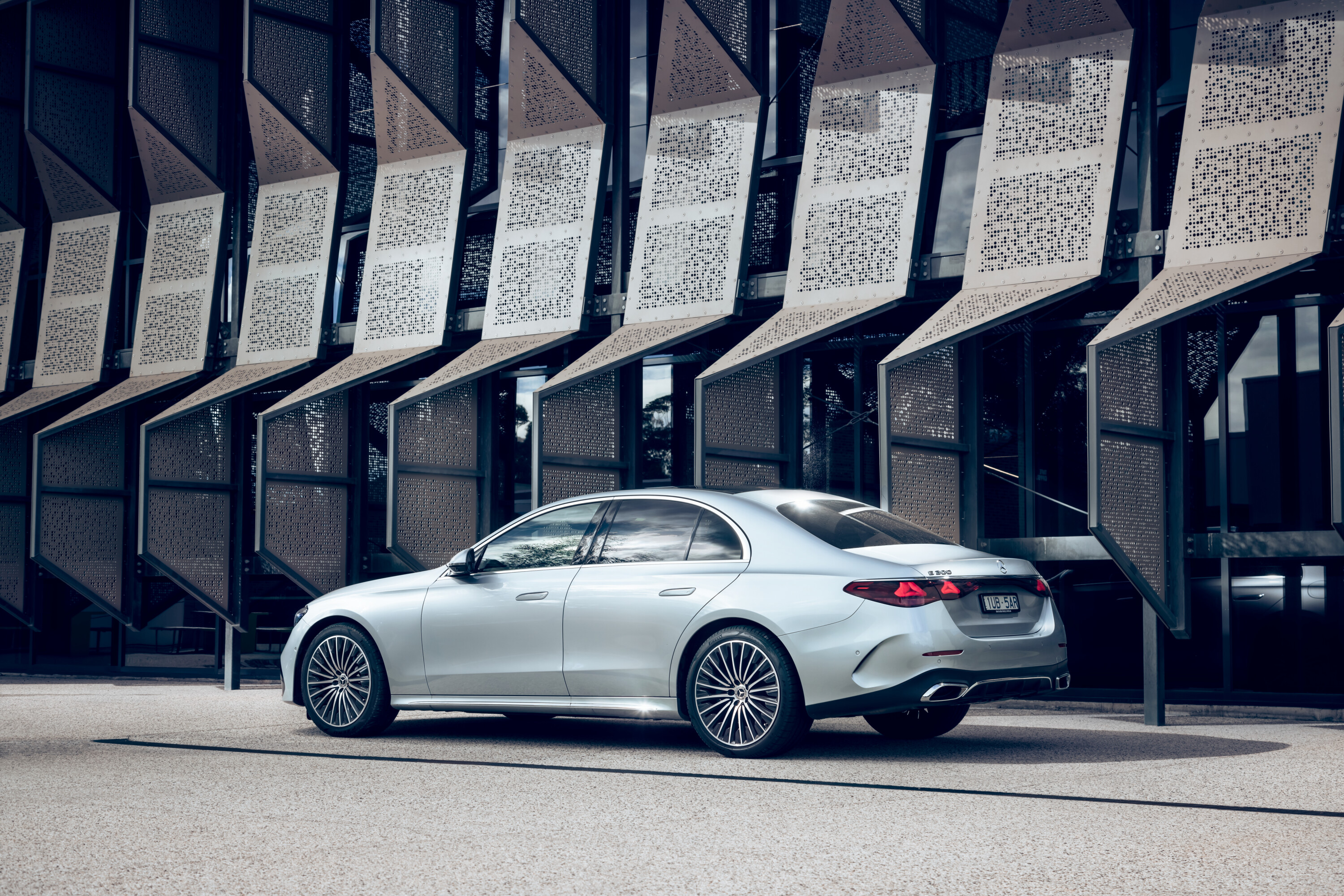
The new E-Class utilises the classic “three-box” sedan layout, with a 20mm longer wheelbase.
Outside, there’s a new high-gloss black front-end design with an illuminated radiator grille, using LED modules with fibre optic technology (optional with Plus Package). High-performance LED headlights are fitted with more than one million pixels per unit.
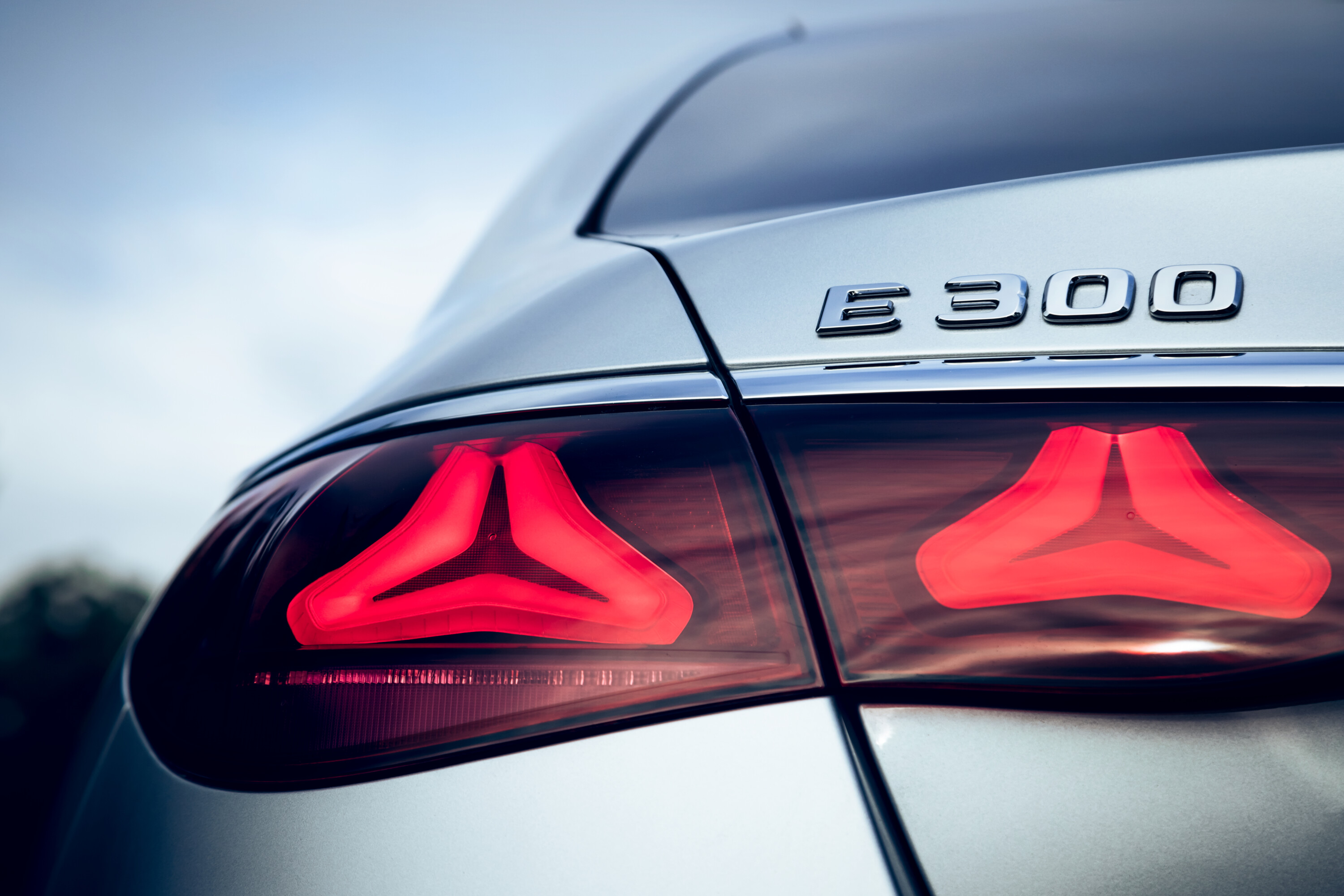
Character lines along the side are intended to define a sporty character. Star-motif two-section tail lights provide a “special day and night design”.
For Australia, the E300 – now priced from $131,500 before on-road costs – is fitted with the AMG Line exterior package as standard equipment.
A choice of six metallic paint colours is available, with the addition of three optional premium paint finishes. 20-inch AMG multi-spoke alloy wheels in high-sheen black are fitted as standard.
A drag coefficient of 0.23 has been achieved by the use of front-section sealing, wheels with “aeroblind claddings”, and improved underbody aerodynamics.
Under the bonnet of the E300 is a 2.0-litre four-cylinder petrol engine combined with an integrated starter-generator (ISG). This system produces a combined 190kW and 400Nm, mated to a nine-speed automatic transmission sending power to the rear wheels.
Variable dampers fitted as standard for Australia, with a 15mm lower ride height. Air suspension and rear-axle steering is optional.
The new E300 features the Driving Assistance Plus package as standard, with a comprehensive suite of technologies including (but not limited to): active steering assist, lane change assist, active emergency stop assist, lane keep assist, blind spot warning and more.
Inside the new E300, the cabin has been enlarged for comfort. There are climatised electrically adjustable sports front seats with leather upholstery and a Memory Package.
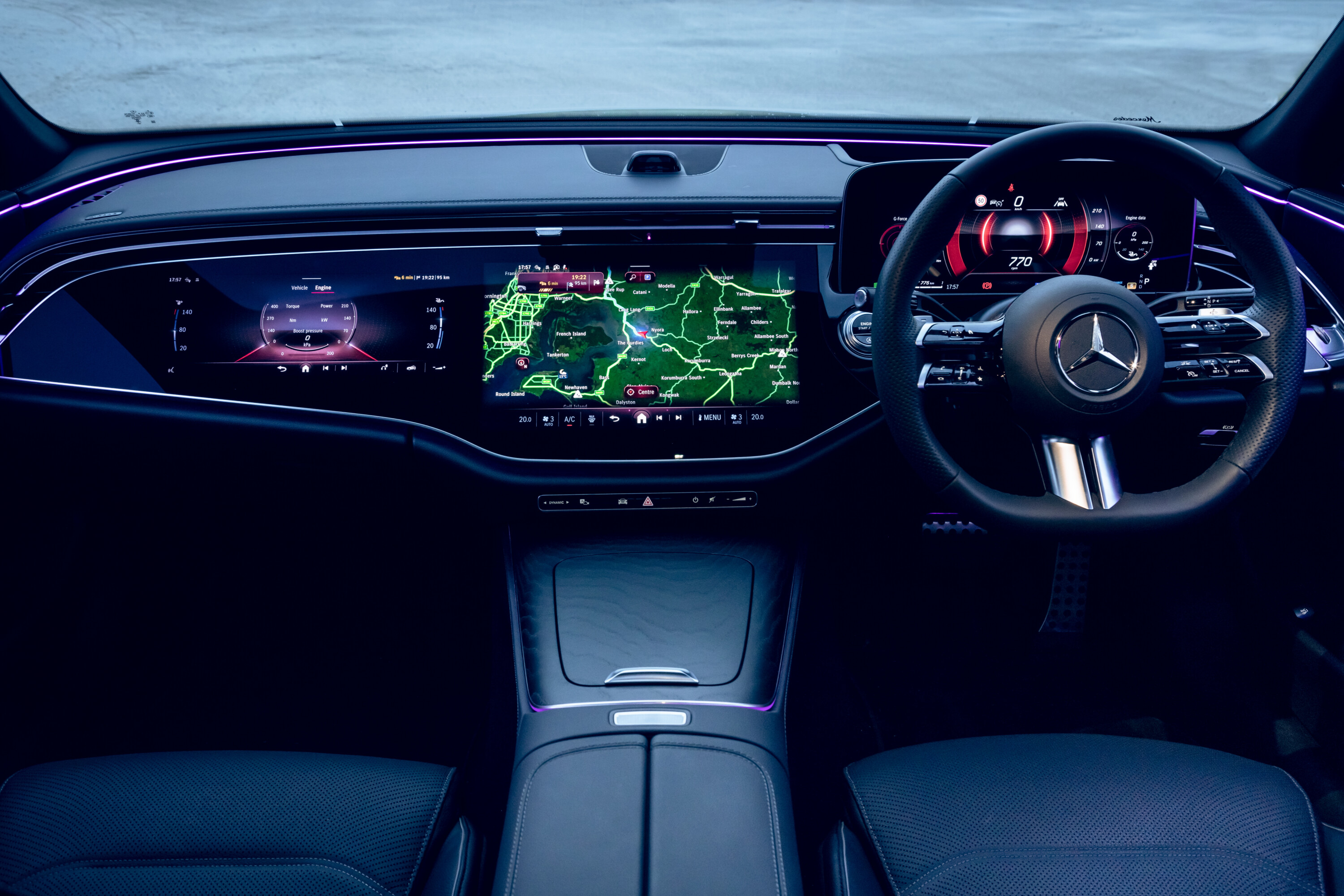
Comfort front seats are available as a no-cost option. Heated Multi-contour front seats with rear-seat heating are available in the optional Energizing Package Plus.
Three interior colours are available: Leather Black, Leather Tonka Brown, and Leather Macchiato Beige. A centre console with cup holders, USB ports, open-pore black ash wood and Black Piano trim and an illuminated light strip is included.
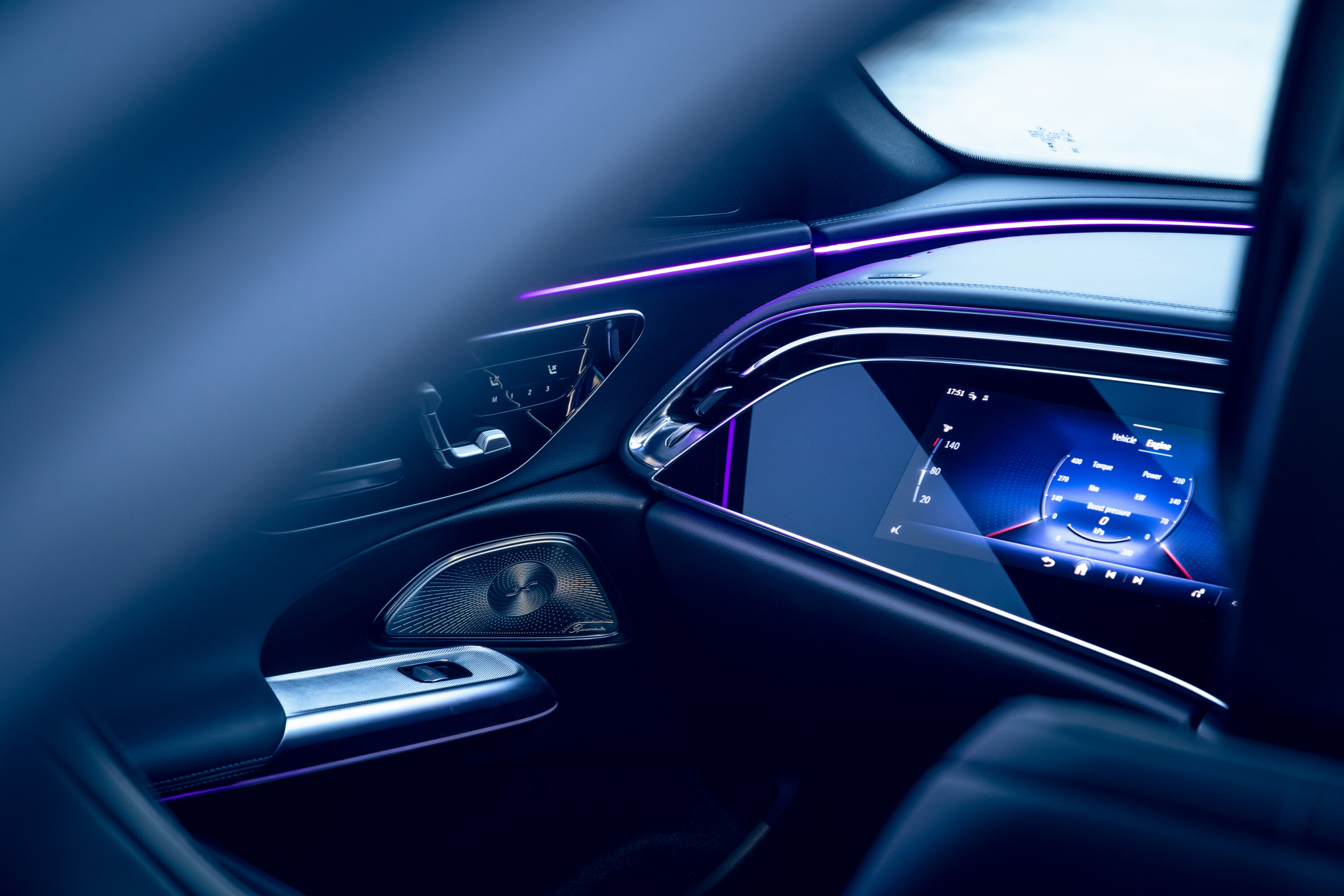
Infotainment is catered for with the new MBUX (Mercedes-Benz User Experience) system with a “Superscreen” display, providing a main 14.4-inch display and a 12.3-inch extendable display for the front passenger. The system also features individualised graphics, smartphone-like functionality, and a new high-power 5G communication module.
The interior of the new E-Class is equipped with several cameras, including a new selfie and video camera on top of the instrument panel. Wireless Android Auto and Apple CarPlay are integrated into the MBUX system.
The MBUX system also features augmented reality for navigation, and various AI-assisted features, with an optional Plus Package allowing automatically executed functions.
Dual-zone climate control is fitted as standard, with optional four-zone climate control available with the Plus Package, including Digital Vent Control. An in-car fragrance system is available with the optional Energizing Package Plus.
A 730-watt, 17-speaker Burmester 4D surround-sound system is fitted as standard, featuring Spatial Audio with Dolby Atmos to provide a 360-degree listening experience.
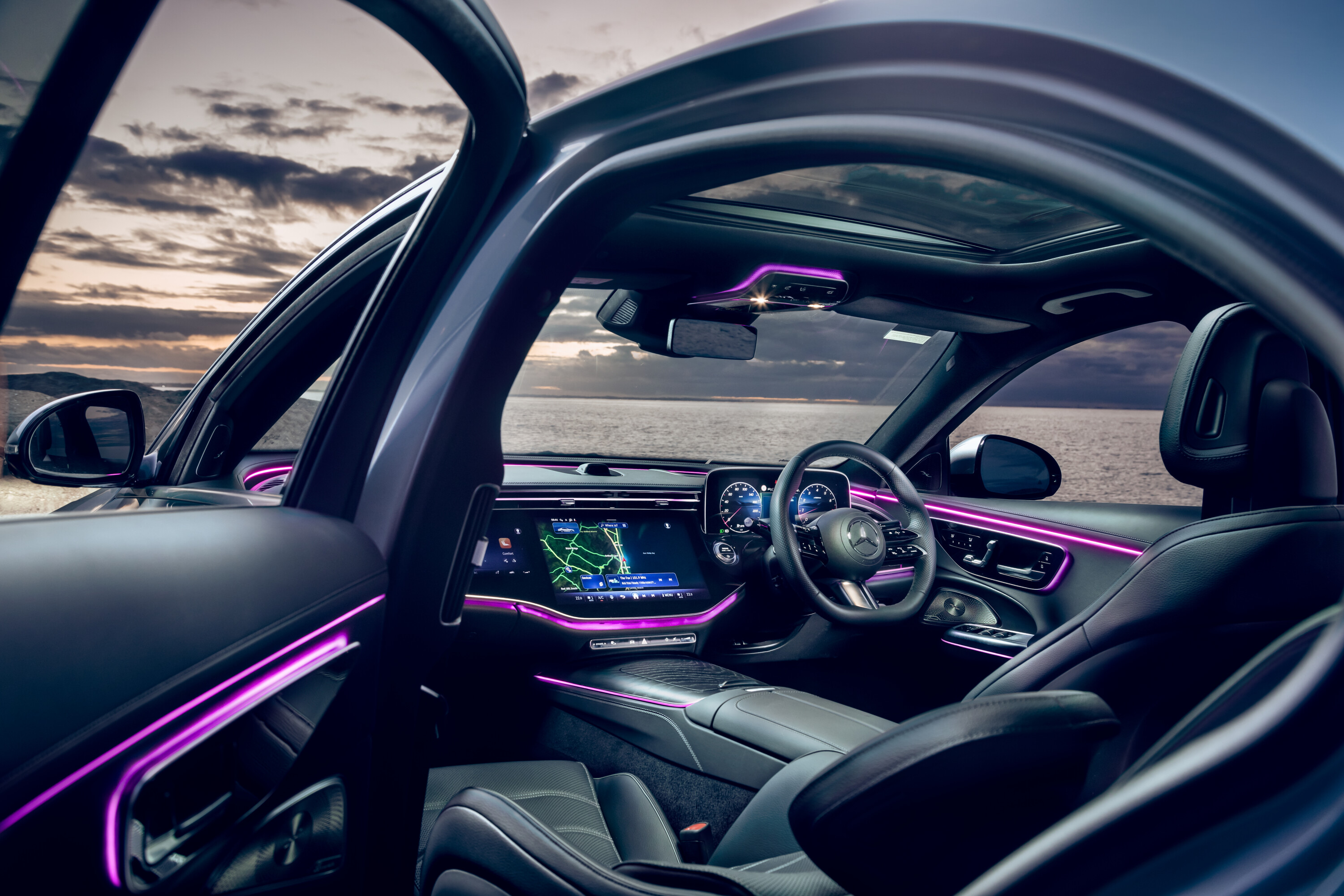
Two loudspeakers are integrated into the roofliner, and two “tactile transducers” are integrated into the front seat backrests. Active light strips along the instrument panel and door panels can be set to synchronise with music.
A Digital Vehicle Key is now available for iPhone and Apple Watch, allowing the driver to start and lock the new E-Class remotely. The Digital Vehicle Key can be shared with up to 15 people, and the vehicle can recognise several people at once.
A network connection is only required for the initial one-time setup and for sharing. The main user always retains the ability to revoke the other users’ access rights.
2024 Mercedes-Benz E-Class pricing
| Model | Pricing |
|---|---|
| E300 | $131,500 |
| Prices exclude on-road costs.u00a0 |
Snapshot
- Mitsubishi is the first OEM in Australia to achieve approval to feed power into the electricity grid
- Outlander PHEV and Eclipse Cross PHEV approved after testing by South Australian Power Networks
- Bi-directional V2G charging using Jet Charge hardware adds to PHEV versatility
Mitsubishi is the first car brand in Australia to be approved for Vehicle-to-Grid (V2G) after receiving the official go-ahead from SA Power Networks (SAPN).
The approval means the Mitsubishi Outlander PHEV (plug-in hybrid electric vehicle) and Mitsubishi Eclipse Cross PHEV can feed electricity from their battery packs directly into the South Australian power grid.
“MMAL [Mitsubishi Motors Australia Limited] is now unconditionally able to export power from its PHEVs into the grid,” said MMAL’s eMobility manager Tim Clarke.
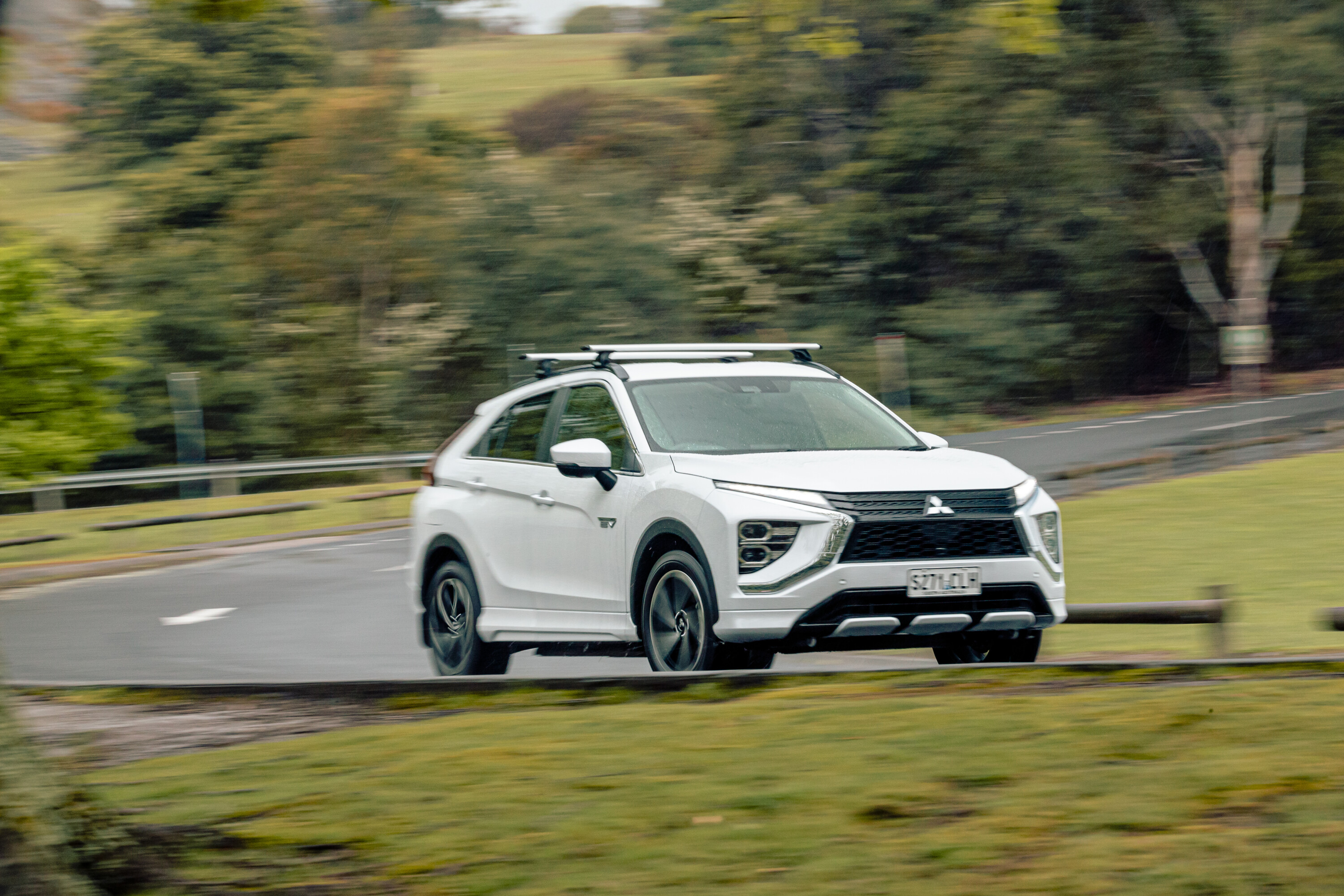
Vehicle-to-Grid charging – part of the more broadly termed bidirectional charging – enables PHEVs to sell power back to the grid the same way rooftop solar panel users are able to.
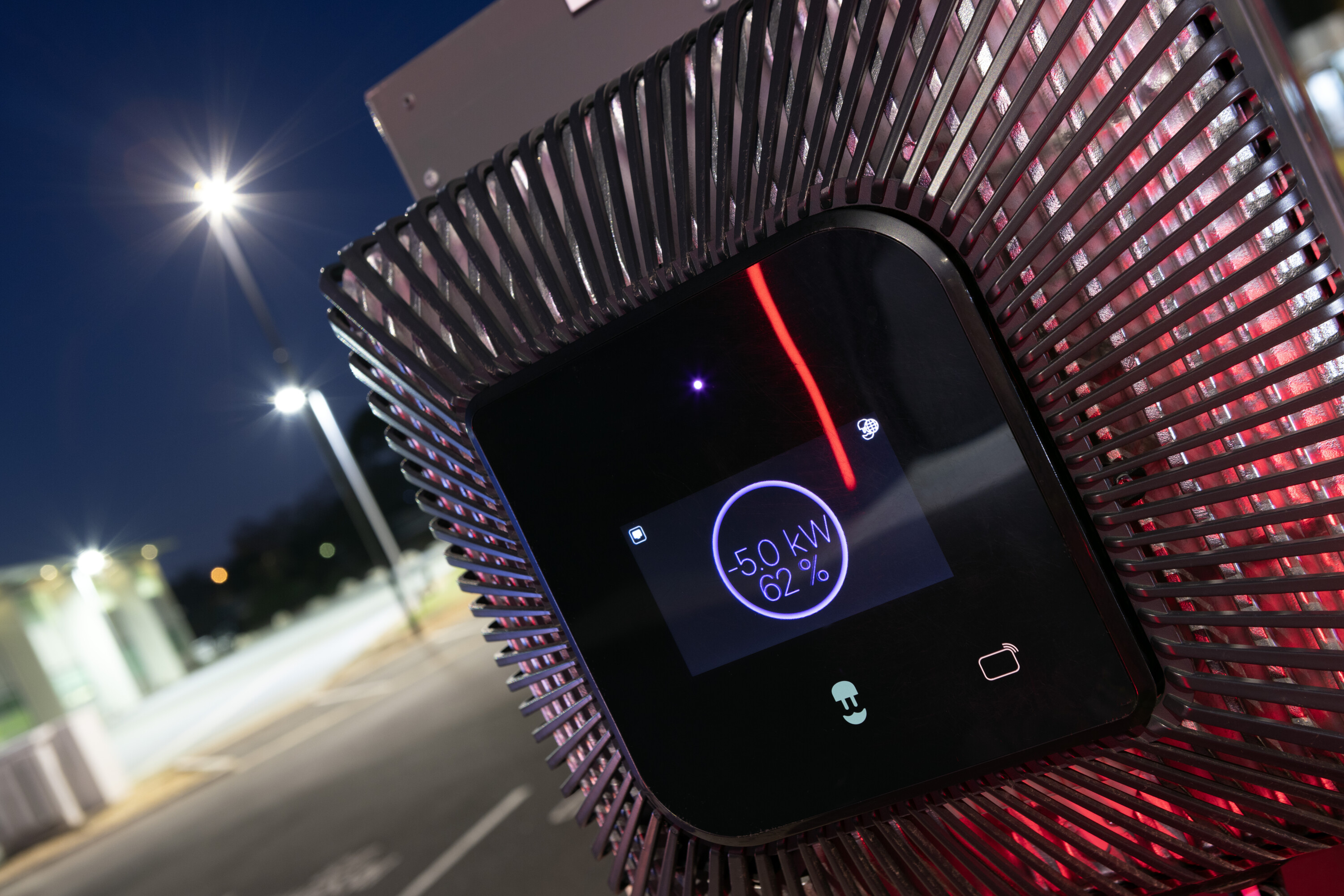
Approval for V2G charging was approved in South Australia in 2022 with Jet Charge offering the only certified bi-directional charger in Australia, the Wallbox Quasar 1 launched in 2020.
JET Charge worked with Wallbox, SAPN as well as Mitsubishi and Nissan for the V2G approval, with the Nissan Leaf EV also capable – though not yet approved – of feeding power back to the electricity grid.
“Bi-directional charging will fundamentally change how we view transport and energy. It will make our vehicles an even bigger part of our everyday lives, powering how we move and how we live,” said JET Charge CEO Tim Washington.
“That’s why we’re so excited to partner with Mitsubishi Motors to further this cause. It takes different parts of the industry, all working together, to deliver this value for Australians, and I feel like we have made a significant step with this project.”
For Mitsubishi to achieve approval, a Mitsubishi Outlander PHEV was connected to Wallbox Quasar 1 bi-directional hardware supplied and installed by Jet Charge as part of SAPN’s ‘witness testing’.
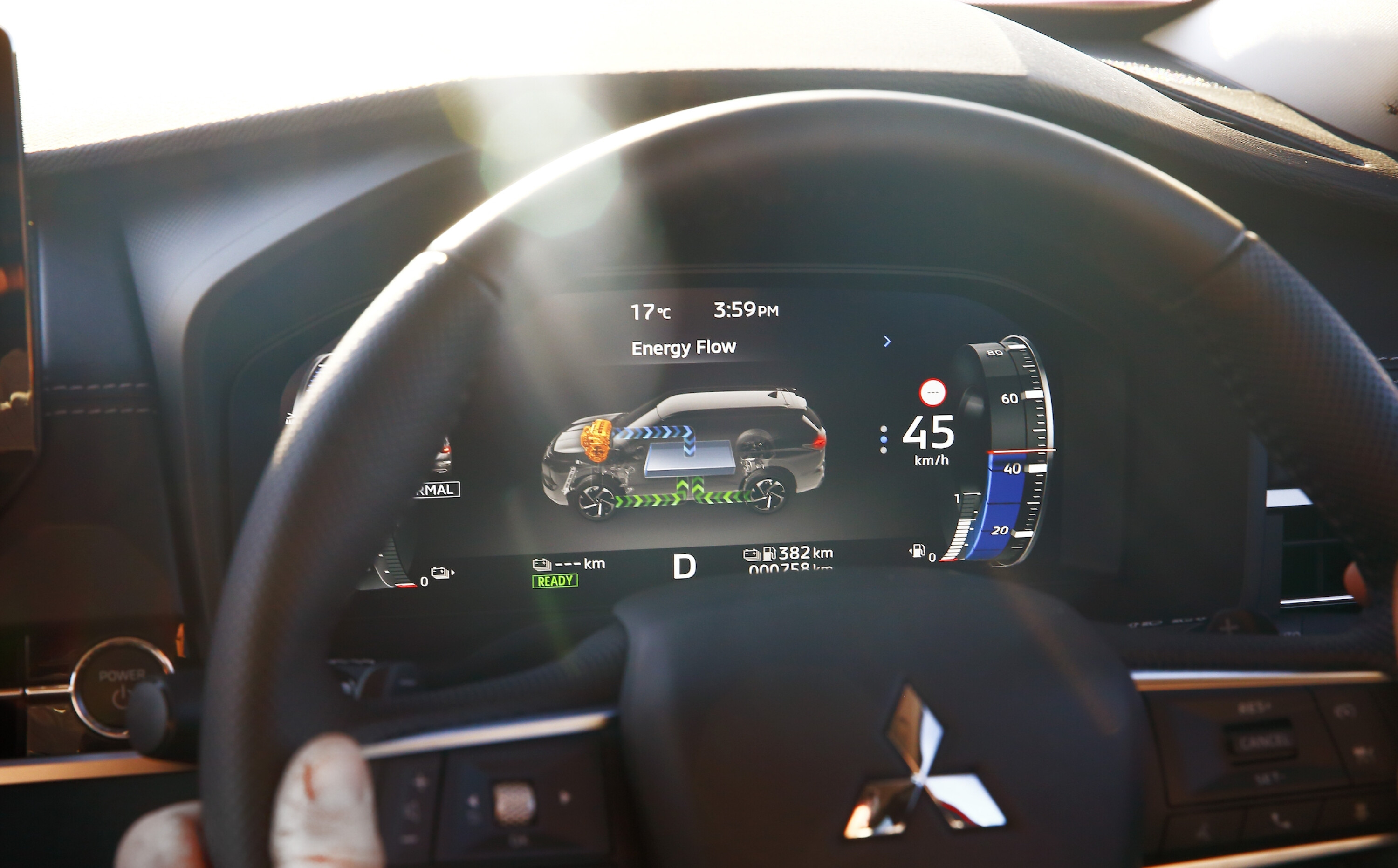
The Outlander PHEV safely exported electricity from its 20kWh lithium-ion battery via its CHAdeMO fast-charging DC (Direct Current) port into the state’s power grid.
“As Australia’s V2G landscape continues to mature and access to bi-directional hardware increases, Mitsubishi PHEV owners are well positioned to benefit,” Clarke added.
“They will be able to export from their PHEV to the grid or home, reinforcing PHEV’s versatility, while enhancing renewable energy deployment and reducing CO2 emissions across transport and in the grid.
The South Australian electricity grid receives more than 70 per cent of its power from renewable resources and has a target to achieve 100 per cent renewable energy by 2027.
Snapshot
- Smart brand’s return to Australia is now official
- Aussie lineup will include the Smart #1 and Smart #3 as well as Brabus versions of each
- Order books will open from July with deliveries earmarked from September
UPDATE: Smart return confirmed!
It’s now official: the Smart brand is returning to Australia with deliveries of a two model lineup set to commence from September.
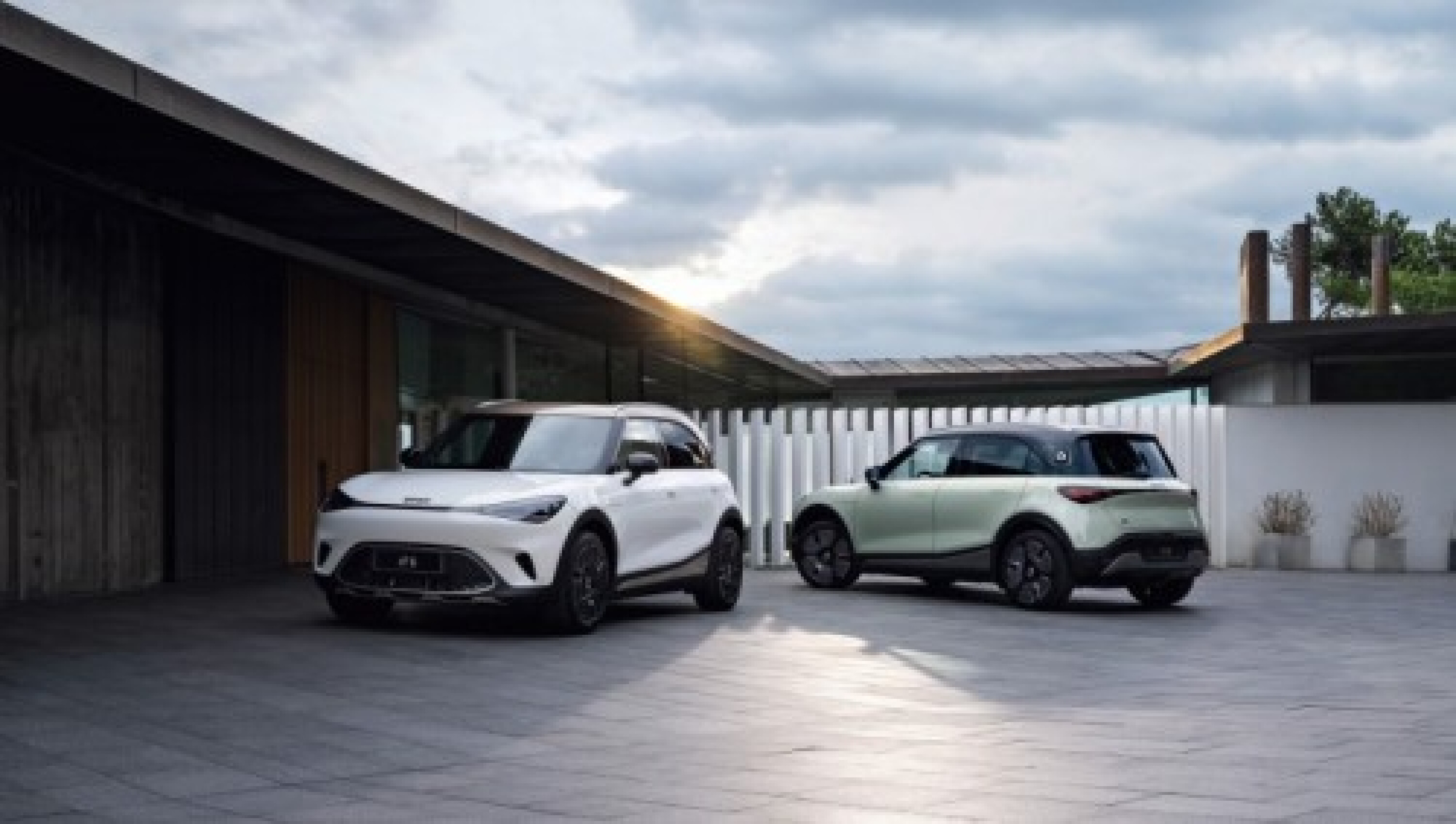
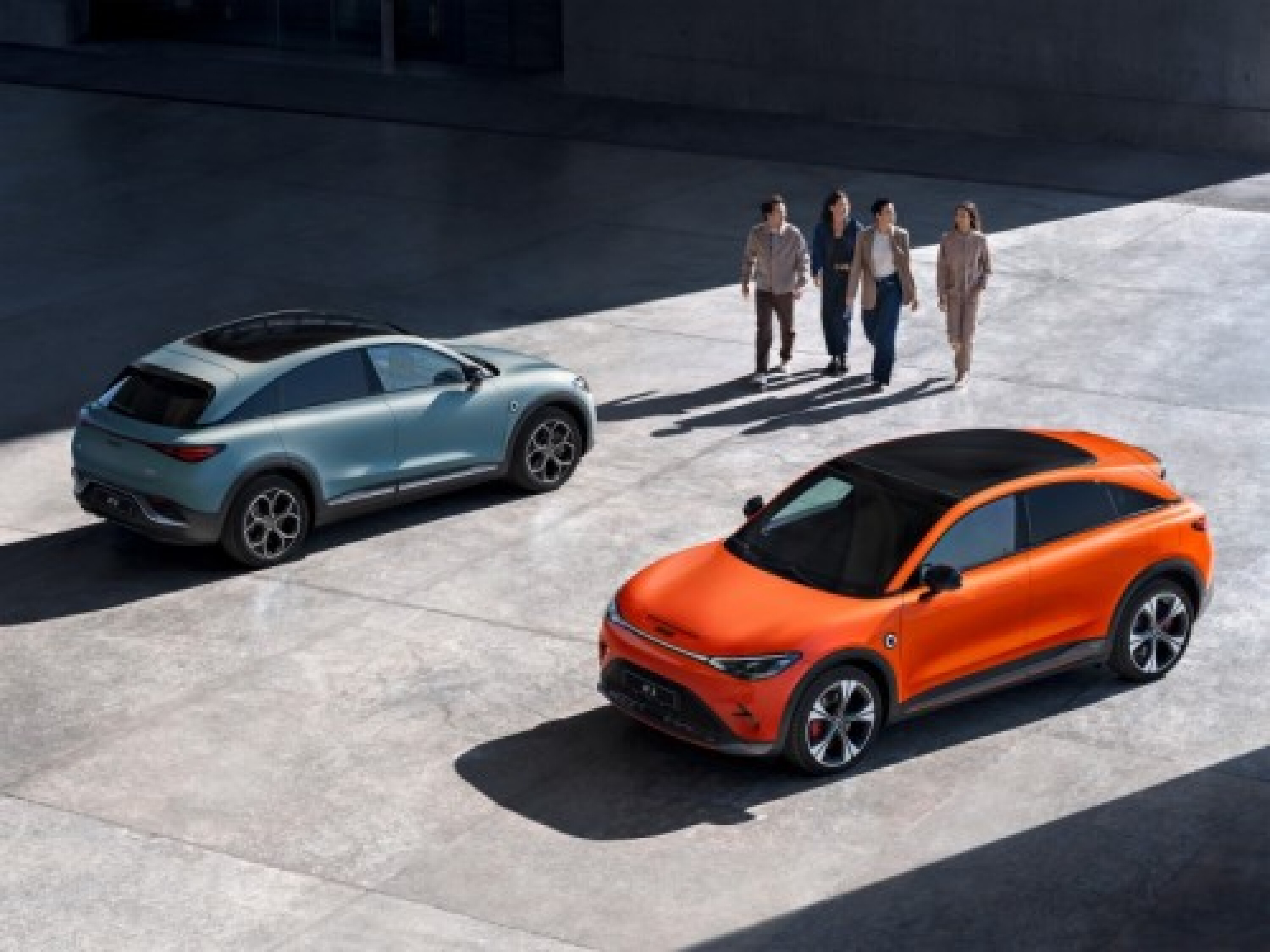
Officially confirmed this morning by dealer group LSH Auto International, Smart’s return will see it offer two all-electric models in the Smart #1 small SUV and the larger Smart #3 crossover.
High performance Brabus versions of both models will also be sold.
Pricing and local specifications of the new models will be revealed next month, according the LSH, while order books will open from July.
LSH will be the sole importer of Smart vehicles in Australia, with the brand’s return set to be showcased in dealerships in Sydney, Melbourne and Brisbane.
The Smart city-car brand is set for a surprise return to Australian showrooms.
Official confirmation of the plan is expected next week to confirm Smart’s return to Australia through the local arm of LSH Auto International, which claims to be the largest Mercedes-Benz passenger car dealer group with more than 240 dealerships globally.
The Smart brand was previously on sale here between 2003 and 2015 under the Mercedes-Benz umbrella, before it was axed owing to dwindling sales.
Smart started in 1994 as a joint venture between Swiss watchmaker Swatch and Mercedes and was most renowned for its diminutive Fortwo – one of the world’s smallest cars at just 2.5 metres long. It was later joined by Roadster and Forfour models.

It’s unclear which Smart models will be offered here, with the brand now 50 percent owned by Geely with Mercedes-Benz owning the remaining half.
In 2022 the Smart #1 (‘hashtag one’) electric compact SUV was introduced, manufactured in China using Geely’s SEA platform shared with the Volvo EX30 and Zeekr X SUVs.
A second, larger SUV was launched in 2023 – the Smart #3 – using the same underpinnings as the Smart #1 but with a more coupe-like liftback body.
Smart’s Concept #5 rugged SUV made its official debut at the 2024 Beijing International Automotive Exhibition in February as its largest vehicle yet.
Mercedes-Benz Australia had no comment on the news of Smart’s return, while Geely – owner of Volvo, Polestar and Zeekr brand (also planned for Australia) – does not operate locally but is currently hiring for an expected 2025 brand launch of its own.
It’s also not confirmed whether Smart vehicles will be sold using the Mercedes-Benz agency model, also used by Honda and Tesla in Australia, across LSH Auto Australia’s 11 sites in Sydney, Brisbane and Melbourne.
In February 2024, Smart reaffirmed its commitment to introduce a new model each year between 2022 and 2025 in new segments, with global expansion into markets in the Middle East and South Asia, including Singapore and Hong Kong.
Geely’s investment since 2019 has seen a significant change of direction for the former city-car only brand with a move into larger, electric vehicles.
Smart’s early success in Australia was driven by demand from small businesses looking to capitalise on the head-turning size of the Fortwo.
Sales, however, declined from its 2005 peak of 799 sales to only 108 in 2014. In an effort to reduce the slide, retailing moved from bricks and mortar showrooms to online only in 2013.
The departure of the brand saw Mercedes-Benz Australian dealers continue to offer service and parts for the roughly 4500 Smart cars sold here over 12 years.
The 2025 Peugeot E-Expert electric van will arrive in Australia between October and December.
Peugeot Australia has confirmed one variant will be available at launch, the E-Expert Pro Long Auto, priced from $79,990 before on-road costs.
The E-Expert’s electric drivetrain produces 100kW and 270Nm, with a 75kWh lithium-ion battery and a 330-kilometre driving range.

Peugeot Australia managing director Kate Gillis said: “This expansion of Peugeot’s electric vehicle offerings underscores our dedication to providing choice to Australian consumers, as they look for an electrified solution to their work needs.”
The front-end design of the new E-Expert will debut a facelift for the van in Australia, which has adopted Peugeot’s latest design language.
This includes a redesigned grille, a new Peugeot emblem, updated full-LED headlights, and a bumper “optimised for protection and aerodynamics”.
It will be available in four exterior colours – ice white, artense grey, nera black and titanium grey – with colours other than ice white attracting a $690 premium.
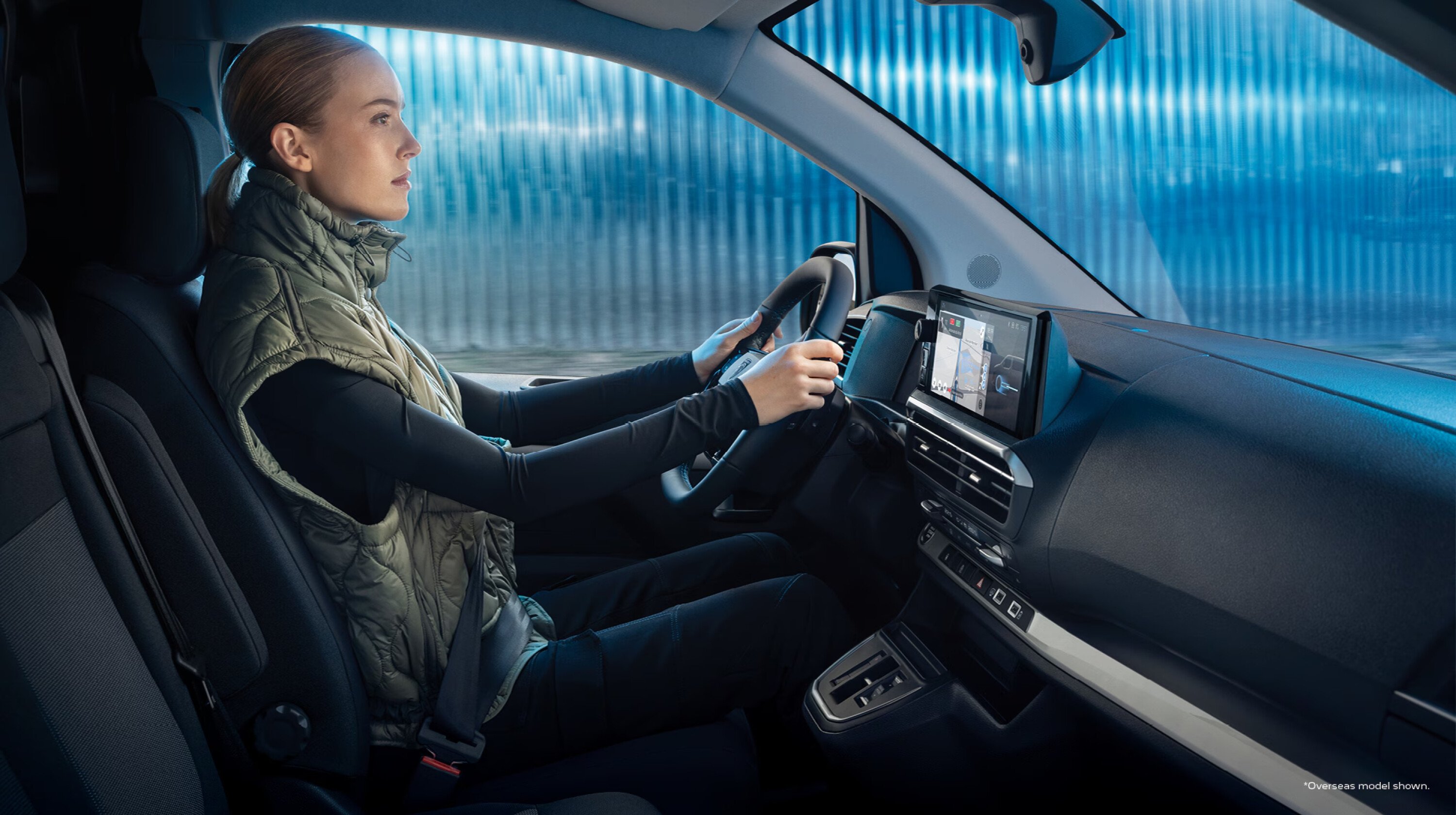
Inside the E-Expert, the driving position has been redesigned to “provide greater comfort, ergonomics and practicality”. A digital instrument cluster is fitted, as is a 10-inch infotainment system.
The E-Expert offers three charging methods with differing charging times, as detailed below:
| Charger Type | Charging Time |
|---|---|
| Single Phase 32A Wallbox (7.4kW) | 0-100% – 11hr 9m |
| Three Phase 16A Wallbox (11kW) | 0-100% – 7hr 30m |
| Quick Charge DC Current (100kW) | 0-80% – 45m |
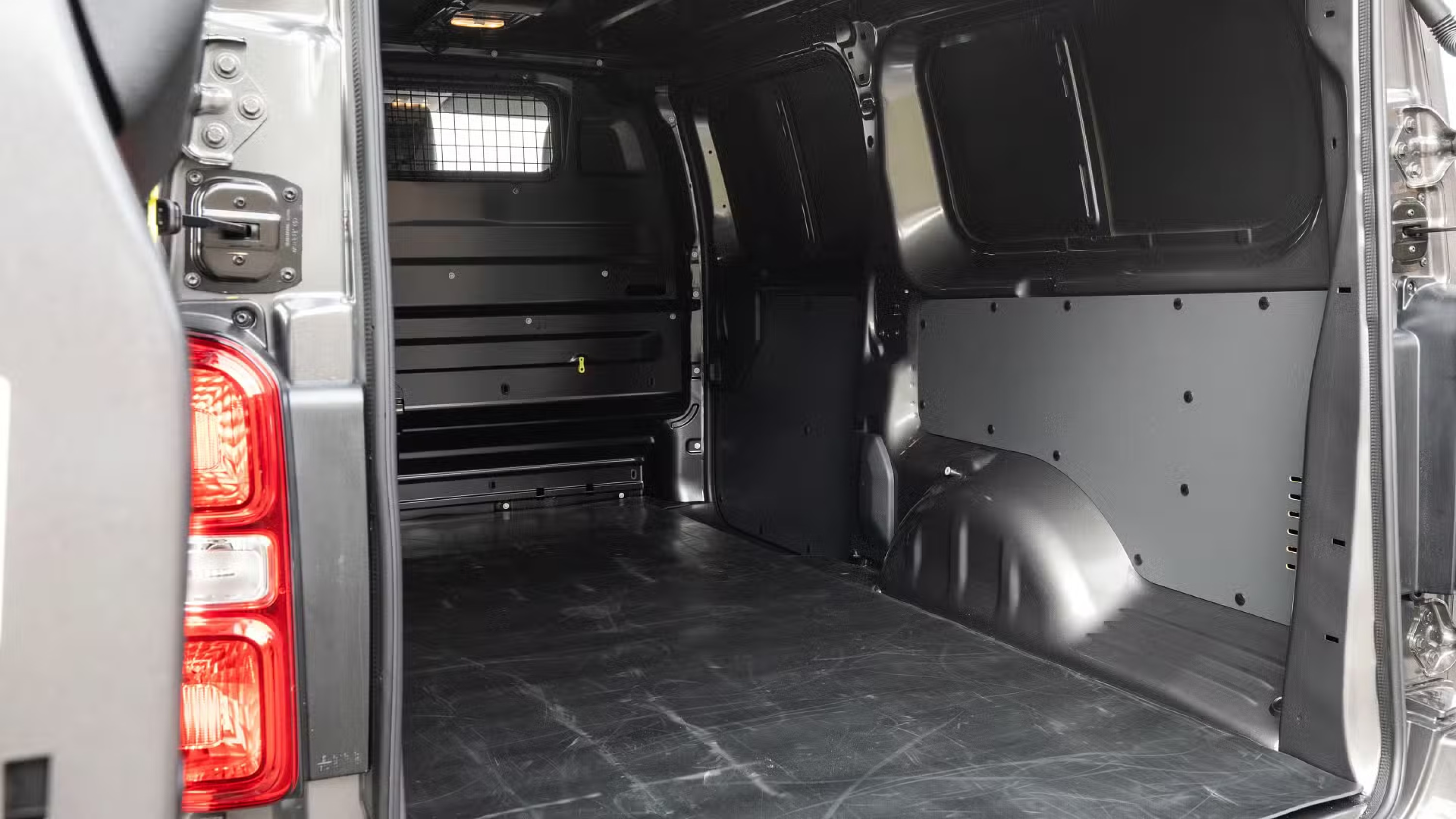
With commercial van users in top consideration, the E-Expert features a 1,001kg payload, a turning circle of 12.4m and 6.1 cubic metres of loading volume. The body length is 5.33m, with a width slightly exceeding 2.2m (mirrors unfolded) and a height of approximately 1.94m.
The Peugeot E-Expert features the following safety systems:
| E-Expert Safety Systems | |
|---|---|
| Autonomous Emergency Braking (AEB) with low light pedestrian and cyclist detection | Forward Collision Warning |
| Anti-lock Braking System (ABS) | Emergency Braking Assistance (EBA) |
| Electronic Braking Distribution (EBD) | Electronic Stability Programme (ESP) |
| Blind Spot Detection (BSD) | Advanced Driver Attention Alert (DAA3) |
| Acoustic Vehicle Alerting System (AVAS) | Front and rear parking sensors |
The E-Expert is covered by a 5-year/200,000km vehicle warranty, a three-year paintwork and 12-year corrosion warranty, and an 8-year/160,000km battery warranty.
A comprehensive list of official Australian-market specifications will be released closer to the on-sale date.
The 2025 Peugeot E-Expert is available to pre-order now, with details on the facelifted diesel-powered Expert range expected to follow.
BMW’s habit of revealing stunning concept cars at the Concorso d’Eleganza Villa d’Esta has continued, with the German marque this year unveiling a show-stopping targa-top two-door.
Called the BMW Concept Skytop, the tailor-made concept is based on a regular 8-Series but features bespoke bodywork, a unique leather-trimmed roof and has its own interior design embellished with crystal touch points.
It also, you’ll no doubt have noticed, has a normally sized kidney grille.
Other traditional BMW styling elements are present, too, including a sharknose and a raised ‘spline’ that runs through the entire centreline of the car from bonnet to tail.
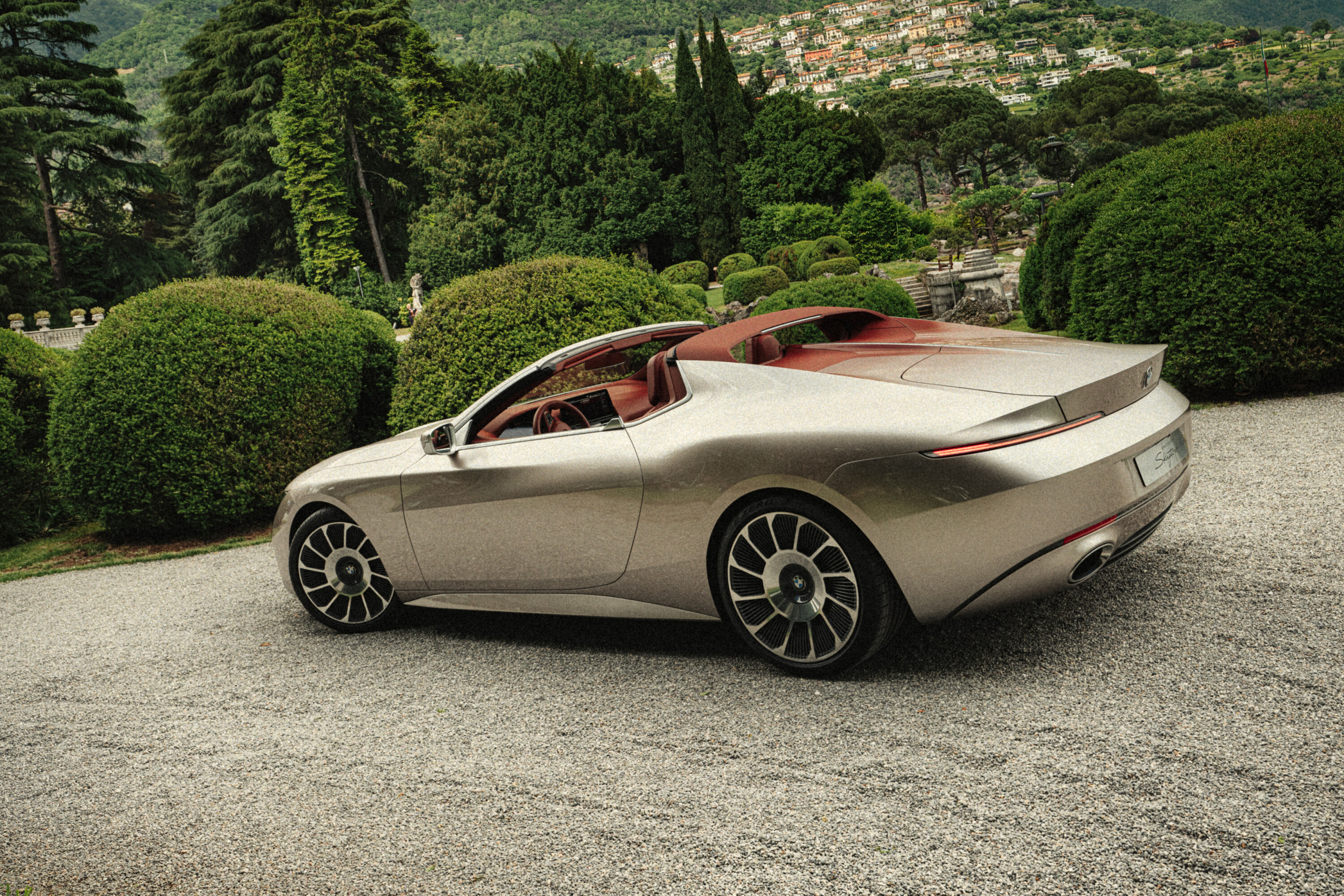
BMW says the spline is a design nod to the iconic BMW Z8 roadster of the late 1990s, of which the Skytop is something of a spiritual successor. Another link between the two cars is their engines: both feature petrol V8s under their long elegant bonnets. That’s right, there’s no soul-sucking EV powertrain at play here!
BMW says the Skytop’s V8 is “the most powerful V8 engine in the BMW drivetrain portfolio”, likely meaning the same 460kW/750Nm 4.4-litre unit as you’ll find in the regular M8 Comp.
Other notable design touches include winglets at the top of the doors that replace traditional door handles, slimline LED headlights mounted on milled aluminium carriers and enormous lightweight 21-inch wheels that feature a lovely, understated design.
The roof itself features two leather-trimmed sections that can be manually removed and stored in the boot, while the rollover bar behind the seats is also finished in leather.
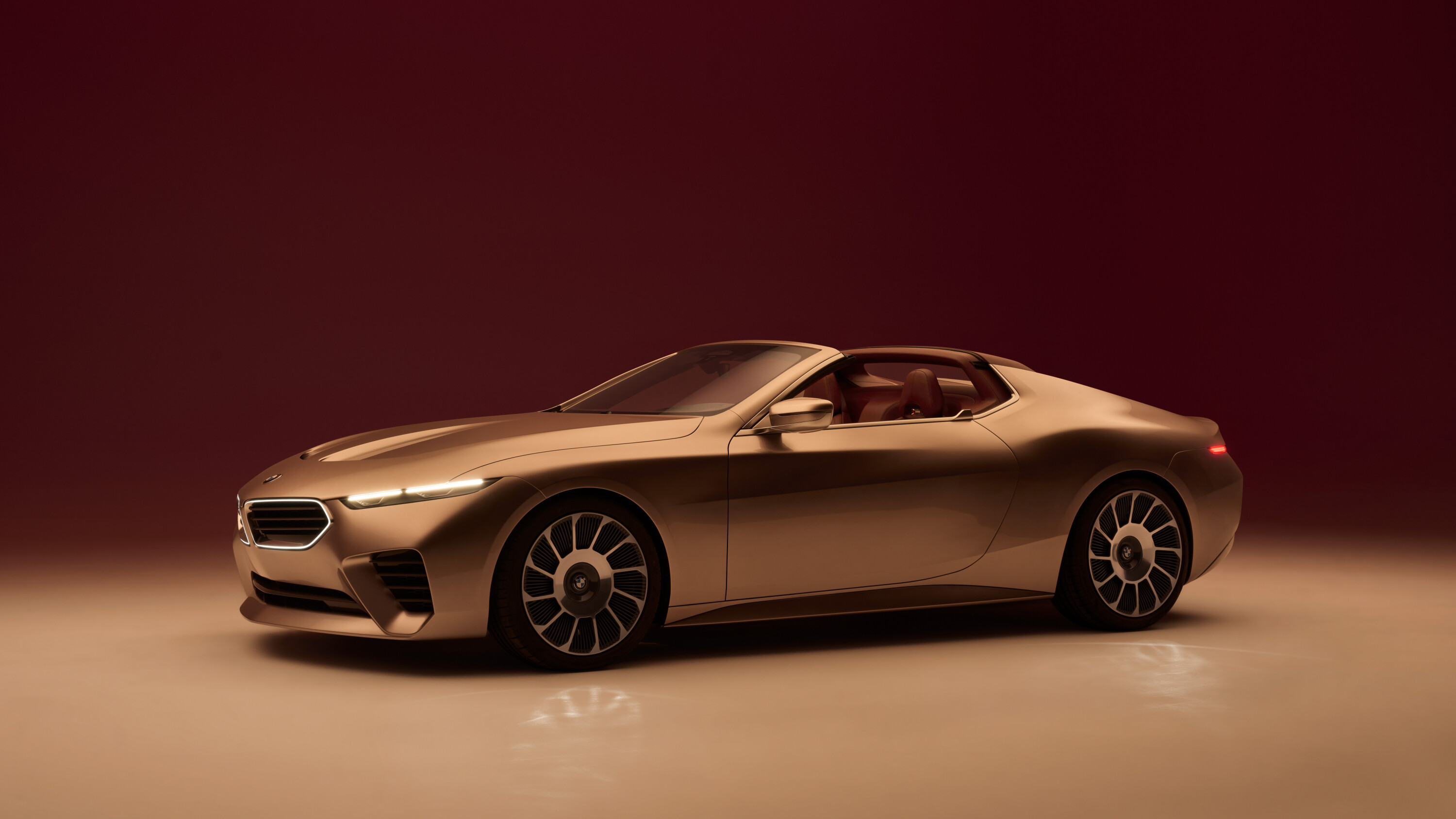
Want even more cow hide? Slip inside the cabin and you’ll encounter a interior trimmed almost entirely from reddish-brown leather. A brogue-style pattern, like on your grandad’s favourite shoes, features on the seats and door panels, and the rear window can also be automatically lowered.
The Skytop is the latest in a long line of BMW concept cars to debut at Villa d’Esta where BMW has been a sponsor for 25 years. Other notable concepts include Chris Bangle’s Mille Miglia, 2008’s M1 Homage which previewed the i8, and last year’s Z4 shooting brake.
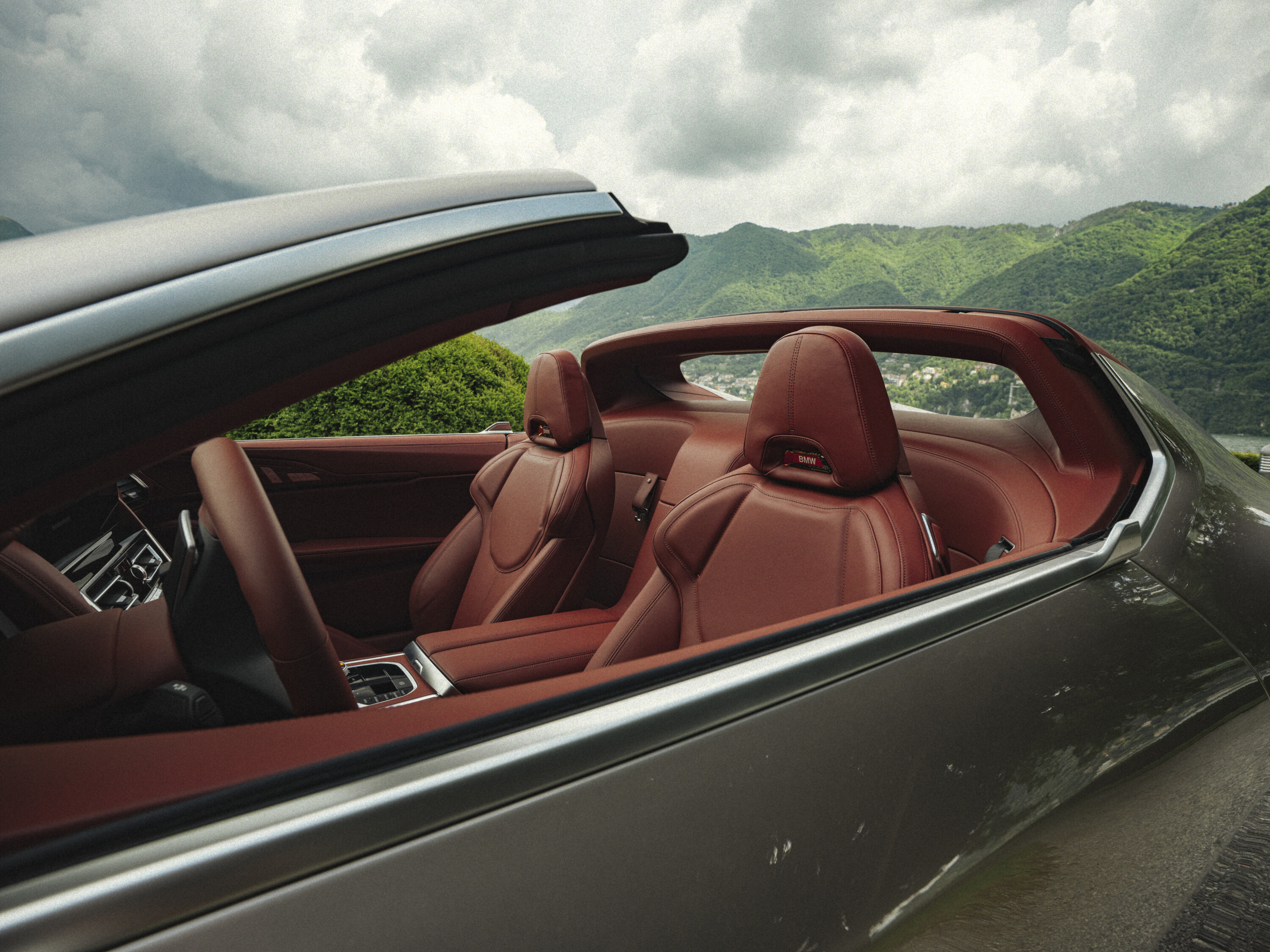
So far none of the concepts have made production but there’s hope the Skytop might be the first. Speculation is rife BMW is hoping to built around 50 examples, all of which will become hand built collector’s items.
Plug-in hybrids (PHEVs) promise the best of both worlds – with electric, emissions-free propulsion for short trips, but with the long-range flexibility and convenience of petrol or diesel engines.
PHEV sales are enjoying a boom in Australia so far in 2024, along with regular (non-plug-in) combustion-electric vehicles.
Adding the the allure is the Fringe Benefits Tax (FBT) exemption, meaning buyers could save thousands in tax on a novated lease for a PHEV before 1st April 2025.
Here are the plug-in hybrids locked in – plus other models that have potential – for local showrooms in 2024 and beyond…
Jump Ahead
- Audi A5/S5 Avant
- BYD Shark
- Citroen C5 X PHEV
- Cupra Formentor VZe
- Cupra Leon Sportstourer VZe
- Cupra Terramar
- Ford Ranger PHEV
- Jeep Compass 4xe
- Kia Sorento PHEV
- Lamborghini Urus SE
- Mazda CX-5 PHEV
- Mazda CX-70 PHEV and Mazda CX-90 PHEV
- Mercedes-AMG GLC63 S E Performance
- MG HS PHEV
- Peugeot 408 GT
- Volkswagen Golf GTE
- Volkswagen Tiguan eHybrid
Audi A5/S5 Avant
The Audi A4 will become an EV – so if you’re after a hybrid midsized passenger car, you’ll need the new A5, set for its global unveiling in the second half of 2024.
While Australia’s line-up has not been confirmed – given Audi’s German headquarters has not shown the vehicle yet – we know the new A5 will bring a sedan, five-door ‘Sportback’ hatch and an Avant station wagon.It will use Audi’s PPC (Premium Platform Combustion) underpinnings and offer mild hybrid, diesel and plug-in hybrid versions including high-performance S5 model as it guns for its arch-rival BMW 3-Series and Mercedes-Benz C-Class.
BYD Shark
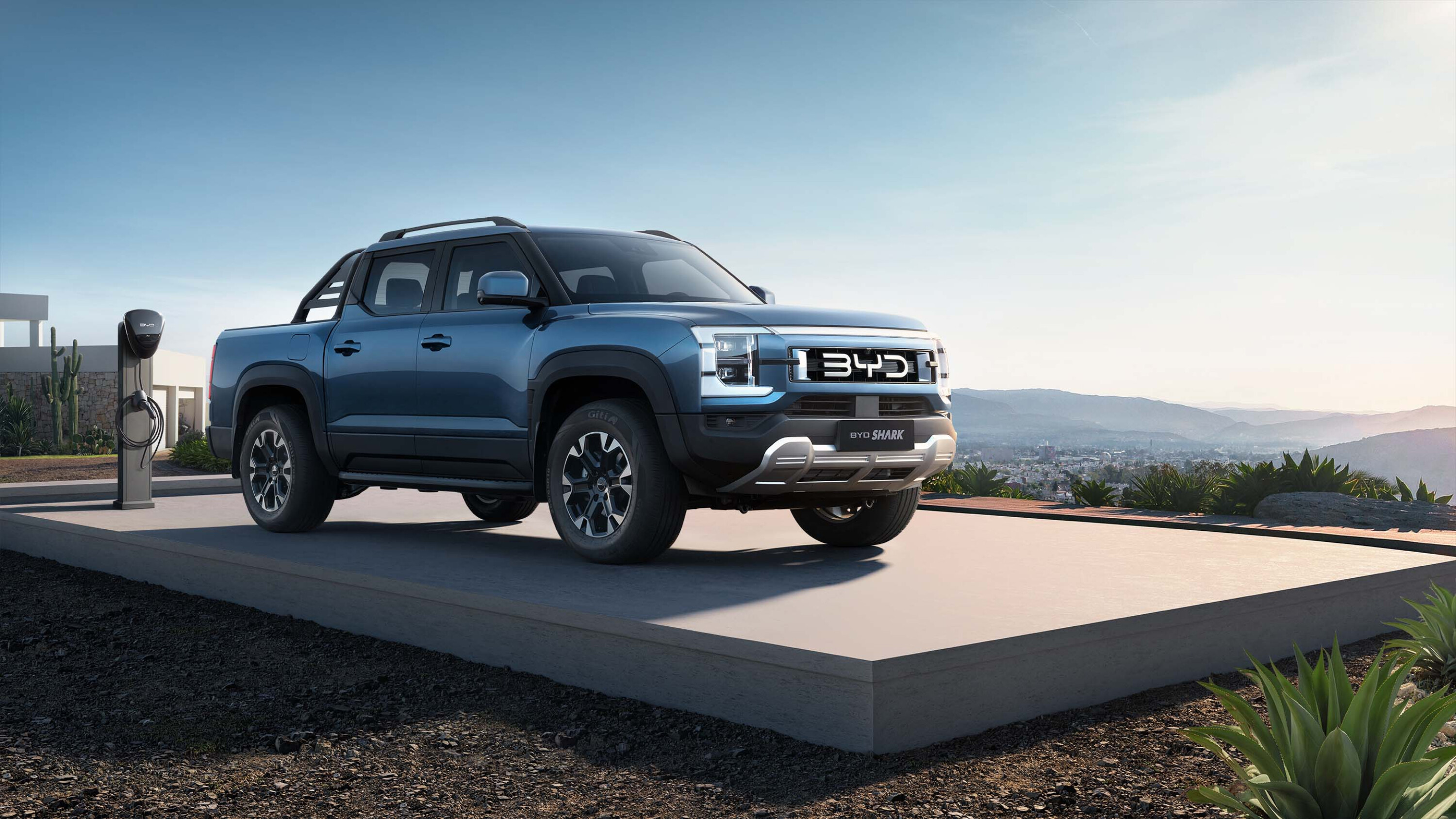
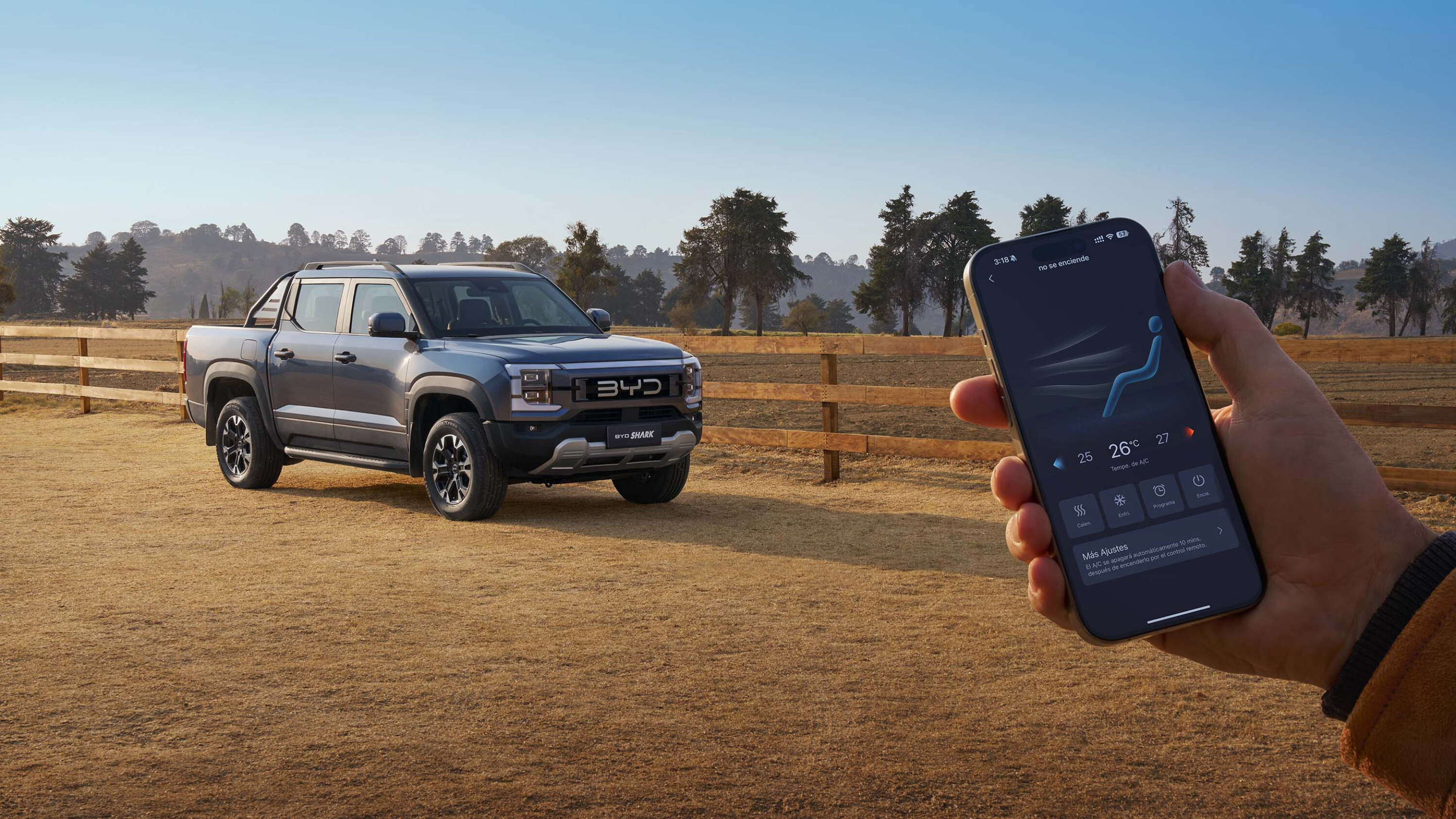
In the wheel tracks of the Sealion 6 SUV, BYD will be first to market with a plug-in hybrid dual-cab ute when it arrives later this year – or early 2025 – well ahead of the PHEV Ford Ranger set for 2025 (see further down this list).
The Shark – revealed in May with “more than 321kW”, making it more powerful than a Ford Ranger Raptor – will attack the lucrative dual-cab ute segment using a 1.5-litre turbocharged four-cylinder petrol engine and pair of electric motors.
Shark also has an 835kg payload – 118kg more than a Ranger Raptor’s – and the same 2500kg braked tow rating as the ferocious Ford, but short of the Ranger PHEV’s “up to 3500kg” rating.
Citroen C5 X PHEV
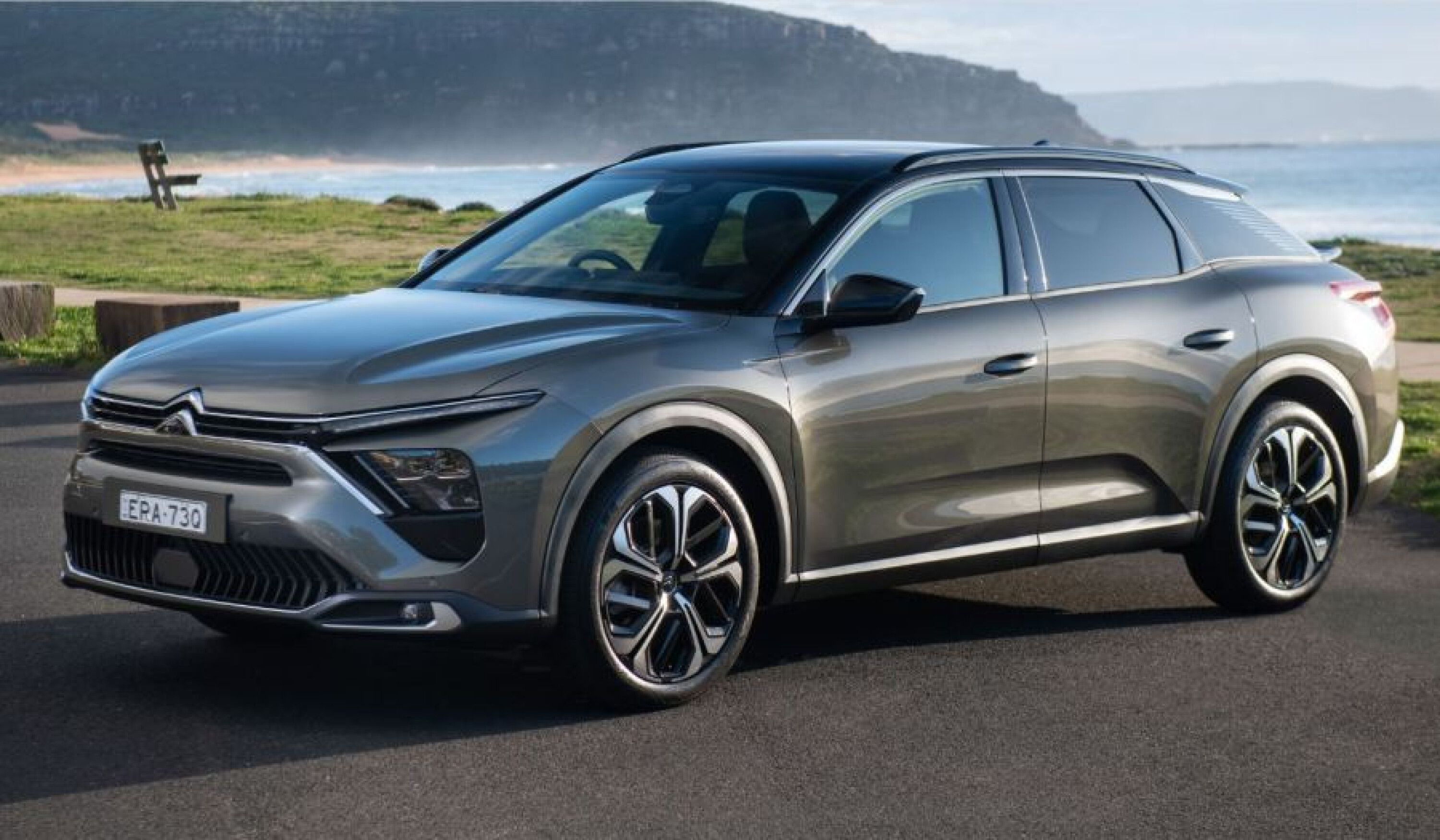
Part sedan, part wagon, part SUV – the C5 X plug-in hybrid was confirmed for Australia when the petrol version arrived here in late 2022 and will be in local showrooms before the end of 2024.
The ‘avant-garde’ body design sits on a 2785mm wheelbase for a 545L boot area in petrol versions – expandable to 1640L to the roof with the rear seats folded – but based on overseas specs, the hybrid unit reduces that by 60 litres.
It uses the same 133kW/250Nm 1.6-litre four-cylinder petrol engine eight-speed auto but adds an 80kW electric motor and 11.9kWh battery – with a 50km range under electric power.
Cupra Formentor VZe
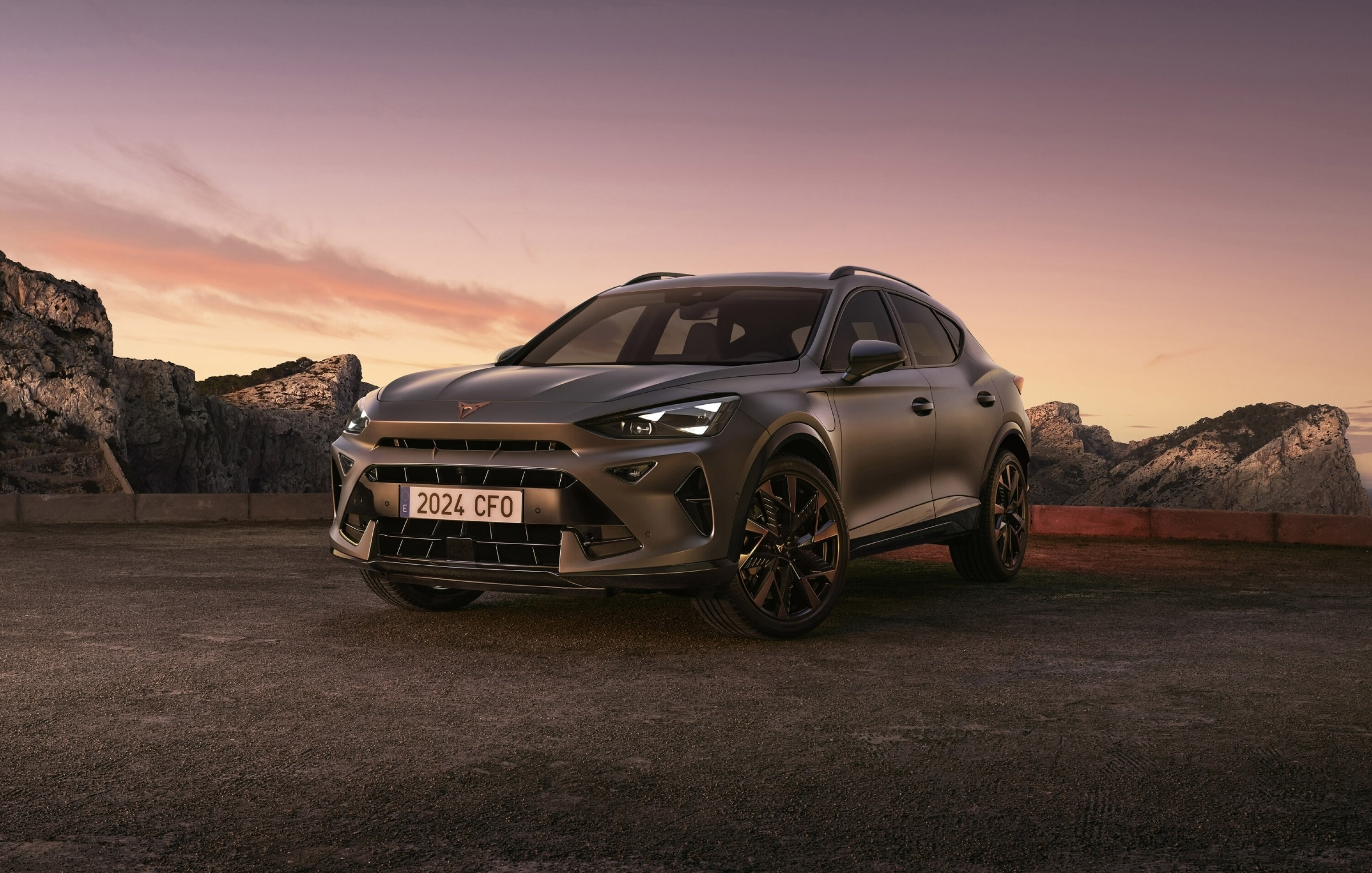
Cupra’s best-selling vehicle in Australia will double its electric-only driving range in 2025.
The updated Formentor VZe sees a 19.7kWh battery – in place of the current car’s 10.9kWh pack – that enables range to jump from a claimed 58km to “more than 100km”.
Total power’s up 20kWw to 200kW, too, courtesy of tweaks to the 1.4-litre four-cylinder turbo petrol engine and electric motor.
The 2025 Formentor VZe also scores a new ‘shark nose’ front-end, revised rear end design while the Spanish car maker says it has improved interior fit and finish, too.
Cupra Leon Sportstourer VZe
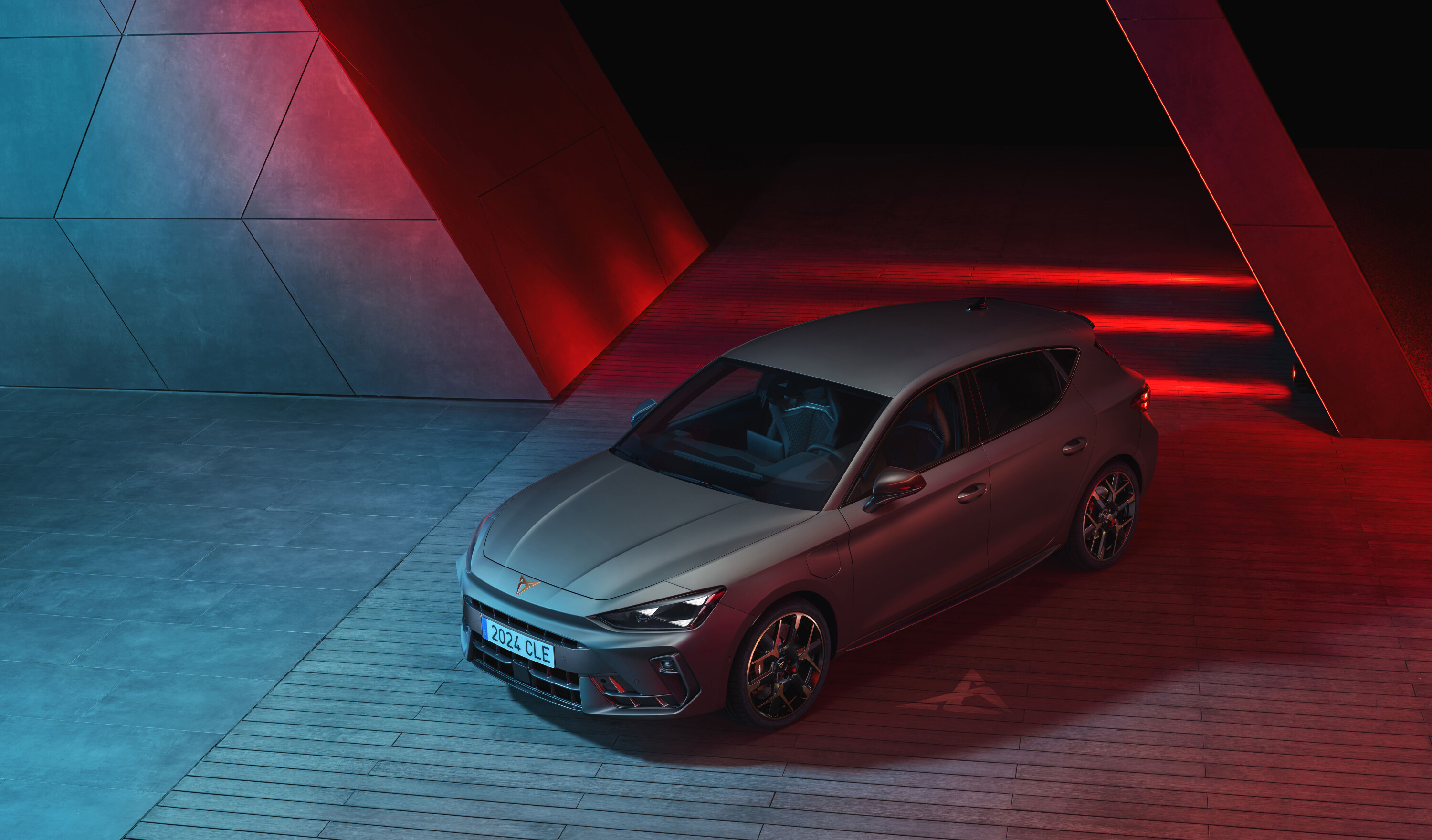
The Leon Sportstourer will make its Australian debut in 2025 with a two-tier range featuring a petrol and a petrol PHEV.
The Sportstourer – Cupra speak for station wagon – will be offered in VZe spec with front-wheel drive and 1.5-litre turbocharged petrol four-cylinder and single plug-in electric motor producing 200kW.
Estimated to be priced around $70K, it will arrive with the updated Formentor meaning it is also expected to bring a 19.7kWh battery pack and “more than 100km” range, cabin upgrades and latest exterior styling.
Cupra Terramar
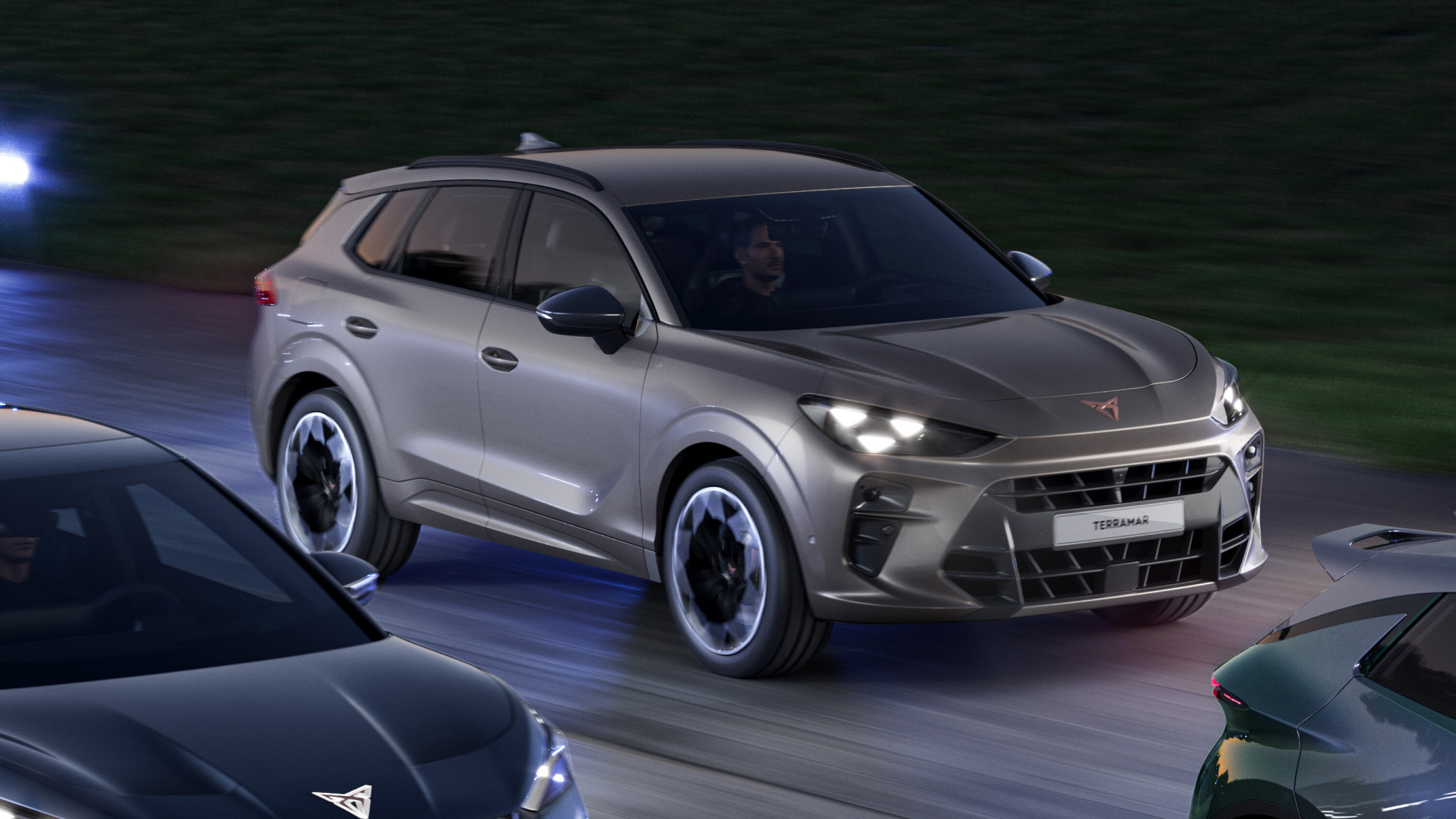
The Terramar is a 4.5-metre-long five-seat SUV alternative to the Nissan Qashqai and Toyota RAV4 and may come to Australia with a 2.0-litre plug-in powertrain from its Volkswagen Tiguan sibling.
There’s potential for a plug-in Terramar as Volkswagen has confirmed it’s considering a PHEV version of the next-generation Tiguan to Australia following the passing of the NVES (New Vehicle Emissions Standards).The Terramar shares the same underpinnings and would share the same hybrid powertrain – including a 100km electric only range – making it a prime candidate for Cupra to bring in a batch for local consumption from 2025.
Ford Ranger PHEV
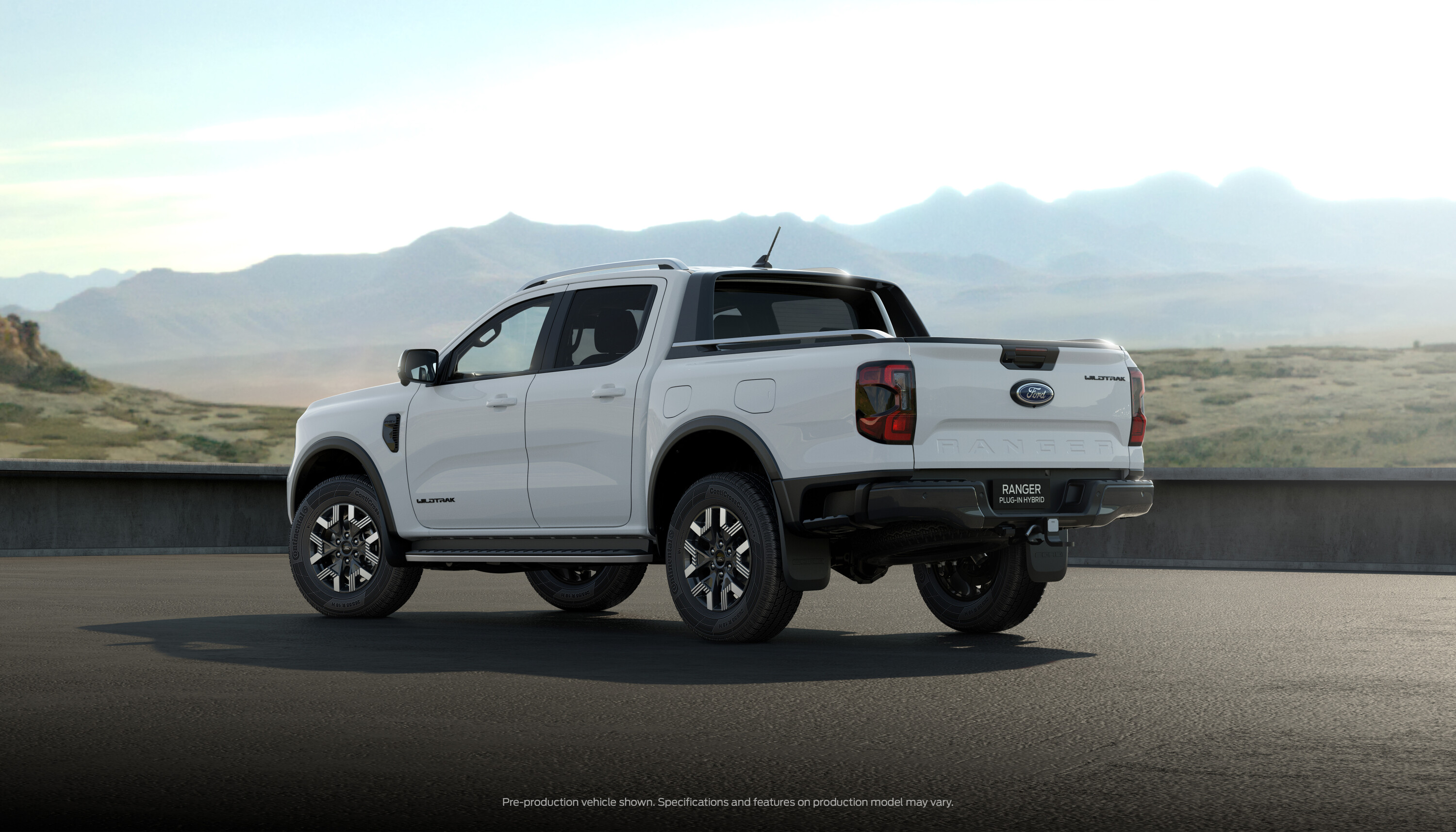
Australia’s best-selling vehicle is going plug-in hybrid in 2025, stealing a march from arch-rival Toyota HiLux.
The Ford Ranger PHEV will be powered by a 2.3-litre turbocharged four-cylinder petrol engine – used in Ranger’s Volkswagen Amarok twin and also the four-pot Mustang since 2015 – with a yet-to-be detailed battery pack an electric motor.
Details are scant so far but Ford has confirmed a battery-only range of 45km for the Ranger PHEV and all-important 3500kg braked tow rating, as well as Ford’s ‘Pro Power Onboard’ system enabling the vehicle to act as a generator.
It has also said Ranger PHEV will come from Ford’s South Africa plant – where the UK gets its right-hand drive Rangers – instead of Australia’s usual Thai-made models, meaning a higher import tariff may push the showroom price beyond the $90k ask for a Ranger Raptor.
Jeep Compass 4xe PHEV
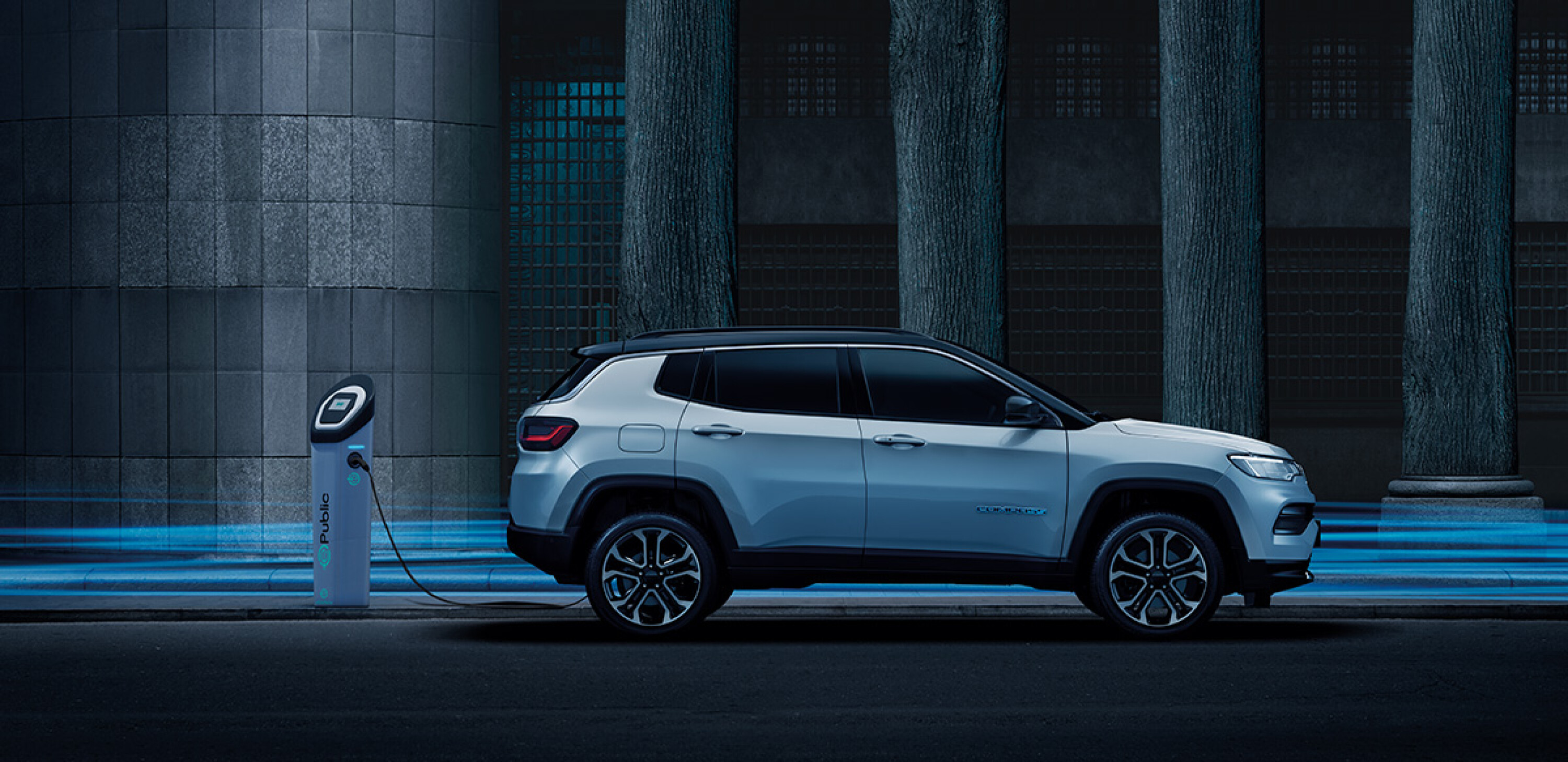
Landing from June, the Compass 4xe brings a plug-in hybrid to rival the Toyota Corolla Cross as petrol and diesel versions of the Compass are axed.
It brings a 132kW/270Nm 1.3-litre turbocharged four-cylinder petrol engine teamed with a 44kW rear-axle mounted electric motor and a 47km electric only range.
Compass 4xe pricing starts from $61,990 before on-road costs.
There’s also a 48V mild-hybrid Compass joining the PHEV in showrooms sometime in 2024.
Kia Sorento GT-Line PHEV
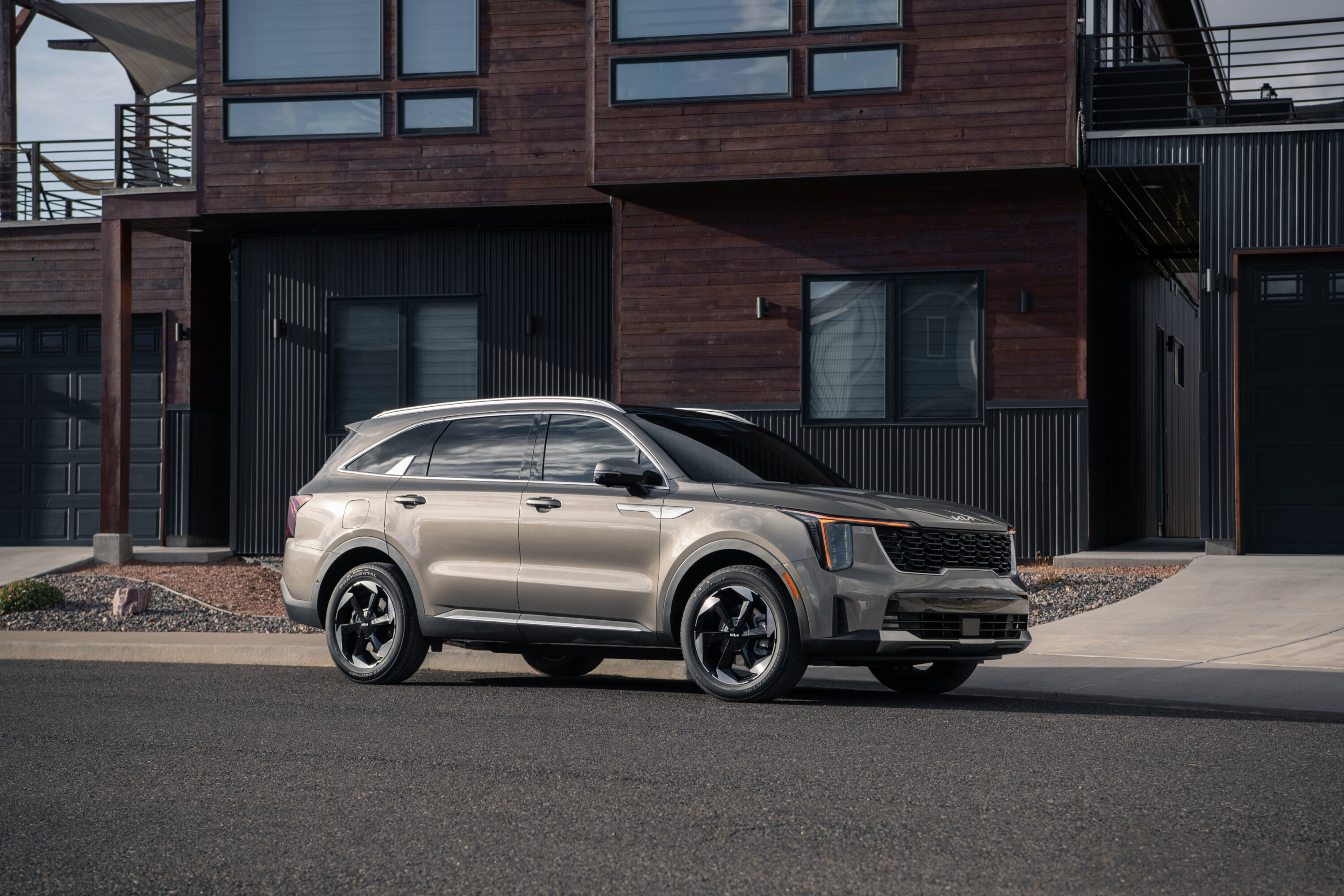
The Sorento Hybrid already in Australian showrooms will be joined by a plug-in hybrid version in the third quarter, with September tipped to be the most likely month for the facelifted PHEV’s arrival.
It will use the prolific Hyundai-Kia 1.6-litre turbocharged four-cylinder engine and electric motor combo, but overseas the PHEV makes marginally more power than the non-plug-in HEV Sorento.
Pricing is yet to be confirmed for the PHEV, which will be offered only in top-spec GT-Line trim to be the most expensive variant – sitting above the $70,330 (FWD) and $73,330 (AWD) non-plug-in hybrids currently in showrooms.
Lamborghini Urus SE
Practicality. Environmental consciousness. Lamborghini?
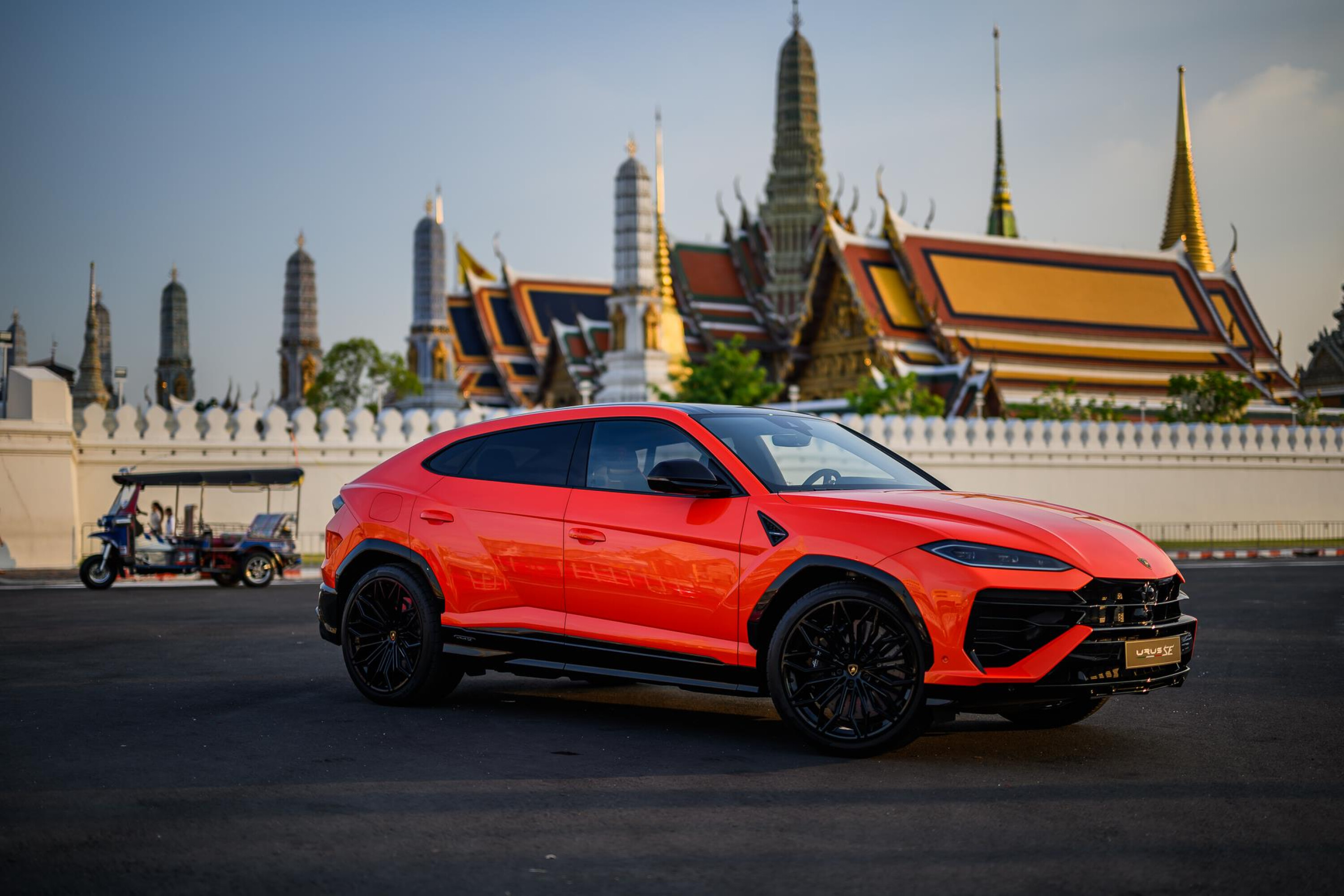
The seemingly contradictory idea of Lamborghini hybrid SUV is no longer – it’ll be here in 2025 with the $457,834 (plus on-roads) Urus SE.
Yet that flamboyant exterior promises firepower – whatever’s powering it – meaning the PHEV Urus SE packs 588kW/800Nm with claims of 0-100kn/h in 3.4 seconds and a 312km/h top speed.
That comes from an electric motor sandwiched between the 4.0-litre V8 and 8-speed transmission, with all-wheel drive powering the 2550kg SUV a distance of 60km under electric power alone.
The entire Lamborghini line-up will be plug-in hybrid by the end of 2024, including the Huracan successor and replacement for the Aventador, the Revuelto.
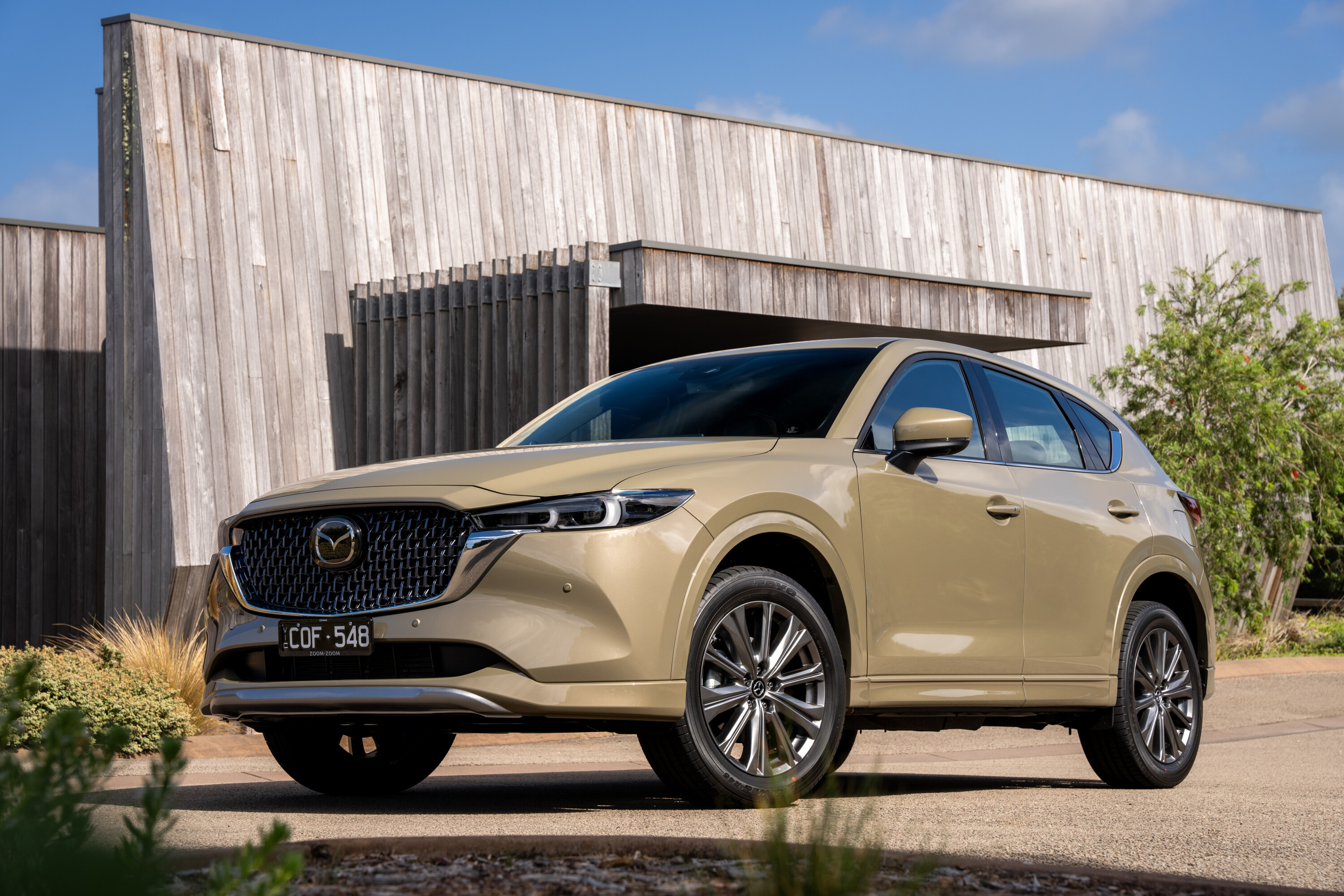
Mazda CX-5 PHEV
The next CX-5 is a landmark vehicle for Mazda Australia as the next generation of its best seller will include a plug-in hybrid EV for the first time.
In a bold move, it won’t be Toyota-powered despite a tie-up between the companies, with Toyota owning a five percent stake in Mazda.
The CX-50 SUV, sold in China and the US, uses the Toyota RAV4’s hybrid powertrain, but the next CX-5 will instead use the first in-house Mazda-developed plug-in set-up.
That’s all Mazda has confirmed for now, with scant information on the hybrid set-up, so watch this space as the CX-5 hybrid inches closer to Australian showrooms – and driveways.
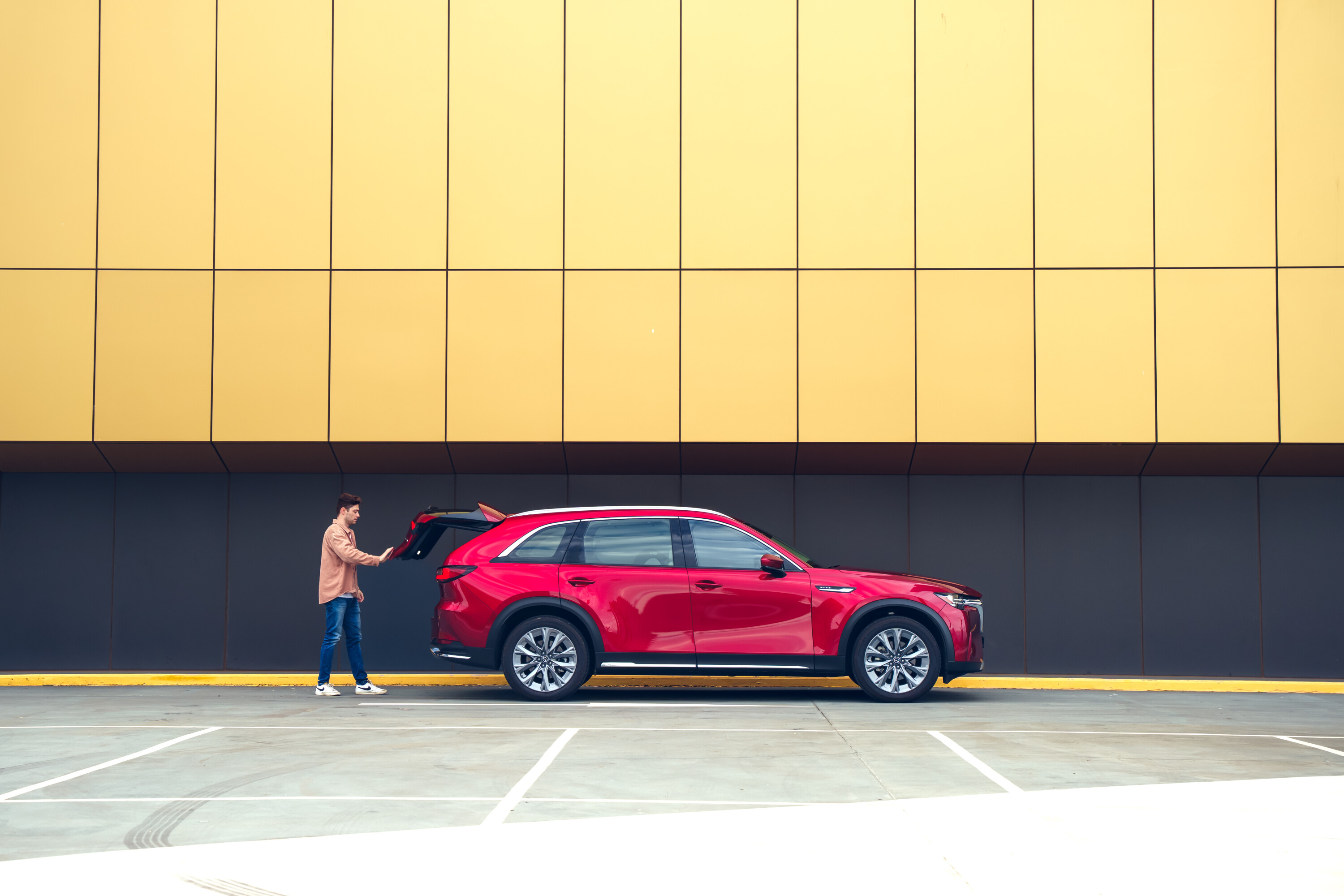
Mazda CX-70 PHEV and Mazda CX-90 PHEV
Mazda’s flagship CX-90 SUV is already here in petrol and diesel form – but the plug-in is on the wish list and could be here sometime in 2025.
The seven-seat CX-90 PHEV is on sale in left-hand-drive markets including North America where it scores all the bells and whistles with a 2.5-litre four-cylinder petrol engine, electric motor and eight-speed auto combo powering all four wheels.
Right-hook markets including the UK and Japan don‘t offer the CX-90 at all – even in petrol or diesel guises – making its business case for Australia all the more difficult, yet one Mazda seems determined to make stick.
Same goes for the five-seat CX-70, with its local arrival not likely before the end of 2024.
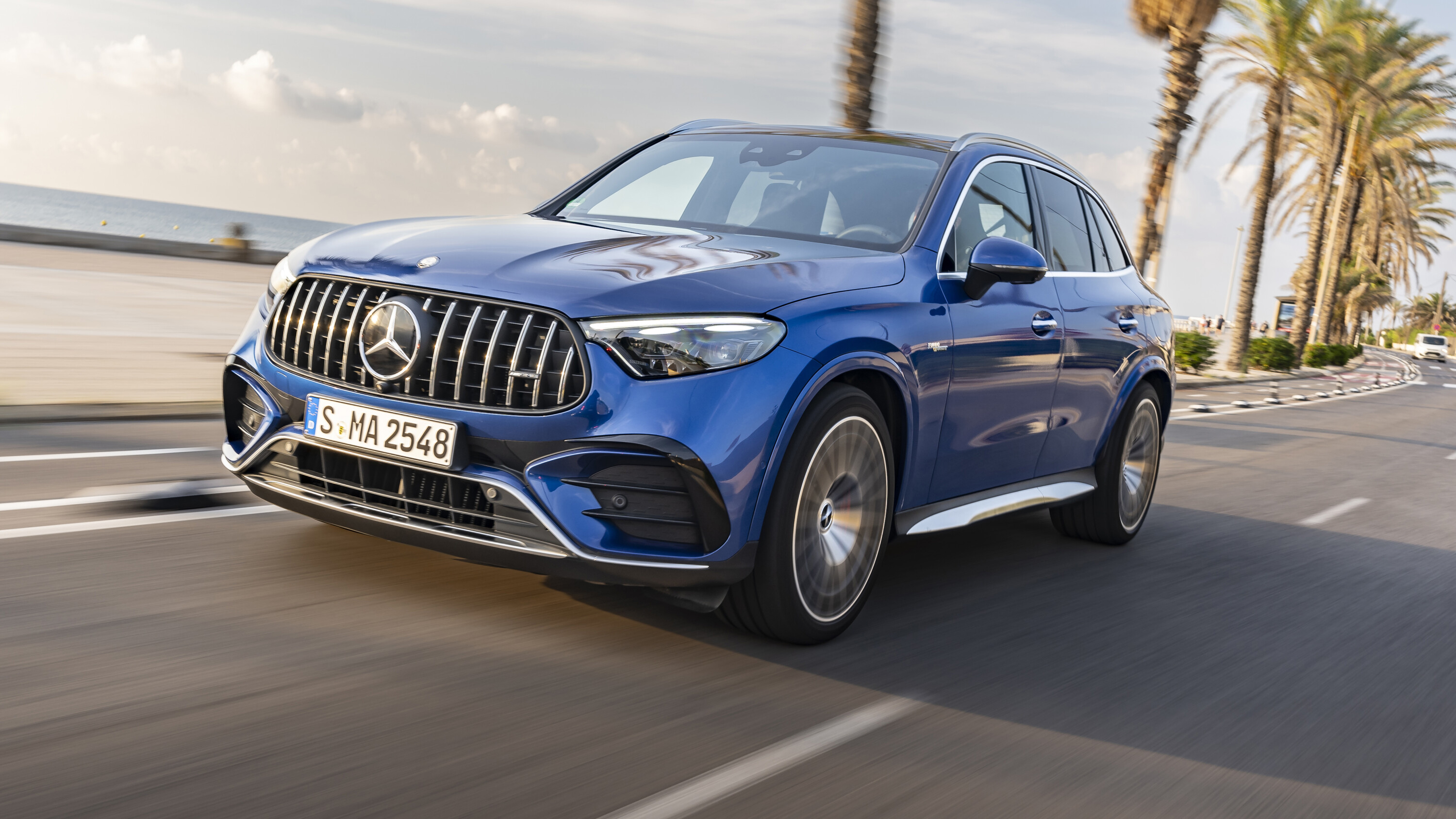
Mercedes-AMG GLC63 S E
Ditching V8 power after decades of guttural, grunty engines continues at AMG, with the flagship performance GLC S E Performance SUV now a hi-po hybrid.
Running a 350kW 2.0-litre four-cylinder turbocharged petrol engine with a battery pack and pair of 75kW electric motors delivers a healthy 500kW total, and while there’s 2.3 tonnes to move, our first drive overseas found it was more agile and talented than the stats suggest.
Mercedes-AMG quotes just 3.5 seconds for the 0-100km/h sprint.
Somewhat a technological wonder, it’s pricey, though – available to order now priced at $193K for the wagon or from $199,500 for the Coupe (both figures before on-road costs).
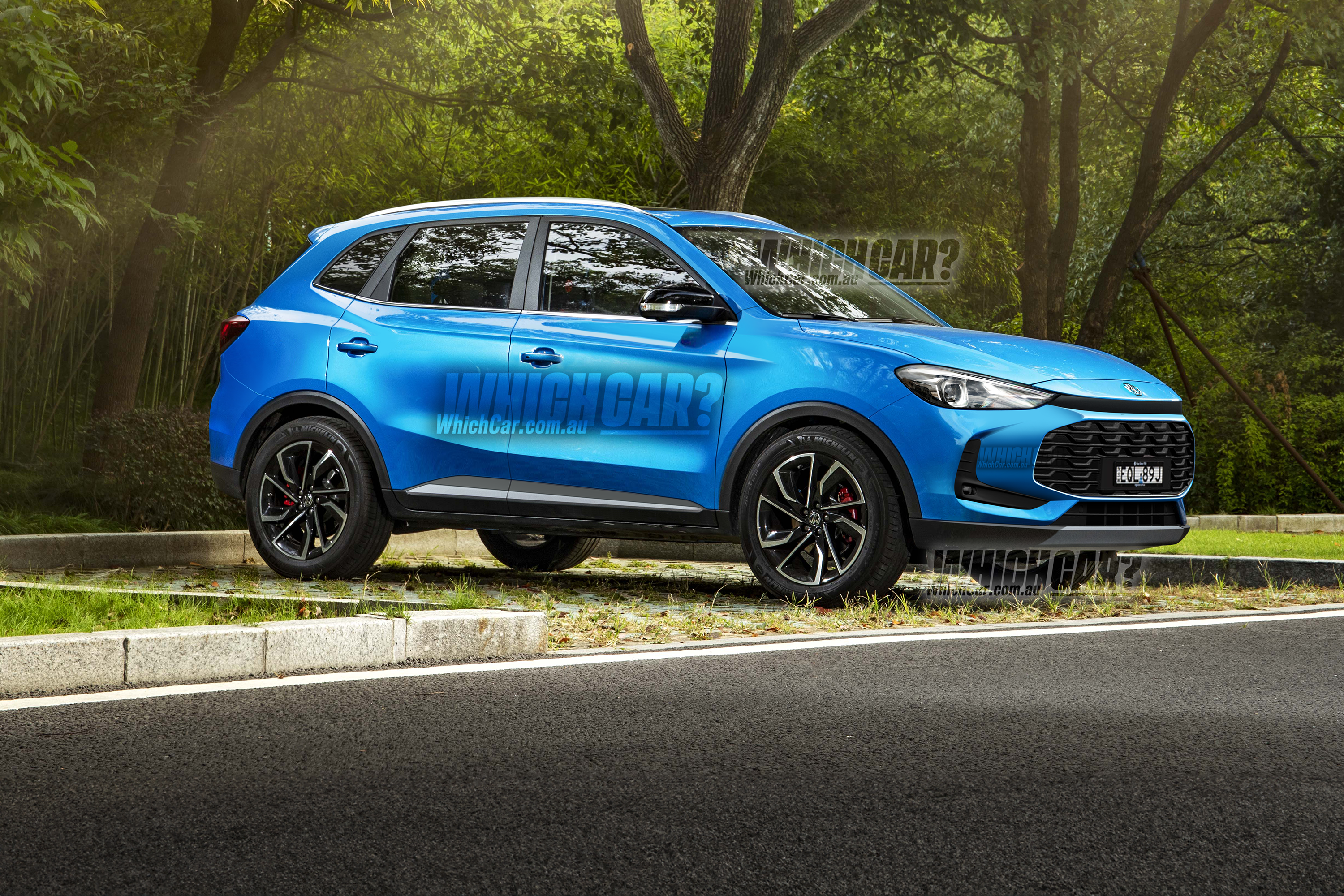
MG HS PHEV
The second-generation MG HS is set to arrive in Australia by the end of 2024 with both petrol and plug-in hybrid petrol-electric powertrains.
A rebadged version of the Roewe RX5 – with both MG and Roewe part of SAIC – the new HS comes with much sharper styling and slightly larger measurements than the best-selling Toyota RAV4.
Details of the Australian-spec HS haven’t been confirmed, but the eRX5 plug-in hybrid sold in China uses a 138kW/300Nm 1.5-litre petrol four-cylinder engine, 10-speed auto and 180kW/270Nm electric motor fed by a 12.3kWh battery.That compares to the outgoing model’s 189kW/370Nm powertrain, with range falling from 63km to 50km.
A non-plug hybrid – sold as the Roewe D5X overseas – may join the Australian line-up in 2025, with prices expected to increase from the current HS PHEV’s $44k driveway starting point.
Peugeot 408 GT
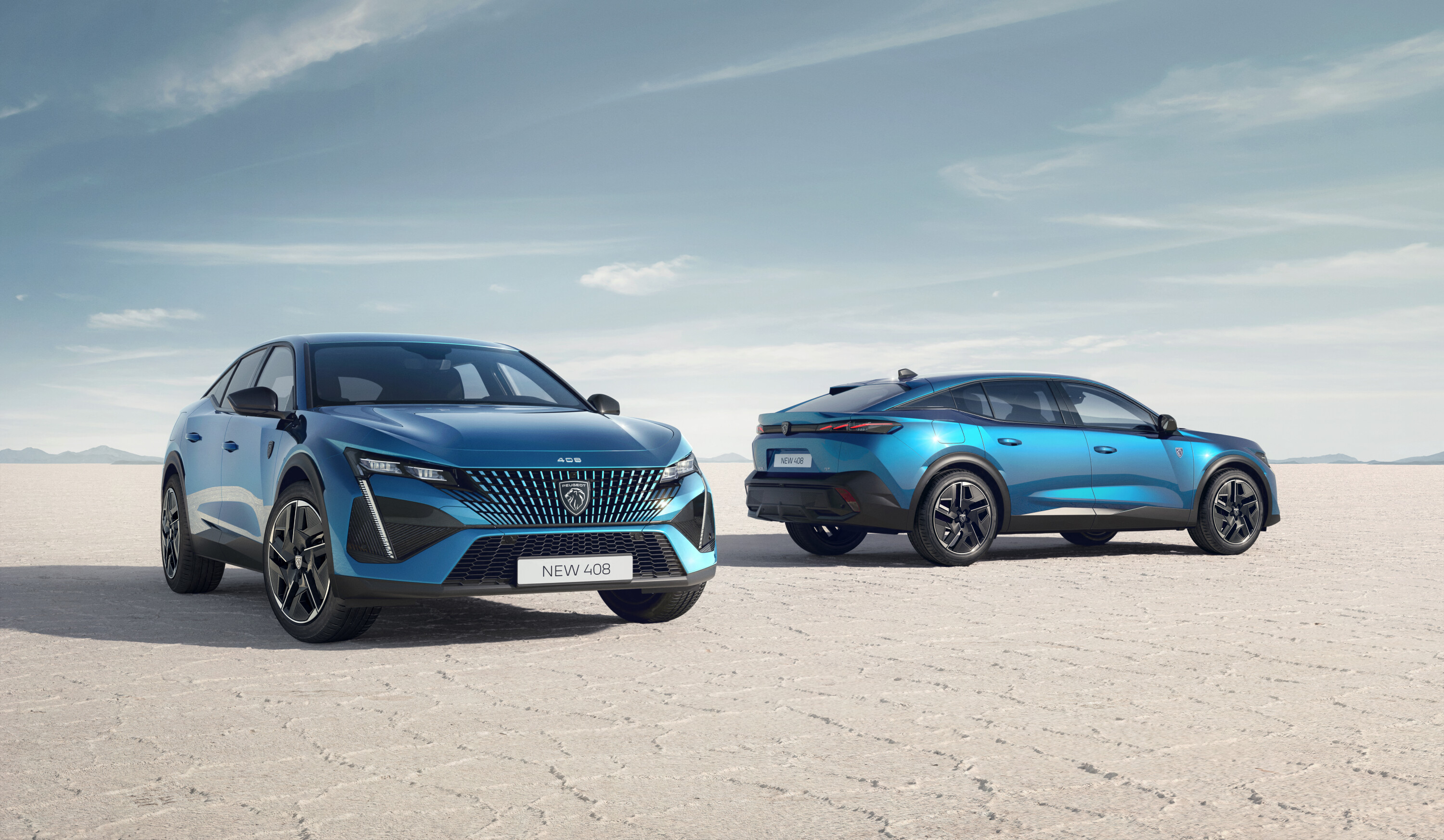
The French car maker says the 408 is a new breed of Peugeot – and perhaps it is.
Somewhat a successor to the large 407 Coupe but jacked up – and with five doors including a liftback tailgate – the 408 crossover has recently arrived in Oz.
Bigger than Peugeot’s 308 which uses the same EMP2 platform – yet shorter than the 508 PHEV – local Peugeot distributors have confirmed the 408 will be offered in a single GT spec, priced at $67,990 before on-roads.The plug-in hybrid powertrain – lifted from the 308 and 508 PHEVs – uses a 131kW 1.6-litre turbocharged four-cylinder and an 81kW electric motor for a total 165kW/360Nm with claimed combined fuel economy of 1.3L/100km and electric-only range of 60km.
Volkswagen Golf GTE
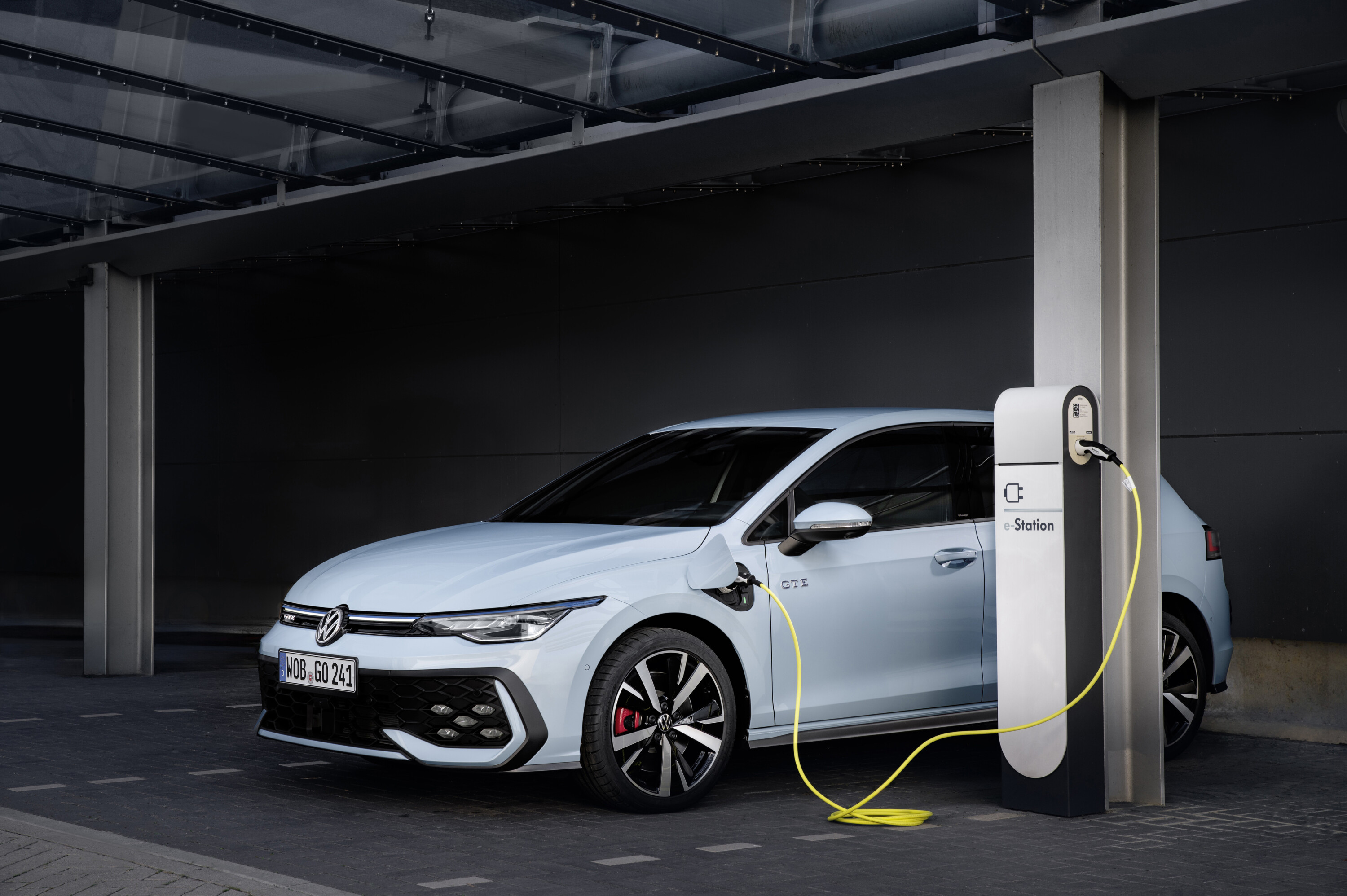
The Golf GTE could join the renowned small car’s line-up locally after Volkswagen Australia said the introduction of NVES (New Vehicle Emissions Standards) as increased the number of electrified vehicles it can bring here.
The second-generation Golf GTE plug-in hybrid has been on sale in Europe since 2020 and may finally arrive in 2025 along with the facelifted Mark 8.5 Golf.
The updated GTE will use a 1.5-litre turbocharged four-cylinder petrol engine with six-speed automatic and electric motor for a combined 200kW. Its 19.7kWh battery provides a claimed 131km electric-only range and 50kW DC fast charging too.
Volkswagen Tiguan eHybrid
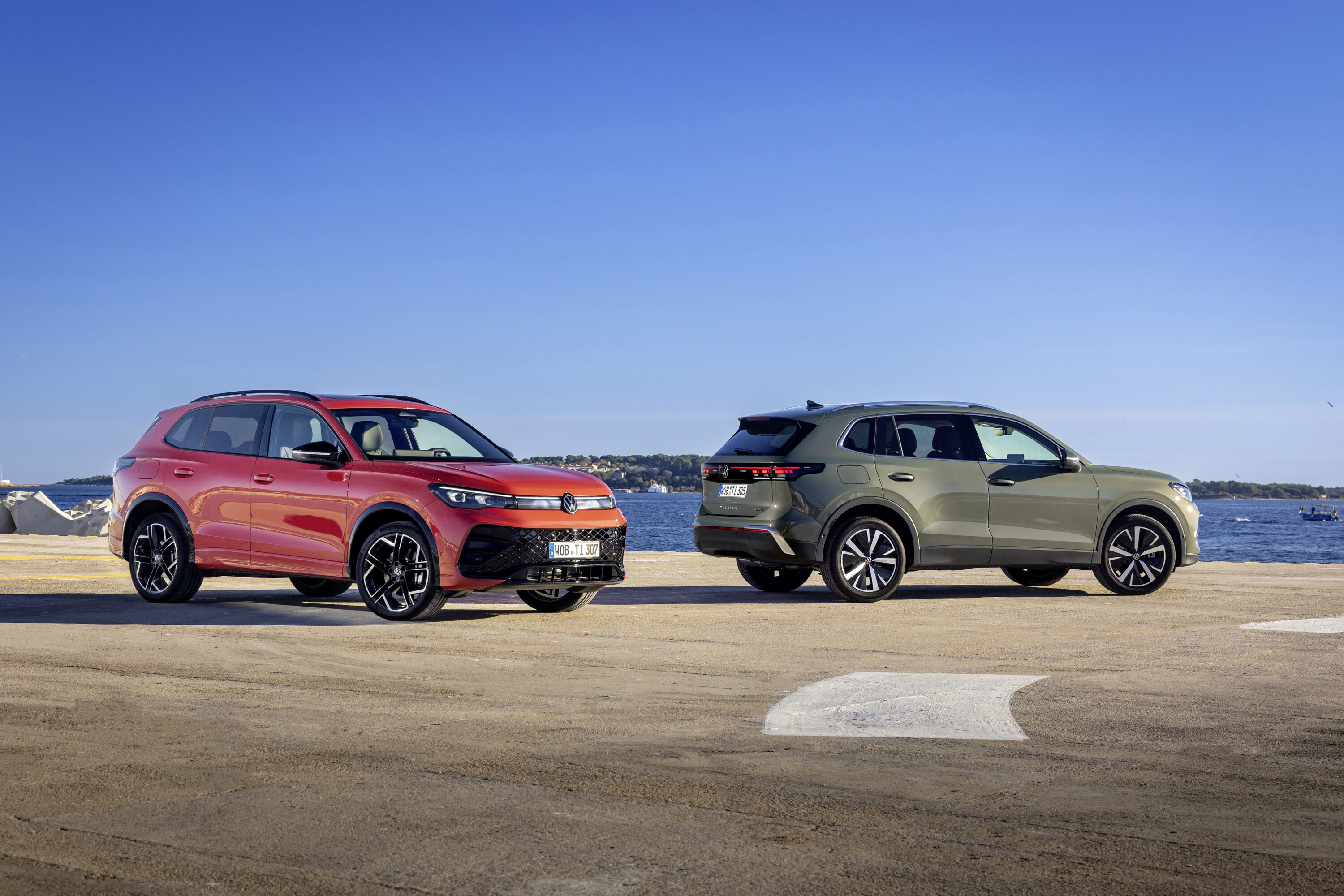
The third-generation Tiguan is due to arrive in Australia in 2025 and is likely to see a plug-in hybrid model as part of the local line-up.
Australia missed out on the PHEV with the previous Tiguan, but the local arm has expressed a keen interest in the 2025 Tiguan eHybrid in place of diesel powertrains.
Sharing the Golf’s MQB Evo platform, the pluggy Tiggy also uses the same 1.5-litre turbocharged four-cylinder petrol engine and electric motor – sold overseas in 150kW and 200kW outputs – and 19.7kWh battery, with a claimed electric only range of up to 120km.
A four-door Ford Mustang could join the legendary coupe and convertible for the first time in its 60-year history, the company’s boss has told a UK media outlet.
Ford CEO Jim Farley told Britain’s Autocar in an exclusive interview that the Mustang’s huge global following meant there was potential to expand the range of body styles.
“We will never build a Mustang that isn’t a Mustang,” Farley told Autocar. “For instance, there will never be room for a small, two-row Ford SUV with a Mustang badge stuck on it. But could we do other Mustang body forms – a four-door or whatever? I believe we could, as long as these models have all the performance and attitude of the original.”
In a Freudian-style slip, Farley’s reference to SUVs overlooks the Mustang Mach-E electric SUV that was controversially given the famous pony-car name despite being completely unrelated to the V8 and four-cylinder-turbo sports car.
Farley added that any expanded V8 Mustang range would need to start with both more affordable and more aspirational versions of the traditional coupe/convertible. He cited German sports car maker Porsche’s GT2 and GT3 RS models as inspiration.
“Porsche has been smart about creating derivatives over the past 20 years,” he said. “But we wouldn’t want to do things their way. We want to give them a good, American-style run for their money.”
Ford has already announced a more ambitious Mustang with the track-focused GTD.
The seventh-generation Mustang’s Australian arrival has been delayed, with timing moving to the second half of 2024. The timing coincides with the 60th anniversary of the American muscle car, which debuted in 1964.
Ford has promised to build V8 Mustangs for as long as regulations allow.
The Mustang hasn’t been a complete stranger to four-door models in its history. The original 1960s model shared a platform and components with a certain sedan called the Falcon.
