
“The spiritual successor to the much-missed Subaru Liberty GT wagon” is how Subaru is describing its all-new Levorg wagon, which landed in Australian showrooms today.
Aimed at active families who are turning away from the cumbersome SUV, the Levorg is powered by the same turbocharged 2.0L engine as the Subaru WRX but boasts up to 522L of cargo capacity, and joins the stable as the only full-sized wagon currently in the line-up.
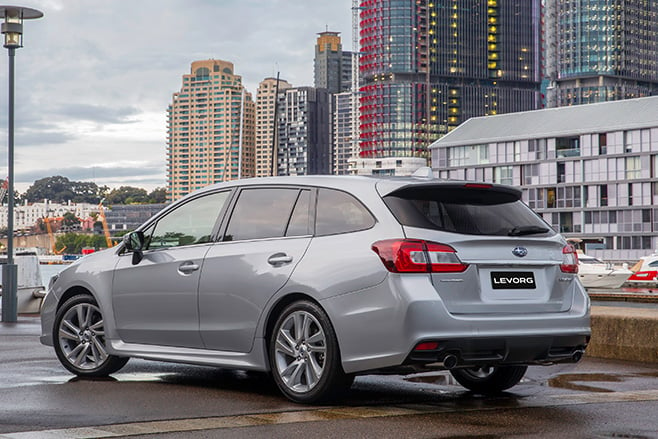
Available only with an automatic CVT transmission, the all-wheel drive wagon is being offered in two specifications. There’s the 2.0GT base model which starts at $42,990 (plus on road costs) or the 2.0GT-S which, for a $5900 premium at $48,890, adds different coloured wheels, electric seats, blue-stitched trim, a different suspension tune, a bigger touchscreen, rain-sensing wipers, automatic headlights and a few extra electronic aids.
And for another $4000, the S model will also be made available in Spec B, which is a swag of extra parts from Subaru’s motorsport division that includes spoilers, 18-inch black alloy wheels, an STI front tower bar, a red start button and a shift knob.
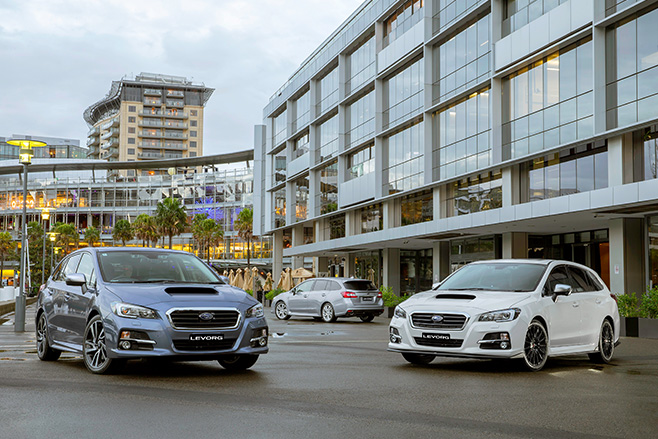
Both models feature the firm’s latest EyeSight technology which monitors the road and talks to the car’s extensive and sophisticated electronic driver-assist safety features. There’s welcome lighting which will illuminate as you approach the vehicle, heated seats in the front, a couple of USB ports in the back and even a notification system so you won’t forget your wedding anniversary or the car’s servicing schedule.
The Levorg has a five-star ANCAP safety rating and is available in a choice of seven different colours.
THE Mulsanne straight is a fabled piece of bitumen. As the backbone of the La Sarthe circuit, the public road is transformed into the launch pad for LMP1 cars every June, as they take on the epic test of motorsport endurance that is the 24 Hours of Le Mans.
However, the 1000-horsepower hybrid LMP1 monsters were not the fastest cars last weekend on the lengthy straight. That honour goes to the mental Bugatti Chiron.
During a parade lap at the iconic event, Bugatti CEO Wolfgang Dürheimer cracked 379km/h (236mph) on Mulsanne. Meanwhile, the fastest LMP1 was Loïc Duval in the Audi R18 e-tron Quattro at 342km/h (213mp/h). That is a difference of 37km/h!
On paper it’s a jaw-dropping difference, but perhaps this isn’t a completely fair comparison. The Chiron is armed with a weapons-grade 8.0-litre W16 with four turbos strapped to it, a smooth top-speed friendly body, and no concerns over fuel consumption. Meanwhile, the LMP1 was hamstrung by having a comparatively microscopic 4.0-litre V6 with only a single turbine, a bevvy of wings and spoilers – which are great for cornering, but hamper top-speed – as well as a focus on conserving fuel at the same time.
Oh, and the Chiron is unleashing a staggering 1500-horsepower; 50 percent more than the purebred racer’s measly 1000hp.
That doesn’t make what the Chiron achieved any less impressive. Think about it: A road car just stomped the fastest sport cars in the world on their home turf.
Bugatti isn’t expected to do a proper top-speed test for the Chiron for a few years yet, but when they do, we can expect numbers around 482km/h (300mp/h). Just let that number stew for a while in your mind.
Fast – as far as adjectives go – just doesn’t do this car justice.
Subaru shoehorns the WRX engine under the bonnet of an Impreza/WRX-based wagon called Levorg, creating a grand tourer for SUV haters.
WHAT IS IT? After ditching the Liberty wagon (and its turbocharged GT flagship) in 2014 because everyone was switching to SUVs, Subaru has revived the concept with this slightly smaller and sportier wagon, flexing a WRX-honed engine and an entirely new name.
WHY WE’RE TESTING IT Subaru reckons there’s a subset of about 200 buyers a month out there who don’t want SUVs in their lives, and are hankering for a spiritual replacement to the Mk4 Liberty GT wagon of 2003-09. Instead of a Liberty, they get this.
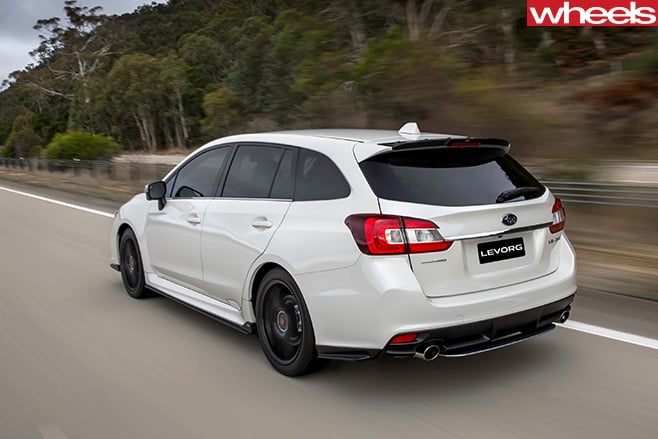
THE WHEELS VERDICT The Levorg is an engaging, fun addition to Subaru’s range, but only if you don’t think of it as a WRX with a bigger boot.
PLUS: Performance in spades; prodigious grip; excellent high-speed ride and handling; big load capacity MINUS: Too much body roll through corners; low-speed ride; tyre roar; no aural excitement; doddering CVT
THE WHEELS REVIEW IT’S amusing how things come around. Turn the calendar back to 2014, and Subaru was busy defending the untimely death of its Liberty wagon; saying buyers were more interested in kicking tyres on SUVs such as the closely related, higher-riding Outback.
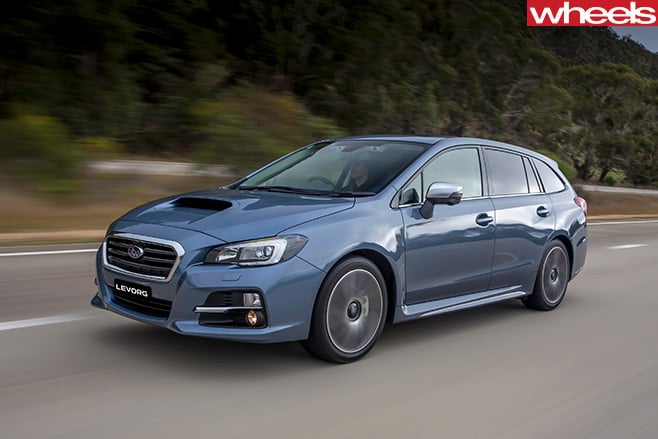
It is chasing them with the Subaru Levorg, an Impreza/WRX-based wagon with a made-up name and a WRX heart. Indeed, wheelbase length, track widths and dashboard are all identical to a WRX’s. Subaru claims the Levorg is small enough to attract women, yet beefy enough to prevent blokes from getting too in touch with their feminine side.
At the heart of the three-model Levorg line-up — an entry-level $42,990 2.0GT; a leather and sunroof adorned $48,890 2.0GT-S; and a range-topping $52,890 2.0GT-S Spec B (a plastic pig wearing STi aero) — is the turbocharged 197kW/350Nm 2.0-litre flat four from the WRX. Unlike its sedan relative, though, Levorg won’t have a manual option. Instead, it will stick with a continuously variable transmission (CVT).
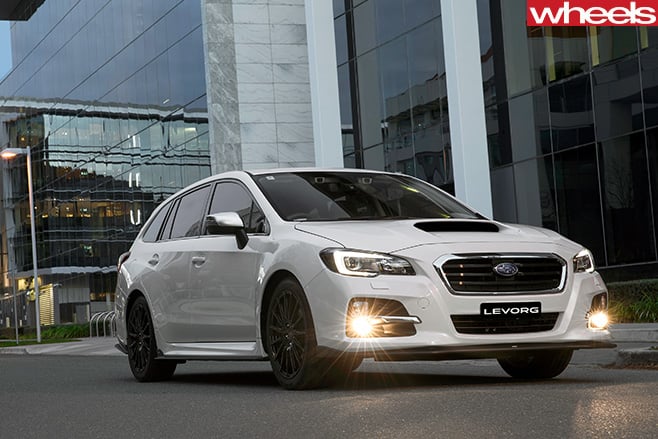
What makes Levorg special is the Aussie-honed suspension set-up. The base GT wears KYB dampers up front, with its spring rate stiffened by 40 percent. Step up to the GT-S and the KYBs swap for more expensive inverted-strut Bilsteins, with 60 percent stiffer spring rates. At the double-wishbone rear, both models share the same set-up, with rebound damping increased by 20 percent and improved bump absorption.
Those factors translate to some very different things: A low-speed ride that’s fussy and bordering on uncomfortable, and a high-speed ride that absorbs everything but short, sharp hits with aplomb (on a run along NSW’s Oxley Highway, we hit the bump stops on both the front and rear suspension), accompanied by extreme tyre roar on coarse-chip surfaces.

Corner exit is where the Levorg gets a little disappointing. CVTs generally don’t like large changes in speed, taking time to sort out ratios. In the Levorg, with the engine’s calibration tune in Sport# mode, this amounts to hesitation as you lift off the brake pedal and roll on throttle, giving a sense that the car is launching rather than driving out of a corner. Once on it, too, there’s no hint of that boxer thrum for which the WRX was once renowned.

Where the Levorg excels is in between the corners. It lopes along lazily, overtaking manoeuvres are effortless, and apart from a little bit of wind noise around the mirrors and the constant tyre roar, comfort is at the pointy end of the class.
Levorg makes sense as a grand tourer. Comfortable, powerful, sharp like a Zegna suit and with buckets of room behind the back seat, it’s ideal for a weekend escape. But it’s no WRX, however close to relationship.
SPECS Model: Subaru Levorg 2.0GT Engine: 1998cc flat 4, dohc, 16v, turbo Max power: 197kW@ 5600rpm Max torque: 350Nm @ 2400-5200rpm Transmission: CVT automatic Weight: 1538kg 0-100km/h: 6.6sec (claimed) Fuel economy: 8.7L/100km Price: $42,990 On sale: Now
ONE of the prettiest coupes in the world will be reborn later next year as the second-generation Aston Martin Vantage, before reaching Australia sometime in 2018.
Caught undergoing a fast and furious shakedown at the Nürburgring (where else!) circuit in Germany, the British 2+2 coupe (and, eventually, Roadster convertible) will once again take the fight right up to the Porsche 911, along with the Audi R8, Jaguar F-Type, Maserati GranTurismo, and Japan’s own resurrecting supercar, the Honda NSX.
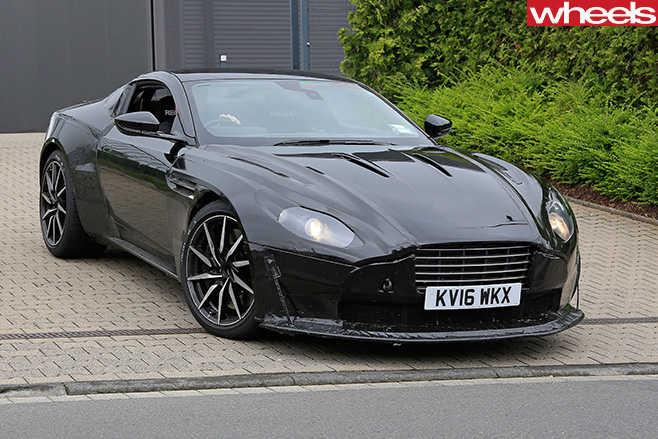
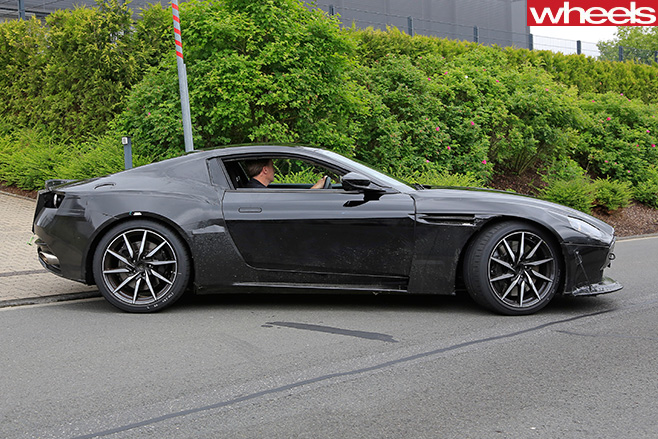
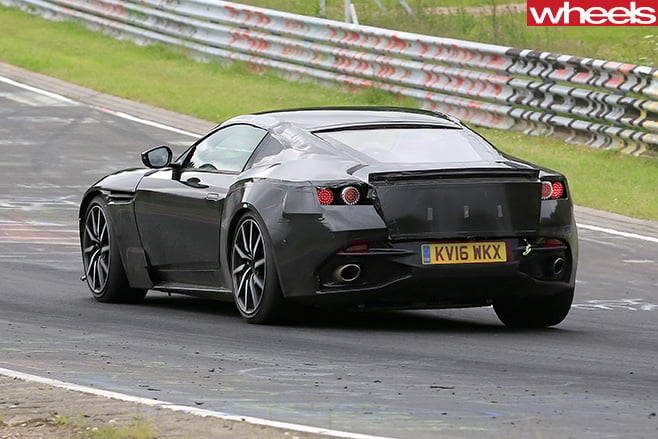
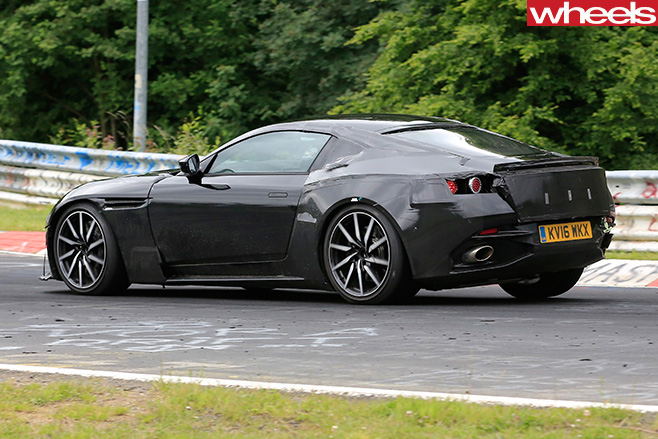
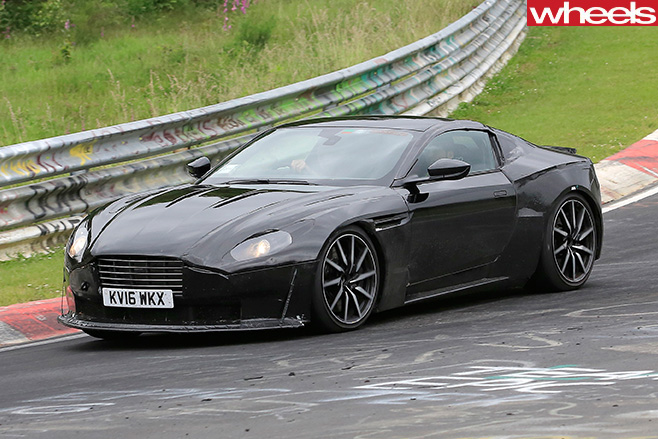
To that end, the new Vantage isn’t expected to stray too far from today’s versions, which means it should kick off from about $220,000 for the Coupe, or from around $250,000 when the Roadster rocks up before the end of the decade.
Have spy pics of your own? We’d love to see them. Just email them to [email protected]
Mazda has patented a forthcoming technology it calls ‘G-Vectoring Control’, set to debut in production form on the facelifted Mazda 3 range next month but tested here on a re-jigged Mazda 6.
WHAT IS IT? A purely software-driven device that aims to enhance on-centre steering connection and turn-in response. Eight years in the making, it’s essentially an automation of the techniques that expert drivers use to subtly transfer some weight onto a car’s nose to improve its turn-in to a corner and tighten its line.
WHY WE’RE TESTING IT? Because G-Vectoring Control, or GVC, is about to be rolled out across Mazda’s entire range, starting with August’s facelifted Mazda 3 range (but missing July’s all-new CX-9 SUV, which will have to wait until update time). However, Mazda admits that adding GVC to its existing line-up may occur during a model-year update, not merely as an accompaniment to a mid-life facelift, so there’s a strong chance the MY17 Mazda 2 and 6 will be next, with Mazda CX-3 and CX-5 to follow.
MAIN RIVALS That’s a difficult question to answer, given that G-Vectoring Control is more of an engineering philosophy than an actual model. But if it achieves what Mazda expects it to, we may well find ‘GVC’ in a whole bunch of competitor products in the future, with royalties heading to Hiroshima.
THE WHEELS VERDICT If you remember how Radial Tuned Suspension (RTS) transformed Holden’s line-up in the late-’70s, there’s a chance GVC will achieve an element of that with Mazda’s current line-up – not only for the effective, if subtle, improvement it brings to on-centre steering smoothness/response and turn-in alacrity, but because it will debut in unison with completely refreshed suspension tunes (that will hopefully realise the dynamic potential of Mazda’s SkyActiv range).
PLUS: Subtly improved on initial acquaintance, but of greater worth the further and faster you drive it … MINUS: Mazda admits that not everyone can appreciate GVC’s virtues, or even feel the difference, journalists included…
THE WHEELS REVIEW
REMEMBER the Energy Polariser, a collection of crystals in an engine-bay box that apparently did a bunch of esoteric stuff to Brocky’s HDT VL SS Group A and VL Director back in 1986/87, without the actual hard evidence to prove it?
Well, you could be forgiven for thinking that Mazda’s G-Vectoring Control (or GVC) – a patented technology about to be progressively rolled out across its entire ‘SkyActiv’ passenger-car range – somehow fits into the same category. But this time the Japanese have the data to back up their intriguing, almost subversively effective approach to improving dynamic flow, or what Mazda calls “the coordination of motion”.
The aim is simple: enhance the connection between vehicle and driver, thereby reducing the level of guesswork when guiding a car around the straight-ahead position and through the first quarter-turn or so of lock, and into a corner, particularly with a constant throttle position.
Any mistake on turn-in will resonate through an entire corner, making that first movement arguably the most crucial aspect of how a car strings itself together dynamically. And one that hasn’t exactly been a Mazda highlight in recent years, particularly our Euro-tuned models that are less lively around straight ahead in order to feel stable at autobahn speeds.
But G-Vectoring Control is intended to solve all that. By retarding the ignition slightly to decrease engine torque enough to transfer some weight onto the front end of the car – a seemingly insignificant 5kg – the electronics replicate what a good driver would do when lifting or feathering the throttle, or by left-foot braking (while still on the throttle) when entering a corner.
Thing is, this happens in just 50 milliseconds – faster than the human body can detect – so part of the reason it has taken until now for G-Vectoring Control to surface is that it needed an engine responsive and linear enough, as well as an ECU with the processing power, to enable the adjustments to happen so quickly.
The intended outcome of G-Vectoring Control’s effectiveness is not only improved feedback and greater fluidity of movement but also comfort. As Dave Coleman, a Mazda North America chassis engineer, pointed out: “if you make a car really direct, really intuitive, really linear, it’s better for everybody in the car”.
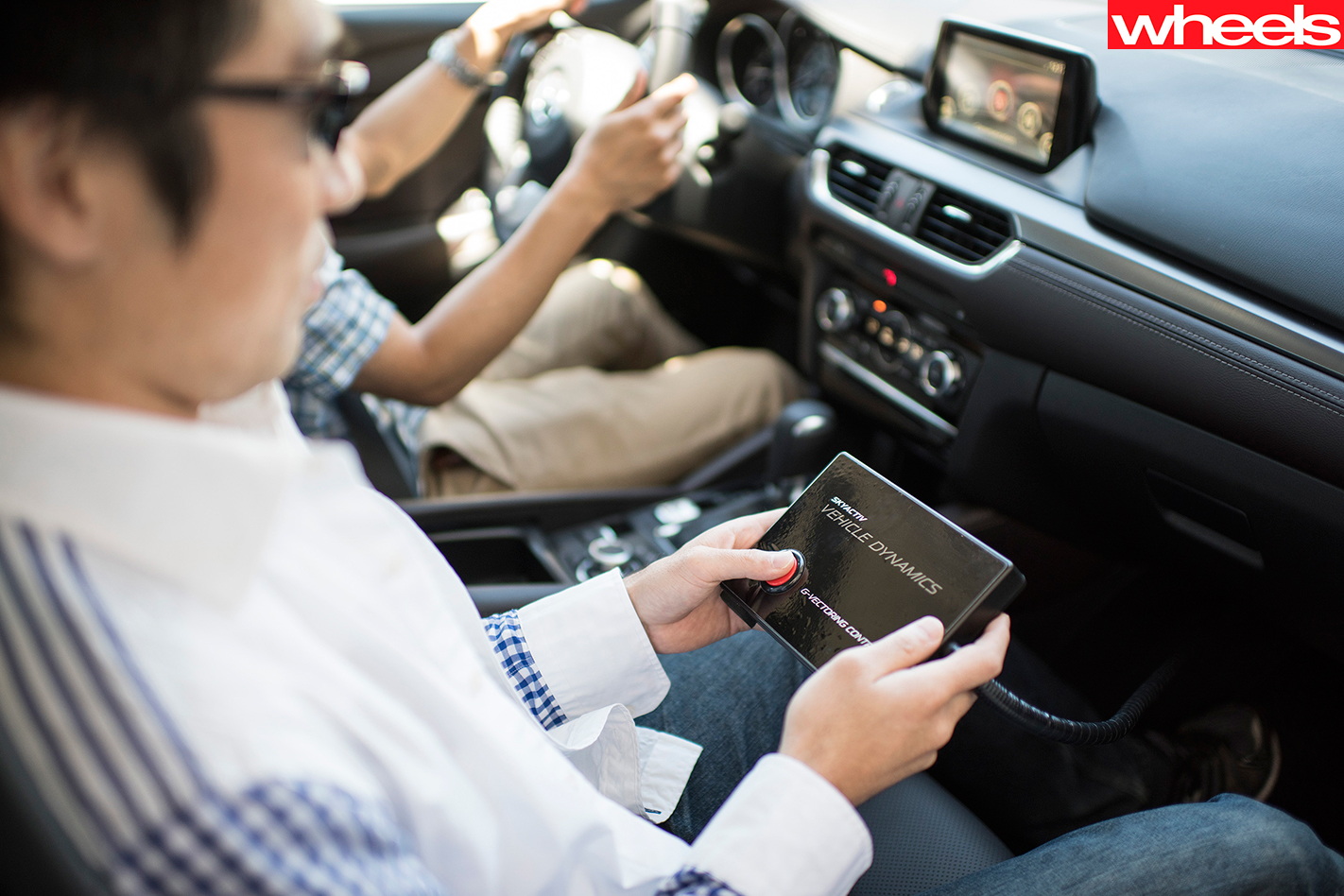
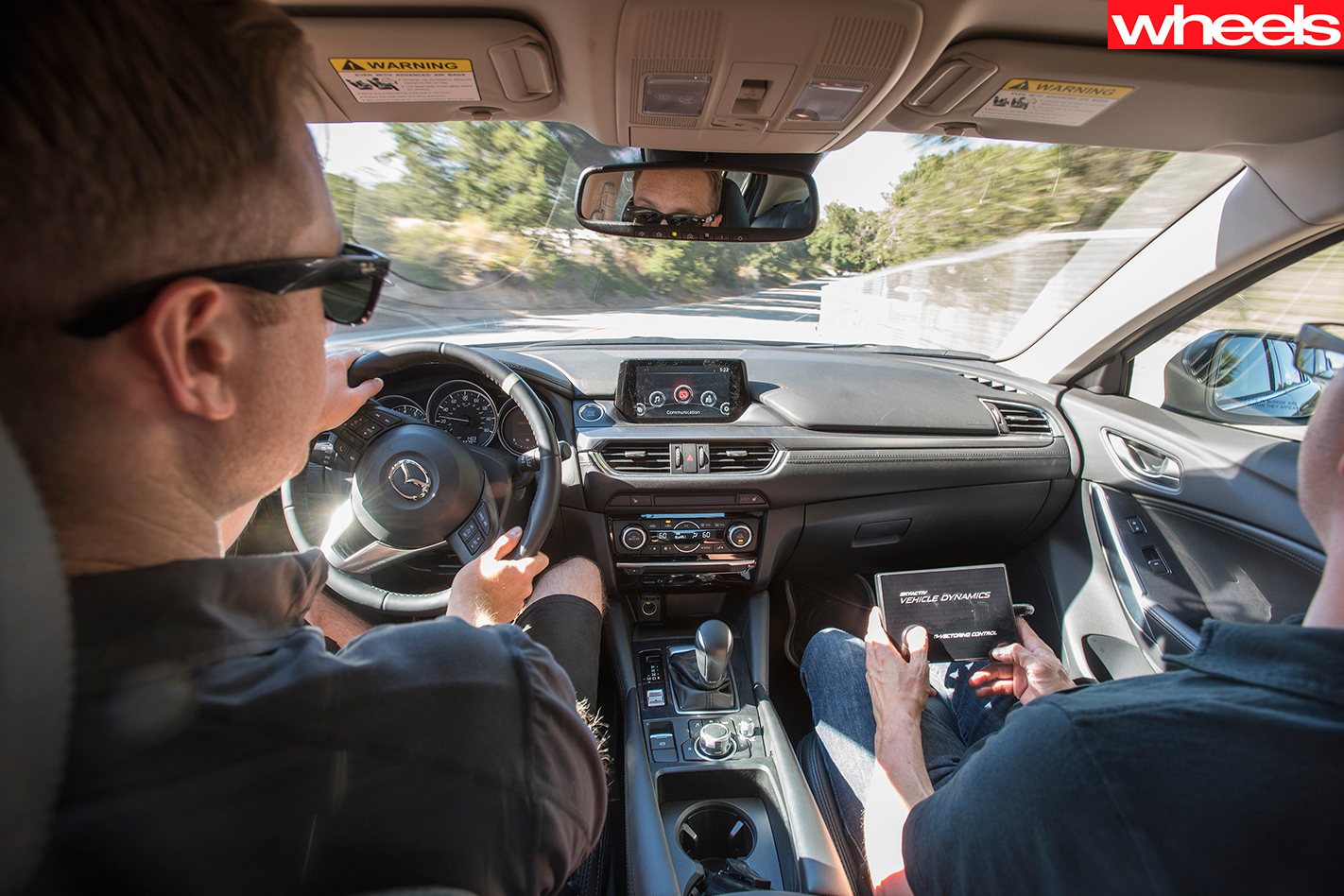
And so the exercises begin. The vehicle involved is a current 2016 Mazda 6 Atenza auto petrol sedan, re-jigged with a dashboard button to allow GVC to be turned on and off, enabling a direct comparison.
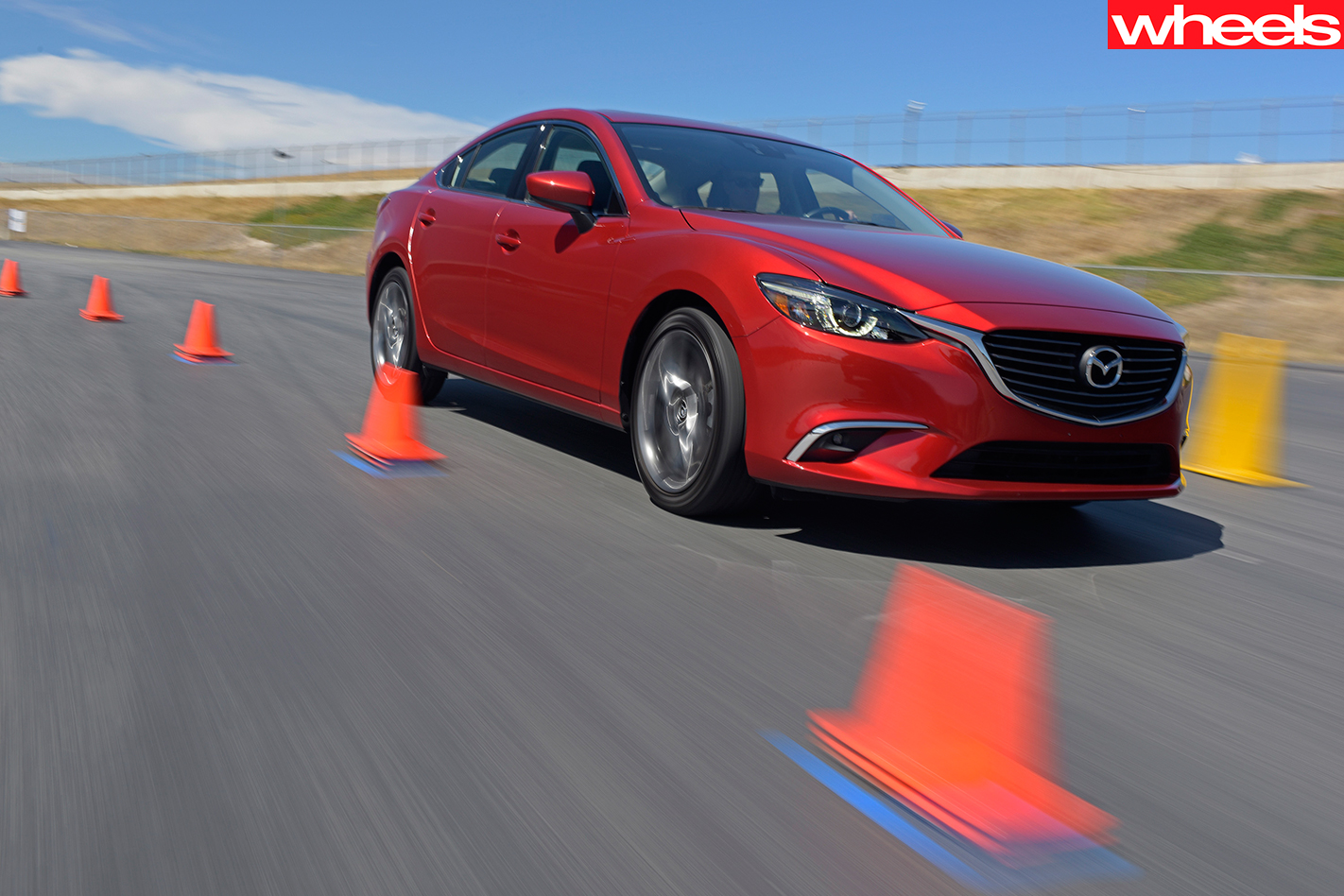
Traversing a course outlined by witch’s hats, with a straight on either side and slightly jagged corners on either end – one of which is wet – we set the 6’s cruise control to 18mph (29km/h) and start lapping. Sticking tight to the orange hats, we perform two clockwise laps with GVC turned off, and another two with it switched on. And then repeat to process, swapping between each mode with greater frequency.
Guiding the 6’s lovely three-spoke steering wheel with my fingertips, the difference is immediately obvious. Subtle, yes, but also clearly evident. Where the standard mode transmits little true connection through the electric steering at straight ahead and through the first phase of turn-in, GVC sparks a connection, enabling easier and sweeter placement of the 6’s nose into each corner, and less understeer through the wet corner.
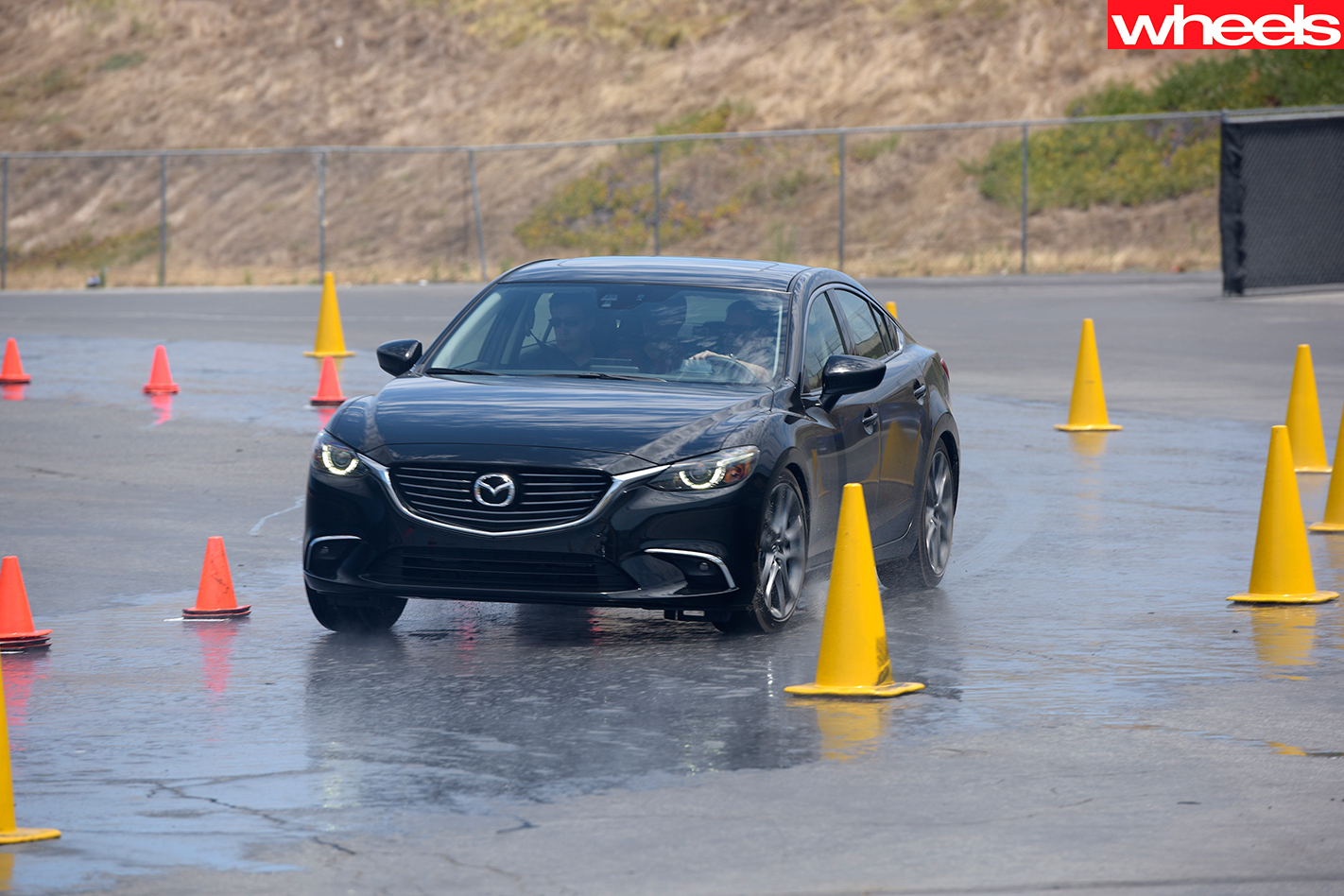
Given the fact there are no hardware changes, how can GVC possibly reduce understeer? Well, simply by removing the guesswork. Without any real feedback until you’re already in the corner – a common criticism by Wheels of Mazda’s current SkyActiv product – the driver tends to apply more steering lock than required entering the wet corner, which promotes understeer, even though the difference between each arc (GVC on and off) isn’t huge.
Another benefit of improving the steering intuitiveness via GVC is greater passenger comfort. When faced with the relative dead zone of the standard car, the driver unintentionally adds more lock than required and does so with greater speed. The result rocks passengers around noticeably more than with GVC operating, simply because the driver’s inputs are crisper and more measured when there’s a tangible connection between the tyres and the wheel rim.
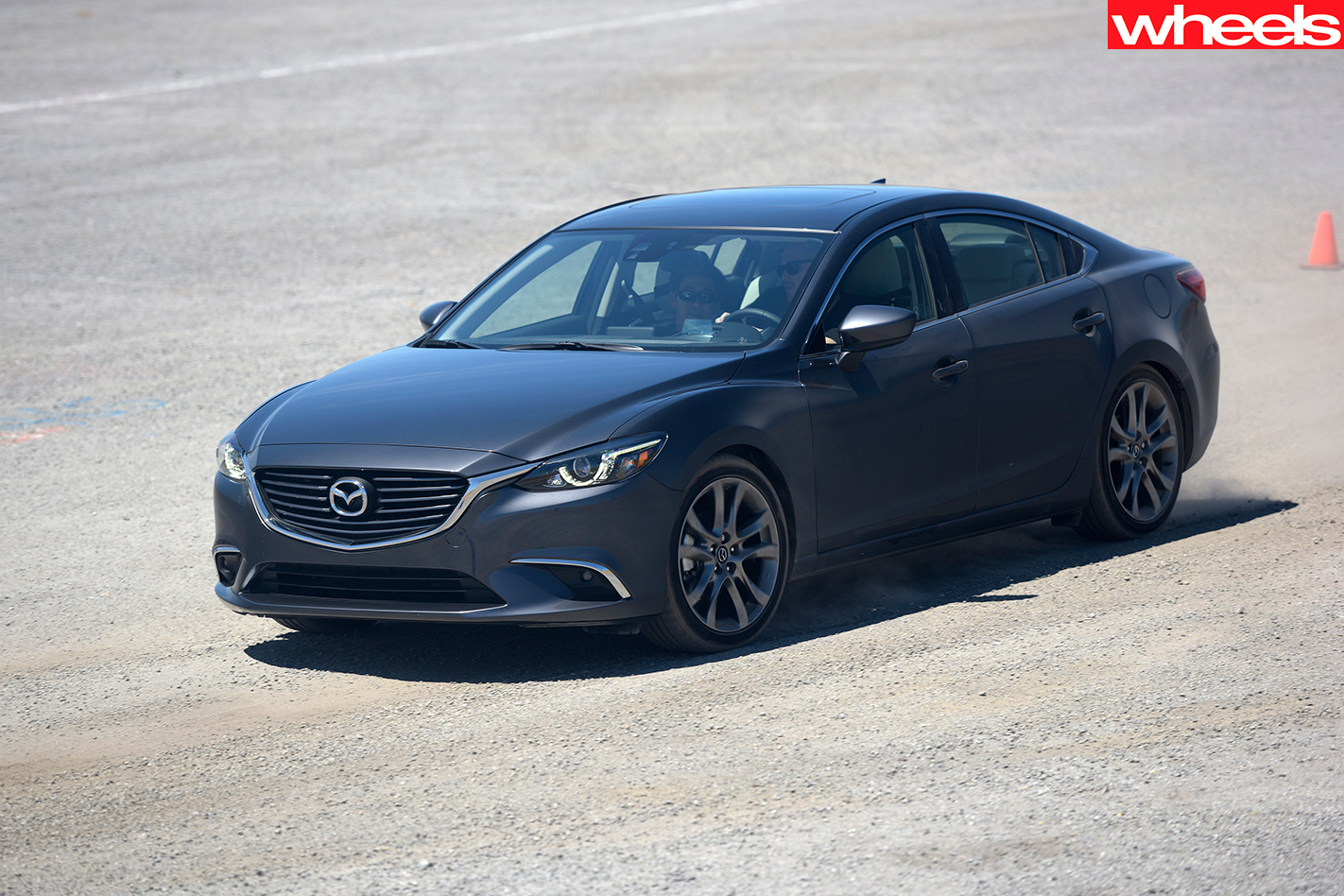
We perform a similar exercise on gravel, where the difference in understeer between the standard set-up and GVC is even more marked, albeit hardly chalk and cheese. But without GVC doing its business, the 6’s driving line is messier, no matter how precisely I try and drive it. Simply put, there’s more guesswork in guiding the standard 6 with half a turn or so of steering lock on than there is when GVC is assisting the process.
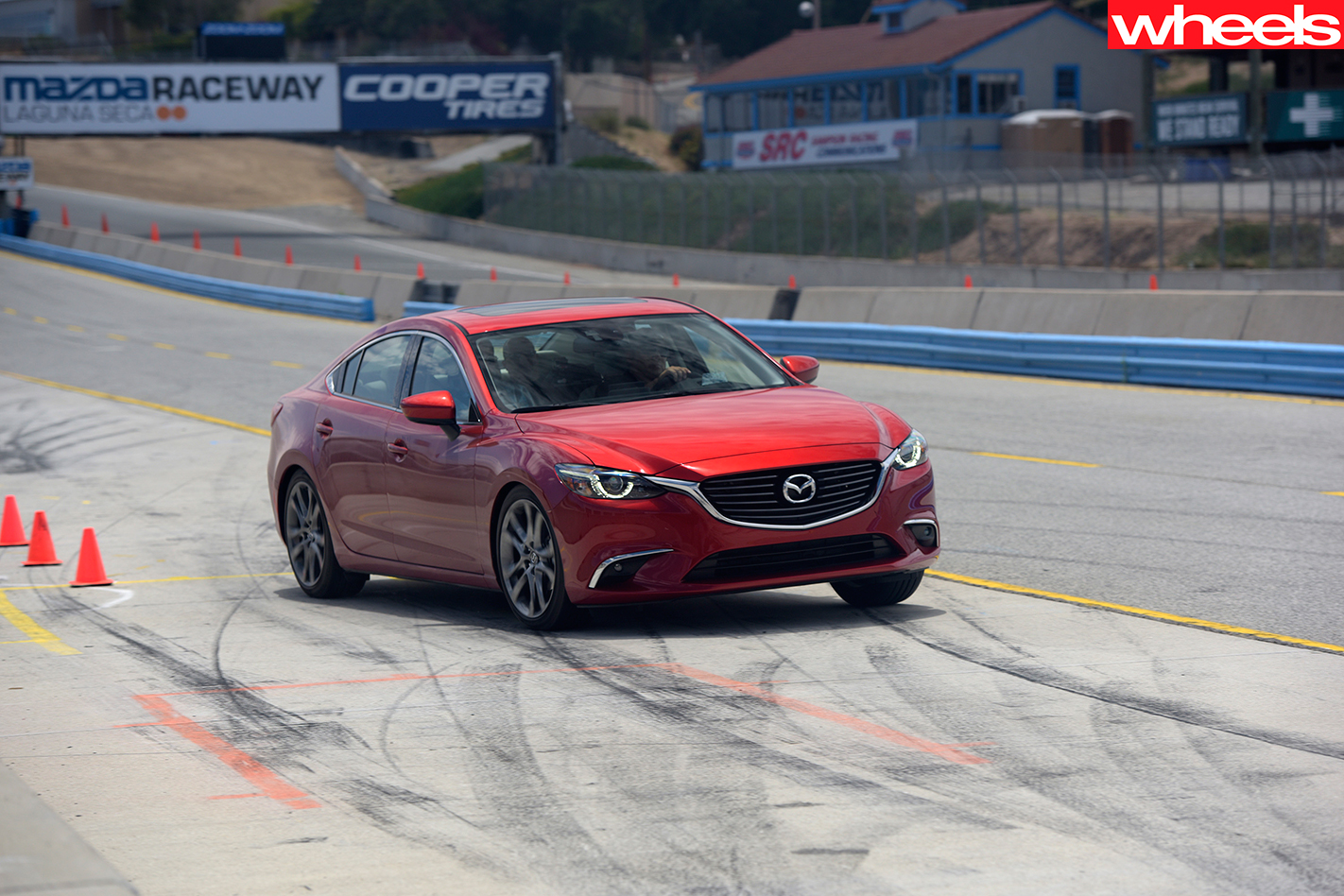
To further demonstrate the reduction in head toss when G-Vectoring Control is smoothing the transition between the initial phase of diagonal roll and subsequent turn-in, we perform lane-change exercises on Laguna Seca Raceway’s main straight. And it’s clear there’s a definite sweetening in the car’s fluidity of movement, though again, you need to be paying attention to really notice it.
Finally, we point the GVC-equipped 6 out onto the main road and up into some hills not far from the racetrack. Again, it’s a cruise-controlled exercise – 45mph (72km/h), which is the speed limit on this section of Californian road – and while the difference between each mode is arguably less transparent through these constant-radius corners than it is in other situations, there’s still a subtle improvement in the ease of placement into and through a corner.
What I wasn’t expecting, however, was to notice a difference on faster, relatively straight roads. Cruising at an indicated 70mph (112km/h) or so, the deadness of the standard electric steering, and the driver’s ability to ‘chase’ the steering either side of straight ahead, somehow vanishes when GVC is operating. Wheel movements become smoother because you feel more connected to the car, and this relaxation in driver input subtly benefits everybody because the car seems to track straighter.
There will definitely be sceptics. Some colleagues claimed they couldn’t tell the difference, and even some of Mazda’s own employees felt no discernible change in the GVC-equipped 6s they tested in the real world. But the Japanese have the data to prove it – smoother driver inputs, less wheel movement, and the resulting tighter cornering line on slippery surfaces and less passenger body movement and head toss.
It should be pointed out that the US-spec 6 we drove was deemed the only current SkyActiv Mazda vehicle whose chassis set-up was good enough to work effectively with G-Vectoring Control.
When GVC begins rolling out across Mazda’s global SkyActiv range next month (starting in Australia with the facelifted 3), it will be accompanied by a comprehensive chassis re-tune. And the system will be standard across the board, without the switchable arrangement of the pre-production cars we drove.
Hopefully, given G-Vectoring Control’s subtlety of operation and the latent dynamic potential in Mazda’s SkyActiv products, we’ll truly get to experience “best-in-class driving dynamics”. Come late-July and the updated 3, we’ll know for sure.
SPECS Model: Mazda 6 Atenza ‘GVC’ Engine: 2488cc 4cyl, dohc, 16v Max power: 138kW @ 5700rpm Max torque: 250Nm @ 3250rpm Transmission: 6-speed automatic Weight: 1501kg 0-100km/h: 7.6sec (tested) Economy: 6.6L/100km Price: $45,390 On sale: 2017
It’s like the most Australian episode of The Voice ever, only our contestants sound better.
Two home-grown supercharged V8s (yes, ok, the LSA is an American engine, but it’s in an Australian car) yelling at one another to prove which one sounds best.
In the red corner is the HSV Gen-F2 GTS, while representing the Blues is the Ford Falcon XR8 Sprint. Given their similar layouts, they sound surprisingly different.
As for which sounds better, well, everyone’s going to have their own opinion, so let us know your thoughts in the comments below.
It looks like a WRX wagon but according to its maker the Subaru Levorg is more like the spiritual successor to the fourth-gen Euro-styled Liberty GT.
A three-tier Levorg range has landed starting with the $42,990 GT and rising to the $48,890 GT-S and $52,890 GT-S Spec-B, all excluding on-road costs.
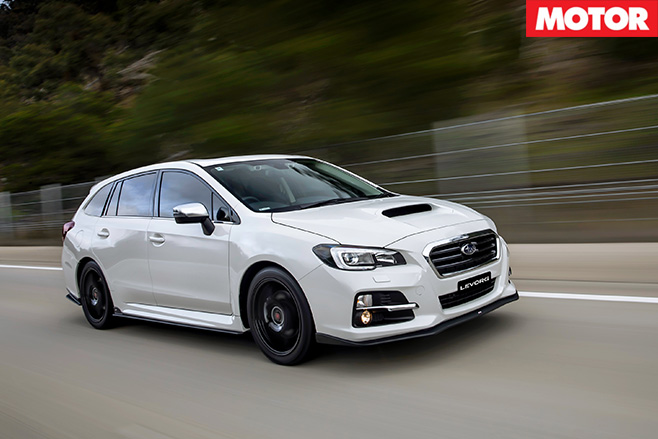
As the styling indicates the front-end structure is purely WRX, and that includes fitment of the same 197kW/350Nm 2.0-litre turbocharged boxer four-cylinder engine.
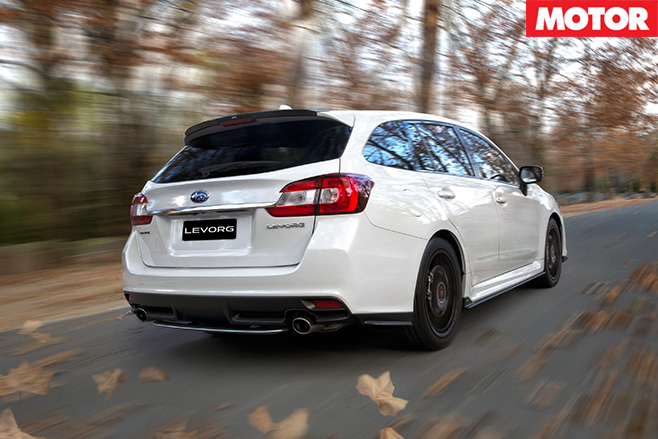
Compared with the WRX sedan the big-bummed Levorg is 109kg heavier (1538kg up from 1429kg) and three-tenths slower from standstill to 100km/h with a claim of 6.6 seconds.
The 4690mm-long Levorg stretches 10mm further than a fourth-gen Liberty wagon in addition to being 50mm wider; all with a 486L boot that is 27L larger.
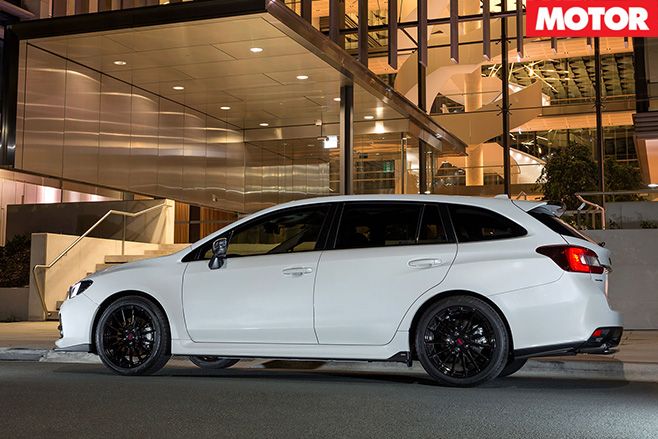
The suspension is softer, particularly with the entry GT, while the GT-S and GT-S Spec-B get harder Bilstein dampers front and rear. All models run 18-inch Dunlop Sport Maxx tyres (225/45 compared with WRX’s 245/40).
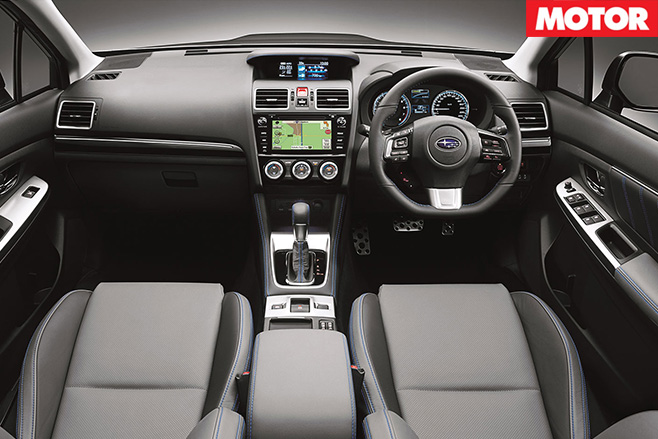
While the GT gets Subaru’s EyeSight safety tech standard, including autonomous emergency braking (AEB) and adaptive cruise control, the GT-S adds auto on/off headlights, high-beam and wipers, satellite navigation, leather trim with ‘sports’ heated front seats and electrically adjustable driver’s pew, plus a sunroof.
Subaru is targeting ‘SUV rejectors’ with the Levorg and hopes to make up its estimated 200 to 250 sales per month – tellingly the market buys 950 Outbacks per month – via young families looking at Octavia RS and Mazda6 below it, or a BMW 3 Series or Audi A4 wagon above it.
“It [Levorg] is that tantalising blend of wagon practicality and sporty performance that Subaru first nailed with the Liberty RS turbo back in the early 1990s,” started Subaru Australia managing director Nick Senior, speaking at the Australian launch of the Levorg in northern NSW.
“But as the Liberty wagon and its turbocharged variants disappeared from our lineup there has been a rallying cry for a spiritual successor to that fourth generation Liberty GT wagon.”
Senior admitted that while the Levorg doesn’t fill a “gaping hole” in the Japanese brand’s lineup, it is part of an attempt to attract new buyers to the brand.
“To attract these people [new buyers] without alienating our existing customers we have got to inject more personality into the Subaru brand,” he added.
Subaru is calling its oddly-named Levorg (it’s Grovel backwards) the spiritual successor to the Liberty GT station-wagon.
Fair enough – everybody loves playing the nostalgia card these days – but does the Subaru Levorg have the substance to fill those big boots?
On paper, it looks good. From the B-pillars forwards, it’s pretty much straight WRX and of course, it uses Subaru’s non-negotiable all-wheel-drive system. The engine is also the same turbocharged, direct-injection 2.0-litre four-cylinder unit punching out 197kW of power and 350Nm of torque, so that seems to be up to speed also.
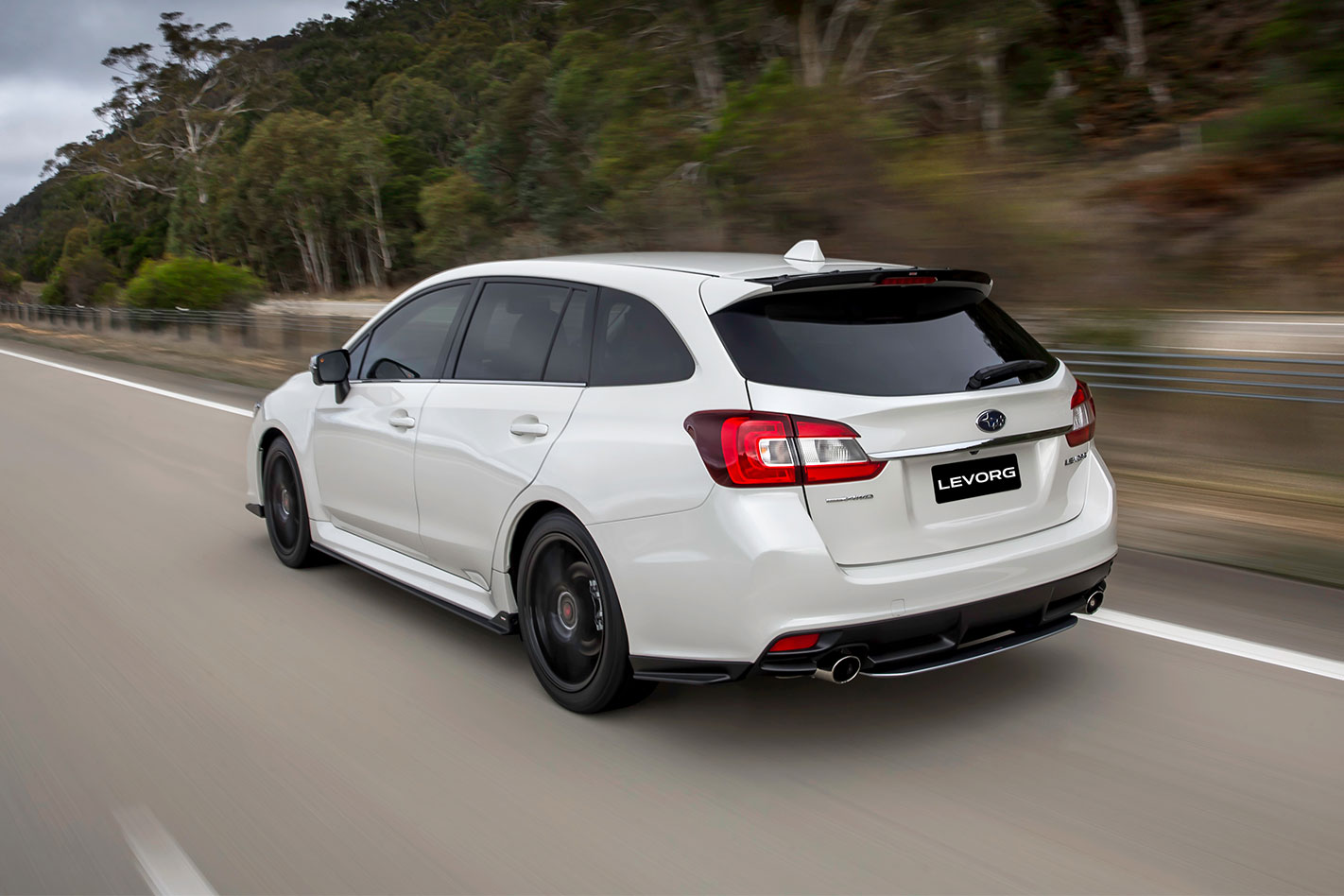
The good news is that there’s been some local input into the tuning of the springs and dampers, the calibration of the CVT and even the cruise-control’s parameters. But if this thing really is the new Liberty GT Wagon, then it needs to set some kind of a benchmark for compact wagons on the road. And that CVT better not get in the way. So does it?
No, and the fact that it’s stepped (six steps in Normal and Sport mode and eight steps in Sport Sharp) means it never feels flary and flighty like many a conventional CVT. The converter feels nice and tight, too, and that means it has good step off and the feeling that the petrol atoms being burned are going towards thrust, not just noise.
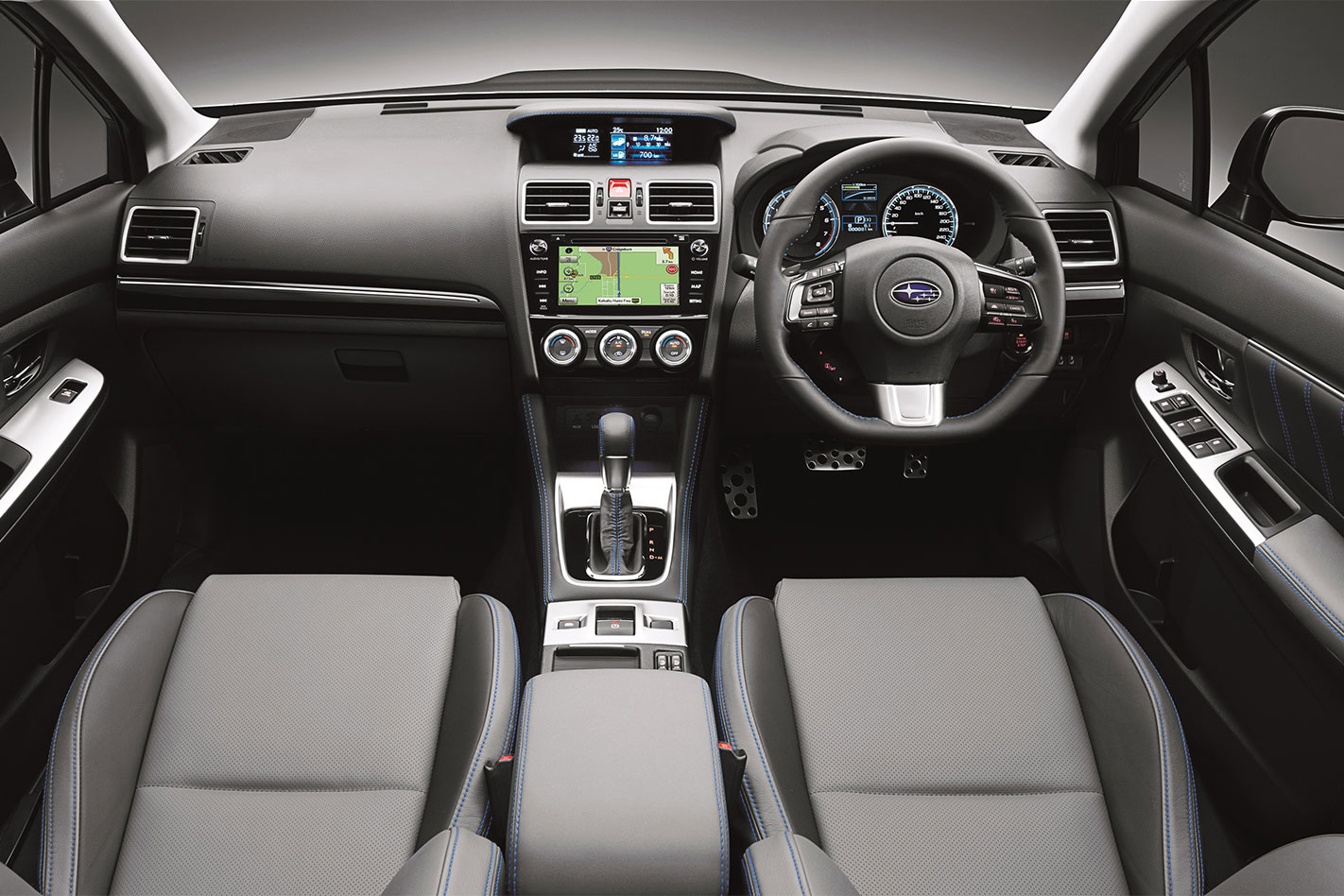
So where does it go wrong? Mainly in the suspension which seems too soft and too short on travel to be really convincing on rough, broken country roads. Several times on our drive on the Oxley Highway in NSW, we found the front bump stops, even when the speeds were moderate and the offending crater didn’t look too confronting.
The rear end seems to suffer a little from the extra weight of the wagon body hanging over it, and there’s a sense of the car porpoising a little as the rear springs compress and the dampers fail to arrest the oscillation immediately, even with the Bilstein suspenders of the GT-S version.
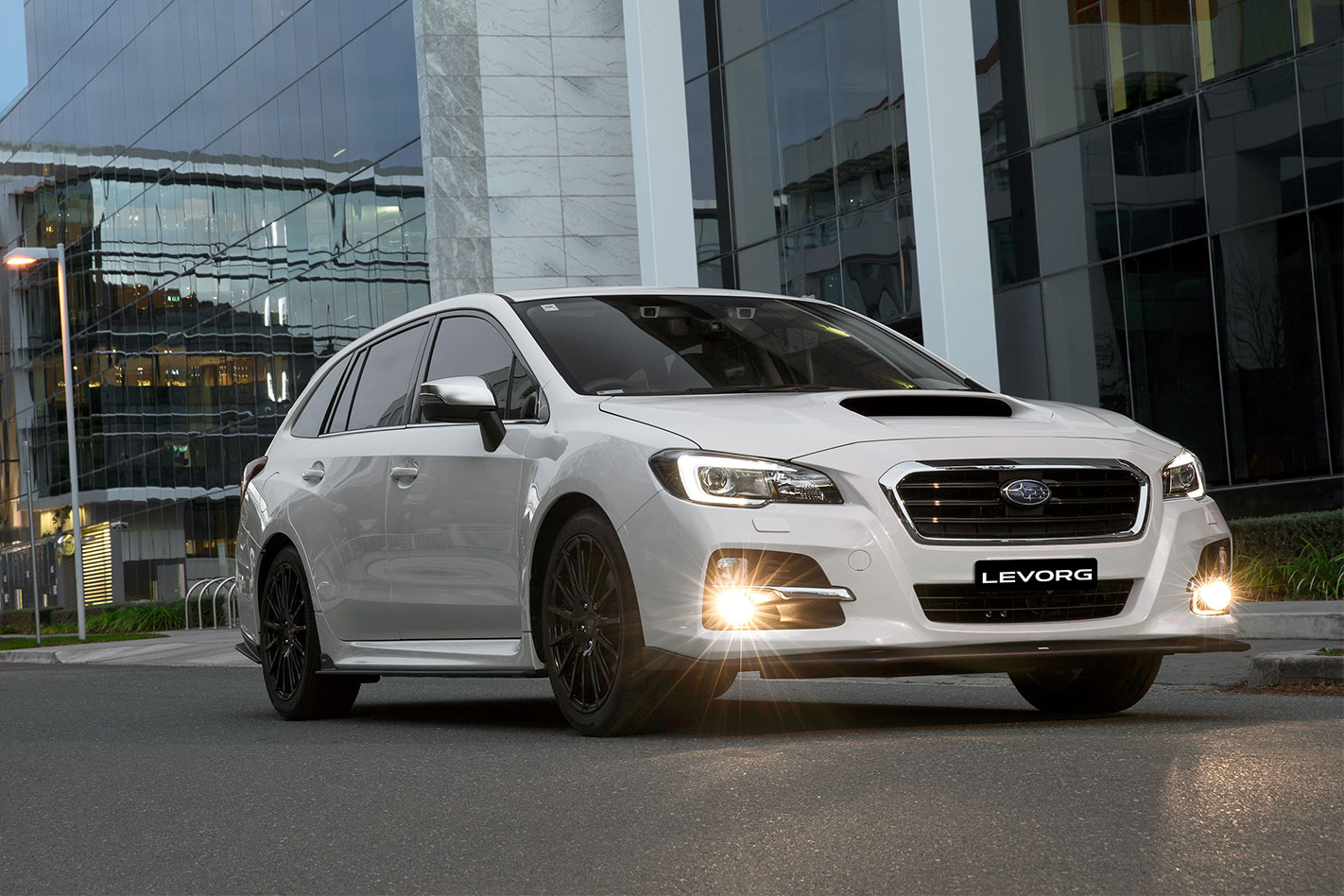
The big concern, of course, is that the all-new, global Impreza platform due next year will outshine the current WRX trolley on which the Levorg is based. For now, the Levorg is good enough, but if the new Impreza is better, you’ve got to wonder a little.
3.5 OUT OF 5 STARS
LIKE: Practical, sporting alternative to an SUV.
DISLIKE: Suspension feels too soft
SPECS Engine: 1998cc flat-4, DOHC, 16v, turbocharger Power: 197kW @ 5600rpm Torque: 350Nm @ 2400-5200rpm Weight: 1538kg 0-100km/h: 6.6sec (claimed) Price: $42,990-$52,890
The company that raced the McLaren F1 to an unexpected and historic Le Mans victory in 1995 has transformed the British brand’s track-only P1 GTR racer into a road-going supercar.
Lanzante’s LM is the successor to McLaren’s F1 LM that was the maddest version of what was already the world’s fastest production car in the 1990s.
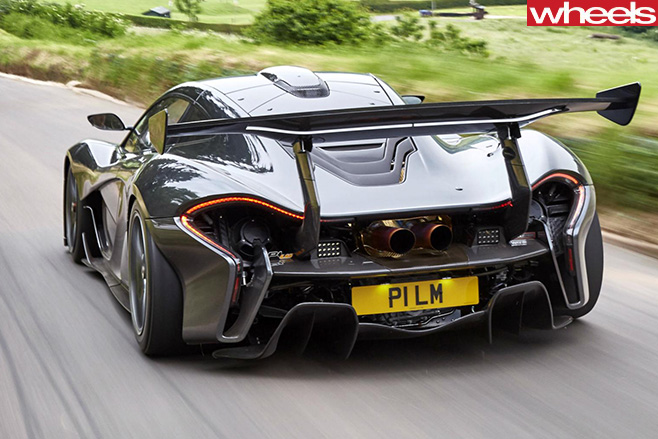
A prototype version of what Lanzante says is “intended to be the quickest, rarest and last of the P1 variants” will take on the famous Hillclimb at this week’s Goodwood Festival of Speed.
Extra boost for the twin-turbo V8 and increased hybrid power via the electric motor ensure the McLaren P1 LM produces the same 735kW as the P1 GTR racing car despite being tuned to run on 99 octane.
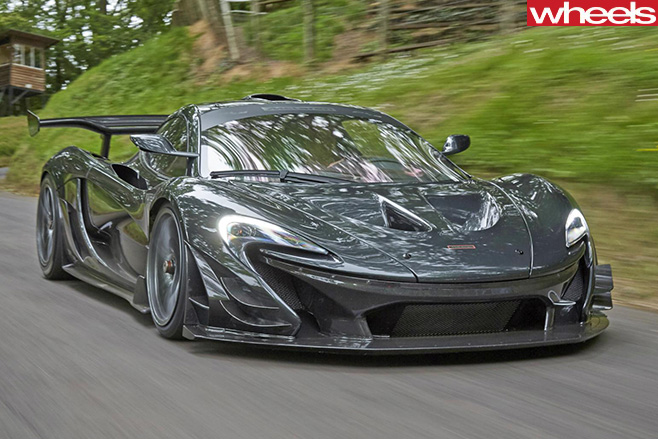
The LM is even 60kg lighter than the track car through the removal of the air jack used for speedy pitstops, an exhaust system featuring parts made from titanium and Inconel, Lexan plastic windows, and various titanium bolts and fixings. It also retains the GTR’s lightweight seats.
The GTR’s Race Active Chassis Control system carries over, though there are different wheels and tyres for the road-going off-shoot.
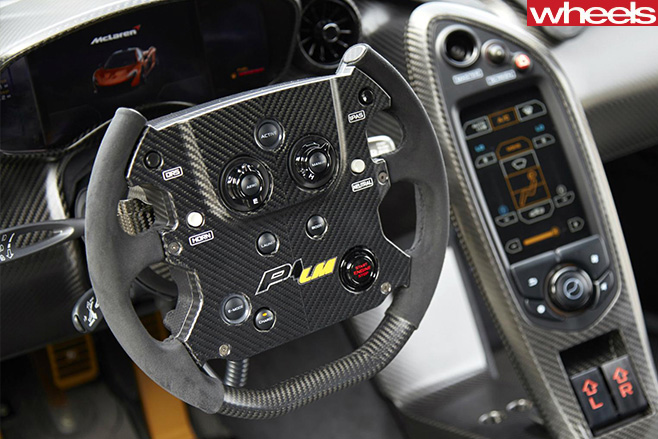
Lanzante says a larger front splitter and dive plans, plus a modified rear wing, are estimated to help the LM produce 40 percent more downforce than the GTR.
McLaren’s Special Operations division will provide six LMs for Lanzante, comprising a prototype and five customer cars – just like the F1 LM 21 years ago and price is yet to be confirmed.
While the Dodge Viper isn’t officially available in Australia, there’d be countless Aussie car lovers left a tad forlorn from this week’s announcement that after 25 years, the iconic American supercar will cease production at the end of 2017.
As a nod to the place the Viper holds in motoring history, Dodge will commemorate its final year of production – and the car’s 25th anniversary – by releasing five limited-edition model Vipers.
While details on price are yet to be made available – and you can rest assured you’ll need some pretty deep pockets to get amongst the action – each model is likely to pack the Viper’s knee-weakening 8.4-litre 481kW/813Nm V10 engine.
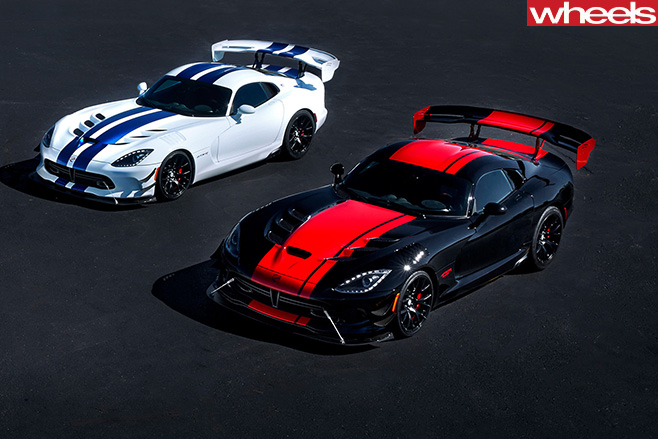
Aussie fans of Kenny Powers and the American comedy series Eastbound and Down will be familiar with the Viper SRT. Limited to just 25, the commemorative Viper Snakeskin GTC will boast the SRT’s distinctive green exterior, but replace the white racing stripe with a snakeskin pattern instead.
Limited to only 31, the Viper VoooDoo [not a typo] commemorates the 2010 model of the same name, while the Viper 1:28 Edition ACR recognises the blistering lap record set by Randy Pobst at Laguna Seca in October 2015. Production of the Viper 128 Edition ACR will be limited to 28 cars.
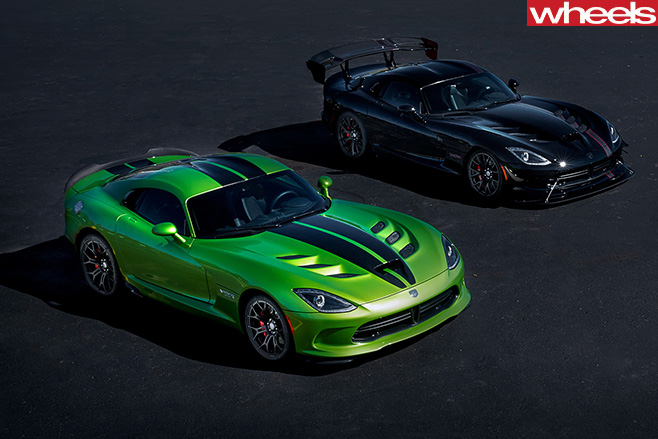
Of course, it’s not the first time supercar fans have waved a teary goodbye to the Viper. Launched in 1992, production of the car was halted in 2010 when Dodge filed for bankruptcy at the height of the global financial crisis. Re-launched three years later, the new incarnation struggled to achieve parent company Fiat Chrysler America’s sales expectations. “Every economic analysis that we have carried out for keeping that vehicle alive in its current state doesn’t add up,” FCA CEO Sergio Marchionne told the Detroit Free Press.
While 2017 will definitely be the end of the road, the Viper’s legacy is likely to live on as part of the Fiat Chrysler family. Marchionne suggested earlier this year that the technology and engineering that powered the Viper will be incorporated into future sportscar designs across the FCA range, which includes Alfa Romeo and Maserati, among a host of others.
