
You may have been unaware of the recent rocketing in values of old air-cooled Porsches. Until very recently I was too, which probably says a lot about me, seeing I own one.
Though I’m told that my 1989 Porsche 911 has almost doubled in value in little more than three years, I’m naturally way too stupid to think about cashing it in. Still, I did have a sudden urge to rush out to the garage and wash it. Which it seems might have been the wrong thing to do.
Along with air-cooled Porsches, another phenomenon in the collector car scene right now is the barn-find look. This was glaringly illustrated in January 2014 at a big-ticket Goodings auction in Arizona, where two Mercedes-Benz 300SL ‘gullwing’ coupes went under the hammer.
Both cars were 1956-built, both black over red leather, both had three-owner histories. The big difference was that one was in concours condition, after a guts-out restoration in 2006. The other (pictured below) looked like crap. Beneath dulled paint, its roof lining was sagging, the seats collapsed and dark from mildew, the rubbers crumbling. One report said rats were still nesting in the engine bay.
The rat-infested version fetched $US1,897,500. Plus trailer hire. The mint, restored runner drove away for half a million dollars less.
I know the adage: “It’s only original once.” I’m into it myself. I look admiringly at outlaws or street machines or bosozoku cars and still feel a tiny pang of regret for the 1984 Suzuki Mighty Boy within. But I draw the line at paying a premium for an inch of pigeon poop on a static display.
That’s because one of the aspects of a motor vehicle’s originality that I value is the fact that it was a motor vehicle.
About 15 years ago, I bought a barn-find motorcycle in Italy, with the intention of restoring it for the Motogiro d’Italia, a classic Mille Miglia of bikes. As a rusted (but complete) piece of crap, my 1954 MV Agusta cost about $650. As a beautiful restored classic motorcycle, I sold it eight years later for 10 times that. And it had given me plenty of joy along the way.
Mind you, it wasn’t a Bugatti. The best example of leaving well enough alone is the 1925 Bugatti Type 22 Brescia that had lain for 75 years at the bottom of Lake Maggiore, on the Swiss-Italian border. It was brought to the surface in 2009, quite the worse for wear, and sold at auction for $US360K, equivalent to a collector-quality Type 22. Its new owner displays it exactly as found, its gauges still filled with lake water.
But the Bug and my bike had at least one thing in common. Like so many barn finds, both had been hidden from the tax man. There’s mystery over the Bugatti’s original owner, the more romantic version having the car won in a Paris poker game from Bugatti racer Rene Dreyfus. What’s certain is that the owner didn’t want to pay Swiss import duty, and so tried to suspend the car beneath a pontoon in the lake. Turned out to be more like a ‘bottom of the harbour’ scheme.
Barn finds are also about money. They’re being bought by investors, not enthusiasts. The big question right now is when, or even if, the investment bubble will burst. Assuming it does, the only people who’ll still be interested will be enthusiasts – people who put driving ahead of avarice, and avian excrement.
Classic catches
Do you like the idea of buying a modern classic with price-rise potential?
If I weren’t so wed to my Weissach wunderwagen and were starting out again, I’d be looking closely at: BMW E36 M3s (above), currently around $15-25K; Mazda NA MX-5, around $5-12,000; and – no kidding – an original ’64 Ford Mustang, in left-hand drive from $30K upwards.
Chinese carmaker Great Wall Motors is making a brave play to re-establish itself in the Australian market, this time as a factory operation, more than a year after disputes with the local distributor left a network of 90 dealers with nothing to sell and more than 40,000 customers without support.
Great Wall will assume control of Australian and New Zealand operations from July 1, armed with an aggressively priced dual-cab ute it hopes will steal sales from other entry-level players in the light commercial market.
Great Wall says the booming utility market in Australia signals the right time for the brand to re-enter, and that it will “deliver solutions” for the many existing Great Wall owners who have been burnt by after-sales care that was lacking.
Ateco, the soon-to-be-former distributor of Great Wall, managed a successful strategy of undercutting competitor pricing to build Great Wall into Australia’s best-selling Chinese car manufacturer.
But after a couple of years, Ateco came under pressure from the factory to raise prices and position its utes as more upmarket but it is understood that the dealerships pushed back.
It seems the attitude at Great Wall head office has changed since then and the manufacturer will look to make the Great Wall Utility (known as ‘Wingle’ in other markets) the go-to, cut-price ute in Australia again, when it lands Down Under towards the end of this year.
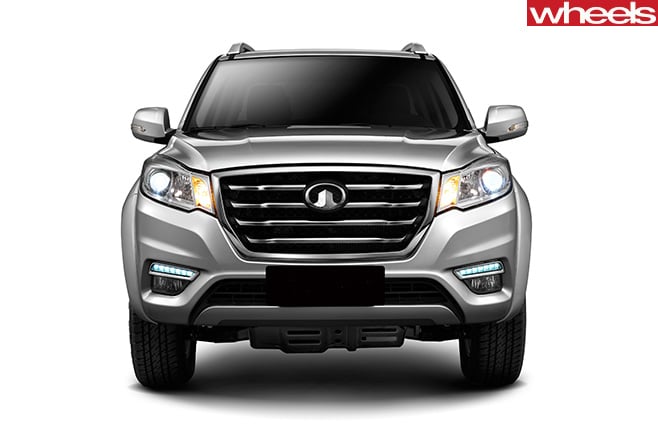
“Price is one of the critical elements. It’s got to be sharp. Since Great Wall launched you’ve got LDV, Foton, Geely, Mahindra, a lot of players in the entry-level end of the utility market.
“That’s who shoppers will compare us with. We think it’s the natural positioning here. That’s who we compete against and we’ve got to be competitive with them.
“We think it’s a very good product,” Ellis said. “We also know the choice of utes in Australia is incredible. Our ute, first and foremost, is meant to be a tough, reliable workhorse.”
Sales success of Great Wall utes in Australia the first time around was built almost solely on its cheap prices. The V240 cab chassis ute started at $17,990 drive away.
Great Wall sold 37,159 vehicles in Australia and 4,350 in New Zealand despite suffering setbacks including poor ANCAP results and recalls relating to safety and the use of asbestos components in engines.
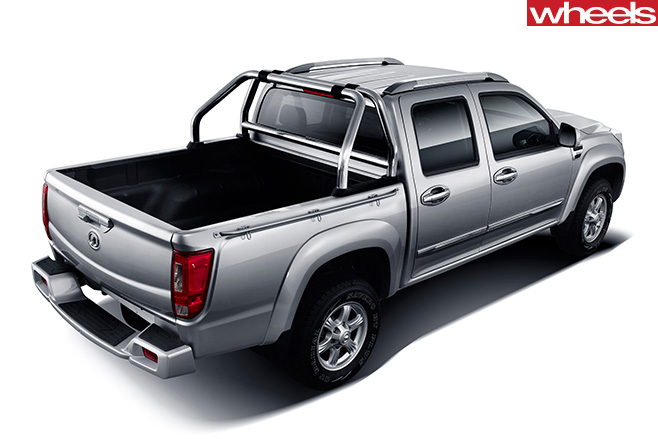
“We will work with ANCAP to get the new ute tested. It’s physically bigger, and it’ll be packaged with all the safety features that we can. We’ll be one of the only ones in that end of the market with six airbags and ESP.”
Great Wall says it will look after buyers differently this time around, having damaged buyer confidence locally by leaving many customers in the lurch.
“Customer service will be a focus going forward,” Ellis stressed. “We know it’s an issue and it will be at the forefront. This time you’re dealing with the factory. The full resources of the Great Wall empire are at our disposal.”
Dealerships have been starving for product to sell with only residual vehicles left in showrooms since the feud between Great Wall and Ateco began.
It is understood a legal battle between the two parties has been settled after 18 months of negotiations. In that time the number of dealerships dwindled from 90 to 72.
Discussions are underway with the remaining dealers about resuming supply of Great Wall vehicles, as well as adding SUVs to showroom floors from Great Wall’s subsidiary Haval.
Haval launched in Australia last year and has set up six dealerships with a seventh opening soon in South Australia.
Ellis represents both brands and said Haval has sold “around 60” vehicles so far. Expanding into existing Great Wall dealerships would provide an immediate boost in exposure for China’s biggest manufacturer of SUVs.
Great Wall claims the Australian market is regarded as “crucial” by its management, despite its relatively small size, as it is the first mature market the vehicles have been sold in. “It’s a real learning curve for them,” Ellis said.
No local testing of Great Wall products has been carried out so far. Ellis said the local arm has made it a priority to do so, but could not say for sure that it would happen.
“We need more of the engineers to come out and experience Australian conditions. We keep asking for it. With another line of product we increase our opportunity for that to happen.”
BMW has announced Australia will be getting the high-performance limited-edition M4 GTS, but despite a $295,000 price tag, all 25 cars allocated to Australia are already sold out.
BMW Australia said it only expected to receive 10 M4 GTSs, but given Australia ranks second in the world for M car sales per capita and the country’s appetite for performance cars, the allocation was more than doubled. Just 700 will be released world-wide.
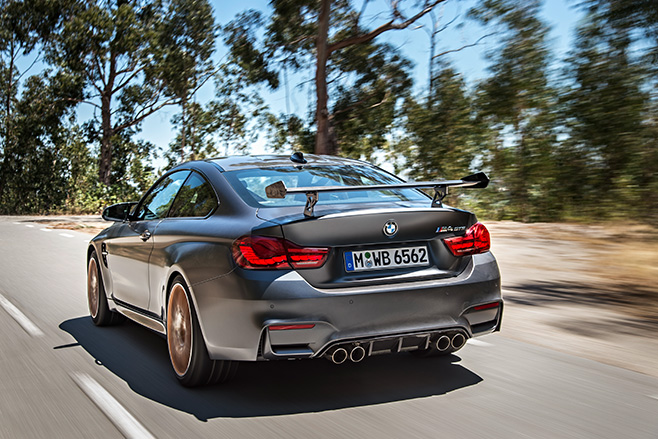
Weighing 30kg less than the standard M4 – thanks in part to a carbonfibre body kit – the seven-speed dual-clutch GTS offers more power and pace and is BMW’s fastest production car. But if weight is more important than your wallet, a further 7kg can be slashed by optioning the $21,560 carbon-compound wheels. According to BMW, only four buyers chose this option.
To match the GTS’s polished orange wheels, buyers can choose from four body colours – Frozen Dark Grey, Mineral Grey, Black Sapphire and Alpine White – and will also get the choice of a no-extra-cost Race Package, which adds a half roll-cage, six-point harnesses and fire extinguisher.
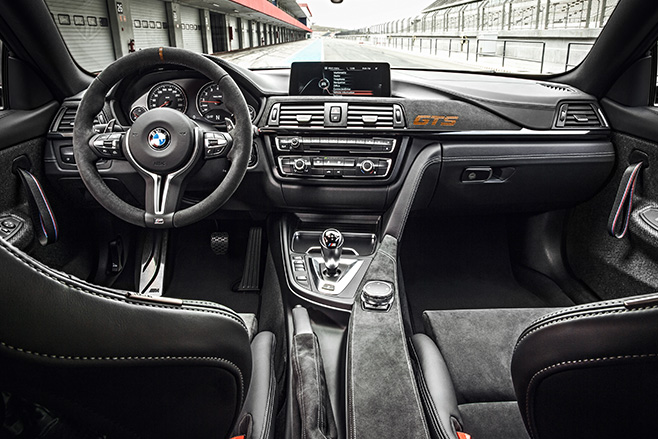
Under the bonnet, the 3.0-litre twin-turbo six pushes out more power, clocking total outputs of 368kW and 600Nm, and helping the GTS reach 100km/h from standstill in 3.8 seconds (0.3sec quicker than the standard M4) using its integrated launch control system.
Emphasising its race track pedigree, the engine features cool tech like water injection, a world first for a production car, BMW claims. Water injection lowers engine temperatures by spraying a fine mist of water into the engine’s air intake, increasing power and torque to maximise performance on track.
Production begins in July, with cars expected to arrive in Australia in September.
BMW has announced 25 units of the limited-edition, track-focused BMW M4 GTS are coming to Australia. But you can stop counting your pennies because it’s already sold out, despite a lofty $295,000 price tag.
The German automaker initially expected just 10 of the 700 high-performance M4s built to reach Australian shores, but upped our allocation due to this country’s appetite for M Division products.
Australia’s penchant for performance cars ranks us second in the world for M car sales per capita.
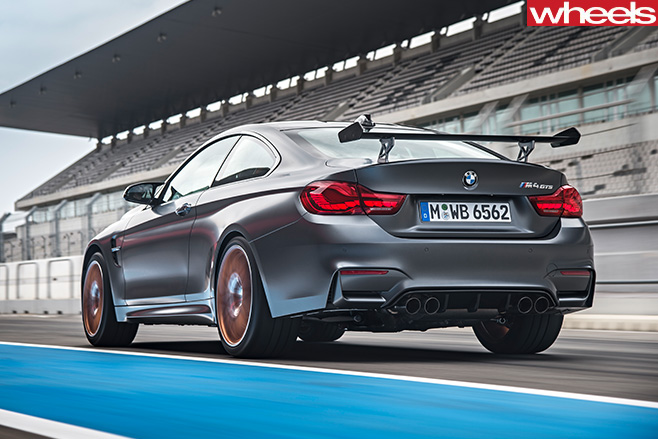
The M4 GTS is BMW’s fastest road-going production car ever, with BMW’s boffins adding more grunt, less weight and a more aggressive, carbonfibre-infused body kit.
All up, the seven-speed dual-clutch GTS tips the scales 30kgs lighter than the standard production BMW M4, though this can be dropped by further 7kg by optioning lightweight carbon compound wheels, costing a knee-bending $21,560.
BMW is also offering a Race package at no extra cost, which adds a half roll-cage, six-point harness and fire extinguisher.
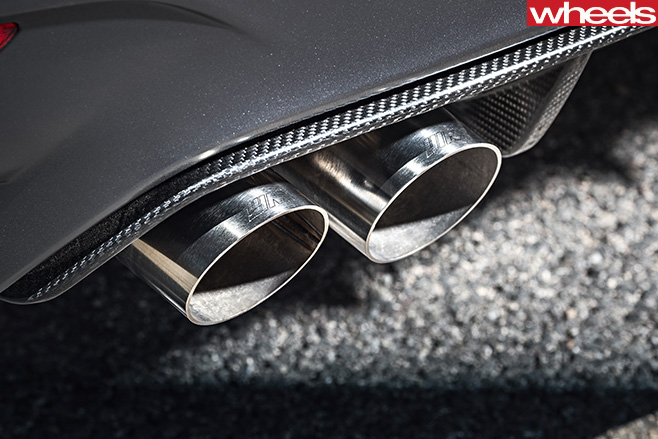
More important, though, are the changes under the bonnet. The GTS churns out 55kW/50Nm more than a regular M4, with total outputs reading 368kW and 600Nm. That helps to shave the GTS’s 0-100km/h sprint to just 3.8 seconds – that’s 0.3 seconds faster than the standard car.
GTS models also features water injection, which releases a light spray of water into the engine’s air intake to keep temperatures low and maximise performance. BMW says drivers will need to top-up the systems boot-mounted tank every fifth refuelling on normal road conditions, and every re-fuel while on track.
Production begins in July, with cars expected to arrive in Australia in September.
Petrol-heads love comparing cars’ horsepower and torque figures on a mine’s-bigger-than-yours basis. But what are power and torque? Are they the same thing? No, they’re not, and the difference is fundamental to how an engine performs.
The engine in a car works a bit like your pushbike. The pistons (your legs) go up and down and the crankshaft (the pedals and chain wheel) turn that into circular motion which powers the car (or your deadly-treddly).
In pure physics terms, torque is the twisting force applied to that crankshaft by the pistons. To you and I, torque is the amount of work an engine (or your best cycling legs) can do. It exists, it’s real and it can be measured as a force.
Power, meanwhile, is a theoretical measure arrived at by mathematics. It’s basically a measure of how fast that same engine can produce that torque. So when you step on the throttle and feel the car surge forward, pinning you in the seat, that’s torque that you’re feeling.
Despite what the sale brochures say, power is just a number; torque is the real deal.
Can’t get enough torque talk? Read about Diesel vs Hybrid engines.
This story has got my name written all over it.
The subject is Morgan’s 3 Wheeler, and no man on this magazine is more suited to savouring it… because the very first car I ever owned was a three-wheeler of the same pattern.
It was in 60s London, where some legal aberration allowed this configuration to be driven on a simply-obtained scooter licence and, with its 204cc of raging rear-mounted thrust, a Heinkel Trojan was my first, fabulous taste of automotive freedom.
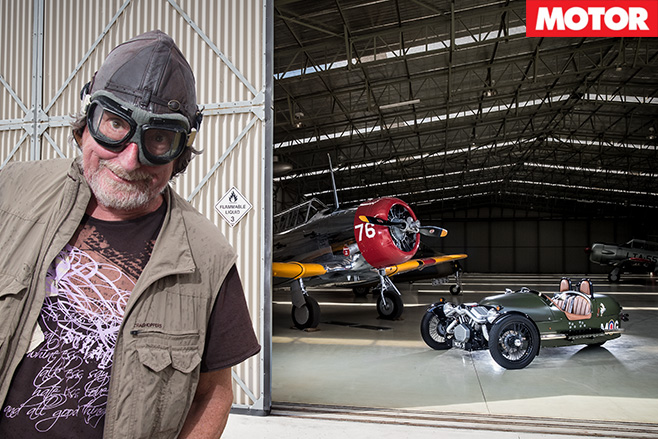
But the nostalgia remains, and no company in automotive history is as devoted to that emotion as Morgan, the very epitome of autocentricity. So, for reasons that have quite easily evaded every other marque, Morgan has revived the three-wheeler, simultaneously confronting convention and confounding authority.
The latter explains why obtaining formal compliance for the Morgan 3 Wheeler (or M3W) in this country was such a protracted and costly process, culminating in a conveyance lacking a roof, windscreen, doors or any form of heating or cooling other than whatever amuses God. Despite these omissions, the Morgan is officially classified under ADRs as a luxury car.
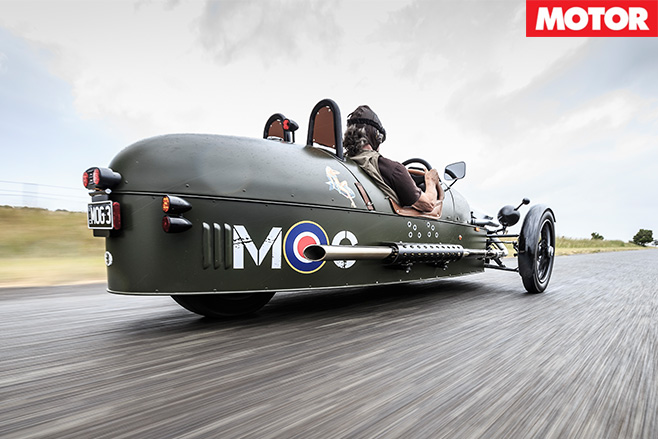
A vehicle mass of 550kg promises an immediacy of response that even a (rare these days) one-tonner can never match. And allows both the economy of a twin-cylinder motor and 6.0-second 0-100km/h sprints – a profound improvement on my own three-wheeler’s times which, as I recall, involved a calendar.
However, preparing to drive the Morgan reveals some of the frugalities are indeed extreme. Short of setting about the thing with spanners, there is no available adjustment of seat position, steering wheel or pedals, which limits sharing the pleasure and, more importantly, the option of a nominated driver.
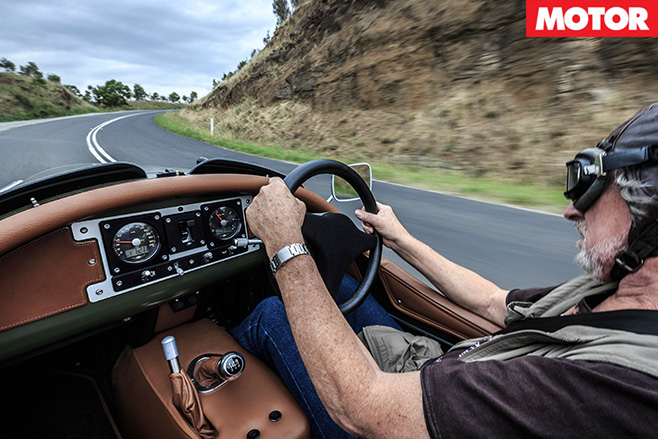
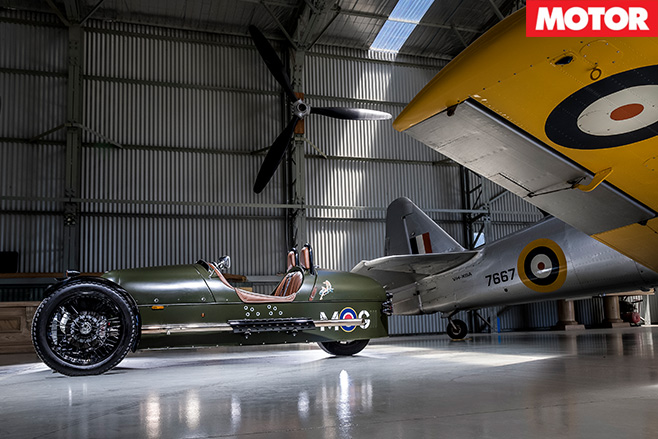
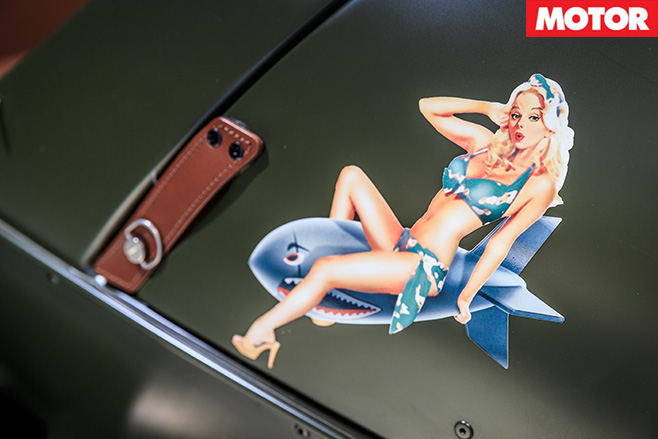
As mentioned, however, there are options… and even if the trifles mentioned aren’t among them, the list still glitters. Plunder it and your M3W can be outfitted with RAF roundels and a lovely array of simulated bullet holes, neither of which, as I recall, are available from competitor Mercedes. And not even Bentley offers a range of coachwork graphics that include semi-naked ladies riding bombs.
The more technically inclined will be drawn to the mechanicals and, for their pleasure, the engine is proudly displayed out front. The still-curious will discover that only the less lovely appendages (battery, oil tank, etc) occupy the under-bonnet space, but do it so thoroughly that no further stowage is available there.
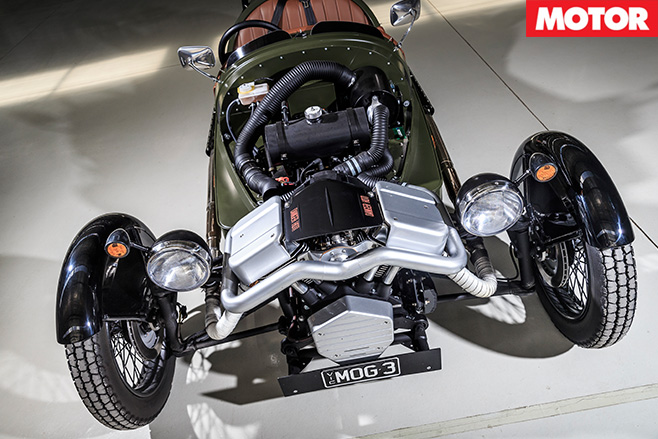
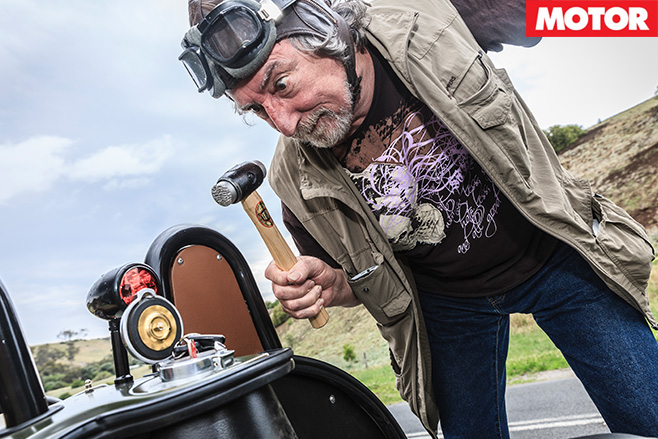
Trust me, it is uncommonly brave for a British car to offer a hammer but, as their product design indicates, Morgan is surely bold. And, anyway, they have an ace to play. Ignore the ADR’s designation and see the M3W as its maker does – a sportster – and you’re dealing with a sub-species that traditionally can get away with anything.
So let’s forget the shortcomings and be grateful that Staff Journalist Cordony has joined us in something sensible to serve as a platform for photographer Dewar and, more to the point, provide stowage for anything requiring more space than a sneeze.
Okay, there can be no denying the thing’s look-at-me power, and at a movie premiere it’d pull more paps than whatever Miley wasn’t wearing… but you’ve gotta get there first, and as driving involves much more than just arriving we shall focus on that.
Traffic reveals day-to-day realities, such as a driveline with more snatch than a Swedish movie and the nuisance of having no left footrest other than the clutch pedal.
The unassisted steering is also surprisingly heavy and parking is further hampered by a turning circle occupying approximately one page of the road directory. Why this arc is so much greater than that of a conventional four-wheeler escapes me, but, at urban speeds, the Morgan feels commendably stable.
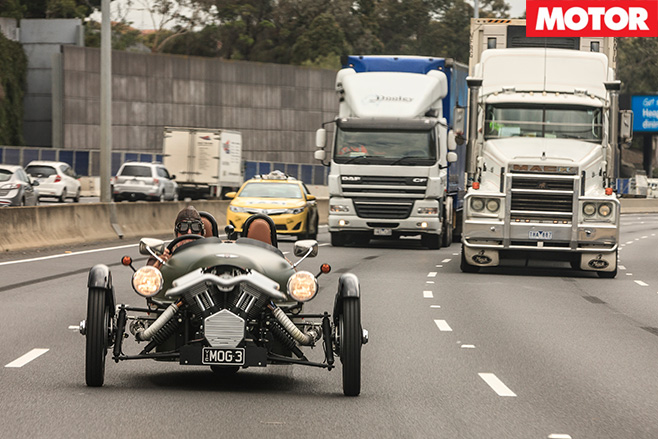
The ride, already firm to minimise roll and heighten response, is rendered brutal when the pothole you’ve carefully straddled with the front wheels swallows the rear one and delivers your arse, parked right in front of it, a swift discourse on the limitation of the layout. And don’t worry that you’ll forget it, as every cobble-centred driveway and old timber bridge will restore the memory.
But these cavils fade as the well-surfaced country roads that serve this land so well open before us and, in a cascade of crackle and pace, the Morgan reveals its road-self. And most of it is truly rewarding.
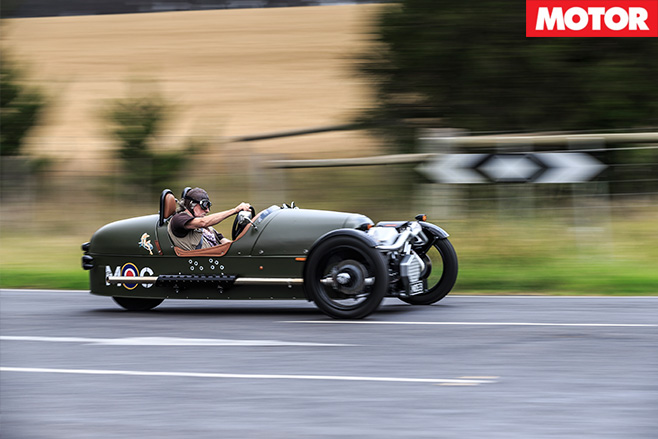
Then there’s the tactility that the unassisted and manual everything brings to the experience, promoting an intimacy long-lost to modern motoring. Above all is the reward of response to every input made possible by the minimal mass. But that response, sadly, diminishes during hard cornering when prodigious understeer significantly reduces both pace and poise.
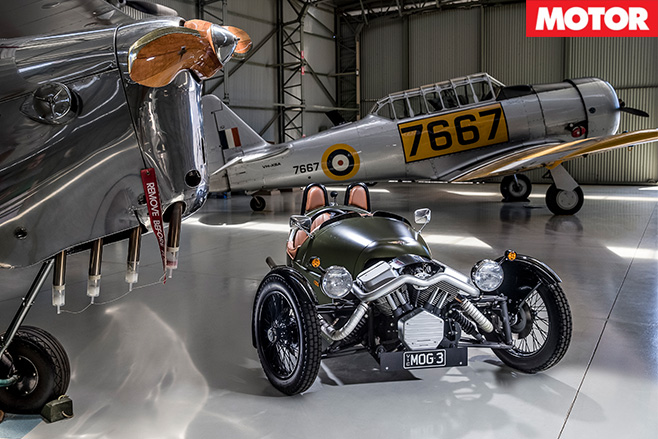
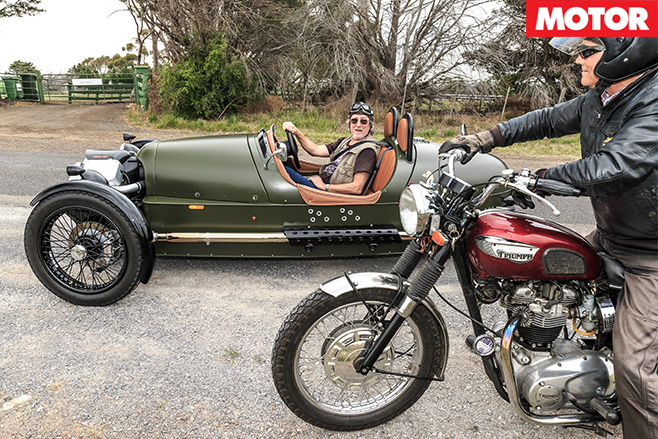
And, happily exploring that capability – purely for the camera, of course – brings a flood of memories sweeping back. Not of the Heinkel. Oh no. Of a later, and far greater, tasting. This Morgan brings back the bestial, brute-powered, wheelie-prone thumpers of my youth: bikes that thrilled – and threatened – with an intensity beyond any car I’ve ever experienced.
3.5 OUT OF 5 STARS
SPECS Body: 2-seat roadster Drive: rear-wheel Engine: 1983cc V2, OHV, 8v Bore/stroke: 79.0 x 76.0mm Compression: 9.0:1 Power: 60kW @ 5250rpm Torque: 140Nm @ 3250rpm Power/weight: 109kW/tonne Transmission: 5-speed manual Weight: 550kg Suspension(F): A-arms, coil springs, anti-roll bar, hydraulic shocks Suspension(R): trailing arm, coil springs, hydraulic shocks L/W/H: 3260/1738/1012mm Wheelbase: 2388mm Tracks: 1533mm (f) Steering: unassisted rack-and-pinion Brakes(F): 278mm ventilated discs; twin-piston calipers Brakes(R): 244mm drum brake Wheels: 19.0 x 2.5-inch (f); 15 x 6.0-inch (r) Tyre sizes: 4.00 x 19 H15 (f); 175/65 R15 (r) Tyres: Avon Safety Mileage Pros: Exclusivity; celebrity status; utterly unique driving experience Cons: Very expensive; not at all practical; turning circle Price: $97,500
Sticking it to ’em
Shock jock Tom Elliott’s mid-life mission to return to his muscle car roots ends happily.
BUYING a muscle car is one of the silliest decisions you can make. Such vehicles are impractical, rarely permitted to stretch their legs under our Stalinist speed limit regime and absolutely love a drink. So much for the ‘head’ side of the equation.
The 2015 Mustang GT that now resides in my garage appeals massively to my heart. It looks fast standing still. I turn it on and off more than necessary simply to hear the starter morph into a classic V8 rumble. The boy racer in me selects Track mode around suburbia on the very off chance that local streets are transformed into a street circuit. And the new ’Stang always gets ‘popped’ at traffic lights.
This car stirs the senses.

A year ago I decided I could finally buy a car purely for me. Call it a mid-life crisis, but like many red-blooded men, I’ve rediscovered my youthful love for muscle cars. They give eco-virists conniptions for their superb ability to convert fuel into noise, smoke and wheelspin.
As to which brand and model I’d choose, a process of elimination soon ensued.
I’ve always been fascinated with affordable performance machinery and Holden’s new 6.2-litre Commodore was a serious contender until I found myself justifying its four-door body on the basis it was good for the family. For the same reason I rejected Chrysler’s otherwise impressive SRT. VW’s clinically impressive Golf R was also briefly considered until my wife noted it was “just another Golf”.
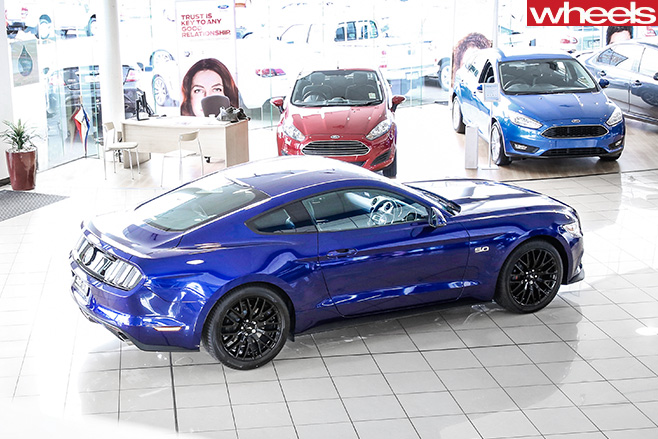
Now to the fun part; choosing my exact specifications.
Convertibles look good with the top down but tend to scuttle about too much. Big tick for the hardtop. And what’s the point of buying a muscle car only to skimp on fuel, so it had to be a V8 – with a manual, because they force you to really drive.
Finally, not long ago my daughter asked why almost every car on the road was silver, grey, black or white, when such colours are “boring”. She was right; the Fusion Blue paint I chose works well on just about any Ford product.
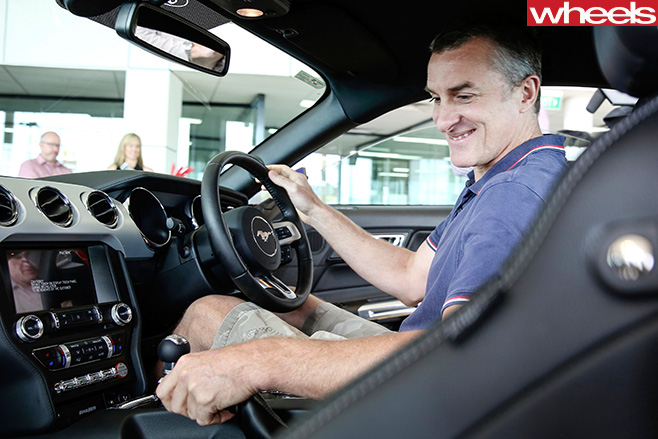
When the big day arrived I had mixed emotions. On the one hand, I was excited to finally take possession of my new conveyance; on the other, it seemed a tad stupid to buy a car I’d not test-driven, sat in or even seen.
The build-up to the handover was chaotic. Wheels was there to capture the moment and finally I was invited to step into the showroom and lift its veil. Luckily, the Mustang didn’t disappoint. It is drop-dead gorgeous from just about every angle.
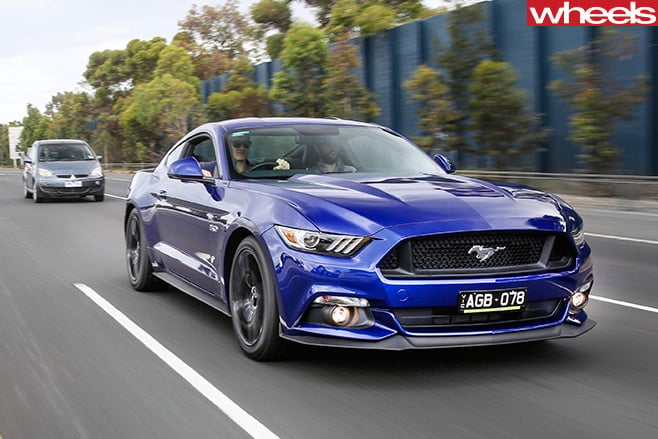
The ’Stang remains an analogue car in an increasingly digital age. And that’s no bad thing.
POSTSCRIPT: One month and 1200km on, I’m more than happy with the Mustang. It has a few minor shortcomings: the plastic housing the transmission tunnel is pretty low-rent; the old-school cable handbrake is oriented for LHD; when pushed, the car drinks like a sailor after a year at sea; and while it earns many admiring glances from males of all ages, women seem oblivious to its muscular charms. But it’s huge fun to drive, the gearbox is loosening up nicely, and I still look at it in the garage most nights before heading to bed. Yes, I love this car.
Banking on a media profile
HE WAS once known merely as the son of John Elliott, the larger-than-life business tycoon immortalised by Rubbery Figures as the man who loved to eat so much he had a food company, loved beer so he bought a brewery, and loved footy so he got a football team.
But these days 48-year-old investment banker Tom Elliott is well known as a multimedia personality with a high-profile Melbourne radio program, newspaper column and regular TV appearances. He’s also a lifelong car nut.
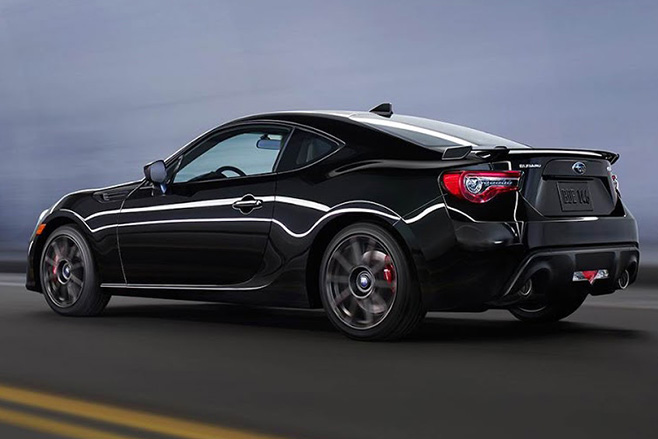
The Subaru BRZ has been given performance and styling updates for the 2017 model year.
Subaru’s sports car features more substantial changes compared with those introduced in 2015. The revised model is due here in October, just ahead of an updated version of its Toyota twin, the 86.
Tweaks made to the 2.0-litre four-cylinder engine and exhaust system are said to give an extra 5kW to lift maximum power to 152kW, with torque improving by 7Nm to 212Nm, according to US-quoted outputs.
Engineers have also shortened the gearing to quicken acceleration of the six-speed manual version, though Subaru doesn’t state how much time is shaved from the current 7.6 seconds the BRZ takes to reach 100km/h from standstill.
A six-speed auto is again available as an optional transmission.
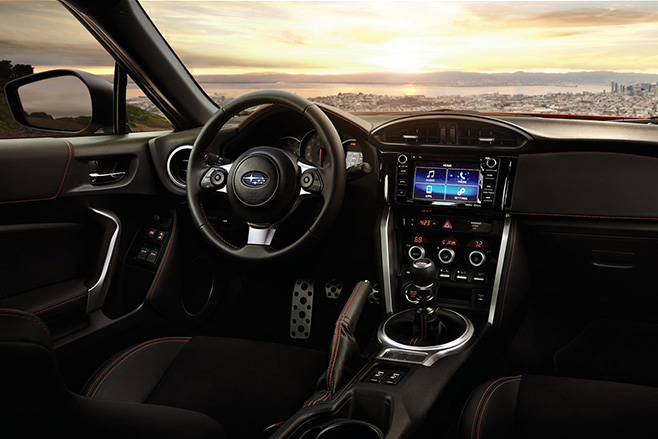
A new 6.2-inch colour touchscreen is a key upgrade that will help address criticisms of the outgoing model’s basic-looking infotainment system.
The instrument cluster also adopts a 4.2-inch LCD multifunction display, which sits next to the rev counter and provides a variety of information including lateral G-force, braking force, steering wheel angle and a stopwatch for lap timing.
A new steering wheel with a sportier look and feel, plus the addition of multifunction buttons, further helps to lift the quality of the BRZ’s cabin.
Externally, the Subaru BRZ adopts all-LED lights up front, with a single unit housing headlamps, indicator lenses, and daytime running lights. The tail-lights also move to LED.
Subaru says a lowered front bumper and an aluminium rear spoiler improve downforce.
BRZ engineers have aimed for even better handling through revised suspension, larger rear anti-roll bar, and a variety of stiffening measures including strut tower bracing.
A new Performance Package has been announced for the US market which includes more powerful Brembo brakes, performance shock absorbers from Sachs, and exclusive 17-inch black alloy wheels. Subaru Australia says it can’t confirm yet whether the option pack will be available in Australia.
The Subaru BRZ is currently priced from $37,150.
Like all French flings, my love affair with my Peugeot 206 CC was passionate, brief and combustible. I was tempted to break up with my car when the entire dash went into meltdown as I was doing 101km/h on the freeway. The speedometer, rev counter, oil and fuel gauges all dropped to zero. Even more alarming was the fact all the warning lights started flashing: the oil pressure, battery charge, engine light and then the inexplicable (yet so, so French) single exclamation mark. Merde! I was in trouble.
My husband solved the problem by trading in the Peugeot for a Mustang. For himself. Without telling me. Not much of a fair trade. It left me car-less and in the market for a new set of wheels.
As a working mum in her 40s it was time to grow up and upgrade. I had my eye on the Mercedes GLC 250d for some time. It seemed the classiest, most fuel efficient and most practical of the mid-sized luxury SUVs on the market. I liked its strong, curvy, sleek shape. Its competitors from BMW and Audi seemed a bit ‘meh’ by comparison. Every time I saw someone getting into the new GLC I asked them about their purchase; they all raved about it.
We went through a car broker, Automotive Vehicle Brokers Australia, who did all the leg work. They suggested a demo with just 3,000km on the clock which gave us a nice discount off the new car price.

IN THE CAR
The first surprise is the keyless entry and ignition. It’s all very Bond villain. And handy when your hands are, well, full. The black leather, open-pore wood and silver interior is very classy.
The dash is like an aircraft cockpit compared to the Peugeot’s and a little overwhelming at first.
The infotainment system seems overly complicated and a big touchpad sits where my gear stick used to be, which is disconcerting. This is connected to a 7-inch display, a single-disc CD player, an intense navigation system, Bluetooth for phone and USB/ Aux/ AM/FM and digital radio inputs (is it wrong I was most excited about the multiple ‘80s digital channels?).
The car comfortably seats four plus a baby seat and the back seats fold down to create a very roomy boot.

ON THE ROAD
This model has a diesel engine that generates less power (kilowatts) than an equivalent petrol engine, but more torque. That means you can more easily tow things. Diesel also provides better fuel economy.
Performance for an SUV is good. It goes from 0-100km/h in 7.6 seconds. But who cares about that on the school run, right? It’s more than adequate for most tasks.
The suspension, however, is not so crash hot. It may be excellent on an open, smooth German autobahn, but it’s a ‘shocker’ over local speed bumps. Going over one reminds of that scene in the movie Ferris Bueller’s Day Off when the car attendants steal the Ferrari and fly over a hump in slo-mo.
For me the GLC’s bigger size took a bit of getting used to, as evidenced by me shredding the hubcaps on a bluestone gutter during a failed reverse park – in front of my horrified husband.
To be honest, hi-tech features like Active Lane Keeping Assist, Collision Prevention Assist, Distronic Plus and the 360 degree cameras were originally lost on me. Entirely forgiveable, given most of the dash readouts in my previous car didn’t work.

My initial weeks driving the new Benz were a bit like flying a plane without a pilot’s licence. It was then I decided to take myself off to the Mercedes Accelerate driving course at Sandown Racecourse to better understand my car.
The Mercedes event was as slick and controlled as its vehicles. The initial theory briefing had my head swimming with the freakishly futuristic functions in the cars.
Instructor, Peter Hackett confirmed my worst fear: “Technology moves forward but our driving stays the same. Technology is only useful if a driver knows how to use it,” he said.
First I was told to adjust my seat and steering wheel positions, both of which were all wrong, according to my instructor. My seat was too far back – I was told to rest my foot on the floor behind the brake pedal to gauge distance. My steering wheel was too far away – I had to rest my wrists comfortably on top of the wheel to gauge how far away it should be. My hands were in the incorrect position on the steering wheel (they should be at 9 and 3 o’clock, not 10 and 2).

The driving course was fun and gave me the opportunity to try many different Mercs; from the 4WD G350d to the mid-size C250d sedan, from the Actros truck to the C63s AMG.
I was also forced into hairy situations like skidding on plastic tyres that are supposed to mimic black ice and racing towards stacked witches’ hats before having to dramatically steer to the left or right at the last minute. All the exercises are designed to “help drivers master sudden manoeuvres, learn to make the right decision in a split second, and be tested in emergency situations”. And of course illustrate the safety measures of the car.
I’m a bit of a control freak and found it hard to trust some of the automotive technology like Collision Prevention Assist (where the car detects if you are too close to a vehicle in front or a stationary vehicle) and Lane Keeping Assist (where the car registers an unintentional deviation from the lane).
The thing I really wanted to understand was Distronic Plus – which is basically cruise control on steroids. It uses radar to monitor the distance between your car and the vehicle in front. Distronic Plus automatically slows you down when the car ahead does, then speeds back up to your cruise control limit when traffic flow allows it. It can even brake the car to a full stop then start up again when the traffic clears.

This is the closest thing you’ll get to an autonomous driving machine with a human still behind the wheel.
The day finished with a 230km/h burn down the back straight in the C63c AMG. This was thrilling and unleashed my hitherto unknown inner rev-head.
Back to reality and my GLC. The course certainly exceeded my expectations. It gave me a new found appreciation of my vehicle. All the levers, gadgets and buttons actually mean something to me now. I not only know how to sit in my car, but how to handle it in all situations. I have even mastered Distronic Plus. And can reverse park without the aid of a panel beater.
I think my new German date is a keeper.
Last week at the Google I/O conference, the technology giant announced its in-car Android Auto system would be receiving an update that will make it available to non-compatible vehicles.
Currently Android Auto is available in 22 car brands in close to 30 countries, and it continues to expand. The technology allows drivers to legally interact with compatible phone apps, including maps, music and SMS, via a simplified interface on the vehicle’s display.
The relatively new technology’s transformation will roll out over the coming months, with Google aiming to reduce the costs related to manufacturers developing their own infotainment systems, and also make the technology more accessible to people in cars without infotainment systems via the new ‘car mode’ feature.
Car mode will allow Android users to use their docked smartphones as an infotainment screen which “will give access to the same features – voice enabled media, messaging and navigation – right on the phone screen using an interface that’s designed for driving.”
Other changes will include OK Google hands-free support, Waze GPS app compatibility (instead of Google Maps), wireless connectivity via a car’s WiFi system, and an application programming interface for manufacturers to create their own compatible apps.
Stage two of Android Auto’s growth is a uniform infotainment system across multiple car brands. Google, which has invested heavily in autonomous driver technology, says putting all vehicles on a similar platform will improve vehicle-to-vehicle communications – a vital development in driverless cars.
To show off its new generation of Android Auto, known as Android N, Google had a Maserati Ghibli concept car on display at the conference. Its 15-inch screen and digital dash display were connected to an Android phone that could control the above mentioned apps, as well as car functionality, such as climate controls.
The updated app will be available late this year for anyone using Android Lollipop (5.0) or later.
