
Holographic ‘driver’ could be the future for the luxury car brand, although Bentley is not looking to ditch the driver in a hurry.
REMEMBER Johnny Cab, the autonomous taxi in the original Total Recall film? Somebody at Bentley clearly does, with this sketch hinting at the brand’s far distant autonomous future clearly channelling some of the same thinking, only with face-to-face seating and for billionaires.
It is, the company admits, done for fun rather than as evidence of any serious production attempt, being shown by newly arrived design director Stefan Sielaff during a presentation on the future of Bentley design. But still, it’s proof the company is considering how the top-end luxury market will respond to self-driving cars.
“We have had the equivalent of autonomous cars for the last 100 years in Bentley, from the point of view of the rear seat passenger who had a driver,” he explained, “the way of living is going to change dramatically in the next 20 years, if you look at the world population three quarters will live in megacities. I’m pretty sure that not everybody will sit in public transport, there is always the demand – especially for luxury customers – to have a private sphere, their own private vehicle.”
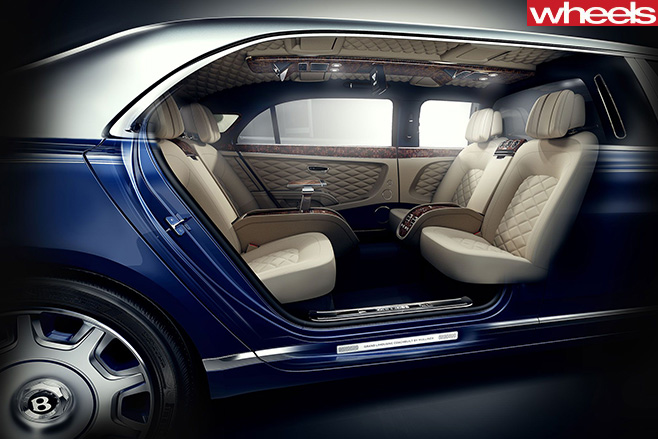
“Luxury is always related to service,” Sielaff said, “people don’t like the idea of just talking to a hidden microphone, we are thinking of how to personalise the next generation of communication in different ways and this could be one of them.”
HOPE springs eternal for Fernando Alonso, at least heading into the first race of a newly minted world championship Formula One season and the second of a three-year deal with struggling McLaren Honda.
He sees 2016 as a year of consolidation for the once mighty McLaren as it seeks to reclaim former glory with Honda, itself a huge and successful name in F1, with 71 victories for its engines up to 1992.
Then in 2017, Alonso expects McLaren Honda to be competitive in the world championship. The hunger is there, though he admits he feels like a driver who has contested 253 grands prix. “I’m not 20 years old any more…”
Looking the world like a rock star, with his shades and floppy locks, but with the white-as-white McLaren Honda shirt revealing his real job, Alonso drove up to today’s press conference in the yet-to-be launched new Honda Civic, allegedly the first person to drive it in Australia. There were absolutely no concerns about the Civic’s reliability.
Wheels asked the dual world champ, now 34, if he could endure another season like the disastrous 2015 one. A yes/no response wasn’t forthcoming from the mainly diplomatic Spaniard. “There’s nothing you can do. It is out of your control sometimes. It is tough for everyone in the team. We want to challenge the [2015] situation.
“I want to win. My role is to make this [path to winning] as short as possible. We want to consolidate in 2016. Then in 2017, with big changes coming to Formula One, it’s a bit of a mixed card, and we have a better chance to fight for the world championship.”
He sounds excited about that, and expects the 2017 cars to be completely different – read “better” – to drive.
Meanwhile, there is 2016 to deal with. “It’s always the same feeling here in Melbourne. We’re here for the new challenge.” He talks about challenge quite a bit, perhaps because that’s his life in a team fighting for competitiveness. “This is an important year, the second year of the new partnership and we need to put in place the knowledge from last year. We are more motivated than ever.”
And there’s the uncertainty of the important changes to the qualifying format, new rubber, and new restrictions on radio chat between the teams and drivers. Heavens, drivers may have to make their own decisions on the run.
“Testing has been quite positive for us, especially after last year when we didn’t manage to complete the programme. There are limited days for testing, but it’s the same for everyone. Only four days for each driver before the world championship begins.
“There’s a lot to learn [in testing]. Some concepts of the car are quite new to us and it takes time to unlock the performance. I am very happy with the team effort on the performance side. That’s a step forward.”
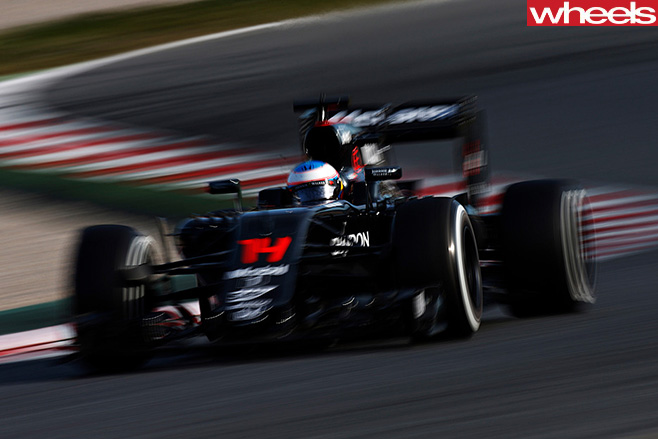
But incoming McLaren Honda team boss Yusuke Hasagawa insists that test data showed the Honda was already more reliable, before adding that, yes, in some races, they will need to push the limits in search of higher performance.
There have been reports that Alonso is unhappy and looking for a way out, and follow-up stories that he is honouring his deal.
“I joined McLaren Honda to fight for the world championship,” he says. “This partnership has been very successful in the past. I know the ‘family’ we have, the talent we have.”
Alonso also has been critical of the change to the sudden-death elimination qualifying system for this season. But at the Melbourne media call, he seemed resigned to making it work. “It’s the same for everybody,” he shrugged, declaring the pressure is on from the get-go. “You must immediately put in a fast [banker] lap that you hope will be good enough. You must perform at 100 percent.”
But Alonso isn’t expecting any big surprises, and no shake-up of the grid’s pecking order. Still, he has indicated a wish for simplicity in qualifying, perhaps even a reprise of the one-lap format, the “superpole” process of a decade ago.
He also anticipates the limits on radio transmissions won’t change much, because some restrictions were in place last season. “I don’t think this will give more power to the driver [to make or change race strategies]. “ He says what will happen is that teams will prepare their strategies more strictly.
Before leaving for Australia, Alonso declared his distaste for the erratic changes affecting F1, slamming the complexity of the rules, which he said was confusing for spectators.
He suggested people everywhere want to turn on the TVs and watch battles between drivers of big cars, on big tyres, making lots of noise.
On the same theme of using the lessons of the past to produce solutions for today, Alonso has thoughts but “no magic solutions” to fix the perceived problem of the F1 show.
“We all want to improve the show for everyone. We saw some fantastic championships in the past; in 2008, 2010 and 2012.
“The main [negative] point for me is the cars. They’re not as fun to drive as they were a couple of years ago. It’s how the car feels, the tyres, the weight…they are 135 kilos heavier than six, seven years ago.”
Come on, Fernando…wave a magic wand and re-introduce any past era of F1 car, what would that be? No hesitation. That would be 2003- 04-05 cars with V10s with maybe 1000 horsepower. Noisy powerful, fantastic to drive. People enjoyed those kind of cars. The drivers were treated like superheroes.
“Today’s cars are a little bit slow,” he says, making the point that 17- or 18-years-olds can turn up and drive them. Clearly today’s cars are also too easy to drive.
But then the optimism returns. “Next year, the cars should be four, five seconds a lap faster than this year.” Better, but no magic solution, he admits.
With only 1400 vehicles available in Australia, the final edition Falcon Sprint were snapped up faster than chocolate-chip hot cross buns in the office kitchen.
Production for Ford’s last ever Falcon is due to start production late March, with sales officially opening in May this year. But the 850 XR8 Sprints and 550 XR6 Sprints have been spoken for by dealers jumping in quick to capitalise on the 56-year history.
But pricing in at just $54,990 (for the XR6), despite having a level of performance you’d expect in a more expensive sports car, and with Ford’s Australian factories closing in October, there was no question the swansong-Falcon was going to be extremely popular.
Can’t get enough of Ford last Aussie Falcon? Read more about the Ford Falcon Sprint here.
There’s been no shortage of self-driving car concepts over the past 12 months. From movie screens inside a car, to whacky lighting outside, there’s no doubt autonomous cars are a way of the future and each manufacturer has a slightly different take on what it should look like.
Bentley has released a single image of the interiors of a self-driving limousine concept. The image indicates the complete abolition of human controls in the autonomous vehicle, excluding all controls, including a steering wheel and even seatbelts.
The interior of the future Bentley is a model of luxury. Lacquered wood, leather and stone, face-to-face seating, holographic butler and high-definition image projections are all a part of this illustration.
In reality, we don’t expect to see this exact prototype come to life, but it’s a good indication of the level of the carmaker’s creativity and where the focus is on technology and design development.
Then again, Bentley intends to offer fully autonomous technology by 2020 so we’re probably closer to holographic butlers than we think.
Feel like splashing some cash? Check out the 2016 Bentley range here.
When Daniel Ricciardo meets Red Bull’s Holden Sandman, unsurprisingly the results are pretty awesome.
The Sandman in question just happens to be essentially a V8 Supercar wagon, built on the Car of the Future platform, only fitted with a more powerful 525kW 5.7-litre V8 and paddle-shift gearbox.
Following a quick chat with six-time V8 champ Jamie Whincup about all things Aussie muscle car, Ricciardo dons the lid and proceeds to lay thick black lines all over Sandown.
Hopefully Dan the Man has just as much fun at this Sunday’s Australian Grand Prix.
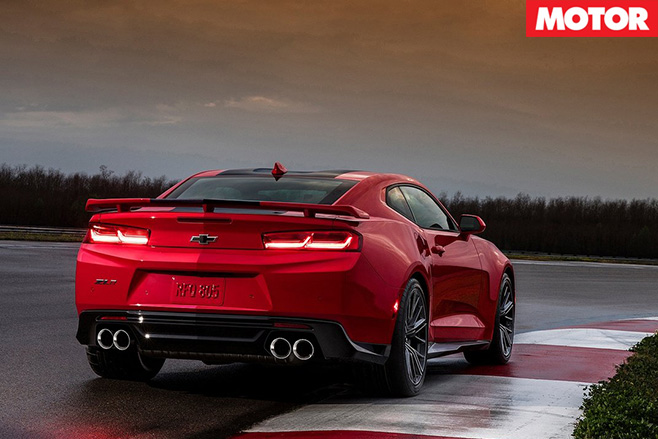
Chevrolet’s dropped a bomb on Ford’s doorstep overnight by revealing its brand new 2016 Camaro ZL1.
With it debuting ahead of next week’s New York Auto Show, the ZL1 lifts the sixth-gen Camaro’s performance to new levels with a healthy dollop of grunt, grip, and gadgets that sees it not only tower above a current top-spec Camaro SS, but call out the Mustang GT350R with an almighty cry.
Or maybe it’s more of a bellow, as GM has snaffled the LT4 engine from the Corvette Z06 for its new four-seat track weapon. With the 6.2-litre supercharged V8 the Camaro ZL1 will ready 485kW and 881Nm at its rivals – a smidge less than the Z06, but piles more than the Mustang GT350R’s 392kW/582Nm.
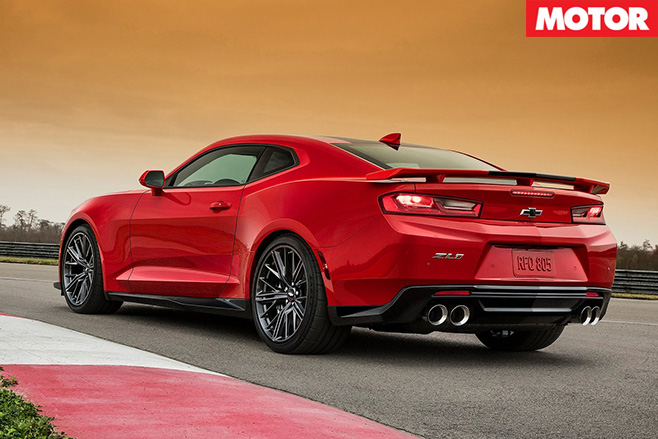
Based on GM’s new Alpha platform the ZL1 is 91kg lighter than old. It’s estimated to hit 100km/h in under 4sec and cross the quarter mile line in the low 12s.
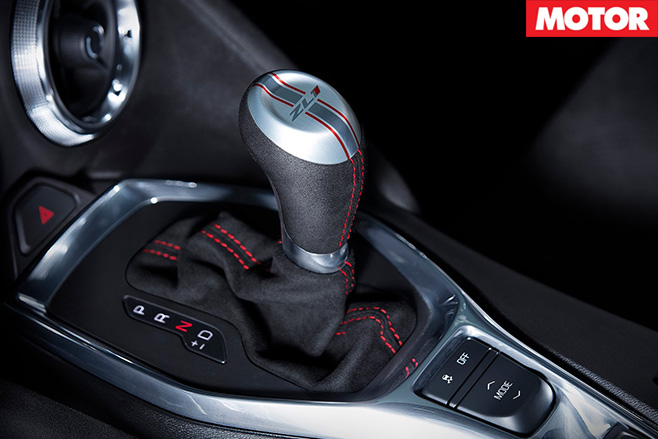
An angrier front splitter and rear wing do their bit for generating downforce and help the 20-inch Goodyears, staggered in sizes 285/30 and 305/30 front to back, press in to the road.
The chassis is further sharpened by bigger two-piece brake rotors, magnetic dampers, and the Corvette Z06’s electronically controlled limited-slip differential.
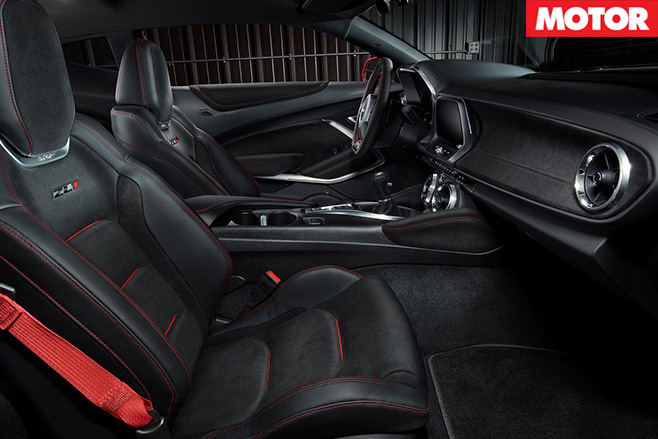
Track goers will be pleased to know GM’s Performance Traction Management system, similar to BMW’s M Dynamic Mode, features along with the firm’s Performance Data Recorder which overlays GPS-based track data with footage from a dash-mounted camera.
However, with the Camaro’s Alpha platform currently designed only for left-hand drive, don’t expect Holden to be asking for any.
When our friends at Motor Magazine say a Skoda can go faster than a Porsche, we start asking questions.
But by all accounts, when it comes to the Skoda Superb 206TSI 4×4 sedan and wagon, its recorded figures of 0-100km/h in 5.8 seconds does actually beat a Porsche Macan SUV.
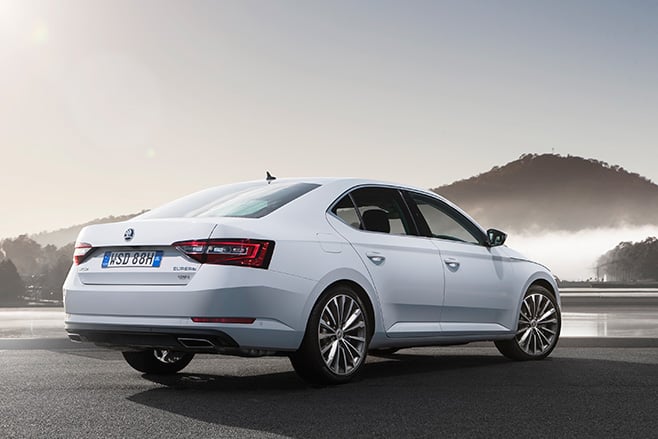
But speed of the aptly named Superb isn’t all it’s got going for it. The limousine-like sedan and wagon comes with class leading space and comfort, with the third-generation adding 3cm in length and 5cm in width.
The space from the backseats rivals that of a Holden Caprice, and is probably one of the most comfortable in its league. That’s nothing new for the Superb, and Skoda has a reputation for practicality, but now a slight price hike in the new gen Superb comes with a package that puts at in a class leading position.
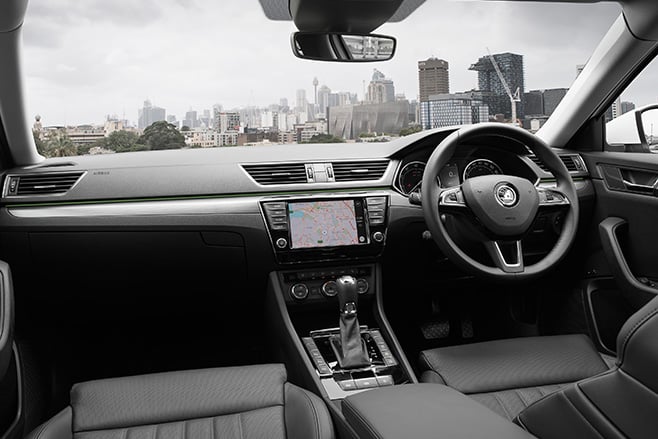
The range comes with the option of a sedan or wagon body, and three engine variants. The entry level 162TSI starts at $39,990, with the diesel 140TDI sitting at $43,990 and the top spec 206TSI with four-wheel drive enters at $50,990.
Sure, these prices are jump, but the third-generation is basically a new car with more equipment, power, space and styling.
So what standard gear do you get? Well, as a start, the new Superb, at all levels, includes:
- 18 inch alloys
- Heated front seats
- 8.0 inch touchscreen
- Satellite navigation
- Apple CarPlay/Android Auto
- Reverse camera
- Adaptive cruise control
- Three zone climate control
- IPad holder
Pay for the top of the range models and you’ll upgrade to 19-inch wheels, keyless entry and start, LED cabin lighting and adjustable driving modes.
The new Lexus IS200T aims to improve in areas of performance and efficiency against key rivals such as the Audi A4, BMW 3 Series and Mercedes-Benz C-Class.
The IS200T replaces the IS250 and that new badge heralds a new turbocharged four-cylinder petrol engine. Despite being smaller than the 2.5-litre V6 from before the turbo ensures there’s stronger pulling power from lower revs and fuel efficiency improves by nearly 20%.
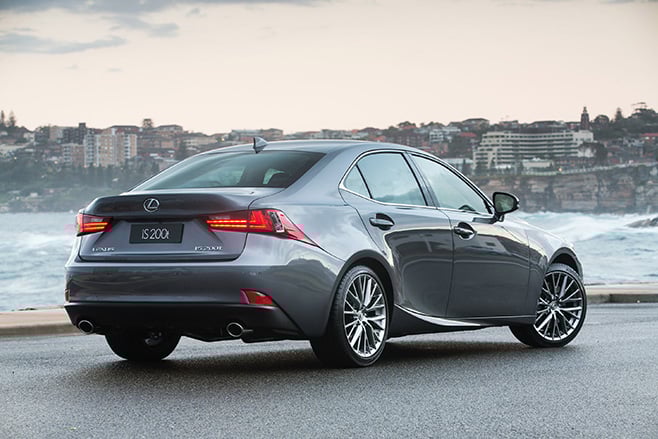
It is however, still slower and thirstier than its key rivals and the new eight-speed automatic gearbox is quite jerky. Not a patch on rival gearboxes from the likes of Audi and BMW.
Buyers will appreciate that Lexus refuses to copy rivals when it comes to lengthy options lists. Every model in the IS range is packed with features. From an ownership perspective, Lexus offers the longest warranty in the segment and its after sales service is widely regarded as the best in the business.
Click here to check out our full review of the Lexus IS range .
The iconic Aston Martin name has returned to Formula 1, set to appear on the sides of the Red Bull Racing RB12s from this weekend’s Australian Grand Prix.
As well as the motorsport tie-up, the collaboration will spawn an all-new Aston Martin hypercar, dubbed AM-RB 001 using the combined talents of F1’s most successful designer, Adrian Newey, and Aston Martin’s Chief Creative Officer Marek Reichman.
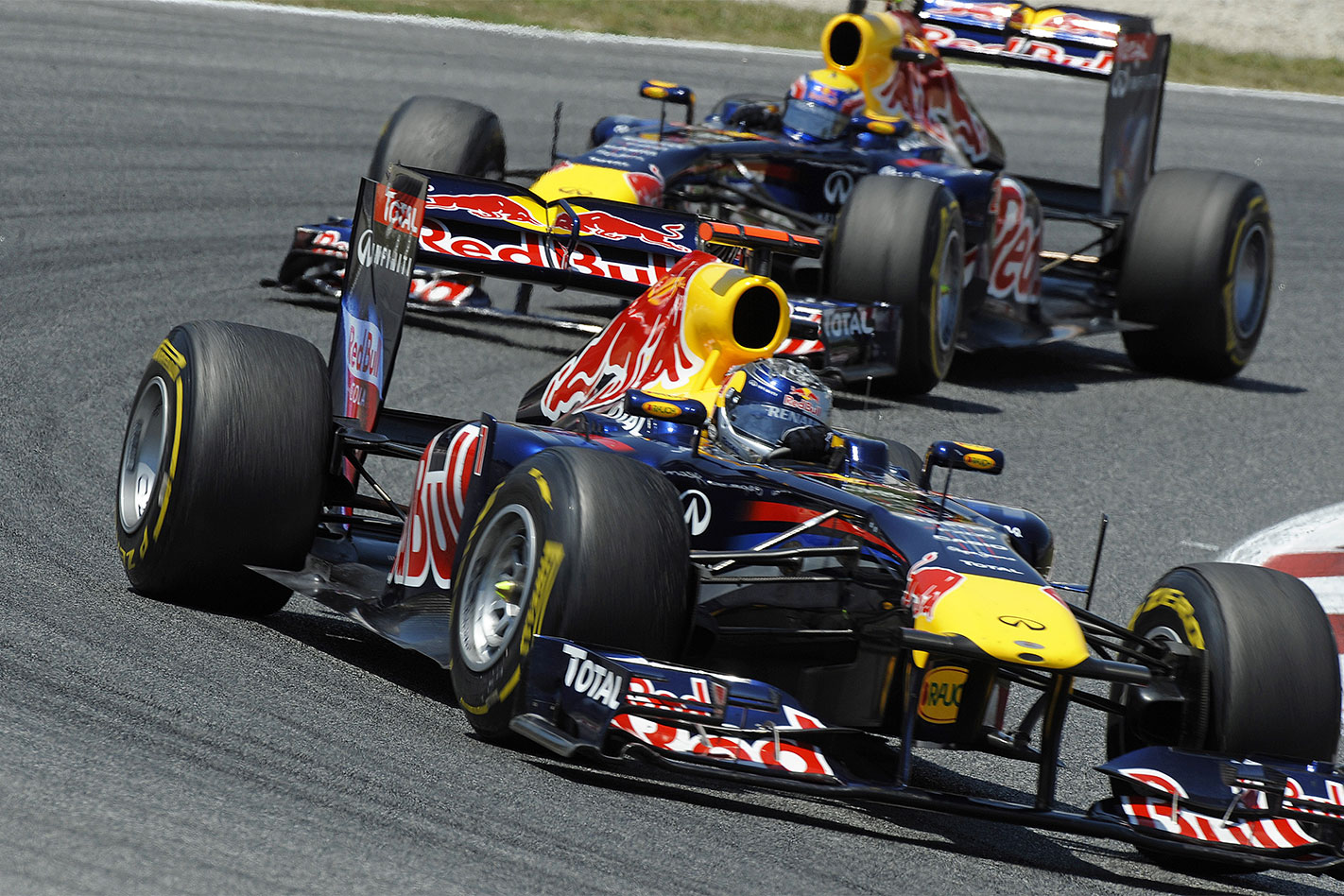
A similar arrangement had earlier been mooted with Red Bull when the F1 outfit were scouting for a new engine partner following its very public falling-out with Renault.
It’s not clear at this stage what this new arrangement means technically, as there is now a certain disconnect with Mercedes-associated Aston Martin and the Renault power units in the back of the RB12, which are branded TAG-Heuer.
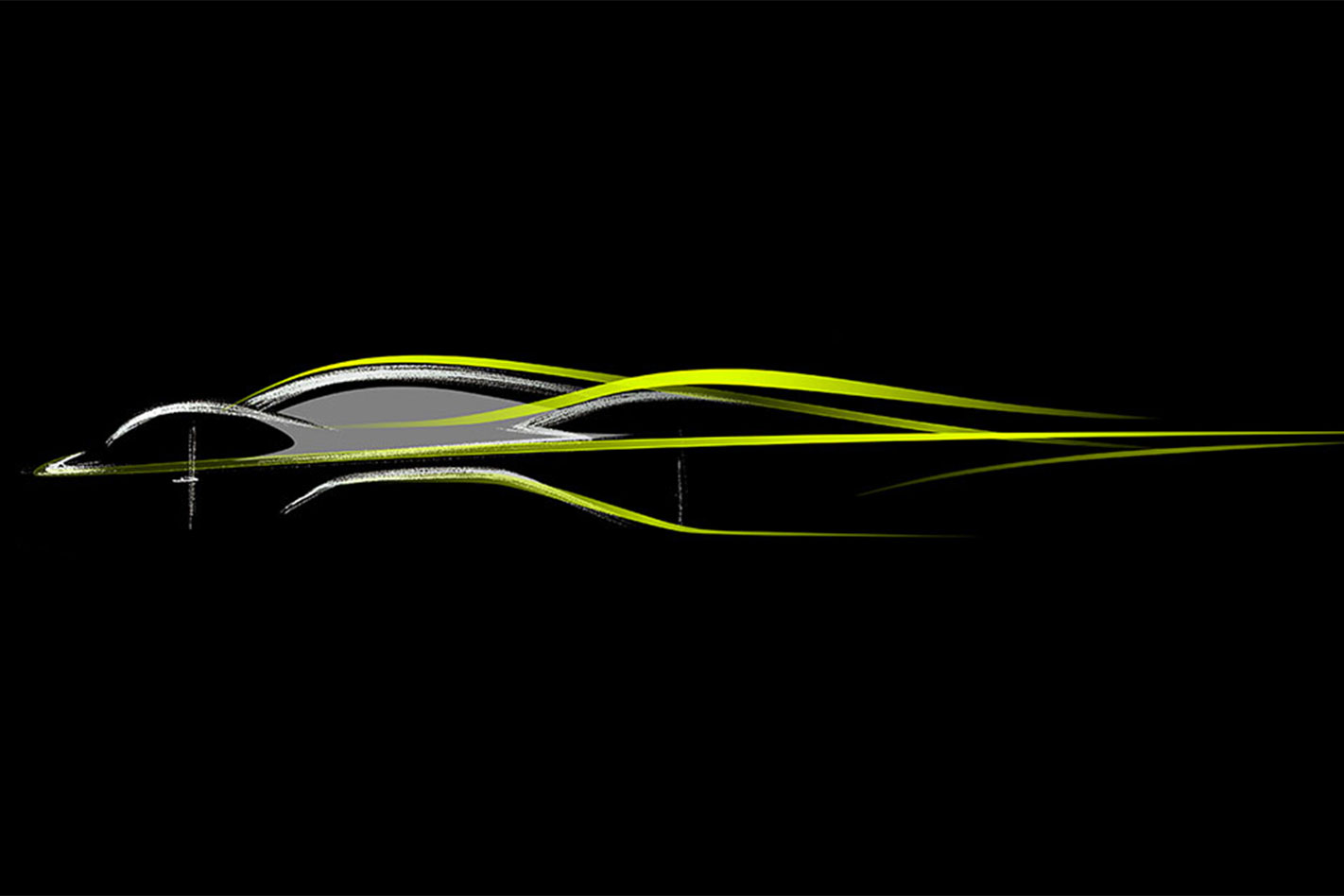
“From the age of six I have [wanted] to be involved in the design of a supercar,” he said in a statement. “The opportunity to develop those ideas whilst working with Aston Martin is tremendously exciting.”
Just 99 of Aston Martin’s flagship are planned to be built with a 2018 launch scheduled.
When Range Rover announced it would be releasing the roofless Evoque Convertible, we wondered if this would become a trend for SUVs. Then rumours started to circulate that Korean car-maker SsangYong had developed a concept of a Tivoli convertible to give the Evoque a run for its money.
Roofless SUVs aren’t a new concept. Removable canopies on vehicles like the Jeep Wrangler or Suzuki Sierra have been popular for some years, allowing drivers to live the road-trip dream with sun-kissed skin and wind in their hair. But they aren’t SUVs made for the school run, they’re off-roaders built with an overhead structure that remains in place even when the roof panels are removed.
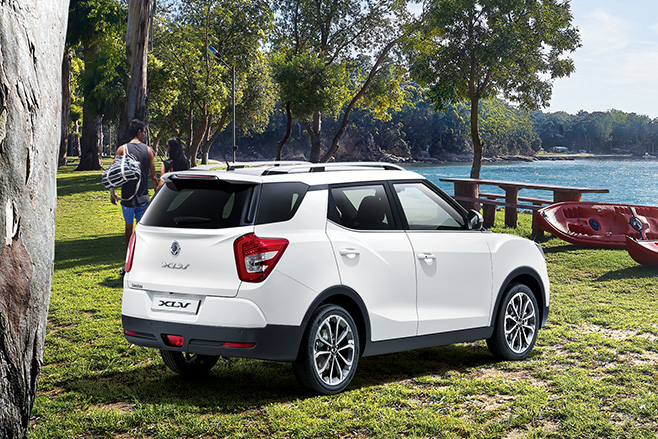
These new convertible SUVs are suffering from an identity crisis, a lot like the drop-top Nissan Murano that was eventually abandoned. The SsangYong concept convertible features a full-length folding roof like the Evoque. It’s family-SUV today, slick-and-sporty convertible tomorrow. Perhaps an odd combination, but it seems to appeal to some buyers, especially in the UK.
Where the Range Rover Evoque will be priced from $84,400 here in Australia, the Tivoli is predicted to sit around the more affordable $35,000 mark if it makes it here. The Korean won’t be any match for the Brit’s under-bonnet action if the current Tivoli range is anything to go by. It’s likely SsangYong will use the same 1.6-litre petrol and turbo-diesel engines in the convertible as it does in the standard range.
Unfortunately, or maybe even thankfully, we’re not holding our breath to see the SsangYong Tivoli arrive in Australia, unlike the Evoque which we should see for sale here later this year. The concept is there, sure, but it’ll be interesting to see if there’s demand to match.
