
Driving a car fast begins before you even turn over the engine.
At least that’s what Patrick Long, American-born Porsche factory driver, teaches.
As part of a promotion in which Long and two ‘enthusiasts’ take the recently revealed 911R to retrace the brand’s conquest at the Tour De France Automobile, Porsche is focusing on the art of driving, and releasing a video series of driving lessons along the way.
The first is what we have here, and it focuses on the best driving position for hustling a car fast –something not commonly known, or easy to figure out.
Our presenter is a three-time American le Mans Series GT winner, so the video’s not only a brilliant guide for the unknowing, but a great refresher for the experienced.
Long reminds us at the limit you’re going to need good access to all a car’s controls. It starts with sitting low, and ensuring the steering wheel’s close enough.
From there he says you want to be able to bend your knees slightly with the clutch or throttle pedals fully stomped. You also want a slight bend in your elbows with hands at nine and three.
Watching the video will take less than two minutes, but it’s a comprehensive check list that’ll come in handy for your next track day or weekend punt.
V8 SUPERCARS: Clipsal 500 – winners and losers
IT’S a very good sign when motor racing doesn’t need rain to spice up the racing.
But when the rain bursts out of nowhere and turns the track into perilous water sport, it can be – take your pick – a spectacular added bonus, an unwanted intrusion, or a win for the parched local lawns and gardens.
The opening round of the 2016 V8 Supercars Championship on the streets of Adelaide offered up motor sport in a gloriously pure way on Saturday in the second of the three races making up the Clipsal 500. Watching the contest go to the wire in a steamy, tense, no-quarter duel between HRT’s James Courtney and Tripe Eight’s Jamie Whincup was riveting stuff, and further reinforcement that race drivers are athletes of the highest levels of fitness. People will be talking about that one for many moons, especially the punchy last-lap slides through high-speed turn eight…
Then on Sunday, as race time approached, the conditions turned to pouring rain in a blink, throwing plans and strategy into a soggy, chaotic and at times unprofessional mess. The race start was delayed by wild weather, and ultimately suspended for a period. Finally, the race was resumed for a few manic laps before the flag was shown after 48 of the scheduled 78 laps to a stunned Nick Percat, who drives for one of the smallest teams in pit lane, Lucas Dumbrell Racing.
“That is unbelievable,” said the stunned Percat afterwards. “I came to the last corner just thinking ‘what is going on here?’”
That’s what bad weather can do. This, and a lot more.
There was further confusion because some drivers bewilderingly hadn’t taken on their mandatory 140 litres of fuel during the (shortened) race. In the madness, some teams hadn’t read the rule book and the officials were not helping with clarification. Five drivers including Coulthard, were docked 60 seconds post race, reshuffling the results. Nissan’s Michael Caruso found himself up to second, with HRT’s Garth Tander a bounce-back third after a tough Saturday.
There were a million stories from that race, but let’s go back to the start of proceedings…
After unprecedented teams’ reconstitution and changes over the summer hiatus, anticipation was sky high heading into a new season: so many questions to be answered over two days of steamy, no-quarter-given competition on an Adelaide Parklands street circuit as unforgiving as Dirty Harry.
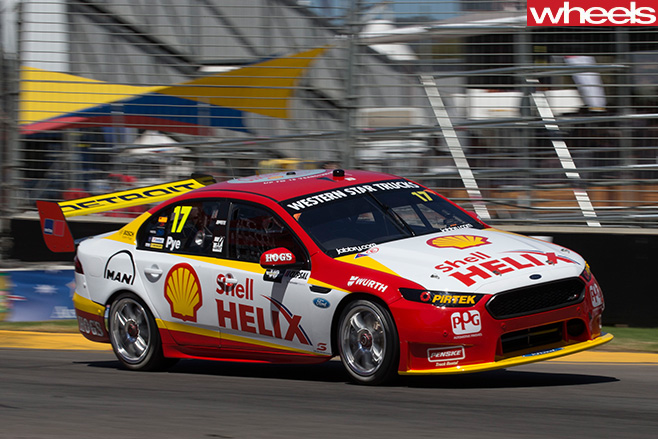
Two were answered even before the first race. On Friday, Scott Pye (pictured above) fired his DJR-Team Penske Falcon to pole for the first of three races making up the Clipsal 500. On Sunday Coulthard grabbed another pole for Dick and Rog. Yes, the team amalgamating two huge names from either side of the Pacific will be very competitive this year.
Chaz Mostert, battered and broken in a huge shunt in qualifying for the Bathurst 1000 last October, came out firing to grab pole for race two. The youngster is certainly not carrying any emotional scarring into 2016…
Only in the races did Mostert show his body was strong enough to handle the rigors of racing on a challenging street circuit, in ambient heat perilously near 40 degrees, and sauna-like cockpit temperatures hovering close to 60. He even tested out the leg and rib repairs with a solid whack into the wall at turn eight on Sunday. He needs to employ a little caution occasionally.
Now for some other answers and observations.
“We all stayed calm and took the curve balls as they came but we were on the wrong end of the bargain today. I said to the boys as I was crossing the line that we need to use this as motivation.
“It’s going to be a tough year so we just need to keep doing a good job and we should be there at the end.”
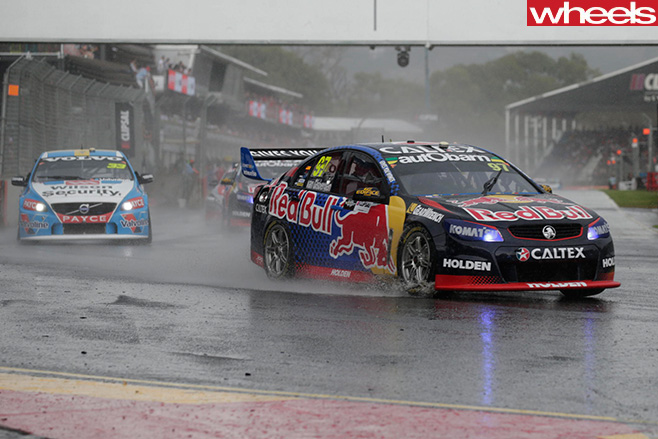
His new teammate, Shane van Gisbergen (pictured above), has settled into his new environs at T8. He was quick in Adelaide, too, but oddly not mistake-free in the wet, normally a comfortable habitat for the Kiwi. But he was wracked with a heavy cold.
Craig Lowndes had a weird weekend in the Caltex T8 Commodore. But as always he was fast and mistake-free in the wet. He missed the top 10 on Sunday but splashed into contention before taking the fuel stop that put him back in the pack. Still got it.
Prodrive had mixed fortunes. Mostert was quick immediately, but defending champ Mark Winterbottom never looked pacy, and seemed resigned to collect what he could. After round one, he is 12th in points. Rookie Cam Waters lived up to expectations, cracking a place in the top 10 shootout on Sunday, and then claiming a standout fourth amidst all the mayhem. He is currently seventh in the championship standings, the best of the Prodrive lads.
DJR-Team Penske showed the strengths of engineering depth and two fine drivers, but also that the newly expanded squad needs time to gel – things were not yet clockwork during the pit stops. Scott Pye claimed the team’s and his first pole and Saturday. Pye was disappointed with his race results but should be reminded that this time last year he was in his civvies conducting garage tours for the team while Marcos Ambrose was wearing Nomex.
At Brad Jones Racing, Tim Slade will want to put the weekend behind him after a DNF in the opener and the fuel penalty on Sunday.
The Nissans, beaten up regularly last season, seem to have found more grunt this year. The squad leaves Adelaide with three drivers in the top 10 standings, and excellent hopes of having a handy year. Michael Caruso leads the championship after the Clipsal, though it may be a battle to stay there.
Chirpy Scott McLaughlin had a solid weekend without quite grabbing a trophy: two fourths and a 12th. New teammate James Moffat struggled, a power steering failure in qualifying for the Sunday race flicking him to the back of the grid. He’s also suggesting he needs time to get on top of the very different engine performance and aero.
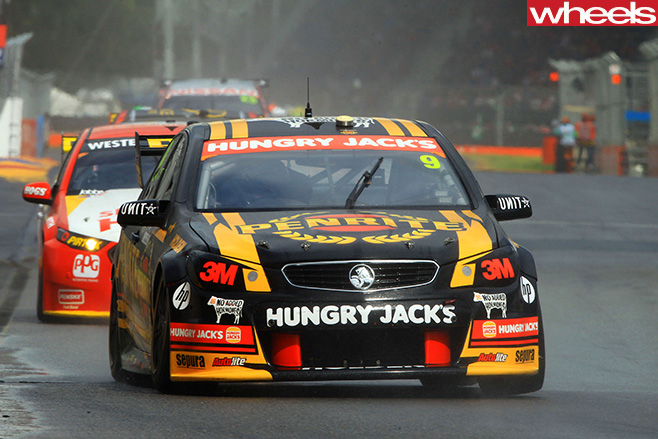
The first hit-out for David Reynolds (pictured above) and the brand-switching Erebus Motorsport showed some promise. Reynolds took fifth in the mayhem on Sunday after starting from 21st. Reynolds now sits 11th overall in the championship
HRT’s red-hot drivers look to now have a couple of quick cars beneath them, although Garth Tander had a failure on Saturday while his mate James Courtney was plucking a magical race win. By the way, data traces show that Courtney went into turn eight on that desperate, dramatic final lap of race two all of 7km/h faster than previously, the eye-opening slide demanding 90 degrees steering lock, all at 215km/h.
Bring on round two at Symmons…
FORMULA ONE: Confusion reigns over Australian Grand Prix qualifying
The new qualifying was proposed, accepted, and then nixed on the grounds that software couldn’t be readied in time for the season-opening Australian Grand Prix. Confusingly, it was then reinstated days later.
It will now proceed at Albert Park. We think.
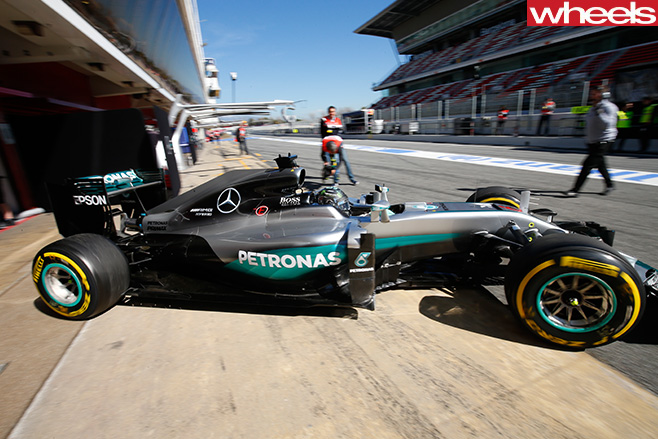
Several drivers including world champions Lewis Hamilton, Fernando Alonso and Sebastian Vettel (pictured above) have openly criticised the chaotic and confusing decision-making process, though only the Brit was inclined to support those who’ve been suggesting the whole circus is shambolic.
Asked if F1 was ‘broken, lacking direction or in rude health’, Hamilton surprisingly admitted: “I’d say probably the first two” before going on the defensive.
“I don’t think it’s broken,” Vettel opined. “In terms of the show, I think F1 is doing fine. In the background, I think the decisions lately and so on it is fair to say that it is lacking leadership.
“I think it’s a little bit chaotic if a couple of weeks before the season you start to re-invent certain rules and the formats of qualifying as has been discussed in the last couple of weeks.”
Vettel also cranked up his opposition to the controversial elimination qualifying to now debut in Melbourne.
“I’m personally not a fan of [the new] qualifying, and speaking on behalf of all the drivers, no driver is,” Vettel declared. “We don’t get what’s wrong with the old qualifying, and why to change it.”
McLaren’s Alonso said he was “sad for the sport” because of uncertainty over the qualifying format and some chaotic decision making.
Pushed to comment on the new qualifying, Alonso said: “It doesn’t look right, from the outside, when in one week, we change the qualifying format three times – or pretend to change.
“Too many changes… The complexity of the regulations, also for the spectators, is quite high,” he said.
Alonso went back to a decade for inspiration for a better qualifying format. “We want simplicity in the rules – and even the one-lap format, the superpole that we did in 2005, I think, 2006, was spectacular.
“Everyone has one lap of television coverage, it’s simple: one lap, you brake late, maybe you start 15th – there is some adrenaline on that lap as well.”
Red Bull driver Daniil Kvyat was another to hit out against change. “I don’t think we need to change qualifying, to be honest,” he said. “Why confuse people even more? Even we don’t understand what’s going on, imagine the other people on the TV.”
GT: Biffo on the streets
A MISTAKE on the final lap by Roger Lago spoiled an otherwise fine weekend for the Lamborghini and handed victory in Sunday’s Australian GT Championship to Tony Walls’ McLaren 650S in an eventful weekend dominated by amateur drivers.
The system of handicapping professional drivers with longer compulsory pit stops seemed to disadvantage the hired guns, and the faster “ams’ took full advantage.
Lago was comfortably zeroing in on his second win of the weekend when an error under braking sent him off track.
Walls was the delighted recipient of the win ahead of the Glen Wood/Justin McMillan Lamborghini, while Matt Solomon claimed third in a Eggleston Motorsport Porsche.
The race started with an expensive shunt when Peter Hackett’s new Mercedes-AMG GT clipped the Audi R8 of race two winner James Koundouris, eliminating both cars and scragging Klark Quinn’s McLaren.
The new Mercedes-AMG GT of Craig Baird then opened a handy gap before the Kiwi handed over to Scott Taylor with a comfortable lead.
But Taylor untidily tagged the wall and Lago was through… until his last lap own goal.
The CAMS Australian GT Championship table is currently headed by the Lamborghini R-EX of Glen Wood/Justin McMillan by four points with Tony Walls in third place, 22 points further back.
FORMULA ONE: Halo protection splits drivers
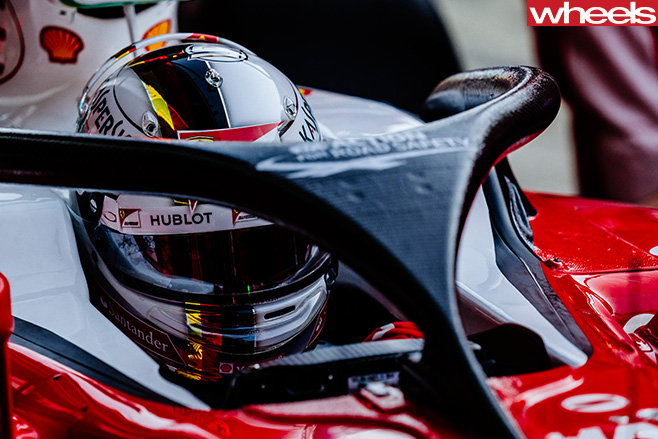
Some favour the extra head protection; others have spoken out against it.
The concept structure was fitted to Kimi Raikkonen’s Ferrari for an installation as the FIA works on introducing cockpit protection into the world championship for 2017.
The frame has a single column down the centre – the design solution that most of the teams and the FIA supported. The prototype halo apparatus is fixed to the car but the intent is to settle on a system that raises, allowing drivers to move in and out of the cockpit.
The halo is believed to weigh around six kilos.
This is one of many closed cockpit solutions considered over recent years, but the deaths of Marussia F1 driver Jules Bianchi and Indy car racer Justin Wilson in the past 12 months has ramped up the urgency to implement a practical system. (Both these drivers suffered fatal head injuries on track, although Bianchi died through the incompetence of track people – he crashed into a dangerously parked tractor.)
GP Drivers Association chairman Alex Wurz said recently that closed jet-fighter canopy designs were likely to come in the future.
But the fully closed canopy has been criticised due to issues with extracting drivers, and their likely propensity to fling debris high into the air.
Australia’s Daniel Ricciardo has been supported the push for greater head protection for drivers, and Wurz said the Red Bull Racing star isn’t alone in his views.
When current drivers were polled, 95 per cent said ‘yes, we have to go and make Formula One safer and go with the extra head protection’ Wurz declared.
One was Nico Rosberg, who posted on Twitter that halo promised to be a “massive safety improvement”.
But compatriot Nico Hulkenberg was quick to oppose the halo driver head protection system tested by Ferrari.
Talking to NBC, the Hulkenberg said F1 needed to retain an element of danger.
“Personally, I’m not a big fan of it,” he said. “I think safety and security in F1 and the standards are pretty high and very good. I would be happy to accept those risks and keep running as we are.”
The German was also no fan of the aesthetics: “I don’t like how it looks.”
Ricciardo’s retort came in the form of advice that “there’s no need to be a hero…”
RALLY: Latvala takes Mexico
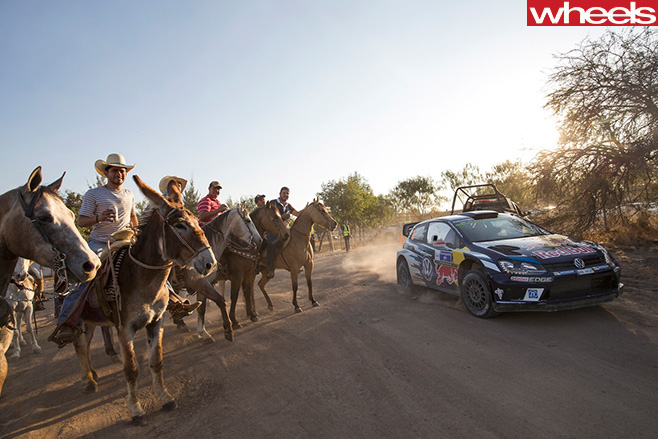
Latvala took a solid grip on victory on Saturday, winning six stages as he capitalised on having several rivals sweep the stages. To explain, the Finn started down the order after his dreadful start to 2016, — he was a non-finisher in both Monte Carlo and Sweden.
Latvala pulled out a useful 1m 36.8s lead over Ogier on Saturday, virtually icing the win then.
Ogier, ever the thinker, recognised he would struggle to overhaul Latvala and instead settled for a conservative approach to the finish.
The margin on Sunday afternoon was a large-by-WRC-standards 1m 05 00s.
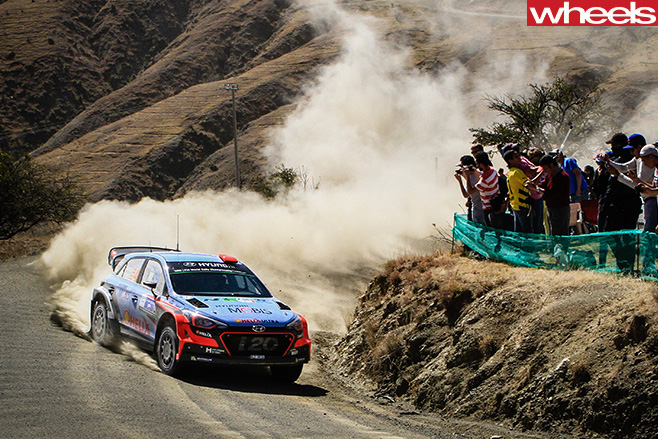
Hyundai Motorsport’s Dani Sordo (pictured below) came home third, but was hit with a two-minute penalty after he was found to have used 29 tyres, one more than the allowed number, elevating Ford’s Mads Ostberg to third. Haydon Paddon (Hyundai) finished fourth.
AMG is poised to launch an onslaught of new models as part of a plan to offer the most comprehensive performance car line-up in the world.
The German brand has doubled its global sales in the last two years, but company boss Tobias Moers has revealed aggressive expansion will soon result in AMG offering almost 50 difference models across its range.
Key to this will be the growth of AMG Sport, which sits below the regular AMG range in terms of performance similar to Audi’s two-tier S and RS hierarchy.
“We are hungry for more,” said Moers. “This year will see the biggest model offensive in the history of AMG.
“We want to offer the widest model range in the entire performance segment. In total we will top up our portfolio by at least 10 new cars, which means that our customers can choose from no less than 48 different AMG performance cars.
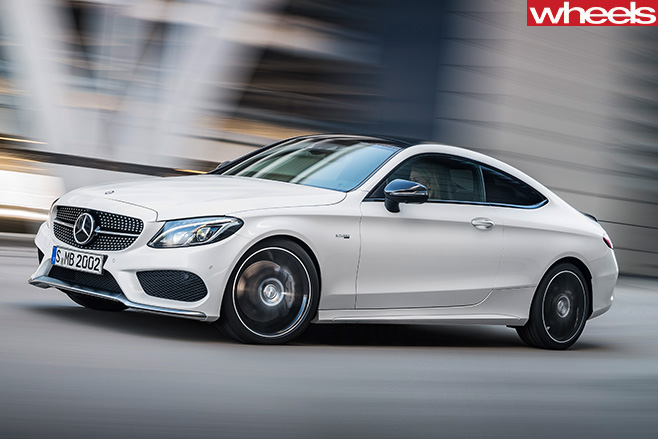
That member was confirmed by Wheels as the track-focused AMG GT R, which will make its debut at the Goodwood Festival of Speed in June. A convertible and even faster Black Series variant are also set to join the GT family in coming years.
Moers also revealed AMG would release a C63 version of the new Mercedes-Benz C-Class Cabriolet, which uses a three-tier cloth roof that can be opened, and closed, in 20 seconds.
Similar its hardtop sedan and coupe siblings, the C63 Cabriolet will be powered by AMG’s 4.0-litre twin-turbo V8 that produces 375kW/700Nm.
THE 2017 Renault Megane Estate wagon has surfaced at the Geneva Motor Show, wearing a Sport Tourer name and featuring a class-first all-wheel steering option on the upper-spec GT.
Based on the BFB fourth-generation hatch of the same name due in Australia later this year, the KFB Megane Estate (as it’s likely to be known as in Australia) is pencilled in for a mid-to-late 2017 release – just in time to take on the still-secret Mk8 Volkswagen Golf.
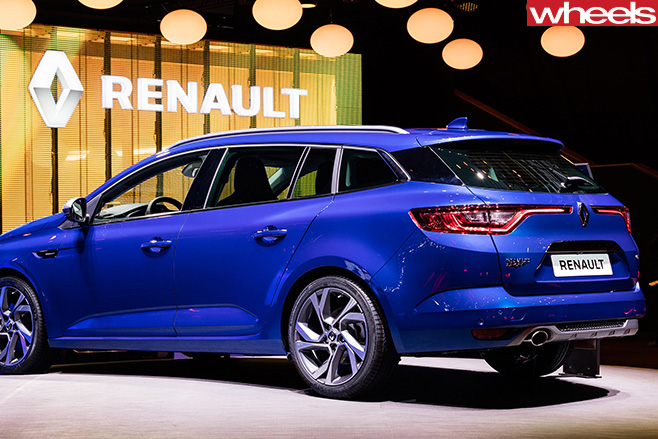
Sitting on the same CMF Common Modular platform underpinning a number of Renault-Nissan Alliance models, such as the Nissan Qashqai and X-Trail, the 2712mm wheelbase is shared with the Megane hatch. In contrast, the current Golf sits on a 2620mm wheelbase.
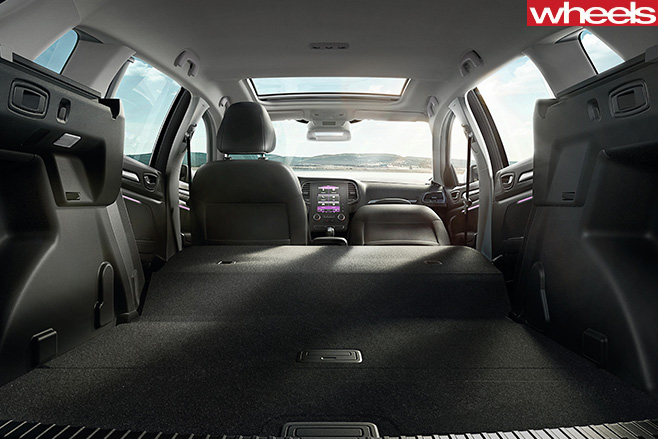
Renault is also making noise about comfort, with improved legroom, better ergonomics, and more naturally raked rear seatbacks.
Powertrain choices will mirror those for the hatch, including a range of 1.2- and 1.6-litre TCe turbo petrol and 1.6-litre DCi turbo-diesel engines, with a mix of either a six-speed manual or EDC dual-clutch transmission.
California. A land where celluloid dreams are built or buried, the technology capital of the world, Uncle Sam’s most populous state, and the name of Ferrari’s first turbocharged road car since the F40 almost 30 years ago.
With its Mediterranean climate, winding coastal highways and challenging canyon backroads, where better to test Maranello’s new California T, a sports-luxury GT that ushers in a new era for the world’s most famous fast car maker?
Sadly, the MOTOR budget doesn’t stretch to trans-Pacific trips, so we set our sights a little closer to home. Ideally, somewhere with a similar mixture of sun, surf and sand to the US West Coast, and given the California T’s turbocharged nature, a place where artificial enhancement is a way of life. Welcome to the Gold Coast.
Already in Brisbane, I’ve time to kill, which is less of an issue with a Ferrari showroom to wander around. A pair of 458 Speciales ooze perfection, while a Rosso-with-tan-interior 599 GTB looks conspicuously good value at $280,000. And it seems the passing of a decade has turned the 612 Scaglietti from an ugly duckling into a Prancing Swan, especially in black.
Anyhow, to business. A walk around the Cali T with sales executive Franco Giammattei highlights that for all Ferrari’s recent giant strides in performance and handling, it’s the interior where perhaps the greatest advancement has taken place. Peering inside the aforementioned 599 – only one generation old, remember – reveals HVAC controls that would appear cheap and tacky on a base model Fiat Punto, let alone Ferrari’s flagship GT.
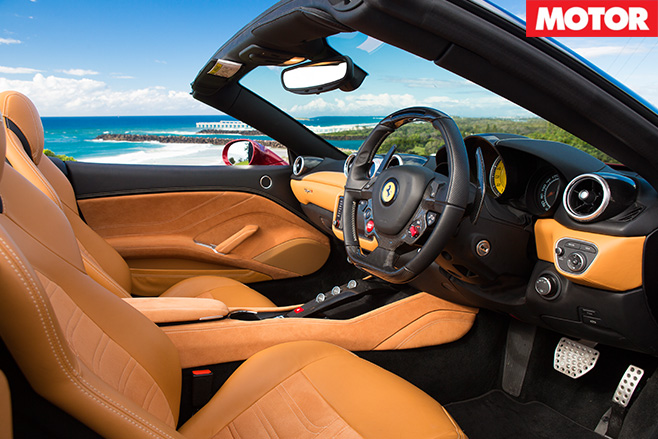
There’s a beautiful aroma of leather, everything you touch appears solid, and the open cabin architecture creates a spacious feel. So often the driver is hemmed in to the point of claustrophobia, but the Cali T is a welcome exception.
The driving position is excellent, however the optional ‘backbone’ chairs themselves are very firm with little under-thigh support, though they’re certainly better than the rear pews, which would struggle to accommodate even small children in any comfort.
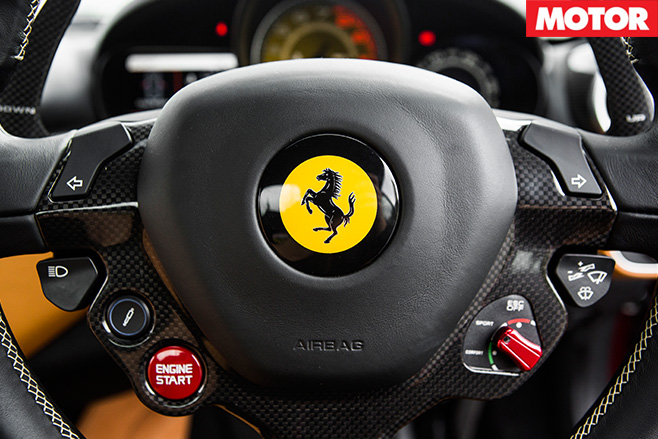
Press and hold the red lozenge and the 3.9-litre twin-turbo V8 fires into life with a blare. We’ll come back to the controversial issue of noise, but thanks to their flat-plane crank configuration Ferrari V8s have never sounded particularly inspiring at idle.
With snapper NJ finally turning up, it’s an hour’s trek south to Surfers Paradise, but the California T makes light work of the motorway haul. The new California is sharper and more focused than its predecessor, but Ferrari’s latest SCM3 magnetorheological dampers provide excellent ride quality, so it’s worth ticking the $8970 ‘MagneRide’ box.
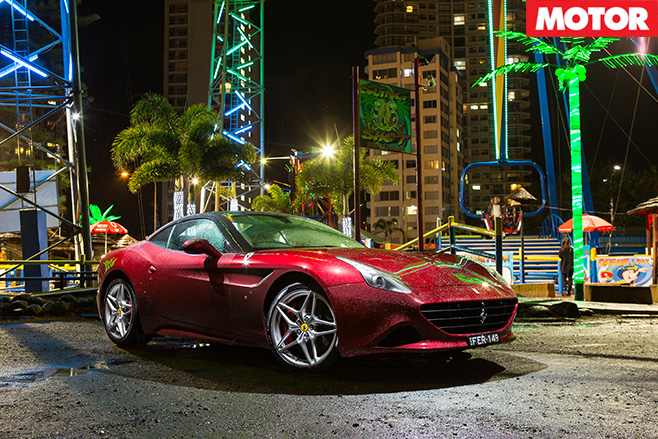
This relaxed gait allows miles to disappear quickly, though as is often the problem with fast cars on Australian roads, the California can make them disappear a lot faster. With a maximum of 755Nm available in seventh gear, it only takes a slight relaxation of your foot to add 20 or 30km/h without really noticing.
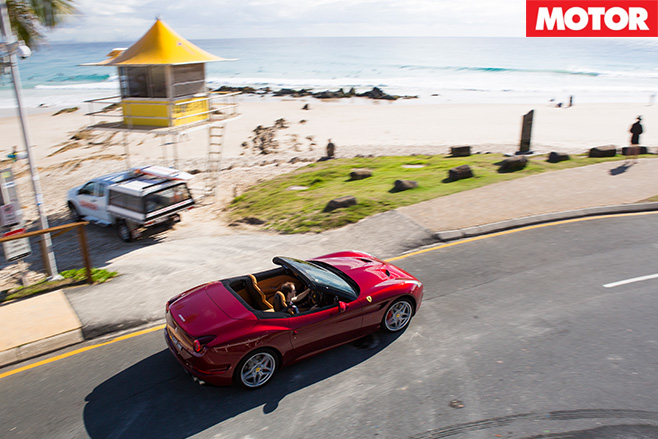
It’s in Surfers Paradise that the ‘Ferrari effect’ begins to make itself known. This new California is a much more attractive shape than its predecessor – lower, leaner and more aggressive – but without that exotic supercar ‘wedge’ profile, I assumed it would more or less fly under the radar.
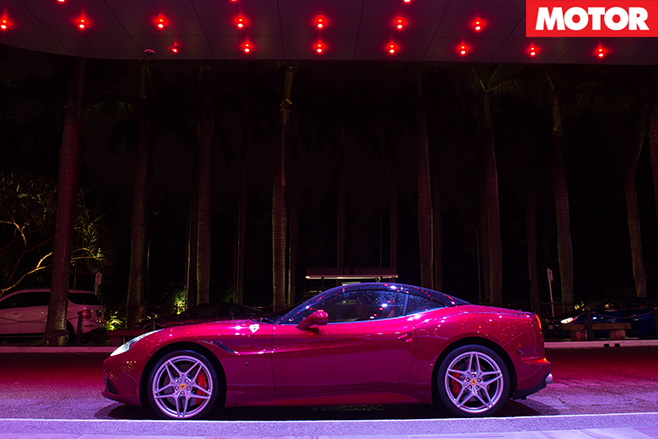
Shuffling back and forth for Jacobs’ camera does highlight a couple of drivability issues with Ferrari’s seven-speed dual-clutch ’box. For smooth take-offs, it really must be treated like a manual, with a gentle introduction of the throttle to allow the clutches to take up.
Once rolling it shuffles gears of its own accord well enough, though every now and then the first-to-second change engages with a thump and it occasionally feels like the computer doesn’t provide enough revs on downshifts.
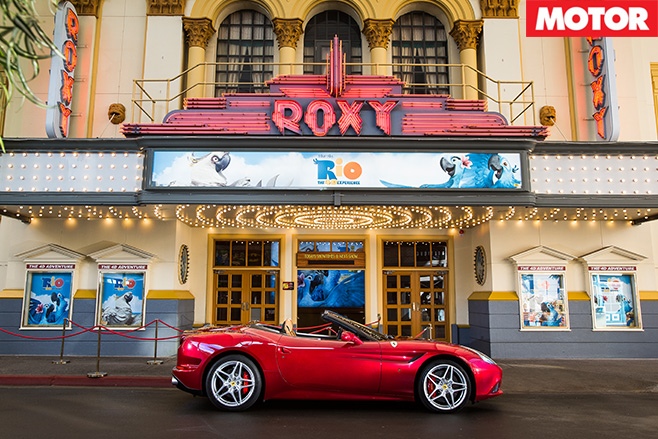
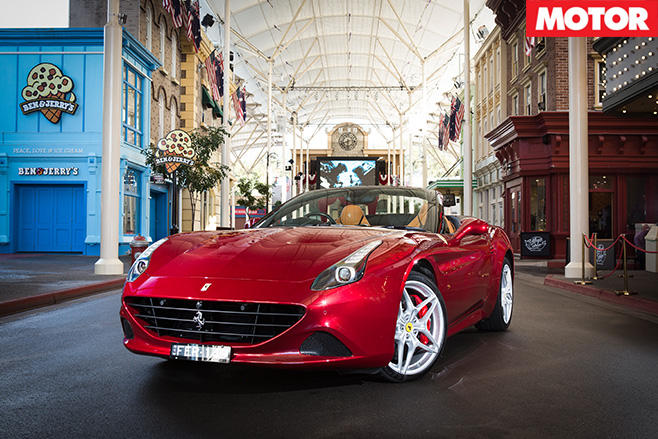
Thankfully, the next morning dawns bright and clear, as today we leave the high rises behind and head for the Gold Coast hinterland, but first it’s a quick stop at Movie World for more photography (California, Hollywood, you get the gist) before it opens to the screaming masses that delayed photographer Jacobs’ trip north yesterday.
Our route takes us south over the NSW border then turns inland into the sugar cane plantations surrounding Murwillumbah.
The latter feels like a step too far in someone else’s $400K Ferrari at this early stage, but the Sport ESC calibration is ridiculously cautious, removing large portions of the 412kW the minute it detects any hint of wheel slip.
It’s frustrating as it’s abundantly clear there’s plenty of talent in the California chassis. At over 1700kg it’s no featherweight, yet the car feels agile and light on its feet with plenty of lateral grip, though the steering is both fast and very light in its weighting, which means your inputs need to be very precise to not upset the car on turn-in. Likewise, the massive Brembo carbon-ceramic brakes are immensely powerful, but their sensitivity requires a delicate foot to avoid passengers headbutting the dash.
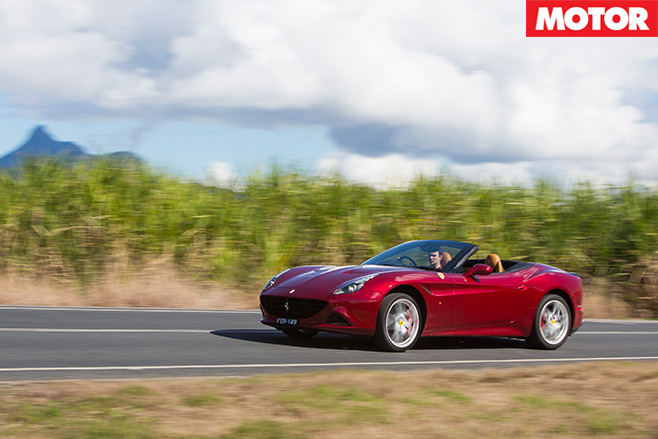
The California T mightn’t be the performance star of Ferrari’s range, but it’s still massively fast and it’s surprising how much of the speed can be used on these tight, twisty and bumpy roads. So often these new-gen turbo cars – BMW’s M models come to mind – are a real handful due to the massive torque they produce, but while the California T’s twin-turbo V8 produces a massive 755Nm, the full hit is only available in seventh gear.
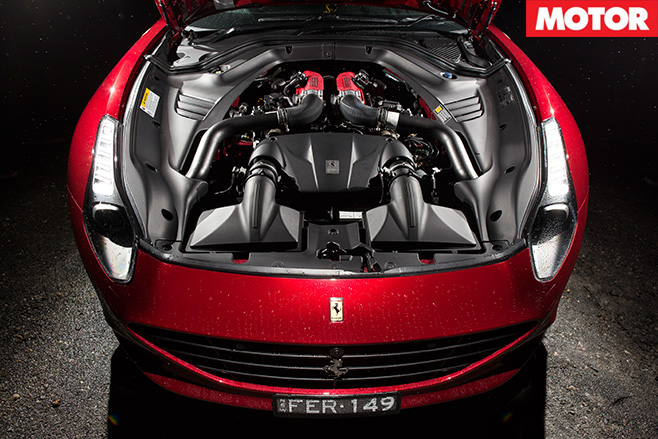
It works brilliantly, the rear tyres refusing to yield even exiting corners under full throttle in second gear, but it does result in the odd sensation of linear acceleration, the push in the back feeling equally strong in third due to the extra torque available.
Ferrari has gone to extraordinary lengths to replicate the sensation of a naturally aspirated engine and claims “instantaneous throttle response”. In reality, it’s not quite as crisp as the best atmo engines, but the biggest giveaway it’s not breathing pure atmosphere is simply the quantity of performance available.
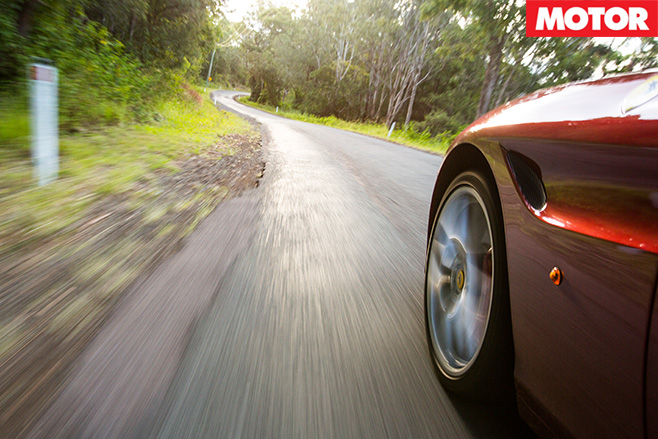
Perhaps most importantly, however, there is a reward to extending the 3.9-litre twin-turbo V8 to its 7500rpm cutout; in fact, there’s plenty of reward in driving the California T harder than most owners ever will. At road speeds understeer doesn’t appear to exist, and it takes real commitment or provocation for the rear to break free.
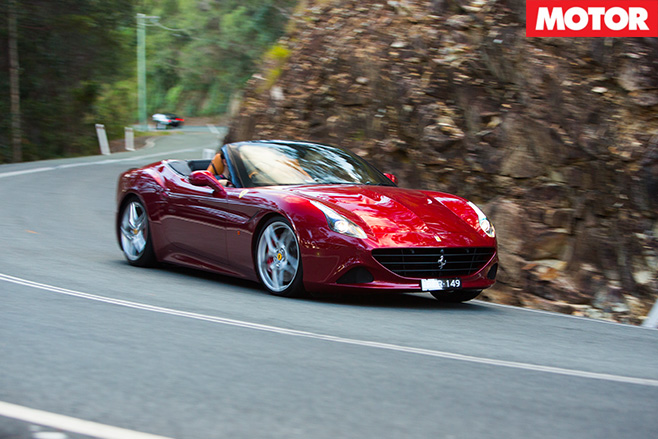
A 911 Turbo S convertible would offer a much sterner test dynamically, but to the world at large it’s just another 911, whereas deserved or not, a Ferrari still carries an air of rock star about it.
At the outer edges of the handling envelope a few cracks do appear, however. Through large compressions the nose will occasionally kiss the ground with a wince-inducing scuff, and it can be difficult to feel where the California’s limits lie, primarily due to the overly light steering. A version of the 488’s spookily prescient Side Slip Control would provide a handy safety net, and no doubt will be included on the next-gen California T due in 2017.
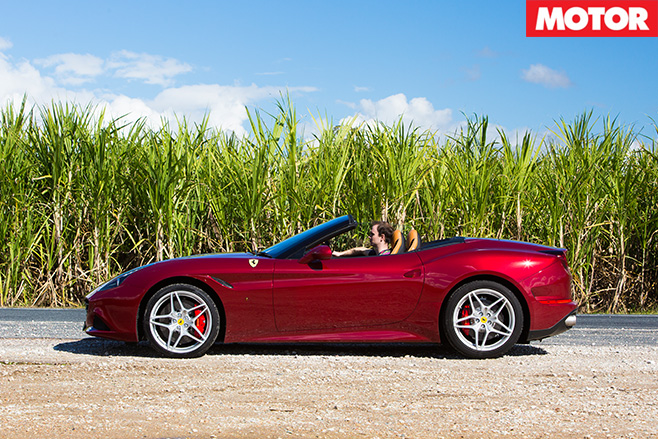
An extra $2700 for red brake calipers, $1400 for sports exhausts and $1255 for a yellow tachometer does seem a little excessive, however. Still, it doesn’t seem to deter customers and goes a long way to explaining Ferrari’s industry-leading profit margins.
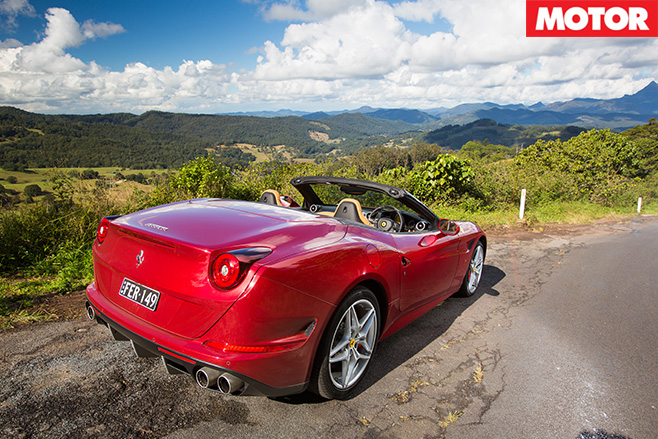
4.5 out of 5 stars
Specs: Ferrari California T Body: 2-door, 2-seat convertible Drive: rear -wheel Engine: 3855cc V8, DOHC, 32v, twin-turbo Bore/stroke: 86.6 x 82.0mm Compression: 9.4:1 Power: 412kW @ 7500rpm Torque: 755Nm @ 4750rpm (seventh gear) Power/weight: 242kW/tonne Transmission: 7-speed dual-clutch Weight: 1702kg Front suspension: double wishbone, coil springs, anti-roll bar Rear suspension: multi-links, coil springs, anti-roll bar L/W/H: 4570/1910/1322mm Wheelbase: 2670mm Tracks: 1630/1605mm (f/r) Steering: electrically-assisted rack-and-pinion Front brakes: 390mm ventilated discs, 6-piston calipers Rear brakes: 360mm ventilated discs, 4-piston calipers Wheels: 20.0 x 8.0-inch (f); 20 x 10.0-inch (r) Tyres: 245/35 ZR20 (f); 285/35 ZR20 (r) Pirelli P Zero Price as tested: $549,387 ($409,888 MRP) Pros: Hugely fast; improved looks; handling precision Cons: Needs more feedback; scary option pricing
We walk you through the hottest new metal shown at Geneva for 2016.
FROM the $5 million Bugatti Chiron to the production version of the Toyota CH-R – the Japanese carmaker’s new small SUV, the 2016 Geneva Motor Show was the usual spread of the outlandish and the practical.
The Bugatti Chiron began life as the Vision Gran Turismo Concept shown at the 2015 Frankfurt Motor Show. It now offers 25% more grunt than a Veyron and boasts a V-Max exceeding 440km/h and looks fantastic. At the other end of the spectrum, the Toyota CH-R has been toned down from the original concept but still sports some dramatic styling cues. The hybrid small SUV is motivated by a 1.2L four-cylinder direct-engine turbo. We also take a peek at Audi latest weapon in the small SUV market, the Audi Q2.
In between was everything from Porsche’s most focused 911 and the all-new V12-powered Aston Martin DB11 to the latest addition to Audi’s SUV family and Maserati’s new Levante. The Aston DB11 is brand new from the ground up with an all-new 5.2L V12 turbo-charged with a claimed output of 448kW. The Porsche 911 R is a stripped-down special edition made up of body panels from the GT3 RS, equipped with a proper manual and plastic windows.
So come with us as we take a quick tour of the Europe’s most influential motor show to show you the hottest new metal on offer.
Check out all the latest news as revealed at the 2016 Geneva show here.
ASTON Martin’s aggressive range overhaul will launch a new car every nine months, with a new Vantage, Vanquish and SUV all green lit for production.
Also confirmed is a 600-750kW all-electric version of the four-door Rapide.
Aston’s expansion started this week, with the Geneva reveal of its new DB11 coupe, which sits at the head of a very busy schedule.
“This is the first car of our transformation,” Aston’s boss Andy Palmer told Wheels in Geneva. “And from here we more or less launch a new derivative every nine months. It’s a completely different cadence to the past where you had to wait many years for new models.”
Next up is a replacement for the Vantage, which will use a cut-down version of the DB11’s all-new chassis and introduce a new 4.0-litre twin-turbo V8 built by Mercedes-Benz’s go-fast division, AMG.
“Then we’ll do the Vanquish and the DBX SUV (pictured, below),” said Palmer.
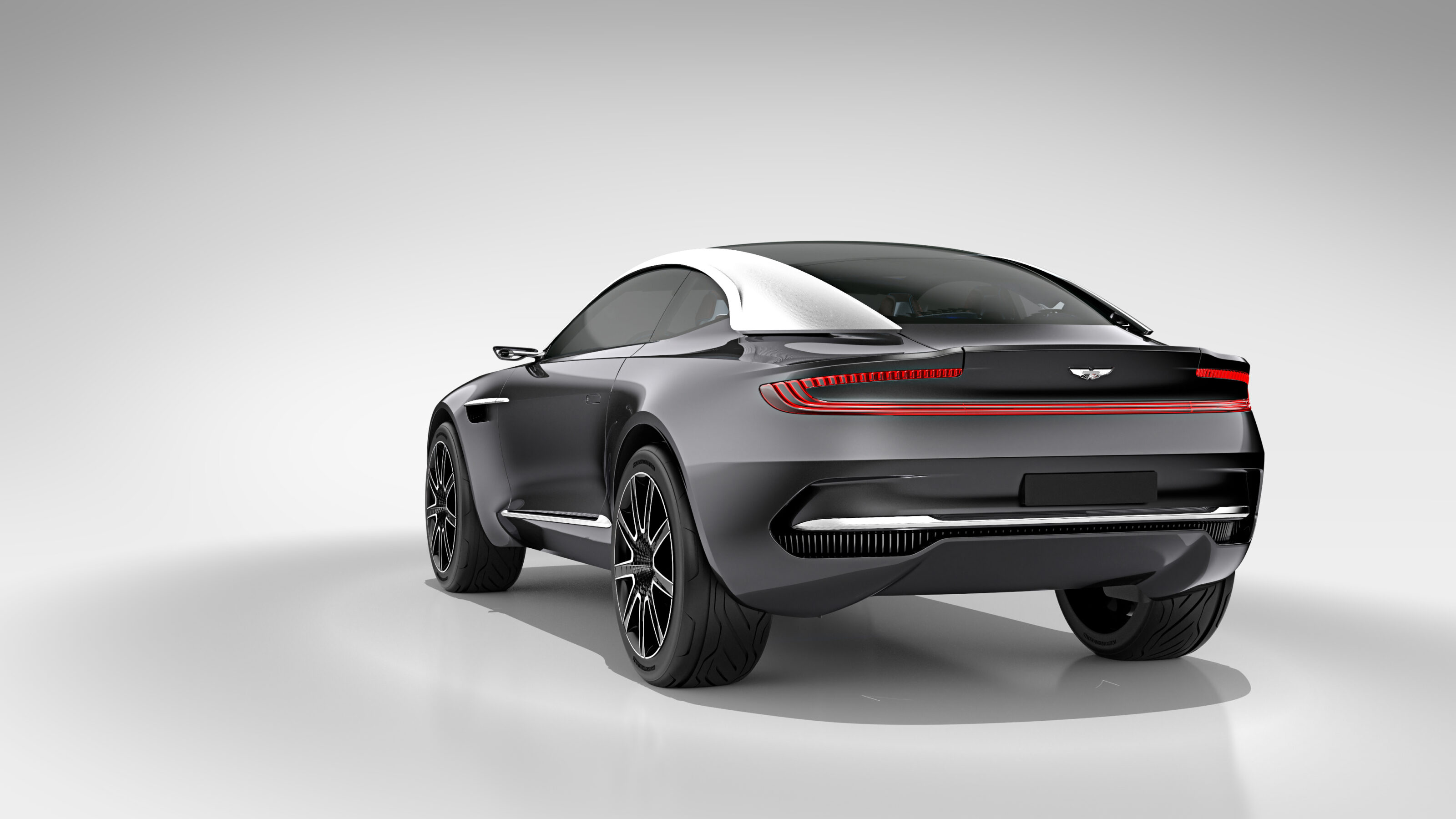
Vanquish is tipped to launch in 2018 and will essentially be a harder, faster version of the DB11. That means an even more powerful execution of the DB11’s new 400kW/700Nm 5.2-litre twin-turbo V12.
DBX will arrive in 2019, with Aston’s first SUV pitched to attract more female buyers and expected to use an electric drivetrain. Aston used last year’s Geneva show to reveal the DBX’s styling in concept car form.
“We’re trying to cover all the bases,” said Palmer. “As opposed to being in a very niche part of the business, which is subject to the turbulence and the ups and downs of a volatile market, if we cover all markets and basically all the bases then you’re less susceptible to that kind of turbulence.
“This is not a pipe dream. The plan is approved, the money’s in the bank and now we’re in a process of rolling the cars out. So it’s not about selling a dream, we’ve got everything we need to do those cars.”
Palmer confirmed that Aston would reignite the Lagonda nameplate after the DBX’s launch, and reaffirmed his commitment to the four-door Rapide.
“The Rapide’s future is electric,” he said. “It’s an important car, especially in China for us. But obviously, ultimately Rapide buyers will tend to transfer to the DBX. But it’s a great car still, so it’s our intention that it will become the platform for our electric future.”
Aston inked a deal with Chinese company LeEco last week to jointly develop the British brand’s first electric vehicle, the RapidE.
“We haven’t revealed any performance figures yet, but it’s pure electric and because we’re using the current architecture, there will be batteries in the engine bay and in the transmission tunnel,” said Palmer. “We have a concept that we’ve done with Williams Engineering and we’ve proven that we can get good weight distribution and good power that we’re looking for.
“We’re not looking for the ultimate power out of that car, though we are working on a concept car that will demonstrate the equivalency of 800-1000hp (600-750kW) just to demonstrate what can be done. So Rapide does have a future, yes.”
IT MAY be years behind most competitors, but the Volkswagen T-Cross Breeze is the first concrete proof that Wolfsburg is about to dive headfirst into the small SUV game.
Based on the next-generation Volkswagen Polo’s MQB-0 underpinnings, the production version of the T-Cross is expected to debut later this year or early in 2017 as a conventional hard-topped wagon crossover rather than a four-seater convertible answer to the Range Rover Evoque Cabrio.
Australian sales aren’t likely to kick off until 2018.
Interestingly, it will be closely related to the all-new Audi Q2 that is one of the stars of the Geneva Motor Show, though no visible panels inside or out will be shared between the two Volkswagen Group marques.
While the rear doors and turret from the future production model are missing, the T-Cross Breeze still provides plenty of hints as to what the Wolfsburg brand will once day pitch against the CX-3 and Honda HR-V – not to mention the Toyota C-HR that will usher the maker into the B-segment SUV sector.
The proof is in the tape measure. At 4133mm long, 1798mm wide, and sitting on a 2565mm wheelbase (some 35mm short of the Q2’s), the T-Cross Breeze sits bang in the middle of the small SUV sphere.
Even Volkswagen’s boss of design, Klaus Bischoff, cannot hide his enthusiasm for the concept’s potential.
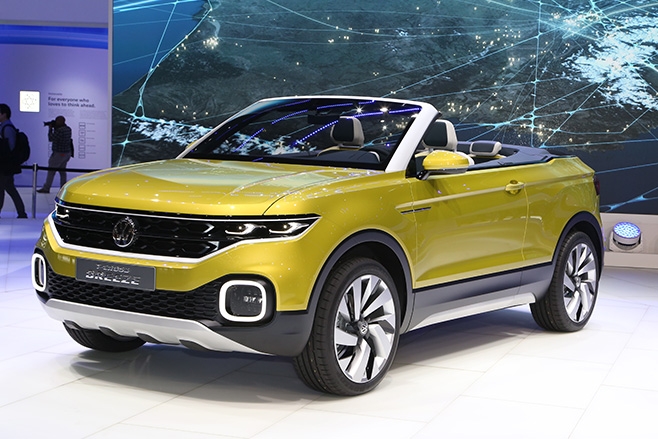
“The T-Cross Breeze is a teaser for the most compact sport utility vehicle that Volkswagen plans to make – and the nucleus of a new SUV and convertible design in the compact sector,” he said in a statement accompanying the concept’s unveiling this week.
Likely production cues include the new corporate look Y-shaped nosecone with dual LED slimline headlights, and an oversized VW roundel mounted on a horizontal bar; wide wheelarches bookending a scalloped side feature; and T-shaped tail-lights set within a clamshell valance.
A peek inside reveals what the as-yet unnamed small SUV’s dashboard architecture will look like, as well as the direction the company is going with what it calls the ‘human machine interface’. That said, it is certain five, not four, people will be accommodated in the version that comes off the production line.
Under the T-Cross Breeze’s bonnet is the Volkswagen Group’s fine 1.0-litre three-cylinder direct-injection turbo TSI petrol engine, delivering an impressive 81kW of power and 175Nm of torque, and driving the front wheels via a seven-speed DSG dual-clutch transmission. A diesel is also sure to be in the mix.
Tipping the scales at a reasonably lightweight 1250kg – within a cooee of the CX-3 – it can scoot to 100km/h from standstill 10.3 seconds, and exceed 190km/h; easing off the throttle means a 5.0L/100km fuel use figure is possible.
The T-Cross Breeze will be one of four new SUVs coming to a Volkswagen dealership near you, starting with the second-generation Tiguan out midyear, and followed in some markets by a long-wheelbase version with seven-seat capability.
Following that is a redesigned Touareg sharing the new Audi Q7 MLB-Evo architecture, as well as yet another crossover said to be about the size of the Volkswagen Golf, and previewed by the T-Roc concept at the 2014 Geneva Motor Show.
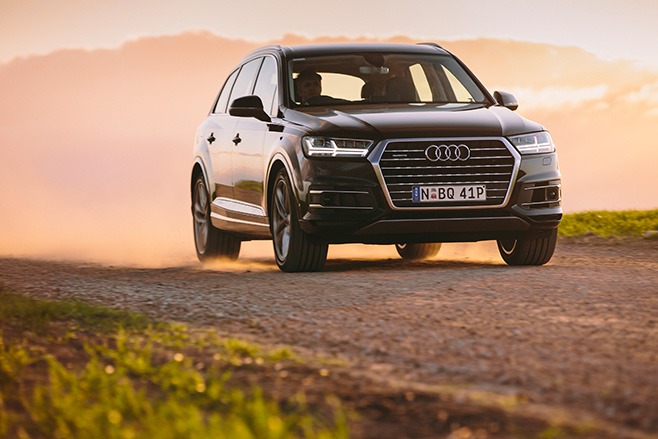
AUDI Q7 Variant: 3.0 TDI Quattro Price: $103,900
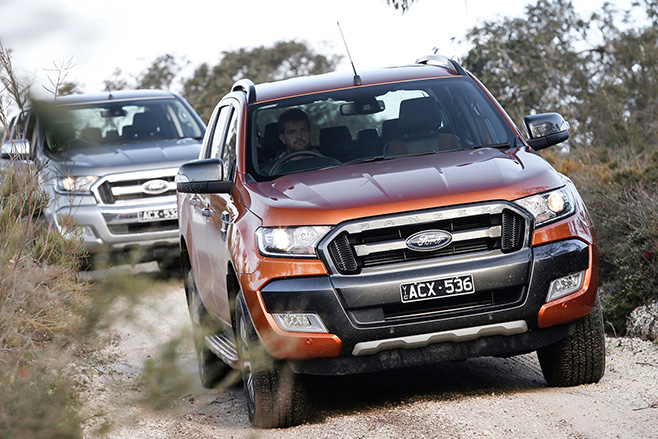
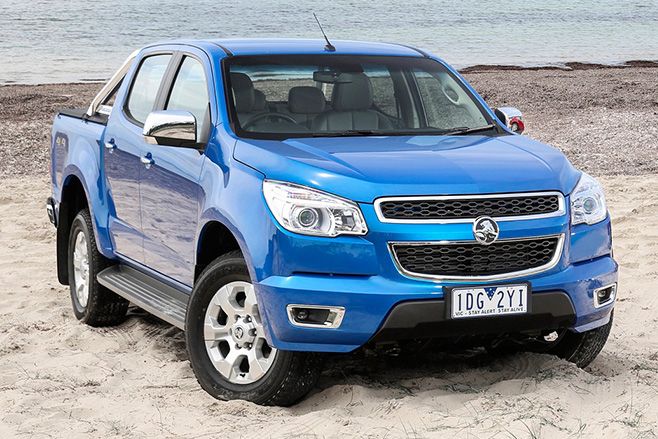
HOLDEN COLORADO Variant: DX, LS, Ls-X, LT, LTZ, Z71 Price: $28,640 – $57,190
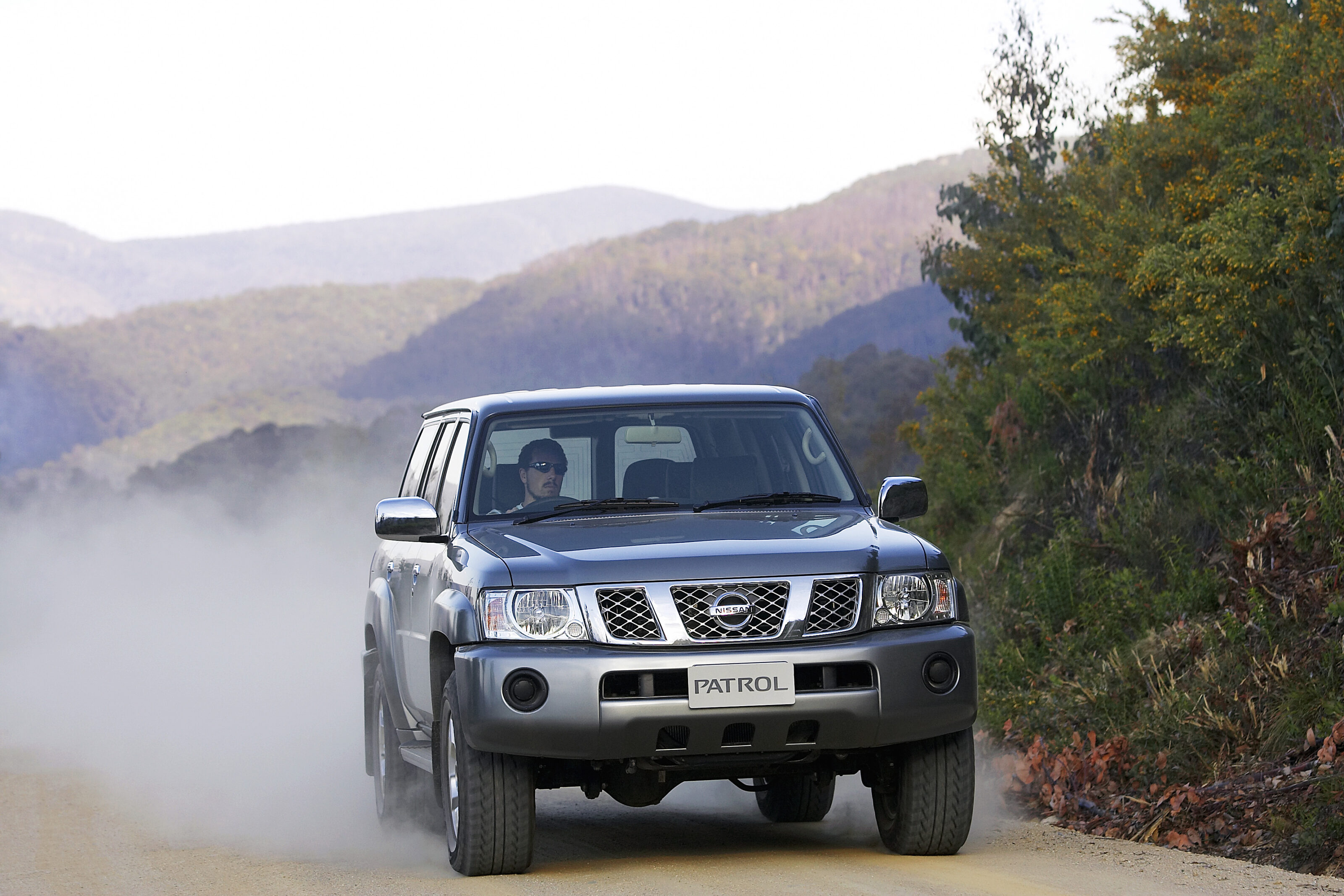
NISSAN PATROL Variant: Ti and Ti-L Price: $69,990 – $86,990
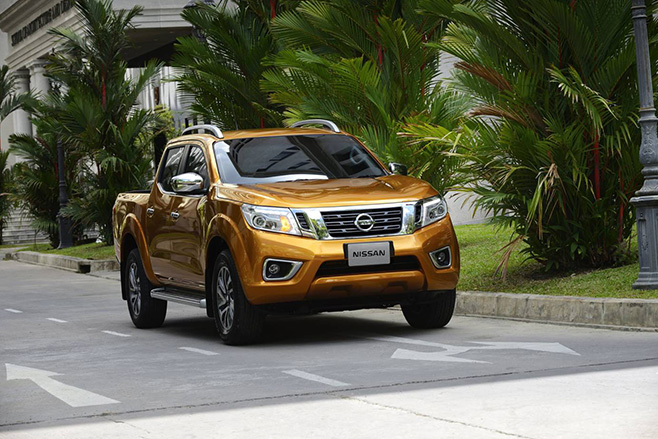
NISSAN NAVARA Variant: DX, RX, ST, ST N-Tec, ST-X Price: $25,990 – $54,490
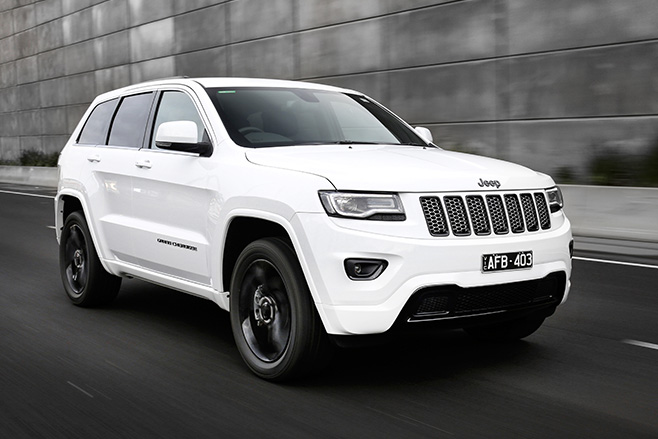
JEEP GRAND CHEROKEE Variant: Limited, Overland, Summit, Summit Platinum Price: $64,000-$88,000
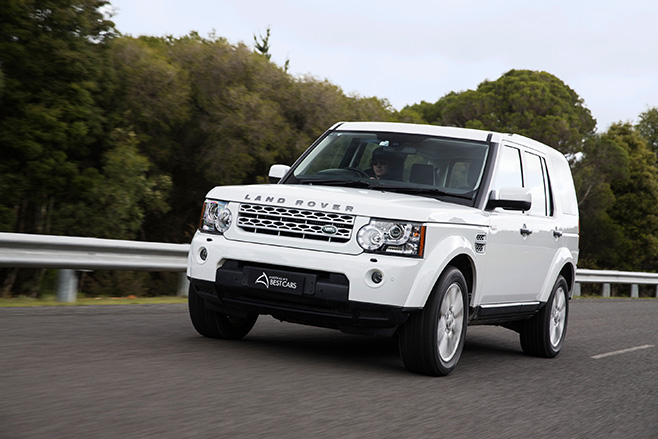
LAND ROVER DISCOVERY 4 Variant: 3.0 SCV6 HSE, 3.0 SCV6 SE, 3.0 TDV6 Price: $68,940 – $95,340
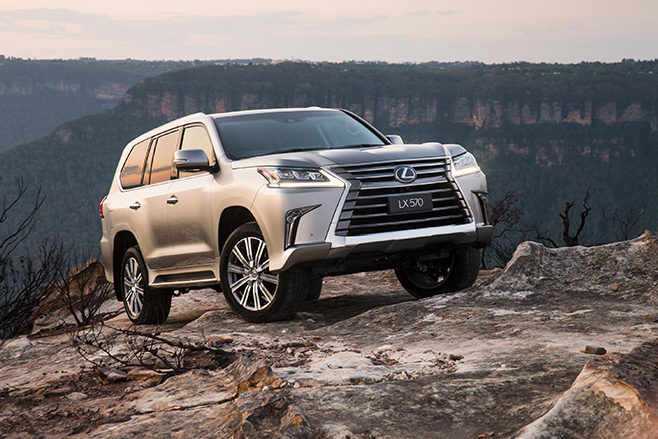
LEXUS LX570 Variant: LX570 Price: $140,500
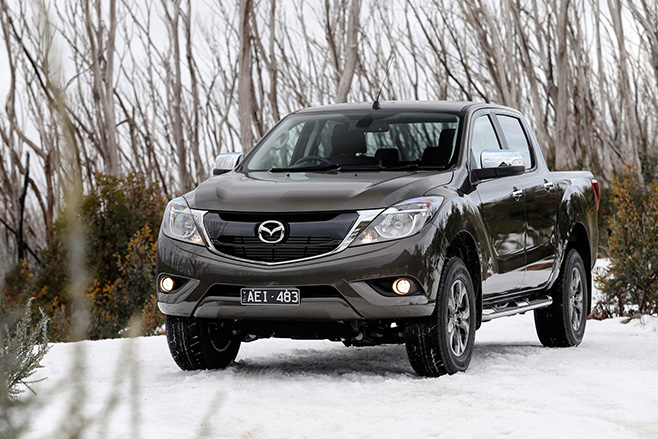
MAZDA BT50 Variant: GT (4×4), XT (4×2), XT (4×4), XTR (4×2), XTR (4×4) Price: $28,815 – $53,790
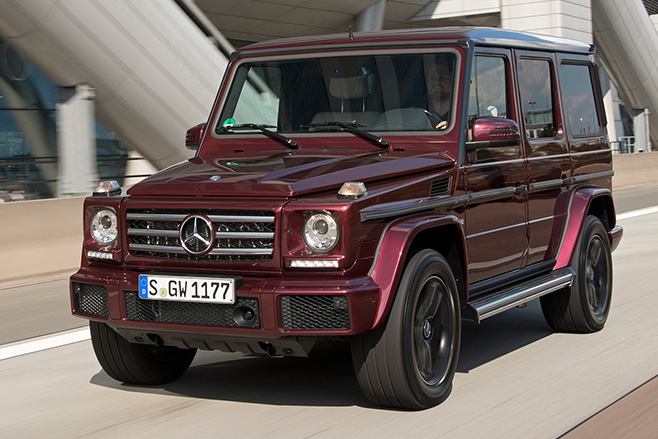
MERCEDES-AMG G Variant: 63, 63 Edition 463 Price: $233,900 – $255,400
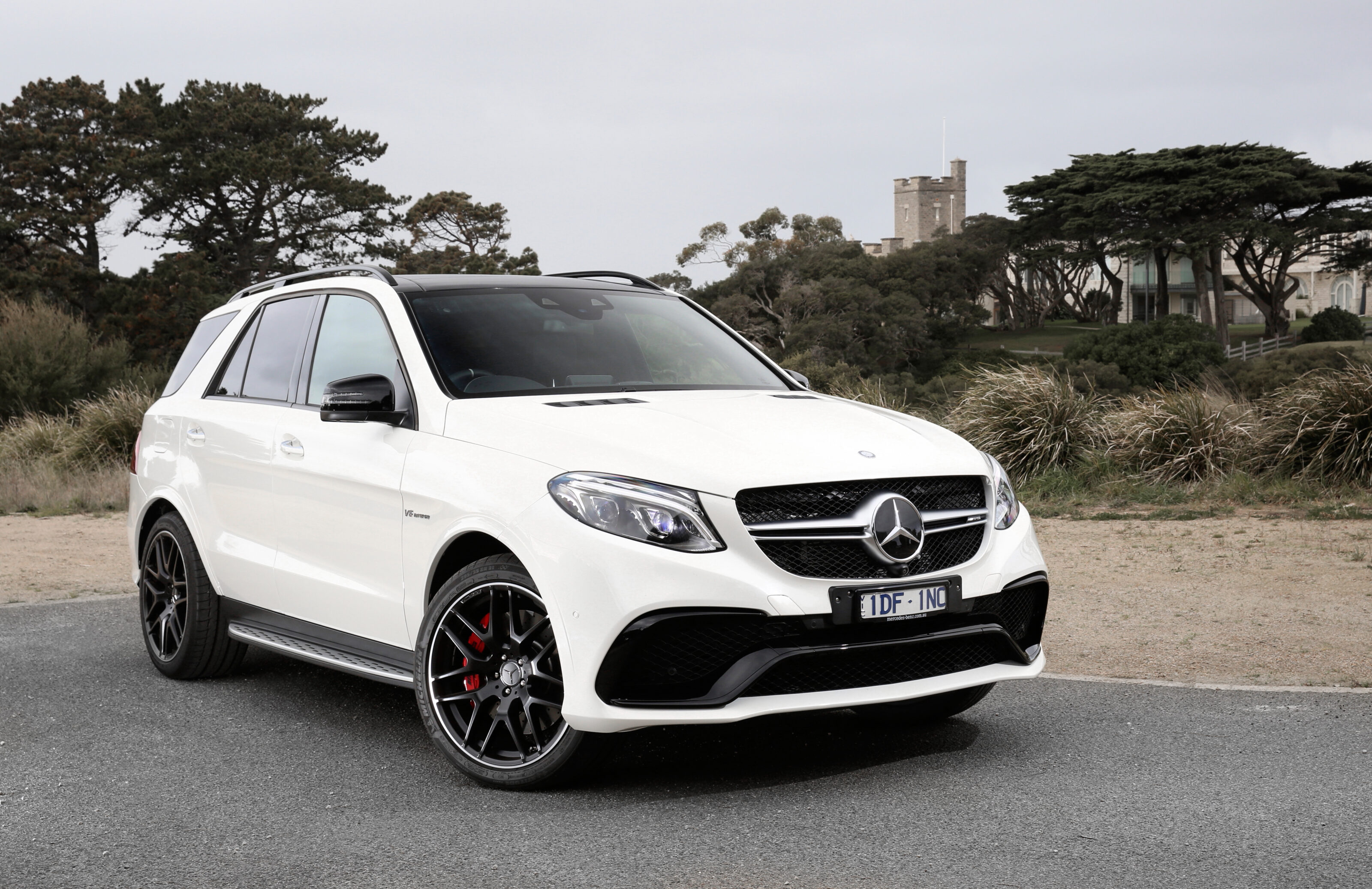
MECEDES-AMG GLE Variant: 63 S 4Matic Price: $198,900
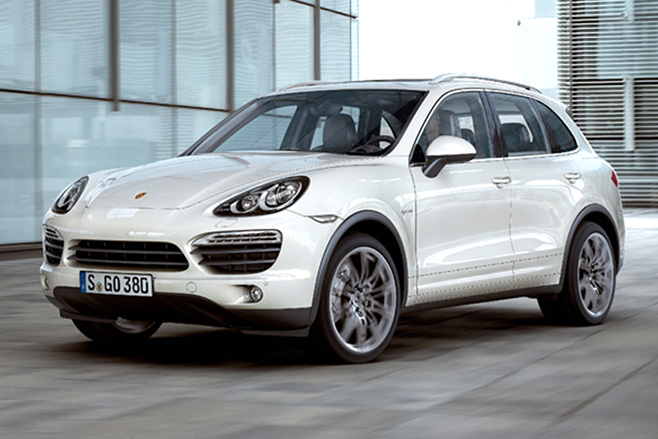
PORSCHE CAYENNE Variant: Diesel, GTS, S, S Diesel, S E-Hybrid, Turbo, Turbo S Price: $106,100 – $284,700
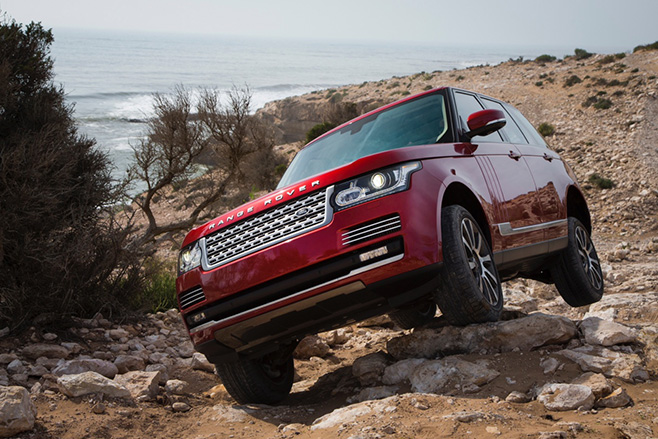
RANGE ROVER Variant: Autobiography 5.0 V8 SC, Autobiography 5.0 V8 SC LWB, Autobiography SDV8, Autobiography SDV8 LWB, Sport 3.0 SDV6 Autobiography, Sport 3.0 SDV6 HSE, Sport 3.0 SDV6 HSE Dynamic, Sport 3.0 SDV6 SE, Sport 3.0 TDV6 S, Sport 3.0 TDV6 SE Price: $91,800 – $342,910
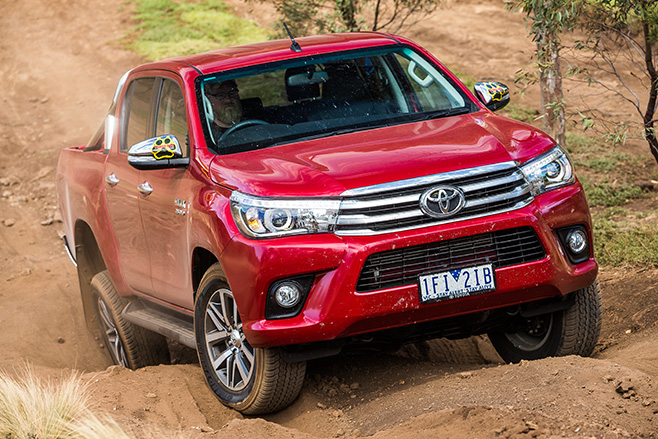
TOYOTA HILUX Variant: SR, SR5 Price: $39,490 – $53,990
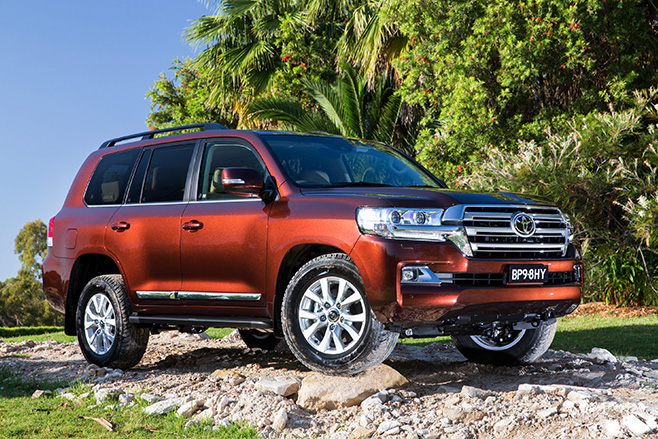
TOYOTA LANDCRUISER Variant: GX (4×4), GXL (4×4), Sahara (4×4), VX (4×4), Workmate (4×4), Workmate (4×4) 11 Seat, Workmate (4×4) 3 Seat Price: $56,990 – $118,500
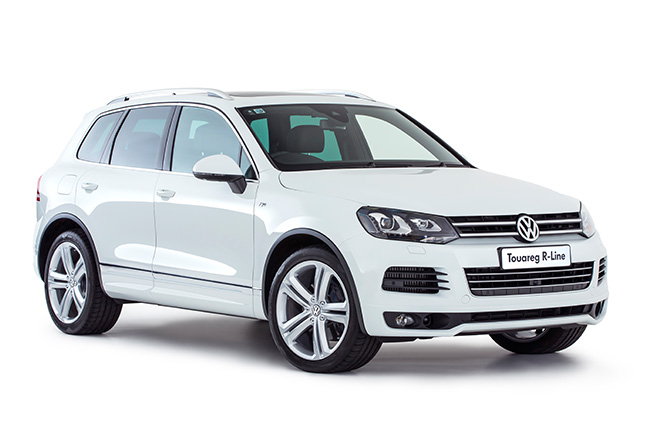
VOLKSWAGEN TOUAREG Variant: 150 TDI, 150 TDI Element, V6 TDI, V8 TDI R-Line Price: $67,990 – $114,990
It’s not every day an example of Australia’s most revered muscle car, the Ford XY Falcon GT-HO Phase III, pops up for sale.
However, it’s always an interesting barometer of the Australian muscle car market when one does, as it tends to set the ceiling for what collectors are prepared to pay for an Aussie classic – with a few exceptions such as the HRT 427 Monaro.
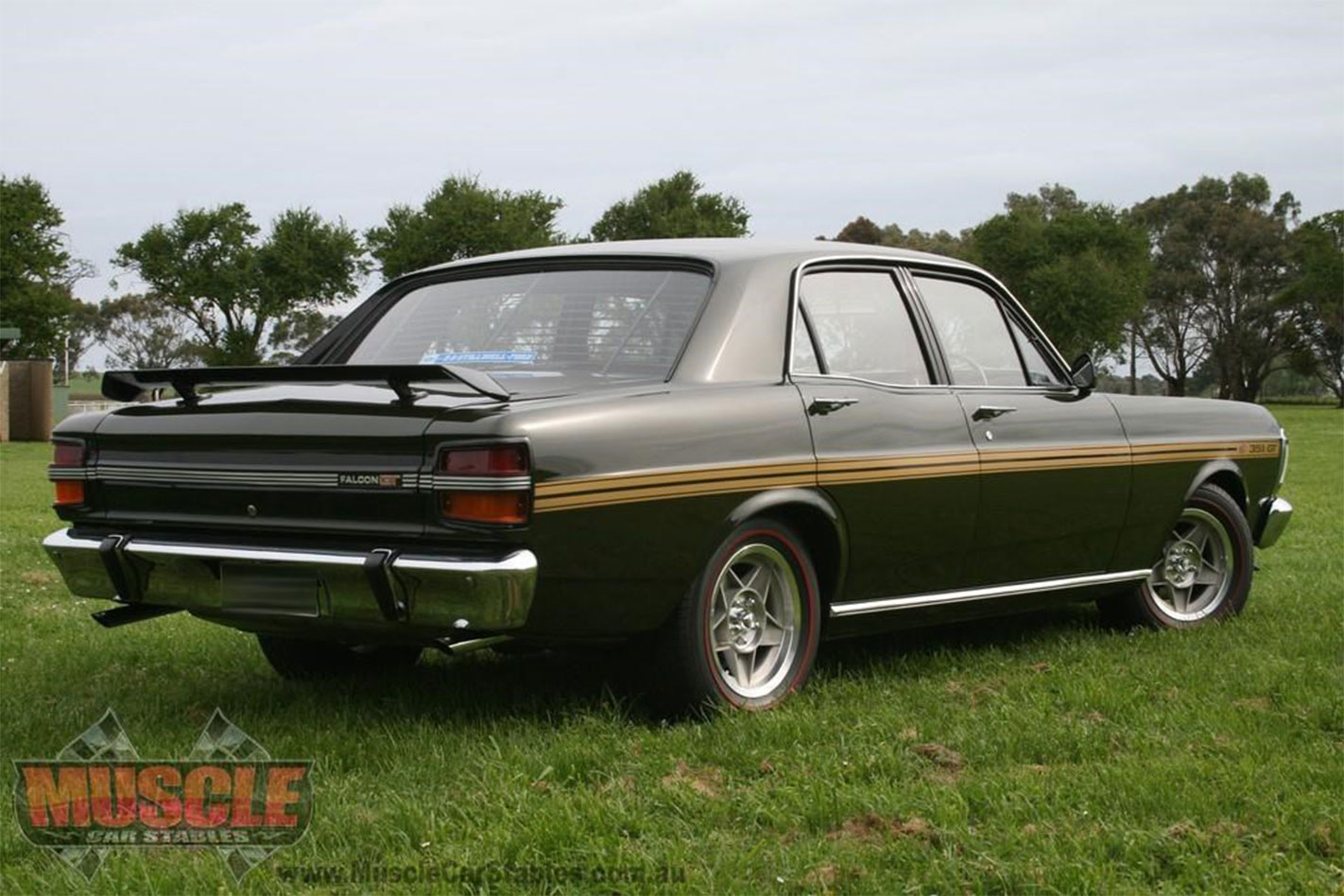
Ford supposedly built 300 Phase IIIs and the example offered by NSW dealer Muscle Car Stables is one of 23 built in Monza Green; trainspotters will be keen to know the rarest colours were Onyx Black and Vintage Burgundy metallic with a single example each.
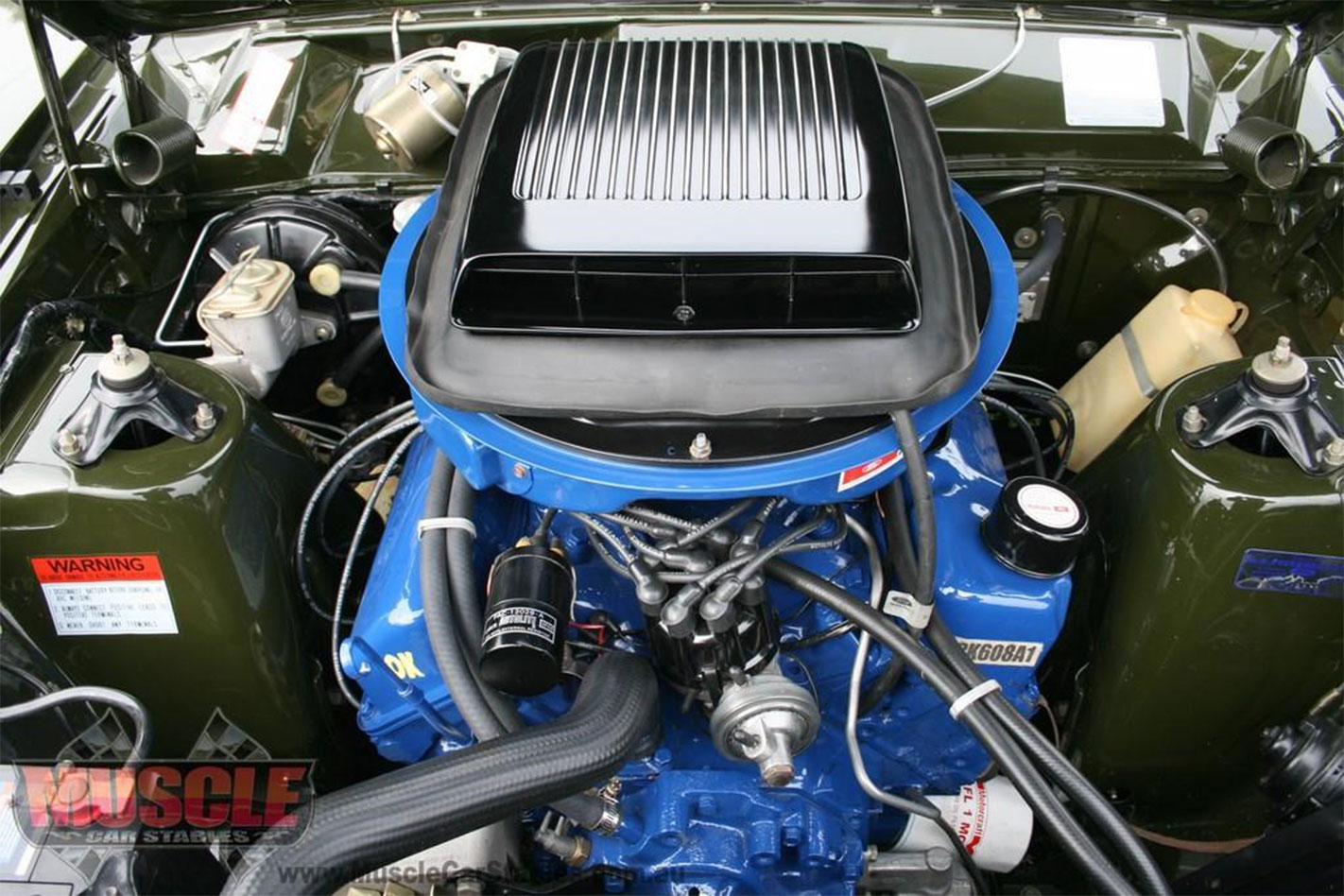
According to Muscle Car Stables, this HO was originally purchased by the late Bib Stillwell, a Melbourne racing driver and car and aviation dealer, and shows 88,000 miles.
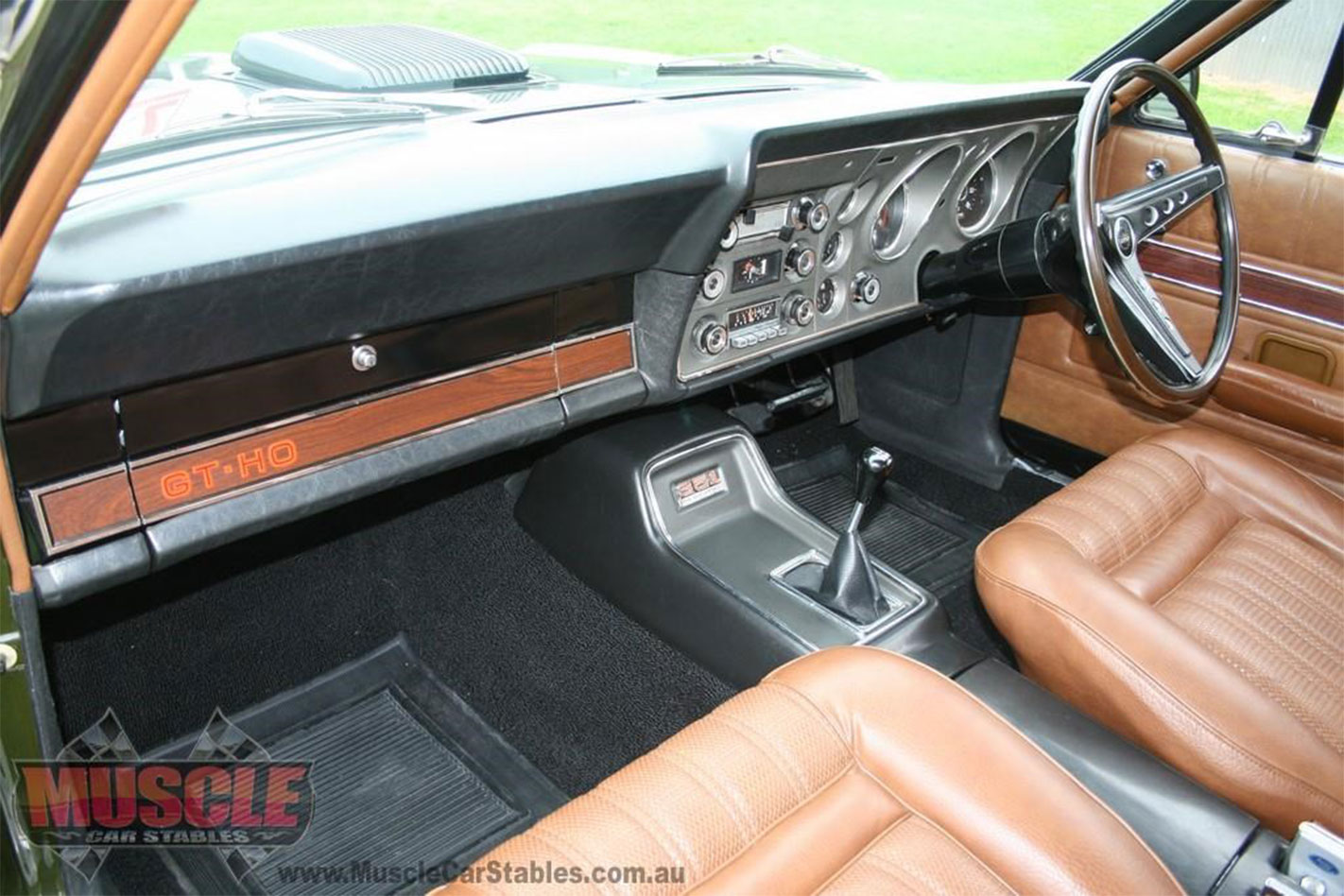
For more information on the car’s spec and history check out the ad here.
