
The DB11 is Aston Martin’s first all-new car post-Ford. It’s also the vanguard for the British brand’s future.
TIME moves slowly at Aston Martin. It took the tiny British company almost 90 years to build roughly the same number of cars Toyota assembles worldwide in a single afternoon.
So the launch of an all-new Aston Martin is a big deal.
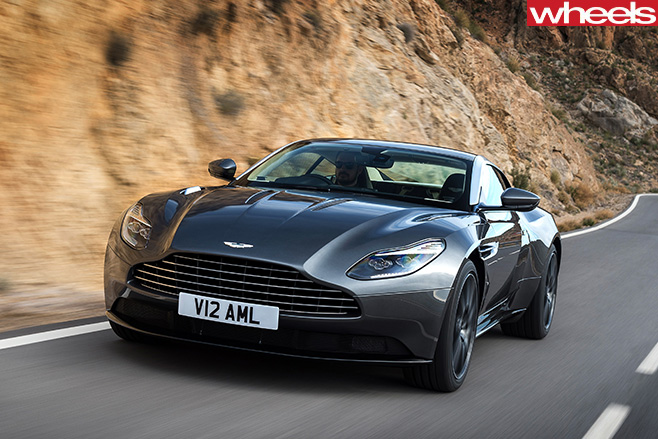
“It’s not very often in your career that somebody says, ‘Here’s an empty CAD screen, go fill it up’,” Aston Martin engineering chief Ian Minards told Wheels. “That’s a great moment.”
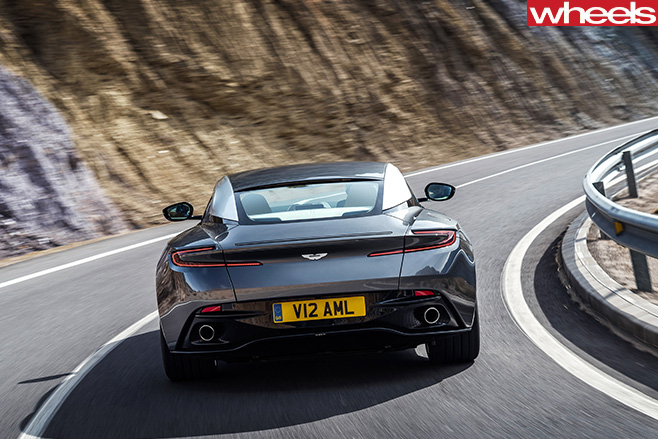
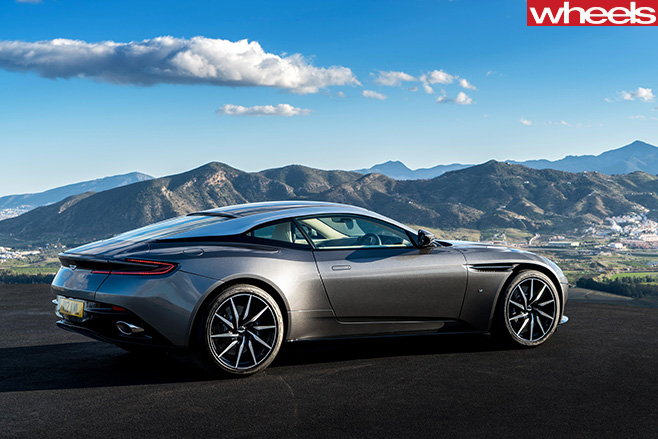
For all that the DB11 is evolutionary rather than revolutionary, everything – from design boss Marek Reichman’s well-proportioned and crisply tailored exterior to the aluminium-intensive monocoque and the V12 engine under the bonnet – is pretty much what you’d expect in an Aston Martin super-GT.
Take the basic vehicle structure. “The only thing you will be familiar with is that it’s a bonded aluminium monocoque,” Minards says. “Every single part is brand-new; every pressing, every extrusion, every cast node.”
Whereas the highly flexible VH structure that has underpinned every Aston Martin since the 2001 Vanquish looked as if it were made from a collection of extrusions, the DB11’s inner body features many more conventional-looking stampings. The secret is a new process called heat-quench forming, in which pre-heated sheets of aluminium are stamped in conventional two-piece presses, allowing the metal to be formed into complex shapes without splitting or wrinkling.
Heart of the DB11 is an all-new 5.2-litre V12 that, although smaller than the DB9’s 6.0-litre unit, develops more power and torque thanks to a pair of twin-scroll turbochargers. “We know V12s; we’ve been doing them since 1999,” Minards says. “What we wanted was a V12 built for our next generation of cars.”
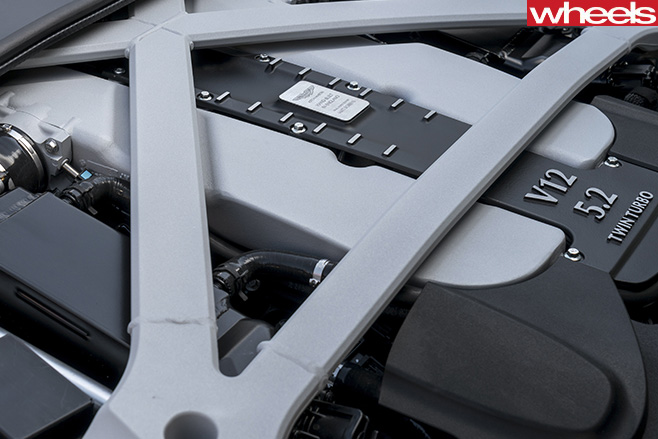
As is now usual Aston Martin practice, the engine is connected to the rear-mounted transmission by a cast aluminium torque tube. The DB11 gets the same smooth and responsive ZF eight-speed fitted to the Rapide and Vanquish last year.
Design chief Reichman’s team has delivered a coupe with the thrusting proportion and perfect stance expected of a modern Aston Martin. The surfacing is taut, punctuated by sharp creases that draw your eye all the way along the car from the powerful rework of the Aston Martin grille to the haunches over the rear wheels.
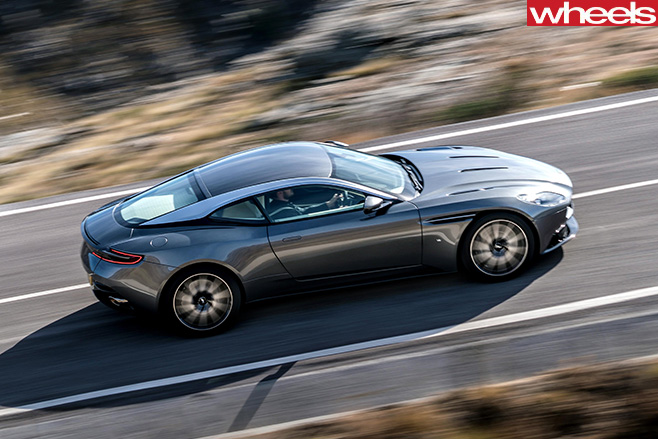
Both Reichman and Minards make a point of saying how closely design and engineering worked together during the development of the DB11, and the ingenious approach to the car’s aerodynamics is a case in point.
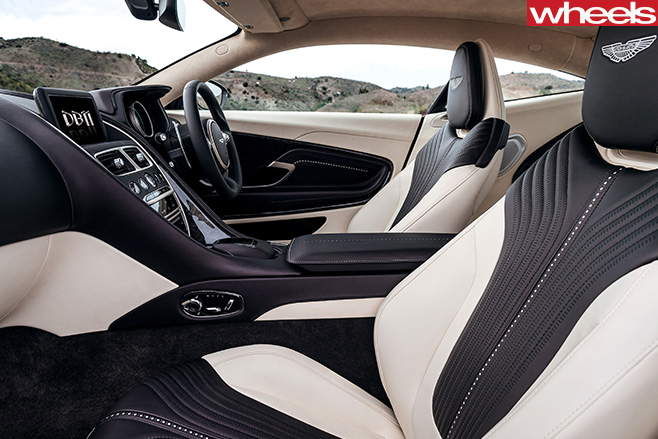
Up front, the high air pressure that builds underneath the car at speed is bled out of the front wheelarches, exiting via vents on each flank. The polished strakes that bisect the vents aren’t there for decoration; ridges on the underside cause the air to tumble along the sides of the DB11 in an effect Reichman calls ‘the curlicue’. “It gives the benefit of reducing the air pressure under the arch, but also of creating a vacuum that is drawing high-pressure air off the windscreen, so we’ve got the car pushing itself through the air more efficiently.”
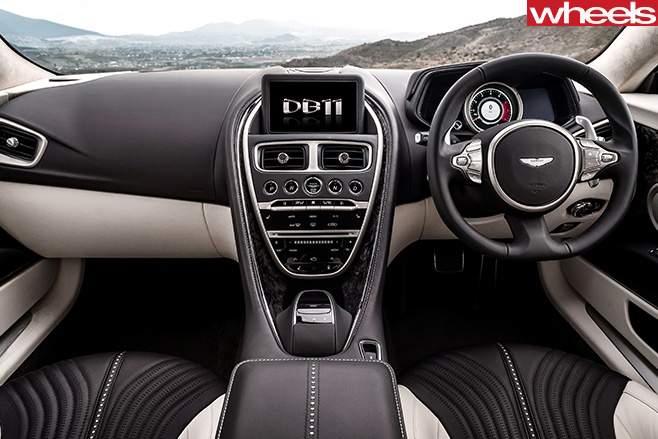
The new instrument panel is digital, and thumb controls on the steering wheel allow drivers to toggle between three suspension and three powertrain settings, just like in an AMG Benz. There’s finally a proper sat-nav system and detail niceties such as an electric parking brake and power seats that motor forward when you need to access the back seat. The only clue to the source of all the new electrickery under the skin is the Mercedes-Benz touchpad on the DB11’s centre console.
The new DB11 looks to be the most sophisticated, most thoroughly developed car in the company’s history. It needs to be, because the future of Aston Martin rides on much of the hardware and manufacturing processes it debuts.
Prepare yourself Australia, Jaguar’s 320km/h F-Type is coming our way.
THE Jaguar F-Type SVR, the fastest and most hardcore F-Type ever, is coming to Australia. Jaguar gave the flagship its first public outing at today’s Geneva Motor Show, and Wheels can now confirm that the V8-powered, 320km/h coupe and convertible will hit Aussie roads as early as late 2016.
“Yep, we’re definitely getting it,” said Jaguar Australia boss Matthew Wiesner. “That type of product has a place in our market, and yes, that’s in a very niche way, but it plays an important role for the brand overall.”
There’s no word yet on exactly when the SVR F-Type will arrive, or how much it’ll cost, but expect to pay a healthy premium over the current king of the F-Type family, the $245,280 all-wheel-drive F-Type R Coupe.
The F-Type SVR is powered by a 423kW/700Nm 5.0-litre V8 and can sprint from 0-100km/h in 3.7 seconds, meaning it will be the fastest accelerating Jaguar on sale in Australia.
Bigger carbon ceramic brakes are fitted to keep all that grunt in check, and have the added benefit of being 21kg lighter than the F-Type’s regular steel stoppers.
There’s also wider tyres and lightweight wheels, new dampers and anti-roll bars, plus a bespoke calibration for the F-Type’s eight-speed auto.
Visually, the SVR cops a larger and more aero-friendly front bumper and splitter, a flat underfloor and revised rear diffuser to go with that massive carbon fibre active rear wing that can reduce lift by up to 80 percent.
There’s also a unique titanium exhaust system that promises to deliver “an even more purposeful, harder-edged sound”, which should translate into one of the greatest V8 sound tracks around.
“There’s certainly lots of interest in it,” added Wiesner. “We haven’t talked about pricing yet and it’s a bit early to talk about exact timing. We hope it’ll be in 2016, but we’ll see.”
The DS E-Tense will be a $400,000 all-electric Tesla rival if it makes production, says the boss of Citroen’s premium brand.
Revealed in full today at the Geneva Motor Show, the aggressively styled, carbonfibre-bodied two-door coupe boasts a 300kW/516Nm electric drivetrain capable of travelling 360km between charges.
And despite its concept car looks, everything about the E-Tense is viable for production, according to DS boss Yves Bonnefont.
“This is a real car, it is not a concept car,” he said. “It drives 0-100km/h in less than 4.5 seconds – you can imagine this is not the kind of performance a concept car can achieve. So this is very much like a car we could build.”
As for whether DS does plan to build it, Bonnefont was less decisive.
“You know this is clearly an object that we’ve put on the table for the future, so we will see where it goes but it is clearly a great object,” he said.
DS claims the drivetrain in the E-Tense was built using expertise garnered from the brand’s involvement in Formula E Racing. Drive is sent to the rear wheels via a three-speed gearbox, while power comes from a 53kWh battery pack mounted under the floor. The whole car weighs around 1800kg.
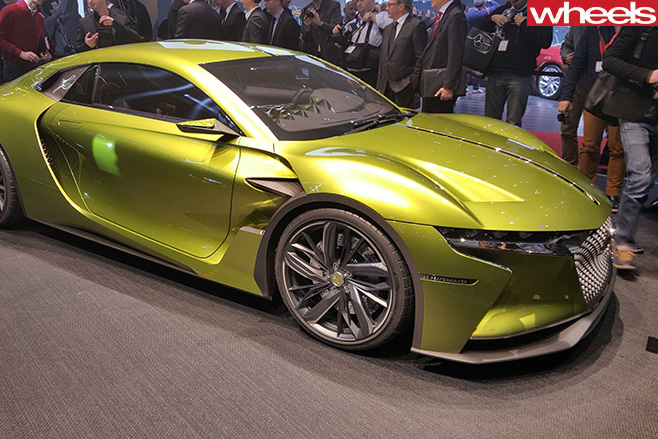
“If we were to manufacture this car it will be at a price about 250,000 euros,” Bonnefont said.
“That’s the kind of price we are looking at. We are quite different from any existing brand including Tesla, in the way we treat the materials. Our mission as a brand is to really go one step further than any other brand in the market. We are a Parisian brand and our mission is to enhance the luxury and fashion of our car.”
This goal is obvious in the E-Tense’s striking interior, which blends a steel dashboard with hand-painted leather panels and a clock by high-end watch maker BRM Chronograph.
It also has no rear window, with rear vision instead provided by a rear-mounted camera that projects images onto a screen inside the cabin. Expect to see this is system make production on at least one future DS model.
“Today this system is still pending homologation issues but it is something we are working on,” said Bonnefont. “The strategy of DS is a 20-year strategy, so we need to move on a step by step basis. We have completed stage one with the new DS3, so we are going to continue to grow over the next 20 years and now is the time for us to accelerate.”
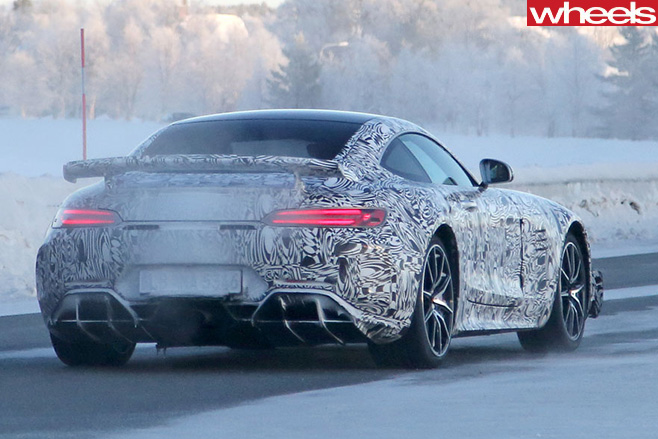
AMG has confirmed it will build an even faster, more extreme version of its flagship GT performance car, dubbed GT R.
The new, track-focused model will make its debut at the Goodwood Festival of Speed in June and will include cutting edge technologies such as active aerodynamics and four-wheel steering to go with a boost in power, as revealed in our March edition.
Official power outputs are yet to be released, but expect the GT R’s 4.0-litre twin-turbo V8 to produce in excess of 420kW. The current AMG GT produces 375kW/700Nm in its most powerful S specification.
AMG boss Tobias Moers confirmed the GT R’s launch, and name, to Wheels at the Geneva Motor Show.
“The next performance level for AMG will be the GT R version of the GT,” he said. “Now it’s official, it’s going to be called GT R. You will see this car at Goodwood.”
Pitched as a rival for the Porsche 911 GT3 RS, the GT R is expected to be even more honed, Mercedes insiders told Wheels. That suggests significant mechanical changes beyond a more aggressive body kit, more power and larger brakes.
He also revealed plans to rapidly expand the AMG GT family. A convertible model will arrive in 2017 and an ever more hardcore Black Series variant after that.
Moers described the convertible GT as a “must have” for the AMG brand, and even revealed he’d like to extend the GT family even further to include a four-door version to rival the likes of the Porsche Panamera and Aston Martin Rapide.
Rumours of the four-seat GT, called GT4, have circulated for months, and when asked if he’d like to make such a car Moers replied: “Absolutely. You know the rumours? I too know the rumours. Let’s wait and see.”
As for whether AMG asked Nissan for permission to use the GT R name?
“No, we didn’t ask them,” said Moers. “But ours is spelt differently.”
McLAREN has used the Geneva Motor Show to announce it will commit to a new petrol-electric hybrid drivetrain, and is testing a pure electric super sports car as part of a bold $2 billion, six-year plan that should double the size of the company by 2022.
Committing to 15 new and revised models – including coupes, spiders and limited edition models, as well as the new hybrid powertrains – McLaren said it had started testing a pure electric sports car as part of an electrification strategy that will include a family of hybrid models.
“We’ve redefined our business plan for the coming six years … we’ve called it Track 22,” said McLaren Automotive CEO Mike Flewitt.
“We’re going to be investing a billion pounds ($A1.95 billion) during that six years just in product development. We’ve got a lot of new cars coming up; a billion pounds equates to 15 new models.”
McLaren will renew its core models – including the 570, 650 and 675 model lines – but the new range is unlikely to include a replacement for the P1 hyper car, production of which finished in 2015; McLaren executives say a replacement will come, but only once the performance and tech justifies it.
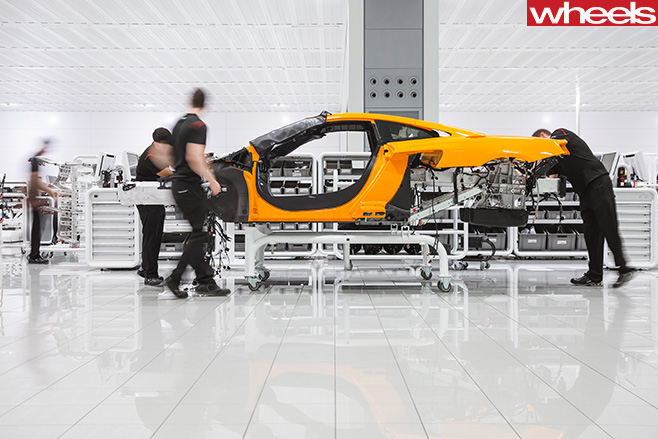
While McLaren will continue to produce V8 models – and possibly a V6 – a key plank in McLaren’s future model strategy revolves around hybrid models that bring efficiency and performance gains.
“We are in the middle of developing a new powertrain architecture, and during that six years we’ll launch another engine family that will run alongside the existing V8,” said Flewitt.
We’ve demonstrated what we can do with hybrid technology in the P1, producing one of the most phenomenal driver’s cars there’s ever been.
“Hybrids will become part of our life; we’re developing hybrids for further out in the product range. By the time we get to 2022 more than 50 percent of our cars will be hybrid.”
Flewitt also said the company was working on a pure electric car.
“The challenge for us is developing an electric car that is as stunning and engaging and exciting to drive as an LT and a P1,” he said. “And to that end we’ve started to develop a concept car, a prototype to experiment with that and understand how we can produce that same engagement with an EV platform.”
Sales and marketing boss Joylon Nash said the challenge with electric performance was ensuring it sounded and performed as a McLaren should.
“We do see that pure EV at some stage is going to be something that will come to our segment,” said Nash.
“There’s no doubt you can probably get electric motors to deliver the performance that you need … but can you deliver a driving experience that a customer’s going to want? That’s what we’ve got to test.”
As rivals such as Lamborghini and Ferrari continue to grow sales, Nash said McLaren would cap production at about 5000 cars.
“Fundamentally we don’t think it’s that exclusive to go above 5000 cars. Our customers want exclusivity.”
He ruled out producing cars outside of the United Kingdom.
“We don’t want to manufacture cars somewhere else; we are proudly British and we’ll continue making them at Woking.”
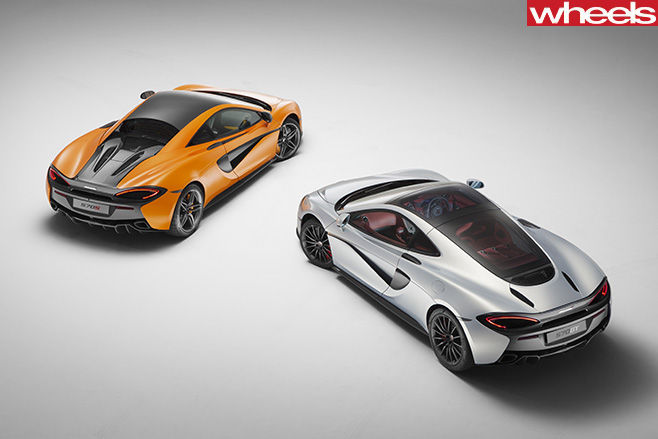
The announcement about McLaren’s production future came at the Geneva motor show, where McLaren showed its 570 GT.
With an emphasis on more relaxed long-distance touring, the 570 GT uses the same basic engine and architecture as the S but gets a redesigned tail that includes a side-hinged glass hatch.
McLaren has also softened the front springs by 15 percent and the rears by 10 percent, along with a 2 percent reduction in the steering ratio.
“[It’s] sort of calmed the car down so it flatters the driver to enjoy the experience of a longer journey,” said Flewitt.
“The GT is in a sense more about the journey, more about luxury, more about practicality, and we’ve done a lot of work to engineer very, very different characteristics into the two cars (570 S and 570 GT).”
THE head of Opel has become the first senior General Motors executive to confirm that the soon-to-be-revealed new Opel Insignia will replace the locally produced Holden Commodore once production finishes late in 2017.
Speaking after the reveal of the Opel GT Concept – the show car that was hand built in Australia – Opel CEO Dr Karl-Thomas Neumann confirmed what had long been expected – that the next Commodore would come from Europe.
“It’s very soon coming,” said Dr Neumann of the new Opel Insignia, suggesting it would be revealed within months.
Wheels has already snapped pictures of the new Insignia testing and has reported the car will replace the Commodore.
When asked about how many would be sold in Australia, Dr Neumann said: “I don’t know, as many as possible.
“I think the Australians will like this car a lot.”

But it will be smaller than the current VF Series II Commodore; it will be the first time since the original Commodore in 1978 that the large Holden family car has shrunk in size.
It will also arrive without a V8 engine, making it the first Commodore to miss out on the high-performance option.
Instead, Opel will use a twin-turbocharged V6 to complement the four-cylinder engines that will also be available in the first-ever imported Commodore.
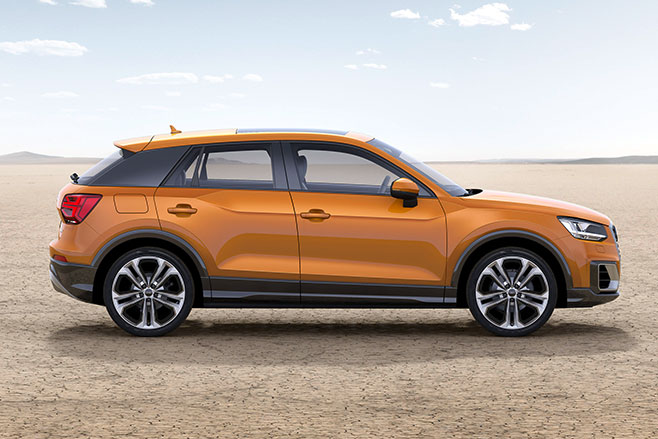
THE baby Audi Q2, shown for the first time at the 2016 Geneva Motor Show, will help the German luxury car brand expand its SUV family .
To sit below the Audi Q3 as an entry point to the now four-pronged luxury SUV suite, the Q2 is expected to be priced from about $35,000 when it goes on sale in Australia early in 2017.
It also lands in the expanding sweet spot of the SUV market, one where any high-riding wagon or hatch is good for business.
At 4.19 metres long, 1.79 metres wide and 1.51 metres tall the Q2 is about 20cm shorter, 4cm narrower and 8cm lower than the Q3 that is currently the smallest SUV in the Audi line-up.
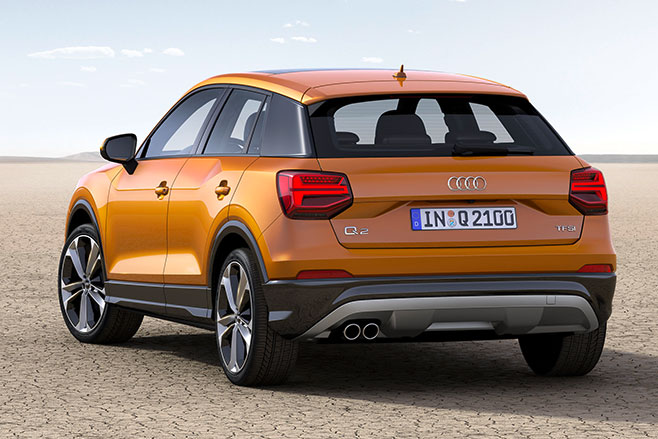
“In the Audi Q2 we have developed a distinctively geometric form language with model-specific design characteristics,” says Audi Head of Design Marc Lichte. “The car exhibits an independent character within the Q family.”
The Q2 clearly fits in the Q SUV family with a familiar Audi grille flanked by bold trapezoidal vents either side.
The rear has squarer headlights than we’ve seen on recent Audis as well as a a customisable D-pillar that can be specced with contrasting colours.
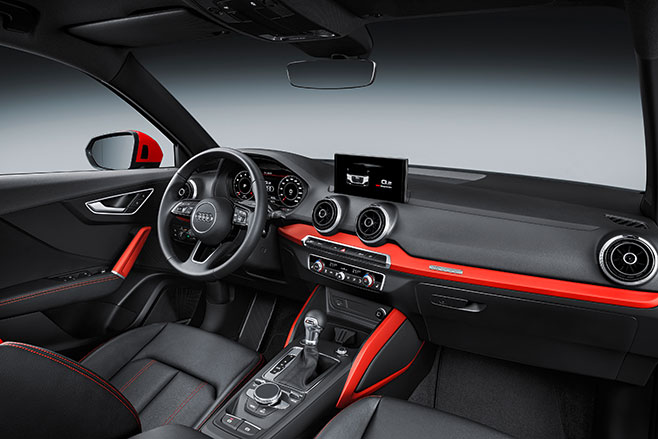
Inside there are five seats and a modern dash design with TT-like prominent circular air vents and optional coloured dash components.
The Q2 will be offered with six engines, three diesel and three petrol. The diesels are all four-cylinders ranging from 1.6 to 2.0 litres. The petrol engine options include an 85kW 1.0-litre three-cylinder, a 110kW 1.4-litre four-cylinder, and a 140kW 2.0-litre four-cylinder.
Despite its on-road focus, Audi says the Q2 is “well suited to off-road conditions with the ESC Offroad mode and 20 centimetres of ground clearance”.
Standard features include auto emergency braking, among other active safety features.
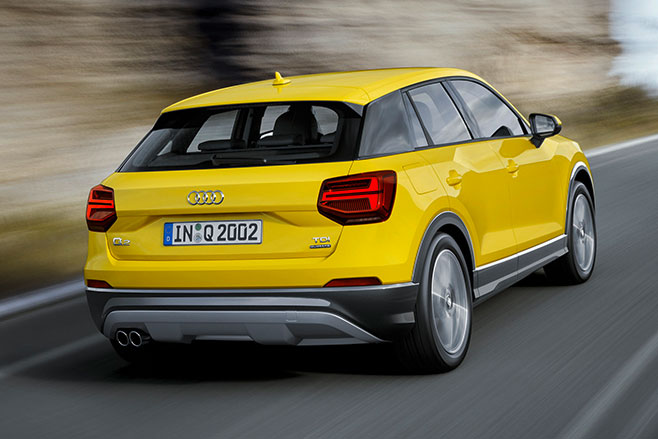
But it’s the connectivity that Audi is hoping attracts the Gen Y target market and the “young urbanites”.
The car will have “destination sharing” where smartphone apps can send addresses directly to the sat-nav. It will also allow easy access to social media apps.
The Q2 also gets the option of Audi’s virtual cockpit, a 12.3-inch customisable instrument cluster.
The prime competitor for the Q2 is Mercedes-Benz’s GLA, the smallest of the brand’s five-strong SUV line-up.
Big Benter not big enough? The new Bentley Mulsanne Grand Limousine by Mulliner boasts a stretched name to match its one-metre-longer sedan body.
Now stretching 6.5 metres, the Mulsanne Grand Limousine boasts six seats with a rear compartment positioned with a duo of both forward- and rearward-facing seats “of equal comfort”.
“Inside the ultra-luxurious, customer-commissioned passenger cabin is an experience evocative of the very best in luxury private-aviation design,” the brand adds.

There is also a new electro chromatic glass feature that can change the rear window and cabin divider glass from clear to opaque at the touch of a button and an intercom facility between the driver and passengers.
That’s in addition to exclusive climate control zones, rear dials separately showing UK and local time, fold-out tables, iPad charging and docking facilities, bottle cooler with glass and crystal flutes and a “soft drink” cabinet with bespoke tumblers.
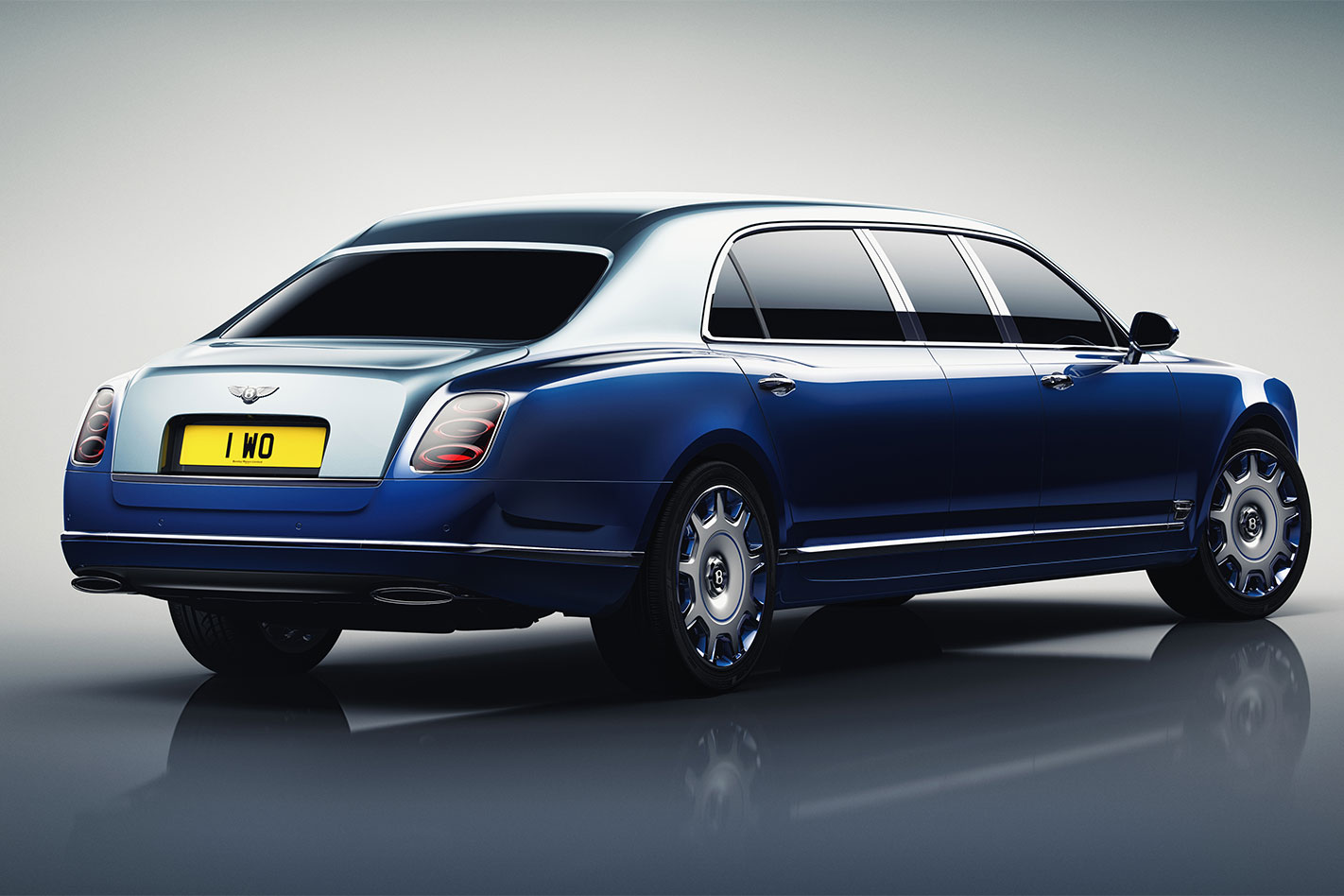
Finished in Moroccan Blue paint with Silver Frost accents, it wears 21-inch alloy wheels and promises re-engineered chassis and suspension, engine and gearbox, “guaranteeing the highest possible degree of passenger comfort and safety in the longest ultra-luxury sedan in the world.”
We reckon buyers of the gunshot-proof Mercedes-Benz S600 Pullman Guard may have something to say about that. Of course the only way to resolve the claim is with a comparison test. We’re happy to oblige.
Far as four-wheeled birthday presents go, Lamborghini’s newest hypercar revealed at the Geneva Motor Show will beat anything you’ve seen on MTV.
However, there’s a catch, the bloke it’s built for isn’t around to receive it. The Centenario, as it will be known to 40 lucky customers, has been created in tribute of Ferruccio Lamborghini.
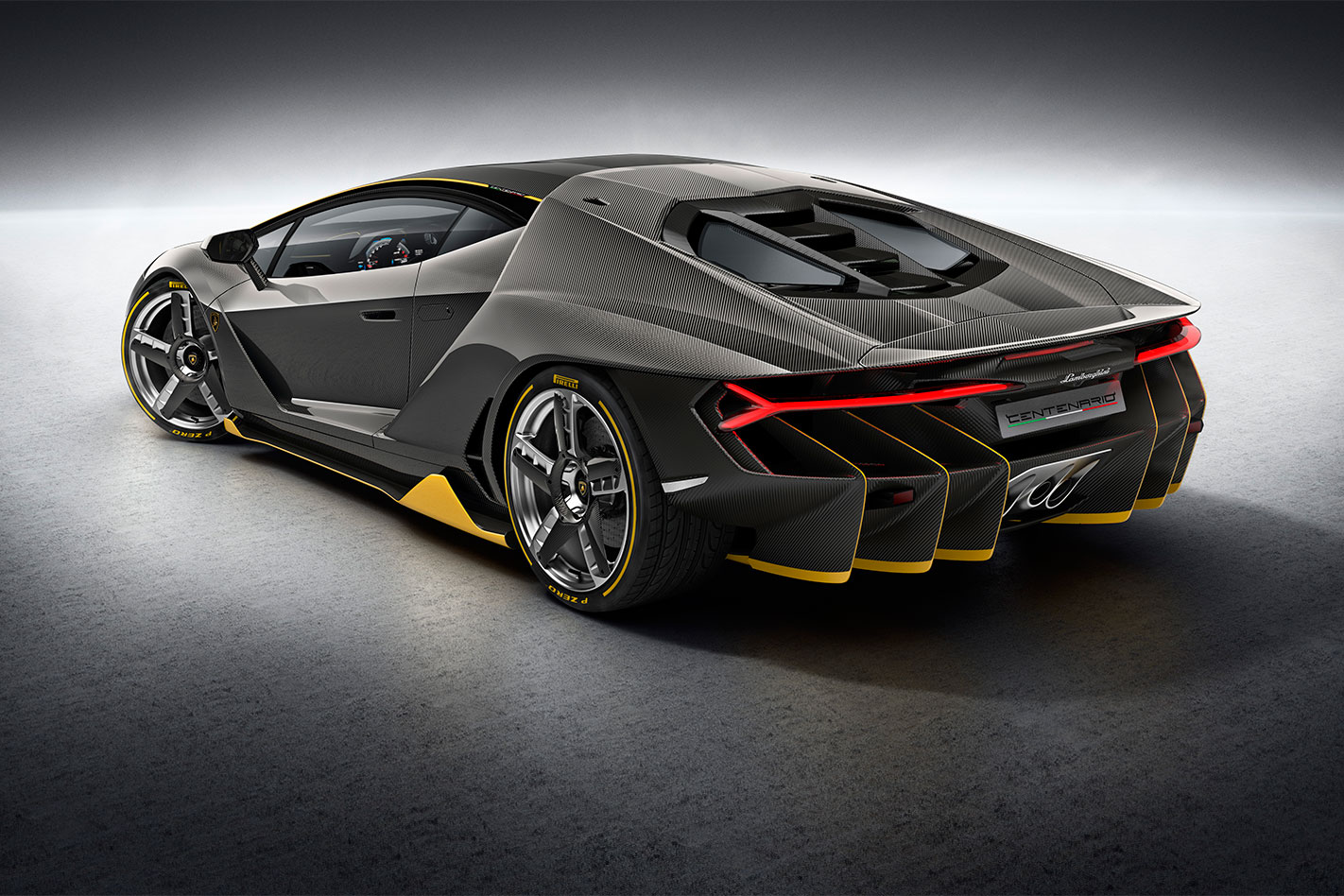
Dominating its specification is that massive 6.5-litre V12, which now makes 574kW, or 59kW more than a standard Aventador LP700-4. With that output, it also takes the title as the most powerful V12 the firm has ever built.
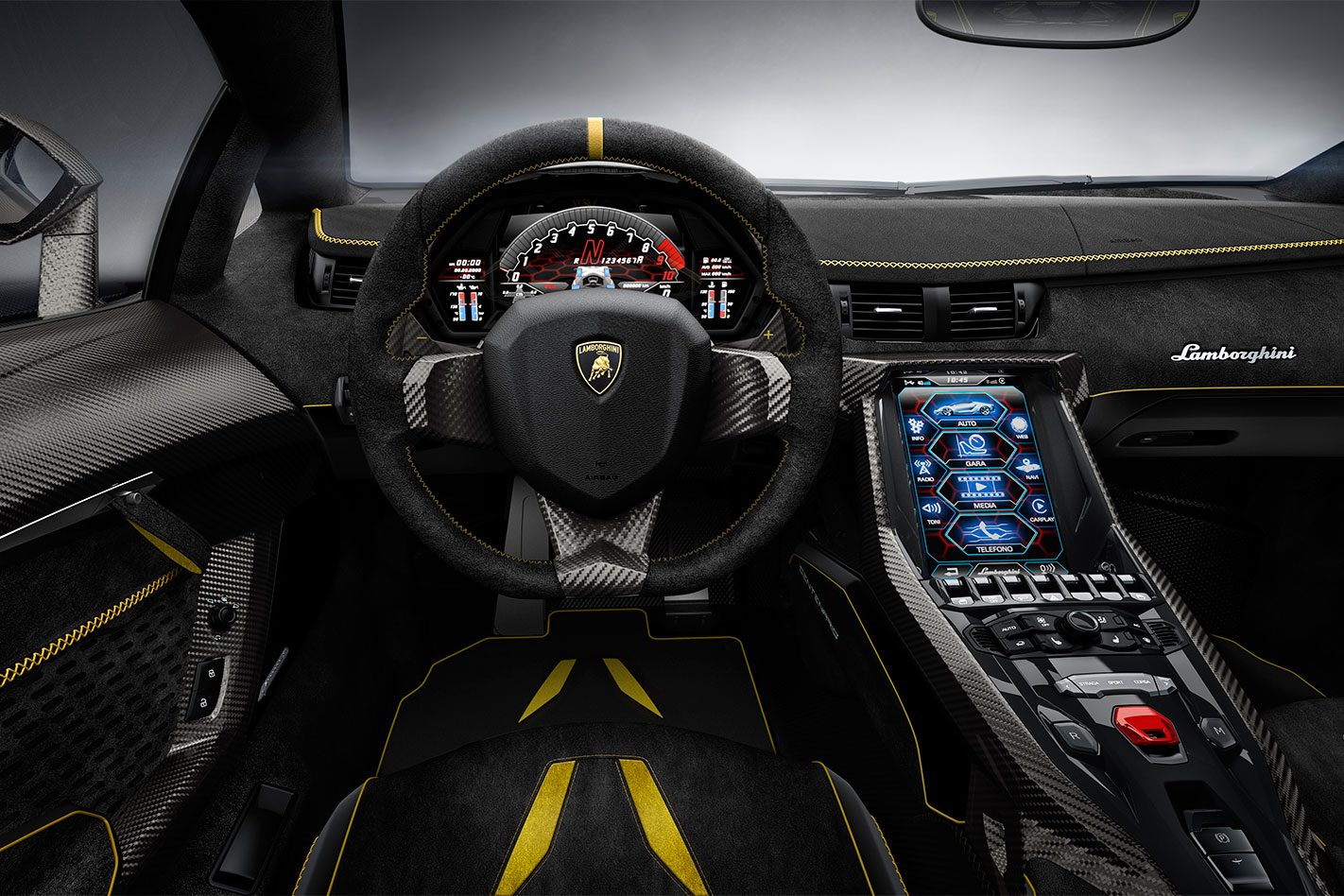
At such speeds an extendable rear wing should prove useful, which joins a radically redesigned exterior package.
Straight-line stonk’s one thing, but as for how it corners, a complete carbon fibre body will help the Centenario feel light on its feet, weighing in at 1520kg, as will the new rear-wheel steering system it debuts.
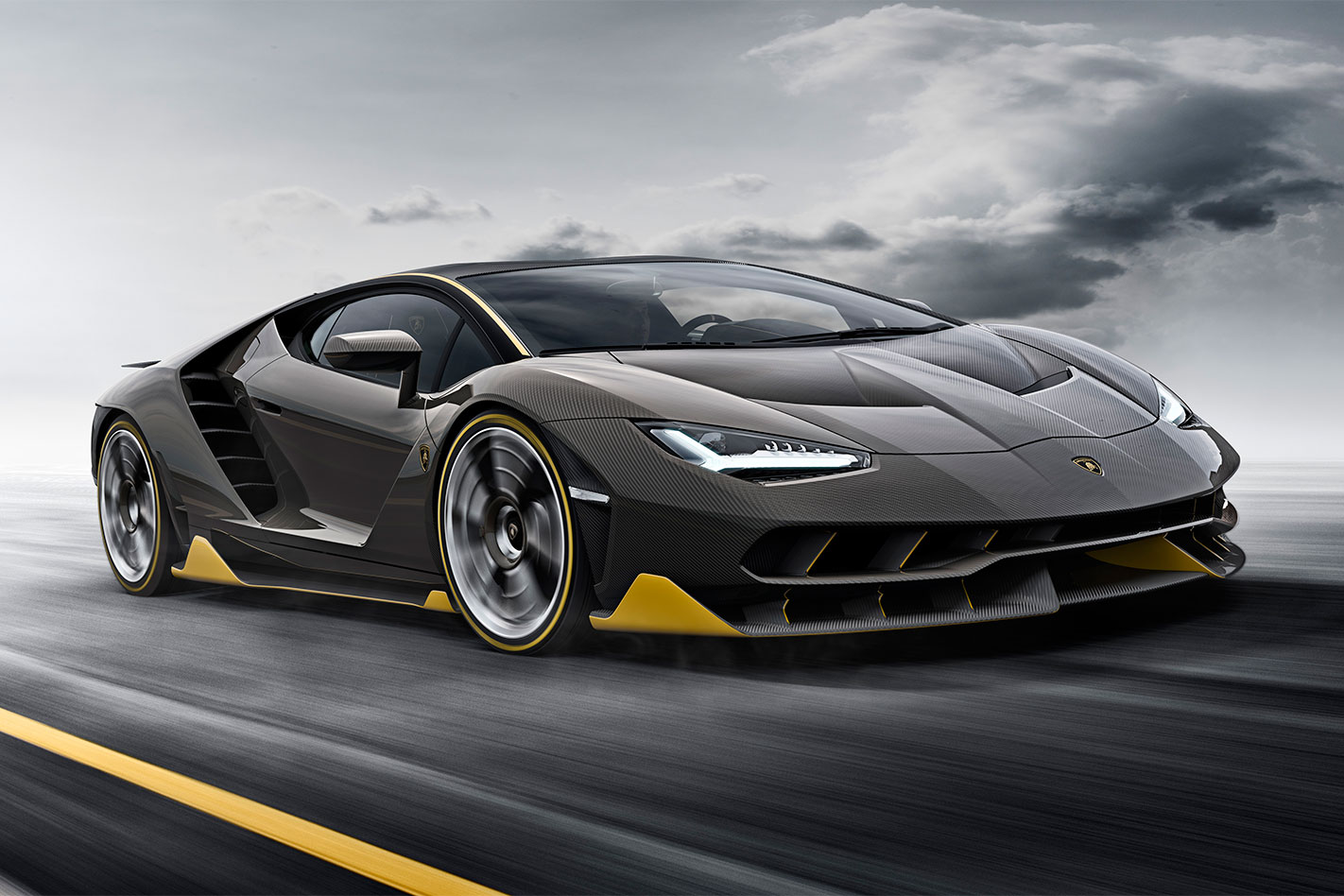
Lamborghini will build the Centenario in a run of 20 coupes and 20 roadsters for selected customers close to the Lamborghini brand at a whopping 1.75m Euros (AU$2.66m). But of course, it doesn’t matter, as each unit is already sold.
TWO seats, plastic windows, no radio or air-conditioning – meet the Porsche 911 for purists.
And it’s not cheap.
Priced from $404,700 the Porsche 911 R – the first to wear the nameplate since 1967 – is the second most expensive 911 version on sale; only the 911 Turbo S is more pricey, at up to $478,000 for the Cabriolet.
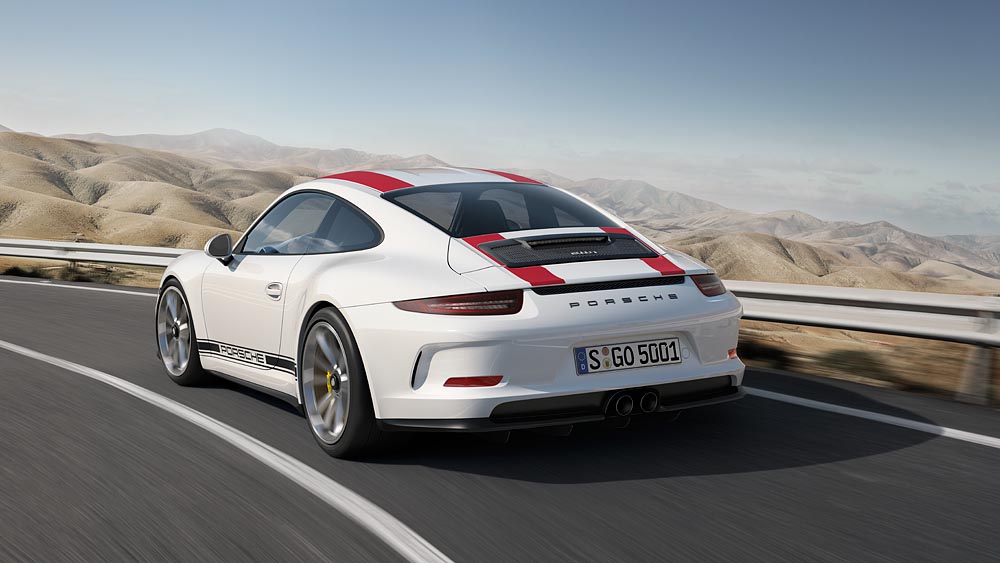
The 4.0-litre naturally aspirated horizontally-opposed six-cylinder produces 368kW at 8250rpm and 460Nm at 6250rpm.
However, unlike the auto-only GT3 and GT3 RS, the 911 R exclusively uses a six-speed manual gearbox – all with the aim of getting back to basics and letting the driver enjoy the experience.
Claimed 0-100km/h acceleration is 3.8 seconds on the way to a top speed of 323km/h.
The 911 R rides on 20-inch alloy wheels and gets carbon ceramic brakes.
Porsche has also taken the lightweight knife to the 911 R, to the point where its 1370kg kerb weight undercuts the track-focused GT3 models by 50kg.
Key to the weight savings are a lack of rear seats, and plastic side and rear windows.
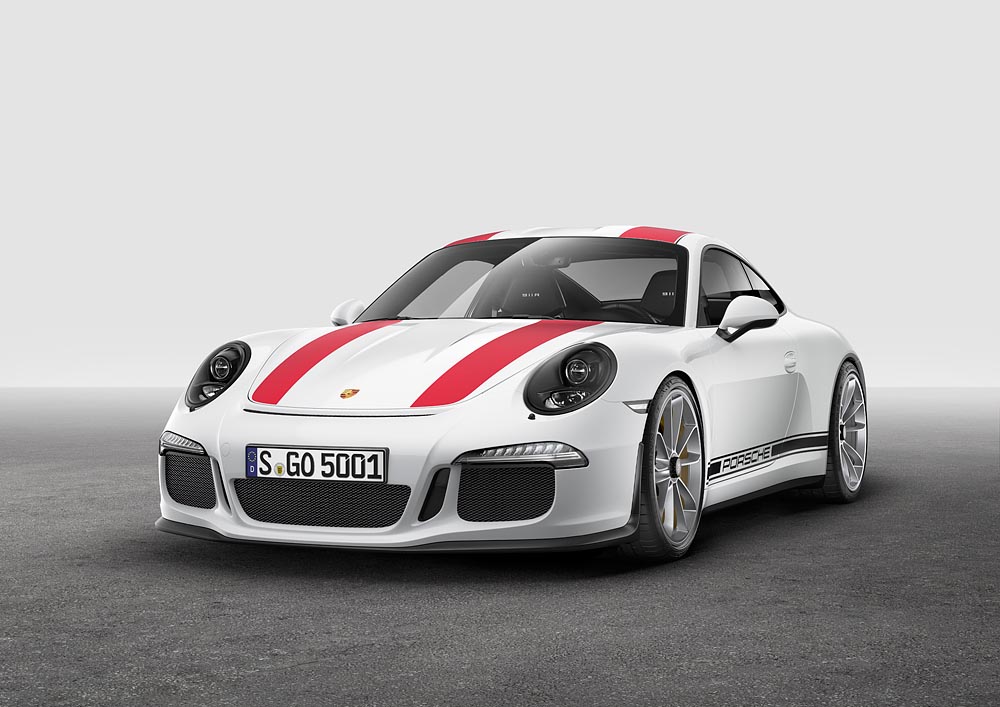
Porsche has also ditched some of the sound deadening and made the air-conditioning and sound system optional.
It will produce just 991 of the 911 R globally – the 991 being the model code of the current-generation 911 – with about 25 coming to Australia.
That’s about half what the Australian dealers say they can sell – but double what Porsche Australia initially thought it would get – suggesting some buyers will miss out on what is shaping up to be one of Porsche’s most sought-after limited edition models.
