
THE Mercedes-Benz GLT pick-up will be the safest, most powerful and most luxurious ute in its class when it arrives in Australia later this decade, says the man responsible for its development.
It’ll also undergo extensive Australian testing and eventually be offered in a range of body styles, including one fettled by Merc’s performance arm, AMG.
Speaking to Wheels ahead of tomorrow’s Geneva Motor Show, the head of Mercedes-Benz Vans, Volker Mornhinweg (pictured), revealed he plans to visit Australia before local testing starts sometime next year.
“I’m coming next month to Australia to have a look,” he said. “Sure it’s the plan to test the ute there. When you develop a product you have to test it everywhere you plan to launch it.”

Expected to be badged as the Mercedes-Benz GLT, the ute will share underpinnings with the new Nissan Navara and the planned Renault Alaskan, and be built at Nissan’s production facilities in Argentina and Spain. It’ll also deliver the high level of quality and dynamics that customers expect of a Mercedes, says Mornhinweg, despite its modest, workhorse underpinnings.
“The clear plan and target is to make a pick-up that is a Mercedes-Benz, with our philosophy and our genes,” said Mornhinweg. “You can be sure it will be an outstanding product, I’m totally convinced of this.
“We will develop the first premium pickup, but on the other hand we want to show it has real driving dynamics, and this focus I think will be something new for this segment.”
Pitched as a direct rival to the popular Toyota Hilux and Ford Ranger, the GLT will also arrive bristling with all of in the current safety systems in the Mercedes-Benz arsenal, leading Mornhinweg to confirm that the GLT will be the safest car in its class.
It’s also likely to be the most powerful, courtesy of a suite of petrol and diesel engines that could also gain attention from the performance boffins at AMG.
“We will have a very performance orientated and powerful product,” said Mornhinweg. “If that means it has to be an AMG, then that is something we will have to wait and see. AMG has lots of different levels of performance and design elements, so this is something we will consider.”
As for body styles, the GLT will first be offered solely as a richly trimmed dual-cab, though Mornhinweg confirmed plans to expand the range once the initial model is established.
“We will start on the premium side, then see what our customers want,” he said. “That could go down to a pure [and less expensive] workhorse model with a single cab, for example.
“There’s also the opportunity to develop model lines. You can say, OK this one is more of an all-rounder, this one is more heavy duty and this one is more comfort orientated.”
There won’t, however, be a wagon body style variant, similar to the Toyota Fortuner and Ford Everest.
Mercedes will export the GLT to Australia, South Africa and Latin America, although our market is tipped to be one of the most lucrative. Sales of four-wheel-drive pick-ups have doubled in the past 10 years, and utes are now the second highest selling vehicle class in the country, behind small cars.
“I think there is a big opportunity in Australia,” said Mornhinweg. “I’m not saying we will revolutionise the ute, that’s a little bit too snobby, but what I am saying is we see there is a trend towards a more premium, more passenger car-like pick-up and we want to push that kind of trend.”
It seems 1000kW hypercars are like buses; you wait ages for one, then two show up at once.
Hot on the heels of the new Bugatti Chiron comes the production version of the Koenigsegg Regera, a radically different take on the hybrid hypercar theme from those crazy Swedes.
First unveiled in concept from at the 2015 Geneva Motor Show, the production Regera is said to have undergone over 3000 changes during its 12-month development program.

The claimed performance figures are just silly: 0-100km/h in 2.8sec; 0-200km/h in 6.6sec; 0-300km/h in 10.9sec and an estimated 0-400km/h time of 20sec. Perhaps most ludicrous of all is the rolling 150-250km/h time of just 3.9sec.
Uniquely, the Regera features no conventional gearbox, rather its single-gear direct drive system uses “a clutch-slip mechanism that uses the hydraulic coupling at medium/high speeds during fast acceleration”.
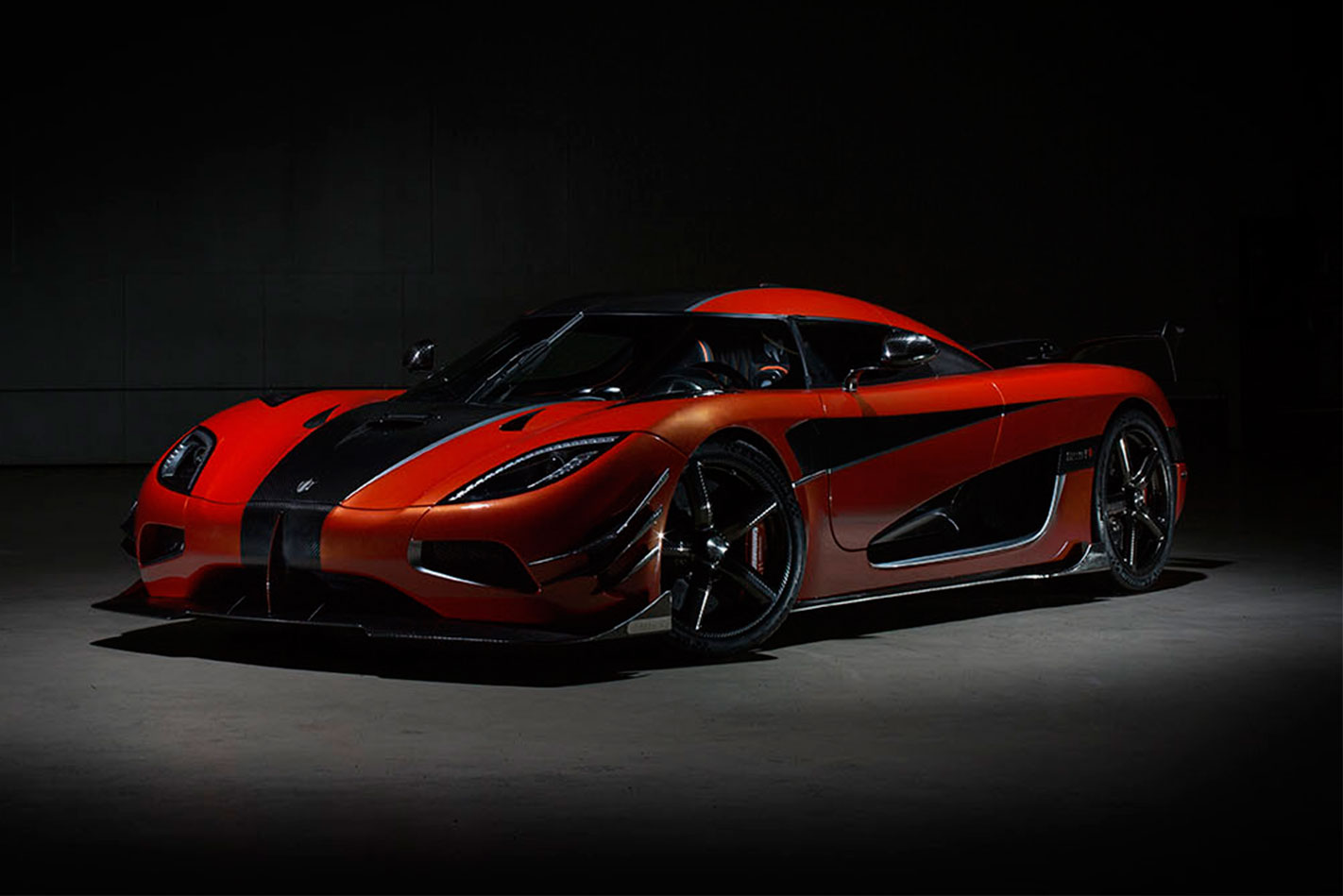
Each have been pre-sold and each will be bespoke, with the first Final – dubbed “One of 1” due to its unique specification – featuring a raft of custom bodywork as well as the 1000kW/1371Nm ‘MegaWatt’ engine from the Koenigsegg One:1.
The May 2016 issue of MOTOR will feature a first drive of the Koenigsegg Regera, on-sale April 7.
MERCEDES-BENZ has a new entry-level convertible. Meet the first ever C-Class Cabriolet.
Revealed on the eve of the Geneva motor show, Benz has done more than simply rip the roof off its C-Class coupe.
The biggest change is a new 9-speed automatic gearbox (the sedans make do with a 7-speeder). And there’s confirmation of a faster AMG version, dubbed C43 Cabriolet.
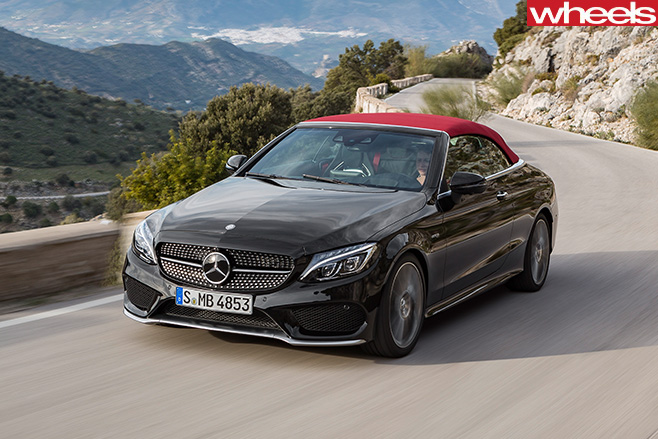
As for that new cloth roof, Benz says its multi-layer design is based on the S-Class Cabriolet. It comes in the choice of black, brown, blue or red.
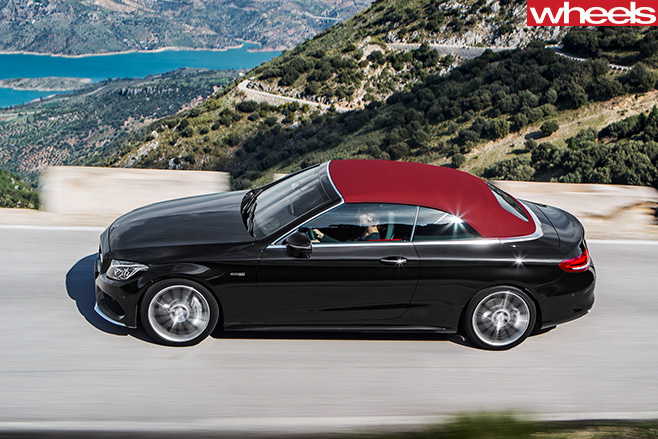
Engine wise, regular versions of the C-Class Cabrio will be offered with the same suite of four-cylinder petrol and diesel engines as the Coupe. Mercedes Australia is yet to decide on the local line-up, though it’ll likely comprise C200 and C300, plus the C43.
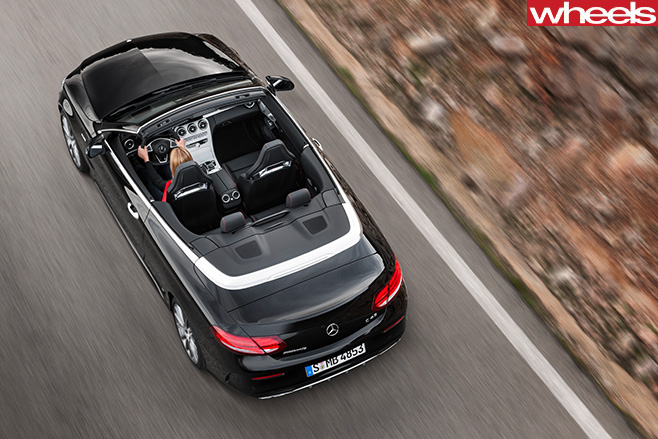
Benz’s Airmatic air suspension set-up is also available, and if the sedan’s form is anything to go by it’s an option worth ticking. Airmatic also adds Dynamic Select with five transmission modes: Eco, Comfort, Sport, Sport Plus and Individual.
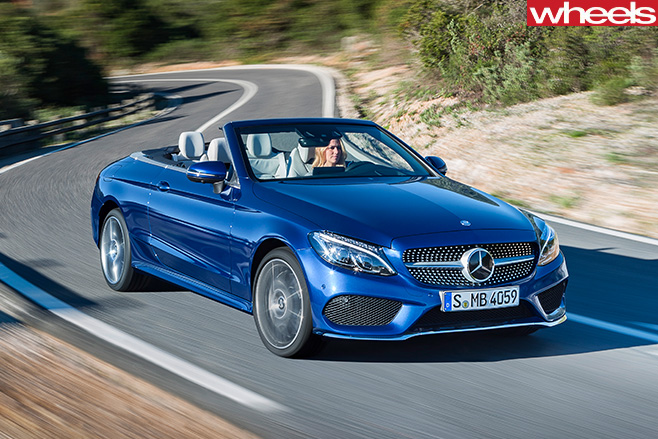
To separate them from the regular Cabrio range, C43 variants sport styling tweaks and bigger 18-inch wheels that house larger brakes. There’s also a rear-biased four-wheel-drive system as standard, which splits torque 31 percent front and 69 percent rear, and firmer AMG tuned suspension with three-stage adaptive dampers.
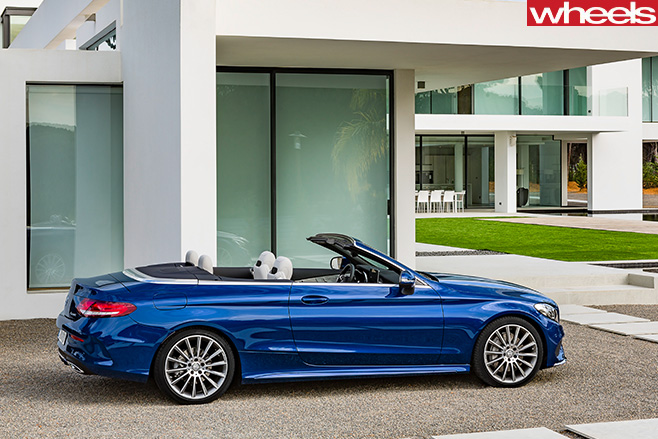
The Cabrio is also heavier, which has a negative effect on fuel consumption and acceleration, with the C43’s 0-100km/h sprint of 4.8sec a tenth slower than the hardtop coupe.
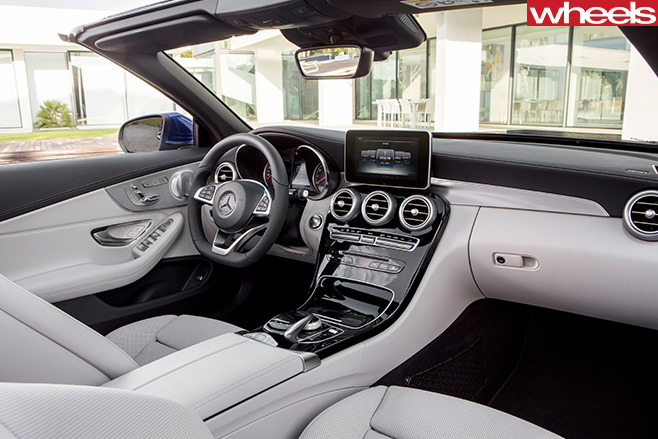
A mid-life facelift brings more pleasing lines and active damping to Mercedes’ absorbing power cruiser.
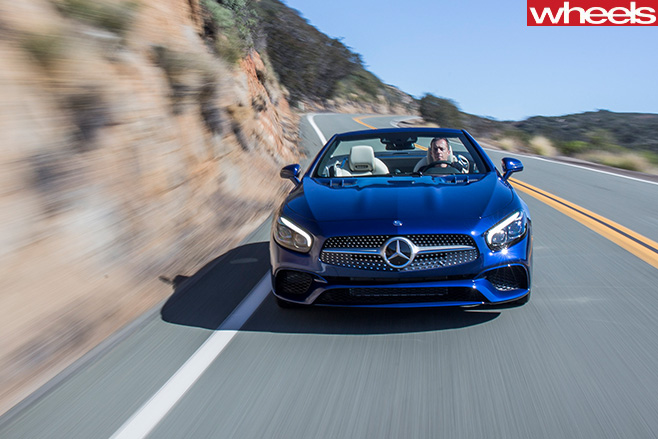
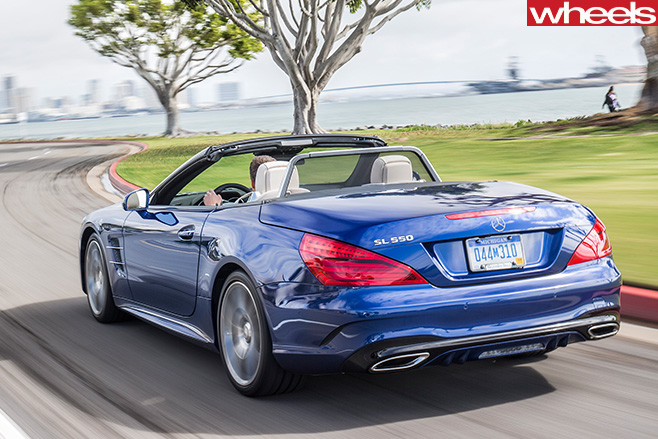
WHAT IS IT? Much prettier, that’s what. Mercedes has given its iconic SL two-seater a nose job for this mid-life update and it’s the better for it. There are tweaked engines too, and a new gearbox and suspension tune, plus a new price tag which is up to 10 percent cheaper. So you’re literally getting more for less.
MAIN RIVALS Jaguar F-Type convertible, Porsche 911 Carrera S Cabriolet, BMW M6 convertible, Aston Martin V8 Vantage Volante, Ferrari California T
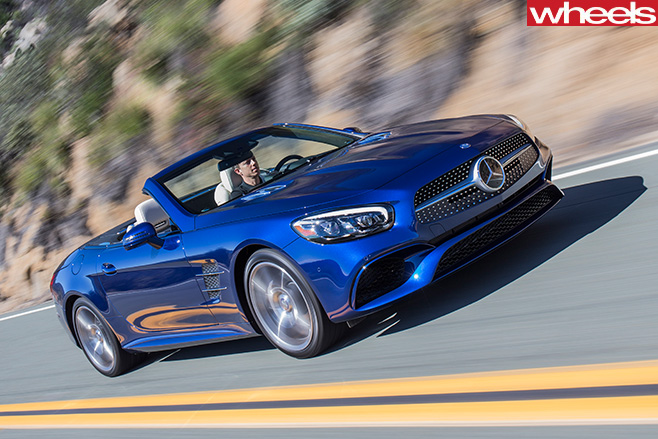
PLUS: Engaging engines; improved styling and suspension tech; grippy chassis; cheaper; equipment boost MINUS: Still more cruiser than apex hunter; interior starting to feel dated; front axle lacks precision and intuitiveness; no V12
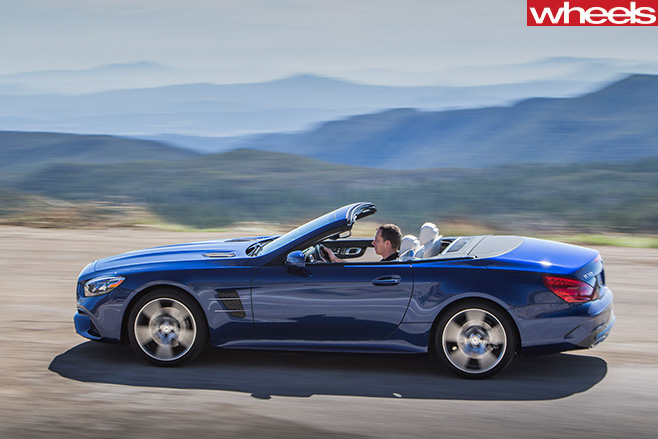
It takes a single glance to know the SL’s mid-life facelift has succeeded. The old car’s styling divided opinion, especially around its nose, but this new nip’n’tuck is much more pleasing. The new, all-LED lights are thinner, the snout is more cohesive and a redesigned bonnet is now strafed by a pair of bulges similar to those of the iconic 1955 300SL Gullwing. It’s all rather handsome.
There are mechanical tweaks too. Non-AMG models now use a 9-speed automatic gearbox, and Merc’s Active Body Control suspension system, which replaces conventional sway bars with computer-controlled dampers, is now available as an option. As is the Curve tilting function as fitted to the S-Class Coupe, which leans the car into corners like a motorbike to offset body roll.
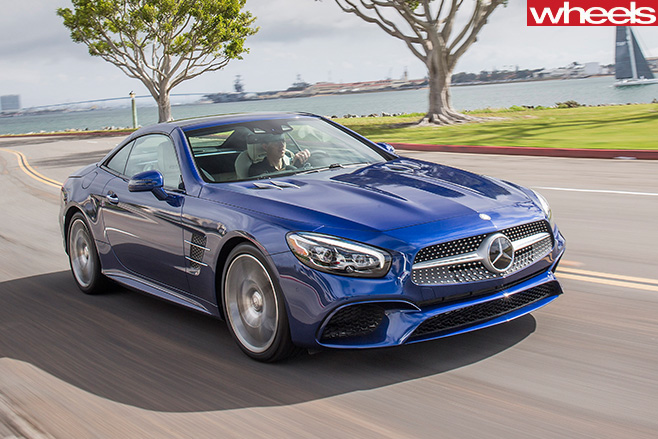
The new 9-speed ’box is smooth and intuitive, though obviously calibrated more towards cruising than performance. Even with Sport+ selected on the now standard Dynamic Select dial, the torque converter auto rolls into the next gear instead of slamming shifts home with conviction.
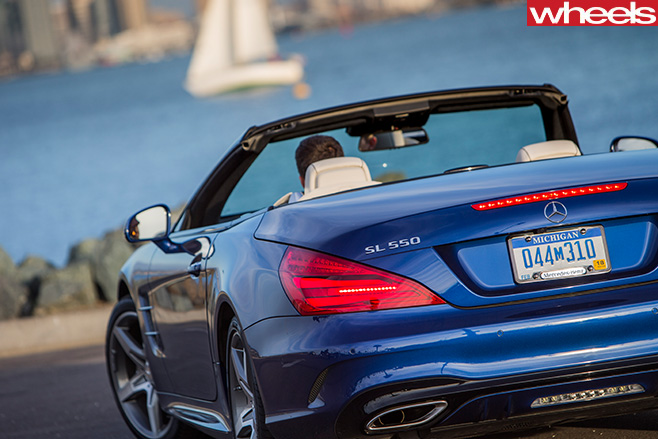
It scores the trick ABC suspension system as standard, and the result is a car that instantly feels more focused. Its 430kW/900Nm 5.5-litre V8 is more explosive, its front axle keener to turn inn, and there’s an enormous amount of rear grip thanks to sticky 285/30R20 rear Michelin Super Sports.
Yet there’s still no escaping the SL’s colossal size. Peering down its enormous bonnet gives the impression that two thirds of the car is in front of you, and while the steering is fluid, it lacks any real feeling of connection to the road and front wheels. This can make it difficult to judge the SL’s trajectory and steering inputs when you really begin to push.
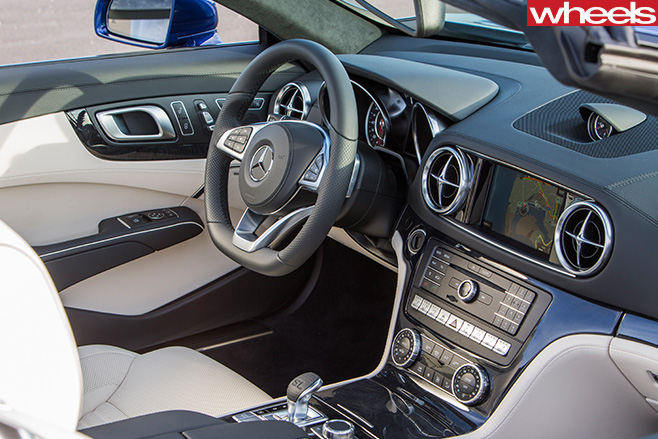
Better news is the SL’s price. Despite its extra equipment, Benz has slashed between five and 10 percent from the SL’s sticker, which mightn’t sound like much but can translate to a saving of up to $40,000. It means you can now score one of the best fast all-rounders on sale, for less.
SPECS Model: Mercedes-Benz SL 500 Engine: 4663cc V8, dohc, 32v, twin-turbo Max power: 335kW @ 5250rpm Max torque: 700Nm @ 1800-3500rpm Transmission: 9-speed automatic Weight: 1720kg 0-100km/h: 4.3sec (claimed) Fuel economy: 9.0L/100km Price: $280,000 (estimate) On sale: July 2016
Just when we thought the Elise’s hardcore appeal had reached its peak with the Cup 220, Lotus has taken the iconic roadster even further.
Premiering at the Geneva Motor Show, the new Lotus Elise Cup 250 builds upon the 220’s package to have the Elise nudging supercar-lite levels of performance.
Driving its new performance is a dramatic power-to-weight gain, as Lotus has cut weight and boosted power.
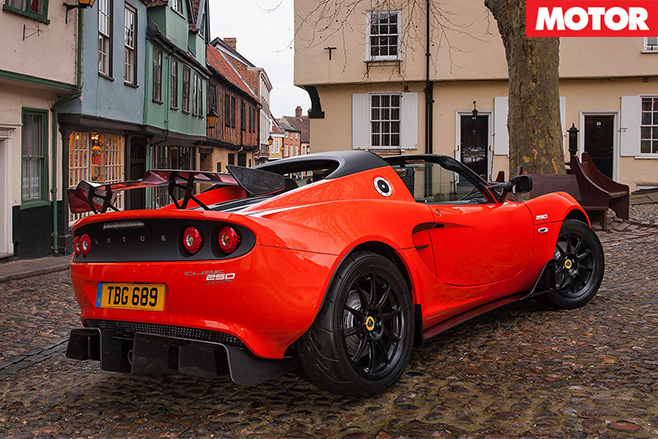
Not much by today’s hot-hatch standards, but when you consider the Cup 250 has dropped up to 31kg, pegging its total mass at just 921kg, such outputs suddenly stand a lot taller.
Carbonfibre seats, a lithium-ion battery, and forged alloy wheels guarantee a 21kg diet for every car, while an optional carbon aero package zaps another 10kg.
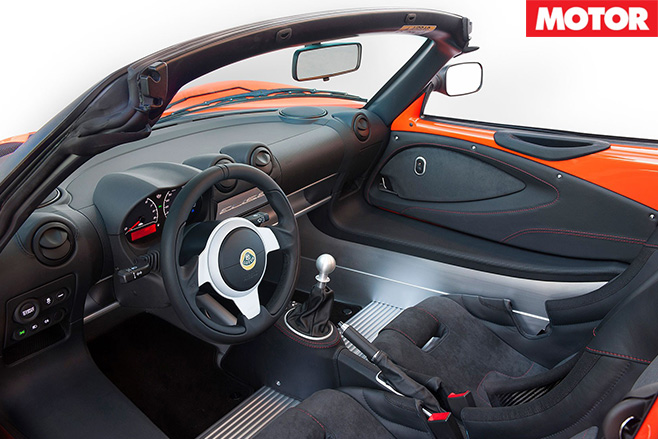
Importantly, though, the Cup 250 is not all about straight-line stuff, and the carbon aero pack ensures the car’s Yokohama slicks are put to good use by generating up to 66kg of downforce at 160km/h and 155kg at top whack.
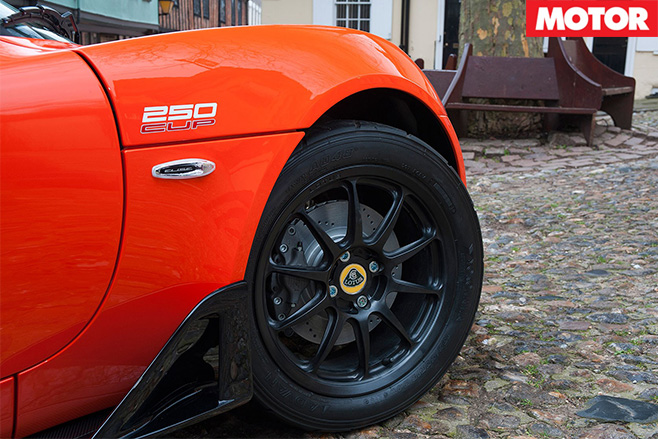
Only 200 roadsters to be built each year (the hard-top is optional), with first sales to start in April and deliveries to Australia to begin early 2017.
“The Chiron is the world’s most powerful, fastest, most luxurious and most exclusive production super sports car.”
Those are the words of Bugatti, which don’t really leave a lot of room for interpretation. Unveiled overnight ahead of its Geneva Motor Show public debut, the Chiron is the replacement for the Veyron, the model that relaunched the Bugatti brand and changed the supercar world forever.
Tucked in the back of the Chiron is a redesigned version of the Veyron’s 8.0-litre quad-turbo W16, now producing 1103kW/1600Nm, the latter all the way from 2000-6000rpm. It introduces two-stage turbocharging, with one pair operating from idle before the second pair kick in at around 3800rpm.
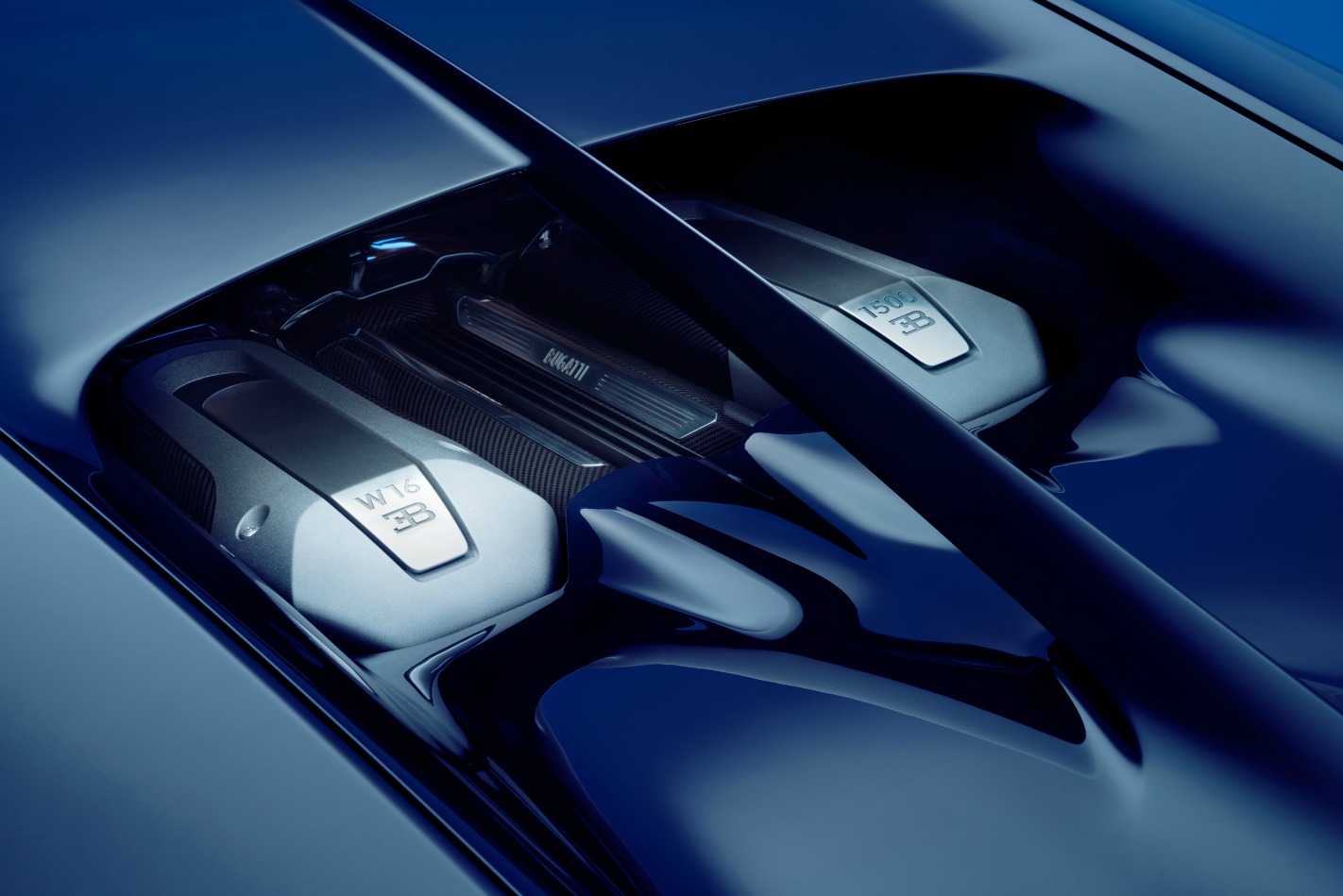
Keeping it on the ground at aeroplane speeds are active aerodynamics including a hydraulic front diffuser flap and a four-stage adaptive rear spoiler.
One area Bugatti wanted to take a significant step forward with the Chiron was handling. The carbon fibre monocoque boasts a torsional rigidity of 50,000Nm/deg and the adaptive chassis features five driving programs: Lift, Auto, Autobahn, Handling and Top Speed.
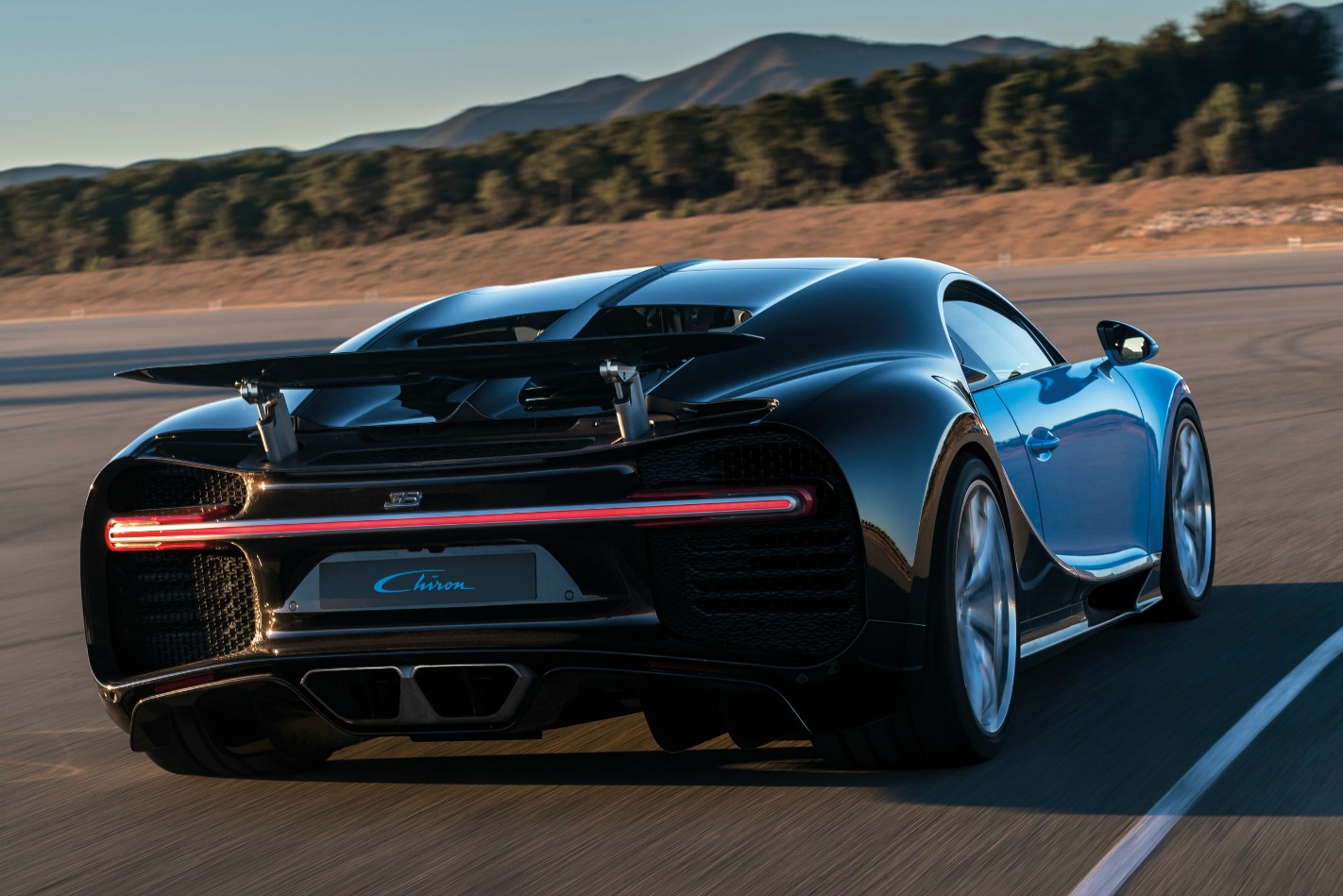
There are electronically-controlled dampers and an electronically-controlled rear differential which forms part of an all-wheel drive system that offers an “easy to drift” feature, which is quite amusing when the Chiron costs A$3.65million.
Brakes are massive carbon ceramic rotors front and rear with eight titanium pistons in the front calipers and six in the rears, while Michelin again provides bespoke tyres measuring 285/30 R20 at the front and 355/25 R21 at the rear.
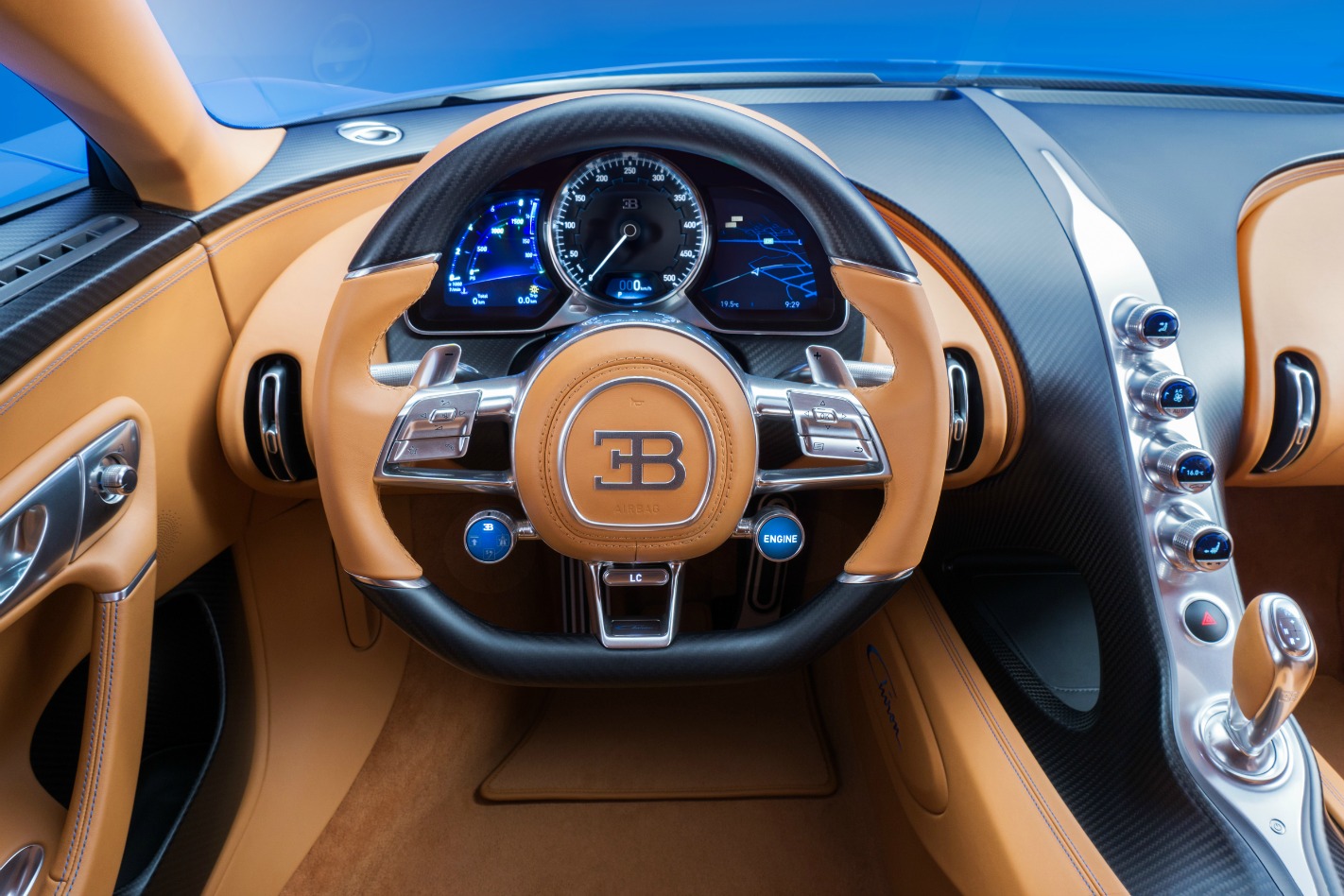
We look forward to bringing you a first drive of the Chiron later in 2016.
FOR more than a decade the Veyron has been the absolute production car high water mark in terms of power and speed. But no longer.
The Chiron – unveiled at the Geneva Motor Show overnight – boasts 1103kW, which is 25 percent more grunt than even the Veyron Super Sport.
And top speed? Bugatti boss Wolfgang Durheimer is keeping that one a surprise until the Chiron’s testing program is completed later this year, but says it will be faster than the 431km/h Veyron Super Sport, and hints at a V-max north of 440km/h.
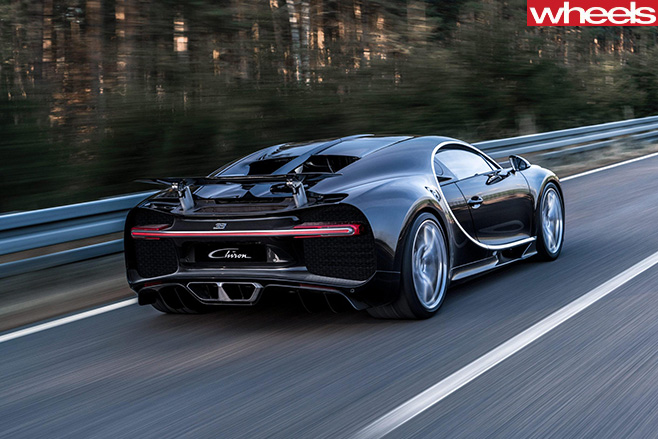
The 38mm increase in overall width, a slightly lower roofline, pronounced haunches over the rear wheels and a sharply truncated rear end give the Chiron a much more aggressive look than the somewhat dumpy Veyron.
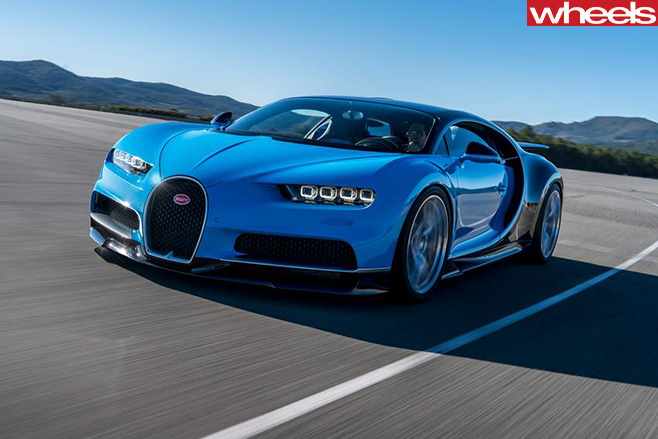
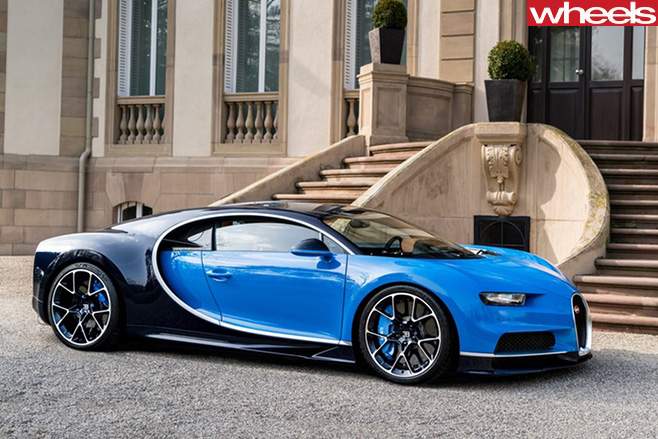
The dramatic C-line that defines the Chiron’s side view and allows modern two-tone paint schemes that reference classic 1930s Bugatti styles – and 75 percent of Veyrons featured two-tone paint – also hides massive scoops that funnel air into the mighty 8.0-litre W16’s intake and cooling systems.
Similarly, the rear end is designed to help extract as much hot air as possible from the engine compartment.
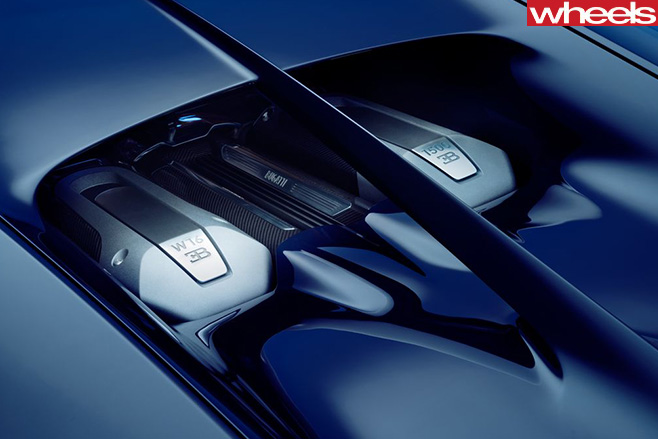
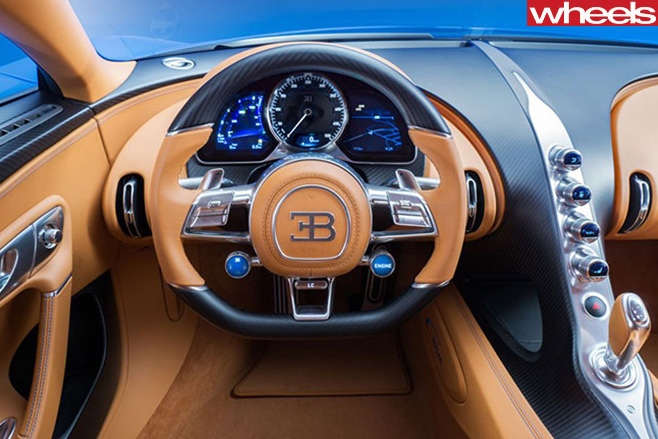
Insert the second, go-faster key (as in the Veyron) that sets up the Chiron for ultra high-speed running, lowering the ride height and reducing downforce and drag, and it will reach a computer-limited 420km/h. That’s the velocity to which Michelin will validate the hand-built tyres – 285/30 R20 up front, and 355/25 R21 at the rear – the French company developed for the car.
Durheimer says the Chiron will go even faster, and owners who want to explore the very limits of its performance envelope will be able to do so in Bugatti’s factory demonstrator, or in their own car, to which Bugatti will fit a set of ultra-finely balanced wheels and tyres, and a battery of sensors to be monitored by Bugatti technicians during a V-max run.
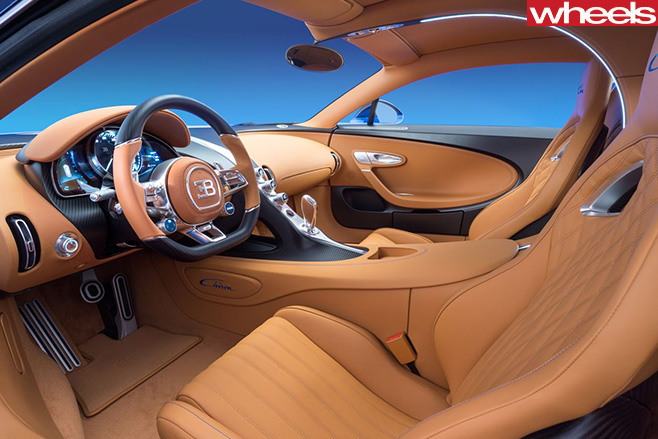
The current plan is to build 500 Chirons – 50 more than the Veyron – and Durheimer insists that (unlike the Veyron) it will be a profitable project.
HYUNDAI may shed sales as it awaits new models to plug gaping holes in its line-up, newly appointed Hyundai Australia COO Scott Grant concedes.
Speaking at the launch of the all-new Hyundai Elantra – Hyundai’s most popular nameplate globally but competing in a declining segment here – Grant admitted the absence from its model range of a small SUV and one-tonne ute, in particular, gave the brand a handicap against key competitors.
“We could well go backwards before we go forwards again,” said Grant, pointing to the organic growth that had positioned Hyundai as a key player in some of the biggest market segments.
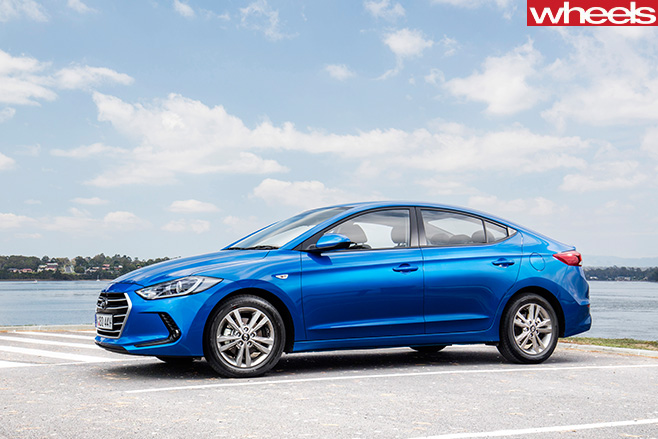
“At the moment we’re only competing with half the market.”
His comments reaffirm the 2016 Wheels report on Hyundai, which forecast a downturn of about 7 percent for the Korean maker that had doubled its sales in about six years.
He highlighted commercial vehicles as key to growth. Hyundai is the only one of the top eight selling brands not to offer a ute.
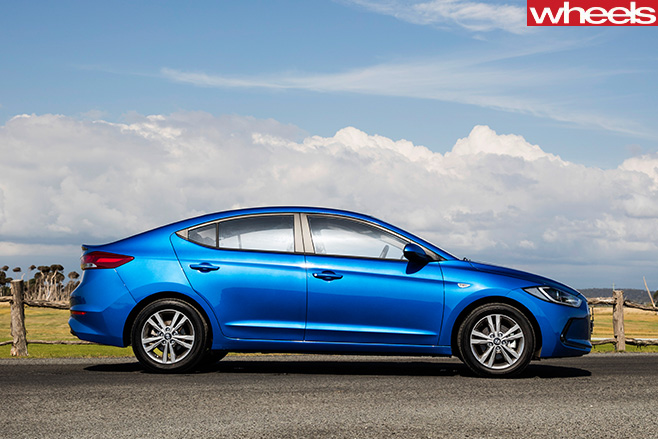
“It appears to be the wrong sort of vehicle for our market … we’re looking for a more one-tonne type structure,” he said.
Grant, a former Toyota executive, also singled out a serious off-roader as a car “we’d love” but one that wasn’t on the product horizon.
“To compete in Australia you’ve got to cover the dominant segments and we live in a large country with a significant rural presence … you’ve got to have some products in those areas,” Grant said.
Every two years or so, an all-new premium medium sedan arrives from Germany. This year it’s Audi’s turn.
WHAT IS IT? Now in its ninth generation (taking in the preceding Audi 80), the Audi A4 has long competed against the BMW 3 Series set with leading design, quality and efficiency. This all-new (believe it or not) B9 version adds advanced driver-assist and safety technology to a lighter and – hopefully – more dynamic package.
WHY WE’RE TESTING IT Quality, design and driving ease are bywords for the Audi A4, but against the latest Mercedes C-Class and BMW 3 Series that’s not enough. So the ninth-gen premium medium sedan from Ingolstadt promises gains in dynamics, efficiency, safety, and technology, all while advancing the A4’s traditional strengths. Do they make it a segment leader?
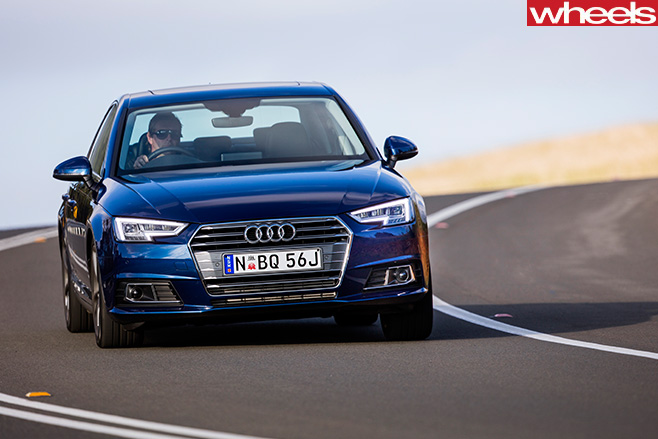
THE WHEELS VERDICT It’s easy to dismiss the latest Audi A4 as a lightly reworked version of the previous generation sedan. But beneath what is a disappointingly familiar skin lies a lighter and stronger car, with a knockout cabin, much improved dynamics, and a level of safety and security to worry the Swedes. The formula may be much the same as what’s come previously, but the real advances are obvious the moment you step inside and push the start button. A less forgiving ride is one of the few downsides in what is a very real threat to the BMW 3 Series and Mercedes-Benz C-Class hegemony. Don’t let the B9’s visual sameness fool you. And do stump up for adaptive dampers.
PLUS: Stunning cabin design, improved dynamics, punchy powertrains, refinement, safety MINUS: Samey exterior design, firm ride without adaptive dampers, some trim rattles
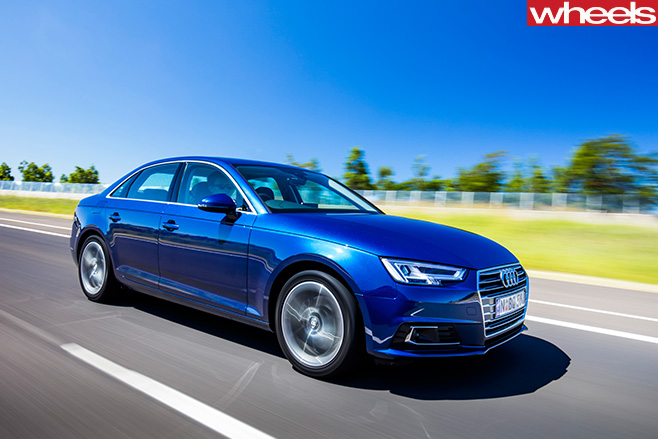
Eight iterations later, and despite controversy over the “evolutionary” design, Revolution #9 would be a more accurate description for the all-new B9 A4. Because it really does represent a clean-sheet opportunity against the Munich menace.
Struggling to spot the differences? Best to see past the familiar (though sleeker) six-light silhouette and (now wider) hexagonal grille, and drink in the more exquisite details instead… such as the Saab 900-esque clamshell bonnet, arrowhead headlights, double-edged crease lines, and tapered tail graphics. The result is a restrained, masculine elegance.
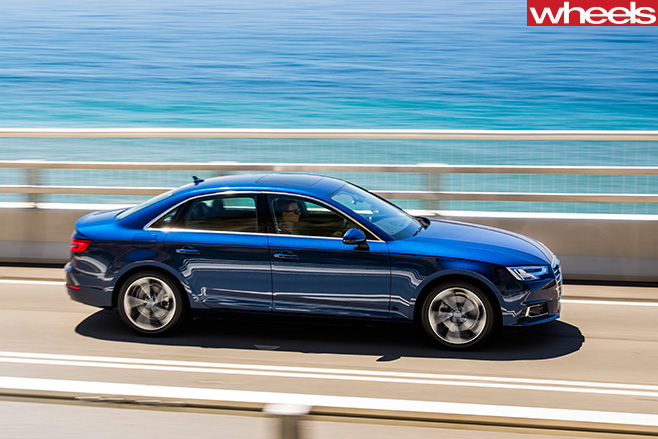
Fresh and airy, the horizontal dashboard treatment flows with sculptured surfaces and lush materials. And yet – needlessly fiddly T-bar shifter and the odd rattle aside – cold Teutonic functionality abounds. Everything operates as expected, from the excellent driving position and supportive seats to the beautifully tactile switchgear. Then there is the eye-catching instrumentation, be it the attractive standard, classically analogue, dials or the sprawling vista of the Virtual Cockpit multimedia smorgasbord, which is intimidating only initially. Audi traditionalists might also appreciate the full-length vent outlets, which is homage to the early 100.
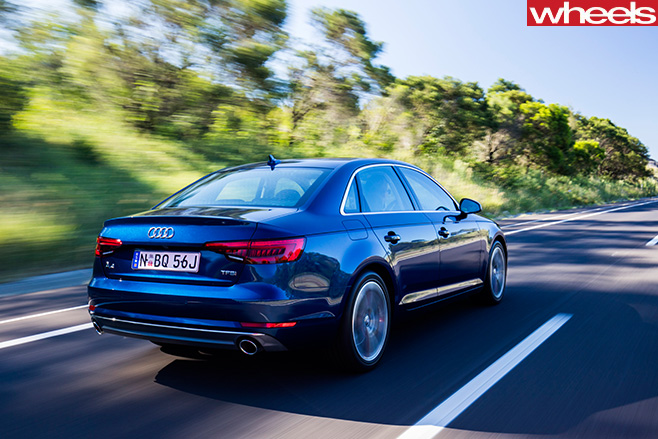
Some 75 percent of sales should fall evenly between the 2.0 TFSI petrol twins, in 140kW/320Nm front-drive guise (from $60,900) or rip-snorting 185kW/370Nm quattro all-wheel drive (from $69,900). Regardless of a 105kg penalty, the latter strides forward with almost ferocious intent. But both accelerate strongly and keep the pace up with punchy ease, coated with that familiar Audi slickness.
The slow-selling V6 turbo-diesel has disappeared, replaced by a $66,900 140kW/400Nm 2.0 TDI quattro boasting fuel use of just 4.6L/100km. As its 7.2s 0-100km/h sprint time suggests, this is no slug either, pulling vigorously from impressively low speeds, with pleasing civility to boot.
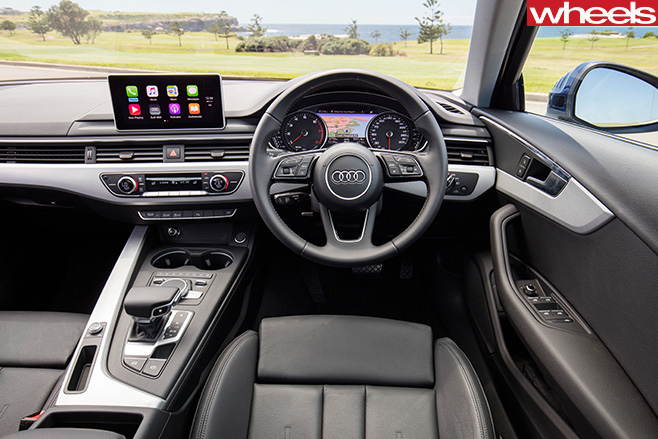
The numbness of old has given way to a sharper and yet more evenly weighted helm, backed up by significantly more precise and controlled cornering. More feedback would be welcome, but over the hot and dry flowing rural roads around Canberra, the degree of composure at speed was revelatory for the series.
On the other hand, the ride on the standard 245/40R18 rubber can be a little busy and firm at times, traits underlined by the optional $1950 adaptive dampers fitted to the cushier quattros as tested. Two different systems prioritise sport (with a 23mm ride height drop) or comfort (minus 10mm). Occasional road noise intrusion was also detected, though that’s typical of the breed.
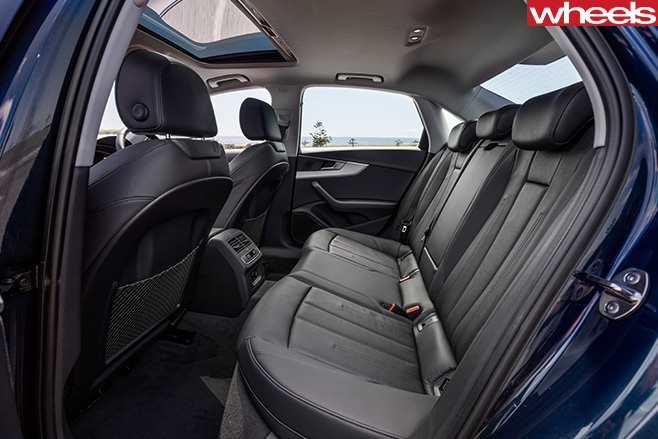
SPECS Model: Audi B9 A4 2.0 TFSI S-tronic Sport Engine: 1984cc 4-cyl, dohc, 16v Max power: 140kW @ 4200-6000rpm Max torque: 320Nm @ 1450-5200rpm Transmission: 7-speed dual clutch Weight: 1405kg 0-100km/h: 7.3sec Fuel economy: 5.3L/100km Price: $60,900 driveaway On sale: Now
McLaren’s officially gone soft. Sort of.
In what is touted the most luxurious McLaren ever, the resurgent British supercar maker has whipped the covers off the new 570GT, a potshot at 911 Turbo and a car with the weekend cruiser firmly in the sights.
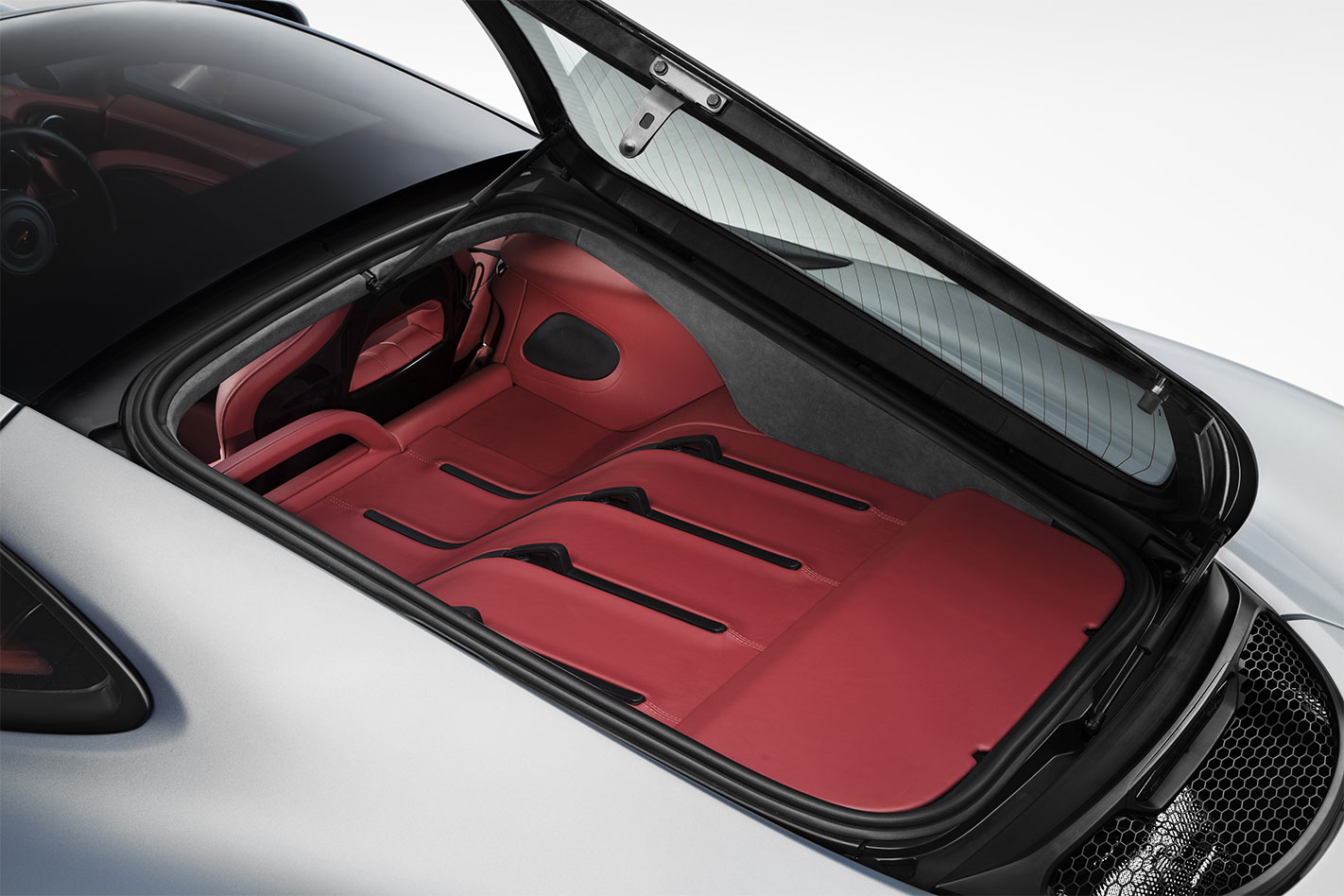
Based on the 570S but with suspension and steering ‘fine tuned’ to “emphasise long-distance comfort”, the 570GT also sports a new side-opening rear glass hatch and leather-lined “Touring Deck” with 220 litres more storage space.
Spring rates have been reduced 15 per cent front and 10 per cent rear while the steering ratio is now two per cent slower for a calmer highway drive.
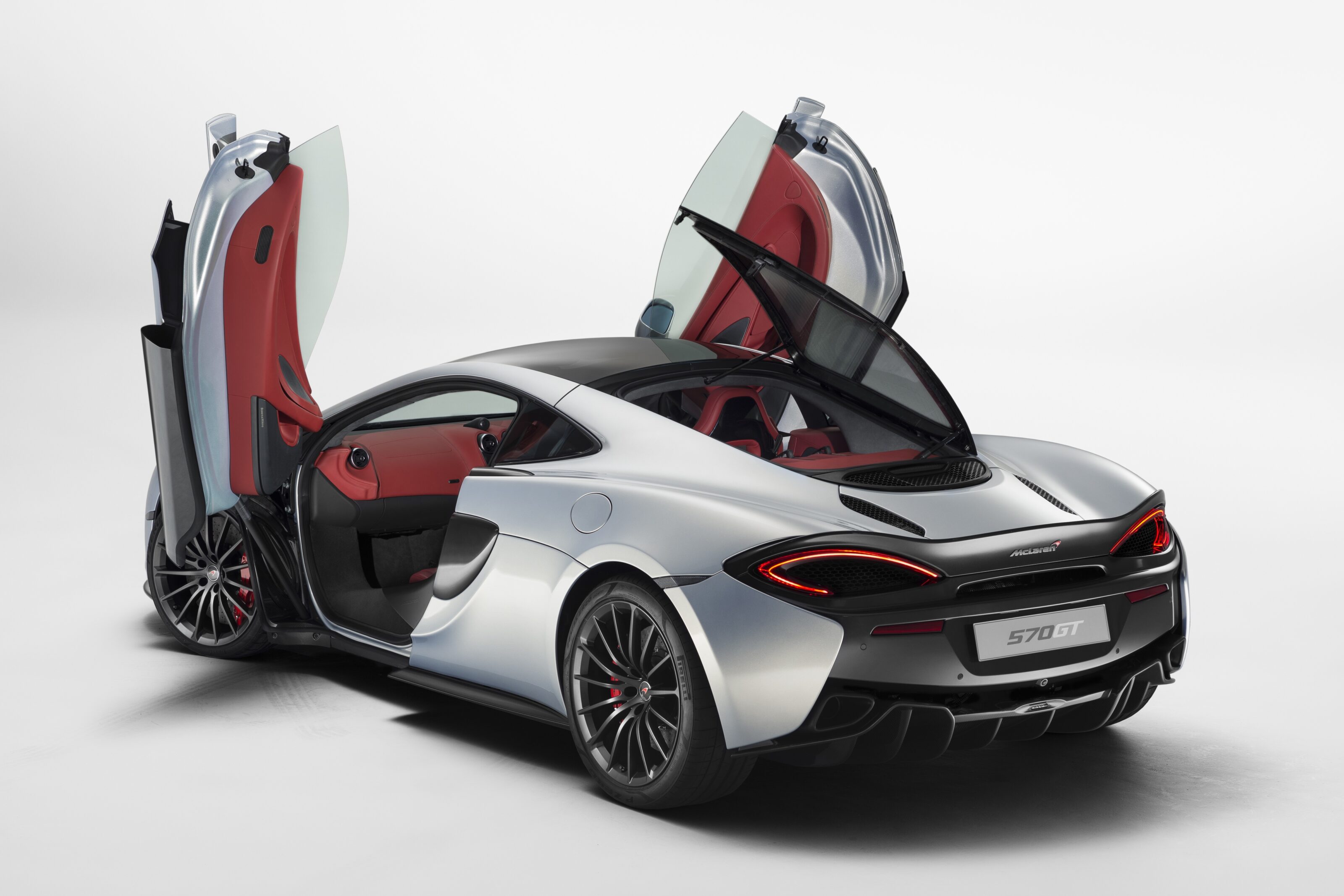
But with the same 419kW/600Nm 3.8-litre twin-turbo V8 as the 570S, the GT is hardly pedestrian, storming to 100km/h in 3.4sec (0.2sec slower), 0-200km/h 9.8sec (0.3sec slower) and its braking 100-0km/h now 33 metres to the 570S’s 31m. Meanwhile top speed is the same at 328km/h.
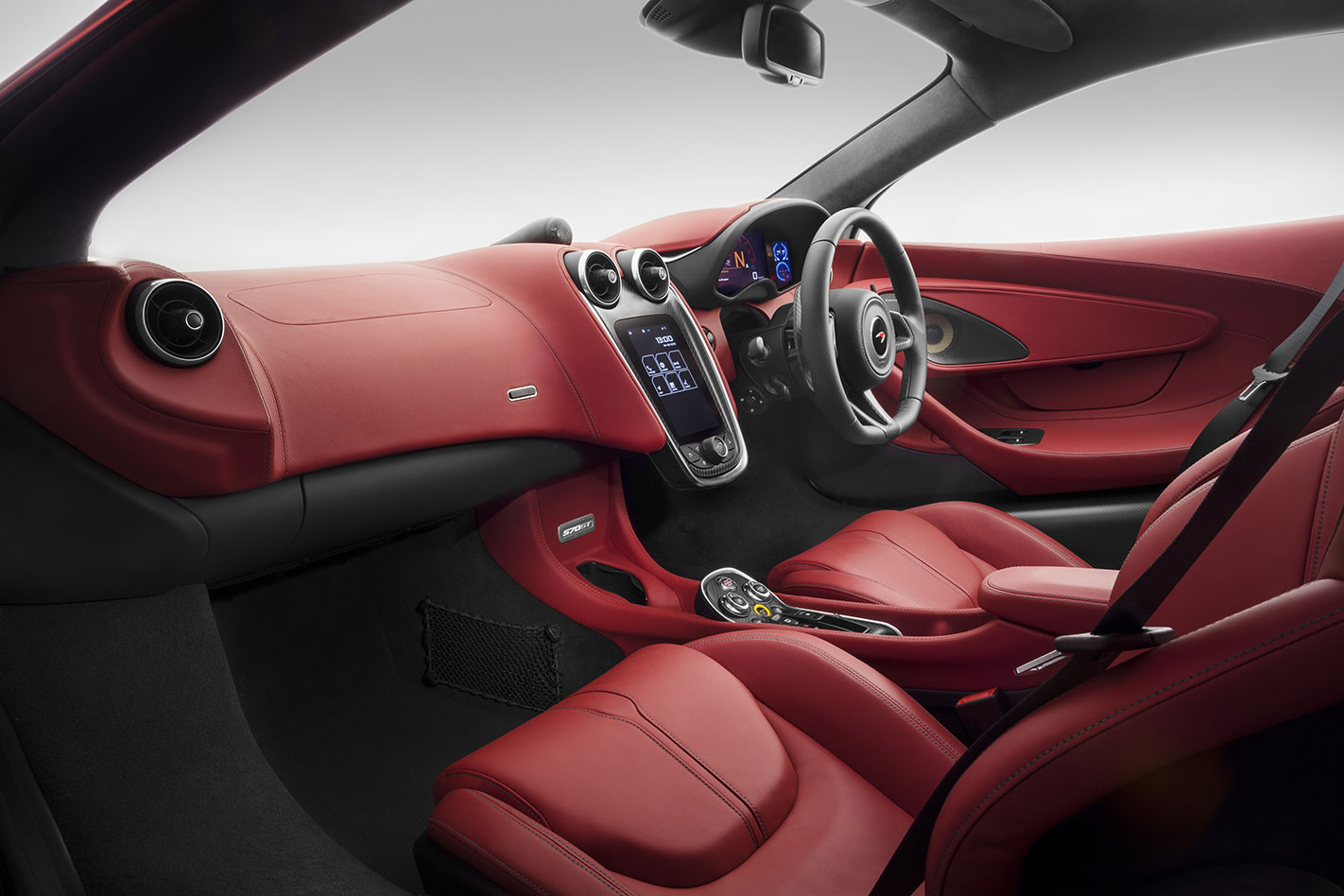
The first 570GTs are set to arrive Australia late 2016 priced from $406,800, or $27,800 more than the 570S.
