
HILLCLIMB: Three Aussie set for Pikes Peak centenary
Three Australian competitors have had entries accepted for the landmark 100th anniversary Pikes Peak International Hill Climb (PPIHC), or The Race to the Clouds, set for June 26.
Jeff Denmeade is heading back for another crack at the motorsports Mount Everest, pulling out his trusty Mitsubishi Evo, the car in which he topped the Time Attack division in 2010.
Denmeade says he is very honoured to be part of history – one of 100 competitors in this mega Pikes Peak climb: “I’m ecstatic that we’re going back in the Evo to try for a podium in Time Attack.”
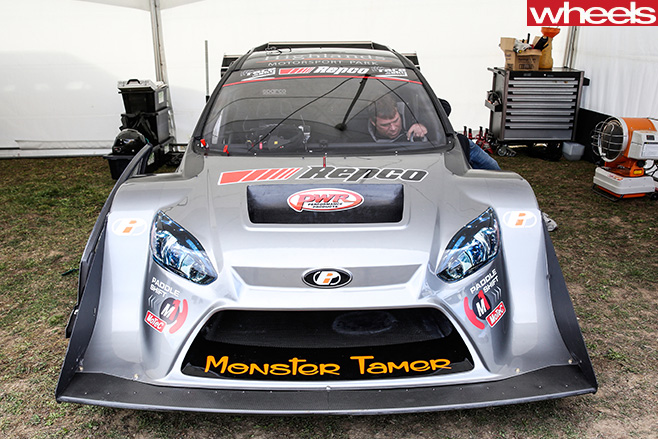
Built originally for NZ’s Race to the Sky gravel hill climb, the wild beast is officially described in the entry as a 2015 Focus, but is unrecognisable as a Ford. A rakish aero-friendly carbon-fibre-panelled body hides a 3.8-litre twin-turbo engine from a Nissan R35 developing 634kW and 976Nm, fed to all four wheels through a six-speed Holinger sequential gearbox. All up it weighs 989kg. It should be a weapon at Pikes Peak.
Quinn puts the cost of the project at around $350,000.
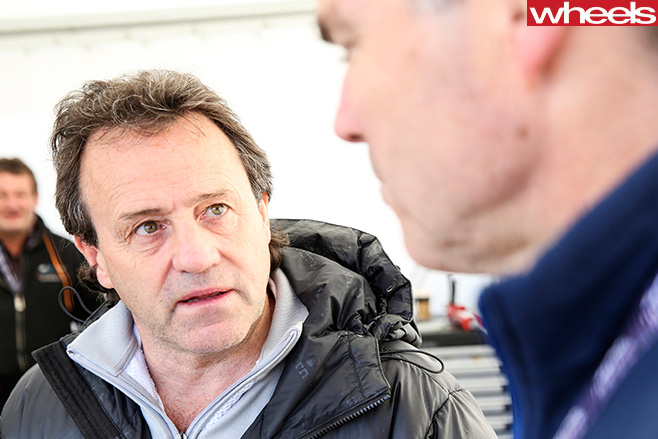
The outright winner, though, is expected to emerge from the ultra-competitive Electric Modified field. It is headlined by Pikes Peak legends Rhys Millen and Nobuhiro “Monster” Tajima (pictured below) in what should become a rematch of last year’s battle for King of the Mountain. Millen set an Electric Modified record with 9m 07.222s, still short of the outright record set in 2013 by Sébastien Loeb who recorded a time of 8m 13.878s driving the mid-engined Peugeot 208 T16.
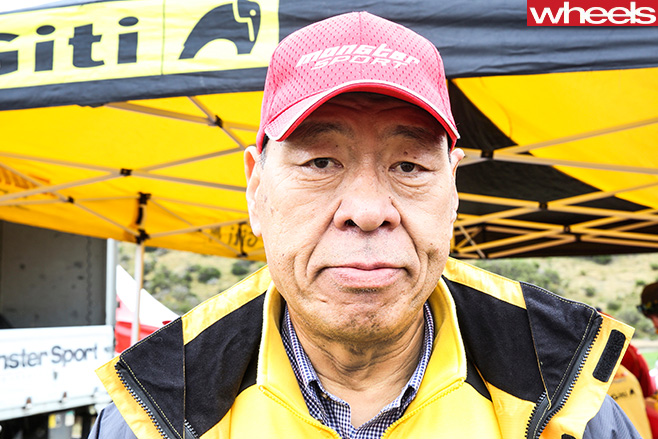
As well as the unfamiliar course, rookie Quinn has another challenge to overcome as he races high into the sky: “I’m shit scared of heights! Dunno how I’ll go.”
But Quinn has no great aspirations other than to tick off another great motorsport event. The previous weekend he’ll be in Ireland tackling the Donegal rally in an ex-WRC Subaru…
Quinn says he was fortunate to get the start at Pikes Peak on the 100th anniversary of the first climb. “I had to use all my influence to get an entry including references from Robby Gordon and Monster Tajima,” he said.
The second oldest auto race in the US after the Indianapolis 500, the 20-kilometre Pikes Peak climb with 156 turns takes competitors all the way to the oxygen-deprived 4302-metre summit.
Rennie Scaysbrook (pictured below), a Sydneysider now based in Los Angeles where he works as a motorcycle road tester, is another rookie taking a tilt at Pikes Peak. One of 33 bike entries, he has chosen a KTM Super Duke 1290R for his campaign.
“The appeal about Pikes Peak is that it’s such a unique event that has a real touch of old-school racing about it,” Scaysbrook told Wheels. “It’s different to any racing I’ve ever done, which has all been circuit racing in Australia with a couple of street races in NZ.
“I started to entertain the idea when they paved the whole track a few years ago, which raised the speed but also made it a bit more my style (no way would I have done it on the dirt like they did back in the day!).
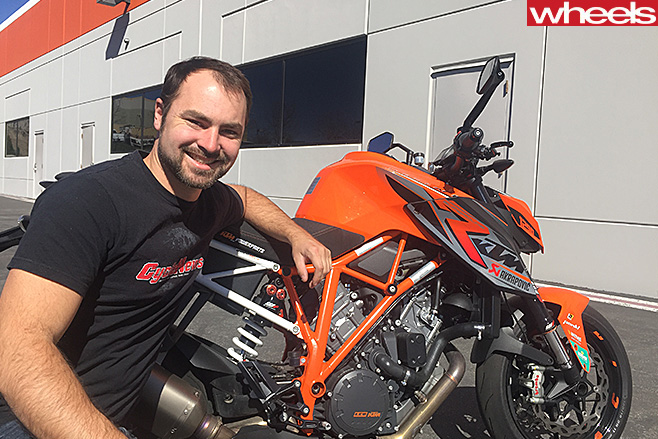
Scaysbrook said the climb was part of a long-term project to show off the versatility of the 1290 Super Duke R.
“I’d always planned to race this bike anyway because it’s got heaps of torque, a great chassis and brake package, and it’s comfortable – it’s almost like a dirt bike with a 1300cc V-twin wedged in the frame!,” he said.
“As far as results go, it’s such a dangerous race so I just want to get to the end safely. I know how I’d like to go, but there some pretty fast riders in the field and I’m still a rookie, so as long as I get to the end of it I’ll be stoked. I’ll be giving it a proper nudge, though!”
F1: Chris Dyer returns to F1 with Renault
Australian Chris Dyer, the former Holden Racing Team engineer who became a respected tech-head at Arrows and Ferrari, is back in Formula One with Renault, heading up its vehicle performance group.
Dyer’s new job involves supporting the race team with overseeing work on suspension, brakes and simulation.
Dyer started in F1 with Arrows before scoring a plum slot at Ferrari where he was Michael Schumacher’s race engineer in the German’s 2003 and 2004 title-winning seasons. He then performed a similar task with Kimi Raikkonen when the Finn won the driver’s title in 2007.
In more recent times, Dyer, 48, has been working as chief engineer of BMW’s DTM programme.
GT3: Variety is spice of Australian GT Championship life
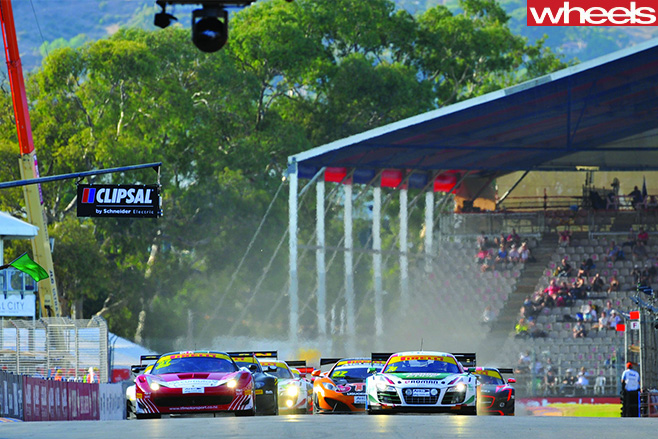
GT – the category that some people of a certain lofty demographic believe should be Australia’s premier race category – is in championship mode with a healthy field of 27-28 cars across seven exotic manufacturers heading to Adelaide for the opening round of the Australian series at the Clipsal 500 carnival on March 3–6.
A big year is ahead for the burgeoning sports car category with a six-round national championship to be decided, interlaced with an Australian Endurance Championship.
Six Audis have are confirmed for the season opener, with German ace Christopher Mies returning with the #1 on his JAMEC-PEM Audi R8 LMS following his 2015 Australian GT Championship title success.
A privately entered R8 LMS for Simon Ellingham rounds out the Audi representation.
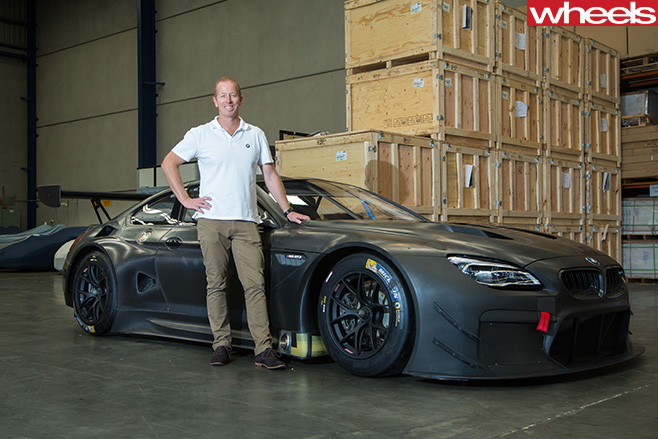
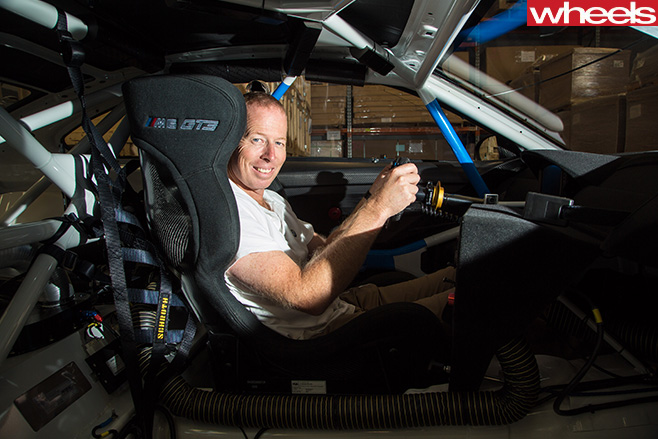
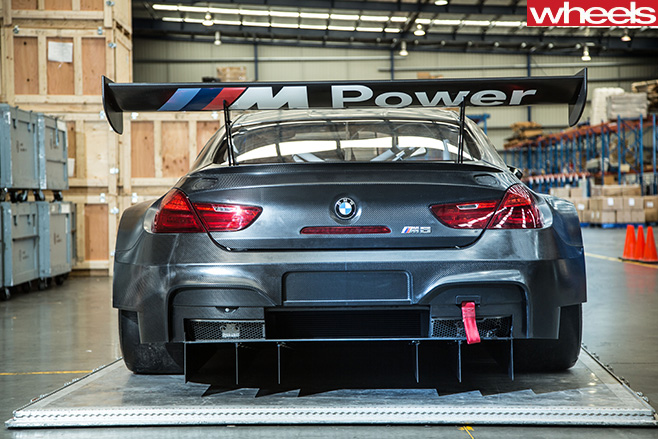
Friday’s announcement that Bathurst 1000 winner Steve Richards’ brand-new factory supported BMW M6 GT3 (pictured above, below) has arrived in time for a full championship programme has pundits musing just how competitive the exciting combo will be. Answers to come early next month…
A BMW Z4 GT3 will also chase the championship, driven by Ricky Capo.
Former two-time championship winner Klark Quinn will once again pilot the Darrell Lea-backed McLaren 650S GT3, sharing the car with his evergreen father Tony Quinn at the opening round. Papa Quinn has an Aston Martin to drive in subsequent rounds.
In a late switch from a Maranello Motorsport Ferrari, TV star and racer Grant Denyer is set to now drive one of three Tekno Autosports McLarens.
Denyer, who was second in the GT series last year partnering Tony D’ Alberto and was part of Maranello Motorsport’s squad at this year’s Bathurst 12 Hour, was expected to continue in red.
Maranello’s plans have scattered about a little, but a new 488 GT3 for car owner Peter Edwards and John Bowe should be on the grid by round two at Albert Park.
Mercedes-Benz should again be a brand on a mission.
Gold Coast businessman Scott Taylor has bought a new Mercedes-Benz AMG GT3, the successor to the successful SLS AMG GT3, and grabbed the vastly experienced Craig Baird in a serious tilt at both GT series formats.
Mark Griffith will also debut a new Mercedes-AMG GT3, as will one-time frontrunner Peter Hackett, back with Dominic Storey.
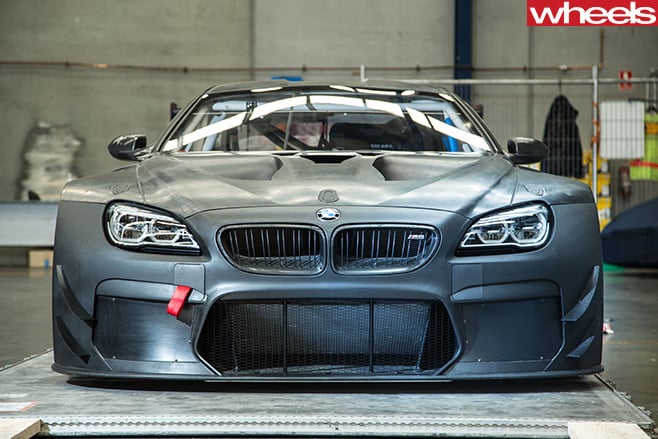
Finally, Porsche 911 GT3-Rs for AMAC Racing’s Andrew Macpherson, and WALTEC Motorsport’s John Martin and Aaron Tebb add another great sports car brand to the mix, completing an intoxicating entry that someone with a calculator and a lot of time has suggested has a combined value of over $30 million.
NASCAR: Hamlin takes thriller in closest-ever finish
The winner of a dramatic Daytona 500 doesn’t know how he did it. We were watching on the box and we don’t know how Denny Hamlin did it, either. All day, the outside lane wasn’t working. But on the final lap, the Joe Gibbs Racing Toyota driver made it happen, coming from a fair way back.
Up high, Hamlin was overhauling teammate Matt Kenseth, who was running low. Kenseth moved up to block. Hamlin tapped Kenseth into a (masterfully saved) slide…and it was all over. No, not really.
Hanging down low, Martin Truex Jr looked to have the grunt to move up front and stay there, but with momentum and some side drafting going his way, Hamlin took the 500 by the closest margin in history – 0.010 seconds.
Hamlin from Truex Jr from Kyle Busch. Toyotas one-two-three.
It was Hamlin’s first Daytona 500 victory, the first for team owner Joe Gibbs since 1993 and a break-through Daytona 500 win for manufacturer Toyota.
Stewart-Haas Racing’s Kevin Harvick and JGR’s Carl Edwards – who battled back from an early-race incident – rounded out the top five.
Kenseth led 40 of the final 41 laps of the Daytona 500 but not the one that counted. He fell back to 14th at the flag. Kenseth said afterwards that Hamlin did a “masterful job” on the final lap.
“They don’t get much more crushing than that,” Kenseth said. “I thought I definitely was in the position I wanted to be in. All three of my teammates were awesome. I saw Denny had the run, thought he would go around me if I didn’t block him … just got me turned sideways there.
“The safer play would have been to finish second, but we’re here to try to win the Daytona 500.”
Pre-race fancy and crowd favourite Dale Earnhardt Jr spun off while battling for a top-five position at Lap 170.
Earnhardt’s Hendrick Motorsports teammate and rookie, 20-year-old Chase Elliott – the youngest ever polesitter – discovered life in the big league is not always wonderful. His Daytona 500 debut turned nasty on lap 19 when he lost control and slid onto the grass while running in the top 10.
DRUGS AND ALCOHOL: Testing regimen catches out drivers
In some sports, drug taking and juicing up almost seems compulsory. So it’s refreshing to hear that local motorsport is relatively free of dope heads and boozers.
CAMS’ combined number of tests for illicit drugs and alcohol reached 3291 – comprising 138 saliva drug screens and 3153 breath alcohol tests – with just five competitors and one pit crew member excluded from events after recording positive results.
These tests were spread across all motorsport disciplines, states and territories and all competitive levels from grassroots right up to the international level.
Two of the breaches were for illicit drugs, with CAMS suspending the licences of two competitors after they tested positive at a state level event. Both have since completed mandatory drug counselling sessions and have had their licences reinstated, in accordance with the policy.
CAMS reports that testing programs for alcohol and drugs were cranked up last year. Illicit drug screens more than doubled whilst the number of recorded breath alcohol tests rose above 3000 for the first time. CAMS noted that at several events throughout 2015, state police conducted breath alcohol testing rather than CAMS officials. Although these tests are not officially recorded on CAMS’ database, it is likely the true number of alcohol tests could be as high as 3500 or more in 2015.
CAMS said the increase in testing demonstrates its ongoing commitment to making motorsport safer for competitors, officials and spectators. Both programs will continue to run this year with CAMS planning to increase the presence of testing by working closely with event organisers to make the necessary arrangements.
RALLY: Taylor wins Peter Brock Medal
Sydney rally driver Molly Taylor has won the Peter Brock Medal for 2015.
The medal win, part of the wider CAMS Motor Sport Awards, is made to the driver who has demonstrated characteristics that endeared the late touring car legend to so many – a fair and sportsman-like attitude, a willingness to promote the sport to the wider community, and talent.
“I’m incredibly overwhelmed to have been selected,” said Taylor.
First presented by the Confederation of Australian Motorsport (CAMS) in 2011, the inaugural winner was the late V8 Supercar driver, kiwi Jason Richards, followed by V8 star Craig Lowndes (2012), four-time Australian rally champion Neal Bates (2013), and versatile race and tarmac rally star Jim Richards (2014).
The personable, hard-working Taylor was runner-up in the 2015 Australian Rally Championship after several years racing abroad.
She competed in the British, European and World Rally Championships, where she was named British Ladies Champion two years in a row, won the inaugural European Rally Championship Ladies Trophy and in 2013 was officially recognised as the fastest female rally driver in the world.
Also acknowledged were long-time CAMS Foundation supporters Tom Warwick and Geoff Morgan, who received the CAMS Membership of Honour, while respected engineer Dave Mawer took home the Phil Irving Award.
It may be the most expensive movie prop we’ve ever seen.
Aston Martin’s DB10, which starred in Spectre, sold for £2,434,500 (AU$4.9m) last week at London’s Christie’s during a charity auction event.
What makes it so special? While Daniel Craig has signed underneath its bonnet, its desirability extends beyond a bit of scribble.
Of the ten DB10s built for the latest James Bond movie, only two were saved from filming duties. This example is one of those two.
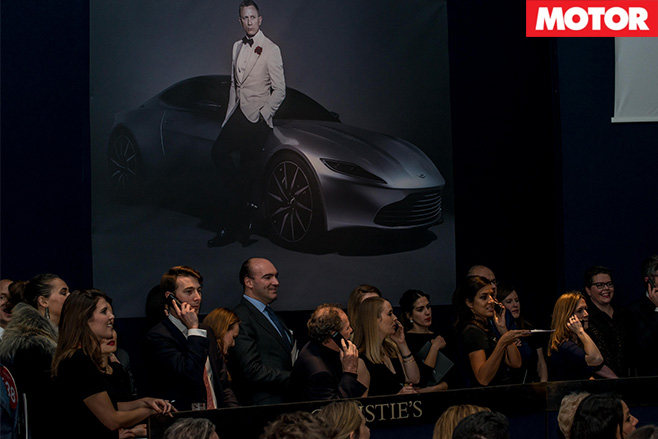
However, despite astronomical price, its owner won’t be able to enjoy it on public roads. Made specifically for filming duties in Spectre, and therefore skipping crash testing or any homologation needed for public sale, the DB10 reportedly can’t be road registered.
We’d be a little frustrated at that, especially when it’s basically a V8 Vantage underneath and a 4.7-litre V8 still lurks under its bonnet. However we’re sure the fees for hiring a racetrack wouldn’t faze its new caretaker.
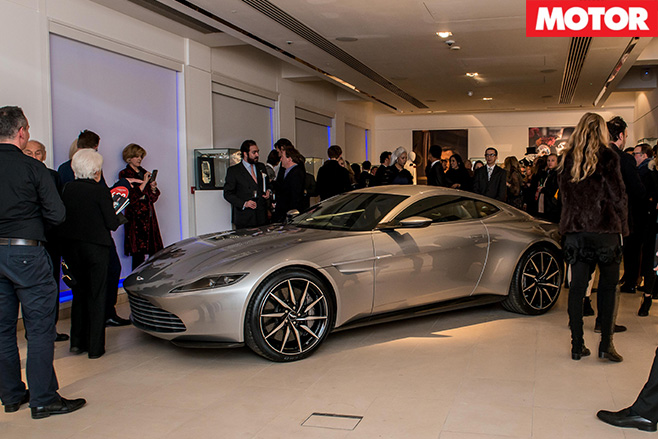
The DB10 was sold on behalf on EON Productions, who still have another DB10 up its sleeve. Whether we’ll see the second example follow the same fortune, though, is not yet known.
Another notch on the belt of the big-buck SUV brigade clicks into place following the reveal of the production Maserati Levante.
From the side the Levante looks SUV-generic in shape, but with details that link it to its Italian maker. Three square air vents on the front three quarter panels, flared rear haunches, the ‘Saetta’ logo on the C-pillar and frameless doors give a nod to the Quattroporte with which the SUV will shares its drivetrains.
The front styling is more aggressive than that large sedan, though, owing more to the medium-sized Ghibli with its small and piercing headlights giving way to a grille with bold vertical indents.
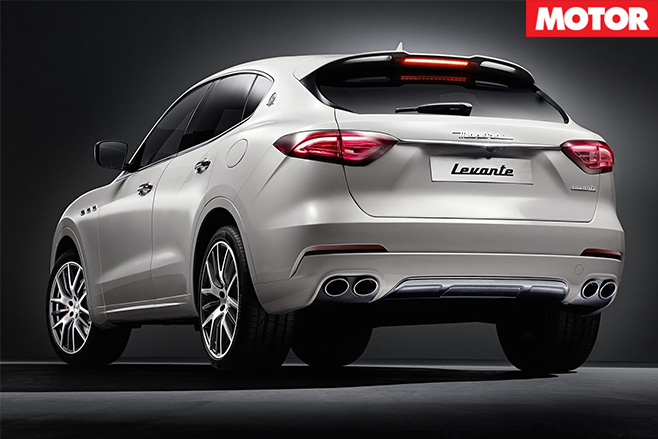
Maserati is keeping powder dry on drivetrain specifications, except to say that an eight-speed automatic will be standard, with a choice of petrol or diesel availability.
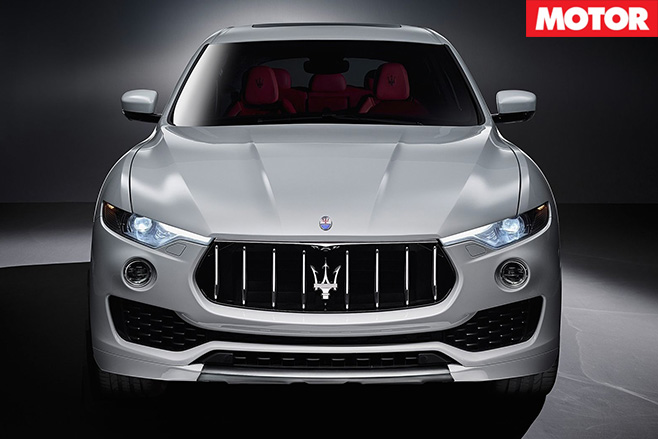
Every Levante will also get ‘Q4’ all-wheel drive system and adaptive suspension with air springs.
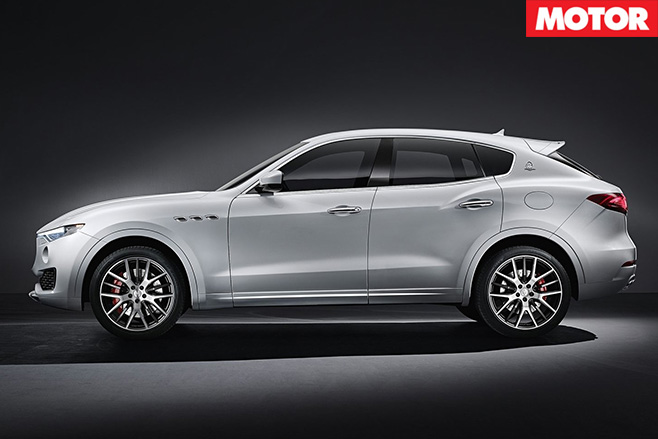
The Italian competitor to the Volkswagen Group’s Bentley Bentayga and Porsche Cayenne is confirmed to start rolling off the Turin production line in the second quarter of 2016 for Europe, before going global late this year.
After a decade in hiatus, the 318i badge is back, gracing the (slightly) updated exterior of the 2016 BMW 3 Series. But with one turbo, three cylinders, and a host of suspension mods underneath, this is a 318i like no other.
WHAT IS IT? BMW went all out to update its sixth-generation 3 Series, spending more effort on driveability than the mildly updated styling and interior suggest. There is an all-new range of modular engines, and significantly altered suspension. Additionally, for the first time, a three-cylinder turbo surfaces, in the resurrected BMW 318i opener.
WHY WE’RE TESTING IT Three-cylinder vehicles have impressed us over the past few years, but how a downsized turbo engine would behave in a 1400kg-plus rear-drive midsizer with overt sports/luxury sedan character was another question entirely.
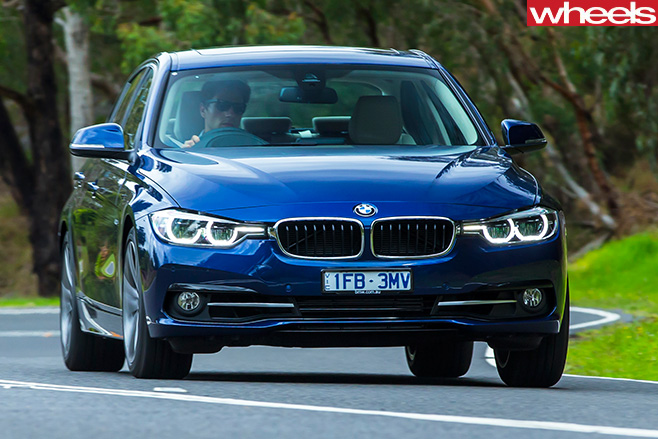
THE WHEELS VERDICT On the terrific three-cylinder turbo honours list, the BMW 318i stands alongside the Renault Clio 90 TCe, the Ford Fiesta Sport 1.0T EcoBoost, and the Peugeot 308 1.2T e-THP. And just like the French cars, the least expensive BMW 3 Series is also one of the best, because the all-new 100kW/220Nm 1.5-litre B38 engine is sweet, spirited, and incredibly refined. That its low mass benefits dynamics – courtesy of a detailed suspension upgrade as part of the F30 generation’s mid-lifecycle facelift – underlines the beauty of an intelligently engineered downsized powertrain. Once upon a time the 318i was a laughing stock. From today, it’s a serious threat to the base Mercedes C200 and Audi A4 1.8 TFSI.
PLUS: Performance, handling, roadholding, efficiency, design, cabin upgrade MINUS: Essential adaptive dampers optional, clammy vinyl upholstery, expensive options
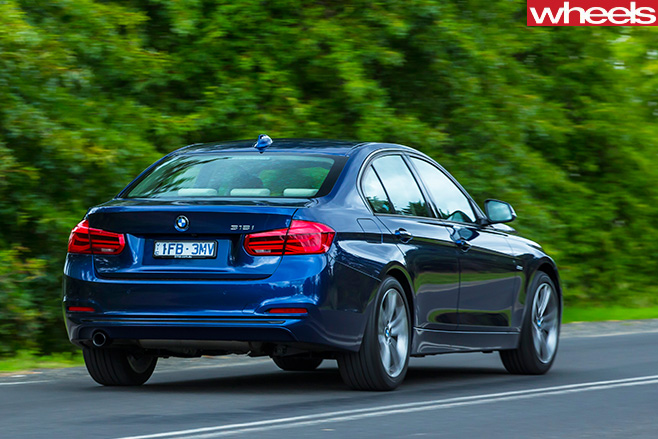
BMW clearly recognises this, so the four-year-old F30 gains a box-fresh family of modular engines, recalibrated transmissions, stronger suspension mounts, and a 10mm ride-height drop, to help reassert the 41-year-old nameplate’s dynamic superiority.
It’s a facelift that goes beyond the normal nip-’n’-tuck, though most people will notice only the revised nosecone, updated multimedia, and swishier interior ambience.
That’s a pity. While the four-cylinder (320i, 320d, 330i) and six-cylinder (340i) versions landed last October, it’s the just-resurrected 318i, starring an all-new 100kW three-cylinder turbo, that might be the most intriguing, presenting yet another difficult numerical-related decision for buyers: three pots or four.
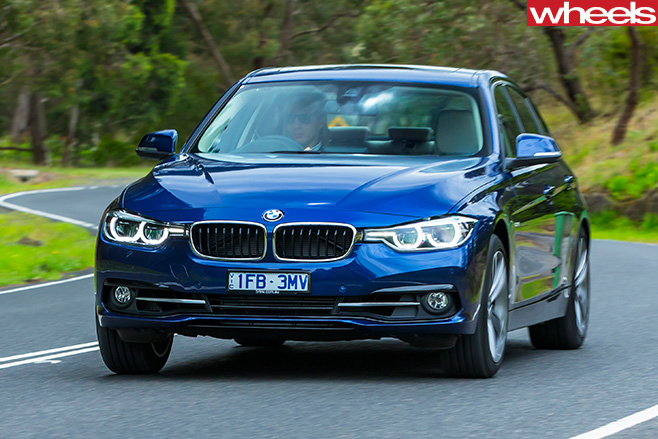
Second, despite boasting just 1.5 litres, its 220Nm torque max is available virtually immediately, so with a set of slick and smartly spaced auto ratios raring to exploit this, the 318i will leap forward with exuberance – and keep striding along smoothly as well as effortlessly, like its (somewhat) larger-engined siblings would and do.
This ain’t underpowered, folks. Recalling how pedestrian the 318i was up until the 2001 E46 facelift, the vitality of today’s version makes it triply pleasing.
The three-pot turbo’s advantages continue with exceptional economy potential, while a lighter front end (25kg under a 320i) probably aids the enjoyable dynamics. Probably? Ours included $2245 Variable Sport Steering and $1692 Adaptive M Suspension, so the crisp but curiously remote turn-in and unflappable roadholding may not directly translate with the standard helm set-up. Still, we’d wholly recommend the latter option’s adaptive dampers if ride comfort matters at all.
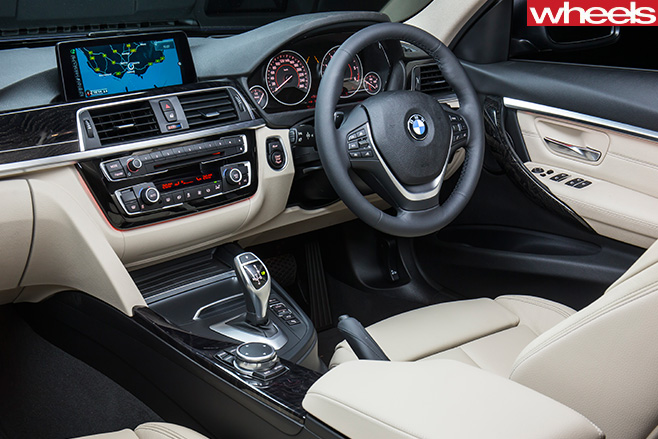
Regardless, the three-pot turbo 3 Series stimulates with energetic chutzpah and surprising charm. While most buyers will bridge the $15K gap to the exquisitely powerful 330i, there is something defiantly uplifting about choosing to downsize. Compared with rival offerings, the 318i might even be the driver’s choice.
SPECS Model: BMW F30 318i LCI Engine: 1499cc 3cyl, dohc, 12v, turbo Max power: 100kW @ 4500-6000rpm Max torque: 220Nm @ 1250-4000rpm Transmission: 8-speed auto Weight: 1425kg 0-100km/h: 9.1s Fuel economy: 5.4L/100km Price: $54,900 On sale: Now
As Peugeot shows its re-engineered baby SUV, the 2008, spy images surface of an all-new mid-sizer.
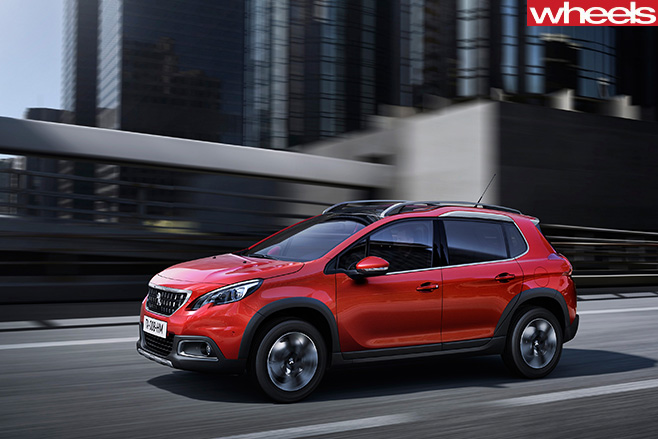
PEUGEOT is preparing to take on the hugely successful Mazda CX-3 with a comprehensively updated 2008 SUV, set for launch in the fourth quarter this year.
The 2008 Series II will have a butch new look and a far more modern drivetrain option.
The pair will give Peugeot unfettered access to two of the fastest growing segments in Australia for the first time, according to marketing manager, Dimitri Andreatidis.
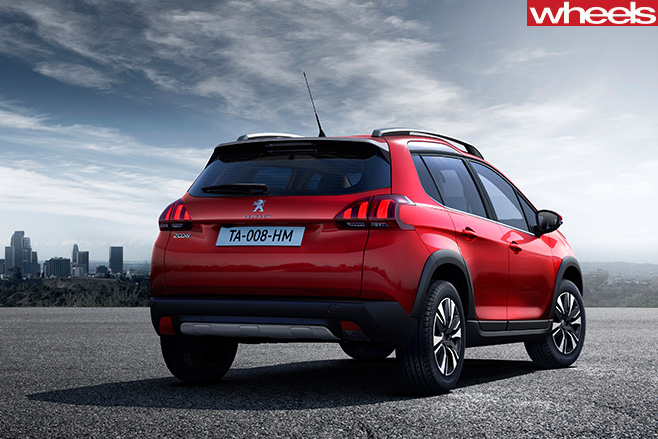
To debut internationally at the Geneva Motor Show early next month, ahead of an Australian launch in about October, the facelifted 2008, mimics the 208 Series II supermini by adopting a sharper nose treatment with more aggressive chrome detailing and redesigned air intakes.
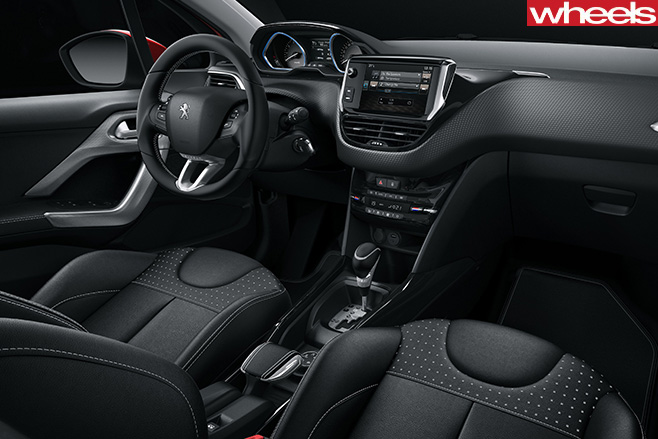
More importantly, the old 88kW 1.6-litre four-pot atmo unit and antiquated four-speed automatic powertrain that hobbled the 2008 in Australia since its 2013 release has been dumped.
It gives way to the 208’s recently acquired 81kW/205Nm 1.2-litre e-THP three-cylinder turbo petrol engine, driving the front wheels via a six-speed auto – and promising improved performance and efficiency.
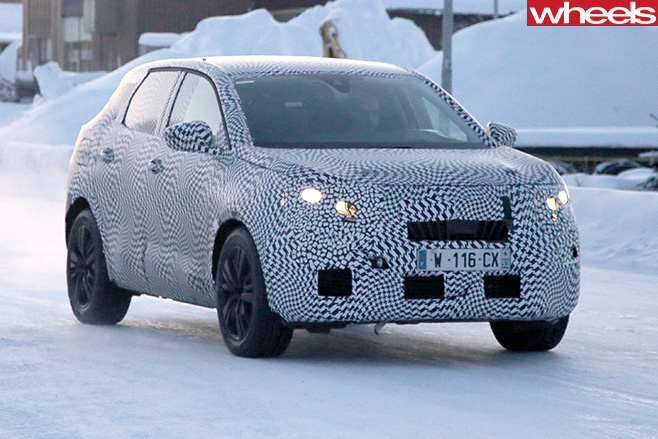
Meanwhile, to be built at the Sochaux home plant in France alongside the T9 308 that sired it, the 3008 II – known internally as the P84 – is expected to take centre stage at the Paris Motor Show in October.
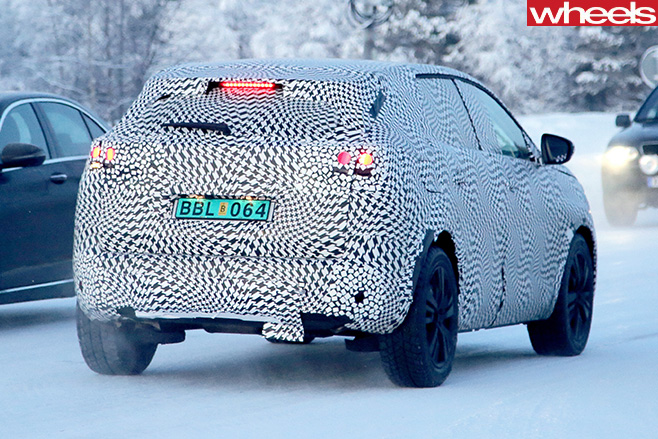
As these spy images of a 3008 development vehicle suggest, the size and proportions appear to follow those of the Mazda CX-5 quite closely, underlining the increasingly international appeal that Peugeot vehicles are adopting in order for them to pay their way.
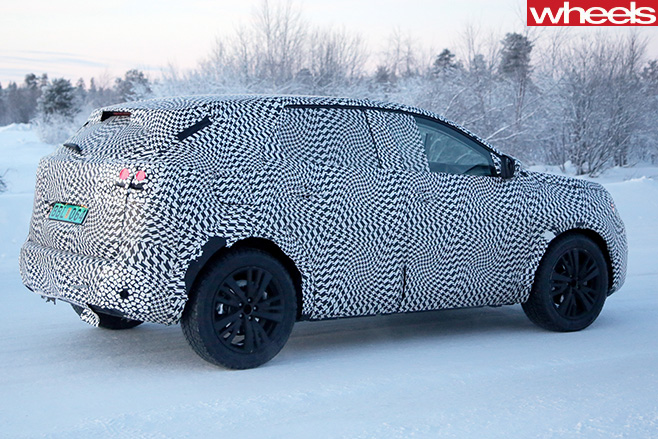
Plus, an EV hybrid system driving the rear axle will provide additional traction on some versions, while 1.6-litre turbo-petrol and an all-new 1.5-litre turbo-diesel family, some with the option of an as-yet unseen eight-speed automatic, are also said to be on the cards.
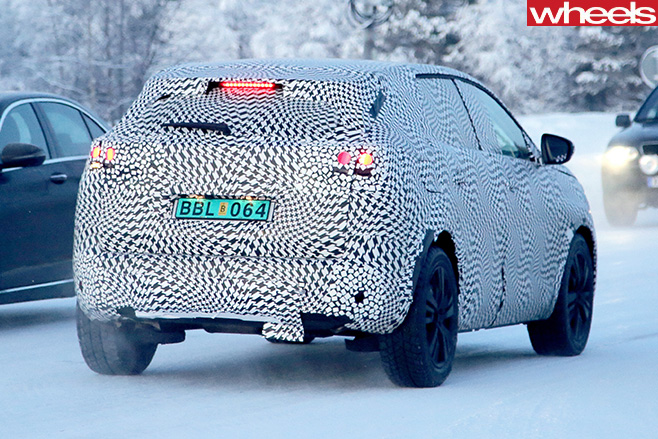
While barely making a blip in Australia with just 1682 registrations since landing here in 2010, the 3008 has exceeded 700,000 sales worldwide, so its success is vital to the brand.
PLUS
- It’s no bat mobile, but compared to most other 4×4 wagons, this thing is quick. That’s thanks to the revved-up 2.8-litre engine, and the six-speed transmission that’s also used in the V8 Commodore. Power: 147kW. Torque: 500Nm. That’s nothing to lol about.
- Space.When you’re in a big car, you want it to feel big. And the Colorado 7 doesn’t disappoint. The cabin is roomy and the driving position is comfortable. Just what you want on a long road trip.
- Handling. Again, it’s no bat mobile, but compared to a lot of other 4x4s on the market, the Colorado handles winding roads pretty well, thanks to a firm suspension set-up, which means less body roll.
- 4×4. For most, the Colorado’s off-road prowess will be more than enough. It’ll take you pretty much wherever you want to go without drama, with the bonus of a comfortable highway ride home.
- Stuff. It comes with seven seats, a reversing camera, rear parking sensors, and a seven-inch touchscreen that can be used as a sat-nav via a separately purchased smart phone app. Stuff is good.
- 4×4. It’s not the most refined, advanced or even capable 4×4 on the market. So it won’t win you any points with the hardcore off-roaders. But, with great over-bonnet vision, all the off-road basics and plenty of grunt, it gets the job done!
- Noise. Some people like a noisy engine. They like to hear it roar over the sound of ACDC blasting through the stereo. It puts hair on their foreheads and lightening in their veins. Or not.
- Age. It’s due for an update. So you’re probably better to wait for a newer version.
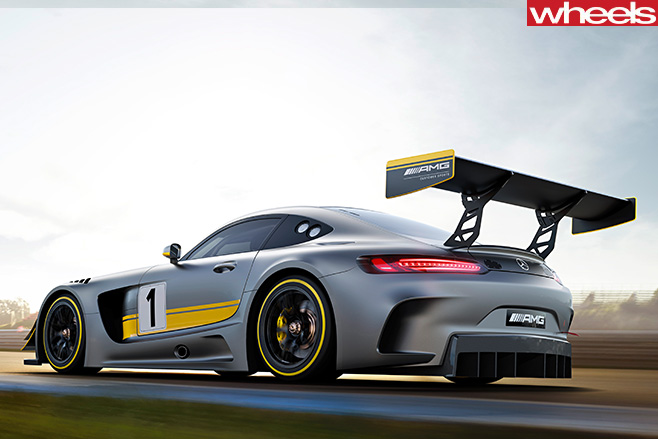
THERE will be no V8 Supercar in the Ultimate Speed Comparison at this year’s Australian Grand Prix, with its place to be filled by the sinister looking Mercedes-AMG GT3.
The handicapped race traditionally pits a Formula 1 car and a V8 Supercar against a road-going production car around the Albert Park, Melbourne, circuit.
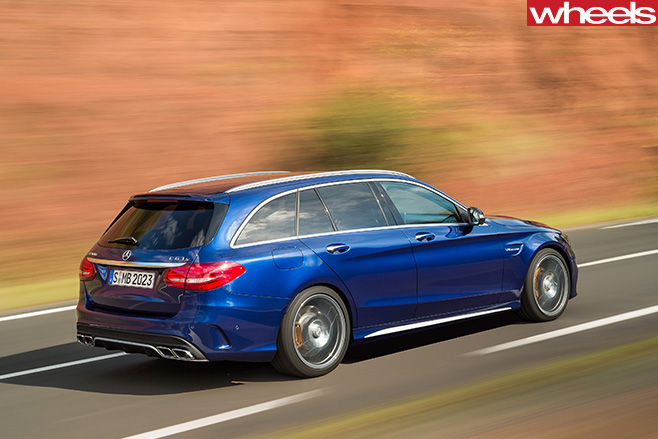
But for 2016, Mercedes will provide two of three cars – the AMG GT3 (above) and an AMG C63 S Estate (below).
The F1 car’s slot will be filled by the V10-powered Minardi two seater, driven by Aussie motorsport mainstay Cameron McConville.
The announcement follows threats from V8 Supercars this week that it would quit the Australian Grand Prix in 2018 unless its races were permitted championship status by the AGP Corporation.
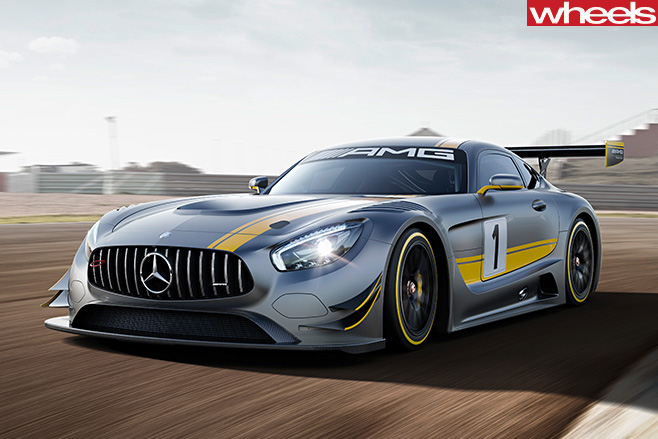
As many as four AMG GT3 cars are expected to race in this year’s Australian GT Championship, campaigned by the Erebus and Eggleston motorsport teams.
And why did Merc choose a C63 S wagon, instead of a sedan to contest the race?
“We really wanted to get the message across that it’s a standard production car,” said Stamoulis. “In previous years when we’ve chosen sedans, fans have thought they’re racing cars.”
For many people, the V90 is an iconic Volvo family wagon.
Now, almost 20 years since the name was retired, Volvo is bringing the wagon back in a big, beautiful, technologically-packed way.
With an official debut set for the Geneva Motor Show, Volvo has given us an early look at the newest member of its family.
Based on the same platform as its siblings, the S90 sedan and XC90 SUV, the V90 will be available in front- and all-wheel drive with a 2.0L four-cylinder engine.
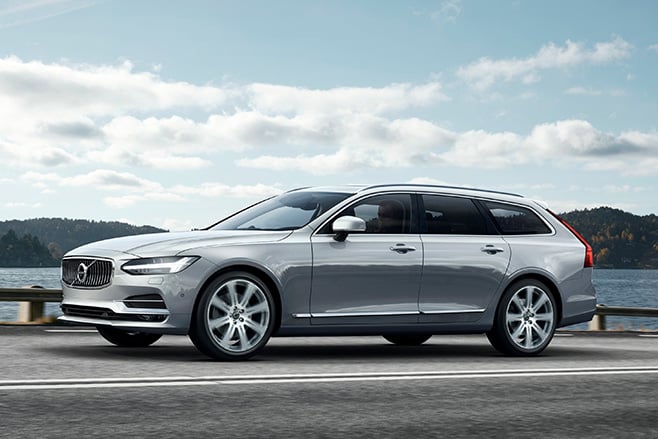
Measuring in at 4936mm long, 1890mm wide, 1475mm tall and set on a 2941mm wheelbase, the V90 isn’t small, but nor is it as spacious as some of its competitors. That aside, it’s jam-packed with all the latest safety technology including collision avoidance and mitigation technology, Pilot Assist II, run-off road mitigation and the very cool large animal detection.
The Volvo V90 line-up will include three petrol variants: a front-wheel drive T5 with turbocharged motor; an all-wheel drive T6; and a twin-charged plug-in hybrid T8. Two turbo-diesel models will also be offered: a twin-turbo-diesel D4; and an all-wheel drive twin-turbodiesel D5.
Fast, safe and won’t hurt any large animals? Sounds pretty good to us.
Tesla has teamed up with toy maker Radio Flyer to create a Model S for kids.
But here’s the catch: unlike the grown-up versions that cost upwards of $120K, the down-scaled model will ‘only’ cost around US$500 (AU$700).
Built for kids aged between three and eight, and weighing less than 36kg, the mini Model S sits at a speed of around 4.8km/h. But flick the switch in the boot, designed to mirror Tesla’s Insane mode, and it’ll hit a speed of 9.6km/h.
Tesla and Radio Flyer have made the Model S so life-like that it’s almost fully customisable. Aside from its working headlights, sound system, small boot and reverse mode, buyers can also choose from three real Tesla colours (blue, silver and red), black or silver Turbine wheels, customised numberplates, a parking sign and an indoor car cover. Talk about spoilt for choice.
Additionally, a 130Wh Flight Speed lithium ion battery is available as standard, or a 190Wh battery is an optional extra to extend playtime by 50 per cent.
While a car for kids is not a new toy on the market, the fact the Model S for kids is so close to the real thing – and is packed with technology and customisation options – gives it a one-of-a-kind label.
At this stage, however, the Tesla Model S for kids is only shipped within the US.
Jaguar describes the F-Pace as a performance crossover for people who love driving. It is aimed to steal sales away from BMW X5, Audi Q5 and Porsche Macan.
The F-Pace is slated to arrive in Australia in July with expectation set north of 1000 F-Paces per year going to local customers. Jaguar Australia sold 1292 cars in 2015 across its entire model range.
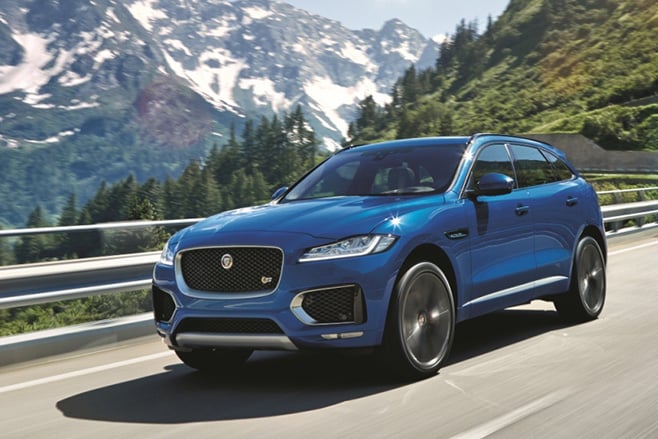
Jaguar’s plan for F-Pace is to incorporate Jaguar’s renowned driving dynamics with everyday SUV usability. Key features include a spacious cabin and 650-litre cargo capacity, an advanced infotainment system called InControl Touch Pro, a range of petrol and diesel engines and all-wheel drive grip, plus a full suite of driver assistance technology and safety systems.
Variants start with Prestige, a package that includes 19-inch alloy wheels, auto emergency braking, lane departure warning, tyre pressure monitoring, motorised tailgate, LED headlights, leather upholstery, Meridian sound system, Jaguar’s Smart Key system, parking aids and reversing camera.
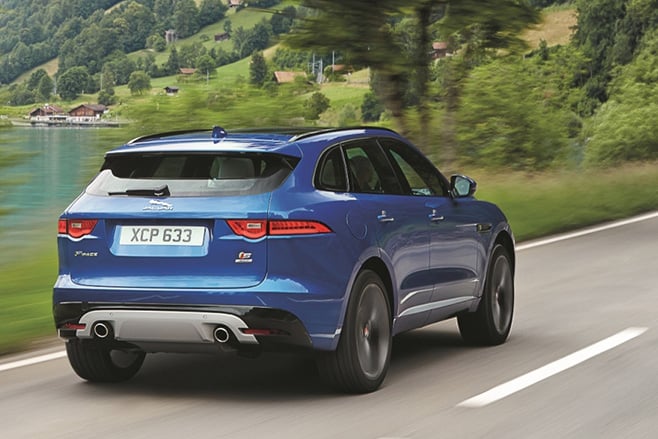
R-Sport adds to the Prestige package with a unique 19-inch wheel design and R-Sport bumpers and styling details.
Portfolio offers premium Windsor leather trim, wood veneer trim and upgraded interior lighting.
S and First Edition models are the only variants available with the most powerful supercharged V6 engine. The S model gains 20-inch wheels, adaptive dynamics, unique S bumpers and red brake calipers plus S-specific interior trim. First edition comes with 22-inch wheels, a sliding panoramic roof, roof rails, a virtual instrument display, reclining rear seats and superior interior materials.
Getting into an F-Pace will cost you $74,340 for the entry-level 20d Prestige, powered by a 132kW/430Nm turbocharged 2.0-litre diesel four-cylinder engine. Two diesel engines are on offer, the other a 221kW/700Nm 3.0-litre turbocharged V6.
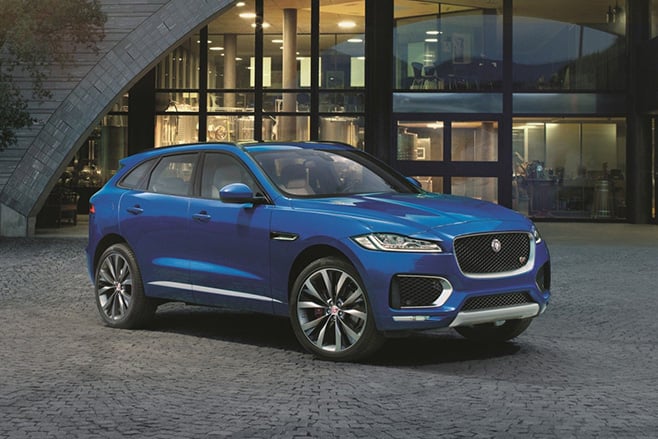
Petrol engine options include a 250kW/450Nm supercharged 3.0-litre V6 and a 280kW/460Nm supercharged 3.0-litre V6.
Pricing for other diesel variants is as follows: 20d R-Sport ($80,090), 30d Prestige ($84,590), 30d R-Sport ($80,090), 30d Portfolio ($91,350), S ($99,940) and First Edition ($117,210).
Petrol model pricing: 35t Prestige ($84,030), 35t R-Sport ($89,790), 35t Portfolio ($90,800), S ($103,420) and First Edition ($120,700)
