
The Jaguar XE may not have the ‘Old Hollywood’ vibe like Jags of yore, yet it has entered the mid-size premium sedan market with a bang featuring as a finalist in Wheels Car Of The Year and the WhichCar Style Awards for 2016.
PLUS
- The XE is packed with standard gear. Even the base model 20t Prestige comes packed with equipment such as emergency braking, park assist and 360 degree camera.
- It looks elegant. The XE is an attractive, strong looking sedan. The front grille and cat eye headlights give it a real sense of toughness.
- It measures in at a decent price for a prestige brand, so people can now own the big cat nameplate affordably.
- It drives well. It’s sportier than its competitors and drives like a prestige sedan should.
- There are a bunch of excellent options to choose from to take the Jaguar XE up a notch. But they will cost you.
- It’s also missing the classic Jag-like qualities people look for in the brand, like the woodgrain trim on the interiors.
- It’s not as fuel efficient as its competitors.
- The XE only features six airbags which is also less than other mid-six sedans.
You can go bush without a recovery kit, but you really shouldn’t. It’s as simple as that. At least that’s what we’ve all been told for the past couple of decades. In fact, it’s almost impossible to pick up a four-wheel drive magazine without reading that safety and recovery gear should come before just about anything, including your first tank of diesel. The ability to safely and quickly self-extract is something that should be put before any single aspect of off-roading. There isn’t a camp oven or light bar that should be higher on your shopping list than the simple bow shackle.
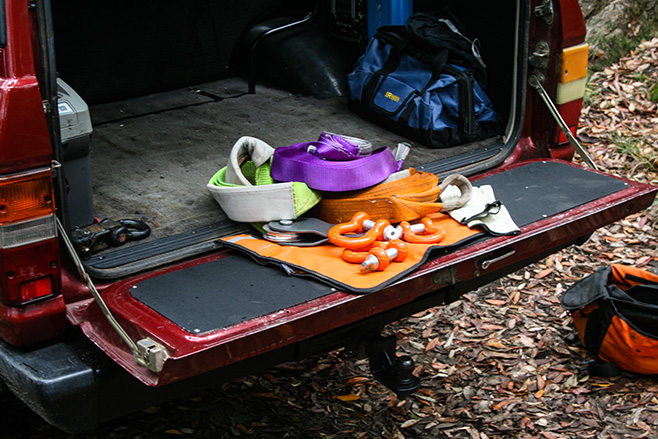
It all sounds good in theory – except we’ve rarely been taught what should actually be in a recovery kit, or even how to identify or use the components in question. What’s included in a recovery kit has more or less been left up to manufacturers.
As a result, customers are often uninformed before plonking down their hard-earned cash, attempting to do things the right way. We’re aiming to rectify that. With a camera in hand, we’ve set out to put together a basic guide of what your kit should have in it, and what each item is actually for.
SLINGS AND STRAPS
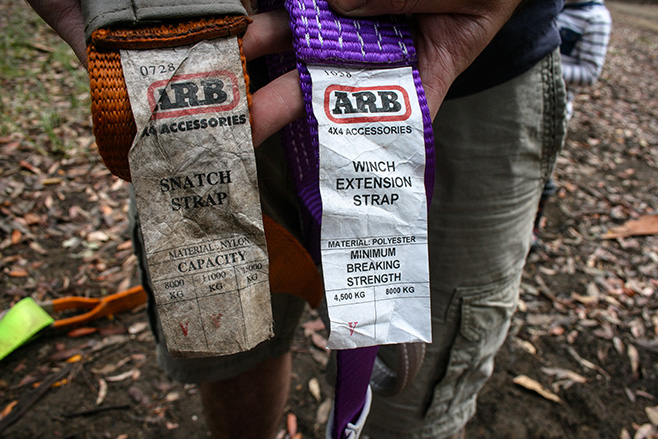
The main items in a recovery bag are slings and straps, and they’ve all got labels on them listing their intended use, such as snatch strap or tow strap. But they don’t come with an explanation of why they’re suited to those applications.
If you’re reading this, you’re obviously the kind of person who wants to know the ins and outs of your equipment and how to safely use each piece. So we’re here to help point you in the right direction.
Any recovery kit worth its salt is going to have at least three straps: a snatch strap, a winch extension strap and a tree trunk protector. A more comprehensive kit can include tow straps and load equalising straps, although you can do without those in most circumstances.
The snatch strap should be your go-to recovery device in 90 per cent of situations, but there are a few important things you should be aware of before purchasing or using one. Despite a snatch strap’s appearance, it functions more like an elastic band than a rope. In a recovery situation, the strap will expand as you pull it and then attempt to snap itself shut when it reaches maximum stretch. This elasticity smooths out the recovery process and aids in applying more force to the stuck vehicle; the downside is repeatedly stretching the strap will weaken the fibres and lead to premature failure.
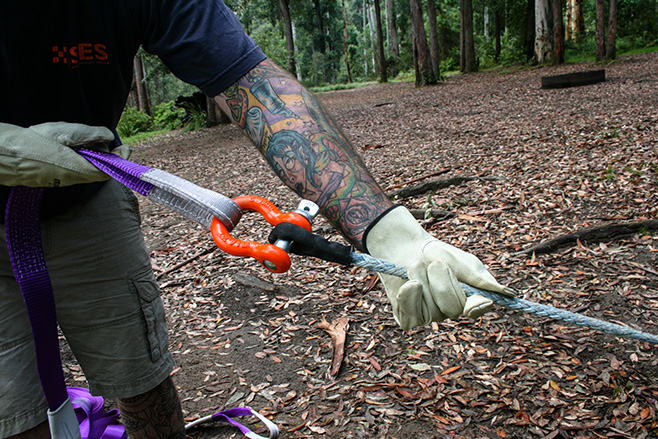
Snatch straps have a limited lifespan and should only be used for a handful of recoveries before they’re replaced. You’ll want somewhere near 25 per cent stretch in the strap and the breaking point should be two to three times the weight of the lightest vehicle being recovered.
Despite looking similar to a snatch strap, a winch extension strap is never a suitable replacement for the former. They’re designed to handle a static load rather than the shock loading from a snatch recovery, and they have a much lower maximum load rating. They are designed to be used in situations where a winching point is farther away than the standard winch rope can reach, or where extra length is required in multiple line pulls.
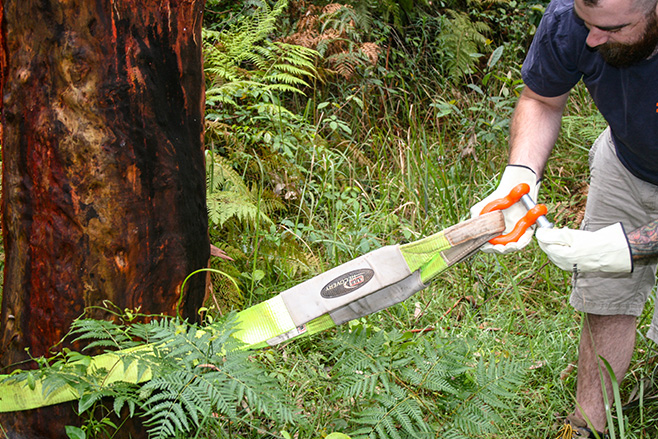
The final strap you’ll find in most kits is a tree trunk protector. For many tree species, losing an outer ring of bark can kill the tree. A tree trunk protector is a thick strap designed to spread the load over a larger area of the tree to prevent permanent damage occurring during winch recoveries. They allow the fitment of snatch blocks to aid in double line pulls or redirecting winching. They can also be used as a load equalising strap between two recovery points, although extra attention should be paid to ensure no damage occurs.
HARD PARTS
Your recovery kit should also have at least a handful of rated bow shackles, at least one snatch block (only if you have a winch), and a set of heavy-duty leather gloves. More extensive kits can have components such as drag chains as well.
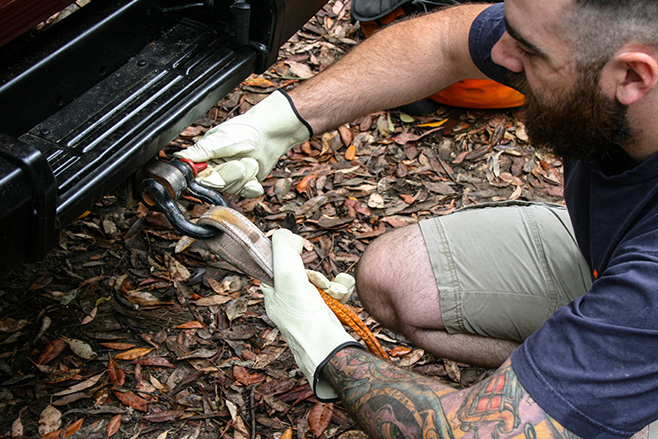
Rated D-shackles are quite common, although the bow shackles found in a recovery kit differ in that they’re able to accept a larger strap because of their shape and can handle loads in multiple directions – this is something that is vital in a recovery situation when things aren’t always perfect.
As rated bow shackles are expensive to manufacture, there are a large number of cheaper unrated items on the market. While these may have worked once for a friend of a friend, if things go pear-shaped, they can lead to a catastrophic situation. And when safety is on the line, it pays to pay.
The other major part you’ll find in a recovery kit is the snatch block. Despite the name, a snatch block has nothing to do with a snatch recovery and is instead a useful tool for winching. While it’s fairly common knowledge that a snatch block can be used in winching situations to effectively double your pulling power, they can also be used to redirect a winch line. If you, or another in your convoy, doesn’t have a winch, a snatch block is just dead weight.
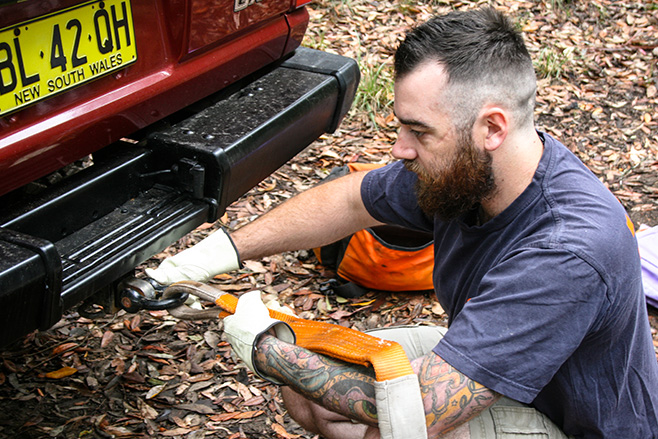
With enough line and two to three snatch blocks you can even winch yourself backwards out of a hole, or sideways if things really go south. It’s important to note that a snatch block should never be used with winch rope if it has previously been used with steel cable. The steel fibres can become embedded in the block and cause irreversible damage to your rope.
In years gone by the simple go-to was a drag chain. You just need to look at any 4×4 photo from the ’70s or ’80s and you’ll no doubt see lengths of chain used as bridle straps between recovery points or even in place of a tow strap. There are multiple issues with using a chain in either scenario. A chain isn’t able to absorb any energy, making it incredibly dangerous in a shock loading situation. If failure were to occur you’d suddenly find yourself with a section of chain hurtling towards your rear windscreen at fatal speeds. That said, they still have their uses in certain situations where adjustability is required, such as when hand winching; something that’s not possible with a strap.
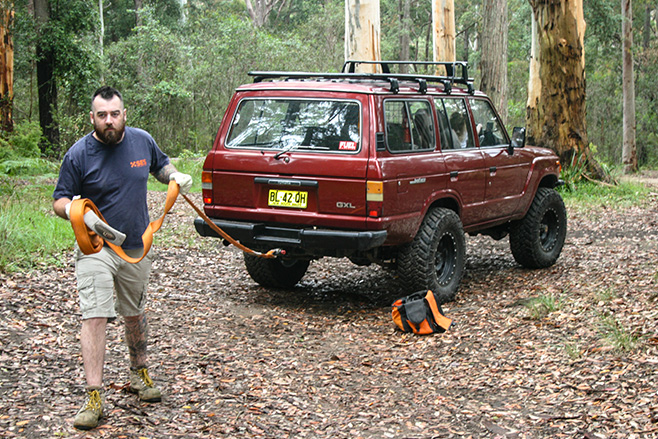
As with anything, you get what you pay for, and safety has no budget. You’re not talking big money for even the best you can buy, and saving $20 isn’t going to seem important when you’re stuck in a ditch with a broken strap or a shattered bow shackle.
WHAT YOU ACTUALLY NEED IN A RECOVERY KIT
- Snatch strap
- Tree trunk protector
- Winch extension strap
- Rated bow shackles
- Cable/strap dampener
- Snatch block
WHEELS grills Major Projects Minister Paul Fletcher, responsible for the controversial new private import scheme planned for 2018, about what it means for potential buyers.
Q: What does this mean to existing taxes applied to privately imported vehicles? A: There’s no change to the current tax regime, either GST or luxury car tax.
Q: What about warranty protection? A: Warranty is usually specific to the country in which the vehicle is sold. If you import a vehicle under this personal import scheme … it won’t have the benefit of warranty protection in Australia, so what you’ll need to do is go to an insurance company to get a warranty.
Q: We’ve had some discussions with insurance companies and looked at overseas markets and on the basis of that we think it is pretty likely that insurance companies will develop products. A: That will be an additional cost … you would separately need to go to an insurer and get a one-year or three-year warranty.
Q: What about consumer protection, if the car is found to be stolen, incorrectly repaired, etc? What sort of protection do consumers have? A: As part of being brought in it has to go through this independent third-party inspection and one of the key focuses of that requirement is looking out for evidence of tampering, anything to suggest illegality or criminality or you’re not getting the product you thought you wrere. That is a requirement before the vehicle can go on the road here. You are going to be in a different position compared with purchasing a car here. That’s a judgement for consumers to make as to whether they see benefit in going down this path. Price will be one, but we think the biggest one will be buying a model or a variant not available in Australia.
Q: Is there any sort of government back-up or insurance with that inspection? A: I will double-check that, think the answer is no. It’s not an insurance arrangement, it’s a regulatory requirement that you’ll have the vehicle looked at by somebody qualified and skilled and so-on. That’s an issue for a consumer to weigh up. Also, insurance is an option. The inspection will look for all these kind of indicators then it won’t be allowed into Australia.
Q: So it’s very much a case of buyer beware? A: There are some factors you’ll have to consider if you go down this path that you don’t need to consider if you go to a dealer in Australia. The benefit we think for consumers who choose to take it up is particularly increased choice and access to models and variants they might not be able to purchase in Australia. There will be instances where the vehicle is cheaper but overall we’re not expecting major price differences, we think it’s the increased choice which is the bigger driver. On the modelling we’ve had done we think maybe 30,000 vehicles a year will come in under this out of 1.1 million total in the market, so it’s going to be a fairly specialised path and there will be some consumers who will find it gives them an additional option which is attractive. There will be lots and lots of people – in fact the vast majority of people – who will continue to go to the existing dealers.
Q: How will safety recalls be monitored? A: There will be an online database … and there will be a requirement for every vehicle to be on that database. That tool will be used to notify an owner if there is a recall.
Q: Who will conduct the recall; who will fix the car? A: The notification will be done by the Australian government then you’ll need to make your own arrangements as to where you go to get the work done. What we think will happen, in the usual way a market will develop from this; if there’s a recall that applies to a number of vehicles that have been imported under this scheme then there will be automotive workshops that will, for a price, do the work that needs to be done. There are some risks and issues with this path, so it’s not going to be a path probably that the great majority of people will take. But for a particular sector of consumers it will offer them a choice and they will accept the greater responsibility.
Q: Will these cars be identifiable as being privately imported? A: Yes. The way I think it’s going to develop is … it’ll become part of the standard consumer advice if you’re buying a second hand car. Look at this register to determine if this car is privately imported. The government will be providing that as advice going through to the motoring organisations, the consumer organisations and so-on.
Q: You mention there are $70 million in savings and $18 million is attributable to not fitting compliance plates; where is the other $52 million in savings? A: Well it’s across a whole range of smaller things. It’s essentially the continuing removal of Australian-specific requirements and replacing them with the global requirements, which means manufacturers don’t have to make as many variations to the vehicles coming into this market. That’s the basic principal. The ADRs [Australian Design Rules] will continue to exist as a legal instrument but they have over many years been increasingly harmonised with global design standards and this will continue that. There are savings for manufacturers as a result, some of which we hope will get passed on to consumers.
It’s high time we built another ark, only this one will be filled with garages, not animal pens.
A flood of battery-powered semiautonomous vehicles is on the horizon and we must preserve the finest examples of the fast car species for the enjoyment of future generations. Just which model from each segment deserves to be stashed away would make for excellent pub fodder, however here we have two circa-$100K sports cars fighting for the honour of driving up the gangplank.
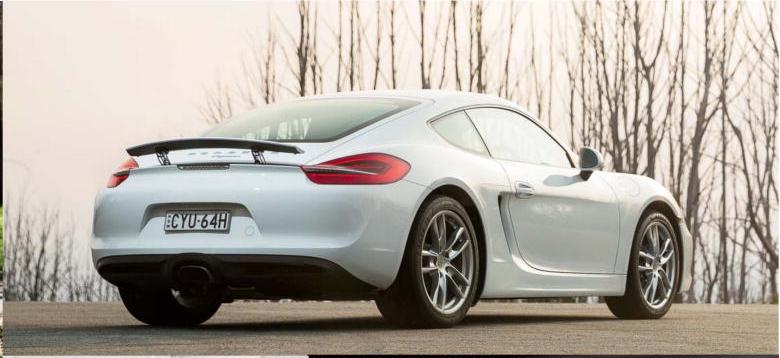
For all their similarities in price and positioning, the Audi TT S and Porsche Cayman differ greatly in their mechanical make-up. The Cayman is the more traditional of the two, with a free-breathing, high-revving 2.7-litre flatsix engine wedged midships driving the rear wheels.
Porsche’s entry-level coupe starts at $106,200, the addition of the seven-speed PDK gearbox and 19-inch Boxster S wheels lifting our test car’s price to $113,900.
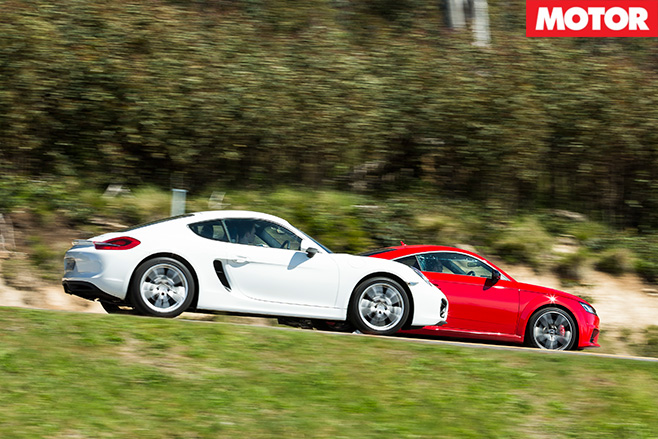
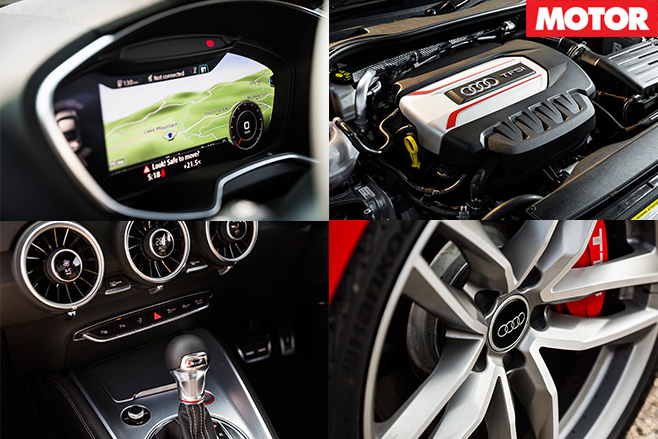
Underneath the evolutionary styling the TT S is most definitely a product of the 21st century. A turbocharged 2.0-litre four-cylinder sits over the front axle feeding all four wheels through a six-speed dualclutch ’box. Aussie cars are robbed of 11kW compared to their Euro counterparts, but 210kW/380Nm is still enough to shift 1385kg with haste. Launch control primed, the TT S will reel off 4.7sec/12.9sec passes all day long, its best run netting 0-100km/h in 4.68sec and a 12.95sec quarter mile at 173.65km/h.
Before you get too carried away with your drag strip prowess, however, consider this. For curiosity’s sake, we conducted a real-world acceleration run without launch control and the results were eye-opening. Simply flooring the accelerator from standstill added 1.2sec to the Audi’s 0-100km/h time and by 170km/h it was 1.9sec down.
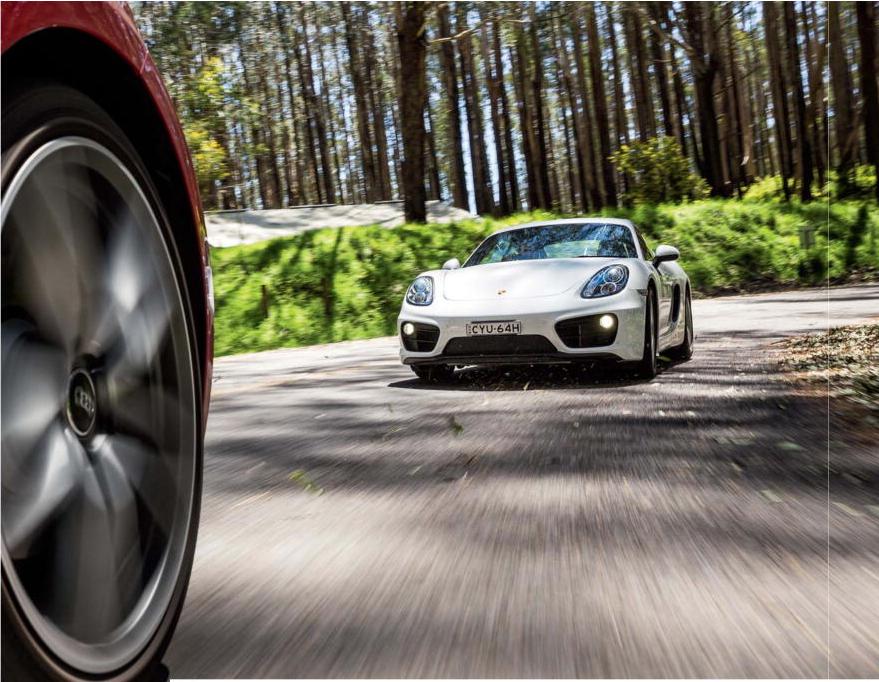
But while this is not a particularly fast car, the way the flat-six delivers its 202kW/290Nm makes it one of the world’s greatest engines. It’s murdered by the Audi for in-gear punch – 80-120km/h in fifth takes 8.0sec in the Cayman versus 5.2sec in the TT S – but that’s simply an excuse to use a lower gear and let it scream out to its 7800rpm change-up point. And it’s not like it labours at low rpm; it’s perfectly happy trundling along at suburban speeds in sixth or seventh gear.
Extended to the redline, the soundtrack is raw and raucous and the linearity and response of the atmo flat-six still can’t be replicated by a turbocharged engine, at least not with current technology. Of course, by the middle of 2016 this sublime engine will be gone, replaced by a turbo four-pot, however while it’ll no doubt make the new 718 Cayman (see p14) a faster car, Porsche’s engineers are going to have a hard time making it a more enjoyable one.
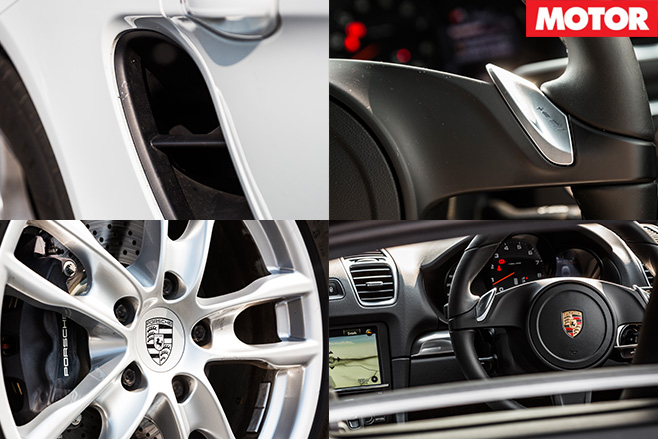
The Cayman’s greatest flaw is undoubtedly its gearing. It would be questionably tall attached to a 7.0-litre V8 – second gear stretches to 134km/h, third to 186km/h – so a torque-lite 2.7-litre is always going to struggle to pull with conviction. No doubt it helps ease the passage through restrictive emissions testing, but when the PDK ’box is able to disconnect drive on the highway and ‘sail’ along in neutral you have to question the real-world fuel economy benefits.
It’s a similar situation in the TT S, albeit for a very different reason. It has six shortly-stacked ratios in the dual-clutch ’box, which is both faster-shifting and better behaved than ever, however the breadth of the 2.0-litre turbo’s power delivery means that you don’t need to shift very often. Leave it in third and the Audi will pull out of all but the tightest of hairpins with little hesitation. There is some lag right down low but beyond that it revs strongly from peak torque at 1800rpm to peak power at 6200rpm.
There’s occasionally a hint of power understeer in tricky turns but more often than not it will tighten its line under power as torque vectoring nips the inside wheels to keep the nose on line. In corners the TT S displays a level of athleticism not often found in products with four rings on the nose. There’s plenty of outright grip, but the balance is also easily manipulated; carry the brakes into a corner and the rear edges wide but there’s never a hint that it will let go completely.
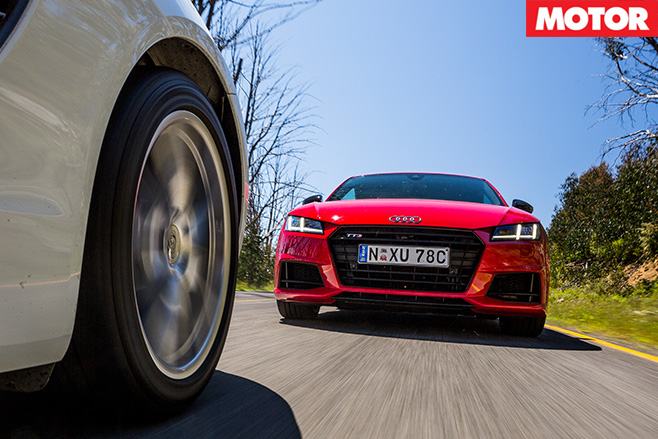
It’s a polished dynamic performance, but unfortunately the TT S completely drops the ball in terms of ride quality. It’s not the firmness that’s the problem – the Cayman is equally firm – but rather the way it jars over sharp bumps, fidgets over smaller ones and crashes into potholes, leaving the occupants feeling battered and bruised. From memory it’s not a problem that afflicts the standard TT, so there’s a suspicion this behaviour is engineered-in to justify the ‘S’ badge, however it could partly be a result of rubber. Our test car wears Hankooks and fellow tester Louis – who attended the TT Roadster launch – remembers Continental-equipped cars being slightly more comfortable. Still, the spec presented is what we have to assess and the result is unacceptable.
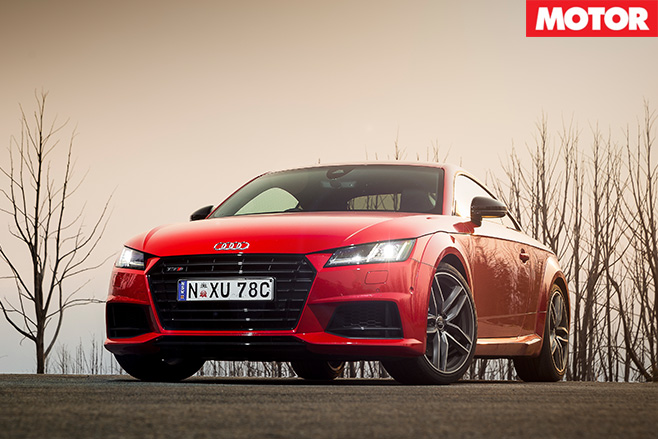
The Cayman quickly delivers a lesson in how a sports car should ride. It’s firm but well-controlled and most of the time feels to work with the road rather than fight against it. It’s no limousine, and optioning PASM adaptive dampers might improve things even further, but the standard set-up is a fine compromise between comfort and road-holding. With slower steering than the Audi’s variable-rate rack, the Cayman can initially feel a little ponderous on turn-in but once you dial in it’s just sublime.
Even by Porsche’s high standards the Cayman stands out as special. Perhaps the steering doesn’t offer quite the clarity of the old 987’s hydraulic setup, but it’s beautifully weighted – heavy at low speeds then freeing up as pace increases – and its linear responses allow you to pour into turns, the Cayman flowing through a series of bends like liquid mercury.
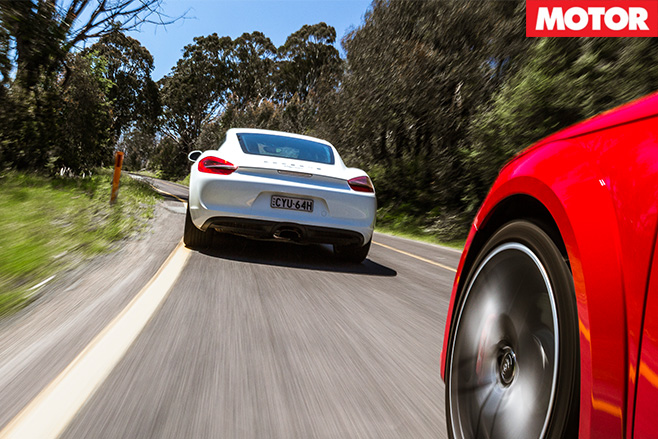
It’s so good that after a while I don’t even mind the PDK shift arrangement.
The only slight foible is its ESP calibration. Press the skids button and ‘PSM off’ is displayed, however should the car start to slide the telltale light on the dash begins to flash. But here’s the weird part: stay committed to the throttle and you can hang the tail out to your heart’s content with seemingly no intervention. So is it on or off? Not sure, but we suspect the new 991.2 991’s Sport Mode ESP will migrate to the 718 Cayman to allow on-road playtime.
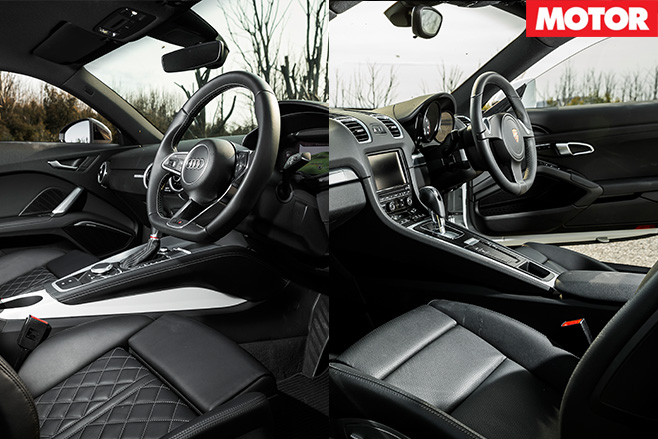
Both cars’ driving positions are spot-on with plenty of adjustment, however while the Cayman’s driver-focused cockpit is functional, well-made and contains all the equipment you need, it can’t match the minimalist masterpiece that is the TT S interior.
Its Bentley-esque diamond-quilted leather, aircraftlike row of switches and swish circular air vents with digital displays in the centre make it feel special, though following sat-nav instructions on Audi’s very clever digital instrument display does seem to take your attention off the road for longer than a traditional centre screen.
Obviously, looks are a huge part of the purchasing decision with cars like these, but equally so subjective that which is better is primarily down to personal taste – Louis thinks the Cayman looks bland, whereas I think it looks sensational. The TT S looks virtually identical to its lesser-powered sibling – it’ll take trainspotters to pick the S badges and quad exhaust pipes – and while understatement has a certain appeal, should there be greater visual differentiation to justify the $22,000 price premium?
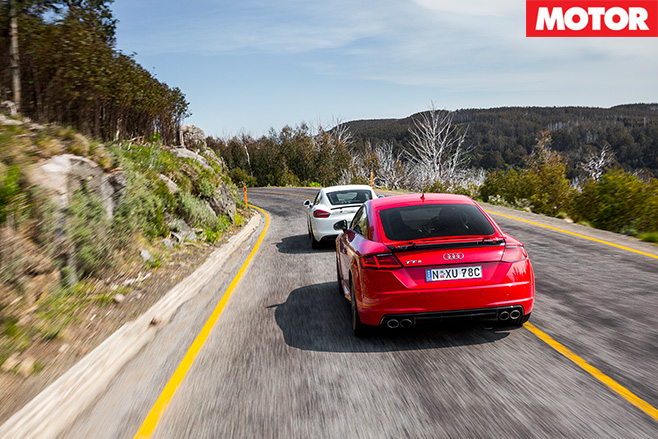
The question of diminishing returns also raises its head in regards to the Cayman, but this time in its favour. When the base model is this good, why would you spend extra on an S or GTS (the GT4 is a different animal entirely)? They offer more speed, but little extra involvement or enjoyment. There’s a temptation to look down your nose at a base Cayman, but it’s a simply brilliant sports car, which is why it’s being welcomed aboard the good ship MOTOR.
| u00a0 | Porsche Cayman | Audi TT S |
| Body | 2-door, 2-seat coupe | 2-door, 2+2-seat coupe |
| Drive | rear-wheel | all-wheel |
| Engine | 2706cc flat-six, DOHC, 24v | 1984cc inline-4, DOHC, 16v, turbo |
| Bore/Stroke | 89.0 x 72.5mm | 82.5 x 92.8mm |
| Compression | 12.5:1 | 9.3:1 |
| Power | 202kW @ 7400rpm | 210kW @ 5300-6200rpm |
| Torque | 290Nm @ 4500-6500rpm | 380Nm @ 1800-5200rpm |
| Power/weight | 152kW/tonne | 152kW/tonne |
| Transmission | 7-speed dual-clutch | 6-speed dual-clutch |
| Weight | 1330kg | 1385kg |
| Suspension(f) | struts, A-arms, coil springs, anti-roll baru00a0 | struts, A-arms, adaptive dampers, coil springs, anti-roll bar |
| Suspension(r) | multi-links, coil springs, anti-roll bar | multi-links, coil springs, adaptive dampers, anti-roll bar |
| L/W/H | 4380/1801/1294mm | 4191/1832/1343mm |
| Wheelbase | 2475mm | 2505mm |
Tracks | 1526/1536mm (f/r) | 1574/1553mm (f/r) |
| Steering | electrically-assisted rack-and-pinion | electrically-assisted rack-and-pinion |
| Brakes(f) | 315mm ventilated/drilled discs, 4-piston calipersu00a0 | 338mm ventilated discs, 4-piston calipers |
| Brakes(r) | 299mm ventilated/drilled discs, 4-piston calipers | 310mm ventilated discs, single-piston calipers |
| Wheels | 19.0 x 8.0-inch (f); 19 x 9.5-inch (r) | 19.0 x 8.0-inch (f/r) |
| Tyres | 235/40 ZR19 (f); 265/35 ZR19(r) | 245/35 ZR19 (f/r) |
| Tyre | Goodyear Eagle F1 | Hankook Ventus S1 Evo |
| Price | $113,900 | $111,400 |
| Positives | Almost everything u2013 one of the world’s best sports cars | Punchy engine; playful, involving handling; great interior |
| Negatives | Tall gearing; shift paddles cost extra; flat-six about to die | Dreadful ride quality; is it $20K-plus better than the base TT? |
| u00a0Star Rating | 4.5 | 3.5 |
THE automotive industry today slammed the Federal Government’s announcement that it plans to allow the private importation of new and near-new vehicles from Japan and the UK from 2018.
A media release from Major Projects Minister Paul Fletcher promised “more choice” and “less red tape” with planned reforms to importation laws that will allow consumers “to personally import a new car or motorcycle from another country with comparable standards to Australia’s, up to once every two years, if specified conditions are met”.
The reforms will allow buyers to privately import vehicles less than 12 months old and with fewer than 500km travelled from 2018, straight after the late-2017 end of local automotive manufacturing.
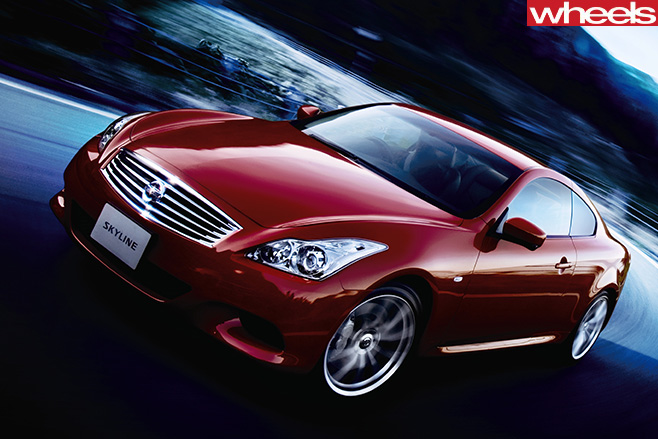
“People thinks these cars are the same around the world and they are not,” said Weber. “They are not built for Australian conditions, especially when it comes to fuel [compatibility].”
He called for more details and regulation regarding those vehicles being privately imported, which the government estimates at about 30,000 annually.
“We certainly hope the government will put some identifiers on these vehicles so people in the second-hand market will realise these vehicles are not built for Australian conditions.”
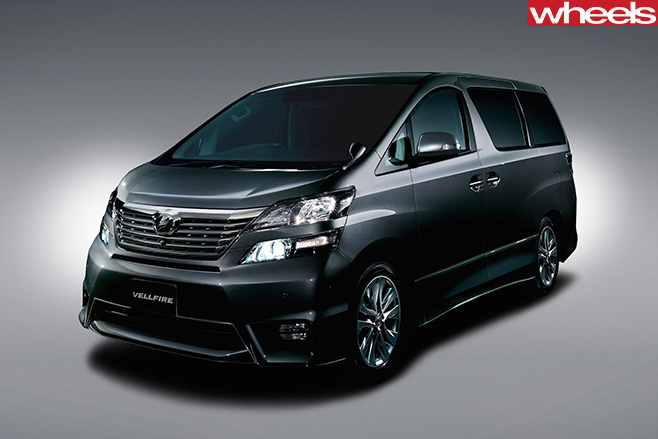
“There will be an online database … and there will be a requirement for every vehicle to be on that database,” he said.
Minister Fletcher conceded there were significant risks with buying a car directly from overseas or as a secondhand vehicle in Australia.
“There are some factors you’ll have to consider if you go down this path that you don’t need to consider if you go to a dealer in Australia,” he said.
“There are some risks and issues with this path, so it’s not going to be a path probably that the great majority of people will take. But for a particular sector of consumers it will offer them a choice and they will accept the greater responsibility.
“You won’t have the benefit of warranty protection in Australia, so what you’ll need to do is go to an insurance company to get a warranty.
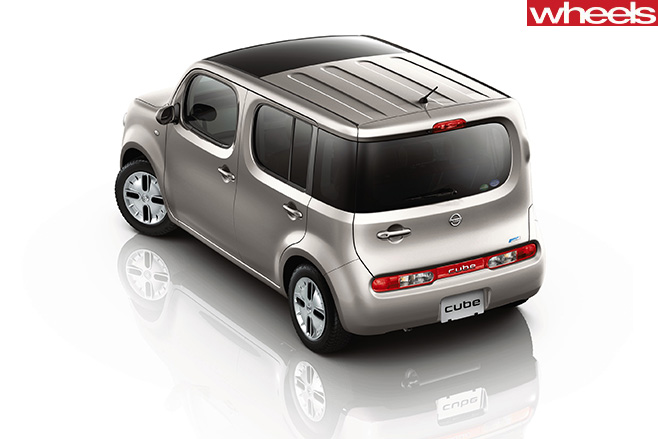
Carmakers claim the laws – to be introduced into Parliament late in 2016 – could expose consumers to financial and safety risks and potentially leave them with expensive repair bills and cars with poor resale values.
Worse, they could buy a stolen or poorly repaired vehicle.
Mazda Australia managing director Martin Benders described the government announcement as a “backflip” and one that puts consumers at risk, particularly with different emissions standards.
“Cars are not like other products … let’s say you import a Euro 6 [emissions standard] car out of Europe and use our 100 parts-per-million-suphur fuel; degradation from the fuel will occur quite quickly.”
In some cases, sourcing spare parts could be difficult because existing dealerships may not stock subtly different components.
Benders said the potential savings buyers gained by parallel importing “will be a non-saving [by the time they service and sell the car].”
BMW described the announcement as “disappointing” and one that raised more questions than it answered.
“An unrestricted market is a real issue for the consumers because you’re removing those checks and balances … warranty, backup and support, safety standards and recalls,” said BMW Australia corporate affairs director Lenore Fletcher.
However, Minister Fletcher said the government would use its database to monitor global recalls
“The notification will be done by the Australian government then you’ll need to make your own arrangements as to where you go to get the work done,” he said.
“What we think will happen, in the usual way a market will develop from this; if there’s a recall that applies to a number of vehicles that have been imported under this scheme then there will be automotive workshops that will, for a price, do the work that needs to be done.”
“Privately imported vehicles will not enjoy the protection of Australian consumer law – these consumers will be on their own,” he said. “You’ll be buying a car on the internet that could be stolen, under finance, written off … and you’ll have no redress at all under consumer law.”
Porsche Australia director of public relations, Paul Ellis, said the “the government’s approach of buyer beware is not good enough”.
“There is no question that the consumer will be exposed,” he said. “They will have a car not fit for Australian conditions and its provenance – by that I mean its integrity – can’t be guaranteed.”
“How can a consumer tell if the motor car is genuine? it might be a stolen vehicle; we know in the UK there is a market for stolen vehicles to send abroad, so that opens up a new market for stolen vehicles to come into this country.”
McCarthy said the regulatory changes would largely benefit “fat cat cars” with vehicles priced into the hundreds of thousands of dollars.
“This will benefit the top end of town.”
Car makers have been campaigning against the luxury tax for years – cars are the only vehicle slugged with a luxury tax – and argue if the government wants to make expensive cars cheaper, the luxury tax on cars should go.
– with Alex Inwood
Fancy a new Porsche Cayman GT4 for $130,000? The Australian Government will lift barriers to new-car private importation from the UK and Japan within two years.
The above price is what you’ll pay for a Cayman GT4 in the Mother Country, once converted to local dollars, but of course there is a catch or three. From 2018 the Australian Government will allow each individual to privately import one new motorbike or passenger car from the UK or Japan every two years. It will need to be less than 12 months old and have less than 500km on the clock.
The vehicles will not require an identification plate to be physically attached, but will need to be checked by a third-party outlet on arrival in order to meet Australian Design Regulations (ADRs). A statement warns that this may require changes to such items as child-seat anchorage points.

Where applicable, such as on a Cayman GT4, the vehicle will be required to pay the 33 per cent Luxury Car Tax (LCT). Consider that the Porsche costs $195k plus on-road costs to purchase from a dealership, and the $130k UK version may absorb much of the difference once import costs and LCT are factored in.
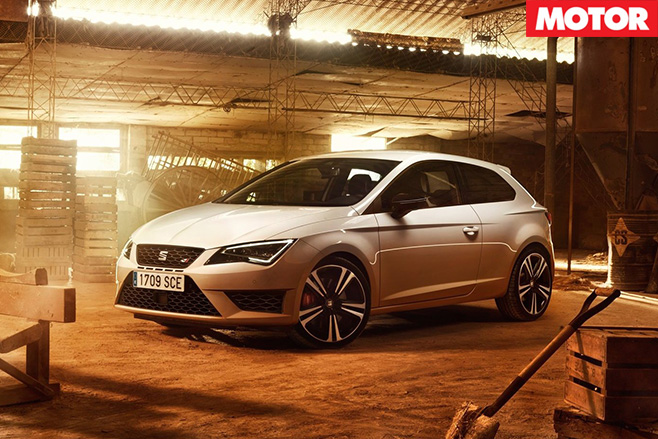
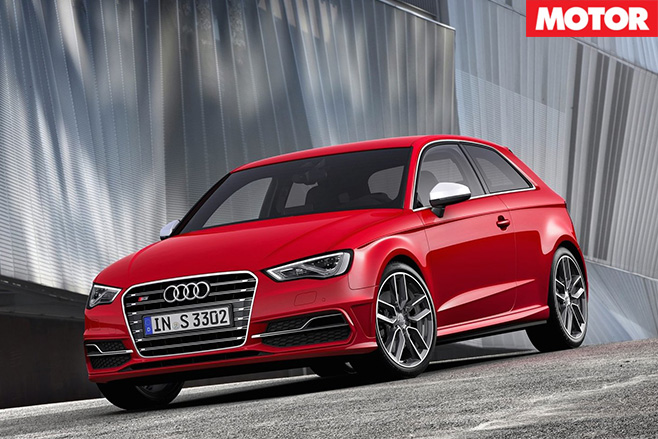
The lifting of the new car import laws also allow Australians to purchase new cars that are unavailable locally – everything from an Audi S3 three-door to all-wheel-drive BMW sedans and a whole breed of Seat and TVR models.
A Seat Leon Cupra three-door equates to $57,930 (plus import and on-road costs) when converted from the UK pound.
“Over one million new vehicles are sold in Australia today; over 90 per cent are imported and within two years all cars will be imported once Ford, General Motors and Toyota cease local manufacture,” he said in a statement.
“With around 30,000 vehicles a year expected to be personally imported, most Australians will continue to purchase vehicles directly imported by manufacturers and sold through their existing dealer network. These new arrangements will however offer consumers greater choice.
“If a manufacturer chooses not to sell a particular model in Australia, a consumer may now have an option to source this model overseas.”
The government will also remove the $12,000 special duty on imported used vehicles.
“Although this duty is not often applied, it is on the statute books, costing more to administer than it raises – and is seen by consumers as a hurdle to importing second hand cars even in the specific circumstances where such imports are permitted,” Mr Fletcher added.
“By removing this duty, we will provide more options for Australian consumers.”
Legislation is expected to be introduced to federal parliament later this year.
The annual enduro at Mt Panorama pulls drivers and dollars from around the globe – for one significant reason.
RECORD crowds, race records and lap records – the 2016 Liqui-Moly Bathurst 12-hour was another classic motor race for the hallowed circuit.
And with five makes in the top five, it’s as much a manufacturer battle as a dog-fight between the drivers.
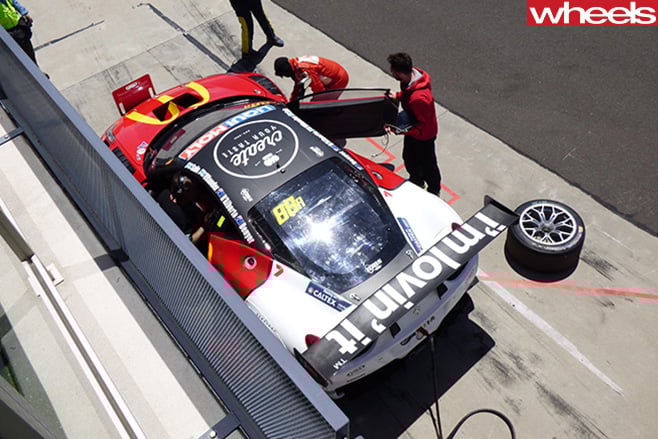
Fresh metal, such as the new Audi R8 GT3 car, joined last year’s winner, the Nissan GT-R, plus the factory Bentley squad and updated Mercedes SLS. But almost every car came with a manufacturer’s bona fide presence at Mt Panorama.
In fact, while Audi wheeled out the first of its new-gen R8 road cars, positioned strategically behind the Phoenix Racing pits in view of its corporate box, Mercedes used the Saturday to pull the wraps of its AMG GT GT3 car, with the help of previous 12-hour winner and ‘Mr DTM’ Bernd Schneider, who drove an SLS at this year’s race.
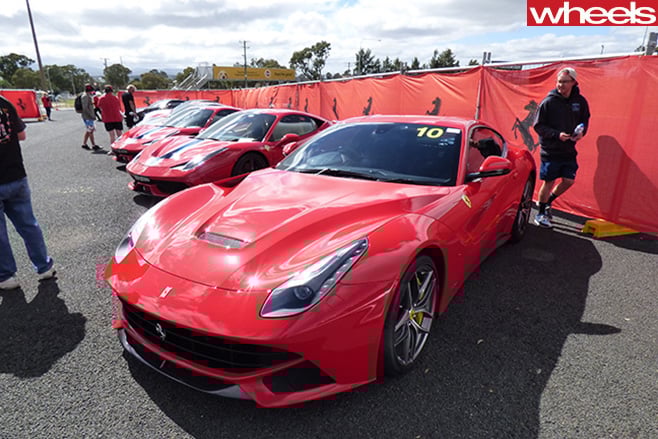
“This is the first real time that officially, Ferrari has got behind the event,” Ferrari Australasia CEO Herbert Appleroth said. “We’ve obviously got two private teams racing with Ferrari – Maranello Motorsport, a previous winner, and Vicious Rumours Racing, which was on the podium last year. The event has grown in popularity and stature. It’s important for us to have an official presence.”
The company invited 50 customers, many of whom drove their own Ferraris to the track to form a 30-car static display. It also gave its customers full access to its pit bays during the event.
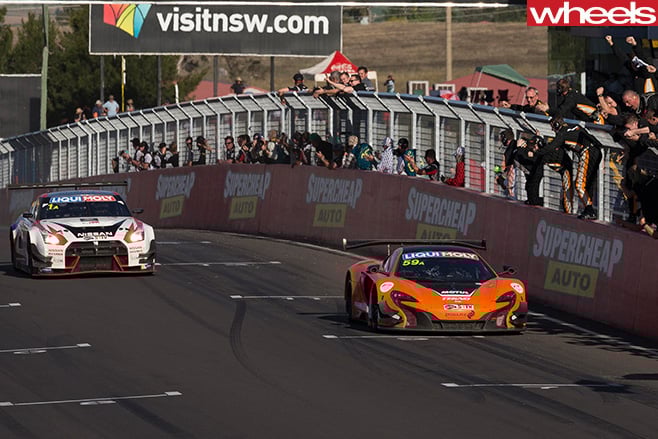
It’s the fan-friendliness that has drawn in the Ferrari boss. “They’ve [the event organisers] been wonderful at thinking about motorsport from the eye of the fans, and I think that’s really refreshing. So allowing us to do things we want to do, like the pit garage (that’s never been done before) and being open to it – what about this, what about that – you know they’re looking for ideas, they’re wanting to be something new to the motorsport landscape, and we’re really looking forward to being a part of it.”
The fact that the Ferrari 458 GT3s didn’t win – despite being the most-winning GT3 race car of the modern era – hasn’t blown a Ferrari fuse.
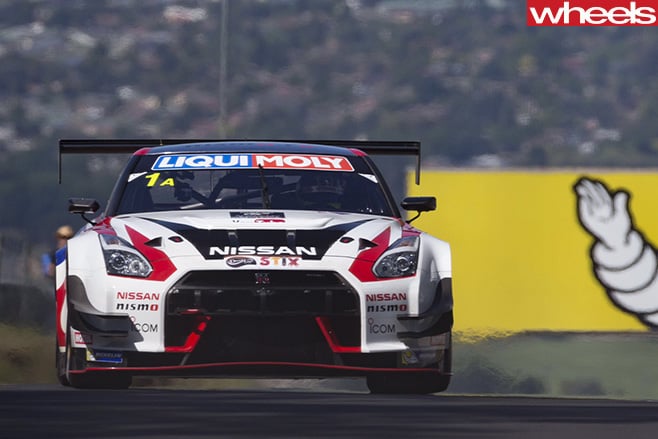
Audi – also previous 12-hour winners – raced its new R8 at Mr Panorama literally days before the Australian media launch for the road version. There’s a full factory support crew at the event, and serious Audi branding in the form of billboards and advertising around the circuit too.
It’s the layout that prompted the sparkle in the eye of Romolo Liebchen, head of Audi Sport customer racing.
“This is a real challenge, and every race driver wants to be here one day,” he told Wheels. “The track is really demanding: if you’re successful at Bathurst, you’ve shown that your product must be good. Of course the drivers and the teams will have done a good job, because like the Nurburgring, mistakes are not allowed. You never forget this track. If you have been here, you never forget about it.”
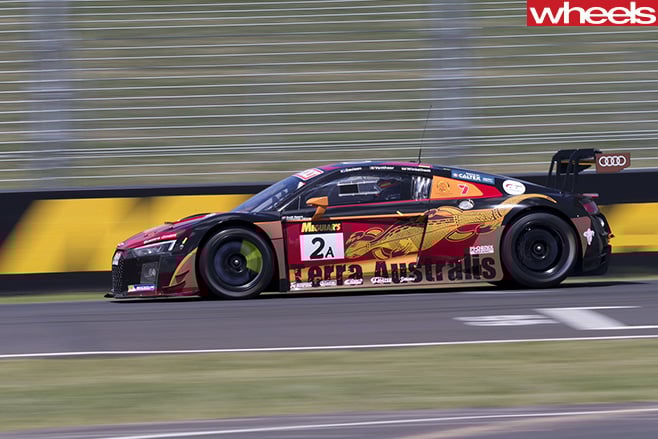
“The company understands that the cooperation between road and racing – especially for high-performance cars – is working very well,” says Liebchen. “And this is a story that people believe – I think there is no other brand that can tell the story like that, because no other GT3 car is so close to the road car.”
A man who has won both the Bathurst 12-Hour (in multiple eras) and the 1000km Great Race in touring cars is racing legend John Bowe. “You’ve got to give credit to [Bathurst 12-hour promoter] James O’Brien who a few years ago said that it would no longer be a production race; he was going to allow GT3 cars in,” Bowe said.
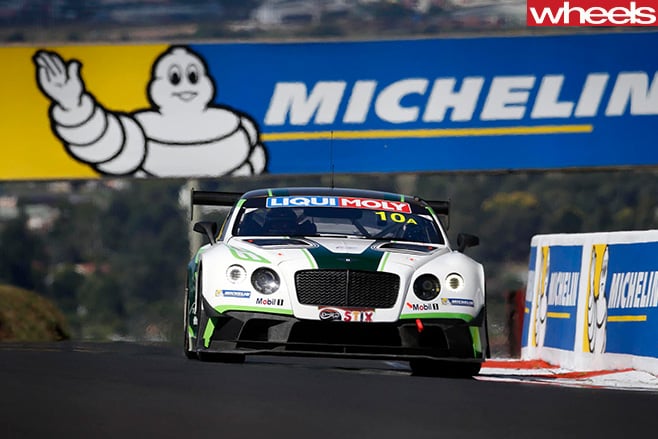
“From 2007 to when it re-started to the GT3 era … it kind of struggled to get a big field; it should have got more cars than it did. It was a terrific race – any car you drive on this track is enjoyable anyway. It was still a great event, but it needs 40-odd cars plus to make it a great 12-hour race.”
The 2016 grid, which saw the McLaren driven by Shane Van Gisbergen, Jonathon Webb and Alvaro Parente take victory, saw 37 cars begin the race at 5:45am in the cover of darkness. Twenty of the field were GT3 cars.
“GT3 worldwide is in a growth phase, and a popularity phase – the popularity of it is because they are turn-key race cars,” said Bowe. “So as long as you can write the cheque out, you can go and buy a car that all you have to do is a few fiddles with it and find a nice set-up for it, and it comes with a book – an instruction manual and a helpline.”
He also said that V8 Supercars, who bought the 12-hour late last year, had improved the event and would only make it stronger.
“There was a lot of negative comment about V8 Supercars buying the event – all the keyboard warriors were saying that they’re going to ruin it – but they’ve already added to it: it’s better organised, it’s got much more presence, and it will continue like that. It’s going to be a huge event,” Bowe said.
Time to come clean: I’ve been wrong about a couple of things lately. Yeah, yeah, I know. But don’t you want to hear what things?
Okay, so the first one was an argument Cockburn and I have been having for about a decade. I’ve been trying to convince him hydrogen fuel-cell technology is the way forward, while he’s been championing the cause of the skateboard-construction battery-powered electric car as the wheels of the future. And much as it grieves me to say so, the old bugger was right all along.
I’m not going to rule out a future purple patch for fuel-cell technology, but having driven the Tesla Model S recently, I have to admit that the electric skateboard is probably where we are going.
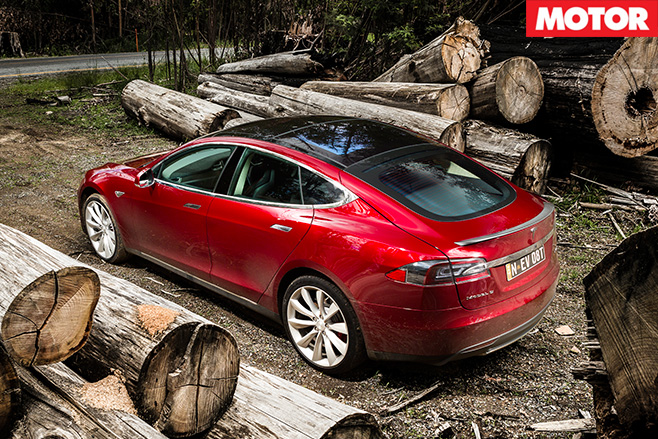
Meanwhile, you also get the many other advantages ol’ Cockburn has been banging on about. Stuff like the ability to put any body style on the platform – maybe even multiple bodies for one chassis. And the low centre of gravity and the mass centralisation and the yada, yada, yada.
The second thing I’ve been holding at the wrong end for years now is the theory that a Porsche 911 with a PDK transmission will never be a proper 911. If you took my previous stand at face value, then probably the worst thing that could happen to society was a GT3 without a clutch pedal.
It wasn’t just that such a thing wouldn’t, or couldn’t, be a pukka 911 without a driver-operated clutch; it might also be my favourite-ever Porsche – in fact my favourite-ever car – without the third pedal.
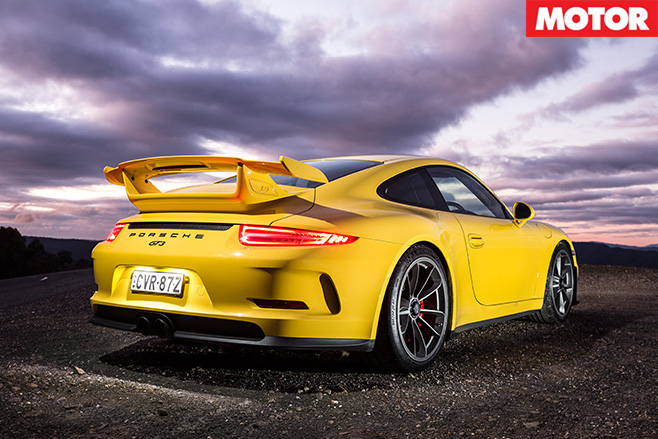
I still think the new GT3 is a bit on the beefy side, and a quick check of the specs reveals it is indeed wider and longer than the original Porsche 928 of 1977 and within 20kg of that behemoth’s 1450kg weighbridge ticket. But the argument that the seven-speed PDK is the wrong gearbox for the thing goes right out the window on your first lap of a race track.
This was brought home to me when one of the other hacks – who’d previously been on the receiving end of my anti-PDK rants – asked me, very tellingly, whether I had, at any point in my 30-odd laps of Queensland Raceway in the GT3, imagined the experience would have been improved by having a clutch pedal in the footwell?
More specifically, did I think the experience had been tarnished by the PDK transmission? The answer to both questions was the same: absolutely not. Bugger.
So there you go, two swings and two misses. This is probably why I don’t work in the future products department of a major car maker. Mind you, I probably should have seen it coming. As I’m sure Cockburn would be happy to point out to me, the electric car of the future won’t have a gearbox at all, let alone a clutch pedal.
It was fast, yet easy to drive, with none of the temperamental histrionics, dodgy durability and bone-headed ergonomics that blighted contemporary rivals from Italy.
Sure, the styling was perhaps more competent than beautiful, and the stoically rational VTEC V6 engine lacked the driveway theatre of the V8 or V10 Honda could have easily built instead. Nonetheless, the NSX reset the supercar paradigm. Overnight.
A shocked Ferrari, led by newly installed CEO Luca Montezemolo, immediately started work on a replacement for the sulky, evil-tempered 348, and it is by no means hyperbole to suggest the original Honda NSX is the reason Ferrari’s 488GTB is the superbly accomplished car it is today.
The all-new Honda NSX, however, is not going to change anything. Oh, it’s technically competent, strikingly styled and appropriately fast. And yet…
The original, Ferrari-killing NSX was the product of a clear vision and had a clear mission. The new NSX is a supercar engineered by guys in Ohio who otherwise create worthy-but-dull Accord sedans and Pilot SUVs for Middle America. And feels it.
Honda has struggled with the idea of an NSX successor for years. The original quietly died of neglect in 2005. Then, in 2007, Honda showed a sports car concept at the Detroit motor show with a front-mounted V10. It went nowhere. Four years later came the NSX Concept, powered by a transverse-mounted V6, just like the original. As with the front-engined V10 car, Honda actually built prototypes, then scrapped the project.
And now, a decade after the original NSX went away, we have a new one. With an all-new, bespoke, twin-turbo V6 engine mounted longitudinally behind the driver and supplemented by three electric motors. And fitted, in the US, with a truly puzzling choice in tyres.
Continental’s ContiSportContact 5P is perfectly acceptable for a lot of applications, but is not by any means regarded as a top-tier performance tyre. Which begs the question: Why would Honda deliberately fit its new supercar with second-rate rubber? For the same reason the engineers deliberately dialled understeer into the chassis in all modes except the one called Track – Ohio.
Honda says it wanted the NSX to be an everyday supercar and in Ohio, where the engineering team responsible for the new NSX is based (at Honda R&D Americas), that means being able to drive it in winter on wet, slushy, snowy, icy – and mainly straight – roads without white knuckles and sweaty palms. So the NSX has a chassis that, in all but Track mode, is noticeably biased towards understeer and is fitted with tyres that work acceptably well in cold weather. That’s a set-up that’s sensible for mainstream vehicles like Accord and Pilot. But does it make sense for an NSX?
Put it this way: Winter in Ohio wasn’t a priority when Ferrari developed the 488GTB…
How to fix the new NSX
Step 1: Make the standard tyres optional, and the optional Michelin Pilot Sport Cup 2s standard. If NSX owners desperately want to drive in the winter, they can buy the Contis.
Step 2: Reprogram the computers to dial out the understeer on the street and get the NSX to behave more like it does in Track mode, but with the ability to drive it in high gears under 4000rpm and without the raucous exhaust note.
Step 3: Drive. Enjoy.
Is the juice worth the squeeze? It’s one of my favourite sayings, as no matter the scenario, it distils complex decision making into six little words.
In an automotive sense, it explains why hot hatches are so popular – they provide plenty of reward for very little effort or compromise. Things get a bit more complicated when dealing with cars like the Caterham 485.
It’ll surprise no-one to hear that the compromises inherent in such a car are substantial. You could feasibly use the Caterham every day, in the same way you could cycle to Alice Springs – it’s possible, but there are easier ways to get the job done.
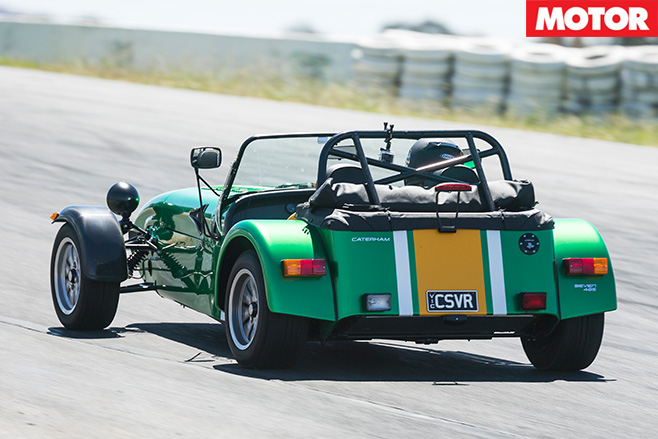
Little things like popping into a shop quickly or paying for fuel take on new significance, too, as with no doors you are effectively leaving your possessions at the mercy of passers-by. The everyday experience is made more difficult by the 485’s side-mount exhaust.
Exiting just below the driver’s right elbow, heat and fumes are a constant companion, and there’s the ever-present threat of barbecuing your leg should you be clumsy in your egress from the car.
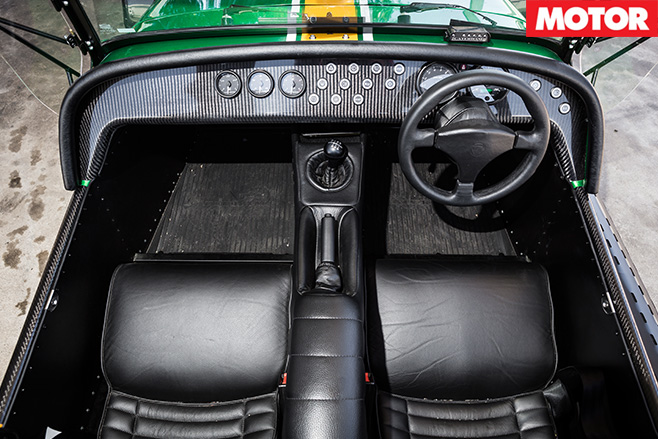
The new dash layout, scattered with push buttons, is reasonably intuitive, and looks beautiful in bare carbon fibre. A push of the starter button fires the Ford-sourced 2.0-litre four-cylinder into life with a rasp. It may have started out in a humble Focus, but by the time Caterham is finished with it, it revs to a heady 8500rpm and produces 177kW/206Nm.
Weighing just 675kg full of fluids, the relative lack of torque is no issue, particularly as the closely-stacked ratios of the six-speed manual gearbox result in 4000rpm in top at 110km/h, which makes highways a fairly buzzy affair.
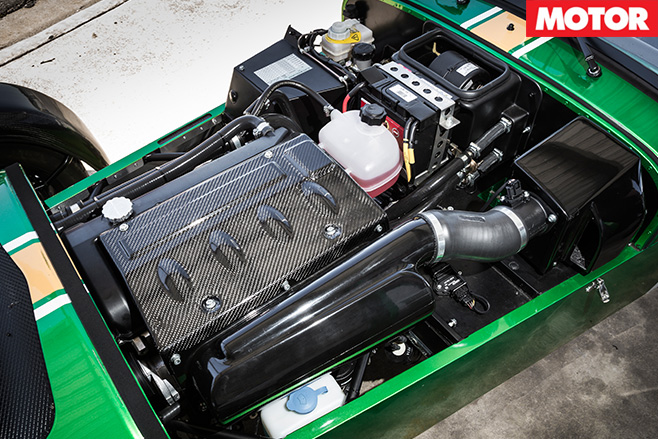
Caterham claims 0-100km/h in 3.4sec, which feels a bit optimistic, but it’s definitely brisk and manages the trick of feeling faster than it actually is, which is better than the other way around, in this country at least.
The gearbox requires some muscle, but gets better the faster and more positive you are in your shifts, though heel-toeing on downshifts can be a little tricky thanks to a tight footwell and the fact the brake sinks lower than the throttle when under pressure.
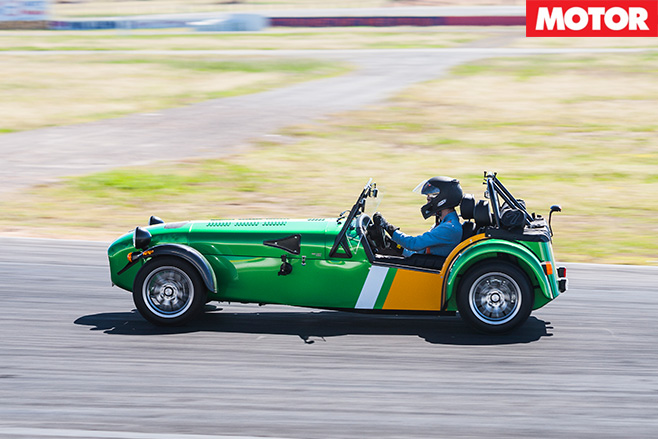
With so much of our time spent in modern cars, driving the Caterham is a wake-up call. No electronic assistance, not even ABS, means you are completely on your own, which dials back your commitment level a bit, as you never know when you’re going to hit a patch of gravel or a suddenly-tightening corner.
Traditionally, this wouldn’t be a problem, as Caterhams are all about enjoying a vehicle’s limits at relatively slow speeds, but unfortunately a couple of specification quirks robbed the 485 of some of its playfulness.
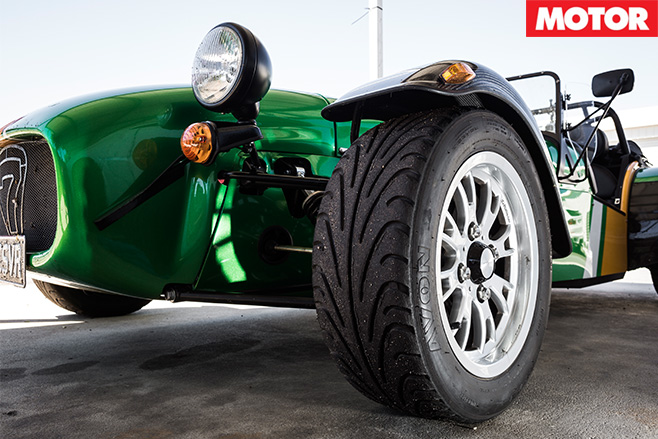
With the car having so much mechanical grip, it was difficult to feel where the limit was on the road, and on track it made the car less adjustable than it would be on harder rubber, though it helped its speed, the 485 lapping at a similar pace to a Cayman GTS.
The other strange decision was omitting a limited-slip diff, denying the driver the ability to steer the car on the throttle. On the track this was especially frustrating; a natural understeerer (at least with this setup), any attempts to neutralise the balance with turn-in oversteer resulted in the inside rear wheel scrappily spinning power away.
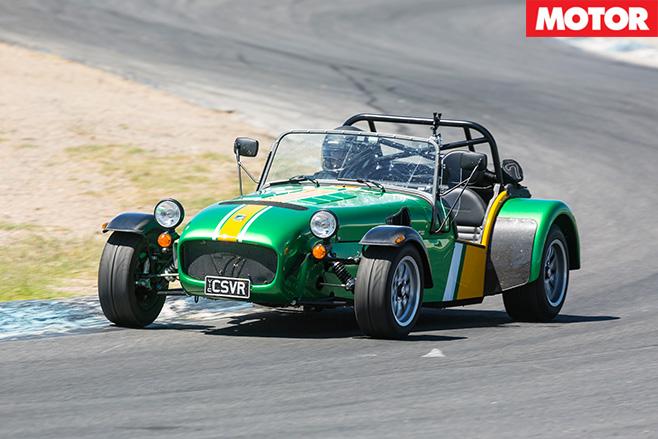
So we return to the original question: is the juice worth the squeeze? At about $60K, it would make a lot of sense as a weekend track toy, but unfortunately, at $122,034 as-tested, the answer is no.
Some will buy the Caterham and absolutely love the experience it offers, and with a slightly different spec perhaps we would’ve felt much more strongly about this one, but as it stands there are too many very capable rivals (Cayman S, 4C, Lotus Exige) that require nowhere near as much compromise.
3 out of 5 stars
Specs
Engine: 1999cc inline-4, DOHC, 16v Power: 177kW @ 8500rpm Torque: 206Nm @ 6300rpm Weight: 675kg 0-100km/h: 3.4sec (claimed) Price: $108,990 (see text)
