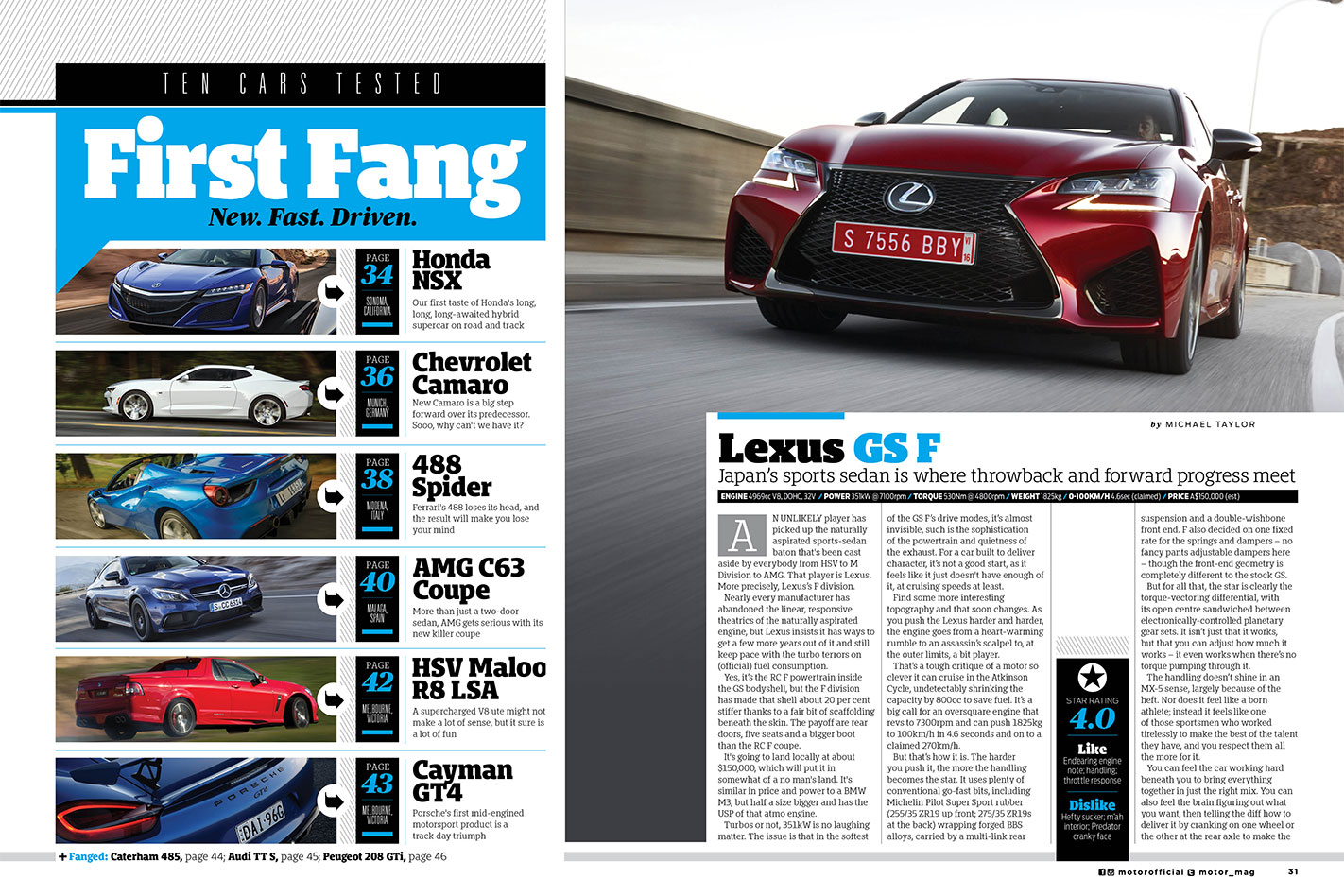
Someone has binned a very expensive car, again.
Happening only a month since a LaFerrari was totalled in Budapest, a Koenigsegg Agera R has careered in to a road barrier on the streets Chongqing, China.
And like before, the cringing impact has been captured on video.
Footage reveals the Agera R loses control in an instant, however, whether that’s because the driver couldn’t tame 850kW worth of ‘Egg or couldn’t successfully dodge a taxi in time isn’t clear, as it doesn’t show the crucial moments before the spin.
What’s more certain is the extensive damage accrued, as reports reveal the car lost its left rear wheel and entire front bumper assembly. And with a brand new Agera R commanding a price of US $4.2m, the repairs should lighten the owner’s wallet considerably.
The driver, who reportedly does not own the car, escaped serious harm, and thankfully no bystanders were involved in the crash.
Initially, McLaren said it would offer one new model every year. It’s significantly over-delivered in 2015, though, with the new 675 ‘Long Tail’ Spider its fifth reveal of the year.
Unsurprisingly, it’s based heavily on the 675LT Coupe released earlier in 2015. Limited to 500 examples worldwide, the Spider’s European pricing carries a 10 per cent premium over its hardtop sibling, which will put it in the ballpark of $675,000 locally.
It may look very similar to the 650S Spider, however the engineering changes under the skin are significant. At 1270kg (dry), it drops 100kg, though weighs 40kg more than the Coupe due to the retractable hard-top roof.
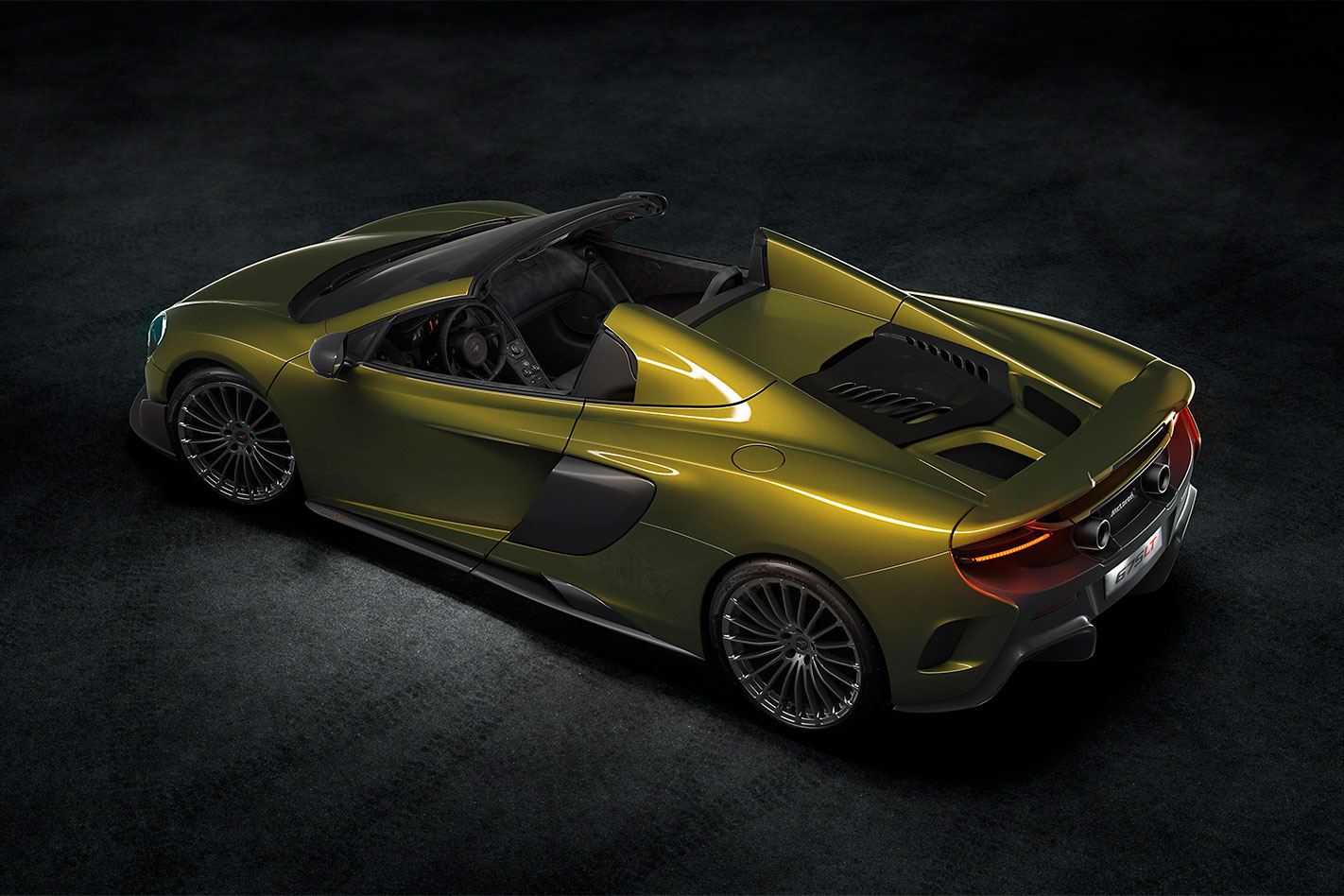
Like all McLarens the engine is a 3.8-litre twin-turbo V8, however so many components are bespoke to the 675LT (around 50 per cent compared to 650S) that the engine receives its own code – M838TL.
Outputs are unchanged from the Coupe, meaning 497kW (a devilish 666bhp) at 7100rpm and 700Nm from 5000-6500rpm.
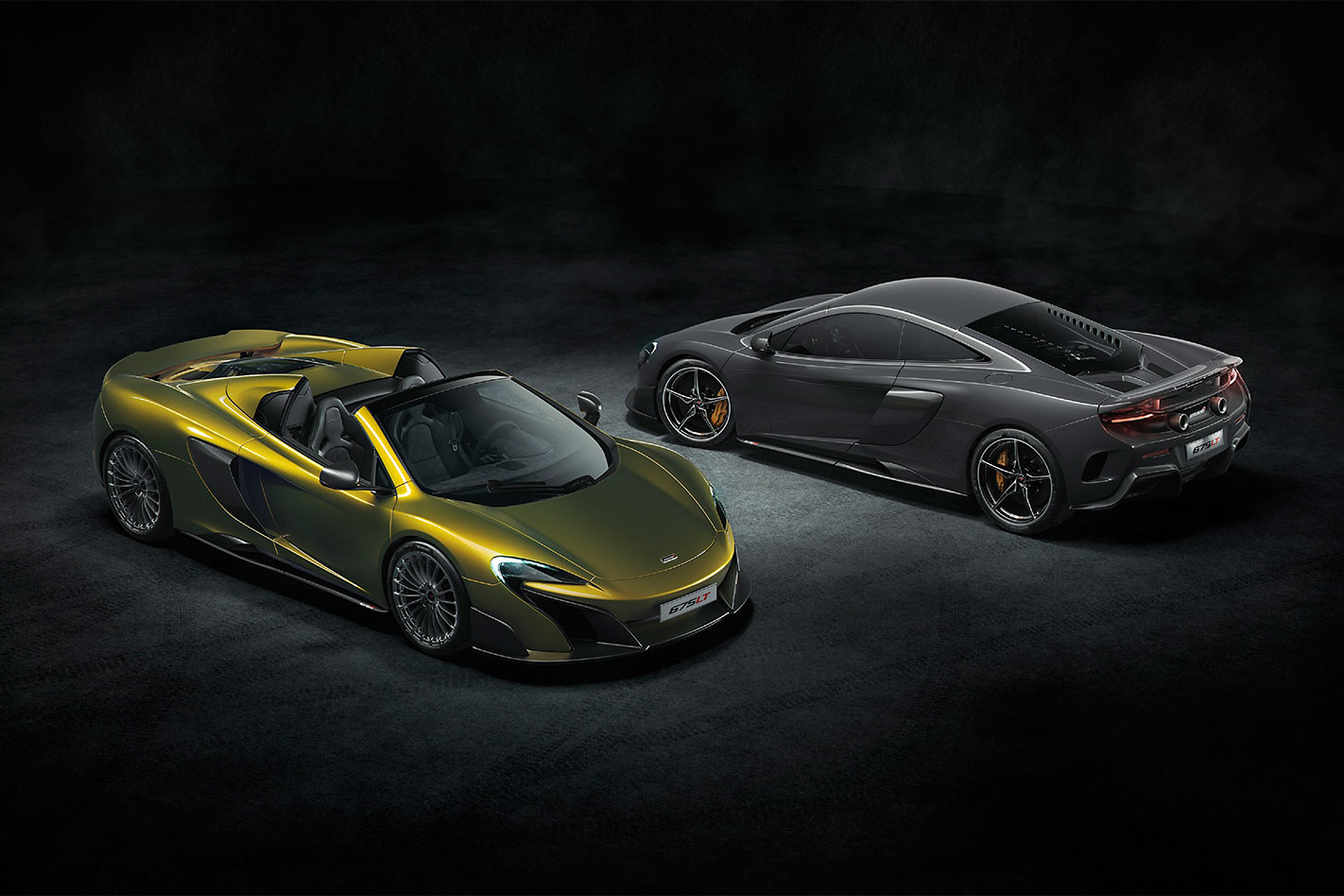
With its focus on track performance, the 675LT Spider is significantly stiffer, with spring rates 27 per cent stiffer at the front and 63 per cent at the rear, which has allowed for a 40 per cent increase in downforce over the 650S courtesy of the larger front splitter and extended airbrake which lends it the ‘Longtail’ name.
The front tracks are 20mm wider, while the staggered ultra-lightweight forged wheels (19s front, 20s rear) wears Pirelli’s P Zero Trofeo R tyres.
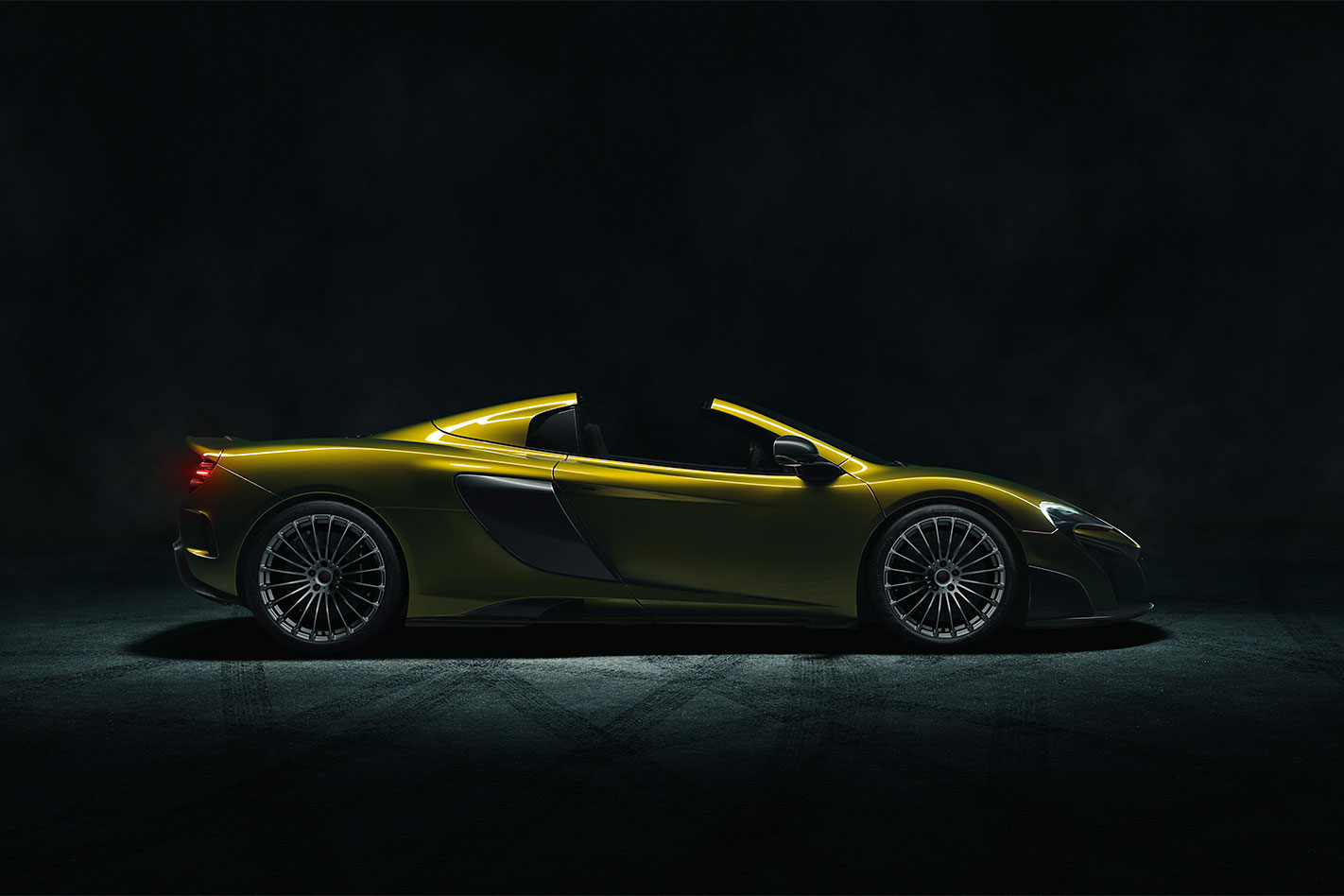
Nonetheless, until Ferrari reveals the inevitable 488 Speciale sometime in the future, nothing short of a P1 or 918 Spyder can touch the 675LT’s performance, which means it’s currently in a class of its own.
PLUS
- Value. Its standard features are aplenty. Sat nav, reverse camera, touchscreen, Bluetooth, cruise control, speed limiter and LED lights.
- Quiet and comfortable cabin.
- Nice to drive with decent steering.
- Style. It’s good-looking in an androgynous kind of way with an airy and spacious interior.
- Storage. At 375 litres, the boot is big enough to fit a couple of large suitcases, and there are plenty of other little spots to store other items, such as under the removable floor in the boot.
- On the go. The Suzuki Vitara lacks a bit of torque and there’s occasionally a hesitation on the accelerator in the automatic.
- The use of an analogue speedo is a bit dated. Maybe it’s an attempt to revisit vintage, but I don’t think we’re at that point yet.
- Technology. We’re wondering why Suzuki have left out driver-assist technologies like emergency braking.
Every now and then we’re handed the keys of a car so magical, it begins to look a lot like Christmas. Very rarely do we see a car that comes so complete, it’s nearly impossible to fault. Speed, space, style, spirit and fuel-efficiency all wrapped up in one neat little gift.
Finally, the car we’ve all been waiting for has arrived in the form of the 2015 Santas Sleigh Convertible, and it’s all we want for Christmas.
Click here to see more details
The newest car to hit the Australian market is bound to bring joy to the world, making an impression with unlimited boot space to carry more gifts than Santa Clause, enough speed to send you to 195 countries in one night and claiming to be the most fuel efficient vehicle in the world.
Stacked with all the features you’d expect from a vehicle like this, such as heated seats, candy cane launcher, milk cup and cookie holder, and for the first time ever, a ‘quiet mode’ for those silent night rooftop landings, it’s really innovation at its finest.
It’s also one of the safest available with full-proof hessian airbags, rear seat Elf Booster Restraints and cargo restraints – it’s no surprise Santas Sleigh has earned itself a six out of six safety rating.
Driving the Sleigh is easy; Navigation comes in the form of the flawless Reindeer Nose, backed by eight deer power, on command shift and grass fed fuel.
Available in Rudolph Nose Red, and decked with sounds of holly, the Sleigh will see you jingle all the way to your next Chrissy party.
It’s not all rosy cheeks and cookies though. Santas Sleigh is only available as a convertible so it loses points when it comes to driver comfort – it can get a bit breezy, particularly when visiting the colder places like the North Pole. Steering the Sleigh is like skateboarding on pebbles, and the landing is somewhat reminiscent 32 hooves to a roof – someone needs to teach the Reindeer synchronisation because after hundreds of years, they’re yet to master the art.
But, if you’re looking for a car for that once a year trip over the Christmas holidays, then look no further. We think this is one Christmas gift even Santa would be happy to unwrap on Christmas morning. Ho ho ho, indeed.
Click here to find out the specifications of the 2015 Santas Sleigh Convertible.
It appears having a bit of Grange in your life can lead to all sorts of difficulties.
A bottle of the smashed grape variety caused a whole lot of trouble for ex-NSW premier Barry O’Farrell, and having tried HSV’s latest luxo offering, we can confirm exercising the automotive version to its full extent also risks attracting the attention of the authorities.
This is largely thanks to HSV’s decision to give its long-wheelbase limo the full-house 340kW/570Nm version of the familiar LS3 6.2-litre V8. While a Grange fitted with the 430kW/740Nm LSA donk from the GTS makes for a tantalising prospect, few will find much to complain about with the way the Grange goes in a straight line. With the bi-modal exhaust set to ‘stun’ it makes a terrific noise while doing so, too.
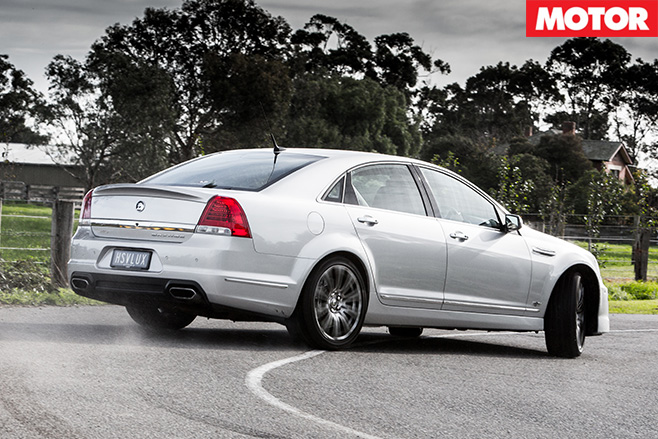
On wet roads, this amount of grunt means little provocation is required to have the rear-end waving around like a tree in the breeze in any of the first three gears. In a car 5.2 metres long, this is initially a little unnerving, particularly as HSV adopts a pretty lenient ESP intervention policy. But, provided you have plenty of real estate around you when the rear does step out, the three-metre wheelbase gives you plenty of time to gather things up.
The Clayton crew have also beefed up the steering weight considerably, low-speed parking needing a level of muscle not often required in modern cars.
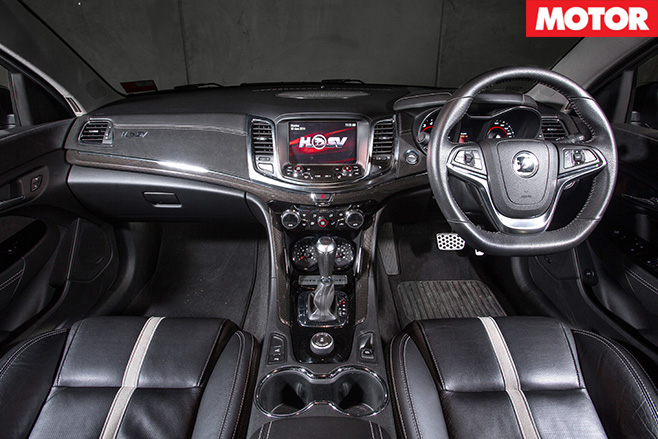
Inside, all of the new toys introduced as part of the Gen-F upgrade – self park, blind-spot assist, head-up display and more – are present and welcome. In fact, the Grange usually exists on a separate life cycle to the rest of the HSV range, but such was the level of improvement for this update that it was launched simultaneously with the rest of the Gen-F range this time around.
However, we suspect the small number of people that buy the Grange don’t consider anything else. If it were our cash, we’d stretch another $7K for the extra performance and poise of Australia’s current muscle car king, the HSV GTS.
3.5 out of 5 stars
Specs
Engine: 6162cc V8, OHV, 16v Power: 340kW @ 6100rpm Torque: 570Nm @ 4650rpm Weight: 1880kg 0-100km/h: 5.2sec (estimate) Price: $85,990
The first hurdle any new product must clear, be it a television, a toaster or a toothbrush, is to improve on its predecessor.
Cars, of course, are no different, but what if you’re trying to improve on perfection? The BMW M3 is a MOTOR hero, pretty much always has been.
Both E36 and E46 iterations won Performance Car of the Year – the latter almost did it twice – and while the E90-series didn’t quite achieve those dizzying heights, the way it comes alive when being hammered – that incredible atmo V8 singing at 8000rpm – makes it one of our favourite driving tools to this day.
So you could forgive the engineers responsible for the new F80/F82 (sedan/coupe) for tossing and turning in their beds at night, waking in a fitful sweat muttering “improve the M3? Did anyone ask Da Vinci to improve the Mona Lisa?”
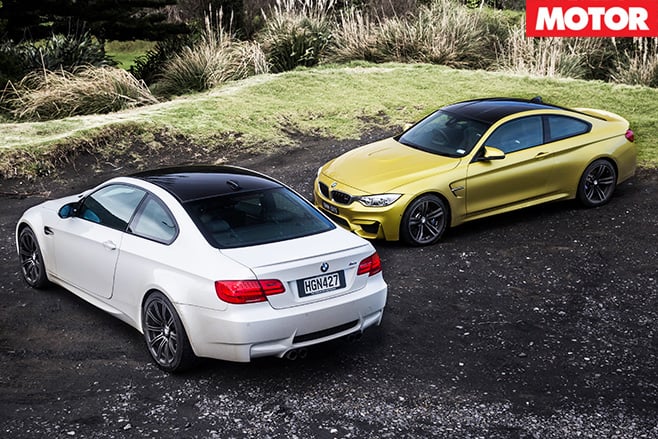
To judge if the talented folk at M Division have successfully married these two contradictory goals, we have the serpentine roads of New Zealand’s North Island and arguably the new car’s toughest competitor.
A comparison test with its closest rivals awaits BMW’s new hi-po hero later in the year, but for now its greatest foe is the enemy within, its predecessor, the E92 M3. Credit to BMW for allowing this test to happen – not every company would.
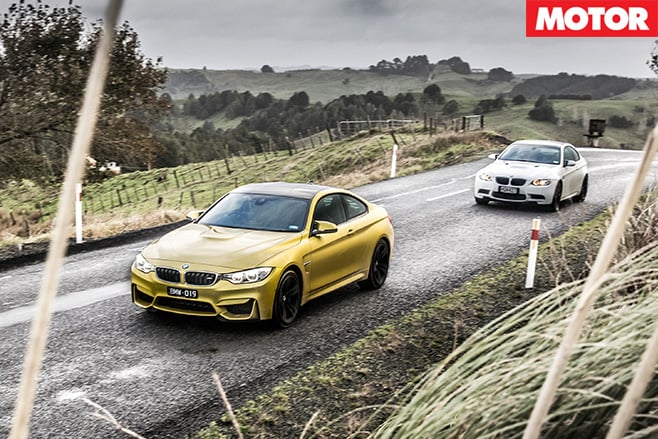
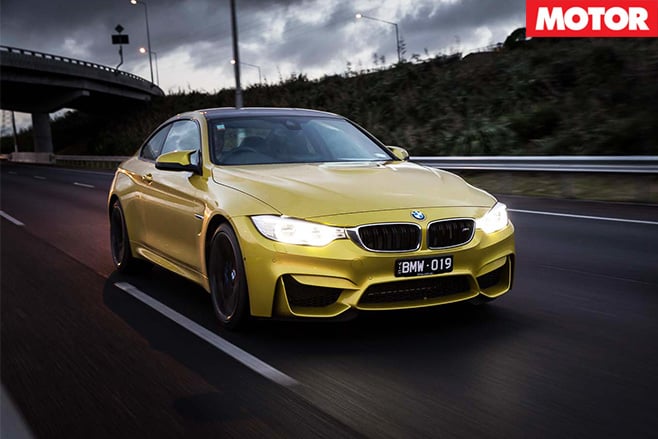
The idea is that the new name allows for greater styling differentiation between sporty coupe and sensible sedan, and the designers have seized the opportunity with both hands, the M4 exuding testosterone from every sharply-defined crease and gaping vent.
In comparison, the skinnier, more upright E92 Coupe looks weedy and undernourished, Bruce Banner to the M4’s Hulk. The carbon roof is a dead giveaway to those in the know, but parked next to its steroidal successor, the M3 is subtle almost to the point of anonymity.
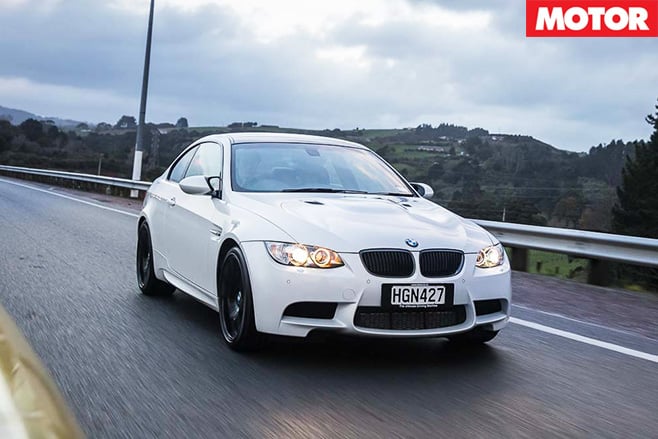
There’s also nowhere to put anything – drinks, wallets, keys, etc – but one press of the starter button fires the 3999cc V8 into life and suddenly a lack of space ceases to matter.
It’s a sensational engine, its motorsport breeding obvious in its razor-sharp throttle response (once the ‘Sport’ button has been pushed) and the ease with which it revs to its 8400rpm cutout. Hearing an E92 M3 charge towards you in a wail of induction noise is one of motoring’s great experiences.
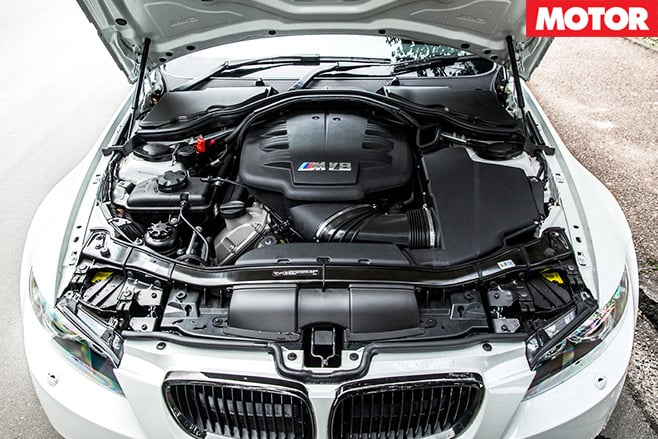
Sitting on 100km/h in seventh equates to 2500rpm, which is great for response but rather catastrophic for fuel consumption.
While still reasonably slick, the DCT feels a bit off the pace compared to the latest-gen dual-clutch ’boxes, so we’d stick (pardon the pun) with the six-speed manual. That way you can forget about which of the 11 gearbox settings you need, set everything else (engine, steering, dampers, DSC) to Sport and just remember to press the ‘M’ button on the steering wheel every time you take off.
For me it’s everything In Comfort for M1 (cruise mode) and throttle in Sport Plus, suspension in Sport and steering in Comfort for M2 (attack mode). Choosing a gearbox, though, has been made considerably more difficult.
The six-speed manual is now optional at no cost and has been significantly revised, losing 12kg and now automatically blipping the throttle on downshifts, but we’re yet to try it as our test car is fitted with the standard seven-speed DCT.
Though it adds 40kg, the self-shifter drops the claimed 0-100km/h time from 4.3 to 4.1sec and cuts claimed consumption and emissions from 8.8L/100km and 204g/km to 8.3L/100km and 194g/km respectively.
More importantly, it’s near-flawless in operation; taking off smoothly requires patience as there’s no ‘creep’ engineered into the system but once under way it shifts with the speed and precision of a Kobe Bryant jump shot.
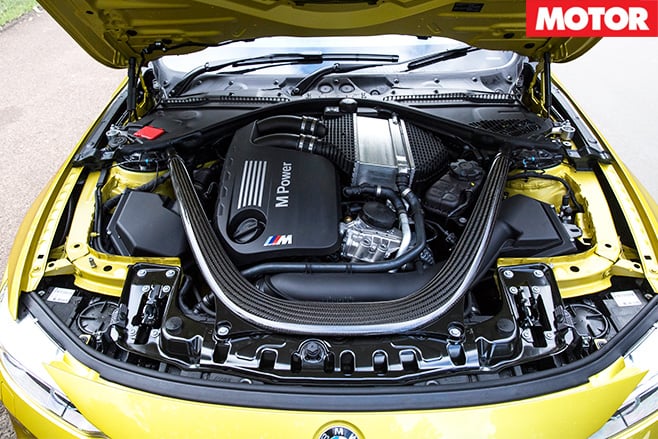
The initial power delivery is just as linear as the old V8, only massively more potent. By 1400rpm it’s surpassed the V8’s peak torque figure of 400Nm; at 1850rpm it generates peak twist of 550Nm, a figure it sustains until 5500rpm, at which point 317kW takes over until 7300rpm.
Is it as exciting as the old V8? Not quite. It lacks that incredible crescendo, the impression of never-ending rpm. Power continues to the 7600rpm cut-out, but it’s more effective to shift between 6000-6500rpm and mine the rich torque seam.
As a result, getting the best out of the M4 demands a new approach. Whereas in the E92 you’re constantly changing gear to stay in the magic 5000rpm-plus zone, third gear is often all that’s required in the F82.
With the engine set to Sport Plus, response is brilliant and turbo lag non-existent thanks to the ECU feeding fuel into the engine to keep the turbos spinning even when off-throttle.
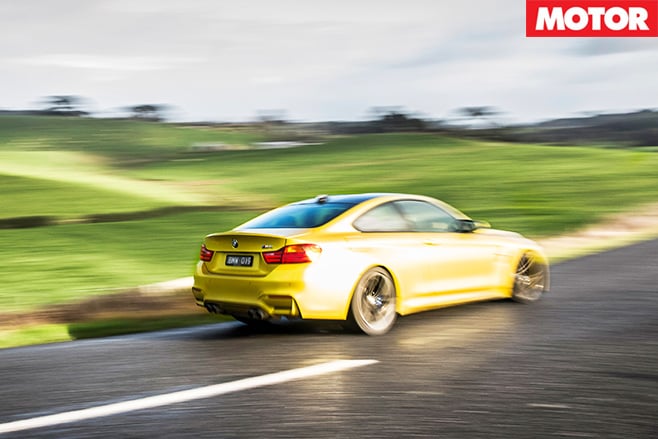
It’s incredibly stable yet any losses in grip are easily corrected when its limits are broached. Despite the switch to electro-mechanical power steering, there’s plenty of feel from the front end and the electronically-controlled locking diff makes heroic oversteer a breeze.
On a damp back-road, though, the game changes somewhat. The level of front grip is such that understeer is non-existent, but on a slippery surface the M4 will easily spin its rear wheels all the way into fourth gear.
We’ll reserve final judgement until we try the car on local roads in dry conditions, but the increase in grip does make the car’s limits harder to access on public roads and its responses snappier once you do find them.
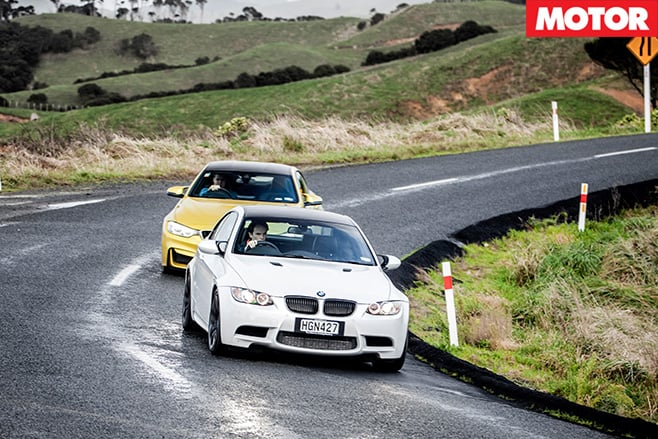
Back on the motorway, both cars prove equally impressive as grand tourers. Neither is particularly refined when it comes to tyre noise, at least not on NZ’s exceptionally coarse roads, but both ride beautifully in either ‘Comfort’ or ‘Sport’.
Drive the E92 M3 and F82 M4 back-to-back and you discover that, like many siblings, while they share DNA, they’re very different in personality. Both I and MOTOR contributor Adam Davis agree we enjoy driving the E92 more, though there is undoubtedly a degree of subconscious sentimentality in that conclusion.
Perhaps the most telling difference is that after almost 400km of varied driving, the older car is on fumes whereas the F82 is still a quarter-full, despite a smaller tank. The M4 is not only much faster than its predecessor, it uses far less fuel in the process.
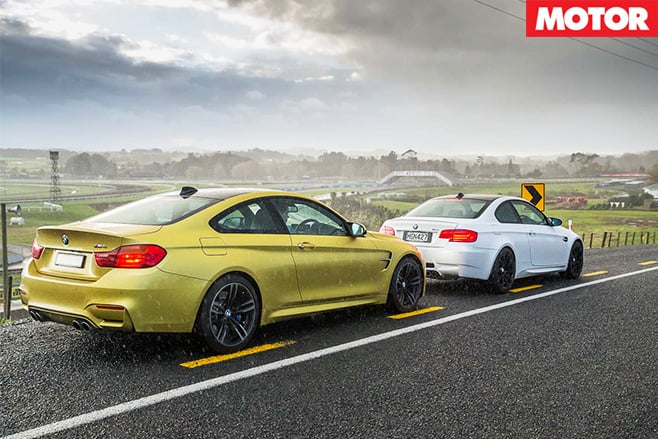
Though the E90/E92 twins still tug at the heart strings, the F80 and F82 are faster, more frugal, better equipped, more practical, but, most importantly, still scintillating to drive. We’ll learn more on our local roads, but for the moment, the first hurdle has been cleared.
| u00a0 | u00a0 | BMW E92 M3 | u00a0 | BMW F82 M4 |
| Body | u00a0 | 2-door, 4-seat coupe | u00a0 | 2-door, 4-seat coupe |
| Drive | u00a0 | rear-wheel | u00a0 | rear-wheel |
| Engine | u00a0 | 3999cc V8, DOHC, 32v | u00a0 | 2979cc inline-6, DOHC, 24v, twin-turbo |
| Bore/stroke | u00a0 | 92.0 x 75.2mm | u00a0 | 89.6 x 84.0mm |
| Compression | u00a0 | 12.0:1 | u00a0 | 10.2:1 |
| Power | u00a0 | 309kW @ 8300rpmu00a0 | u00a0 | 317kW @ 5500-7300rpm |
| Torque | u00a0 | 400Nm @ 3900rpm | u00a0 | 550Nm @ 1850-5500rpm |
| Power/weight | u00a0 | 193kW/tonne | u00a0 | 206kW/tonne |
| Consumption | u00a0 | 11.9L/100km (claimed) | u00a0 | 8.3L/100km (claimed) |
| CO2 Emissions | u00a0 | 283g/km (claimed) | u00a0 | 194g/km (claimed) |
| 0-100km/h | u00a0 | 4.8sec (claimed) | u00a0 | 4.1sec (claimed) |
| Top speed | u00a0 | 250km/h (limited) | u00a0 | 250km/h (limited) |
| Transmission | u00a0 | 7-speed dual-clutch | u00a0 | 7-speed dual-clutch |
| Weight | u00a0 | 1600kg | u00a0 | 1537kg |
| Suspension | u00a0 | struts, A-arms, adaptive dampers, anti-roll bar (f); multi-links, coil springs, adaptive dampers, anti-roll bar (r)u00a0 | u00a0 | struts, A-arms, adaptive dampers, anti-roll bar (f); multi-links, coil springs, adaptive dampers, anti-roll bar (r) |
| L/W/H | u00a0 | 4615/1804/1418mm | u00a0 | 4671/1870/1383mm |
| Wheelbase | u00a0 | 2761mm | u00a0 | 2812mm |
| Tracks | u00a0 | 1538/1539mm (f/r) | u00a0 | 1579/1603mm (f/r) |
| Steering | u00a0 | hydraulically-assisted rack-and-pinion | u00a0 | electrically-assisted rack-and-pinion |
| Brakes | u00a0 | 360mm ventilated/drilled discs, 4-piston calipers (f); 350mm ventilated/drilled discs, 2-piston calipers (r)u00a0 | u00a0 | 380mm ventilated/drilled discs, 4-piston calipers (f); 370mm ventilated/drilled discs, 2-piston calipers (r) |
| Wheels | u00a0 | 19 x 8.5-inch (f); 19 x 9.5-inch (r) | u00a0 | 19 x 9.0-inch (f); 19 x 10.0-inch (r) |
| Tyres | u00a0 | 245/35 ZR19 93Y (f); 265/35 ZR19 100Y (r) Pirelli P Zero | u00a0 | 255/35 ZR19 92Y (f); 275/35 ZR19 100Y (r) Michelin Pilot Supersports |
| Price | u00a0 | $162,400 (2013) | u00a0 | $166,900 |
| Positives | u00a0 | Peerless engine; superb chassis; one of the great driving experiences | u00a0 | So much power; brilliant ride and handling; styling; practicality |
| Negatives | u00a0 | Thirst; needs to be thrashed to give its best; snug interior | u00a0 | A handful in the wet; tyre noise; artificial engine note |
What is it?
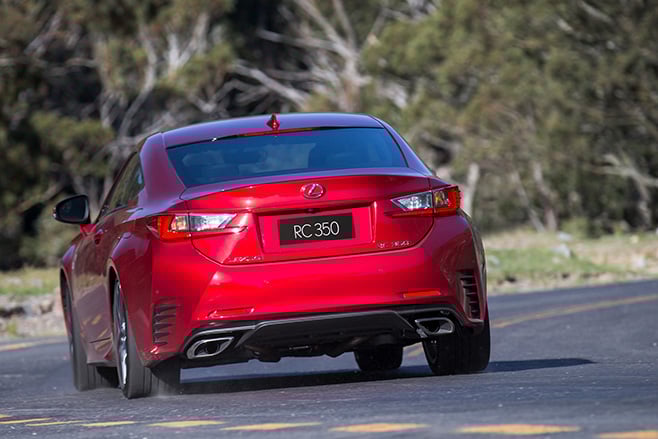
Lexus calls the RC “the most emotional vehicle we’ve made since the LFA”, and they’re hoping it’ll change perceptions of the brand a little – bring a little bit of excitement back into the showroom. And it will – it’s a good looking car in the metal, and perhaps the first time that Lexus spindle grille really looks natural, and not like an uncomfortable obligation.
What’s it all about?
It’s a sports coupe that’s been designed as a coupe from the very beginning, unlike most other coupes, which are rejigged versions of their four-door siblings. The RC has an all-new chassis – and by ‘all new’, they mean ‘Frankensteined together from existing platforms.’ Which is, of course, the modular future for all car-makers, but there’s still something oddball about this car with the front underpinnings from a GS, the middle of the old IS convertible and the rear of the new IS.
Lexus also offer the RC F with a stonking V8, but in the RC 350, it’s V6 all the way: a 3.5-litre unit that delivers a handy if not spectacular level of punch, 233kW at 6400rpm and 378Nm at 4800rpm, good for a nought to 100km/h sprint of 6.1 seconds. And good news for fans of naturally-aspirated rear-wheel-drive cars: while it feels like the whole world has gone turbo, the RC 350 is still joyously atmo.
What’s it cost, and is it worth the money?
There are three variants, starting with the Luxury. There’s something admirably bullish about calling your entry level variant ‘Luxury’. Then comes the F Sport, and top-spec Sport Luxury.
The entry price of $66,000 for the Luxury will turn heads. The F Sport is $74k, and then the Sport Luxury is $86k. Lexus admits the RC 350 is “priced to disrupt.” And it might well disrupt a few customers away from a BMW 4 Series or Audi A5, which would cost you tens of thousands more to get a similar power output – and even then, you’d have to pay more again to match the Lexus on spec.
But it’s not exactly a like-for-like comparison. For one thing, the BMW 435i (225kW, 400Nm) is a full second quicker from 0-100, and a fair bit more frugal on the juice (7.4L/100km for the Beemer, compared with 9.4L for the RC 350); it’s a similar story with the Audi A5. The reason is, that the Lexus is a bit of a porker: a kerb weight of 1,680kg up to 1,740kg, depending on the variant, which is more than 220kg more than the 435i.
Partially that’s because of the thickness of the floor panels and the sandwich sheet steel that make the RC 350 so quiet and refined around town and on the freeway.
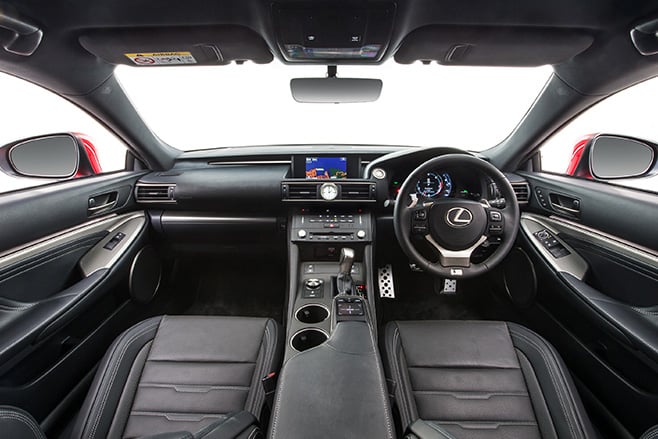
What’s it like to drive fast?
You can feel that weight when you get the Lexus onto some winding rural roads. Through dips and around corners, there’s a real sense of more mass than in a 4 Series. And while the RC 350 isn’t exactly short on power, on uphill overtakes even on fairly mild inclines, it takes a moment or two for the big beast to get moving, especially if the engine’s not already at peak torque (which doesn’t arrive ‘til 4,800rpm). That’s particularly true of the entry level Luxury model; in the F Sport (which Lexus estimates will account for the lion’s share of sales), you can put it in Sport Plus mode, which does sharpen things up when you goose the accelerator.
The F Sport also gets adaptive variable suspension and dynamic rear steer: the rear wheels turn just slightly opposite to the front wheels under 80km/h, which effectively reduces the wheelbase; but they turn with the front wheels above 80km/h, to increase stability.
To test the difference, we took first an entry level Luxury (sans rear steer) and then an F Sport for a slalom blat through some cones in a wet carpark. In ‘Normal’ mode, there was perhaps a minor difference – or perhaps it was just a placebo effect – but in Sports Plus mode, there is a massive difference: the F Sport hooks into sharp turns harder, and the adaptive suspension keeps the car balanced even as you fling it from side to side.
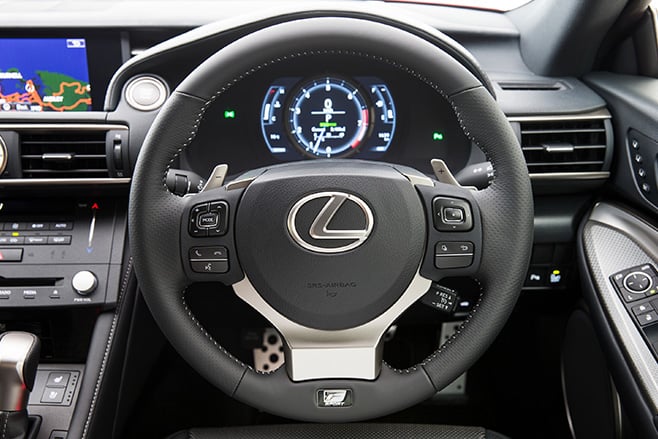
What’s it like inside?
Inside, the RC 350 is a bit of a mixed bag. It’s very a quiet and refined ride – brilliantly quiet, actually – but the cabin is an acquired taste. There’s a slightly weird layout – not bad, exactly, just weird, all jutting ledges and clashing surfaces. And some of the materials feel a bit cheapish – some hard plastics and crappy digital readouts that don’t feel worthy of something called Luxury. On the other hand, there is a huge and prominent CD player, which will be good news if you’ve just awoken from a coma since 1998.
And, be warned if you’re over six foot: it’s not the roomiest cabin I’ve ever sat in. At 6’2”, I had to angle the seat well back to keep my head off the ceiling. And the rear seat is really more of a 2+2 proposition.
Would you take this or a BMW 4 Series?
The 435i is a better car – but is it $42,000 better? To get comparable performance and specs to the entry RC 350 Luxury, you have to go for the top-shelf 4 Series (excluding the M4) – and the Lexus costs just two-thirds as much. So you’d really have to ask yourself, how often are you going to be really driving at ten-tenths? If you’re a dedicated track-day driver, or real-life Fast & Furious street racer, the Beemer is the better choice. If you’re just looking for an up-market sports coupe with some go-fast potential when you need it, the Lexus is a rational choice.
The first customer orders of the Ford Mustang have rolled off the ship straight from the good ‘ol US of A – and it looks like there will be no stopping these boats.
Ford Australia has called it quits on taking any further orders for the Mustang for 2016, with the supply-dictated order bank of 4000 cars all sold and 80 per cent of buyers placing paid deposits.
Even before the first production right-hand drive Mustang for our market rolled off the ship at Melbourne’s Appleton Dock this week, orders had already amounted to two-thirds of total Ford Falcon sales last year.
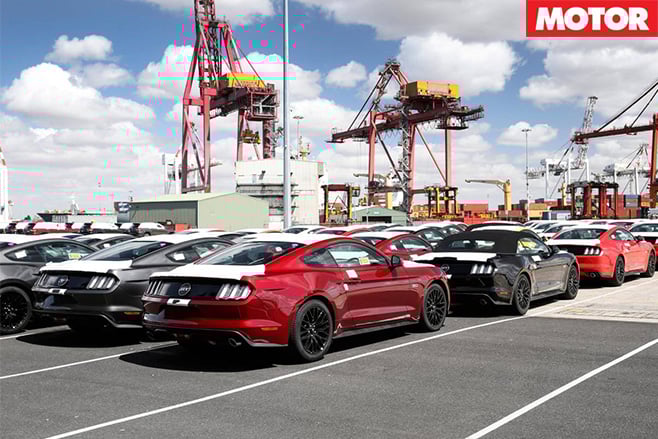
The coupe bodystyle has secured 86 per cent of the order bank compared with the convertible (auto-only for a $9K premium).
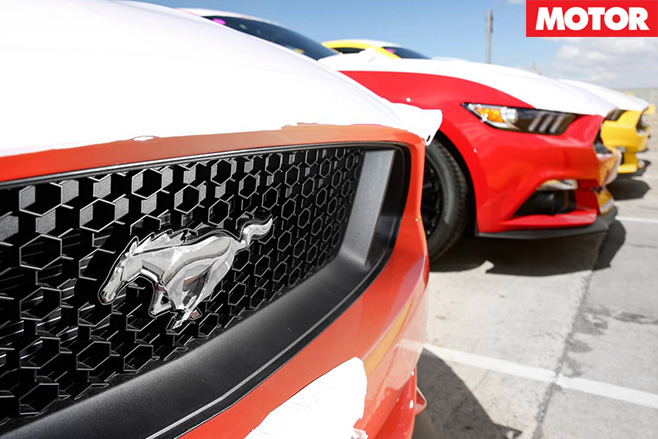
The Ford Mustang was pegged for a December launch to the local media, however that has been pushed back until January.
397kW, 427kW push-to-pass street heroes join all-turbo Porsche 911 range.
THE 2016 Porsche 911 Turbo and 911 Turbo S have been revealed, with Mark Webber’s new company car getting more power and pace, with the ability to crack 0-100km/h in a scant 2.9sec.
Slated for a full reveal at January’s 2016 Detroit Motor Show, the updated flagship 911 is faster than before but also more fuel efficient. And no, it’s not called the ‘turbo Turbo’, following the updated 911 Carrera getting turbocharged engines across the range. It’s still just ‘Turbo’ with a capital T, thanks, and there are two of them on the fastest-accelerating 911 of the updated range.
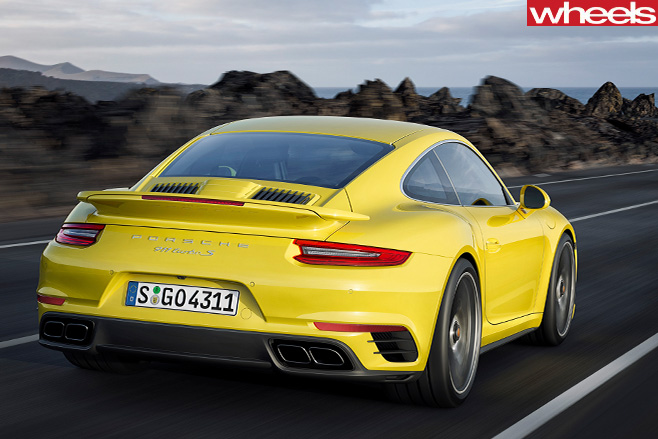
Porsche says that the extra grunt comes from new cylinder heads, fuel injection nozzles and higher fuel pressures. There are also larger turbochargers, as well as a new dynamic boost function that maintains boost during ‘load changes’. For instance, during a brief throttle lift-off, boost is maintained by leaving the throttle valve open, which means that there’s no lag when you get back on it, according to Porsche.
Select Sport and Sport Plus, and Porsche says this is even more pronounced.

If you’re looking for a pragmatic reason to trade your old 911 Turbo in, fuel consumption is even better than before, with a 9.1L/100km claim (Euro cycle) for the Turbo, with the Turbo S a tad thirstier at 9.3L/100km. Tell your accountant those numbers.
Outside, to let the economists in silver base Carreras know that you’re actually into fast cars, the Turbo features its trademark rear wing, body addenda and larger polished 20-inch alloys, which are half an inch wider than before.
There’s also the same modest changes given to the recently updated 911, including a new rear engine cover and wrinkles near the LED headlights, as well as flush door handles. Turbos also have ‘air-blades’ and dual tail-pipes to confirm that you’ve just been passed by the flagship 911.
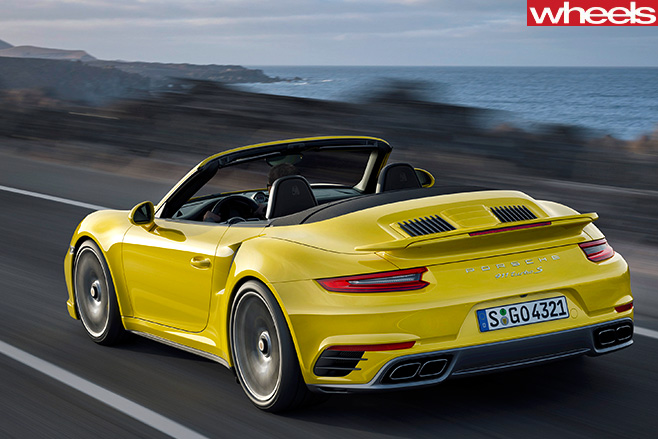
That may also help you forget that you’ve paid more for a 911 Turbo than ever before: Prices start at $384,900 for the Turbo coupe, an increase of $18,800 over its predecessor, while the Turbo S kicks off at $456,500 (previously $444,500).
Cabriolet versions of both ask a $21,500 premium over the Coupe, at $406,400 and $478,000.
The 2016 Porsche 911 Turbo and Turbo S arrive in Australian showrooms in May.
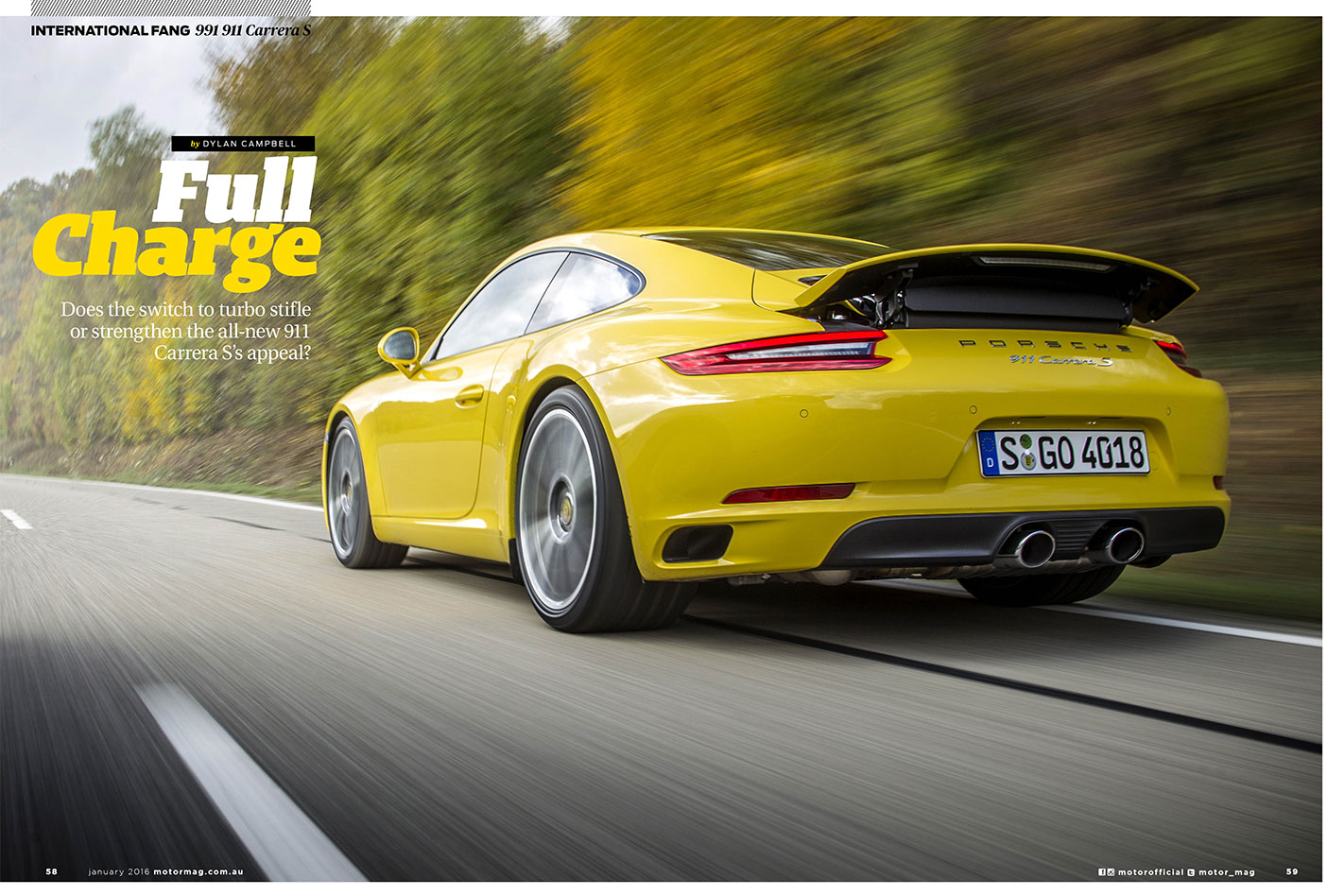
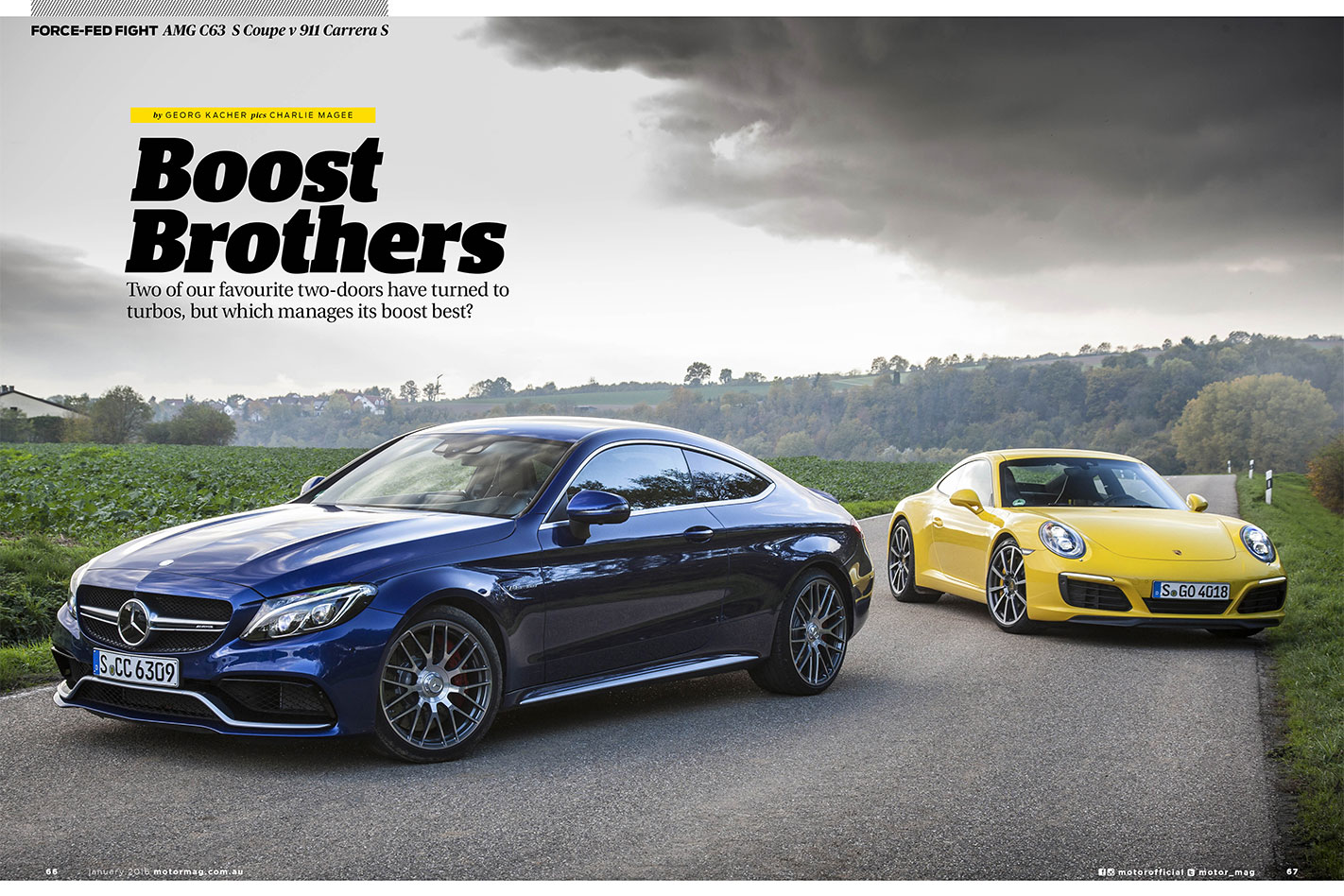
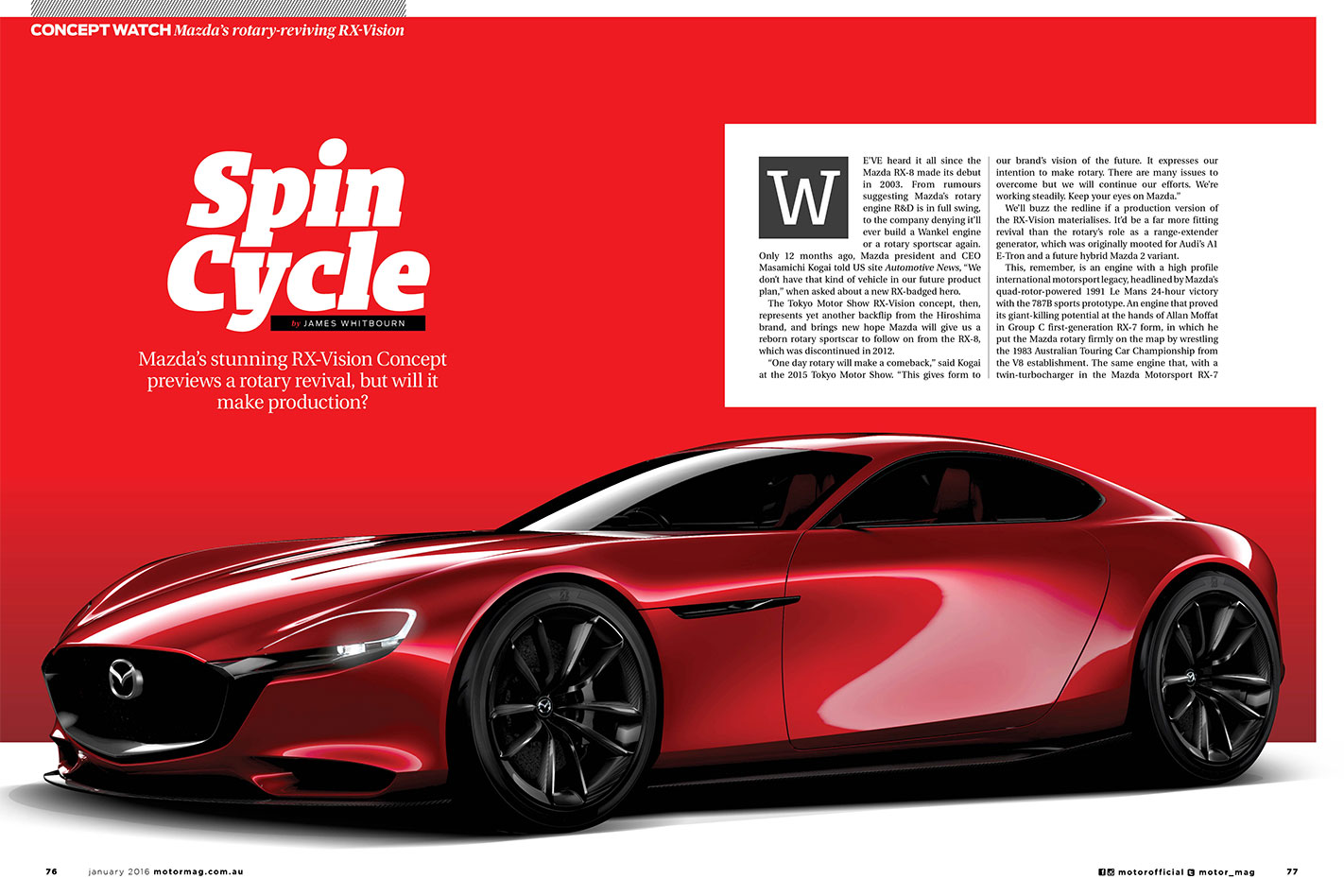
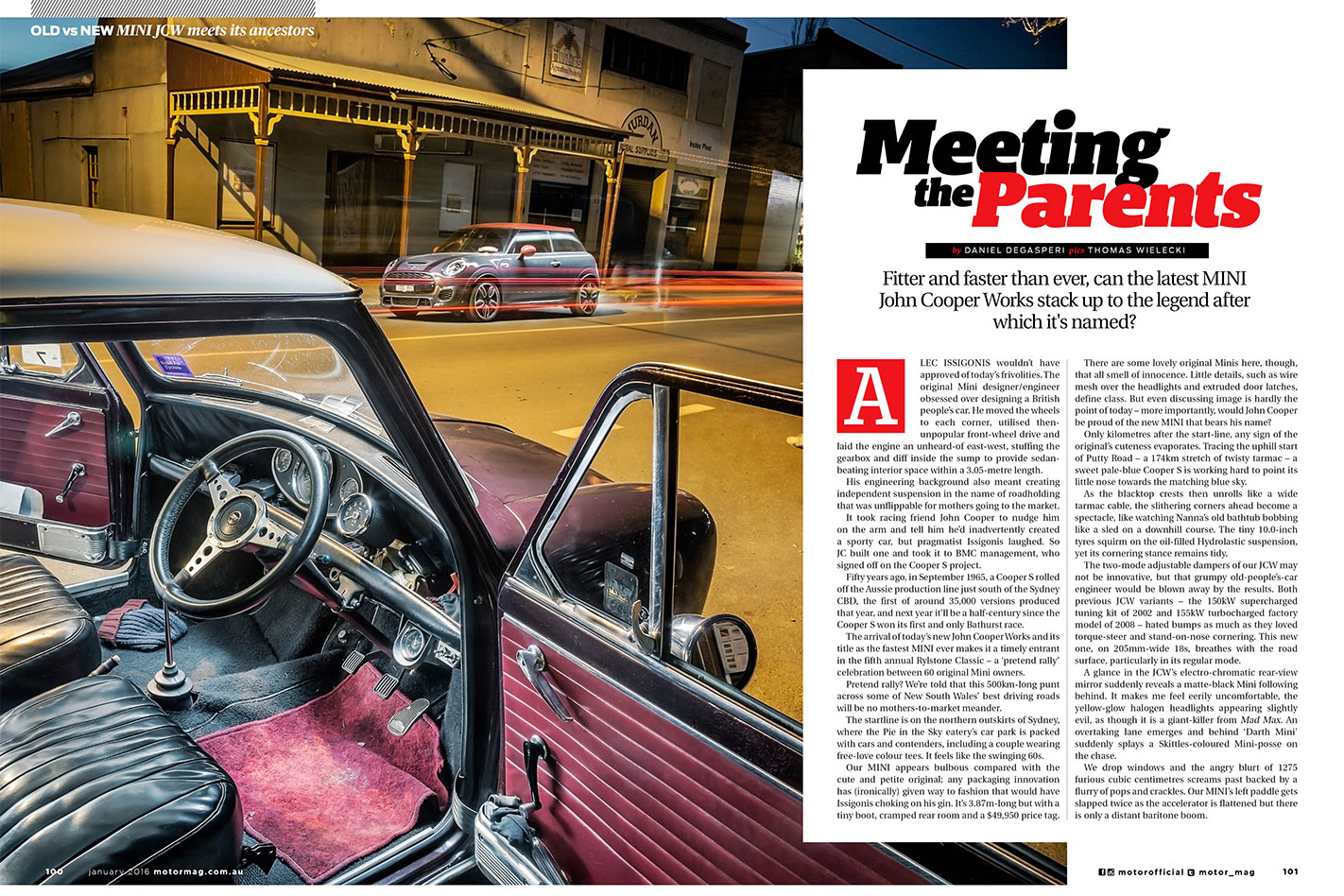
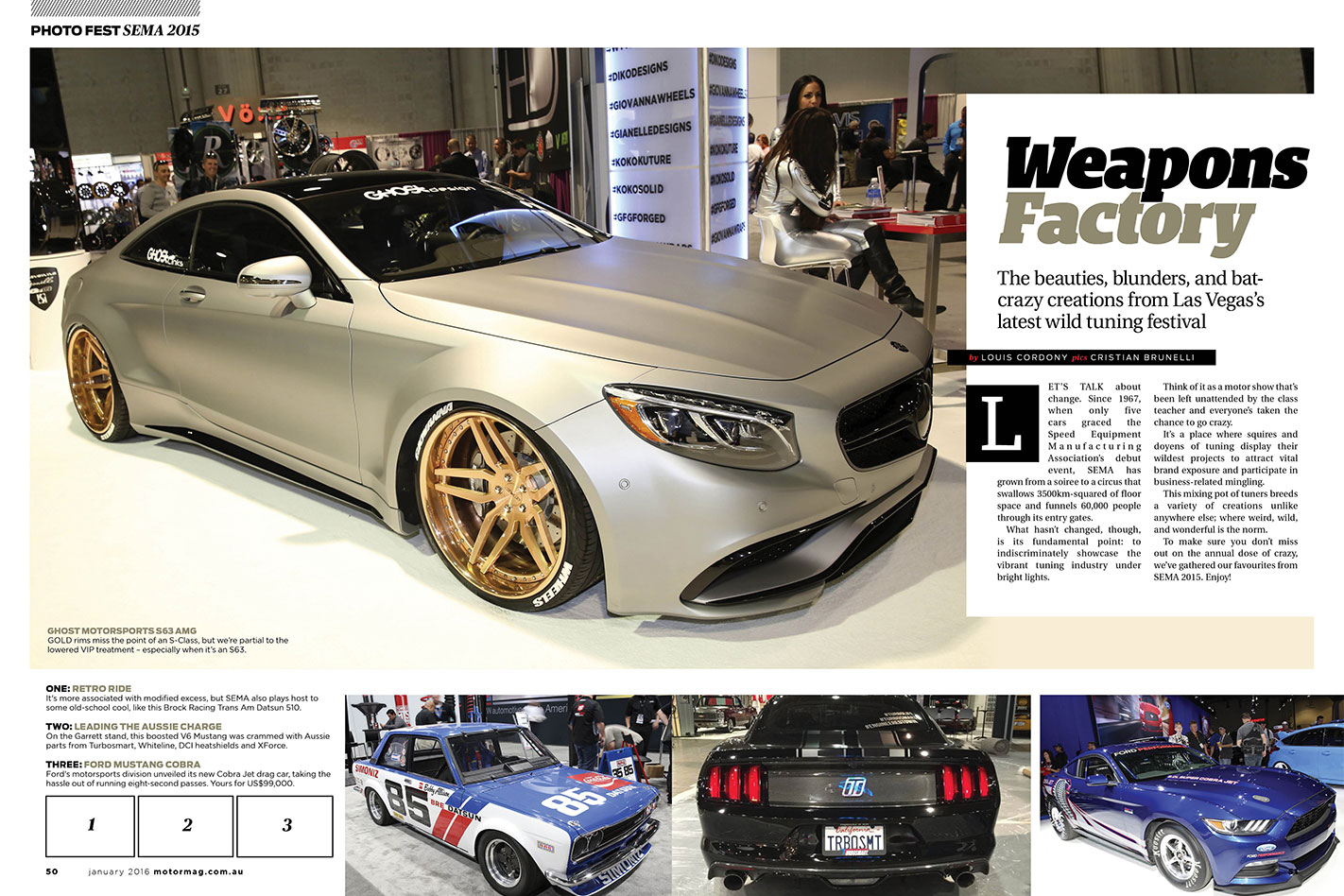
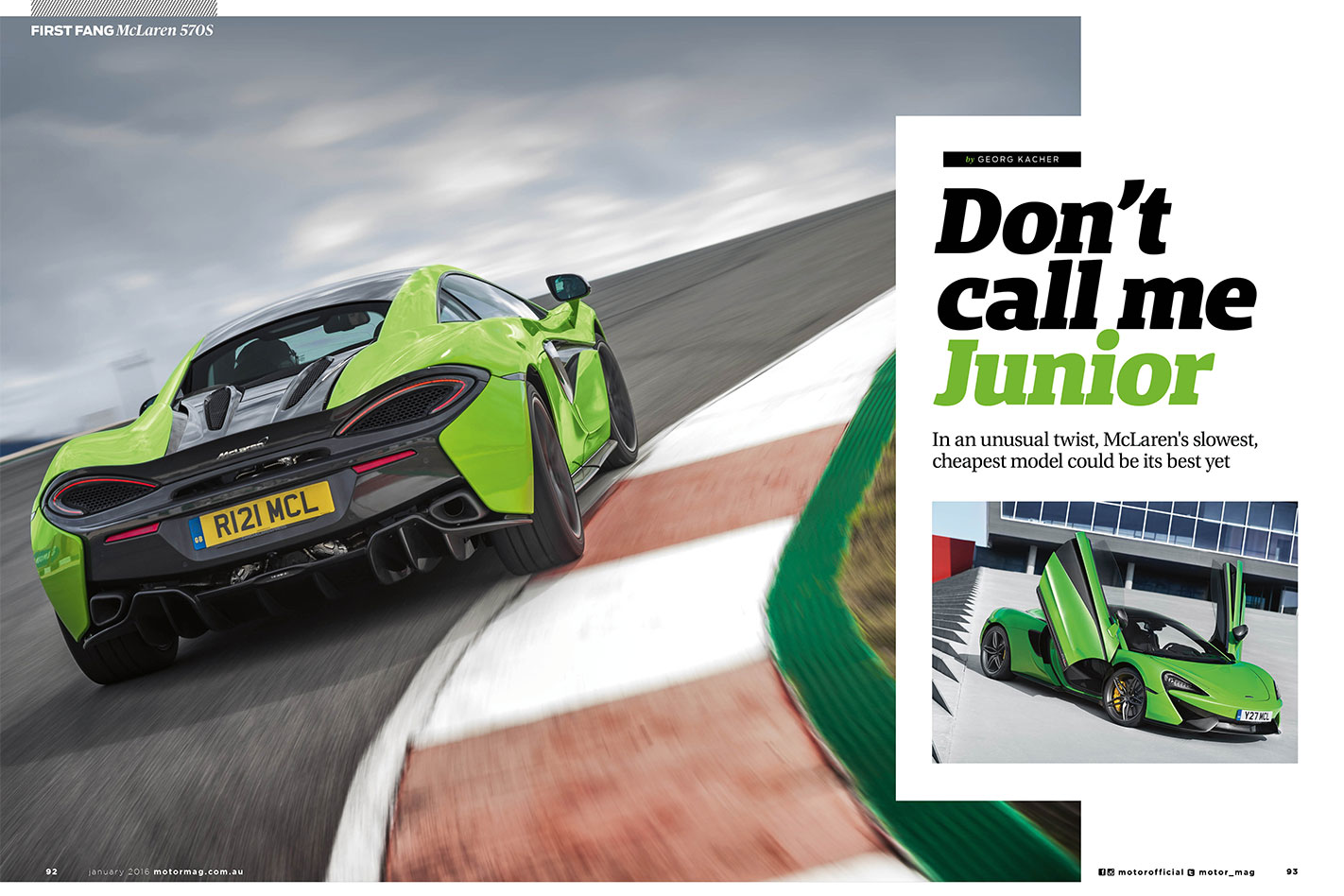
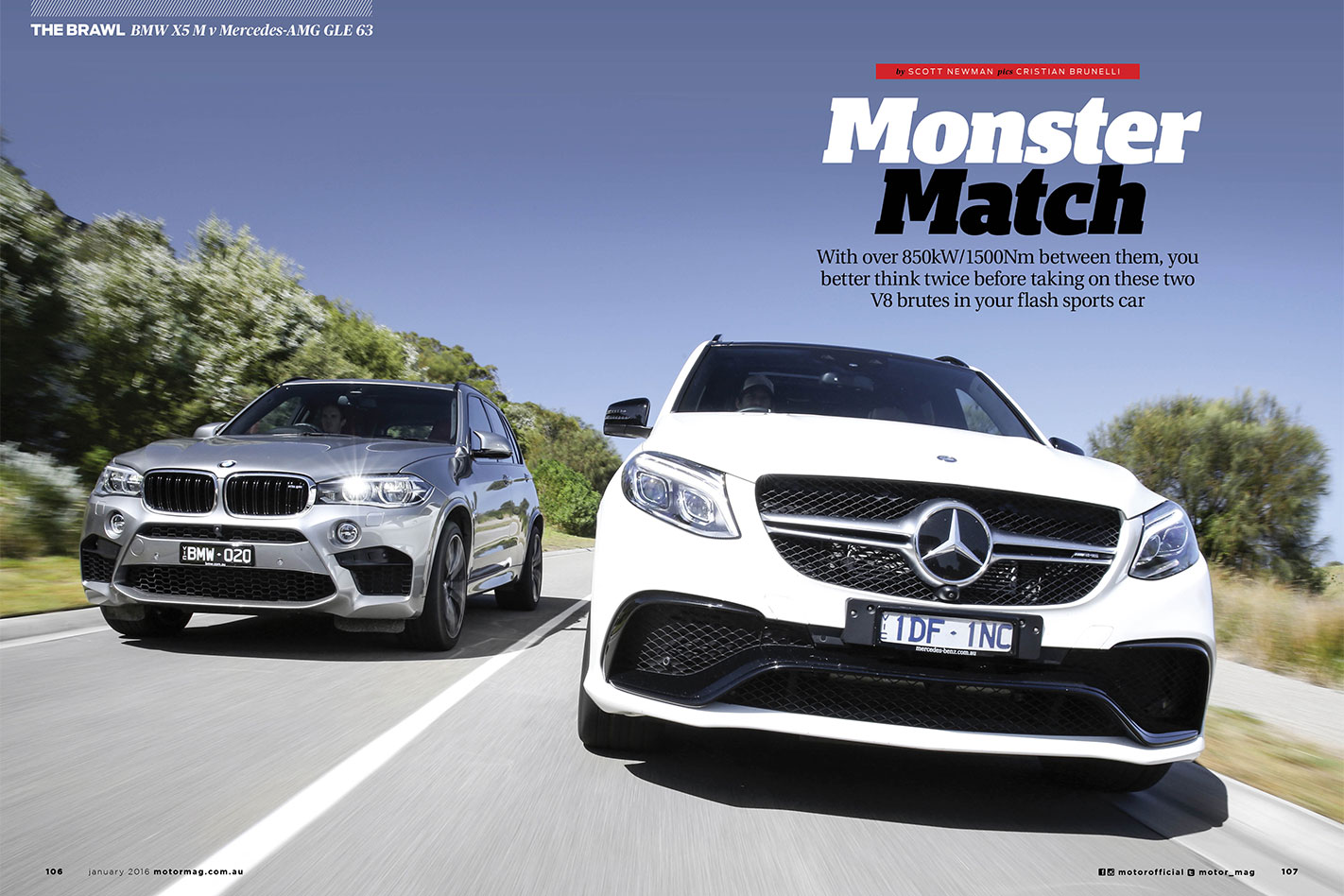
It may have only just ticked over into December, but thanks to the quirks of publishing welcome to the January 2016 issue of MOTOR. To buy your subscription for Motor magazine click here.
Here’s what you can expect from this month’s mag.
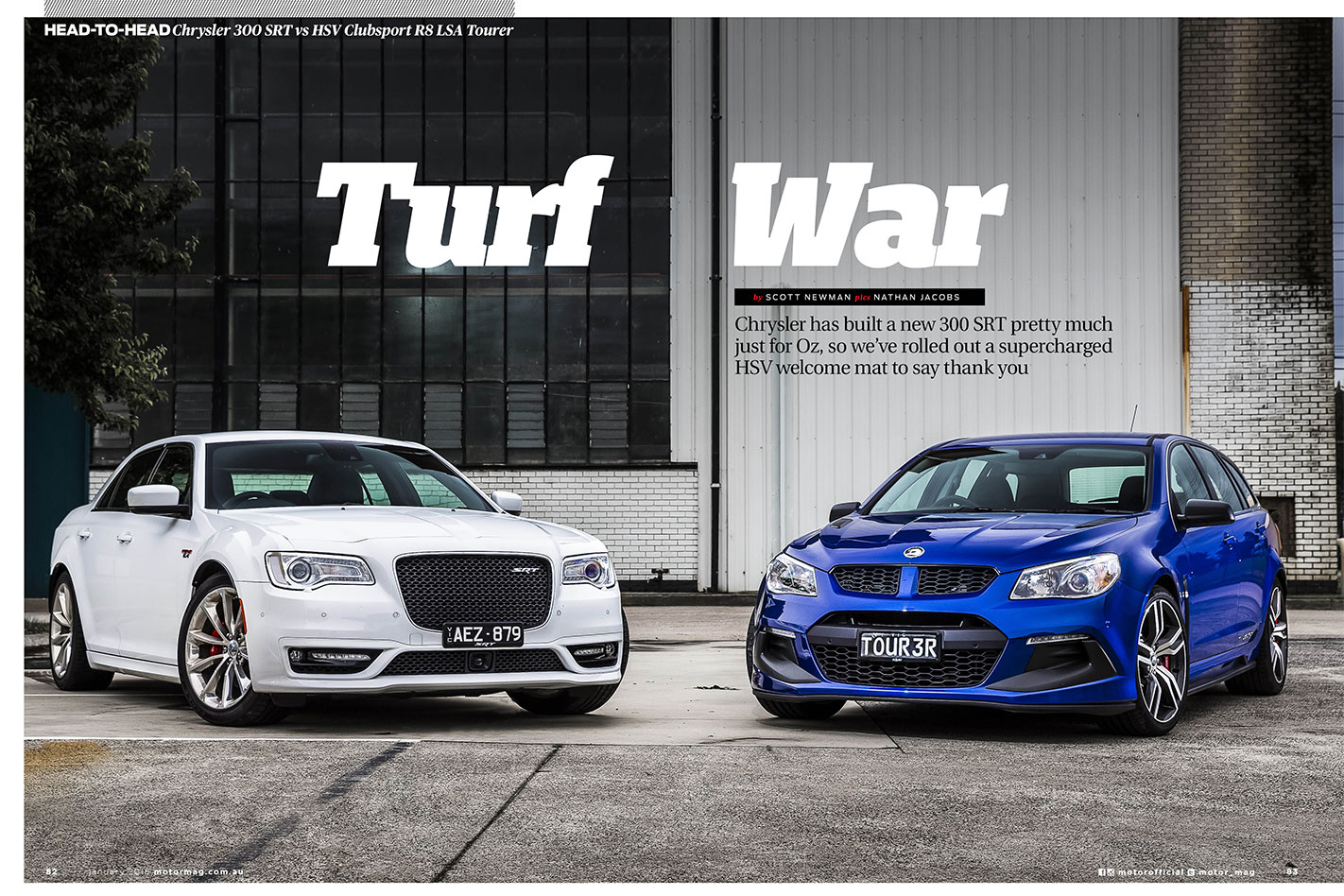
Australia is one of only two markets to receive Chrysler’s updated 300 SRT. What better way to welcome it than a match-up with a 400kW HSV station wagon? Some pretty impressive numbers on the strip from these two.