
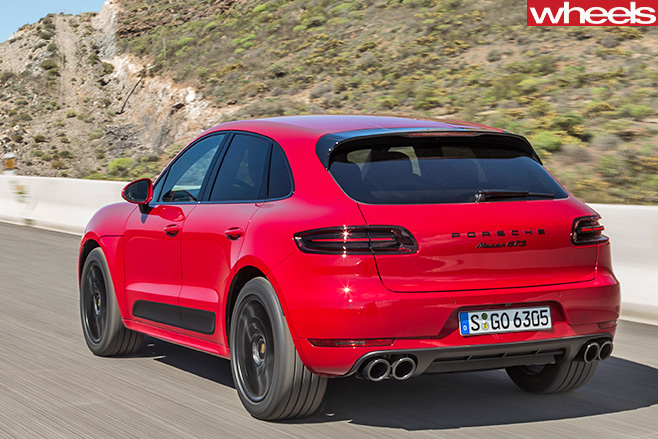
The 2016 Porsche Macan GTS will slide into the German brand’s medium SUV line-up between S and Turbo. It’s the sportiest Macan of all, according to Porsche.
WHAT IS IT?
Medium-size, five-seat, high-performance SUV manufactured in Germany and based on the same Volkswagen Group MLB component matrix as the Q5 and other larger Audi models.
WHY WE’RE TESTING IT
Porsche recently introduced the Macan GTS to world media alongside the updated 911 Carrera and Carrera S, but its Australian intro isn’t until April 2016.
MAIN RIVALS
The Macan GTS is priced like one-size-larger SUVs from other A-grade German brands. Mercedes-Benz GLE400, with its feisty and refined twin-turbo 3.0-litre V6 is the closest match. Same-size quasi competitors such as the Audi SQ5 and Volvo XC60 T6 are less powerful and less costly.
THE WHEELS VERDICT
While fearsomely fast on the right (perfectly surfaced) road, the Macan GTS lacks the ride comfort appropriate in an SUV and is costly for its size.
PLUS: Smooth road grip, handling; thrusty twin-turbo V6; front seats; attractive exterior MINUS: Rough road ride; price to size relationship; expensive (often desirable) options
THE WHEELS REVIEW
THE sporty SUV is where the immutable laws of Newtonian physics collide head-on with a car maker’s understandable desire to profit from satisfying the misguided desires of an ever-swelling cohort of customers. It’s self-evident that height and heaviness are serious impediments to the achievement of handling agility and accelerative ability. Still, some companies do make a better job than others of taking clumsy SUV material and turning it into something almost elegantly athletic. Which brings us to the Macan GTS…
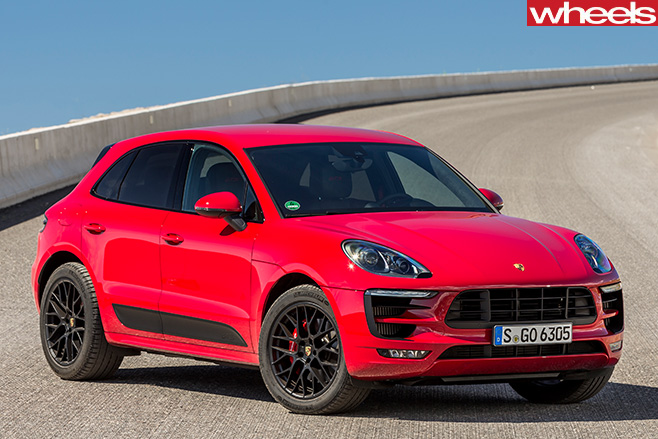
This latest addition to Porsche’s medium-size SUV line-up, due to reach Australia next April wearing a $109,800 price-tag, can be eye-wideningly rapid. One of the exercises on the program at the international launch is chasing a well-driven 911 pace car up and down a snaky and silky smooth 4.2km stretch of blacktop on the island of Tenerife.
As well as giving us the chance to hear the over-run cackle and pop of the optional sports exhaust of the new Carrera S ahead, the experience confirms Porsche’s claim that the GTS is the sportiest Macan of them all. It corners without too much roll or any hint of skittishness, the broad tyres on its dark-painted 19-inch wheels deliver ample grip, the steering is swift and accurate, and the brakes are strong.
The GTS is rapid, even though it doesn’t have the power to match the Turbo with its 294kW twin-turbo 3.6-litre V6. Instead, the GTS has a 265kW version of the twin-turbo 3.0-litre V6 from the Porsche Macan S, teamed with the seven-speed dual-clutch transmission and all-wheel-drive hardware used in all Macan models. The GTS engine’s small increase in boost yields a modest 15kW increase.
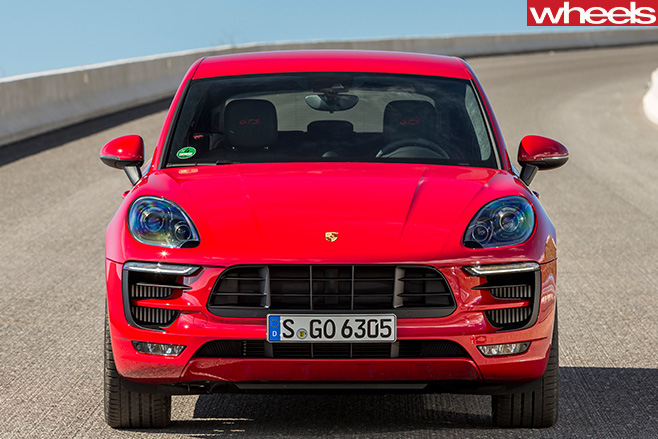
Porsche concentrated more on boosting the GTS’s curve-carving credentials. Its suspension is 15mm lower and the setting of its standard adaptive damping system is sportier.
While effective on a flawless road surface, the suspension of the Macan GTS isn’t happy elsewhere. The PASM – Porsche Active Suspension Management – system has three basic settings, none of them right for roughness. ‘Comfort’ is busy on small irregularities, but exerts inadequate control of the body motions caused by heaves and humps. ‘Sport’ fails to completely quell this floatiness, while increasing jiggliness. ‘Sport Plus’ sorts the handling, but makes the ride annoyingly brittle. In a five-seat passenger-carrier such as a Macan, such a range of choice is difficult to forgive.
Speaking of choice, wouldn’t it be smarter to pick something with attributes and abilities similar to the Macan GTS, but without its handicaps of heft and height? The lower, much lighter and sportily entertaining new Volkswagen Golf R wagon, for example, has the same number of seats, equivalent cargo space, all-wheel-drive and similar performance… and is, in round figures, $50,000 less costly.
SPECS
Model: Porsche Macan GTS Engine: 2997cc V6 (90°), dohc, 24v, twin turbos Max power: 265kW at 6000rpm Max torque: 500Nm at 1650 to 4000rpm Transmission: 7-speed dual-clutch Kerb weight: 1895kg 0-100km/h: 5.2sec (claimed) Fuel economy: 9.2L/100km (European combined cycle) Price: $109,800 On sale: April 2016
A REPAIR agreed to yesterday in Europe for polluting Volkswagen diesels should quell fears that Australian cars will lose value, the head of VW Group in Australia has said.
His comments came after Volkswagen in Germany said it had agreed with European regulators on fixes for the offending type EA189 diesel engines, a response to the multi-billion dollar emissions scandal that engulfed the brand in September.
The agreed modifications would meet relevant emissions standards, Volkswagen AG said in a statement released yesterday, and were expected to maintain the original vehicles’ performance and fuel efficiency.
But the statement cautioned that “as all model variants first have to be measured, the achievement of these targets cannot yet be finally confirmed”.
The agreed repair did not apply to the US market, where the scandal was exposed. The US has stricter emissions regulations than Europe and Australia.
Volkswagen Group has admitted that up to 11 million vehicles it built with EA189 diesel ngines since 2008 were delivered with engine control software that cheated emissions tests.
Volkswagen said a reprogramming of the engine control computer would be the only change required for the 2.0-litre version of the engine, which was fitted to most of the 99,678 affected cars sold in Australia (78,445 Volkswagens, 16,085 Audis and 5148 Skodas).
A recall program would not begin installing the update in Europe until January 2016 at the earliest, and could take a year or more to complete.
Affected cars include the Polo, Golf, Jetta, Eos, Passat, Passat CC, Caddy, Amarok and Tiguan as well as the Audi A1, A3, A4, A5, A6, TT, Q3 and Q5, and Skoda Yeti, Octavia and Superb. Most are not current models, and VW has withdrawn the remainder from sale pending rectification.
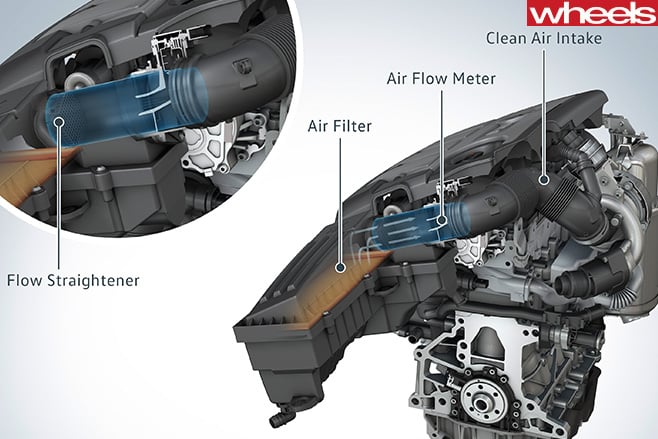
Volkswagen has released a video (top) explaining how the device will be fitted.
“Following an intensive examination, these measures have been ratified by the Federal Motor Transport Authority,” the Volkswagen AG statement said.
“Thanks to advances in engine development and improved simulation of currents inside complex air intake systems, in combination with software optimisation geared towards this, it has been possible to produce a relatively simple and customer-friendly measure.”
Recently appointed VW Group Australia managing director Michael Bartsch told Wheels he was awaiting exact timing on when the Australian cars could be updated, but he believed fears that they would run less well afterwards – and therefore be worth less money – could be put to rest.
He said he was confident all cars would be fixed and customers would not be disadvantaged.
“The fix is nothing intrusive … the fix is quite simple; the fix is completely out of proportion with what the inappropriate behaviour is,” Bartsch said.
“This whole discussion on loss suffered from residual value drop can be put to rest.
“When these fixes are done there is simply no reason to believe there is any consequent impact that should mid-term or post-fix adversely affect the residual values of these cars.”
Bartsch said he was awaiting confirmation from Germany on when the Australian fixes could be rolled out.
“As soon as we know what we have in capacities, where the cars are and how many VAS [diagnostics] machines – the machines that do the reflashing – then we’ll be able to work out a timeline,” he said.
And that’s only for cars fitted with the 2.0-litre engine. “The 1.6 will be later in the year [2016],” he said.
Bartsch said Volkswagen Australia was “absolutely” committed to diesel, which he said still brought consumer advantages.
However he acknowledged work needed to be done – particularly on Volkswagen diesels – to rebuild trust.
He said customers were the priority in the lengthy process of updating cars and rebuilding trust in the brand.
“We’ll be tailoring a program that is suitable for the Australian market and doesn’t take our customers for granted,” he said.
Also yesterday, Volkswagen Australia was warned by a Federal Court judge to act sensibly at it faced class actions brought on behalf of disgruntled owners of VW diesels.
Lawyers for VW Australia reportedly had declined to accept court documents on behalf of the parent company in Germany, which had also been named in class action proceedings brought by law firm Maurice Blackburn.
At a hearing in Sydney, Justice Lindsay Foster was reported as saying the decision exposed VW to serious cost orders, and the company had to participate in a sensible way.
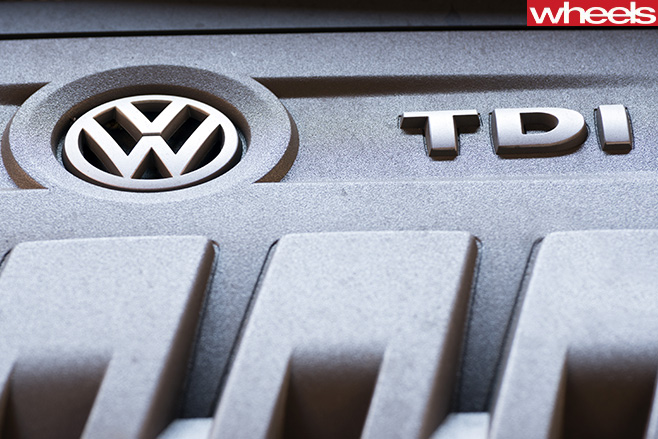
Translating the sledgehammer performance of the modern TDi engine to the road has proven difficult for manufacturers.
Not that making bucket-loads of power and torque is the issue with high performance diesels, but rather doing so and remaining within ever-tightening emissions standards is. This may see the diesel engine’s current flame burn brightly, but soon fizzle out in commercial use over the next decade.
Diesel engines are already being pushed hard and stuffed with high-end technology to counter the inherent flexibility of petrol competitors. In the past decade we have seen high pressure (30,000psi plus) Common Rail Injection, variable geometry turbochargers, and complex exhaust emission control systems to mask the lack of power at higher rpm that modern performance drivers have become used to.
The problem with the current state of diesel engineering is it’s not only extremely costly to integrate into mass production, it also adds weight to the overall powertrain (heavier and stronger engine components need to be used). It also requires specialised technicians, which in turn leads to general servicing costs being higher than for a similarly performing petrol equivalent.
A final potential nail in the performance diesel coffin is that the allowable emissions levels of NOx (Oxides of Nitrogen) and CO2 (Carbon Dioxide) – which diesels produce far more of than petrols – are being reduced with upcoming Euro 6.2+ emission standards.
With ever more fuel efficient petrol-engined hybrids near-matching the fuel economy of diesels, and lacking nothing in the way of torque and power, the stage is set for passenger car performance diesels to slowly fade into oblivion, possibly as early as 2020.
Performance diesel advocates, though, can point to a future for these engines that, although somewhat diminished, is still bright. Money is being spent on tailpipe emission control systems (such as the French PSA-designed Selective Catalyst Reduction) that can reduce NOx by up to 90 per cent and CO2 by 5 per cent.
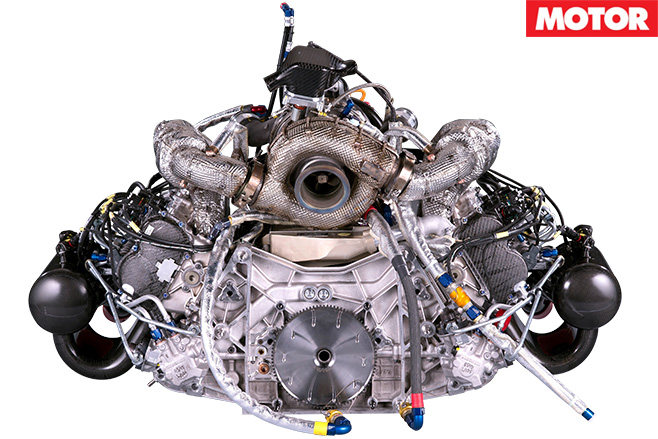
1. Turbo diesel Audi’s 3.7-litre Mono Turbo diesel engine is small, light, and packaged neatly alongside the hybrid drive electric assist system. Despite being 100cc smaller than a Nissan GT-R engine, the Audi’s engine produces 375kW/850Nm when tuned in endurance running mode. Try getting 24 hours flat out from a petrol burning GT-R producing those numbers!
2. Energy return Turbocharger boost runs to 2.8 bar (down from a previous rule-imposed 3.0 bar). The inlet size of the turbocharger is restricted down to a tiny 45.8mm and the fuel capacity is set at 58 litres. Without these artificial restrictions in place the compact diesel could generate upwards of 500kW.
3. Aero package The R18 platform, even without the superb powertrain, is a race-winner on its own. The challenge for engineers was to incorporate increased cooling airflow through the car for the hybrid system whilst reducing overall aerodynamic drag. This challenge was met very effectively.
4. Smarty Pants The processing and computing power in the R18 e-tron contains possibly the most sophisticated and advanced control algorithms of any race car in existence. So much interfacing and component networking exists to ensure a seamless operation that it simply boggles the mind.
5. Energy return Bosch helped integrate the hybrid Motor Generator Unit into the front axle of the R18 e-tron to provide 500kJ of energy between braking phases. This means the e-tron can power each front wheel independently with plenty of electrical force when exiting corners at over 120km/h.
6. Carbon Cogs All LMP1 gearboxes are pretty trick pieces of kit but the R18 e-tron takes this a level further by featuring a complete carbonfibre housing, This makes it extremely light and strong, but best not to ask about the cost…
TDi: The Good It’s possible to power heavy cars effectively with rather small-displacement TDi engines. That’s why diesel engine sizes of 2.5-3.5 litres are common.
Fuel efficiency is also better. Similarly performing petrol engines will use about 30-40% more fuel. Some of the current crop can easily run 1000km between fill-ups.
Traditionally diesel engines have had greater durability than petrol engines due to higher-rated engine internals to cope with large boost and torque loads.
Also, high performance turbo diesels run cooler than petrol engines. And diesel fuel doesn’t vapour lock like petrol.
TDi: The Bad Emission control systems are hurting the reputation of diesel engines, and with the complexity of emission control systems and high strength manufacturing, the costs will rise.
In a market where vehicles are steadily becoming cheaper, the diesel engine is becoming an increasingly expensive option.
Service costs are also higher on a diesel engine than a comparable petrol engine. Diesel engines normally hold more engine oil, use a higher grade long life oil, and require ongoing maintenance of their emission systems which can see service bills skyrocket long term.
Last but not least, diesel engines sound like rubbish.
When I was a 17 year-old finishing my final year of school, I was not privy to the sublime disaster that is Schoolies Week. I certainly didn’t pack up for the Gold Coast like a lot of my mates and fellow students, and while I was forced to live vicariously through their tales of late night (mis)adventures and putrid morning regrets at the time, I wasn’t too fussed to miss it by the time they all crawled home again.
Flip forward 20-odd years, and the kids of my school buddies are packing their own trunks, both luggage and vehicular, and heading North for the annual party week(s). The horrified expressions on the faces of the parents who have been there says a lot about Karma.
But without slapping on a chastity belt, barring the windows and padlocking every door, the trip is inevitable for most. So the best one can do, be it ex-student or parent, is to plan ahead, and make this rite of passage as smooth as possible.
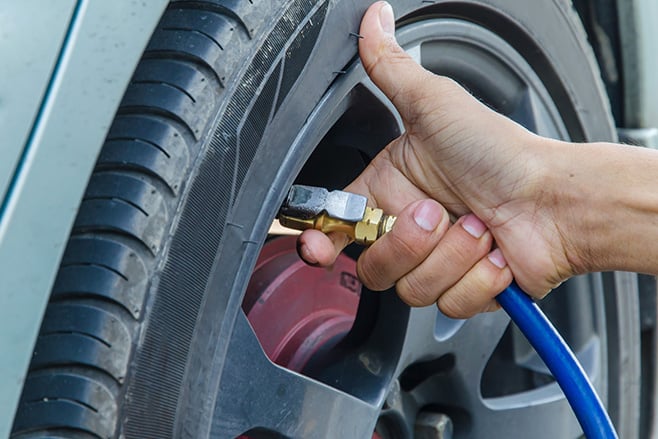
First; the car. The Five Car Care Commandments should be checked at a minimum to ensure mechanical integrity. Tyre tread, alignment and pressures, oil, fluids, battery water and other basic checks should be checked. Plus, ensuring the log book is in the glove box along with any emergency numbers that may be required, such as help lines for the vehicle, or roadside assistance cards and numbers.
Motoring club roadside assistance schemes (such as NRMA or RACQ) still offer basic assistance cover for interstate-travelling members, though the level of care depends on your organisation, so check out the coverage offered your state’s association before the departure date. And hot tip: If you’re a member, make sure payments are up to date.
Road rules can also differ from state to state, so ensure the drivers are aware of them. For example, passenger restrictions come into effect between 11pm and 5am for P1 drivers in Queensland. Check out the Government website for L and P plate details before the car and crew leaves.
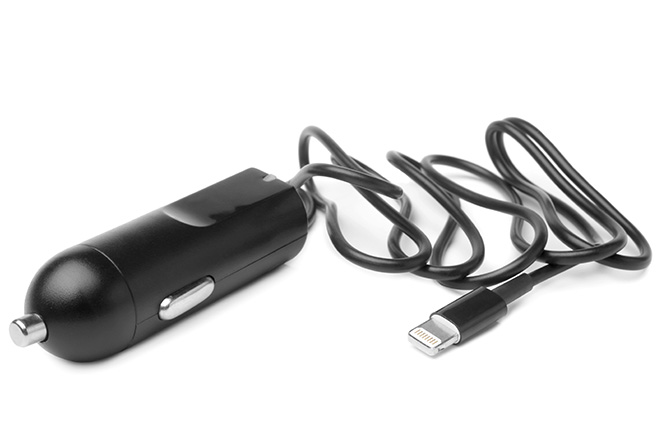
Another great travel tip for emergencies is kitting the car out with its own power cord for mobiles, or even buying a cheapie from the shops or post office for the glove box (though you have to check its charge from time to time). As power cords for phones typically get lost or left behind when travelling, this ensures a phone call in an emergency can always be made.
It comes in handy to make sure you have the numbers of the guests you teen is travelling with, and ensure there are enough people with up-to-date licences to share the driving load. It’s no good to run a big road trip interstate with one young driver, despite how invincible they feel – traffic, excitement, time and tiredness all rolled up into one comes with its hazards.
If the kids can’t share the driving, a plan with stopovers at ‘cool’ locations, cafes, and even an overnighter could be hinted at; even if they don’t want to make strict plans, an enticing lookout, a sweet café or a fun stopover may be too tempting a proposition to miss, and it ensures the drivers stop/revive/survive while enjoying the road trip.
And the best reminder is this: Schoolies and a big road trip after Year 12 is a real beginning of independence. And the main lifeline of said independencies is the ability to travel, or drive. The last thing anyone wants is to lose that freedom, through a loss of licence, a banged-up car, or worse. Ultimately, parents will be the nags we once accused our own parents of being, but drum that fact home. A reminder that they may be stuck at home with no wheels and no party should they cross a line should be enough to make any eighteen-year-old drive very, very carefully!
CHECKLIST
- Get the details of everyone your child is travelling with.
- Find out what route they’re driving to their destination.
- Set some ground rules and talk to your teen about drinking, driving, and the law.
- There is a Policelink App where you child can report any crimes or incidents that aren’t an emergency.
- Check insurance.
- Ensure car maintenance is done prior to leaving.
- Familiarise yourself on road rules in the states your child will be travelling across and ensure they are also educated in these.
Ford Performance has released a brilliant eight-part Focus RS development series.
It isn’t all promotional guff – the team catalogues the issues they had along the way, and how they were late to resolving some of them even as the production model was unveiled at motor shows around the world. Ken Block also gets his slide on.
Episode 1 takes us to Ford’s proving ground, not in the home of RS in Europe, but rather Detroit, Michigan. Group vice president and chief technical officer Raj Nair sits beside rally icon Ken Block while belting a camouflaged early prototype Focus RS.These blokes ‘get’ the history of the car – Nair had an Escort RS Cosworth company car that he refused to give back, while Block politely requested Ford bring him a 2009 Focus RS to California, despite it not being sold in the US. The latest, all-wheel drive Focus RS will be the first to be sold worldwide.
Episode 2 shifts to Cologne, Germany – the home of Ford of Europe development – for tutelage on Focus RS design and safety.Exterior design supervisor Ernesto Rupar comments about the pulled-out front-end of the car, which looks like it says “I need air to breathe”. The upper two grille slots feed air to the radiator, while the lower part delivers the same to the intercooler.The foglight recesses channel air to the front brakes, while the splitter “counterbalances” downforce with the large rear spoiler and rear diffuser. Meanwhile 28 Focus RS prototypes are crashed in the same facility.
Episode 3 jumps back over the Atlantic to Ford’s test facility at Phoenix, Arizona. First, though, European and US engineers team up for a 1000-mile desert road drive. Notes include suspension choppiness that is off the chart, comments that it should be sportier and the brakes could be better. Adding all-wheel drive to the RS “was the last little bit” engineers have been waiting for compared with previous generations.
Episode 4 is captured at Ford’s tricky “top secret” test racetrack in Lommel, Belgium. Vehicle dynamics specialist David Put wants to make the all-wheel drive system feel rear-driven on the throttle. When Ken Block takes to the wheel, he’s fighting the suspension and differentials, announcing that the rear snaps under brakes and the front end “lacks confidence”. Put concurs. More work to be done, then … following some hoonigan shenanigans first.
Episode 5 reveals that when the Focus RS was first revealed at the Geneva motor show, Ford was having some serious issues behind the scenes. The outputs of the 2.3-litre turbo four-cylinder weren’t revealed because they weren’t finalised – the engine was giving engineers “sleepless nights”. Likewise the chassis wasn’t where the company wanted it, forcing a delay to the initial on-sale promise to dealers. On ice in Sweden the Focus RS is flanked by more competitor cars – WRX STi, Evo X, Golf R, M135i – as engineers sort through the issues.
Episode 6 approaches the Focus RS debut in the US at the New York motor show. Just before it powertrain engineers are working at the Dunton technical centre in England to find out why some engines are “letting go” and to secure the 440Nm and sub-5.0sec 0-100km/h targets to then reveal to the media and public. For final sign-off, 53 verification prototypes then run down the line at Saarlouis, Germany, where all Focus RS models will be made for the world.
Episode 7 comes at a time when Ken Block is fanging the Focus RS up the famous hillclimb of the Goodwood festival of speed. However, 100 miles away in Lommel, Belgium, the final prototype set for sign-off doesn’t entirely impress Raj Nair. He loves the drive modes – there is plenty of drifting in this video – but finds the steering “spongy off centre” in Normal mode, some brake modulation issues and a sound that’s too soft. No final sign-off, then; he sends the team back to work.
Episode 8 heralds final sign-off round two – six weeks later this time in Detroit, Michigan. If there’s no sign-off today there will be delays to production and associated financial implications. “I think it’s ready,” announces Nair, who got his ‘pops and burbles’ and commented that this car will make bad drivers look good. “Let’s go and build some cars”.
1. RANGE ROVER EVOQUE CONVERTIBLE
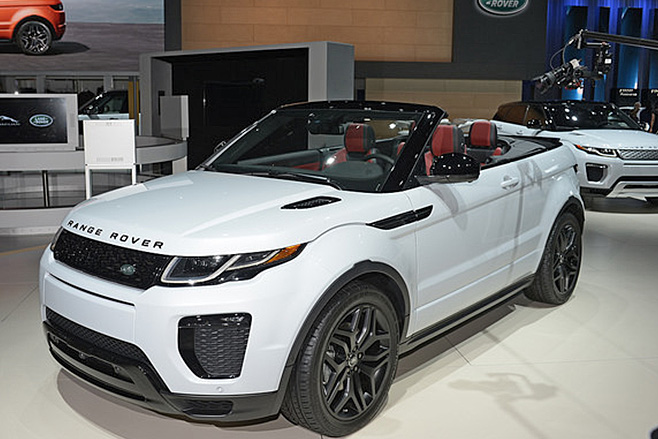
The Evoque Convertible may ludicrous but there’s no denying that once you’re inside the Evoque it’s a fun drive, and I think that hunkered form looks better without a roof. The launch video of the Evoque smashing through the snow with the top down is wildly impractical but also kind of fun. It’s roomy, luxurious and purposeful – if carving through the snow topless is your thing.
2. ALFA ROMEO GIULIA QUADRIFOGLIO
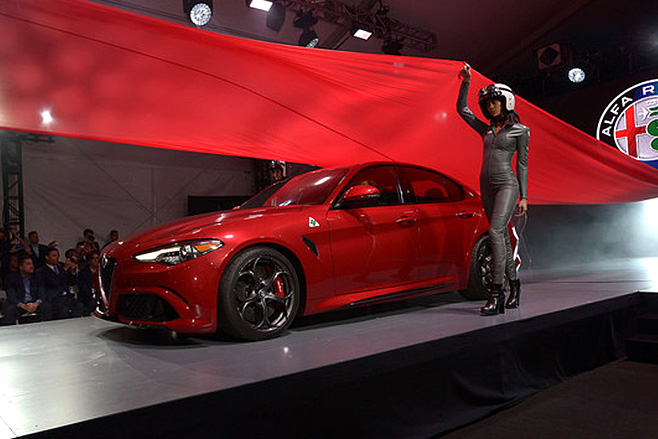
This was really the year for Italian manufacturers. Alfa had an amazing high-fashion reveal and celebrated the brand’s heritage with a show of magnificent rare vehicles. The Giulia is pretty but saucy with a big booty and quad exhaust. The front of the car has an interesting Roman hook at certain angles, the body is nicely detailed and obviously Alfa leather is always a win. The Giulia Quadrifoglio is also really fast.
3. VOLVO’S CONCEPT 26 CONSOLE PROJECT
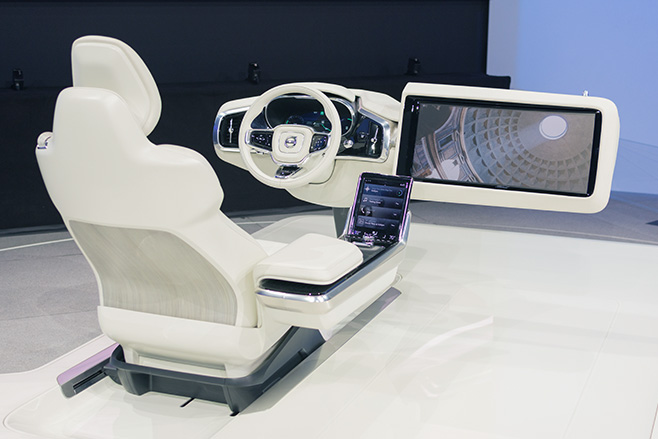
It’s not a car, but it is the future of car travel. Tisha Johnson and her team explore a cockpit that makes driving redundant. According to Johnson, the Volvo customer in China uses a professional driver and travels in the rear seat, so the space and comfort traditionally found in the front seats must transfer to the second row. Concept 26 seats have an airline-style recline and the “dash” rotates to become a usable screen, so the operator gets an about 26 minutes of useful time while in the car.
4. FIAT 124 SPIDER
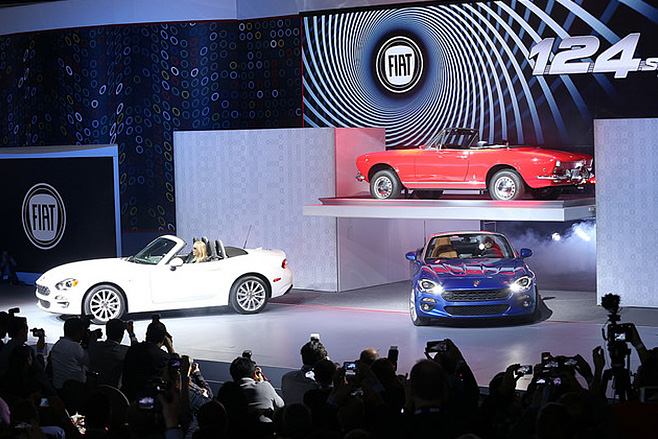
The original 1960s convertible was a beautiful thing so all eyes were on this modern revival. I like the European squareness of the 2017 124. It’s a completely different beast to its natural competitor (and an all-time fave of mine) the 2016 Mazda MX-5. They are both two-seaters but the MX-5 is honed and refined down to the bare essentials while the Fiat is, well, Italian. You know that whole Italian thing about style and performance over everything else? The Fiat is 96kg heavier than the 1.5 litre MX-5 and features extensive leather, mats and all the accouterments that Mazda engineers despise. That said, they are both built for agile driving.
5. KIA “PACWEST ADVENTURE” SORENTO
What’s not to love about a jacked up, painted out, studded wheel off-roader with a glitter snorkel? Kia has taken the Sorento to eleven, popping it on a 6-inch lift kit and sorting its stance and its performance with rock tires, custom bumpers and steel skid plates. Worst detail? The disco LED spotlights. Best detail? The green tread pattern on the seats.
After three years since its debut Toyota Australia has announced its 86 will finally be joined by a factory special edition.
Intended to herald in the impending 86 one-make series that begins next May, the Toyota 86 Blackline Edition, as the version will be called, brings with it a select choice of parts from Toyota Racing Developments, the firm’s dedicated motorsport and tuning arm.
However, while the last Toyota and TRD collaboration down under produced rabid supercharged versions of the Aurion and Hilux, the 86 Blackline Edition skips any engine modifications, focusing on visual upgrades instead.
So that means the same old 147kW and 205Nm two litre flat-four punching away under the Blackline Edition’s bonnet.
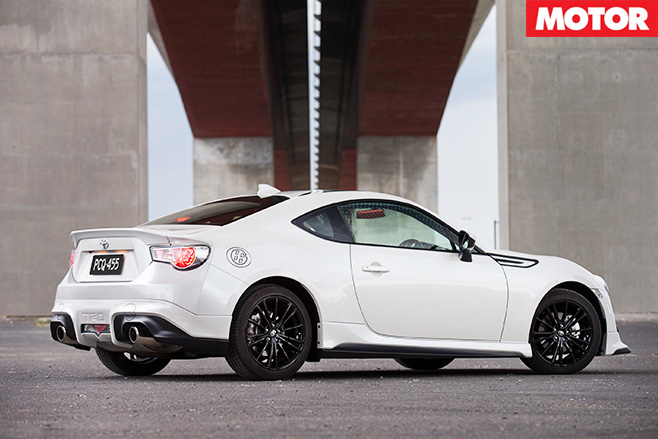
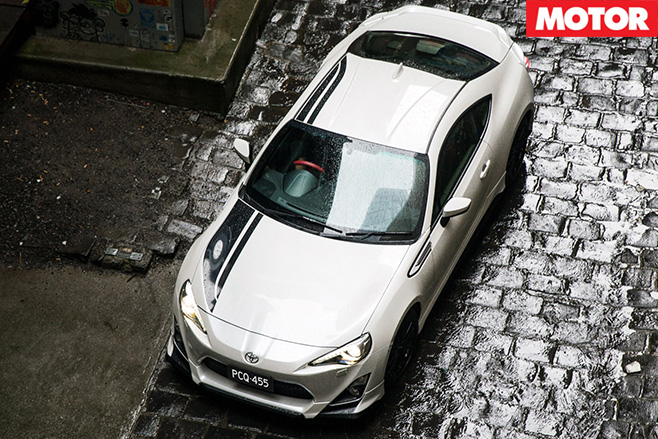
A new three-piece spoiler is also added to the package, its design more subtle and contoured to the 86’s shape, while a large black stripe running from the bonnet’s right hand side up on to the roof inspires the car’s name.
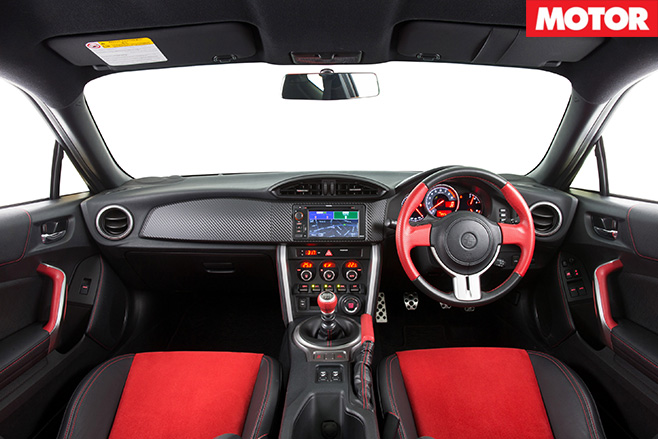
Meanwhile, on the inside, Blackline Editions score lashing of bright red trim on the seat inserts, the grab zones on the steering wheel and doors, and on the gear knob.
All models are licked in a “white liquid” hue, and come with gloss-black 17-inch wheels from the 86 GTS, the variant on which the Blackline Edition was based.
Disappointingly, our first ever special 86 doesn’t feature any chassis tuning as previously reported, but it does offer great value. So if you like the look of it, we suggest you get in quick – Toyota’s offering only 250 manual and 200 automatic Blackline Editions.
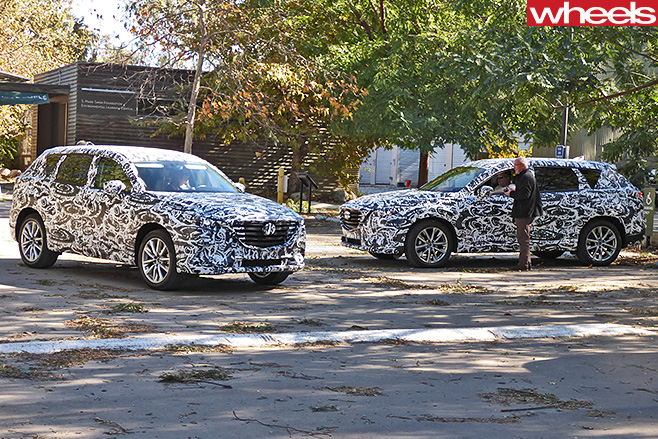
A stint behind the wheel of a heavily disguised Mazda CX-9 suggests there will be much to look forward to from the longer, lighter, and more punchy seven-seater.
WHAT IS IT? An all-new CX-9 that takes Mazda’s latest Kodo design language and drapes it over a seven-seat version of the CX-5’s SkyActiv platform. The current CX-9 pre-dates Mazda’s SkyActiv models that focus on fuel efficiency and dynamics via lightweighting and optimised internal combustion engines.
WHY WE’RE DRIVING IT This is our first taste of the all-new CX-9. The original went on sale in 2007, and while it’s selling well for the brand, it’s significantly older and becoming increasingly dated against the swathes of much fresher SUVs in its class. Its earlier architecture limits things customers expect, such as driver safety assistance.
MAIN RIVALS Toyota Kluger, Hyundai Santa Fe, Kia Sorento, Ford Territory, Holden Captiva 7, Jeep Grand Cherokee, Nissan Pathfinder, Toyota Prado
THE WHEELS VERDICT The CX-9 takes Mazdas already strong platform architecture and teams it with an excellent, frugal and capable new engine. It’s more refined, much more efficient and more convincing in prototype form, with strong detailing, fit and finish. It’s a more opulent, accomplished seven-seater than before.
PLUS: Smarter look, vastly improved efficiency yet superior drivability; more safety gear and rear passenger space, excellent cabin refinement MINUS: Sorry kids, no third-row air-con vents; boot packaging compromise by lower roof; no diesel engine option will limit appeal
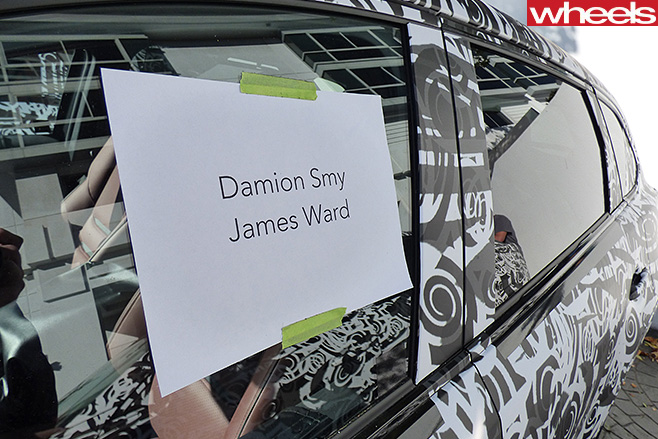
The CX-9 arrives on the crest of a Mazda success wave, and is the last of its range to benefit from its ‘SkyActiv’ approach to building cars. That means it rides on the same platform as the CX-5, which is also used on the Mazda 6 and 3 – all vehicles praised for their dynamics and fuel efficiency. With a focus on weight saving, the 9 is now around 130kg lighter, despite the fact that there’s more interior space and the similarly-sized boot. The 55mm increase in wheelbase creates more rear seat room, with loads of head- and leg-room in the second row. The third row – while lacking air-con vents – is large enough for children and the occasional short trip for rowdy adults in need of removal from the local RSL.
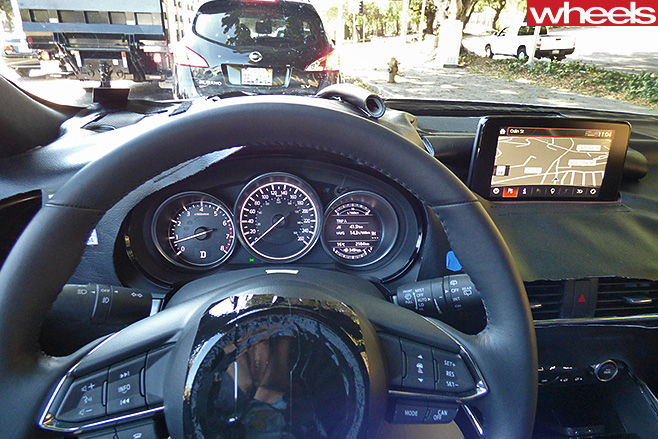
It also hosts the completely new 2.5-litre turbo-petrol four-cylinder that replaces the 3.7-litre V6. While Mazda has taken an alternate route to most other makers with its four-cylinder engines by avoiding forced induction, the monster torque of the new CX-9 – 420Nm at 2000 rpm – couldn’t be achieved as efficiently with a SkyActiv V6 as it could with a turbo four, all while hitting the fuel efficiency improvement target its engineers were aiming for. That torque alone compares to the V6’s 367Nm at a lofty 4250rpm, even if its 169kW trails the larger engine’s 204kW.
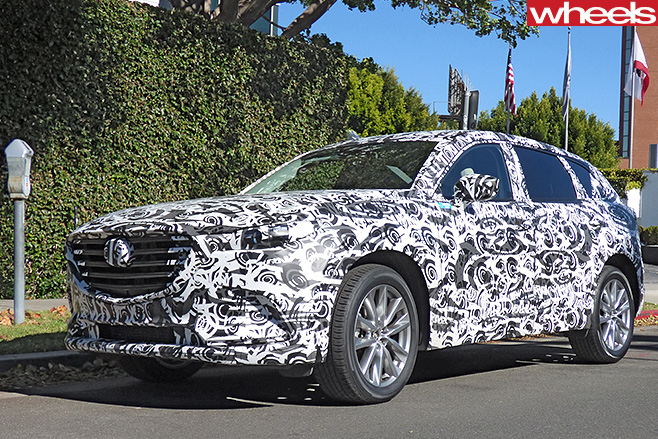
On the road, that makes the stickered-up, all-wheel-drive prototype CX-9 smooth, with an audible engine note that never turns coarse, and smooth, strong power delivery. The six-speed automatic behaved well on our short test drive, and the brakes were strong, not bitey, with good pedal feel. The steering, with its large leather-wrap steering wheel, has good weighting and feel from its commanding position, could be a little sharper in its responses. The ride on the Falken-tyre shod 20-inch alloys is comfortable, but can be crashy over larger bumps. The handling, meanwhile, is predictable, with great roadholding and poise.
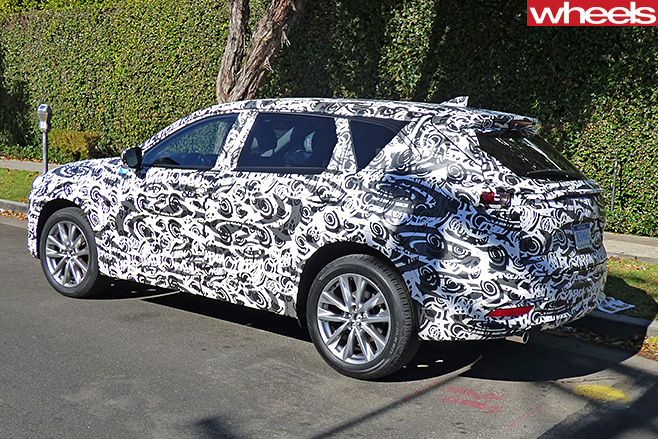
Mazda Australia is yet to confirm spec levels and pricing for the CX-9, but the range is likely to reflect the current three-model Classic, Luxury and Grand Touring offering, although there is a possibility of a higher-spec flagship. Pricing isn’t expected to deviate from the current car’s $43k kick-off when it lands here next year. Regardless, the CX-9 already has the polish of its stablemates, and that’s ominous for its competitors.
BOOST APPEAL MAZDA says that it will sell 50,000 CX-9s annually, not many when it has an engine developed especially for it. Surely the 2.5-litre turbo will make an appearance in other models, as it fits in the 3, 6 and CX-5. The latter is the most likely, as the engine already runs 1.2 bar of boost and has limited power growth potential, making it not so good for a hot hatch or performance sedan. It also develops its 420Nm at 2000rpm, but that peak peters off earlier than the old V6, which plateaued at 4250rpm, as engineers found that in the real world, CX-9 drivers rarely breach 4000rpm, and only occasionally tap 3000rpm.
SPECS Model: 2016 Mazda CX-9 AWD Engine: 2488cc 4cyl, dohc, 16v, turbo Max power: 169kW @ 5000rpm Max torque: 420Nm @ 2000rpm Transmission: 6-speed automatic, all-wheel drive Weight: 1940kg (est) 0-100km/h: 8.3sec (est) Fuel economy: 8.9L/100km (est) Price: $48,000 (est) On sale: July 2016
What stands out?
The Audi A3 wraps a stunning interior in a classy, understated exterior and spoils buyers for choice with sedan and Sportback bodies, multiple engine options and an array of luxury and safety features. The A3 is smooth yet enjoyable to drive on a flowing country road, and the S3 is a rocket. This review covers A3s on sale prior to the upgrade of December 2016.
What might bug me?
How much you paid for your A3, after you learn how much it has in common with its less costly Volkswagen sibling the Golf.Driving under 80km/h on the space-saver spare until you can fix your full-sized flat tyre.Stop-start driving with the automatic transmission: the A3’s DSG auto gearbox is great once you’re moving, but many drivers do not find it as smooth and easy in town as a conventional or CVT auto.
What body styles are there?
Four-door sedan and a five-door hatchback that Audi calls a Sportback. (An A3 Cabriolet with a folding roof is also available, but is not covered in this review. The very high performance Audi RS3 is also not covered.)The Audi A3 drives either its front wheels or all four wheels, depending on the version. The Audi S3 drives all four wheels. Both are classed as small cars, higher priced.
What features do all versions have?
Cruise control, dual-zone air-conditioning (which lets you set different temperatures for each side of the cabin), and leather seat trim.A reversing camera, and front and rear parking sensors (from about November 2015).Windscreen wipers that operate automatically when it rains, and headlights that turn on automatically when it’s getting dark.A tyre pressure monitor, which warns you if a tyre has lost air (this can give you extra time to get a slow puncture seen to).A CD/radio infotainment system with a colour touchscreen interface (5.8 inches on all but the e-tron and S3) that rises electrically from the top of the dashboard. Bluetooth hands-free phone connectivity for audio streaming and phone calls.A leather-wrapped steering wheel that has buttons for controlling the audio system and Bluetooth. Paddle gear shifters on the steering column (in auto versions). Rear parking sensors.Aluminium alloy wheels, which are usually lighter and better looking than steel wheels, and a space-saver steel spare wheel.Seven airbags: two directly in front of the driver and front passenger; one alongside each front occupant to protect the upper body; a curtain airbag on each side to protect the heads of front and rear occupants; and a knee protection airbag for the driver.Electronic stability control, which can help the driver to control a skidding car. All new cars must have this feature.Available on any A3 or S3 is an Assistance pack that adds active safety features. It gives you adaptive cruise control, which maintains a safe distance from vehicles ahead, and automatic emergency braking which works at low and high speeds. (The auto brake system detects obstacles ahead, warns you if a collision seems likely, and applies the brakes if a collision is imminent.) A lane departure warning alerts you if you stray from your lane, and a high beam assistant automatically dips the headlights for oncoming cars. Finally, a blind spot monitor warns of a vehicle alongside when changing lanes. The pack costs about $1800.Every Audi A3 and S3 carries a three-year, unlimited kilometre warranty.
Which engine uses least fuel, and why wouldn’t I choose it?
The 1.4-litre petrol-electric hybrid is the most fuel efficient engine offered in an A3, consuming a mere 1.6 litres/100km on the official test (city and country combined). This is an excellent powerplant, providing very good acceleration, a long range between fill-ups, and near-silent battery power around town.One reason not to choose it is that it comes only in the most expensive A3, the Sportback e-tron, which is a plug-in hybrid (you can charge it from a household power socket). Another is that on long trips in the country, where it relies on its petrol engine much more than its battery, fuel use will approach the 5.0 litres/100km of other A3s with this engine.Of the non-hybrid engines, the 1.6-litre turbo-diesel offered in the A3 Sportback 1.6 TDI Attraction is the most economical, using only 3.9 litres/100km on the official test. Nearly as thrifty is the 2.0-litre turbo-diesel available in the more expensive A3 Ambition models.Diesel A3 engines are among the most refined small oil-burners available, and provide power from very low speeds in an effortless manner that the petrol engines can’t match.However, diesel owners need to spend 30 minutes at highway speeds every fortnight to clean out the cars’ particulate filters. So the diesels are not good bets if you will mainly be trundling around town. (The filters reduce the amount of exhaust soot that gets into the air.)Of the petrol engines, the least thirsty are the 1.4-litre turbocharged units powering the other A3 Attraction models. Both use less than 5.0 litres/100km in the official test. (The CoD version is slightly more fuel-efficient: it runs on just two of its four cylinders when it is not doing much work.)However, all engines in A3s and S3s are economical for the performance they offer – even the very powerful 2.0-litre turbo in the S3 uses only 7.0 litres/100km officially.All A3s have a dual-clutch automatic (DSG) gearbox with either six or seven ratios. The S3 offers the option of a DSG auto or a six-speed manual.
What key features do I get if I spend more?
The least costly Audi A3s, the Attraction models, have the equipment in all A3s and either a 1.4 TFSI petrol engine or the 1.6 TDI diesel. Spend more for an A3 Ambition and you can choose from more powerful 1.8 TFSI petrol and 2.0 TDI diesel engines.A3 Ambitions also have front foglights, and cosmetic upgrades such as aluminium trim on the windows and aluminium-look elements inside. There is a more sculpted sports steering wheel, and sports front seats that provide greater lateral support.Ambition models also have wheels an inch bigger in diameter at 17 inches. These are fitted with wider tyres with smaller sidewalls, which slightly increase grip and steering response. And Ambitions have Audi’s drive select system. This lets you adjust how the steering, engine and gearbox respond to you: very immediately, for sporty driving, or more lazily for touring or city use.Ambition quattro A3s are upgraded from front-wheel-drive to all-wheel-drive, which adds security in poor conditions and improves handling.Spend more again for an A3 Sportback e-tron and you get the petrol-electric plug-in hybrid engine, and subsidised installation of an Audi fast-charger in your garage. You also get a bigger, 7.0-inch touchscreen, satellite navigation, and a park assist system that can steer the car into a parking spot. Extremely long-lived LED headlamps show the way at night, and a convenience key allows you to unlock the car with the key still safe in a pocket or bag. The e-tron’s other features match the A3 Ambition’s.For about the same price as the Sportback e-tron you could have an Audi S3. This is the high-performance A3, available in sedan and Sportback form. It has a much more powerful 2.0-litre turbo engine, quattro all-wheel-drive, firmer suspension, and 18-inch wheels.For equipment, the S3 matches the e-tron, except that its headlamps are extremely bright Xenon types rather than LEDs. The S3 also has a flat-bottomed sports steering wheel, and power-adjusted, heated sports front seats.Attraction and Ambition versions of the A3 can be optioned-up to give them some of the equipment found in the e-tron and S3, including park-assist, power-adjustable front seats, and keyless entry. These items come bundled in option packs.S3 versions can be upgraded further with an S Performance package, which adds adaptive dampers, LED headlights, a Bang and Olufsen brand audio system, and S Sport front seats that provide more side-support.
Does any upgrade have a down side?
The 17- and 18-inch tyres available on more expensive models (and optional for all) reduce low-speed ride comfort compared with the 16-inch tyres fitted to Attraction versions.The firm Sports suspension of the S3 sacrifices some ride comfort.Choosing the optional S Sport front seats for the S3 means sacrificing power adjustment and seat heaters.Choosing a quattro all-wheel-drive A3 brings a fuel consumption increase of about 15 per cent.Boot space in the Sportback e-tron is about 100 litres smaller than in other Sportback A3s.Metallic paint comes at an extra cost of about $1050. Considering there are no non-metallic colours available, this is a sneaky way of reducing the list price.
How comfortable is it?
Audi is renowned for the classy design and beautiful build of its interiors, and this applies firmly to the A3 and S3 sedan and Sportback, which are about as luxurious as small cars get.A sense of quality pervades inside, courtesy of supportive front seats, terrific ergonomics, and the pleasant operation of the controls – from the steering wheel and gear-lever to the knobs and buttons for the audio system and air-conditioning.As well as being a lovely place in which to sit, the A3 and S3 cabins are hushed, isolating occupants from tyre roar, wind rustle and suspension noise.The ride over rough roads is comfortable. The suspension keeps the body from floating around yet also absorbs bumps well.
What about safety?
The addition of a reversing camera and parking sensors to all models about November 2015 improved a very safe basic package.Automatic braking is not provided as standard on an A3 or S3. However, a comprehensive suite of active safety features, including high and low speed auto braking, auto cruise control, and lane departure warning, are offered in an Assistance pack, an extra cost option.The Australasian New Car Assessment Program (ANCAP) awarded the Audi A3 and S3 its maximum five stars for safety.
I like driving – will I enjoy this car?
Yes, you will enjoy driving the Audi A3, and a driving enthusiast would love the S3.The A3 balances ride comfort, handling agility, refinement and involvement better than most small cars: few fill the all-rounder role quite so well. The only alternative that goes close is the Volkswagen Golf, which shares many A3 components.There is a big difference in power across A3 and S3 models. The 1.8 TFSI petrol A3 Ambitions have about 40 per cent more power than the 1.4 TFSI Sportback Attraction, while the 2.0-litre turbo S3 has about 60 per cent more power than the petrol Ambitions.The S3 is incredibly quick, with a grunty engine character to match. Meanwhile, the A3s are smooth, flexible, and increasingly swift.With the A3 Sportback e-tron, Audi has done a brilliant job of integrating electric and petrol power sources. It is hard to tell you are not driving a petrol car, except that the e-tron is uncannily quiet when running on the battery around town.On S3 versions, the sports suspension and 18-inch tyres sharpen the steering and handling and increase the overall roadholding limit. The cornering capability of an S3 is as eye-widening as the acceleration.If you prefer a diesel, the 1.6 TDI has pulling power about equal to the 1.8-litre petrol engine, and the 2.0 TDI has about 35 percent more power than the 1.8 at low engine speeds.The dual-clutch automatic gearbox works well, and both the sports mode (on drive-select versions) and paddle gear shifters (on all) bring an extra dimension to the enjoyment of the A3 and S3. The S3 six-speed manual is also a delight to operate.
How is life in the rear seats?
The rear seat area of the Audi A3 and S3 is roomy and as beautifully presented as the front of the cabin.The seat cushion comfort and support are excellent, and the backrest angle is well judged. There are air-conditioning vents in the back, a rarity in a small car.A centre rear armrest with load-through port into the boot comes as an option for about $400.Some of the Sportback’s headroom is lost in the sedan due to the downwards taper of its roofline.
How is it for carrying stuff?
The Audi A3 and S3 sedan have a 425 litre boot, which is 45 litres bigger than the Sportback’s – they’re both quite generous. However, the Sportback – a hatch in generic terms – brings the practicality of a tailgate and offers 1220 litres of luggage space with its rear seatbacks 60/40 split-folded flat, while the sedan offers a total of 880 litres.
Where is it made?
The Audi A3 is manufactured in Hungary, and the S3 is manufactured in Germany.
What might I miss that similar cars have?
Not much, if you include what’s available as an option at extra cost. Just be aware that not every feature provided as standard on less costly cars will be standard on an A3.The Renault Megane has a five-year warranty, and the Citroen C4 has a six-year warranty.Other cars worth considering are the BMW 1 Series, Mercedes-Benz A-Class and CLA-Class, Volkswagen Golf, and Peugeot 308. You might also look at the Ford Focus.
I like this car, but I can’t choose which version. Can you help?
Sure. Our pick of the A3 range is the 1.8 TFSI front-wheel drive. The quattro version is worth considering, but carries a cost and fuel consumption penalty.The 1.8-litre engine is at the power and performance sweet spot and its fuel efficiency is very good.Choosing between the A3 sedan and Sportback is difficult – the sedan costs a bit more and isn’t quite as spacious in the back (or the boot), but arguably it’s better looking.
When did Audi update this A3?
The current 8V series A3 arrived in 2013, and the Sportback e-tron was added about August 2015. A high-powered turbo five-cylinder RS3 variant (not covered in this review) joined the local line-up in October of 2015. A reversing camera was fitted standard to all cars for the 2016 model year, from about November of 2015.About December 2016 an upgraded A3 series and S3 went on sale in Australia. The new cars look much the same but offer city-speed auto braking as standard, and the option of extended auto braking that can also hold your place in stop-start traffic. Three petrol engines were offered, and the diesel engines were dropped. Xenon headlamps were made standard, smartphone connectivity improved, and a digital instrument panel was available as an option. The Sportback e-tron was not immediately upgraded.
BMW will soon hunt down the Audi S3 and Mercedes-AMG CLA45, with this Compact Sedan Concept providing a close look at a new 1 Series spin-off.
Officially this concept is to appease the sedan-loving Chinese market, reinforced by its debut at the Guangzhou motor show this week. Less officially but almost certainly, it will become a next-generation 1 Series spin-off – which means front- and all-wheel drive only.
“The BMW Compact Sedan Concept reveals the potential we see in a compact sedan,” firstly confirms BMW design senior vice president Adrian van Hooydonk.
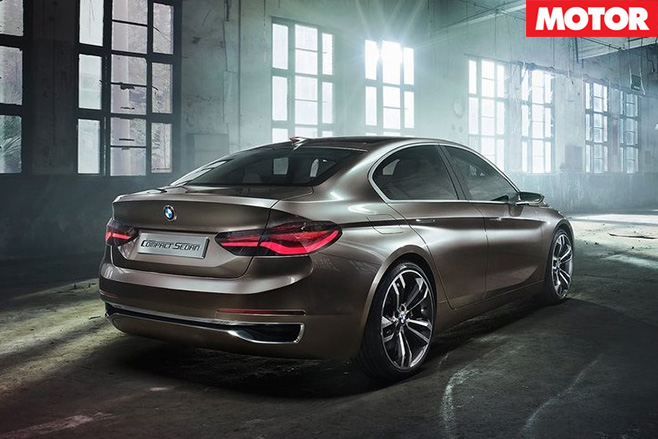
That ‘generous amounts of space’ bit gives clue to the FWD platform. Although this may mean enthusiasts won’t see a rear-driven compact BMW sedan, they will at least soon see the first performance compact BMW sedan since the E30 3 Series handed the baton to the larger E46 and larger-again E90.
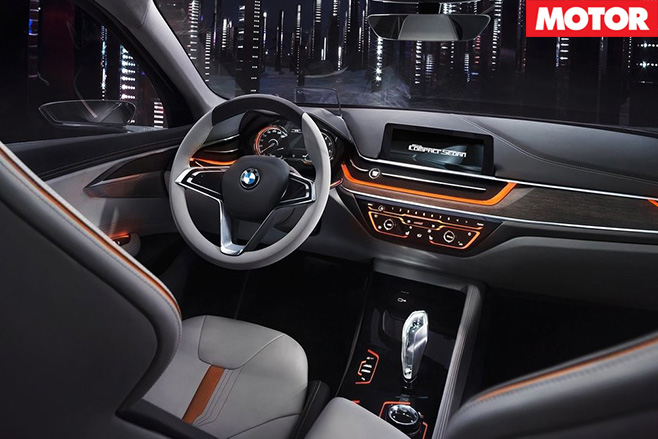
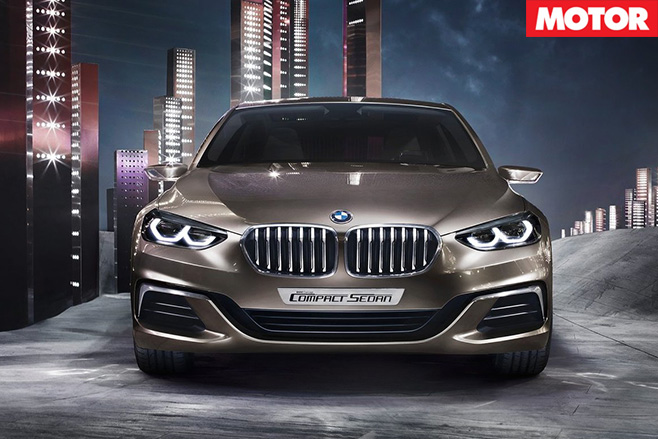
While the recently revealed M2 coupe will do honours battling with the Audi RS3 and Mercedes-AMG CLA45, the production version of this Compact Sedan Concept will likely tap the rear bar of the latter while passing an S3 sedan.
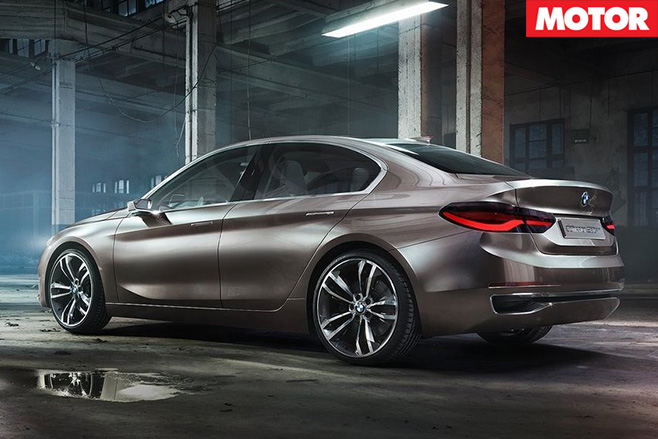
For those who can’t have an M235i or M2 for their lack of back doors, the sedan (to either be named 1 Series or 2 Series) will arrive to provide a BMW four-door option, likely within the next 18 months.
