
Chevrolet has gone back to the future by installing a fresh supercharged V8 engine into a 1970 Camaro and turbo four into a 1967 Nova.
The restored two-door models have been created by Chevrolet Performance for the annual SEMA aftermarket modifications show in the States, designed to show off the ‘crate’ building possibilities of the high-tech direct injection LT4 6.2-litre supercharged V8 and 2.0-litre turbocharged four-cylinder.
Chevrolet Performance says either engine “allows builders to use the high-tech performance engines in their hot rod projects”.
The 1970 Camaro RS makes 485kW from what is the most powerful production GM engine, available in dry- or wet-sump versions.
For the vintage beast the suspension has been upgraded to an independent front and rear set-up with coilovers, and both rack-and-pinion steering and a six-speed manual transmission have been installed.
Front and rear disc brakes take from the same model that features the LT4 V8, the Corvette Z06 supercar, placed behind 19-inch alloy wheels.
According to Chevrolet, latest Camaro RS cues such as the Hyper Blue colour, seats and gauges, “complements the contemporary powertrain that drives the vintage muscle car.” Likewise with the LED headlights and tail-lights.
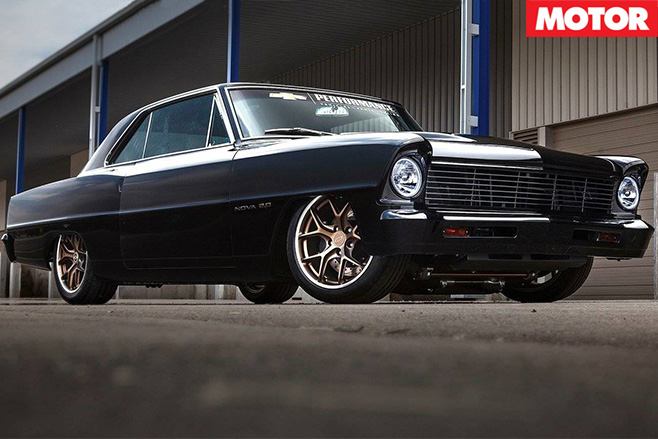
Chevrolet says halving the cylinders under the bonnet – and having those pots made of aluminium rather than iron – has helped deliver 50:50 weight distribution while claiming a brisk 6.2sec 0-100km/h sprint.

As with the LT4, the LTG four-banger is offered individually with associated accessory drive kits, air-conditioning, power steering and transmission parts to match those crate engines.
Famed Texan tuner Hennessey has unleashed a trio of modified monsters at SEMA 2015, and unbelievably this 584kW Mustang convertible is the least wild of the bunch.
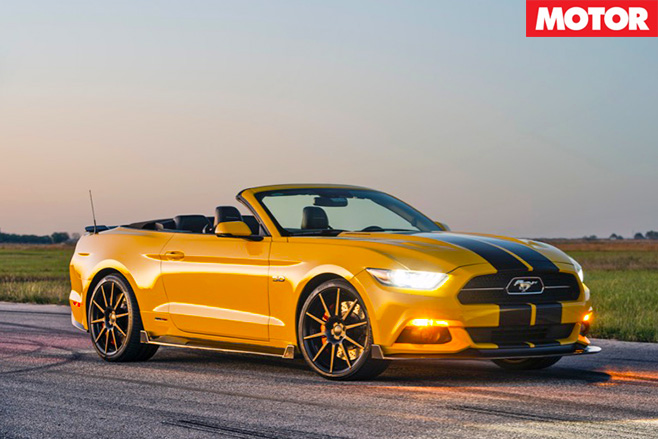
Using the latest Ford Mustang GT Convertible as a base, Hennessey adds a 2.9-litre supercharger blowing 9psi (0.6bar) boost into the 5.0-litre Coyote V8.
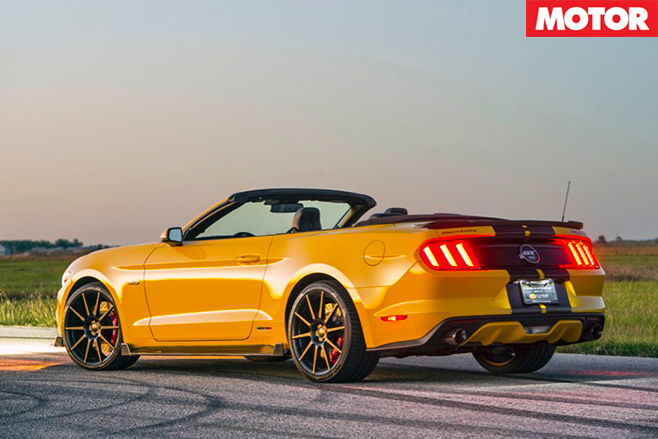
Huge 384mm front rotors clamped by Brembo calipers front and rear bring it all to a halt, while Michelin Pilot Super Sport tyres attempt to put all that grunt to the ground, wrapped around the buyer’s choice of 19- or 20-inch wheels.
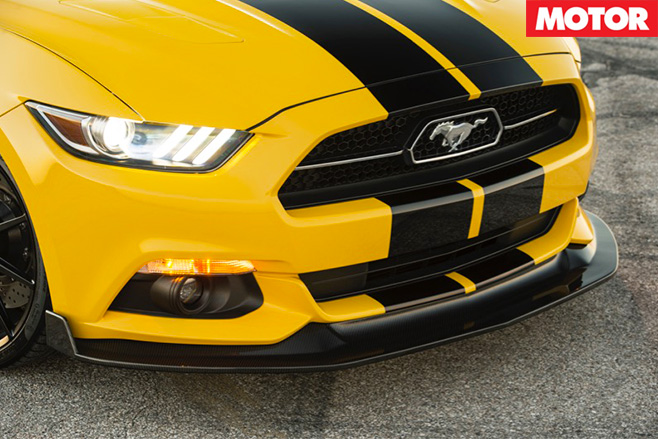
What’s not in doubt is its top speed of 335km/h, which was achieved on a recent episode of Jay Leno’s Garage, at which speed the carbonfibre front splitter, side skirts and rear lip spoiler no doubt do their part in keeping this Mustang on terra firma.
In late-2013 a Nissan GT-R Nismo lapped the Nurburgring in just 7min08.679sec, a stunning lap time only 11sec slower than the Porsche 918 Spyder.
Nissan admitted, however, that the record-setting car did have a few choice modifications, dubbed the ‘N Attack Package’. Still, in fairness to Nismo this package has been available to Japanese customers for a while and now, thanks to tuning house Stillen, the same modifications are available to US customers.
There are two levels of ‘N Attack. N Attack Package B costs US$58,000 over and above the US$149,990 required for a standard Nismo GT-R.
For this not insignificant amount of money revised engine and chassis electronic units, height-adjustable and four-way damping-adjustable Ohlins shocks, variable rigidity anti-roll bars, high-performance brake pads and the full suite of dry carbon body add-ons.
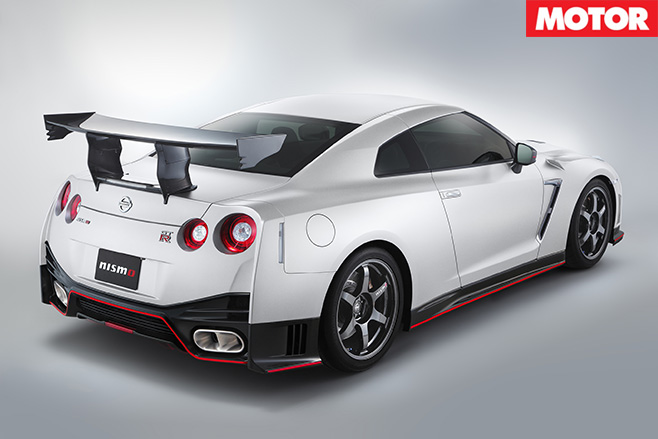
New limited-slip differentials – a 1.5-way unit at the front and 2-way at the rear – distribute power more effectively and the rear seats are removed and replaced with a carbon fibre bulkhead.
And the price for these ‘Ring-smashing enhancements? An eye-watering US$98,000, which makes the grand total for a Nismo GT-R N Attack Package A US$247,990, or very similar to a Lamborghini Huracan or McLaren 650S.
Mind you, here in Australia we’d be happy to settle for the regular Nismo GT-R to arrive as part of the brand’s long awaited arrival Down Under.
What is it?
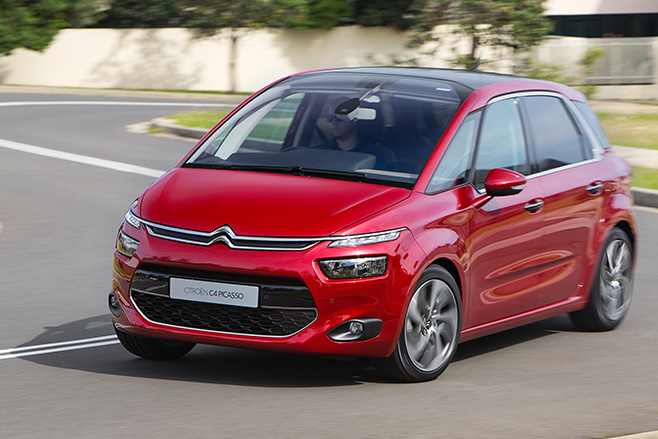
Sure, Teslas are spectacular cars, but their creator, uber-nerd Elon Musk, must look at the Citroen C4 Picasso and think, damn, I wish I’d done that.
Musk, of course, is the real-life inspiration for Robert Downey Jnr’s Tony Stark character in The Avengers, while the Citroen has a face seemingly modelled on his Iron Man mask.
The C4 Picasso is a mighty fine looking thing, particularly from front on, for the mutant mashing together of a hatch, a wagon and a (small) SUV, but the car it’s been cut down from, the seven-seat MPV Grand Picasso, somehow manages to be a better looking thing overall.
It’s quite clear that the Grand version was the original design, while this is more like ordering the six-inch sandwich at Subway; shrunken and somehow emasculating.
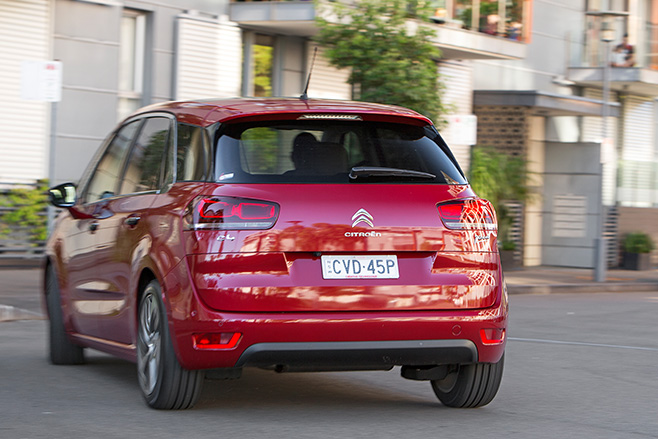
Indeed, Citroen seems to be offering you less of the same with the Not So Grand C4 Picasso, with only three excellent individual pews behind you instead of five and less legroom in the outside two.
Most bizarrely of all, though, the company is hoping to charge people $40,990 for the hatchy C4, which is just $4000 less than the Grand version, with two extra seats, and 174mm more length.
Option up an electric tailgate at $1000, the Driver Assist package at $2000 and the full nappa leather interior, with seat heaters (which lifts the sense of style and quality in the interior from Formule 1 Hotel to Formula One hospitality) and you’ll have to wonder why you didn’t just go for the Grand.
What’s new?
Sure enough it’s powered by a clever and tractable 1.6-litre engine, jointly developed by Peugeot, Citroen and BMW to do duty in a multitude of vehicles.
In the Picasso it makes 121kW and 240Nm and manages an official fuel figure of 5.6 litres per 100km (although we averaged over 9L/100km in a day of mixed driving).
What’s it like to drive fast?
It’s fun, without being thrilling, and has a useful bottom end with max torque available from 1400rpm all the way to 4000rpm.
What’s it like around town?
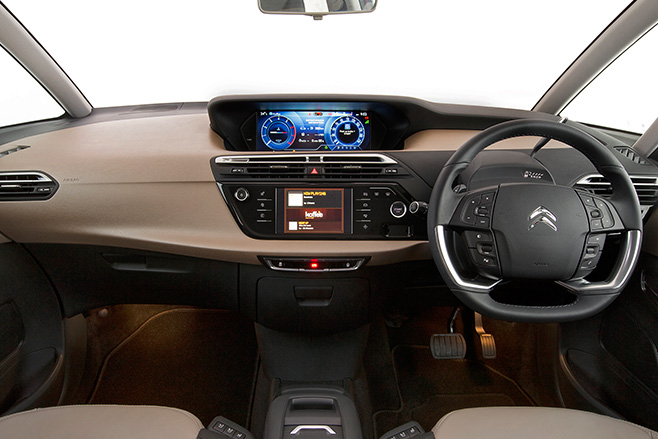
The cabin is light, airy, spacious and super glassy, with a ‘panoramic windscreen’ that can be made even more Imax-like by sliding back the sun shades. The dash, with its two lushly rendered giant screens, feels super classy, and futuristic, although the upper-spec trims are miles ahead of the base model.
Behind you is a big boot with a class leading 537 litres of space, or 1851 litres with the seats down, and a space-saver spare.
As usual in a Citroen, the ride is of premium quality and the handling is surprisingly capable, with minimal understeer. The local importer chose to launch it on some serious driver’s roads, which shows faith in the product.
They were also at pains to point out that this C4 is not just a Grand Picasso with two less seats, although it clearly is, and that it drives like a hatch, has the practicality of a wagon and the high hip point/easy child loading of an SUV.
How much is it?
Much was also made of the fact that the car’s natural competitors – the Vauxhall Zafira and Ford C-Max – are absent in this market, which means it’s only up against more expensive offerings from Benz (B Class) and BMW (2 Series Active Tourer).
This is fine, if you accept that Citroen is a premium brand, which would make its $40,990 price tag seem reasonable. Sadly, however, we’re not buying it. And nor will many other Australians.
Click here to find out more about the Citroen C4 Picasso.
PLUS
- Fun to drive. It handles well and hugs corners, so you always feel like you’re in complete control.
- The sport seats offer a much more comfortable option than the standard pews.
- Sporty look. The Swift is a popular car because of its boxy, handsome looks. Its unique shape is appealing to those looking for a hot hatch at a good price.
- Suspension. It doesn’t jitter over bumps as much as you’d expect it to.
- Boot space. Not the best car to use to pick up your family from the airport. If there are a few suitcases, then you’re in strife.
- No spare tyre. The Swift Sport only comes with a tyre sealant kit (tyre repair kit).
- Gearbox. It’s a bit rubbery on gear changes and occasionally gets a bit jumpy.
- It lacks the standard equipment and technologies we’ve come to expect of new cars – it could do with a reversing camera, at least.
If the latest Mazda MX-5 takes the roadster back to its original then the Speedster and Spyder go further back as modern takes on vintage open-top racers.
These hotties are strictly concept-only, born in the States and revealed at the annual SEMA show of aftermarket modifications.
The Speedster flicks its windshield and A-pillars to create a speedboat-style deck all the way to the raised rear lid that hugs each of the fixed carbonfibre buckets.
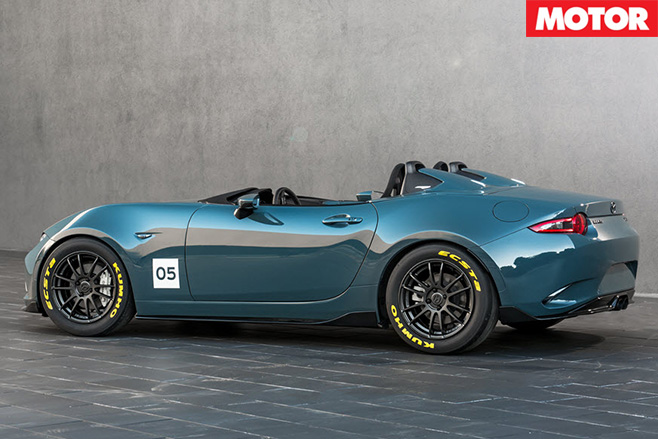
There are no changes to the 2.0-litre Skyactiv-G four-cylinder engine and six-speed manual combination in either concept, but the MX-5 Speedster weighs just 943kg – wiping 113kg off the production model and placing 100kg below the Spyder.
K&W adjustable coil-over suspension lowers the body by 30mm and brakes are upgraded to front Brembos.
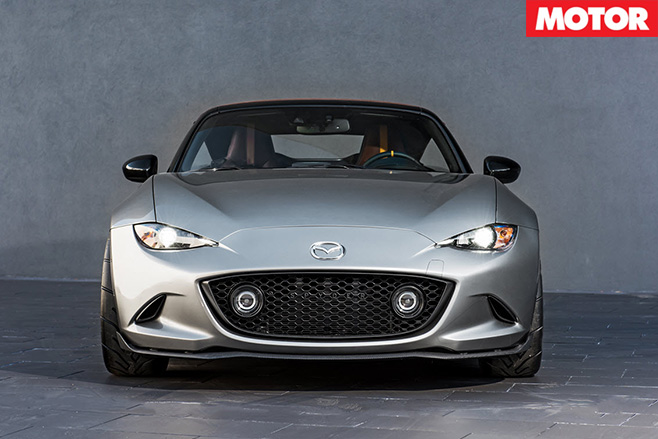
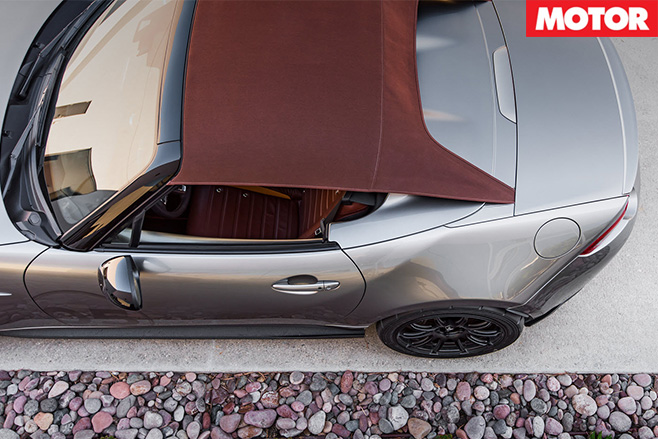
The Spyder’s stretched tan fabric roof – called a ‘bikini top’ – and leather cabin works beautifully with the Mercury Silver paint, but hiding under all the that is still adjustable coil-overs, Brembos and 17-inch lightweight alloys – they’re actually a size larger than those on Speedster.
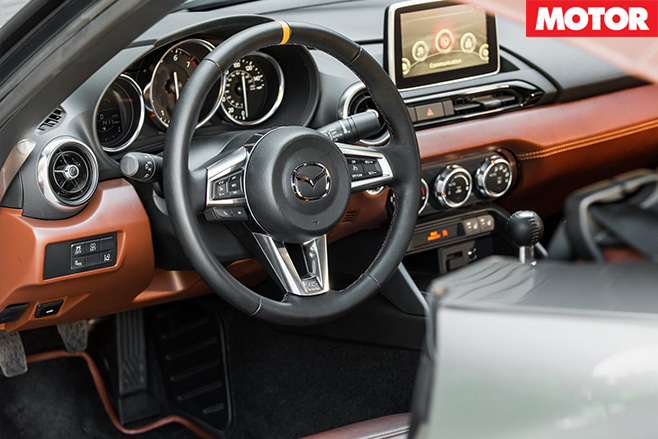
“MX-5 Speedster pares the roadster back to the essentials for an unadulterated, wind-in-the-hair driving experience evocative of the open-top sports cars of the 1950s,” the brand commented in a statement.
Mazda adds that the designers have aimed to “create thoroughly modern, bespoke concepts for what a lightweight performance car should be.”
They certainly have. Sadly, though, we’re unlikely to see production versions.
It was 12 December 2013, the day after Holden announced it would stop manufacturing cars in Australia by the end of 2017.
This story was originally published in our May 2014 issue
When the early starters arrived at Holden Special Vehicles head office in Clayton for work they found a handwritten note taped to the glass front door.
“I’m a proud HSV owner! Please don’t stop making them after 2017.”
“It was just a really nice note so we left it on the door as people walked in, just to go ‘y’know we have a passionate customer base, we do great work’,” says Tim Jackson, HSV’s managing director.
“I think we have proven many times that we can do things people don’t think we can do. Our job is to continue doing that. Let’s do something that people don’t think we could do.”
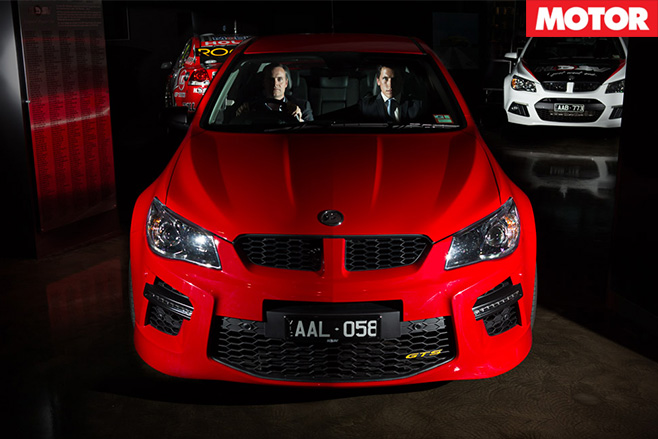
HSV, with some other limited ventures acknowledged, has had its greatest success taking rear-wheel drive V8 Commodores to the next level. Three core ingredients are essential to the mix: improve their performance, add technology, make them look tougher.
That credo has never been more emphatically stated than with the supercharged Gen-F GTS, a car that’s impressed MOTOR on road and track and sold – by HSV’s modest standards – incredibly well.
At a time when HSV needs to redefine its relationship with both Holden and General Motors, the GTS has helped inform the likes of Stefan Jacoby, GM international operations boss – who made the recommendation to stop building cars in Australia – and Gerry Dorizas, new Holden MD – who has the role of moving Holden from manufacturer to importer – of its abilities.
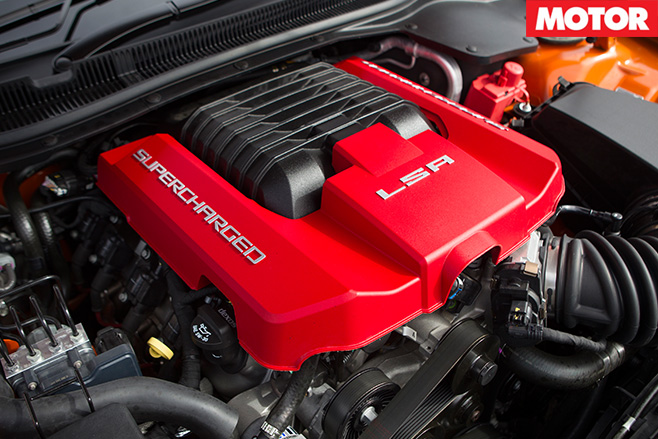
It’s a view to hearten the faithful, but company chairman Ryan Walkinshaw cautions just about every scenario you can dream up potentially exists for HSV right now, including shutting down. The desire, however, is to maintain links with Holden beyond 2017.
“There is a lot of water that needs to go under the bridge for that to happen,” he cautions. “At the end of the day we have a great relationship with Holden, and Holden, like most car companies, needs to have a halo brand to go with it.
“We are capable of doing that, the relationship with Holden has been great for a long period of time and I am sure both parties are certainly going to work as hard as we can to try to come to some sort of arrangement to continue to do what we are doing into the future.”
Walkinshaw, who took over the family business after his father Tom died in late 2010 and Jackson, who replaced veteran Phil Harding as MD only in February after five years working on the marketing and sales side of the business, are two players critical to shaping the future HSV.
Analysis of what shape HSV could take and what vehicles it would build began some time before former Holden MD Mike Devereux made the formal closure announcement at Elizabeth.
Holden’s swap from manufacturer to importer means the range of vehicles it will sell in Australia potentially opens up dramatically. It could cherry pick from whatever part of the GM empire it deems appropriate. That potentially means a far wider portfolio for HSV too, ranging from small cars to SUVs.
The sedan that replaces the locally-built Commodore in 2018 is expected to be based on the front/all-wheel drive Epsilon II architecture (or its E2XX successor) and HSV’s engineers have assessed just what can be done with that.
An all-wheel drive V6 sports sedan is certainly doable, as OPC, Opel’s HSV equivalent, has demonstrated with the 239kW Insignia which was recently reintroduced to the Australian market.
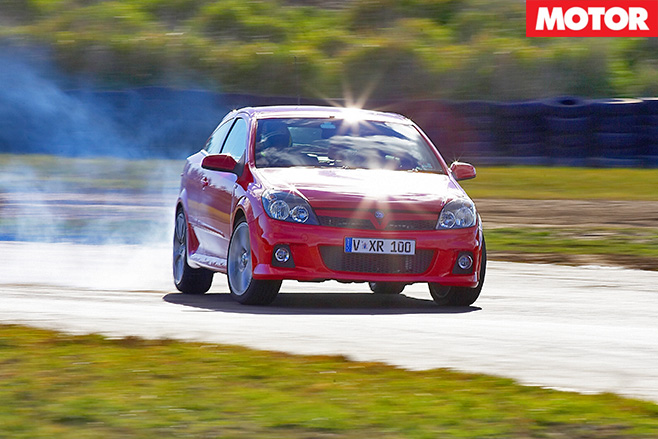
“The higher you get up the performance pyramid the harder it is to add that value,” admits Jackson. In other words, the harder it is to build in a profit margin.
Walkinshaw and Jackson’s view is production of HSV models should continue to be at the same factory where the core vehicle is built, then finished off at HSV’s Clayton facility. The difference is cars would arrive by ship from overseas, rather than trucked from the Elizabeth plant.
“That build process still works even if it is in another country or continent,” insists Jackson. He continues, “our job is to find out how that works and make sure at the end of the day we deliver a great car. That’s the goal. We need to figure out how that process flow works.”
Adds Walkinshaw: “Keeping us as a company that genuinely makes Australian cars and makes them in Australia would be great but if we have no other option then we are happy to look at manufacturing abroad and importing them as well.”
Rear-wheel drive and V8 will remain the core of the business whatever it evolves into. Clearly, within the GM world, HSV has to look to North America to scratch that itch; the Chevrolet Camaro and the iconic Corvette are both potential targets, although the “performance pyramid” poses issues, neither is currently built in right-hand drive and putting anything other than a bow-tie badge on the latter would be a difficult sell internally let alone externally.
The greatest opportunity lies in the much-mooted replacement for the Chevrolet SS, which is currently based on the Commodore SS-V Redline. Using GM’s new Alpha architecture and developed and built in the USA, it would be definitely exported to Australia, serving both Holden and HSV’s needs.
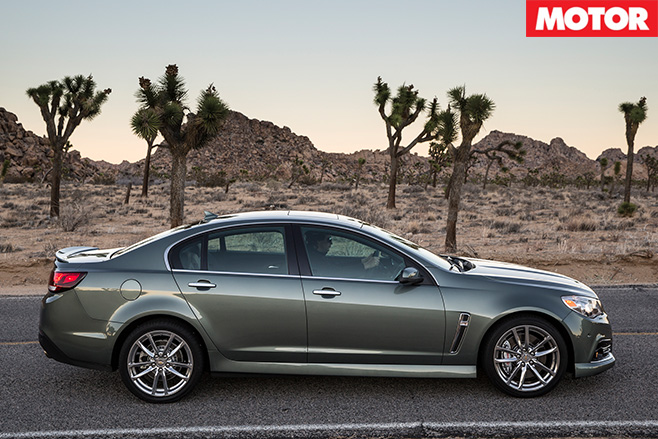
Chevy has no such ‘halo’ brand at the moment and three former Holden bosses high in GM’s global structure – Devereux, Alan Batey and Mark Reuss – understand and like the HSV business model. And HSVs have already been re-badged overseas, notably as Vauxhalls in the UK.
“That’s a much bigger discussion that we need to have, but obviously that’s something we are setting our sights on going forward,” confirms Walkinshaw.
“We are trying to expand what we do as the Walkinshaw Group in general pretty rapidly and every opportunity that we see there is an opportunity we can deliver on, we are going to look to try and deliver on.
“We think something like [CSV] could work. It depends on what products are available [and] discussions with GM going forward. It’s a lot of factors we have to take into account, but I think we are pretty confident in what we do.”
- Part One: Somebody’s Watching
- Part Two: Heir Apparent?
- Part Three: Hanging Tough
- Part Four: Honest Labour
Part One: Somebody’s Watching
THREE weeks in and I’m paranoid. People really are watching me.
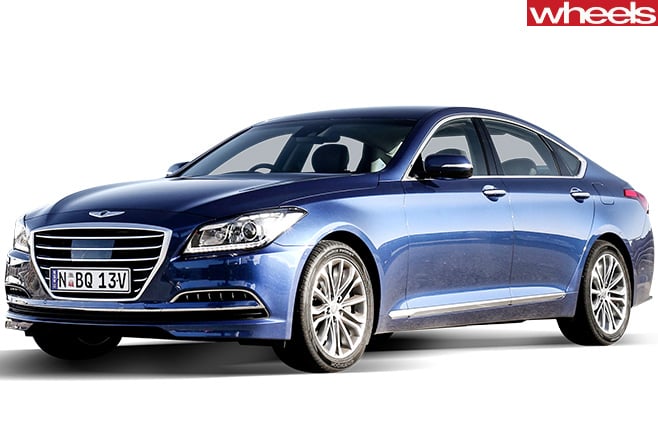
I loaned my new Hyundai Genesis long-termer to our writer Damion Smy for a few days, and the first thing he remarked on was how people stare as it glides by. We’ve both driven cars that attract attention, but they’re usually loud sports cars or Italian supercars. Not Hyundais. It’s never been Hyundais… until now.
So I’m not imagining things. The Genesis is a head-turner.
I don’t think it’s particularly alluring, though the styling is cohesive and premium, and the sedan’s stance is strong. Some COTY judges last year felt the Genesis could easily be mistaken for an Aston Martin sedan.
The grille does mimic the Rapide a little, and there’s that winged badge, but otherwise it’s a stretch in my eyes.
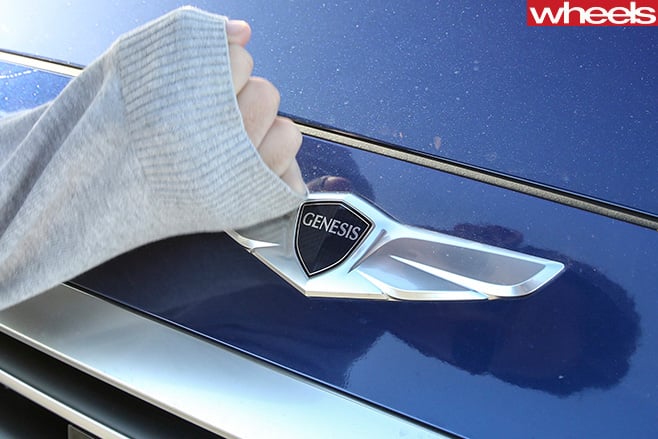
Further investigation required, of the vox pop nature. Stay tuned.
So far it’s been a serene and high-mileage first few weeks. The Genesis’s overall refinement is excellent. The cabin is quiet, the ride isolating, and the drivetrain’s effects are seen but not heard.
The multi-adjustable electric seat is comfortable and, combined with reach and tilt steering adjustment, delivers the driving position I want.
I haven’t explored its dynamic limits yet, but already the benefits of Hyundai’s localisation program can be felt. The suspension absorbs sharp edges and bumps without feeling floaty or overly soft.
Initial turn-in is impressive for a 5m car with a 3m wheelbase weighing almost two tonnes. There’s no overt sense that it’s leaning on the outside front or that body roll is softening its bite.
Getting started each day is not without its little quirks, though. Even after dozens of journeys, for the life of me, I can’t remember whether to push or pull the park brake switch.
I don’t like start buttons hidden behind steering wheels, and the gear selector’s detent makes a plasticky clunk each time it moves out of Drive.
That gear lever clunk was quickly fixed by a Hyundai service rep, and though it seems such a little thing, it’s why prestige car companies spend millions on finessing haptic feedback.
I’ve not messed around with the drivetrain’s Eco mode, or its Sport alter-ego yet, which I suspect may help the slick eight-speed transmission make better use of its ratios.
I’m deliberately spending time getting familiar with the baseline first.
We started our days together during a Melbourne winter. This $60K base model wears 18-inch Hankook Ventus Primes – the top-level $80K Genesis gets 19-inch Dunlops – and they’re generally fine.
But they do have a weakness when it comes to standing-start turns on wet roads.
It shows little finesse with its response, though, cutting drive completely until well after traction is restored. If you’re attempting to merge with traffic, this accelerative pause can feel like ages.
I’ve learned to be more judicious moving off in the wet, but I wasn’t exactly stomping the throttle before because I’m trying to get a good fuel figure, as 12.7L/100km for a month of commuting proves.
Still, if it’s a choice between overzealous or inattentive ESC, I’d take the former.
Otherwise, it’s been a serene first few weeks. Yep, serene. I’ve noticed a marked improvement in my ability to tolerate the morning commute.
Spending a few extra minutes in its quality confines is no hardship. Now, if I can just get the boss to approve a chauffeur, I’ll set about testing the back seat properly.
Social climber but still a value proposition
Radar cruise control gets a regular workout, as do the front and rear parking sensors, though the front ones sometimes don’t pick up the single central bollard located outside my favourite coffee stop.
Other driver-assist systems include lane departure warning and auto emergency braking, which thankfully I haven’t had cause to trigger yet. Puddle lights that include the Genesis logo (far left) are a nice touch.
And the Smart Boot, which opens when it senses a person waiting behind it with the key, is clever, and much better than having to wave your foot wildly under the bumper like some other systems.
Hyundai Genesis Price as tested: $60,000 Part 1: 1553km @ 12.7L/100km Overall: 1553km @ 12.7L/100km Odometer: 1655km Date acquired: June 2015
Part Two: Heir Apparent?
THE supposedly Chinese curse ‘may you live in interesting times’ is probably not Chinese at all, but from my spot in the editor’s chair of Street Machine magazine, it has a certain ring to it.
SM has, for 35 years, celebrated big Aussie rear-drive cars, but that era is about to end. As a magazine, we’ll be fine, but what the heck are right-thinking folks (that is, those who enjoy big cars, with large donks and rear-drive) going to do for daily transport when the ‘proper’ Commodore and Falcon are no more?
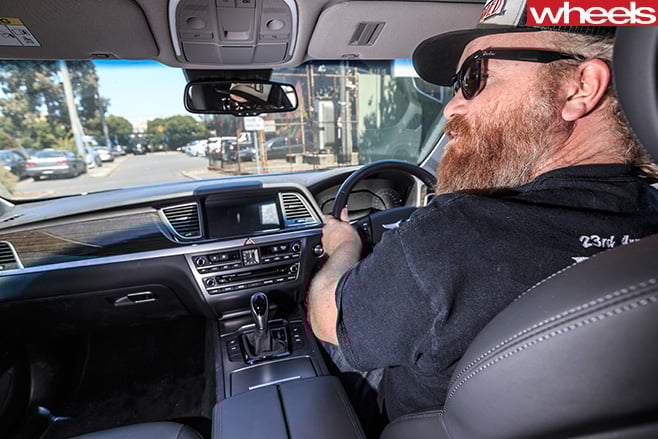
I didn’t give it much thought, assuming that the big, blue sedan was an Aston Martin and therefore not worthy of notice. It wasn’t until Butler threw me the keys to the Genesis that I realised the blue car was of Korean, rather than English, extraction. Never mind; I needed wheels for a quick mission to Canberra, so I was happy to take something capable and practical.
The newest vehicle in our household was made in 1963, so when I do try my hand at a modern ride, I have a few basic yardsticks. The first is that I can get in, start the car, turn on the radio and crank up the Bluetooth without needing an engineering degree or the assistance of a 12-year-old. Tick.
And everything I’m interested in using – radar cruise, stereo, sat-nav – are intuitive to operate in the Genesis. Push-button handbrakes are a pet hate of mine, but otherwise, the Genesis is entirely beaut – acres of legroom front and back, no discernible handling vices, a plush ride and enough stonk for the job. Fuel economy would be of no concern to anyone buying this type of car.
So, on a purely rational basis, the Genesis seems a fine alternative to a Calais, Statesman, 300 or Fairlane (RIP), though it would, of course, be much better with the V8 available in other markets. However, few people buy cars for rational reasons. Whether the Genesis can overcome the handicap of the Hyundai badge remains to be seen.
The street machiners in Canberra were surprised to learn my ride was a Hyundai and thought it looked pretty tough. In the main, our constituency is either sad or angry at the end of local car production.
The Genesis may be attractive to those who don’t like the wank factor or the servicing and repair costs associated with the European alternatives. It might even be a cult hit if Hyundai Oz gets the V8 happening.
Inspect the gadgets
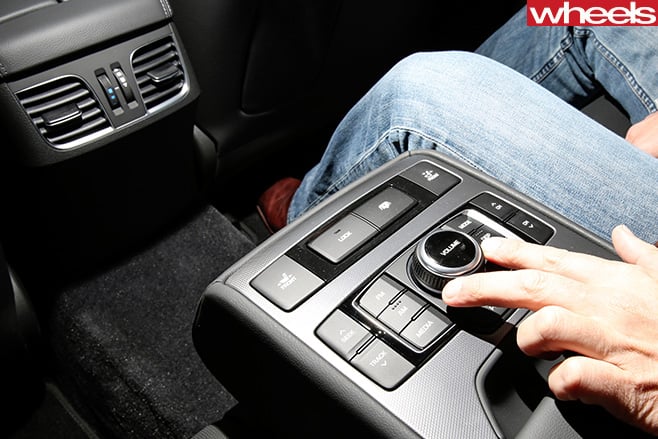
The Genesis comes up trumps here, with the electric rear shade eliciting oohs and aahs from my passengers; the courtesy puddle lights from the exterior mirrors; the adjustable radar cruise control (not as flash as the BMW version, for instance, but pretty good); and the beaut magic boot that pops open on approach. It needs proper fold-down rear seats, though.
Hyundai Genesis Price as tested: $60,000 Part 3: 3220km @ 12.0L/100km Overall: 6263km @ 12.2L/100km Odometer: 6463km Date acquired: June 2015
Part Three: Hanging Tough
I CAME close to losing the Genesis this month. Took some time off and left the car with publisher Bulmer. He took an immediate liking to the big Korean, his attachment growing stronger as the days went on.
He liked the refinement – who doesn’t – and was equally appreciative of its ability to move the brood in comfort. Plenty of boot space for all their luggage for a week away, and enough backseat legroom so that the Bulmer-ettes couldn’t kick mum and dad’s seats.
So when I returned he said the Genesis’s quality and refinement was wasted on me. He should take over the long-term test. I was torn. I like my job, so best not get the boss offside, right?
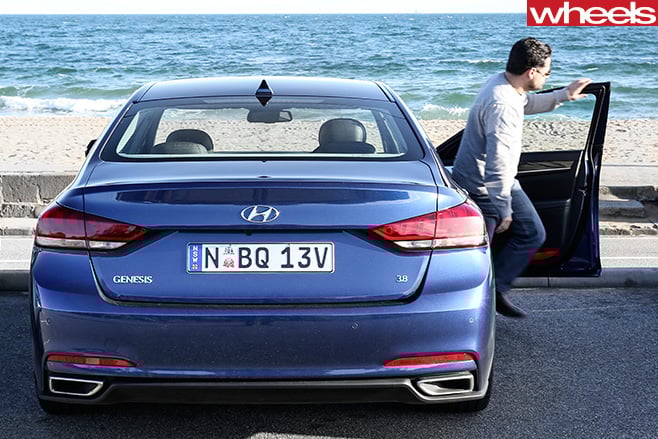
There are its overt charms, like the plush elegance of its interior fit-out. And then there are the more subtle charms that make me smile each time I notice one. Like the Genesis logo in the puddle lights. And the indirect interior lighting.
And how the boot opens when it senses you approaching, arms laden. And the rear power blind, which does me little good in the front, but wows my back-seat passengers.
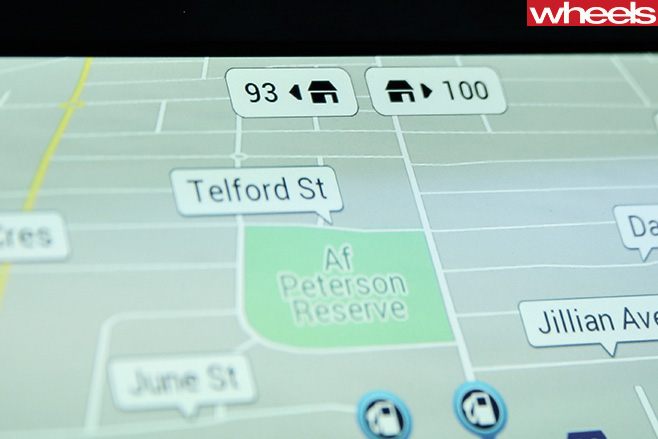
And the stereo. I’m surprised just how important a good sound system is to me. Yes, I primarily listen to AM radio, especially the SEN sports network (which should stop pretending and just rename itself AFL radio).
Every now and then I like my Bluetooth tunes, and it’s good to know the Genesis’s Lexicon 17-speaker sound system can faithfully reproduce every sweet note of a Stevie Ray Vaughan solo, and do Muddy Waters’ swamp-bottom baritone justice.
Also, I’d only just begun to explore the drivetrain’s more lively Sport mode. You’ll recall that for our first month together, I left it in Normal. Sport brings a noticeable attitude change to the transmission.
It’s less eager to change up through the gears as it moves off, which may increase fuel consumption, but is much better for my accelerative expectations. The drivetrain’s generosity should match with the car’s premium positioning, right?
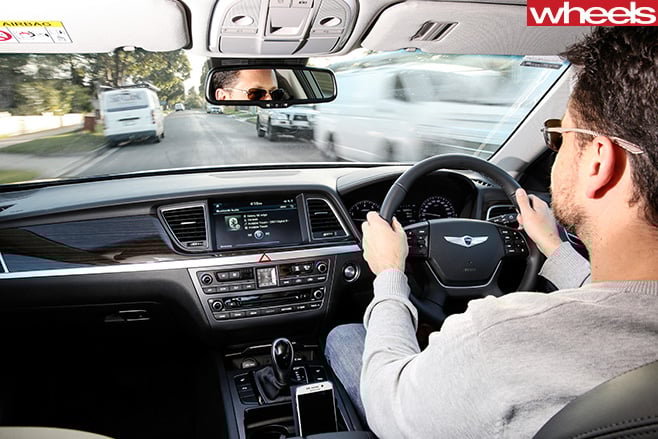
As they say, adversity breeds innovation. I needed to distract the boss with an even brighter bauble. So I mentioned that his theft of the Genesis would force me into the new and very interesting Volvo XC90, a family SUV that even hard-nose Carey has been raving about.
What’s the point of a bloke with no kids testing that, I pondered aloud as I left his office. Ged came into my office later that day. He said he had an idea…
Unwelcome penetration
JUST before I headed off on leave, the Genesis developed a slow puncture in the left rear. Turns out the tyre got screwed, literally. One through a tread channel, which would have been pluggable (and therefore cheap to remedy); the other pierced the sidewall, so no repair was possible.
Given the property development going on around my area, it’s easy to guess where they came from. Bulmer, obviously thinking this car would remain his when I returned, spent $279 having it replaced. Thanks, boss.
Read part 1 of our Hyundai Genesis long-term car review.
Hyundai Genesis Price as tested: $60,000 Part 2: 1690km @ 12.3L/100km Overall: 3243km @ 12.5L/100km Odometer: 3345km Date acquired: June 2015
Part Four: Honest Labour
MELBOURNE rain sucks. Just one night after I washed Big Blue for the third time in our four months together, it rained. And Melbourne’s rain is not just drops of water like rain is meant to be. No, each drop carries a load of Mallee dirt. When the rain stops and the car finally dries, every panel is peppered as though I parked too close to the speedway.
The Genesis’s classy blue paint has one big drawback. It contrasts with this Mallee dirt. White doesn’t, nor does grey or beige, which may be why more than half of all new cars bought by Australians are shades of those colours.
Watching the sea of conservative colours flowing down Aussie roads makes the reds, yellows and blues stick out like jelly beans in a bowl of pistachios.
So I washed Big Blue twice in three days. Scrubbed its big panels again, then chamoised them down so it didn’t streak, again. I had to. I wanted to drive around in a clean car. At least I didn’t have to get the vacuum cleaner out and go over the insides again.
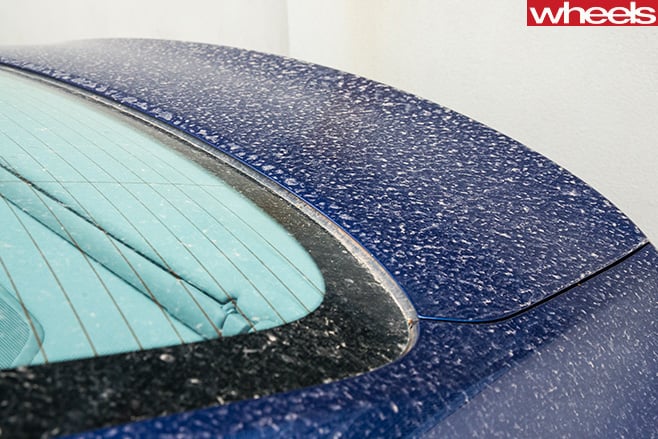
There is an exception to the clean-is-king rule, though. Hard-earned road grime; you know, the kind that covers a car after you’ve done a big journey. Bugs splattered all over the front, road muck fanned out behind each wheel, and that dull covering of dust on the rear.
To me, that makes a car feel tougher and more resilient. That’s honest dirt, like sweat after a day of physical labour.
I took one of those honest drives after I cleaned the Genesis again. Went out to Launching Place and then down through Powelltown to Noojee. It’s a great winding road through tall timber, and doesn’t get half the tourist traffic that plagues the Dandenongs.
Then I aimed south to Moe and all the way down to Foster.
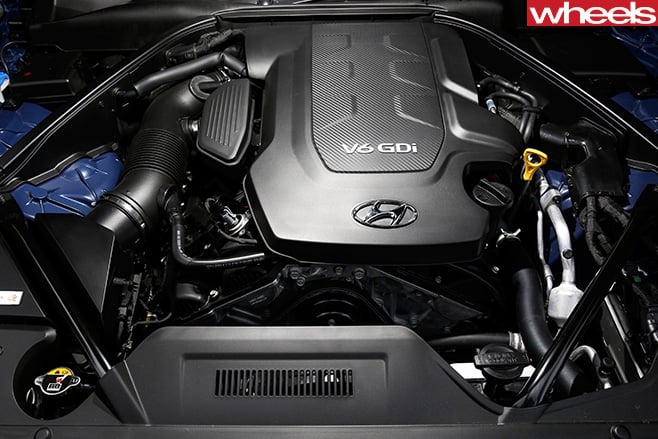
The Genesis doesn’t have the nimbleness of a Commodore or Falcon. It’s still quick and has plenty of grip, but it’s just not as engaging. And forget about provoking the rear. A comfort-focused suspension tune and no ESC switch means the rear is a follower, not a fighter.
The Genesis is a Statesman rival. We should do a comparo before Big Blue goes back. It’s a pity there’s no Ford Fairlane anymore, but maybe we should throw a couple of left-field rivals to benchmark the Genesis in other areas. An Audi A6 for interior and dynamic refinement perhaps, and a new Lexus GS for space and value.
But first I’ll need to wash the Genesis again. And all those bugs are going to take some scrubbing.
Country consumption
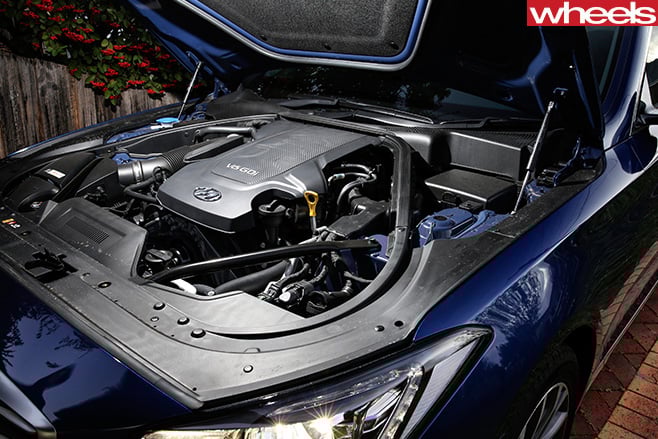
The old-school 3.8-litre V6 (pictured above) likes long open roads more than stop-start urban commuting. Big country miles don’t tax the transmission’s easily confused gear-change logic much, and they let the big V6 show the benefits of having peak torque from 2000-6000rpm.
This month’s long Sunday drive returned an impressive 9.9L/100km for the 400km round trip, despite plenty of hills and a decent average speed, almost 30 percent better than the 12.8 I’d been averaging for the working week.
Hyundai Genesis Price as tested: $60,000 Part 4: 1026km @ 11.5L/100km Overall: 7289km @ 12.0L/100km Odometer: 7489km Date acquired: June 2015
Part Five: Hail Fellow Well Met
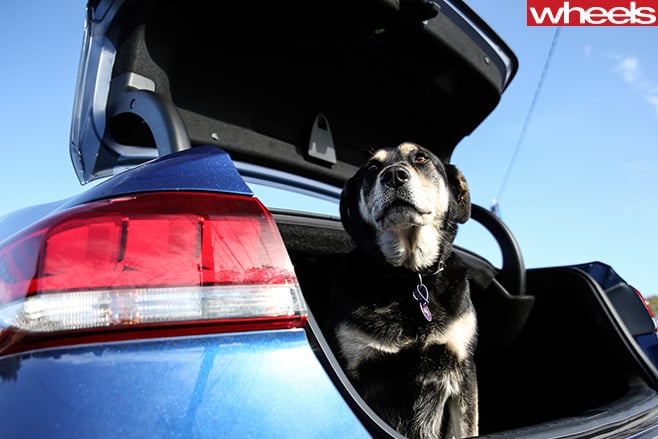
SAFETY is great, as long as it’s not inconvenient. My dog, for example, finds the in-car harness inconvenient to her desire to keep a constant watch out both sides of the car. But if we had to stop suddenly, 24kg of airborne labrador-cross breaking my neck would inconvenience me. And since I’m the boss, I win.
The blind spot caused by the Genesis’s thick A-pillar and generous wing mirror is an inconvenience when turning right, and when parking. But if it had skinny A-pillars instead, I’d grumble a lot more should we find ourselves inverted in a crash, my head mashed down to my navel because the roof caved in.
And I can only imagine how many parking bingles and lane-changing disasters could have befallen us if the Genesis had no wing mirrors.
Those two safety features are mildly inconvenient, but justifiable, and it’s not like I have options. It’s also not like the Genesis is alone in having an obstructive A-pillar. Volvo has even experimented with see-through A-pillars on concepts. Bring ’em on, I say.
Until then, I’ll suffer the inconvenience to keep my head above my shoulders.
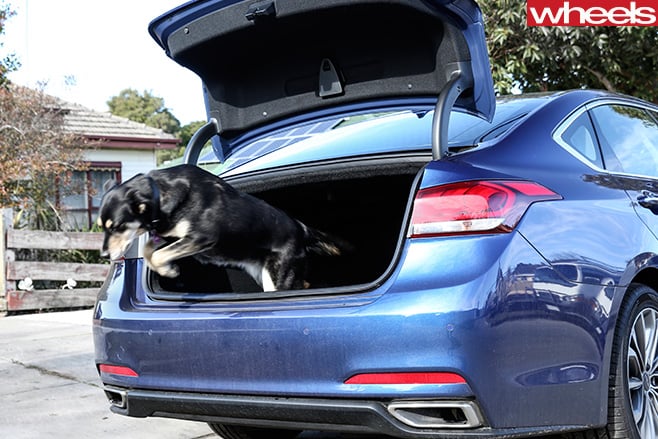
As for the rest of the Genesis, well, I’ve found it all incredibly convenient in our six months together. Almost to the point of transparency. This is a competent and well-sorted prestige sedan, with no real weaknesses beyond the drivetrain’s economy and sometimes lazy transmission. The Genesis is a great first offering from a sub-brand on the verge of its independence.
Hyundai could have grabbed more attention for Genesis if it had debuted groundbreaking technology or bold product innovation, but that could have undermined the ultimately solid foundation this comfortable, conservative and competent executive express has laid down for future Genesis models to build on.
In terms of styling, Hyundai did push the envelope, though thankfully Sydney-born Casey Hyun’s design team stopped short of going too far… like Lexus has. The car’s exterior design shows restraint and exudes elegance, though it does little to disguise the big sedan’s size.
It continues to turn heads, six months into our life together and 18 months after it arrived in Australia.
It’s the same story inside. The cabin is smart and functional, but without any conversation-piece gadgets or gizmos, like omnipotent iDrive controllers or the ability to read hand-waving gestures like in some BMWs.
But it’s all eminently useful, especially the various cubbies and containers for phones, keys and the like.
No, the Hyundai Genesis sedan – soon to be renamed the Genesis G80 (without the Hyundai badge) – is now firmly entrenched in my mind as a beacon for even better things ahead.
In decades to come few may remember this honest origin of the Genesis species because, as I’ve said, it’s not remarkable in any particular area. Overall, though, it is remarkable. It’s proof that the once cut-price Korean brand can stretch into the premium domain dominated by the Germans and not look out of place.
Men for all reasons
Albert Biermann, Manfred Fitzgerald and Luc Donkerwolcke are a big part of why I’m excited about the future for Hyundai and its Genesis premium brand offshoot. Those three gentlemen have been poached from European prestige marques Audi, BMW and Lamborghini to design and engineer the cars tasked with catapulting Genesis into the big league of luxury and performance.
Biermann, in particular, is an interesting acquisition, fresh from a stint as head of BMW M. For me, that’s a double-edged sword. BMW M has turned out many great driving cars, but in recent years its turbocharged offerings have lost their way a little.
Guess we’ll have to wait and see which direction Hyundai’s newly created N Performance brand takes.
Hyundai Genesis Price as tested: $60,000 Part 4: 1272km @ 11.1L/100km Overall: 8561km @ 11.8L/100km Odometer: 8761km Date acquired: June 2015
PORSCHE – one of the world’s most recognised and valuable automotive brands – has been accused of cheating on its emissions tests as the growing Volkswagen Group scandal scoops up more high-profile brands.
The US Environmental Protection Authority overnight issued a second notice of violation to Volkswagen Group for an alleged breach of the Clean Air Act, this time targeting the 3.0-litre V6 diesel engine used in the 2015 Porsche Cayenne, the 2014 Volkswagen Touareg, and the 2016 Audi A6, A7, A8 and Q5.
The newly launched Audi Q7 also uses a 3.0-litre V6 diesel engine, although it has not been named as part of the recall. It is unclear if the Q7’s engine is related to the ones scooped up by the EPA’s action.
“Today, EPA is issuing a second notice of violation (NOV) of the Clean Air Act (CAA) to Volkswagen AG, Audi AG and Volkswagen Group of America, Inc,” the environmental group said in a statement.
“This NOV is also being issued to Porsche AG and Porsche Cars North America,” it said.
“The NOV alleges that VW developed and installed a defeat device in certain VW, Audi and Porsche light duty diesel vehicles equipped with 3.0-litre engines for model years 2014 through 2016 that increases emissions of nitrogen oxide (NOx) up to nine times EPA’s standard.”
According to the EPA, the second notice covers an “unknown” number of vehicles.
Porsche Cars North America issued a brief statement in response to the EPA’s action.
“We are surprised to learn this information,” it said. “Until this notice, all of our information was that the Porsche Cayenne Diesel is fully compliant.”

“[Volkswagen Group] has once again failed its obligation to comply with the law that protects clean air for all Americans,” said Cynthia Giles, the EPA’s assistant administrator for enforcement and compliance assurance.
“All companies should be playing by the same rules. EPA, with our state, and federal partners, will continue to investigate these serious matters, to secure the benefits of the Clean Air Act, ensure a level playing field for responsible businesses, and to ensure consumers get the environmental performance they expect.”
The second breach of the Clean Air Act follows the EPA’s investigation of the emissions ratings for more vehicles in the Volkswagen Group stable. The EPA also placed other car brands on notice that they, too, would come under close scrutiny to ensure they complied with the Act.
The latest notice reads:
As alleged in the NOV, VW manufactured and installed software in the electronic control module of these vehicles that senses when the vehicle is being tested for compliance with EPA emissions standards. When the vehicle senses that it is undergoing a federal emissions test procedure, it operates in a low NOx “temperature conditioning” mode. Under that mode, the vehicle meets emission standards. At exactly one second after the completion of the initial phases of the standard test procedure, the vehicle immediately changes a number of operating parameters that increase NOx emissions and indicates in the software that it is transitioning to “normal mode,” where emissions of NOx increase up to nine times the EPA standard, depending on the vehicle and type of driving conditions. In other tests where the vehicle does not experience driving conditions similar to the start of the federal test procedure, the emissions are higher from the start, consistent with “normal mode.”
VW’s software on these vehicles includes one or more Auxiliary Emission Control Devices (AECD) that the company failed to disclose, describe and justify in their applications for certificate of conformity for each model. Every manufacturer must apply to EPA for and be approved for a certificate of conformity for each model, each year otherwise it is illegal to introduce the cars into commerce. An AECD designed to circumvent emissions test is a defeat device.
The Clean Air Act requires vehicle manufacturers to certify to EPA that their products will meet applicable federal emission standards to control air pollution, and every vehicle sold in the U.S. must be covered by an EPA-issued certificate of conformity. The Clean Air Act also prohibits manufacturers’ making and selling vehicles equipped with defeat devices that reduce the effectiveness of the emission control system during normal driving conditions. By making and selling vehicles with defeat devices and by selling vehicles with higher levels of air emissions than were certified to EPA, Volkswagen allegedly violated two important provisions of the Clean Air Act.
NOx pollution contributes to harmful ground-level ozone and fine particulate matter. Exposure to these pollutants has been linked with a range of serious health effects, including increased asthma attacks and other respiratory illnesses. Exposure to ozone and particulate matter has also been associated with premature death due to respiratory-related or cardiovascular-related effects. Children, the elderly, and people with pre-existing respiratory disease are particularly at risk of health effects from exposure to these pollutants.
VW may be liable for civil penalties and injunctive relief for the violations alleged in the NOV. VW will have an opportunity to respond to the allegations contained in the NOV.
Affected diesel models include:
- 2014 VW Touareg
- 2015 Porsche Cayenne
- 2016 Audi A6 Quattro, A7 Quattro, A8, A8L, and Q5
A classic-Liberty sized sports wagon with WRX running gear, the Subaru Levorg will give the VW Golf R wagon a run for its money.
WHAT IS IT? About the same size as the Mk4 Liberty wagon, the Levorg is essentially an elongated WRX. But it has a softer ride and more refinement, in order to lure old-school Subaru buyers who found this decade’s Liberty and Outback a bit too large and boxy. As a family-hauling GT, we reckon Subaru might have hit its target.
WHY WE’RE TESTING IT For too long, we’ve complained that the Liberty (and Outback) has abandoned the series’ one-time Audi A4-esque style and sophistication, chasing American market acceptance. So we were very excited to hear that Subaru was returning to the Liberty GT wagon heartland with the Levorg. Is it a WRX for (slightly more) grown-ups?
MAIN RIVALS Skoda Octavia RS wagon, Holden Commodore SS-V Sportwagon, Volkswagen Golf R wagon, Audi A4 Avant TFSI quattro, Volvo V60 T6 R-Design
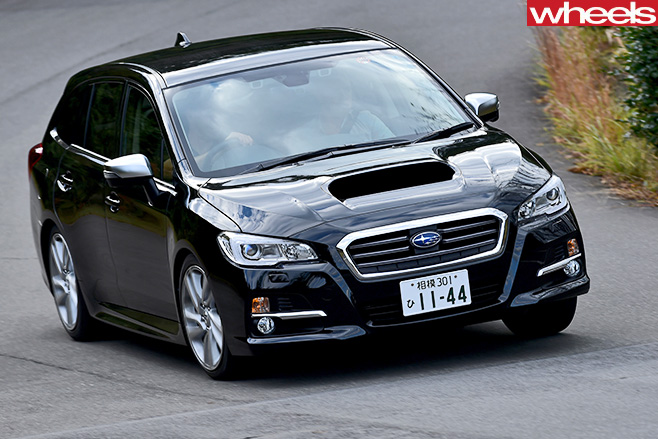
PLUS: Size, performance, handling, roadholding, practicality, design, versatility MINUS: No manual option, power drop for Oz versions, unadventurous Subaru cabin
THE WHEELS REVIEW BUILD it and they will come. Along with Kevin Costner’s classic Field of Dreams, 1989 also gave us the first Liberty, a quality midsizer that culminated in the sleek Mk4 of 2003 – until supersized Americans demanded something more bloated and blunter to take on Camry and co at the beginning of this decade.
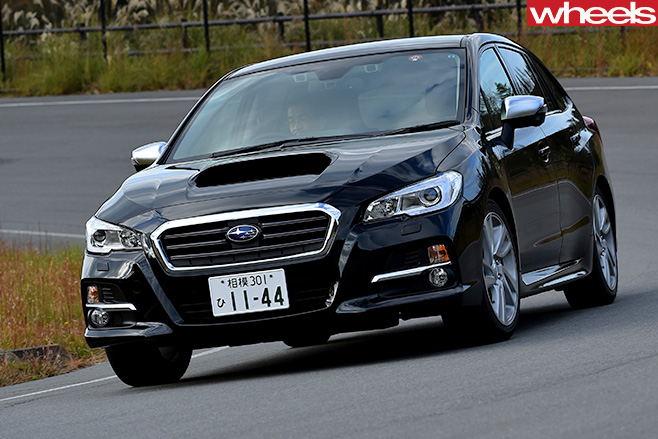
Now, Subaru hates us calling Levorg a WRX wagon, even though most panels up to the B-pillar are shared. As are the platform and running gear, including the 2.0-litre direct-injection four-cylinder turbo boxer, driving all four wheels (with a 55/45 rear-axle bias) through the company’s Lineartronic CVT. Why? The clue lies in the lack of gearbox choice. Though fundamentally identical in suspension set-up (struts up front, double wishbones behind), including the same dampers and (electric) steering ratio, the newcomer has been tuned for greater comfort, in line with consumer expectations. Oz-bound examples might even include Bilstein shockers. GT Spec.B Subies are back!
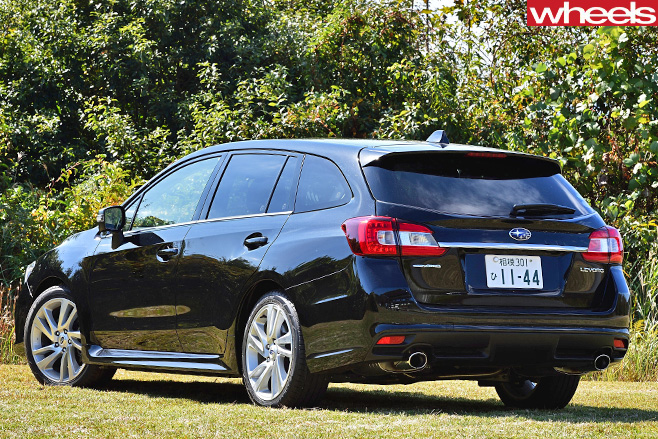
Sampling it over a few laps of the Japanese Olympic bicycle racing team training centre – a smooth but twisting 5km course – in 221kW home-spec GT and flagship GT-S guises revealed little about the Levorg’s ride. It felt comfortable and quiet, but the fluid steering, impressively flat cornering attitude, and muscular acceleration would seem incredibly similar to those familiar with the reactive and involving WRX. The oddball venue stymied the expected rawness and drama derived from the Subaru performance icon, but its uniquely satisfying urge, punch, and intoxicating verve are certainly present, and in spadefuls. It only left us wanting more, but the drive day precluded any public road experience. Note, however, that ours will only develop 201kW. Still, roll on winter 2016.
The Levorg’s athletic intent is reflected in the wide wheel-arch stance and sleeker silhouette compared to any previous Liberty equivalent, but standing beside today’s Mk6 Outback – the only wagon the brand currently offers – its medium-sized packaging is evident, with ample space for four adults and their gear. Dimensionally speaking, cabin room is slightly ahead of the classic Liberty overall, with a cargo capacity to rival the lardier Mk5 to boot.
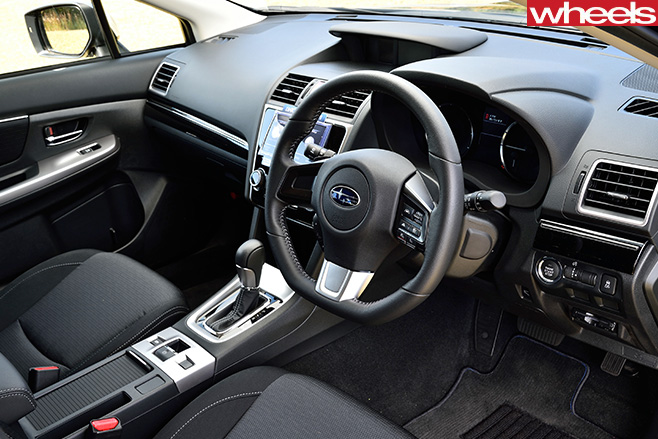
And that’s what the Levorg will be all about – a return to European sports wagon values, underlined by the signature boxer-driven personality. Additional future iterations may edge the nameplate even closer to the old Liberty wagon heartland, but for now, this is a clarion call for loyalists to reconsider the Japanese brand’s sporty credentials. Subaru has built it. Let’s see if they come.
SPECS Model: Subaru Levorg 2.0 DIT Engine: 1998cc 4-cyl, dohc, 16v, turbo Max power: 221kW @ 5600rpm Max torque: 400Nm @ 2000-4800rpm Transmission: 1-speed CVT Weight: 1570kg 0-100km/h: 6.2sec (approximate) Fuel economy: 7.6L/100km Price: From $45,000 (estimate) On sale: June 2016
