
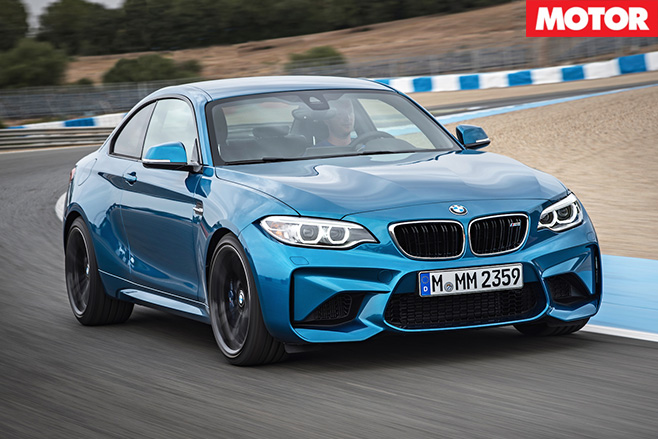
Hear that sound? It’s the bark of the long-awaited BMW M2 joining the fight against the Audi RS3 and Mercedes-AMG A45.
This flagship 2 Series is a proper M-car – not a diluted M Performance model like the M235i – and although it is late to the party, it’s ready to join the ‘low four second’ club on its own terms. Unlike those five-door, four-cylinder all-wheel drive rivals, the M2 is a true BMW with rear-wheel drive, six-cylinder engine and six-speed manual transmission.
The 3.0-litre twin-scroll turbocharged six-cylinder engine has had components pinched from its M3/M4 big brothers, such as a forged steel crankshaft, pistons with an adapted top ring and high power spark plugs.
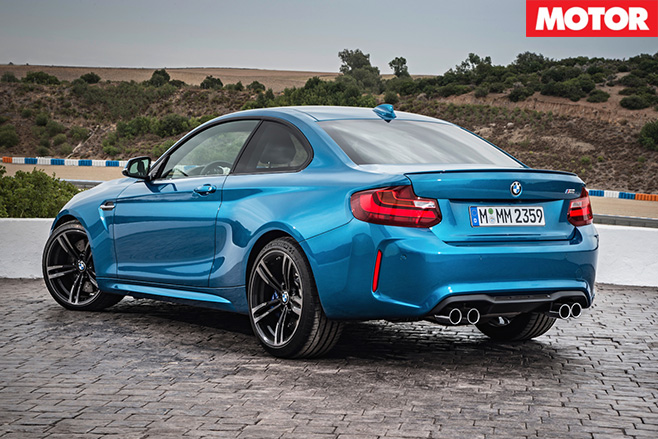
Zero to 100km/h is rated at 4.3 seconds for the optional seven-speed dual-clutch automatic that exclusively gets launch control (manual: 4.5sec). The auto’s time matches an RS3 while being a tenth off the A45. A 250km/h top speed is standard, 270km/h optional.
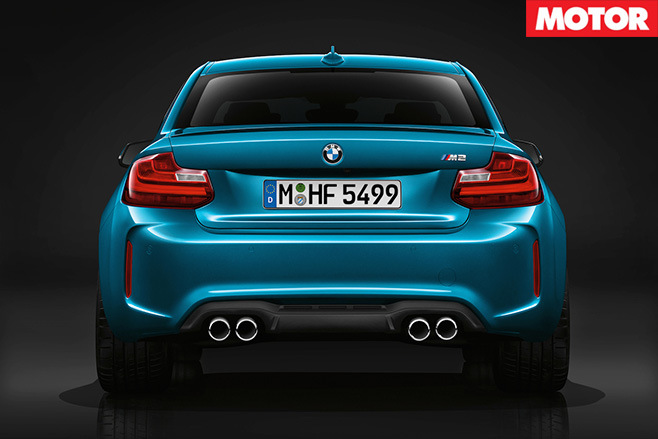
Thanks to those lightweight changes, the M2 only weighs 25kg more than an M235i, at 1495kg. Yet its body is a whole lot fatter (the buff body is 80mm wider) to accommodate front and rear tracks pushed out by 63mm and 67mm respectively. The heavily sculpted front bar gets ‘air curtains’ that are said to improve downforce by 35 per cent compared with other 2 Series coupes.
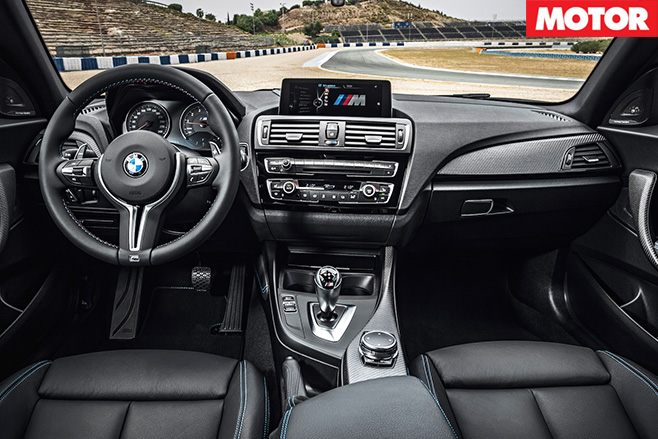
Quad exhaust with mechanical flaps alter the sound of the six through different settings in the Driving Experience Control switch inside, while 19-inch alloys (with 245mm front/265mm rear Michelin Pilot Super Sport tyres) help get grunt to the ground. Or not…
The M2 comes with what BMW calls a Smokey Burnout function that, “invited the driver to indulge in a degree of rear wheel spin while the car is moving at low speeds”. A degree? Sure thing, Munich.
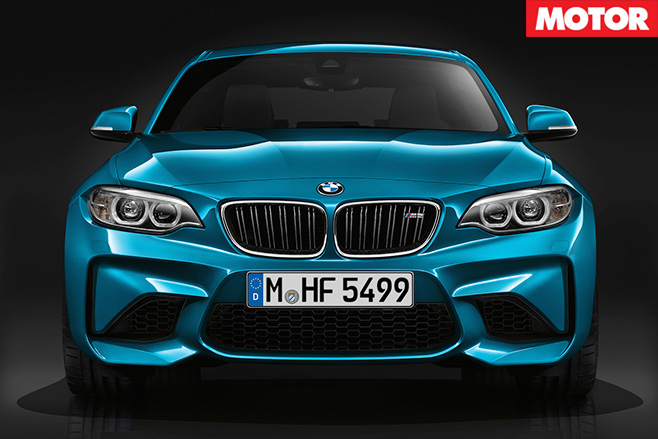
Clamping the M2 down are four-piston, 380mm front/two-piston, 370mm rear ventilated disc brakes.
BMW acknowledges the M2’s ancestry that includes the delinquent (our words, not theirs) limited edition 1M and original E30 M3. The M2 is not a limited edition, though, and BMW Australia says it is fighting to have the flagship coupe here by the first quarter of 2016, or the first half at the latest.
Meet the Ferrari F12tdf. Don’t make it angry, though, because it will probably tear your head off.
The name is short for Tour de France, the legendary road race (not the cycling epic) that Ferrari dominated in the 1950s and ’60s, and this special edition F12 (799 to be built) is one hell of a tribute.
Think of it as an F12 that’s had the Speciale treatment and you won’t be far off. Every part of the car has received attention, but we have to start with the engine.
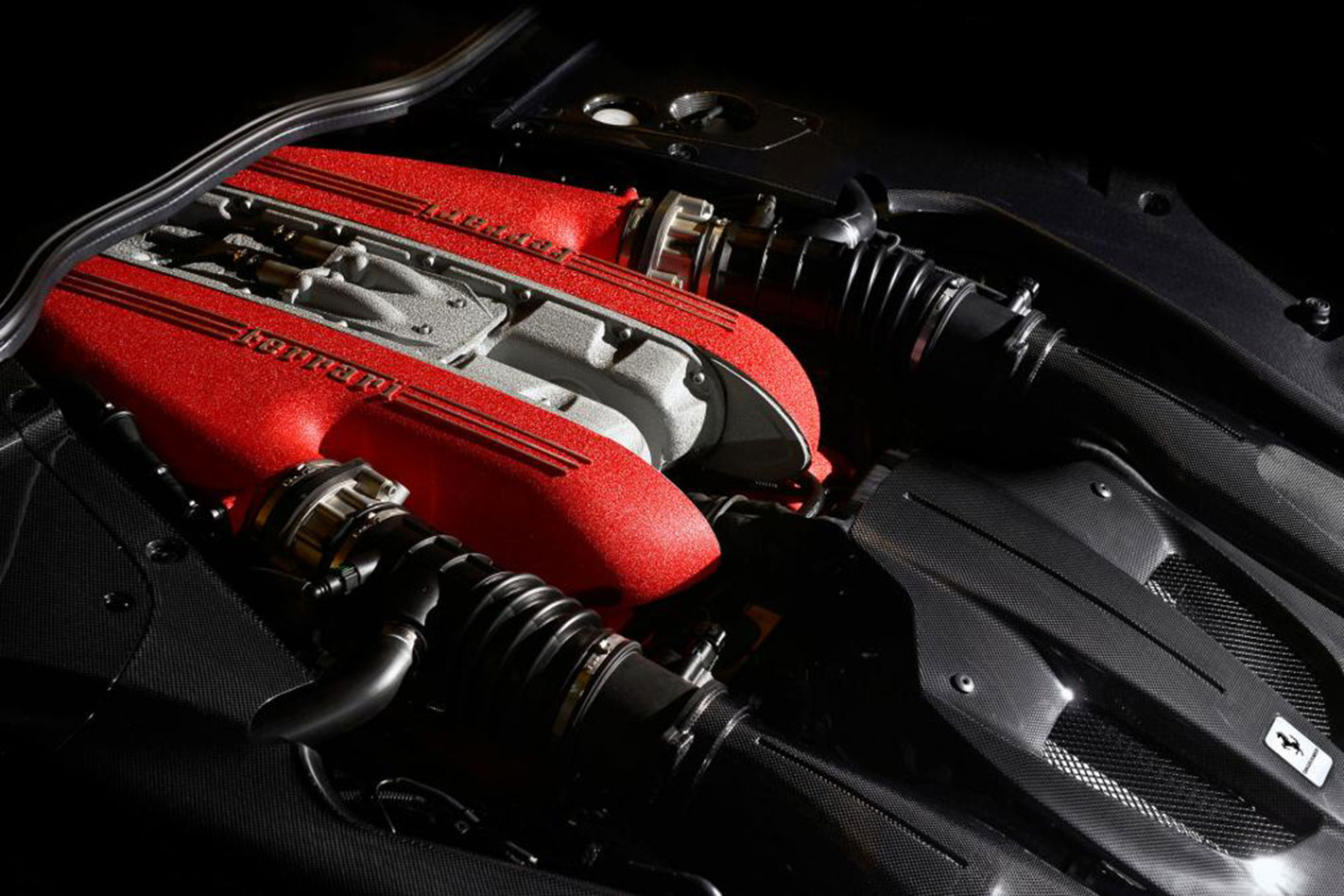
Combine this phenomenal power with a kerb weight of just 1520kg, 110kg less than the regular F12, and performance is startling.
Nought to 100km/h takes a traction-limited 2.9sec, but 200km/h disappears just five seconds later and the top speed is “over 340km/h”. That’s probably less than the standard F12, because the tdf generates 30 per cent more downforce.

The chassis has had a makeover, too. As well as the significant weight reduction there are wider front tyres (now 275mm) and rear-wheel steering appears on a Ferrari for the first time.

The net result is a Fiorano lap time of 1min21sec, only 1.3sec behind the LaFerrari hypercar. No word on price, but given its limited edition status we’d suspect that most if not all are already spoken for by Ferrari’s favourite customers.
How does a BMW 435i coupe with 600Nm of torque and a 4.2sec 0-100km/h sound to you? Something like a BMW M4, you might answer.
Where the halo M4 only gets 550Nm, however, the 435i as tuned by German company Alpina can produce 50Nm more, although with 301kW of power (versus the M-car’s 317kW) it is a tenth slower to 100km/h.
The Alpina BMW B4 bi-turbo coupe, as the tuned 435i is known overseas, is on the cards for an Australian introduction. Alpina is an individual company, but is BMW factory-backed with full warranty support. That’s why BMW Australia is keen to see the introduction of this very niche sports brand and it is currently in the early stages of a feasibility study and local testing.
“There has been a [Alpina] vehicle brought into the country,” confirmed BMW Australia corporate communications manager Lenore Fletcher.
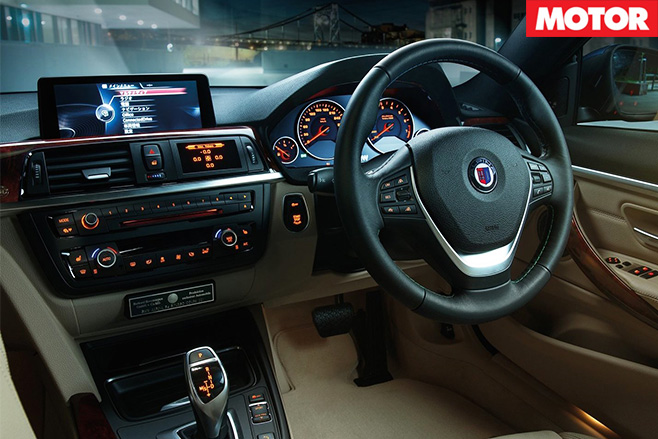
Asked whether Alpina could tread on the toes of some BMW M cars, Fletcher replied, “I think that would depend on the business model and how the entire operation is set-up, and that is something we’re looking at at the moment.
“It is possible to do this and it is possible to bring the two [Alpina and M] in. One of the things we are renowned for is offering our customers a choice, and I think this really falls under that umbrella.”
With the 435i coupe priced at $108,140 and the M4 coupe retailing from $149,900, it leaves a $40K gap in which the Alpina BMW B4 bi-turbo coupe can play.
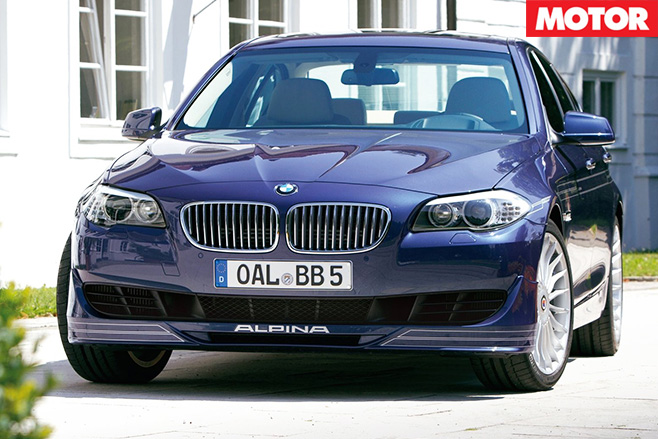
An eight-speed automatic is the only option, an Akropovic exhaust helps the six sound fruitier, while 20-inch tyres assist in putting grunt to the ground at the rear.
Other Alpina productions for consideration include the 550i-based BMW Alpina B7 bi-turbo with an M5-beating 700Nm as well as 373kW from a tuned 4.4-litre twin-turbo V8. The 550i has been dropped from our market, largely replaced by the new $185,000 M5 Pure Edition.
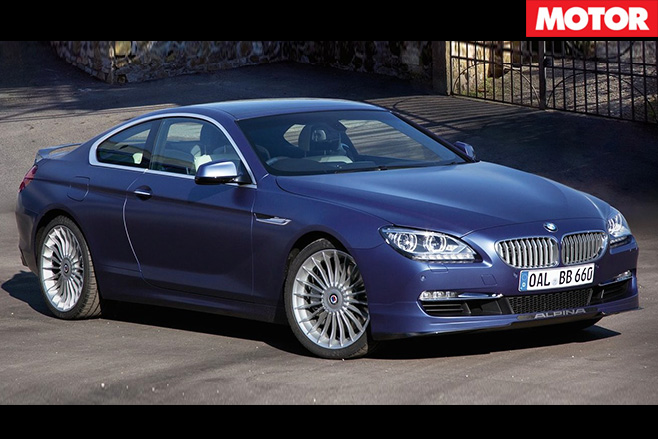
If history counts for anything Peugeot knows how to make a hot hatch.
Some would say it’s responsible for the greatest hot hatch ever, the legendary 205 GTi, which went and ruined everything for all the other hot hatches when it showed up in 1984.
Peugeot nutters might claim the closest the brand’s got to capturing the spirit of the 205 is the 1996 306 GTi-6 – with a close-ratio six speed ’box and a rorty 131kW 2.0-litre engine, it was sublime.
The latest of this particular, larger hot hatch dynasty is this – the 308 GTi. It’s got a lot to live up to.
Peugeot (its engineers, at least) openly declare war on Golf GTI with its latest hot hatch, but include in their list of rivals Ford Focus RS, Civic Type R and, in Europe at least, Seat Leon Cupra. (But curiously not the current Megane as they correctly point out an all-new one isn’t far off.)
Peugeot’s taken the 308 GT, lowered it 11mm, given it new, angrier front bar and wheels, completely revised the suspension and prepared a pair of wicked-up engine tunes. But crucially, to the hero model at least, it’s fitted a proper mechanical front limited slip differential.
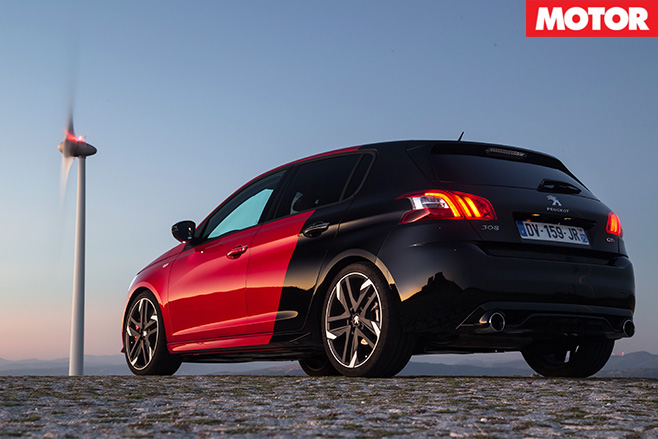
They both boast 330Nm from 1900rpm, but the 250’s torque runs out at 4000rpm to the 270’s 5500rpm, and the 250 has 184 kilowatts to the 270’s 200. The 270 does 0-100km/h in 6.0sec, 0.2 faster than the 250.
We only drove the 270 on the international launch in Portugal but we suspect the snugger seats, more aggro tyres and particularly the differential – all things the 250 doesn’t have – will make more of a difference to the driving experience than the power might.
From driving it, it’s clear Peugeot engineers weren’t going to compromise on performance in the name of refinement, at least in 270 guise.
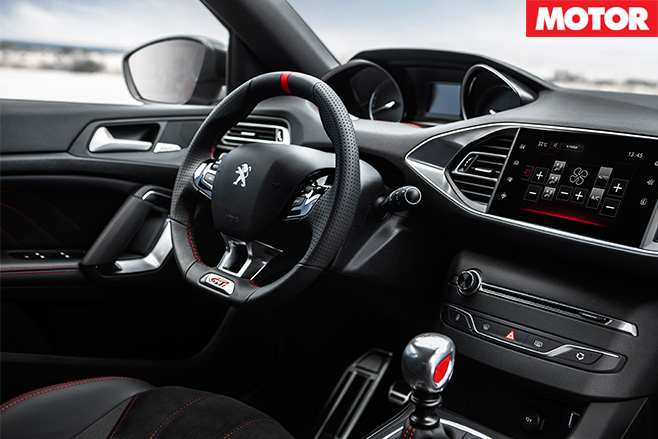
But hammer into your first corner and the 308 GTi sits remarkably flat and offers up a generous reserve of mid-corner grip.
The diff lets you blast out of bends aggressively and encourages a rhythm of neck-wringing that befits a proper hot hatch.
Other pluses include the steering, which is one of the nicer electric systems we’ve used lately. And the engine – flexible right across the rev range, and punchy. The grunt is certainly decent.
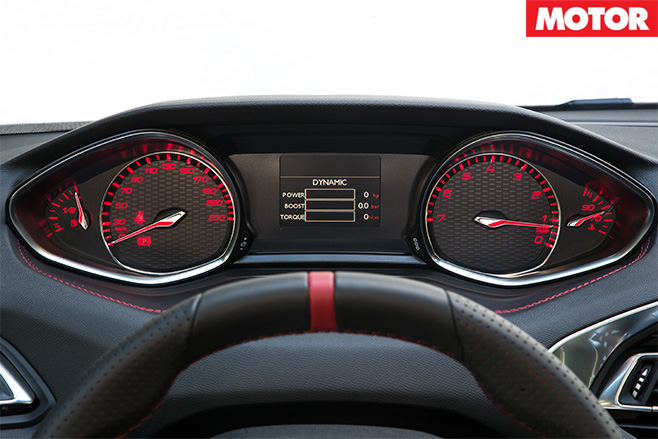
Peugeot plumbs fake engine noise through the stereo in ‘Sport’ mode which adds to the drama, but it’s obviously fake. The car sounds better from the outside.
At least you can put the windows down and enjoy some turbo whistle and a little blow-off-valve sneeze.
On track the Pilot Super Sport tyres start to make a lot of sense, with a delicious reserve of available grip letting you carry more and more mid-corner speed. And the diff really comes into its own – none of this frustrating inside-spinning wheel malarkey here.
In fact, on track the 308 GTi is a bit of weapon. It’s got enough grunt to keep the knuckles white down the straights, and brakes such that you’ll be going deeper and deeper past your braking markers with each lap.
Turn the ESP off and it gets a bit feral, spinning up both front wheels fairly easily. But generally the 308 GTi is more planted than playful, showing off some mid-corner adjustability with a throttle lift but without the homicidal oversteer of a Focus ST or Renault Sport Megane.
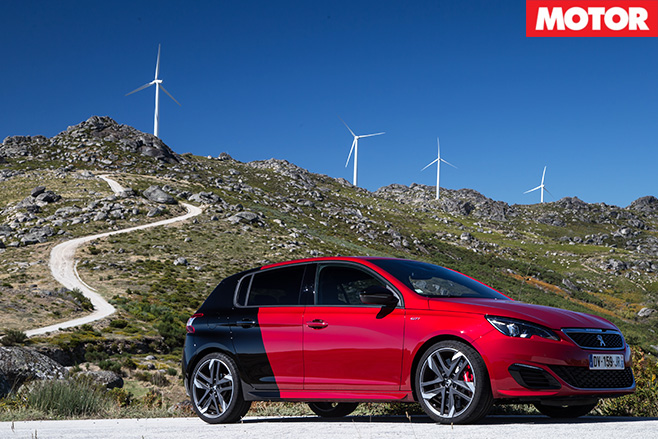
4 out of 5
Engine: 1598cc inline-4, DOHC, 16v, turbo Power: 200kW at 6000rpm Torque: 330Nm at 1900-5500rpm Weight: 1204kg 0-100km/h: 6.0sec Price: $50,000 (estimated)
A biff between Porsche’s 918 Spyder, the LaFerrari, and McLaren’s P1, a trio otherwise known as the ‘Holy Trinity’, has been difficult to stage.
Well, at least for automotive media. One company is well known to never let journalists possibly expose its product as inferior with objective testing.
Not even BBC’s TopGear could bag the three for a track test.
Paul Bailey, though, isn’t one to be intimidated. Nor paled by the AU$5.9m (converted) price tag of these three supercars, as the telephone company millionaire bought and brought all three to UK’s Silverstone circuit with a race car driver and video crew for a definitive showdown.
British touring car driver Matt Jackson was the man given the envious task of wringing every last tenth from them. And in the end, McLaren’s P1 pipped both the Porsche and Ferrari, with all three cars separated by less than half a second.
However, before you make conclusions, it is worth noting the McLaren was wearing Pirelli P Zero Trofeo R tyres, not the P Zero Corsas it sports as standard.
Nor does this story end here. With Jeremy Clarkson’s new series reported to have conducted a test between the ‘Holy Trinity’ of supercars as well, it seems we’ll have a chance to see how these cars perform on a different day and surface very, very soon.
Surely a softer Lotus Exige is a bit like the McDonald’s healthy choice menu – the answer to a question no one was asking.
But don’t worry, tweaking the suspension and losing the roof hasn’t turned the Exige S into a sofa on wheels, it’s still hardcore and still lives for the racetrack.
Fortunately, Lotus arranged a private testing facility for the car’s launch, though sadly the weather on the day would’ve had Noah readying the ark. So can I tell you the altered camber settings and larger rear anti-roll bar have subtly softened the Exige’s character? No, I was too busy trying to stay alive.
What can be confirmed is that, thanks to the Exige being designed with the soft-top in mind, losing the roof hasn’t harmed its ability in any way. It may have even enhanced it – the Roadster’s fabric cover cuts weight by 10kg in the very place of most benefit. Certainly, 1166kg isn’t much to shift when there’s a 258kW/400Nm 3.5-litre supercharged V6 providing the push.
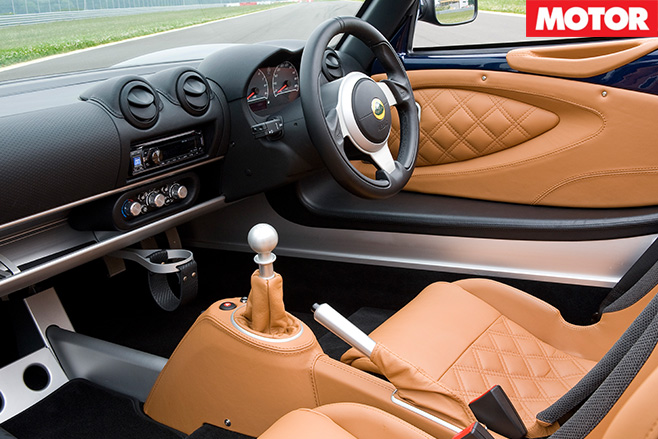
Race mode also raises the ESP intervention point to ‘oops, almost crashed’ levels and allows the engine to make its presence felt in another way. Trail the brakes or lift the throttle in a slow corner and the back quickly swings around, requiring swift reflexes, some serious effort (due to the lack of power steering) and a dose of luck to catch before slamming into a wall. And in a fast corner? Don’t lift. Just don’t.
Driven with more restraint, the Exige’s Pirelli P Zero Corsas extract huge grip from even a soaking wet surface (though they struggle with standing water), and the unassisted steering feeds a beautiful stream of information to your fingertips. And the brakes are superb.
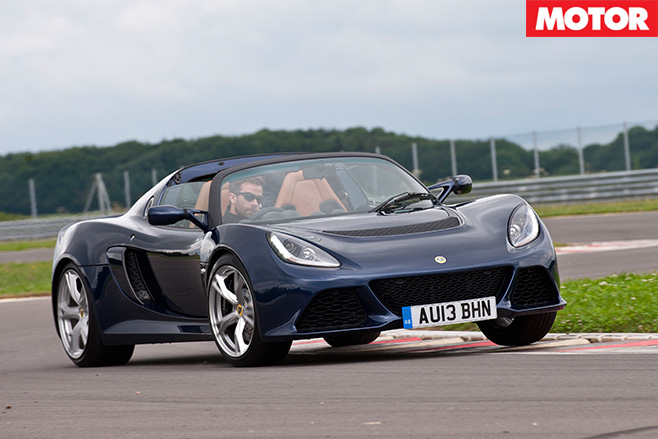
A drive on road will reveal just how much compromise is required for day-to-day use, but on first impressions the slightly softer, yet every bit as exhilarating, Exige S Roadster appears to be the healthy choice.
4/5
Specs:
Engine: 3456cc V6, DOHC, 24v, supercharger Power: 258kW @ 7000rpm Torque: 400Nm @ 4500rpm Weight: 1166kg 0-100km/h: 4.0sec (claimed) Price: $126,990
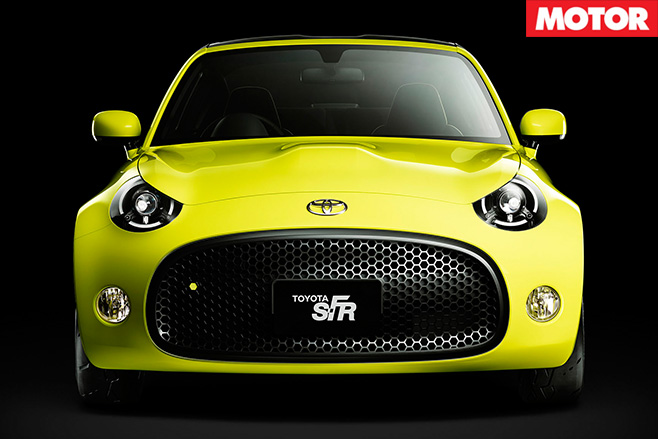
Behind the distinctly Japanese styling lies a fresh modular rear-wheel drive architecture that could spawn more variants driving what enthusiasts often tag the ‘correct’ wheels.
Better, a six-speed manual transmission is standard, though Toyota isn’t actually saying what engine powers the S-FR that will debut at the Tokyo motor show next month.
Either way, the 86 could soon have a smaller sibling. At 3.9 metres long it stops 242mm shorter than the current production Toyota coupe, while its 1.695m width makes it 85mm narrower.
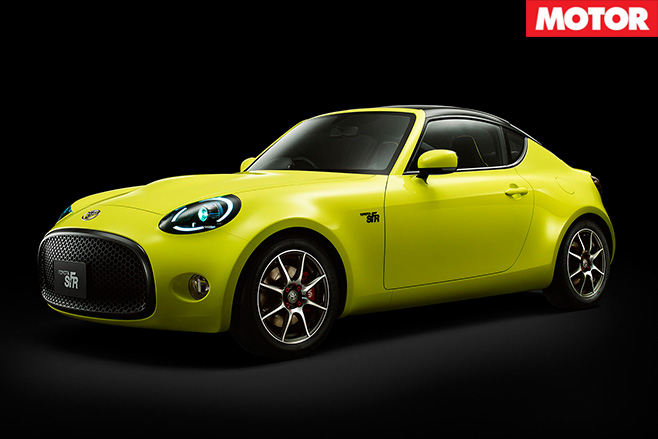
“Pitched as an entry-level model, the new concept emphasizes responsiveness, and aims to make a whole new generation fall in love with driving,” the company statement continues, which sounds a) fantastic; and b) like Toyota chief and driving enthusiast Akio Toyoda hasn’t lied when he said he wants the brand to offer more fun-to-drive cars.
“The concept’s compact body is incredibly light, yet offers a smooth driving style,” the statement continues.
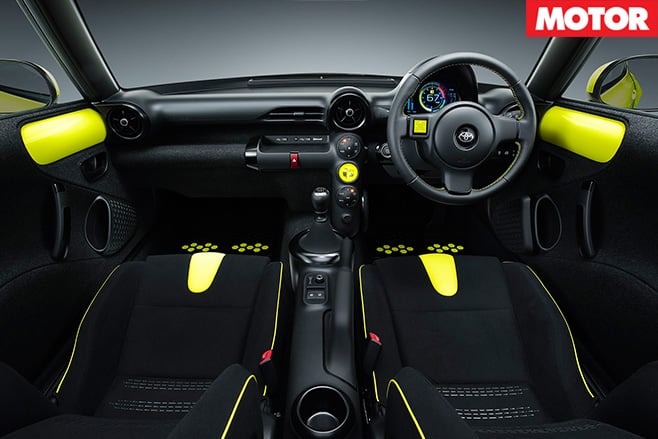
“Benefiting from the unique advantages of a lightweight sports car, the concept offers smooth, responsive and direct handling that gives a real sense of communication between car and driver – one key benefit of the FR (front engine/rear drive) format.”
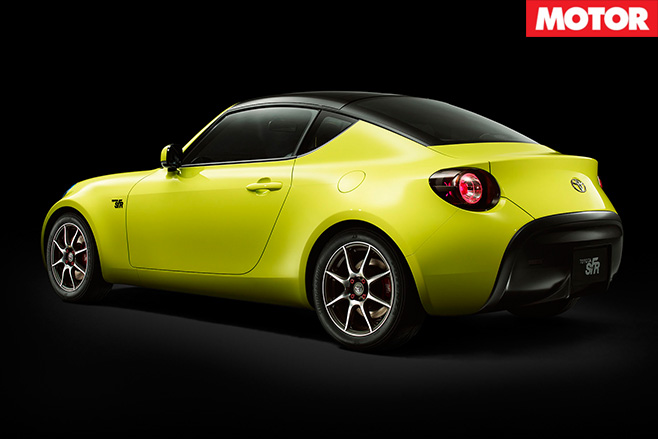
Sounds like a Mazda MX-5 fanbase, then, and with the new model tinier than an 86 and weighing a smidge over 1000kg, it appears the cutesy S-FR could target that Japanese rival with even cheaper pricing.
So, there’s half a can of coke, a rubber band and old pair of shoes scattered in the front passenger footwell that you’ve been meaning to toss out. Before you do, hear us out, we have a better idea! What if each item could be converted into a handy tool for your car? Here are 10 car hacks that would make MacGyver proud!
1. SNEAKER CUP-HOLDER
A sneaker has a grippy sole and a snug fit, so it’s perfect for nursing a cup of coffee. Spills? No worries, the cushioning fabric will absorb the liquid and you can throw the whole shoe in the wash. Just don’t use your best pair of Reeboks.
2. PLUNGE YOUR DENTS
If there’s a small dent in your panel, then put a toilet plunger to use and pop the metal back into shape. It won’t work on larger prangs or plastic. It’s obvious, but the best ideas often are.
3. TOOTHPASTE FOR EXTRA SHINE

If your headlight covers have taken on the cloudy demeanour of an old wine glass, fret not! Smear the plastic with toothpaste and give it a good rub. Wash off with cold water, dry and let there be light!
4. REMOTE GUIDE
Anyone who has lost their car in a parking lot (and that’s probably many of you) will appreciate this one. The range of your key fob is increased by a couple of car lengths if you hold the fob under your chin or by your head, as the fluids in your head act as a conductor to help increase your key’s wireless range.
5. DEODORISE YOUR CAR WITH COFFEE
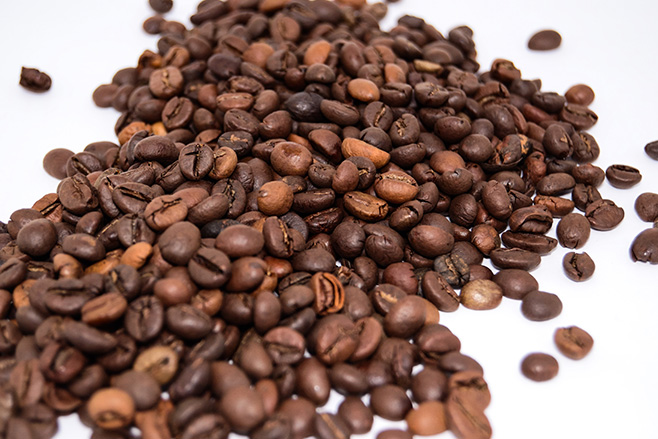
This is a great trick learned from truck drivers who use open coffee pods to deodorise their trucks. Pop an open pod in the front and another in the rear and leave them for 2-3 days. Voila, the nasty onion stench will be gone and the car will have the delicious aroma of fresh coffee.
6. COKE CLEAN-UP
If you can’t stomach a full can of coke, add some dishwashing detergent to the left-overs and use it to clean your car tyres to a high shine.
7. RUBBER BAND-AID

This is genius. Loop the rubber band through a vent so that both ends protrude and slip your phone into the loops. If you keep losing the bands into the vent, use a bulldog clip to hold in place. This is a perfect dash-level location if you use your phone for its GPS.
8. ORGANISE YOUR REAR SEAT STORAGE WITH A SHOE ORGANISER
Maps, magazines, toys, bottles and pencils all store vertically in front of the rear passenger. You can style this to match your audience: use a back-of-door clear toiletry hanger for on-the-run make-up, or go tough and edgy with the leather pouches from a tool belt.
9. SEAT-WARM YOUR PIZZA
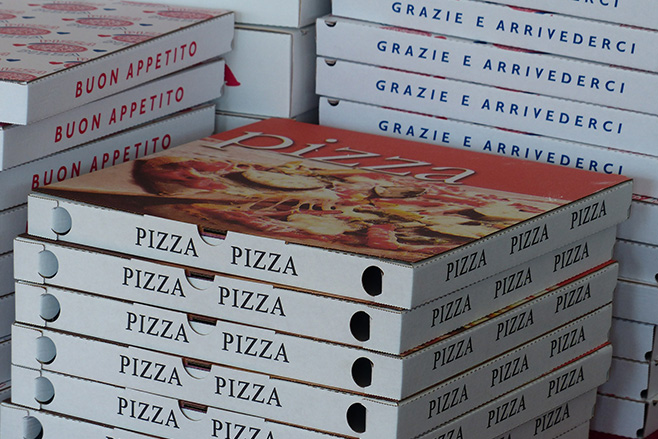
Takeaway will stay warmer if you turn the seat warmer on the front passenger seat to max heat. It’s probably one of the only times it’ll actually get used.
10. TISSUE CUP
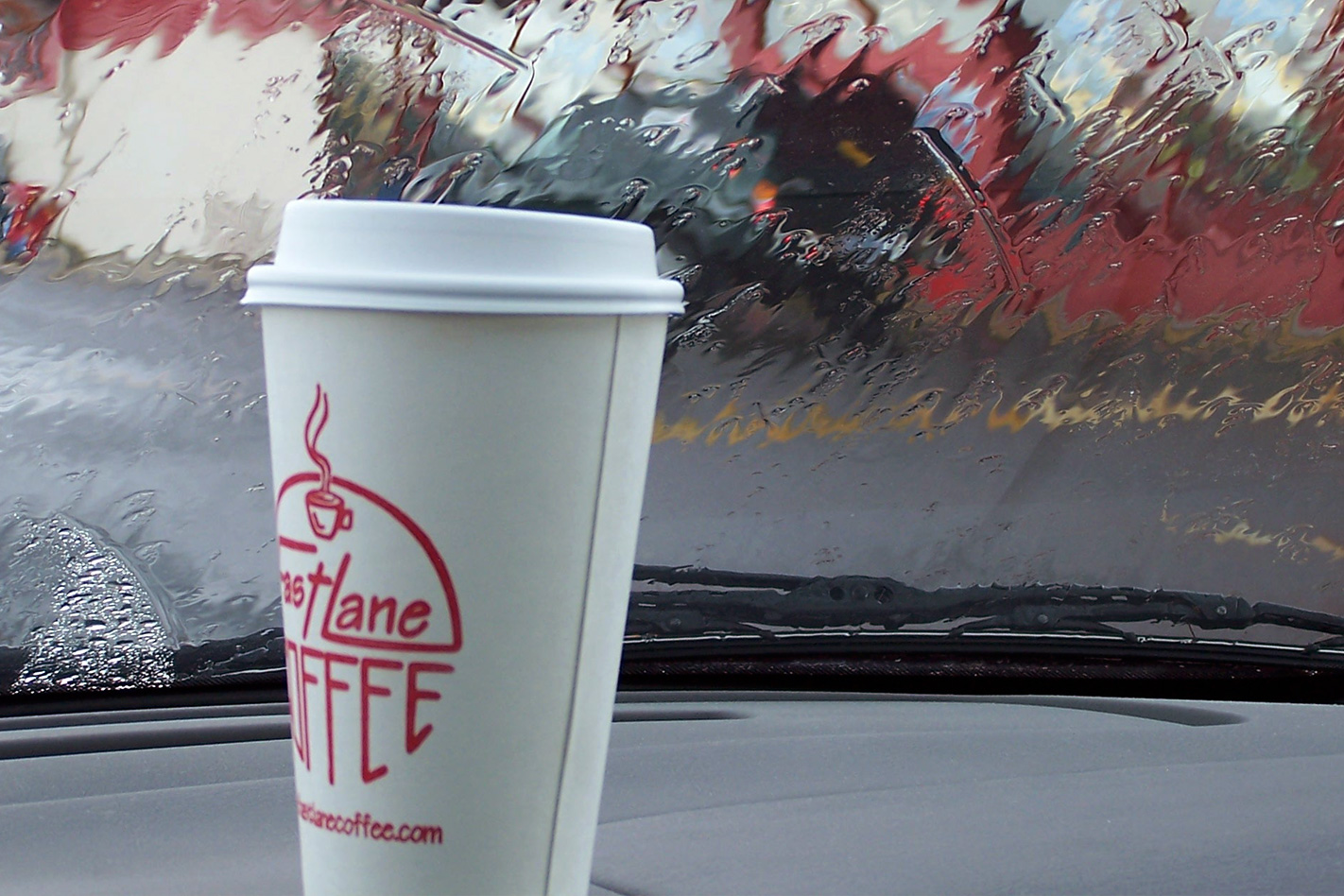
Remove tissues from their box and pop them into a disposable coffee cup. Cut a slot in the top of the lid and you have tissues perfectly positioned in your cup holder. This also works for Wet Ones – because its packaging never fits a cup holder – or doggy clean-up bags, if you have dumpy pooches in tow.
SEEKING a scorching weekend in a sports car, but don’t have the garage to make it a reality?
If you can’t bring bundles of sponsorship dollars to buy a race seat, a supercar remains a driveway pipedream, or even a hot-hatch would burn your budget, then here are six ways you can slip into a scorcher for the weekend – either in Australia or overseas on hols.
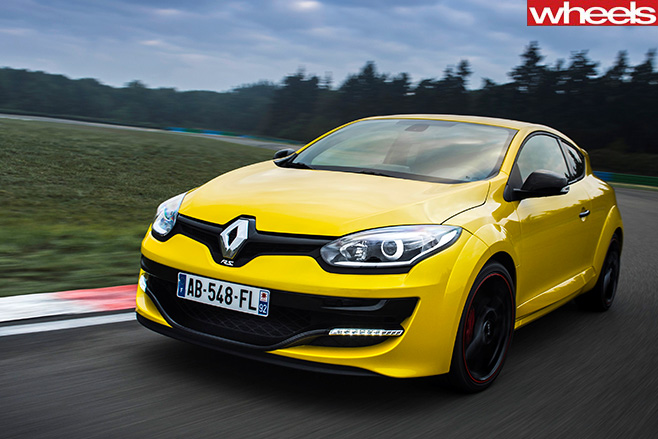
HOT-HATCH
FORMULA FORD
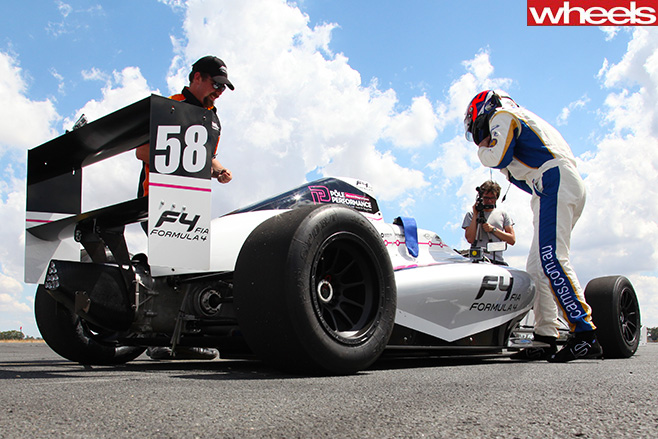
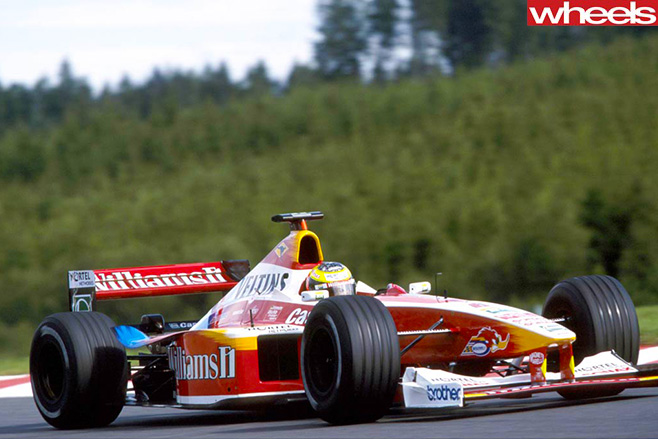
FORMULA ONE CAR
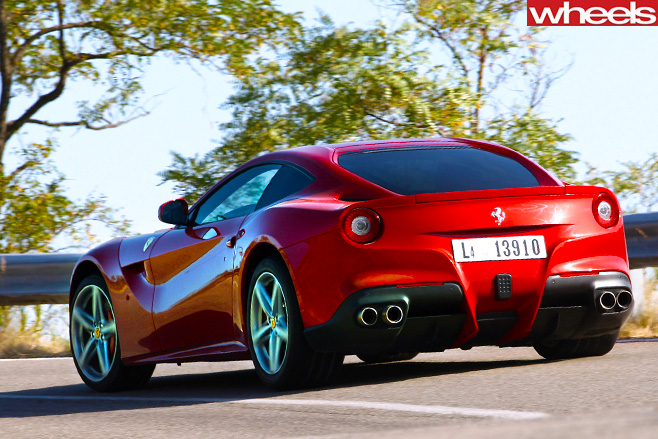
MEGA FLEET
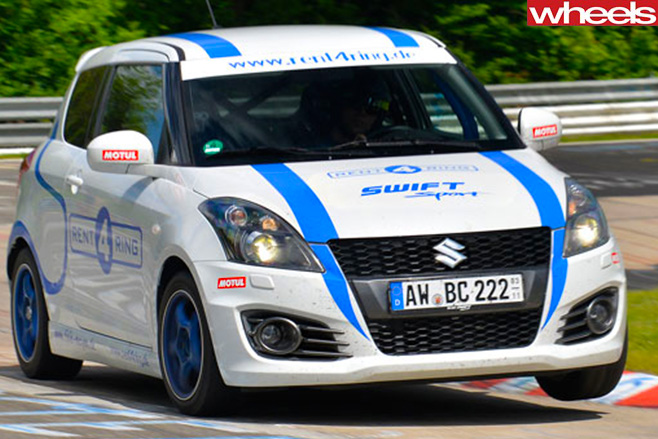
’RING RACER
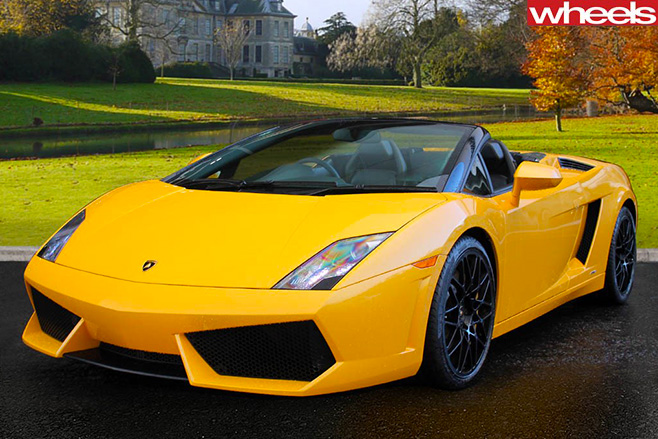
SUPERCAR
F1: From Russia, without much love
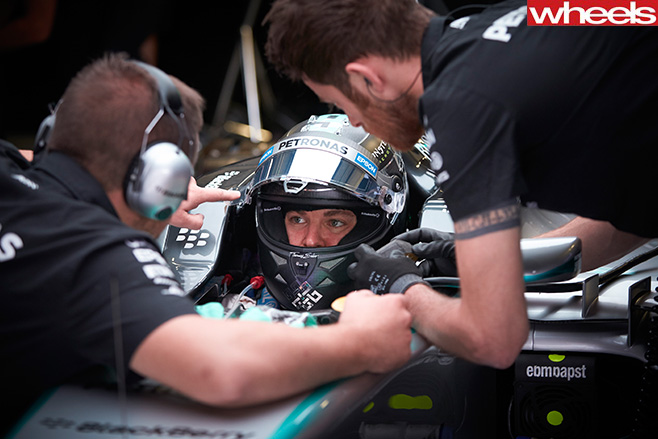
LEWIS Hamilton extended his grasp on the Formula One championship overnight, winning a drama-filled race at one of the sport’s most lacklustre circuits.
In the lead-up to the race, Nico Rosberg took pole comfortably, leaving Lewis Hamilton slightly thoughtful. Valtteri Bottas was third in the Williams, ahead of the Ferraris but teammate Felipe Massa was way back in 15th. Daniel Ricciardo qualified about where he reckoned he should, in 10th.
Hamilton then took up his usual position in P1, followed by the quick Williams of Bottas and the Ferrari of Sebastian Vettel, who won a feisty duel with Kimi Raikkonen.
Romain Grosjean crashed out heavily in the early stages.
Vettel zeroed in on Bottas, who dived for the pits and new Pirellis.
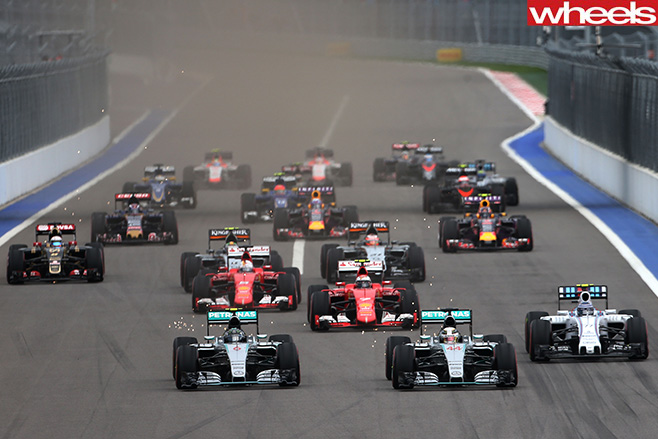
Bottas steamed by Ricciardo, but the Red Bull star kept Raikkonen at bay until his suspension broke.
Through it all was Force India’s Sergio Perez, who managed his tyres wonderfully in third ahead of more fancied drivers. Then, with the laps disappearing, Bottas finally powered by.
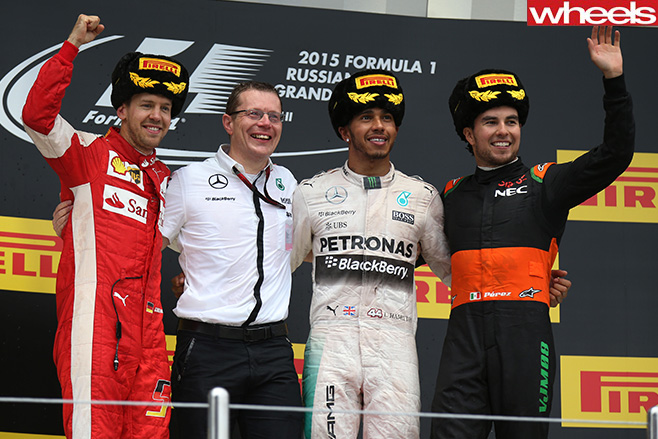
Hamilton won again from Vettel and Perez. Not a bad couple of hours of motorsport, watched on by a couple of despots.
F1: What drives Renault?
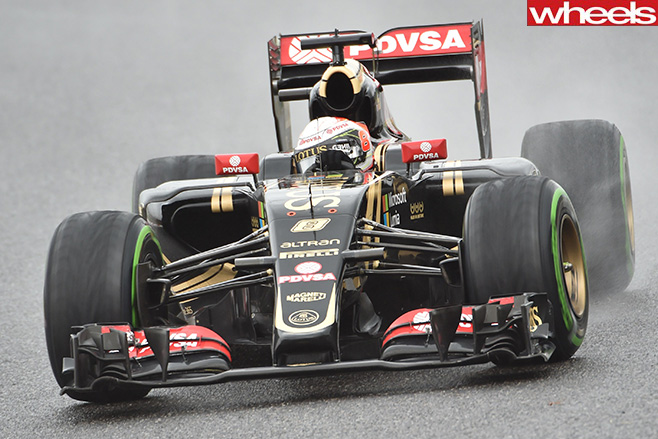
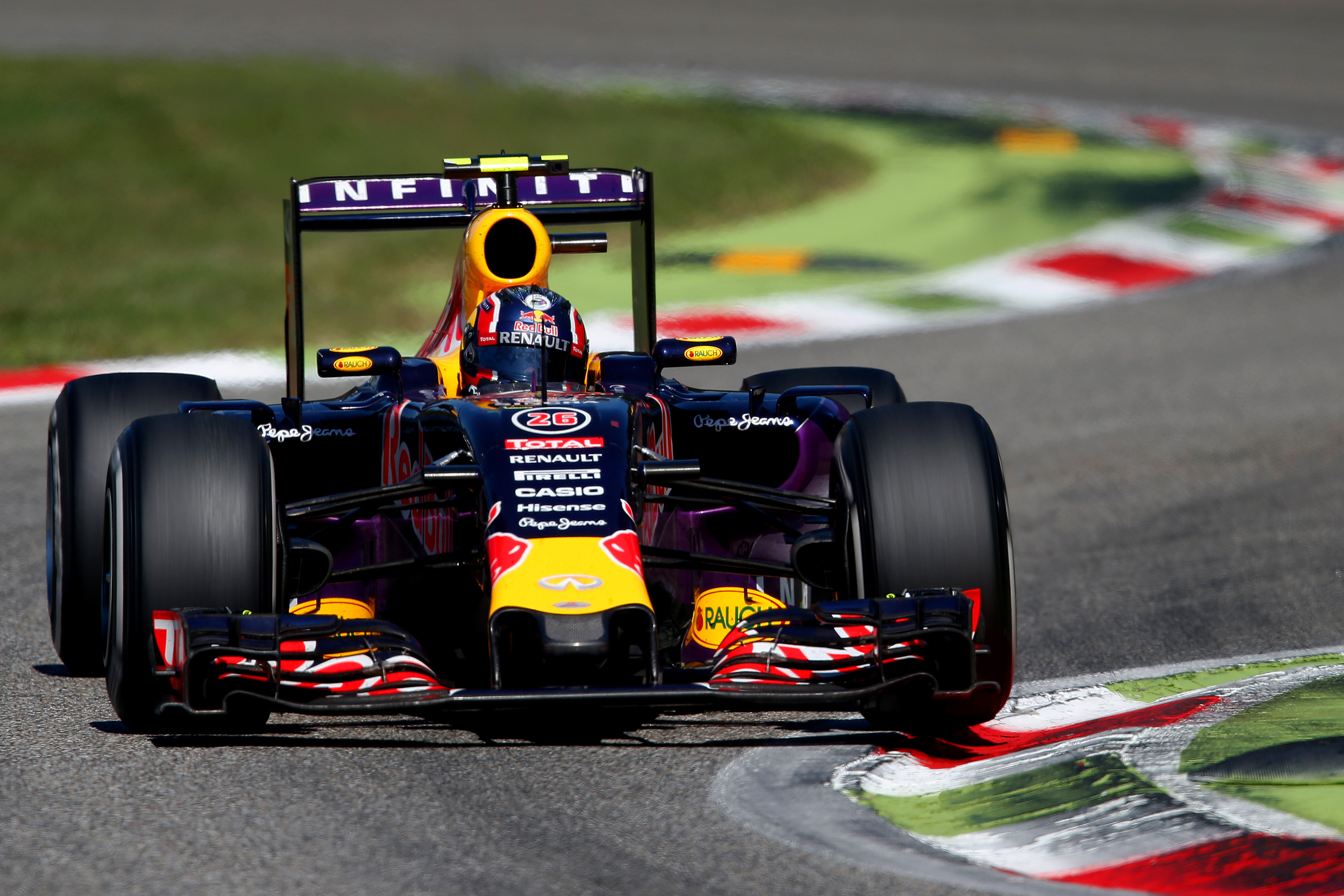
The big ongoing story, that of the power unit for Red Bull next year, remains unresolved, and is swinging somewhere (according to varying points of view) between positive negotiations and crisis point.
Ferrari has apparently ended negotiations to provide Red Bull with its dominant engines, even 2015 variants. Mercedes is simply too worried that the combination of the best engines with the best chassis with a couple of excellent drivers might be too threatening…
Another story suggests a desperate Red Bull has gone back to Renault cap in hand to seek forgiveness. A Renault engine, goes the theory, is way better than no engine.
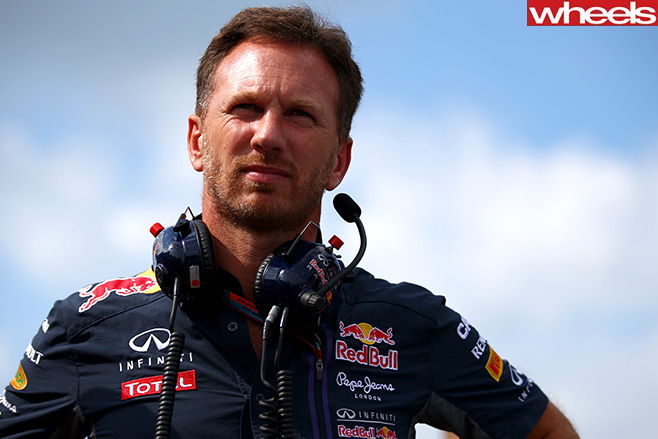
“Nothing is fixed,” said Red Bull’s Christian Horner. “We’re working on a number of different scenarios. Obviously Bernie [Ecclestone] is involved and he wants a solution.
“I believe we will find a solution. We need to, and hopefully one that is right for the team. There are lots of rumours. Pretty much everything is open.”
About staying with Renault, the subject of plenty of salvoes from the unhappy Horner in recent months: “We’re waiting to hear Renault’s plans for the future…. I want to see our cars on the grid and that means talking with all parties to ensure we’ll be on the grid next year.”
Now to matters of racing….
All teams went into the grand prix short of track time at Sochi, after practice sessions were curtailed variously by weather, a careless diesel drop and clean up, and on Saturday, a serious crash involving Toro Rosso’s Carlos Sainz Jr. He slammed into so-called safety barriers, some of which failed and enveloped him. Despite the brutal 46G impact, Sainz emerged okay, his car less so, though it made the Sunday grid.
WEC: Webber barges through for third straight win
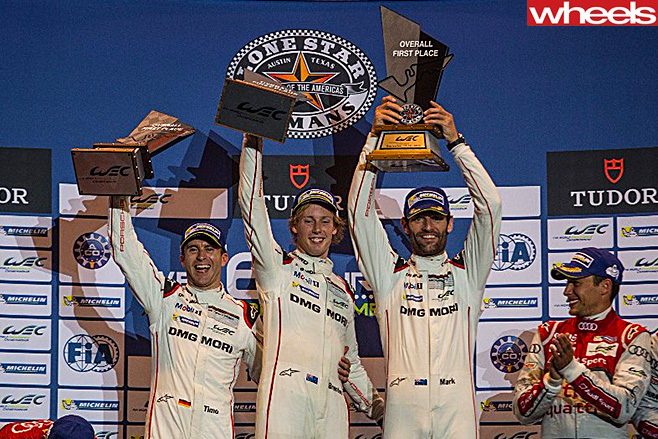
The first 40 minutes took place behind the safety car on a wet track with rain still falling.
After starting from pole, Webber and his mates went down a lap from a combination of a slip-up by the Aussie star when he ran wide on the first green flag lap, and the vagaries of full-course yellows and pit stops.
But sensitive to the championship situation, Porsche instructed the then leading #18 Porsche 919 Hybrid to drop back to second. Webber and his mates now lead the drivers’ championship by a single point.
Podium celebrations were rather muted. Did someone say the win was “hollow”?
