
Oops. Car manufacturer PR works in funny ways these days, what with ‘official’ spy shots and the like, but we’re fairly certain this wasn’t meant to happen.
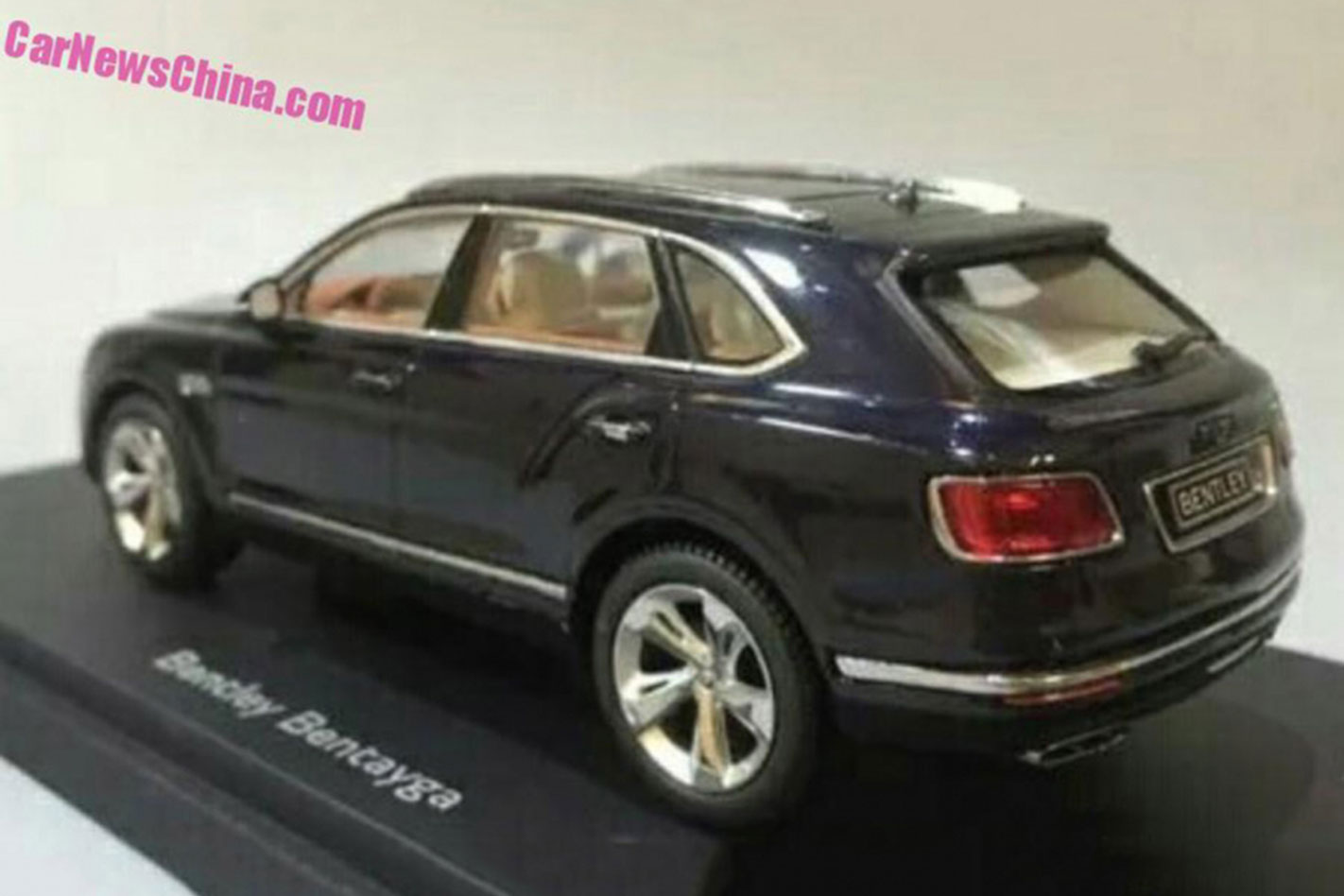
As first reported by Car News China, a Chinese toy manufacturer has revealed the new Bentley Bentayga SUV a month before its official reveal at the Frankfurt motor show.
Apparently, the models were being made to hand out to dealers and media and the manufacturer in question couldn’t quite manage to keep it a secret.
Initially shown as the EXP 9F concept at the 2012 Geneva motor show, heavy criticism of that car’s unusual looks has resulted in a much more conventional approach for the production car, with a Continental-inspired front and rear end similar to the Flying Spur.
Built on the same platform as Audi’s new Q7, the Bentayga will debut with Bentley’s new 447kW/900Nm 6.0-litre twin-turbo W12, which Bentley claims will make it the fastest SUV ever.
Later in its lifecycle, expect the 4.0-litre twin-turbo V8 found in the Continental to appear, as well as a turbodiesel – probably the 4.2-litre V8 unit found in the A8 – and Bentley’s first hybrid powertrain.
Bentley is also promising a massive lift in technology, including a head-up display, the latest connectivity features and a full suite of active safety gear, as shown in this teaser video released earlier this year.
We’ll bring you more Bentley news when the car is officially unveiled at next month’s Frankfurt motor show.
THE supercharged Jaguar V8 has a future under the bonnets of new models from the British maker.
Speaking at the launch of the 2016 Jaguar XF medium sedan in Spain, powertrain specialist John Pepperell said that the downsizing of Jaguar’s engines did not spell the end for its most potent and playful powerplant.
“It’s still a relevant engine to us,” Pepperell told Wheels.
“The general migration is for customers to downsize, but we think the V8 still has relevance for us. So we have no immediate plans to replace that engine.”
All three share variations of the same architecture.
Pepperall confirmed that the XF platform, codenamed D7A, was engineered for the V8.
“The platform protects for it,” he said, “[so] it’s an option.”
That means we could well see a V8 in one, two or all three new models – the XE, XF and F-Pace.
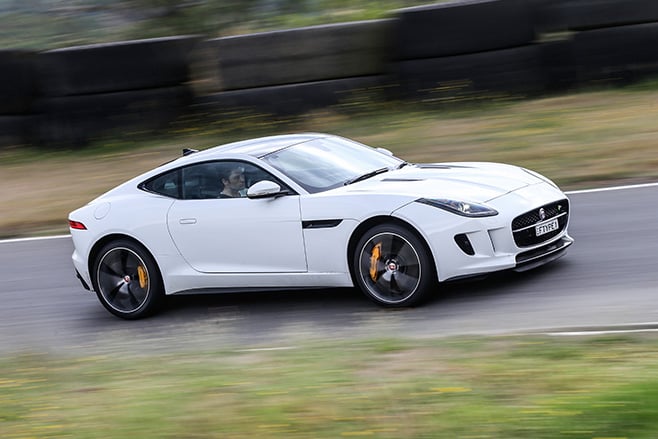
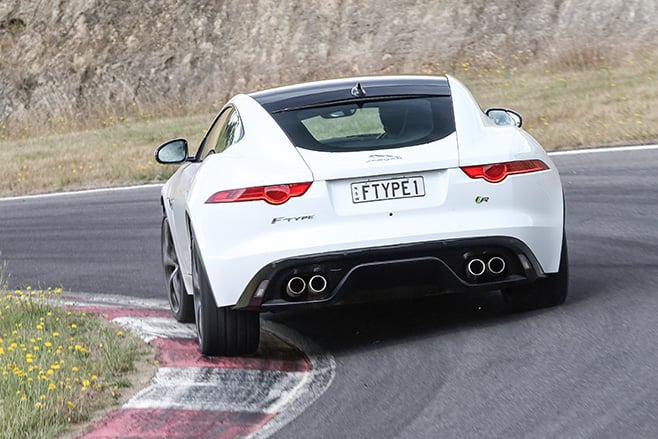
The supercharged V8 is currently offered across the Jaguar and Range Rover ranges. In the F-Type R Coupe it produces 404kW and 680Nm, giving the R a 300km/h top speed.
“Even if tomorrow’s six-cylinder engine replaces today’s eight-cylinder from a performance point of view, there’ll always be the customer who says ‘Okay, but the new eight-cylinder should be even better,’” Pepperall said.
Sign up here to receive the latest round-up of Wheels news, reviews and video highlights straight to your inbox each week.
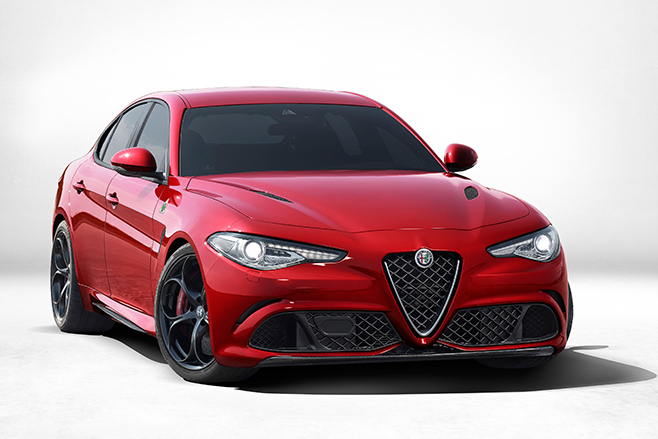
ALFA Romeo’s all-new Giulia, revealed in Milan on 24 June, is more than just a car. The four-door sedan is also the first step in a grand plan that, if successful, will revitalise the Italian brand.
This is one of the biggest plays the car industry will see in 2015.
Parent company Fiat Chrysler Automobiles plans to spend a staggering amount of money – 5 billion euros (about $7.3bn) – to transform Alfa Romeo into a brand capable of challenging German dominance in key premium segments.
The ambitious objective is to increase sales more than five-fold. Alfa Romeo sold only 75,000 cars globally in 2014. The declared aim is 400,000 by 2018.
The Giulia’s task is to take on the Audi A4, BMW 3 Series and Mercedes-Benz C-Class, as both a sedan and a wagon. It will be joined by other models to compete with Audi, BMW and Mercedes-Benz.
Much of the investment in Alfa’s renaissance has gone into to compete with the big three German premium brands.
First in line after the Giulia will be a compact premium SUV to compete with the Q5, X3 and Mercedes’ brand-new GLC. It’s scheduled to appear in 2016. A large sedan and SUV (in late 2016) will follow, along with a pair of replacements for the current front-drive Giulietta hatch, plus a halo model, probably a sporty coupe.
Much of the investment in Alfa’s renaissance has gone into the development of an all-new rear/all-wheel-drive platform in a skunk works specially set up far from the company’s Turin nerve centre. From 2012, hundreds of engineers were hired to work in an anonymous compound in Modena, the home town of Maserati and only a short drive north of Maranello.
Philippe Krieff headed the development team. The French-born engineer started his career with Michelin, moved to Fiat’s chassis and dynamics department in the late 1990s and was made Ferrari’s vehicle development chief in early 2012.
Shortened Maserati Ghiblis were used as development mules for Alfa’s new architecture, and were repeatedly snapped by spy shooters. Yet the Giulia’s shape was kept secret until just hours before its official reveal.
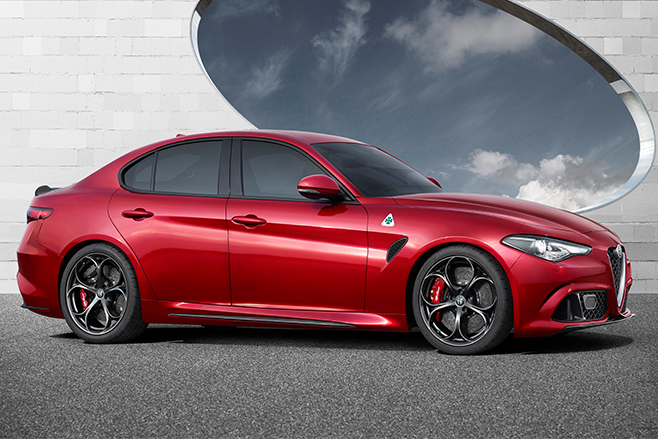
“The first and foremost most important thing talking about brands is to respect it,” Alfa Romeo CEO Harald Wester told Wheels weeks before the Giulia unveiling. “Don’t mix it all up and combine everything with everything. The Italians love to do this, and they call it minestrone.”
The German-born engineer, who is also the boss of Maserati, understands Alfa’s heritage and has a clear vision of how to translate it into competitive cars: “Alfa Romeo is even older than Maserati. But it’s a different type of product, it’s a different type of customer. It’s very sporty. Alfa Romeo was always known to be most advanced. It won the races. It was the foundation of Ferrari.”
That Alfa aims to stake a claim to sporting supremacy with its new model family was clearly signalled by the car revealed in Milan. The Giulia on centre stage was Quadrifoglio Verde spec. Its claimed 0-100km/h time of 3.9sec, if realistic, puts it in truly elite company.
Only skimpy tech details of the Giulia QV were released at the event. It will have a 380kW twin-turbo V6 and, judging by the red-hot acceleration, all-wheel drive. The engine is likely related to the 3.0-litre V6 made by Ferrari for the Ghibli and Quattroporte. Italian sources suggest the Alfa unit will be of smaller capacity.
Alfa will also use less powerful versions of the new V6 in other Giulias. Below the low-output (300kW) versions of the V6, Alfa will use a new direct-injection 2.0-litre turbo four with up to 250kW. “This high-tech project is an integral part of our bet on Alfa Romeo,” Sergio Marchionne said last April announcing a $750m engine development investment.
While the QV is a tech-packed showcase, the basics it will share with lesser Giulia models are even more important. The Giulia will have the longest wheelbase in the segment, a stiffer body and a more aerodynamic shape. Such details point to this being a deadly serious shot at bringing Alfa back from the brink.
Giulia production begins in Italy in December, with the first cars reaching European showrooms by mid-2016. Right-hook production starts in late 2016, with FCA Australia pushing to get cars here before 2017.
“The Giulia is an absolute game-changer, and I can’t wait to bring it to Australia,” local FCA boss Pat Dougherty told Wheels. “We’ll do everything we can to get it here as quickly as possible.”
Our first drive of the new Giulia will prove whether Alfa’s product is capable of supporting its plan. But one thing is clear: Failure isn’t an option. It’s now or never.
Runs on the board
Don’t laugh at Alfa Romeo’s plan for rapid, product-driven growth. There’s sure to be scepticism about the brand’s ability to achieve its targets, but Fiat-Chrysler has done it before. Many doubted FCA-owned Maserati would be able to jump from 6000 sales a year in 2012 to 50,000 by 2015, but last year the Trident brand racked up a tally of about 36,500. Maserati is run by the same executive as Alfa Romeo, Harald Wester (pictured, left). Now, no one smirks when the German talks of Maserati selling more than 70,000 cars in 2018. Can he work the same magic with Alfa?
Guilia versus the Germans
The Quadrifoglio Verde version of the Giulia, denoted by the four-leaf clover on its front guards, has the mettle to play with the big boys – on paper at least. Its 380kW shades the BMW M3’s 317kW, and pips the more potent ‘S’ version of the Mercedes-AMG C63 sold here with 375kW. The all-wheel drive Alfa’s 3.9sec 0-100km/h claim also beats the BMW (4.1sec) and AMG (4.0sec), both of which are rear-drive.
Sign up here to receive the latest round-up of Wheels news, reviews and video highlights straight to your inbox each week.
THE IMMINENT launch of the new Tesla Model X SUV has the tech company believing it is on the brink of a sales explosion in Australia.
Tesla predicts the Model X, which launches internationally in September, will more than double its sales reach Down Under when it arrives here in the second half of 2016.
The fully electric seven-seater will also hold the title of world’s fastest SUV, with 568kW/967Nm range-topping variants expected to hit 0-100km/h in just 3.3 seconds.
That’s no mean effort for an SUV tipped to weigh 2.5 tonnes.
The Model X is based heavily on the new dual-motor variant of Tesla’s Model S four-door sedan, which made its Australian debut in Melbourne this week.

The dual-motor Model S 70D, 85D and P85D will add to the two single-motor, rear-drive cars currently on sale.
Wheels sampled the fastest and most expensive of the new Teslas, the $157,000 Model S P85D.
With the car’s ‘Insane mode’ activated, it’s an intoxicatingly fast way of hitting three figures.
The flagship sedan sends 375kW to the rear wheels and 192kW to the front, and accelerates from rest to 100km/h in 3.3 sec.
An even faster ‘Ludicrous mode’ (0-100km/h in 3.0sec) will become available for customers to download, and while these terms might sound strange, Tesla says they’re a key part of its Australian success.

“I didn’t think performance would have such a big impact in this market but it certainly has. Our most popular model is the fastest one.”
And in news that will give Nissan’s GT-R the cold sweats, Walker hinted that further software upgrades could be enough for a sub 3.0-sec sprint.
“We’re constantly doing minor tweaks to the car,” he said.
“At the moment, 3.0sec is the maximum based on the current battery pack. But we’re always looking for advances in the battery technology in terms of kilowatt hours which we can use to increase range and performance.”
But while Walker added that sales of the Model S have exceeded the company’s expectations in Australia (more than 80,000 Teslas have been sold worldwide to date), it has hardly been smooth sailing for Tesla globally in recent months.
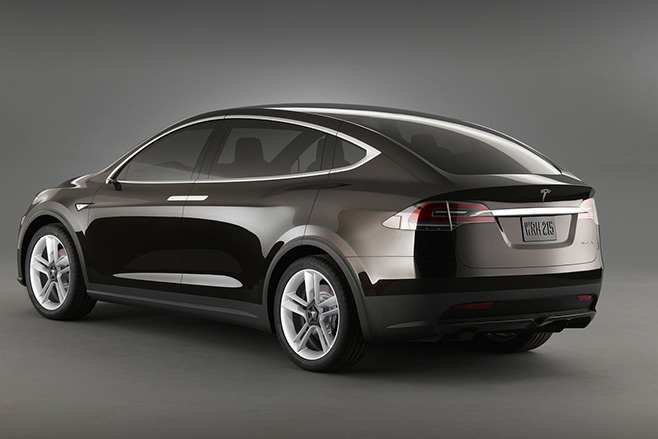
Rubbing further salt into the wound, news agency Reuters reported this week that Tesla loses more than US$4000 on every Model S it sells.
Both Walker and US-based Tesla spokesperson Alexis Georgeson declined to comment on the Reuters article for Wheels.
Tesla is yet to reveal Australian pricing or final specs for the Model X, but it has confirmed the SUV will arrive spoiling for a fight with the BMW X5 and Mercedes-Benz M Class, both of which start in the mid-$80,000 bracket.
Expect the Model X range to top out at around $170,000 for the fastest, most performance-focused variants.
Sign up here to receive the latest round-up of Wheels news, reviews and video highlights straight to your inbox each week.
I WAS but a kid of 21 when LH254 flew me into Paris on Sunday, 26 December, 1965.
Seduced by the beyond-beautiful Citroen DS, an aerodynamic wonder already a decade old yet still utterly contemporary, my plan was simple: catch a bus to central Paris, find a DS taxi – and only a DS – for the ride to Le Grand Hotel. Ignoring the Peugeots and Renaults at the taxi rank, I waited intent on landing my first ride in Citroen’s elegant sedan. Finally, wallowing in the unmatched comfort of its vast rear seat, I knew it was the most comfortable car I’d experienced. Who said you should never meet your heroes?
A couple of days later I hired a Citroen Ami 6, the weirdly styled, rebodied 2CV. I wanted the sedan with its reverse-angle rear window – like a ’59 Ford Anglia – but they could only offer a wagon. On snow-covered roads, I drove to Le Mans to lap the famed road circuit – a thrill, even with a mere 602cc, 19kW and 105km/h top speed. My notebook tells me I “duelled with a girl in pigtails, also driving an Ami”, though I doubt she was aware of our contest. Less than two years later I tested a DS21 Pallas, writing: “The Citroen is a long distance runner, out front and alone.”
In 1971, three months into the editorship of Wheels, my enthusiasm for Citroen pushed the new GS to the cover. Sales bombed and a Citroen hasn’t appeared on the cover since. Fifteen years later, circumventing import restrictions, I bought one of the last new 2CV Speciales, and now I can’t believe I sold that most honest of all cars. Two Citroens – 2CV and SM – featured on my 2011 list of the 50 Greatest Cars Ever.
Citroen is one of my car Gods.

Frustrated at not being able to breach the secrecy while living in Europe, I retired disillusioned, knowing one of the few genuine possibilities on my now-short automotive bucket list remained unfulfilled.
Not quite. At the Wheels’ COTY dinner in January,I mentioned the bunker to Citroen’s new press person. A few months later he asked if I’d like to see what’s called the Citroen Conservatoire. Retirement, I instantly decided, can be ignored if it means realising a dream.
Tucked off to one side of Citroen’s old Aulnay-sous-Bois plant, which closed in 2013, and close to the A1 autoroute heading north to Charles de Gaulle airport is a low, nondescript grey and mirrored-glass building surrounded by near empty carparks. One double-chevron logo adorns the awning of the entrance of a structure that was purpose-built to house nearly a century’s worth of Citroens, including several rare, one-of-a-kind models and an example of nearly every model the company has produced.
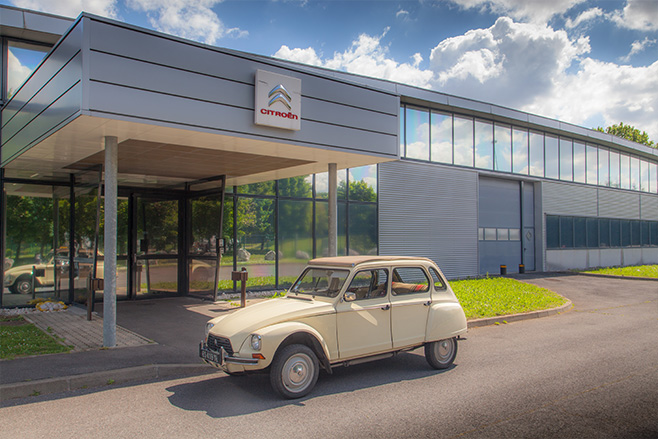
During the 1980s and ’90s, when Citroen’s creativity was minimal and it was building many boring cars under a PSA regime that deliberately set out to ignore Citroen’s history and dilute its reputation for avant garde designs, the company consciously turned its back on the quirky models from the past, including the Traction, 2CV and DS.
Fortunately for us, under a more enlightened management, Citroen has come through the denial period and now takes its rich history seriously.
Almost every piece of Citroen’s collection is now located in the Conservatoire, though not everything is on display. About 300 of the approximately 400 cars in the collection are on the floor at any given time and most are in excellent running condition and used on a regular basis. The others are on loan for classic car events and publicity campaigns.

At first the Conservatoire wasn’t open to the public, only Citroen car clubs. Today, ¤7 ($10) buys a 90-minute guided tour. Book with [email protected]. You won’t regret it, I promise.
There’s no point comparing the Conservatoire to the glossy extravagance of the German carmaker museums; this one is slightly spartan, with no interactive displays or coloured lights and (wonderfully) no elevator music. So there is no distraction from the main focus: row upon row of cars in what is undoubtedly the world’s most complete collection of Citroens; a hanger-sized treasure crammed with cars that literally take your breath away. Mine anyway.

The density of innovation on display is obvious and includes a rotary-powered RE-2 Citroen helicopter, the twin-engined 2CV Sahara, rotary M35 coupe, dune buggies and Sebastian Loeb’s World Rally Championship-winning cars.
Most cars I knew, if even vaguely, but one gold mystery car confused me. Built in about 2000, it was only a foam mock-up based on the Xantia and lacked an engine and interior. Though ordinary in appearance, this little-known styling exercise was intended for a Detroit show as a proposal for Citroen to re-enter the American market. Nothing came of this no-name model.
It’s possible to trace the evolution of the 2CV from the 1936 TPV – French for very small car – single-headlight prototype to the final Portuguese production car in July 1990, the last of 5,114,966 units.

At the other end of the scale are two presidential vehicles: the DS 21 Presidentiale (a one-off by Henry Chapron, used by Charles de Gaulle and stretching to 6.53 metres long, weighing 2660kg and powered by a regular DS 2.1-litre four) and the 1972 SM Presidentiale (a 5.6m four-door open cabriolet version of the Maserati-powered SM).
The thread that binds all these wonderful cars is creativity, imagination and genius. Is it too much to hope that the creation of DS as a stand-alone brand allows a revival of Citroen’s authentic character to push the boundaries of technology and style?
Goddess of style
I’M NOT alone in thinking Citroen’s DS is the most beautiful car in the world. My addiction may colour such judgement, yet I contend that the combination of absolute purity of line, originality of concept, and radical – advanced is too mild a word for the breathtaking DS – engineering and design created a car of unsurpassed beauty.
I still stop and stare whenever I see a DS, to admire the simplicity of its shape, the exquisite proportions of Flaminio Bertoni’s sculptured contours and the clarity of its detail design. Such is the depth of its cleverness, this most intellectual of cars can still surprise almost 60 years after it first stunned crowds at the Paris salon in 1955.
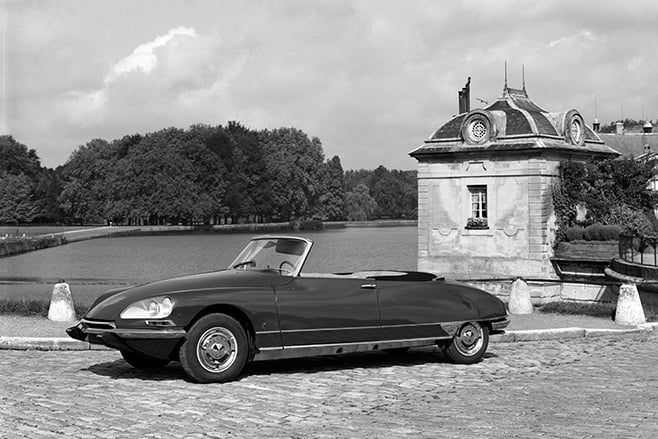
The DS employed interconnecting suspension using high-pressure hydropneumatics and the engineers were brave enough to use the hydraulic pump and accumulator as a source of power for the brakes (pioneering the use of discs on a production car), steering and a Citroen-made semi-automatic gearbox with self-operating clutch. Inevitably, deliberately, the DS felt like no other car to drive.
It’s now common knowledge that the DS should have been powered by a horizontally opposed six-cylinder boxer engine – air and water cooling were tried at the prototype stage – but instead ended up with an evolution of the old four-cylinder lump from generations of Traction models. What I didn’t know until the Conservatoire was that Citroen explored a variety of different engines during the DS’s near 20-year life.
Among many on display, including the oldest known example (a prototype produced in July 1955), is a hard-worked 1967 DS mule, powered by a supercharged two-stroke 1.8-litre V4, with the compressor driven by an independent 200cc four-stroke engine, all intended to meet California’s proposed 1975 emission standards. Other DS engine projects included a 2.1-litre 90-degree sohc V6 and a 3.0-litre V8. The coming of electronic fuel injection and development of a new range of fours of up to 2.3 litres closed the internal debate.
As part of the DS’s 60th anniversary celebrations, Citroen also revealed many more of Bertoni’s styling sketches for the VGD project that became the DS and started as early as 1938. Interrupted by WW2, Bertoni began work again in 1945, the sketches tracing the car’s evolution until the front-end design was frozen in July 1954, the unique high-mounted ‘trumpet’ indicators coming just months later.
The DS was probably the furthest single step ever taken by a popular car company.
Sign up here to receive the latest round-up of Wheels news, reviews and video highlights straight to your inbox each week.
MOTOR recently attended the Festival of AMG at Bathurst, an extremely rare opportunity to lap Australia’s most famous and demanding racetrack with no speed limits.
You will be able to read about our exploits in the near future, but really, who cares about what we did when you can watch German motor racing legend, Bernd Schneider, attack Mount Panorama in Mercedes-AMG’s new GT S?
Schneider has won almost everything there is to win in motor racing, including five DTM titles, the FIA GT Sports Car Championship, the 24 Hours of Nurburgring, Spa and Dubai and the Bathurst 12-Hour.
Despite officially retiring from racing, Schneider is still maintaining a hectic racing schedule in 2015, squeezing in a visit to Bathurst for the Festival of AMG in between races at the Nurburgring and Spa.
Thankfully, AMG dispenses with the formalities and dedicates the majority of the video to letting Bernd do what he does best, which is drive a car very, very fast.
PLUS
- Working cred. The BT-50 has a class-leading 3500kg maximum tow capacity (the amount it can tow behind) and excellent payload figures (the car’s total carrying capacity).
- Handling. It’s a good ute to steer, with a positive road-feel and surprisingly tidy handling despite its leaf-sprung live axle at the rear and load-carrying suspension tune (a leaf-spring is a tough type of suspension used in heavy vehicles).
- Grunt. With a 3.2-litre five-cylinder turbodiesel, the Mazda BT-50 doesn’t lack in the power department, which is always a good thing.
- Off-road cred. The BT-50 performs strongly off-road thanks to its grunty engine, good clearance and effective traction control system.
- Parts. It has parts that are interchangeable with those of the Ford Ranger, which is basically its mechanical twin.
- Leg room. The generous combined front and rear legroom is great for people who need a bit of space.
- Safety. The BT-50 has a five-star ANCAP safety rating.
- Fuel usage. The Mazda burns through quite a bit of fuel. According its ADR figure, it goes through 9.2L/100km. But our real-world testing figure showed it went through more like 12.0L/100km.
- Too big. The Mazda feels big and it’s not easy to manoeuvre in tight situations.
- 4×4 system. The more traditional dual-range part time four-wheel drive system means drivers need to stop the car to switch to four-wheel-drive. This is the type of system preferred by most serious off-roaders. But it’s easy for novices to get caught out in two-wheel drive when the driving conditions quickly change and 4×4 is needed.
- Fiddly controls. The BT-50 is generally well-equipped, but the dashboard screen is a bit small and its controls are fiddly on the mid-spec model. It is expected that these will change when the face-lifted model arrives in September 2015.
PLUS
- Handsome design.
- A range of strong three and four cylinder engines that improve efficiency and performance.
- Boosted interior space, with plenty of headroom and a rear seat that slides fore an aft by 13mm for greater flexibility.
- A big improvement to boot space, which has swollen by 85 litres to 505 litres in total, meaning the X1 now trumps rivals like the Mercedes-Benz GLA and Audi Q3 for load lugging capacity.
- Higher seating position for improved visibility.
- Designed by an Australian. Tick and tick.
- Now available in front and all-wheel drive.
- Most of the new equipment (electric tailgate, head up display, collision waring and park assist) are likely to be expensive options.
- 2.0-litre four-cylinder petrol can sound mechanical and unrefined low in the rev range.
- Australia unlikely to get the more efficient, and potentially cheaper, three-cylinder variants.
- BMW denies it’s building a high-performance version, fettled by its iconic M performance division. We reckon a pumped up, 300hp X1M to rival the Mercedes-AMG GLA45 and Audi RS Q3 would look awesome!
Hyundai WRC driver Thierry Neuville has narrowly avoided a potentially catastrophic accident during testing for the upcoming Rally Germany.
Despite the road in use being closed and patrolled by marshals, it appears one local farmer missed the memo, emerging from the vineyards moments before Neuville approached in sixth gear.
Thankfully, disaster was averted due to a combination of frantic warning shouts from nearby photographers, the quick engagement of reverse by the tractor driver and Neuville literally braking for his life.
It brings to mind a similar occurence on a round of the 2007 British Rally Championship, when driver David Higgins (now five-time Rally American champion) came across a front-end loader being driven the wrong way down the stage.
The incident was captured on camera and Higgins was understandably badly shaken, given the potentially life-threatening ramifications of a car meeting earthmoving equipment at competition speed.
It seems that even when on closed roads, danger isn’t too far away.
Get your free weekly report from the world of fast cars – subscribe to the MOTOR newsletter!
With VFACTS’ July sales report now in our hands, we reveal how the standout fast cars have performed in Australia’s car market.
WINNERS
McLaren: June sales (5), July sales (5), Year-to-date sales (21), Year-to-date percentage difference (compared to 2014) +21%
Intimidating numbers don’t announce a McLaren dominance in the market, however, a string of positive YTDs during the last three months suggest the brand’s starting to ramp up its presence in Australia. Expect it to grow even further with the 675LT’s and Sport Series’ impending arrival.
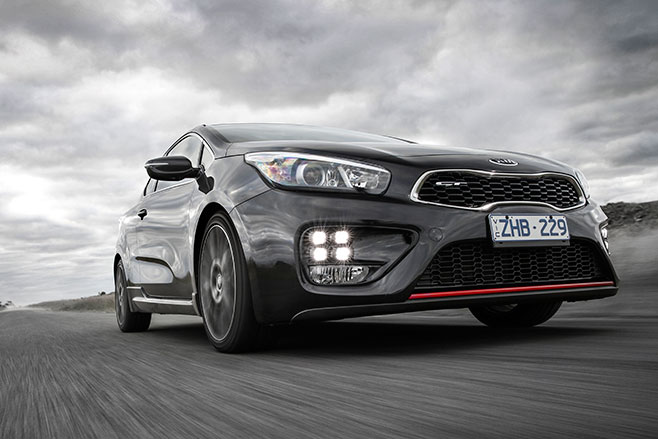
Kia Proceed GT: June 29, July 66, YTD 233, YTD% +6
July is Kia’s proudest month for the Proceed GT because it’s the closest Kia has come to selling 100 GTs a month – the number it initially predicted. Sales have been much smaller than that, but the 66 moved in July is by far its best result.
Notable mentions:
- Lamborghini’s total sales this year are 886 per cent up on July 2014’s after selling 9 cars this July, totalling 59 for the year, as its new product surge stays strong.
- Ferrari and Audi’s R8 have both, coincidentally, registered a 73 per cent difference for 2015’s Year to Date sales compared to last. Expect new car registrations for the R8 to explode when the new model lands next early year.
- Audi’s new TT, and the newly launched TT roadster, are bathing in the glow of new product interest: it’s YTD sales figure is 230 per cent better than last year’s, with 366 TTs sold this year so far.
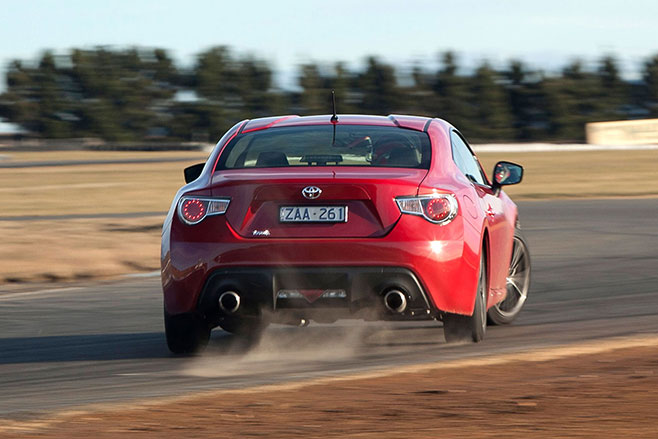
Toyota 86: June 276, July 227, YTD 1846, YTD% -30
There’s now an understandable lull in demand for the 86 with it entering its third year on sale – the 227 cars sold in July represent the quietest month for the two-door coupe in the past year. But news of an incoming TRD fettled 86, which MOTOR exclusively reported on, could again skyrocket interest in the car.
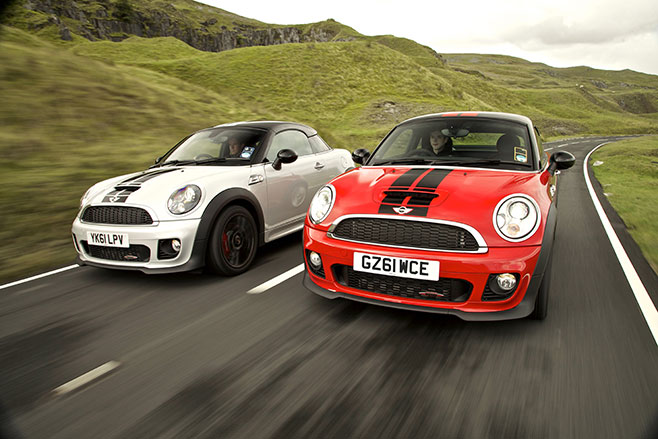
Mini Coupe/Roadster: June 0, July 2, YTD 11, YTD% -84
BMW effectively marked the Coupe and Roadster as dead when it declared the third generation Mini would concentrate on ‘core offerings’. July’s sales figures for the duo would reflect that, with sales for the two seater duo falling to single digits in the Australian market.
Notable mentions:
- Holden’s VF Commodore has experienced its second worst result in 22 months, selling 2030 units in July.
- Chrysler’s 300 only found 69 homes in last month. Meanwhile its YTD sales figure is 59 per cent worse off compared to last year.
