Until now, most modern cars with fewer than four cylinders were either eco-comical Japanese buzz-boxes or a Smart. But, as with your Ps and Qs, I learnt early that it pays to mind your threes and twos.
My first drive of one was as a teen delivering pizzas in a Daihatsu Charade with a naturally aspirated triple. Sure, this Bon Jovi-era featherweight with permanent odeur de anchovy and a spine-shaking ride screamed like a demented wasp. But I revelled in its thrummy three-pot point-and-squirt thrustability. Perfect for the job.
Back to today, in the space of six months we have seen a trio of fresh sub-four-cylinder players – Germany’s Ford Fiesta Sport 1.0 EcoBoost (via Thailand), France’s Renault Clio TCe90 (made in Turkey) and the Alfa Romeo Mito TwinAir (bred and built in Italy). And, trust me; none are interested in playing charades.
All three cars are technical marvels with premium pricing to match from marques that are more than 100 years old. What they lack in cubic inches – the biggest is just 999cc – they make up for in sparkling performance, reduced carbon dioxide emissions and ultra-low fuel consumption potential. Or so the promise goes. For buyers, then, they represent a real upside to downsizing. That’s why they are here.
Inspiring this comparo after our initial launch drive in February, the facelifted Mito attempts to add the brio that was absent from the underwhelming 2008 original. Changes include some minor titivations to the nose and tail-lights, a trifling interior spruce-up – not enough, though, because that slabby dash still looks bulky and old – and Alfa’s first application of parent Fiat’s terrific TwinAir turbo twin-cylinder. And all for $9K less than before.
Priced from $22,500, the Mito is $1975 more expensive than the Fiesta Sport – reigning category winner in the Wheels Gold Star awards – but that gap is halved in this test because of the Ford’s Sports Exec Pack grab bag of climate control, reversing sensors – a necessity since rearward vision is so restricted – auto headlights and wipers, alarm and push-button start.
Neither of these cars can touch the $16,790 Renault Clio TCe90 Authentique, though Renault reckons most buyers will spend another $1000 for the Expression – sat-nav, fog lights, better audio and bigger wheels – and then some, since Mini-like personalisation options are big business. Ours arrived with divisive glossy trim accents inside and out ($500), 16-inch alloys ($750) and an Electric Pack that adds auto lights, wipers and push-button start, as well as keyless entry, rear power windows and electric folding door mirrors ($300). That takes the tally to $19,340, so it’s still the cheapest here.
All three include air-con, cruise control, central locking, Bluetooth connectivity, stability control and five-star Euro NCAP scores – though the Clio’s deliberate lack of rear-seat airbag protection means the local ANCAP peeps subtract a star, even though the Euros won’t. Renault Oz is fighting this, claiming bureaucratic box ticking for the sake of it.
Interestingly, the Alfa attempts to offset its higher asking price with a few worthwhile features neither foe offers. For instance, the Mito brandishes coupe-like frameless front doors – an important distinction to the style-savvy younger clientele all three are targeting. It’s also the only one with lumbar support (and on both front seats), a rear cushion that tips forward for a deeper cargo floor when the adjacent backrests are folded (the pre-2009 Fiesta used to do this, too), a foldable storage bin/armrest between the front seats, key-fob remote control window activation, solid discs instead of drums at the rear, and six instead of five forward gear ratios.
Conversely, like the Clio, the Mito misses out on map pockets, but matches the Fiesta in providing rear-seat reading lights (a literal oversight in the Renault – and one partially offset by having this group’s only overhead rear grab handles).
Nevertheless, the far-fresher Frenchy wins hands down for interior space and appeal. Almost as roomy as cars from the class above a decade ago, the Clio comes on strong with big-car-like front seats and a wide rear bench offering what is easily the airiest feel. Furthermore, the thoroughly contemporary Renault’s driving position is flawless, the instrument display a triumph in modern clarity, and the central tablet-style touchscreen an exercise in user-friendliness. But the glovebox is small and the air vents don’t offer enough face-level upward adjustment.
Who remembers when the Fiesta included steering reach and rake adjustment? Since going Thai in 2010, it only moves up and down. The dash top also used to be a solid rubberised item instead of hollow plastic. And there were trim colour options. Why Ford ditched all these, yet retained the laughably outdated Nokia handset-style buttons, when the facelifted WZ arrived last August is perplexing.
Still, the Fiesta’s familiarity fits like a well-worn glove, with the trio’s most supportive front seats and the comfiest rear bench, despite not being the roomiest.
All contenders offer sufficiently sizeable cargo areas, with deep floors, long load areas and convenient child-seat anchorage hooks, but the design-driven Clio’s aperture is narrower in parts, betraying Renault’s decision to sacrifice practicality at the alter of style.
If you desired utility in a car this size, though, you’d be driving a Honda Jazz.
But it’s what’s beneath the bonnet of these bolshy little babes that bind them and us together. And nothing is as intriguing as your first turn behind the wheel of the TwinAir. Half the cylinders, twice the fun – that should be the Mito’s calling card. Oddly lumpy when cold – and ours stalled a couple of times, too – the turbo twin settles down to a bubbly burble, ready to pounce forward at a mere prod of the throttle.
The Mito was driven almost solely in ‘Dynamic’ mode, which improves throttle response, weights up the electric steering and loosens the stability control’s vice-like grip on the chassis. In contrast, ‘Normal’ feels like the handbrake is on.
The TwinAir screams off the line like it sat on a scorpion, ripping up through its limited rev range with an invigorating, intoxicating rasp, bowling along at an unexpectedly rapid rate. This is a properly perky little powerhouse, with incredible tractability for pottering around in higher than typical ratios, and with acceleration being more forceful than its 77kW/145Nm and 875cc capacity suggests.
However, while the Alfa’s aptitude for darting forward frenetically is infectious, the cliff-face performance drop-off once the tacho stretches beyond 5500rpm can be frightening. Overtaking on the open road demands concentration, given third runs out of puff at just 101km/h, so it’s best to drive the Mito like it’s a diesel. Mine the mid-range revs, and stay well clear of redline.
While a few detractors detested the Alfa’s buzzy, single-pitch exhaust note – the TwinAir is an acquired aural taste – the Clio’s 66kW/135Nm 898cc unit has a more subdued yet still unmistakable three-cylinder thrum that, like the resulting performance, reflects Renault’s softer and more eco-focused approach.
In isolation, the Renault TCe90 (for 90bhp) feels more than sufficiently sprightly. A determined right foot is necessary to get things moving along briskly, but there is plenty of mid-range flexibility to keep the Clio sailing along serenely. Introduce a hill, or extra passengers, and a fair bit of downshifting is necessary for continued steady progress. And, like the Alfa, the TCe90 can be caught flat-footed when off-boost. The Renault’s gearchange also has the longest and loosest throw here, though not unpleasant.
Then there is the Fiesta Sport. The clue to its character is in the name. As the badge suggests, the EcoBoost really turns up the wick for a healthy 92kW/170Nm from the 999cc turbo triple, figures not far off 1.8-litre engines of a few years ago. Accompanied by a taut five-speed shifter, this Ford’s punchy vitality makes it a worthy International Engine of the Year winner (in 2012 and 2013).
Tuned for performance, the Fiesta wastes no time, streaking forward with near-turbine intensity that will convert downsizing dissenters into diehards. Sitting on 100km/h at 2500rpm in top gear (100rpm less than the Mito), the Sport isn’t as quiet as the relatively refined Clio, but its sheer ability to so effortlessly pull away quickly is another trait the others lack. It’s the only car here that offers warm-hatch performance.
Not surprisingly, the TwinAir’s terrier-tugging-at-a-lead vigour eviscerates fuel economy. Since nobody could help but drive it all the time in Dynamic mode, our mighty Mito averaged 10.1L/100km against a claimed average of, ahem, 4.2L/100km. But it is in good company. The Fiesta, also constantly caned, was next best with 9.3L/100km (versus an official 5.3L/100km) – a good result given the Ford’s far-superior performance – while the Clio showed who’s boss of the bowser, returning 8.4L/100km (against 4.5L/100km), despite also being thoroughly thrashed. If they were driven more sedately, and with a touch more freeway cruising than our test loop provided (and without performance testing), expect to do around 2.5L/100km better in each.
Before the comparison, it was expected that the trio would fall into the warm-hatch category. Only one – the hard-charging Fiesta – delivers on that expectation, for it leaves the others behind from a dynamic point of view. The Sport ably straddles the fine line between excitability and discipline, feeding in steering feel (as well as some unwanted rack rattle) to the receptive driver with vivacity and zeal.
But while fluid handling, splendid cornering composure and beautifully modulated brakes give the Fiesta an edge, its ride quality on Continental 195/55R16 tyresis quite firm – still absorbent, but busy when you get away from smooth roads. Considering the Ford’s dynamic capabilities, it’s a worthwhile trade-off.
The Clio’s incredibly absorbent suspension transcends light-car standards with remarkable insouciance. Its ride – on quality Continental 195/55R16 rubber – recalls the long-travel suppleness of old-school French classics like Peugeot’s 504.
If you hadn’t been exposed to the Fiesta’s taut alacrity, you’d likely enjoy the Renault’s linear steering, which provides a positive combination of grip, response and tactility. After the Ford, both the French and Italian challengers feel a little loose, with the Mito being a mixed bag.
Even in Dynamic (let alone the vague Normal mode), the Alfa’s steering at lower speeds seems artificial, especially in the on-centre position. The Fiat Punto-derived chassis isn’t a particularly inspiring basis. However, keep the wheel twirling, or step on the throttle, and the doughy feel evaporates for more involving handling, backed up by the most sensitive brakes of the lot.
On modest Bridgestone 185/65R15s, the Alfa also rides with satisfactory isolation. Stray onto rougher roads at speed and the steering column can be prone to rattles, making the Mito feel a little ragged and unsettled through tighter turns, and higher velocities over minor undulations may see the suspension bottom out. Finally, be aware that the Mito’s long, low nose is prone to scraping on gutters.
Still, like the Ford and Renault, the Alfa is far more fun than its sub-four-cylinder specification suggests. With one of the most technically advanced engines in the world, the Mito has the heart of a dwarf star, the spunk of a boy band, and the unconventional sass of a motorised Mila Kunis. It’s sophisticated yet accessible.
But the Alfa’s wrinkles show through in its drab interior, uneven steering and underdone dampers. It’s the most expensive and thirstiest hatch here and, while the TwinAir soars in congested Europe, Australia’s massive distances expose performance limitations. So the charming Mito scores an honourable third.
As for the Fiesta Sport, the front looks gormless, the dash is a dated mess and it irks me endlessly knowing that Ford’s ruthless cost-cutters have ravaged the Thai interior compared with the earlier WS models from Germany. But if the TwinAir is a dwarf star, then the Ford’s engine – just like its dynamics – is a supernova. For this one-time perpetually late pizza delivery boy from the western suburbs, growing up reading Wheels and relishing steering feel and sharp handling, it’s my kind of car.
However, the handsome Renault is the most complete – and so best – car here, and by some margin. Outstandingly comfortable, roomy, refined and economical, and with the group’s only five-year warranty, this Renault will reward the fuel miser, enthusiastic driver, bargain hunter and status seeker in equal measures. The turbo triple cries out for a bigger dose of boost, but the Clio TCe90 takes the gold convincingly.
This article was originally published in Wheels July 2014.
The new Ferrari 488 GTB costs $55,000 less than its predecessor and is already sold out for two years before it even arrives this November.
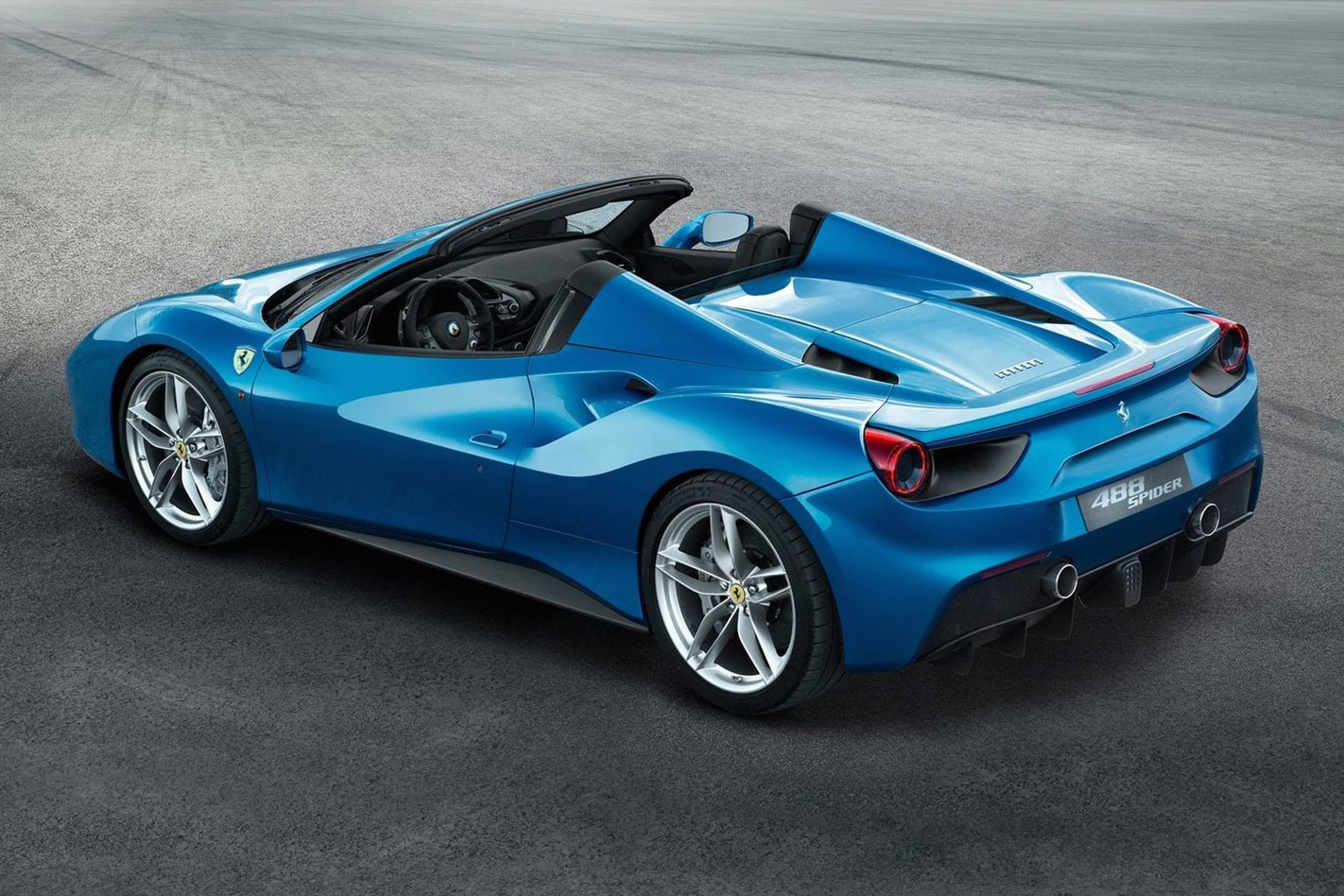
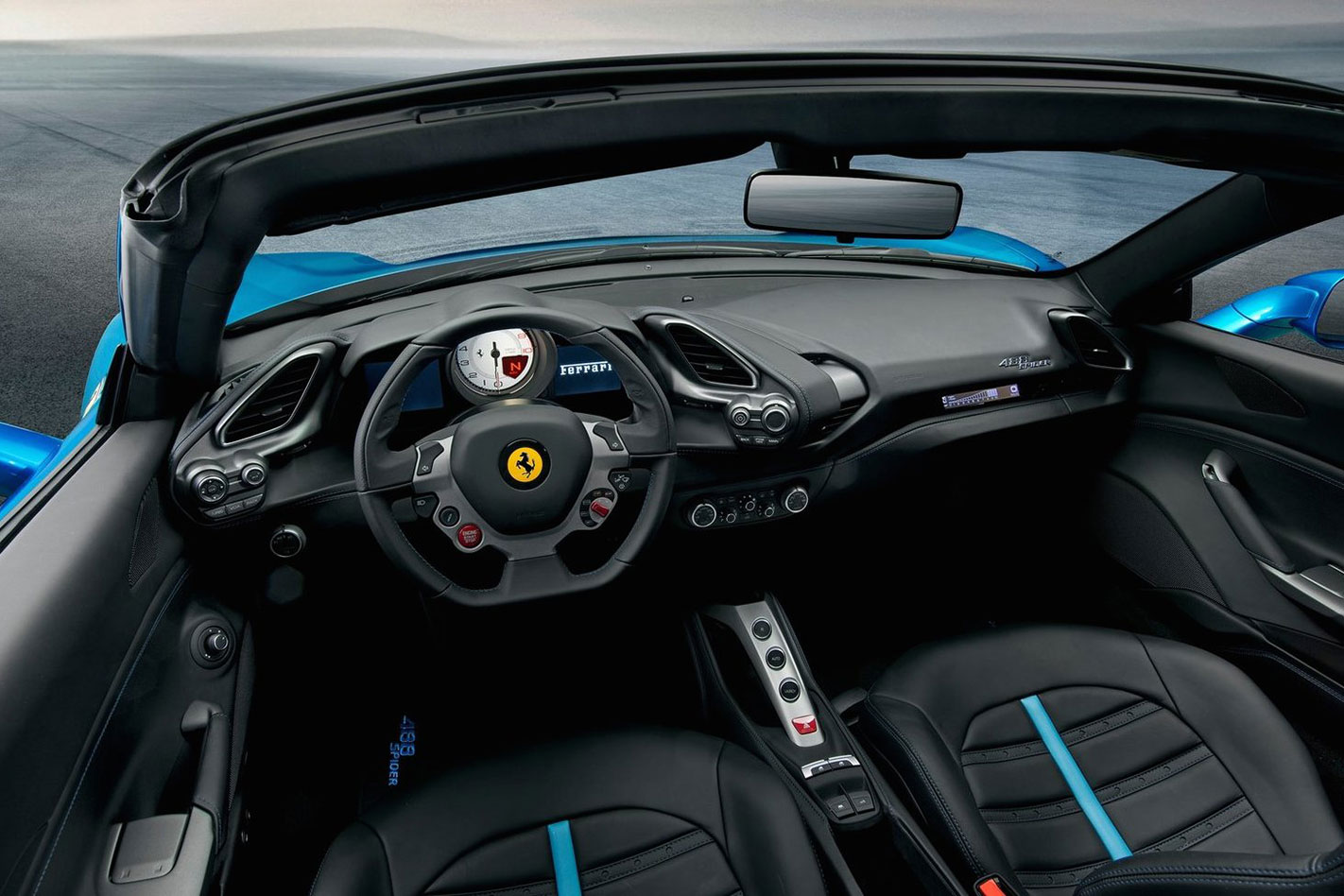
Replacing the 458 Italia, the “85 per cent new” 488 GTB will be priced from $469,888 with the just-globally-revealed 488 Spider right behind it, arriving early next year commanding an expected $60K premium.
Ferrari Australasia CEO Herbert Appleroth says the price cut is currency-related, but insists resale values of 458 Italia owners aren’t burned as equipment made standard halfway through that model’s life now returns to the options list.
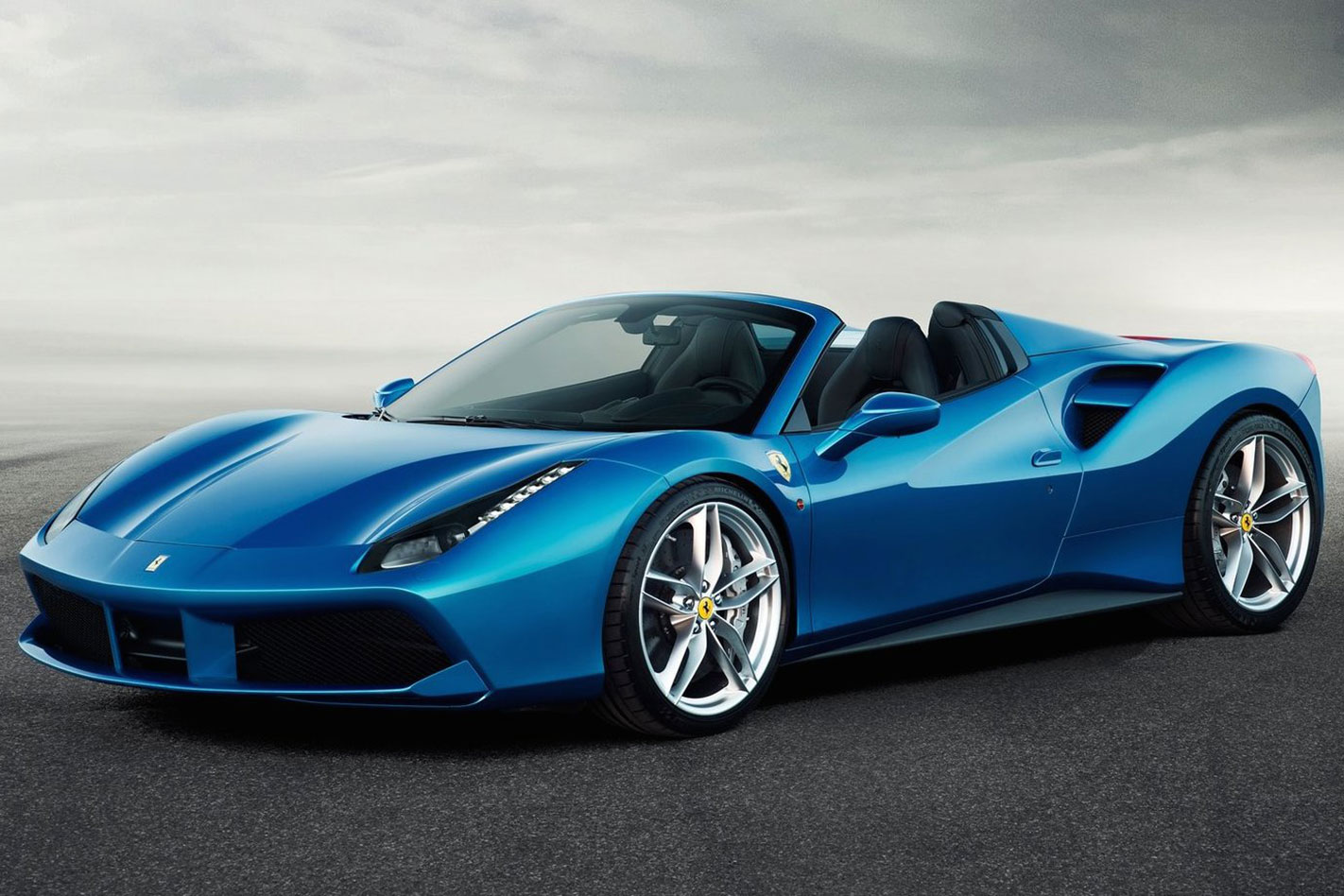
There is no eye on competition with pricing either, claims Appleroth, despite the brand’s most affordable mid-engined V8 supercar now lining up closer to the Lamborghini Huracan ($428,000), Porsche 911 Turbo S ($444,900) and McLaren 650S Coupe ($459,250).
“We absolutely did not and do not want to do what our competition does,” he says. Prompted by a reference to McLaren’s recent price cuts, Appleroth says, “have a look at their volume and did it work?”
Twin turbochargers and 3.9-litre capacity are in for the 488 while the naturally-aspirated 4.5-litre of the 458 is out. The fresh V8 makes 492kW at 8000rpm (versus 425kW) and 760Nm at 3000rpm (rising 220Nm), though you can only access the full torque in seventh gear as engineers aim to preserve throttle response and manage stability.
“For those who’ve driven the 488, you can’t tell it’s a turbo,” he adds.
Both the 488 GTB arriving in November and the 488 Spider following in the first quarter sprint to 100km/h in 3.0 seconds, matching the 650S and 911 Turbo S.
The heavier retractable-hardtop version is three-tenths slower to 200km/h – 8.7sec versus 8.4sec – though in any case pressing a button to remove the roof adds 14 seconds to your time before the standing start.
Most impressively, Ferrari says the Spider has identical torsional rigidity to the GTB and is some 23 per cent stiffer compared with a 458 Spider.
Ferrari sales in Australia are up 82 per cent this year thanks, Appleroth says, to an emergence from “a period of abstinence from our clients that maybe it wasn’t the right time to treat themselves to a new Ferrari.”
“But now with property prices going so well, equity … now is the right time”.
With demand outstripping supply, that may not be a ‘true’ sales figure either – put down a deposit for a 488 GTB today and you won’t get one until 2017.
BMW has slashed the price of its M3 and M4 while fattening up the specification of the heroic M duo.
Prices have tumbled as much as $16,140 within the range, as the M4 Convertible now costs $161,900, significantly less than the previous $178,040 tag.
Meanwhile the M3 and M4 have also lopped off $16,140 from their respective asks, pegging the M4 coupe at $149,900, and seeing the starting ticket to its hot-rod M range start at $139,900 for the four-door sedan M3.
To accompany fiscal adjustment, BMW’s slipped in standard equipment like a head-up display, full merino leather trim, and adaptive LED headlights for all M3s and M4s.

Internet capability has also been thrown in, along with a one year subscription service, plus a myriad of safety systems like lane change warning and a tyre pressure monitoring system.
As well as the LED headlights, the car’s re-designed rear taillights and daytime running items are upgraded to the diode technology.
One-fourty thousand is a lot of money, but the M3 hasn’t been so affordable since the E92 BMW M3 Pure Coupe special edition released mid-2013.
It also leave its rival, Mercedes-AMG’s more powerful C63 ‘S’ sedan, much higher priced at $154,900.

Mechanical details for the M3 and M4 are unchanged, as it still thumps out 317kW and 550Nm from its dual-turbo six.
All M3s and M4s produced from July will benefit from the price cut and upgrade of kit.
THE new Audi R8 supercar continues with its Lambo-infused formula but adds more technology and more punch to tackle Lamborghini Huracan and Porsche 911 Turbo.
WHAT IS IT? The second generation of a bespoke supercar designed to showcase the talents of the mainstream luxury brand. The R8 is the fastest, most potent Audi ever produced and a car designed to take the fight to Ferrari, Lamborghini and Porsche.
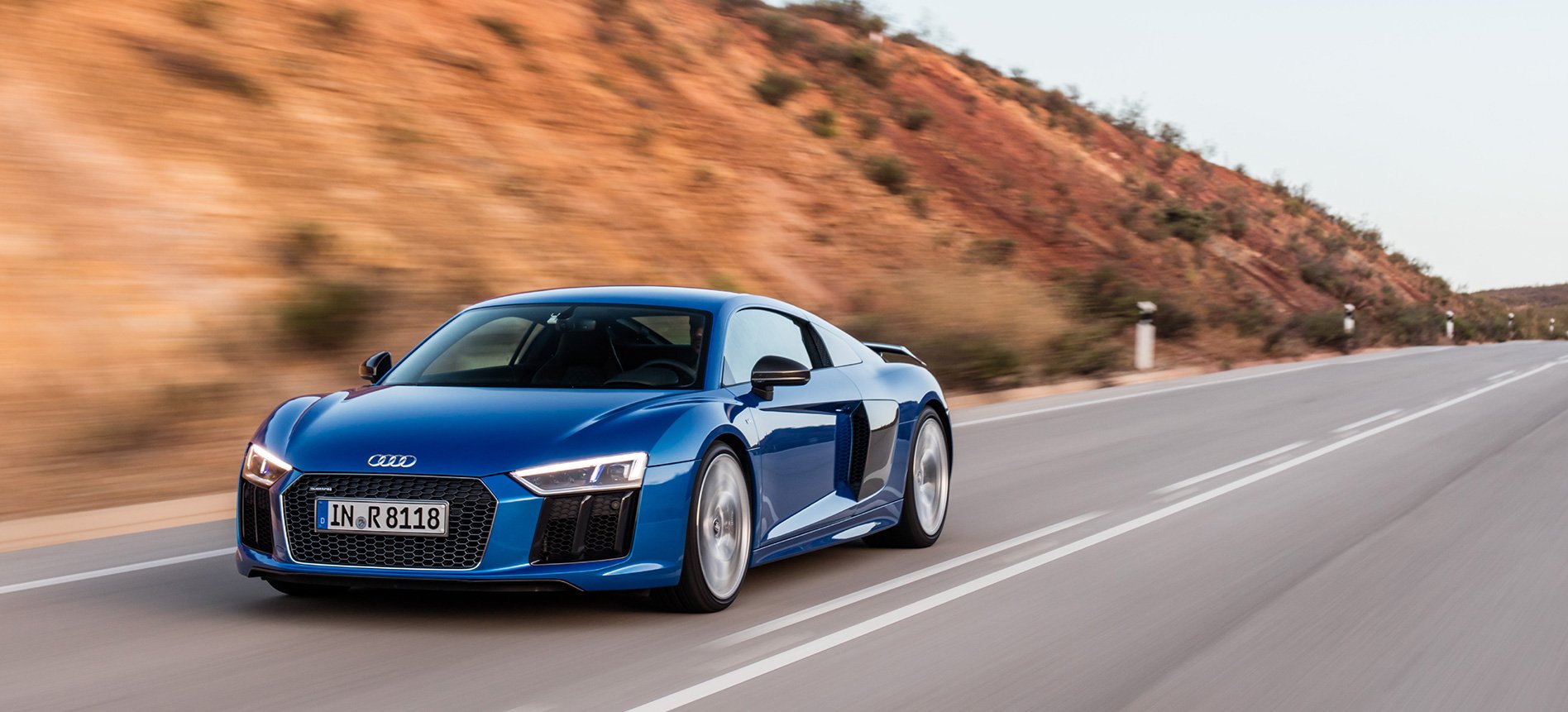
MAIN RIVALS Lamborghini Huracan, Porsche 911 Turbo, Aston Martin V12 Vantage S and, if the budget stretches, Ferrari’s upcoming 488 GTB.
THE WHEELS VERDICT Effectively a Lambo, but with sensibilities and for a little less money, minus the outrageous styling and more desirable badge.
PLUS: Acceleration and throttle response from atmo V10; all-paw traction; practical and comfortable cabin MINUS: Priced to frighten; badge lacks supercar cachet; occasional unwanted noises.
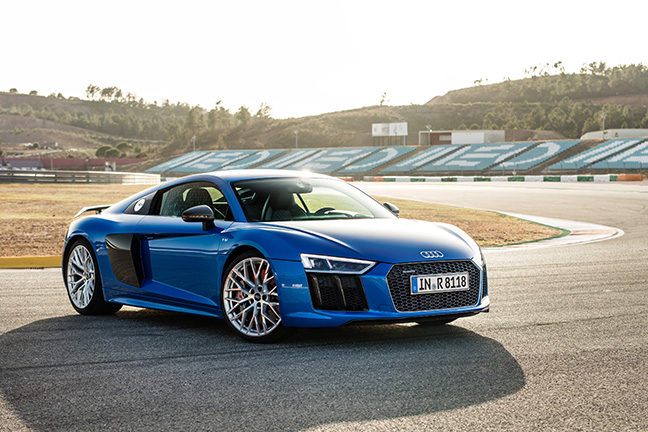
But the R8 is more than just a micro-drop in the vast – and still growing – Audi sales pool. It’s an engineering statement of what the company is capable of, and one that helps sell everything from A1s and Q3s to A8s and Q7s. It also adds incremental volume to a little-used architecture.
As before, the R8 is more Lamborghini than Audi, at least underneath. Engineers say the mechanical package is 95 percent shared with the sleeker Italian supercar; mid-mounted dry-sump V10 engine, basic suspension architecture and largely aluminium (79 percent) and carbonfibre (13 percent) chassis.
Performance is also pure Lambo; better, even. The 449kW 5.2-litre in the V10 Plus launches it to 100km/h in 3.2 seconds and on to a top speed of 330km/h, making it 5km/h faster than the wedge-shaped Huracan.
Then there’s the look. It’s completely new yet evolutionary, with sharper headlights, a 4cm-wider body and customisable side blades now split by a strip of body colour. The Plus gets a DTM-inspired fixed rear wing while the regular V10 has a cleaner active wing that hides at less than 120km/h. Yet it’s not such a head-turner as the Ferrari 458 and Lamborghini Huracan.
It’s the same with the way it drives. Lay into it and the atmo V10 unleashes a satisfying bark in its most aggressive Dynamic mode, but doesn’t leave you temporarily deaf. In Comfort it’s less aurally enticing than an Audi SQ5 diesel.
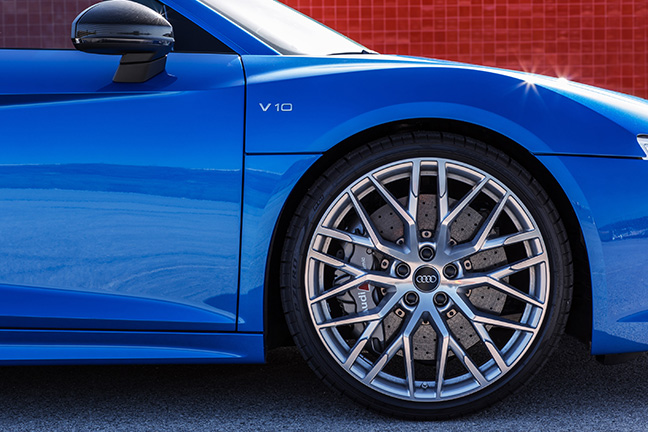
Audi has given a serious nod to the greenies with the addition of fuel-saving tech. There’s idle-stop (it’s super-smooth when refiring) and cylinder-on-demand, which cuts an entire bank on light throttle, alternating banks to control temperature.
The compression ratio is 12.7:1 (up from 12.5) and there’s dual fuel injection (multi-point manifold injection at low revs and load, direct injection at maximum power).
It all adds up to fuel savings of up to 13 percent, although it’s still 12.3L/100km for the Plus.
The V10 borders on lazy at low revs, at least compared with the new breed of turbo supercars. But past 5000rpm there’s plenty of fire and fury. The 449kW V10 Plus screams to 8700rpm.
It’s not quite as vocal as a Huracan, but there’s enough aural passion to remind you there’s something special not far behind your head.
Fast, too, and delivered in a thoroughly predictable and exciting manner. The R8 has a linear power delivery that relies on revs; the more the better. In second, third or fourth gears it’s a seriously useful device, always ready to react, something that happens quickly courtesy of that instant atmo throttle response.
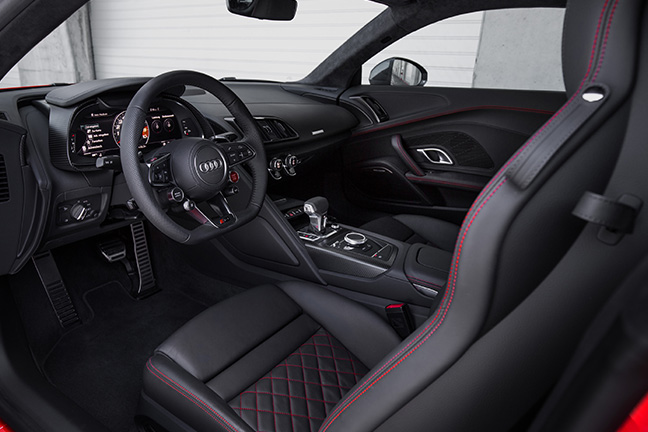
The seven-speed auto is also nicely synced to the engine and can be brilliantly obedient and smooth.
In its most docile shift mode, the R8 is positively relaxed and happily shifts into taller gears when cruising. Dial up a more aggressive mode – it’s all on the distinctive steering wheel that, like an F1 car, is in many ways the brain of the car – and it drops down a couple of ratios and full-throttle upshifts go from barely discernible to a solid whack as it builds pace. Only in that sporty setting does it occasionally overcompensate on a downshift, with a less than elegant fumble-and-thud to full power.
Getting drive to the road is also better than before, thanks to a new Quattro system, which can apportion drive in any configuration, from 100 percent to the front or rear wheels. It also has a driver-selectable performance mode (another one of those buttons on the wheel), which tunes the torque split to dry, wet or snow-covered roads.
Steering is towards the lighter side but with enough meaningful weight to keep you informed and be devoid of kickback. The nose darts sharply and the 20-inch Pirelli tyres cling extremely well to the road.
The ride quality, too, is compliant enough to relax into a cruise or deal competently with city imperfections, and you don’t have to slow to a crawl to protect the low-slung nose.
Approaching 100km/h, though, there’s a rustle of wind noise from the rear part of the side window, and tyre noise is also prominent on certain surfaces, a rare blight on an otherwise refined and sensible supercar.
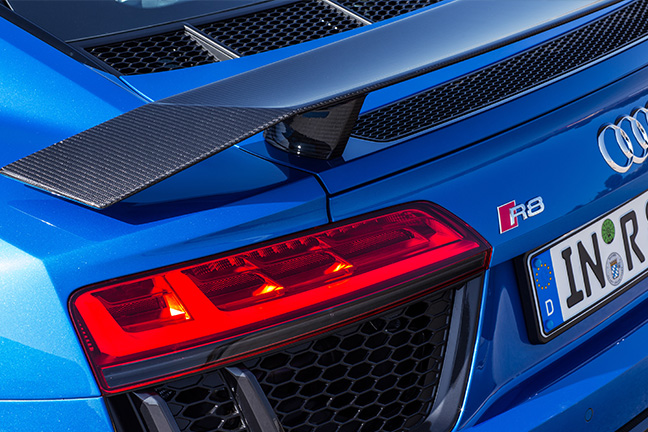
The carbon-ceramic brakes have some trademark low-speed scratchiness yet bring a solid yet malleable pedal feel. During some night punishment, the 380mm front discs (the standard steel discs are 365mm up front) were glowing orange and ultimately resulted in wafts of smoke, but the pedal pressure and brake performance were still there.
Inside, the R8 has a sense of practicality. Indeed, headroom is good by supercar standards, although the high sill and low squab height means there’s no elegant way to alight.
The R8 picks up the virtual cockpit debuted in the TT. As with that car, there’s no central touchscreen, leaving a clean design dominated by carbonfibre-laced air vents and a trio of control knobs. The chunky gear selector takes out a fair chunk of the centre console, which gets a small covered binnacle forward of it and the MMI controller aft (along with covered cupholders at the back).
A 226-litre space behind the seats is claimed to accommodate a golf bag, but the smaller 112-litre hole under the bonnet – complete with power outlet – is a more useful luggage area for less bulky items.
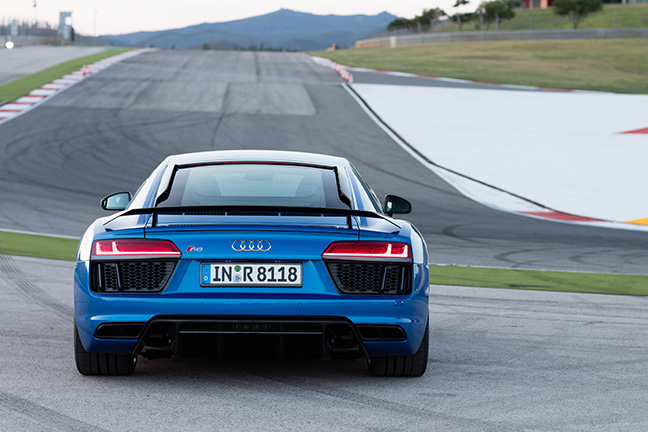
While exotic supercars are high on the R8 hit list, Audi sees the R8 as an everyday alternative, albeit one that has rarity and exclusivity on its side (in eight years little more than 400 are on Australian roads). In that way it’s more likely to compete with top-end 911s. The $400k-plus price tag for the Plus (pricing will be confirmed closer to the car’s second-quarter 2016 local release date) should ensure that exclusivity continues.
SPECS Model: Audi R8 V10 Plus Engine: 5204cc V10 (90°), dohc, 40v Max power: 449W @ 8250rpm Max torque: 560Nm @ 6500rpm Transmission: 7-speed dual-clutch auto Weight: 1555kg 0-100km/h: 3.2sec (claimed) Fuel economy: 12.3L/100km (EU) Price: $400,000 (estimated) On sale: Q2 2016
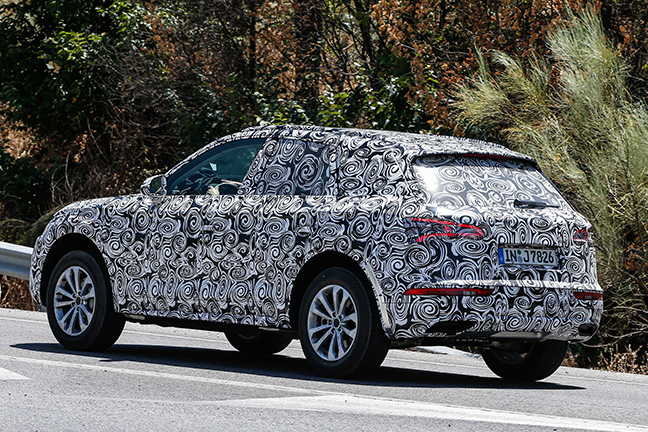
AUDI’S strong-selling Q5 will at last be reborn sometime next year with a complete top-to-bottom redesign, as the company responds to the Lexus NX, Land Rover Discovery Sport, and Mercedes-Benz GLC triple threat.
The second-generation Q5 clearly adopts the new Q7’s chunkier styling without departing too much from the successful formula that has kept it near the top of the premium medium SUV charts for more than seven years. The German five-door crossover continues with the signature six-light glasshouse, snub nose and tapering profile, but appears to adopt shorter overhangs, the latest ‘low and wide’ single frame grille, LED lighting elements, and a faster roofline than before.
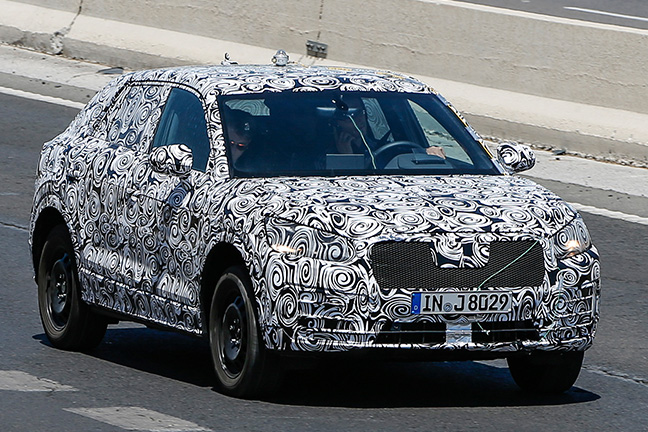
Speaking of which, the second-gen Q5 switches to the latter’s Modular Longitudinal Platform (MLB Evo) that also underpins the closely-related Q7. This means weight losses of around 100kg depending on variant, upgraded four-cylinder and V6 turbo engines in direct-injection petrol and TDI diesel guises touting appreciably improved efficiency. There’s even a proposed TDI-electric e-tron plug-in, promising extraordinarily low fuel consumption figures for a high-riding SUV, courtesy of the MLB Evo’s ‘plug-and-play’ electric/hybrid technology adaptability.
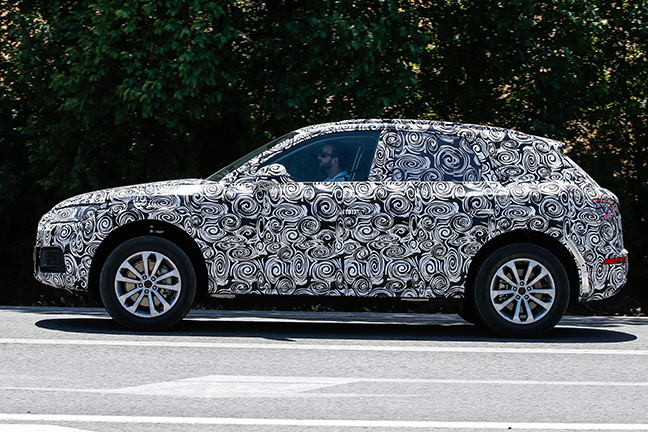
If this all sounds familiar, it’s because most of these changes mirror the advances of the latest A4 redesign, highlighting the parallel engineering philosophy that underscores the MLB Evo range of larger Audi vehicles.
An all-new BMW X3 and Infiniti QX70 are on their way in the not too distant future, so the Mk2 Q5 will have its work cut out to keep fending off the competition in what has long been one of the most lucrative and hotly-contested segments.
Consequently, do not expect the 2017 Q5 to stray too far from the circa-$63,000 asking price of today’s 2.0 TFSI quattro base variant, extending up to nearly $92,000 for the scorching SQ5 TDI performance torchbearer.
Click here to read the full range review of the Audi Q5
Fans of the Mitsubishi Lancer Evolution may weep with both joy and sadness – the rally-sports sedan is going out of production, but 150 examples of the Final Edition are coming here.
As the name indicates, the Final Edition will make up the last 1000 units built of the Lancer Evolution X and what is all but confirmed to be the last all-wheel drive sports sedan Mitsubishi builds.
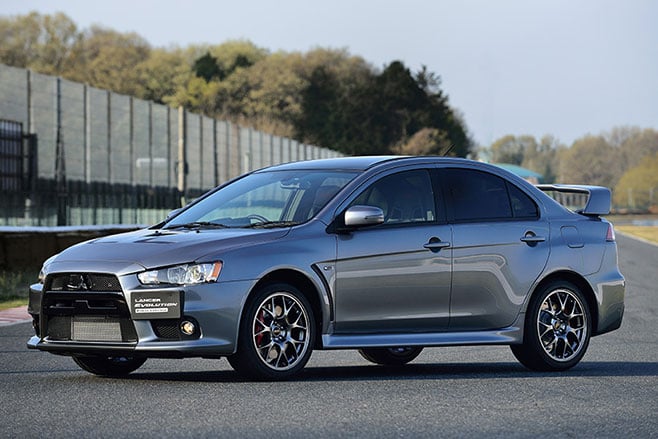
Capping off 10 generations over 23 years, the Final Edition gets a retuned engine management system and new Natrium-injected valves to boost the outputs of its 2.0-litre twin-scroll four-cylinder turbo to 230kW (at 6500rpm) and 429Nm (at 3500rpm).
In Australia, the Lancer Evo is detuned to 217kW and 366Nm, and it is as-yet unclear whether the big output gains will make it across the ocean. Pleasing the purists, no doubt, is the sole availability of a five-speed manual transmission.
The Final Edition looks similar to the range-topping Lancer Evo MR that retails locally for $58,990 plus on-road costs. However you can only now get the manual in the base Evo for $52,990 plus orc. In essence, then, the Final Edition is a powered-up manual version of the range topper sold in our country.
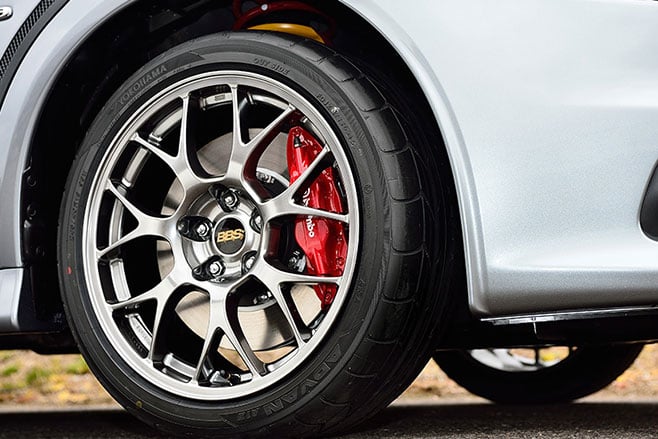
Mitsubishi engineers have also tweaked the Bilstein shocks and Eibach damper package standard on the MR. The FE gets the same BBS 18-inch wheels and Brembo ventilated disc braking package too, with leather-trimmed Recaro sports seats inside.
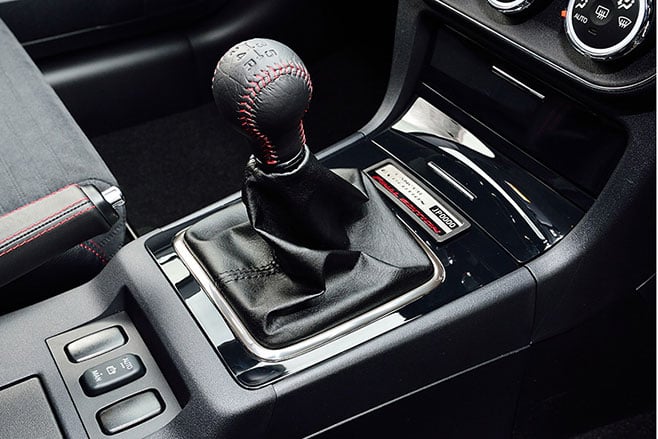
The main change? A numbered Final Edition plaque ahead of the transmission lever, another badge on the bootlid and a two-tone roof.
But if that big, bad-boy 429Nm output comes to Australia when the car arrives this fourth quarter – c’mon Mitsubishi, you really have to for a fitting send-off – then the all-wheel drive system will get as much a workout as the cheek muscles of Evo fans. At least until the brand confirms an SUV Evo replacement as it is expected to do…
Mercedes-AMG has released official photos of the W204 C63 coupe ahead of its reveal next month, except they’re of the camouflaged car.
The specialised arm of Mercedes-Benz has been drip feeding us for the past month on its own dedicated “Mercedes-AMG C-Class Coupe” web page with heavily concealed teaser videos and images of the new slope roof C63, and it’s now revealed another set of snaps of the ‘prototype’ car in action at the Hockenheimring.
One photo taken of the prototype front on confirms the coupe will wear an identical face to its sedan and wagon siblings, with the same blade-style front bumper.
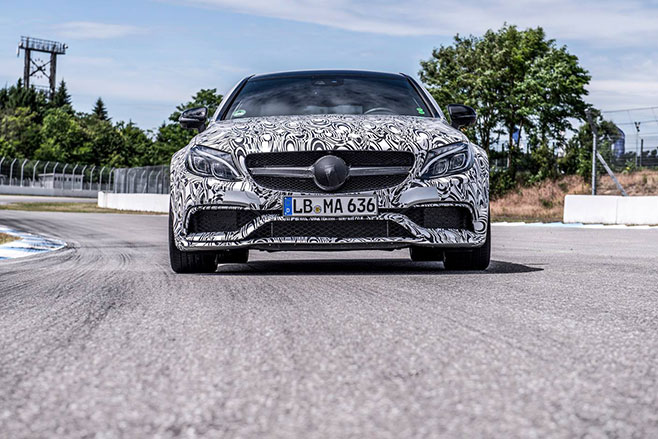
Elsewhere heavy camouflage still decorates the car from snout to rear, which when combined with the blurry exposure of the action photos makes it particularly hard to glean concrete details on the car’s exterior.
We can, though, deduce the car is leaning hard on the same 19-inch alloys as the sedan ‘S’ variant, rather than the mismatched items seen in previous spy shots, making it easier to appreciate the final shape the coupe has taken on that looks significantly altered from the windscreen back in comparison to a sedan.
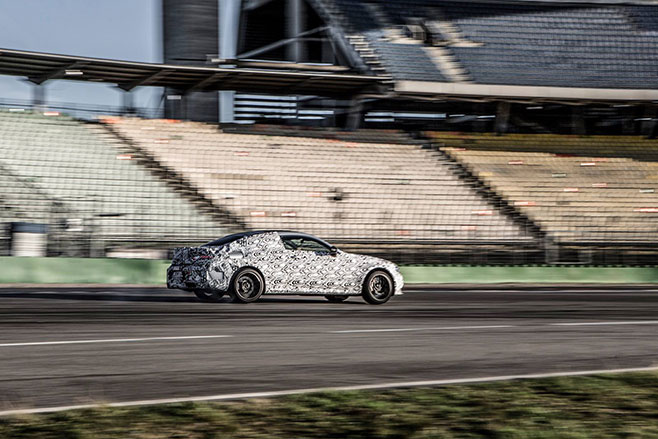
Photos of the car parked in pits also captures its frameless doors, which form part of the coupe’s unique glasshouse.
Little else is given away by the release which Mercedes-Benz made on its Facebook page yesterday. However we have come to know the coupe will use the same M177 4.0-litre twin-turbo V8 matched to a wet clutch seven-speed automatic as the sedan and wagon C63.
Meanwhile, AMG engineers are also believed to have applied a different suspension tune to the coupe.
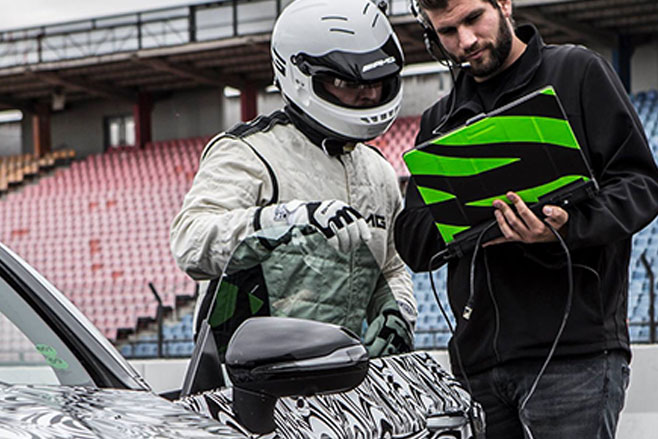
Of the range, Australia is poised to receive only the higher spec ‘S’ variant coupe with power to be set at 375kW and 700Nm.
Mercedes-AMG will unshroud more answers when the car debuts on August 19 ahead of its Frankfurt Motor Show reveal, which we’ll be following closely to bring you the latest news.
INFINITI Australia managing director Jean-Philipe Roux says admits his company has been standing still but that the launch of the flagship Infiniti QX80 is the start of wave two as the brand wakes from hibernation.
“We haven’t been very loud in the past about Infiniti,” the Frenchman told Wheels, eight months after taking up the role. “We’ve been pretty quiet.”
That silence has been broken by the QX80 as the company begins its most aggressive new-model onslaught since arriving in Australia in late 2012.
Coming models include the Infiniti Q30 hatch, based on the Mercedes-Benz A-Class and due to be shown in production form at the 2015 Frankfurt motor show, the QX30 (based on the Mercedes GLA) and the Q60 sports car.
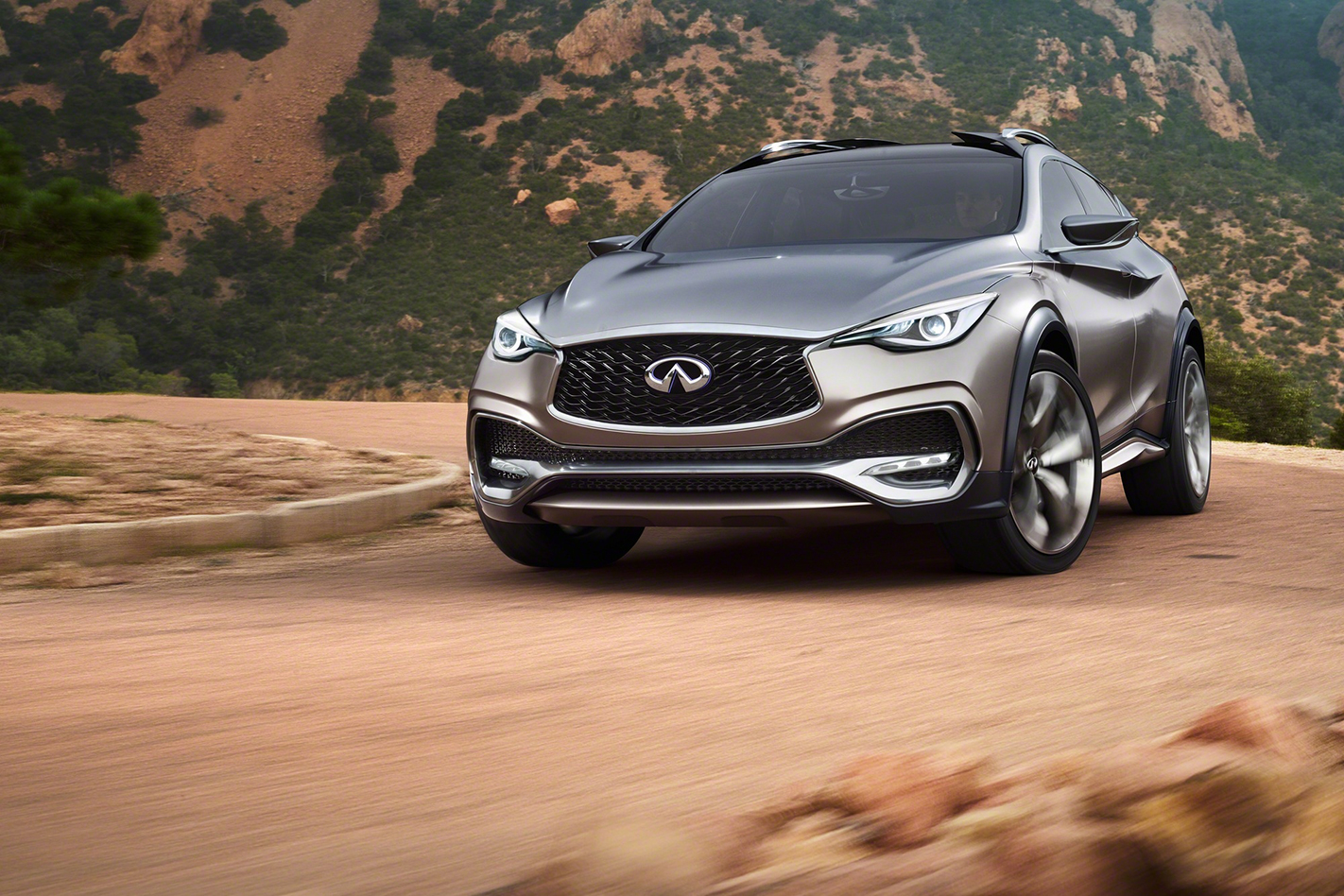
Yet Infiniti needs to prepare to make the most of having more attractive models and a wider product offering, and that means expanding its tiny dealer network.
“We need to become a national player,” Roux said. “With three dealers only, we’re not a national player.
“So first things first, and the first basics are: better coverage of Sydney; better coverage of Melbourne; and Perth.
“Tier Two is to start developing a service and parts dealership on the back of the Nissan network.
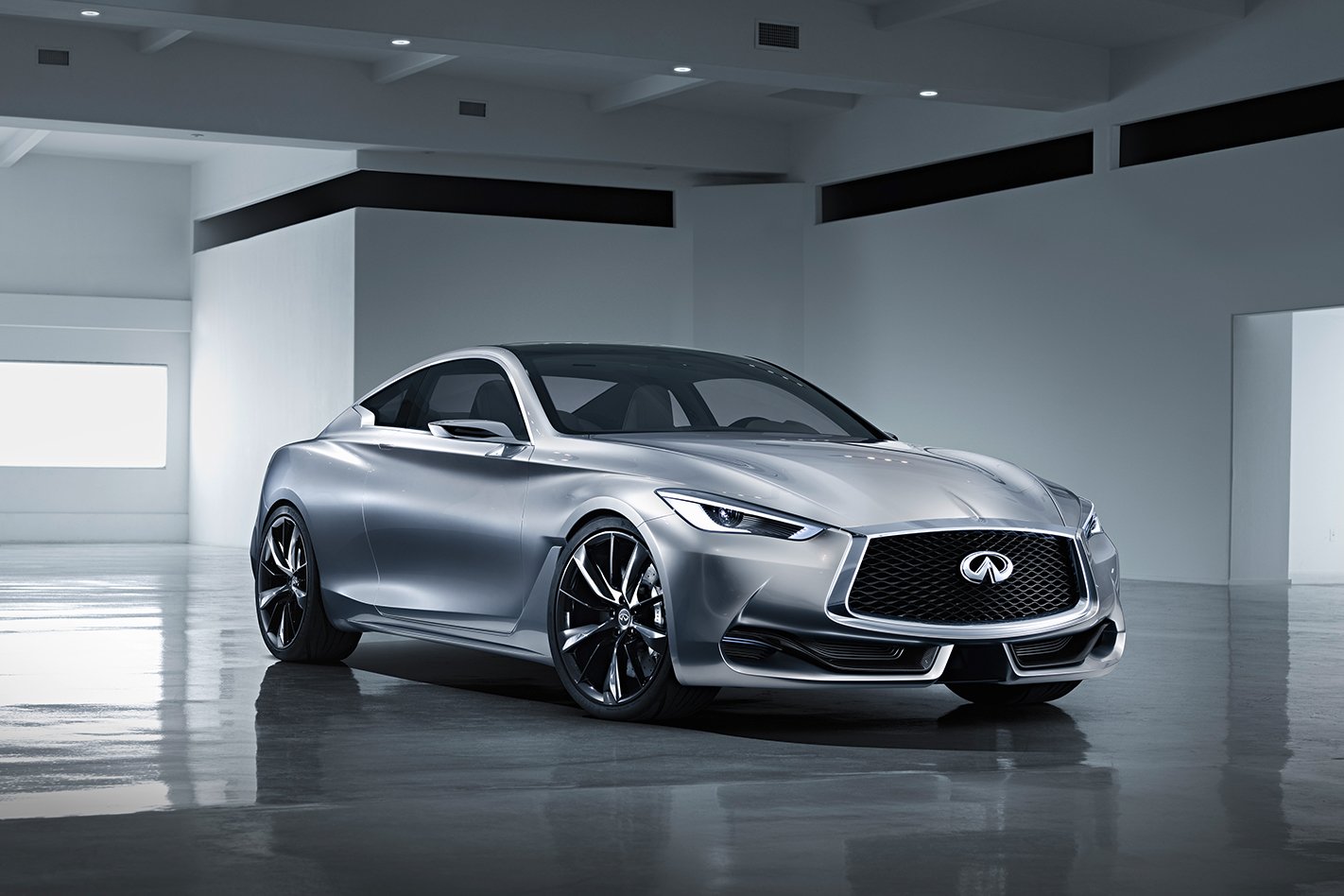
“We’ve been standing still over the last months, very much working on those basics, but now it’s time for us to be a bit more on the front foot and to start engaging with the whole industry a bit more.”
The expansion is part of the strategy to develop brand accessibility and awareness.
“It’s very much driven by product. The arrival of Q50 enabled us to drive a bit more volume, and with Q30, because we’ll be driving more sales and volume opportunities to our network, we’ll be in a position to offer the franchise to more potential partners.
“I don’t have a set number [of dealers] in mind.”
Infiniti has had to endure tough times since the brand arrived in Australia; global chief Johan de Nysschen defected to General Motors and his boss, Andy Palmer, commented that “we don’t need Infiniti, we just don’t need that brand”. Palmer has since left Renault-Nissan to join Aston Martin.
Locally, Infiniti has churned through four MDs in less than three years, with Roux now the second-longest serving after a mere eight months.

Roux is clear about what Infiniti needs to do and why it exists.
“For some other groups, the premium offering is X percent of the volume, but it’s a much bigger proportion of the profit. So the target goal is to drive more profits to the organisation. So, yes, Nissan does need Infiniti, and as far as Australia is concerned it’s a way to expand the business.”
He says the QX80 is not a one-shot and will be permanent fixture in Infiniti’s local line-up, despite its low sales expectations. Instead, it’s about showing off the brand and underlining its commitment to Australia.
“One of my targets is to come back to you by the end of this year with dealer openings. That means we’re on the move and demonstrates we are committed to Australia and we are committed to grow.”
Sign up here to receive the latest round-up of Wheels news, reviews and video highlights straight to your inbox each week.
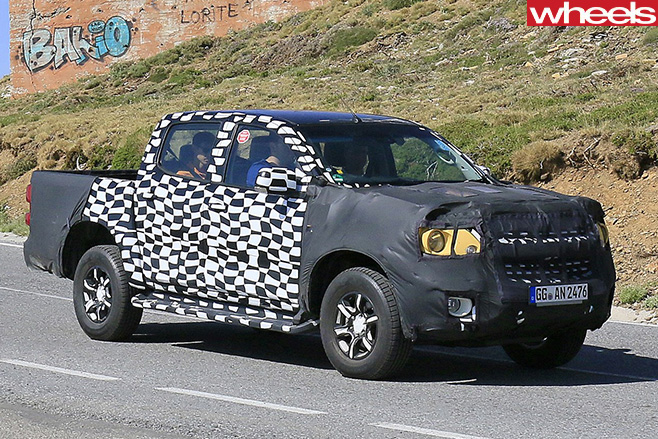
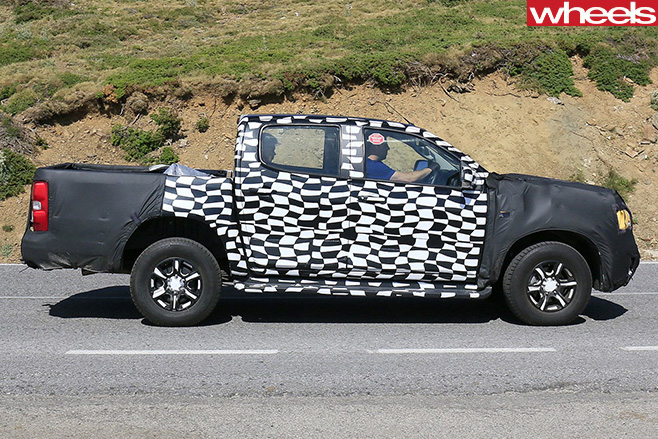
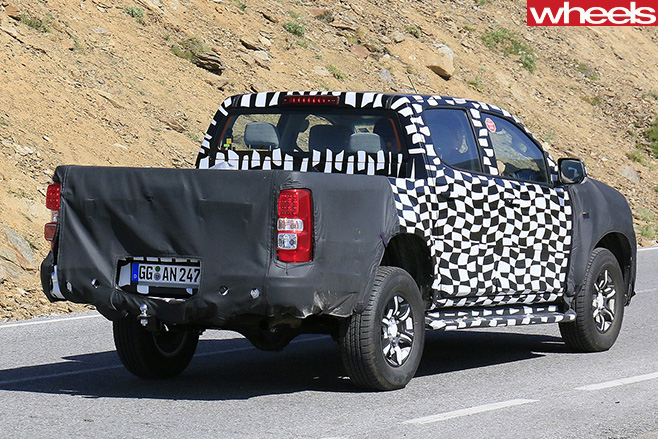
THIS is the hottest looking version of the Holden Colorado yet. Not only that, but the Chevrolet Colorado ZR2 concept it’s based on gives us a preview as to what the updated Colorado, due here in mid-2016, will look like.
According to a Holden source, the updated Colorado will be more than just a mid-life nip and tuck. And it’ll need to be, because its main rivals will have all been overhauled or updated by the time Colorado arrives.
Click here to read the full range review of the Holden Colorado
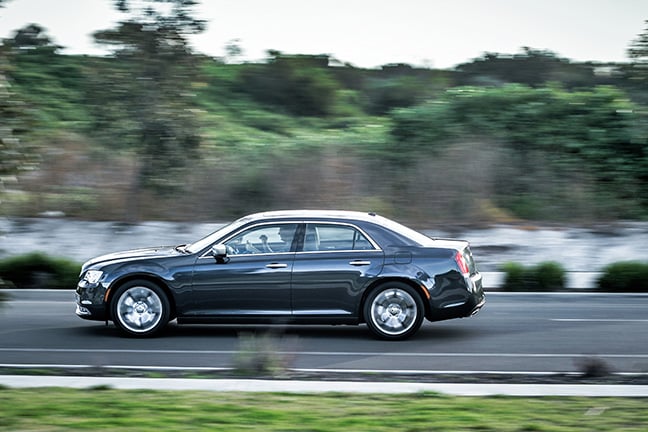
Restyled Chrysler 300 reaches back into the past to bolster its (slightly) more upmarket future.
WHAT IS IT? A mid-life facelift of the chunky, second-generation ‘modern’ 300, inspired by the greats of Chrysler’s famous ‘letter series’ models and bedazzled with a beautifully embellished front end. There’s also more bling inside, though the model range has been rationalised, meaning the entry-level Limited and turbo-diesel have been home-schooled to the northern hemisphere.WHY WE’RE TESTING IT? Well, why wouldn’t you when it also includes a flick at Sydney’s original, and only remaining, drive-in – Skyline in Blacktown. Yep, the updated 300 launch included a movie, a burger and chilli-cheese fries. But what better way to showcase the new 300’s brilliant (optional) 18-speaker Harman Kardon stereo with 900-watt amplifier and subwoofer than to pump the Ant-Man movie soundtrack through it? But we also enjoyed a stint through the national park, demonstrating the 300’s new electric steering and tweaked chassis.
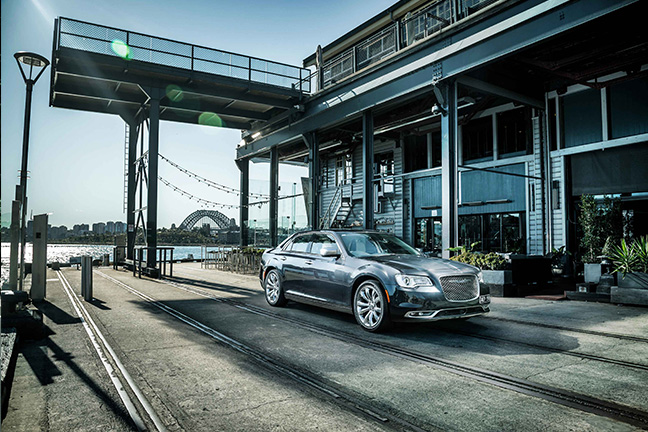
It took Chrysler more than three decades to rediscover its own aesthetic, and it did so with such success that the reborn 2005-era 300, with its ‘chopped’ roof style and aggressive front end, was barely messed with when generation two lobbed in 2012. Now Chrysler has taken this retro-tech flavour to a new level with the extensively updated 2015 300.
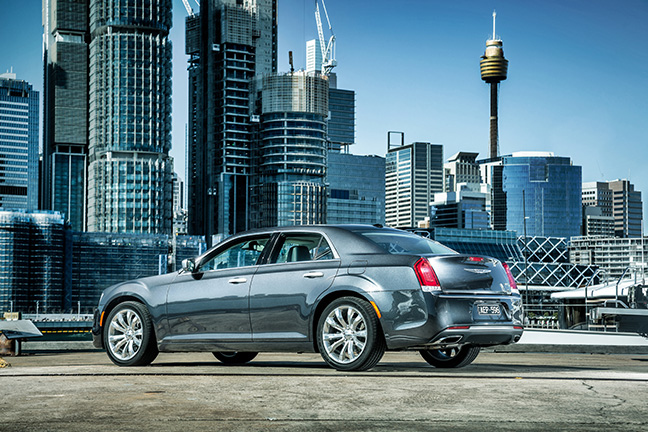
It’s essentially the same car but much has changed. A new front fascia with a rather lovely fine-mesh grille and LED fog lamps to match the adaptive bi-xenon headlight’s C-shaped LED running lights gives the revised 300 a techy, ‘white light’ look and a striking rear-view-mirror presence. Not sure the ‘rectangular-doughnut’ LED taillights achieve the same effect – they look very Fiat-like – but the new Chrysler 300 remains a mean-looking son of a bitch.
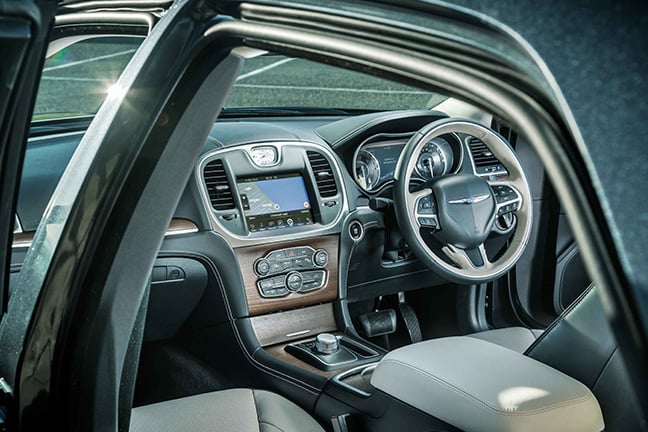
We drove the 300C Luxury. With lovely diamond-stitched Nappa leather, a pretty new steering wheel with paddles, and a new retro instrument pack with a beautifully rendered central TFT screen fulfilling nav, speedo and trip-computer duties among other things, the refreshed 300 cabin has its good points.
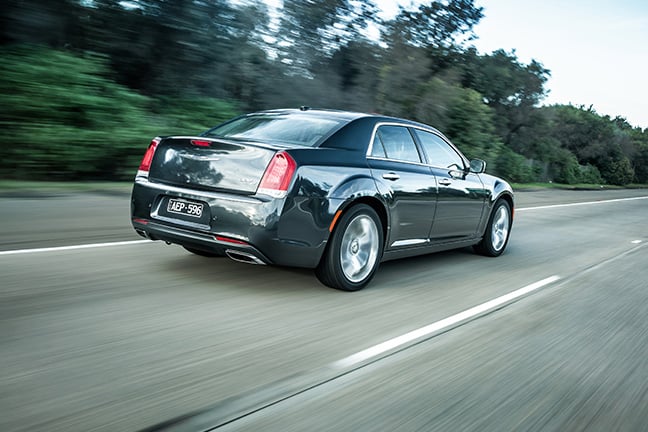
In the Luxury, the front seats each have heaters and coolers, but they lack sufficient lateral support to complement the new 300’s tidy handling. Its new electric steering set-up (bolstered by a Sport mode in the Luxury, that makes steering weight a bit meatier and sharpens throttle response), is accurate and consistent, while the 300’s chassis continues to surprise with its cornering competence.
Chrysler says the 300 has cast-aluminium axles and rear axle housing to “reduce parasitic friction”, but it might have been smarter to engineer the top SRT’s adaptive dampers into the 300C Luxury because, on its chunky polished 20s, the Luxury’s ride is anything but luxurious. It’s quiet though, and that’s some compensation.
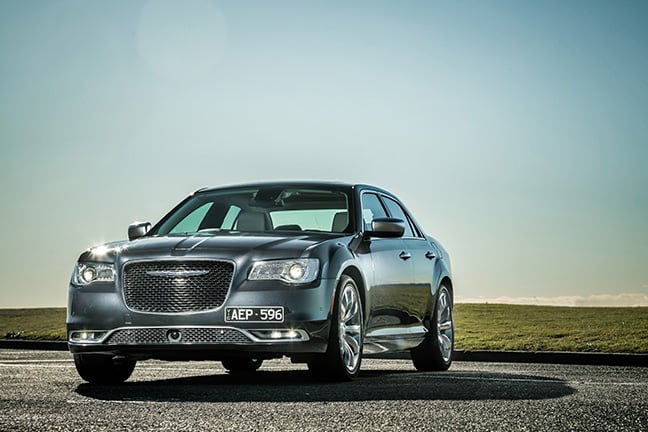
While reasonably well-mannered, what the V6 lacks is effortlessness. At 1862kg, the 300C Luxury puts all eight ratios to good use, yet it’s a busy worker, shuffling about the place in an attempt to deliver some muscle. But with Chrysler’s 250kW 5.7-litre Hemi V8 tied to the ZF eight-speed, the posh 300 would be so much more convincing as a luxury car.
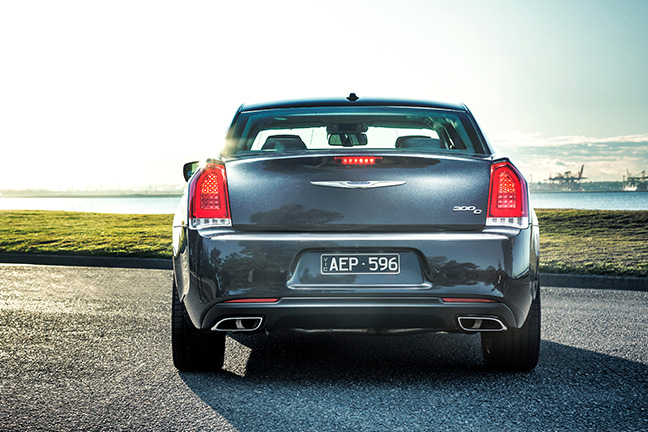
While we lament the absence of a velvety Hemi V8, and reckon there’s a market for a sub-$50K entry-level sporty variant, the refreshed Chrysler 300 is even more car for the money than it ever was. Our inner petrolhead says the forthcoming $69,000 SRT range-topper will be the one to have, but there’s still plenty to like in this tough-looking, neat handling slice of distinctive Americana.