
Such was the case at this year’s show where all of the former Big Three, Ford, Chrysler and General Motors made much of their new-found focus on frugality.
Ford opened proceedings on day one with the global reveal of its all-new Focus, a handsomely-styled, four-cylinder powered hatch and sedan that’s set to become the Blue Oval’s most important model worldwide, including Australia.
Not long after, Chevrolet got the ball rolling over on the GM stand with the reveal of not one but three new small cars, at least two of which are set to underpin the General’s US model line in coming years. The Chevy Cruze will be more familiar to Aussies as the Korean-import upper-mid-size Holden Cruze. The US model, which goes on sale there later this year, is pretty much the same car Oz gets, with the exception of a different Watts link rear suspension and a punchy new 1.4-litre turbocharged petrol engine. We’ll see the same engine in the Holden Cruze next year, when Holden begins building the Cruze in sedan and hatch variants at its Elizabeth, South Australia, manufacturing facility.The Cruze was flanked on the GM main stage by the even more diminutive Chevy Spark, a funky looking small hatch powered by a 1.2-litre petrol four-cylinder. This Korean-designed and manufactured sub-compact is also destined for Australia, where it will go on sale in late 2010 as the Holden Barina Spark. The Barina Spark will go head to head with the likes of Suzuki’s Alto and is expected to be priced from approximately $14,000. Chevy’s other main offering was the Aveo RS concept, an eye-catching hot hatch that runs the same 1.4-litre turbo four- as the Cruze, and which also has a strong Australian angle. Styled by Czech-born Australian designer Ondrej Kormhaz and built by Holden in Port Melbourne on behalf of Chevy, the Aveo RS is in fact a thinly disguised version of the all-new Barina, which Kormhaz also oversaw the design work on and which we’ll see in Australia in 2011.Even GM’s specialist pick-up brand GMC, better known for building full-size, gas-guzzling behemoths got in on the small four action, launching its own super-cool concept the Granite. Arguably one of the sweetest concepts at the show, the ‘industrial chic’ Granite is a clear pointer to the fact GM is intent on expanding the GMC portfolio beyond its previous staple diet of pickups and SUVs. A GM executive on the stand told Wheels the Granite was intended to get down and compete in what’s known as the box’ segment in the US, as characterised by vehicles such as the Nissan Cube and Scion Black Box production cars. It’s likely there will be plenty more such ‘stretching of band width’ across the GM product portfolio in coming years, too, as the company looks to expand its remaining US brands — Buick, Cadillac, Chevy, and GMC — following the sale or closure last year of Pontiac, Hummer and Saturn and its ongoing attempts to sell Saab.
Chrysler meanwhile dedicated a large chunk of its show space to displaying products by its new Alliance partner, Fiat. Conspicuously sprinkled throughout the display of ageing Chrysler and Dodge products were examples of the diminutive Fiat 500, a Maserati coupe, and a Ferrari 599 race car. A lightly made over Lancia concept sporting Chrysler badges but displaying no story board or other information seemed to emphasize both the remarkably low-key and somewhat haphazard nature of the Chrysler stand, as well as the scale of the job that lies ahead in trying to bring the seemingly incompatible alliance partners together. Of course, for fans of more traditional US fare there were still plenty of performance V8s and monster trucks dotted about the Cobo Hall exhibition space, but the message coming from the America’s domestic automakers was that in the second decade of the new millennium, it’s all about downsizing. ENDS
At this year’s Detroit motor show that niche was filled by the Revenge Verde, a muscular performance coupe with all the attribute swoops, creases and curves to make it look like it was doing a hundred miles per hour while sitting still.
Coated in an eye-catching shade of lime green the carbon-fibre and aluminium bodied Revenge Verde was being promoted by expat Australian Peter Collorafi, who claims to have once been a business partner of Peter Brock in the HDT franchise.
Built on a Ford GT chassis and offering a combination of three different V8 drivetrains, Collorafi hopes the Revenge Verde’s combination of exotic looks, devastating performance and affordable running costs will convince up to 3000 Americans per year to part with the requisite US$190,000 entry fee when the car goes on sake in late 2010.
Ford fans will be able to fill the mid-mounted engine bay with a supercharged 5.0-litre Ford V8 and associated drivetrain bits from well-known Ford fettler Roush Industries; while Chev fans may opt for a 638hp Pratt Miller Engineering version of the supercharged 6.0-litre V8 that powers the sizzling Corvette ZR1 supercar.
For performance enthusiasts with a taste for something a little more exotic, however, Mr Collorafi says his car will also offer an ‘Hp2g Hybrid 100 V8’ powertrain. This mysterious engine uses magnets and runs on E85 ethanol-blended fuel to offer the enticing combination of 100mpg economy married with 400hp performance.
Described intriguingly by Mr Collorafi as an “engine within an engine”, the Hp2g V8 is the brainchild of Doug Pelmear, who in June last year unveiled a small manufacturing facility in Wauseon, Ohio, from where he plans to build engines for the Revenge Verde, and presumably anyone else with the readies.
In 2008 Mr Pelmear generated some media buzz when he embarked on a 4000 mile round trip from Napoleon to the SEMA show in Las Vegas, driving a 1987 Ford Mustang equipped with his revolutionary engine. He claims to have achieved the staggering economy figures of 109.8mpg along the way.
Quiet how his engine manages such extraordinary efficiency while also developing such impressive power and torque figures (400hp, 500ft-lb) is a mystery. But so far as we can gather the Hp2g consists of a good old all-American big block V8 married with an electric motor, and with ceramic magnets atop the V8s cylinders.
Beyond these basic details, however, the information gets kind of sketchy. It appears the magnets have the ability to shut down various cylinders, much like the variable displacement technology we’re already familiar with from the likes of GM and Honda. A key difference is, however, that the Hp2g can go from running on all eight cylinders to running on just one, with the cylinder that’s activated rotating through the eight cylinder set.
Confused? So are we, but stay with us as we haven’t yet explained how the incorporated electric motor, powered by two conventional 12V batteries, “pulses” on and off, thus providing bursts of power to the driven wheels to compensate for the cycling of the V8.
It all sounds just about crazy enough that it might work. And if it does, Peter Collorafi says he’d be happy to consider building a right hook version of the Revenge Verde for the Aussie market.
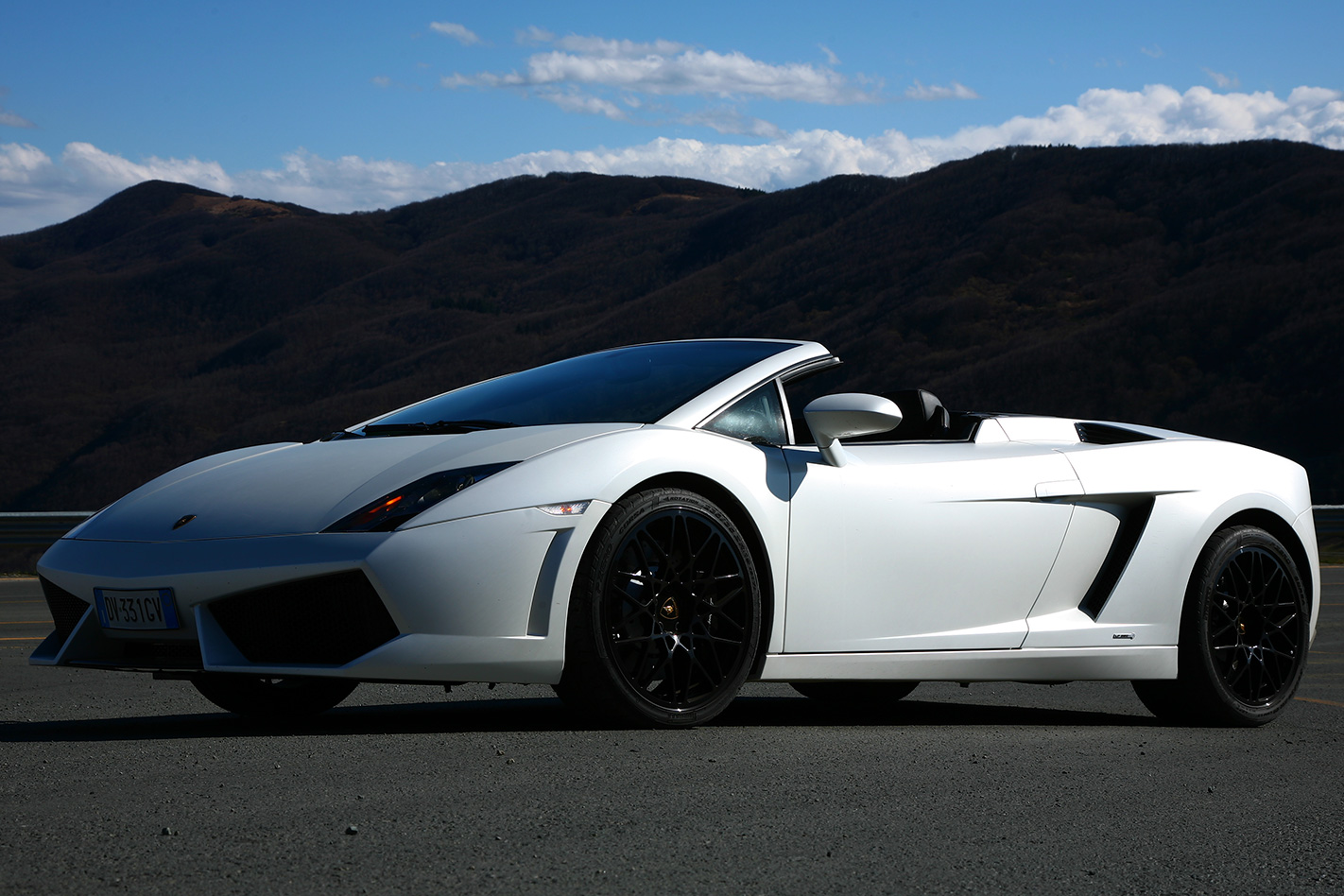
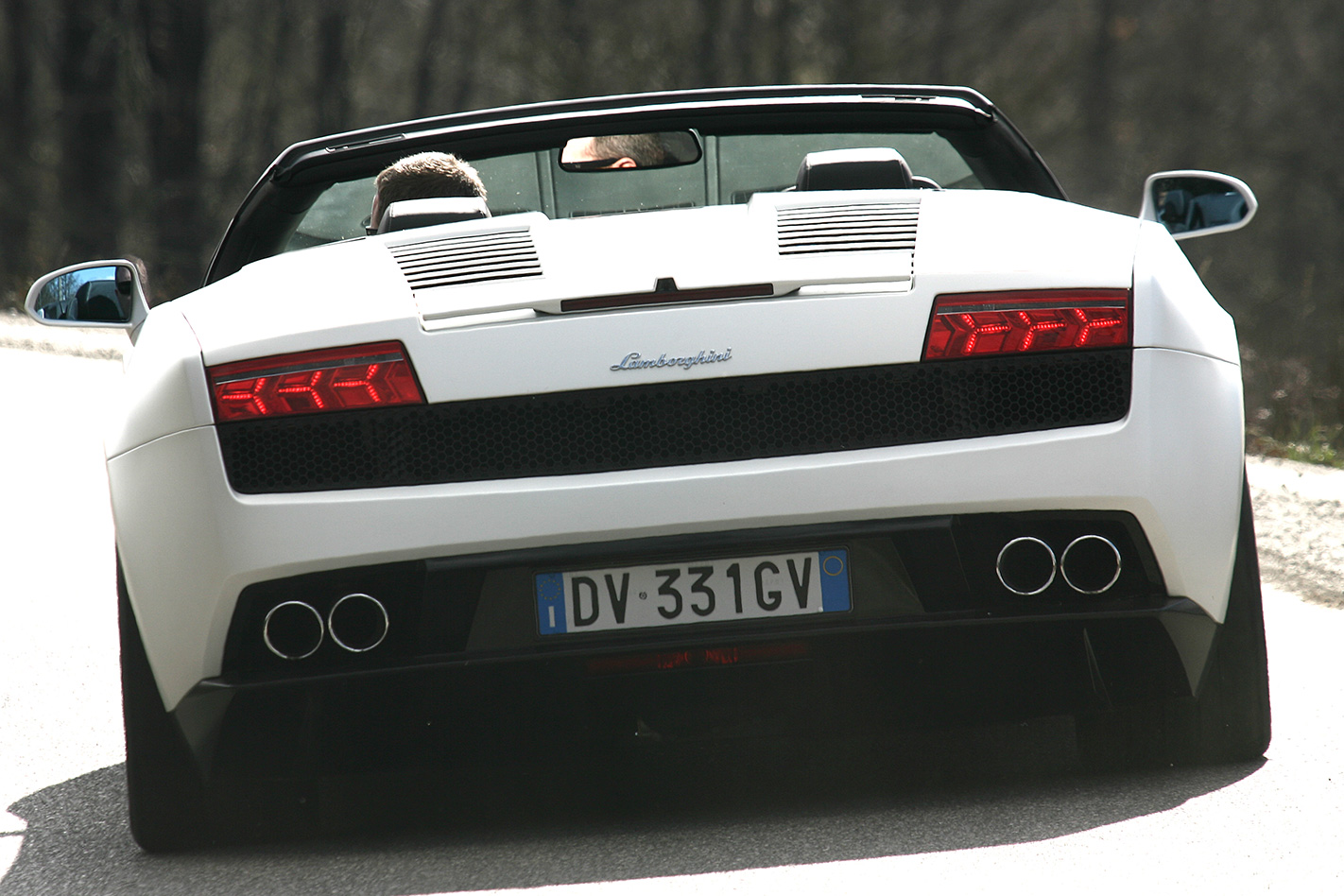
Removing the LP560-4’s roof merely adds to its allure.
The new open-top Lambo’s already doing 270km/h − well shy of its claimed v-max − as things become even more interesting. The braking markers fly past with a disturbing frequency and, finally, half a second’s hard braking washes off the scariest 50km/h.
But, still, the Spyder turns in at more than 220km/h to a long, long, long corner that tightens up twice. Twisting, snarling and challenging the most accomplished cars and drivers, this corner would have worried Lamborghini’s old Gallardo Spyder. It would have worried the driver a lot more. It’s a piece of extreme engineering and it demands a piece of extreme machinery.

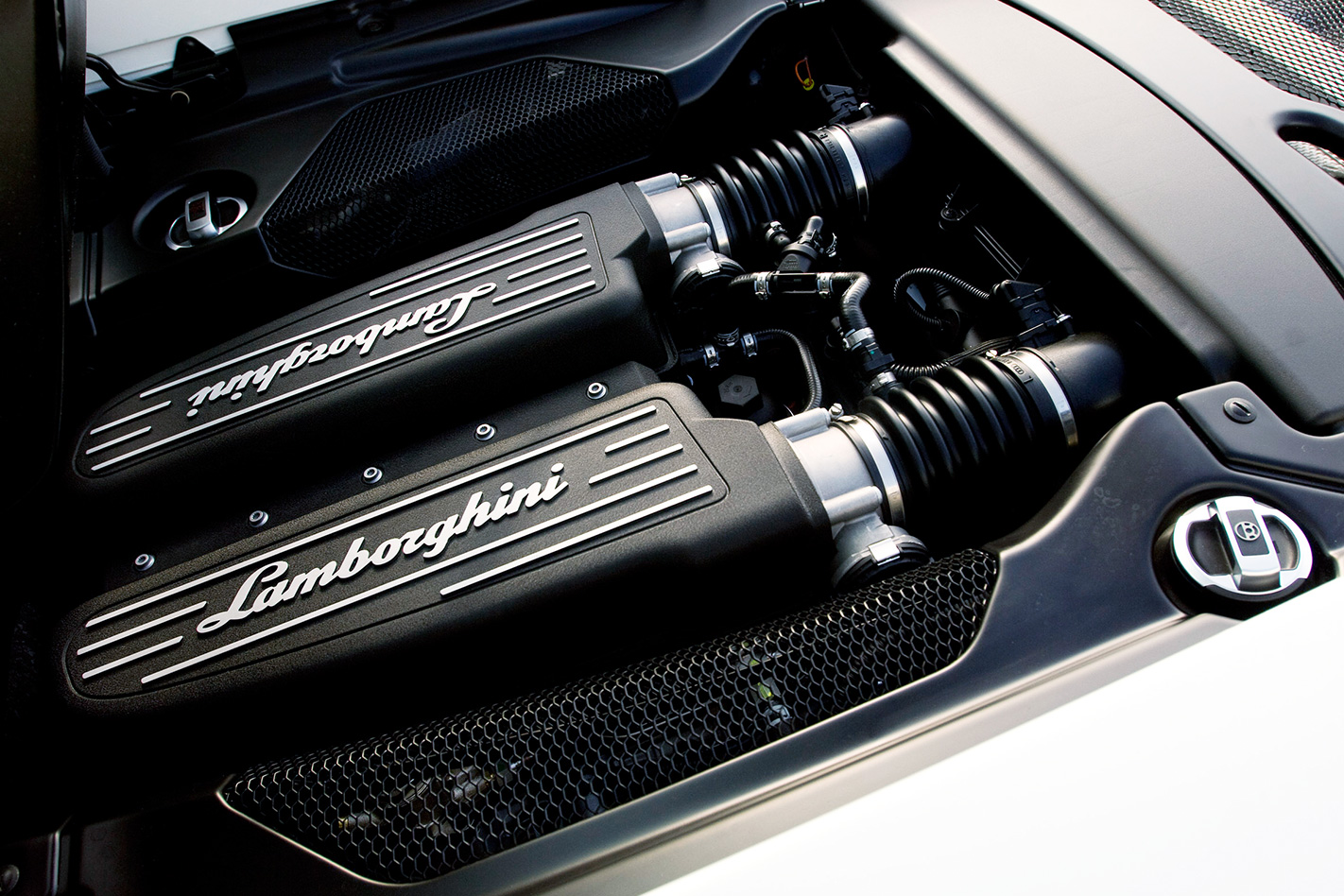
Deep beneath the seats, the Spyder is faster and more fuel efficient than its predecessor. That’s partly because the new direct-fuel-injection system increases efficiency and partly because the car is, at 1550kg, 20kg lighter.The 5.2-litre V10 spins freely right through to the 8300rpm cut-out and it would be a cruel man who didn’t love the way the sound had its own rich, distinct character at each and every rpm. It’s a deeper note than you’d think possible, full of huskiness and rising from a menacing growl at idle to a full blooded, barrel-chested bellow nearer to the redline. And it’s not just noise, either.
It’s comfortable in the default setting, starts swinging when you push the Sport button to change the six-speed E-gear’s paddle-shift software, and throws its heaviest punches in the track-oriented Corsa mode.There, the shifts become more brutal, cutting 40 percent from the shift time and sending an audible ‘bang’ from the clutch all the way down through the viscous-coupling centre differential to the front and rear diffs.The changes to the chassis have altered the character to sharp and reliable from crisp and dazzling. Even if you didn’t know about the roof, you’d know that its driving character is softer than the coupe’s. They’ve done a much better job of hiding the high nature of the roof’s extra weight than they did on the original Spyder.
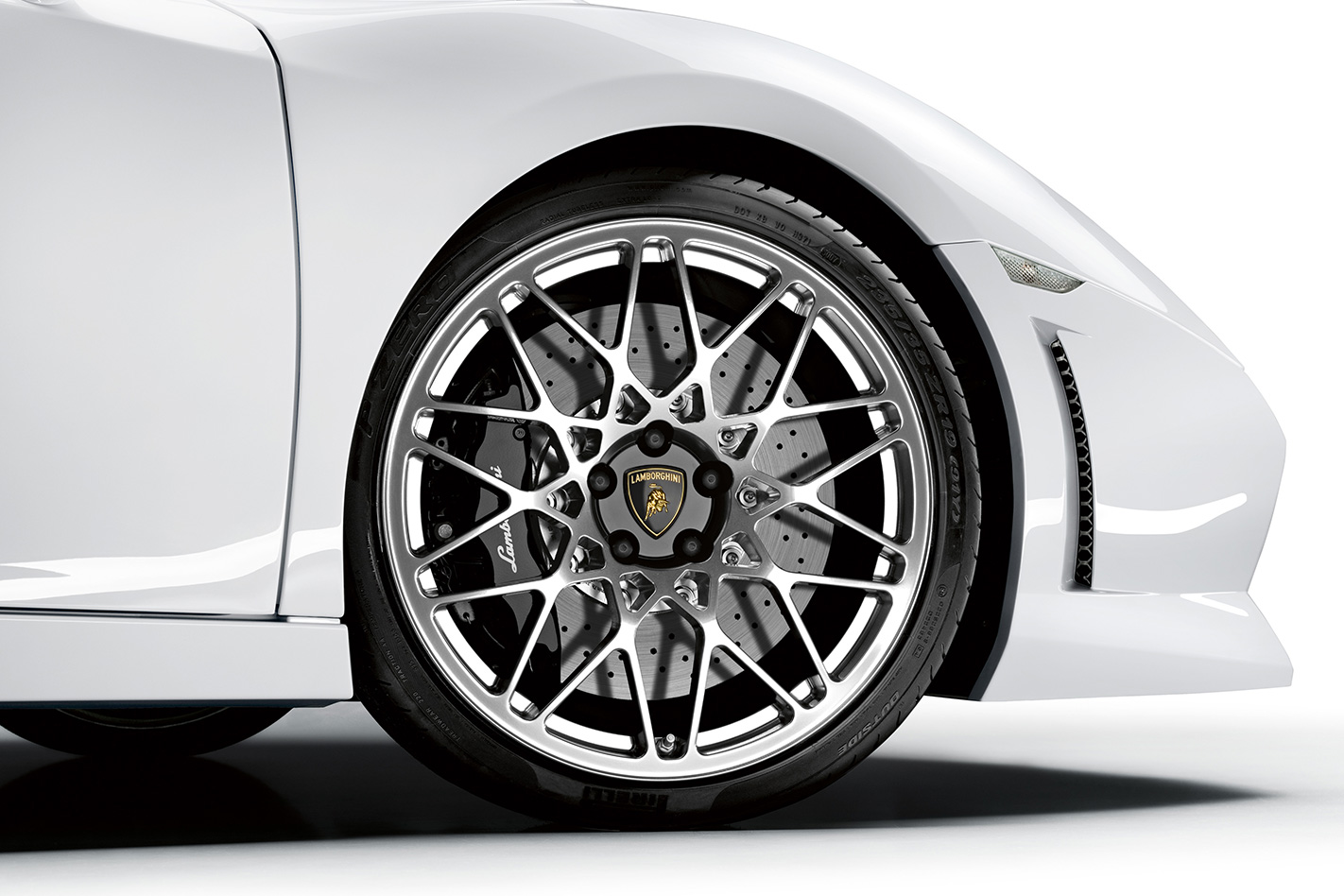
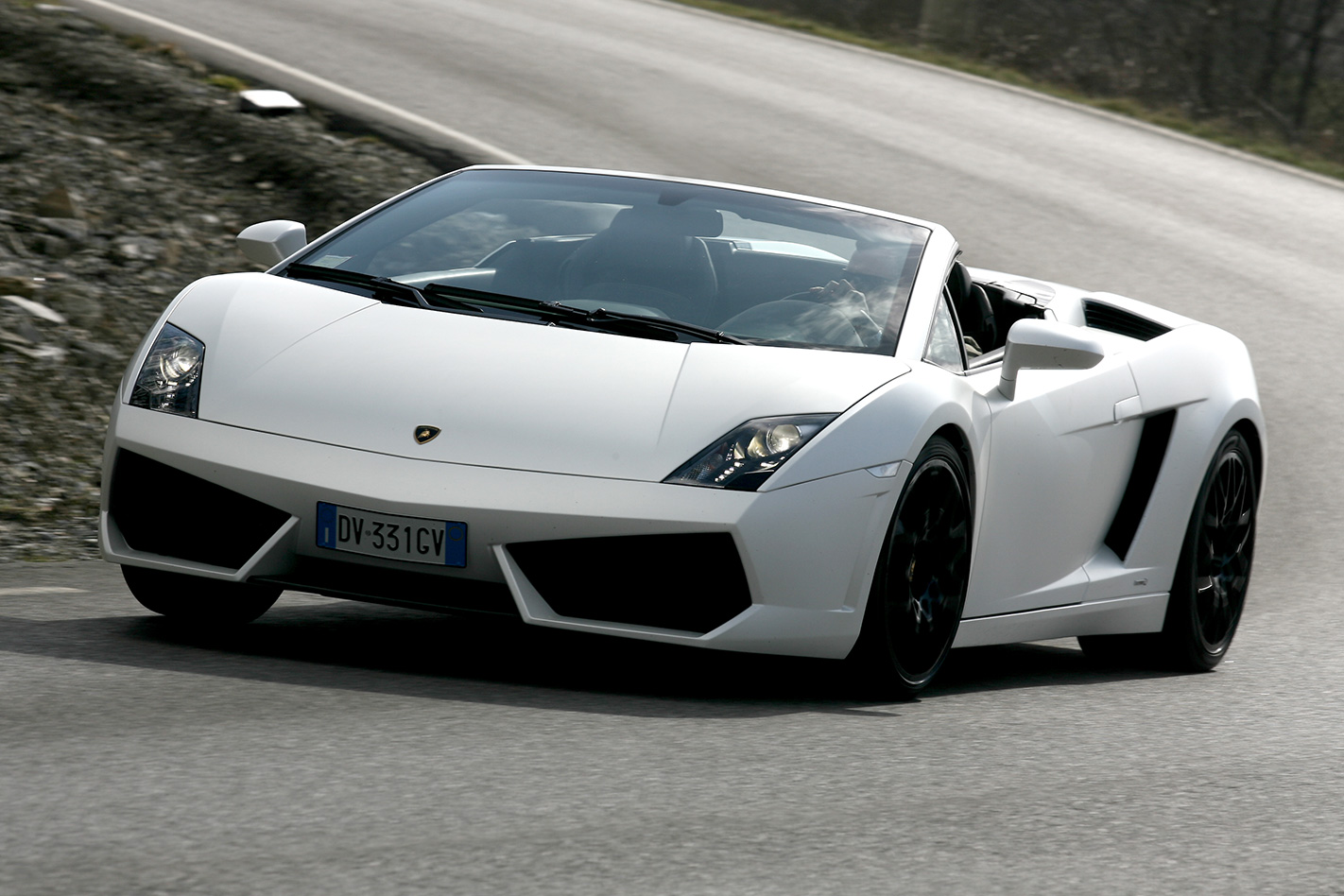
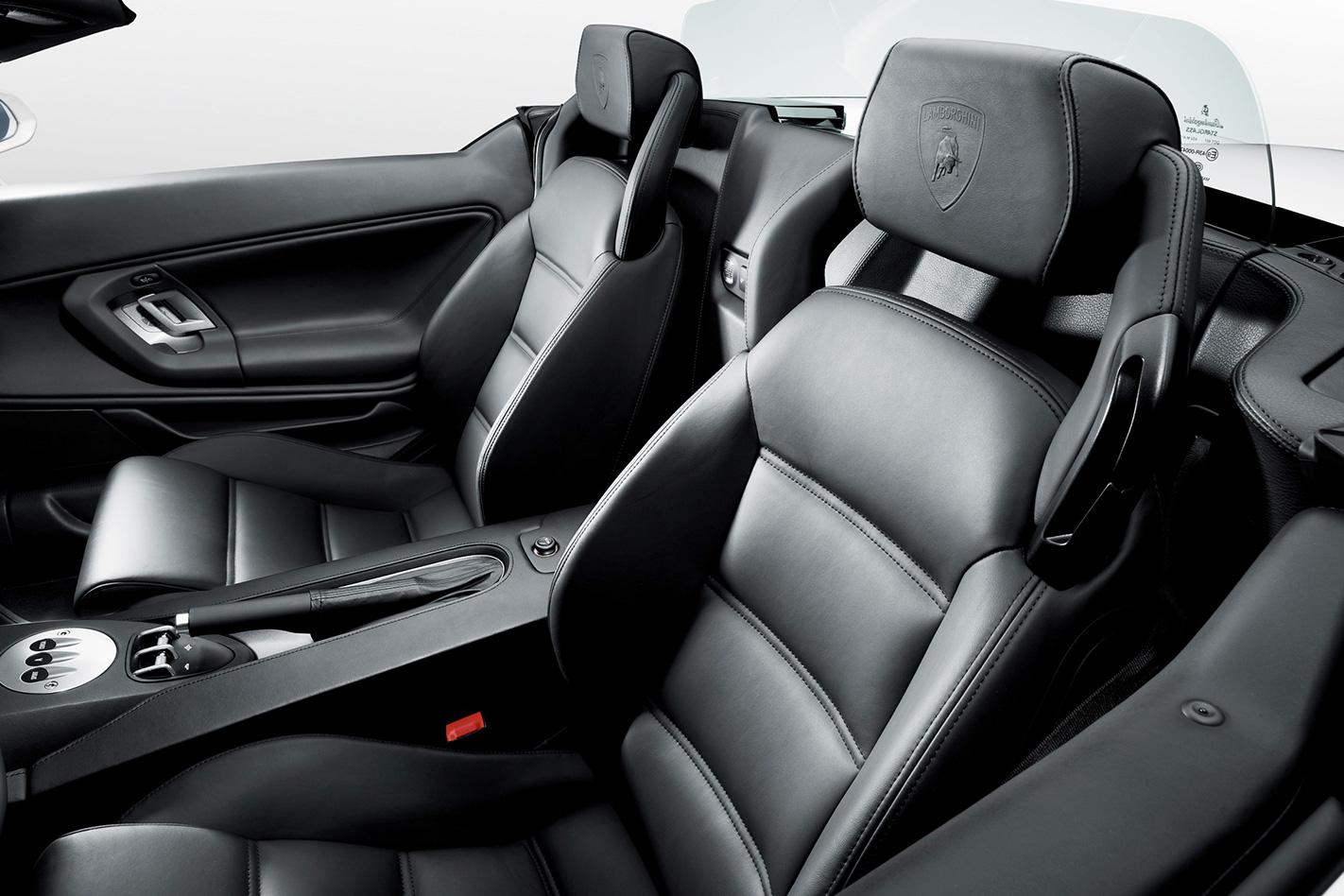
What you have now is a fast, achingly soulful car that’s more GT than Superleggera and easier to live with every day than you’d expect. It’s a superb job – a car that’s not just a roofless Gallardo, but a Lamborghini with a unique character in its own right.
Three times Australian rally champion Simon Evans will test a Peugeot 207 Super 2000 rally car next week in France in the hope that it may lead to opportunities to drive in the Intercontinental Rally Challenge (IRC), the rival series to the World Rally Championship.
Peugeot has won the last three consecutive IRC drivers’ and manufacturers’ championships with its Super 2000 (S2000) cars.The 2009 IRC comprised 11 rounds across three contrinents and events on its calendar include the Monte Carlo Rally, the Safari Rally in Kenya and Rally Sanremo.The test has been arranged to introduce Evans and his co-driver wife Sue to a French IRC team, with a view to the possibility of the duo competing in at least part of the 2010 IRC series for Peugeot.Evans has won three out of the last four Australian Rally Championships, yet has never had a real opportunity to sample a big international rally series.The test on 2nd December near Clermont-Ferrand in central France will give the Victorian that taste.“To have a test with a French Peugeot team is a bit of a dream-come-true, but there is more to it than simply testing,” Evans said. “I’d love to try a new challenge.”Evans said that money will be his big hurdle.“If the test goes well, then hopefully it will help us to put a deal together to go back and run in the championship.“I will be pointing out to the team that when Australians drive for Peugeot, they often win,” Evans said, referring to the success of Geoff and David Brabham for the marque at Le Mans.
Tasman Motorsport, which traces its origins back to one of the few V8 supercar teams based in Sydney, has announced it will disband after the final race of 2010.
Competing as Sprint Gas Racing and formerly Lansvale Smash Repairs, Tasman has sold its 2010 Supercar licences to proposed teams being formed by Lucas Dumbrell and D’Alberto Racing.Spirited drives at Bathurst this year brought Tasman close a pair of podium finishes – Greg Murphy and Mark Skaife were a bit stiff not to pull of a victory there. Even more recently, Jason Bargwanna notched a superb pole for one of the races at the Gold Coast street circuit.But not even these heartening results could save the team from closing its doors.“It’s is a shame to end such an era in the sport, but, our business model would not support the sporting success that we desired” said Tasman co owner Tim Miles.“During the period of our ownership, the team has showed promise – generally in the enduros – and we were gutted to come so close – but still miss out on a pair of podiums at Bathurst this year.”Regular 2009 season drivers Murph and Bargs – Bathurst winners both – have been looking elsewhere for some time, and the signs are that the kiwi ace will land alongside Russell Ingall at Paul Morris’s team. With money tight and budgets pinching, Bargs might struggle to secure a paying drive. Hope not. He deserves to find a competitive seat.Tasman’s Dandenong factory assets, including transporter, engines, tools and equipment, will be flogged off to other teams.Co owner Kevin Murphy, Greg’s father, will take two Sprint Gas VE Commodores for use in the V8 Development Series at GRM next year.Some key Tasman technical personnel, under the guidance of team chief Mike Henry, are looking to set up a race preparation facility in Melbourne, possibly in league with engine man Royce McCort.Tasman’s 24-year lineage dates back to 1986 when Lansvale owners Steve Reed and Trevor Ashby appeared as privateers in pit lane in a VK Commodore, winning the Privateers Cup in 1988. The duo subsequently made 16 Bathurst starts to hold the record for most starts by a single driving combination in the history of the race.Under Tasman ownership, the team achieved memorable results with runner-up finishes at Bathurst in 2005 and 2008 and third place in the 2005 Sandown 500.Tasman has an impressive roll call of drivers of recent years including Cam McConville, Jason Richards, Jamie Whincup, Fabian Coulthard and Tony D’Alberto.But teams can never run just on passion and enthusiasm and hope, with just a slender possibility of turning a profit.
Penske Racing’s 2010 driver line-up has a distinct Aussie feel now that that Queenslander Will Power has been named to compete in a full-season entry for the glamour team in the 2010 IndyCar Series, driving the No. 12 Verizon Wireless Dallara/Honda.
Joining forces with Team Penske teammates Helio Castroneves, a three-time Indianapolis 500 winner, and fellow Aussie Ryan Briscoe, a top contender for the 2009 IndyCar Series championship, Power will complete a powerful lineup in 2010 for Roger Penske’s highly successful operation.Power joined Penske Racing last season, filling in for Castroneves during pre-season testing and at the season-opening race in St. Petersburg. After Castroneves returned to the team, Power competed in the No. 12 Verizon Wireless car and won the pole position and finished second at Long Beach before he earned an impressive fifth-place result at the Indianapolis 500. Power went on to win his first race for the team at Edmonton and produced a win, two poles and four top-five and six top-10 finishes in six races in 2009.Then came the drama of his season-ending back injury during a practice session at Infineon Raceway on August 22.Power continues to recover from his injuries well ahead of schedule and he is expected to be ready to participate in 2010 pre-season testing with the team.“Will proved that he could consistently compete for wins and poles in 2009, despite his limited time on track.,” said Roger Penske at the announcement.” We believe he can be a legitimate championship contender next season for our team, along with Helio and Ryan.”Power, 28, established himself as one of open-wheel racing’s most talented drivers before he joined Penske Racing last season. He produced strong performances in the British F3 and World Series by Renault championships before he moved to the United States in 2005 to compete in the Champ Car World Series. He captured the series Rookie-of-the-Year honors in 2006 and claimed three wins and six pole positions in two plus seasons in Champ Car. In 2008, Power won on the streets of Long Beach in Champ Car’s final race, and after he joined the IndyCar Series, he earned his first series pole in front of his home crowd at Surfers Paradise, Australia.“To be able to compete for a full season with Penske Racing is really a dream come true for me,” said Power. “I intend to make the most of it.”
Sydney’s Bruce Garland and co-driver Harry Suzuki are off to do the Everest of off-road marathons – the annual Dakar – after a standout result in this year’s (now) South American-based torture test.
Garland/Suzuki finished a remarkable 11th out of 188 starters in their home-built Isuzu D-Max diesel ute last January .
Their machine was the first diesel ute and first production-chassis car to the finish.Now they’re aiming much higher.“We’re planning to be the first non-multi-million-dollar team home,” says Garland, whose new Sydney-prepped D-Max diesel ute goes up against factory-supported ‘Formula One’ machines such as VW, Hummer and BMW.“Because I didn’t quite make the top 10 last year, I’m still classed as an ‘amateur’, so we want to be the first ‘amateur’ in the top 10, but we’re thinking deep inside the top 10.“Our other goal is to beat our old mate, Alfie Cox from South Africa – Australia has to beat South Africa at something!”Garland’s small team has built a new Isuzu D-Max ute that was packed off to Argentina last week. Its 3.0-litre turbo-diesel production engine has been further developed over last year’s fairly mild upgrade with maximum torque up another 100Nm to 600Nm ? 66 per cent up on standard ? and an extra 20kW of power to peak at 180kW, 50 percent more than the road-going D-Max.The specifications put the D-Max in Class T1.2, which is modified 4WD diesel.“We think this engine will cope even better with the extreme weather conditions we know we will be facing and give us more top speed. We’ve also upgraded some other parts so they’ll deal with the rugged terrain over there. It’s much rougher than outback Australia.”Garland and Suzuki have the backing of Isuzu Ute Australia and Bridgestone Tyres for their assault – along with support from a number of smaller Australian companies.“We’re talking to a whole lot of people who want to be involved because they’re so excited by what we achieved this year,” Garland says.“I think people realise what we are capable of, and understand there are better possibilities now we’re more experienced with the event, and they want to be a part of that.”‘The Dakar’, as it’s universally known, is the world’s premier off-road competition, attracting around 500 cars, trucks and motorbikes from around the globe. It will be run over 9000km from Argentina to Chile and back again, from January 2 – 17, next year.Originally known as the Paris-Dakar, the Dakar Rally has been staged in Europe and Africa since 1978, but the 2008 event was cancelled after terrorist threats, so organisers moved it to South America for 2009, the first time it has been run outside Europe and Africa.The off-road endurance marathon crosses the Andes at a lofty 4700m altitude and traverses kilometre-high dunes as well as rivers, saltpans and mudflats. A day’s competition can be 800-900km of flat out driving, only stopping for control points and fuel. It’s called a rally-raid rather than a conventional rally because its route terrain is much tougher than normal rallies and is often trackless.The top Dakar ‘cars’ are generally off-road utes or SUVs with carbon-fibre silhouette shells mounted on special ‘space-frame’ structures. By contrast, Garland’s D-Max still uses its maker Isuzu’s production steel cab and chassis ? albeit modified for extreme rally use.Garland’s team leaves Australia on December 23, with the official start on New Year’s Day in downtown Buenos Aires, where the spectator crowd is tipped to top the million-plus of last January.
Photo credit: Juris Puisens
A V8 supercar driver who speeds in pit lane invariably cops an attention-getting fine. A team that allows a dangerous release after a pit stop is penalised.
So far no official or officials has been blamed for the frightening safety car fiasco at Phillip Island on Sunday.Either procedures or a communications blunder from the control tower was to blame for a crazy scenario which left the safety car stationary near the merge line on the main straight, confusing those drivers exiting the pits, while others on the track approached rapidly at speeds of 240-250kmh.Drivers have it instilled in them that they cannot overtake a safety car unless waved through, but some sensed the danger and moved by.Alarmed drivers later called for a review of procedures and an investigation (but not a witch-hunt) into how it happened.Only quick reactions and masses of luck prevented an almighty shunt when the approaching cars crested the brow on the straight o find other cars either stopped or moving slowly.“It was an absolutely dangerous situation and we were quite lucky that someone’s fuel tank didn’t end up under the bonnet with what happened,” said former champion Rick Kelly.What do you reckon? Should paid officials be liable for fines and suspensions in the same way drivers and teams are?
After almost 4500km of motoring in the C200K, we recently traded petrol for diesel power in the form of a new C220 CDI Estate. Though happy with the C200K, we agreed from the outset to do what a growing number of motorists are doing, and make the switch to compression ignition.In the decade since 1998, diesel models increased from 1.25 to a healthy 22.25 percent of Benz’s Australian sales mix. Despite this, the supercharged four-cylinder petrol C200K remains the preferred choice for C-Class buyers, with a dominant 62 percent. The C220 CDI ranks second of the five C-Class engine options, claiming 16 percent of sales. But, along with AMG’s mighty 6.2-litre V8, the four-cylinder diesel has only just become available in the Estate.
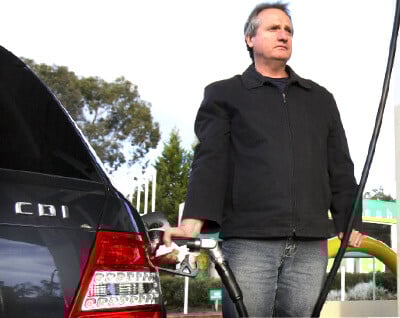
The change-over means our long-term Estate is now motivated by a 125kW and 400Nm 2.1-litre diesel, in place of the slightly more powerful, but markedly less torquey, 135kW and 250Nm 1.8-litre petrol four mit blower. The difference, as you might imagine, is substantial, with all that extra torque available at lower revs making for a more relaxed driving experience.In truth, we had few problems with the smooth and energetic supercharged petrol four, but with just $4400 separating the two in our chosen Avantgarde spec, we’d opt for the diesel, due to its superior torque and better fuel economy. This, plus the fact that, in increasingly energy-conscious times, you’re likely to get the premium back at resale.
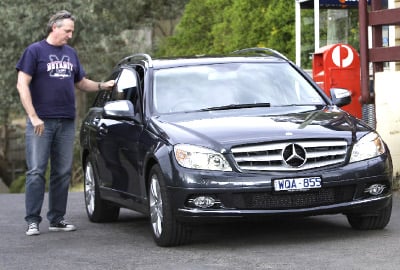
We haven’t traded spec for spec, however, and have swapped some desirable features such as the AMG sports pack and Easy Pack tailgate, for others like the COMAND telematics (sat-nav) system ($3202), dark tinted rear windows ($823) and active headlights ($326). Other options fitted to the C200 CDI include metallic paint ($1557), and protective undershield ($244), while black leather upholstery comes ‘standard’ as part of the $4668 Avantgarde package. Like its predecessor, WQA-855 also gets the $3692 Vision package (bi-xenon headlights, electric sunroof and 12-speaker Harmon Kardon sound system) to tip the scales at a slightly lower RRP of $76,505.
Benz’s nervous PR man will be happy to see the switch to diesel has immediately shaved 1.5L/100km off the C200K’s overall average. It’s likely this is as bad as the C220 CDI gets, given low total kays and exclusively urban running thus far.
Update #1
By Ged Bulmer
Aside from a surging wave of turbocharged torque summoned at the flex of an ankle, the big difference between our new C220 CDI and recently retired C200K Estates is in the area of ride and handling.
Quite why this should be the case remains the subject of some speculation, as neither car is fitted with the optional Dynamic Handling Package, and both ride on the 17-inch wheel and tyre package, albeit the former on a six-spoke AMG alloy, the latter on a five-spoke.
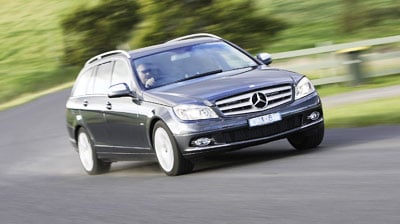
Perhaps there’s a weight difference between the supercharged petrol four and the turbocharged diesel four.
Regardless, and despite the absence of a plausible explanation from Benz HQ, I’m convinced that the new diesel rides more softly and has a touch less suspension discipline than its predecessor. The difference was first noticed over speed humps, where the nose of the CDI gives an extra nod where the Kompressor’s suspension would restrict any extra oscillation.
You notice it when cornering too, with the CDI proving marginally less accurate through bends, running a little wider and being moved off line that bit more easily by humps and bumps in the road.The trade-off for this somewhat less disciplined handling is superior ride quality. The C200K was never overly firm, at least not in the manner of a 3 Series on run-flats, but there is a discernible difference between the two, and comfort-oriented drivers will favour the 220 CDI.
Surprisingly, given assumptions about diesels and turbo-lag, the CDI feels like it steps off the mark more assertively than the 200K, and you tend to waft along in it, using less throttle than was required to keep the revvier supercharged four on the boil.
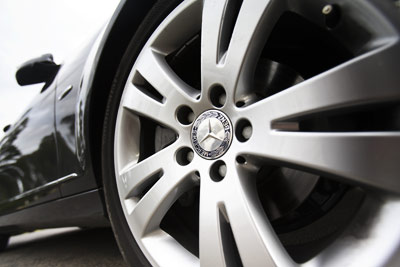
I’ve also found that where I mostly drove with the 200K’s five-speed auto in ‘sport’ mode, to sharpen throttle response, the diesel feels more at home in ‘comfort’.
As expected, the chance to get the diesel out of town and onto the open road brought instant efficiency improvements, with last month’s 10.3L/100km average falling to a 9.1L/100km. This figure came via a 448km urban fill at 10.4L/100km, and a 737km mixed urban/rural at 8.3L/100km.
Update #2
By Ged Bulmer
One of the most endearing features of the C-Class is its steering, the excellence of which serves as a constant reminder of the quality and depth of engineering that helped the sedan snare our 2007 COTY gong.
Good steering should be seamless, offering the right level of assistance in the urban environment, so as to not be noticed, but delivering reasonable feedback, weight and accuracy when the driving turns spirited.
And we have an Australian company to thank for it. Like several other contemporary Mercs, the C-Class is equipped with what Benz calls ‘Direct Steer’. Designed and developed by Sydney-based Bishop Steering Technology, ‘Direct Steer’ is Benz speak for Bishop’s internationally renowned variable ratio steering rack. Or, put into slightly more technical terms, ‘speed- sensitive rack and pinion power steering, with a variable rack ratio’.It’s that last bit that makes the Benz steering just a little bit different, by changing the level of assistance as a function of the steering angle, so that the more steering angle you apply, the more assistance you get. It’s simple, elegant and works a treat.
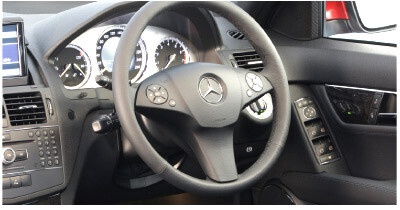
It’s possible to be fooled by the initial impression that the steering is too light, but spend a little more time at the wheel and you soon begin to appreciate the rack’s directness (just 2.7 turns lock-to-lock), as well as the steering precision and sensitivity.
Pleasingly, there’s been no evidence of rack rattle, in this or the previous C200K Estate, despite the fact it was experienced occasionally during Wheels COTY testing.
There’s nothing particularly special about this month’s average, until you consider that both fills (11.6LL/100km and 10.9L/100km), were recorded in 100 percent urban driving, at an average speed of 25 and 29km/h respectively. Given some open road, the C220 CDI will improve.
Update #3
By Ged Bulmer
I’ve never been much chop at goodbyes, so it’s likely a blessing that I missed the chance to reacquaint myself with the C-Class Estate before its recent repossession by Mercedes-Benz Australia.
Well, ‘repossession’ is perhaps a bit harsh but, like the C200K that preceded it, there was barely enough time to empty the C220 CDI’s glovebox, following a call from Merc’s PR chap (himself an ex-repo man, coincidentally), before the transporter arrived. Moments later, I was waving goodbye to the comfortable and capable gun-metal grey Estate I’d grown so fond of.
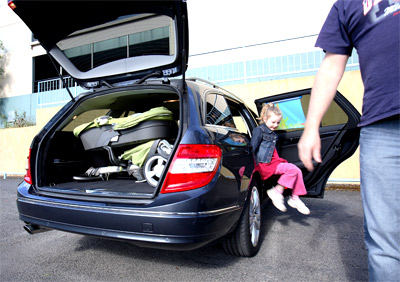
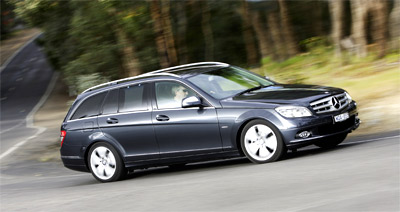
The tight turning circle, good ride and delightful steering remained a source of enjoyment to the very end, as did the performance of both engines. Having initially experienced the smooth, supercharged petrol four, and later the torque-laden turbo-diesel four, I’d happily take either, but do prefer the diesel’s driveability.
Importantly, our 8000km test ends with Benz’s reputation for quality and reliability intact. Both cars remained drum tight throughout the test and neither even hinted at a problem.
While we all understand that you pay a premium to drive a Mercedes-Benz, it’s nice to prove for yourself that it’s worth it.Perhaps it was my inability to get the the diesel Benz anywhere near its ADR81 figure of 6.8L/100km that finally broke the Benz PR man’s resolve. Our overall average of 10.1L/100km needs to be seen in the context of predominantly short-hop urban use. Best on test was 8.3L/100km.
We genuinely liked the last (W211) E-class and not just for the mad AMG versions that came with it, like the supercharged E55 and the now-departed E63.
After its 2006 mid-life update in particular, when a new 5.5-litre V8 was accompanied by keener handling and jazzy lights, the last E came across as a pretty classy act.But the all-new one – dubbed W212 – simply blows that car away, and not just in the areas of technology or aerodynamics or efficiency. For the first time in generations – since the iconic 1986-1995 W124 in fact – a mid-sized Mercedes sedan can honestly claim to have one of the best interiors in the world, mixing exotic new trims (like the Elegance’s optional, and stunning, open-pore brown-ash wood) and clever electronics (like attention assist and lane-keeping assist) with a number of classic design cues.The trapedzoidal shape of the new E’s instrument binnacle is pure W124, while the brushed metal that encases the centre air vents and dashboard trim panels is late-’60s S-class. Even the front seats – perforated on models with seat-cooling – look traditional Benz, and they’re superbly comfortable.Gone is the stunted squab and lack of seat-base support of the old E. The top W212 seats get not only the electric under-thigh roller-extender from the S-class, but also its myriad of seat-adjustment functions, now located on a panel beside the centre console instead of inside the S’s centre screen.Even the driving position is near- perfect, and Mercedes claims that, unlike before, this will apply to right-hook cars, too. The “right-hand-drive mafia”, as Mercedes-Benz Australia/Pacific President and CEO Wolfgang Schrempp described it, consisting of himself and his compatriots from South Africa and Japan, lobbied Benz HQ hard for a superior conversion, and they got it. For the first time, right-hand-drive E’s won’t have a steering wheel out of alignment with the seat. Let’s hope they’re telling the truth.The new E-class’s busy styling has raised a few eyebrows, but the best is obviously still to come (the E63 AMG, due early-2010 in Oz), and you can’t argue with its efficiency. Despite growing in every key dimension except height (it’s 18mm lower) and being 30-percent stiffer, the new E500 weighs just 45kg more than the old model, and its 0.25Cd sets a new world record for a sedan.But the proof of this car’s excellence is in the driving. And it’s the E500 that impresses most. It’s drivetrain is a direct carry-over, all slick gearshifting and subtle V8 burbling, but the combination of its mechanical smoothness with standard-setting refinement and the updated Airmatic suspension’s improved body control and brilliant ride (even in Sport mode) is one of greatness. Add crisp steering and fine balance and it’s hard not to feel superior in the new E.Welcome back Mercedes.
