
The average price of a new car in Russia has jumped by as much as 17 per cent amid regional tensions.
The latest consumer price index (CPI) figures published by the official Federal Service for State Statistics, known as Rosstat, shows the price of domestic vehicles increased by 17.1 per cent between February 26 and March 4.
New cars from foreign brands also went up by 15.2 per cent over the same week.
The CPI figures are published by Rosstat each week, with 106 different goods and services tracked across 282 cities in Russia.
However, local automotive news outlet Kolesa reports even higher prices, with the Lada Largus now almost 30 per cent more expensive, according to the carmaker’s own website.
A large number of foreign car companies have already announced they are halting exports into Russia, while most local production has either been shut down or suspended, with international sanction stopping the flow of parts and money.
All of which places China’s burgeoning automotive industry in a position to benefit.
Chinese cars have been growing in popularity in Russia, tripling from a three per cent market share in 2020 to a nine per cent share in 2021 – far exceeding expectations.
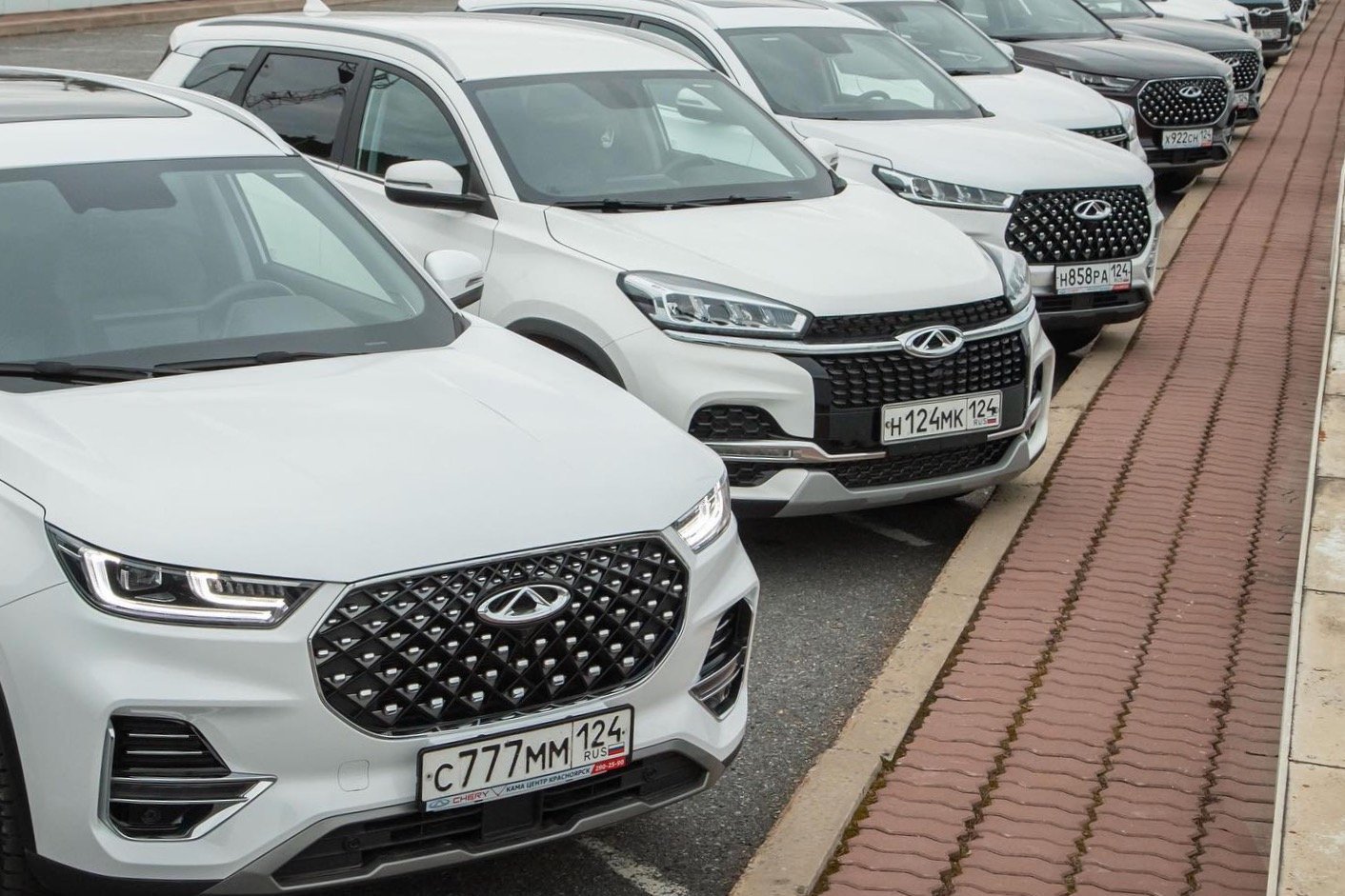
Eunice Lee, senior Asian autos analyst at Bernstein, says the restrictions imposed by the West will only help the case, with China refusing to participate in the sanctions.
“In the event that US and European Union sanctions on Russia stay for a prolonged period of time and US and European carmakers become effectively prohibited from doing business in Russia, there is potential for Chinese automakers to gain share in the Russia market,” Lee said in a report quoted by Automotive News Europe.
Of the 122,800 Chinese vehicles sold in Russia in 2021, 24,587 were from Geely, 39,126 came from Haval, and Chery took the top spot, seeing a 250 per cent increase year-on-year with 40,874 cars sold, according to data from the Association of European Businesses.
Aston Martin Lagonda is extremely keen for you to make a link between its classic British branding and the pinnacle of motorsport, Formula 1. This is no easy feat. For a start, the marque recently “returned” to the sport as a manufacturer in 2021, replacing the awful Racing Point name.
Returned is slightly sarcastic. There was an ill-fated Aston Martin Formula 1 operation in 1959 and 1960. And embarrassing because the sports car team won Le Mans in the same year as its grand prix debut. Aston wisely withdrew to concentrate on that instead.
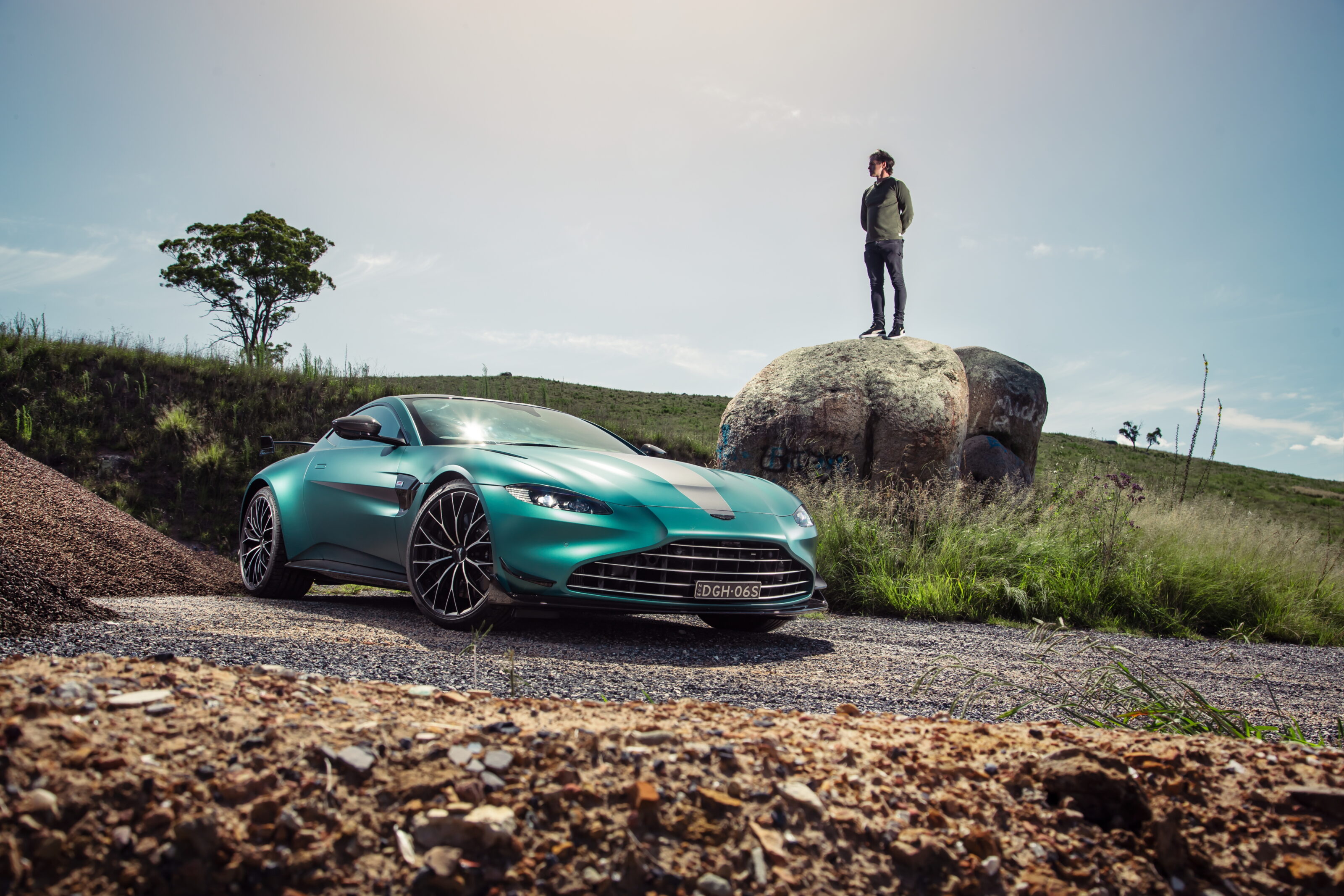
For 2021, the team hired Sebastian Vettel fresh from a scrappy stint at Scuderia Ferrari. Also coincidental was the gradual replacement of AMG cars as Formula 1’s official safety and medical car vehicles with Aston Martin’s Vantage and DBX respectively. In 2022, the change is complete.
And as if to really hammer home the point, the day I picked up the Vantage F1 Edition was the same day the Aston Martin AMR22 made its global debut ahead of the Formula 1 season. It’s F1, everywhere, all the time.
If you’re going to spend shareholder money putting yourself in front of a global audience boosted by Lewis Hamilton and Max Verstappen’s title fight and the attendant melodrama provided by Netflix’s Drive to Survive (which can string out a fender bender for fifteen minutes), you want to be able to put your expensive association with F1 on the road.
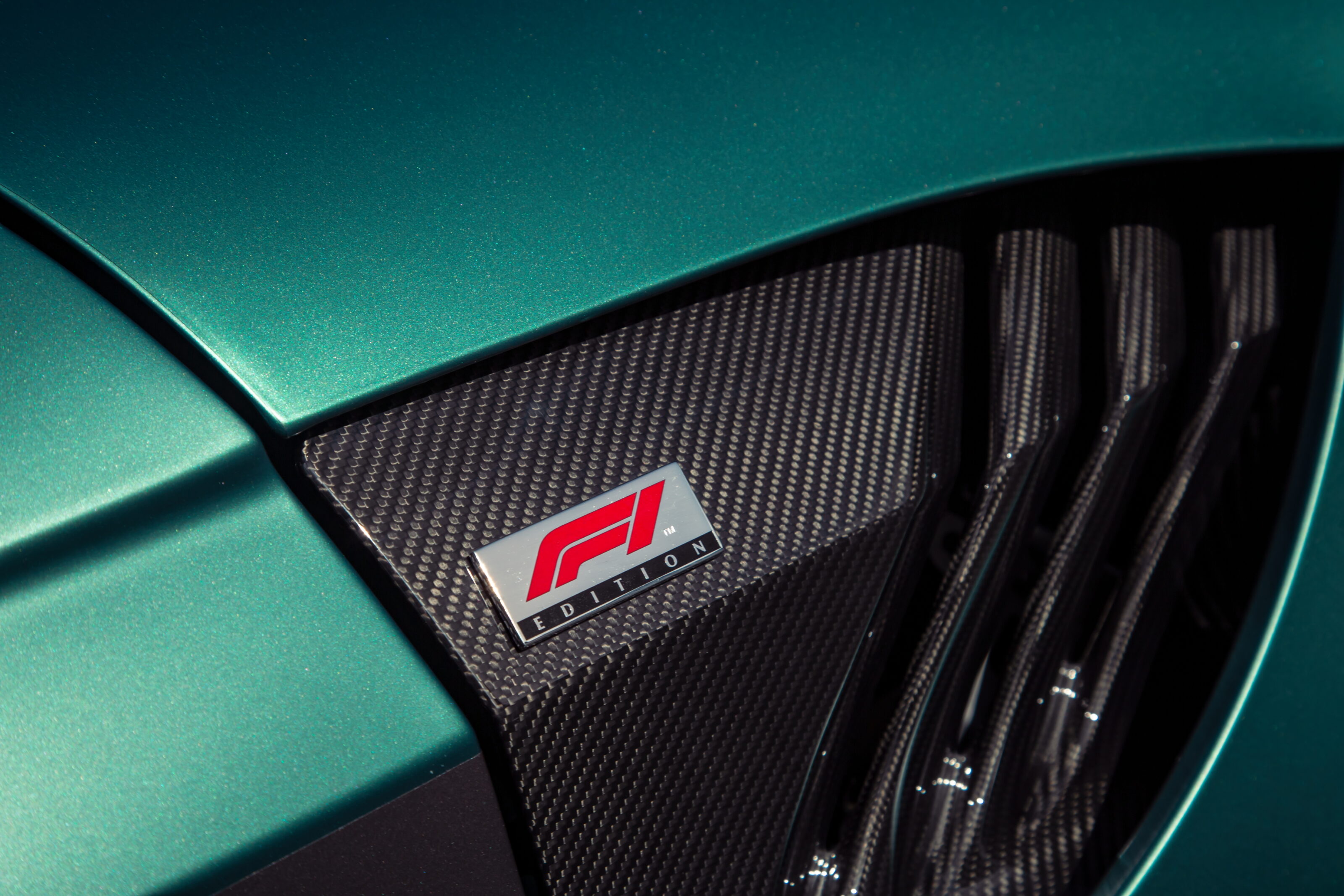
Which brings us to the Vantage F1 Edition. The name isn’t a very imaginative start and neither are the tacky-looking badges embedded in the grilles on the front guards and glued to the interior. Thankfully, that’s as bad as it gets.
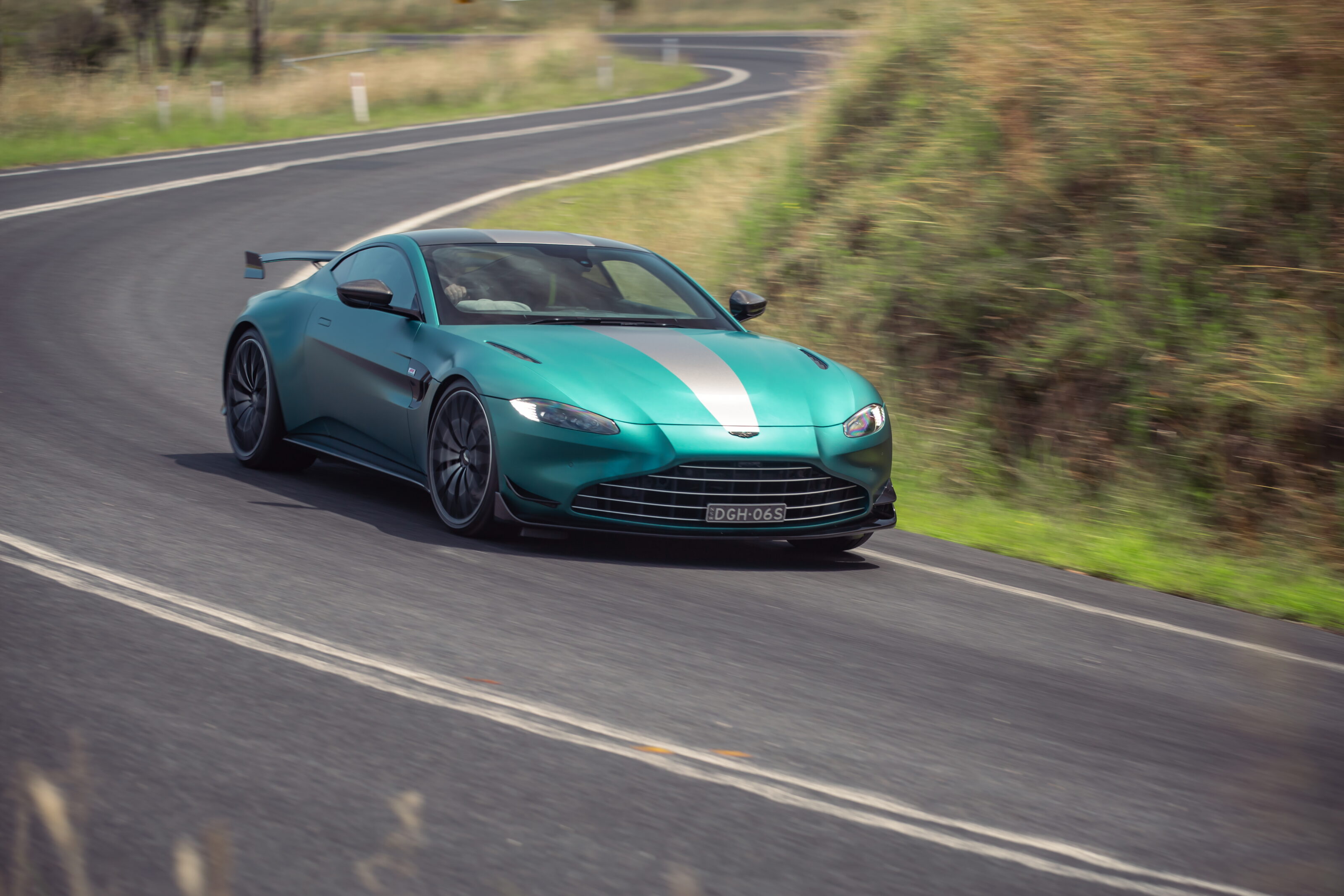
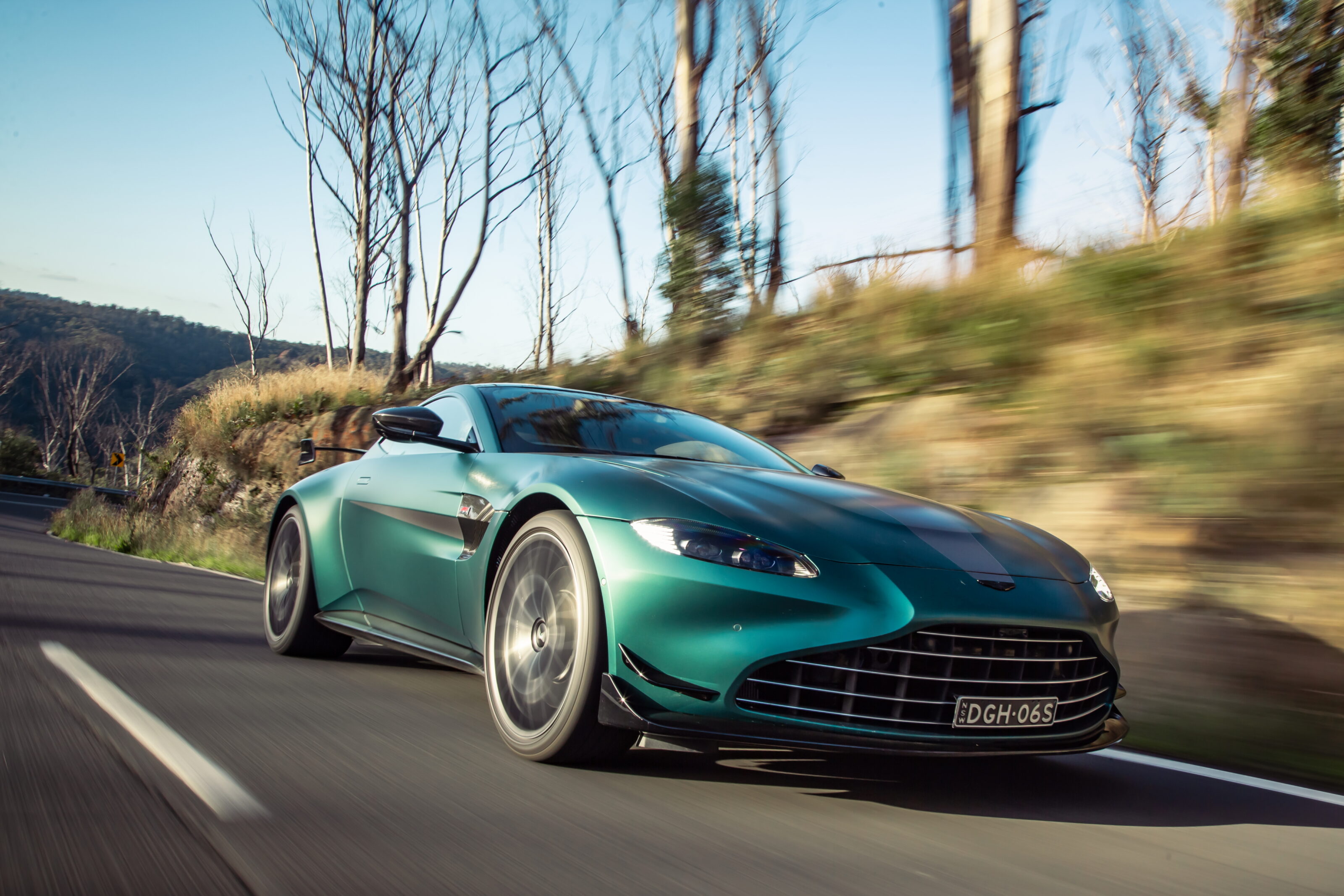
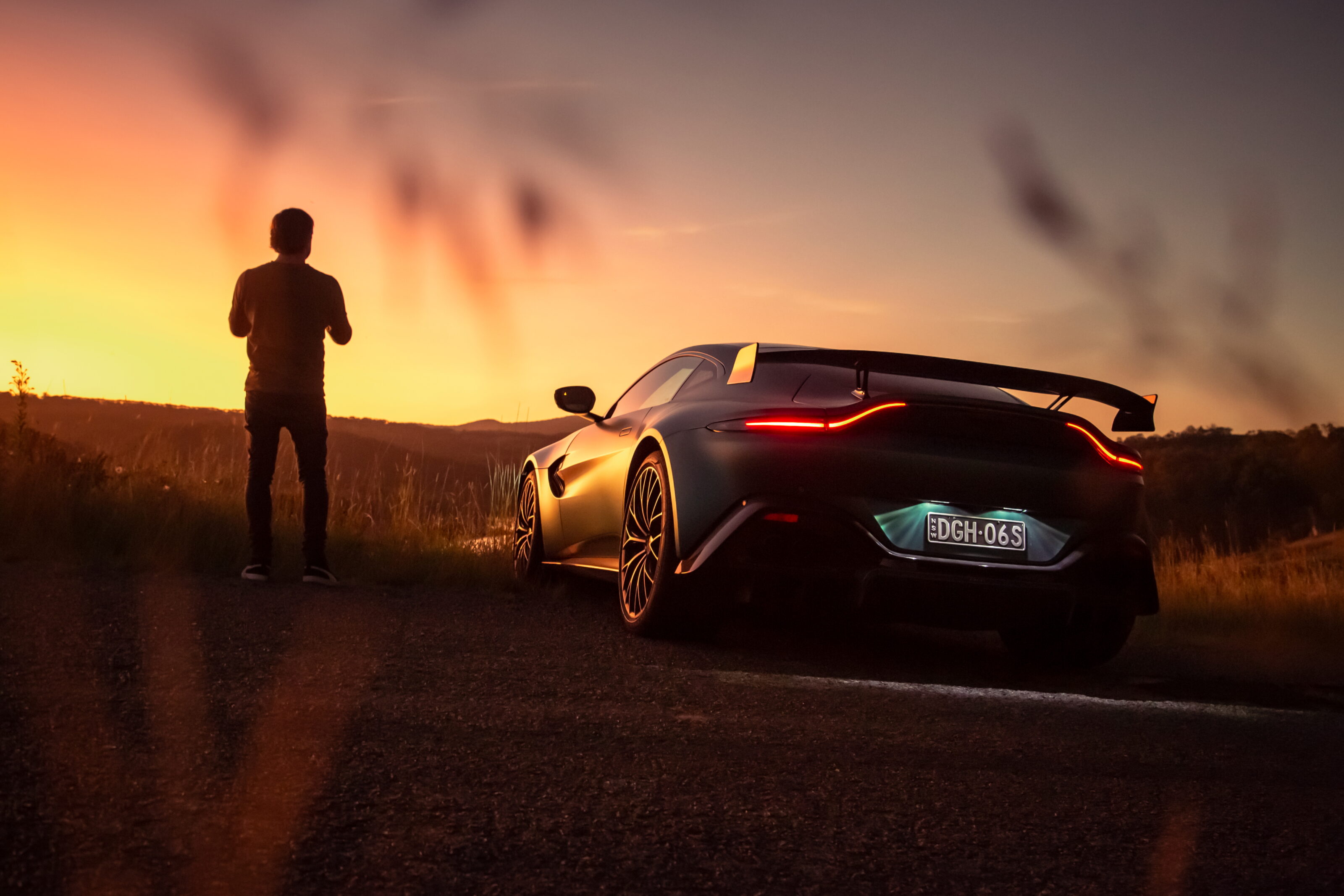
The car’s elegant exterior is now much more aggressive. Carbon inserts on the massive bonnet extract air from under the bonnet while further carbon appears on the guards funnelling air out from the wheel wells to reduce pressure.
A giant wing sits proud of the boot deck, working in concert with the substantial chin spoiler and fussy aero devices at the front corners, all finished in gloss black. The aero works, too, turning the standard car’s front lift into downforce and further squishing the rear into the ground for real downforce at the car’s top speed of 316km/h.
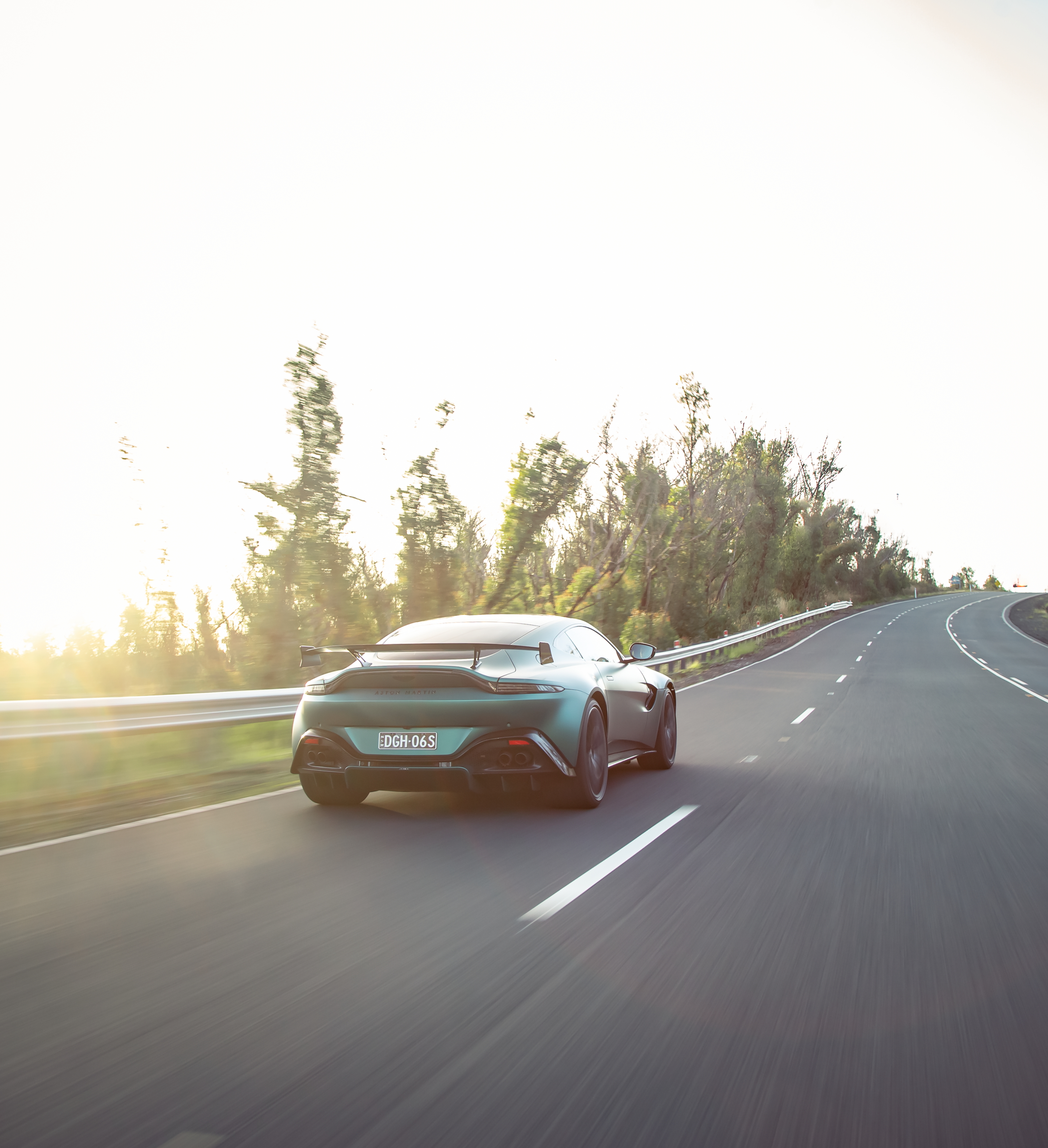
The huge Aston grille is blacked out for extra menace while the rear diffuser is the same, the darkened exhaust pipes sticking through and providing a sensible soundtrack.
The cabin echoes some of the design features of the race car, with a yellow stripe along the Alcantara clad doors. Further application of Alcantara ensures a cosy, race cockpit feel even if the seats themselves aren’t exactly super-sporty but hold you in just fine.
Aston has restrained itself inside and out and while it’s obvious this is something special, the company didn’t go overboard.
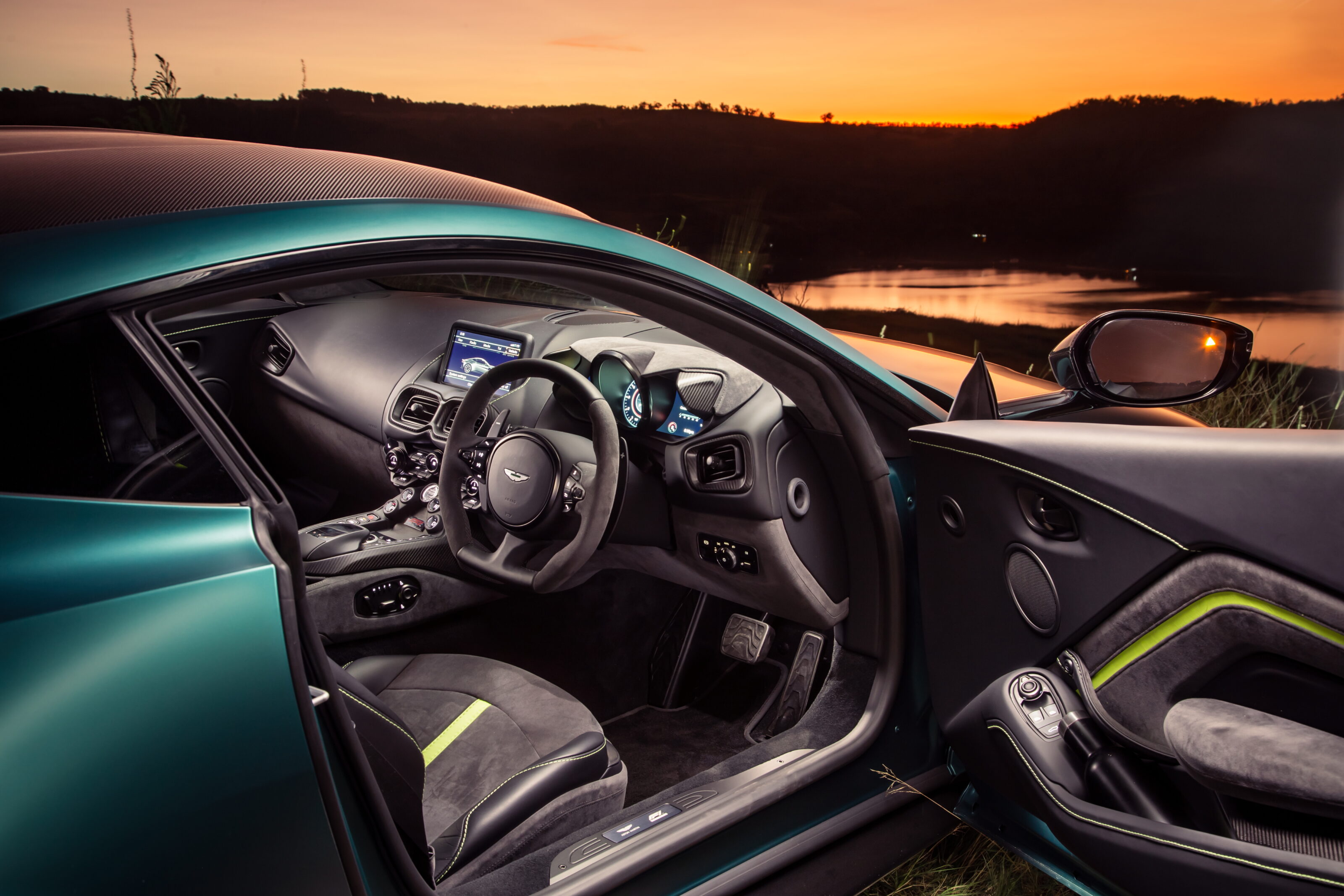
Except with the buttons. There are so many buttons in this interior that are identical that it’s very difficult to memorise which is which and more difficult still to identify them by touch. The car’s ancillary controls are tightly packed but not well grouped, so the traction control button is marooned amongst other less important functions.
Further ergonomic woes can be found on the steering column. While there is no stalk on the right-hand side, three are crammed on the left – indicator/wiper combination, cruise control and adjustment for the column itself – and all stand in the way of the lovely fixed downshift paddle.
The dash and console is made of really dark plastic that wouldn’t look out of place in a Mazda, which is to sledge neither brand but you kind of want something a bit more than plastic air vents when you’ve laid down north of three hundred large. The tiny media screen is straight from an elderly A-Class and has the software to match. It’s clunky and cranky to use and features neither Apple CarPlay nor Android Auto.
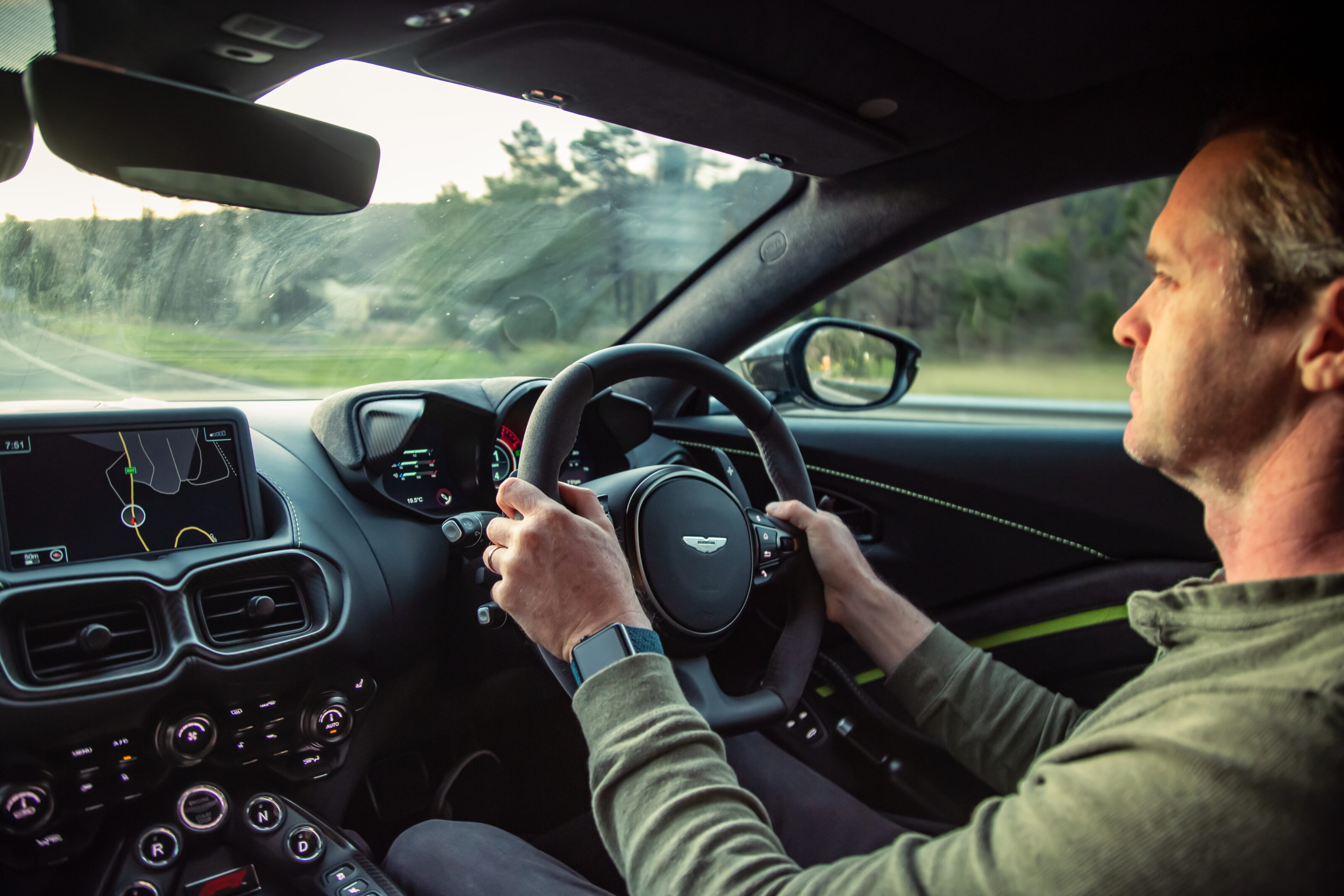
The weirdly shaped steering wheel carries over, but again has Alcantara trim to make it lovely to the touch.
Inside and out, it’s still an Aston Martin, with more of an eye in the general direction of the race track rather than firmly planted on it. Which is a play on how it handles, because there are significant differences between this edition and the car on which it’s based.
Aston’s CEO, Tobias Moers, had a very simple brief for this car – it needed to be faster on the track (the Nürburgring, obviously) but it had to be done properly. He didn’t want a set of super-sticky tyres slapped on to knock off a few seconds, the results had to come from actual engineering.
Easier said than done. The standard Vantage is famous for being a little wayward at the rear, the suspension not always keeping things as straight and true as you might want, at least on the road.
The F1 Edition features a number of engineering changes to reduce the amount of inputs the rear end has to cope with. The springs are firmer by 10 per cent and the compression damping 20 per cent. Perhaps the most significant change is the way the eight-speed ZF transaxle is fixed in place. With less lateral movement, the rear becomes more stable and predictable with the clear benefit of inspiring more confidence and keeping the tyres in contact with the tarmac.
Similarly, the steering column is now more firmly fixed in place to reduce the intended compliance of a normal Vantage. The springs are the same but the bump stops are stiffer and the dampers’ low-speed rebound is 30 per cent higher.
On paper that sounds like the Vantage has become a hard-riding monster, but the reality is nothing of the sort. It’s a perfectly reasonable car in which to spend a long day on freeways and funways (and I did) and step out with jimmies completely unrustled.
The unrustling is more impressive given the Vantage rolls on attractive and massive 21-inch alloys shod in Pirelli P-Zero rubber. Matt Becker’s engineering team looked at a custom compound but found the standard tyre with its shallower sidewall and the stiffened front end was more than enough of an improvement.
You can feel the car’s agility just steering out of a car park. The nose takes orders and executes without any slack, the direction change near-instant and without the feeling of hauling well over a tonne-and-a-half along with you. As you build speed that response remains but never unsettles the car in either tightening corners or abrupt direction changes.
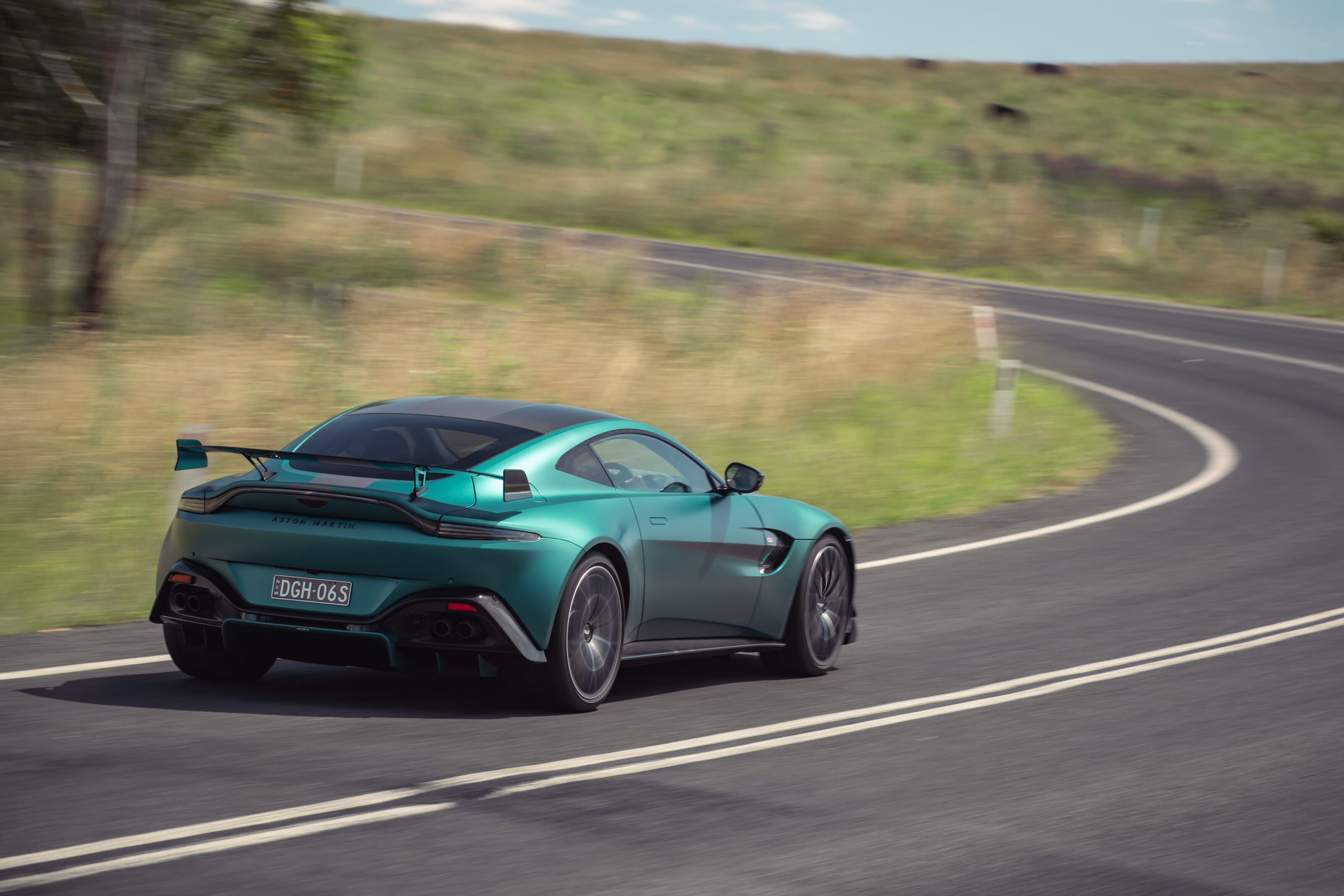
The steering itself is light but chatty. It’s heavier than the standard car due to the combination of changes but it’s never a chore, even in the highest of the three settings, Track. In keeping with its sporting intent, there is no Comfort or Normal – Sport is where you start.
Becker’s team wisely separated the modes from the adaptive suspension settings. The ride is excellent in Sport, edgy in Sport+ and A Bit Much in Track setting, at least for the road which is where I spent all my time. Either of the other two suited my route on the western side of the Blue Mountains on bumpy, truck-rutted rural roads.
I’m quite happy to put my hand up and say that I rarely disable or even loosen electronic aids on the road in cars like this. Sometimes it’s because they’re extremely well-calibrated, like the Vantage’s logical rival, the Porsche 911. Sometimes it’s through fear of the results, but once I found the traction control button, I hit it because the confidence I had in this car to push it and myself came quickly. But also because the calibration was far too cautious, I had to see what it was like unleashed.
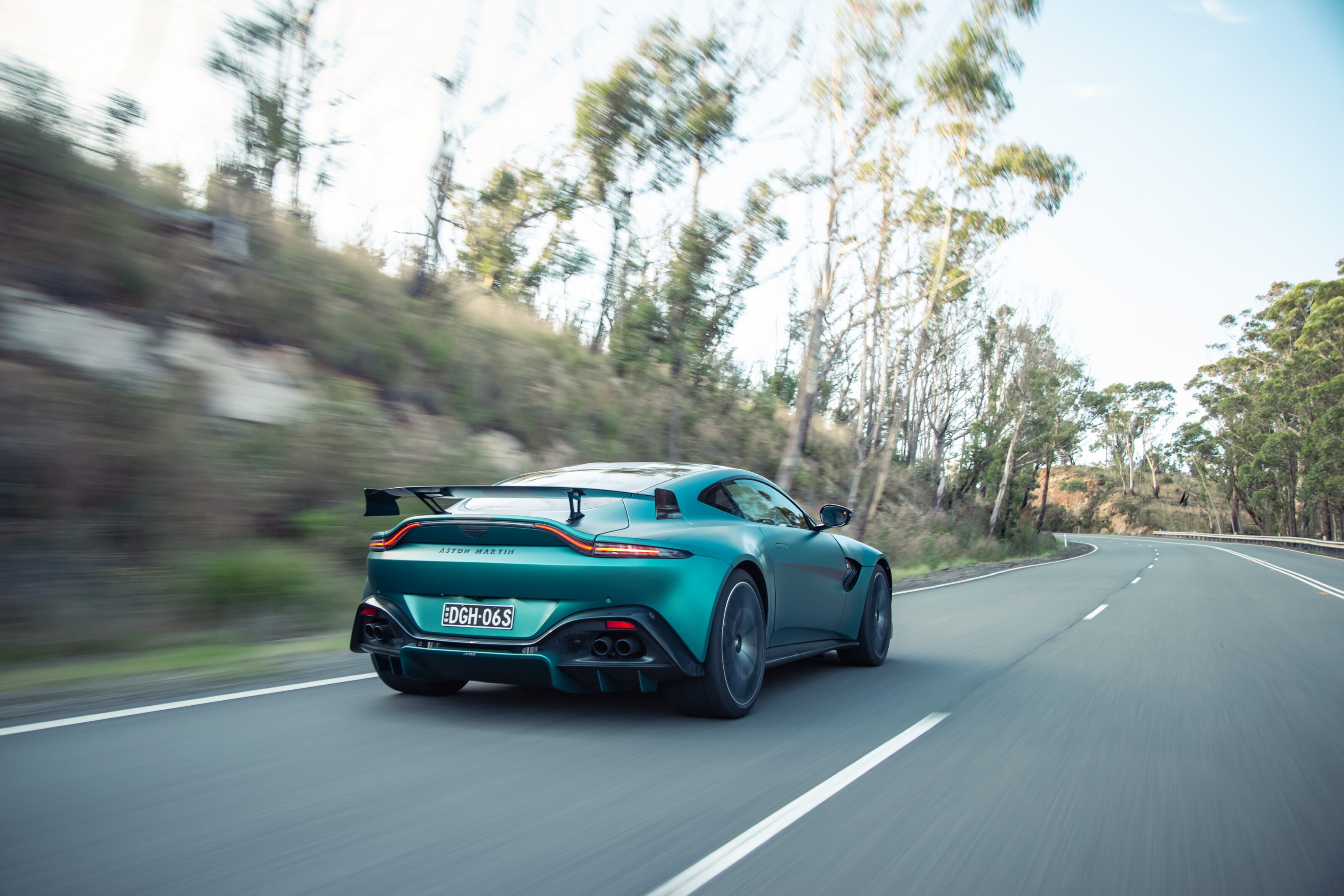
It really is glorious. With the drivetrain set to Track and the suspension to Sport + to save my delicate spine, this is the kind of car that you just know will carry you through the corners and fire you out the other side with a crack and a whoop.
While power is “only” up a few kilowatts to 393kW and torque identical, the delivery is different. The software changes have broadened the rev range where that planet-splitting 685Nm is available between 2000 and 5000 rpm. The subtly recalibrated eight-speed ZF transaxle goes from its usual immensely capable and unobtrusive self to a far crisper shifting unit that feels almost, but not quite, like a twin-clutch, enhancing the car’s character instead of narrowing it.
Aston has done a better job than BMW in its more aggressive mode. The ZF is an always-excellent transmission and it’s a joy to use via the blacked-out alloy paddles. It’s much more willing to give you a gear as you’re downshifting. Hold the paddle to get the lowest gear available or play with it to see whether you really do need that lower gear, such is the surfeit of twist.
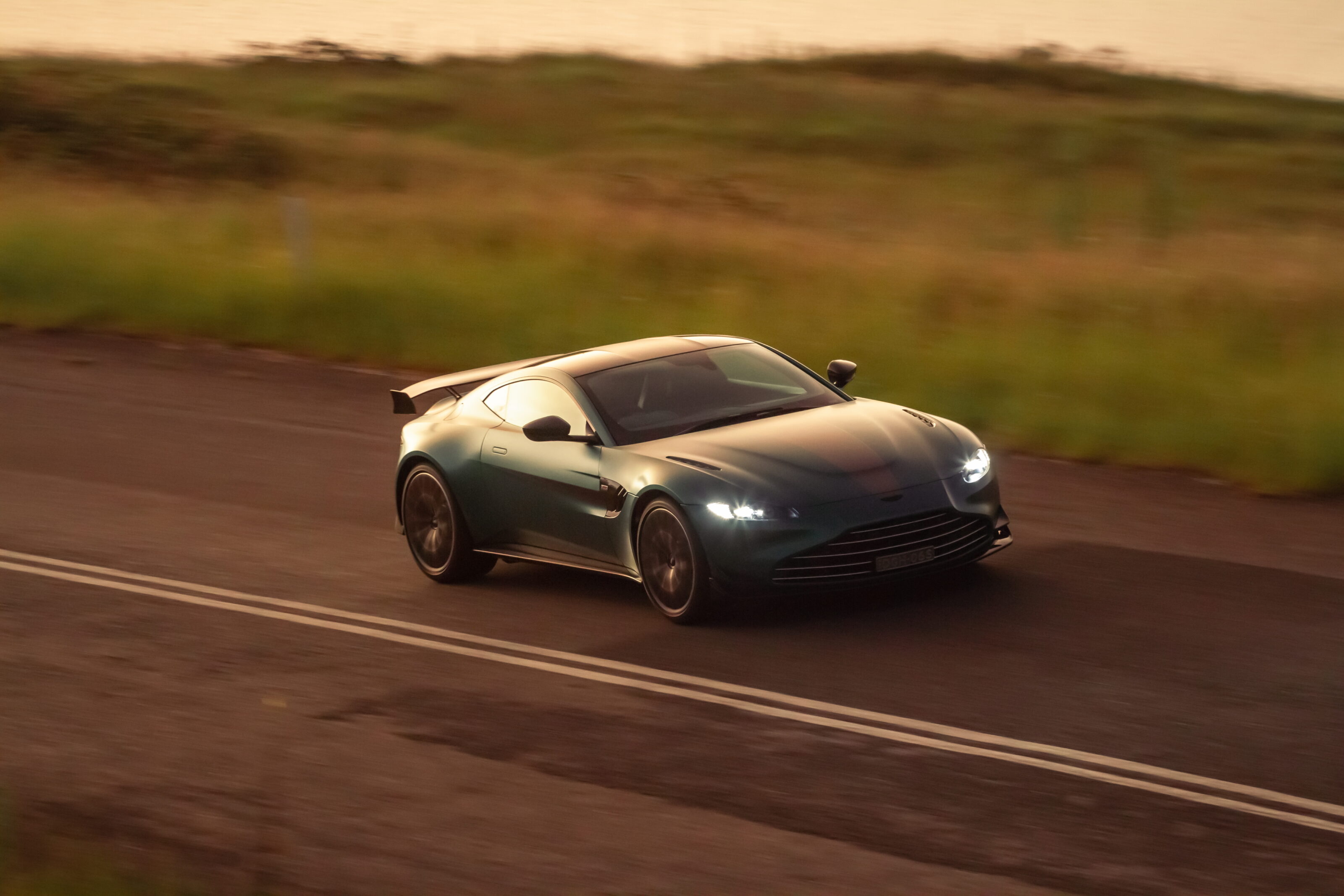
One thing you do have to get used to is how to rotate the F1 Edition in the corners. The active differential is fairly benign as you reduce the brake pressure on turn-in, clearly not wanting to second-guess what you want to do next. The result is a fine balance between neutrality and the mildest of safety-focused understeer on corner entry. As soon as you get on the throttle, however, the nose comes back to life and darts for the apex without upsetting your steering input.
You get so much communication through the wheel and the seat that you can alter your line whichever way you like. The differential really ties it all together, taking the substantial benefits of the subtle changes and weaving it into a fast, planted road car. I’ve no doubt of its track potential but its on-road abilities take it really close to a 911 while also delivering the character of a front-mid engined car that is resolutely rear-wheel drive.
What’s most surprising is that the changes have calmed its behaviour in the bumpy stuff, leaving you to get on with the business of hunting down the next bend rather than worrying about having to bring it into line or feel like you’re about to be spat off the road.
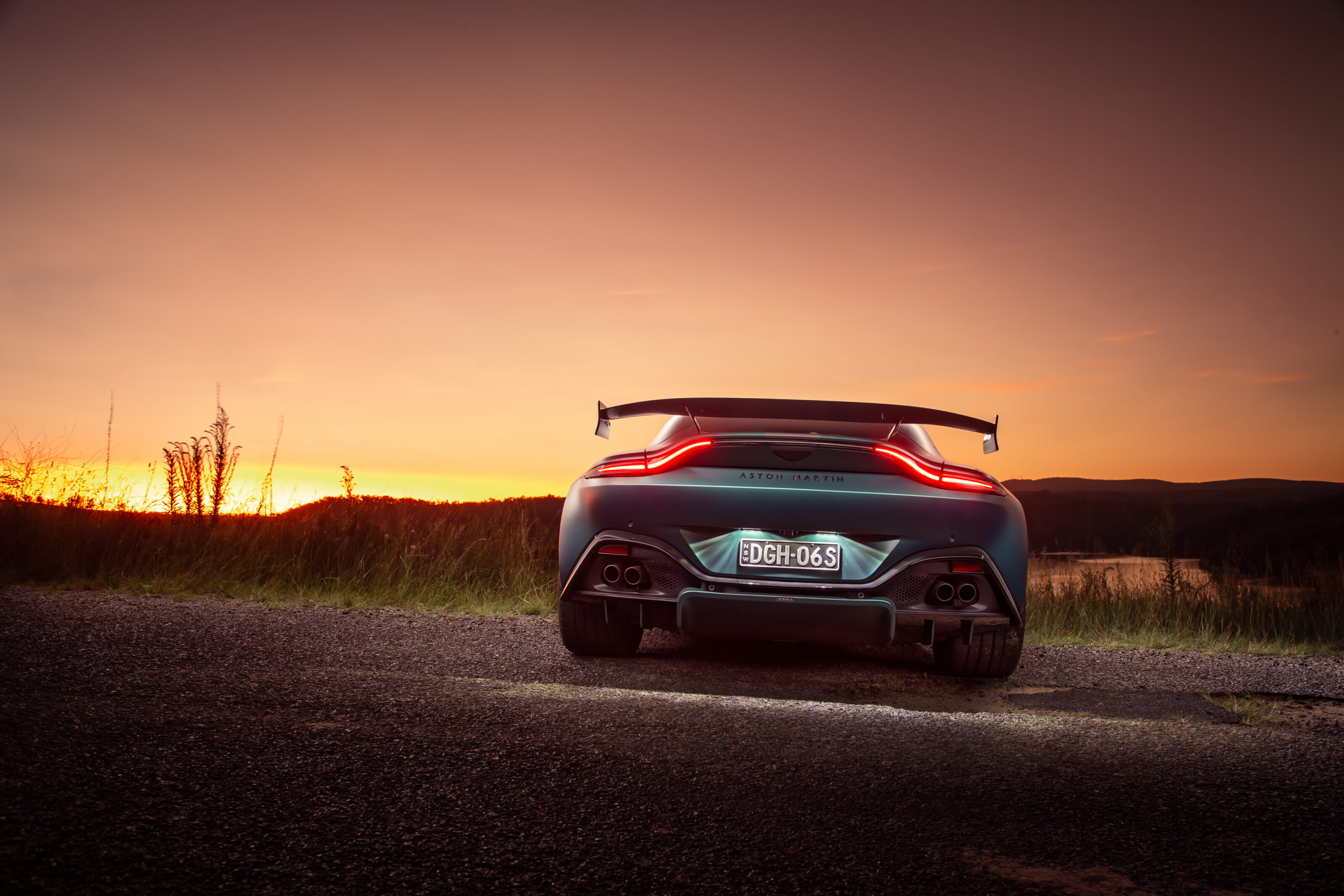
You can choose carbon-ceramic brakes but the standard cast-iron steel brakes measure a whopping 400mm up front and 360mm at the rear. Pedal feel is close to perfection for a road car and easy to modulate. Less easy to operate is the auto parking brake which insists on making you look at goose when you’re exiting a car park.
Moers’ direction to Becker was a masterstroke. While the public remaking of its image is aimed at introducing a Netflix-driven F1-watching younger generation to a brand that has struggled to penetrate its consciousness, the road cars are still elegant, refined and fast.
The F1 Edition feels like a precursor to the entire range upgrade, an experiment in fine chassis tuning to deliver a better driving experience without resorting to sledgehammer power figures or semi-slick tyres. It’s compliant, adjustable, gorgeous and engaging. It doesn’t bend physics like a 911 GT3 or wrestle the driver into a particular way of doing things but instead works with you.
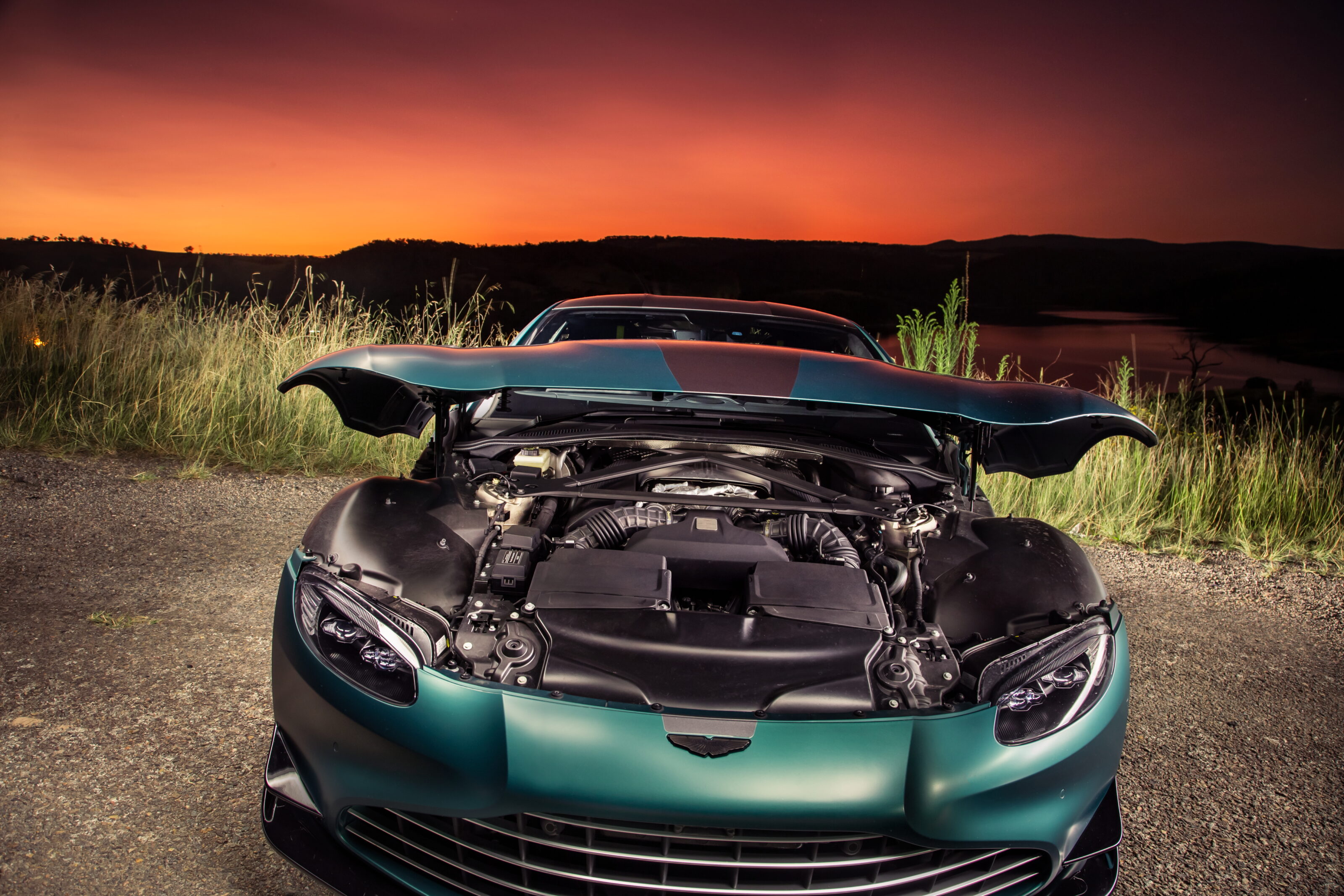
Sports cars can be a chore most of the time and brilliant some of the time. The Vantage F1 Edition doesn’t trade away its usability but enhances it with a sharper dynamic edge. That’s the kind of engineering excellence drivers want, whether it’s you, me or Sebastian Vettel.
Aston Martin Vantage F1 Edition specs
Snapshot
- Latest Drive to Survive season set to be released today (March 11)
- New MotoGP Unlimited series coming out March 14
- NASCAR will be racing at Phoenix on Monday morning
Clear your diaries, stock up the pantry and put your phone on silent for the weekend, because a huge amount of motorsport content is about to go live.
Fans of four- and two-wheeled racing are in for a treat over the coming weekend, with both Formula One and MotoGP set to release their latest docuseries online – just in time for residents of Victoria, South Australia, Tasmania and the Australian Capital Territory to enjoy their public holiday on March 14.
Formula One: Drive to Survive Season 4
Starting with the incredibly popular Drive to Survive, the fourth season of Formula One’s groundbreaking docuseries goes live on Netflix today (March 11) at 7pm AEDT, looking behind the scenes at what was one of the most rollercoaster-like seasons in recent history.
From Lewis Hamilton breaking through for his 100th win, to Daniel Ricciardo winning in Monza and THAT final race in Abu Dhabi, being able to get a closer look at what went on behind the curtain will be more enthralling than ever – although many are curious about how they will cover the view of eventual champion Max Verstappen, who chose to not take part in filming throughout the latter stages of the season.
While it won’t be broadcast to rights-holder Fox Sports or Kayo, Formula One’s pre-season test is also occurring in Bahrain this weekend, just one week before cars officially hit the track for the first laps of the new season.
MotoGP: Unlimited
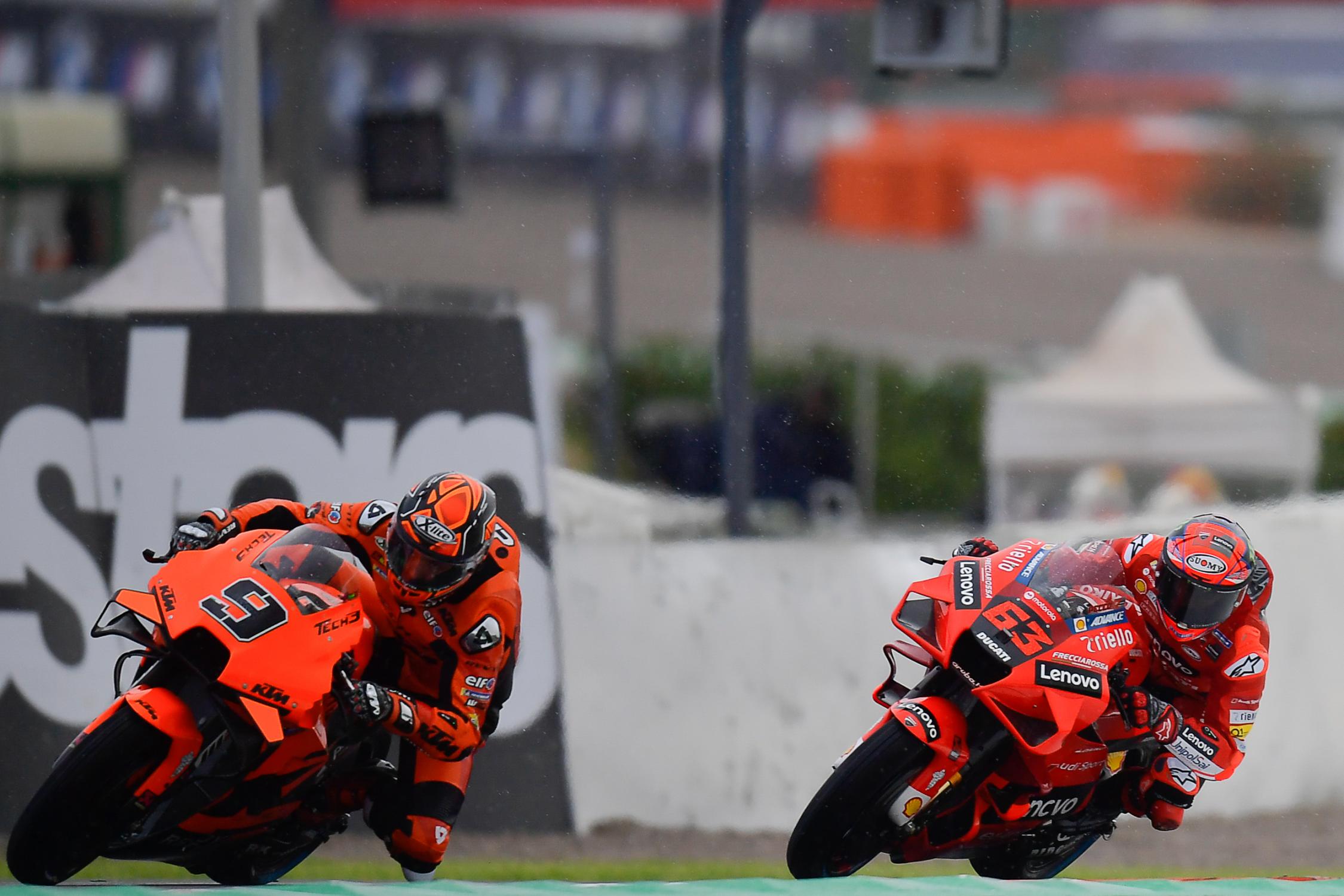
If you’re more into your racing action on two wheels, or looking to expand your motorsport-loving horizons, MotoGP has now bought a stake in the game, with its first season of MotoGP: Unlimited set to premiere on Amazon Prime this Monday (March 14).
Just as 2021 was a mad season for F1, MotoGP also enjoyed a crazy year both on and off-track. Aussie Jack Miller broke his own winless streak with two victories for Ducati, Brad Binder won a mental Austrian Grand Prix on a KTM with slick tyres in wet conditions, and former Yamaha posterboy Maverick Vinales was sacked by the factory squad after trying to blow up his M1’s engine.
The return of Marc Marquez, the maiden championship victory of Fabio Quartararo and Valentino Rossi were just some of the minor highlights in a year which truly had it all.
Much like DTS, Unlimited will provide unrivalled access to the top motorbike racers in the world as they navigate life outside of riding bikes at 350km/h with only a helmet and a thin sense of self preservation.
NASCAR at Phoenix
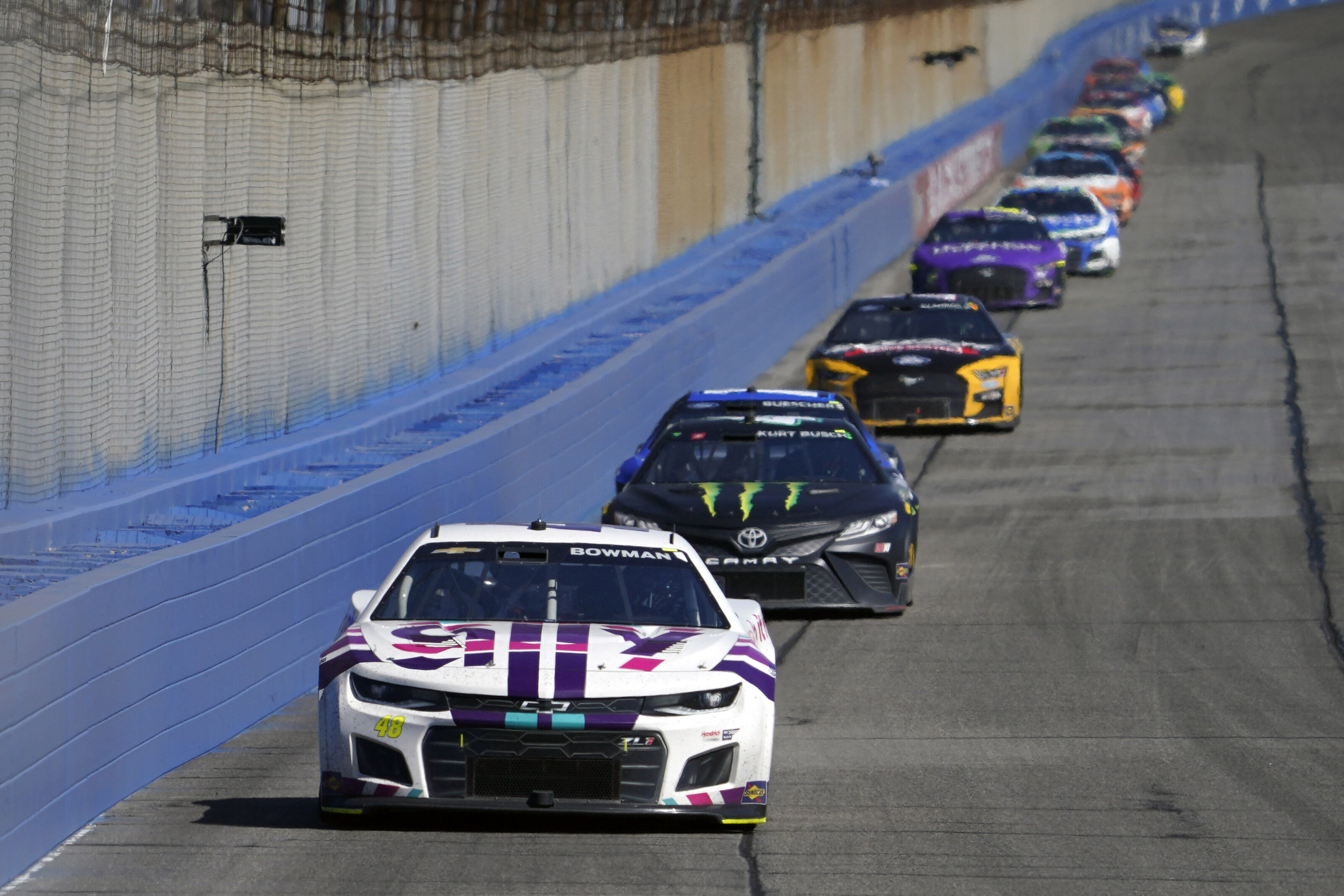
Finally, fans of NASCAR can get their first taste of the Next Gen car away from the superspeedways and 1.5-mile ovals, as the series returns to Phoenix Raceway after closing out the championship there last year.
The season has been progressively coming down in track sizes to start the year after kicking off at the 2.5-mile Daytona International Speedway, followed by the 2.0-mile Auto Club Speedway and 1.5-mile Las Vegas Speedway, with Phoenix’s odd-shaped 1.0-mile oval being the first, real, short track test for the teams.
Defending champion Kyle Larson is the current points leader after a win at Auto Club and a second placing at Las Vegas to Hendrick Motorsports team-mate, Alex Bowman.
The broadcast will go live on Fox Sports 506 and Kayo at 5.30am AEDT on March 14.
Snapshot
- New summer tyre with better wet grip
- Developed with VR and digital research
- Arrival to mark brand’s 150th birthday
Tyremaker Pirelli has launched a new range of summer tyres in Australia.
The range, dubbed Powergy and created for crossovers, SUVs and medium-large sedans, can be had to fit rims between 15 to 21 inches.
As well as being developed to offer improved wet grip performance, particular attention has been paid to making the Powergy tyres more environmentally friendly and sustainable – thanks to low rolling resistance to reduce fuel consumption and emissions, and also to cut noise.
To create the Powergy range, Pirelli’s research and development team in Milan, Italy, used advanced virtual reality systems through a simulator – as well as real-world track tests.
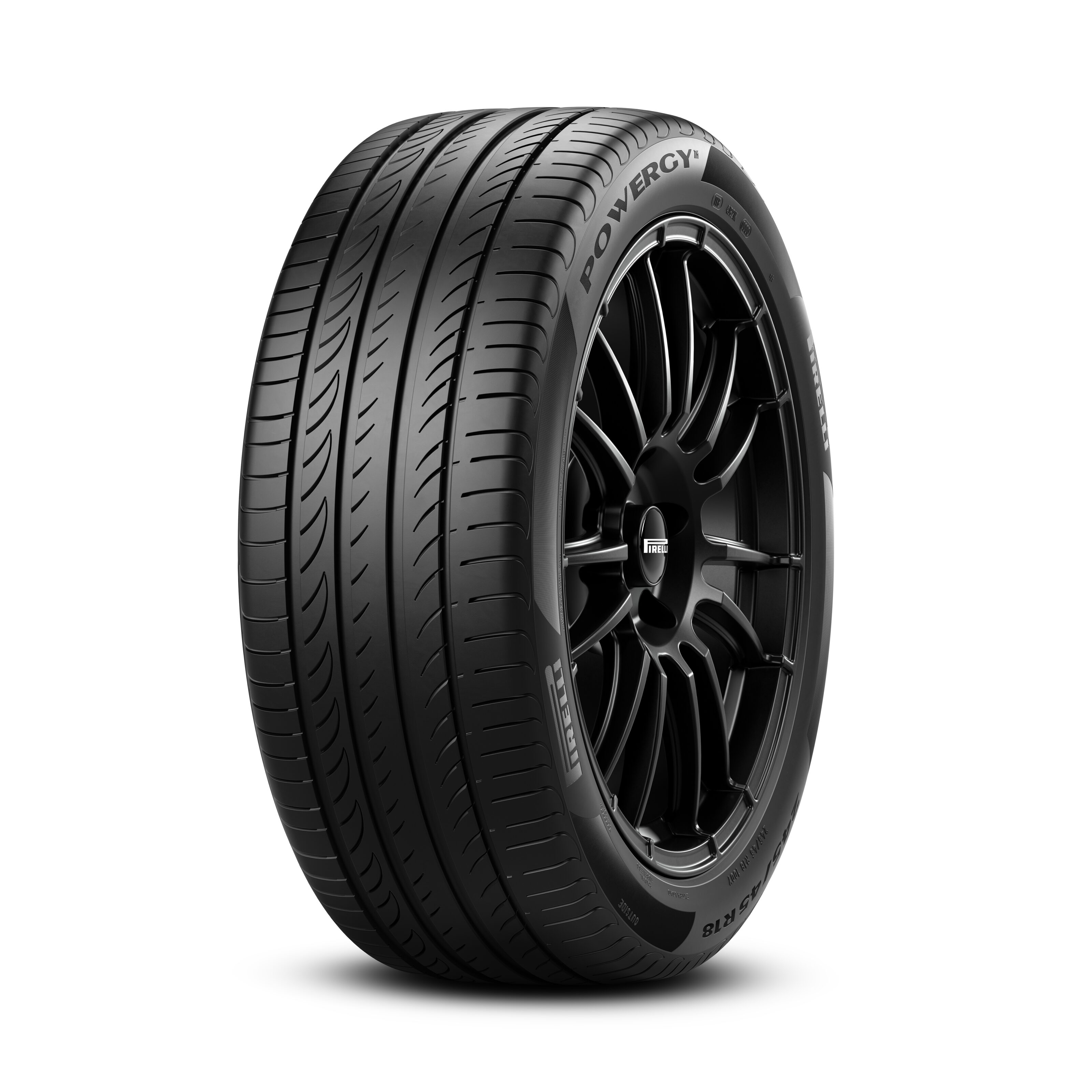
By producing them in this manner, fewer physical prototypes were used – making the results more environmentally friendly and cutting development time to 18 months, despite COVID-19 restrictions.
These new processes allowed the tread pattern and tyre profile to be optimised, maximising the contact patch to make it perfectly balanced with uniform pressure to reduce braking distances and enhance a car’s controllability and driving precision.
These aspects are matched to compounds with specific polymers, improving wet braking and tyre life. The tread pattern design allows better dispersal of water to help prevent aquaplaning and increase safety in wet driving conditions.
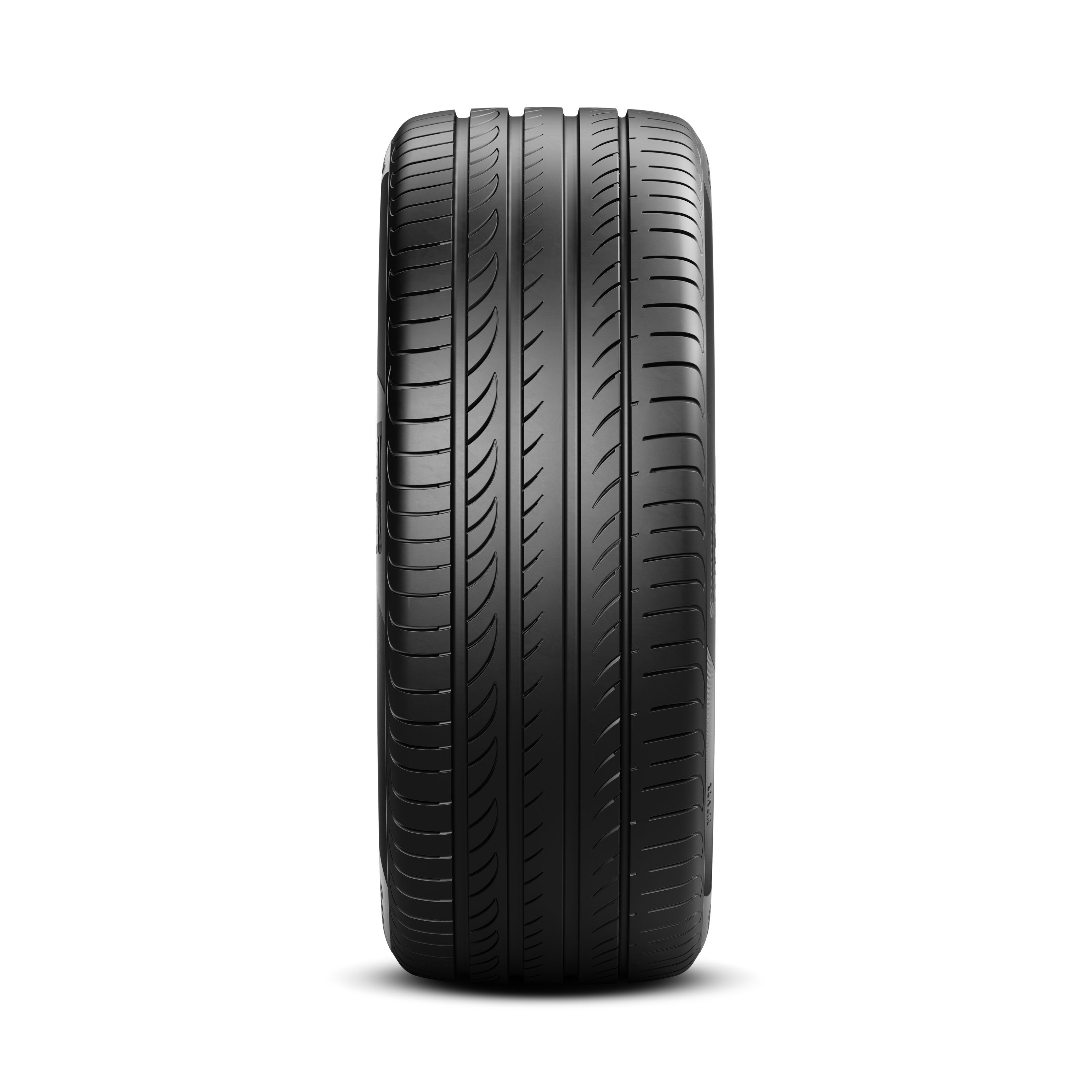
The fresh rubber is being introduced to mark Pirelli’s 150th anniversary, with events taking place throughout 2022, including a launch of the product in Sydney today.
“It’s been a particularly trying time in Australia of late with the effects of the pandemic and La Niña particularly affecting the east coast,” a Pirelli spokesperson said.
“With more cars on our roads than ever before, and conditions on those roads being less than optimal with the amount of rain we have had, it’s never been more important to ensure that your car is fitted with the best tyres possible.
“The new Powergy range is safer, more fuel-efficient and provides your car with significantly better handling, making it the ideal tyre to upgrade to.”
Powergy’s introduction coincides with an investment in Pirelli’s supply chain. The Powergy range replaces the Cinturato P1 and P6 lines as well as the Dragon Sport, which Pirellis says will help both customers and stockists.
On top of that, there will be more warehouse floorspace to stock more tyres and improved delivery services to tyre dealers.
As if 2020 weren’t busy enough, the local CEO, Dimitrios Papadokos, is departing for a new role with Pirelli in Shanghai. His replacement, Fabio Siricio, has been with Pirelli for over a decade and is currently serving as Country Manager for South East Asia, based in Singapore.
Pirelli Powergy tyres are available to order now.
Snapshot
- Jaguar deliveries drop to half of last year’s figures
- Land Rover manages <1/3 of sales compared to February 2021
- Shutdowns and parts shortages causing the biggest delays
Out of the mainstream automotive manufacturers in Australia, it is Jaguar Land Rover which has struggled the most to start the year with sales down by over 50 per cent across both marques in February.
After a small rebound for Land Rover throughout 2021, its drop in sales at the back end of last year has carried on into 2022, recording just 477 units delivered so far compared to 1144 at the same time 12 months ago – a drop of 58 per cent.
This was compounded by an especially difficult February in which it managed to shift only 138 vehicles to customers – dropping by 77 per cent compared to the same month a year prior, with all models showing year-on-year decreases.

February was a tough month for Jaguar too, with its 34 cars sold versus 80 a year ago contributing to year-to-date sales which are around half of those from 2021 – selling only 67 units down from 133.
However, JLR’s troubles can be pinned on a lack of supply rather than dwindling demand, as the manufacturer faced numerous setbacks in 2021 which included halting production at some facilities.
A spokesperson for the brand told Wheels the ongoing semiconductor shortage, as well as COVID-19-related disruptions were holding it back from getting cars on local shores.
“Like other automotive manufacturers, we are currently experiencing some COVID-19 supply chain disruption, including the global availability of semiconductors, which is having an impact on our production”, said the spokesperson.
“We continue to see strong customer demand for our range of vehicles. We are working closely with affected suppliers to resolve the issues and minimise the impact on customer orders wherever possible.”
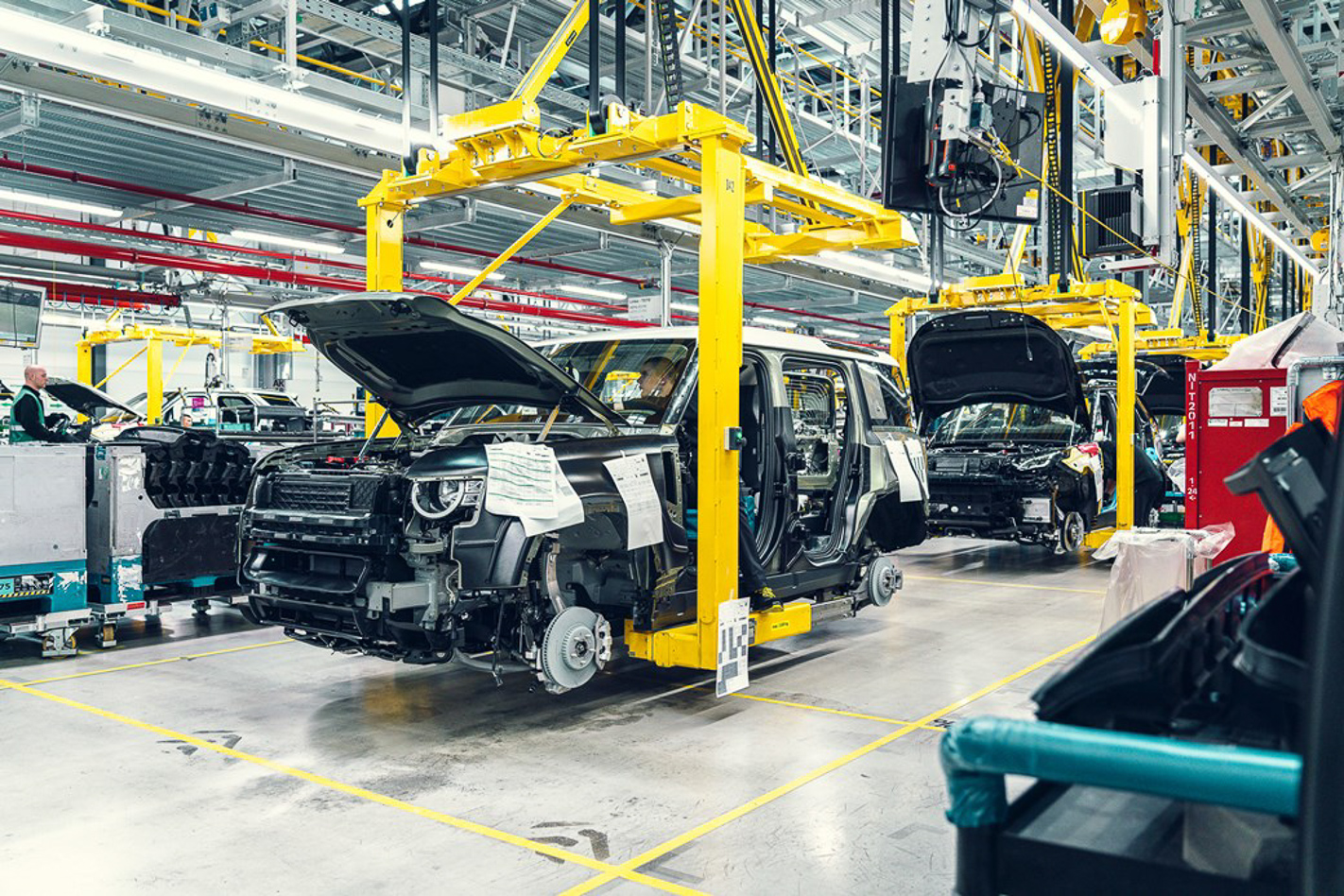
The effects of production issues and supply constraints are being felt globally for the intertwined British marques, reflected in its third-quarter financial announcement last month in which it recorded a £9 million (AU$17m) loss for the quarter.
At the time, it also reported 155,000 global orders for new cars, although its third-quarter deliveries of 80,126 units was down 37.6 per cent on the year prior.
Snapshot
- BMW recalls 1.03 million units built between 2006 and 2013
- Positive crankcase ventilation valve heater may short circuit and cause a fire
- BMW Australia says no local cars affected
German manufacturer BMW has been forced to recall more than one million vehicles worldwide, owing to a potential short-circuiting issue under the bonnet.
Affecting certain variants of the 1 Series, 3 Series, 5 Series, X3, X5 and Z4 built between 2006 and 2013, the notice has been issued in the United States, Canada and South Korea.
According to BMW, the heater for the positive crankcase ventilation valve (PCV) may short-circuit, leading to an increased risk of fire within the engine bay.
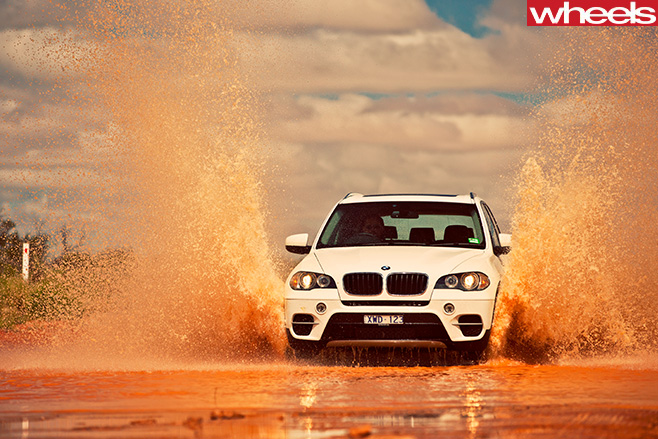
This is the third time a recall has been issued for this problem, with some vehicles previously repaired needing to be fixed again, while others were fitted with an improved design.
The latest recall was sparked by recent reports of fires in BMW vehicles which had been repaired under previous recalls, as the manufacturer discovered production issues led to PCV valve damage.
Owners have been told they do not need to stop driving despite the recall, although they have been advised to do so if they see smoke from the engine compartment or smell burning plastic.
A spokesperson for BMW Australia has told WhichCar no cars within the country are impacted.
“We can confirm that locally-delivered BMW Group vehicles are not affected,” said the spokesperson.
The widespread parts shortage born from the Ukraine conflict has forced Porsche to suspend its Taycan production line this month, joining a growing list of carmakers facing the a growing supply-chain crisis.
While an earlier leaked internal memo posted on the internet suggested manufacturing would be stopped across Porsche’s entire model line-up, the company has confirmed only the Taycan is affected – joining other electrified models from the Volkswagen Group family facing reduced output.
A spokesperson for Porsche provided a written statement to MOTOR confirming the status of its model range.
According to the latest official information provided by Porsche, the 718 and 911 are not currently affected by the parts shortages, while Cayenne production in Bratislava “is being maintained in the current week as well”.
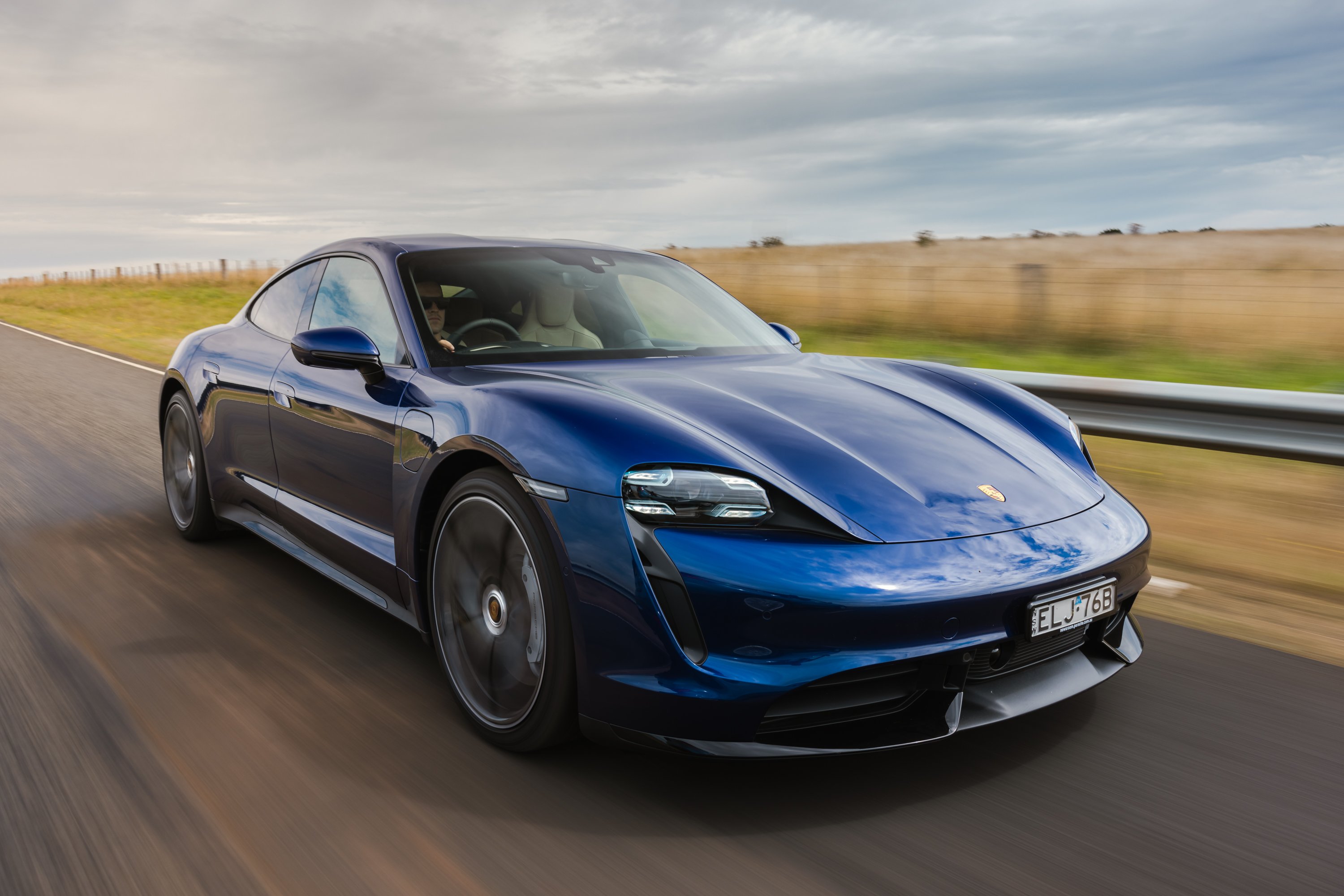
“On the other hand, the company will be forced to suspend Taycan production in Stuttgart-Zuffenhausen from Wednesday afternoon (9 March), initially until the end of next week (calendar week 11),” the statement read.
“Production in the Porsche plant in Leipzig will start up again in reduced operation in the coming week due to an improved supply situation. The further steps take place in an orderly process. In the coming days and weeks we will operate on a short-term basis and continuously reassess the situation.”
Given the rapidly-evolving situation in Europe, it’s understood the carmaker is being forced to adjust its production plan regularly.
The headaches continue throughout Porsche’s parent company Volkswagen Group, with orders for a number of plug-in hybrid Volkswagen models being paused in Germany until further notice.
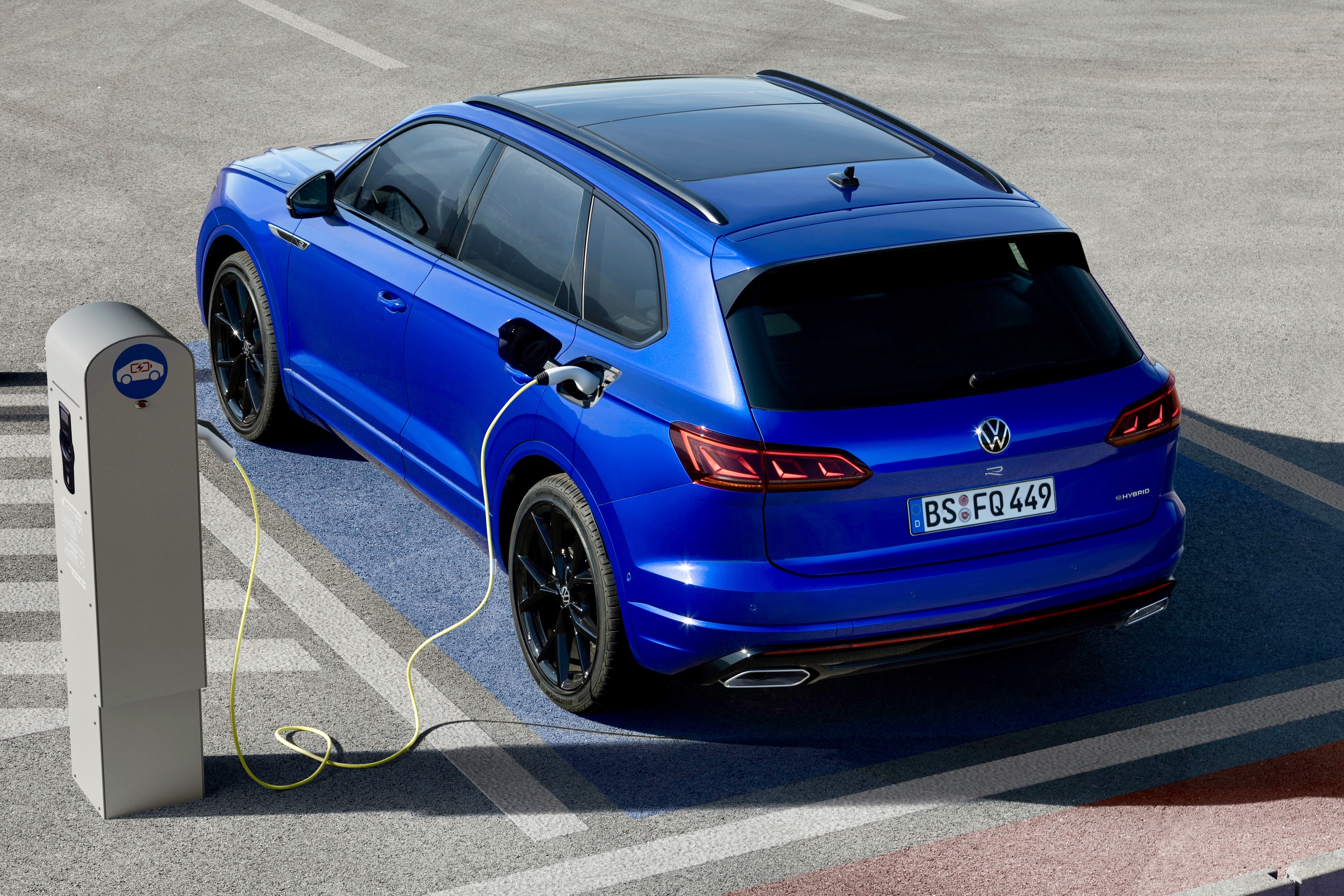
“Our plug-in hybrids are highly sought after, leading to [a] high order backlog we are working through,” a spokesperson for Volkswagen told Reuters.
“Due to this demand and limitations in supply of semiconductors, we cannot take any further orders for plug-in hybrid electric vehicle models in Germany.”
Along with a growing list of other carmakers, Volkswagen and Porsche have stopped vehicle exports into Russia in recent weeks, as well as announcing reducing new-car output due to supply-chain issues caused by the Ukraine conflict.
The original Subaru BRZ was a great car – you don’t win Wheels Car of the Year without being genuinely brilliant – but it did have a chink in its armour.
While its lightweight rear-drive chassis drew universal praise, the same couldn’t be said of its 2.0-litre engine. The naturally aspirated FA20 four-cylinder boxer produced 147kW/205Nm and many thought the BRZ/Toyota 86 twins deserved more grunt. But it wasn’t really the level of performance on offer that was the issue; it was how it was delivered.
The FA20 has an infamous ‘torque hole’ in the middle of its rev range, so just when you feel like the engine is building to something special, it loses momentum.
Happily, Subaru and Toyota say this has been fixed for the second-gen BRZ/86. There’s still no turbo on offer but a new 2.4-litre four-cylinder boxer delivers more displacement and a welcome 20 percent increase in both power and torque for outputs of 174kW/250Nm.
The new BRZ also sports fresh sheet metal, a new interior and big gains in torsional rigidity and an improvement in its centre of gravity. You can read our first Aussie review here.
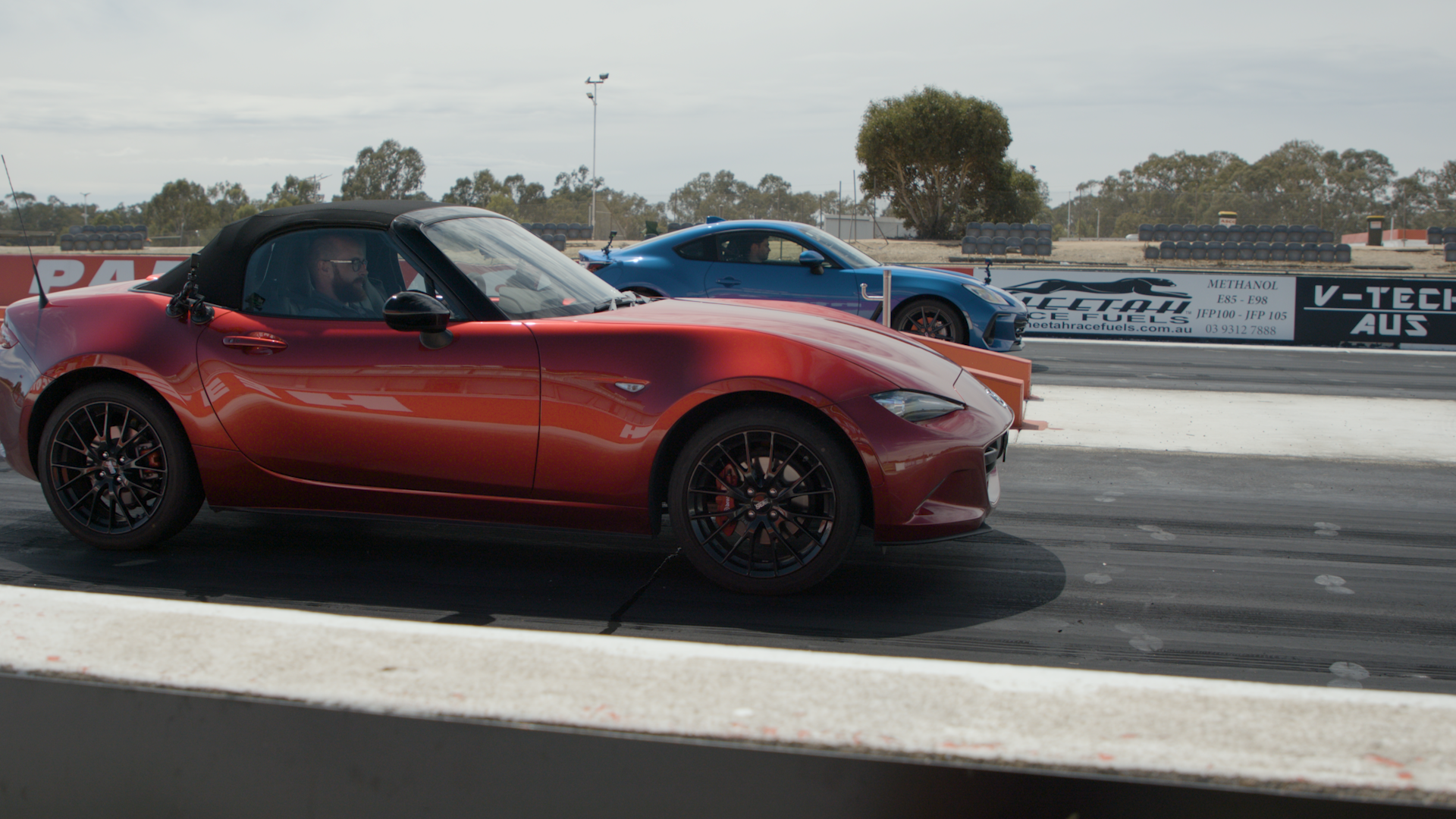
But has Subaru finally given the BRZ the punch it needs to topple its rear-driven nemesis, the Mazda MX-5, in a straight line?
In 2.0-litre guise, Mazda’s soft-top icon has long held it over the BRZ at the drag strip due to its lighter kerb weight (1052kg plays 1282kg) that delivered a superior power-to-weight ratio.
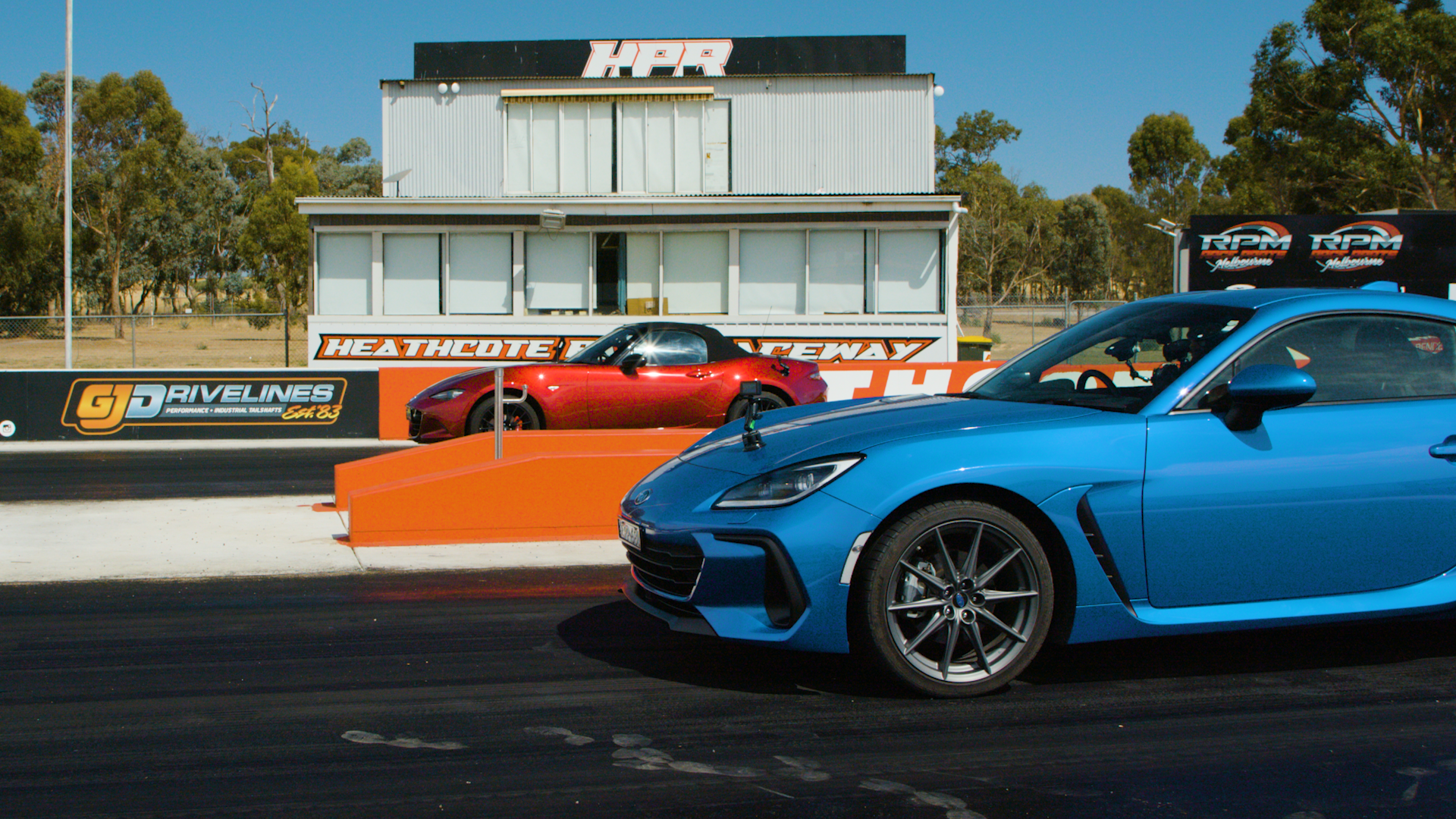
Now though the advantage seems to have swung Subaru’s way, at least on paper, so to discover how it translates in the real world we lined both cars up at Heathcote Park drag way.
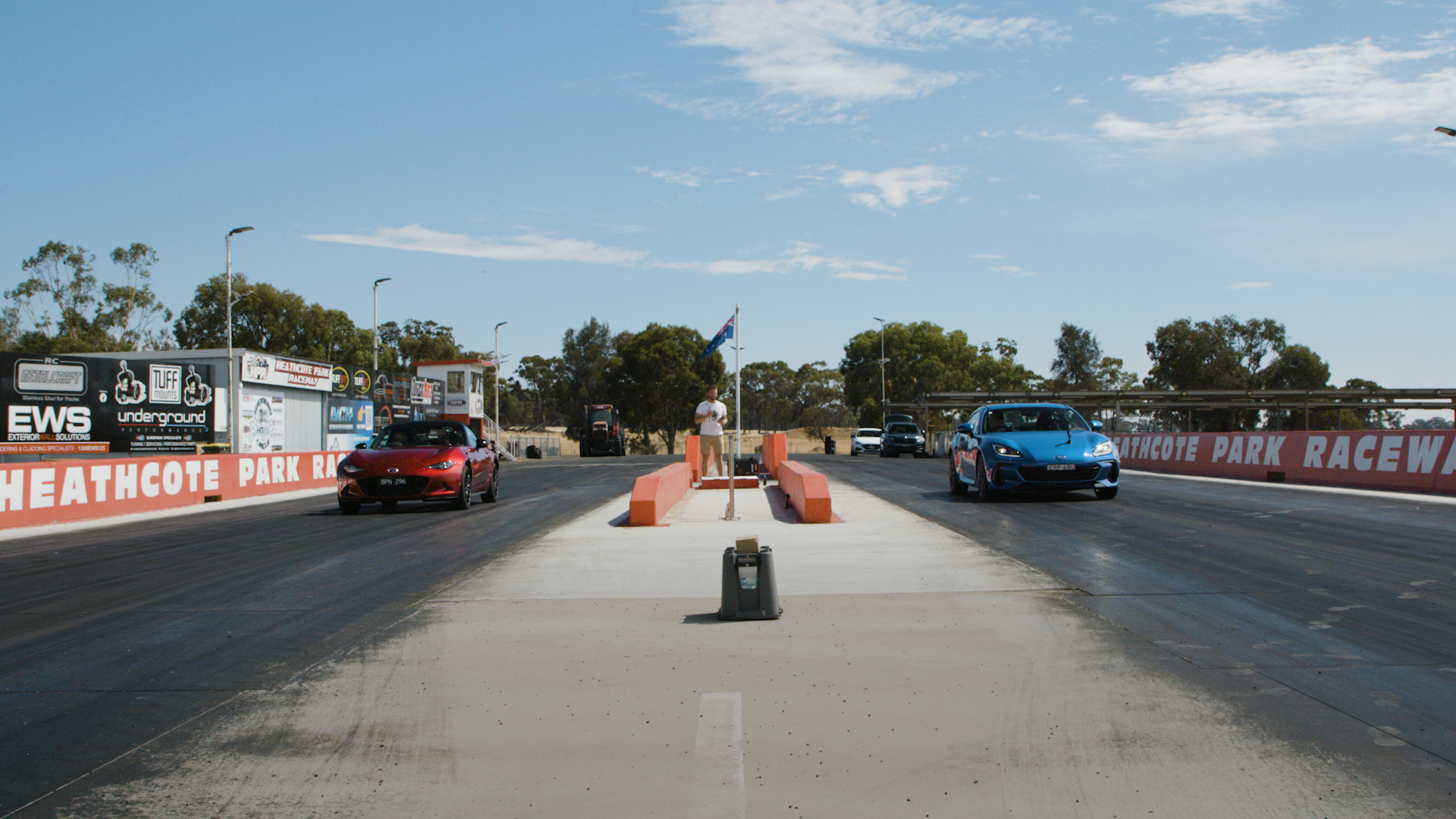
You’ll need to watch the video to see the results, but here are some important facts: both cars are manual, the BRZ is fitted with Michelin Pilot Sport 4 rubber and the Mazda with Bridgestone Potenzas.
We ran the cars head-to-head in a best of three drag and also in a roll-race. The results are close, so place your bets, hit play up top and don’t forget to like and subscribe to the MOTOR YouTube channel.
UPDATE, November 2022: Renamed Audi Q8 E-Tron revealed
Audi’s facelifted E-Tron, now known as the Q8 E-Tron, has been revealed. It has no relation to the existing Audi Q8, of course, but giving it a ‘Q’ name at least now brings it in line with the growing E-Tron line, including the Q4 E-Tron and E-Tron GT. Get the full story at the link below.
The story to here
It might only have been in Australia for less than two years but the facelifted 2023 Audi E-Tron Sportback is already gearing up for a release, and it may be arriving with a new name.
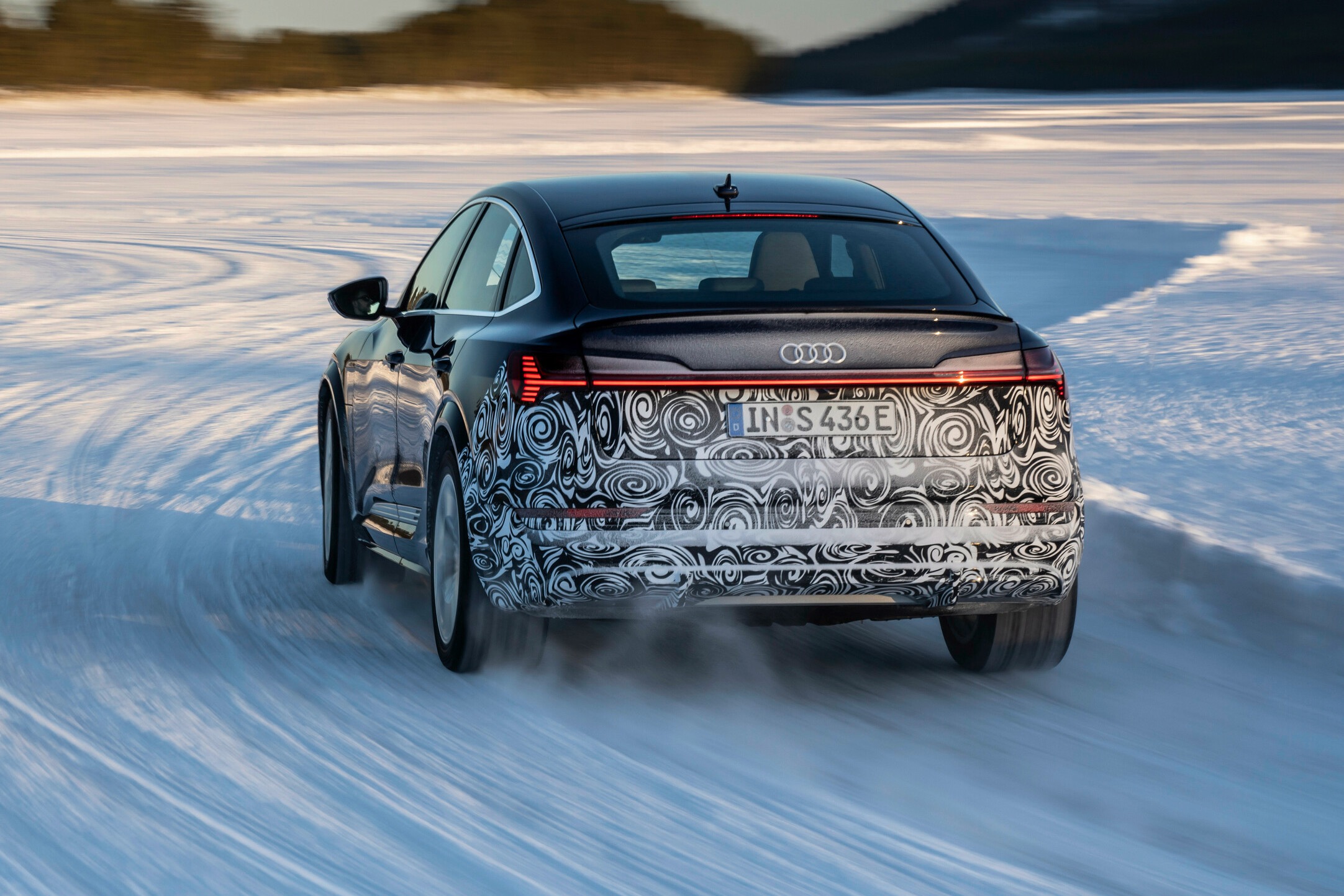
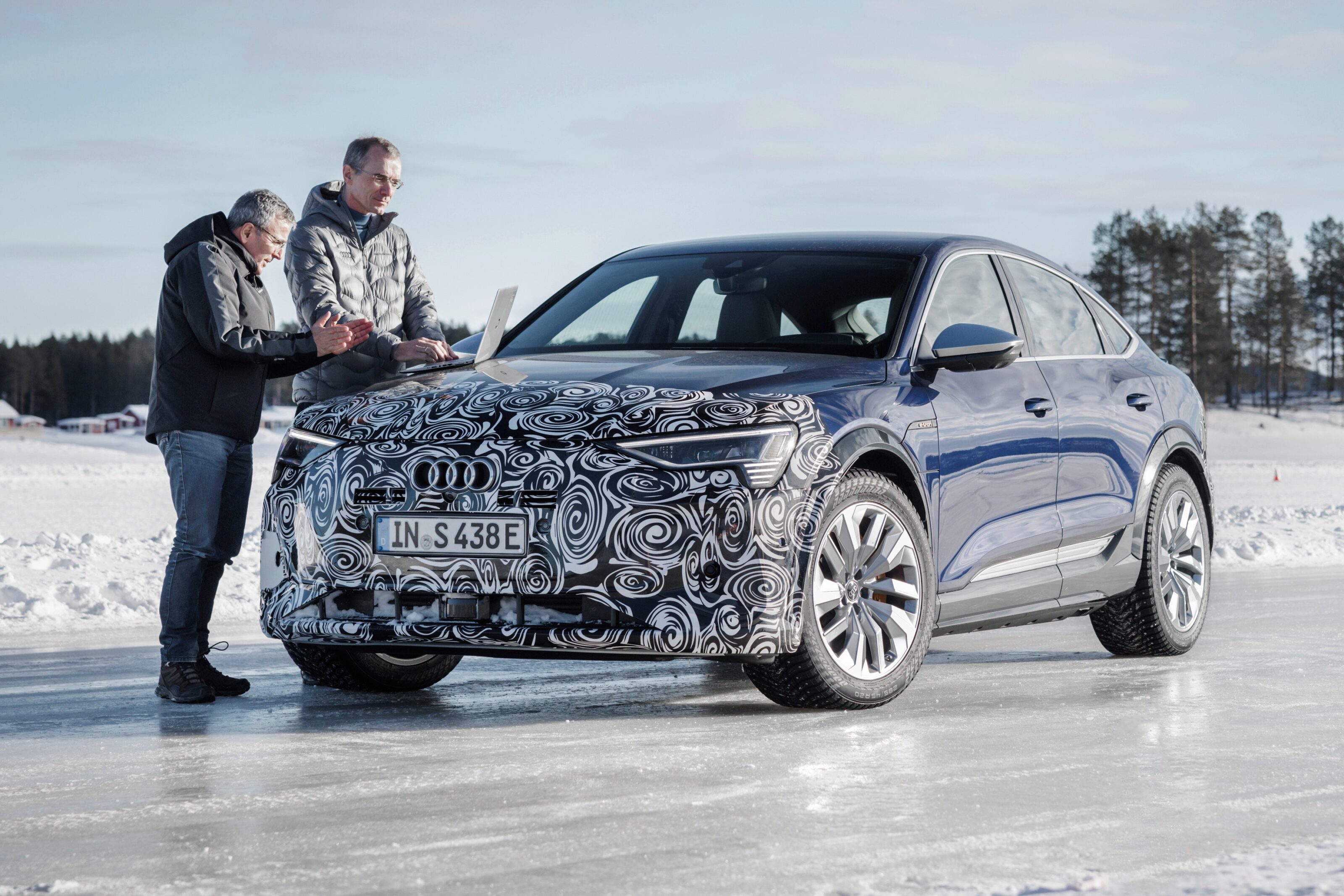
Audi teased the updated E-Tron Sportback undergoing winter testing at the company’s facility in Sweden, with the updated nose and rear-end hidden behind camouflage wrap.
While the headlights and taillights will carry over from the current model, the facelift will include revised front and rear bumpers, grille, with new alloy wheel designs and exterior colours also expected.
But the biggest change will be to the battery pack, with inside sources telling the British publication Autocar the E-Tron will see a significant improvement to its driving range, with 600km said to be coming– translating to a 50 per cent increase.
At the present time, the E-Tron 55 uses a 95kWh battery pack to deliver in excess of 400km of driving range from a single charge, while the E-Tron 50 offers 300km from its 71kWh battery.
As reported in January, rumours out of Germany suggest the model could be renamed as the 2023 Audi Q8 E-Tron, in order to bring it in line with the brand’s nomenclature.
The E-Tron was Audi’s first all-electric production car, but as battery powertrains were introduced across the range, ‘E-Tron’ was adopted as a badge to help differentiate models from their petrol and diesel counterparts – leaving the eponymous E-Tron as the odd one out.
It’s not clear at this stage whether Audi will adopt the Q8 name for the facelift, or if it will continue with the current badge until the model is replaced in 2025.
Whatever it’s called, expect the 2023 Audi E-Tron and its Sportback sibling to be unveiled in the second half of this year.
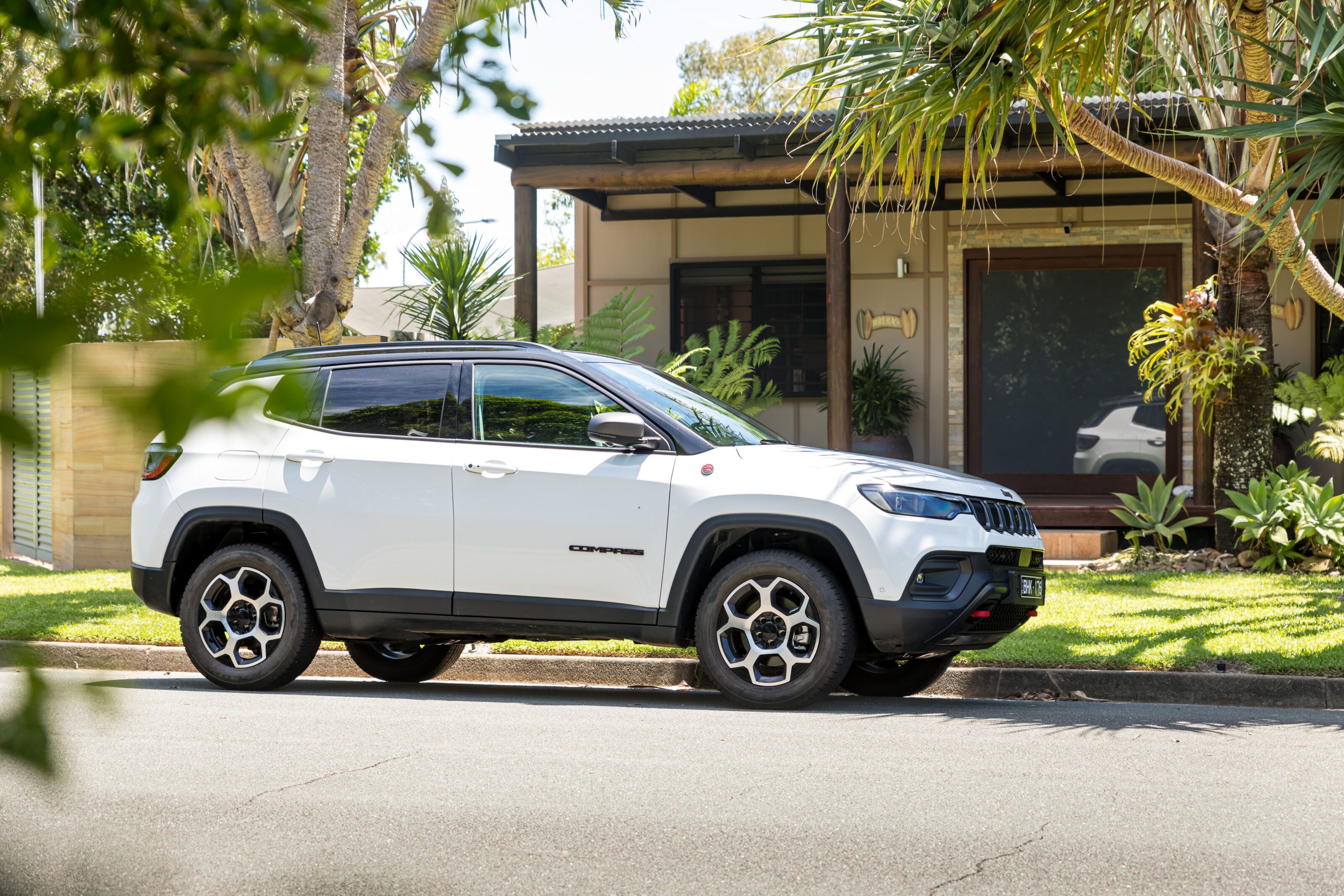
The range-topping Jeep Compass Trailhawk poses a unique selling proposition, somewhat unrivalled in the compact SUV segment, offering genuine off-road capability while remaining a practical city runner.
But starting at $51,250 before on-road costs ($55,845 for our tester), it isn’t cheap for a compact SUV and, despite being ‘Trail Rated’, it’s still more city car than off-road explorer given its lack of transfer case or true low-range gearing.
Perhaps though, Jeep anticipated that owners were likely to spend most of their time on inner-city blacktop.
It’s really only up against the 20-odd thousand cheaper Suzuki Jimny as a genuine compact off-road rival but eclipses it in terms of refinement and technology.
Price aside, it’s a fairly unmatched all-rounder in this segment. The issue is that its price encroaches on larger, more capable off-road options that can be had for a few thousand more, like the various dual-cab 4×4 ute options, seven-seat 4×4 wagons, and of course its more off-road capable Cherokee Trailhawk sibling. But none of these alternatives are compact city SUVs.
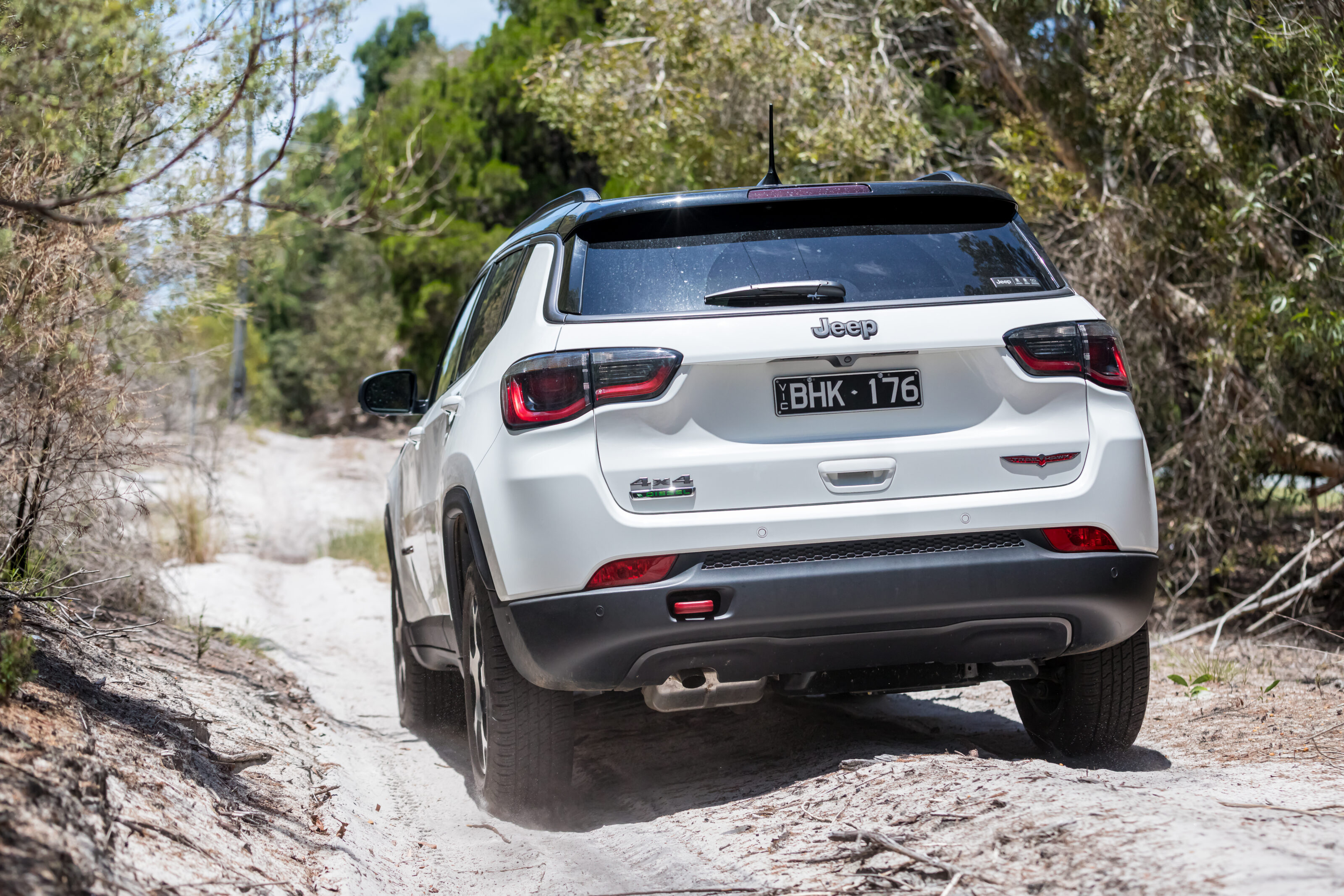
So what exactly is Jeep going for with the Compass Trailhawk? We spent a week in the car and it was apparent from the outset that this is a compact SUV given some off-road armour and gadgetry, rather than being a genuine off-roader made city-friendly.
This is a vehicle for those strictly wanting a city SUV that’s also off-road capable and for that reason, it’s kind of the only option. A rare conundrum these days, when consumers are more often than not saturated with options.
Put simply, before delving into its features and performance, the Compass Trailhawk will be outdone in some way or another by its on- and off-road competitors, but no one compact SUV will outdo it both on- and off-road. Bit of a riddle, that one, but it may be where the Trailhawk shines, even if it feels like an odd fit in the market.
Tech and Features
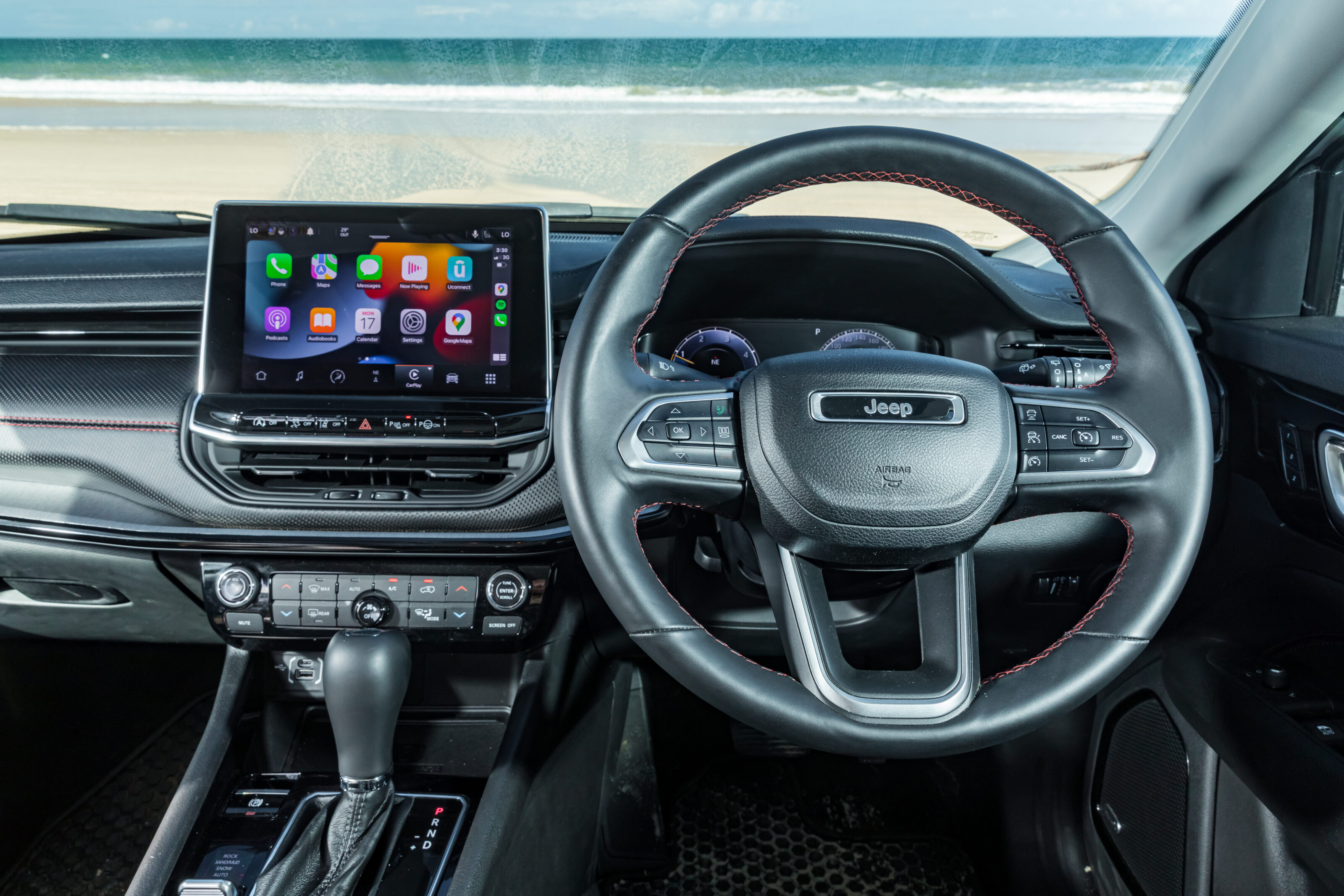
The Compass is certainly refined, with a technology-rich offering inside and out, fulfilling its urban adventurer aspirations.
For 2021 and carrying over to ‘22, the Compass Trailhawk scored a new 10.1-inch Uconnect 5 infotainment system, 10.25-inch digital cluster, and a redesigned interior with various hard and soft-touch finishes. The Trailhawk also sports red interior stitching accents, slightly sportier seats, and even some (most likely faux) carbonfibre trim pieces.
A new surround-view camera system provides plenty of assisted visibility, all accessed conveniently through the infotainment system – handy when squeezing in and out of tight spots. It also proved useful off-road.
Perfectly placed for easy phone storage is a wireless charging pad behind the gear shifter, with the benefit of adding juice as you go.

Aside from that, though, the cabin does feel short of storage until you dig a little deeper. Jeep claims a redesigned central tunnel gives the Compass just shy of five litres of storage in the centre compartment, which is enough for most and served us just fine.
In terms of standard safety tech on the Trailhawk, it gets the whole shebang with Jeep’s Advanced Driver Assistance System (ADAS) featuring intelligent speed assist, traffic sign recognition, pedestrian emergency braking, drowsy driver detection and active lane management. We’ll get into some of our gripes with this particular system, further down in the review.
The Compass scored a full five-star ANCAP safety rating, with six airbags onboard.
This is a vehicle for those strictly wanting a city SUV that’s also off-road capable and for that reason, it’s kind of the only option
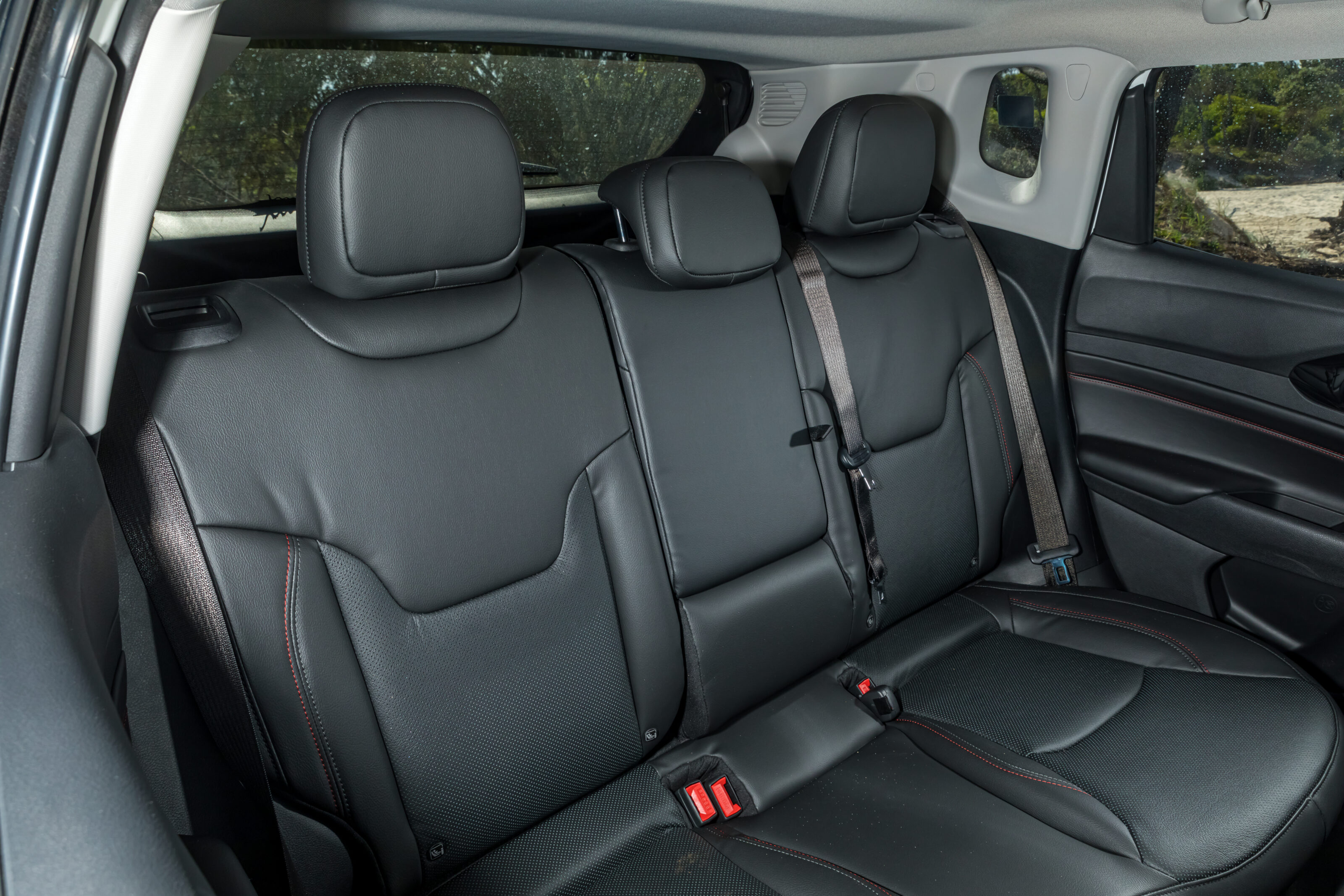
Standard keyless entry with push-button start and hands-free (dangle your leg under the rear bumper) tailgate mean the key stays safely in your pocket at all times.
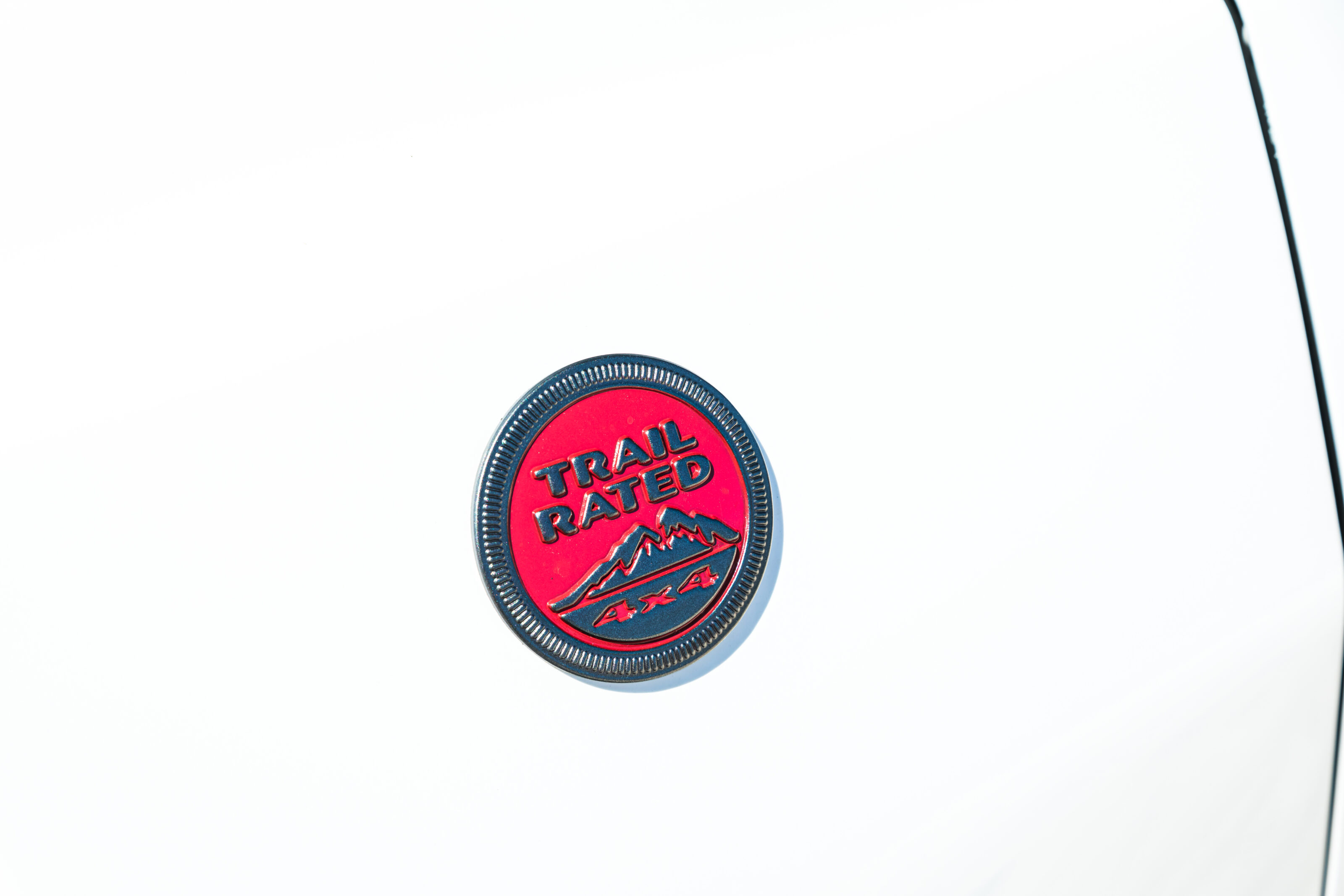
From the outside, the Trailhawk looks tougher than the rest of the Compass range, with revised bumpers to enhance approach and departure angles giving it the appearance of being higher than it is. It also boasts a redesigned grille, full LED headlights with daytime runners, skid plate, in-your-face red tow hooks (two front, one rear), off-road suitable 17-inch alloys with Falken all-terrain tyres, and of course the loud-and-proud Trailhawk decals and esteemed ‘Trail Rated’ badge.
Our tester also had the optional dual-pane panoramic sunroof, ventilated and heated front seats, heated steering wheel and Alpine nine-speaker premium audio system. All useful extras, particularly the ventilated front seats that up here in Queensland are a lifesaver in summer.
Diesel Grunt and Faux 4×4 Gadgetry
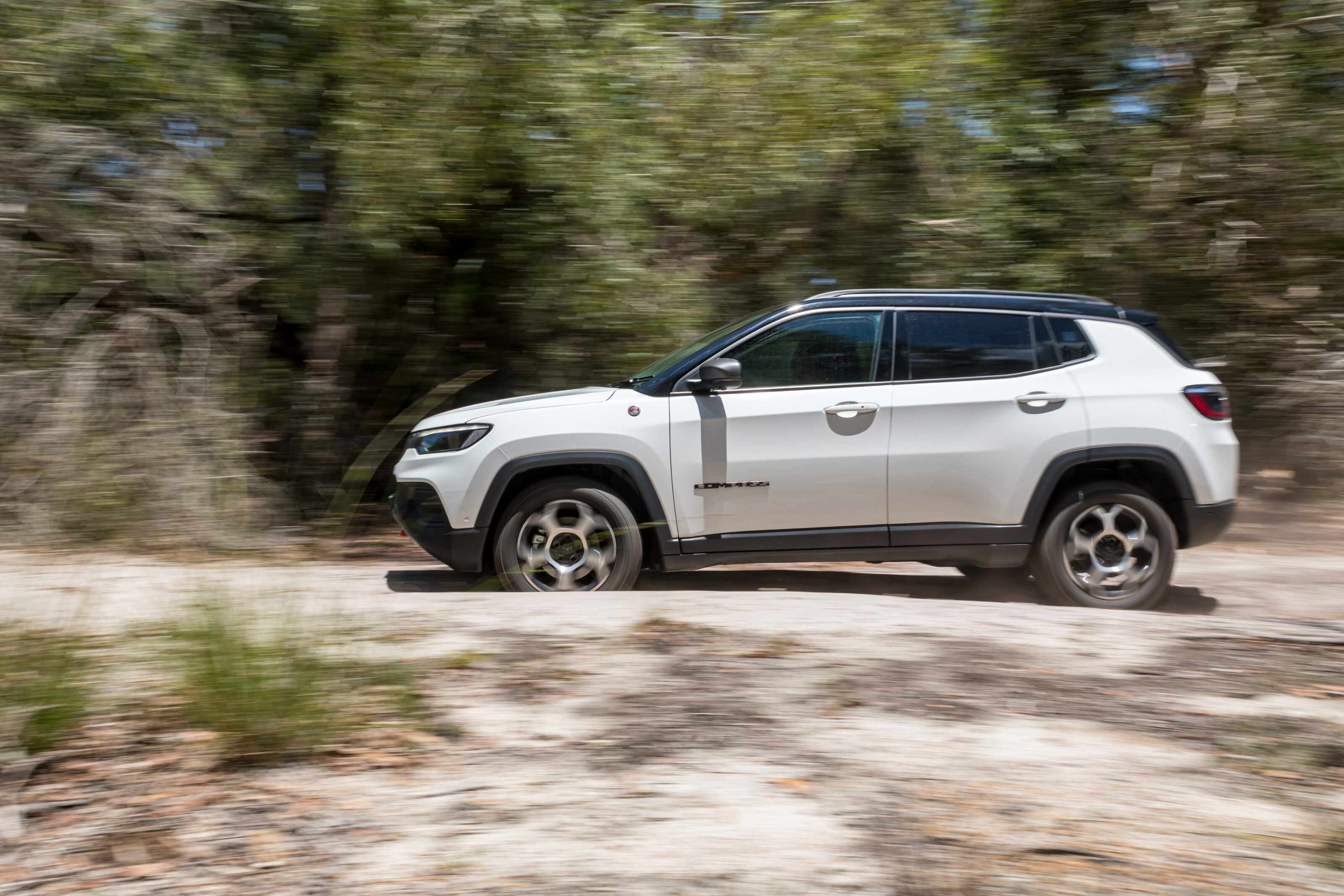
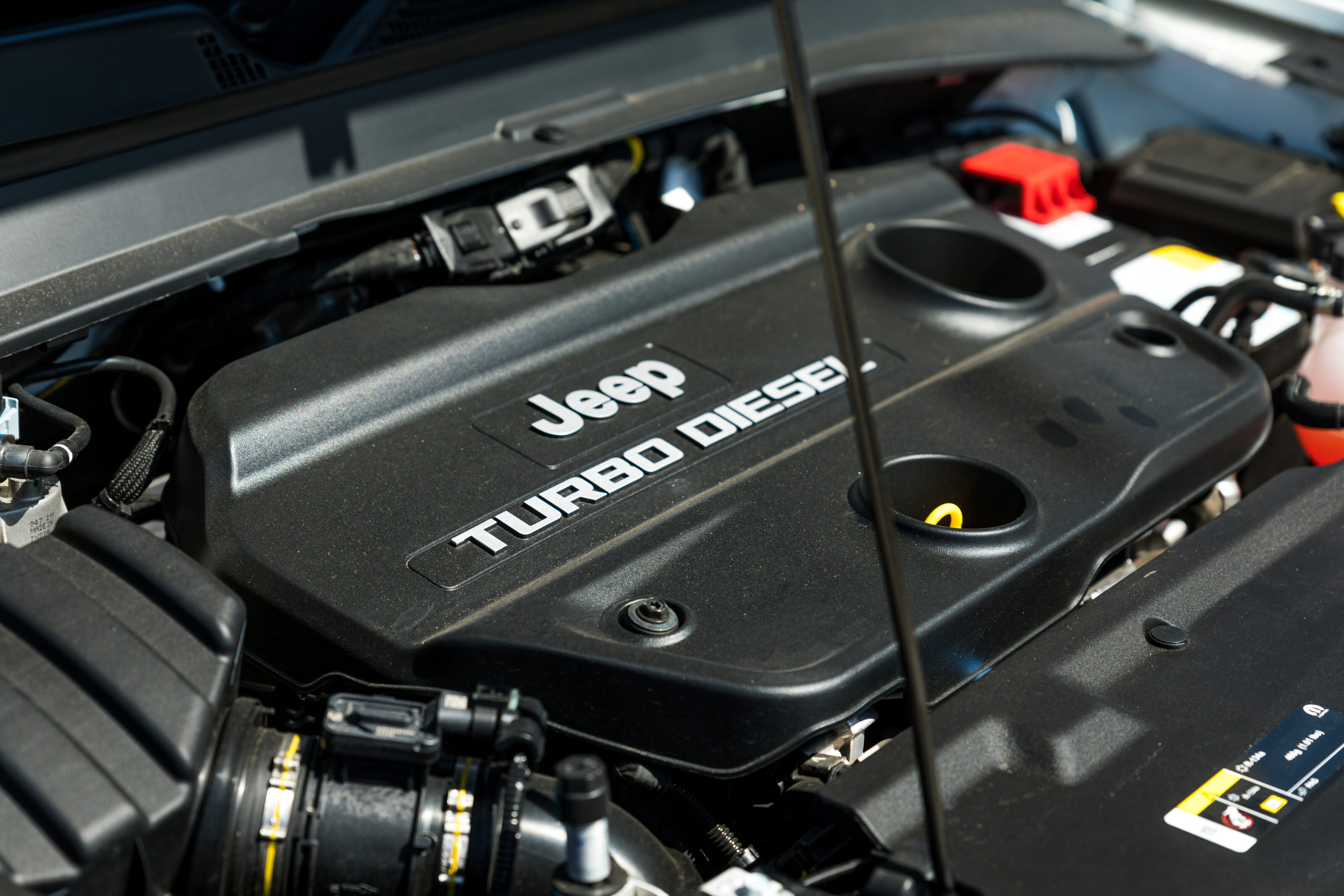
The Compass Trailhawk, unlike the rest of the range, is only offered with a 2.0-litre turbo-diesel. This feels fitting given its off-road adventure-ready credentials because, when you couple this fuel-sipping diesel with the 60-litre tank, you’re looking at around 800 clicks between fills.
Producing 125kW at 3750rpm and 350Nm at 1750rpm sent through a nine-speed automatic with some ‘Trail Rated’ wizardry built-in, the diesel claims a combined fuel use figure of 6.9L/100km that we weren’t quite able to match. But it’s still a frugal unit.
I will say, it genuinely surprised us off-road during a day of testing on mild tracks and soft sand at Bribie Island
The nine-speed auto sends drive mostly to the front wheels but will send drive back when slip occurs. Four drive modes alter the traction control, offering Auto, Snow, Sand/Mud, and Rock settings to cover most scenarios.
Under the drive modes there are also a few off-road-focused modes, being 4WD Low, Hill Descent Control and 4WD Lock. These are your friend off-road, but this is where the wizardry comes in, because there’s no transfer case or true low range despite brandishing the Trailhawk badge. Instead, 4WD Low will hold first gear, which isn’t a new concept and does work, as long as you’re not a purist. The 4WD lock feature is the handiest, maintaining drive to the front and rear.
On and Off-road Goer
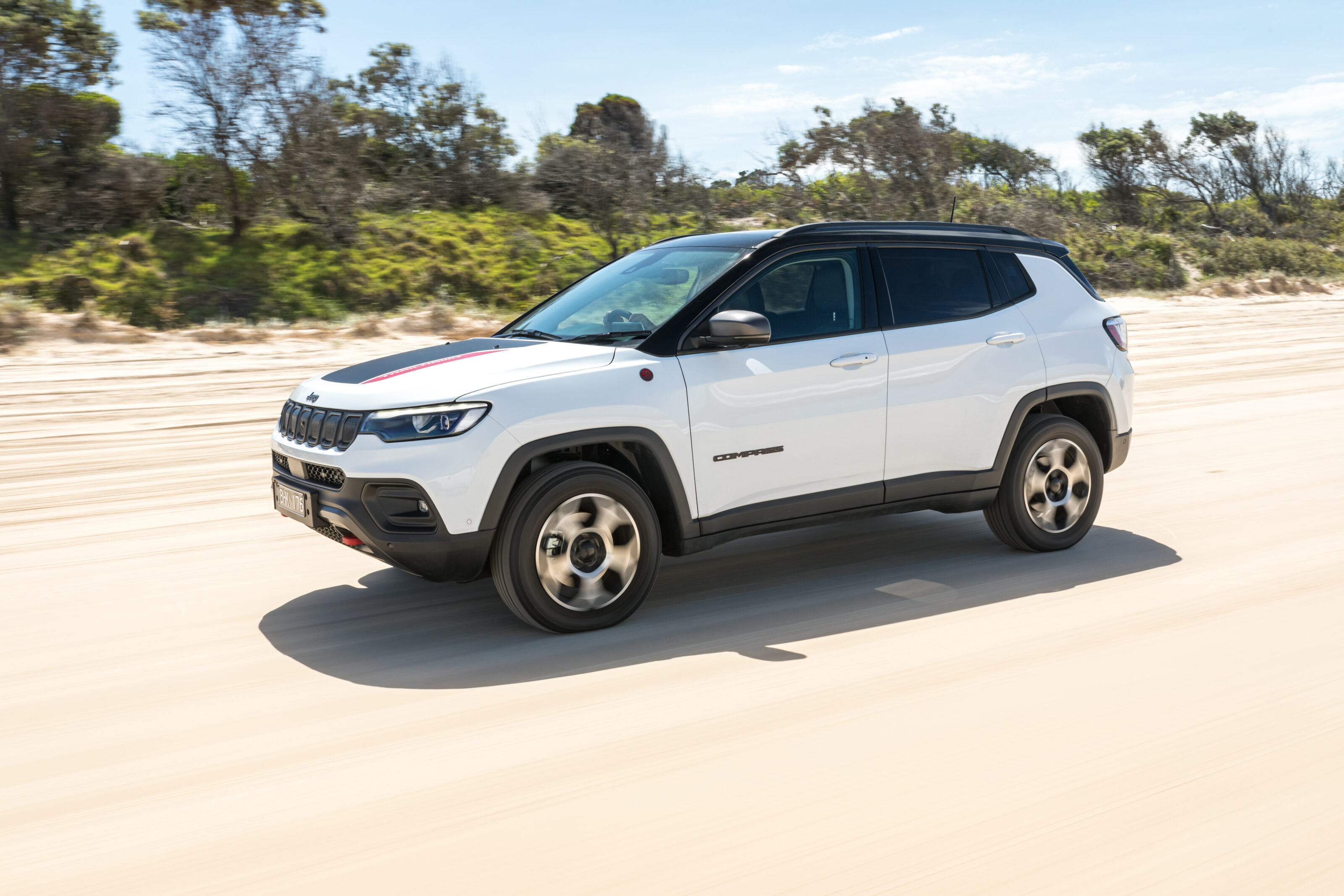
I will say, it genuinely surprised us off-road during a day of testing on mild tracks and soft sand at Bribie Island just north of Brisbane. We expected to have to really push it outside of its comfort zone, like the guys you see on YouTube taking an old beaten-up Subaru Forrester down rough single track terrain until it’s utterly destroyed, but it puffed its chest out and got the job done.
So perhaps Jeep’s ‘Trail Rated’ certification, one that involves passing through the harsh Rubicon Trail in California, was awarded without nepotism.
While it’s capable off-road and may have earned its Trail hawk badge, it still feels like a compass with more clearance, slightly more aggressive tyres and revised front and rear bumpers. Let’s put it this way; it’s more city-SUV than it is off-road conquerer.
And on that, the improved ground clearance (225mm), approach angle (30.3 degrees) and departure angle (33.6 degrees) are all respectable numbers and didn’t let the Trailhawk down as an out-of-the-box off-roader.
Stiff suspension and not a great deal of articulation, however, did. It still feels like it’s set up to be nimble around town, with the compromises shining through off-road.
Once off-road, on a moderate access trail, we left the Trailhawk in ‘auto’ but popped the 4WD Lock on, which sent drive to all four wheels and adjusted the traction control. A couple of small climbs lifted wheels, but the system braked the airborne wheel to simulate a locker, call it a ‘brake locker’ if you will, and the Compass soldiered on. The system did this without any confusion or hesitation.
The improved ground clearance, approach angle and departure angle are all respectable and didn’t let the Trailhawk down as an out-of-the-box off-roader

We shot over to the beach access track, where we dropped tyre pressures to a suitable 20psi and gave the Sand mode a try while also engaging 4WD Lock. This mode kept the traction control at bay, allowing the slip needed in soft sand. Where it wasn’t handy was on the beach trying to maintain 30km/h to follow our camera car (a mighty TD42 GU Patrol).
The Trailhawk was revving its head off, doing up over 3000rpm, which doesn’t feel great for any length of time in a diesel. We found we had to jump back to ‘Auto’ and turn 4WD Lock off the moment we were up and moving as it holds the lower gears and limits speed.
Also worth noting is that when you drop the tyre pressure, the onboard tyre pressure monitoring will continue to warn you – not a bad thing, though, and the system is dead-on accurate because it matched our gauge down to the pound.
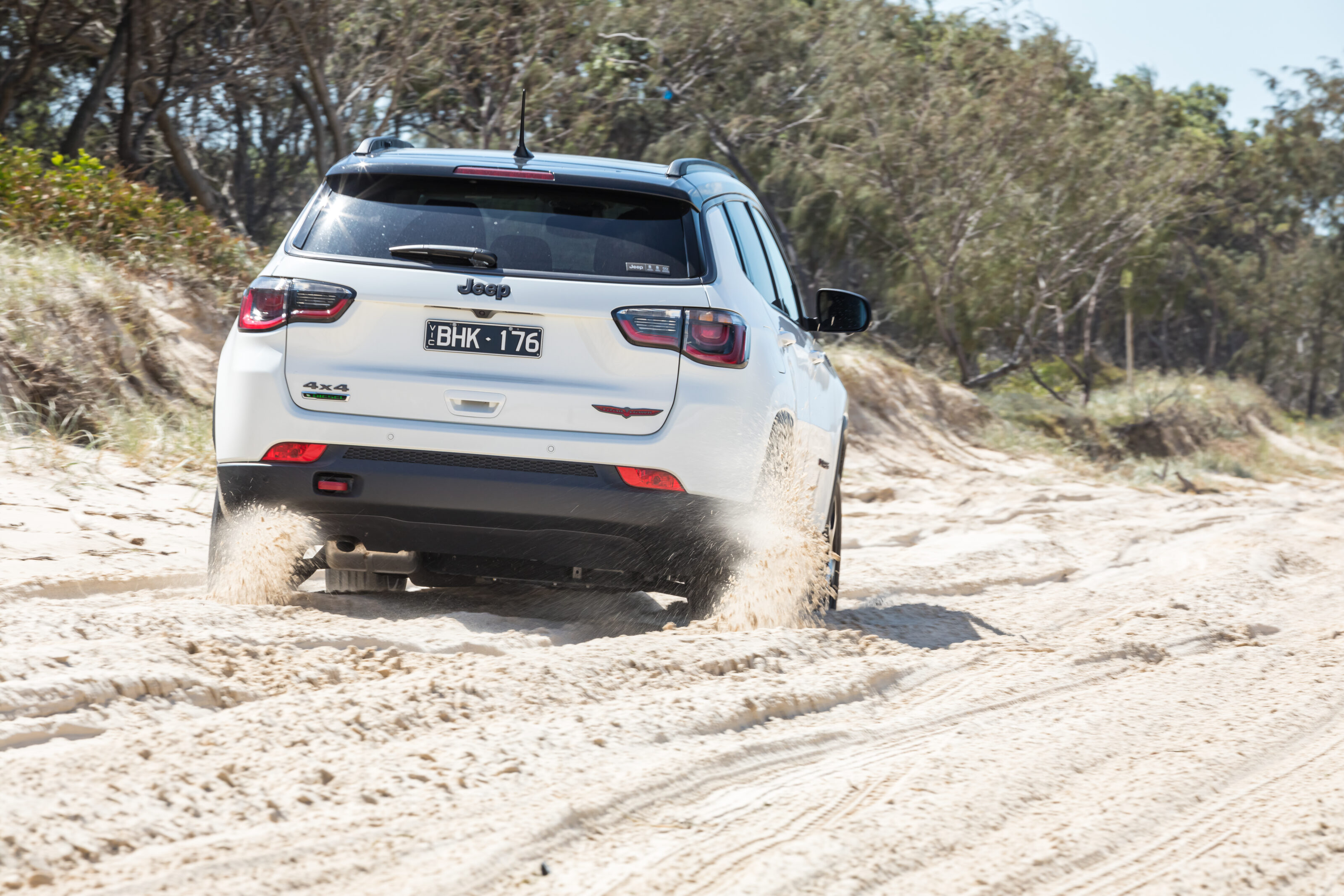
The suspension not only made lifting a wheel all too easy on tracks, but it also made for a pretty jarring ride on even soft sand, with whoops just about launching you through the sunroof. Okay, maybe not that bad – but a softer ride would help things along.
Tyres will also let the Trailhawk down in mud, but that’s easily fixed and a common limiting factor on most stock 4x4s running factory all-terrains.
Overall, we ended the adventure pretty damn impressed. Most Compass Tailhawk owners won’t find the limit of it off-road and with more aggressive rubber it will serve all of your weekend adventure needs.
After the day at Bribie Island, holding high revs, thrashing it and keeping it in 4WD Lock, the little Compass returned a fuel average of 9.9L/100km. That’s a pretty frugal outcome in our eyes.
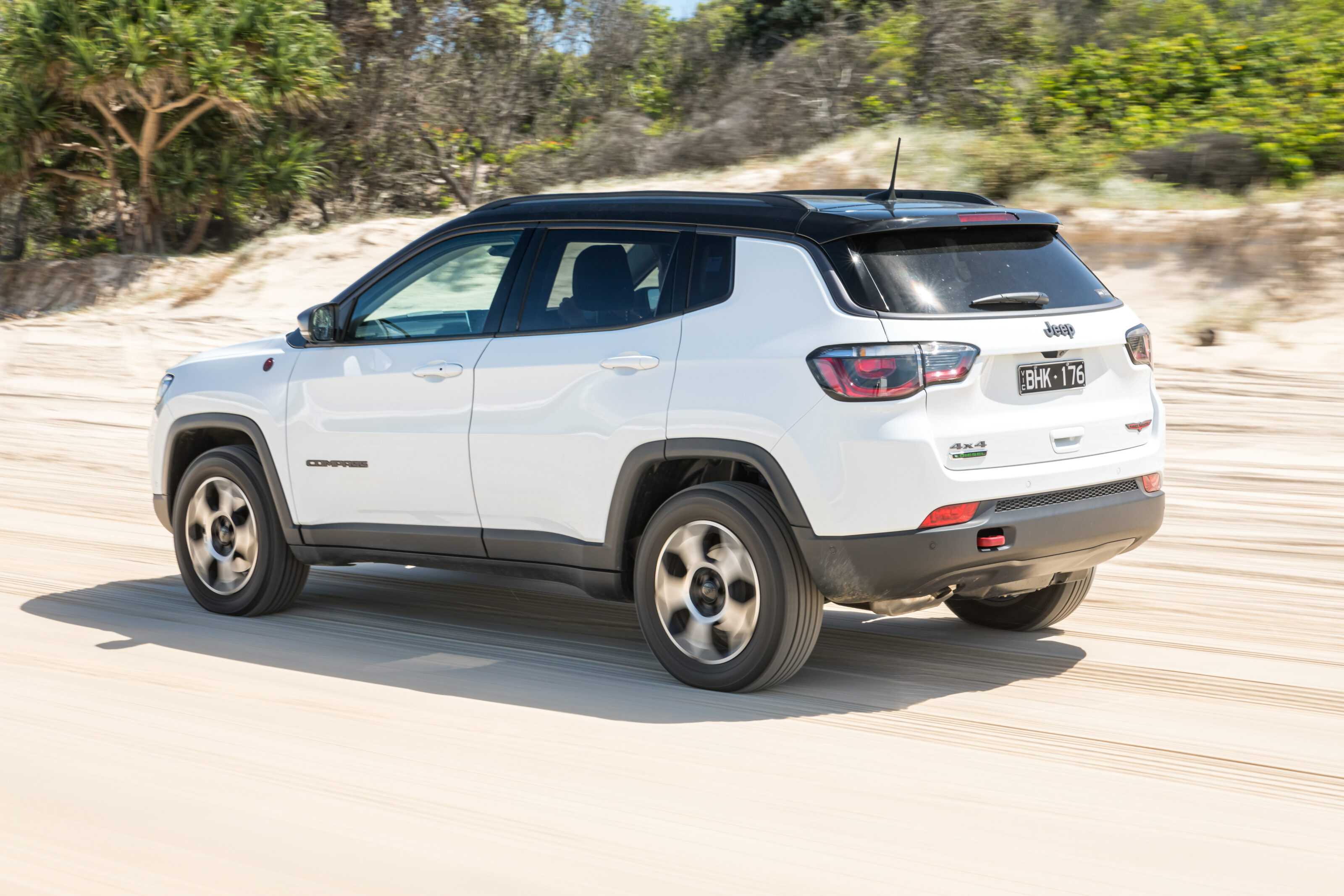
On the road, the firm suspension suddenly becomes a strong point and while the diesel feels a little lazier than petrol options in this segment, its meaty torque spread gets the Compass up and moving quickly enough.
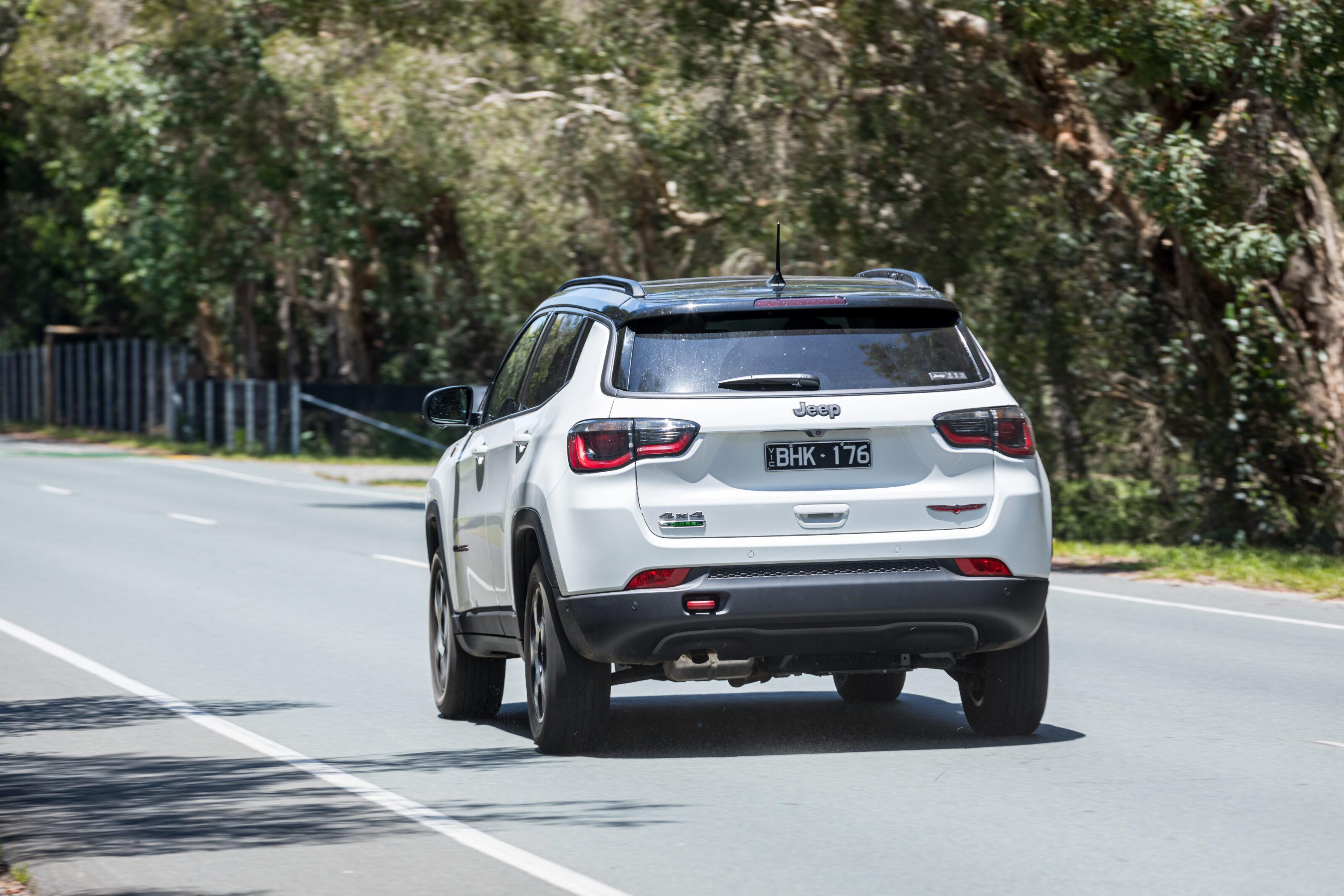
It isn’t fast, but it isn’t sluggish, either. The nine-speed auto isn’t the most urgent cog-swapper about, but once you learn to lean on the car’s torque it’s absolutely sufficient in terms of acceleration from both a standstill and out of corners. Just expect a little delay from the ‘box.
We returned dead-on 8L/100km after almost a week of purely on-road, short city trips, which is pretty good. Had we spent more time on the highway, the figure would have dropped closer to Jeep’s 6.9L/100km official claim.
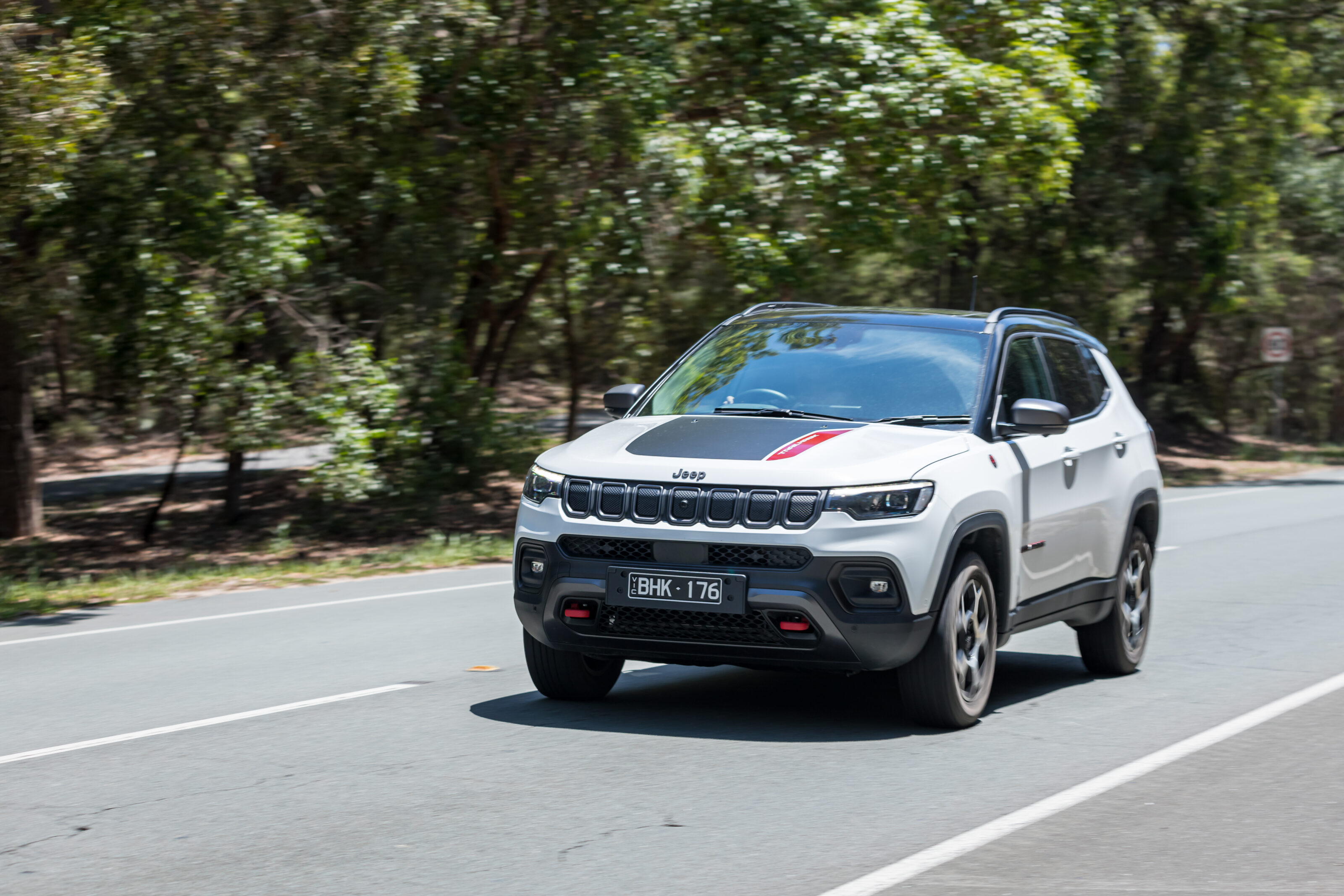
Grip and traction are good considering it’s predominantly a front-driver on knobblier tyres than your usual city SUV, and if you punch this thing mid-corner and experience some traction loss, the rears quickly jump in to secure grip. The system works well and doesn’t trip over itself.
The digital dash is fairly advanced and not short of display options and onboard data, all accessed via steering wheel controls. Coolant temp, trans temp, oil temp and battery voltage are all there for you to monitor in real-time, especially useful when off-road and giving the little Compass a hammering.
Digital dashes aren’t everyone’s cup of tea, but this system has a pretty damn good faux analogue display that is responsive and easy to view. You’ve got a good range of displays available, too, depending on what you’re into.

There are some really irritating warnings in this car, with one of the most startlingly abrasive warning noises out. We were disabling as much as possible each time we got in.
In the words of my partner, “I’d crash if I heard that!” An exaggerated statement, but nonetheless it scares the shit out of you when it beeps at max volume. We’re told you can turn it off, but for the limited time spent in the car we put up with it. It’s one of those systems where it’s difficult to know what it’s beeping at you for, making it difficult to isolate what you’ve done. It deters you from relaxing a bit during already tense peak-hour runs.
Active lane management is almost constantly intervening, too. We suspect some of Brisbane’s less than ideal roads and lane markings may have been the reason for this, as it was worse on a few particular sections of road. Once we were out of the city, the system calmed down substantially.
Grip and traction are good considering it’s predominantly a front driver, and if you punch this thing mid-corner and experience traction loss, the rears quickly jump in to secure grip
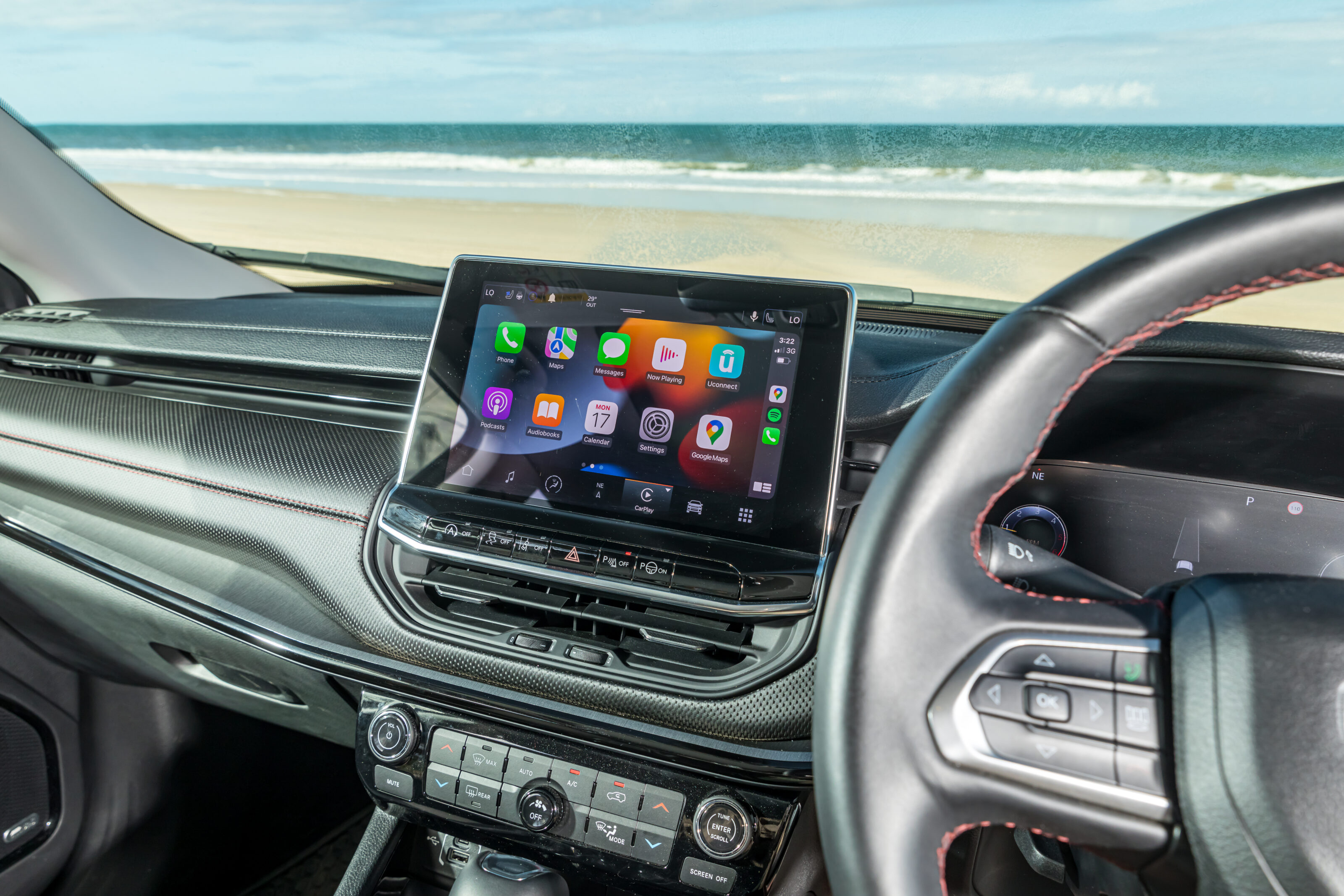
The infotainment screen is sensational and the vehicle comfort screen was the go-to for air-conditioning adjustments. It works really, really well.
Our car’s optional Alpine nine-speaker premium audio system absolutely bangs, too. I’m not familiar with the standard audio system, but this one provided ample doof even with the blood-curdling warning beeps occasionally yelling at me.
The centre infotainment display offers a logical layout and all of the functionality you could ever want. The tabs down the bottom make operation simple, and many of the adjustments, for example, air-conditioning, can be adjusted with voice control.
‘Hey Jeep’ wakes the voice alert up but that’s not really my style so I used my hands instead. Call me old fashioned.

A camera view screen gives you various front and rear views, which as mentioned earlier came in handy. Your obvious Apple CarPlay and Android Auto get the job done wirelessly.
The comfort screen is cracking on this car, and while I usually opt for manual controls for things like air-con, volume and so on, this screen completely changed that. I was adjusting all of the interior temperatures and fan speeds using the touchscreen, including firing up the seat vents. It’s just so simple to operate and beats the analogue controls all day.
You also have various analogue climate control, volume and other buttons, so you can turn the screen off and use basic controls if you so please.
Air-conditioning can be adjusted with voice control. ‘Hey Jeep’ wakes the voice alert up but, that’s not my style so I used my hands instead. Call me old fashioned
The Home Screen function gives you a simple, configurable menu with all your favourites displayed. It’s a pretty refined infotainment experience for this segment, particularly when you look at the more off-road capable but unrefined Suzuki Jimni, for example.
Front and rear seats in the Compass are comfortable and relatively snug, though being a compact SUV, the rears may be a squeeze for taller adults. The seats up front offer a couple of driver positions, useful if sharing the car among a family.
Cost and Ownership

As mentioned, our tester will set you back $55,845 excluding on-road costs, made up of the base price ($51,650) and Trailhawk Premium Package ($4,195) consisting of ventilated front seats, heated steering wheel, heated front seats, dual-pane panoramic sunroof, and Alpine nine-speaker premium audio system.
Jeep offers a five-year/100,000km warranty, capped-price servicing, and lifetime roadside assistance. Visits to the dealer come around every 20,000km/12 months and will set you back $399 under the capped-price servicing scheme.
VERDICT
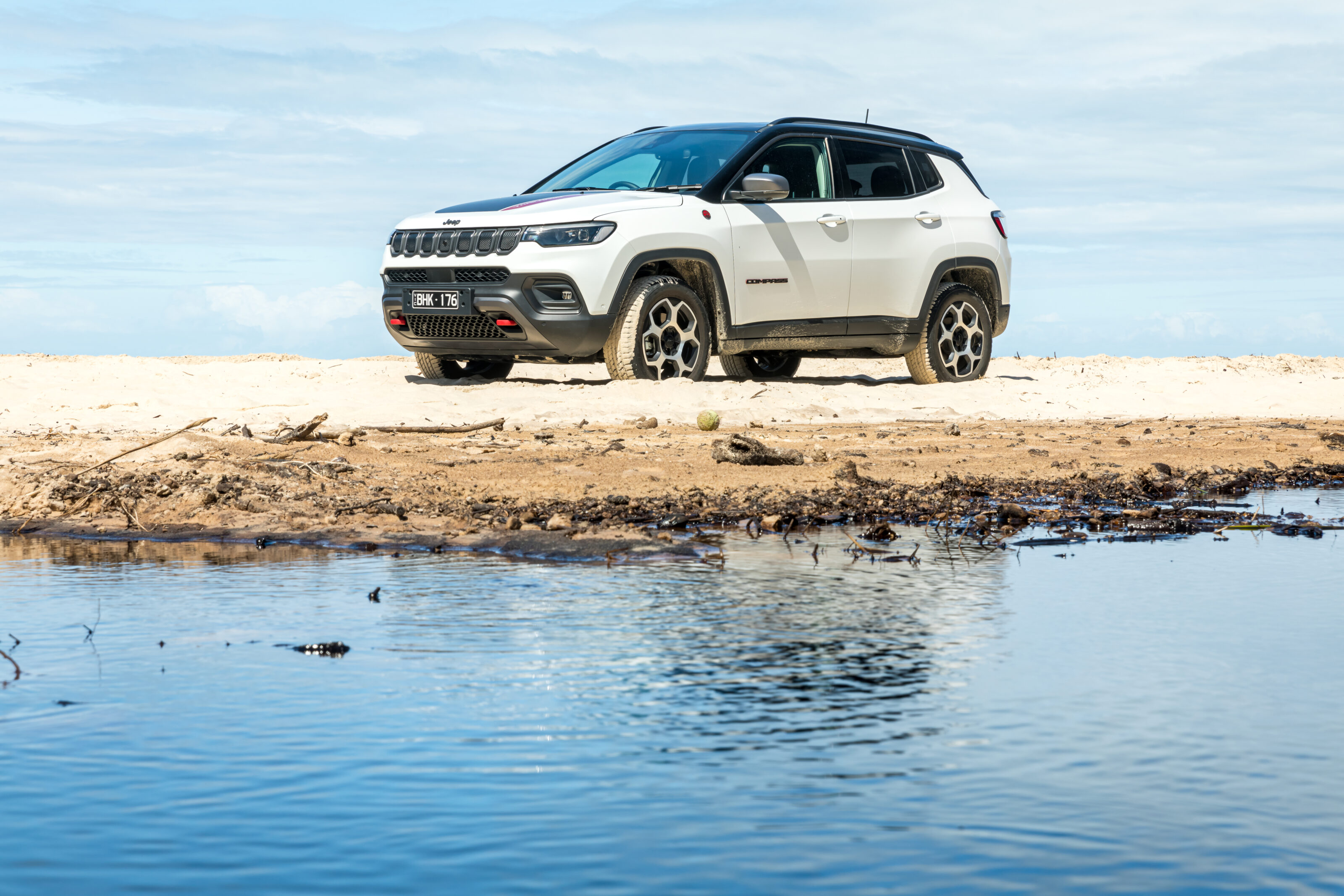
Given we pitted this thing against a Jimny, as its primary off-road competitor, it smashes the Suzuki in everything but gnarly off-road going. The Compass Trailhawk really is the only compact offering that’s actually good off-road, and refined on-road.
The diesel won’t be everyone’s cup of tea, but range and fuel economy make up for that lazy diesel feel. It’s also not a particularly noisy oiler, so it feels like the most suitable option.
It’s simple really; if you only drive on-road, the Trailhawk isn’t necessary. If you strictly attack 4WD tracks and you want something compact; get a Jimny. If you’re someone that wants day-to-day on-road refinement, with the ability to venture off the beaten path come the weekend; a Compass Trailhawk is the pick.
We came away impressed, with all but the price, making this a great if expensive little all-rounder.
2022 Jeep Compass Trailhawk specifications
| Body | 5-door compact SUV |
|---|---|
| Drive | on-demand all-wheel |
| Engine | 2.0-litre inline four-cylinder turbo-diesel |
| Transmission | 9-speed automatic |
| Power | 125kW @ 3750rpm |
| Torque | 350Nm @ 1750rpm |
| Weight | 1621kg |
| L/W/H | 4398/1819/1657mm |
| Wheelbase | 2636mm |
| Ground clearance | 225mm |
| Approach and Departure Angle | 30.3 degrees (approach); 33.6 degrees (departure) |
| Cargo Volume | 438L |
| Towing capacity (braked) | 1500kg |
| Fuel tank capacity | 60L |
| Fuel Economy (claimed) | 6.9L/100km |
| Fuel Economy (as tested) | 8.0L/100km |
| Suspension | independent coil springs (f); independent coil springs (r) |
| Brakes | ventilated discs all round |
| Wheels | 17-inch alloys with full-size spare |
| Tyres | 255/60 R17 Falken All-Season |
| Price | $51,650 plus on-road costs |
