
The Ford Everest V6 will offer 3500kg towing when it arrives in the second half of 2022, but how did the Australian engineering team do it?
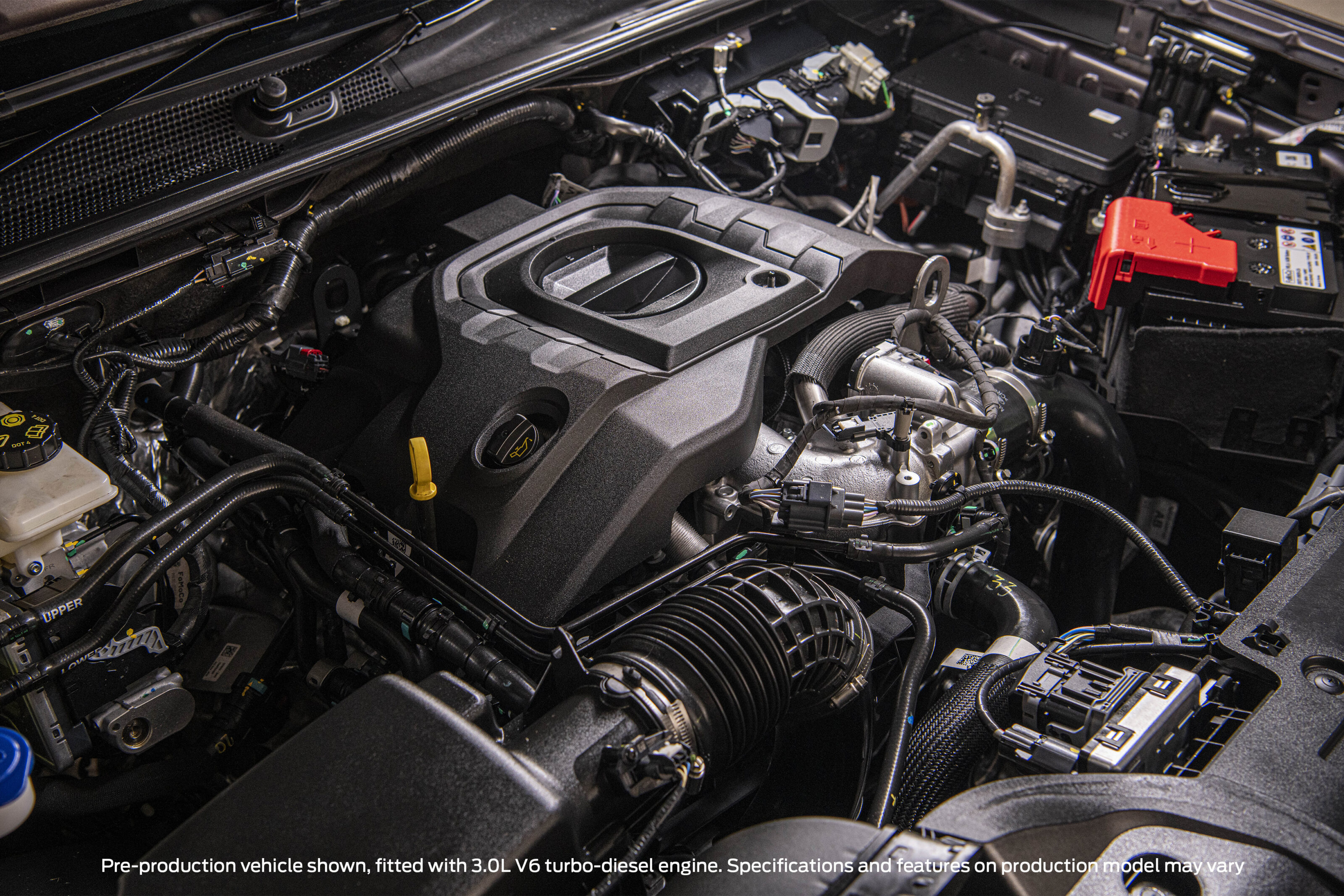
The 2023 Everest V6 will be the most powerful engine fitted to Ford’s seven-seater yet, but that alone wasn’t enough to achieve the ambitious targets that customer feedback had helped shape.
While the current models offer substantial ratings of 3000 kilograms for the 3.2-litre and 3100kg for the 2.0-litre bi-turbo, customers wanted an Everest capable of 3500kg, just like its leaf-spring Ranger stablemate and even further above the Toyota Prado’s 3000kg rating. The Isuzu MU-X stands out as an obvious rival on this front, though, managing the same 3500kg rating.
“We know that people have wanted 3500kg towing on an SUV, it’s been one of the things we’ve wanted to do for a while, but we were restricted by, honestly, the cooling performance of the outgoing Everest because of the front-end,” said T6 platform chief, Ian Foston.
“Cooling was a big thing unless we had this big front-end opening, we couldn’t get the cooling for the towing. It’s all part of the grand plan on the platform really – to get better capability.”
Part of that cooling change came from the front-end being ‘hydroformed’, a process that reduces weight for the same strength in the manufacturing process through greater precision. It also reduces manufacturing cost and complexity too.
“Before, you had a very restrictive front end for crash [testing/rating] – now what we’ve done with the hydroform, the poles come out from the dash and then they come around – we call them elephant’s ears – that houses all the big things,” says Foston.
“The lamps hang off it, all the cooling pack hangs off it – so it’s opened the front end to make kind of a spaceframe structure. It takes away all the restrictions on where you put things.”
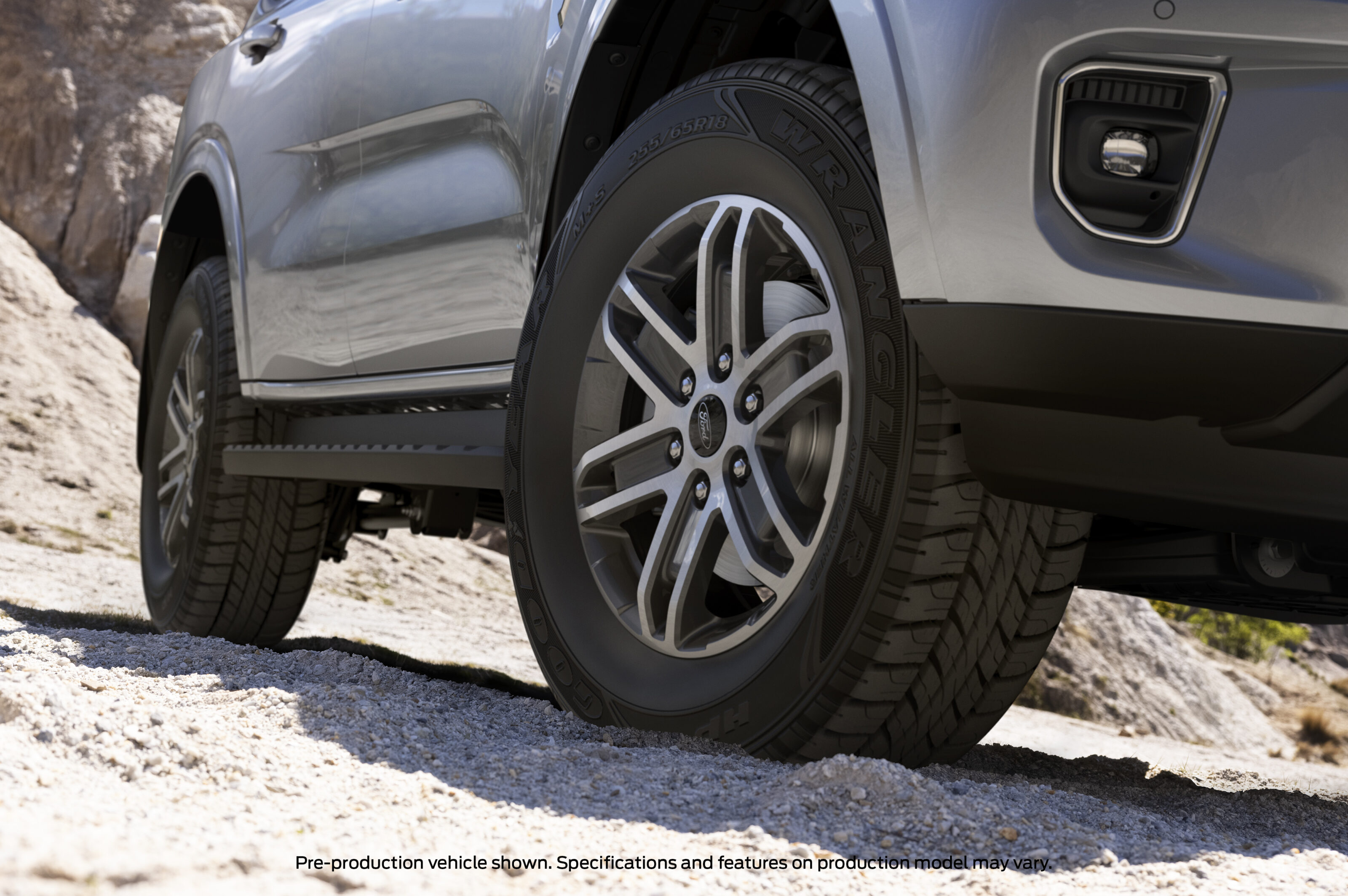
That enables a host of changes that made the 3500kg goal achievable, says Foston. “Cooling, brakes, frame, rear axle – they were the main things in terms of upgrades. It’s the basic same system, [but] the tube, the actual casing, is slightly thicker and reinforced in certain places. Brakes have been upgraded as well, same as on Ranger.”
The new Everest’s platform itself is not new, but a heavily upgraded version of the T6 platform it shares with Ranger and Bronco. In fact, Bronco development helped in making the new Everest a more capable vehicle, including its tow rating.
“That’s the beauty of doing the platform development at the same time; the building blocks before when we did Ranger, and then the Everest, we added small bits on,” said T6 Chief Platform Engineer Ian Foston. “This time, we got to do it all at the same time, which gave us that flexibility to match the variants and combinations on the same platform, so it really helped.”
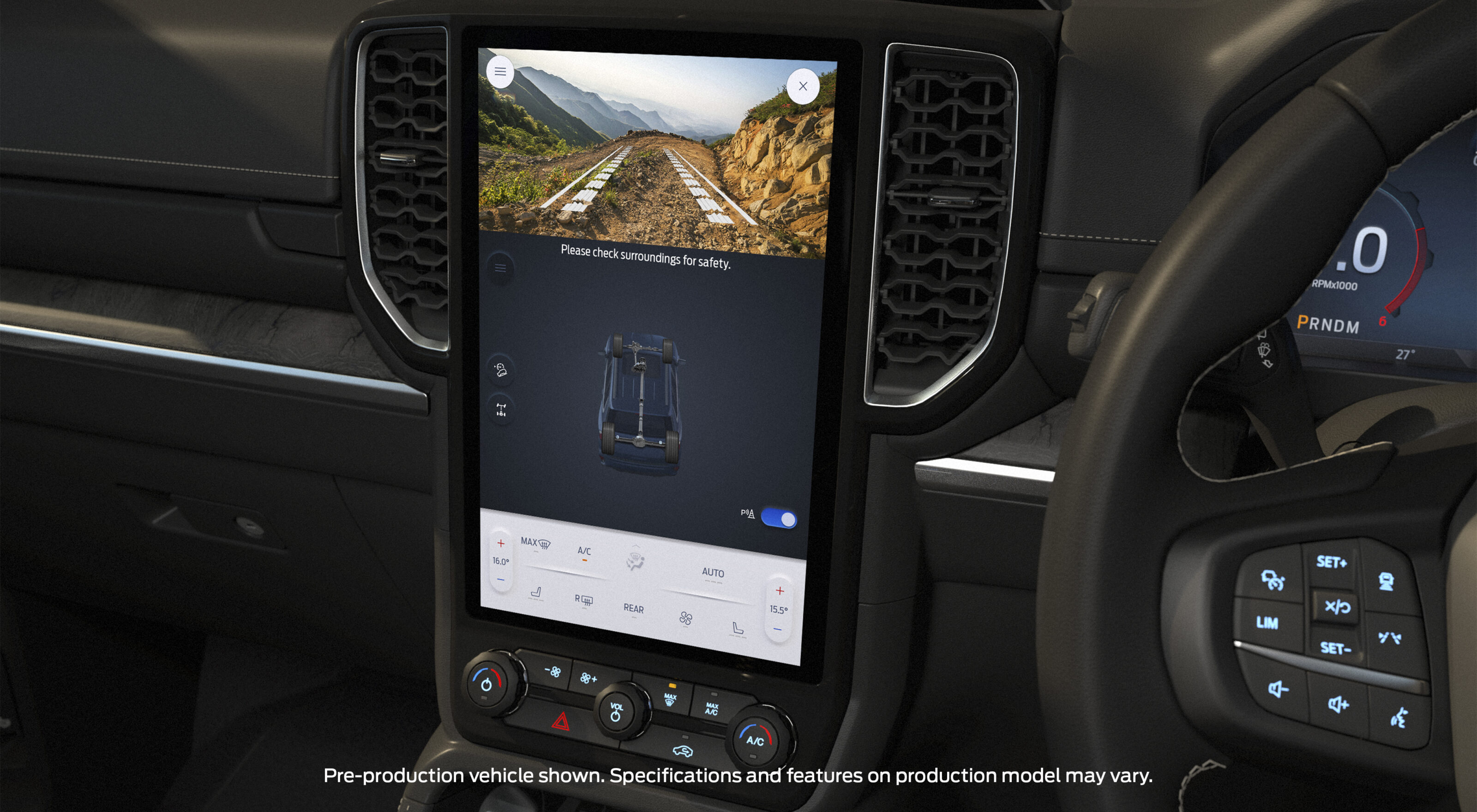
That capability extends beyond the tow-rating itself to the real-world user experience, which not only includes a ‘Tow Haul’ setting in the new Everest’s six selectable drive modes, but additional hardware and software, says Pritika Maharaj, T6 global program manager.

“We now have integrated trailer brakes – we’ve also got a lot of additional features that incorporate the trailer, so you can set up through your centre screen all of your trailer dimensions and it then manages the BLIS with your trailer. So rather than it just covering your vehicle, it covers both.”
Even things such as a trailer light check have been catered for. “It’ll run through and do a full check,” said Maharaj. “So you can press your button, move to the rear of the trailer, and it will do a cycle five times through of all the lights so you can check without having to have a back-up person.”
The new Ford Everest is scheduled to go on sale in Australia in the second half of 2022, with pricing and additional details yet to be announced.
Snapshot
- The MG Plus EV Excite is Australia’s most affordable plug-in hybrid
- It shares the same powertrain as the MG Plus EV Essence
- MG has shelved plans for an even cheaper Vibe variant
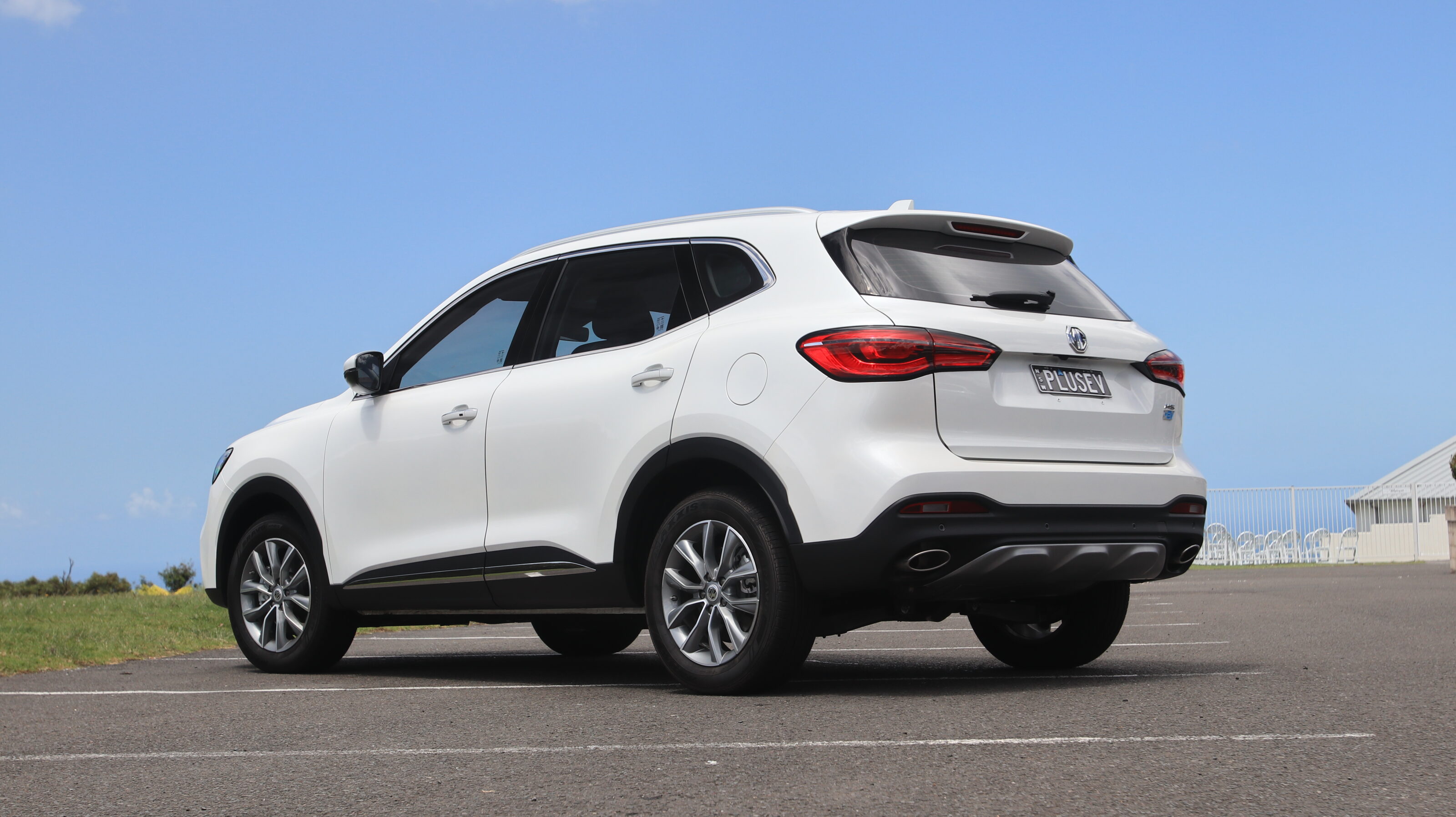
MG has reduced the starting price of its plug-in hybrid HS Plus EV medium SUV by $3000.
At $46,990 driveaway, the new HS Plus EV Excite is clearly the most affordable plug-in hybrid vehicle (PHEV) in Australia.
However, anyone who has been trying to scrape up around $40,000 for an even lesser-equipped variant, as announced by MG Australia in December 2021, will be disappointed.
Plans to introduce the base-spec HS Plus EV Vibe have been scrapped, with an MG Australia spokesperson telling Wheels the mid-spec Excite is better suited to its product plan.
The Excite does seem to represent good value, coming with most of the features found in the higher-spec HS Plus EV Essence, including a 12.3-inch digital gauge cluster, 10.1-inch touchscreen, satellite navigation, Apple CarPlay and Android Auto, MG Pilot active safety suite, LED daytime running lights and tail-lamps, automatic headlights and wipers, keyless entry/start, and an electronic park brake.
The $3000 saving was made by fitting smaller 17-inch alloy wheels, instead of the Essence’s 18-inch rims and omitting features such as leather seats, a 360-degree parking camera, customisable interior lighting, panoramic sunroof, and LED headlights.
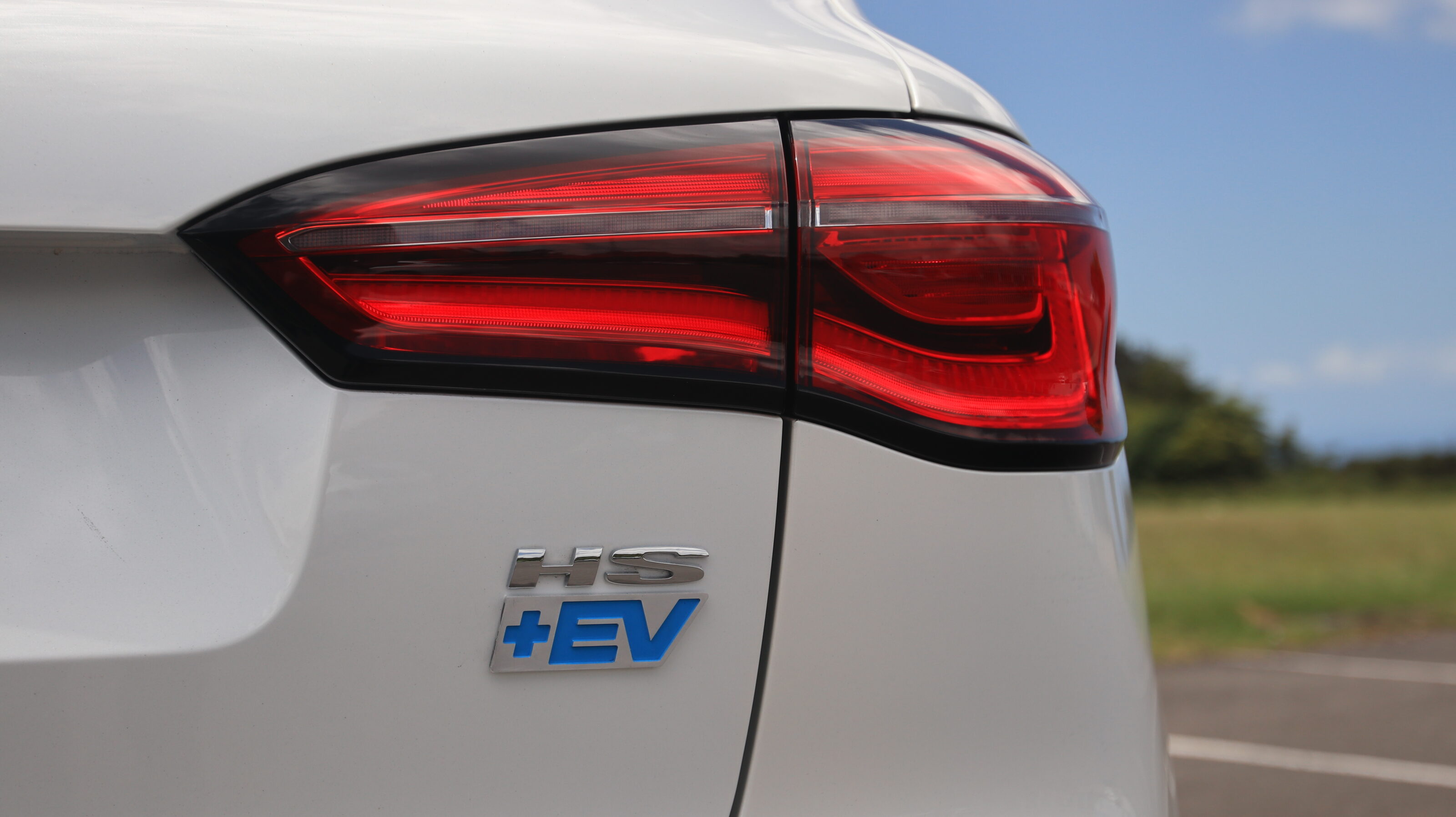
Both cars share the same plug-in hybrid powertrain, which includes a four-cylinder 1.5-litre turbocharged petrol engine and 90kW electric motor that combine to produce a total of 189kW and 370Nm, with electrons flowing from a 16.6kWh lithium-ion battery.
The reduction in equipment levels means the Excite is a little lighter, but this doesn’t impact performance figures, which include 63km battery range, 1.7L/100km combined fuel economy and 0-100km/h sprint time if 6.9 seconds.
The MG HS Plus EV Excite’s $46,990 drive-away price includes a seven-year warranty and seven-years fixed-price servicing.
UPDATE, 5:00pm: Toyota Japan has announced it will resume all operations from Wednesday March 2, ending the production halt.
The story to here
2:00pm: Toyota has issued a statement regarding the production shutdown, referring to the reported cyber attack as a “system failure”.
“We have decided to suspend the operation of 28 lines at 14 plants in Japan on Tuesday, March 1st (both first and second shifts). We apologise to our relevant suppliers and customers for any inconvenience this may cause,” the statement reads.
“We will also continue to work with our suppliers in strengthening the supply chain and make every effort to deliver vehicles to our customers as soon as possible.”
Chris Grove, product director at software security company Nozomi Networks, said most attackers don’t fully understand the implications of their actions.
“This shutdown of a third of Toyota’s global production should serve as a stark reminder on the complexities of our supply chains, how interdependent these systems are on each other, and the dangers criminals pose to society when they detonate malware in targeted systems,” Grove said.
“Ransomware operators may believe they’re hitting an isolated, insignificant victim, but the reality is they don’t really know, or understand, the ecosystem they’re impacting.”

12:30am: Toyota will halt all new-car manufacturing at its Japanese factories from Tuesday due to a suspected cyber attack on Kojima Industries, a major parts supply company.
The action will affect 28 production lines across 14 plants, Nikkei Asia reports, with some estimating the decision will reduce Toyota’s monthly output by 13,000 vehicles per day.
Japanese Prime Minister Fumio Kishida refused to rule out involvement by Russian actors in the crippling cyber attack, which occurred just hours after Kishida pledged his country’s support for Ukraine and announced sanctions against Russia’s central bank.
“It is difficult to say whether this has anything to do with Russia before making thorough checks,” Kishida told media, Reuters reports, but vowed the Japanese Government was investigating the incident.
As a major supply partner to Toyota, Kojima Industries is understood to manufacture plastic parts and electronic components for new models.
“It is true that we have been hit by some kind of cyberattack,” an official close to the company told Nikkei.
“We are still confirming the damage and we are hurrying to respond, with the top priority of resuming Toyota’s production system as soon as possible.”
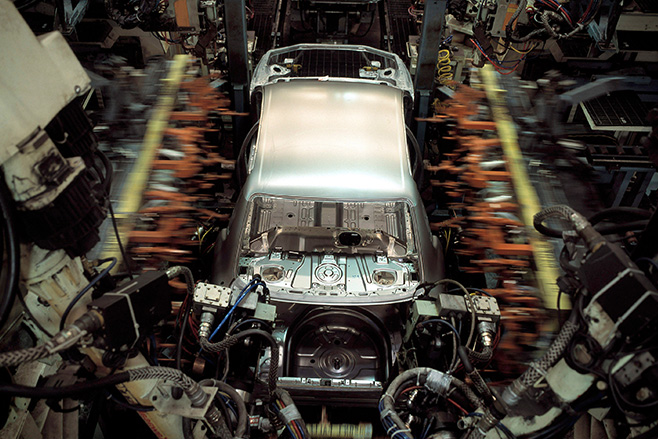
Toyota has suffered a number of production delays due to the COVID-19 pandemic as well as the global semiconductor chip shortage, with the carmaker quoting a delivery wait time of four years for Japanese customers who order a new LandCruiser 300 Series.
In recent days, some industry analysts have warned international sanctions placed against Russia due to the ongoing conflict in Ukraine could cause additional supply-chain disruptions, with Russia supplying 38 per cent of the world’s palladium – a precious metal used in the manufacture of catalytic converters.
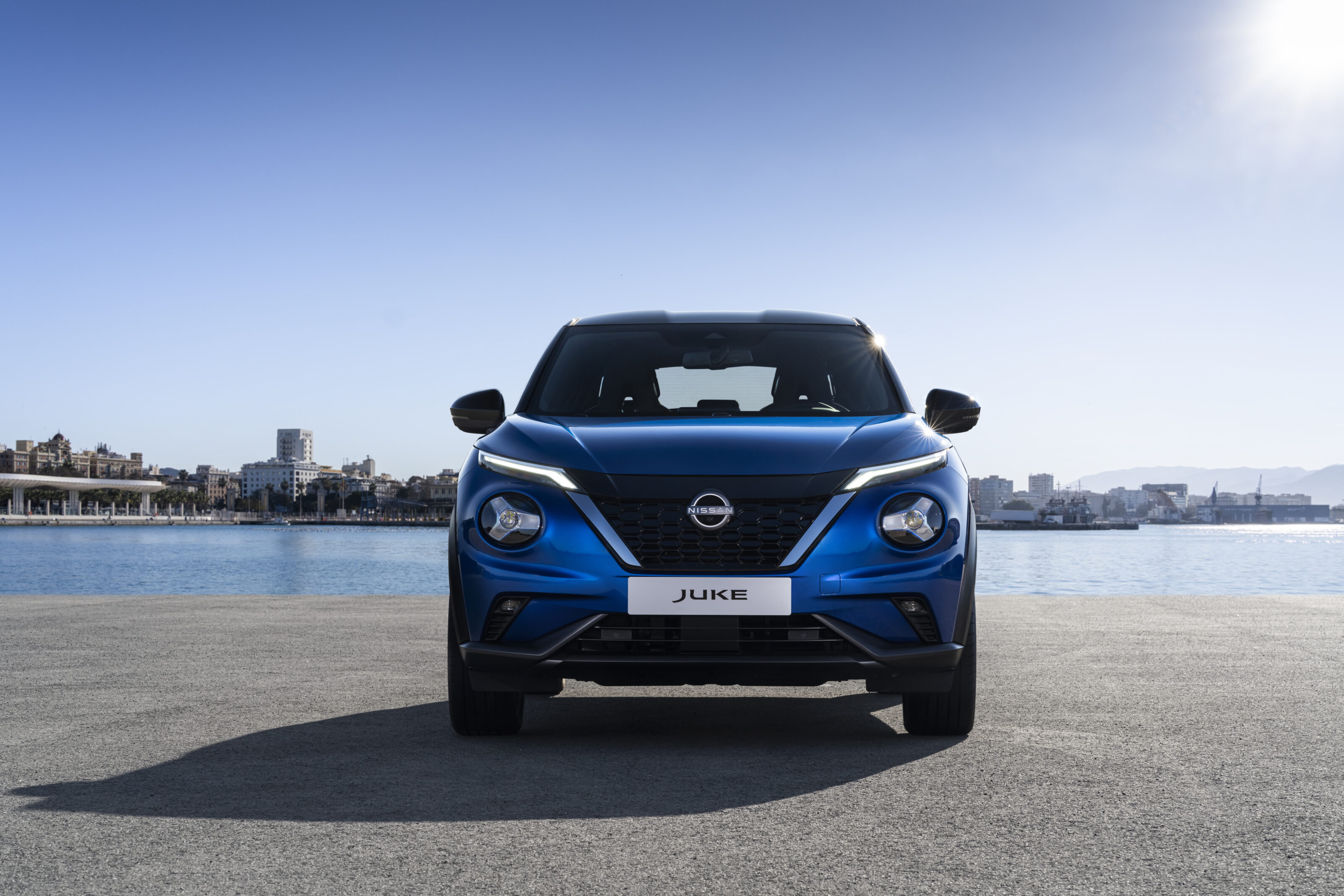
Nissan has revealed a hybrid version of its Juke crossover for Europe.
The model catches up to other rivals already with hybrid drivetrains, such as the Toyota C-HR and incoming next-generation Honda HR-V.
Powering the Juke Hybrid is a 1.6-litre petrol engine from Renault-Nissan-Mitsubishi Alliance partner Renault, developing 69kW and 148Nm of torque. Power is supplemented by a 36kW/205Nm electric motor for a total power output of 105kW.
It appears the Juke Hybrid uses a similar hybrid-electric setup as the Renault Clio, with energy supplied by a 1.2kWh lithium-cooled battery, and the drivetrain uses a clutchless multi-modal transmission combined with an integrated belt-starter motor. This allows the Juke to start in electric driving mode and separate each gear to a corresponding power source, with two ‘EV gears’ and four ‘ICE gears’.
According to the Japanese car maker, the new Juke Hybrid’s petrol/electric hybrid powertrain will reduce fuel consumption by 40 per cent over the traditional combustion engine, and during urban trips the electric assistance can power up to 80 per cent of the journey. The claimed combined fuel consumption is 5.2L/100km, while CO2 emissions are at 118g/km.
For zero-emissions driving, there is a dedicated EV mode that can be selected among a choice of three: Eco, Normal, and Sport. Each modifies the steering weight, throttle response, and climate control settings.
Adjustable regenerative brakes are also available on the Juke Hybrid, with a special Sport mode that maximises electric power harvesting to later use for quicker acceleration. The strongest brake regeneration is offered by the e-Pedal mode, which slows the Juke to 5km/h.
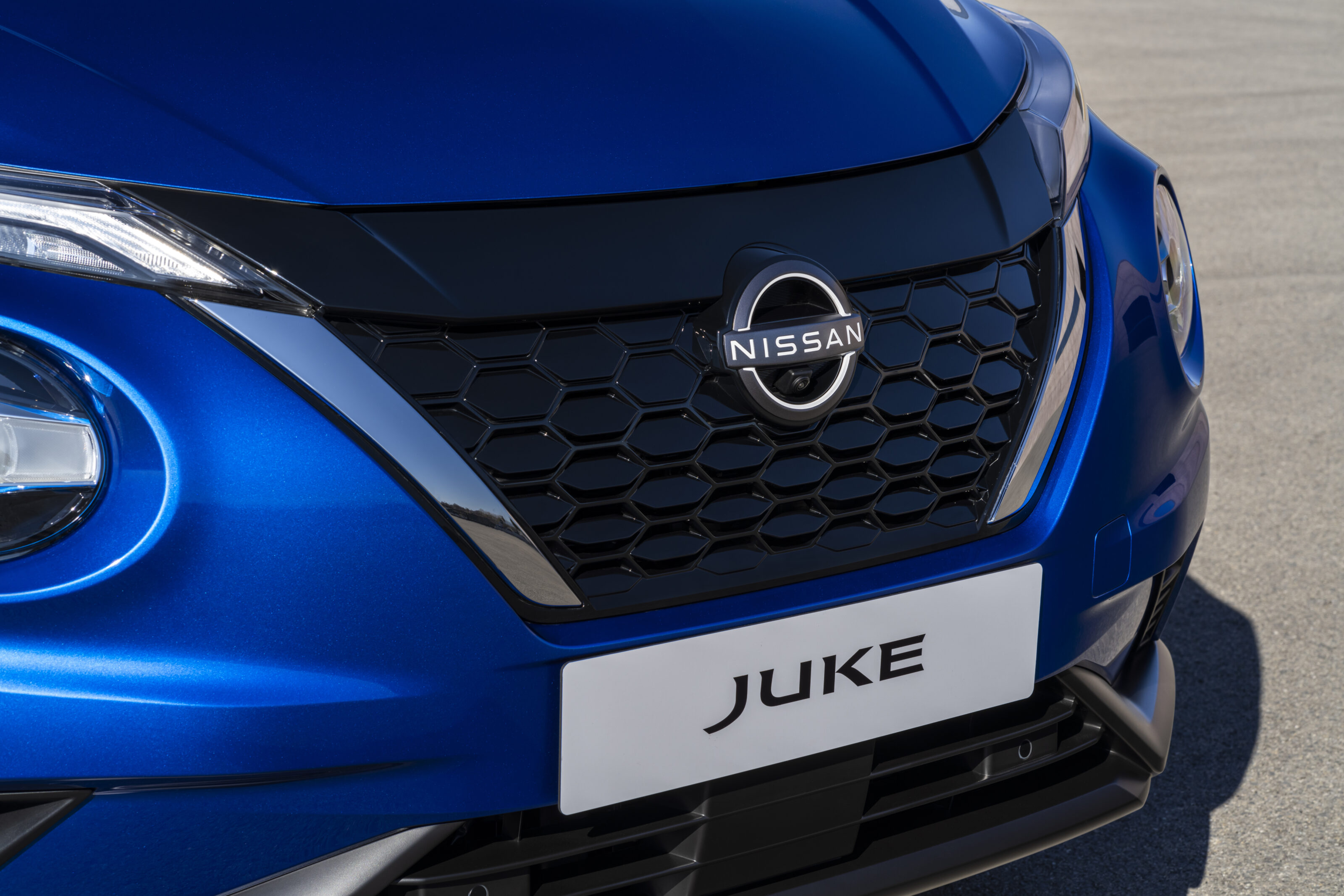
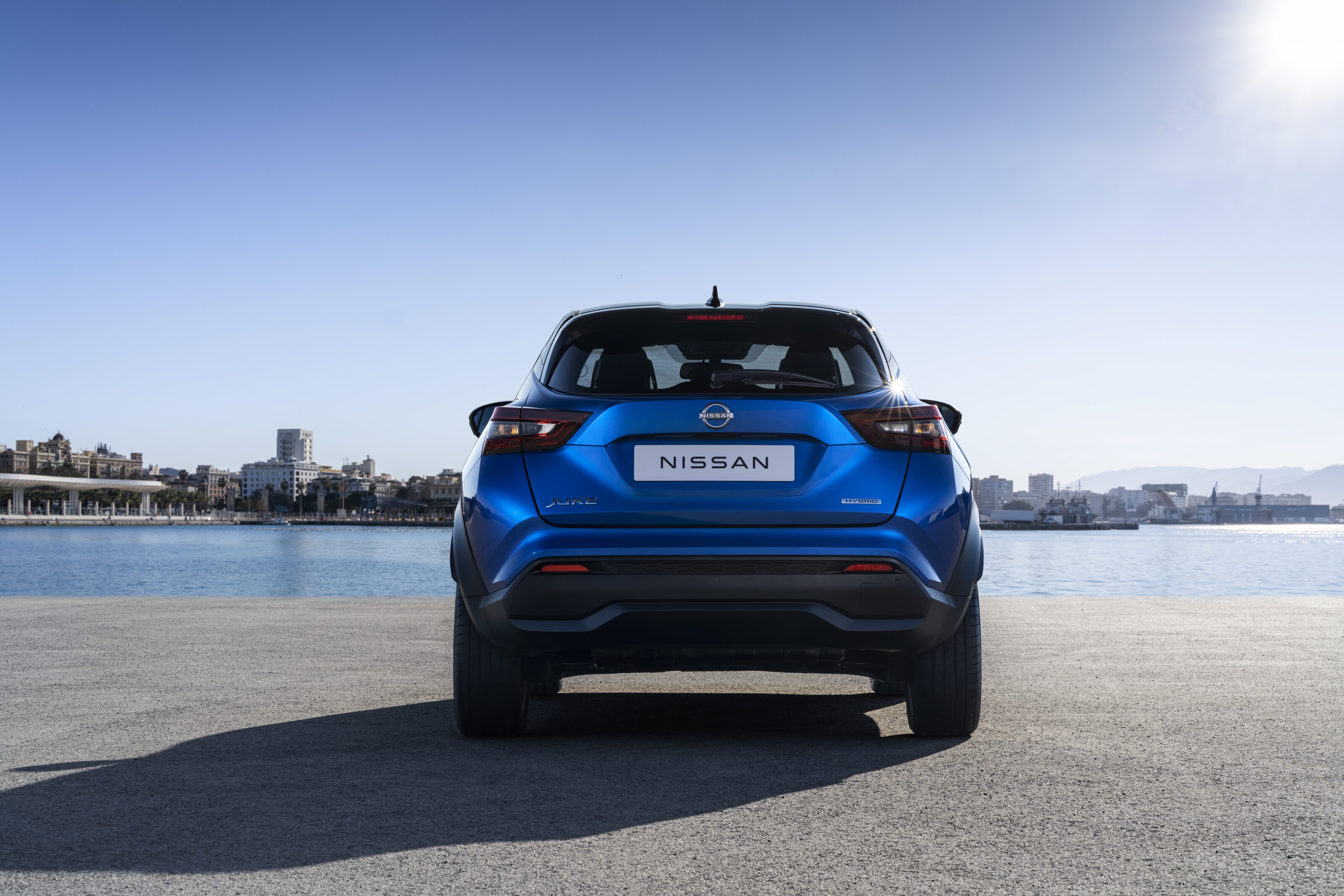
Beyond the drivetrain is a new front grille featuring Nissan’s latest logo, and to reduce drag there are radiator grille shutters and an aerodynamically improved underbody. New 17-inch alloy wheels are more aerodynamic too, and there are even Ariya-inspired 19-inch alloys available. The electrified Juke has ‘Hybrid’ badges on its flanks and rear to let everyone know what it’s packing.
The Juke Hybrid’s interior features new instruments such as a dial that shows power usage and regenerative charge. The instrument pack also has a seven-inch screen showing the energy flow.
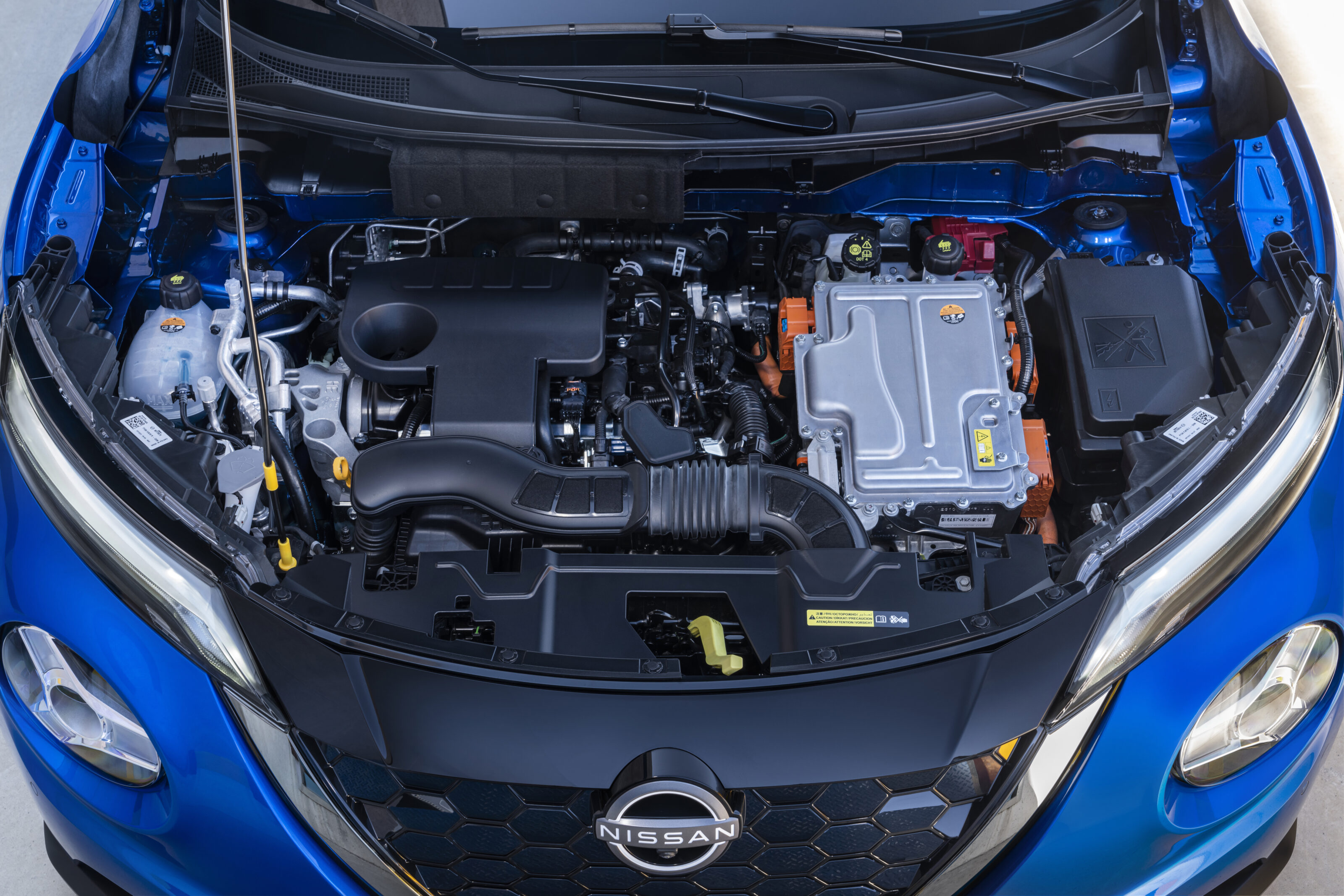
A compromise to the new hybrid system is that the boot is now down to 354 litres, 68 litres less than the pure-petrol Juke. With the rear seats down, there’s an additional 1237 litres worth of load space. Nissan claims that the rear knee room is the same as the regular Juke at 553 millimetres.
Nissan has so far only shown the new Juke Hybrid for Europe, with the Australian arm telling Wheels: “There are no plans to introduce Juke hybrid to Australia at this time.”
Snapshot
- Tesla ditches radar-based systems across model range
- Model S and Model X now adopt camera systems first debuted in Model 3 and Model Y
- Elon Musk has been a long-time supporter of camera-based technology
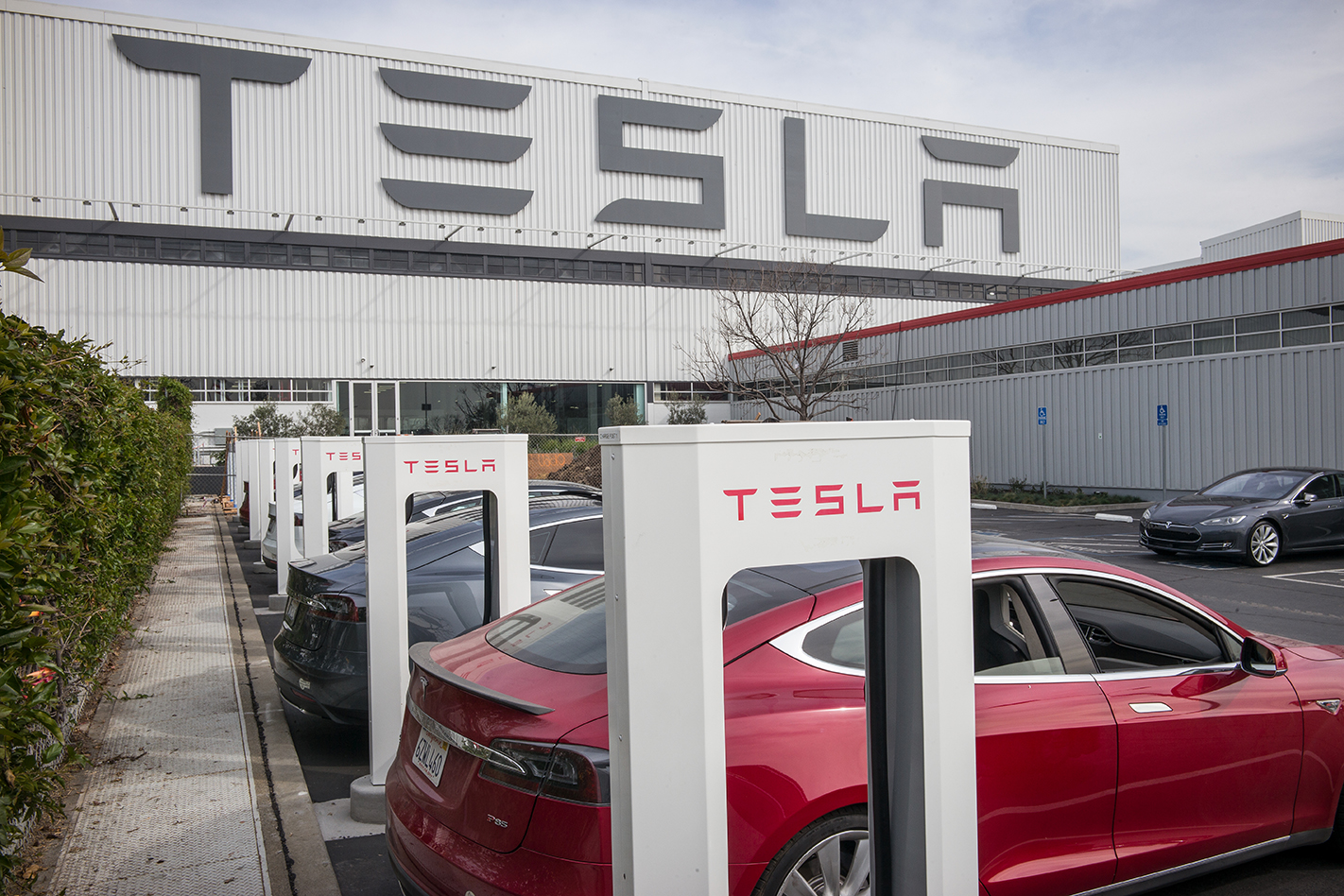
UPDATE, March 1, 2022: Tesla is set to implement radar-less systems across its entire fleet as the flagship Model S and Model X score Tesla Vision tech.
In a recent post on its support page, Tesla said the camera-based Tesla Vision system will become standard for North American-market Model S and Model Xs from the end of February 2022, joining the Model 3 and Model Y, which went through the changes last year.
According to the American manufacturer, the transition period will see cars delivered with Tesla Vision limited to a maximum speed of 80mph (129km/h) when Autosteer is engaged, also requiring a longer minimum following distance to cars in front.
These features will be optimised and rectified via over-the-air updates, set to be rolled out over the coming months. It is not yet known when Australian-delivered examples will adopt Tesla Vision.
The story to here
May 28, 2021: Elon Musk may finally be getting his way with the direction of Tesla’s cars and their advanced Autopilot systems, after his company announced it will be introducing a camera-based system in the next Model 3 and Model Y, ditching the radar systems which have been used from the beginning.
If Tesla is able to implement the technology in its vehicles it will be the first manufacturer in the world to successfully run autonomous driving solely using cameras and no form of radar assistance.
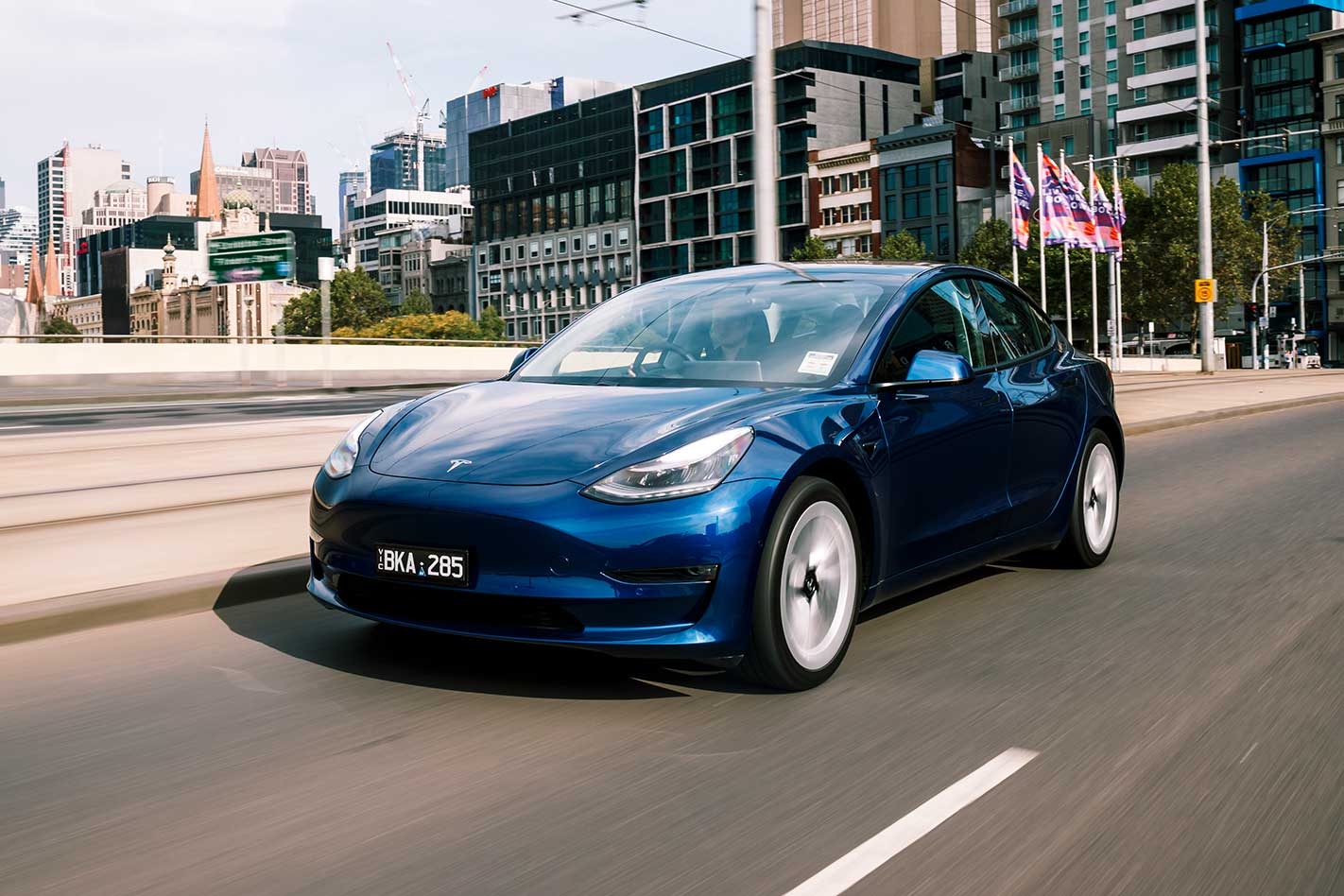
Though Musk has been supportive of cameras and ultrasonic sensors becoming the norm over radar tech in autonomous cars, recent reports from the United States have shown Tesla cars testing with LIDAR equipment fitted, contrary to a 2019 statement in which Musk said, “anyone relying on LIDAR is doomed”.
Tesla put the decision of installing the camera-based tech in its two best-selling vehicles down to data gathering, claiming it can understand more about how the system is performing by being able to “analyse a large volume of real-world data in a shorter amount of time”.
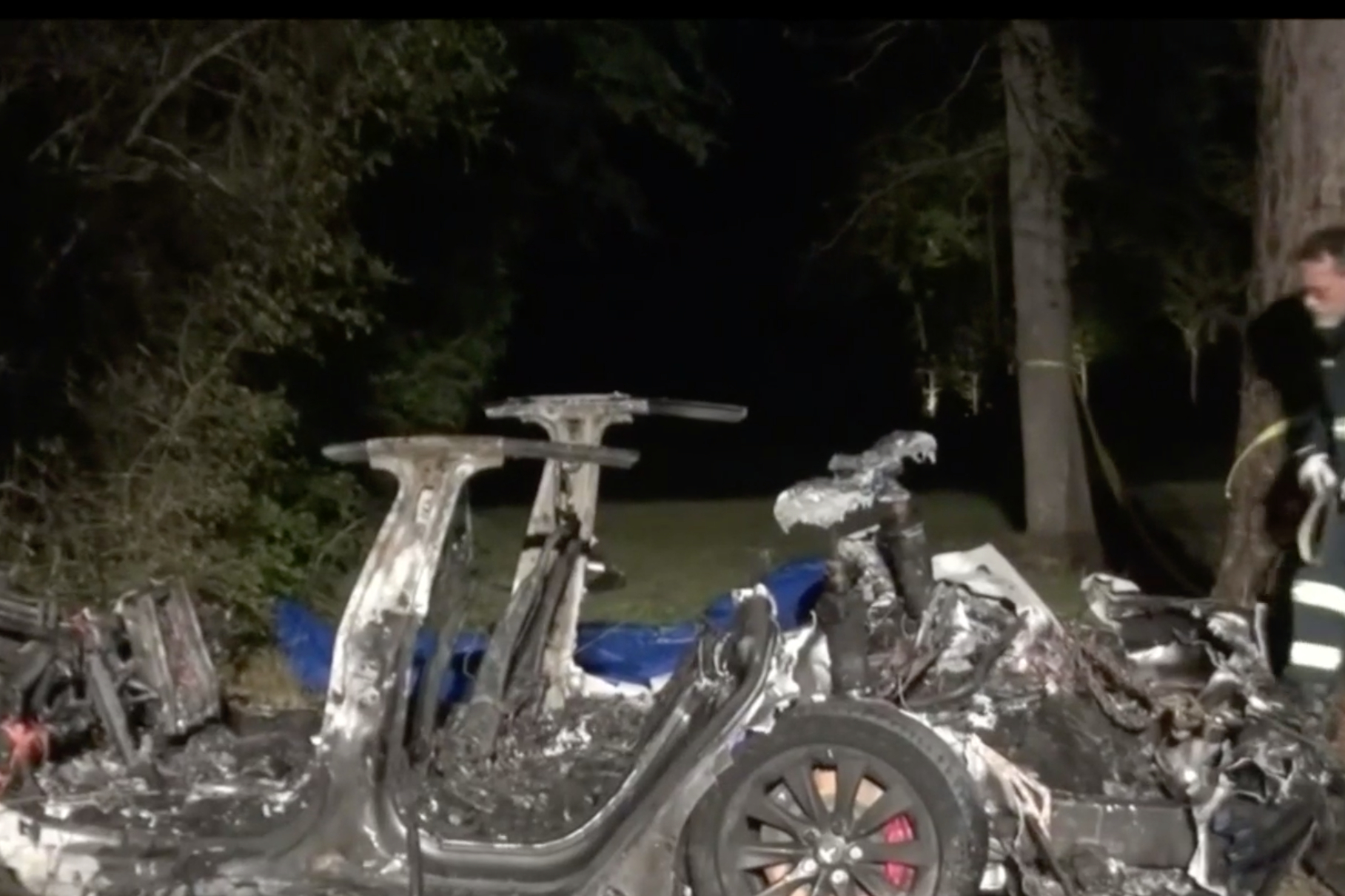
Tesla has stated it has informed customers waiting for the next updates of the Model 3 and Model Y of the intention to move over to Tesla Vision.
Since the release of Autopilot in 2015, 20 people have died in accidents where the system was engaged, the most recent incident in April resulting in the deaths of two occupants and forcing Tesla to send out updates to its vehicles which limit the use of Autopilot in certain scenarios.
German tuner AC Schnitzer has taken the G8X BMW M4 to a new level with a variety of upgrades for both the G83 M4 Convertible and the G82 Coupes.
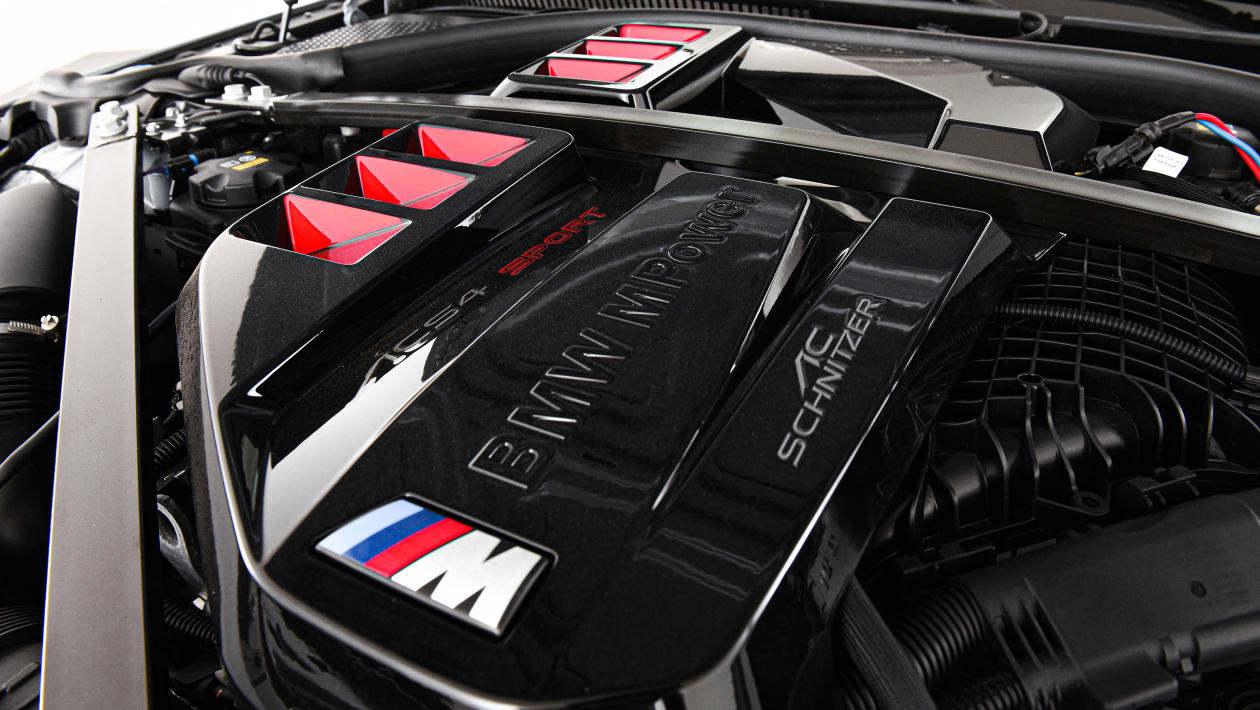
AC Schnitzer is still developing engine hardware upgrades for BMW’s S58 twin-turbocharged straight-six, however, it has managed to release some additional power.
The most powerful ECU tune by AC Schnitzer increases output to 450kW/750Nm over the standard M4 Competition, and a lesser 435kW tune is also available. The new-found power brings a drop to the standard 0-100km/h time of 3.9 seconds and a bump to a new top speed of 300km/h.
Outside, the appearance brings aerodynamic gains. The front splitter brings a claimed 40 kilogram increase in downforce at 200 km/h, and the rear wing boosts downforce by up to 70kg for the coupe. There are also bonnet inserts, front canards, side skirts, and a smaller rear spoiler. A redesigned carbon fibre diffuser is available only for convertibles.
The wheels have been swapped for 20-inch i-house-designed AC3 or AC1 lightweight alloys. These are available in gloss black, and come in a variety of diamond-cut finishes, wrapped with wider 285 millimetre front and wide 295mm rear rubber.
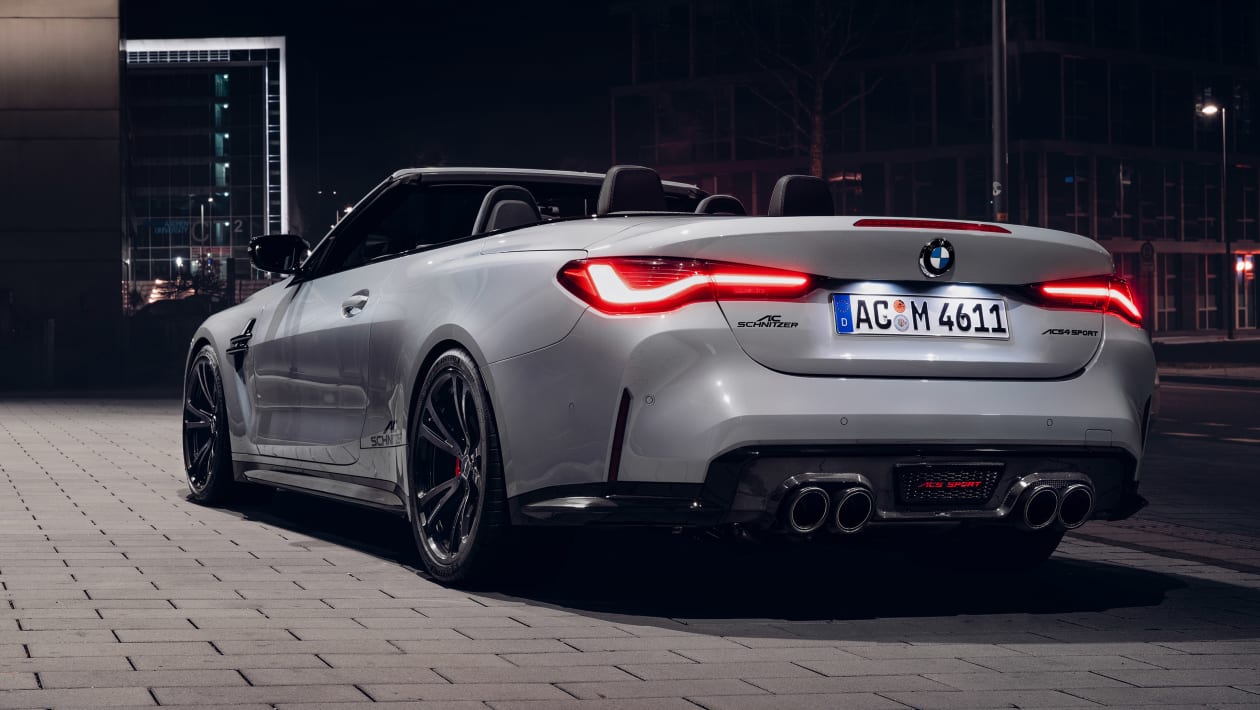
Underneath the metal, AC Schnitzer offers its new RS coilover suspension setup, which improves high-speed stability and drops the ride height up to 40mm rear and front. A spring kit, which can reduce ride height by as much as 20mm, is also on the list of options.
Inside, buyers can choose a retrimmed steering column in perforated Nappa leather or black Alcantara, featuring grey contrasting stitching and a 12 o’clock marker. Additional options include aluminium pedals and gearshift paddles behind the wheel.
Sydney Motorsport Park has cigarettes to thank for part of its rise to prominence on the world stage.
The Australian Motorcycle Grand Prix was held at Phillip Island in 1989, but law surrounding tobacco sponsorship in Victoria saw Sydney’s new, purpose-built race track wafting in to take up the mantle from 1991. Eastern Creek, as it was referred to then, held the race until 1996.
Originally called Eastern Creek due to the suburb of Sydney it is located in, the NSW goverment-owned facility is run by the Australian Racing Drivers’ Club.
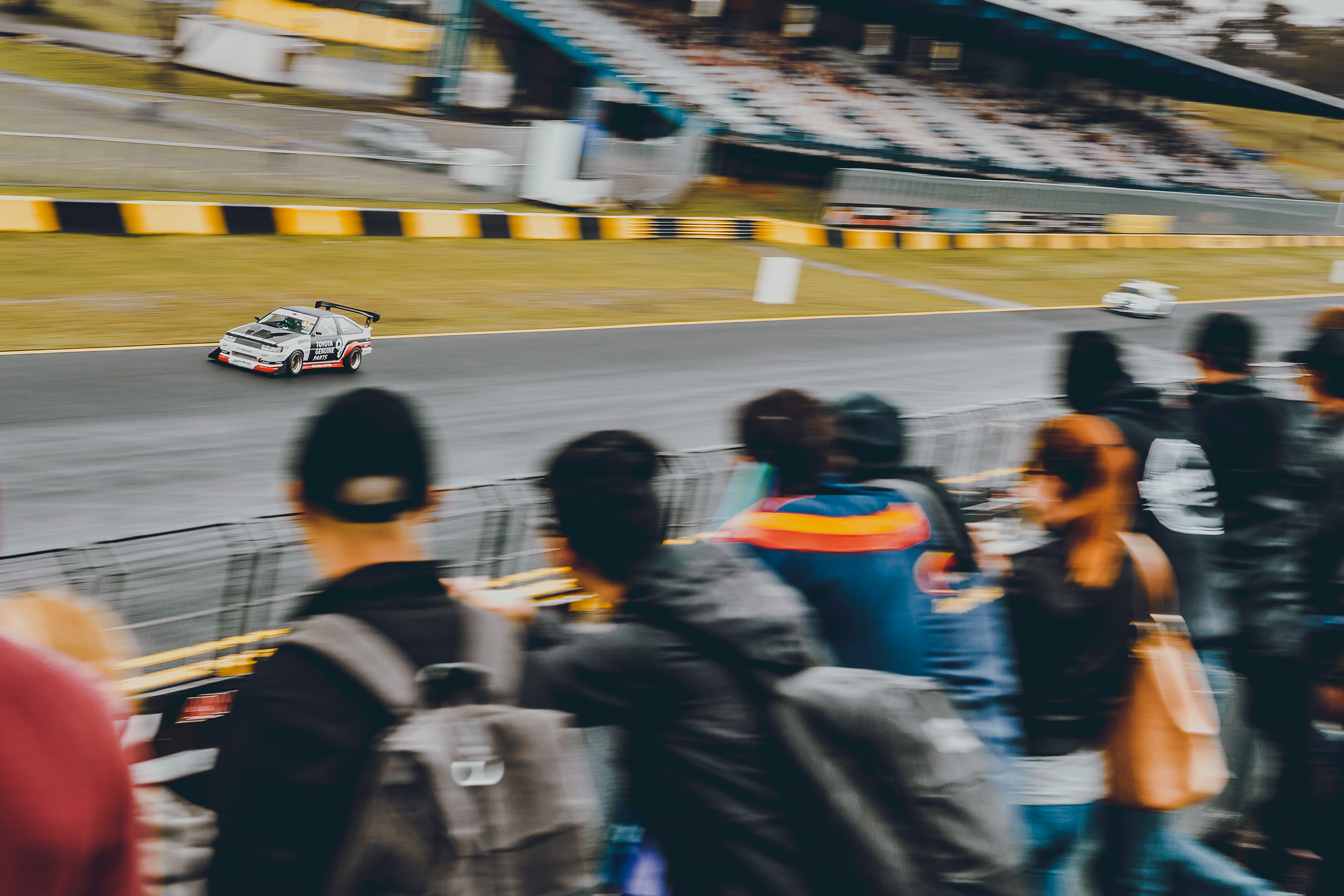
In 2011 it was rebranded, gaining the SMSP acronym (although most call it SMP), before a $9m track extension was completed in 2012, affording numerous layouts. There are four track configurations, with two being able to run concurrently given there are two pits. The full Gardner GP circuit measures 3.93km long after Turn Six was altered.
However, it hasn’t just been top-flight bikes taking to SMP. An FIA Grade 2 licence means any category below Formula 1 can race. From 2005 to 2007 A1GP held three events, culminating in six races, with drivers and teams competing for their nation. Ex-F1 ace Nico Hülkenberg holds the official lap record around the original layout.
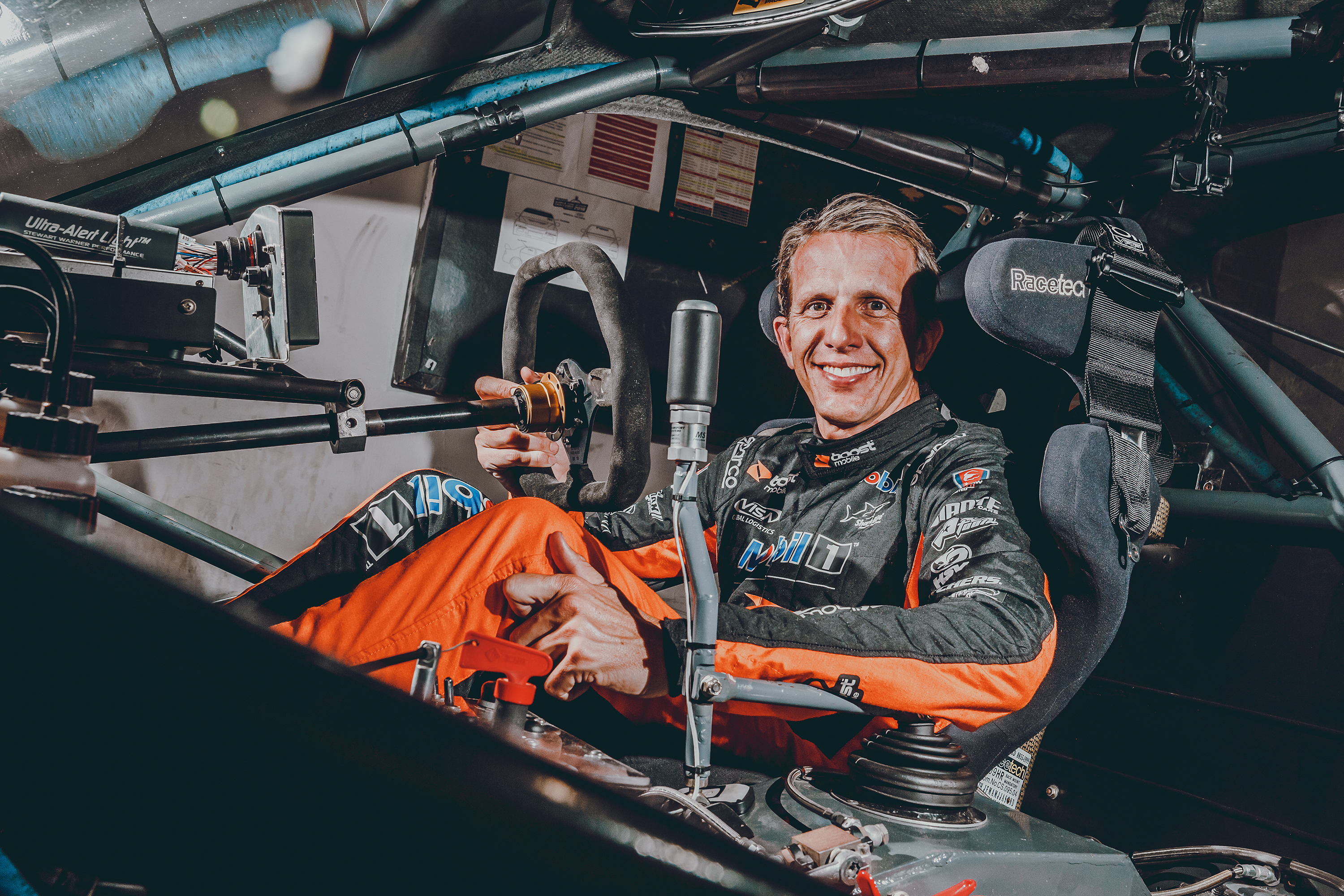
Often too easily disregarded, our gun driver, Warren Luff, believes SMP is hard done by, saying “as a driver’s circuit it’s very challenging because it’s got a lot of everything. Therefore it’s a great circuit for honing your skills behind the wheel”.
So soak in Luffy’s tips and tricks before getting to Sydney’s premier purpose-built facility.
Section One: The Sweeper
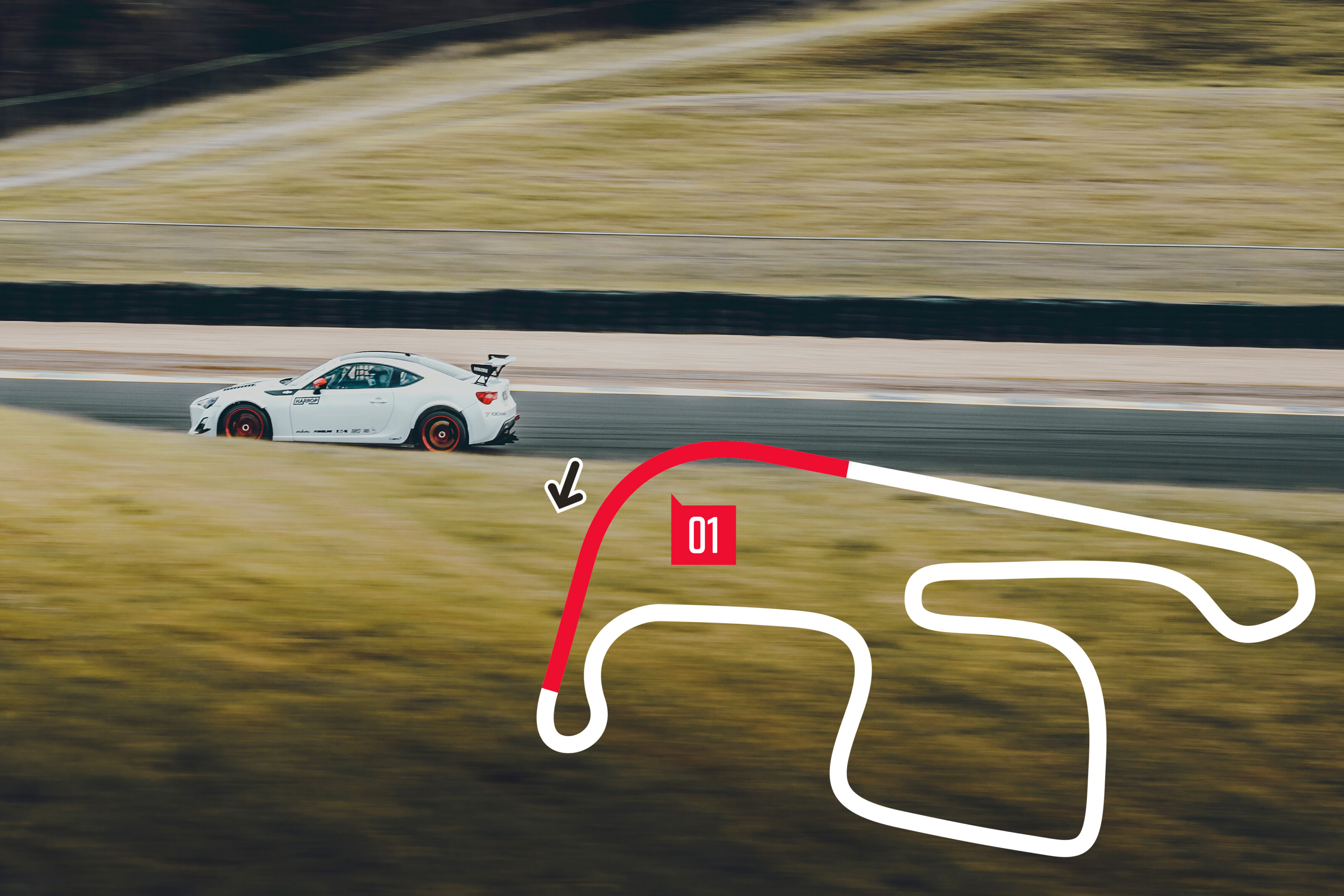
Turn One
The entry to Turn One is very high speed given the approach is off the back of the long, downhill front straight. In most production cars you’ll be aiming for the 100m board before applying the brakes – and we mean apply, don’t jump on the anchors.
It’s important to carry the brake while also turning in to keep the front axle loaded. However, you want to make sure it doesn’t upset the rear of the car either. Aim to tuck the nose in to the apex, which is about the mid-point of the corner.
It’s not vital to get back on the power early, but once you do it’s essential that you’re smooth and calculated with your inputs given the car will be very sensitive on the limit. The speed through here comes from keeping your minimum corner speed up and being very accurate with your placement.
Turn One commands a lot of respect. The speeds are high and it can go wrong in a big way. It’s a corner you’ve got to build up to and just keep chipping away.
MOTOR Tip
Using light brake pressure, and clearing the pedal early works best. This is because it can upset the rear of the car if you put too much weight onto the nose with heavy applications. This is especially the case for a front-wheel-drive car in colder conditions, so be mindful to take a couple laps to get some rear tyre temperature up before attacking.
Section Two: Patience Is Key
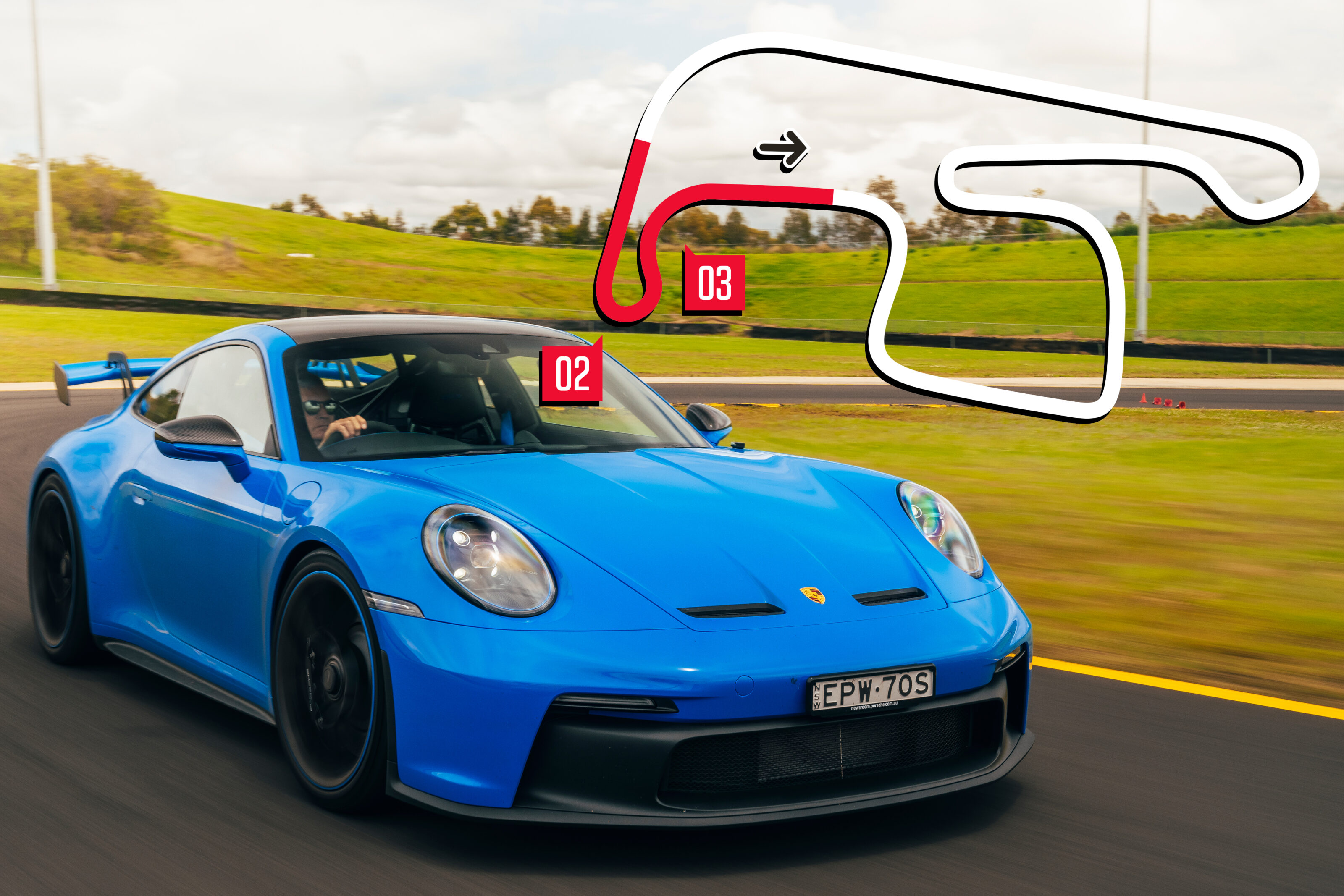
Turn Two
It’s actually quite similar to Turn Three at Queensland Raceway (QR) in that it’s a double apex.
However, Turn Two at Sydney Motorsport Park tightens significantly at the second apex whereas QR opens. You can brake quite deep and trail the brake into the middle of the corner – extra tarmac has been added for runoff, too. Don’t be too eager to reapply the accelerator because even though the gradient rises slightly past the second apex, it’s easy to understeer wide on exit. Doing so will directly impact your speed through Turn Three.
Turn Three
Turn Three is a sweeping right hander that immediately flows on from Turn Two, hence the momentum you carry out of Two is crucial to getting a good run through Three.
In most cars, depending on ratios and gearbox types, you end up changing gears through the corner, which shouldn’t hurt the balance. Yet, on cold or old tyres the rear axle can get loose (especially with RWD), so holding about 60-70 per cent throttle is ideal.
MOTOR Tip
If you add up the amount of time you spend in any given corner, you actually spend more time in Turn Two than you do in Turn One. So, proportionally there’s actually more time to gain or lose here than there is in Turn One. Long story short; drop the ego stroking with corner speeds through One.
Section Three: The Esses
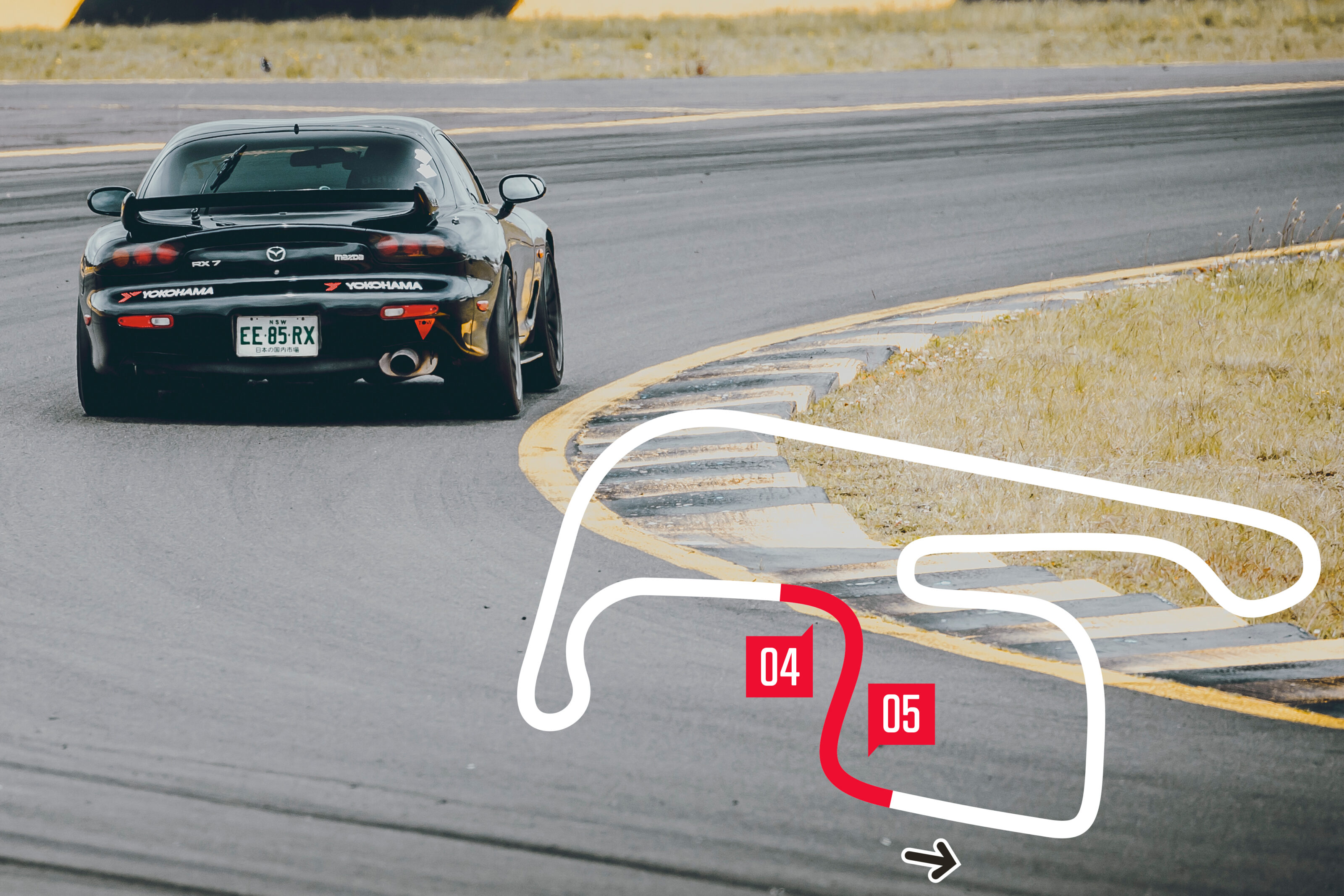
Turn Four
It’s an enjoyable fluid corner that rises gently from the turn-in point. You can retard speed late in the braking zone and load the front of the car, much like Turn One. Try and carry as much natural road speed as possible.
The apex is about the middle of the corner, but be careful to stay off the inside kerb as it tends to push you wide on exit, which will compromise your entry into Turn Five. Be smooth and progressive with the wheel and aim to end up mid-track on exit to set up for Five.
Turn Five
Only a light touch of the brake is required before aiming for an early turn in to the apex. There’s a lot of runoff on corner exit, so you can apply a decent amount of throttle early and let the car run wide.
However, it’s an easy corner to get wrong and lose a lot of pace. This is because you’ve overstepped the marker and missed the apex after braking too late. Get Four and Five right and you can gain a lot of time.
MOTOR Tip
Positioning your car in the right part of the track is crucial at Sydney Motorsport Park. That’s because in a few key areas, how and where you exit a corner directly impacts the next. Therefore, a lot of forward planning is required and remember not to get caught up in only focusing on the corner you’re in.
Section Four: The ‘New’ Bit
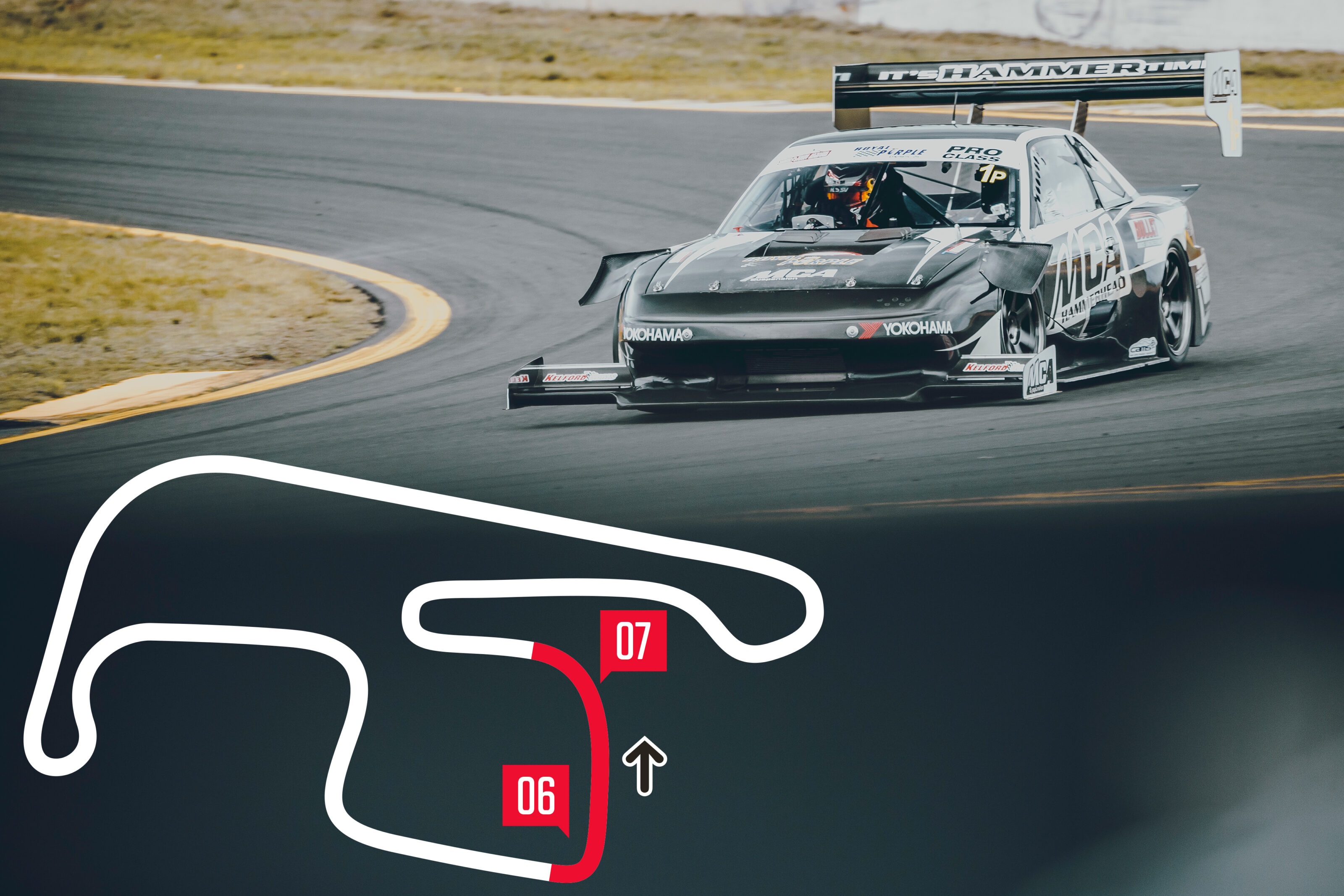
Turn Six
The run into Turn Six is now straight after a redesign of the track layout (and with the completion of the Amaroo extension) in 2012. The changes promote overtaking for the varied racing categories that run at Sydney Motorsport Park.
It’s now a relatively simple 90-degree corner instead of a tricky little right before turning left. Again, try not to carry too much speed into the apex as you’ll only hamper your exit speed, which in turn makes you slow into turn Seven.
Turn Seven
This is a high-speed corner that’s easy to lose a lot of speed through. Brushing the brake under the bridge is all that’s needed as the aim is to keep the momentum up.
It’s worth noting that there are some mid-corner undulations in the surface as you start to pick up the throttle. However, they don’t upset the balance too much. Still, remaining progressive with your right foot yields the best results and you can allow the car to gravitate naturally to the edge of the track on exit.
MOTOR Tip
Stay off the inside kerbs, apart from Turns Six, Nine and 10. Because of the long, flowing nature of most of the corners, if you pound inside kerbs the car starts to porpoise and become unsettled. However, it also depends what rubber you’re on as something like a 45 series tyre is easy to damage.
Section Five: The Hairpin
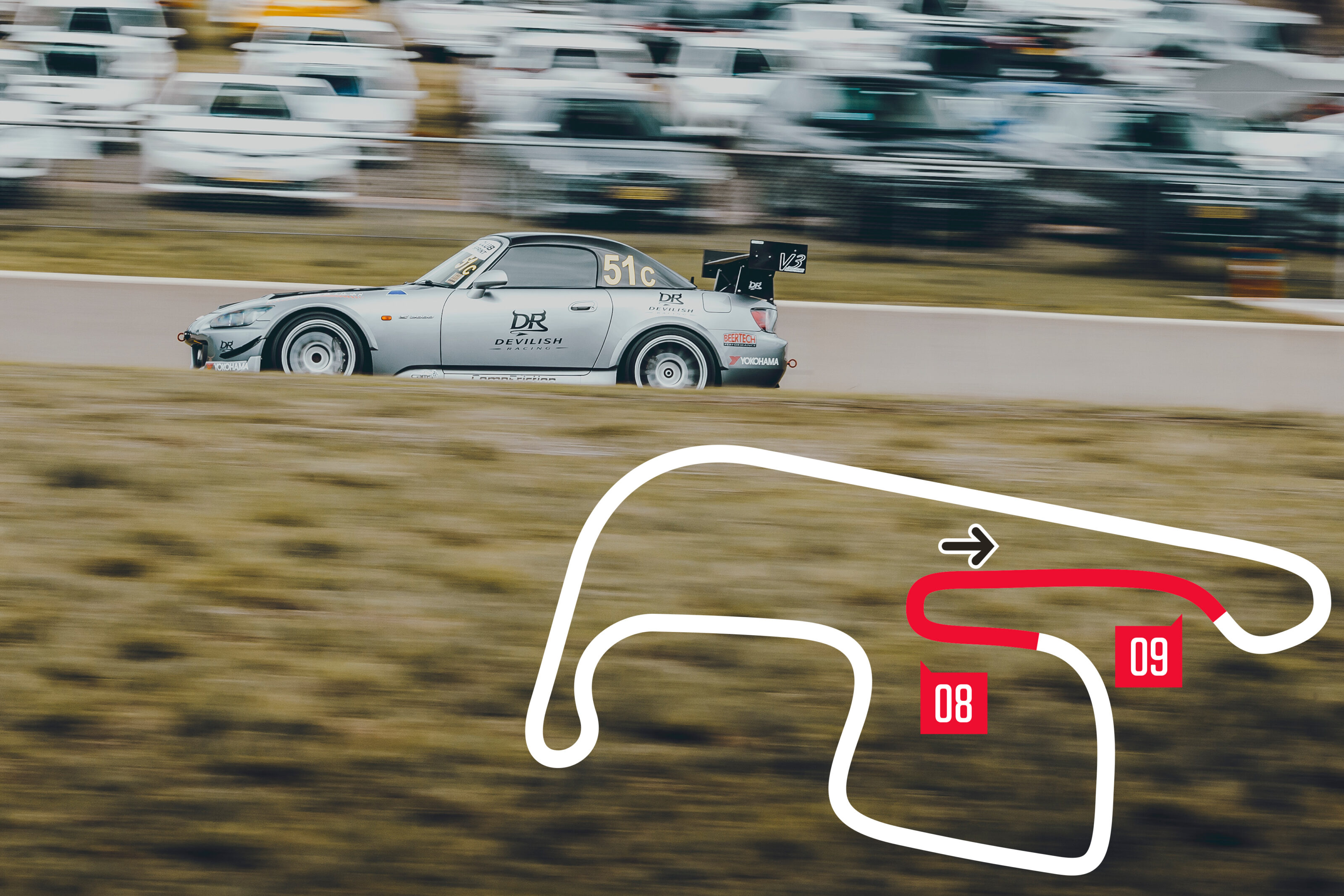
Turn Eight
The approach to the Turn Eight hairpin is affected by your exit to Turn Seven. Despite the track being relatively wide, you only want to bring the car back to about the middle of the road on the approach to Eight.
It’s worth noting that Turn Eight is a slightly downhill corner, so try to do most (if not all) of your braking prior to turning in. You can still trail the brake in to keep the front loaded if required.
Turn Nine
Turn Nine is a fast corner which sets up your run through 10 and 11. Get this wrong and you will be slow down the pit straight. Lift on entry and then hold the throttle steady through Nine. It’s a late apex in order to give you a better approach into 10. If you arrow in too early the car will push too far to the left and compromise the next entry. Depending on the car you’re in you’ll generally be downshifting.
MOTOR Tip
Not moving to the outside of the track as you approach the hairpin doesn’t negatively impact your corner speed. This is because, like a few sections of Sydney Motorsport Park, it’s a reasonably early turn-in to the apex. Understeer can be an issue at T9 if you overshoot, but there is also ample runoff.
Section Six: The Run Home
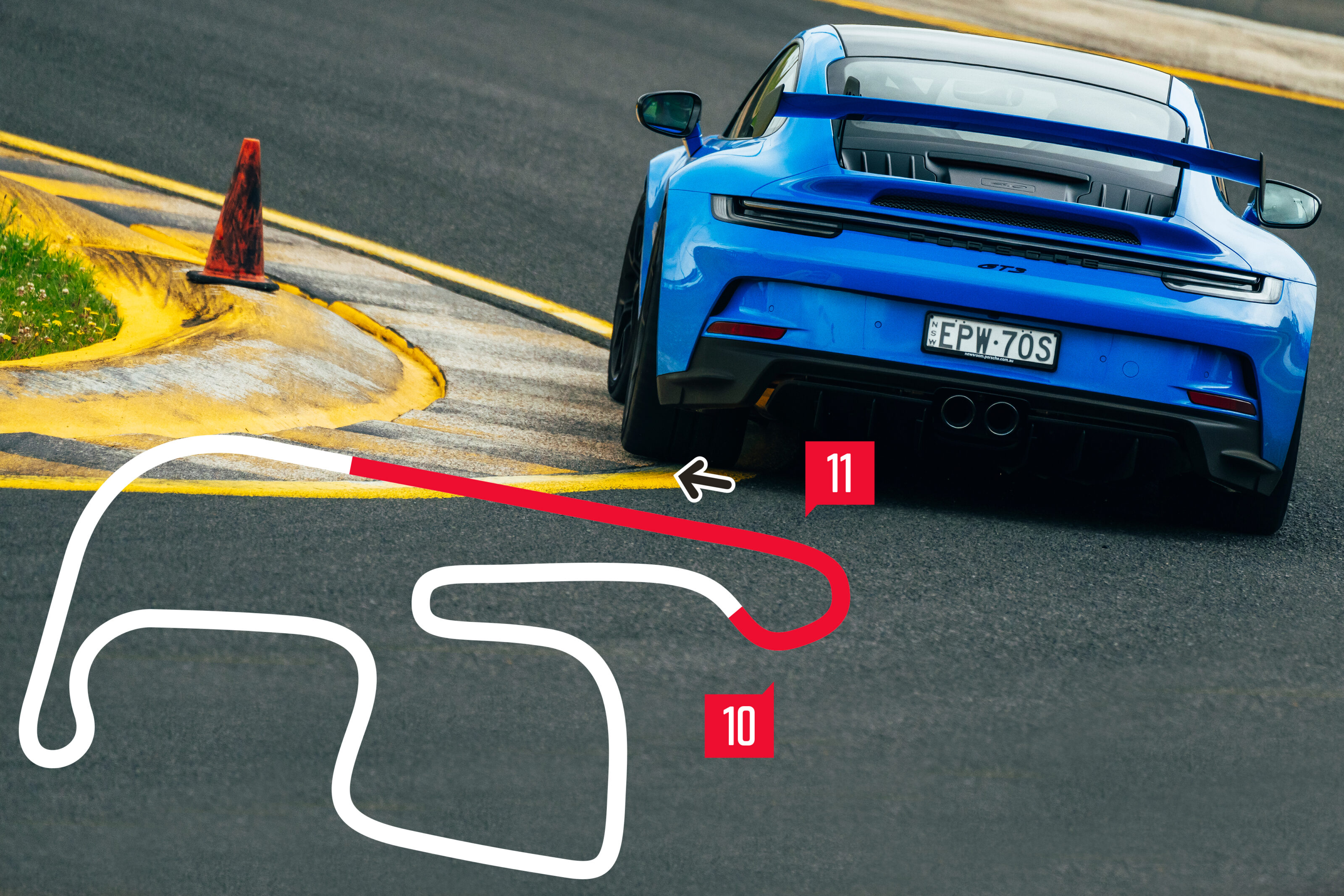
Turn 10
When you get Nine right, you can carry a lot of speed through Turn 10. This is also one of the corners around Sydney Motorsport Park where you do want to use a reasonable amount of kerb.
It requires commitment because as you approach the kerb you want to be easing off the brakes so the front axle isn’t compressed when you hit it. If it is, the impact will throw you off line. Once settled, flow the car all the way to the outside of the track – you can also use the concrete strip.
Turn 11
It’s important to treat Turns 10 and 11 as two separate corners. If you try and make it one big corner you will apex too early at 11 and lose speed down the straight. Aim to be as wide as you can and apply a minimal amount of brake, mainly for weight transfer to the front for better turn in.
Reapply the accelerator later so you can regain full throttle sooner. Also try to hold the apex as long as you can as it’s easy to run over the exit kerb.
MOTOR Tip
You don’t want your line through Turn 10 to dictate your turning point for Turn 11. Treat them as two separate corners, with an emphasis on getting the best exit for the run to the start/finish line. Turn 11 is one of the most important corners on the track to get right because it leads on to the longest straight.
It’s the ‘home of motorsport’ for good reason
SMP offers various ways to improve your skills on and off the racing track
They say practice makes perfect. With various track layouts, a drag strip down the front straight, wet skid pan, figure eight drift and driver-training circuit as well as an off-road course, what more do you need?
As a hub for motorsport and driver training, it doesn’t get much better than this with various club track days year-round and an extensive list of events on the skid pans.
There are four track configurations, the main being the 3.93km Gardner GP Circuit which has a 4000-seat grandstand. A right-hander on entry to Turn Six was deleted in 2012, while the track was extended to create the full-length Brabham Circuit (4.5km).
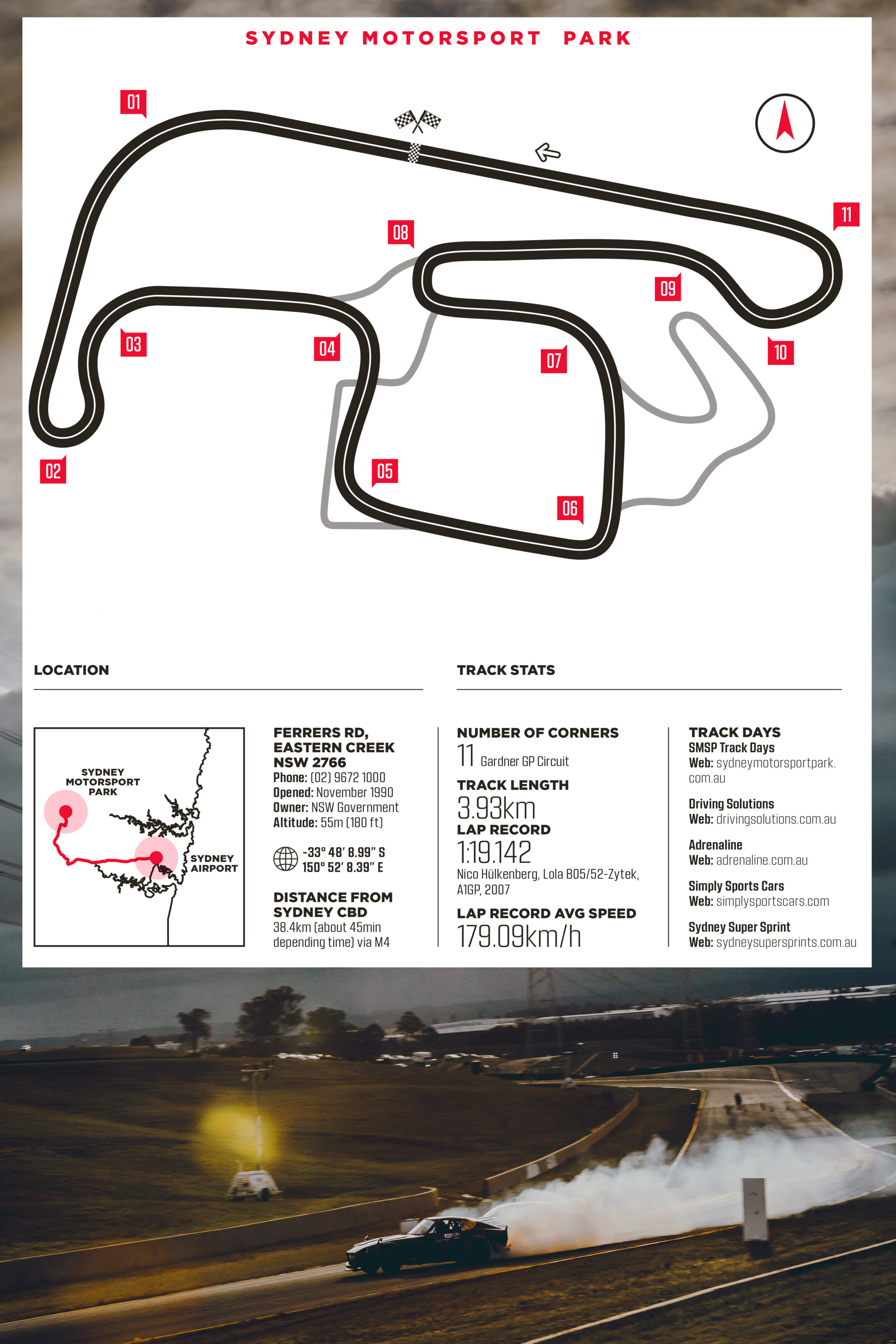
The additional 830m branches out from the southern end, which can also be sectioned off for drifting events where it becomes the Amaroo Circuit (1.8km). It can be run in combination with the Druitt Circuit (2.8km), while the entire venue can run under lights at night.
There are myriad places to spectate at events like Supercars and World Time Attack, with the main pit building and grass-covered banks available as well as the grandstand. It’s about 40km east of the Sydney CBD on the M4, with generous accommodation options.
Interestingly, while Nico Hülkenberg holds the official lap record of 1:19.142 around the Gardner GP Circuit in his Lola A1GP steed, Daniel Ricciardo is faster. At the Top Gear festival in 2014, Ricciardo piloted a 2011 RB7 at a cracking pace, recording a 1:13:08. However, Nico keeps the mantle given his effort was recorded in a race.
Geelong will soon be home to a $51.4 million hydrogen fuel station, thanks to a joint announcement made today by the Australian Government, the Australian Renewable Energy Agency (ARENA), and Viva Energy.
The new service station is designed to support the uptake of hydrogen fuel-cell electric vehicles (FCEV) in heavy commercial fleets from companies in the area, but will also include 150kW chargers for electric cars.
Funding from the Australian Government and ARENA amounting to $22.8 million will also help to subsidise the purchase and maintenance of 15 hydrogen trucks and buses for Toll Group, Cleanaway, Barwon Water, and ComfortDelGro Corporation.
“This funding from ARENA has opened the door for Viva Energy to work with long-term customers to demonstrate the important role that hydrogen will play in the future of transportation in Australia,” Viva Energy CEO Scott Wyatt said at the announcement.
“This project puts hydrogen-powered vehicles on the road to prove their value in day-to-day commercial operations, while reducing the carbon footprint of the heavy vehicle transport we rely on every day.”
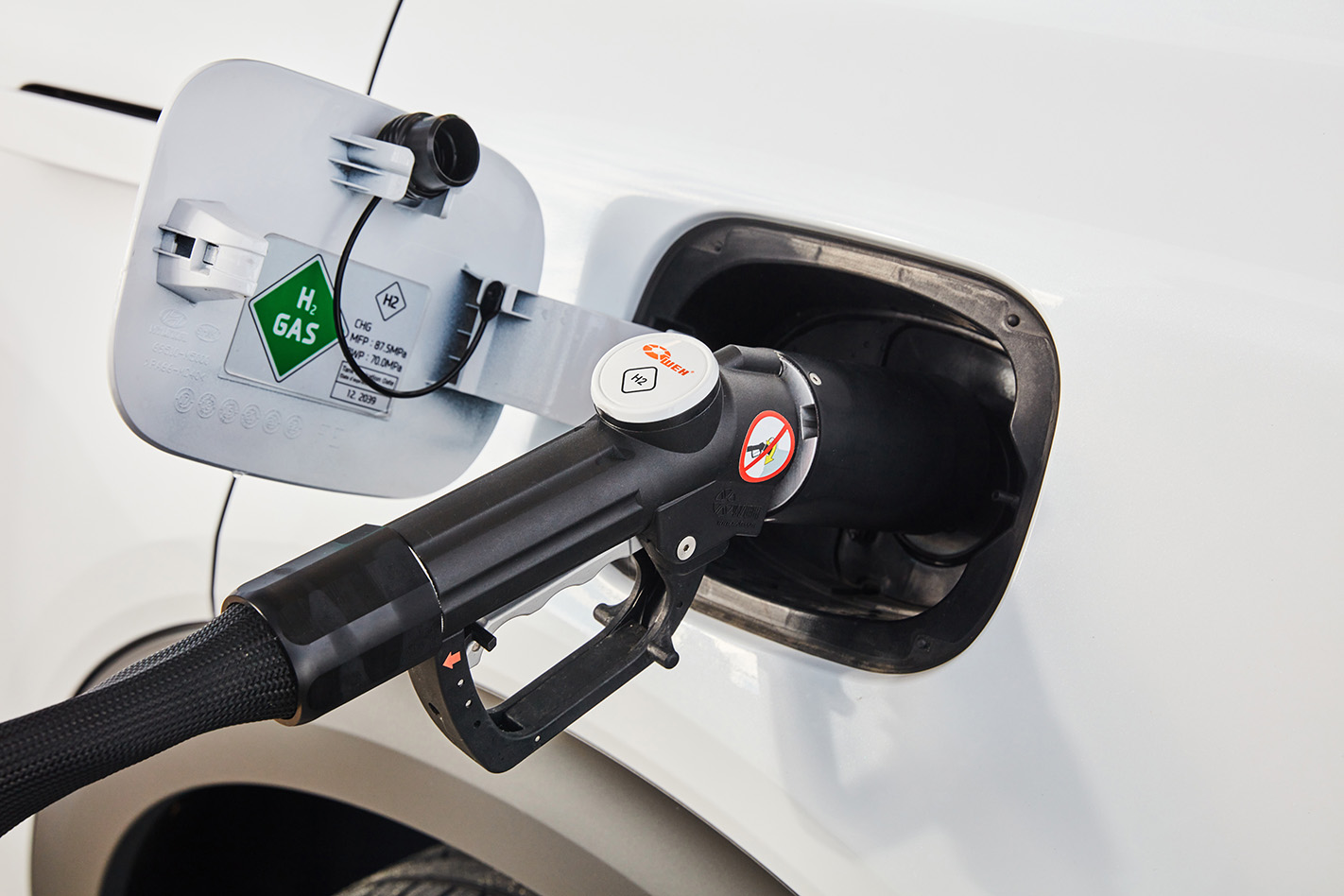
There are currently only a handful of hydrogen refuelling stations across the country, with Toyota and Hyundai lobbying the Government to encourage the uptake of the zero-emissions fuel.
This latest grant comes from the Australian Government’s second round of the Future Fuels Fund, with ARENA administering $127.9 million to fleet operators to switch to electric and hydrogen vehicles.
The first round of funding saw $24.55 million distributed to help build 403 electric vehicle fast chargers across Australia.
Snapshot
- Surveyed owners say wall-mounted Level 2 chargers rank as the best available
- Three-quarters of EV owners needed to upgrade various home components
- Tesla’s system still ranks as industry benchmark
A survey of American electric vehicle owners has found Level 2 charging systems are the most highly-rated of all the home chargers, despite their higher initial and running costs.
In a study compiled by J.D. Power, a total of 8216 battery electric vehicle (BEV) and plug-in electric vehicle (PHEV) owners with cars made between 2016 and 2022 were asked to rank their home charging systems, providing a strong indicator of how satisfying each was in terms of overall ownership.
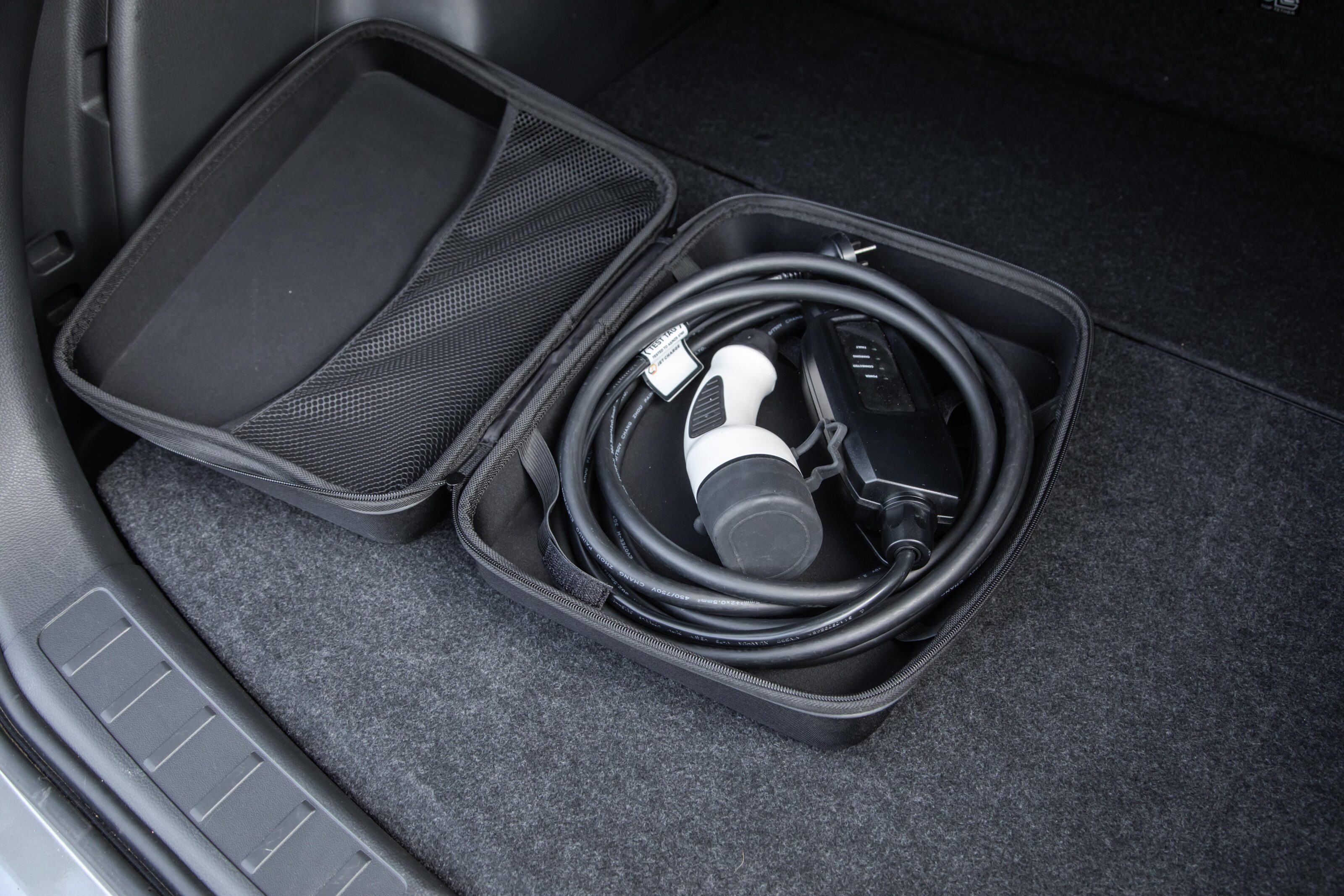
Perhaps unsurprisingly, permanently-mounted Level 2 chargers were found to be the best of the bunch, ahead of portable Level 1 and Level 2 units, which are cheaper but reportedly don’t offer the same value for money as the bulkier chargers.
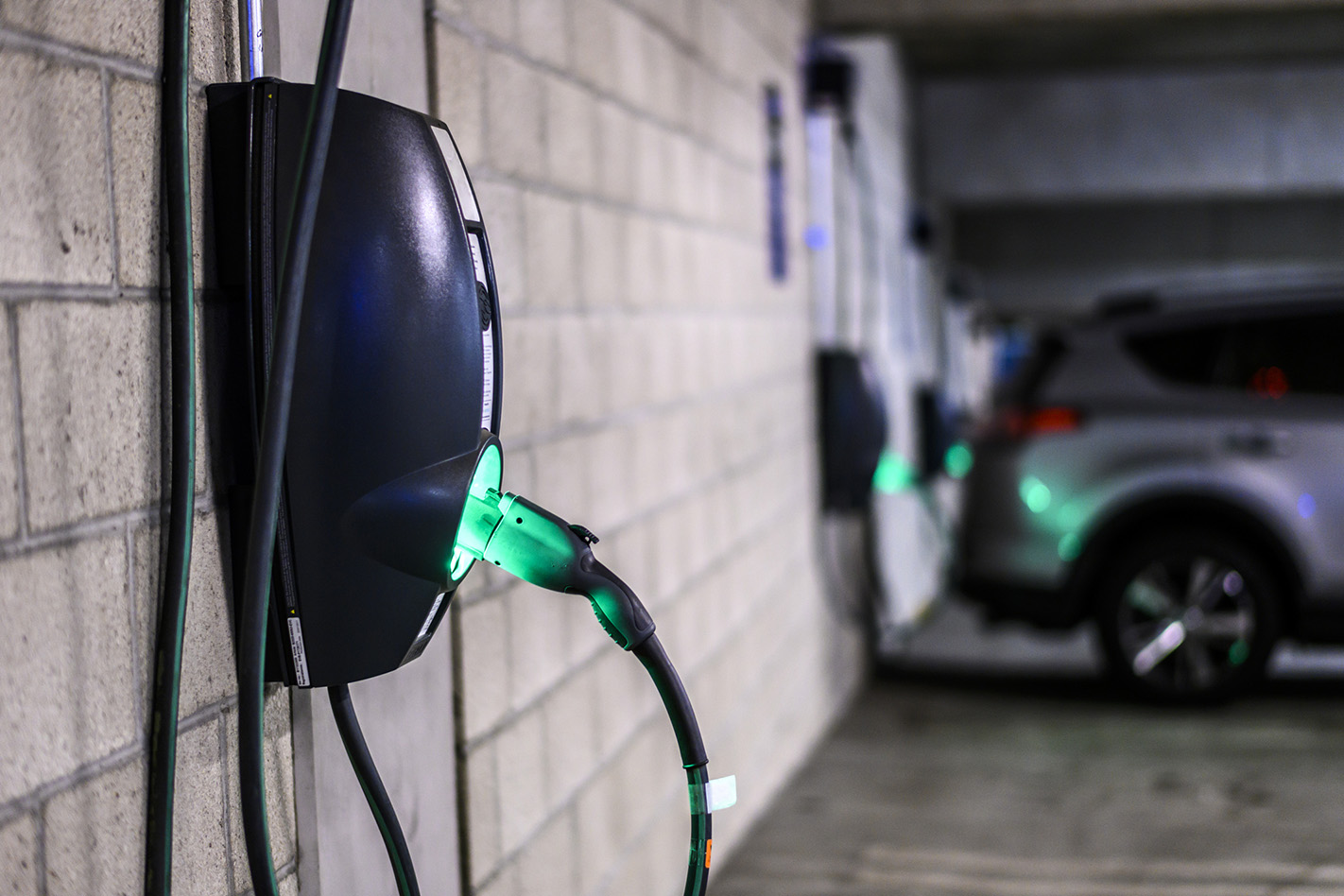
On a scale of up to 1000 points, Level 2 wall-chargers were given an average satisfaction score of 752 points – a significant 188-point gap over the Level 1 score, managing 564 points.
However, the non-portable Level 2 units are not without their drawbacks – in addition to being more expensive to buy and run thanks to their more advanced features, some may require owners to make changes to their homes in order for them to work.
According to the study, three-quarters of respondents said they had to upgrade at least one component of their home to install the charger, with the most common alterations coming in the form of wiring (55 per cent), outlet (45 per cent) and electrical panel (28 per cent).
J.D. Power’s senior director of global automotive, Brent Gruber, said manufacturers need to understand what buyers need given how important home charging is to the market.
“Home charging is an important aspect of owning an EV and taking that to the next level by utilising a Level 2 charger is key to optimising the ownership experience,” said Gruber.
“When upgrading to Level 2 charging, some home electrical upgrades may be necessary. Making those changes will mean faster charging and result in a far more satisfactory EV ownership experience.
“With battery ranges increasing, it makes sense for many owners to make the upgrade if they haven’t already. All parties involved in the EV marketplace need to pay special attention to home charging since 84 per cent of owners regularly charge at home.”
Ranking higher than its other American rivals, Tesla’s Level 2 system was rated as the best of the bunch, achieving a satisfaction score of 797 points, 45 more than the segment average.
Snapshot
- Average weekly transport cost jumps up by $70
- Capital city households paying roughly $413 a week on transport
- Fuel prices pinned as the biggest factor behind the increase
Feeling lighter in the hip pocket? You’re likely not the only one, with weekly transport costs jumping up significantly last year to as much as $485 a week.
According to the Australian Automobile Association, average weekly household transport costs increased by $70.18 in capital cities, surging to their highest levels yet of $413.71 a week – an annual total of $21,512.92.
While transport spend for those in regional cities also increased (up by $70.17 a week), those outside of the capitals enjoyed a significantly lower average, sitting at $341.68 per week.
Perhaps unsurprisingly, those in Sydney were hit the hardest, with average costs hitting $485.13 a week – around $30 more than those from Melbourne ($457.12) and Brisbane ($454.70).
For those outside of the capitals, the regional hubs of Alice Springs and Bunbury now hold the unenviable titles of most expensive towns in their respective states, as the average weekly household cost for both areas last year sat at $360.88.
Average transport cost by city
| City | Average cost per week (household) |
| Sydneyu00a0 | $485.13 |
| Melbourne | $457.12 |
| Brisbane | $454.70 |
| Perth | $401.71 |
| Canberrau00a0 | $395.78 |
| Adelaide | $380.96 |
| Darwin | $370.54 |
| Hobart | $363.76 |
Combining the capital and regional cities led to an average weekly household transport cost of $380.10 – broken down across eight contributing factors; registration/CTP/licensing, servicing/tyres, insurance, roadside assist, public transport, tolls, fuel and car loan payments.
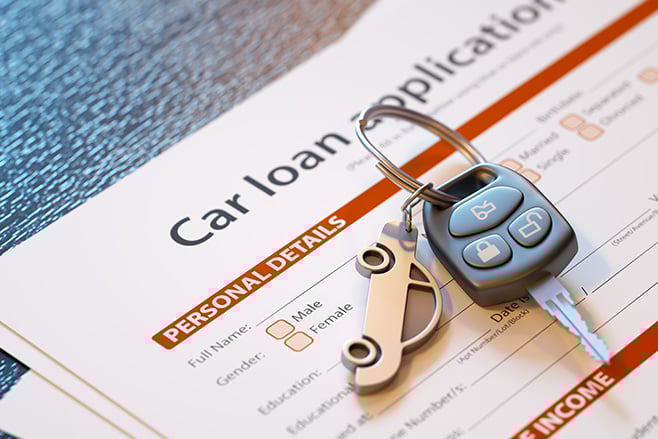
The latter two factors attributed to a huge portion of the overall average costs, with car loans making up 44.7 per cent of weekly household bills (170.08 per week) while fuel accounted for 22.5 per cent of the average budget (85.35 per week).
Average transport cost by category
| Contributing factor | Average cost per week (household) |
|---|---|
| Car loan payments | $170.08 |
| Fuel | $85.35 |
| Servicing and tyres | $30.37 |
| Registration, CTP and licensing | $29.69 |
| Insurance | $27.21 |
| Public transport | $22.06 |
| Tolls | $13.20 |
| Roadside assist | $2.15 |
Michael Bradley, managing director of the AAA, said the increased costs were contributing to higher strains on Australian households, with the rise in fuel prices to their highest ever levels being amongst the most prevalent.
“Increased transport costs are a significant contributor to cost of living pressures on Australian families, with the average Australian household now paying more than $70 a week extra for transport costs throughout 2021,” said Bradley.
“Rising fuel prices continue to be a significant contributor to cost of living pressures across both regional and metropolitan Australia.
“With a federal election and two state elections due this year, this index is a timely reminder policies that further increase transport costs need to be avoided.”
Despite this, a study last year found Australia to be the most affordable country in the world for motorists, although this was based on extraneous factors – such as how much of an average salary it would take to buy and run a car.
Last week, average fuel prices in Australia peaked at their highest level yet, with the national average climbing to 179.1 cents per litre, while those in Sydney were hit with more than $2 per litre for regular unleaded.
