
Ferrari looks set to retain the feel of a mid-engined sports car, even as it plans to go down the electrification path.
First spotted by The Drive, new patent images published on the United States Patent And Trademark Office showcase an ‘electric or hybrid sport car’ with a huge mid-mounted battery pack where the engine of an internal-combustion Ferrari would generally be placed.
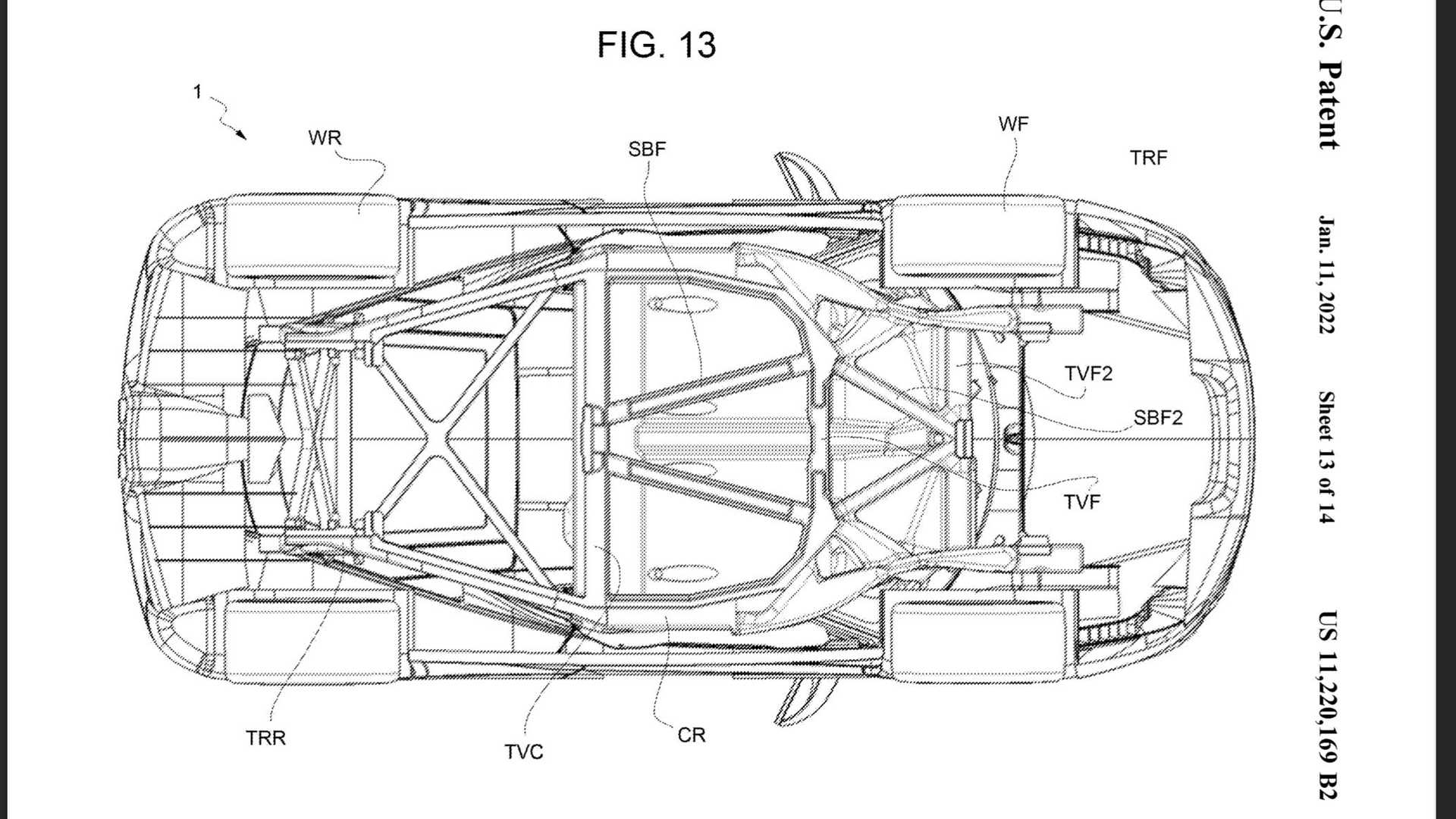
While there is a clear focus on chassis rigidity, the patent also shows how Ferrari is planning to have enough space to mount the batteries in its electric vehicles, with the first set for reveal in 2025.
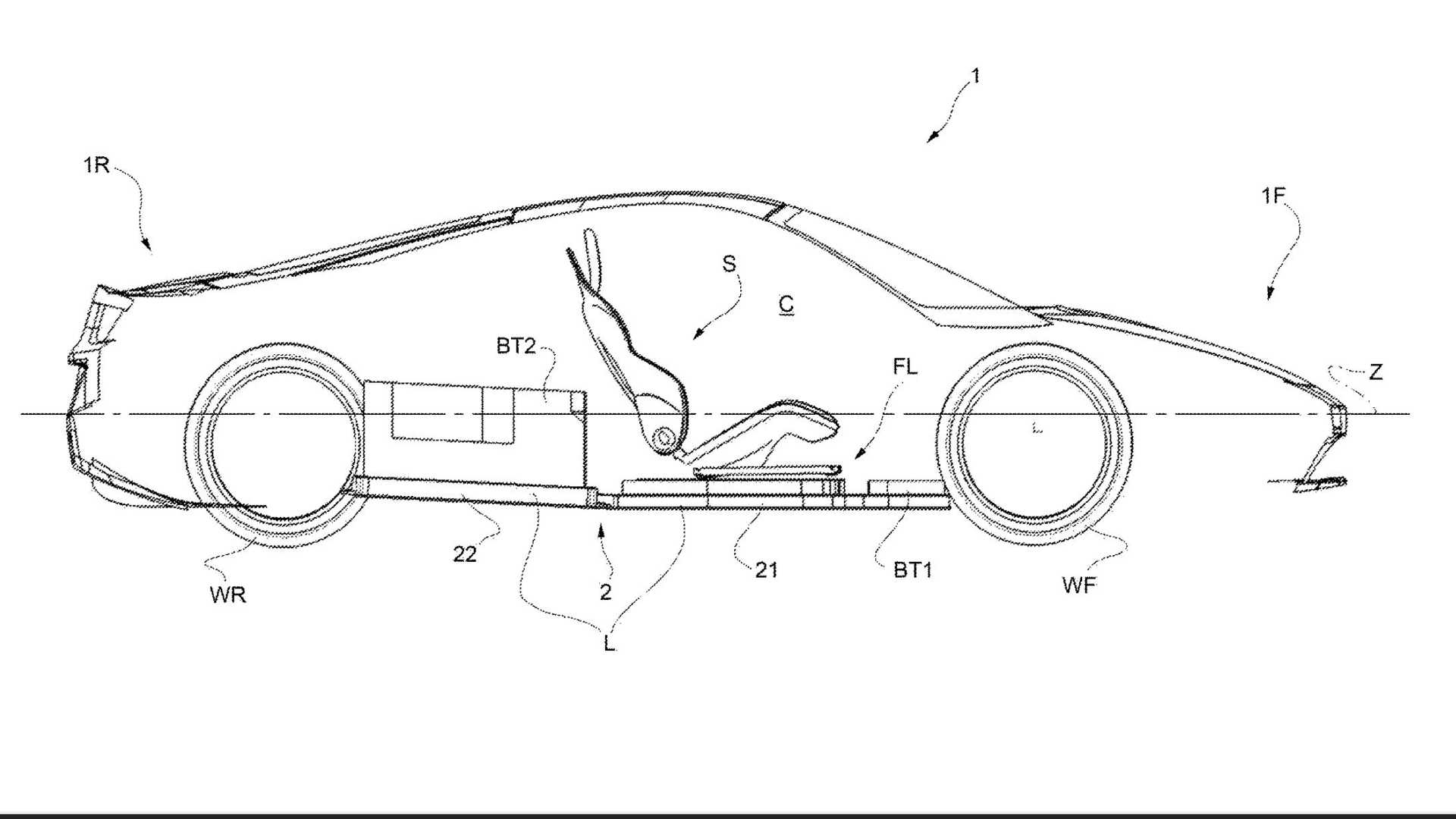
In addition, the filings demonstrate the use of multiple battery packs – such as a thinner unit under the cabin – sandwiched between the frame and a cover. In the patent, Ferrari also describes a hybrid setup that includes a front- or rear-mounted internal-combustion engine.
By angling the midship battery pack slightly upward, Ferrari says it will produce “negative lift” or downforce at the rear of the car. The positioning of the large battery is also said to allow for “an ideal exchange of heat with the platform”, meaning it will also assist with cooling.
Ferrari says the battery under the passenger compartment would be a cylindrical battery cell, while the large unit can accommodate “all types of cells, namely cylindrical, prismatic, or pouch cells.”
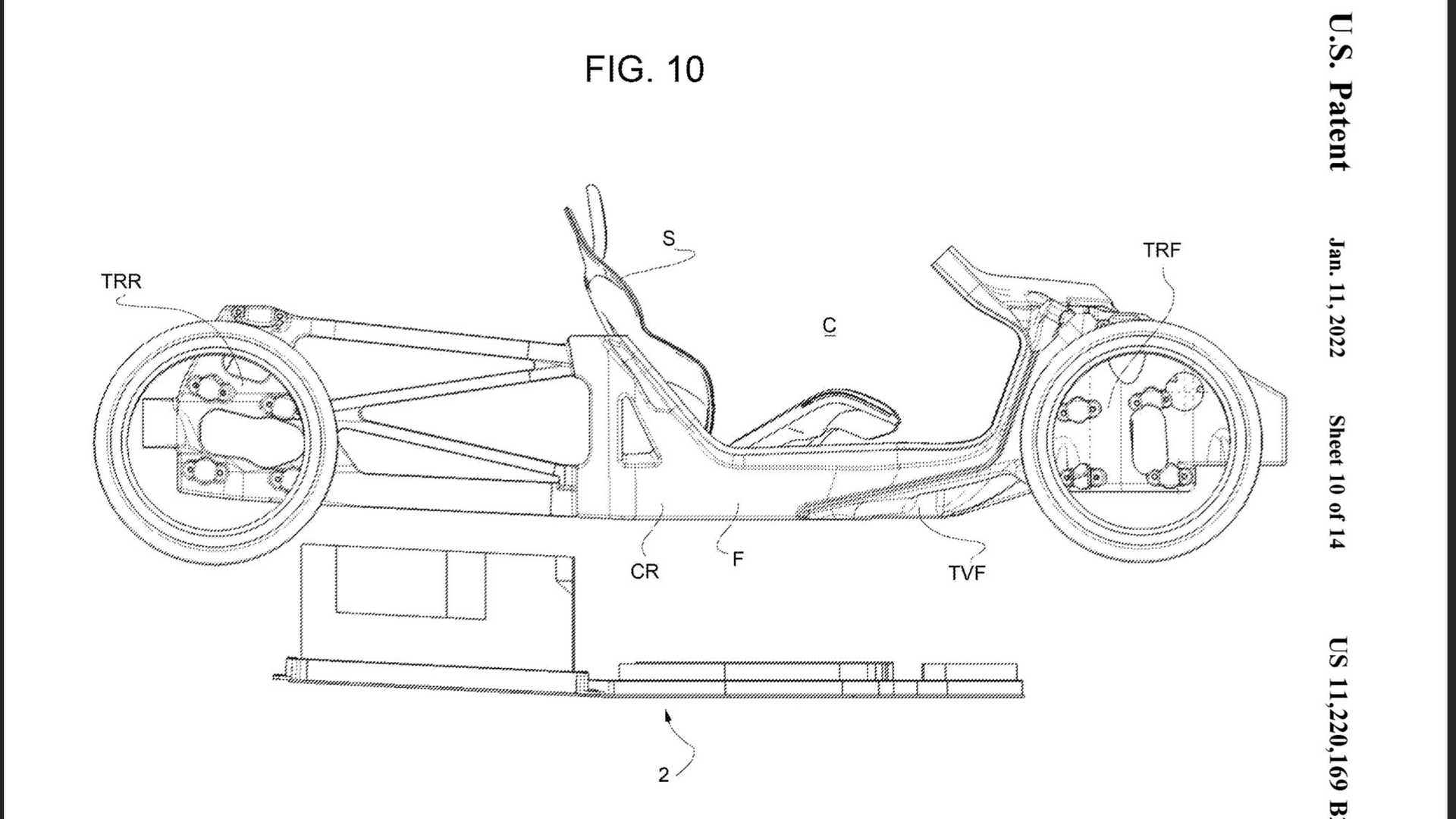
While the patents also hint at the design of an electric Ferrari, it is important to note patents rarely preview a production vehicle, with a greater focus on new technologies instead.
For instance, the patent has aesthetics similar to the current Ferrari range and exhaust tips reminiscent of V8 Ferrari models.
Last year, Ferrari CEO John Elkann said, “we are continuing to execute our electrification strategy in a highly disciplined way.”
“We are also very excited about our first all-electric Ferrari that we plan to unveil in 2025, and you can be sure this will be everything you dream the engineers and designers at Maranello can imagine for such a landmark in our history.”
The upcoming Ferrari Purosangue crossover is expected to become the first EV from the Italian marque, providing a more acceptable introduction to a fully-electric vehicle for its customers.
However, these patents indicate how the idea of electric Ferrari is likely to extend beyond the new Purosangue and into its iconic range of sports cars.
Korean manufacturers Kia, Hyundai and Genesis have taken home top gongs from American automotive analytics brand J.D. Power.
The trio of Hyundai-owned brands came home first, third and fourth in J.D. Power’s U.S. Vehicle Dependability Study, with Kia taking overall honours – while Genesis was rated as the top premium marque.
J.D. Power’s survey ranks brands on their product’s problems per 100 vehicles (PP100), with all the brands scoring well below the average of 192 PP100. Kia ended up with a score of 145 ahead of Buick in second on 147, Hyundai third with 148 and Genesis fourth on 155.
This year’s study was based on responses from 29,487 original owners of 2019 model year vehicles, looking at how the cars stand up after three years on the road – fielded between July and November 2021.
Individual models such as the Hyundai Santa Fe and Kia Sorento won awards in their segments (mid-size SUV and upper mid-size SUV respectively), while the overall award for the most dependable model was given to the Porsche 911.
Each of the brands enjoyed a strong 2021 in Australia, beating their 2020 sales comprehensively, with Hyundai leading on 72,872 units sold (vs. 64,807 in 2020), Kia just under 5000 units behind with 67,964 vehicles delivered (vs. 56,076 in 2020) and Genesis setting the bar for its best-ever year, recording 734 sales (vs. 229 in 2020).
The lowest-ranked manufacturer in the survey was Land Rover with 284 PP100, finishing behind Ram (226), Volvo (256), Alfa Romeo (245) and Acura (244) in the bottom five places.
2022 J.D. Power Dependability Study
Top 10 brands
| Brand | Problems per 100 vehicles (PP100) |
|---|---|
| Kia | 145 |
| Buick | 147 |
| Hyundai | 148 |
| Genesis | 155 |
| Toyota | 158 |
| Lexus | 159 |
| Porsche | 162 |
| Dodge | 166 |
| Cadillac | 168 |
| Chevrolet | 171 |
Bottom 10 brands
| Brand | Problems per 100 vehicles (PP100) |
|---|---|
| Land Rover | 284 |
| Ram | 266 |
| Volvo | 256 |
| Alfa Romeo | 245 |
| Acura | 244 |
| Chrysler | 240 |
| Jaguar | 233 |
| Audi | 232 |
| Honda | 230 |
| Inifinitiu00a0 | 228 |
Tesla has been accused of racial discrimination and flagrant harassment at its Fremont plant in California.
According to a report from Reuters, the US state’s civil rights regulator has filed a lawsuit against Tesla – claiming the company engaged in a culture of segregation in which African American workers were grouped together and assigned the most physically demanding jobs.
Complainants also allege offensive graffiti was found throughout the factory and not removed for months at a time, while supervisors and managers touted racist slurs.
“I [tried] to speak out about this and the egregious safety violations, only to get threatened and eventually terminated for seeking a job elsewhere,” former Tesla employee Weylin Webber wrote on Twitter.
Another claims they witnessed Black and African American workers cleaning the floors on their hands and knees, with other workers were allegedly never subjected to the same treatment.
The lawsuit comes months after a jury awarded US$137 million (AU$191.7 million) to a former Tesla worker following a year of racially-motivated harassment at the Fremont facility.

“After receiving hundreds of complaints from workers, the [California Department of Fair Employment and Housing (DFEH)] found evidence that Tesla’s Fremont factory is a racially segregated workplace where Black workers are subjected to racial slurs and discriminated against in job assignments, discipline, pay and promotion, creating a hostile work environment,” department director Kevin Kish said in statement.
In a blog post published prior to the action being filed, Tesla said it “strongly opposes all forms of discrimination and harassment,” but questioned the validity of the lawsuit.
“Over the past five years, the DFEH has been asked on almost 50 occasions by individuals who believe they were discriminated against or harassed to investigate Tesla,” the company wrote.
“On every single occasion, when the DFEH closed an investigation, it did not find misconduct against Tesla.”
The carmaker said it will be requesting the court pause the case and take “other steps to ensure the facts and evidence will be heard”.
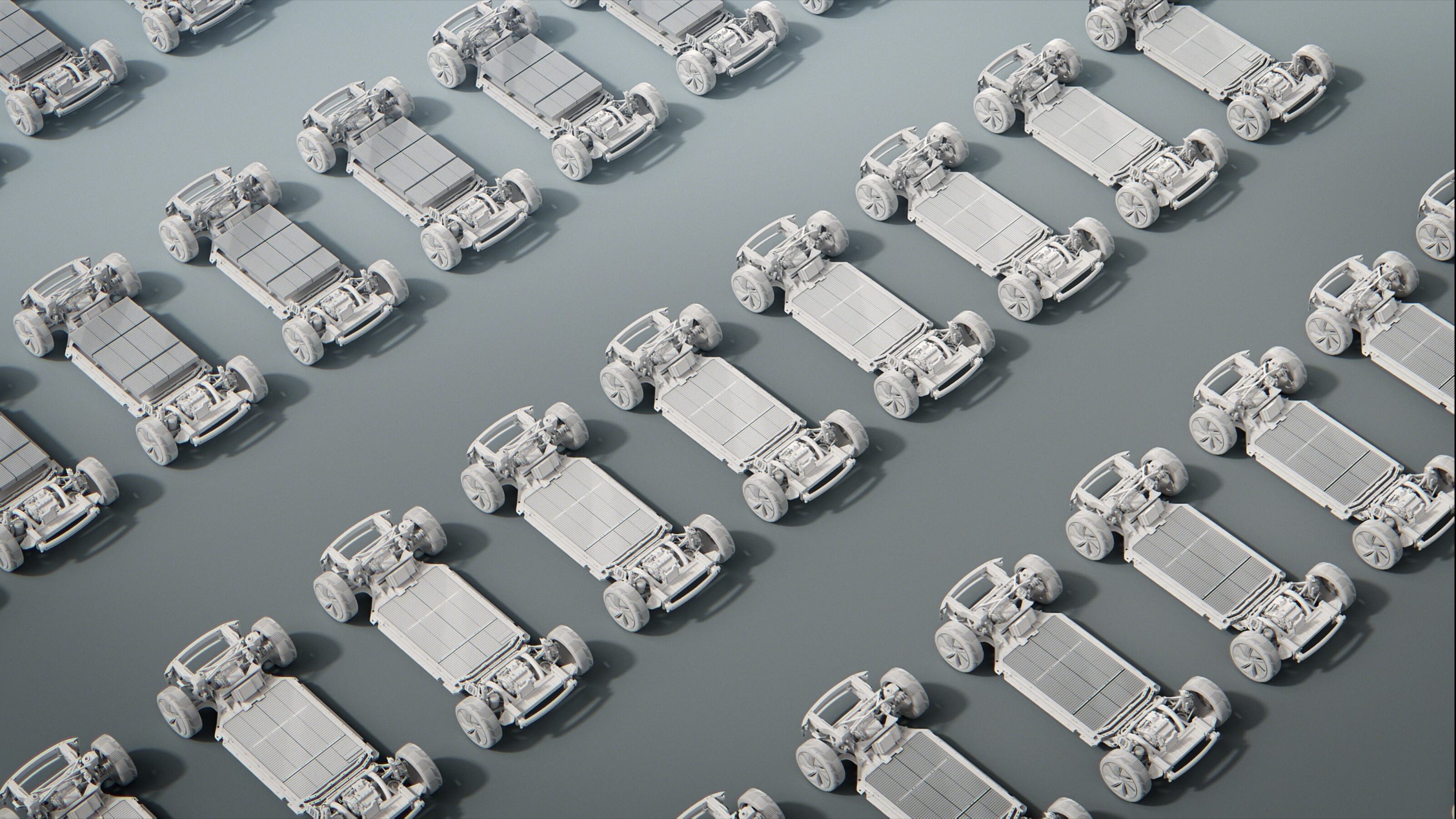
Volvo is building a ‘mega-casting’ plant to speed up the construction process of its upcoming electric cars, as well as increasing efficiencies.
Like Tesla’s casting plant for the Model Y, Volvo will be doing much the same at its Torsland plant in Sweden. In Volvo’s revamped facility, vehicle moulds will be created with as many components built into the panel as possible to reduce the assembly of parts.
Volvo is investing $1.5 billion into revising the existing plant so it can quickly cast large panels and components. The first car to use the new technique will be produced in 2025, giving the Swedish car maker three years to finish the rebuild.
“With these investments we take an important step towards our all-electric future and prepare for even more advanced and better electric Volvos,” said Håkan Samuelsson, Volvo chief executive.
“Torslanda is our largest plant and will play a crucial role in our ongoing transformation as we move towards becoming a pure electric car maker by 2030.”
The first model could be the upcoming ‘Embla’ EV and the casting will provide a large floor pan cast with points for suspension and electric architecture ready to go, negating the need for a rear subframe. In total, Volvo says it will remove around 100 parts from each car and it also expects its mega-cast panels will improve the safety of its electric vehicles.

With fewer parts, cars should weigh less too, providing other benefits such as being more efficient and aiding performance. Other benefits from mega-casting include reduced complexity in the manufacturing process which saves costs in terms of materials used as well as logistics.
Along with the casting, a new battery assembly plant will integrate battery cells and modules in the floor structure of the car. The assembly shop will be rejuvenated too, ready for the next generation of fully electric cars that use a new ‘marriage point’ where the top body and the floor of the car meet for the first time.
“Today is a great day for the Torslanda plant as we are making it fit for the future with this investment package,” said Javier Varela, head of engineering and operations at Volvo Cars.
“Our future as a company is all-electric and that requires a variety of upgrades across the plant, to ensure that Torslanda can continue to build premium electric cars of the highest quality.”
Snapshot
- Ioniq 5 battery size increases to 77.4kWh from 72.6kWh
- Video-based mirrors added as optional equipment
- Hyundai rules out improved battery for now
The Hyundai Ioniq 5 may have only hit Australian shores in recent months but it is already being updated overseas, scoring a range of technology updates.
Hyundai’s UK arm announced its 2023 model year Ioniq 5s will feature an increased capacity lithium-ion battery pack, going from current largest size of 72.6kWh to 77.4kWh, or around 6.6 per cent.
The 77.4kWh pack comes from the Ioniq 5’s Korean cousin, the Kia EV6 – both are based on the E-GMP platform but Kia’s offering boasts a higher driving range of up to 528 kilometres in rear-wheel drive guise, an improvement over the Ioniq 5’s 451 kilometres.
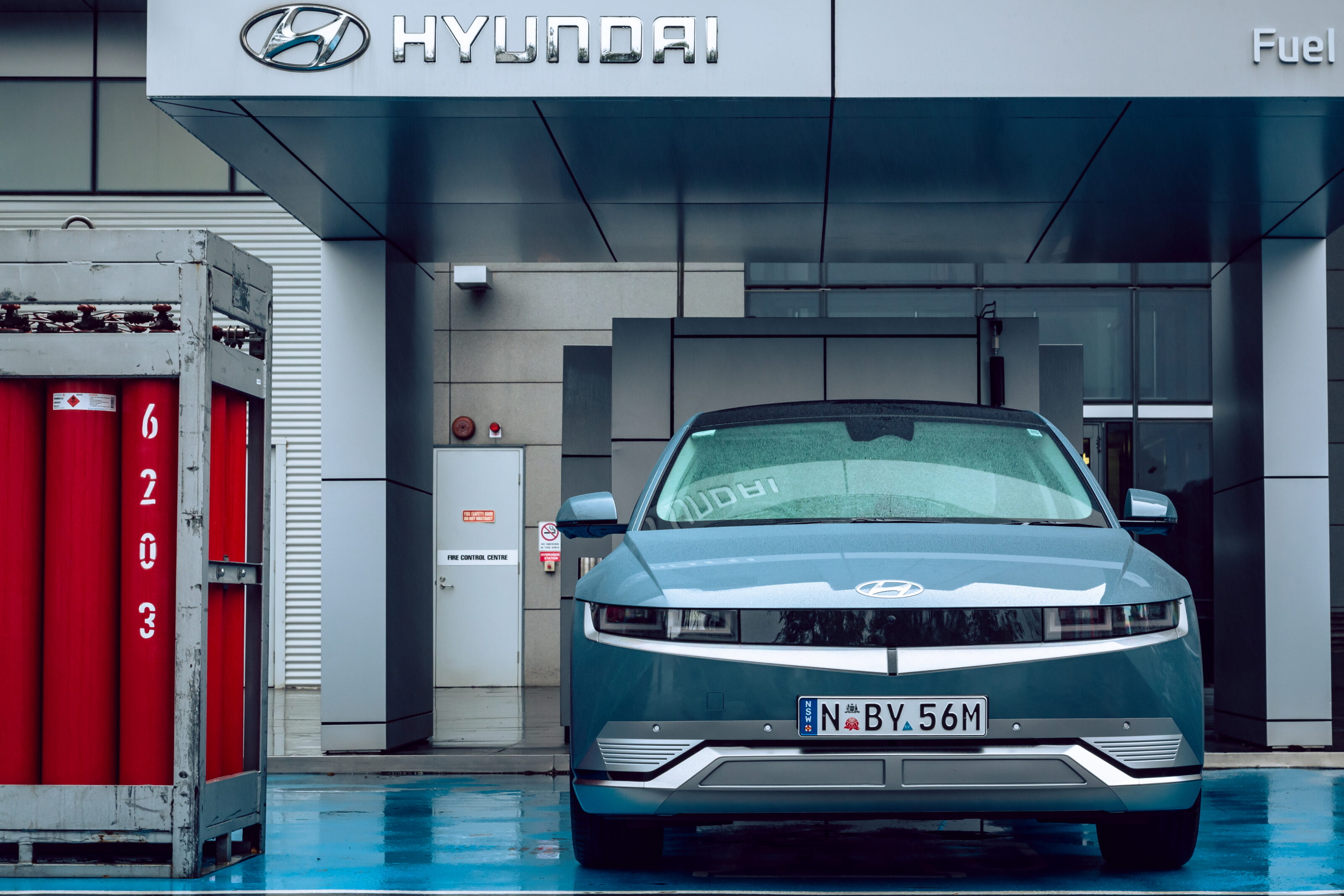
Available as an option, Hyundai will also offer battery conditioning tech for the electric vehicle, with enhanced cooling and heating systems switching on whenever a charging port is set as a destination within the car’s navigation system – both priming it to be charged and ensuring the pack has enough juice to make it there.
On top of this, the second optional extra to be added is the addition of digital, video-based mirrors, making use of streamlined cameras which are located on the doors and under the rear spoiler, in the case of the interior’s digital centre mirror.
A set of new shocks – dubbed Smart Frequency Dampers – have been added to the list of standard equipment, aiming to improve the ride quality and handling of the rear axle.

However, a spokesperson for Hyundai Australia told Wheels the introduction of the updated battery and optional tech isn’t in its current plans for the Ioniq 5.
“The are no currents plans to introduce the slightly larger battery version Ioniq 5 in Australia,” said the spokesperson.
“Likewise, we can’t confirm any details or specifications at this stage but you can expect similar line-ups to those seen in overseas markets – including the smaller battery version [a 58kWh, rear-wheel drive variant].
“We have plans to expand the Ioniq 5 range and introduce lower trim grade models, but we can’t confirm timing on this yet.”
The first allocation of the Ioniq 5 went on sale in October last year, selling out within two hours as the first examples arrived in Australia before 2022, with local buyers able to opt for a rear-wheel or all-wheel drive variant.
Key Points
- C200 and C300 sedans only
- Prices up, but feature and safety list grows
- Plug-in hybrid no longer a sure thing
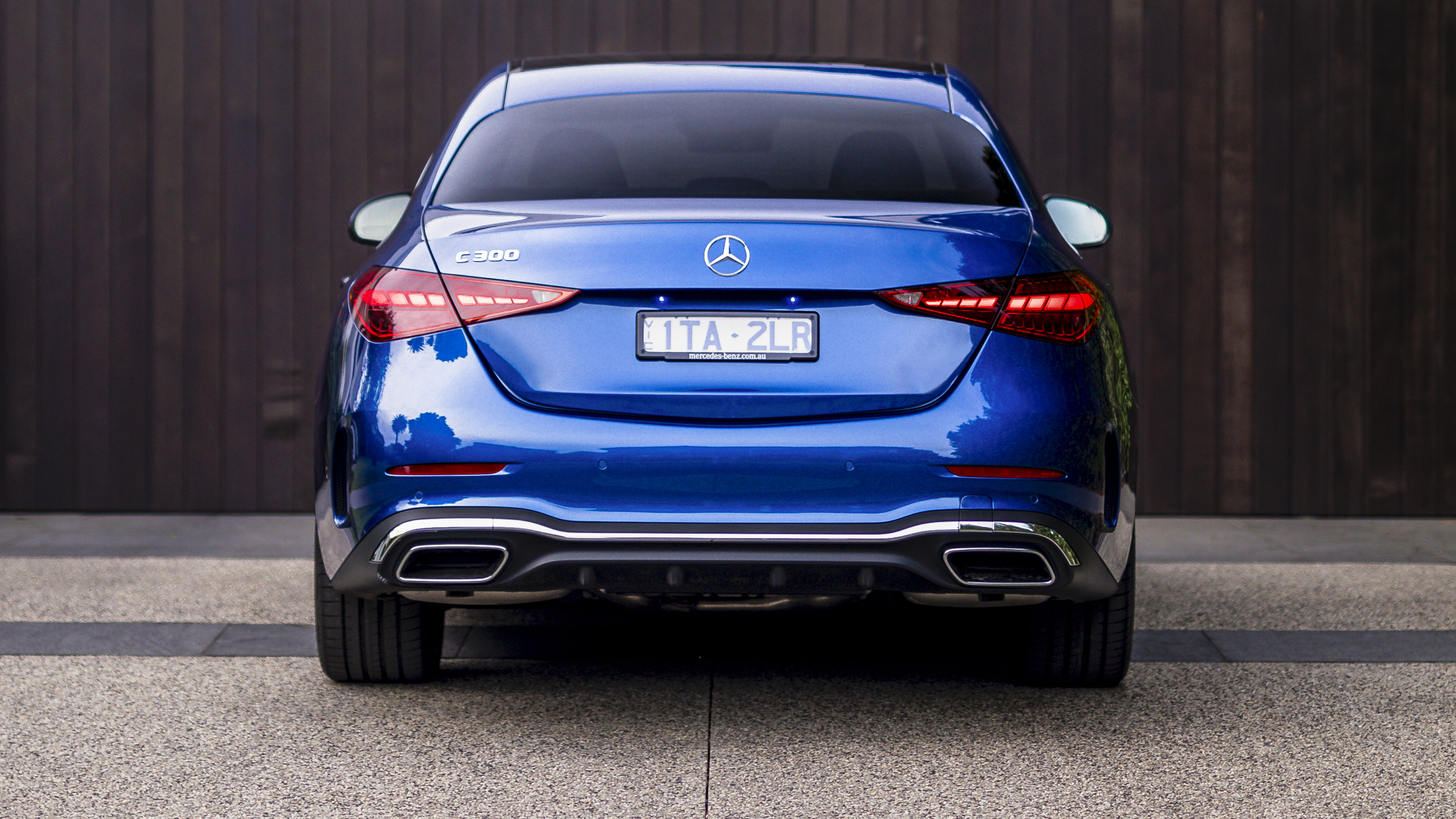
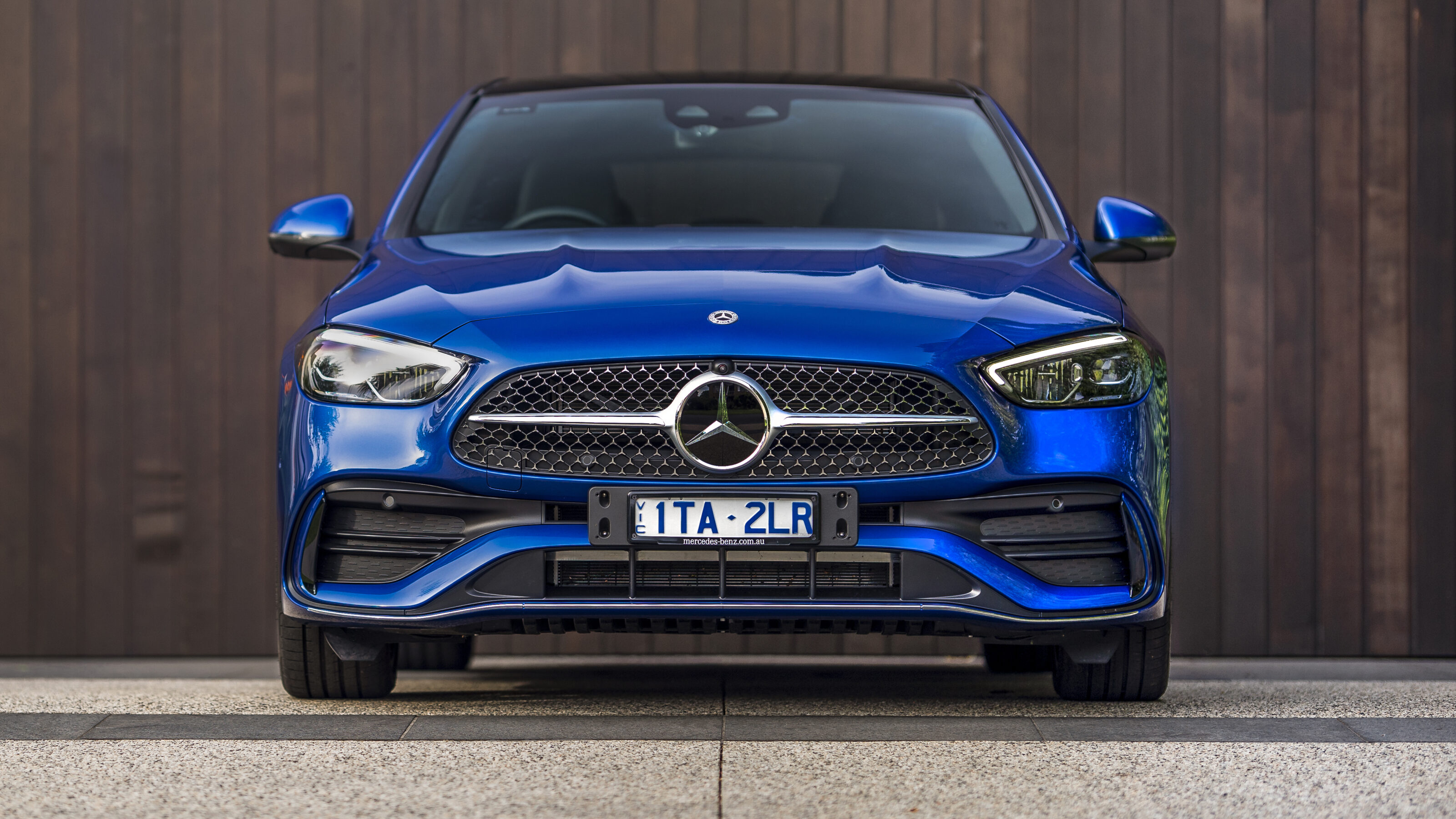
Australian pricing for the new-generation 2022 Mercedes-Benz C-Class has been announced, with the new C200 starting from $78,900 and the more powerful C300 priced from $90,400. Both prices include GST and LCT, but exclude on-road costs and dealer delivery.
These prices mark a considerable leap beyond the last round of pricing changes for the outgoing 2021 C-Class, with March 2021 prices showing an entry point of $66,900 for the C200.
To Benz’s credit, the standard features list for both new cars has increased, and the new pricing is unlikely to deter what is usually a very keen market.
UPDATE, April 2022: We’ve now driven the new C200 and C300, and you can find our reviews at the link below.
Above: Andy Enright drives the new C300
The new-generation ‘W206’ C200 and C300 will be offered in petrol-powered, sedan form only, with the earlier revealed wagons and diesel engines remaining an option for European buyers only. (A shame, that. Read about the wagon in our ‘deep dive’ further below this story – Ed.)
A 147kW plug-in hybrid (PHEV) version of the new C-Class, with a 25.4kWh battery, 440Nm and a 100-kilometre electric driving range, is hoped to make its way to Australia in the near future – but, as many brands are discovering, the ongoing semiconductor shortage has put a question mark over when.
The brand had previously said a late-2022 launch was expected, but now timing is unclear.
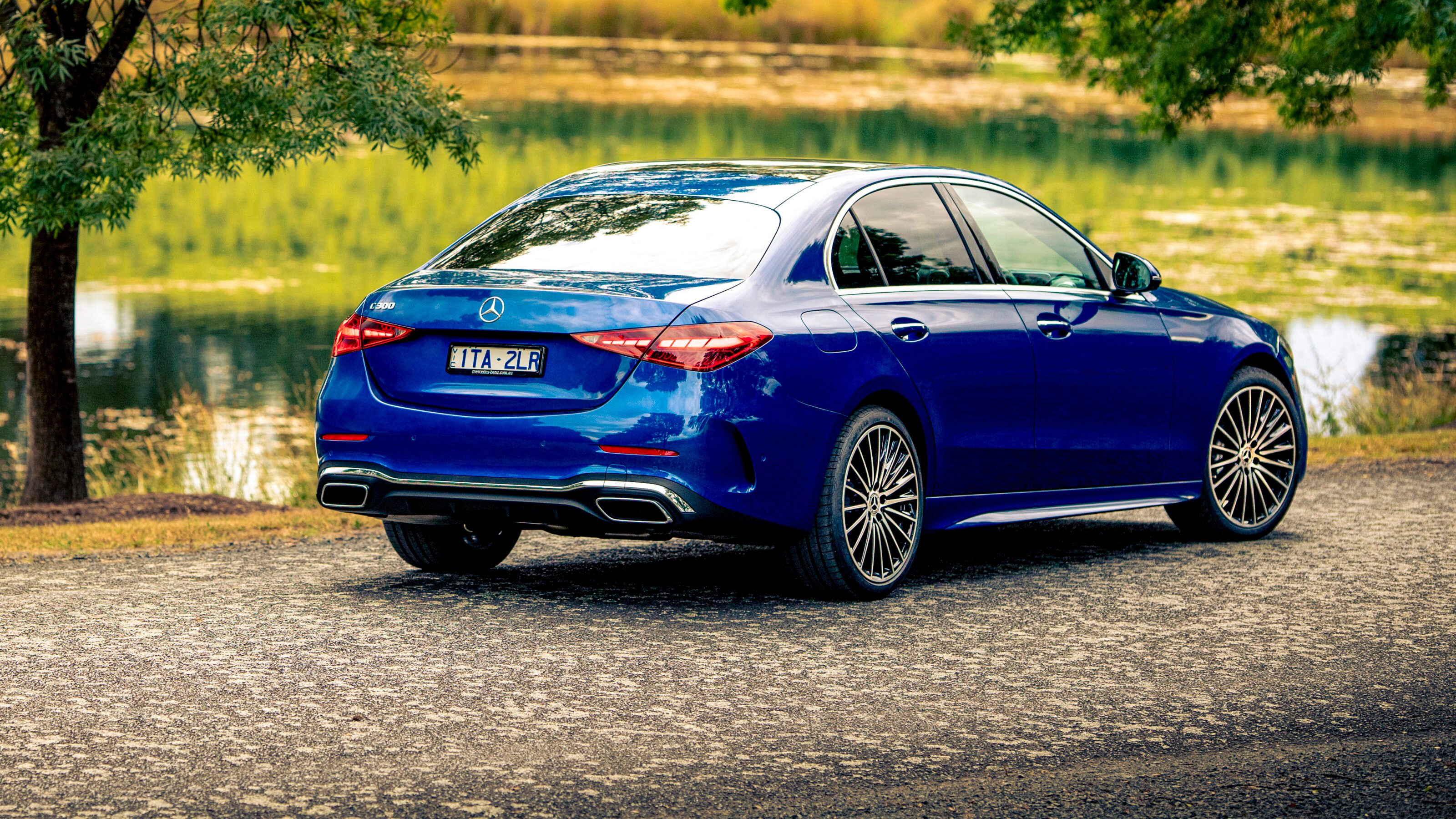
Back to what you can buy in Australia, a single specification is offered for both the C200 and C300, with AMG Line features added both inside and out for a sportier look and feel.
Both cars are powered by Mercedes’s M254 four-cylinder turbo petrol engine, matched for the first time in the C-Class to a integrated starter-generator (ISG) electric motor for a ‘mild hybrid’ setup.
In the C200, there’s a 1.5-litre version of this petrol-electric design, delivering 150kW and 300Nm. Paired with a nine-speed (‘9G-Tronic’) dual-clutch automatic transmission, the C200 claims a fuel consumption figure of 6.9L/100km.
Stepping up to the C300 sees the M254 promoted to 2.0-litre status, growing outputs to 190kW and 400Nm, with a fuel consumption figure of 7.3L/100km. The same 9G-Tronic auto features.
Both models are rear-wheel-drive only, and Mercedes-Benz claims 0-100km/h times of 7.3 seconds for the C200 and a spritely 6.0 seconds for the C300.
The C200 rides on 18-inch five-spoke AMG alloy wheels, while the C300 gets a 19-inch AMG multi-spoke design.
On the safety front, both cars get a centre-front airbag between the driver and front-seat passenger, making for 10 airbags in total.
A 360-degree camera is also featured, along with Active Parking Assist with Parktronic ultrasonic sensors. There’s also Active Distance Assist Distronic cruise control system, Attention Assist driver-drowsiness monitoring, Speed Limit Assist and lane-tracking with Active Lane Keeping Assist and Blind Spot Assist.
The C300 adds Merc’s Driving Assistance Package Plus as standard, adding Active Blind Spot Assist, Active Brake Assist with Cross-Traffic Function, Active Emergency Stop Assist, Active Lane Change Assist, Active Lane Keeping Assist, Active Steering Assist, and Active Stop-and-Go Assist. Also included is Evasive Steering Assist, Extended Automatic Restart on motorways, and the Pre-Safe Impulse Side accident anticipation and protection system.
All Mercedes-Benz models benefit from a five-year warranty, announced in March, 2020. (With Audi announcing a five-year warranty this year, BMW is now the only local premium brand with a three-year warranty.)
For more on the new C-Class line’s innovations beyond its predecessor – including the arrival of rear-wheel steering and a revised multi-link suspension design – you can read Angus MacKenzie’s feature story below.
Watch for Andy Enright’s Australian first-drive launch review to come in March, and stay tuned to see how the new C goes in the 2022 Wheels Car of the Year testing.
Deep dive: 2022 C-Class detailed at its global reveal in March 2021
When the Mercedes-Benz 190E was launched back in 1982, many pundits described the car as a ‘Golf-fighter’, pitching it as Stuttgart’s first foray into the affordable small car mainstream. In truth, the 190E was never really that small, or that inexpensive.
And over the past four decades successive generations of the so-called baby Benz, rebadged the C-Class with the launch of the W202 in 1993, have become bigger and pricier.
At first glance, the 2021 C-Class emphatically proves the point. Codenamed W206, this new C-Class is longer and wider, with a longer wheelbase than the iconic W124 E-Class launched in 1984.
And don’t expect much change from $70,000 for the entry-level C200 sedan when the car arrives in Australia. That’s around four grand more than a W124 300E cost when it went on sale here in 1985.
But those numbers don’t quite tell the full story. Back in the day you had to work 174 weeks to earn enough to get behind the wheel of a 300E. On today’s average weekly wage, you’ll probably have the readies for a new C200 in about a quarter the time.
And for a car that in terms of its features and technology looks to be more like a baby S-Class than an expensive alternative to a Volkswagen, the new C-Class appears a compelling proposition.
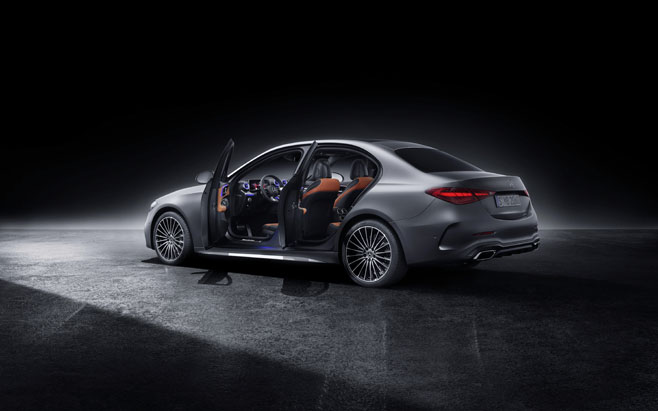
Every exterior panel is new, but the design is evolutionary rather than revolutionary, with forms, surfaces and graphics echoing those found in the all-new S-Class and the facelifted E-Class.
For example, the crisp line that starts on the front quarter panel and extends rearwards just under the side windows is similar to that on the S-Class, while the frowning grille graphic and twin power bugles on the bonnet are shared with the E-Class.
At the rear are tail-lights whose design combines elements of both E-Class and S-Class. And peeking out from under the bumper are the rectangular exhaust outlets that you find on pretty much every non-AMG Mercedes these days. Wheels range in size from 17-inch to 19-inch.
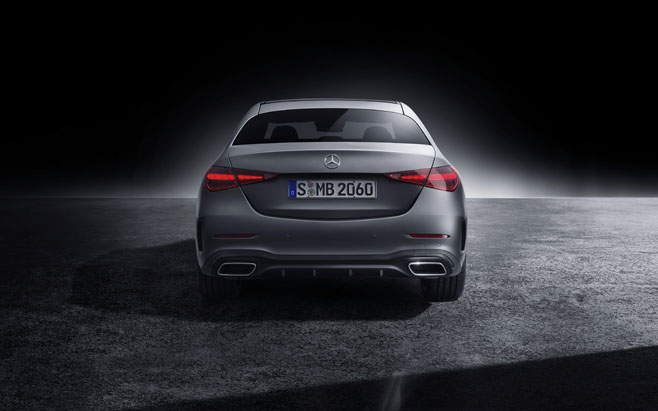
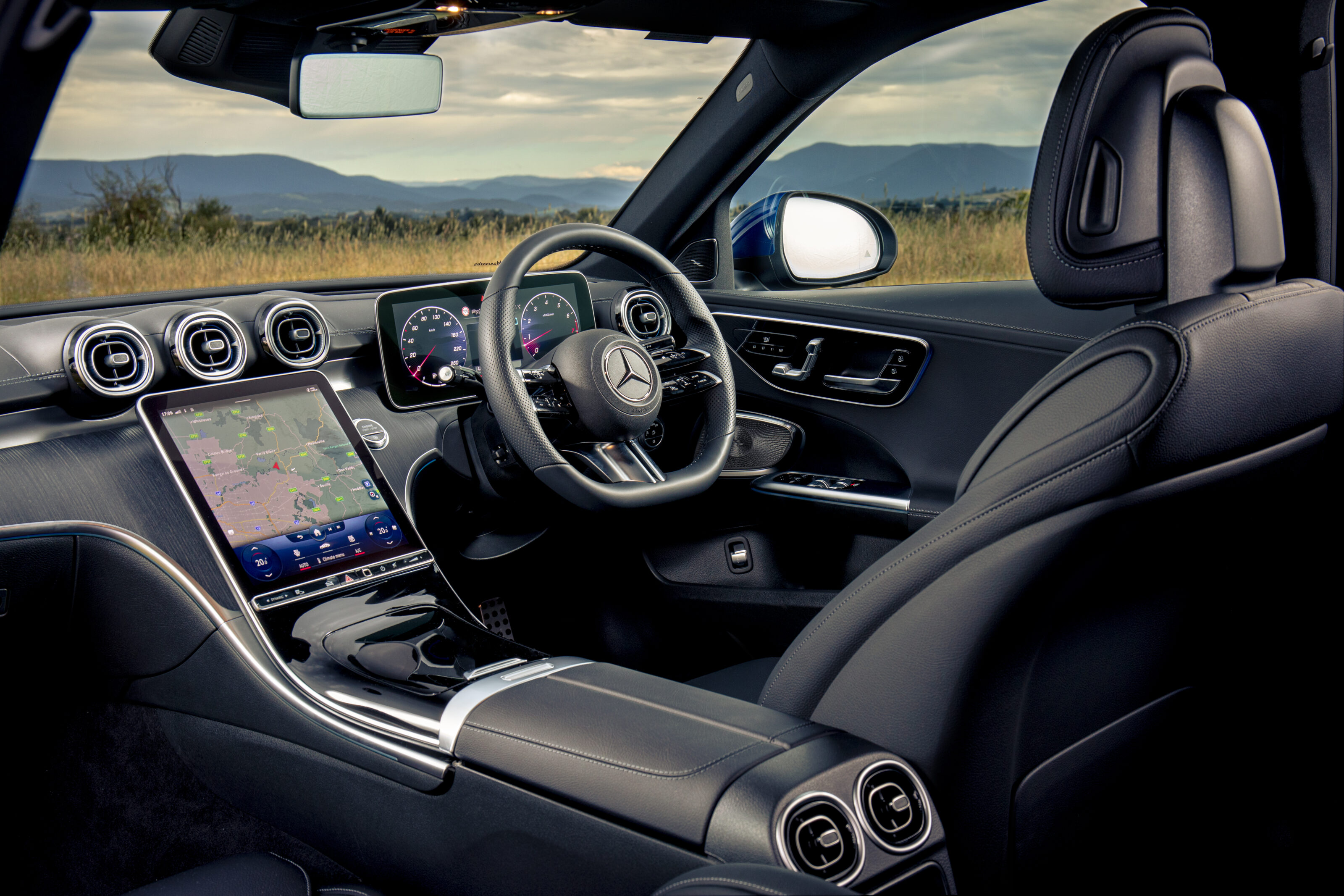
It’s inside where the new C-Class most obviously lays claim to being a baby S-Class. As in the S-Class, the screen is celebrated, and not amid the drab austerity you find in a Tesla.
A simple, rectangular digital instrument panel measuring 12.3 inches across the diagonal stands proud of a dash that rolls forward to a padded section under the windshield and enhances the sense of spaciousness for the front seat passengers.
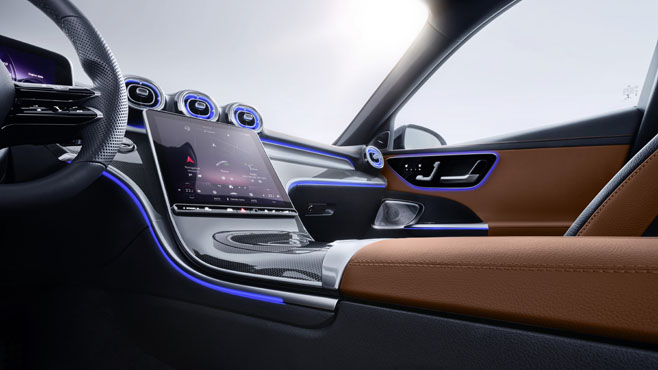
The portrait format 11.9-inch central touchscreen flies over the dash, the silver edging on the curved panel integrating it with the centre console to make it look as if it has taken off from somewhere near your elbow.
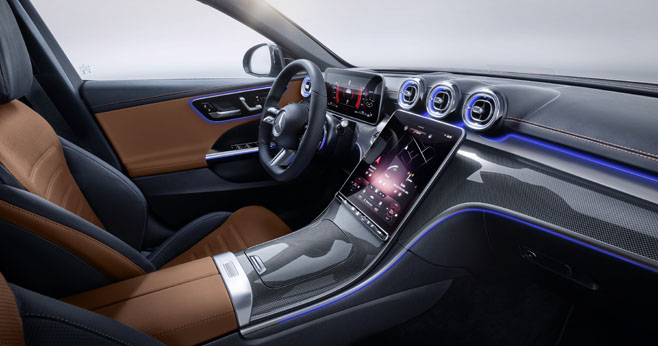
In the S-Class the console under the central touchscreen simply headbutts the lower dash; in the C-Class the console blends into the lower dash in a single seamless arc, its outer edges then curving left and right and running in an unbroken line to each corner of the cabin.
The whole lot is crowned with an array of glittery, ambiently lit ‘squircular’ vents nestled in to the padded upper of the dash. It’s a tour de force, giving the C-Class cabin an elegantly sumptuous ambience rivalling that of the S-Class.
The new C-Class rolls on a wheelbase 25mm longer than that of the W205, and much of that has gone into improving the rear seat legroom. The rear passenger H-point has also been dropped 10mm, improving headroom.
Like the new S-Class, the W206 C-Class is equipped with the second generation of the MBUX user interface. Both the instrument panel and touchscreen can be configured to display a variety of information in a variety of ways.
A fingerprint scanner at the lower edge of the central screen enables users to log in to MBUX, recalling personal settings in the system and protecting data such as favourites, most recent destinations, behaviour-based predictions, business calendar entries and emails. The system also allows for over-the-air updates.
The C-Class doesn’t get the trick 3D instrument panel nor the augmented reality head-up display that are available as options on the S-Class. But the optional head-up display in the C-Class projects a 23cm by 8cm virtual image the driver perceives as floating 4.5 metres ahead in space.
And the optional augmented video nav system overlays virtual objects like traffic signs, directional arrows, lane change recommendations and house numbers on a camera’s-eye view of the road ahead displayed in the central screen.
The new C-Class rides on MRA2, an evolution of the Mercedes Rear-Wheel Drive Architecture that debuted with the W205 model in 2014, which has been heavily reworked to package a larger battery for the plug-in hybrid models.
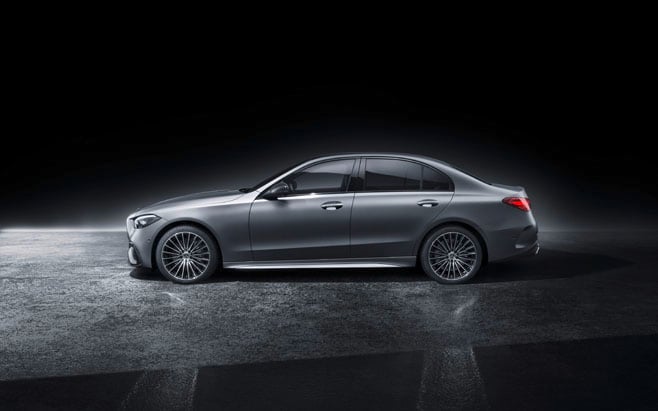
In addition to the 25mm increase in wheelbase, at 4751mm the sedan and wagon (below) models are 65mm and 49mm longer overall respectively than their predecessors, and width has increased 10mm. One dimension has shrunk, though.
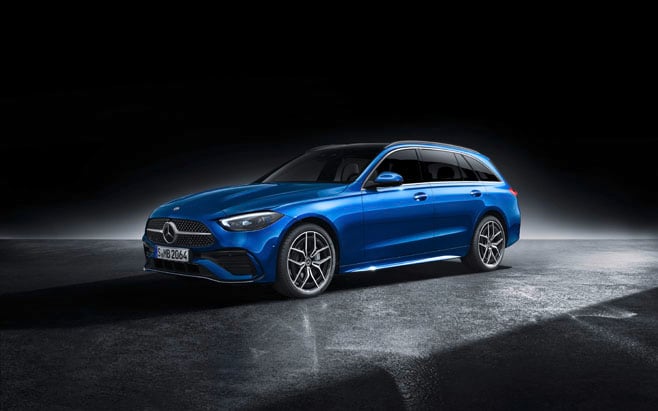
The new sedan’s roofline is 9mm lower than that of the current car and the wagon is 7mm lower.
Up front is a revised multi-link front suspension that follows the design of the set-up on the new S-Class and which C-Class chief engineer Christian Früh says improves steering response and on-centre feel.
And, as in the new S-Class, the C-Class will be available with optional four-wheel steering. But while the S-Class system will steer the rear wheels up to 10 degrees or 4.5 degrees, depending on wheel and tyre size, the rear wheels on the C-Class only pivot to a maximum of 2.5 degrees.
At speeds above 60km/h the rear wheels turn in the same direction as the fronts to enhance stability; below 60km/h the rear wheels turn in the opposite direction to improve agility.
Why just 2.5 degrees? The rear-steer system in the S-Class is all about making the big sedan more manoeuvrable, but in the smaller C-Class it’s all about handling.
“For driving dynamics, 2.5 degrees of rear steering is really enough,” says Früh, who headed Mercedes-Benz’s chassis systems and driver assistance systems departments before being made C-Class chief engineer in 2009.
With same-phase steering above 60km/h ensuring a more stable rear end, Früh’s engineers were able to tighten the W206’s steering ratio to improve the car’s responsiveness at speed. The quicker steering also makes it more agile around town.
“The car feels completely different to the W205,” says Früh. “I was surprised how different it feels.”
Though diesel is in the doghouse in the aftermath of the various emissions scandals – for example, from an almost 50 percent share of the UK market in 2016, oilburners slumped to less than 20 percent share last year – the new C-Class is offered with two versions of the OM264 M 2.0-litre four-cylinder diesel.
In C220d spec the engine makes 147kW at 4200rpm and 440Nm at 1800-2800rpm, while in C300d trim those outputs are bumped to 195kW at 4200rpm and 550Nm at 1800-2200rpm.
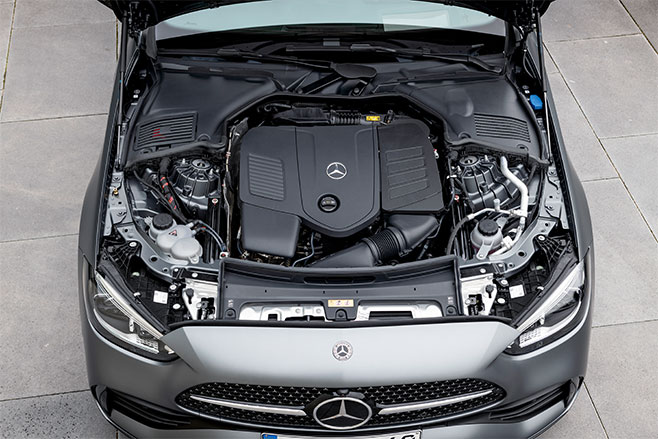
The big news is the OM264 M has a 48V integrated starter generator that can add an extra 15kW via the EQ Boost system, and the engine will shut down to allow the car to coast, further improving fuel efficiency.
The new C300 and C300 4Matic will be powered by the M254 2.0-litre four-cylinder turbo that made its debut last year in the facelifted E-Class. With the same bore diameter and bore centres, the M254 is basically the 3.0-litre M256 inline six with two cylinders cut off.
It also gets the 48V integrated starter generator set-up, with its 15kW EQ Boost and coasting functions. The engine makes 190kW at 5800rpm and 400Nm at 2000-3200rpm, enough to deliver a claimed 0-100km/h acceleration time of 6.0 seconds.
Though the name suggests otherwise, the new C200 and C200 4Matic models are powered by the 1.5-litre M264 engine that was fitted to some European-spec versions of the W205 C200 in 2018.
This engine also has a 48V integrated starter generator system, offering EQ Boost of 15kW and the coasting function.
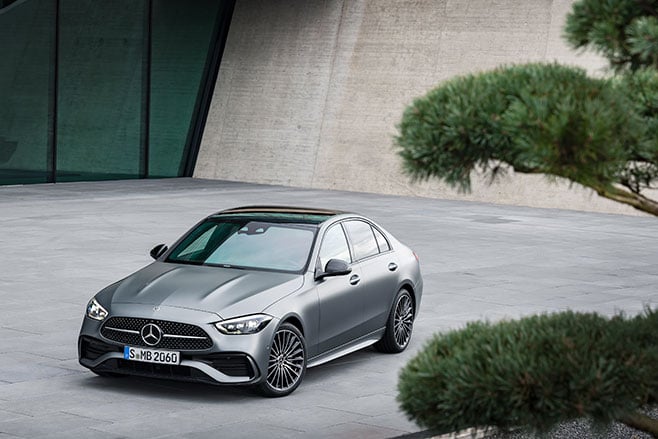
It pumps out 150kW at 5800-6100rpm and 300Nm at 1800-4000rpm. The 0-100km/h takes 7.3sec, or 7.1sec with the benefit of 4Matic all-wheel drive. The M264 is also used in a C180 version of the W206, its outputs knocked back to 125kW and 250Nm.
Most interesting of the new C-Class powertrains, though, is the plug-in hybrid. The internal combustion part of the powertrain will initially be the M254 2.0-litre petrol engine, with the OM264 M diesel being made available later.
The electric part comprises a 95kW/440Nm e-motor that is sandwiched between the engine and the nine-speed automatic transmission and is powered by a 25.4kWh battery mounted at the rear of the car. Designed and developed in-house, the 96-cell battery delivers a range of 100km on pure electric power, and it can be topped up in just 30 minutes when plugged into a 55kW charger.
A 100km EV range – more than enough to allow most urban commutes to be accomplished without burning a drop of dinosaur juice – has long been regarded as the optimum metric for a plug-in hybrid, and packaging a battery that would deliver that range drove the design of the whole car.
The new battery is narrower and thinner than the 13.5kWh unit in the W205 plug-in hybrid, but is twice the length, which is why the new C-Class is 30mm longer aft of the rear axle, with a completely different internal structure.
The carefully integrated slimline battery means there is no intrusion in the boot of the sedan hybrid, and the load area of the wagon version is 63mm longer. The battery weighs 218kg, 90kg more than the W205 hybrid’s battery, and all of it is over the rear axle.
Both sedan and wagon hybrids therefore get standard air suspension at the rear to better control camber change when loaded.
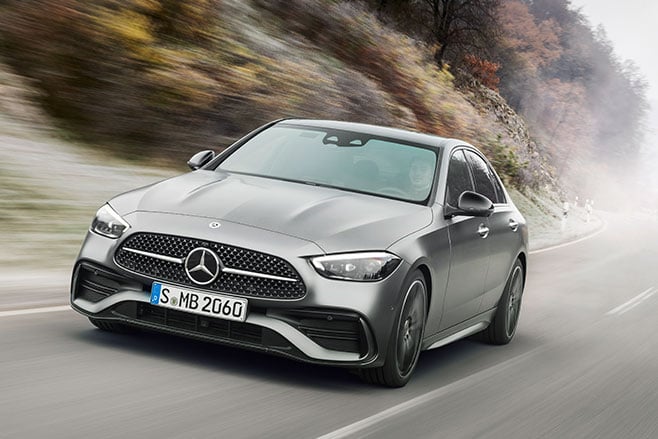
Despite the extra weight, the hybrid C-Class models should be pretty perky to drive, the e-motor’s 95kW augmenting the 190kW of the petrol model and the 147kW of the diesel, and its 440Nm of torque available instantly.
One other bit of good news: The location of the battery means the hybrids have perfect 50/50 front-to-rear weight distribution, Früh says.
Although everyone seems to want an SUV these days, the C-Class has been a best-seller for the past decade. More than 2.5 million of the W205 model alone have been sold since the car’s launch in 2014, with China being its single largest market since 2016.
The W206 – larger, with a more luxurious interior, a more dynamic chassis and offering a plug-in hybrid powertrain that’s the perfect halfway house for those not quite ready to make the leap to a pure EV – looks set to follow in its wheel tracks.
Stand by for the All-Terrain C-Class Wagon
In Europe and the US, the Mercedes E-Class All-Terrain is the thinking person’s alternative to an SUV, offering the dynamics and comfort of an all-wheel-drive E-Class wagon with height adjustable suspension that gives up to 156mm of ground clearance at speeds up to 32km/h.
No, you wouldn’t want to take it bush, but then you wouldn’t want to take most modern SUVs bush, either. The C-Class All-Terrain offers about the same capability, with better handling and fuel efficiency.
Chief engineer Christian Früh is a former member of the German national ski team, and is on record as saying his favourite variant of the new C-Class is the 4Matic wagon because it’s handy in the snow.
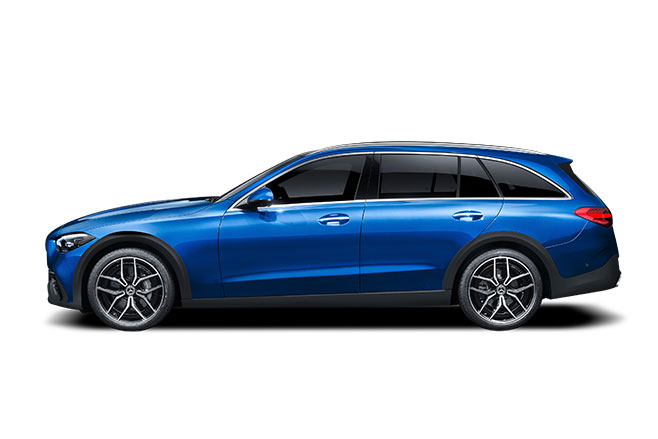
Was he not tempted to build a C-Class All Terrain?
“I’ve been thinking about one for three generations,” he admits.
“But you have to convince sales people and finance people.”
He pauses, then laughs: “This time I was successful. Hopefully you’ll drive it at the end of this year.”
You read it here first.
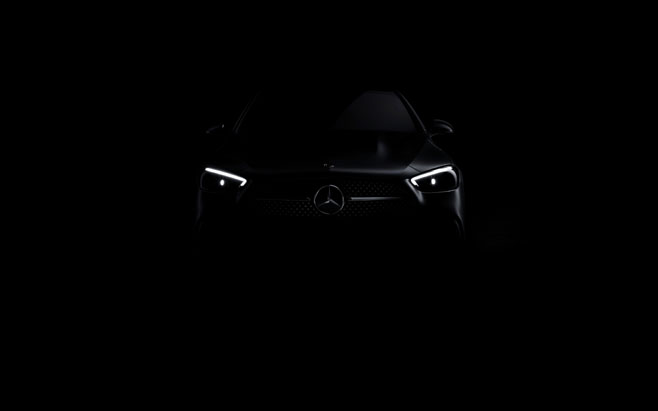
Mercedes-Benz C200 specifications
Engine 1496cc 4cyl, dohc, 16v, turbo Max Power 150kW @ 5800-6100rpm (plus 15kW electric boost) Max Torque 300Nm @ 1800-4000rpm (plus 200Nm electric boost) Transmission 9-speed automatic 0-100km/h 7.3sec (estimated) Economy 6.6L/100km (claimed) Price $70,000 (estimated) On sale Q4 2021
Snapshot
- Audi increases all prices across 2022 model range
- Price rise ranges from $600 to $7600
- First MY22 models to be delivered from March
Audi has announced a range of price increases for its 2022 model line-up, the second time the German manufacturer has done so this financial year.
Affecting all MY22 Audi models, the premium increase ranges from $600 for the entry-level A1 to $7600 for its flagship RS7 Sportback, before on-road costs are factored in.
A spokesperson for Audi Australia told Wheels the first examples of the cars affected will be delivered the customers in March, with the new pricing strategy reflecting an increase in costs across the supply chain.
“Audi Australia is implementing a price increase across the range for vehicles built in 2022, the first of which are due to be delivered to customers in March”, said the spokesperson.
“This action reflects Audi’s continued commitment to its successful product strategy: a very high level of features in all segments, as expected by premium buyers.
“The price increase has been brought about by rising material costs and continued supply challenges that are affecting Audi, like other manufacturers and other industries around the world.”
The last increase of list prices for Audi’s model range came in September 2021, with the biggest jump coming for a handful of RS models which went up by $5523 over their previous prices.
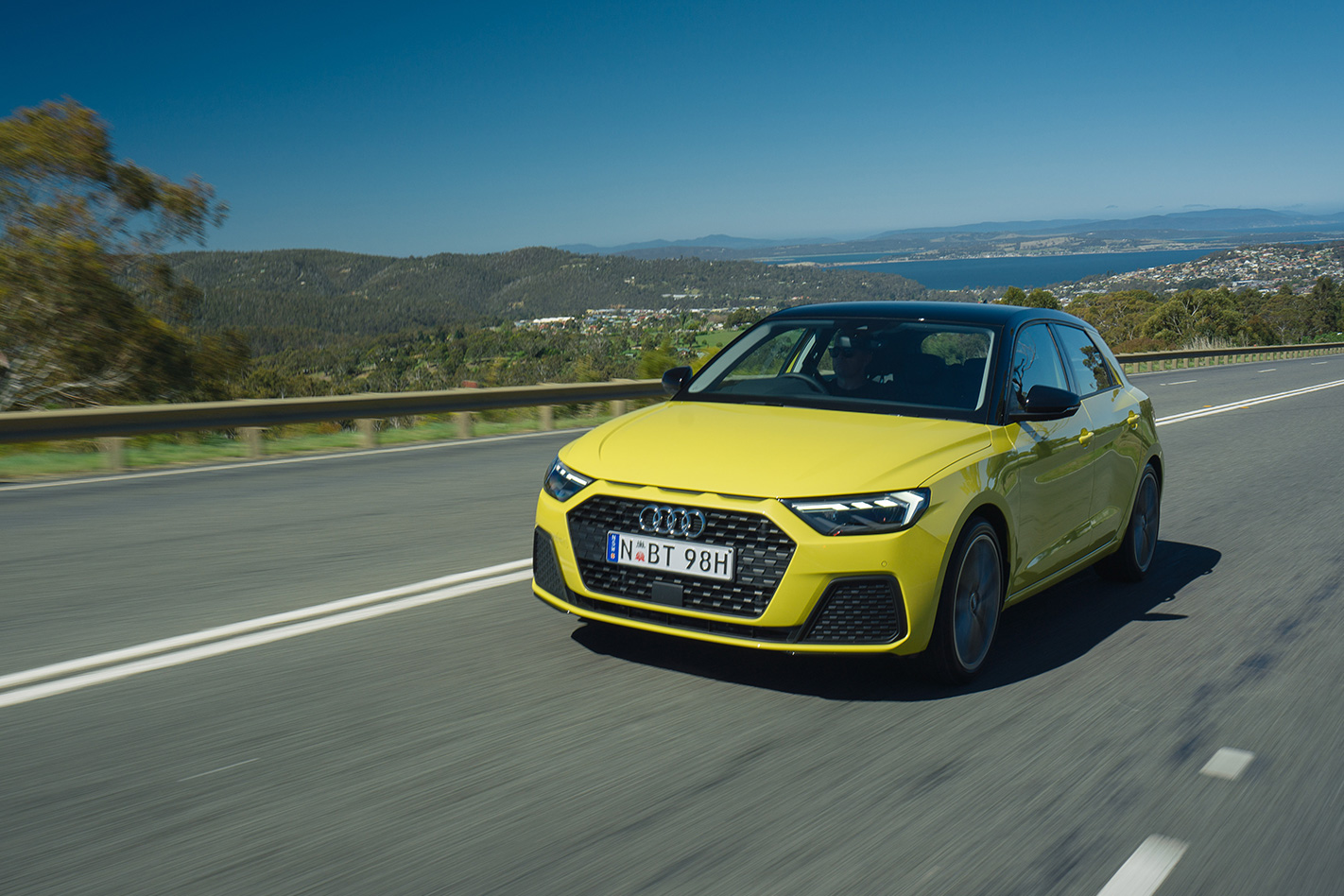
Audi A1 Australian pricing – February 2022
Prices exclude on-road costs.
| A1 30 TFSI | $33,800 (+$600) |
| A1 35 TFSIu00a0 | $36,400 (+$600) |
| A1 40 TFSI S lineu00a0 | $47,800 (+$600) |
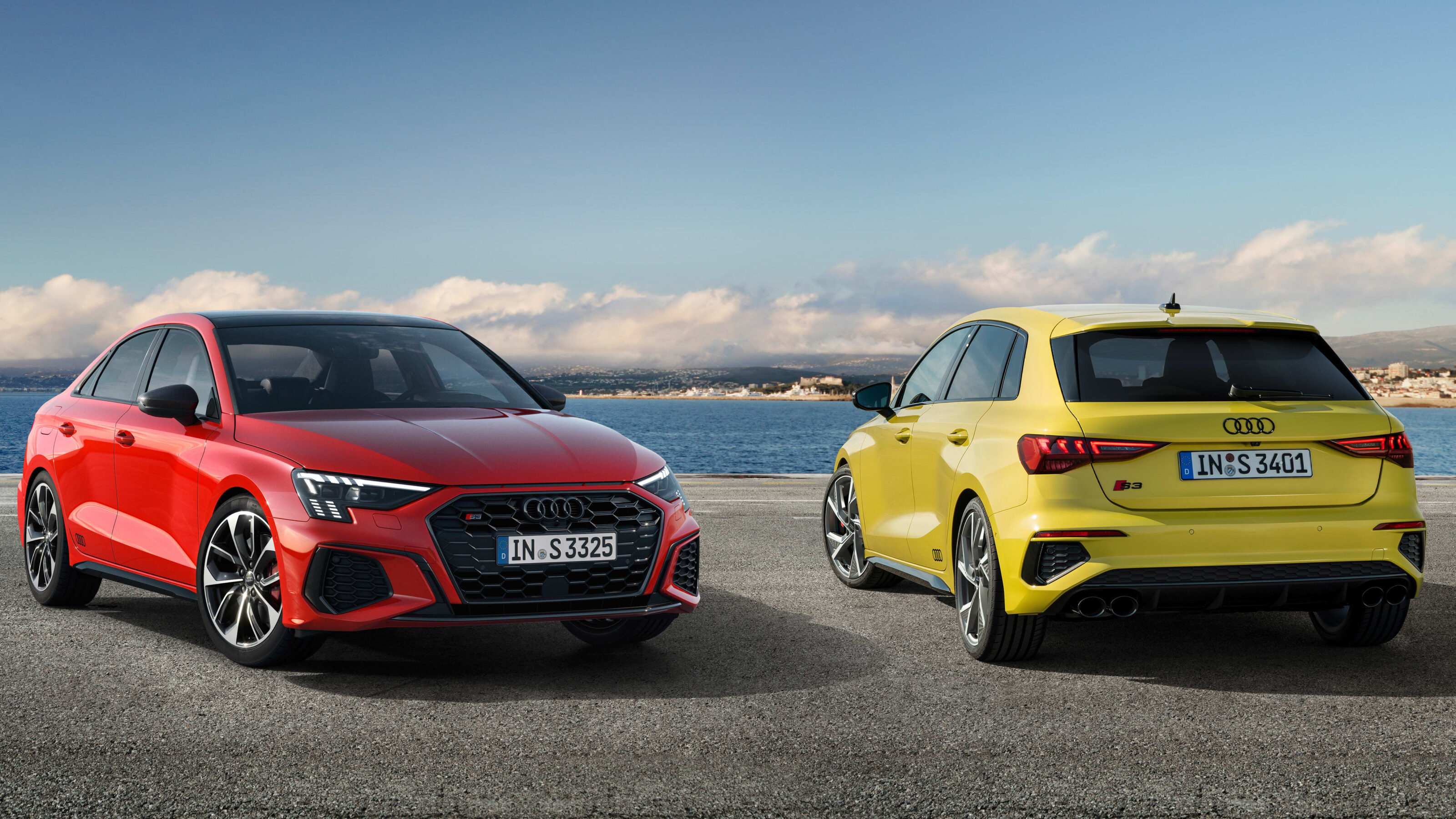
Audi A3 Australian pricing – February 2022
Prices exclude on-road costs.
| A3 Sportback 35 TFSI | $46,900 (+$600) |
| A3 Sedan 35 TFSI | $49,400 (+$600) |
| A3 Sportback 40 TFSI quattro | $53,500 (+$600) |
| A3 Sedan 40 TFSI quattro | $56,000 (+$600) |
| S3 Sportback | $70,700 (+$800) |
| S3 Sedan | $73,200 (+$800) |
| RS3 Sportback | $92,200 (+$800) |
| RS3 Sedan | $94,700 (+$800) |
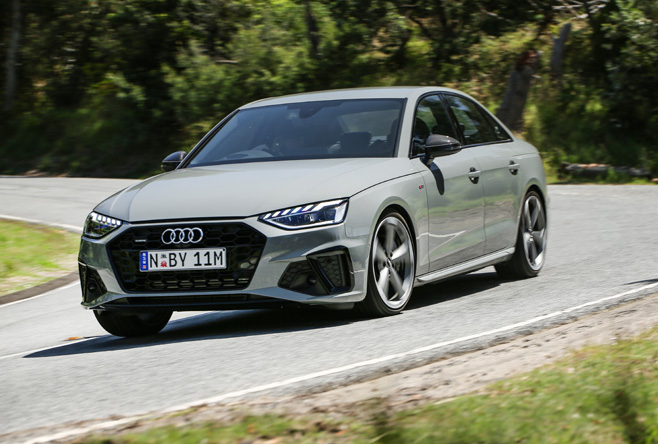
Audi A4 Australian pricing – February 2022
Prices exclude on-road costs.
| A4 Sedan 35 TFSI | $59,900 (+$2200) |
| A4 Sedan 35 TFSI S line | $63,900 (+$2100) |
| A4 Sedan 45 TFSI quattro S line | $73,500 (+$2700) |
| A4 allroad 40 TDI quattro | $75,200 (+$2500) |
| A4 Avant 45 TFSI quattro S line | $76,000 (+$2700) |
| A4 allroad 45 TFSI quattro | $77,700 (+$2800) |
| S4 Sedan 3.0 TFSI quattro | $105,000 (+$3500) |
| S4 Avant 3.0 TFSI quattro | $107,500 (+$3500) |
| RS4 Avant 2.9 TFSI quattrou00a0 | $155,400 (+$4500) |
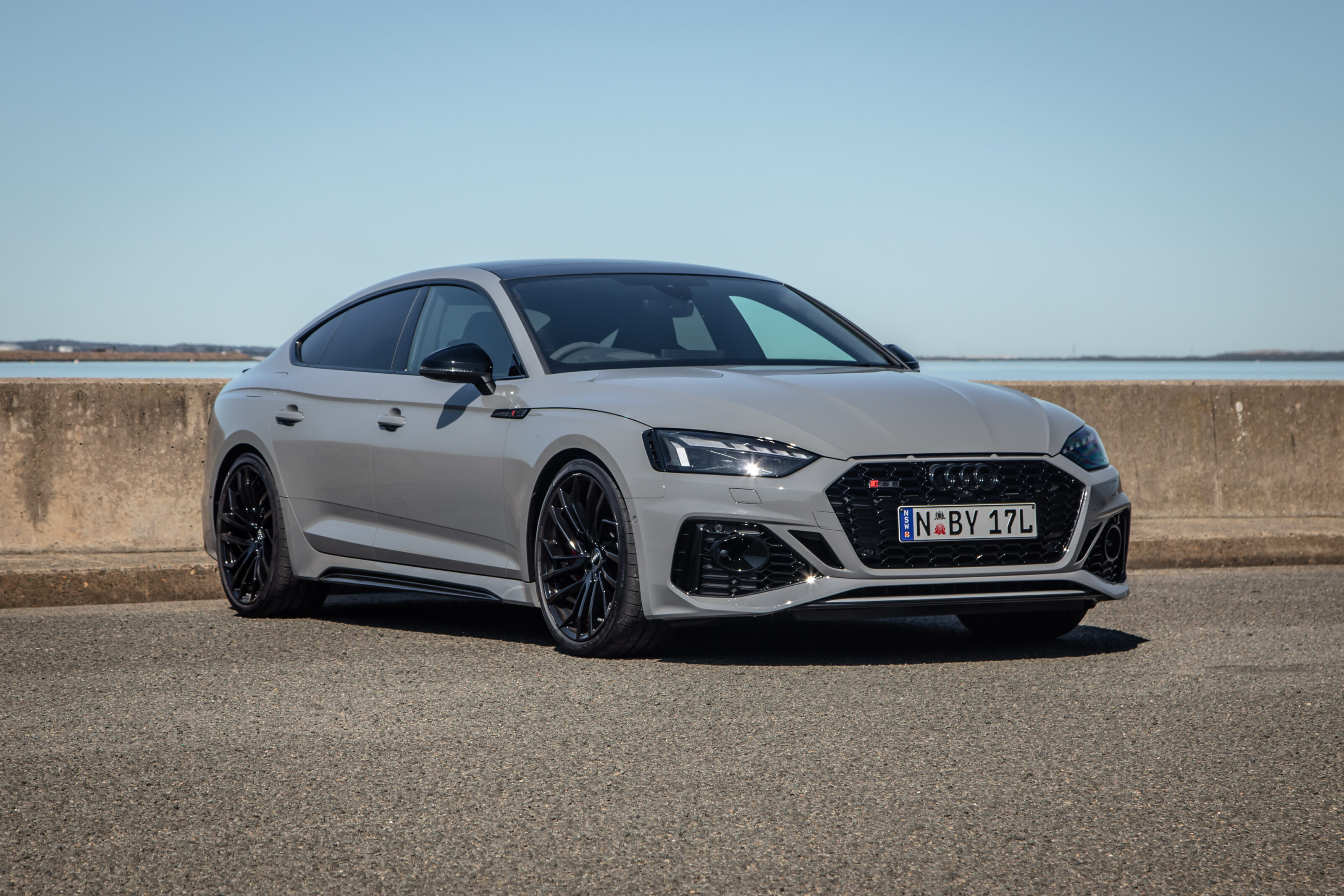
Audi A5 Australian pricing – February 2022
Prices exclude on-road costs.
| A5 Sportback 40 TFSI S line | $76,500 (+$3000) |
| A5 Sportback 45 TFSI quattro S line | $84,500 (+$3400) |
| A5 Coupe 45 TFSI quattro S line | $84,500 (+$3400) |
| A5 Cabriolet 45 TFSI quattro S line | $98,000 (+$3400) |
| S5 Sportback 3.0 TFSI quattro | $112,700 (+$4000) |
| S5 Coupe 3.0 TFSI quattro | $112,700 (+$4000) |
| S5 Cabriolet 3.0 TFSI quattro | $126,200 (+$4000) |
| RS5 Sportback 2.9 TFSI quattrou00a0 | $158,800 (+$4900) |
| RS5 Coupe 2.9 TFSI quattro | $158,800 (+$4900) |
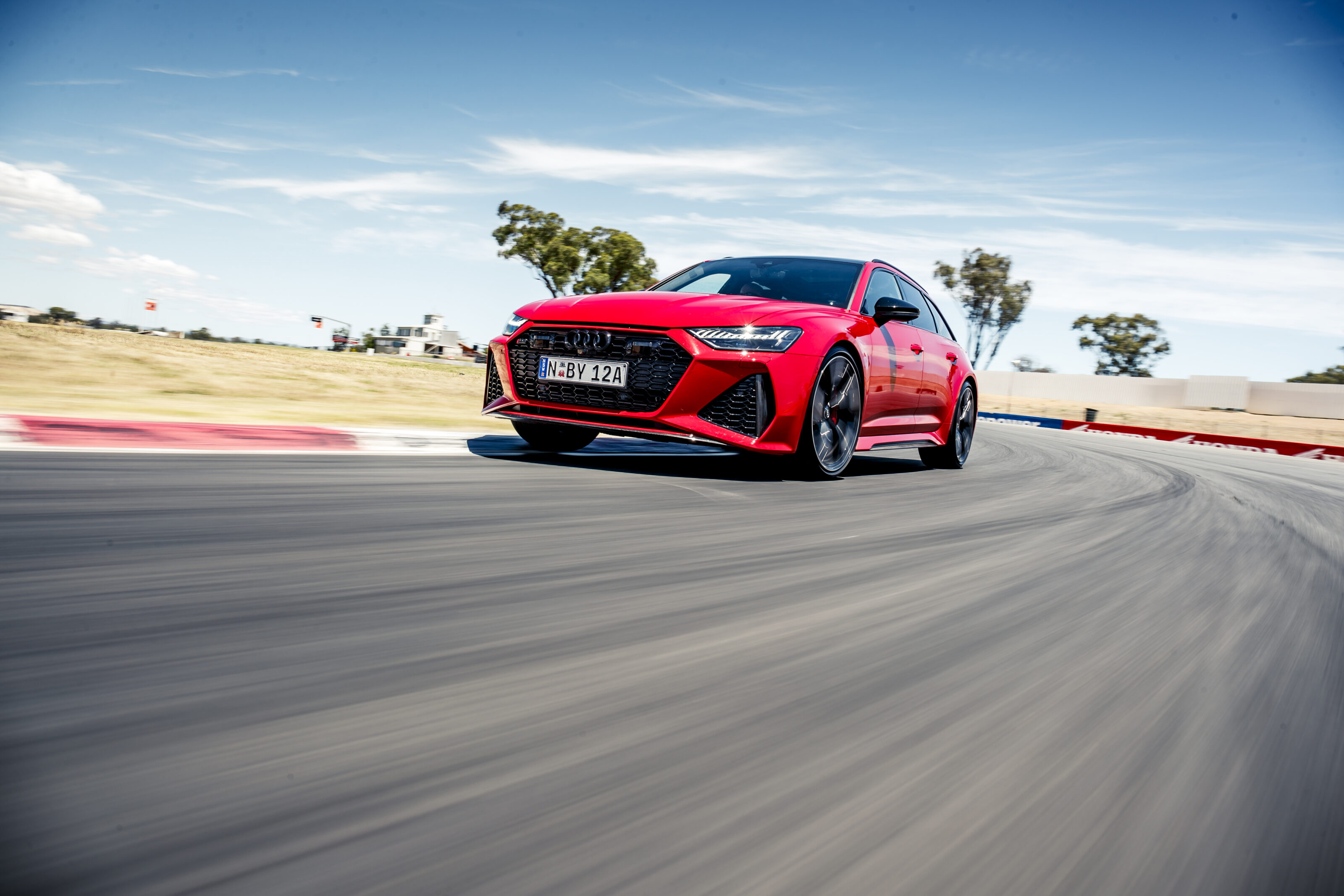
Audi A6 Australian pricing – February 2022
Prices exclude on-road costs.
| A6 Sedan 40 TFSI | $90,600 (+$3700) |
| A6 Sedan 40 TFSI S line | $94,600 (+$3700) |
| A6 Sedan 45 TFSI quattro S line | $113,000 (+$4100) |
| A6 allroad quattro 45 TDI | $116,400 (+$2300) |
| A6 Sedan 55 TFSI quattro S line | $123,000 (+$4100) |
| S6 Sedan 2.9 TFSI quattro | $158,000 (+$5000) |
| RS6 Avant 4.0 TFSI quattro | $227,700 (+$6300) |
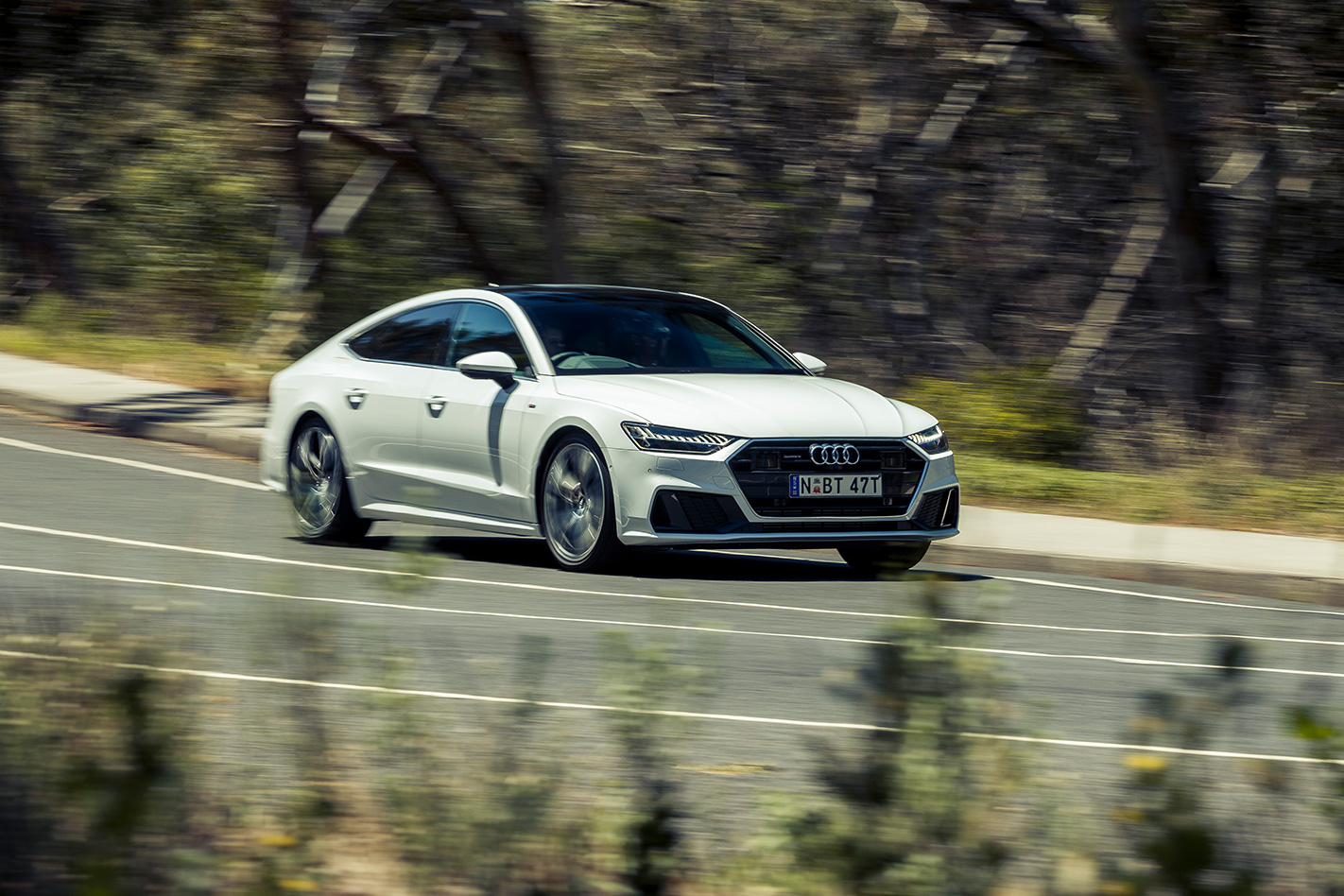
Audi A7 Australian pricing – February 2022
Prices exclude on-road costs.
| A7 Sportback 45 TFSI quattro | $123,600 (+$5700) |
| A7 Sportback 55 TFSI quattrou00a0 | $141,300 (+$5700) |
| S7 Sportback 2.9 TFSI quattrou00a0 | $168,900 (+$6400) |
| RS7 Sportback 4.0 TFSI quattro | $237,000 (+$7600) |

Audi Q2 Australian pricing – February 2022
Prices exclude on-road costs.
| Q2 35 TFSI | $45,200 (+$2600) |
| Q2 40 TFSI quattro S line | $52,200 (+$2600) |
| SQ2 2.0 TFSI quattro | $66,900 (+$2600) |
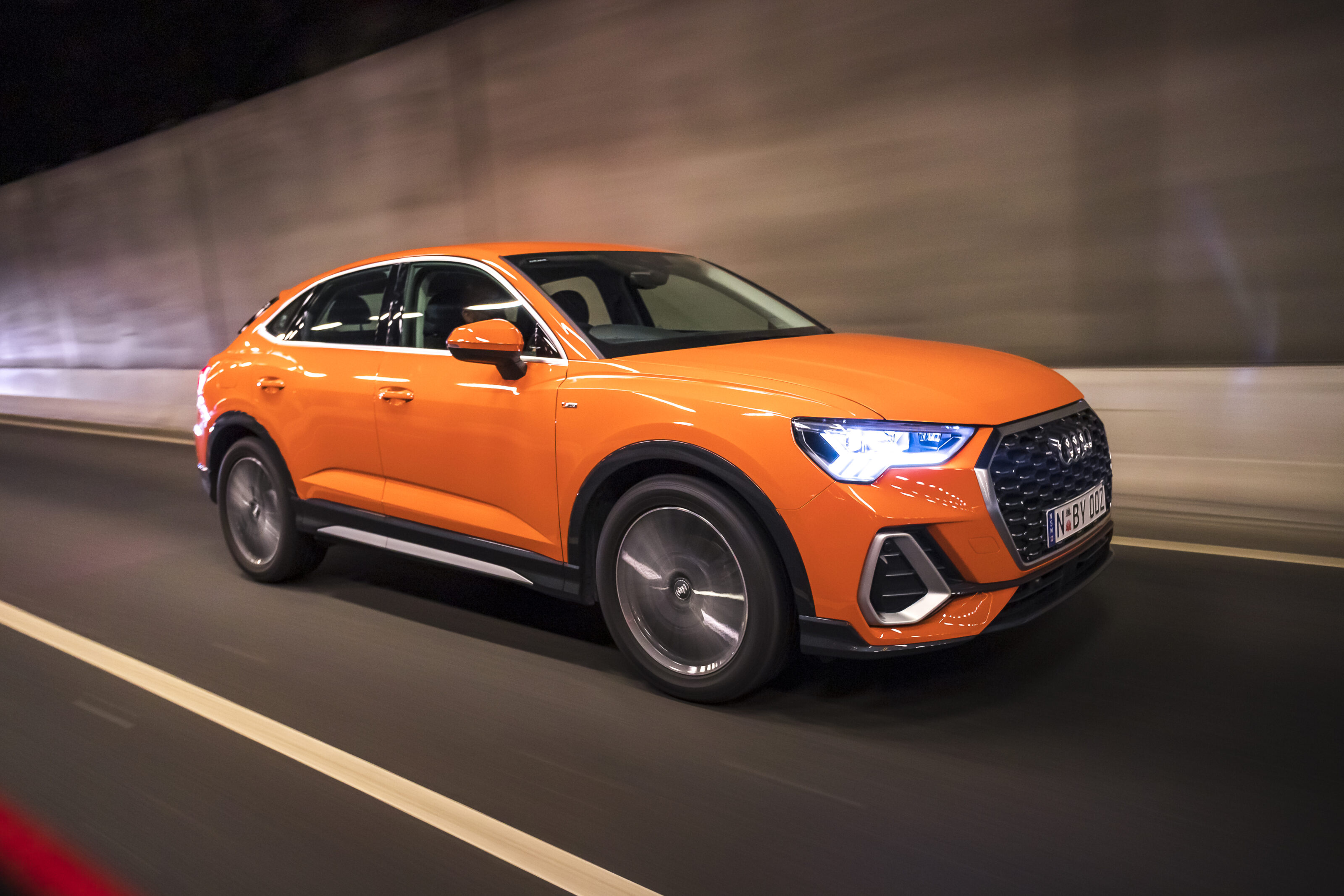
Audi Q3 Australian pricing – February 2022
Prices exclude on-road costs.
| Q3 35 TFSI | $50,300 (+$2000) |
| Q3 Sportback 35 TFSI S line | $53,800 (+$2000) |
| Q3 40 TFSI quattro | $57,900 (+$2000) |
| Q3 40 TFSI quattro S line | $63,700 (+$2100) |
| Q3 Sportback 40 TFSI quattro S lineu00a0 | $66,100 (+$2100) |
| RSQ3 2.5 TFSI quattro | $96,200 (+$3300) |
| RSQ3 Sportback 2.5 TFSI quattro | $99,200 (+$5300) |
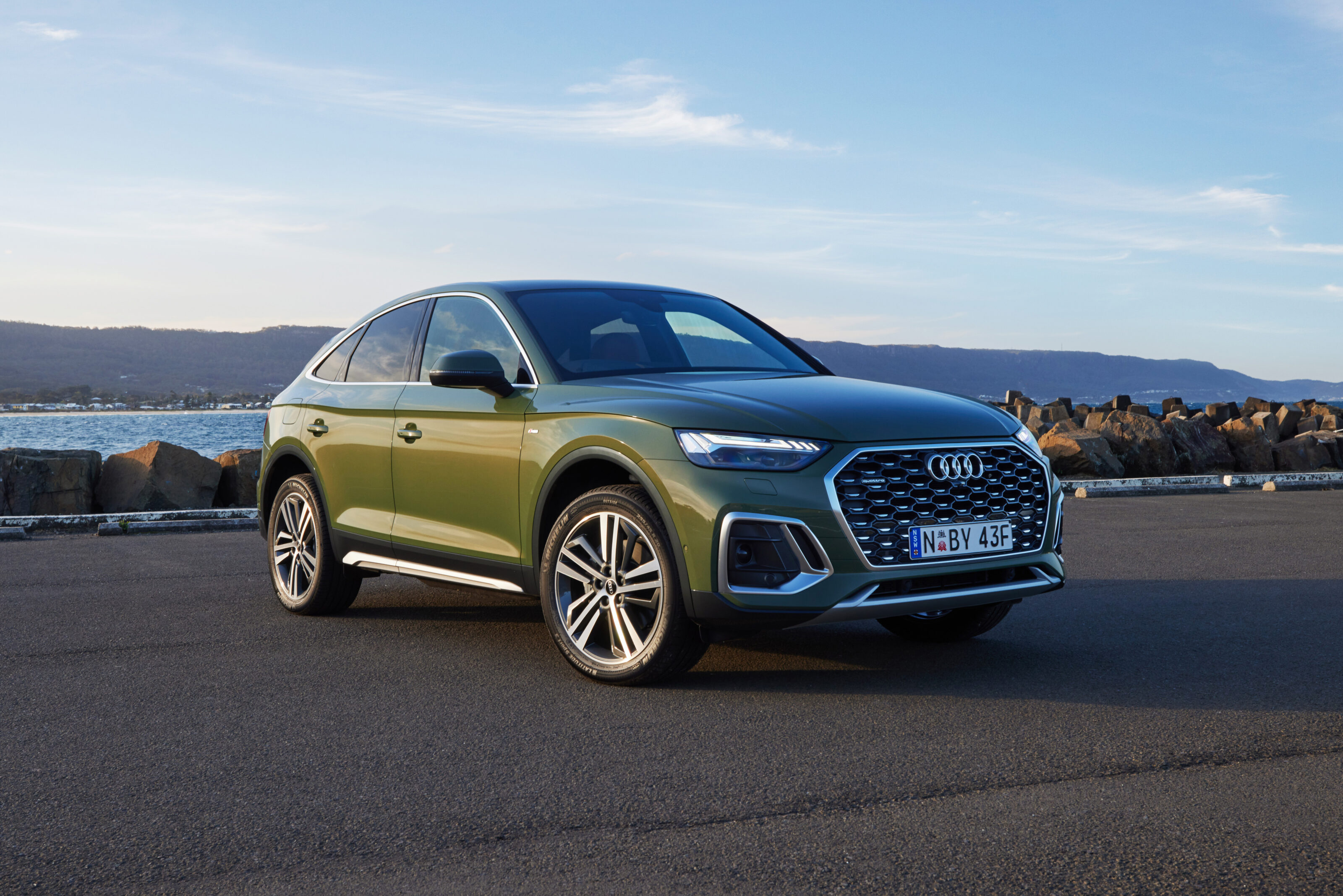
Audi Q5 Australian pricing – February 2022
Prices exclude on-road costs.
| Q5 40 TDI quattro S tronic | $72,700 (+$2700) |
| Q5 45 TFSI quattro S tronic | $73,800 (+$3200) |
| Q5 40 TDI quattro S tronic Sportu00a0 | $78,700 (+$2800) |
| Q5 45 TFSI quattro S tronic Sport | $80,800 (+$3200) |
| Q5 Sportback 40 TDI quattro S lineu00a0 | $82,200 (+$4500) |
| Q5 Sportback 45 TFSI quattro S lineu00a0 | $90,800 (+$4500) |
| Q5 50 TDI quattro tiptronic S line | $94,900 (+$3900) |
| SQ5 3.0 TDI quattro | $110,400 (+$3900) |
| SQ5 Sportback 3.0 TDI quattro | $116,400 (+$6500) |
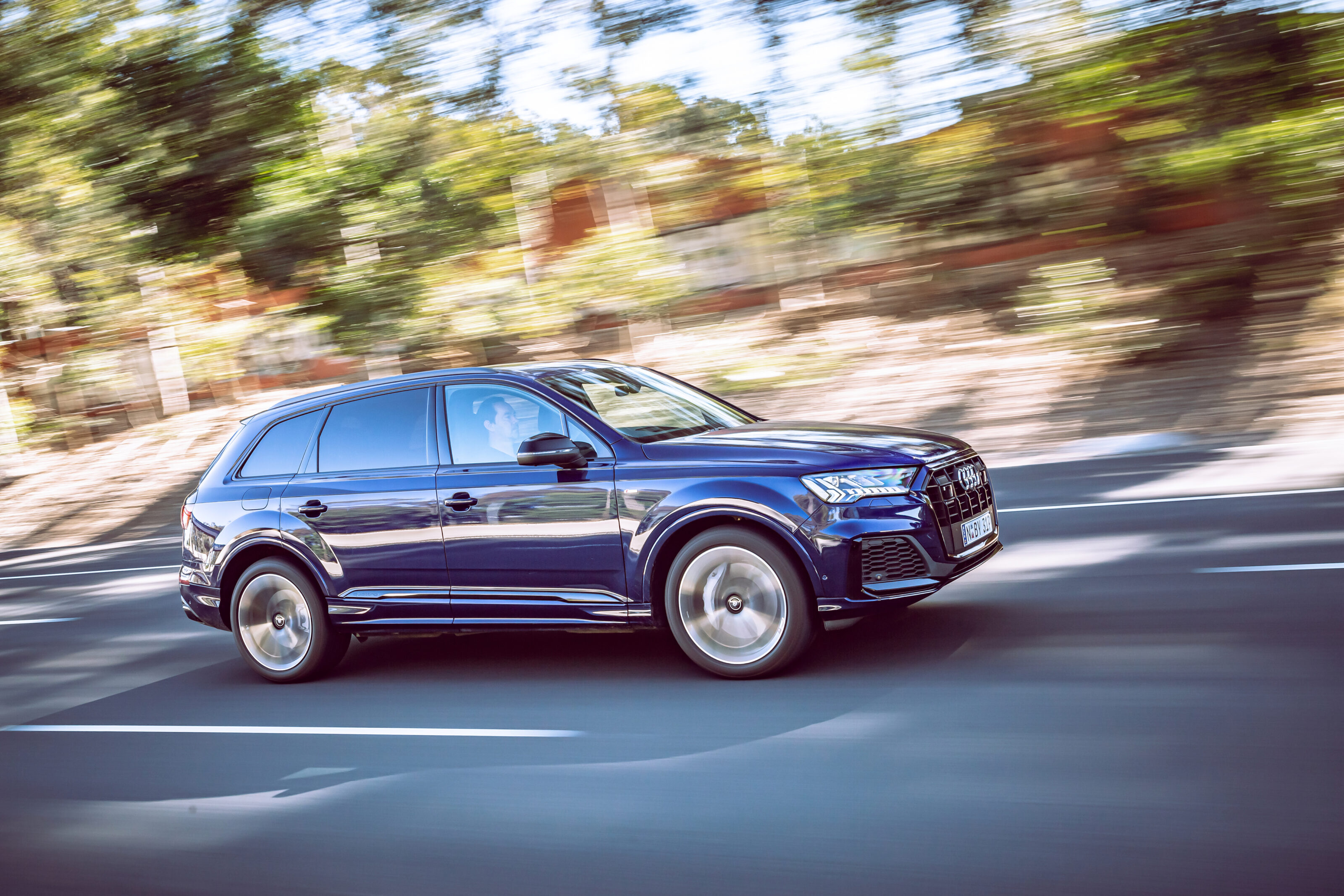
Audi Q7 Australian pricing – February 2022
Prices exclude on-road costs.
| Q7 45 TDI quattro | $109,100 (+$4000) |
| Q7 50 TDI quattro | $120,300 (+$4200) |
| Q7 50 TDI S line quattro | $128,300 (+$4400) |
| Q7 55 TFSI S line quattro | $128,300 (+$4400) |
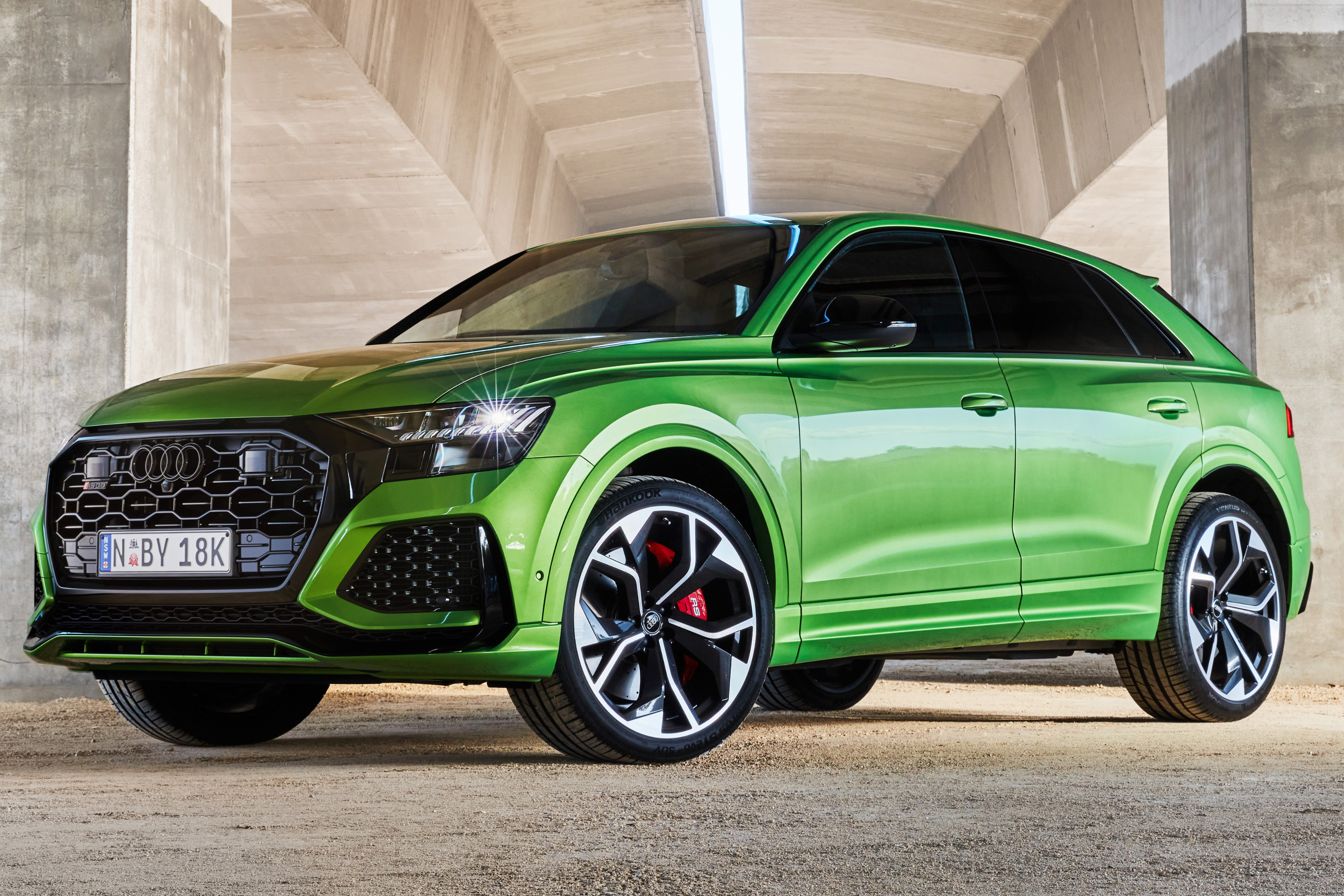
Audi Q8 Australian pricing – February 2022
Prices exclude on-road costs.
| Q8 50 TDI S line quattro | $135,300 (+$4900) |
| Q8 55 TFSI S line quattro | $135,900 (+$4900) |
| RSQ8 TFSI quattro | $221,300 (+$7400) |
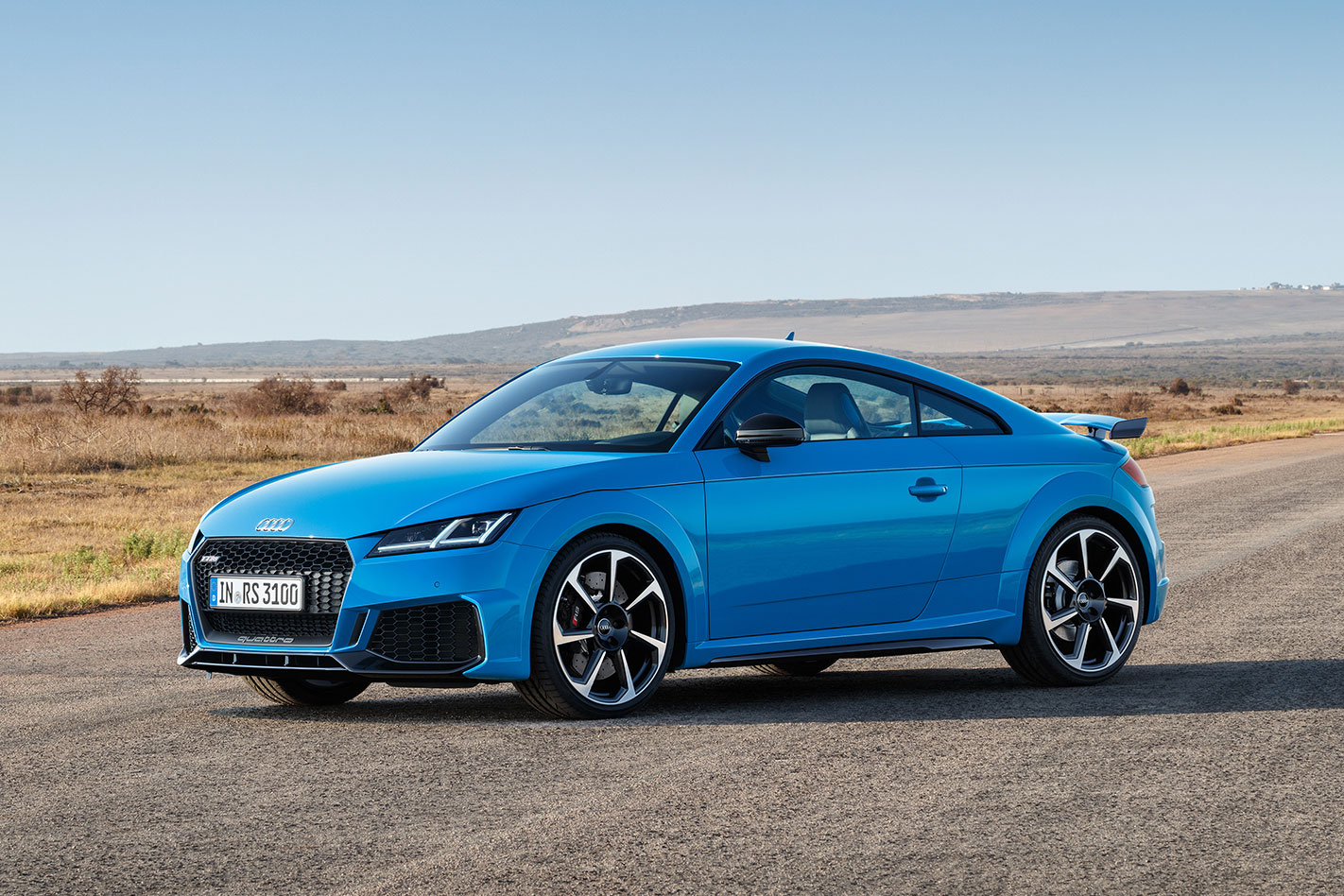
Audi TT Australian pricing – February 2022
Prices exclude on-road costs.
| TT Coupe 45 TFSI quattro | $85,300 (+$29000 |
| TT S Coupe 2.0 TFSI quattro | $104,500 (+$3300) |
| TT RS Coupe 2.5 TFSI quattro | $142,000 (+$4100) |
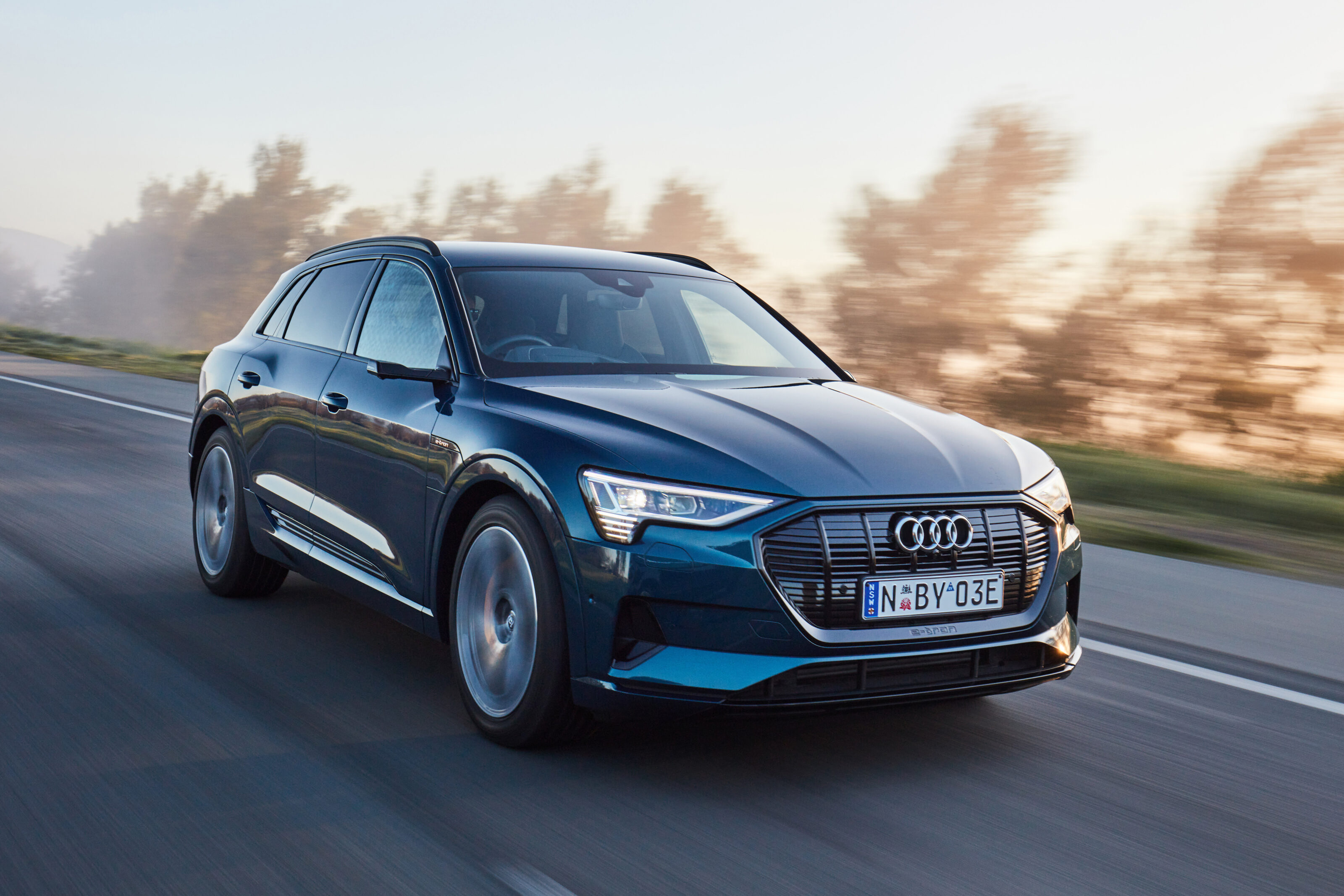
Audi E-Tron Australian pricing – February 2022
Prices exclude on-road costs.
| E-Tron 50 quattrou00a0 | $139,900 (+$2800) |
| E-Tron 55 quattro | $148,900 (+$2800) |
| E-Tron Sportback 50 quattro | $150,900 (+$2800) |
| E-Tron Sportback 55 quattro | $159,900 (+$2800) |
| E-Tron S | $168,400 (+$2800) |
| E-Tron S Sportback | $175,400 (+$2700) |
It’s not a great surprise that the Porsche 992 911 GT3 is fast. It was always going to be fast.
What is surprising, is how much faster it is than expected. Despite having no significant power bump, Porsche’s changes to the suspension and aero have made an impressive improvement to what was already a class-leading machine.
To get to grips with the new-generation GT3 we had a thrash at Sydney Motorsport Park as part of the car’s launch program.
You can read our comprehensive review of the track-ready 911 here, but what we want to dive into today is the data!
When we first strapped into the GT3 we thought a lap of SMP’s 3.93km Gardner Circuit layout in 1:45.0 would be reasonable.
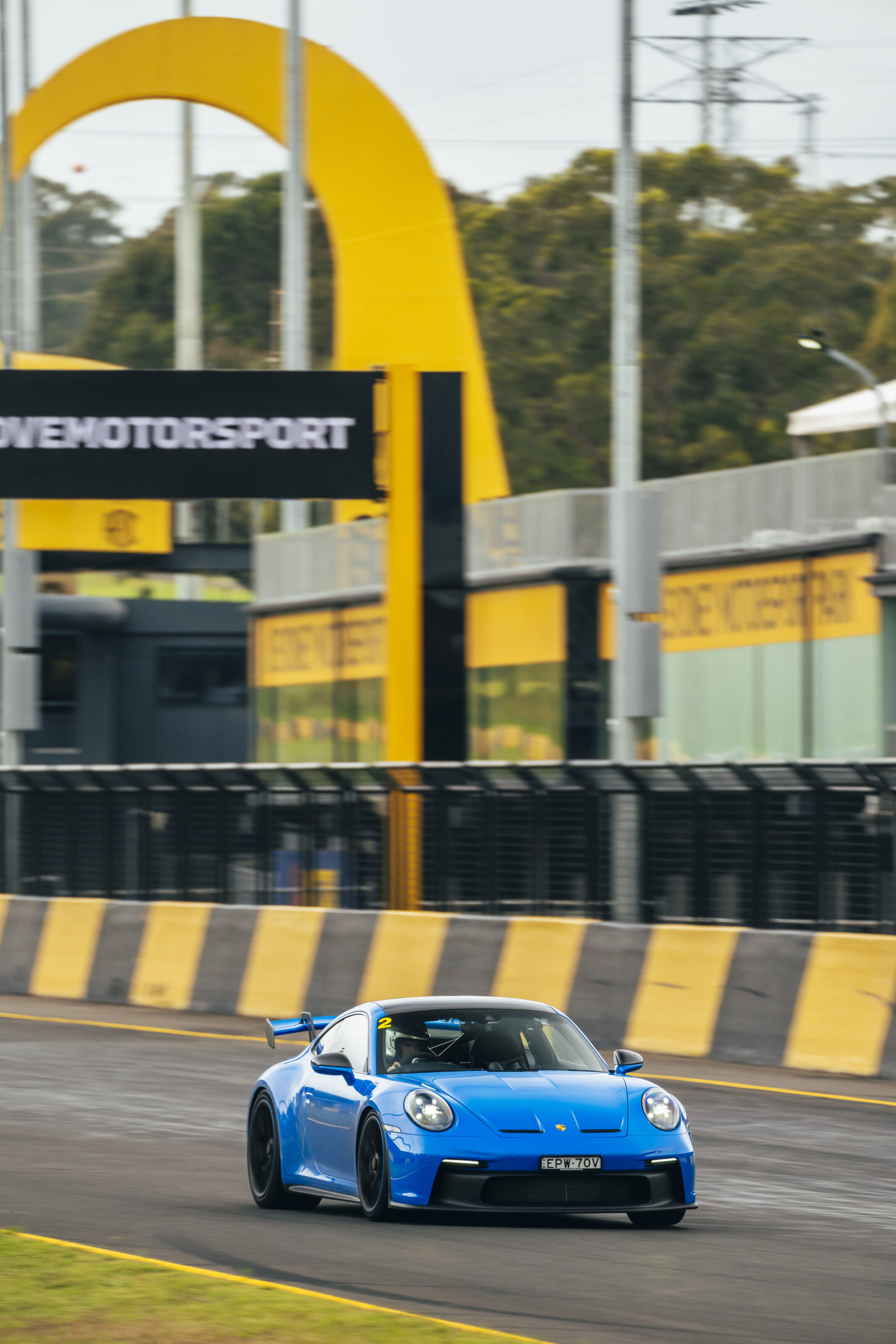
Turns out we underestimated the depth of the GT3’s talents, with our first flyer stopping the clock at 1:40.3. Bang!
Rain hampers our running somewhat, but eventually our benchmark time is lowered to 1:38.9.
In 2010, Warren Luff managed a best time of 1:44.2 in a Nissan R35 GT-R – the quickest car in that year’s PCOTY field.
Speaking of our man Luffy, MOTOR’s resident racing driver will be on hand for PCOTY once again in 2022, helping us test the hottest metal in the country at the Phillip Island Grand Prix Circuit. We’ll be sure to report back on how the GT3 fares at Australia’s fastest permanent circuit.
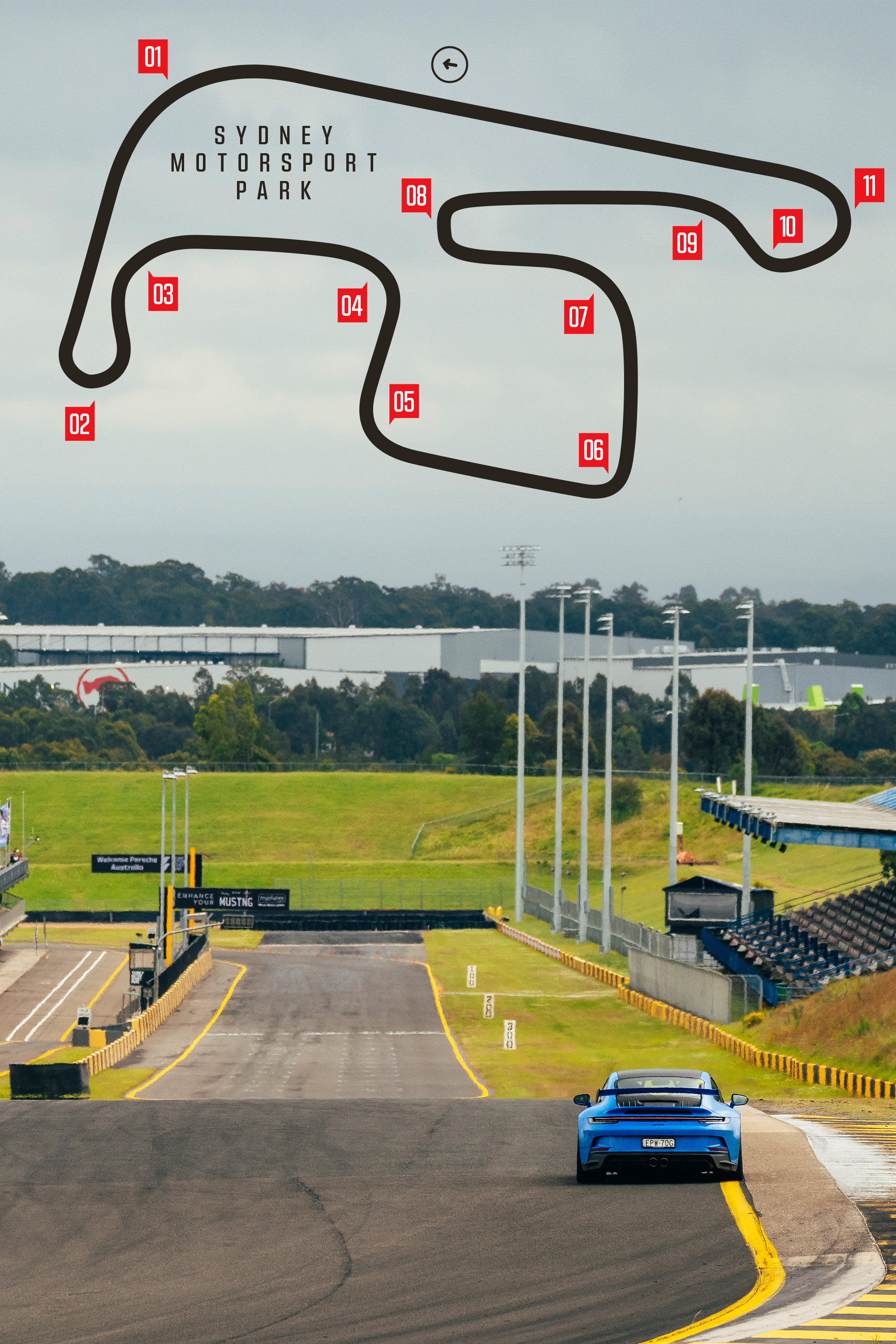
But for now, here’s our turn-by-turn analysis of the 911 GT3 at Sydney Motorsport Park:
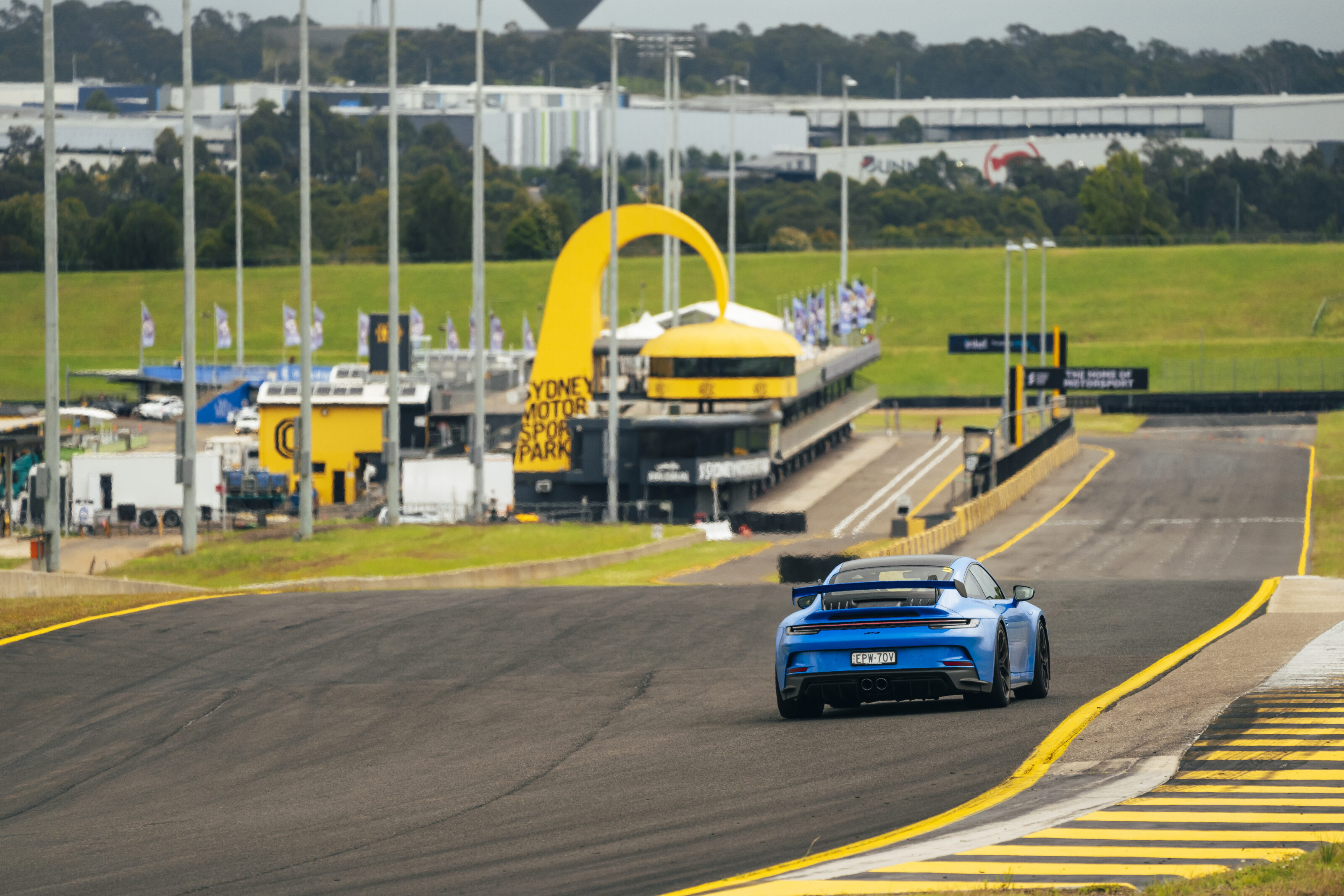
Turn One
Brake from 245km/h but carry plenty of speed in with excellent stability.
Gear: 4th
Apex speed: 175km/h
Turn Two
Brake late and carry it through the apex. Patience required on exit.
Gear: 2nd
Apex speed: 65km/h
Turn Three
A gentle lift is all that’s required to ensure the nose remains stuck.
Gear: 3rd
Apex speed: 125km/h
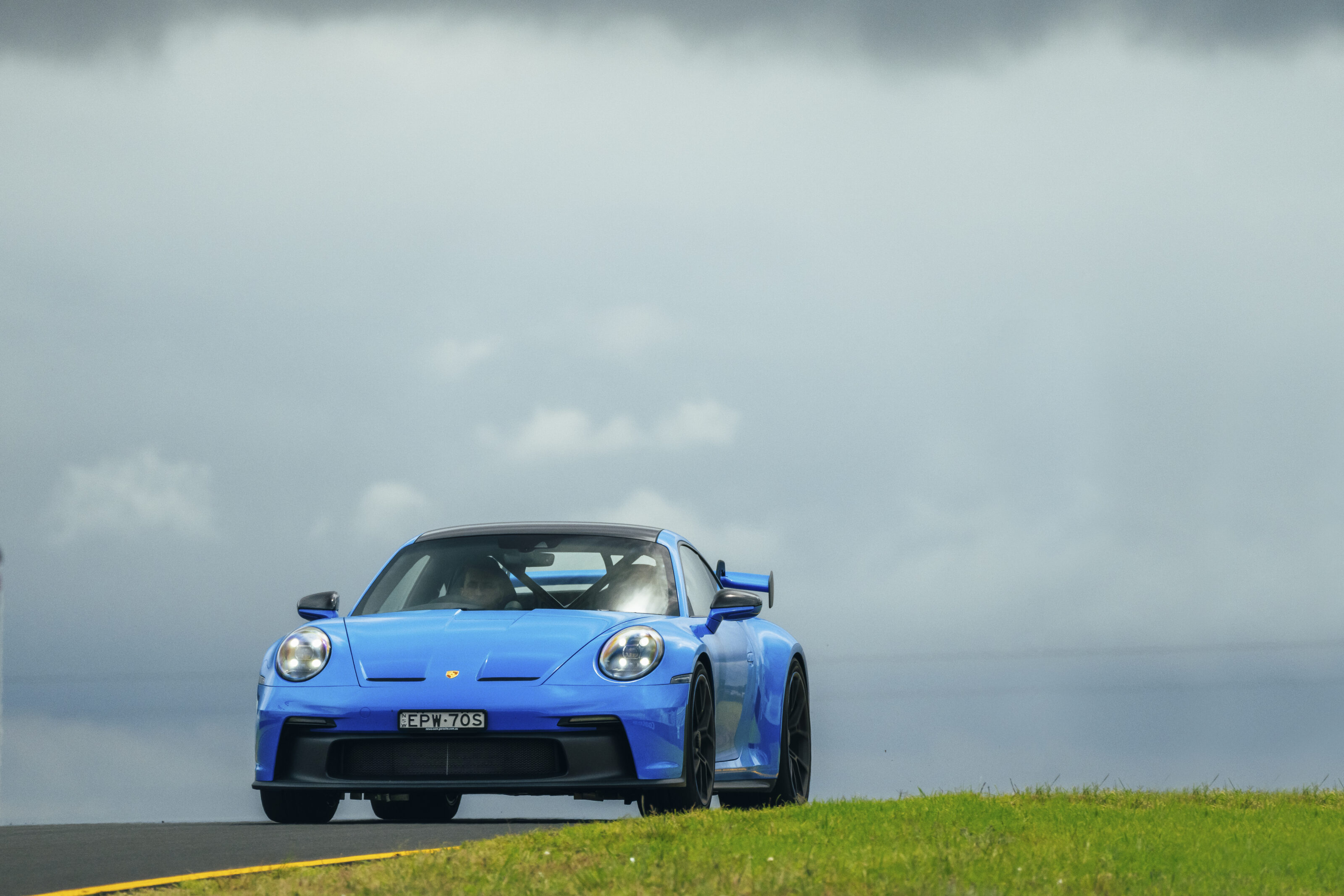
Turn Four
Let the car settle after the crest then brake hard and don’t run wide.
Gear: 3rd
Apex speed: 115km/h
Turn Five
Hug the apex then let the car run out onto the concrete on exit.
Gear: 3rd
Apex speed: 100km/h
Turn Six
Brake late but don’t get greedy – there’s kerb to use on the outside.
Gear: 2nd
Apex speed: 80km/h
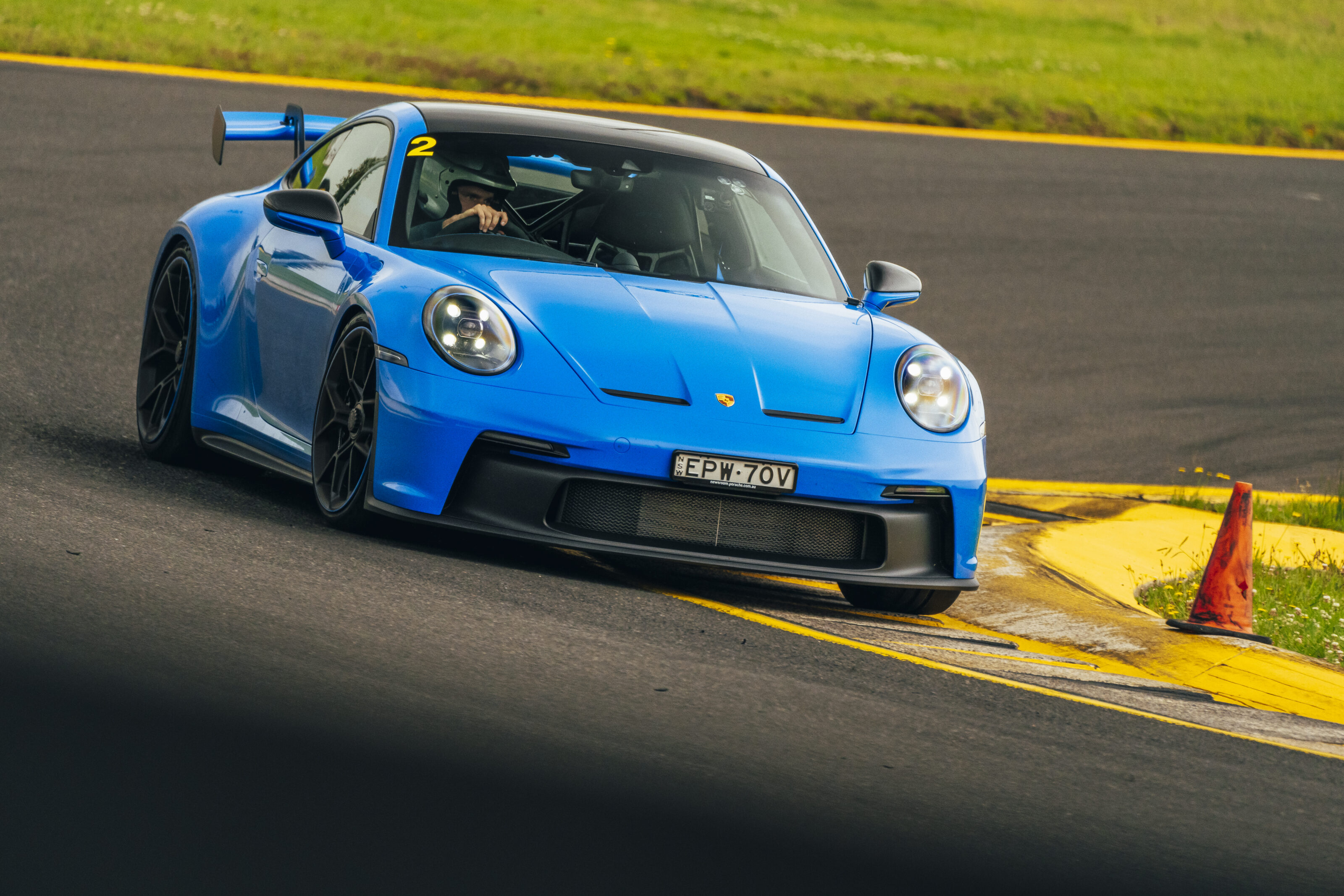
Turn Seven
Blind entry is challenging and it’s easy to run wide on hairpin approach.
Gear: 3rd
Apex speed: 125km/h
Turn Eight
Be careful not too upset the rear under brakes, then try for a clean exit.
Gear: 2nd
Apex speed: 65km/h
Turn Nine
Commitment required. Carry as much speed as possible while realising that you have to turn left in a moment.
Gear: 4th
Apex speed: 145km/h
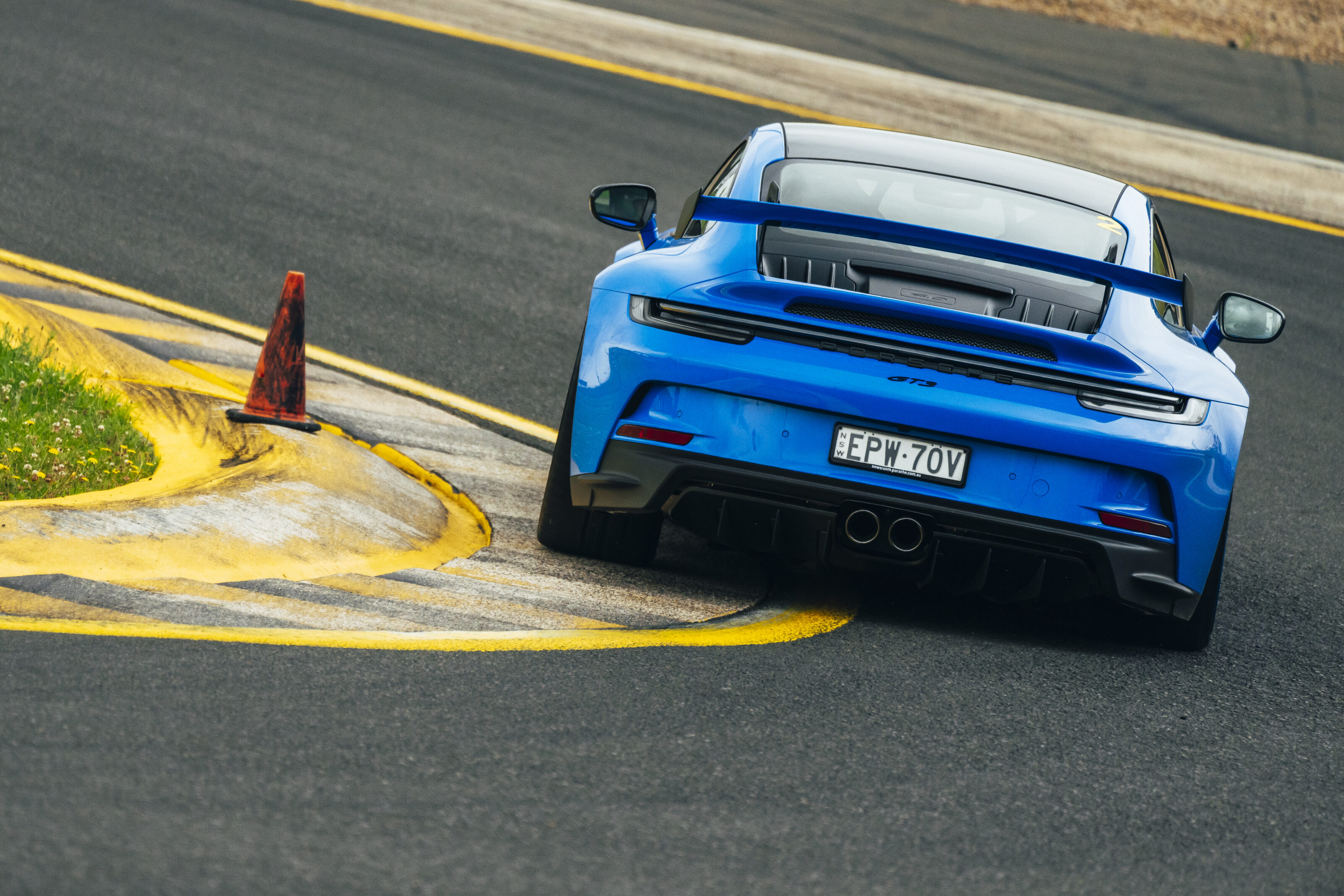
Turn 10
Try and keep the minimum speed as high as possible and use the concrete on the outside to open up the corner.
Gear: 3rd
Apex speed: 100km/h
Turn 11
Patience! Throttle application is crucial to ensure a good run down SMP’s long main straight.
Gear: 3rd
Apex speed: 90km/h
Australian automotive fulfillment business AutoNexus and electric vehicle charger supplier EVSE Australia have announced a partnership which brings the industry leaders together.
Across AutoNexus’s 30 physical locations around Australia, EVSE Australia will install EV chargers for customers of the fleet conversion and vehicle logistics business.
Delivering up to 22kW of recharging power each, the multiple chargers at each location allow customers to charge their EVs from the time they turn up to the door, supporting a variety of contemporary electric vehicles.
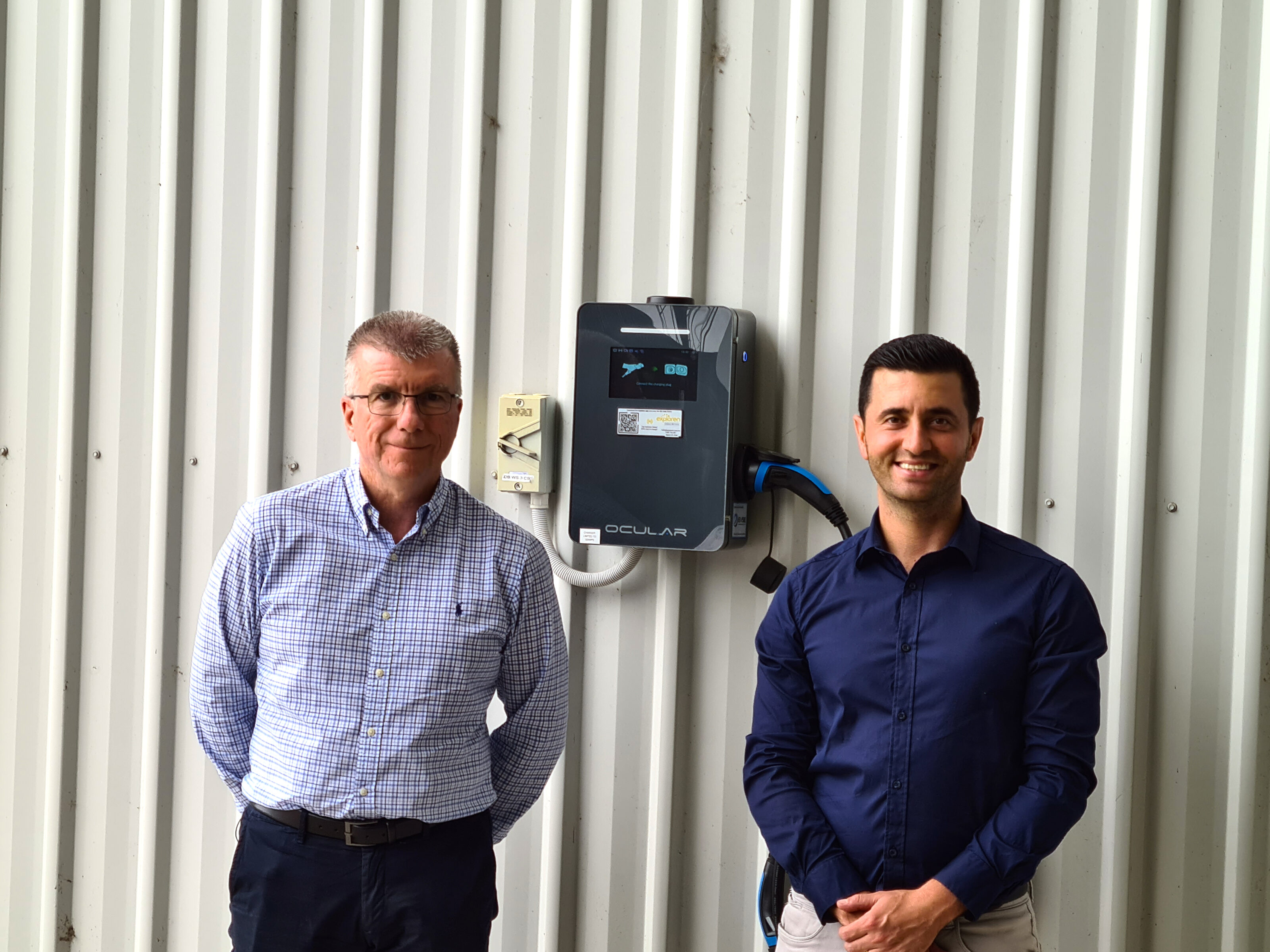
Managing Director of AutoNexus, Darren Bowler, said the partnership would strengthen the business’s support for customers and manufacturers alike.
“Our partnership with EVSE and the installation of chargers across all our sites marks a significant upgrade in the electric vehicle infrastructure of AutoNexus facilities and ensures we are ready to support the growing electric vehicle needs of our current and future OEM partners,” said Bowler.
“This proactive investment places AutoNexus in a unique position in the vehicle logistics market and ensures we are the partner of choice to support any brand’s electric vehicle requirements from the moment they arrive at our vehicle compounds.”
EVSE National Sales Manager, Sam Korkees, believes the network will be ready within the next month, delivering on-demand charging for AutoNexus’s customer base.
“EVSE is proud to support AutoNexus in their EV ambitions. AutoNexus believes in an electric future with a clear understanding of the growth in electric vehicles in Australia,” said Korkees.
“From a business perspective it’s rare to work with such an organised and efficient company. We were able to coordinate a nationwide roll out in under three weeks and we hope to continue to work with AutoNexus as they move towards a clean energy future.”
Jetson is an electric vertical take-off and landing (eVTOL) maker and says it has already sold out its 2022 allocation, with only a few spots left to order in 2023.
The Swedish company launched its new Jetson One ‘personal electric aerial vehicle’ in October last year and has been taking a steady stream of orders, including in Australia.
Pricing for the Jetson One is the equivalent of around $130,000 with an initial deposit of $30,000.
On its website, Jetson lists the location of orders with many coming from the US, but three have been taken from Australia in Cullen Bay, Manningham, and Nundah, according to the site.
Proving its popularity, there are just three spots left for 2023 orders on chassis numbers 117-119.
Jetson says that it has taken a total of 3000 pre-orders since the official launch, though only 12 will be produced in 2022.
The craft is a single-seat electric ‘flying vehicle’ of sorts, with eight electric motors and a weight of 86 kilograms without a pilot. The chassis is an aluminium space frame and the body is made from carbon-kevlar. Specs are a top speed of 101km/h and a flight time of around 20 minutes.
While it has sold more than 100 of its Jetson One crafts, the company is still looking for further investment to expand.
“It is important for us to find the right investors now as we expand and grow our company. Jetson is looking globally for a company that shares our vision,” said Tomasz Patan, the brand’s co-founder and CTO.
Ex-Google and GoodTrust CEO, Rikard Steiber, is a senior adviser and says Jetson is the first company to actually make flying cars available to anyone.
“Great to see Jetson, a Swedish company, beat the international competition to market with the first commercially available flying car,” he said.
“With Jetson One the dream of flying now becomes a reality. Everyone can now become a pilot”.
