
Few things are as European as a city van. Spend time in a European city or even town and you can’t move for these things. I was once held up on the A9 between Glasgow and Inverness by a plumber’s Caddy doing 50mph in a 60 zone and then accelerating to 70mph when an overtaking lane appeared even though the road was covered in two inches of snow.
Anyway, the point is that they’re extremely popular and none more so in Australia than the Volkswagen Caddy. In 2019 before everything caught fire and then got sick, seven out of ten city vans sold in Australia were a Caddy. That’s extraordinary for any segment and while these vehicles aren’t as popular as bigger full-size vans (think VW’s own Transporter or the evergreen Hiace), that’s still a lot of vans.
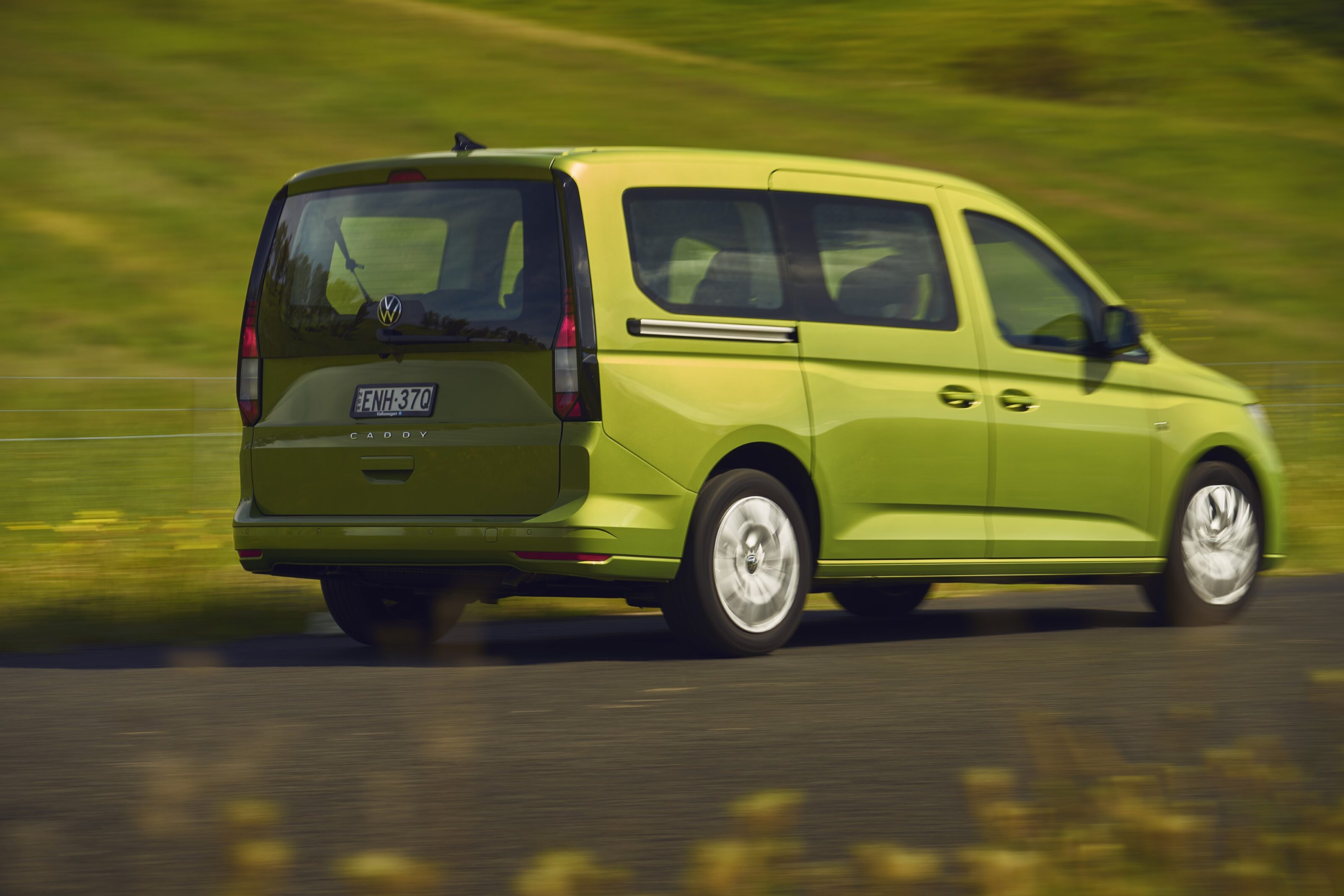
That was then – Caddy 4 is no more. Caddy 5 is here and technically has been since August. But as things have been a mite tricky in recent months, it’s only now we’ve been able to get our hands on the new beastie in the new people mover spec, now known as Caddy.
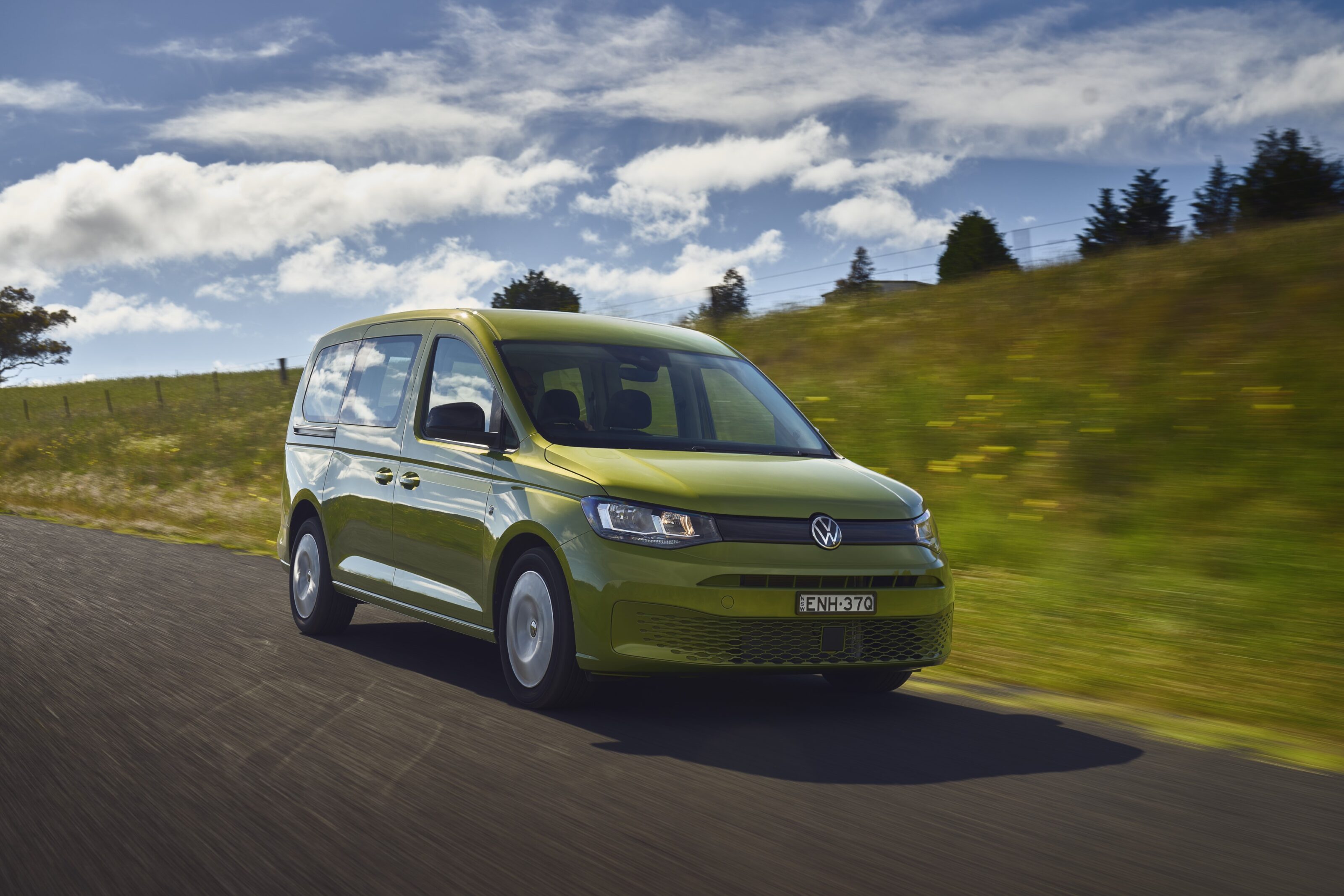
Pricing and Features
Right. There’s a lot going on here and I don’t just mean the colours. Pricing for the Caddy 5 stretches from $34,990 for the short wheelbase Caddy Cargo petrol six-speed through to $57,690 for the as-yet-not-here Caddy California.
For the moment, the range stops just short of the Cali, with the DSG-equipped Caddy Life 320TDI people mover version.
Or at least, it will. You see during December, that $34,990 will buy you a diesel-powered manual Caddy Cargo until a price rise takes effect on New Year’s Day. This puts me in something of a bind because while the Caddy 5 has been available since August, there are already hefty price rises on the way and insertion of the petrol variants.
You could – with few people starting an argument – divide the Caddy 5 range into three distinct lines. So does VW, but I’ve made a couple of tweaks.
The first line is the full-on commercial city van, with the two-seat Caddy Cargo and five-seat Caddy Crewvan. You can read about them in my separate review next week. Available in short wheelbase and Maxi (long wheelbase) versions, you can get it with petrol and diesel options and with both manual and DSG transmissions.
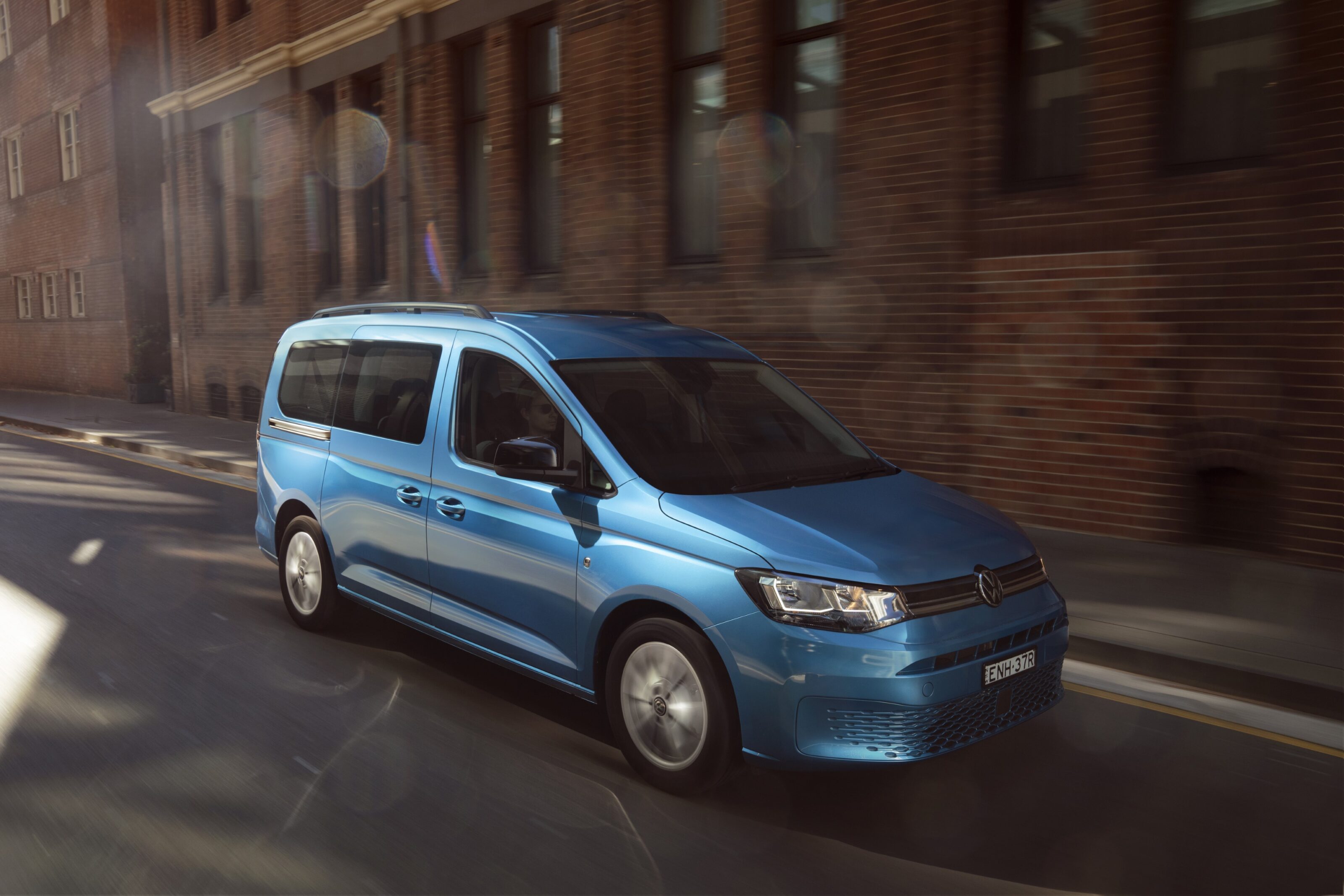
Jumping to the third category, we find the single spec California, which is a pure lifestyle camper-style vehicle that looks extremely cool.
The second is the mixed-use or dual-purpose line. Whereas the Cargo is all about Euro palettes fitting across the load area, the mixed-use ones throw in a second and third row of seats. All of these ride on the long-wheelbase Maxi version and for the moment, you can only choose diesel power. Unlike the Cargo, you can’t have a manual transmission.
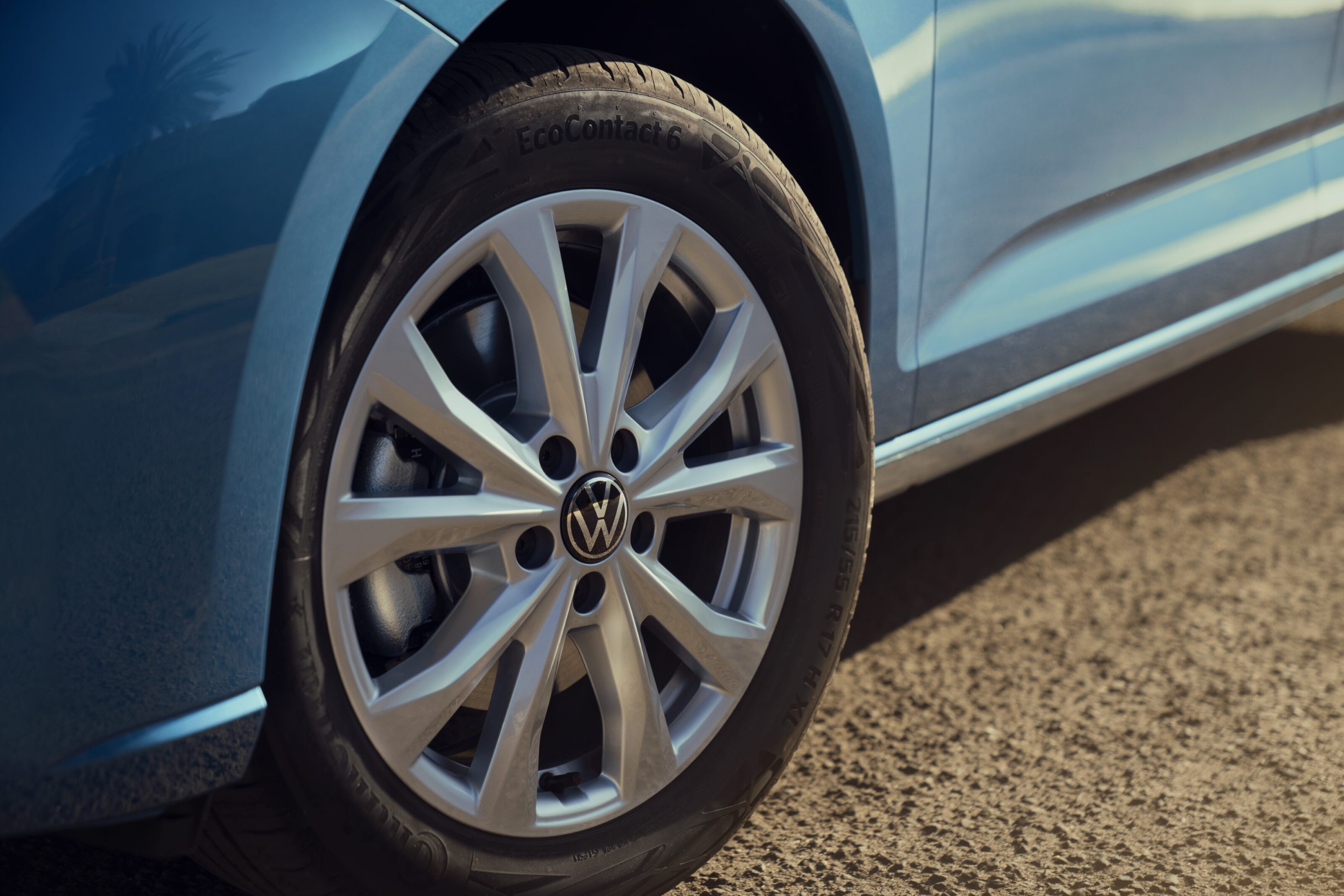
The Caddy kicks you off with 17-inch steel wheels, colour-coded bumpers, cruise control, powered mirrors and windows, halogen headlights, remote central locking, cloth interior, carpet flooring, leather steering wheel, seven seats, air-conditioning and a full-size spare.
At the moment this car will cost you $45,490, equipped as it is with the 320TDI engine. From January, the range starts at $46,140 for the less torquey petrol, with the 320TDI rising to $48,150, meaning an on-the-road price over fifty grand.
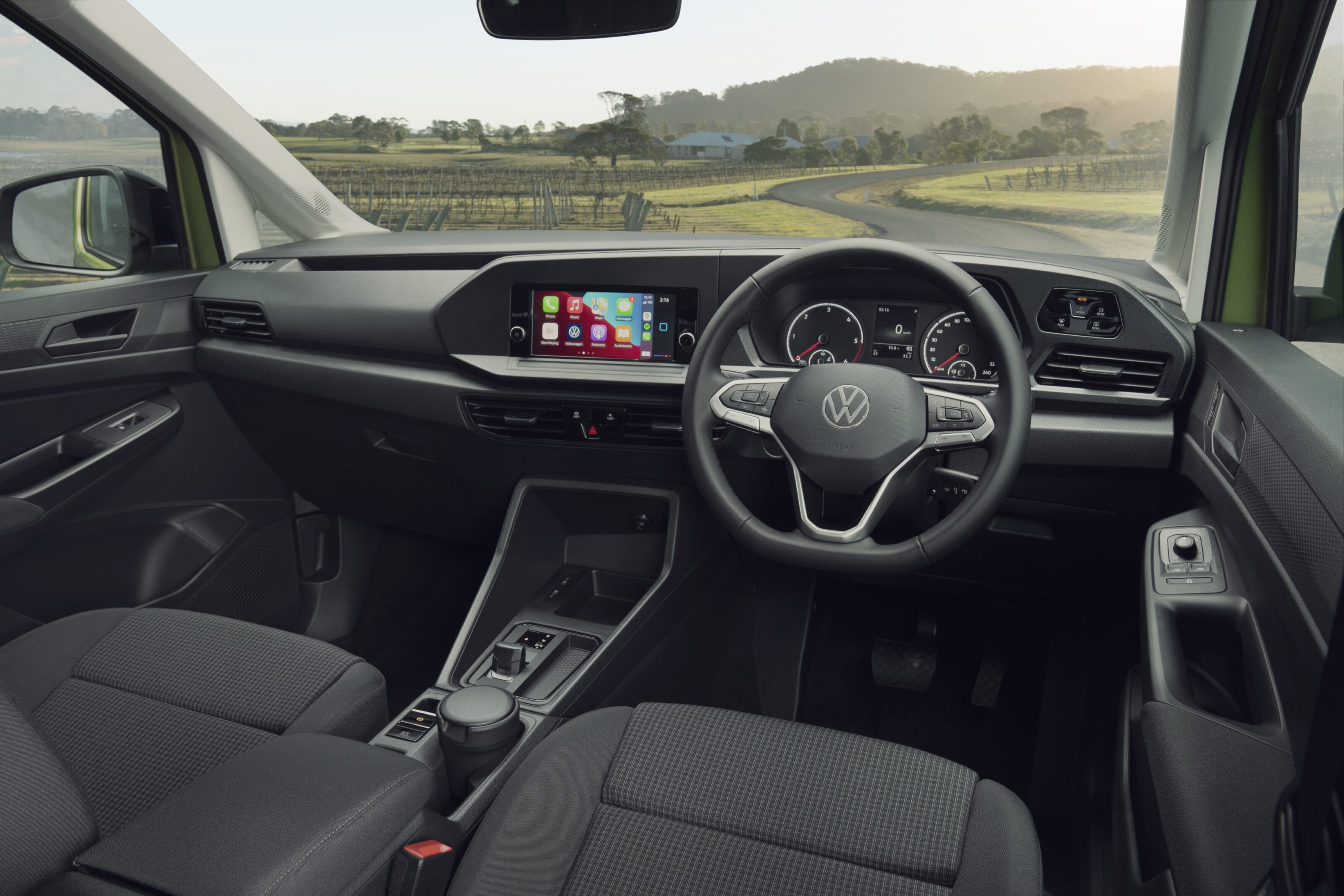
The basic four-speaker entertainment system is called Composition and comes with an 8.25-inch touchscreen, DAB+ digital radio, Apple CarPlay and Android Auto and two USB-C ports for charging and connectivity. The VW software is very simple and it’s nice to use, although it does cram everything into the screen. Happily, a number of shortcut buttons mean that you can set your air-con or climate control (depending on the model) without having to trawl through menus.
If you step up to the $1660 Discover Media system, you get a bigger 10-inch screen, sat nav and wireless CarPlay and Android.
A big uplift in safety systems comes with a lot of airbags – front airbags, side airbags, curtain airbags and a front centre airbag to avoid head clashes in a crash. In these mixed-use Caddies, you pick up curtain airbags for all rows of available seating. You don’t even get that in a Kia Sorento or Hyundai Santa Fe.
On top of that you get the usual stability and traction controls, seat belt warning lights for all passengers, post-collision braking, forward AEB (low-speed with pedestrian and cyclist detection), drive fatigue detection, rear parking sensors, reversing camera, rear cross-traffic alert (hurrah!), lane change assistance, blind-spot monitoring, and junction assist.
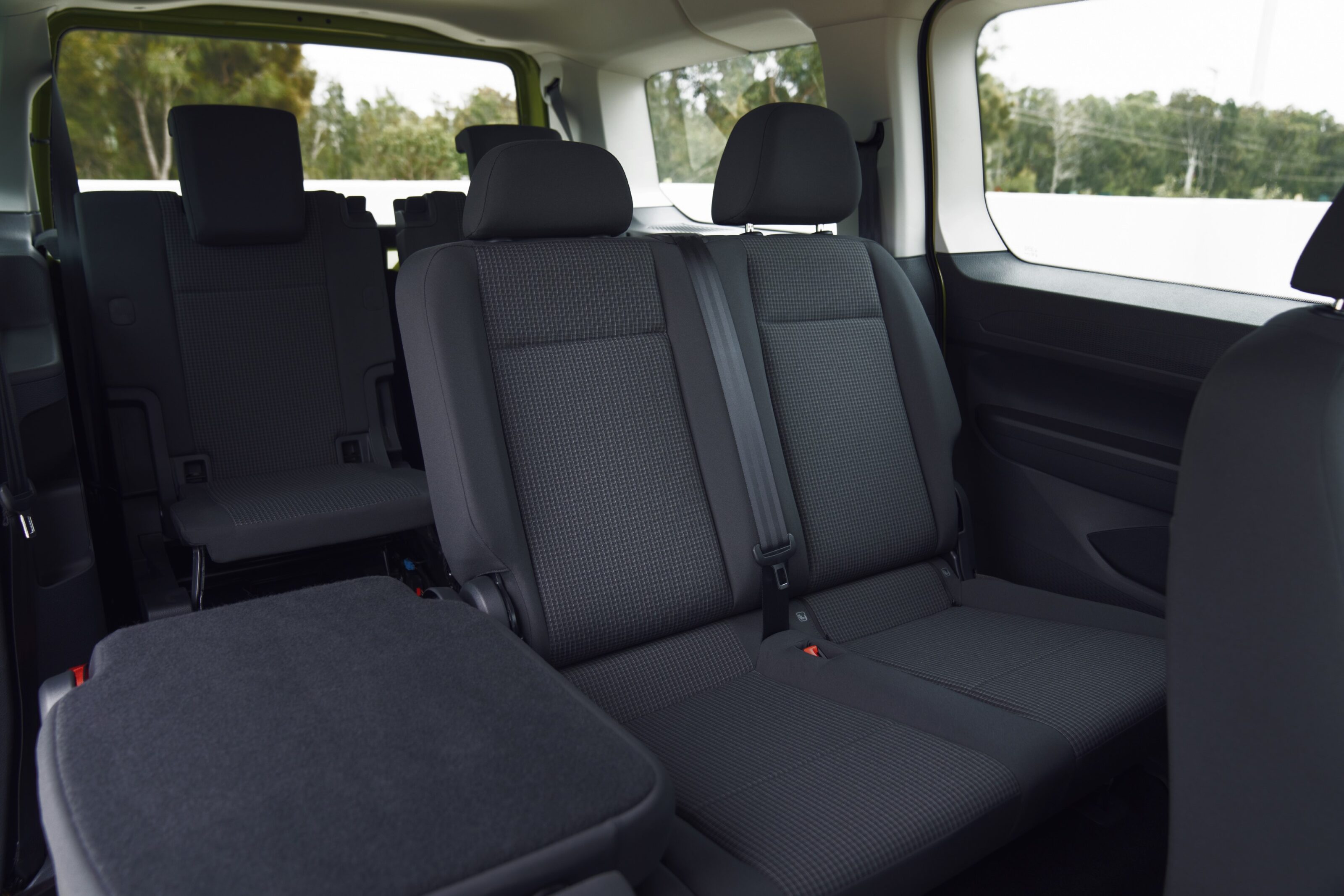
The second row of seats includes three top-tether anchors and two ISOFIX points while both third-row seats feature ISOFIX and top-tethers.
The Caddy 5 doesn’t yet have an ANCAP or EuroNCAP rating.
Moving up to the $49,990 Life and there’s more – 17-inch alloys, a bit of chrome here and there on the exterior, black roof rails, Trialog fabric trim, digital dashboard, heat-insulating front side windows, dual-zone climate control, front parking sensors, adaptive cruise control and a full-size spare.
Again, the price for the Life goes to $50,640 for the 84kW petrol and a hefty $2700 price for the 320TDI takes you to $52,640 before on-roads.
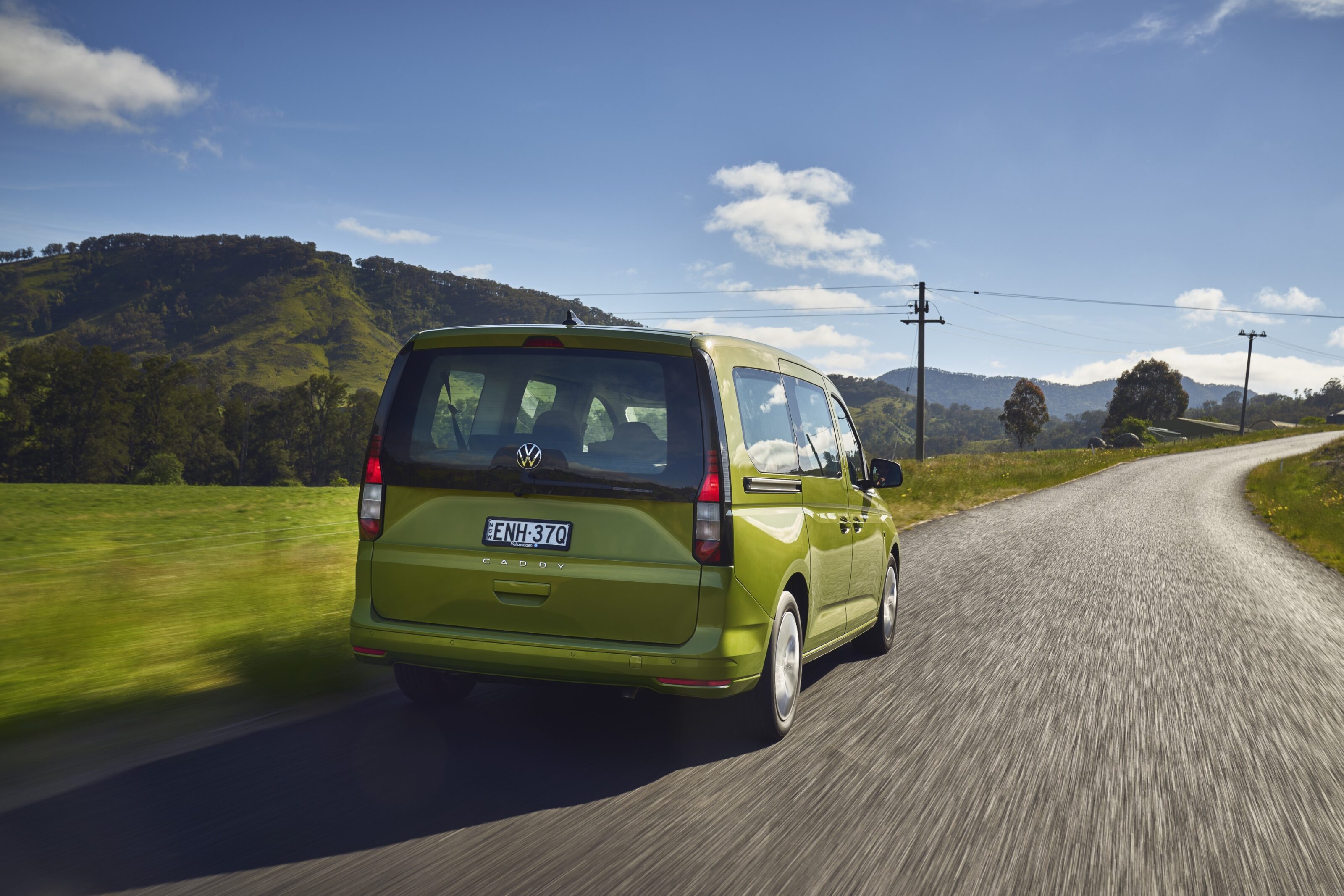
There are also a number of options available, as you might expect. The headliner (get it?) is the huge panoramic sunroof that opens up over the front and middle-row passengers. You can also specify comfort ventilation to push warm or cool air to the rear part of the cabin, but one wonders how effective that might be given the volume of the interior. Thankfully the Life has rear air vents for the middle row, which is a very important thing in my book.
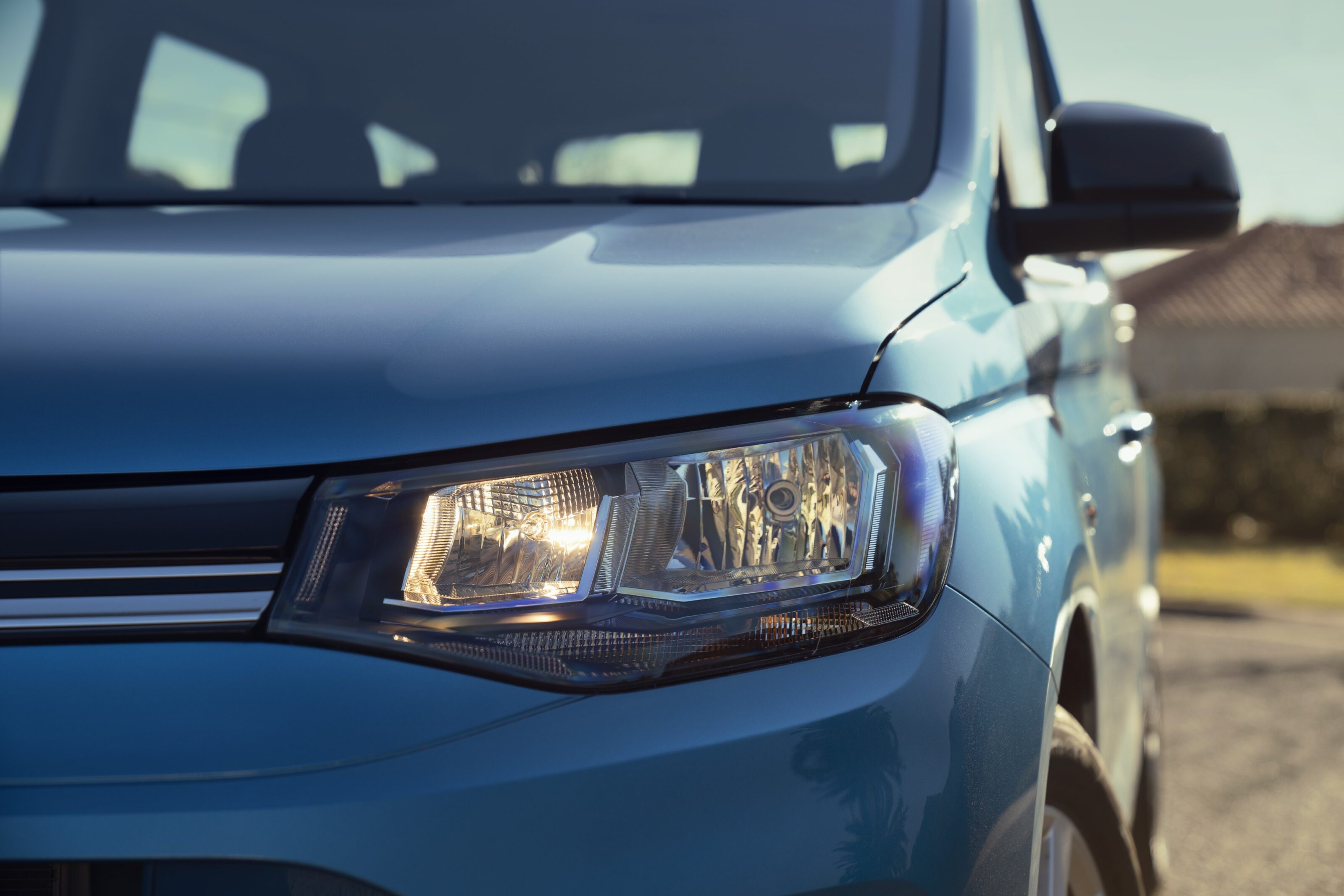
LED headlights are also optional ($1370 or $2020 with LED DRLs and cornering lights) and the soft-close tailgate standard on the Life is an option on the Caddy, as are heat-insulating windows. There is a long and complex list of options to build your own Caddy so there’s lots of fun to be had and money to be spent.
You can choose from one free colour – Candy White – or two more solid paint finishes, Cherry Red and Pure Grey. Startlingly, there are seven metallic finishes: Reflex Silver, Mojave Beige, Costa Azul, Golden Green, Fortana Red, Indium Grey, Copper Bronze and Starlight Blue. The solitary pearl effect is Deep Black. Metallic and pearl colours are a terrifying $1115 while Cherry Red is a more reasonable $305.
Comfort and space
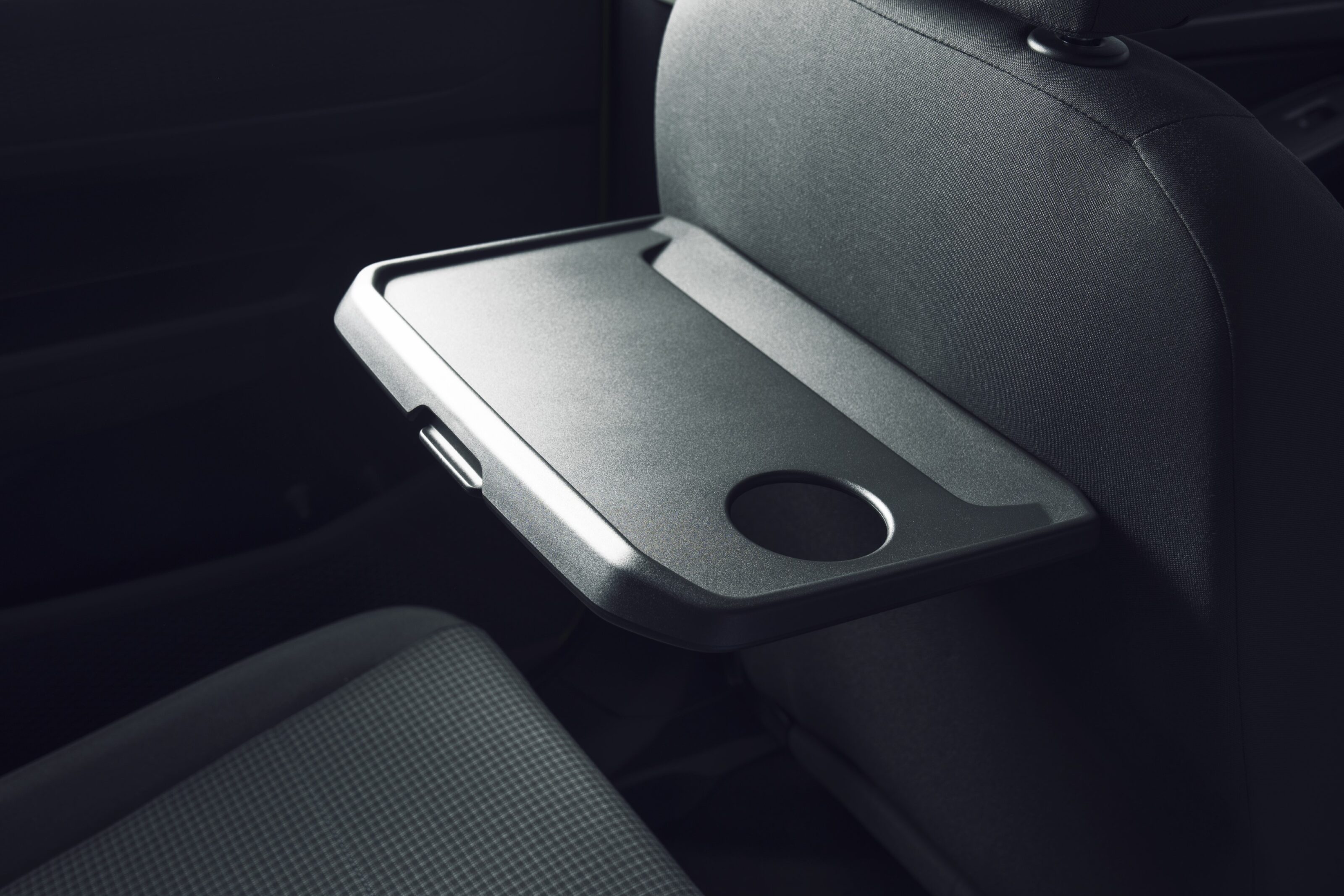
As with most VWs, the Caddy and Life have a really nice, thoughtful approach to passenger space. There is more than adequate room in the middle row and outboard passengers even score folding airline-style tables which kids absolutely love. A friend’s son saw them in the Tiguan and declared them a “shut up and take my money” feature.
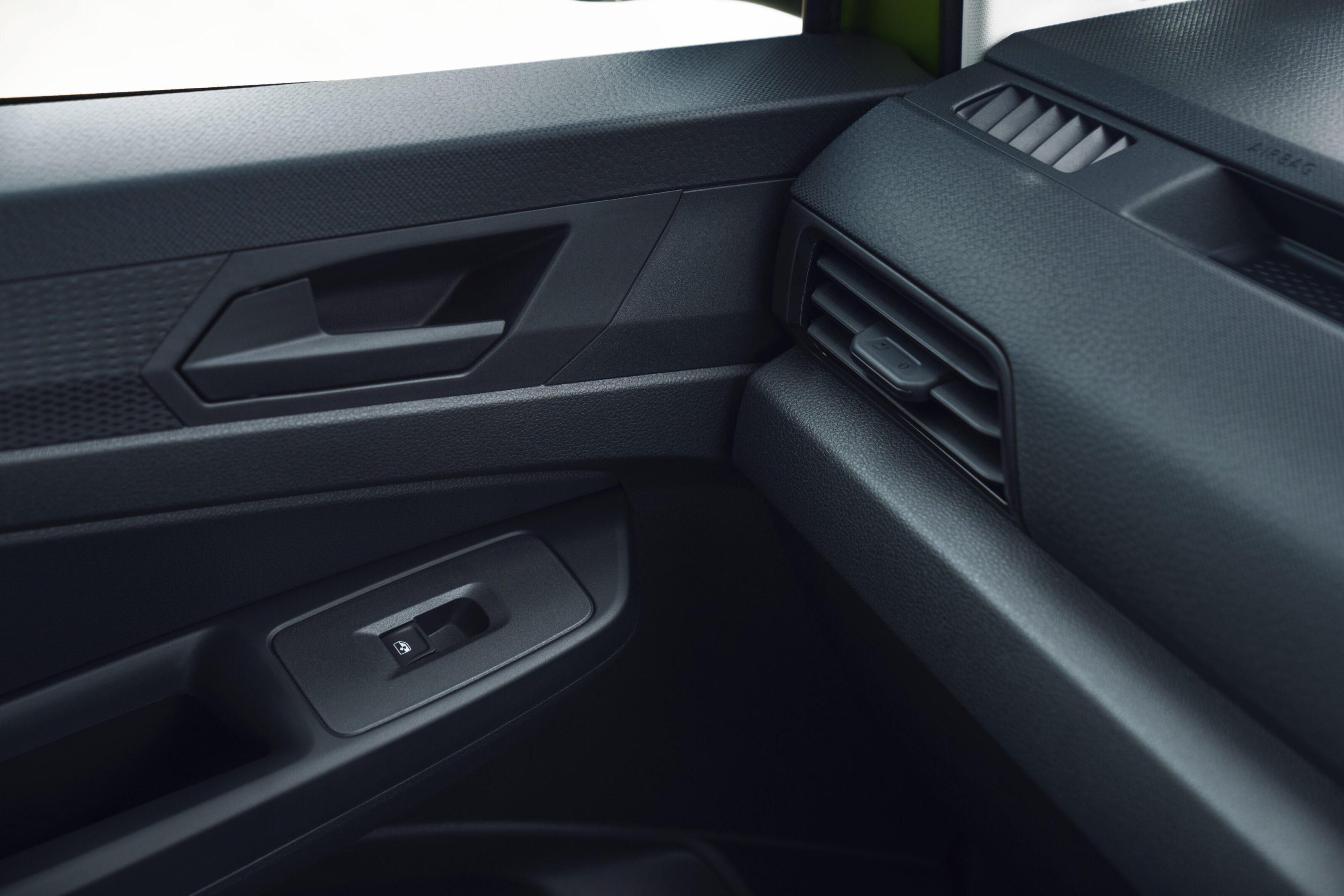
Storage is everywhere, a handy and serendipitous result of its tradie roots. The dashboard features a full-width slot for chucking bits and pieces. It widens as it crosses the car from left to right and you can fit a clipboard or iPad in the wider part of the slot over the instrument panel. If you don’t have the panoramic sunroof, there is further overhead storage where you can shove wallets and glasses cases, that kind of thing.
There are two cupholders in the centre front console and bottle holders in the doors. The middle row’s cupholders are in the tray table but won’t hold anything substantial or even a can of drink. They’ll have to go in the bottle holders in the doors or in the long storage pockets.
With all seven seats in place, access to the third row is a two-step process. Sliding doors on both sides open nice and wide and they’re light and easy to use. Grab the black tape at the base of the seatback to drop the backrest and then pull the red-trimmed tape to tip the whole unit up and forward. From there it’s an easy step to the rearmost two seats. The long sliding doors make it even easier to get in and the lofty roof means you won’t scrape your scalp.
Once you’re in, the third row once again shames some much bigger machinery. The two seats are jump seats with low seatbacks but adjustable headrests and you get a slim bottle holder, small cupholders and on the right-hand side a storage bin that would fit a first-aid kit. The seats are a little narrow, but they’re comfortable and the windows are big.
The middle row doesn’t slide but has good legroom and knee room. Headroom is galactic, literally so at night if you have the glass roof. It’s going to be tight three across, but the seats are comfortable and the cloth trim seems very hardy.
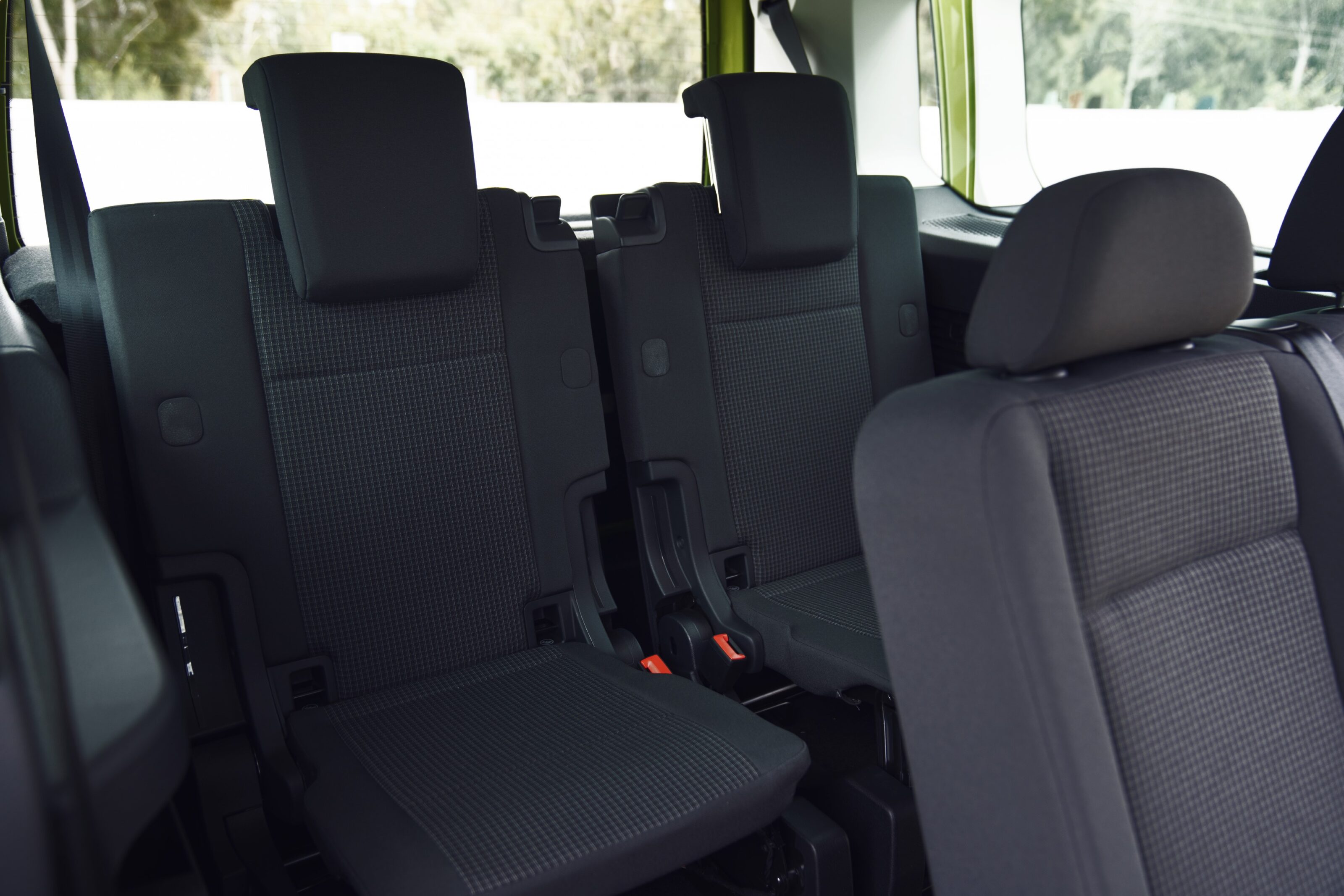
The boot is massive even with all three rows in place, shaming some much larger machines. You start with 446 litres, which matches plenty of mid-size SUVs. Remove the third row – not a moment’s work, but not a mission either – and you have 1720 litres.
Remove the 60/40 split-fold middle row and you have a gigantic 3105 litres, a flat floor of 2.265 metres’ length and an echo when you talk. A double airbed could go in there, no trouble. If your business is one of those party balloon suppliers, you’re in for a treat.
Sadly, there is some bad news – the windows in the passenger compartment don’t open. That’s where a van has its downsides.
On the road
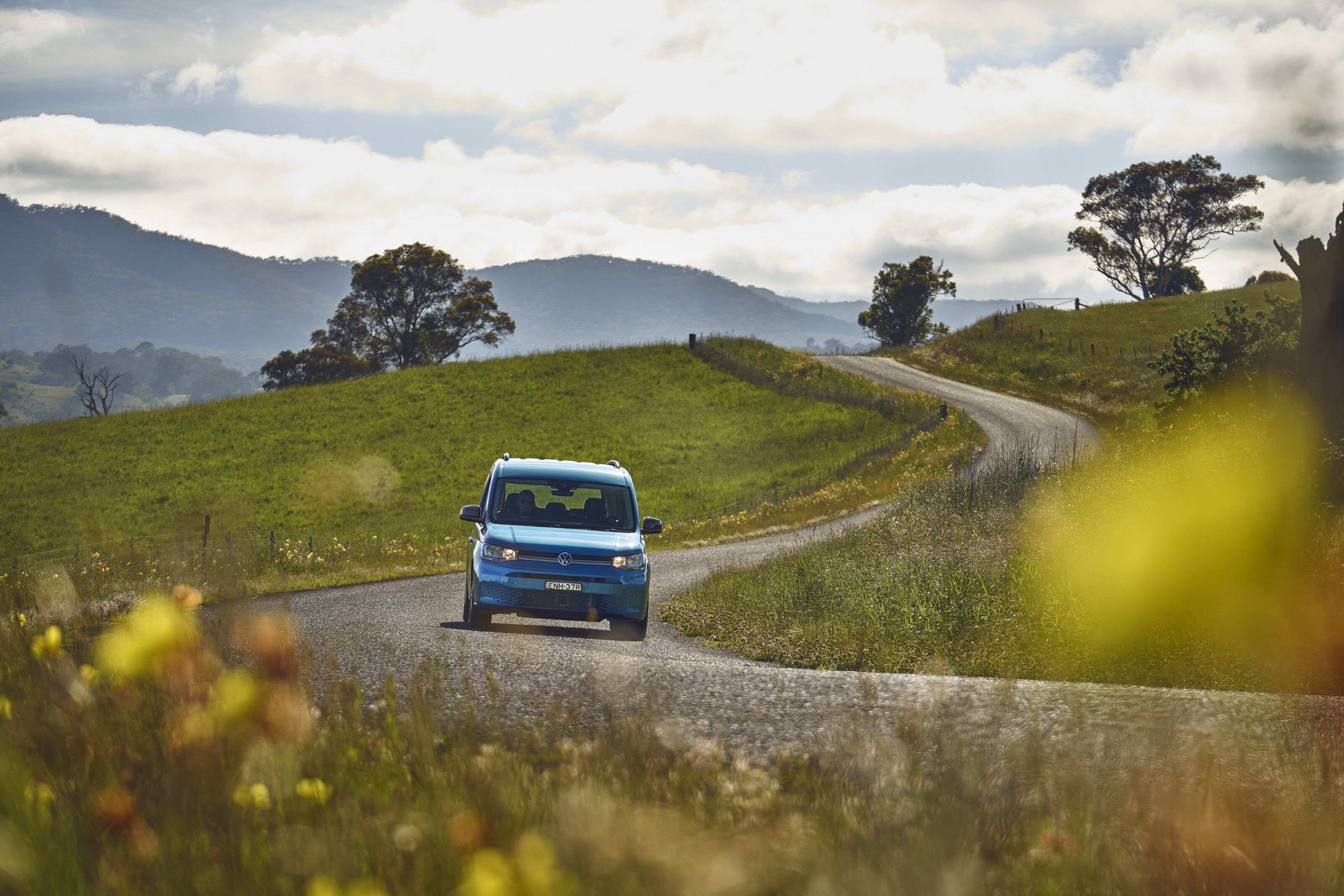
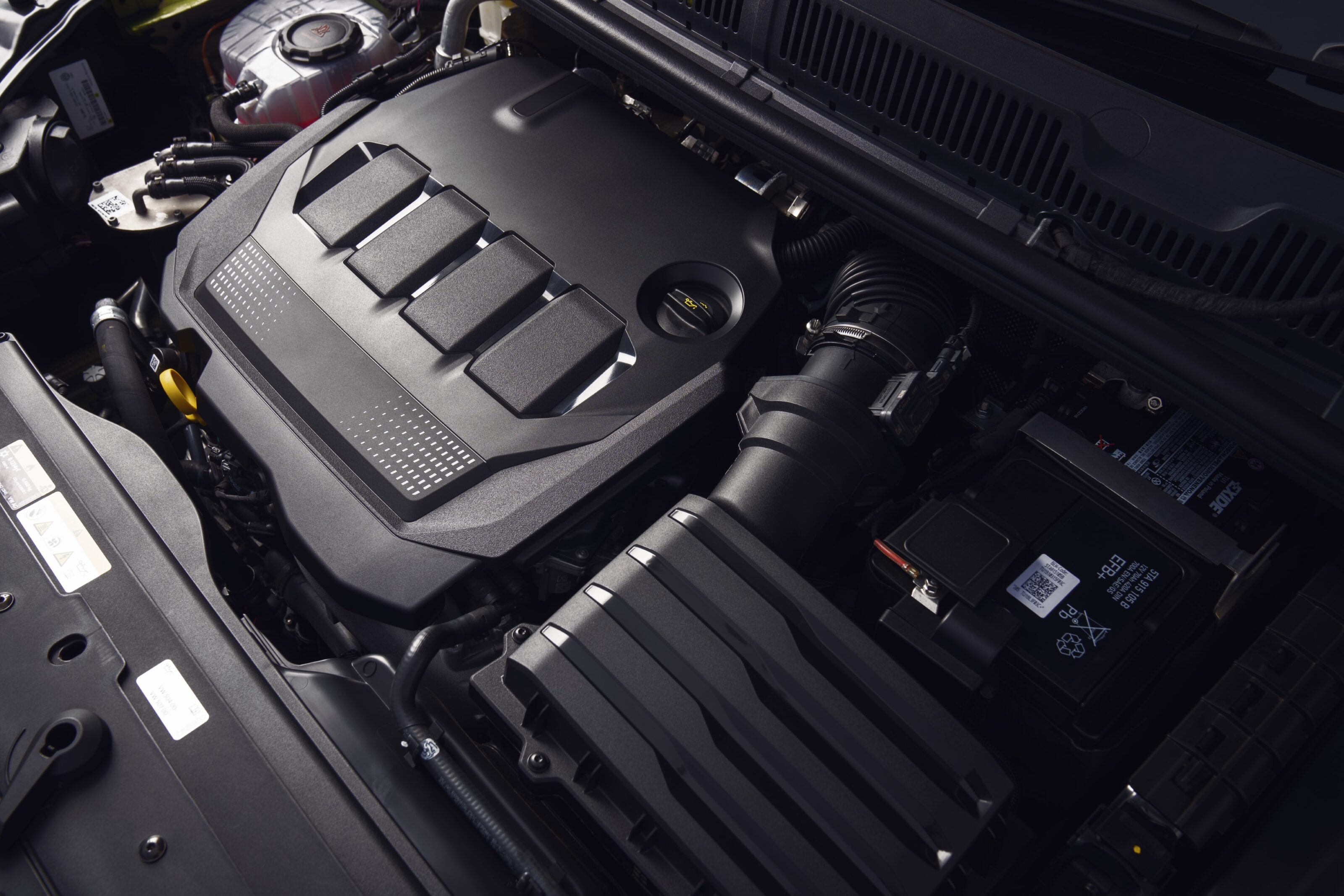
The Caddy Life I had for the week was the full-fat 2.0-litre turbodiesel TDI320 with 90kW and a thumping 320Nm of twist. It’s Euro VI compliant, so pretty clean by our (low) local standards.
The self-shifting TDI is rated at 4.9L/100km and my time with it, exclusively in the city as one might expect one of these vans to live, delivered a 6.2L/100km figure, which is good going. This engine features AdBlue, an additive that helps clean up NOx emissions endemic in diesel engines.
At the moment, all cars in the range are front-wheel drive although I’d be very curious to see if the all-wheel drive will eventually make its way here.
While the angle of the steering wheel yields a slightly awkward driving position, the seats had plenty of adjustment to reduce that level of awkwardness. The view out the massive windscreen is expansive and in this glass-sided passenger version with the panoramic sunroof, flooded with light. Remember your hats and sunglasses, sunroof or not.
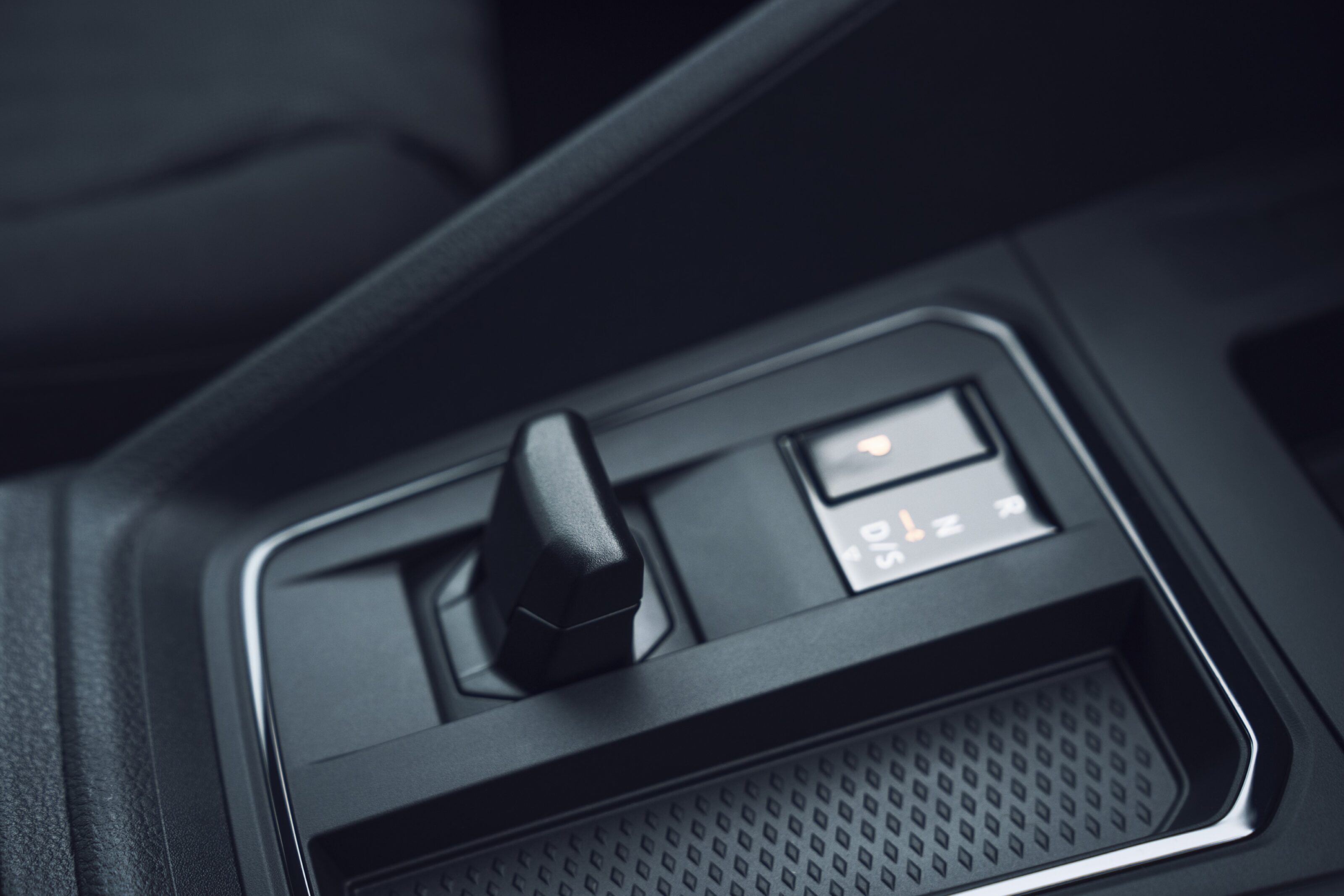
My brief acquaintance with Golf VIII meant the cabin was already familiar. The funny stubby tongue poking out of the centre console acts as the gear selector and I really like it because it’s all that’s needed. You can also shift gears with the supplied paddle shifters and the leather-covered wheel is quite nice to hold and look at.
Quite honestly, if you never looked out the back, you’d think you were in a lightly stripped back Golf, except in this case there was the larger 10.25-inch screen over the 8.0-inch standard, making it feel less basic. Once you’re on the move, the Golf-ey feel remains but you feel the weight and relative long length of the Caddy.
This new car is built on the same basic platform as the Golf, the VW Group’s MQB. MQB sits under pretty much every front-wheel drive VW Group car – including the Golf to which I keep gratuitously referring – which means a fairly familiar driving experience. Grip at the front is good (yes, I know I’m talking about a van here) but the real benefit is the overall refinement.
I like vans, they’re fun, especially this size machine. I drove a Peugeot Partner van about 12 months ago and I had a right old laugh bouncing around in it. The Caddy couldn’t be more different, with a car-like feel from the MacPherson strut front, the reasonably quick and responsive steering right through to the very car-like driving position.
Obviously, the Caddy’s weight and height are apparent, but the 2.0-litre does a great job of hauling things along at a decent if not amazing pace.
The rear end is held up by a very compact rigid axle with a Panhard rod, although now with coil rather than leaf springs.I was expecting the rear end to prove itself the real compromise for choosing a van-based people mover over a “proper” one like a Carnival or a SUV.
Despite the rigid axle, the Caddy handles speed bumps remarkably smoothly where I was expecting a bit of a jump. Obviously the coil springs help, as does the long wheelbase, but I found it incredibly smooth and unfussed by poor surfaces.
The safety systems are mostly pretty good, but the lane-keep assist is a bit pushy. Not Hyundai pushy, but pushy all the same. It’s kind of difficult to pick fault in the way the car drives because the trade-offs are worth it – huge headroom, true seven-seat capability and a passenger ride that a car of this type has no right to offer.
A friend who works in disability services also remarked in passing that the Caddy is a great car for to provide wheelchair access, which gives you an idea of how massive the space is.
Ownership
The Caddy comes with the same package as the “normal” car range, with a five year/unlimited-kilometre warranty and 12 months roadside assist.
VW offers two service packs. The first covers three years or 45,000km and costs $1300. If you pay as you go, VW reckons you’ll pay up to $265 more over the three services, so that seems like a handy saving.
If you choose the five year/75,000km package, you’ll pay $2100, saving up to $669 and getting the first service gratis.
As you can probably tell from these packages, VW expects to see you back for a service every 12 months or 15,000km, whichever comes first. These service figures compare favourably with the aforementioned Peugeot Partner and Renault Kangoo.
If you service with an official dealer, you’ll also get a 12-month extension on the roadside assist.
VERDICT
The Caddy 5 is a huge step up in basically every area. Technology, styling, passenger comfort, driving dynamics, the works. The only real room for improvement is perhaps electrification or a hybrid (although we know VW is more about full EV).
The comfort and refinement of this carpeted, glassed-in van with its high roof was a very pleasant surprise, but given the price, it will want to be this good.
Setting aside my faintly absurd fondness for vans, the Caddy 5 is quite an achievement. In this people mover version, you have a compelling proposition if you need a genuine seven-seat cabin without the cumbersome drama of a high-riding SUV or the bulk of a Carnival or Staria. It’s comfortable, refined and quite unlike any city van I’ve driven before.
Volkswagen Caddy specifications
| Caddy Life | TDI320 | TSI220 |
|---|---|---|
| Body:u00a0 | Five-door seven-seat people mover | Five-door panel van/five-door people mover |
| Drive: | FWD | FWD |
| Engine: | 2.0-litre turbocharged four-cylinder diesel | 1.5-litre turbocharged four-cylinder petrol |
| Transmission: | Seven-speed twin-clutch | Seven-speed twin-clutch |
| Power: | 90kW @ 2750-4250rpm | 84kW @ 4500-6000rpm |
| Torque:u00a0 | 320Nm @ 1500-2500rpm | 220Nm @ 1750-3000rpm |
| Bore stroke (mm): | 95.5 x 81mm | 74.5 x 85.9 |
| Compression ratio:u00a0 | 16.0 : 1.0u00a0 | 12.5 : 1.0u00a0 |
| 0-100km/h:u00a0 | 11 sec (estimate) | 13 sec (estimate) |
| Fuel consumption:u00a0 | 4.9L/100km (combined) | 6.2L/100km (combined) |
| Weight: | 1740kg | 1667kg |
| Suspension: | MacPherson struts/Longitudinally guided rigid axle with Panhard rod | MacPherson struts/Longitudinally guided rigid axle with Panhard rod |
| L/W/H:u00a0 | 4853mm/1855mm/1856mm | 4853mm/1855mm/1856mm |
| Wheelbase: | 2970mm | 2970mm |
| Brakes:u00a0 | NA | NA |
| Tyres:u00a0 | 215/55 R17 Bridgestone Turanza | 215/55 R17 Bridgestone Turanza |
| Wheels:u00a0 | 17-inch alloy wheels (full-size spare) | 17-inch wheels (full-size spare) |
| Price:u00a0 | $49,990 (Nov 2021) $52,640 (Jan 2022) | $50,640+ ORC (Jan 2022) |
Key Points
- Three-row crossover to be larger than current Cayenne
- Expected to be unveiled in the second half of the decade
- Plug-in hybrid and full-electric powertrains rumoured
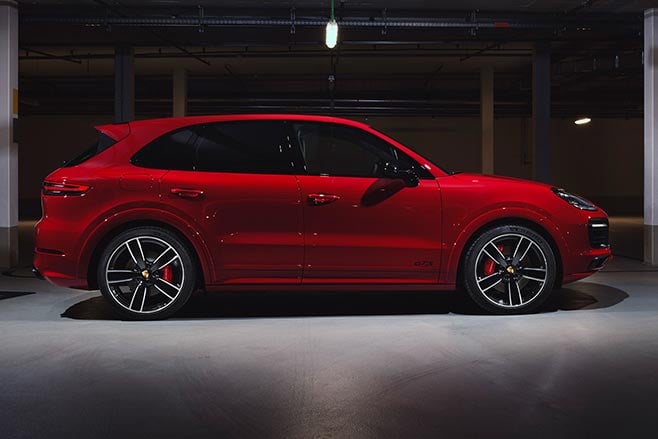
A Porsche crossover that is longer, wider, and taller than the Cayenne is under development, according to a new report.
Automotive News Europe claims the flagship position of the Cayenne could be trumped by a new sporty “part sedan, part crossover” expected to sit at the top of the Porsche line-up.
It’s understood Porsche retailers in the United States were shown a rendering of the new crossover during a recent dealer meeting, with one claiming the design was “very un-Porsche-like,” with a “flat rear design… not anything like the Macan and Cayenne”.
Further details surrounding the new crossover remain uncertain, however the same dealer source told Automotive News a plug-in hybrid powertrain is expected when the vehicle arrives in the second half of the decade.
A fully-electric powertrain is also set to be on offer, especially if Porsche plans to sell the flagship model in Europe.
The rumoured new flagship is anticipated to offer a three-row seating layout – a Porsche first – with room for up to eight occupants, thanks to its aforementioned flat rear design.
While the report states a plug-in hybrid powertrain is expected, the new model is likely related under-the-skin to the flagship Volkswagen Group electric vehicle platform under development for Audi, Porsche and Bentley – codenamed ‘Landjet’.

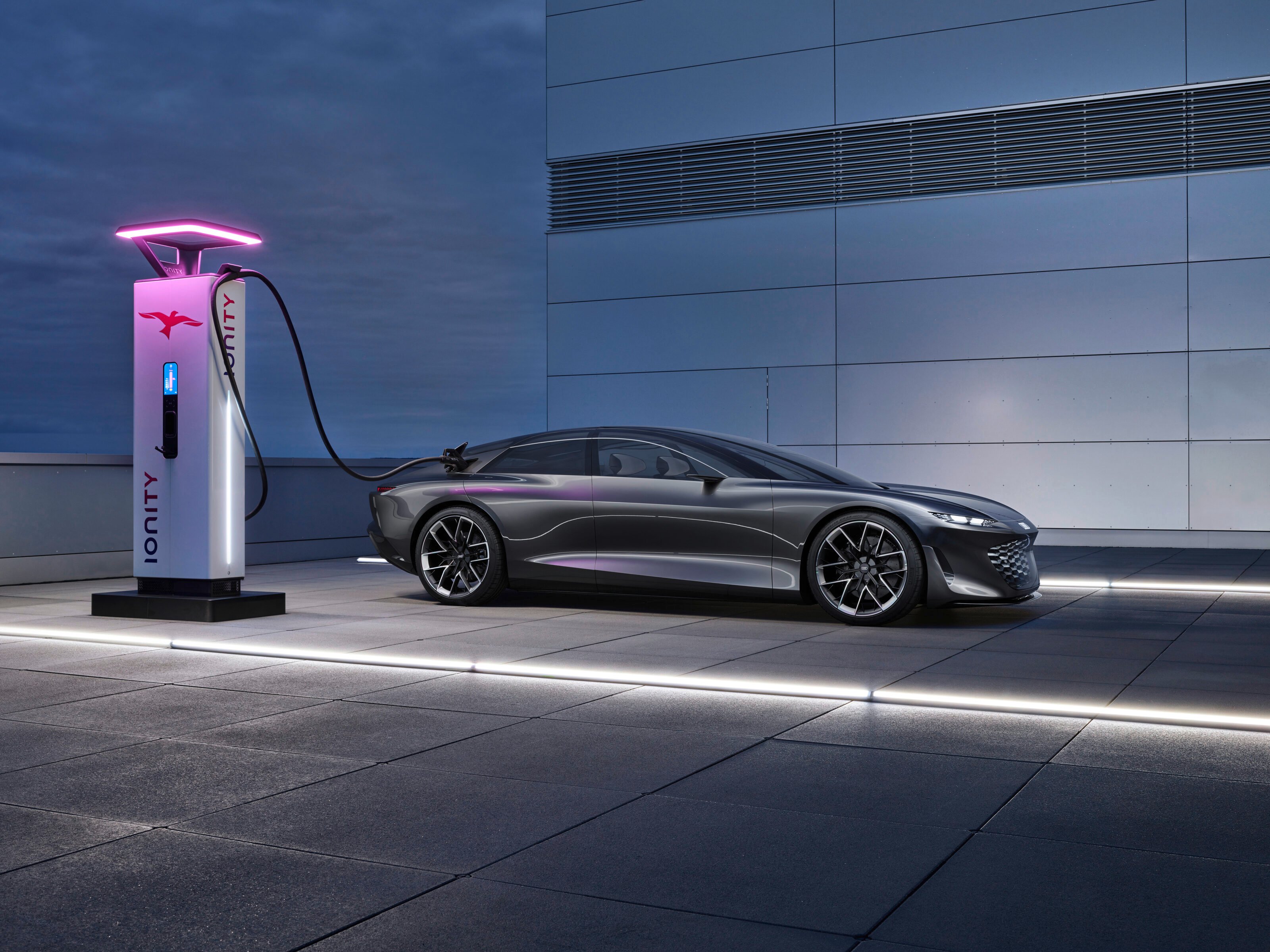
Previewed by the recent Audi Grandsphere concept, the range of luxury electric vehicles are expected to showcase the best of what the Volkswagen Group has to offer, with a driving range of up to 650 kilometres and a high level of autonomous driving capability.
Speaking with Automotive News, a Porsche spokesperson refused to confirm or deny the reports, and said the Stuttgart brand is “very open in sharing ideas under an initiative, Porsche Unseen, the majority of which do not make it beyond the ideas stage.”
“Whether these go any further than renderings and ideas to make it to the production stage — let alone how they will be powered or configured — is undecided,” they added.
With the three-row crossover segment booming in the United States – bolstered by the recent addition of the BMW X7 and the second-generation Mercedes-Benz GLS-Class – it makes sense for Porsche to offer a larger, three-row model in order to boost profit margins and overall sales – all of which help to keep traditional Porsche models, such as the 718 and 911, alive.
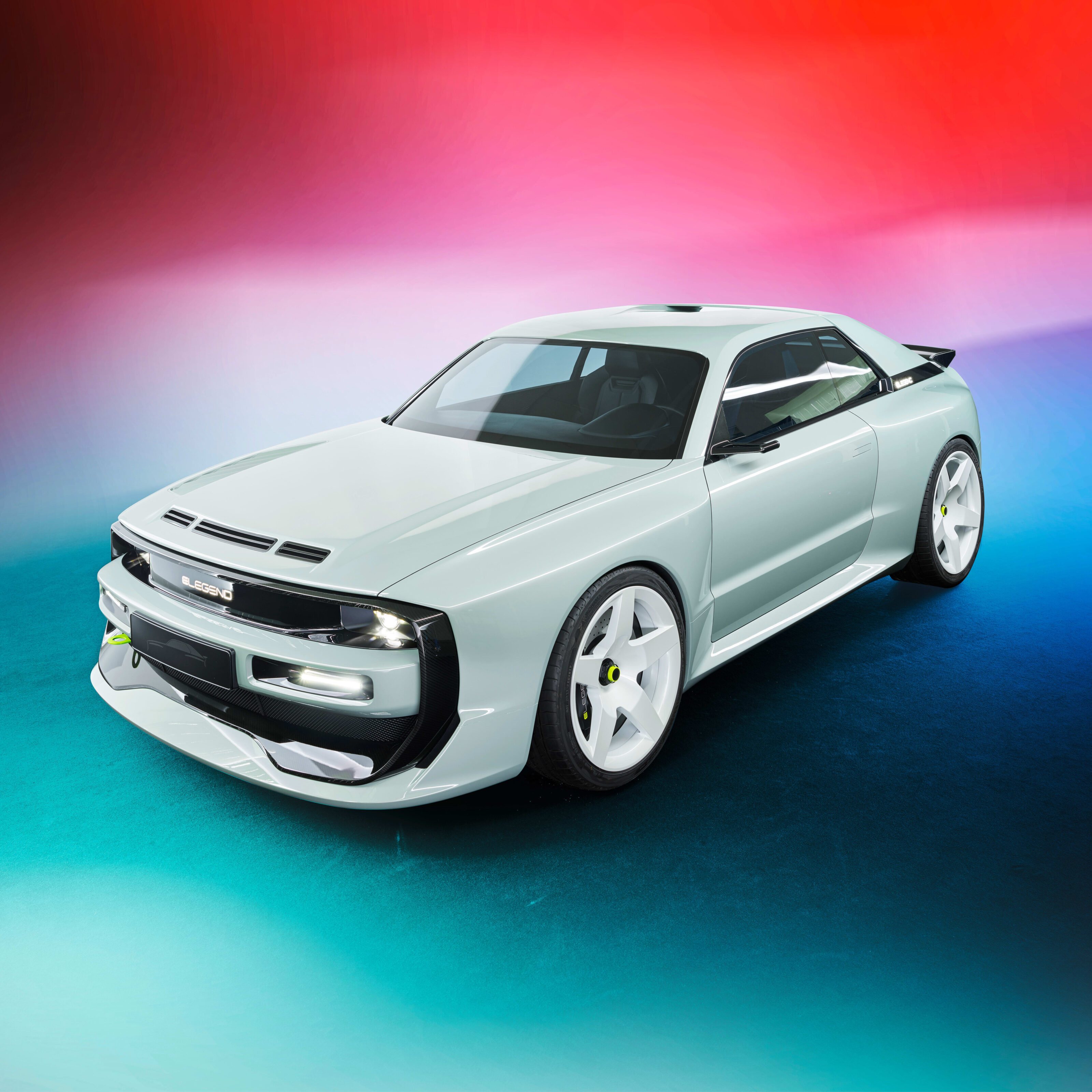
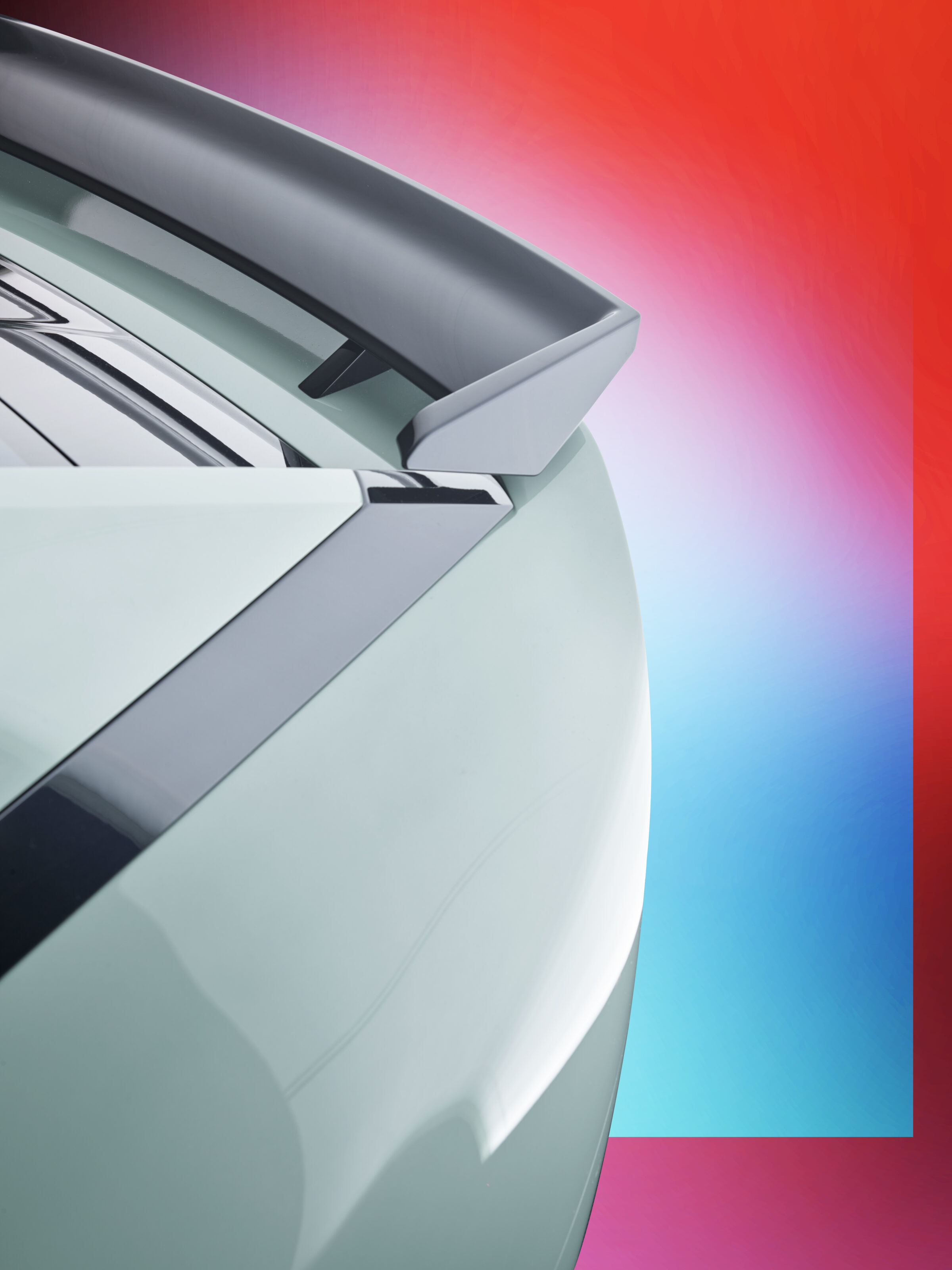
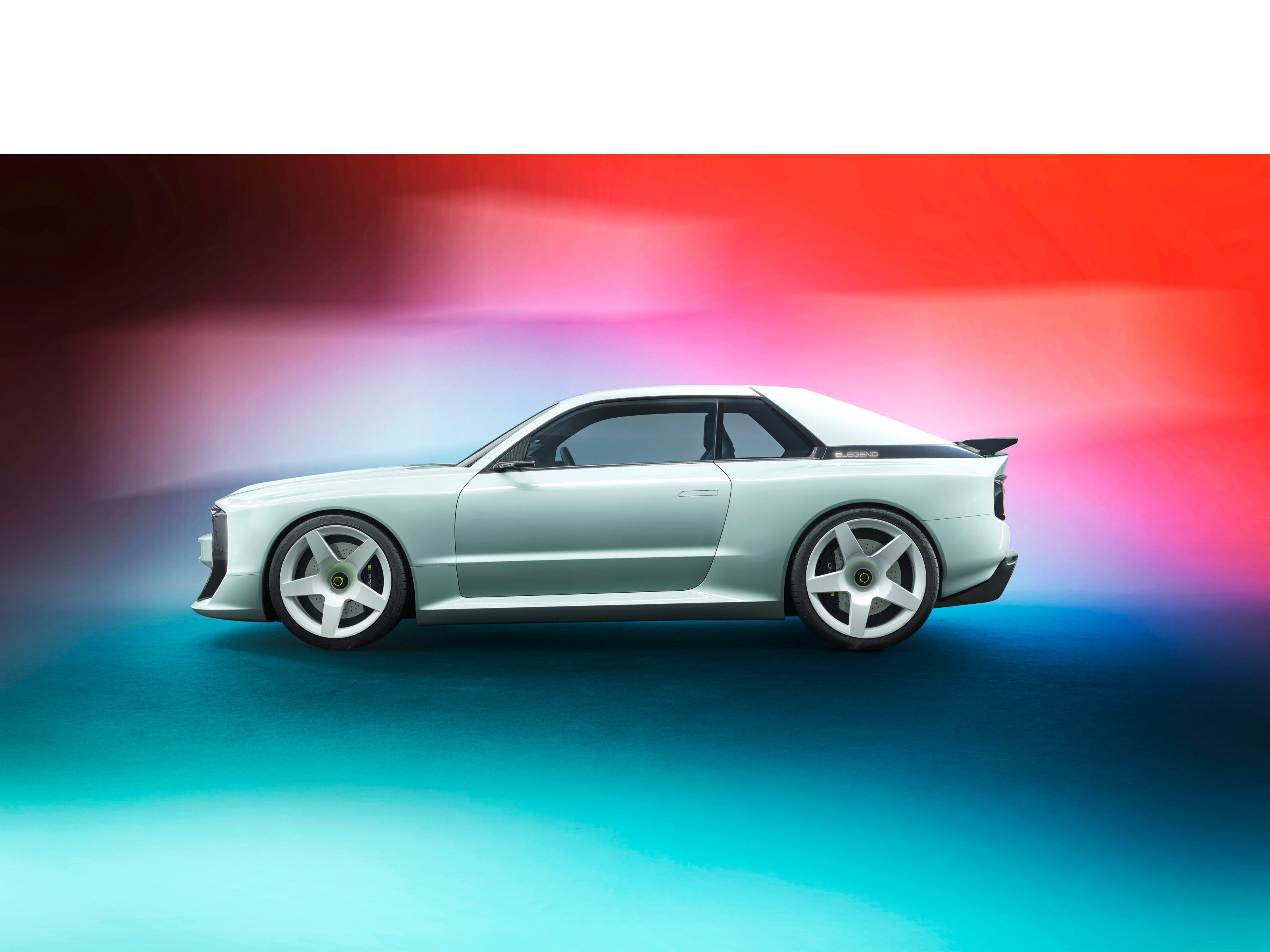
It was one of those rare moments you tend not to forget in a hurry. The cover flew off the mint green EL1 show car and wild applause roared through the HOTE studio in Beilngries, east of Ingolstadt, goosebumps raging through the audience like a Mexican wave.
A mixed bunch of aficionados, industry insiders and supplier reps delivered a standing ovation to a small bald man of hard-to-guess age, who strolled onto the stage in the universal all-black T-shirt-and-jeans designer uniform, bowing deeply as he thanked the gathered throng for their applause.
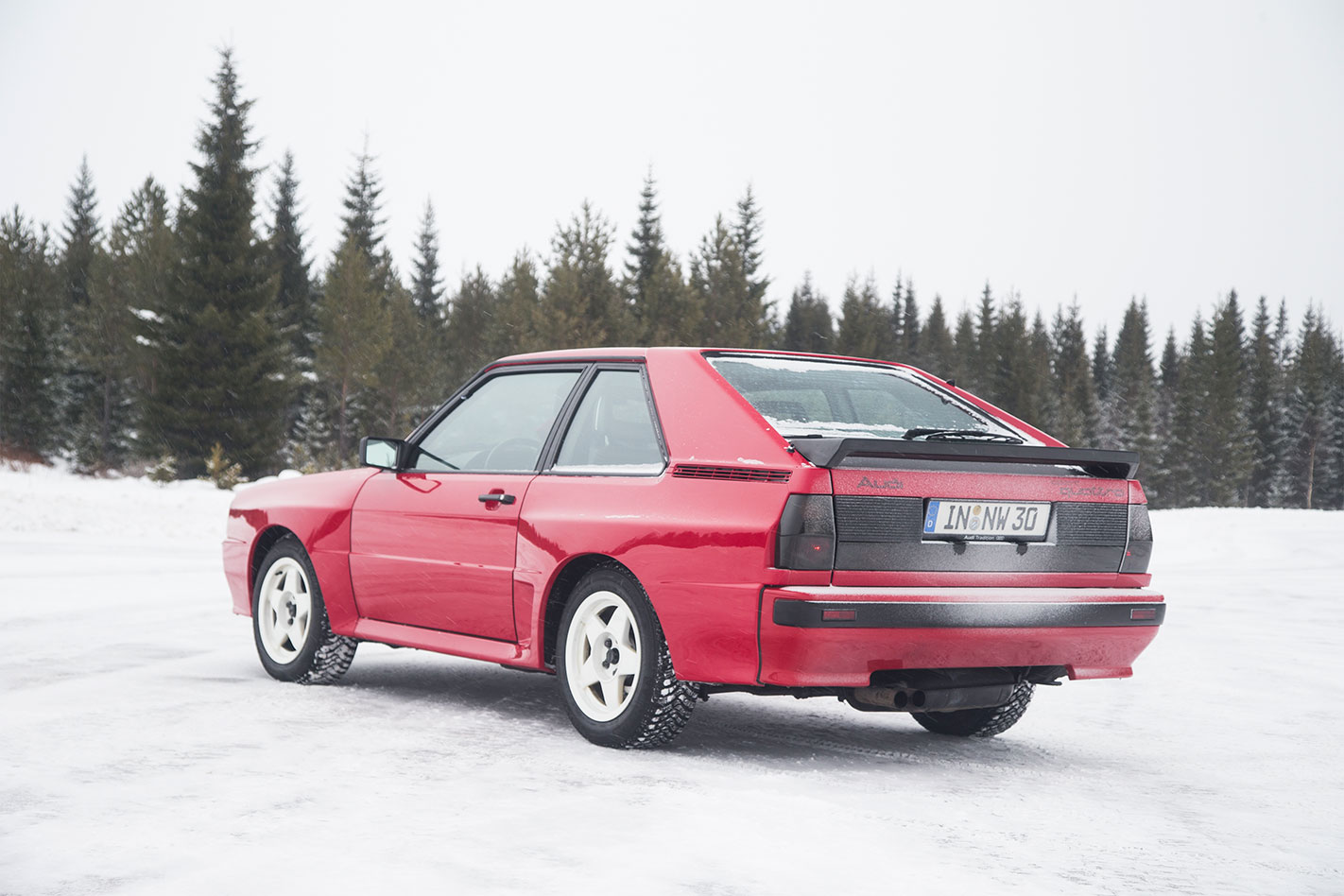
The man in the spotlight is Marcus Holzinger, a speed junkie, performance car addict and gifted designer. His father made his name in clay modelling and prototype building in the ’70s, and Marcus picked up the quattro obsession before he’d even left school.
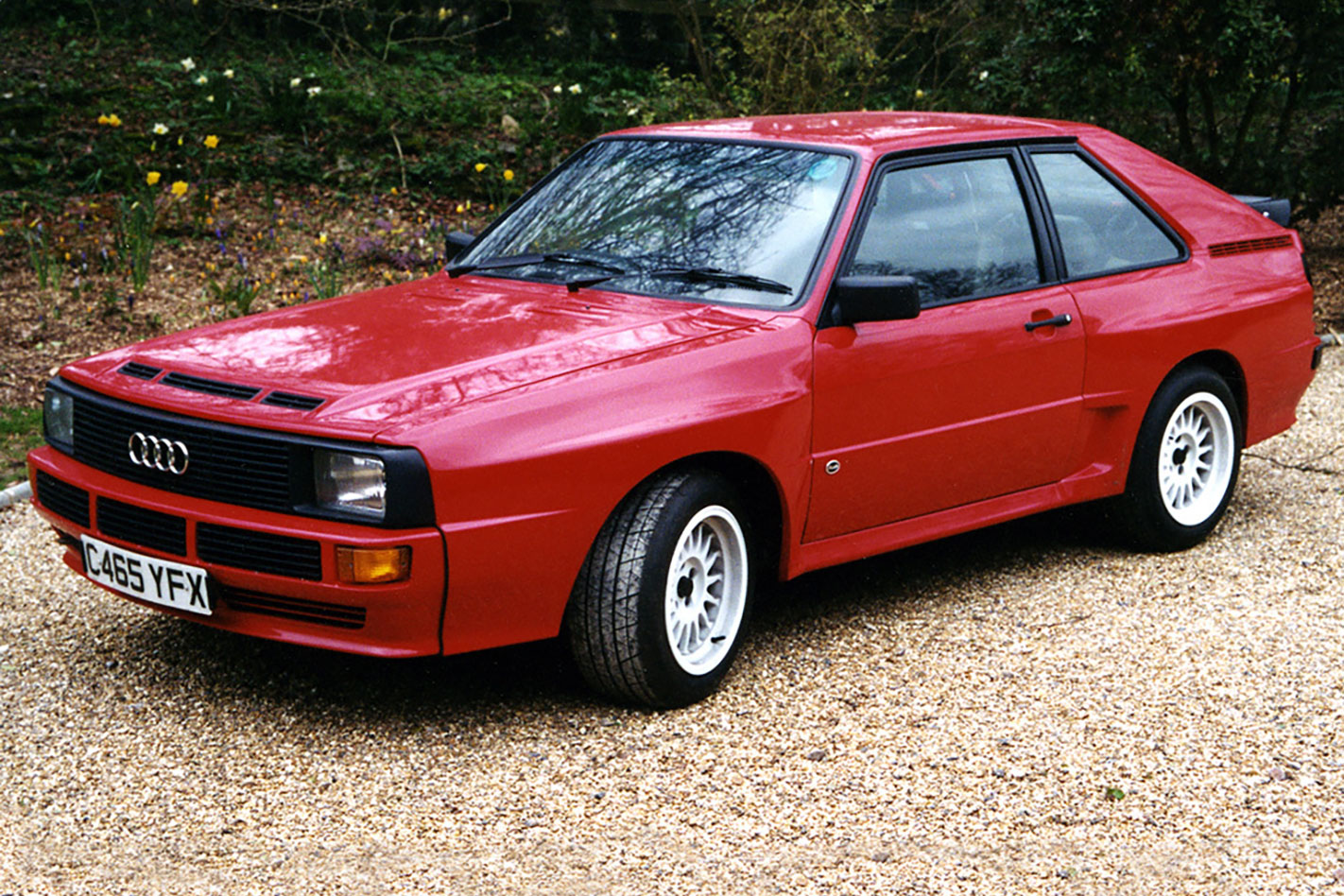
“Dad owned an early Ur-quattro, and one of my first creative jobs was helping to shape the Sport Quattro. After an apprenticeship with Audi design, I completed my training at VW in California and Wolfsburg. From the start, I knew I wanted to build my own dream car. It took a little longer than expected – these things do – but now there is nothing stopping us making this vision a reality.”
Without the pandemic the E-Legend EL1 may not have existed. Covid-19 confined thousands to home-office working, axed projects at a worrying rate, and took jobs away from suppliers, contractors and service providers. From one month to the next, HOTE design had to increase downtime, lay people off and wait even longer than usual to get paid.
The crisis almost broke his father, but the young Holzinger used his spare time to update his countless drawings, fabricate early scale models, scribble down a rough business plan, and check out whether his allies were still keen on making this offbeat project happen.
The most significant link between the drawing board and the first prototype was the friendship between the Holzingers and Günther Riedl, CEO and senior brain power of specialists Roding Automobiles.
When Roding presented a battery-powered roadster in 2017, Marcus Holzinger was still a devoted fan of the internal combustion engine. But inside, the industry consultant knew the future was electric.
As a result, within a couple of months the DNA of his dream car shifted from high-octane grunt through to a plug-in hybrid compromise to clean-air, cable-fed EV power. The final zero-emission concept is fully compatible with the philosophy of Team Roding, who had just completed a matching all-wheel-drive (essential for any quattro reboot) rolling chassis.
The proportions were not yet perfect, the packaging still required adjustments, and the exact specifications of the batteries changed faster than the weather. But at the end of the day, Roding found the required dimensional and structural flexibilities while Holzinger carried out the changes needed to make his body design fit the tub.
In addition, he came up with a cabin that could be extensively personalised, and both partners agreed on a number of architectural hard points to be revisited when the time was ripe for additional products.
Early on, the biggest worry for the new kids on the quattro block was a possible veto from Audi, who could have easily thrown a spanner in the works. But Ingolstadt wasn’t interested in taking a step back in time, so the new enterprise started raising funds in the middle of last year.
Do Holzinger and Riedl fear stiff competition from similar concepts like the Everrati 911? And why not re-fit an original quattro with e-power?
“We are not in a position to rewrite history, and we don’t simply put a modern drivetrain into a copycat body,” says Holzinger. “Our approach is best described as high-tech retro-futurism. Take the EL1, which is not a sleek rehash of the Sport Quattro but the creative evolution of a legendary shape, fused with a state-of-the-art chassis (it will use a carbon-fibre structure) and driveline. The underpinnings are so advanced that we intend to use them in our next two or three cars, and they’ll be fun – the goal is to transfer the analogue primal instincts of emotional driving into the modern world.”
But first E-Legend must get the EL1 off the ground. Despite the strong visual appeal, selling 30 units may not be a breeze for the no-name new-comer – especially in view of the steep €$1.4m asking price.
“We are close to establishing a limited company named E-Legend,” says Manuel Egginger, the man in charge of finances and strategy, who runs a Porsche centre in his spare time. “The six founding members own 50 per cent of the firm through common stock, and we are looking for investors. The initial investment should be amortised by 2024.”
From 2025, the stakeholders should start earning money, even though reserves are set to grow. With the EL1 getting attention and spreading the word, Holzinger and friends have already turned some of their attention to two more production runs, again limited to 30 vehicles each.
Marcus is tight-lipped when asked to reveal details about the next batch of dream cars but, after a couple of drinks, he mentions the Ford RS200, Lancia Stratos, S4, Fulvia HF and 037, as well the Renault 5 Turbo as possible candidates. It’s golden-era rallying all over again, but in coachbuilt carbon fibre and with monstrous electric performance.
Although the place is bristling with enthusiasm and excitement, underlying scepticism pops up here and there. Is the car too expensive? Can a nameless brand succeed in a crowded niche? Are the performance numbers impressive? How about maintenance?
Günther Riedl has the answers. “E-Legend is not a tech company nor a components supplier but a coachbuilder. Which is why we buy parts whenever we can, and we also standardise and simplify wherever possible.
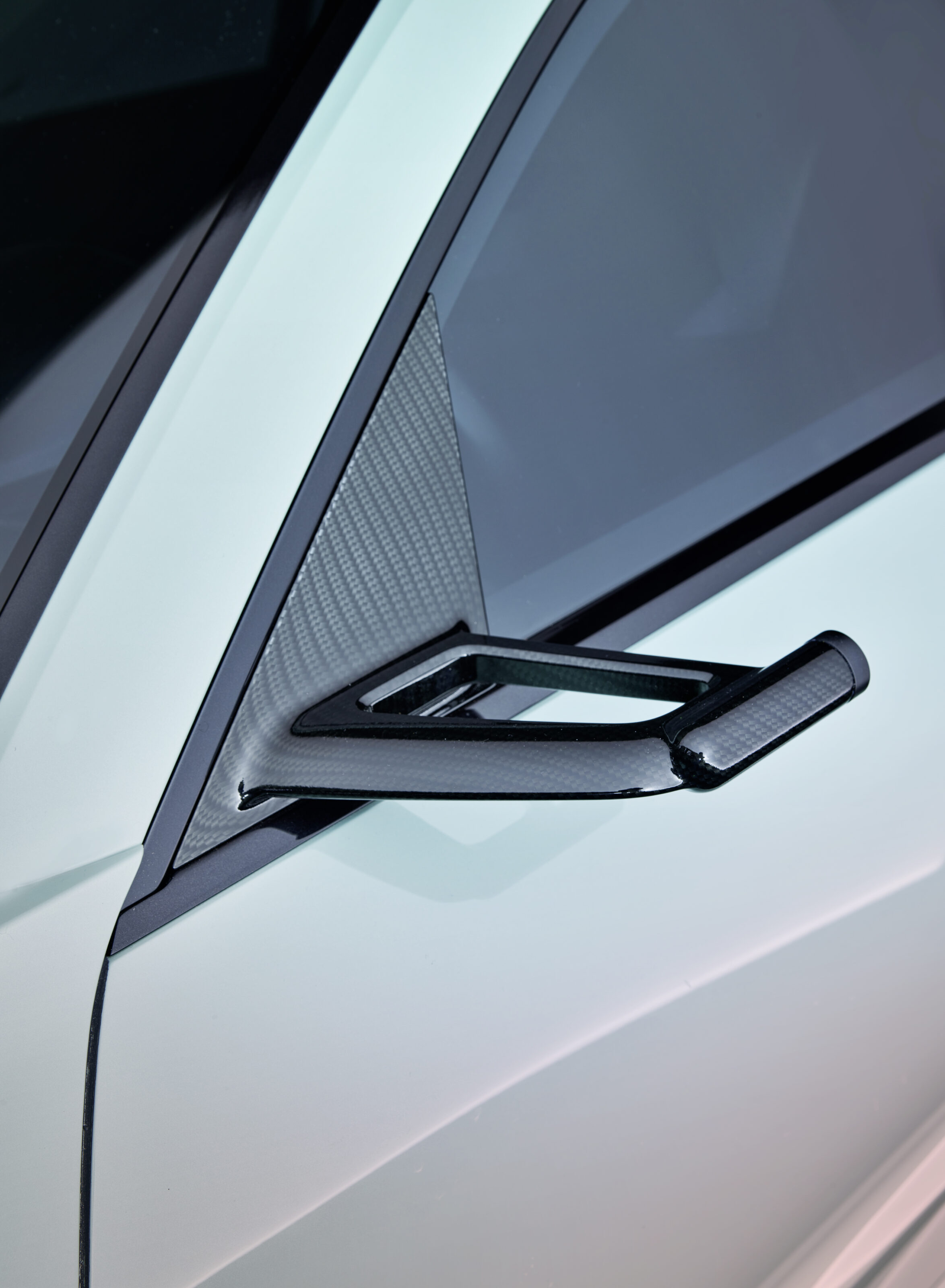
This applies not only to items like the camera-based mirrors, touchscreens or concealed door handles, but also to high-tech parts such as the awesome Phi-Power motors (top-drawer axial-flux e-motors), which come straight ⊲from Formula E, or the brutally efficient batteries, with their 400km range – enough, indeed, for several laps of the Nürburgring at full chat.
“Is the price justified? Well, the efficiency of our cooling system is second to none, the software will surprise a few people, the light carbon-fibre monocoque is world-class, and the design speaks for itself. Plus, your EL1 will be unique, a one-off – this is coachbuilding, remember.”
While a single e-motor takes care of the front wheels, the rear wheels are driven by a dual-motor unit with integrated differential. The combined power output is just north of 520kW. Hit the boost button to treat yourself to another wodge of power, lifting the total to a healthy 600kW, for a full 30 seconds. Powered by a relatively small 90kWh energy pack, the powertrain can accelerate the two-seater to 100km/h in 2.8sec and 200km/h in 9.0sec. Top speed is restricted to 257km/h.
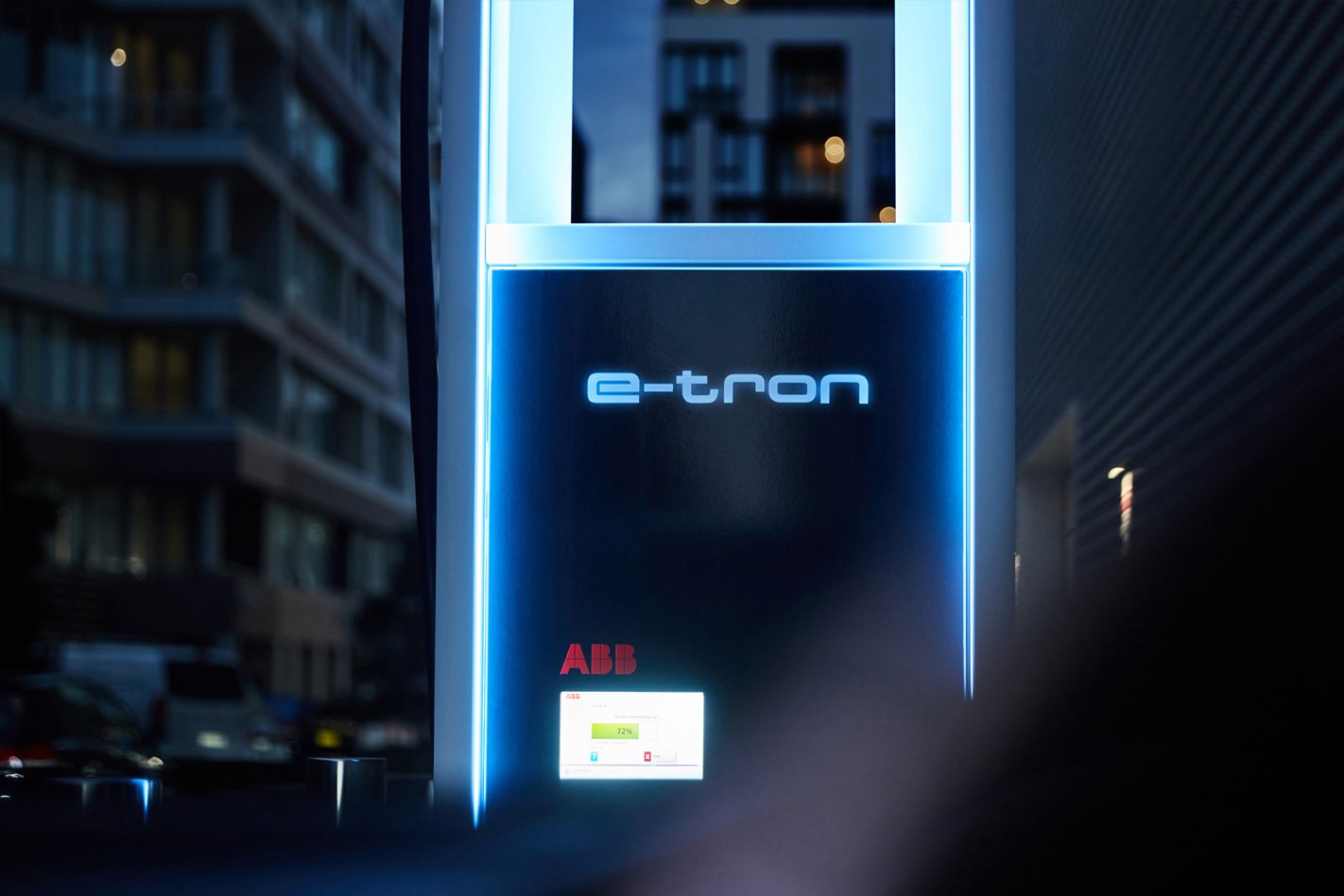
The architecture is 800-volt, like the Porsche Taycan, and the charge power is at this point restricted to 150kW. Thanks to the homologation rules open to low-volume manufacturers, the EL1 can be type-approved in just about every country. To comply with safety legislation, airbags, ABS, stability control and selected assistance systems are all standard.
For obvious reasons, E-Legend wants to keep its own assembly infrastructure to a bare minimum. Complete rolling chassis will be sourced from Roding, where the staff has grown to 360 skilled workers. The Holzingers are currently converting the old single-storey office building where it all began into a tight yet modern and efficient bodyshop. In this pragmatic cubicle, bespoke exterior panels are to be added while the interior is trimmed to the customer’s unique specification.
E-Legend is also planning an ultra-fast parts-supply chain. Only in the case of a major accident or a complete battery exchange will the car need to return to Roding. Similar procedures are standard with Bugatti, for instance. A direct distribution scheme will ensure an instant personal connection between future owners and the creators of his or her car.
Unlike the big players, start-ups like E-Legend can reduce the gestation cycle of a new model from four or five years to a timewarp 24 months. The software that combines design and engineering was written in just 30 days, the development process lasted six months, and the only prototype will be ready to roll in 12 months.
Says Egginger: “We don’t see ourselves as a classic start-up, which aspires to make lots of money fast only to be sold at a profit a couple of years later. We’re here to stay – and that’s a promise.”
Team E-Legend
MARCUS HOLZINGER: DESIGNER/FOUNDER
An Audi fan since forever, Holzinger loves fast cars and dreams of power-oversteering his quattros. The son of a coachbuilder father, he’s worked for more OEMs than he cares to recall. Knows how to blend functionality and emotion.
MANUEL EGGINGER: CO-FOUNDER
Egginger likes to think big, has a history of driving vintage and modern rally cars and wants to see E-Legend grow way beyond its current one-hit-wonder status. Egginger manages the Inntal Porsche Centre in his other life.
GÜNTHER RIEDL: COMPOSITES ACE
A jack of all trades and well-respected carbon-fibre specialist, Riedl’s become an expert in e-drive systems and the required software. Runs a number of companies under the Roding umbrella, and consults for some major OEMs.
FABIAN STROBL: PR MACHINE
The chief marketing man, Strobl has his own PR and advertising agency and is a seasoned media pro. He brings an intriguing mix of analogue and digital skills to the table, and wants to set new standards in terms of customer journey.
Legend’s view – 1983 champ Hannu Mikkola (1942-2021) on the original quattro
A gentle touch required
“I drove it a bit too hard early on. I always tried to get it to oversteer, because it naturally wanted to understeer, although on snow you have all four wheels pulling the quattro into bends. On tarmac its front-drive origins made it harsh. I was used to rear-wheel drive and wanted to get it sideways, but the Torsen diff wouldn’t let me.”
The rally drivers did the development work
“The Audi factory fully backed the rally effort because our work helped them evolve the road car. The problem was, we hadn’t done much testing on tarmac. All our testing in 1980 was on loose surfaces, to get the handling right on snow and gravel. But the quattro struggled on tarmac. Part of the problem was the rear differential. The car was essentially three-wheel drive in some corners, brutally pulling to the left and right. It took us until 1983 to sort it out.”
It was a road car, not a specialised rally car
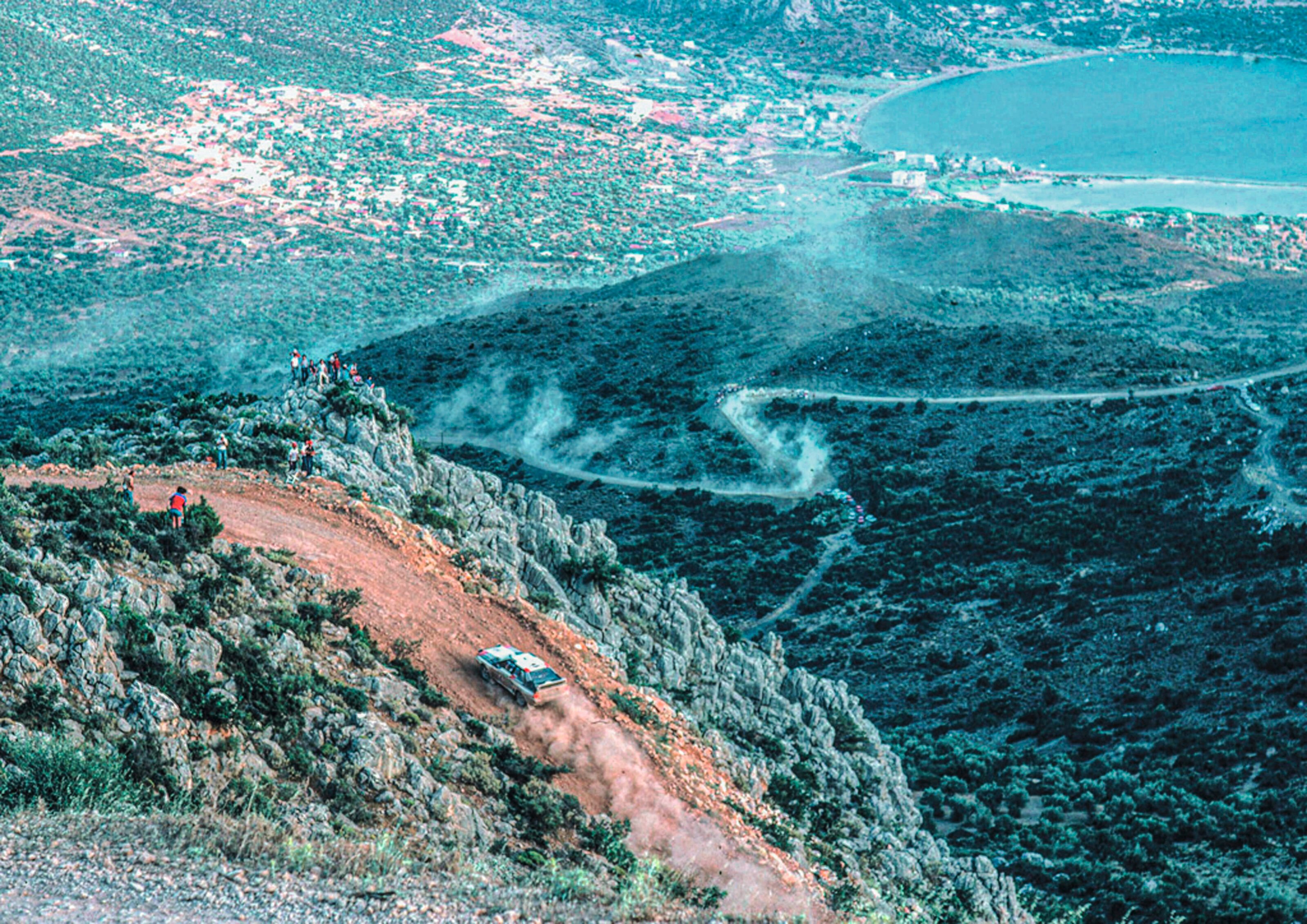
“Audi wanted people to believe four-wheel-drive passenger cars were the future. In 1981, our biggest battle of ideas was with Renault and its 5 Turbo, although not on gravel and snow. Renault chose to build a specialised rally car from scratch, whereas Audi aimed to build fast, safe road cars, not just win rallies. There were a lot of good people at Audi who could have designed a mid-engined rally car to beat Renault, Peugeot and Lancia, but we had to design a road car to be a rally car. Audi was using the rally team as a resource to develop road cars – that was the difference.”
A hell of a lot of lag
“The four-wheel-drive system wasn’t as difficult to adapt to as the turbo engine. The 1981 car had a hell of a lot of lag. I had to learn left-foot braking in order to keep the revs up and drive it against the brakes, which didn’t help the braking issues.
It had no power below 1000rpm, which made it difficult to drive on the Tour de Corse, an all-tarmac rally with lots of tight bends. Essentially the quattro was a front-wheel-drive car made four-wheel drive – and with the engine in front of the front axle, all the weight was up front. On tarmac rallies, this meant understeer and overheated front brakes…’
Key Points
- Updated small SUV picks up a new look and updated technology
- Expected to retain existing 1.4-litre engine, despite addition of mild-hybrid tech in Europe
- Due in Australia in 2022; specific timing to be announced
Suzuki has unveiled the ‘third-generation’ 2022 S-Cross in Europe overnight, weeks after the updated small SUV was leaked online.
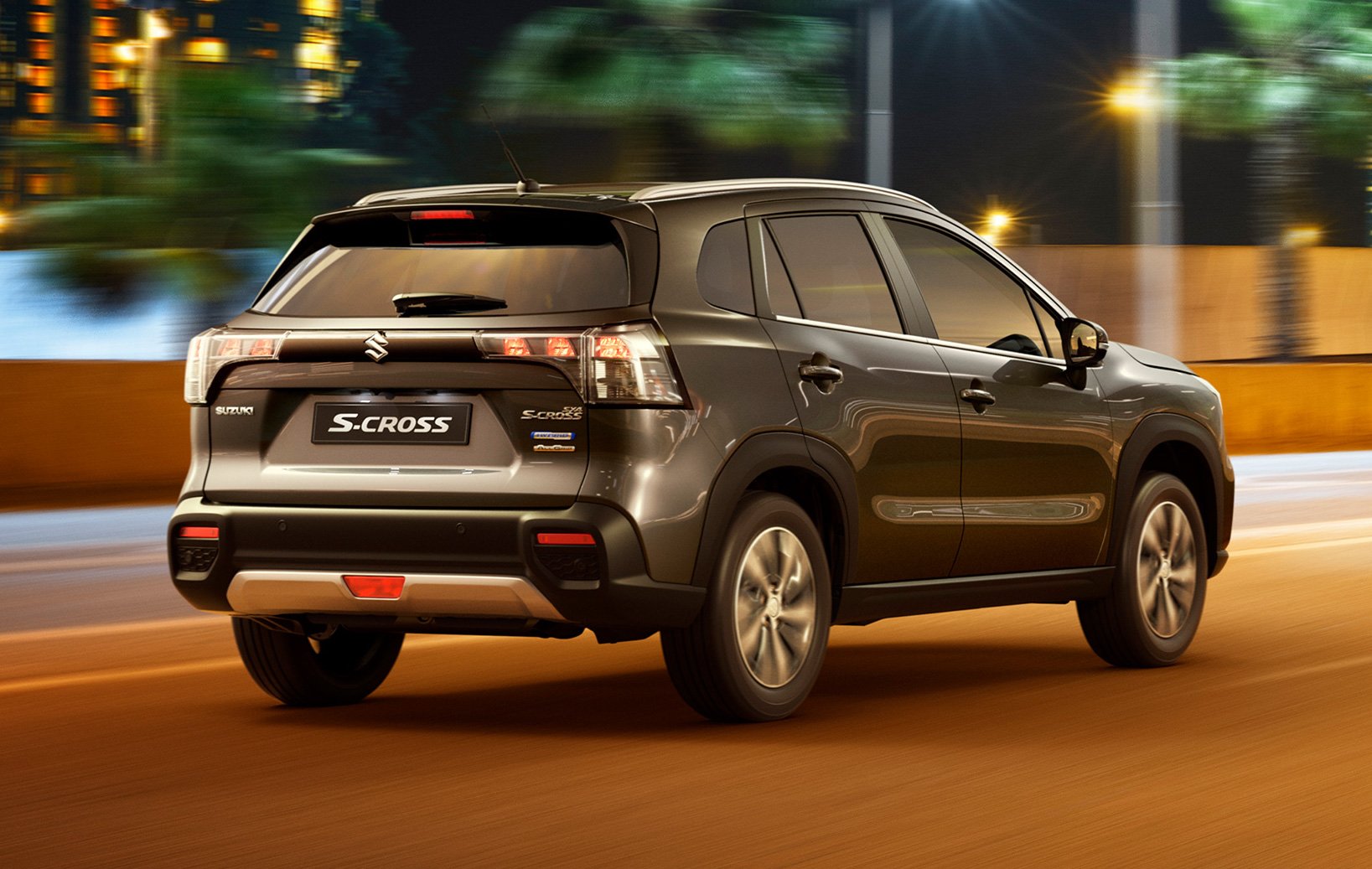
Although the Japanese brand states the new S-Cross is an all-new model, the small SUV has instead been treated to a major design refresh over the outgoing model, with a sharper look up front and wider, clear tail-lights at the back.
This is also further demonstrated through the dimensions of the 2022 S-Cross, which are identical to the previous version at 4300mm long, 1785mm wide and 1585mm tall.
UPDATE: New 2023 S-Cross driven
The new S-Cross is now in Australia, and we’ve driven it. Get our full story at the link below.
? Story continues
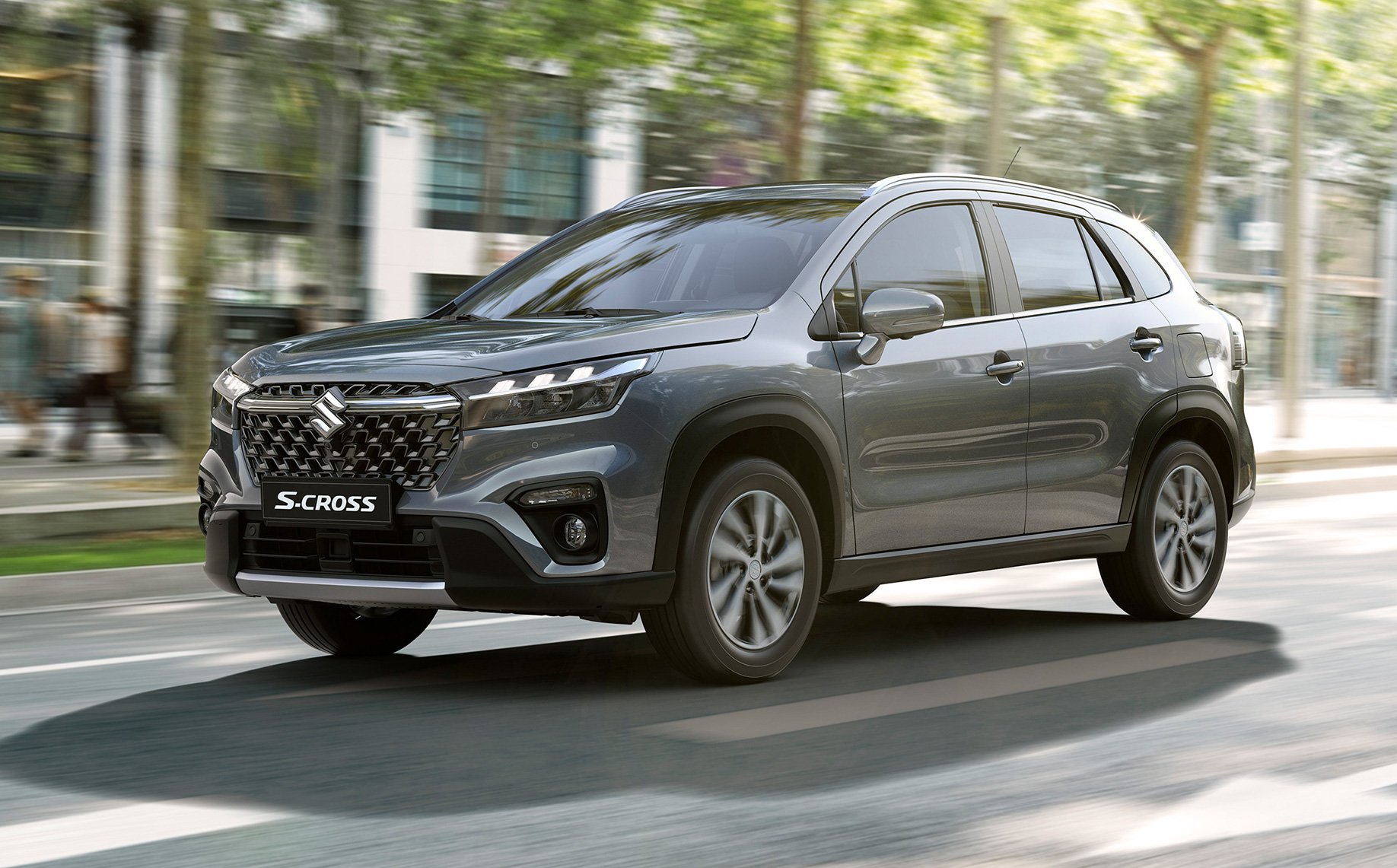
A pair of bulkier LED headlights sit alongside a redesigned grille, while the front bumper has also been refreshed. The addition of a plastic skid plate on both ends of the car helps to boost the off-road appearance of the soft-roader, with a revised set of 17-inch alloy wheels rounding out exterior design changes to the small SUV.
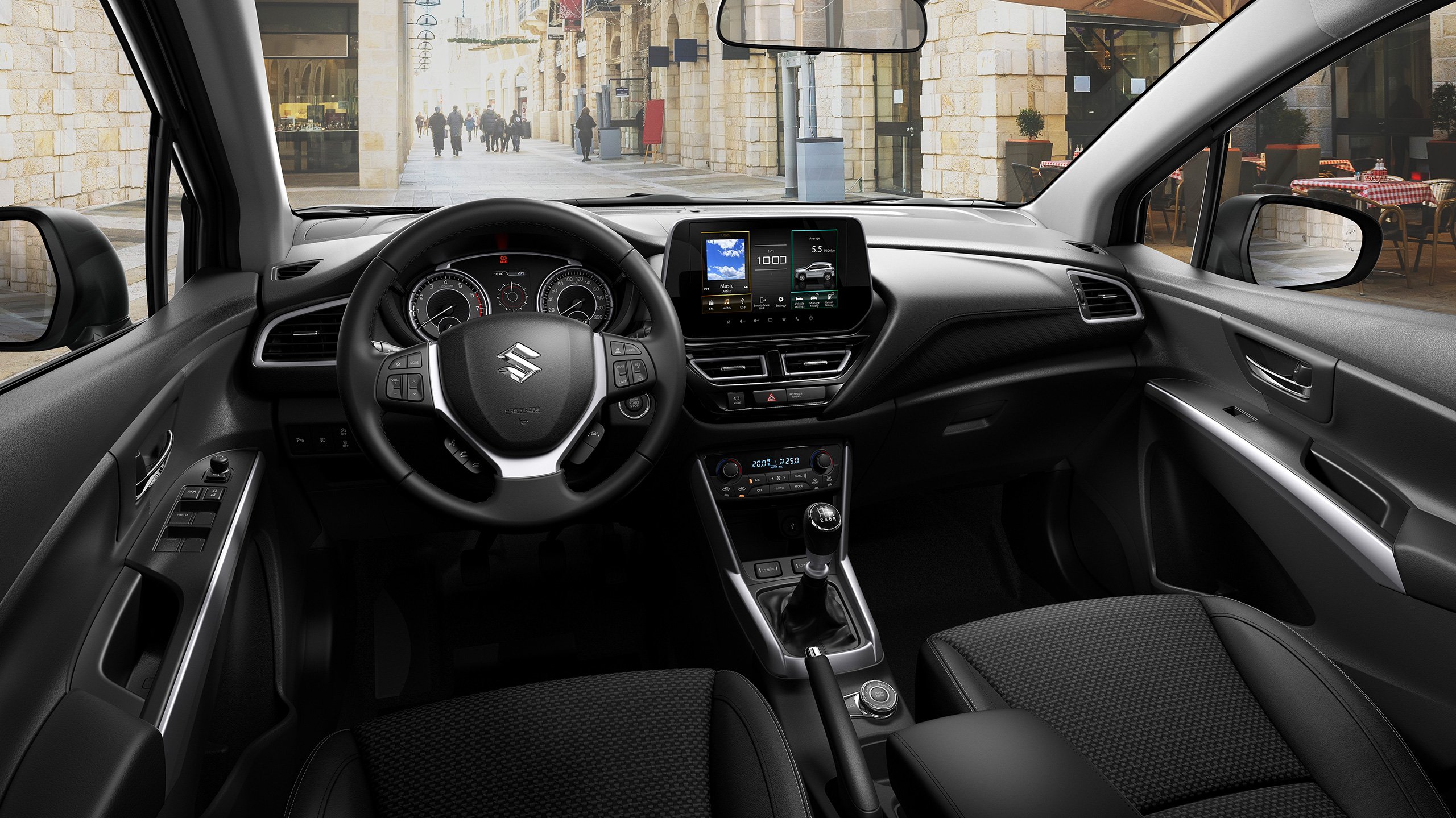
Inside, changes include a larger 9.0-inch touchscreen with Apple CarPlay and Android Auto, wireless phone charger and a 360-degree camera system.
Suzuki has also bolstered the safety equipment available on the S-Cross, with the addition of the brand’s suite of active safety equipment. These features include autonomous emergency braking, lane departure warning, lane keep assist, blind-spot monitoring and rear-cross traffic alert – all previously unavailable on the S-Cross.
Adaptive cruise control and traffic-sign recognition have also been added to the updated S-Cross in Europe, however it is not known whether these features will be available on Australian variants.
The updated S-Cross is expected to retain its 103kW/220Nm 1.4-litre turbocharged four-cylinder engine in Australia, despite the availability of a 48V mild-hybrid version of the engine borrowed from the updated Swift Sport in Europe.
Producing 95kW of power (-8kW over the regular version) and 235Nm of torque (+15Nm), the mild-hybrid 1.4-litre mill completes the 0-100km/h sprint in 9.5 seconds for front-wheel drive variants, and 10.2 seconds in all-wheel drive guise.
Mild-hybrid or not, the engine is mated to a six-speed manual or six-speed automatic transmission, with Suzuki Australia currently offering the S-Cross as an automatic only.
Suzuki Australia says the new-look S-Cross is set to arrive in Australia during 2022, with further details surrounding specification, pricing and specific timing to be announced closer to launch.
For reference, the current S-Cross is available in two trim levels – Turbo and Turbo Prestige – priced between $30,490 and $31,990 before on-road costs. A minor price increase is expected when the updated version arrives.
A 2024 Suzuki Swift Cross could be on the way to expand the model’s line-up.
Suzuki is set to introduce a new-generation Swift next year, with the Swift Sport to follow in 2024, but Japan’s Best Car is reporting a compact SUV will be introduced shortly after.
The Swift Cross would slot in below the Vitara, allowing the carmaker to compete with the likes of the Toyota Yaris Cross, Mazda CX-3, Nissan Juke, and the Ford Puma.
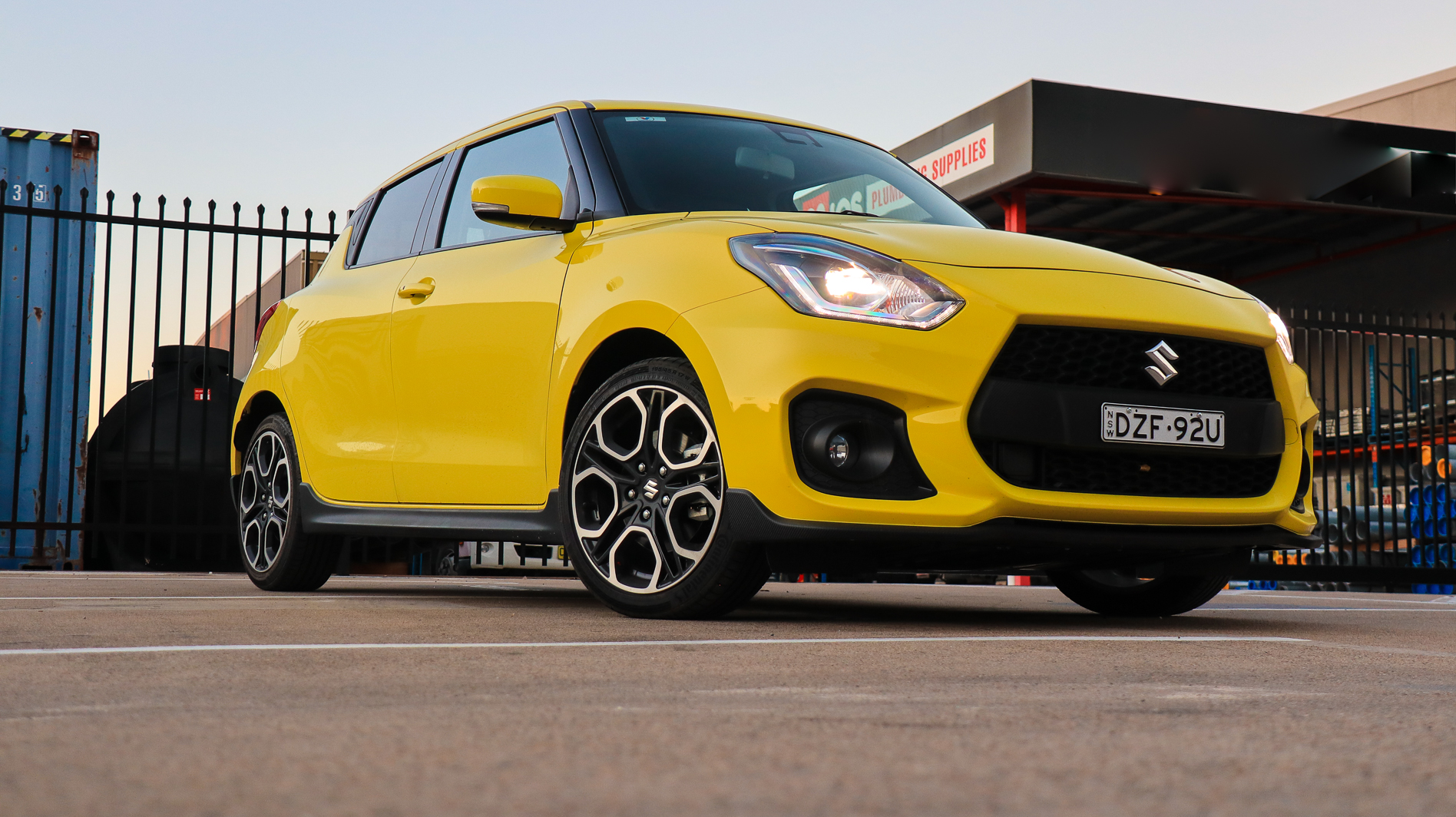
Best Car is reporting the Swift Cross would utilise the future Swift Sport’s powertrain, rumoured to be a 1.4-litre turbocharged four-cylinder engine with mild-hybrid assistance.
Unlike the Yaris Cross Hybrid, which uses a 59kW electric motor in conjunction with the 1.5-litre three-cylinder petrol engine, the Swift Cross would use a 48-volt system with a small electric motor to improve torque delivery during acceleration, reducing emissions and improving fuel consumption.
The 2022 Suzuki S-Cross is due to be unveiled tonight, with the new Swift expected next year.
Mazda’s ability to hold a dizzying number of model variants in its SUV ranges never ceases to amaze me.
Any other company attempting to hold such a long list of different specifications inevitably – and rightfully – waves the white flag and rationalises. Jaguar went from about 17,000 XE variants to two. Mazda itself has done this with its delectable but under-bought 6, a victim of the company’s uncanny ability to shift higher-riding metal.
The Mazda CX-5 is the SUV that set up the company’s success and, it seems, buyers still don’t mind spending time messing around on the website or at the dealer picking through the available options, which if my counting is correct, numbers 16 across six distinct trim levels, four engines and two transmissions (you can still a buy – or try to buy – a manual!).
I’ve driven a lot of CX-5s in the last couple of years but there’s one I haven’t driven for a while and that’s the front-wheel drive 2.0-litre. Available lower down the range in the Maxx and Maxx Sport, it must surely be a dwindling star in the CX-5 cosmos as you can now get a 2.5-litre with all-wheel drive right up and down the range.
Pricing and Features
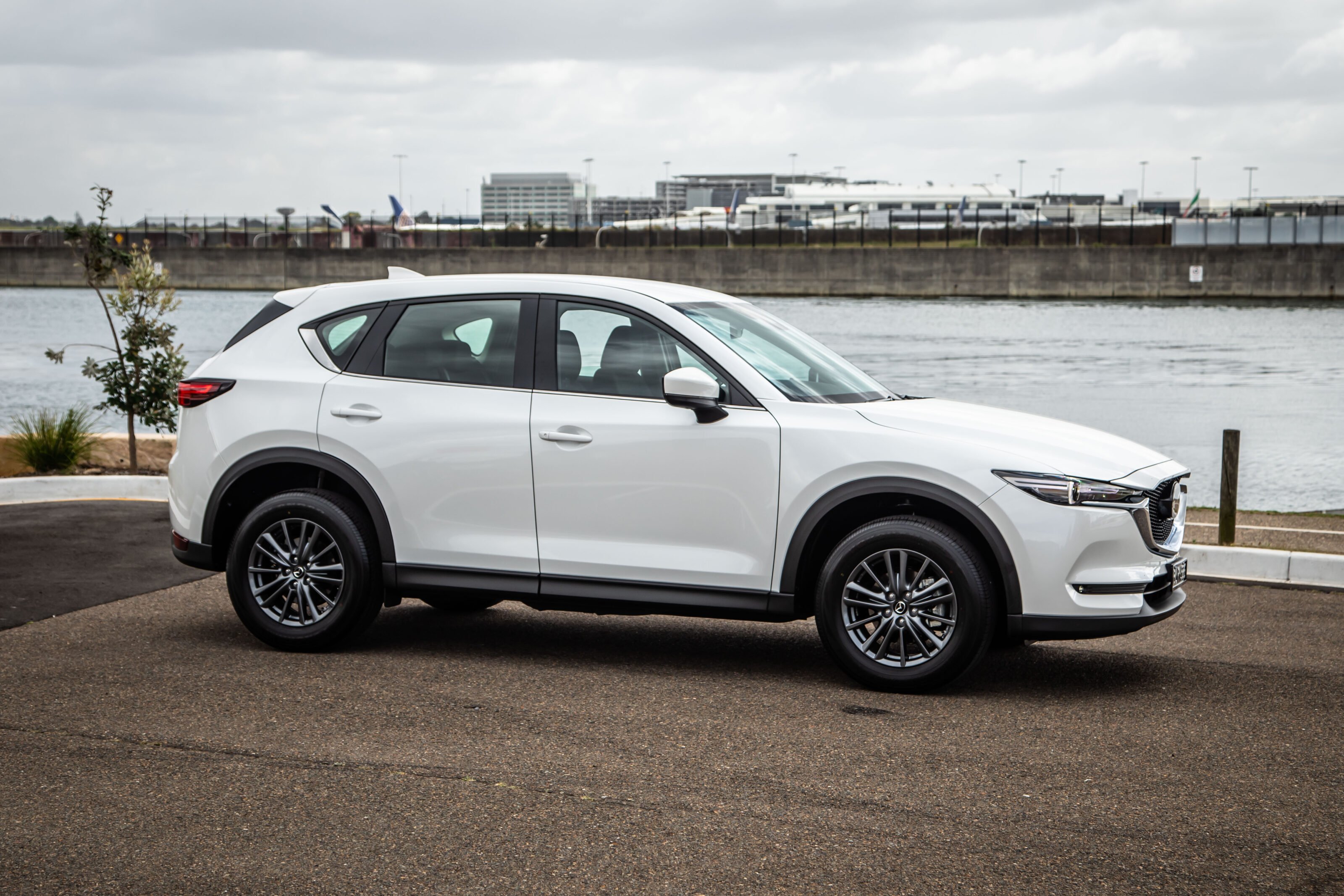
The Maxx Sport is the second step of the range, topping out at $42,690 before on-road costs for the turbo-diesel, propped up by the 2.5-litre at $39,690 plus on-road costs and the one I had, the 2.0-litre front-wheel drive for $36,690 plus on-road costs.
You used to be able to get these for rather closer to thirty rather than forty grand, but a combination of supply constraints and a pre-COVID strategy to send the brand upmarket has pushed up prices. The strategy doesn’t seem to have bothered CX-5 buyers too much, bizarro car market notwithstanding.
Mazda’s push upmarket hasn’t been a stingy one, though. You get 17-inch alloys, a six-speaker stereo, dual-zone climate control, reversing camera, keyless entry and start, adaptive cruise control, sat-nav, auto LED headlights with auto high beam, leather wheel and shifter, folding powered mirrors, auto wipers and a space-saver spare.
The CX-5 interior is beautifully designed, except it’s really dark. Lots of grey high-quality plastic without much in the way of additional colour.
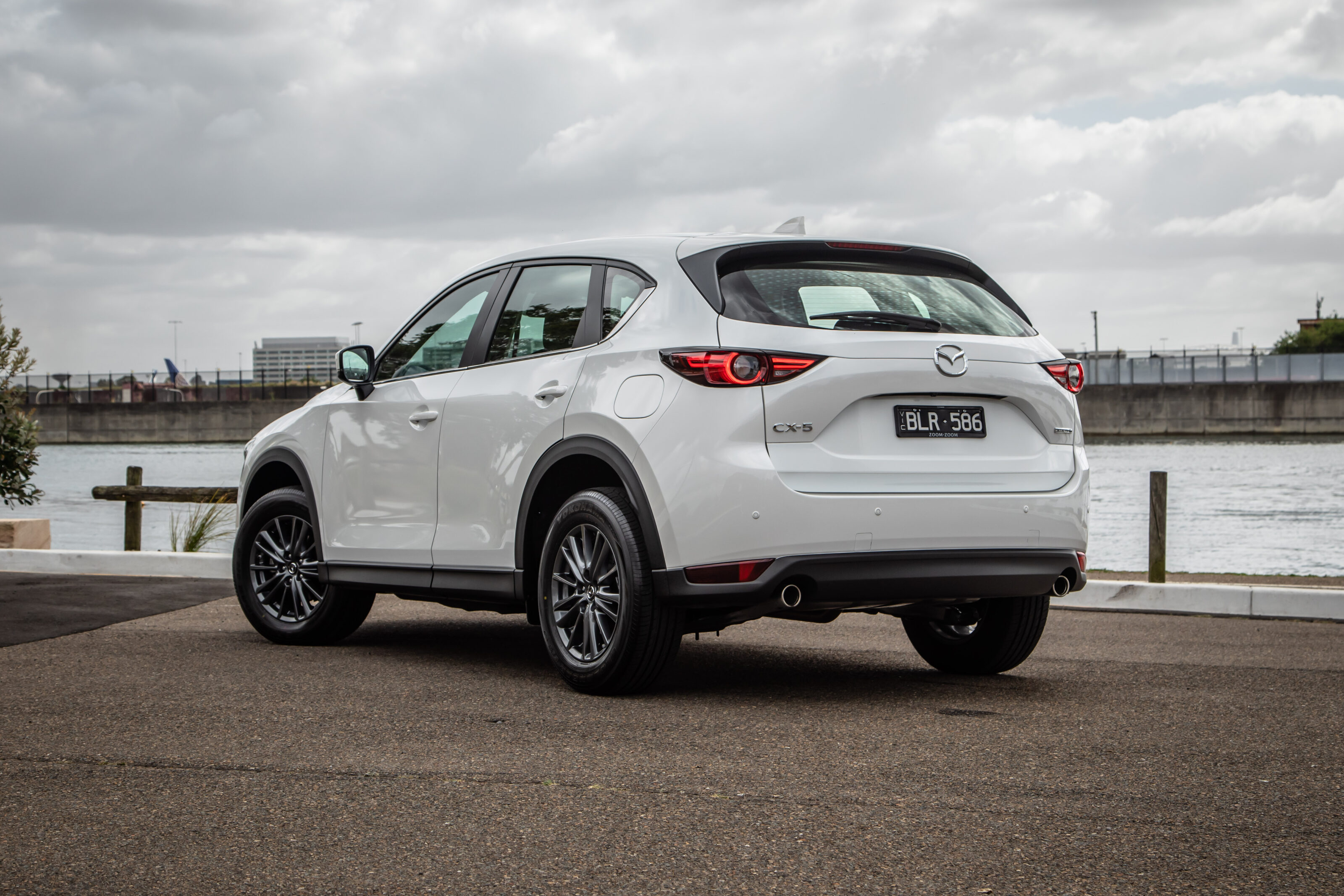
An 8.0-inch touchscreen running Mazda’s older version of MZD Connect persists despite the fairly recent facelift putting the new software in up-spec versions. It’s fine and you can still use the touch function when the car is stationary, unlike the new widescreen version (also found on the CX-30, MX-30 and higher-end CX-5s).
You get DAB+ digital radio and USB Apple CarPlay and Android Auto. Five-star ANCAP safety (dating back to 2017) comes from with six airbags, ABS, stability and traction controls, blind-spot monitoring, forward auto emergency braking (AEB), forward collision warning, lane departure warning, lane-keep assist, speed limiter, speed zone reminder with road sign recognition, reverse AEB and reverse cross-traffic alert.
The forward AEB has pedestrian and cyclist detection and works at both high and low speeds for other vehicles. It’s a lot of gear at pretty much any price.
Comfort and space
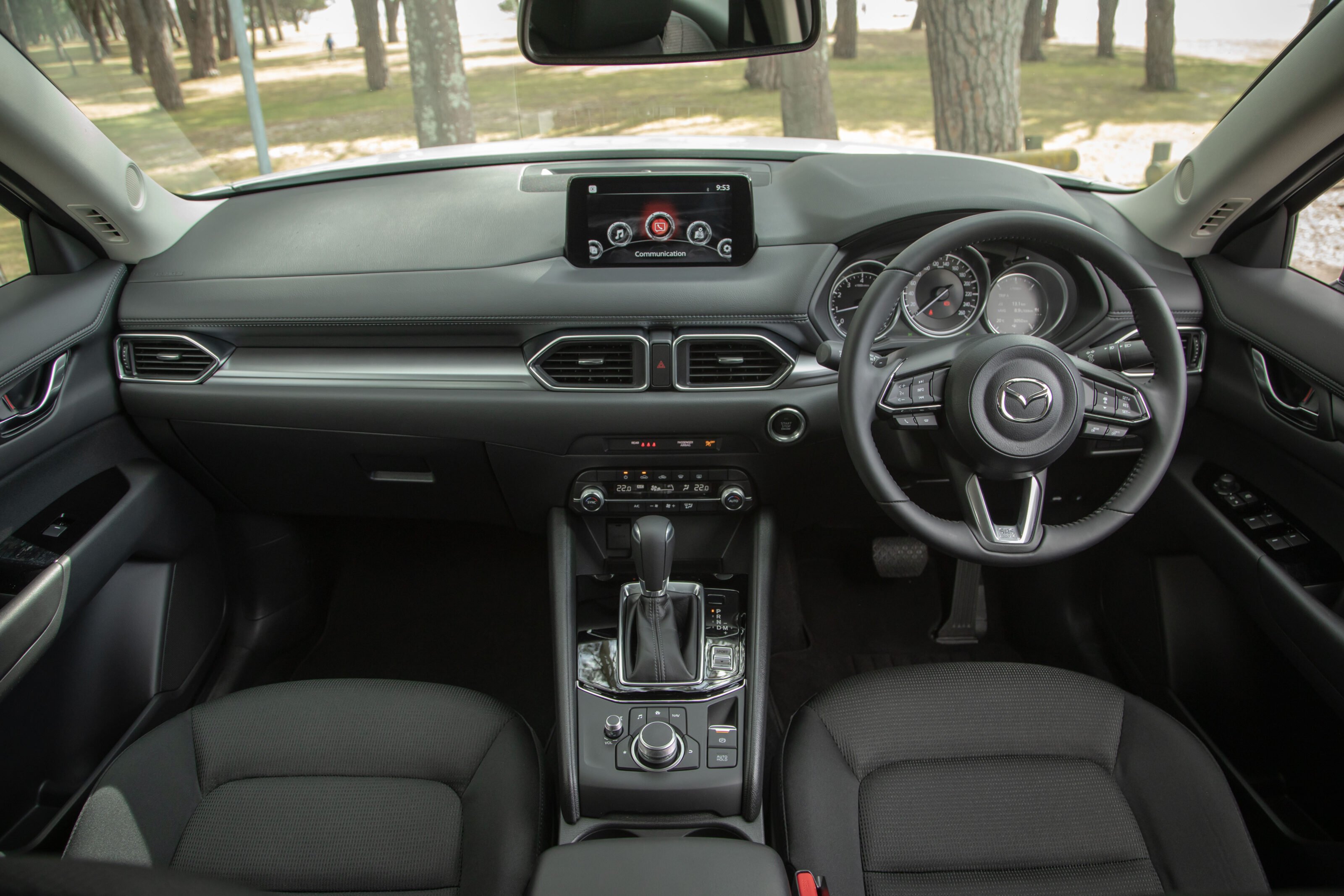
The CX-5 interior is beautifully designed, except it’s really dark. Lots of grey (high quality) plastic without much in the way of additional colour. That may be for the best because the company has occasionally fitted blue or red colour flashes into the armrest and across the dash and it just looked like Play-Doh.
The subtle blades of aluminium-look plastic are better than that, but don’t do much to lift the sombre ambience.
Cloth seats are the order of the day in the Maxx Sport and that is not a bad thing at all. They don’t look like much but they’re very comfortable and the fabric hardy, if again, dark. The lovely leather wheel is a terrific size and the thin rim has a classic feel to it.
It’s all very nice in here, without too many buttons or any clashing textures, which kind of makes the darkness worth it. Mazda’s interior design folks are really big on banishing clutter and it works.
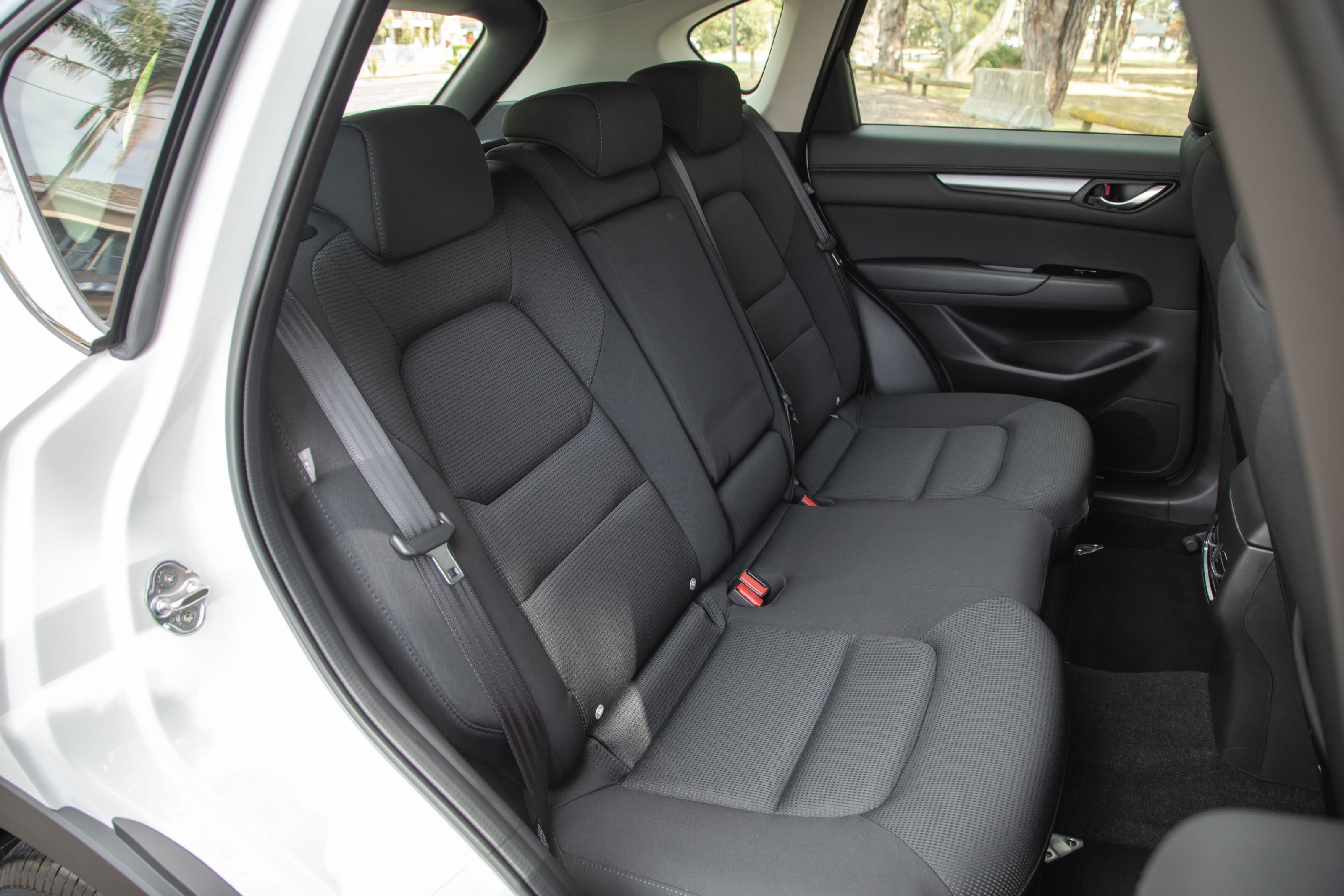
Moving to the back, Mazda’s predilection for tight-but-adequate rear accommodation continues. I’m a hair under 180cm tall and it’s a cosy fit behind my driving position.
The door aperture is annoying if you’re loading kids, too, although the door does open nice and wide. The seat is very comfortable and headroom is good. You have two more cupholders and bottle holders in the doors.
Boot space starts at just 442 litres, down on all of its obvious competitors. A petrol RAV4 has 580 litres and the VW Tiguan up to a whopping 615 litres owing to its sliding middle row. Drop the 40/20/40 split fold rear seat in the Mazda and 1342 litres are at your service.
On the road

Driving the CX-5 is always a pleasure. The first one, released all those years ago, set the benchmark for the class that even European brands struggled to match for well over half a decade.
The chassis has always had that Mazda feel (which the company calls jinbai ittai, or horse and rider at one) and there’s always a sneaky reference to the MX-5’s balance and poise.
While it’s obviously not that impressive, even on 225/65 rubber that isn’t what you’d call amazing, the CX-5 cheerfully navigates being hustled through roundabouts without the ride quality ever dissolving into a mess.
The multi-link rear end has a lot to do with the latter while the well-tuned front end, with a surprisingly crisp turn-in, delivers a coherent, competent driving experience.
Driving the CX-5 is always a pleasure. The chassis has that Mazda feel (which the company calls jinbai ittai) – a sneaky reference to the MX-5’s balance and poise.
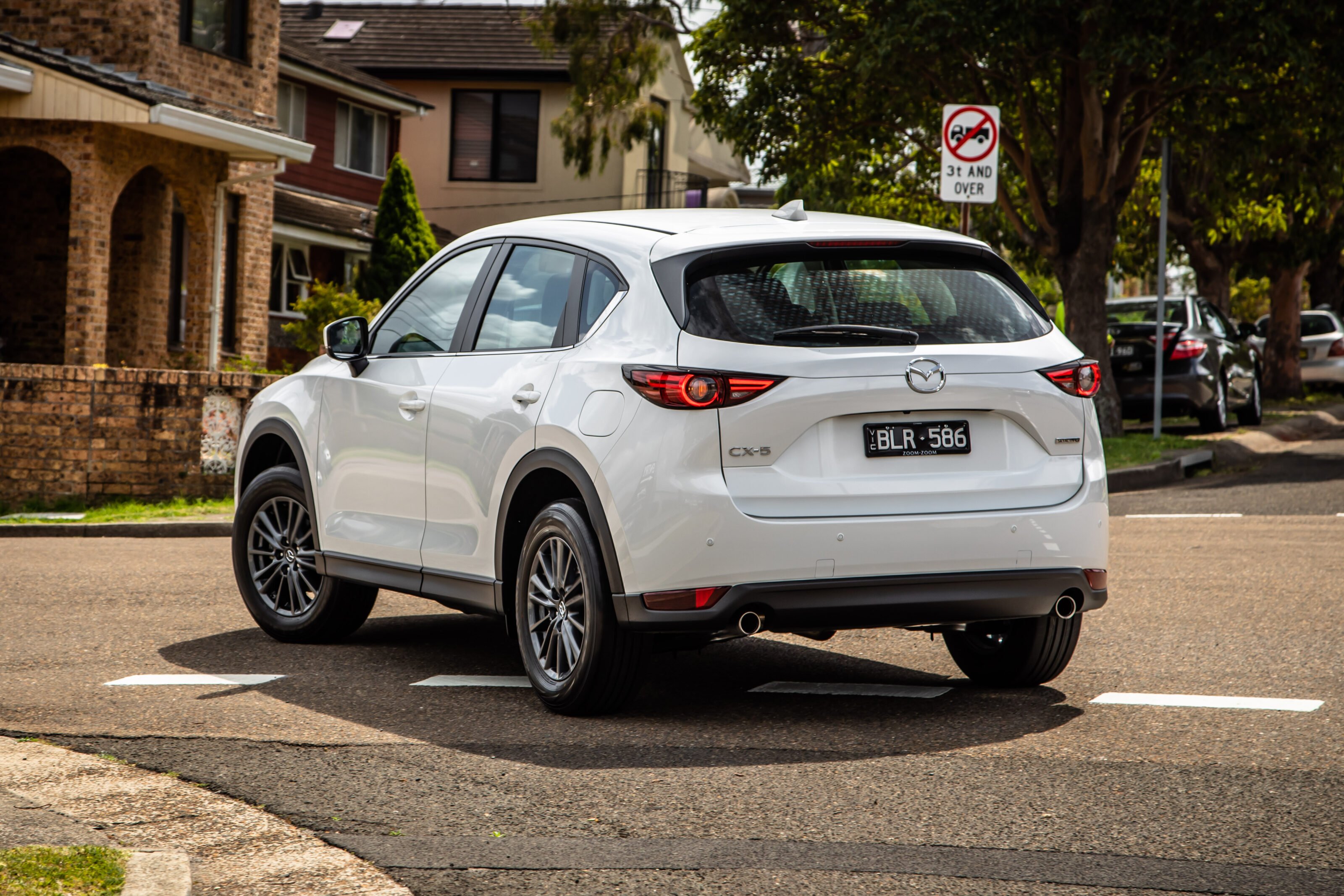
Less favourable are the brakes. It might just have been this one, but the pedal felt a bit mushy at the top and needed a firmer foot than you might expect. It’s the kind of thing an owner won’t even notice after a week, but it knocks the edge off the chassis’ overall feel.
It may also have something to do with the fact that the last two CX-5s I’ve driven – the GT SP turbo and the turbo-diesel – have 320mm front brakes instead of this car’s 297mm.
I’m leaving the engine until last because it’s the most workaday thing about the whole car. Two litres of natural aspiration isn’t going to set 1558kg alight, no, but with 115kW and just 200Nm on offer, you’ll be working a Maxx Sport hard.
The 10.6-second claimed run to 100km/h is entirely believable. The vibe coming through the firewall when attempting that time is certainly not one you’ll enjoy, because the engine isn’t having any fun either. Max power is at 6000rpm and torque at 4000rpm, so those numbers speak for themselves.
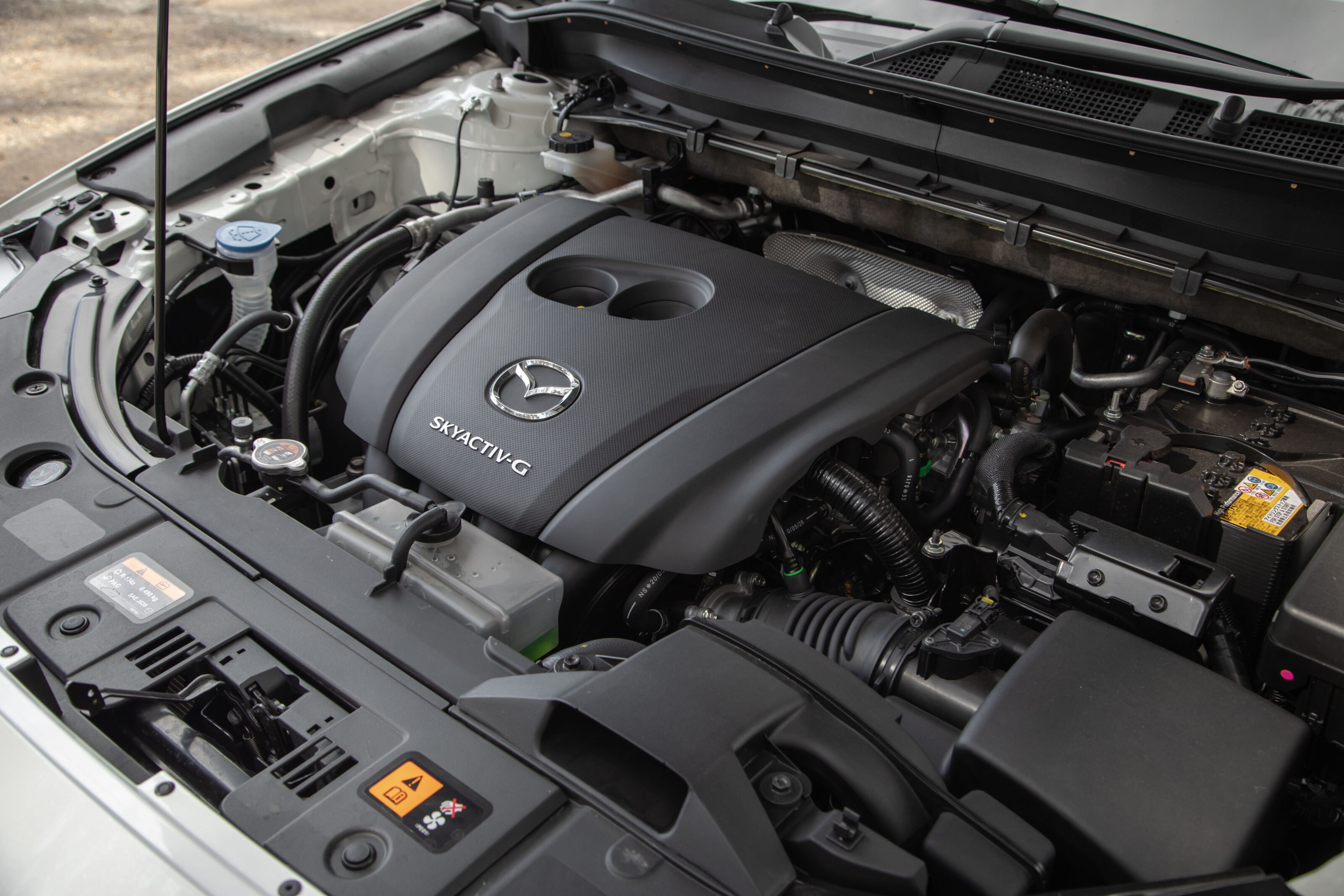
That’s not to say it’s a bad engine – not by any stretch – but it’s one that is good in the suburbs and town, fine in the cruise. But you’ll need patience if you want to indulge in any cut and thrust, because it won’t happen.
Mazda’s combined cycle claim of 6.9L/100km can best be described as unlikely. I don’t think I’ve ever really got a 2.0-litre CX-5 to consume less than 10.5L/100km and while I admit to having a heavier right foot than most buyers, I have tried and have always failed.
Ownership
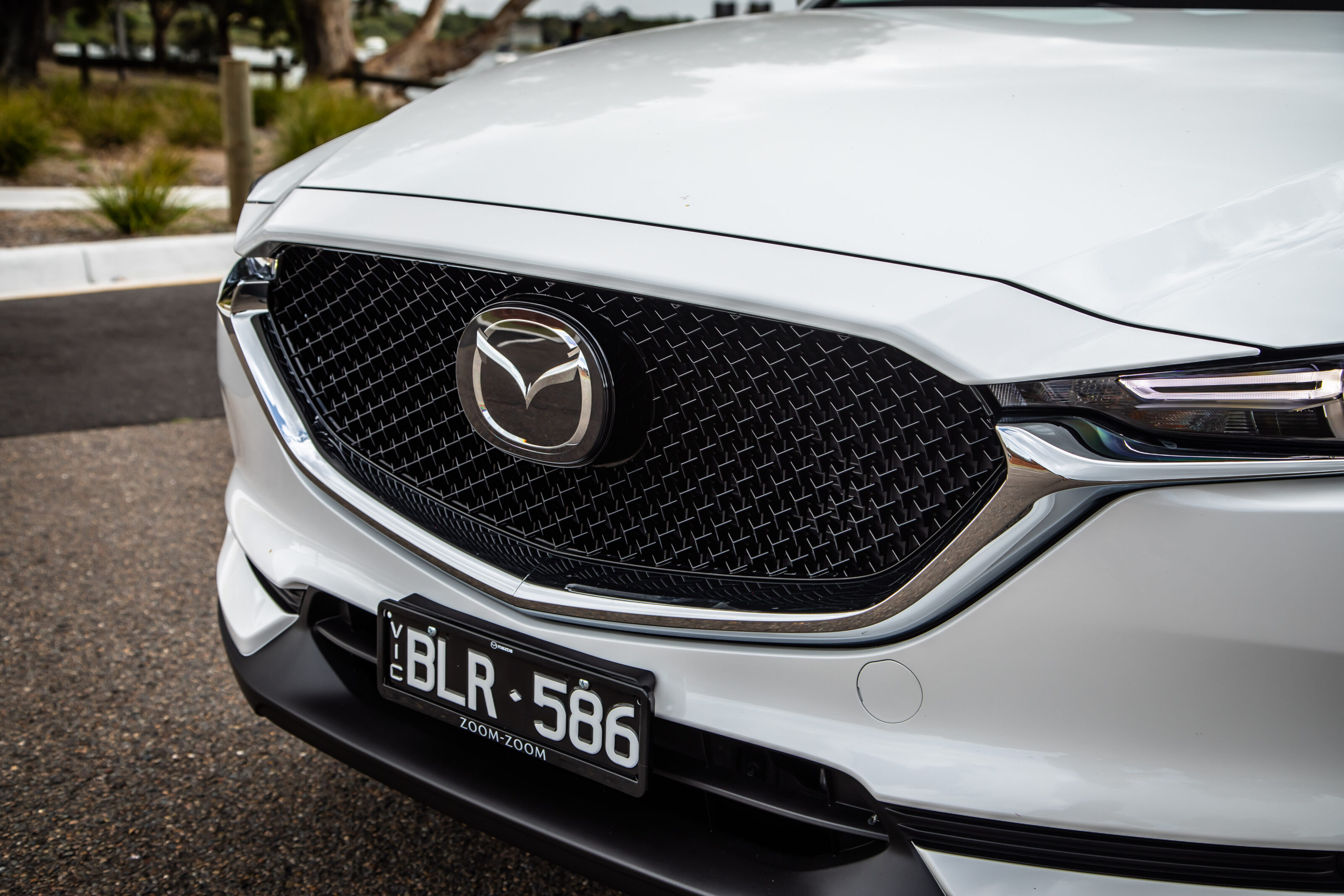
Mazda offers a five-year warranty with unlimited kilometres and roadside assist.
Capped-price servicing applies for the first five services and, unfortunately, they come every 12 months or just 10,000km, which is shorter than the CX-5’s naturally aspirated rivals.
Pricing is getting on the higher side of reasonable, too, bouncing between $331 and $361 over the first five services for a total of $1719 during the length of the program. Over the five services, it’s $150 cheaper than the diesel to service and about $20 and $50 less than the 2.5 and 2.5-litre turbo respectively.
Mazda lists additional items not covered by the service regime, which on this car is the cabin air filter (40,000km, $82) and the brake fluid (two years/40,000km, $71) which appears quite cheap compared to others.
Most of the CX-5’s naturally aspirated rivals push the intervals out to 15,000km while offering similar or cheaper deals, with Toyota walloping them all with a fixed $200 per service on the RAV4.
VERDICT
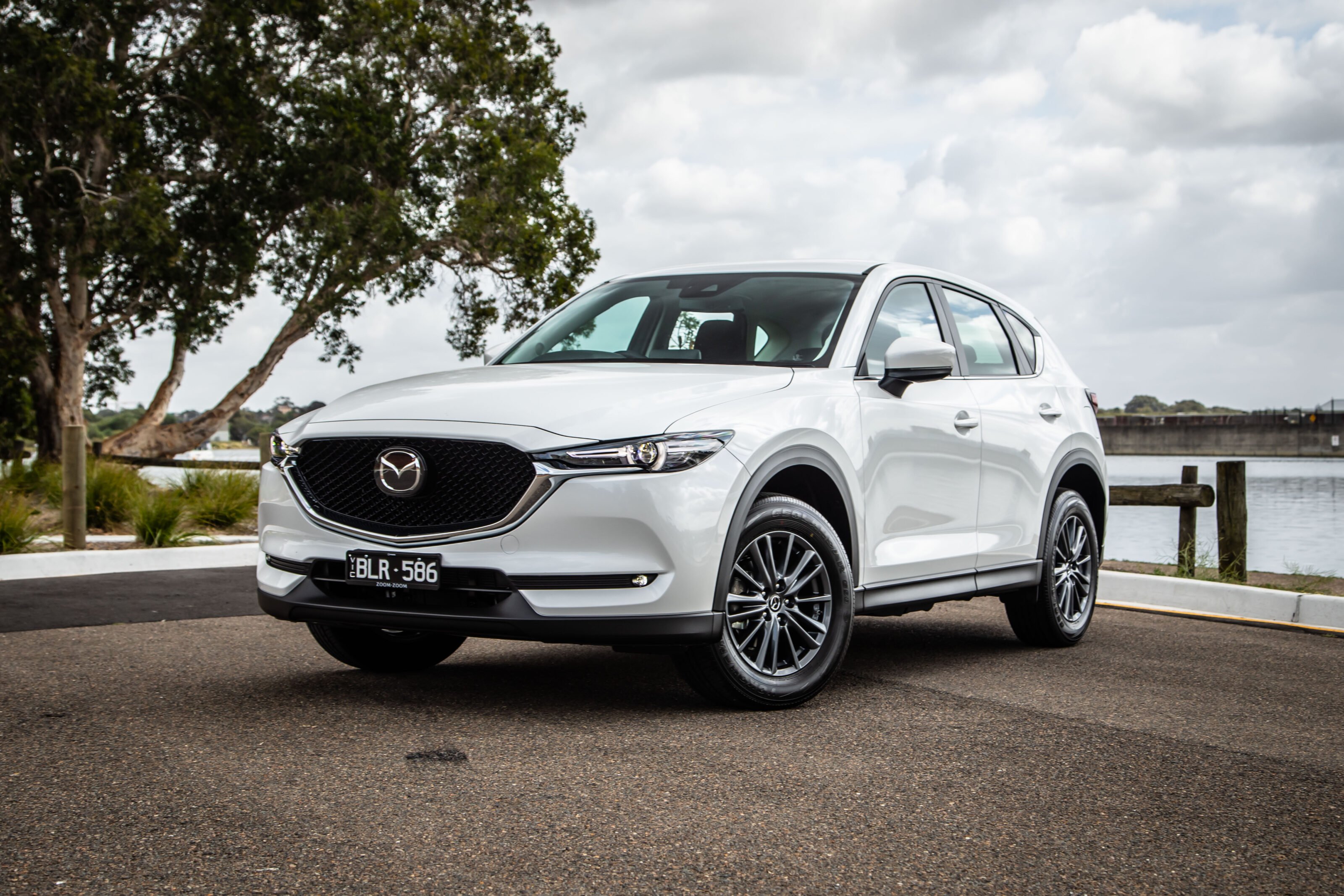
With the price increases, the Maxx Sport has really become the pick of the range when it comes to value and specification, especially given its huge list of impressive safety gear.
The 2.0-litre, however, isn’t it, with the 2.5 AWD offering better power, more torque and, in my experience, lower real-world fuel consumption. Not low enough to bridge the price gap, but it does use less because it doesn’t have to work as hard.
Having said that, I really like the Maxx Sport’s specification because it delivers all the things that are good about the CX-5 without any needless frippery like a sunroof or leather seats that just get hot in summer. Comfortable, fun to drive and mostly refined, it still has winner written all over it.
2021 Mazda CX-5 Maxx Sport FWD specifications
| Body:u00a0 | Five door mid-size SUV |
| Drive: | FWD |
| Engine: | 2.0-litre four-cylinder |
| Transmission: | Six-speed automatic |
| Power: | 115kW @ 6000rpm |
| Torque:u00a0 | 200Nm @ 4000rpm |
| Bore stroke (mm): | 83.5 x 91.2 |
| Compression ratio:u00a0 | 13.0 : 1.0u00a0 |
| 0-100km/h:u00a0 | 10.6 sec (estimate/claimed) |
| Fuel consumption:u00a0 | 6.9L/100km (combined) |
| Weight: | 1558kg |
| Suspension: | MacPherson strut front/multi-link rear |
| L/W/H:u00a0 | 4550mm/1840mm/1675mm |
| Wheelbase: | 2700mm |
| Brakes:u00a0 | 297mm ventilated disc front / 303mm solid disc rear |
| Tyres:u00a0 | 225/65 R17 |
| Wheels:u00a0 | 17-inch wheels (space-saver spare) |
| Price:u00a0 | $36,690+ ORC |
Key Points
- BMW’s M division is celebrating its 50th year
- Retro-inspired badges to be offered across the model range
- 50 historically significant colours will return
The high-performance arm of BMW is harking back to its inception for 2022, as the M division announces it will offer retro-inspired badges for its models next year.
Celebrating 50 years of M cars from May 24, 2022, the German manufacturer will include the historic badge on its options list from the start of next year, both on dedicated M models and standard BMW vehicles with the M Sport package.
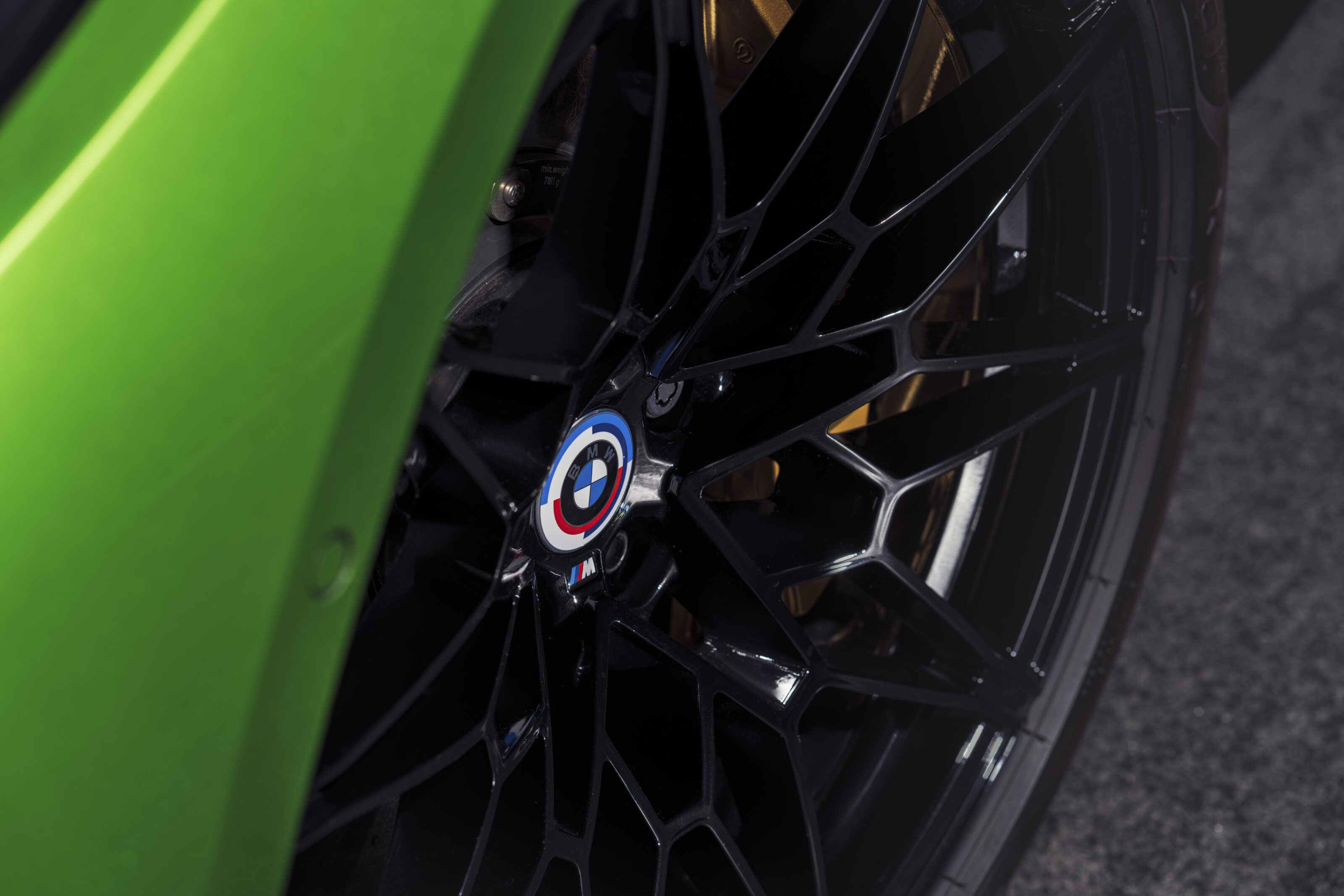
Still retaining the Bayerische Motoren Werke’s current logo in its centre, the old badge features three layers of semi-circles around it, with the iconic blue, violet and red all tied in with white to create an illusion of movement.
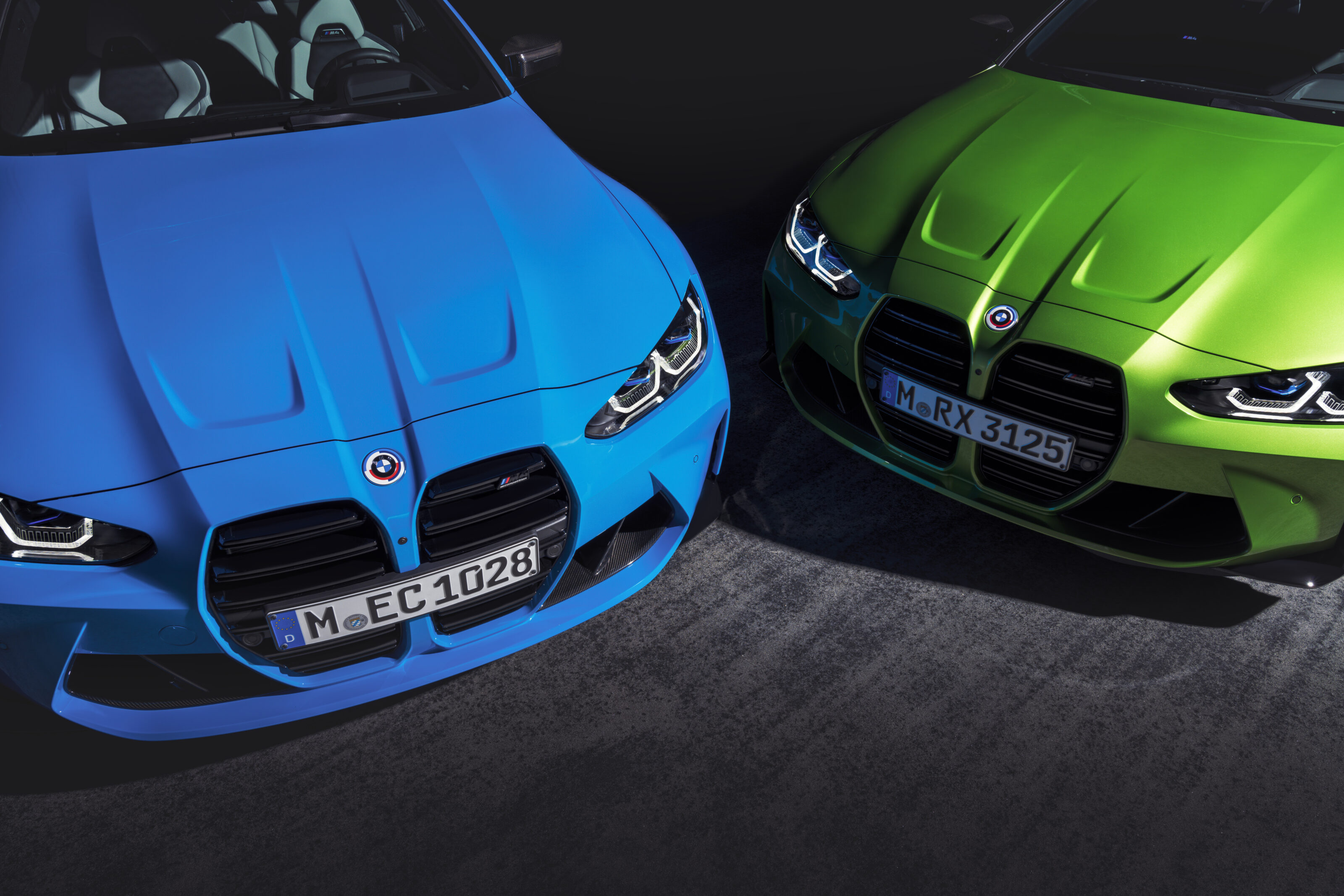
This particular design was first used on a race car in 1973 before featuring prominently on the M1 – the M division’s first and so far only dedicated vehicle – before the three stripes we now see were adopted in the 1980s.
On top of the retro badges, BMW M will also offer a range of its classic paint finishes from its 50-year history to 2022 models, including Dakar Yellow (E36 M3), Fire Orange (E92 M3 GTS), Daytona Violet (E36 M3), Macao Blue (E30 M3) and Imola Red (E46 M3).
Next year is set to be a big one for BMW M, with the long-awaited M3 Touring joining the line-up alongside the new M2, plus a potential dedicated M model in the form of a high-powered hybrid.
Also rumoured is the BMW iM2 – a special 50th present from BMW M to itself, using four electric motors to deliver more than 1000kW.
If you have a single bone of mechanical sympathy in your body, then performance testing manual, all-wheel drive cars like the Toyota GR Yaris Rallye is one of the least enjoyable jobs you can imagine.
With so much grip to overcome there really is only one way to successfully launch them, but before that let’s run a set of numbers – 0-60mph (97km/h), 0-100km/h and 0-400m – in a more sedate manner as a benchmark.
Dialling up around 2500rpm and letting the clutch out gradually gets the Yaris GR rolling but the revs die and the 200W/370Nm 1.6-litre turbocharged three-cylinder takes a moment to spool up and get going.
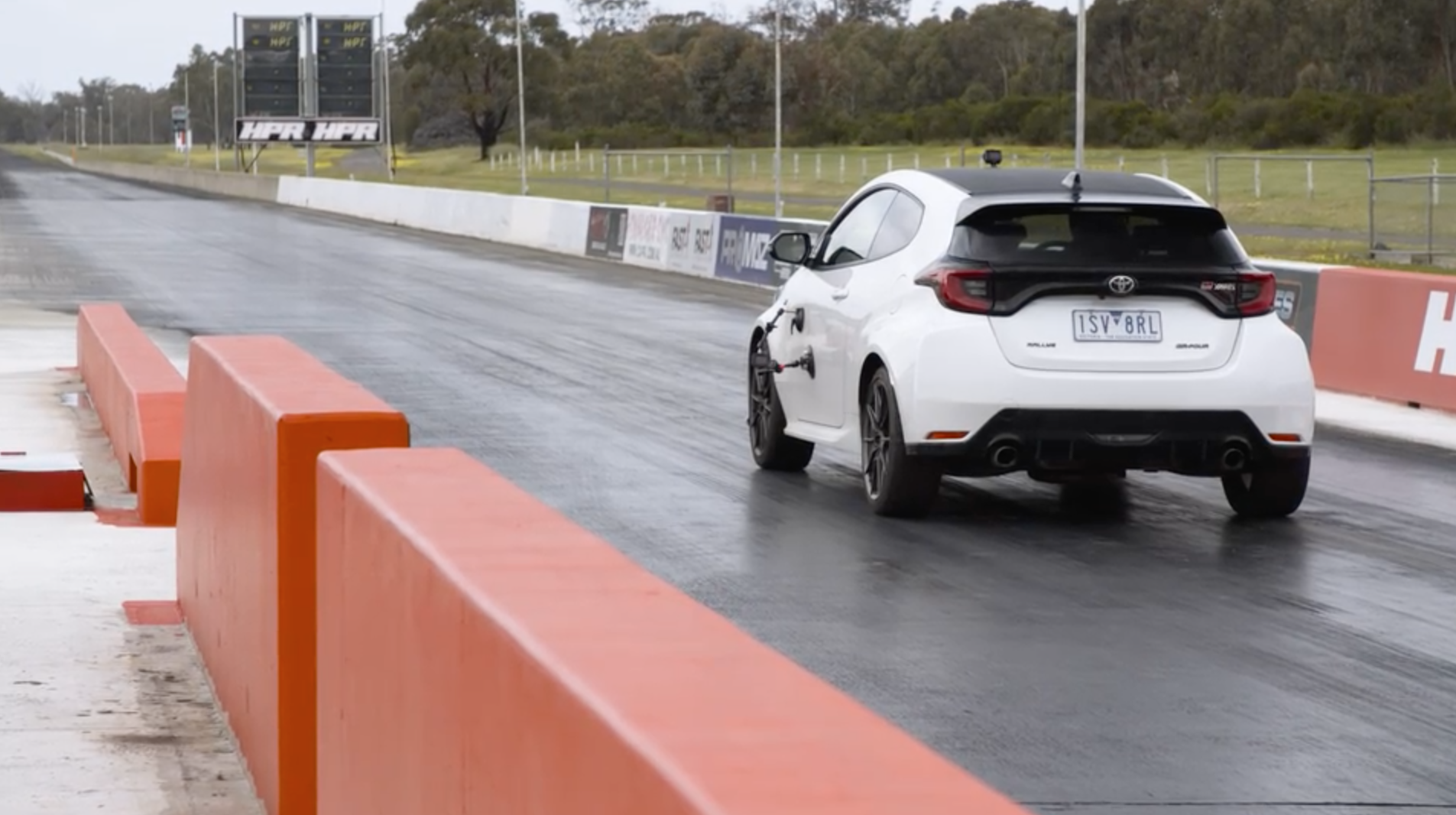
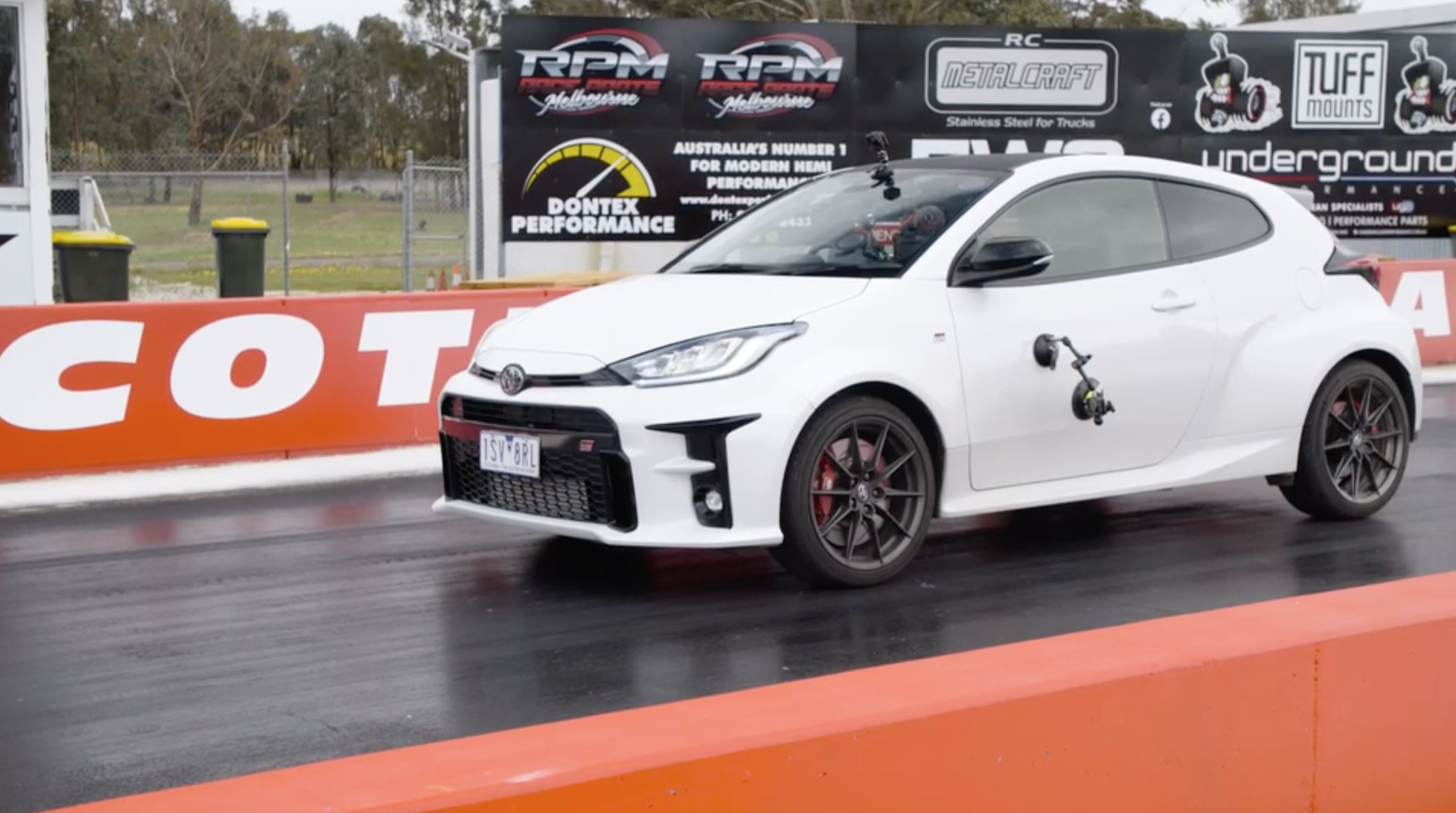
As expected, the numbers are pretty pants, with 0-100km/h taking 6.5sec – an eon away from the 5.2sec claim – and a 14.4sec quarter mile. For all runs Sport mode was selected for a 30:70 front-to-rear drive split and the ESP was deactivated.
For the next run the traditional technique is employed: namely, dial up as many revs as possible then dump the clutch. The GR Yaris seems to have a protection mode built in if you bang it off the limiter, cutting power when you release the clutch, so instead you have to floor the throttle and then release the clutch as revs build.
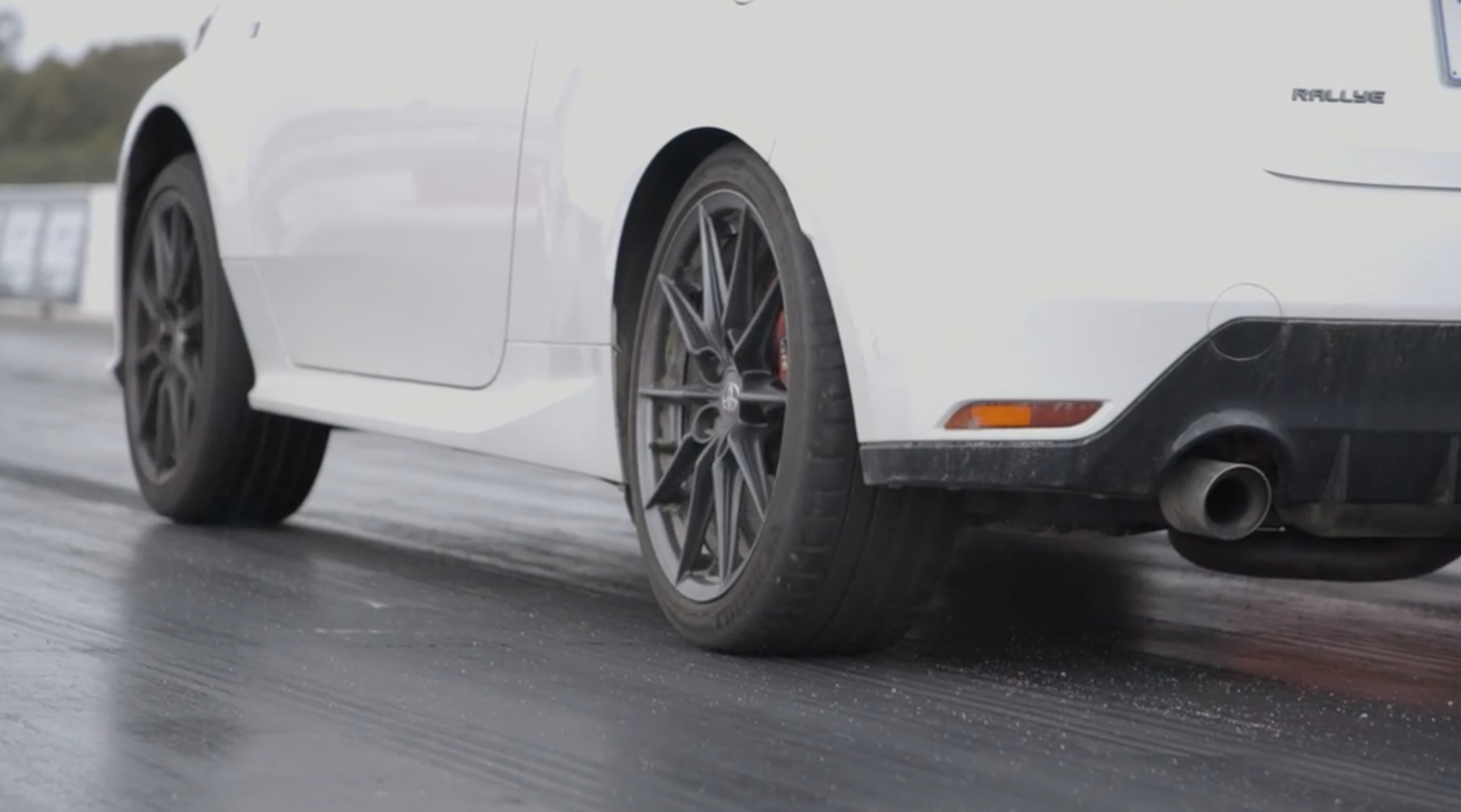
It’s a brutal process, but all four wheels spin briefly, the fronts axle tramping up the strip, but the launch is wasted when I miss the shift to third. Even so the times improve to 6.1sec 0-100km/h and a 13.8sec quarter mile.
The GR Yaris does have a handicap when it comes to setting quick 0-100km/h times. Second gear runs to 98km/h, which means the 0-60mph time can be recorded with only one gear change, but no matter what you do, you’re going to have to shift to third before 100km/h.
One way around this issue is to hold second for as long as possible so that by the time you’ve dipped the clutch, momentum has carried you through the 100km/h mark without needing to complete the time-consuming two-three shift.
With all this in place, progress is made. The third run nets 0-60mph in 5.1sec, 0-100km/h in 5.3sec and a 13.4sec quarter mile at 168km/h. On the return run down the strip 80-120km/h is completed in 3.1sec in third gear and stopping from 100km/h takes an impressively short 35.6m.
A sign of the punishment being inflicted on the Yaris is that an “AWD system overheated” message flashes up on the instrument display, a sign that the car needs a rest for a few minutes before attempting another launch. Ignore if and the Yaris GR reverts to front-wheel drive.
One last run nets a small gain, the 60mph time falling to 5.04sec, the 0-100km/h time 5.29sec and the 400m figure 13.32sec at 169.2km/h. But wait, there’s more.
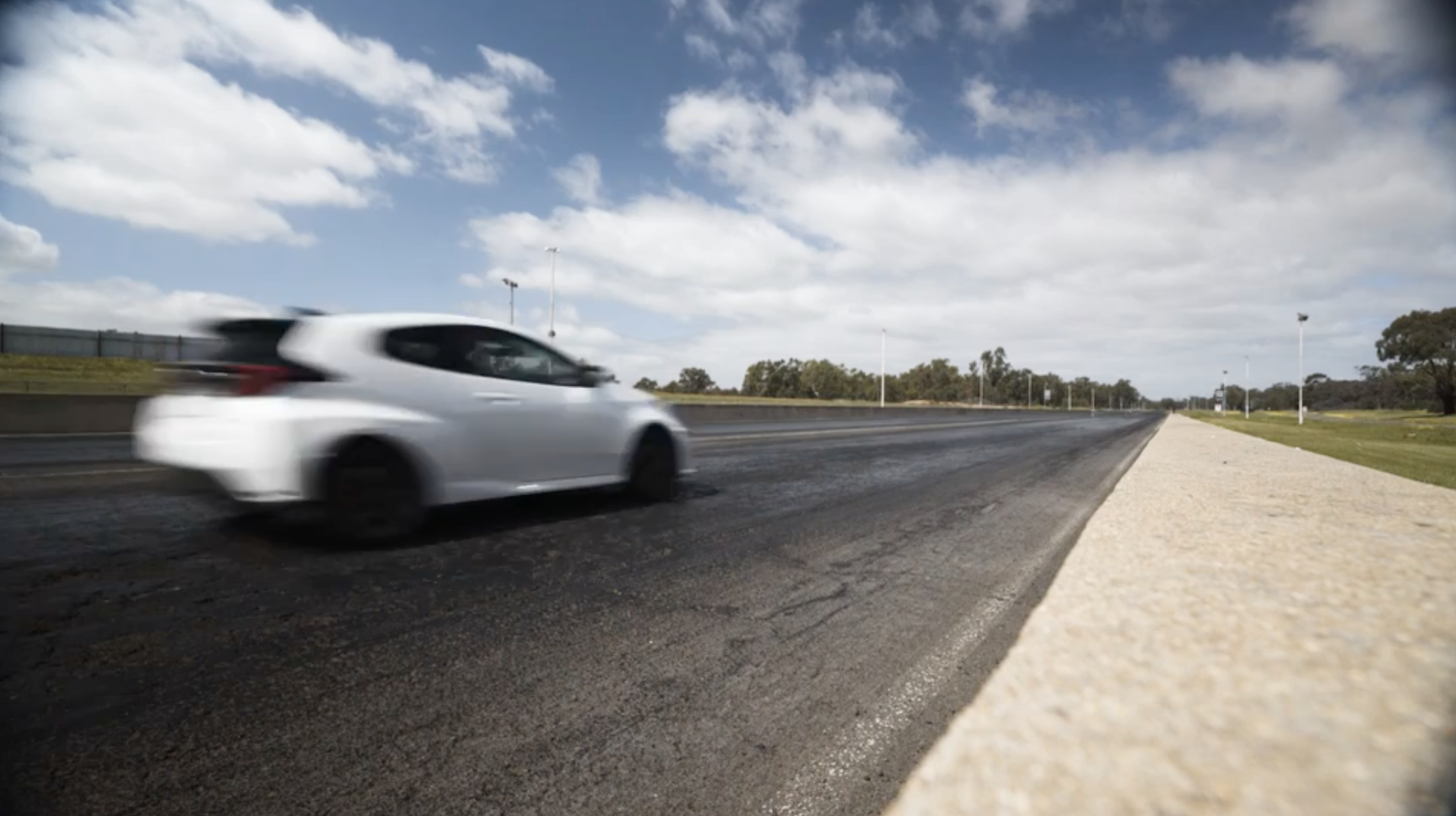
Another attempt while filming external footage for the attached video nails it, the GR Yaris leaping from 0-60mph in 4.89sec, flashing through 100km/h in 5.14sec – besting the claim by 0.06sec – and taking just 13.19sec at 169.76km/h. This is one fast three-cylinder!
Toyota GR Yaris Rallye performance data
| 0-60mph: | 4.89sec |
| 0-100km/h: | 5.14sec |
| 0-400m: | 13.19sec @ 169.76km/h |
| 80-120km/h: | 3.1sec (3rd) |
| 100-0km/h: | 35.6m |
Key Points
- Updated A110 signals the last run of combustion-engined model
- Three-grade line-up to be topped by A110 S
- Model won’t come to Australia due to ADR regulations
French manufacturer Alpine has unveiled its updated A110 sportscar, giving the lightweight legend a send-off before the brand goes all-electric.
First launched in 2017 at the Geneva Motor Show, the A110 has been regarded as one of the best driver’s cars of the last decade, with its mid-mounted 1.8-litre turbocharged engine providing more than enough power to push the sub-1150 kilogram coupe down the road.
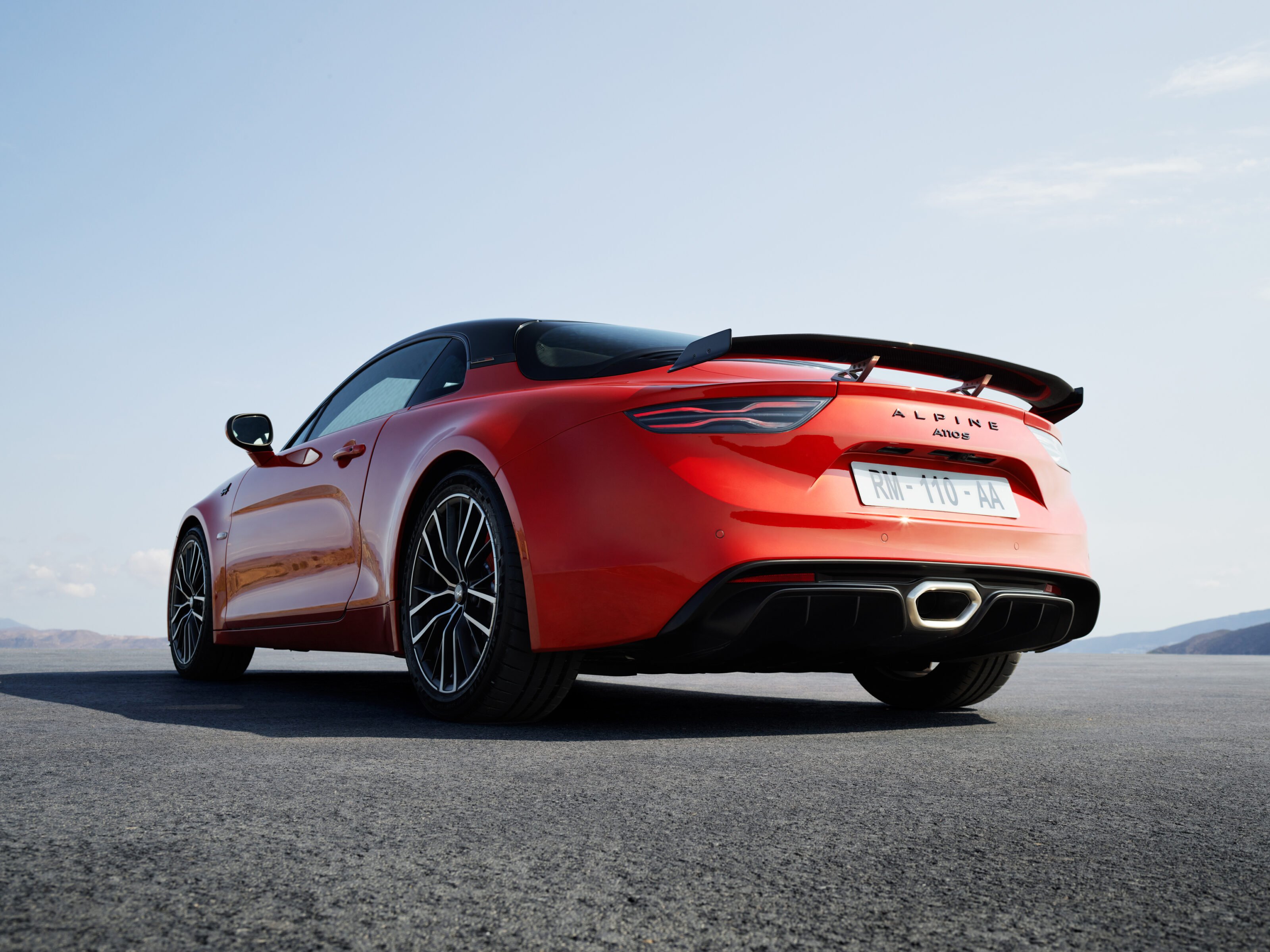
For 2022, the base A110 has remained largely unchanged, with power and torque remaining at 185kW and 320Nm. But its two more expensive variants – the A110 GT and A110 S – have been handed a performance boost, as Alpine has tweaked the four-pot engine to now produce 221kW and 340Nm, an increase of 6kW and 20Nm over the current A110 S.
With launch control activated, Alpine has set the A110’s engine management system to deactivate one of its four cylinders, providing a harsher, more aggressive sound before completing the 0-100km/h sprint in as little as 4.5 seconds, continuing on to a top speed of more than 270km/h.
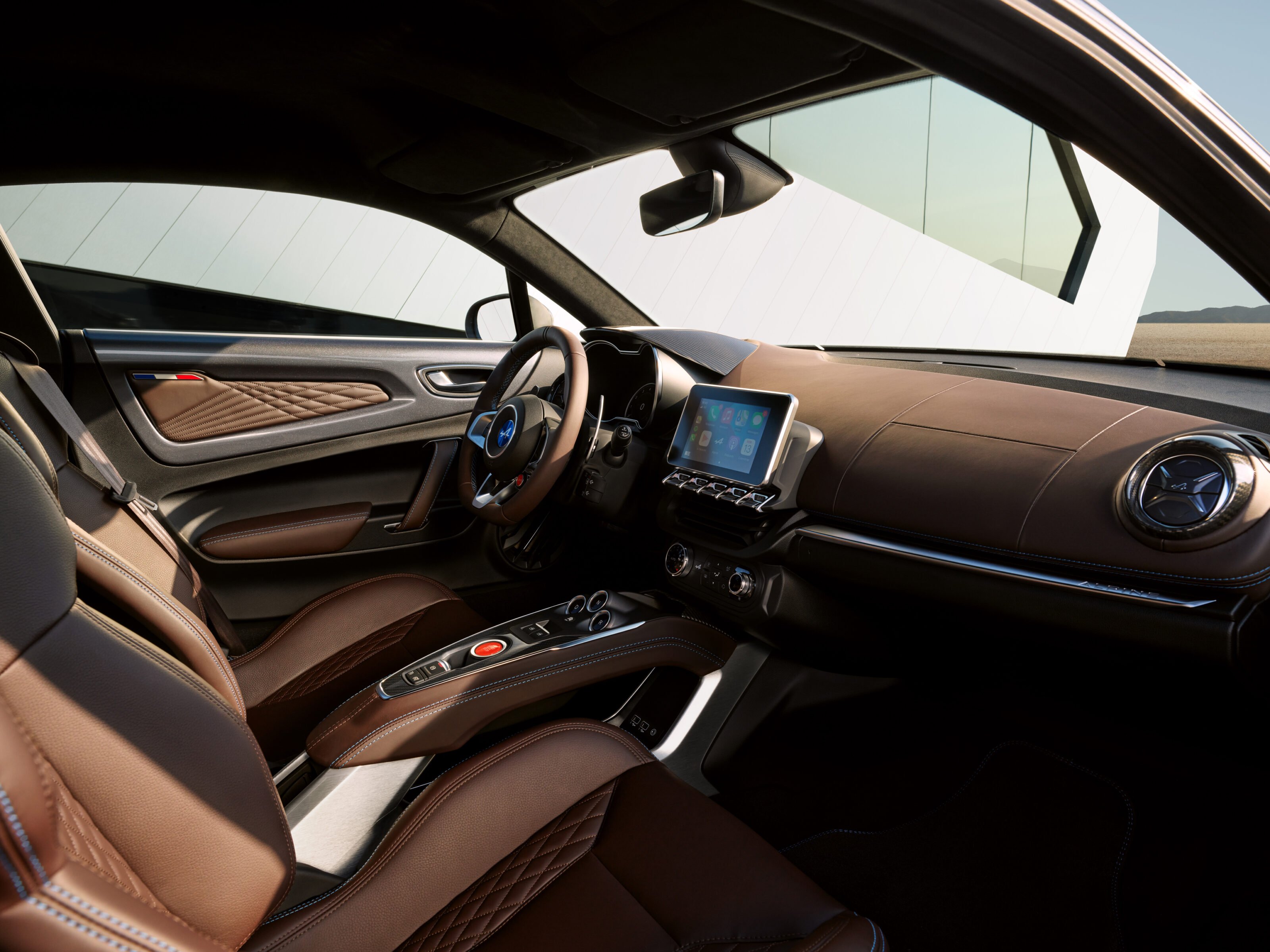
In addition to the performance changes, all A110 variants are fitted with a seven-inch touchscreen developed by the French manufacturer – which includes Apple CarPlay, Android Auto, two USB ports, satellite navigation and voice recognition.
For the range-topping A110 S, an Alpine Telematics menu is now included as standard, providing real-time data on the car’s functions, such as; turbo pressure, gearbox temperature, torque, power, steering wheel angle and acceleration.
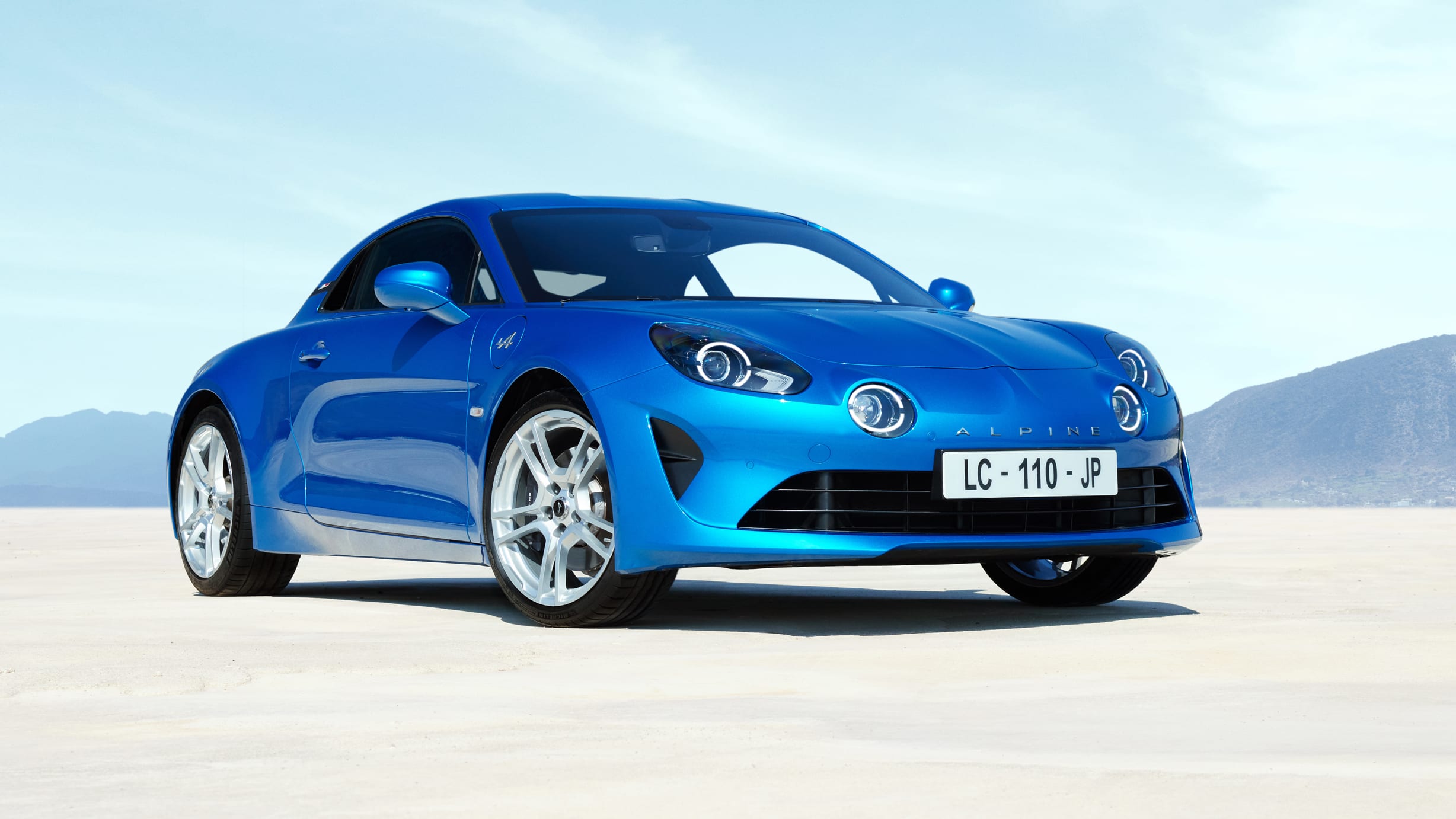
On the outside, not much has changed for the entry-level A110, riding on 17-inch wheels shod in 205/45 front and 235/45 rear Michelin Pilot Sport 4 tyres, while the new-for-2022 A110 GT step ups to 18-inch, diamond cut alloys wrapped in 205/40 and 235/40 rubber.
As the most track-focused variant, the A110 S receives slightly wider tyres (215/40 front and 245/40 rear), but can also be optioned with the semi-slick Michelin Pilot Sport Cup 2 Connects, in addition to racing-inspired Sabelt seats and an external aero kit – adding a carbon front blade, rear spoiler and under-car fairings to increase diffuser efficiency.
Buyers of the base A110 can add equipment from the higher variants such as the 320 millimetre Brembo brakes, aluminium sports pedals, a comfort pack, park assist and sports exhaust – although these modifications won’t increase outputs to the same levels as the GT and S.
Unfortunately for Australia, Alpine can’t bring the refreshed A110 to the local market as it was dropped just last month, owing to the sportscar not complying with the new Australian Design Rules regulation relating to side intrusion (ADR 85).
However, this may not be the death of Alpine in Australia, as the brand will soon go all-electric as a dedicated performance arm of parent company Renault – having already teased a reborn Renault 5 Turbo, electrified A110 and as-yet unnamed SUV.
In its native France, the A110 will go on sale next year from €59,900 (AU$93,400) in base trim, stepping up to €69,500 (AU$108,200) for the A110 GT and finally €71,500 (AU$111,300) for the range-topping A110 S.
This month’s MOTOR Magazine is a power-packed celebration of some of Italy’s finest offerings.
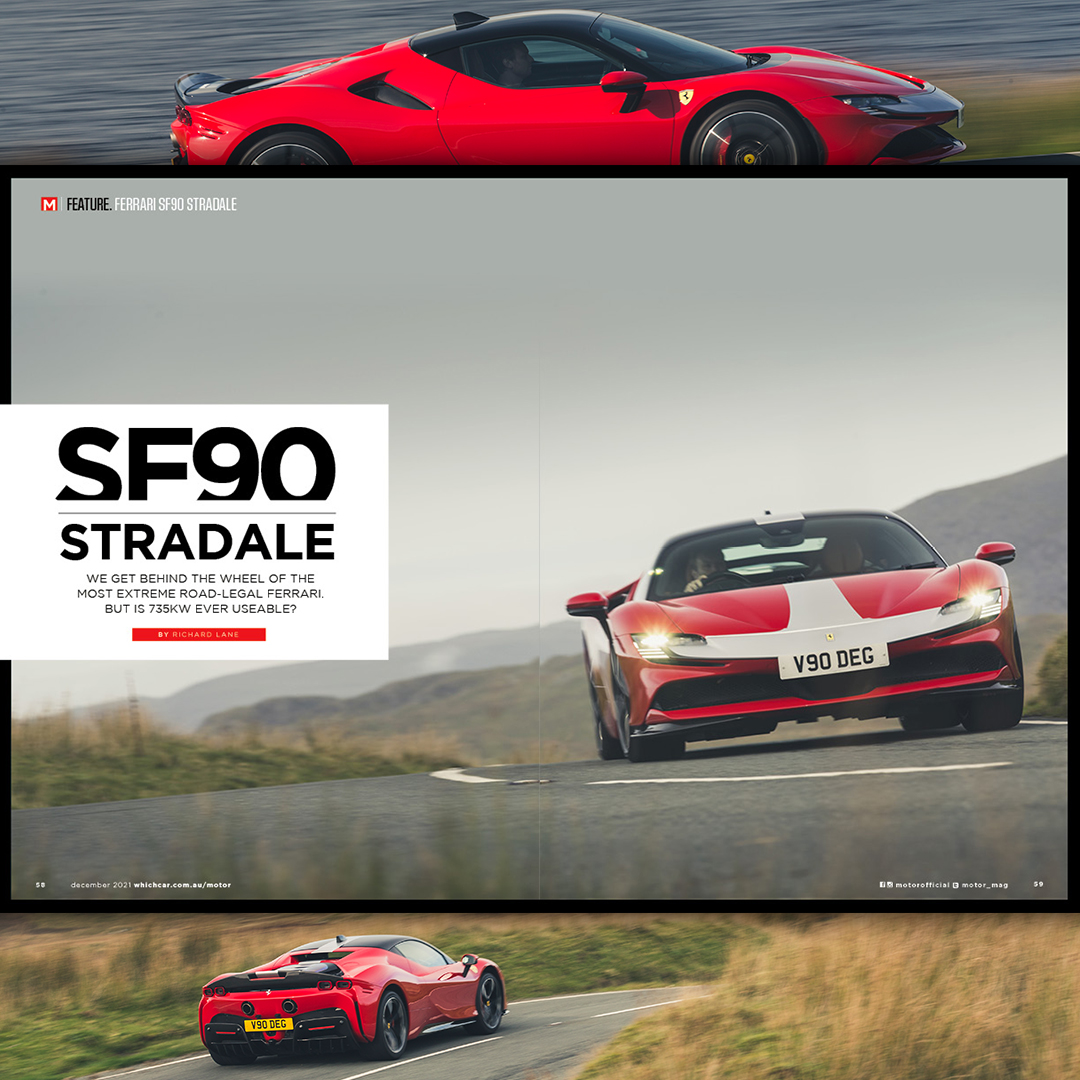
From the hallowed gates of Maranello, we unleash over 1300kW as we sample the ballistic Ferrari SF90 and manic 812 Competizione.
The SF90 represents a new dawn of performance, harnessing hybrid electric assistance not only as a tool of efficiency, but as a potent performance enhancer, too. How useable is 735kW in the real world, however? We get behind the wheel to find out.
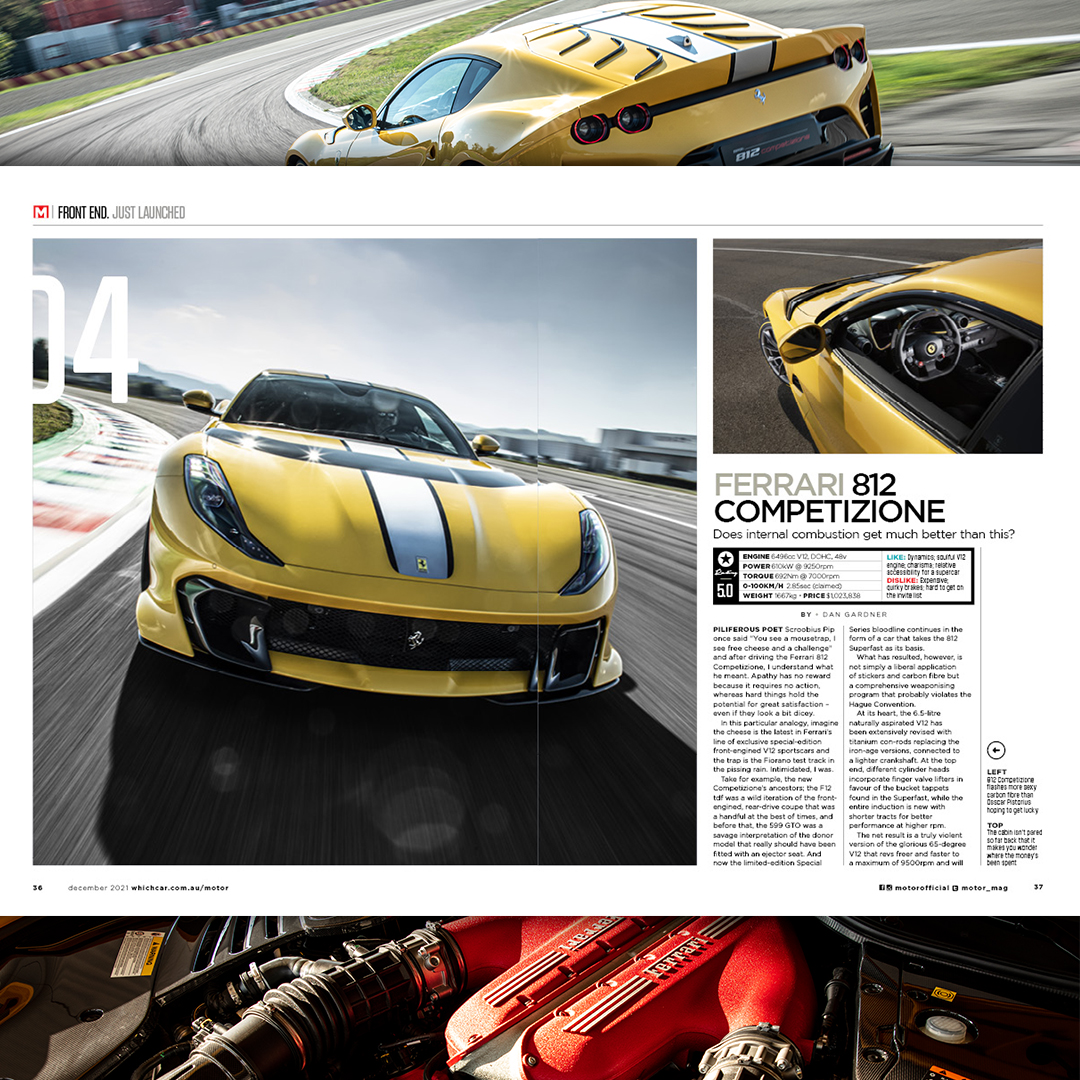
The $1 million dollar Ferrari 812 Competizione juxtaposes the high-performance hybrid as a celebration of old, utilising a soul-stirring 6.5-litre V12 that spins up to 9500rpm. Safe to say internal combustion doesn’t get much better than this.
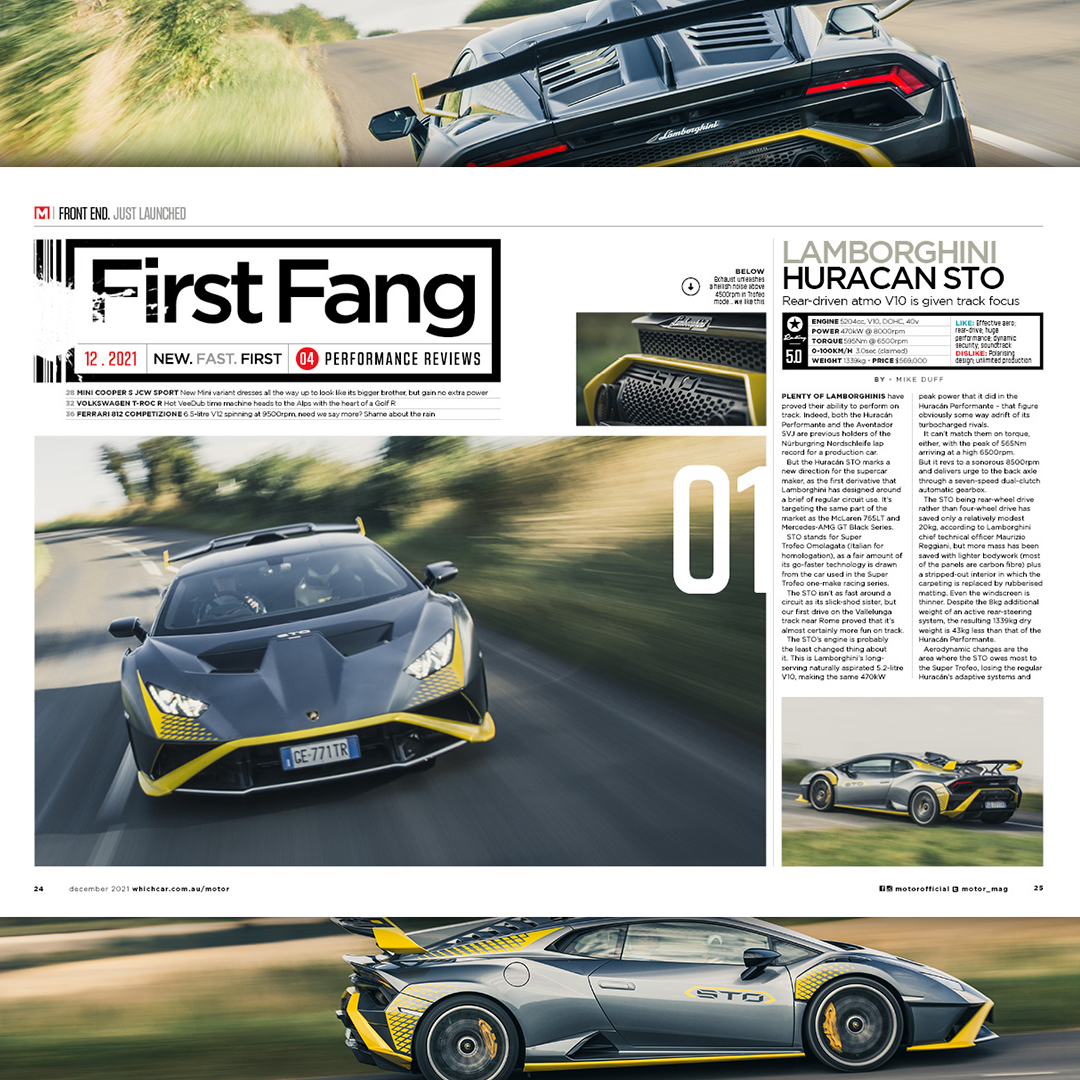
Not to leave out the rivals from Sant’Agata, we get our hands on the new Lamborghini Huracan STO. With 470kW sent exclusively to the rear-wheels, the STO represents the fastest and most exciting Huracan yet, and is the closest thing you can get to driving a Super Trofeo racer on the road.
Perhaps you’re one of the few people in the world for which a Ferrari or Lamborghini just isn’t special enough. If it’s a special Italian you want, come with us as we head to Cuneo to experience the glorious Kimera EVO37 restomod. A Group B icon reimagined for the modern age, delivering a max output of 377kW and bundled with all the style and beauty of the original icon.

Returning to local shores, we celebrate the centenary of Australia’s oldest continually-running motorsports event, the Australian Alpine Rally. Having first run in 1921, we retrace the routes snaking all over Victoria. Except instead of taking eight days, like those early pioneers, we try to do it in four. It’s a hell of an adventure, and not one you want to miss.

Further back, we pit the Alfa Romeo Stelvio Q against Audi’s RS4 wagon. The all-wheel drive twin-turbo V6-powered pair both trade on a duality of performance and practical packaging. We want to know which high-powered hauler is better fit for purpose.

This month’s edition of MOTOR’s master track guide focuses on the bracing seaside circuit of Victoria’s Phillip Island raceway. The high-speed circuit calls for high levels of commitment, but you can count on Luffy to give you the turn-by-turn tips on conquering one of Australia’s scariest race tracks.

The MOTOR awards are back! What better way to resign a wild (and weird) year to the rear-view, than celebrating the cars, the people and the moments that defined 2021 in motoring.

Elsewhere, we consider the future classic credentials of the Mitsubishi Lancer Evo X, go under the skin of Lotus’ new E-sports chassis and buy a Ferrari (sort of).
