
Snapshot
- Land Rover recalls 54 units
- All Discovery models sold this year affected
The 2021 Land Rover Discovery has been placed under recall, with all units sold this year needing to go back for repairs.
Affecting 54 late-2020 and all 2021-build vehicles, the issue stems from an incorrectly installed occupancy detection sensor system in the front passenger’s seat.
If the system isn’t fitted correctly, it will fail to provide a warning if the seat is occupied and the occupant doesn’t have their seatbelt buckled, leading to a higher risk of injury in the event of an accident.
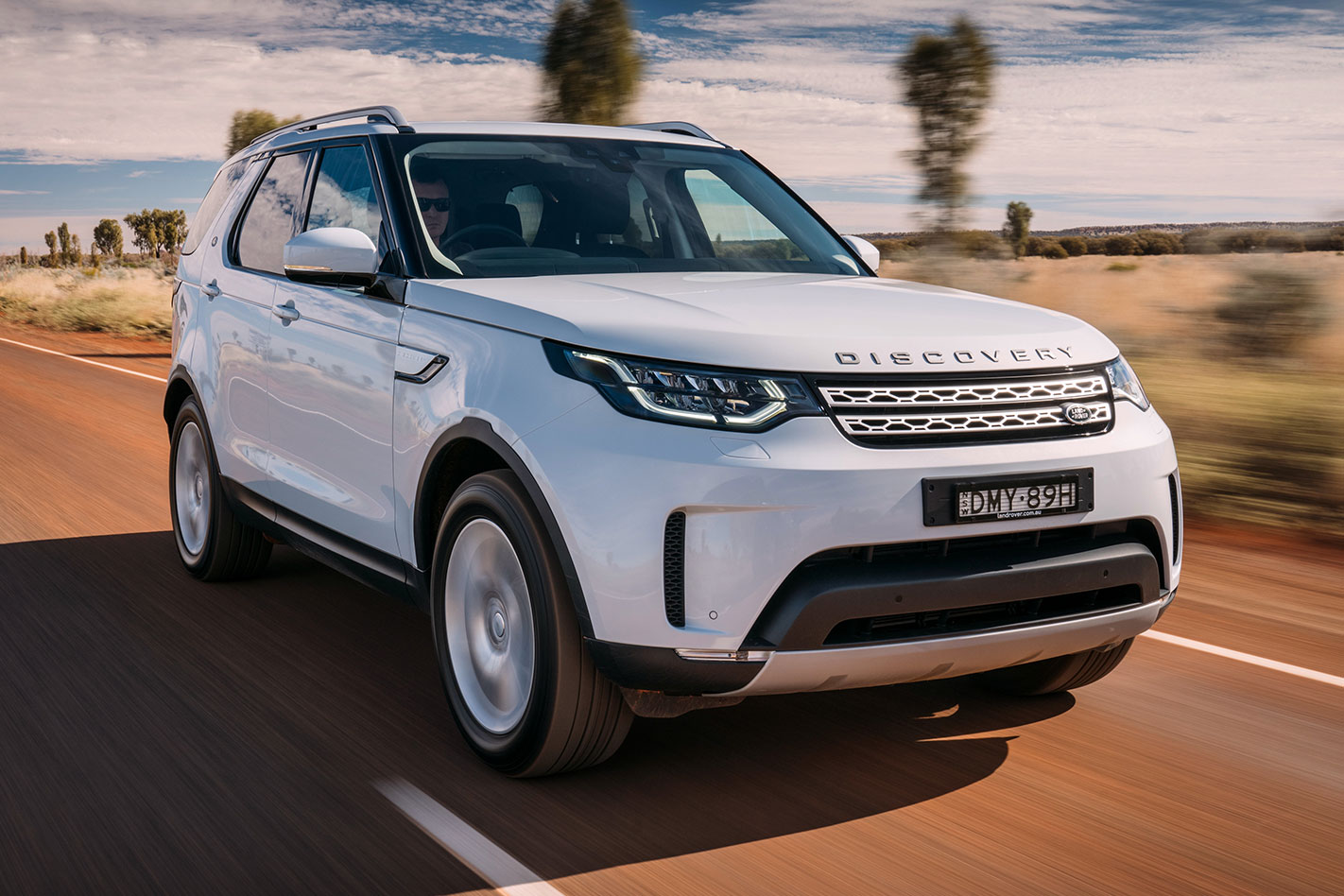
Jaguar Land Rover will be contacting known owners to arrange a time for an inspection, offering to carry out the work free of charge.
It also provides customer assistance to any owners who are unsure as to whether their vehicles are affected, which can be contacted via 1800 625 642 or [email protected].
A list of VINs for affected vehicles can be found here.
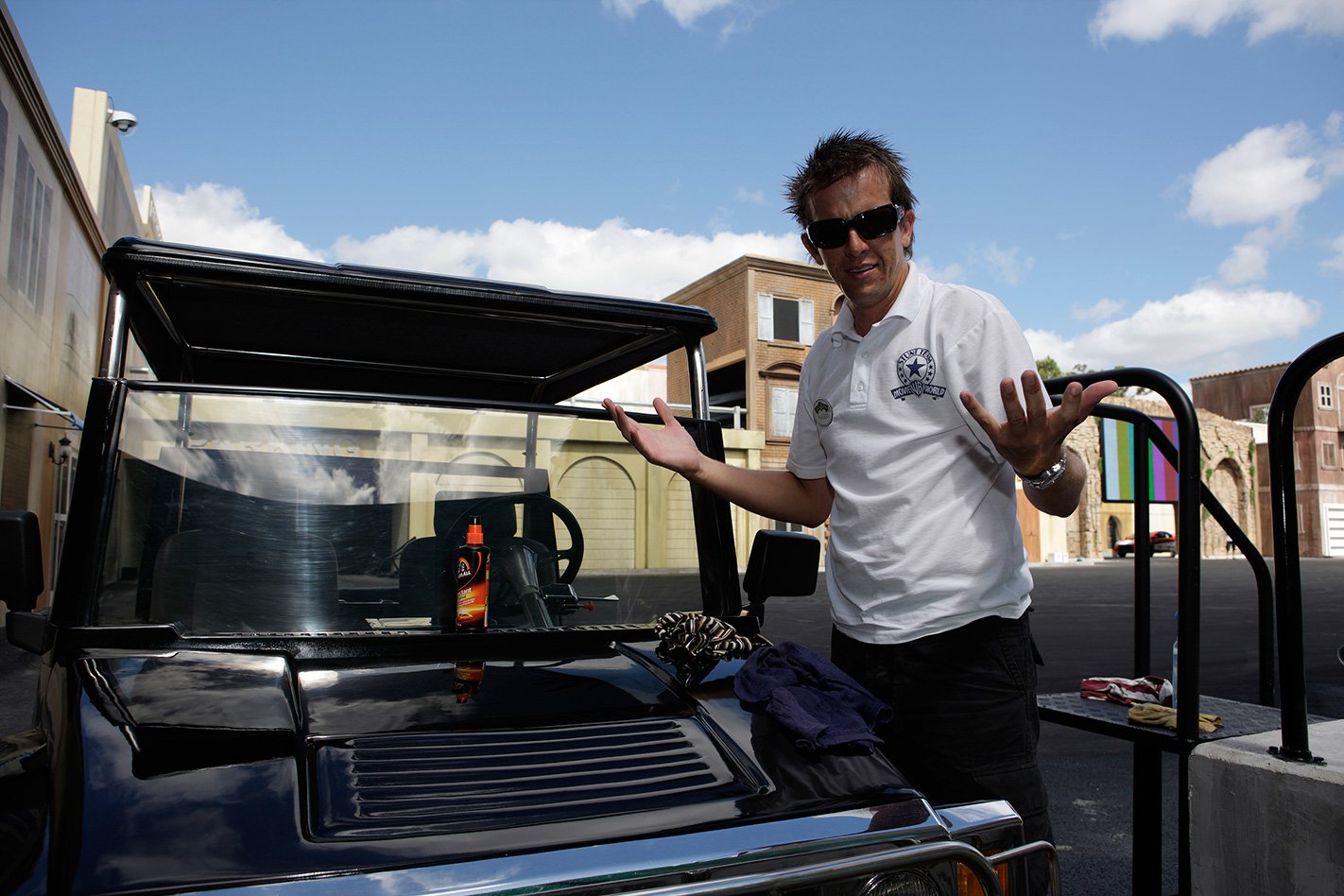
Warren Luff has one of the coolest jobs in the world. When he isn’t being hired by some of the best teams in the country to race at the Bathurst 1000, he spends his days drifting cars in front of packed crowds as part of Movie World’s Hollywood Stunt Driver shows on the Gold Coast.
The beaming racer has been sliding cars professionally since 2008, but a comedy of errors which MOTOR contributed to, very nearly cost him the opportunity.
It all started innocuously enough.
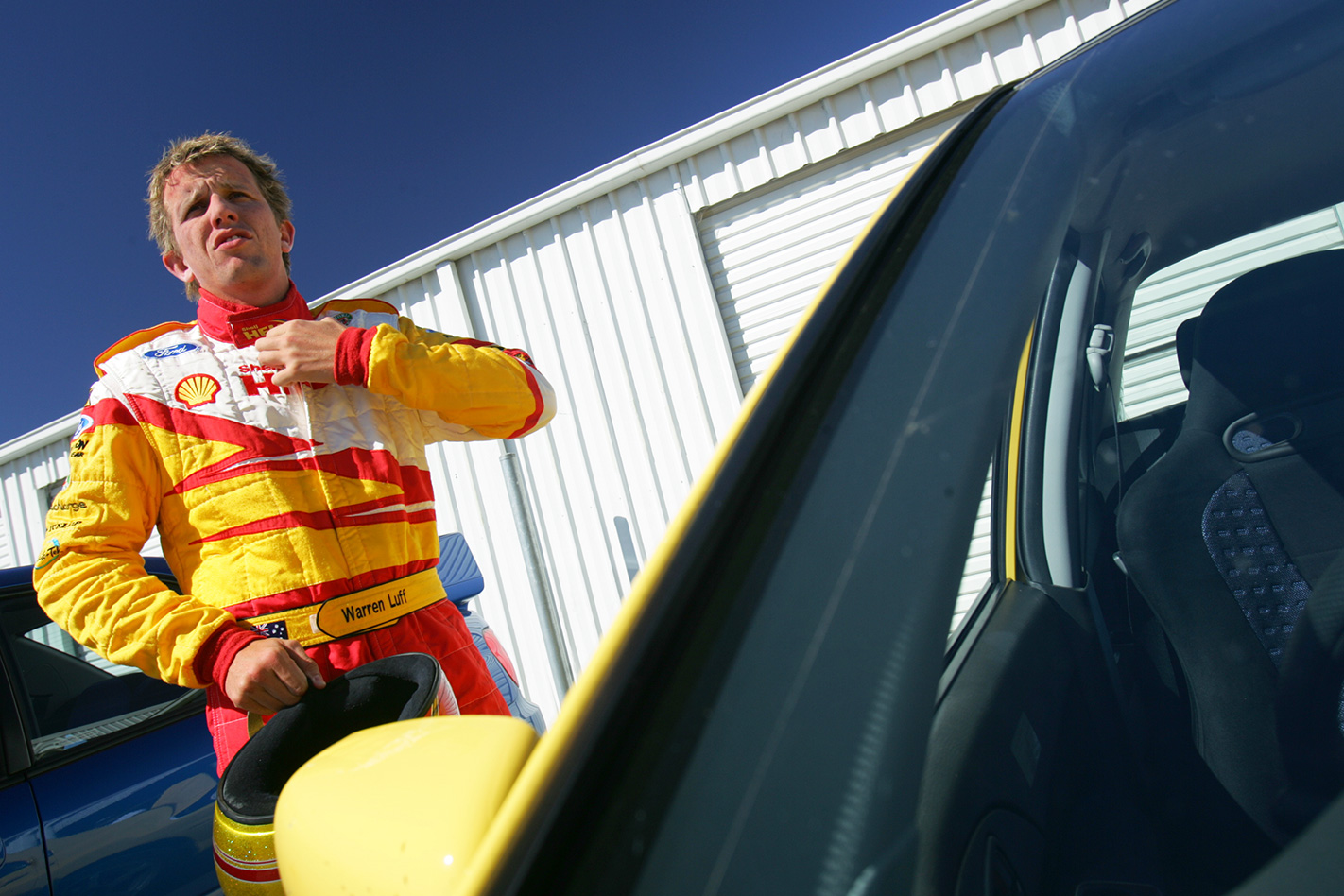
“I was standing at Brisbane Airport in 2008, about to get on a flight to go to Germany, to go do the Nürburgring 24 Hour, and a friend of mine rang me and said, ‘Oh, have you seen that Movie World have got an ad on?’,” Luff recalls.
“It was actually an ad in Auto Action, I believe. And they said, ‘Movie World’s got some new stunt show that they’re doing and they’re advertising for drivers.’
“I was like, ‘I haven’t heard a thing about it.’ And he said, ‘Yeah, there’s an ad here, I’m just looking at it. But applications close today, and you’ve got to send a video file of what driving you’ve done and a whole bits and pieces.’ I’m like, ‘Okay’.
“So, he sent me the details. I quickly opened the laptop at the airport, did a quick email to them, obviously I didn’t have time to send any vision or anything like that. But basically, it was like, ‘Look, I apologise for the late application, but I’ve only just seen this now, and I’m literally about to get on a plane and go to Europe for three weeks, but would love the opportunity to audition for the show’.
“And just put a bit of my CV on and everything like that. Before I even got on the plane, I’d had a reply going, ‘Yep, we’d love you to come along to the audition. We’ll be in contact.’ And it just progressed from there.”
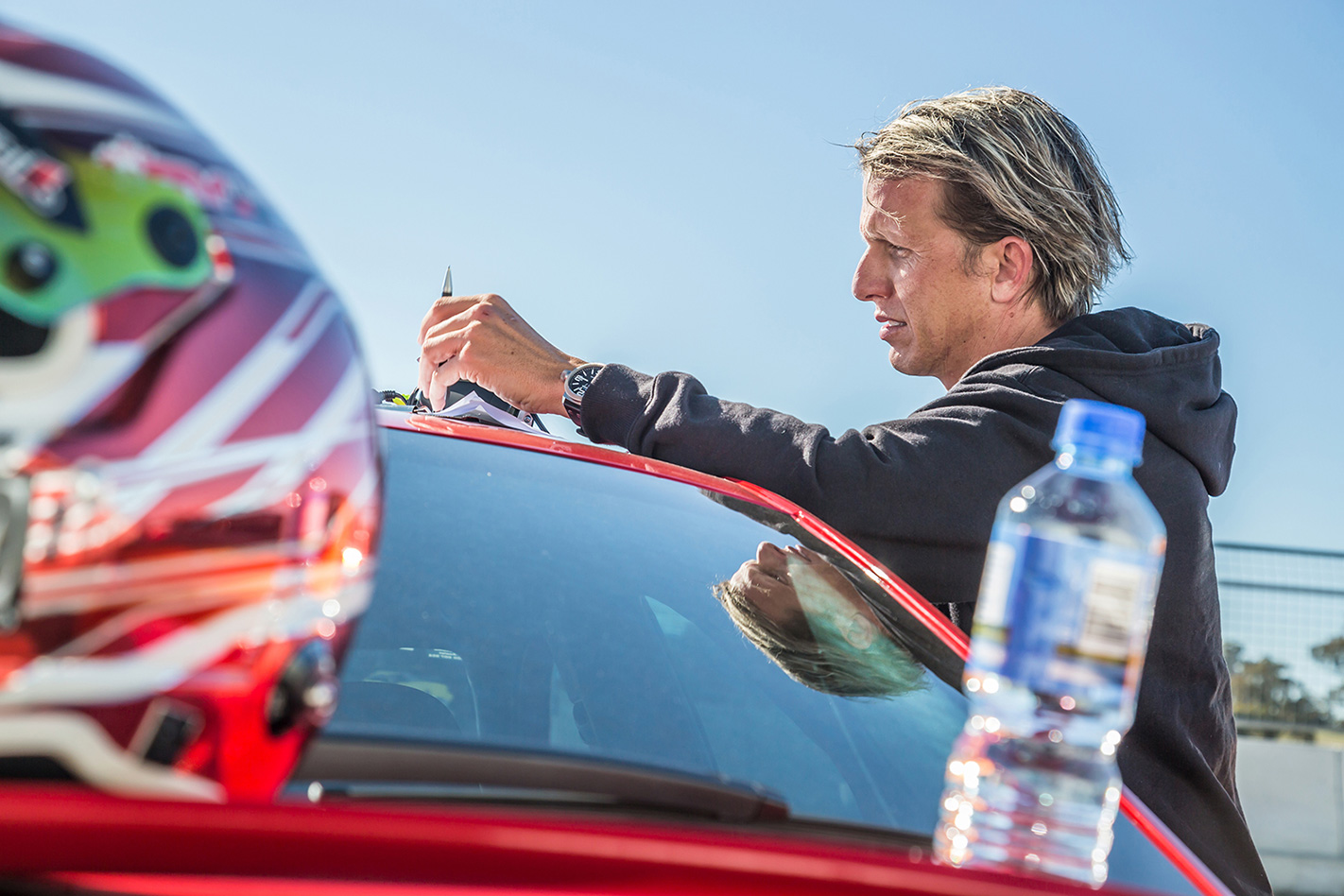
Despite his late application, Luff successfully took part in the first stage of the audition process during which 200 drivers, of the more than 400 who applied, were put through their paces at Paul Morris’s Norwell complex on the Gold Coast.
It’s no spoiler to say that Luff impressed, and was invited back to take part in a second, more intensive, audition. Unfortunately, this is when things started to go off the rails.
“That second audition was on a Tuesday,” Luff explains. “And the weekend, two days prior, was the Darwin V8 Supercar round, and I was up in Northern Territory as the driving standards advisor for the Ute Series.
“So, I got to the airport on Sunday night to get on the red-eye flight, and the people from the Ute Series, they booked my flight. But the problem is, the red-eye flight out of Darwin, to fly home to Brisbane, it leaves at about quarter past midnight. So, it’s actually a Monday flight. But what they did is, they booked me on the Sunday flight so, technically, I should have been flying out at 12:15 AM on Sunday morning. I’m clearly still at the race meet, can’t get to the airport. So, I’ve got to the airport and the airline staff say ‘No, you were on last night’s flight.’ And I’m like, ‘Well, can I get on?’ And the airport’s full, and they tell me, ‘There’s nothing available. And the next flight is the red-eye flight, tomorrow night’.”

This was going to be a big problem for Luff, who was due to take part in the second audition on the Monday afternoon – before he would be able to leave Darwin.
“So, Monday morning I’ve woken up and I’ve rung the stunt coordinator from Movie World and I’m like, ‘Hey, I’ve got a problem, I’m still actually in Darwin, there was a bit of a mistake with my flight.’ He tells me, ‘Mate, no dramas. We’ve got the other audition Tuesday morning, come to that’.”
That would have been perfectly fine if it wasn’t for the fact that on Tuesday afternoon Luff was scheduled to fly from Brisbane to Adelaide to join a MOTOR comparison test. The second audition was set to take place at Queensland Raceway, an hour’s drive from the airport. Luff now had to fly into Brisbane in the morning, drive for an hour to the track, take part in the audition, drive another hour back to the airport, and catch a plane to South Australia.
“So, Monday night comes around, I go to the airport, and of course Murphy’s Law, flight delayed,” Luff says.
“But, instead of the red-eye landing at 6:00am Tuesday morning, I didn’t land until 9:00am. So, as soon as I’ve landed, I’ve rung the stunt coordinator and I say to him, ‘Hey, mate, slight problem. I’ve only just landed at Brisbane Airport.’ And he assures me, ‘Just get here when you can and we will rush you through.’
“I drive out to Queensland Raceway and they let me just go through the audition one after the other, so I was there for like 45 minutes. Turned around, drove straight back to the airport. Didn’t have time to go home and get more clothes, had all my stuff that I had in Darwin, hopped on a plane, went to Adelaide, met the boys there. Then we drove, I think it took us a day and a half to drive to Sydney.”
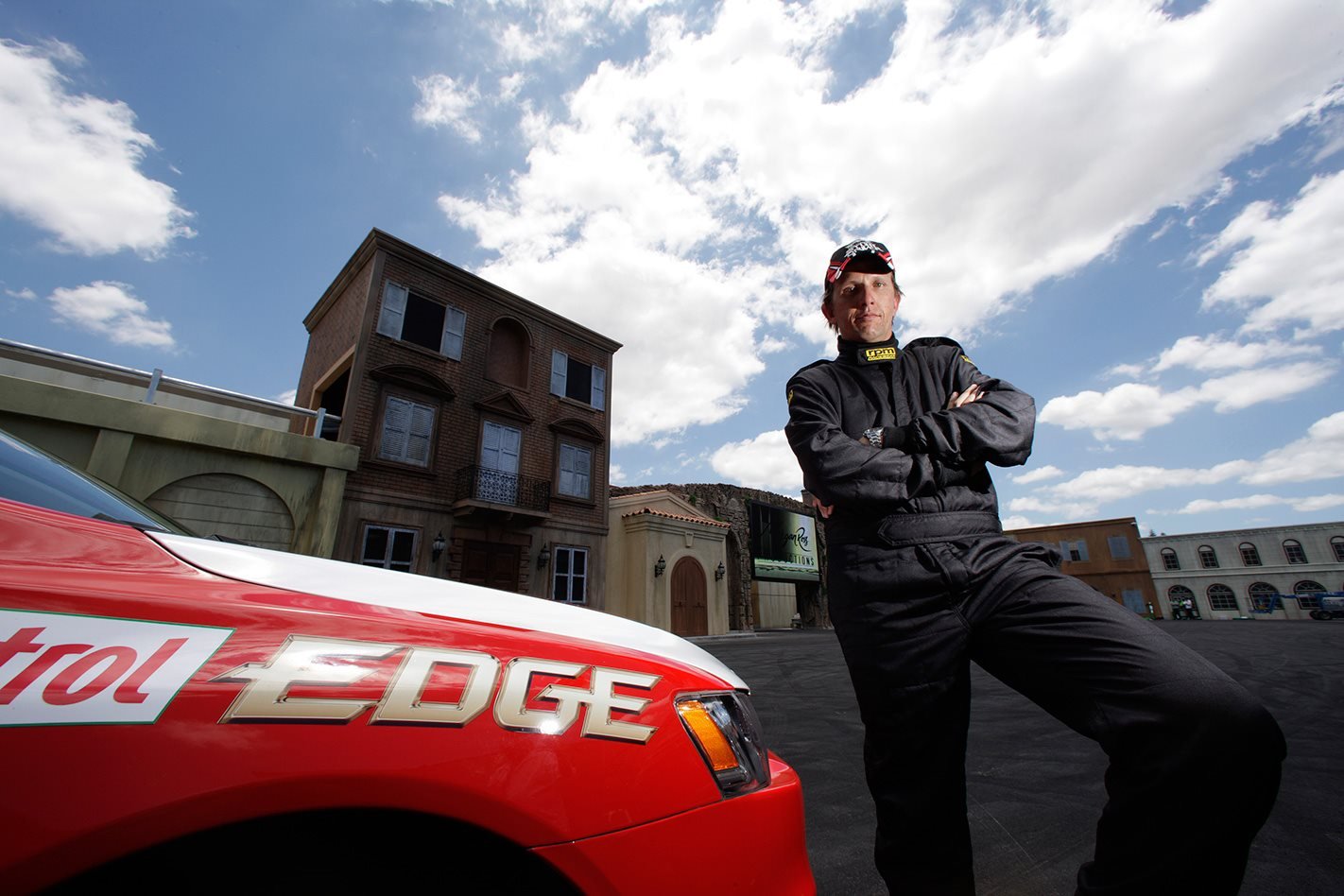
Despite the mad dash to get to the track and back, Luff was successful in his application.
“I was one of 12 people in that opening cast, and 13 years later, I’m still here,” he beams. “And of that original crew of guys that started in the original Stunt Driver Show, I’m the last remaining one.”
Luffy, from the entire MOTOR team, we’ll do our very best not to fly you halfway across the country next time you have a job interview, mate.
The 2023 Porsche Cayman will be offered with an electric powertrain, following the path of the electric Taycan, Taycan Cross and forthcoming Macan BEV as the brand heads towards its goal of half of its new-vehicle sales made up of EVs by 2025 – and 80 percent by 2030.
The Porsche Mission R concept revealed at the IAA Motor Show in Munich teases an extreme version of the direction the next-generation Porsche Cayman EV will take when it hits showrooms in 2023.
Porsche has spoken publicly about a fully electric version of the next Cayman, which continues the 718 designation, since 2019, with chairman Oliver Blume citing battery weight and packaging as the biggest hurdles.
Now, with Mission R, the path to electrification looks set, with an electric Cayman to rival the second-gen Tesla Roadster, also due in 2023, and BMW’s G42 iM2 EV that’s expected to launch next year.
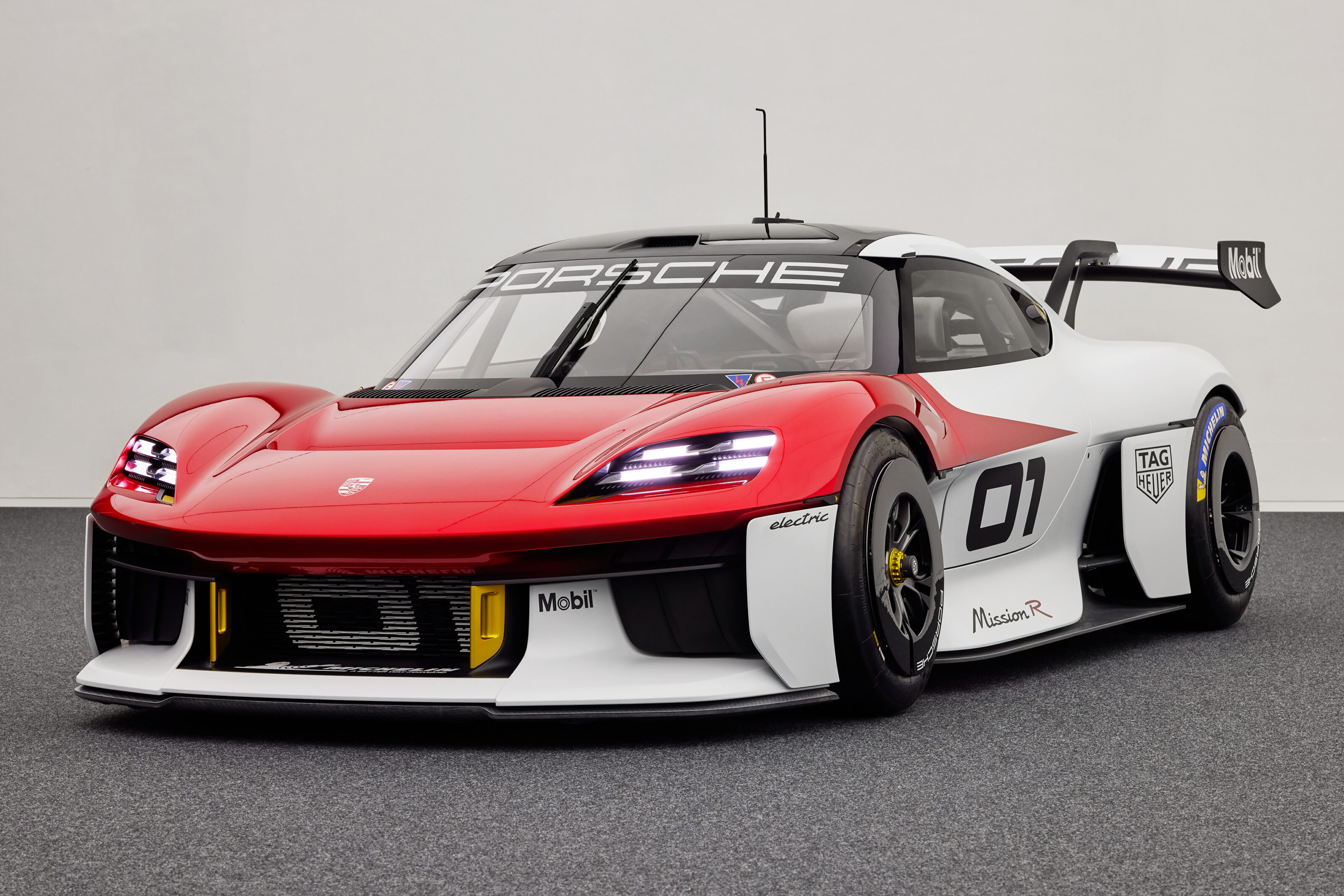
The Mission R is a two-seat, two-door concept study that ‘previews’ a newly developed powertrain. It consists of two electric motors and an 80kWh battery pack – all of which are oil-cooled – to deliver a consistent 500kW, rising to a staggering 800kW in ‘qualifying mode’, a reference to Porsche’s Formula E participation since 2019.
The front axle benefits from a 320kW motor, while a 480kW unit is fitted at the rear, offering all-wheel drive and claimed 0-100km/h acceleration of ‘less than’ 2.5sec. Porsche says that Mission R can match the current 911 GT3 Cup car around a racetrack, presumably its Weissach test layout.
Charging is fast, too, says Porsche, courtesy of 900-volt technology that enables the pack to be recharged from five to 80 percent capacity in 15 minutes. For the brand more broadly, that kind of ability will be critical for sports car customers who do track days with their vehicles.
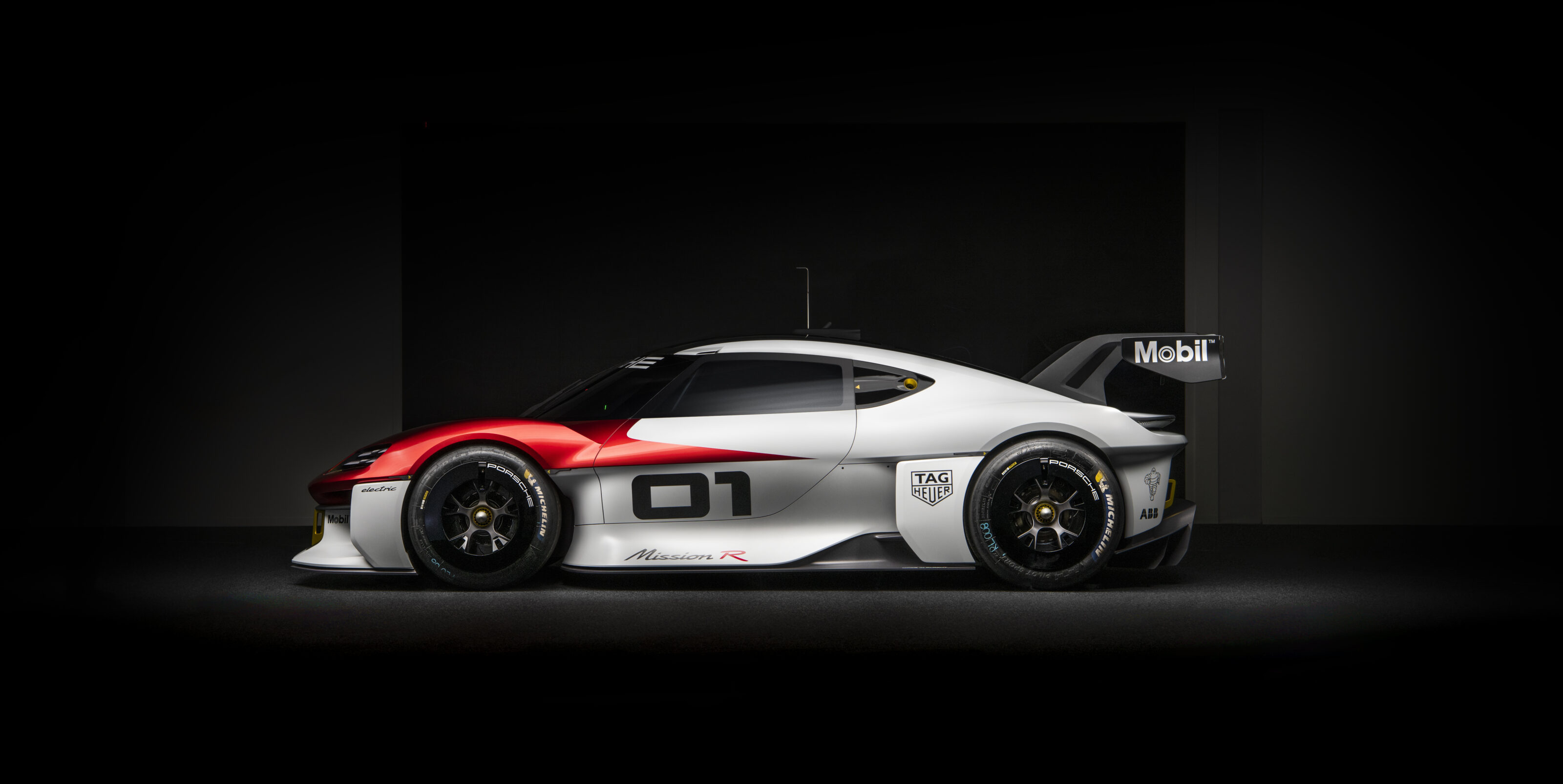
Porsche hasn’t shared weight figures, yet there’s a clear effort to limit Mission R’s heft.
Porsche hasn’t shared weight figures, yet there’s a clear effort to limit Mission R’s heft. A body made of natural fibres sits on a carbonfibre safety cell and ‘exoskeleton’ that combines with a transparent roof. There’s also active aero and a drag reduction system on the nose and large rear wing. That quarter-window suspiciously Cayman-like, too…
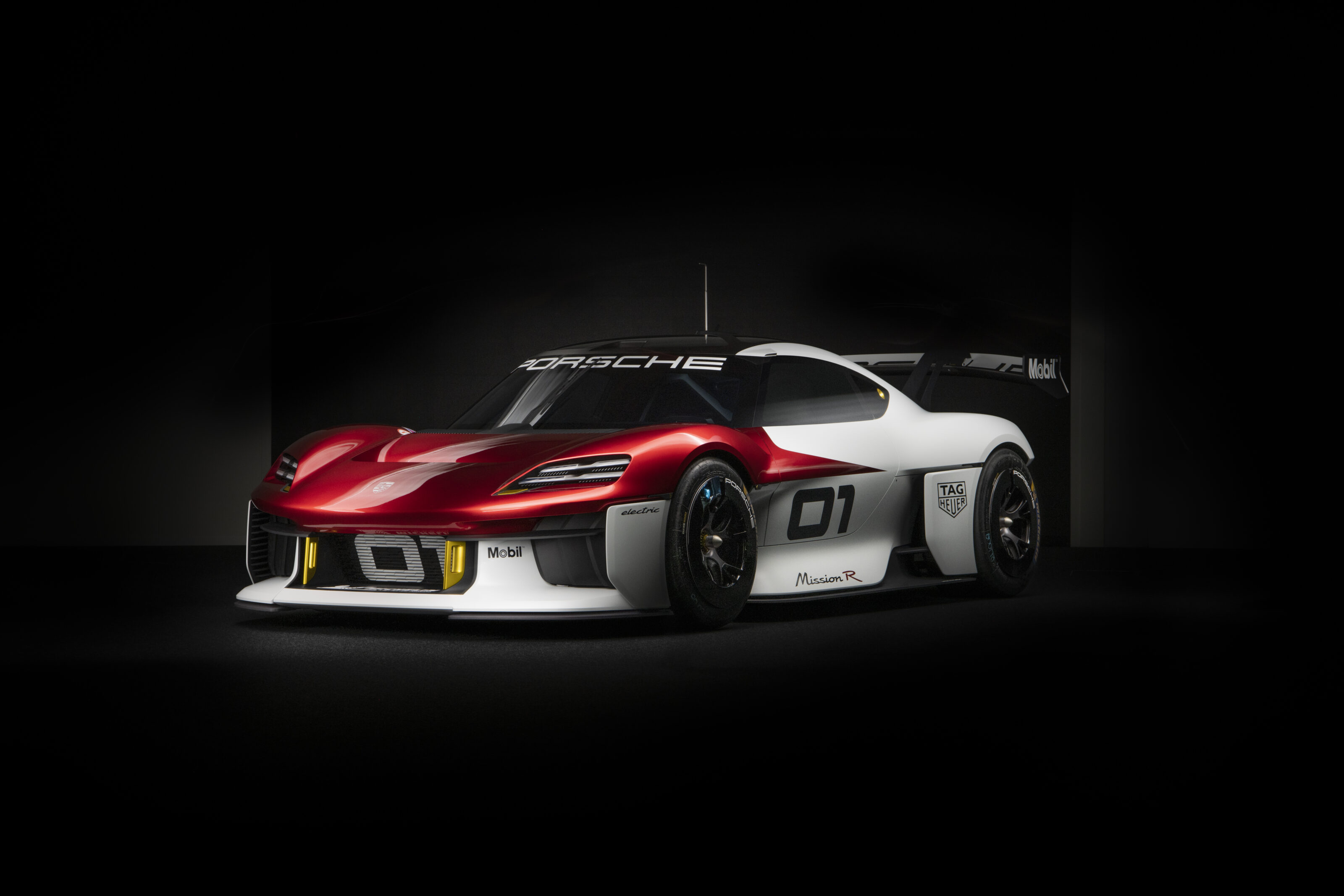
Stuttgart goes so far as to compare the Mission R to the current 718 Cayman, with the concept ‘slightly shorter’ than the 4379mm road car, 99mm wider at 1990mm and 105mm lower at 1190mm.
Referencing the 2015 Mission E and 2018 Mission E Cross Turismo concepts, which became the Taycan and Taycan Cross Turismo production models, the carmaker says, “Porsche has given unmistakable previews of its first all-electric sports car model series to come”. This is as close as it has come to confirmation a fully electric Cayman is on the way.
Part of the hesitation in producing an electric Cayman stems from the declining appetite for traditional sports cars, contributing to the 718 twin’s minor share of 7.75 percent (11,922 units) of Porsche global sales in H1, 2021.
Yet the upshot of EV performance models has clearly been demonstrated with Taycan, which chalked up 19,822 sales over the same period for a 12.9 percent slice of the Porsche pie, snapping at the heels of the 911.
The other challenge is achieving an acceptable range through battery technology and finding a way to package it within the 718’s architecture without a significant cost blowout. The volume simply isn’t there for the investment in a new platform, such as the stand-alone J1 underneath the Taycan.
A fully electric Cayman would require significant investment in a heavily revised version of the MMB (Modular Mid-Engine) platform that the new 718 and existing 992 911 use, with a 911 hybrid recently seen testing ahead of its 2023 arrival.
The alternative may be a modified version of the VW Group’s PPE (Premium Platform Electric) which is used by the Macan EV while the rest of the Macan line-up uses the MLP underpinnings.
This could see Cayman follow the same strategy as Macan, with a Cayman EV upon PPE alongside hybrid/ICE versions that use the MMB platform, tapping into the hybrid 911’s components where possible to keep within 718’s price point and sate traditional buyers.
Keeping internal combustion of some sort would give Porsche an each-way bet and have little impact on the brand’s overall EV targets. These can easily be met with the electric Macan, due in 2022, and electrified Cayenne arriving in 2025. Together, the two SUVs make up the lion’s share (57 percent) of Porsche’s global volume.
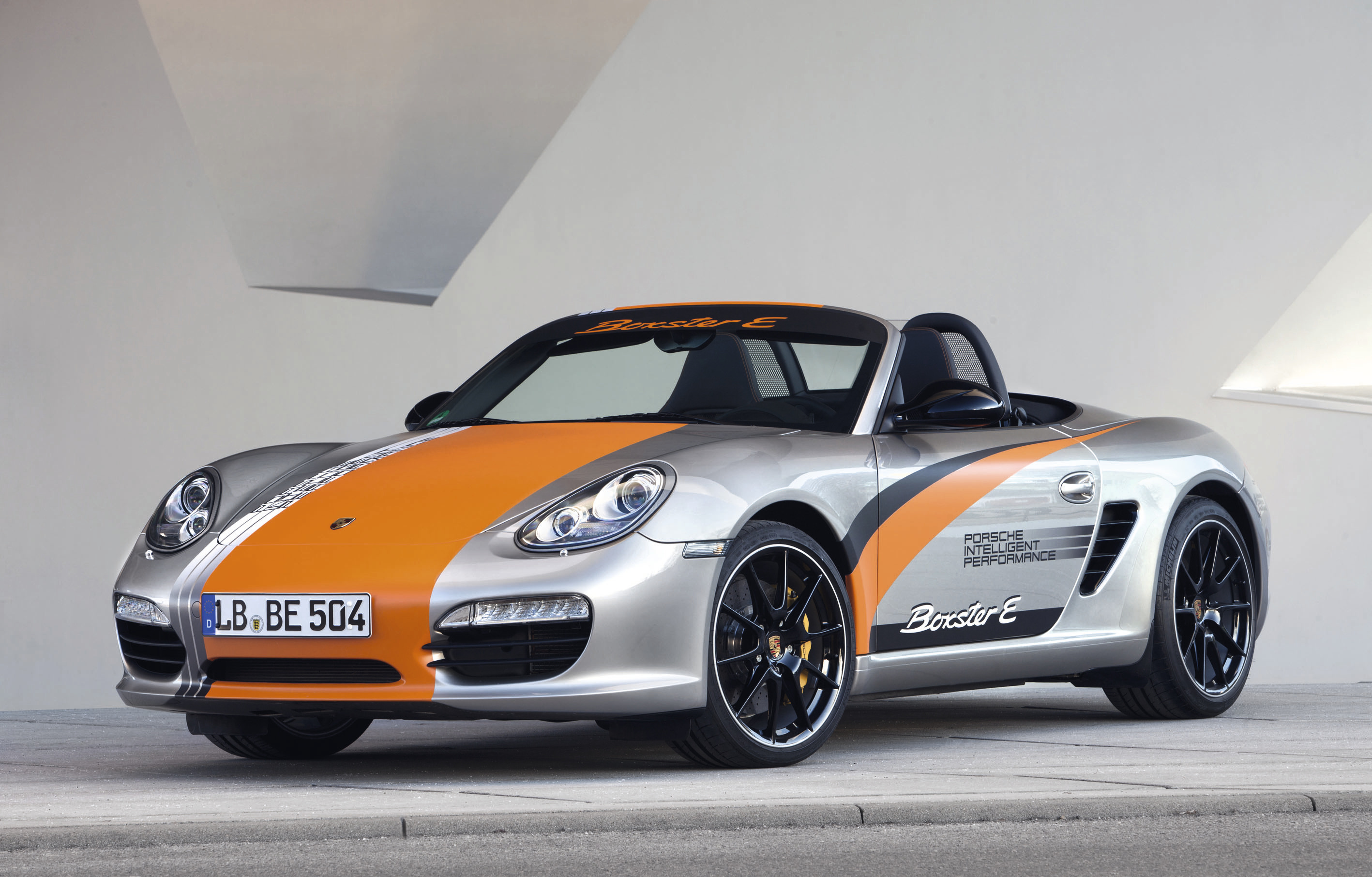
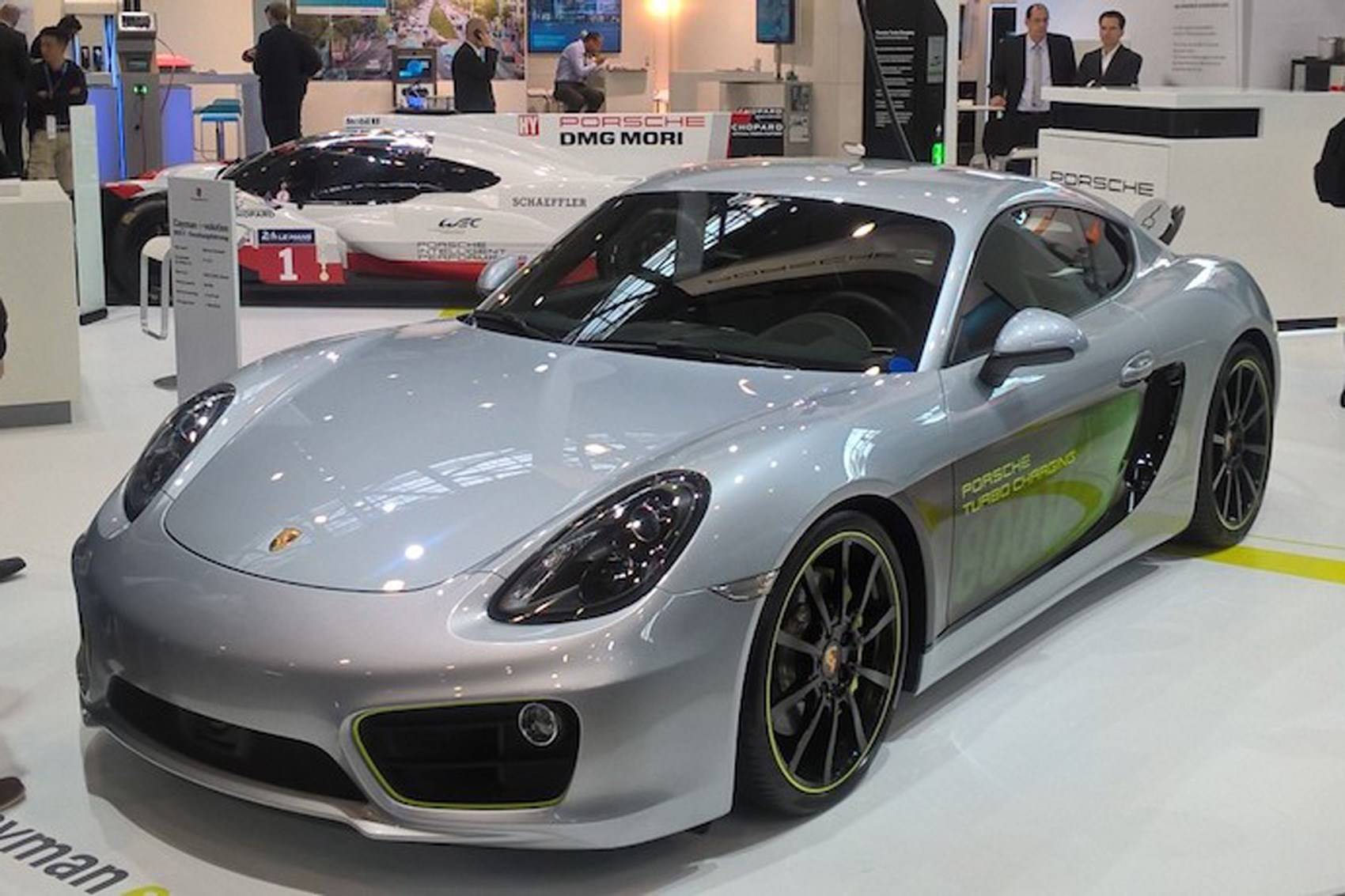
Path to power: The Cayman’s EV evolution
2011 Boxster E
Boxster E RWD used a 90kW rear axle motor for a lethargic 9.8sec 0-100km/h, AWD added front axle motor for 180kW and more Porsche-like 5.5sec despite additional 341kg. Range just 170km from 29kWh lithium-ion battery after nine-hour 240v charge. Three built.
2017 Cayman E-volution
Evolution indeed: Cayman E-volution showcased to promote swift 800-volt ‘Porsche Turbo Charging’, a JV between Porsche, Audi, BMW, Daimler and Ford. E-volution’s AWD and 38kWh lithium-ion battery pack saw 199km range with 0-100km/h in a Cayman S-beating 3.3sec.
2021 Mission R
Whopping 800kW peak power, AWD and 0-100km/h in 2.5sec. Rapid replenishment thanks to 900-volt charging capability of 80kWh battery. Range and weight not disclosed but bet on Taycan-like (or better) 350-400km between e-drinks, with 80 percent charge in 15 minutes.
Snapshot
- Video released on October 21, ‘Back to the Future Day’
- Depicts Taycan EV and DeLorean DMC-12 ‘time machine’
- 1.21 gigawatts of power now on offer to Taycan drivers across US and Europe
Porsche has marked an iconic milestone in the expansion of its EV charging network, releasing a Back to the Future-inspired video featuring its Taycan sedan.
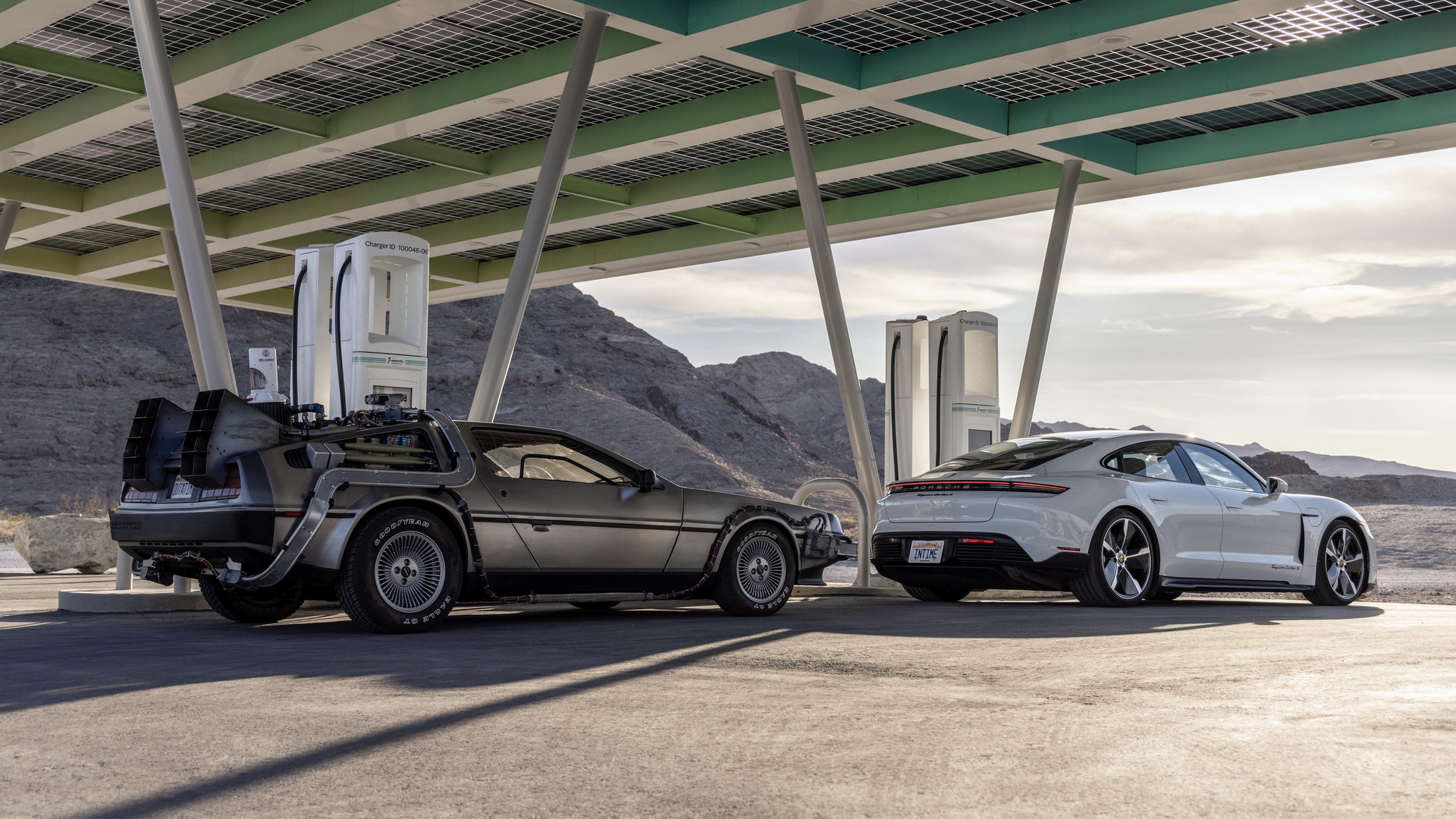
There are 1.21 gigawatts (1.21 billion volts) of power now available across the US and European EV charging stations — a number made famous by ‘Doc’ Emmett Brown and his DeLorean time machine in the beloved film series.
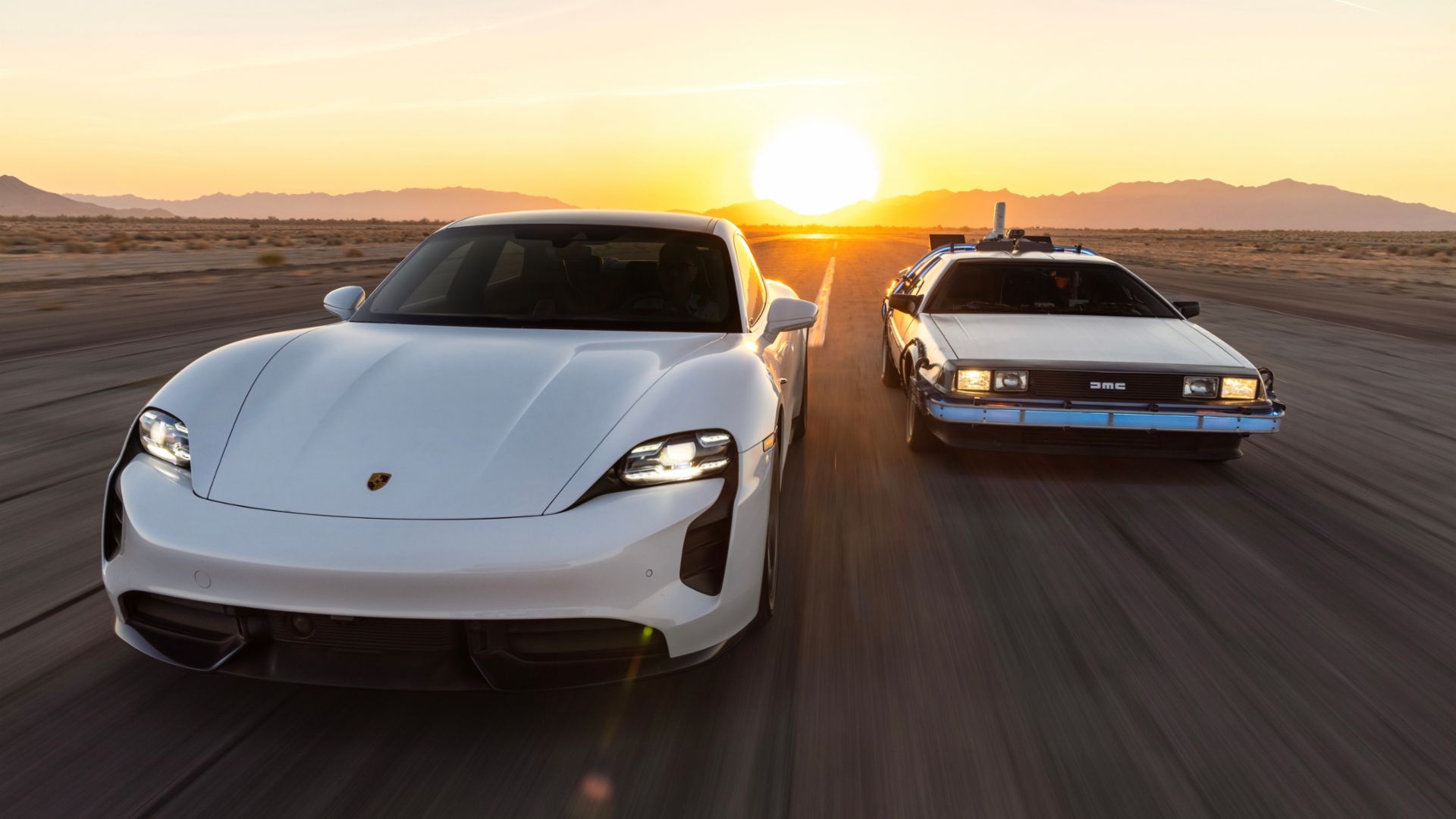
Released on ‘Back to the Future Day’ (October 21, the on-screen date Marty McFly travels through time), the video features a faithful replica of the DeLorean time machine, alongside an electric Porsche Taycan driven by Donald Fullilove. The actor is perhaps best known for his portrayal of Mayor Goldie Wilson in the movie franchise.
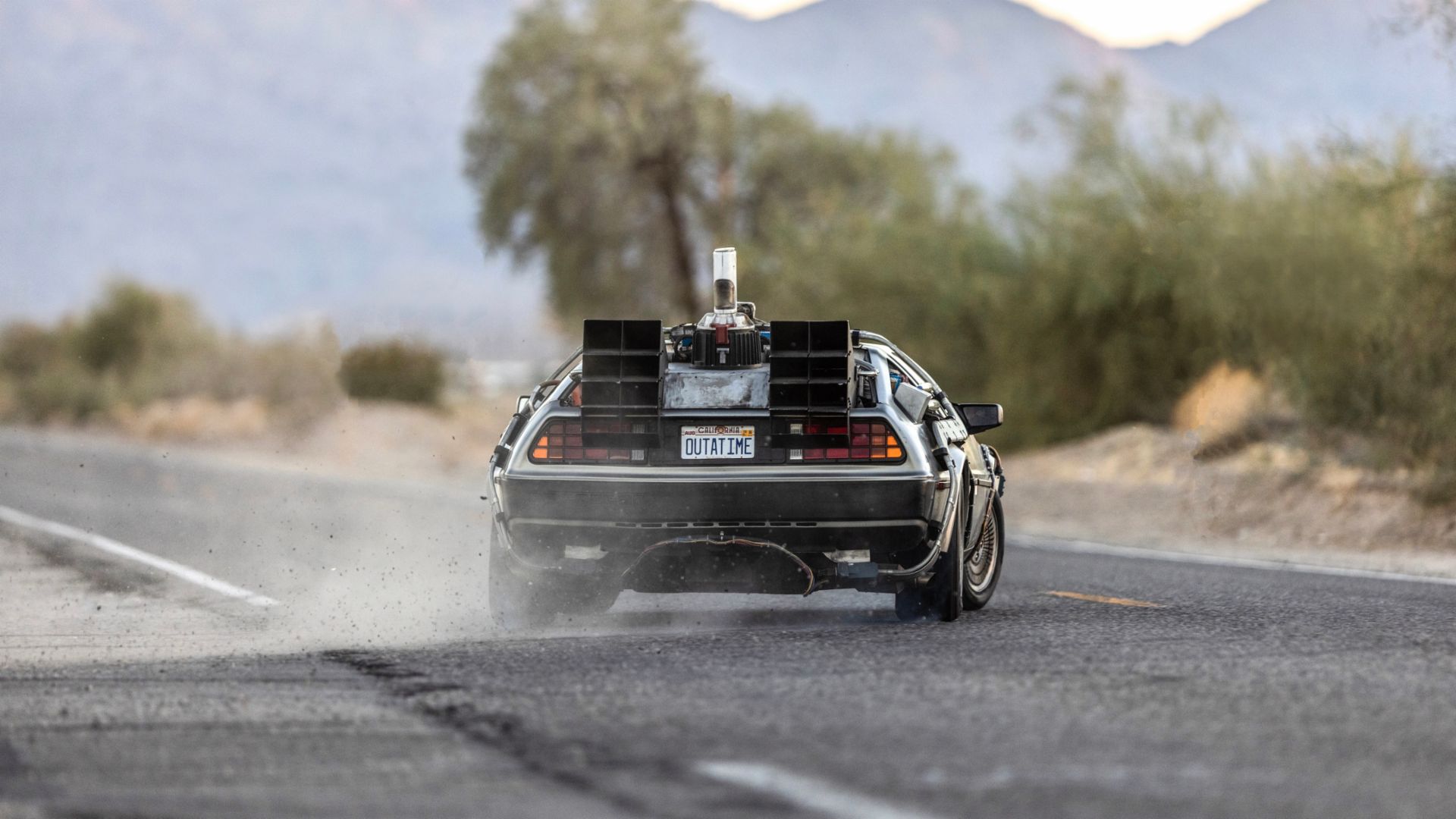
In the first Back to the Future instalment, a small plutonium reactor feeds the DeLorean’s ‘flux capacitor’ enabling it to hop through time. There’s no artificial source for the power in 1955, forcing Doc and Marty to harness a lightning bolt instead — which can, in reality, produce several thousand gigawatts per strike.
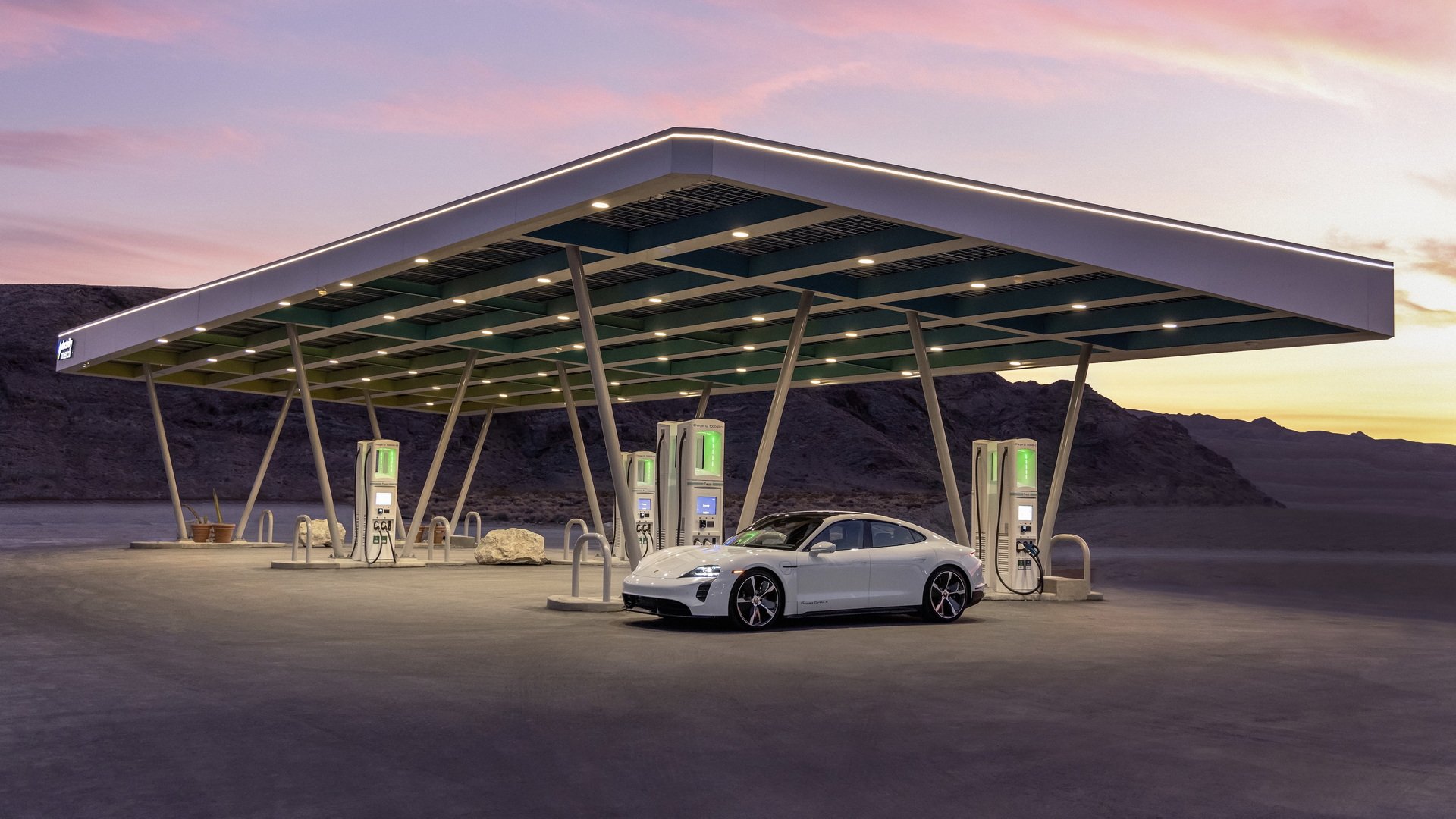
In the real world, Porsche Taycan drivers can now charge their cars at any of Electrify America’s 670 stations or Ionity’s facilities in Europe, which share 4800 individual chargers in total.
The first EV from Porsche debuted in 2019, and will be followed by an all-electric, next-gen Macan SUV in 2023.
American electric vehicle manufacturer Tesla has posted its third consecutive record quarter, taking in US$1.6 billion (AU$2.15bn) in profit from July to September.
As reported by the Wall Street Journal, the third-quarter profit is significantly higher than the same time last year, where Tesla posted a US$331 million (AU$444m) result for the July-September period – representing 480 per cent increase year-on-year and attributing to a total revenue of US$13.8bn (AU$18.5bn).
This was aided in part by a jump in vehicle deliveries over 2020, with 73 per cent more sales coming in the third-quarter of 2021 compared to the same period 12 months before.
Although it’s unclear as to how many sales were recorded in Australia as it does not report in the same way as other carmakers via VFACTS data.
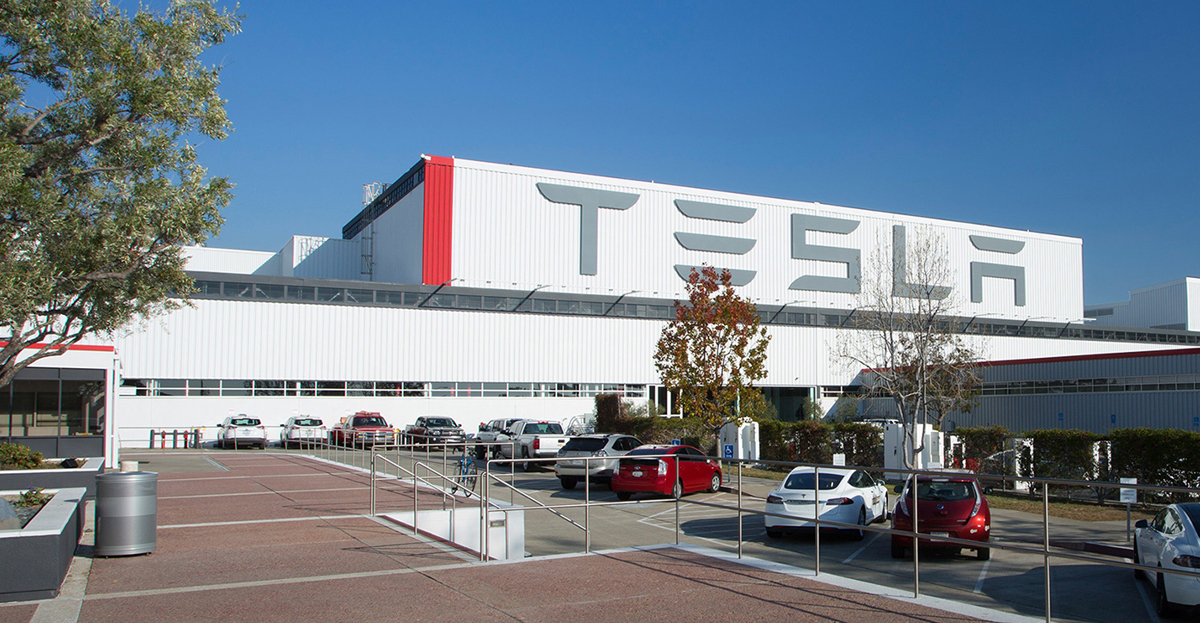
While Tesla’s Chinese plants have become the largest by output for the manufacturer, it hasn’t been immune from semiconductor shortages, with Chief Financial Officer Zachary Kirkhorn telling the WSJ its factories haven’t been operating at full capacity.
“Due to parts shortages and logistics variability, we have not been able to run our factories at full capacity,” said Kirkhorn.
“We have to overcome cost increases that are outside of our control.”
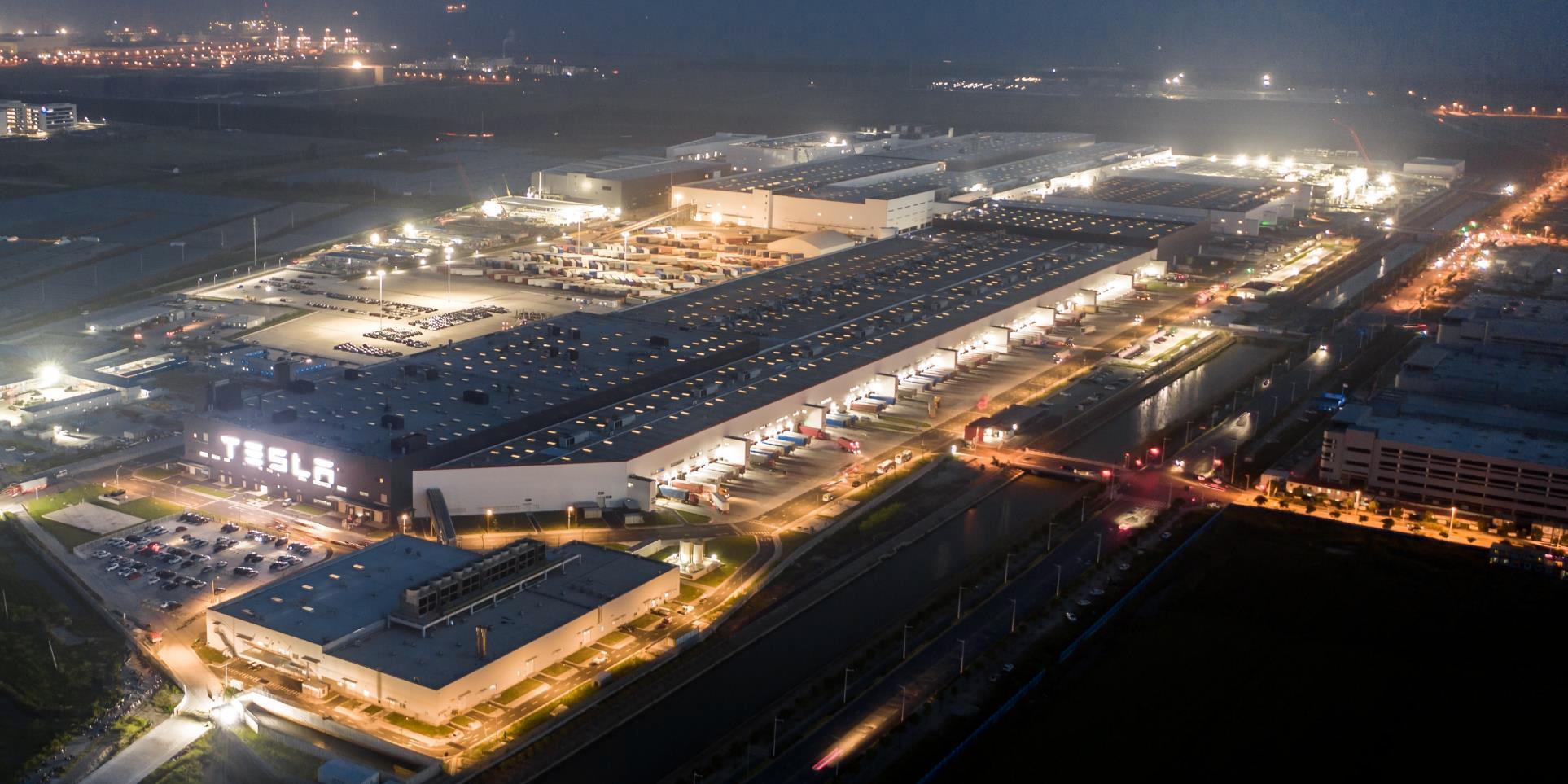
It is expected Tesla will deliver roughly 266,000 vehicles globally during the final quarter of 2021, attributing to an estimated total of just under 900,000 units for the year – nearly doubling its record 2020 figure of around half a million.
A new gigafactory just outside Berlin is set to open early next year, signifying the start of Tesla production in Europe with vehicles and batteries slated to be produced at the AU$7.87bn facility.
While Tesla continues to churn out the popular Model 3, its controversial Cybertruck keeps getting pushed back – with production now expected to take place next year. That’s if the vehicle does indeed go into production after it was discovered features have been removed from the model’s page on the company’s website.
If you are a part of the Australian motorsport community then chances are you knew Adrian Morrisby. Not by that name, of course – ‘Mozza’ was one of those people who are so inextricably linked to their nickname that it comes as a surprise that anything else would be written on their birth certificate, driver’s licence and passport. I’m forced to use the past tense as Mozza sadly and suddenly passed away recently at the too-young age of 49.
I’ve known Mozza for about 15 years but I’m not going to pretend we were super close or anything. Nevertheless, his passing has hit hard simply because he’s always been there and you kind of assumed he always would be. In many ways he was the star around which motorsport revolved – certainly in his native Tasmania, at least – and when a star disappears a black hole is left in its place.
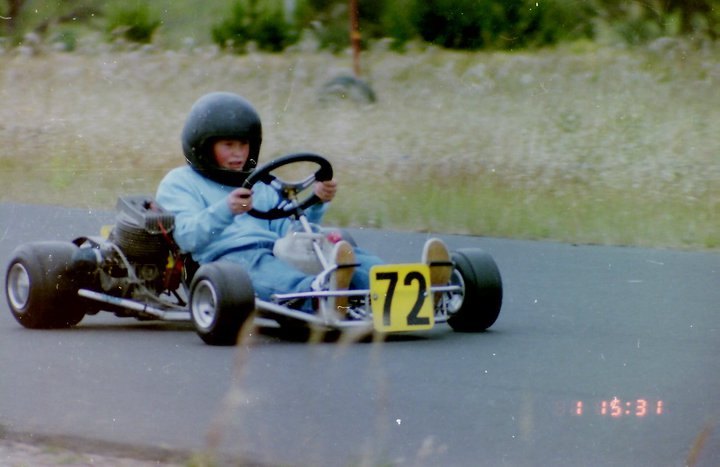
The racing bug bit Mozza early. He was a talented go-karter and remote-control racer in his younger years but eventually heard the call of the forests and discovered his first love, rallying (fishing aside, that is). The highlight of his competition career was a stirring win in the two-day Classic Rookie Rallye section of Targa Tasmania in 2007, the iconic ‘Maxboost’ 1975 Holden Gemini three-wheeling its way across the landscape. Mechanical gremlins prevented a strong result in the full rally the following year, but a number of top 10 classic stage times on the right road – twisty and downhill, as despite its name the Gemini was short in the horsepower department – shows just what a top operator Mozza was.
Man, he could drive. My first exposure to this was during a couple of practice laps at a local khanacross, Mozza having liberated an early-’90s Mazda 929 from the yard of his business Moonah Auto Salvage (later Ultimate Subaru Spares) in order to have some fun. Four-up for the recce laps with Mozza at the helm, I deadset thought we were going over, the wheel a blur as inputs and corrections were applied at a speed both the clapped-out old luxo-barge and I struggled to comprehend.
Mozza unsurprisingly beat me handily that day, but the fact he had invited me to share the drive is what’s truly important. No one was more generous. It’s no exaggeration to say hundreds of racers – speedway, drifting, karting, rally, circuit and more – have benefited from Mozza’s support, whether financially through business sponsorship or through his time. When I turned turtle in my first year of rallying due to ambition overcoming talent, Mozza was right there: “Bring ’er around the shop, don’t worry about it.” Sure enough, a couple of days later my Charade was looking decidedly healthier and the ‘bill’ was frankly a pittance.

He was also a regular on the mic, whether at World Time Attack at Sydney Motorsport Park, the Tasmanian round of the Australian Karting Championship or in the early days of the Tassie Drift Series, when he’d drop the occasional line of questionable taste just to keep everyone on their toes. You could tell who in the crowd was listening to the commentary as they’d inevitably start to giggle.
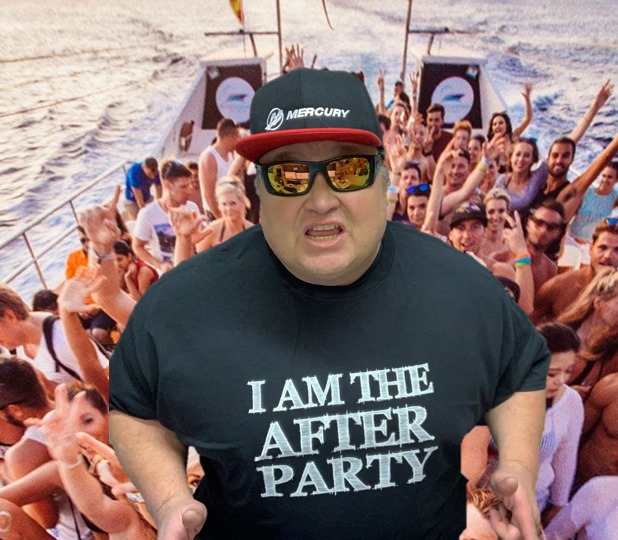
The competitive side always played a distant second to the social side for Mozza. You could guarantee that he’d be one of the first at the bar for ‘Heat 3’, Smirnoff Double Black in hand, wearing his signature three-quarter length ‘jorts’ and a black T-shirt with a variety of his favourite slogans: “Coriander: it’s a no from me”, “I am the after party” or, if he was feeling mischievous, “He loves the c**k” (I’ve added the asterisks) with a left-pointing arrow.
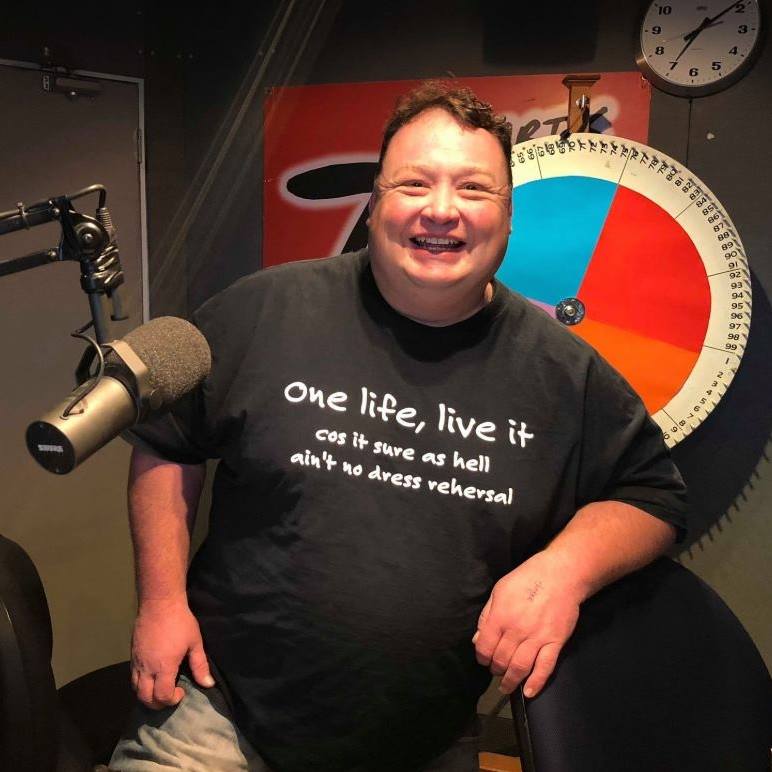
But it wasn’t all fun and games. Mozza became an early and vocal advocate for men’s mental health, raising money and awareness for the charity “Speak Up, Stay Chatty”. He was also completely serious about his role as a father to his boy Sammy who, with plenty of love and support from dad, was taking the first steps to becoming a promising karter. You’ve never seen a prouder parent.
Long story short, Mozza was a big man with a big personality and an even bigger heart and the world would be a much better place if we all approached life with the same kindness, generosity and vigour. His favourite saying was: “One life, live it, ’cos it sure as hell ain’t no dress rehearsal”. Amen. We’ll miss you, mate.
Snapshot
- Only 300,000 vehicles produced so far in 2021
- Typical annual output sits around 780,000
- 2020 production of 500,000 units was half VW’s target
Volkswagen’s largest production facility is facing its worst year in more than half a decade – recording its lowest output since 1958.
According to Reuters, the worldwide headquarters of the Volkswagen Group at Wolfsburg in Germany has produced just 300,000 vehicles year-to-date, less than half the typical annual output of the plant.
Usually sitting around 780,000 units per year, the slump has been attributed to the global shortage of semiconductors which has affected the Volkswagen Group throughout most of 2021, limiting vehicle arrivals in Australia.
Last year was one of the lowest years of production over the past decade, as COVID-related shutdowns froze manufacturing facilities across Europe, leading to roughly 500,000 vehicles rolling off the Wolfsburg production line.
In 2018, Volkswagen outlined plans to reach one million cars produced at Wolfsburg annually – although with the interruptions in 2020 and now 2021, it’s unlikely the combined figure will reach this target.
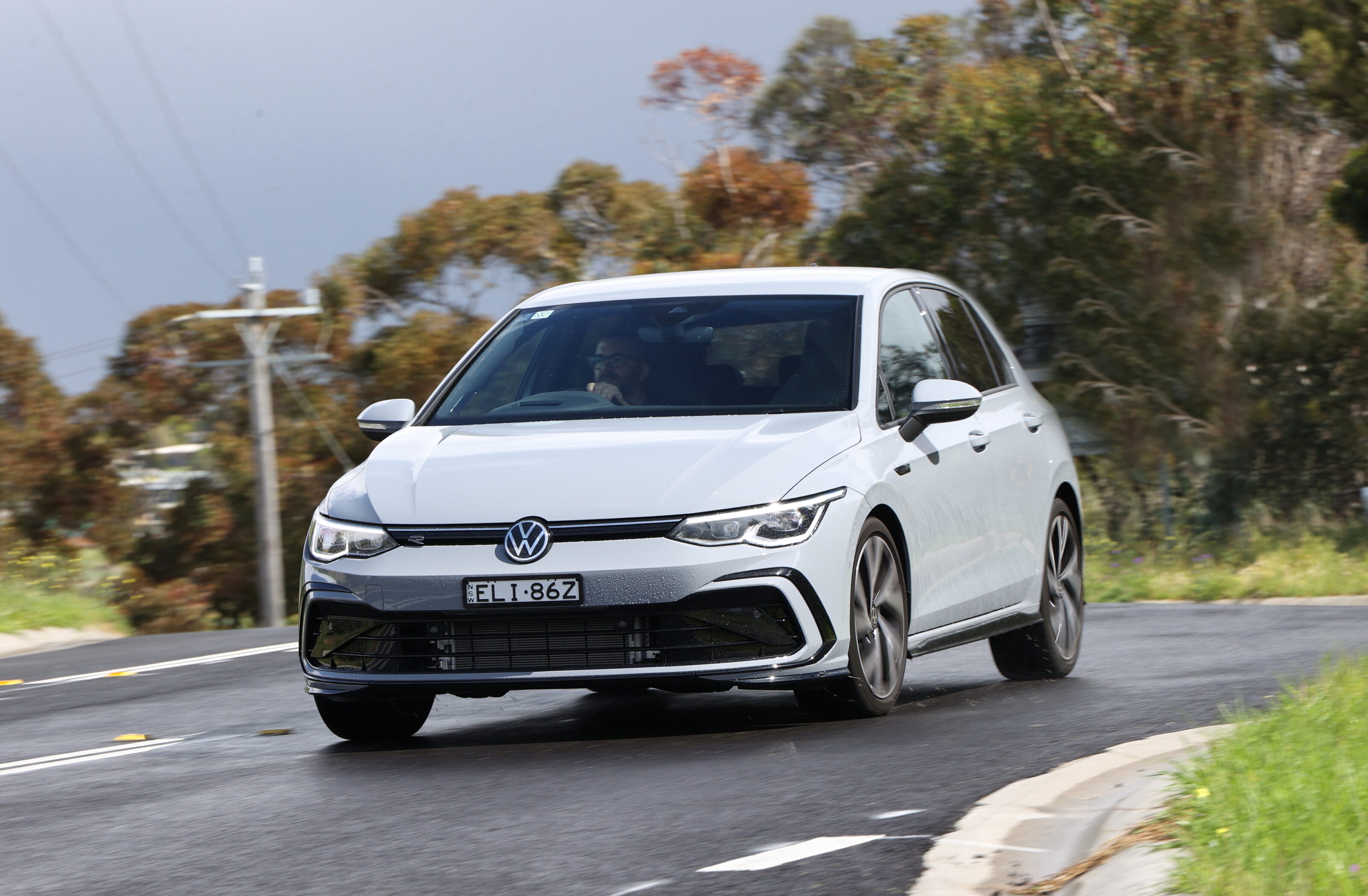
Produced at the plant are the Golf and Tiguan, two of Volkswagen’s most popular models in Australia – rounding out 2020, the Golf sat atop the brand’s local sales on 10,012 units sold with the Tiguan and Tiguan Allspace in second, combining for 9148 vehicles shifted.
Snapshot
- New C8 Z06 convertible clearly seen in latest teaser video
- Official launch for the Z06 on October 26 in the US
- 2022 Stingrays to be in Australia by the end of the year
We’re only days out from Chevrolet officially unveiling the highly anticipated 2023 C8 Corvette Z06, but that hasn’t stopped the carmaker teasing us with a drop-top version.
Chevrolet uploaded a video to its YouTube channel ahead of the new Z06’s incoming reveal, with plenty of engine noise to highlight the 5.5-litre flat-plane crank V8 we’ve all been drooling over.
However, right at the end of the short video, we can clearly see a shot of a convertible C8. Given the video is solely about the new Z06, we assume Chevrolet will announce both hardtop and convertible versions of the C8 Z06 at the US launch on October 26.
It comes as no real surprise, given there is already a drop-top version of the 2022 C8 Stingray Corvette which has been on sale in the US for some time now, and Chevrolet also offered a convertible with the previous generation C7 Z06.
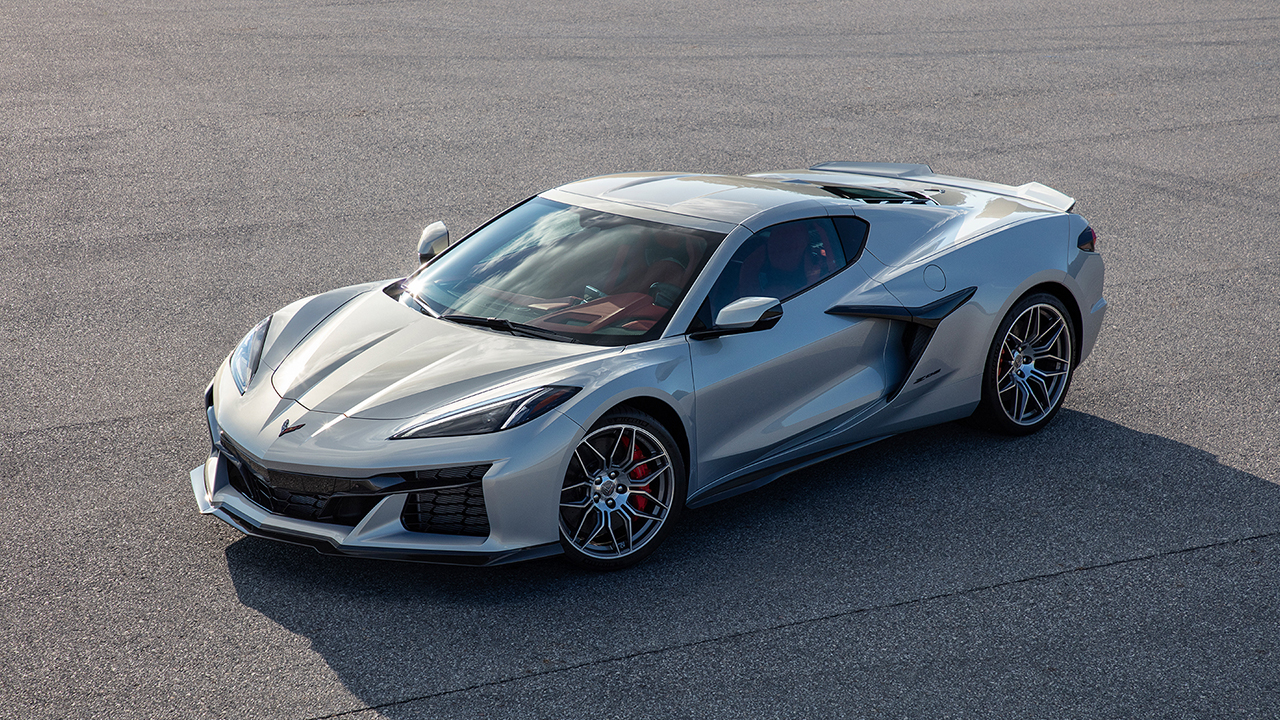
The C8 Corvette range has been in the headlines for last the few months, with GM consistently dropping teasers and a camouflaged C8 Z06 and E-Ray recently spotted testing at the Nürburgring.
GMSV Australia has yet to confirm if the Z06 will be offered locally, but GM did file a trademark for the Z06 name in Australia back in July.
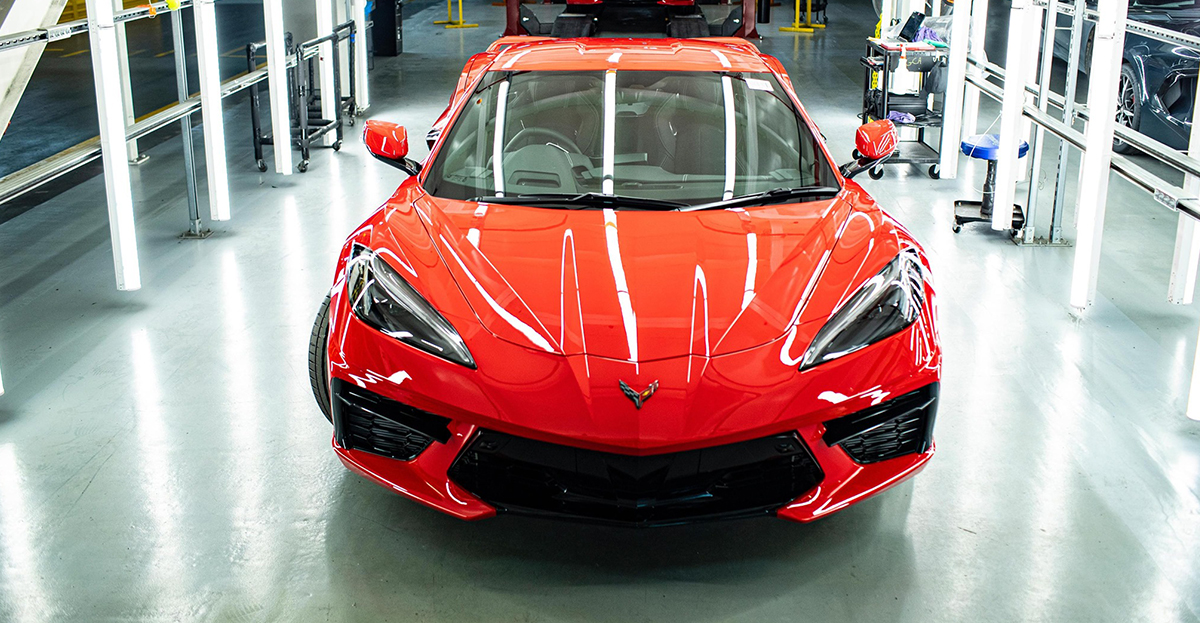
A spokesperson for GMSV Australia also confirmed to MOTOR last month that shipments of C8 Stingrays are finally expected to land in the country by the end of the year.
UPDATE, October 22: Following weeks of industrial action, South Africa’s metalworkers union has accepted a three-year wage increase.
According to Reuters, the union agreed to a rise of between five and six per cent in the first year, with smaller increments in the following years.
The union issued a statement urging its members to return to work no later than Monday.
Our original story is below.
The story to here
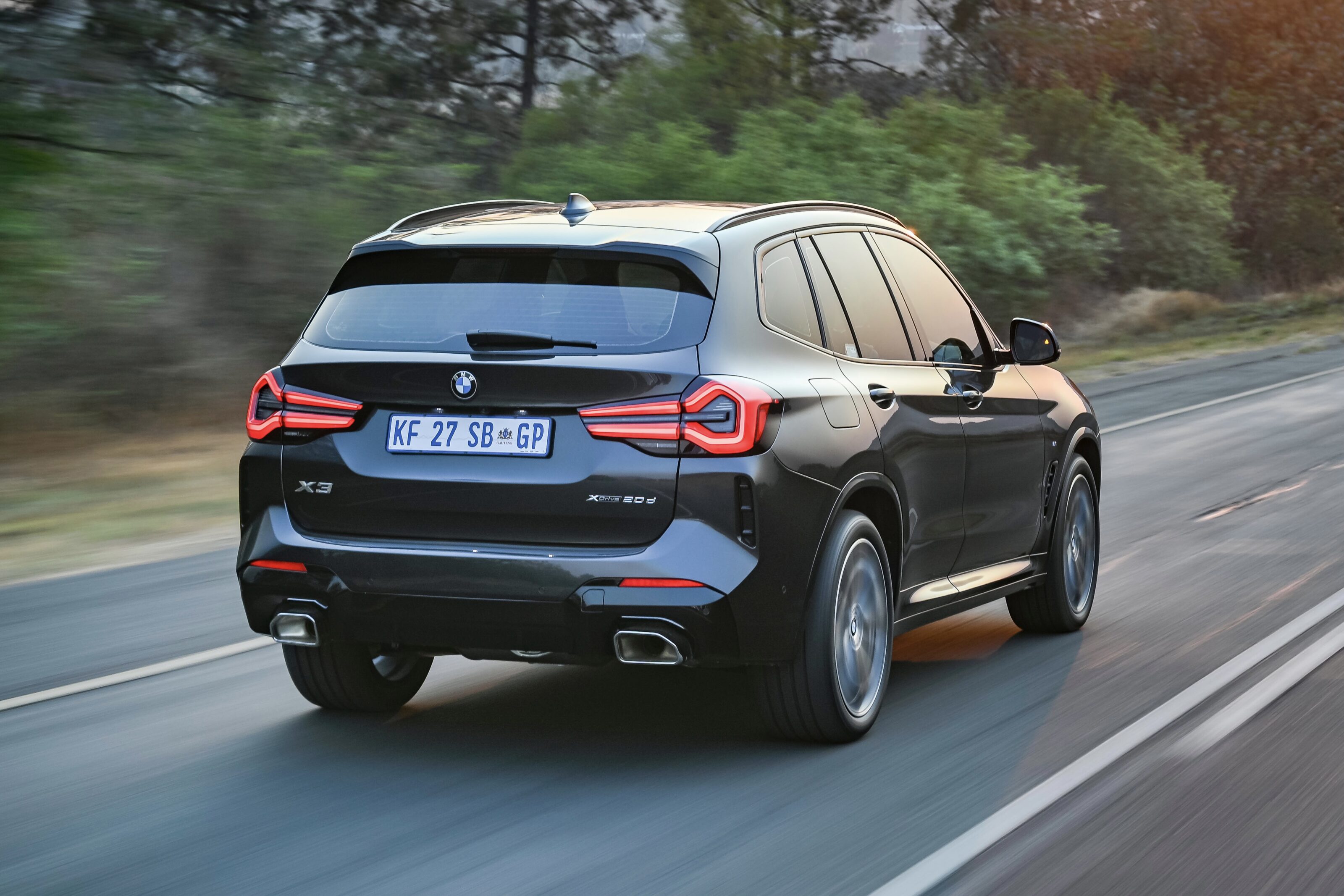
October 20: Employees at a BMW factory in South Africa have gone on strike, impacting the production of X3 models.
The country’s metalworkers union has taken industrial action over a wage dispute with the Steel and Engineering Industries Federation of Southern Africa (SEIFSA), according to news outlet Reuters, with a “final offer” rejected following a week of talks.
More than 150,000 metalworkers went on strike earlier this month, shuttering assembly lines throughout the country and taking to the street.
Early last week, BMW South Africa advised around 700 cars had been affected by the action. It’s unclear what the tally has risen to over the past week, but a spokesperson for BMW Australia has confirmed to WhichCar there is “no impact to the delivery timing of BMW X3s manufactured in South Africa for the Australian market”.
Despite both the union and the industry body conceding ground during the most recent negotiations, they were unable to agree on a way forward, local newspaper The Citizen reports.
It’s believed the industrial action has yet to make its way to other South African new-car factories run by Ford, Volkswagen, or Toyota.
“We expect more OEM assembly lines to be impacted if the strike continues into next week, due to a lack of production in parts of the supply chain,” a spokesperson for an auto industry body told The Economic Times.
Australia imported more than 9500 cars from South Africa in 2020, just behind the Czech Republic and ahead of France.
This year’s Challenge Bathurst will be the first ever carbon neutral event at Mount Panorama following its organisers signing a 10-year contract to offset emissions.
Challenge Bathurst, which will run between November 11 to 14, has entered a new partnership with not-for-profit organisation Greenfleet to neutralise the carbon footprint created over the four-day outing.
More than 400 cars are expected to turn laps around the iconic circuit across the regularity and supersprint time trial events, with Greenfleet planting trees to completely offset the carbon dioxide emitted by the competitors.
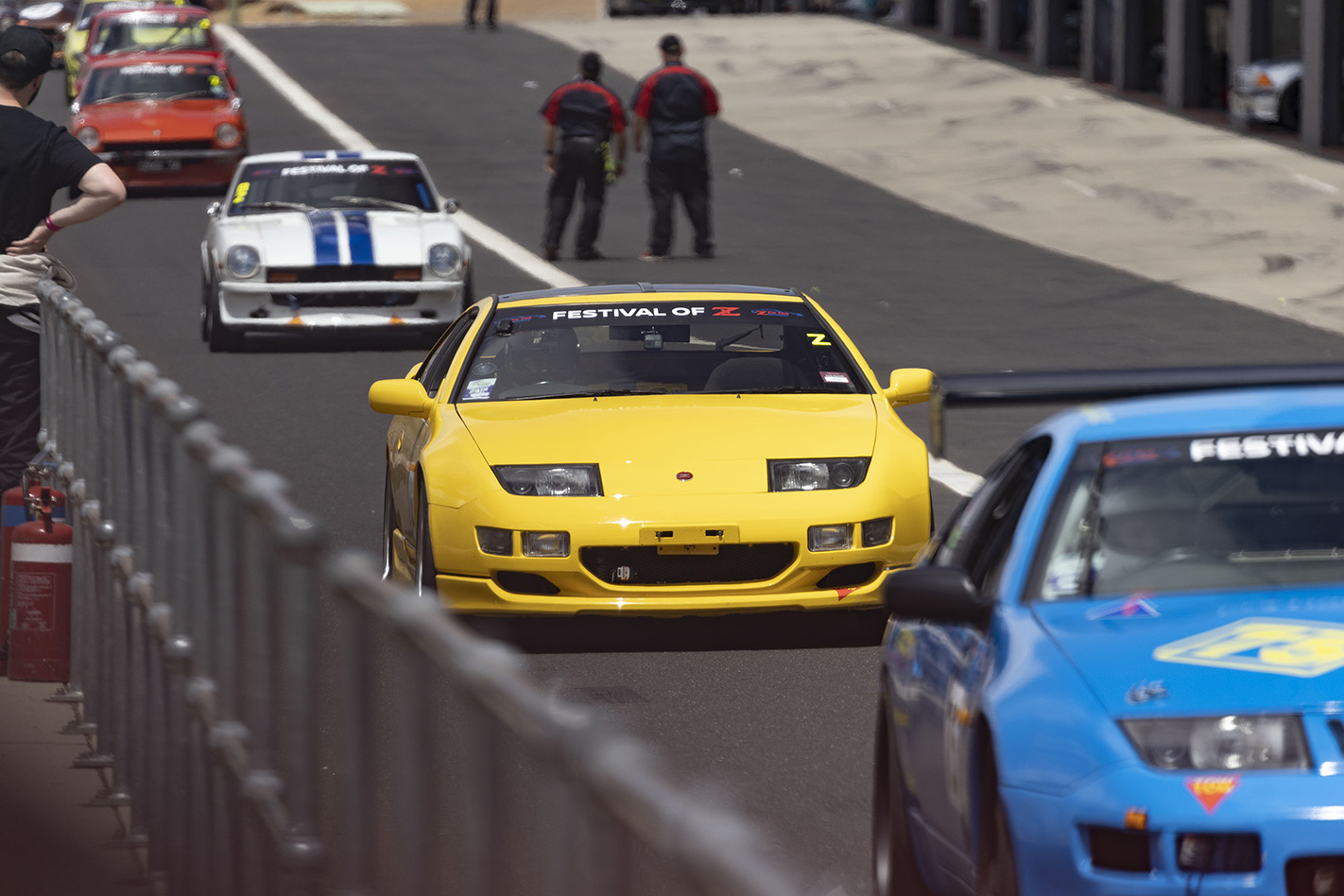
Event organiser Greg Evans said it was the best way to tackle the issue, as almost all competitors run on pump-grade unleaded fuel.
“The rationale is that carbon offsetting is an immediate and cost-effective way to take responsibility for the environmental impact of the Challenge Bathurst Event,” said Evans.“While it’s hard to fundamentally change the amount of carbon emissions, due to the engine type of most cars suitable for Challenge Bathurst, it’s easy to offset the emissions by partnering with an organisation like Greenfleet.“However, this is also an emotional decision based on our competitors’ desire to do what they love and offset the impact so we can all keep doing this for the next 30 years and more.“We don’t have to wait until 2050 to start being ‘net zero’ today. When I realised it cost five dollars a competitor to be net zero – it’s really a no-brainer.”
The 10-year deal will take it through to 2030, a significant year across the world as many manufacturers and governments have committed to phasing out internal combustion engines in private vehicles, ultimately aiming to go carbon neutral by 2050.
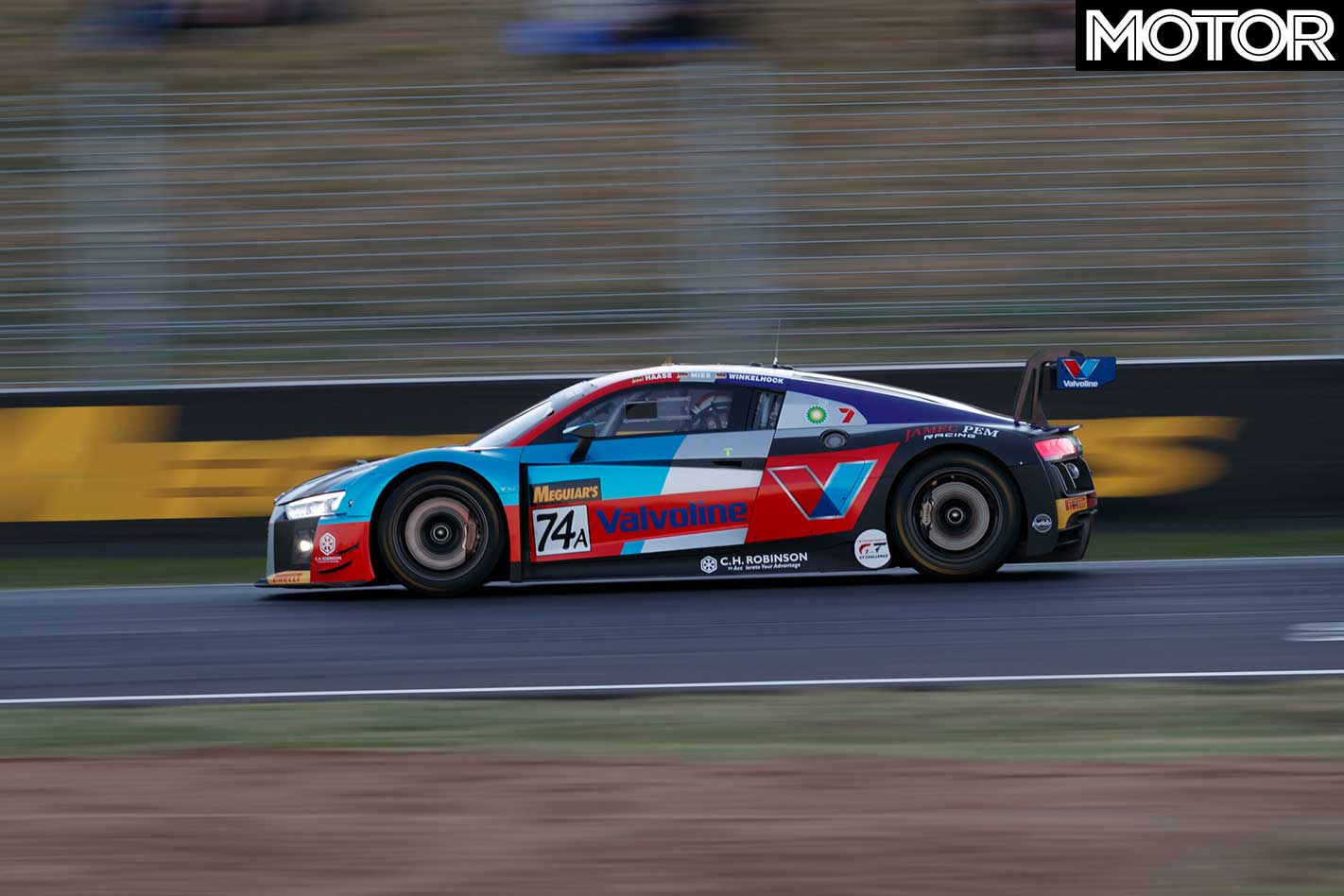
Challenge Bathurst was the scene of the fastest lap of Mount Panorama ever recorded in 2018, as former 12 Hour winner Christopher Mies took an unrestricted Audi R8 GT3 around the 6.213 kilometre circuit in 1:59.321, the only sub-two minute lap at the track.
