
Features


Gallery 1
It took just 5m19.546s for Timo Bernhard to etch his name into the Nürburgring Nordschleife history books.
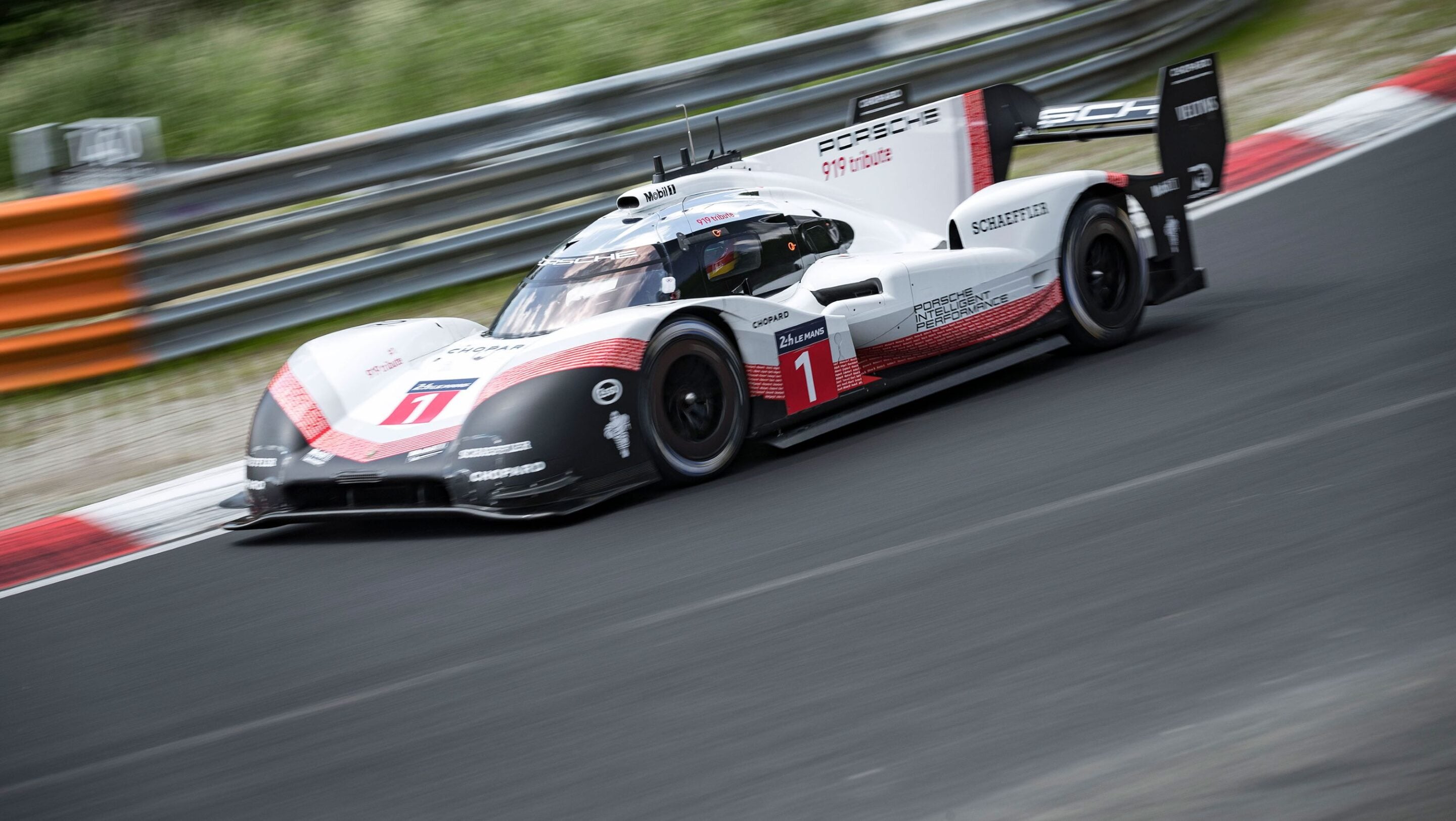
That’s how long it took the German racer to complete a lap of ‘The Green Hell’ in his Porsche 919 Evo (below), a new record that obliterated the old mark by almost a minute.
It was a remarkable lap by the Porsche driver, his 919 Evo – which had cast off the shackles of the World Endurance Championship’s pesky rulebook governing power and weight – setting a new benchmark likely to last as long as the 35 years Stefan Bellof’s previous record of 6m11.13s, set in 1983, had stood.
1
But what made Bernhard’s lap all the more remarkable was the engine crammed into the back of his Le Mans race car. No, it wasn’t one of Porsche’s famous flat-sixes, nor was it the flat-12 of previous generation prototype racers such as the 917. Instead, a turbocharged 2.0-litre V4, mated to Porsche’s trick hybrid system for total outputs of 865kW, helped to propel the German racer at average speed of 234.7km/h around the 20.8km Nordschleife. In a car weighing just 849kg. Remarkable.
Porsche chose the V4 configuration for its 2019 Nordschleife record run for packaging and economy reasons. The 919’s complex hybrid system took up space while the V4 configuration of the petrol engine, thanks to its compact dimensions, didn’t. The less space the engine occupied, the more left over for the energy recovery units, batteries, and the associated electronics needed to run them. And in motorsport, packaging and weight distribution is paramount.
The V4 as an engine isn’t completely alien to the automotive world, but it is exceedingly rare. Traditional inline fours which have powered the vast majority of four-cylinder cars throughout history are simpler in their construction, use less mechanical parts and are cheaper to build.
But that didn’t stop a handful of carmakers from experimenting with the bent-four layout. Perhaps they were lured by the prospect of increased power, thanks to shorter crankshafts which could withstand higher engine revs. Or maybe it was the idea that a V4 – thanks to better thermal management – could be more fuel efficient than its inline cousins.
Counteracting those potential gains, the inherent vibrations of a V4’s uneven firing order required complex and expensive balancing shafts. And two banks of cylinders (instead of one) necessitated more mechanical parts like crankshafts and cylinder heads, adding to the cost of production.
If there was a moment in time for the V4 engine, it came in the 1960s with several carmakers trying out the unorthodox configuration. Some are household names, some are automotive curios. All defied convention.
1963: Lancia Fulvia
1
It shouldn’t come as a surprise that the Italian carmaker was at the forefront of V4 technology. After all, it had been continuously building cars with the distinctive engine layout since the 1920s, starting with what is widely regarded as the first production car powered by a V4, the 1922 Lancia Lambda.
A string of V4-powered models followed over the decades, reaching a peak in the 1960s with what is – probably – the Italian carmaker’s apogee: the Lancia Fulvia.
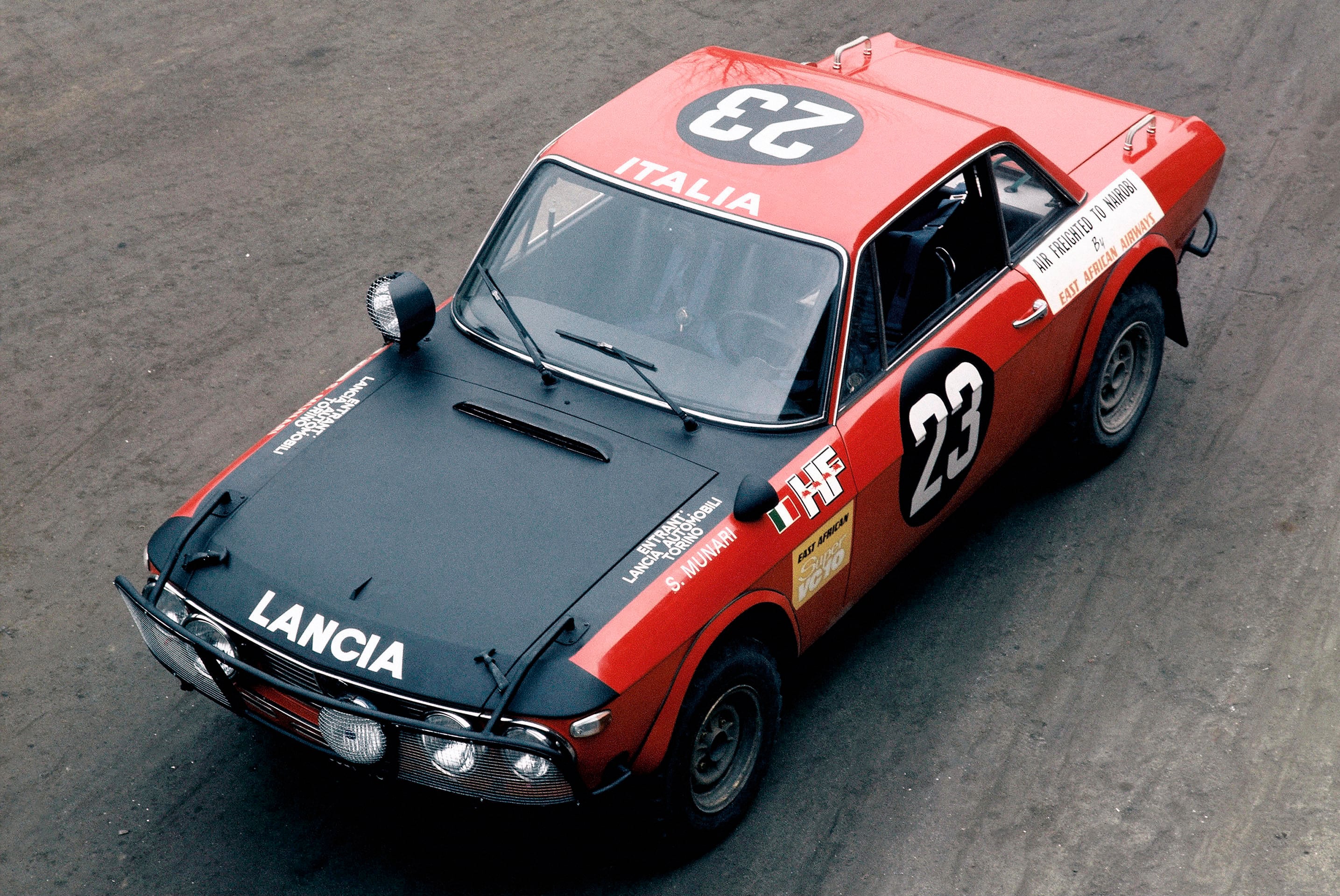
Released in 1963, the Fulvia was available as a boxy sedan, an elegant Zagato-designed fastback and a heartachingly beautiful coupe, all front-wheel drive and all powered by V4 engines, ranging in displacement from 1.1 to 1.6 litres.
Lancia’s V4 was unusual in that its V-angle was just 12 degrees with a single cylinder head (against the two heads required by V-configured engines built to the more commonly acceptable 60- or 90-degree angle). The compact nature of the narrow angle allowed Lancia’s engineers to mount the V4 at 45 degrees, lowering the centre of gravity, resulting in a beautifully balanced and handling car that could be driven with verve and vim.
Lancia’s V4 reached its zenith with the Fulvia Rallye 1.6 HF, the homologation special built for the Italian manufacturer to contest what was then the precursor to the World Rally Championship, the International Championship for Manufacturers (ICM). With 96kW in competition trim, the Fulvia 1.6 HF dominated the ICM in 1973, winning the title with almost twice as many points as second-placed Fiat. Cue V-shaped Victory signs.
1965: Ford Transit Mk1
1
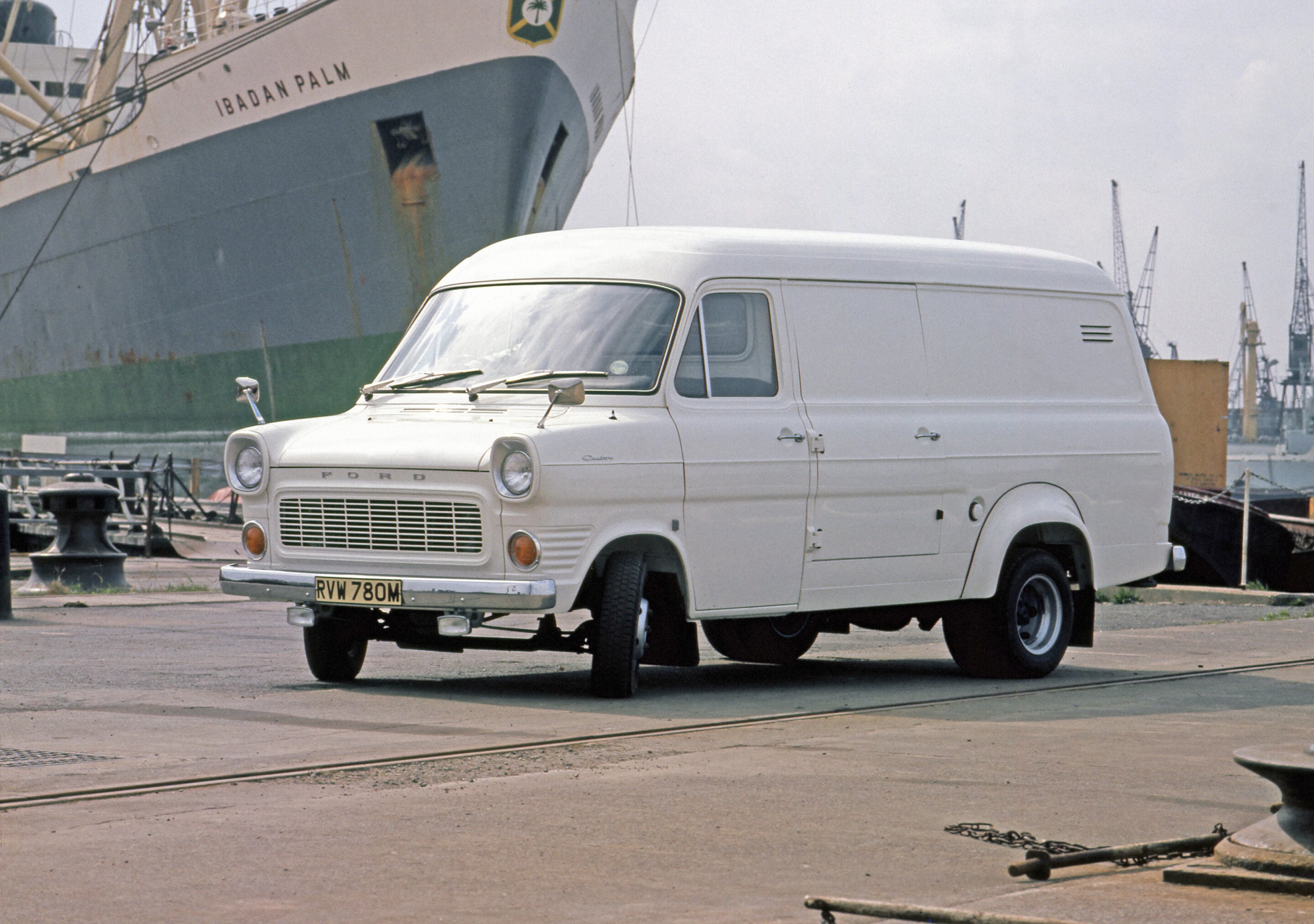
The humble Transit van was an important vehicle for Ford, emerging from the newly-merged Ford of Europe entity which brought Ford of Britain, Ford of Germany and Ireland’s Henry Ford & Son Ltd together.
Ford’s designers revolutionised the van segment with the Transit’s distinctive ‘pig snout’ design that improved packaging, driver comfort and was easier to maintain.
Under the Transit’s stubby bonnet lived a succession of V4 engines, ranging in size from 1.3-1.7L in German-built models and 1.7-2.0L in their British-built counterparts.
The V4 sat easily inside the Transit’s small engine bay, which not only improved driver comfort (they were no longer sitting over the engine) but maximised cargo space.
In the UK, the 2.0-litre Essex V4 made a healthy-for-the-time 67kW, making the Transit the fastest van on the market, leading police to declare that “Transits are used in 95 per cent of bank raids. With the performance of a car, and space for 1.75 tonnes of loot, the Transit is proving to be the perfect getaway vehicle.”
Little wonder the Old Bill called it “Britain’s most wanted van”.
1967: Saab Sonett II
1
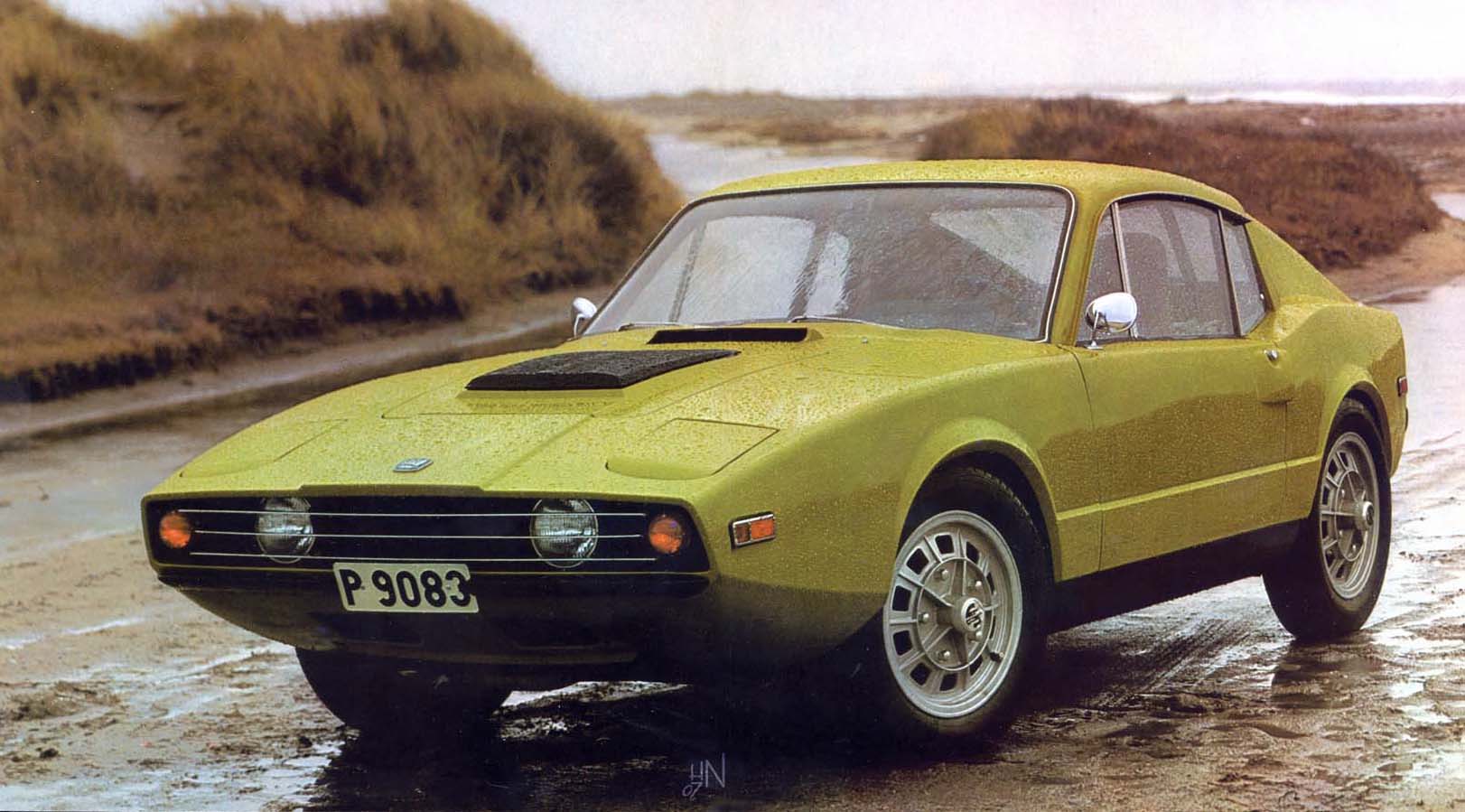
Of course Saab was going to embrace the V4. The eccentric Swedish carmaker had a reputation for its left-of-centre thinking, so when it was looking for a replacement for the thirsty – not to mention dirty – 841cc two-stroke inline-three powering its quirky Sonnet II coupe, it turned to the equally unconventional V4.
But it wasn’t an easy heart transplant for the manufacturer. The tiny 0.8L motor of the Sonnet II made for a tiny engine bay. As a result, the larger 1.5-litre Ford V4, sourced from Ford of Germany, didn’t quite fit, forcing Saab’s designers to reconfigure the Sonnet II’s bonnet to include an ungainly hump to accommodate the larger engine. Adding to the awkward vibes, the bonnet hump was offset slightly to the right so as to not impede the driver’s view.
Despite the 1.5-litre’s meagre outputs (it was good for just 48kW), the Sonnet II proved a charmer. Clothed in a fibreglass body sitting atop an aluminium frame, the Sonnet II tipped the scales at around 775kg, which gave it a surprisingly rapid top speed in excess of 160km/h. The 0-100km/h dash was over in about 12.5 seconds.
The eyesore bonnet bulge wasn’t a hit with critics, nor was Saab management particularly enamoured of the Sonnet II’s awkward proportions, fast-tracking the development of the Sonnet III (below) which made its debut in 1970 with an altogether more conventional body.
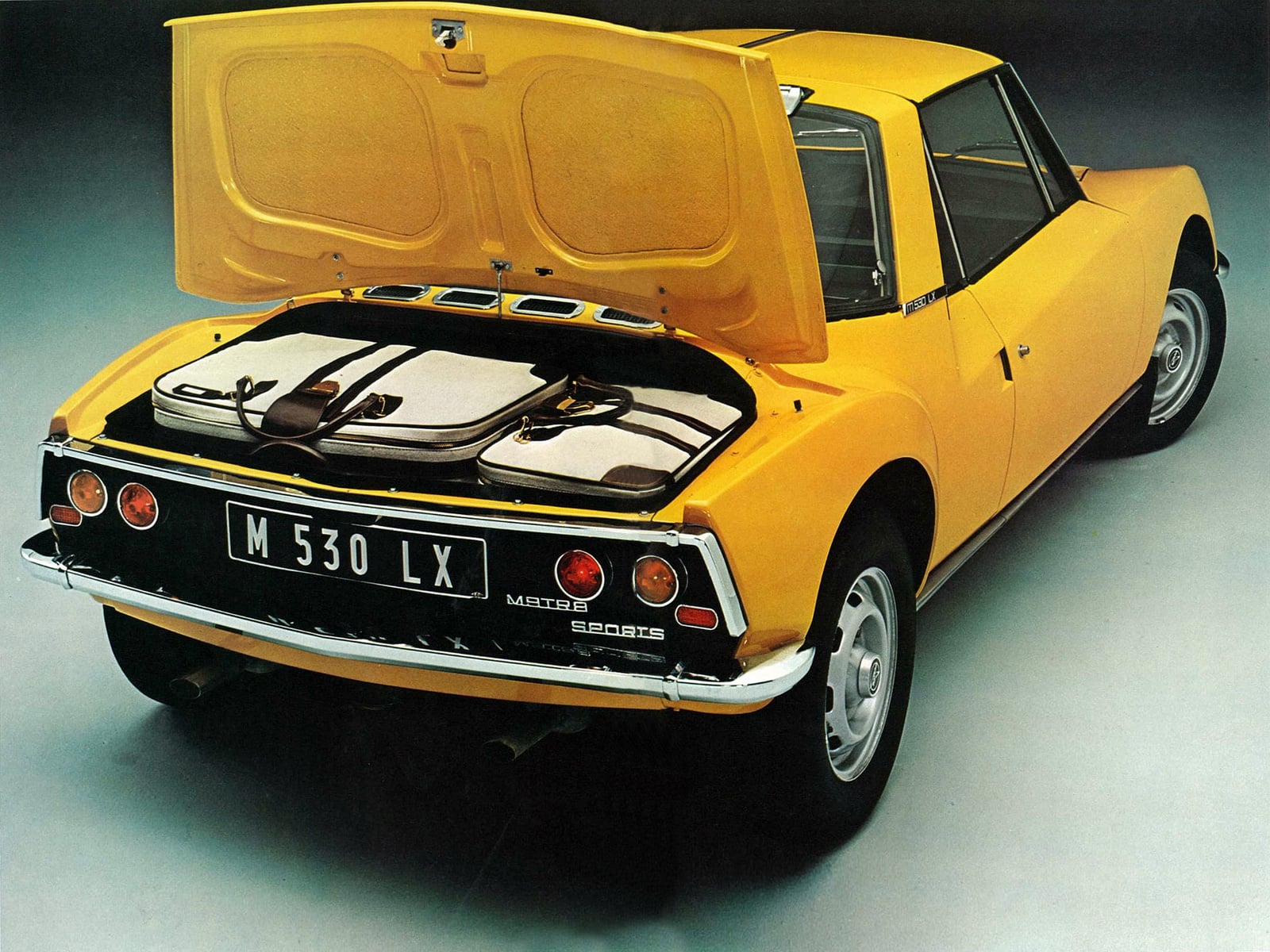
1967: Matra M530
1
Matra is one of the most fascinating car makers in automotive history. The French conglomerate didn’t start out making cars. Instead, its early industrial energies focused on aviation and defence technologies, including building air-to-air missiles.
But in 1964, wanting to shed its ‘merchant of death’ image, the company branched out into the automotive world, both with road cars and an ambitious world-beating motorsport program. How ambitious? How about its distinctive blue Matra race cars taking on the world’s best in F1 and at Le Mans. And then beating them.
Matra won both the F1 drivers’ (Jackie Stewart) and constructors’ championships in 1969, while at Le Mans, Matra cars won the 24-hour race outright three years running from 1972-74.
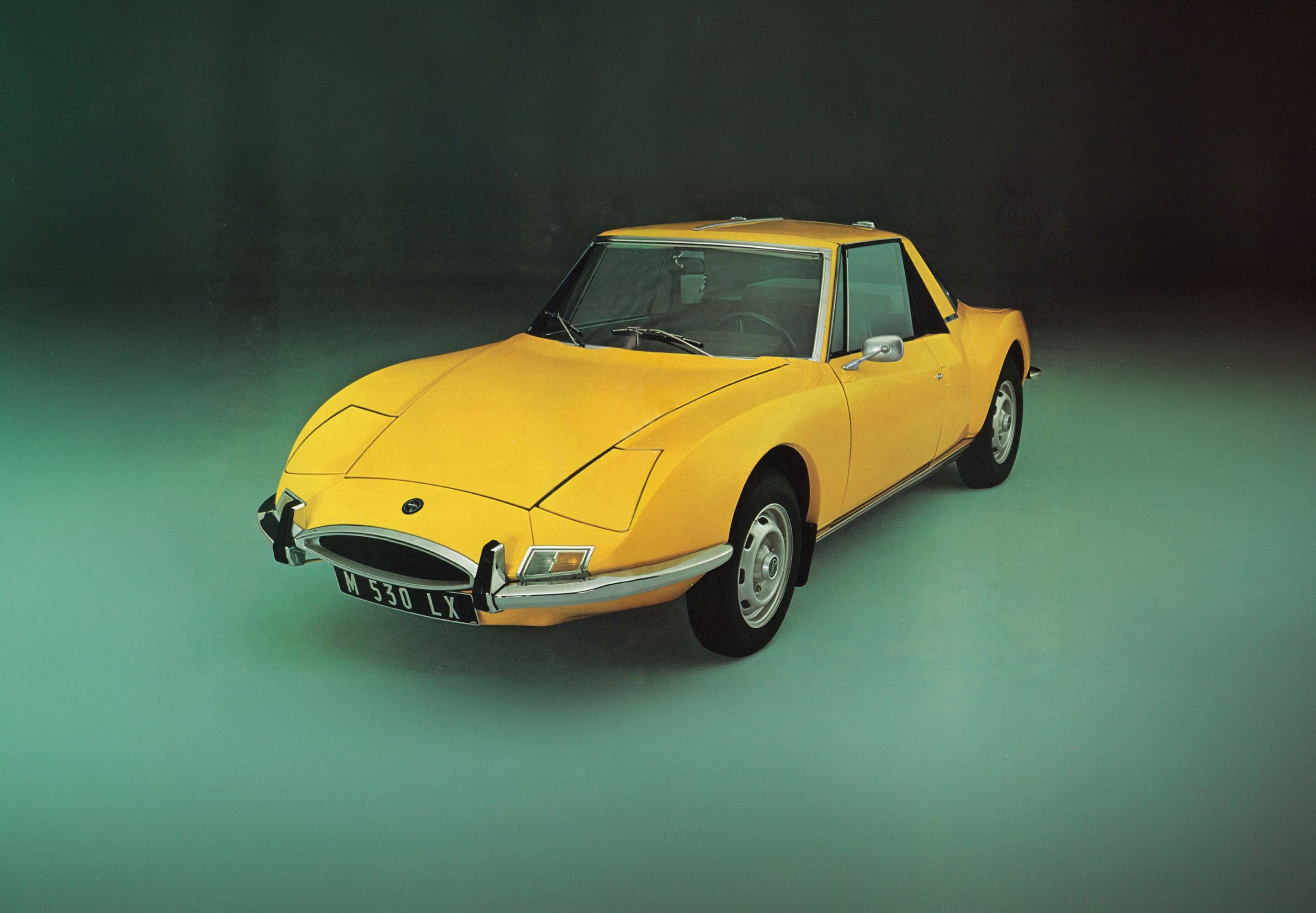
On the road-car front, the first proper Matra car – the French company had inherited the René Bonnet Djet when it took over the ailing boutique carmaker – to roll out of the factory in Romorantin was the M530, a small mid-engined, fibreglass-bodied, targa-roofed coupe that was powered by a 1.7-litre Ford V4. It wasn’t a particularly pretty coupe, nor was it especially quick (0-100km/h in around 15.6 seconds). But what it lacked in outright speed it made up for with impressive dynamics, thanks to its light weight, mid-engined weight distribution and independent suspension setup at all four corners. It might not have been a looker, or particularly fast, but the Matra M530 remained an exhilarating car to drive. Slowly.
1969: Ford Capri Mk1
1
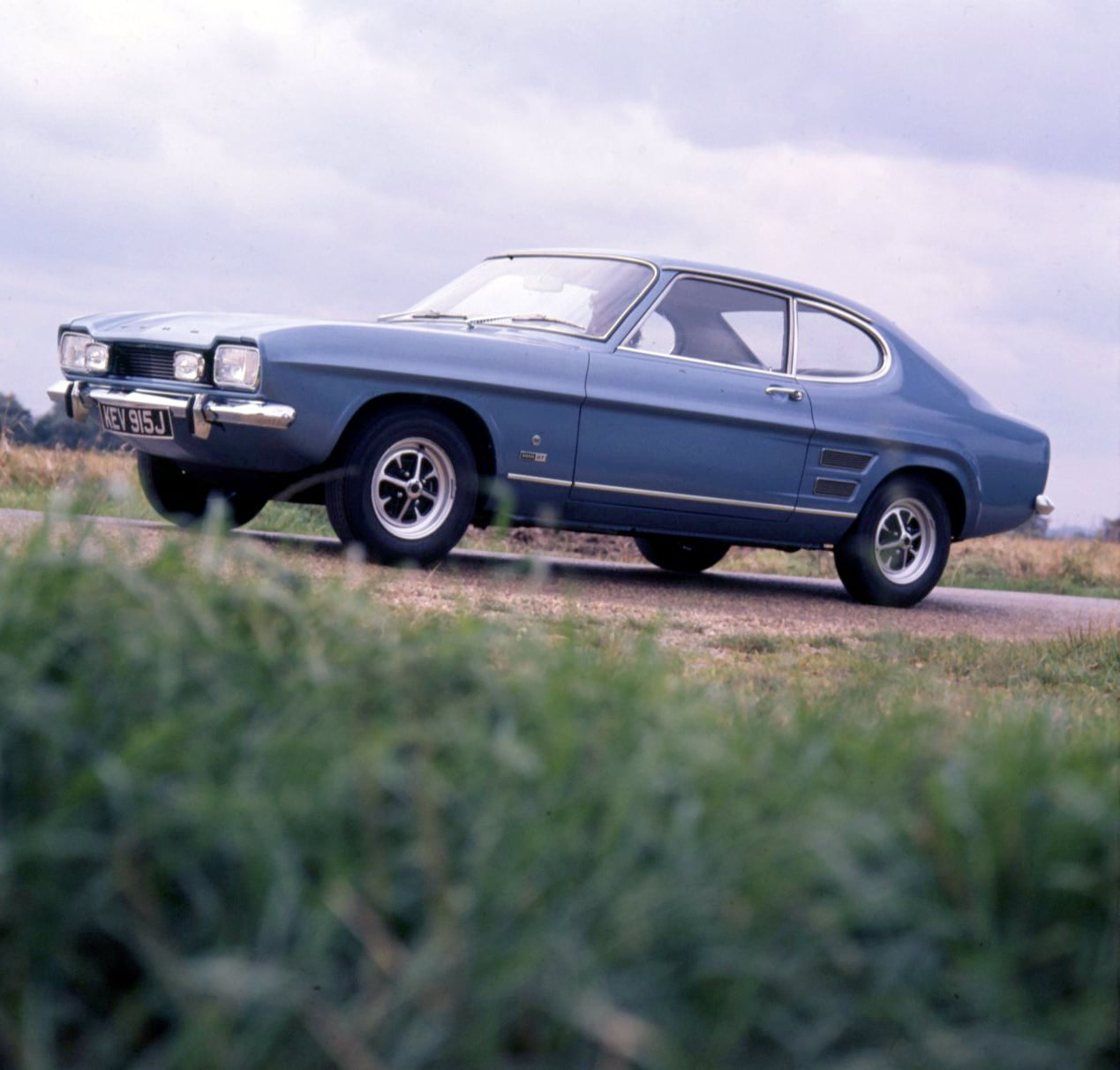
Ford of Europe’s answer to the Mustang looked the part, with handsome fastback styling and cosmetic body garnishes that promised performance but were entirely fake.
Launched in 1969 as a sports car for the masses, the original Mk1 Capri came with a smorgasbord of engine configurations – from inline-fours to the mighty Cologne 2.6-litre V6 and even a 5.0-litre V8 in the Perana Capri. In between, a selection of V4 powerplants ranging in displacement from 1.3 to 2.0 litres afforded Capri buyers plenty of choice.
The smaller German-built Taunus V4s were decent enough, but lacked the power to transform the Capri into anything but a sheep in wolf’s clothing. But the British-sourced 2.0-litre Essex V4, pilfered from the Ford Transit, was something else altogether. Outputs of 69kW and 104Nm were pretty decent for the time and when married to a sleek fastback weighing only 950kg, offered brisk performance, and certainly enough power to match the Capri’s handsome profile.
But the V4 configuration’s inherent rattles and vibrations didn’t endear it to owners, nor did its many
mechanical shortcomings such as a propensity for overheating, which would then cause the camshaft gear – made out of a resin-fibre composite – to fail spectacularly.
Little surprise, then, that when the Capri Mk2 made its debut in 1973, the V4 had been deleted from the line-up, replaced by the lusty Pinto inline-four and a meaty 3.0-litre Essex V6.
That left Saab and Lancia to fly the V4 flag through the remainder of the ’70s while Russian automaker ZAZ persisted with its rear-mounted, air-cooled V4 well into the 1990s.
And the V4’s story should have ended there. But Porsche – and Timo Bernhard – had other ideas.
The Pioneer
1
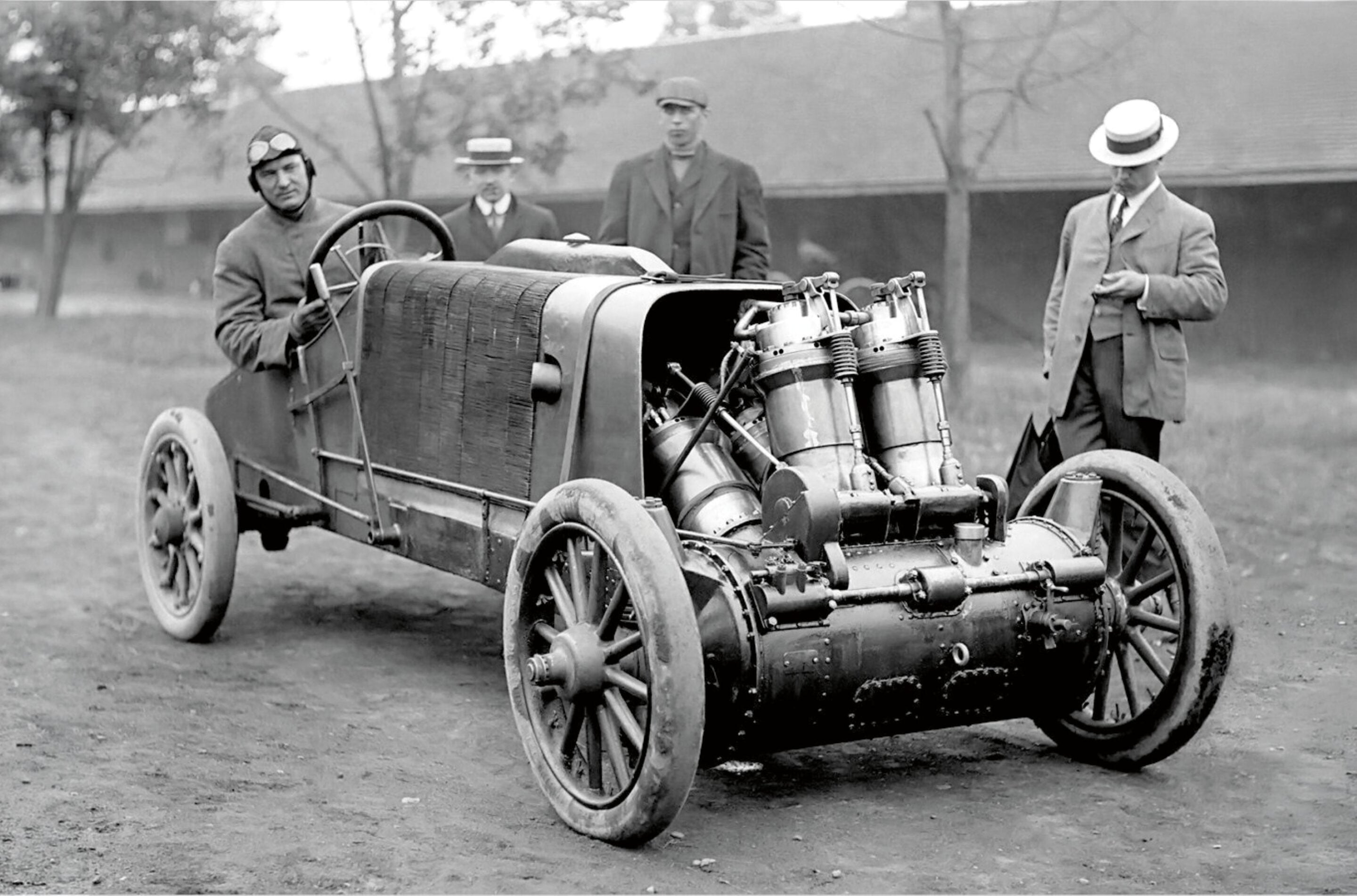
American John Walter Christie isn’t a household name today, but as a pioneer of grand prix racing, he adds an interesting footnote to this story.
A renowned engineer and inventor, Christie also dabbled in grand prix racing during its earliest days, contesting the 1907 French Grand Prix in a car he designed and built. What made his racecar so unusual wasn’t its atypical front-wheel drive platform, but rather his choice of engine, a massive 20-litre V4.
Sadly, overheating and clutch issues curtailed the V4 Special’s race, Christie completing just four laps of the 76.989-kilometre course on public roads in Dieppe.
But with a displacement of 20 litres, Christie’s V4 remains the largest engine ever used in a grand prix, a record unlikely to be broken.
This story first appeared in the September 2026 issue of Wheels magazine, now on sale. Subscribe here and gain access to 12 issues for $109 plus online access to every Wheels issue since 1953.
Follow WhichCar/Wheels on Google
Click the button below to make WhichCar by Wheels a preferred source for your news.

We recommend
-
 Features
10 cars that were killed off by SUVs in Australia
As Australians fell in love with SUVs, some of our favourite sedans, wagons, hatchbacks and people movers quietly disappeared.
-
 Features
10 Wheels Car of the Year winners you may have forgotten
Wheels Car of the Year traces an incredible history back over more than six decades. Some superstars stand out, while some winners are easily overlooked... as we approach another year of testing for the world's longest-running car award, here are some of the lesser-light winners.
-
 Features
10 cheap cars you should buy now before everyone realises they're classics
The classic car market can be a fickle beast, especially when the cheap models that used to be junk suddenly become desirable, which begs the question: Which cars will be next?


