News
Gallery 1
BYD is preparing to dramatically expand its vehicle shipping fleet, reportedly ordering another 10 car carriers as the Chinese manufacturer increasingly looks overseas for growth amid weakening sales in its home market.
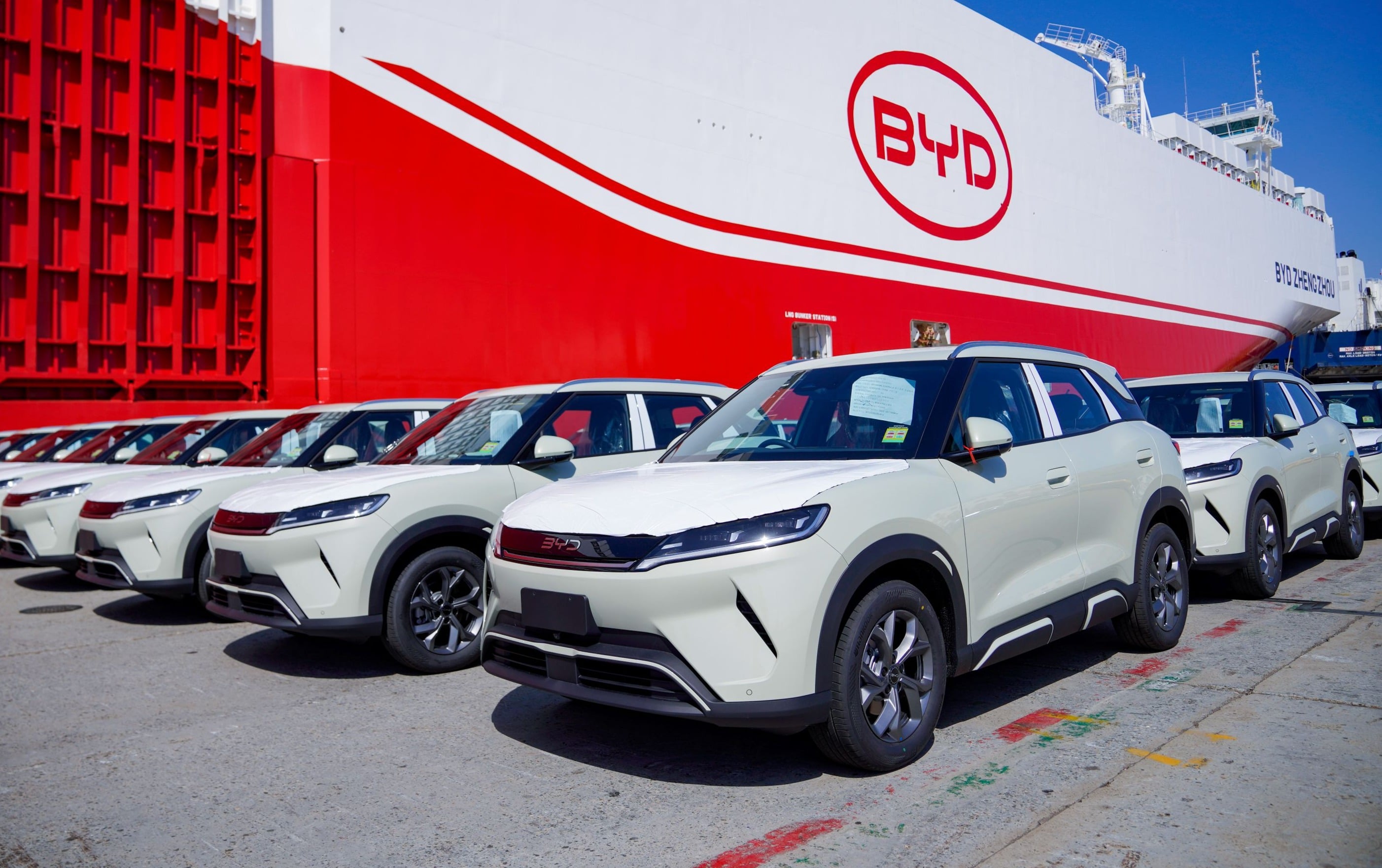
According to CarNewsChina, maritime industry reports claim BYD has ordered 10 pure car and truck carriers, each capable of transporting up to 9200 car-equivalent units (CEU). If completed, they would join its existing eight ships and take the company’s total fleet to 18 vessels.
The new ships are reportedly being built by China Merchants Industry at its Jinling and Haimen shipyards, with deliveries scheduled between 2027 and 2029. Neither BYD nor the shipbuilder has officially announced the order, while its value has not been disclosed.
1
The expansion would add another 92,000 CEU of capacity and lift BYD’s combined fleet capacity beyond 130,000 CEU. CarNewsChina estimates the additional vessels could increase BYD’s annual export shipping capability from around one million to 2.5 million vehicles.
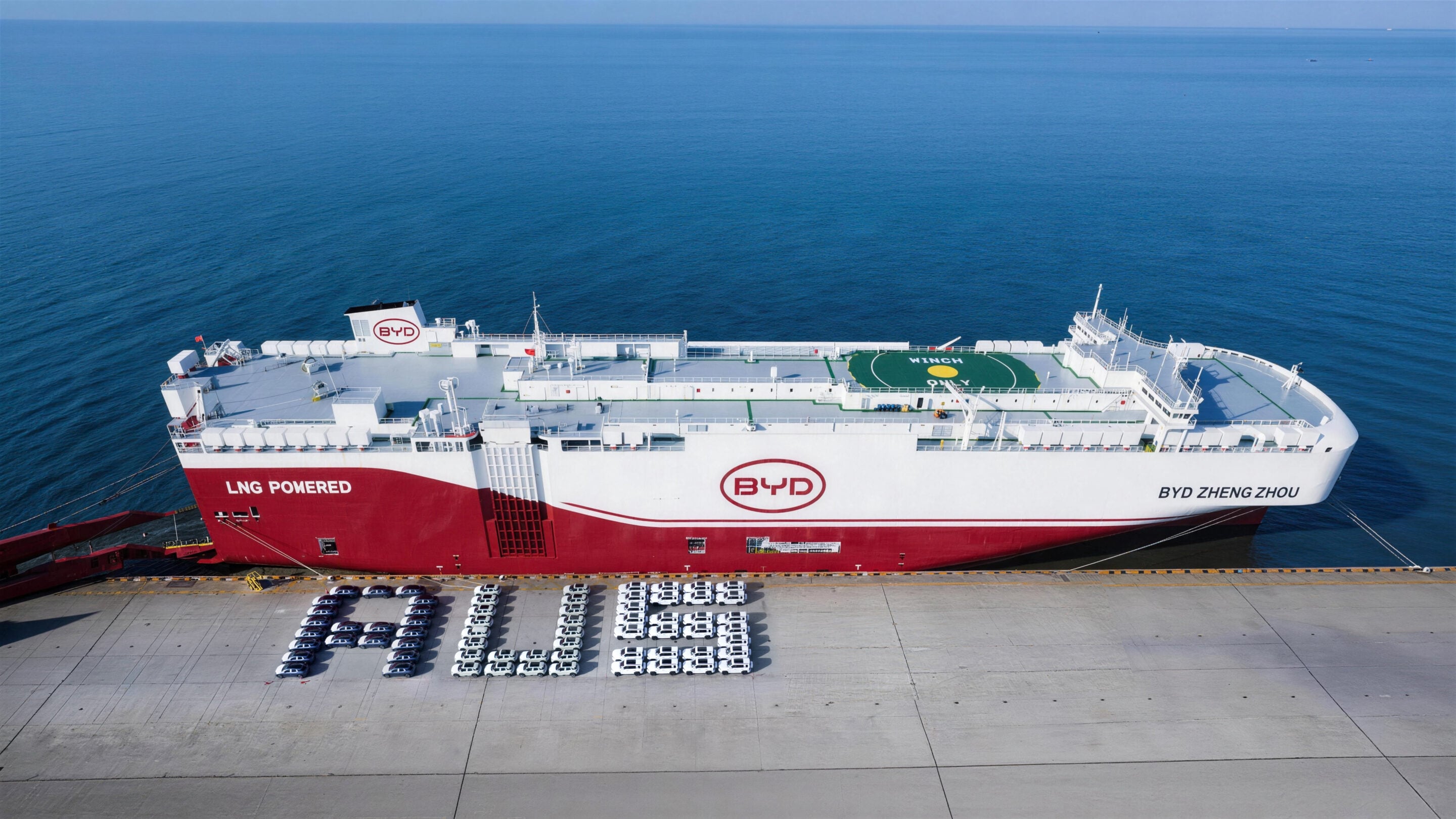
Australia has already experienced BYD’s growing reliance on its own ships. Earlier this year, the BYD Zhengzhou left Shanghai carrying 4810 BYD and Denza vehicles for Melbourne, Sydney and Brisbane (above), including more than 2000 Sealion 7 and Atto 2 electric SUVs. Around 75 per cent of the shipment had already been allocated to customers when it reached Australia.
That additional supply helped support a record June for BYD locally, when it registered 18,881 vehicles and finished just 243 sales behind Toyota.
The shipping expansion comes as international markets assume greater importance for BYD. Its exports from China reached 1.127 million vehicles during the first eight months of 2026, up 88 per cent year-on-year, while its main BYD brand’s Chinese sales fell 43 per cent to 1.15 million over the same period.
BYD generated 53 per cent of its revenue outside China during the first half of 2026, when overseas vehicle sales climbed 70.6 per cent.

1
That shift is also influencing its model strategy. The Seal and Sealion 7 have been withdrawn from the Chinese market as production is redirected towards export markets, although both remain on sale in Australia. The Sealion 6 had already followed a similar path earlier this year.
With more ships coming, BYD appears increasingly determined to control not just how many vehicles it builds, but how quickly it can get them into expanding overseas markets.
Follow WhichCar/Wheels on Google
Click the button below to make WhichCar by Wheels a preferred source for your news.

We recommend
-
 News
NewsBYD boss opens up about plans for a new 'workhorse' ute for Australia
It's been rumoured that the BYD Shark 6 will get a smaller companion for the Aussie market.
-
 News
NewsAussies could get a new BYD EV for less than $20,000 as brand looks to new market segment
At just $23,990, the Atto 1 Essential is the cheapest car BYD sells in Australia. But that might be about to change...
-
 Comparisons
Comparison: Kia Picanto v BYD Atto 1, a contest between two of Australia's most affordable cars
Two answers to the same question – what is Australia’s most affordable car?