News
Gallery 1
A recently discovered patent filing with the United States Patent and Trademark Office (USPTO) has sparked vigorous debate about whether Ferrari has just revealed its next-generation hypercar.
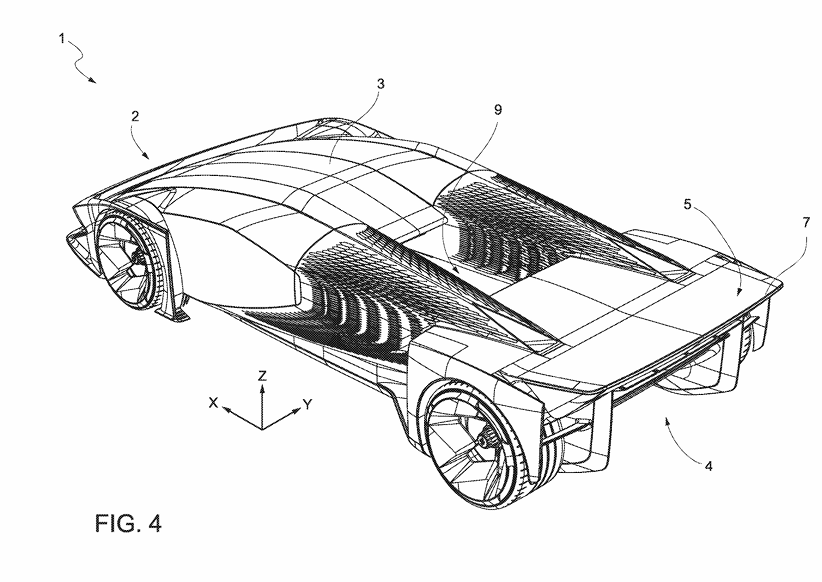
The patent details a new active aero system in which the taillights are mounted to an actuator, allowing them to move from their primary position into a spot higher and further rearward to vary the car’s aerodynamic load.
2
While the idea of moving bodywork isn’t new, with active aero systems now a regular feature of high-performance supercars and hypercars, using the taillight assembly as a moving part to impact airflow over the rear of the car is a different approach.
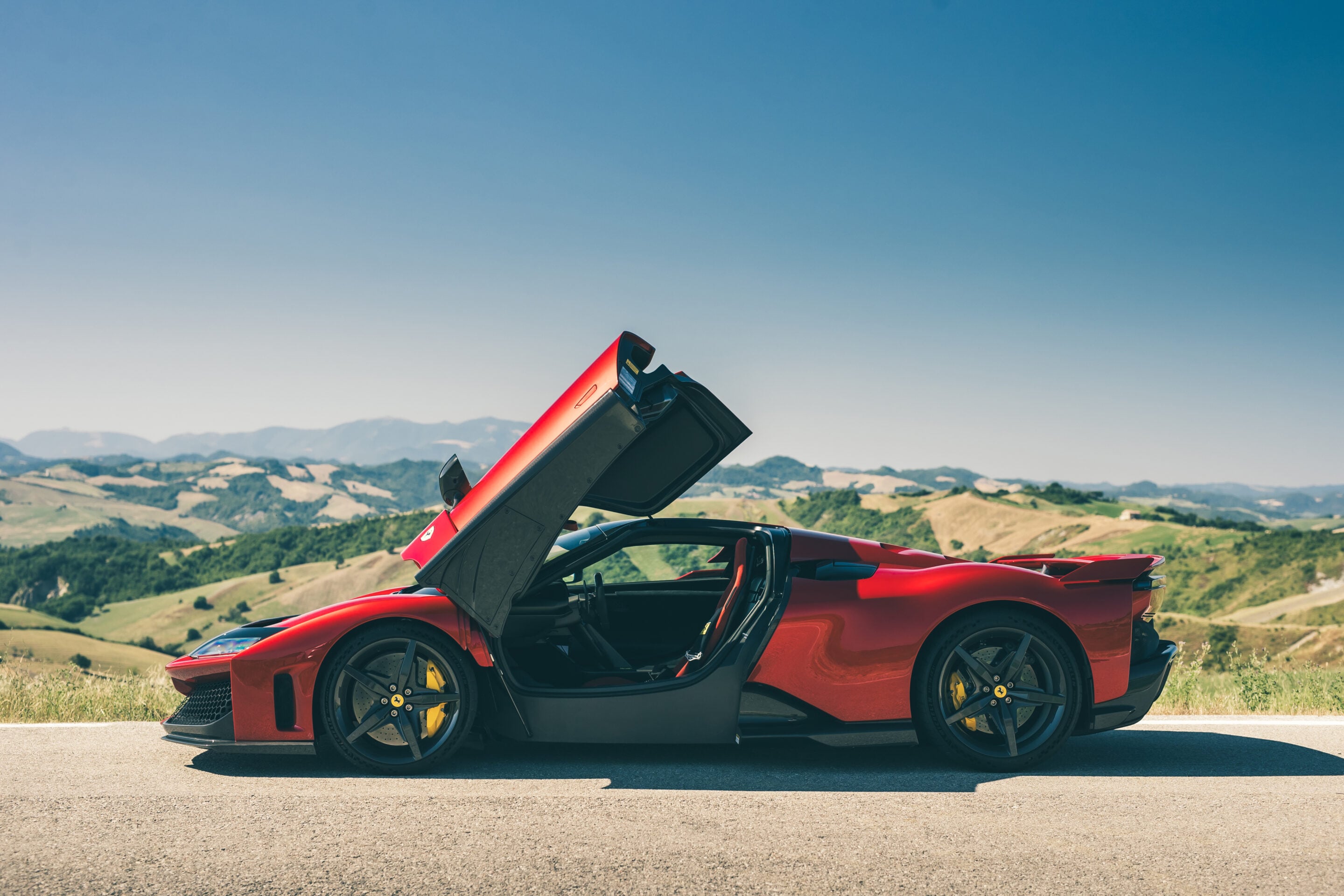
The patent, uncovered by CarBuzz, goes further than the usual wireframe or outlined vehicle depictions of the new technology in action, and the image (pictured above) has set off speculation that Ferrari could be previewing the form of a future hypercar. The brand’s current F80 flagship (pictured below) only launched last year, but a more potent or limited-run special edition could be on display here.
The radically styled car in the patent documents has a low cabin that looks more like an enclosed Formula 1 car, with partially exposed wheels and a twin fuselage-style body that shapes air from the body sides toward a massive rear diffuser. The active taillights are mounted between the rear spoiler surface and the diffuser.
5
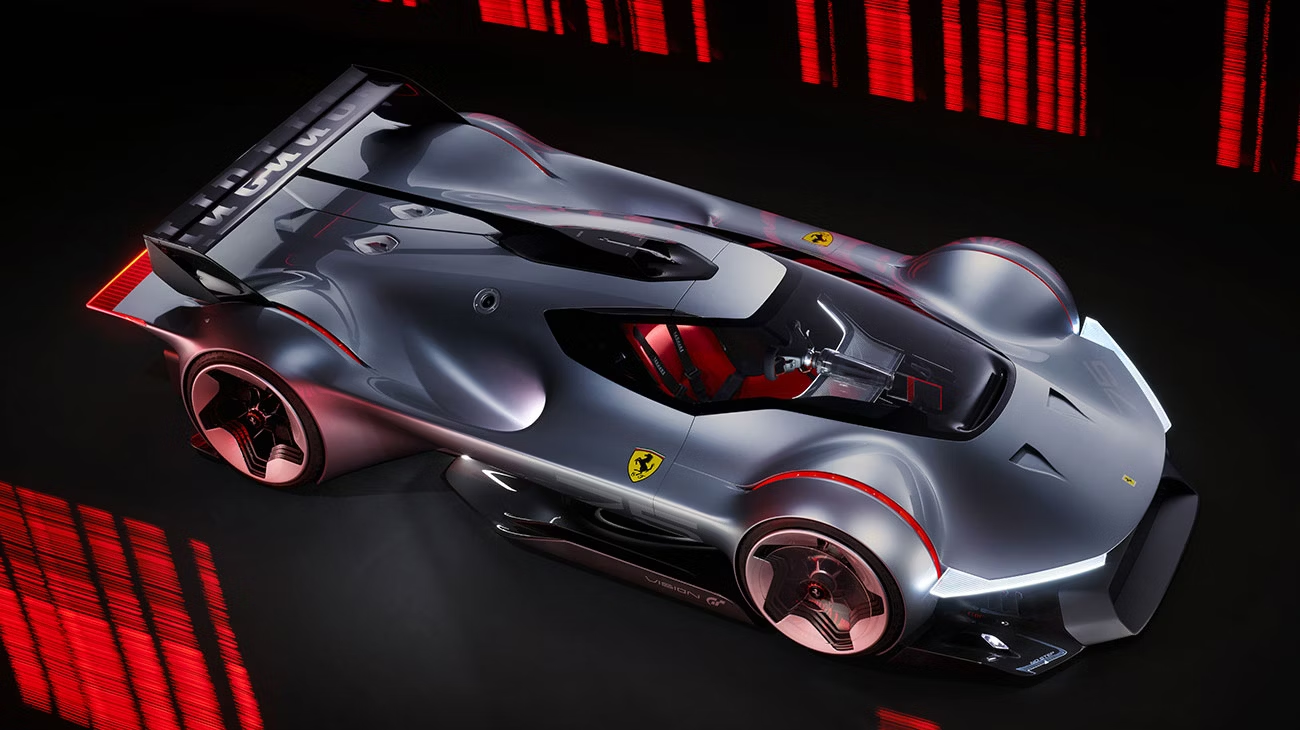
While the depiction has the same basic profile as Ferrari’s 2022 Vision Gran Turismo virtual concept, the wider cabin, unique rear styling and integrated wing surface all differ from that design.
A more realistic application of the moving taillight tech is also depicted, with an outline of the current Purosangue used to show how the system could function on Ferrari’s current range. The inner taillights would move rearward from their stowed position and rise to extend the length of the Purosangue’s short rear decklid. Like a traditional active rear spoiler, it could be used to increase downforce and drag under braking.
In either instance, the patent filing doesn’t guarantee that the technology depicted, or the car it’s shown on, is locked in for production. Patent protections can be used while new technology is under development, or to keep competitors from gaining easy access to similar systems.
Follow WhichCar/Wheels on Google
Click the button below to make WhichCar by Wheels a preferred source for your news.

We recommend
-
 Reviews
Ferrari 849 Testarossa first review: Redefining the modern supercar
Hybrid power, relentless speed and renewed focus on driver engagement place Ferrari’s latest flagship at the top of the tree.
-
 News
NewsFerrari Luce sells for a staggering $56 million at auction after becoming the Prancing Horse's most controversial car
The stupendous price tag for the very special example of the first EV ever made by Ferrari could make it the most expensive new car in the world.