
News
Gallery 1
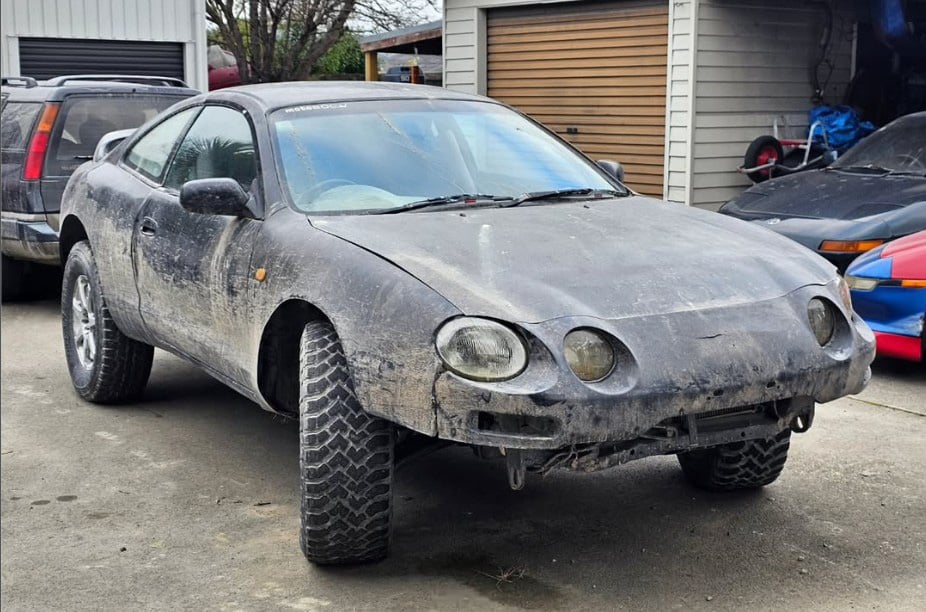
While Toyota enthusiasts eagerly await the return of the Celica, one New Zealand car nut has taken the Japanese sports coupe in a decidedly different direction, creating a twin-engined machine capable of tackling seriously challenging off-road terrain.
Christchurch resident Gareth Wadsworth’s creation began with a problem familiar to many university students: plenty of ambition but not much money. Unable to afford a conventional four-wheel-drive, he decided to work with what he already had.
As he documents on his Instagram account, @garethcars, Wadsworth had purchased a crash-damaged sixth-generation Toyota Celica for just $800, initially modifying it for a university off-roading excursion in 2020.
1
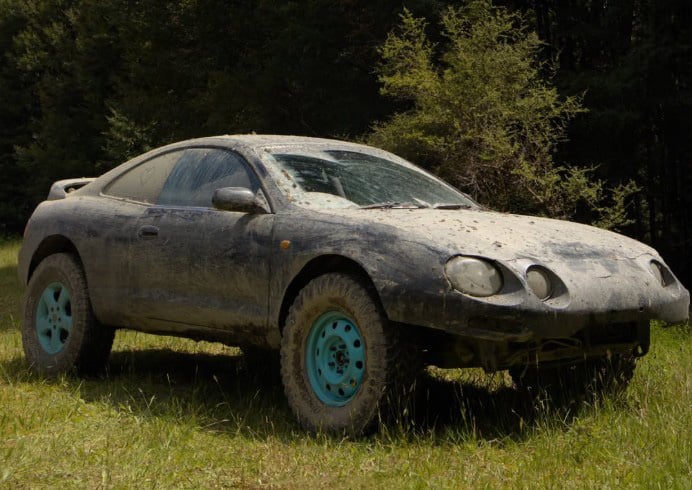
A 102mm suspension lift and 31-inch tyres provided the little Toyota with considerably more ground clearance, but Wadsworth soon wanted to push the project further.
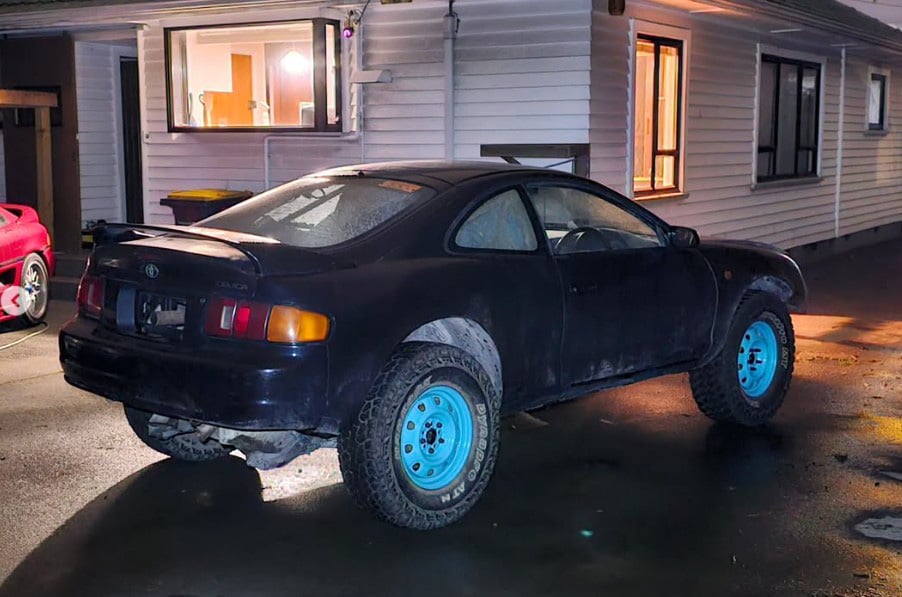
Rather than attempting a conventional four-wheel-drive conversion, the Kiwi installed a second engine in the rear of the Celica, completing the ambitious transplant in little more than a fortnight.
The result is effectively two cars squeezed into one body. Identical 2.0-litre Toyota 3S-GE four-cylinder engines drive their respective axles through independent manual gearboxes, with separate cooling, electrical and fuel systems.
Unlike a conventional four-wheel-drive system, there is no mechanical connection between the front and rear drivetrains.
1
The arrangement gives Wadsworth an unusual degree of control over how the car behaves. A specially modified accelerator allows him to vary the power delivered to each axle, while a shared clutch pedal operates both transmissions.
Getting everything to work smoothly took considerable experimentation. Early iterations required two occupants to operate the respective engines, making driving something of a team sport.
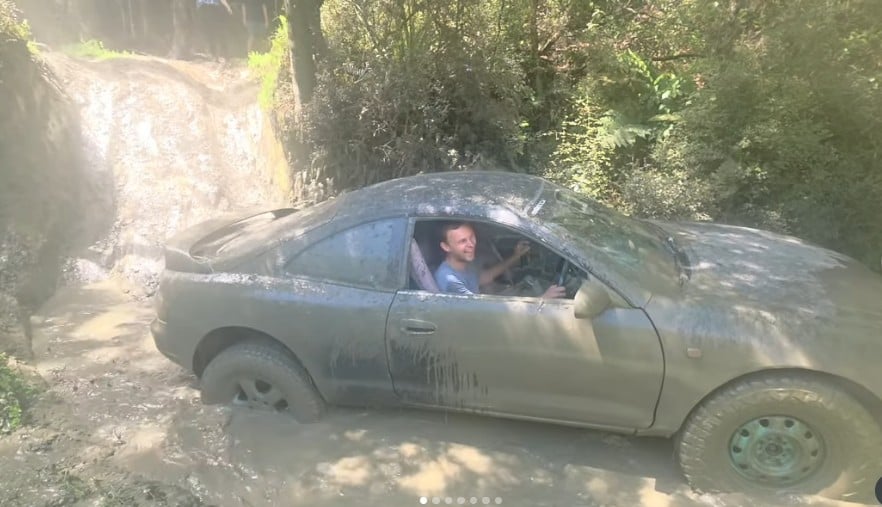
Perhaps the most impressive aspect of the Toyota is its ability to negotiate river crossings. Videos circulating on social media show the modified coupe traversing remarkably deep water, its relatively low weight proving an advantage over bulkier off-road vehicles.
3
Repeated water ingestion into the front engine prompted another unconventional modification, with its air intake eventually relocated to the glovebox.
Despite contemplating further modifications, including four-wheel steering, Wadsworth is now more interested in spending time behind the wheel than undertaking another major rebuild.
With five years of twin-engined adventures already under its belt, this unlikely Celica has arguably exceeded even its creator’s original expectations.
Follow WhichCar/Wheels on Google
Click the button below to make WhichCar by Wheels a preferred source for your news.


We recommend
-
 News
Aussie drivers are warned their 4WD could be legal in one state, illegal in the next
Australian 4WD owners are being warned of major differences in modification laws between states, with illegal upgrades potentially attracting fines.
-
 News
Unapproved car mods could cost you thousands, warns Aussie lawyer
Motorists are being urged to check modification rules before customising their cars, as unapproved changes can attract fines of up to $10,000 depending on the state.
-
 News
Toyota's outrageous HiLux Hyper Z concept turns the ute into a stunning custom model straight out of Fast and Furious
Toyota's wild new HiLux concept features slammed suspension, outrageous bodywork and a massive rear wing.
