Reviews


Gallery 1
THIS IS DISORIENTATING. Eleven years ago, almost to the day, Porsche Australia launched the 991 generation of its mighty 911 Turbo at Victoria’s Phillip Island circuit.
Never a car designed for the race track, the 383kW twin-turbocharged bullet nevertheless redefined our whole concept of a 911’s capability. Launch control starts on the main straight yielded times hovering around three seconds flat. The reviews were suitably breathless.
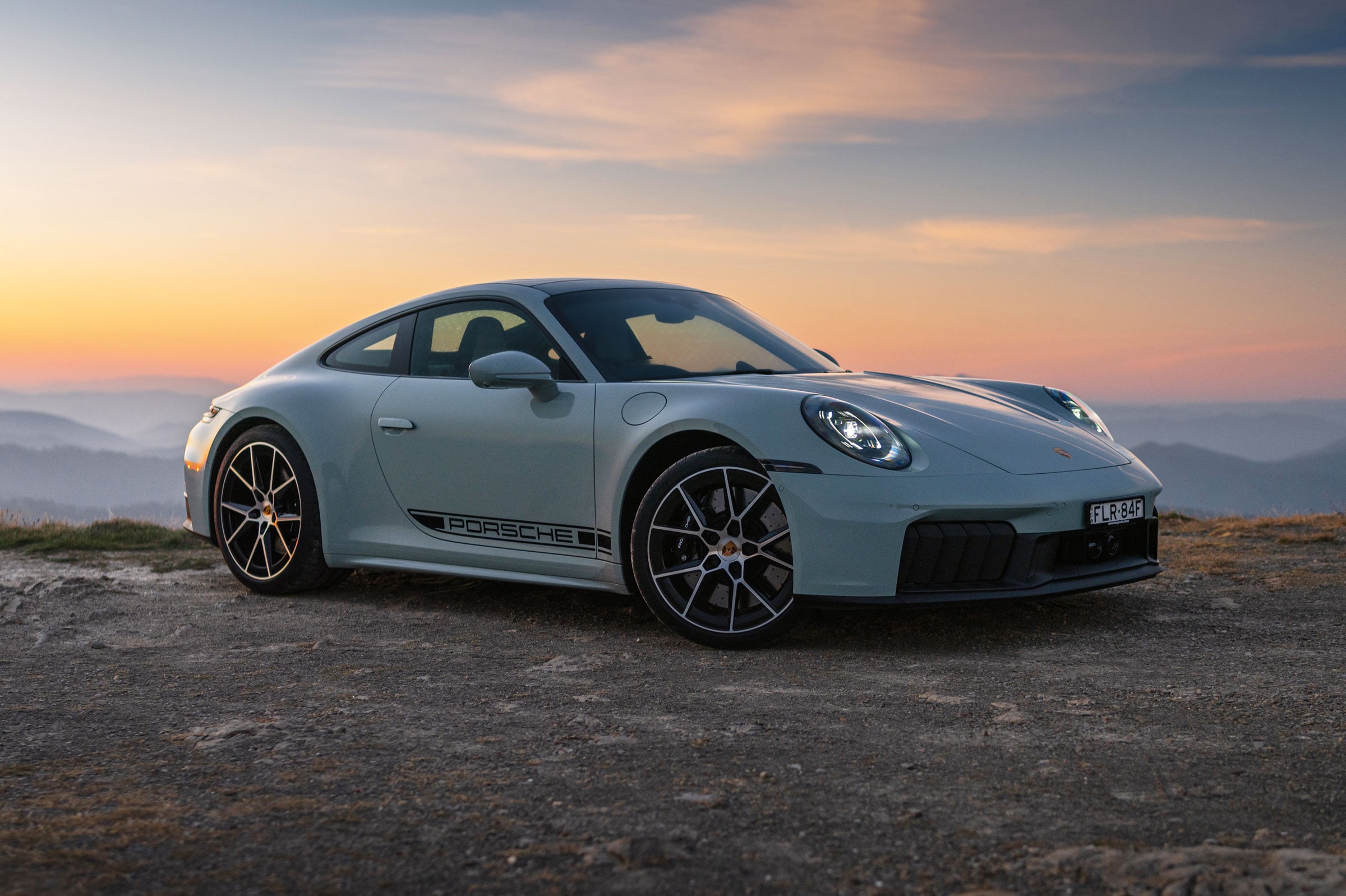
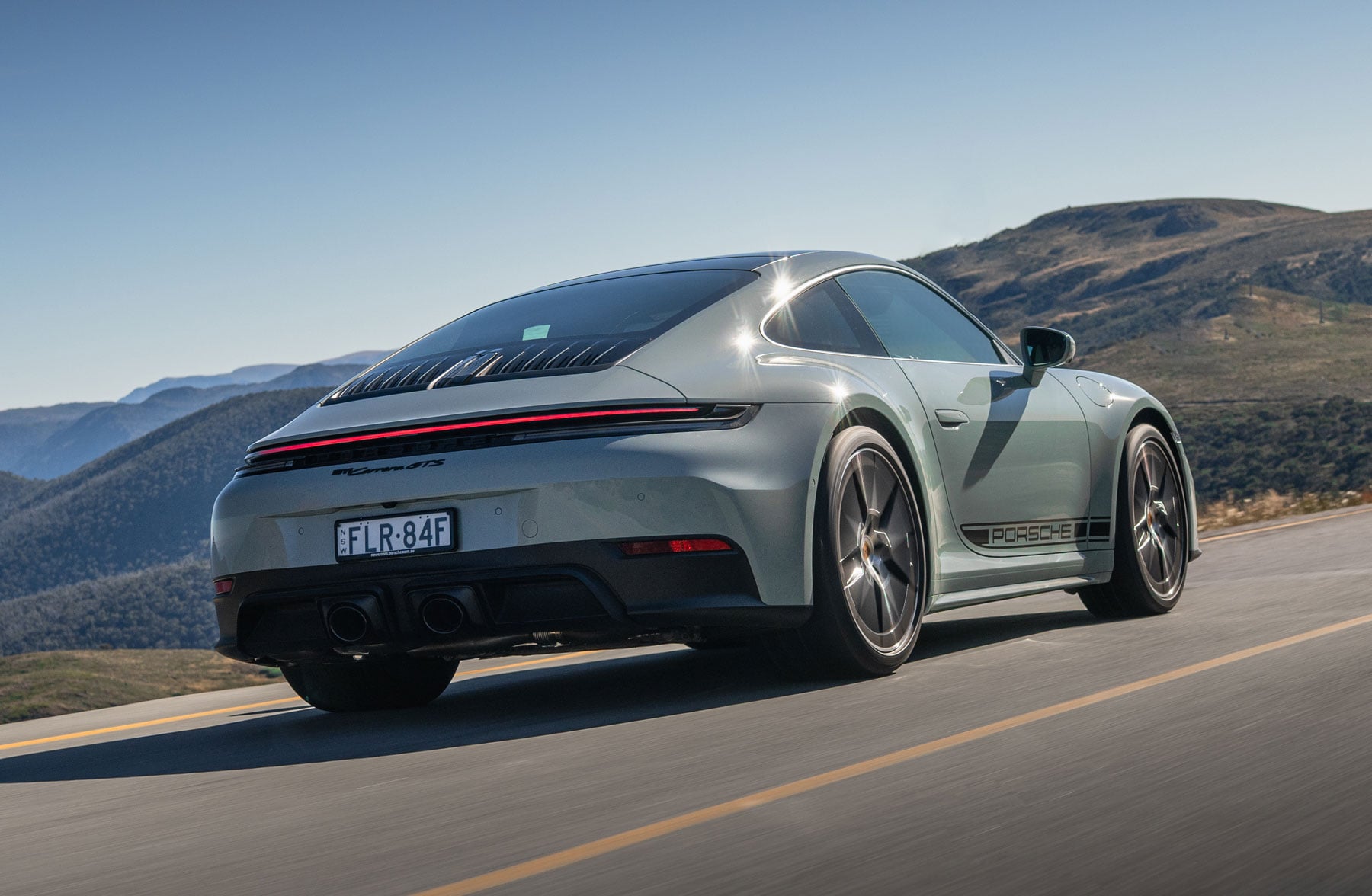
Now I’m back at Phillip Island, this time round in the new 911 Carrera GTS. Porsche calls this facelift the 992.2, in other words the mid-life update of the 992 generation. Somewhat amazingly, this car is faster and more powerful than that Turbo. We’ve come a long way.
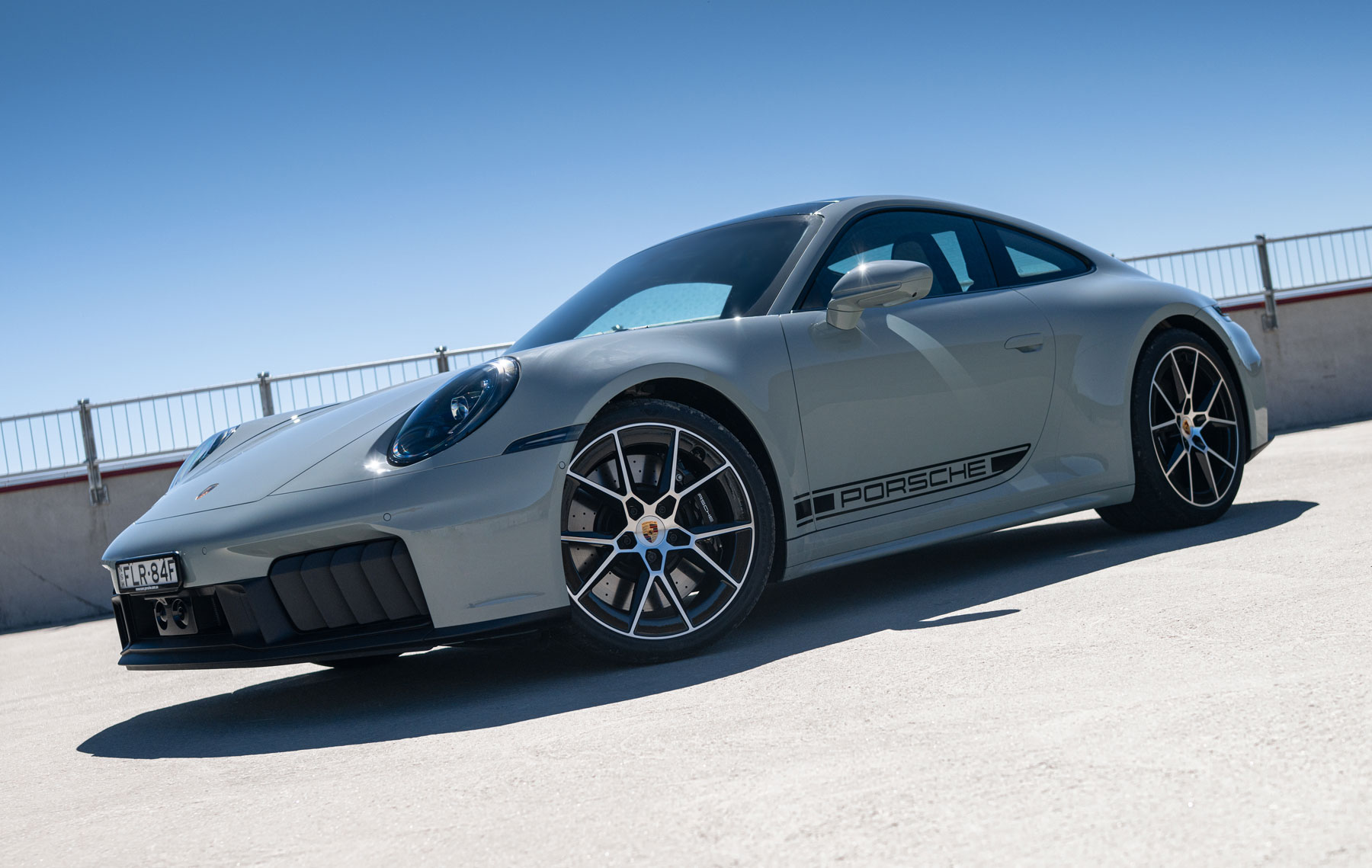
These 911 facelifts are usually pretty subtle affairs. We didn’t even bother reporting when Porsche updated the GT3 to 992.2 specification, so underwhelming were the changes. But the GTS is different. It has changed beyond all measure.
EVOLUTION OF THE SPECIES
Some context first. The Carrera GTS badge first appeared on the 911 with the much-loved 997.2 generation in 2011, and while the goods were definitely good, it’s hard to escape the notion that it was a slightly cynical rummage through many existing parts bins, designed to prolong interest in a model that was soon to be replaced by the bigger, slicker 991.
1
The 911 aside, the GTS badge was probably best known for adorning the rear end of the final edition of the 928 coupe in 1995. In the 997, it denoted, in effect, a Carrera S with even more equipment and a welcome dose of attitude.
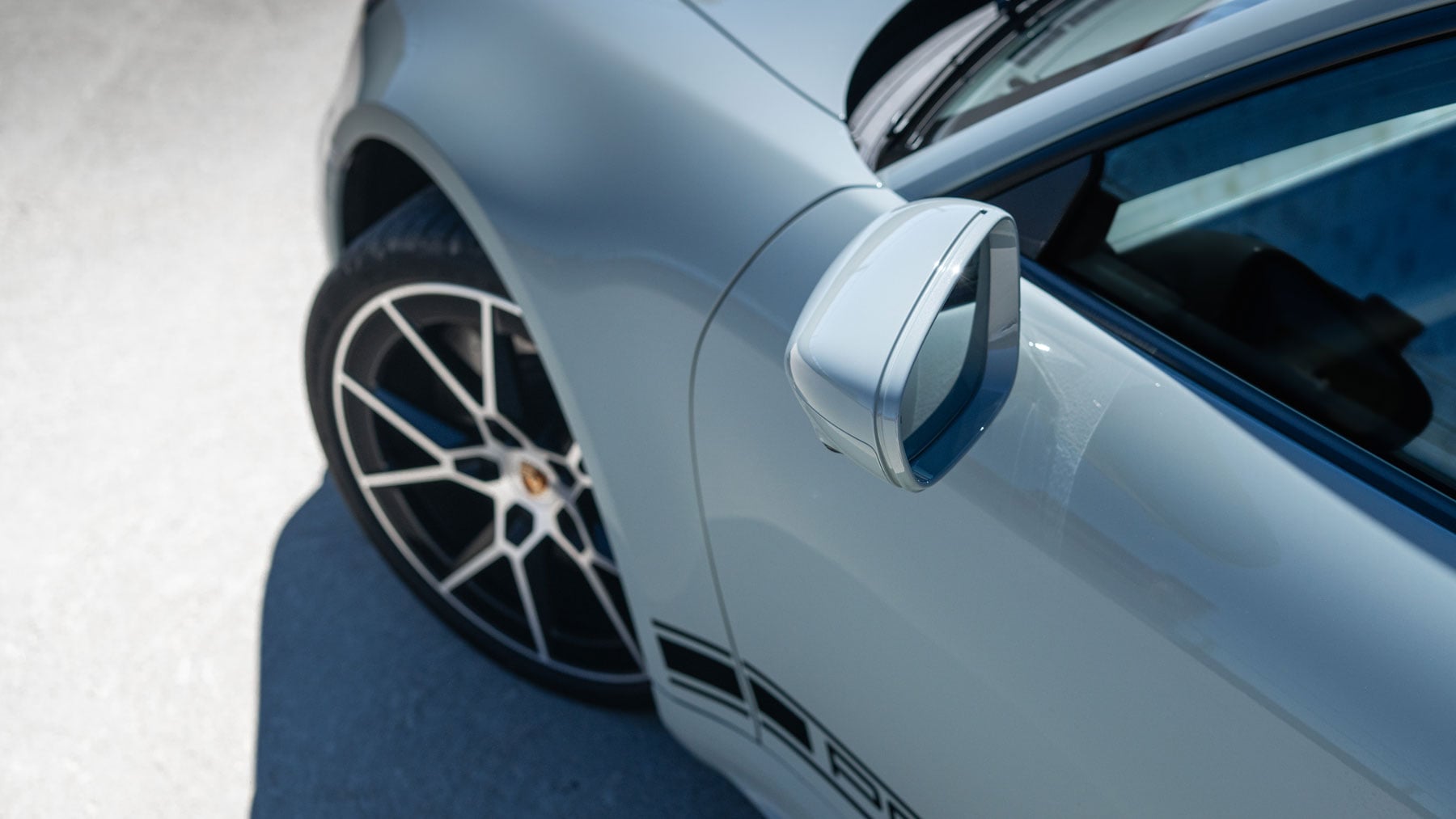
Buyers got the wide body, rear-wheel drive, and the Powerkit version of the Carrera S engine. Throw in adaptive damping, a sports exhaust, an aggressive front splitter, centrelock alloys and a generous slathering of Alcantara, and that was pretty much your lot. Gear such as an LSD, carbon ceramic brakes and uprated suspension remained tick boxes on the options list. For that little lot, Porsche demanded an additional $18,000 over the asking price of a Carrera S.
The company’s PR flacks also engaged in one of the most deviously effective pieces of press manipulation I’ve ever witnessed, deliberately seeding the phrase ‘sweet spot’ into all of their Carrera GTS press materials. Those words created an almost Pavlovian response from journalists such that even today, it’s a fun game to mention the 911 GTS and see how long it takes for them to claim it’s the sweet spot of the range.
1
Thing is, I’m not so sure it was true back then, and I don’t think it is right now. How can it be when the asking price starts at $381,200 for the Carrera GTS coupe or $401,300 if you prefer the Carrera 4 GTS. It’s unashamedly premium.
The GTS is also offered in progressively more expensive Cabriolet and Targa variants, if you prefer giving your thatch a good workout. Compared to the entry-level Carrera coupe, that’s nearly a 36 per cent increase. The sweet spot of the 911 range has always been the base Carrera, and that hasn’t changed with this latest generation.
The most technically intriguing car in the line up? The GTS absolutely aces that one. It might also be the most all-round capable, as long as you’re willing to pay the premium. It’s been on sale overseas for nearly eight months now, so it probably won’t come as much in the way of news to you that it has three very specific features that set it apart from the rest of the range.
The first is a new, stroked 3.6-litre petrol engine plumbed into its posterior, compared to a mere 3.0 litres for the more proletarian Carrera models. The other two novelties are integral to the T-Hybrid system, so not only is the engine hybridised, but the electric motor is located in the PDK transmission and directly mounted to the crankshaft.
Manual gearboxes don’t work with this setup, but the single, huge turbocharger is also electrified, too. GTS owners in effect get a double hit of voltage for an instant response.
1
Of course, a vast legion of 911 buyers groaned when they saw that Porsche was about to hybridise the 911. They complained about added weight in particular, envisaging a car that was at the same time teched-up yet dumbed-down. Porsche insists that’s anything but the case, and with good reason.
“For us, a sports car is still defined by its weight. And one of the biggest challenges was to keep the weight below 1600 kg,” said Frank Moser, Vice President Product Line 911/718. Because of that you’ll find no plug-in capability on this vehicle. That solution would have required a far larger battery, breaking the self-imposed weight limit.
As a result, you can never drive this 911 GTS on electric power alone. The motor itself is compact at just 155mm long and with a diameter of 283mm, and can generate 150Nm and around 30kW to support the combustion engine.
The turbocharger is equally intriguing. Sitting between the compressor and the turbine, it can spin up to 125,000rpm and has no wastegate, the motor itself acting as the bleed-off mechanism, recuperating up to 11kW when required. It needs it, too. The Borg- Warner turbocharger is so large that without this electrical assistance, lag would likely be catastrophic.
ON THE ROAD
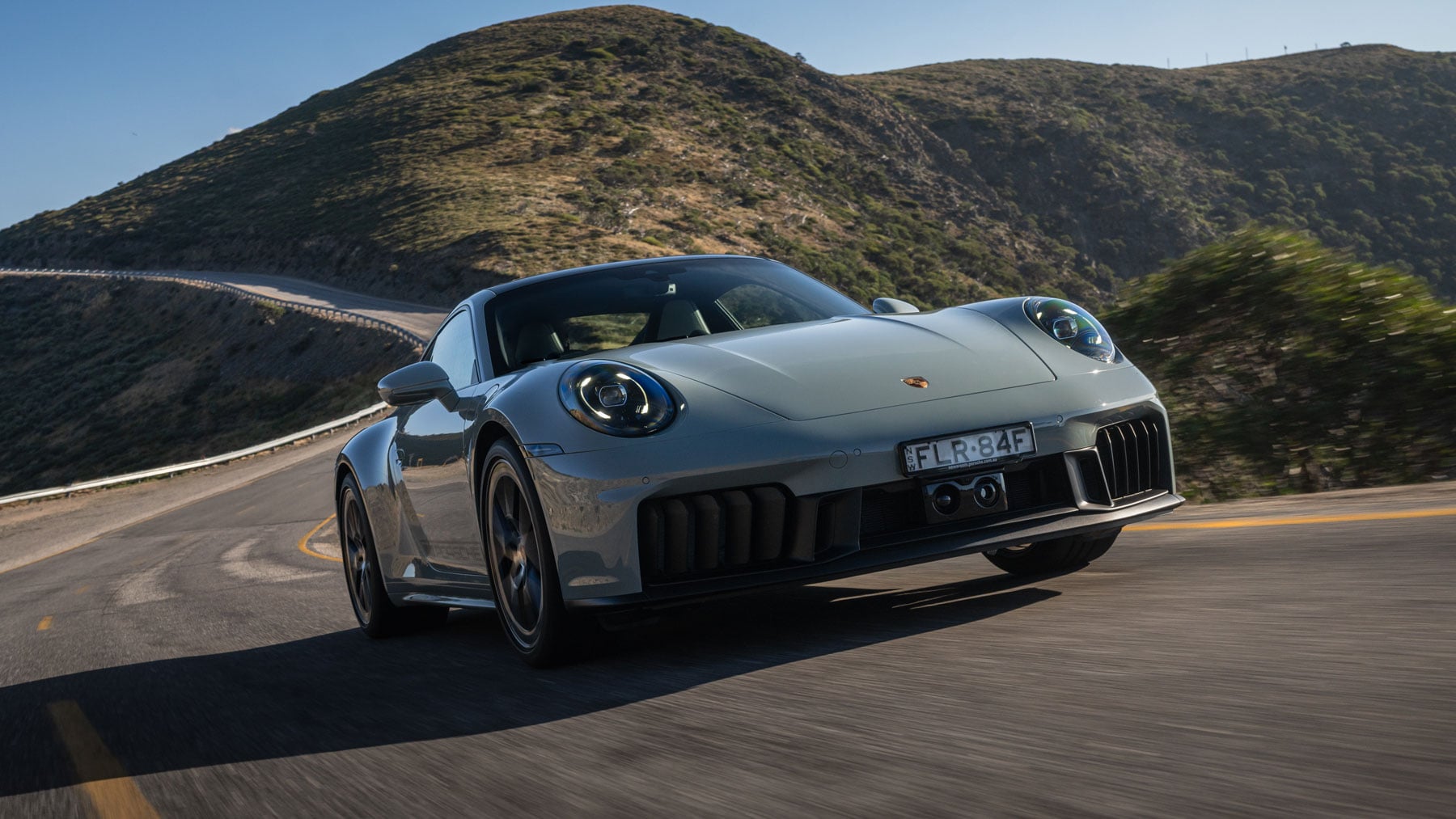
As it stands, response is incredibly sharp. I’m in the rear-drive GTS coupe for the road drive section, and it’s a delightfully rounded thing. There’s so little which is intimidating, despite packing a massive 398kW/610Nm system output. Power delivery is cultured, the eight-speed dual clutch transmission slurs through gears more softly than some torque-converter autos and visibility out of the car is great. If you can drive a Camry with any basic level of competence, you’d find no great issue with the 911 GTS.
1
The moment you start digging deeper into the throttle, you’ll be shocked by the car’s pace. This is a car with comfortably more power and torque than a current 911 GT3 and before you start considering power to weight ratio, the fact that the GTS makes its power and torque so low in the rev range means that it’s instantly and decisively quicker in the real world.
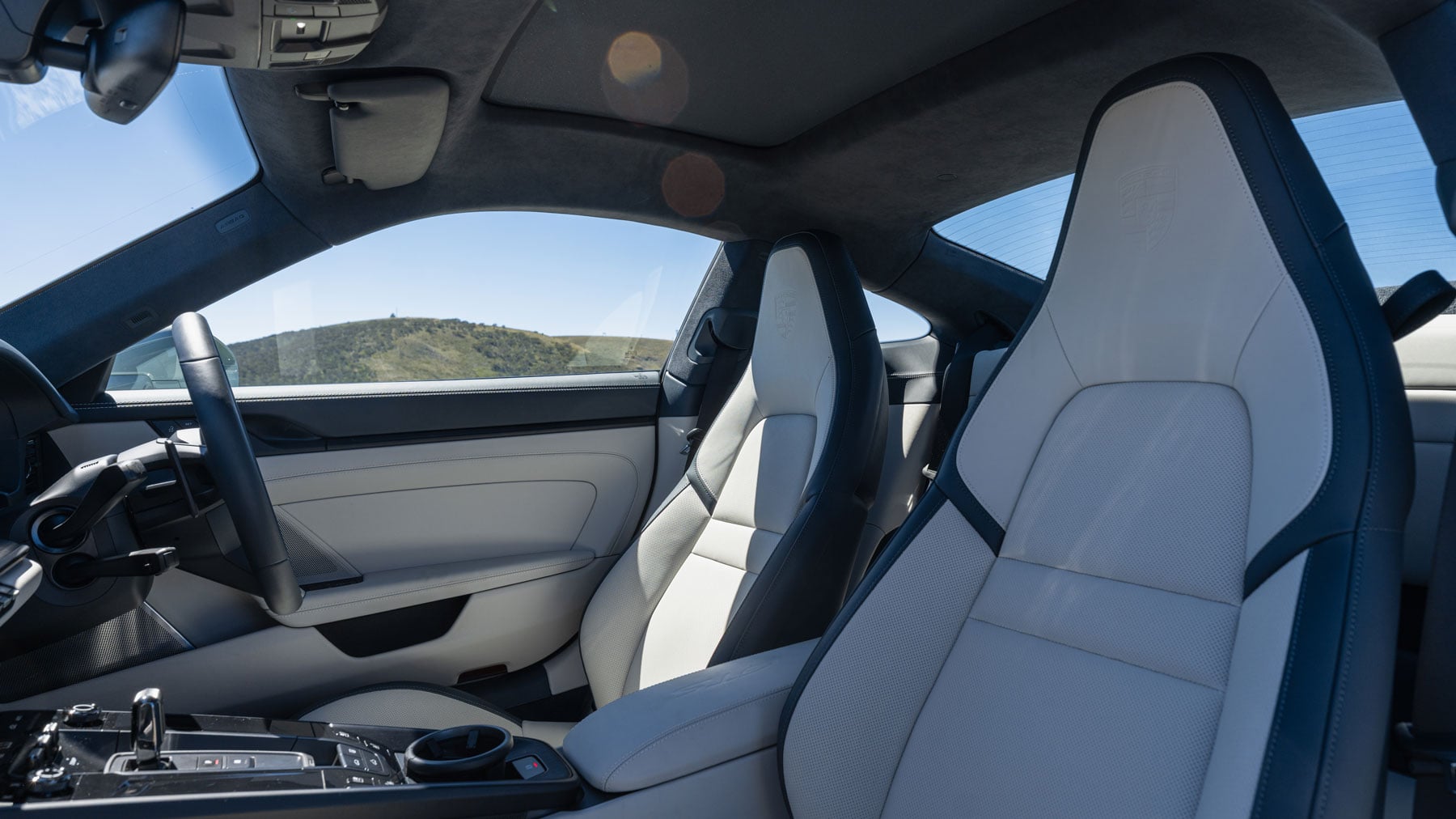
It’s considerably more comfortable too. Yes, you can specify some optional bucket seats to make it feel a bit racier, but the GTS feels happiest with a comfy a set of chairs up front.
Ride quality is unusual. I don’t think I’ve driven a car with a greater gulf between its primary and secondary ride qualities. The body seems to float along with serenity over low frequency undulations, so for 90 per cent of the time you’ll be amazed at the pillowy rode quality. Place a wheel onto a cat’s eye or on a lateral imperfection in the hotmix and it’ll thump percussively through the car’s superstructure.
1
General road noise is also fairly extreme, taking the edge off the GTS’ appeal as a long distance gran turismo option. Our test car was running on Goodyear Eagle F1 Supersport R tyres which are known to be noisier than the Michelin Pilot Sport option. That’s a shame, as there’s a reasonable degree of luggage space, although the 63-litre fuel tank doesn’t give the GTS the longest range.
Nevertheless, if you owned the GTS among a stable of performance cars, it’s more than civilised enough to use as a daily driver. That rugged utility has long been a 911 asset and it continues with this, the most technically advanced example of the line.
That said, there were a couple of teething issues on the press launch. A couple of cars flashed up messages to take the cars to a Porsche service centre, one suffered from an intermittently recalcitrant centre screen and another had a minor dummy spit after repeated launch control initiations. Porsche owners pay a premium not to suffer these sorts of issues, so perhaps there are one or two bugs that have yet to be fully ironed out with the 992.2 generation.
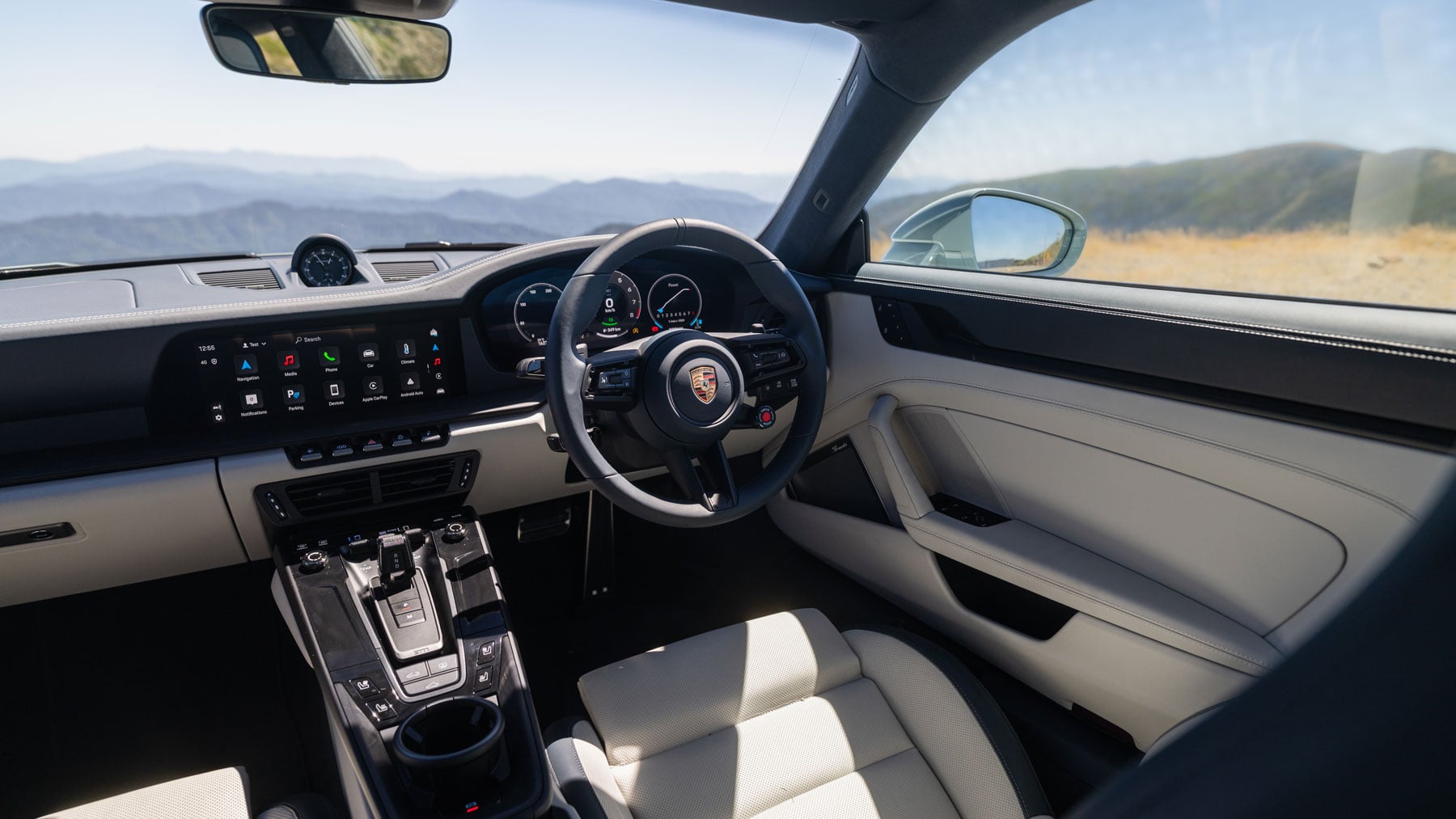
The cabin has come in for a subtle makeover in this 992.2 car. There’s now a full width digital display, the ersatz twist ‘key’ to start the car has been replaced by a less characterful button, wireless Apple CarPlay and Android Auto are now standard and there’s a decent Bose stereo system that’s standard in Australia, but optional in most other world markets.
If you want even crisper stereo fidelity, fork out $6700 for the Burmester stereo. Options you’d be well advised to tick? We’d put our hands in our pockets for the front lift at $4950 and the Porsche Dynamic Chassis Control (PDCC) at $9250 as non-negotiables. A palette of 11 non-cost colours are also offered.
1
TRACK PERFORMANCE
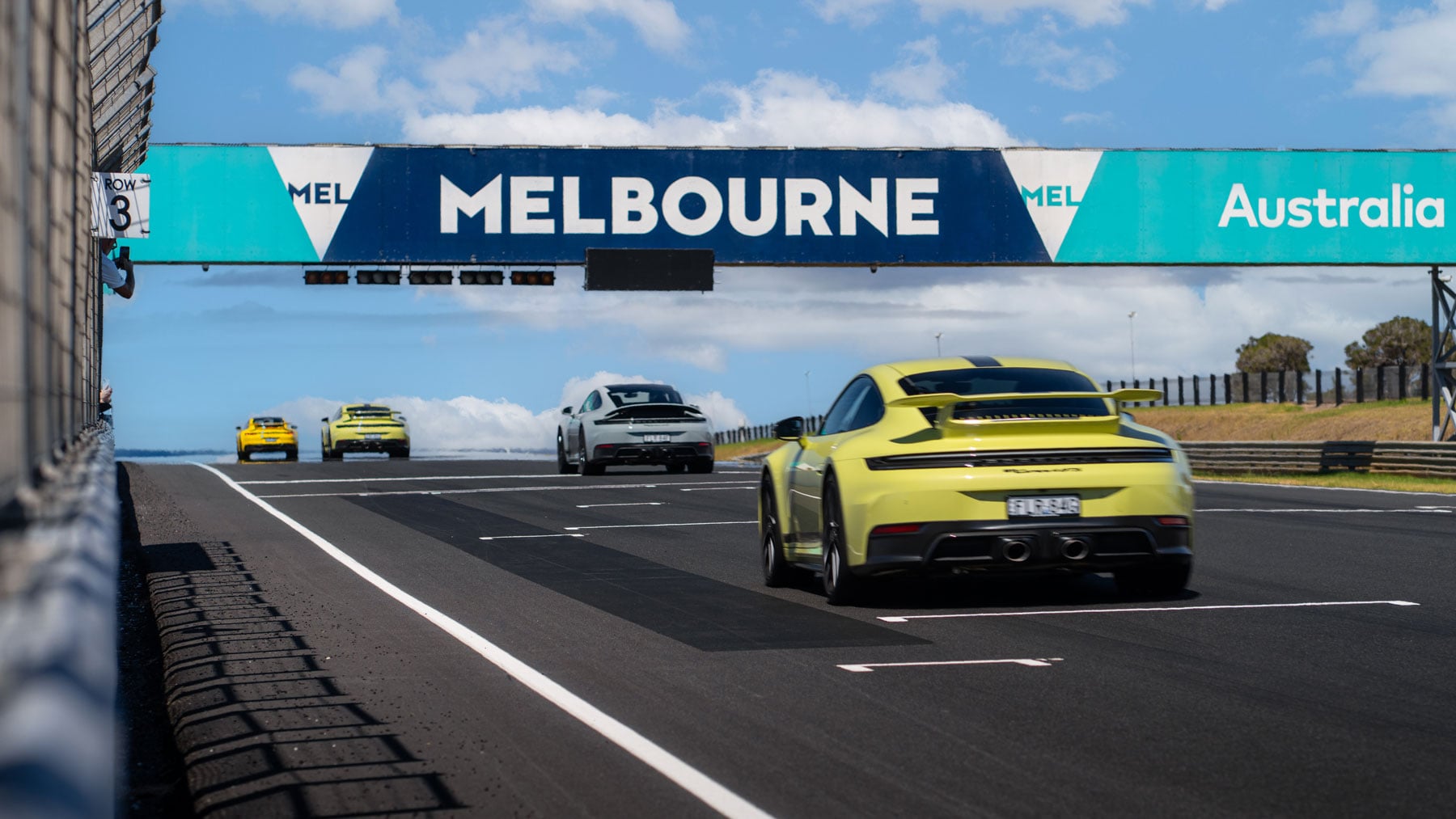
The drive program at Phillip Island was brutal for a road car. As well as repeated lapping of the fastest circuit in Australia, Porsche also set up a drag race with the new GTS versus the outgoing 992.1 generation. That was instructive. The figures show a 0-100km/h time of 3.4 seconds for the old car and 3.0 for the new one, whether you choose the rear-drive or the allwheel drive version. Using launch control helps dial out some variables at the start, but the gulf between the two cars feels wider than four-tenths.
If anything, the old car steps off the line with more instant savagery, which could well be down to a slightly more aggressive tyre, but within 100 metres, it’s decisively overhauled by the modern hybrid which keeps pulling out distance, inexorably marching away. That’s 353kW versus 398kW for you and it’s as articulate a statement of the new car’s hybrid muscle as you could ever expect to witness.
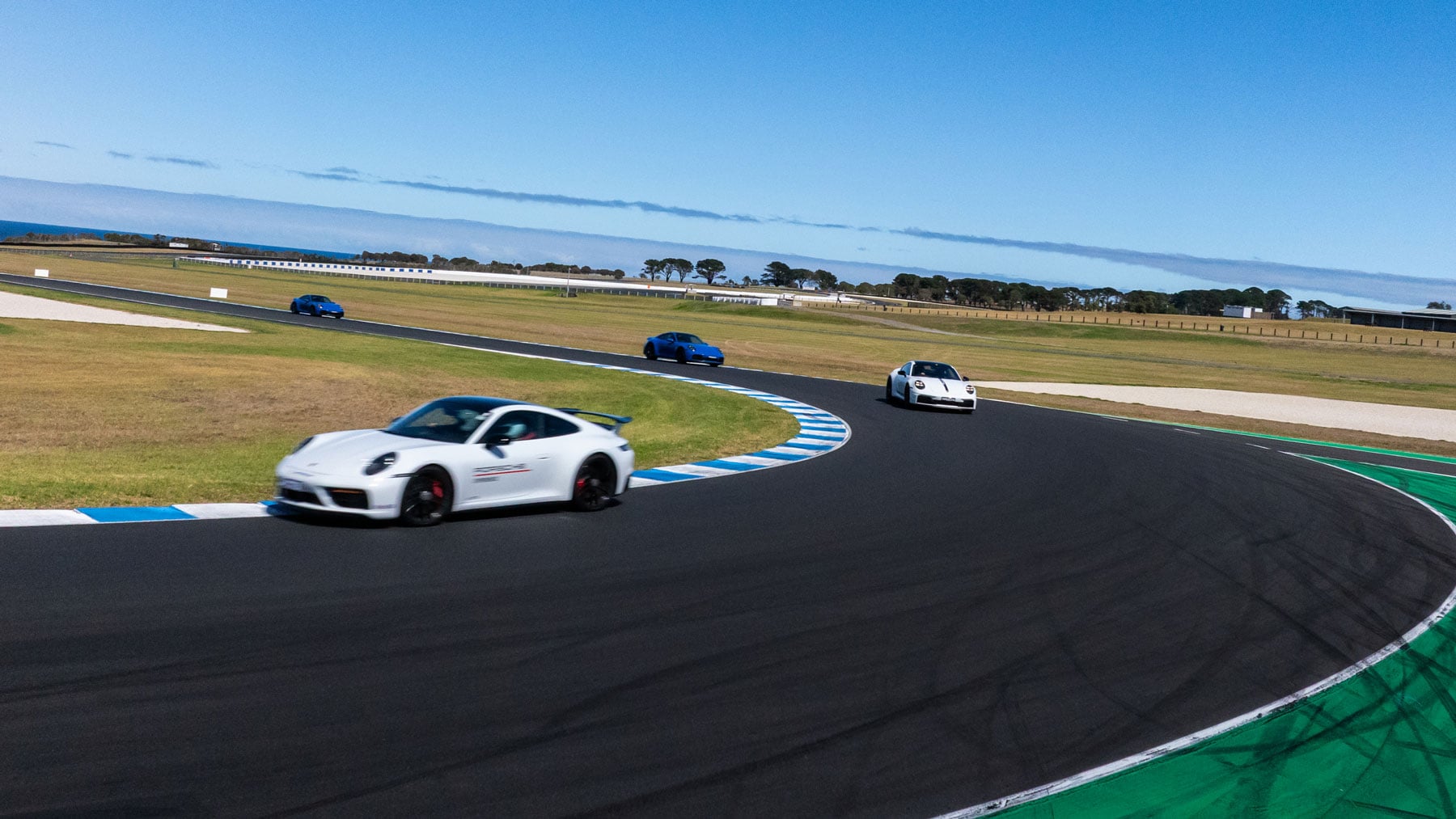
On track, the GTS is equally impressive. Can you feel the 47kg weight impost over its predecessor? Not really. It’s less than three percent of the kerb weight of the vehicle, and the quicker responses and greater thrust of the new GTS helps cancel out any feeling of additional weight. It sounds impressive at full gas too, although the Porsche boffins were uncharacteristically coy when it came to answering where the sound comes from.
To me, that means some of the cabin sound is coming from speakers rather than anything overtly mechanical in origin. It’s not breathy like an atmo flat-six motor, but it’s a more harmonic and purposeful sound than the thrashing mess that is the aural signature of many turbocharged 911s. Porsche claim that the Sport setting is optimised, whereas in the default mode it isn’t.
1
The sound builds without any great crescendo, so you won’t constantly be chasing the redline (set at 7500rpm), as you would in a GT3. In Sport or Sport Plus modes, the PDK transmission does a great job of taking care of the gear changing such that you won’t have much recourse to the beautifully engineered wheel-mounted metal shift paddles.
The driving position is exemplary. As with all great sports cars, you feel seated in the 911 GTS rather than on it. That’s helped by the fact that the 1.9kWh battery pack isn’t under the floor but instead located up front where the 12v battery was before. This has moved to a position behind the rear seats and it’s now tiny.
With the brakes taking such a significant role in regenerating power for the hybrid system, it was clear that finessing the handover from re-gen to friction braking was absolutely key, and the GTS handles that task extremely well. Consistency of control weights is an absolute Porsche 911 touchstone, so the engineers poured plenty of resource into getting this right, learning lessons from the development of the Taycan and Macan.
We also got to drive the base 992.2 Carrera and Carrera T variants alongside the GTS and the difference was instructive. I’m of the belief that both are more suitable road cars than the GTS, if only because you have to work them that bit harder to go quickly. The GTS gathers and carries speed effortlessly.
Objectively, it’s a better car, there’s no doubt about that, but it makes you question whether you’re having more fun on the road and whether that additional expenditure to buy a car with more power than a Ferrari F50 is money well spent.
1
Nevertheless, the new 911 GTS is fairly easy to make a convincing case for. It can do pretty much everything you ask of a sports car. It can cover ground well, won’t feel out of place on a high-end track day, it’s agreeably discreet, it still has enough raw edge to excite, it’s well finished inside and its hybrid technology is a definite ability multiplier. If you’re not particularly price sensitive, it could well be argued that it’s the best car Porsche currently makes.
Downsides? It’s probably a little noisier than it needs to be, the price has crept up significantly, the front gills and sensor combination aren’t the most handsome piece of styling and certain options, such as the $4950 front lift kit, should undoubtedly be standard fit at the prices being asked.
Unless seriously adverse weather is in your future, I’d avoid the 911 Carrera 4 GTS too. The $20k premium buys you a car that’s no quicker off the mark, is heavier and more complex, with less purity to its steering.
The Porsche 911 Carrera GTS marks a new frontier for the company’s most iconic model and on virtually every objective measure, it’s a triumph, delivering a step change in powertrain capability. So convincing is the technology that it’s inconceivable that the next-gen 911 won’t have this T-Hybrid technology as standard from base model to flagship.
That will almost certainly sound the death knell for the manual transmission in the 911, so if you’re absolutely sold on the notion of a 911 with three pedals, now’s the time to buy a Carrera T or a GT3. For everybody else, the march of progress at Porsche comes with little in the way of caveats.
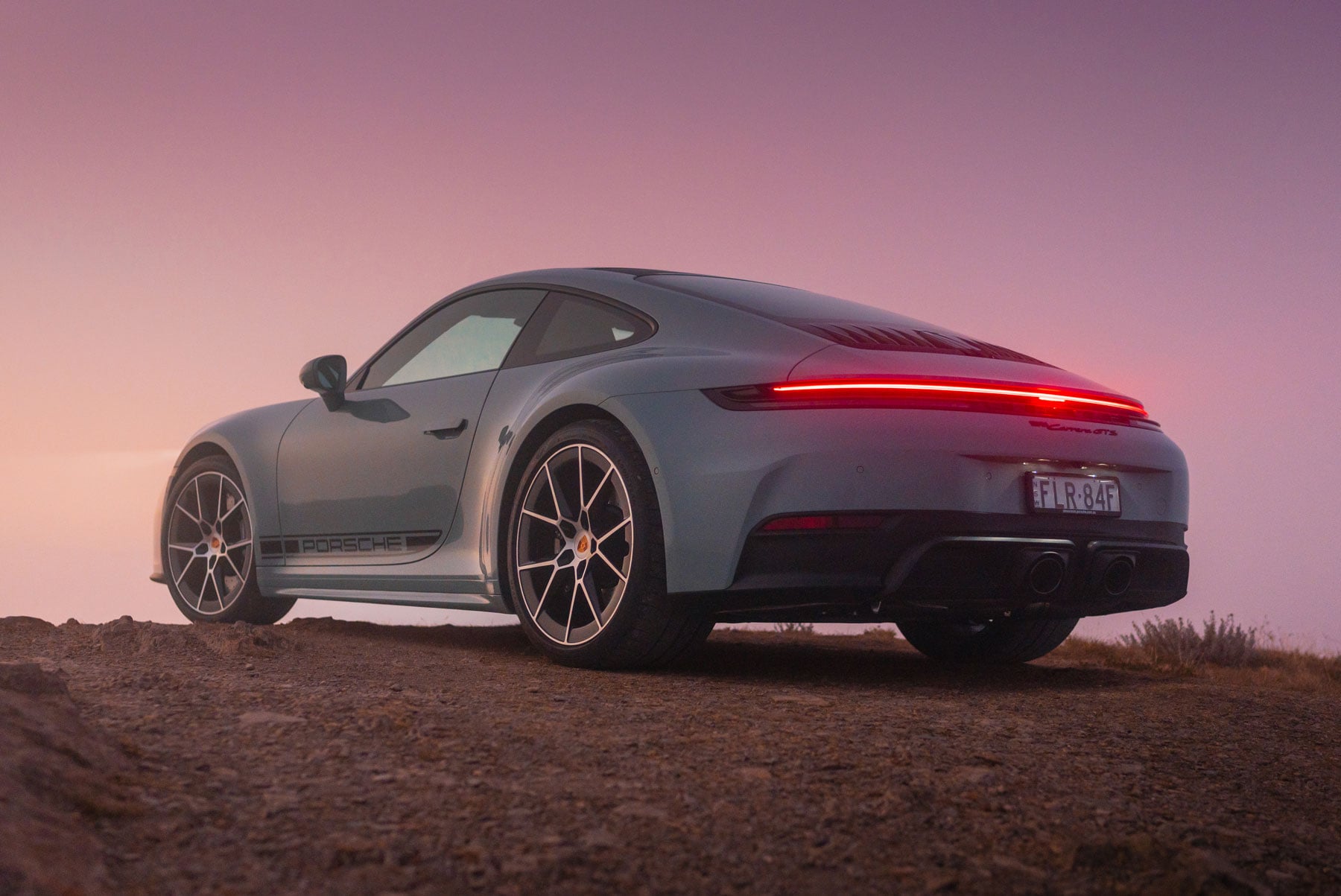
1
FAST FACTS: GTS – Where it started
The GTS badge has featured on many Porsche models but its first appearance came on the lithe and beautiful 904 GTS coupe in 1964. Boasting a drag coefficient of just 0.34, the mid-engined 904 GTS introduced many firsts for the marque. It was the first to use a separate steel sheet chassis and fibreglass body, the first to get four-wheel disc brakes and the first to ride on coil spring suspension. It came at a transition point in the company’s history as Porsche moved from Formula 1 competition to focus on homologated sports car racing. Some 106 units were built with the complex 132kW 2.0-litre flat-four. Ferry Porsche’s eldest son Butzi was the father of the project and said of the 904 GTS, “It was my favourite because I did it alone.”
Porsche 911 Carrera GTS Specifications
- Model: Porsche 911 Carrera GTS
- Engine: 3591cc flat-six, dohc, 24v, turbo hybrid
- Max Power: 398kW
- Max Torque: 610Nm
- Transmission: 8-speed dual-clutch
- L/W/H/WB: 4553/1852/1303/2450mm
- Weight: 1575kg
- 0-100km/h: 3.0sec
- Price: $381,200
MORE
Everything Porsche
Follow WhichCar/Wheels on Google
Click the button below to make WhichCar by Wheels a preferred source for your news.

We recommend
-
 Reviews
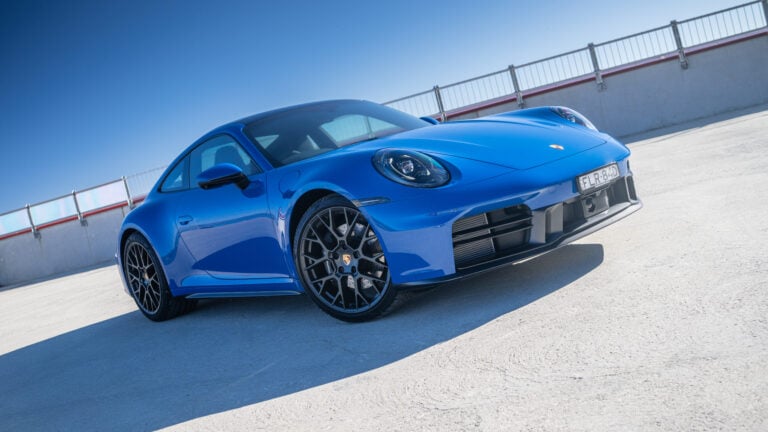
Porsche 911 (992.2) Carrera: What to expect from its mid-life makeover
Wheels works out whether the new Porsche 911 – dubbed the 992.2 generation by the brand, an update on the 992 model released six years ago – is worth the price tag.
-
 Reviews
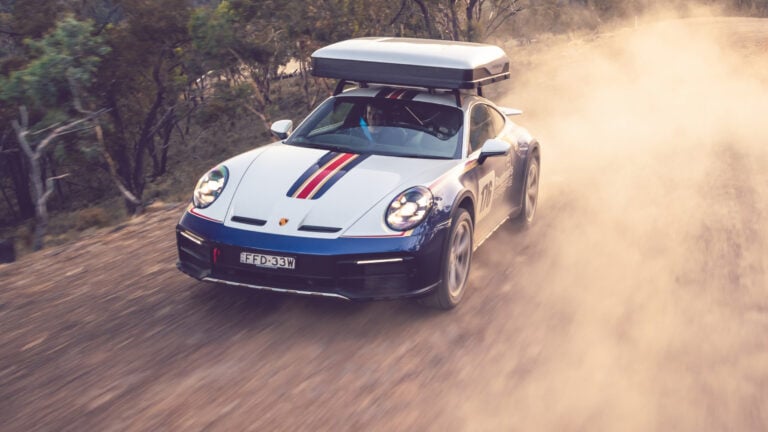
2024 Porsche 911 Dakar review
Driving a 911 to Bathurst? Way too easy. We plotted a more challenging route by Porsche to Mount Panorama
-
 Reviews
2024 Porsche 911 GT3 RS review
It’s the wildest 911 ever but is the new GT3 RS peak road-racer?