
Reviews

Gallery 1
7.7
/10
Score
Score breakdown
7.7
Safety, value and features
8.0
Comfort and space
7.5
Engine and gearbox
8.0
Ride and handling
7.5
Technology
Things we like
- Decent EV only range
- Nicely-presented and feature-rich interior
- Suspension upgrades bring noticeable improvements
Not so much
- Fuel economy once battery depleted
- No spare wheel/tyre
- Requires 95RON premium unleaded
It seems almost remarkable that a fledgling brand with only three distinct models in its Australian range has skyrocketed into the top 10 list of manufacturers down under. But that’s exactly what’s happened with Geely, the Chinese conglomerate that has, since launching here just about 18 months ago, set the sales charts alight, posting top 10 results in August and again in September.
4
It’s a similar story for 2026 overall where Geely currently sits 13th, just behind former Top 10 stalwarts, Isuzu and Mitsubishi. And the relative newcomer is gaining ground. Rapidly.
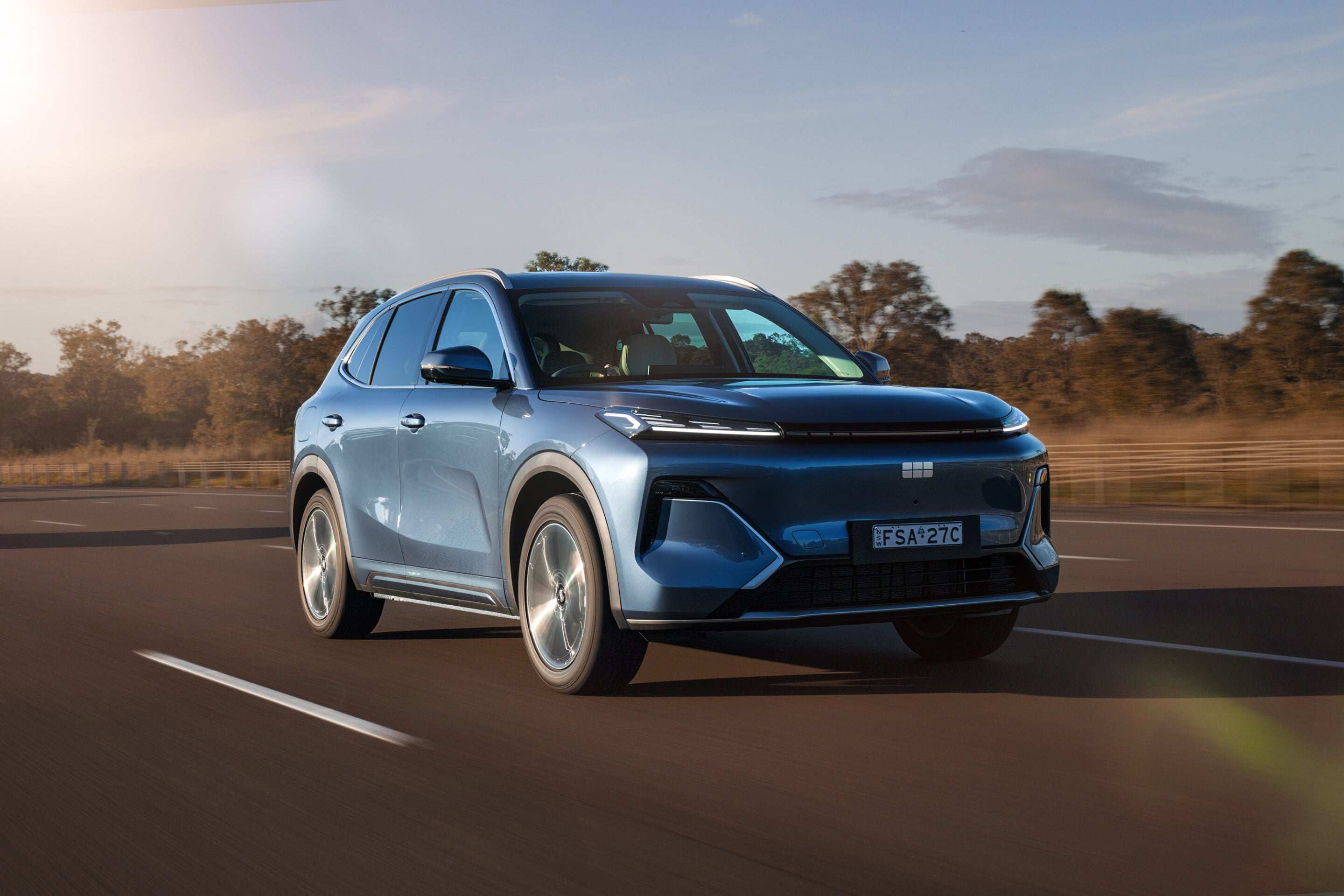
Part of that success can be attributed to its small line-up of affordable electric vehicles like the EX2 and EX5. But another part can be laid at the feet of the Starray plug-in hybrid SUV, the brand’s second-best seller with 7923 units shifted so far this year. It’s impressive growth for an SUV that only launched late in 2025.
Affordability lies at the heart of the Starray’s success after it launched last September with two front-wheel drive variants – the $37,490 Complete and $39,990 Inspire, both prices before on-road costs. Pricing has crept up to $41,490 for the Inspire since then, but the entry-point into the Starray range remains at 2025 levels.
3
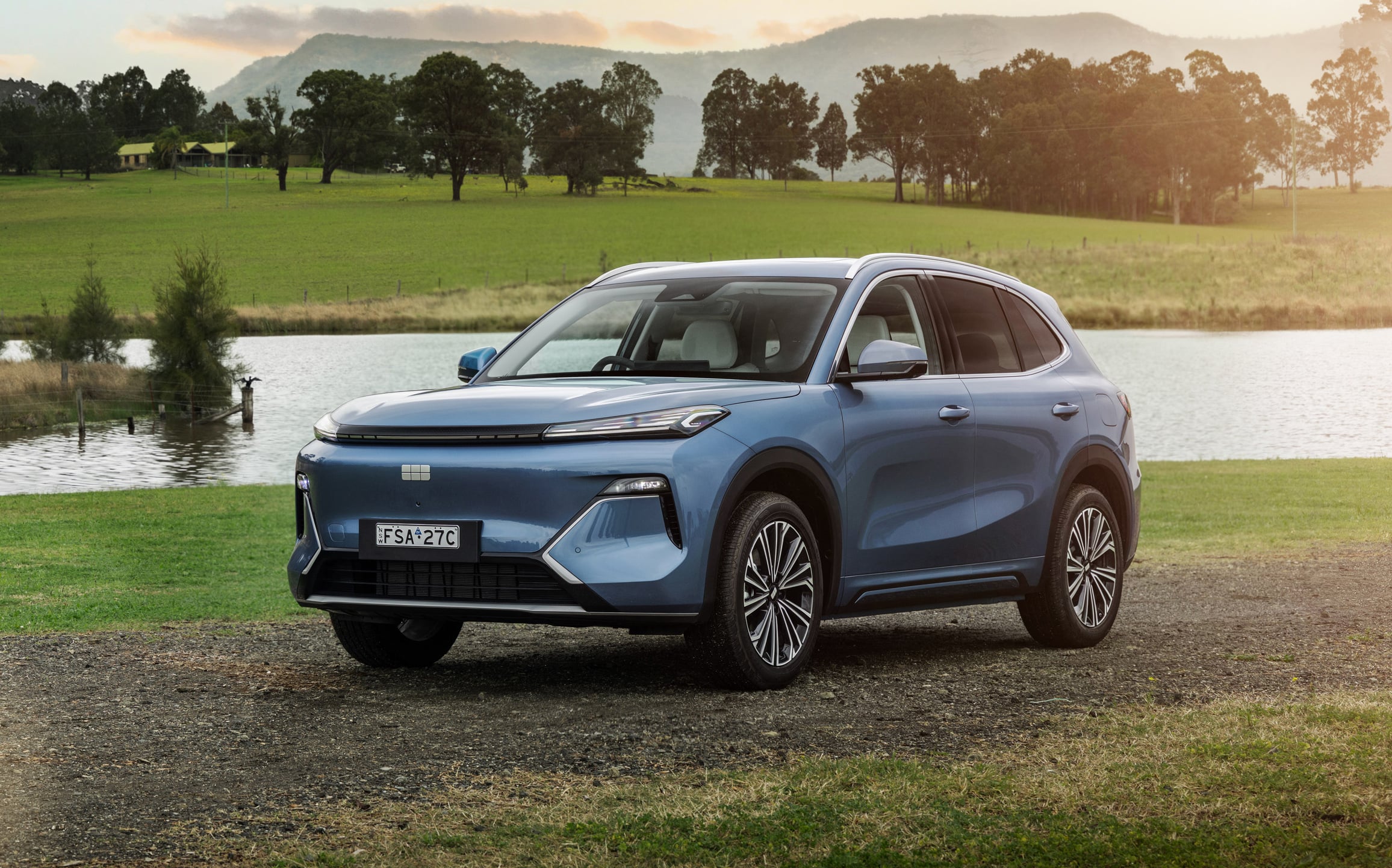
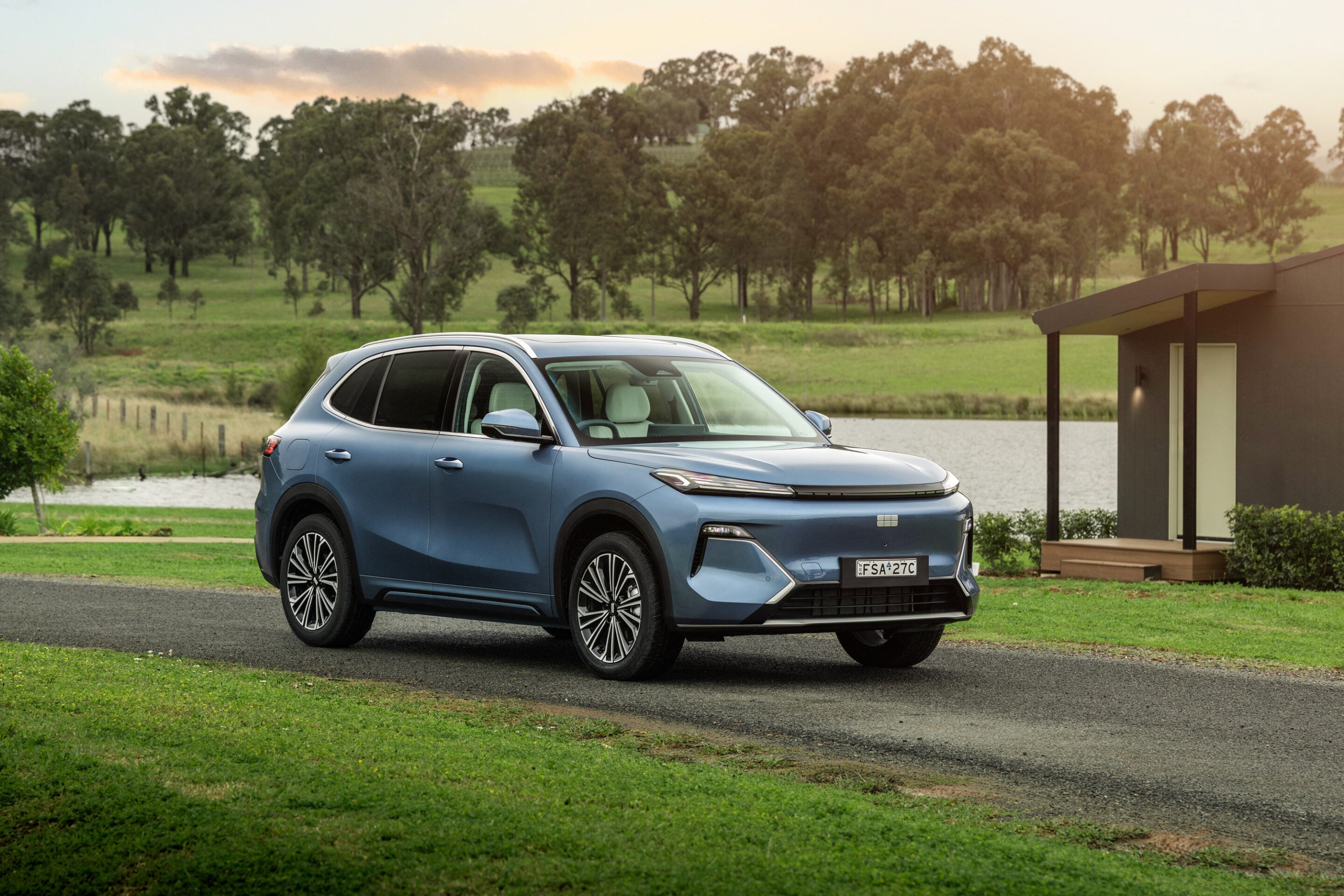
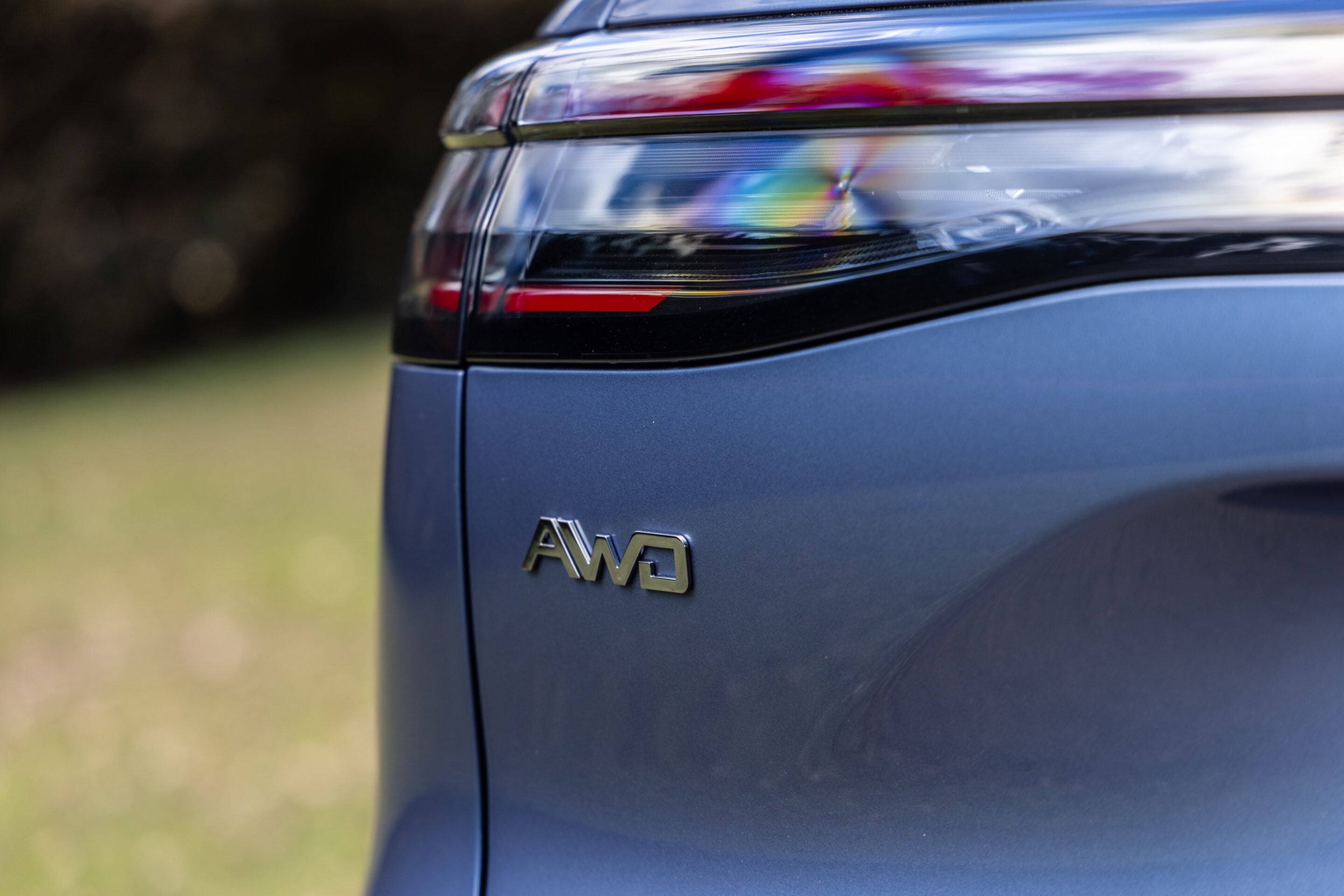
Now, Geely has bolstered the Starray range with a new all-wheel drive variant that assumes the mantle of flagship. It’s priced from $44,990 before on-road costs and brings not only AWD surety but improved performance, reworked suspension and a combined petrol-electric driving range of 1065km, thanks to a larger fuel tank, now 60 litres as against front-wheel drive variants’ 51 litres.
The Starray AWD’s powertrain is identical to that found in front-wheel drive models, but with one key difference. Up front, a 1.5-litre naturally aspirated four-cylinder petrol engine is primarily used to charge the battery, which feeds the 160kW/262Nm front-mounted electric motor. The petrol engine can, under heavy acceleration, drive the front wheels, but the bulk of the heavy lifting is done by the e-motor.
But the key to the Starray AWD’s boosted performance is the addition of a new rear-mounted 80kW/150Nm asynchronous electric motor, which boosts total system outputs to 220kW and 412Nm, improving the benchmark 0-100km/h sprint time to just 6.3 seconds, almost two seconds quicker than the 8.2-second claim of the front-wheel drive models.
3
The same 29.8kWh battery as found in the front-wheel drive Inspire variant (the entry-level Starray Complete features an 18.4kWh battery) is claimed to provide up to 130km of pure EV driving range (WLTP), slightly down on the 136km claim of the Inspire. However, the increase in fuel tank size boosts total driving range to 1065km, up from the FWD Inspire’s 996km.
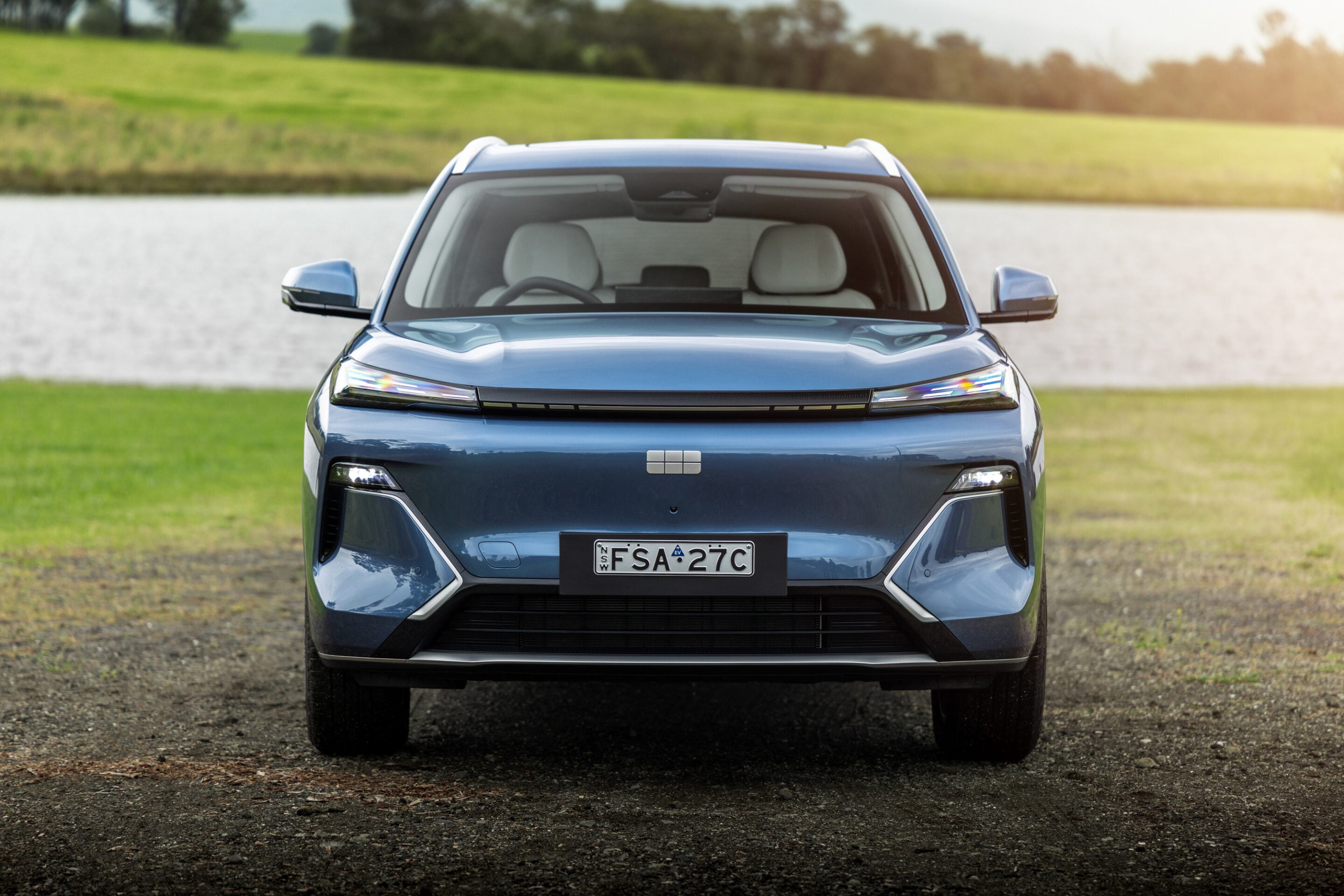
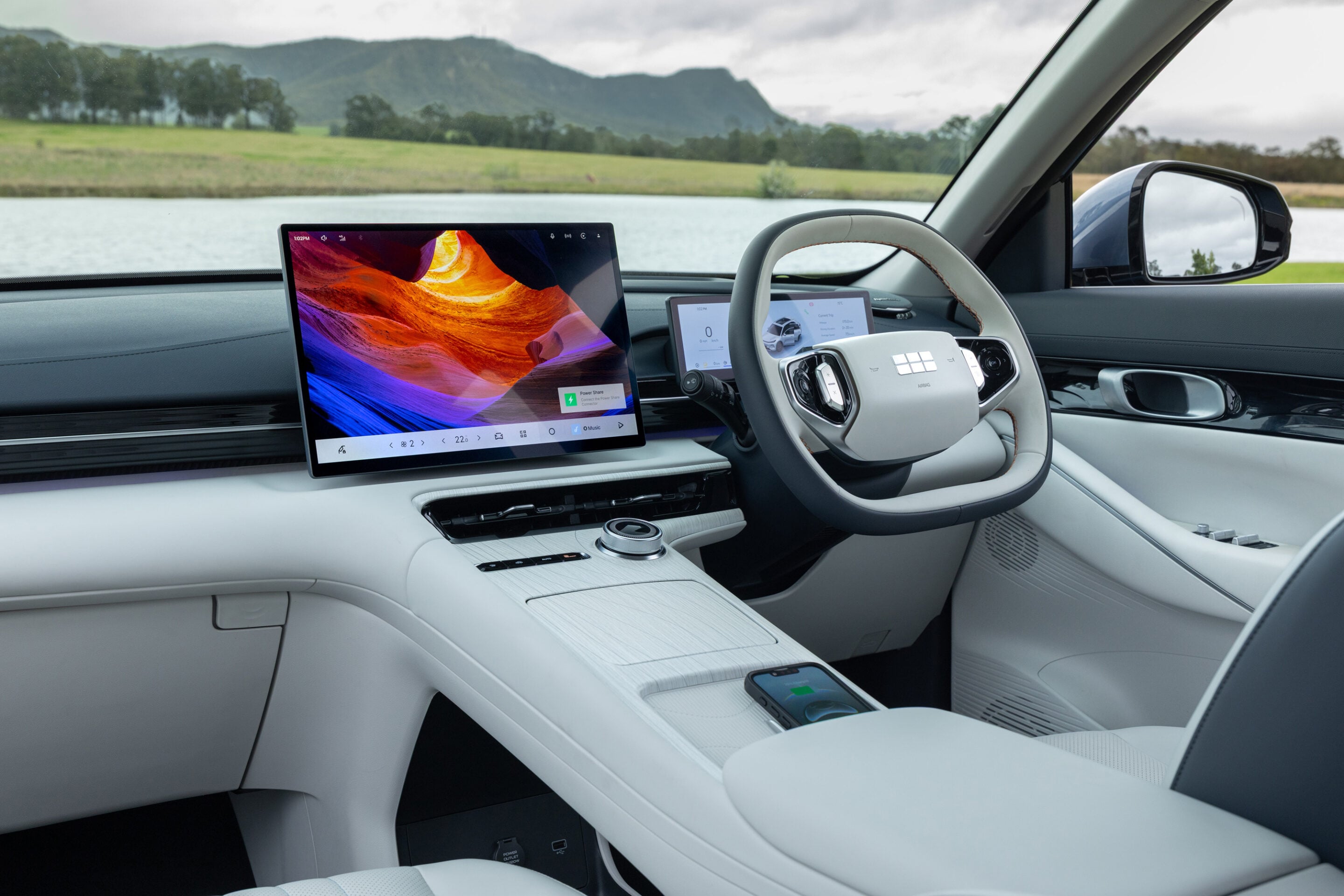
Standard equipment is generous, the Inspire FWD model serving as, um, inspiration for the new AWD variant. Highlights include 19-inch alloy wheels, LED exterior lighting, panoramic sunroof, artificial leather upholstery, a 15.4-inch touchscreen with wireless smartphone mirroring, a 16-speaker Flyme sound system and a comprehensive list of active safety features.
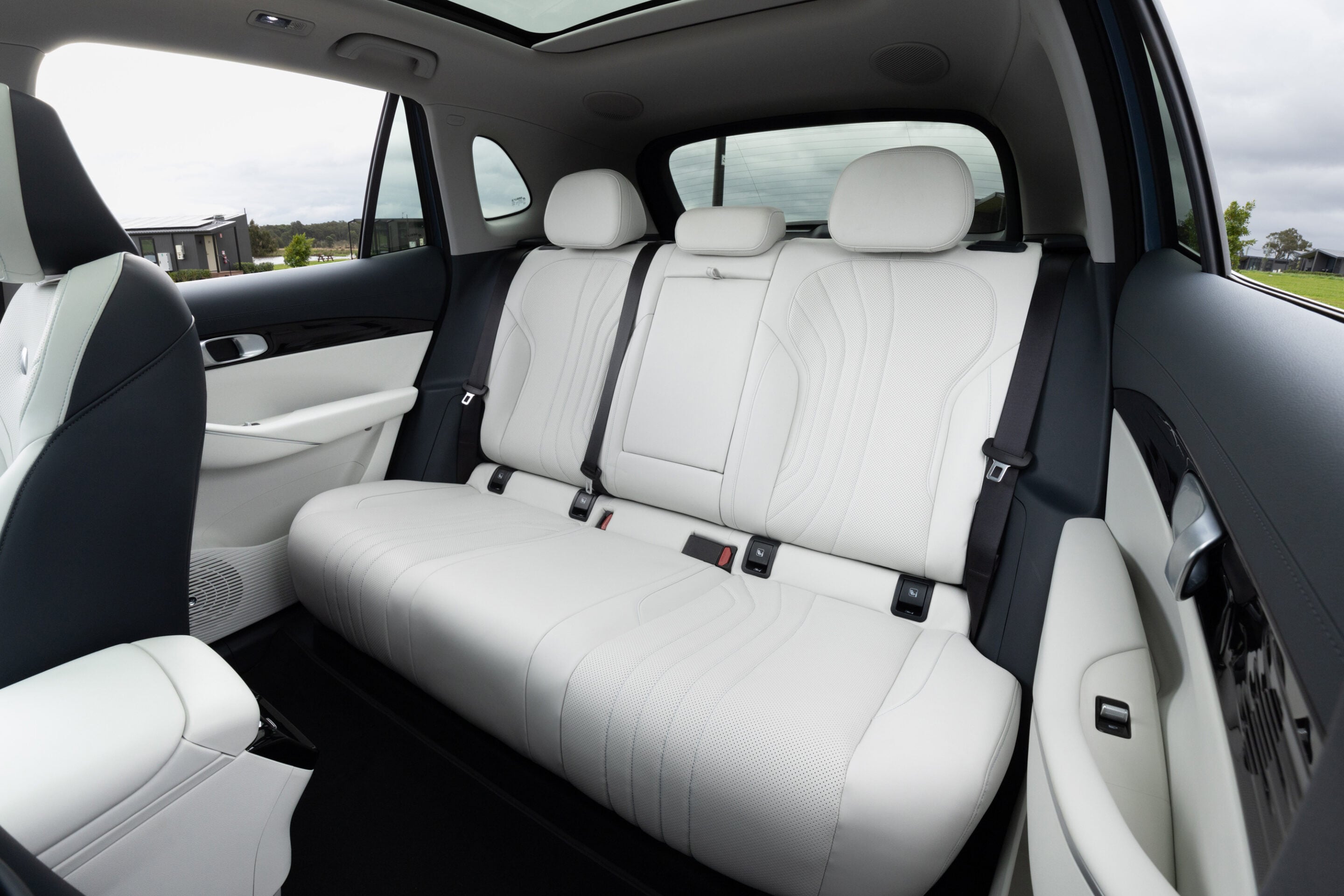
The cabin impresses, not only for its material quality, but also its genuine spaciousness. The Starray is slightly bigger than the Toyota RAV4 and that translates into a comfortable and roomy interior, especially in the second row.
6
The choice of materials throughout belies the Starray’s market position at the more affordable end of the spectrum. It doesn’t look or feel ‘cheap’ inside. Instead, everything from the artificial leather seat upholstery to the trims and garnishes on the door panels, centre console, dashboard and even the orange contrast stitching on the two-tone leather-wrapped steering wheel look and feel properly special.
Second-row comfort is excellent, with nicely cushioned seats and a sense of light and spaciousness with decent visibility.
Out back, the addition of a rear-mounted electric motor has eaten into luggage space, now rated at 456L/1993L. That’s marginally down on the 528L/2065L of front-wheel drive models, but still generous enough to accept the usual accoutrements of a family on road trips. It’s worth noting there is no spare wheel, a tyre inflation kit the only insurance against a puncture.
7
On the road, the Starray makes good use of its additional e-motor. Acceleration is punchy, whether moving away from traffic lights or asking for a surge of speed for an overtake.
The Starray is at its best around town as an electric vehicle. Geely claims around 130km of EV motoring is possible and that’s borne out by the 135km I achieved on test before the petrol engine chipped in to start adding electrons to the battery.
It’s important to stress that the 1.5-litre atmo four-cylinder can power the front wheels if needed but its primary function is to serve as a generator, feeding charge back into the battery once state of charge (SoC) drops to 20 per cent. And it does so to good effect. Having run out of EV-only range, a long bomb on the motorway in hybrid mode added around 50km of electric range, which proved useful once back in the urban jungle.
4
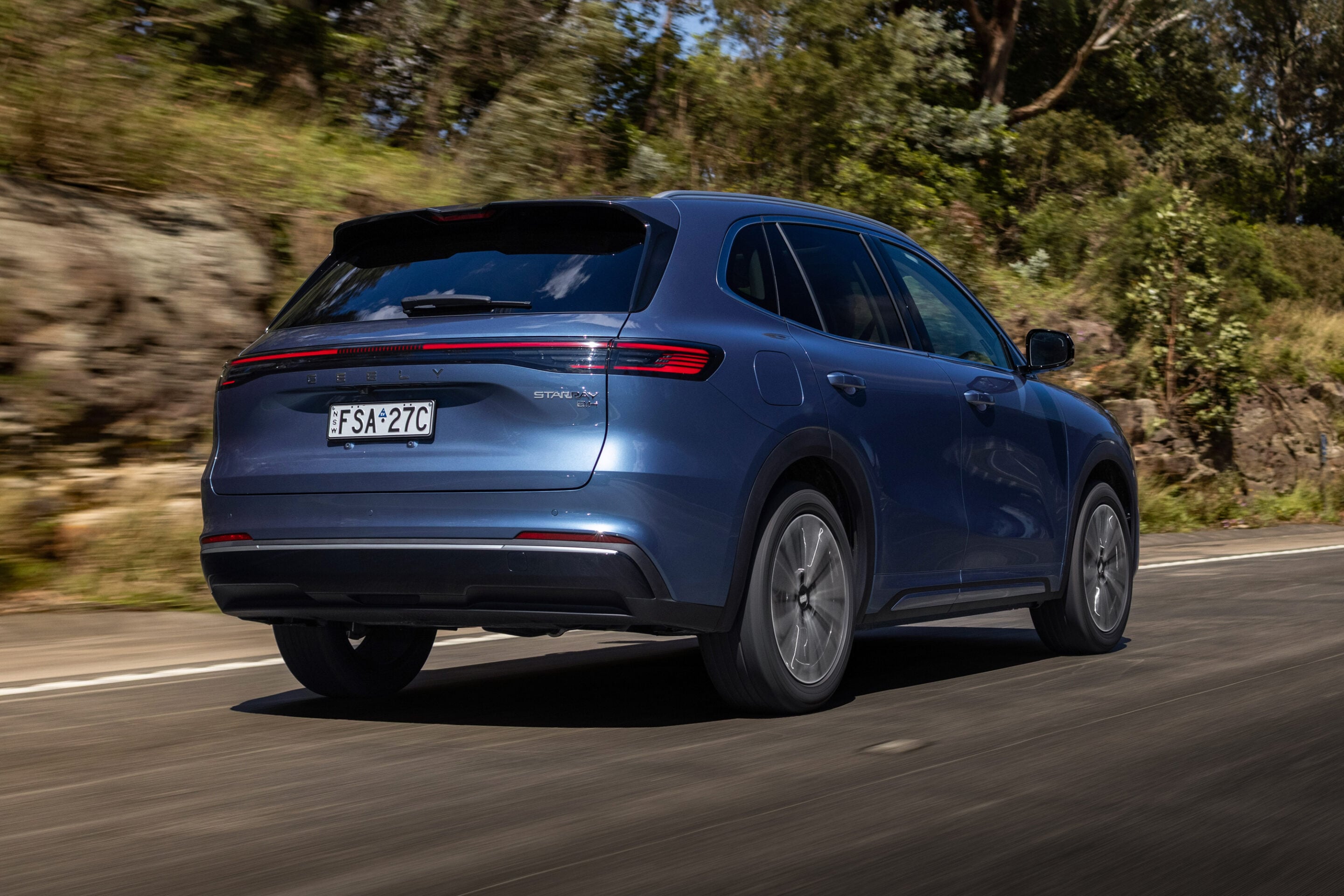
Ride comfort is an improvement over the front-wheel drive models, which always felt a bit floaty and soft. The addition of the rear-mounted e-motor required a re-engineering of the multi-link suspension, which not only features revised geometry, but thicker stabiliser bars and stiffer rear springs. The result is a Starray that feels more settled on the road and less prone to wallowing while still absorbing patchy surfaces with finesse.
Steering remains light in regular driving modes, but switching to Power mode brings some extra weight and tactility.
Geely deserves praise too for the calibration of its suite of driver assist systems, which never felt overly obtrusive. Everything from lane-keeping to the driver attention monitor offered gentle – and quiet – interventions rather than the strident and overly-enthusiastic distractions of some systems I’ve experienced. Kudos to Geely.
3
Covering 341km at launch afforded the chance to get a gauge on real-world fuel use. Geely says 1.7L/100km is possible once the battery is depleted. The reality is closer to around 5-6L/100km, underscoring the importance of keeping the battery in a usable state of charge whenever possible. To that end, Geely has made it relatively easy, with 78kW DC fast charging capability that should see the battery replenished in around 22 minutes. AC charging is capped at 6.6kW, easily fast enough for an overnight refill on a regular household socket.
Plug-in hybrids are certainly having their moment in the sun, something that Geely has tapped into handsomely with the Starray EM-i. The addition of all-wheel drive to bolster the Starray’s appeal is a welcome one, not only for the reassurance of all-paw grip, but also the performance gains the extra e-motor brings. The extra $3500 asked by the Starray EM-i AWD is money well spent.
Specs: Geely Starray EM-i AWD
| Price | $44,990 plus on-road costs |
|---|---|
| Powertrain | 1.5-litre four-cylinder petrol plus front and rear electric motors |
| Combined power | 220kW |
| Combined torque | 412Nm |
| Transmission | Hybrid transmission |
| Battery | 29.8kWh |
| Peak charging speed | 78kW (DC) / 6.6kW (AC) |
| EV Driving range | 130km (WLTP) |
| Combined driving range | 1065km (WLTP |
| 0-100km/h | 6.3 seconds |
| Weight | 1873kg (tare mass) |
| Fuel consumption | 1.7L/100km (claimed) |
| Fuel Tank | 60 litres |
| L/W/H/WB | 4740mm/1905mm/1685mm/2755mm |
| Boot capacity | 456/1993 litres |
| Spare wheel | Tyre inflation kit |
| Warranty | Seven-year/unlimited kilometre |
| On sale | Now |
7.7
/10
Score
Score breakdown
7.7
Safety, value and features
8.0
Comfort and space
7.5
Engine and gearbox
8.0
Ride and handling
7.5
Technology
Things we like
- Decent EV only range
- Nicely-presented and feature-rich interior
- Suspension upgrades bring noticeable improvements
Not so much
- Fuel economy once battery depleted
- No spare wheel/tyre
- Requires 95RON premium unleaded
Follow WhichCar/Wheels on Google
Click the button below to make WhichCar by Wheels a preferred source for your news.

We recommend
-
 News
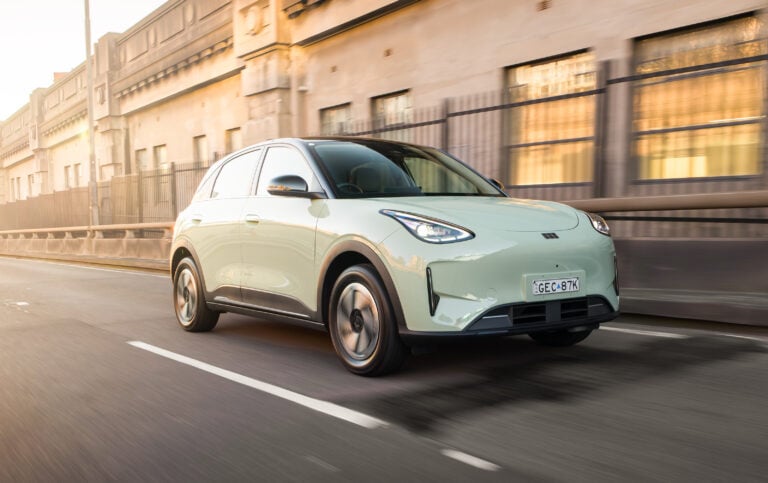
NewsGeely boasts that its new tech can charge an EV in just four minutes
Geely has one-upped BYD with its impending announcement.
-
 News
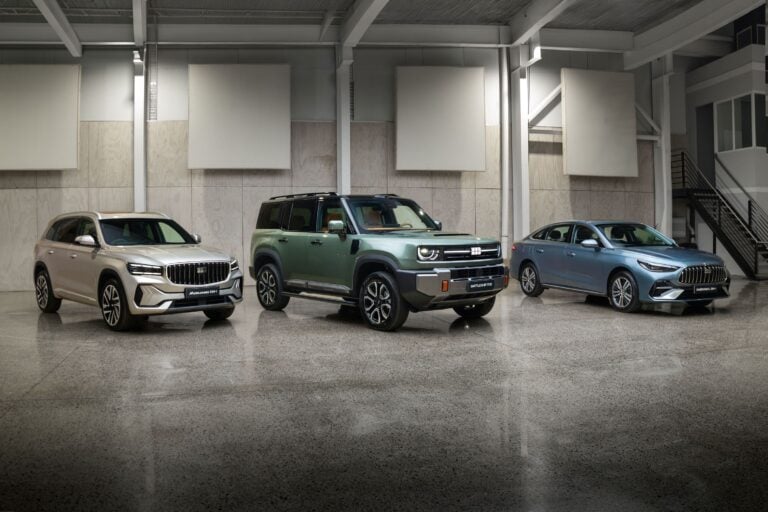
NewsGeely confirms three new electrified models for Australia in 2027
Geely will add a plug-in hybrid SUV, sedan and high-performance off-roader next year as its Australian range expands across several new segments.
-
 Features
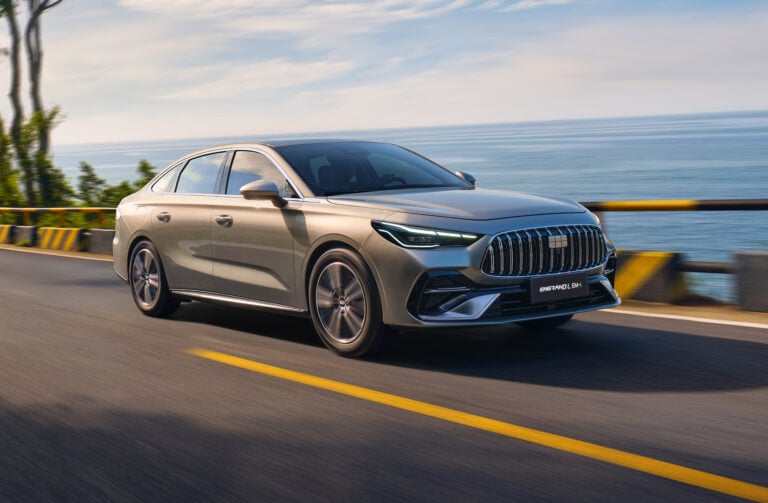
Geely's big plans for Australia revealed: See what's headed down under in the next 12 months
From a sedan to large SUVs, fast-growing Geely is preparing to enter several important new Australian car segments over the next year.
