
Reviews

Gallery 1
8.0
/10
Score
Score breakdown
7.5
Safety, value and features
8.0
Comfort and space
8.0
Engine and gearbox
8.5
Ride and handling
8.0
Technology
Things we like
- Very smartly packaged and nicely trimmed inside
- Surprisingly punchy mild-hybrid drivetrain
- Well equipped, yet also cheaper than equivalent CLA
Not so much
- Clunky hybrid system can leave you waiting for grunt
- Dual-clutch 'box can be a bit confused at low speeds
- Quite expensive to service
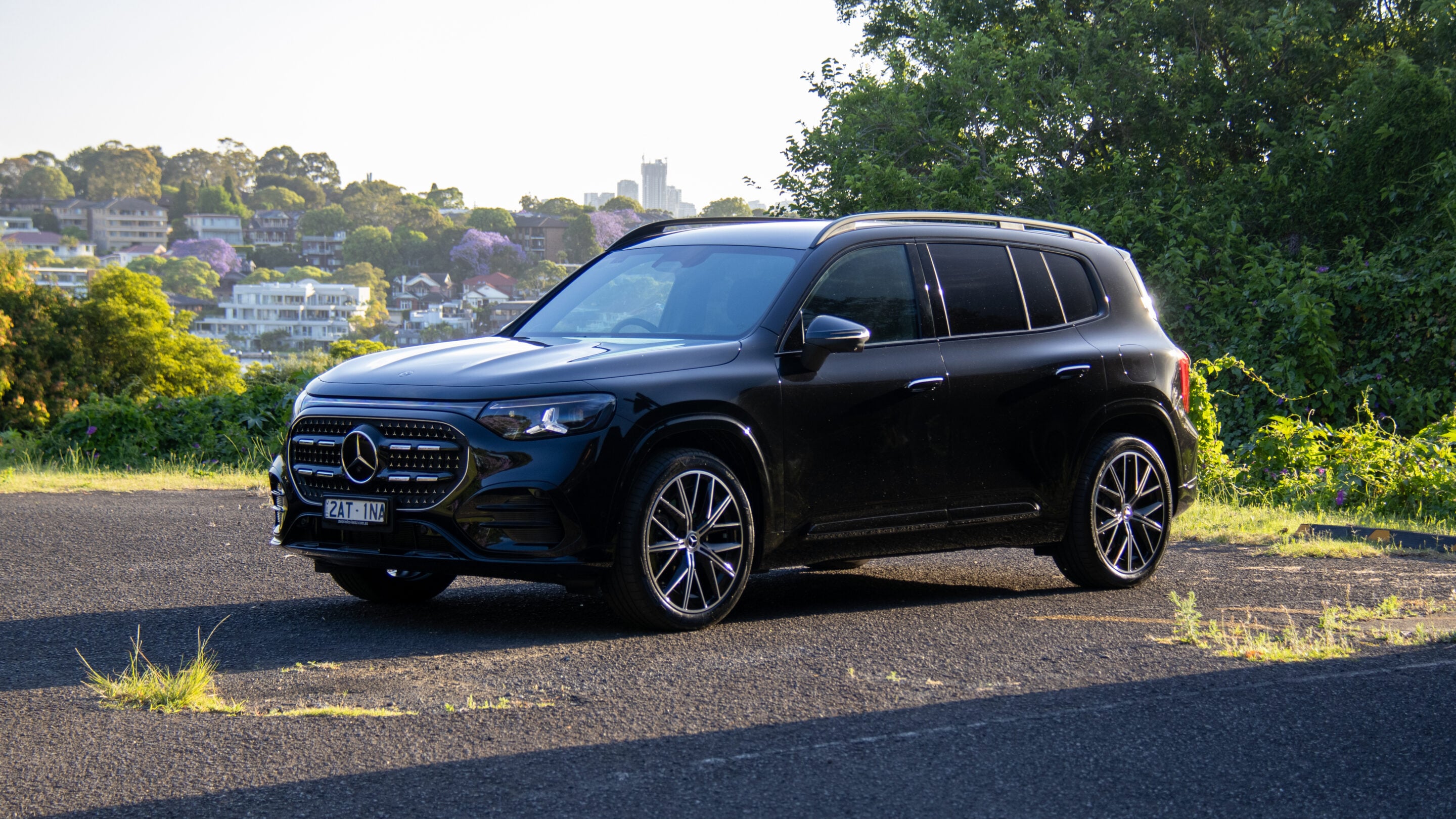
The Mercedes-Benz GLB has carved out a distinctive position in the luxury medium SUV market. Smaller and more affordable than the GLC, it combines relatively compact dimensions with seven seats and a versatile cabin, making it a practical alternative to more conventional rivals.
The all-new second-generation GLB builds on those strengths with revised styling, additional technology, improved refinement and a choice of mild-hybrid petrol or fully electric powertrains.
We’ve previously driven the electric GLB 350 4Matic, but how does the petrol-powered version compare?
4
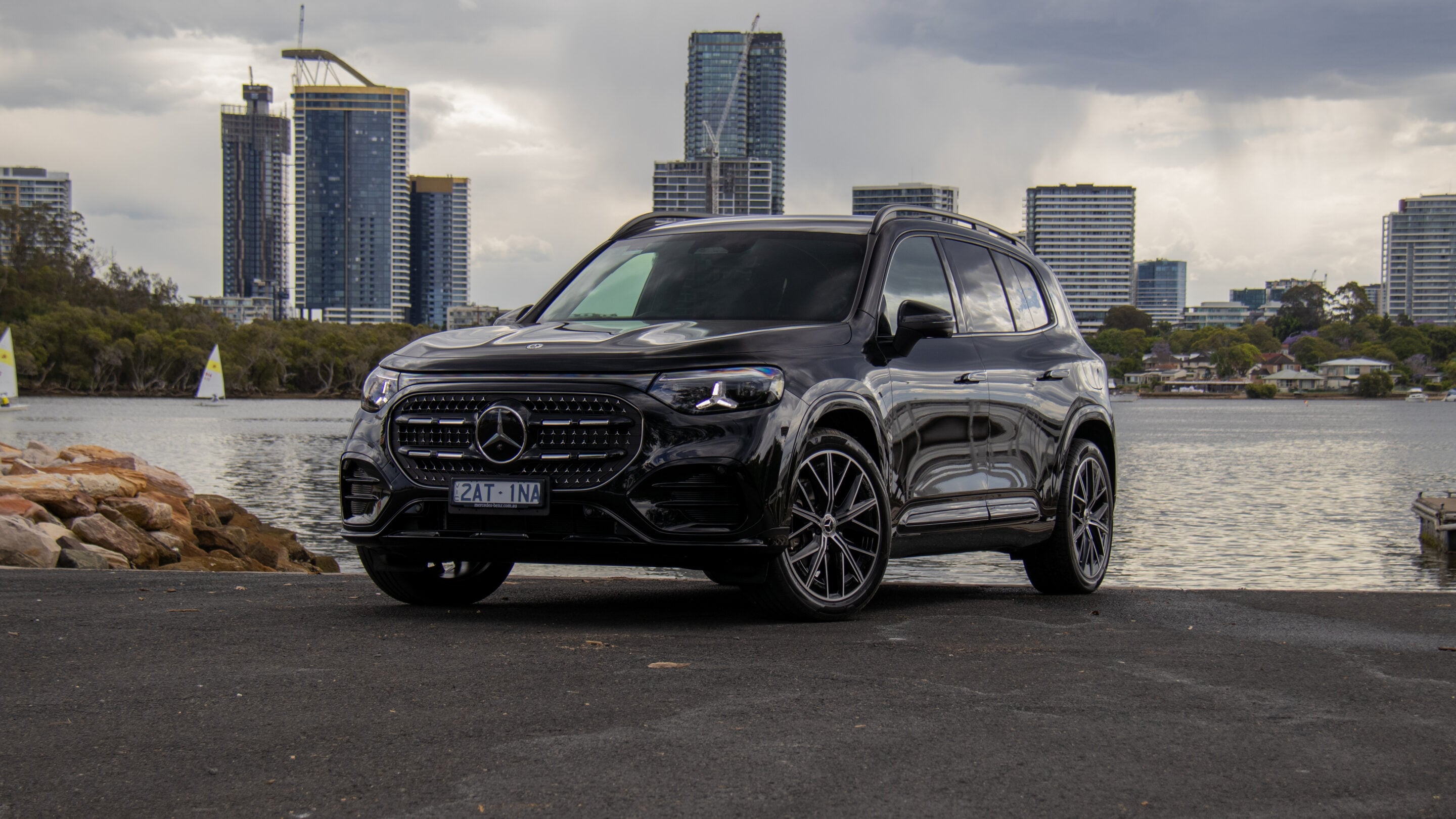
Two mild-hybrid variants are available, and we’ve tested the more powerful and expensive GLB 220 4Matic. Like the entry-level GLB 200, it pairs a turbocharged 1.5-litre four-cylinder petrol engine with 48-volt electrical assistance.
The combination promises a useful balance of performance, efficiency and everyday practicality. But does it deliver?
How much does the Mercedes-Benz GLB 220 4Matic cost to buy?
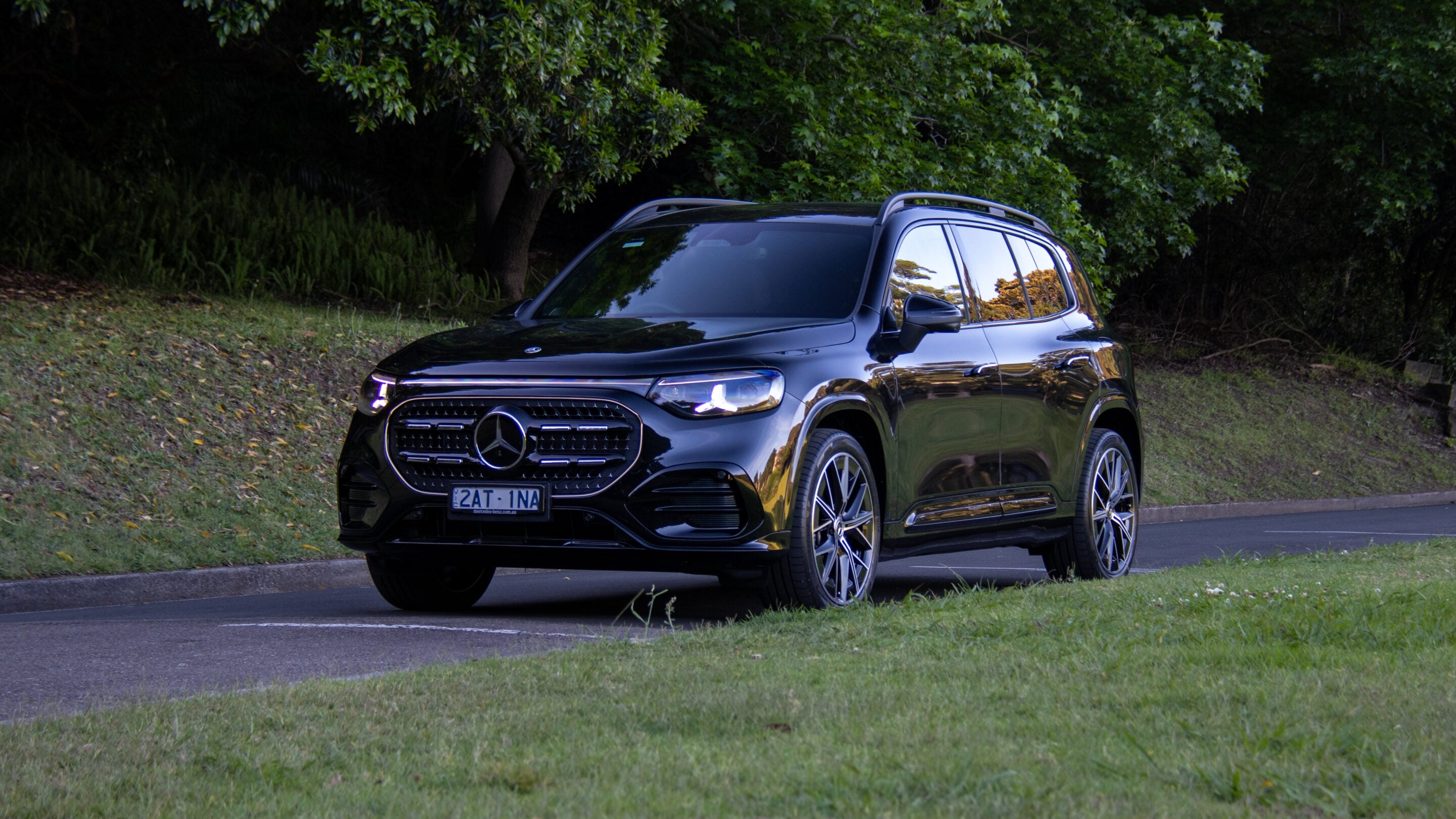
Priced from $76,100 before on-road costs, the GLB 220 4Matic isn’t a cheap entry into Mercedes-Benz SUV ownership. However, its generous standard equipment and seven-seat configuration give it an advantage over many similarly priced luxury SUVs.
4
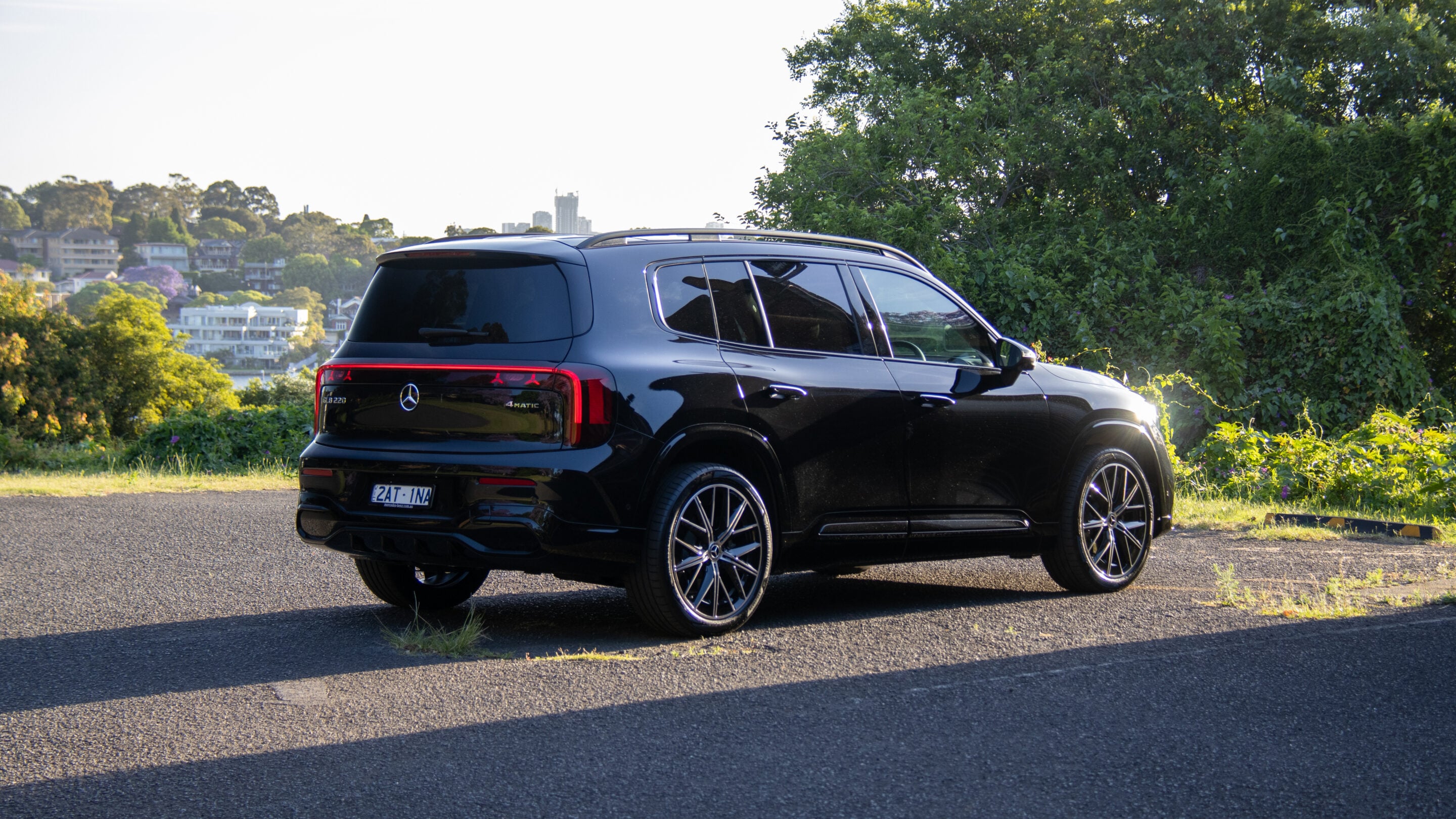
Standard features include the Night Package’s gloss-black exterior detailing, 20-inch alloy wheels, LED lighting with 94 individually animated LED stars, a panoramic glass roof, electrically adjustable front seats, dual-zone climate control and a comprehensive suite of active safety systems.
Inside, Mercedes-Benz‘s latest digital-focused design incorporates a 14-inch central touchscreen and 10.25-inch digital instrument display. Technology highlights include wireless smartphone connectivity, integrated music streaming and gaming apps, satellite navigation with live traffic information and even a weather app.
Our test vehicle also featured the optional $4000 Premium Plus Package, which adds a 16-speaker, 850-watt Burmester 3D sound system, the MBUX Superscreen with a dedicated front-passenger display, massaging front seats, extended ambient lighting and adaptive high-beam headlights.
For me, the excellent Burmester audio system and additional ambient lighting make this package worthwhile, and I’d recommend adding it.
The GLB certainly looks and feels expensive, although the extensive technology could overwhelm some buyers initially.
It’s also worth considering the fully electric GLB 250+, which offers a smoother, more powerful drivetrain and additional practicality thanks to its front boot. Remarkably, it’s also $1110 cheaper to purchase and costs less to service. Electric vehicles won’t suit everyone, but it’s a comparison worth making.
How fuel efficient is the Mercedes-Benz GLB 220 4Matic?
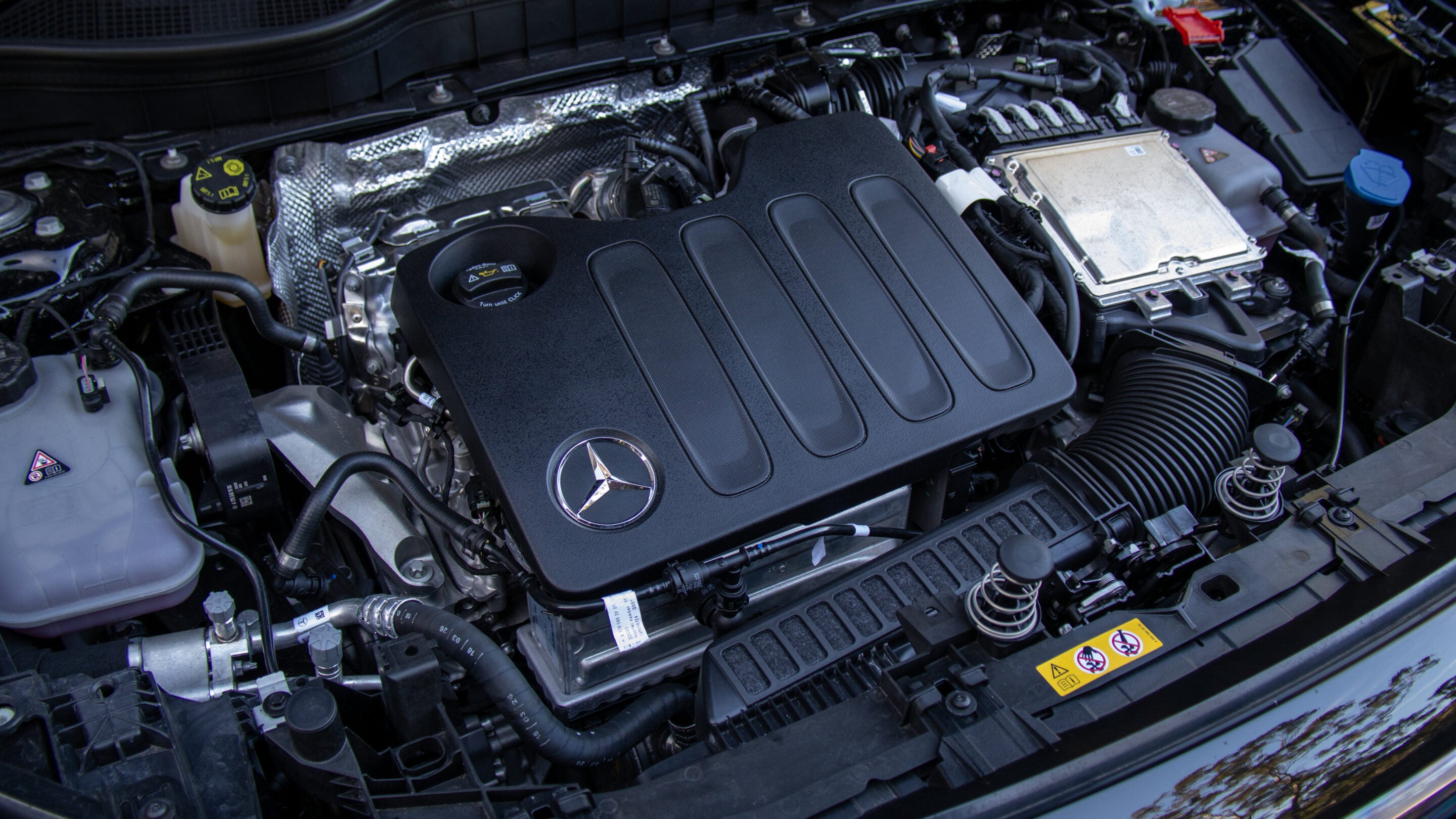
The GLB 220 4Matic uses a turbocharged 1.5-litre four-cylinder petrol engine producing 140kW and 300Nm, supported by a 48-volt mild-hybrid system.
The electric motor can contribute an additional 22kW and 200Nm in short bursts, helping the GLB accelerate from 0–100km/h in a claimed 7.5 seconds. That’s brisk enough for everyday driving, with particularly satisfying mid-range response.
Although it isn’t a full hybrid like the Toyota RAV4, the GLB operates electrically more often than any other mild-hybrid I’ve experienced.
Under light throttle, it can travel on electric power alone at speeds approaching 50km/h. It’s also quick to switch off the petrol engine when coasting, reducing fuel consumption whenever conditions allow.
5
Generally, the system works well, although its operation isn’t always seamless.
The eight-speed dual-clutch transmission shifts quickly once moving, and I particularly like being able to change gears manually using either the steering-wheel paddles or the gear selector.
However, the gearbox can hesitate when pulling away from a standstill, while transitions between electric and petrol power occasionally produce noticeable jerks.
The most frustrating behaviour occurs when braking for a corner. The petrol engine can switch off as the vehicle slows, only to hesitate when additional power is needed on the exit. If the electric motor can’t provide sufficient acceleration, there’s sometimes a noticeable delay before the engine responds.
Official combined fuel consumption is 6.5L/100km, with the 60-litre tank requiring a minimum of 95RON premium unleaded petrol.
During our test, which consisted mainly of urban driving with some highway kilometres, I recorded 7.2L/100km – a respectable result.
What’s the Mercedes-Benz GLB 220 4Matic like to drive?
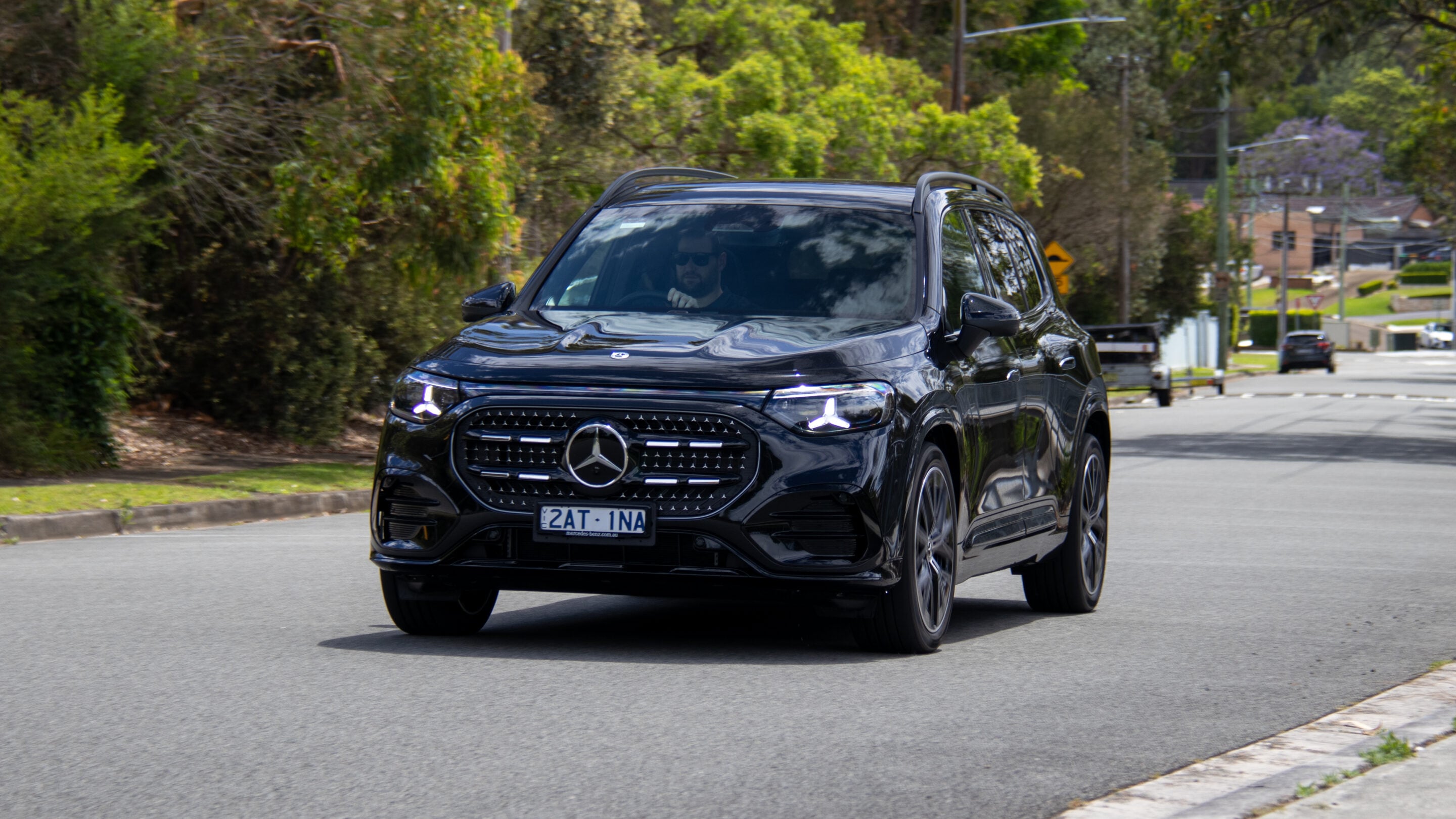
The GLB’s chassis is more convincing than its drivetrain, delivering a comfortable ride and composed, predictable handling.
Standard adaptive dampers offer Comfort and Sport settings, although the difference between them isn’t particularly pronounced.
Around town, the suspension absorbs most everyday road imperfections reasonably well, despite the standard 20-inch wheels. Light steering makes parking and manoeuvring straightforward, while the detailed 360-degree camera provides useful assistance.
The active safety systems also impressed, operating unobtrusively throughout our test without requiring adjustment – a welcome change from some modern vehicles.
7
At higher speeds, however, the suspension can feel slightly floaty in Comfort mode, with more body movement over undulating roads than I’d expect from a premium SUV.
It’s not uncomfortable, but selecting Sport for the adaptive dampers through the Individual driving mode helps the GLB feel more settled.
Refinement is a substantial improvement over the previous generation. Road noise is well suppressed, even at highway speeds, despite the large wheels and panoramic glass roof.
That roof does have a drawback, however. Although the glass is tinted, there’s no sunblind, allowing considerable heat into the cabin on hot Australian days.
How luxurious is the Mercedes-Benz GLB 220 4Matic?
The cabin is arguably the GLB’s greatest strength. Despite measuring just 4735mm long, clever packaging creates a spacious and versatile interior.
Seven seats are standard, although the third row is best reserved for occasional use.
With all seven seats occupied, luggage capacity is limited to 145 litres. Folding the third row increases that to a useful 540L, while dropping the second row expands capacity to 1505L. Disappointingly, no spare wheel is provided.
8
The second row is considerably more accommodating, with sliding seats offering 140mm of adjustment to balance passenger legroom against third-row space.
Rear passengers also receive air vents, map pockets, a central armrest with cupholders and useful door storage. However, integrated sunshades, a separate climate-control zone and heated rear seats are unavailable.
The panoramic roof creates an airy atmosphere, although its lack of a blind remains a concern in summer.
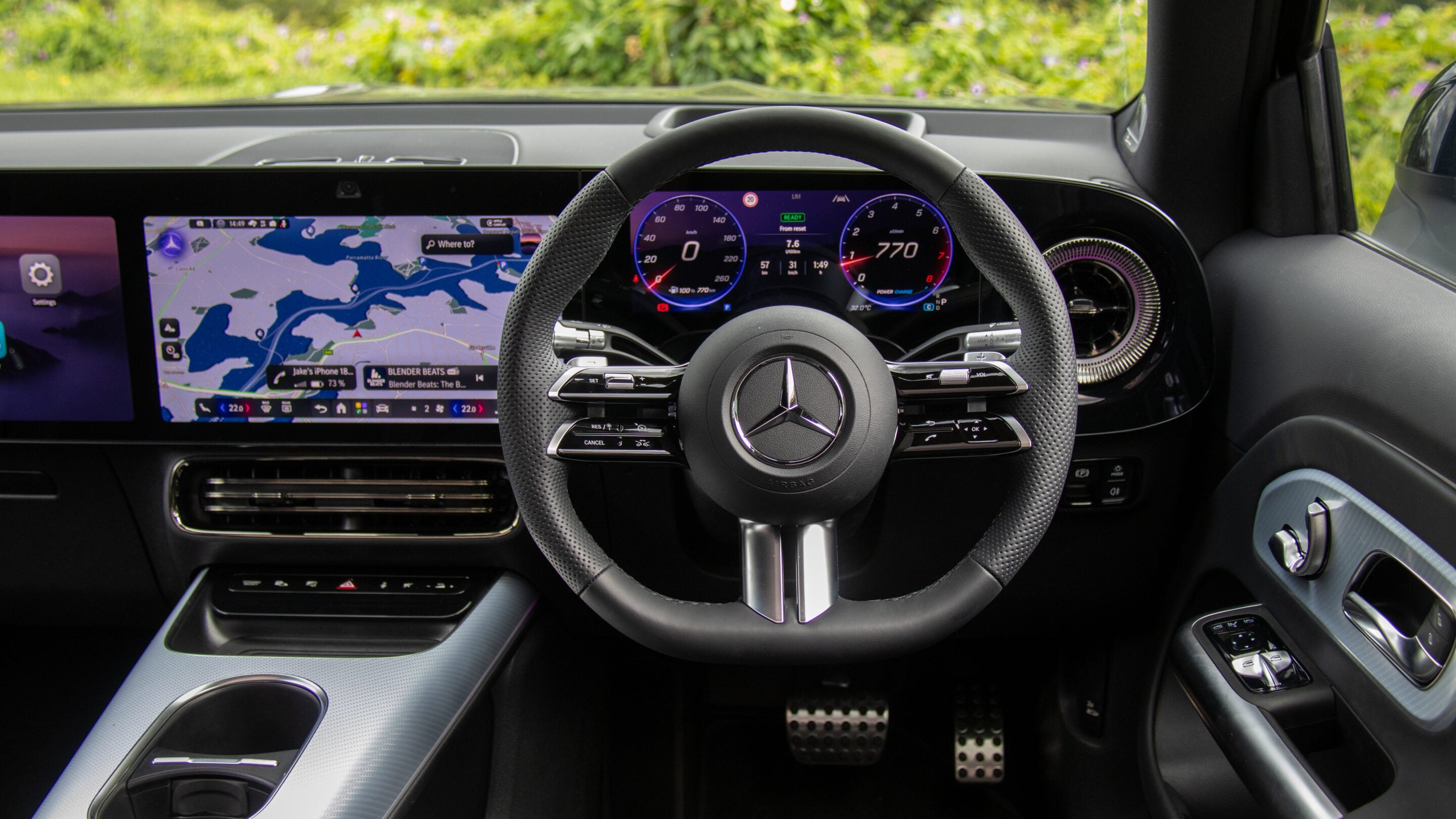
Up front, material quality is generally impressive. Soft-touch surfaces cover the upper dashboard and door trims, while the steering wheel is finished in quality Nappa leather.
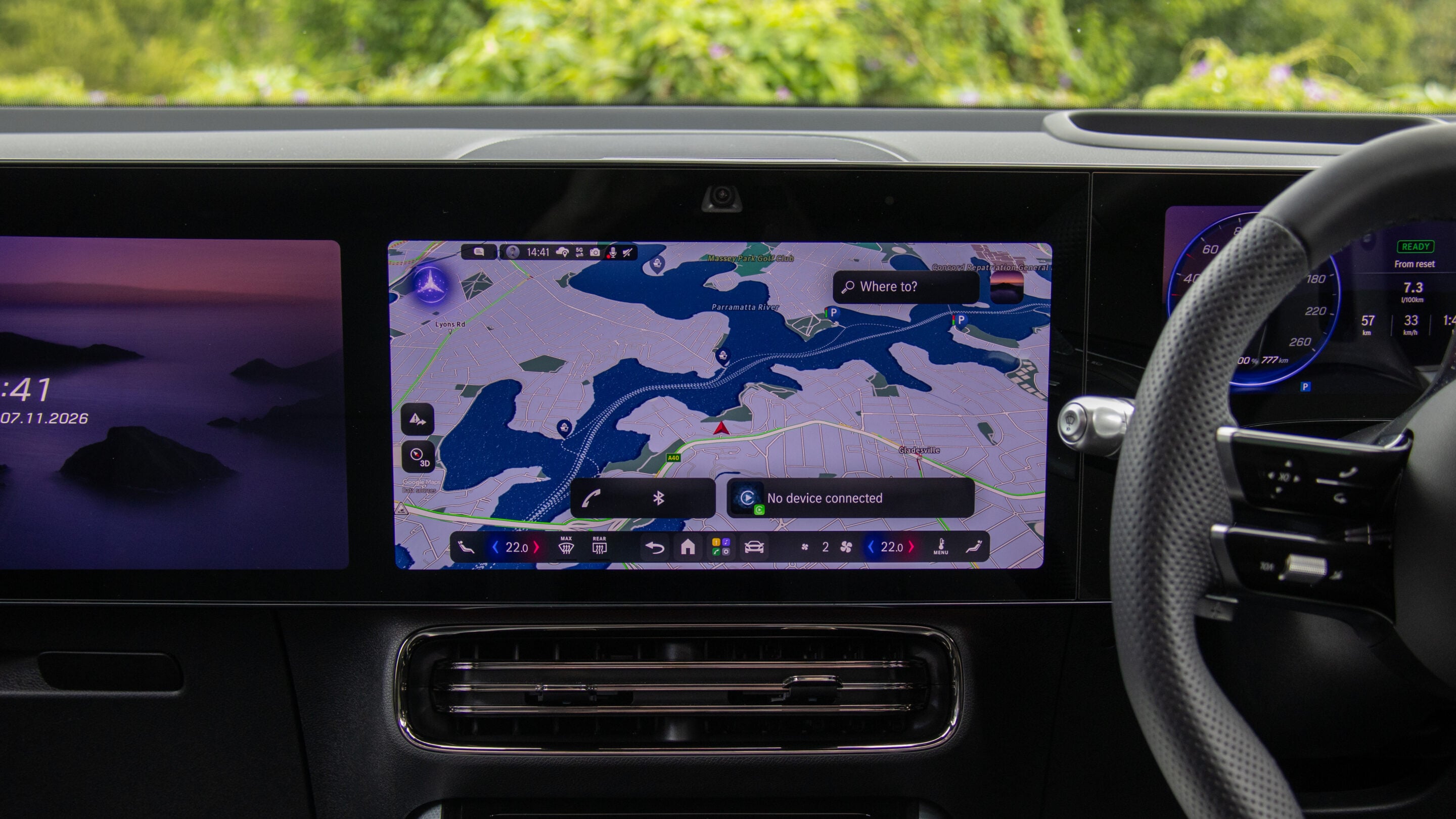
The seats use Mercedes-Benz’s convincing synthetic Artico leather, although Australian buyers are restricted to black or beige upholstery.
Other markets, including the UK, offer additional choices such as genuine leather in black or tan, along with black-and-red suede upholstery. Greater variety would be welcome locally.
Extensive piano-black trim across the dashboard is less appealing. It attracts fingerprints and smudges, making a microfibre cloth almost essential.
8
Nevertheless, the cabin feels solidly assembled, while configurable ambient lighting across the dashboard, doors and air vents adds visual interest.
Practical storage is another strength. The door bins are tall enough to accommodate bottles properly, while a large tray beneath the centre console has room for a handbag.
There’s also a covered centre-armrest compartment, cupholders and a wireless phone charger. The latter worked reliably, although it made my iPhone 18 Pro noticeably hot during use.
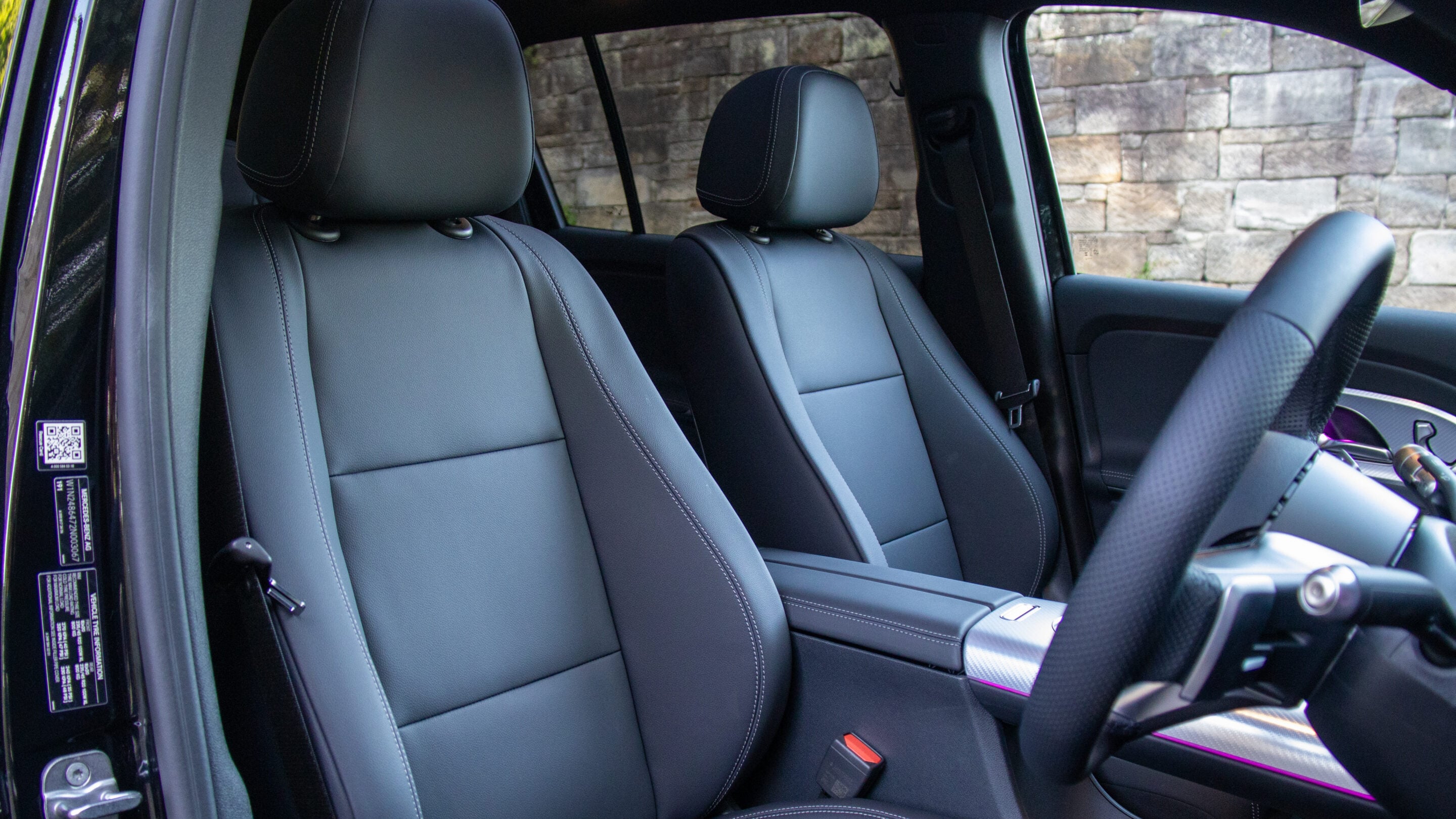
Technology dominates the dashboard, particularly in vehicles fitted with the optional MBUX Superscreen.
The displays offer an extensive range of functions, from Apple CarPlay and Android Auto to integrated Spotify streaming, games such as Angry Birds and access to Google’s Gemini AI assistant.
There’s plenty to explore on longer journeys, although I’d be more inclined to make the most of the excellent Burmester sound system.
The graphics are crisp, responses are quick and the interface becomes relatively straightforward once you’ve learned where everything lives.
Initially, however, the sheer number of menus can be daunting.
6
My biggest criticism is the lack of physical controls. Even the front seats’ lumbar adjustment is managed through the touchscreen.
At least temperature controls remain permanently visible along the bottom of the display, but something as simple as activating air recirculation requires several screen presses.
It’s an increasingly common frustration in modern cars, but that doesn’t make it any less irritating.
How much does the Mercedes-Benz GLB 220 4Matic cost to service?
Mercedes-Benz provides a five-year/unlimited-kilometre warranty, competitive among luxury brands, along with five years of roadside assistance. Electric models also receive a separate eight-year/160,000km battery warranty.
The GLB hybrid has generous servicing intervals of 12 months or 25,000km, although maintenance costs are substantial.
Servicing over the first five years or 125,000km totals $6300, equivalent to $1260 annually.
By comparison, the mild-hybrid BMW X1 sDrive20i costs $2495 under a five-year prepaid servicing plan. That covers 80,000km rather than the GLB’s 125,000km, but the price difference remains significant.
Should I buy a Mercedes-Benz GLB 220 4Matic?
There’s plenty to like about the second-generation GLB 220 4Matic.
Its clever seven-seat layout makes it more versatile than many similarly sized luxury SUVs, while the well-appointed cabin, generous equipment and strong mid-range performance add to its appeal.
The infotainment system is impressive once familiar, although the reliance on touchscreens comes at the expense of everyday usability.
Unfortunately, the mild-hybrid drivetrain is also the GLB 220’s biggest weakness. Hesitant responses from the dual-clutch transmission and occasionally clumsy transitions between petrol and electric power undermine what is otherwise a refined driving experience.
4
Then there’s the electric GLB 250+, which offers many of the same strengths with a smoother, more powerful drivetrain, additional luggage space and a lower purchase price.
Overall, the new Mercedes-Benz GLB is a substantial improvement over its predecessor. It’s more refined, thoughtfully packaged, well equipped and generally enjoyable to drive.
However, some variants make a stronger case than others. The GLB 220 4Matic has plenty going for it, but I’d recommend driving the electric version before making a decision.
GLB 220 4Matic standard features:
- 20-inch alloy wheels (with a tyre repair kit)
- Dusk- and rain-activated all-LED exterior lighting with front and rear LED daytime running lights
- Illuminated grille surround
- Keyless entry with push button start
- Night Package with gloss black exterior trims, such as the roof rails and mirror caps
- Panoramic glass roof
- Heated/auto-folding mirrors that drop in reverse
- Electric tailgate
- Privacy glass from the B-pillar rearwards
- Nappa leather steering wheel with paddle shifters
- Synthetic leather upholstery
- Heated front seats with lumbar and memory functionality
- Dual-zone automatic climate control with rear air vents
- 14-inch touchscreen with live services and over-the-air updates
- Wireless Apple CarPlay and Android Auto
- Streaming services such as Spotify and Apple Music
- Inbuilt games such as Angry Birds
- AM/FM/DAB+ digital radio
- Wireless phone charger
- 4x USB-C charging ports
- Head-up display
- 8x airbags
- Autonomous emergency braking with evasive steering
- Adaptive cruise control
- Lane keeping assistance
- Blind-spot monitoring with rear cross-traffic alert
- Exit assistance
- Driver attention monitoring
- Traffic sign recognition
- 360-degree camera
- Front, side and rear parking sensors
- Semi-autonomous parking functionality
- Tyre pressure monitoring
GLB 220 4Matic specifications:
| Price | From $76,100 plus on-road costs |
|---|---|
| Body | 5-door medium SUV |
| Drivetrain | 1.5-litre four-cylinder turbo-petrol engine + 48-volt mild-hybrid system |
| Max power | 140kW + 22kW |
| Max torque | 300Nm + 200Nm |
| Transmission | 8-speed dual-clutch |
| Combined claimed fuel consumption | 6.5L/100km |
| Claimed 0-100km/h time | 7.5 seconds |
| Dimensions (L/W/H/WB) | 4735/1861/1683/2889mm |
| Boot space | 145L (third row up), 540L (third row folded); 1505L (both rear rows folded) |
| Warranty | 5 years/unlimited km (car), 8 years/160,000km (EV battery) |
| 5-year service cost | $6300 ($1260 per year) |
| Safety rating | Unrated |
| On sale | Now |
8.0
/10
Score
Score breakdown
7.5
Safety, value and features
8.0
Comfort and space
8.0
Engine and gearbox
8.5
Ride and handling
8.0
Technology
Things we like
- Very smartly packaged and nicely trimmed inside
- Surprisingly punchy mild-hybrid drivetrain
- Well equipped, yet also cheaper than equivalent CLA
Not so much
- Clunky hybrid system can leave you waiting for grunt
- Dual-clutch 'box can be a bit confused at low speeds
- Quite expensive to service
Follow WhichCar/Wheels on Google
Click the button below to make WhichCar by Wheels a preferred source for your news.

We recommend
-
 News
Get a sneak peek at Mercedes-Benz's latest tech including holograms, LED displays on windows and a new electric breakthrough
Mercedes-Benz has lifted the lid on three breakthroughs that should find their way to upcoming production vehicles.
-
 News
New Mercedes-Benz CLA Shooting Brake Aussie price and specs: Sleek wagon goes all-electric for the first time
The Mercedes-Benz CLA Shooting Brake returns to Australia with hybrid and electric powertrains, greater practicality and new technology.
-
 News
Mercedes-Benz C-Class electric pricing and specs: New sedan aims for affordability but doesn't skimp on power
Mercedes-Benz's first electric C-Class will arrive in Australia in early 2027 with up to 760km of driving range, 360kW of power and a price north of $100,000.
