
Reviews

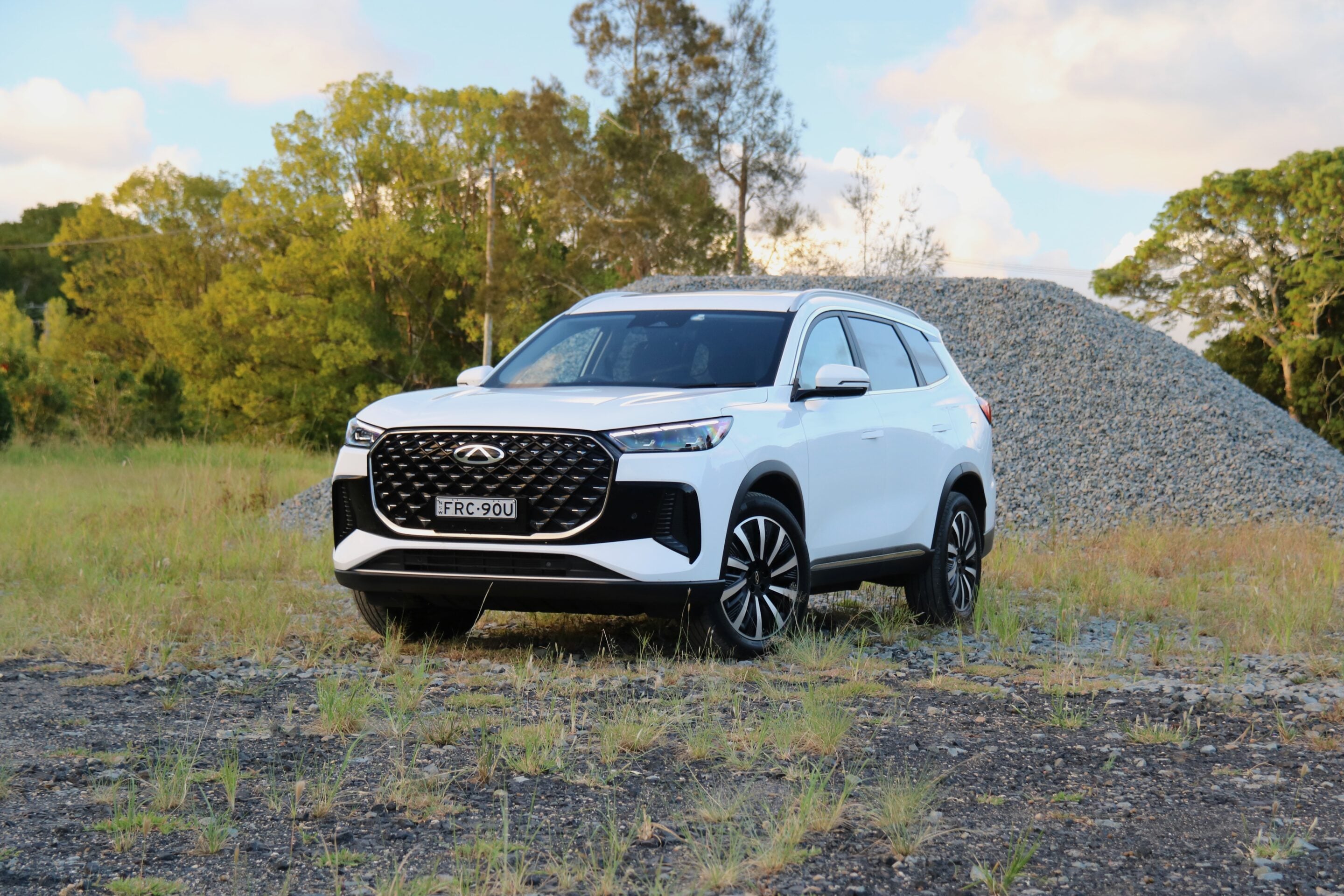
Gallery 1
7.8
/10
Score
Score breakdown
9.0
Safety, value and features
9.0
Comfort and space
8.0
Engine and gearbox
7.0
Ride and handling
7.0
Technology
Things we like
- Smooth and efficient powertrain
- Impressive interior material and screen quality
- Fantastic value for money
Not so much
- Ride is too soft at highway speeds
- Surprisingly narrow body restricts practicality
- Tight third row with little in the way of amenities
It’s clear that China is winning the race to electrification. While some brands from around the globe continue to bury their heads, every Chinese brand locally sells a plethora of options for those wanting to lessen their reliance on fuel. Take the Tiggo 8 seven-seat SUV, which maker Chery claims can do a total of 1200km of driving on a fuel tank and battery. Is that claim really possible? We took an Easter roadtrip to find out.
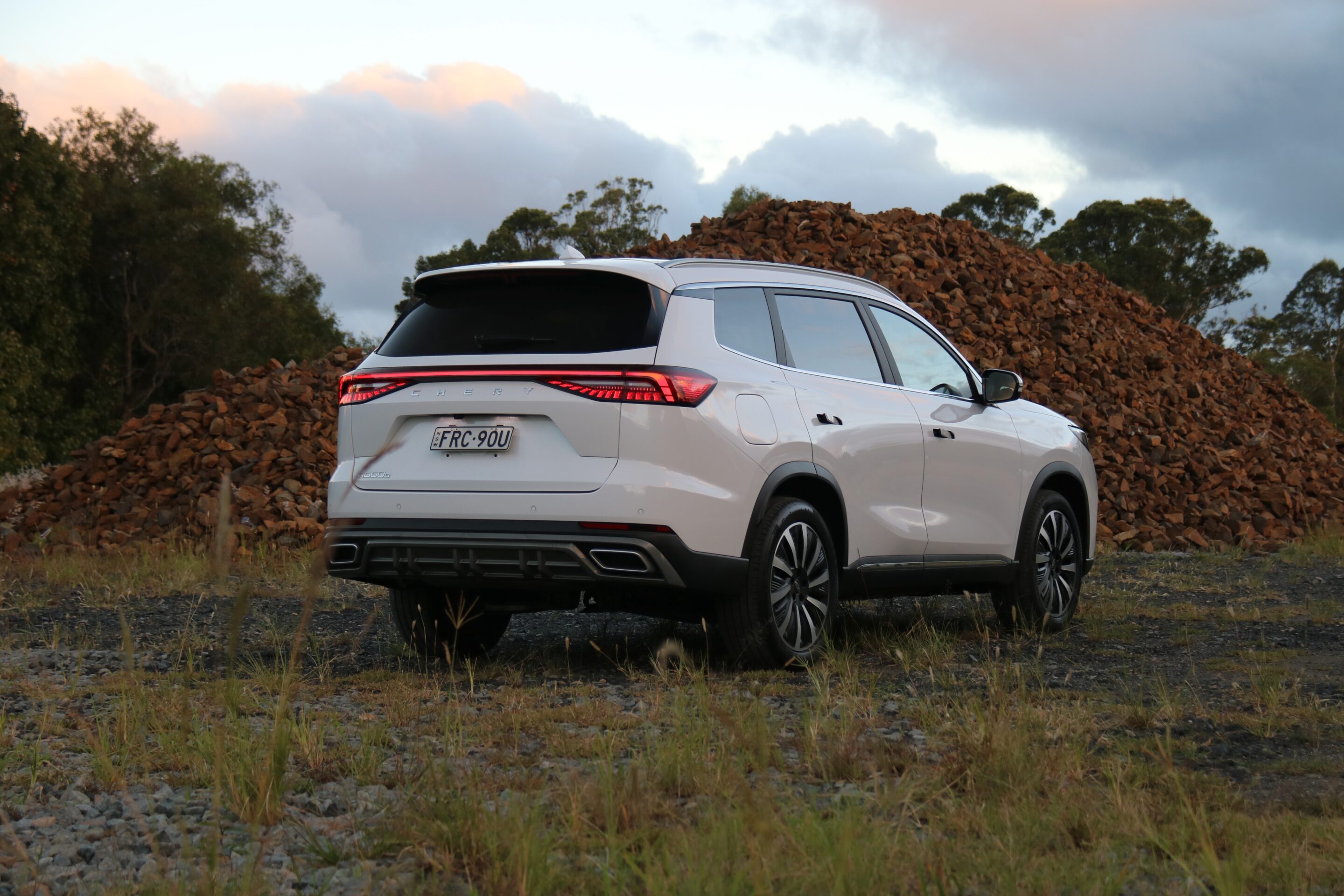
The Tiggo 8 is the smaller of the brand’s two large SUV offerings in Australia, the other being the slightly larger and more expensive Tiggo 9. It offers both petrol and plug-in hybrid drivetrains, and it’s sized just above something like a Toyota RAV4 at 4724mm in length. It offers seating for seven, though as you’ll find out below, it’s best kept to five seats.
How much does the Chery Tiggo 8 Super Hybrid cost to buy?
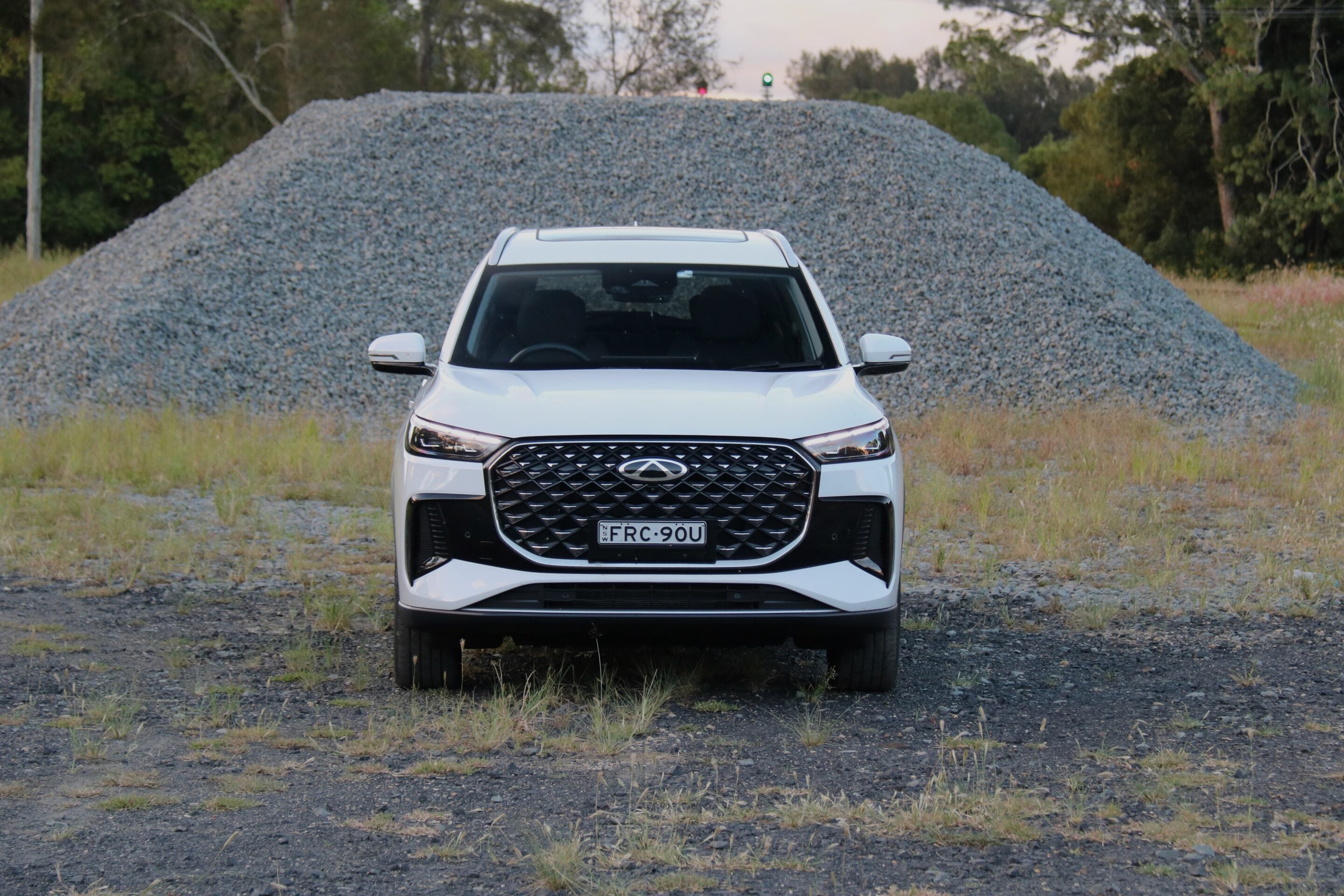
While the petrol Tiggo 8 Pro Max is priced comfortably under $40,000, pricing for the Super Hybrid starts at $45,990 driveaway for the entry-level Urban model. The upper-spec Ultimate model tested here is available for $49,990 driveway, with no available options either, aside from paint colour (+$600 for some colours, including the ‘Lunar White’ hue of our test car).
4
Rivals to the Tiggo 8 include the Mazda CX-80 Touring PHEV and Kia Sorento S PHEV, but they are priced at least $20,000+ dearer, while the Mitsubishi Outlander PHEV is priced from $58,990 before on-road costs, but that’s the entry-level LS model that’s not as well equipped as the Tiggo 8.
It’s not like the Tiggo 8 Super Hybrid Ultimate is under-equipped either, with features including 19-inch alloy wheels, a panoramic sunroof, synthetic leather trim, a 15.6-inch touchscreen, Sony audio and safety features including nine airbags, adaptive cruise control, traffic jam assist and a 360-degree camera. A full list of standard features lies at the bottom of this page.
How fuel efficient is the Chery Tiggo 8 Super Hybrid?
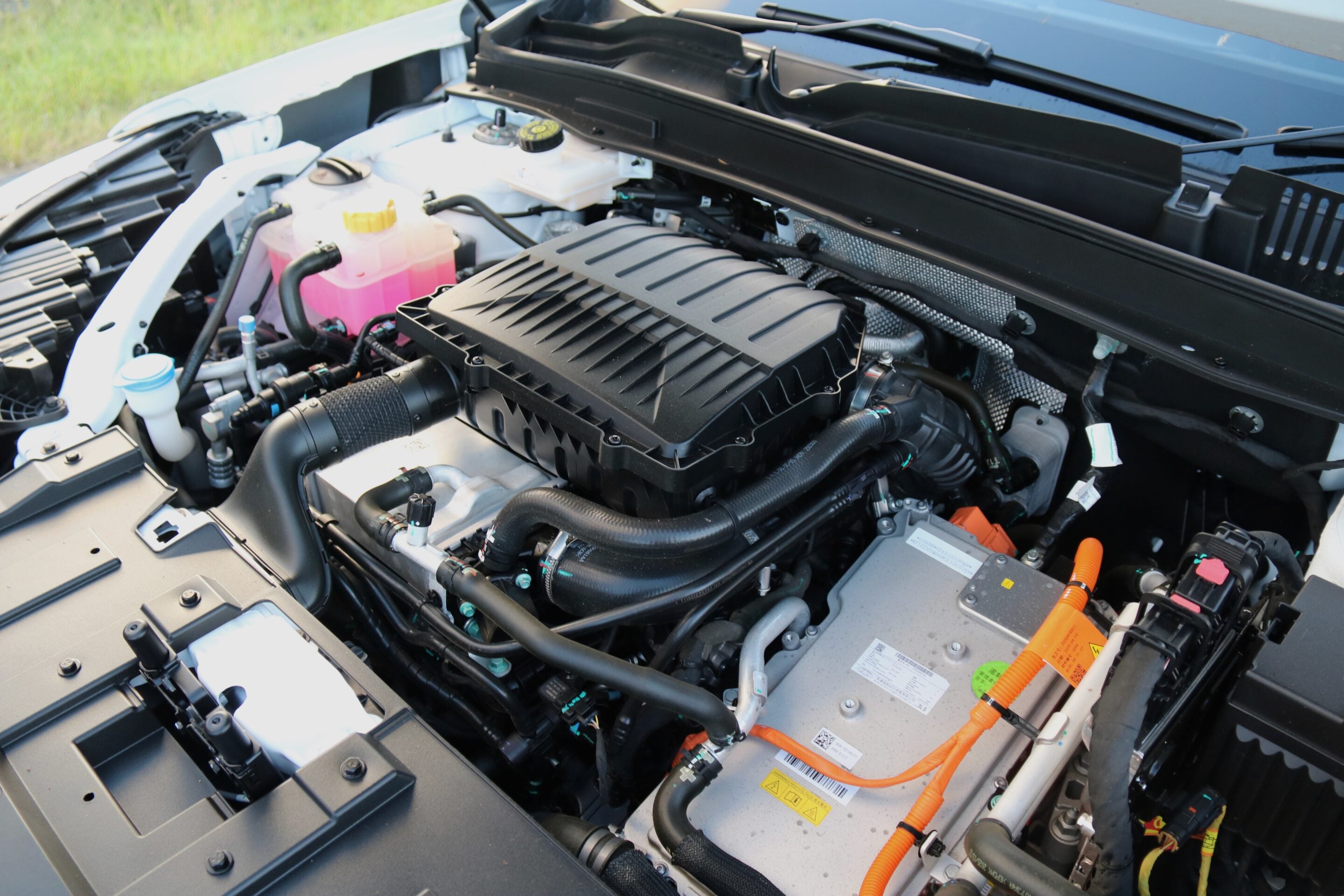
The Tiggo 8 Super Hybrid uses Chery’s fifth-generation ‘Super Hybrid’ plug-in hybrid tech, combining a 1.5-litre turbocharged four-cylinder petrol engine with an electric motor and in the case of the Tiggo 8, an 18.4kWh LFP battery. Chery doesn’t quote a combined output figure, but the engine makes 105kW/215Nm and the electric motor 150kW/310Nm – it’s the latter that’s more relevant because the electric motor provides most of the propulsion with the engine acting as a generator for most of the time, only adding extra grunt with full throttle bursts.
Chery claims an NEDC electric-only 95km range in the Tiggo 8 and combined fuel consumption of just 1.3L/100km. It’s important to note that those figures are achieved with a full battery charge and they will differ greatly depending on how much charge is in the battery, as is the case for all plug-in hybrids.
Like regular hybrids and EVs, plug-in hybrids are at their most efficient in urban driving conditions because the regenerative braking can recycle energy back into the battery, so our highway roadtrip was not ideal for consumption. However, the Tiggo 8 actually did better than we expected – we recorded an electric-only range of 68km at highway speeds, and the total for our trip was 6.1L/100km (including the full battery), which is less than we expected.
5
Chery claims that based on a full battery and a full tank of fuel, the Tiggo 8 can travel 1200km before needing to fill/charge up again, so how accurate is that claim? Well, on our roadtrip, we achieved 960km before needing to put fuel in it again, so not that close to the claim, but still better than expected based on our previous range testing with plug-in hybrids.
Obviously, more driving in urban conditions will increase both the electric range and fuel efficiency. Chery says that its Super Hybrid system is designed for all types of driving, and based on our roadtrip, we think that it works well regardless of where it’s used.
How does the Chery Tiggo 8 Super Hybrid drive?
The Tiggo 8 Super Hybrid was subjected to a longer test program than usual, and was included in an Easter roadtrip to Coffs Harbour, about 450km north of Sydney on the far north coast of NSW. Our trip was mostly taken at above 100km/h on the M1 motorway, and with around 60km of lower speed country road driving once we’d reached our destination.
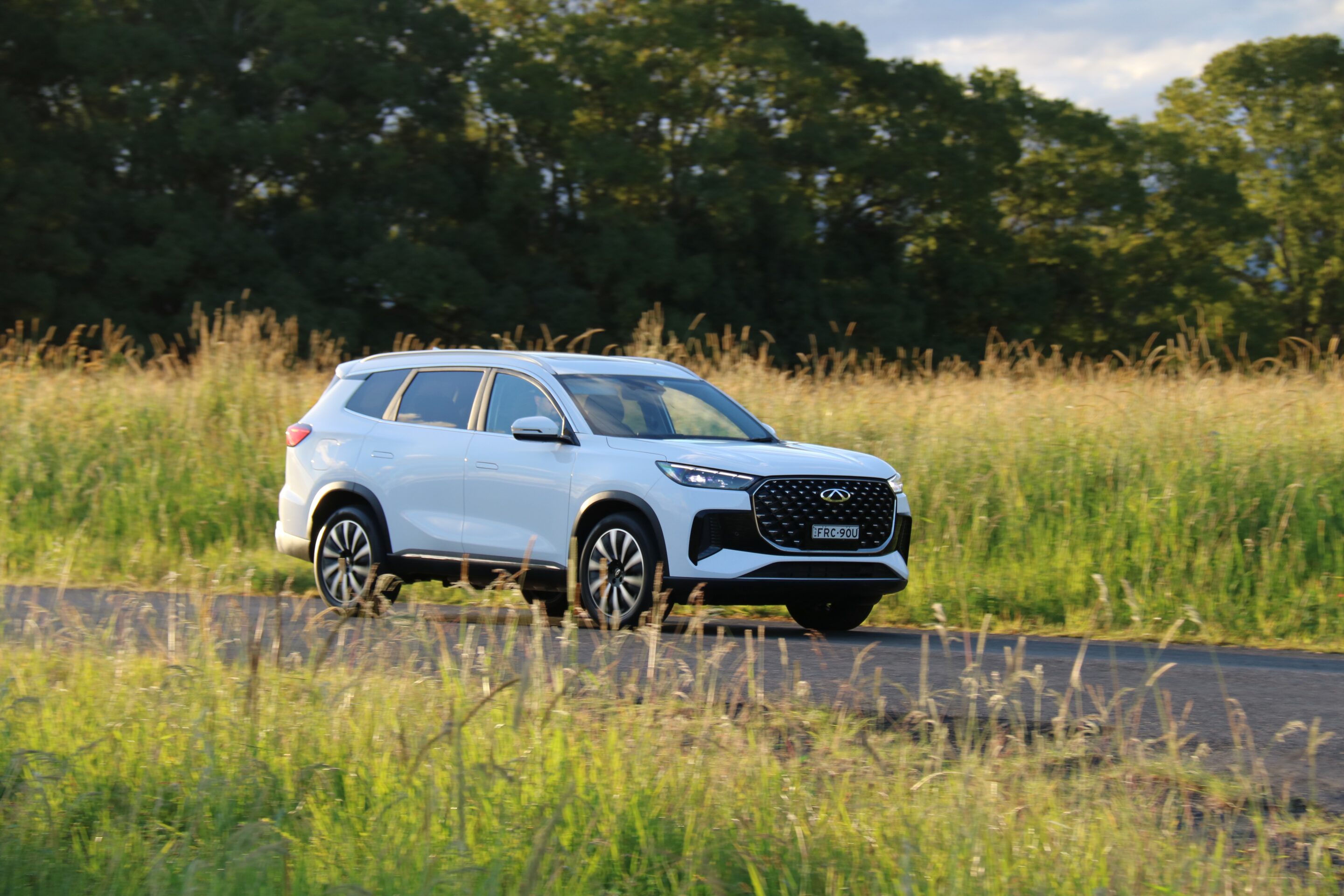
In those conditions, the Tiggo 8 impressed thanks to its mature driving experience, punchy drivetrain and fuel efficiency. The driving experience of the Tiggo 8 Super Hybrid is a noticeable improvement on even the petrol Tiggo 8 Pro Max thanks to a revised ride and handling tune to account for the Super Hybrid system’s extra weight.
4
The low speed ride is improved, the steering is more naturally weighted and the handling is reasonable for a big family bus. The high speed ride is a bit soft, however, and even smaller bumps at that speed take two or three goes from the suspension to properly settle. While we’re moaning, the brakes take a bit to get used to and the transmission selector – which needs you to be completely stopped before being able to select another gear – is infuriating when you’re in a hurry.
The Super Hybrid drivetrain is a winner, though. It’s mostly propelled by its 150kW electric motor, which is more than enough grunt and can easily chirp the front wheels from a start if you’re keen with the throttle. Once the battery is depleted, the Tiggo 8 Super Hybrid runs mostly like a regular hybrid drivetrain with the petrol engine providing grunt when needed and switching off when not, and it’s still impressively refined in hybrid mode.
How practical is the Chery Tiggo 8 Super Hybrid?
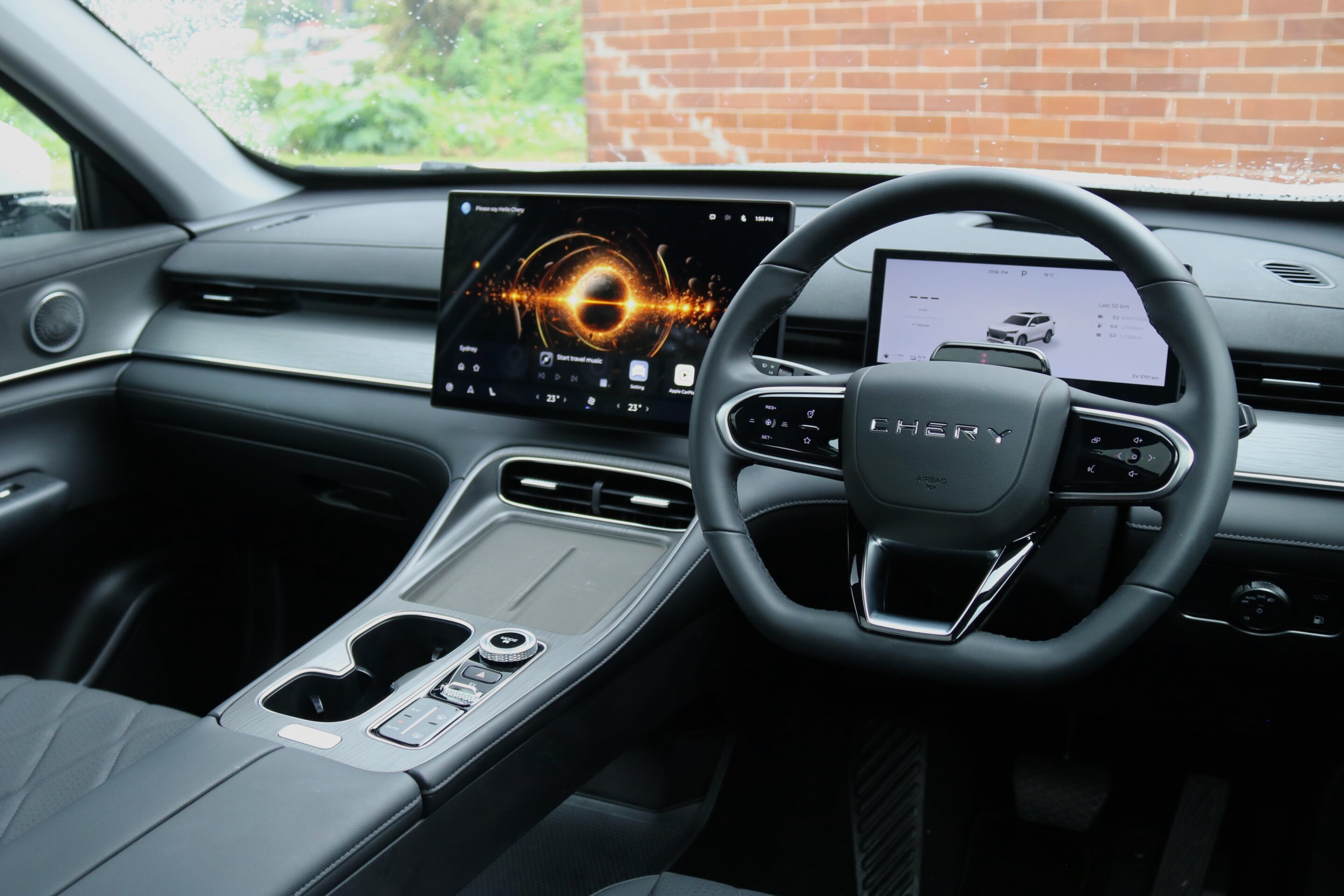
Inside the Tiggo 8 Super Hybrid is actually a different interior to the petrol Tiggo 8 Pro Max that we’ve previously experienced. Usually, hybrid models receive more standard equipment compared with the ICE models they’re based on, but Chery goes a lot further with a new dashboard layout with more tech and higher quality materials too.
6
Aside from the Super Hybrid drivetrain, the biggest upgrade for the Tiggo 8 Super Hybrid versus the Tiggo 8 Pro Max is the central screen. Measuring a large 15.6-inches versus 12.3-inches in the Pro Max, the SHS’ infotainment system is new and far quicker than the Pro Max. Screen quality is also significantly sharper, and aside from the lack of buttons and lack of a home button, it’s a generally easy system to use.
The 12-speaker Sony sound system is quite good at louder volumes, drowning out highway road noise well, though more bass would be appreciated.
Front cabin storage is impressive with a big central box underneath the central armrest, an open tray underneath the centre console (great for storing road trip snacks), big cupholders and a big tray on the centre console with a 50W wireless phone charger.
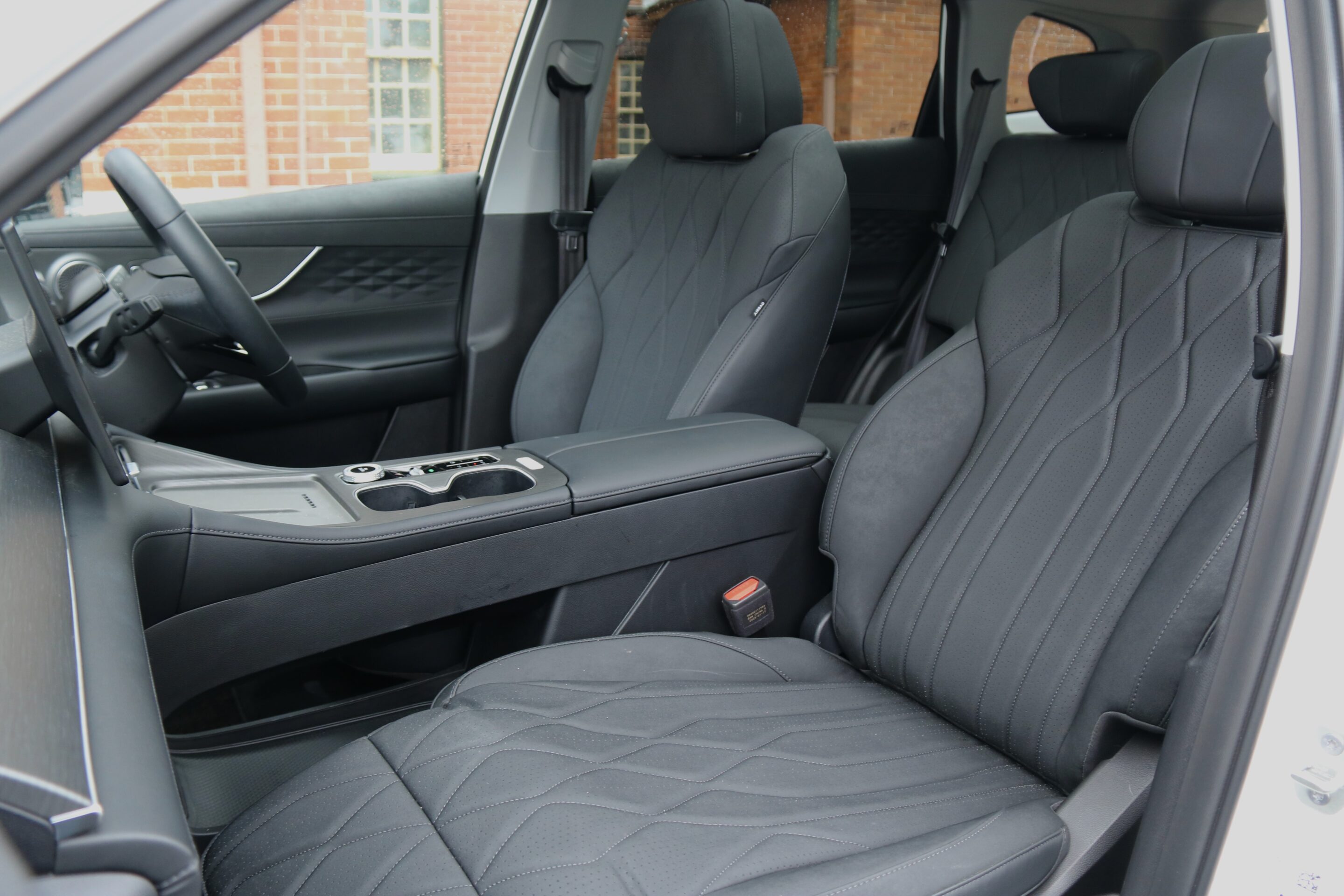
The front seat comfort in the Tiggo 8 SHS is generally good, though there are surprises. As with most Chinese cars, there’s no under-thigh angle adjustment and no height adjustment for the front passenger, but there is both heating and ventilation for both front seats. However, there is massaging – and it is quite good massaging too – but strangely only for the passenger seat and not the driver. Weird.
What’s also weird, however, about the Tiggo 8 is the space on offer in the second and third rows of seating. Its body feels narrow and fitting three across looks tightish, plus, rear legroom is more limited than you’d expect as well. Middle row features include air vents, two USB ports for charging, door and map pocket storage and a centre armrest with cup holders – though no separate climate zone, heated seats or sunshades in the doors.
6
The third row is best described as kids only, and both the Sorento and CX-80 feel more spacious. Cup holders aside, there are no features with no air vents or charging ports on offer. As is the case with the Outlander, the Tiggo 8’s third row is best described as an occasional use space, for if you suddenly need to carry more passengers. If you plan to use the third row more regularly, the larger Tiggo 9 is more spacious and feature-packed in that area.
Boot space, like the second and third rows, is restricted by the Tiggo 8’s smaller-than-you’d-expect exterior dimensions. Just 117 litres of space lies behind the third row, and 494 litres behind the second row. Chery doesn’t quote a figure with the middle row of seats folded, but we’d guesstimate somewhere around the 1500-litre mark, which is reasonable but a smaller Hyundai Tucson holds almost 2000 litres. Regardless, the Tiggo 8 was more than practical enough for our roadtrip, and my family was impressed with the space on offer.
What warranty covers the Chery Tiggo 8 Super Hybrid?
Chery’s aftersales program is not the longest in the market, but it’s still quite impressive. A seven-year/unlimited km warranty covers the Tiggo 8 Super Hybrid, with a separate eight year/unlimited km warranty for the 18.4kWh battery.
1
Twelve months of roadside assistance is standard, which is extended another 12 months with every service undertaken at a Chery dealership up to seven years in total. Five years/75,000km of servicing costs just $1595, or $319 per service.
Should I buy a Chery Tiggo 8 Super Hybrid?
If you’re a value-focused medium-to-large SUV buyer looking for a way to lessen fuel costs, the Chery Tiggo 8 Super Hybrid is definitely worthy of consideration. Depending on your driving, it has the potential to significantly reduce your weekly fuel costs thanks to its claimed 95km electric only range, but even in its worst case scenario, it’s still capable of over 60km of EV range and combined economy of around 6L/100km. Charging it more and driving it primarily in urban environments would only increase its efficiency.
As we expect from Chery, its value equation is awesome. Under $50k driveaway for its generous level of standard equipment is a bargain, and it’s at least $10,000 less than its chief rivals. Our only advice is to bring your family along to check it out as both the second and third rows of seating aren’t huge, and if you’re wanting a plug-in hybrid SUV that can carry people better in the third row, the larger Tiggo 9 is a better option. Still, the Chery Tiggo 8 Super Hybrid remains a very solid choice for a hybridised seven-seat SUV.
Chery Tiggo 8 Super Hybrid Ultimate standard features:
- 19-inch alloy wheels with a tyre repair kit
- Dusk-sensing automatic LED exterior lighting
- Rain-sensing automatic wipers
- Keyless entry and start
- Remote start and window open/close
- Heated/auto-folding mirrors that drop in reverse
- Roof rails
- Rear privacy glass
- Panoramic sunroof
- Electric tailgate with hands-free operation
- Synthetic leather upholstery and steering wheel
- Electric front seat adjustment with front passenger massaging
- Heated and ventilated front seats
- Dual-zone automatic climate control with second row air vents
- 10.25-inch digital driver’s display
- Head-up display
- 15.6-inch touchscreen
- Wireless Apple CarPlay and Android Auto
- Satellite navigation
- Bluetooth calling and audio streaming
- AM/FM/DAB+ digital radio
- 12-speaker Sony sound system with driver’s seat speakers
- 4x USB ports
- Wireless phone charger
- Eco/normal/sport/EV/hybrid drive modes
- 9x airbags
- Autonomous emergency braking
- Adaptive cruise control with adaptive lane guidance and traffic jam assist
- Lane keeping assistance
- Blind-spot monitoring
- Rear cross-traffic alert (with braking)
- Auto high beam
- Driver attention monitoring
- Speed limit recommendation
- Rear collision warning
- Door open warning
- Front and rear parking sensors
- 360-degree camera
- Anti-theft alarm
Specs
| Model | Chery Tiggo 8 Super Hybrid Ultimate |
|---|---|
| Price | $49,990 driveway |
| Drivetrain | 1499cc turbocharged four-cylinder plug-in hybrid |
| Transmission | One-speed, front-wheel drive |
| Engine outputs | 105kW/215Nm |
| Electric motor outputs | 150kW/310Nm |
| Battery | 18.4kWh LFP |
| Claimed range (NEDC) | 95km (78km as tested) |
| Peak charge speed | 40kW |
| DC fast charge time (30-80%) | 20 minutes |
| Fuel economy | 1.3L/100km (6.1L/100km as tested) |
| Claimed CO2 emissions | 30g/km |
| Fuel type/tank size | 95RON premium unleaded, 60 litres |
| Dimensions | 4724/1865/1718/2694mm |
| Tare mass | 1884kg |
| Bootspace | 117 litres (third row up), 497 litres (third row folded) |
| Warranty | 7-year/unlimited km |
| Five-year/75,000km service cost | $1595 ($319 per year) |
| On sale | Now |
7.8
/10
Score
Score breakdown
9.0
Safety, value and features
9.0
Comfort and space
8.0
Engine and gearbox
7.0
Ride and handling
7.0
Technology
Things we like
- Smooth and efficient powertrain
- Impressive interior material and screen quality
- Fantastic value for money
Not so much
- Ride is too soft at highway speeds
- Surprisingly narrow body restricts practicality
- Tight third row with little in the way of amenities
Follow WhichCar/Wheels on Google
Click the button below to make WhichCar by Wheels a preferred source for your news.

We recommend
-
 Reviews
Chery C5 review: Updated Omoda 5 offers standout style among small SUVs
With Omoda shifting across to become the premium arm of the Chery portfolio, the Omoda 5 has become the Chery C5 with tech and equipment upgrades, plus a refreshed style.
-
 Features
Which plug-in hybrids offer the longest electric driving range?
A plug-in hybrid can offer the best of both worlds for some, so which ones offer the longest electric driving range? The answer may surprise you.
-
 Reviews
Chery Tiggo 9 review: Plug-in hybrid seven-seater aims to take market share from established rivals
Chery’s bargain seven-seater Tiggo 9 looks highly capable on paper with stats like a claimed 146km electric range and 315kW, but how does it fare against its main rivals?
