Reviews

Gallery 1
8.0
/10
Score
Score breakdown
8.0
Safety, value and features
8.5
Comfort and space
7.5
Engine and gearbox
8.0
Ride and handling
8.0
Technology
Things we like
- Space has been added in the cabin
- Quality cabin ergonomics
- Driving engagement a winner
Not so much
- Still no hybrid
- Some hard plastics in the base model
- Only one engine across the range
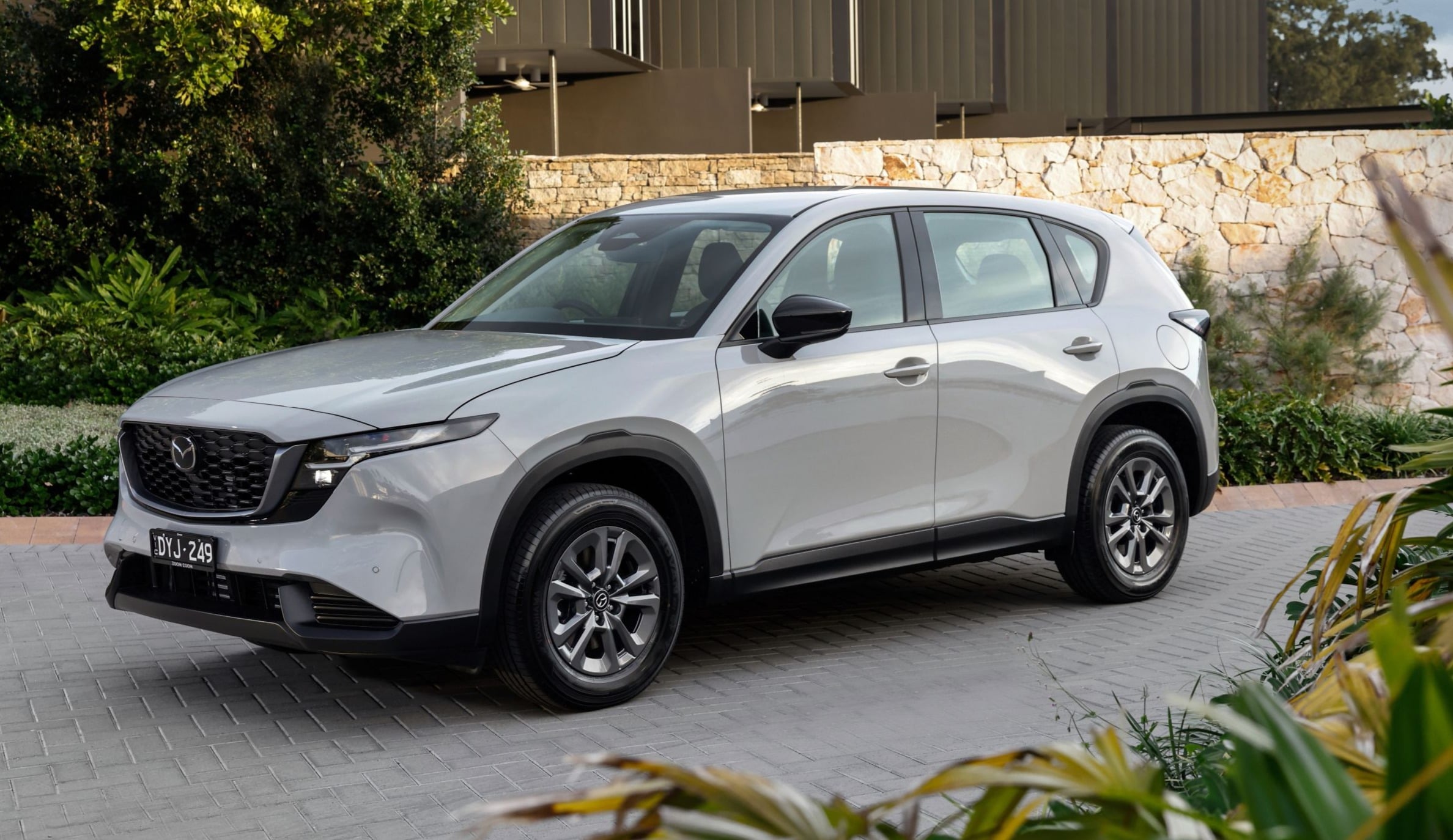
Mazda’s CX-5 really needs no introduction to WhichCar by Wheels readers. The boss of Mazda Australia is unequivocal when he says, “this is the most significant vehicle in our brand’s line-up’, and it’s fair to say Australians have loved the CX-5 since it was first released. Since its initial launch, more than 330,000 CX-5’s have left dealerships in the hands of Australian buyers. And Mazda’s internal data indicates that more than 20,000 current owners have bought more than one CX-5.
With more than five million sales globally, it’s just as popular around the world as it is here in Australia, also. Making up around 25 percent of all Mazda sales in Australia, the CX-5 has been the manufacturer’s most popular vehicle in this market for seven years running.
Key points for this third-generation version are a larger body, new technology and all- wheel drive as standard across the range.
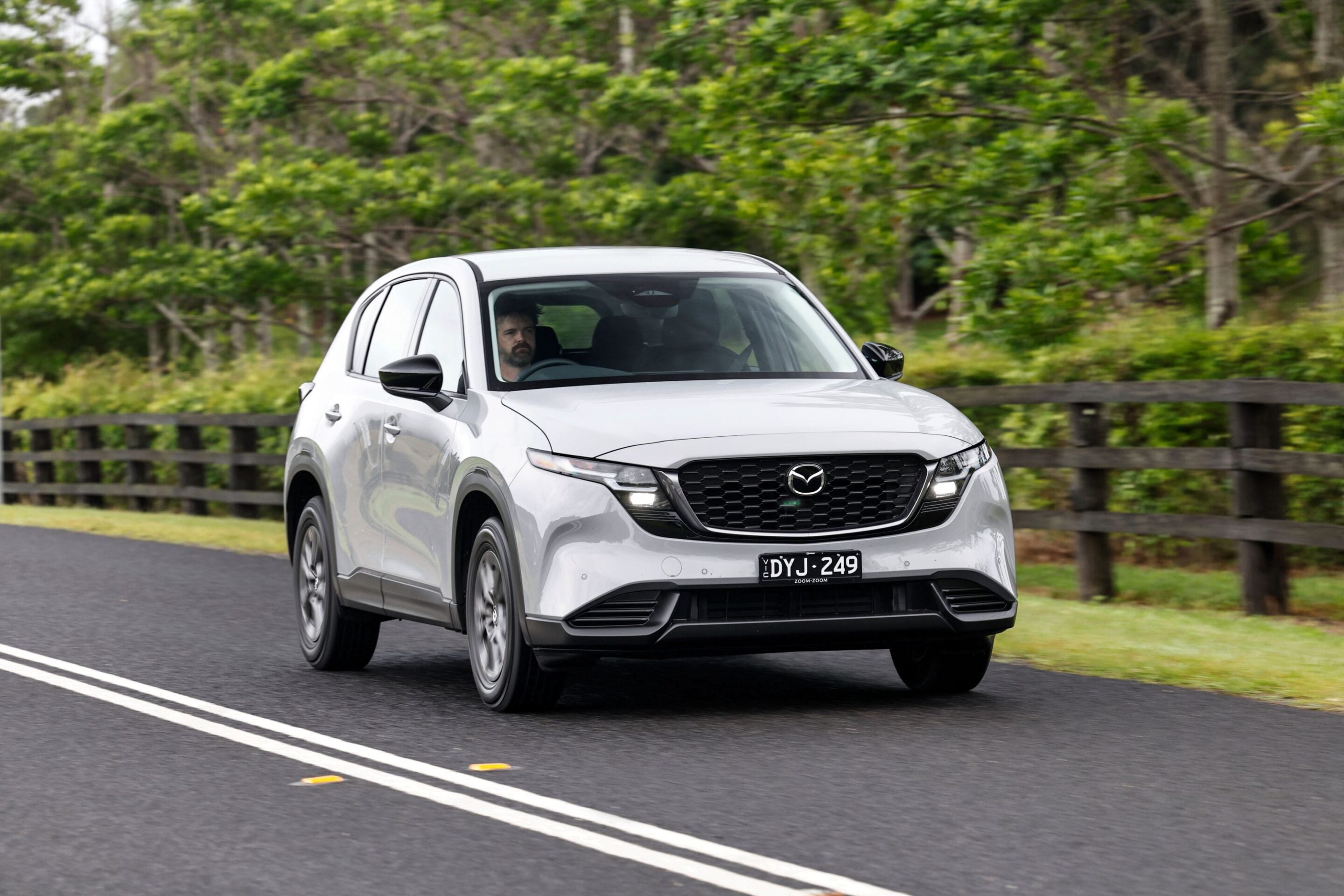
1
How much does the Mazda CX-5 cost to buy?
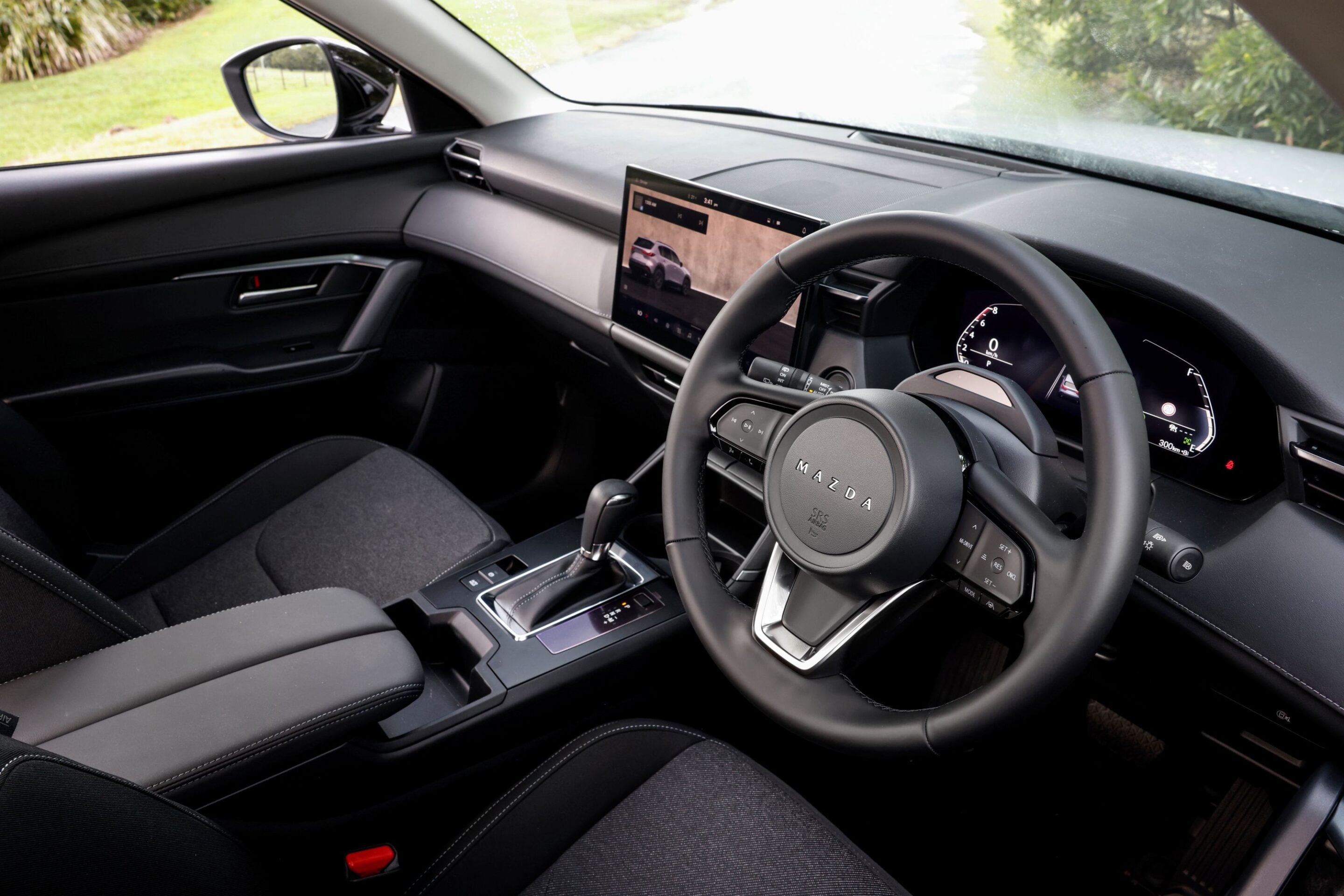
Mazda’s sharp pricing is noteworthy, too, even the entry to the range Pure, which starts from $39,990 before on-road costs, feels like a well-executed medium SUV. Standard equipment on the base model includes 17-inch alloy wheels, dusk-sensing LED headlights, 12.9-inch infotainment touchscreen, 10.25-inch digital driver’s display, black cloth trim, dual-zone climate control, wired smartphone connectivity, autonomous emergency braking in forward and reverse, adaptive cruise control with stop and go, lane-keep assist, blind-spot monitoring, parking sensors front and rear, and a rear-view camera.
Our standard specification list below, details that entry point to the range, with standard equipment increasing as you spend more money. Step up through the model grades and you will spend $42,990 for the Evolve, $47,490 for the Touring, $51,990 for the GT SP and $54,990 for the Akera. All prices listed are before on-road costs are factored in.
The most crucial question to be answered, and time will tell as the sales figures start to roll in, is whether the CX-5 can endure in this market, when all of its main competitors feature hybrid technology of some kind. At the time of the CX-5 launching, only Renault Koleos, Skoda Karoq and Mahindra XUV700 are not available with either hybrid or plug-in hybrid drivetrains.
For Mazda’s part, it says a hybrid CX-5 is on the way, and that vehicle must feel and respond like a Mazda from behind the wheel, rather than simply trumpet a headline efficiency number. As relevant as that may be to buyers, it’s also fair to say that plenty of buyers in this segment value efficiency as much as, if not more than, anything else. There is a response in the way that the CX-5 behaves on the road though, that not all SUVs can match. Certainly not at this competitive price point.
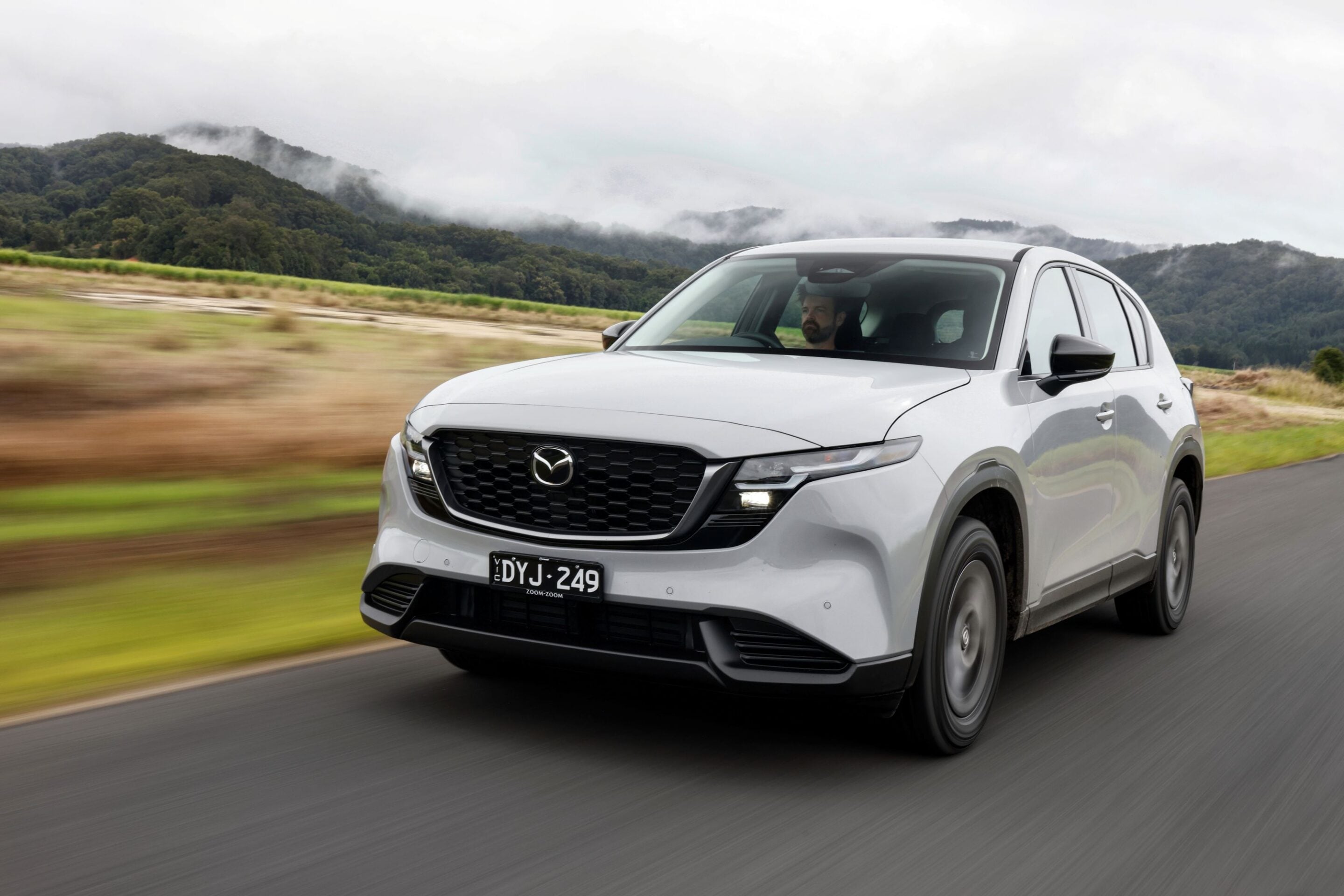
3
How powerful is the Mazda CX-5?
Significant to this revision of the lineup is the rationalisation of the previous engine options, with the range now powered by one engine only – Mazda’s 2.5-litre, naturally aspirated four-cylinder ‘G25’ petrol variant.
For 2026, both power and torque have been lowered – to meet stricter emissions standards – now 132kW and 242Nm (-8kW/10Nm). It’s fair to say that the CX-5 doesn’t have the punch it might with a more powerful engine, a larger engine, or a hybrid drivetrain, certainly off the mark when you nail the throttle. That said, it doesn’t feel slow either, with more than enough urge to do what the target buyer will need it to do day-to-day. And as noted, this engine was the most popular among Australian buyers.
On the subject of the engine note, nail the throttle and it’s evident there’s a naturally aspirated four-cylinder working away beneath the bonnet. While it doesn’t sound or feel like it’s being pushed beyond its comfort zone, the sound its making means its more noticeable than it would be if there was hybrid – or turbo – technology at play. Again, the CX-5 doesn’t feel slow, as you might fear looking at the spec sheet. The power and torque figures won’t cause your eyes to water, but they do allow the CX-5 to do what buyers will need it to do.
On typical country roads, the CX-5 is a fun SUV to drive, whether it’s on the 17s of the base model or the 19-inch tyres further up the grade walk. If you live in an area with particularly poor roads, the 17-inch wheels and tyres will serve you well, but even on 19s, the CX-5 manages to neatly deal with and insulate the worst surfaces beneath it. The balance between handling prowess and ride quality is something Mazda engineers have nailed for this segment, the way WhichCar by Wheels sees it.
4
The six-speed automatic is another part of the CX-5 equation that works well across various driving disciplines. At a time when a CVT or a 10-speed automatic is common, there’s a lot to like about the simplicity and precision of Mazda’s six-speed, which doesn’t hunt through multiple ratios at city speeds, something that can grate with other transmissions. Whether you’re in town or on the highway, the Mazda automatic works nicely.
Step out of the base model into the more expensive, higher grade Akera variant and there’s a requisite step forward in terms of luxury, amenity and features. The 15.6-inch infotainment screen is a whopper, and the panoramic sunroof adds a light, airy feel to the cabin. Steering wheel paddle shifters lift the sporty aspiration a little, too. In real terms it’s no more fun to drive than the more austere base model, but it’s a more luxurious way to undertake the same road trip.
How fuel efficient is the Mazda CX-5?
The G25 can run on regular unleaded fuel and uses a claimed 7.4L/100km on the combined cycle. Interestingly, according to Mazda, the majority of buyers in 2025 – of the outgoing model – opted for the G25 engine, making the decision to switch the range to one engine, easier to understand.
Mated to the G25 across the range, is Mazda’s familiar six-speed automatic and all-wheel drive, and the good news is that while it’s not as efficient as the raft of hybrids on offer in the segment, it’s still comfortable below the 10.0L/100km mark in the real world. With the understanding that launch drives are tailored to suit the vehicle, we saw a live reading below the 7.4L/100km claim while cruising, while stop/start city driving saw it climb into the high 8 range. We’ll report back with a more accurate fuel use figure post launch.
Is the Mazda CX-5 practical?
Mazda is predicting a full five-star ANCAP safety rating to match the five-star Euro NCAP rating the CX-5 already has. Other key changes beyond those noted above include an overall length increase of 115mm, 70mm of which goes into a deeper second row door aperture, 15mm added to the width, and a boot increase to 466 litres with the second row in use. Fold that row down and available space is up 254 litres to 1594 litres.
The extra length in the wheelbase, with 70mm added to the rear door apertures, means getting into and out of the CX-5 is easier than it was previously, and the doors open almost square, too. There’s room in the second row for adults, but keep in mind you need to step up to Evolve (second in the range) to get rear air vents. Mazda touts the ability to fold the second row flat, reverse the headrests in the seat backs, and create a flat space to recline for occupants up to 185cm in height. If you’re into star gazing through the panoramic glass roof of the Akera variant, it’s a handy feature.
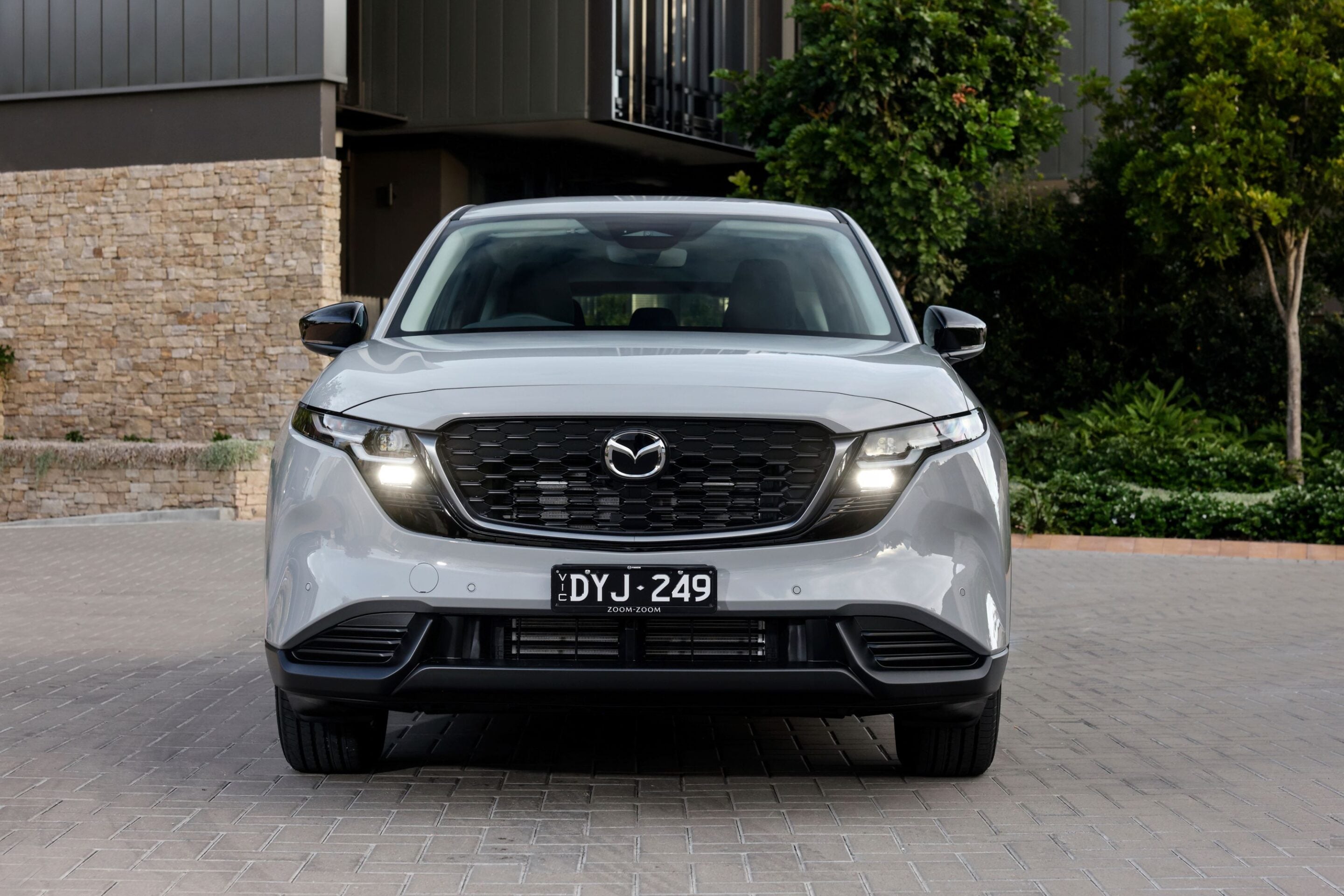
2
There is some hard plastic trim on the dash and door tops in the base Pure, but that aside, it features a quality cabin that is nicely insulated when you’re on the move. Tyre and wind noise is kept to a minimum, and while the engine note is noticeable as revs increase, it lends a sporty feel to the experience, which plenty of Mazda buyers like. Crucially, the most affordable CX-5 doesn’t feel like its built down to a price, which is a tangible benefit for those buyers on a tight budget.
What warranty covers the Mazda CX-5?
The CX-5 is, as all Mazdas are, covered by the brand’s five-year, unlimited kilometre warranty. Servicing is required every 12 months of 15,000km, whichever comes first, and cost $369, $556, $434, $556 and $369 respectively, for a five-year total of $2284 up to 75,000km.
Should I buy the Mazda CX-5?
The revised Mazda CX-5 is a high-quality medium SUV. There’s no doubt that even in its most affordable guise it’s quiet, refined, well-appointed and engaging to drive. There’s a line in the sand that separates the way in which a CX-5 behaves on a twisty road compared to most other medium SUVs and it certainly engages the driver in a way that others don’t. Is that enough to ensure it remains as popular as it has always been, while buyers wait for the launch of a hybrid? Time will tell.
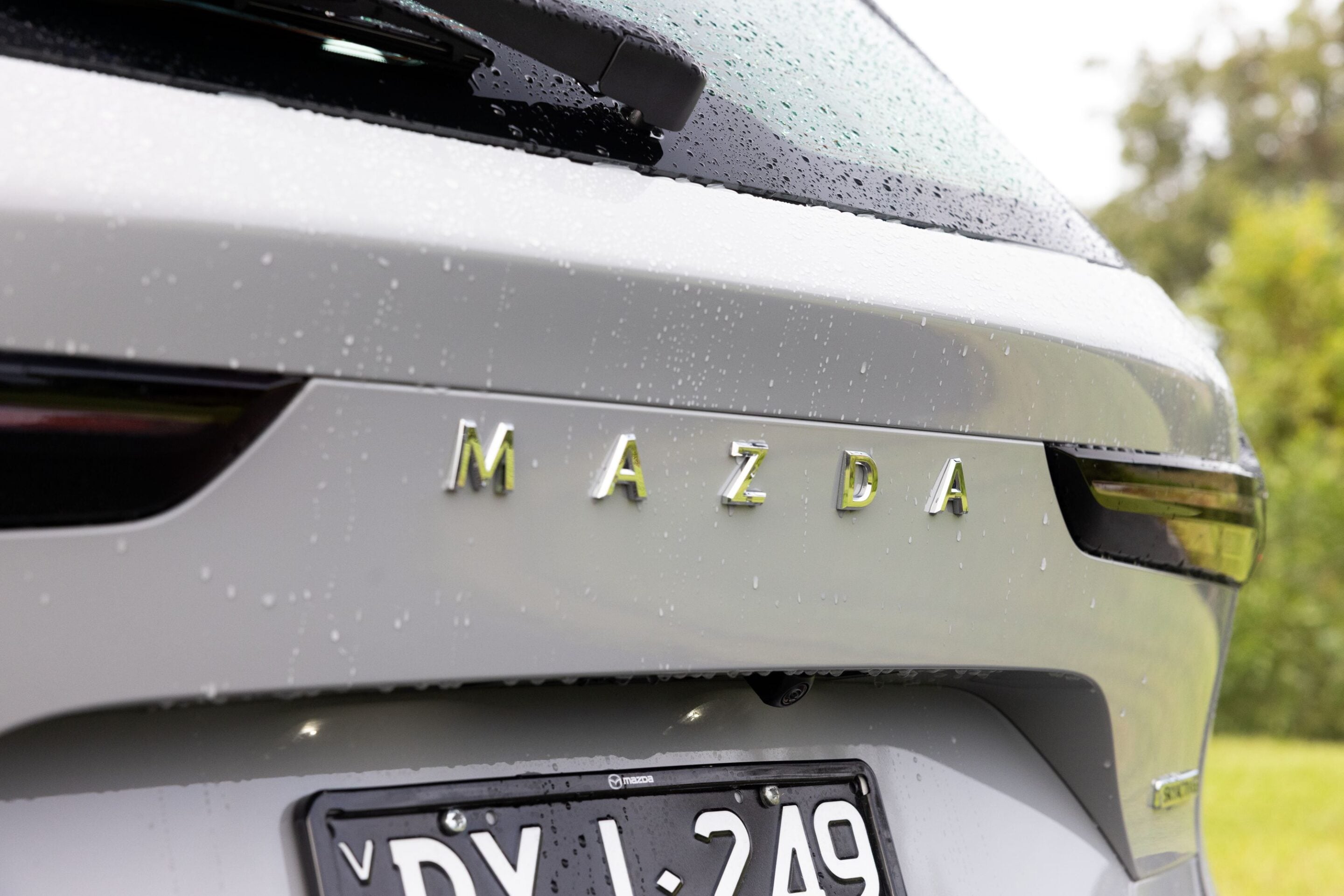
1
Mazda CX-5 standard equipment
- 17-inch alloy wheels with space-saver spare
- 12.9-inch infotainment touchscreen
- Mazda Connected Services
- Wired Apple CarPlay and Android Auto
- Eight-speaker audio system
- Basic voice control
- FM/AM/DAB+ radio
- 10.25-inch full-digital instrument cluster
- Dual-zone climate control
- Rain-sensing wipers
- LED daytime running lights
- Black cloth seat upholstery
- Leather-wrapped steering wheel and gear shifter
- Eight-way manual driver’s seat adjustment
- Front and rear parking sensors
- Autonomous emergency braking
- Lane-keep assist
- Lane departure warning
- Blind-spot monitoring
- Front and rear cross-traffic alerts
- Adaptive cruise control
- Traffic jam assist
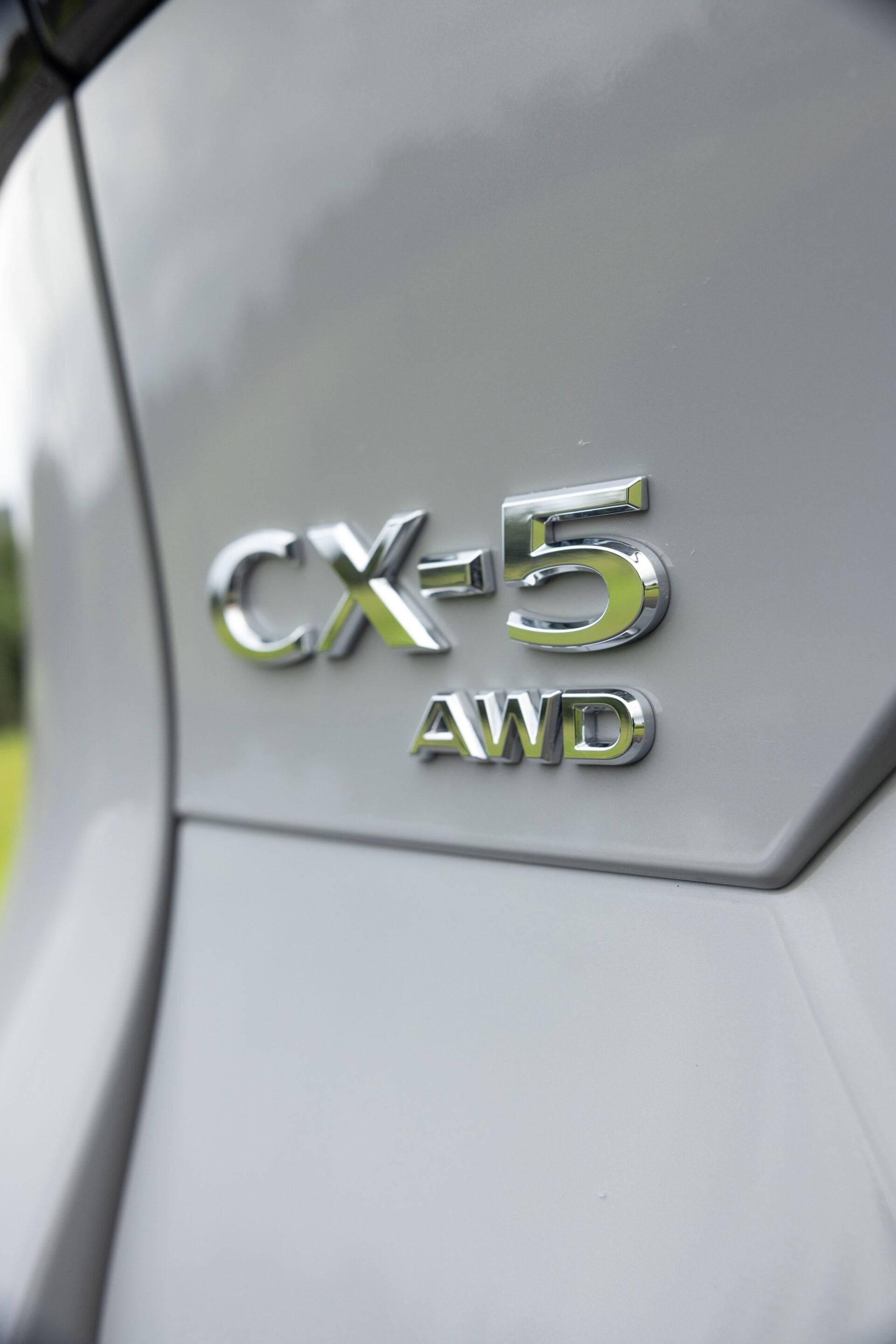
1
Mazda CX-5 Pure specs
| Price | $39,990 plus on-road costs |
|---|---|
| Engine | 2.5-litre, naturally-aspirated petrol four-cylinder |
| Peak power | 132kW |
| Peak torque | 242Nm |
| Transmission | Six-speed automatic, all-wheel drive |
| Claimed fuel consumption | 7.4L/100km |
| Claimed CO2 emissions | 173g/km |
| Fuel type/tank size | Diesel, 58 litres |
| Dimensions (l/w/h/wb) | 4690/1860/1695/2815mm |
| Kerb weight | 1559kg |
| Warranty | Five-year/unlimited km |
| Five-year service plan cost | $2284 |
| On sale | Now |
8.0
/10
Score
Score breakdown
8.0
Safety, value and features
8.5
Comfort and space
7.5
Engine and gearbox
8.0
Ride and handling
8.0
Technology
Things we like
- Space has been added in the cabin
- Quality cabin ergonomics
- Driving engagement a winner
Not so much
- Still no hybrid
- Some hard plastics in the base model
- Only one engine across the range
Follow WhichCar/Wheels on Google
Click the button below to make WhichCar by Wheels a preferred source for your news.

We recommend
-
 Comparisons
Hatchback Hit-Out: Mazda 3 v Kia K4 v Volkswagen Golf
The small car battle has raged in this country ever since Australians first questioned whether a big country was the place for such a vehicle. Wheels puts three of the frontrunners head-to-head...
-
 News
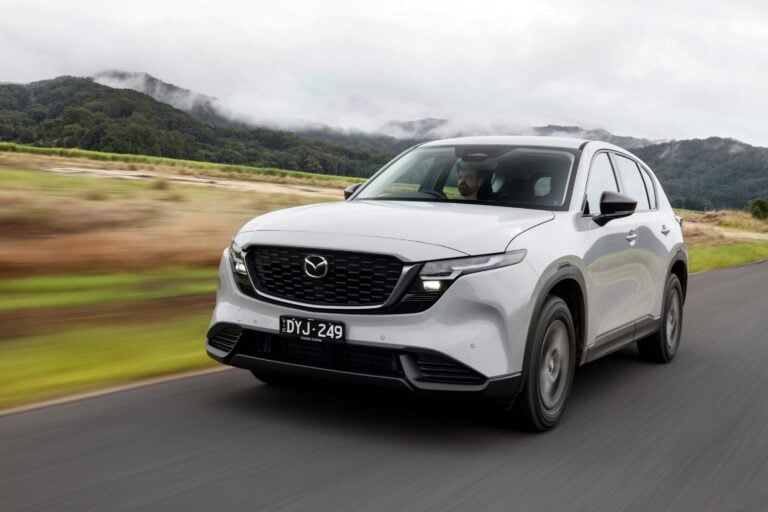
NewsMazda Australia says there’s strategy behind offering a new CX-5 without a hybrid option
It’s a question that has to be asked – can the revised CX-5 thrive in a hybrid-heavy market without a hybrid powertrain – but Mazda’s program engineer is adamant that there is a specific strategy behind the manufacturer’s delay in releasing the car to market.
-
 Features
Most fuel efficient petrol/diesel powered cars on the market: top 10
Searching for a new car but don’t want a hybrid or EV? We’ve got you covered with the 10 most fuel efficient non-electrified cars available.