
Reviews

Gallery 1
8.0
/10
Score
Score breakdown
9.0
Safety, value and features
8.0
Comfort and space
8.0
Engine and gearbox
7.0
Ride and handling
8.0
Technology
Things we like
- Very impressive charging speeds
- Luxurious interior materials throughout
- A genuine improvement over the pre-updated G6
Not so much
- Feels heavy and under-damped in most driving situations
- Very little in the way of physical buttons
- Front seats could offer more adjustment and support
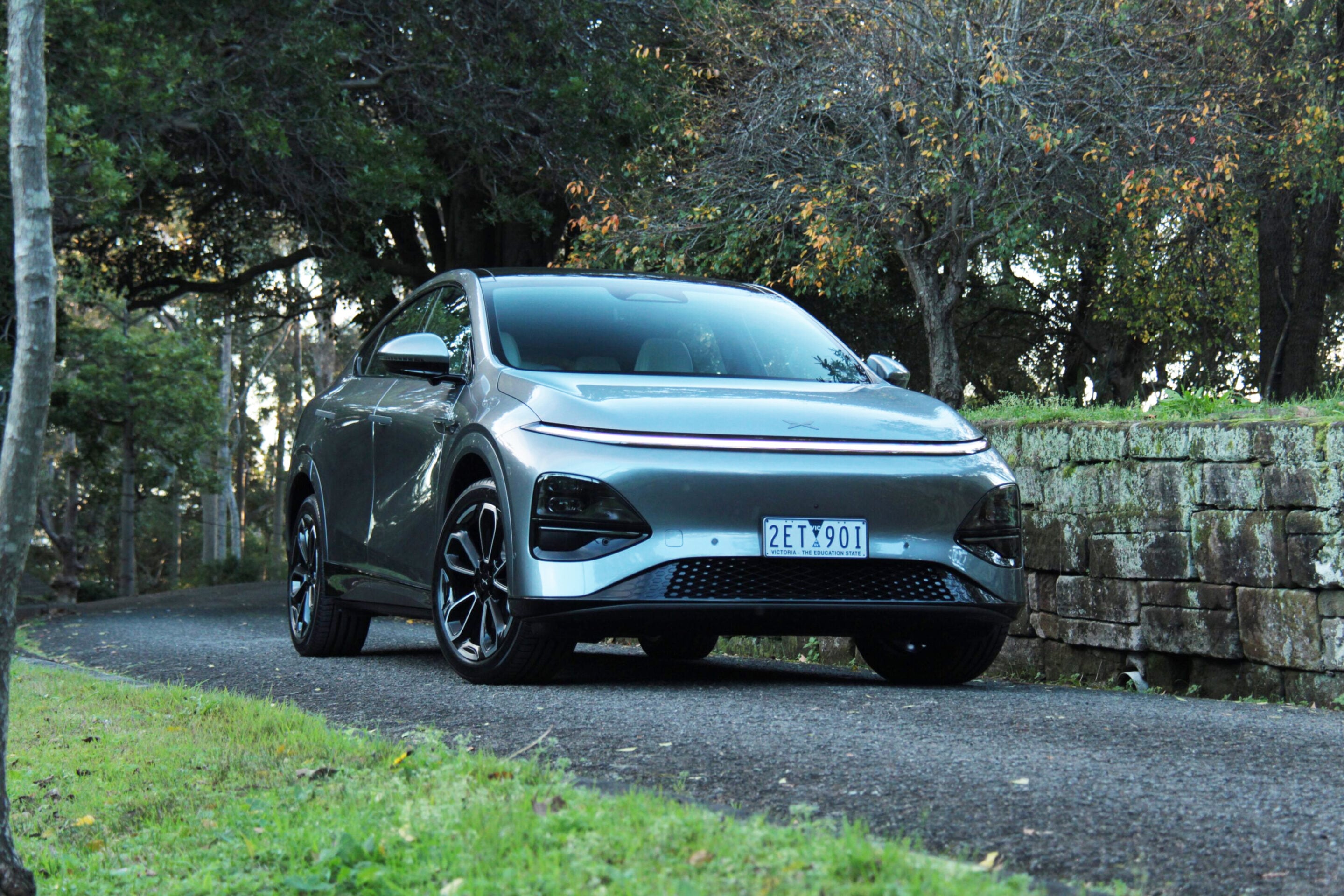
Chinese brand XPeng is entering a new chapter in Australia. With local operations now handled directly by itself rather than distributor True EV, the company is hoping to build stronger momentum locally, banking on an updated G6 to lead the charge.
Freshened with styling tweaks, a revised interior and a lot of technology upgrades, the updated electric medium SUV arrives at a time when competition has never been fiercer. But are the changes to the XPeng G6 enough to warrant serious consideration among Australia’s best-selling electric SUVs?
How much does the G6 cost to buy?
Pricing for the updated XPeng G6 range starts at $51,800 plus on-road costs, which is actually $3000 less than the pre-updated G6. We tested the mid-range G6 Long Range, which is priced from $56,800 +ORC and competes with cars such as the BYD Sealion 7 Premium ($54,990 +ORC), Kia EV5 Earth ($61,170 +ORC but currently on offer for $59,990 driveaway) and Tesla Model Y Premium ($58,900 +ORC), the latter of which has been Australia’s best-selling vehicle for the past two months.
5
2026 XPeng G6 pricing (excluding on-road costs):
| RWD Standard Range | $51,800 |
|---|---|
| RWD Long Range | $56,800 (tested for this review) |
| AWD Performance | $63,800 |
| AWD Performance Black Edition | $66,800 |
A full list of standard features was not yet available at the time of testing, but highlights include a panoramic glass roof, 18-inch alloy wheels, a 10.25-inch digital driver’s display, a 15.6-inch touchscreen with wireless Apple CarPlay and Android Auto and live services, a 10.25-inch digital driver’s display, 18-speaker ‘XOPERA’ audio, dual wireless phone chargers, heated/ventilated/massaging front seats, a heat pump and vehicle-to-load (V2L) functionality at up to 6kW.
Moving up to the Long Range models such as our test car and features like 20-inch alloy wheels, nappa leather upholstery and a digital rear camera are added.
Safety kit include seven airbags, adaptive cruise control, adaptive lane guidance, autonomous emergency braking with forward collision warning, lane keeping assistance, blind-spot monitoring with rear cross-traffic alert, rear collision warning, door open warning, driver attention monitoring, traffic sign recognition and a 360-degree camera with a transparent chassis view.
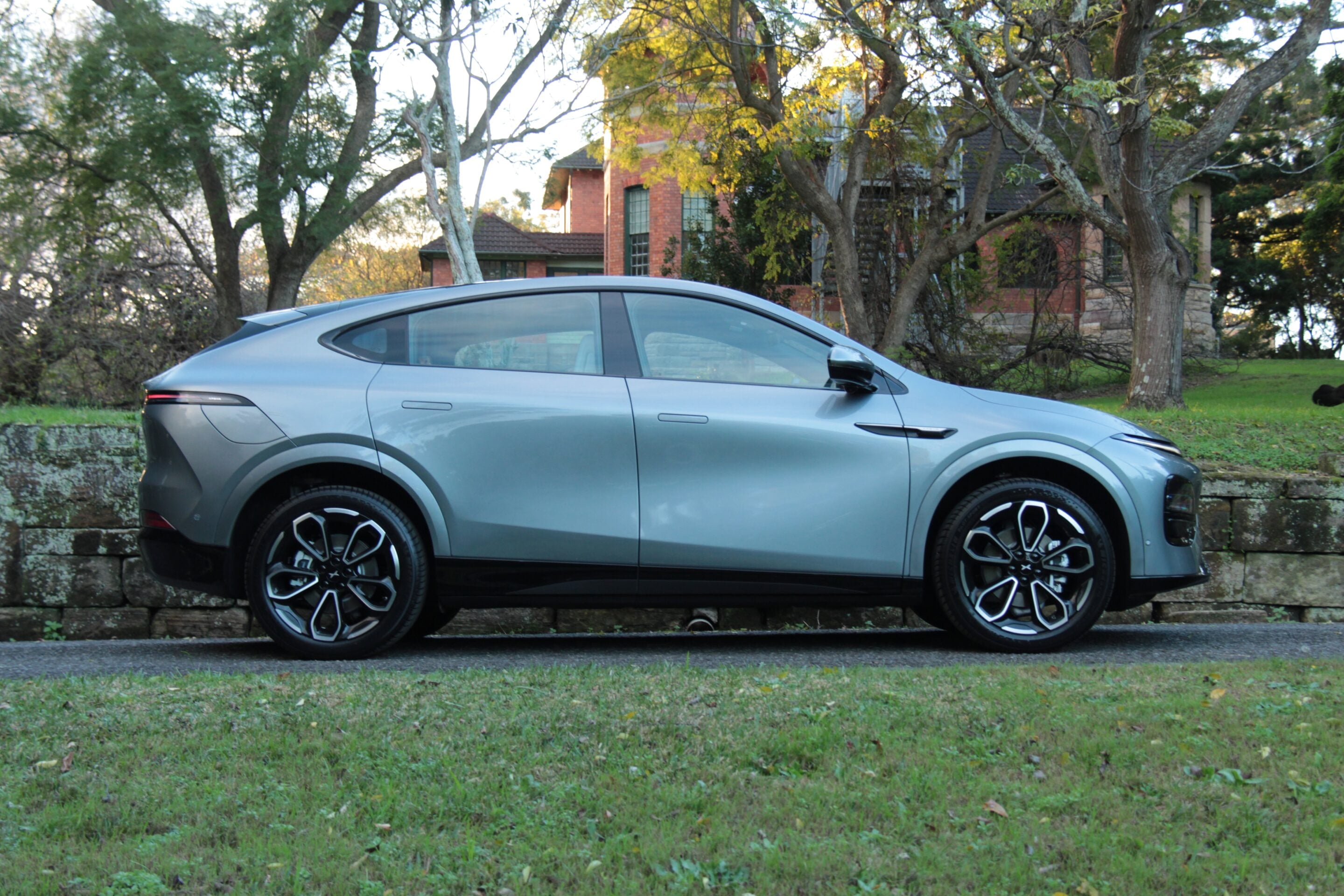
Colour options include ‘Arctic White’, ‘Silver Frost’, ‘Midnight Black’, ‘Stellar Purple’ and the ‘Graphite Grey’ of our test car, plus there’s also the Black Edition model at the top of the range which paints everything on the outside in black. Any colour that’s not the white option adds a steep $1500 to the price, while the interior is available in either dark grey or the light grey of our test car.
How practical is the XPeng G6?
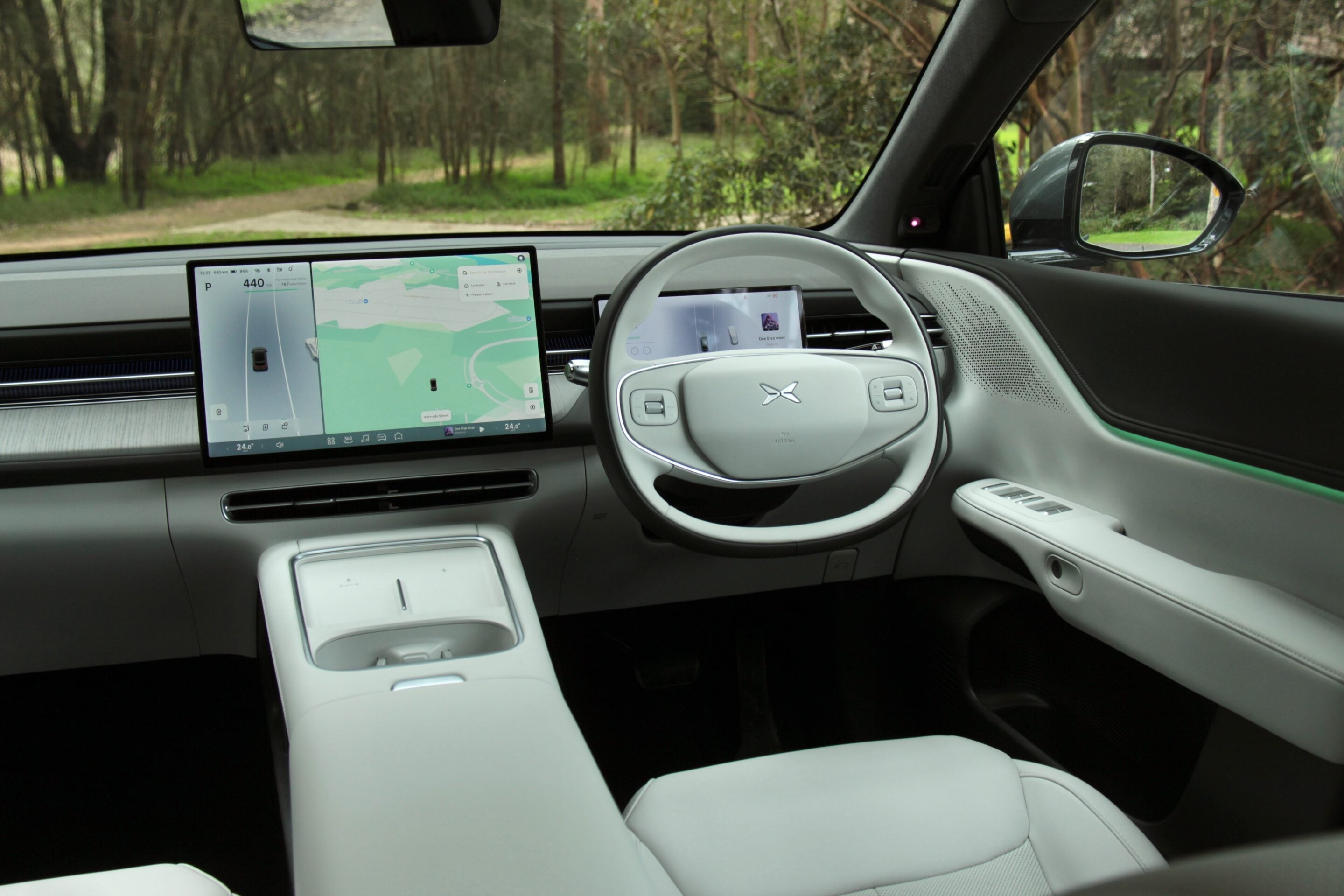
The updated G6 gets off to a flying start on the inside because it makes an excellent first impression when you open the – frameless! (how cool) – doors. Its cabin is clean and modern, and while it uses a very similar layout to many electric SUVs we’ve seen since the Model Y entered the chat – ya know, a huge central touchscreen packed with every feature and no physical buttons – its material quality is a definite step above its main rivals. Not only are there soft touch leather-like materials covering most of the cabin, but the stitching is tight, and the ambient lighting is subtle and not in your face. Impressive.
6
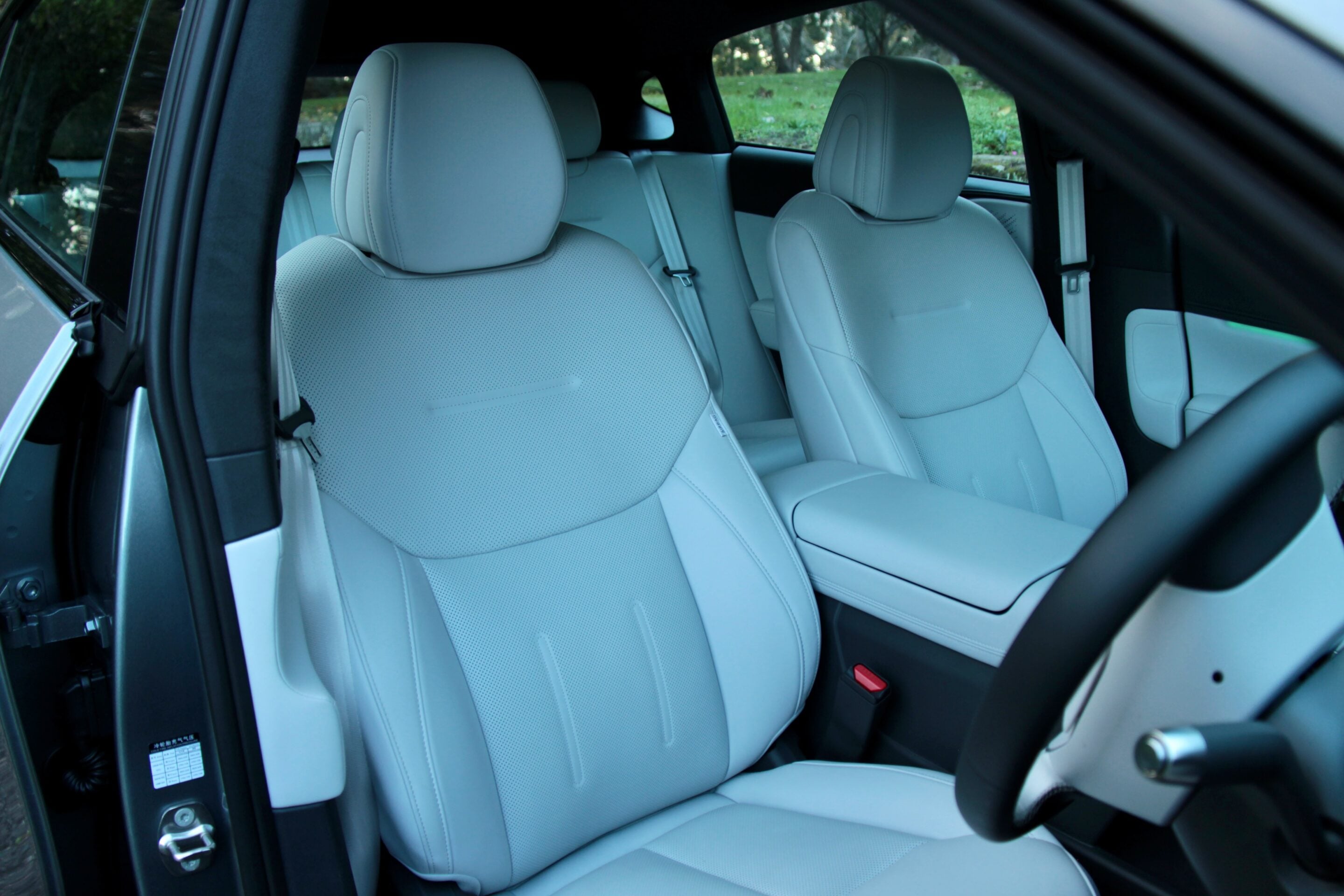
Seat comfort is less impressive, however, as there’s no under-thigh angle adjustment, robbing the driver of a crucial layer of comfort, and there’s a bit too much lumbar support. Otherwise, there is pretty good massaging functionality, while the heating and ventilation are quite effective. It’s just a shame that you must press the screen at least three times to access them, but more on that later.
Storage inside the G6 is positive, including deep bins underneath the centre console and arm rest, reasonable door pockets and effective cup holders, and dual wireless phone chargers on the centre console. But, for whatever reason, that panel you think is a glovebox is not actually a glovebox, and the car doesn’t feature one at all. Considering that the G6 is not a lightweight sports car like the Mazda MX-5 – which doesn’t offer a glovebox to apparently help save weight – it’s an odd oversight.
A 15.6-inch touchscreen dominates the dashboard design, and aside from the steering wheel buttons and overhead controls, is used to operate every function in the car. The display is very sharp and quite responsive, and while there are no physical controls for the heating and ventilation, the shortcut bar at the bottom of the screen is permanent for easier access. It’s also loaded with features, including wireless Apple CarPlay and Android Auto, DAB+ digital radio, sat-nav, live services, over-the-air updates and even access to an app store to download your favourite apps.
However, as is the case with many other modern vehicles, there’s simply too many features loaded into the screen and getting to many of them requires at least three touches of the screen. A good example is adjusting the heating and ventilation – yes, there’s a shortcut menu that expands when you press the temperature, but if you’re after specific tuning like the air zone, you must access the HVAC menu, meaning even more button presses. Also, both the mirror and headlights controls are buried in the screen. Annoying.
Some more obvious icons and fonts for important functions in the menus would also help, as much of the structure looks the same throughout, making it tedious and confusing to find certain functions. However, the 18-speaker ‘XOPERA’ audio system is effectively punchy, and is one of the best stereos we’ve heard from a Chinese manufacturer.
6
Because of the sloping coupe roofline, rear headroom for tall adults isn’t amazing, but leg- and foot room is good, and thanks to the standard glass roof – which will get hot in summer as there’s no sunshade and flat floor, it feels spacious. Amenities include air vents, heated outboard seats – which are controlled through the touchscreen in the front – and air vents, two USB-C charging points, door and map pockets and a central armrest with cup holders.
Behind the rear seats lies a healthy 571 litres of boot capacity, which opens up to 1374 litres with the rear seats folded. It’s not as large as the Model Y (938 litres seats up/2022 litres seats folded) back there, but the materials used are of good quality and there’s also a hidden compartment under the boot floor for extra storage, but no spare wheel and, surprisingly, no front boot either.
How quickly does the G6 charge?
Fun fact about the updated XPeng G6 is that it’s actually one of the fastest-charging electric cars currently on sale locally, as it’s capable of charging at up to 451kW. There’s actually no charger in Australia yet that can charge that quickly – a few are capable of 400kW, but not any higher – but when they are eventually available, the G6 will be able to be charged from 10 to 80 per cent in a claimed 12 minutes. AC charging hits an 11kW peak in the G6, which isn’t anywhere near as impressive, but it’s fine.
That’s slightly better than the very quick-charging Zeekr 7X, and more than twice as quick as something like the Toyota bZ4X, which was also just given a big update with improvements to its battery. Another upgrade for the updated G6 with its update is a switch from NMC (Nickel Manganese Cobalt) to LFP (Lithium Iron Phosphate) batteries, which are capable of charging to 100 per cent more regularly, plus they are safer and also cheaper to produce.
Is the G6 good to drive?
Let’s start with the positives about the driving experience for the XPeng G6. With 218kW and 440Nm outputs, it’s got more than enough grunt for most buyers. Its claimed 0-100km/h sprint time is 6.7 seconds, but the power delivery is also quite smooth as well, and it’s not an instant shove in the back like a lot of EVs. It’s also quite refined, with very little in the way of road noise and no wind noise either thanks to the noise insulating front glass and aerodynamic shape. Also, unlike the Model Y and Sealion 7, there’s a rear wiper!
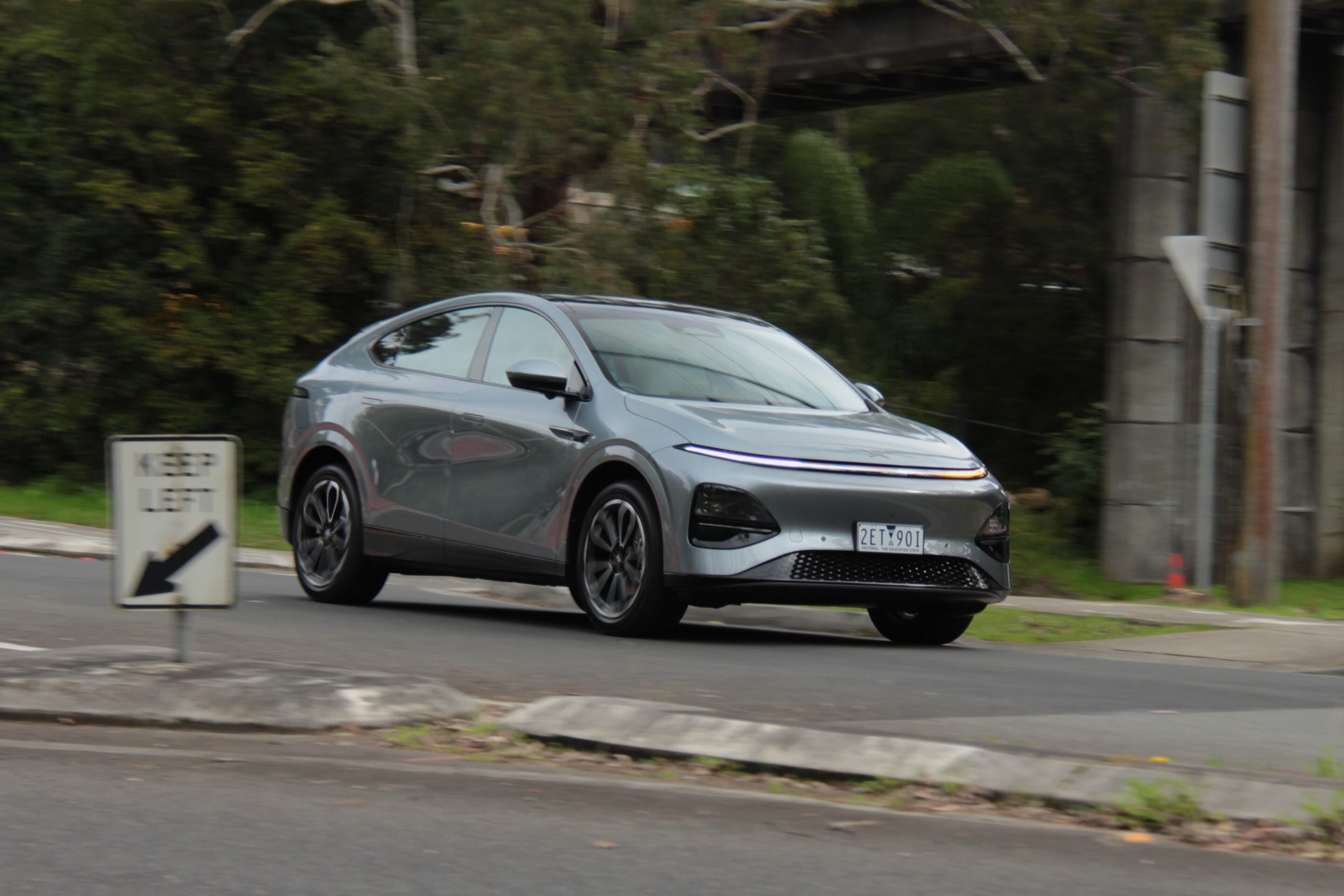
However, we think there could be some final tweaks to make the driving experience of the G6 better. It’s not a sports car and isn’t marketed to be, and its ride and steering is improved compared to the pre-updated model, but ultimately needs more finessing. It’s not uncomfortable by any means and remains a fairly relaxing car to drive, but the ride quality on the 20-inch wheels of the Long Range model never settles properly in urban driving and you’re always feeling some sort of busyness.
6
At higher speeds, it’s definitely better, but the body control needs firming up. The steering is also a mixed bag. In its standard mode it’s a bit lifeless and the large wheel doesn’t help with the G6 feeling heavy to drive, but switch it to sport mode and becomes too heavy. We think a local ride and handling tuning program, like GWM and Kia, would be a great idea.
Thankfully, its plethora of active safety tech is well tuned for the most part. Like a lot of Chinese cars, the adaptive cruise control is too sensitive and its active lane keeping assistance is a bit too overactive, but we like how you can adjust the sensitivity of its safety functions. There’s also a shortcut menu on the touchscreen to easily disable the speed alert, while the screen quality for the 360-degree camera is one of the best we’ve experienced. We also used the automatic parking functionality and it works quite well.
What warranty covers the G6?
One of the biggest benefits for customers in the switch to factory distribution for the XPeng brand is that the standard warranty has grown from five years/120,000km to seven years/unlimited km, which is longer than Tesla and BYD, and equals Kia.
7
The eight-year/160,000km battery warranty remains as before, while XPeng is yet to announce service pricing for the updated G6. We’ll update this review when it does.
Should I buy an XPeng G6?
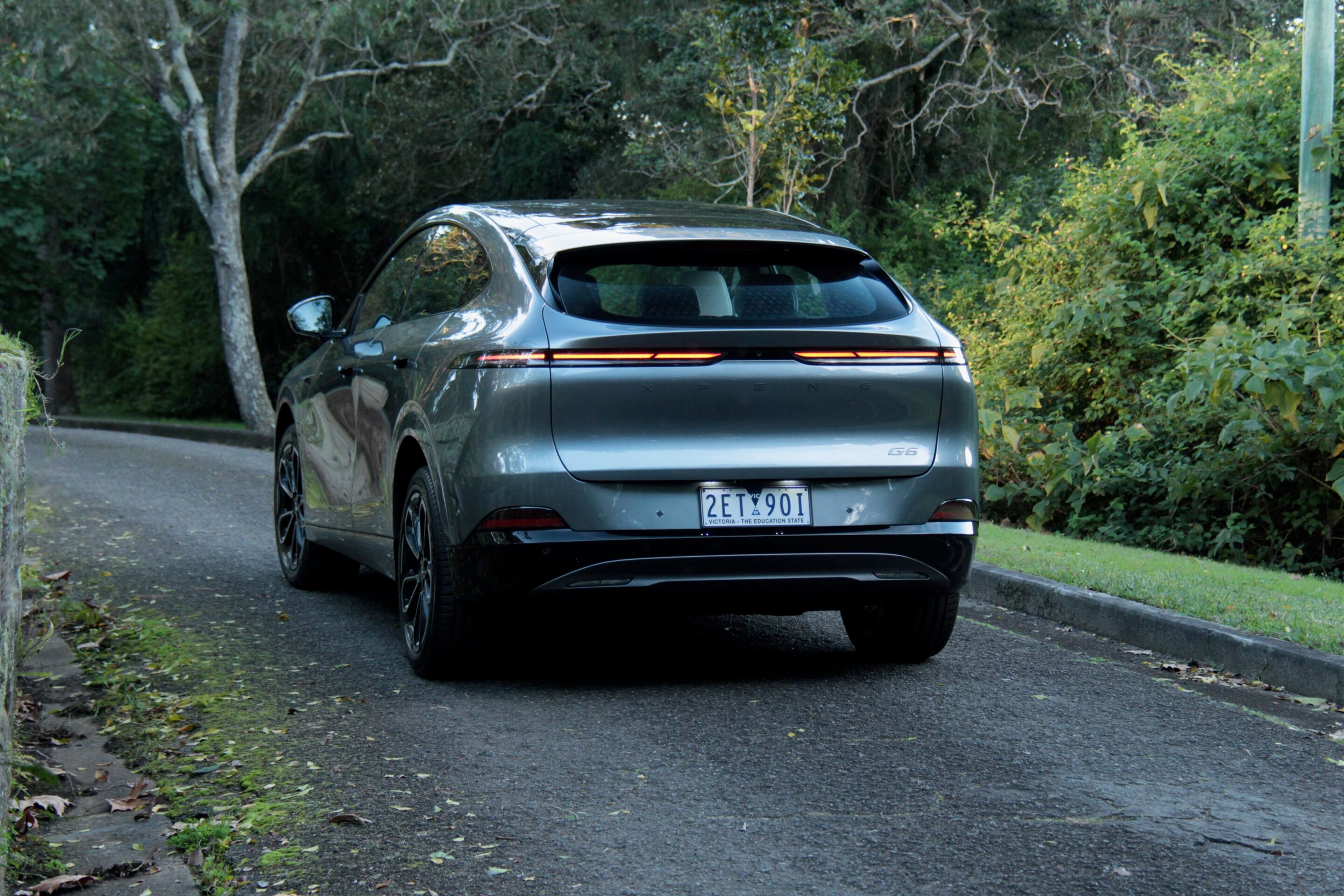
Overall, the updated XPeng G6 presents an overall positive look at the future of the company in this part of the world. The G6 is the first model that the company has launched here but on this basis, future models will likely have more of a chance at success. The G6 is now more attractive to look at and also more attractively priced, while it ultra-fast charging ability is also very appealing.
What would make it even better are retuned suspension and steering, less sensitive safety features, an easier touchscreen menu structure and a front boot to boost practicality further. We also don’t know how much it costs to service yet. But overall, the XPeng G6 is a well equipped, relatively luxurious, practical and tech-filled electric medium SUV that we think is worth consideration over key rivals like the top-selling Tesla Model Y.
XPeng G6 Long Range specifications:
| Price | $56,800 plus on-road costs |
|---|---|
| Powertrain | Single electric motor, single-speed transmission, rear-wheel drive |
| Battery | 80.8kWh LFP |
| Power | 218kW |
| Torque | 440Nm |
| 0-100km/h (claimed) | 6.7 seconds |
| Range (claimed) | 525km (WLTP) |
| Max DC charging rate | 451kW (approx 10-80% in 12 minutes) |
| Max AC charging rate | 11kW |
| Tare mass | 2120kg |
| Dimensions (L/W/H/WB) | 4758/1920/1650/2890mm |
| Boot capacity | 571 litres (rear seats up)/1374 litres (rear seats folded) |
| On sale | Now |
8.0
/10
Score
Score breakdown
9.0
Safety, value and features
8.0
Comfort and space
8.0
Engine and gearbox
7.0
Ride and handling
8.0
Technology
Things we like
- Very impressive charging speeds
- Luxurious interior materials throughout
- A genuine improvement over the pre-updated G6
Not so much
- Feels heavy and under-damped in most driving situations
- Very little in the way of physical buttons
- Front seats could offer more adjustment and support
Follow WhichCar/Wheels on Google
Click the button below to make WhichCar by Wheels a preferred source for your news.

We recommend
-
 News
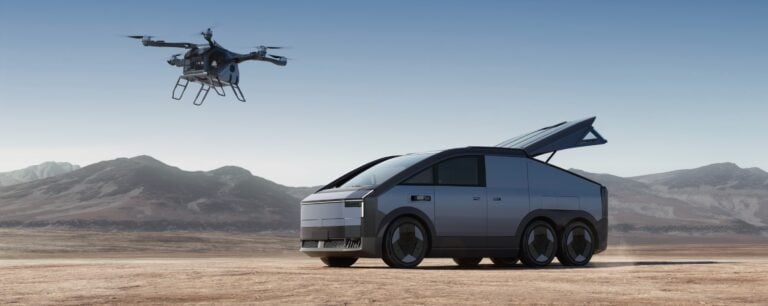
NewsWhy XPeng sees Australia as the perfect place for its flying cars tech
While XPeng only sells electric cars in Australia right now, that could change within a few years as it sets sights on introducing its unique flying cars technology as well.
-
 News
NewsTesla profits dive despite reaching top spot in Australian new car sales... as AI eats into margins
Tesla’s earnings report for the second quarter of 2026 reveals strong vehicle sales globally, but pressures on profitability.
-
 Reviews
BYD Sealion 7 Premium review: Proof of the progress of Chinese cars
China’s automotive surge is reshaping Australia’s new-car market, and BYD’s Sealion 7 shows exactly why buyers are embracing the change.
