
Reviews

Gallery 1
8
/10
Score
Score breakdown
8.2
Safety, value and features
8.0
Comfort and space
8.1
Engine and gearbox
7.7
Ride and handling
7.6
Technology
Things we like
- Impressive list of standard features
- Second row a nice place to spend time
- Suspension prioritises comfort for city driving
Not so much
- Too many features reside in touchscreen
- Ride on the firmish side
- Road noise at higher speeds
There’s a quiet revolution taking place on the Australian new car sales charts, a revolution that is dramatically reshaping the automotive landscape with a simple three-word calling card: ‘Made in China’.
If you’ve been paying attention you’ll know that China is already the number one source for Australia’s new cars in 2026, relegating the once-dominant Japan into second place earlier this year. Of the 475,659 new vehicles sold in Australia to the end of May, 128,559 – more than 27 per cent – were manufactured in the Asian powerhouse.
Sales of cars produced in Japan, meanwhile, continued to slide, losing market share hand over fist to its Asian neighbour, now less than 25 per cent. Five years ago, that market share sat at 33.4 per cent while China was just starting to flex its muscle, more than doubling its market share in a single calendar year from 3.3 per cent in 2020 to 7.2 per cent by the end of 2021. And its inexorable climb shows no signs of slowing down.
Leading the way is automotive powerhouse BYD, which has already claimed the number three spot on the sales charts, just a few hundred sales behind Kia in second, but with a mountain to climb to Toyota in first. Don’t be surprised, though, if by the time you read this, BYD has overhauled the Korean brand as it has already done with the likes of Ford, Mazda, Hyundai, Mitsubishi, Nissan and Subaru, leaving a litter of legacy automakers in its wake.
3
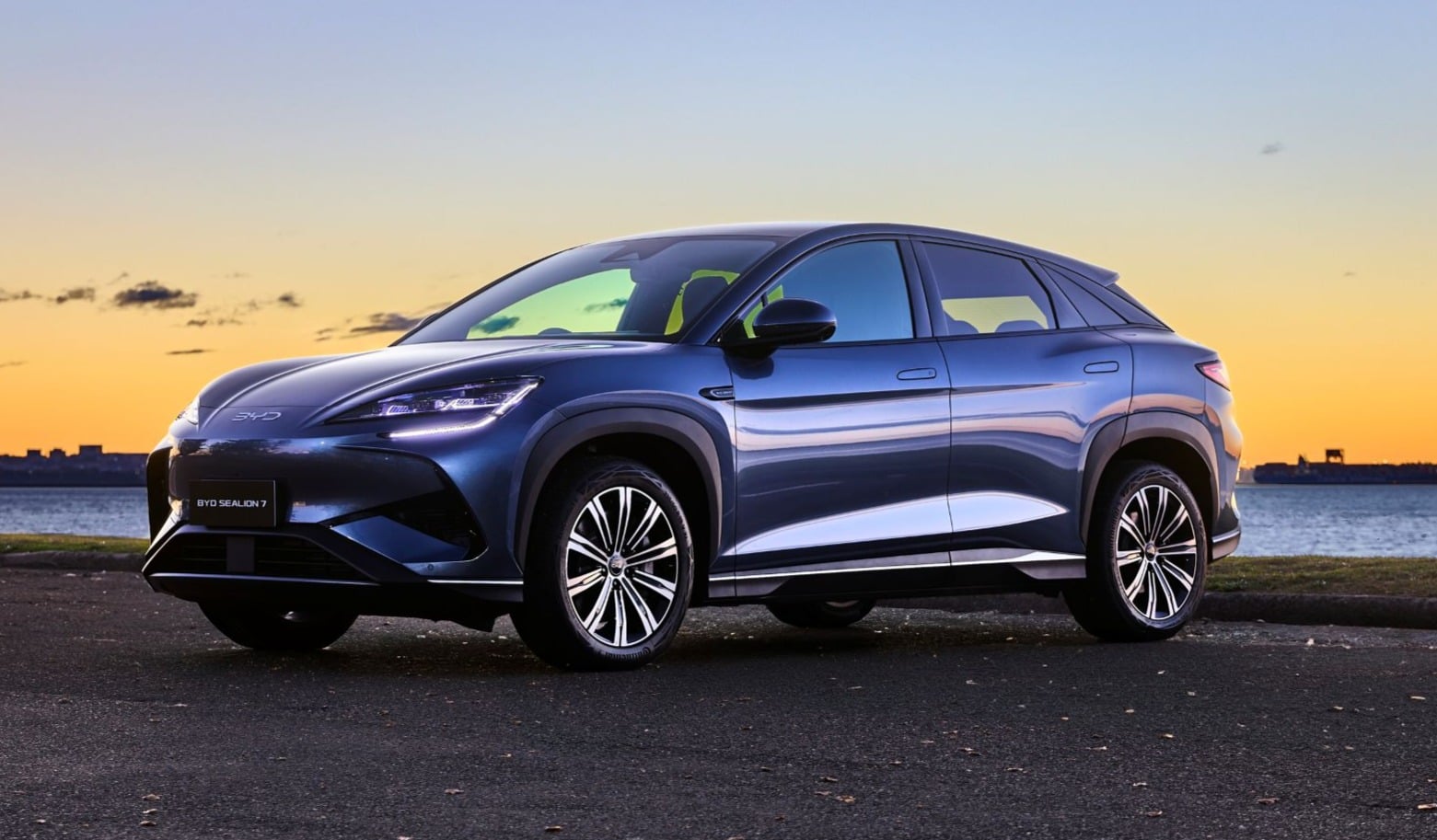
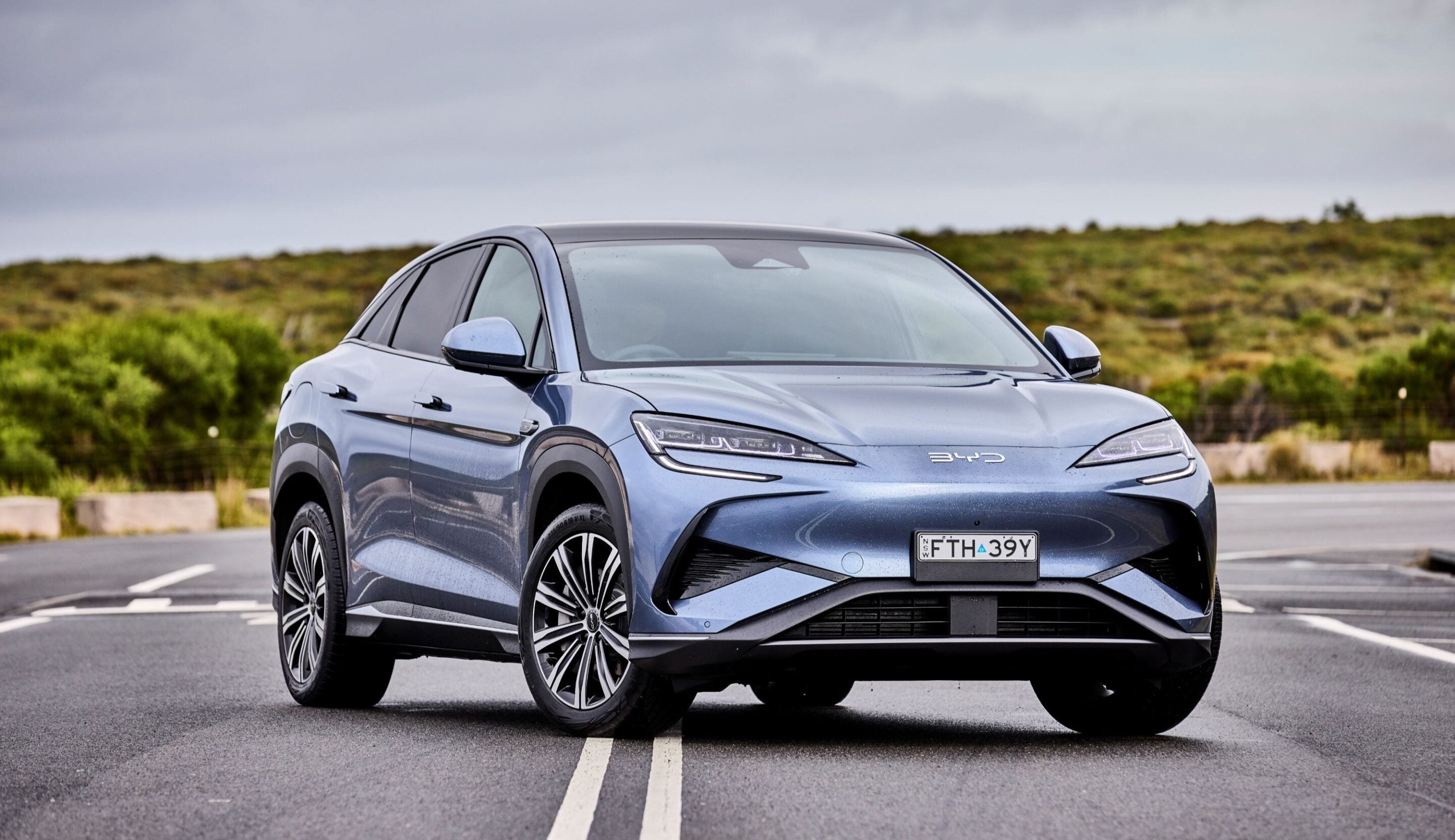
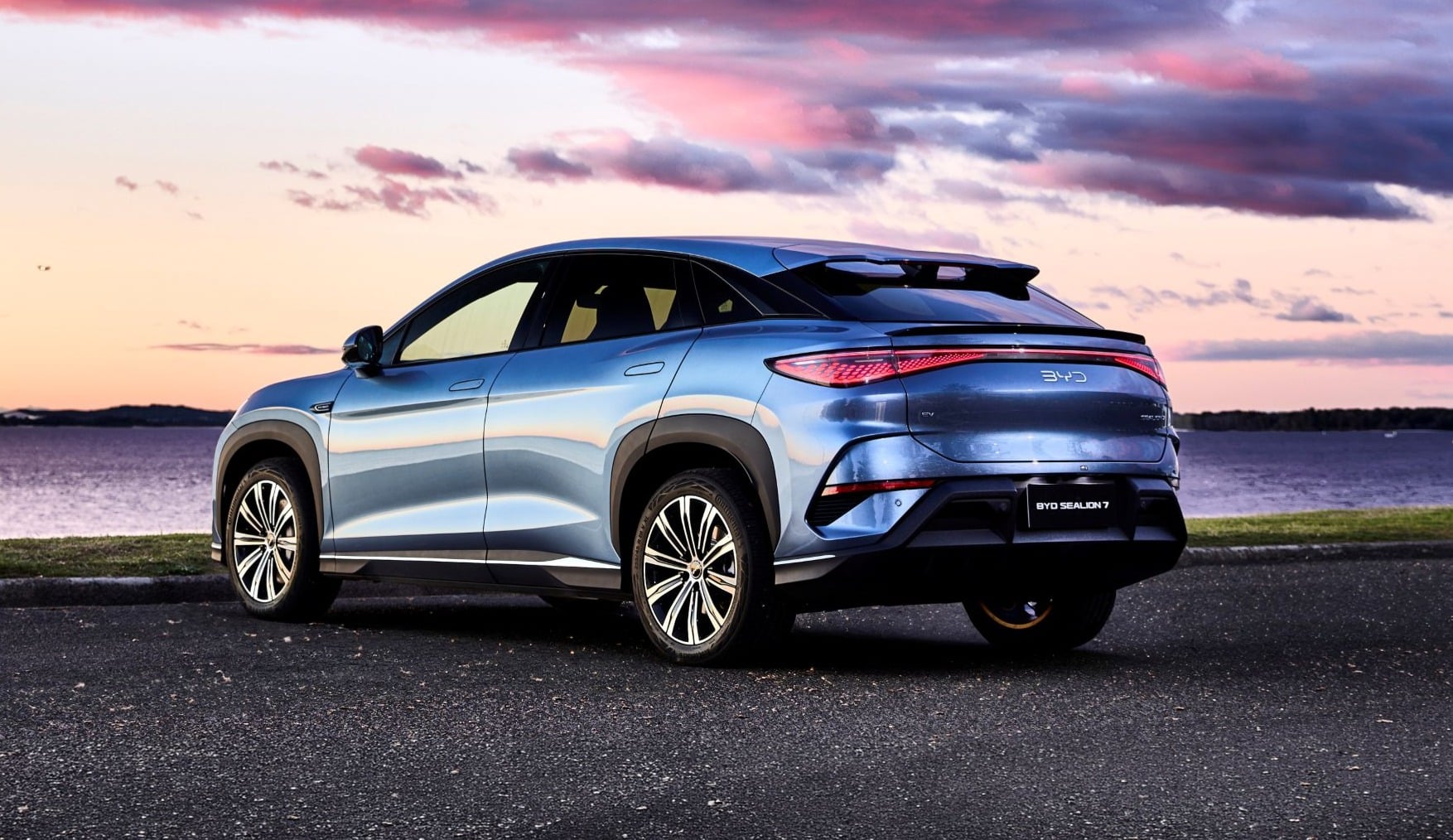
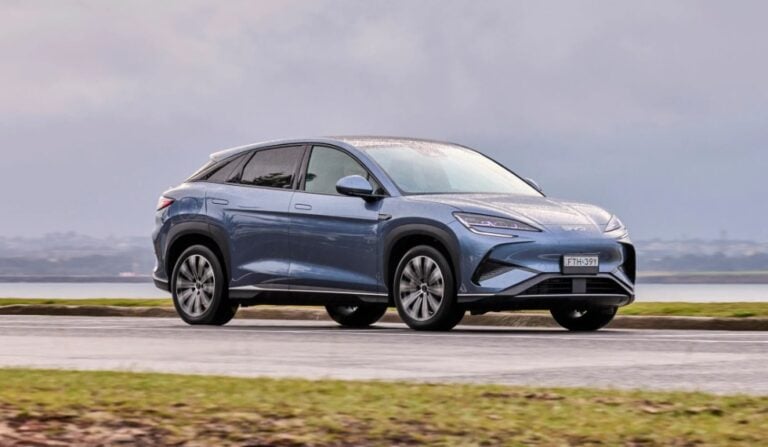
Arguably BYD’s most important vehicle in an 11-model line-up that encompasses everything from an electric city-sized hatchback to zeitgeist-tapping plug-in hybrid dual-cab ute, is the vehicle we’re testing here, the Sealion 7 electric medium SUV. It’s easily the brand’s best-seller in Australia, its 7786 sales to the end of May comprising just over 23 per cent of BYD’s total.
The Sealion 7 arrived here in 2025 hellbent on challenging the segment-dominating Tesla Model Y. It’s a tall order for the still fledgling brand, which, despite overtaking Tesla as the overall global leader in electric cars in 2025, still lags behind the Model Y mid-size SUV which found just over 1.08 million new homes last year, 22,239 of them in Australia. It remains the world’s number-one selling EV. More mountains to climb.
Just two model grades of the Sealion 7 have made their way to Australia. Both are competitively priced and both bring a level of equipment and EV smarts expected by today’s tech-savvy buyers.
On test here we have the entry point into the range, the rear-wheel drive BYD Sealion 7 Premium, priced from $54,990 before on-road costs and options. A lick of Shark Grey metallic paint – one of an austere four-colour palette – adds $2000 to the bottom line.
Even with premium paint, the Sealion 7 at its most affordable point undercuts its Tesla Model Y rival on price, the most affordable of Elon’s take on the medium SUV formula – Premium RWD – starting from $58,990 before on-road costs and options.
It’s a compelling proposition then, one that double taps into the twin zeitgeists of electric vehicles and medium SUVs. No wonder buyers are taking notice in ever-increasing numbers.
One of the ways brands from China have achieved cut-through in an ever-competitive marketplace is to throw the full catalogue of equipment and features at its model line-up. BYD knows this, and plays it better than most with a standard list of features that would put many ‘premium’ carmakers to shame, and certainly at a price that most of the Europeans would struggle to match.
3
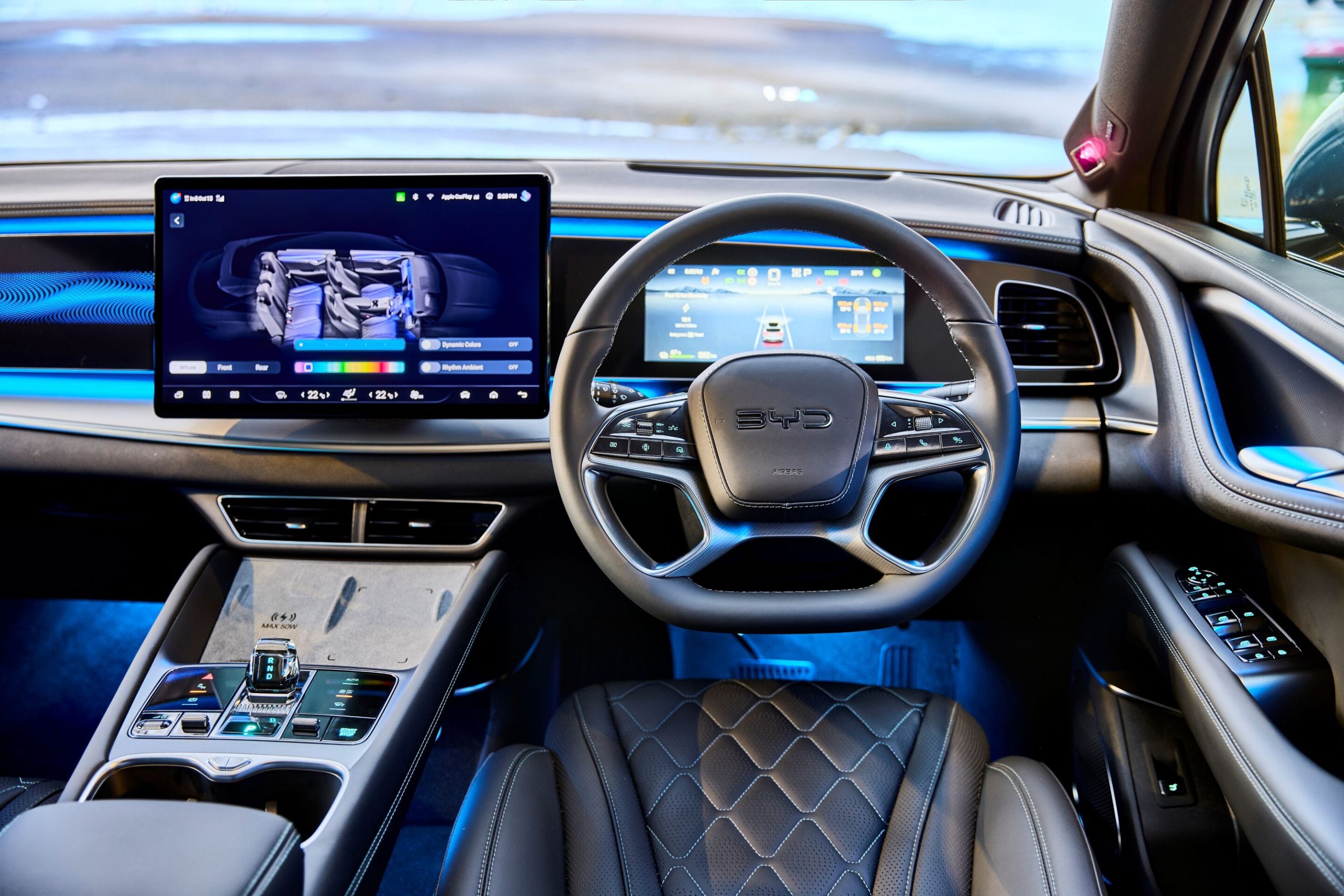
The Sealion 7’s list is long but includes niceties like leather seats with heating and ventilation up front, a panoramic roof, head-up display, dual-zone climate control and swathe of in-car technology that will please even the most ardent of technophiles.
The centrepiece of the Sealion 7’s tech-fest is a rotating 15.6-inch infotainment touchscreen that hosts the almost obligatory array of smartphone connectivity, inbuilt satellite navigation, and a 12-speaker Dynaudio sound system. The screen can be rotated through 90-degrees to display in either portrait or landscape mode. It’s a neat party trick, but really, that’s all it is.
There’s no mistaking BYD’s push into the premium segment once you slide inside the Sealion 7. Everything from the choice of materials, to the solid build quality feels about right for a brand wanting to elevate itself above the run-of-the-mill. There’s perhaps a little too much reliance on the screen for many of the Sealion 7’s vital functions, but it is largely intuitive to use and soon becomes second nature.
A highlight are the beautifully quilted seats, upholstered in genuine leather and not the ‘man made’, ‘artificial’ or ‘synthetic’ materials carmakers are increasingly claiming as ‘leather’. The seats themselves offer good support in all key areas, making for a comfortable time behind the wheel. Leather wraps around the steering wheel too.
The second row is, as you’d expect of an EV, spacious and will comfortably seat three adults across the rear bench. BYD hasn’t scrimped here either, with the second row offering nicely padded pews, air vents for climate comfort and a selection of USB outlets to keep the kids and their devices happy.
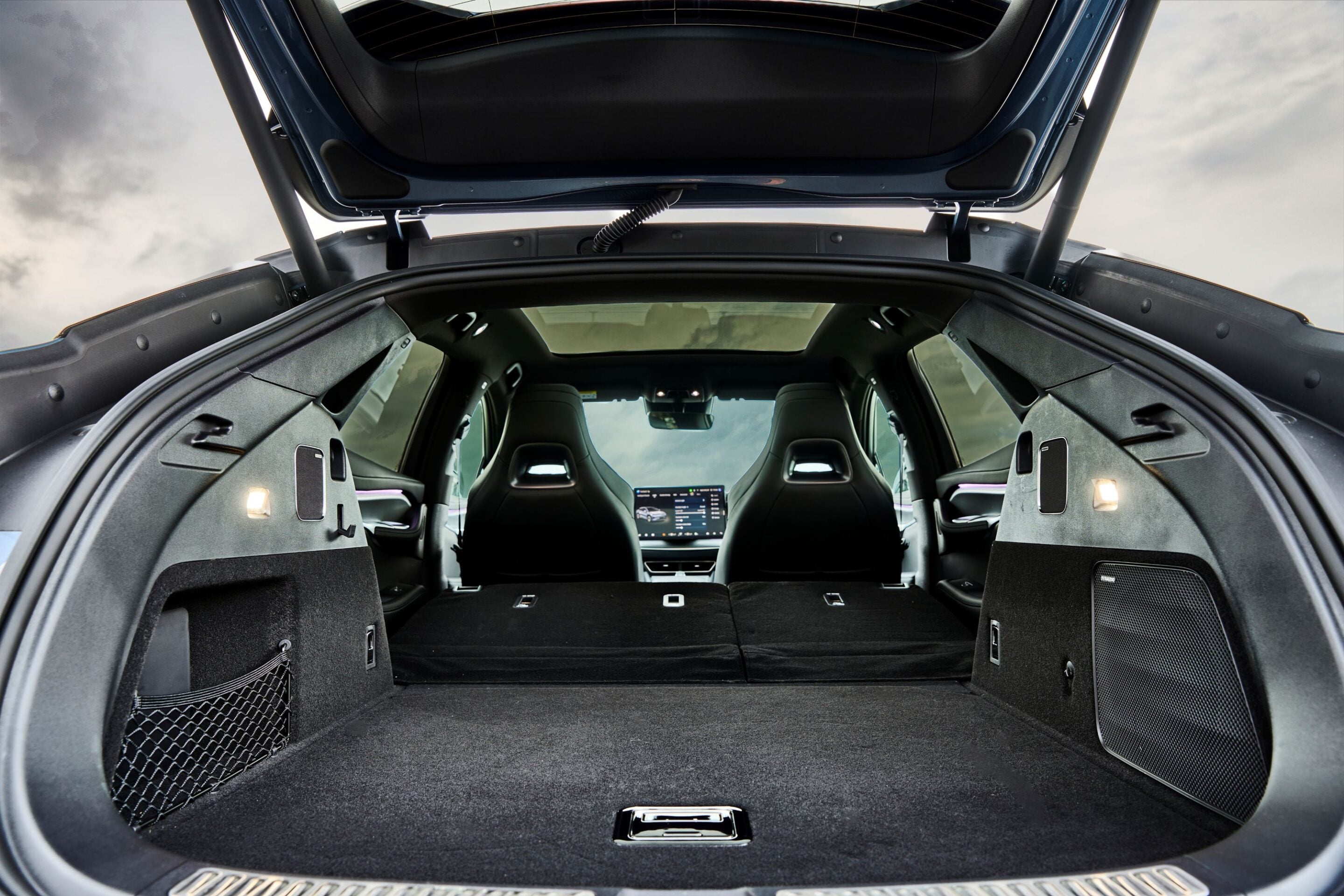
Boot space is commensurate with the segment, quoted at 500 litres with the second row in use. That’s marginally smaller than the RAV4’s load area. A small, but handy 58 litres is available under the bonnet.
It’s one thing, of course, to impress in the showroom with spacious cabins, rotating screens and quality materials that look and feel a million bucks. Plenty of challenger brands are working (and in some cases, overworking) this formula. What really matters is the driving experience. And it’s here where it’s very easy to spot the contenders in a sea of also-rans.
3
For BYD, the news is good, the Sealion 7 doing very little wrong at its single most important job. The Premium model on test here is powered by a single electric motor driving the rear wheels. Outputs of 230kW and 380Nm are decent without being silly, enabling brisk performance that feels sharper than it actually is. BYD claims a 0-100km/h time of 6.7 seconds, perfectly average for the segment. But as is the way with EVs of all manner, including the Sealion 7, it’s the initial take-off where electrification proves its mettle.
It doesn’t have the gut-churning surge of speed like some EVs, but it’s rapid and measured enough to not leave you wanting for more.
I spent a good chunk of my time with the Sealion 7 doing what I do every day, ferrying the kidlet to school, as well as a vast swathe of extra-curricular activities, around Sydney’s inner city. And it’s here where BYD’s take on the mid-size SUV segment proves its worth, a comfortable, rapid, and big enough family hauler that nails the brief of what a vehicle of this type should be. It’s quiet and serene at urban speeds, but with enough urgency to get moving once out on the highway.
Several drive modes – Eco, Normal, Sport and Snow – alter throttle response to either provide a bit more oomph or eke out driving range. The differences between Eco, Normal and Sport (I didn’t try Snow) are incremental, but noticeable enough. The recommendation here is to use Eco on suburban duties, and Normal out on the motorway. Steering feel can be adjusted between Comfort and Sport, the latter my first choice always. Comfort feels just a little too light in hand, removing that vital feeling of connection to the road. Sport’s extra heft is much more tactile.
1
The Sealion 7 Premium tips the scales at a portly 2225kg but, like wearing a well-tailored suit, does a good job of hiding it. It never feels heavy or unwieldy, thanks to a decent suspension tune that prioritises comfort over sportiness. Body control remains nicely in check during cornering or tackling speed bumps and while the ride is firmer than say, the BYD Seal’s, it’s still very much on the Comfort side of the ledger. There is some road noise at higher speeds, but at the speed limits of urban environments, the outside world is kept largely at bay.
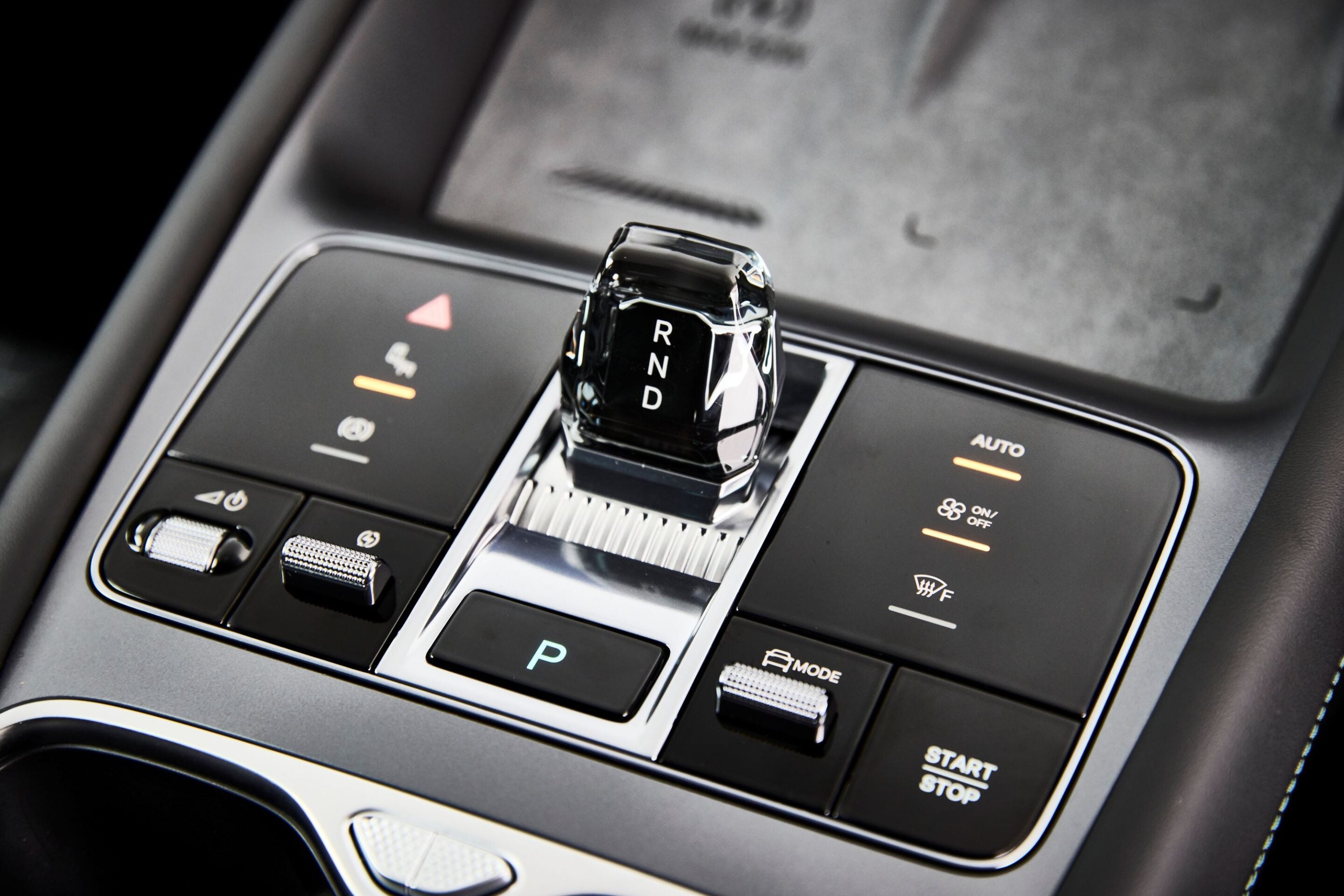
Two levels of regenerative braking – Standard and High – are available via a toggle on the centre console, and while there are differences between the two, neither is particularly aggressive. As is the BYD way, there is no single-pedal driving function.
Underpinning the Sealion 7’s powertrain is an 82.5kWh battery capable, it’s claimed, of delivering 482km of WLTP-tested driving range. And there’s good news here, my time with the Sealion coming close to matching that claimed range. Average energy consumption ran to an indicated 17.8kWh/100km, achieved over a typical mix of driving conditions that encompassed city, urban, and highway motoring.
That gives a theoretical range of 466km from a full array of juice, not all that far removed from BYD’s claim. Charging is capped at 150kW, giving a 10-80 per cent recharge time of 32 minutes.
5
Having spent a week with the Sealion 7, it’s easy to see how and why the Chinese brand has taken the world by storm. Aside from the value equation (and there’s plenty of value to be had), BYD demonstrates with this car that it actually knows what it’s doing when it comes to building electric vehicles.
Yes, BYD’s driving aids could use some fine-tuning (or at least make it easier to disable them), but overall, the Sealion 7’s mixture of quality, comfort, driveability and road manners are evidence that ‘Made in China’ no longer means what it once did.
BYD Sealion 7 Premium specs
| Price | $54,990 plus on-road costs |
|---|---|
| Powertrain | Single electric motor, RWD |
| Battery | 82.5kWh |
| Power | 230kW |
| Torque | 380Nm |
| Transmission | Single-speed |
| Drive type | Rear-wheel drive |
| 0-100km/h (claimed) | 6.7 seconds |
| Range (claimed) | 482km (WLTP) |
| Max DC charging rate | 150kW (approx 10-80% in 32 minutes) |
| Max AC charging rate | 11kW |
| Weight | 2225kg (kerb) |
| Dimensions (l/w/h/wb) | 4830/ 1925/ 1620/2930mm |
| Boot capacity | 500 litres (plus 58L under bonnet) |
| On sale | Now |
This story first appeared in the July 2026 issue of Wheels magazine, now on sale. Subscribe here and gain access to 12 issues for $109 plus online access to every Wheels issue since 1953.
8
/10
Score
Score breakdown
8.2
Safety, value and features
8.0
Comfort and space
8.1
Engine and gearbox
7.7
Ride and handling
7.6
Technology
Things we like
- Impressive list of standard features
- Second row a nice place to spend time
- Suspension prioritises comfort for city driving
Not so much
- Too many features reside in touchscreen
- Ride on the firmish side
- Road noise at higher speeds
Follow WhichCar/Wheels on Google
Click the button below to make WhichCar by Wheels a preferred source for your news.

We recommend
-
 News
NewsBYD Sealion 7 and Seal depart Chinese market to focus on exports, no change for Australia
The BYD Sealion 7, the most popular product BYD sells in Australia, and its Seal sibling are no longer available in their Chinese home market.
-
 Features
The 10 cheapest plug-in hybrids you can buy in Australia in 2026
For urban buyers, plug-in hybrids can combine the best of both worlds - weekday electric-only commuting and extended-range capabilities. As high fuel prices persist, they start to make more sense than ever.
-
 Reviews
BYD Shark 6 review: Two new variants bring more power and capability
BYD’s Shark 6 has been a sales phenomenon in the Australian new car market. Less than two short years since launch, the manufacturer’s first dual-cab has sold more than 24,000 units in this dual-cab hungry market.
