
Reviews
Gallery 1
8.2
/10
Score
Score breakdown
9.0
Safety, value and features
9.0
Comfort and space
8.0
Engine and gearbox
7.0
Ride and handling
8.0
Technology
Things we like
- Lives up to LandCruiser heritage
- Hybrid powertrain a useful addition
- Still off-road capable
Not so much
- Price not for the faint-hearted
- No seven-seat option
- Hybrid only offered in range-topping Sahara and GR Sport spec
When the LandCruiser faithful started to complain about the latest LC300 Series the answer was right across the showroom.
It was, and is, the heavyweight Tundra pick-up from the USA. And not as an alternative choice…
Heavy users of the ‘Cruiser wanted more thump for towing and uphill off-roading challenges than the regular diesel V6 and the solution was a quick snitch from the Tundra. Not that it’s painted that way.
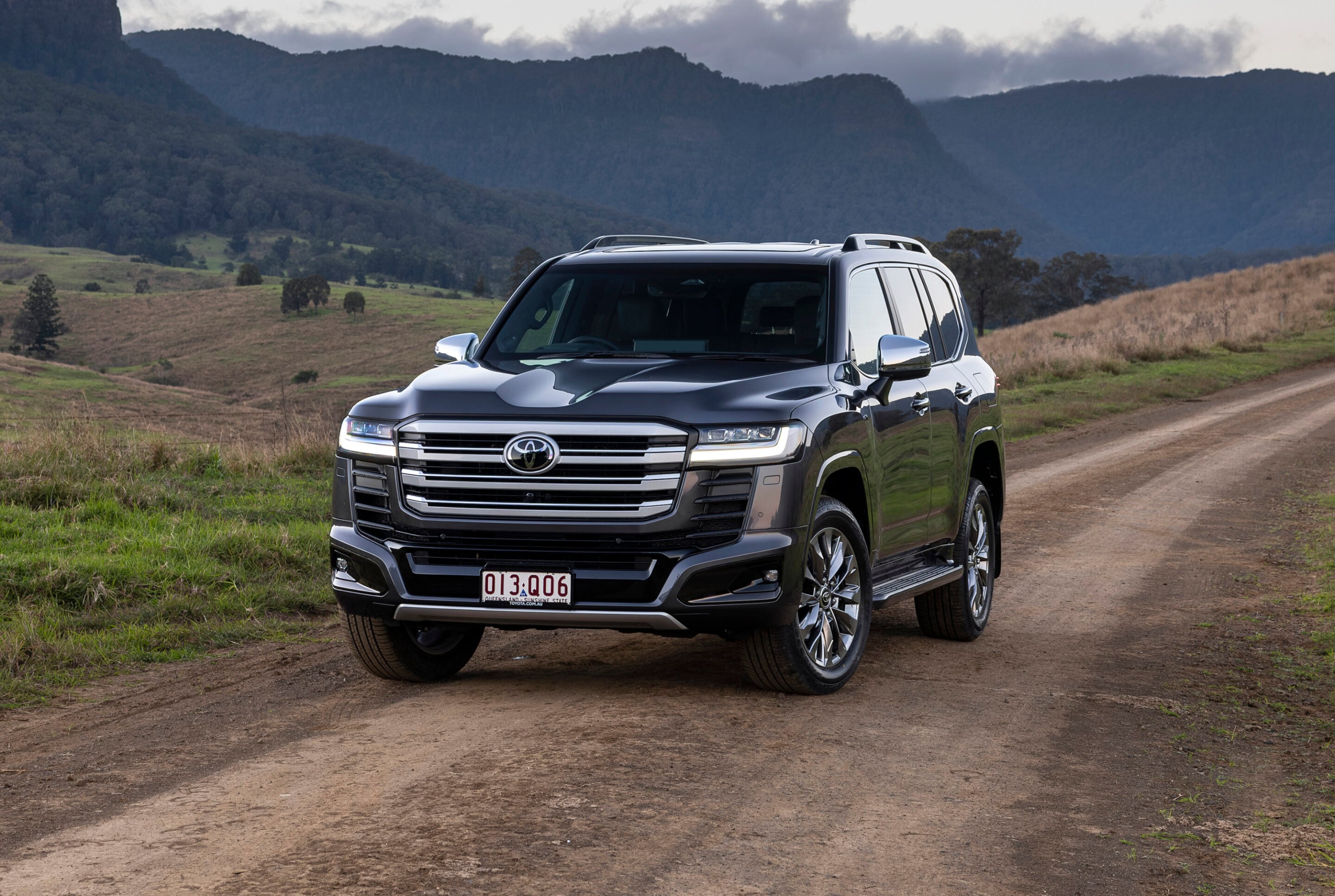
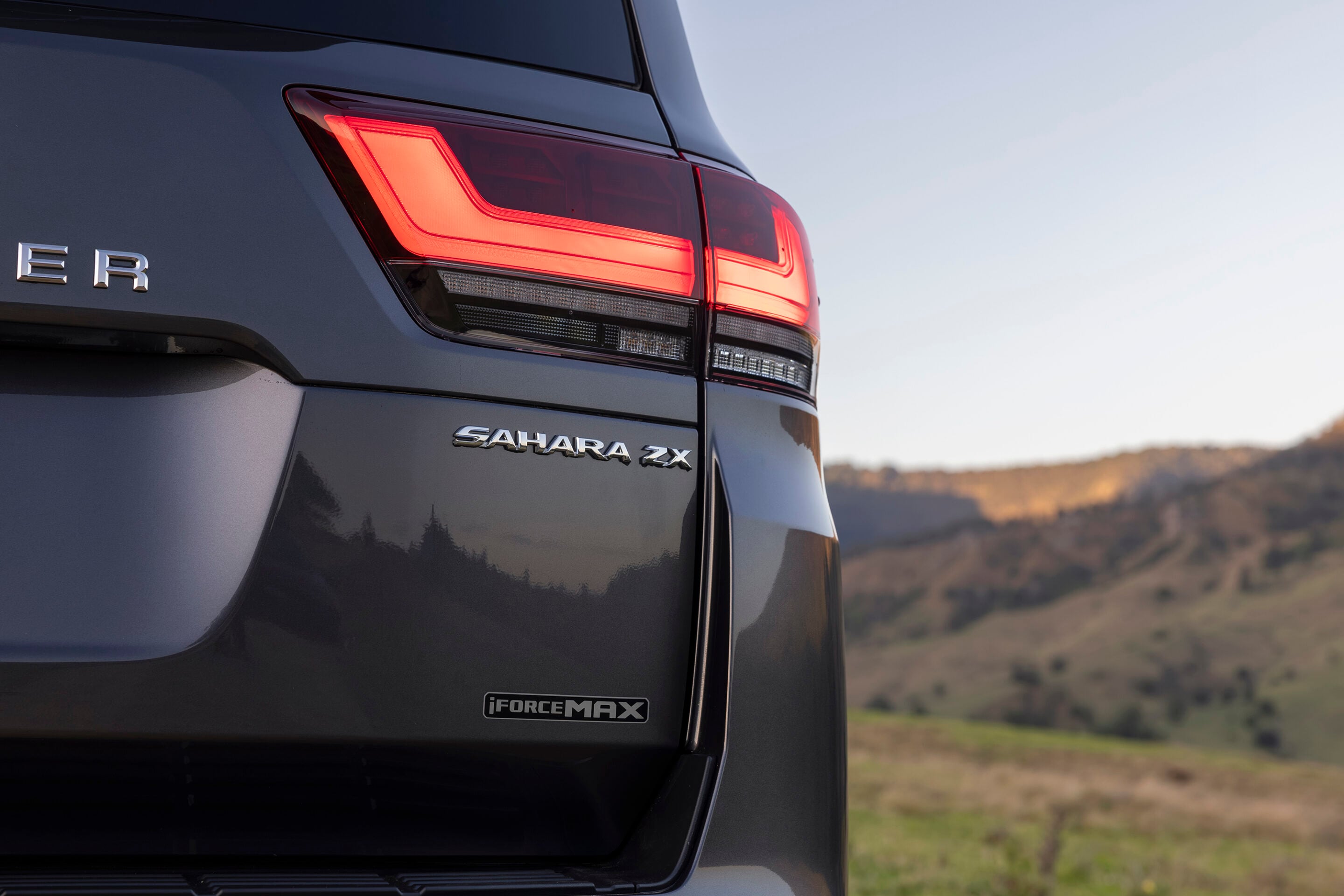
Instead, Toyota Australia has given us the ‘Performance Hybrid’ and created two new headline models – the flagship Sahara ZR and GR Sport grades, each with only five seats – with an unleaded V6 combustion engine and hybrid package.
1
The upgrade ramps pricing for the LandCruiser up to at least $156,060, which compares to $99,340 for the basic GX and $155,990 for the cheapest Tundra.
But it’s performance, not price, which will be most important to the ‘Cruiser heavies. The promise is a boost of 114kW and 90Nm. Based on a short-ish introductory drive, including a mildly worrying off-road run but nothing that would stop any LandCruiser, the promise has been delivered. Job done, game over.
Was the ‘performance hybrid’ always in the product plan and always intended for Australia? Knowing Toyota, and the timelines on its development work, it’s quite likely.
1
“The goal of any powertrain engineer is to improve power, performance and efficiency while reducing fuel or energy consumption and emissions, and ensuring the powertrain delivers what’s needed for its intended use or application,” said Ray Munday, senior manager of product planning and pricing at Toyota Australia.
But there is more in play with the LandCruiser, at a time when hybrids are racing out of showrooms and its only real rival, the V8 Nissan Patrol, is on the way out.
Toyota has twisted the hybrid story, which began with the Prius, in a new direction. It’s marketing crew invented – if those are the right words – the ’self charging hybrid’ and this year they have introduced a plug-in hybrid for the RAV4, as well as the ‘performance hybrid’ with the LandCruiser.
It can be a confusing field of battery-electric boosters, especially when Chinese brands have decided to use the punchy ’Super Hybrid’ handle for their PHEVs.
1
The boosted LandCruiser also comes at a time when Toyota Australia is pushing hard to promote it’s ‘multi-pathway’ approach to powertrains, promising something (good) for every buyer, from basic unleaded hybrids through to pure hydrogen power and a HiLux with a full battery-electric drive system.
It’s hard to ignore its commitment, even if there is no single clear path for buyers who are more and more confused by the diversity in makes and models. In the case of the LandCruiser, the PH – let’s shorten it for convenience – is aimed at one target. And it’s on target.
It’s also been given a clearer shot with the death of the V8 Patrol. The hulking Y62 Nissan was never a serious match for the LandCruiser, but the petrol 5.6-litre V8 engine was able to deliver plenty for towing and fun running, as well as a considerable price advantage with a starting sticker at $96,540.
1
Nissan Australia has just opened early orders for the Y63 Patrol, with deliveries from the first half of 2027, but it will ‘only’ have a 3.5-litre twin-turbo V6. The headline numbers with unleaded fuel – not diesel – are 317kW and 700Nm, but there is nothing confirmed and no talk for now of a hybrid.
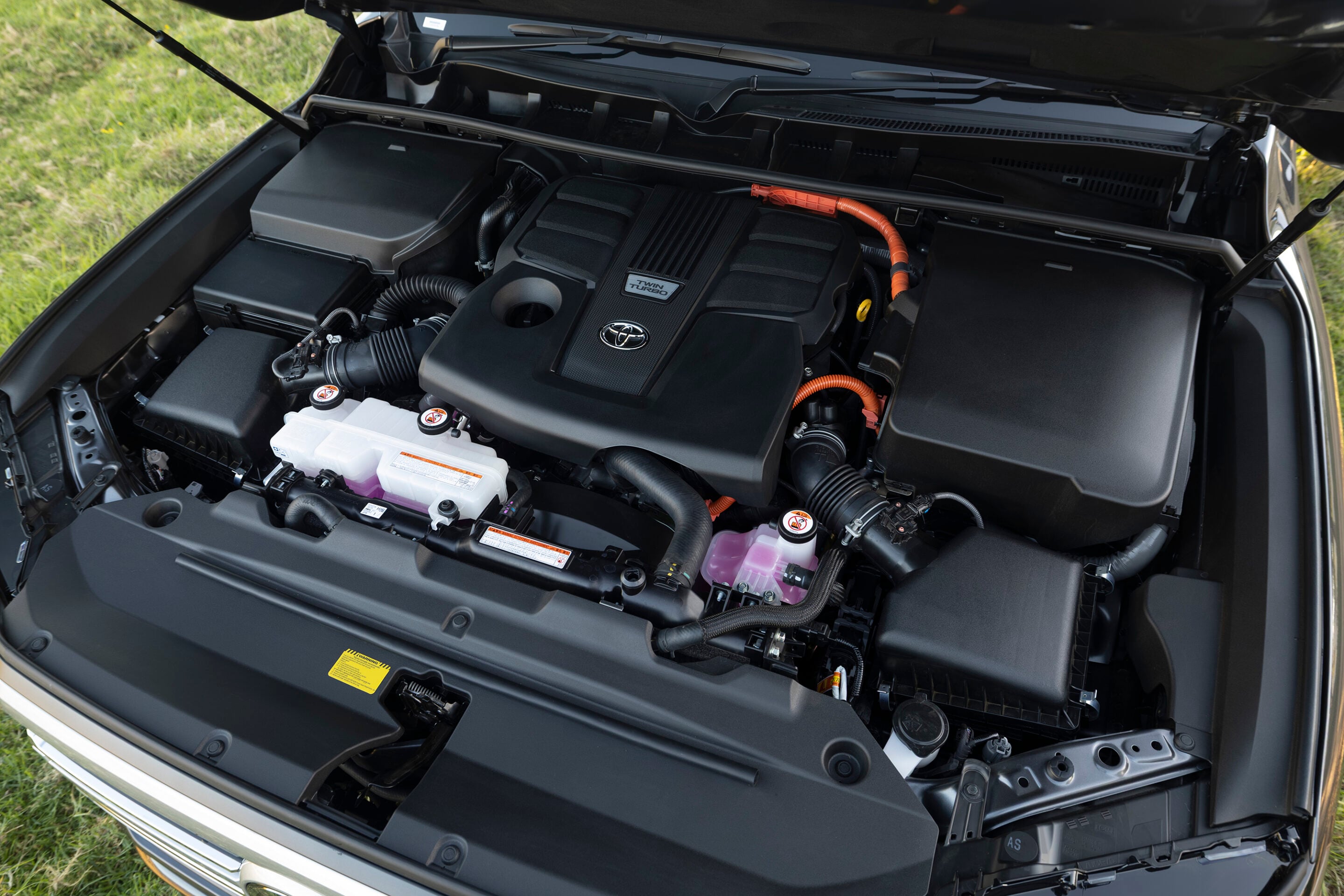
Returning to the PH LandCruiser, the headline outputs are 341kW and 790Nm. The hybrid package comes with an electric motor between the petrol V6 and the truck’s conventional 10-speed automatic transmission. It brings 36kW and a very useful 250Nm to the V6’s contribution of 305 and 650.
The driveline is same-same to the other 300 models, with all-wheel drive, a 10-speed automatic and dual-range transfer case with multi-mode terrain system. The Sahara ZX has a Torsen limited-slip differential in the rear end and the GR Sport, which leans more into off-road use, has locking front and rear diffs with an e-KDSS system – Electronic-Kinetic Dynamic Suspension System – that automatically locks and unlocks the ‘cruiser’s stabiliser bars in tough conditions.
1
Toyota has not provided any measurable comparison figures for the ‘Cruiser’s actual performance, either 0-100km/h or overtaking numbers, and the towing capacity is unchanged at 3.5 tonnes. The hybrid package in the Tundra gives 4.5-tonne towing. To provide some perspective, Toyota says “the effort demanded of the powertrain in the performance hybrid is noticeably reduced”.
The rest of the PH package adds a Nickel-metal hydride battery, air cooled and rated at 288 volts and 6.5 Amp-hours, in a waterproof tray made from high-tensile steel and positioned below the rear luggage space. The location was chose to protect the battery in off-road use and reduce any impact on the cabin.
Surprisingly for a hybrid, which has always been touted for efficiency, the claimed fuel economy numbers are worse than the diesel V6 for the PH. The combined claim is 10 litres/100km, against 8.9 for the diesel, and the comparison is 13.7 to 11.1 on the urban cycle, again in favour of the diesel. And the PH also needs a minimum of 95-grade unleaded.
3
In other electric changes, the PH ‘Cruiser gets electric power assistance for the steering, there is an electric compressor for the climate control system, and there is a 200-volt inverter with a three-pin household plug in the cabin for small appliances.
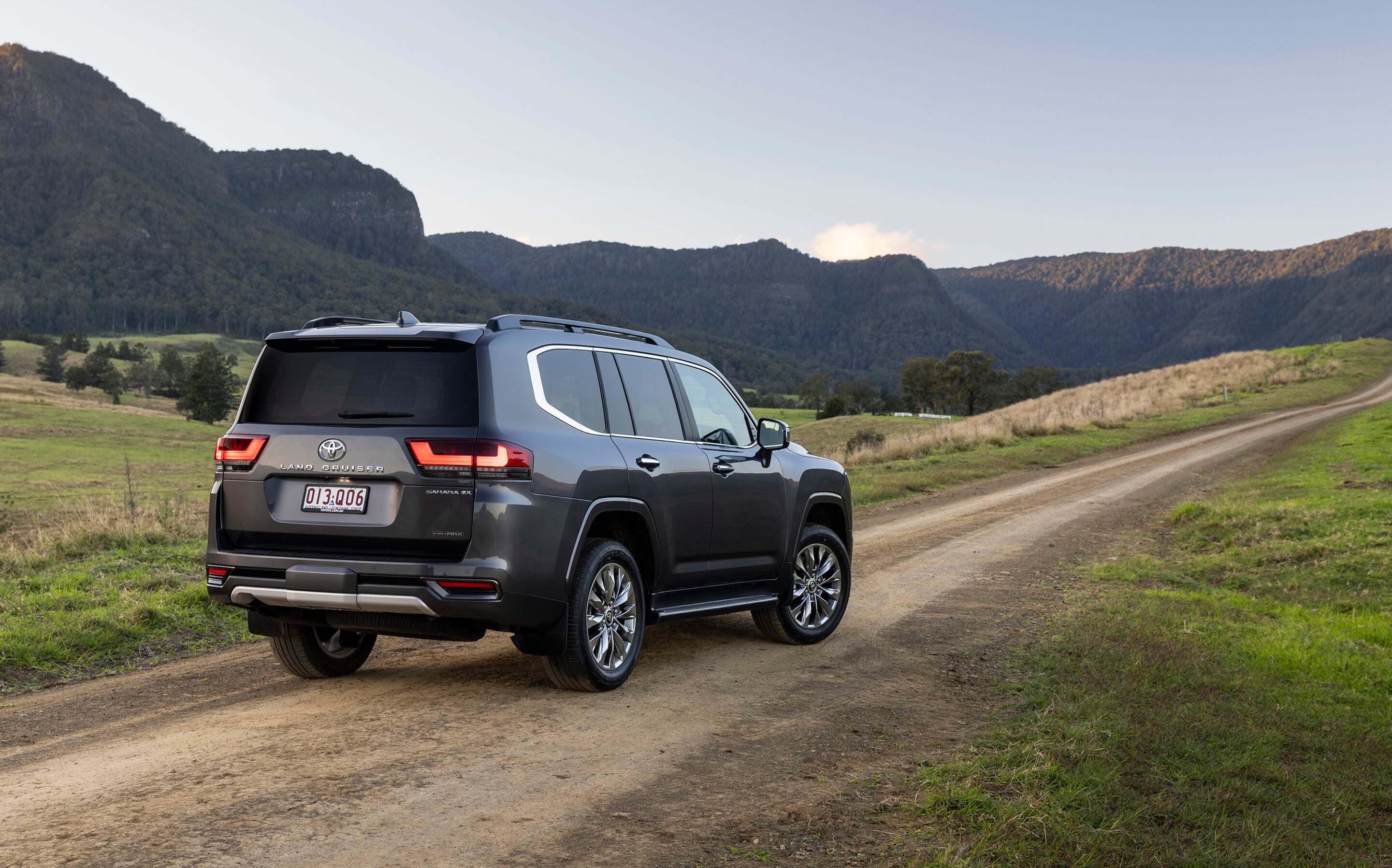
Visually, the GR Sport is unchanged from the turbodiesel but the Sahara ZX has a slightly different lower front bumper and a guard below the rear bumper. The Sahara ZX has 20-inch alloys with black-painted 18-inch alloys on the GR Sport.
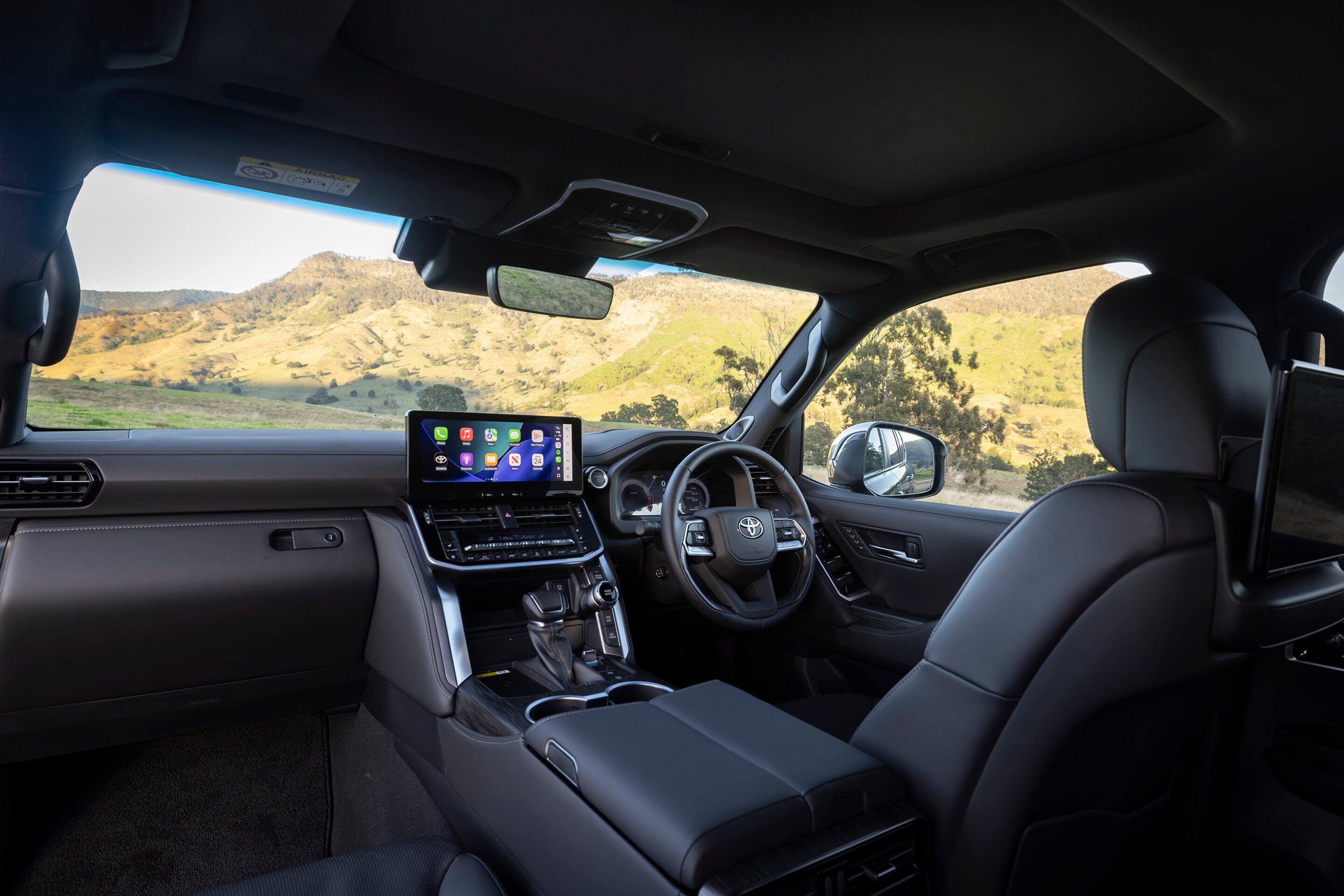
It’s a same-same story in the cabin, with a 12.3-inch multimedia touchscreen with 14-speaker JBL sound, partial-leather seat trim with electric, heated and ventilated front seats. In the Sahara, there is a rear-seat entertainment package. It’s nothing special in terms of design work, but the LandCruiser has always been more of a workhorse than a boulevardier, and it does have a head-up display.
This includes leather-accented upholstery and trim, heated and ventilated front seats and outboard rear seats with power operation for the front, 12.3-inch multimedia touchscreen with a 14-speaker JBL 2 audio system and on the Sahara ZX, a dual rear-seat entertainment system.
3
The advantage of the Performance Hybrid package is obvious within 10 metres of take-off. There is a stronger surge forward thanks to the electrical assistance, and it comes immediately instead of waiting for the combustion engine to spin up to its peak. It’s the same for overtaking, when the PH absolutely romps ahead on full throttle. It erases memories of the Patrol V8 as the class leader, setting a new standard for straight-line response.
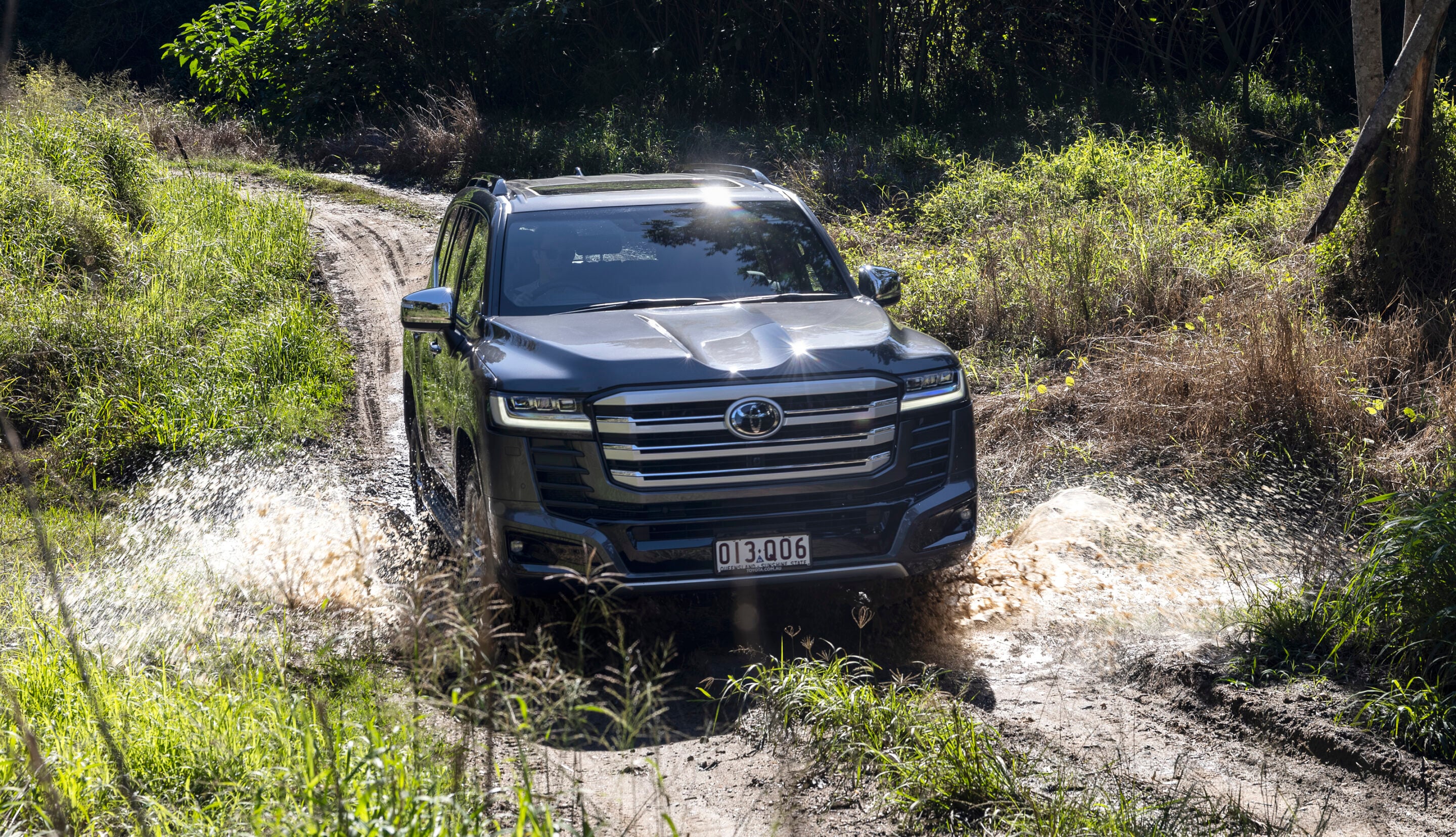
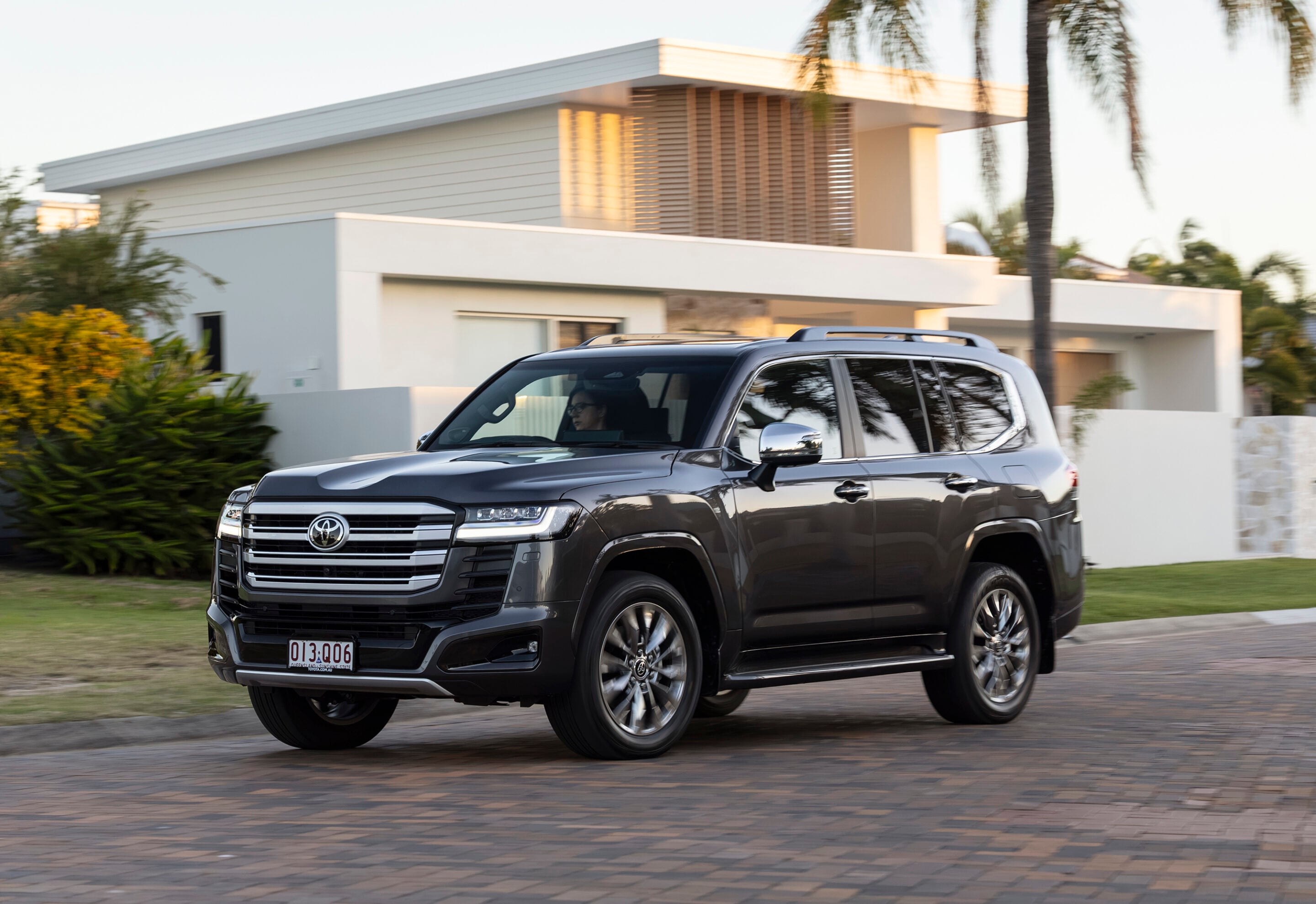
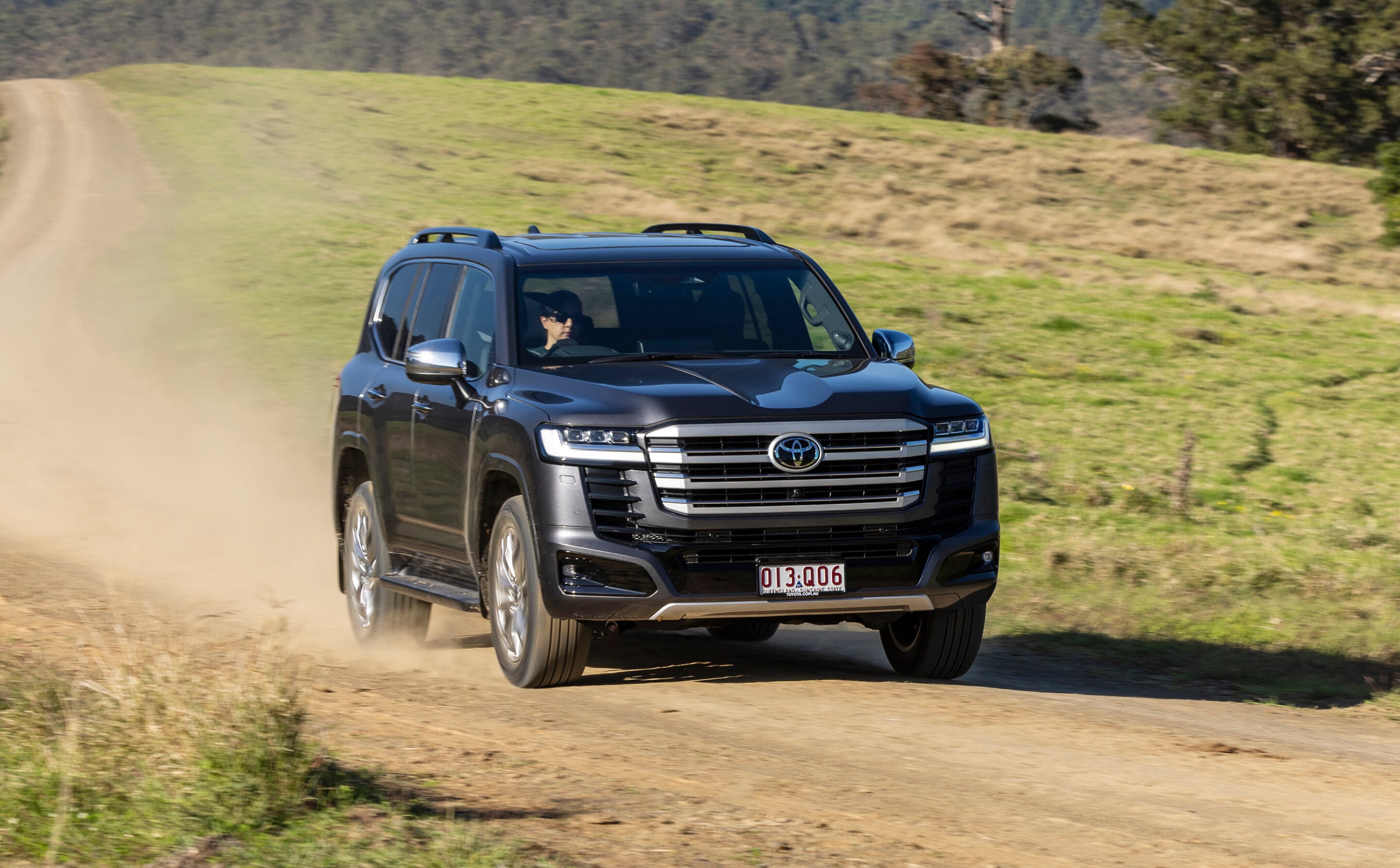
The driving feel is unchanged from the regular 300, although some people might claim there is a different feel through the electric steering. Turning onto a gravel road on the western limits of Brisbane, the LandCruiser does what it always has done. It gets on with the job. Once again, there is a little more sensitivity to the throttle pedal and no need to rev the engine to maintain a brisk pace.
Then the off-road stuff. The course is more challenging for the driver than the ‘Cruiser, set in low range with the rear diff locked for best grip. It trundles happily up muddy hills, walks over rocks and ruts, and grumbles back down as you would expect.
3
There was no chance for towing, even briefly.
So Toyota clearly believes it will do the job and is relying on road testers to hook their big rigs behind for a longer drive. Or… take their word. In the test conditions there is no noticeable difference between the abilities of the GR Sport and Sahara ZX, which is good news for potential buyers. So, it looks as if the questions were asked and Toyota has provided the answers.
Toyota LandCruiser 300 Performance Hybrid Specs
| Price | $156,060 plus ORC (GR Sport), $156,810 plus ORC (Sahara ZX) |
|---|---|
| Powertrain | 3.5-litre petrol V6 hybrid with single electric motor |
| Output | 341kW/790Nm |
| Transmission | 10-speed auto, all-wheel drive; lockable differentials |
| Economy | 10L/100km (combined cycle) |
| Suspension | double-wishbone independent front, 4-link rigid rear |
| Brakes | 4-wheel discs |
| Wheels | 18-inch alloy (GR Sport), 20-inch alloy (Sahara ZX) |
| Boot space | 910L seats up /1842L seats folded |
| Dimensions (l/w/h/wb) | 5005/1980/1945/2850mm (Sahara ZX), 4995/1990/1945/2850mm (GR Sport) |
| Weight | 2715kg (kerb) |
| Warranty | 5 years/unlimited kkm |
| Servicing | 12 months/20,000km |
| Servicing costs | $450 per service for first five years/100,000km |
8.2
/10
Score
Score breakdown
9.0
Safety, value and features
9.0
Comfort and space
8.0
Engine and gearbox
7.0
Ride and handling
8.0
Technology
Things we like
- Lives up to LandCruiser heritage
- Hybrid powertrain a useful addition
- Still off-road capable
Not so much
- Price not for the faint-hearted
- No seven-seat option
- Hybrid only offered in range-topping Sahara and GR Sport spec
Follow WhichCar/Wheels on Google
Click the button below to make WhichCar by Wheels a preferred source for your news.

We recommend
-
 Best Large SUVs
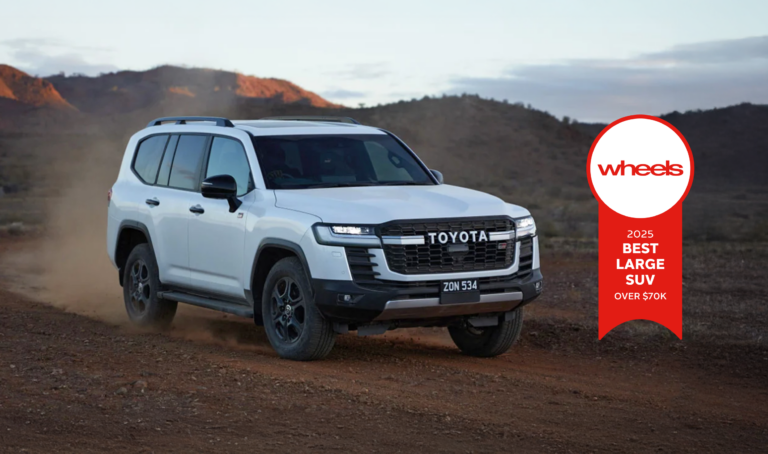
Best Large SUVs 2025: Over $70K
Wheels' Best Large SUVs 2025: Over $70K – see our standout after assessing practical cabins, latest technology, performance and all-round capability in the higher price bracket.
-
 Best Large SUVs
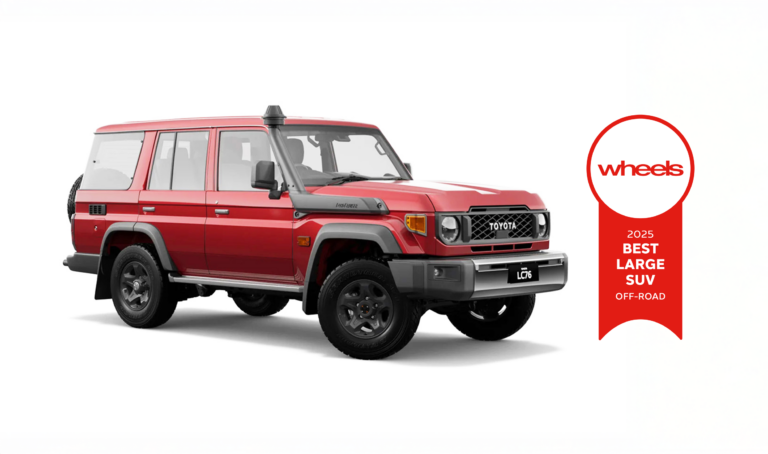
Best Large SUVs 2025: Off-road
Our Best Large SUVs 2025: Off-road combine power, space, and rugged capability, offering families and adventurers refined comfort, advanced technology, and confidence on any off-road terrain.
-
 Best Large SUVs
Best Large SUVs 2025: Hybrid
Our pick of the Best Large SUVs 2025: Hybrid, combining fuel efficiency, power and practicality to meet the needs of modern families while lowering running costs.
