
Reviews

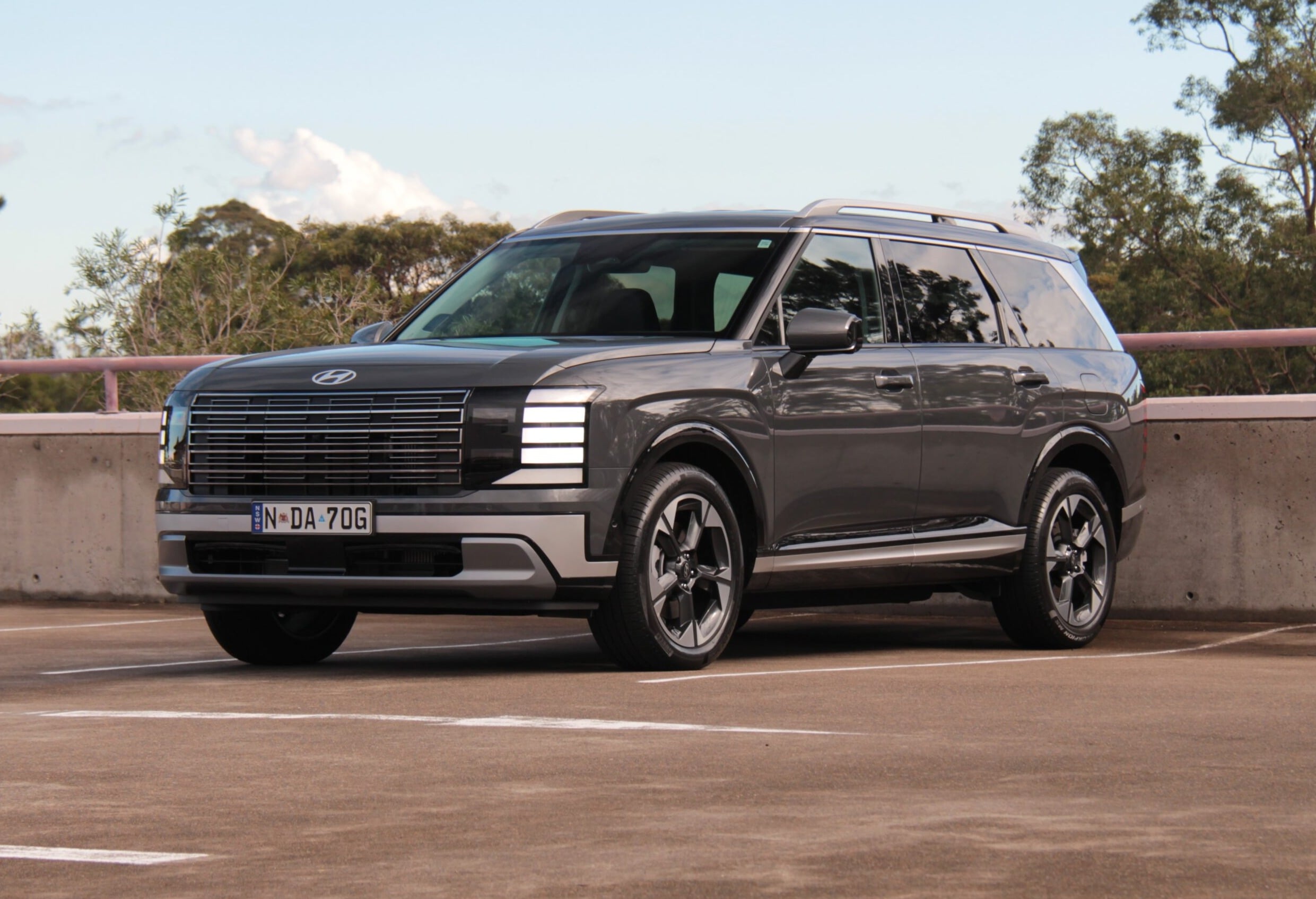
Gallery 1
8.4
/10
Score
Score breakdown
8.0
Safety, value and features
9.0
Comfort and space
8.0
Engine and gearbox
9.0
Ride and handling
8.0
Technology
Things we like
- Much more affordable than the top-spec Calligraphy
- Excellent hybrid system that's punchy but efficient for such a big car
- Thoughtful cabin design and good quality materials
Not so much
- Calligraphy is noticeably more luxurious
- Short 10,000km service intervals
- A front-wheel drive model would be more efficient and cheaper
Although it’s not quite as popular as its Toyota Kluger arch rival, the Hyundai Palisade has long been one of Australia’s most well-rounded large SUVs. It combines a huge interior, excellent comfort and a long list of features at a price that undercuts many rivals to provide the strong value that Hyundai is known for.
Now, with a more mature and stylish second generation, a so-hot-right-now hybrid drivetrain and a revised line-up that now includes a new entry-level Elite grade, Hyundai is aiming to broaden the Palisade’s appeal even further.
But does this more affordable variant still deliver the comfort, technology and practicality that Palisade buyers expect, or should you spend the extra $13,400 and choose the top-spec Calligraphy? We spent time behind the wheel to find out.
How much does the Palisade cost to buy?
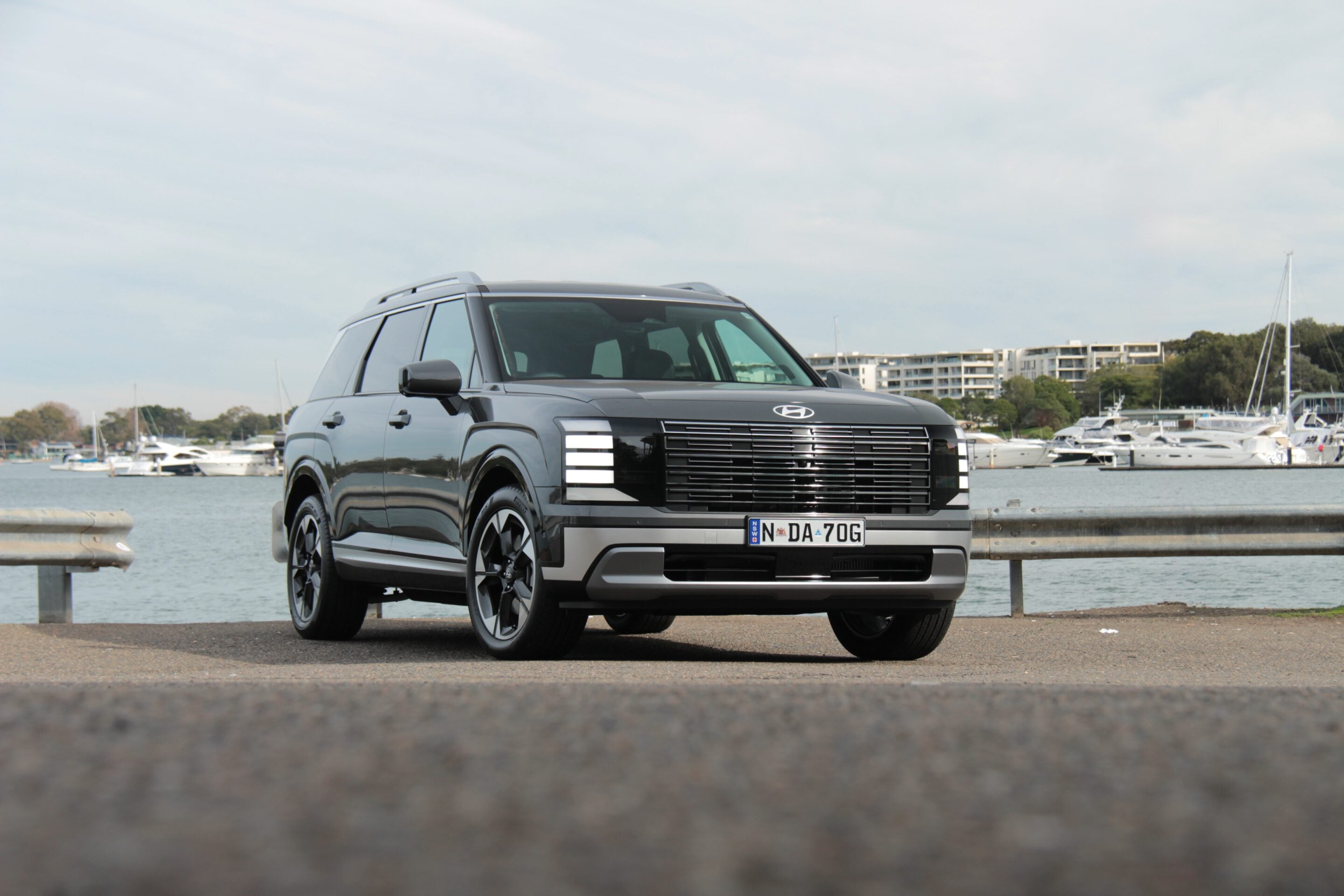
Prices for the current generation Palisade used to start at $89,900 plus on-road costs for the top-spec Calligraphy, which was initially the only model that Hyundai Australia elected to sell in our market. But the price of entry has now fallen by some $13,400 to $76,500 +ORC for the new entry-level Elite model, which uses the same drivetrain but is less well equipped than the Calligraphy.
3
The Elite is still very well appointed (see the full list of standard equipment below), but highlights include 20-inch alloy wheels with a full-size spare wheel, leather upholstery, electric front seats with heating, tri-zone climate control, dual 12.3-inch displays with plenty of connectivity, 14-speaker Bose audio, seven USB-C ports and a wireless phone charger to cover your charging needs and a long list of safety kit, including eight airbags.
What does the extra $13,400 buy in the Calligraphy? Features such as Nappa leather trim, a suede headliner, extra electric seat adjustment, ventilated front and middle row seats, heated third row seats, electric third row folding/erecting, a vehicle-to-load (V2L) point, head-up display, dual sunroofs and many detail changes to make it look fancier. Is it worth the extra coin? If you place value on those extra features, sure, but we think the Elite is more than well equipped for the money.
The biggest competition to the Palisade is the Toyota Kluger, which costs $71,930 +ORC in the mid-spec GXL form, as well as cars like the Mazda CX-80 and CX-90, Kia Sorento, Skoda Kodiaq, Volkswagen Tayron and even Hyundai’s own Santa Fe. In Australia, however, only the Palisade is an eight-seater — the Kluger and CX-90 offer eight seats in other markets, but not locally, giving the Palisade a unique selling point amongst this group of large SUVs.
How fuel efficient is the Palisade?
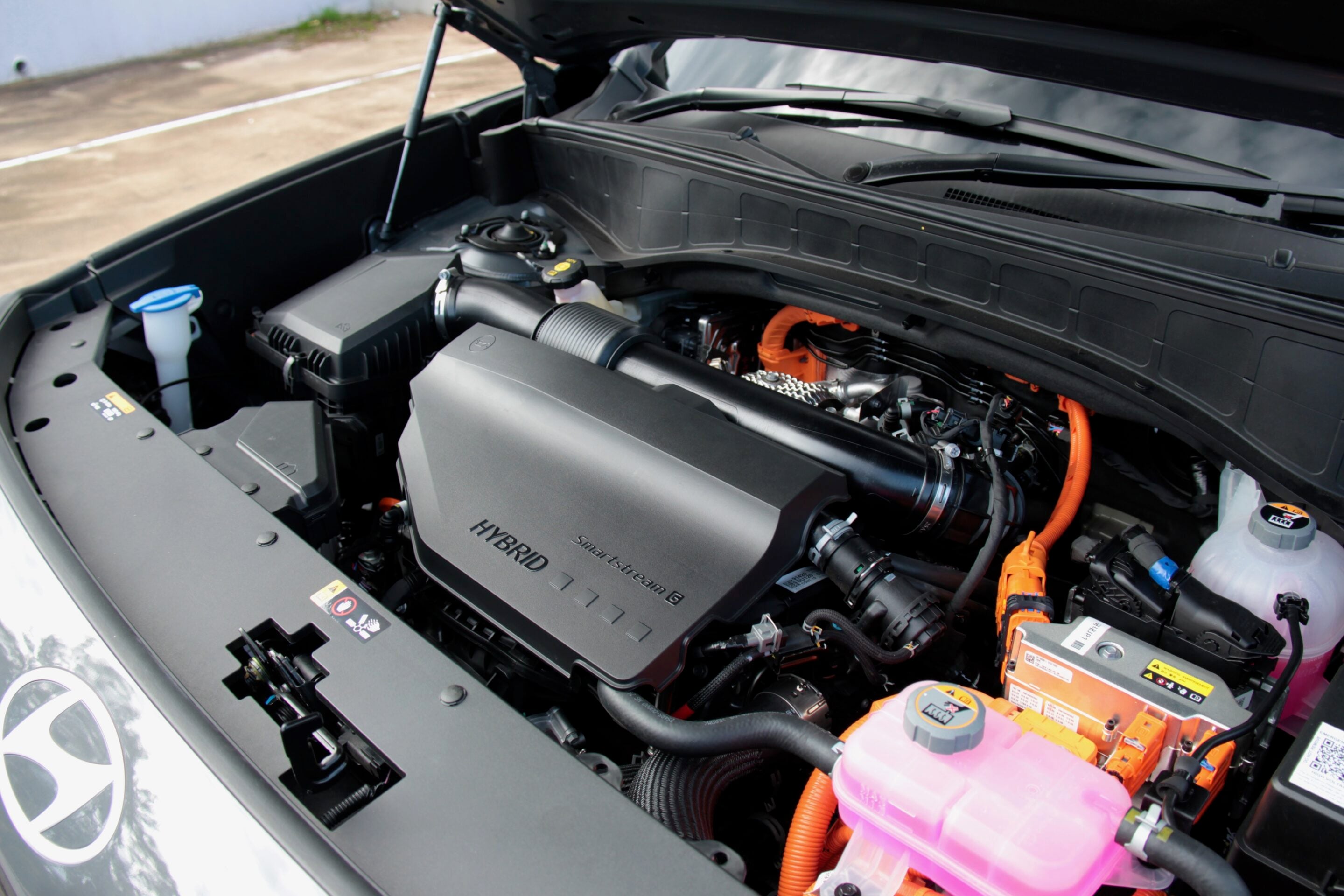
Hyundai has been quite busy adding electrification to most of its line-up over the past few years, and the Palisade is one of its latest recipients. Instead of the 172kW 1.6-litre turbo-petrol hybrid available in the smaller Santa Fe, the Palisade instead uses a larger 245kW/460Nm 2.5-litre turbo-petrol hybrid, which is mated to a six-speed automatic transmission and all-wheel drive as standard in Australia.
The previous Palisade was available with a 147kW/440Nm 2.2-litre turbo-diesel or a 217kW/338Nm 3.8-litre petrol V6 in Australia, and while the diesel was capable of good fuel economy, the V6 was not and even though it was rated at 10.7L/100km on the combined cycle, it would easily use above 15L/100km in urban driving.
4
Knowing that, the new hybrid system is not only punchier than both the previous engines, but it’s also more fuel efficient rated at just 6.8L/100km and with CO2 emissions of 154g/km, which is a full 97g/km improvement on the former V6. In our testing, we achieved 7.3L/100km in mostly urban driving, which is impressive for such a large vehicle, though it’s not quite as low as the smaller and less powerful Toyota Kluger (5.6L/100km).
Despite its larger dimensions and a 200kg increase in weight compared to its Santa Fe sibling, the new 2.5-litre hybrid system is noticeably punchier than the 1.6-litre Santa Fe Hybrid, but is only 1.2L/100km less fuel efficient (5.6L/100km versus 6.8L/100km). Hyundai doesn’t quote a claimed 0-100km/h time, but overseas testing shows that it hits the mark in around 6.5 seconds, so not exactly hanging about.
Is the Palisade good to drive?
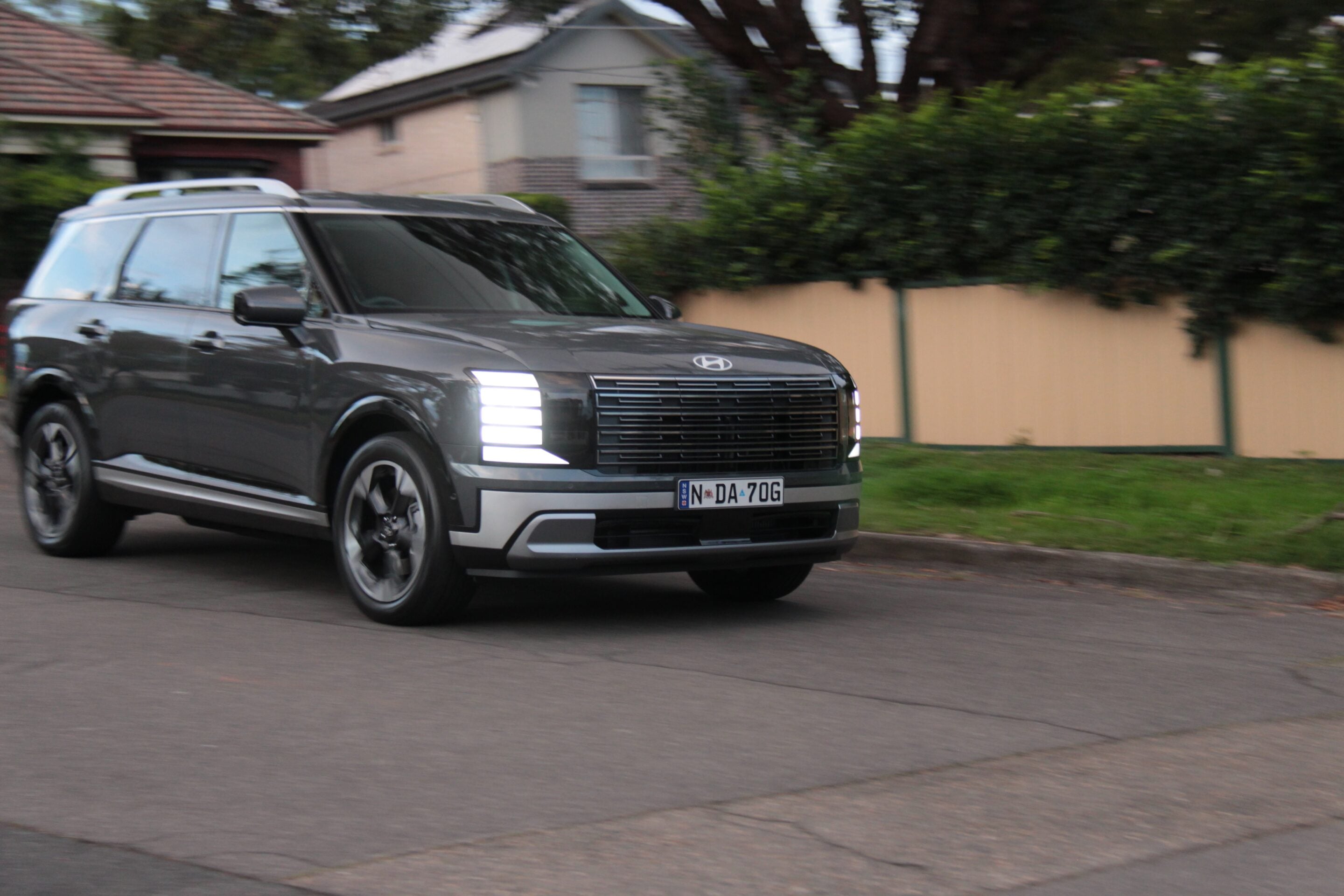
As we saw with the previous Palisade, the new model is a comfortable and refined large SUV with a polished driving experience throughout. Australian-spec models feature a unique suspension tune that includes frequency-selective dampers and a unique steering tune that makes it feel noticeably more taut and more dynamic than the softer North American-spec model (this reviewer has driven both), but also its rival set.
5
It’s not quite as soft as Kluger, but it is more fun to drive, and its low speed ride is also more settled than the Calligraphy because of the one-inch-smaller wheels. Refinement inside the new Palisade is impressive too as it’s genuinely very well hushed, especially when the engine is switched off (which happens reasonably often). The active safety features are generally well behaved too, as we’ve seen from plenty of other Hyundai products, though the active speed sign recognition could still be more accurate in its reading and therefore policing of your speed.
How practical is the Palisade?
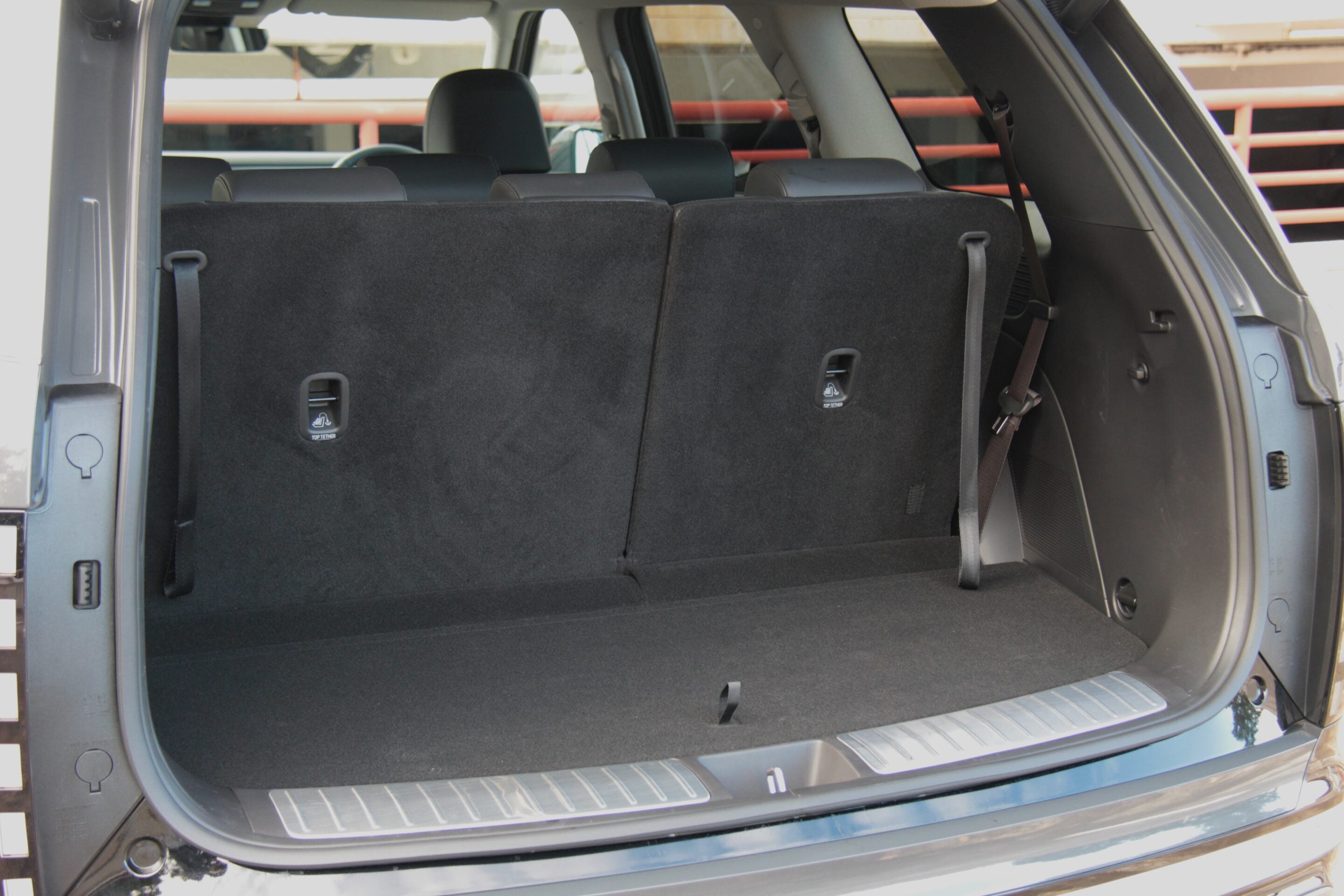
Not only does it feature eight seats, of which all eight are useable by adults, but even with the third row of seating in place, the boot still offers a healthy 300 litres of space. Importantly too, there are four ISOFIX points in the rear of the Palisade, including two for the third row of seating. Many rivals don’t feature any child seat points in their third rows, so that’s a big plus for the Palisade.
Fold the third row down to unlock a large 712-litre space and the Palisade’s boot is also well equipped with under floor storage, tie down points and remote releases for the second row. Doing so opens up a huge 2081 litres of space. Space in the second row is plentiful, even for three taller adults, with ample leg- and headroom, while the easy entry buttons on the seatbacks move the seats forward and up so that adults can easily get into the third row.
6
Features for the rear section include a separate climate zone to the front cabin with a control panel on the roof, air vents, USB-C charging ports in both rows, cup holders, a centre arm rest in the middle row and plentiful storage in the doors, including big bins and separate cup holders.
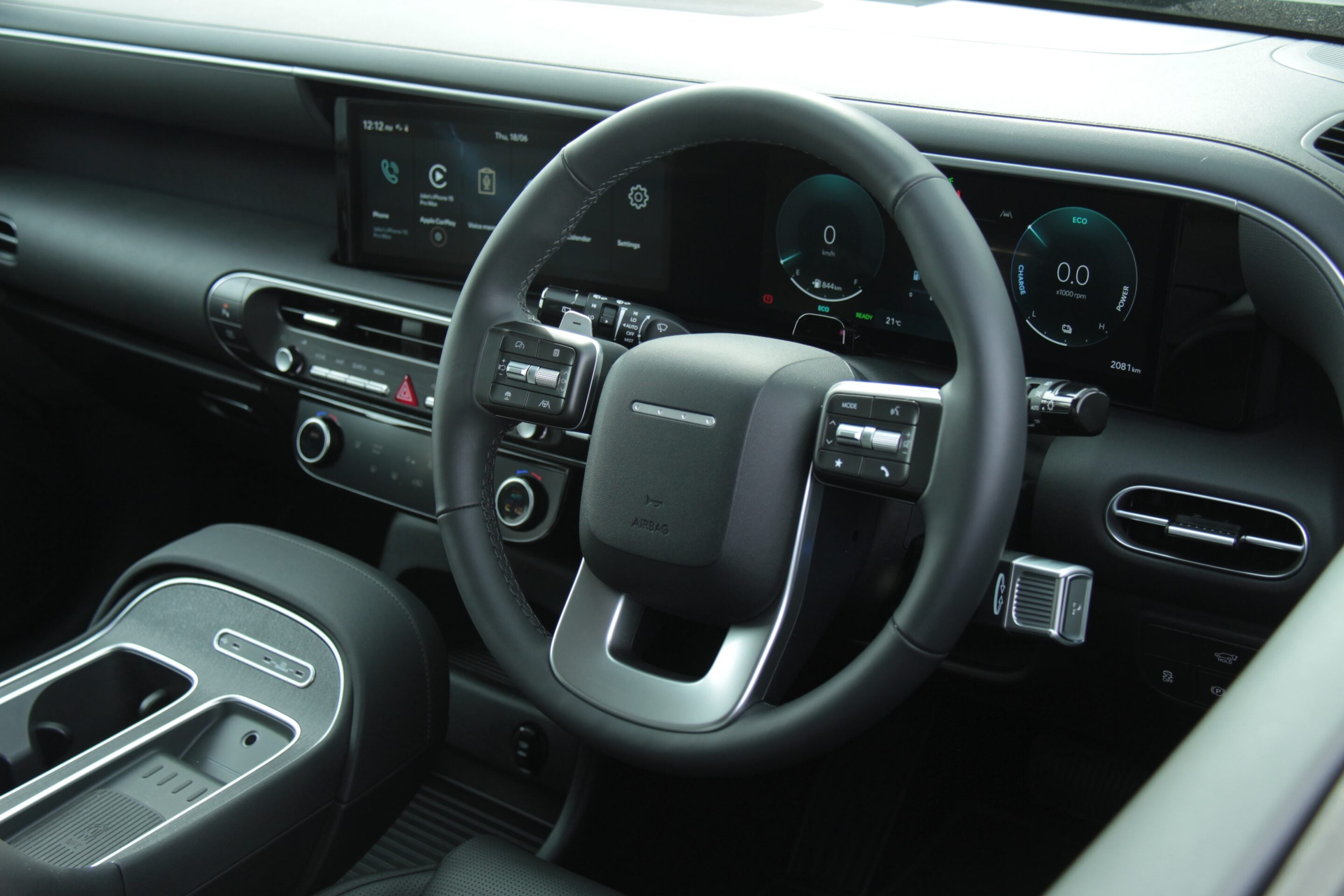
The front cabin is a big step up on the previous generation Palisade thanks to its swoopy layout, leather trims on the doors and dashboard, and more premium-feeling switchgear to help justify the extra expense of the new model. Inside, it feels luxurious compared to the somewhat basic and dated Kluger, though the sunroof in the Calligraphy would make it feel a bit airier as it’s a bit dark currently.
In the front, storage space is excellent as well with a huge central bin underneath the central armrest, an open tray between the central armrest and dashboard, large door bins and even a cool wireless phone charger located in the centre. Seat comfort too, despite not featuring the 18-way adjustment of the Calligraphy, is excellent and would be comfortable all day.
6
The infotainment system used is Hyundai’s ‘ccNc’ system that features in most of the current Hyundai line-up. It’s very easy to use, the screen quality is sharp and while it could be a bit brighter and more colourful, it’s still a great system. Features include wireless smartphone mirroring, sat-nav, DAB+ digital radio and live services for features like accessing the weather and live traffic for the navigation.
How much does the Palisade cost to service?
The Palisade is covered by a five-year/unlimited km warranty that’s extended to seven years in total with dealer servicing, as well as an eight-year/160,000km warranty for the hybrid battery.
Five years/50,000km of capped price servicing means the Palisade costs $2630 or $526 per year on average. That’s reasonable, though buyers must keep in mind that its annual service intervals are a short 10,000km, which is 5000km shorter than some rivals like the Kluger.
Should I buy a Hyundai Palisade Elite?
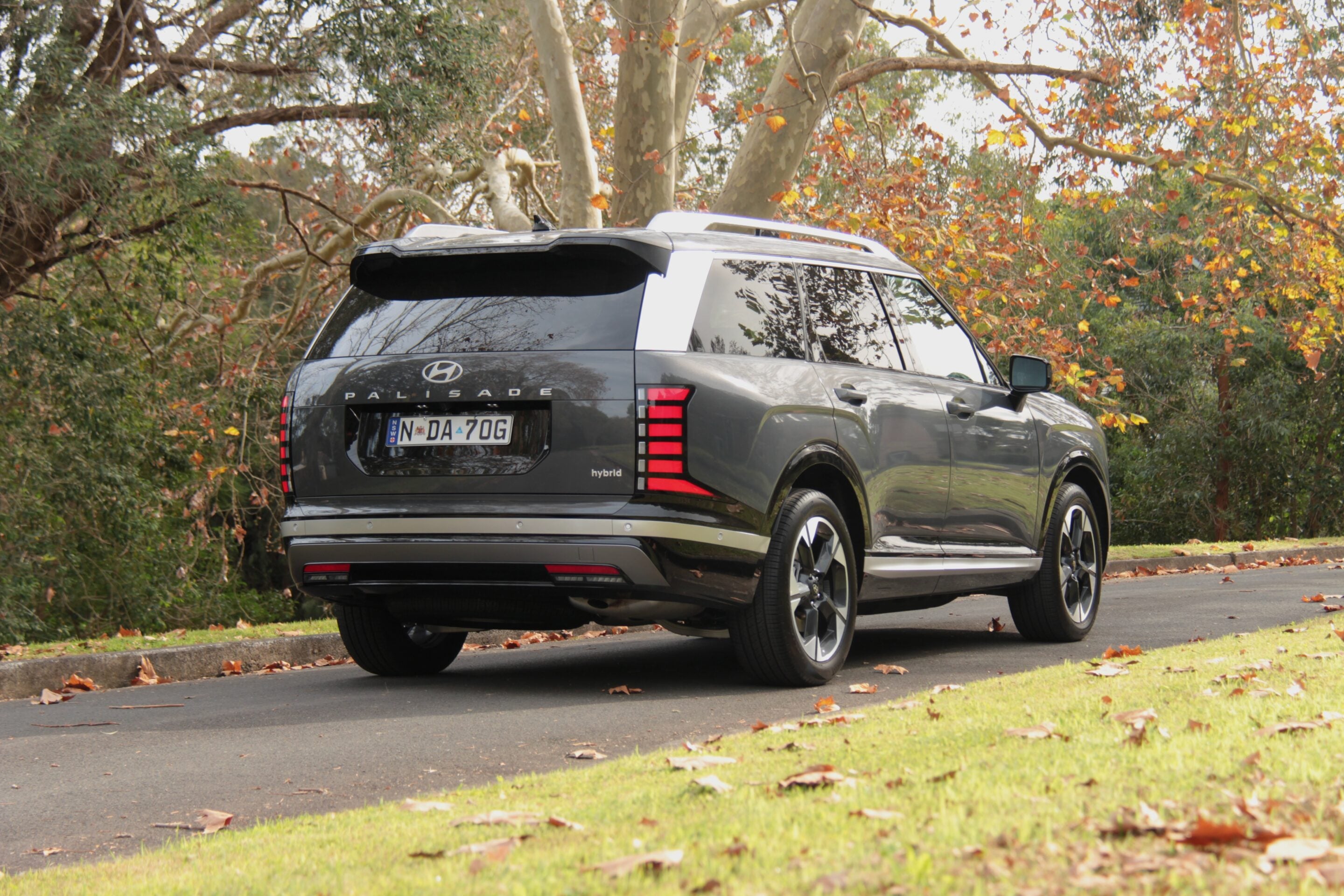
The Hyundai Palisade is a generally excellent large eight-seat SUV that rarely puts a foot wrong. It’s capable of carrying eight passengers in quiet comfort with ample performance and reasonable fuel economy. It drives well, it’s huge inside, it’s well equipped and it’s a great all-rounder. At more than $80,000 once on-road costs are included, it’s not a cheap option but it feels like good value for money because of just how much it does.
2
Counting against it are only a few items: the 10,000km service intervals are shorter than the industry average, the Calligraphy model is noticeably lusher inside and there should be a front-wheel drive model offered to increase both affordability and efficiency. Plus, if you’re wanting an eight-seater, a Hyundai Staria or Kia Carnival people mover may be a better fit for your family. Those issues aside, the new Palisade is a great choice for a big family bus.
Palisade Elite standard features:
- 20-inch alloy wheels (with a full-size spare wheel)
- Dusk-sensing automatic LED exterior lighting, including front and rear daytime running lights
- Rain-sensing automatic wipers
- Keyless entry with push button start, including remote start and phone key functionality
- Heated and auto-folding mirrors, electrochromatic interior mirror
- Rear privacy glass
- Roof rails
- Leather upholstery
- 10-way electric driver’s seat, 8-way electric front seat
- Heated front seats
- Tri-zone automatic climate control, including air vents in each row
- 12.3-inch digital driver’s display
- 12.3-inch touchscreen with live services and over-the-air updates
- Wireless Apple CarPlay and Android Auto
- Satellite navigation
- AM/FM/DAB+ digital radio
- Bluetooth phone and audio streaming
- 14-speaker Bose sound system
- 7x USB-C ports
- Wireless phone charger
- In-car camera
- Multiple driving modes and off-road modes
- 8x airbags
- Autonomous emergency braking with junction turning and crossing, lane changing and evasive steering assistance
- Adaptive cruise control
- Lane keeping assistance with adaptive lane guidance
- Blind-spot monitoring with a blind-spot camera feed
- Rear cross-traffic alert (with braking)
- Safe exit assist
- Rear occupant alert
- Traffic sign recognition
- Driver attention monitoring
- Auto high beam
- Front and rear parking sensors
- 360-degree camera
- Tyre pressure monitoring
- Anti-theft alarm
Hyundai Palisade Elite specifications:
| Price | $76,500 plus on-road costs |
|---|---|
| Drivetrain | 2497cc turbocharged four-cylinder engine + two electric motors |
| Combined peak power | 245kW (@ 5800rpm) |
| Combined peak torque | 460Nm (@ 1800 – 4500rpm) |
| Transmission | Six-speed automatic, all-wheel drive |
| Combined claimed fuel consumption | 6.8L/100km |
| Fuel type/tank size | 91 RON regular unleaded, 72 litres |
| Dimensions (l/w/h/wb) | 5060/1980/1805/2970mm |
| Boot capacity | 300 litres (behind third row), 712 litres (with third row folded), 2081 litres (with third + second rows folded) |
| Kerb weight | 2185kg |
| Braked towing capacity | 2000kg |
| Warranty | Five-year/unlimited km (extendable up to seven years/unlimited km with dealer servicing) |
| Five-year service cost | $2630 ($526 per year, on average) |
| On sale | Now |
8.4
/10
Score
Score breakdown
8.0
Safety, value and features
9.0
Comfort and space
8.0
Engine and gearbox
9.0
Ride and handling
8.0
Technology
Things we like
- Much more affordable than the top-spec Calligraphy
- Excellent hybrid system that's punchy but efficient for such a big car
- Thoughtful cabin design and good quality materials
Not so much
- Calligraphy is noticeably more luxurious
- Short 10,000km service intervals
- A front-wheel drive model would be more efficient and cheaper
Follow WhichCar/Wheels on Google
Click the button below to make WhichCar by Wheels a preferred source for your news.

We recommend
-
 News
News2027 Land Rover Defender updated with new variants, new equipment
Land Rover has given the Defender range one of its most comprehensive updates since the new-generation model first appeared in 2019, but don’t expect a sudden departure from established themes.
-
 Classic Wheels
From the Wheels Archive: The 10 most underrated cars in Australia
They came, we saw… and little conquering occurred. But did this lot deserve to fade into obscurity?
-
 News
NewsHyundai committed to its last V6 in Australia despite emissions pressure
The last-remaining V6 in Hyundai's Australian lineup will remain on sale for the foreseeable future despite pressure from new emissions standards.
