
Reviews

Gallery 1
8.2
/10
Score
Score breakdown
8.5
Safety, value and features
8.5
Comfort and space
8.0
Engine and gearbox
7.5
Ride and handling
8.5
Technology
Things we like
- Cabin continues to impress
- Tray for cab chassis is high quality
- Performance model steps the power game up
Not so much
- No single-cab chassis yet
- Suspension will sag as you near max payload
- Cab-chassis model loses some features
How much does the BYD Shark 6 cost to buy?
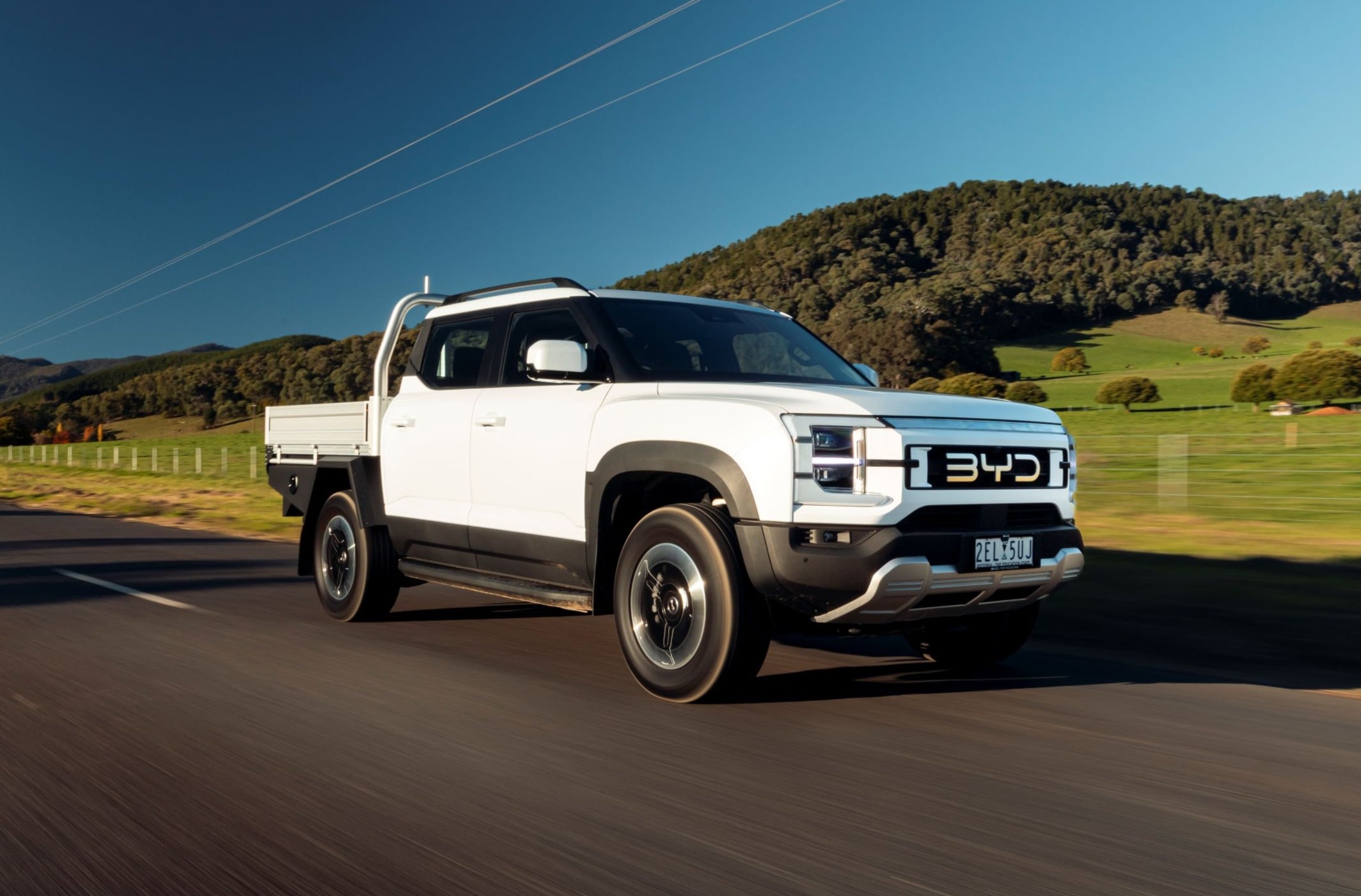
Now comprising three model variants, the Shark 6 range still remains easy to decipher. The cab-chassis model – called Dynamic – now kicks the range off, starting from $55,900 before on-road costs. In other words, it undercuts the regular Shark 6 that you’re familiar with by $2000. Above that sits the Premium, which has been on sale for nearly two years now, starting from a still-competitive $57,900 before on-road costs. Then there’s the range topping Performance, new with this update, starting from $62,900 before on-road costs.
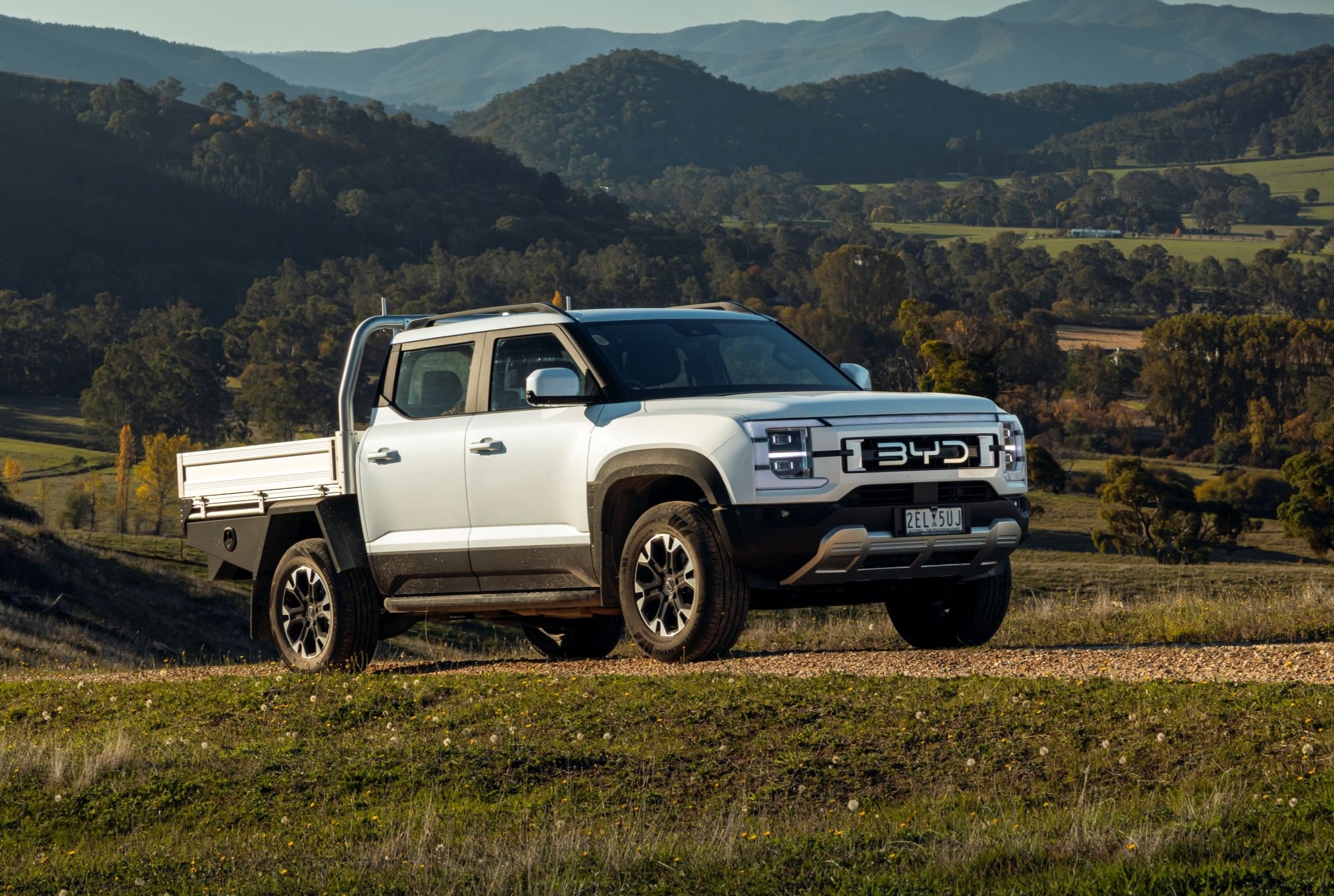
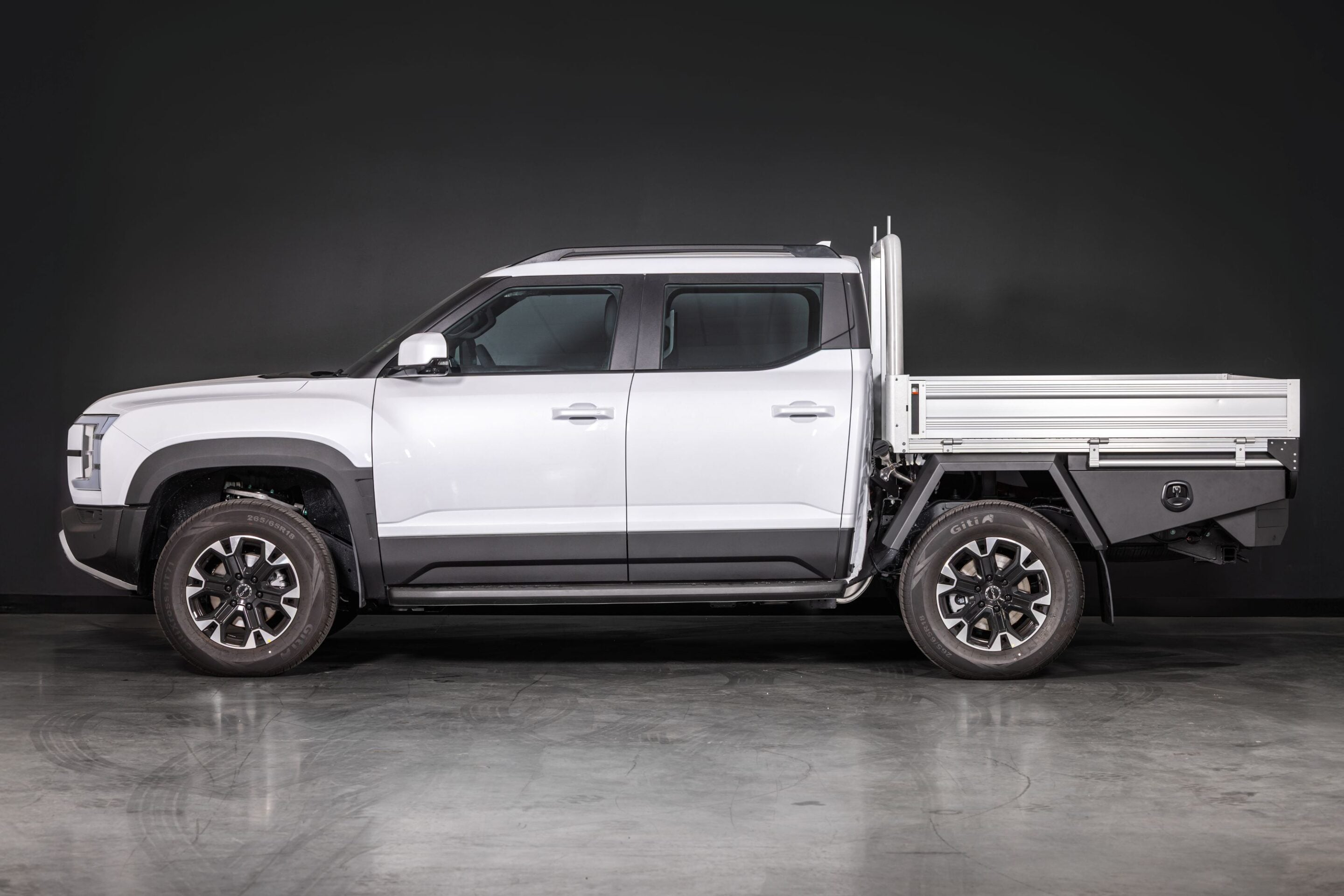
Across that model range, the buying choice is clear, even though two new variants have been added. If you need your dual-cab to work, as many BYD buyers are increasingly requiring, the Dynamic is the choice. Dropping some luxury features like the head-up display and large screen, it adds a solid and functional Ironman tray with a 935kg payload, and retains the Premium’s 2500kg braked tow capacity.
The Premium, which has been on sale for nearly two years and was BYD’s first dual-cab, remains, and retains the tub rear, the long list of standard features it’s had since launch, and shares the 1.5-litre, turbocharged petrol four-cylinder and dual electric motors of the workhorse variant. If you’re buying a dual cab to use mostly as an unladen daily driver, it’s the Premium which suits that best.
3
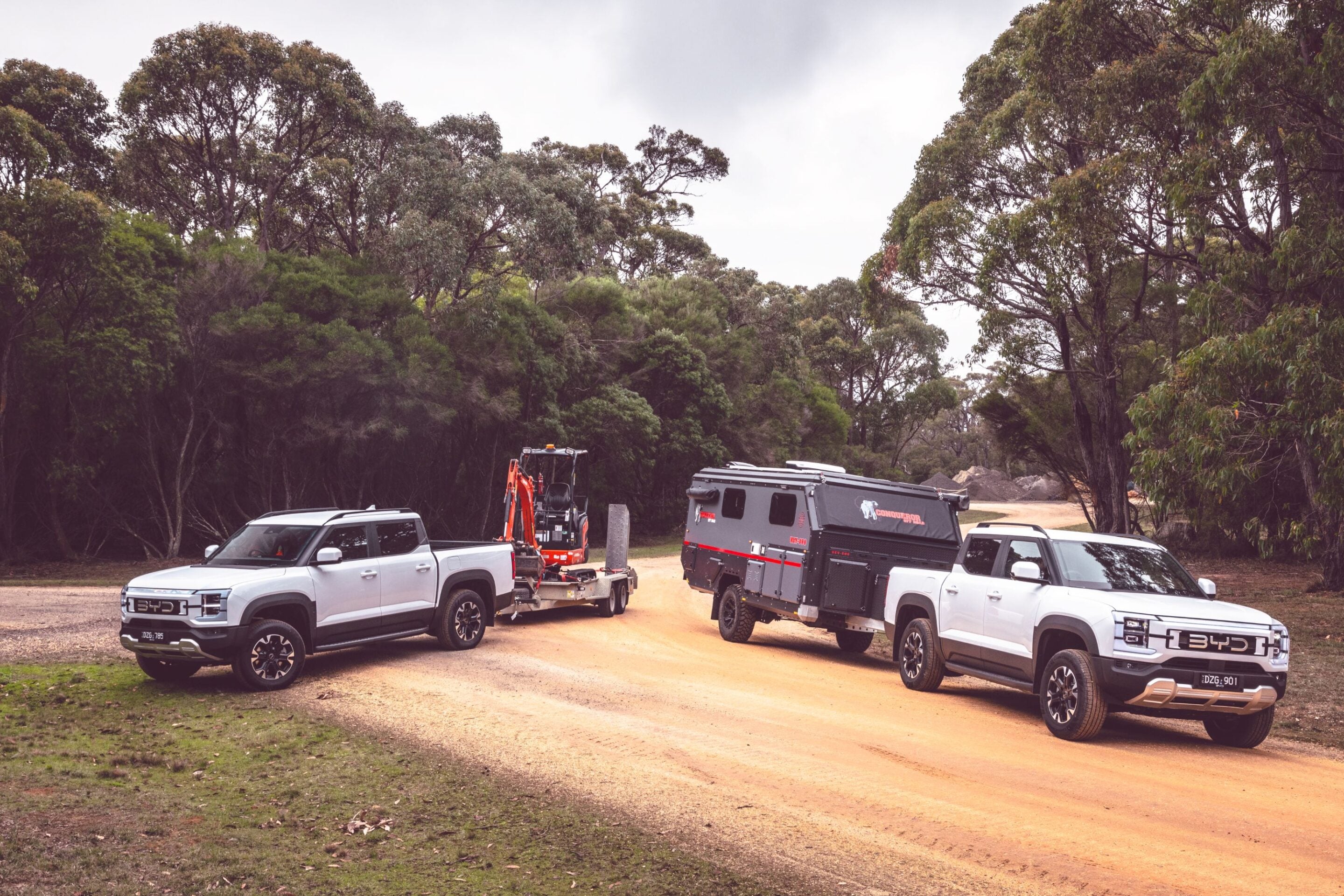
But BYD has now added an even more capable model above the Premium, the Performance, which is still more affordable than a Toyota HiLux SR5. The flagship hits the market looking identical to the Premium, but running a 2.0-litre, turbocharged petrol cylinder, with dual electric motors for combined outputs of 350kW and 700Nm, up from the Premium’s already impressive 321kW and 650Nm. Crucially, the added power means the Performance gets a 3500kg braked tow rating. Therefore, if you’re towing or touring, it’s the Performance that will best suit your needs.
How fast is the BYD Shark 6?
While the headline figure of the two new models is the power and torque of the Performance, that only tells part of the story. In essence, all three Shark 6 variants are ‘fast’ in the traditional sense. Dynamic and Premium both make the run to 100km/h in just 5.7 seconds, while the Performance drops that to 5.5 seconds.
The difference between the 1.5-litre powertrain and the 2.0-litre is enough to ensure the Performance feels faster everywhere, not just on the run to 100km/h. The 1.5-litre makes 135kW against the 2.0-litre’s 180kW, while maximum power and torque from the front and rear electric motors are both higher for the Performance. That means combined outputs for the Performance rate at 350kW and 700Nm, against 321kW and 650Nm for the other two models.
2
All three models have 6.6kWh vehicle to load (V2L) capability, and the cab-chassis has its charge port relocated in a waterproof storage box under the tray, rather than forward of the wheel arch like the regular models. V2L adds a dimension for regular campers, where the BYD’s 29.6kWh ‘Blade’ battery – standard across all three models – can be used as your power source once you get to where you’re going.
Crucial to this model update, and additions to the range, are tweaked electronic systems that make the Shark 6 more capable off-road, and the upgrading of the tow capacity to 2500kg for the Performance. That comes with a 350kg download weight for the towball, while Dynamic and Premium retain the 250kg rating.
Shark 6 retains its 60-litre fuel tank and low claimed fuel consumption, given the 100km of the test cycle is largely effectively conducted under electric power. The claims are 2.0L/100km (Dynamic and Premium on the NEDC test cycle) and 1.3L/100km (Performance on the WLTP cycle), with the battery pack at more than 25 per cent, while they climb to 7.9L/100km (NEDC) and 10.5L/100km (WLTP) respectively with the battery below 25 per cent. We’ll test these figures out in the real world, especially towing, post launch, but it’s worth noting we’ve routinely covered between 85 and 90km in pure EV mode in testing, before the battery reached its 25 per cent state of charge rating.
There will be a lot of talk post launch about the power and capability of the new Performance variant, but the more practical assessment is the touring range, which as per BYD’s claim sits somewhere between 640km and 800km, as tested by either the NEDC or WLTP cycle. Anything around the 700km mark is useful for those of you heading off on a long roadtrip, and the benefit of the PHEV platform is you don’t need to worry about charging until you get to where you’re going if you don’t want to.
5
How fast can the BYD Shark 6 charge?
The Shark 6 can accept AC charging up to 7kW and DC fast charging up to 55kW. In effect, the smartest way to use a PHEV like the Shark 6 is to charge it every night at home, so that you leave each day with a full charge on board. BYD’s battery tech is clever and makes the most of the available charge, too, and if you live in the city, the majority of your running around will be done on electric power.
It’s worth noting, too, that you don’t need expensive charging infrastructure at home. A regular power point will charge the Shark 6 in around 15 hours worst case scenario. Given most of you won’t end up back at home fully depleted, it’s likely to fully charge overnight on a regular power point without any issues. A 7kW AC home charger will take 5 hours, while it’s only 30 minutes at the maximum rate to get from 30 to 80 per cent on a public, fast charger.
Is the BYD Shark 6 practical?
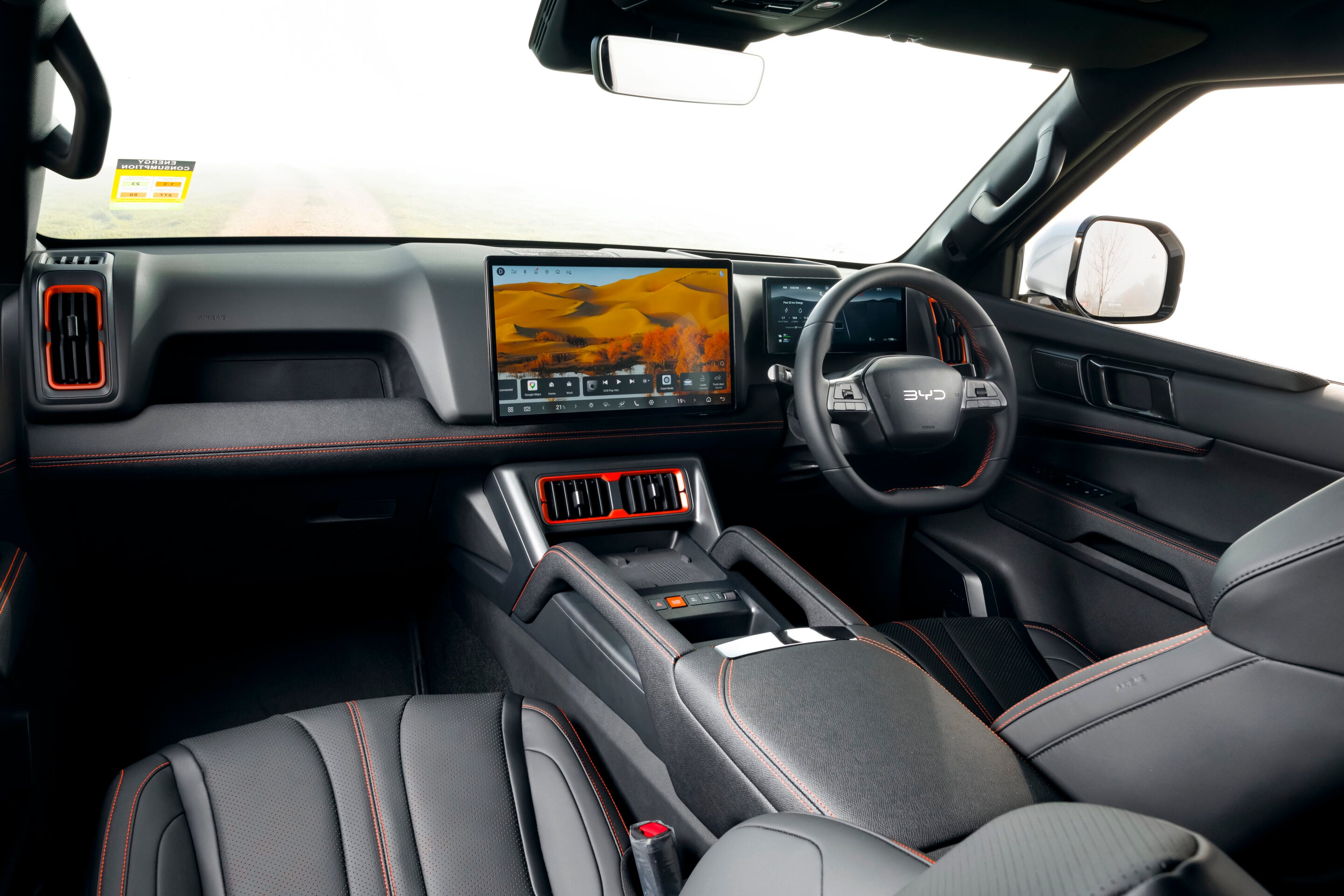
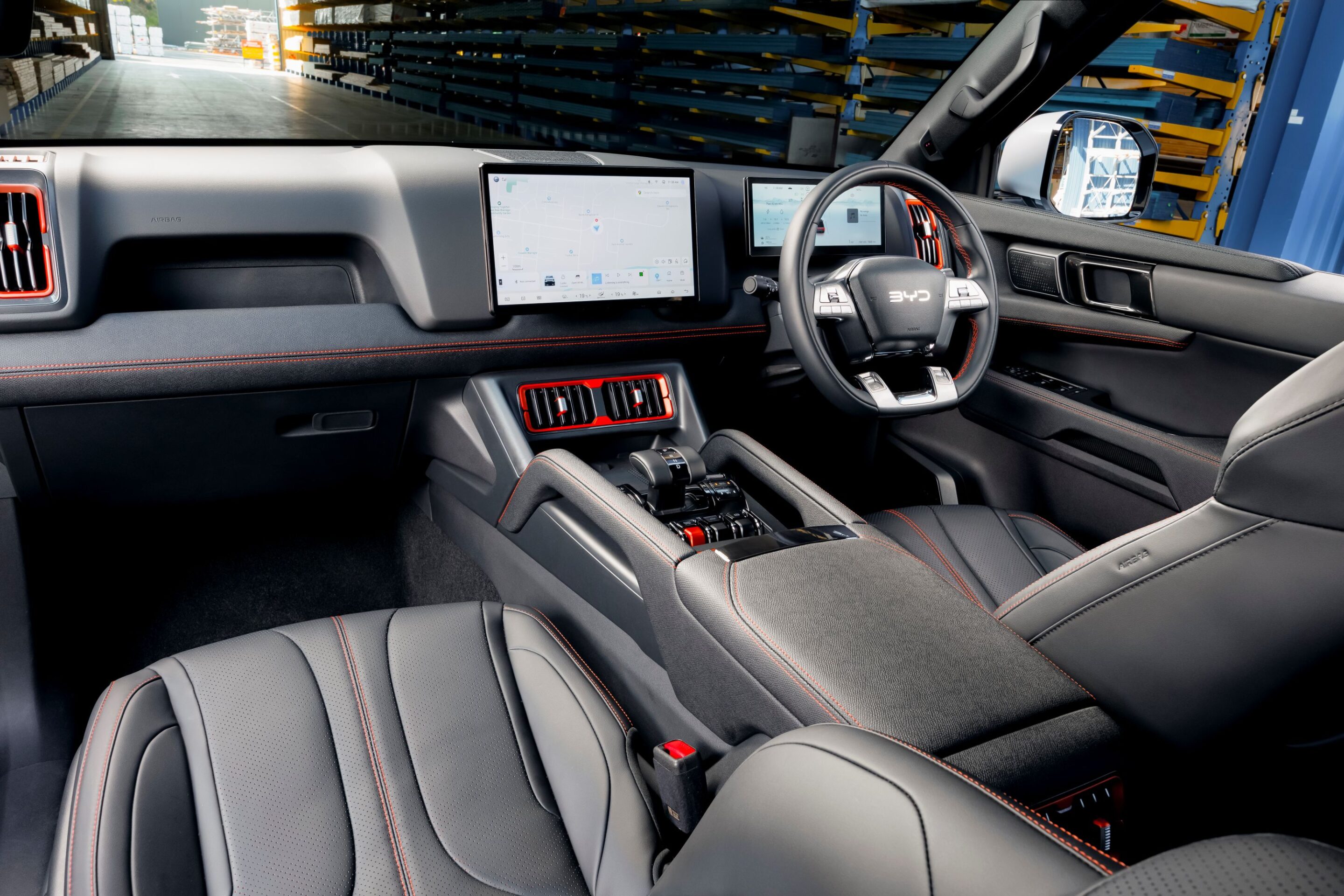
Across the two new model variants, the noteworthy points of the Shark 6 remain. Compared to even the best in segment from the traditional brigade, Shark 6 delivers a premium cabin experience. The choice of materials, attention to detail, fit and finish, and placement of the major controls, all combine to ensure it feels like a premium place to be, regardless of model choice.
Even the work-focused Dynamic, which loses heated and ventilated front seats, head-up display, and privacy glass, and reverts to a 12.8-inch screen rather than the 15.6-inch unit in the two models above, retains a quality feel, especially from behind the wheel.
The driving remains, as it always did, excellent, especially when you’re moving under electric power. Given the Shark 6 gives you the feel of driving an electric car but with the lack of range anxiety that comes with a petrol engine, you’re effectively getting the best of both worlds. While a PHEV won’t necessarily work for everyone, it does provide a genuine step from the old way of doing things.
These are heavy dual cabs, with curb weights of 2600kg, 2710kg and 2775kg across the range, and they will feel that way sometimes, especially if you need to brake heavily.
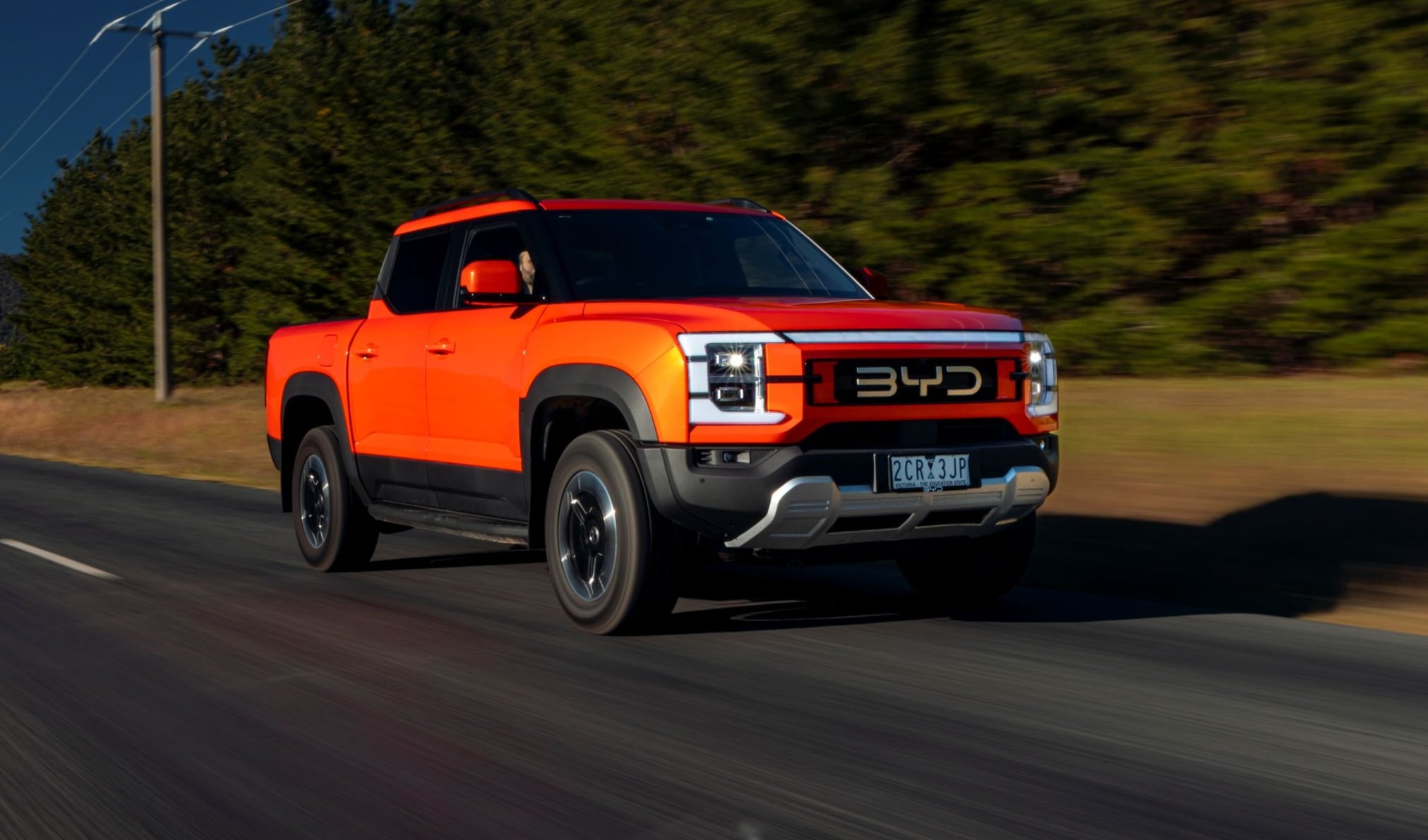
However, the Shark 6 – in any guise – rides nicely, and handles our typical urban and outer urban fare, with ease. The Dynamic – like just about every dual-cab on the market – rode even better loaded down. BYD Australia reps told us the weight was between 400kg and 450kg, and while that represents only half its quoted payload, it did make a difference to the bump absorption.
2
Three driving modes remain, familiar from the model we’ve tested before – EV Pure Electric mode, HEV Series mode and HEV Parallel mode. In EV mode, the petrol engine is switched off and the Shark 6 drives like an EV. That’s the mode we’d recommend for your daily commute. In HEV Series mode, the petrol engine kicks into life but doesn’t power the wheels. Rather, it acts a generator to charge the battery pack, while the electric motors drive the wheels. Then there’s HEV Parallel mode, where the petrol engine and electric motors work together to drive the wheels at the same time. If you’re towing, or covering long distances on the highway, this is the mode that makes the most sense.
Australia’s rural road network provides the kind of patchwork that is beautifully suited to unsettling an unruly dual-cab and yet in any guise, the Shark 6 remains composed. Grip is always good on any surface and while the steering doesn’t feel as sharp as an SUV might, it doesn’t feel too light either. The transition from region braking to friction braking remains smooth, and the all-round driving experience is a good one.
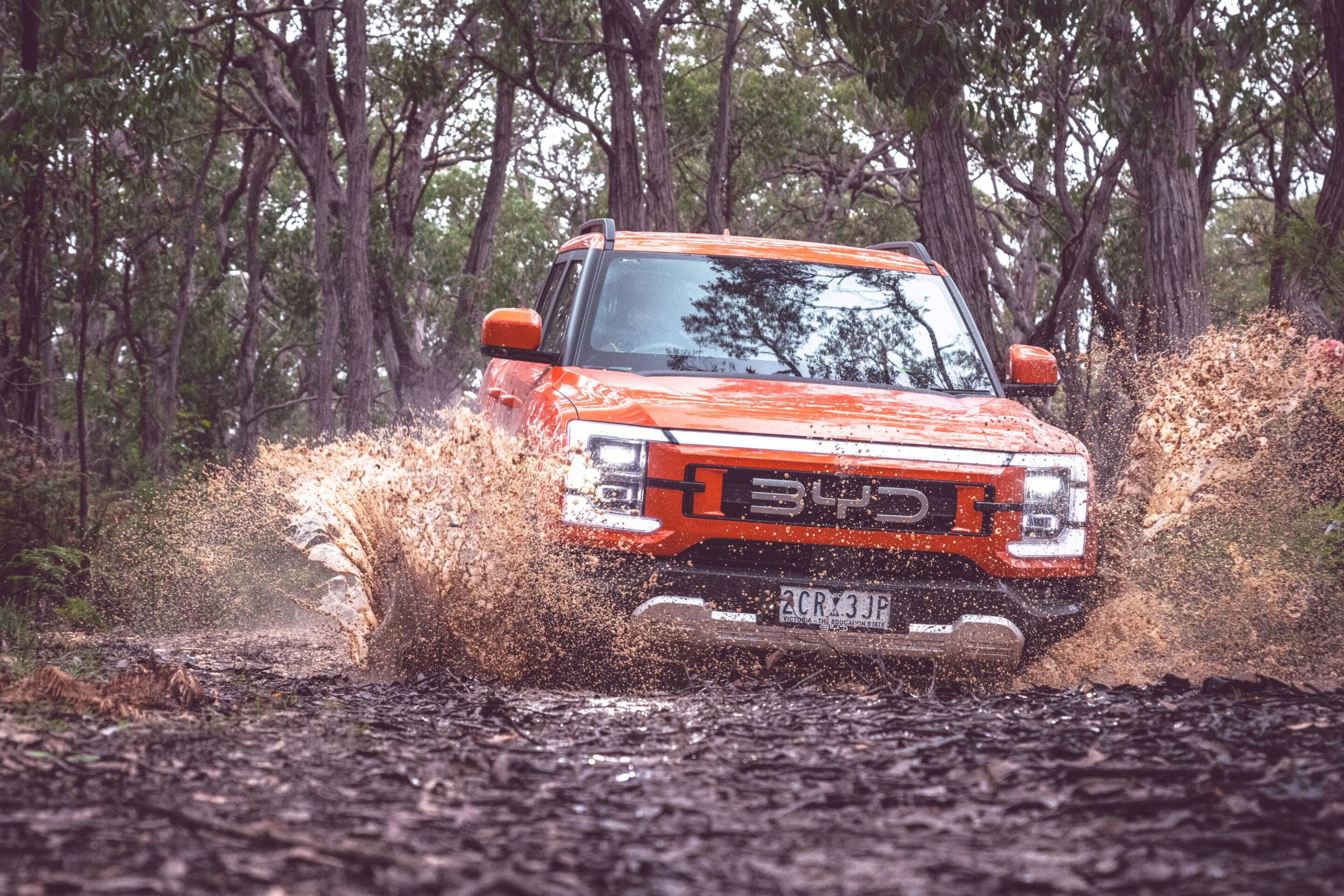
Off-road, changes to the electronic system tuning mean the Shark 6 is better able to cope with scrabbly climbs and slippery descents, with both hill-climb assist and descent control working reassuringly well at launch. Performance Shark 6 debuts a new ‘Crawl’ mode, which will be available as an over-the-air update for Dynamic and Premium owners later this year. For those of you not widely skilled in off-road driving, like most dual cabs these days, the Shark 6 will make most things challenges look decidedly easier than they otherwise might.
The cabin remains a Shark 6 strong point, even in the work-focused Dynamic cab-chassis. If other dual-cab manufacturers aren’t taking notice, they should be. When we speak to Shark 6 owners, the cabin is the strongest draw to the brand. Many who enter the BYD showroom via a five to seven-year-old dual cab, are immediately impressed with the space, amenity and design execution of the Shark 6 cabin, and it’s very hard to argue that point.
5
What warranty covers the BYD Shark 6?
All Shark 6 variants get a full five-star ANCAP safety rating, and a six-year/150,000km warranty. Service cost clarity runs out to 11 years/220,00km if you want, and that’s another strong point for buyers. For the first five years, you’ll pay $2489, a full 11 years will cost $6077 – the certainty of that alone is a smart way to attract buyers.
Should I buy a BYD Shark 6?
Given more than 24,000 Australians have done just that, in less than two years, there’s little doubt the Shark 6 is worthy of consideration. If you’re heading off on a lap of Australia, or looking to tour our most remote off-road tracks, a more conventional diesel is a smarter, safer choice.
However, the overwhelming majority of us aren’t doing that. We live in the city, we drive in the urban confines, and we are able to do nearly all of that on electric power alone. Therefore, if you want to make the move to an EV, but want to retain some of the security of the old way of doing things, the Shark 6 provides the platform.
When you factor in the strong warranty, long list of standard equipment, and the quality of the driving experience, its not hard to see why so many Aussies have opted for a Shark 6. Add in the explosion in dealership growth – up to 150 by the end of 2026 – and BYD’s presence is growing by the day.
2
Standard features
- 29.6kWh battery
- 800km NEDC driving range
- 2500-kilogram braked towing capacity
- Proprietary satellite navigation
- Over-the-air software updates
- Synthetic leather steering wheel
- Synthetic leather seats
- Five-star ANCAP safety rating
- 12.8-inch infotainment touchscreen
- 10.25-inch LCD instrument cluster
- Wireless Apple CarPlay and wired or wireless Android Auto
- Dual Mode off-road Super Hybrid AWD
- LED headlights, tail-lights and daytime-running lights
- Eight-way adjustable electric driver seat
- Six-way adjustable electric passenger seat
- Dual-zone climate control
- BYD Cloud services
- Keyless entry and start
- Auto-dimming rear-view mirror
- Power-folding side mirrors
- LED interior lighting
- Interior household power outlet (vehicle-to-load)
- Front and rear parking sensors
- 360-degree camera
- Autonomous emergency braking
- Lane-keep assist
- Adaptive cruise control with stop and go
- Blind-spot monitoring
- Rear cross-traffic alert
- Traffic sign recognition
- Front-centre airbag
10
Specs: BYD Shark 6 Dynamic
| Price | $55,900 plus ORC |
|---|---|
| Engine | 1.5-litre turbocharged petrol four-cylinder |
| Drivetrain | Dual-motor electric, all-wheel drive |
| Peak outputs (Petrol) | 135kW/260Nm |
| Combined outputs | 321kW/650Nm |
| Transmission | Single-speed multi-mode hybrid transmission |
| Claimed | 0-100km/h 5.7 seconds |
| Battery | 29.6kwh |
| Claimed NEDC range | 800km |
| Maximum DC fast charge speed | 55kW |
| Claimed 30-80% charge time | 30 minutes |
| Dimensions (l/w/h/wb) | 5413mm/1971mm/1925mm/3260mm |
| Tow rating | 2500kg (braked) |
| Ball weight | 250kg |
| Kerb weight | 2600kg |
| Warranty | 6-year/150,000km |
| 5-year service cost | $2489 |
| On sale | Now |
8.2
/10
Score
Score breakdown
8.5
Safety, value and features
8.5
Comfort and space
8.0
Engine and gearbox
7.5
Ride and handling
8.5
Technology
Things we like
- Cabin continues to impress
- Tray for cab chassis is high quality
- Performance model steps the power game up
Not so much
- No single-cab chassis yet
- Suspension will sag as you near max payload
- Cab-chassis model loses some features
Follow WhichCar/Wheels on Google
Click the button below to make WhichCar by Wheels a preferred source for your news.

We recommend
-
 Reviews
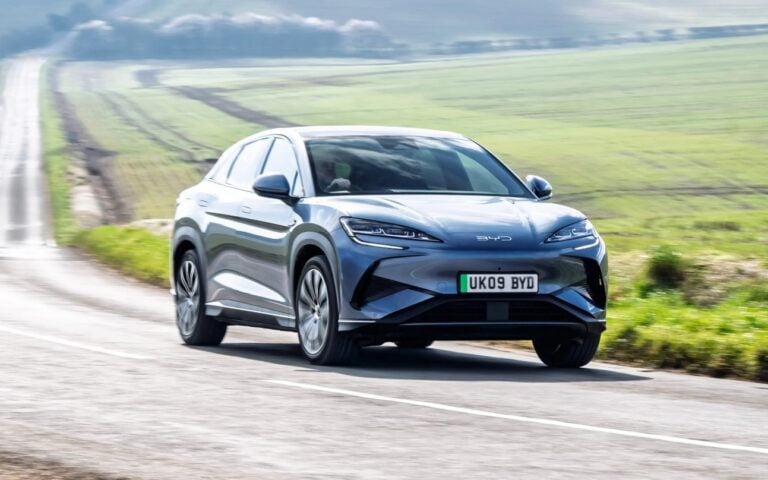
BYD Sealion 7 review: Feature-rich electric mid-size SUV grows in popularity
The BYD Sealion 7 is the brand's best-selling passenger vehicle in Australia and a big part of its sales success. Here are some of the reasons why...
-
 Reviews
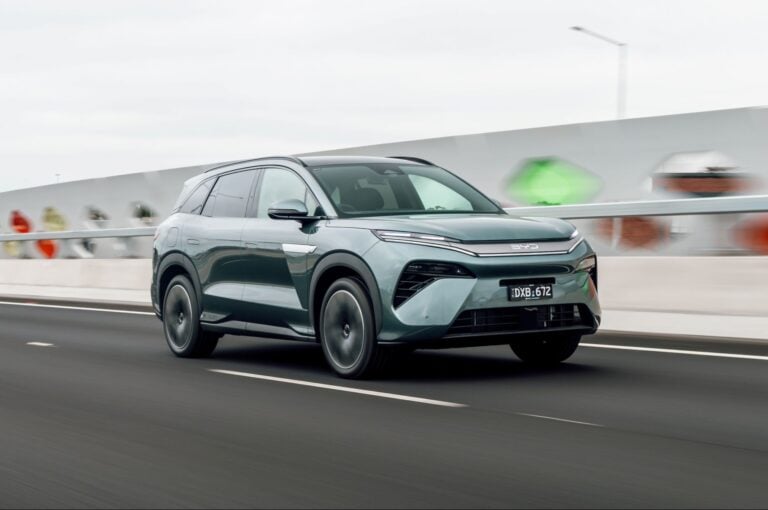
2026 BYD Sealion 8 first drive review: How well does its first three-row large SUV measure up?
BYD aims its artillery right at the established large SUV players - Toyota, Hyundai and Kia - with its new Sealion 8. It’s a value packed, large, three-row SUV designed to further the BYD success story in Australia.
-
 Reviews
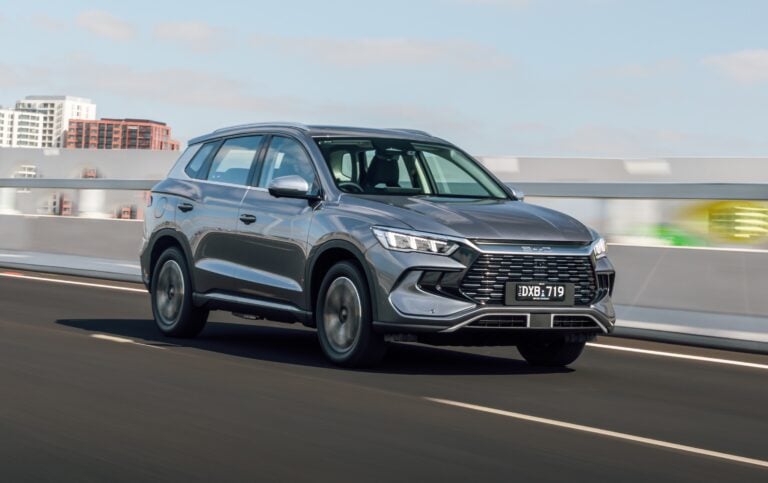
2026 BYD Sealion 5 first drive review: Bringing plug-in hybrid tech to a wider audience
The Sealion 5 is BYD’s latest arrival in Australia. With plug-in hybrid technology and sharp pricing, this is the vehicle that is set to take even more market share for the surging brand.
