
Reviews


Gallery 1
7.6
/10
Score
Score breakdown
8.0
Safety, value and features
8.0
Comfort and space
7.0
Engine and gearbox
7.0
Ride and handling
8.0
Technology
Things we like
- Impressive electric driving range
- Cabin space is solid
- Clever tech that works
Not so much
- Third row difficult to access
- No spare wheel and tyre
- System complexity for simple infotainment tasks
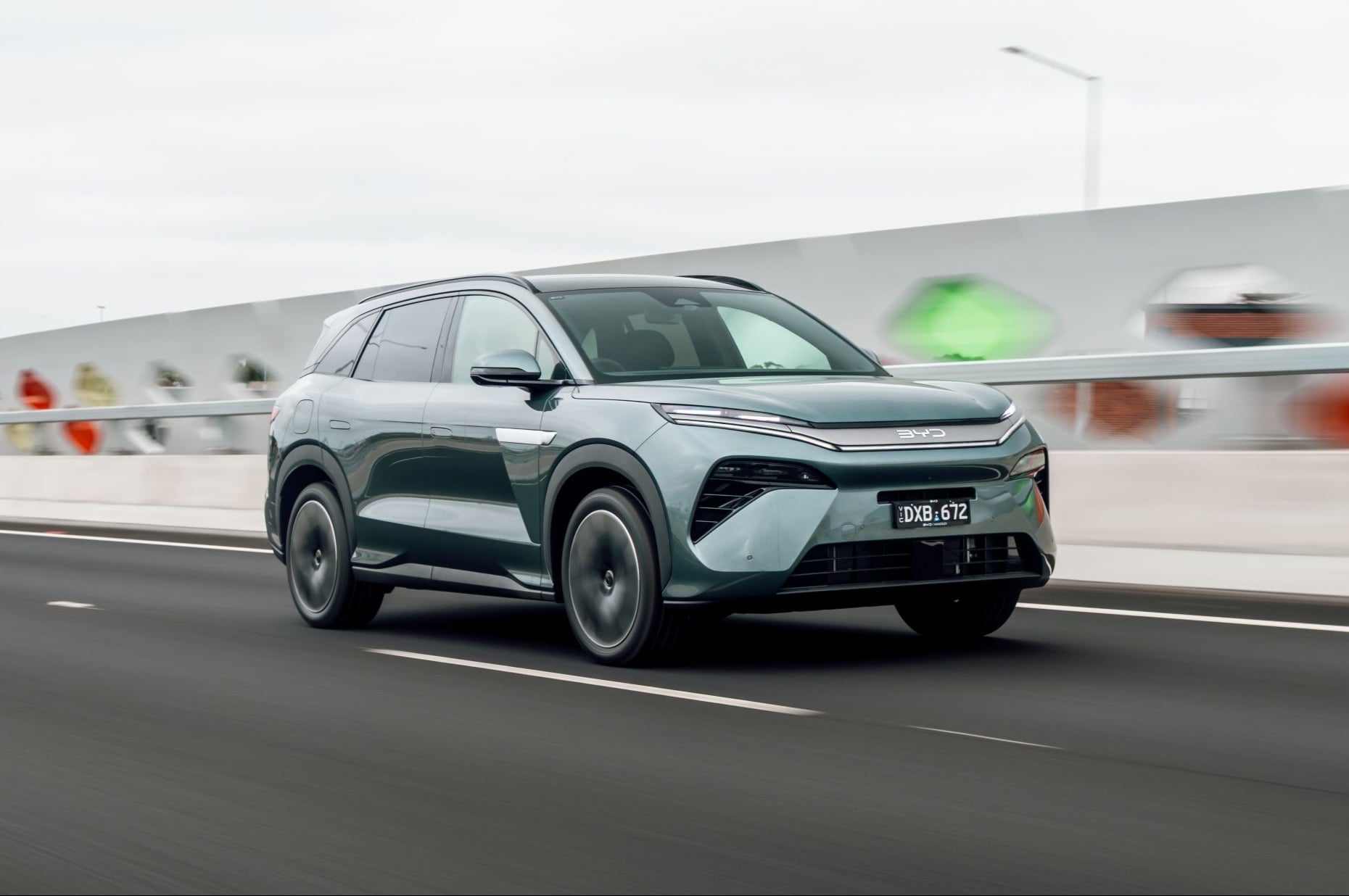
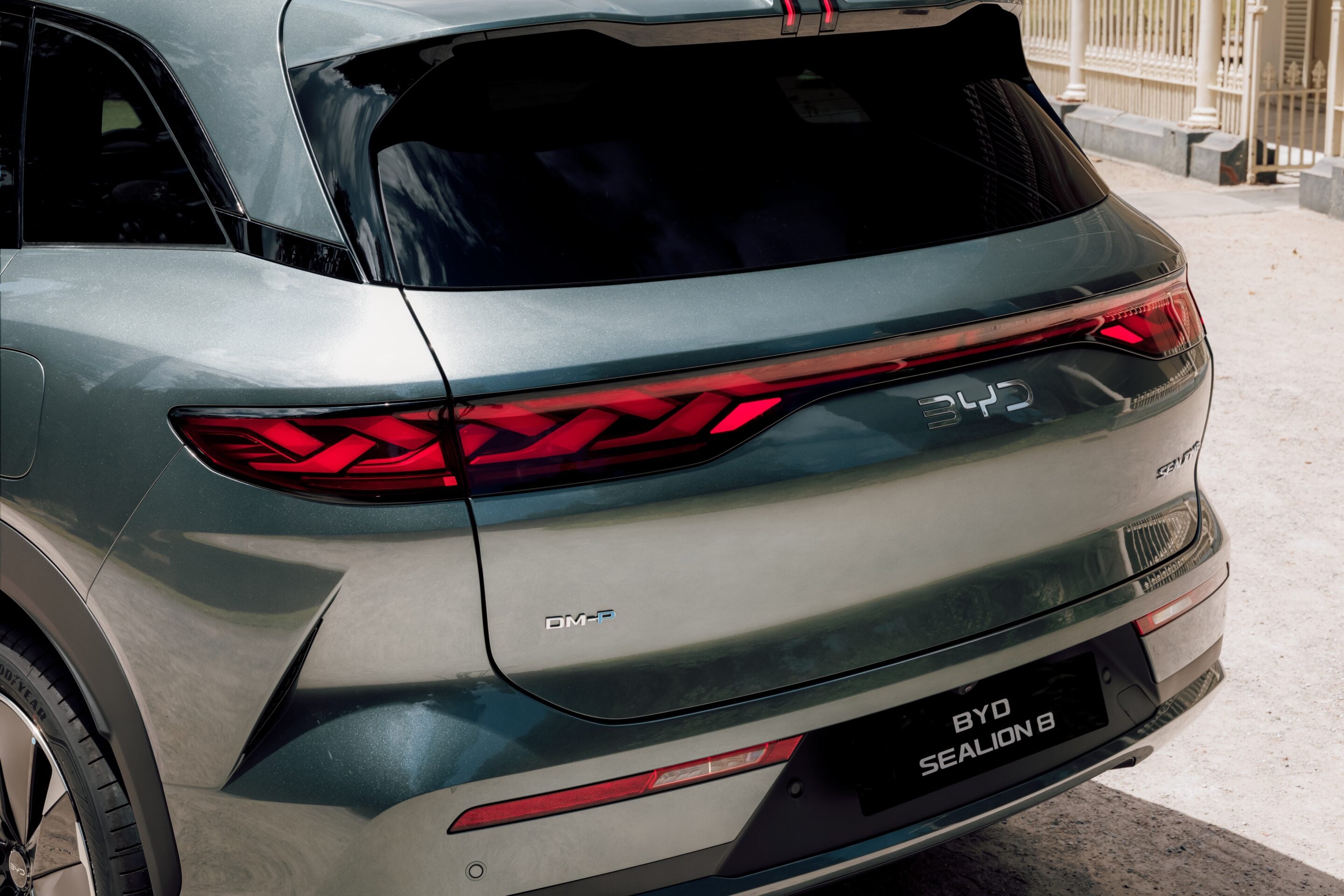
Hot on the heels of the value-packed Sealion 5, BYD Australia also released the Sealion 8, a large, three-row SUV, with pricing that starts from $56,990 and rises to $70,990 before on-road costs.
Three model grades are available, with the entry Dynamic FWD kicking the range off, the mid-grade Dynamic AWD starting from $63,990 before on-road costs, and the Premium AWD rounding out the range.
Despite the short launch drive, Wheels suspects the middle of the range Dynamic AWD will be the favourite in Australia, and is indeed the pick of the range. Given the point of difference for BYD in this segment is the electric-only range a PHEV brings with it, there’s a lot to like about the Sealion 8’s specification sheet.
1
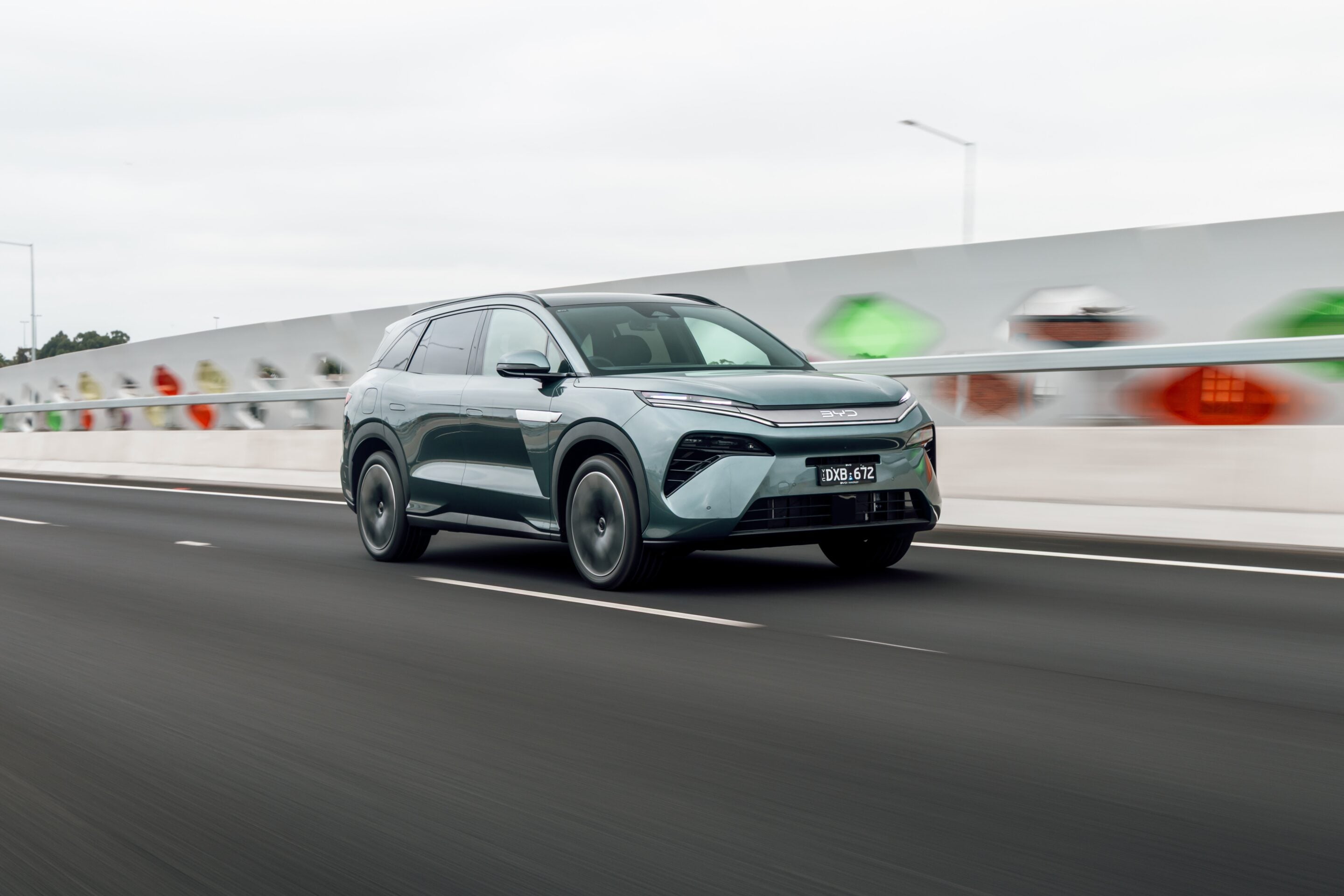
Holding more than 1000 orders around the country at the time of launch before buyers had even test driven the new Sealion 8, BYD is confident this large SUV can make a dent in the market share of the established players. The key difference beyond front or all-wheel drive, is the battery capacity, and therefore the pure electric range. The base model gets a 19kWh battery, while the two AWD models get a 35.6kWh battery, delivering claimed ranges of 100km and 152Km respectively on the NEDC cycle.
The power and torque figures are also different, and the two AWD models are powerhouses. BYD uses a 1.5-litre, turbocharged four-cylinder engine, DM-i Super Hybrid drivetrain technology, permanent magnet synchronous motors and their Blade Lithium Iron Phosphate battery pack. Even the FWD model makes combined outputs of 205kW and 315Nm, but it’s the two AWD versions that get a hefty 359kW and 675Nm – numbers that translate to a fast SUV in the real world. How fast? 4.9 seconds to 100km/h for the powerful versions.
Like Sealion 5, BYD has quoted tested fuel use both before and after the battery is depleted. As such, you’ll use 1L/100km for the first 100km with a full charge on board, and then 6.3L/100km when the battery dips below 25 percent charge. Those numbers will stand well even with the regular large hybrid SUV brigade. With a 60-litre fuel tank, BYD is claiming cruising ranges beyond 1000km – another factor that will attract family road trip enthusiasts.
5
Seven seats is a first for BYD in Australia, and while the third row is a challenge to get into, there’s decent space once you do get back there. With the third row in use, the Sealion 8 facilitates 270L of luggage, out to 960L with the third row down, and then 1960L with the second row down. Taking into account the negative of no spare wheel for road trips, this is an otherwise space efficient large SUV.
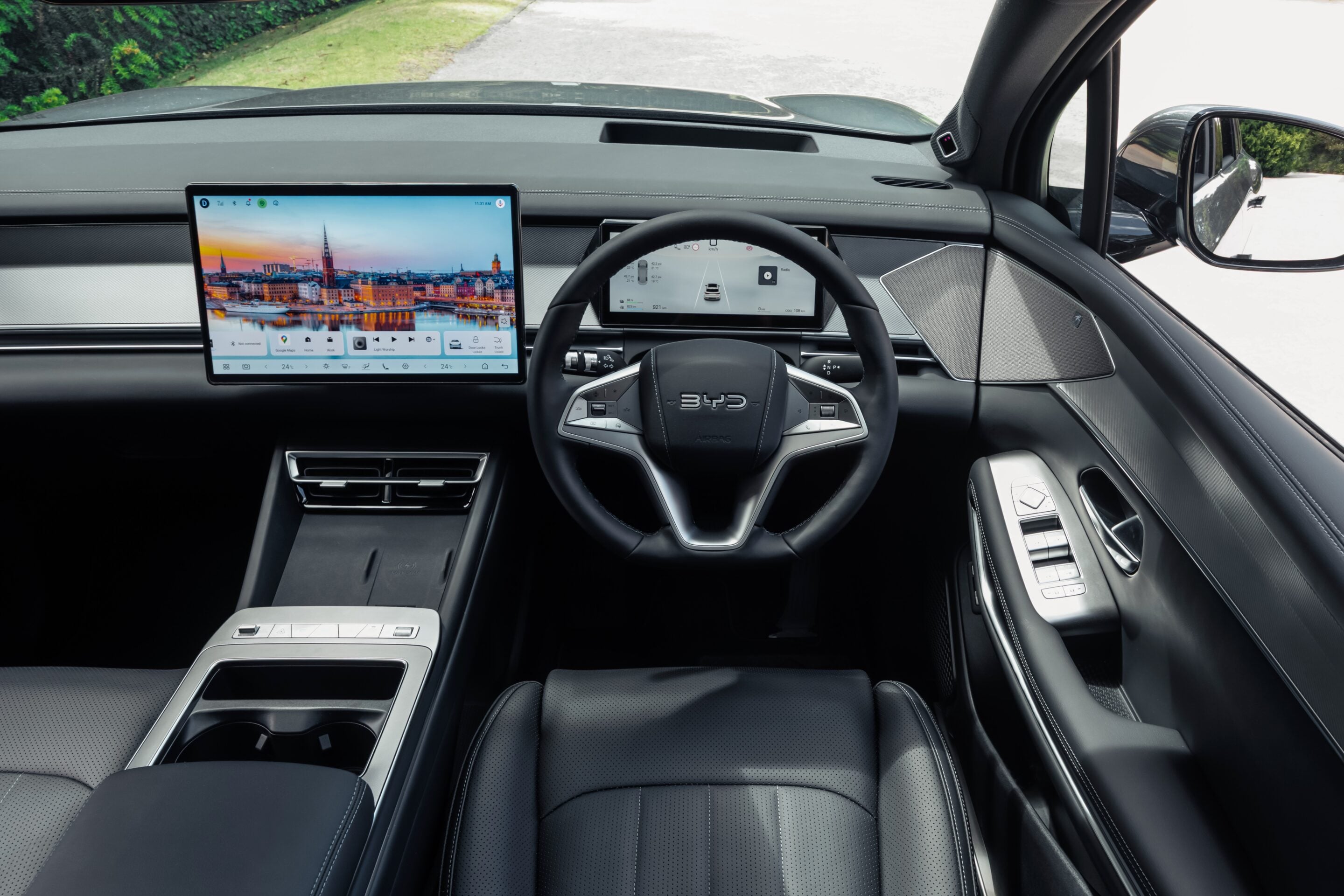
In short, BYD has thrown as much technology and standard equipment at the Sealion 8 as it can, while still focusing on the sharp pricing it is intent to deliver. AWD models get multi-mode, adaptive body control, while across the range, there’s an advanced infotainment system with a huge 15.6-inch control touchscreen, a 10.25-inch driver’s display, panoramic sunroof, six-way adjustable electric driver (eight-way for Premium) and passenger seat, and keyless entry and start via either the key fob, an NFC card, or the BYD smartphone app and its digital key.
There’s no ANCAP safety rating as yet, but the Sealion 8 will be tested and with nine airbags, emergency call capability, child presence detection, a head up display, a 360-degree camera, four front and four rear sensors, as well as ISOFIX points at the outer second row seats, and three top tethers, BYD would be hoping it will score well.
3
The premium nature of the cabin is enhanced by the quality of the leather trim, the large sunroof and broad glasshouse that lets plenty of light into the cabin, making it feel even more spacious than it is. The 1500-watt, 21-speaker audio system provides a beautiful sound stage, and the interaction with the huge infotainment screen is crips and precise.
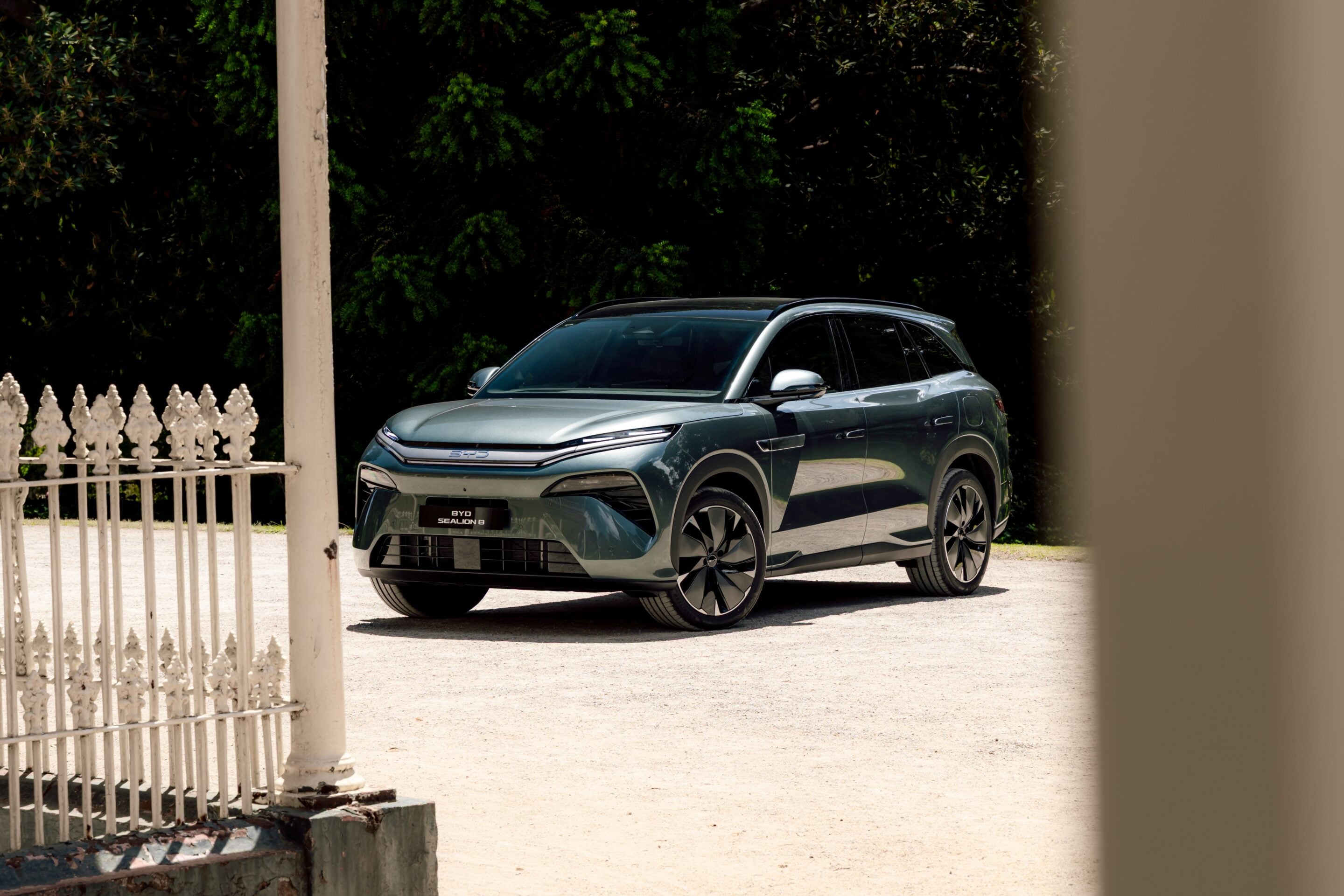
BYD claims a premium aesthetic, and it has delivered one. Firing through multiple model grades at launch, our drive is brief, but there’s no doubt the range topper on 21-inch rims with Goodyear tyres isn’t the one you’d have if you spend a lot your time on country roads. The ride is firm, sometimes harsh, and we preferred the softer bump absorption of the 20-inch rims and Hankook tyres. Cabin comfort was strong, and there wasn’t much in the way of tyre or wind noise entering the cabin, even at 100km/h on rough surfaces.
This is a big SUV – obviously – so Wheels wasn’t expecting it to handle like a sports car, but it’s nevertheless pretty well tied down – firm ride aside. The steering has the right balance between low speed ease and high speed certainty, and the brakes never did anything out of the ordinary either.
In theory, and in the real world for most of us, the beauty of a PHEV is the charging can be undertaken at home with a regular powerpoint. And, most of us commute less than 100km each day, meaning you won’t use any fuel if you don’t want to, getting to and from work each day. As such, more and more Australians are considering a PHEV and the Sealion 8 satisfies those of you looking for the tech, but needing a three-row, large SUV. At the time of testing, Chery Tiggo 8 and Kia Sorento represent the key competitors in the large SUV segment, but the undeniably sharp pricing of the Sealion 8 is sure to interest plenty.
1
Specs
| Model | BYD Sealion 8 Dynamic AWD |
|---|---|
| Price | $63,990 plus on-road costs |
| Motor | 1.5-litre turbocharged four-cylinder plug-in hybrid |
| Engine peak outputs | 110kW/220Nm |
| Front electric motor peak outputs | 200kW/315Nm |
| Rear electric motor peak outputs | 200kW/360Nm |
| Combined peak power | 359kW |
| Transmission | Single-speed, all-wheel drive |
| 0-100km/h | 4.9 seconds |
| Battery | 35.6kWh |
| Peak DC charge speed | 74kW |
| Claimed electric range (NEDC) | 152km |
| Fuel consumption (claim) | 1.0L/100km (full charge), 6.3L/100km (low charge) |
| Dimensions (l/w/h/whb) | 5040/1996/1760/2950mm |
| Boot space | 270 litres (third row up)/960 litres (third row folded)/1960 (all rear seats folded) |
| Kerb weight | 2580kg |
| Warranty | 6-year/150,000km (vehicle), 8-year/160,000km (battery) |
| On sale | Now |
7.6
/10
Score
Score breakdown
8.0
Safety, value and features
8.0
Comfort and space
7.0
Engine and gearbox
7.0
Ride and handling
8.0
Technology
Things we like
- Impressive electric driving range
- Cabin space is solid
- Clever tech that works
Not so much
- Third row difficult to access
- No spare wheel and tyre
- System complexity for simple infotainment tasks
Follow WhichCar/Wheels on Google
Click the button below to make WhichCar by Wheels a preferred source for your news.

We recommend
-
 UOTY
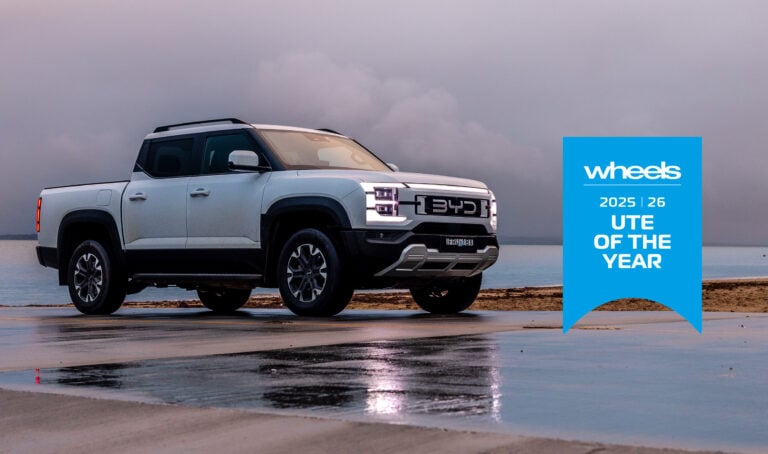
UOTY2025-26 Wheels Ute of the Year Winner: BYD Shark 6
In a first for Wheels, dual cabs get their own segment and new yearly award – with a razor sharp focus. And it's one of the newer brands taking out our first-ever Ute of the Year award, the BYD Shark 6.
-
 News
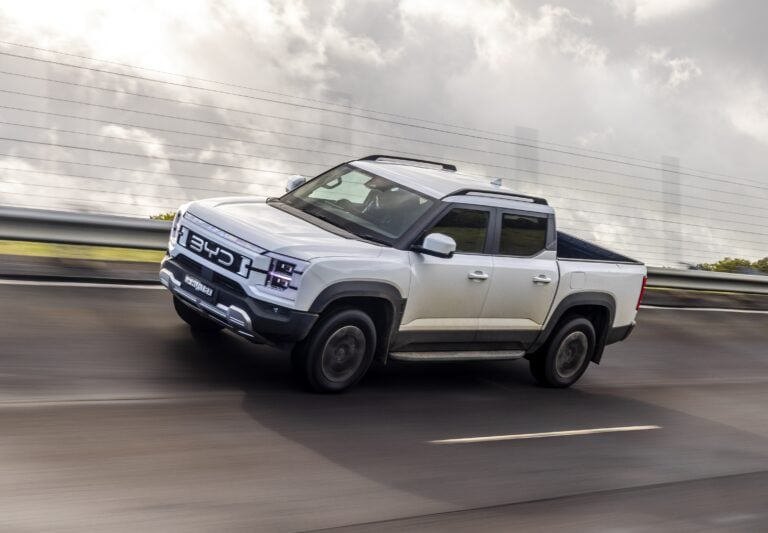
NewsBYD Australia boss says plug-in hybrids will remain a vital part of its line-up
Despite BYD’s undoubted success in the electric vehicle market in Australia, it’s Australian boss says plug-in hybrid technology will remain a key part of its product drive as it looks to climb even further up the sales charts.
