UOTY


Gallery 1
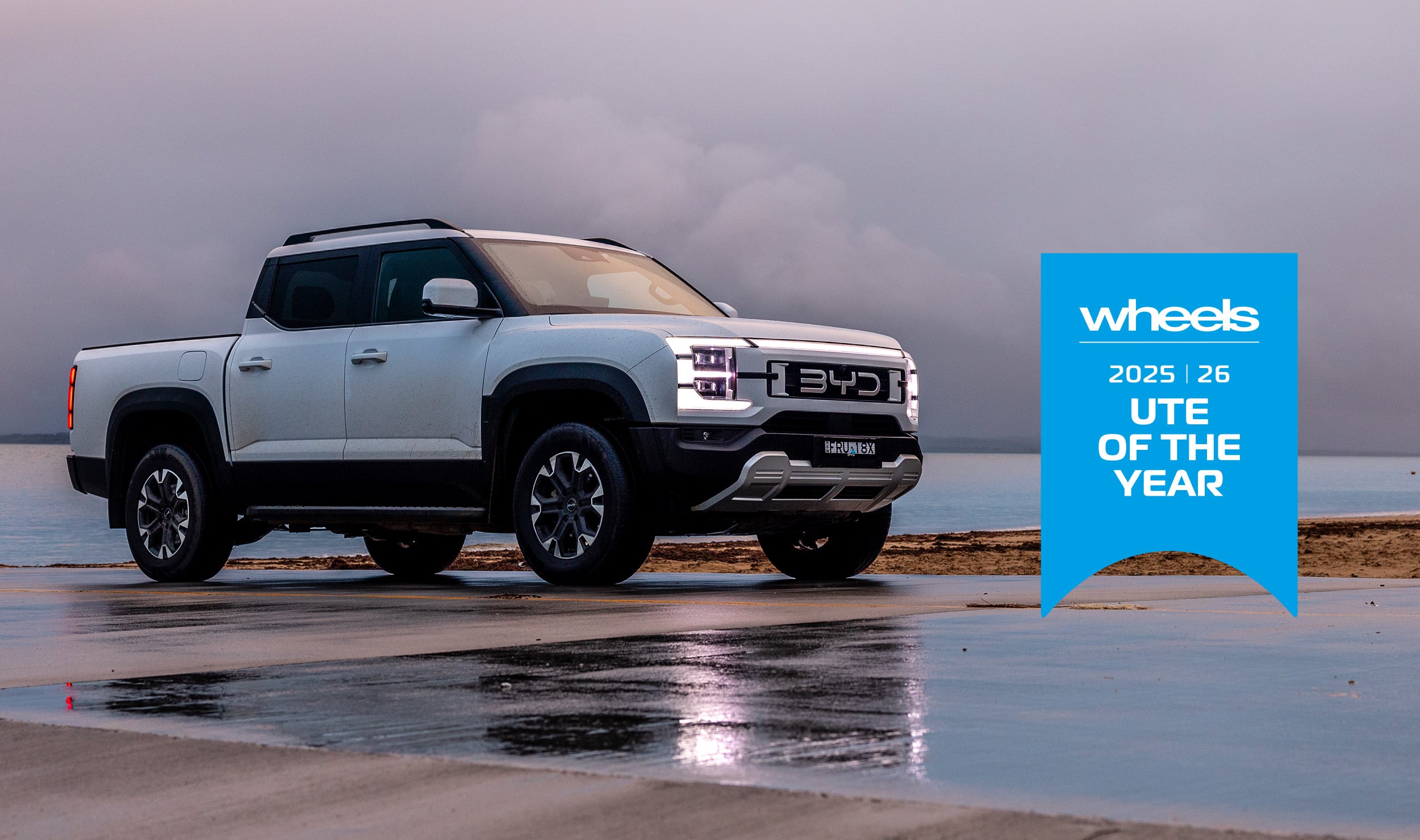
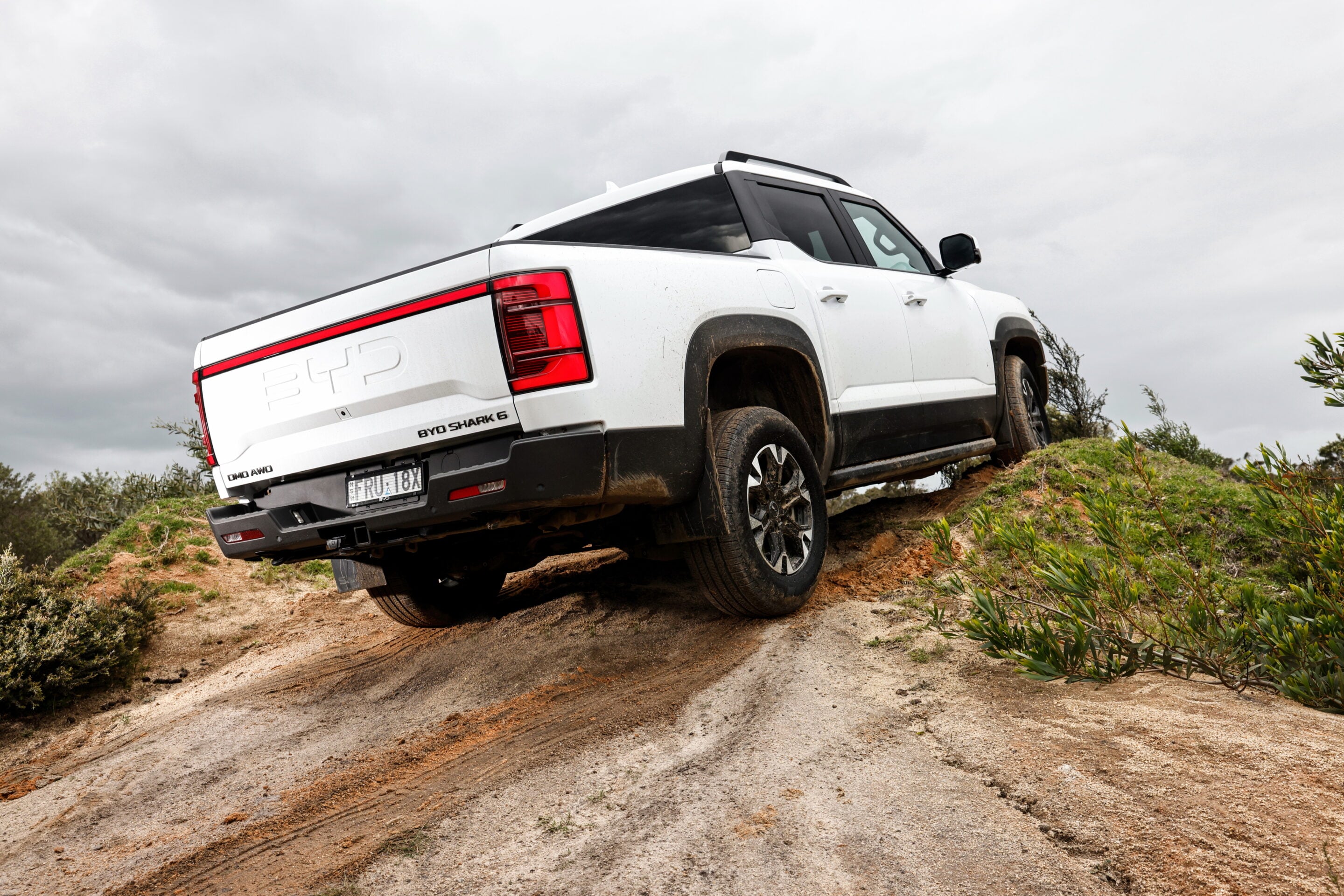
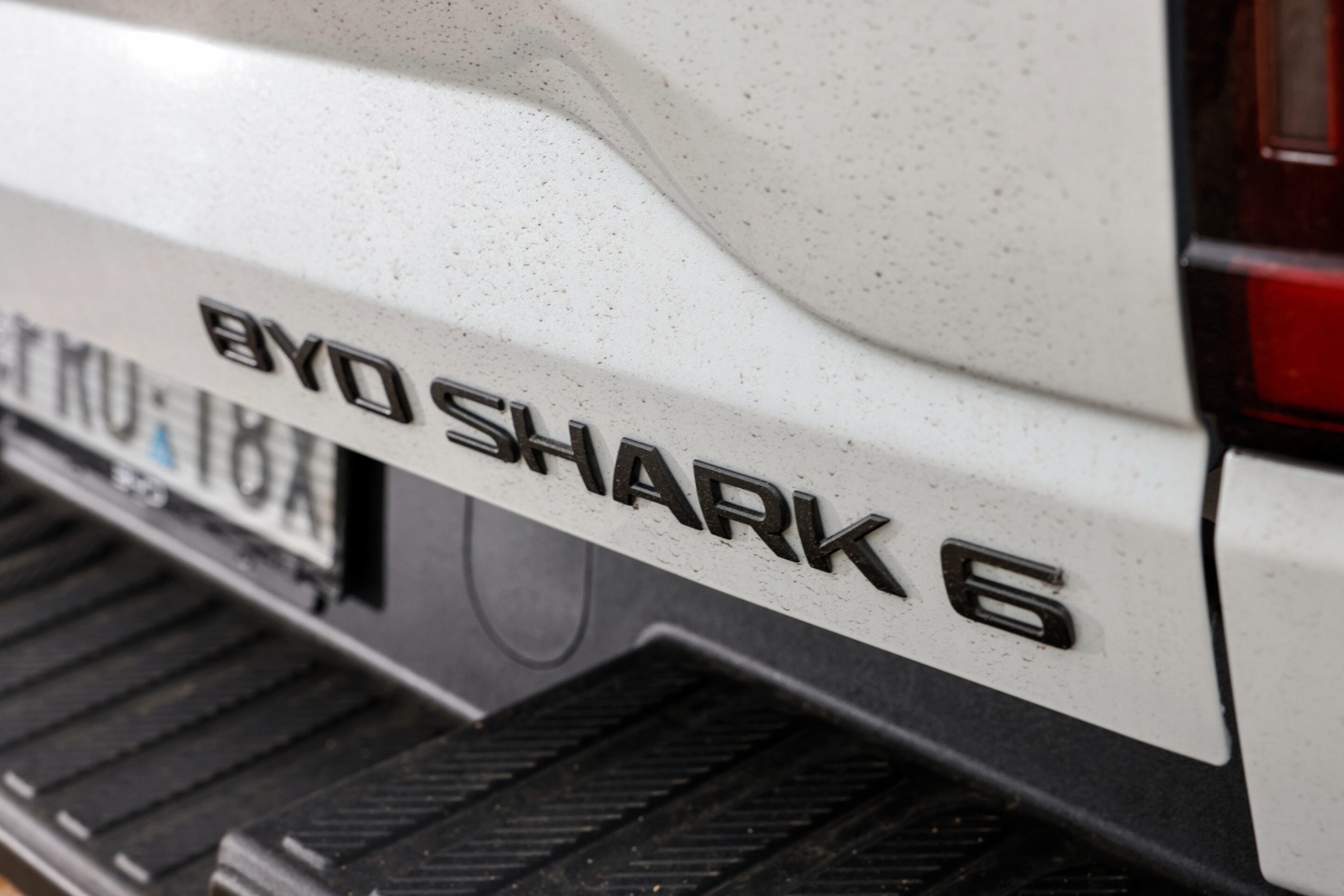
Let’s make this point from the outset – one more time it must be said – before we dive into why you would buy the BYD Shark 6. There are two reasons you wouldn’t buy it – neither of which are relevant to Wheels Ute of the Year testing. The first is towing, and the second is genuine, long distance off-roading. If you intend to do either, in large doses, this isn’t the dual-cab for you. In fact, you’d probably side-step our second place-getter as well, and opt for a traditional diesel-powered workhorse if that’s what you intend to do with your new dual-cab.
With that out of the way, here are the reasons you would buy the BYD Shark 6 and indeed, the reasons it wins Wheels’ inaugural Ute of the Year award. Not the least of which, is the way the Shark 6 behaves on the road, around town. More on that in a minute.
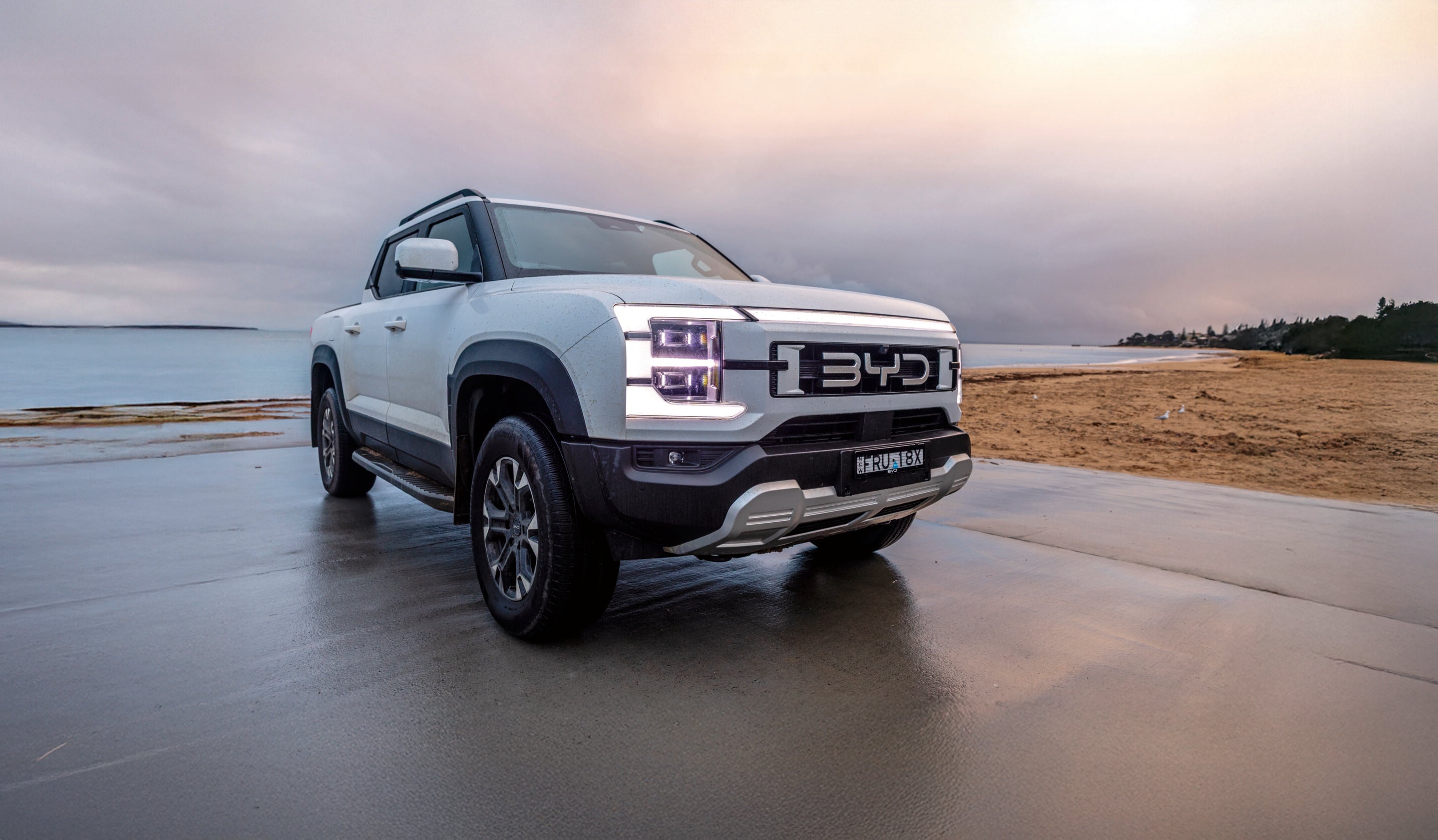
If, like most of us, you live within spitting distance of a large city, or within the greater urban sprawl, and if like most high-end dual-cab owners, you never intend to thrash your expensive new purchase in the vast emptiness of the Aussie off-road wilderness, the BYD Shark 6 is exactly the kind of dual-cab you could be driving because of the way it does what most buyers would want it to do. It’s probably why BYD sold so many of them in the city as soon as it launched locally.
3
Morley’s thoughts on the BYD fit nicely with the mantra of reaching the same point, but by taking a
different road – something the dual cab segment is finally starting to do.
“I really admire BYD’s decision to do something different with this vehicle,” Morley said. “The driveline is phenomenal and clearly points the way forward. The BYD could almost have been developed with our criteria as the blueprint. No wonder it was unbeatable.”
It’s quiet, refined, laden with technology that works, will complete more than the average Aussie commute on pure electricity alone, has a spacious cabin, and drives in a way that makes it enjoyable to use day-to-day in traffic. Importantly, these are all factors we prioritised for this assessment – along with value for money of course – as per the Wheels Car of the Year judging criteria.
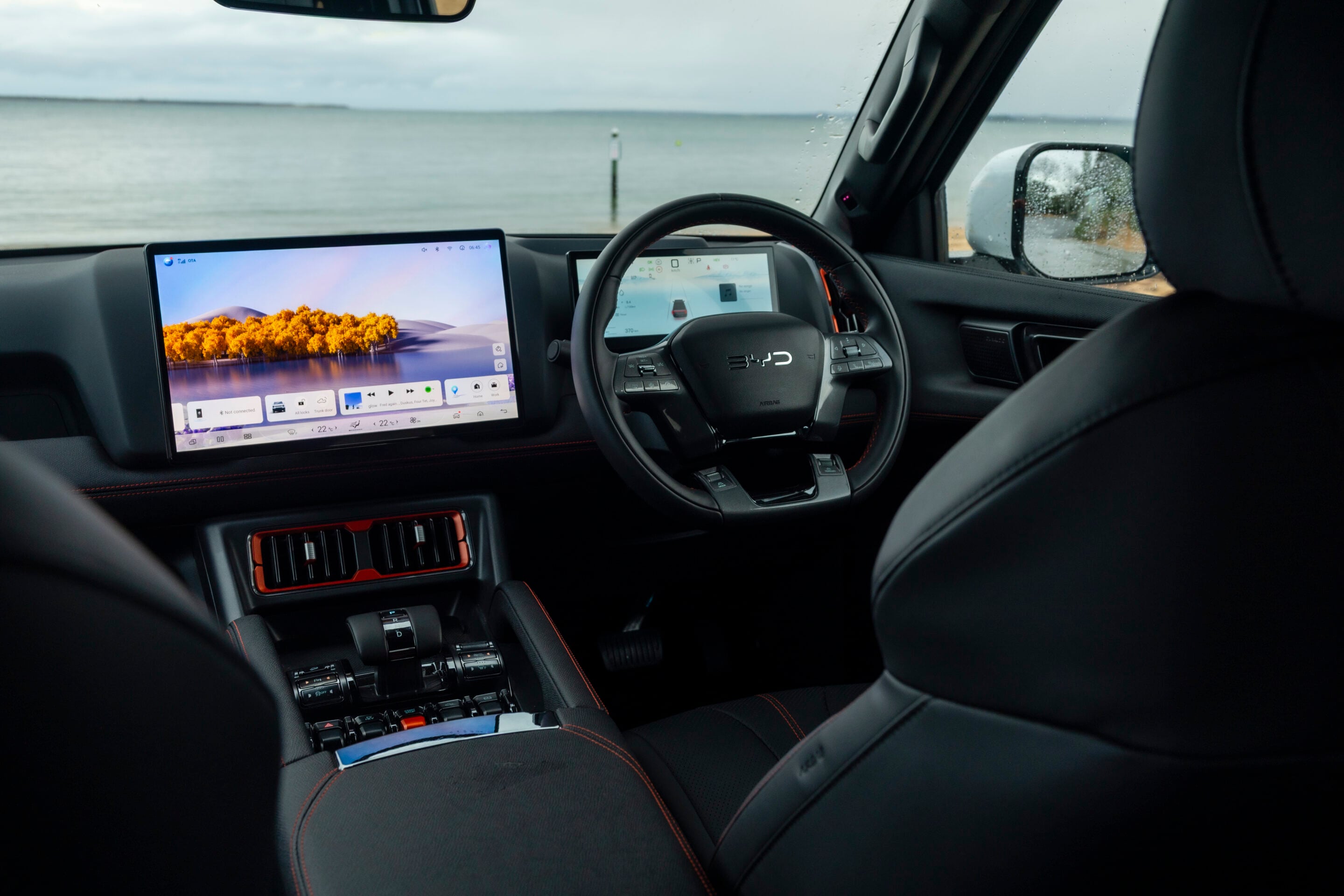
Shark 6’s cabin is excellent. It’s big, comfortable and ergonomically well laid out. There’s a cohort of dual cabs now that almost feel half a size bigger than the traditional combatants, and the Shark 6 is one of them. As such, cabin space is better than almost anything else in the segment. It’s comfortable in any of the five seating positions, and family buyers – who don’t really need a truck – will love it.
Let’s also give the Shark 6 one hell of a big tick for the way it behaves when you’re behind the wheel. This, along with the execution of the cabin technology, is of course the most obvious element of a new vehicle purchase. Technology is the touchpoint, the experience behind the wheel is the reward. As with our regular COTY award, dynamic testing and data analysis was conducted by the pre-eminent Karl Reindler, who was impressed with the Shark 6 from the outset, even before we asked him to sample it on open roads after the fact.
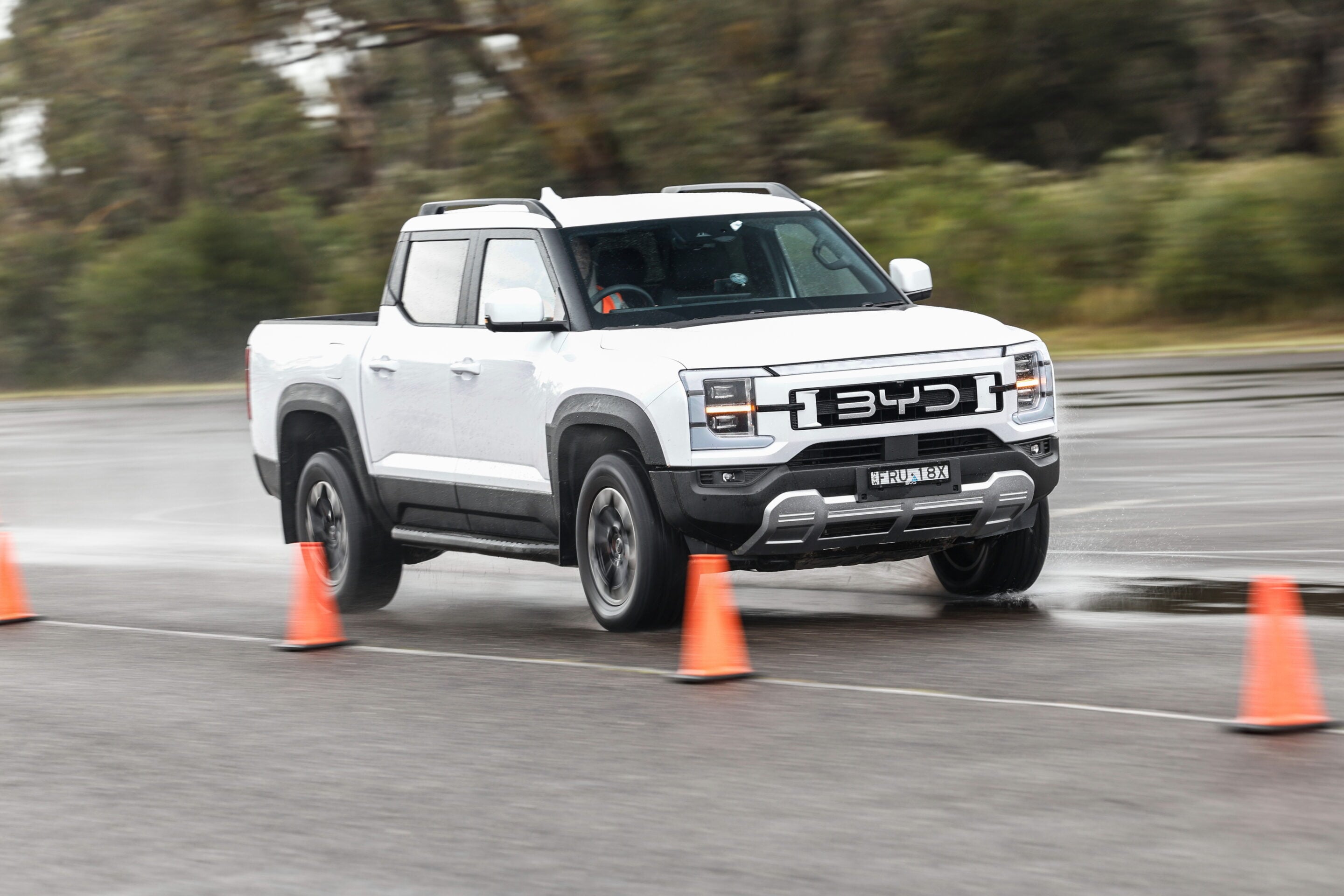
“It’s the fastest to 100km/h,” Reindler said. “It feels to me to be the closest to a car to drive, has more
refined stability control than the others, is generally more car-like and stops really well, too.”
2
Reindler’s assessment, beyond the numbers, is spot on. There’s a refinement and premium feel to the Shark 6’s driving behaviour that no diesel dual-cab can match. The cabin is quiet, the ride is excellent, even unladen, the steering and braking feel more like a large SUV than they do a truck, and there’s an effortless nature to the way in which it settles into a relaxed cruise. Around town, in the cut and thrust of city traffic, it betters any traditional dual-cab in the segment.
The reason the Wheels team wouldn’t advocate for the Shark 6 as the long-haul towing or off-road touring option is, in part, the same drivetrain that makes it so competent around town. The 1.5-litre four-cylinder turbocharged petrol engine seems underdone on paper, but that’s only if you’re dragging heavy weight behind it. That aside, the dual electric motors and 29.1kWh battery pack combine to deliver a formidable 321kW and 650Nm combined.
4
The single-speed multi-mode hybrid transmission works beautifully around town, too, and the Shark 6 feels fast if you nail the accelerator pedal with intent. Reindler’s 0-100km time backs up that seat of the pants measurement. For the record, BYD claims 5.7 seconds for the run to 100km/h, which isn’t far off a run-of-the-mill sportscar.
Forget the fanciful 2.0L/100km fuel use claim and pay attention to the 100km NEDC electric-only range. In testing, we got into the low 90km range without trying to be efficient, meaning you can easily tackle the average commute, Monday to Friday, on electric power alone. Factor in 85km range, and you’ll get there without any hassles. All you need to do is plug the Shark 6 into a regular powerpoint at home overnight, to once again have a full charge in the morning – no expensive infrastructure needed. Then, when you need to travel further afield, the petrol engine takes over. If you’re tempted, then, by the seductive glance of electric vehicles, but not yet ready to make the plunge, a PHEV is the way to go, of that there is no doubt.
The value part of Wheels’ judging, is as pertinent here as anywhere, such is the soaring cost of what is an otherwise rudimentary platform. If a time machine could transport you back to 2000 and you tried to tell someone you’d be paying six figures for more than one dual-cab…
3
Ringing the till at $57,900 before on-road costs are added, the Shark 6 is significantly cheaper than the established competition. Back that up with the five-star ANCAP safety rating, a six-year/150,000km warranty and service cost clarity out to 11 years/220,00km, and you’re onto a winner. For the first five years, you’ll pay $2489, a full 11 years will cost $6077 – the certainty of it is a smart way to attract buyers.
Morley’s likening of a good dual-cab to a Swiss Army knife tale got me thinking about this segment a little deeper than I otherwise might. Indeed, it got me thinking about my own Swiss Army knife (not quite as vintage as his) and the Leatherman multitool I added to my roadside recovery kit approximately five years ago. I’ve used that poor thing – should it be tortured – in ways the maker never intended. It doesn’t have a hammer, but it’s been used as one. It doesn’t have a proper pry bar, but it’s been used as one, to great effect, I might add. And it probably wasn’t intended to be used to ark across terminals to try to remote start a recalcitrant engine. But you can rest assured I’ve used it for all those things.
Such is the way of the modern dual-cab in 2025. And that’s why the BYD Shark 6 is so popular with city buyers. It’s fascinating to watch a segment shift and transform before our very eyes, but the emergence of the Shark 6 is quite possibly the best example of it. If the motto of giving them what they want still stands, BYD has hit the nail on the head.
2
Specs
| Price | $57,900 (MSRP) |
|---|---|
| Body | Dual-cab, five-seat ute |
| Drive | All-wheel drive (on demand) |
| Drivetrain | 1.5-litre four-cylinder turbo petrol PHEV, Dual electric motors, 29.1kWh battery |
| Power | 321kW combined |
| Torque | 650Nm combined |
| Transmission | 1-speed multi-mode hybrid transmission |
| Consumption | 2.0L/100km, 100km EV range NEDC |
| Kerb weight | 2710kg |
| 0-100km/h | 5.7 sec |
| L/W/H/W-B | 5457/1971/1925/3260mm |
| Payload | 790kg |
| Warranty | 6yr/150,000 km |
| Safety rating | 5 star ANCAP (2025) |
2025-26 Wheels Ute of the Year
Follow WhichCar/Wheels on Google
Click the button below to make WhichCar by Wheels a preferred source for your news.

We recommend
-
 UOTY
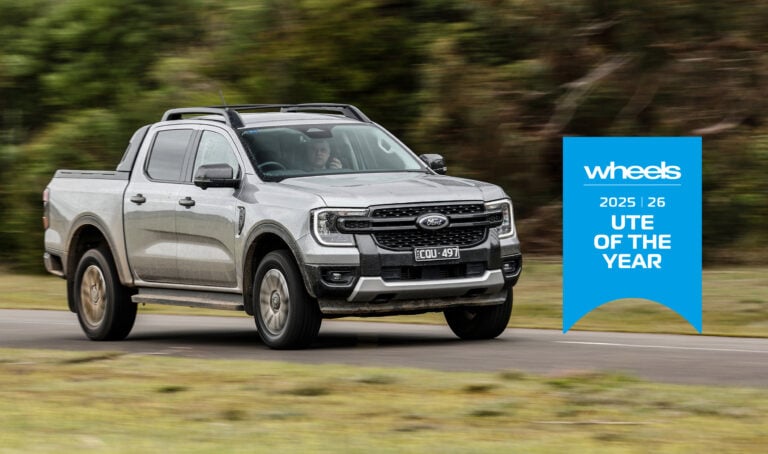
UOTY2025-26 Wheels Ute of the Year, 3rd: Ford Ranger V6 Sport
The Ford Ranger redefined the segment when the latest-gen launched in 2022, establishing itself as the best-selling vehicle of any kind over the last two years.
-
 UOTY
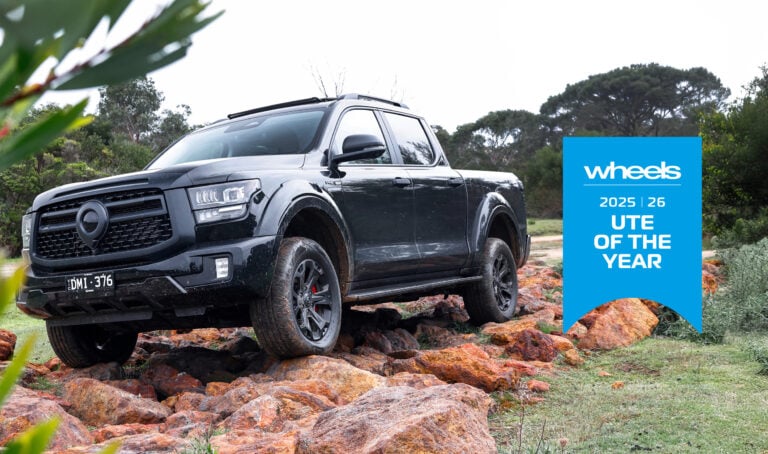
UOTY2025-26 Wheels Ute of the Year, 2nd: GWM Cannon Alpha PHEV
The GWM Cannon Alpha PHEV is disrupting the dual-cab universe with larger overall dimensions and its fuel-sipping plug-in hybrid drivetrain.
-
 UOTY
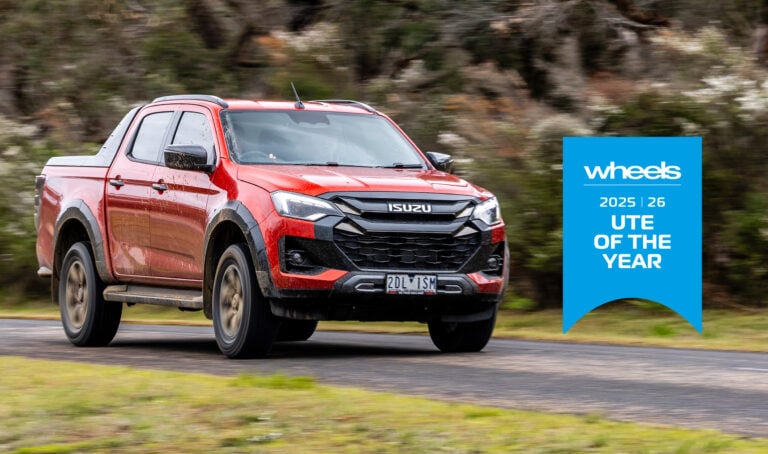
UOTY2025-26 Wheels Ute of the Year, contender: Isuzu D-Max Terrain
Updated and tweaked recently, the D-Max continues to appeal to buyers looking for rugged reliability and all-round capability.