UOTY

Gallery 1
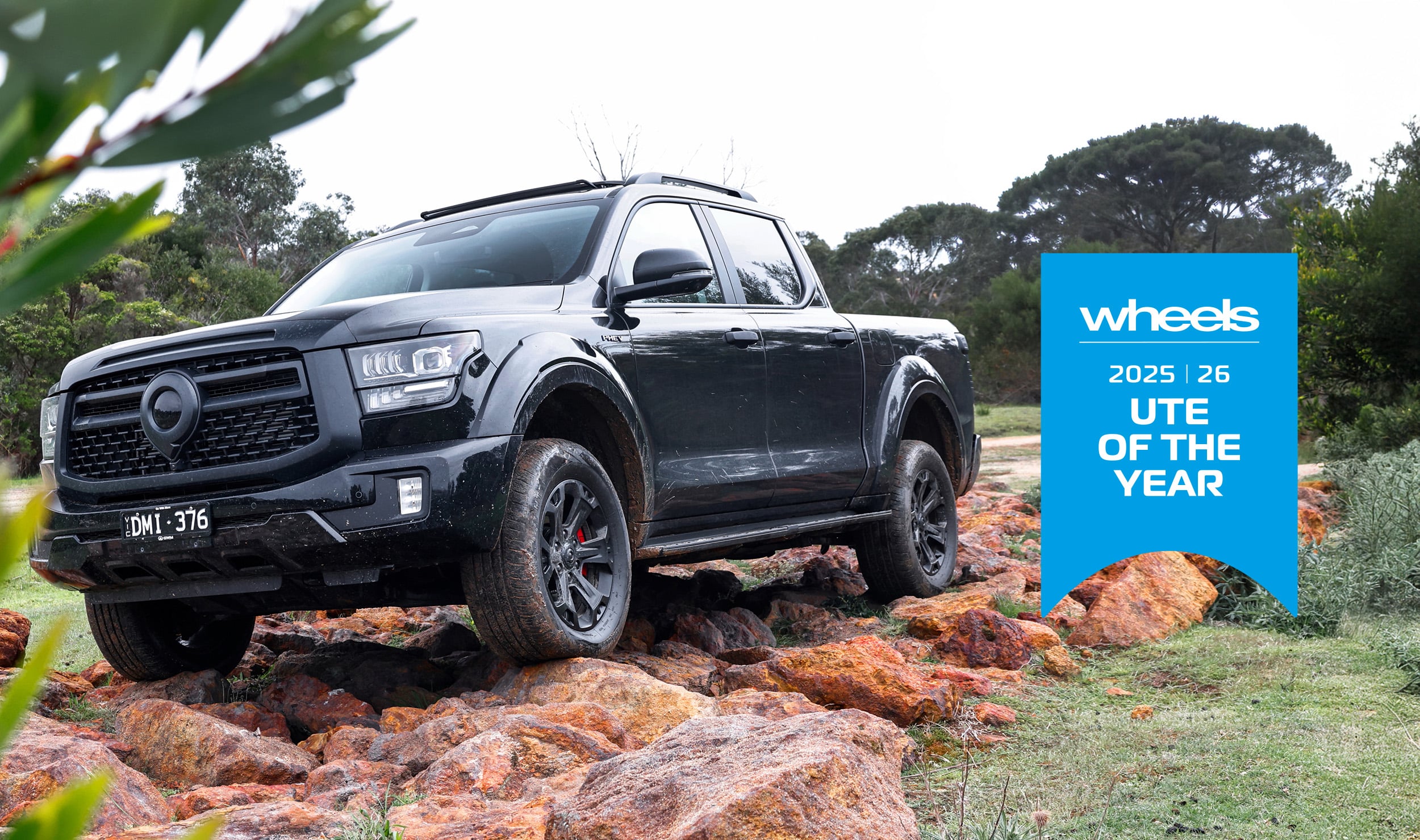
In the Big Book of Marketing (find it in the Adult Fiction section), the current way to make a splash and attract the interest of the previously non-committal, is to be a disruptor. And while that sounds like the sort of online, pseudo-knowledge that will eventually see social media disappear up its own orifice (can’t happen fast enough, I say) in the case of the GWM Cannon Alpha PHEV, maybe there’s slightly more to it than that.
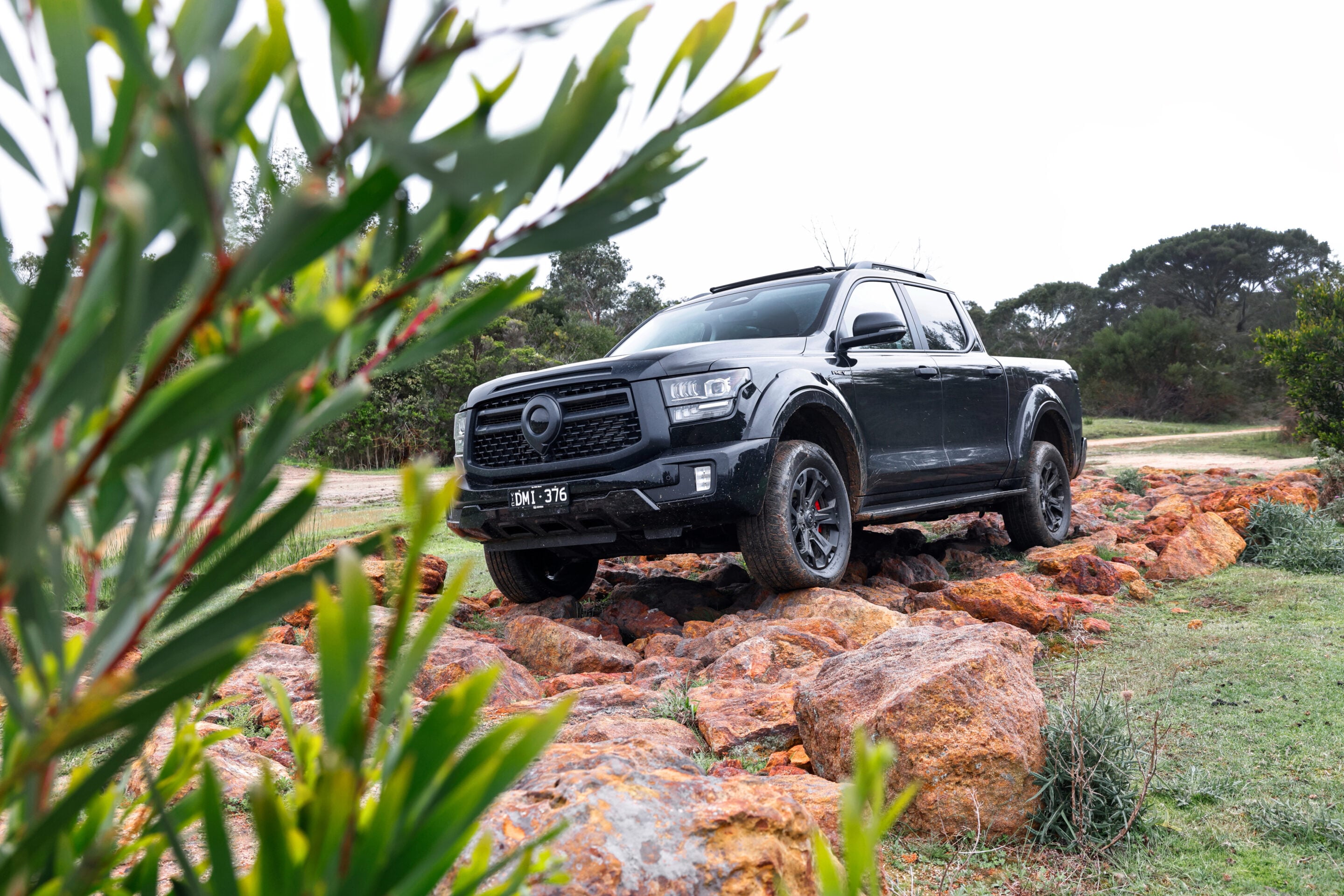
Of course, in some ways, the Cannon plug-in hybrid is straight out of Dual-Cab Compton with its ladder-frame, body-on-top construction, 3500kg towing and leaf-sprung live rear axle. But there’s a bit of sugar on top with front and rear diff locks standard on the Ultra model as tested here.
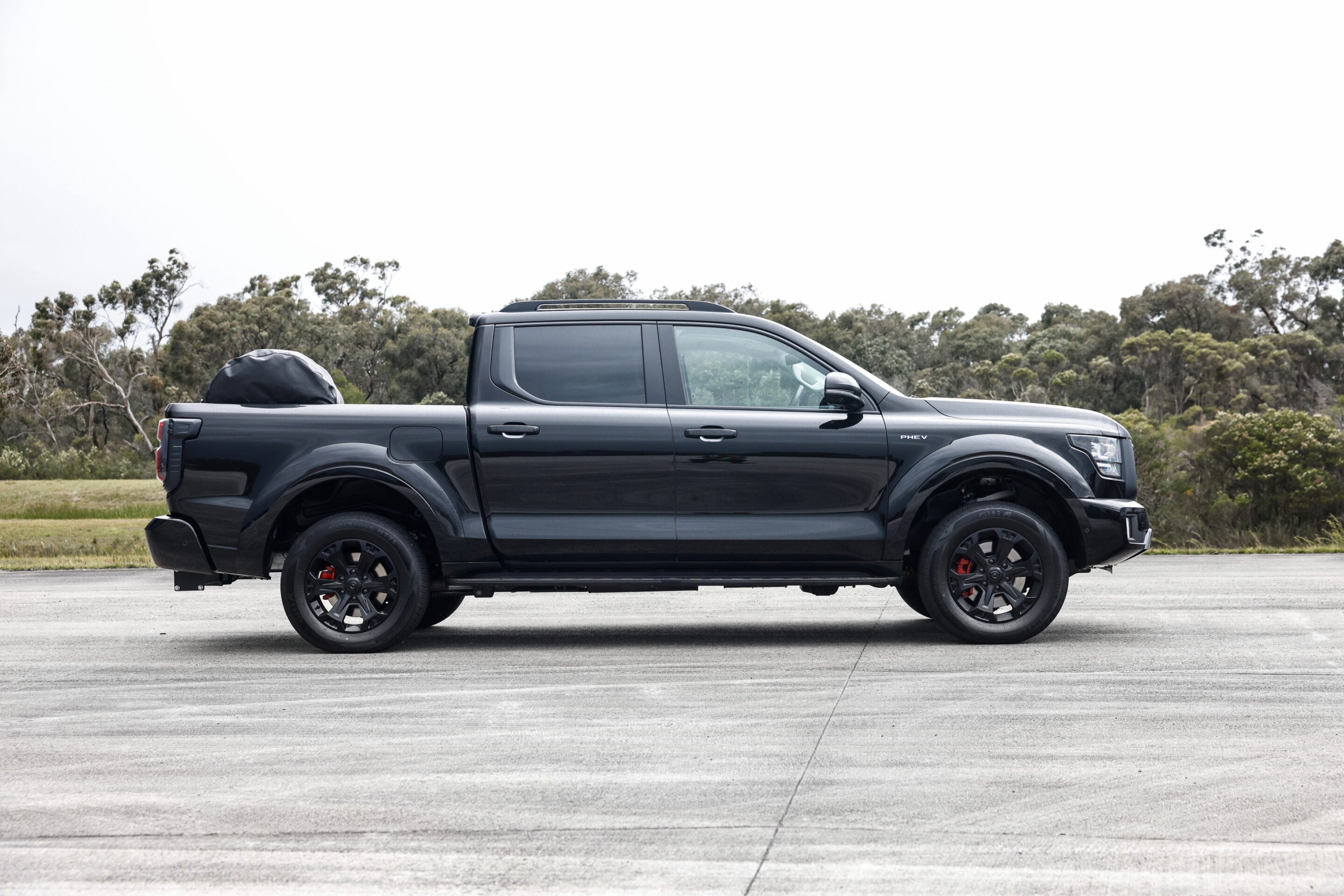
The disruption begins with the vehicle’s packaging. Fact is, it’s huge and points the way for future dual-cabs which have, inevitably, become bigger and bigger over the years. How big? Plenty. Try 35mm longer than the standard GWM Cannon Ute, 57mm wider, 38mm taller and a full 120mm longer in the wheelbase.
3
This translates to more front and rear seat room, although any real size advantage in the tub is gobbled up by the EV battery. That’s largely because the spare tyre, which would normally live under the tray floor (where the battery now resides) has been moved to an upright position in the tray, sitting up in the breeze like an inquisitive kelpie, and wilfully shedding its afterthought vinyl cover on a regular basis (most owners simply remove the cover and stash it in the shed for trade-in time).
However, the disruption amps up to 11 in terms of the Cannon’s driveline. Where the four-cylinder turbo-diesel has reigned supreme in the segment for at least a couple of decades now, the Cannon Alpha has switched back to petrol technology in the name of a refined, powerful plug-in hybrid arrangement.
The two-litre four-cylinder is turbocharged and teams with an electric motor that is sandwiched between the engine and the nine-speed automatic transmission. Together, the combo can produce a peak of 300kW of power and 750Nm of torque; big numbers in anyone’s book and comfortably ahead of the 150kW and 500Nm (or less) that most conventional dual-cabs manage. There’s also an on-demand four-wheel-drive set-up with low-range ratios, but no on-bitumen four-wheel-drive setting. The layout also means the GWM features ‘mechanical’ all-wheel-drive rather than the petrol engine driving one axle and the electric motor the other; both powerplants drive through the transmission and transfer-case.
3
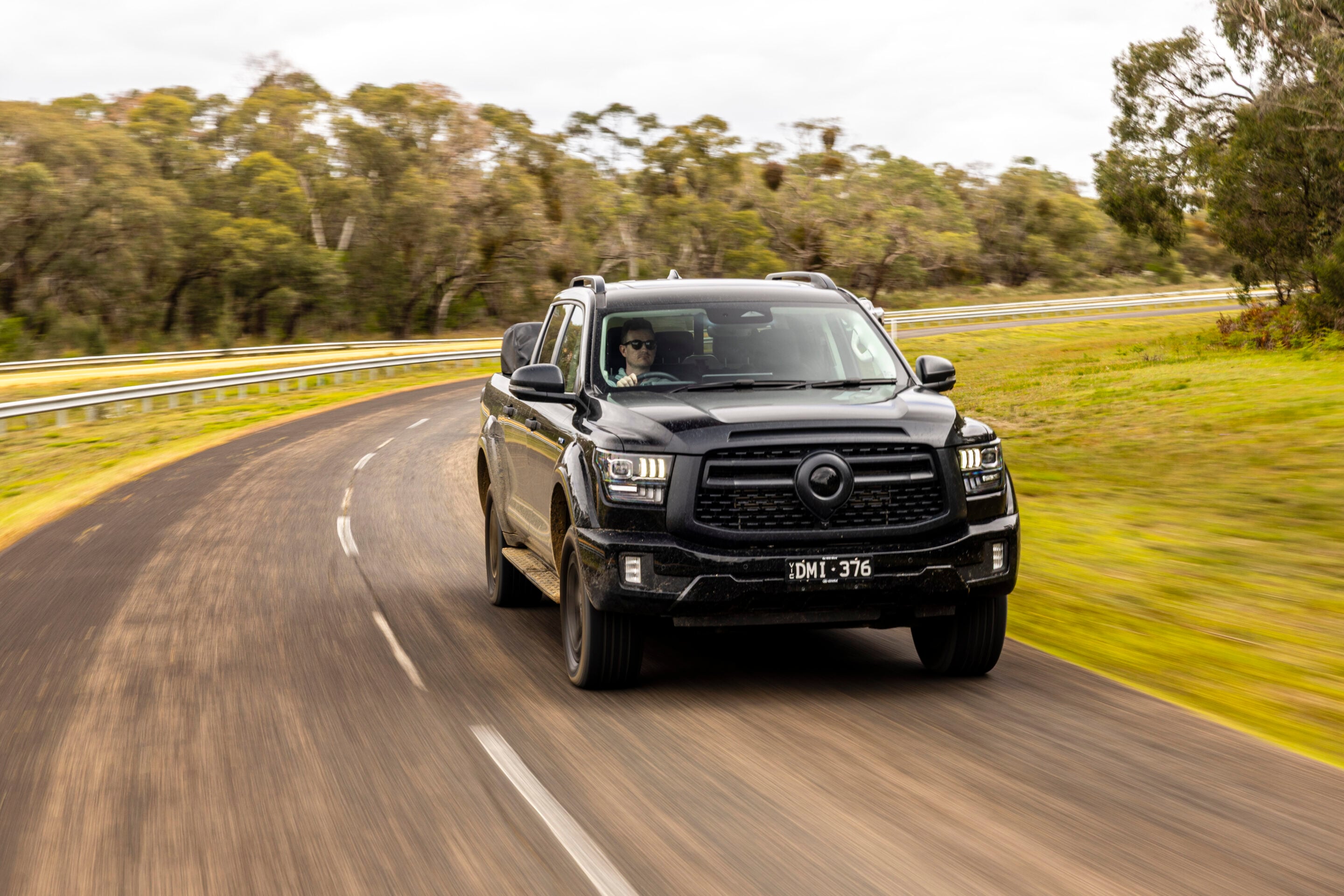
What this means, of course, is that the Cannon can really keep pace with anything modern traffic and conditions can throw at it, as well as offering those who commute in it the chance to charge-up at home overnight, and run on electricity-only for the weekday grind. Fancy a trip interstate? No problem, and once you’ve depleted the battery (GWM claims 115km worth of electrons, but it’s probably closer to 90km) the Cannon will keep going while ever you continue to put petrol in it.
The big guy can really shift, too, and when all those 300kW show up, there’s a surge of performance that easily offsets the 2800-plus kilo heft. Even when you’re not giving it the full welly, the driveline is smooth,
torquey and relaxed, and the nine-speed automatic ensures there are no gaps in the thrust curve. You might need a little time to acclimatise to the regenerative braking which makes it feel like you’ve brushed the brakes when all you’ve done is take your foot off the throttle, but most people get used to it pretty quickly and soon learn to enjoy the one-pedal experience.
What’s also pretty impressive is the ride quality. There’s enough bump absorption to make the Cannon one of the better riding dual-cabs, although like anything heavy, designed to cart a load and suspended by leaf springs at the rear, the wrong combination of bumps at the wrong speed can see it get a bit tangled up in itself.
Ah yes, carting a load. Here’s where the whole plug-in hybrid ute thing starts to reveal its compromises. The listed payload for the GWM is just 685kg; a lot less than the tonne-or-more boasted by many of its competitors. Clearly, the mass of the battery contributes to this, but it remains a fact that once you have a full load of bodies on board, their luggage and a full fuel tank, you might be getting pretty close to the limit. Throw a trailer on the back with its down-ball mass measured as part of the payload, and some owners will be jettisoning their loved ones (or worse, their esky) to stay legal.
2
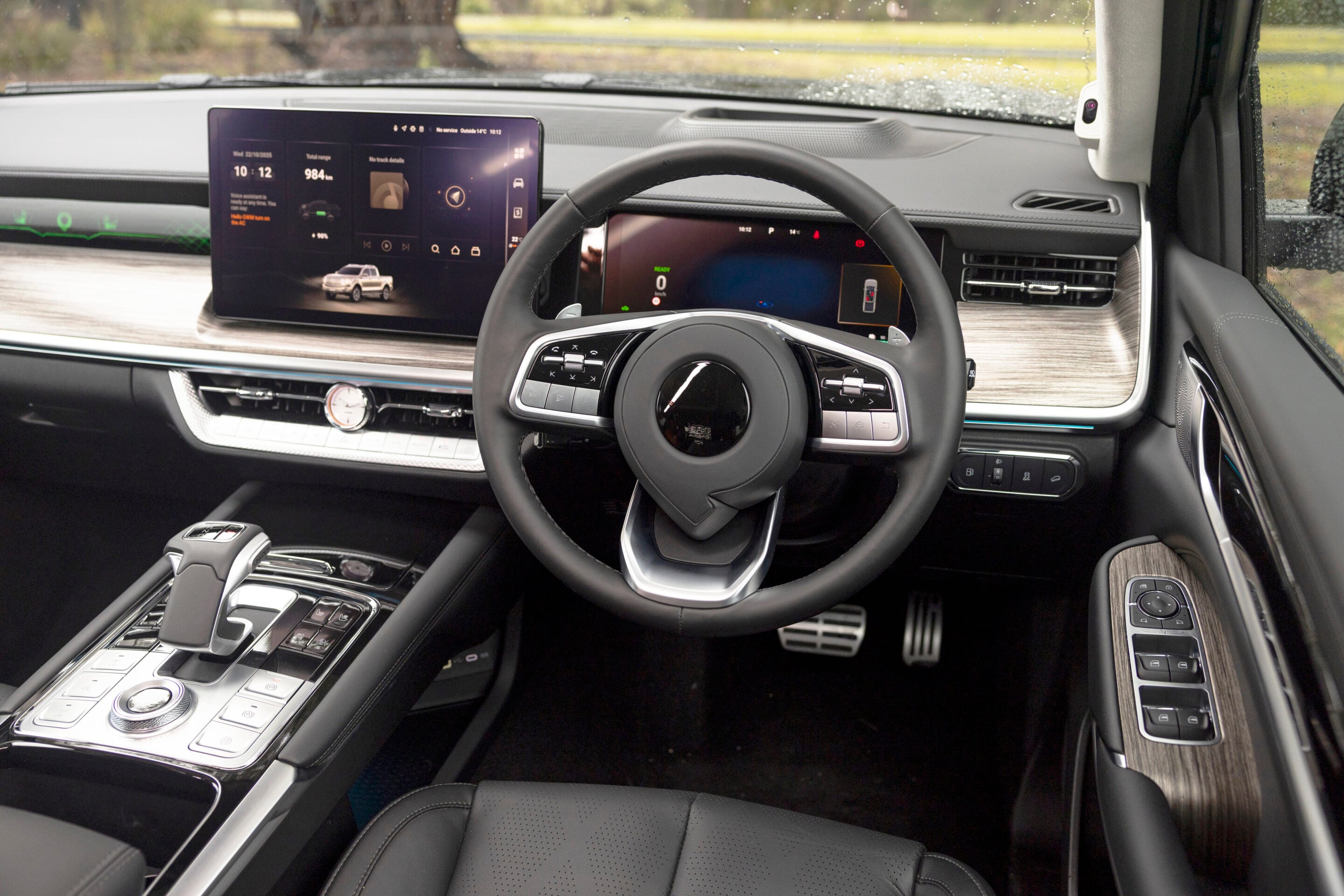
At $66,990 (MSRP), the Cannon Alpha is not exactly cheap, but you do get a lot for your money over and above the hybrid system and huge package. Inside, you get plenty of tech including full wireless connectivity, a big touch-screen in the centre, cooled, heated and massage-function front seats, and even an electric adjustment for the rake of the rear bench’s backrest.
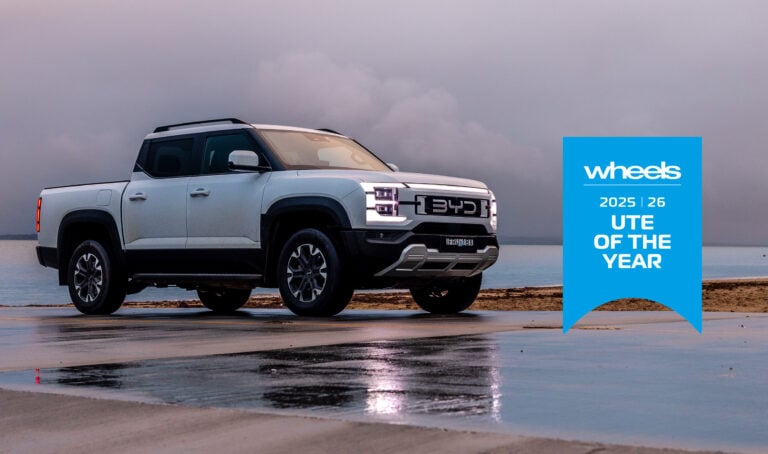
Fellow UOTY judge Trent Nikolic noted, “There’s a lot to like about the GWM Cannon PHEV. More capable than the BYD off-road, and a better option for towing, it’s the choice for light duty weekend off-road work but with the benefit of electric power.”
One thing you won’t appreciate, however, is the GWM’s driver-distraction monitor’s habit of confusing your normal facial expression with that of somebody asleep at the wheel. It needs recalibrating, even if it does help the vehicle achieve five safety stars.
2
And that tricky tailgate that either drops down conventionally or can be swung open like saloon doors in a dodgy western movie? The jury is still out, but it seems like an awful lot of moving parts for something that is most commonly used as a picnic bench.
The factory warranty is good, with seven years/unlimited kilometres (and eight years on the EV battery) and seven years of roadside assistance thrown in, too.
In truth, the Cannon Alpha was a close thing in this year’s contest and for many, its extra off-road ability would probably swing the argument GWM’s way.
1
Specs
| Price | $66,990 (MSRP) / $68,490 (DA) |
|---|---|
| Body | Dual-cab, five-seat ute |
| Drive | Dual range, 4X4 |
| Drivetrain | 2.0-litre four-cylinder turbo petrol PHEV, Single electric motor, 37.1kWh battery |
| Power | 300kW combined |
| Torque | 750Nm combined |
| Transmission | 9-speed automatic |
| Consumption | 1.7L/100km, 115km EV range (NEDC) |
| Kerb weight | 2810kg |
| 0-100km/h | NA |
| L/W/H/W-B | 5445/1991/1924/3350mm |
| Payload | 685kg |
| Warranty | 7yr/unlimited km |
| Safety rating | 5-star ANCAP (2024) |
2025-26 Wheels Ute of the Year
Follow WhichCar/Wheels on Google
Click the button below to make WhichCar by Wheels a preferred source for your news.