Best Large SUVs

Gallery 1
Contenders
Chery Tiggo 9
BYD Sealion 8
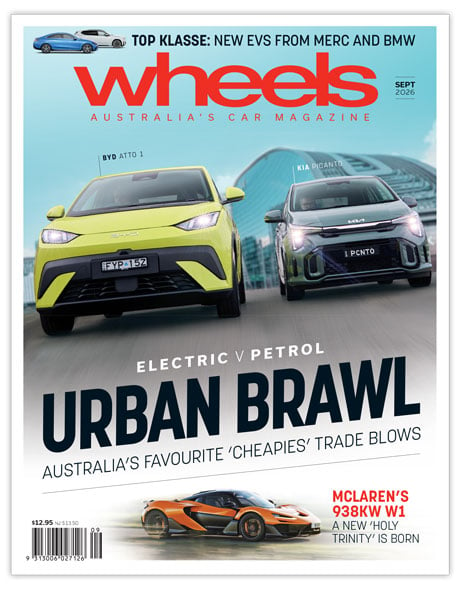
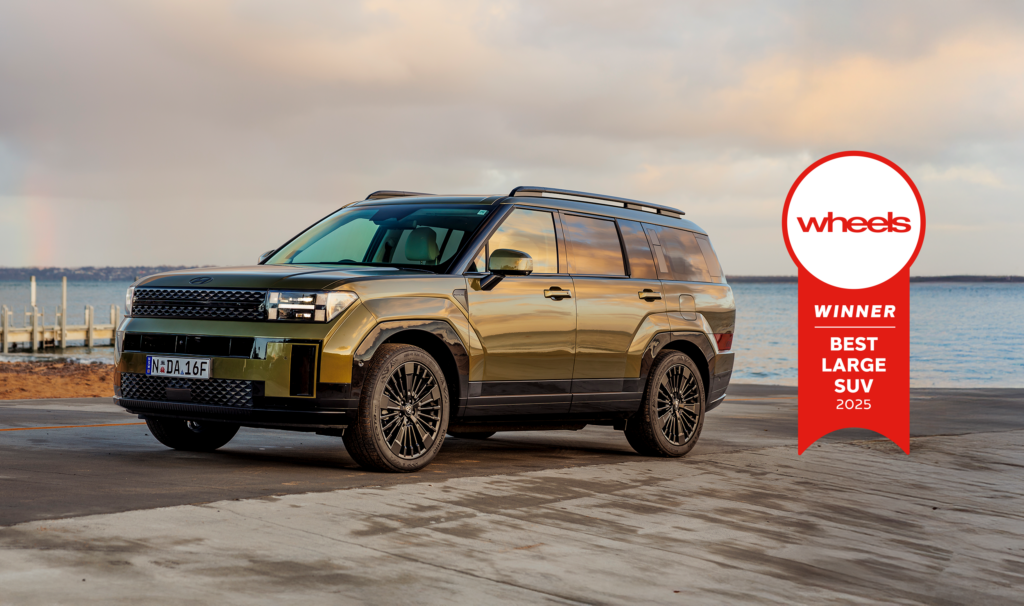
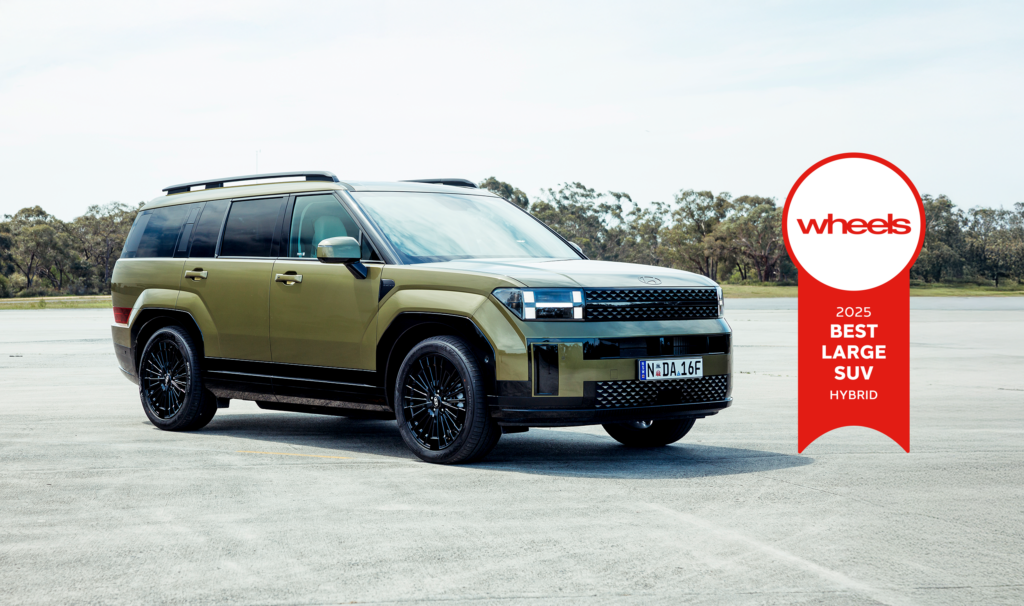
Hyundai Santa Fe
Jaecoo J8
Kia Sorento
Mahindra XUV700
MG QS
Skoda Kodiaq
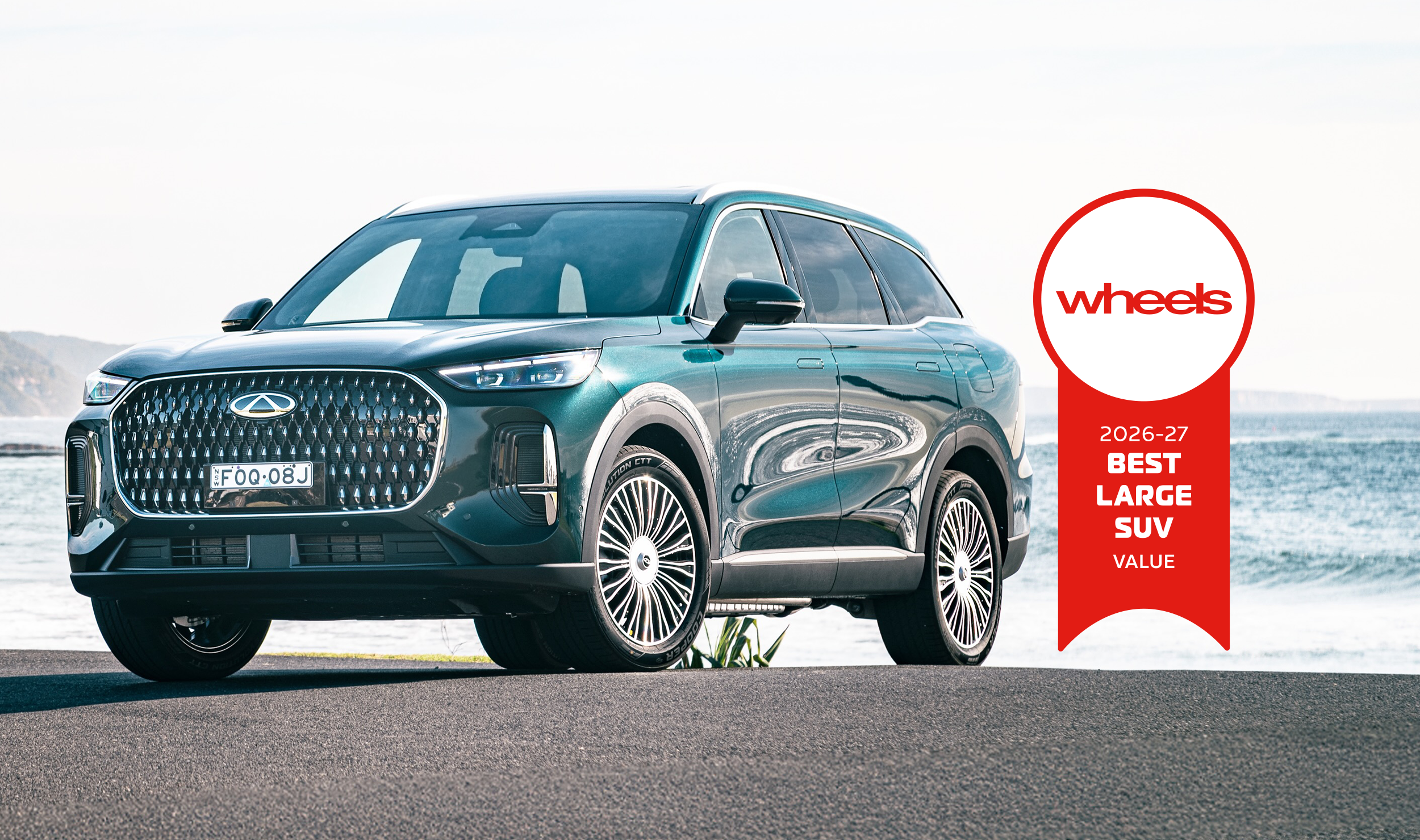
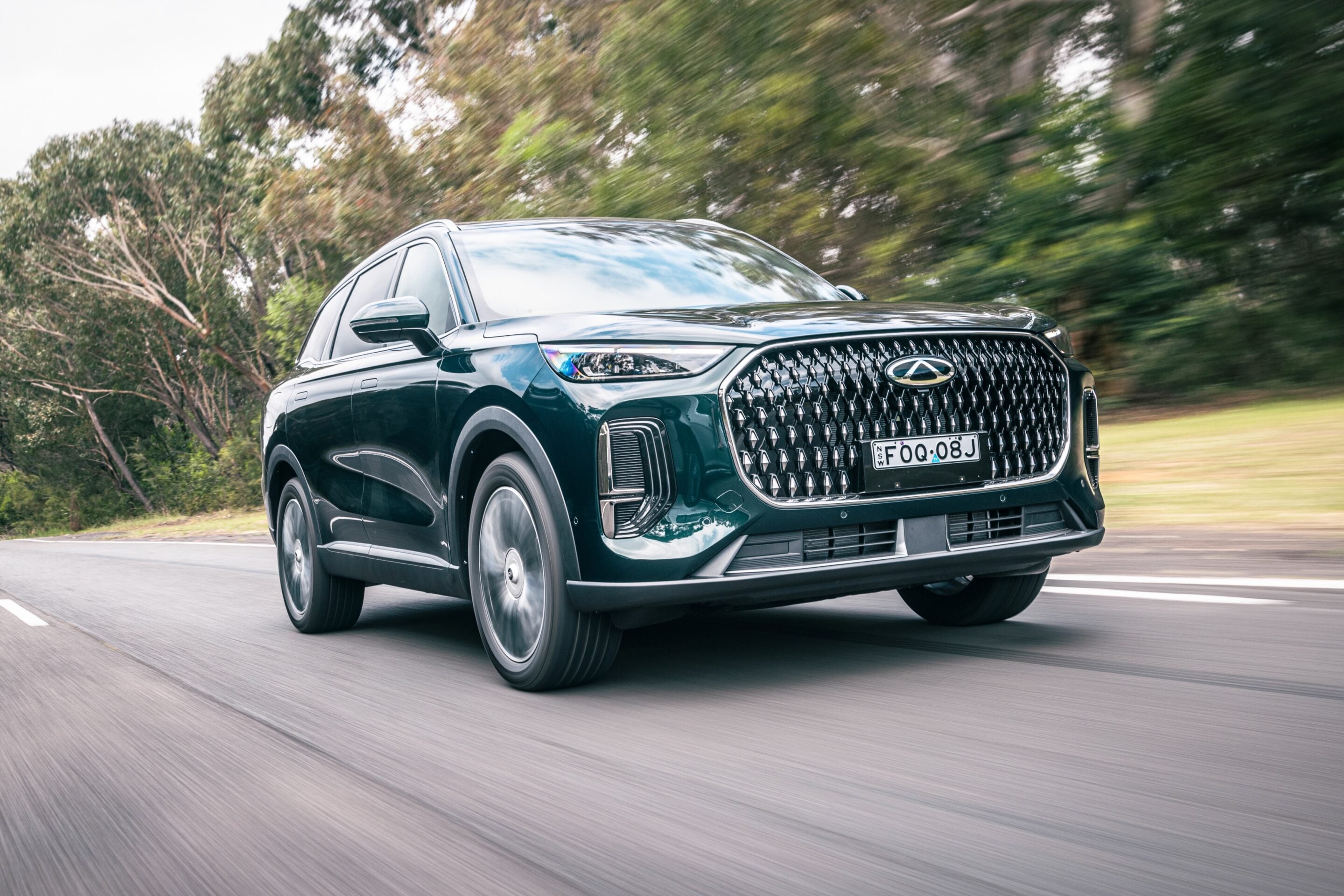
Winner: Chery Tiggo 9
8
Price: From $52,990 plus on-road costs
Drivetrain: 1.5-litre turbo-petrol plug-in hybrid with either two (Elite FWD) or three (Ultimate AWD)
e-motors, three-speed hybrid transmission, 19kWh (Elite) or 34kWh (Ultimate) battery
Outputs: 225kW/450Nm (Elite) or 315kW/580Nm (Ultimate)
Claimed combined fuel consumption: 1.5L/100km (Elite), 1.4L/100km (Ultimate) (both with battery
charged)
Claimed range (NEDC): 90km (Elite), 170km (Ultimate)
Warranty: Seven-year/unlimited km (car), eight-year/unlimited km (hybrid battery)
Five-year service cost: $1595
| Driving | |
| Interior | |
| Practicality | |
| Overall value | |
Strengths
- Strong value pricing with a long list of features
- Healthy EV range and charging capability
- Good quality and spacious cabin
Weaknesses
- Overactive active safety features
- Third row of seats only for kids
- Comfortably but not especially dynamic
The Chery Tiggo 9 is proof that value is about far more than a low sticker price. While its sharp asking price certainly grabs your attention, it’s also its level of overall talent on offer that earns it the 2026 Wheels Best Large SUV – Value award. Blending plug-in hybrid efficiency, seven-seat practicality, generous equipment and genuinely impressive performance into one polished package, the Tiggo 9 delivers the excellent bang for your buck.
Starting from just $52,990 plus on-road costs, the Tiggo 9 Super Hybrid significantly undercuts many competing electrified large SUVs, but without feeling like a budget alternative. Instead, it presents modern styling inside and out, a high-quality cabin and an extensive standard equipment, even in the entry-level Elite model.
The entry-level Elite features a 15.6-inch infotainment touchscreen, wireless Apple CarPlay and Android Auto, leather-appointed upholstery, heated and ventilated front seats, a panoramic sunroof, Sony audio, a 360-degree camera and a full suite of advanced safety tech like adaptive cruise control with active lane guidance. If you want to jump up to the top-spec Ultimate ($59,990 +ORC), it further adds genuine leather trim, larger alloy wheels, ventilated front seats, heated outboard rear seats, more speakers, a head-up display and an extra electric motor for all-wheel drive.
Chery’s Super Hybrid System features as standard on the Tiggo 9 locally and combines a 1.5-litre turbocharged petrol engine with either two or three electric motors, depending on the variant, producing up to an impressive 315kW and 580Nm in the flagship Ultimate. Performance is effortless, hitting 100km/h in the low five-second range, with abundant torque making light work of overtaking, motorway merging and carrying a full family. It’s quiet, smooth and relaxed in everyday driving, yet surprisingly rapid when asked.
Claimed electric-only driving ranges of up to 90km in the Elite and an impressive 170km in the Ultimate (NEDC) mean many owners could complete their daily commute without using a drop of petrol, while DC fast charging at up to 70kW allows the battery to recharge from 30 to 80 per cent in as little as half an hour.
The cabin of the Tiggo 9 impresses with its clean design, quality materials and technology-focused layout and seven seats provide welcome flexibility, with a spacious second-row and a third row that’s well suited for children or occasional use. The Tiggo 9’s boot capacity is another standout, offering a substantial 819 litres with the third row folded and more than 2000 litres with both rear rows stowed, giving more than enough capacity for whatever you can throw at it.
The Tiggo 9 isn’t flawless, however. Its steering is light, the suspension prioritises comfort over driver engagement, and some of the active safety systems can be overly intrusive. The third row is also best reserved for younger passengers, but it doesn’t feature any child seat points. But the long seven-year/unlimited km and cheap servicing (just $1595 for the first five years) help it gain back points, and again highlight Chery’s overall value for money, even five years into the future.
Ultimately the Chery Tiggo 9 claims the 2026 Wheels Best Large SUV – Value title because it doesn’t simply offer more equipment for less money—it delivers the technology, performance, efficiency and practicality buyers genuinely want, all wrapped up in an attractively priced and long-warranted package. In a segment where value increasingly means getting more without compromising on capability, the Tiggo 9 sets a new benchmark.
BYD Sealion 8
4
Price: From $56,990 plus on-road costs
Drivetrain: 1.5-litre turbo-petrol plug-in hybrid with either one (FWD) or two (AWD) motors, single-
speed hybrid transmission, 19kWh (FWD) or 35.6kWh (AWD) battery
Outputs: 205kW/315Nm (FWD), 359kW/675Nm (AWD)
Claimed combined fuel consumption: 1.1L/100km (FWD) or 1.0L/100km (AWD) above 25% battery
charge, 5.3L/100km (FWD) or 6.3L/100km (AWD) below 25% battery charge
Claimed range (NEDC): 103km (FWD), 152km (AWD)
Warranty: Six-year/150,000km (car), eight-year/160,000km (hybrid battery)
Five-year service cost: $2927 (FWD), $2978 (AWD)
| Driving | |
| Interior | |
| Practicality | |
| Overall value | |
Strengths
- Impressive electric driving range
- Cabin space is solid
- Clever tech that works
Weaknesses
- Third row difficult to access
- No spare wheel and tyre
- Complex touchscreen for simple tasks
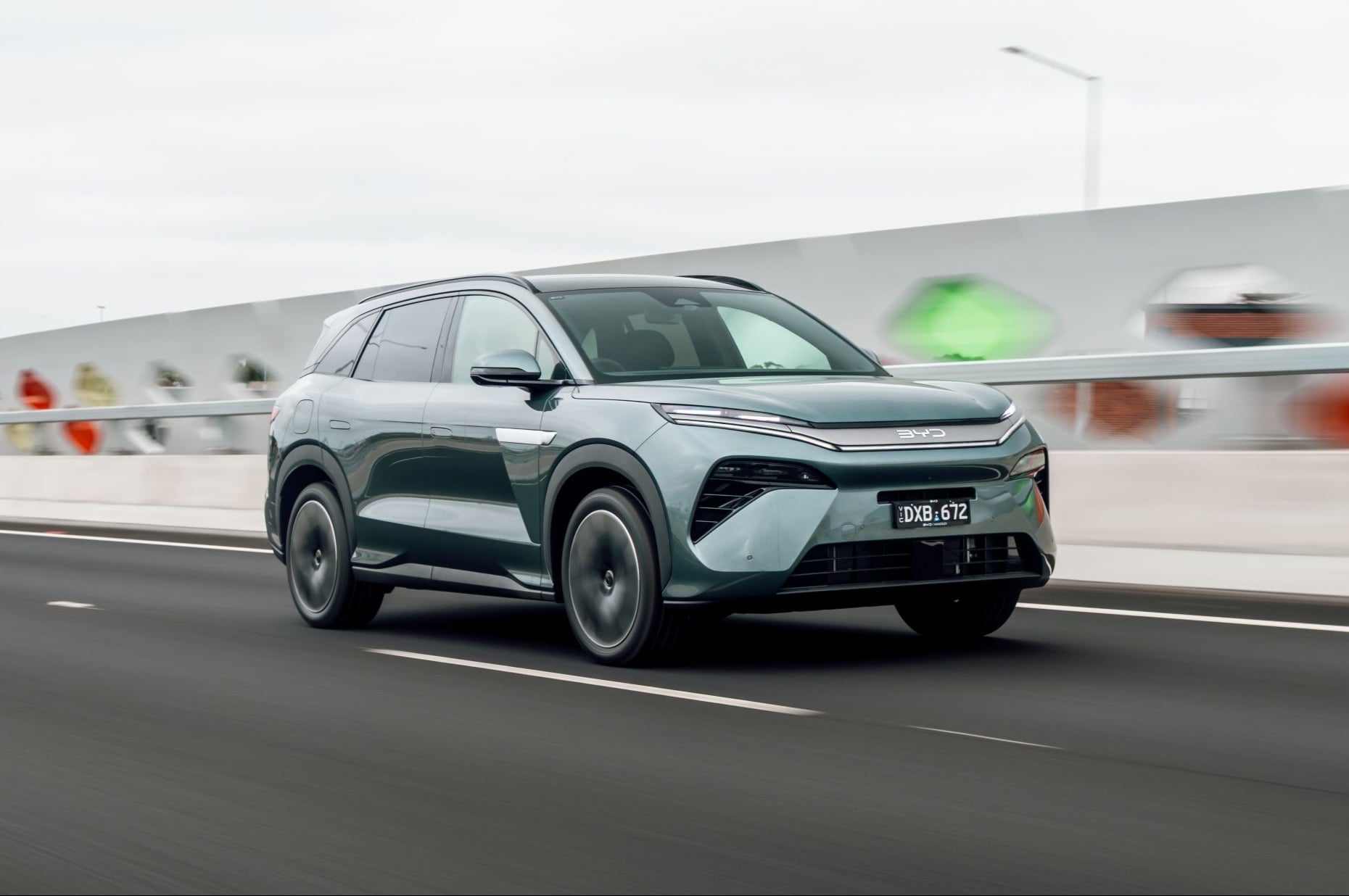
BYD is making an absolute killing in the Australian new car market at the moment, and its new Sealion 8 large SUV is a great example of why it’s so successful. Rather than simply offering a lower purchase price than its rivals, BYD has packed its flagship large SUV with the sort of technology, performance and electrified capability that, only a few years ago, would have commanded a significantly higher price. The result is a seven-seat family SUV that delivers great bang for your buck and further cements BYD as one of Australia’s value leaders.
Starting from $56,990 plus on-road costs, the Sealion 8 is not priced quite as low as its Chery Tiggo 9 arch rival, but it undercuts many comparable plug-in hybrid large SUVs while arriving with an equipment list that leaves very little to be desired. Buyers don’t need to climb the range to enjoy premium features either, with leather-appointed upholstery, heated and ventilated front seats, a panoramic sunroof, power tailgate, wireless Apple CarPlay and Android Auto, a large 15.6-inch touchscreen and a large suite of active safety systems all included as standard.
The Sealion 8’s value story continues beneath the skin. BYD’s latest-generation ‘DM-i’ plug-in hybrid system pairs a turbocharged 1.5-litre petrol engine with either one or two electric motors and batteries with capacity of up to 35.6kWh, delivering a claimed electric-only driving range of up to 152km (NEDC).
For many owners, that’s more than enough range to complete the vast majority of daily driving without using petrol, significantly reducing running costs while retaining the petrol engine so long road trips are possible without having to charge. DC fast charging capability also adds welcome convenience, with the larger battery able to recharge from 30 to 80 per cent in a claimed 20 minutes.
Performance is another pleasant surprise. Even the entry-level front-wheel-drive model’s 205kW and 315Nm outputs provide effortless everyday acceleration, while the flagship all-wheel-drive version produces a strong 359kW, propelling this sizeable family SUV from 0-100km/h in just 4.9 seconds. It’s performance that rivals far more expensive luxury SUVs, further strengthening the Sealion 8’s impressive value equation. On the road, the Sealion 8 is refined and comfortable, though its overactive safety systems can grate.
Its cabin is well finished and the in-car tech feels modern, though the touchscreen’s layout can be a bit confusing to use. Practicality is excellent, however. Seven seats make it suitable for growing families, with generous second-row accommodation and a third row capable of carrying adults on shorter trips. Storage throughout the cabin is thoughtful, while up to 1960 litres of cargo capacity with the rear seats folded ensures it can comfortably handle family holidays, sporting gear or bulky shopping trips.
A six-year/150,000km vehicle warranty covers the Sealion 8, which could be longer compared to some rivals like Chery (seven years) and Jaecoo (eight years), but is still longer than companies such as Mazda. Five years of servicing costs up to $2978, or $596 annually on average, which is more affordable than some but also more expensive than some others too.
For buyers seeking a large plug-in hybrid SUV, the Sealion 8 delivers in many areas in addition to a strong value equation. It combines generous standard equipment, strong performance, low running costs and genuine family practicality into a package that punches well above its asking price. In a market where buyers increasingly expect more for their money, the BYD Sealion 8 makes a strong argument for itself.
Hyundai Santa Fe
9
Price: From $54,000 plus on-road costs (hybrid)
Drivetrain: 2.5-litre turbo-petrol or 1.6-litre turbocharged four-cylinder hybrid, front- or all-wheel
drive, six-speed automatic (hybrid) or eight-speed dual-clutch (2.5T) transmission
Outputs: 172kW/367Nm (hybrid), 206kW/422Nm (2.5T)
Claimed combined fuel consumption: 5.6L/100km (hybrid), 9.1L/100km (2.5T)
Warranty: Five-year/unlimited km (car) extendable to seven years with dealer servicing, eight-
year/160,000km (hybrid battery)
Five-year service cost: $2627 (hybrid) – $2660 (2.5T)
| Driving | |
| Interior | |
| Practicality | |
| Overall value | |
Strengths
- Distinctive styling
- Boxy shape makes for a very practical cabin
- Well equipped across the range
Weaknesses
- Calligraphy model is loaded but expensive
- Drivetrain could be a bit more powerful
- Interior quality could be improved
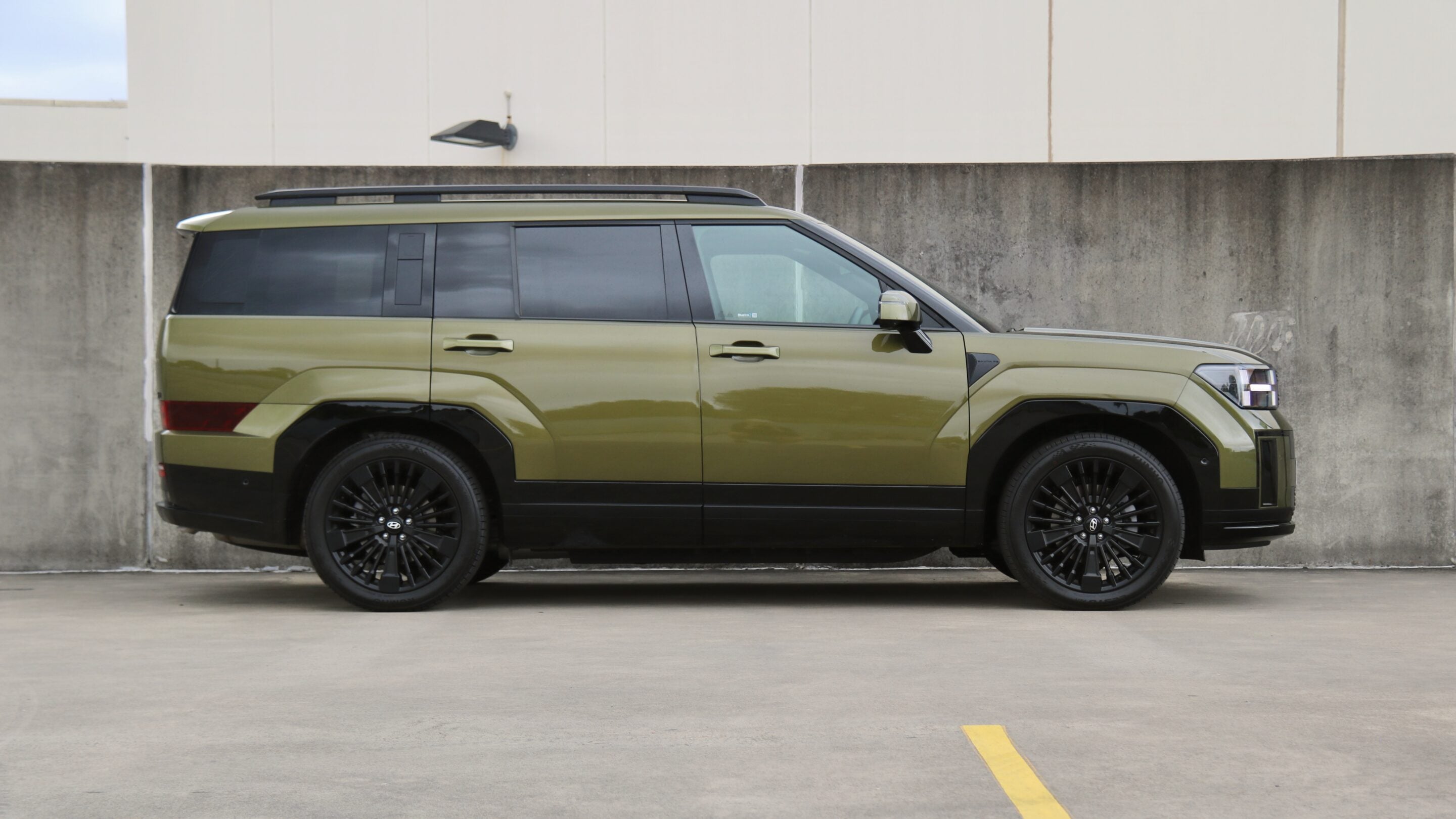
The Hyundai Santa Fe demonstrates that true value isn’t simply about the lowest price, instead, it’s about delivering a great overall product and aftersales experience. Whether buyers choose the turbo-petrol or hybrid powertrains on offer, the Santa Fe offers an great blend of technology, practicality, refinement and family-friendly usability that makes it one of the segment’s smartest buys.
Starting from $54,000 before on-road costs for the 2.5-litre turbo-petrol and $57,650 +ORC for the hybrid, the Santa Fe positions itself competitively against many established rivals while offering a level of sophistication that belies its asking price. Hyundai reinvented the latest-generation Santa Fe, giving it very bold styling, a spacious new interior and improved practicality, transforming it into one of the most compelling family SUVs on sale.
Value is immediately evident in the standard equipment list. Even the entry-level model includes dual 12.3-inch displays, wireless Apple CarPlay and Android Auto, wireless phone charging, a powered tailgate and Hyundai’s comprehensive SmartSense active safety suite. Move further up the range and buyers are treated to features often reserved for luxury brands, including Nappa leather upholstery, heated and ventilated seats, a panoramic sunroof, Bose premium audio, a head-up display and even an ultraviolet sanitising tray.
Buyers also have two turbocharged drivetrains to choose from. The 206kW/422Nm 2.5-litre turbocharged petrol engine offers effortless performance for those regularly covering longer distances, while the proven 172kW/367Nm 1.6-litre turbo-petrol hybrid combines smooth performance with excellent fuel efficiency, officially consuming just 5.6L/100km on the combined cycle. The petrol is rated at 9.1L/100km, but in our experience, will use more, especially in urban driving.
Both drivetrains deliver a refined driving experience, while Hyundai’s well-sorted ride and handling make the Santa Fe equally comfortable around town or on long-distance family road trips. Importantly, its driver assistance systems are among the best calibrated in the segment, enhancing safety without constantly interrupting the driver.
Practicality is another area where the Santa Fe justifies its price and is genuinely one of the best for a large SUV. Every model comes standard with seven seats, generous second-row accommodation and one of the most usable third rows in the class. Its boxy design maximises interior space, while up to 1949 litres of luggage capacity with the rear seats folded gives buyers plenty of space for cargo hauling. Thoughtful touches such as plentiful USB charging ports, clever storage solutions and easy third-row access further reinforce its family-first focus, while the cabin feels quite modern and good quality throughout.
As we saw in 2025 when it won the overall Best Large SUV award, the Santa Fe’s greatest strength is its completeness. It may not be the cheapest large SUV available, but the quality of engineering, generous equipment levels, excellent practicality and polished driving manners combine to create great overall value. Rather than forcing buyers to compromise in one area to gain another, the Santa Fe consistently delivers across the board.
Jaecoo J8
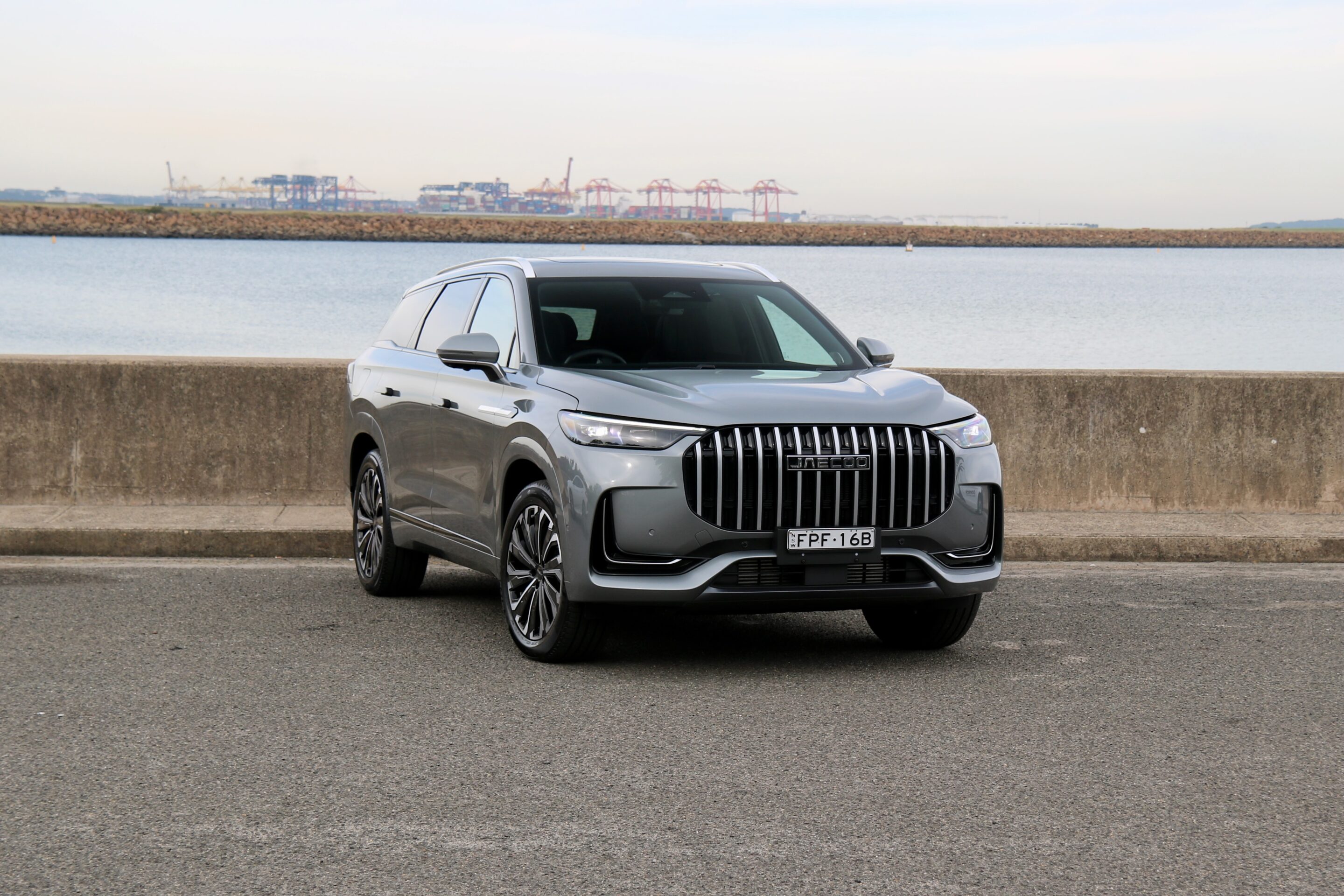
9
Price: From $49,990 driveaway
Drivetrain: 2.0-litre turbo-petrol with an eight-speed automatic and either front- or all-wheel drive, or
a 1.5-litre turbo-petrol plug-in hybrid with three e-motors, three-speed hybrid transmission, 34kWh
battery
Outputs: 183kW/385Nm (petrol), 315kW/580Nm (PHEV)
Claimed combined fuel consumption: 1.2L/100km (PHEV) – 8.3-8.6L/100km (petrol)
Claimed range (NEDC PHEV): 169km
Warranty: Eight-year/unlimited km (both car and hybrid battery)
Five-year service cost: $2025 (petrol) – $2315 (PHEV)
| Driving | |
| Interior | |
| Practicality | |
| Overall value | |
Strengths
- Excellent value for money
- Attractive inside and out
- Loaded with features
Weaknesses
- Tight third row of seating
- Too-soft driving experience
- Sensitive active safety features
The Jaecoo J8 proves that buyers no longer need to spend luxury-car money to enjoy a premium large SUV experience. As Chery’s more upmarket brand, Jaecoo has positioned the J8 as an affordable alternative to established European and Japanese rivals, blending extensive standard equipment, refined road manners and impressive cabin quality into a package that represents excellent value across the range.
Starting from $49,990 before on-road costs for the petrol five-seater J8 and rising to $59,990 for the seven-seat SHS Summit, the range is impressively well priced considering the amount of technology and luxury on offer. Even the entry-level Track model features large 12.3-inch digital displays, leather and suede upholstery, heated and ventilated front seats, a panoramic sunroof, Sony audio, a powered tailgate and a comprehensive suite of advanced safety systems.
Higher-specification variants add further luxury touches such as quilted leather trim, headrest speakers and even an integrated fragrance system to freshen up its passengers.
The cabin is where the J8 really punches above its weight. It’s based on the Tiggo 9 but feels noticeably more premium than its cousin and indeed what its price would suggest, with quality materials, a clean dashboard design and great attention to detail. The 12.3-inch infotainment display is smoothly incorporated into the dashboard, creating a more cohesive and sophisticated look than many rivals, while the overall ambience is closer to a luxury SUV than a mainstream family brand.
J8 buyers have the flexibility of choosing the powertrain that best suits their lifestyle. The 2.0-litre turbo-petrol engine delivers a good level of performance with refined manners, as well as a decisive and quick-shifting eight-speed automatic transmission. However, it’s rated at between 8.3L/100km and 8.6L/100km for combined fuel consumption, which would likely translate into figures higher than 10L/100km in urban driving, which might be a bit much for some.
Thankfully, those seeking maximum efficiency can step into the SHS plug-in hybrid, which combines Chery’s impressive Super Hybrid System with a 34kWh battery to produce substantial 315kW and 580Nm outputs, but also an impressive EV-only range. The J8 SHS’ claimed electric-only driving range extends to 169km (NEDC), which is one of the longest on the market, while its 70kW DC fast charging capability adds welcome convenience when it’s time to recharge. On the road, the J8 is softly sprung, providing a comfortable ride quality, but it does feel heavy from behind the wheel.
Practicality for the J8 is another strength. Petrol models feature a five-seat layout and a large 738-litre luggage area, while the SHS introduces a small third row to broaden the J8’s appeal and give it ability to transport smaller people there, though there are no child seat points. Like most rivals, the rearmost seats are best suited to children or occasional use, but they add flexibility without compromising cargo capacity. With up to 2021 litres of luggage space available with the rear seats folded, the J8 remains a spacious family SUV.
Ultimately, the Jaecoo J8 offers a lot as a value large SUV offering because it gives buyers a premium-ish product at a non-premium price. It’s covered by a long eight-year warranty with affordable service pricing, is covered with quality materials inside, features a lot of equipment, strong performance especially in plug-in hybrid form and a lot of practicality, but without a premium price tag. Whether in petrol or plug-in hybrid form, the J8 stands out as a strong value proposition in the large SUV segment, proving Jaecoo is a brand that’s well worth watching.
Kia Sorento
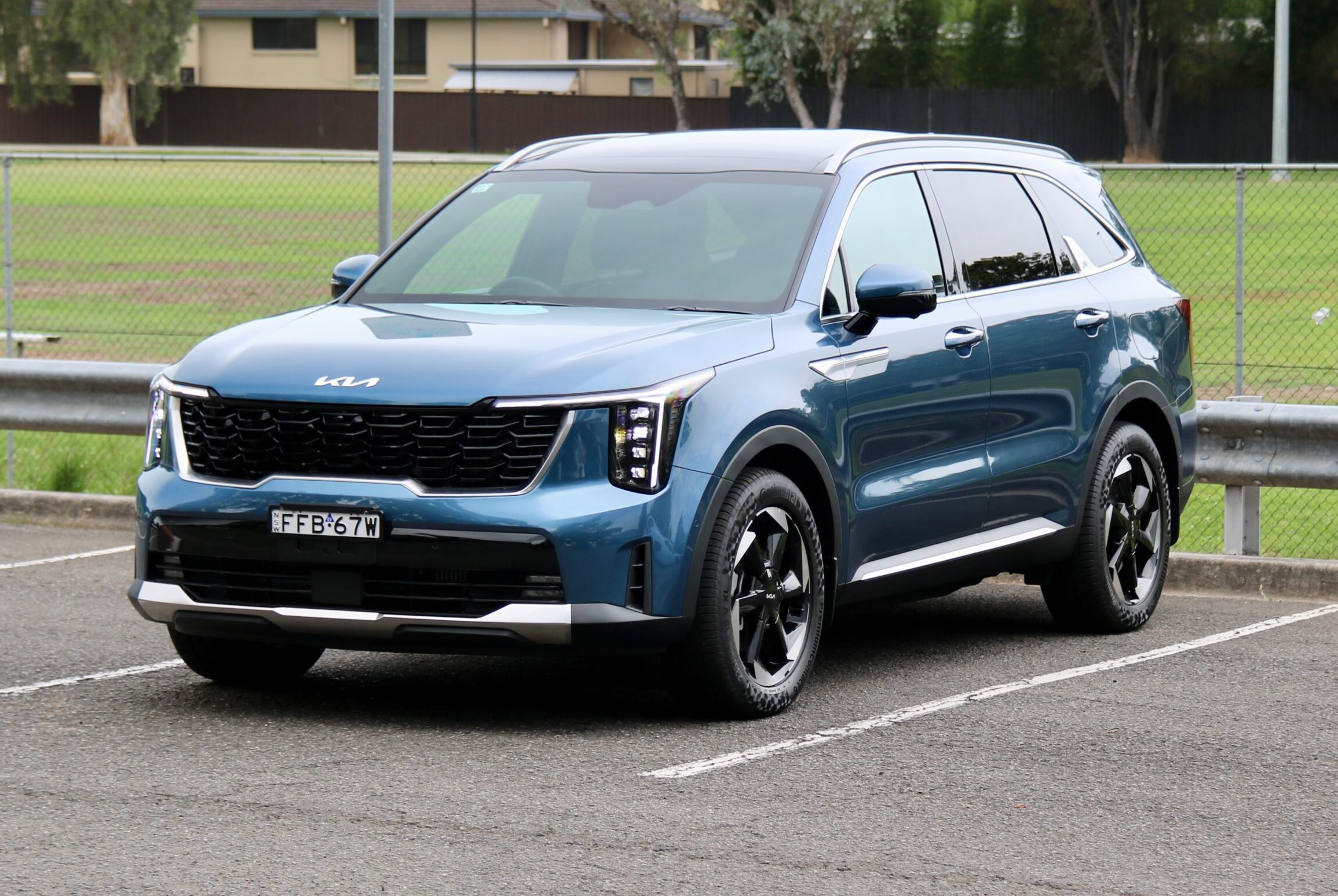
10
Price: From $54,675 plus on-road costs (diesel), $56,675 +ORC (hybrid), $71,175 +ORC (PHEV)
Drivetrain: 2.2-litre four-cylinder turbo-diesel, eight-speed dual-clutch, all-wheel drive or 1.6-litre
turbocharged four-cylinder hybrid or plug-in hybrid, six-speed automatic transmission, front- (hybrid
only) or all-wheel drive, 13.8kWh battery (PHEV)
Outputs: 148kW/440Nm (diesel), 168kW/350Nm (hybrid), 195kW/350Nm (PHEV)
Claimed combined fuel consumption: 5.4L/100km (hybrid), 6.0L/100km (diesel), 1.6L/100km
(PHEV, with battery charged)
Claimed range (PHEV): 68km (WLTP)
Warranty: Seven-year/unlimited km (car), seven-year/150,000km (hybrid battery)
Five-year service cost: $2662 (diesel), $3009 (hybrid), $3409 (PHEV)
| Driving | |
| Interior | |
| Practicality | |
| Overall value | |
Strengths
- Diesel, hybrid and plug-in hybrids on offer
- Australian tuning gives it an edge on the road
- More hybrid models now available across the range
Weaknesses
- Expensive to service, no matter which drivetrain
- Expensive PHEV’s range is lacking compared to rivals
- Shorter hybrid battery warranty than most brands
Kia has absolutely transformed itself from an also-ran to a true sales success, and value for money has been the key to this stunning transformation over the past few decades. Kia products have always offered excellent value for money; even in its more expensive products, the value equation is strong thanks to a long feature list, all-round talent and solid aftersales experience and the Sorento large SUV is no different. Despite facing a wave of newer rivals, the Sorento remains a standout thanks to its broad model range, generous standard equipment and polished all-round capability.
One of the Sorento’s greatest strengths is its diverse powertrain lineup. Buyers can choose between a proven 2.2-litre turbo-diesel, an efficient hybrid or a plug-in hybrid, allowing buyers to choose the drivetrain that best suits their lifestyle and budget rather than forcing them into a one-size-fits-all solution. Pricing begins at $54,675 before on-road costs for the diesel, $56,675 for the hybrid and $71,175 for the plug-in hybrid, giving the Sorento one of the widest spreads of choice in the segment.
Value extends well beyond the drivetrain options. Even lower-grade models are generously equipped, while flagship GT-Line variants deliver a genuinely premium experience with leather-appointed upholstery, heated and ventilated front seats, a panoramic sunroof, Bose premium audio, dual digital displays, a head-up display and Kia’s comprehensive suite of active safety technologies.
Each engine has its own appeal, further providing a wide range of value for more buyers. The 148kW 2.2-litre turbo-diesel remains an excellent option for buyers who regularly tow, travel long distances or simply appreciate its effortless torque and strong fuel economy. The 168kW hybrid offers smooth, quiet performance with impressively low fuel consumption and a more natural driving feel than many hybrid rivals thanks to its conventional six-speed automatic transmission.
Meanwhile, the 195kW plug-in hybrid delivers stronger performance again, along with the ability to complete many daily commutes on electricity alone through its 13.8kWh battery.
While the plug-in hybrid’s claimed 68km electric driving range is now modest by class standards and its lack of DC fast charging limits convenience, it still offers meaningful savings for buyers who can regularly charge at home. That said, we think that the regular hybrid arguably represents the sweet spot of the range, balancing strong efficiency with a significantly lower purchase price than the PHEV, but only a modest spend above the diesel.
Practicality continues to be one of the Sorento’s biggest selling points. Every version offers seven seats, generous second-row accommodation and a usable third row for children or occasional adult passengers. Interior storage is plentiful, while the large boot and almost 2000 litres of cargo capacity with the rear seats folded ensure the Sorento is ready for everything you can throw at it. We also like its interesting and good quality cabin, as well as its excellent driving experience with the Australian-tuned ride and handling. While it does feature a long warranty, capped price servicing costs are actually quite expensive.
The Kia Sorento may no longer be the newest player in the large SUV segment, but its appeal hasn’t diminished at all. Its blend of drivetrain choice, generous equipment, excellent refinement and family-friendly practicality continues to represent outstanding value. Whether buyers prioritise diesel efficiency, hybrid economy or plug-in capability is their choice and the Sorento offers a solution without compromising the qualities that have made it one of Australia’s most enduring and well-rounded large SUVs.
Mahindra XUV700
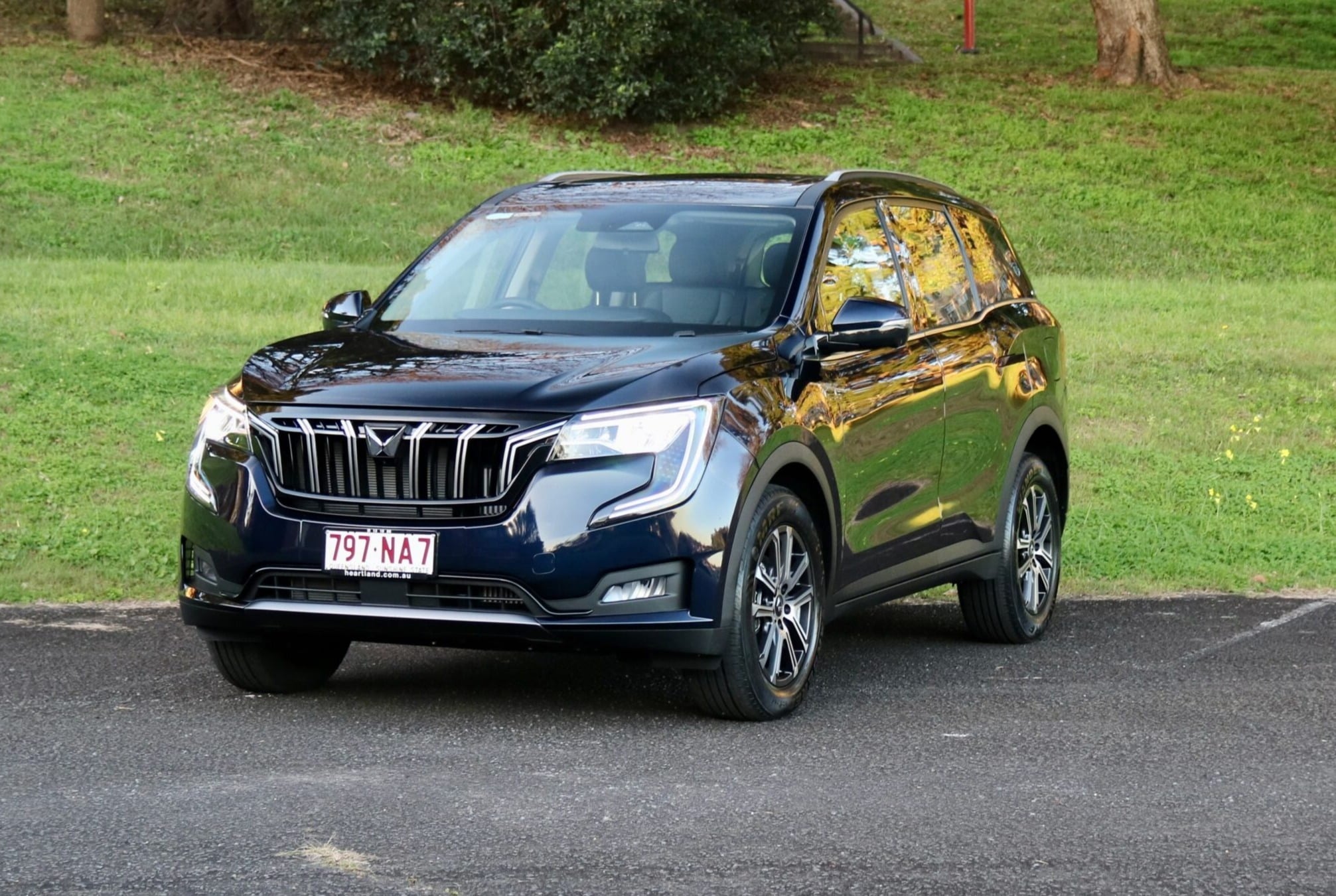
9
Price: From $39,990 driveaway
Drivetrain: 2.0-litre turbocharged four-cylinder petrol, six-speed automatic transmission, front-wheel
drive
Outputs: 149kW/380Nm
Claimed combined fuel consumption: 8.3L/100km
Warranty: Seven-year/150,000km
Four-year service cost: $1781
| Driving | |
| Interior | |
| Practicality | |
| Overall value | |
Strengths
- Bargain pricing
- Grunty 2.0L turbo-petrol engine
- Very comfortable on the road
Weaknesses
- No diesel, hybrid or all-wheel drive availability
- Odd service intervals
- Missing some safety tech, like blind-spot monitoring
Mahindra may not be on your radar for the best value large SUV, but we think its XUV700 should definitely be on your consideration list if you’re searching for a great value and well-rounded large SUV. It delivers genuine family-friendly practicality, strong equipment levels and an ownership experience that’s reasonably priced and covered by a long warranty. It won’t suit all buyers, but we think it does suit many, and its value equation is excellent.
Starting from just $39,990 driveaway, the XUV700 undercuts most seven-seat SUV rivals by thousands, yet still arrives with the sort of standard equipment buyers increasingly expect from far more expensive vehicles. Even the entry-level AX7 includes seven seats, dual 10.25-inch displays, wireless smartphone connectivity, adaptive cruise control, dual-zone climate control, LED lighting and a comprehensive suite of active safety technology. Step up to the AX7L flagship and the list adds a panoramic sunroof, ventilated front seats, a punchy Sony sound system, synthetic leather trim and a 360-degree camera. It’s an impressive specification sheet for the money, though it is still missing some features like proper blind-spot monitoring.
But the XUV700’s appeal extends beyond its equipment list. Unlike some budget-focused SUVs that can feel stripped back once you’re behind the wheel, the Mahindra presents as a genuinely pleasant family car. Its cabin is spacious, thoughtfully designed and comfortable, with good second-row accommodation and the flexibility of a third row when needed. While the rearmost seats are best suited to children or occasional use, the extra seating alone significantly broadens its appeal for growing families.
Under the bonnet is a surprisingly strong 2.0-litre turbocharged petrol engine producing 149kW and 380Nm, paired with a smooth six-speed automatic transmission. It delivers more effortless performance than you’d perhaps first imagined, with plenty of low-down torque making it feel relaxed around town and capable on the open road. It also sounds good, and can be reasonably fuel efficient if needed. Combined with softly tuned suspension, the XUV700 prioritises comfort over outright handling sharpness, making it particularly well suited to Australian roads. We hope to see a hybrid drivetrain offered at some stage, though.
Ownership costs also strengthen the Mahindra’s value proposition. A seven-year/150,000km warranty with roadside assistance provides welcome peace of mind, while servicing remains reasonably affordable over the first four years at $1781, though its service intervals are a bit odd at 10,000km for the first year and then 15,000km further each year afterwards.
The XUV700 isn’t perfect. Its third row isn’t especially spacious, there’s only one petrol front-wheel-drive powertrain available, and it misses features such as conventional blind-spot monitoring. But for families who want maximum SUV for minimum outlay, the XUV700 punches well above its asking price. It proves that outstanding value isn’t simply about being cheap, instead, it’s about delivering far more than buyers expect, and that’s exactly why it deserves consideration if you’re after a seven-seat large SUV.
MG QS
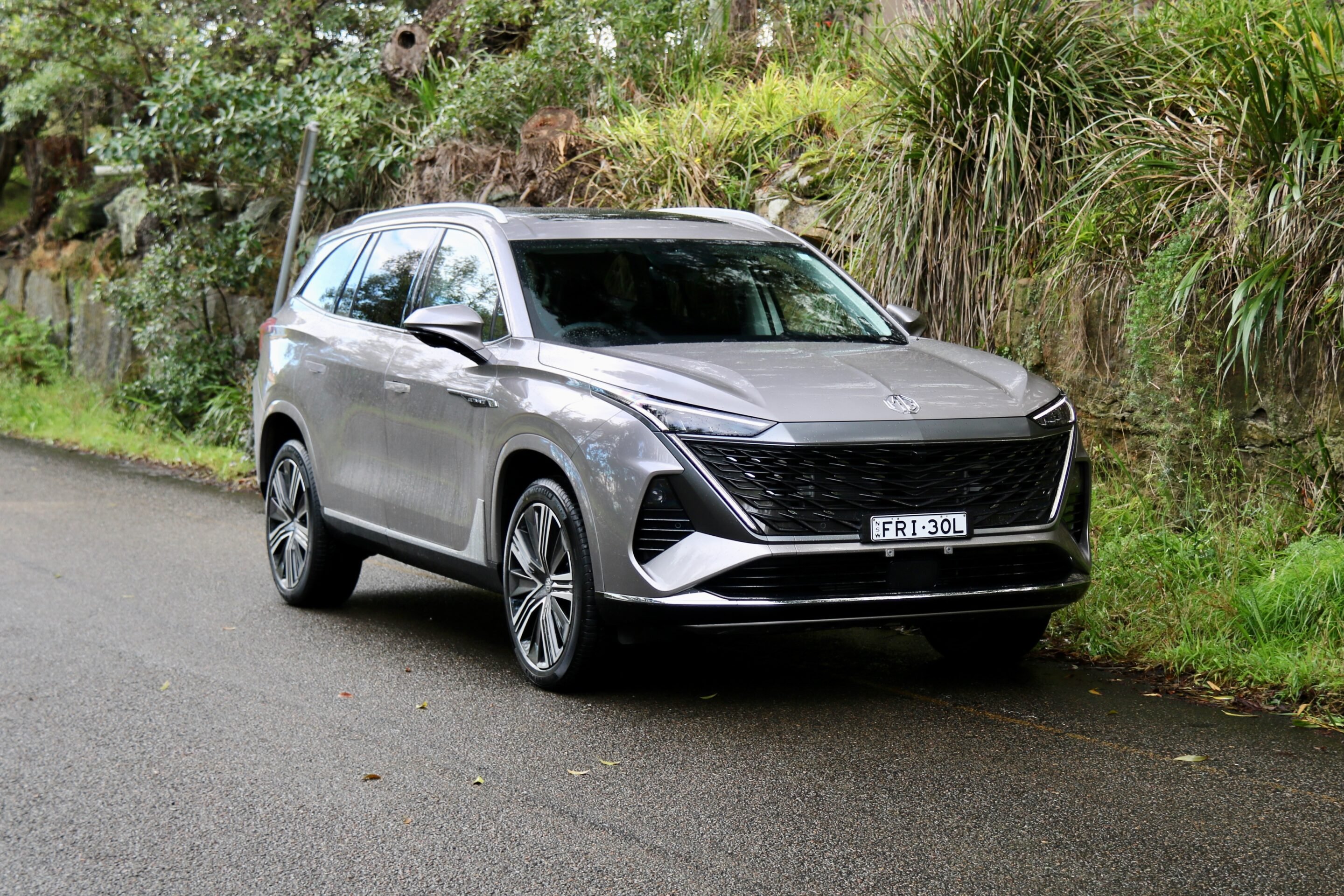
9
Price: From $46,990 driveaway
Drivetrain: 2.0-litre turbocharged four-cylinder petrol, nine-speed automatic transmission, front- or
all-wheel drive
Outputs: 153kW/360Nm
Claimed combined fuel consumption: 8.4L/100km (2WD) – 8.8L/100km (AWD)
Warranty: Seven-year/unlimited km, extendable to 10 years/250,000km with dealer servicing)
Five-year service cost: $1992 (2WD) – $2027 (AWD)\
| Driving | |
| Interior | |
| Practicality | |
| Overall value | |
Strengths
- Very well equipped and well priced too
- Solid driving experience
- Spacious and premium-feeling interior
Weaknesses
- No hybrid model in Australia yet
- 2.0L turbo petrol sounds good but is thirsty
- Dated interior tech compared to newer MG models
The modern-day MG brand has jumped up sales charts by offering its buyers a strong value equation, no matter which product you’re talking about. From the MG 3 light hatch to the IM6 luxury electric mid-size SUV, MG’s Australian range is sharply priced and covered by a long warranty, but also offers more value than just on price. The QS large SUV is one such example, as it combines genuine seven-seat practicality and refined driving experience with the lengthy equipment list and aggressive pricing that MG is known for.
Starting from just $46,990 driveaway (but currently on offer for $44,990 driveaway), the QS significantly undercuts established rivals like the Toyota Kluger, Hyundai Santa Fe and Kia Sorento while still offering seven seats as standard across the range. Even the entry-level Excite is well equipped, while the flagship Essence adds luxuries such as larger alloy wheels, heated and ventilated front seats, a panoramic sunroof, a 12-speaker Bose sound system and a 360-degree camera. It presents like a much more expensive SUV, and that’s a huge part of its appeal.
Size is another area where the QS punches above its price. Measuring almost five metres long, it’s
actually 17mm longer than a Toyota Kluger, and that extra length translates into a genuinely
spacious cabin in all rows. Adults can comfortably occupy the first two rows, while the third row is
among the most usable in the segment. Families who regularly carry seven people will appreciate
that it’s not just an occasional-use third row squeezed into the back like so many rivals offer, while
the cabin itself feels modern, solidly assembled and surprisingly premium throughout.
Power comes from a 153kW/360Nm 2.0-litre turbocharged petrol engine paired with a smooth
nine-speed automatic transmission. While it lacks the hybrid option offered by some competitors in
Australia – a plug-in hybrid version with up to 100km of EV range is sold in Europe but not here as
yet – the drivetrain is refined, offers strong mid-range performance and makes the QS an effortless
long-distance cruiser. It is oddly soft from a start, however, with doughy throttle and transmission
response that could be improved for a smoother driving experience.
Ride comfort is another highlight, with MG successfully delivering a surprisingly supple, well-
controlled suspension tune despite the large 20- and 21-inch wheels fitted across the range, and it
handles reasonably well for such a large vehicle. Refinement is impressive too, and overall, it’s a
pleasant large SUV to drive.
The QS’ ownership package also adds to the value equation. MG backs the QS with a seven-
year/unlimited km warranty, which is extendable to 10 years/250,000km when serviced through the
dealer network. MG has thankfully reduced the service costs of the QS significantly compared to
when it was first released, and it now costs up to $2027 to service over the first first years, or just
$405 per annum on average.
For buyers who simply want the biggest, best-equipped and most comfortable seven-seat SUV for
their money, the MG QS is difficult to ignore. It delivers large SUV space, impressive refinement
and an equipment list that embarrasses many more expensive competitors, but it’s also a good all-
round product, making it one of the strongest contenders in the 2026 Best Large SUV Value
category.
Skoda Kodiaq

14
Price: From $49,990 driveaway
Drivetrains: 1.5-litre turbocharged four-cylinder petrol, 2.0-litre turbo-petrol and 1.5-litre turbo plug-
in hybrid, six or seven-speed dual-clutch transmission, front- or all-wheel drive, 25.7kWh battery
(PHEV)
Outputs: 110kW/250Nm (110TSI), 140kW/320Nm (140TSI), 195kW/400Nm (195TSI RS)
150kW/350Nm (PHEV)
Claimed combined fuel consumption: 6.0-6.1L/100km (110TSI), 8.1L/100km (RS). 9L/100km
(140TSI), 1.9L/100km (PHEV, with battery charged)
Claimed range (PHEV): 110km (WLTP)
Warranty: Seven-year/unlimited km (car), eight-year/160,000km (hybrid battery for PHEV)
Five-year service cost: $2690 – $3190
| Driving | |
| Interior | |
| Practicality | |
| Overall value | |
Strengths
- Excellent cabin practicality
- Mature driving experience
- Wide range of powerplants, including new PHEV
Weaknesses
- PHEV is FWD and five-seat only
- Some desirable features part of option packages
- 140TSI engine is thirsty
The Skoda Kodiaq has long been one of the smarter large SUVs on sale, combining smaller exterior dimensions with impressive interior space, and the recent arrival of new mild- and plug-in hybrid versions only strengthen its appeal. The Kodiaq PHEV combines impressive electric driving range with the typical space, comfort and versatility that has made the Kodiaq such a good large SUV. It also presents a compelling value proposition, offering solid technology and the potential for remarkably low running costs for owners who charge regularly.
Priced currently at $49,990 driveaway, the Kodiaq is well equipped as standard, including a 13-inch infotainment touchscreen, tri-zone automatic climate control, heated front seats, a power tailgate and safety kit like nine airbags and adaptive cruise control. Annoyingly however, on the Select model, features such as electric front seats with ventilation, a 360-degree camera and Canton audio are bundled into an expensive optional Signature Package that starts at $6000, depending on model.
There are no less than four powertrains offered in the Australian-spec Kodiaq range, from a new 110kW 1.5-litre turbo-petrol mild-hybrid to either 140kW or 195kW 2.0-litre turbo-petrols and a new 150kW 1.5-litre plug-in hybrid. All offer the sort of low-range punch and refinement that you’d expect from a European car, with the RS 195TSI also offering potent performance with its claimed 6.3-second 0-100km/h sprint time and sports-tuned chassis dynamics. Regardless of the drivetrain, the Kodiaq’s driving experience is taut, comfortable and mature.
For those seeking part-electric driving, the large 25.7kWh battery in the plug-in hybrid delivers a claimed electric-only driving range of up to 110km on the WLTP cycle, which is more than enough range for many owners to complete their daily commute without using any petrol. It can be DC fast charged at up to 50kW for a claimed 10-80 per cent charge in as little as 25 minutes, but there’s also the mild-hybrid Kodiaq 110TSI that uses a claimed 6.0L/100km, which is impressively low for such a large vehicle.
Inside, depending on the model, both five- and seven-seat layouts are available and while the third row isn’t huge, the cabin is spacious with excellent visibility and the thoughtful storage solutions that have become a Skoda trademark, like a cubby space in the middle of the rear floor. Up to 828 litres of space is available (depending on the model) behind the second row of seating, which opens up to a massive 2105 litres with the second row folded.
Skoda also offers the longest warranty for any European car maker in Australia at seven years of coverage, matching brands like Chery and surpassing BYD. Service pricing is affordable for a European car as well, with five-year pre-paid service packs ranging from $2690 to $3190, depending on the model chosen.
The Skoda Kodiaq is a solid entrant to the large SUV segment because it blends a wide range of powerplants to suit different tastes, excellent refinement and packaging, a reasonable standard of equipment and a family-friendly interior into a well-rounded package. Sure, the plug-in hybrid is front-wheel drive and five-seat only, there are some desirable features missing as standard and the 140kW engine is surprisingly thirsty, but for buyers looking for a clever and good value large SUV, the Skoda Kodiaq is one well worth considering.
Follow WhichCar/Wheels on Google
Click the button below to make WhichCar by Wheels a preferred source for your news.