Best Large SUVs

Gallery 1
Contenders
- Denza B8
- Ford Everest
- GWM Tank 500
- Isuzu MU-X
- Land Rover Defender
- Lexus GX
- Mercedes-Benz G-Class
- Nissan Patrol
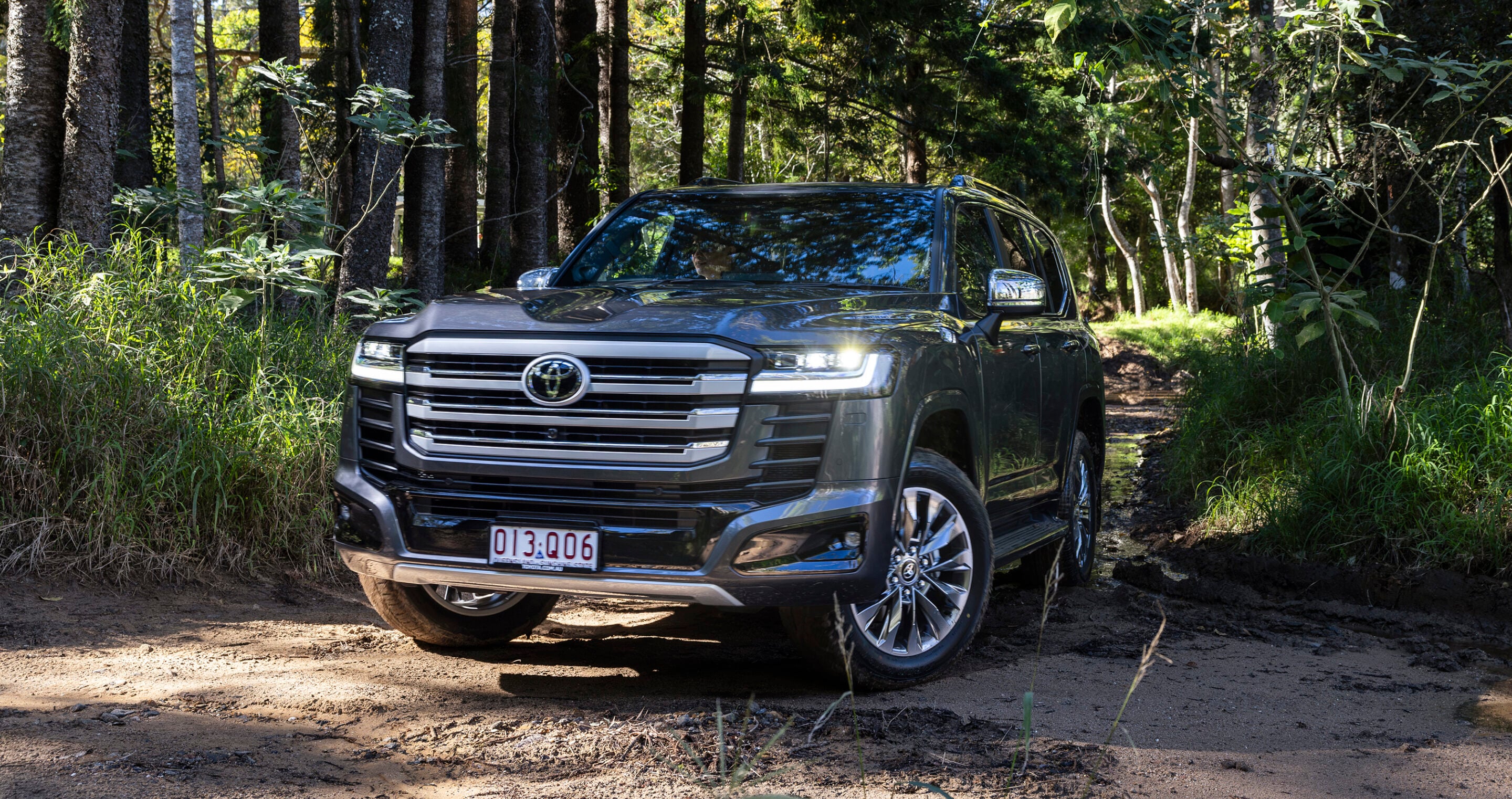
- Toyota Landcruiser 300 Series
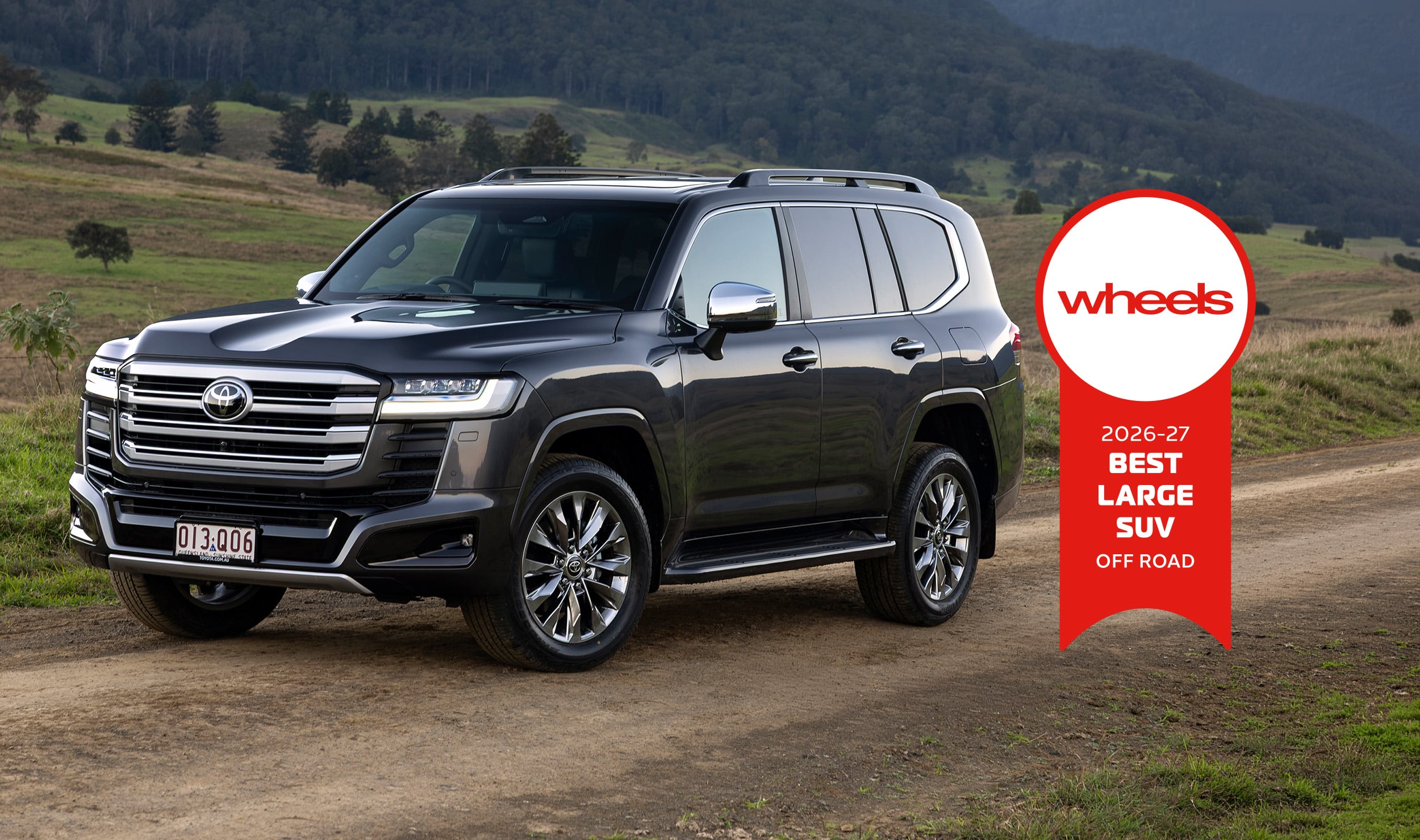
Winner: Toyota Landcruiser 300 Series
8
Price: From $99,270 +ORC (GX diesel) to $156,810 +ORC (Sahara ZX Performance Hybrid)
Drivetrain: 3.3-litre twin-turbo V6 diesel or 3.5-litre twin-turbo V6 petrol-electric performance hybrid, 10-speed automatic, full-time 4WD
Outputs: 227kW/700Nm (diesel); 341kW/790Nm (Performance Hybrid)
Combined fuel economy: 8.9L/100km (diesel)
Warranty: Five-year/unlimited km; up to seven years engine/driveline with scheduled servicing
Five-year service cost: $4200 (diesel, 10 services at six-month/10,000km intervals)
| Driving | |
| Interior | |
| Practicality | |
| Overall value | |
Strengths
- Outstanding combination of on-road refinement and off-road ability
- Powerful diesel and new Performance Hybrid drivetrains
- Huge touring and towing capability
Weaknesses
- Expensive, particularly in upper grades
- Short six-month/10,000km service intervals
- Performance Hybrid offered only in five-seat flagship grades
Few vehicles are as deeply embedded in Australian motoring culture as the Toyota LandCruiser. Over generations it has evolved from a utilitarian off-roader into a big, comfortable and sophisticated family SUV without abandoning the ruggedness that made its reputation.
The 300 Series remains a serious body-on-frame four-wheel drive with low-range gearing and a 3500kg braked towing capacity, but combines those attributes with the refinement and technology expected of a flagship SUV. For 2026, its appeal broadens with the arrival of a petrol-electric Performance Hybrid alongside the established twin-turbo diesel.
The diesel range starts with the five-seat GX at $99,270 before on-road costs, followed by seven-seat GXL, VX and Sahara variants and five-seat GR Sport and Sahara ZX flagships. The i-FORCE MAX Performance Hybrid is restricted to GR Sport and Sahara ZX, priced from $156,060 and $156,810 respectively.
A 2025 technology update brought Toyota‘s latest multimedia system with connected navigation, wireless Apple CarPlay and Android Auto. GX and GXL use an 8.0-inch touchscreen and 7.0-inch digital instrument display, while VX and above feature 12.3-inch screens for both. Toyota Safety Sense was also upgraded with features including lane trace assist and emergency steering assist.
The GXL arguably represents the ideal choice, combining seven seats with 18-inch alloys, parking sensors, blind-spot monitoring, rear cross-traffic alert, wireless phone charging and Multi-Terrain Select. VX adds equipment including panoramic-view and multi-terrain cameras, a moonroof, four-zone climate control and heated and ventilated front seats. Sahara moves further into luxury territory with leather-accented upholstery, a head-up display, heated steering wheel, heated and ventilated outer second-row seats, power-folding third-row seats, JBL audio and rear entertainment screens.
Inside, the LandCruiser lacks the overtly digital presentation of some similarly priced luxury SUVs, but there are plenty of physical controls, an excellent driving position and comfortable seats. Space is another strength: GXL, VX and Sahara seat seven, while GX, GR Sport and Sahara ZX are five-seaters. Second-row accommodation is generous, while a 110-litre fuel capacity suits long-distance touring.
Toyota’s familiar 3.3-litre twin-turbo diesel V6 produces 227kW and 700Nm, driving all four wheels through a 10-speed automatic. There is effortless low-down torque, the transmission works smoothly and performance is more than adequate for a vehicle of this size. Official combined consumption is 8.9L/100km.
The big development for 2026 is the i-FORCE MAX Performance Hybrid, which combines a 3.5-litre twin-turbo petrol V6 with an electric motor integrated between the engine and 10-speed automatic. Combined outputs of 341kW and 790Nm make it the most powerful production LandCruiser yet.
This isn’t a conventional Toyota hybrid designed primarily to slash fuel use. Instead, electric assistance improves performance and responsiveness, delivering immediate torque and smoother power delivery. It’s also quieter and smoother than the diesel, but expensive and restricted to five-seat versions. For seven-seat buyers and long-distance touring, the diesel remains a compelling choice.
Whichever engine you choose, the LandCruiser disguises its size and rugged construction remarkably well. Steering is light enough for easy urban manoeuvring, while its suspension delivers a composed ride for a heavy-duty body-on-frame SUV. There is predictable body roll when pushed, but that’s a reasonable compromise for its off-road ability.
Every 300 Series gets full-time four-wheel drive, a locking centre differential, low-range gearing, Crawl Control, Downhill Assist and Active Traction Control, with Multi-Terrain Select standard from GXL upwards. The GR Sport adds E-KDSS suspension and front and rear differential locks, while Sahara ZX uses a rear torque-sensing limited-slip differential.
That breadth of ability remains the LandCruiser’s trump card. Other large SUVs are more agile or offer more equipment for less, but few can comfortably handle family duties, tow 3500kg and then tackle genuinely remote terrain with the same confidence.
Ownership costs are less impressive. Toyota provides a five-year/unlimited-kilometre warranty, with engine and driveline coverage extendable to seven years when servicing requirements are met. Diesel servicing is required every six months or 10,000km, with the first 10 scheduled services costing $420 each, or $4200 over five years.
The LandCruiser 300 isn’t cheap, but few large SUVs possess such a broad range of talents. It’s comfortable enough for daily family use, enormously capable as a tow vehicle and tourer, and remains one of the most accomplished showroom-standard four-wheel drives available.
The Performance Hybrid adds substantially more power and instant electric assistance, although the diesel remains our pick for most buyers. In GXL or VX form especially, the 300 Series is spacious, comfortable and exceptionally capable – attributes that continue to make the LandCruiser particularly well suited to Australian conditions.
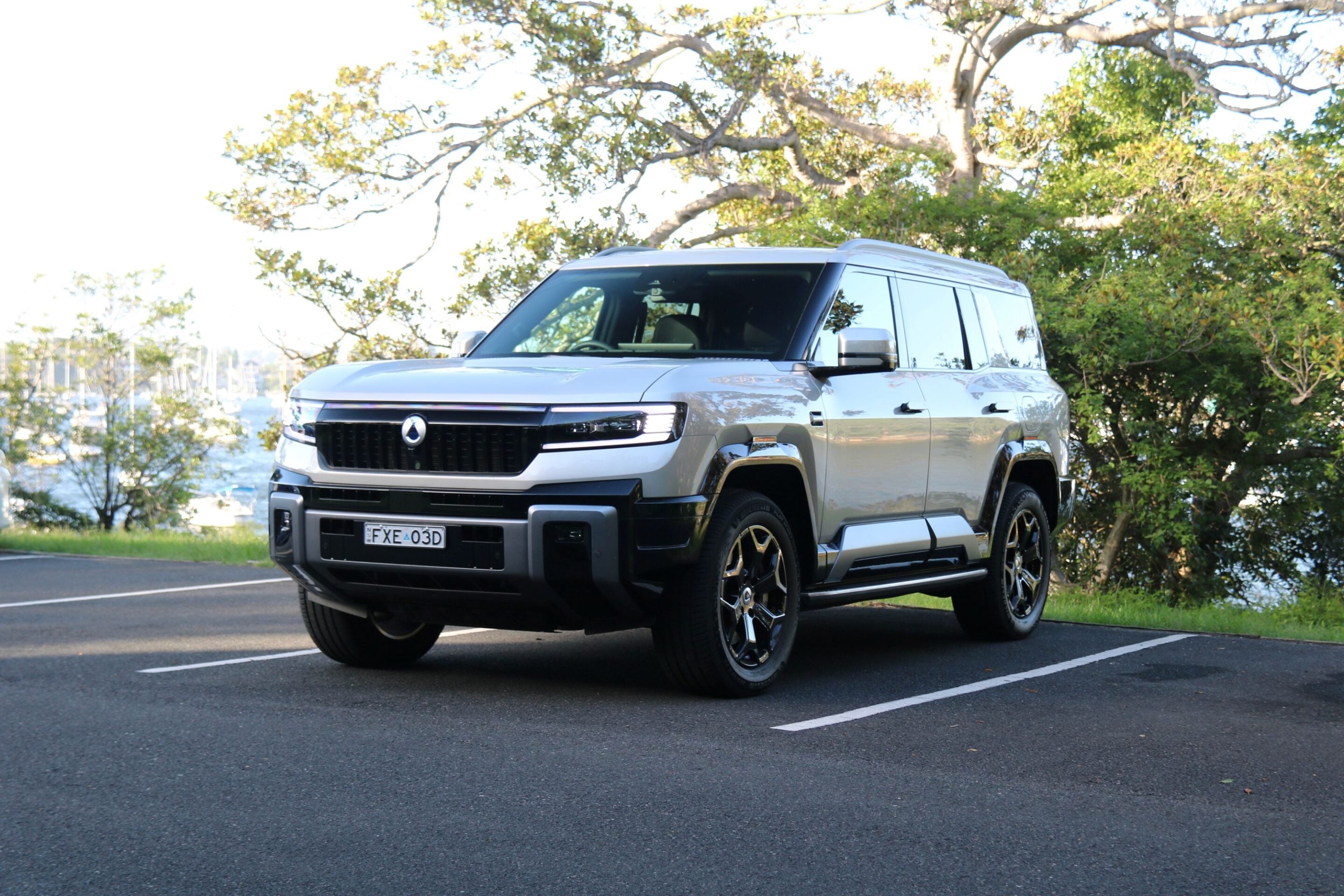
Denza B8
6
Price $91,000 +ORC (7S); $97,990 +ORC (6S)
Drivetrain 2.0-litre turbo four-cylinder plug-in hybrid, dual electric motors, single-speed transmission, electric 4WD
Outputs 425kW/760Nm combined
Combined fuel economy 3.9L/100km WLTC (charged), 11.4L/100km (low battery)
Warranty Six-year/150,000km (vehicle), eight-year/160,000km (battery)
Five-year service cost $3420
| Driving | |
| Interior | |
| Practicality | |
| Overall value | |
Strengths
- Powerful and impressively refined PHEV drivetrain
- Luxurious, spacious and extremely well-equipped cabin
- Strong value against established large luxury 4WDs
Weaknesses
- Ride can be too firm over sharper bumps
- Overactive driver-assistance systems
- Unknown resale values for a new brand
The Denza B8 might come from a brand unfamiliar to most Australians, but BYD‘s new luxury offshoot isn’t easing gently into the market. This 5.2-metre-long plug-in hybrid 4WD is aimed squarely at established large SUVs including the Toyota LandCruiser 300 Series and Nissan Patrol, while offering equipment more reminiscent of considerably more expensive luxury rivals.
There are two variants: the seven-seat 7S costs $91,000 before on-road costs, while the $97,990 6S replaces the second-row bench with two luxurious captain’s chairs and adds equipment including a front differential lock, head-up display and night-vision camera. We’d pick the six-seater unless seven seats are essential: its second-row chairs offer electric adjustment, heating, ventilation and massage, giving the B8 a genuinely business-class feel.
Cabin presentation is another highlight. A huge 17.3-inch central touchscreen dominates the dashboard, accompanied by a 12.3-inch digital instrument display, but Denza sensibly retains plenty of physical switchgear. There’s excellent seating comfort and visibility, along with clever touches such as height-adjustable cupholders and a heated and cooled centre-console compartment. Third-row luggage capacity is a tight 147 litres, expanding to 902L with it folded in the six-seater.
Underneath is a ladder-frame chassis and an unusual but potent PHEV drivetrain combining a 2.0-litre turbo-petrol four-cylinder with two electric motors. Combined outputs are a hefty 425kW and 760Nm, enough for 0-100km/h in 4.8 seconds. A 36.8kWh battery provides a claimed 100km WLTC electric range, while braked towing capacity is 3500kg.
On the road, the B8’s strongest attribute is refinement. Electric response is immediate and the transition between electric and petrol power is impressively smooth, while performance feels remarkable for a 3290kg SUV. The downside is the DiSus-P hydraulic suspension, which handles ordinary road imperfections well but can feel too firm over sharp-edged bumps. Its considerable mass is also noticeable through tighter corners, and some of the electronic driver aids are overly intrusive.
Even so, the B8 makes a compelling case. It’s fast, quiet, spacious, lavishly equipped and capable of serious off-road work, while its six-year/150,000km warranty and $3420 five-year servicing program add reassurance. Brand recognition and resale values remain question marks, but judged purely on the vehicle, the B8 deserves to be taken seriously alongside Australia’s established large 4WD favourites.
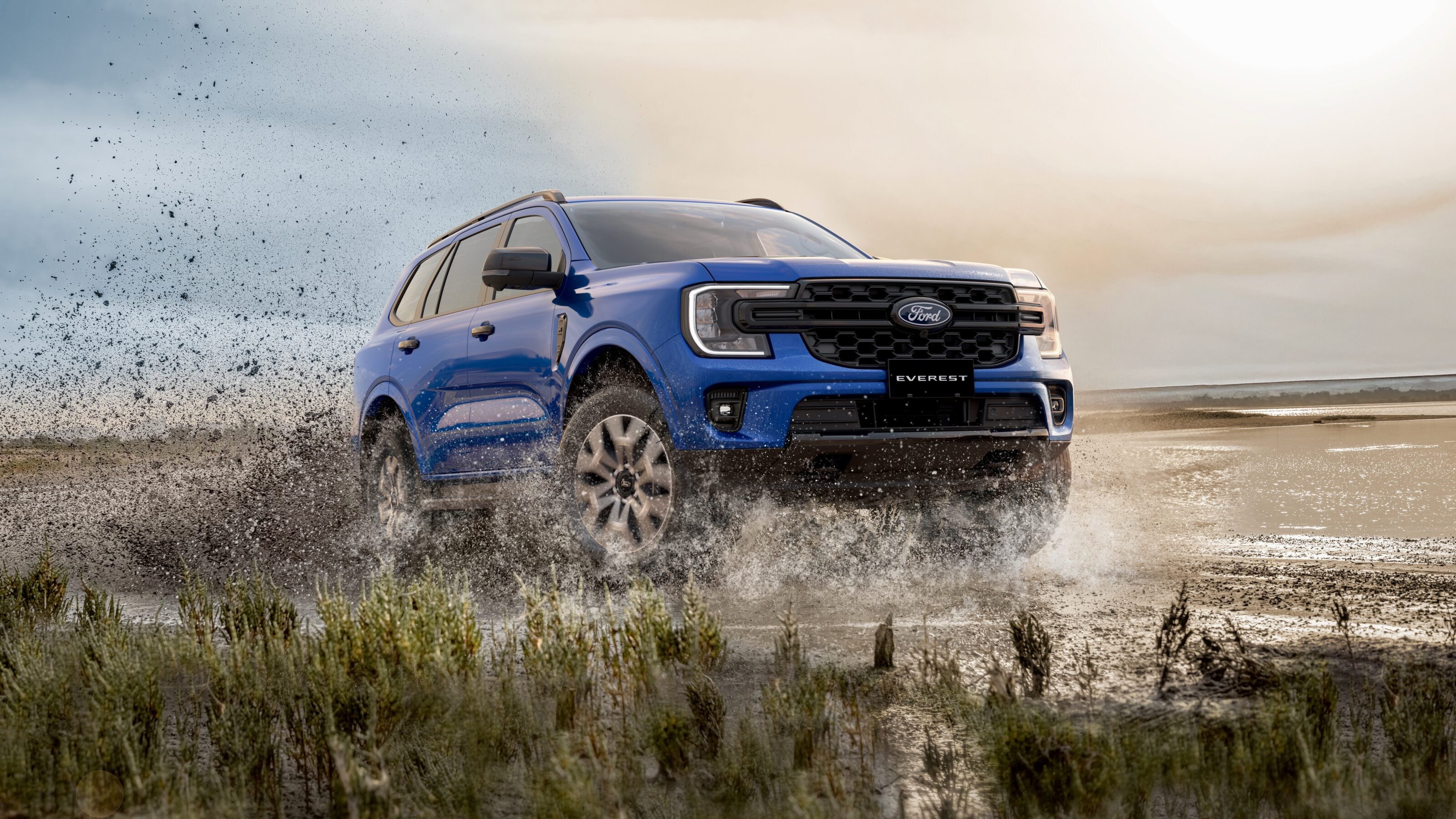
Ford Everest
3
Price: From $58,990 +ORC (Active 2.0L) to $83,490 +ORC (Platinum V6)
Drivetrain: 2.0-litre four-cylinder turbo-diesel or 3.0-litre V6 turbo-diesel, 10-speed automatic, 4×4
Outputs: 125kW/405Nm (2.0L); 184kW/600Nm (V6)
Combined fuel economy: From 7.1L/100km
Warranty: Five-year/unlimited km
Five-year service cost” $1596 prepaid service plan
| Driving | |
| Interior | |
| Practicality | |
| Overall value | |
Strengths
- Excellent V6 diesel and impressive road manners
- Spacious, comfortable and well-designed cabin
- Strong towing, touring and family credentials
Weaknesses
- Four-cylinder lacks the punch of the old bi-turbo
- V6 carries a sizeable price premium
- Some rivals are more accomplished off-road
There’s a good reason the Ford Everest has become one of Australia’s favourite large SUVs. Based on the Ranger ute but significantly more polished as a family wagon, it combines genuine four-wheel-drive ability and 3500kg towing capacity with excellent road manners, a spacious seven-seat cabin and some of the best technology in the class. The 3.0-litre V6 remains its standout feature.
The updated 2026 range starts with the new Active at $58,990 before on-road costs and progresses through Sport, Tremor and Platinum. Active and Sport offer a choice of engines, while Tremor and Platinum are V6-only. Most versions offer seven seats, although Active comes with five as standard and a third row is optional.
The new entry engine is a 2.0-litre single-turbo diesel producing 125kW and 405Nm, replacing the previous 154kW/500Nm bi-turbo. It’s adequate rather than exciting, but the availability of the 184kW/600Nm 3.0-litre V6 even in the Active means buyers wanting effortless performance don’t have to climb far up the range. Both use a 10-speed automatic.
We’d choose the V6. Its generous torque makes the Everest relaxed and responsive whether overtaking, towing or tackling a long highway journey. More impressive is the chassis: steering is accurate and nicely weighted, body control is excellent by ladder-frame 4WD standards and the Everest feels considerably more sophisticated on sealed roads than its ute origins suggest.
Inside, there’s plenty of Ranger influence but the presentation is convincingly SUV-like. A 12.0-inch portrait touchscreen with SYNC 4A is standard, along with wireless Apple CarPlay and Android Auto, while the cabin provides excellent comfort and generous space. With the rear seats folded, luggage capacity reaches 1823 litres.
Off-road, the Everest remains highly capable rather than class-leading, with the independent front and live-axle rear suspension offering less articulation than some dedicated 4WDs. For buyers wanting more ability, the Tremor adds specialist off-road hardware.
Add a five-year/unlimited-kilometre warranty, 12-month/15,000km servicing and a $1596 five-year prepaid servicing plan, and the Everest’s ownership proposition is strong.
Ultimately, few large SUVs cover as many bases. Comfortable enough for school runs, polished enough for long-distance touring, capable off-road and an excellent tow vehicle, the Everest is an outstanding all-rounder. The cheaper 2.0-litre broadens its appeal, but the muscular V6 is the engine that turns a very good large SUV into one of the segment benchmarks.
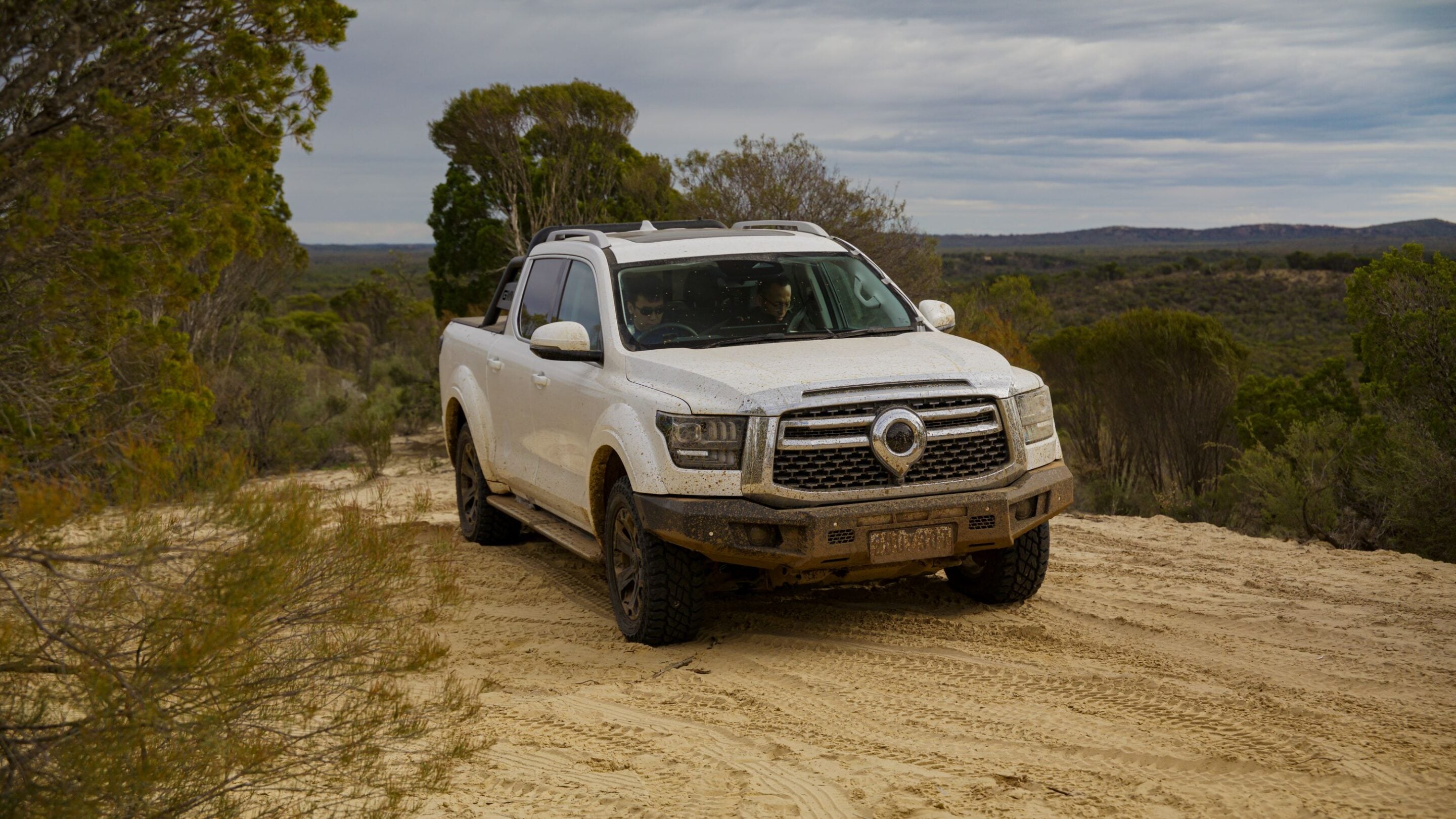
GWM Tank 500
5
Price: From $65,990 driveaway (Lux Diesel); $79,990 driveaway (Ultra PHEV)
Drivetrain: 3.0-litre turbo-diesel, petrol-electric hybrid or 2.0-litre turbo-petrol PHEV; automatic, dual-range 4WD
Outputs: Up to 300kW/750Nm (Ultra PHEV)
Claimed electric range: 120km NEDC (Ultra PHEV)
Warranty: Seven-year/unlimited km
Five-year service cost: Capped-price servicing available
| Driving | |
| Interior | |
| Practicality | |
| Overall value | |
Strengths
- Serious mechanical 4WD hardware and impressive off-road ability
- PHEV combines muscular performance with useful electric range
- Luxurious, spacious cabin for the money
Weaknesses
- PHEV is extremely heavy and limited to five seats
- Highway-biased tyres restrict ultimate off-road ability
- Driver assistance and infotainment can frustrate
The GWM Tank 500 has evolved into one of the more intriguing alternatives to traditional large 4WDs. Its body-on-frame construction and genuine off-road hardware are now joined by three distinct powertrains: hybrid, plug-in hybrid and, most recently, a 3.0-litre turbo-diesel aimed squarely at long-distance touring and towing buyers.
For serious off-road use, the Ultra Hi4-T PHEV is particularly interesting. Unlike many electrified SUVs, it retains a mechanical four-wheel-drive system with a dual-range transfer case and electronically locking front and rear differentials. There’s 213mm of ground clearance, an 800mm wading depth and approach, breakover and departure angles of 30, 22.5 and 24 degrees respectively.
Its 2.0-litre turbo-petrol four-cylinder and electric motor produce a combined 300kW and 750Nm, sent through a nine-speed transmission. Despite weighing 2775kg, the PHEV reaches 100km/h in a claimed 6.9 seconds. Its 37.1kWh battery provides 120km of NEDC electric range, with real-world testing suggesting around 100km is achievable.
The Tank performs convincingly away from bitumen, with easily activated differential locks, useful terrain modes and an excellent surround-view camera system incorporating a transparent-chassis view. Its main limitation is the standard highway-focused rubber, which struggled for traction on a steep sandy climb during EV Central’s testing.
Importantly, the 2026 PHEV has now received Australian-specific suspension damper and steering calibration under GWM‘s AT-1 localisation program, addressing criticisms of the earlier model’s slow steering and loose body control.
Inside, the Ultra punches well above its price, with Nappa leather, heated, ventilated and massaging rear seats and enormous second-row space. The PHEV’s battery eliminates the regular Tank 500’s third row, however, leaving five seats and a 640-litre boot.
The new diesel broadens its appeal further, producing 170kW and 620Nm while increasing towing capacity from the PHEV’s 3000kg to 3500kg.
The Tank 500 isn’t as polished or proven as a Prado, but its combination of proper 4WD hardware, luxury, electrification and aggressive pricing is compelling. For adventurous buyers prepared to look beyond the established badges, it’s become a genuine off-road contender.
Isuzu MU-X
1
Price: From $48,400 +ORC (LS-M 1.9L 4×2) to $75,100 +ORC (X-Terrain 3.0L 4×4)
Drivetrain: 1.9-litre or 3.0-litre four-cylinder turbo-diesel, six-speed automatic, 4×2 or part-time 4×4
Outputs: 110kW/350Nm (1.9L); 140kW/450Nm (3.0L)
Combined fuel economy: From 7.4L/100km
Warranty: Six-year/150,000km
Five-year service cost: $2345
| Driving | |
| Interior | |
| Practicality | |
| Overall value | |
Strengths
- Excellent off-road ability and proven 3.0-litre diesel
- Spacious and practical seven-seat interior
- Strong value and 3500kg towing capacity
Weaknesses
- 3.0-litre diesel trails newer rivals for performance
- Six-speed auto could be smoother
- Third row is tight for adults
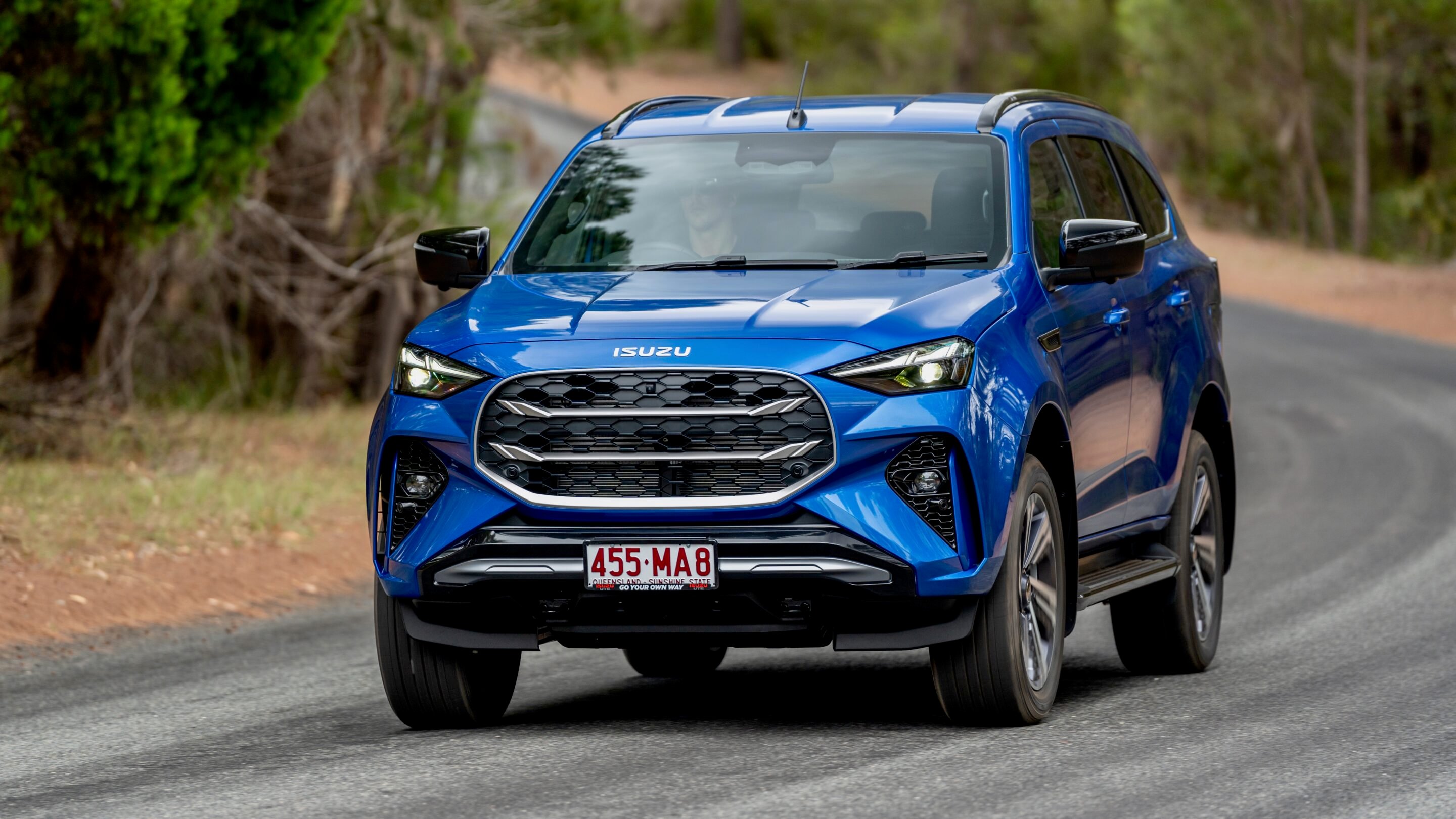
The Isuzu MU-X has built its reputation on straightforward virtues: a tough diesel drivetrain, genuine off-road ability, seven seats and competitive pricing. The latest update doesn’t fundamentally change that formula, but improved technology, revised suspension, upgraded safety equipment and a new X-Terrain flagship make this rugged family 4WD a more convincing all-rounder.
The range spans LS-M, LS-U, LS-T and X-Terrain grades, with 4×2 and 4×4 configurations available. Buyers can choose a new 120kW/400Nm 2.2-litre turbo-diesel paired with an eight-speed automatic, or the familiar 140kW/450Nm 3.0-litre 4JJ3 matched to a six-speed auto.
It’s hardly the segment’s performance leader, but the big diesel’s 450Nm makes the MU-X an easy-going long-distance companion. The engine settles to around 1500rpm at 100km/h and feels well suited to heavy-duty work, although throttle response can be sluggish and the six-speed auto lacks the slickness of the Ford Everest’s transmission. Revised dampers improve the chassis, but the MU-X still feels more utilitarian on bitumen than its Ford rival.
It’s when the road disappears that the Isuzu really impresses. Four-wheel-drive versions combine low-range gearing with a locking rear differential and an improved Rough Terrain Mode, delivering excellent traction over difficult terrain. Ground clearance reaches 235mm on most grades and wading depth is 800mm. LS-T and X-Terrain versions also gain a useful 360-degree camera with an underfloor view.
Inside, the latest MU-X feels more polished without becoming overly complicated. LS-U and above receive a 9.0-inch touchscreen and 7.0-inch driver display, while wireless Apple CarPlay and Android Auto are available. There’s generous room in the first two rows, although the third row is better suited to children. Luggage capacity ranges from 311 litres with seven seats occupied to a substantial 2138L with both rear rows folded.
Add a 3500kg braked towing capacity with the 3.0-litre, six-year/150,000km warranty and $469 annual servicing for the first five years, and the ownership equation remains strong.
The MU-X isn’t as refined or powerful as the Everest, but it’s an honest, practical and impressively capable large SUV. For families who regularly tow, tour or head off-road, that ruggedness remains a major attraction.
Land Rover Defender
1
Price: From around $100,000 +ORC to $313,800 +ORC (OCTA Black)
Drivetrain: Six-cylinder diesel or V8 petrol, eight-speed automatic, dual-range 4WD
Outputs: Up to 467kW/750Nm (OCTA)
Combined fuel econom: From 8.1L/100km (D350)
Warranty: Five-year/unlimited km
Five-year service cost: $4800 prepaid service plan
| Driving | |
| Interior | |
| Practicality | |
| Overall value | |
Strengths
- Outstanding combination of on-road refinement and off-road ability
- Distinctive, high-quality and practical interior
- Huge choice of body styles and powertrains
Weaknesses
- Expensive, especially once options are added
- Complex range and potentially costly ownership
- Defender 90 sacrifices rear-seat and luggage practicality
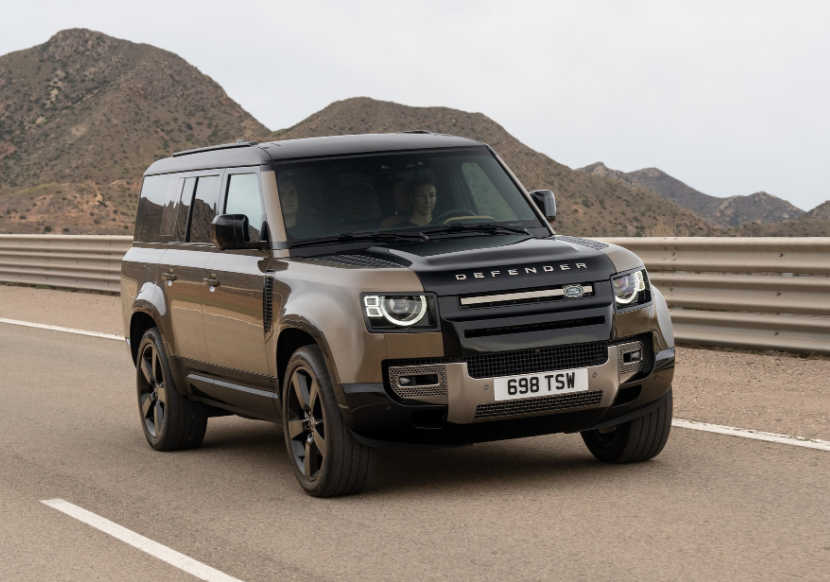
Few modern 4WDs balance tradition and modernity as convincingly as the Land Rover Defender. Its styling clearly references the original, but underneath is a sophisticated luxury SUV with independent suspension, advanced electronics and excellent road manners – without sacrificing the serious off-road capability expected of the badge.
Choice is unusually broad. There are short-wheelbase 90, five-door 110 and eight-seat 130 bodies, while the 110 can accommodate up to seven occupants. The range stretches from relatively conventional six-cylinder models to the extraordinary OCTA, whose 4.4-litre twin-turbo mild-hybrid V8 produces 467kW and 750Nm.
For most buyers, however, the D350 diesel is the sweet spot. Its 3.0-litre turbocharged straight-six produces 257kW and 700Nm, paired with an eight-speed automatic and dual-range four-wheel drive. Official combined consumption is around 8.1L/100km, while towing capacity is 3500kg.
The Defender’s real achievement is how little its off-road ability compromises everyday driving. Steering is accurate, the cabin is impressively quiet and the suspension delivers excellent compliance. Air-suspended versions can raise themselves when additional clearance is required, while Terrain Response, low-range gearing and sophisticated traction control make difficult terrain remarkably straightforward. Even the compact Defender 90 combines polished road manners with formidable ability away from bitumen.
Inside, the design is deliberately functional without feeling utilitarian. Exposed structural elements, substantial grab handles and useful storage coexist with high-quality materials and modern infotainment. The controls are logical and straightforward, although practicality varies considerably by body style. The 90 has limited luggage room and rear seats that don’t fold completely flat, whereas the longer 110 and particularly the eight-seat 130 are much better suited to family duties.
Then there’s the OCTA. At $304,500 before on-roads – or $313,800 for OCTA Black – it is extravagantly expensive, but combines 4.0-second 0-100km/h performance with up to 323mm of ground clearance, 1000mm wading ability and remarkable high-speed off-road performance.
Land Rover backs the Defender with a five-year/unlimited-kilometre warranty, while a five-service prepaid maintenance plan costs $4800.
The Defender’s price prevents it from being a value champion, but its breadth of ability is exceptional. It can be a luxurious family SUV, long-distance tourer and genuinely formidable off-roader in one package. For most buyers, a Defender 110 D350 delivers the best balance – and is arguably one of the most complete large 4WDs on sale.
Lexus GX
1
Price: $118,320–$130,770 +ORC
Drivetrain: 3.4-litre twin-turbo petrol V6, 10-speed automatic, full-time 4WD
Outputs: 260kW/650Nm
Combined fuel economy: 12.3L/100km
Warranty: Five-year/unlimited km
Five-year service cost: $6950
| Driving | |
| Interior | |
| Practicality | |
| Overall value | |
Strengths
- Muscular styling gives the GX real presence
- Smooth, powerful and refined twin-turbo V6
- Overtrail combines excellent ride comfort with serious off-road ability
Weaknesses
- Fuel consumption is undeniably heavy
- Ladder-frame underpinnings apparent through corners
- Six-monthly servicing makes ownership relatively expensive
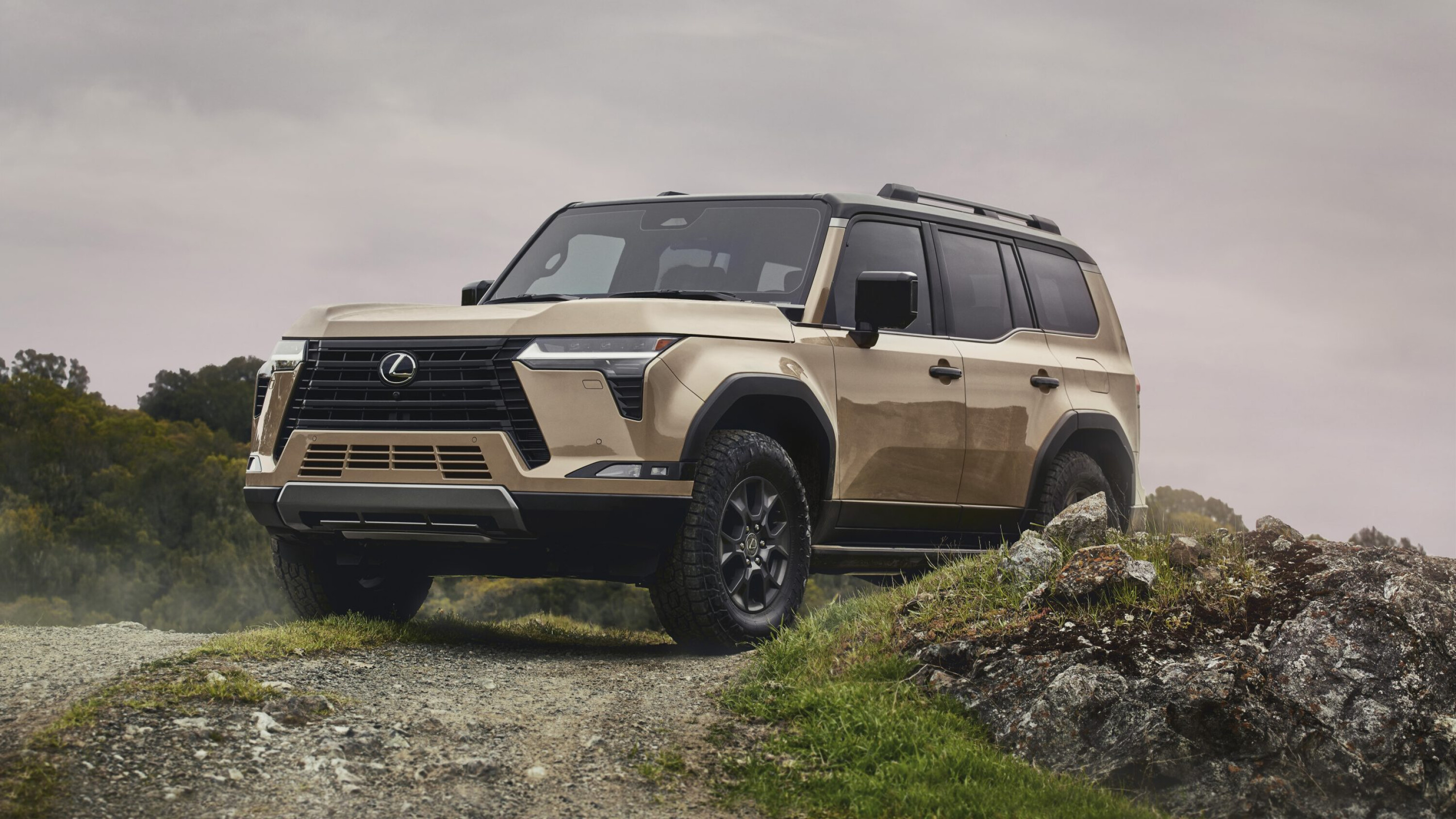
The Lexus GX has filled a curious gap in the Australian market. Sharing its ladder-frame TNGA-F platform with the Toyota LandCruiser Prado, it adds a more luxurious cabin and muscular twin-turbo petrol V6 while retaining genuine off-road ability. For buyers wanting something more upmarket than a Prado without stretching to an LX, it makes plenty of sense.
The range comprises Luxury, Sports Luxury and Overtrail grades, with prices starting at $118,320 before on-road costs. Sports Luxury costs $124,840, while the five-seat, off-road-focused Overtrail tops the range at $130,770. While Luxury and Sports Luxury offer seven seats, the Overtrail’s five-seat layout arguably makes better use of the GX’s substantial dimensions.
All versions use a 3.4-litre twin-turbo petrol V6 producing 260kW and 650Nm, matched to a 10-speed automatic and full-time four-wheel drive. Performance is strong and the engine is notably smoother and quieter than the diesel found in the related Prado. The downside is thirst: the official figure is 12.3L/100km, while the WhichCar Overtrail test recorded 15.2L/100km during predominantly urban driving.
The Overtrail is arguably the most interesting version. Its Electronic Kinetic Dynamic Suspension System (e-KDSS), 18-inch wheels and Toyo Open Country all-terrain tyres provide serious off-road credentials, yet its ability to absorb poor urban roads is one of the GX’s strongest attributes. It remains recognisably a heavy ladder-frame 4WD rather than a sporting luxury SUV, but delivers the relaxed, comfortable character expected of a Lexus. Towing capacity is 3500kg.
Inside, the upright driving position, excellent visibility and straightforward ergonomics reinforce the GX’s traditional 4WD character. A 14.0-inch touchscreen is responsive and easy to navigate, accompanied by a 12.3-inch digital instrument display and wireless smartphone connectivity. Material quality and seat comfort are impressive, although the dashboard design isn’t as polished as some other Lexus models.
Practicality is another Overtrail strength. With only two seating rows, it provides 1063 litres of luggage capacity with the rear seats in place and 2000 litres when folded.
Servicing is required every six months or 10,000km and costs $695 per visit, equating to $6950 across five years. Lexus provides a five-year/unlimited-kilometre warranty and three years of roadside assistance.
The GX’s fuel consumption and substantial price are difficult to ignore, but its combination of refinement, space and authentic off-road hardware is unusual. The Overtrail is the pick: comfortable enough for everyday use, exceptionally capable away from bitumen and arguably the GX that makes best use of the vehicle’s underlying strengths.
Mercedes-Benz G-Class
6
Price: From $214,900 plus on-road costs (G 450 d)
Drivetrain: 3.0-litre turbo-diesel six-cylinder mild hybrid, 4.0-litre twin-turbo V8 mild hybrid, or four-motor electric; automatic, 4WD
Outputs: 270kW/750Nm (G 450 d); up to 432kW/1164Nm (G 580 electric)
Claimed combined fuel consumption: 8.1L/100km (G 450 d)
Electric range: Up to 473km WLTP (G 580)
Warranty: Five-year/unlimited km
Five-year service cost: Pre-paid service plan available
| Driving | |
| Interior | |
| Practicality | |
| Overall value | |
Strengths
- Extraordinary off-road capability across the range
- G 450 d combines huge torque with impressive refinement
- G 580 uses electric technology to enhance its 4WD ability
Weaknesses
- Expensive to buy and maintain
- Rear-seat space is tight considering its size
- G 580 is extremely heavy at more than three tonnes
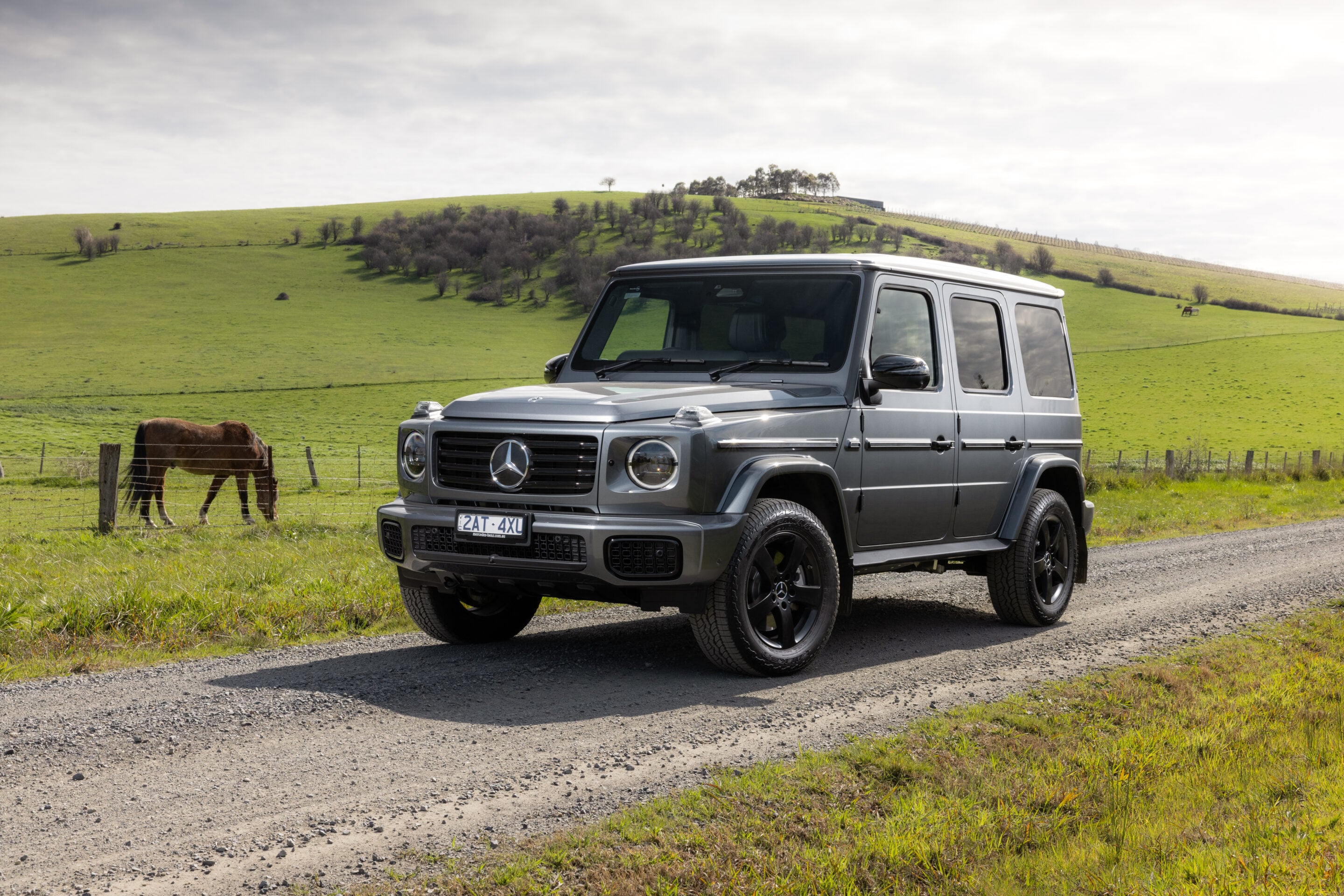
Few off-roaders possess the heritage of the Mercedes-Benz G-Class. Its boxy silhouette has barely changed since 1979, but beneath the familiar styling is a sophisticated 4WD that combines serious bush-going ability with luxury-car comfort and technology.
For Australian buyers, the G 450 d is arguably the sweet spot. Priced from $214,900 before on-road costs, its 3.0-litre turbo-diesel straight-six produces 270kW and 750Nm, aided by 48-volt mild-hybrid technology and paired with a nine-speed automatic. Despite weighing more than 2.6 tonnes, it reaches 100km/h in 5.8 seconds, while claimed consumption is a surprisingly reasonable 8.1L/100km.
More importantly, it remains an exceptionally capable off-roader. Low-range gearing, three locking differentials and selectable off-road modes are complemented by a 360-degree camera with transparent-bonnet functionality. There’s 241mm of ground clearance, a 700mm wading depth and impressive approach and departure angles. Our Australian testing showed just how effective the G 450 d is off-road, comfortably negotiating mud, steep climbs and heavily rutted tracks.
The electric G 580 takes an entirely different approach. Four independently controlled motors produce 432kW and 1164Nm, with individual low-range gearing allowing exceptionally precise wheel control. Its headline-grabbing G-Turn can rotate the vehicle on the spot, while G-Steer helps pivot it through tight off-road turns. Wading depth increases to 850mm and a substantial underbody plate protects the 116kWh usable battery. Range is 473km WLTP, although its 3085kg kerb weight is difficult to ignore.
Inside, the G-Class blends old-school character with modern Mercedes luxury. There’s leather upholstery, a 12.3-inch MBUX touchscreen and excellent front-seat comfort, although rear accommodation is surprisingly tight. The G 450 d provides a useful 620-litre boot.
Nissan Patrol
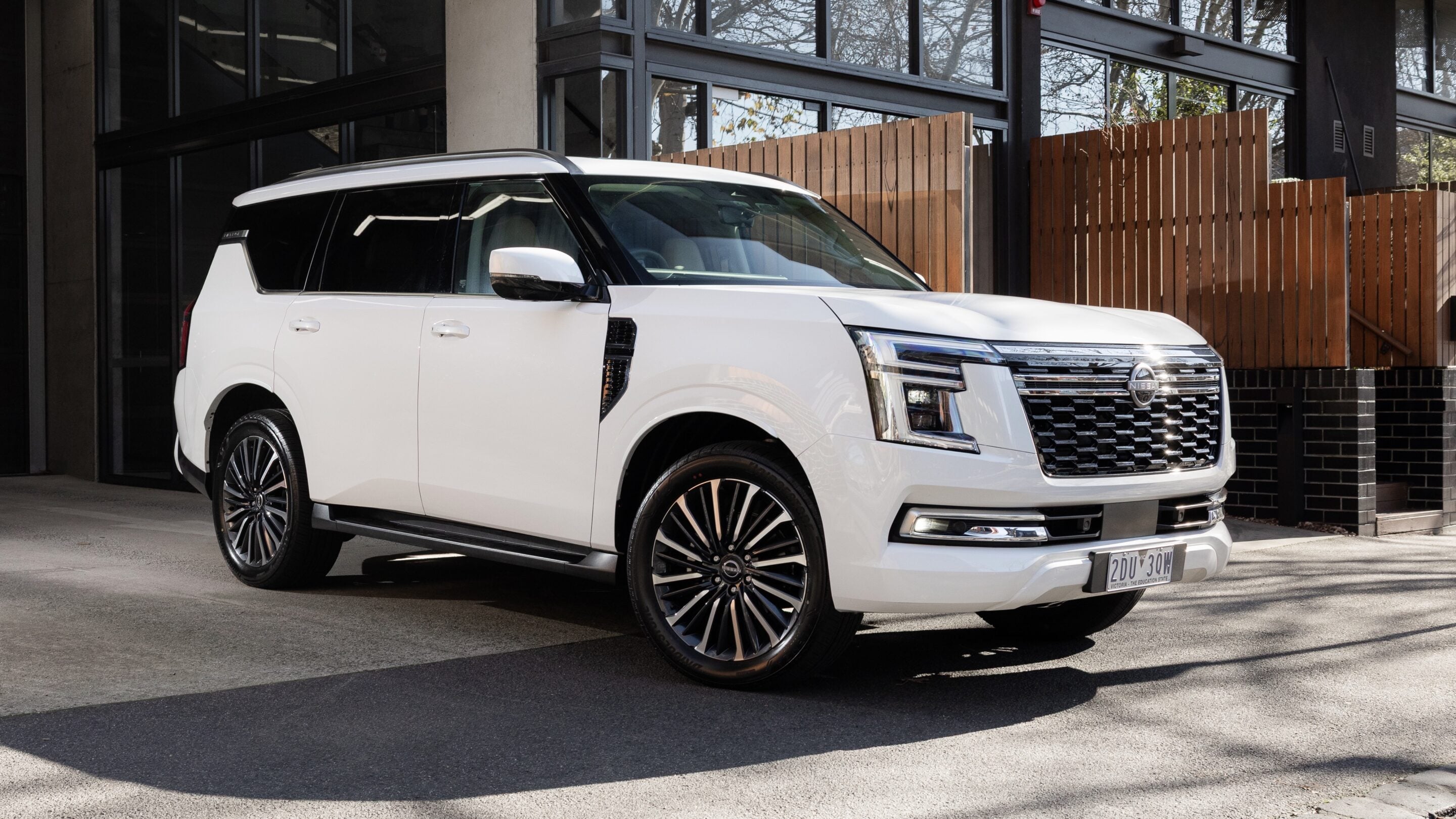
5
Price: From $96,540 plus on-road costs (Ti)
Drivetrain: 5.6-litre naturally aspirated petrol V8, seven-speed automatic, four-wheel drive
Outputs: 298kW/560Nm
Claimed combined fuel consumption: 14.4L/100km
Warranty: Five-year/unlimited km; up to 10-year/300,000km with Nissan dealer servicing
Five-year service cost: $2495
| Driving | |
| Interior | |
| Practicality | |
| Overall value | |
Strengths
- Magnificent V8 engine delivers effortless performance and character
- Huge cabin and genuine long-distance touring ability
- Warrior adds meaningful Australian-developed off-road upgrades
Weaknesses
- V8 is predictably thirsty, particularly around town
- Enormous dimensions make urban driving cumbersome
- Y62 is showing its age as replacement approaches
The Nissan Patrol enters its final months in Y62 form as one of Australia’s most enduring old-school 4WDs. Production for Australia ended in August, ahead of the new-generation Y63 arriving in early 2027, but the outgoing model remains a formidable combination of space, towing ability, performance and off-road capability.
Pricing starts at $96,540 before on-road costs for the eight-seat Ti, rising to $108,040 for the more luxurious seven-seat Ti-L and $111,600 for the locally developed Warrior. Every version uses Nissan‘s charismatic 5.6-litre naturally aspirated V8, producing 298kW and 560Nm through a seven-speed automatic and four-wheel-drive system.
It’s an engine that remains central to the Patrol’s appeal. The V8 is smooth, responsive and sounds superb when extended, while its effortless performance makes the Patrol an excellent tow vehicle. The trade-off is consumption: Nissan claims 14.4L/100km, while our Warrior test averaged 16.2L/100km and demonstrated how easily that figure can climb towards 20L/100km in heavy traffic.
For serious off-road use, the Warrior is the standout. Melbourne-based Premcar adds a 50mm suspension lift, 18-inch wheels with all-terrain tyres, re-engineered Hydraulic Body Motion Control, a rear helical limited-slip differential, steel bash plate and 120kg GVM upgrade. A bi-modal side-exit exhaust also gives the V8 the soundtrack it deserves.
The regular Patrol is hardly lacking in ability, however, with low-range gearing, an electronic rear differential lock, 273mm of ground clearance and 3500kg braked towing capacity. Independent suspension also gives it impressive ride comfort on-road.
Recent updates have improved the ageing cabin with a 12.3-inch touchscreen, wireless Apple CarPlay and Android Auto. There’s enormous passenger space, too, with the Ti accommodating eight occupants and enough third-row room for adults.
The incoming Y63 promises more power, technology and refinement, but the Y62 remains immensely likeable. For buyers wanting maximum off-road ability and character, the Warrior is the Patrol at its best – and a fitting farewell to one of Australia’s last naturally aspirated V8 4WDs.
Follow WhichCar/Wheels on Google
Click the button below to make WhichCar by Wheels a preferred source for your news.

We recommend
-
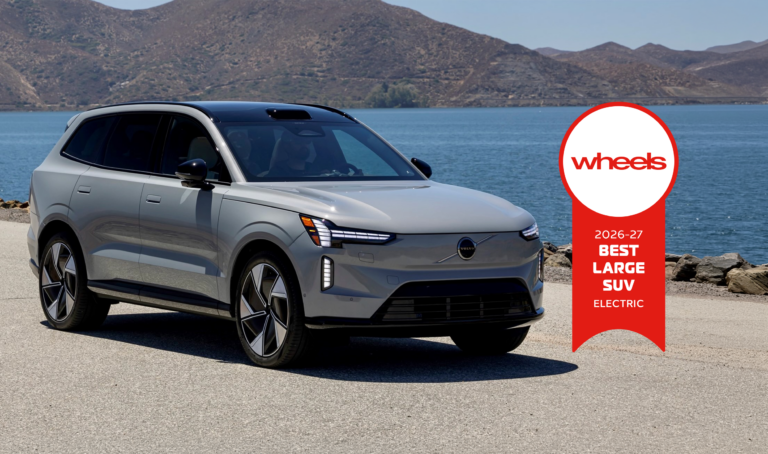 Best Large SUVs
Best Large SUVs 2026 – Electric
From family-friendly seven-seaters to high-performance luxury flagships, these electric large SUVs showcase the best battery-powered choices available in 2026.
-
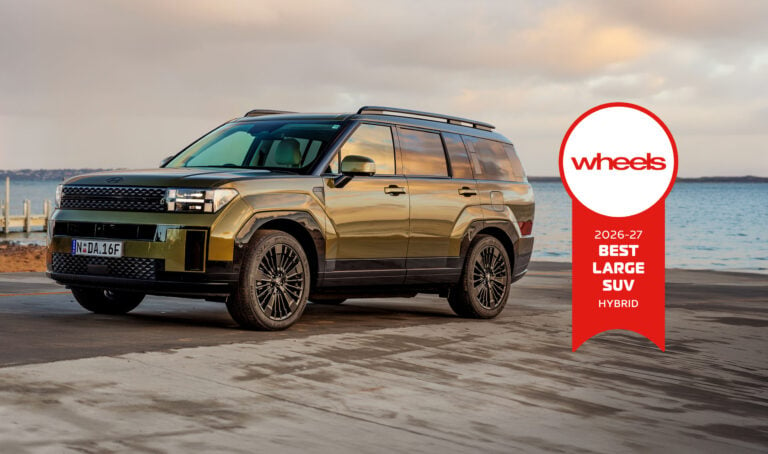 Best Large SUVs
Best Large SUVs 2026 – Hybrid
Efficiency, electrified performance and family practicality come together as we assess the standout hybrid large SUVs of 2026.
-
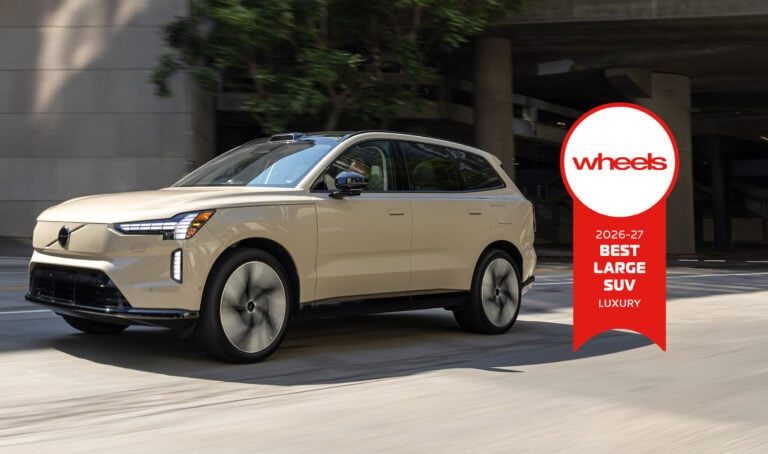 Best Large SUVs
Best Large SUVs 2026 – Luxury
From electric innovation and luxury to performance and serious off-road ability, these are the standout premium large SUVs of 2026.