Reviews


Gallery 1
7.5
/10
Score
Score breakdown
8.0
Safety, value and features
8.5
Comfort and space
7.0
Engine and gearbox
7.0
Ride and handling
7.5
Technology
Things we like
- Keen pricing
- Decently roomy inside
- Stacks of equipment
- Strong 7-year warranty
Not so much
- Some hybrid rivals offer AWD at this price point
- Indicators can be annoying
- Driver aids like to remind you that they're there
- Does the styling write cheques that the drive system can't cash?
Authenticity. It’s a quality that car manufacturers value above almost all others. It’s something that drives the decisions in boardrooms, that shapes how and why cars are made and which speaks of integrity and the power of the brand. The new Haval H7 has many admirable qualities. Yet authenticity doesn’t seem to be one of them.
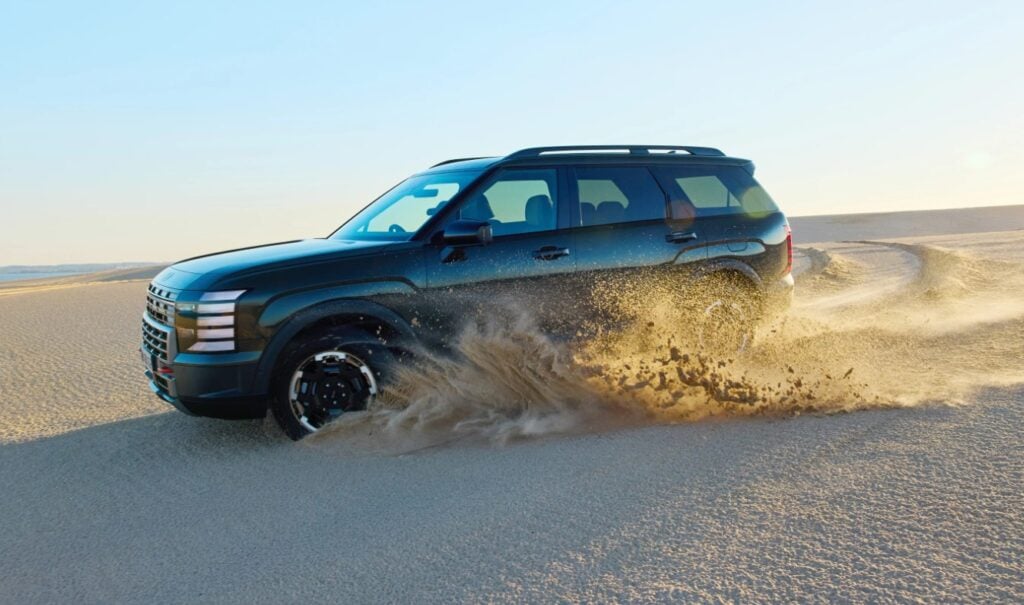
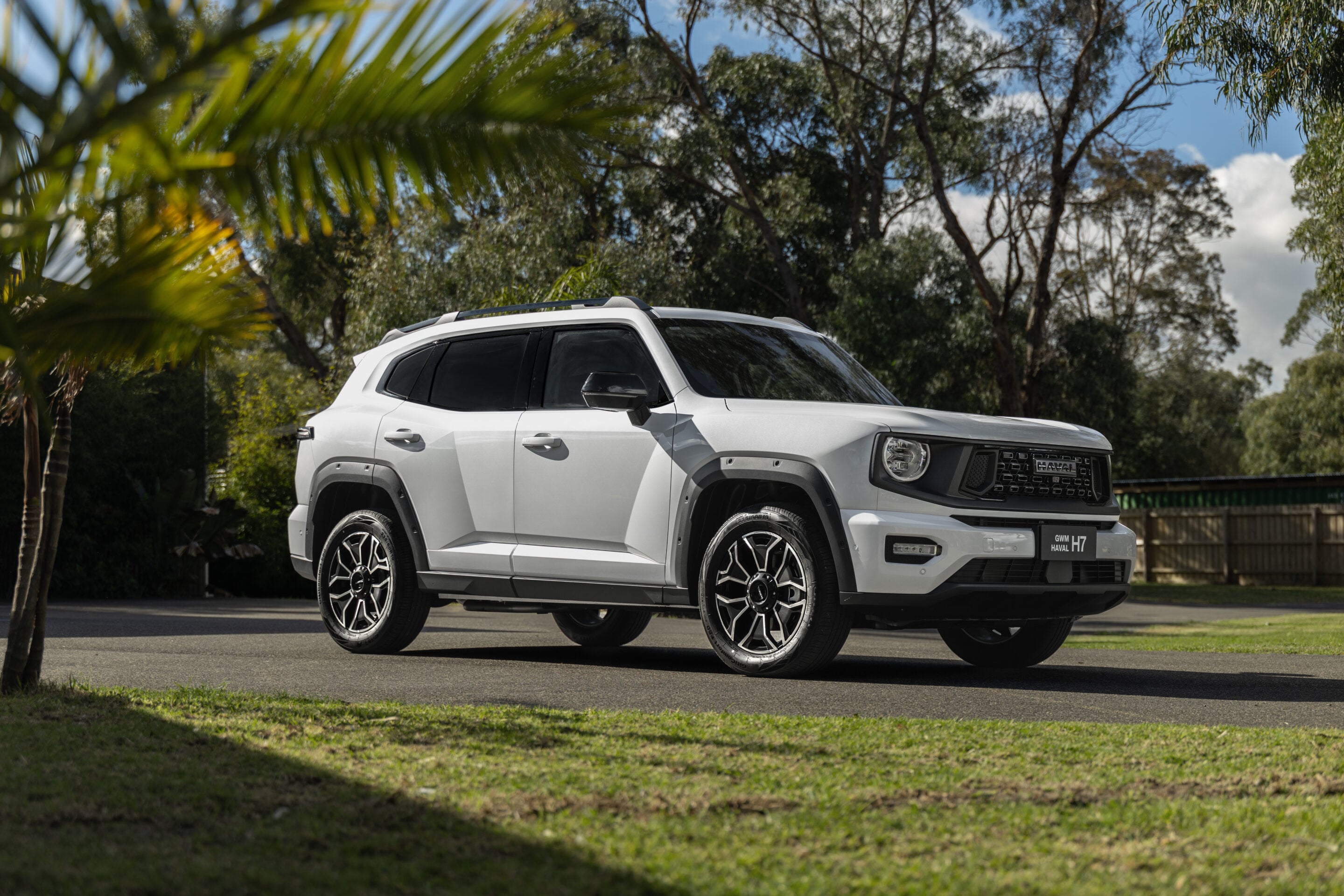
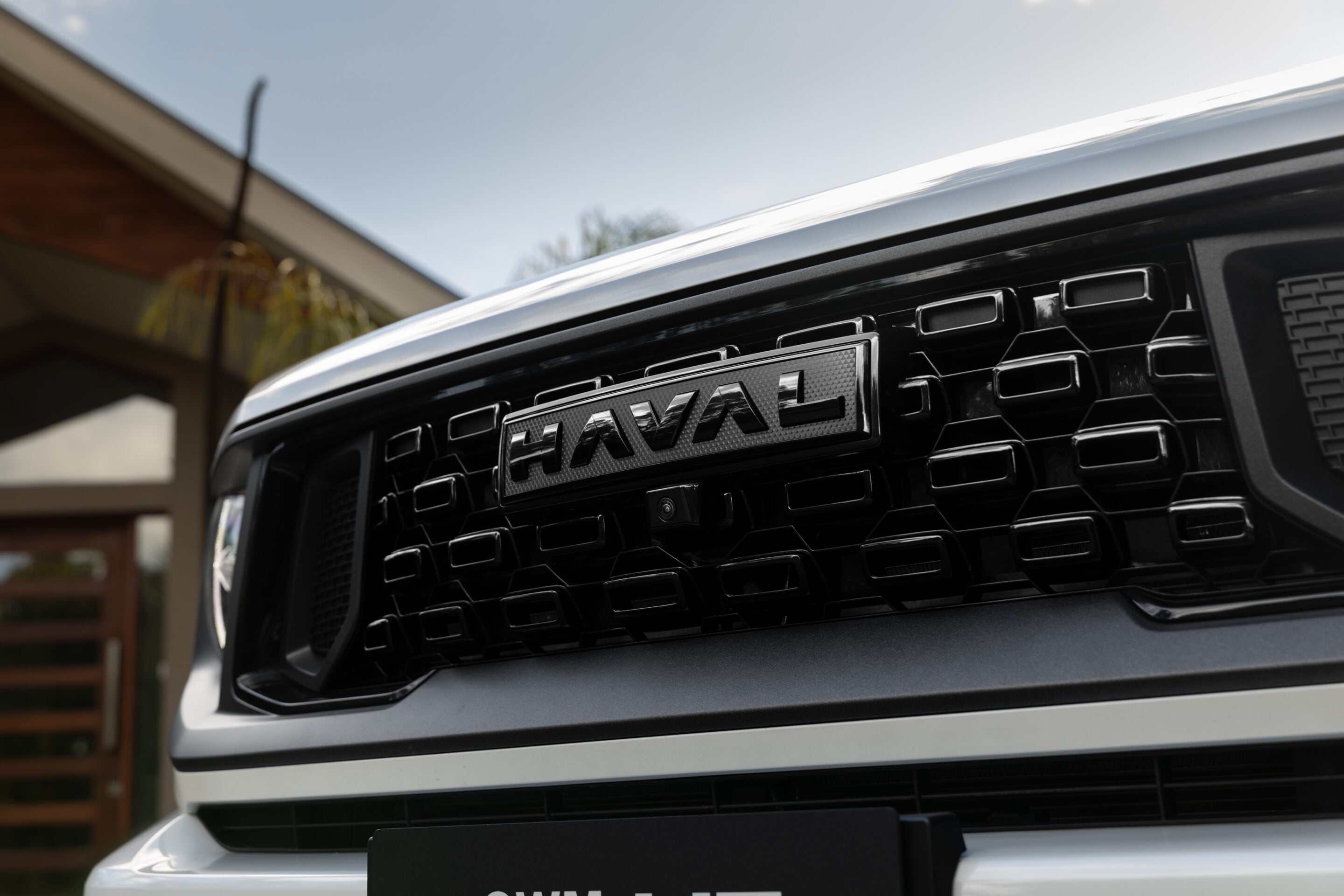
Spot one on the road and it looks for all the world like a slightly less boxy version of its cousin, the GWM Tank 300. The styling features what Haval describes as a “rugged and capable presence” with what looks to be decent ground clearance, tight overhangs and black moulded wheelarch protection. Then you consult the spec sheet and realise that the sole variant Haval is importing is a front-wheel drive hybrid.
Before we decry this vehicle as a bit of a fraud, it’s worth pointing out that an all-wheel drive model does indeed exist, but it’s not yet slated for import. That may change. But first impressions count. The BMW Z3 never got over its reputation as a bit fey, largely because the first version imported was a feeble 1.9-litre version, and no amount of fire-breathing M models could change that.

2
We also lose one of the car’s most distinctive features – its Chinese-market ‘Big Dog’ badge – but perhaps that’s for the better. Strangely, the original Big Dog was sold in export markets as the Dargo – a uniquely Aussie name. Whereas in China, the Second Generation Big Dog gets a 240kW/539Nm plug-in hybrid system driving all four wheels, our version is a far simpler, and more affordable, confection.
Priced at $46,990 drive-away in the sole Vanta trim level, the H7 features a 1.5-litre petrol engine that’s mated to an electric motor that combines for 179kW/530Nm and rides on the B30 Lemon platform. Yes, really. There is a 2.0-litre turbo petrol AWD version also on sale in China, with a 9-speed DCT, but that makes 180kW and 370Nm, so what you’d get in terms of traction advantage you’d lose in power and torque. So count your blessings.
The Haval H7 is a decent size. At 4705mm long, it’s longer than a Toyota RAV4 (4615mm) or a Subaru Forester (4640mm), and that bluff profile means there’s plenty of headroom inside. I can quite comfortably sit behind my driving position and I’m reasonably tall (193cm). There’s a decent amount of foot space under the front seats, so this is most certainly a vehicle that can accommodate taller rear passengers. Despite that extra length, Haval hasn’t felt tempted to crowbar another pair of rear seats into it, which is probably wise.
At present, there are only four colour options, of which only Hamilton White comes without an additional $495 fee. Should you want another paint finish, you have the option of Dusk Orange, Moon Grey or Golden Black.
5
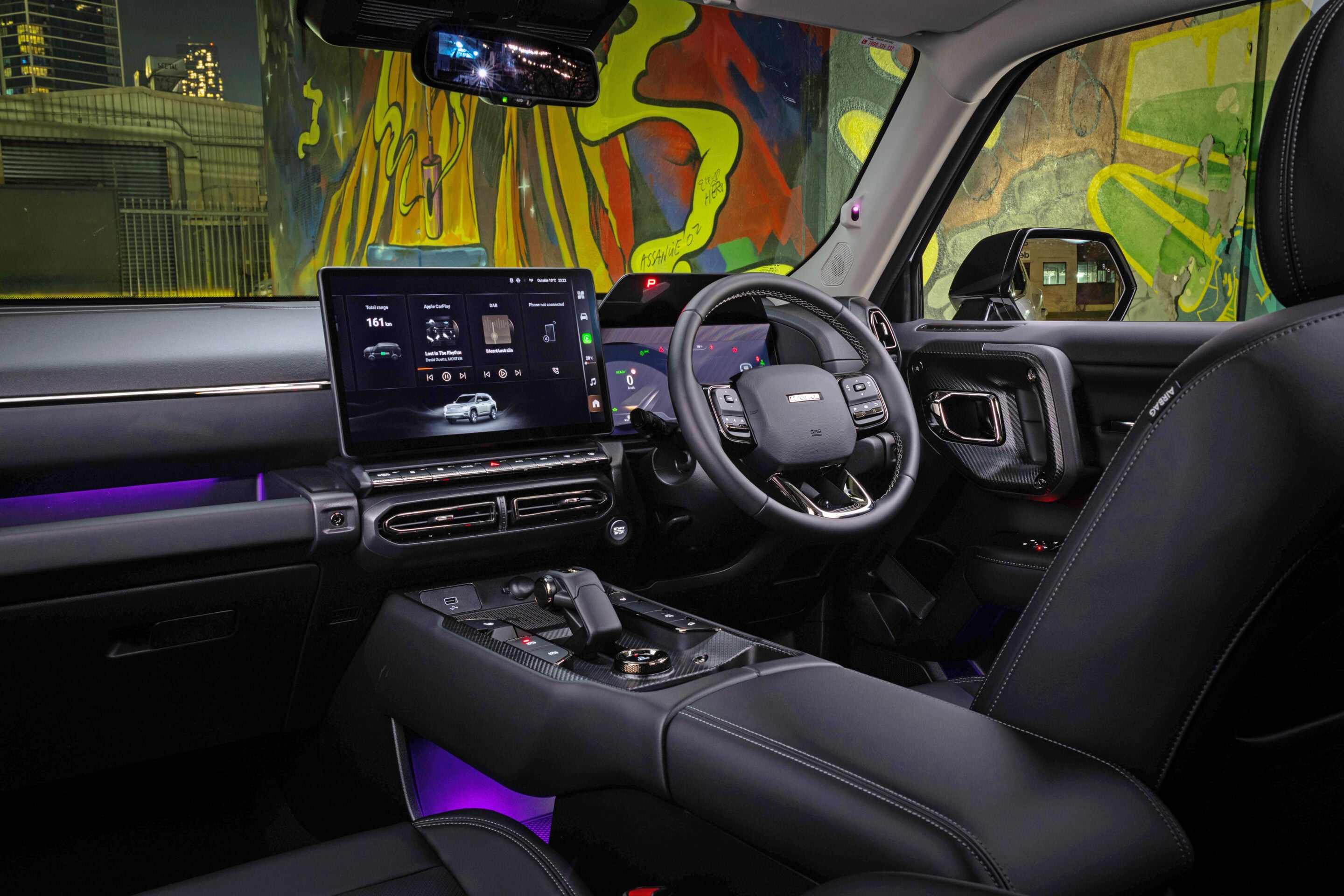
The cabin features an incredibly varied array of trims and finishes. Sitting in the driver’s seat, I can see soft-touch grain for the dah roll-top, hard-finish grained plastic elsewhere, stitched leather for the armrests and steering wheel, chrome for the door pulls, smoked chrome for the vents and steering wheel garnishes, brushed aluminium effect for the trims housing the window switches, a matte plastic for the vent surrounds, knurled chrome for the piano-style buttons and mock carbon fibre effect on the door mouldings and centre stack. It’s a lot.
Elsewhere, your eye alights on the big 14.6-inch centre screen, the weirdly bulging interior door catches and the gear selector that looks like some body part from a Terminator robot. Overhead, the colour palette switches from dark to pale, there’s a sunglasses holder for the world’s tiniest pair of shades and a big dual-pane sunroof.
Cabin storage is good, with clever extending fabric bands to keep bottles in their door pockets, a deep centre bin, a decently sized glovebox, a grippy and visible wireless charger for your phone, and a pair of cupholders in the centre that can extend the passenger holder for deeper bottles of big cups. What’s not so clever is the array of device charging options, with just one USB-A up front and one in the back. Rear seat occupants will have to fight over that one outlet, and they get no separate Air conditioning zone either, with just a knee-height vent available. The glass roof stops it feeling too gloomy back there, and there’s plenty of space for two, with a fold-down armrest revealing another pair of cupholders, but no post-through ski aperture.
Pop the tailgate and it motors up slowly to reveal a decently low loading lip and a flat, carpeted boot floor. The tailgate itself feels a little low at its highest extent, and there’s no auxiliary power routed to the luggage compartment. There are four lashing points, but there’s no spare wheel beneath the floor – just a polystyrene tray holding the towing eye, emergency tyre foam and inflator and a couple of other sundries. There’s also a label indicating that the boot floor has a weight limit of 100kg.
The boot is a reasonable size though, measuring 483 litres with the rear seats in position and the shape is good. You can’t drop the rear seats by pressing a button in the luggage compartment as you can with some rivals, but fold them nearly flat yourself and that frees up to 1362 litres of space. There’s no obvious stowage location for the rear cargo blind, and small details like this matter when you’re trying to maximise the space available. There are three top tether points and ISOFIX bindings on the two outer berths in the rear seats.
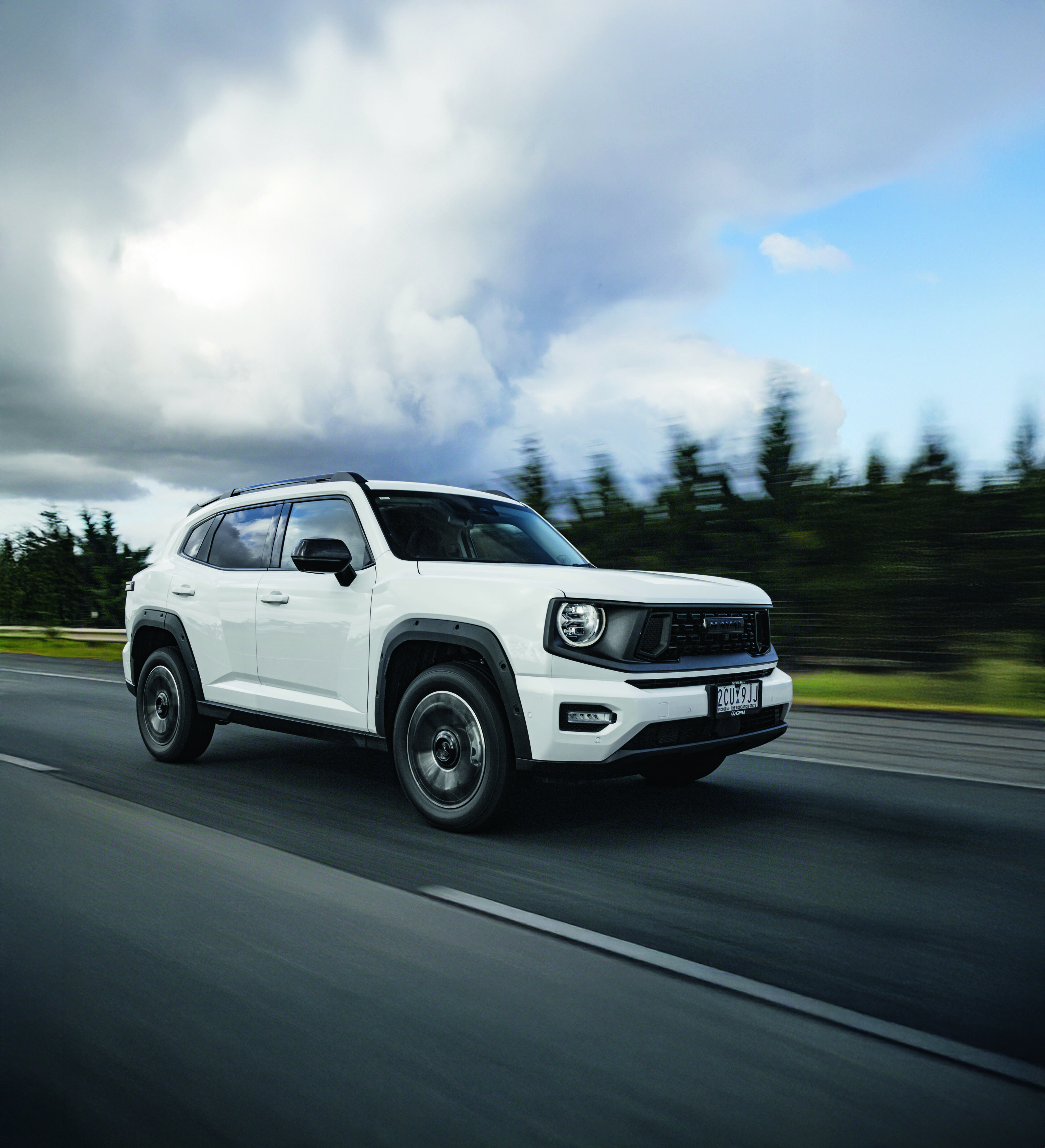
Press the start button and the Haval H7 comes to life in a mannered fashion. It passes the 10-metre test well, offering a refined throttle tip-in, a well-oiled feel to the steering, low noise levels and decent initial impression of body control. Perhaps the macho styling had lulled me into expecting something a little more agricultural, but that was a pleasant discovery.
1
Out on the open road, the H7 notches up more points in the credit column. Twist the rotary drive mode dial into Sport and that throttle map takes up a little of the slack from the driveline, although switching into that mode is accompanied by the sound of a racing car flying past, which I could probably live without. Body control is generally good, with only a few sharper intrusions sending some bump and thump through the suspension to the passenger cell. The 235/60 R19 Giti GitiComfort F50 tyres are reasonably good, with enough sidewall to help the suspension out.
It’s not what you’d call quick, but it never feels notably underpowered, and the transition in and out of the internal combustion engine is never uncouth. The brakes take a little getting used to, as the re-gen isn’t as powerful as initially you might expect. A true one-pedal drive mode is available, and this is also quite gentle in its initial application of retarding force. It’s something you’d get used to, and the benefit of that is that there’s little of the nausea-inducing lurching that some electrified cars exhibit in this mode. You will have to leave a little more space ahead of you if you’re intent on saving the brake pads though.
On a more challenging piece of road, it’s fairly easy to find the outer bounds of the Haval H7’s comfort zone, with some fairly intrusive stability control interventions telling you to ease things back, while on larger bumps and compressions, the hazard lights occasionally flick into action. That’s not an issue you’ll have with typical use-cases though. Overall, it’s a well-judged dynamics package that will only feel a bit underdone if you’re looking for a truly sporty medium SUV. After all, there is no physical way to change gear; no paddles, no manual mode on the gear lever.
On dirt roads, the H7 fares reasonably well, coping with corrugations adeptly. There’s no specific off-road drive mode or traction control setting but there is a hill descent control function that feels crude but effective. The limitations of tyre grip intervene way before the 200mm ground clearance is likely to become an issue, and the front tyres can scrabble a little when modest throttle is applied on a loose surface hill. You’ll also find a degree of front wheelspin when accelerating out of a side road on dry bitumen too, as 530Nm through the front treads is the same amount of torque that a Porsche 911 Carrera S puts through its rears.
The driver assists can be modestly intrusive though, especially the attention assist, which is quick to admonish any transgressions. The overspeed warning and the lane-departure warning also sound intermittently, although the chimes are soft. The rear parking camera had a malfunction on test, intermittently displaying a black screen and then cycling through views. Haval needs to take a leaf from Renault’s book and rather than have you swiping through screens to set your ADAS preferences, it needs to default them all to on and then have a memory button, much like for driving position, that then clicks them into your mode.
2
On our test route, the Haval H7 returned a combined fuel figure of 6.5L/100km versus a claimed figure of 5.7L/100km. That’s a bit more than you’d expect to consume in a RAV4 hybrid, but it’s not bad given the amount of torque on tap and the fact that this feels almost a half-size up from even the spacious Toyota. On the plus side, it can drink from the 91RON bowser.
Other quirks? The indicator sound is very loud, and the indicators have two modes: a one-touch setting which blinks the indicators three times with a quick flick of the wand and then the normal self-cancelling setting. Woe betide you hold the indicator on for longer than the one-touch setting when changing lanes on a main road though. The blinkers will go into their normal setting and they won’t cancel. You’ll motor up the freeway switching from indicating left to indicating right. A confirmation swipe in the direction they’re set to doesn’t work, and nor will keying the car off and on again. The only solution I could hit upon was to park the car and then give enough counter steering input to cancel the indicators. It’s not ideal and needs some remedial work.
The infotainment system is generally good, and it’s easy to flick in and out of Android Auto or Apple CarPlay back to Haval’s native environment. Somewhat curiously, most of the HVAC settings are on physical piano keys apart from the most obvious one, the temperature settings, which still requires swiping at the screen to execute. The quality of the 8-speaker stereo system isn’t great for audiophiles, although it’s okay for podcasts. On the plus side, the head-up display is bright, easily configurable and very clear.
At present, there’s no ANCAP rating but the safety suite is extensive, with seven airbags, AEB junction assist, adaptive and intelligent cruise control, traffic sign recognition and front collision warning that recognises cyclists and pedestrians. There’s also tyre pressure monitoring, trailer sway mitigation and a 360-degree surround view camera. The braked towing limit is 1500kg, with an unbraked towing capacity of 750kg.
The H7 features a generous 7-year/unlimited kilometre warranty, an 8-year/unlimited kilometre battery pack warranty, 5-year roadside assistance, and 5 years of capped price servicing, although GWM has yet to decide what that price cap will be.
The Haval H7 offers a lot for $46,990, especially when the long warranty is factored into the equation. It’ll work for those looking for a smart-looking and spacious SUV for a growing family that won’t break the bank yet which features a decent draft of modern amenities. There’s a whole swathe of medium SUV buyers who are looking for exactly this blend of qualities. Some may dismiss them as undemanding, low-involvement buyers. We’d say they’re quite the opposite: pragmatic enough to understand their requirements and savvy enough not to overspend on excess capability.
If you want more, an all-wheel drive Subaru Forester hybrid starts at $46,490 plus on roads, and sacrifices boot space and visual impact for genuine all-weather grip and a badge that speaks volumes to generations of Aussies. There will also be a number of buyers sitting on their money until they’ve seen the all-new Toyota RAV4.
That’s as maybe. For the here and now, Haval has built an interesting and not unattractive medium SUV that brings a lot of tech, no shortage of space and a unique look and feel; to the market at a keen price. It’s not perfect, but its shortcomings are relatively easily rectified. The company describes this H7 as a bit of a toe in the water for Australia, with other models waiting in the wings. They’ll add something that this one currently feels a little short of. Authenticity. If that doesn’t bother you, there’s a lot to like here.

1
Specs
| Model | Haval H7 Vanta |
|---|---|
| Price | $46,990 drive-away |
| Engine | 1498cc 4cyl petrol hybrid, DOHV, 16v, turbo |
| Transmission | Dedicated hybrid transmission |
| Drive type | Front-wheel drive |
| Peak power | 179kW |
| Peak torque | 530Nm |
| 0-100km/h | 9.5 sec (tested) |
| Fuel consumption | 5.7L/100km (claimed) 6.5L/100km (tested) |
| Fuel tank size | 61 litres |
| CO2 emissions | 131g/km |
| L/W/H/WB | 4705/1908/1780/2810mm |
| Kerb weight | 1810kg |
| Available | Now |
7.5
/10
Score
Score breakdown
8.0
Safety, value and features
8.5
Comfort and space
7.0
Engine and gearbox
7.0
Ride and handling
7.5
Technology
Things we like
- Keen pricing
- Decently roomy inside
- Stacks of equipment
- Strong 7-year warranty
Not so much
- Some hybrid rivals offer AWD at this price point
- Indicators can be annoying
- Driver aids like to remind you that they're there
- Does the styling write cheques that the drive system can't cash?
Follow WhichCar/Wheels on Google
Click the button below to make WhichCar by Wheels a preferred source for your news.