
Reviews

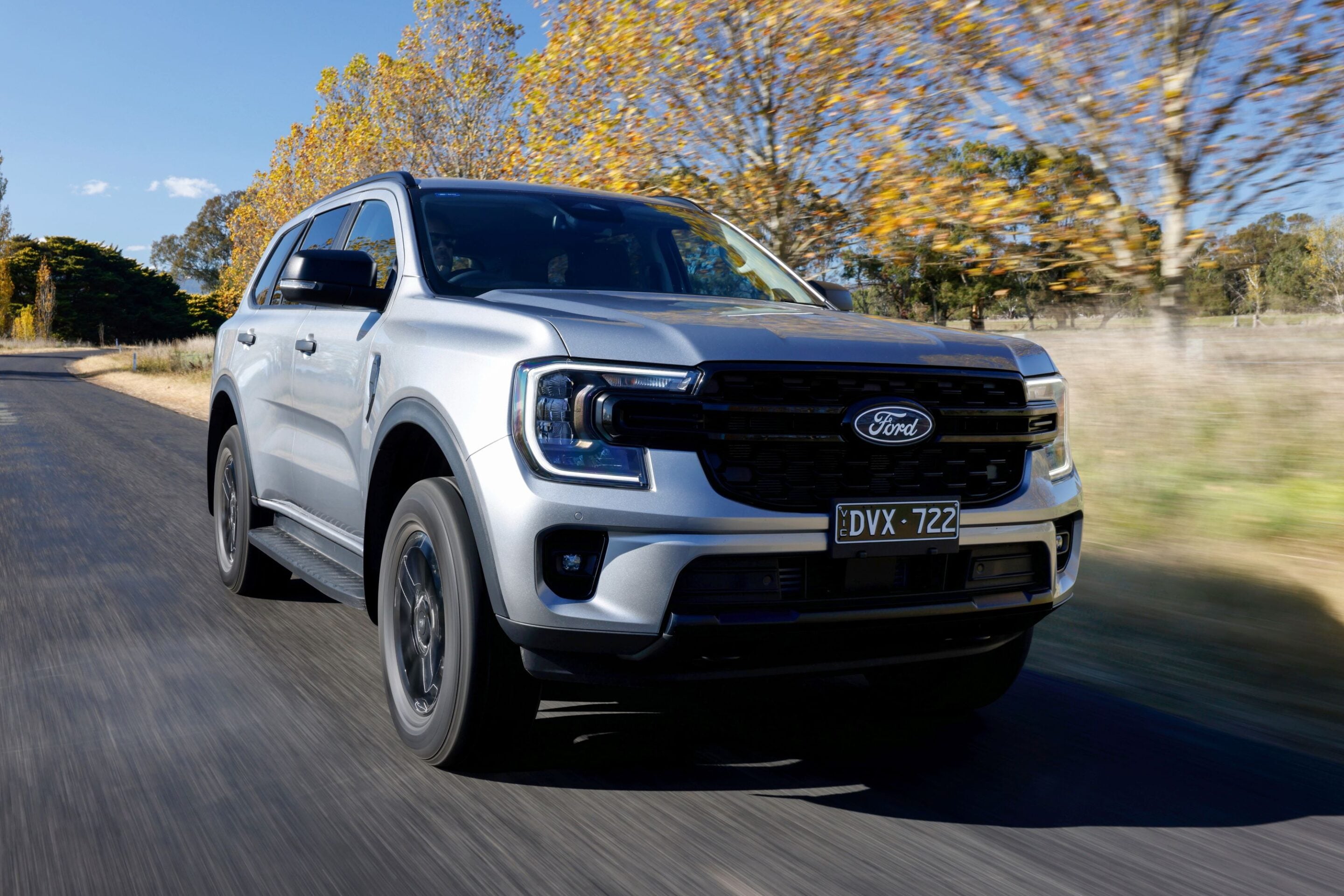
Gallery 1
8.3
/10
Score
Score breakdown
8.5
Safety, value and features
8.5
Comfort and space
8.5
Engine and gearbox
8.0
Ride and handling
8.0
Technology
Things we like
- Excellent on road and off
- Ten-speed works well with both engines
- Affordable models still excellent
Not so much
- Higher grade models get expensive
- Part-time 4WD only for 2.0L models
- Rear seats could be sculpted more
How much does the Ford Everest cost to buy?
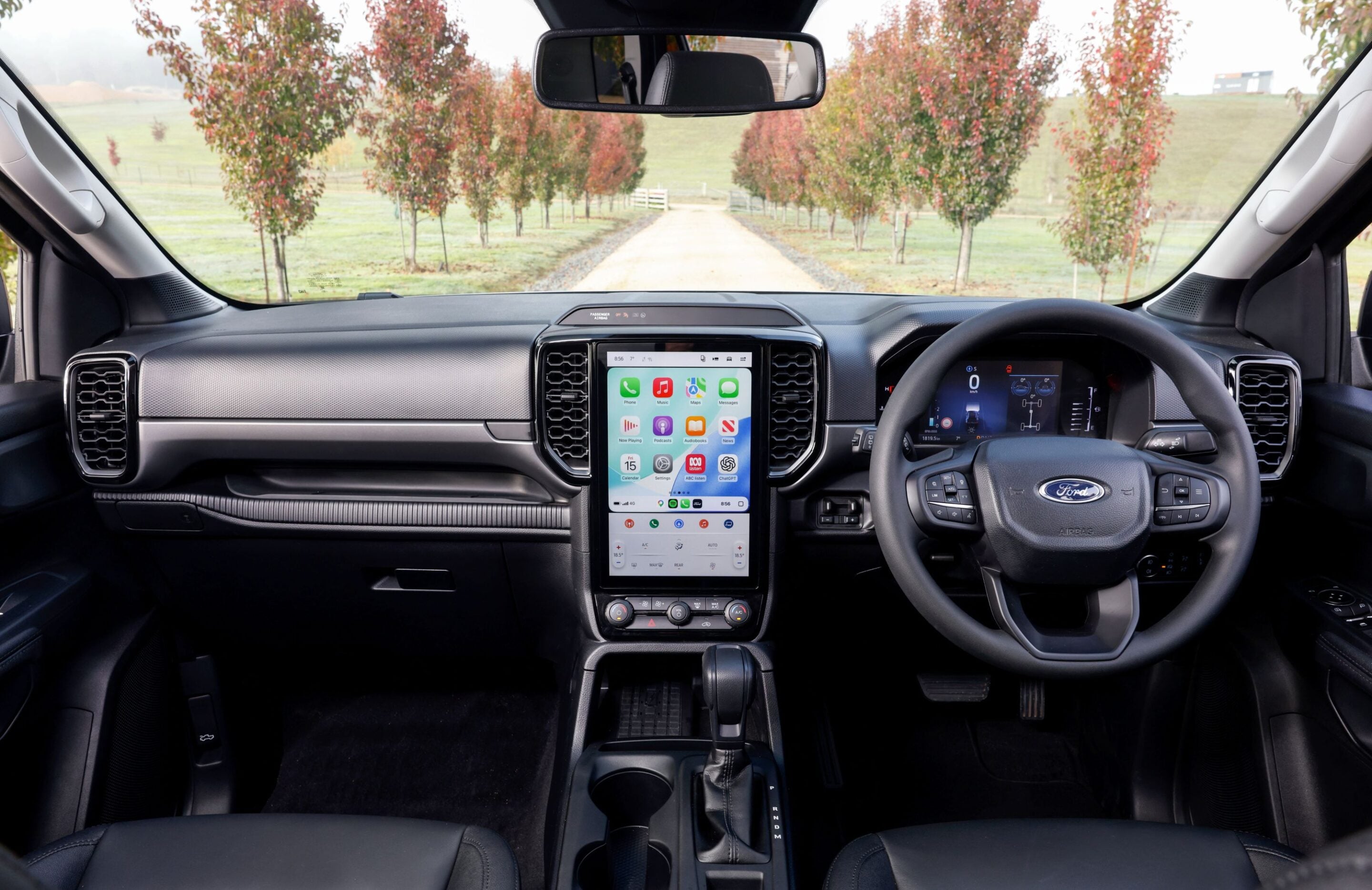
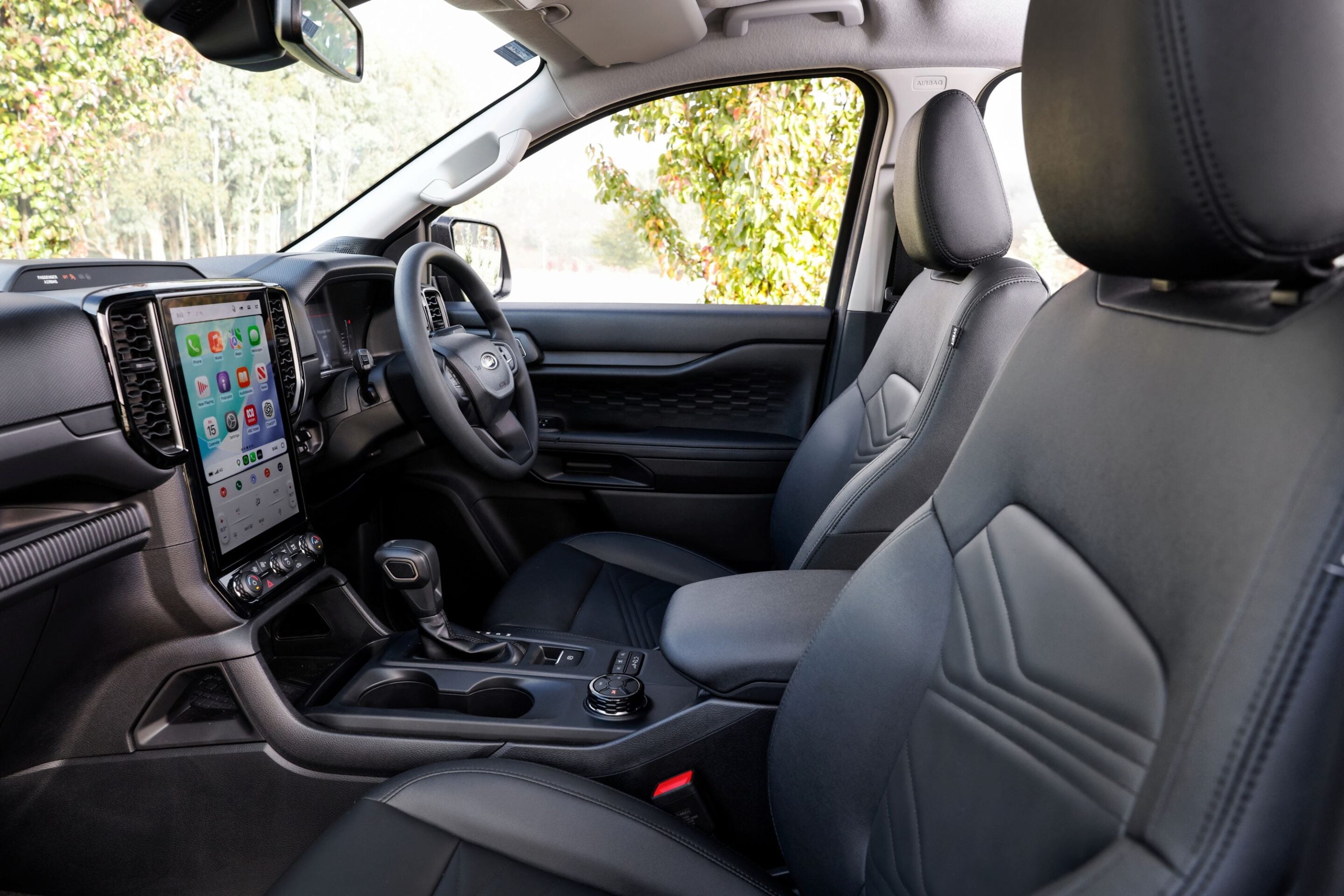
The most significant changes, for this model update, are beneath the skin and on the specification sheet. For starters, Everest Ambiente and Trend have been dropped, with Everest Active introduced to the range. The most significant new feature highlight is the 12.0-inch touchscreen, standard across the range.
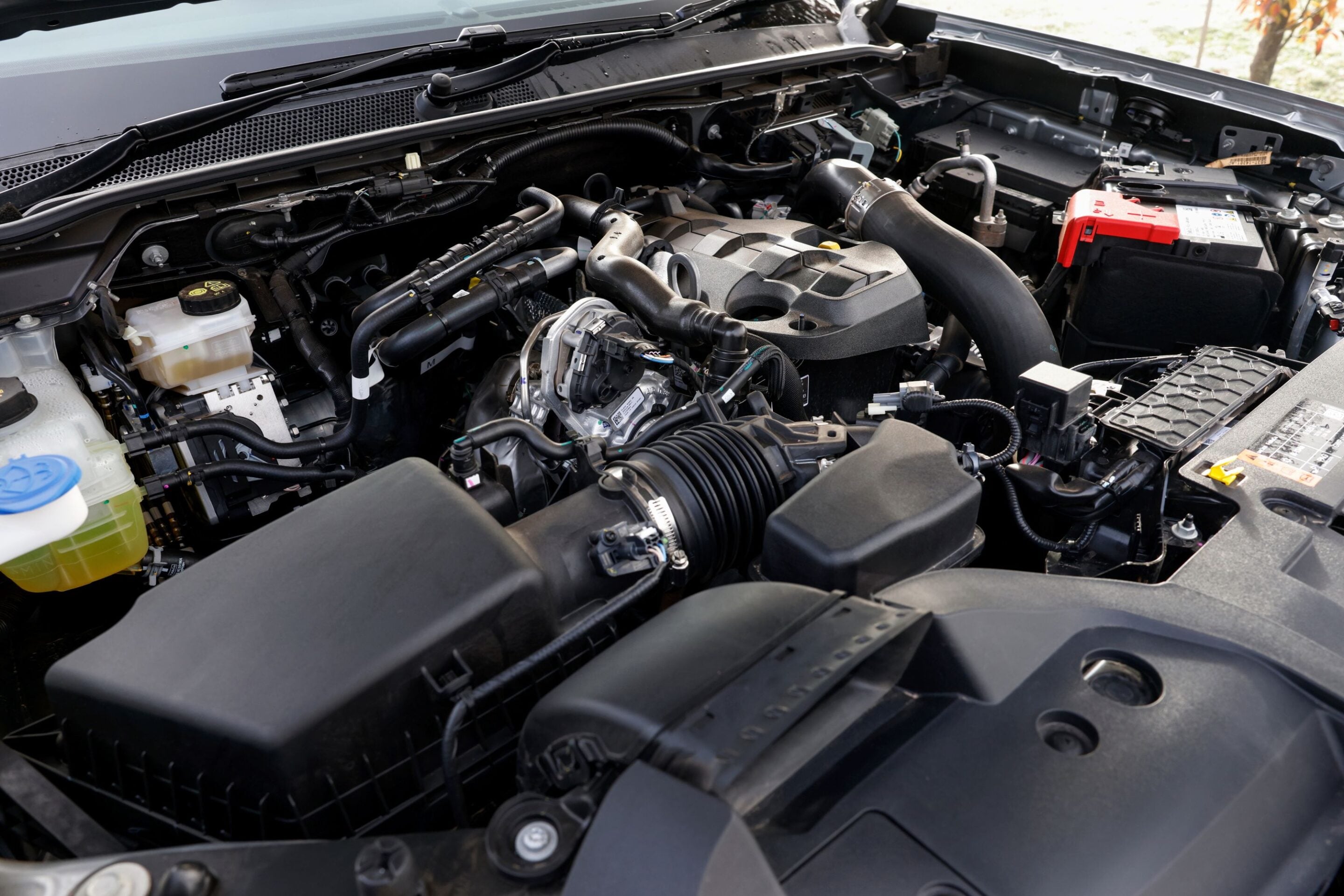
Under the bonnet, the bi-turbo four-cylinder engine is gone, with the 2.0-litre, single-turbo four-cylinder taking its place in the range for buyers not wanting the V6 diesel. The 2.0-litre has been revised, with new fuel injection fitted, along with a timing chain replacing the troublesome wet belt set-up on the old engine, something that caused issue with owners. Ford says the change improves durability and performance.
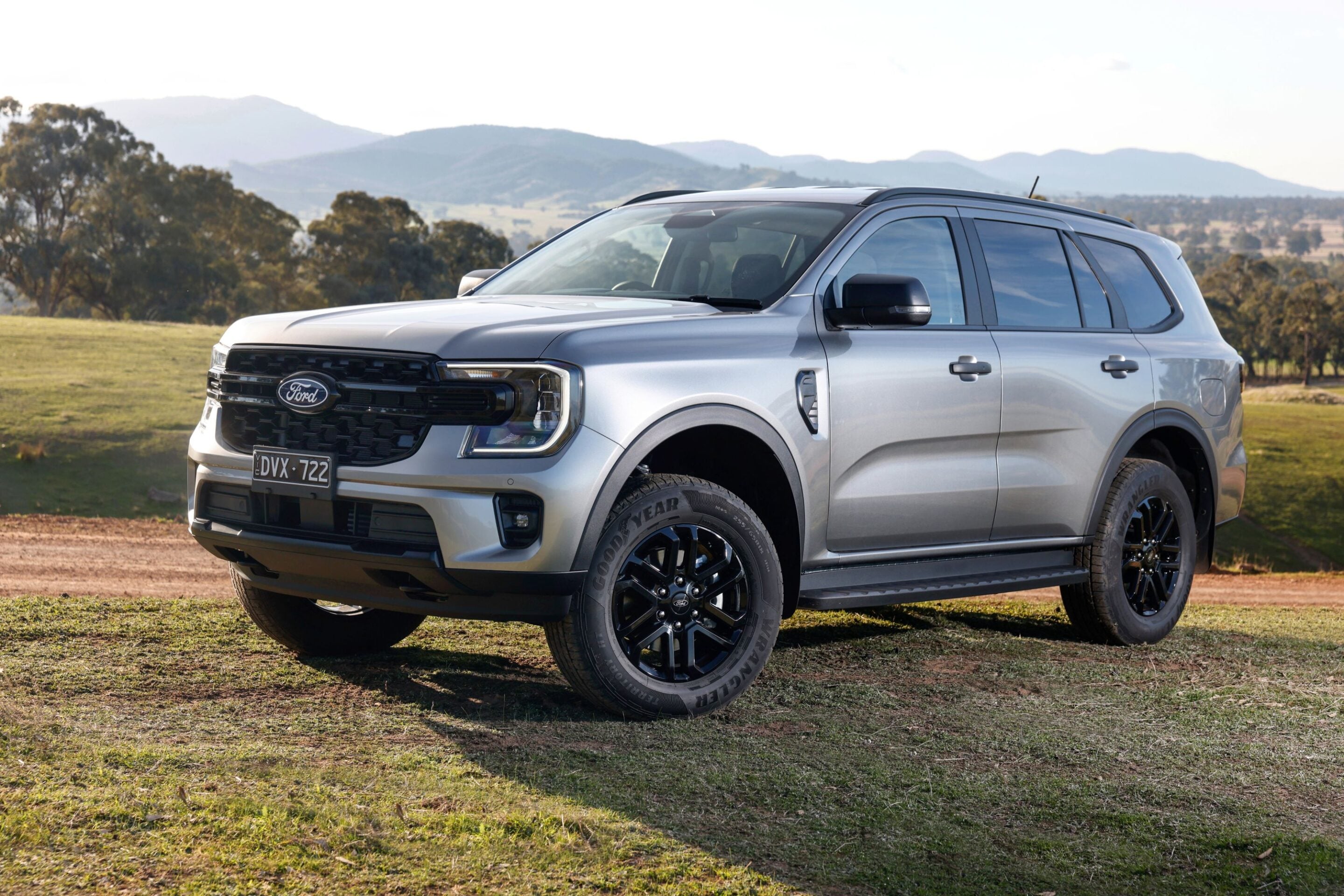
Within the Everest range, the V6 engine is now available from the entry-grade up, a significant change to the options for buyers. The single-turbo four-cylinder is new to the Everest range, and can be had in Active and Sport grades. Keep in mind, too, that like Ranger, an Everest with the four-cylinder is part-time 4WD only.
3
The new Everest range, now looks like this, before on-road costs are added:
| Everest Active 2.0-litre single-turbo diesel 4×4 | $58,990 |
|---|---|
| Everest Active 3.0-litre single-turbo V6 diesel 4×4 | $66,990 |
| Everest Sport 2.0-litre single-turbo diesel 4×4 | $68,990 |
| Everest Sport 3.0-litre single-turbo V6 diesel 4×4 | $76,990 |
| Everest Tremor 3.0-litre single-turbo V6 diesel 4×4 | $79,990 |
| Everest Platinum 3.0-litre single-turbo V6 diesel 4×4 | $83,490 |
The sweet spot in the Everest range, so far as we’re concerned is the mid-grade Sport. Pick your poison in regard to the engine you prefer, but Sport is well-equipped and has everything you need. Our pricing and specification list below, details the competitive entry to the Everest range, the Active with the 2.0-litre engine. If you’re on a tighter budget than the Sport allows, the Active is well worth considering, given the sub-60k pricing for the entry grade model.
How powerful is the Ford Everest?
If you buy an Everest powered by the revised four-cylinder, you get 125kW at 3500rpm and 405Nm between 1750rpm and 2500rpm, outputs that matched the outgoing 2.0-litre engine’s numbers, but there’s now a 10-speed automatic across the range, including the four-cylinder engine, which used to be backed by a six-speed auto.
The old, bi-turbo made a fair bit more power and torque than the 2.0-litre, 154kW and 500Nm to be exact. According to Ford, the reason that engine is gone is down to a global strategy decision, rather than an Australian market one, but its worth mentioning it was the most popular engine choice previously.
Step up to the V6 engine, and you get a significant jump in power as you’d expect, with 184kW on offer at 3250rpm and 600Nm available between 1750rpm and 2250rpm. As is the case wherever two different engine variants are available, the recommendation comes down to the type of driving you do.
1
If you tow a reasonably heavy trailer semi-regularly, or a heavy trailer occasionally, the V6 is the pick. Likewise for long-distance, off-road touring. The V6 just does thinks easier than the smaller engine. However, if like most of us, you live in the urban confines and rarely leave them, the 2.0-litre, especially now its mated to the excellent ten-speed, is a clever choice.
How fuel efficient is the Ford Everest?
Ford claims a range of fuel use figures based on not just the engine size, but also the specification grade of the Everest. The Active and Sport with the 2.0-litre use a claimed 7.1L/100km on the combined cycle. The Active, Sport and Platinum with the V6 all use a claimed 8.5L/100km, while the Tremor with the V6 is the thirstiest of the bunch, using a claimed 9.3L/100km on the combined cycle.
You can expect, for regular around town running, to use somewhere between 1.5L and 2.0L more than those claimed across all model grades. However, if you’re towing a heavy trailer, or executing low-range off-road work, that figure will climb even more. We’ll report back with more detailed fuel use figures, once we drive the Everest post launch. But, with an 80-litre fuel tank under the rear, you’ve got a good touring window on the open road.
3
Is the Ford Everest practical?
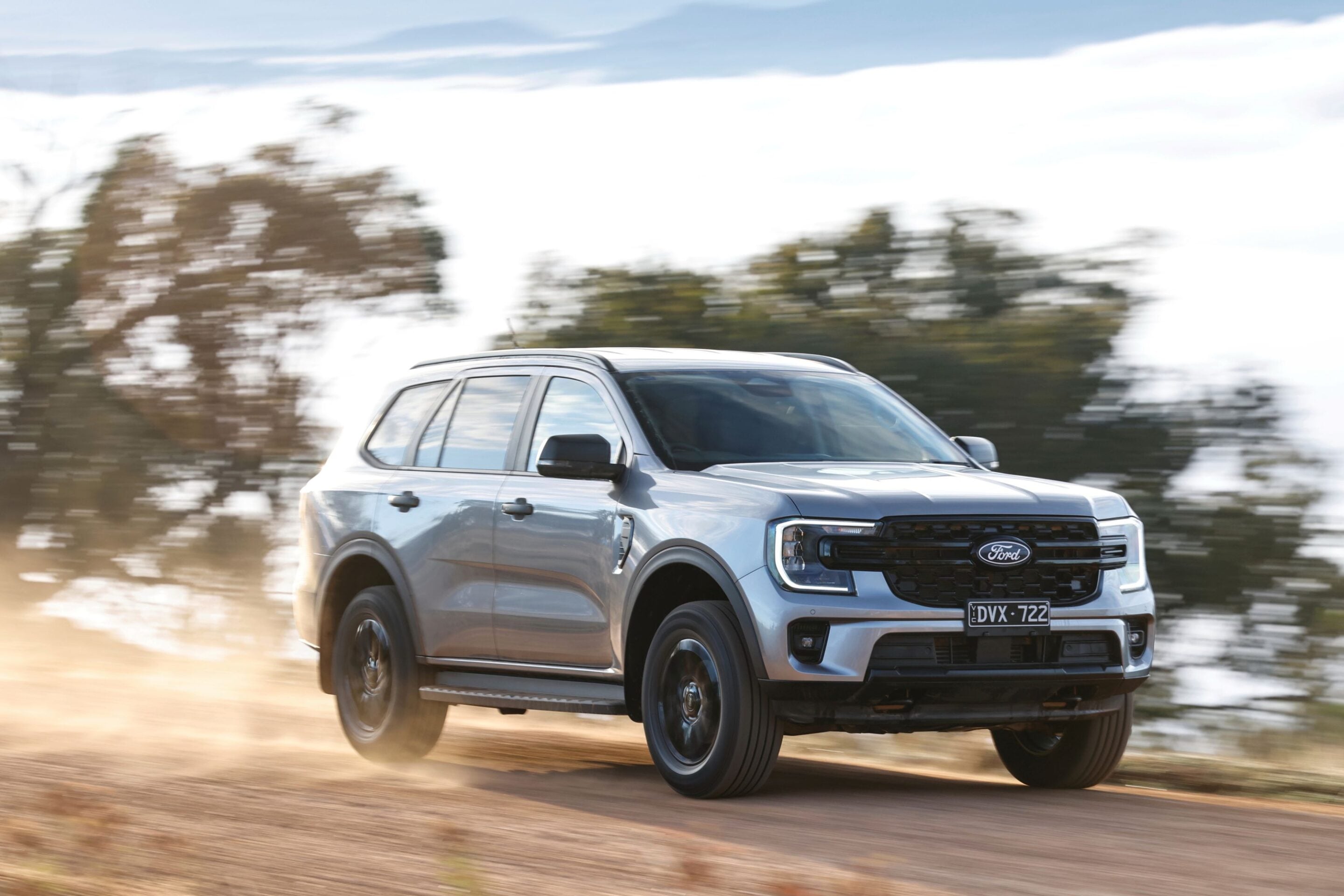
While the Everest is a practical conveyance around town for family buyers, it really comes into its own on the open road. When you get out of the city, and head along the kid of rural roads so many Aussies use every day, the concept of, and the flexibility offered by, a large SUV make a hell of a lot of sense. Around town, as is the case with all the SUVs in this segment, the heft needs to be taken into account. You’re stopping between 2245kg and 2480kg depending on model grade, so there’s a hefty 4WD at your control. That said, Everest doesn’t feel ungainly around town, even on the tighter city streets.
However, the extra string in the Everest bow is it’s ‘proper’ 4WD capability. Where most large SUVs are now unashamedly designed for the school or grocery run, the Everest retains genuine off-road and touring ability, which is one of the reasons Aussie buyers love it as much as they do.
V6 or four-cylinder, the cruising capability is excellent, with the ten-speed automatic working away as seamlessly as it has since we first tested it. Once it settles into high gear at freeway speed, the Everest is quite and composed inside the cabin. Around town, in give and take driving, the transmission can hunt a little bit as it works through the ten available ratios, but it’s not intrusive either, so the sense of calm inside the cabin, isn’t affected.
Ford has struck – and this is a benefit of a vehicle being developed with Australia in mind from the outset – a lovely balance between ride quality and handling acumen. It’s not easy to make something this big ride as well as it does, while also tipping into a corner without feeling like it’s going to tip over. And yet, Ford has done just that, ensuring that there are no hair-raising moments behind the wheel. It’s worth noting, in a similar way to Commodore and Falcon, Everest does illicit that feeling that it was designed and built in this country, for this country. Without getting too misty-eyed of course.
4
Where the V6 is understandably the punchier of the two, it doesn’t feel alarmingly fast. Rather, it’s a lazier, more effortless take on doing the same thing, always with enough power in reserve, no matter what you need it to do, Everest has plenty of cabin space, regardless of seat layout, a huge boot, and comfort across all main seating positions. As a long haul family tourer, it’s capable and comfortable.
With the third row in use, you still get a handy 259 litres, expanding out to 898 litres with the second row in use, and then a whopping 1823 litres with both the second and third row folded.
What warranty covers the Ford Everest?
Everest is covered by Ford’s five-year, unlimited kilometre warranty, in what is now considered the effective minimum for the market in Australia. With some brands offering seven years’ coverage, and others extending as far as ten (if you service the vehicle at an authorised dealer), five is less eye-catching than it used to be.
Service costs are competitive, relative to the others in the segment, with Everest costing $1596 over the first five years of ownership. A visit to your service centre is required every 12 months or 15,000km, whichever comes first.
Should I buy the Ford Everest?
It might seem a redundant point to assess whether Australians ‘should’ buy a Ford Everest – they already are and in their droves. As such, you could mount a fair argument that Everest is already doing exactly what Aussie SUV buyers want it to do.
However, the deleting of the bi-turbo engine, the changes to the mechanical of the single-turbo four-cylinder (same power and torque outputs though) and the broadened availability of the V6 diesel engine constitute the most significant changes to the model since it was launched.
While there’s not necessarily a more compelling reason to consider an Everest than their was before, there’s certainly a broader palette from which to select the model that suits your needs and budget. In the face of renewed and increasing competition, Australia’s favourite large SUV shows no signs of slowing down.
3
Revised Ford Everest new equipment highlights
- 360-degree camera standard for Sport and Tremor grades
- Tyre pressure monitoring added to Sport
- Heated and ventilated front seats with 10-way driver, eight-way front passenger power
- adjustment now standard for Tremor
- Third-row seat delete now available as an option on Tremor
2
Specifications: Ford Everest Active
| Price | $58,990 plus on-road costs |
|---|---|
| Engine | 1996cc turbocharged four-cylinder turbo-diesel |
| Peak power | 125kW (@ 3500rpm) |
| Peak torque | 405Nm (@ 1750 – 2500rpm) |
| Transmission | 10-speed automatic, part-time four-wheel drive |
| Claimed fuel economy | 7.1L/100km |
| Claimed CO2 emissions | 188g/km |
| Fuel type/tank size | Diesel, 80 litres |
| Dimensions (l/w/h/wb) | 4940/1923/1841/2900mm |
| Bootspace | 259 litres (third row up), 898 litres (third row folded) 1823 litres (second and third row folded) |
| Kerb weight | 2245kg |
| Braked towing capacity | 3500kg |
| Warranty | Five-year/unlimited km |
| Five-year service plan cost | $1596 |
| On sale | Now |
8.3
/10
Score
Score breakdown
8.5
Safety, value and features
8.5
Comfort and space
8.5
Engine and gearbox
8.0
Ride and handling
8.0
Technology
Things we like
- Excellent on road and off
- Ten-speed works well with both engines
- Affordable models still excellent
Not so much
- Higher grade models get expensive
- Part-time 4WD only for 2.0L models
- Rear seats could be sculpted more
Follow WhichCar/Wheels on Google
Click the button below to make WhichCar by Wheels a preferred source for your news.

We recommend
-
 News
NewsFord Australia: 'We offer something our rivals don't'
Ford says its century-long Australian presence and local investment will help defend Ranger and Everest sales against growing competition from Chinese automotive brands.
-
 News
News2026 Ford Everest upgraded with expanded V6 availability, new base model
Ford's large SUV has been updated ahead of mid-2026 deliveries with a new base model, new base engine and more standard equipment.
