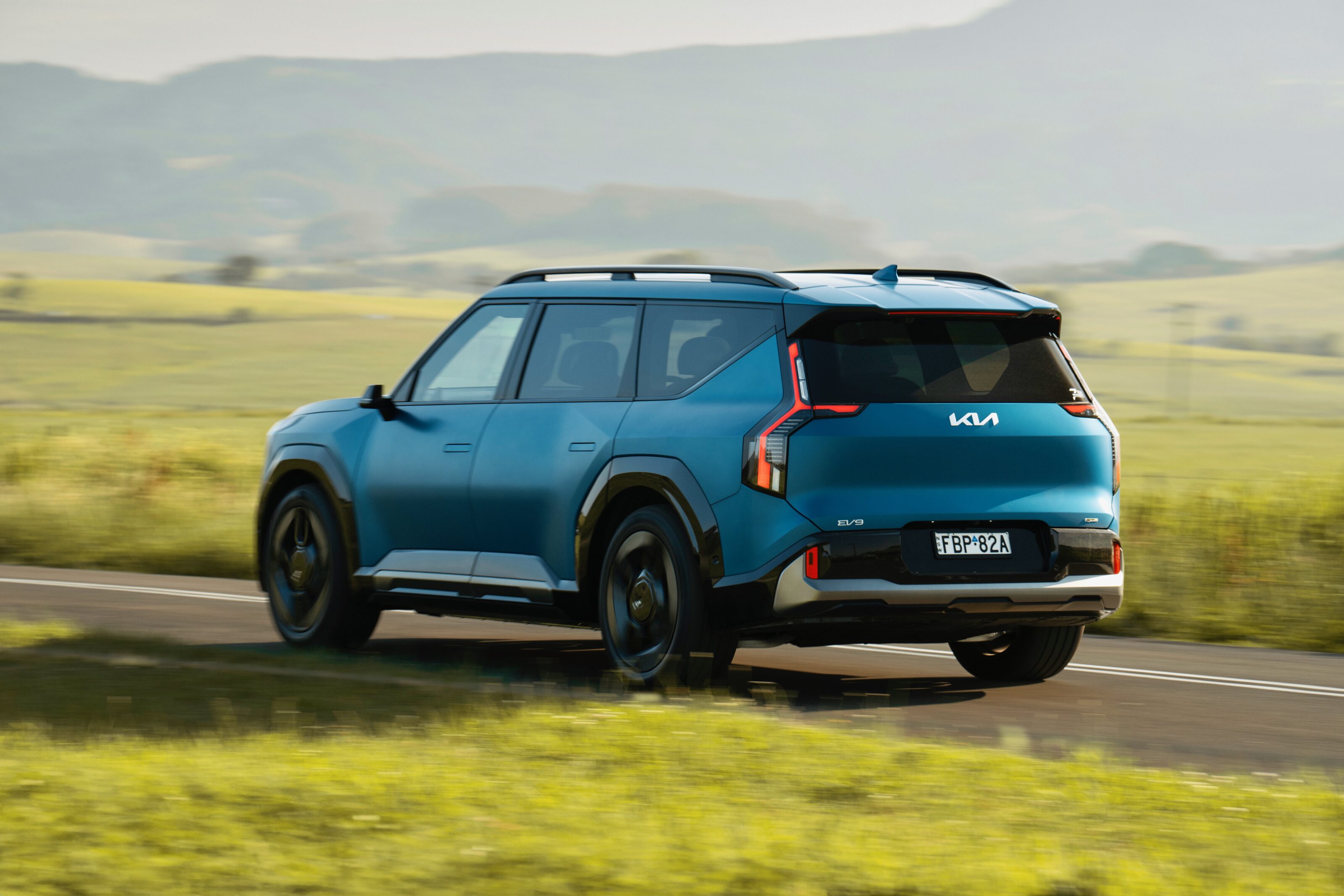
A new survey from Money.com.au has uncovered that one in three Australians (33 per cent) experienced a minor driving mishap in the past year – most commonly in car parks or confined areas.
The findings highlight both generational differences and common scenarios where motorists tend to slip up behind the wheel.
Topping the list of mishap-prone groups were Gen Z drivers, with a striking 60 per cent admitting to a minor incident. This figure significantly surpasses the rate among Millennials (41 per cent), Gen X (30 per cent), and Baby Boomers (19 per cent), suggesting that driving experience is a key factor in avoiding everyday driving errors.
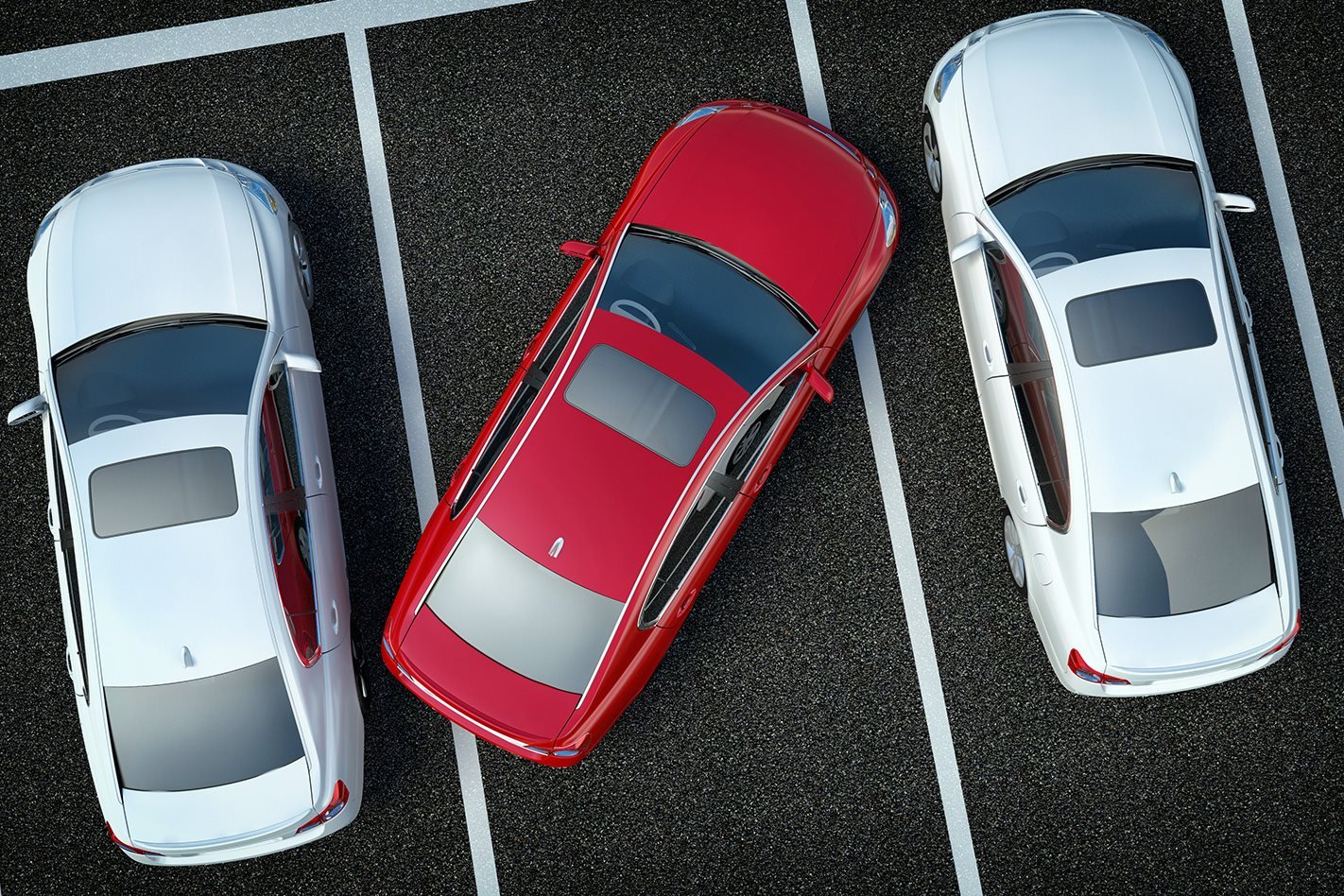
Among the most frequently reported blunders were scraping or scratching the car against a pole, wall or kerb (13 per cent), accidentally dinging a door against an object while opening it (8 per cent), and bumping into another vehicle in a car park or elsewhere (6 per cent).
Additionally, 5 per cent of drivers confessed to hitting a boom gate in a shopping centre or parking facility, while another 5 per cent admitted to forgetting to engage the handbrake properly, resulting in their car rolling slightly.
Sean Callery, Finance Expert at Money.com.au, notes that many of these minor incidents are often not worth claiming through car insurance due to cost considerations.
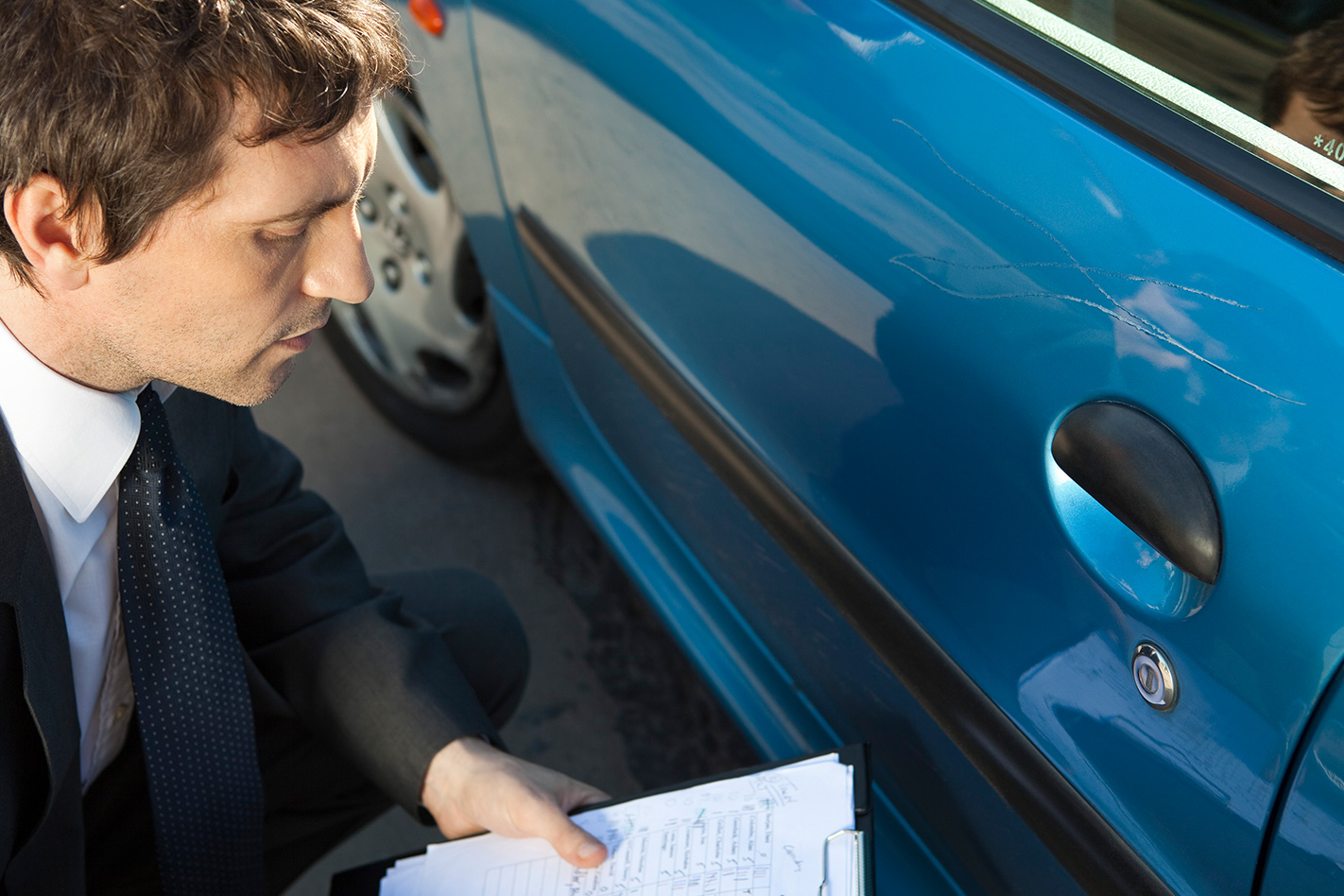
“Often, the cost of repairing a scratch or dent is comparable to or less than the insurance excess,” Callery explains. “Plus, lodging a claim can lead to increased premiums and potentially affect your no-claims bonus, so many drivers prefer to cover minor repairs out of pocket.”
Despite the number of incidents, the survey offers a silver lining – 67 per cent of Australians reported no driving mishaps in the past year. Notably, older generations such as Baby Boomers and Gen X were the most accident-free, further underscoring the role of driving experience in preventing common blunders.
The findings serve as a reminder for all drivers, especially younger ones, to stay vigilant in tight spaces and consider the long-term costs of even seemingly minor accidents.
She might be dressed sharp, but this Torana’s no soft touch. This 1977 Holden Torana LX Hatch has been fully restored and proudly wears the curves, stance and soul of a true classic V8.
Finished in sleek Gunmetal Grey metallic, this two-door hatch cuts a serious silhouette. She rides low on a fresh set of 17” OS Formula Hotwire wheels wrapped in brand-new rubber. Widebody A9X-style guards stretch the stance just enough to let you know she’s not stock. Chrome bumpers at both ends keep the lines clean, and the restored bodywork hits hard with that unmistakable Torana attitude.
Valued at $150,000, this beauty is the latest car to be given away by Classics as part of our mission to support Aussie veterans.
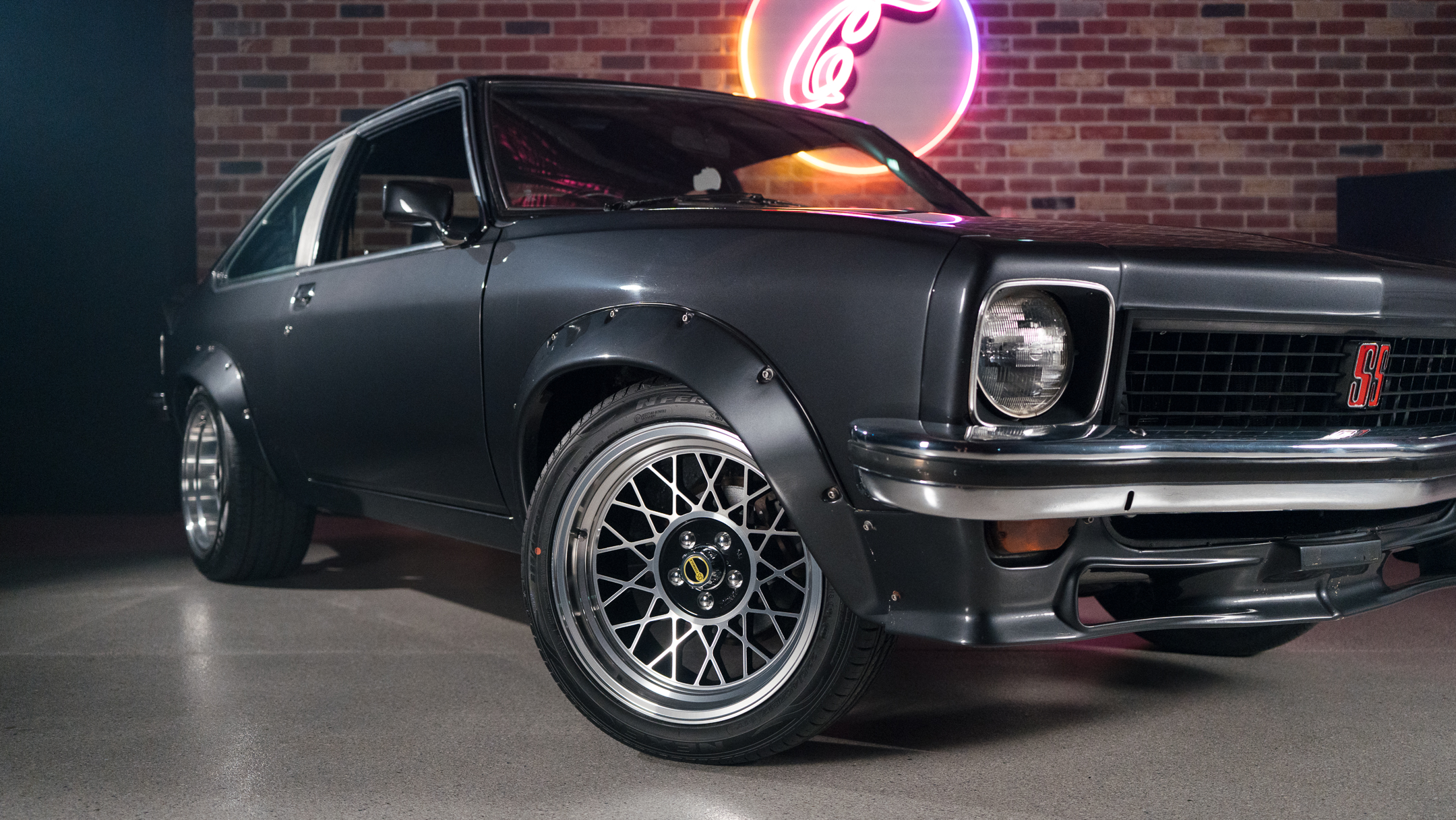
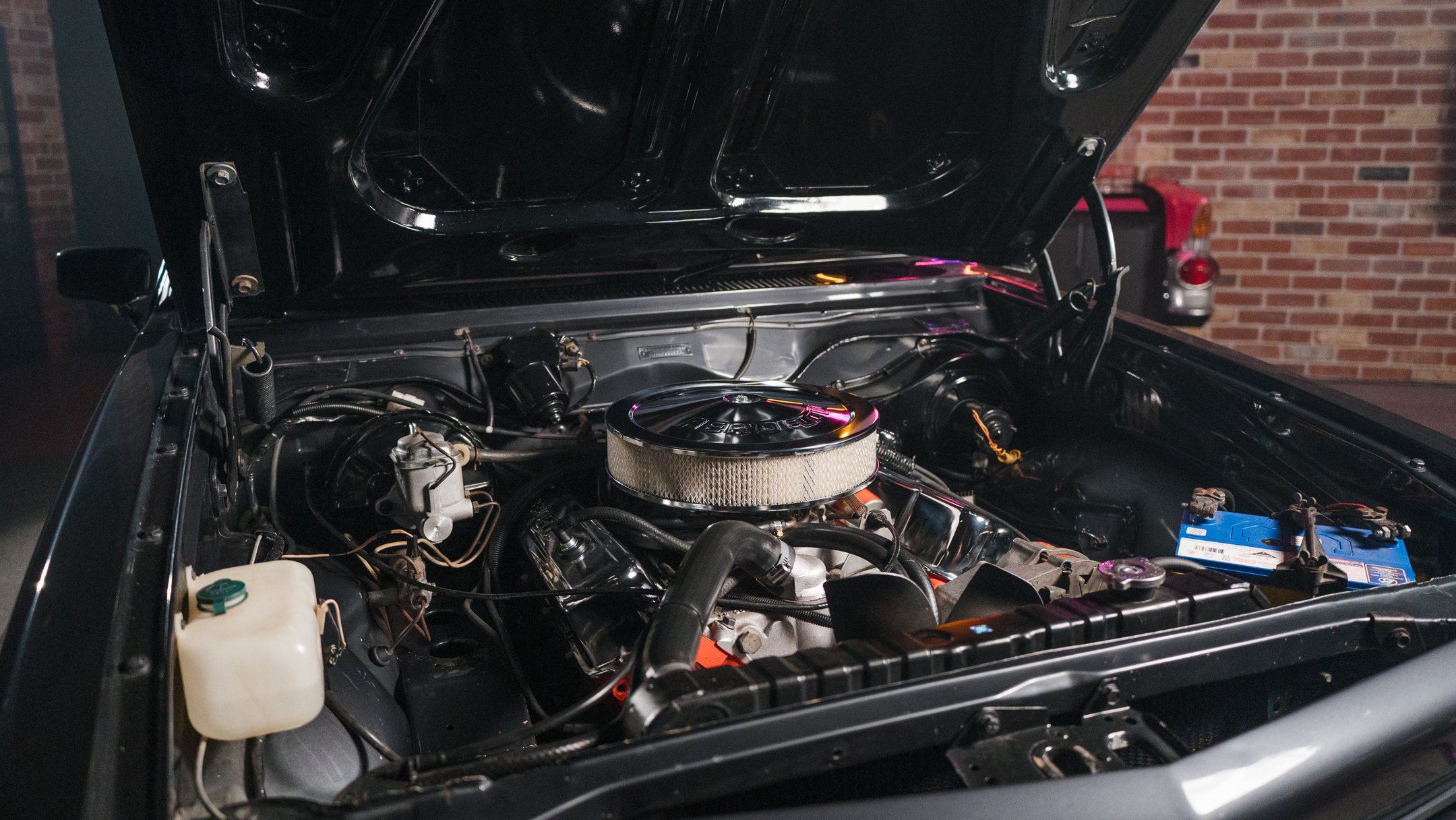
Pop the bonnet and you’ll find a punchy 308ci Holden V8 paired with a Tri-matic automatic transmission that pushes power to the rear through a factory differential. The brakes are power boosted with fresh discs up front, and the factory suspension has been fully rebuilt to keep it feeling right without losing that raw edge.
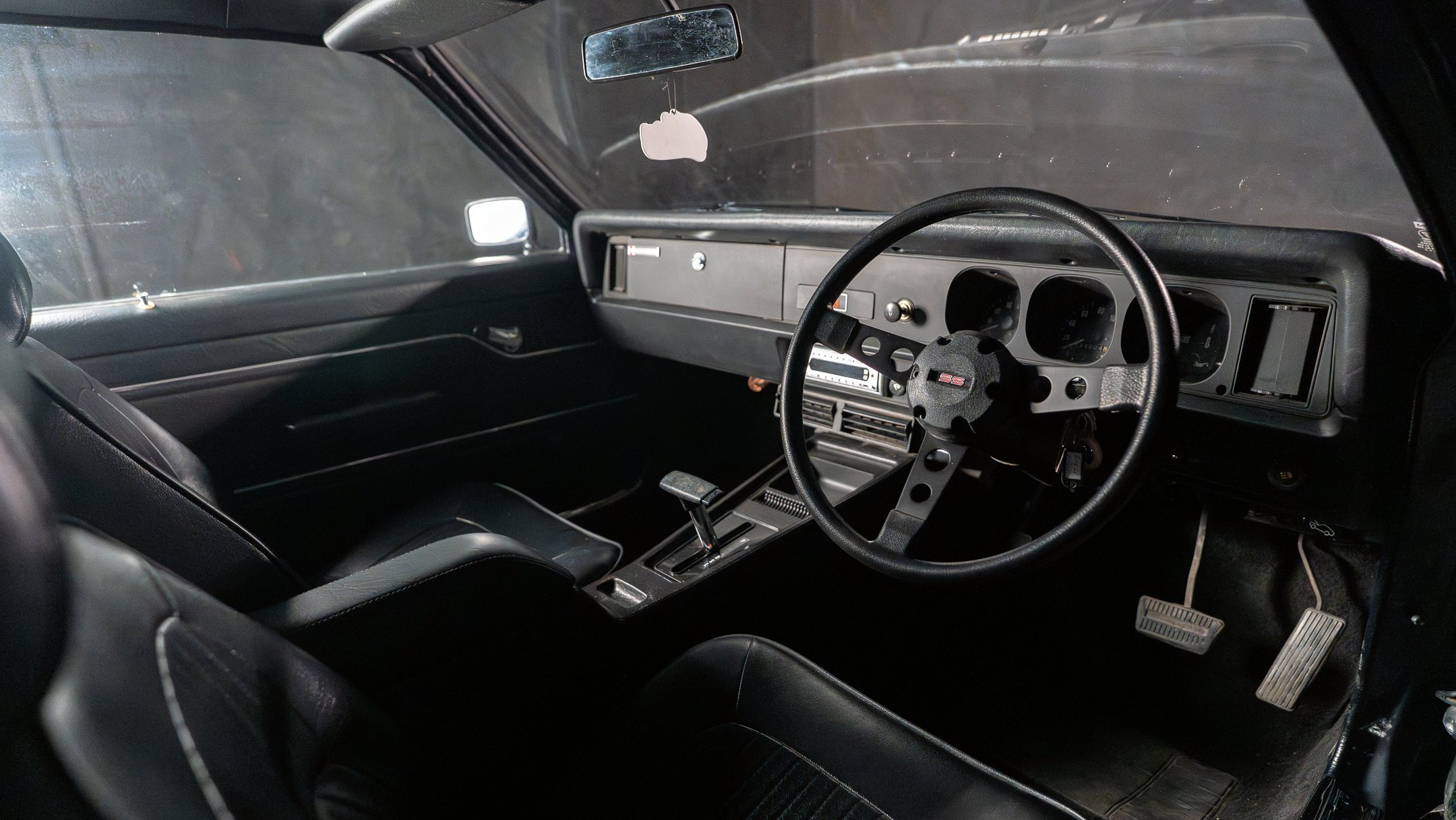
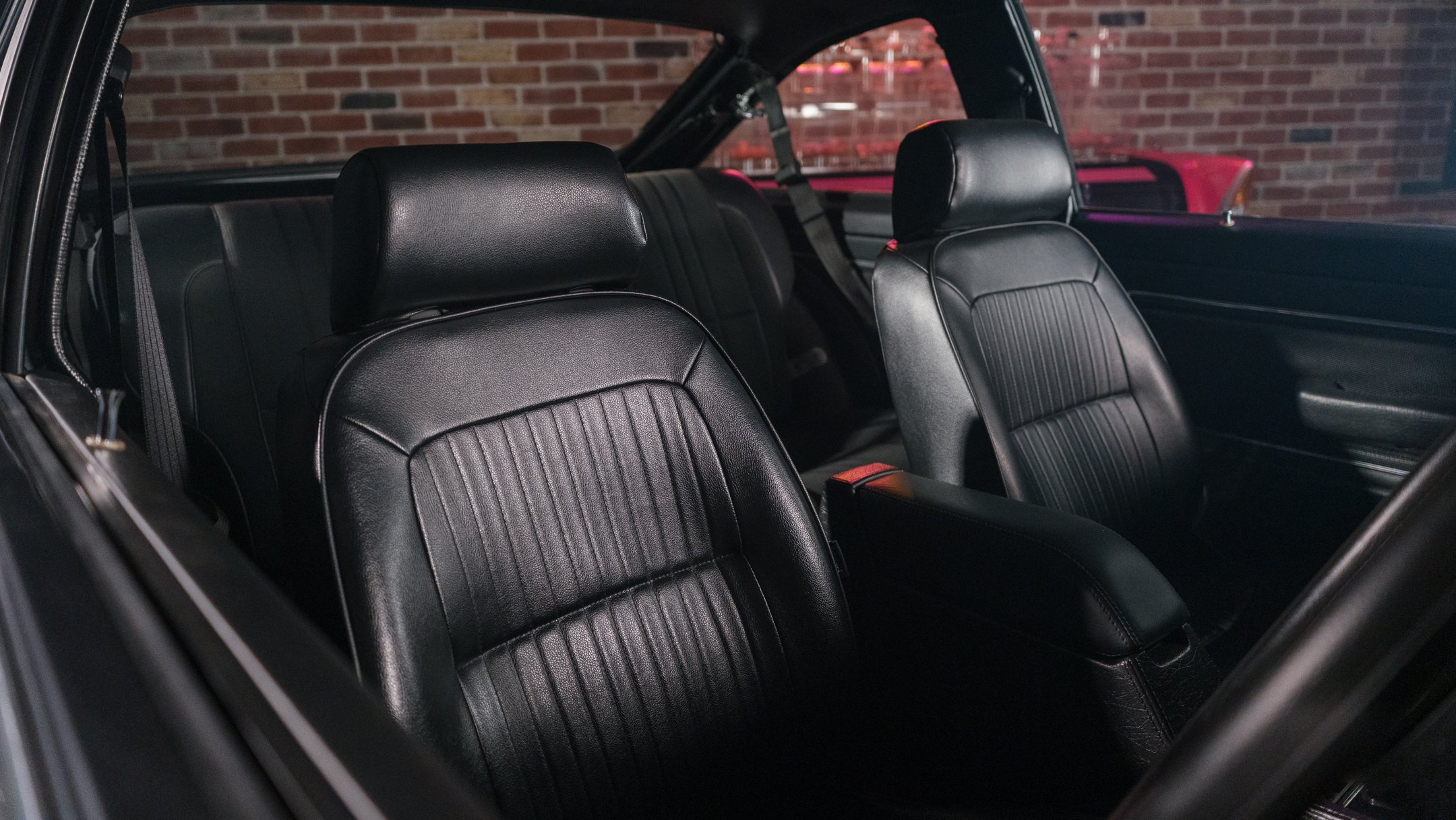
Slip inside to a refined interior trimmed in classic black vinyl. Supportive aftermarket buckets sit up front, the original rear bench stays in place to retain a factory feel. The SS steering wheel leads the way, backed up by a T-bar shifter and a clean centre console. There’s an aftermarket stereo tucked in, ready to lay down your soundtrack when the V8 takes a breather.
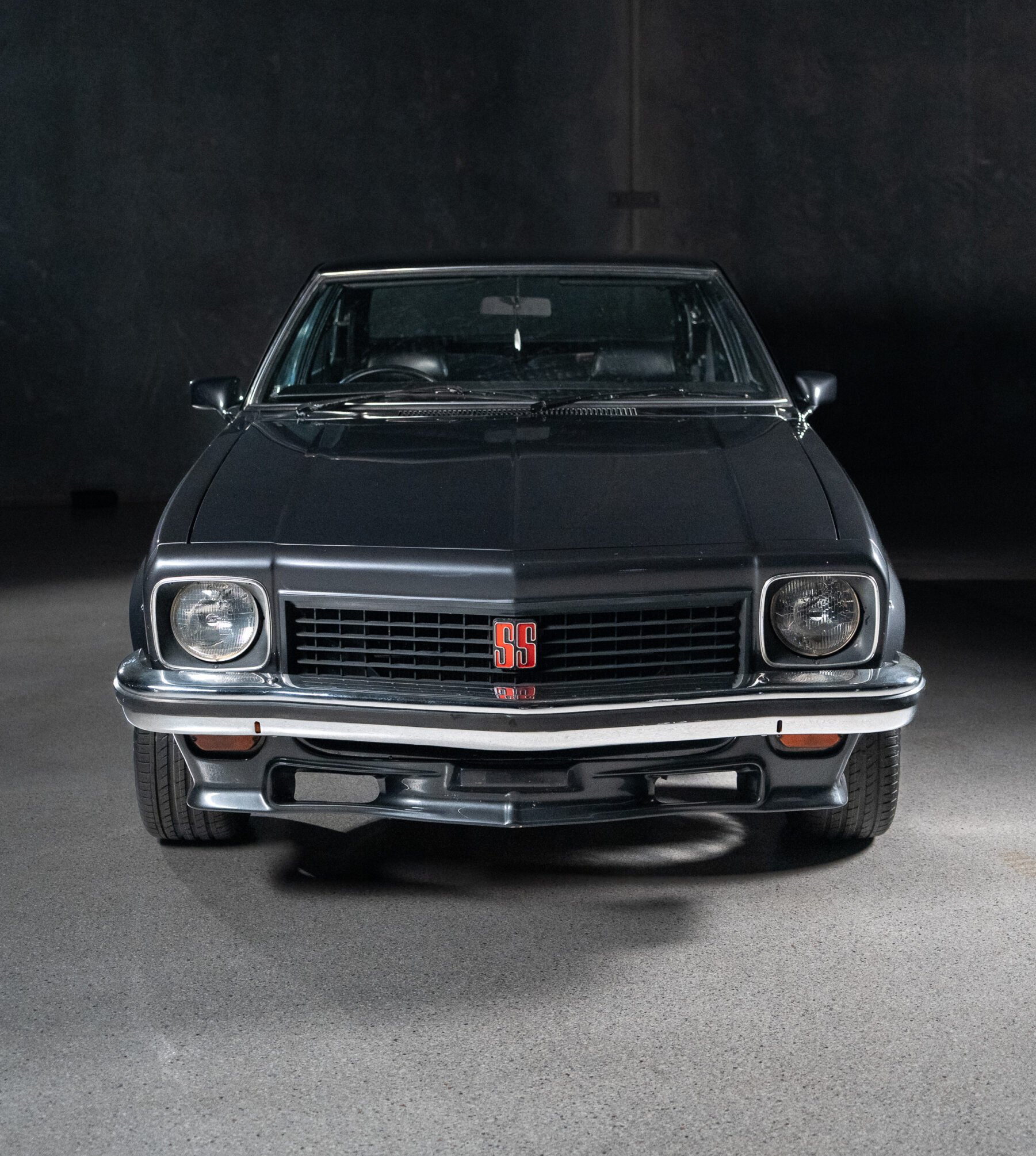
This is a build with presence. Strong stance, tight lines and a big V8 heartbeat. A neat Torana hatch with classic DNA and modern punch. There’s nothing messy about her.
A clean build, sharp in all the right places, with plenty of muscle underneath and ready for someone who knows exactly what they’re looking at.
Terms and conditions
To be in the draw to win this amazing 1977 Holden Torana LX Hatch, join Classics Retro Rewards before June 13, 2025 at classicsforacause.com.au
Bonus Prizes
For this draw, Classics are also offering 200 runner-up prizes – 100 Gold memberships worth $100 each and 100 1-month VIP trial memberships.
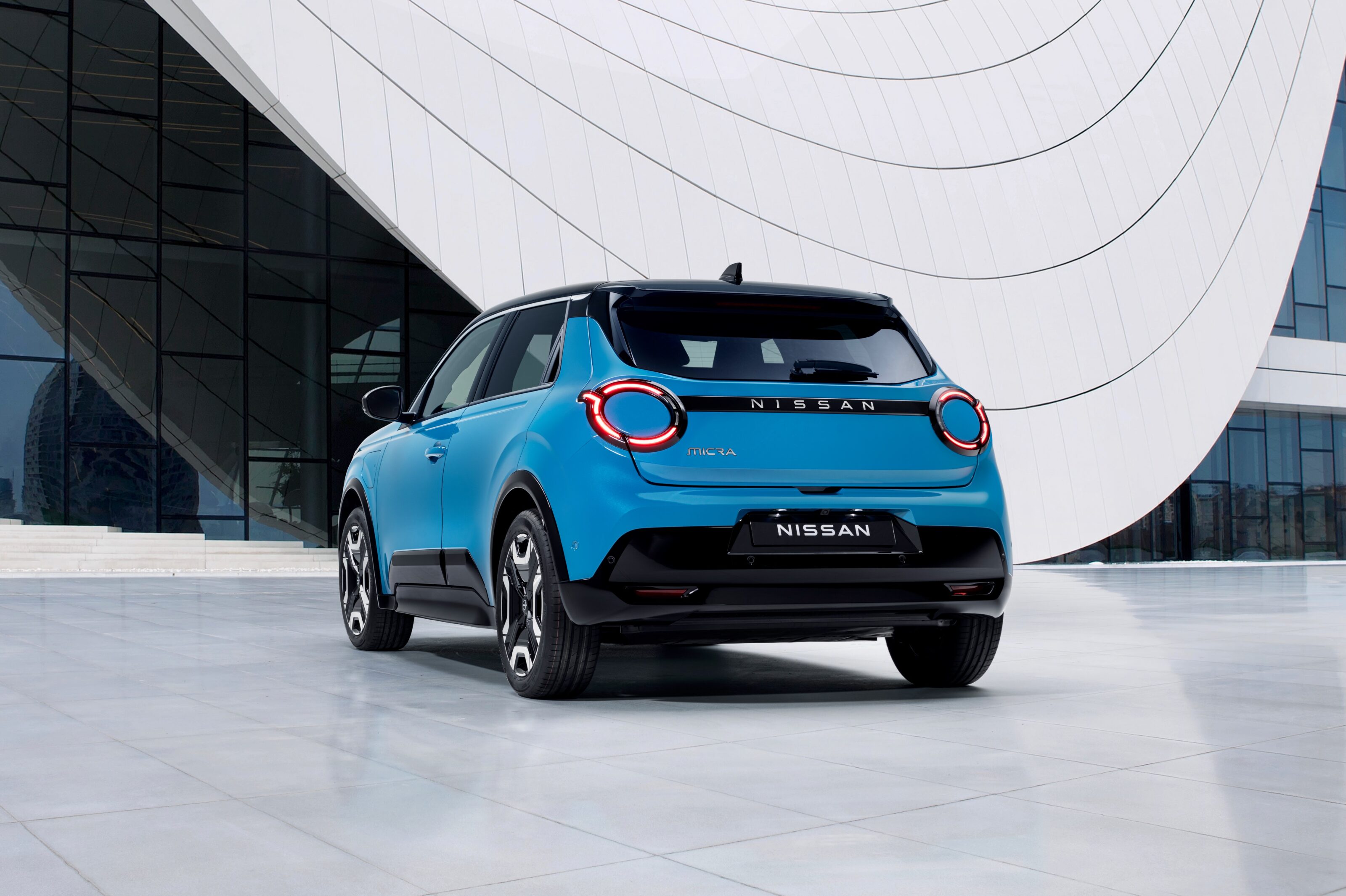
Based on the Renault 5 electric small car, the all-new sixth-generation Nissan Micra has been revealed. Due to go on sale in late 2025 in European markets, the new Micra offers two battery sizes with up to 408km of range and up to 110kW of power.
Using the same ‘AmpR Small’ platform as the Renault 5 and its slightly bigger 4 sibling, the new Nissan Micra takes on a more Japanese look than its platform siblings, with cute circular lighting from the iconic ‘K12’ model sold in Australia from 2007. The wheels are huge for its size as well: 18s are standard on every model.
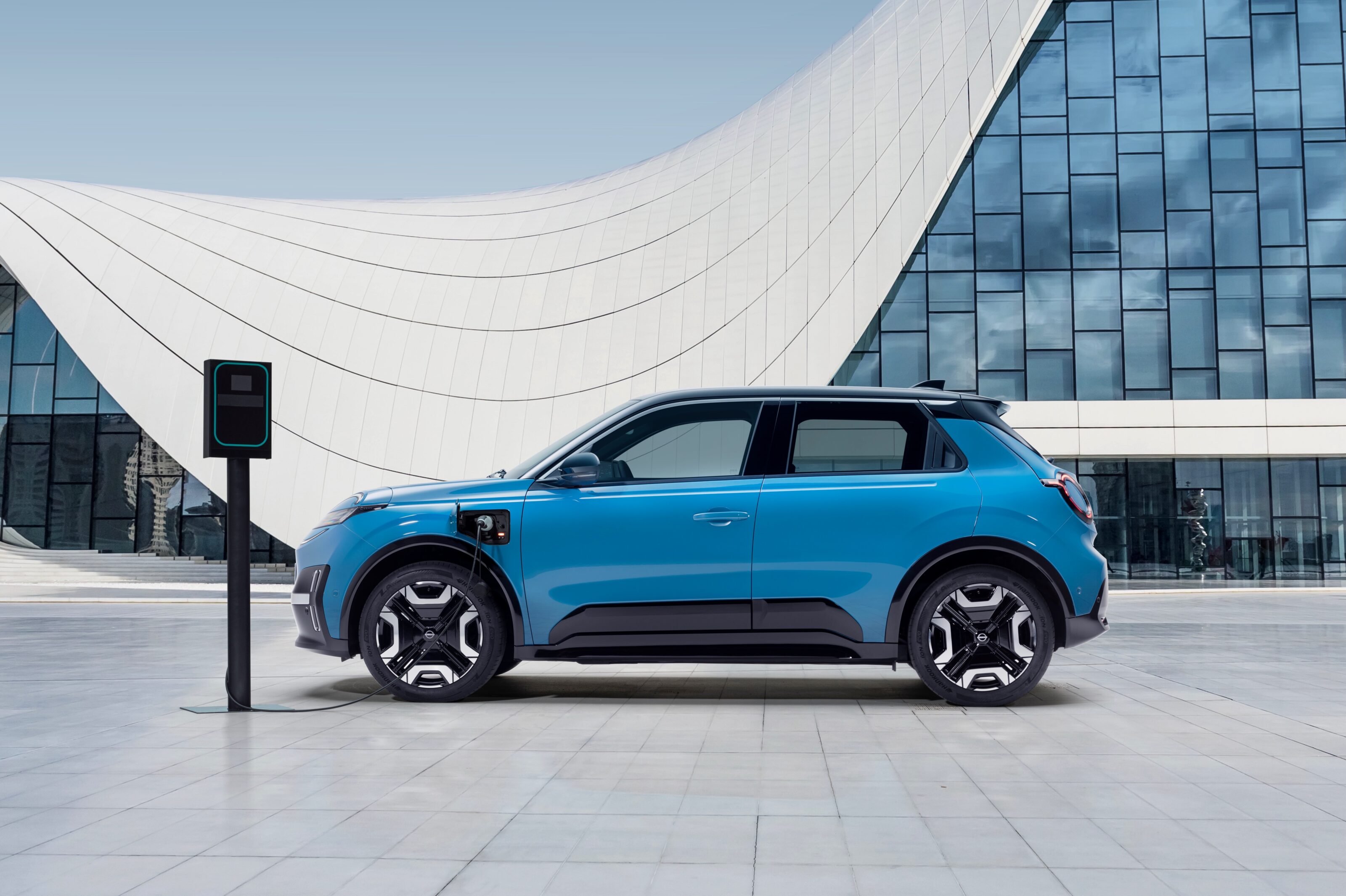
Two battery sizes will be available: a smaller 40kWh unit and a larger 52kWh one, with the less powerful unit attached to a 90kW/225Nm motor and the more powerful one with a 110kW/245Nm motor. The 40kWh battery gives the Micra a claimed 310km of range, and the larger one 408km.
According to Nissan, the new Micra can be DC fast charged at up to 100kW for the 52kWh battery (80kW for the 40kWh unit), with a 15 to 80 per cent charge taking as little as 30 minutes. A heat pump is standard on both battery options, as is vehicle-to-load (V2L) technology.
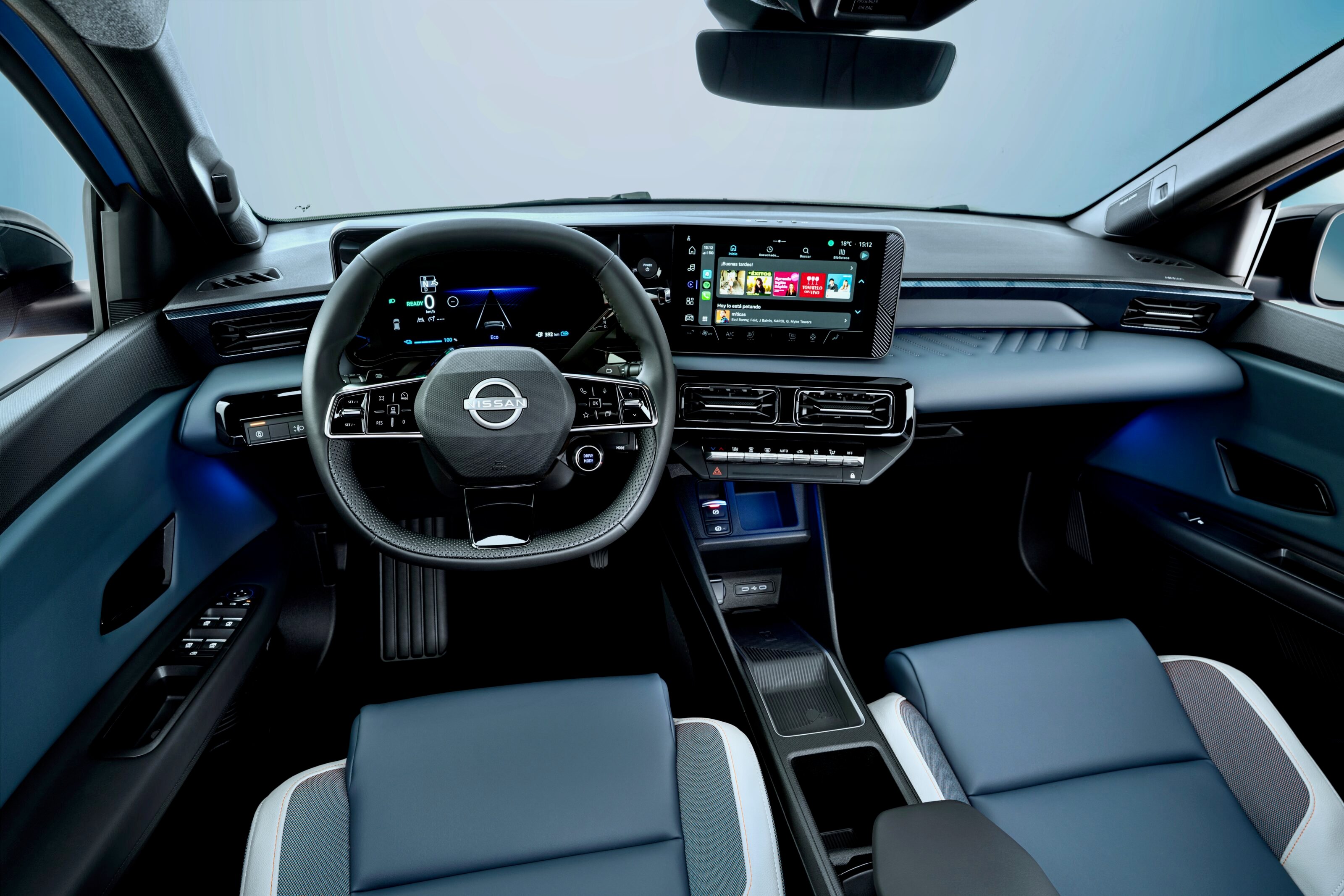
The interior of the new Micra is almost identical to the Renault 5, with a 10.1-inch touchscreen sitting at the centre and another 10.1-inch driver’s display. The infotainment uses Google software for features such as Google Maps navigation and the Google Play Store to download apps such as Spotify and YouTube.
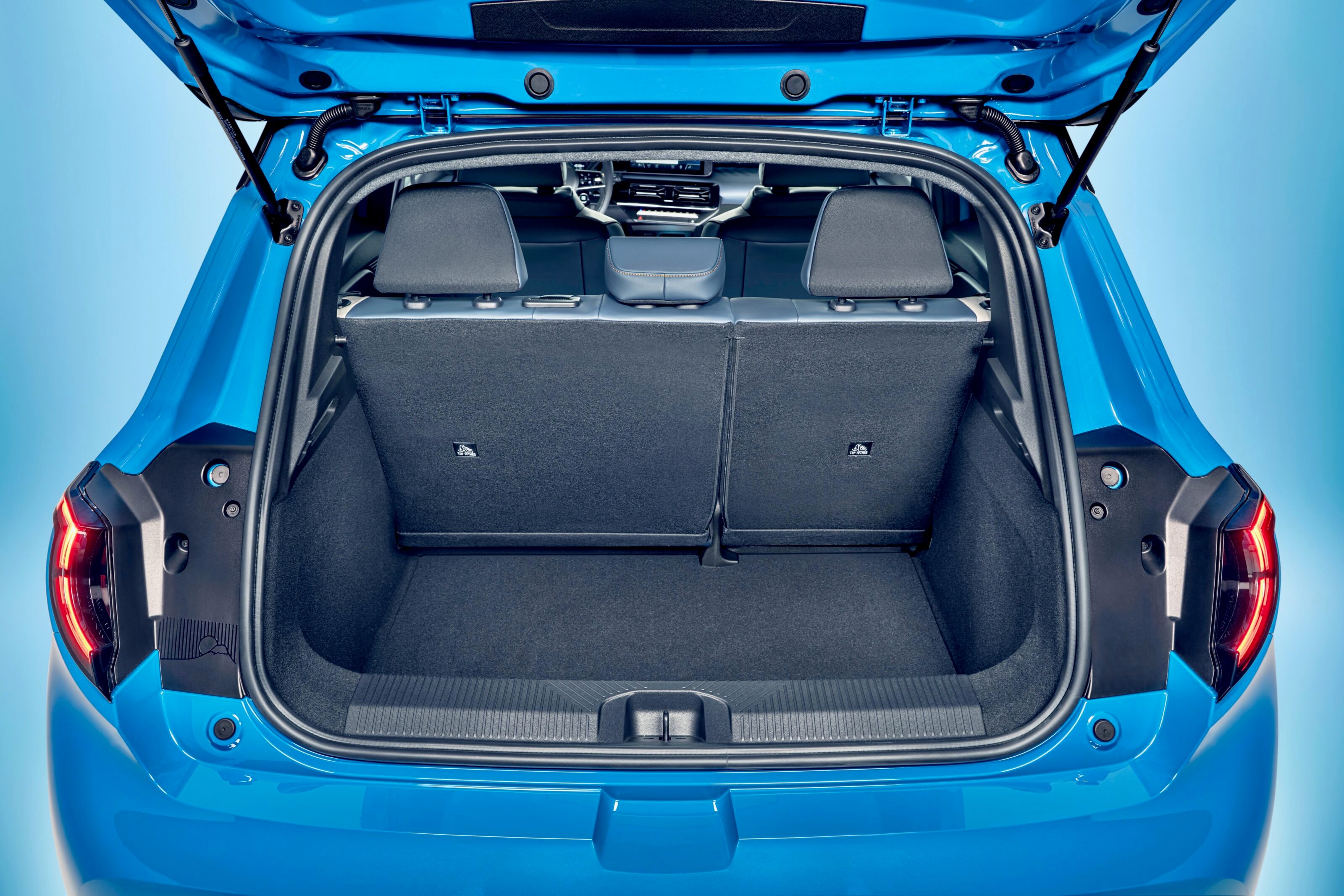
Other cool features on the inside of the new Micra include a moulded outline of Mount Fuji in the storage area between the front seats, 48-colour ambient lighting and several trim options. Its 326-litre boot opens up to 1106L with the rear seats folded.
As you’d expect for a car released in 2025, the new Micra is fully-kitted with safety tech, including adaptive cruise control, autonomous emergency braking, adaptive lane guidance, intelligent speed assist, driver attention monitoring, blind-spot monitoring and rear automatic braking.
The new Nissan Micra will go on sale in Europe in late 2025, with Australian plans yet to be confirmed.
Australia’s electric vehicle (EV) market experienced a notable shift in the March 2025 quarter, as battery electric vehicle (BEV) sales fell to their lowest levels in two years, while hybrids and plug-in hybrid electric vehicles (PHEVs) recorded strong gains.
The latest data from the Australian Automobile Association’s (AAA) EV Index revealed that BEVs accounted for just 6.3 per cent of new car sales, down from 7.42 per cent in the December 2024 quarter.
Only 17,914 BEVs were sold between January and March 2025, compared with 21,331 in the previous quarter. This decline coincided with a broader 0.96 per cent dip in total vehicle sales nationally. Internal combustion engine (ICE) vehicles remained dominant with 206,810 sales, although this too was down from 215,789 the quarter before.
In contrast, PHEV sales surged by 81 per cent, jumping from 7,556 units in Q4 2024 to 13,698 in Q1 2025, capturing 4.81 per cent of the market. Hybrid vehicles also rebounded after a temporary dip in the December quarter. Analysts suggest the end of fringe benefits tax exemptions for PHEVs in April 2025 and the launch of BYD’s Shark 6 plug-in hybrid 4WD ute – with 4,836 units sold – may have fuelled this surge.
The Shark 6’s success also reshaped the PHEV segment, historically dominated by medium SUVs. In the March quarter, medium SUVs made up 46.9 per cent of PHEV sales – down from 76.7% in Q4 – while 4WD utes, led by the Shark 6, accounted for 35.3 per cent of PHEV sales and 9.28 per cent of all 4WD utes sold.
Vehicle type preferences remain clear: medium SUVs continue to dominate BEV, PHEV, and hybrid sales. In this segment, 50.26 per cent of sales were ICE, 29.88 per cent hybrid, 10.94 per cent BEV, and 8.92 per cent PHEV. Meanwhile, ICE vehicles still rule the 4WD ute and van markets, though the former saw its ICE share fall to 89.98 per cent, reflecting increased PHEV uptake.
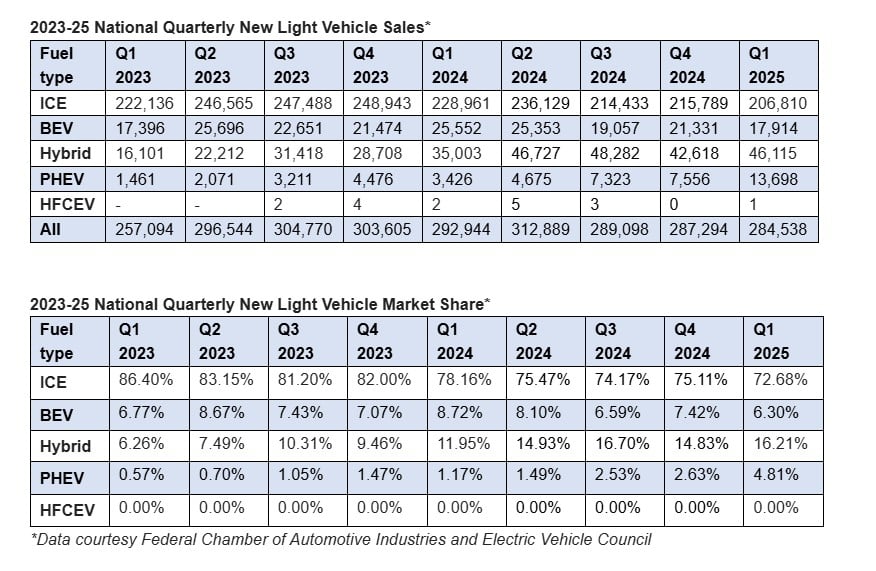
Despite fluctuations, hybrid sales have shown consistent growth over the past two years. BEV sales, on the other hand, have yet to regain their Q2 2024 peak, and hybrids have now outsold BEVs in seven consecutive quarters. The cessation of BEV purchase incentives across all states – most recently in Western Australia – may also be influencing buyer decisions.
It should be noted VFACTS data released by the Federal Chamber of Automotive Industries (FCAI) for the month of April 2025 showed a downturn in sales in the PHEV segment following the end of the fringe benefits tax (FBT) exemption on March 31.
PHEV sales for April totalled 2,601 units, accounting for just 2.9 per cent of the market. This is a notable slide from the 4.8 per cent share recorded in the first quarter of 2025.
The AAA’s EV Index, which compiles national sales data from several key industry bodies, serves as a vital tool for tracking Australia’s evolving automotive landscape.
The all-new sixth-generation Toyota RAV4 will arrive in Australia during the first half of 2026, featuring an all-hybrid line-up, a new range-topping GR Sport variant and the brand’s first-ever plug-in hybrid model offered in the Australian market.
Globally revealed on May 21, Toyota says the new-generation RAV4 plug-in hybrid will feature a ‘sixth-generation’ hybrid system with a 22.7kWh lithium-ion battery – enabling a targeted EV driving range of up to 100km (WLTP).
Fast DC charging capability combines with a 50kW onboard charger to deliver a 10 to 80 percent charge time of 30 minutes, while a new 11kW AC charger achieves the same boost in battery charge in three hours.
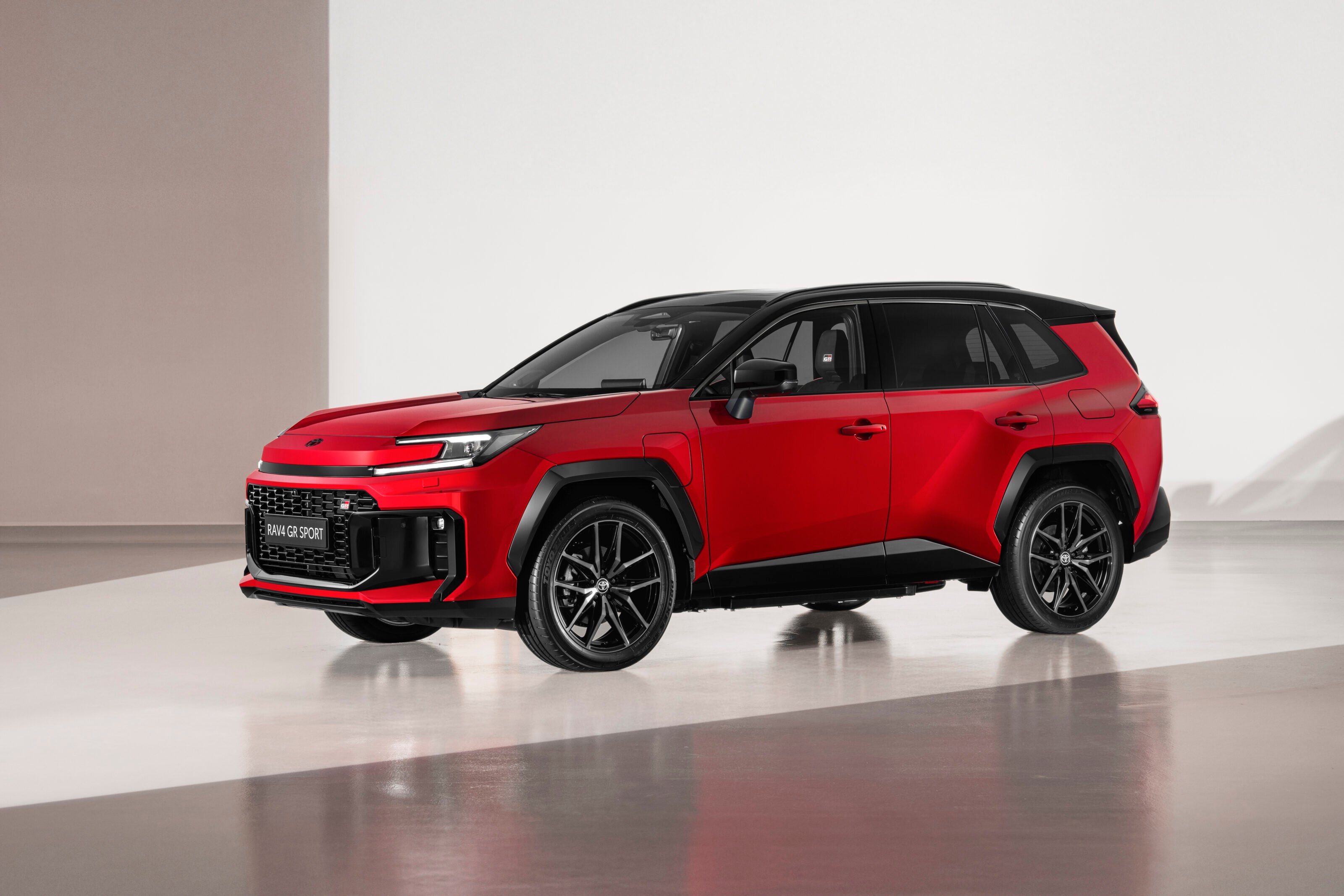
Toyota’s new 2.5-litre PHEV powertrain will be offered as standard on a new RAV4 GR Sport flagship variant. Combined with unique suspension tuning and a specific power-steering tune, as well as individual GR Sport styling and equipment such as 20-inch alloy wheels and a rear spoiler, the GR Sport will elevate RAV4 performance to a new level.
Offered solely in AWD form, the GR Sport delivers a total system output of 227kW and can sprint from 0-100km/h in a claimed 5.8sec. A “more affordable” front-drive PHEV system will also be offered on new RAV4, featuring a total system output of 201kW.
Toyota’s fifth-generation 2.5-litre series-parallel four-cylinder hybrid will carry over in FWD and AWD forms in the regular RAV4, featuring “enhanced efficiency for the transaxle, PCU, battery and electric motors” but a lower 143kW power output compared to its predecessor.
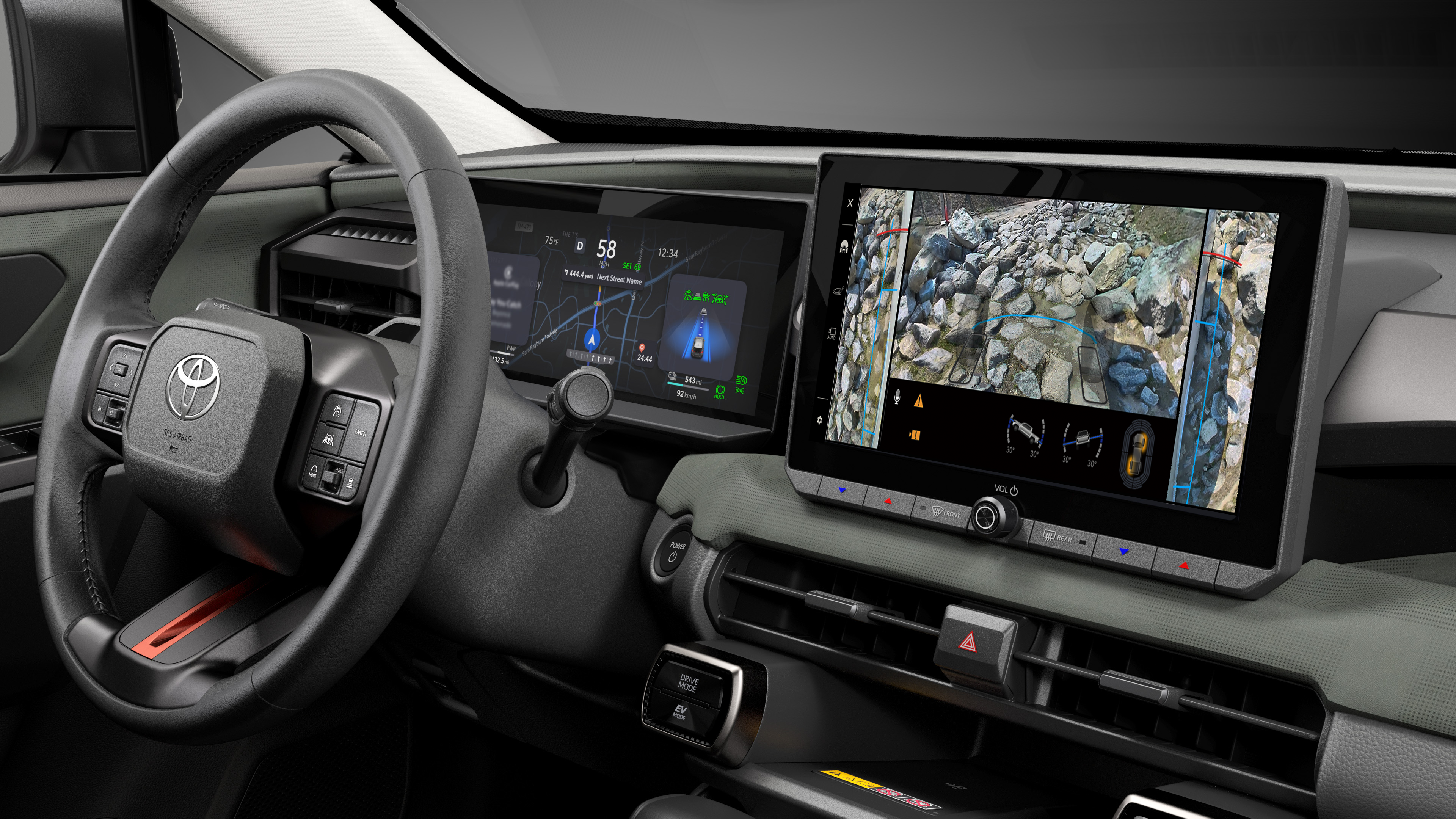
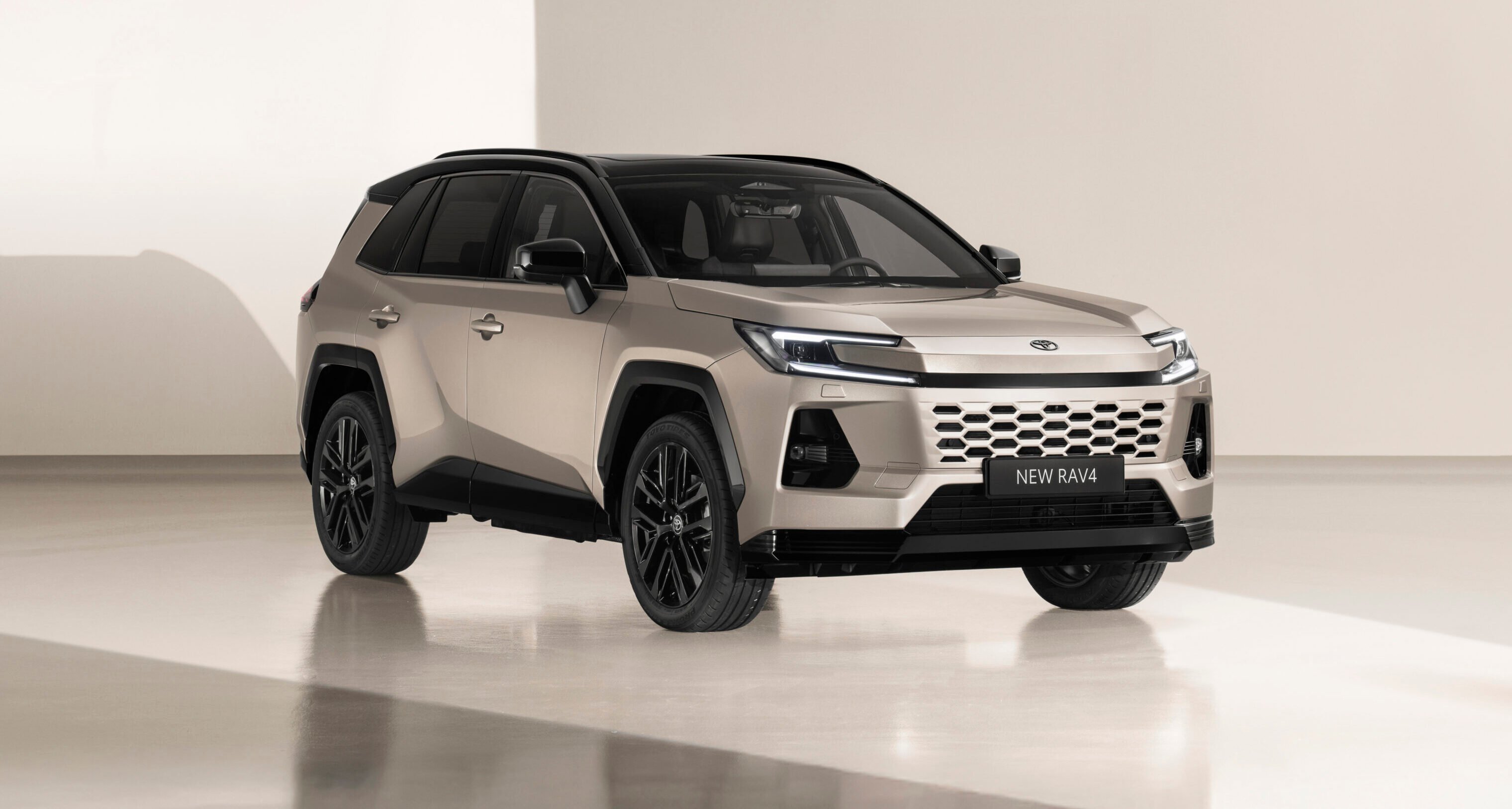
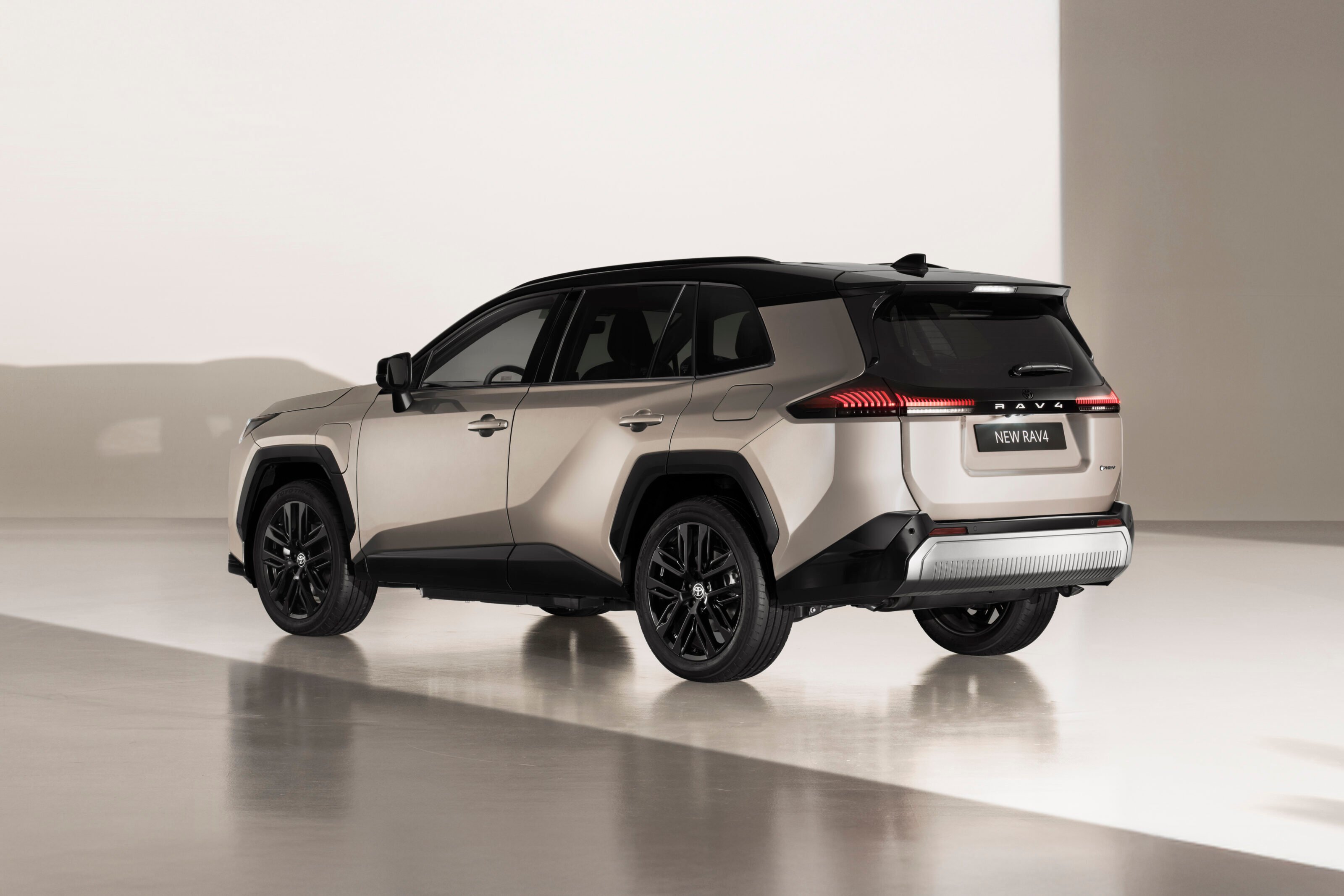
Visually, the sixth-generation RAV4 features Toyota’s ‘hammerhead’ styling cues with three variant-specific design treatments and debuts a more upmarket and sophisticated interior with a new-generation multimedia system offering much-improved functionality and extensive connected services.
Based on the first official images, the GR Sport will feature a dark-themed interior with red stitching while the luxury Cruiser offers a black and white colour scheme, and the adventure-flavoured Edge (if the variant name continues) retains its orange detailing but features a khaki horizontal dashboard band with camouflage-style perforations. Toyota also says the new RAV4 offers superior ‘Safety Sense’ driver assistance technologies.
Underneath, RAV4 continues to share its TNGA-K platform with the latest XV80 Camry, though with 20mm-broader track widths compared to the previous model for “improved stability and handling”.
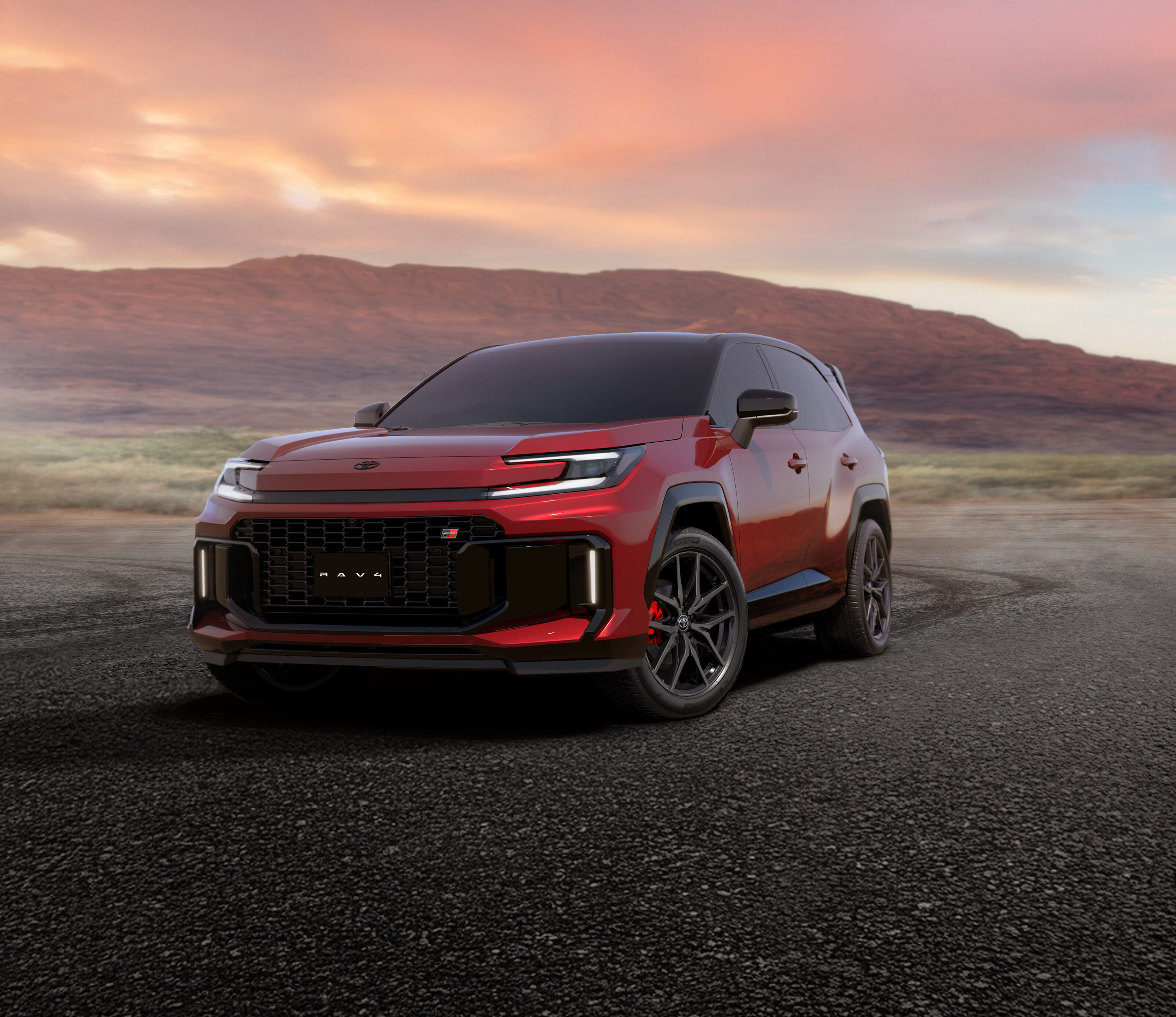
In terms of model line-up, the Australian RAV4 will be available in front- and all-wheel- drive forms with both powertrains. The variant spread is expected to mirror the current GX, GXL, XSE, Cruiser and Edge model grades, with the new GR Sport acting as a halo model.
According to Toyota Australia’s Vice President Sales, Marketing and Franchise Operations, Sean Hanley, the availability of the new plug-in hybrid powertrain in other variants aside from the GR Sport “will be announced for Australian spec closer to the launch date”.
“[We’re expecting] huge interest [in the RAV4 plug-in hybrid],” said Mr Hanley. “PHEV was kind of the only vehicle we don’t have, so this is a really big step for us. I believe that plug-in hybrid will be a very big growth market, and I think we’re coming to it at exactly the right time.”
He said he expects the PHEV will be a “slightly dearer vehicle” than the regular petrol-hybrid RAV4, and that the standard HEV version will remain the biggest seller in the range.
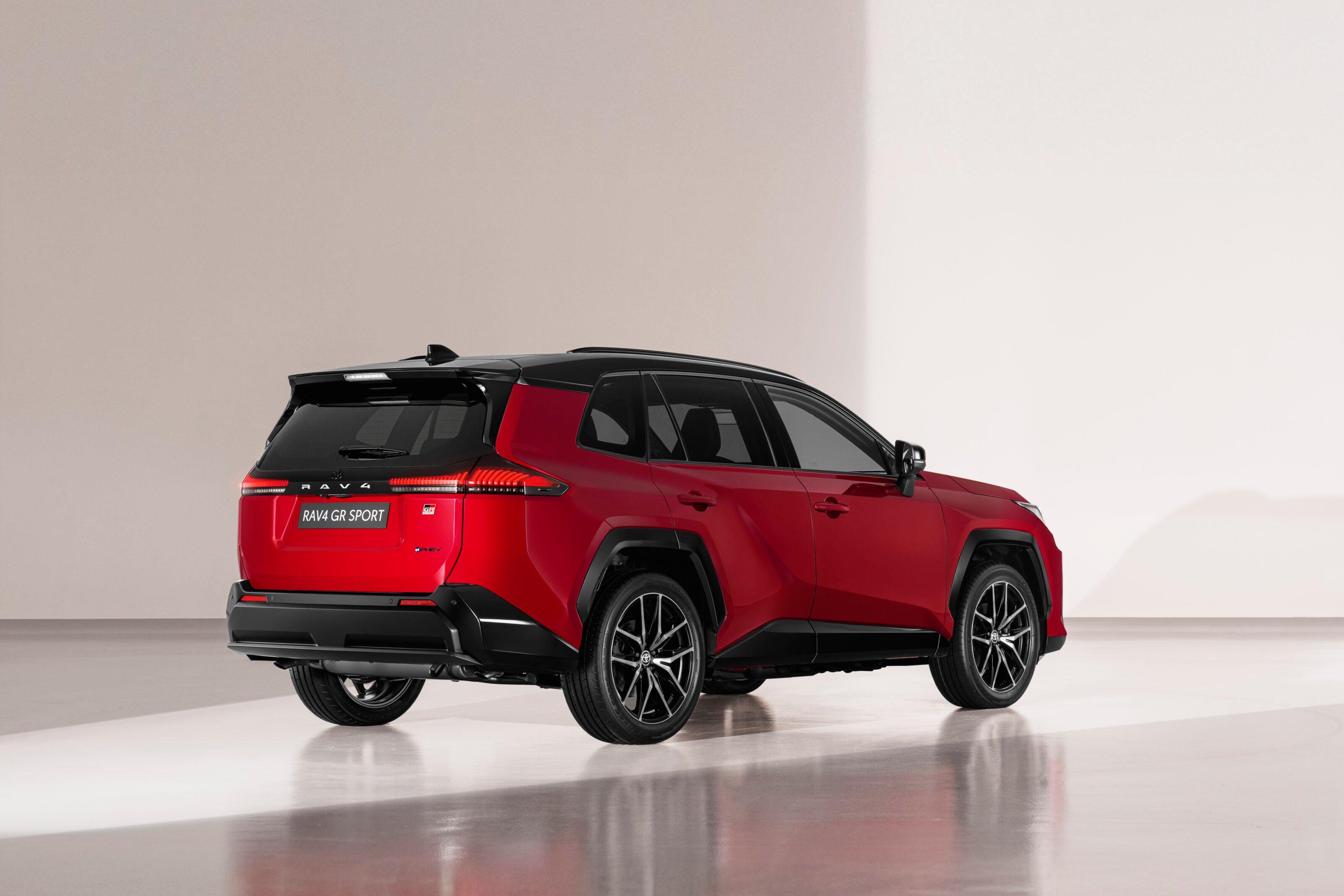
The existing six-year-old RAV4 is already Australia’s highest-selling vehicle so far in 2025 – marginally out-numbering the Ford Ranger and Toyota Hilux utes – and Mr Hanley expects next year’s all-new model to further establish itself as Australia’s favourite vehicle.
“I think in 2026 we’ll see that RAV4 could potentially be the number one selling car, and PHEV will only add to that,” he said.
No pure-electric sixth-generation RAV4 will offered in any market. Toyota’s future electric medium SUV will be a production version of one of its concept SUVs shown in recent years – potentially with retro styling.
Mr Hanley said the recently revealed bZ4X Touring – essentially a wagon version of the updated bZ4X – will be joined by another yet-to-be-announced EV by the end of 2026.
In terms of pricing, expect the new-generation RAV4 to be moderately more expensive than the current model which spans $42,260 to $58,360 before on-road costs, with the GR Sport PHEV likely to cost at least $65,000 when it arrives in Australia during the first half of 2026.
BYD has announced that its new Seal 06 DM-i plug-in hybrid medium sedan and wagon will be made in right-hand drive for the UK market, opening up the doors for a potential Australian introduction.
Revealed for the Chinese market in early 2024, the Seal 06 DM-i will be made in right-hand drive, according to UK publication Autocar.
Measuring 4830mm long, 1875mm wide, 1495mm tall and riding on a 2790mm-long wheelbase, the Seal 06 DM-i is 90mm shorter, though 35mm wider and 50mm less tall than the current Toyota Camry, which would be its main rival in Australia.
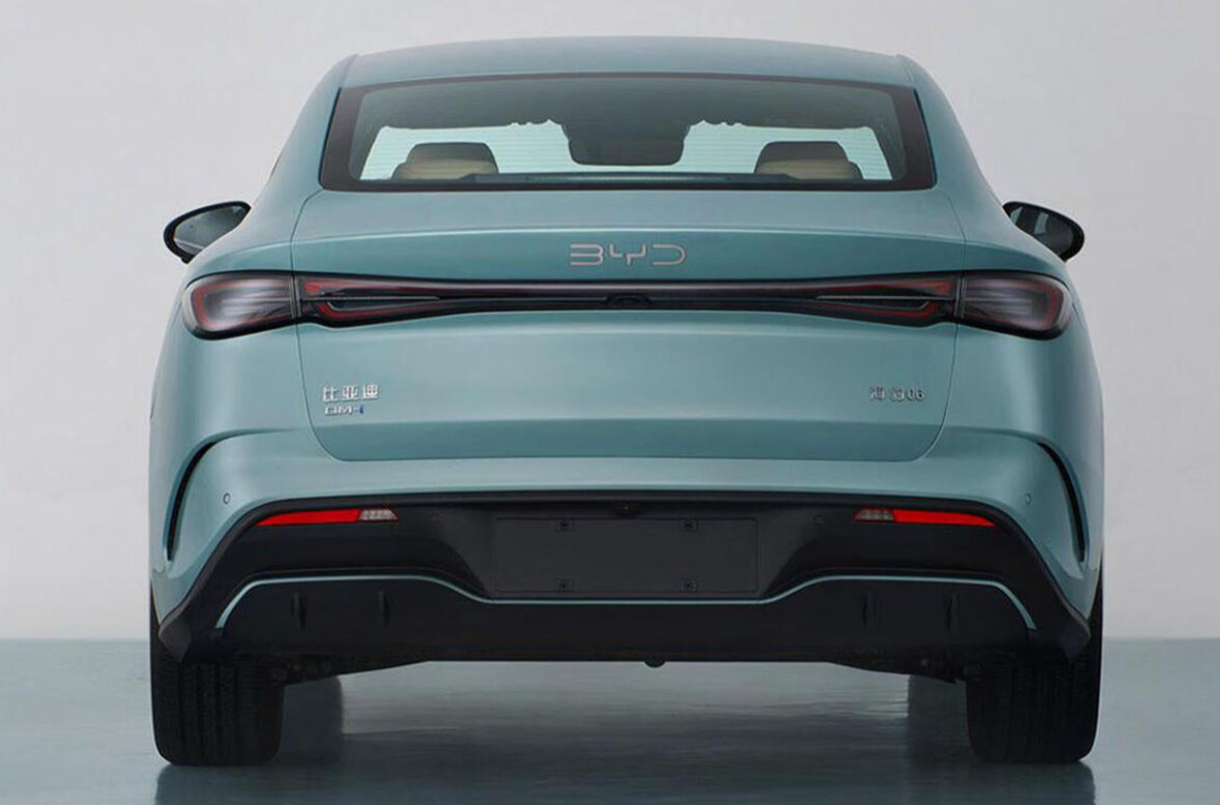
Unlike the Camry, which is a regular hybrid only, the Seal 06 DM-i is only available in China as a plug-in hybrid with either a 10kWh or 16kWh LFP battery, rated at either 60km or 90km for electric range on the generous CLTC cycle.
The battery is paired with a 74kW/128Nm 1.5-litre naturally aspirated engine and a choice of two electric motor outputs: either 120kW/210Nm or 160kW/260Nm.
Unlike the Camry as well, the Seal 06 DM-i is also available as a wagon, which is important for a European market introduction as wagons sell well there. Introducing the Seal 06 DM-i wagon would give BYD Australia one of two non-prestige wagons on the local market, with the Skoda Octavia now alone since both the Mazda6 and Volkswagen Passat have been discontinued.
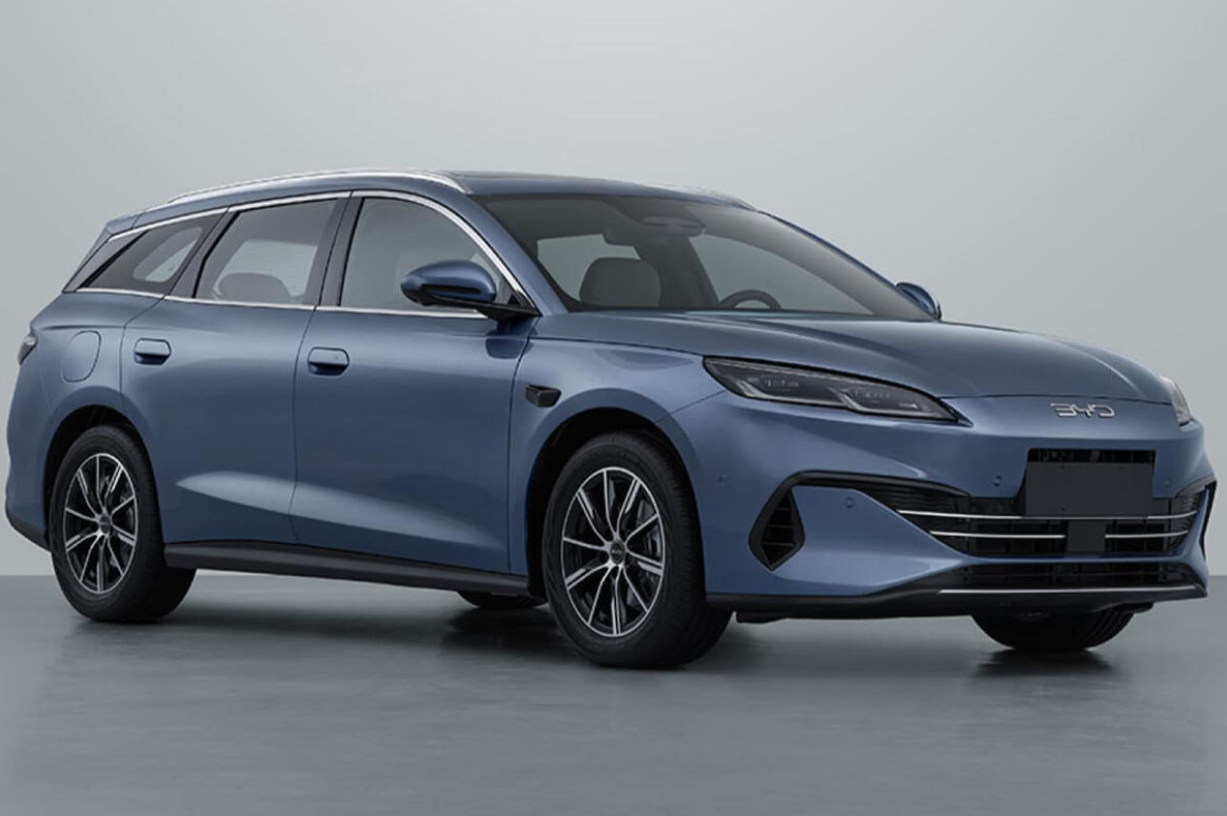
Notably, the BYD Seal 06 DM-i could become the cheapest plug-in hybrid on the Australian new car market, potentially undercutting BYD’s Sealion 6 plug-in hybrid mid-size SUV that’s priced from $42,990 plus on-road costs.
Considering that the Sealion 6 is $10,000 cheaper than the fully electric Sealion 7, the Seal 06 DM-
i could undercut the fully-electric Seal by a similar margin to be comfortably below $40,000.
BYD is yet to reveal any concrete plans for the Australian release of the Seal 06 DM-i, though has
said that it’s under consideration for our market.
Tesla’s most advanced self-driving system – named ‘Full Self-Driving’ by the company – has started testing in Australia with a video released showing an Australian-spec right-hand drive car self-driving through the Melbourne CBD.
There’s still no word on when it will be available to customers in Australia, many of whom have spent up to $10,100 optioning the technology under the promise that it will be unlocked after regulations change.
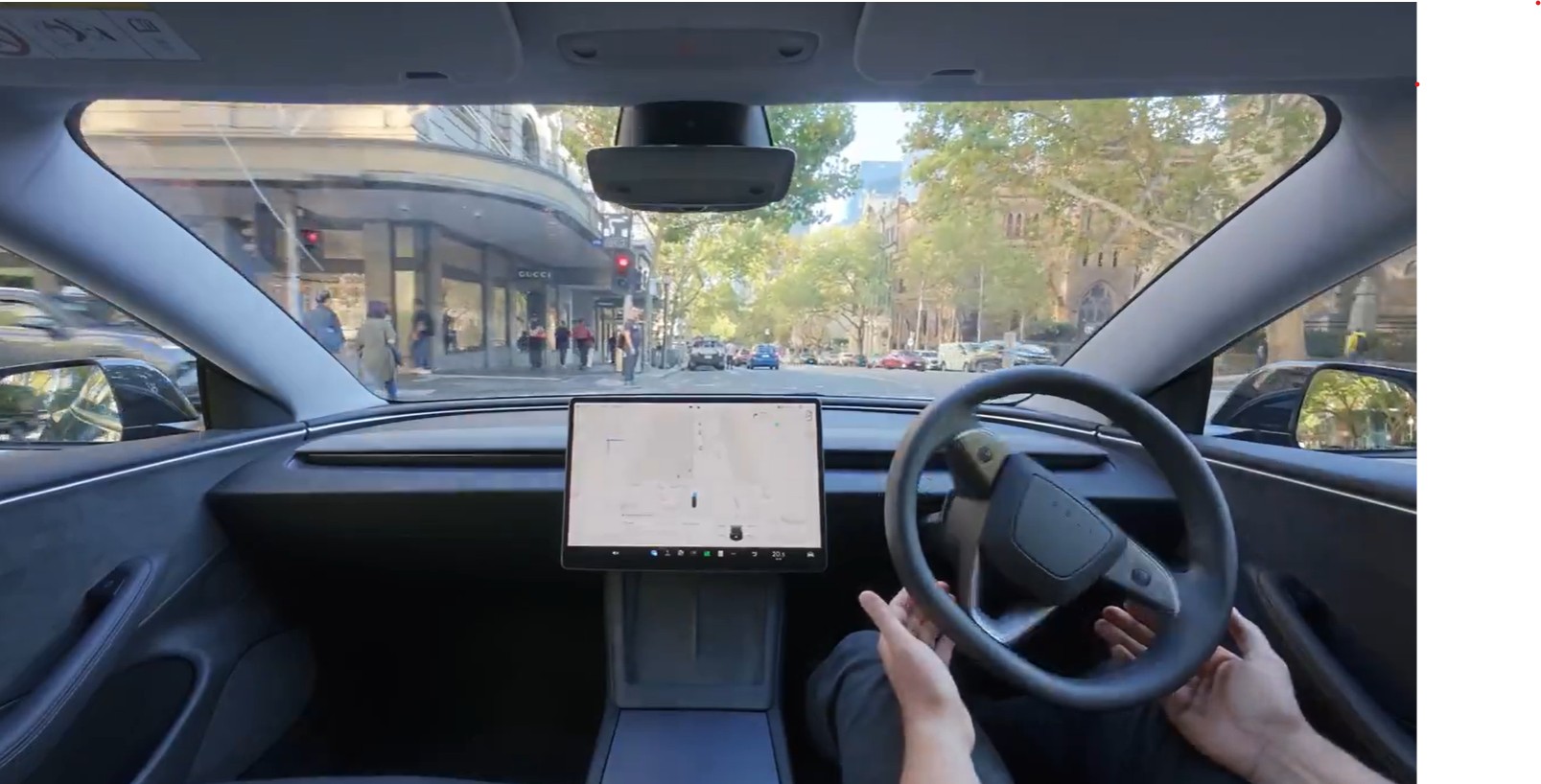
A video released by Tesla on X (shows a Tesla claimed to be running the Full Self-Driving tech completing Melbourne’s complicated hook turns – where cars get around tram tracks by moving to the left to turn right – and other complicated manoeuvres. The driver does not control the car, rather, hovers their hands near to the steering wheel.
Full Self-Driving is not a true autonomous piece of technology because it requires drivers to focus on the road, which the car monitors through a camera, as they are still legally in control of the car.
But it’s a step beyond the current semi-autonomous features of the Tesla range, where drivers must have their hands on the steering wheel at all times. The Full Self-Driving is also intended for all roads, which is more than the current system’s highway intention.
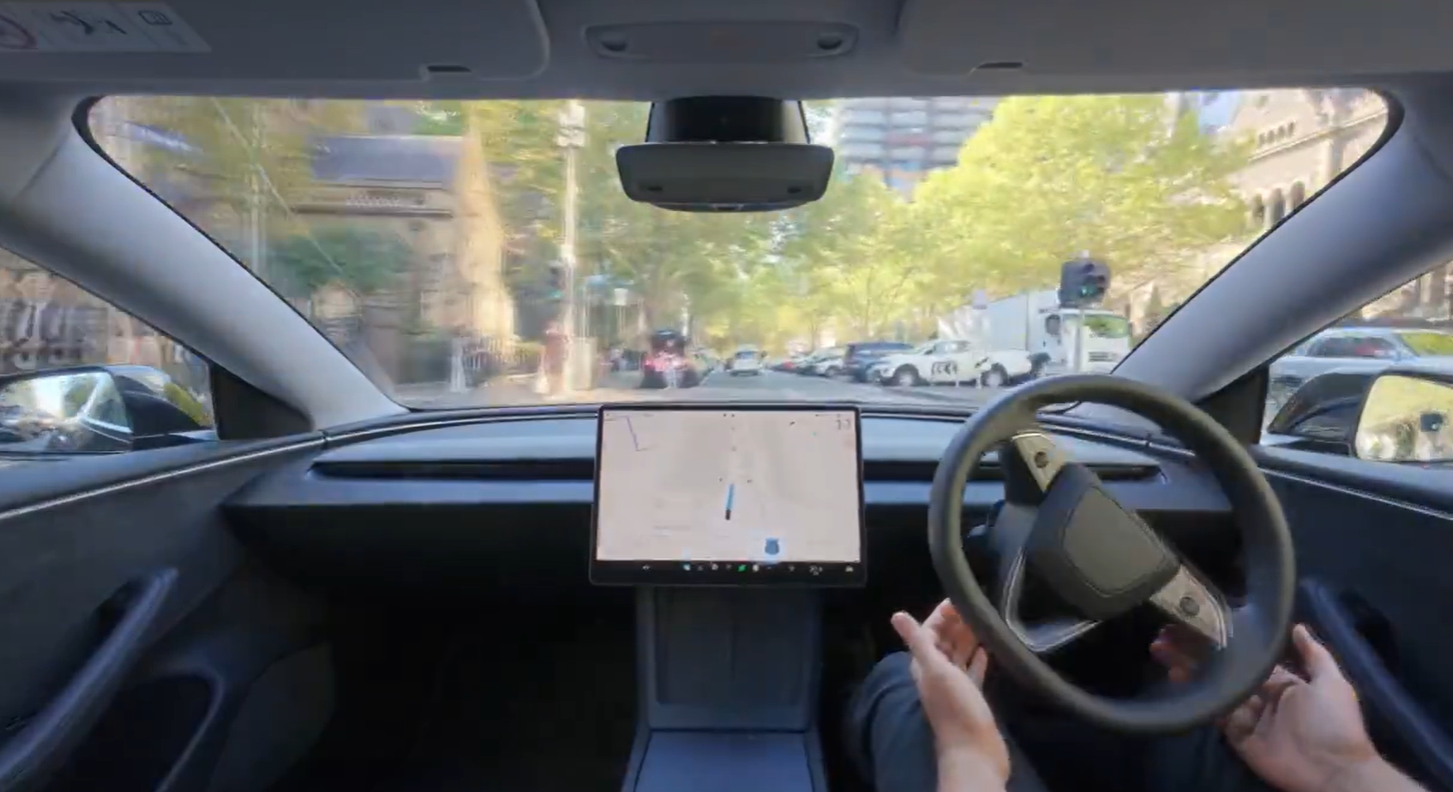
Australia is the first right-hand drive market for the company to debut Full Self-Driving, with North America and China the only global markets that it operates in. European markets are yet to receive it as well.
Local Tesla customers have been able to purchase FSD since 2017 at a price of $10,100 and have been promised that it would be ‘unlocked’ in a free software upgrade when regulation allows.
Tesla is yet to announce any local timing regarding the release of its Full Self-Driving tech.
Things we like
- A spacious inline six seven seat SUV for under $60k drive away
- Grunty engine can also be quite efficient
- Well equipped for a base model
Not so much
- Pure’s hard cabin plastics
- Pricey service costs
- Improved ride quality versus CX-60 but still too firm
| Rating |
|---|
Price: $54,950 plus on-road costs
Engine: 3283cc turbocharged inline six-cylinder petrol, 48V mild hybrid
Outputs: 209kW/450Nm
Transmission: Eight-speed automatic, all-wheel drive
Fuel consumption (claimed/on test): 8.4L/100km / 8.8L/100km
CO2 emissions, fuel type, tank size: 197g/km, 91RON, 74-litres
L/W/H/WB: 4990/1949/1710/3120mm
Kerb weight: 2084kg
Boot: 258L (third row up)/566L (third row folded)/1971L (third and second rows folded)
0-100km/h: 7.0 seconds (est)
Warranty: Five-year/unlimited km, five years of roadside assistance
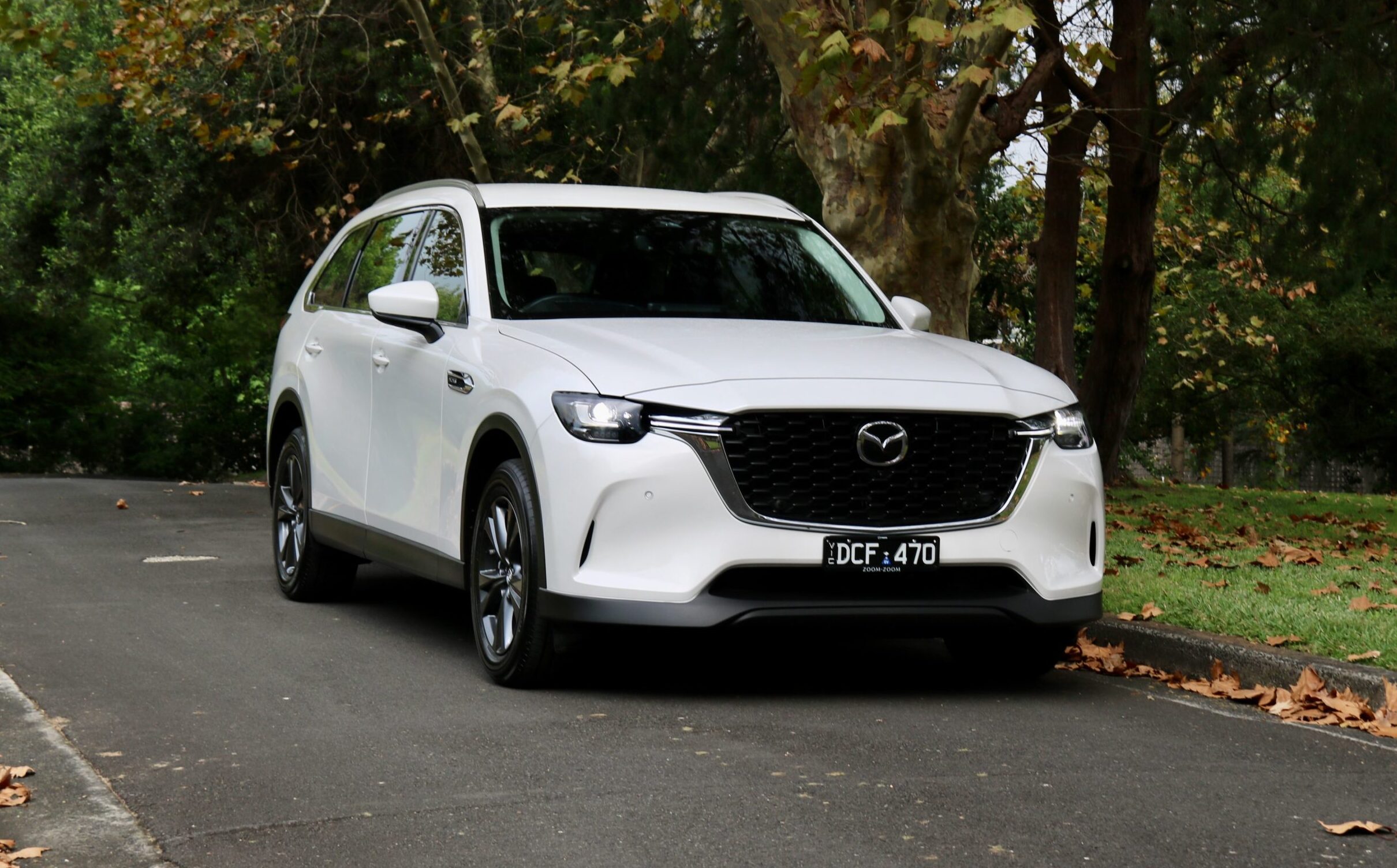
Mazda raised eyebrows when it announced a new range of SUVs to sit above the hugely successful CX-5. Using a new platform with a range of new engines – including, impressively, two inline sixes – the CX-60, CX-90 and CX-70 were launched to new heights in pricing for the Mazda brand, with high-end variants in the CX-90 topping the $100,000 mark.
Enter the fourth and final member of the group for now: the CX-80. We attended the local launch late last year and found its value equation to be the best of the four CX-00 models, while the refinement issues of its siblings weren’t quite as pronounced either. Is that a winning recipe? Let’s find out by exploring the entry-level CX-80 Pure.
Price and equipment
For now, there are four CX-80 models in Australia and while the Pure tested here is only available
with a petrol inline six badged ‘G40e’, upper models are also available with a ‘D50e’ diesel inline
six, as well as a ‘P50e’ four-cylinder plug-in hybrid.
2025 Mazda CX-80 pricing (plus on-road costs):
| Pure petrol | $54,950 |
| Touring petrol | $61,950 |
| Touring diesel | $63,950 |
| Touring PHEV | $75,000 |
| GT petrol | $68,950 |
| GT diesel | $70,950 |
| GT PHEV | $82,000 |
| Azami petrol | $74,150 |
| Azami diesel | $76,150 |
| Azami PHEV | $87,200 |
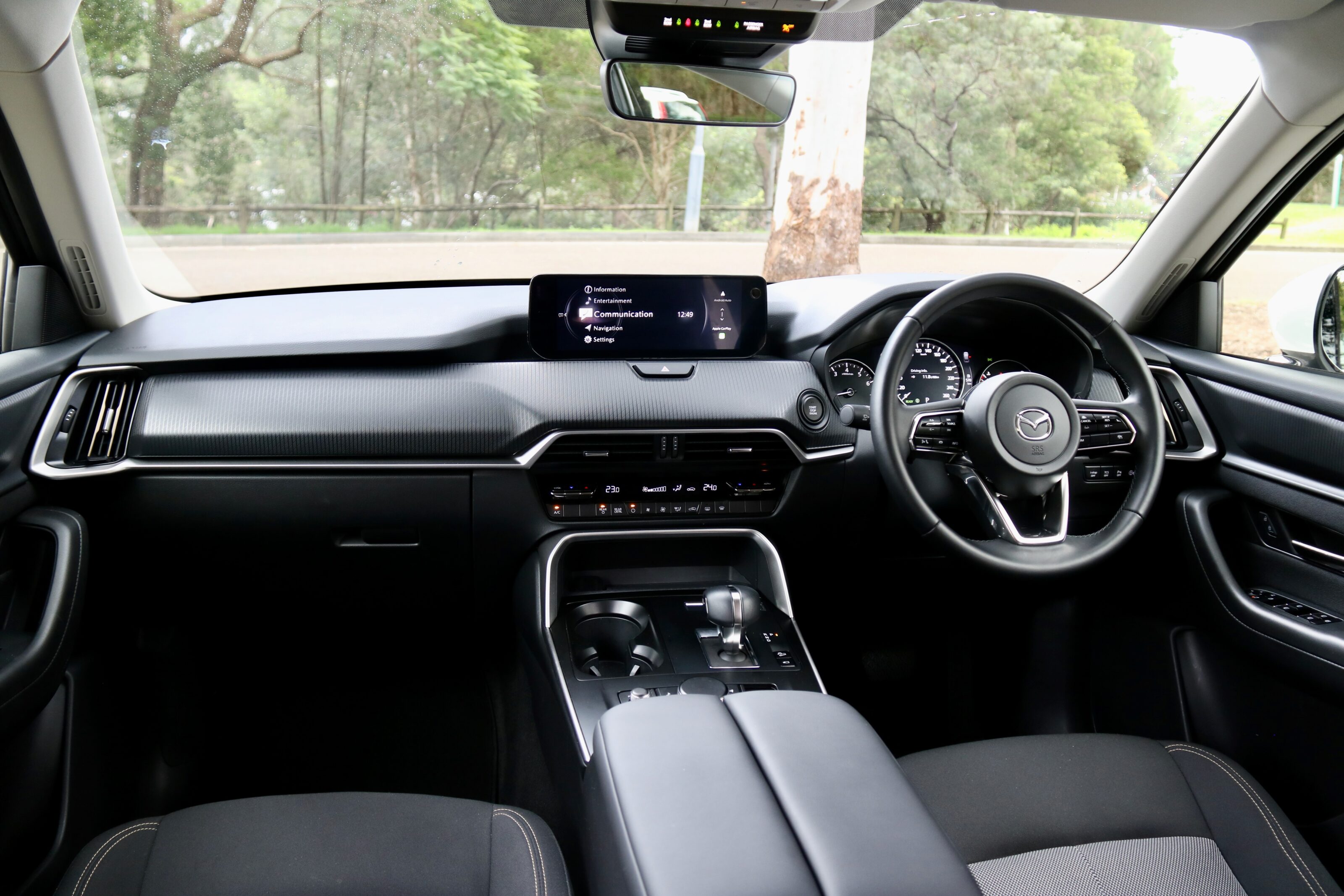
CX-80 Pure standard equipment:
- 18-inch alloy wheels with a tyre repair kit
- Dusk-sensing automatic LED exterior lighting
- Rain-sensing automatic wipers
- Keyless entry with push button start
- Heated/auto-folding mirrors with driver’s side auto-dimming
- Tri-zone automatic climate control with vents in all rows
- Black cloth upholstery
- Eight-way manual driver’s seat
- Leather-wrapped steering wheel with paddle shifters
- 7.0-inch digital driver’s display
- 10.25-inch infotainment screen
- Mazda Connected Services
- Wired and wireless Apple CarPlay and Android Auto
- Satellite navigation
- AM/FM/DAB+ digital radio
- Eight-speaker sound system
- 6x USB-C charging ports
- 150W AC power outlet
- Head-up display
CX-80 Pure safety equipment:
- 360-degree camera
- Eight airbags
- Autonomous emergency braking with pedestrian, cyclist and intersection assistance
- Adaptive cruise control with stop and go functionality
- Lane keeping assistance with lane departure warning
- Blind-spot monitoring with vehicle exit warning
- Front and rear cross-traffic alert
- Driver attention monitoring
- Auto high beam
- Traffic sign recognition
- Front and rear parking sensors
- Auto-dimming rear mirror
- Automatic rear braking
- Tyre pressure monitoring
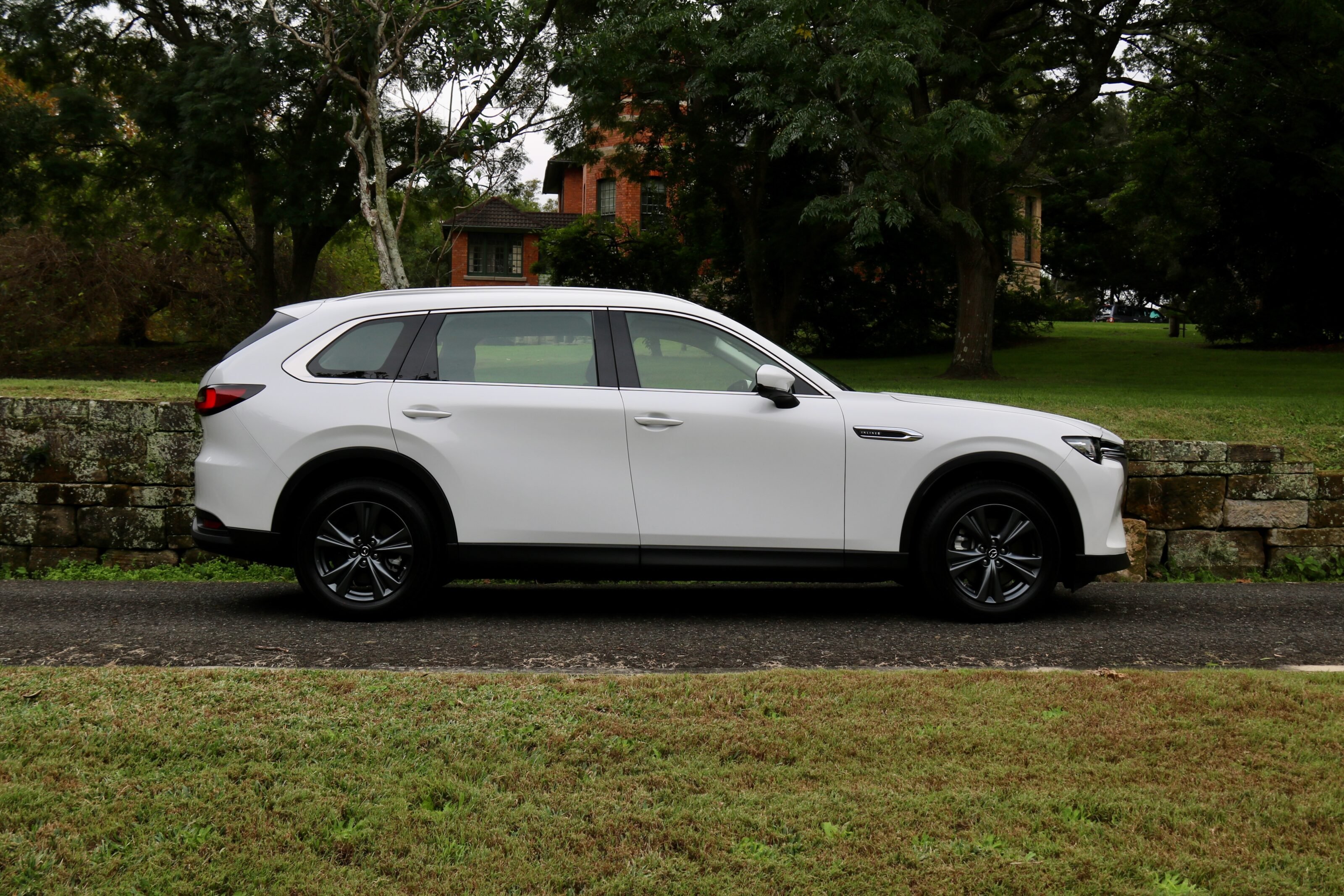
The CX-80 range achieved a five-star ANCAP safety rating in October 2024 with scores of 92 per cent for adult protection, 87 per cent for child protection, 84 per cent for vulnerable road user protection and 83 per cent for safety assistance.
The Pure is well equipped for a base model, though there are some notable exceptions to its equipment list, such as leather trim, powered front seats and an electric tailgate. Those are added alongside heated front seats with driver’s memory, rear door sunshades and a wireless phone charger for an extra $7000 with the next-step-up Touring. If you’re after the diesel or plug-in hybrid as well, the Touring is the least expensive model they’re available in.
Performance and economy
Only one engine is available in the CX-80 Pure: a new 3.3-litre turbocharged petrol inline six mated to a 48-volt mild-hybrid system. Outputs are a keen 209kW of power and 450Nm of torque, which is put to the road through an eight-speed multi-clutch automatic transmission and a rear-biased all-wheel drive system. Thanks to the new design and mild-hybrid system, the new inline six presents a tempting offering against four-cylinder petrol and hybrid competitors.
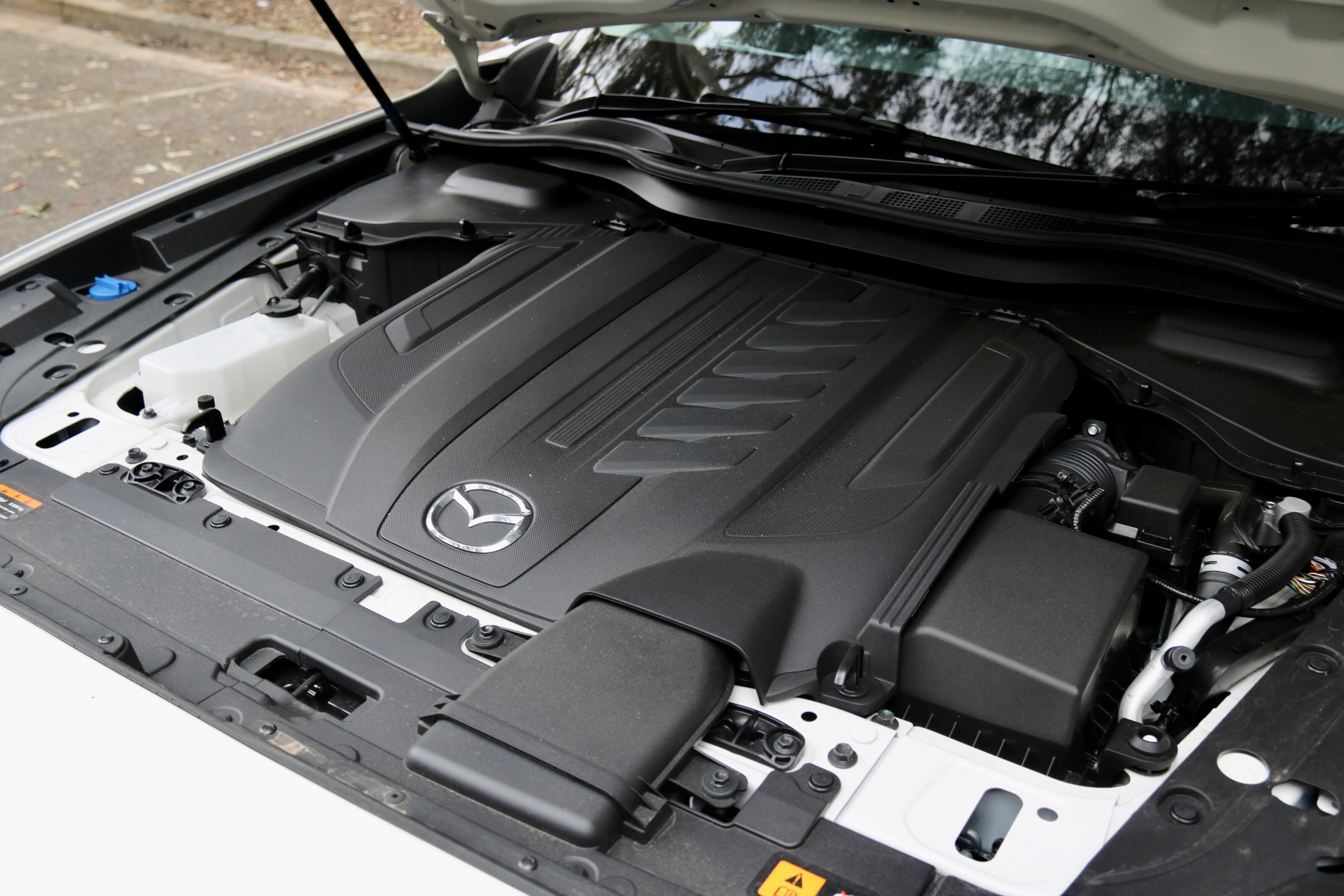
The CX-80 Pure is rated at 8.4L/100km for claimed fuel consumption, or officially 0.7L/100km less than the 206kW/422Nm turbocharged 2.5-litre four-cylinder petrol Santa Fe. We achieved a thrifty (for its size) 8.8L/100km in our week with the CX-80 Pure, including a low-6s highway run – anybody with memories of how thirsty the first CX-9 was will understand how much of an achievement that is. Helping running costs further is that the CX-80 Pure can use 91RON regular unleaded fuel, and it has a large 74-litre fuel tank for good range.
On the road
Each of the CX-00 models has been criticised by local and international media for needing more mechanical refinement and a stiff ride quality, so much so that the CX-60 underwent a facelift that’s about to go on sale locally to fix the issues. The CX-80 is the last developed of the models, providing hope that Mazda has learnt its lesson. Plus, the small-looking 18-inch wheels of the Pure will help, right?
Mostly, is the answer. There are times where the CX-80 Pure is still too stiff for its intended family car useage, like travelling over lower speed bumps that have you moving around in the seat. The first gear is also oddly short, meaning that you lurch forward as it shifts gear. But generally, it’s an improvement on the CX-60 in particular and while a Santa Fe is softer, the CX-80 is keener in the corners if that matters to you.
While there is still a bit of work to do on refinement, Mazda’s active safety features are excellent with mature and confident coverage from the lane keeping assistance and adaptive cruise control. The auto high beam works well too, and each feature is easy to tailor to your taste. Impressively as well, features like the 360-degree camera and head-up display are standard across the range.
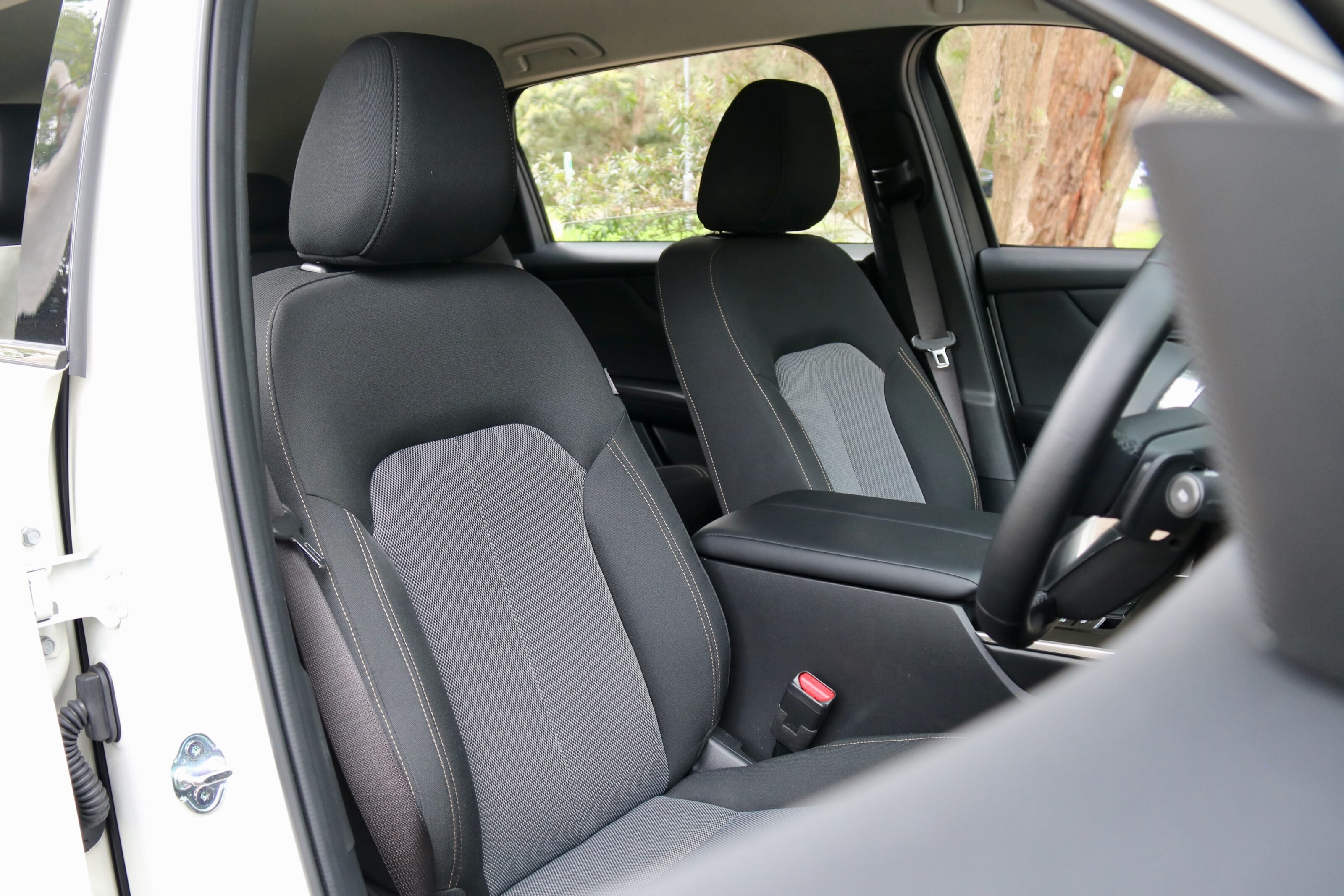
Mazda has also worked hard to improve its previous Achilles’ heel: road noise. In this regard, the CX-80 is impressive and the small-wheeled Pure is the best in the range. Even at highway speeds, it’s quiet and conversation between occupants is easy. The visibility is also generally good in the CX-80, with big windows and mirrors, though the sloping D-pillar limits over-the-shoulder vision.
Plus, the oddly close driver’s mirror that’s common to most modern Mazda products doesn’t provide enough field of vision.
Interior comfort, practicality and boot space
Anybody who’s sat in another Mazda product using this platform will not at all be surprised by the CX-80’s cabin as it’s near identical to its siblings. Some more interior differentiation between the four would be great, especially for those who have spent almost $100,000 on a top-spec CX-90.
But as we’ve seen in all those cars, the fundamentals are strong with generally great quality, lovely switchgear and easy to use technology. Having said that, the CX-80 Pure’s door trims are all hard plastic, as is the dashboard fascia – to get these in soft materials, a $7000 spend upwards to the Touring is necessary. Really, that’s the only detraction in the CX-80 Pure’s cabin – we’d expect plusher materials, even at its sub-$60k pricing.
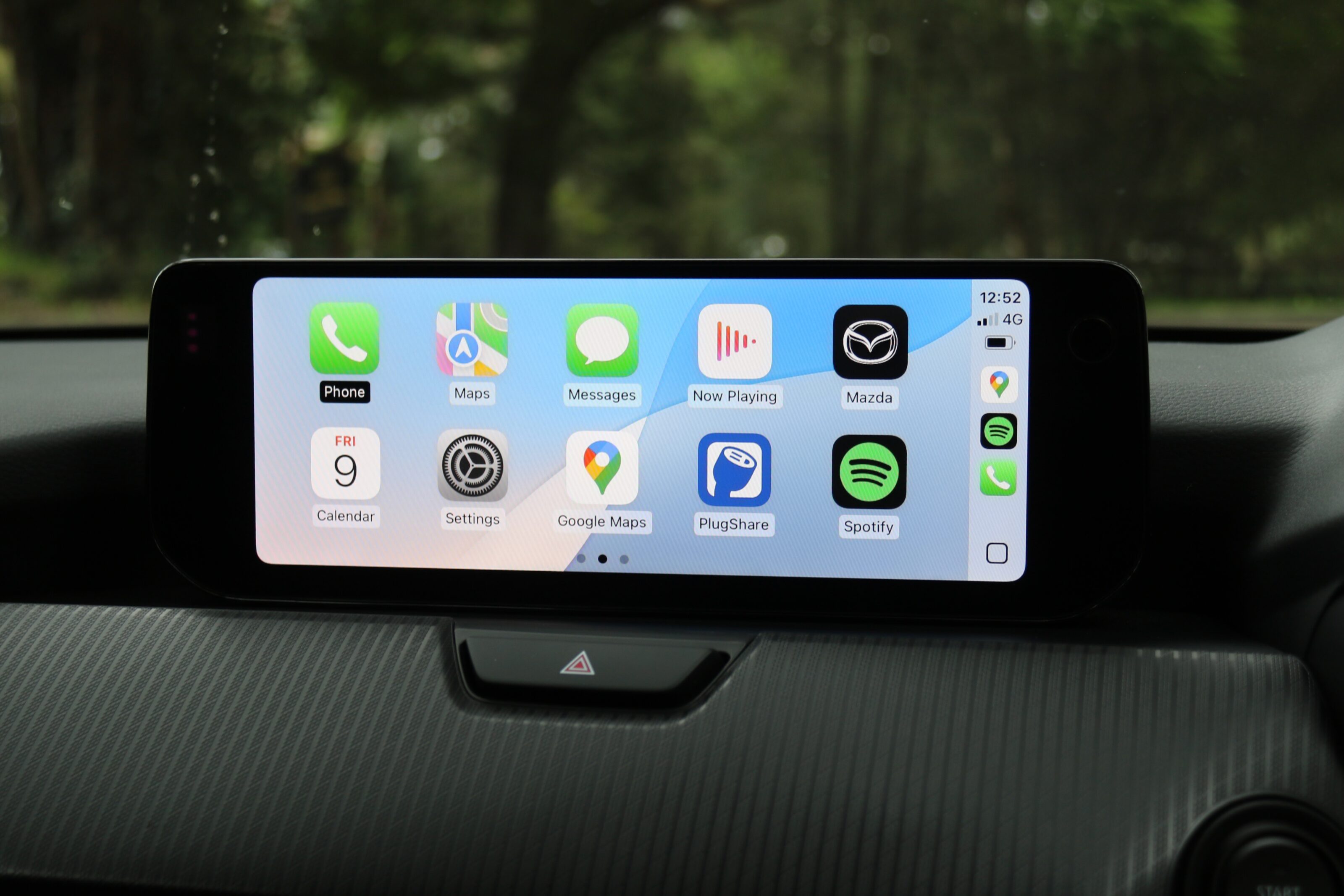
Centre of the cabin is a 10.25-inch infotainment screen. Notice the lack of the word ‘touch’ there as the CX-80 Pure’s screen can only be controlled via the wheel on the centre console. Strangely, the larger 12.3-inch screen in the GT and Azami can be touched to use Apple CarPlay and Android Auto, so why not the smaller one? It would be nice to give users the option as smartphone mirroring is far easier to use that way.
The CX-80’s second row is a comfortable and spacious place to spend time, with three adults able to fit comfortably. There are also cup holders in the doors and central arm rest, map pockets, two USB-C charging ports and a third zone of automatic climate control.
The third row of the CX-80 is more spacious than a Mitsubishi Outlander or Kia Sorento, and pretty similar in space to the boxier Hyundai Santa Fe. That means that – unlike a lot of rivals – you can use it daily for more than children to sit in. It also features cup holders, air vents and two USB-C charging ports to keep occupants happy.
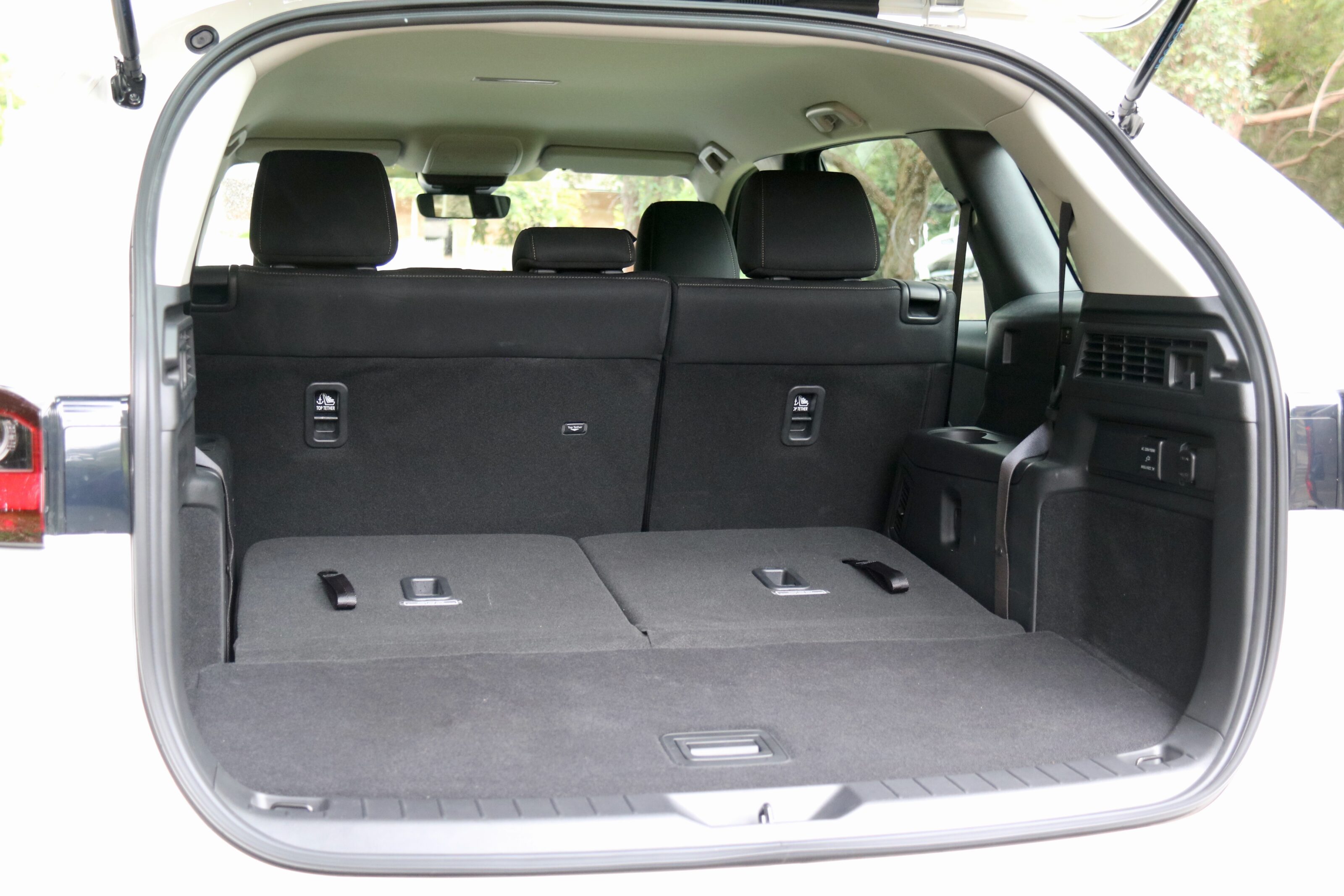
The CX-80’s boot is large, with 258-litres of space with the third row erected, 566L with the third row folded (to the belt line) and a big 1971L with both rear rows folded. The boot is also practical with hooks to hang bags off and under-floor storage with space for the cargo cover, though no spare wheel.
Service and warranty
Like other new Mazda products, the CX-80 Pure is covered by a five-year/unlimited km warranty with five years of roadside assistance.
The CX-80’s service intervals are once-yearly/every 15,000km (whichever comes first). Five years or 75,000km of servicing costs a pricey $3469 ($694 per annum).
Verdict: should I buy a Mazda CX-80 Pure?
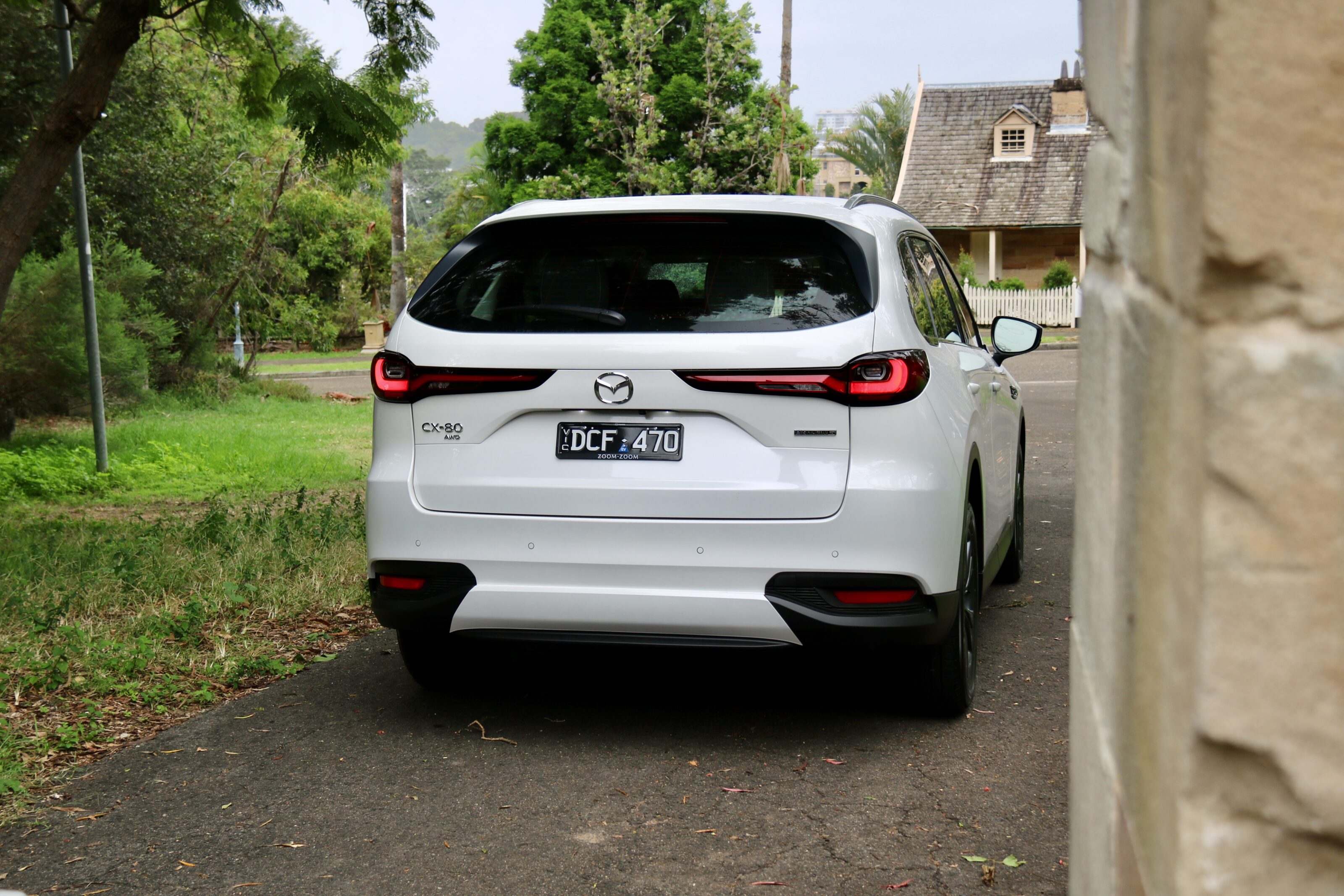
With Mazda’s premium push, we’d gotten used to higher pricing than you might expect from the brand, but with the CX-80 Pure, it’s hit a home run for value. Sure, the base CX-80 lacks features such as leather trim, but against something like an equivalent Mitsubishi Outlander, it’s more practical, features more safety equipment, feels more modern, is better to drive and uses a lusty turbo petrol six that’s capable of impressive fuel consumption.
Sure, it’s not perfect and there are issues for Mazda to work on, namely the too-firm ride quality and the sometimes-jerky transmission, plus adding soft touch door trims and making its service pricing cost less. But the CX-80 surprises as the most appealing member of the brand’s new large platformed-SUVs and has genuine appeal against its also-talented rivals. A gutsy inline six seven seat SUV with the typical Mazda classiness for under $60,000 drive away? There lies its appeal.
Mazda CX-80 Pure rivals
Hyundai Santa Fe
Skoda Kodiaq
Kia Sorento
Mitsubishi Motors Australia has officially announced pricing and specifications for the upgraded 2025 Outlander ICE range, set to go on sale nationwide from June 2025.
A major focus of the upgrade to the medium SUV is the recalibrated chassis and steering, the result of a collaborative effort between Mitsubishi’s Australian R&D team and its global engineering centre. Led by Tony Dorrington, Mitsubishi says its local team refined the ride and handling balance for Australian conditions, with the improved suspension, EPS tuning, and new Bridgestone summer tyres delivering a more composed and responsive drive.
Front and rear shock absorbers were re-tuned for enhanced bump and rebound control, complemented by a revised front anti-roll bar and steering map. These enhancements, now adopted globally, are matched by new measures to reduce noise, vibration and harshness (NVH), including 18 structural modifications and the addition of a transmission tunnel isolator.
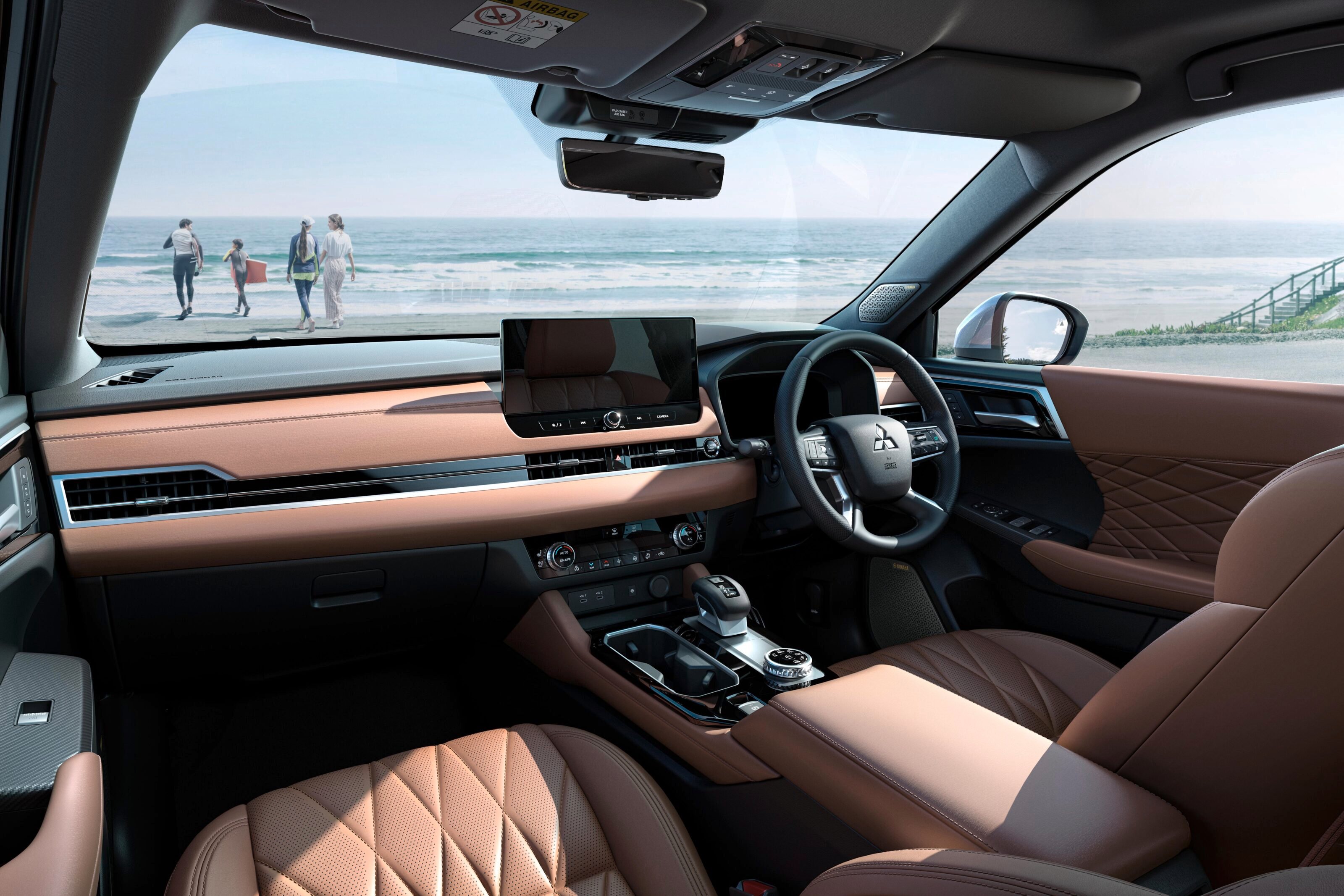
Mitsubishi’s partnership with Yamaha yields two premium audio systems: Dynamic Sound Yamaha Premium and the range-topping Ultimate in the EXCEED TOURER. The systems offer enhanced in-cabin audio through advanced digital processing, up to 1,650 watts of power, and strategic speaker placement.
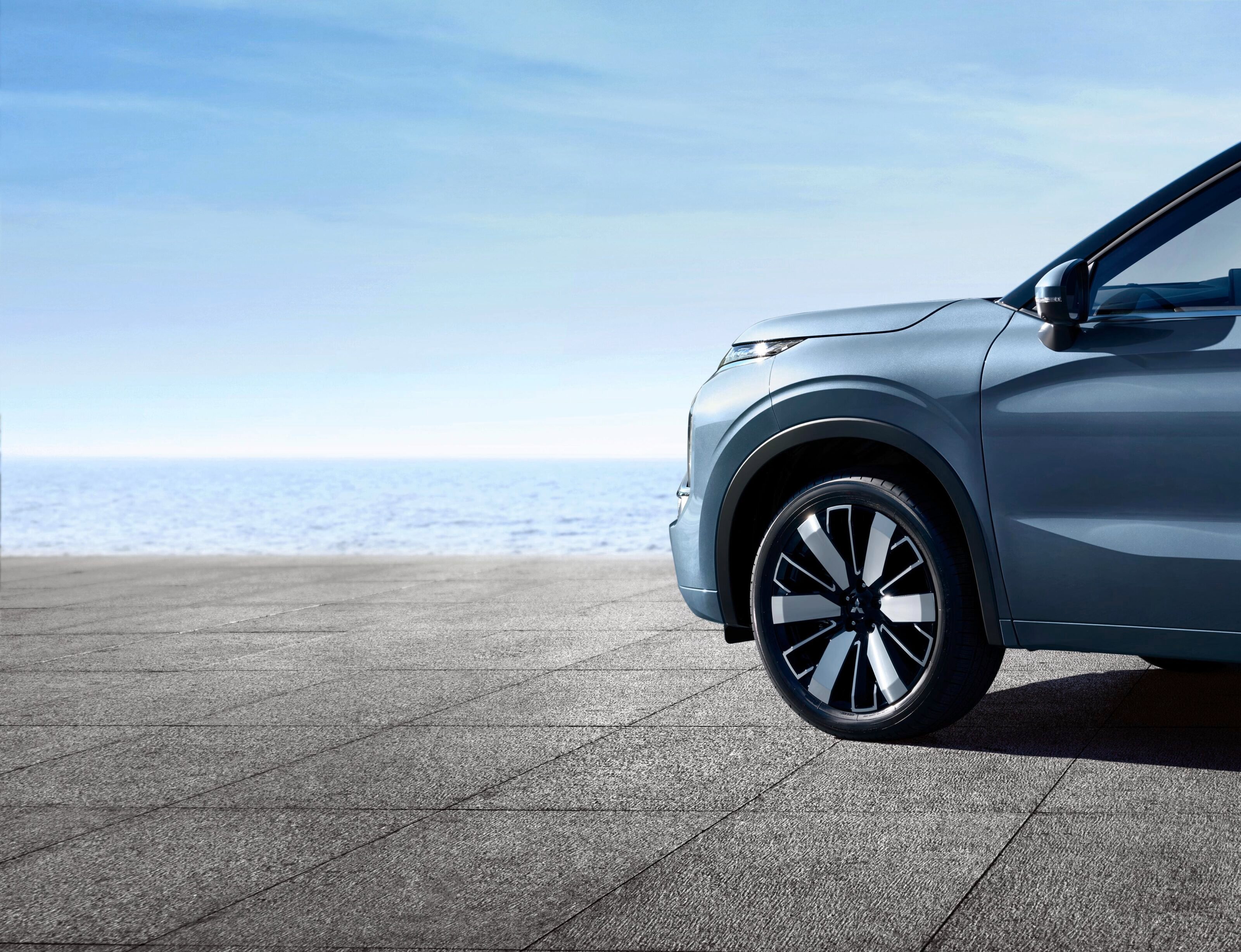
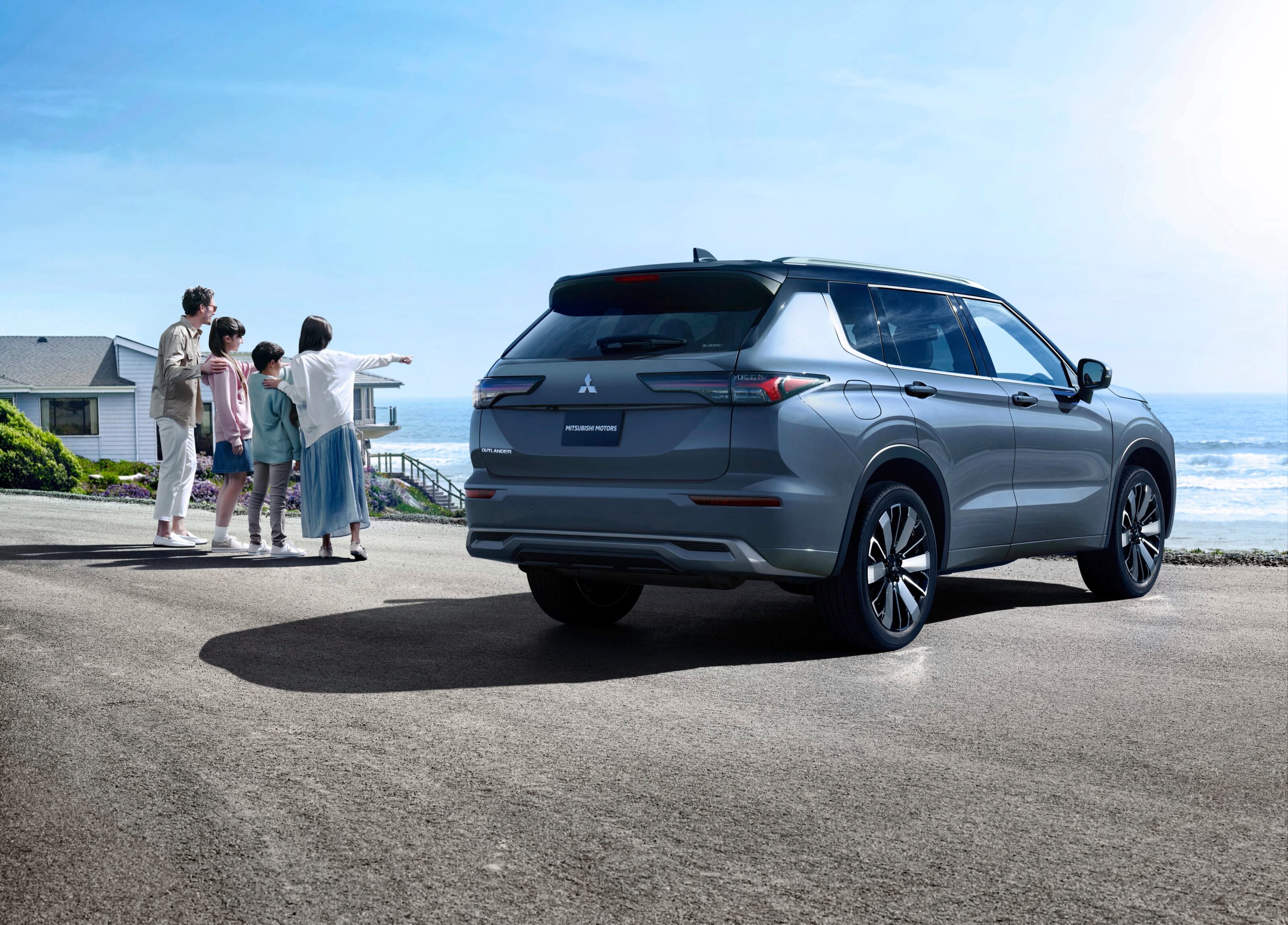
The exterior has been refined with updated bumpers, new lighting elements, and revised 18- and 20-inch alloy wheels, depending on trim. LED rear turn signals and smoked tail-lamp lenses offer a sleek new finish.
Inside, the cabin sees ergonomic and material upgrades including repositioned cupholders, expanded central storage, extended rear seat padding, and ventilated front seats from the EXCEED grade upward. New touch-sensitive LED lighting and ornate interior stitching further elevate the interior experience.
Debuting in the Outlander lineup is Mitsubishi Connect, available from LS grade upwards. It includes a suite of remote access and safety features such as SOS assistance, geo-fencing, speed alerts, and remote climate control.
Technology has been elevated with a new 12.3-inch infotainment screen and matching digital instrument cluster across all trims. Wireless Apple CarPlay remains standard, with wireless Android Auto introduced for the first time. Multiple USB-C outlets are included for all rows.
Safety tech has also expanded with additions like a Driver Monitoring System, camera-linked rear auto braking, enhanced blind spot intervention, and an updated 360-degree camera system.
The 2025 Outlander continues with the trusted 2.5-litre four-cylinder petrol engine producing 135kW and 244Nm, mated to a CVT. Front-wheel drive is standard on lower trims, while Super All-Wheel Control (S-AWC) is available across the range and standard on upper models.
Mitsubishi backs the Outlander with its 10/10 Diamond Advantage – 10-year warranty and 10 years of capped-price servicing – with up to four years of complimentary roadside assistance for eligible customers.
Pricing
| Outlander ES 5-seat FWD | $39,990 |
|---|---|
| Outlander ES 5-seat AWD | $42,490 |
| Outlander LS 5+2 FWD | $43,290 |
| Outlander LS 5+2 AWD | $45,790 |
| Outlander ASPIRE 5+2 FWD | $47,790 |
| Outlander ASPIRE 5+2 AWD | $50,290 |
| Outlander EXCEED 5-seat AWD | $55,140 |
| Outlander EXCEED TOURER 5-seat AWD | $57,990 |
Mitsubishi Outlander ES model
- Updated front and rear bumper designs (ES-specific)
- 18” alloy wheel design – silver paint
- Black cloth upholstery
- 8-speaker system – Dynamic Sound Yamaha Premium
- 12.3-inch IVI with in-built navigation
Outlander LS adds:
- 18” alloy wheel – machined finish with black paint
- Updated front and rear bumper designs (LS, ASPIRE)
- Mitsubishi Connect
- Emergency Call System (E-call)
- USB x 2 power socket in rear console Type-C 3.0A
Aspire adds:
- Alloy wheels 20”x 8” – machined, two-tone finish
- Black Granlux® artificial leather (ASPIRE)
- Mi-Pilot – Lane Keep Assist and Traffic Jam Assist
- Heated Steering Wheel
Exceed adds:
- Updated front and rear bumper designs with painted lower skirts (EXCEED, EXCEED TOURER)
- Full-size alloy spare wheel
- Choice of black or grey quilted leather upholstery
- Ventilated and heated front seats
- Aluminium pedals – accelerator, brake and footrest
- Frameless interior rear-view mirror with digital monitor
- Outside rear-view mirrors with memory and reverse auto tilt
- Front door foot lamps
- Rear cargo floor box with lid
- Five-seat layout
Exceed Tourer adds:
- Two-tone exterior paintwork
- Alloy spare wheel – Full size
- Quilted Brick Brown semi-aniline leather upholstery
- Massage front seats
- Second-row seat heaters (outside seats)
- Dynamic Sound Yamaha Ultimate with 12 speakers
Things we like
- Barely puts a foot wrong
- Well appointed and very practical cabin
- Good to drive and fast to charge
Not so much
- Is it almost too large?
- Not cheap to buy
- No spare wheel
| Rating |
|---|
Price: Air: $97,000 plus on-road costs, Earth: $106,500 +ORC, GT-Line: $121,000 +ORC
Drivetrain: Single or dual-motor electric motor
Outputs: 160kW/350Nm (Air), 283kW/700Nm (Earth, GT-Line)
Battery: 76.1kWh (Air), 99.8kWh (Earth, GT-Line) lithium-ion
Claimed range: 443km (Air), 512km (Earth), 505km (GT-Line)
Peak charging capability: 350kW DC, 10 – 80 per cent charge in 20 minutes (Air), 24 minutes
(Earth, GT-Line)
Dimensions: 5010-5015mm long, 1980mm wide, 1755-1780mm tall, 3100mm long wheelbase
Tare weight: 2312kg (Air), 2552kg (Earth), 2636kg (GT-Line)
Boot: 333L (all seats up), 828L (third row folded), 2318L (second and third rows folded), 90L (Air)
or 52L (Earth, GT-Line) front boot
0-100km/h: 8.2 seconds (Air), 6.0 seconds (Earth), 5.3 seconds (GT-Line)
Warranty: Seven-year/unlimited km (7-year/150,000km for the battery)
Five-year/75,000km service cost: $1351 ($270 annually)
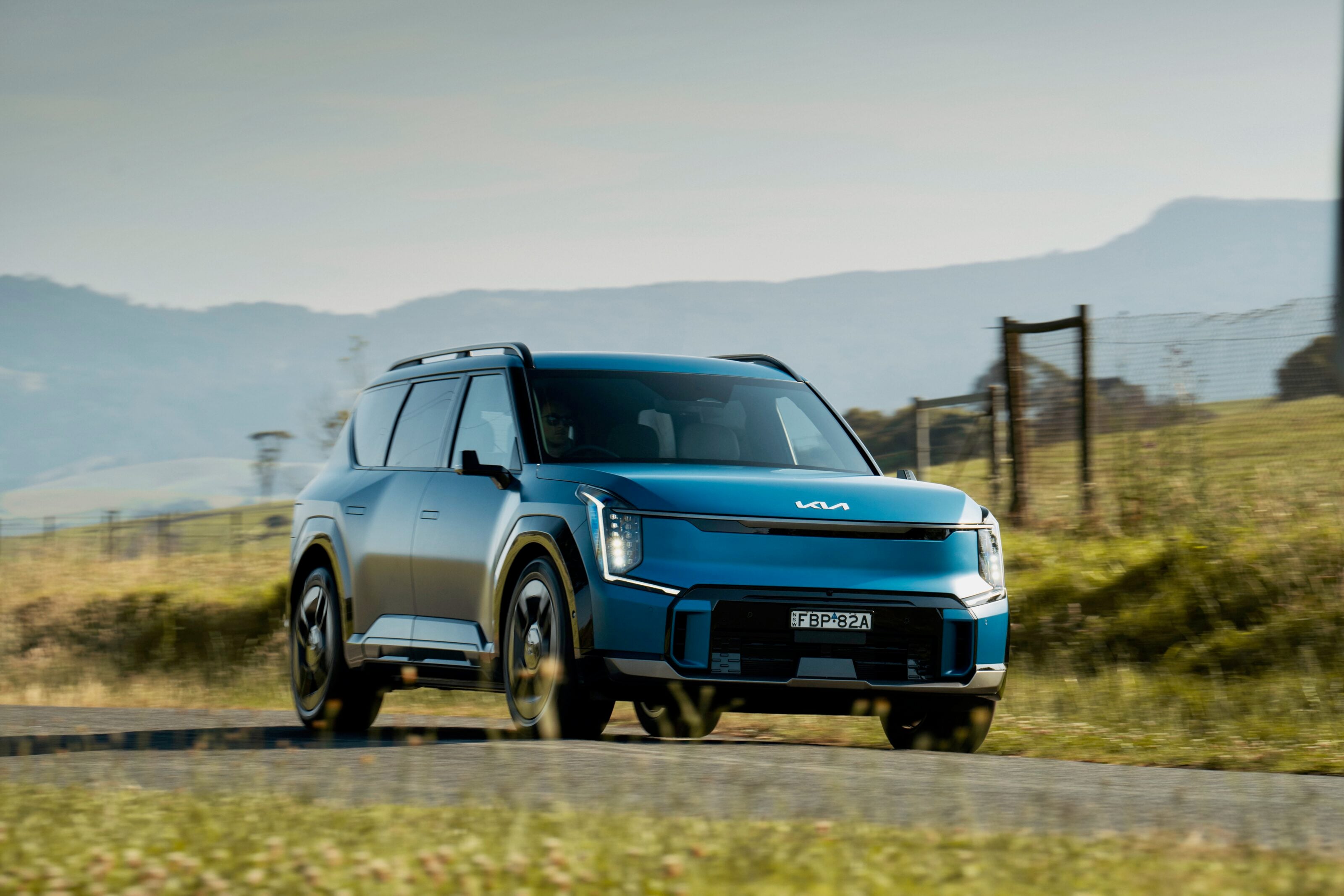
Kia’s rise to sales stardom has been amazing to watch. No longer the butt of jokes in the global car industry, modern-day Kia makes world class products that, unlike some car markers, still offer great value for money.
But in order to hunt for more segments to conquer, Kia had to think bigger, so here we have the EV9 seven-seat upper large electric SUV.
The EV9 is its most expensive product ever, and at over five metres in length, it’s also the largest passenger vehicle as well. Kia belives there’s definitely a market for it in Australia, and evidence of that is that it took only nine months from global reveal to reach Australian showrooms, which is much faster than most cars. Is the EV9 a good choice for the larger family?
Price and equipment
For now, there are three variants in the Australian Kia EV9 range, with the high-performance GT revealed late last year due to join the range soon.
2025 Kia EV9 pricing (plus on-road costs):
| Air | $97,000 |
|---|---|
| Earth | $106,500 |
| GT-Line | $121,000 |
Kia EV9 Air standard equipment:
- 19-inch alloy wheels with a tyre repair kit
- Dusk-sensing automatic all-LED exterior lighting
- Rain-sensing automatic wipers
- Roof rails
- Keyless entry with push button start and remote start
- Auto-retracting door handles
- Heated and auto-folding mirrors
- Noise-suppressing windscreen and side glass
- Artificial leather steering wheel and seat upholstery
- Heated and ventilated front seats
- Heated steering wheel
- 10-way electrically adjustable front seats
- Tri-zone climate control
- 12.3-inch digital driver’s display
- 5.0-inch climate control screen
- 12.3-inch touchscreen
- AM/FM/digital radio
- Wired Apple CarPlay and Android Auto
- Satellite navigation
- Live services and over-the-air updates
- Eight-speaker sound system
- 6x USB-C and 2x 12V charging ports
- Wireless phone charger
- Recycled fabric headliner
- Eco, normal and sport driving modes
EV9 Air safety equipment:
- Nine airbags
- Autonomous emergency braking with pedestrian, cyclist and intersection assist
- Lane keep assist with lane departure warning
- Adaptive lane guidance for highway driving
- Blind-spot monitoring with rear cross-traffic alert (with braking)
- Speed sign recognition
- Driver attention monitoring
- Adaptive cruise control with traffic jam assist
- Auto high beam
- Safe exit warning
- Intelligent speed limit assist
- Front and rear parking sensors
- Reversing camera
- Alarm
- Tyre pressure monitoring
- Auto-dimming rear mirror
The EV9 received a five-star ANCAP safety rating in 2023 with scores of 84 per cent in adult
protection, 87 per cent in child protection, 76 per cent in road user protection and 85 per cent in
safety assist.
EV9 Earth model adds over Air:
- Dual-motor drivetrain with larger battery
- Gloss black exterior trims
- 64-colour cabin LED ambient lighting
- Illuminated Kia logo on the steering wheel
- 360-degree camera
- Blind-spot camera
- Different 19-inch alloy wheels
- Automatic low-speed braking in reverse
EV9 GT-Line model adds over Earth:
- GT-Line exterior styling with front and rear skid plates
- Cube-shaped projector LED headlights with Matrix adaptive high beam
- 21-inch alloy wheels
- Rear privacy glass
- Digital side and rear mirrors
- Dual sunroofs
- Two-tone synthetic leather trim
- Augmented reality head-up display
- Alloy pedals
- 14-speaker Meridian sound system
- Heated and ventilated outer rear seats
- Remote parallel, perpendicular and diagonal parking functionality
- Second-row door sunshades
- Recycled suede headliner
- Electric steering column adjustment
Performance and efficiency
Using Hyundai e-GMP platform, the Kia EV9 is offered in two lithium-ion battery sizes in Australia: a smaller 76.1kWh unit in the base Air, or the larger 99.8kWh one in the Earth and GT-Line. The claimed range for the Air is 443km, 512km in the Earth and 505km in the GT-Line (WLTP).
Because the EV9’s platform uses an 800V architecture, it can charge quite fast: up to 350kW, according to Kia. That gives it a fast 10 to 80 per cent DC charging time of just 20 minutes in the Air and 24 minutes in the Earth and GT-Line.
The EV9 Air uses a 160kW/350Nm electric motor on the rear axle, providing more than enough shove for most buyers with a claimed 8.2 second 0-100km/h time. Going up to the Earth and GT-Line adds a second motor on the front axle for 283kW/700Nm outputs and much quicker acceleration: just 5.2 seconds is required for the GT-Line to hit 100km/h.
On the road
Using the same platform as its smaller EV6 sibling, the EV9 drives well. Thanks to Kia’s local ride and handling tuning program, regardless of model, the EV9 provides a comfortable driving experience. Despite the heavy up to-2636kg tare weight (GT-Line), the EV9 feels lighter on its feet and while it’s no EV6 GT for handling, it’s more fun than you’d expect with light but quick steering and excellent damping, even on the big-wheeled GT-Line.
As you’d expect for a $100,000+ car, refinement in the EV9 is excellent with very little in the way of road noise – even despite the lack of engine noise – and despite the boxy body, very little wind noise either. Because of the boxy body, the visibility is excellent, though the camera mirrors on the GT-Line should be optional equipment as their field of vision is limited.
Interior comfort, practicality and boot space
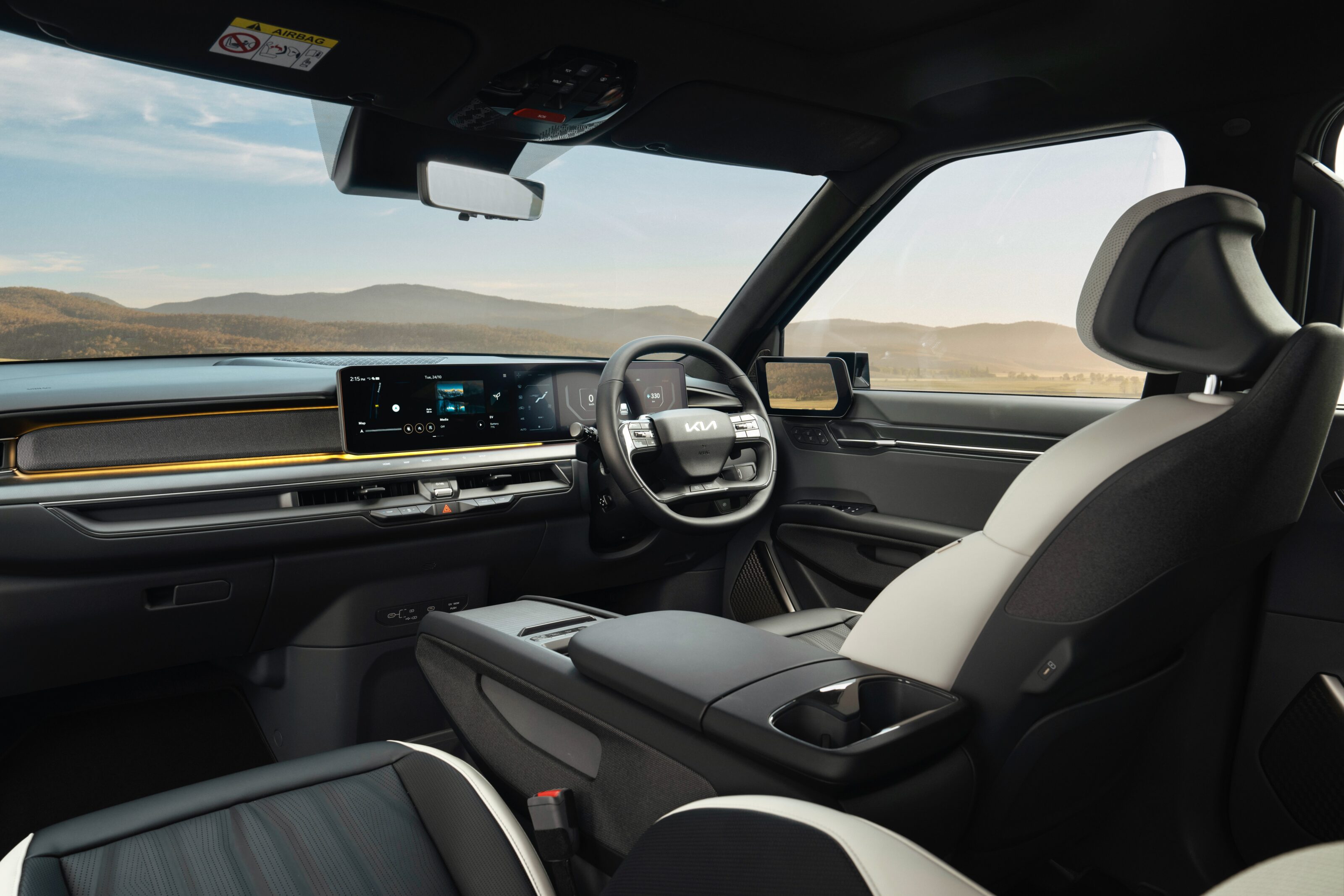
The dashboard of the Kia EV9 set the design language of the EV5, EV4 and EV3s that came after it with a very horizontal and practical design. Material quality is good though some could better reflect the car’s pricing. It’s also a fairly cold cabin – we’d love to see more colour options added for a warmer feel inside.
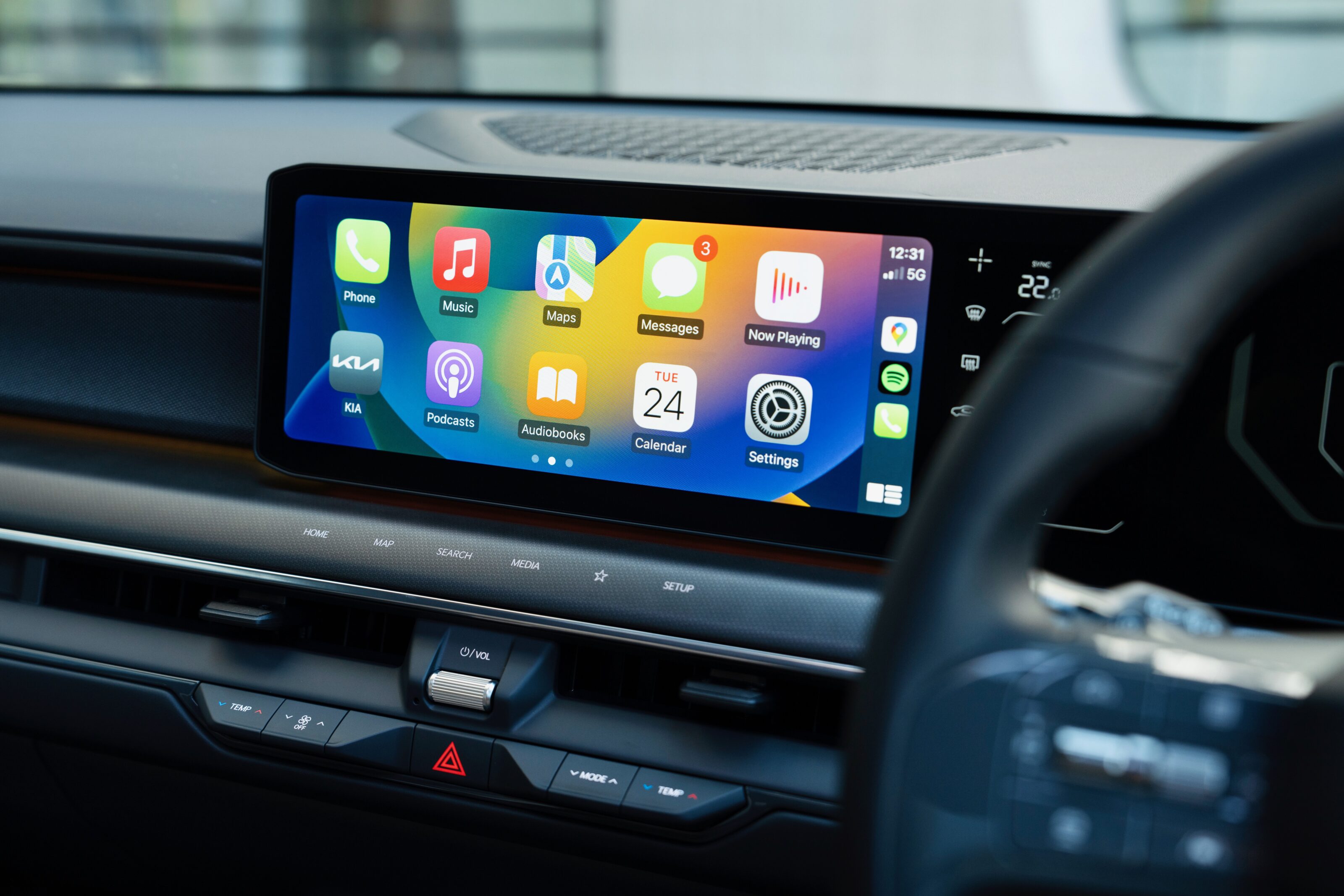
Every EV9 features a 12.3-inch touchscreen with a 5.0-inch unit and then another 12.3-incher sitting next to it for the climate control and driver’s display respectively. As we’ve seen in other Kia models, it’s quick and easy to use, while the sound systems are also quite good, especially the 14-speaker Meridian unit in the GT-Line. Though initial EV9 models feature wired smartphone mirroring, an over-the-air update will add wireless capability to match newer Kia models.
The storage on offer in the EV9 is good with a massive lower console bin and a big cup holder section, though the door bins are surprisingly small and the section underneath the centre armrest (which also has an excellent wireless phone charger with a raised island to accommodate blocky smartphone cameras) isn’t huge either.
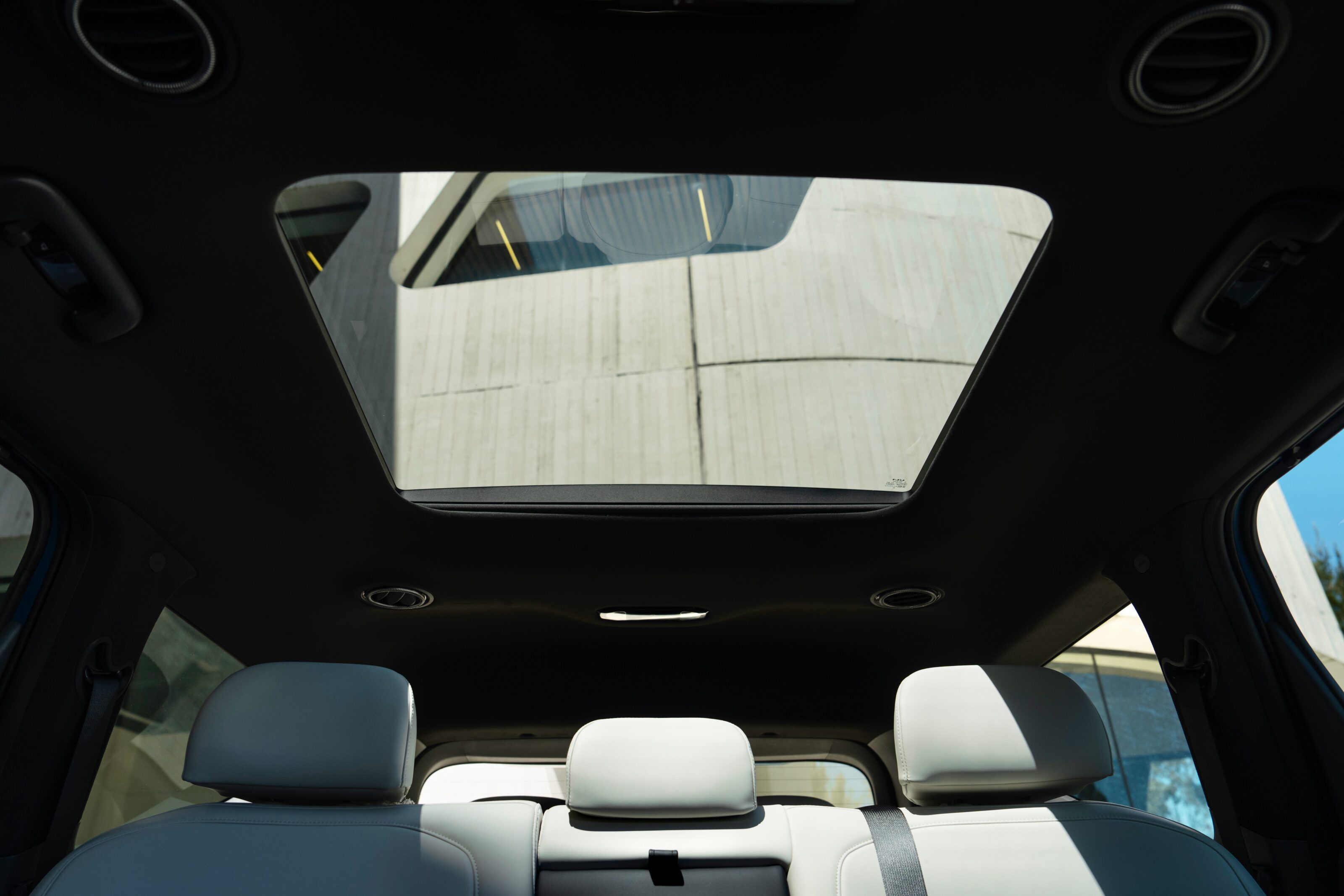
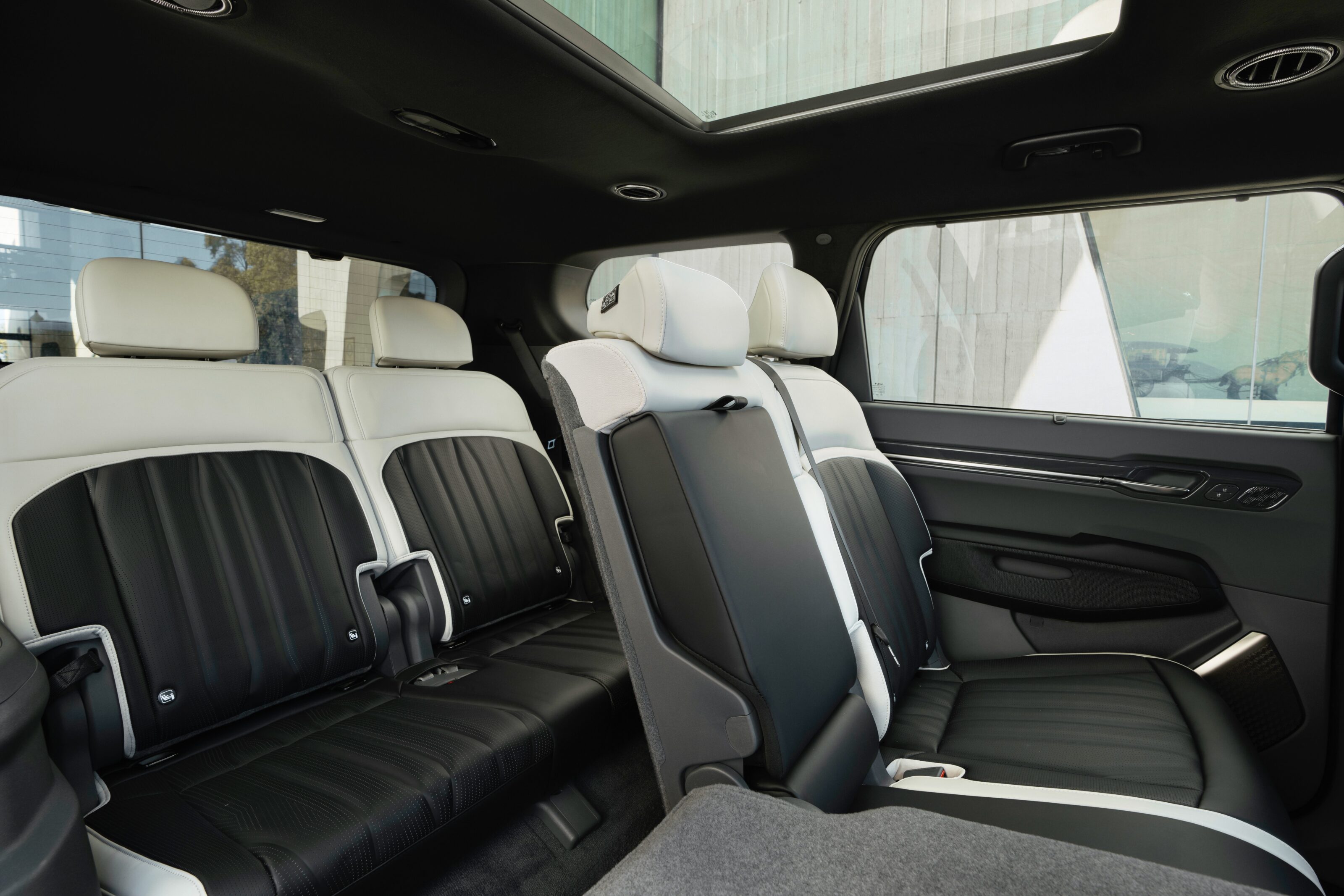
The second row of the EV9 is one of the best on the new car market, with plenty of space for three adults. Even in the base Air, features on offer are impressive with charging ports, a third climate zone, map pockets, door pockets and a sliding tray for storage.
Jump up to the GT-Line and a sunroof, heated and ventilated outboard seats and sunshades also feature. Sliding the middle row forward is easy thanks to a button on the seat, moving forward and up to give access to those entering the third row.
The third row of seating in the EV9 is large for a seven-seat SUV, though not as spacious as its Carnival sibling. Two adults will be quite comfortable, and the large windows – and sunroof in the GT-Line – make it feel airy. There are also air vents, USB-C charging ports and cup holders.
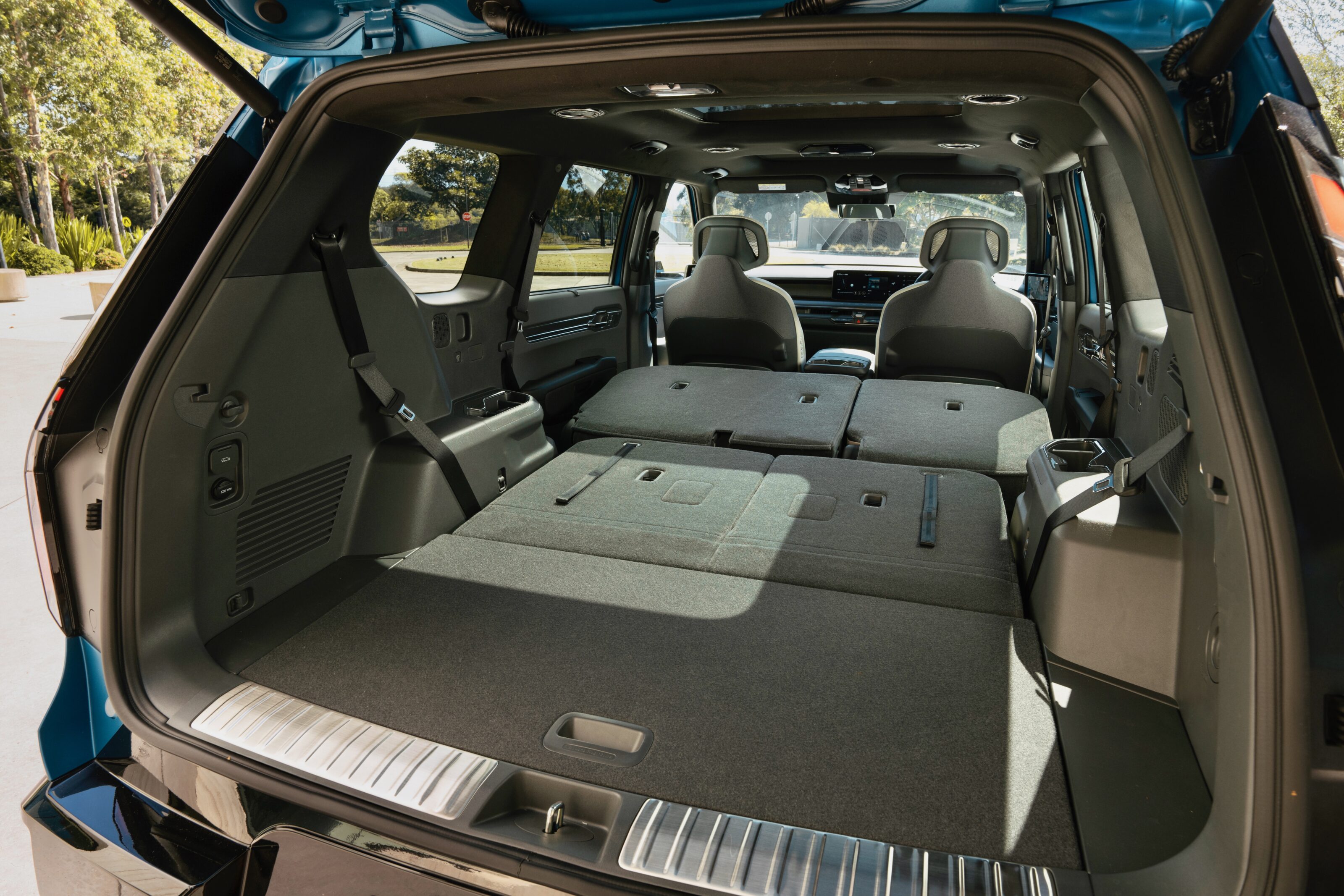
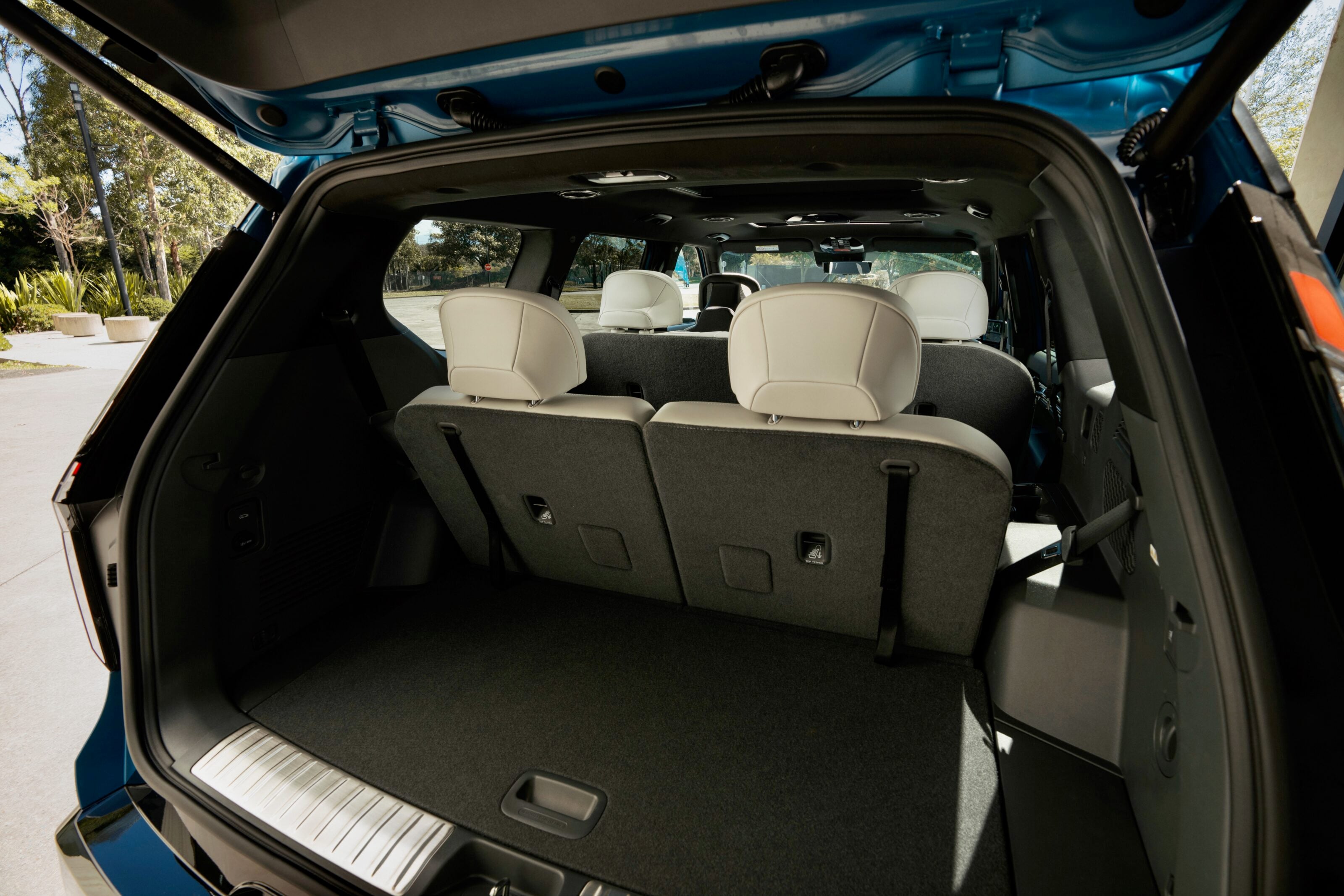
Behind the third row of seating is 333 litres of space, which opens up to 828L with the third row of seats folded and a huge 2318L with the second row folded as well. As you’d expect for such a gargantuan vehicle, it’s a massive space and is even more impressive considering that it’s got a battery underneath to further complicate packaging. Open the bonnet and there’s a big 90-litre front boot (52L in the Earth and GT-Line) as well, though no EV9 features a spare wheel.
Service and warranty
As with all other new Kia products, the EV9 is covered by a seven-year/unlimited warranty with up
to eight years of roadside assistance.
The battery is covered by a seven-year/150,000km warranty and a five-year/75,000km service plan
costs $1351 ($270 each year).
Verdict: should I buy a Kia EV9?
If you’re after a large seven-seat electric SUV, your choices are currently limited in Australia, meaning the Kia EV9 is a great option that acts exactly as you’d expect of a modern Kia product. It’s huge but also very practical, the interior is spacious, it drives well, its charging speeds are some of the fastest in the industry and it’s loaded with equipment.
To consider is that the EV9’s is that its’s size can be a bit intimidating, the camera mirrors in the GT-Line just aren’t as useful as regular mirrors, and that even for the base Air, it will be over $100,000 once it’s driven out of the dealership. In all other respects, the EV9 is a great product for those who need space and more space.
Kia EV9 rivals
Hyundai Ioniq 9
Volkswagen ID. Buzz