
JUST WEEKS ahead of its relaunch into the Australian market, Genesis has received a huge boost, claiming top spot in the JD Power Initial Car Quality survey. Yes, it’s a survey of American owners who, let’s face it, aren’t world-renowned connoisseurs of luxo touch and feel but if there’s one thing the Yanks value, it’s reliability. That and 99c deep-fried mechanically recovered meats.
Generally we expect Japanese brands such as Lexus and Toyota to feature at or near the pointy end of the JD Power surveys, but this year’s result has turned its gaze westwards a little, with three South Korean marques hogging the podium places. Genesis looks down on everything else.
This survey solely looks at early problems encountered in the first 90 days of ownership. In other words, those niggles and issues that can take the shine off your new car experience rather than ongoing issues that only raise their heads years down the track. It’s expressed in the amount of problems per 100 vehicles in that initial three month spell, and a single lemon vehicle can contribute to a number of faults.
The average number of faults per 100 cars was 93. Genesis enjoyed the lowest number of faults at 63 per 100 vehicles, with Kia coming second at 70 and Hyundai virtually lineball at 71. Somewhat surprisingly, the next three brands were Ford, Lincoln and Chevrolet, demoting the best of the Japanese – Nissan – to seventh spot. Dodge, Lexus, Toyota and Buick all scored better than average.
We don’t have an equivalent survey here in Australia and many of the cars sampled aren’t offered in Australia or, if they are, are sometimes built in different factories, so treat the results with a grain or two of salt. That said, it probably won’t come as a huge surprise to find Jaguar at the bottom, Land Rover just above it, and Alfa Romeo fourth from last. Having Mitsubishi sandwiched between Alfa and Land Rover would probably raise a few eyebrows though.
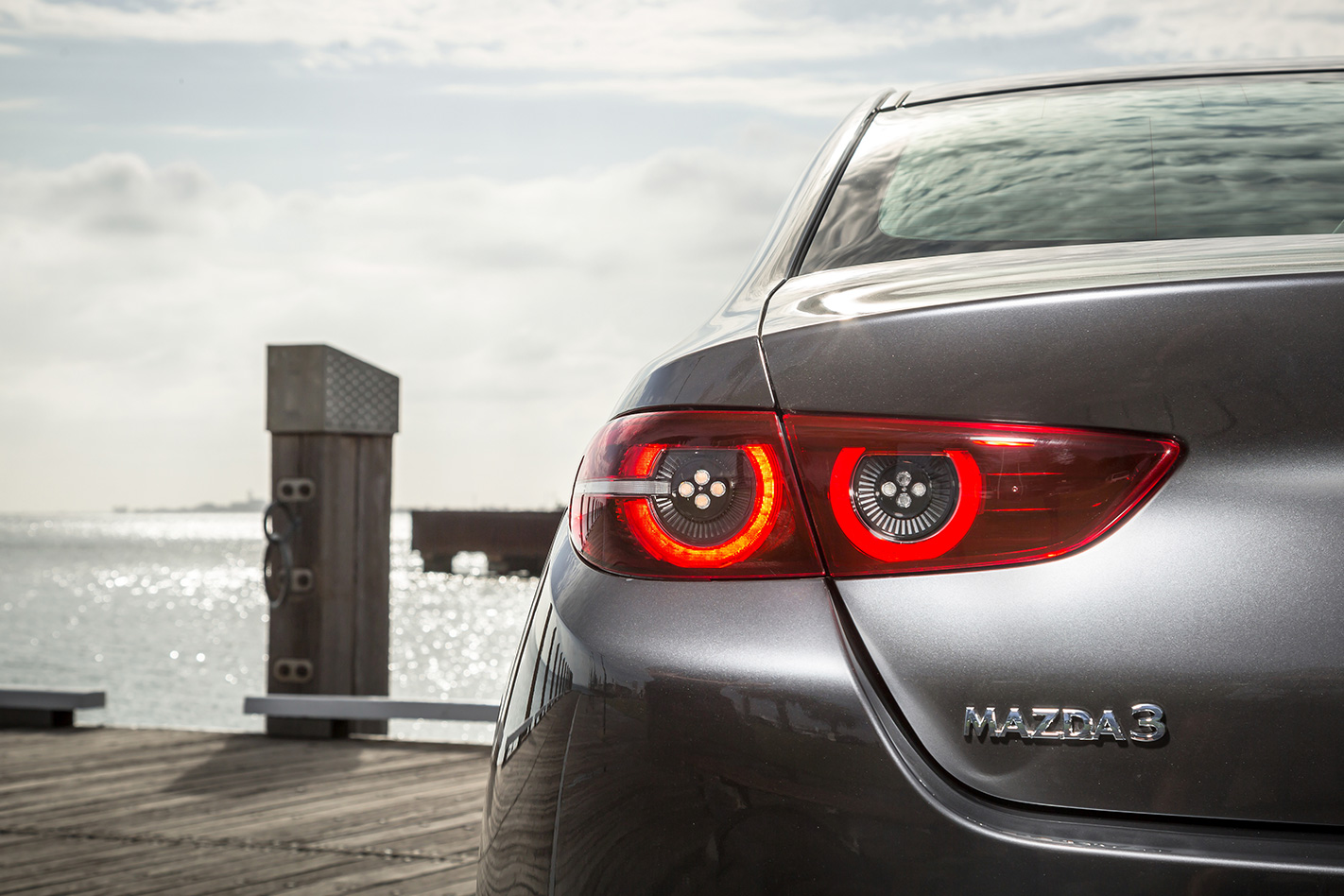
Upscale German brands such as BMW, Audi, Mercedes-Benz, Porsche and Volkswagen all feature in the bottom half of the table. Marques most would expect to fare well such as Honda, Infiniti, Subaru and Mazda also languish below the average line. Mazda did enjoy some good news, however, with the brand being the biggest improver over last year, reducing its fault score by 25 per 100.
The most reliable car model rather than marque in the entire survey was the Porsche 911, so Zuffenhausen has something to cheer about. But it’s the Koreans who will really be popping the champagne corks. Look out for our full drive review on the Genesis G70 – the car that really leads the charge for Hyundai’s revitalised luxury arm in Australia – on Monday at whichcar.com.au/wheels
Toyota has revealed its plans to popularise its electric cars, announcing that it will have at least 10 battery electric vehicles (BEVs) available around the world by the early 2020s.
Starting with China in 2020, Toyota will introduce a battery-powered version of its C-HR small SUV (which was unveiled at the Shanghai motor show this year) before rolling out a variety of electric cars throughout the next decade.
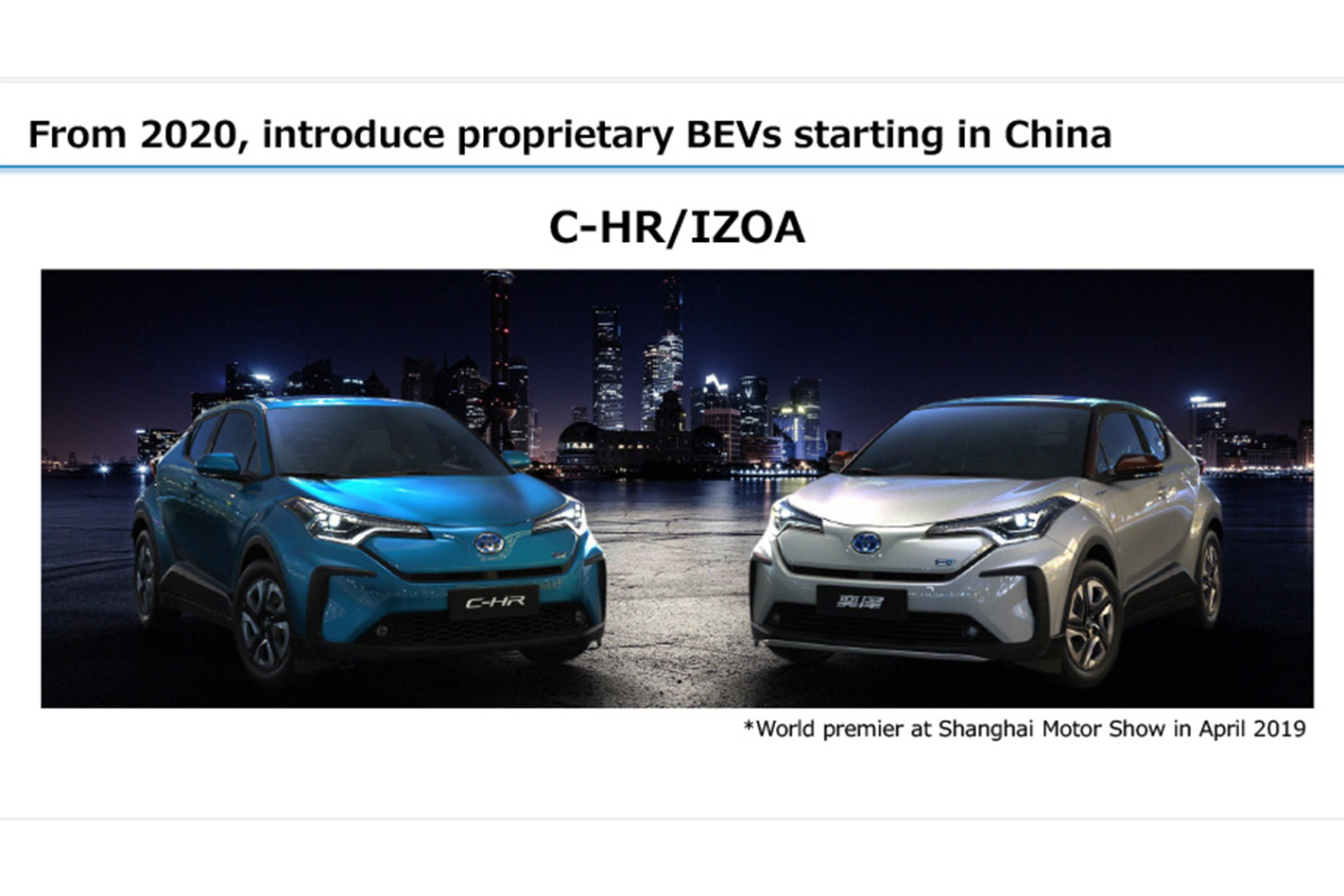
At the presentation for Toyota’s electric future in Japan last week, Toyota’s executive vice president of R&D, Shigeki Terashi, expressed aims to have an electrified version of each of its model lines by 2025. He also expects electric cars (including hybrids and plug-in hybrids) to account for half of its worldwide sales by that time.
These targets were set back in 2017, but advancements in battery technology – and a desire to be ahead of the game in the face of increased competition from companies like Volkswagen – has afforded Toyota an opportunity to progress its electric car plans by five years.
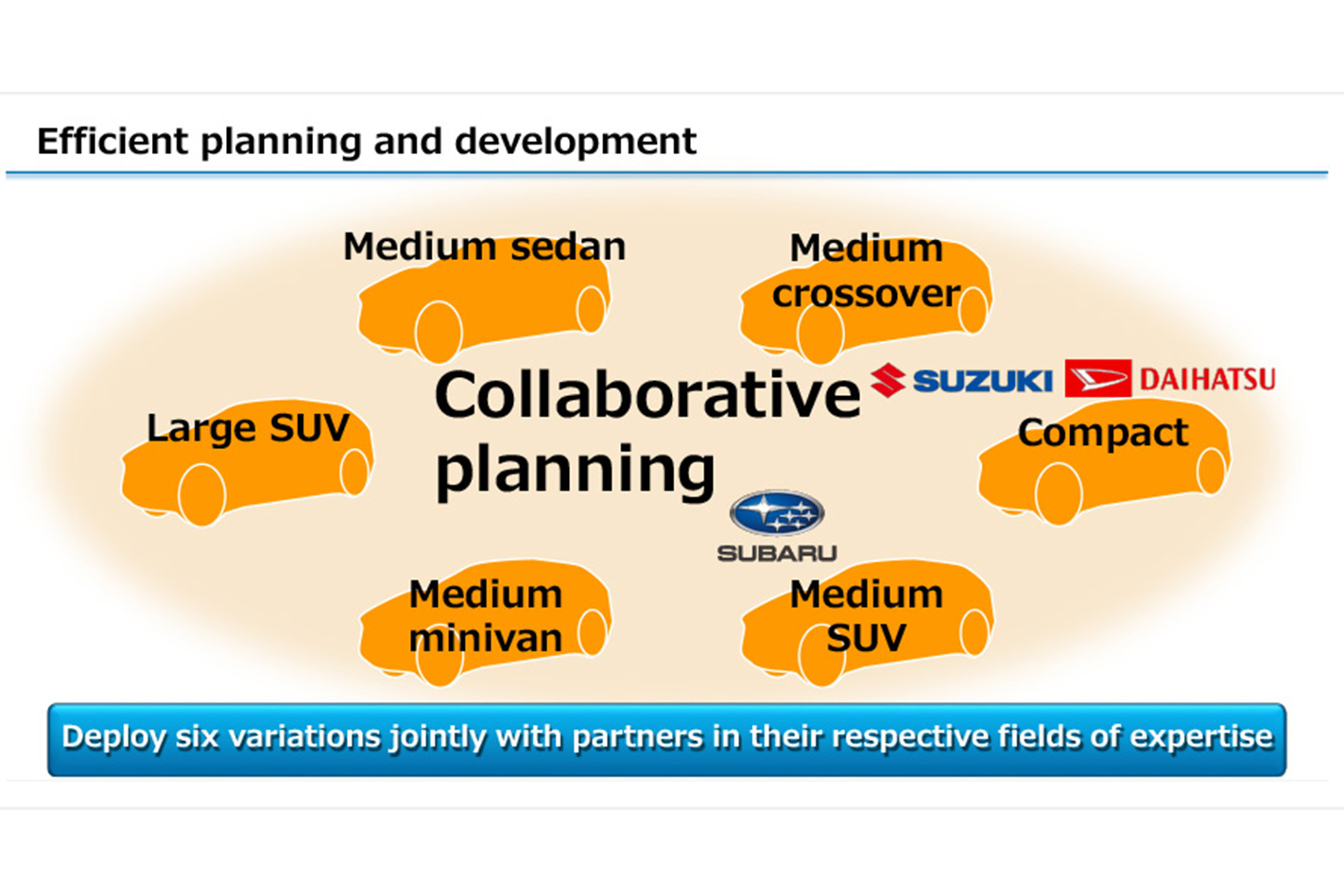
Toyota hasn’t gone too into too much detail about what specific cars it aims to produce, but it did provide some hints in what it would like to have in the form of full-sized clay models.
The clays, which have been in design for several years, include a medium-sized sedan, a medium crossover, a large SUV, a medium minivan, a medium SUV and a compact hatch.
Other vehicles like ultra-compact kei-style BEVs that hold two people and reach 60km/h, were also previewed.
To aid the fast-tracking of Toyota’s electric car onslaught, minority partner Subaru will be drafted in to help with the creation of a new flexible BEV-dedicated platform called e-TNGA.
Toyota will also seek help from Subaru in the development of the aforementioned medium SUV, while also tapping into fellow Japanese car maker Suzuki and its own entry brand Daihatsu’s knowledge when designing the compact hatch BEV.

In addition to conventional cars, Toyota has also expressed interest in developing wider-reaching ‘last mile’ mobility devices like scooters, as well as wheelchairs and wheelchair-linked devices for the elderly, which we should see in 2020/2021.
Above all, Toyota has stressed its desire to evolve from a car company to a mobility company, all the while cutting down on CO2 emissions and air pollution.
For a company that almost single-handedly fired up the hybrid revolution with the Prius, Toyota has not been as visible as VW, General Motors and other global giants when it comes to articulating its EV plans, but this lays out a clear road map for the Japanese giant to close the gap.
A good autumn in Victoria is hard to beat. The sun has lost its savage summer edge, hot northern blasts and the cool changes that follow are replaced with a settling stillness, and the state’s rural regions blush with turning deciduous leaves.
March and April is one of the best times of the year to visit Melbourne’s surrounding regional gems, especially if food and drink is your singular purpose, but while the Yarra Valley, Mornington Peninsula and Great Ocean Road are perhaps the more obvious directions to head, Gippsland is often overlooked.
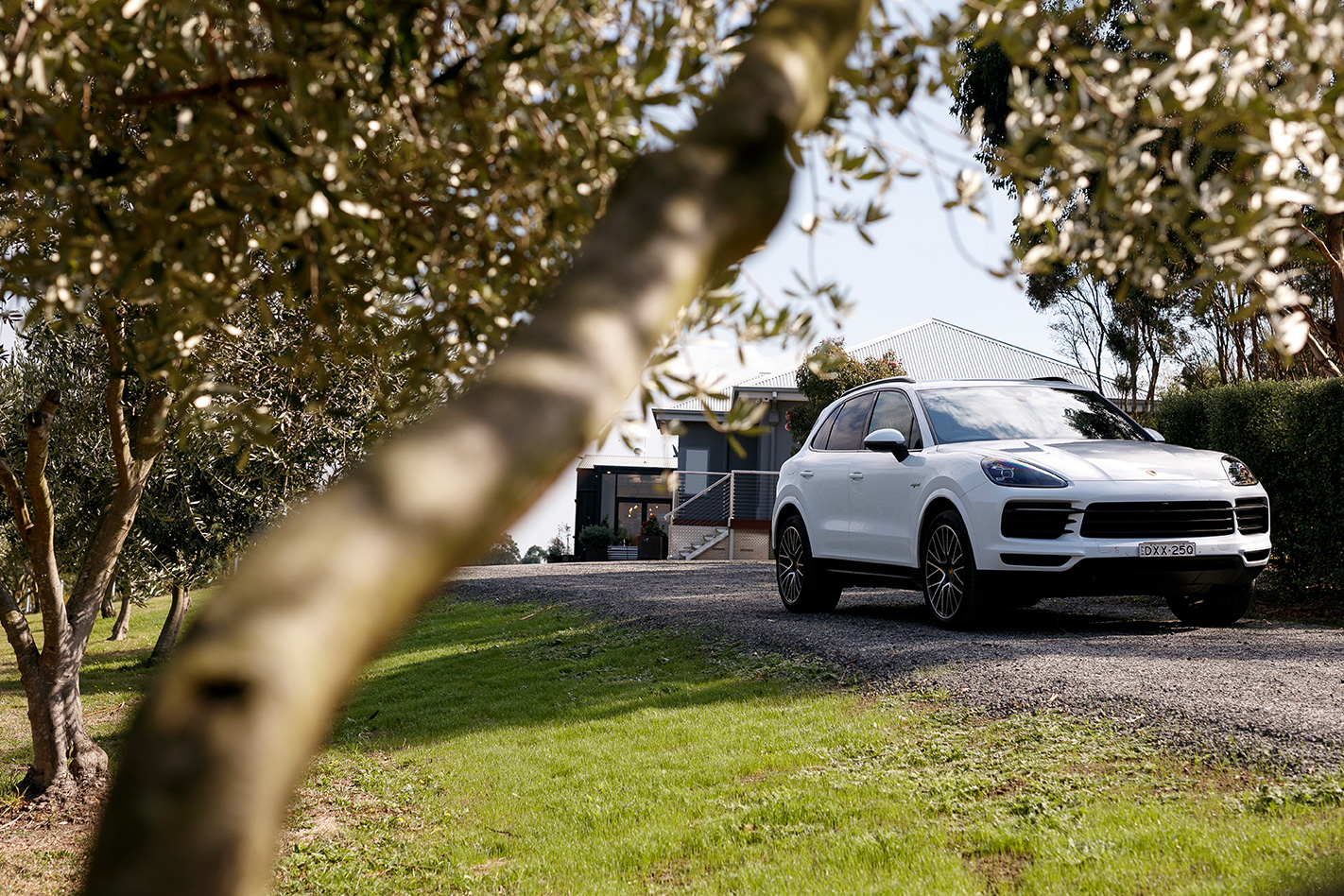
Head east out of Melbourne for less than two hours and you’ll find out, as I did, that this pearl deserves more recognition.
Click on the gallery above to view segments 1 & 2 of Farm to Table with the Porsche Cayenne
If you do, you’ll also need the right car to take you there, and while large luxury SUVs may be a more frequent sight in suburban environments, Porsche’s new Cayenne could be the perfect fit.
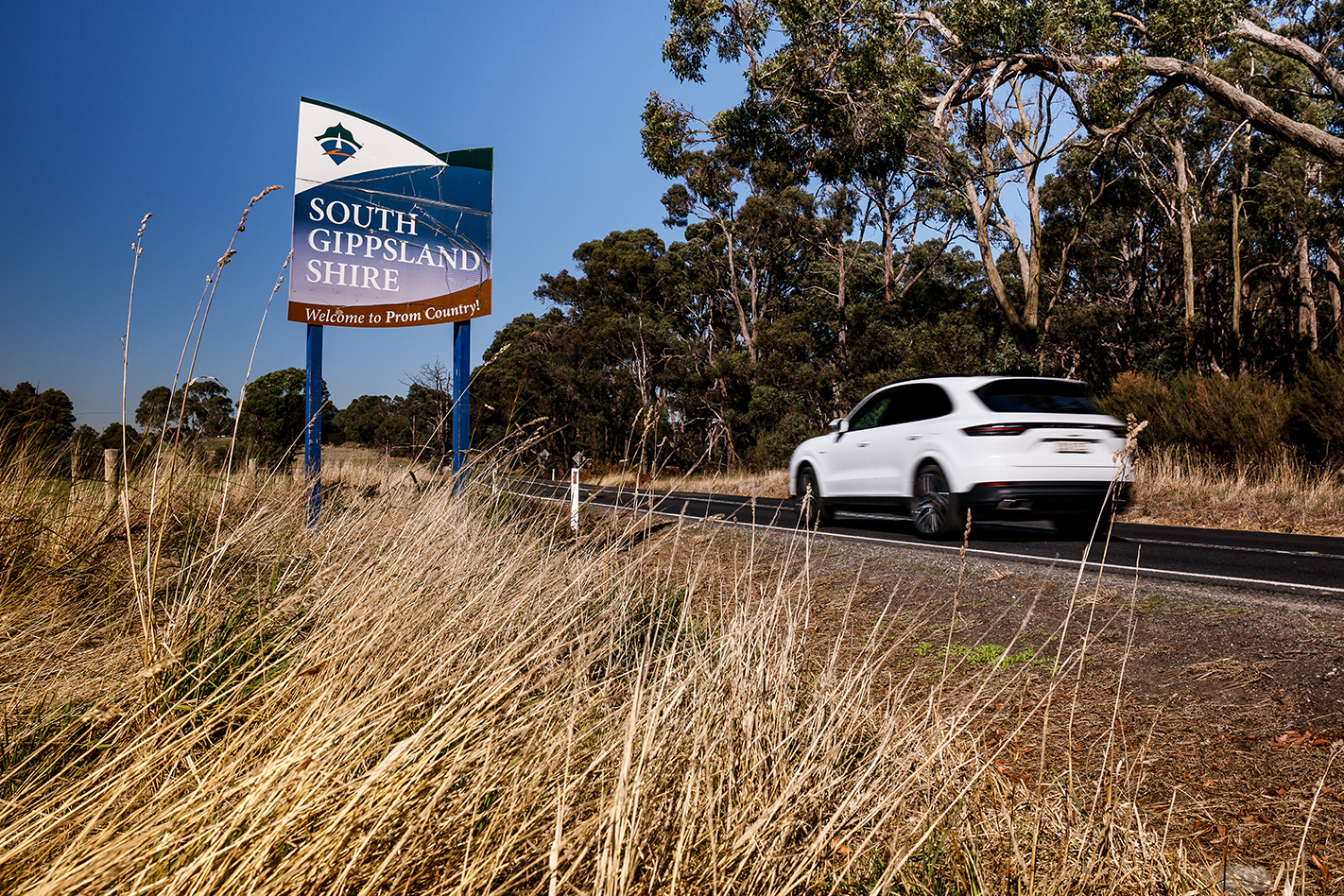
Under its handsome exterior it has a decent 210mm of ground clearance and four-wheel-drive for tackling farm tracks or even more serious terrain, there’s up to 1610 litres of boot space so you don’t have to leave behind a single case of red and, most importantly, this version is a plug-in hybrid, which means environmentally you’ll tread lightly wherever you go.
While one eye will be kept on the fuel gauge, I’ll also be hoping to debunk the perception that hybrids sacrifice fun in the name of frugality.
Until Porsche offers an autonomous Cayenne I’ll need a guide, and Gippsland food and drink ambassador Alejandro Saravia would appear to be a choice as perfect as the Porsche. We hit the road early.
Not content simply running a pair of bustling restaurants – Pastuso in Melbourne and Uma in Perth – Alejandro, or Ale to those who know the Peruvian-born chef, is nearly ready to launch his latest venture, Farmer’s Daughters, a food and drink institution in Melbourne, with a focus on bringing Gippsland’s finest from ‘farm to table’. And he knows this part of the world like the back of his heavy Tasmanian leather apron.
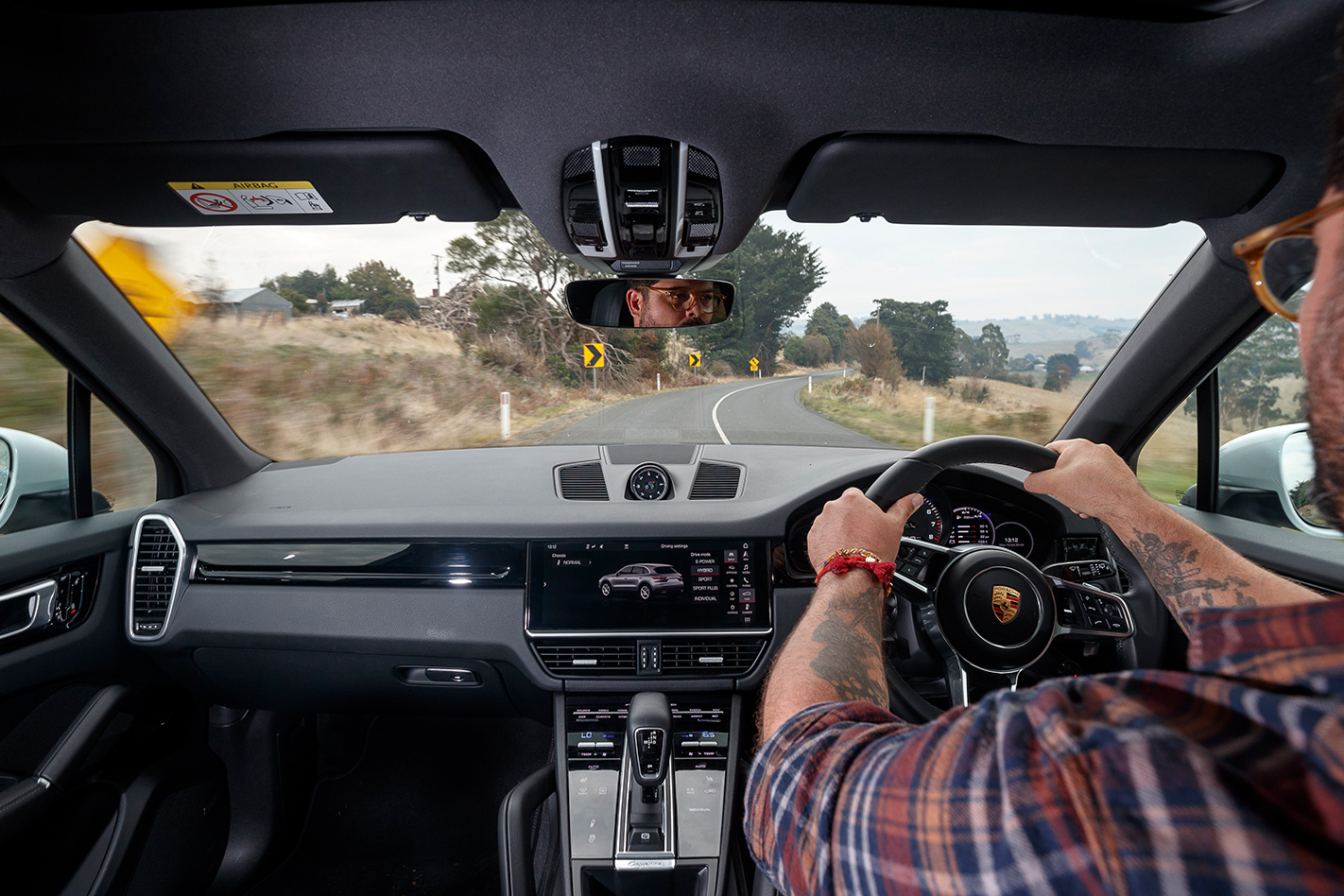
Our job today is to visit a selection of his favourite suppliers that provide the first class ingredients you will find on the menu. Today, however, the produce we gather will not head to Melbourne; instead, the day will conclude at a very special venue with an equally special banquet.
The first stop couldn’t be more quintessentially rural. A winding lane cuts through the first misty light of day and impossibly pretty hills, before leaving the asphalt and climbing to a micro dairyoperated by Rob.
Surprisingly well travelled – he has another trip to Canada planned soon – Rob’s initial gruff reception quickly defrosts into friendly, humorous banter. Then we are met by Rachel, who sources the dairy’s milk to provide the key ingredient in Butterfly Factory un-homogenised milk, cultured butter, cream and yoghurt.
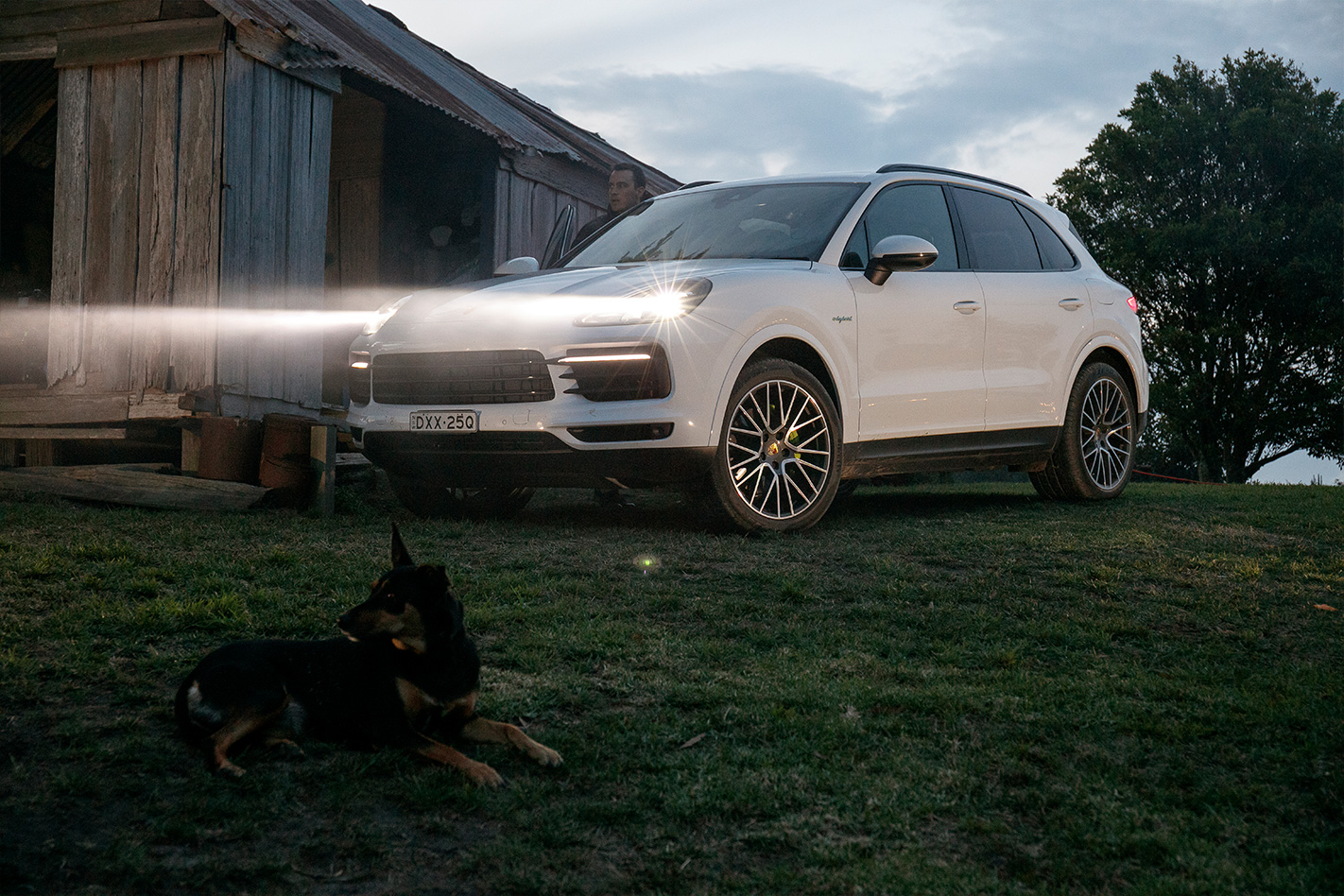
Decanting 200 litres of milk into 20-litre drums twice a week seems unnecessarily involved, but Rachel explains with a chuckle “everything I do is labour-intensive”. The business was born when one day her milk separator broke and the resulting ‘whole’ milk was irresistibly good. A sample of the finished products, accompanied by honestly the best sponge cake I’ve ever had, confirms it. Absolutely delicious.
As we stroll the pasture along a small dam, Ale says that he insists on working with suppliers who share the same vision of community and small scale industry, ensuring unbeatable quality, just like Rob and Rachel. We bid farewell with heartfelt thanks and a mental note to return with more time.
After cruising the relatively short trip (100km) east out of Melbourne, the Cayenne still has half of its lithium ion battery ready to send pure electric power to all four wheels, and it seems prudent at this hour of the day to creep out of the dairy under silent, emissions-free propulsion.
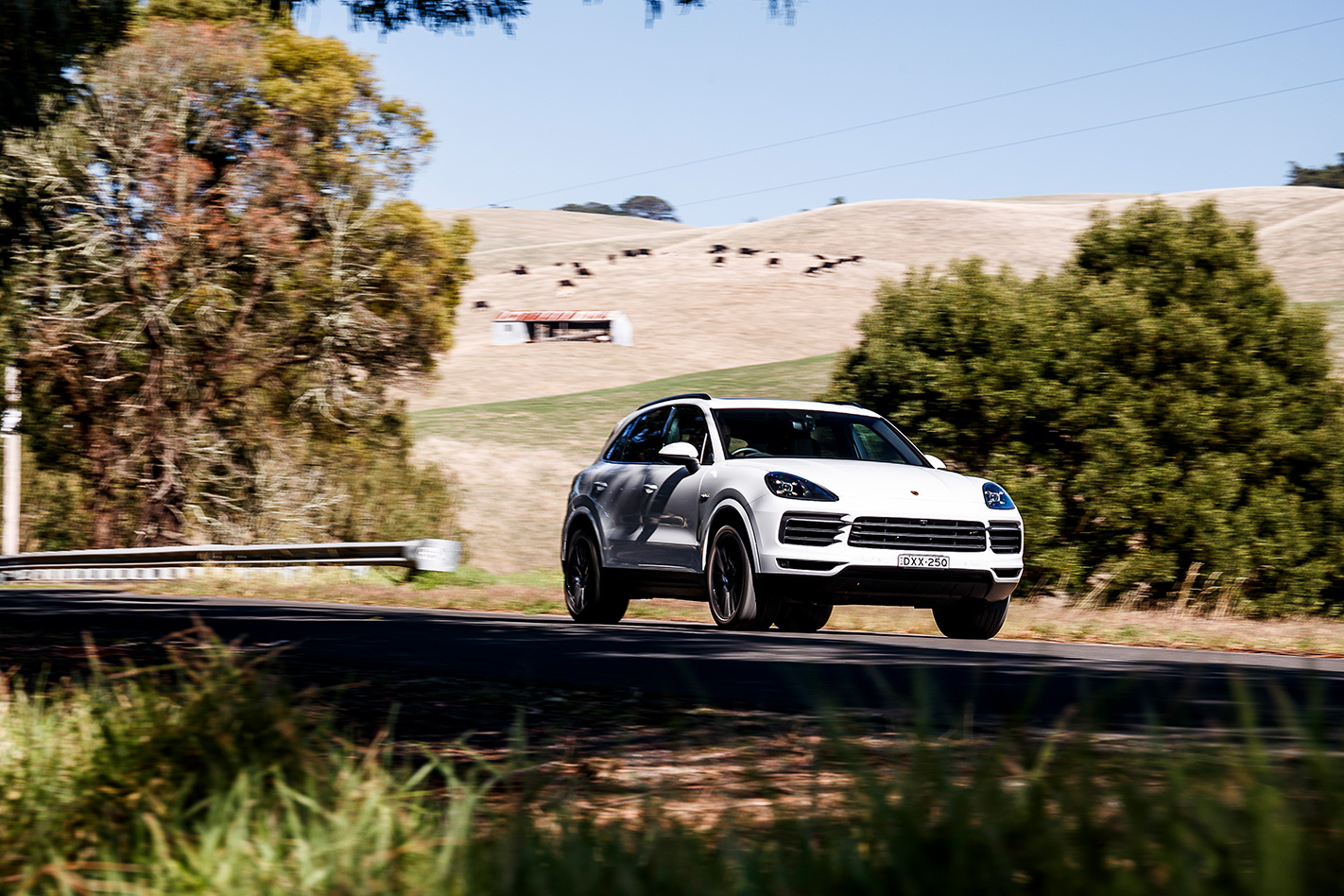
But this part of the world also offers some spectacular roads that are largely deserted apart from the odd quad bike. Give the Cayenne a prod and it needs little encouragement to drop a cog and devote electrification to a different cause – something I intend to revisit later in the day.
There’s something satisfying about flicking to pure electric power and cruising into someone’s property in silence. Like taking off your shoes before entering a home, it seems like the polite thing to do.
We glide stealthily into The Grove to pick up a cracking drop of peppery, deeply green olive oil and a crusty sourdough that Ale assures me is essential, and we take a few extra minutes to wander the old olive grove now that the sun’s warmth is building towards the middle of the day.
Executive chef Anthony and manager Tracey have just completed a new educational facility that’s bolted on to the end of the beautifully appointed restaurant, and they will soon start a series of workshops that will spread the notion of sustainability and the virtues of a food community.
I’m not sure how they will get any students to concentrate when the views out of the large glass windows are almost impossibly distracting, but there are worse problems to have. More excellent things get loaded into the boot and we are off again.
Aesthetically pleasing, and a pleasure to negotiate, these roads are a little known secret to foodies and petrol heads. Yes, the Cayenne is a large SUV, but it shares DNA from the company’s range of coupes and convertibles and it would be downright strange if it didn’t perform as impressively as the rest of the Cayenne range. I’m not disappointed.
And for those that think the word ‘hybrid’ is a synonym for ‘soporific’, the Cayenne E-Hybrid’s turbo V6 is out to obliterate that misconception. With the drive mode dial flicked from Electric, through Hybrid to Sport, the combination of petrol and electrical power is scintillating.
With a battery in the boot and the accompanying electric bits, the E-Hybrid carries a significant 300kg ballast over the ‘standard’ entry-level Cayenne, but it hides its extra bulk incredibly well. Chuck the big SUV into some challenging corners and it responds with typical Porsche precision steering and surprisingly little body roll. It’ll even lift an inside front wheel if you really try – very un-SUV-like.
Get your line wrong, and the hefty kerb weight will make itself obvious with a dive onto the outside front tyre, but with a more careful entry to corners, the Cayenne demolishes good driving roads with enthusiasm.
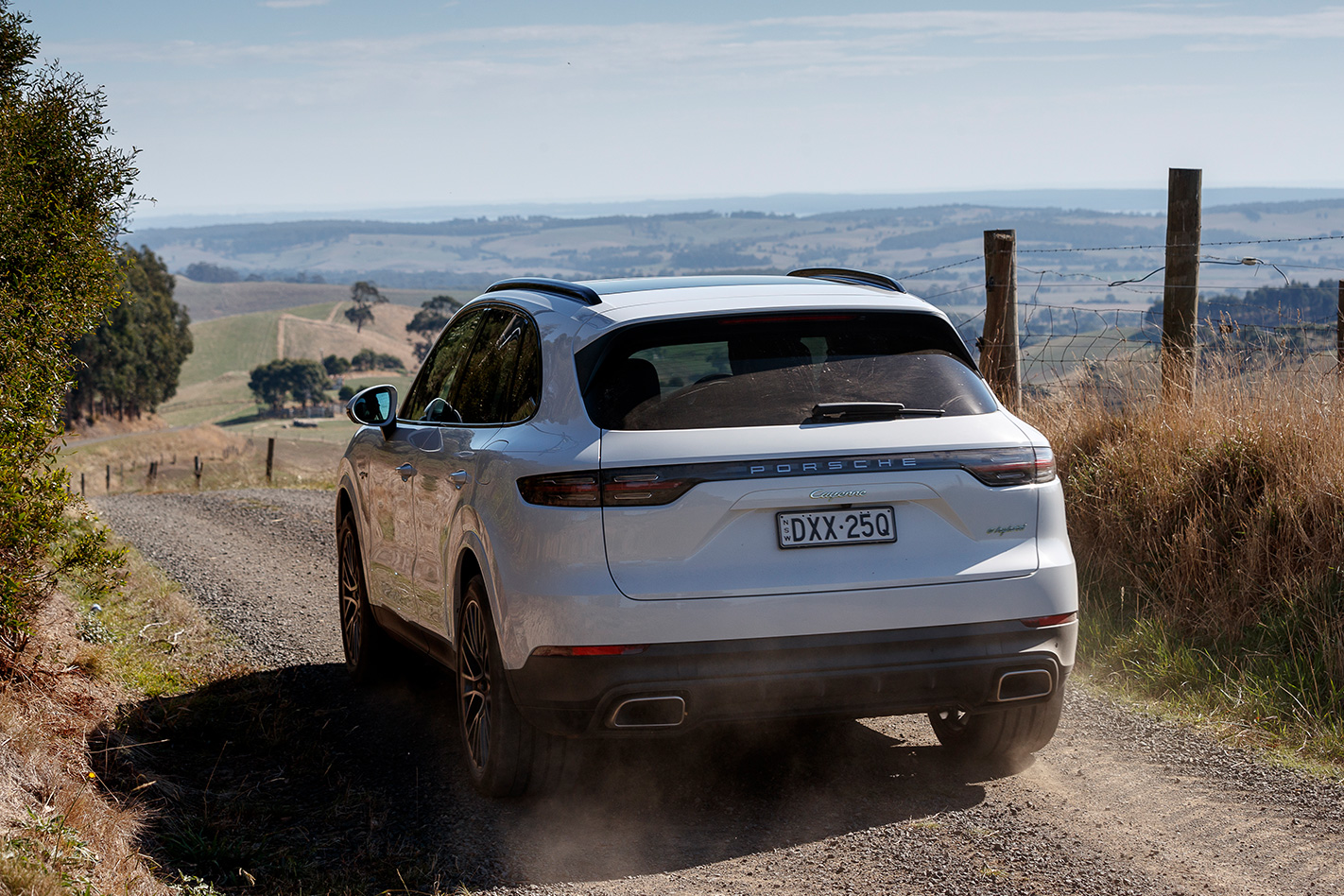
To cap it all off, zero to 100km/h acceleration in five seconds is more than enough to enable our arrival at the Loch Brewery and Distillery comfortably before lunchtime.
Its founder Craig is part of the booming Australian gin industry and has been meticulously crafting spirits here for seven years.
The cellar is part business, part pool room complete with a turntable, an eclectic selection of vinyl and some Australian-made cooper’s tools. Instead of posters and old metal signs as is typical of many others, this inner sanctum is lined with oak barrels containing aged spirits of different vintages. Swing by this beautiful building soon and you’ll be able to sample the company’s early whisky.
Like everywhere Alejandro has lead me, the personalities are infectious and the fascinating stories long outlast the tastings, but the Cayenne is an enticing distraction and there are a couple more stops to make.
If you don’t have the time to visit individual suppliers, then the region is scattered with a number of retail outlets that condense the amazing produce under one roof, including the Meeniyan Store. Ale wastes no time trawling the range of fresh fruit and veggies, filling his bag with purpose that I daren’t get in the way of.
Instead, I distract myself with a spectacular Earl Grey tea and browse the range of local beers. This tidy little food and drink hub doubles as a café, and is yet another outlet that’s hard to tear ourselves away from… but our destination is almost in sight.
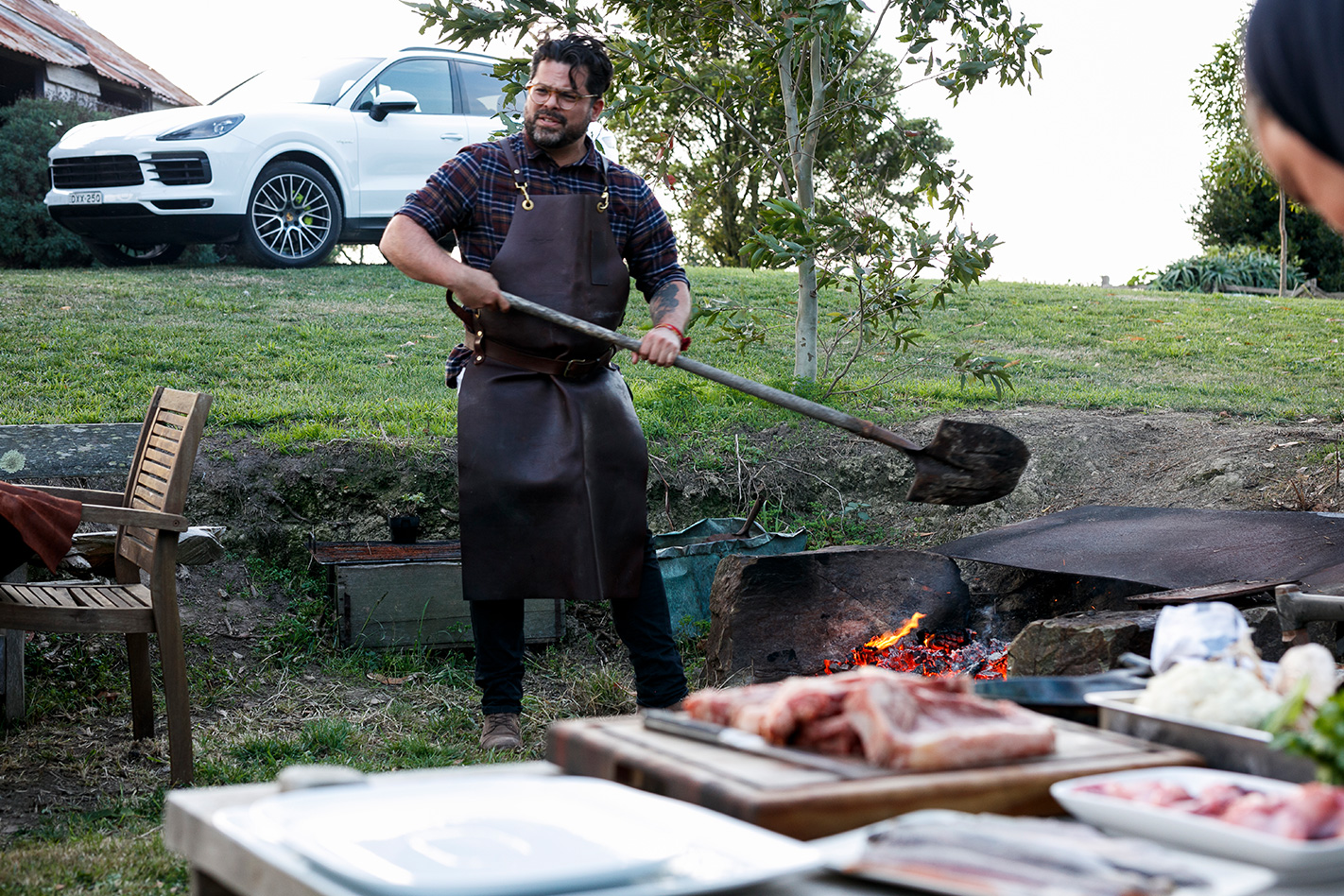
Ale asks if he can stay behind the wheel for this next leg and it becomes clear why he went easy on the gin sampling.When he flicks the dial to Sport Plus and blasts off seeking not the most direct route, it’s obvious the Zuffenhausen bug has bitten again, but before we know it (not sure what the speed limit is in Peru, but at least Ale knows the roads) we arrive at our final stop and collect one more ingredient.
Paul and Sam’s Gippsland Natural Angus beef farm overlooks Corner Inlet with views of Wilson’s Promontory which are breathtaking in every direction. The cattle assemble about the Porsche before our drone scatters them, and Ale has already started a fire, prepped dinner and cracked a beer.
The ensuing banquet of ridiculously local produce, prepared with the same passion and care as its producers, is, as you might expect, divine but Gippsland’s incredible fruits are not just exceptional in quality, they are the ethical choice, too.
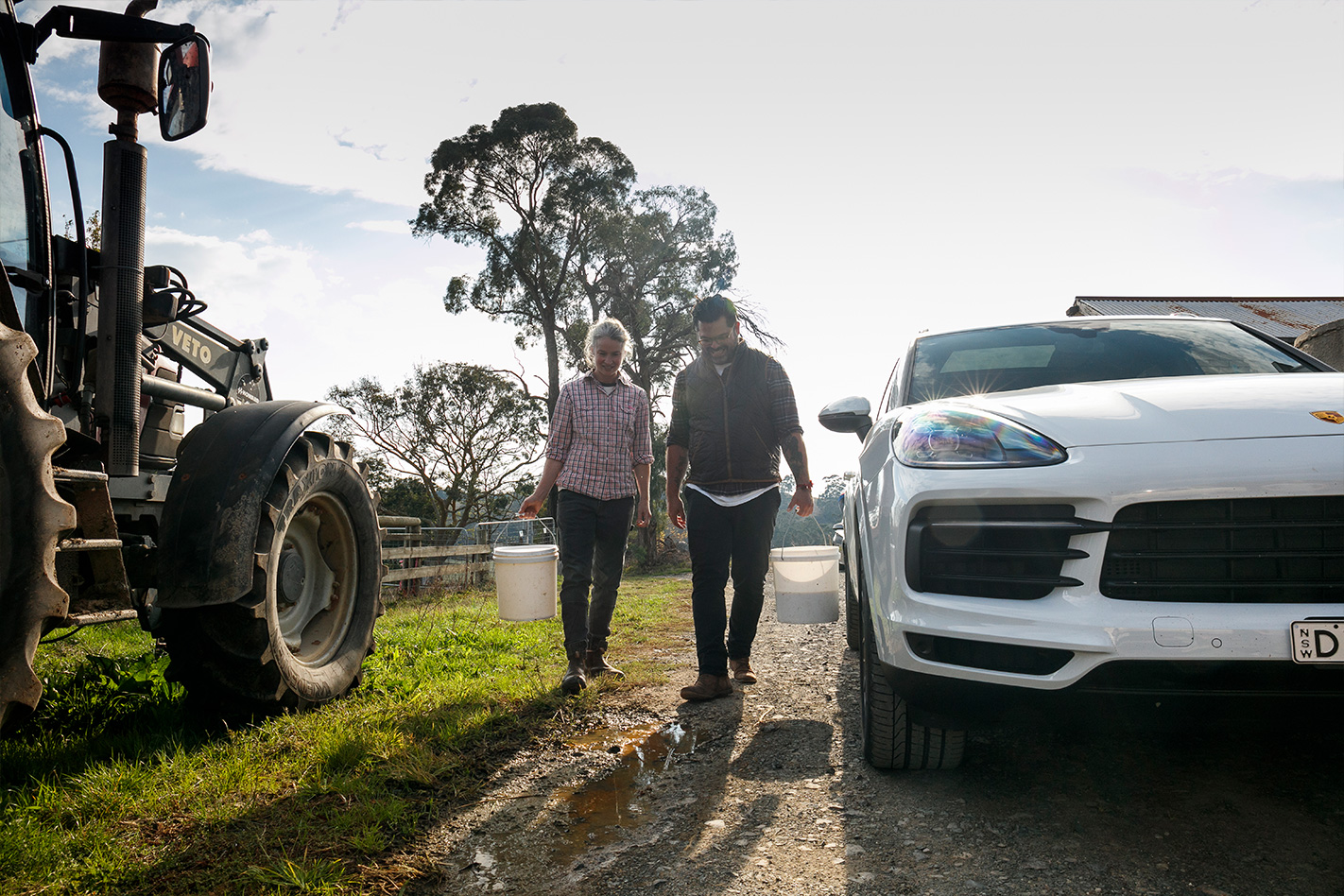
Rachel’s incredible dairy products travel just a few kilometres from the cows that produce the milk to the point of sale, Craig’s ornate gin still runs not on coal power from the nearby Latrobe valley but exclusively on solar energy, and Paul and Sam’s beef is such a successful part of the carbon-neutral beef initiative that they are considering trading credits.
And so it goes that a large SUV with plenty of room for five adults, the performance you’d expect from a Porsche and an almost teetotal appetite for fossil fuels might also seem like a paradox, but like the often-overlooked Gippsland region, the Cayenne E-Hybrid is a gem just waiting to be discovered.
See the full episode: Watch at tenplay.com.au (AU) or primetv.co.nz (NZ)
From a performance sensation to a sales sensation: meet the next-generation Mazda 3. As one of Australia’s favourite models, the Mazda 3 is taking a big risk and going upmarket — with the price to match. Is the new Mazda 3 worth the money?
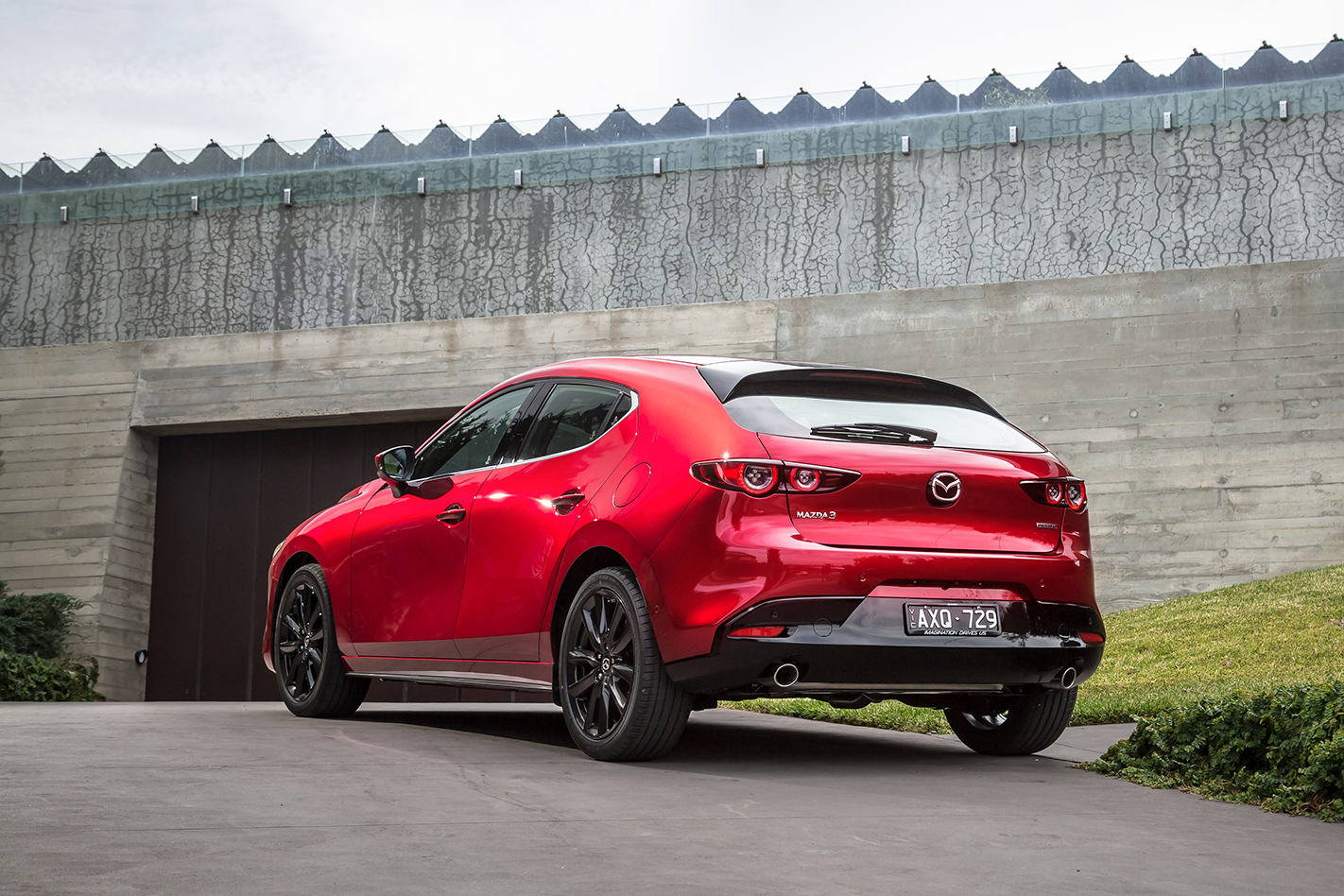
As one of the most popular Mazda markets in the world, the new and incredibly refined Mazda 3 could be about to blitz the Australian small hatch market.
See the full episode: Watch at tenplay.com.au (AU) or primetv.co.nz (NZ)
Driving a Formula 1 car is a dream for most, but Alex Inwood gets a chance to live that dream thanks to a very special factory in New Zealand that’s building an F1 car you can buy. It’s not cheap, but if you have the cash, Rodin can make your ultimate race car goals a reality.
Watch Alex progress through the Rodin driving academy from a hyperbolic track-focused McLaren, through a single-seat racer to the ultimate in fast car fantasies.
See the full episode: Watch at tenplay.com.au (AU) or primetv.co.nz (NZ)
WhichCar’s Noelle Faulkner teams up with her mum Meryll to check out the new Lexus UX up close.
Like most mother-and-daughter teams, there’s the occasional bit of niggle between the two, but the chemistry on screen is definitely pretty special.
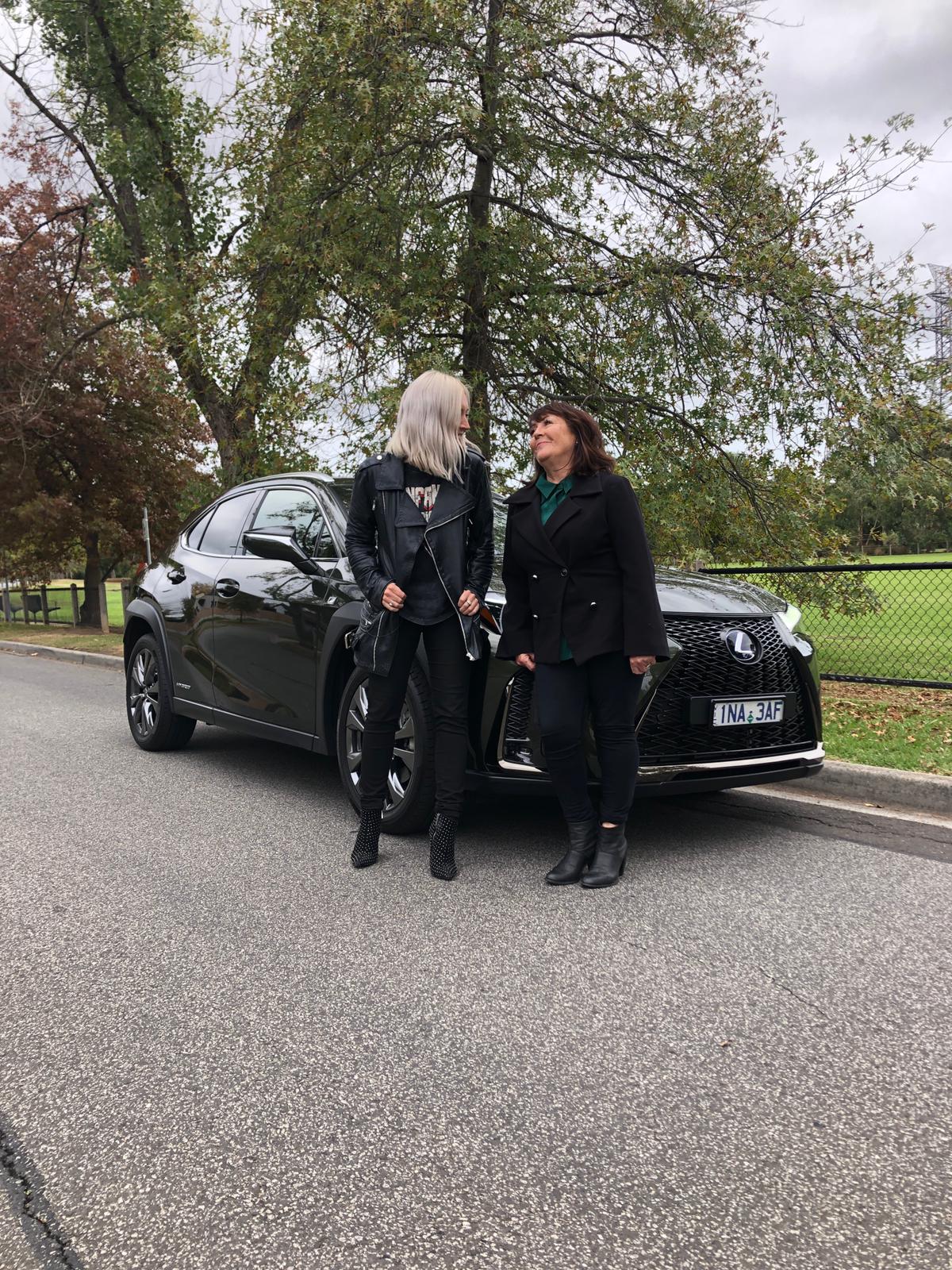
“Did you bring a warm coat, Noelle?” “Shaddup, mum.”
“I think she did a great job,” Noelle laughed. “She was really nervous, and it took a bit to get her warmed up, but I reckon it all ended up working out pretty well.”
So do we, Noelle!
Scotty, meanwhile, had a ball with one of motorsport’s nicest fellas, John Bowe (below), who was drafted in to drive The Real Deal, a proper Ford Falcon GT-HO Phase III.
Not for us is a dolled-up lookalike; this ’71 stormer is worth every bit of $900,000, so getting his hands on it was no mean feat.
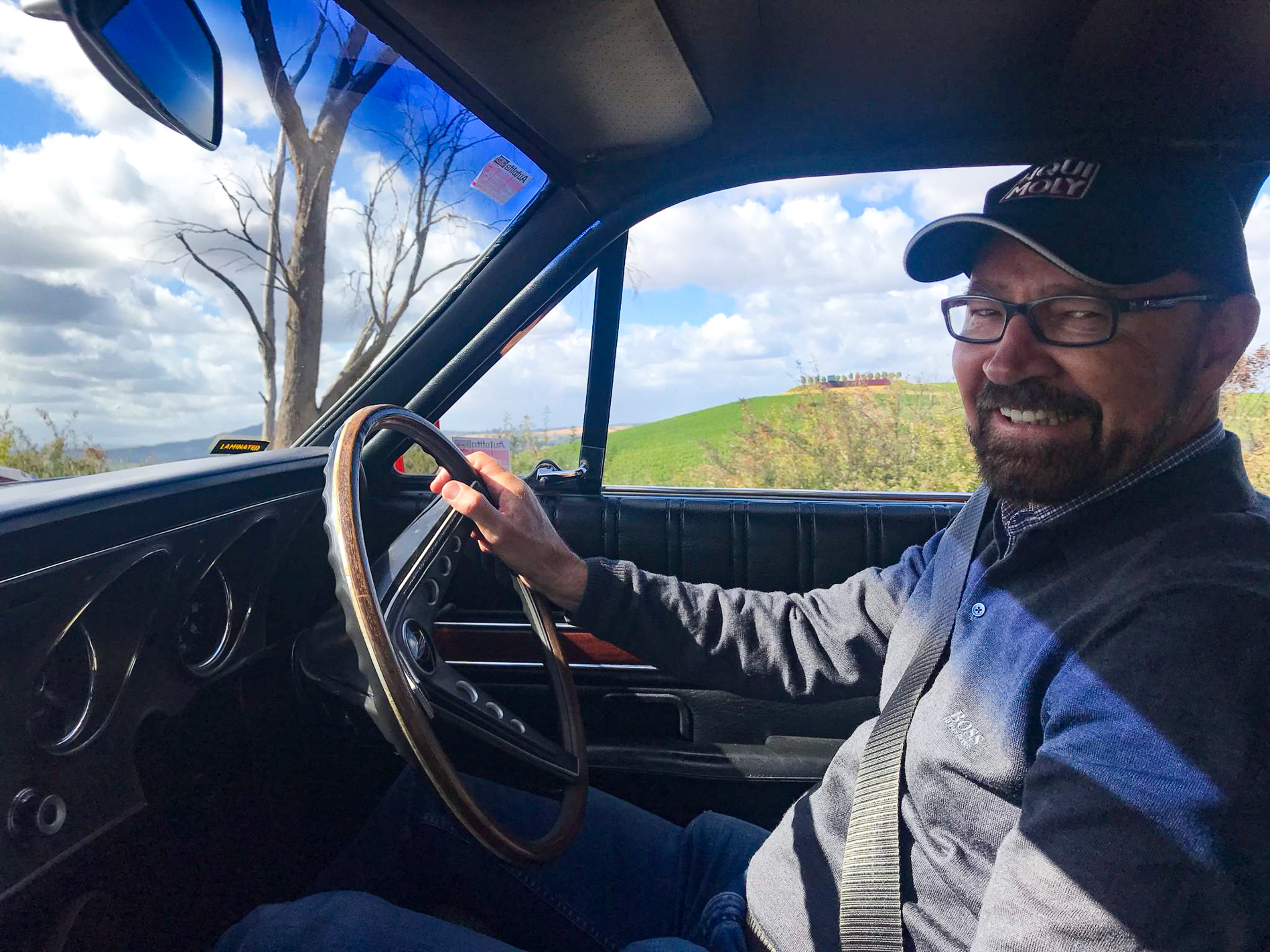
“The owner shall remain a mystery,” said Scott.
Did he get to drive it?
“Yes, I did take the opportunity to get behind the wheel, but I drove it extremely slowly and extremely carefully,” he confirmed. “Not that the owner does likewise!”
Click through the gallery above to view segments 1 & 2
Scotty did grab the keys of the spiritual successor of the GT-HO, in the form of the Premcar-fettled Holy Grail. “The best Falcon I’ve ever driven,” he reckoned.
See the full episode: Watch at tenplay.com.au (AU) or primetv.co.nz (NZ)
Louis joined the crew at Maserati at Sydney Motorsport Park to participate in the brand’s Ultimate Track Day in this segment of WhichCar TV.
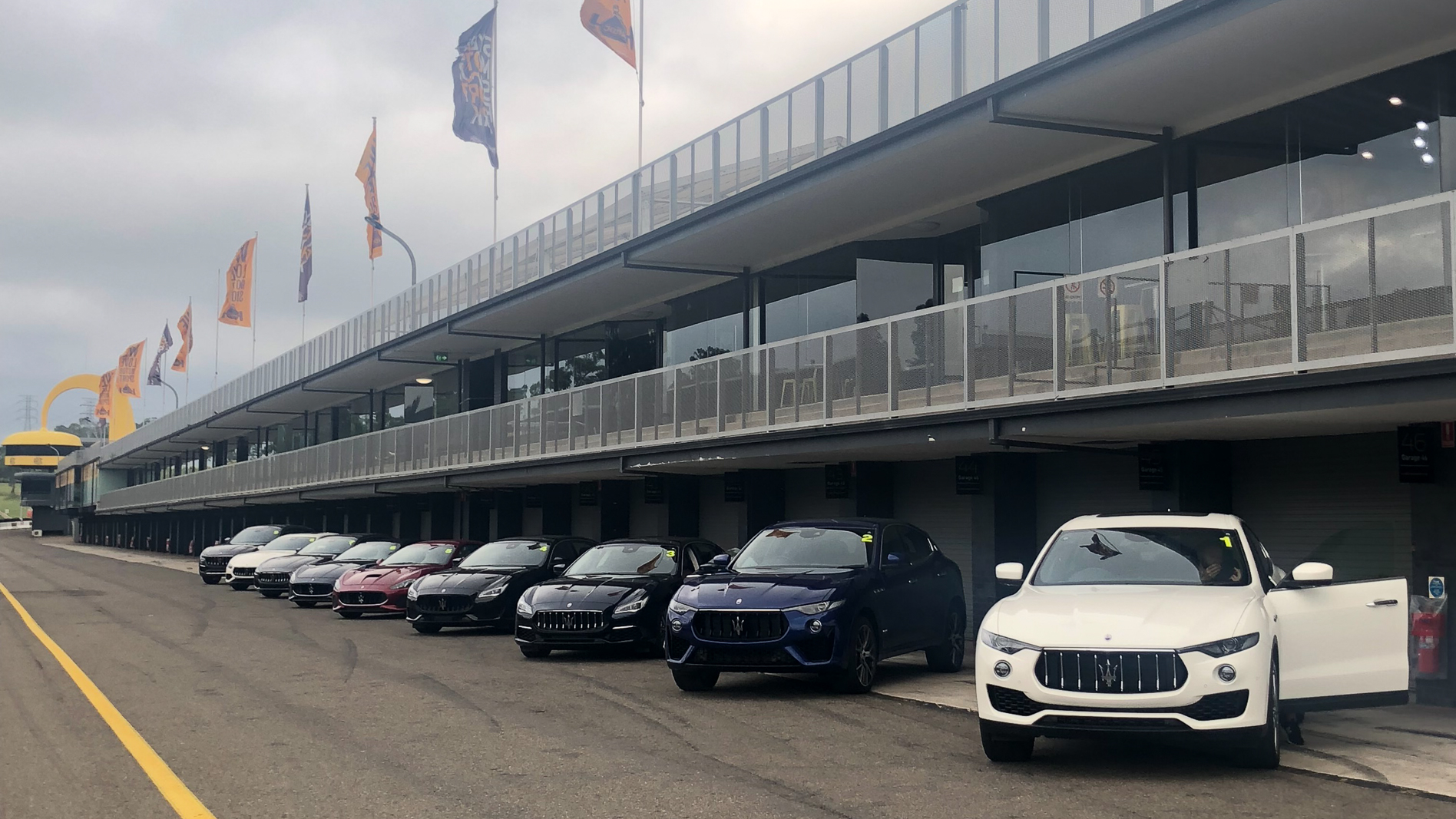
While there was a smidge of disappointment that LC wasn’t about to suit up and go charging around in a real Maserati racer, he still got a lot out of the experience.
“I’ve driven Sydney Motorsport Park before, so the real value was having a Bathurst racer refine my lines and pick my input points,” said Louis. “For instance, by the day’s end, at a track I’ve driven a handful of times, he helped me unlock the secrets on turns 16, 17 and 18, along with where to brake for turn six and how to approach Corporate Hill balls-out.
“I am a lot tighter than I used to be through there.”
Long live the V8!
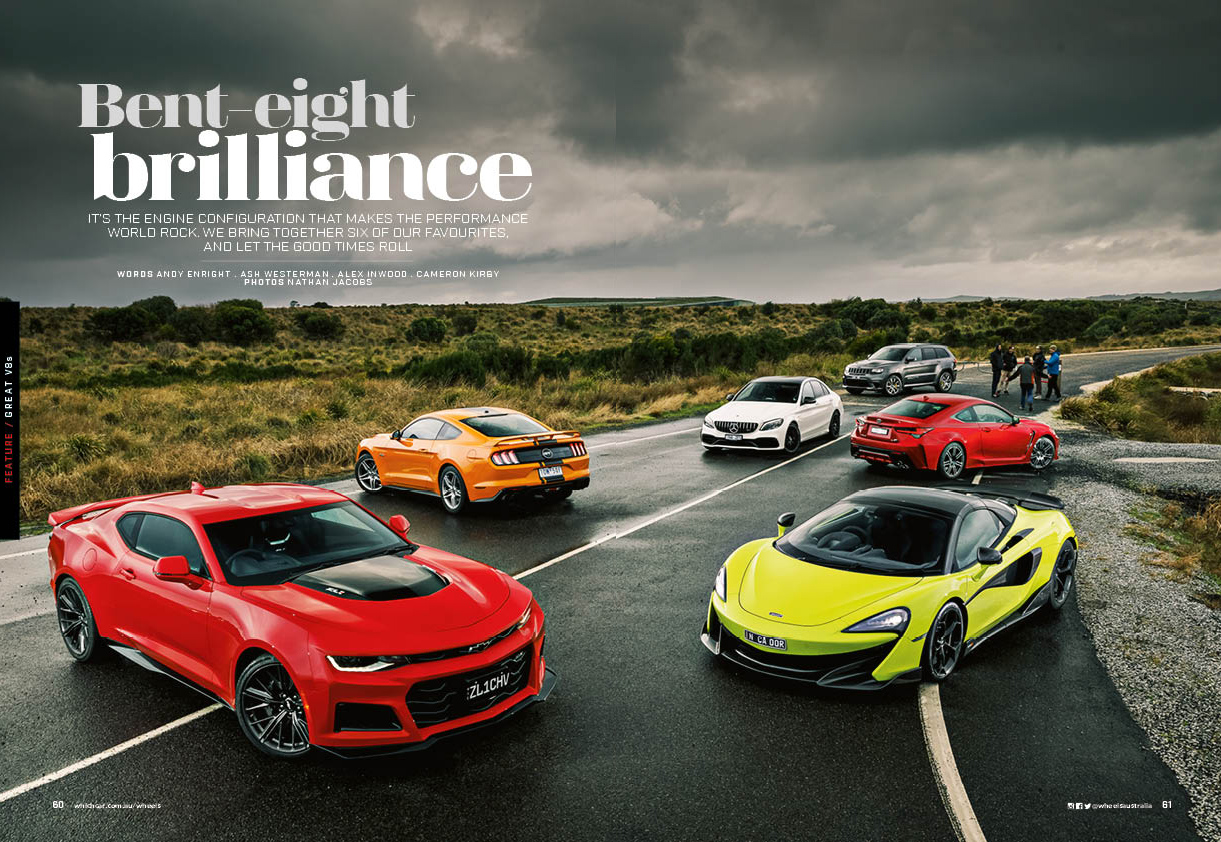
There’s so much eight-cylinder glory in the latest issue of Wheels that we’re still scratching our heads to figure out how many kilowatts it all adds up to. In our headline feature alone, there’s over 2500kW on tap from six bent-eight masters tearing across the pages. We can’t embed audio into paper, but our wordsmiths put you right in the hot seat.
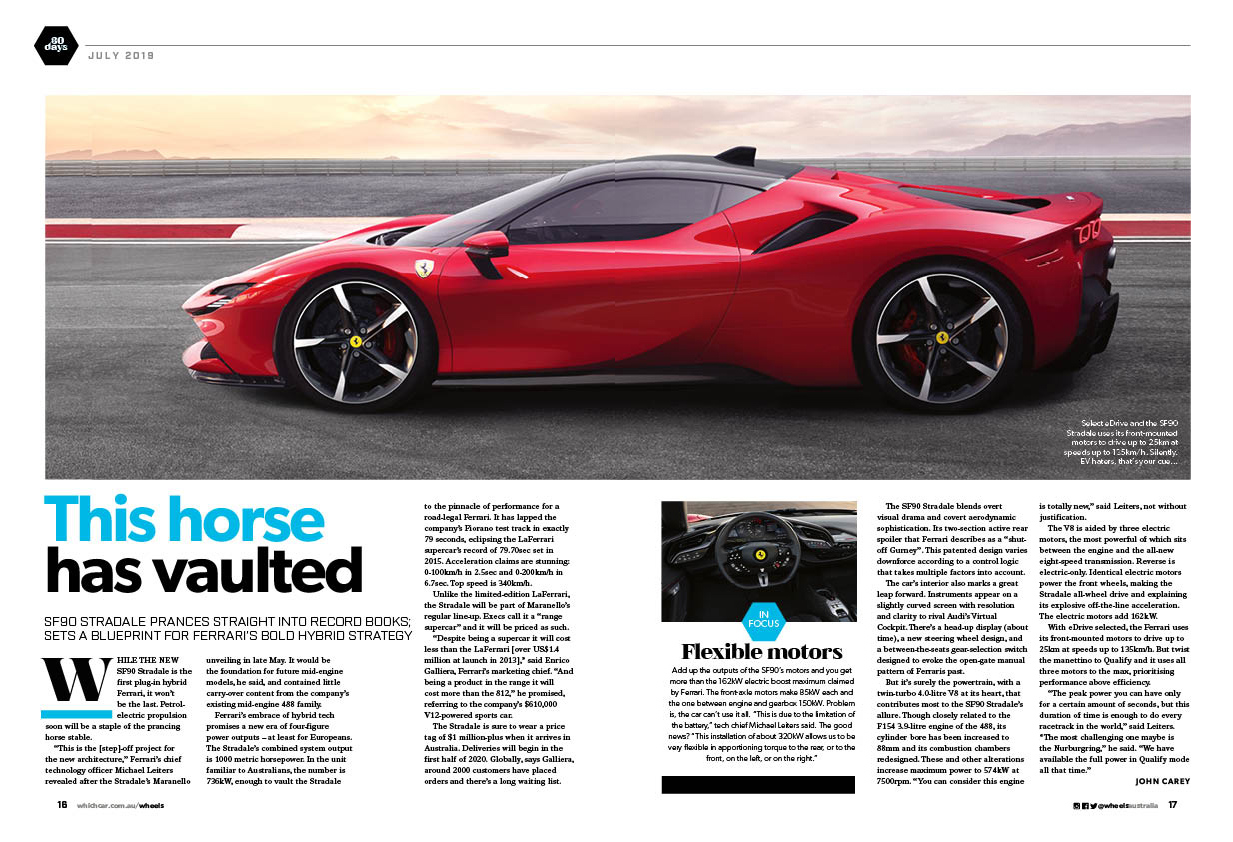
In the northern hemisphere, John Carey checks out Ferrari’s V8 hybrid holy grail, the SF90 Stradale. Its gigantic 736kW and 1000Nm outputs has us skip the usual 0-100km/h preamble and get straight to the number that counts: 0-200km/h in 6.7s. But how does it do it?
After a frenetic bash in the Camaro ZL1, Andy Enright checks in with its more affordable sibling, the updated 2SS at Sandown race track to see how rapid the 6.2-litre V8 is with a 10-speed auto and launch control.
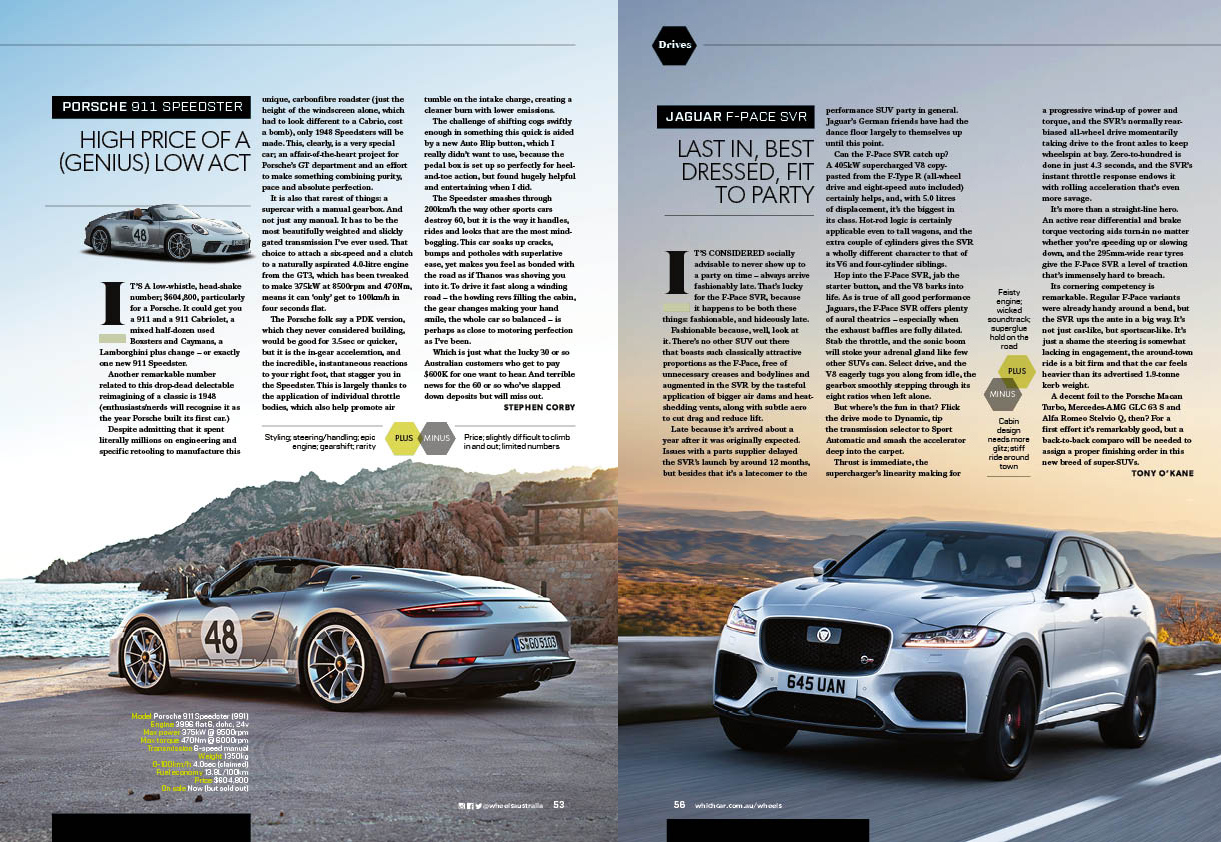
And if practical V8s are more your thing, we give Jaguar’s new F-Pace SVR a good ol’ walloping.
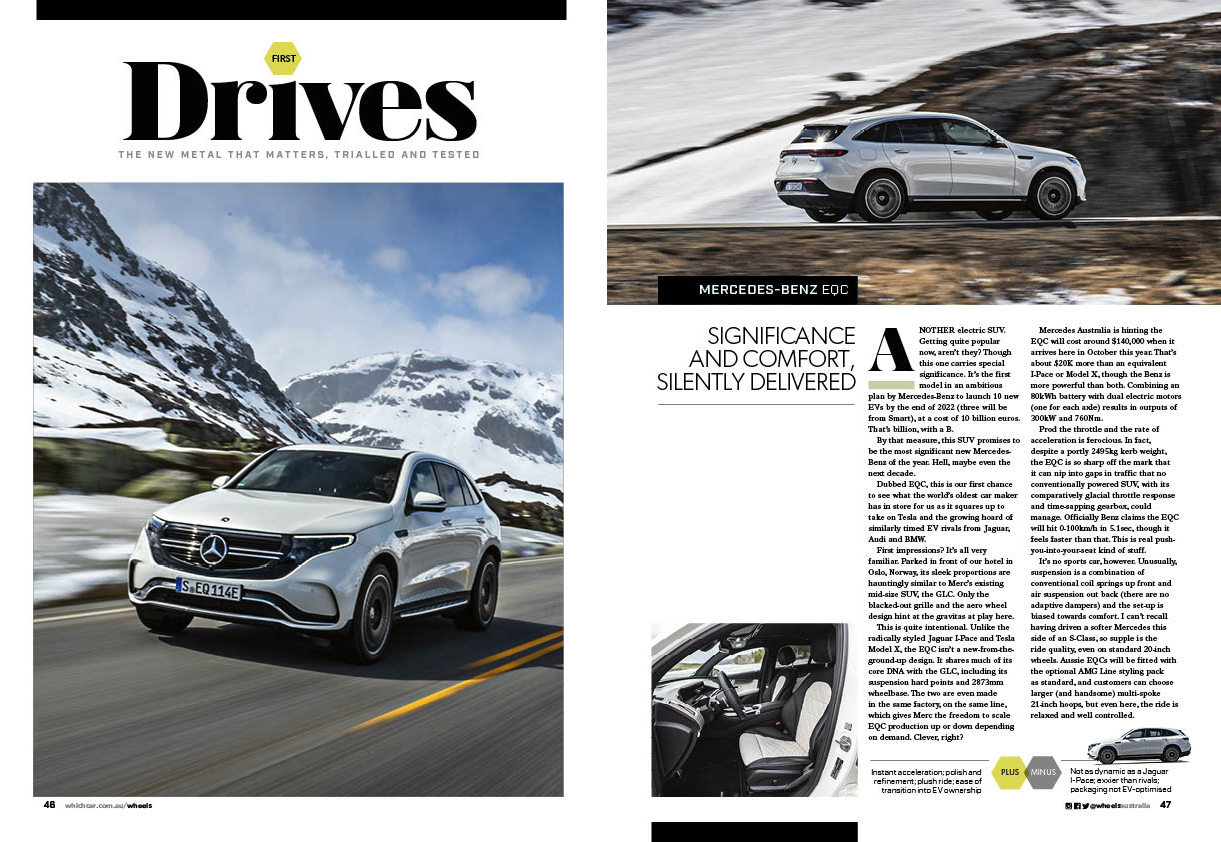
But just like global emissions standards, Wheels gains some carbon credits when Editor Alex Inwood jets off to the EV capital of the world, Norway, to drive Mercedes-Benz’s inaugural electric SUV, the EQC.
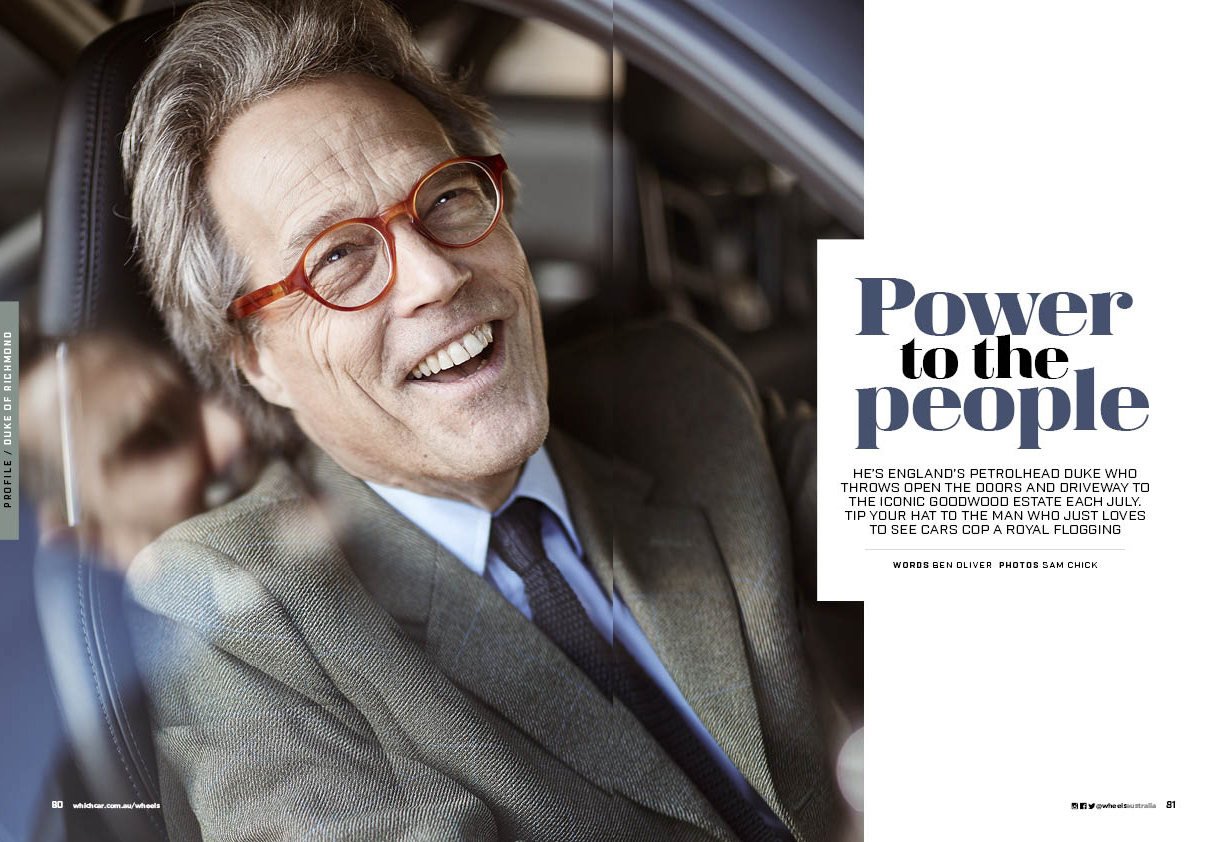
On the tracks, we put the Hyundai N TCR race car against its road car equivalent, jump into a silver cyclone of historic and contemporary Mercedes race cars at Silverstone, and speak to the god of Goodwood, the duke Charles Gordon-Lennox.
There’s so much greatness in this latest issue we almost forgot to tell you about our Porsche 911 Speedster first drive. You’ll just have to take our word for it – grab the latest issue, out now!
You can buy Wheels mag in-store or online.
The standard rubber on the 2019 Chevrolet Camaro ZL1 is the Goodyear Eagle F1 Supercar 3, a high-performance tyre designed to handle the abuse of 477kW and 881Nm. But not in Australia.
Camaro ZL1s locally-converted by HSV use older-style Continental ContiSportContact 5Ps which were almost universally fitted to Commodore-based HSVs from Gen-F onwards.
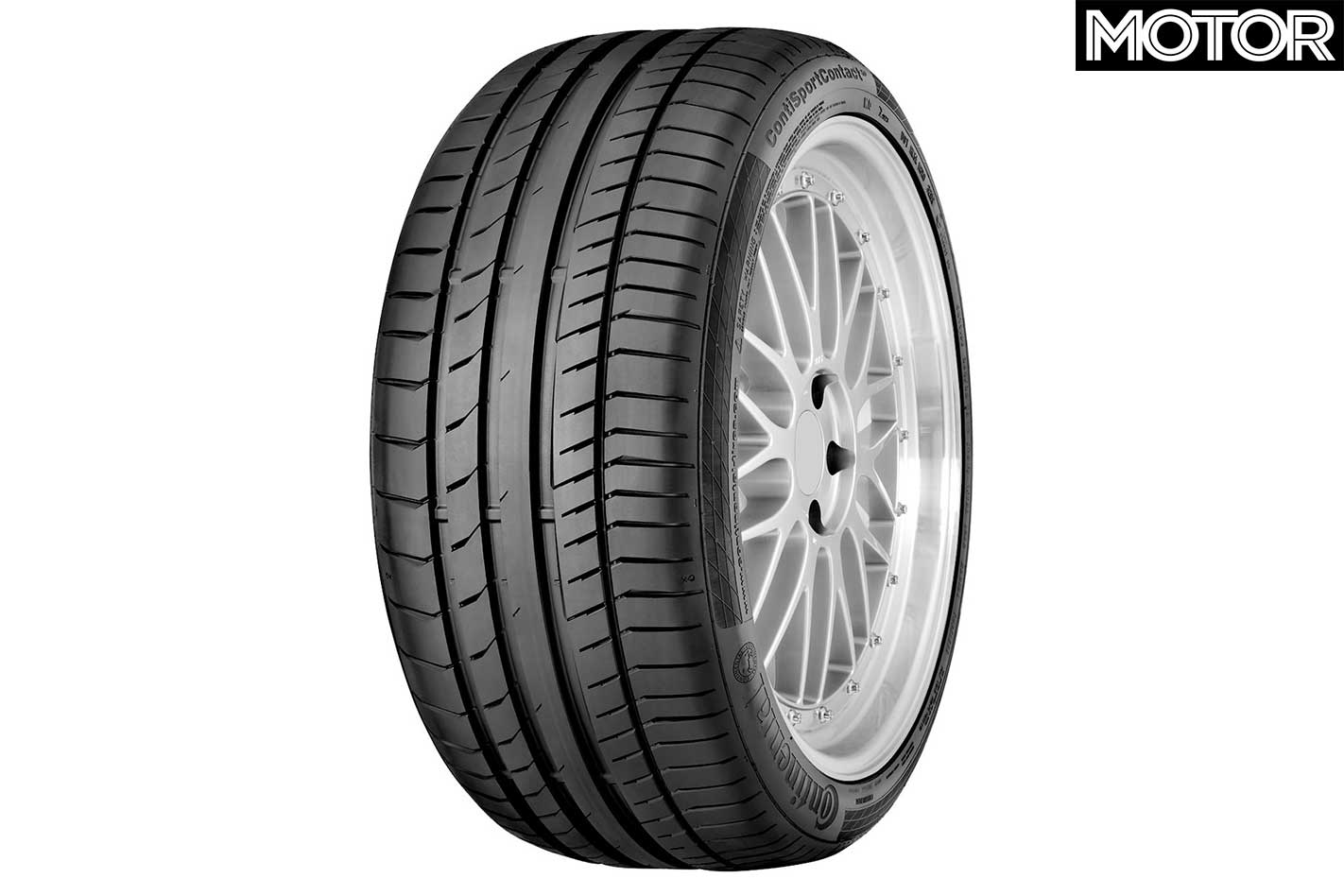
HSV would rather not make the switch. Its Camaros come fully built from the US so therefore it has to incur the cost of replacing the tyres, which it’s trying to recoup by offering the standard Goodyears as a track pack for $1000.
The reason the Goodyears can’t be used is that they failed the braking tests specified by the Australian Design Rules, specifically, ADR 31/04 test 5.3.4.
This test dictates: “When the right and left wheels of the vehicles are situated on surfaces with differing coefficients of adhesion, where Kh≥0.5 and Kh/Kl ≥2, the directly controlled wheels shall not lock when the full force is suddenly applied on the control device at a speed of 50km/h”
In layman’s terms this essentially says the wheels must not lock under heavy braking from 50km/h when the right wheels are on a high-grip surface and the left wheels are on a low-grip surface or vice versa.
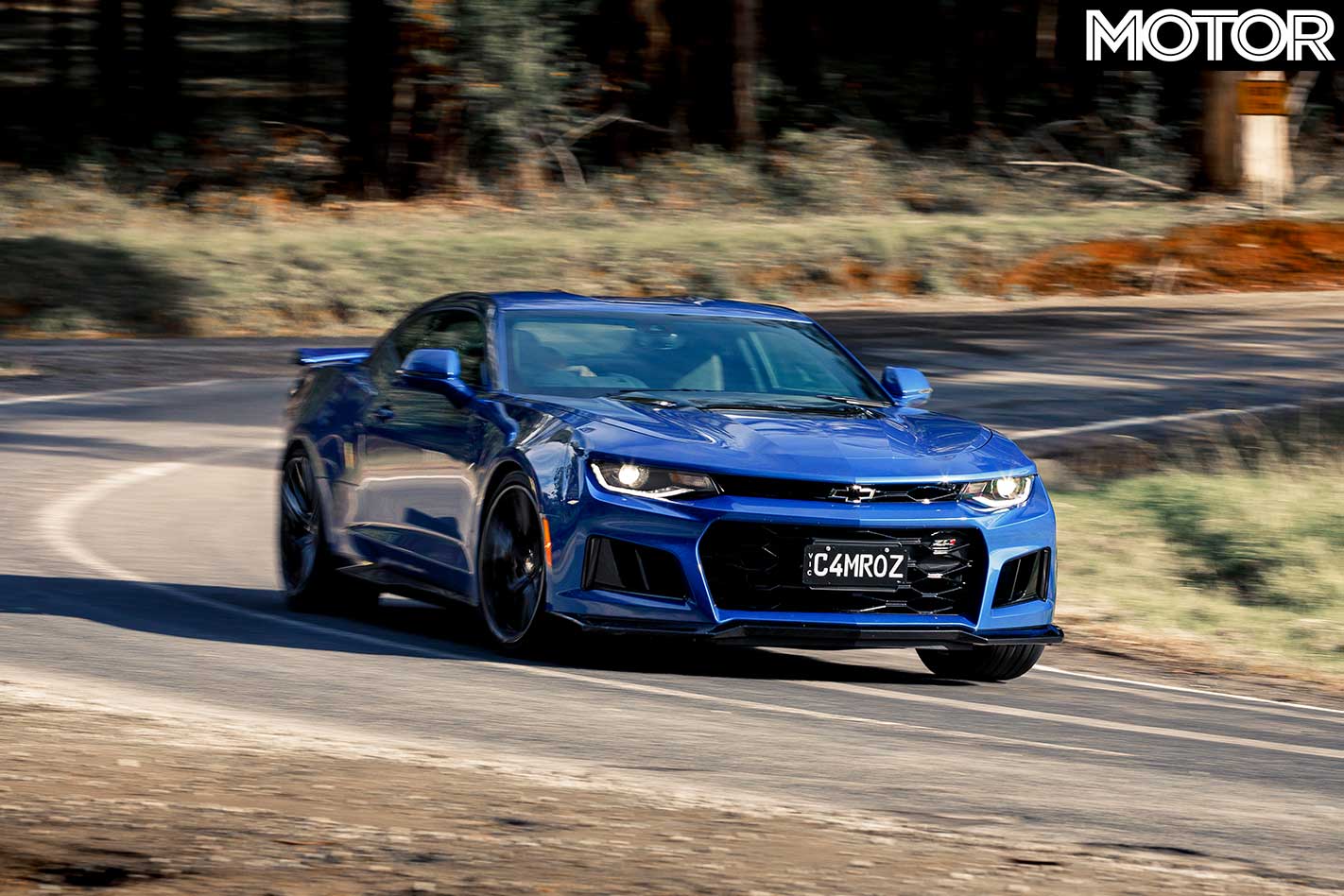
The test is a tough one, with one side of the vehicle on dry tarmac and the other on wet ceramic tiles, but nevertheless it’s one that all vehicles must pass and try as it might, the Camaro ZL1’s ABS couldn’t summon the required grip from the focused Goodyears to do so, hence the switch to the known quantity of Continental.
The US regulations, dictated by the Federal Motor Vehicle Safety Standards (FMVSS), are less taxing, completed on a level road with consistent grip across all four tyres.
An HSV spokesman explained the switch to MOTOR: “Our chassis engineers assessed three different brands for greater suitability to Australian conditions. Using a combination of GM’s Lang Lang Proving Ground and Victoria’s alpine roads, all aspects of the Conti tyre were assessed (including steering, handling and ride quality) to understand their suitability to the ZL1 Camaro.
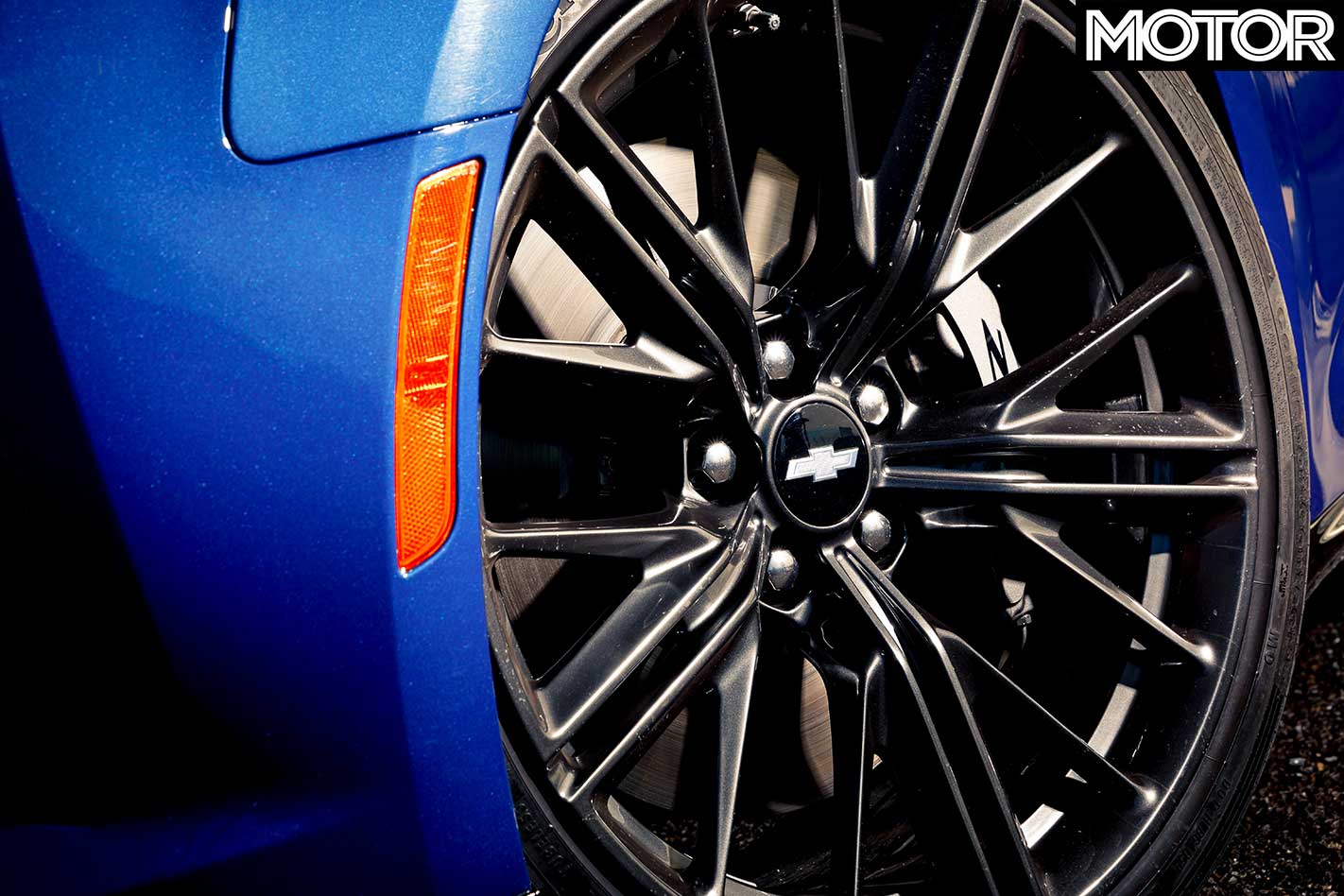
“Our engineers concluded that they feature excellent connection to the road and on-centre feel and provided excellent feedback through the chassis and steering on the sportiest of roads. Importantly, they also provide improved wet-weather performance and safety in variable weather conditions.”
MOTOR has contacted Goodyear for comment.
