
The saying ‘there’s no replacement for displacement’ is about to be proven incorrect once and for all by the Mercedes-AMG M139 four-cylinder engine.
Despite a modest 2.0-litre (1991cc exactly) capacity, the new turbocharged engine, which is destined for the upcoming AMG A45 ‘S’ hot hatch, boasts an incredible 310kW, putting atmo V8s to shame and resulting in a specific output of 155kW per litre.
In addition, an extra 25Nm of torque over its predecessor brings the total up to 500Nm, leaving its on-paper specifications looking more like that of a twin-turbo six.
To put that into perspective, the last AMG A45 engine – the M133 – put out 280kW, or 140kW per litre.
AMG has confirmed a lower tune of the M139 will be available in a ‘base’ version of the next “compact models of Mercedes-AMG” with a 285kW figure.
It gets better, with AMG’s engineers having managed to let the M139 rev out to a 7200rpm redline. The engine doesn’t make peak torque until 5000rpm, and that peak only lasts for another 250rpm, but AMG’s engineers say this has resulted in an ‘immediately responsive’ engine, and that they’ve “achieved a power delivery similar to that of a naturally aspirated engine.”
“We already set the benchmark in the segment with the preceding engine,” says AMG chair Tobias Moers.
“This fundamentally new four-cylinder presented us with the challenge of doing even better. And we succeeded with a number of sometimes revolutionary solutions.
“With the M139, we have once again impressively demonstrated the engine expertise of Mercedes-AMG.
How much faster? 2016 AMG A45 acceleration testing
“Not only is the output per litre unrivalled for a turbocharged engine, the high level of efficiency also demonstrates that the internal combustion engine still has further potential.”
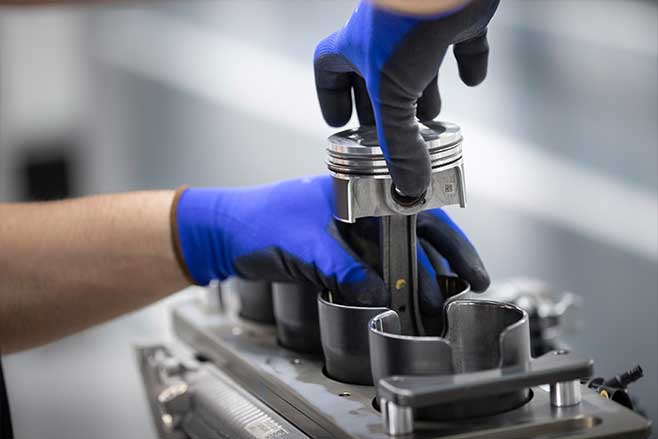
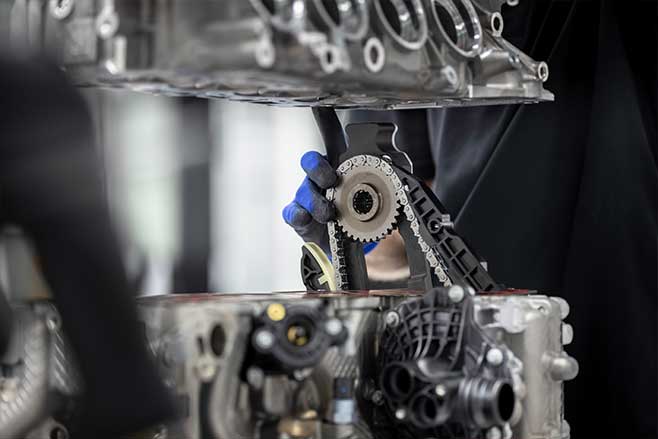
A new production line was constructed in AMG’s Affalterbach engine manufacturing facility, on which it has introduced new methods to improve its ‘One Man, One Engine’ manufacturing philosophy.
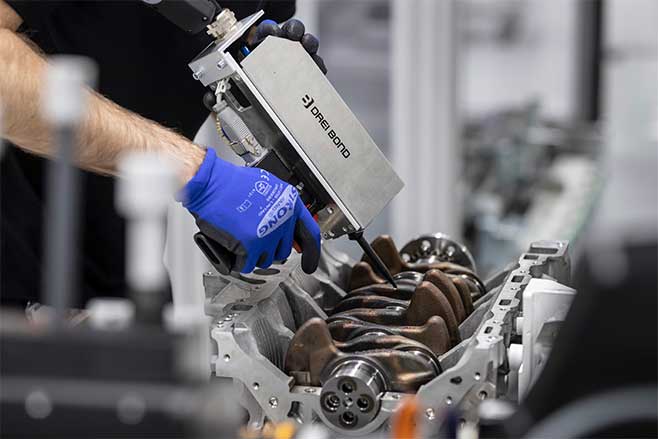
AMG chief operations officer Emmerich Schiller says the new line incorporates “an ultra-modern production process that places the focus on people.”
“To achieve this, we created the ideal working conditions in a bright, precisely organised and clean environment for our employees.
“This provides the best basis for continuing to ensure our high quality level even as the technology becomes more complex.”
Stay tuned for a deeper dive into the technical aspects of AMG’s M139 engine.
The Chevrolet Camaro ZL1 is a magnificent thing. Rear-wheel drive, supercharged V8 and 477kW/881Nm of the good stuff is a recipe we find hard to resist.
What’s more, HSV has done a fantastic job in converting the car from left- to right-hand drive. The thing is, in the real world it might not be as accessible as you’d perhaps hope.
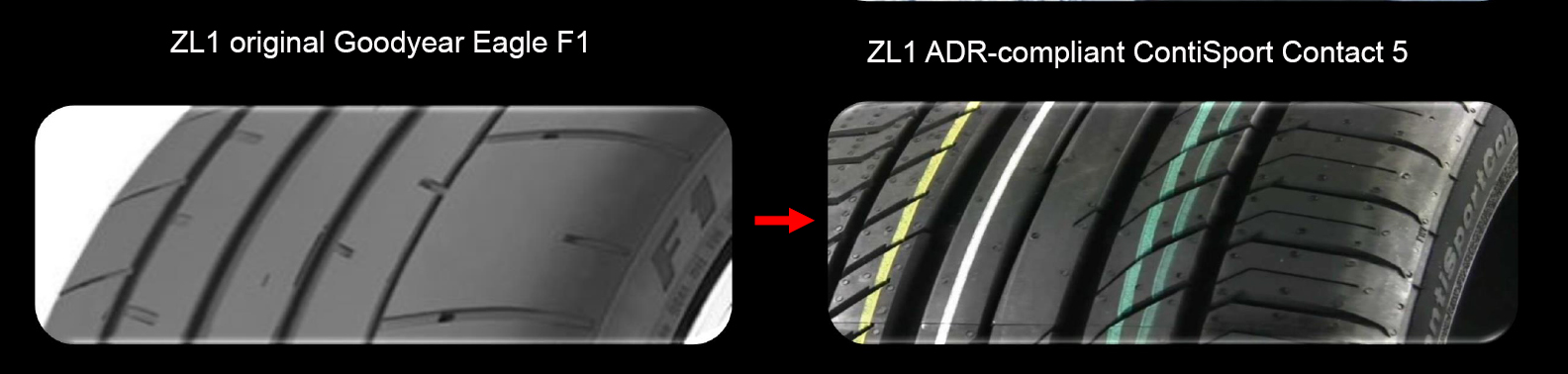
As we illustrated in our first drive feature, Australian-market Camaro ZL1s lose their super-grippy Goodyear Eagle F1 tyres for less sticky, more road-focused Continental Conti Sport Contact 5 rubber.
Put that down to ADR requirements, but it means that all that supercharged stonk makes it very hard to get away cleanly.
We put racing ace Karl Reindler into a launch control-equipped automatic ZL1 on an empty racetrack to see if he could emulate the claimed 3.5 second 0-100km/h time.
Caveats? It was Sandown, which isn’t hugely grippy, the weather was distinctly chilly and while it had been drizzling earlier, the track had subsequently dried out.
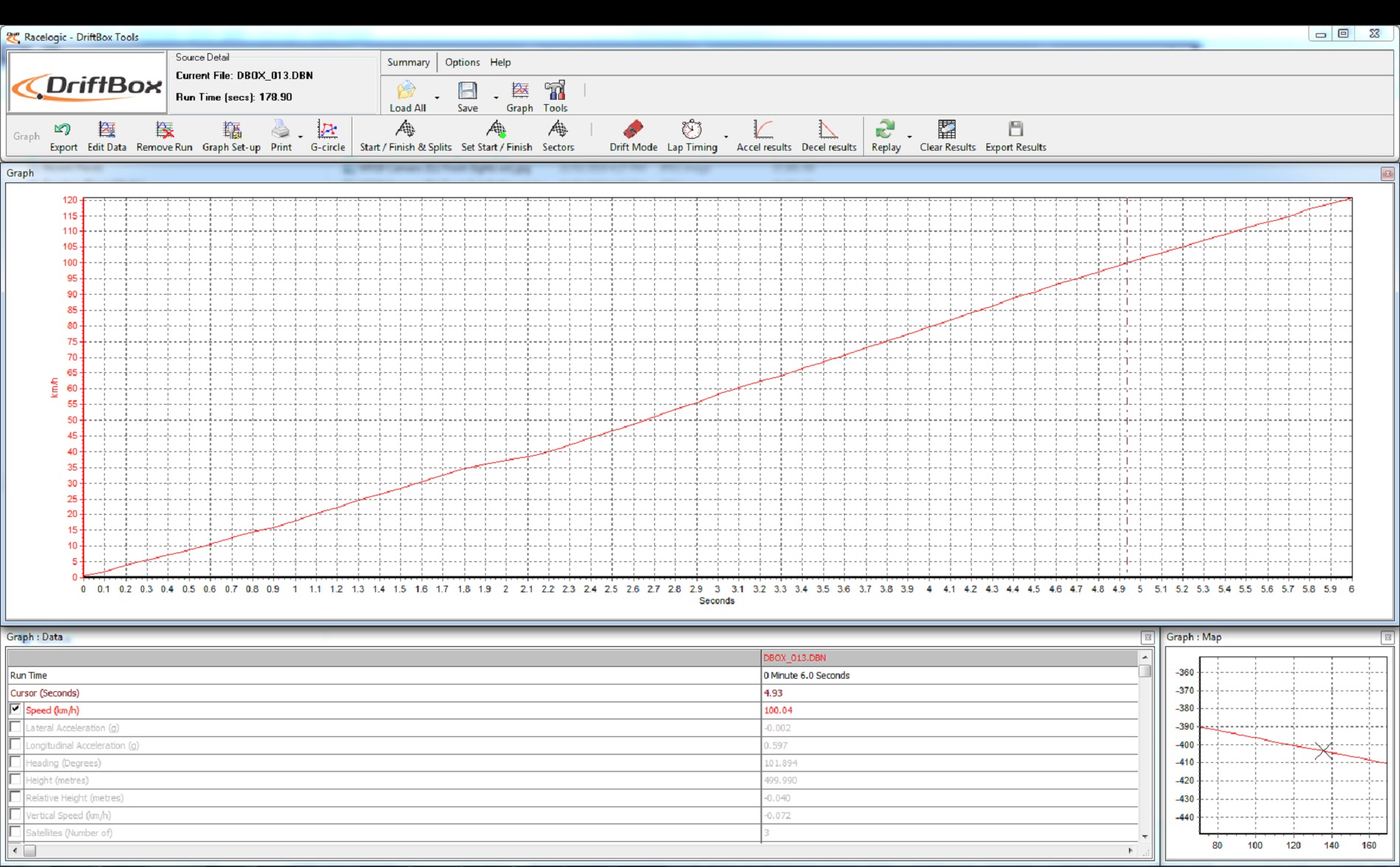
After a number of runs, the very best figure the VBOX churned out was a disappointing 4.93 seconds to 100km/h.
In more amenable conditions, on a drag strip and with the optional Goodyear Eagle F1 refitted, the ZL1 will go a lot quicker.
But on the road, in a typical customer car, that’s as quick as it’ll likely be. In other words, don’t get too confident if you pull up alongside a Mercedes-AMG A45, a Ford Focus RS or an Audi RS3 at the lights.
Overall Rating

5 0 5
Plus & Minus
WHAT IS THE CHEVROLET CAMARO ZL1?
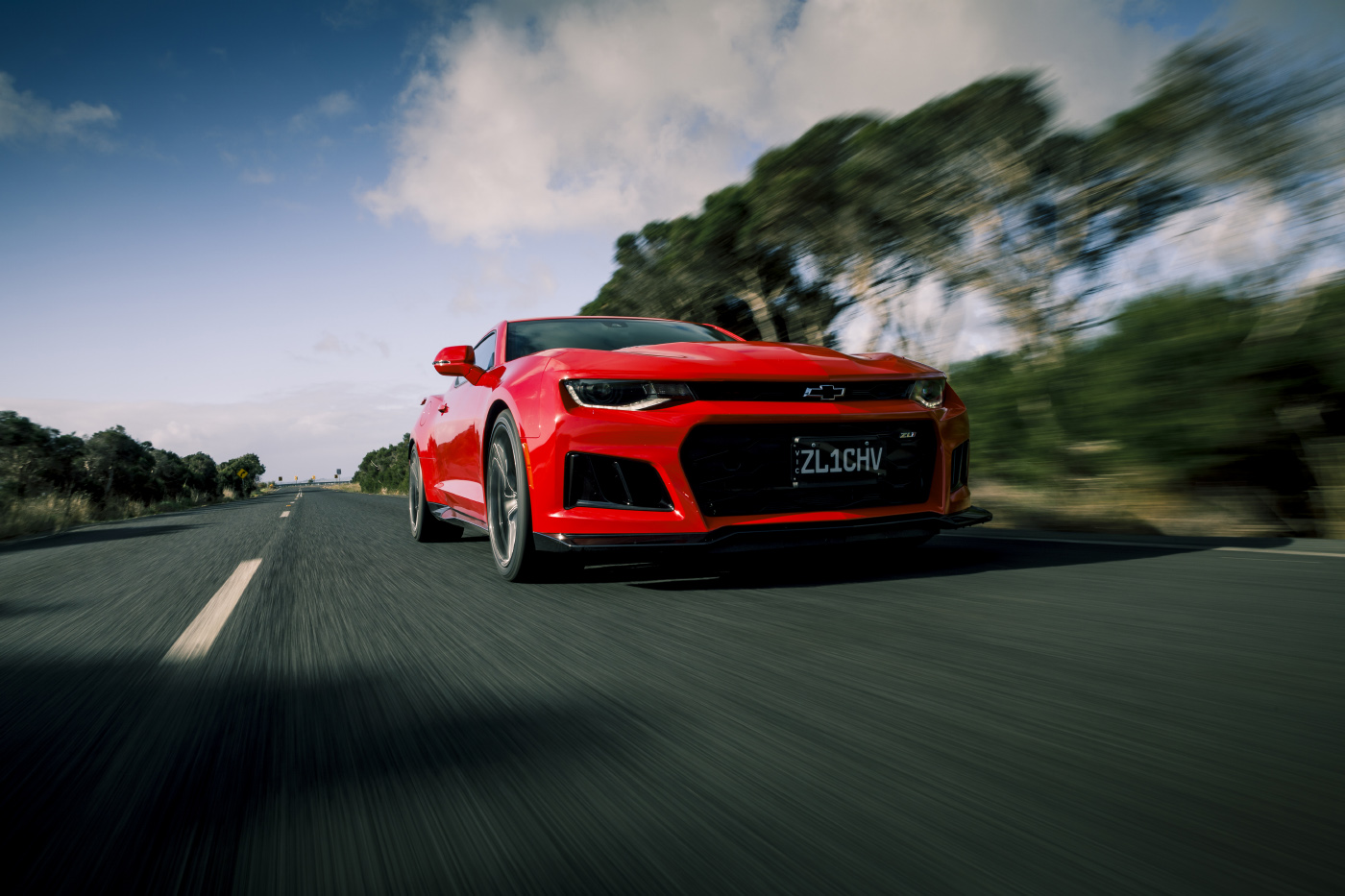
It’s been a feature of the US performance car market since 2012, but this is the first time we’ve had an official right-hand drive Camaro ZL1 sold in the Australian market. This 477kW/881Nm monster features a version of the Corvette Z06’s supercharged LT4 V8 and all that drive goes to the rear wheels. Available as a manual or an auto it’s not one for the shy or retiring.
WHY WE’RE TESTING IT
HSV had already proved it was capable of delivering on an almost seamless left- to right-hand drive re-engineering program with the normally aspirated MY18 Camaro 2SS. Now the Clayton plant turns its hand to the big brother. We have a few laps on track to get an early taste of the ZL1 before we secure one for a major Wheels magazine road test.
2019 CHEVROLET CAMARO ZL1 REVIEW
THERE’S DEFINITELY a moment in the Camaro ZL1 when you wonder if you’ve bitten off more than you can chew. For most people that moment is when they press the starter button. After all, this is a car that’s outside most normal frames of reference. Its 477kW is more than that of bona fide balls-out supercars like the Lamborghini Huracan Performante. Right at the moment, I’m looking at a wet and greasy Sandown race track and the tyres on the back of the ZL1.
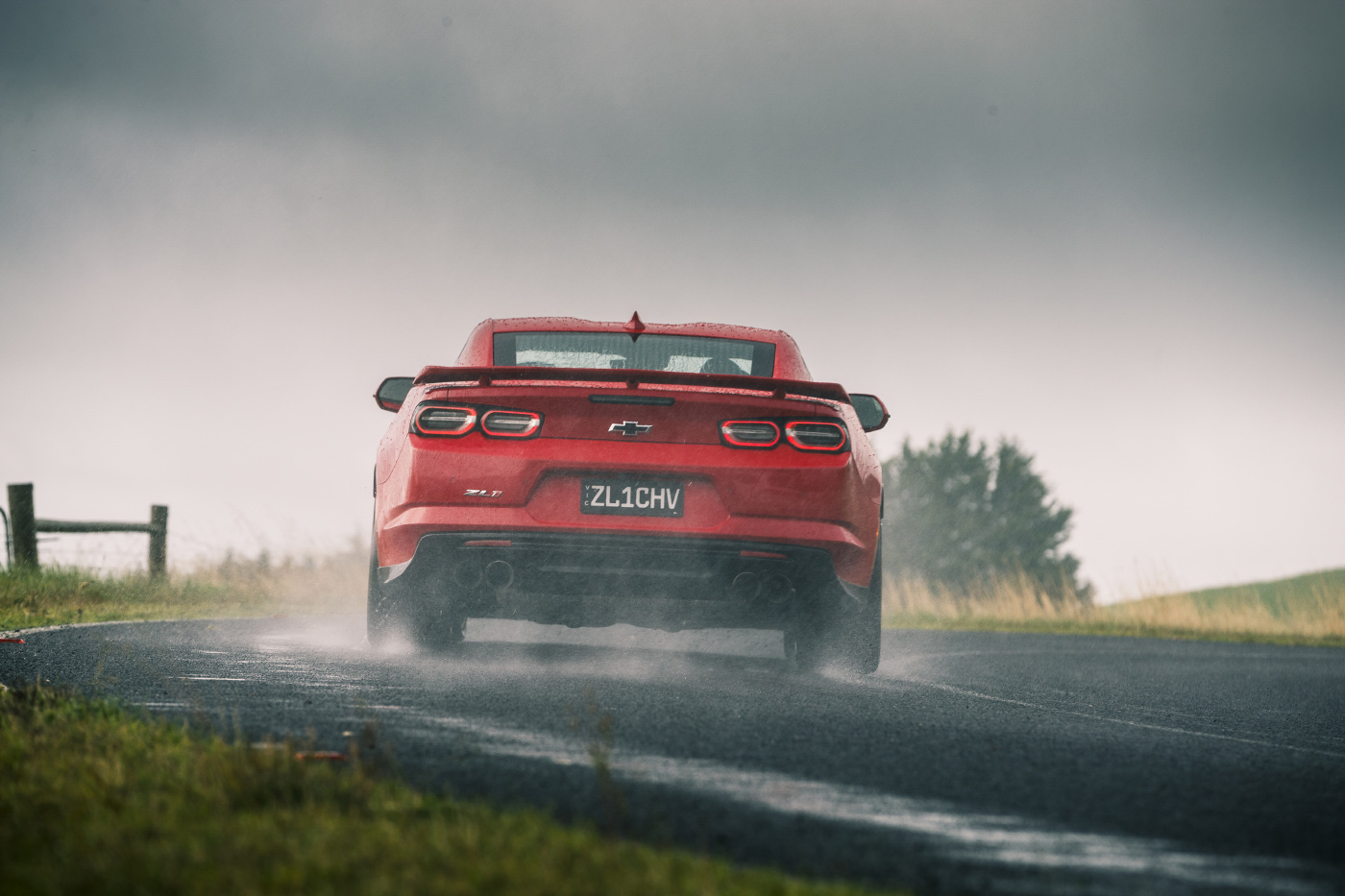
Let’s backtrack a little. As you’re probably aware, HSV does a lot of work converting the Camaro to right-hand-drive. The Clayton crew bring in US-spec MY19 ZL1s and basically strip everything out of them bar the front and rear glass, rear suspension assembly, fuel tank and differential. The car then undergoes a right-hand drive re-engineering process that’s quite remarkable. They’ll tell you about the hours that went into redesigning clutch pedals, refabricating bulkheads to GM best practice to allow for space in the pedal box, developing their own self-levelling system for the LED headlights and the hours and hours poured into getting the head-up display to work, a trick they couldn’t crack on the Camaro 2SS models we saw last year. It’s a huge and involved process and comes at considerable cost.
Central to that entire process is the fact that while HSV can re-engineer certain elements of the vehicle, it hasn’t waded in and started tuning suspension, reprogramming stability control systems or anything that – for the moment at least – might get the Chevrolet mothership in Detroit thinking that the Aussies had gone rogue.
So imagine the chin stroking that went on at Clayton when it became apparent that without ESC recalibration, the ZL1 wasn’t going to pass one Australian Design Rules requirement. That slightly obscure test, a so-called ‘split-mu’ exercise, or the ability of the car to brake in a straight line with the left hand set of tyres on a different friction surface to those on the right, was solved by swapping the ultra-sticky Goodyear Eagle F1s for the not so focused Continental Sport Contact 5s.
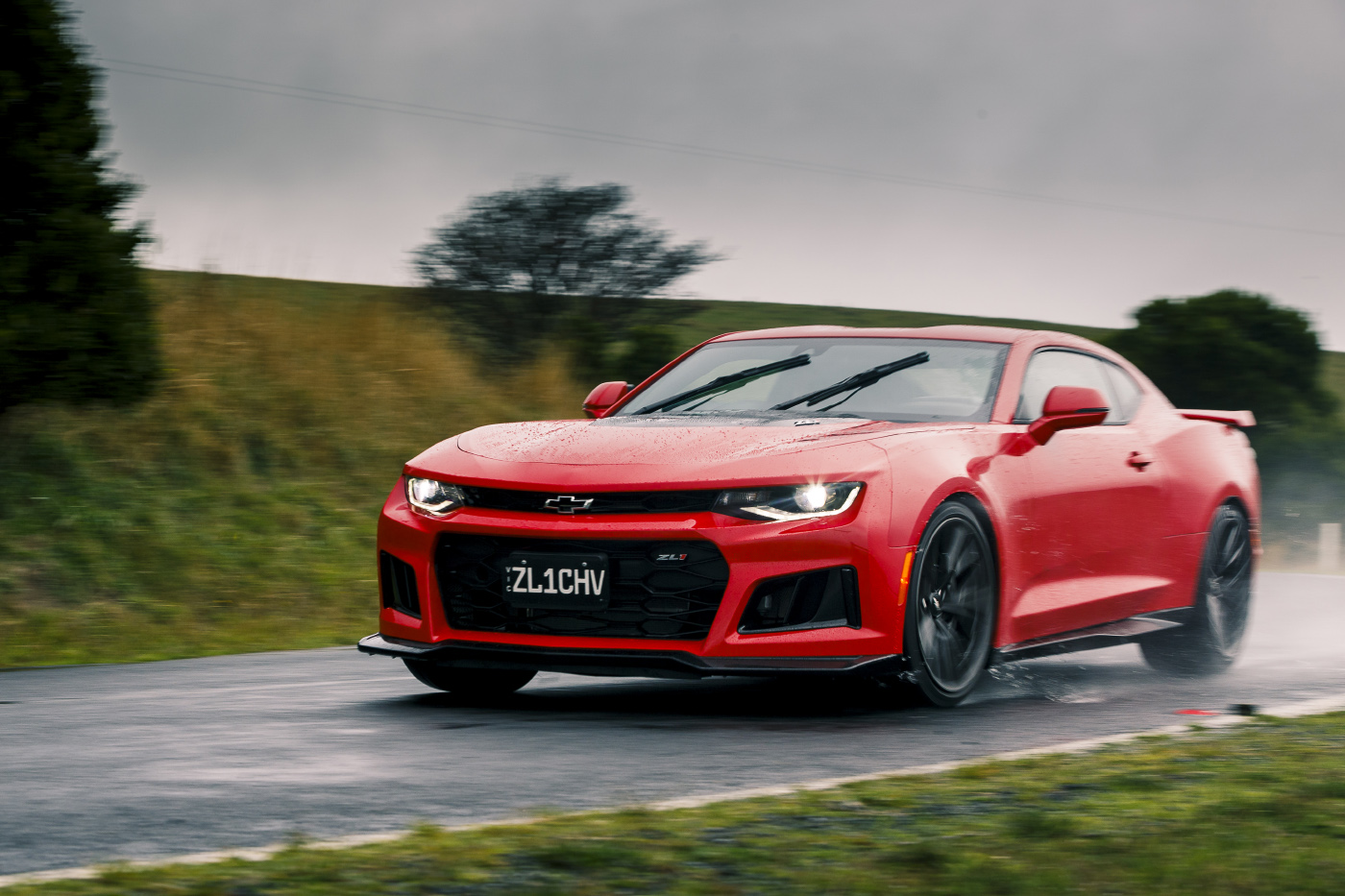
The patchwork quilt that is Sandown’s surface is generally held to afford the least grip of any major Australian circuit. We engage launch control and give the ZL1 the good news and, quite honestly, we’d have been smoked by something like a Focus RS endowed with about half the Chevrolet’s supercharged grunt. It’s hooking up about as successfully as me on a Hawaiian Tropic party bus.
Once it gets rolling, however, the acceleration is suitably ridiculous and accompanied by the keening overlay of supercharger whine. HSV have asked that, given the conditions, we limit our top speed to 180km/h today and the Camaro ZL1 rockets to that speed in less than a third of the front and back straights. Needless to say, we didn’t match the claimed 0-100km/h of 3.5 seconds.
Should you hanker after a little more traction off the line, HSV will sell you the original Goodyears, ostensibly as a ‘track tyre’ option pack for around $1000, which isn’t bad value given that they’d normally set you back around $2500. Our advice would be to avail yourself of HSV’s benevolent offer and retain the Contis for other duties.
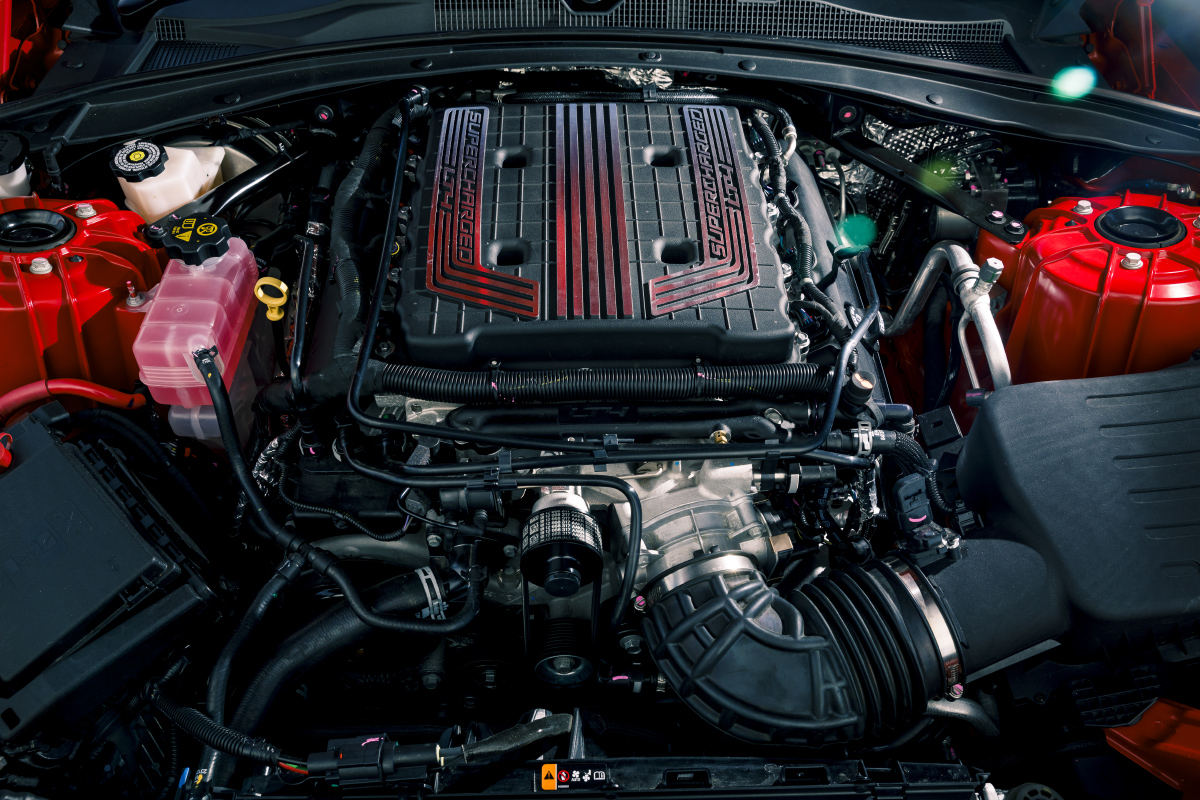
The engine – and that 881Nm of treadblock torture – might dominate the ZL1’s character but there’s real subtlety and talent beyond the headline numbers. We only had the opportunity to drive the car on track (look out for a forthcoming road drive) but there’s real sophistication to the suspension tune. HSV’s engineers freely admitted that the budget poured into the development of the ZL1’s ride and handling have given them very little scope for improvement. Anything that can notch a sub-7m30s lap of the Nurburgring is properly sorted.
Although we’re painfully aware that it’d be easy to skate the front end into Sandown’s slower corners, the steering feels a little meatier than the Camaro 2SS’ helm, helped by the fact that there’s a much wider tyre up front, 283/30ZR20 versus the normally-aspirated car’s 245/40ZR20 hoops. The Magnetic Ride dampers do a great job of ironing out the small bumps into many of the track’s big braking zones and there’s ample opportunity to cycle through the drive modes and assess the effect on the rear end. With a measured right boot, it’s tidy, with the e-diff doing a good job of massaging the car onto line, but HSV clearly doesn’t feel it’s so benign that they’ll either let us string together flying laps or let us out without a minder alongside who squirms when you start getting on the gas early.
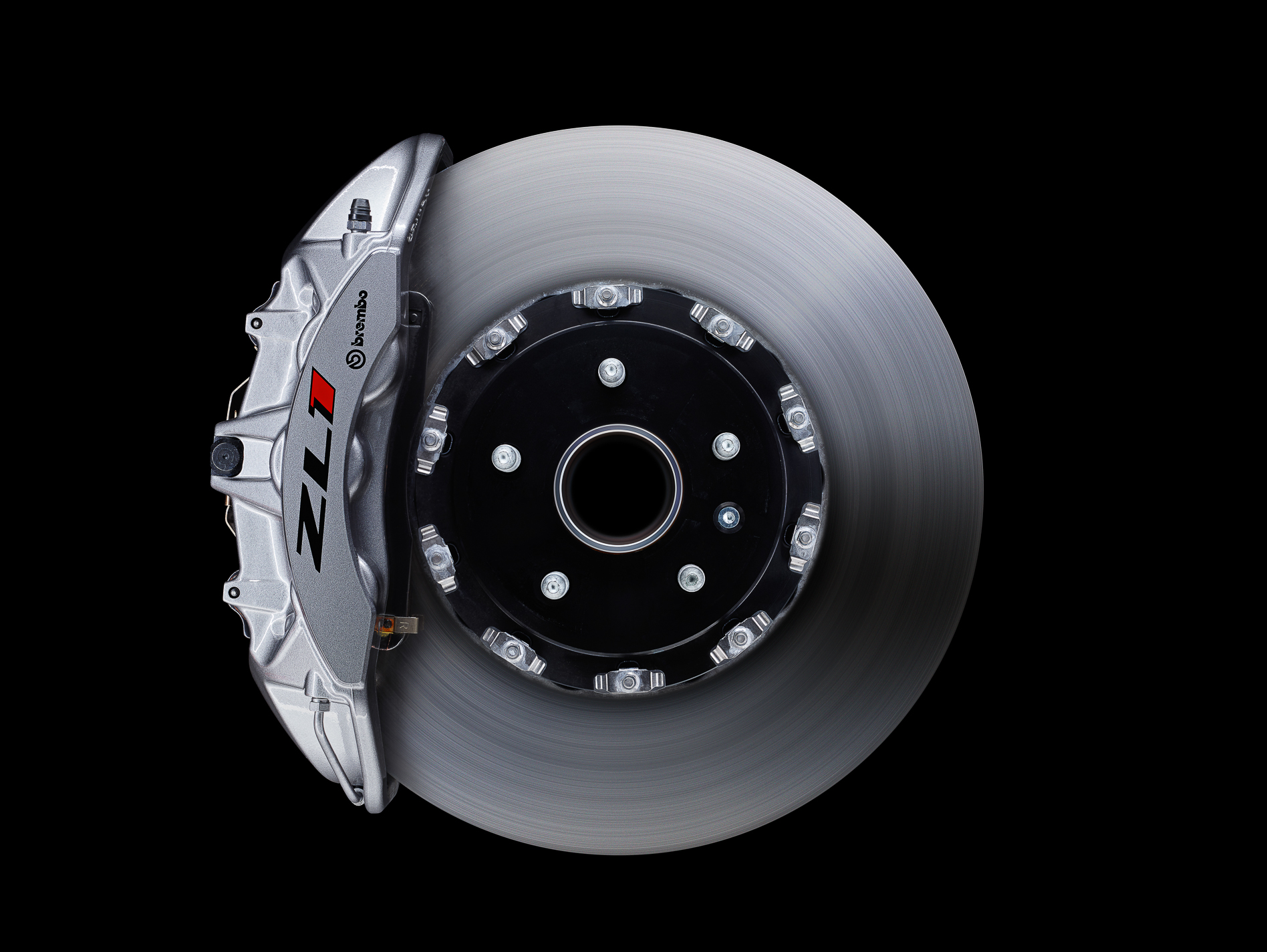
The Brembo brakes deserve special mention. The 390mm two-piece front discs are manhandled by six-pot Monobloc calipers and at full pressure, they’re fierce but with decent pedal feel making them easy to modulate. What’s more, the ZL1’s body control is so good there’s very little front-end dive when you really mash the picks.
Both the ten-speed auto and the six-speed manual were along for us to sample, the latter with a beautifully calibrated rev-matching function and a stubby suede-wrapped lever with a weighty, positive action. While the auto is undoubtedly quicker and makes more sense in the real world, there’s something about the manual car that just feels so purposeful and correct. The manual car does without the auto’s remote start function but I reckon I wouldn’t lose any sleep over that. The line lock function that allows you to smoke the rears in the auto might well be a more convincing fitment.
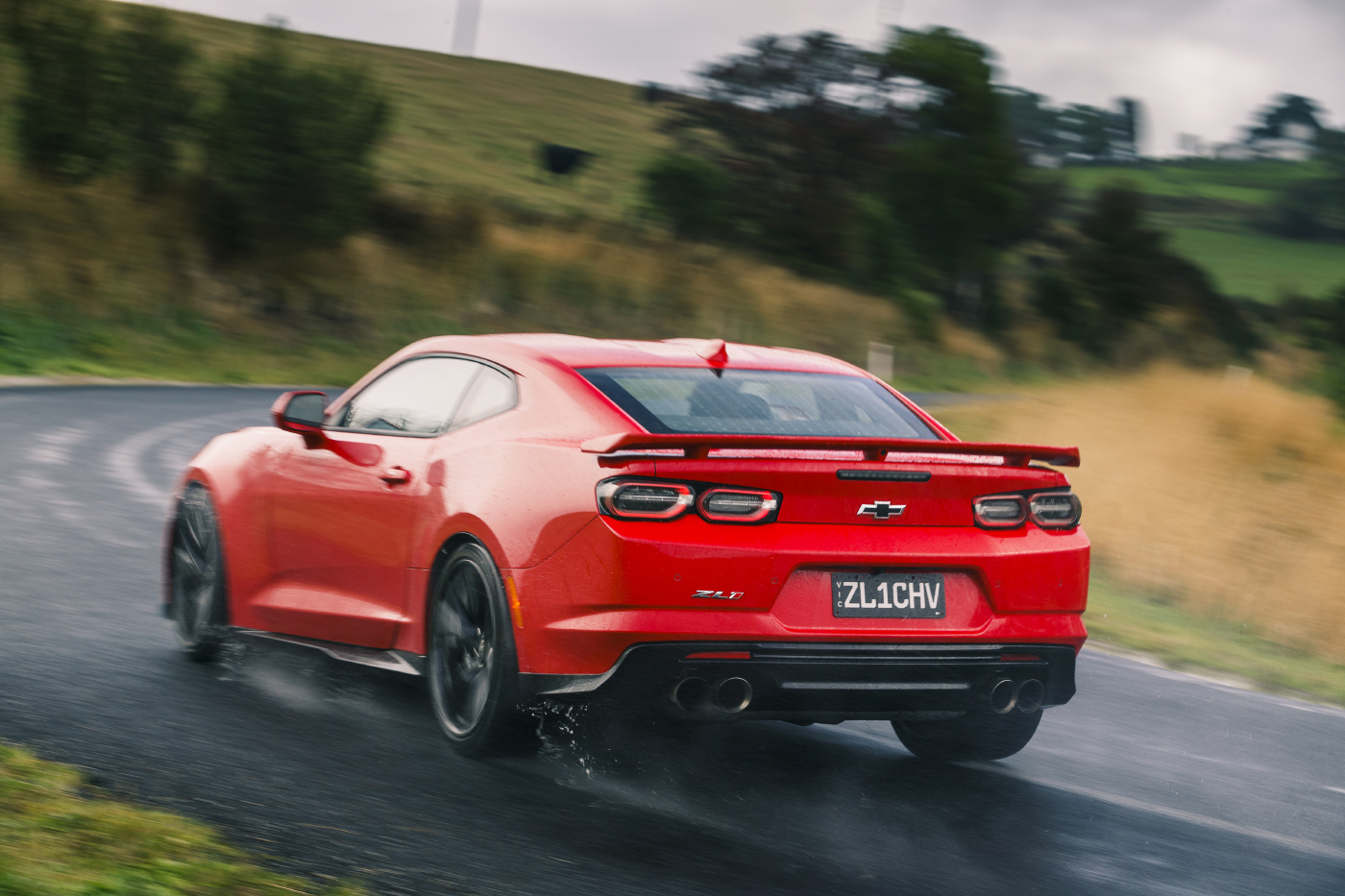
Pricing? The manual car retails at $159,990 and the auto adds another $2200 to that figure. Now clearly this is going to appear very expensive in the context of a certain coupe from the Blue Oval bunch, but given the re-engineering that’s gone into the right-hook ZL1, we’re clearly not comparing apples with apples. Instead look at that headline power figure and ask what else you can buy for the money that comes close. The 522kW Jeep Grand Cherokee Trackhawk is the obvious outlier, but the Camaro ZL1 trounces things like the $163k Mercedes-AMG C63 S Coupe (375Kw/700Nm). Even if you stepped up to the $229k BMW M5 Competition, you’re still short-served by a few kilowatts and Newton metres.
First impressions are positive then. Obviously we can’t deliver a definitive verdict on an accompanied drive on a track with a grip coefficient that, for today at least, is about as slippery as a politician’s promise, but that which we can assess suggests that HSV won’t have too much difficulty shifting units. This is a serious and seriously exciting V8 sports coupe. The day that Australia stops finding that formula attractive is still, thankfully, a very long way away.
CHEVROLET CAMARO ZL1 VS RIVALS
Mercedes-AMG C63 S Coupe
The AMG feels angry and balled-up much like the Camaro, and while it might offer a polished sheen of quality that the Chevrolet can’t match, when it comes to actual engineering substance, there’s not a lot to choose between the pair of them. Perhaps the Mercedes just ekes an edge when it comes to purity of soundtrack though.
CHEVROLET CAMARO ZL1 PRICE AND SPECS AUSTRALIA
Model: Chevrolet Camaro ZL1
Engine: 6162cc, supercharged V8, ohv, 16v
Max power: 477kW @ 6400rpm
Max torque: 881Nm @ 3600rpm
Transmission: 6-speed manual (10-speed auto optional)
Weight: 1795kg
0-100km/h: 4.9 sec (as tested)
Fuel economy: 15.6L/100km (claimed)
Price: from $159,990
On sale: Now
Power hungry GM enthusiasts have a new hero in Australia, with the Chevrolet Camaro ZL1 being imported and converted by the good folks at HSV.
The ZL1 is the most powerful iteration of Chevrolet’s Mustang-rivalling coupe, and the secret to its power and theatre is what lurks under the bonnet – the LT4 6.2-litre supercharged V8.
So, we decided we’d dive deep on the engine, and let you know what makes it so special.
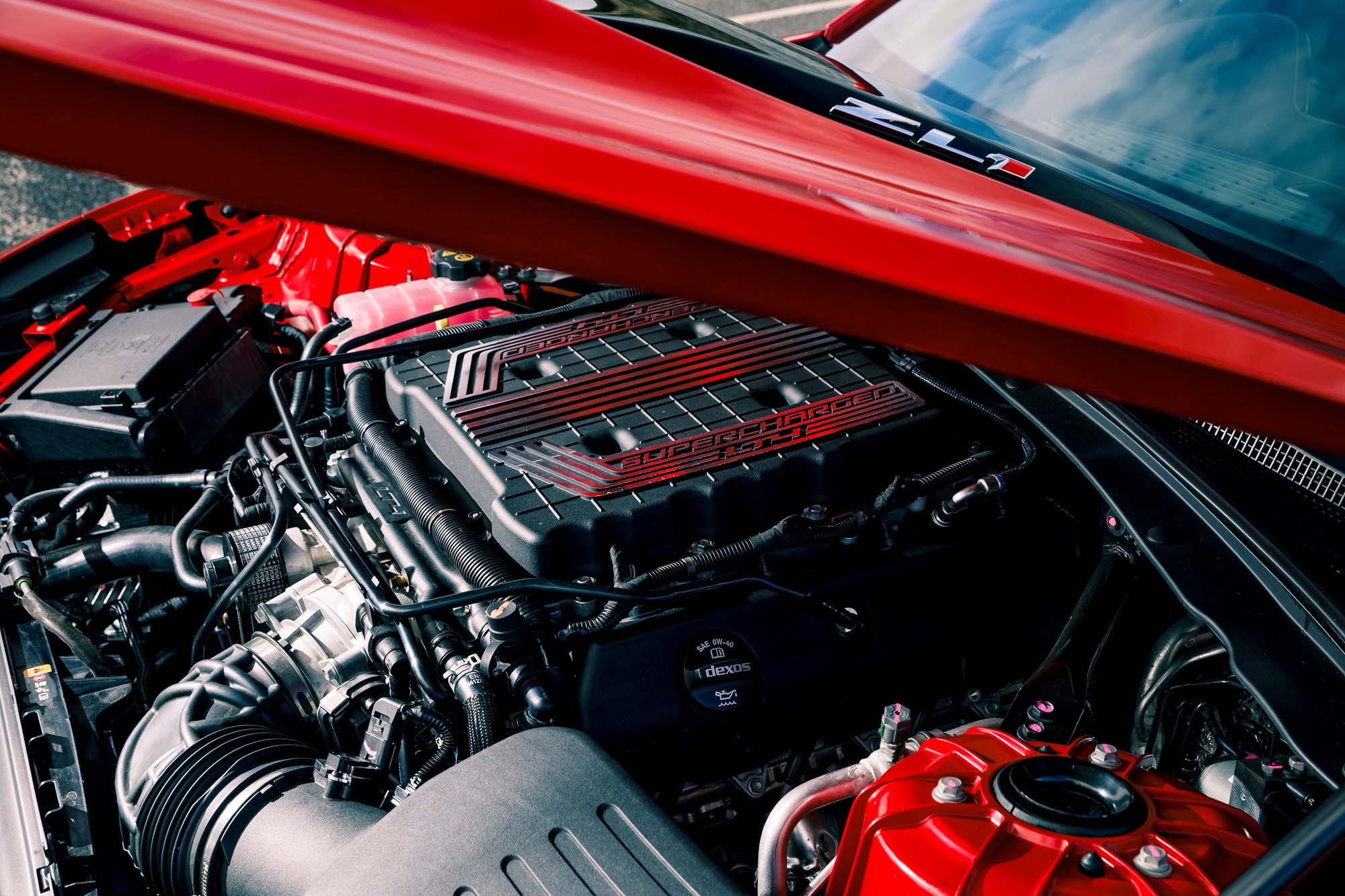
The LT4 is the second most powerful engine fitted to a regular production Chevrolet, behind the 563kW/969Nm LT5 which is fitted to the current ZR1 Corvette. If rumours are to be believed, it could soon be relegated to third, depending on what engine is fitted to the next-gen C8 Corvette. But that’s not to say the LT4 is short on power.
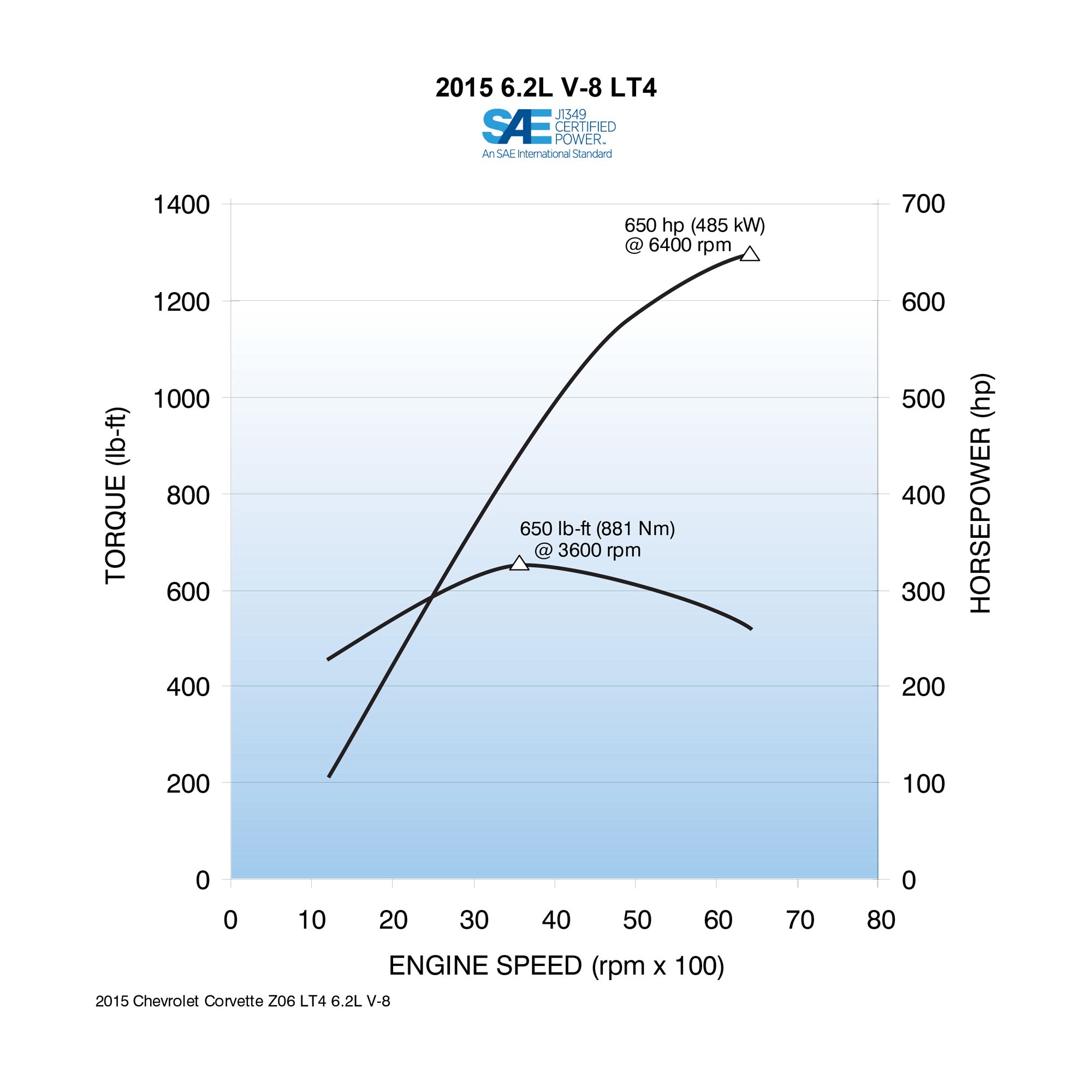
Debuting in 2015 in 485kW guise, the LT4 powered the Chevrolet Z06 Corvette (which is set to be superseded by the next-gen ‘Vette), along with the soon to be out-of-production Cadillac CTS-V (in 477kW trim), and freshly converted for Australia Camaro ZL1.
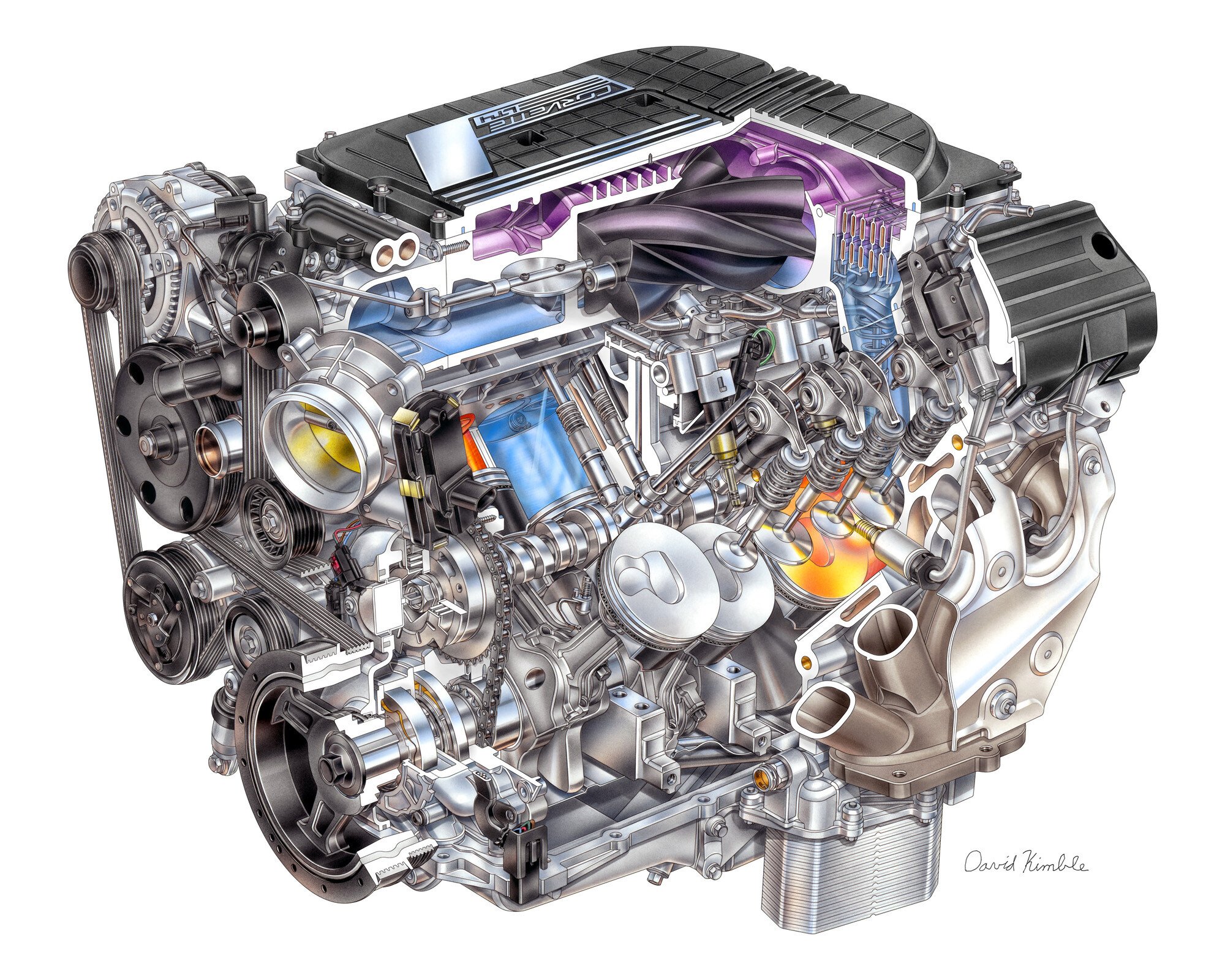
While unchanged for Aussies, the official power figures are changed from 485kW/868Nm to 477kW/881Nm for Australian customers.
This is due to a difference in local testing guidelines. In the US, power outputs are measured with the SAE system. However, in Australia outputs are determined using DIN testing methods, which fit ancillaries and the exhaust system to the engine while it’s on the dyno.
Fitted atop the engine is a 1.7-litre Eaton R1740 TVS supercharger, to which plenty of credit must go for making the LT4 such an engaging mill.
Despite its smaller size compared to the Eaton supercharger that funnelled air into the LS9 (1.7-litre vs 2.3-litre), it spins harder and faster.
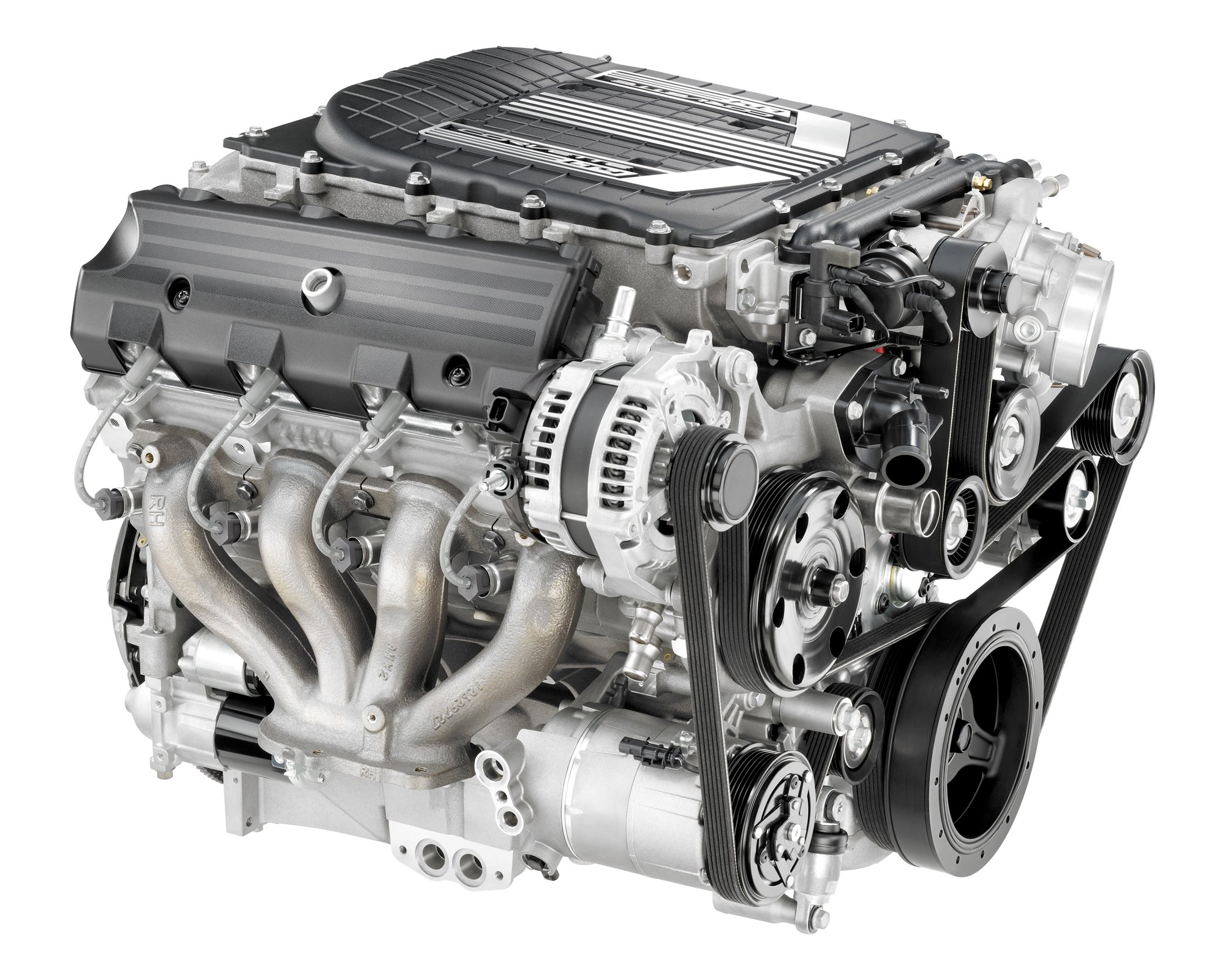
The LT4’s supercharger can spin up to 20,000rpm (which is 5000rpm more than the LS9’s), at which point it is generating 9 pounds of boost. The R1740 can also get to 5000rpm quicker than the previous unit, meaning boost is generated quicker. The kicker? This supercharger only produces marginally smaller amounts of boost than the larger unit.
Adding to the LT4’s athleticism is the fact that the supercharger and intercooler is 9kg lighter than what is found atop the LS9. Less weight higher up means a lower centre of gravity.
As part of the Gen V Chevrolet small block V8 family, the designs for the LT4 can be traced back to 1995, while its core ethos of a 90-degree V8 formation with a single-cam pushrod valvetrain and 4.4-inch bore spacing goes all the way back to 1955. That’s not to say the LT4 is all old-school cool, with GM injecting new-school tech to keep its V8 hero fresh.
The only components and design in the LT4 left in common with the Gen IV V8s that preceded it are the rod bearings, lifters, and bore spacing.GM decided to use Rotocast A356T6 aluminium cylinder heads for the LT4, which are stronger and handle heat better than conventional aluminium heads. Lightweight titanium intake valves, and forged powder metal steel connecting rods are also utilised. Forged aluminium pistons have a unique structure to provide extra strength, which is handy when you take into account the LT4’s 10.0:1 compression ratio, which is particularly high for a boosted engine, aided by direct injection.
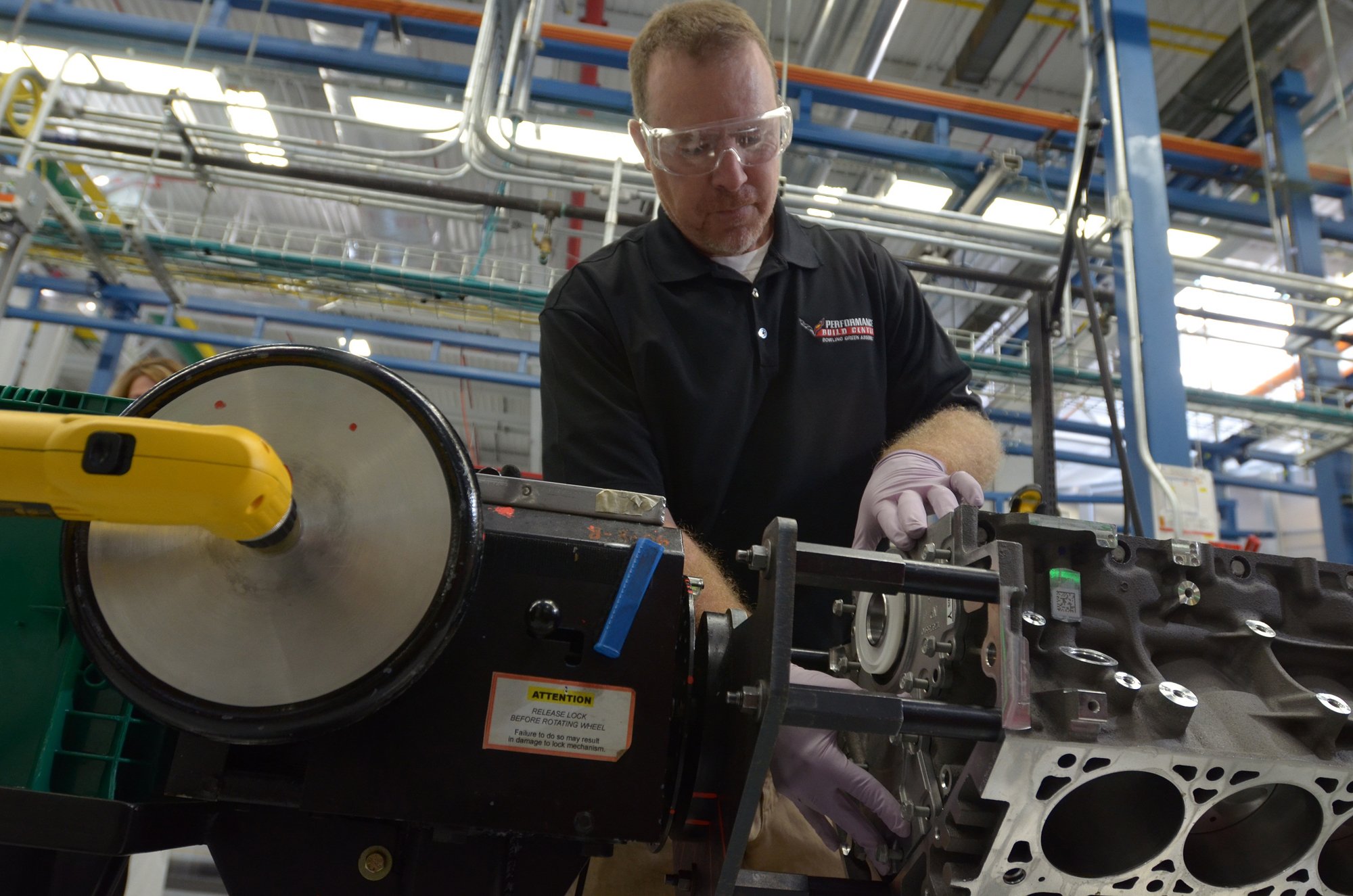
LT4 V8s are built in two locations, with Tonawanda Engine Plant in New York responsible for those fitted to Cadillacs and Camaros, while Z06 powerplants are constructed in Bowling Green, Kentucky.
At the New York facility, robots conduct the majority of the machining, with quality control steps after virtually every step in the process. Humans aren’t involved in the engine’s build process until it is ready for its internals, installing key components like the pistons and crank.
In Bowling Green, things are done very differently, with every LT4 assembled by hand. While it’s traditional for workers to be responsible for just one specific step as the engine rolls down the production line, in Kentucky a single person builds the entire engine from start to finish.
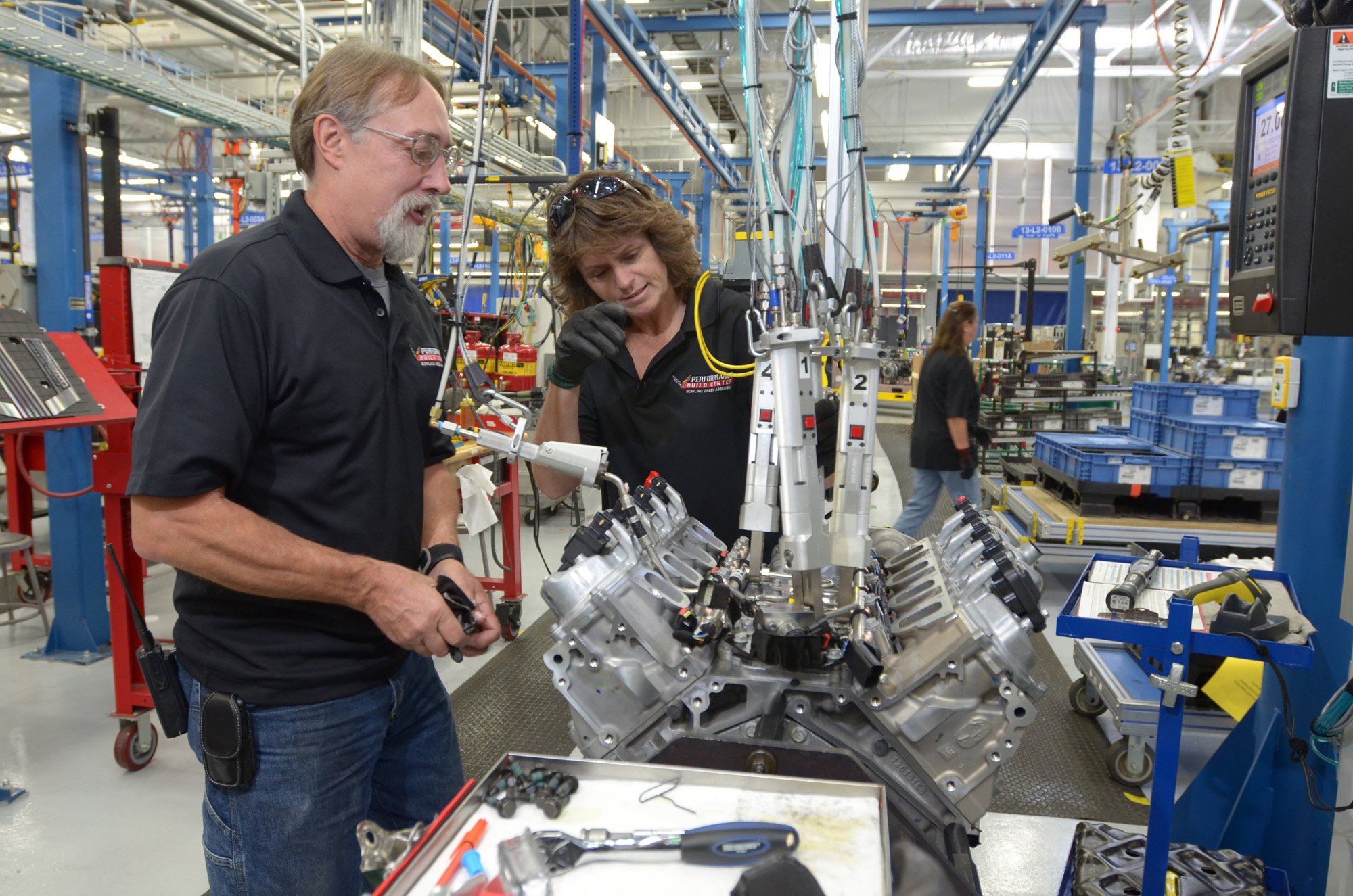
Chevrolet will even offer owners the chance to build their own LT4, with Z06 buyers able to lay down US$5000 (A$7173) to go hands-on alongside a Chevy technician.
Want to know what the LT4-powered Camaro ZL1 is like to drive? Make sure to check at 12:01am Friday, June 7 for our full Australian review.
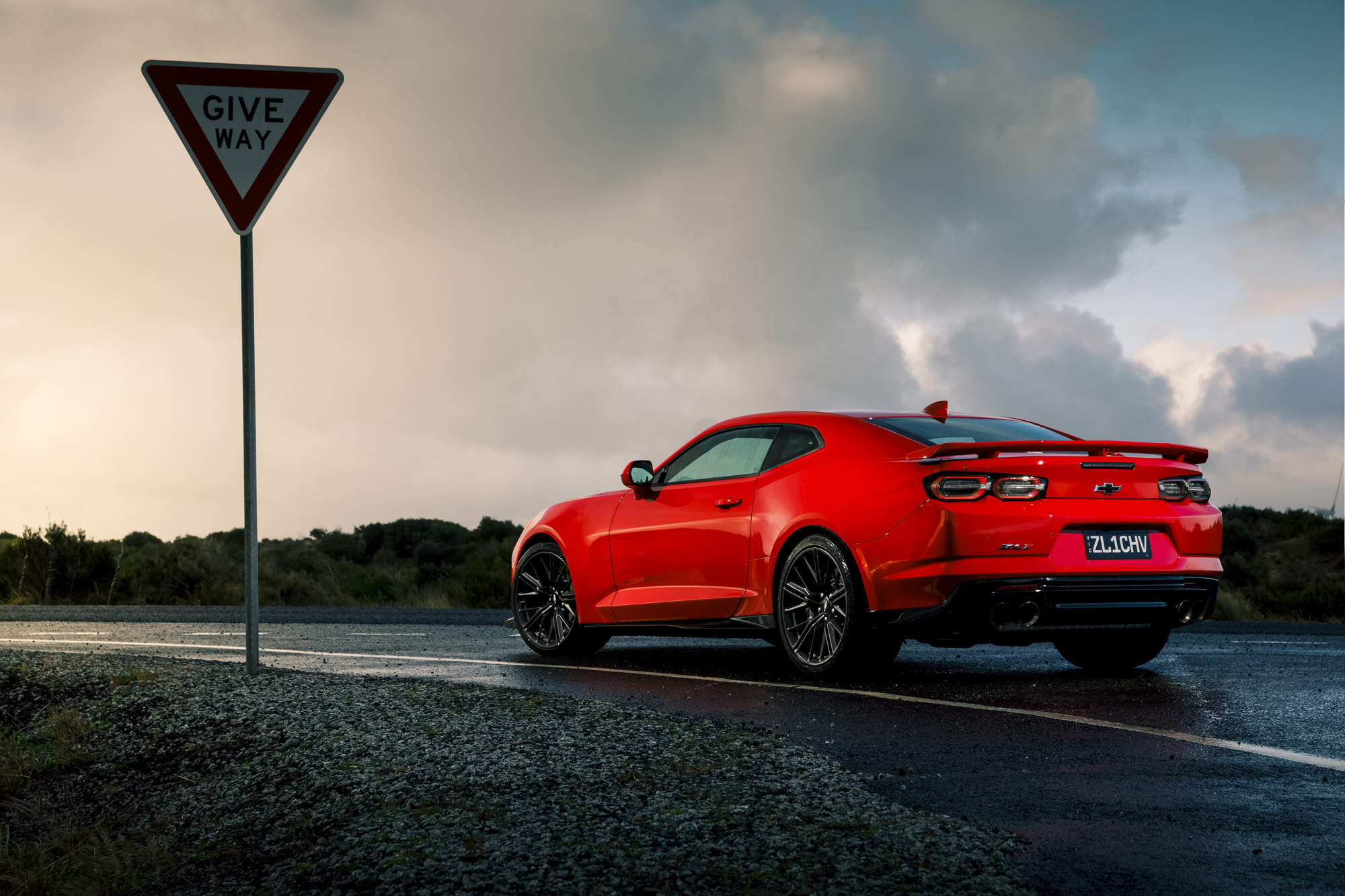
The Wheels Verdict: Such is the athleticism of the Porsche Cayenne Coupe is that it will hold up beyond most drivers’ abilities. It is incredibly planted to the road and ferociously quick without feeling overdone. It can be sensible and it can be fun, and for a family, it’s about as practical as most SUVs.
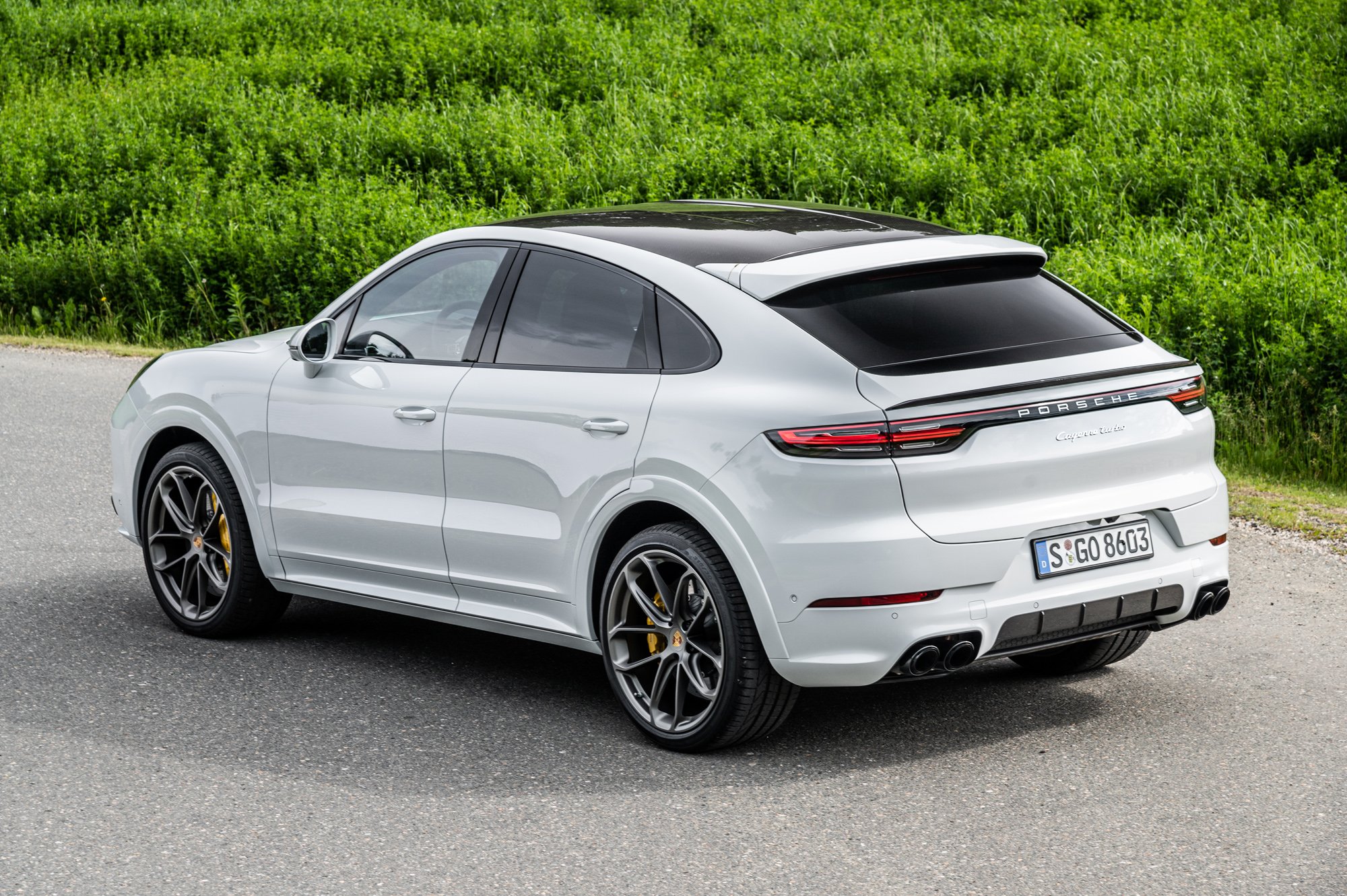
WHAT IS THE PORSCHE CAYENNE COUPE?
It’s time to welcome another swoopy coupe SUV to the ever-expanding crossover segment. You know ‘em – those big hulking family transports with a sportier aesthetic that doesn’t always translate to appreciably better dynamics.
WHY WE’RE TESTING IT
The Cayenne wagon has been a huge success for Porsche and the new coupe should boost the model’s reach to both new and existing customers, the latter projected to make up around 20 percent of all Cayenne sales. Beyond styling, there are some further unique changes to the coupe, so we’re driving the new model around the mountains roads of Austria to find out what it’s all about.
PORSCHE CAYENNE COUPE REVIEW
I wasn’t sold on the coupe SUV movement. SUVs are not sports cars. I get that, aesthetically at least, they tickle the fancy of some, but there’s a lot to be said for a car that offers substance over style. Sports cars should go fast and handle superbly; wagons should haul a family and their gear; and four-wheel-drives be built to endure the worst you can throw at them. So an SUV coupe? Nope. It’s hardly the epitome of practical family motoring with mild off-road cred. But when the Porsche Cayenne first landed in 2002 the idea of a Porsche SUV was hardly any less paradoxical, and look how well that’s done.
So I was a bit surprised when I saw the Cayenne Coupe in the metal. It’s what a Porsche SUV should be. Just as the Lamborghini Urus is outrageously undomesticated yet so perfectly aligned with the Raging Bull’s ethos, so too does the Cayenne Coupe meet the expectations of a company better known for building two-door sports cars than anything else. It’s the most Porsche feeling SUV in its stable, and isn’t that the whole reason to fork out big bucks on a car with the golden-flicker Stuttgart badge?
But there are more incongruities for the sensibly minded to get over, like optional sound insulation-delete that removes the stuffing on a premium family vehicle which often has refinement front of mind. Yep, this is SUV by Porsche.
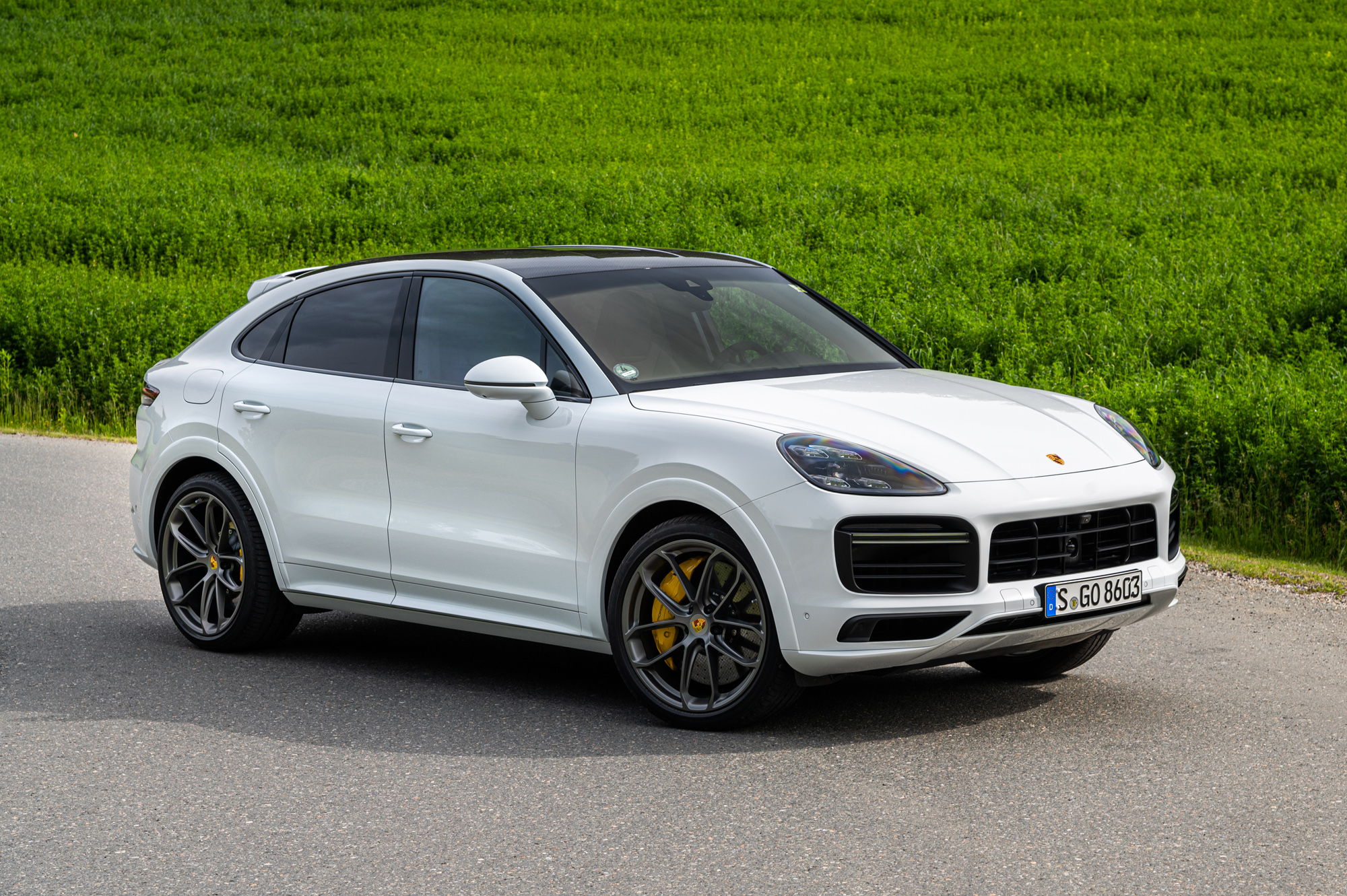
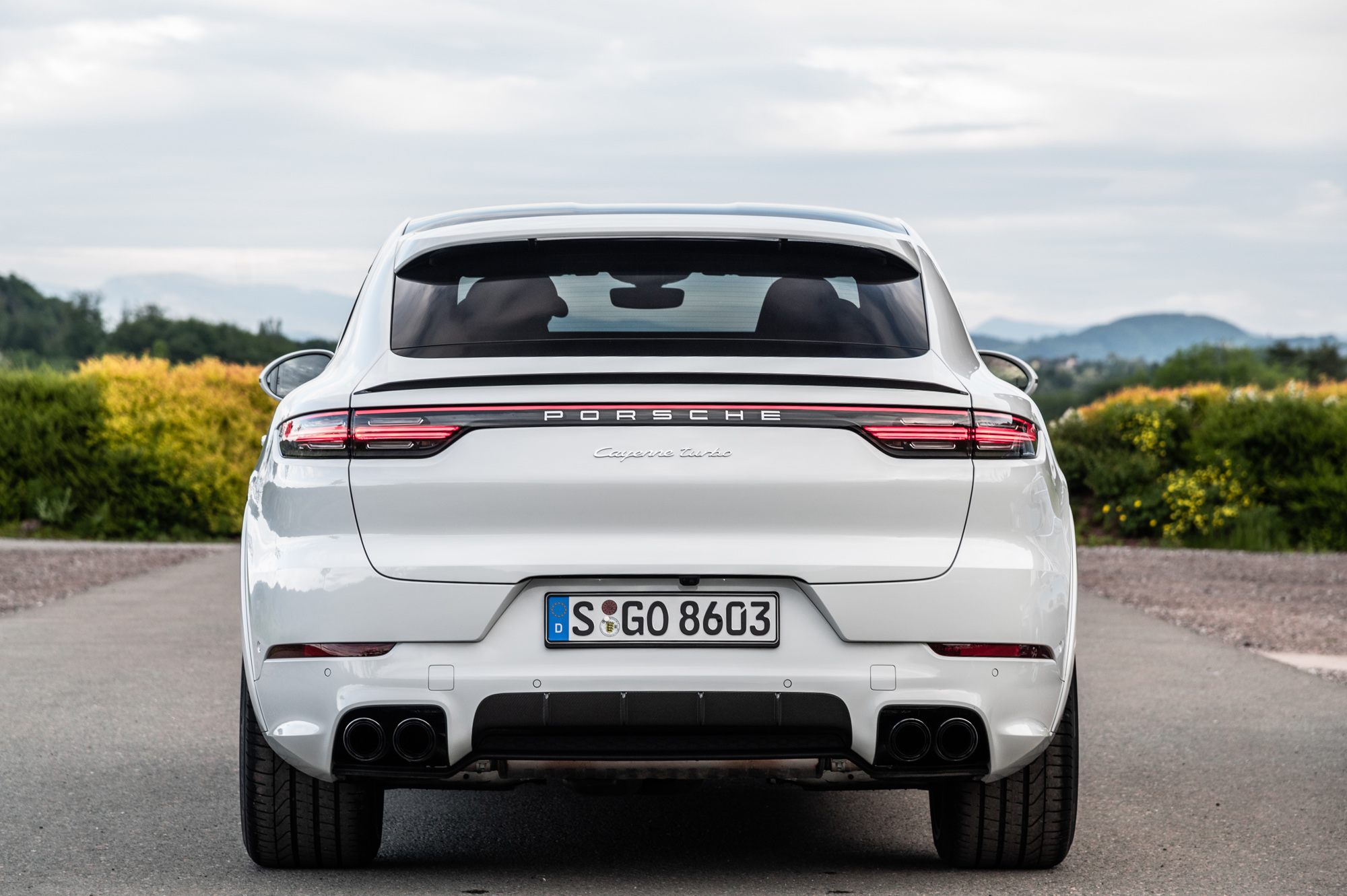
However, it’s not a hulking muscle monster like some other SUV coupes and that goes a long way to making its rear-end styling work. That transformation hinges largely on subtle alterations, like lowering the rear number plate so the haunches appear more slender. It doesn’t look like it’s trying to tuck excess flab into tights.
Despite some visual tricks, the Cayenne Coupe actually measures 18mm wider due to pumped out rear wheel arches, which accommodate a wider wheel track for better lateral stability. Above that, the roof drops 20mm from the regular Cayenne to facilitate the coupe look, and inside the rear seats drop 30mm so there’s a lower centre of gravity and enough headspace for the two (or, optionally, three) rear-seat occupants. If you really want to go all out on performance, an optional carbonfibre roof excises 21kg from the highest section of the car, and in turn opens up headroom for rear-seat occupants (the standard panoramic sunroof is a more than a bit bulky). There’s also a set of lightweight 22-inch alloys on the options list.
The Turbo is not so light on the wallet, priced from $254,000 plus on-road costs and cost-option trinkets. However, the extra standard inclusions in the coupe over the $15k cheaper Cayenne wagon go toward the steeper price, like speed sensitive steering, Sport Chrono pack, and PSM Sport. The base-model, powered by a 250kW/450Nm 3.0-litre V6 turbo is almost half the price of the Turbo at $128,400, but it doesn’t offer the same exhilarating performance of the Turbo or the 324kW/550Nm mid-tier S Coupe ($166,600), though the same weight-saving options are available across all three.
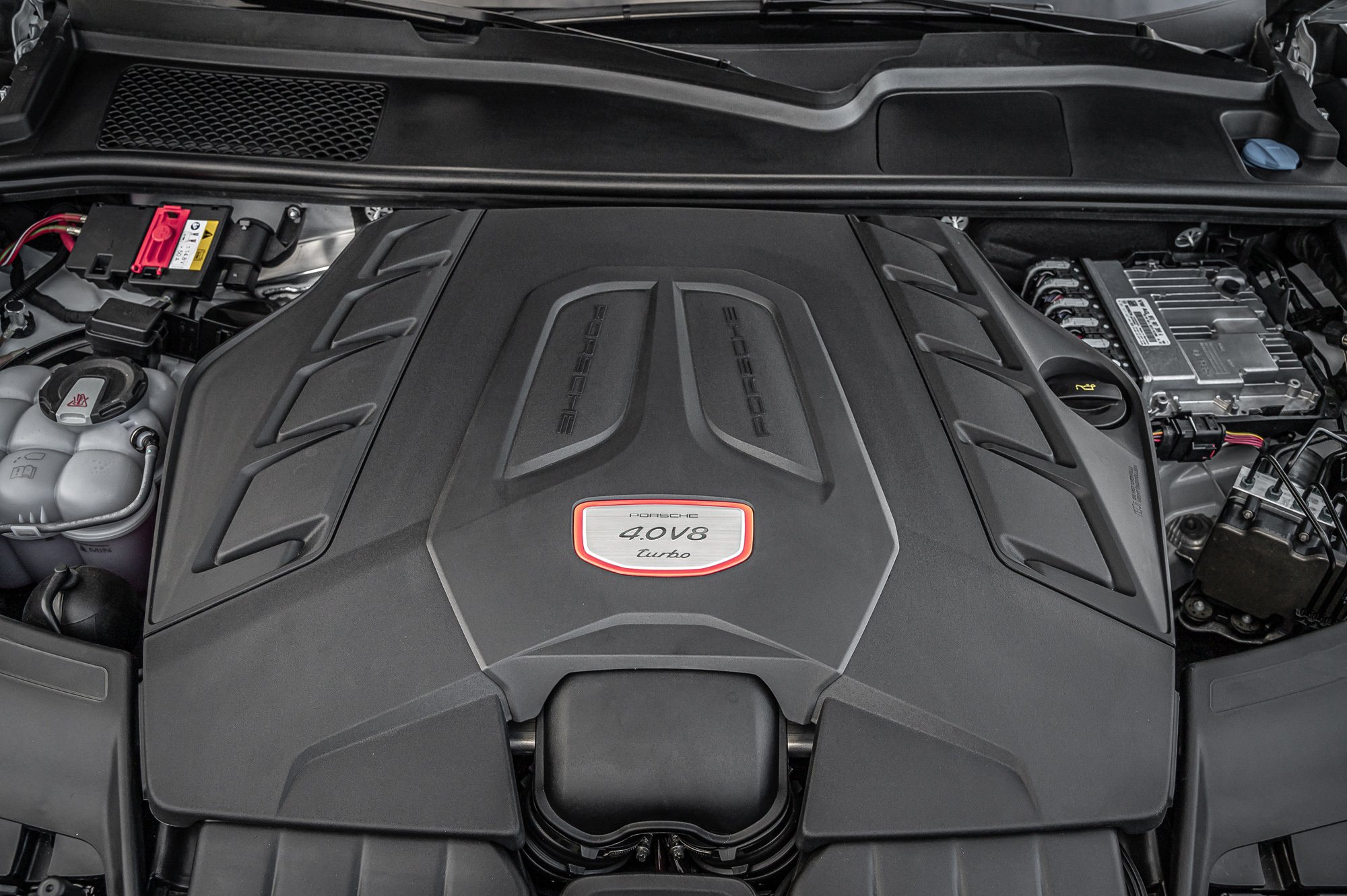
You should be getting the impression by now that there’s a focus on shaving gratuitous material to position the coupe as the higher-achiever in the Cayenne range. Though removing sound insulation from an SUV to help it go even faster around bends might sound like an unnecessary measure, the car does feel undoubtedly agile for such a big unit.
Crank over the V8 mill in the Turbo and the exhaust note purrs. It growls early in the rev range and howls towards redline, though the seat-of-your-pants drama isn’t entirely resolved at the exhaust, missing some of the guttural boisterousness exerted by eight-cylinder rivals such as the Mercedes-AMG GLC 63. Like the normal Cayenne, the twin-turbo 4.0-litre V8 produces 404kW at 5750-6000rpm and 770Nm at 1960-4500rpm.
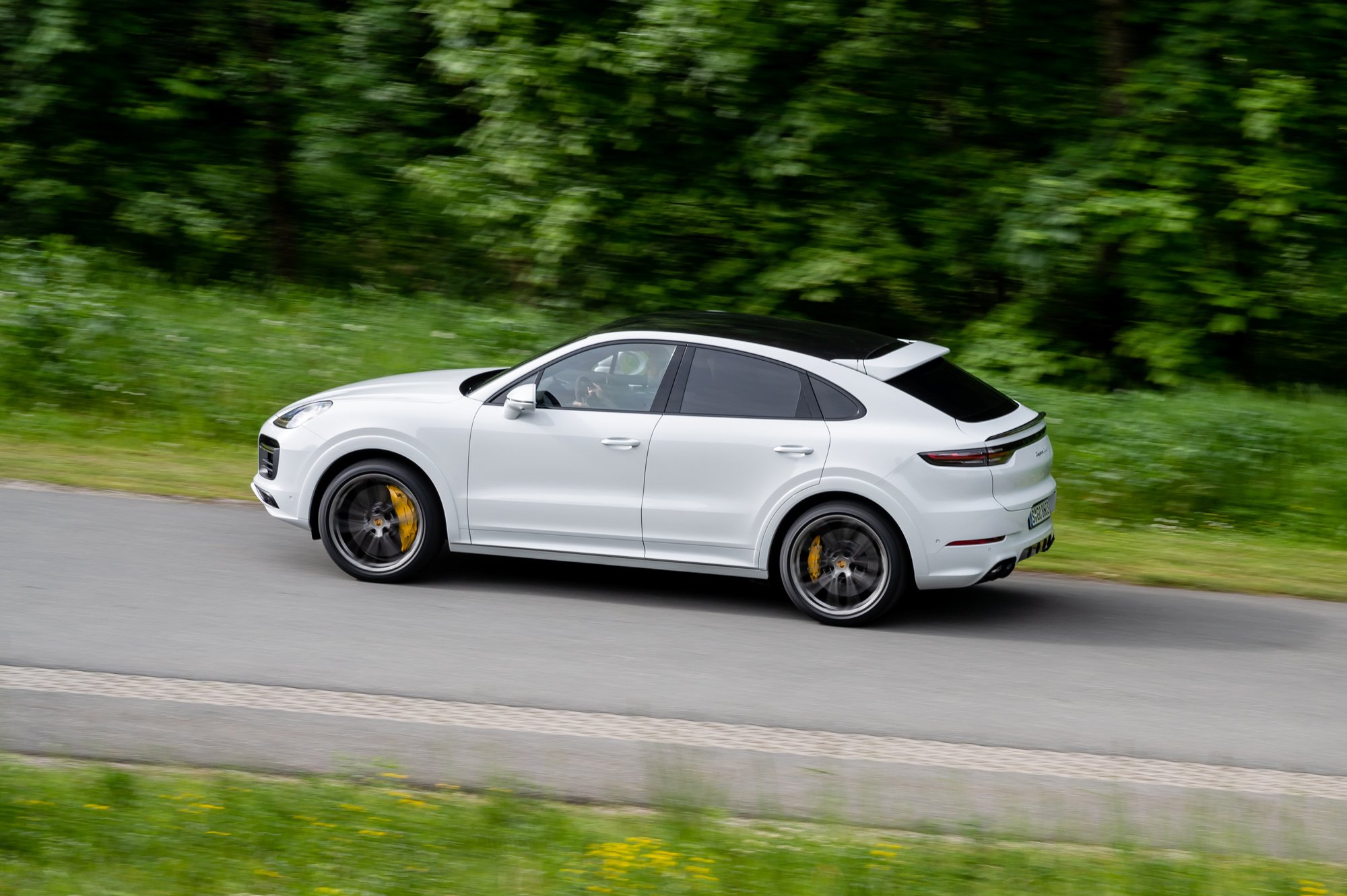
The already quick Cayenne Turbo wagon will sprint from 0-100km/h in 4.1 seconds; the coupe version, which weighs 25kg more (at a portly 2200kg), claims the same time in 3.9s thanks to Sport Chrono fitted as standard on coupe models. And it would have to shave off a tenth or two with the optional lighter parts.
Top speed for the Turbo and S is 286km/h, and aided by the coupe’s unique trio of spoilers. There is the obvious roof-mount wing that’s a styling piece as much as it also aids air flow down over the lower boot lip, which itself sits on a trick active spoiler that extents a tall 135mm from the boot at speeds over 90km/h. Subject to huge aerodynamic forces, the active spoiler was one of the coupe’s most problematic elements to design.
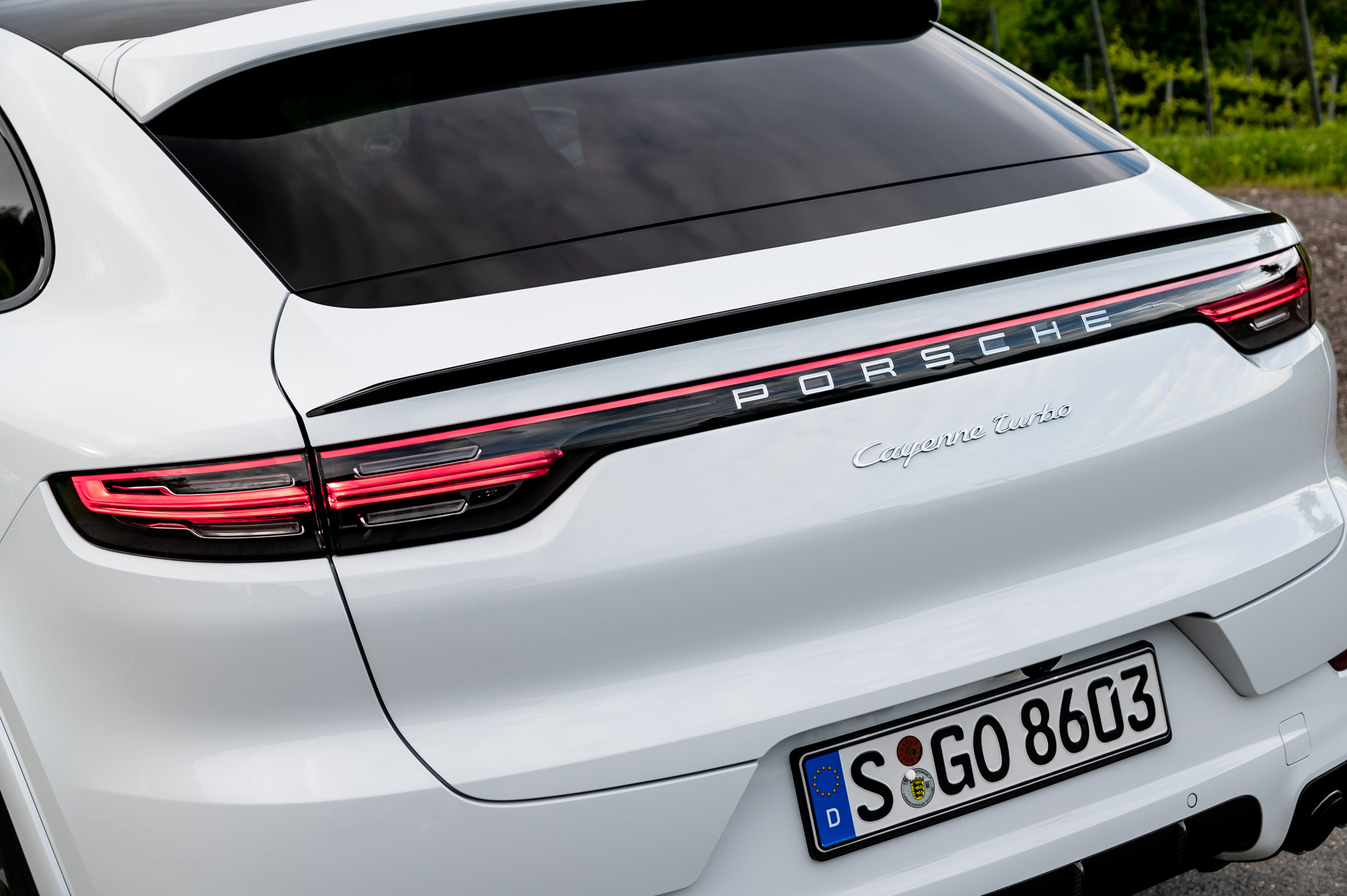
Riding on the same MLB Evo platform found beneath the Cayenne wagon, the coupe is incredibly athletic for an SUV of over two tonnes. The new 48-volt wiring architecture inside allows for incredibly fast computations and response from components like the three-chamber air suspension, traction control, and a more powerful anti-roll system. The result is a flat ride with stonking grip and corner speed. If you were sitting in the passenger seat eyelids shut, you could easily think you were in something much smaller, yet not necessarily more capable.
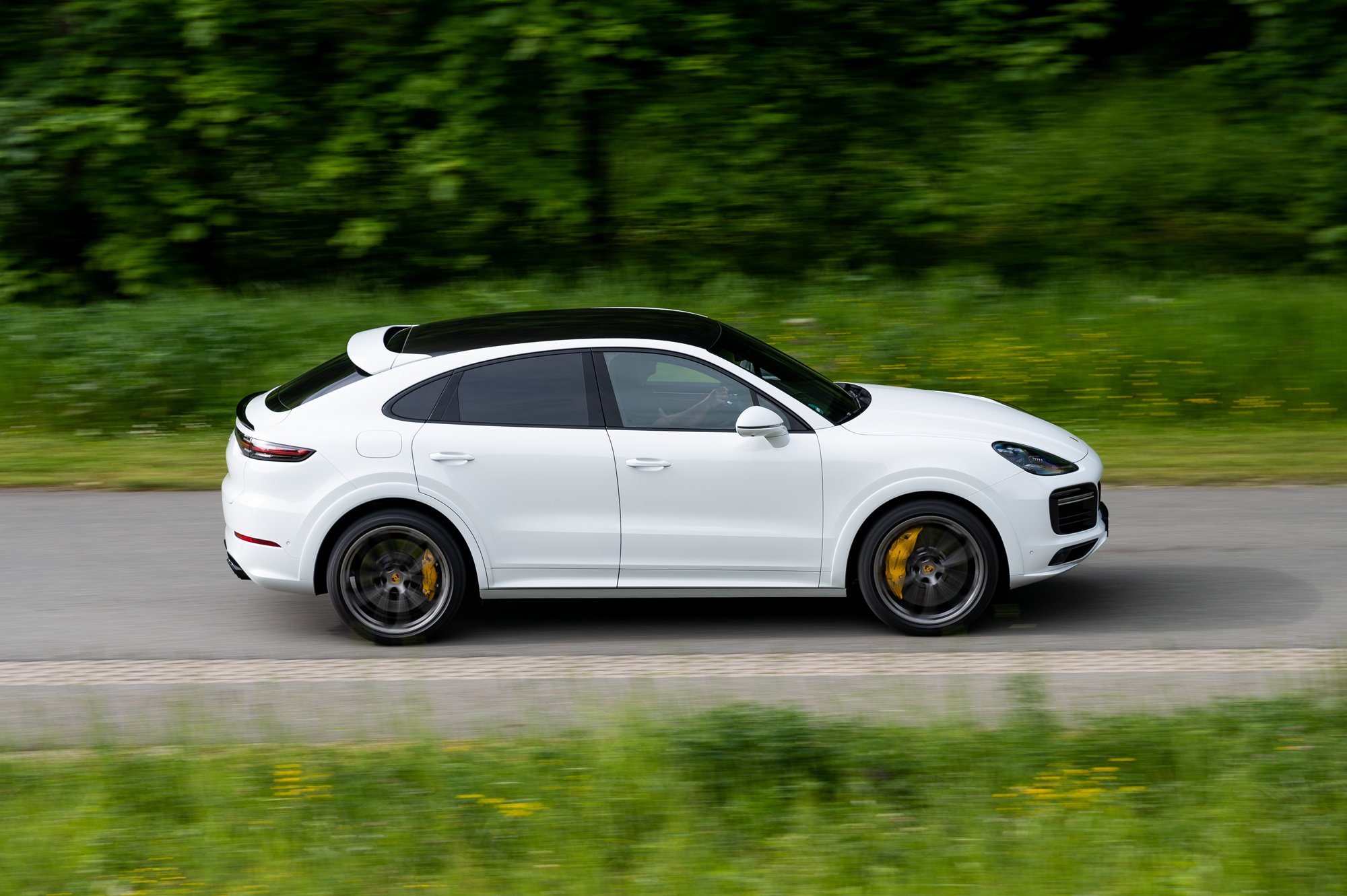
The weakness of the SUV is its weight and loss of communication through the front-end when really digging into corners. Porsche’s PSM Sport traction control system and all-wheel-drive does plenty to save the front-end from washing out, but feedback and feel through the tiller can become a touch numb as the tyres are put under stress.
Ten-piston front, 4-piston rear fixed-caliper brakes go further to defy the normal perception of SUV abilities, gripping with incredible strength on 415mm and 365mm internally-vented discs. We gave the German ship a blast down an Austrian mountain pass and it exhibited no less brake pedal feel and bite at the bottom than when starting atop.
Beyond critical performance faculties, the three-way dampers in their softest setting segue to a softly-sprung ride that soak up bumps and lumps along the road, even on the Turbo’s huge 22-inch alloys. It is easily switched from a highly-responsive sports ship to comfortable cruiser.
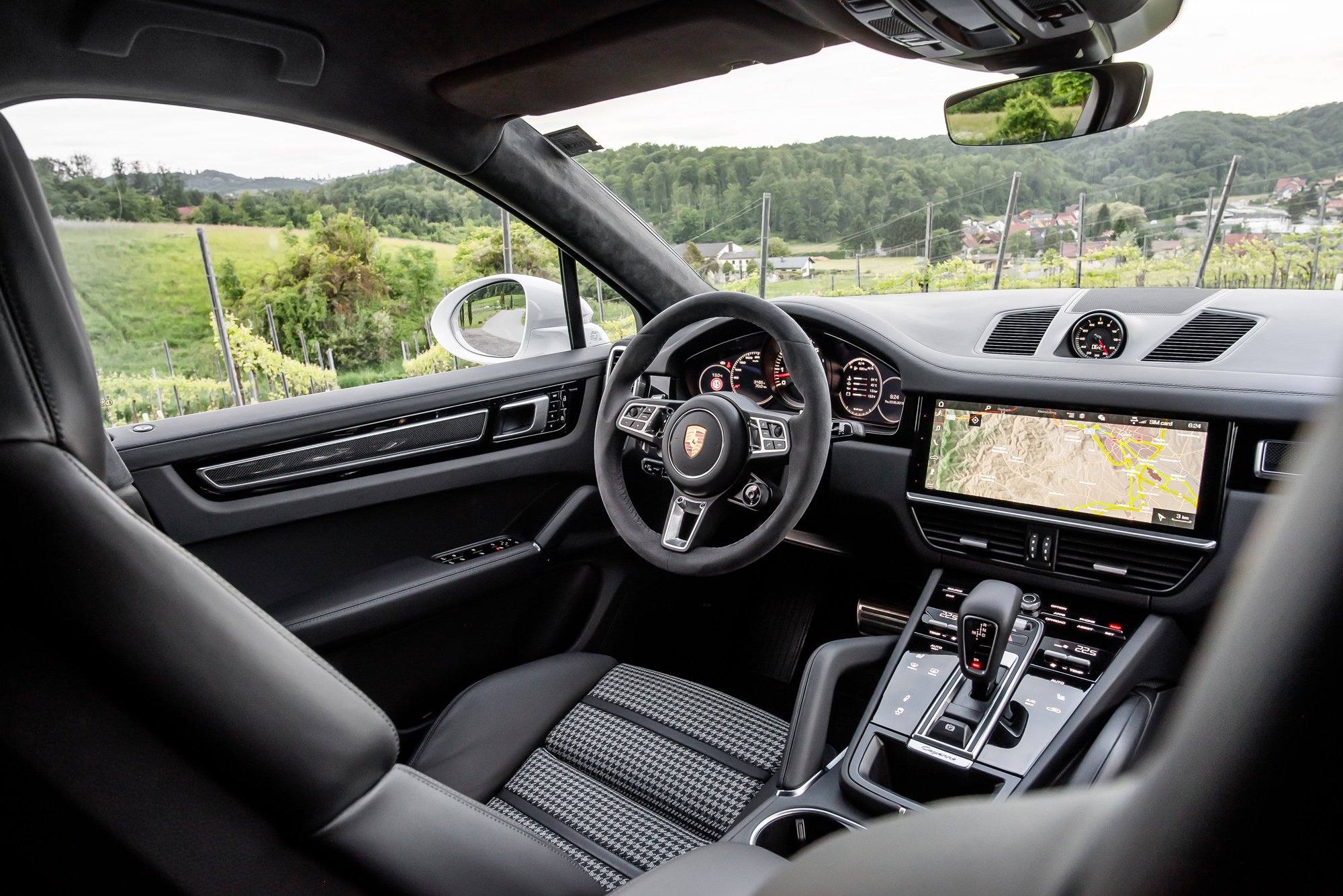
Inside is the same layout of the Cayenne, an expansive dash with a huge 12.3-inch infotainment system and digital driver instrumentation that are bright, crisp, and easy to use. The fabric grey scotch pattern and partial leather seats are classy and the standard two-seat rear setup looks much more sporty than the three pews that can be optioned for no cost. The boot is 145-litres smaller in the coupe, but a relatively large 625L overall.
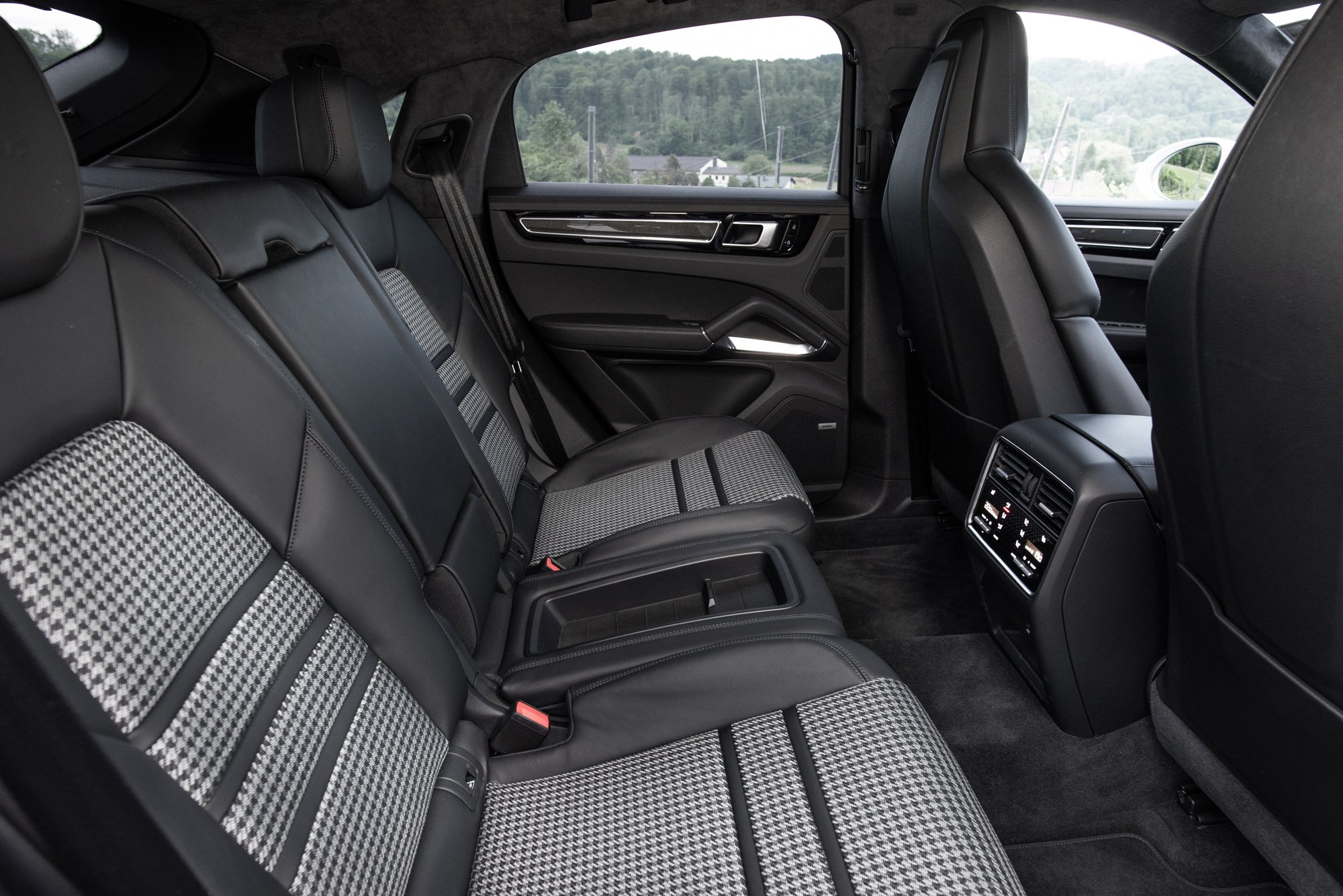
The only real contrast between the coupe and Cayenne inside is space in the back. Headroom shrinks as the roof rakes down over the rear seats, but then the optional carbonfibre roof opens up the cavity overhead; the lighter ceiling certainly does more for opening up the rear space than the standard panoramic roof’s pretense of airiness, and adds to performance.
That’s the crux of the Cayenne Coupe, a performance-focused SUV that has nipped away excess for performance without noticeable sacrifice to comfort. And visually, it’s a better Porsche SUV, and could well claim a larger percentage of the Cayenne’s sales than expected
PORSCHE CAYENNE COUPE VS RIVALS
PORSCHE CAYENNE COUPE PRICE AND SPECS AUSTRALIA
- Model: Porsche Cayenne Coupe Turbo
- Engine: 4.0-litre twin-turbo petrol
- Max power: 404kW at 60000rpm
- Max torque: 770Nm at 4000rpm
- Transmission: Eight-speed automatic
- Economy: 11.9L/100km
- Price: $254,000
- On sale: Jan 2020
When it comes to pace the McLaren 570S Coupe and Spider supercars are already plenty quick, but for those who need a little more of that magical downforce, McLaren Special Operations (MSO) has just the solution.
Designed by MSO, the “MSO Defined High Downforce Kit” is said to deliver an additional 75kg of downforce by means of a new carbon fibre rear wing and underfloor guide vanes that ensures “optimum aerodynamic balance is maintained”.
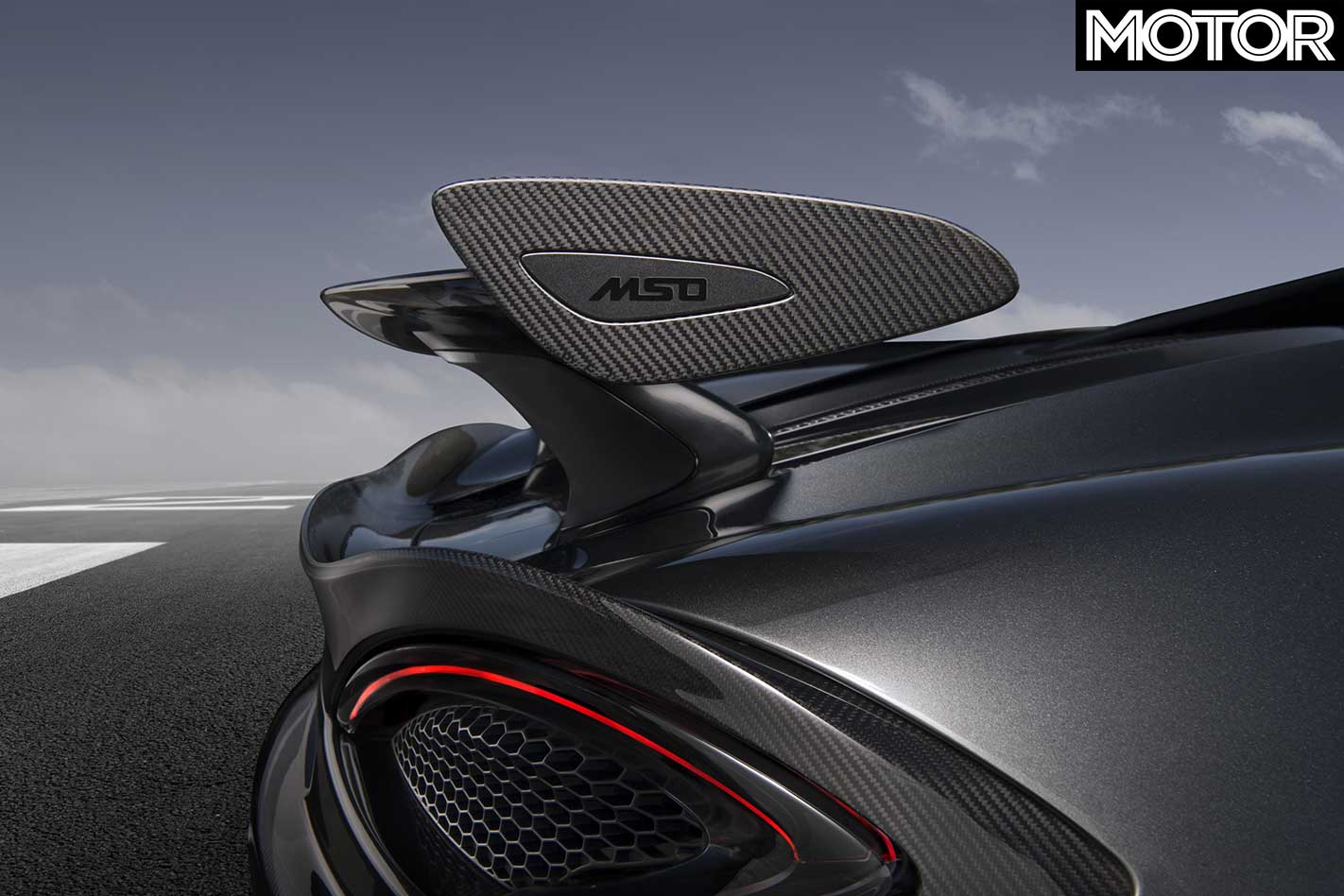
More than just being a functional bit of kit, McLaren says that the rear wing was also shaped to complement the flowing contours of the 570S’ rear bodywork, and also integrate a central high-mounted third brake light.
“We are constantly looking for opportunities to make the latest and very best designs and technologies available not only to new car buyers but also to customers who already own a McLaren,” says Carl Whipp, McLaren Automotive’s director for global aftersales.
“The new MSO Defined High Downforce Kit is a perfect example of this ethos, offering both a transformative visual enhancement and dynamic benefits.”
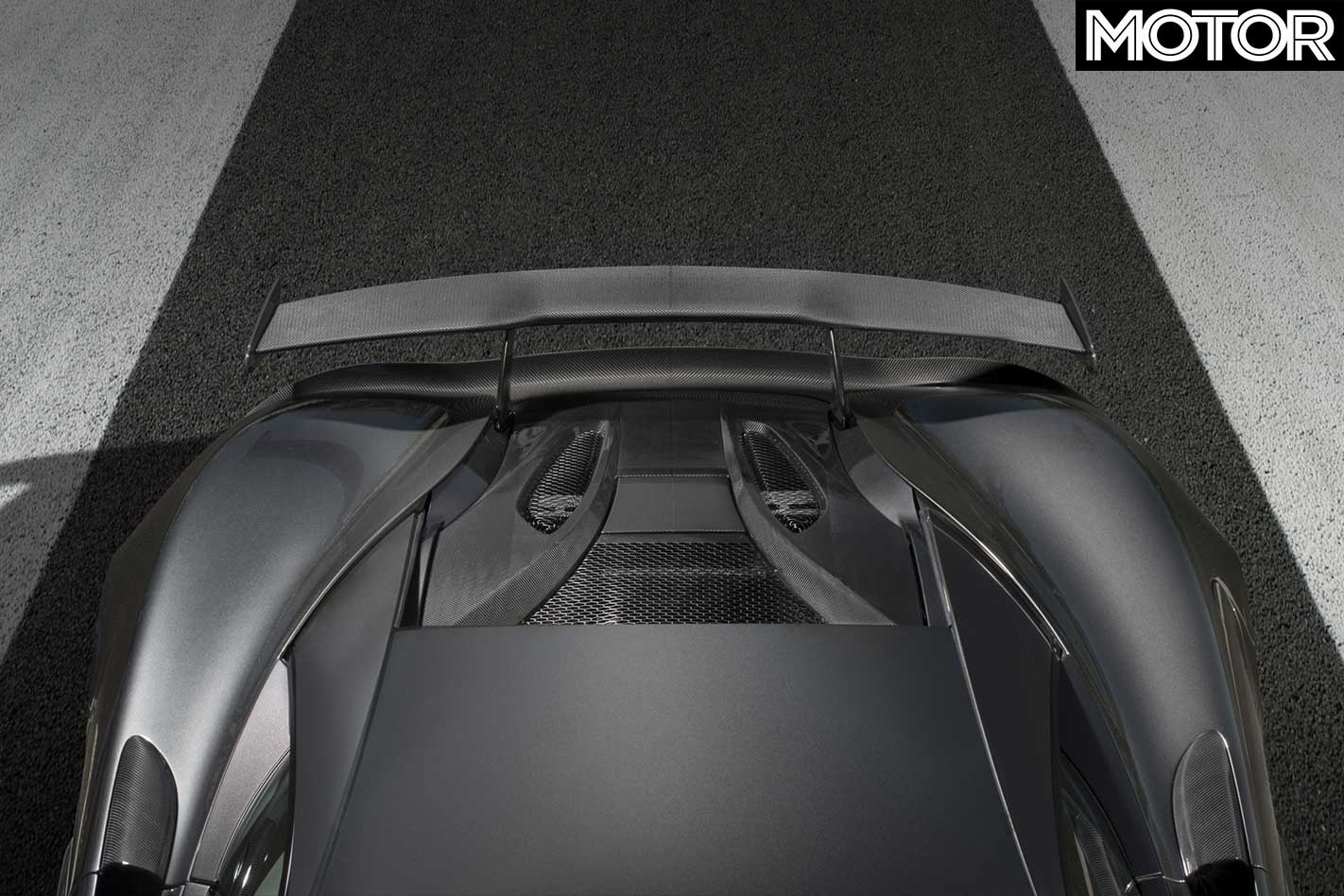
The MSO Defined High Downforce Kit is available in the McLaren Genuine Accessory range and available from McLaren retailers for a recommended retail price of £7,950 (for the UK market).
Mercedes has revealed the 2020 AMG CLA35 Shooting Brake, a sports wagon-styled version of the CLA35 fastback.
With the same 225kW/400Nm turbocharges 2.0-litre four as its siblings, the Sport Brake takes 4.9 seconds to reach 100km/h from a standstill, making it one tenth slower than the A35 fastback sedan, but on-par with the CLA35 sedan.
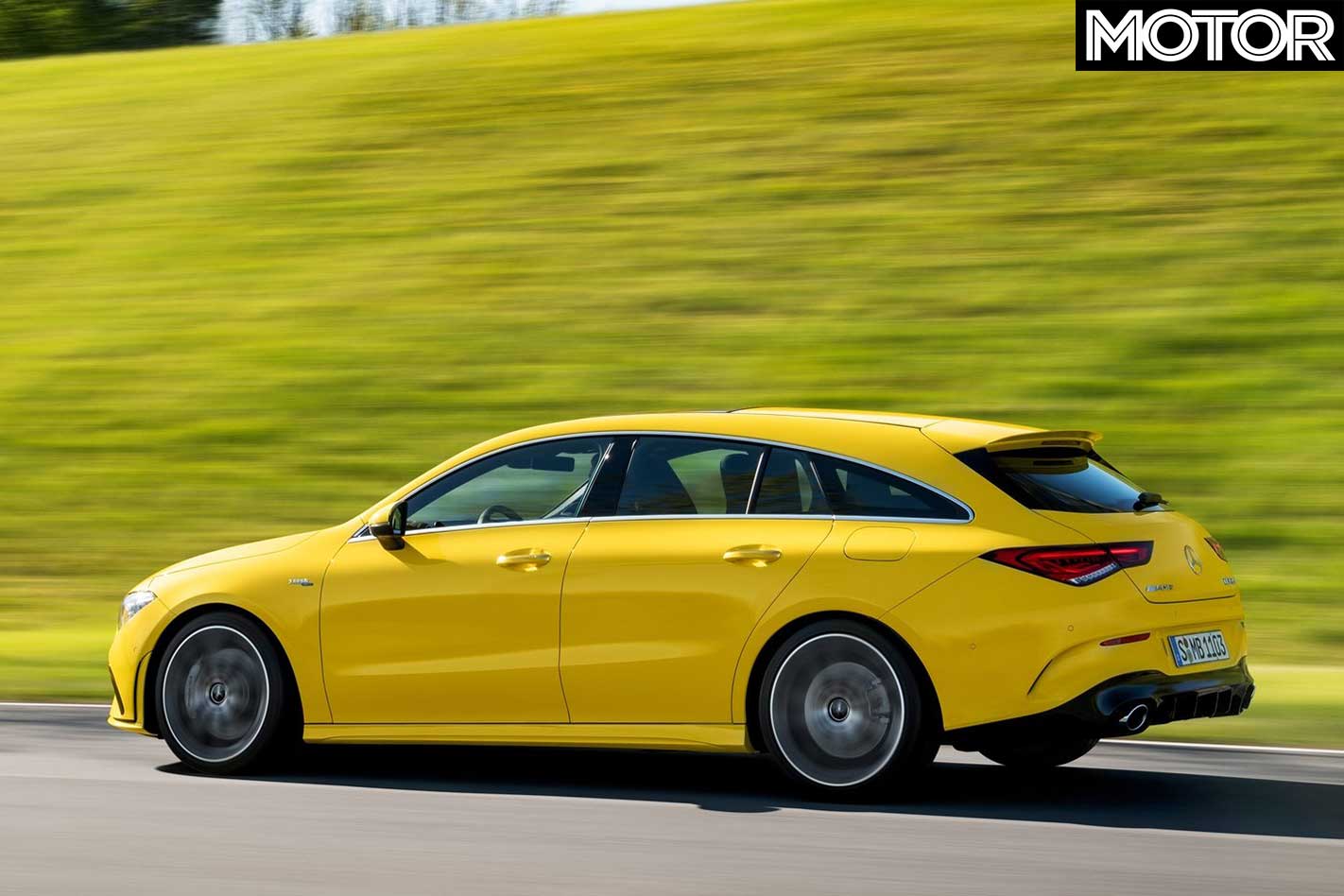
Its 4Matic all-wheel-drive system can split torque delivery up to 50 per cent at the rear, after being transferred via a 7-speed dual-clutch.
AMG says strengthening of the bodyshell through reinforcement and bracing, as well as AMG’s specific chassis components like a 4-link rear axle help make the wagon a dynamic performer.
The CLA35 Shooting Brake even comes (optionally) with AMG’s Track Pace, a ‘virtual race engineer’ system which records vehicle data and provides analysis on track. Not that many Shooting Brake customers are likely to need this.
AMG chair Tobias Moers says of the Shooting Brake, well, much the same as he did of the CLA35 fastback sedan upon its reveal – that it is a car for young, active, fashionable people.
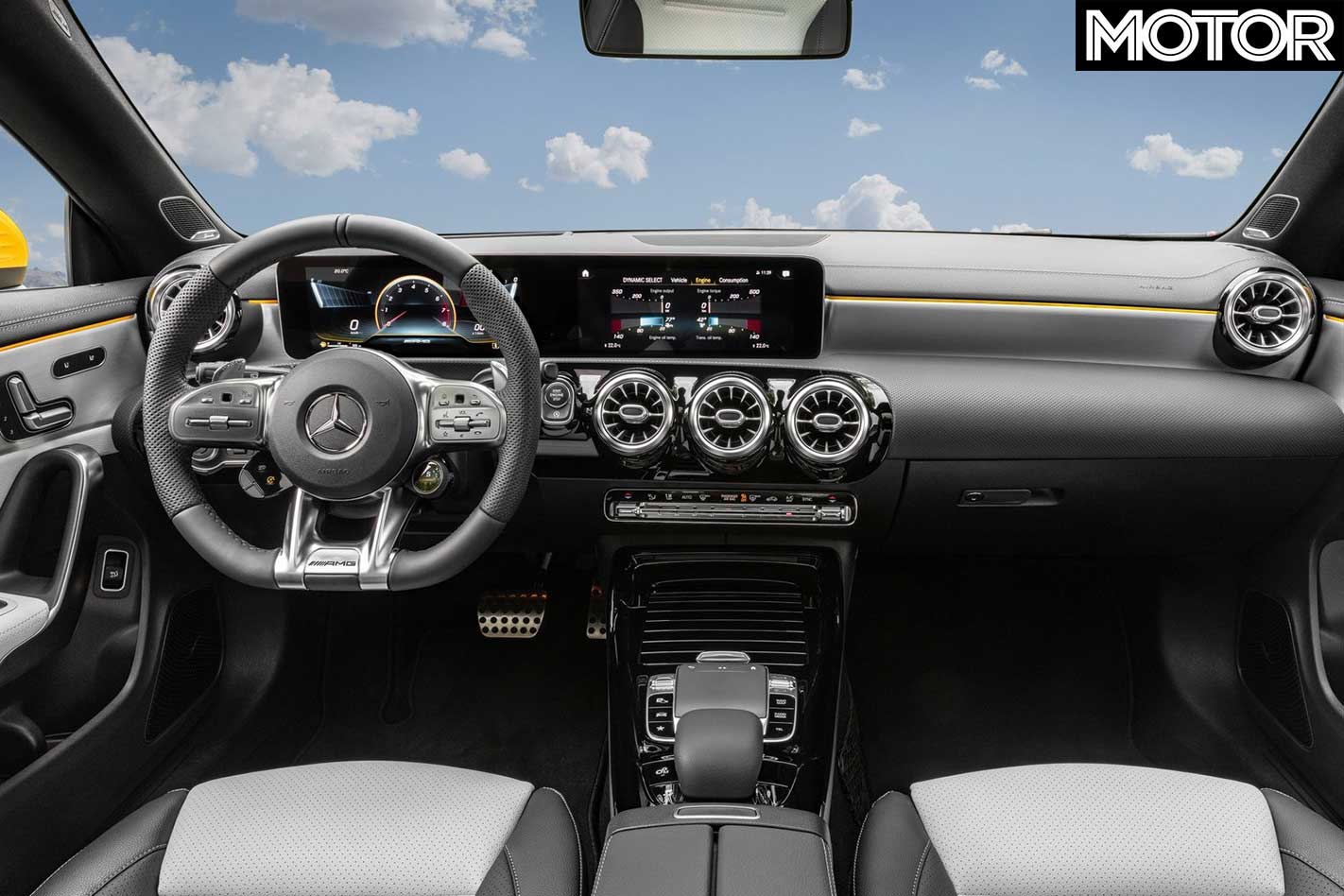
“The new CLA35 Shooting Brake, with its expressive design, the agile vehicle dynamics and the flexible load compartment is an attractive alternative for young customers who lead an active life with various leisure activities.
“With the Shooting Brake we are offering these individualists access to the exciting world of AMG Driving Performance, which is tailored to their specific requirements.”
There’s no word yet on pricing or Australian availability for the CLA35 Shooting Brake.
Until a plethora of Hollywood actors had their pictures snapped at the wheel of a Toyota Prius, the term ‘hybrid vehicle’ was largely unknown in the automotive world. And it’s fair to say that the most exciting thing about those earliest hybrids was their celebrity owners, but times have changed.
The original Prius was a so-called ‘mild hybrid’ which means the only way it could charge its on-board battery was with a petrol engine, but the hot news in electrified drivetrains is the ‘plug-in hybrid electric vehicle’ or PHEV. With a charging socket plug-ins offer a limited pure-electric range, bridging the void between traditional hybrids and fully electric vehicles and allowing drivers to do shorter trips entirely on cheap electricity.
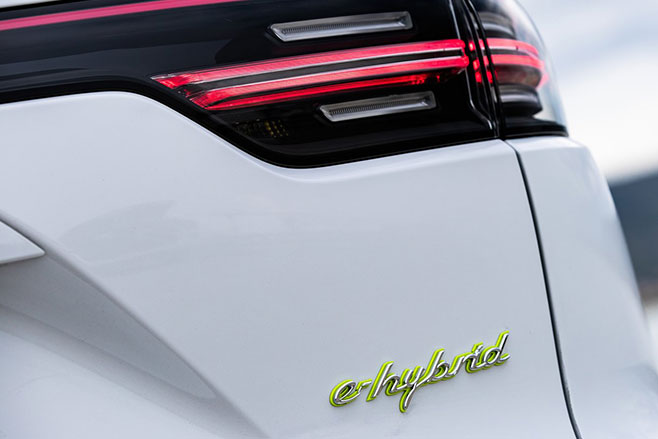
Plug-in hybrids are not new to high-performance purveyor Porsche, but its latest model – the Cayenne E-Hybrid – arrives with some significant advances in the technological sphere. Here’s everything you need to know about the Cayenne E-Hybrid’s special drivetrain.
Motor-vation
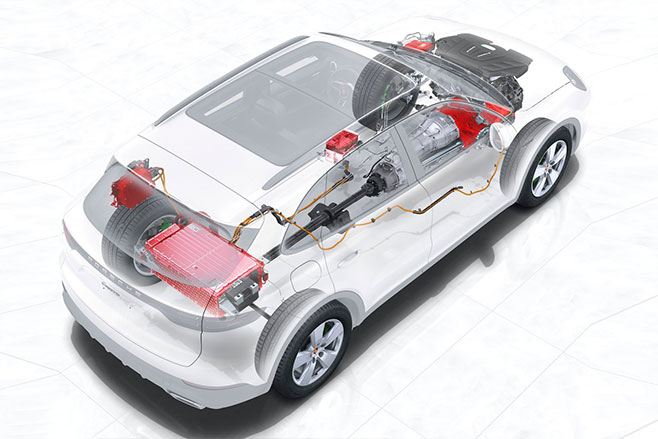
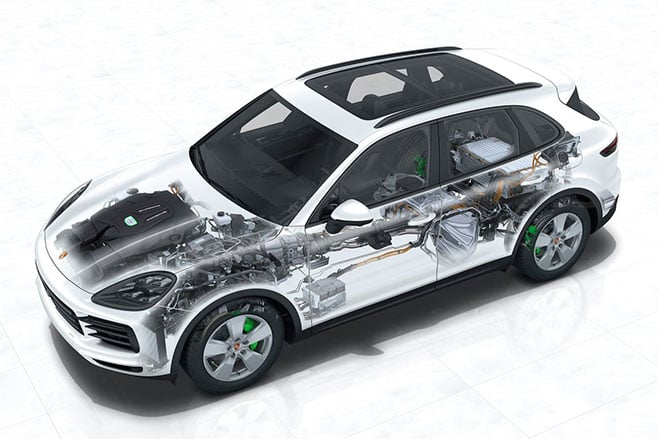
At the heart of the E-Hybrid system, a 100kW electric motor provides the Cayenne with its zero-emissions capability and 400Nm of torque. The motor is located between the 3.0-litre turbocharged V6 petrol (which contributes another 250kW and 450Nm when required) and an eight-speed automatic transmission.
Unlike separated electric motors such as axle-mounted and hub motors, its positioning allows power to be sent to all four wheels exactly as the V6 does. The result is a relatively uncomplicated and compact transmission that provides consistent performance and requires no adjustment in driving style when the drive mode is switched.
The same motor also acts as a generator. Press the brake pedal lightly and instead of the massive ten-piston callipers slowing the car, regenerative braking scrubs speed while recharging the battery with the Cayenne’s kinetic energy. This is where a large part of the E-Hybrid’s energy efficiency comes from.
In a conventional car, the brakes generate heat which is lost to the surrounding air but the Cayenne’s system recaptures what would otherwise be waste. Under heavier braking the traditional brake discs and callipers take over.
Charged with battery
Feeding the sophisticated motor is a 14.1kWh battery hidden under the Cayenne’s boot floor. Compared with the previous-generation hybrid Cayenne, the pack has gained 30 percent more capacity – enough to propel the large SUV up to 44km without using a single drop of petrol.
Topping up that battery is as simple as plugging in any other home appliance. With a standard 240-volt socket, the Cayenne’s battery can be filled in a matter of hours – four hours from a 16-amp power socket and about eight for a standard 8.0-amp outlet, but that can be shaved down to a little over two hours with high-rate chargers.
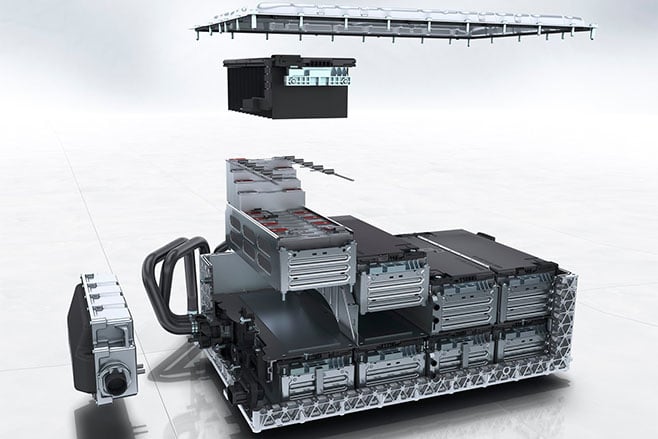
Pumping water around a complex high-voltage battery might seem like a bad idea, but the E-Hybrid battery cooling system allows the lithium ion pack to operate more efficiently and in a broader range of conditions.
In cooler conditions or if the battery has remained inactive for some time, the system can warm (or precondition) the battery allowing it to deliver close to its full potential from start. Owners can even set a timer allowing the vehicle to start the process before the vehicle is driven away.
During hotter weather or when working hard, excess heat generated by the battery can be controlled by the same liquid cooling system.
As you might expect, the electrical system components add extra weight and the battery robs some space from the boot area but the advantages are clear. Compared with the entry-level Cayenne – which uses the same engine minus the hybridisation – the E-Hybrid is 310kg heavier and sacrifices 125 litres of luggage volume, but accelerates from zero to 100km nearly a second faster and uses about a third of the fuel on the combined cycle (9.2L/100km vs 3.4L/100km). More to the point, if a majority of your journeys are less than 44km, it needn’t use any fuel at all.
Mode swings
Option any Porsche with the Sport Chrono package and you’ll get a handy driving mode selector dial mounted on the steering wheel. However, the Cayenne E-Hybrid is equipped with the feature as standard allowing swift access to the various drivetrain modes. Flipping between electric, hybrid and full-power sport modes is as easy as twisting that dial.
E-Power
In its default mode the Cayenne is a pure electric vehicle capable of travelling up to 44km on the energy stored in the battery and at speeds of up to 135km/h before the petrol engine is required. Even though E-power is selected, the driver can fire up the engine for full acceleration by pressing the accelerator through a pressure point when overtaking, for example.
Hybrid
Full electric power makes most sense and is most efficient when negotiating low speeds and stop-start traffic – where drag is minimal and the benefits of regenerative braking are greatest – but for all other driving, Hybrid Auto mode makes the best use of electrical power and the V6 engine.
As soon as the vehicle is being driven at higher constant speeds, the petrol engine fires up preserving charge, but if the driving conditions change later in the journey such as slow traffic, electric power is reinstated. The system can sense gradient changes and, if a destination is entered into the navigation, it will plan its power use accordingly.
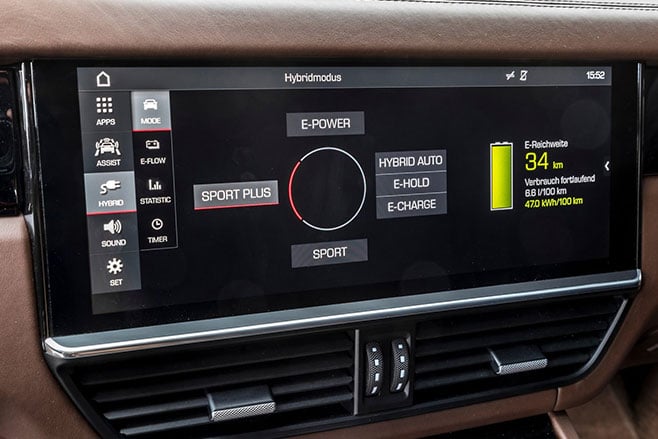
Alternatively the driver can manually select an E-Hold mode in the hybrid settings which will avoid using battery power, thereby conserving charge for pure EV or hybrid driving for later in the journey. An E-Charge mode engages the petrol engine for longer and shifts the load point to focus on charging the battery.
Sport and Sport Plus
When Sport mode is selected, the V6 engine runs continuously ready to provide combustion power as soon as it is needed, while also charging the battery to the minimum required for electrical boosting of power and acceleration. With Sport Plus engaged, the charging system tops up the battery to maximum, allowing the highest boost availability during the most enthusiastic driving.
Green guide
Unlike a simple fuel gauge, there’s a little more involved with keeping an eye on a hybrid powertrain, but the Cayenne’s instrument cluster has been tailored specifically for the E-Hybrid.As a rule, if it’s a cool zombie-apocalypse Acid Green, it’s hybrid related.
Below the central tachometer (complete with green needle) a simple power gauge indicates the flow of electrical power. Accelerate hard and the full row of green LEDs lining the left of the tacho will blink on and the display is reversed under regenerative braking. The harder you brake or accelerate the more lights that illuminate.
To the left of the central gauge, a fully digital display which houses the speedometer also has a predictive range gauge. Unlike the more basic battery gauge situated under the fuel level, the ‘hybrid assistant’ calculates the range remaining in the battery according to environmental conditions and driving style. Point your toe a little further and the E-Max portion illuminates to indicate that petrol power has been called upon.
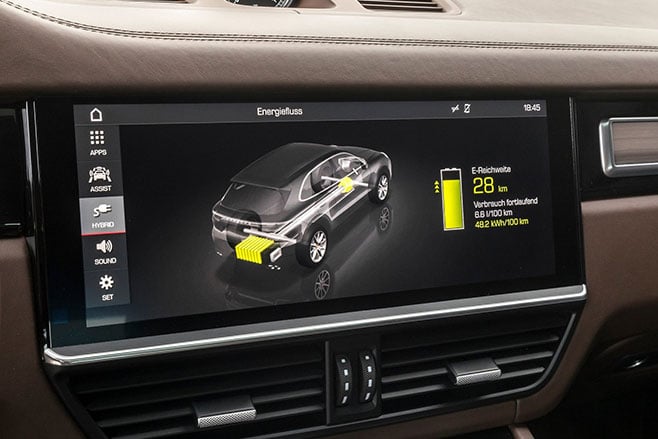
In the opposite digital display, the driver can select an energy flow screen which uses animations to explain when the engine and motor are contributing and their corresponding energy paths. Roll the steering-wheel-mounted selector down another screen and the E-consumption gauge is displayed. Like a fuel consumption gauge this screen tells the driver how many kilowatt hours (kWh) are being used – the electric car equivalent of litres per 100km. Flick on the electrically-driven air conditioning or put your foot down and the gauge will tell you what effect that is having on your economy.
Quiet achiever
Of course, all of this electric technology makes for a very low-noise Cayenne, and if you are craving a more typical Porsche soundtrack, the third generation introduces one more feature for the hybrid. Tick the box for the optional sports exhaust system and every time that turbo V6 cranks into life there will be no mistaking what’s under the bonnet.
The Wheels Verdict: The sedan is every bit as good as the hatch, with little difference splitting the pair; if carrying an extra passenger or two is on the cards, the sedan will serve you better.
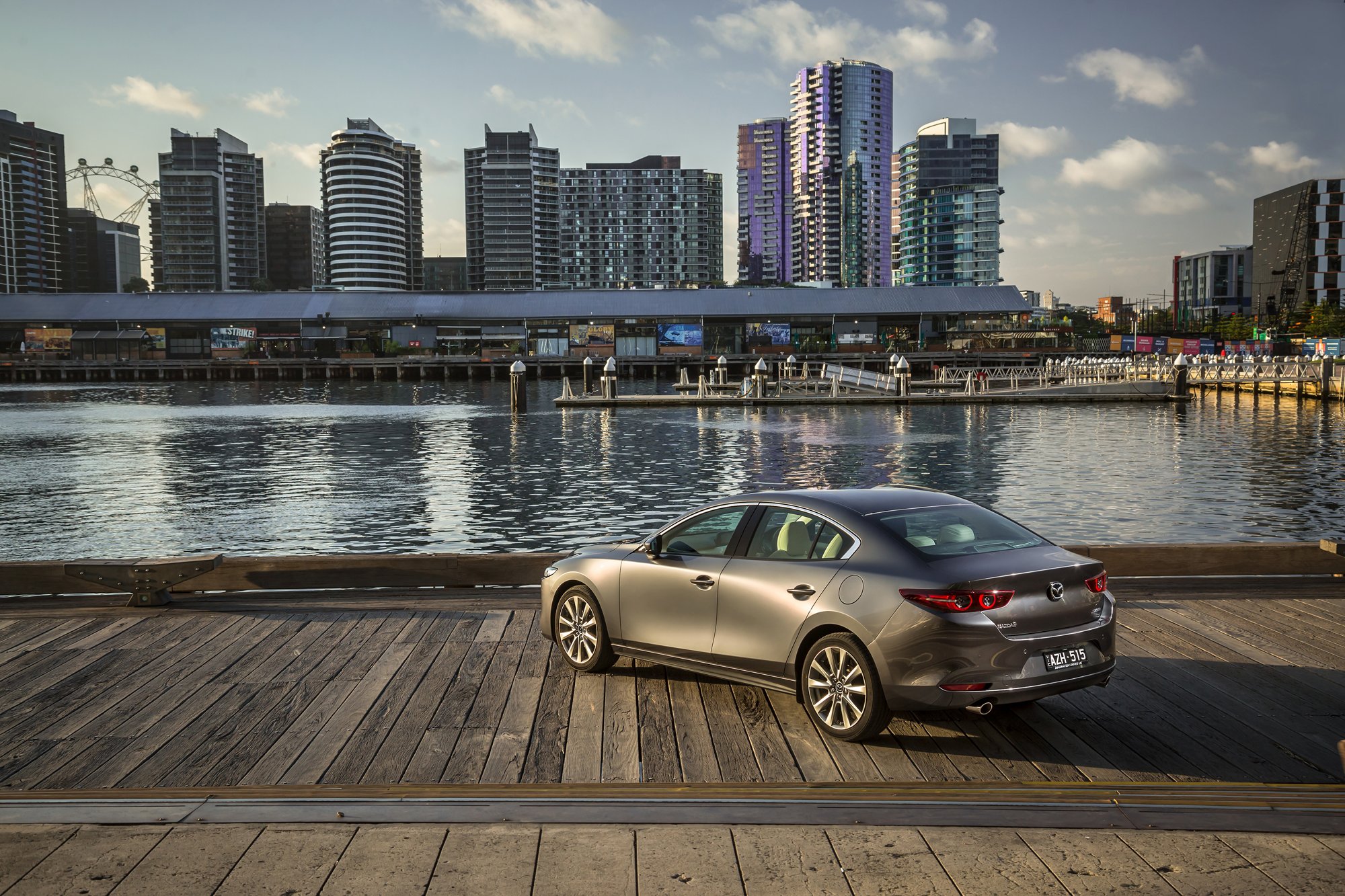
WHAT IS THE MAZDA3 SEDAN?
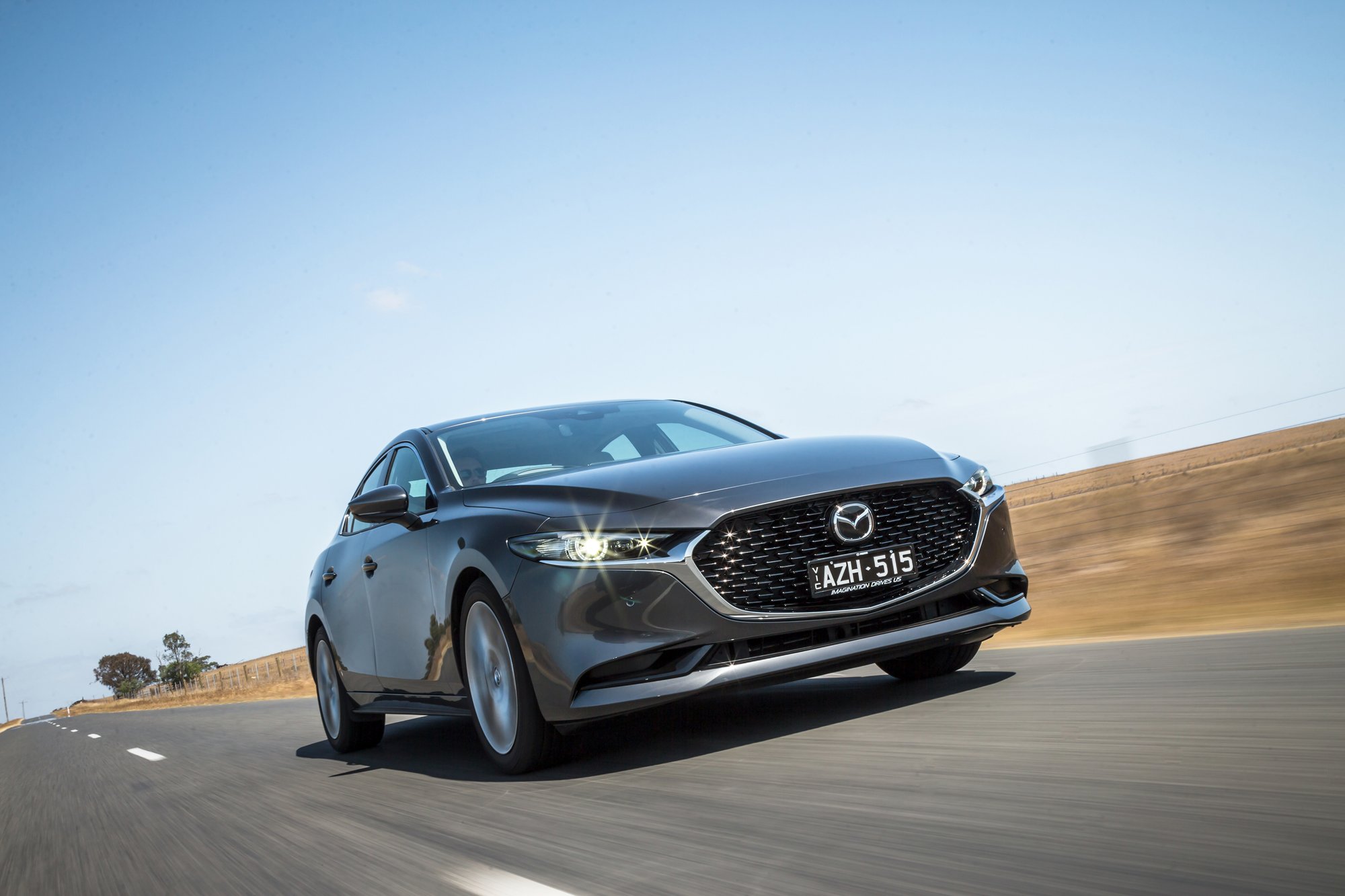
Mazda’s little 3 is a huge seller in the Australian market and while the hatchback claims the highest percentage of sales in the Mazda3 range, the new sedan delivers improvements in some areas that may make it a better option for some buyers.
WHY WE’RE TESTING IT
As one of Australia’s most popular models on the market, we’re keen to see what the new sedan delivers and find out if it loses any of the goodness found in its hatchback sibling.
2019 MAZDA 3 SEDAN REVIEW
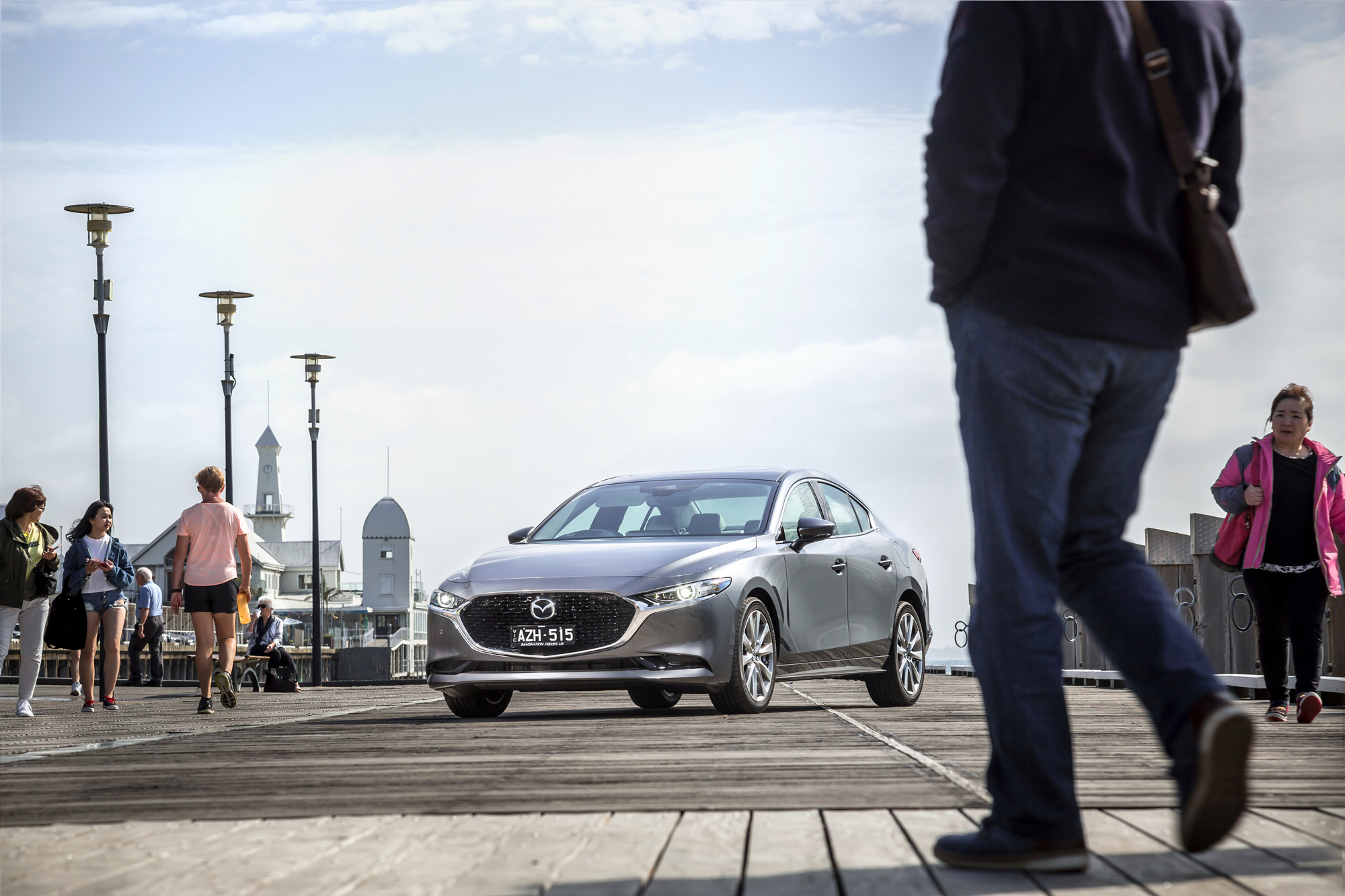
Greater differentiation between body styles than in any previous generation” That’s the core theme that Mazda’s designers want us to know about the fourth-generation 3.
In simple terms, previous sedan iterations of Mazda’s big-selling small car have been more of a boot-replaces-hatch design exercise, but this time around, the two variants take far more divergent paths. A significant driver of this strategy is obviously global tastes. Large markets such as China and North America favour C-segment sedans over hatches, whereas Australia is more in step with Europe, where the hatch takes the greater volume.
The split here has consistently been around 60/40 in favour of the hatch, so who’s buying the sedan? According to Mazda Australia, sedan buyers tend to be male, but that about where the demographic profiling starts and stops.
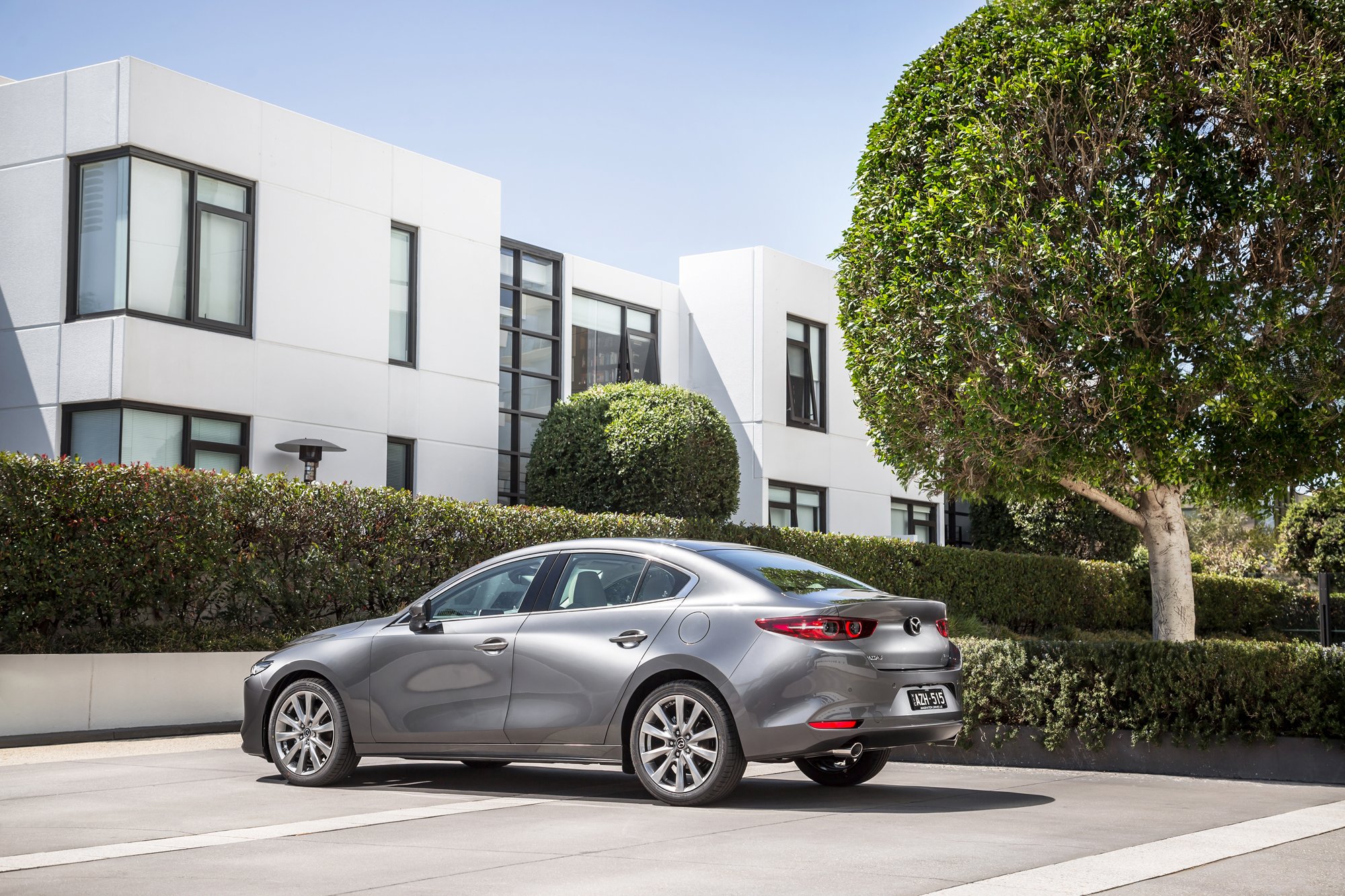
So should you consider the sedan?
Well, for starters it does offer some packaging advantages over the hatch, and it costs no more. All five spec levels are offered across both body styles, as are engine and transmission combinations. About the only trim difference to note is that the top-spec G25 Astina sedan is available with white leather, whereas the equivalent hatch is offered with the option of red. That’s it.
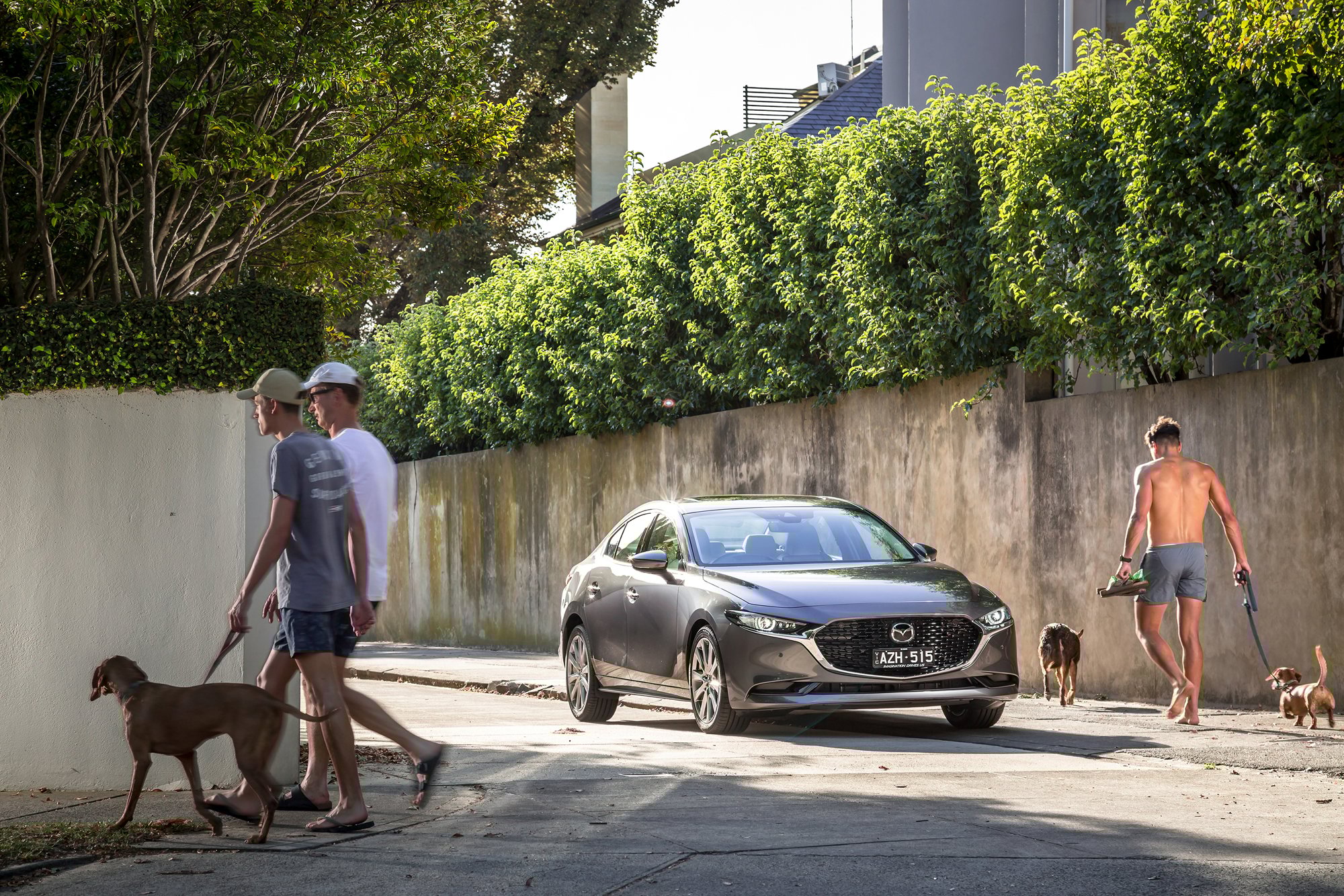
What is instantly evident when you view the pair side by side is the dimensional differences.
The sedan is on the same wheelbase as the hatch – 2725mm – but is 20mm longer, and this translates to increased legroom and greater boot space. The latter jumps from 295 litres for the hatch to a sizeable 444L in the sedan, and while the loading aperture is obviously smaller than that of the hatch, this difference is appreciable.
As is the increase in both rear legroom and headroom. The gains may be small, but they are noticeable, and both are factors to consider if you regularly carry adults in the second row. But even kids may notice the difference, as the sedan’s slightly lower beltline brings the glasshouse down a little, making for a more airy ambience for short passengers in the back.
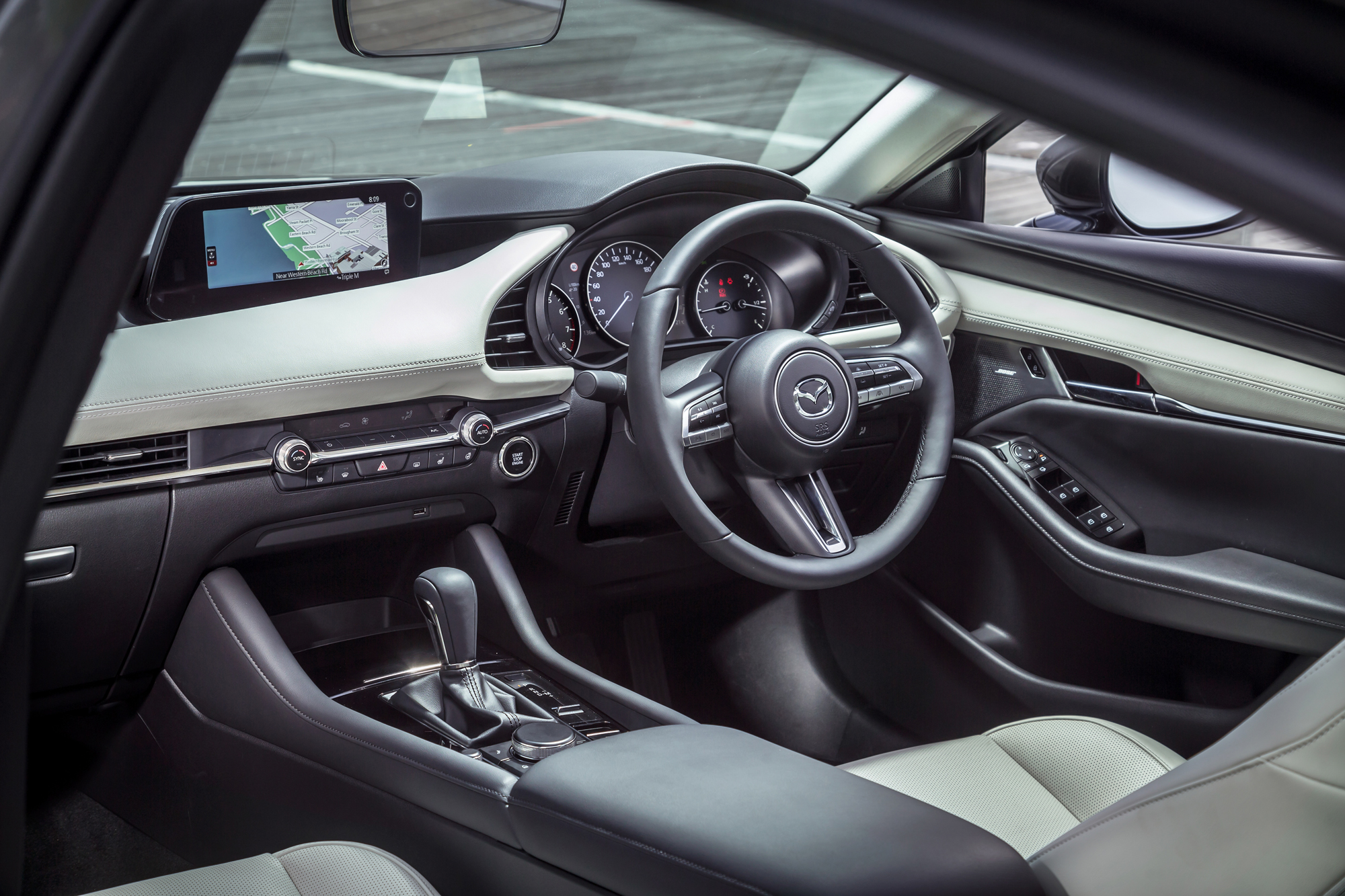
Otherwise, the front seats are mounted in the same position and the interior of each body style is identical.
There’s also no discernible difference in the way the two variants drive. We sampled the G20 Evolve, one rung up from the entry-level Pure specification, and were no less impressed than we have been with the high-spec models.
The cloth trim is simple but understated and attractive, the seats well-contoured and supportive, while touchpoints, material quality and fit and finish all continue the well-crafted attention to detail established further up the range.
The infotainment system is also shared with upper-spec models, and benefits from a wider aspect ratio than in the outgoing car, slicker software interface, wonderfully tactile rotary and toggle-switch controller on the centre console and Apple CarPlay and Google Android Auto phone connectivity.
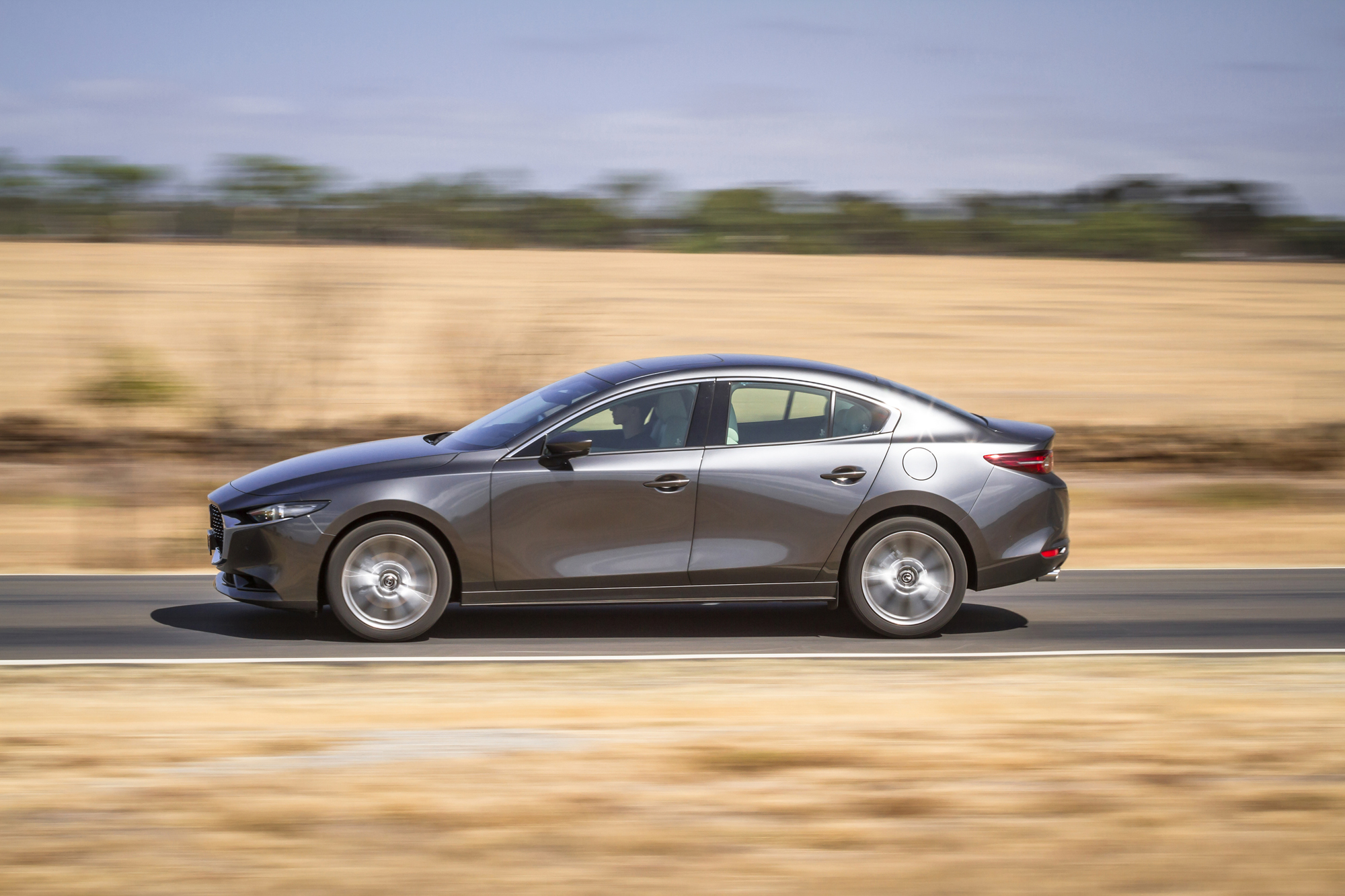
The G20 designation indicates power comes via Mazda’s 2.0-litre naturally-aspirated engine, largely carried over from the third-gen model with just a few tweaks for improved efficiency.
Its outputs of 114kW at 6000rpm and 200Nm at 4000rpm are sent through your choice of a six-speed automatic or manual transmission.
We drove the auto; performance is adequate rather than effortless, and frequent kickdown is needed when you want to get moving quickly, but it’s a sweet-revving unit and excellent insulation means engine noise is not intrusive. Keener drivers may appreciate the G25 models that gain a larger 2.5-litre four-pot, or consider the all-new Skyactiv-X engine that will be the model’s hottest mill when it arrives in December.
MAZDA3 SEDAN VS RIVALS
MAZDA3 SEDAN PRICE AND SPECS AUSTRALIA
- Model: Mazda3 G20 Evolve sedan (tested)
- Engine: 2.0-litre four-cylinder petrol
- Max power: 114kW at 60000rpm
- Max torque: 200Nm at 4000rpm
- Transmission: Six-speed automatic
- Economy: 6.1L/100km
- Price: $27,690
- On sale: Now
When the Australian Labour Party lost last month’s election, its plan to help encourage up to 50 percent of new car buyers to choose an electric vehicle by 2030 (not to mention plans for beefed up energy infrastructure and a native hydrogen and lithium industry) evaporated. The re-elected Liberal Party, by contrast, has no plans to stimulate EV uptake.
But while it’s easy to take that as dire news for electric cars, Volkswagen Australia says it’s still moving ahead with bringing its new lineup of battery-electric cars here, with the first scheduled to arrive in 2022 – party politics be damned.
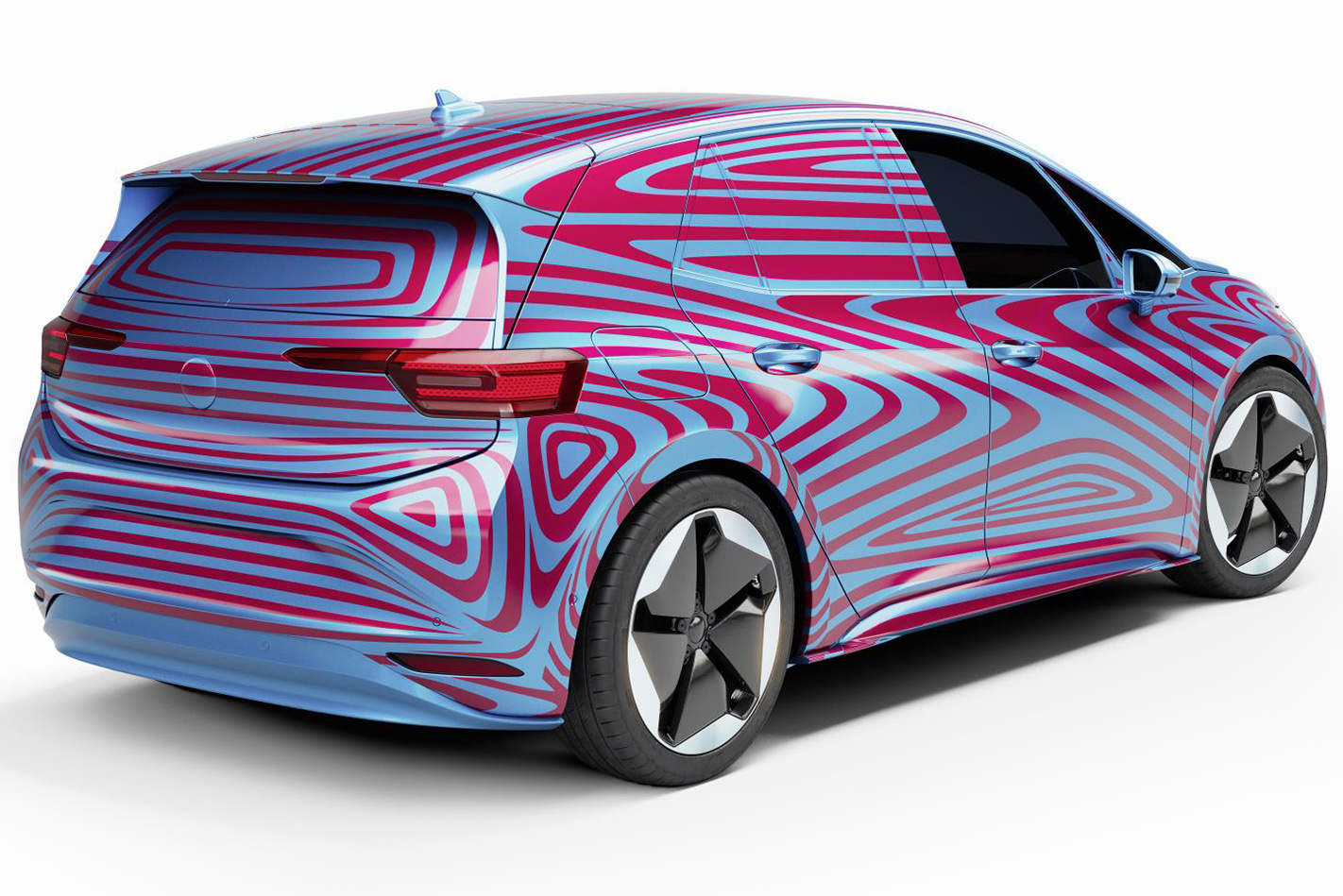
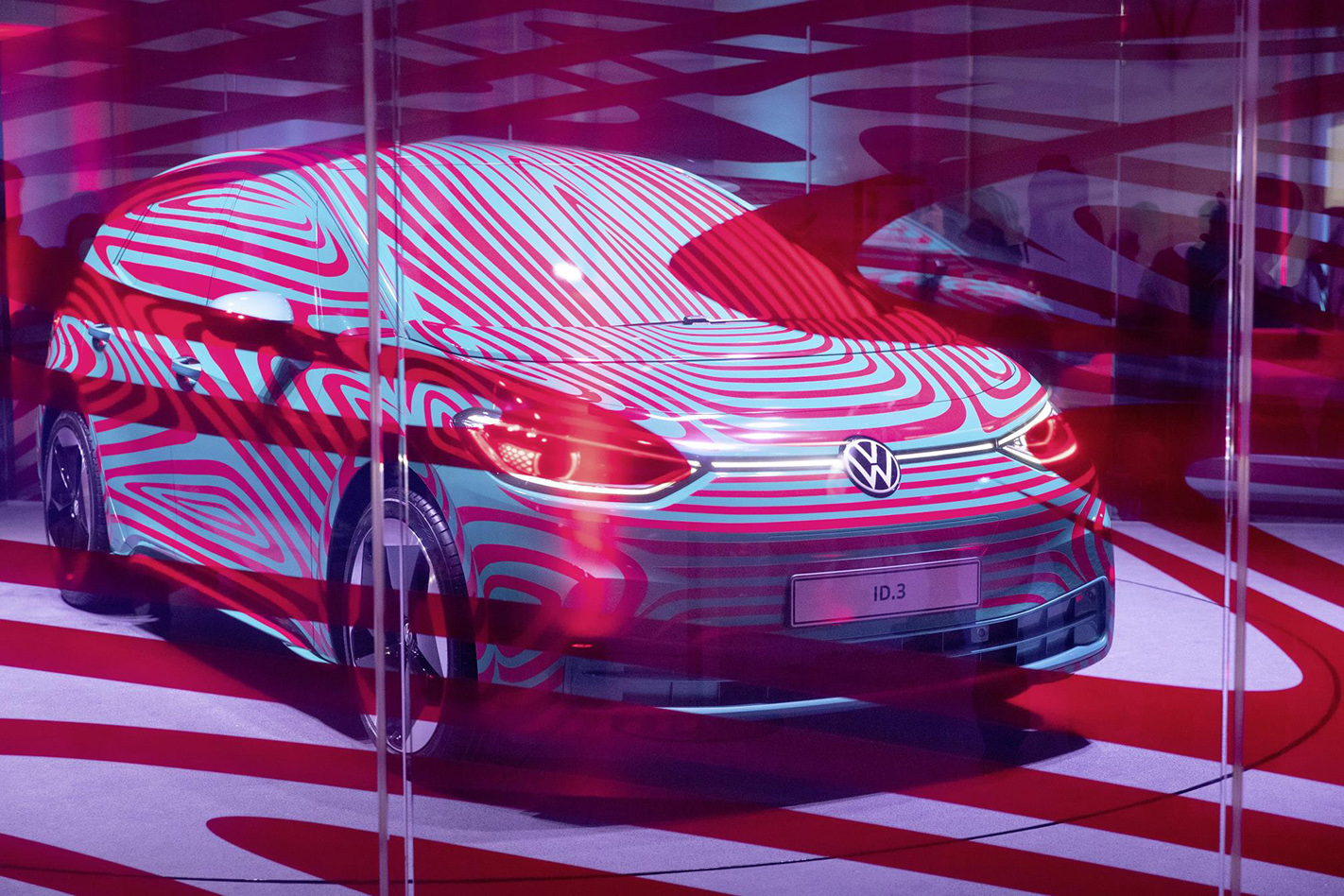
The Golf-sized Volkswagen ID.3 hatchback is slated to be the first of the company’s new breed of all-electric models to arrive in Australia. Built on a dedicated EV platform dubbed MEB, the hatch is expected to carry a similar price premium to a diesel-engined car of the same size, and have at least 330km of single-charge range.
“We don’t take a position on each party – for us what we’re after is a clear direction,” said Volkswagen Australia head of product planning, Jeff Shafer.
“Certainly we want to see an environment created in Australia that’s suitable for EVs, so there are definitely things that can be done around infrastructure development and other policies that support their introduction. We’re not calling for direct incentives, or that sort of thing, but mostly having policies that show that EVs are an important issue for Australia.
“They are things that we can then take back to Germany to show them why we should be towards the front of the queue in terms of product.”
So far, it appears that government ambivalence toward EVs may impact the size of Australia’s allocation of Volkswagen’s MEB vehicles. With several countries and regions around the globe being both more supportive of electrification and boasting larger populations than Australia, VW’s local office may find itself given a significantly smaller number of vehicles to sell.
Further complicating the situation is a global squeeze on battery raw materials and production capacity that’s looming on the horizon – there simply may not be enough batteries to go around, even if demand were there. And demand is bound to be strong: just one week after the ID.3’s name was officially revealed, Volkswagen already held over 15,000 pre-bookings for it out of a total pre-booking allocation of 30,000.
“When it comes to product like MEB, my expectation is that in the short term there will be supply constraints, so the markets that have the most need for electric vehicles will be the ones that will be prioritized. Certainly Europe, the US and China will be the first three markets for those cars,” Shafer continued.
“We need to make the strongest case we can to Germany to raise our hand and try and secure these products as quickly as we can.”
“We work with industry bodies and the FCAI through the EV council to, on a broader level, bring out policies that support the uptake of EVs. We’re looking to do what we can do to make the best case possible, and I think that we’re going to push as quickly as we can to get those cars here, but it does help when there’s an environment that gives us a bit more evidence or leverage to go back to head office and support our case.”
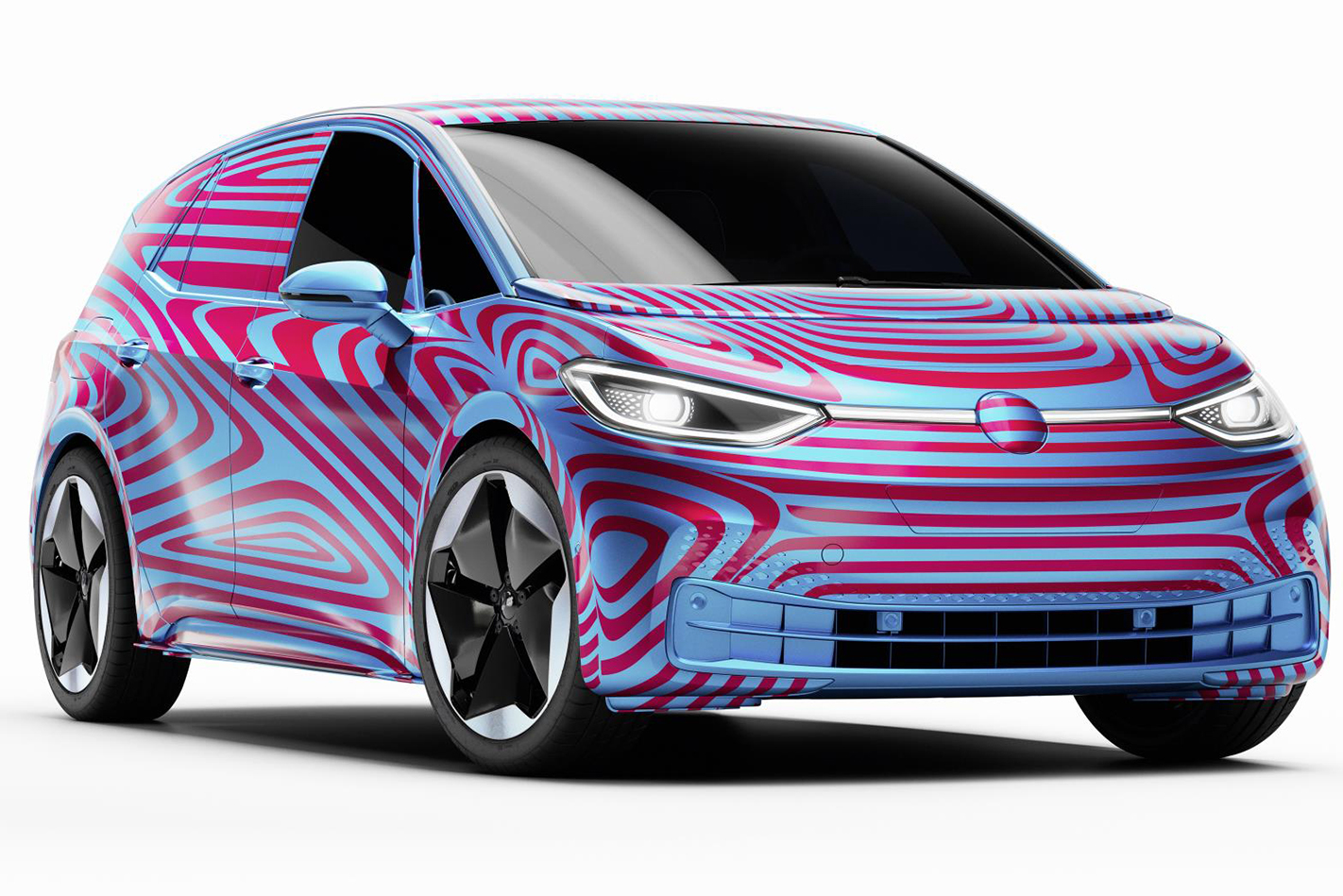
The Volkswagen ID.3 was originally slated to go on sale locally in 2021, a year after its international debut in Europe in mid-2020. It’s expected to be followed by an all-electric crossover and potentially a battery-electric commercial van that channels the charm of the old VW Kombi, along with other MEB-based models later in the decade.
Are you considering an electric car for your next vehicle, or are you waiting until key questions about charging infrastructure are answered first? Did the election result have any bearing on your view of EVs in Australia, or does it make no difference to you? Have your say in the comments below.
