
Back on home turf, Volkswagen has to once again defend the Golf GTI’s honour as a French contender arrives on the hot-hatch scene. The Renault Megane RS didn’t arrive in time for our affordable performance car mega test so we arrange a special one-on-one date with the iconic VW.
See the full episode: Watch at tenplay.com.au (AU) or primetv.co.nz (NZ)
Dan opens the show with a blast around a premiere Formula 1 track in the dust of Bahrain’s desert with Lamborghini’s latest sports star. The 2019 Huracan Evo promises to be the most technologically advanced supercar in the company’s history, but time is tight and Dan has to pull out all the stops to find out if it’s the finest Lambo to date.
See the full episode: Watch at tenplay.com.au (AU) or primetv.co.nz (NZ)
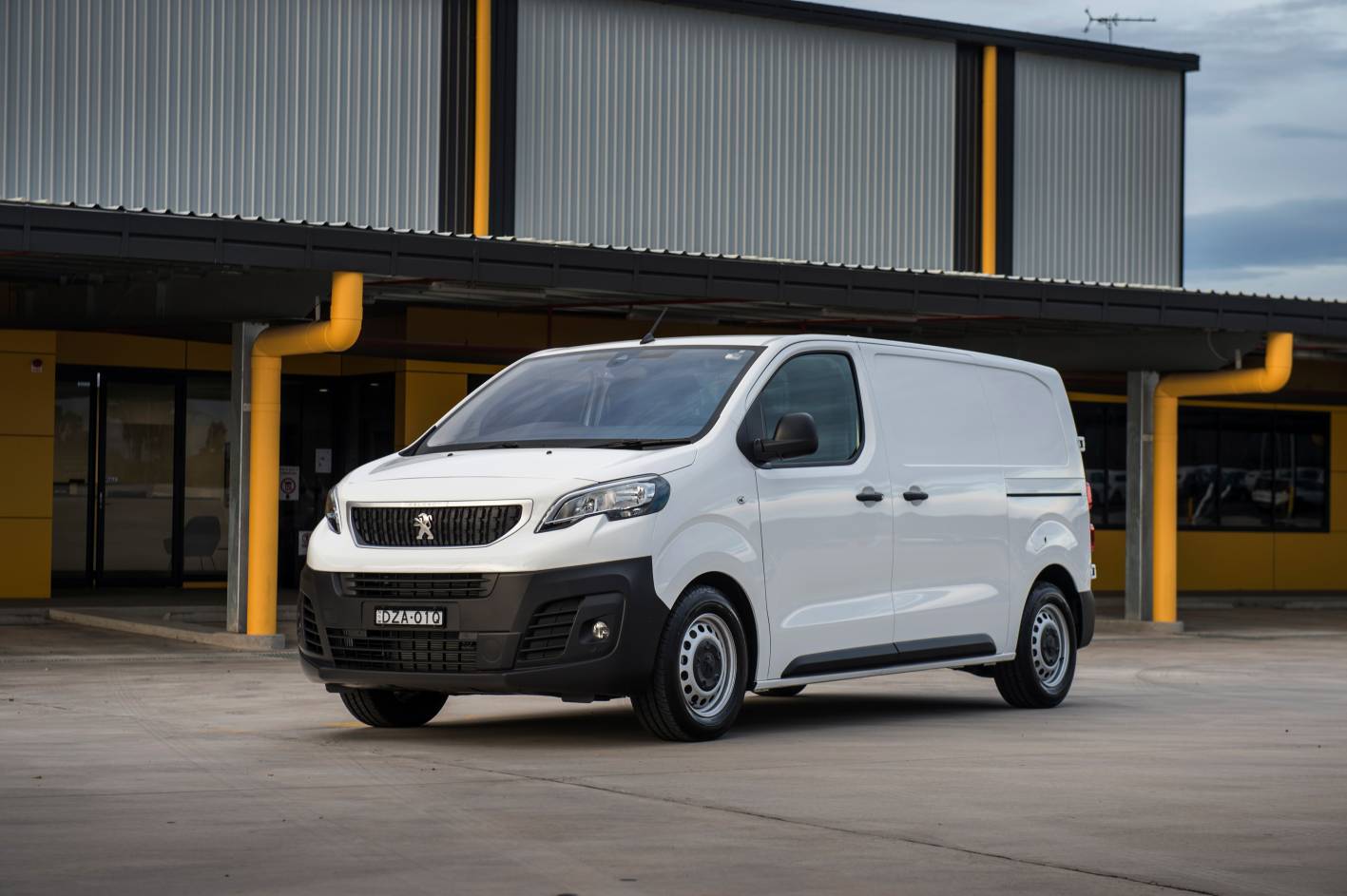
Peugeot has announced the arrival of its all-new Expert midsize commercial van, which enters the Australian market priced from a competitive $36,490 in 1.6-litre short-wheelbase form and tops out at $45,890 for the 130kW 2.0-litre turbo diesel long-wheelbase range-topper.
With five variants in total, the new Peugeot Expert will line up against the upcoming next-generation Toyota HiAce, along with other European vans like the Ford Transit Custom, Renault Trafic, Volkswagen Transporter and lesser variants of the Fiat Ducato.
Engine choices span an 85kW/300Nm 1.6-litre turbo diesel, available only in the base model Expert SWB and only with a six-speed manual. Those wanting more power or transmission choice can get the same bodystyle with a gruntier 110kW/370Nm 2.0-litre turbo diesel, which also introduces a six-speed conventional automatic in addition to the manual transmission.
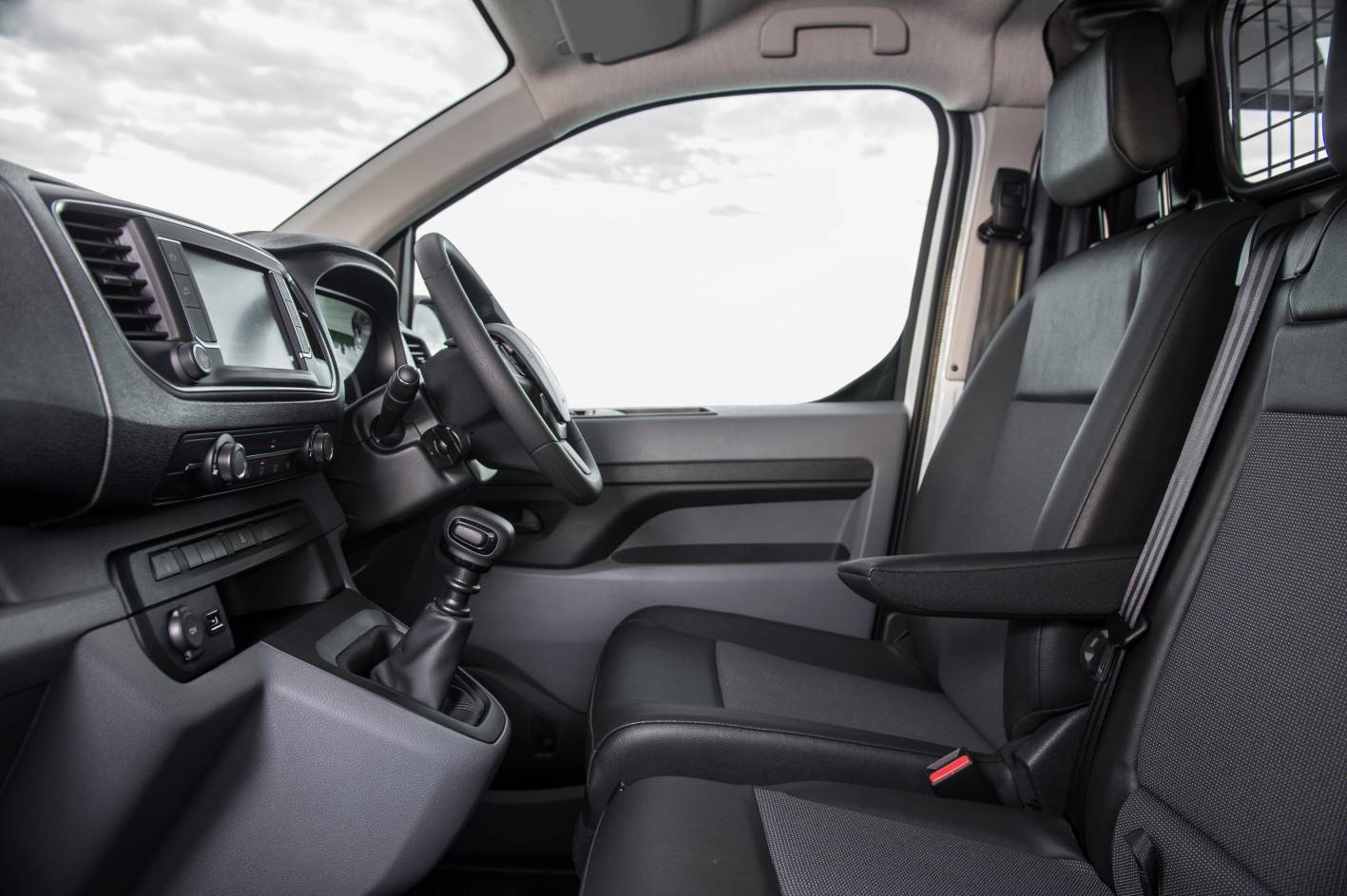
Two long-wheelbase models are offered too, with one powered by the 110kW diesel and the other taking the most powerful engine in the range, a 130kW/400Nm 2.0-litre diesel. Both are exclusively automatic, and all Peugeot Experts take their power to the front wheels only.
Built on the same lightweight EMP2 platform used by the Peugeot 308, 508, 3008 and 5008, the Expert saves around 100kg over its predecessor. The platform also permits a large and useful internal volume, with the critical numbers being 5.8 cubic metres of cargo volume for the SWB Expert, and 6.6 cubic metres for the LWB.
Maximum payload comes in at 1300kg depending on individual spec for both of them, but with all models capable of carrying at least 1000kg over their tare mass. Standard pallets will easily fit between its rear wheelarches too, while the front passenger seats can be flipped up to add another 1.16m of length to the cargo area for a total of 3.67m in the SWB, and 4.02m in the LWB.
Tow capacity varies from 1500kg to 2200kg depending on variant, and loading cargo is made easier by the provision of dual side doors and rear barn doors as standard. A rigid bulkhead separates the cabin from the cargo area for additional comfort.
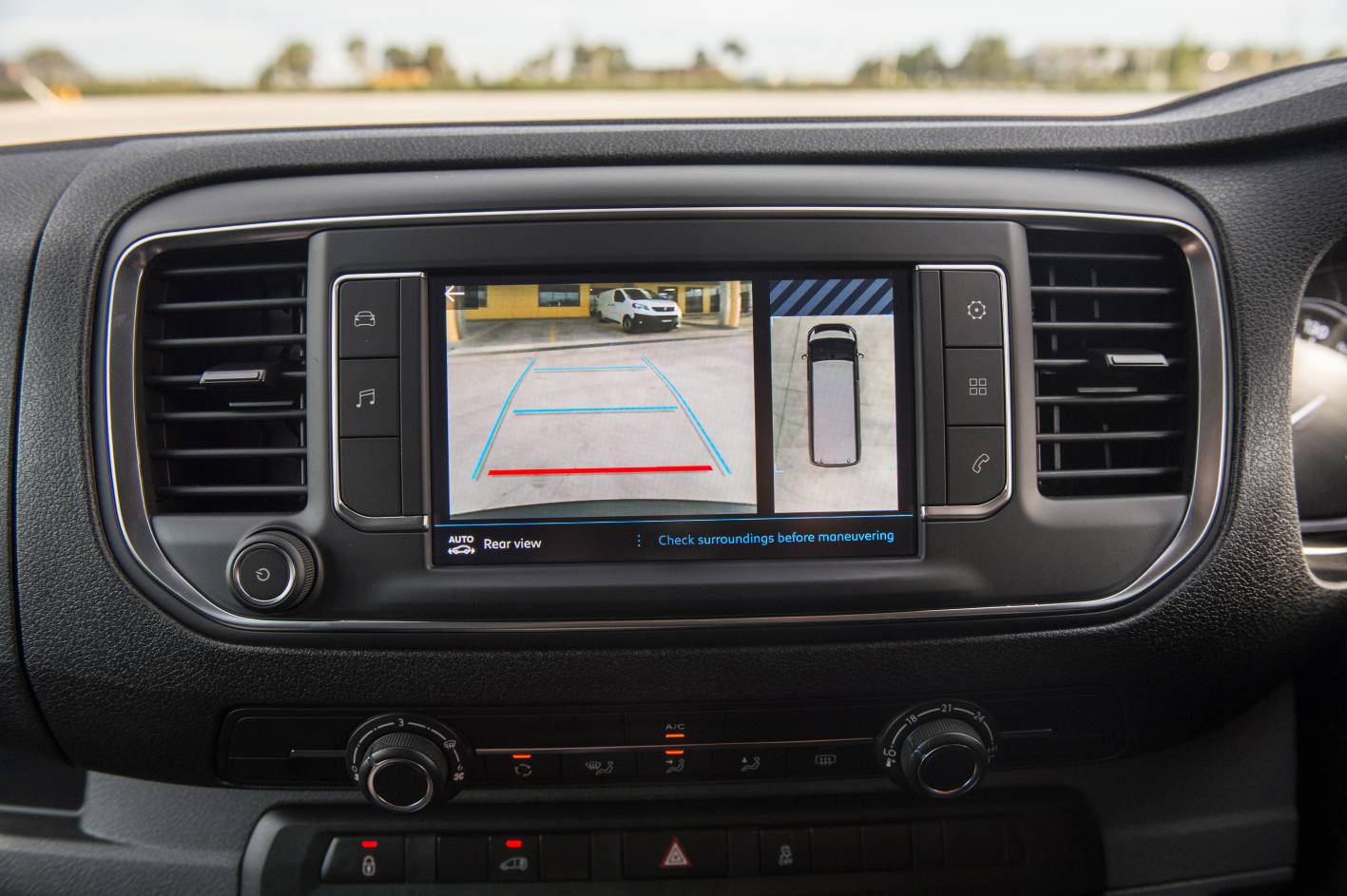
Safety has also been taken care of, with AEB, forward collision detection, active cruise control and – especially important for a commercial van – blind spot monitoring all included as standard. On top of that, there’s also front and rear parking sensors, a reversing camera, front, side and curtain airbags, power folding side mirrors, front foglamps and a fatigue monitor.
The standard infotainment package is also comparatively generous for a commercial vehicle, packing a 7-inch colour touchscreen that totes a built-in smartphone mirroring capability. The days of drivers having to suction-cup their phone to the windshield to get navigation instructions are over.
PRICING
After-sales costs should be manageable thanks to 12-month/20,000km servicing intervals, while a 5-year/200,000km warranty applies to the Expert. Full range pricing is as follows:
- Peugeot Expert SWB 1.6 85kW manual – $36,490
- Peugeot Expert SWB 2.0 110kW manual – $39,990
- Peugeot Expert SWB 2.0 110kW automatic – $42,490
- Peugeot Expert LWB 2.0 110kW automatic – $44,190
- Peugeot Expert LWB 2.0 130kW automatic – $45,890
Toyota’s brand new test facility in Japan is (partially) open for business… and it’s no coincidence that it looks a little like the most famous racing track in the world.
Called the Toyota Technical Centre Shimoyama, the new facility was built to give the giant Japanese company a base of testing operations that lies within easy reach of Tokyo, which is about 30 minutes away.
The central part of the 650-hectare site, which opened in late April, includes a 5.3km road loop that rises and falls with the local topography, according to the company, and which has been modelled in part on the fearsome ‘Green Hell’ track in Germany.
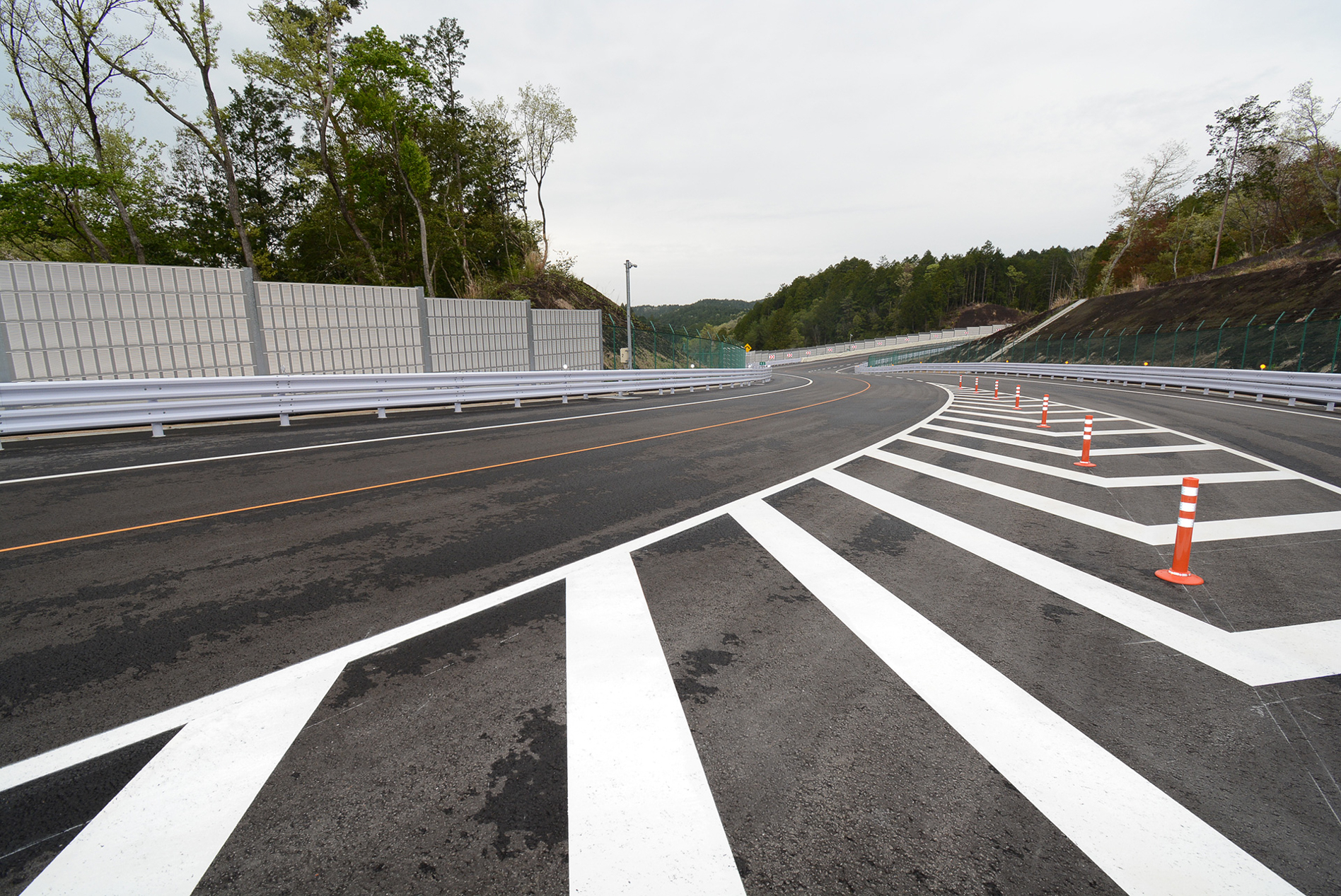
The track rises and falls over 75 metres, and includes an array of “exacting” terrain for its test drive team, according to the company.
The centre will eventually include a high-speed testing circuit and vehicle development facilities.
It’s no surprise that Toyota has chosen to replicate one of the most hallowed test tracks in the world; its current boss, Akio Toyoda, has led a renaissance from within to change car buyers’ perceptions of Toyota producing safe but staid machines.
It’s under his watch that cars like the 86 and Supra, as well as the Lexus LC, have been launched. As well, Toyota wants to add “a smile to the face of its customers” by building its Camrys and Corollas with more character, according to Toyoda.
Toyoda, the grandson of Toyota founder Kiichiro Toyoda, has also been anointed as a Master Driver within the company’s test driver hierarchy – a position earned on merit after taking up motorsport in his late 40s and subsequently logging hundreds of laps of the 21km-long Nurburgring.
The 61-year-old has also raced at the daunting 24 Hours of Nurburgring event.
“With the aim of making ever-better cars, we have continued to make various efforts in ‘feeling the road’ and ‘conversing with cars’ through driving tests around the world, including our Five Continent Drive Project and the Nurburgring 24 Hours endurance race,” said Toyoda in a statement.
“Based on such experiences, we have replicated a variety of roads in the world at the new test course. In addition to conducting driving tests all over the world, and with the replication of severe driving conditions at the new test course, we intend to thoroughly hone every one of our models and develop the types of cars that epitomize the true joy of driving.”
The facility will employ 3300 people when it becomes fully operational in 2023, according to Toyota.
New to Wheels Car of the Year?
Read the COTY 101.
HOLDEN’S history of seven-seater SUVs is a little like that of young Goldilocks. For many Aussies, the short-lived Suburban monolith of the late 1990s was just way too big, while the mid-sized Captiva a decade later was too small. Is the intriguing new Acadia, out of America, sized just right?
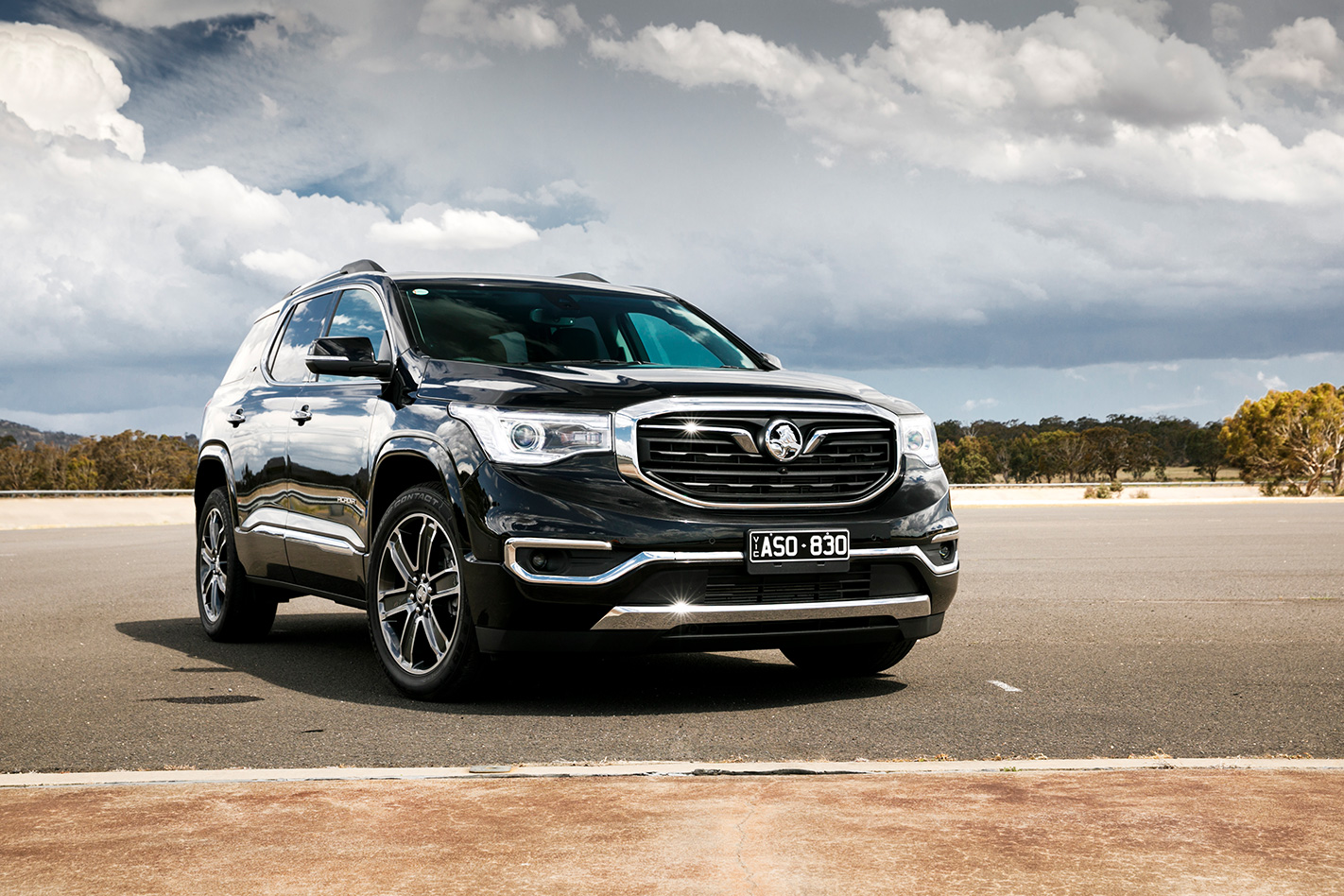
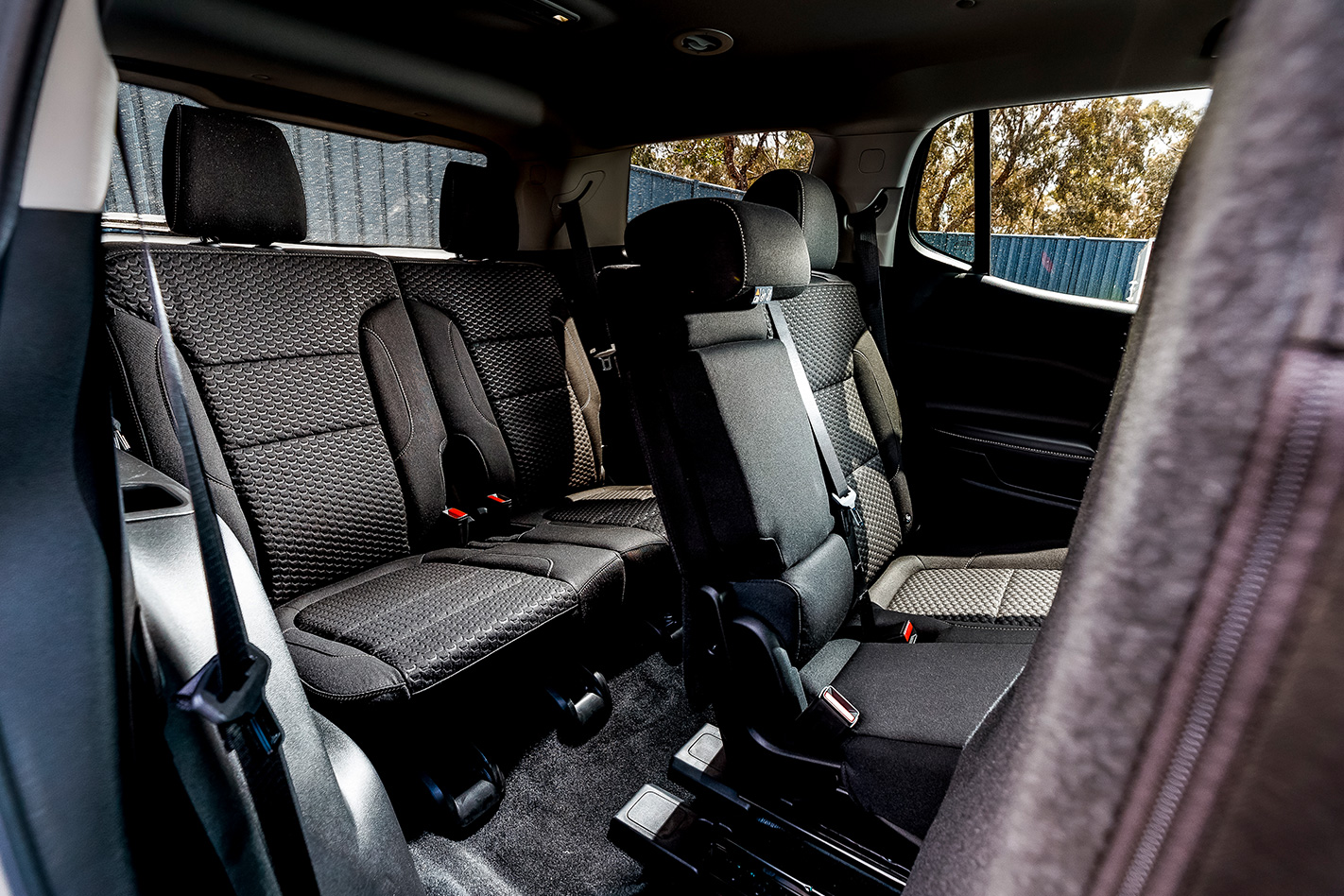
At a shade under five metres long, the crossover from Tennessee is a triumph of packaging, managing to accommodate seven full-sized adults with comfort and space to spare. And it comes complete with all the air vents, cupholders, storage facilities and other thoughtful detailing a septet of travellers could wish for. The Acadia also offers an impressively long and boxy cargo area, for effortless loading capability.
And all this within a similar footprint to the Toyota Kluger that Detroit’s designers used as a template.
Much like its imposing, mini-Cadillac Escalade styling, the Acadia’s pricing stands out, opening below most rivals, yet still buying you goodies such as AEB (with cyclist and pedestrian recognition), lane-keep assist, blind-spot and rear cross-traffic alerts, reverse camera, auto high beams, traffic-sign recognition, keyless entry/start, three-zone climate control, sat-nav, Apple CarPlay/Android Auto, five USB ports and 18-inch alloys on the base LT, with five years’ warranty. The Holden’s showroom appeal is palpable.
Additionally, buyers can expect sound real-world economy from the same 3.6-litre V6 found in the related ZB Commodore (they share many platform elements), partly due to local calibration of the standard nine-speed auto, driving either the front or – for $4K extra – all four wheels. Growly and grunty right from the get-go, this powertrain combo’s acceleration is pleasingly rapid, providing the sort of off-the-line torque response old Holden owners would recognise.
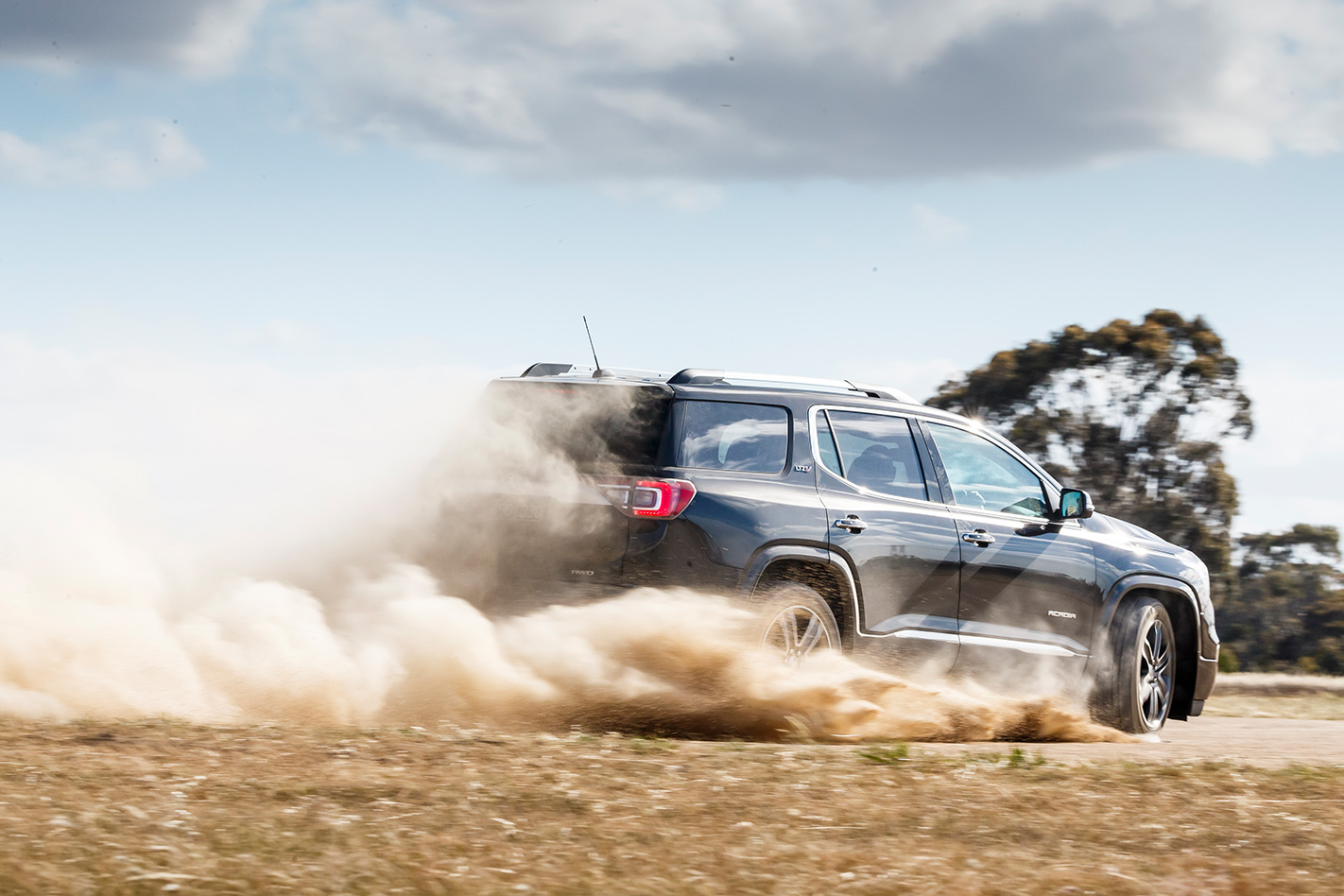
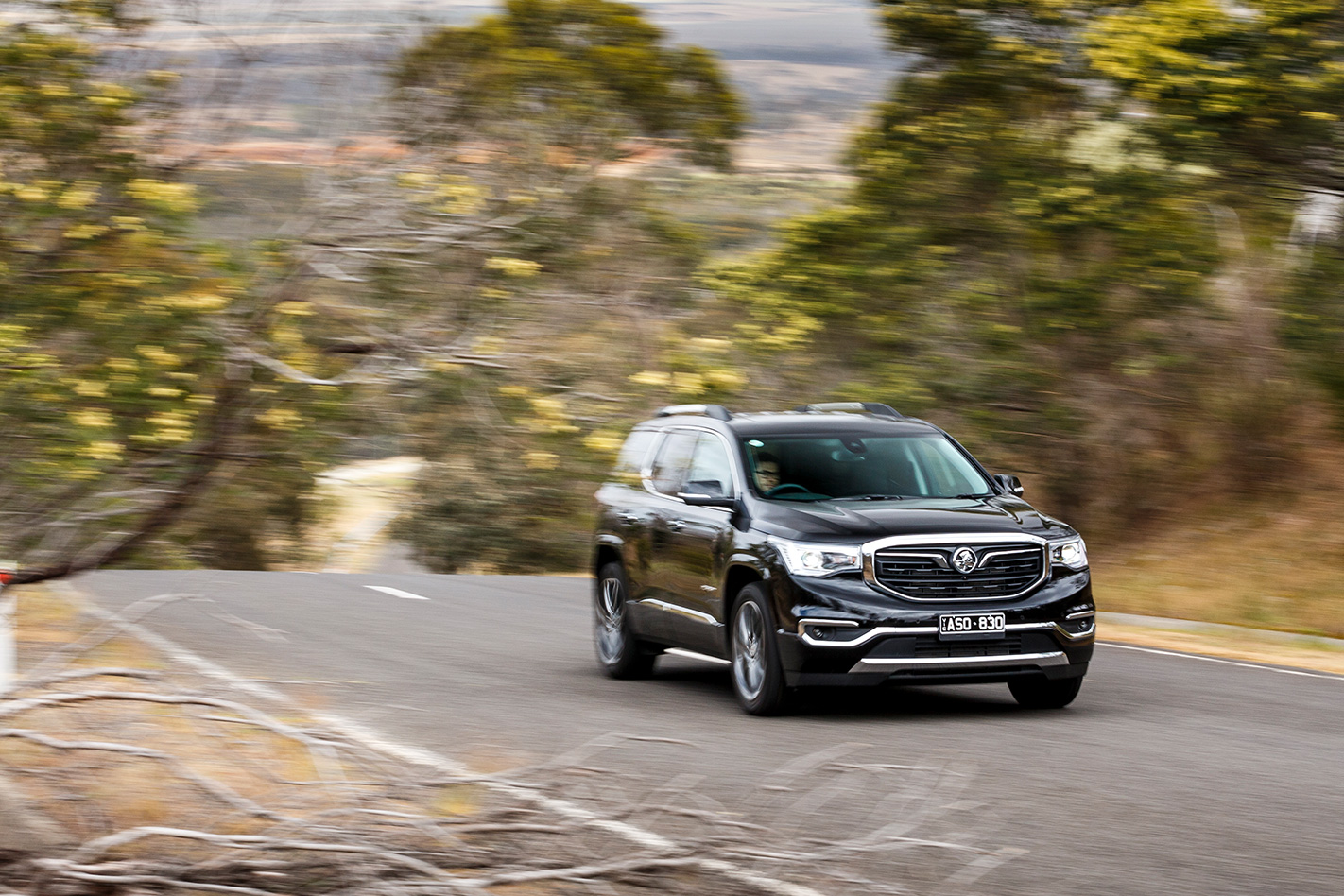
GMH’s engineers also managed to make worthwhile chassis improvements over the US equivalent, particularly on the range-topping LTZ-V, which comes with locally tuned adaptive dampers on the standard-fit 20-inch wheel and tyre package. The results are well modulated (if a tad too light for some tastes) steering, reasonable handling control, and an unexpectedly composed ride, particularly over gravel.
However, in FWD models that V6 muscle all too often overwhelms front-wheel traction (particularly in the LT and LTZ on 18s), resulting in unsettling tyre scrabble and torque steer. Consider stretching to the calmer AWD versions instead.
The centre row, meanwhile, has not been altered for our right-hand-drive needs, so the heavier, two-person portion of the seat must be folded and slid forward for kerb-side third-row access. Some ergonomic issues also prevail (such as the auto’s awkward tip shifter and laggy engagement); and the baggy and ill-fitting carpet on some examples were eyesores.
Acknowledging that a proving ground is hardly the natural habitat for large seven-seaters, it nonetheless spotlights inconsistencies within model ranges, with the scrappy front-drivers holding the Yank back from progressing through to the next COTY stage.
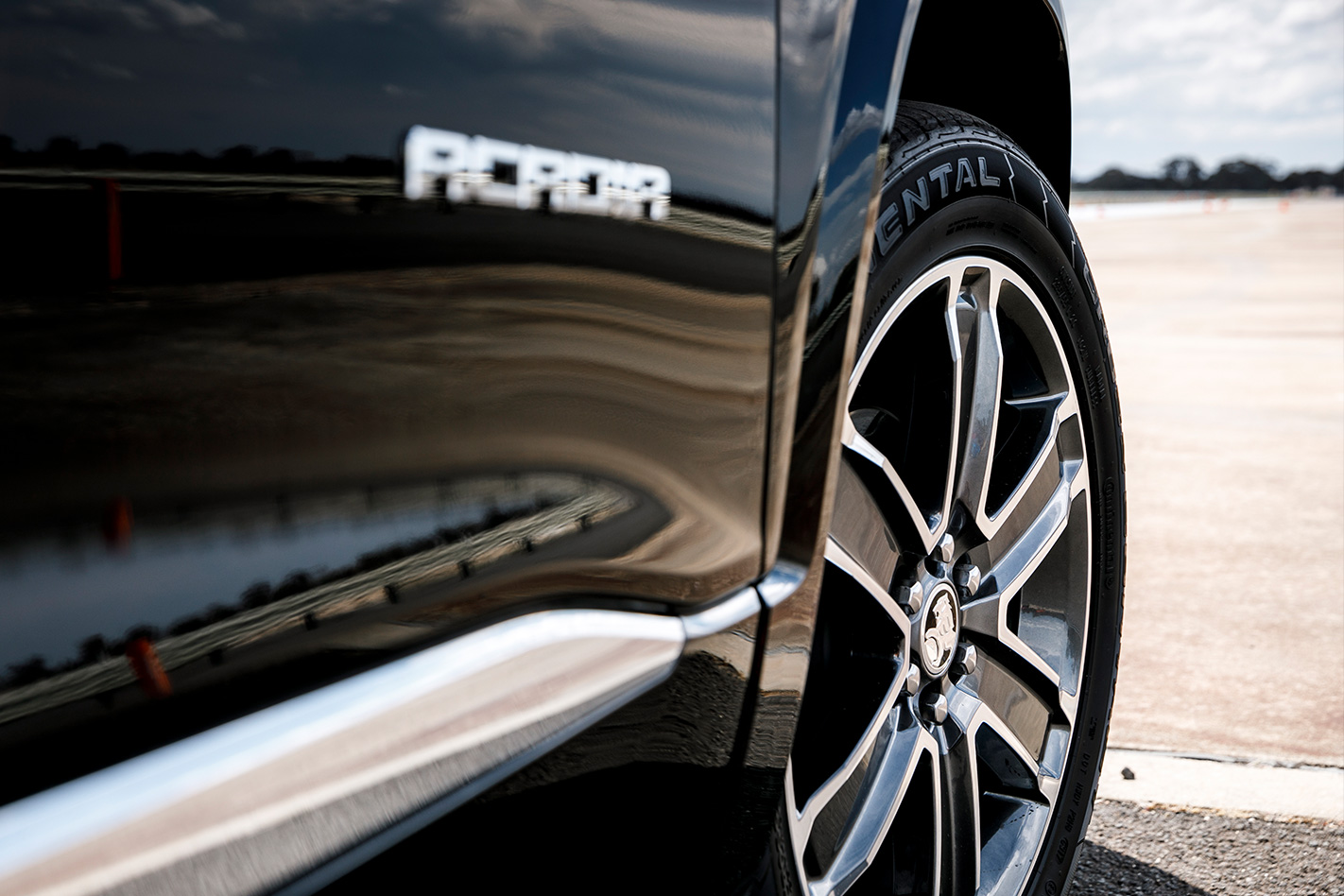
Invariably, the LTZ-V AWD, with that extra Holden input, turns out to be the only Acadia that’s just right.
New to Wheels Car of the Year?
Read the COTY 101.
IF proof proper is needed that Citroen is back, it’s the return of the C3. In less than two years, more than 400,000 units of the striking third generation have been sold worldwide, exceeding forecasts and putting the century-old brand back on the map. Internationally, at least.
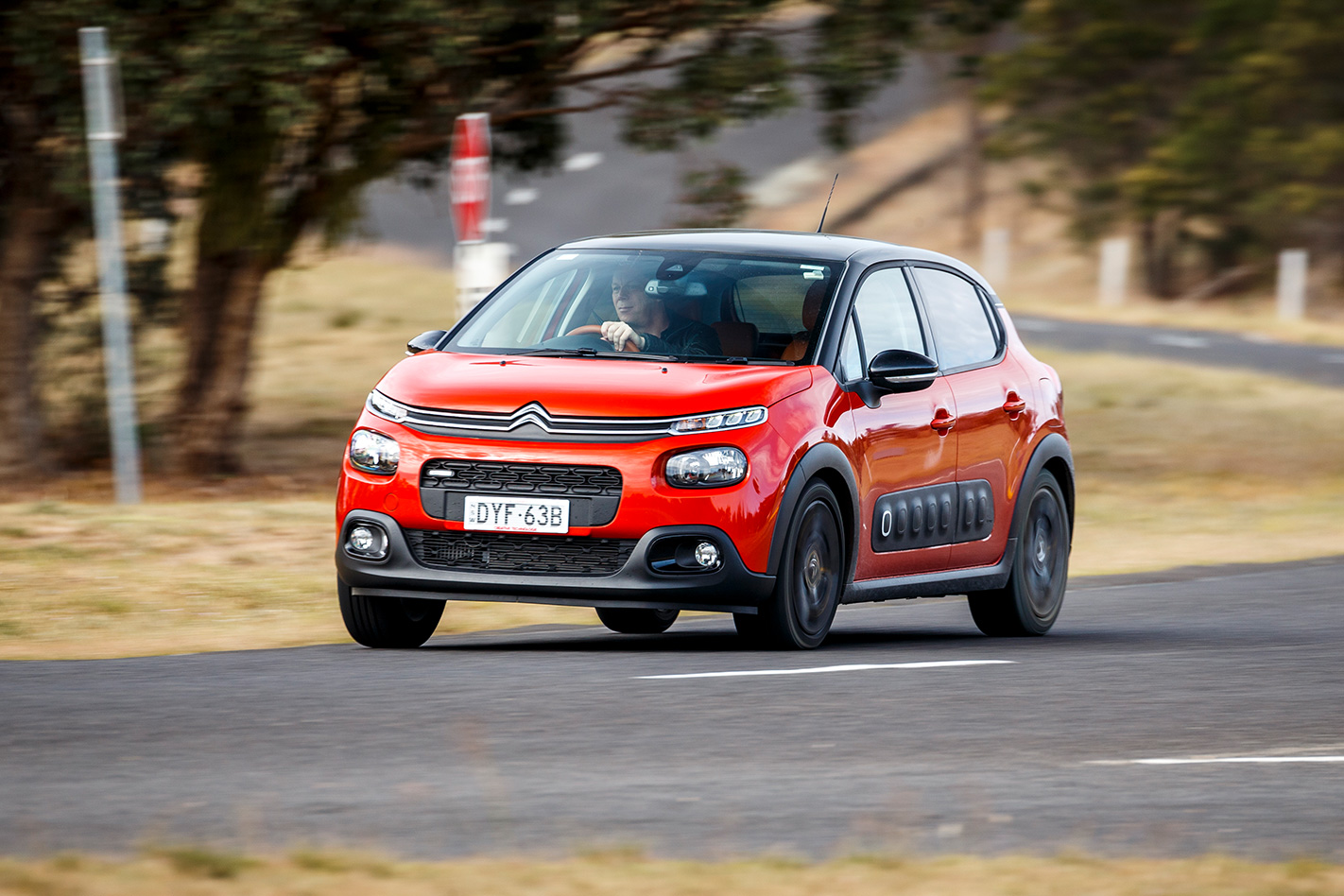
It’s easy to see why. Chunky, handsome design with ever-so-subtle crossover cues make the French supermini seem a little larger than it is (while actually shedding 75kg compared with the preceding version). Inside the spacious cabin, sofa-like seating, deep glass areas for exceptional vision, a simple yet contemporary dash layout and classy details like luggage-strap door pulls add further appeal.
Backing the latter up in the sole Aussie-spec Shine variant are lofty levels of standard kit, including a 7.0-inch touchscreen with Apple CarPlay/Android Auto, reverse camera, road-sign recognition tech, climate control, lane-departure warning, driver-attention alert, rear parking sensors, auto lights and wipers, alloy wheels, four-wheel discs, and a five-year warranty. Plus, buyers can option an in-built dash-cam and a fixed glass roof, as well as 33 colour and trim customisation combinations, at fairy reasonable prices. “Feels boutique!” one judge quipped. Germans, take note.
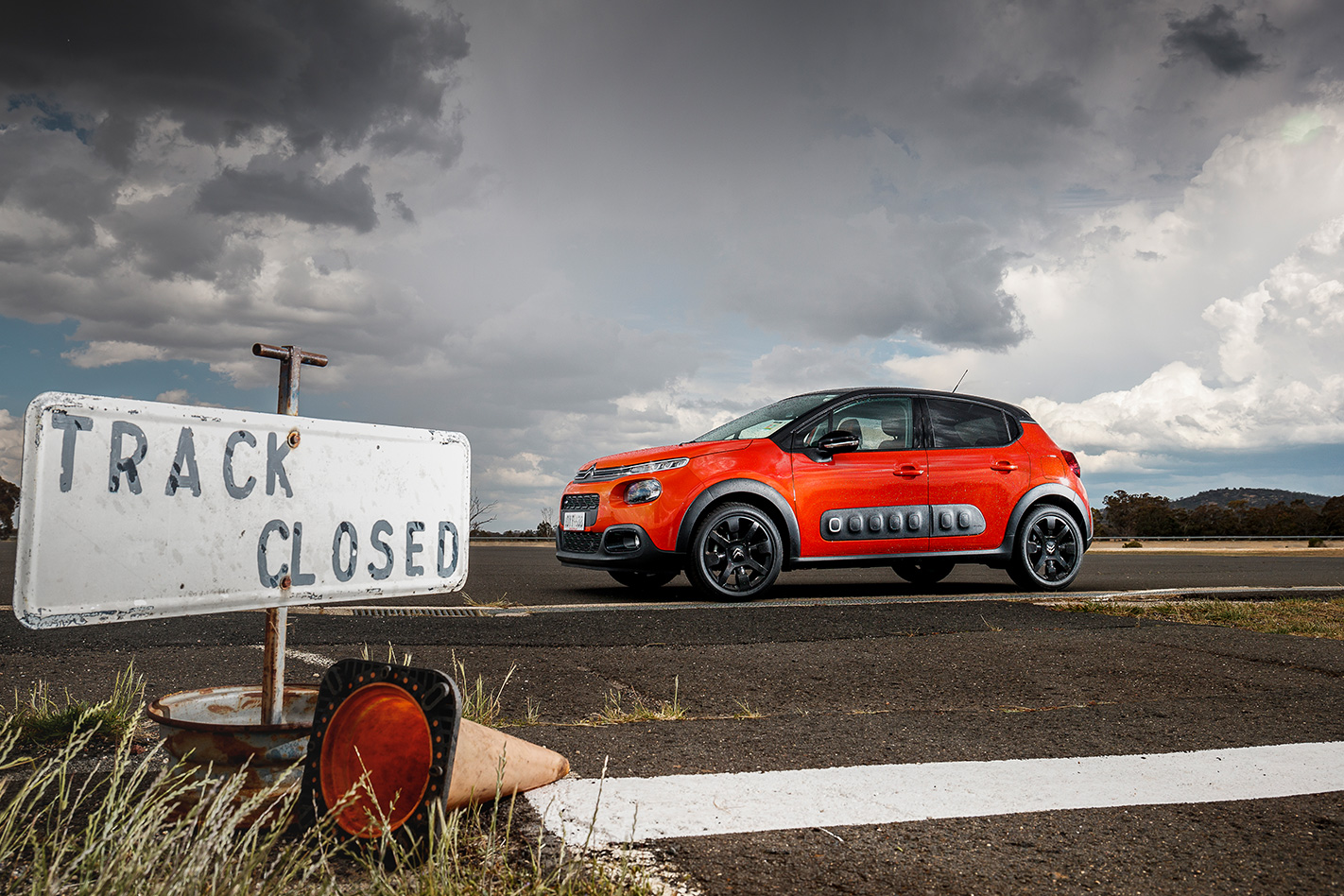
Things continue to look peachy on the move, thanks to a smooth and punchy 1.2-litre three-cylinder turbo that pulls strongly and doesn’t fall into the trap of many similar downsized powertrains by sounding strained at the upper end. The C3 also happens to be commendably economical, with light yet accurate handling and soft suspension that puts many larger models to shame. Style and relaxed refinement are very much the chic C3’s calling cards.
These qualities were enough for the Citroen to give the all-new Volkswagen Polo an unexpected run for its money in a 2018 four-car comparo, despite the C3 sitting on PSA’s ageing and utterly conventional PF1 platform, which dates back to the late 1990s Peugeot 206. No fancy hydraulic suspension here, just good old trusty struts and a torsion beam out back.
However, the lack of Autonomous Emergency Braking and keyless entry/start availability helped the VW pull ahead. Those issues have been remedied in MY19 C3s, which also gain blind-spot warning and DAB+ digital radio. All for no extra dosh. Gosh!
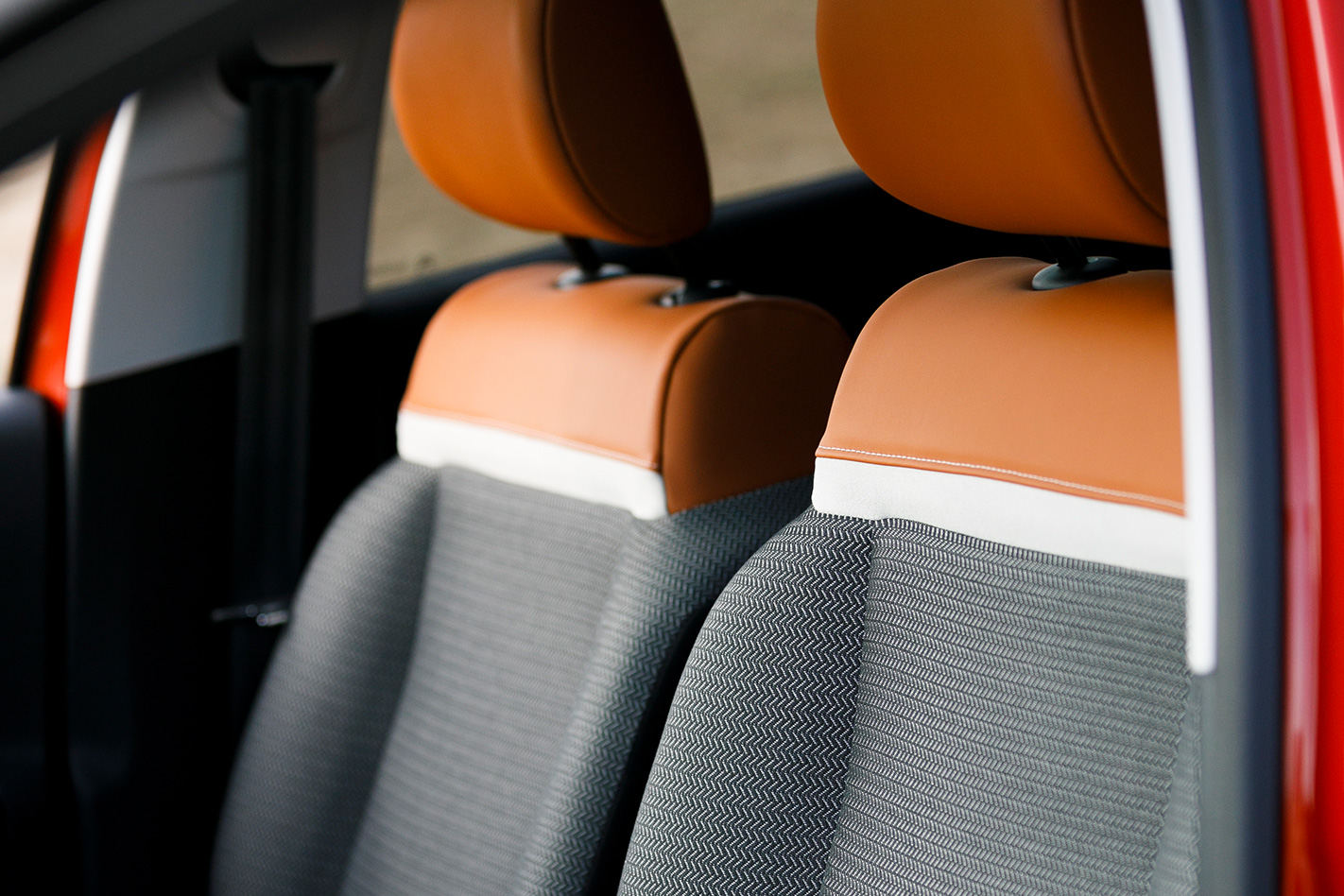
Ultimately, though, the dated engineering underneath has caught up with the fresh-faced Citroen, as revealed by some scattered switchgear (like the Houdini-esque ‘Sport’ button), a tiny glovebox, the propensity for quite a bit of bodyroll through tighter corners, and a dim-witted auto.
The harder we drove it the less convincing things seemed. Unlike the Polo…
Still, as a classy, Euro alternative to up-spec mainstream superminis, or even as a cheaper entree to posher premium fare like the Mini Cooper and Audi A1, the charming C3 represents a remarkably thorough proposition. Good enough for sales success internationally, but not enough for COTY.
I’ve never really been a fan of standing anywhere near an operating dyno. Pinless bloody grenade, if you ask me. And right now, I’d pretty much rather be anywhere than beside CSV’s rolling road as boss man Pete Dichiera irons out the final bugs in his latest Franken-wheels.
This review was originally published in MOTOR’s December 2008 issue
It’s not that I don’t enjoy watching somebody who clearly knows what they’re doing, but the way the silver GTS is straining against the tie-downs and threatening to spit the whole dyno backwards through the CSV workshop wall has me worried. This is a seriously wicked mother; the hellish noise of seven huffer-fed litres screaming makes me wince.
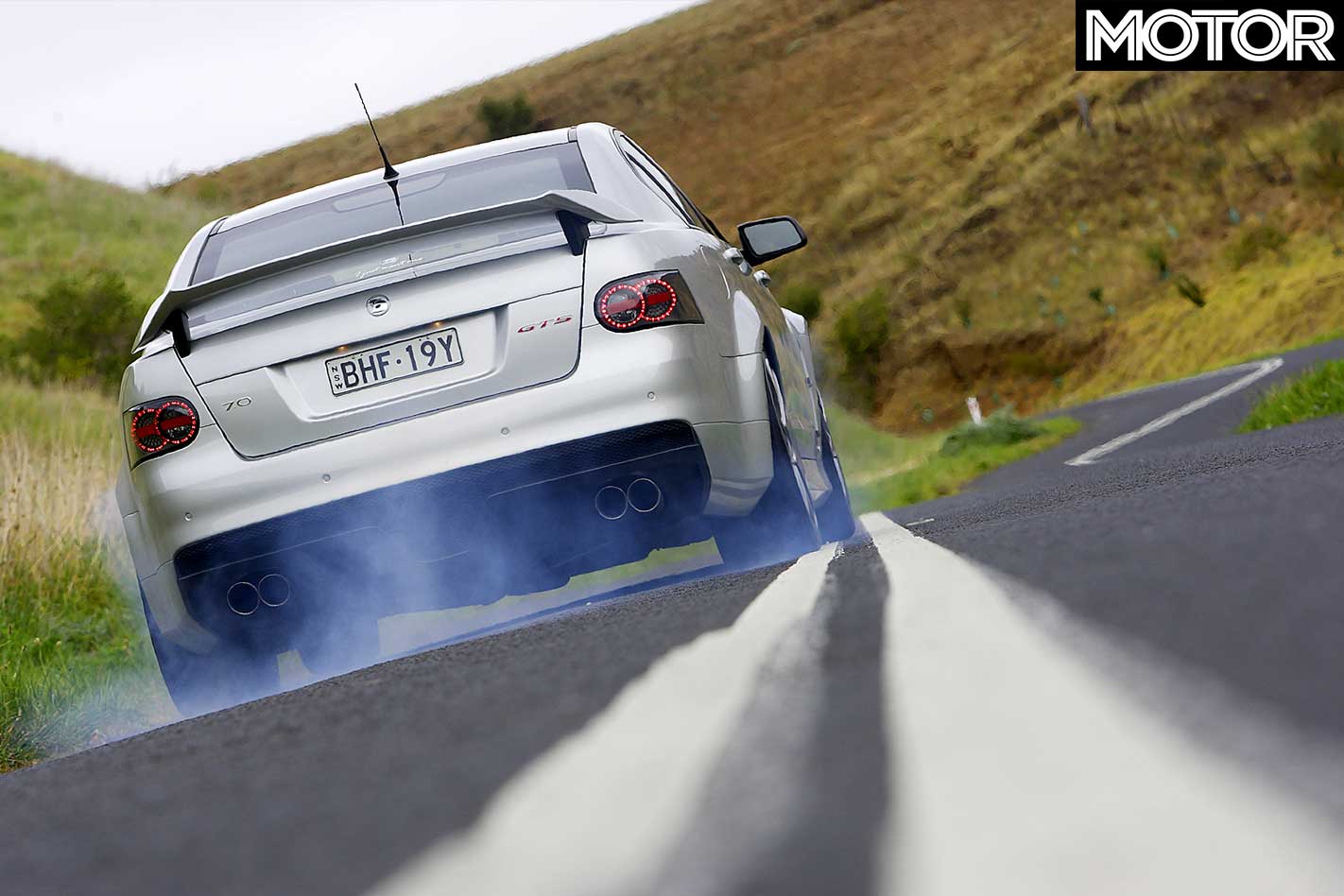
That’s, oh, around 540 of grandad’s old horsepowers and probably good enough for 500kW at the GTS’s crankshaft. Enough to make old Pappy spin in his box (yours may not have put his cue in the rack … mine has).
But just like Grandad would have said, this ain’t rocket surgery, son. Your basic 7.0-litre LS7 will make around 320kW at the wheels on a good day and with the centrifugal blower adding about six psi to that, 404 is the magic number.
Okay, you’ve got stuff like an intercooler, a one-off three-inch exhaust and the LS7’s dry sump going on, too, but the basic combo of cubes and boost is what this car is all about. So what, exactly, will she do?
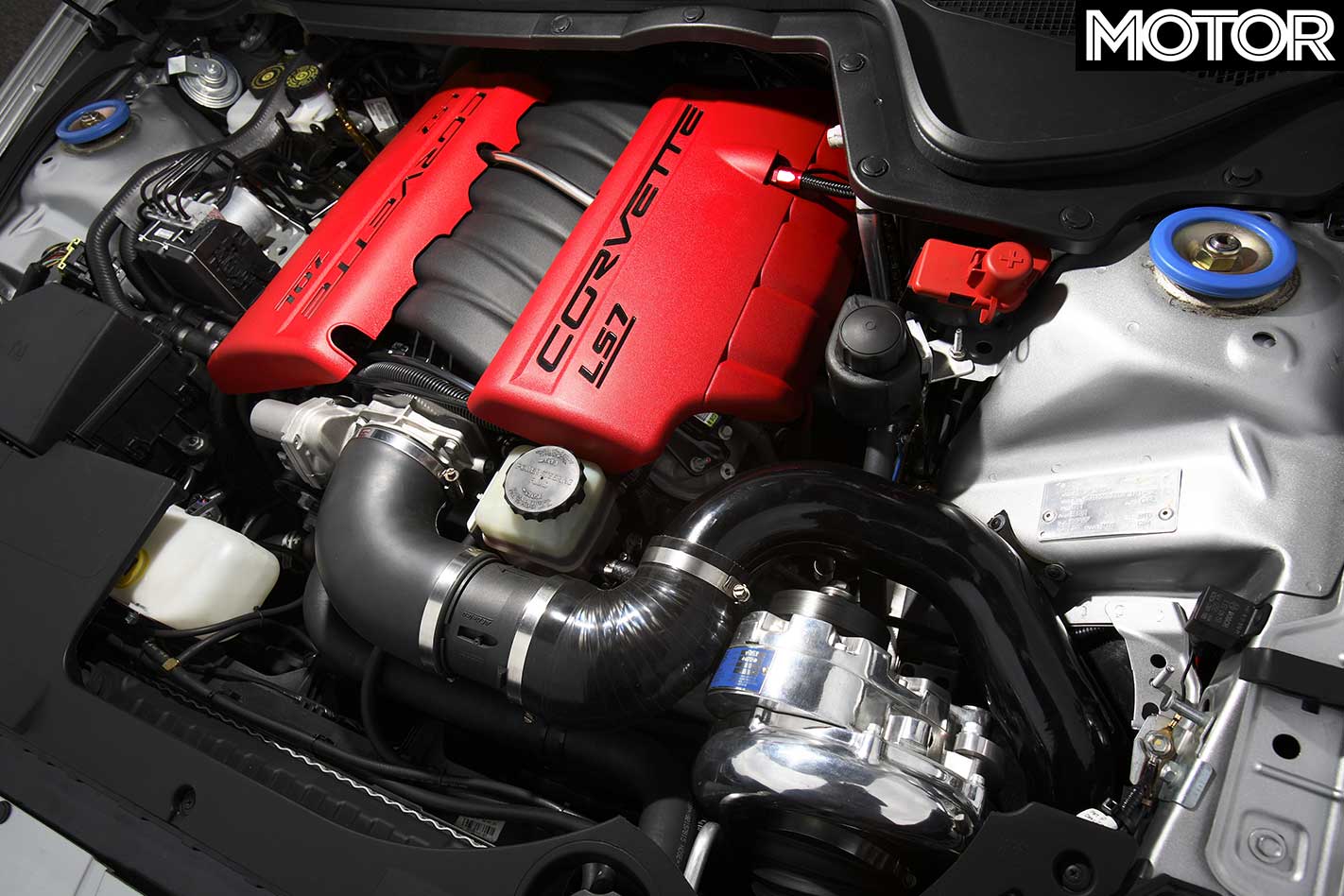
Well, some background first. The fastest Holden-based anything we’ve tested here at MOTOR was the Walkinshaw Performance 6.2-litre Clubsport fitted with the WP blower. That car stomped its way to 100km/h in 4.2sec and across the quarter-mile in 12.5 at 192.7km/h. The CSV car could only match those numbers (most of them anyway) with the same 0-100 and 400m times.
But look closer and you can soon see what nobbled the CSV: traction, or a serious lack of it. See, while the quarter may have been dispatched in 12.5, the terminal velocity was an eye-watering 201.5km/h (that’s 126mph, Grandad). Fact is, there’s so much grunt on board that you must leave traction control on (the throttle-by-wire technology doesn’t help you modulate the gas pedal to find grip, either).
So, by the time the pump has boosted up, the wheels have broken traction and the computer kicks the snot out of the spark and fuel curves. Bluuuurrrrgghhh.
Turn the traction off and it all turns to a smoky version of hell. On slicks and a sticky wicket, it’d certainly be different, and that terminal velocity suggests elevens and maybe a sub-four-second 0-100km/h time. But then, this is a road car, and in those terms, it still rocks.
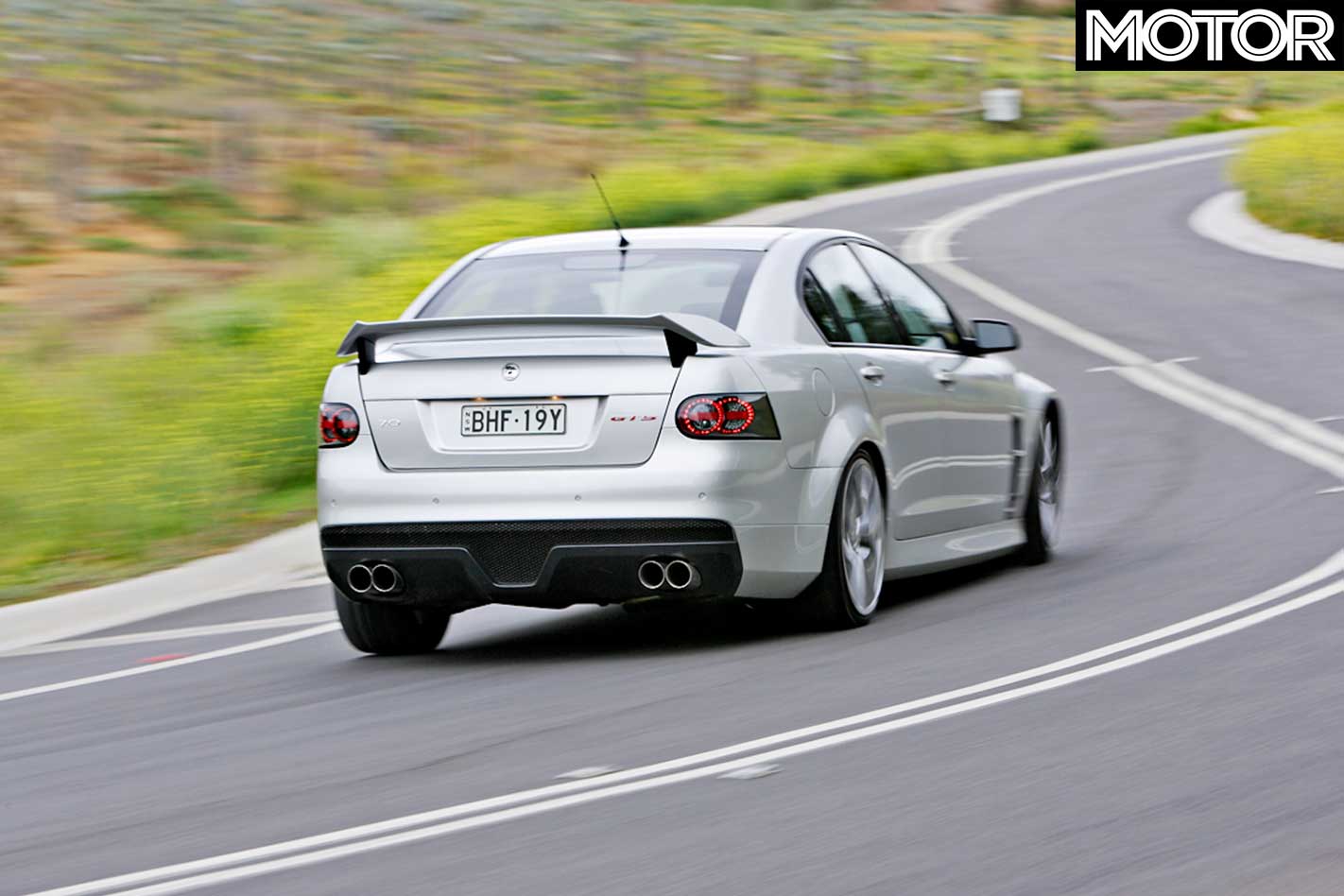
While the centrifugal pump doesn’t give the low-down shove of a Roots-type blower, it puffs the LS7’s chest up from about 3000rpm. By 4000, it’s thunderous with 919Nm at the wheels. That translates to a fit but fairly stock feeling bottom-end that gets stronger and more manic as the revs build.
By the time you’ve reached 4000rpm in third or fourth, the bugger has got both hands around next Tuesday’s neck and is dragging it backwards towards you. Vivid, I believe, is the word.
This particular car was built to specific order, and it packs the best of the best. Suspension is Koni adjustable, and there’s a set of R-spec tyres on lightweight rims for track days. There’s a gearbox and engine cooler, and the oil tank’s in the boot (the blower lives where the tank would’ve).
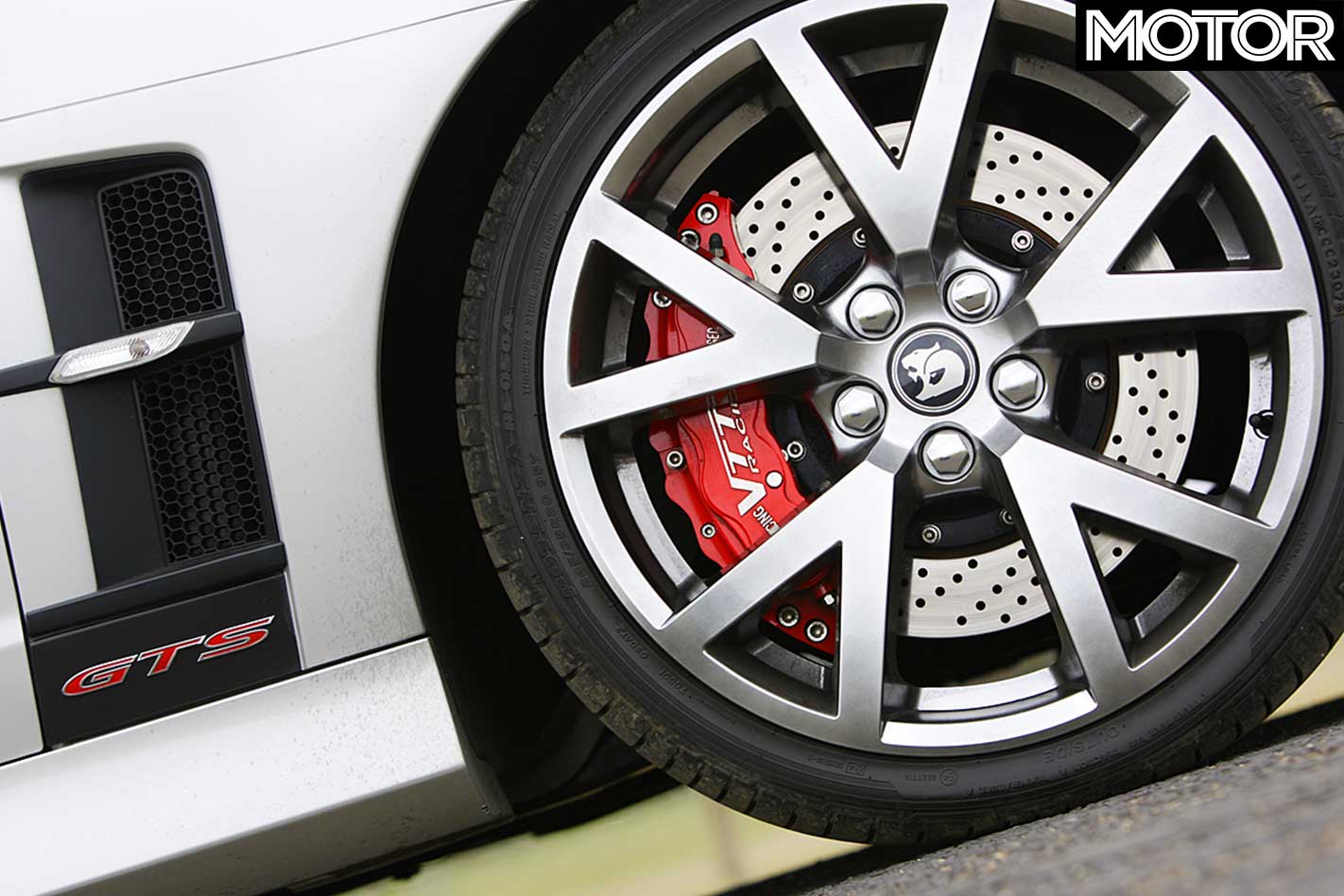
Brakes are massive: VTTR 385mm rotors all round, eight-pot calipers up front and six-potters out back. So sharp are the anchors, you’ll probably head-butt the wheel a few times before you train your foot to be subtle enough.
The value-for-money story is pretty strong, too, and this car owes its owner less than $140K. That’s drive in, drive out, includes two sets of rims, track tyres, as well as the original 6.2-litre, which can be sold or made into the world’s fastest coffee table, though with a 500kW CSV in the shed, it’s not going to take much coffee to keep you awake.
2008 HSV CSV SPECS Engine: 7008cc V8, OHV, 16v, supercharged Power: 500kW @ 6500rpm (est) Torque: 919Nm @ 4800rpm Weight: 1850kg (est) 0-100km/h: 4.2sec (tested) 0-400m: 12.5sec @ 201.5km/h (tested) Price: $140,000 (est)
Like: Stonking performance, brilliant anchors, value for money, rarity Dislike: Severe traction difficulties with ESP off, could end your license
New to Wheels Car of the Year?
Read the COTY 101.
THE VERY first time you have a crack in the Chevrolet Camaro, it all comes flooding back. All the goodness we miss about home-grown muscle cars; the crisp throttle response from the 6.2-litre LT1 V8 and a visceral noise that crescendos into a bellow of impeccably blended exhaust and induction.
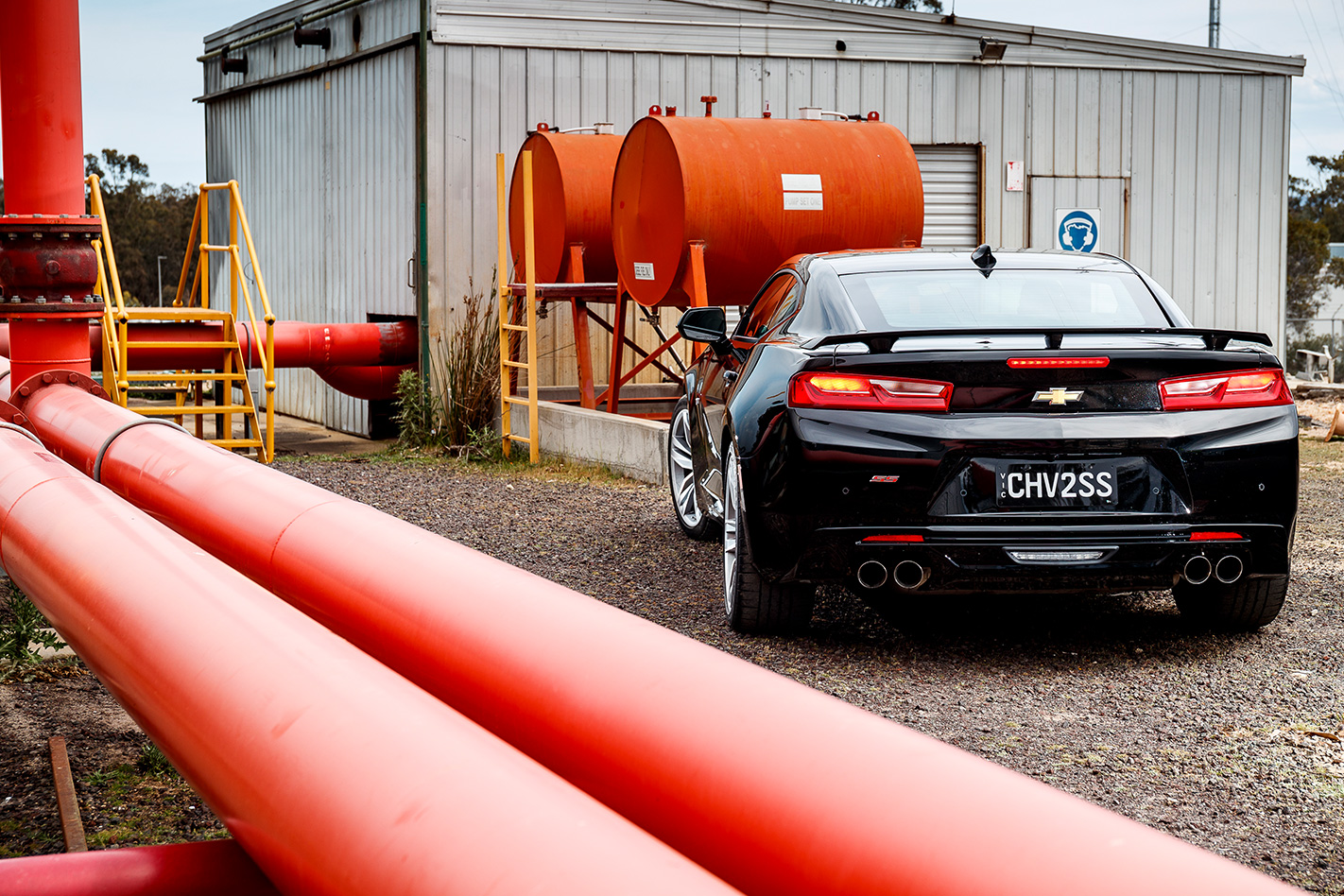
With its big cylinders and modern direct injection, the brawn-to-be-wild approach – one that’s increasingly lost in a turbo-fixated world – is at its most compelling.
Some eyes welled at the absence of a stick-shifter – just one 2SS specification is offered, and the only choice you get is paint colour – but as the proving ground highlighted, the eight-speed auto does a fine job of harnessing all 617Nm. The fact that it so easily taps into its 339kW peak affirms the engineering nous inbuilt in the Corvette-sourced small block.
Less impressive are aspects of the dynamics, hampered by occasionally sloppy, mute-feeling steering that dulls the appeal at lower speeds.
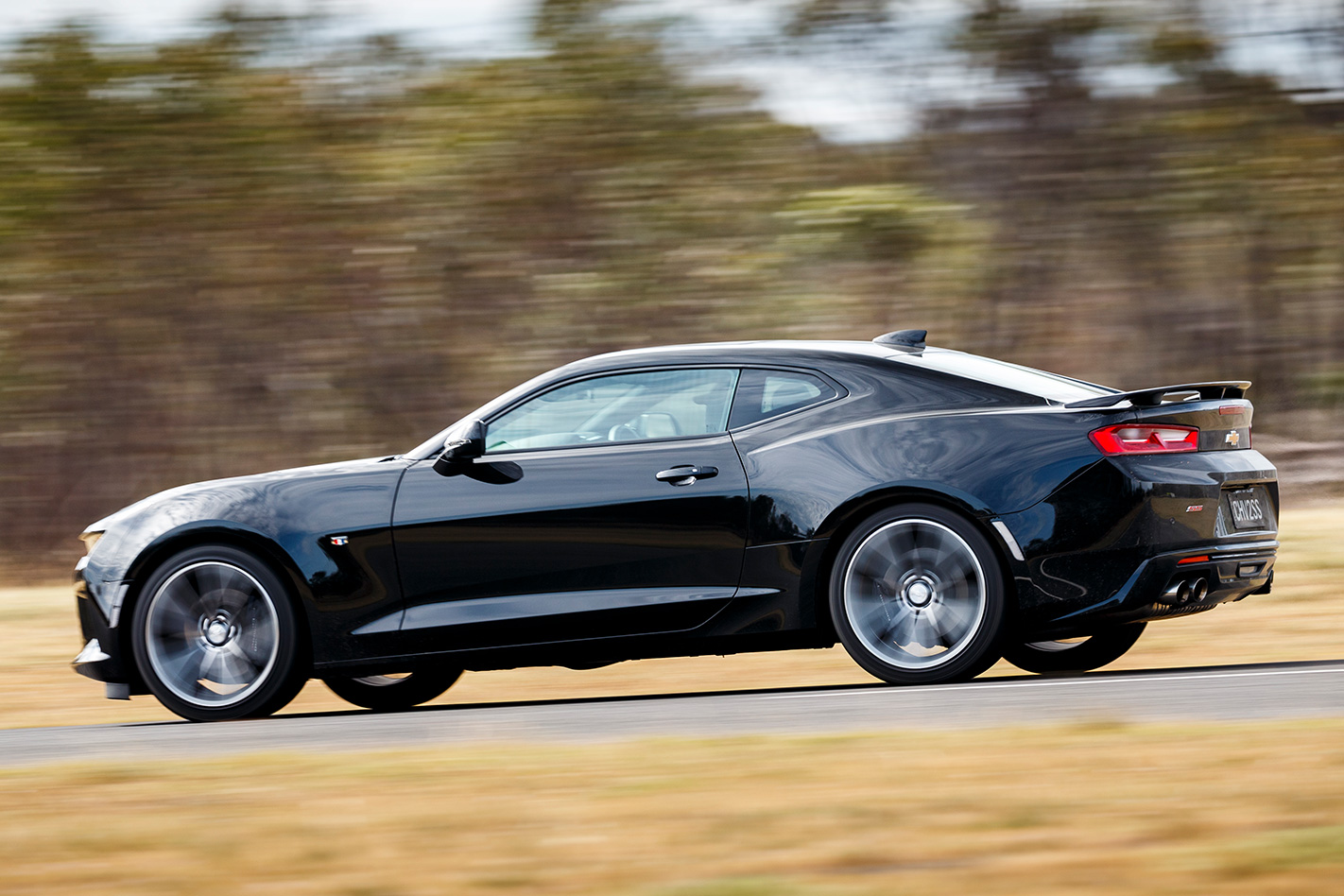
The Camaro’s senses awaken as the pace is stepped up, its 20-inch run-flat rubber helping it sweep through bends with sports-car intent. There are lashings of tail-wagging fun on offer, too, although you should avoid the inconsistent ESC interventions in Track driving mode. Yet what it lacks in finesse, Camaro makes up for in chuckable fun.
Of course, the made-in-America Camaro has little connection with Australia, at least in its fresh-from-Detroit form. The bowtie badge – the first seen in 56 years of COTY – is pure apple pie and ‘gas’ stations.
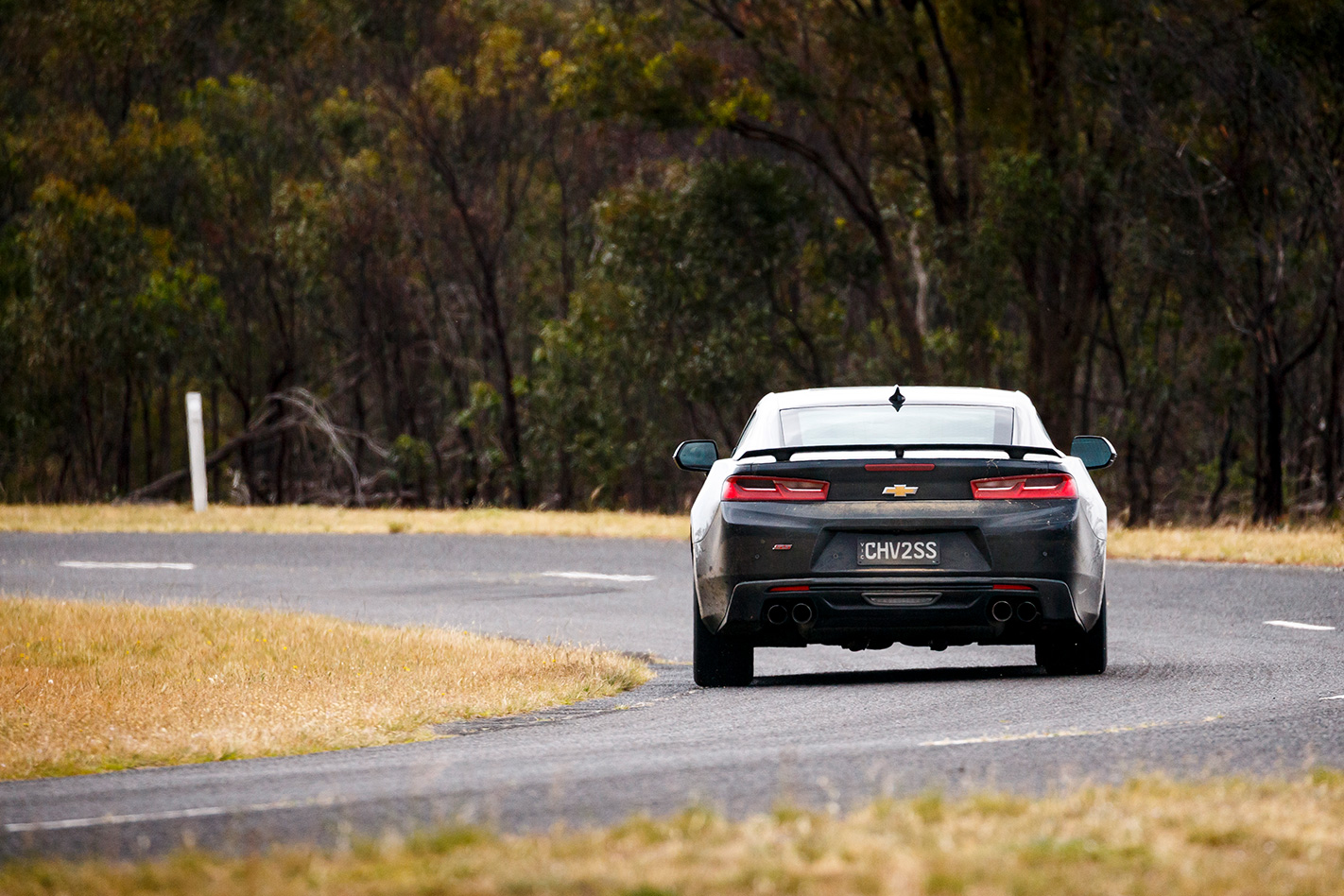
Yet there’s an Aussie twang courtesy of an extensive (and excellent) RHD conversion by Holden Special Vehicles.
It’s a superb engineering effort, trouncing any previous local undertaking.
The core product dishes up a near-perfect blend of modern design and materials that sing of 1960s style and simplicity, delivering a character that earned it COTY favour. There’s a purposeful butchness to its exterior, with its brawny lines and slim glasshouse cementing the interplay between old and new. While the Camaro has been facelifted stateside, the consensus was that we’ve got the looker.
There’s also an endearing old-school functionality, with the exception of the 7.0-inch infotainment screen, which points at your crotch. Clever circular temperature dials surround the central vents while twin semi-hexagonal covers on the cowling shroud traditional instruments and a customisable digital screen.
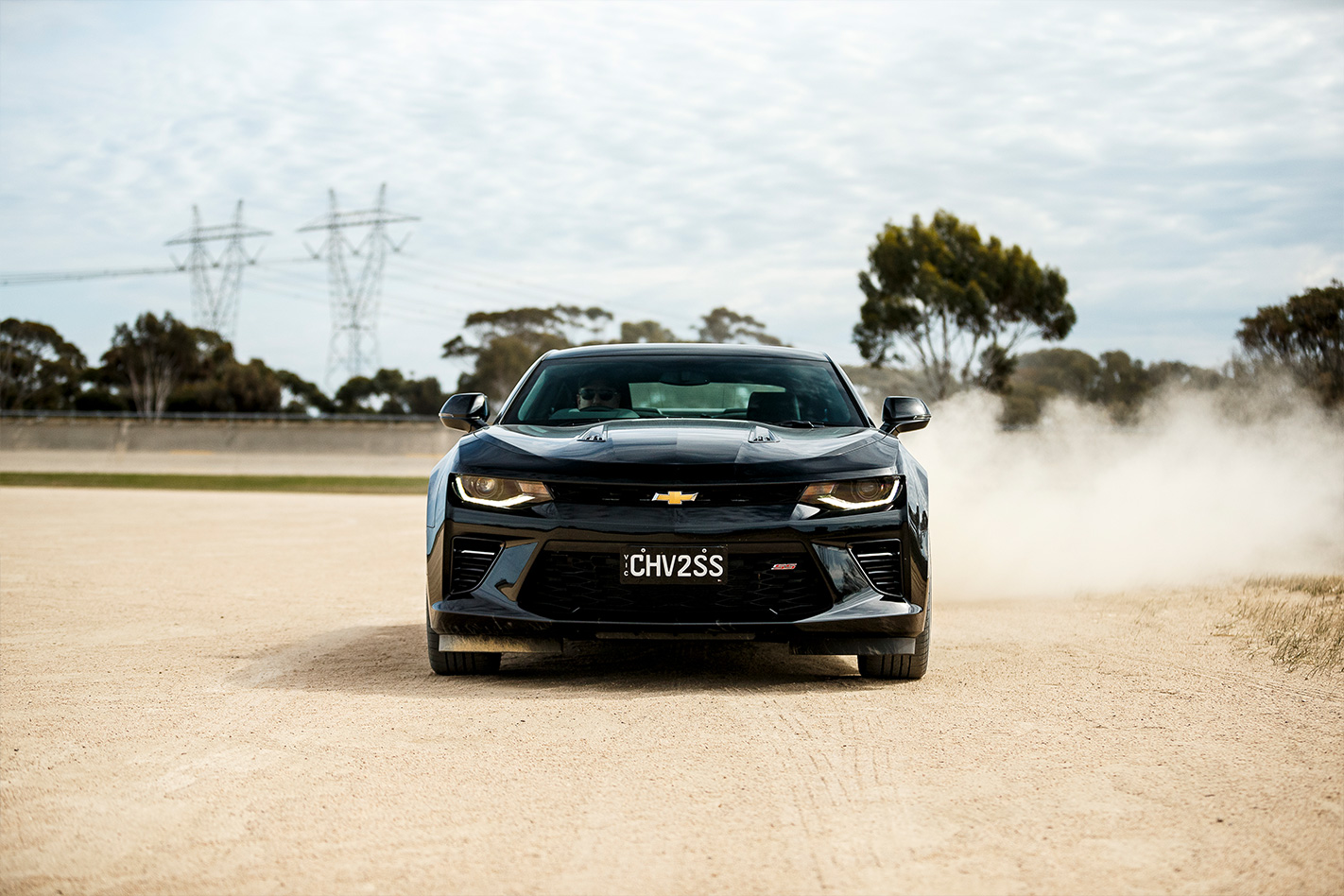
While there’s an infusion of tech, the Camaro isn’t pretending to be anything but a loud and proud statement of its owner’s personality. Clawing the lovable two-door back to the COTY criteria is where clouds start to form over the muscle-car fairy tale. There’s no ignoring the $85,990 price tag, some $20K more than its sole local rival, the Ford Mustang. Active safety gear is light-on, too, and for anything but a two-person thrash it’s less than convincing.
None of which dilutes its copious emotional appeal, a trait amplified by local engineering input. The Camaro is purist simplicity, with added muscle, but it’s no COTY contender.
CLICK, CLACK. The 2019 Chevrolet Camaro 2SS’s gear paddles still make an awful sound when you pluck one. But while the gearbox used to hesitate before an upshift, it now engages more swiftly, like pulling a gun’s trigger. And rightfully so.
Chevrolet has armed its V8 invader with a new 10-speed transmission for its mid-cycle update. It’s also added more equipment and restyled the exterior. Yet we don’t blame you if it feels like the previous version launched yesterday.
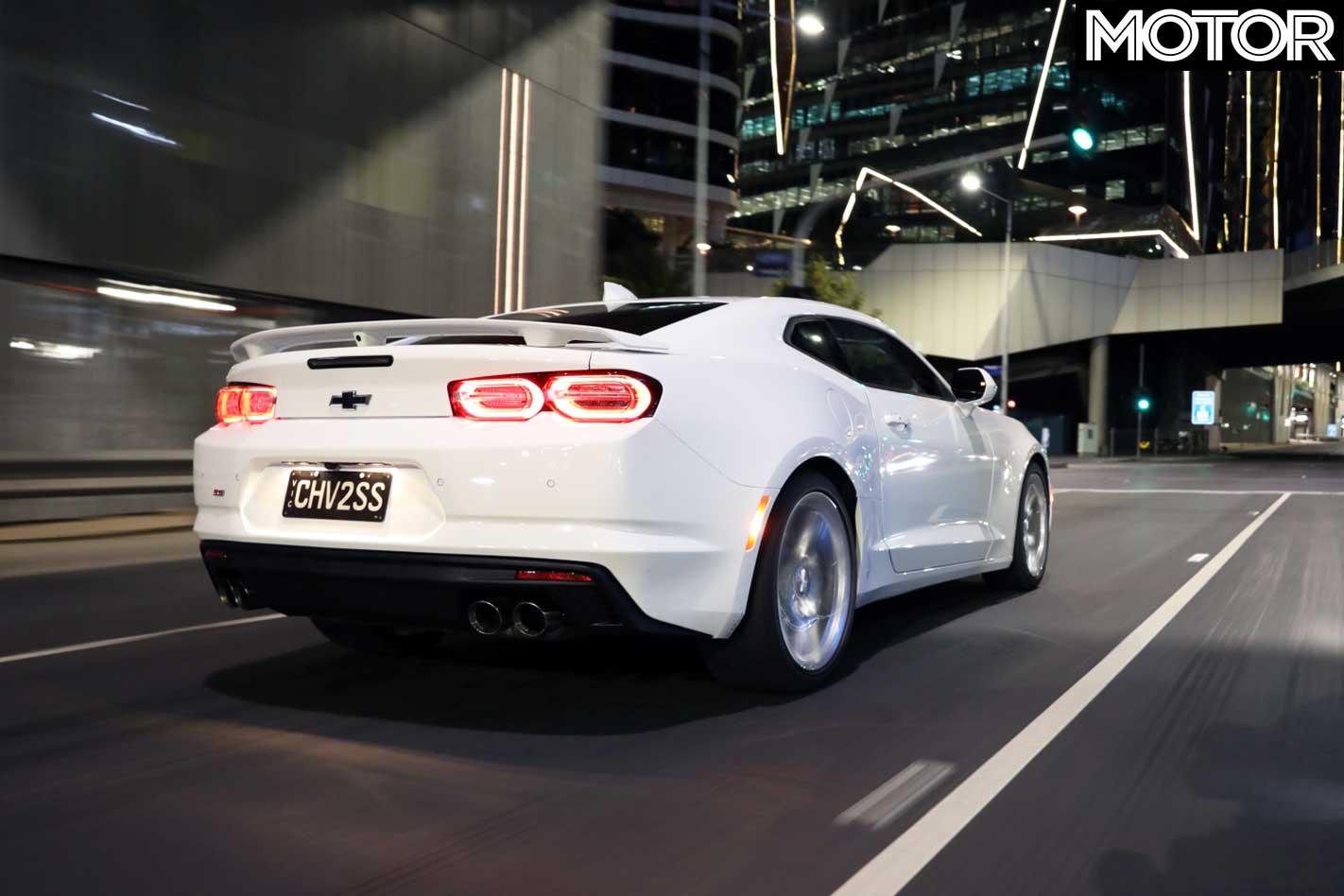
Only six months have lapsed since HSV sold its first Camaro. The latest one comes after it proved so skilled at converting them to right-hand drive, GM’s granted us almost immediate access to the updated version and a much-needed change to the local build process.
At $89,190 the Camaro’s ticket has risen to $3200. Clayton still plays the middle-man, importing core vehicles and then basically re-manufacturing them, but it now receives American Camaros instead of Argentinian ones, handing it more control over what’s included for the slightly inflated price.
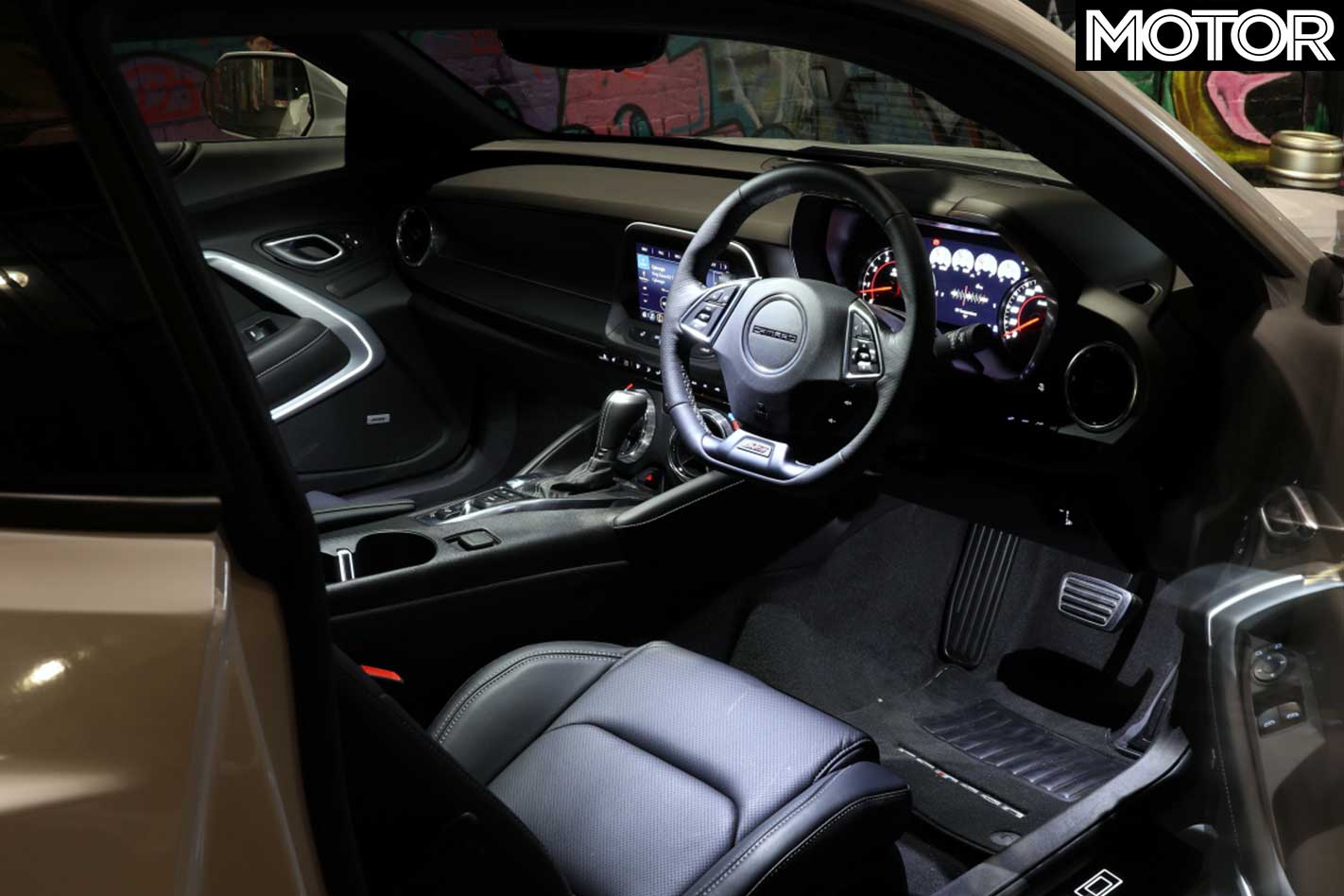
That sunroof disappears from the standard equipment list and is replaced by a heads-up display, forward-collision and rear cross-traffic alert system along with a reversing camera mirror. Oh, and there’s that striking front-end with a new vented bonnet and ‘Flowtie’ grille. Be prepared for attention.
With those new ‘dual element’ LED headlights peering out from what looks like a huge gaping maw, the new look Camaro mesmerises bystanders with more menace. And that’s not all, there’s something different about the exhaust note, too.
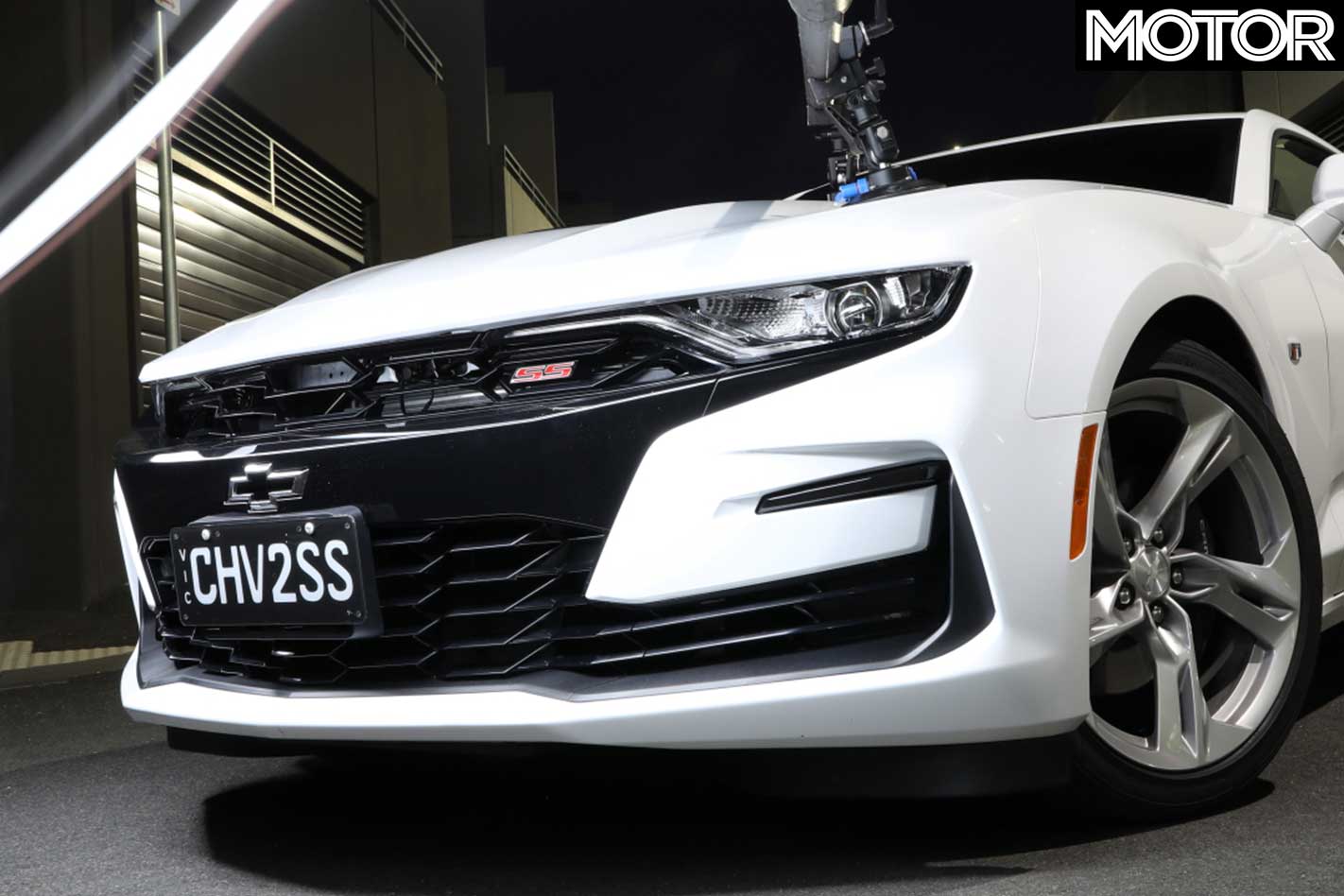
Shorter gears wind that 6.2-litre V8 on to its meaty mid-range more often. We’ve asked HSV whether engineers saw the new transmission as an opportunity to fiddle with fuel maps so the LT1 is more aural on over-run, and will update you with an answer, but that’s what it certainly sounds like.
It repeatedly burbles and crackles once you step off the throttle. It’s addictive, and smooth, but you’ll need to drive around in manual mode to stay in low gears. The new ’box is just as frugal-focused as before when left to its own devices, even in Track Mode.
It rushes through gears to keep the V8’s thirst under control. Outputs are carried over, with HSV promising power junkies relief instead from the supercharged Camaro ZL1 that’s awaiting certification. But do more ratios make better use of the SS’s 339kW and 617Nm? In short, yes.
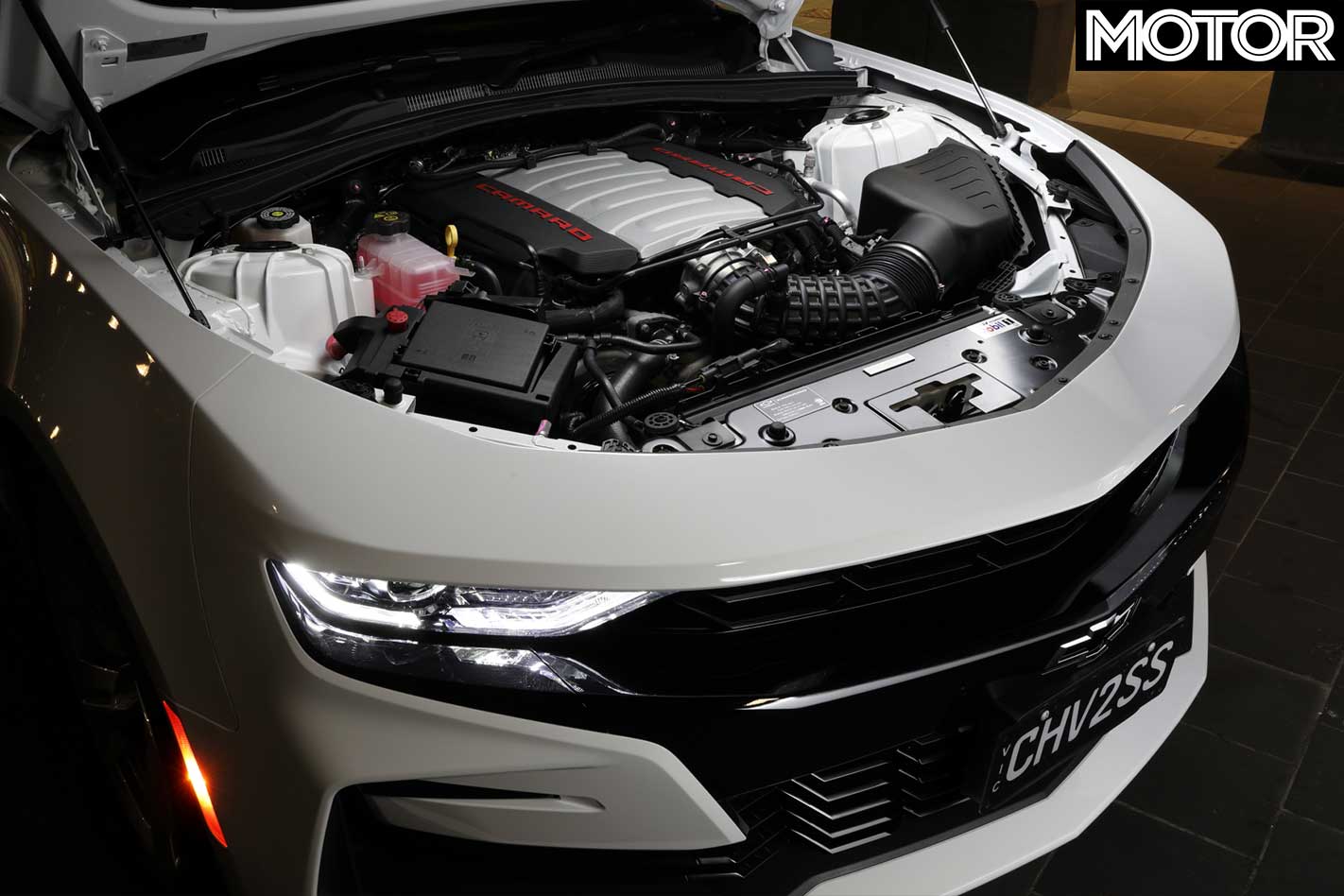
Chevrolet says acceleration figures are unchanged, but we’ve confirmed it’s faster to 100km/h from rest and over 400m through testing of our own. You’re going to have to wait for our full road test in MOTOR’s June issue to read the figures, though, sorry. Instead, we can discuss the toys that should have drag-strip junkies salivating.
Engineers have loaded it with launch control and a tyre-shredding line lock feature. The latter is basically burnouts for dummies, artificially holding the front brakes while you stomp the gas. However, there is one trick to it.
Engage Track Mode and ESP’s Stabili-Trak setting and navigate through the cluster’s menu to find the Line Lock program. It’ll instruct you on what to do, like how much brake pressure it’ll need (or 80psi) and when to get into the throttle. But if you floor the loud pedal it’ll disengage.
Instead, you need to tickle it, slowly building the revs and wheel speed until the rear axle is sitting and spinning. Once you’re hovering around 6500rpm, tap the Cruise Control button under your left thumb and ‘Select’ under your right one.
This walks the car forward, laying black strips of rubbery glue that you’ll try trace later when launching the car. It works so easily, so smoothly, you suspect nothing’s worked until you spot the mushroom cloud in your mirrors, suggesting you might have burnt through some expensive tyres. Luckily that’s not the case.
Chevrolet’s left the suspension package alone, carrying over 245/40 and 275/35 Goodyear Eagle F1 Asymmetric 3s run flats. They still offer an annoyingly firm ride underneath GM’s FE3 fixed suspension and until the ZL1’s magnetic dampers are made available the setup remains handling focused.
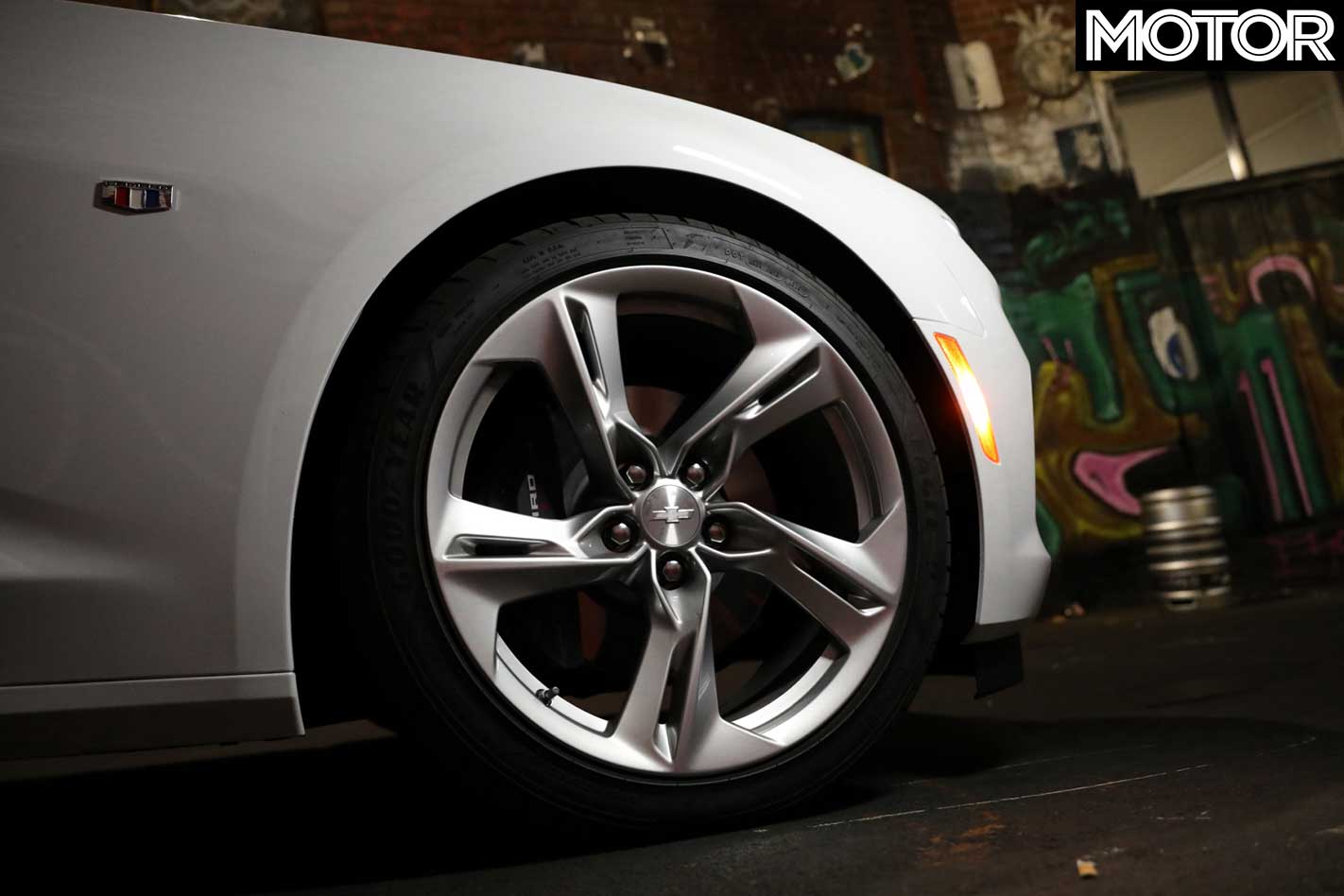
That’s no bad thing, it’s still the better handling muscle car on sale even if its iffy steering weight spoils its front-end’s tactility. Pair its engine’s thick mid-range with the gearbox’s shorter ratios and it’s a fraction faster along curvy roads, even if it’s missing the crispness of the Mustang’s 10-speed automatic (which the two companies, ironically, co-developed).
Inside everything feels more solidly built than before, and the material mix ooze a semi-premium vibe. Those cylindrical indicator stalks channel VF Commodore, too. It’s almost faultless, save for one thing.
The steering column developed a squeak that we’re told comes from a faulty seal. But that’s it. The rest of its build quality is great. The new Heads-Up Display, crisper menu graphics both in the infotainment and cluster, help the cabin feel like it’s made a huge leap forward in technology.
And that’s the best way to sum up the 2019 Camaro. It’s a collection of thoughtful upgrades that enhance its emotional appeal, technology and driveability. Chevrolet might still need to change those paddles and smooth its ride, but we think it’s worth the extra $3200, and perhaps the six-speed could be better for $86,990. Stay tuned for that review, and this car’s full road test with performance figures, soon.
2019 CHEVROLET CAMARO 2SS SPECS Engine: 6162cc V8, OHV, 16v Power: 317kW @ 5700rpm Torque: 617Nm @ 4600rpm Weight: 1697kg (US) 0-97km/h: 4.0sec (claimed) Price: $89,190
New to Wheels Car of the Year?
Read the COTY 101.
If you were to contextualise the Bentley Continental GT in boxing terms, its ‘tale of the tape’ is so impressive you could almost imagine it being called out by a ring announcer: “In the blue corner, weighing in at 2244kg, punching out 467kW from 12 cylinders, and yours for $422,000, it’s the brawling bouncer from Brrrrr … itaaaaain!”
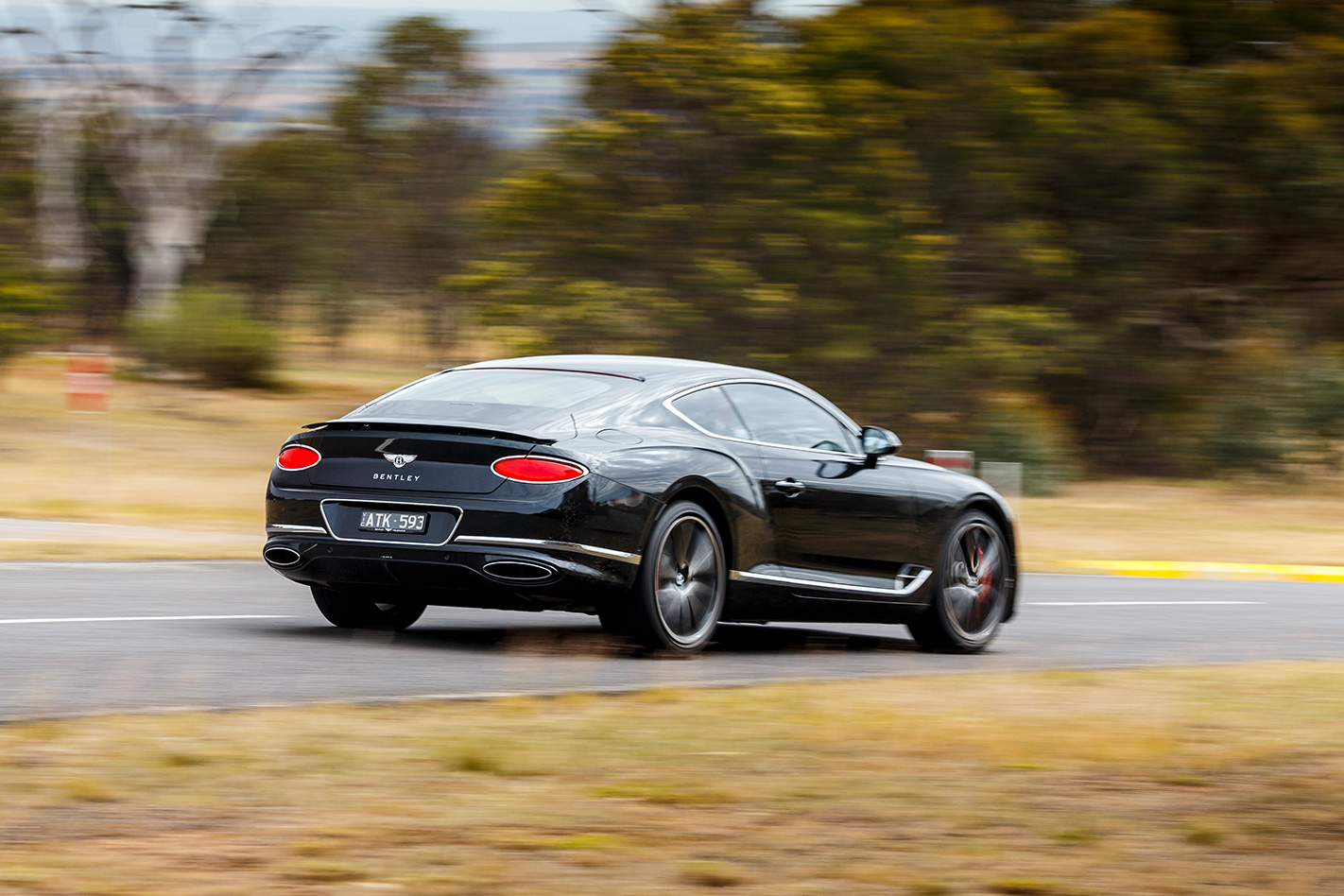
Those latter numbers made this easily the most powerful and expensive car in the 2019 COTY field, but the dollar figure is only the undercard to the options list, which did this super coupe no favours in terms of value. The optional Naim audio system alone is the price of a basic VW Polo; all up, this particular Conti rolled in with a tag just over $539,000, not including taxes and on-roads.
It fared more strongly in terms of technological advancement. Thanks to Bentley’s place in the VW Group, the third-gen Conti is built on the MSB platform that underpins Porsche’s Panamera; its electrical architecture is a 48-volt system that supports active anti-roll bars, while its vast rear quarter panels are hydroformed from a single piece of aluminium. The revised W12 is also 18 percent more efficient.
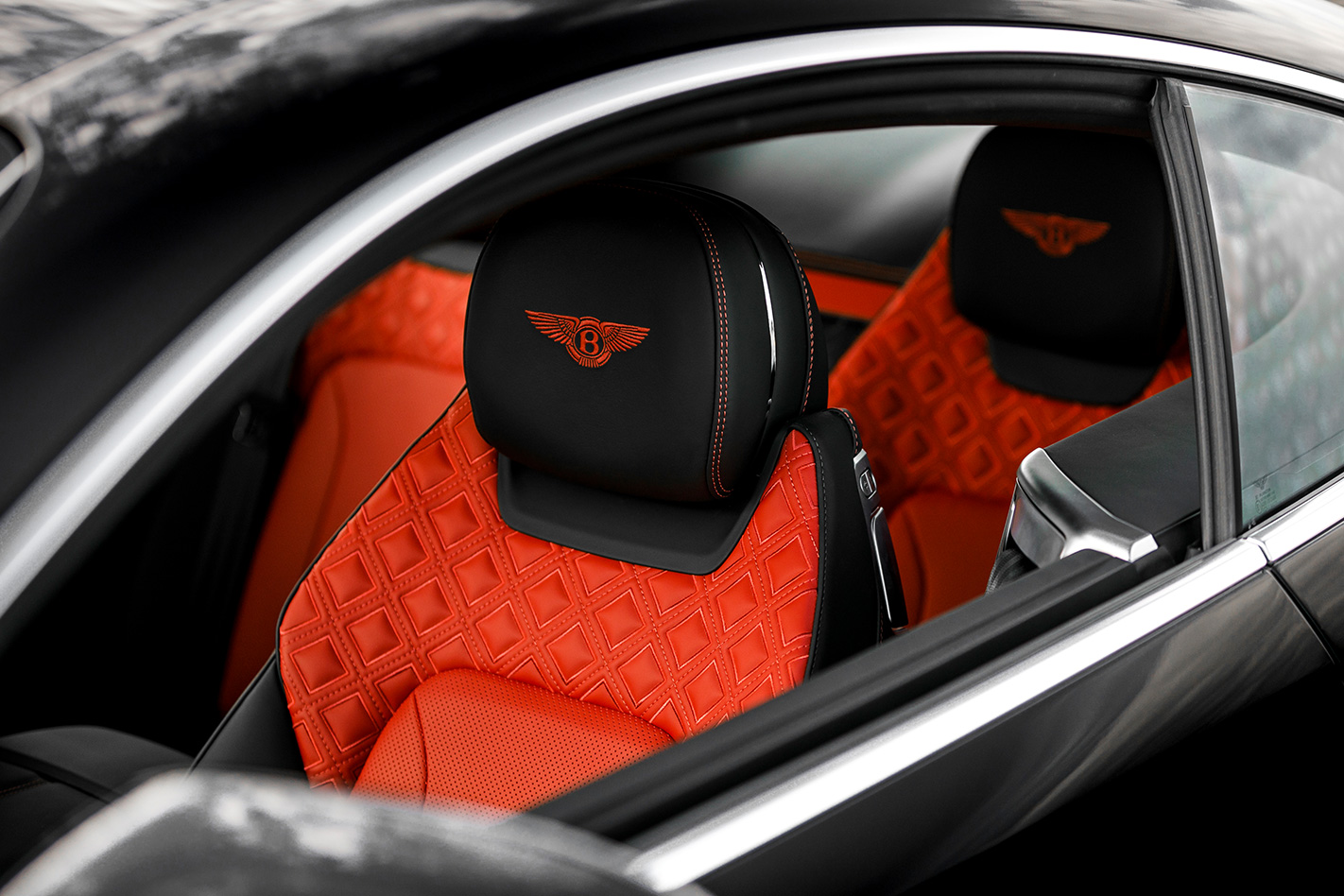
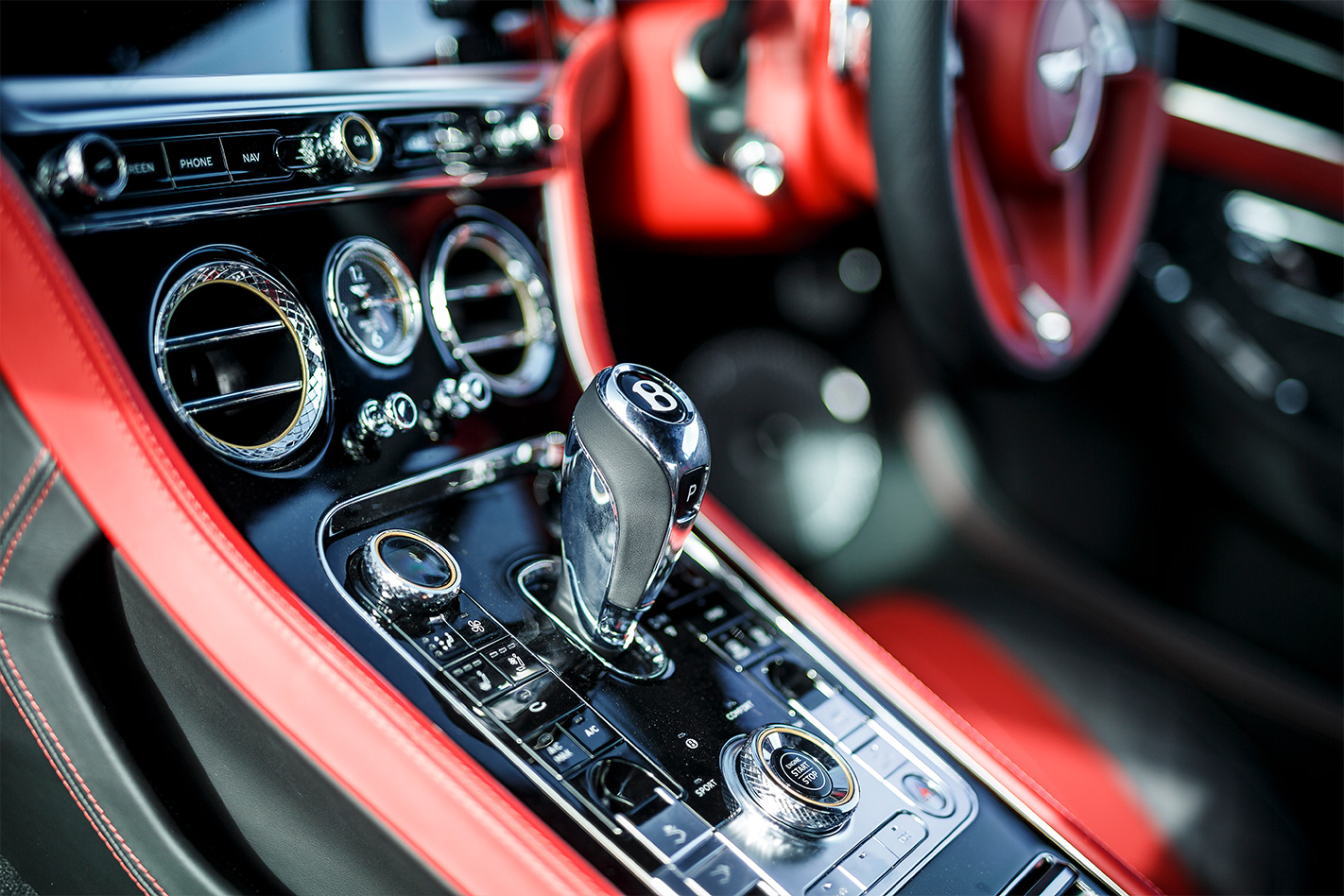
Further, albeit predictable, praise came for the interior’s sense of occasion and attention to detail. The exquisite knurling of control knobs and the ‘organ-stop’ operation of the air vents were not missed by the judges. Although not everyone was enamoured by the taste of whomever it was that specced the test car: “I could live without the ‘Mel & Kim knicker drawer’ interior colour scheme,” commented Enright.
2019 Bentley Continental GT Convertible revealed
What was not disputed was its sublime refinement. “That cabin is so well insulated, it feels as though you’re in Maxwell Smart’s Cone of Silence,” observed Inwood. So yes, wind and road noise are brilliantly suppressed, and, at least until well past its mid-range, so is engine noise. The W12 delivers such silken, effortless shove, it almost seems to transcend the explosive principles of internal combustion. In brisk touring mode, it’s as though there’s some electromagnetic force involved, whipping the car along with barely an audible murmur. Only when really chasing the redline are you deemed worthy of enjoying the distant, distinctly different warble emitted by the W12 layout.
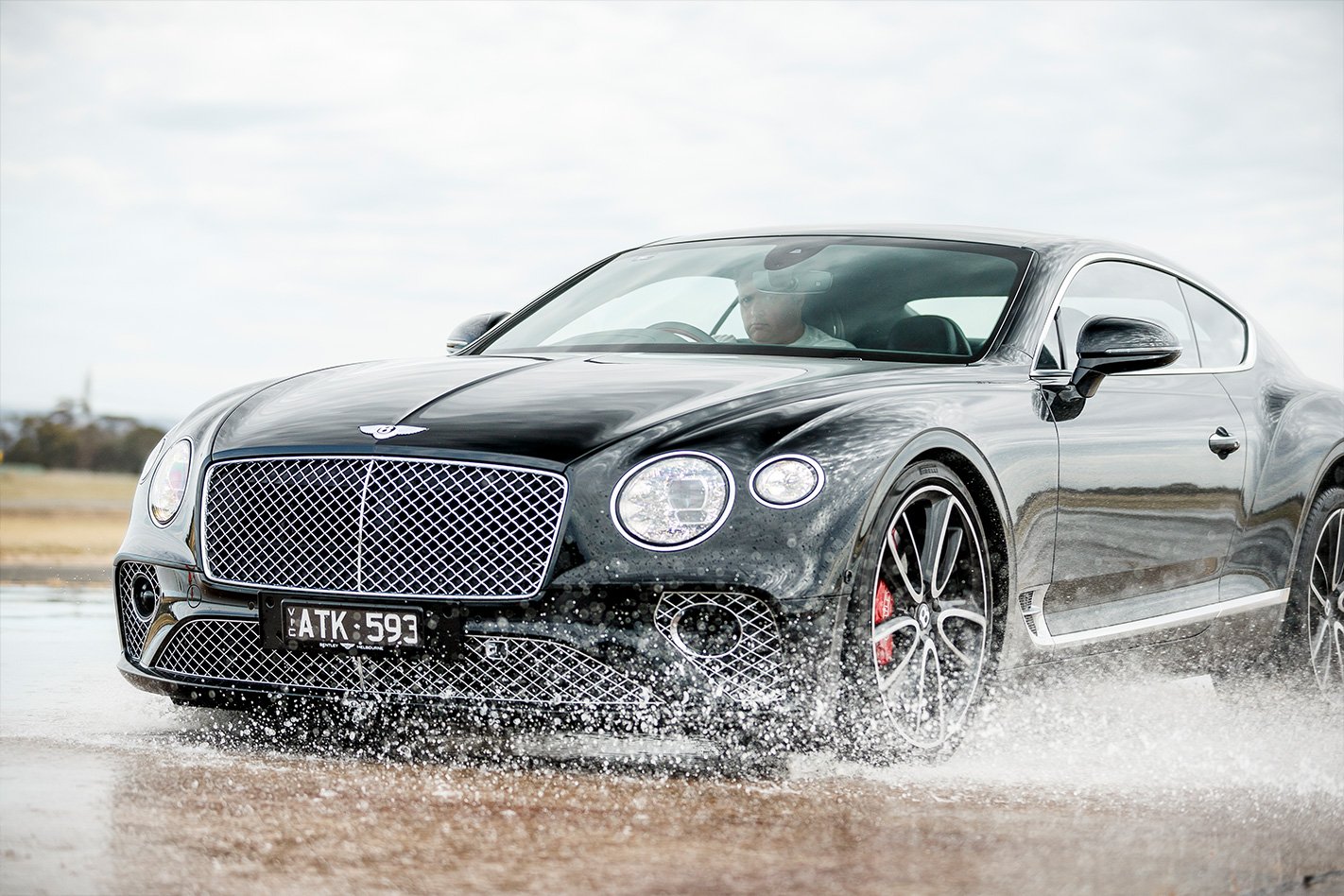
That whopper of an engine is now backed by an eight-speed dual-clutch transmission, a choice which had several judges questioning its appropriateness in a car which puts such an emphasis on refinement. “Not as smooth in low-speed driving as it needs to be,” was the broad consensus.
As for high-speed driving, that demands respect, purely because of the velocity-mass equation. The judges agreed that the chassis was deeply capable, but the strength of the engine and power-down ability was such that the car was almost always travelling faster than the driver might momentarily estimate. Really vigorous pedalling would see the chassis run out of compression damping on the plunging back section of the durability circuit, putting this judge’s eyes on stalks.
Ultimately, though, it was law of diminishing returns and punch-drunk-inducing options prices that knocked out this Great British bruiser.
