
Nine one-off Aussie motor show-stoppers that kept us salivating
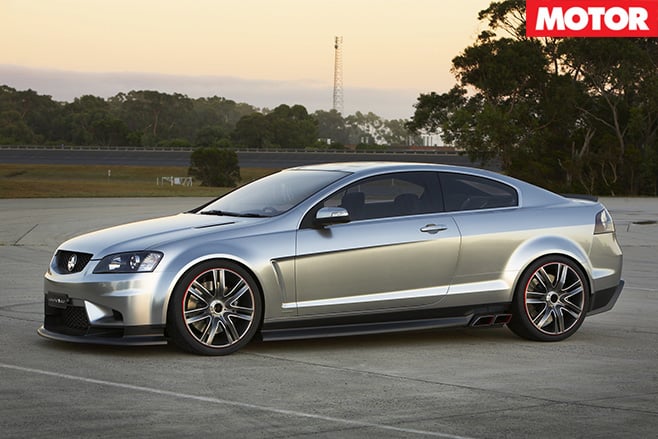
First published in the August 2011 issue of Wheels magazine, Australia’s best car mag since 1953.
Sinister FPV show special ups grunt and grip – only 125 of these FPV black beauties were built.
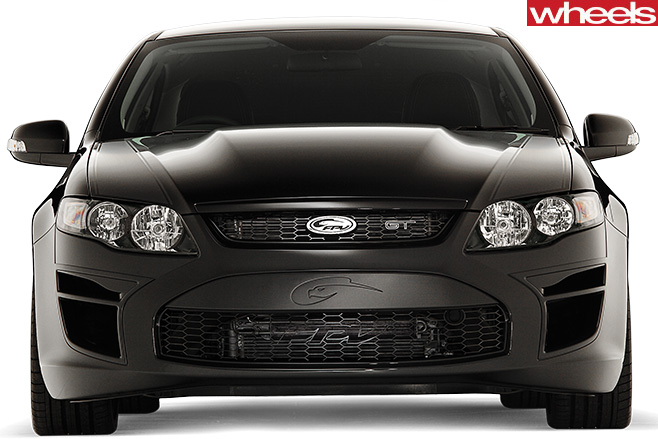
The future of FPV’s GT flagship has been revealed with the unveiling of the dramatic, all-black Concept at the Melbourne motor show. FPV hopes its dark star has the gravitational pull to attract customer feedback and shape new-model development.
To that end, upgrades to the car’s suspension and wheel/tyre package are designed to address criticisms levelled at the current GT and GT-P.
When FPV bolted the supercharged ‘Coyote’ V8 into its flagship models last year, suspension tune was left untouched. And Wheels hasn’t been alone in criticising their front-end floatiness and insufficient rear grip.
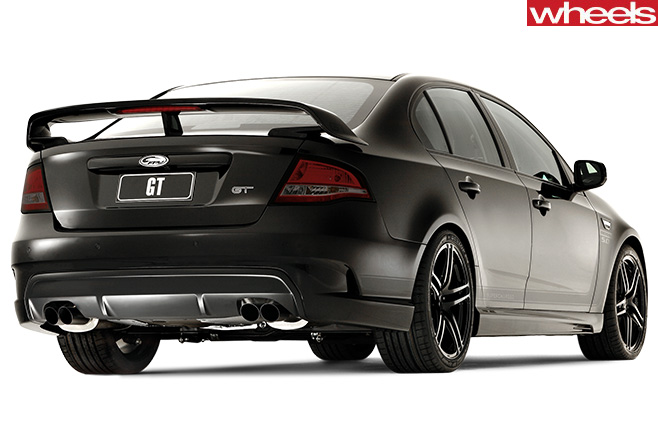
To better harness the Coyote’s grunt, the Concept scores new 46mm monotube adjustable dampers, progressive rate springs, fatter rear anti-roll bar, plus stiffer bushes in the front-end upper control arms and key rear suspension links.
It’s unclear whether FPV will introduce these changes to the regular range, reserve them as part of a Walkinshaw Performance-style aftermarket upgrade, or fine-tune the set-up for a GT-H or GT-HO flagship.
Power-wise, the GT-based show car’s 5.0-litre supercharged V8 is fitted with a Prodrive-designed three-inch exhaust to optimise gas flow and liberate an additional 10kW, lifting overall output to a substantial 345kW. Mid-range torque is also improved, although the 575Nm peak is unchanged.
FPV insiders report the exhaust delivers a “classic V8 muscle car note”, at the same time confessing the stainless-steel set-up would push the ADR dB meter beyond the certification zone.
The standard-fit 245/35 rear rubber has proved inadequate in transferring the extra grunt to the road; on the Concept, the rears are wider 265/35 Dunlops, while the fronts remain unchanged. Wheels are single-piece forged alloy 19s (8.0in front/9.5in rear).
The combination of higher output and improved traction is likely to substantially improve on Wheels’ 13.1sec (at 180km/h) 0-400m best for the GT. Expect mid-to-high 12s, and sub-5.0sec 0-100km/h.
Stopping power also has been stepped up, with Brembo calipers (six-piston front, four-piston rear) matched to larger ventilated rotors all round (two-piece 360mmx36mm front, one-piece 340x26mm rear).
Exterior changes are dominated by a custom front bar with monster brake ducts in place of the usual foglights. And a matt black graphics package includes unique pinstriping and badgework.
Production bound?
According to FPV chief Rod Barrett, “The Concept has the potential to become a production car”, confirming that feedback gathered following its display will be incorporated in the company’s future model strategy.
And while FPV says there’s currently no plan to change the Boss 335’s engine spec. history shows that won’t be the case for long. It’s worth noting this Concept was revealed on the 40th anniversary of the launch of the legendary XY Falcon GT-HO Phase III.
And given the Coyote engine’s known ability with the easy addition of an intercooler) to accept close to double the current 0.4 bat of boost delivered by the GT’s Eaton TVS blower, there’s definitely potential for a full 375kW/600Nm of go to further enhance this car’s show.
The 2016 Paris motor show is underway, and Europe’s biggest automotive gathering of the year has served up another round of fantastical concept vehicles.
The second-generation Audi Q5 has made its global debut at the Paris Motor Show, with the consistently popular medium SUV getting a ground-up redesign on the inside, outside and underneath.
Built on Audi’s modular MLB platform, the new Q5 is, depending on model grade, up to 90kg lighter than the first-generation car.
But despite going on a diet, the 2017 Audi Q5 is bigger than before. Measuring 4.66 metres long, 1.89 metres wide and sitting astride a 2.82 metre wheelbase, the Q5 is 30mm longer overall and has 20mm more space between the axles for a larger cabin.
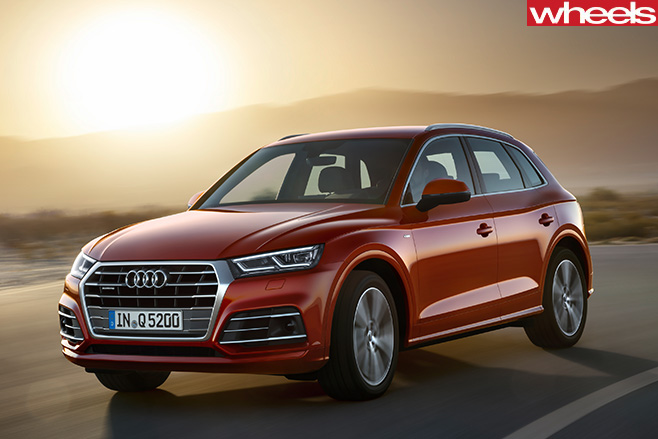
The modernisation continues inside, with Audi’s 12.3-inch ‘virtual cockpit’ instrument panel display being made an option in the Q5, while the MMI Touch infotainment interface gains a touchpad, 8.3-inch display and customisable memory buttons like the Audi Q7.
A prominent trim strip bisects the dashboard, enhancing the cabin’s width. Audi claims the second-gen Q5’s cabin is bigger than before but doesn’t mention specific numbers, except for the boot capacity: that number swells by 10 litres to 610 litres with the rear seats in place.
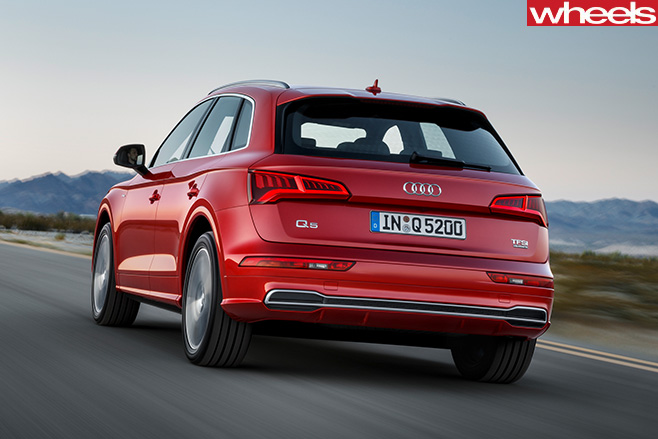
Five engines will be available at the Q5’s European-market launch, though the engine lineup for Australia is expected to encompass a 140kW 2.0-litre diesel four, a 210kW/620Nm 3.0-litre diesel V6 and a 185kW petrol four.
The 3.0-litre supercharged petrol V6 has been quietly dropped, but a performance-oriented SQ5 model will follow to keep keener drivers happy – though timing has yet to be announced for that one.
Drivetrains also come in for a revamp, with an all-new seven-speed dual-clutch automatic for four-cylinder models and the torque-laden 3.0 litre V6 TDI model getting a stronger eight-speed conventional auto. Europeans will also have the option of a six-speed manual, but that’s not going to come our way.
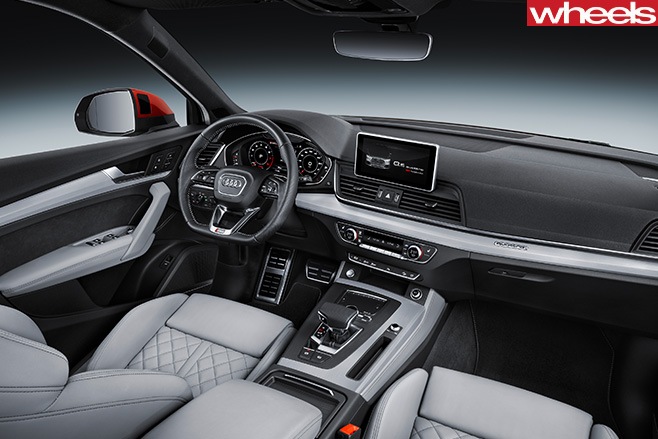
Both FWD and quattro AWD models will benefit from torque vectoring, which improves traction under power by varying the left-to-right torque split to help reduce understeer. On the 3.0 TDI, buyers can also option an active rear sport differential for an extra dynamic edge.
All Q5s get five-link suspension at both front and rear, with electronically-adjustable dampers and adaptive air suspension available as an option. Two electric power steering setups are available – one conventional, and one with a variable-ratio rack for sportier handling.
The 2017 Q5 will be built at Audi’s new plant in Mexico, with European sales commencing at the start of next year. Australian deliveries are slated for the latter half of 2017.
Lexus has given its IS range sports sedan a minor facelift, improved handling, and a safety tech upgrade.
The new IS model line-up will remain unchanged, with a choice of hybrid petrol, 2.0 litre turbo, and the 3.5-litre petrol V6 across the 300h, 200t and 350 variants.
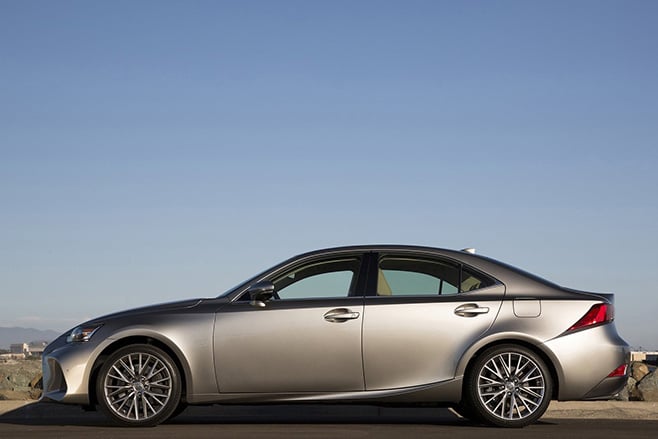
External changes are a minor – more Botox than nip and tuck. The front receives updated headlamps with L-shaped running lights, larger air intakes on either side of the large spindle grille, which has also received a slight tweak.
The F SPORT’s new dark chrome grille features an exclusive three-dimensional F-mesh pattern that incorporates functional brake ducts that enhance the vehicle’s aerodynamic performance.

The character line jutting forward from the rear wheel arch is more pronounced and enhanced by new multi-spoke wheel designs.
Two new colours have been added to the range – Deep Blue Mica and Graphite Black.
Inside, the multimedia display screen has been increased from 7-inches to 10.25-inches and has higher resolution than before. An ‘Enter’ button has been added to the side of the fiddly Remote Touch Interface (RTI) on the centre console to make it easier to use.
On the centre dash the audio and ventilation-control panel has been refined to fit completely within the knee bolsters, and a new hairline-finish surface provides both a high-quality feel and improved appearance.
Further enhancements include new cup holders, a new, larger, leather-wrapped palm rest with stitching for the RTI and new dial markings on the in-dash analogue clock, which for some reason is well appreciated in luxury cars.
Unseen changes include safety upgrades including the adoption of the Lexus Safety System +, a newly developed set of active driver assistance technologies featuring a pre-crash safety system with a pedestrian detection function, lane departure alert with Steering Assist, Automatic High Beam (AHB) and all-speed adaptive cruise control.
Handling has also been improved via revised front and rear suspension systems, and new steering settings.

The front double wishbone suspension features a new aluminium lower arm assembly, which offers a 49-percent increase in rigidity over the steel member it replaces and new No. 1 bush with a 29-percent increase in rigidity which Lexus claims has markedly improved steering response at cruising speeds. The rear multi-link suspension has also receives new components and revised damper settings, while ECU settings of the Electric Power Steering system (EPS) have also been revised.
Lexus claims the changes have resulted in a demonstrated improvement standard and F SPORT IS models’ ride quality, body control, rear traction and straight line stability, as well as better steering response and feedback.
The 2017 Lexus IS range will be in Lexus showrooms in the first quarter of next year, with local prices and specs released closer to launch.
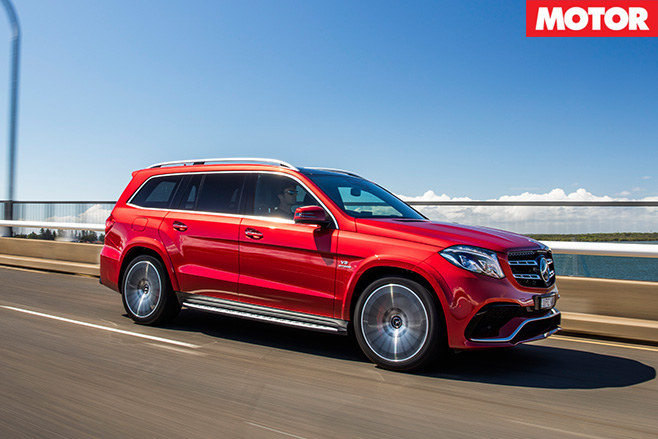
Affalterbach is nothing if not diverse, one moment popping out a 911 challenger and the next – perhaps with a slight grimace – a 2505kg seven-seater served via sweet home Alabama.
The SUV formerly known as GL adds an ‘S’ to its name, but here it stands for semantics rather than sports. ‘S-Class of SUVs’ is the new marketing pitch.
The GLS63 retains AMG’s 5.5- litre bi-turbo V8 and seven-speed automatic. Power rises 20kW to 430kW while torque stays at 760Nm, now over a 500rpm-wider window between 1750-5250rpm. The auto claims quicker shifts thanks to a new Sport-Plus mode, which helps deliver a claimed 4.6sec 0-100km/h, three-tenths faster than the 2012-era GL63.
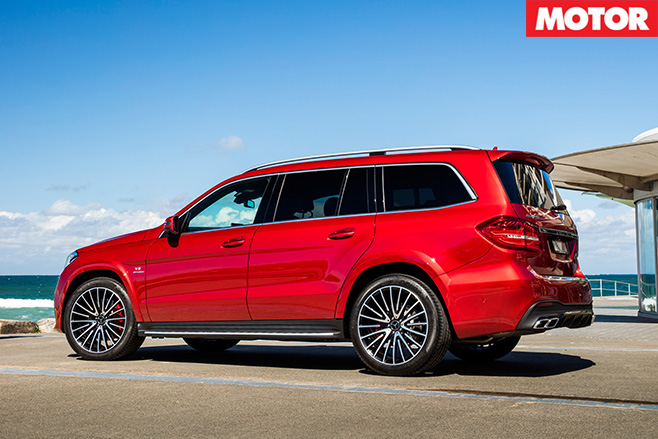
With a 40:60 front/rear torque split and 285mm-wide 22s all-round, merely breathing on the throttle will have sports cars chewing from its crackly quad exhausts. There will be much to eat, because fuel consumption rarely dips below 20.0L/100km. Oil tanker? BYO. There is surplus response, as expected, and when moving through Sport to Sport-Plus, intelligently timed blipped downshifts are quicker than before.
AMG claims the GLS63 offers pointier dynamics, but the revisions frankly feel like a nail file has been used to sharpen the tips of a bulldozer. The adaptive air suspension doubles up with AMG-specific steel springs and active antiroll bars, as with its predecessor. A new sport setting for the electronic stability control (ESC) appears the major change – and it’s a good one.
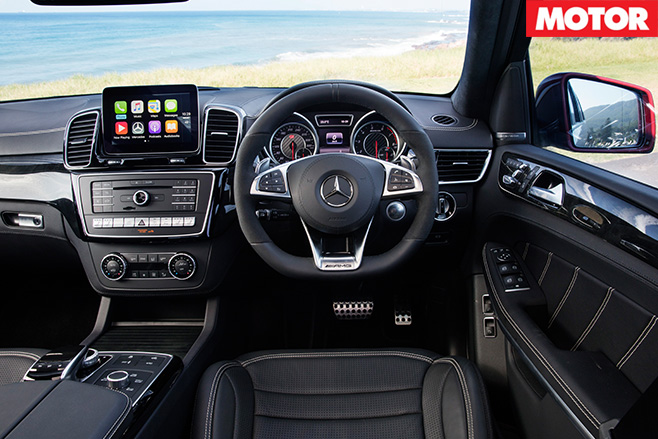
This is AMG handling of the old school: charge forth, brake hard, turn, be patient then fire. Equally surprising is the steering, now with a faster ratio. It is naturally weighted and quick enough to allow hands to remain at nine and three.
The GLS63 is expensive at $217,900, plus on-roads, and it is no looker. However its ride quality and refinement are exceptional, adults fit comfortably in the third row and a decent boot is left behind them. It can tow 3.3 tonnes and possibly will only feel a fraction slower doing so.
3.0 OUT OF 5 STARS
LIKE: Outrageous engine; seven-seat practicality DISLIKE: Massive weight; massive thirst; no supermodel
SPECS: Engine: 5461cc V8, DOHC, 32v, twin-turbo Power: 430kW @ 5500rpm Torque: 760Nm @ 1750rpm Weight: 2505kg 0-100km/h: 4.6sec (claimed) Price: $217,900
First published in the July 2010 issue of Wheels magazine, Australia’s best car mag since 1953.
For 50 years, Ford’s Falcon had ridden the ups and downs of an ever-changing, always competitive, Australian car market..
We Aussies, it’s said, are inclined to bet on two flies crawling up a wall. At the foot of that fondness for gambling, I reckon, is a fierce respect for competition. And therein lies the key to the Ford Falcon’s place in Australia.
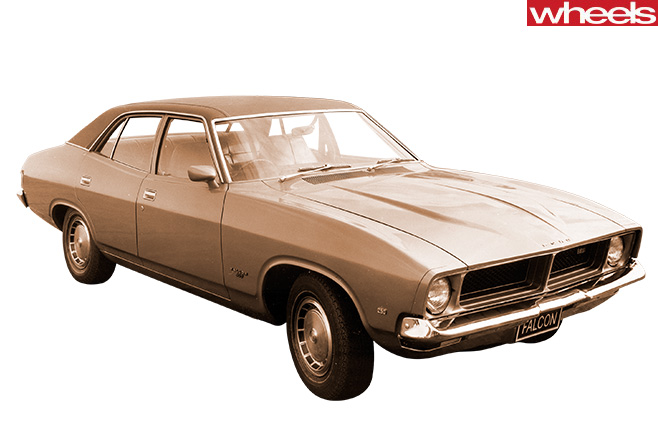
Falcon isn’t just another car. Fifty years ago it became the first locally-built competitor to Holden. It has endured, through an era of a genuine Big Three and against imported rivals almost as long-established, to tower as one of only two automotive pillars of our broader culture.
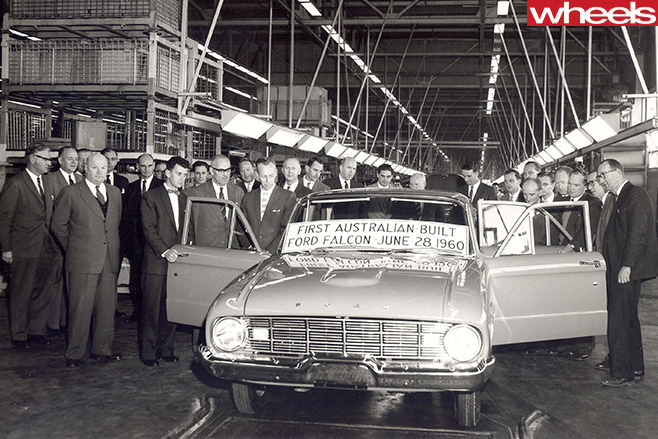
As we all know, Holden got here first, commencing full manufacturing in 1948. When Falcon arrived in 1960, Holden held more than 50 percent of the market. It has always played the cultural card well, re-writing our national anthem in the 1970s with a jingle pinched from its American sister, Chevrolet.
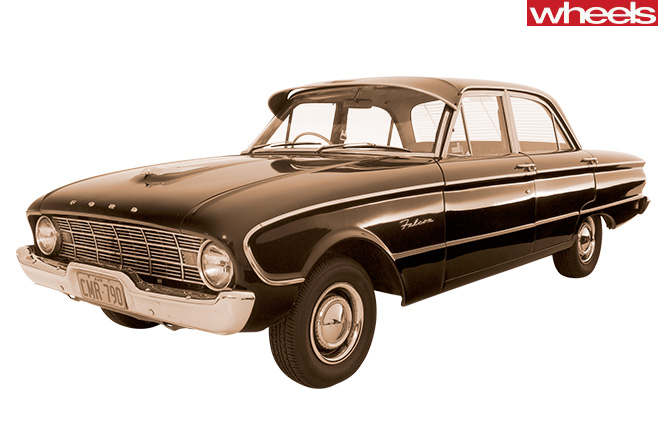
With Holden having a 12-year head start in Australia, Ford had realised its local manufacturing future lay neither in dowdy British nor oversized American models. Australians now knew what they wanted: compact, potent and durable family cars.
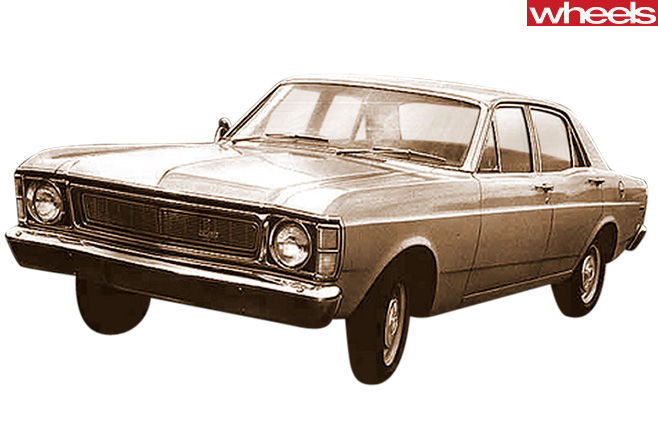
Ford Australia’s £18m spend suddenly became £25m to retool for the Falcon’s panels and lightweight, six-cylinder engine at Geelong – another place where they’ll tell you about the Falcon’s significance – and to refit the still-new Broadmeadows assembly plant.
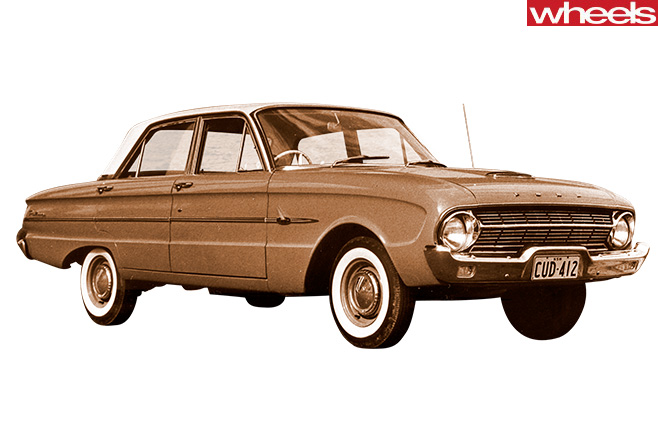
Buses ferried 500 national dealers for a two-day ‘Ford Falcon Festival’. A song was commissioned for the wireless: “Today is an historical occasion/we’re presenting a car you’ll applaud/It’s Australian, with a world of difference/a brand-new Falcon by Ford…”
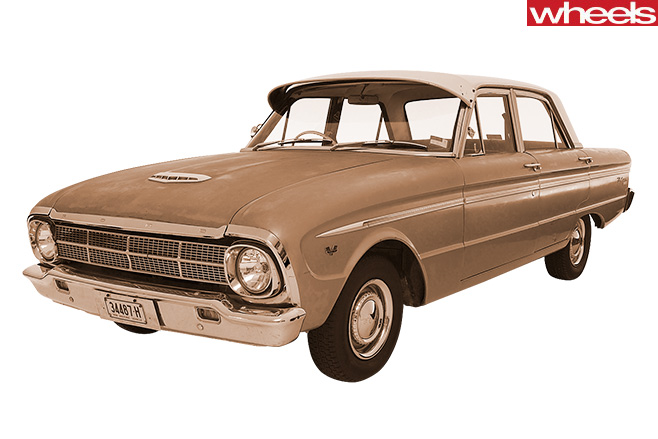
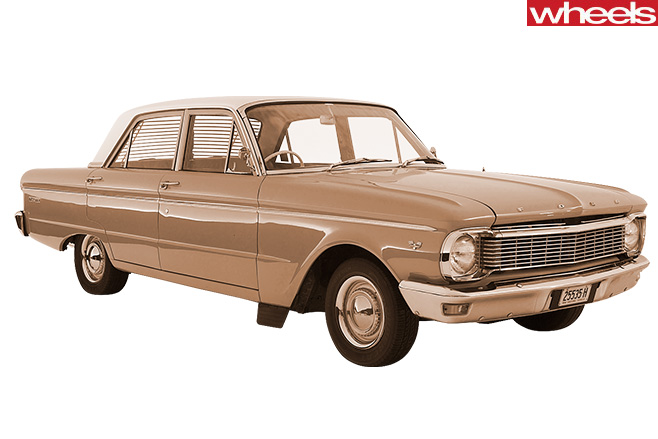
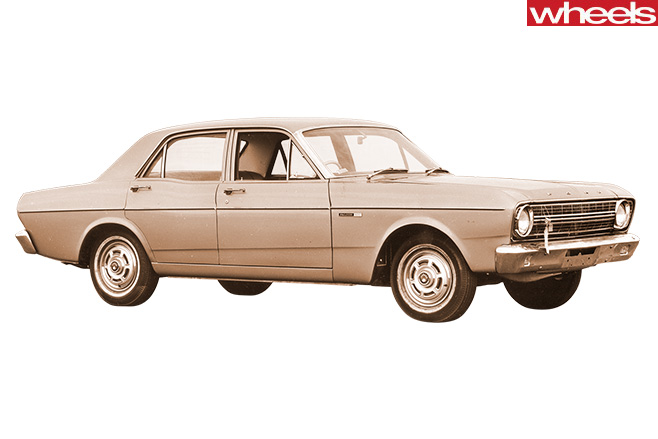
“When it appeared in showrooms, and on TV, it got lots of attention,” he recalled. “Ford was already a major player, with the Customline and Zephyr, so there were die-hard Ford fans already. But Holden was so dominant, so firmly entrenched as the Australian car … no-one saw anybody knocking Holden off its perch.”
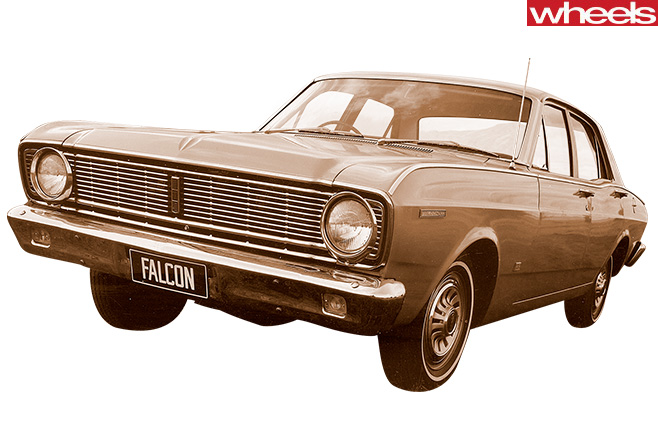
It’s no exaggeration to say XP was make-or-break for the Falcon’s future in Australia. The stunt that would prove its worthiness to private and (crucially) fleet buyers was a five-car durability marathon that began on April 24, 1965.
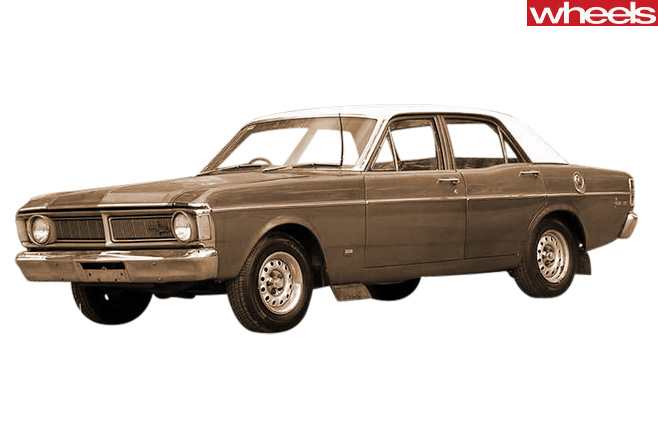
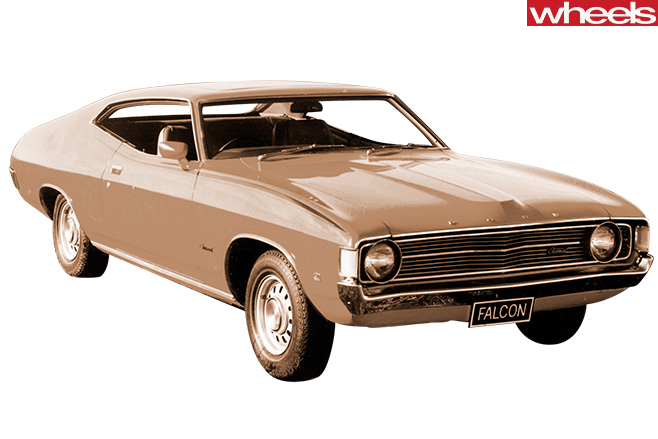
Ford sales manager Bill Bourke and competitions manager, Les Powell approached race and rally driver Harry Firth to organise the event.
The cars clocked the 70,000-mile mark after eight and three-quarter days, earning 49 (CAMS-sanctioned) national time and distance records in the process – all reported nationally on radio and TV. And as Ford’s sales team swung into full force, once-burned fleet and private buyers began cautiously returning to the brand.
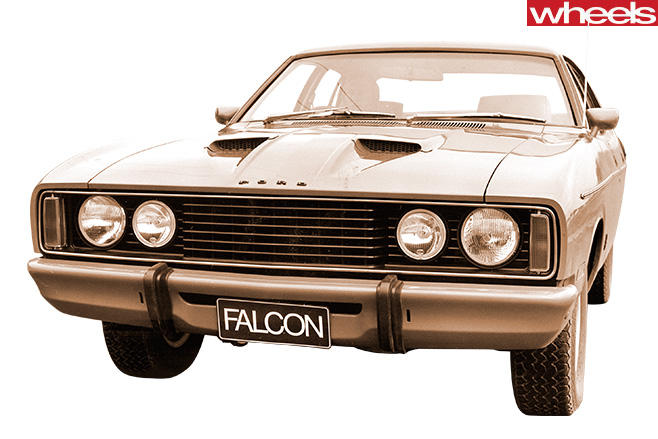
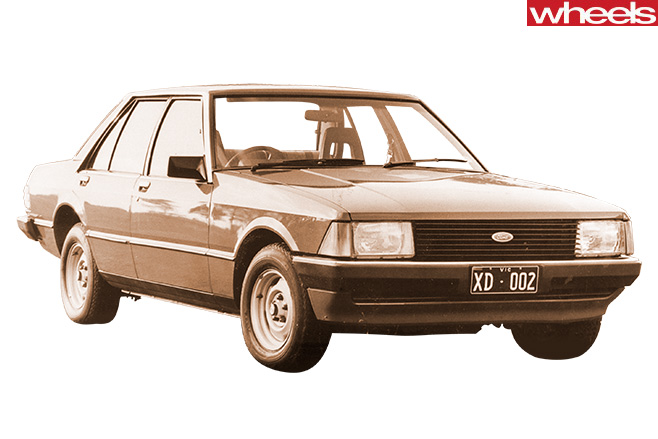
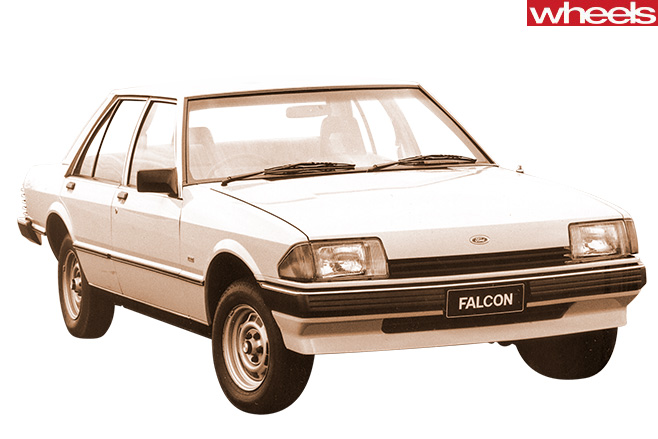
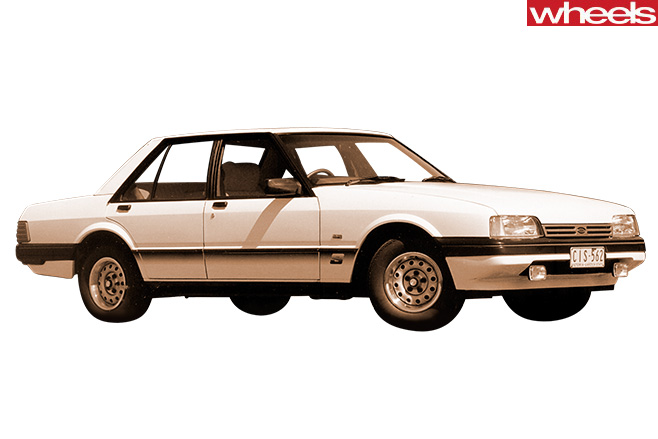
Ford had its Cortina and Escort, but it was still very much the Falcon car company. Meanwhile, Holden had developed more of a small-car mentality through the ’70s. It had the trusty Kingswood full-sized family sedan but, V8 Monaro and GTS variants aside, its performance image was carried by the Torana models.
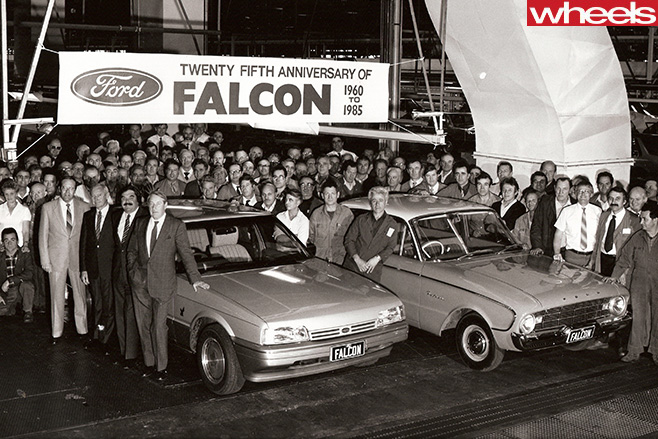
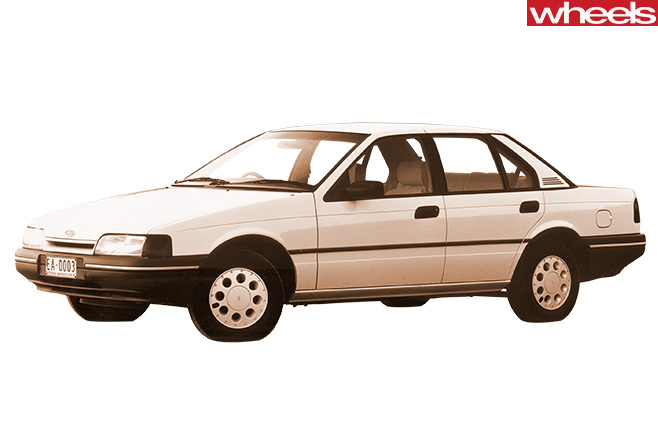
In 1982, helped by Falcon and the tearaway Laser, Ford Australia finally toppled Holden’s market leadership – 22.6 percent share versus 22.5.
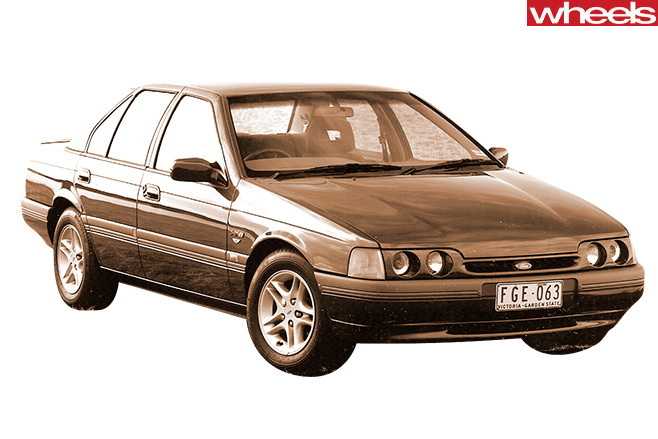
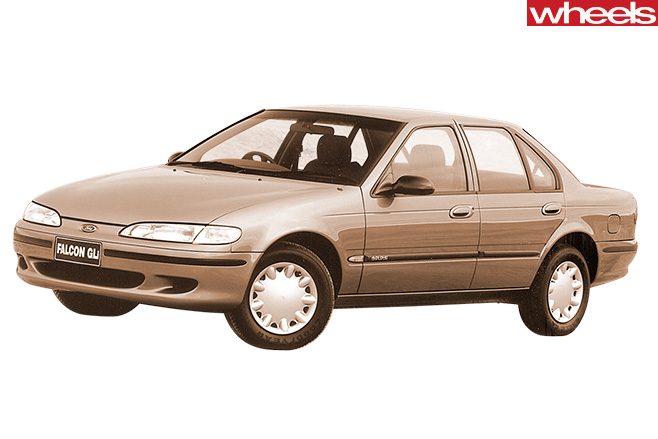
To some extent, Ford was paying for a decision made during the cocky heights of 1982. In November of that year, 50 years since building its first V8 at Geelong, Ford farewelled it from the Falcon range (with the still sought-after XE Ghia and ESP).
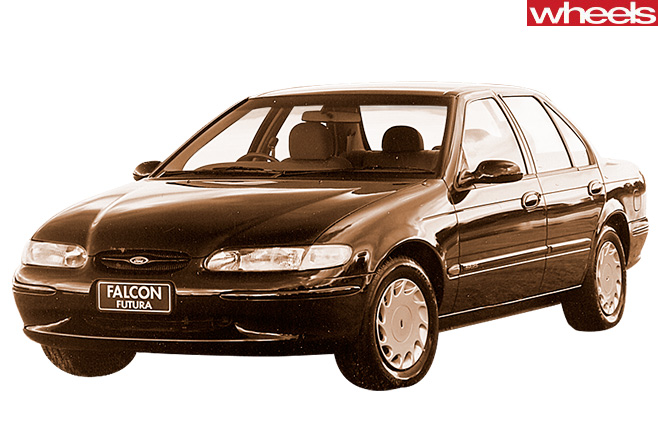
In 1998, however, Ford found itself with a new set of problems. Seeking younger buyers, the ‘New Edge’ themed AU Falcon backfired spectacularly with frumpy styling and impoverished interiors in lower-spec models. Rival Commodore VT, launched in ’97, was the best ever and reigning Wheels COTY.
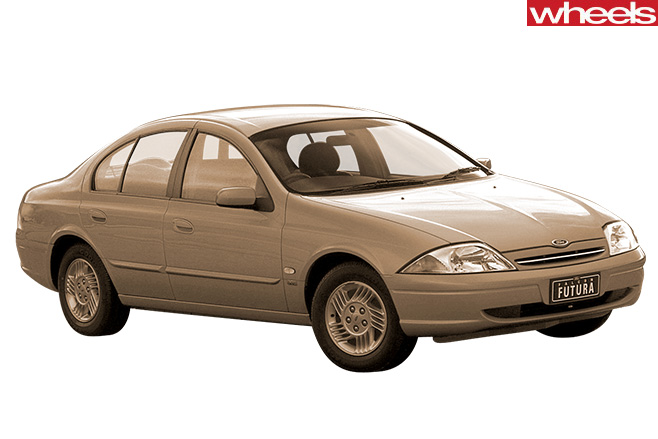
But gradually, with Ford’s performance wing finally being consolidated in 2003 (as FPV), Marcos Ambrose knocking Holden from the top step of V8 Supercars and the arrival of the new Boss and Barra V8s for the road-car range (replacing, incredibly, the Windsor), the BA reclaimed some of the old Falc magic and briefly pipped the Commodore in monthly sales.
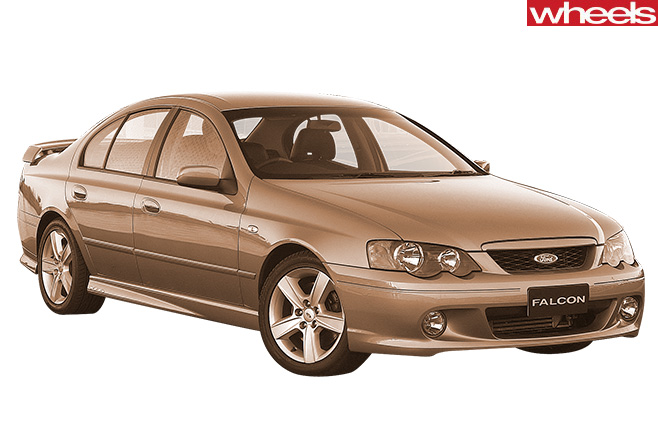
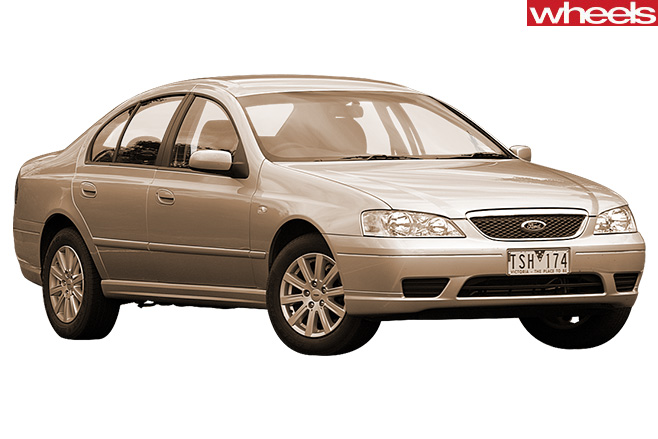
In 2000, large passenger cars accounted for 35.9 percent of the Australian market. Falcon was selling around 60,000 units, Commodore around 84,000.
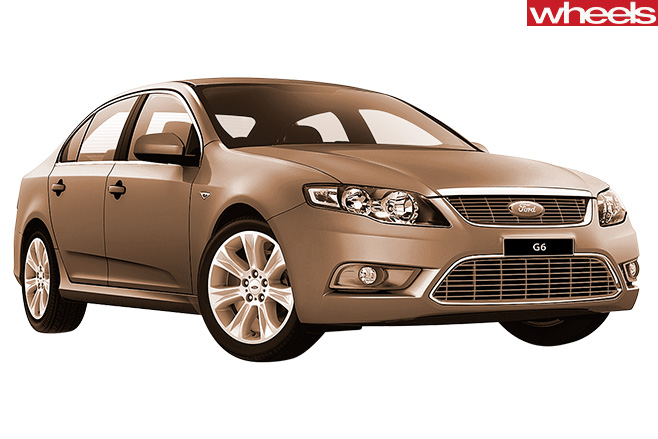
Falcon is playing harder and better than ever, but the game has changed. And the odds on its survival are only getting longer.
BMW board member Ian Robertson is predicting 2020 will be the time when sales of electric vehicles finally hit the big time.
Speaking at the Paris Motor Show, the head of sales and marketing at the German luxury giant nominated 2020 as the year when there will be “a big rise” in sales of EVs.
“We think the percentages with rise,” said Robertson, who listed BMW’s next big step in electric cars as 2021.
“We said that the next big milestone [from BMW] is going to come in 2021 but we will progressively announce other electric vehicles. We’re intent on keeping our leading position,” he said, referencing the company’s recent announcement it had sold 100,000 electric and hybrid cars (the i3, i8 and 330e and X5 40e are the current electric or partial electric offerings from BMW).
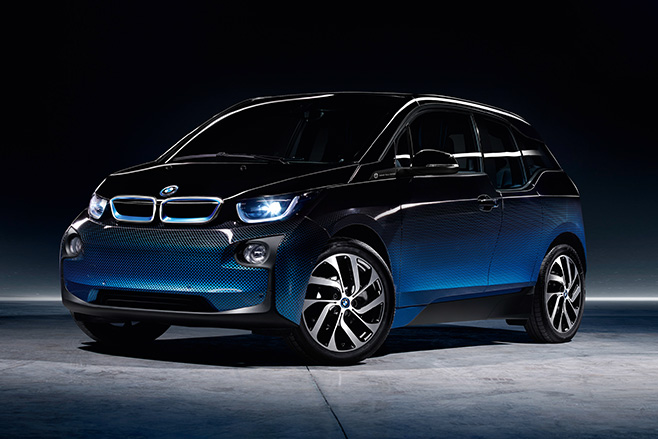
Robertson said electrification would touch all parts of the company’s broad product range.
“Technology is spreading through both brand bookends,” he said, referring to the “i” electric sub-brand and the M performance sub-brand. “That’s why we have a lot of M products with M Sport and M Performance models. We have now i and iPerformance, and this will now spread through the mother brand.”
Robertson said the push towards connectivity and electric propulsion was changing the company.
“No doubt about it, we’re one of the world’s, if not the most successful automotive company and we’re rapidly becoming a tech company.”
He also referred to the likes of Tesla and Apple – the tech giant rumoured to be developing an autonomous car – as changing the shape of the automotive industry.
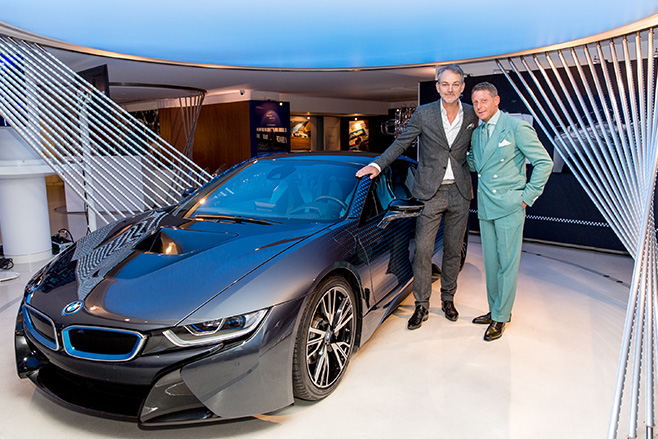
“I don’t underestimate any current competitors or any future competitors,” said Robertson. “I’m absolutely sure that in this era we’re now entering there will be a lot of new players.
“There will be players who are trying to occupy a service area, there will be players who maybe come with maybe an electric vehicle.
“At the end of the day that competition is healthy, that’s good for this industry, this industry is vibrant, it’s still moving forward and part of that is the competitive landscape. So let’s not frown on it, let’s embrace it and let’s move this industry forward because it’s got huge potential.”
Despite the high-tech push, Robertson said the combustion engine was here for a long time yet.
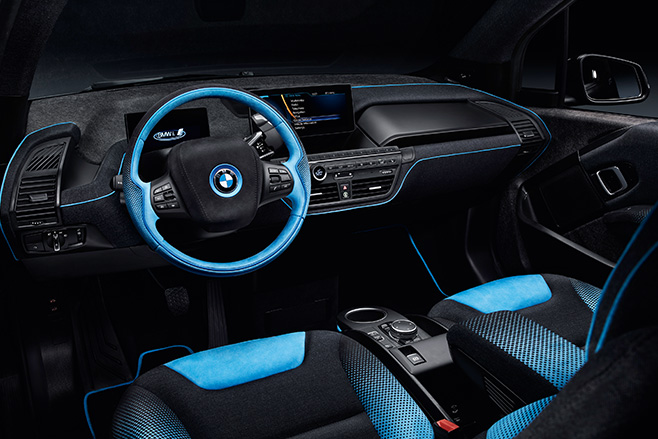
“For the foreseeable the combustion engine has still got the majority of the sales or at least some form of hybridisation in there.”
As for when electric cars will overtake traditional internal combustion engines, he said it would depend on a range of factors, from geography to infrastructure and government policies.
“I don’t think it’ll be consistent all around the world or even within countries from urban to non-urban environments,” said Robertson.
Audi is bringing back ghosts of Quattro past, with the new RS3 Sedan, which was officially unveiled at the Paris Motor Show.
This pocket rocket packs an almighty punch, with the 2.5-litre five-cylinder turbo engine producing 294kW, and 480Nm. This makes it the most powerful five-cylinder engine available right now, and brings back memories of the all-conquering Quattro.
The RS3 Sedan will sprint to 100km/h in a swift 4.1-seconds, before hitting an electronically limited top speed of 280km/h.
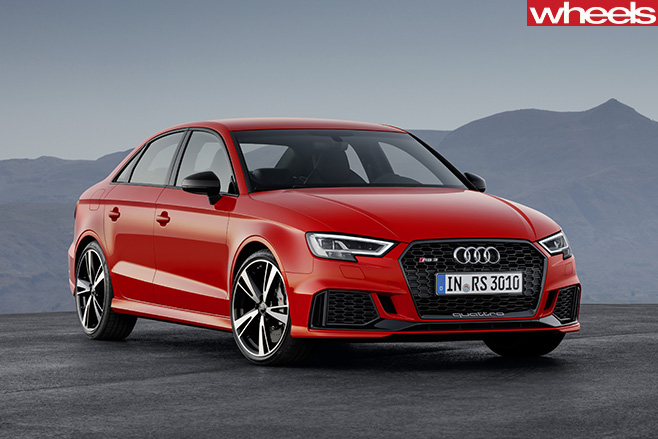
Audi says the harder and faster you drive the RS3, the more torque will be sent to the rear wheels, meaning the sedan has “especially agile driving characteristics”.
Compared to an A3, the Audi RS3 Sedan has a 20-millimetre wider front track, with flared wheel arches and fatter tyres. The rear tyres are 14-millimetres wider.
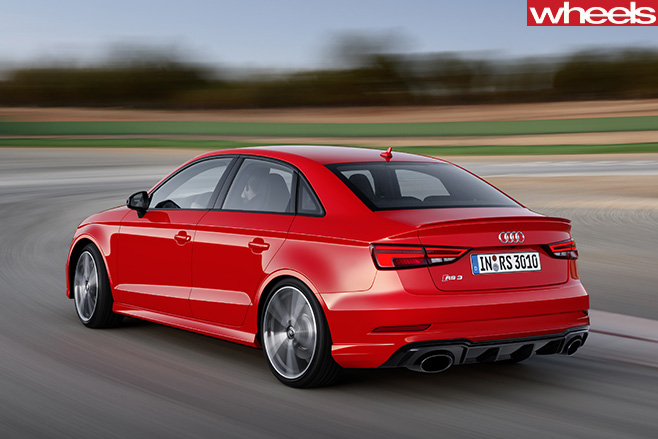
The RS3 Sedan comes with Audi’s new Virtual Cockpit system, which means you can adjust what is displayed in the instrument cluster.
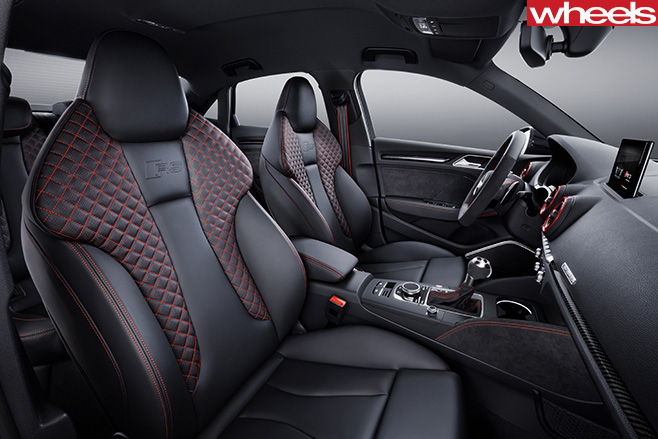
It also includes cross traffic assist, which looks out for crossing vehicles when the Audi is pulling out of parking spaces.
The RS3 Sedan will launch in the USA and China first, with no word on when the pocket rocked will arrive in Australia.
Walking around a large suburban shopping mall recently u2013 not a regular occurrence, so it was surely Christmas time u2013 I was flabbergasted to come across a Jeep shop, selling everything but Jeeps. I was later relieved that my family had not similarly stumbled across this outlet for all things Jeep-branded because they may have decided such goodies would be the perfect present for the man who has everything he needs. Andu00a0I really donu2019t need my jeans to be u201cruggedu201d or my hat to be u201ctoughu201d.What this observation brought into sharp focus was just how successful Jeep has become as a branding exercise. From the moment I saw the “Yes, Michael, I bought a Jeep” TV commercial and spent the rest of the day whistling Don’t Hold Back, I knew the company’s advertising agency was not only populated by geniuses, they all knelt at the altar of marketing pioneer Elmer Wheeler.
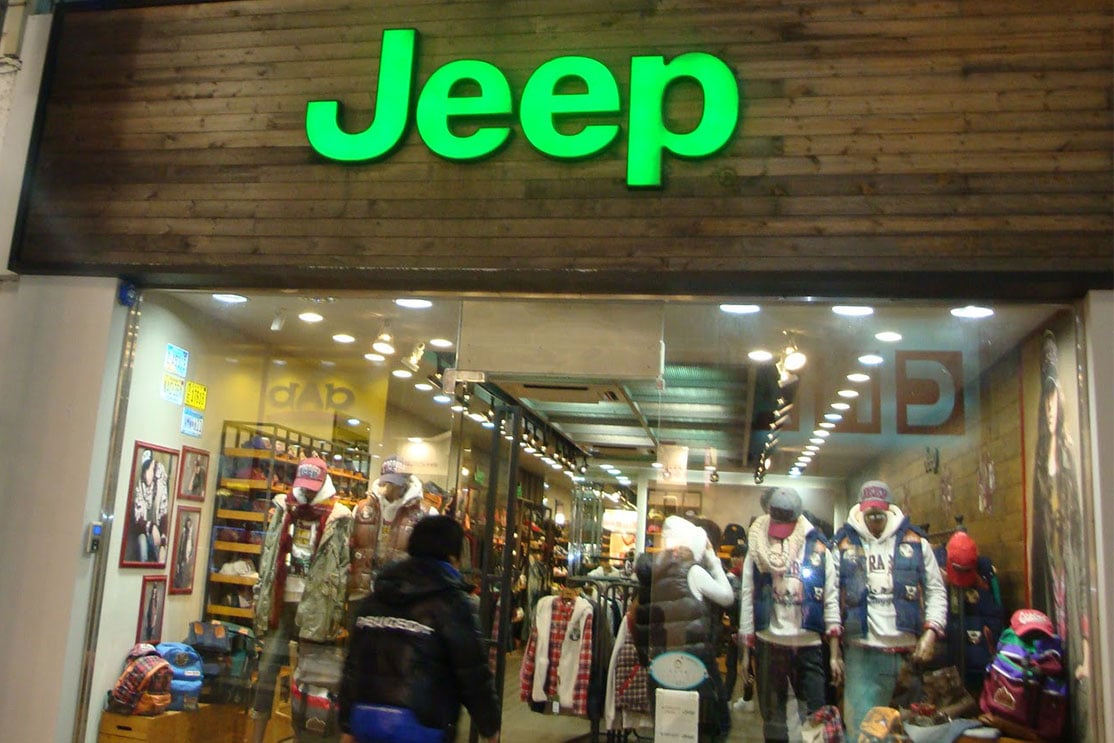
It was the automotively named Wheeler who in the 1930s coined the phrase “Don’t sell the steak, sell the sizzle”, and that remains a guiding principle of advertising to this day. With Jeep, it’s not about selling a Jeep, but the idea of a Jeep. People have been sold on the concept of owning a vehicle that is tough, rugged and can take them anywhere, whenever they like. They may never get around to it, but the concept of being able to escape the rat race at any time is exactly what Jeep is selling.
I’ve yet to discover if our Cherokee long-termer can hack it off-road, but I’m hoping it’s more at home in the forest than in the urban jungle because I’m still battling its (mostly electronic) demons. Notably, a schizophrenic throttle that makes smooth driving almost impossible and a suspension that has passengers reaching for a packet of Quells. I don’t mind a ride on the comfortable side, but I’m questioning if Jeep’s engineers bothered attending the briefing on rebound. A little bit of Australian (or European) tuning would certainly be welcome.
Still, not many people will look past the badge, the shiny trinkets, the comfort and the electronic whiz-bangery. And if you need any convincing of the benefits of that brilliant advertising (plus new product and improving the value equation), Jeep sales in Australia have increased 500 percent in only four years. Remarkable.
So, while this new Cherokee didn’t last long in COTY, the advertising agency that will undoubtedly make it a success (the determinedly lower-case cummins&partners) has in the last year walked off with a number of marketing awards for selling the sizzle rather than the steak. Says it all, really.
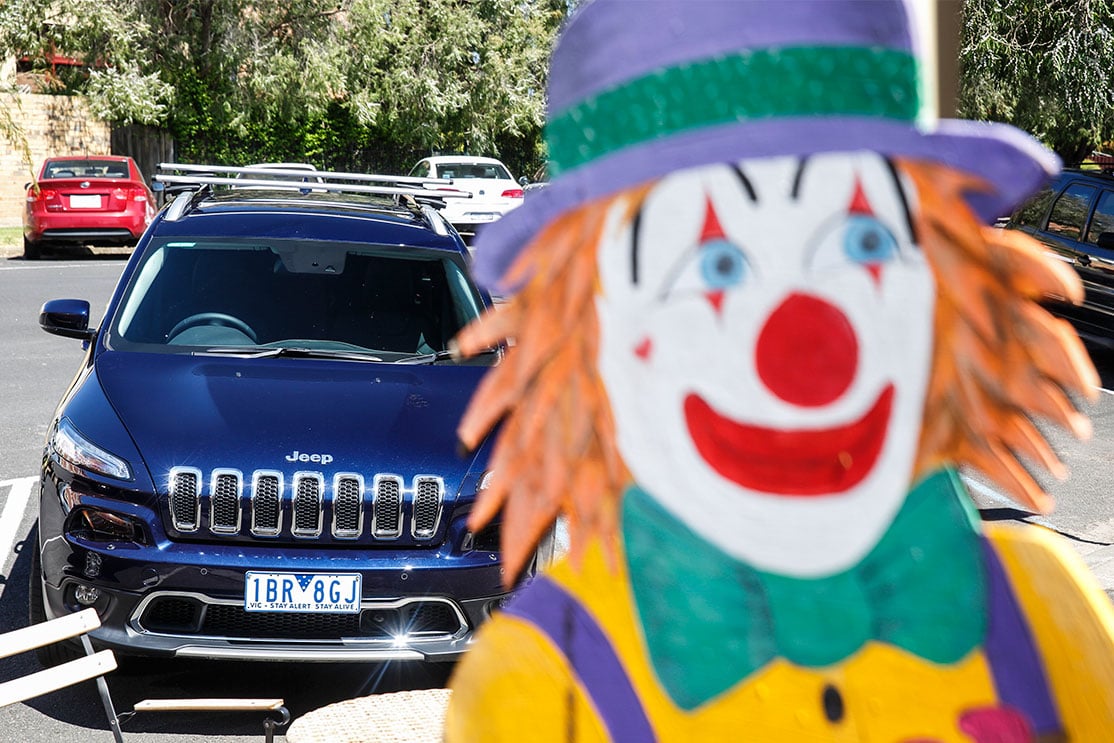
STOP SMILING, YOU CLOWN
While our new Cherokee is smooth and comfortable, it makes hard work of almost everything it does, notably including everything electronically controlled. One of the more simple procedures you’d imagine Jeep could get right is the fuel consumption read-out. But it’s consistently optimistic, by as much as 10 percent. So the computer tries to convince you that you’re only using about 10 litres per 100km when in fact it’s closer to 11. Another victory for marketing over substance?
UPDATE 1
Cursed electronics get in the way of driving
I’D LIKE to think I’m a positive person, though many of my friends and family would suggest I’m perfectly qualified to star in an Australian version of Grumpy Old Men.
The Jeep Cherokee is a good test for looking at the glass half full, and one that’s challenged me from day one. There’s much to criticise – ride quality and throttle response – but there’s also much to like.
For a start, there’s plenty of ‘fruit’ to play with, which makes a freeway cruise more enjoyable. Seat cooling is a welcome feature on a warm day and the sound system pumps the vibes from every corner. I’ve even overcome early frustrations with the iPod connectivity that, as it turns out, resulted from having an original unit. It prompted me to finally update to a new iPod Touch, and now it not only links perfectly, it also displays the album cover. Remember albums?
The soft ride drives me mad much of the time, but it’s great on freeways where the Jeep lopes along comfortably, lapping up the kays. Even the steering feels reasonable at cruising speeds, if a little lifeless.
I’m not overly fond of the seats, but passengers like them, and there’s plenty of space for rear-seat occupants – even when the driver’s seat automatically slides back when I turn off the ignition.
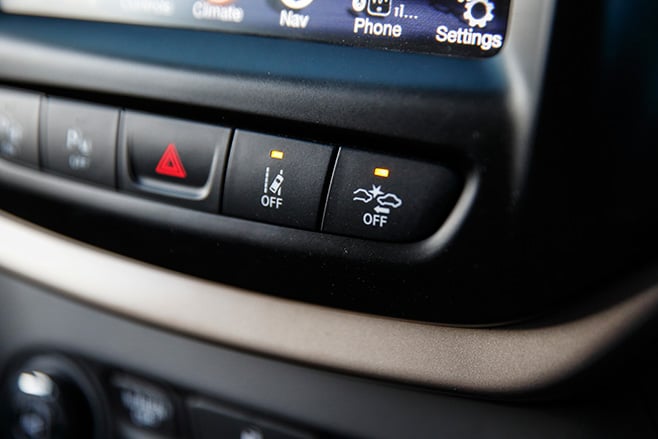
Adding to the Limited’s equipment list – and therefore its value equation – are the various electronic nannies. It’s just a pity they don’t work very well, in my experience. The lane-keeping assist is a hindrance when I’m trying to place the car for corners, pulling us away from white lines. And the parking sensors slam the brakes on at strange times… like when I’m reversing out of the garage.
Worst of all, though, is the forward collision mitigation system. In theory, it’s a saviour, seeing things and braking if the driver nods off or becomes distracted. In reality, it’s so conservative it intervenes at inappropriate times. One recurring example is when changing lanes and I know the car in front won’t be there by the time we glide past. Hell, one time it braked hard because it detected a car which was parked safely on the outside of a sweeping corner. Thankfully no one was behind me.
These electronic nannies, I’m convinced, need more development, more finesse. They are as simple-minded as our legislators and only know how to dumb things down. The default action is to stop the car, even if it is in the middle of traffic, probably half-way between lanes with cars bearing down.
Thankfully, these systems can be turned off, though it feels wrong to be disabling ‘safety’ features. But honestly, it feels to me like they’re going to cause an accident rather than prevent one.
UPDATE 2
A software update for our long term Jeep Cherokee saves the day at the 11th hour
WHO would have thought that a scheduled service could be a life-changing experience? Maybe not as dramatic as getting married or having kids, but certainly one that changes the way you experience daily existence.
It all started innocently enough. The dashboard monitor advised it was time to get my Jeep Cherokee seen to. An appointment was made with Chadstone Jeep – conveniently located within walking distance of the office. I dropped the car off and had a quick chat with the service manager about specific requirements. “Nothing big unless you feel inclined to fit a stiffer set of shocks, springs and sway bars.” My morning grumpiness was understandably ignored.
Collecting the car later that day, not being the actual owner, I only half-listened as the service manager explained what had been done to my charge. Two words arrested my general disinterest: “Software upgrade”.
Huh? What was that? “Yes, we performed a reflash on the transmission control module as part of a normal service program… blah blah blah…”
Did you say transmission?
Regular readers will know of my frustration with the transmission programming, which had impacted throttle control in such a way that I described it as bipolar. One moment there was nothing and the next it was manic.
After leaving the service department that day, it was as if the drugs had suddenly started working. Now the throttle was measured, the gears changed more smoothly and when you wanted them to, even accounting for hills and corners. So, just like a modern electronic automatic should.
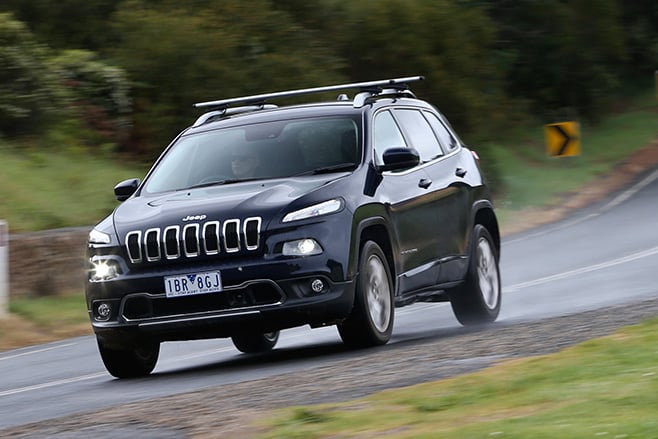
It was nothing short of miraculous and instantly my attitude to IBR-8GJ changed for the better. I was able to enjoy the meaty and flexible 3.2-litre petrol V6, and the nine-speed auto, even if I never experienced eighth and ninth on my commute.
With nothing more than a quick mating to a laptop computer or something, the Cherokee was suddenly attractive. I even began admiring its previously admonished chrome-embellished bodywork, painted in a metallic blue that reminded me of the much loved Team Penske racing cars of my youth.
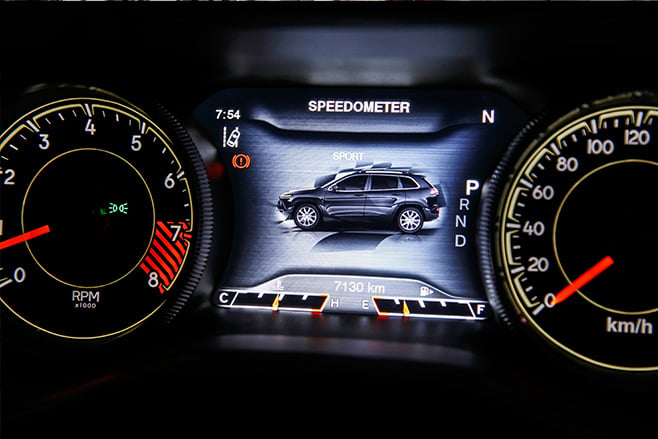
Having only a week or two earlier resolved my iPod compatibility problems, I was also happily enjoying the potency of the mighty 506-watt Alpine sound system pumping through nine speakers and a subwoofer, and the ease of use of the Uconnect media centre with its clear (and bigger in Limited spec) 8.4-inch colour touchscreen.
I was also in a better state of mind to appreciate the lovely heating and cooling functions of the soft leather-covered seats, and the automatic high-beam function for the effective projector headlights with auto levelling. Not to mention the electric opening and closing function for the tailgate, accessing a flat-floor cargo area of useful if not cavernous proportions. Even the nervous reverse auto braking stopped bothering me to some degree. I was in some kind of unexpected bliss.
Then a call came through from Jeep HQ. The marketing department – yes, the very people I eulogised just two months ago for making Jeep a brand phenomenon – needed the car. It had to go back, and in just a few days. How could this be? My pumpkin had become a golden coach at the 11th hour, and all of a sudden it was midnight? How cruel.
So that software upgrade will indeed be a life-changing experience, just not for me. And whoever ends up with this Cherokee will probably be none the wiser.
BMW has previewed its next crossover at the Paris Motor Show, with the Concept X2 hitting the stands to show off BMW’s vision for a sleeker alternative to the X1 compact SUV.
It may officially be a styling exercise for now, but behind the Concept X2’s exaggerated proportions (scope that oversized kidney grille and 21-inch wheels), lies the basic concept for the sixth member of BMW’s ever-growing SUV family.
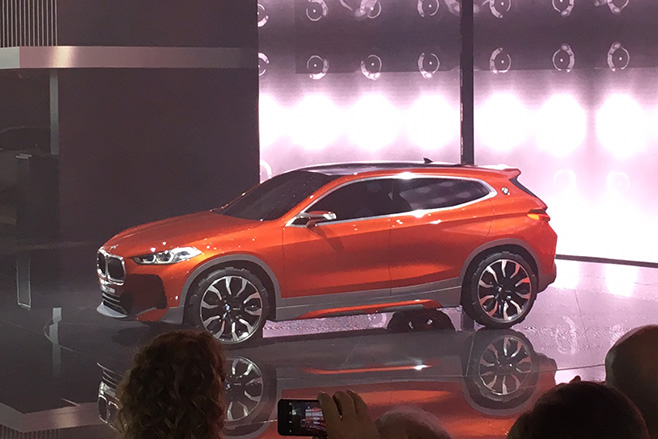
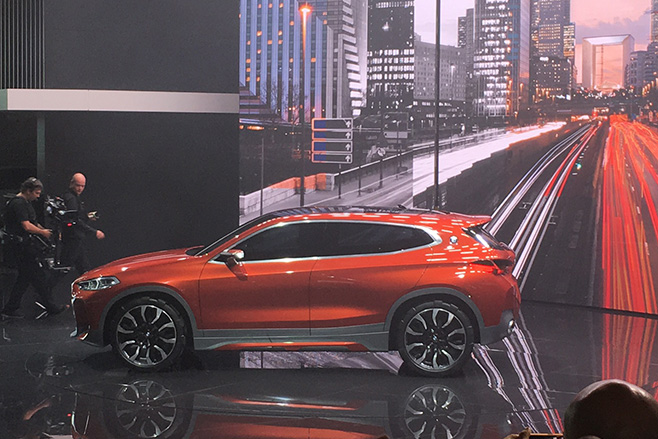
Camouflaged prototypes of a jacked-up BMW hatchback have been spied before, with a tapering roofline, shallowly-raked windshield and short glasshouse all hinting at the car’s role as a style-focused companion to the BMW X1. While it’s not quite as swoopy as the fast-backed BMW X4 and X6, the BMW X2’s absence of a D-pillar and uncluttered profile gives it a slightly more elegant look than the conventionally wagon-bodied X1.
BMW has also gifted the Concept X2 with some cool retro throwbacks, like the small BMW emblems on the C-pillars that recall the classic E9 coupe and the elongated Hofmeister Kink that links the beltline with the C-pillar. The latter will likely feature on the production car, the former we’re not so sure about.
You can bet those 21-inch alloys won’t be rolling down the production line though, and proper door handles will also find their way onto the showroom-ready X2’s sheetmetal. As for the cartoonishly big front grilles? They should get a more restrained look too.
BMW makes no claims about the Concept X2’s powertrain, but the production car – which will be built on the same transverse-engined platform as the X1 – will likely be available with a range of 1.5-litre three-cylinder and 2.0-litre four-cylinder diesel and petrol engines. An eight-speed auto will be the default transmission, with both front- and all-wheel drive available.
In the future, a hotter M-Sport variant may also join the range to give the X2 the performance credentials to back up its more athletic bodywork.
Expect to see the production BMW X2 range revealed sometime next year.
