
AUDI is set to double its SUV line-up as part of a pitch to defend its market leading position of high-riding crossovers.
Heading the charge will be an all-electric SUV likely to be called Q6, a car set to fight the upcoming Tesla Model X with 500 kilometres of electric range and a high-performance all-wheel-drive system.
Speaking at Audi’s annual press conference, chairman Professor Rupert Stadler confirmed the long mooted electric SUV – a car teased in the recent Audi h-Tron concept – would be produced at a Brussels factory from 2018 using battery cells supplied by LG and Samsung.
“Our first fully electric large-series car will go into production the year after next,” said Stadler.
Fellow Audi board member and the man in charge of technical development for Audi, Stefan Knirsch, confirmed the car would not have a conventional petrol or diesel drivetrain, instead being fitted exclusively with alternative powertrains.
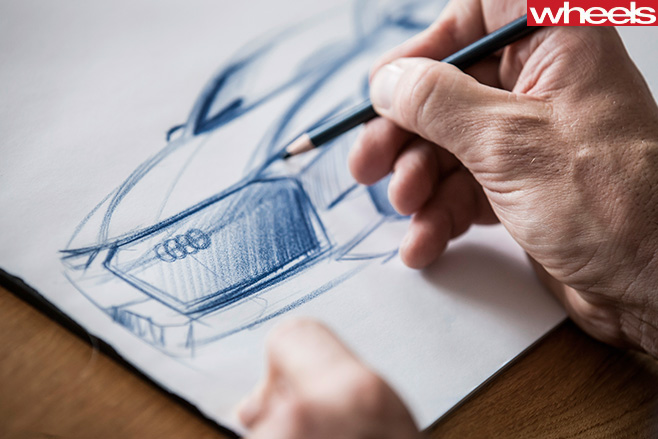
In the shorter term it’s the A3-based Audi Q2 – a car revealed at the 2016 Geneva motor show – and yet-to-be-revealed Q5 that promise to accelerate the SUV sales growth for Audi.
The Q2, in particular, is seen as a crucial model at the entry level end of the SUV range (prices are expected to start from about $35,000) and brings big hopes of tempting younger buyers into the brand.
But the Q2 may not be the cheapest Audi SUV for long.
“Now we are producing the Q2 … let’s wait for the success of this car and then we’ll see if we have any new ideas,” hinted Knirsch when asked about a smaller SUV.
Helping flesh out the range will be a Q4, a car given the green light following a move to secure rights to the badge from Fiat Chrysler, which previously used it on Alfa Romeo models.
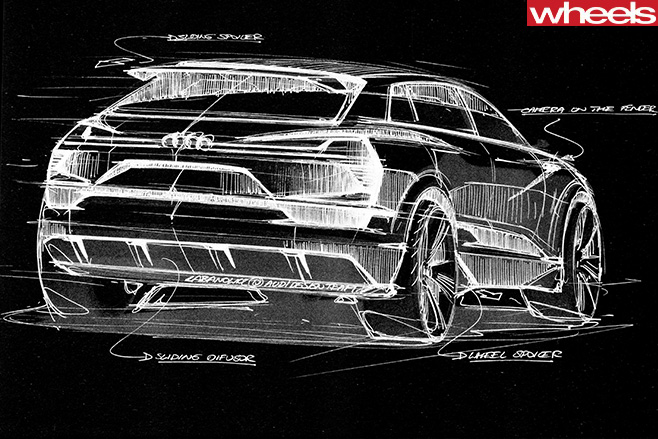
Then there’s the Q8, set to follow the lead set by BMW’s X6 and, more recently, the Mercedes-Benz GLE Coupe.
Like those cars, the Q8 will trade space for style, with a coupe-like silhouette and sportier demeanour; expect to see it around 2019.
Speaking of sporty, Audi is set to ramp up the performance SUV offerings, starting with the Audi SQ7 revealed this week. Utilising a new tri-charged engine – with two traditional turbochargers and one electric compressor for instant throttle response – the V8-powered SQ7 takes advantage of demand for high-performance SUVs.
But Audi has also registered the RSQ7 and RSQ5 names, suggesting even more powerful models could be on the way.
Until now, Toyota has never tried to make the Prius exciting. It has always been seen as a responsible, unembellished way to get around; or as a sign to your neighbours that you care about the environment, but don’t care about driving all that much.
Toyota aims to change that with the new generation Prius launched in Australia this week. The new Prius looks dynamic – futuristic even – and Toyota promises that it is fun to drive.
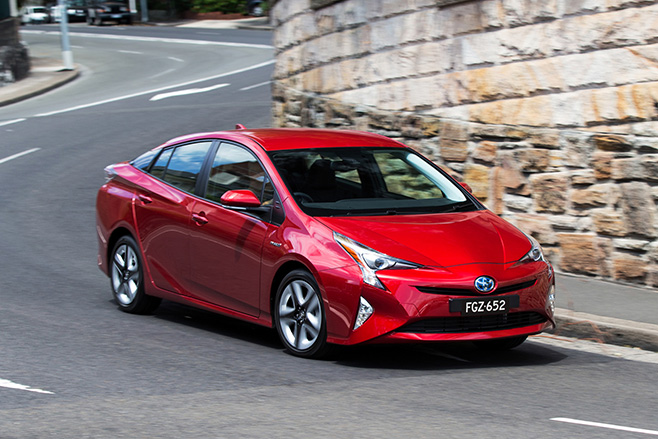
“Toyota has changed the entire focus and perspective of Prius by evoking a more emotional response with a car that is fun to see, touch and drive,” said Tony Cramb, Toyota Australia’s executive director sales and marketing.
Redesigned suspension sits beneath the new Prius boosting stability, handling and comfort levels. It’s the first car to be guided by Toyota’s ‘New Generation Architecture’ philosophy that aims to introduce better body control through a more rigid body structure and lower centre of gravity.
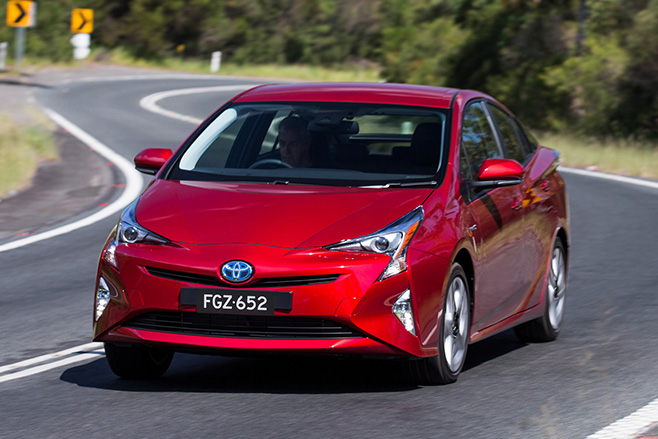
Cramb says, “New Prius advances its driving dynamics and driveway appeal while also delivering substantially improved innovation and efficiency.”
Every element of the hybrid drivetrain has been upgraded for efficiency: the 1.8-litre petrol engine uses less fuel; the electric motors are smaller, lighter and more efficient; the transmission and power control unit have been improved; and the hybrid battery is lighter and smaller.
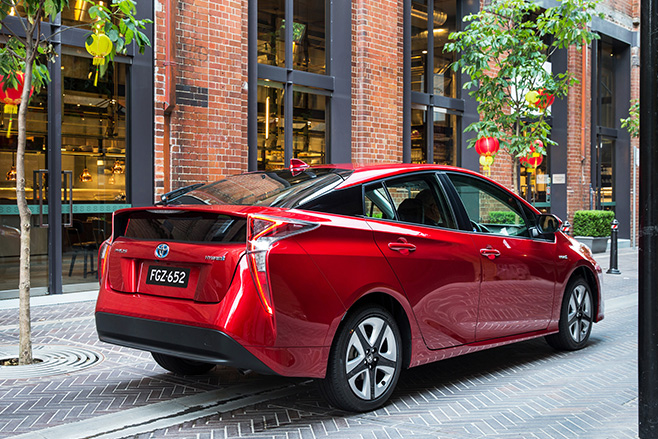
Smart climate control can detect a front passenger, and focus its energy if the driver is alone in the car. All that adds up to combined fuel usage of just 3.4L/100km which is better than the old Prius by almost 13%.
The standard Prius starts at $34,990 and comes with 15-inch alloy wheels, new safety technologies, a head-up display, LED headlights and daytime running lamps, and a 10-speaker JBL audio system.
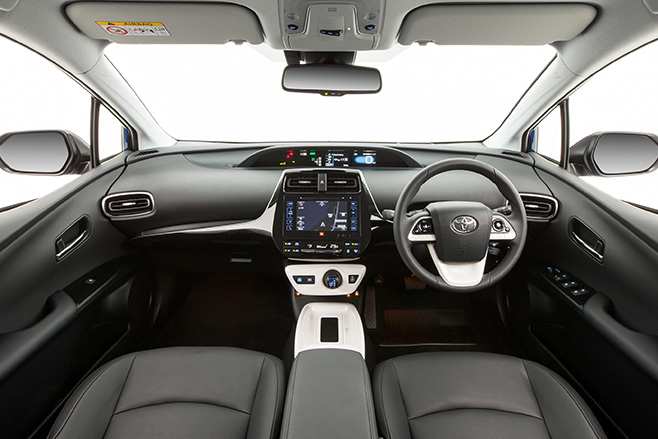
Prius i-Tech is priced from $42,990 and is fitted with lightweight 17-inch alloy wheels, satellite navigation and heated, leather-accented seats.
Honda is considering a lightweight Type R version of its new NSX supercar, according to a report from UK outlet Autocar.
In a strange case of reality following one of MOTOR‘s Sweet Dream articles, the potential modifications required to make a Type R, outlined by NSX Dynamic Development Leader Nick Robinson, closely mirror our vision of the hardcore Honda that appeared in our February 2016 issue.
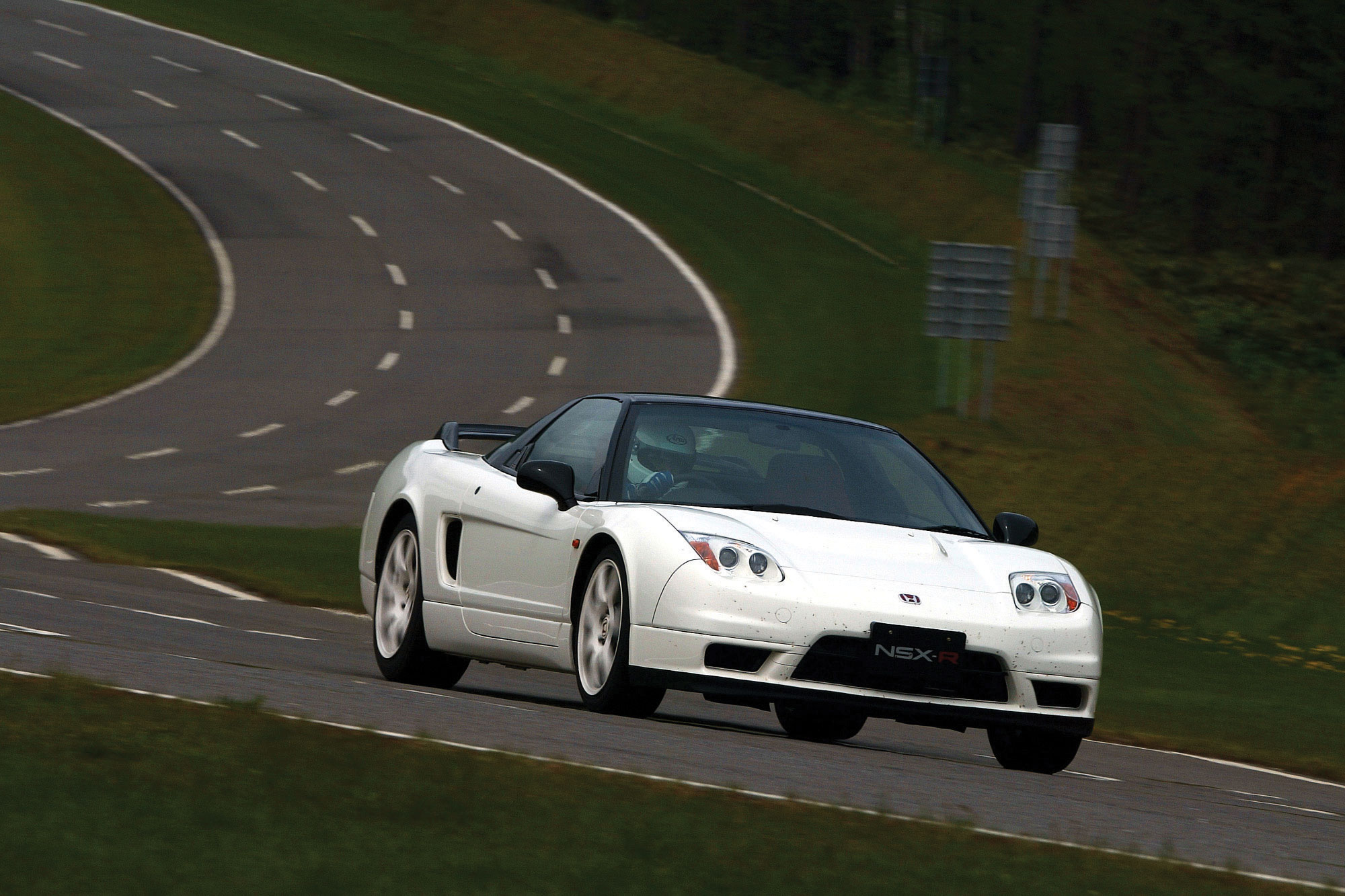
The weight loss would partially compensate for the significant loss of torque from the hybrid system, and with the 373kW 3.5-litre twin-turbo V6 set to remain, performance would still be extremely impressive.
It would be an approach in line with previous NSX Type Rs, which retained standard power but underwent a severe diet and substantial suspension tuning to improve circuit performance.
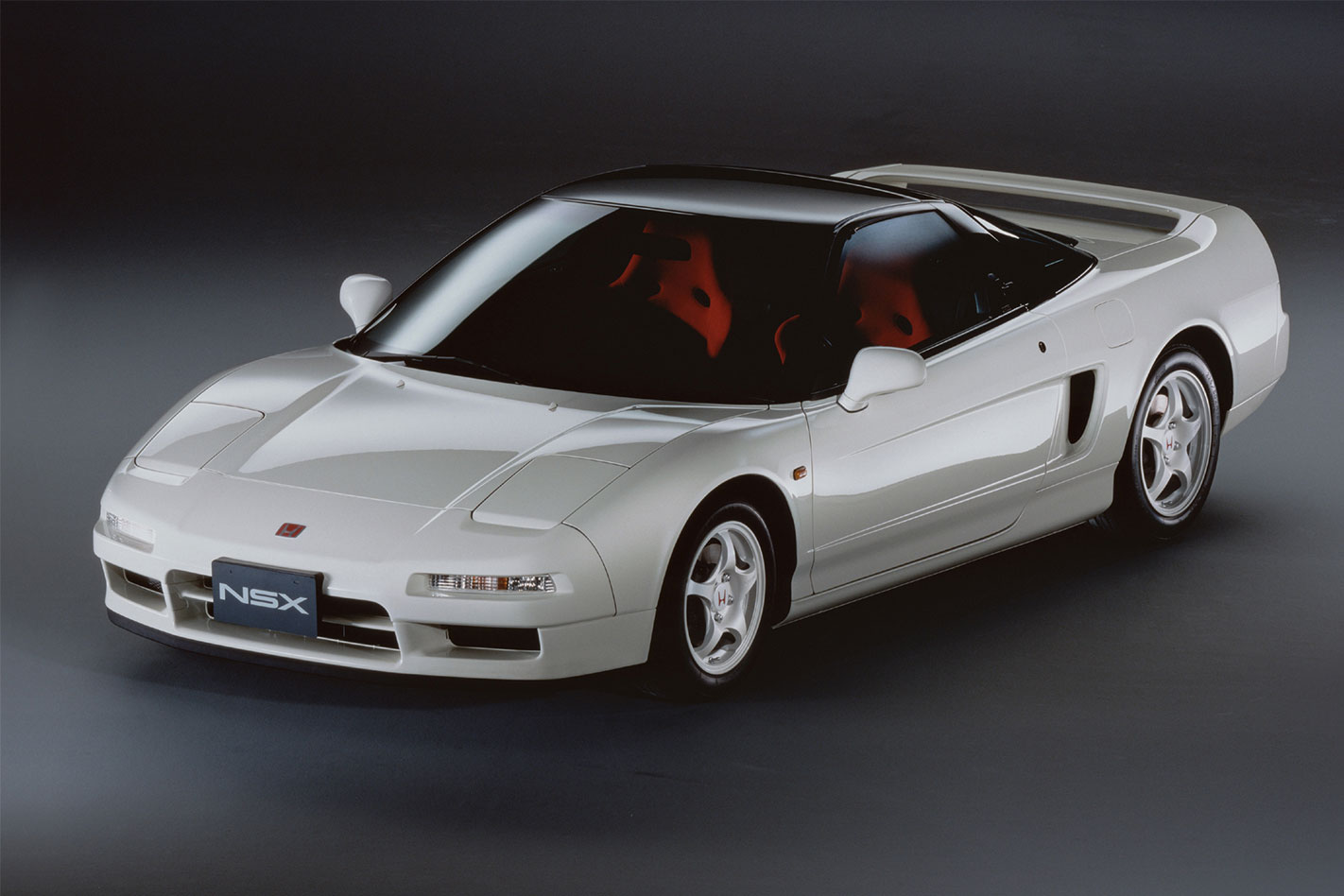
A track-focused NSX would be a direct competitor to the likes of the Porsche 911 GT3 and forthcoming Mercedes AMG GT R, whereas the standard car, which is set to land in Australia before the end of 2016, competes against the 911 Turbo.
Motor shows are notorious for the wild and wacky concepts wheeled out to bring attention to the brands. While supercars stole the spotlight at the 2016 Geneva motor show, the following three cars brought the weird and wonderful and maybe even gave us a small glimpse into the future.
MORGAN EV3
Let’s start with the Morgan EV3. A car Australians will actually get a chance to buy – if you’re one of a very select few and willing to spend the suspected $90,000 asking price.
There’s something about the eccentric Morgan designs that takes us back to the time of gauntlet gloves, Marlene Dietrich and the combo jazz band, but with modern technology. It epitomises old meeting new.
The Morgan EV3 takes it a step further than the original Morgan Threewheeler, the bonnet, tonneau cover and sides made from carbon composite, and a liquid-cooled 46kW electric motor with 20kW/h lithium battery. Translation: it’s a light-weight electric version of the original Threewheeler.
There are plans to bring it to Australia in the next 12-18 months, once it’s undergone some minor tweaks to comply with Australian standards.
EDAG SOULMATE
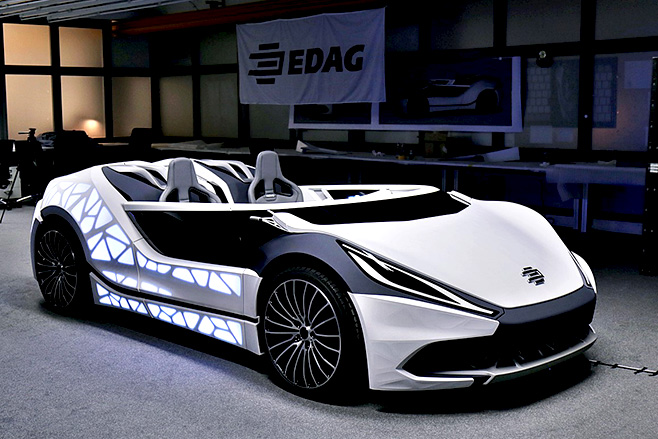
Last year, EDAG released a 3D printed car called the Light Cocoon. At this year’s Geneva show, they teamed with Bosch to create a lightweight 3D printed vehicle called the Soulmate.
The body of the autonomous concept car is printed using a 3D laser printer which allows the vehicle to be built without unnecessary parts weighing it down.
The concept car on display was built using a bionic structure and cloth covering. The exterior can light up and drivers have control over the colour – hazard lights of the future.
But it’s not just the production and design of this car that has our jaws dropping. It also includes some nifty technologies like the seven screen infotainment system. Each one can be personalised for up to 10 different uses, including ‘Smart Home’ which allows you to view real-time footage of your home for security or just to sign for deliveries via screen fingerprinting.
And while the Soulmate concept doesn’t have an engine, the coolest thing about this futuristic design is the incredibly quick production time and cheap costs.
RINSPEED ETOS
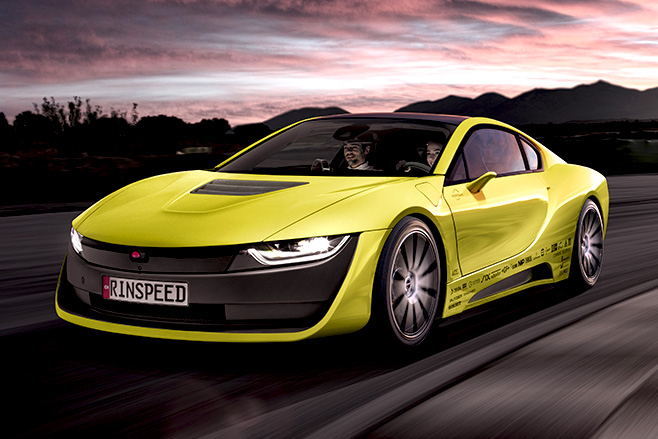
No one likes being stuck in traffic. No matter how much you love your car, traffic is basically the liquorice jelly beans of the driving world. Well, there may be a solution to this problem. Rinspeed, a Swiss automotive innovation company, revealed a car that comes with its own drone.
The concept car is based on the BMW i8 hybrid supercar, and the idea is the drone can be launched from the back of the car up into the sky to see what’s happening ahead, and give you plenty of time to avoid traffic jams.
But this wacky car doesn’t end there. The futuristic concept also includes autonomous driving technology and a fold away steering wheel so you can have plenty of space to, you know, read a book and stuff while the car drives for you.
The Rinspeed Evos might save you from ripping your hair out while stuck in traffic, but at this stage, it’s also likely to get you arrested given flying a drone over a motorway is illegal in Australia, not to mention operating a drone while driving. Still, cool idea for the future when it’s on the right side of the law.
More than 37,000 of the previous generation Hyundai i30s have been recalled due to a flat in the electronic stability control system.
The ESC system is a technology helps a vehicle maintain stability and control during situations where traction is lost, potentially causing a vehicle to lose control.
In the case of the Hyundai i30, the error may allow moisture to get into the ESC system and prevent it from working properly.
Models built between December 2010 and March 2012 will be recalled and the ESC system will be replaced at no cost to owners.
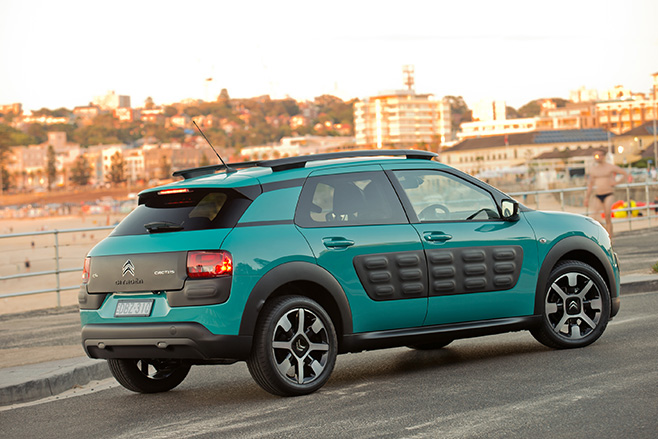
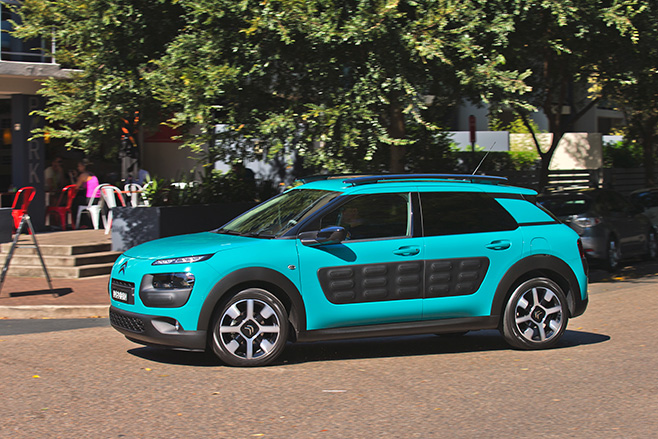
That’s right; it has air bubbles on the side! Lets get that out of the way right off the bat. Citroen has stuck big rubber pillows full of air on the sides of its new baby SUV – the Citroen C4 Cactus.
The idea is the Cactus will be resistant to door dings and shopping trolley ‘incidents’ by absorbing any impacts with its bubbly flanks. And since the ‘Airbumps’ are rubber, there’s no paint to chip either.
Right now every manufacturer wants a bigger slice of the huge compact SUV pie. Small SUVs seem to be the more compelling buy for many people these days rather than a hatchback, so it takes innovation like Citroen’s for a latecomer like the Cactus to stand out.
But there’s more to it than a couple of bubble wrap sheets. Citroen says the design approach was all about meeting a specific challenge: to bring customers more of what really matters.
Less expensive fuel bills is certainly one thing that matters, so the car’s highly functional design incorporates a range of lightweight ideas to make the Cactus as fuel efficient as possible.
Two drivetrains are on offer; a 1.2-litre turbocharged three-cylinder petrol (81kW/205Nm) with a five-speed manual gearbox, or a 1.6-litre turbo diesel (68kW/230Nm) and six-speed automatic gearbox.
Inside, the Cactus features a wide ‘sofa-style’ bench seat up front with a middle armrest doubling as a storage space. There’s more innovation around the front passenger seat where the airbag has been moved to the roof to open up more room.
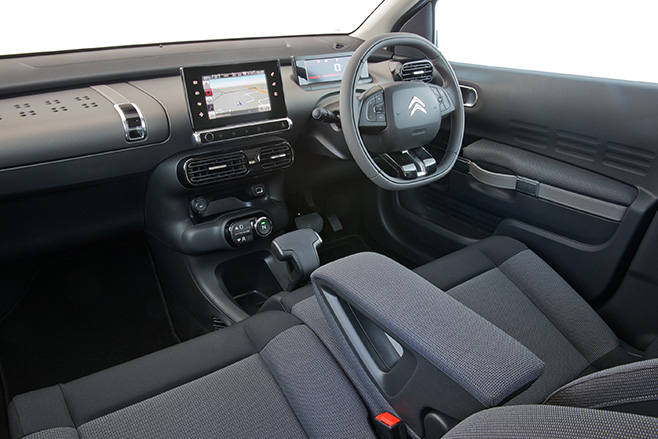
The Cactus is highly customisable, which makes sense for a car as individual as it is. Buyers can choose different colours for their inflated door panels and can option matching roof rails and door mirrors. Exterior paint choices are bright and eye-catching, and there’s a choice of wheel designs, interior options and coloured body highlights.
All up, Citroen reckons there are 23,184 Cactii combinations and all of them are available to local customers who pre-order before the end of the year. Pricing starts at $26,990 for the manual turbo petrol, and $29,990 for the auto turbo diesel.
While Bugatti’s Chiron made loud noises both figuratively and literally at the Geneva show, there was one hypercar that kept relatively mute on our radar.
Silence may seem appropriate for something fully electric, but Rimac’s debut in to the hypercar world with its new Concept_S promises to have The Pope swearing. Yes, that’s an underscore in its name. And to avoid us swearing, we’re going to call it the Concept S from now on.
Claimed to drop 100km/h in 2.5 seconds and pass 200km/h in 5.6sec, the S should run ahead of a Chiron all the way up to 300km/h before it pulls chutes at 365km/h. Meanwhile it’ll nudge 1.7 lateral G in corners, almost double what a regular hot-hatch can do.
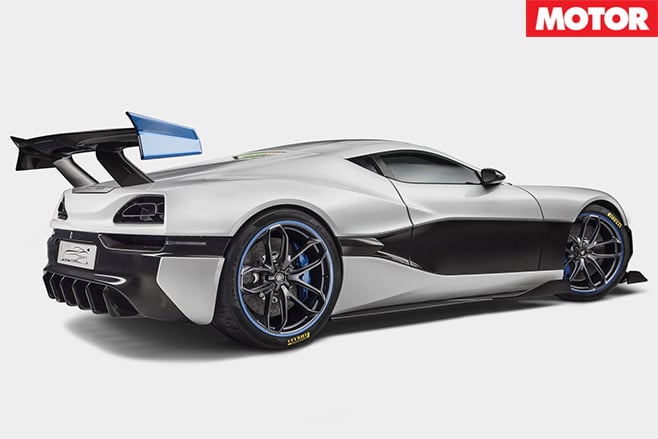
This not only means the Concept S will have one of the most sophisticated torque vectoring systems around, but produce a combined 1018kW and 1800Nm with at full throttle. Powering the whole show is a 650-volt lithium ion battery pack which regeneratively charges when you lean on its huge carbon brakes.
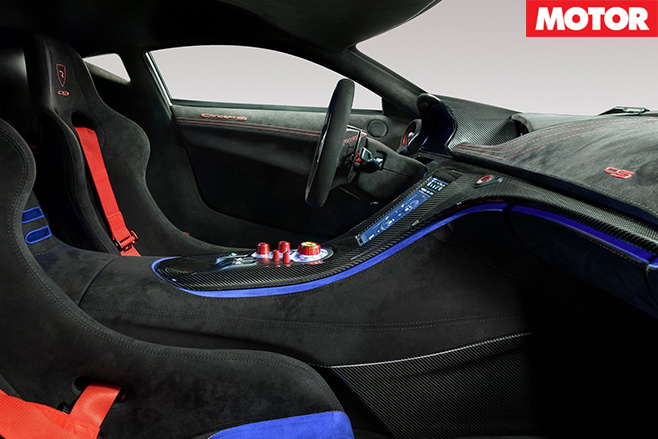
Still, it’ll rock up to any track day with a power-to-weight ratio few hypercars, or even racecars, will manage.
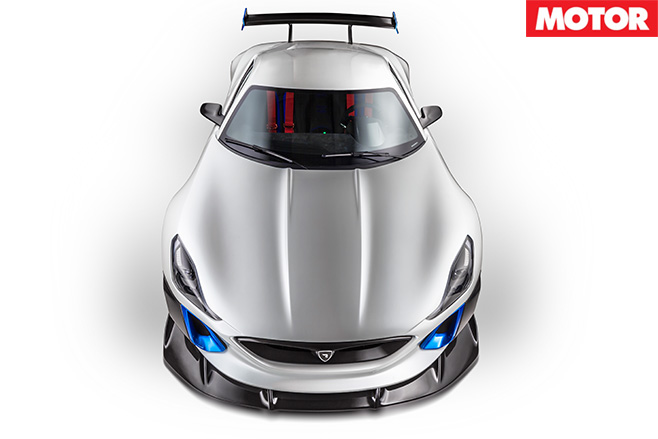
Details on pricing and launch dates are scarce, but both the Concept One and Concept S are claimed as production ready.
But when it does launch, you’ll know why other hypercars have suddenly gone quiet.
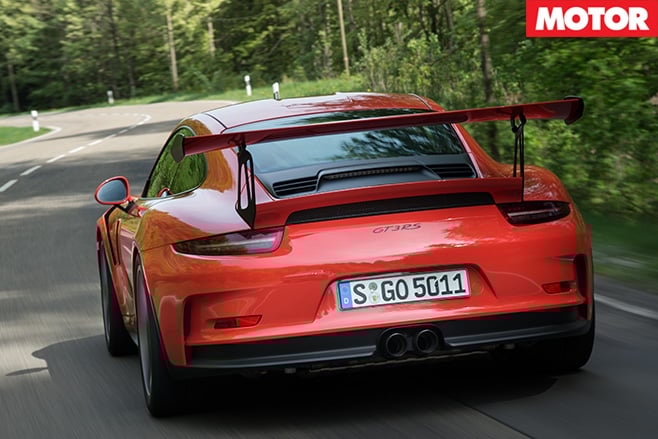
The Porsche 911 GT3 RS is the poster child for the advancement in automotive materials tech, because it combines many of the developments of race and high-end road cars into the one spectacular machine.
Think a carbonfibre roof is the epitome of technology? The GT3 RS begs to differ. Its magnesium roof is a kilogram lighter than an aluminium roof, and about 800 grams lighter than the carbon top, which suddenly seems so last year. The weight saving mightn’t seem much, but when it’s shaved from the highest point of the car, the lowering effect on the centre of gravity is measurable.
Another attraction, of sorts, is the free fireworks display should you ever, god forbid, put your GT3 RS on its roof. Although you won’t be sticking around to enjoy the show, given magnesium’s flammability (though not so much in bulk), burning as hot as 3000 degrees.
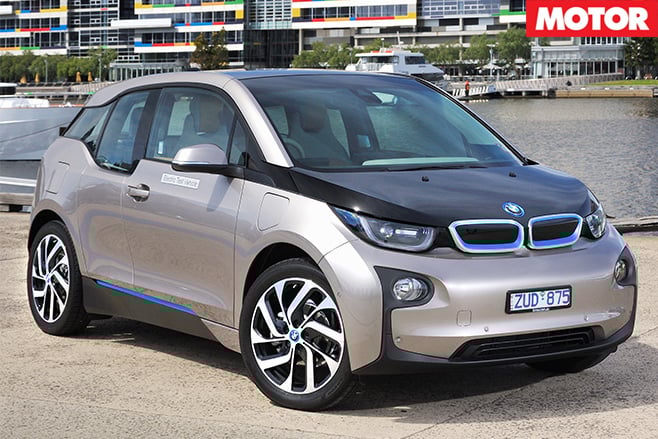
Or, more accurately, energy efficiency. Case in point is the electric BMW i3, which is touted as the first volume production car to use carbon in its body construction (underpinned by an aluminium drive module/chassis). But the big advancement in carbonfibre doesn’t make it stronger or lighter, it makes it less expensive to produce. BMW says it has cut carbonfibre reinforced plastic panel production costs by 50 per cent over the last decade.
The Rennsport 911 has carbon front and rear aero components, and carbon luggage compartment and engine covers. However, the really advanced material lies beneath, deep within the flat-six. The 4.0-litre, 368kW engine uses a multiple remelt tempered steel crankshaft, tech it borrows from Porsche’s 919 LMP1 sports-prototype.
The name is somewhat self-explanatory, or, at least, it is when you include a hyphen in ‘re-melt’. The repeated controlled heating and cooling of the steel improves the quality of the metal, decreases its hardness and increases its ductility (makes it less brittle).
A stronger crank material allows a trimmer design. And the point, yet again, is to reduce the weight in a crucial, performance-enhancing place.
HOT TOPIC The multiple remelt technique pioneered by Porsche for the 919 LMP crankshaft is a form of heat-treatment that refines the metal’s microstructure and reduces the concentration of contaminants.
PRODUCTION LINE New mass-production techniques will headline development over the next five years. This will result in the automotive industry become one of the top three carbonfibre markets.
BACK IN THE 60s Magnesium might be the avant-garde sports car roofing material of 2015, but it’s not new to the car. Magnesium wheels were big in the 60s and ‘mags’ stuck as a description of (usually aluminium) alloy wheels.
IMPURE BREED Pure magnesium wheels are no longer made, as the element suffers from cracking, pitting, and corrosion. However, alloys of magnesium, like that used in the GT3 RS’s roof, solve most of the problems.
CARBON GROWTH The automotive industry accounted for just five per cent of carbonfibre manufacture in 2012, yet annual growth of more than 30 per cent is expected to see production increase to 23,000 tonnes per year by 2020.
OVER THE HORIZON

This includes nanomaterials, such as nanocomposite bumper bars with double the resistance to dents and scratches, and nanoparticles in tyres, with reduced rolling resistance and increased wear resistance.
Also coming as car-construction materials are graphene, an atom-thin carbon material 200 times stronger than steel; aerogel, a solid material used in space suits that’s 99.8 per cent air; and chemically-hardened ‘smartphone’ glass, which is around half the weight of the laminated glass now used in windscreens.
New Mercedes-Benz E-Class self-drives its way into the technical high-ground, but does it drive as well as a BMW 5 Series?
WHAT IS IT?
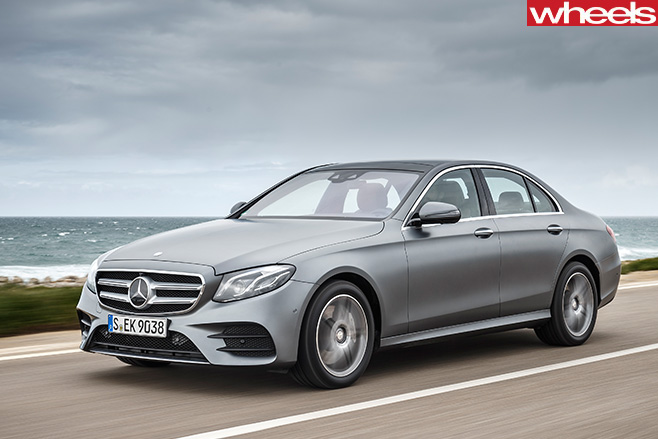
An advanced supercomputer, disguised as a large luxury sedan. This is the tenth-generation of the Mercedes-Benz E-Class, and the boffins from Stuttgart have not only made it lighter, larger and more efficient, but crammed it with class-leading, semi-autonomous tech.
WHY WE’RE TESTING IT
To see if Merc’s claims that this new E-Class represents a “jump of two generations” is accurate. Plus, any car that claims to supersede the iconic S-Class for cutting-edge technology deserves a thorough test.
MAIN RIVALS:
BMW 5 Series, Audi A6, Lexus GS, Jaguar XF, Tesla Model S
THE WHEELS VERDICT
Move over S-Class, Mercedes has a new technology flagship. This tenth-generation E-Class is not only more comfortable, better looking and better to drive, but sets new benchmarks for semi-autonomous tech.
PLUS: Raises the bar with cutting-edge tech; luxurious interior; oodles of standard equipment; pleasing road manners MINUS: Oz not getting some tech; wind noise; more expensive
THE WHEELS VERDICT
I’VE been dead for quite a while now. Pretend-dead, that is. I’m hurtling along a Portuguese freeway at 120km/h and two minutes ago the bearded German sitting next to me said to do the most peculiar thing.
“Now is time for some theatre,” he smiled through his whiskers, which are so long they tickle the top of his name badge. It reads Constantin. “I ask you to have a heart attack.”
He doesn’t seem to care that I’m meant to be driving. Or that our sparkling new Mercedes is approaching a right-hand bend at 33 metres per second.
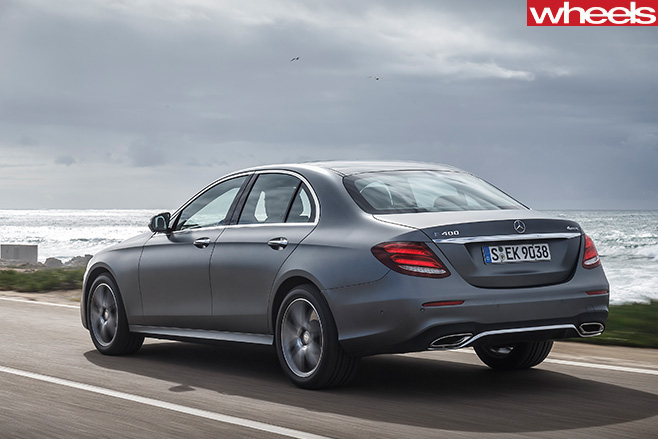
So in an act of blind trust, I throw my hands in the air, writhe in mock pain for a few theatrical seconds, then slump in my seat, dead. I briefly wonder if the spittle in the corner of my mouth is a step too far, or if Constantin will notice it, before the steering wheel moves. It steers us into and through the corner. No fuss, no loss of speed. We don’t even stray from our lane.
The same thing happens at the next curve, this time a left. It takes 30 seconds for the car to notice I’m not in control. It flashes a visual warning on the dash, telling me to take the wheel. I don’t.
Another bend, another 30 seconds, and the car begins to bong, rhythmically. Bong. Bong. Take. The. Wheel. Again, I ignore it.
Then we gradually start to slow. At 60km/h the hazard lights come on. Then we come to a complete stop.
“See!” laughs Constantine. “It’s brilliant, no?”
Welcome to the new Mercedes-Benz E-Class, a car so infested with technology and binary code that this review could just as easily fill the pages of PC Monthly.
In fact, this tenth-generation E-Class is so clever that it even outmuscles Merc’s traditional technology flagship, the significantly more expensive S-Class. Kind of a big deal, then.
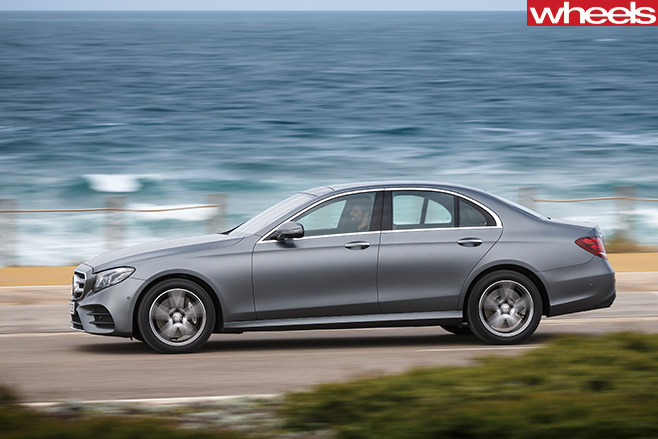
The system I experience with Constantin is the latest version of Merc’s Drive Pilot, which moves the German brand a step closer to full autonomy. With all the sensors and gizmos switched on, the E-Class can now follow another car at speeds up to 210km/h, change lanes autonomously and even drive itself on roads without clear lane markings at speeds up to 130km/h.
It works too. On the highway the E-Class steers itself through gradual bends with precision, maintains and changes its speed without fuss, and even slowed for and drove through a narrow toll booth all of its own accord. All I had to do was touch the steering wheel every minute or so.
It would be wrong to think this means the E-Class is verging on fully autonomous, though. It’s not. Shadows and overhead signs can cause the occasional hiccup and the Drive Pilot’s automatic steering system strays from its lane on tighter corners. So instead of turning on the systems, taking your hands off the wheel and relaxing, you have to constantly monitor the car in case it slips up. That said, on open highways it’s bloody impressive.
The auto lane change – operated by indicating for more than two seconds at speeds above 80km/h – soon becomes second nature, too. Benz implies this system is superior to the one used by Tesla, which lacks the extra rear-facing camera fitted to the E-Class that checks your blind spot.
And Benz has vastly improved the Drive Pilot’s restart function, which will now stop and restart the car automatically in heavy stop-start traffic even if you’ve been stationary for up to 30 seconds. The old system required the driver to intervene after just three seconds.
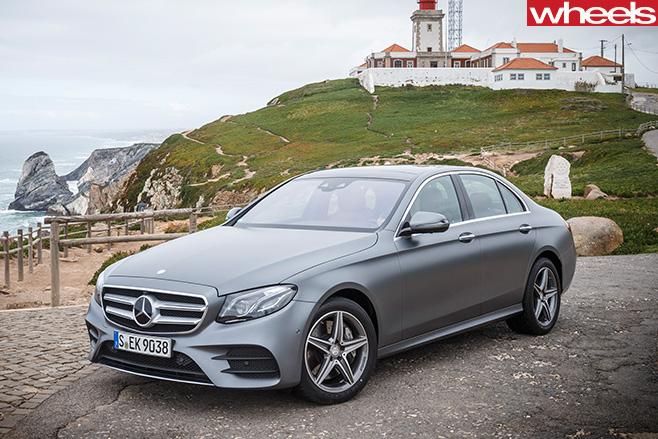
Even better news is that, despite some initial uncertainty about legality and compliancy, all of this semi-autonomous tech will be standard on every E-Class when deliveries begin in June. There is some tech we won’t be getting in Australia, but the company has confirmed most of the headline systems are coming our way.
And don’t fret that Merc was blinded by its pursuit of electronic wizardry and forgot about good old-fashioned mechanical engineering. The E-Class drives like a Mercedes should.
Built on the same Modular Rear Architecture as the S-Class and C-Class, the E-Class is longer, lower and narrower than the car it replaces and rides on a wheelbase that’s grown 65mm. Track widths have increased front and rear while weight is down marginally, by about 50kg. And that sleek new body, which looks eerily similar to both the C and S-Class, delivers an impressive 0.23 coefficient of drag.
A suite of petrol and diesel engines will be offered, all paired with a nine-speed automatic, with the E200, E220d and E350d available from launch in July.
The E200’s 135kW/300Nm turbo four and the E350’s 190kW/620Nm oiler are both carryover engines, but the E220d’s 2.0-litre unit is all-new. Taken from Merc’s new OM625 diesel family, this 143kW/400Nm unit boasts aluminium cylinder head and crankcase and is quiet on start-up, spins eagerly and delivers a nice blend of performance and efficiency, with a 3.9L/100km combined fuel consumption claim.
Arriving in late 2016 will be a new E300 model, powered by a 180kW/370Nm 2.0-litre petrol four, along with a replacement range-topper, the 245kW/480Nm E400 4MATIC.
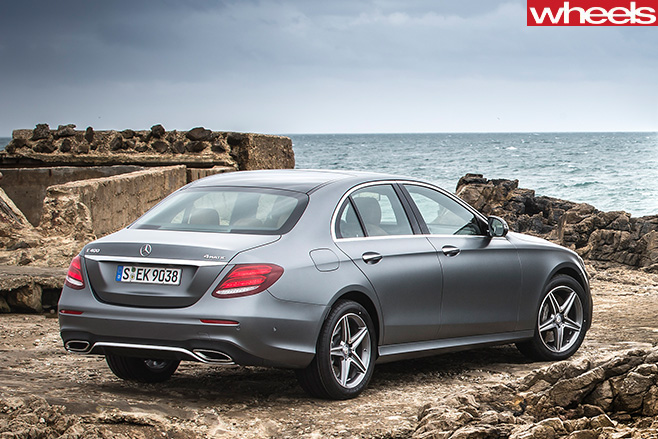
This will be the first Aussie E-Class to be offered with four-wheel-drive, and to prove its credentials Benz decided our first taste of the E400 should be on Portugal’s famous Estoril race circuit.
It’s a punishing track, with long straights, tricky high- and low-speed corners and heavy braking zones, but the E400 applies itself well. The steering is direct, the chassis nicely balanced and there’s plenty of grip, which gives you the confidence to get on the throttle early. The V6 petrol is strong and even emits a nice gurgle on the over-run.
One noticeable negative is a rustle of wind noise at the top of the windscreen, which intrudes into an otherwise hushed cabin. It’s an annoyance that plagues every E-Class we drive, especially when cruising on the freeway, and Mercedes is aware of the problem. “Oh yes, that’s because of the sunroof,” says an engineer. “The cabin is so quiet now that you hear sounds you wouldn’t have before.”
Entry-level E-Class variants have a steel coil suspension set-up with variable damping as standard, but everything from E300 up ride on Merc’s multi-chamber self-levelling air suspension with four modes: Comfort, Eco, Sport and Sport+. Yet even in its firmest and most aggressive setting, there’s no escaping the E400’s heavy emphasis on luxury and refinement over razor-sharp dynamics. A BMW 5 Series remains more of a driver’s car.
What the E400 does do, though, is provide a tasty starting point for the upcoming AMG E43 and the even more bonkers E63, which will be fitted with AMG’s 4.0-litre twin-turbo V8, tuned to produce about 420kW.
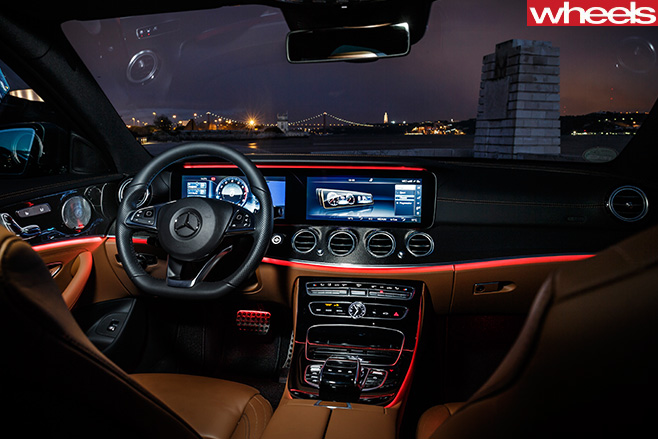
Where the E-Class really excels is with its interior. The family resemblance to the C-Class and S-Class is again obvious, but there’s a beautiful sweeping dash and the piece de resistance is the enormous twin-screen digital display, which will be standard on all Australian E-Class variants.
Dubbed Command Digital Instrument Panel, the display consists of two incredibly thin 12.3-inch HD screens that are fully configurable, with drivers able to choose between three designs: Classic, Sport and Progressive. It’s a breeze to use, thanks to two mini-touchscreens mounted on the steering wheel. You operate them by swiping your fingers horizontally and vertically, with the left touchpad operating the left screen and vice versa. If that sounds complicated, it’s not. The system is wonderfully intuitive.
Rear passengers aren’t forgotten, either, with a roomy rear bench (knee room is up 6mm) and deeply sculpted seats. There’s a lack of toe room, and the 530L boot is 10 litres smaller than before, but these are small complaints in an otherwise convincing cabin.
Then there’s the price. Mercedes Australia has worked hard to increase the spec of local models, and fitted the twin-screen display and Drive Pilot system as standard, but says this will result in a small price increase.
All things considered, it seems a fair trade. This latest E-Class is not only an improvement in style, space and comfort, but sets a new tech benchmark, both for its class and for Mercedes as a brand. Your move, S-Class.
SPECS
Model: Mercedes-Benz E400 Engine: 2996cc V6 (60°), dohc, 24v, twin-turbo Max power: 245kW @ 5250-6000rpm Max torque: 480Nm @ 1600-4000rpm Transmission: 9-speed automatic Weight: 1800kg (estimated) 0-100km/h: 5.3sec (claimed) Fuel economy: 7.7L/100km Price: $140,000 (estimated) On sale: 4th quarter 2016
In six-figure German limos the rear bench isn’t stowage for the small or an alternative for the lustful. It’s the main event – an office, retreat, or guest room.
So meeting BMW’s all-new 7-Series, the model set to stamp the company’s mark on luxury car technology and comfort, should appropriately start in its cabin. Or more specifically, in the rear commander’s seat. Besides looking exquisite, our 740i feels lavish and comfortable enough behind the driver to justify the $224K needed to bag this base petrol variant.
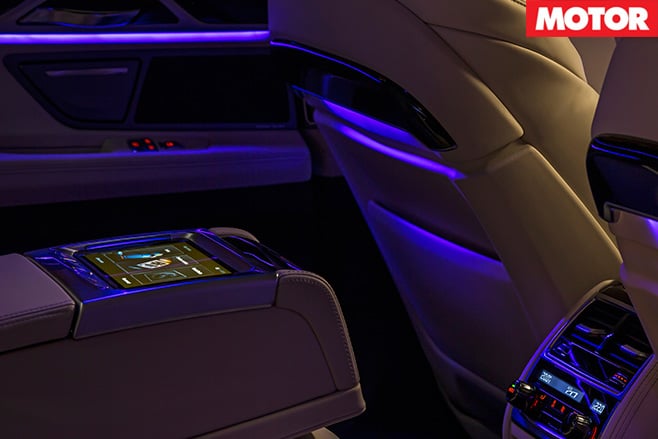
Lower the middle backrest and you’ll find a 7-inch Samsung tablet nestled in the armrest. It’ll allow you to play with cabin’s ecosystem or infotainment like a bored toddler. But if that isn’t amusing enough, it can also be pulled from its dock for bouts of Angry Birds.
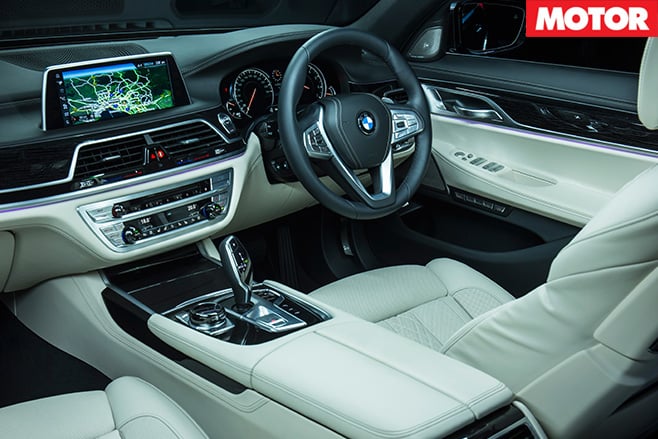
The steering wheel and centre console buttons are finished in cool-to-touch chrome, while leather drenches the gorgeous looking steering wheel. It all makes for a spacious, sumptuous office.
BMW’s hard efforts with the new 7-Series aren’t only isolated to its cabin. Underneath it, Munich’s manage to strip 100kg from the 740i’s bones thanks to a semi carbon-fibre skeleton and part-aluminium skin.
Along with the diet, new optional active roll technology adds to its suite of dynamic tricks that includes self-levelling air suspension, rear-wheel steering, and adjustable dampers. As a result the 740i side-steps like a rugby winger.
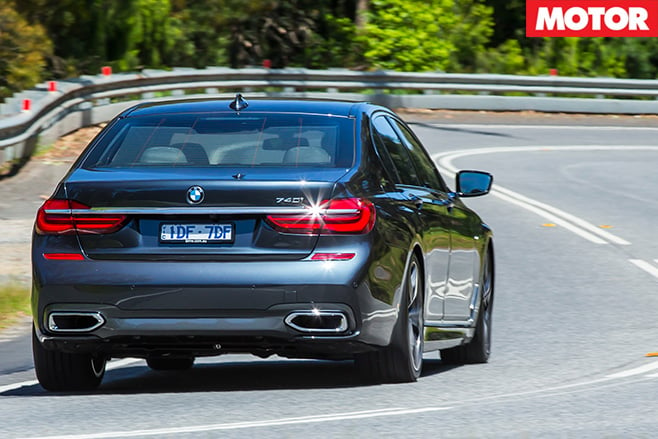
That doesn’t mean the 740i forgets it’s wearing a suit. Occupants will enjoy the car’s cloud-like buoyancy as it wafts along in its softest damper mode while still feeling like the suspension has a grip on its 1725kg.
The ride’s not magic enough to make rude ridges disappear, though. And the M-Sport package’s run-flat tyres feels out smaller disturbances in urban environments.
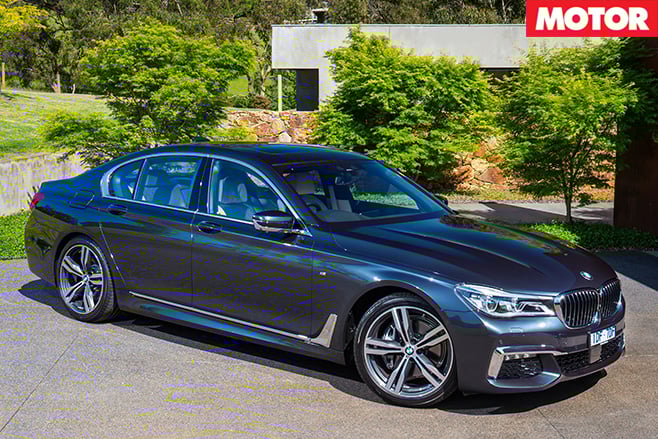
In between bends though the uprated 240kW/450Nm turbo inline-six has no trouble with the weight, and is a sweet match to the eight speed transmission.
Whether it’ll help nail BMW’s 5.5sec 0-100km/h claim remains to be seen, but the larger question for MOTOR-heads is if the 740i’s better in the front seat than it is in the back.
Backseat drivers will relish the space, but guffaw at the options needed to really live it up back there. Scoring a set of the 750Li’s heated/ventilated massage pews will cost $15K. Even the full electric tilt function for the rears will cost $6500.
There are cheaper ways to transport five. But in this segment and at this price point, Mercedes-Benz’s S400 only comes in long-wheelbase form, and Audi’s A8 only as a diesel.
So until either rival changes tack, we suspect the 740i’s blend of technology, refinement, and petrol-based sporting ability makes it a unique proposition among luxury long-sedans – one you wouldn’t be disappointed with in the front or back seat.
4 out of 5 stars
SPECS Engine: 2998cc inline-six, DOHC, 24v, turbo Power: 240kW @ 5500-6500rpm Torque: 450Nm @ 1380-5000rpm Weight: 1725kg 0-100km/h: 5.5sec (claimed) Price: $224,200
